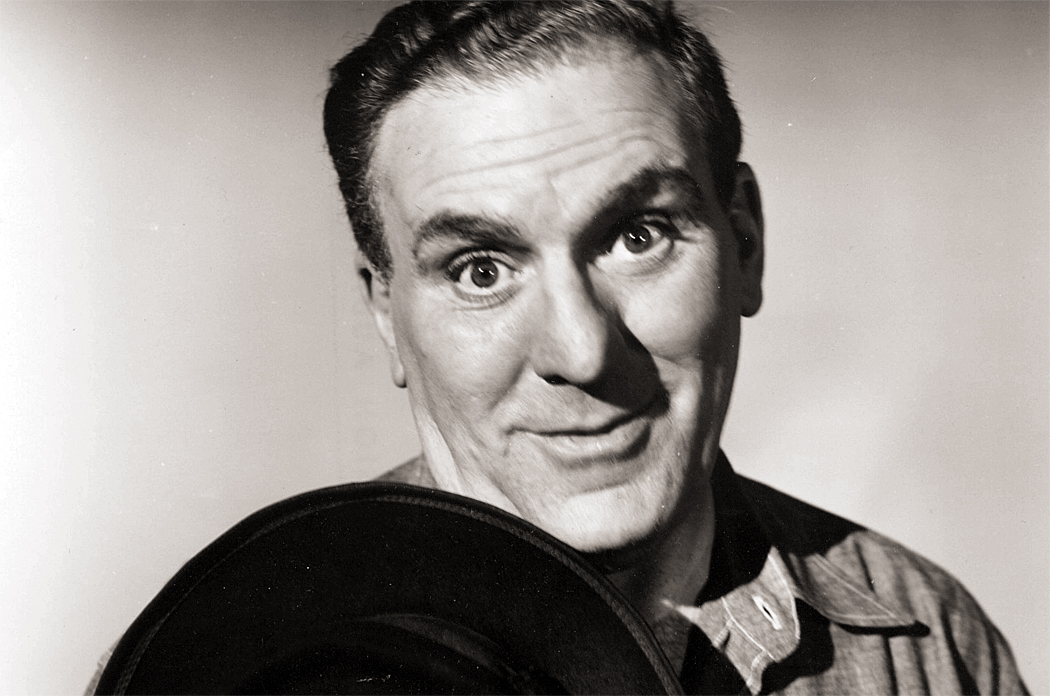
I want to put in a good word for TV sitcoms. They don’t get much respect. And it is true that many of them are routine, uninspired and forgettable. “Chewing gum for the eyes.” But the genre as a whole has both a long history (longer than you may suspect), and a significant role to play in the arts. Yes, the arts.

What we call art is a lot of things, and serves many purposes, but one thing all art, whether painting, music, theater or literature, is asked to do is entertain. There are different levels of entertainment, but even Joyce’s Ulysses or Berg’s Lulu offer an underlying level of amusement. 

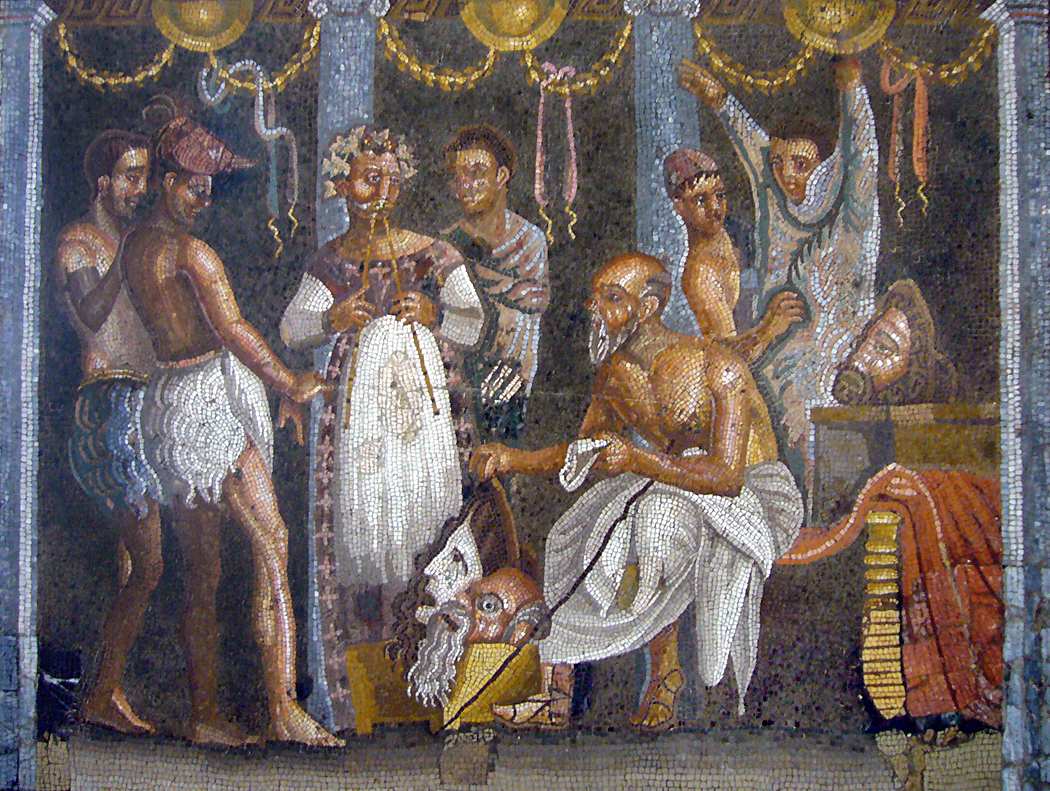
Comedy players, Mosaic from Pompeii

Some offer much more, but the base line of keeping us interested has been there from the earliest times we have record of. And much of it even fills university courses. We study Plautus and Terrence — among the earliest sitcom writers (Rome, 6th century BC), with plays full of dirty old men, unfaithful wives, clever slaves, mistaken identities and love-struck young men. 

There are few actual characters in such plays, and a great panoply of stock figures. These kinds of figures, stuck in difficult and comic situations, populate the works of Italian commedia dell’arte, the comedies of Molière, and the plays of Shakespeare (who would sometimes borrow from Plautus and Terrence). Victorian novels — by Dickens, Trollope, Thackeray —  now treated as literature, were at the time serialized in popular magazines and thought of much the same as we now consume TV shows. And all now deemed worth of academic study and even reverence. 

So, why not the same for All in the Family or The Honeymooners? Are they any “lower” an art form than The Twin Menaechmi? Or The Braggart Soldier

Remember, Shakespeare’s audience included the uneducated  groundlings; he wrote also for them. And he was not above the traditional fart joke. It ain’t all Seneca and Henry James. 

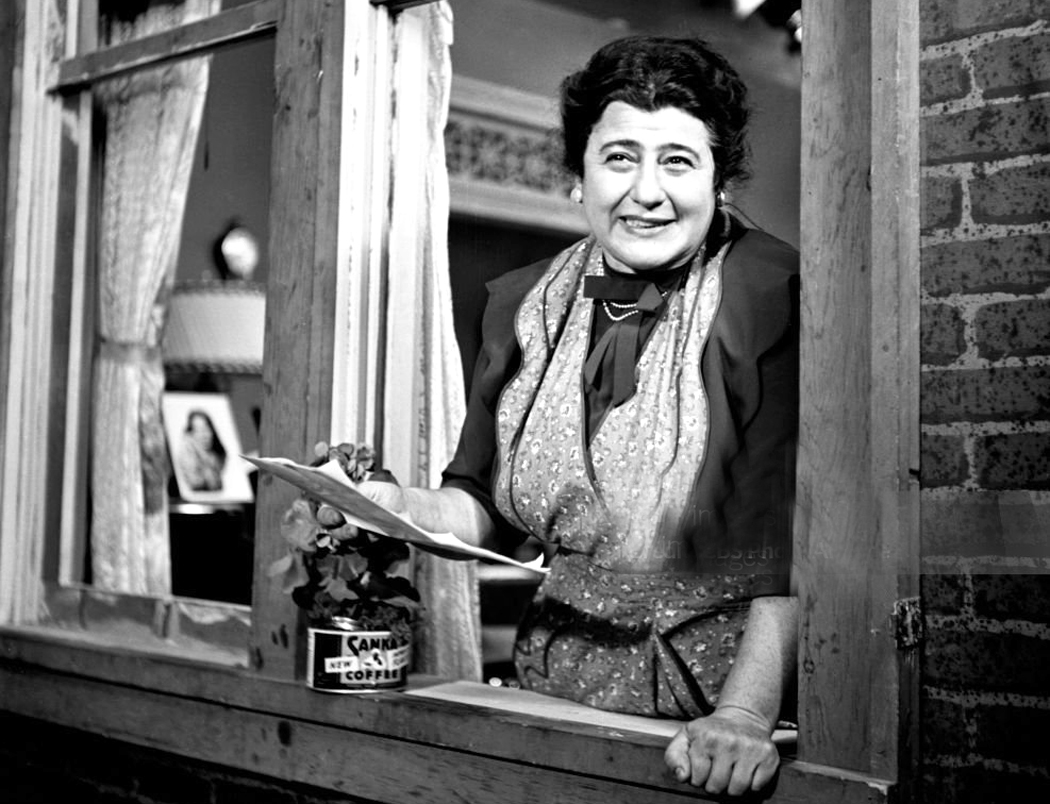
I am roughly the same age as television, and have watched the sitcom from its earliest TV days. I was one year old when The Goldbergs switched from radio to television (“Yoo-Hoo, Mrs. Bloom…”).  There was The Aldrich Family from 1949 to 1953 (“Henry! Henry Aldrich!” “Coming, Mother.”), and the first season of The Life of Riley, with Jackie Gleason originally taking over the title role from William Bendix, who had played the part on radio (“What a revoltin’ development this is”). Bendix took back the role for the rest of the series run. I don’t know how old I might have been when I first started watching these series. Probably in my playpen watching the images wiggle on the 12-inch screen of a Dumont television. 

The 1950s brought the onslaught and the sitcom became a staple of the boob tube. These series I remember quite well: Beulah; The Bob Cummings Show; The George Burns and Gracie Allen Show (the first Postmodern show, where George could watch what Gracie was planning on his own TV screen and comment to the audience); December Bride; I Married Joan; Private Secretary; Mister Peepers
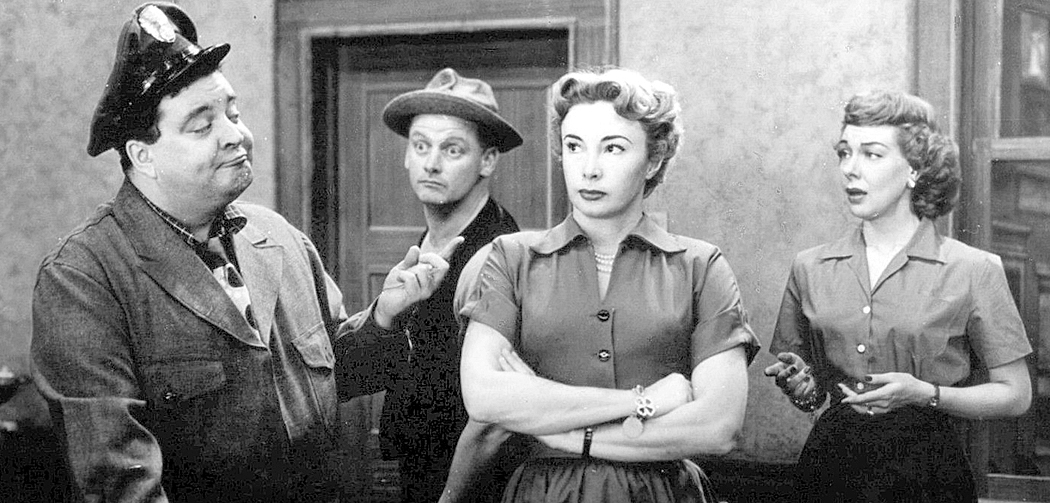
I haven’t mentioned the three most important shows of the time. The Honeymooners emerged as a sometime skit on Cavalcade of Stars, the Jackie Gleason variety show on the Dumont network, sometimes taking up most of the run time. But in 1955, the skit was spun off into a half-hour sitcom for 39 episodes, still run in syndication on various cable channels. (“To the moon, Alice”). 

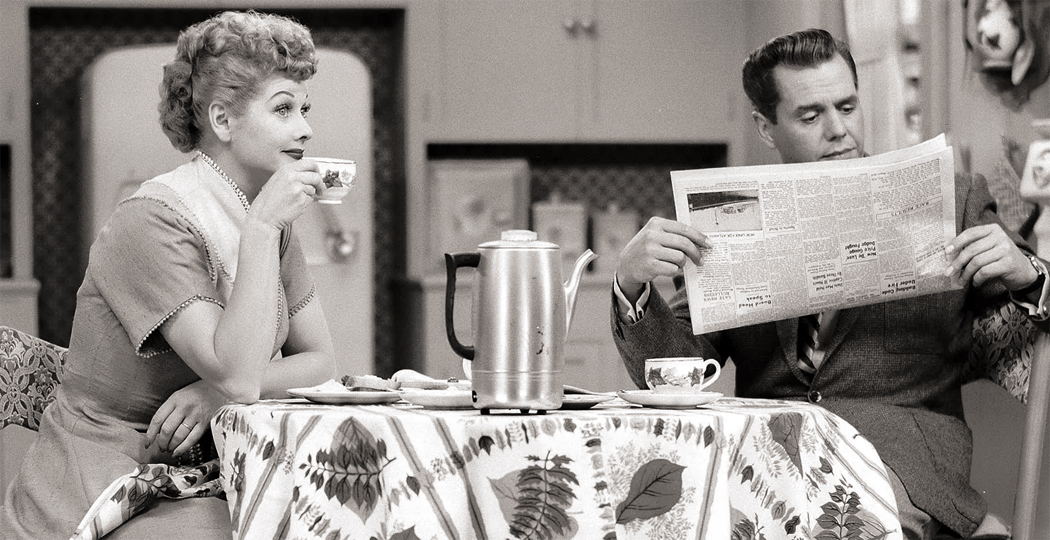
I Love Lucy ran from 1951 to 1957 and pioneered the three-camera filmed sitcom with live audience and laugh track. For its entire run, it ranked No. 1, No. 2, or No. 3 in the ratings. (I have to confess, contrary to the majority opinion, I never found Lucy very funny. Watching reruns, I still don’t). Those reruns can still be found in syndication on cable. 

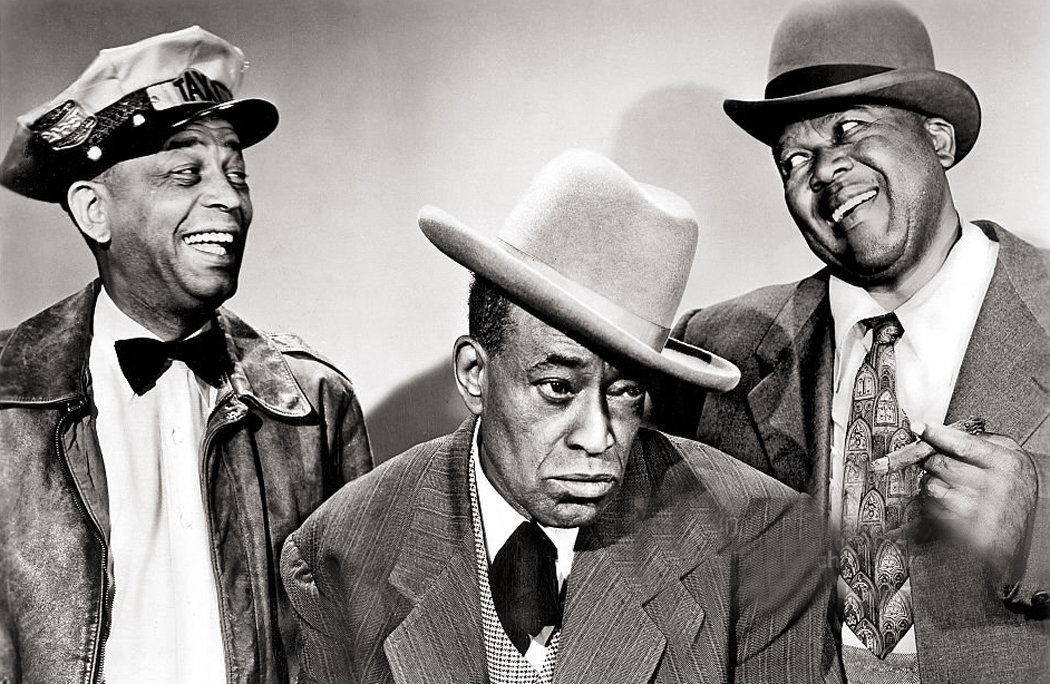
Alvin Childress, Tim Moore, Spencer Williams

But you won’t find Amos ’n’ Andy. It was enormously popular from 1951 to 1953. But reaction to the racial stereotypes changed markedly during the rise of the Civil Rights movement. It would be hard to complain about the series cancellation. In the context of its times, it was deserved. It can be hard to watch nowadays. But I have seen all 78 episodes on bootleg DVDs and must admit we have lost some brilliant comic performances, especially by ex-vaudevillian Tim Moore as the Kingfish. Yes, there are some awful stereotypes, but not everyone was shufflin’ and grifting. Amos was an upright citizen and family man, and the series showed quite a few Black doctors and judges, all horrified at the shenanigans of the series stars. 

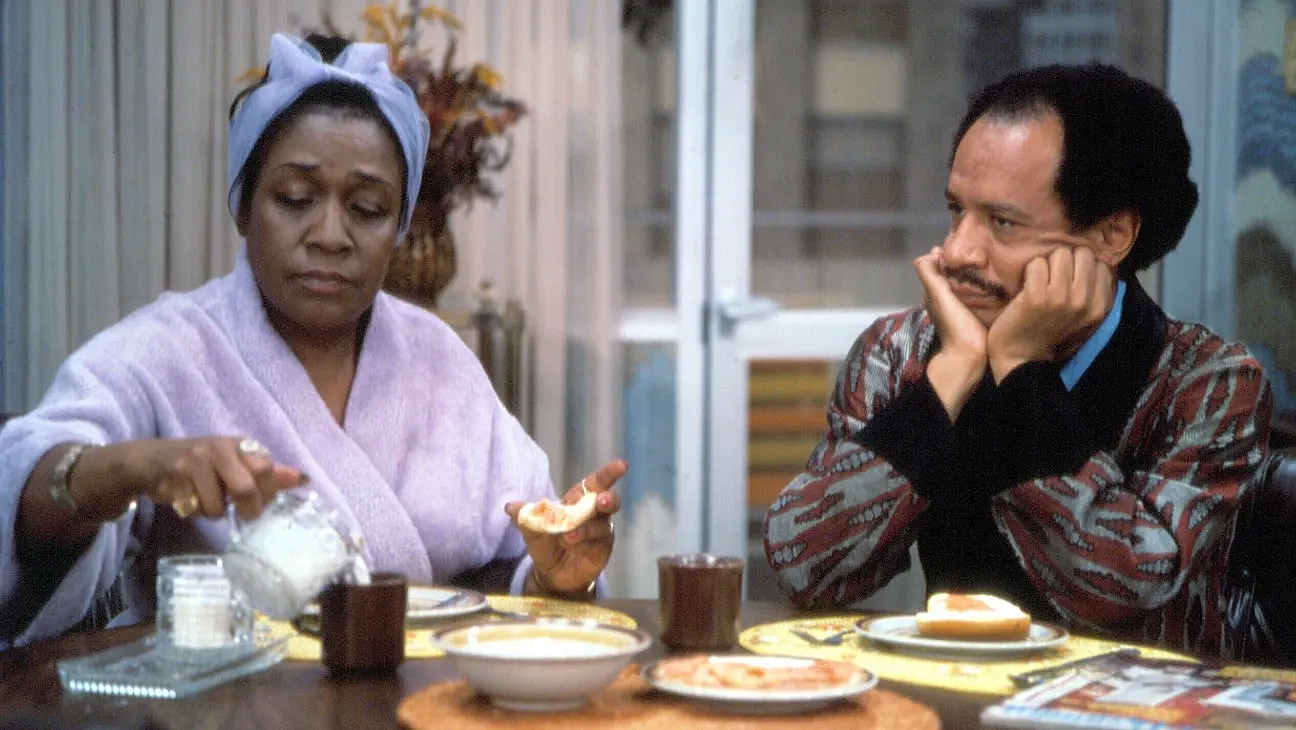
And it should be pointed out that most sitcoms, Black, white or otherwise, focus on less-than-admirable characters. Let’s face it, bland Ward Cleaver does not support a TV series. You need Archie Bunker, Ralph Kramden, or Larry David. Something out of the norm, but exaggerated. Getting past the particulars of Amos ’n’ Andy, basically the same stereotypes come back later as George Jefferson or J.J. in Good Times (“Dyn-O-Mite”) or Redd Foxx in Sanford and Son. Same caricatures, different generation. 
I’m not suggesting we forgive Amos ’n’ Andy, but rather to see it in context, and recognize the talent that went into it. 

The fact that even Millennials know who Lucy Ricardo was, or Ralph Kramden or Rob and Laura Petrie, means that some of the hundreds of sitcoms that have aired, from the last century and this, have a cultural staying power, very like the classics we read at university. 

The foundational stereotypes — or archetypes — have persisted, too. How many sitcoms feature bumbling husbands, from Chester A. Riley and Ozzie Nelson to Curb Your Enthusiasm and The King of Queens? Conversely, the trope of the ditzy wife, from Gracie Allen to Married … With Children to The Middle? Mothers-in-law are a perennial butt of jokes, as are clueless bosses and gay best friends. They each provide a predictable set of familiar and comfortable jokes. (Although the limits of comfort can and have changed over time: Blonde and Polish jokes haven’t worn as well).

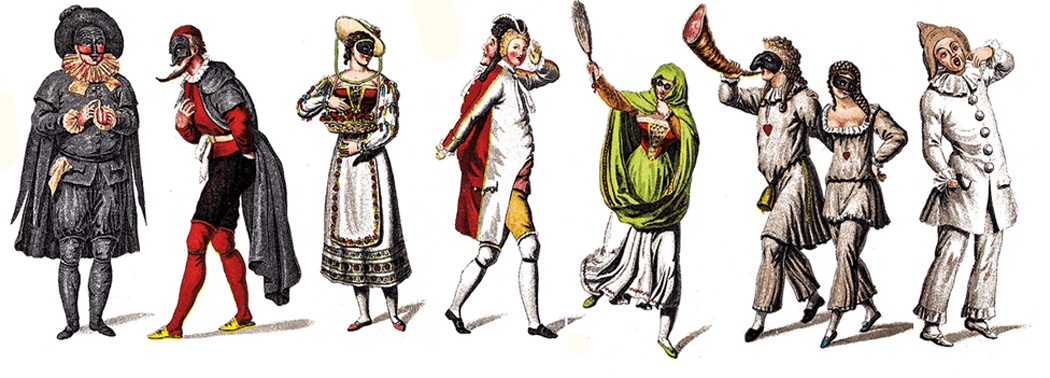
And most of these are just modern changes rung on the characters of the commedia dell’arte. Harlequin, Colombina, Pantalone, Pulcinella, Zanni and the lot. We aren’t looking for fully rounded characters so much as familiar types to build plots and gags around — the “situations” in situation comedies. 

So, the sitcom has a long history. And I have a long history with them. And I have divided them into four roughly defined groups. The borders of these groups may be squishy — you may parse them differently — but the categories are defensible.

First, there are those that have had an effect on culture broadly. They tend to be the best written and acted, but they have wormed their way into the general consciousness. Class A includes I Love Lucy (my qualms not withstanding), The Honeymooners, All In the Family, The Mary Tyler Moore Show, M*A*S*H, Murphy Brown, The Office (American version), Seinfeld, Roseanne, Curb Your Enthusiasm, and The Cosby Show (which now is hard to watch — both hard to find and hard to endure, knowing what we now know). And I would include both The Big Bang Theory and Young Sheldon. Class acts all the way. 

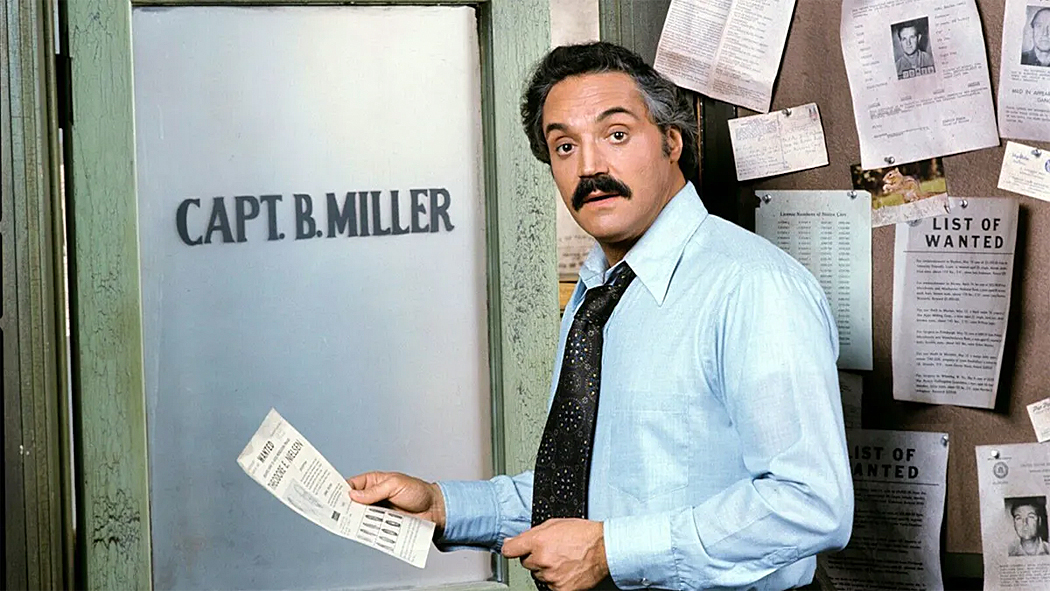
But I would include also: Taxi, Barney Miller, Dick Van Dyke, Cheers, The Bob Newhart Show (the original one), and a few that I never warmed to, but still have a cultural significance, like Friends and Married… With Children. All are or have been in the national conversation.

I should also include a few British series that have had an impact, mainly Fawlty Towers, the British Office, and Absolutely Fabulous.  

Class B includes all the quality shows that came and went, with funny characters and solid jokes, but never buried into the Zeitgeist in quite the same way. All solid entries. You can add quite a few to this list and it will depend on your taste and funny bone. I would include: 3rd Rock From the SunBlack-ish; Brooklyn Nine-Nine; Frasier; Golden Girls; The Good Place (should be in Class A, but not enough people watched); Happy Days; Malcolm in the Middle; The Middle; Mike & Molly; Modern Family; The New Adventures of Old Christine; Parks and Recreation; Scrubs; Two and a Half Men; Veep; WKRP in Cincinnati; and your choice of others. Among my favorites are Mom, Night Court, Reno 911. Individual taste may vary. (I have not included many of the old shows from the ’50s and ’60s that few people have had a chance to see: My Little Margie, Private Secretary; Topper.)

The next rung down, in Class C are the workaday shows, sometimes OK time-wasters, but full of cliched characters and tired jokes — the kind that have the familiar form of jokes, but seldom the wit or laughs. Writing on autopilot. This is the vast majority of TV sitcom bulk. The roughage and fiber of the viewing diet. 
When we watch these, it is often more out of habit than desire. The forms are familiar and the laugh track tells us when a joke has passed by. Did anyone ever think The Munsters was prime comedy? or Gilligan’s Island? McHale’s Navy? Saved by the Bell? Mediocrity incarnate. Hogan’s Heroes? I could name a hundred, propelled by laugh tracks and the need of writers to fill air time. Networks toss them on the screen, hoping they’ll stick. Some do, but only because they are gluey. 

Wikipedia lists hundreds of sitcom titles and I would guess some 75 percent of them fall into Class C. At least half of those are gone in a single season, un-renewed, or cancelled after a few goes. The rest stick around because they are not overly offensive. They may feature actors we like, even if they have to spout insipid dialog. 

Bewitched; The Brady Bunch; Chico and the Man; Community; Ellen; F Troop; The Facts of Life; The Flying Nun; I Dream of Jeannie; Last Man Standing; The Monkees; Perfect Strangers; That ’70s Show; Who’s the Boss? Go ahead: Make a case for any of them. Tube fodder. 

Three’s Company is the epitome of Class C, although my son, deeply knowledgeable in the ways of film and media, assures me it is a classic. He loves it. De gustibus

Then, there is the bottom feeding Class D, those shows so bad they have become legend. My Mother the Car is the type specimen for this class. A series only a studio executive high on cocaine and bourbon, and distracted by facing an expensive divorce and maybe a teenage son in jail  could have green-lighted. Quite a few of these were meant to be vehicles for aging film stars given their own sitcom series. The Doris Day Show, The Debbie Reynolds Show, The Tammy Grimes Show, Mickey (with Mickey Rooney), The Paul Lynde Show (in which he is an attorney and family man), Wendy and Me (with George Burns and Connie Stevens), Shirley’s World (Shirley MacLaine as a photojournalist), and The Bing Crosby Show. Most of these didn’t make it past the first season. 

Also at the dismal bottom: Hello Larry, New Monkees, She’s the Sheriff, The Trouble with Larry (“not just not funny, but actively depressing”), Cavemen, Homeboys in Outer Space, The Ropers. Most cancelled after one season. 

In England, Heil, Honey, I’m Home with Adolf and Eva never made it past the first episode. (currently unavailable on streaming or disk. Too soon?).  

Among the abject failures are most of the American remakes of popular British comedies. Many of them never made it past the pilot stage.

And so, you have four general classes of television sitcoms. The best worthy of saving for future generations, the worst best left for whatever is the digital version of the bottom of the canary cage. 

The past wasn’t so different. What we remember of classical Roman comedy are what is extant. Much isn’t. A good deal of it was probably just as banal as most bad TV. We don’t know: It didn’t survive. The Victorian novel was largely a serial enterprise, like seasons of a sitcom, weekly chapters published. But for each Dickens or Trollope, there were dozens, maybe hundreds of lesser works now mostly forgotten. In time, we will no doubt continue winnowing the TV past, saving the Norman Lears and perhaps the Chuck Lorres and ranking them as our Plautus and Terrence. Perhaps. 

The low arts can still be art.

“Venice,” woodcut by Dürer

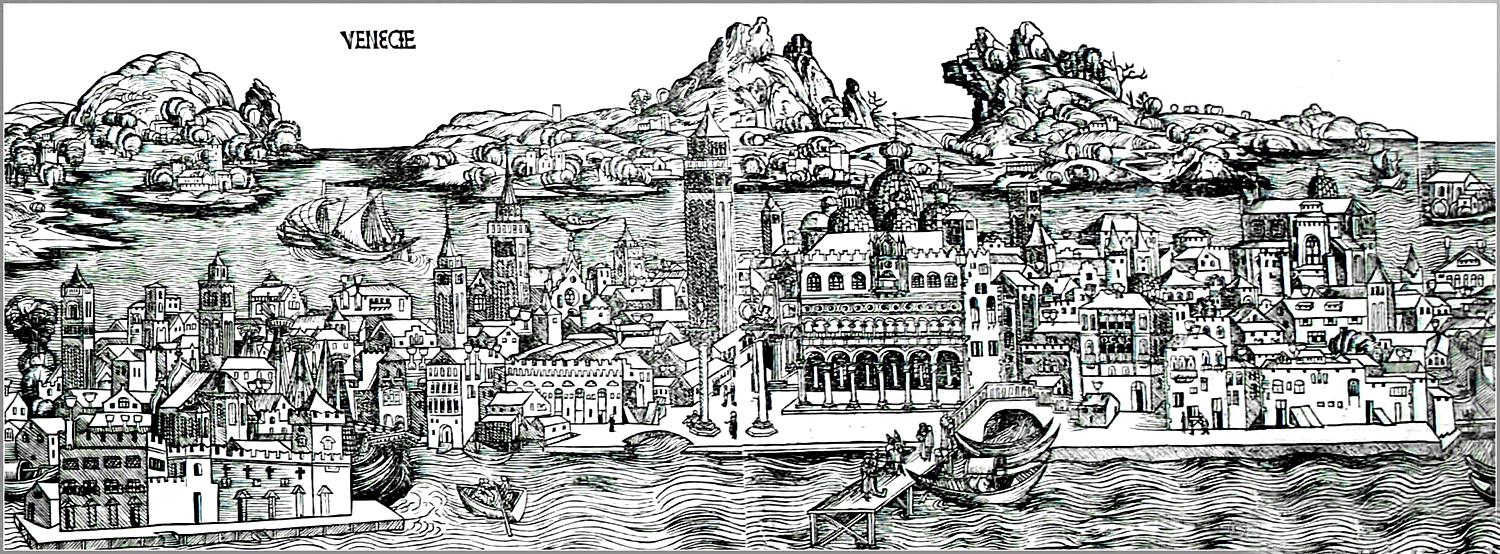
In 1494, at the age of 23, after years of apprenticeship as an artist in Nuremberg, Albrecht Dürer left Germany to visit Venice and Italy and find out what all the Hoohah was about. He was amazed at what he saw and  when he returned home to Germany, he brought the Italian Renaissance with him. He went back south for seconds in 1505 and stayed for over a year, soaking up the influences. It was what he had to do if he wanted to see what the Big Boys were doing. 

If you wanted to see, you had to travel. There were no full-color coffeetable art books to thumb through. If you wanted to see the work of Bellini, you had to go to Venice; for Raphael, to Rome. 

“Goethe in Italy” by Johann Heinrich Wilhelm Tischbein, 1786

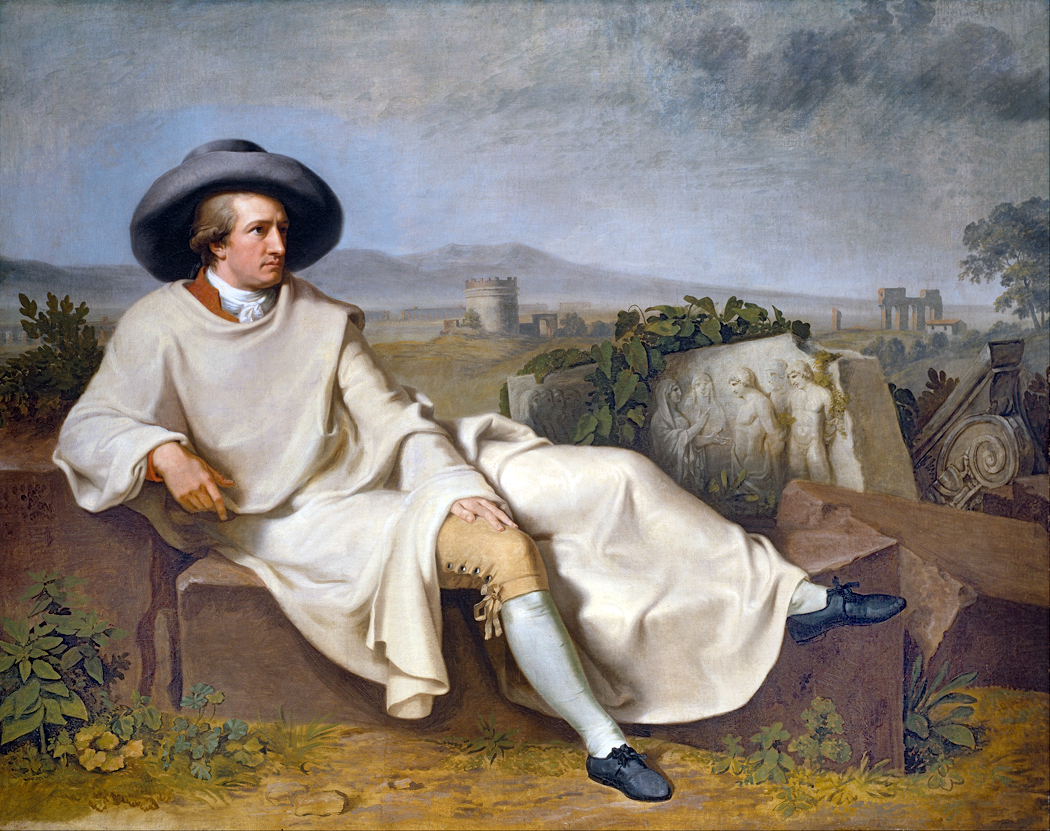
In 1786, Johann Wolfgang von Goethe, then age 37, made the trip, this time to see the Roman and Greek sculpture that had been so highly praised in the work of Johann Joachim Winckelmann. He stayed until 1788, studying more than the statues, including many statuesque young women, which he later wrote about in his book of poetry, Roman Elegies

For most of history — until improvements in color printing in the middle of the 20th century — the only way to see famous art was to leave home and go there. Yes, there were engraved black and white copies published, and later monochrome halftones, but you could not really get a sense of Rembrandt or Titian without traveling. 

It gave rise in 17th century to the practice of upper-class families sending their sons on the “Grand Tour” to become educated and cultured. From the 1600s to about the middle of the 19th century, it was common for well-off young men to take a “gap year” — or two — to visit the Continent and see the sights and become men of the world before taking up their roles in government or business. Of course, many of these youths were more attracted to the live demoiselles and regazze than to the canvas madonnas. 

“Rose,” Philbert-Louis Debucourt 1788

It wasn’t just visual art. Before recordings, if you wanted to hear a Beethoven symphony, you had to attend a live concert. If you lived outside the city, you had to travel to get to the concert hall. Bach famously walked 280 miles from Arnstadt to Lübeck in order to hear Buxtehude play the organ. Even to hear now-famous symphonies and concertos you likely had to wait years between programmed performances. You might be lucky to have heard Beethoven’s Fifth once or twice in your life. Now, it seems, you can’t get away from it. 

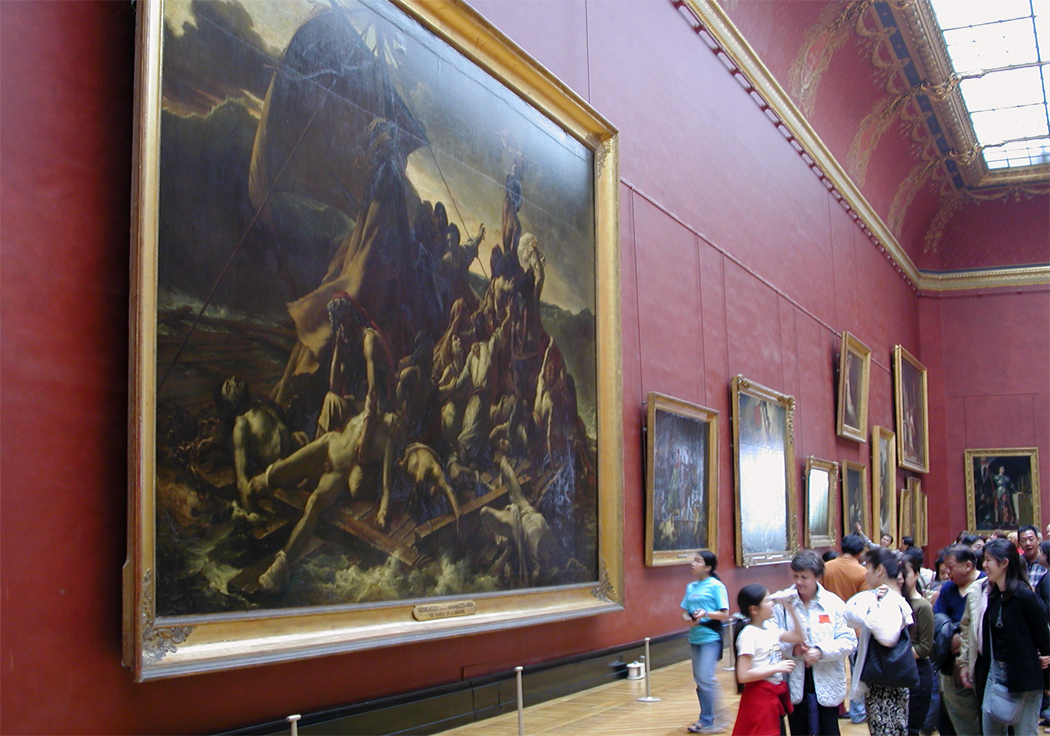
Today, when you can own 30 different CDs of the Beethoven symphonies and have your choice from Furtwangler to Norrington; you can fill your bookshelves with illustrated volumes of any artist you want; and watch endless YouTube videos about the Mona Lisa, it is important to remember that they are not the actual experience of the art in question, but varyingly faithful simulacra. You still need the real thing. A three-inch color plate of Gericault’s Raft of the Medusa cannot replicate the experience of seeing the real thing.

And so, we go to museums and galleries to get to know the art that is our cultural inheritance. Even today people travel across the world to see some of the world’s most famous art. The Grand Tour still exists, if only in ghost form, as a gap year or a summer abroad. My granddaughter had her high school summer in Italy. The traditions continue. Such travel affords an education that books just cannot give. 

In the 1960s, I accompanied my grandmother when she went back to the Old Country for the first time since she was five years old. We went to the village where she was born, Mosby, in southern Norway, and as part of that trip, I was sent on a (literal) Cook’s tour of Western Europe, taking in Germany, the Netherlands, Belgium, Luxembourg and France. I saw the Cologne cathedral, Notre Dame de Paris, Ste. Chapelle and the Louvre, among other things. Mostly, it made suburban New Jersey seem even more banal. 

Met; Guggenheim; Frick; Whitney; Cloisters; MoMA

But then, I tried to escape the Garden State as much as possible. I was lucky: I had my own Grand Tour just a few miles away. During my own high school years, living on the Jersey side of the George Washington Bridge, I spent as much time as I could in Manhattan, going to concerts and visiting all the museums: The Met, the Guggenheim, the Frick, the Whitney, the Cloisters, the Asia Society, even the long-gone Huntington Hartford Gallery of Modern Art on Columbus Circle. 

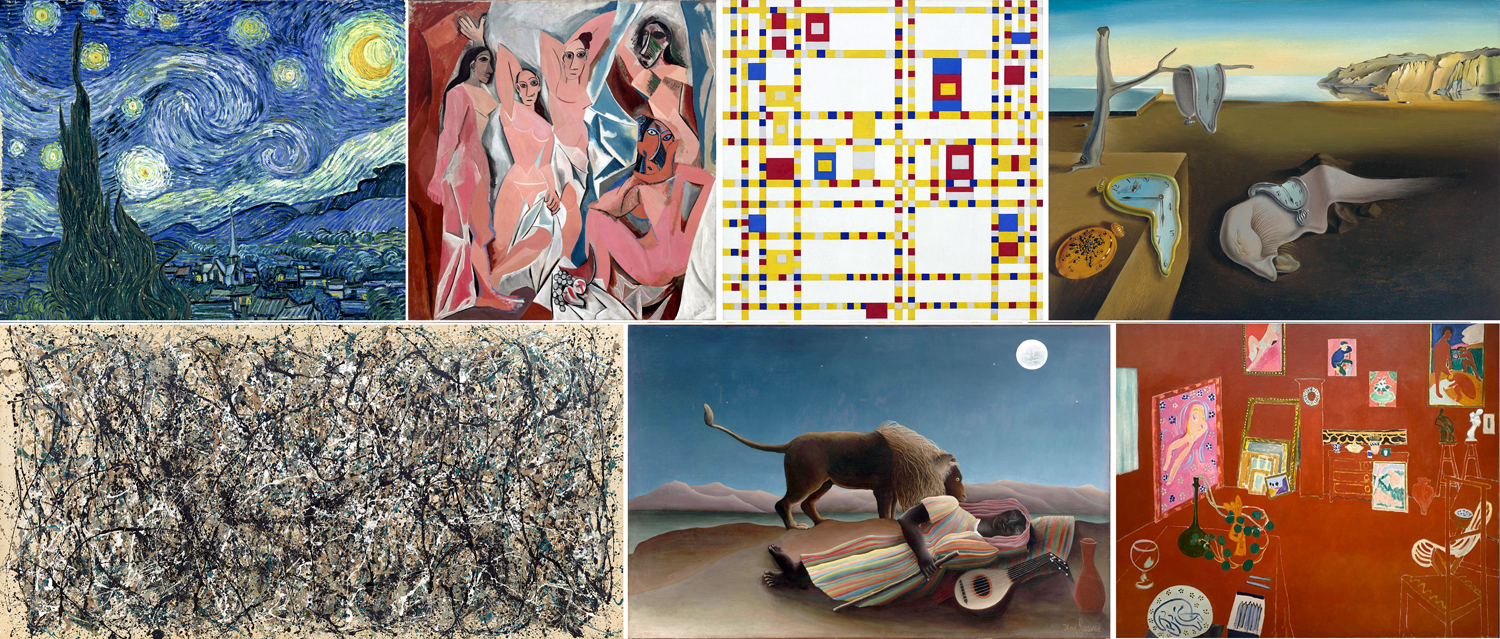
And most of all — the Museum of Modern Art, where I felt most at home. I came to know many famous paintings as old friends. Van Gogh’s Starry Night; Matisse’s L’Atelier Rouge; Picasso’s Demoiselles d’Avignon; Pollock’s One Number 31; Mondrian’s Broadway Boogie-Woogie; Henri Rousseau’s Sleeping Gypsy; Dali’s Persistence of Memory — all proper blue-chip Modern Art landmarks. 

After I went away to college, I frequently made the trip to Washington, D.C., to visit the National Gallery of Art, and later, the Hirschhorn and Corcoran. I ate up art like a starving man. It’s hardly surprising that I later made my career as an art critic. 

And working for the newspaper, I was sent around the country for major exhibits in Boston, New York, Chicago, LA, San Francisco, Seattle, Philadelphia. I was even sent to South Africa in 1989 to study the art scene there. And vacations brought me and my wife to France many times. Seeing as much as possible and finding troves of art in even small corners of the Continent. 

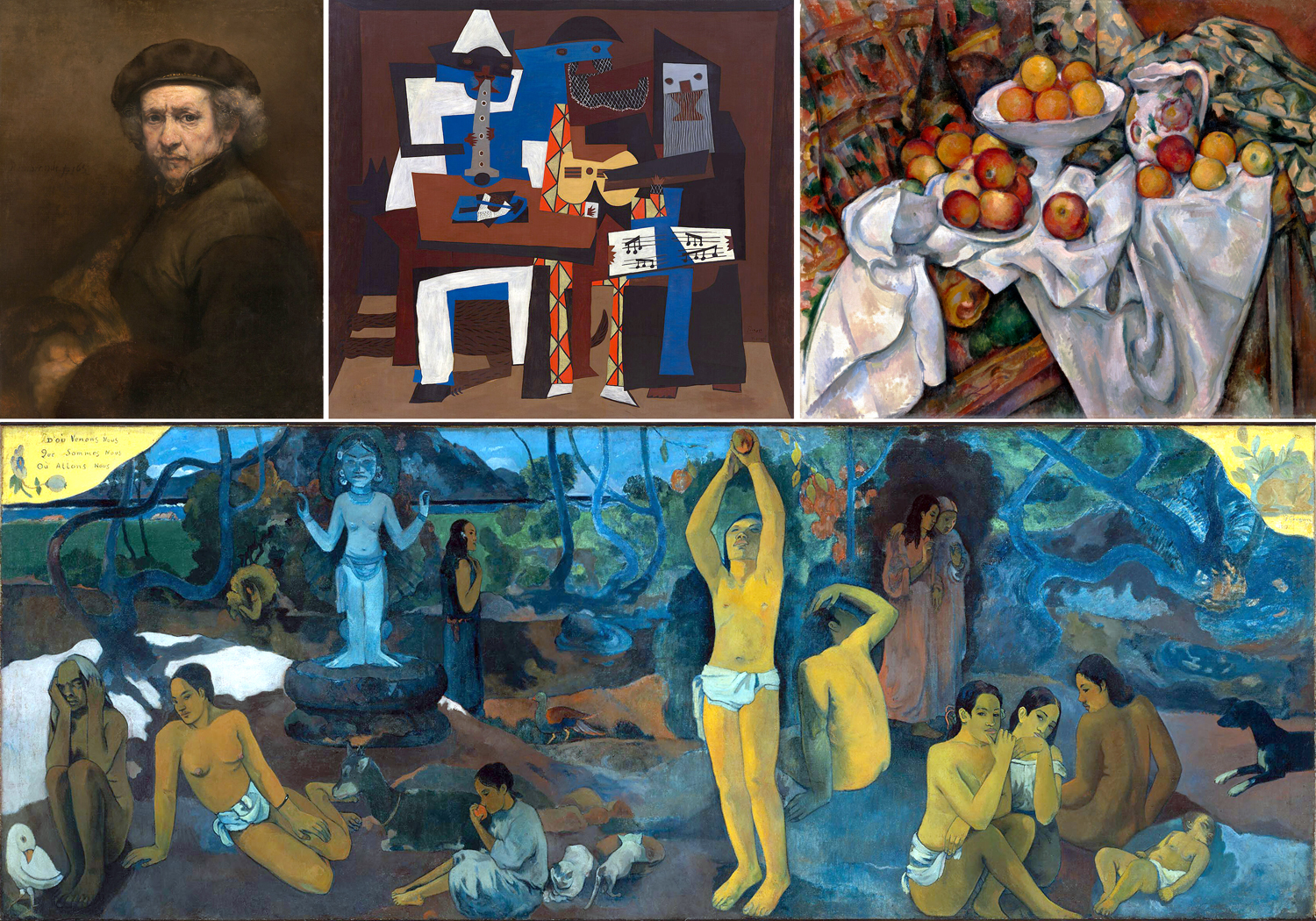
There have been dozens of important artworks I have been grateful to have known, not just in reproduction, but live, in front of my own eyes. My inner life is infinitely enriched by the experiences. There are many I could name, from Rembrandt’s self portrait in DC to Gauguin’s Where Do We Come From? What Art We? Where Are We Going? from Boston, but I need to pick out at least these six as central to my understanding of art, and of life. 

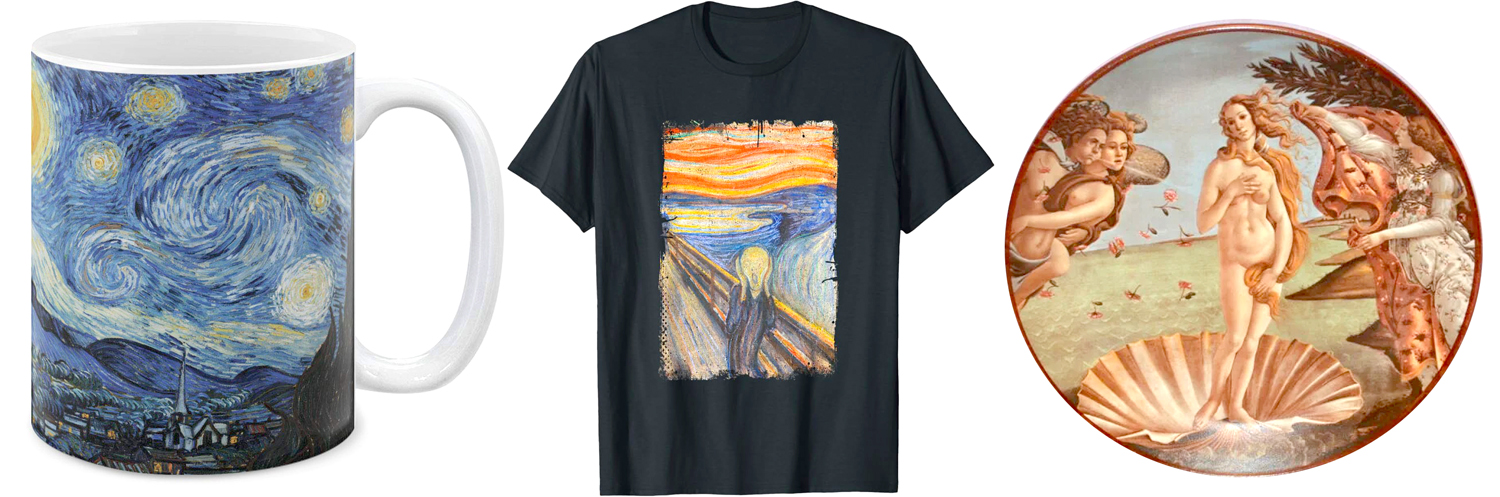
When you know works from reproduction, you cannot feel their size, cannot know the precise colors and pigments used, cannot grasp their tactile surfaces. Some of the most famous art in the world is known to most people by their reproduction on coffee mugs, T-shirts or commemorative plates. What you think is art is really just iconography — the nameable subject matter. The actuality, the physicality of the work is irrelevant in such cases. Seeing the original can then be a revelation. 

So here are the six works that have meant the most to me, that I am most grateful for having been able to know personally.

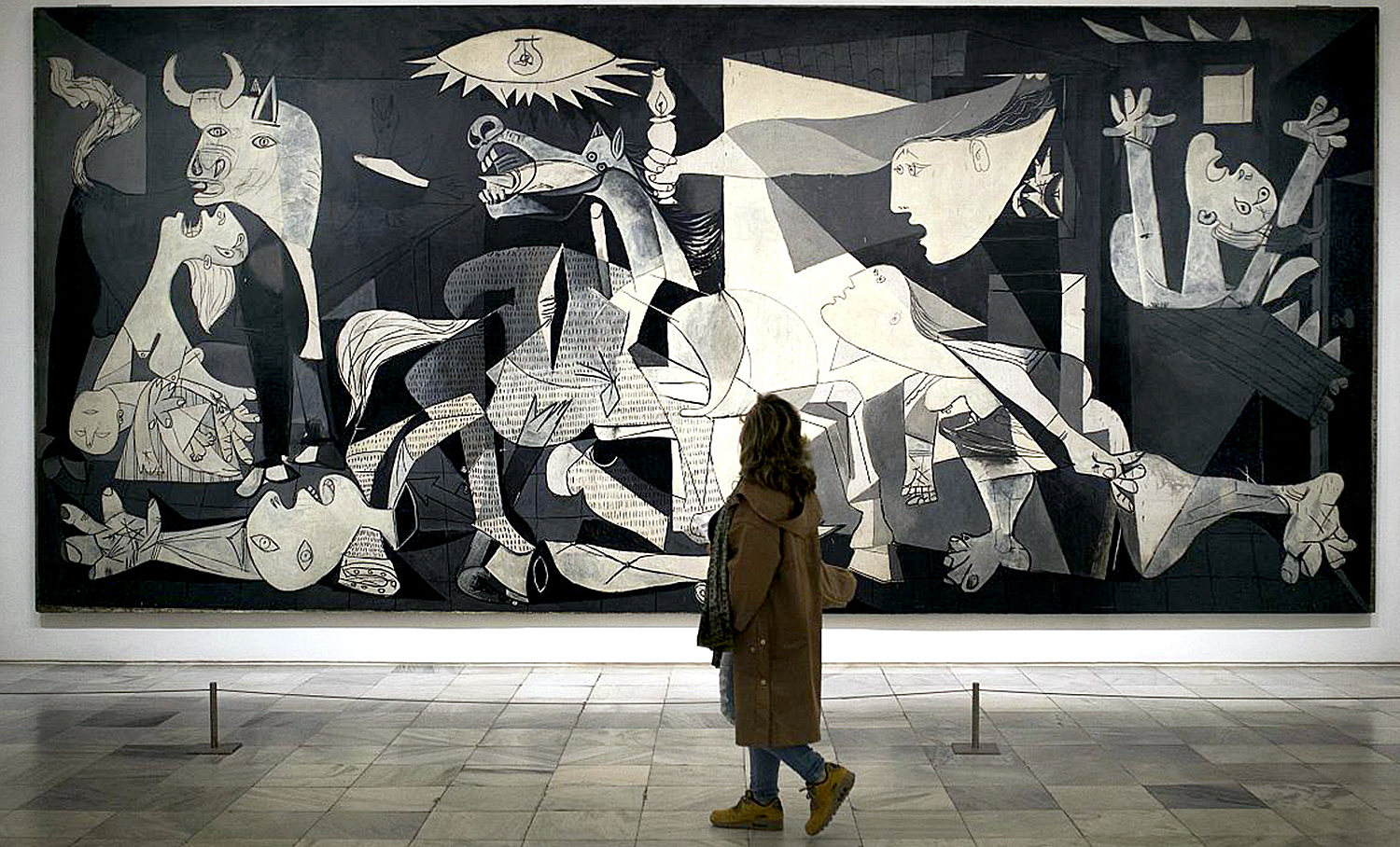
Picasso, Guernica — When I was growing up, this, perhaps the greatest painting of the 20th century, was sitting in the Museum of Modern Art in Manhattan, and I visited it often. As a teenager, I knew it was “important,” because I had seen it in books and magazines. But I thought of it as “mine,” because I knew it would always be there for me. Alas, in 1981, it was repatriated to Spain, where, I have to admit, it belongs. An old friend moved away. It was the first important artwork that I had what felt like a personal relationship with. 

Jackson Pollock, Blue Poles — In reverse, Blue Poles is a painting that came to New York for me. Pollock’s 16-foot drip painting from 1952 was auctioned off from a private collection in 1973 and sent to Australia. I loved many of the great Pollocks from MoMA and the Met, but thought I had lost the chance forever to see perhaps his most famous work. But a retrospective Pollock exhibit in 1998 at MoMA brought it back temporarily to the Big Apple. I got to see it there, where it was the jewel-lit highlight of the last gallery. 

Grünewald, Isenheim Altarpiece —  The giant altarpiece comprises 10 paintings by Matthias Grünewald, including the pathos-laden crucifixion as its centerpiece, and a group of polychrome wood sculptures by Nikolaus Hagenauer, executed between 1512 and 1516. It sits in the Unterlinden Museum in Colmar, Alsace, France. The altarpiece was designed to be either closed or open, with various panels showing at different times in the Catholic calendar. I have no stake in the religious significance, I cannot help but be overwhelmed by the pathos and power of the work. 

Lascaux II — The cave paintings at Lascaux, France, date from about 20,000 years ago. They were discovered in 1963 and include about 600 images of prehistoric animals. The caves have been closed since 1963 to protect them, but a copy has been made and open to the public. I never thought I would get to experience them, but I got to visit both the reproduced experience at Lascaux II, but also the genuine cave art at nearby Font-de-Gaume. Seeing the original art there threw my spine into a buzz of uncanny deep-time — a state not rational but limbic. 

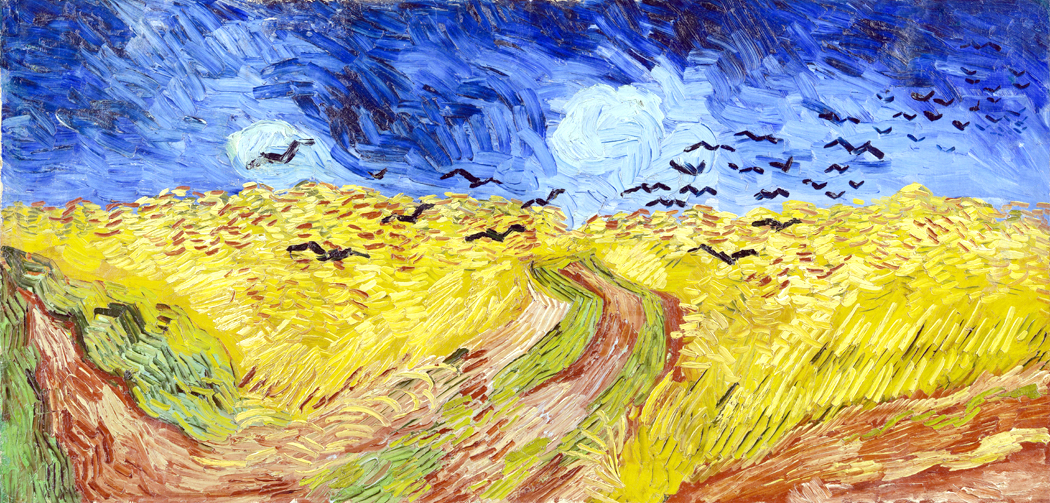
Van Gogh, Wheatfield with Crows — In 1999 the LA County Museum of Art mounted a 70-piece show of the paintings of Van Gogh from the Van Gogh Museum in Amsterdam, including many of his most famous works. My job got me sent to cover the exhibit and I was blown over by the works (also, astonished at how amateurish and awful many of his early works were: It took a while for Van Gogh to become Van Gogh). 

One of the last paintings in the last gallery was Wheatfield with Crows and up close you could see who wild and feverish the artist’s brushstrokes were, and what colors sat on his pallete, left largely unblended on the canvas. 

North Rose Window, Chartres Cathedral — I have been back to Chartres many times, and each visit, I spend a half hour, at least, sitting in the transept staring at the North Rose Window. It is, as I have said many times, the single most beautiful man-made creation I have ever seen. It is transcendent, a glowing object of meditation, whose shapes seem to move, to dance around the centerpoint. I am awe blasted. It almost makes up of all the misery, suffering and death human beings cause to each other. 

This is, of course, a limited selection. Before writing, I made a list of paintings, sculptures, plays, operas, architecture, poems, novels — I could just make a list of the types of art that would already be too long to include in a single blog entry. Narrowing down to visual arts still left me with too many things to write about — hence my squeezing it all into only six works. (It tried to make a conventional 5, but I already feel bad about only including six.) 

Seeing all this art and lamenting all that I never had a chance to see, only reinforced my sense that art is not just what makes us human, but how it makes us human. 

I was talking with my very Southern wife about how those brought up down here have a stronger connection to the land than us Yankees. Southerners have often lived on the same patch of land for generations and their sense of identity can course back through great-grandparents and beyond. Your sense of who you are includes the centuries before you were born. New Jersey never gave me that.

But I do have that same sense when looking at the paintings or hearing the music of the past. This all gave birth to me; it is who I am. We too often think of culture in terms of hoity-toity high culture. But really, culture is all the things that have accumulated over time to make the lives we now take for granted. 

When I see or hear the so-called canonical works of Western culture, I have that sense of belonging to a long, continuous line. It speaks to me; it tells me who I am. 

We’ve all heard of Alexander the Great, William the Conqueror, or Suleiman the Magnificent. Who wouldn’t want to be known to history by such flattering names? But among the many kings, princes, barons and otherwise leaders, there are a few names a bit less splendiferous.

Alexander the Great; William the Conqueror; Suleiman the Magnificent

Every literate English speaker has probably heard of Ethelred the Unready, but what about Ivar the Boneless? We think of the third Julian Roman emperor as Caligula, although his actual name was Gaius Caesar Augustus Germanicus. “Caligula” was a less-than-laudatory nickname which actually means “little boots,” because when he was a boy, he tried wearing a real soldiers footware and the troopers made fun of him by calling him Little Boots, or “Bootsie.”

But the list of unflattering cognomens, sobriquets and nicknames is really quite long. Not everyone was the Sun King. There was also Sebastian the Asleep of Portugal, who reigned from 1554 to 1578. And Barefoot Magnus III of Norway (1073-1103). Or Johann Georg the Beer Jug, Elector of Saxony from 1611 to 1656. As you might have surmised, he loved to bend his elbow. 

Alfonso the Leper; Ivaylo the Cabbage; Piero the Gouty

None of these men seem to have had press agents spinning their boss’ reputations. Richard I may have been Lion-Hearted, but the Third was Richard Crookback. Ivaylo the Cabbage ruled Bulgaria in the 13th century. The grandson of Barefoot Magnus ruled Norway from 1130 to 1135 as Magnus the Blind. Vasili Kosoi ruled Moscow in the 15th century as Vasili the Cross-eyed. And, of course, Charles the Bald, or Charles II of France, who apparently had a full head of hair. 

Physical debility seems to have been popular. William the One-Eyed of Meissen; Peter the Stutterer of Portugal; Sverker the Clubfoot of Sweden; Piero the Gouty of Florence; Alfonso the Leper of Portugal. Eric XI of Sweden (1216-1250) was called Eric the Lisp and Lame.

 The most famous was probably Timur the Lame, who conquered much of the world and best known as Tamerlane. And don’t forget Uros the Weak of Serbia. Or Wilfred the Hairy of Catalonia. 

Wilfred the Hairy; Ethelred the Unready; Halfdan the Bad Entertainer

The 1100s featured Bolesłav the Curly in Poland, Conan the Fat in Brittany, and Ragnvald Roundhead in Sweden. 

John the Posthumus was born in France in 1316 after his father’s death and so was born a king already. He lived only a few days, and so was king from birth to death. 

In AD741 Constantine was born in Byzantium and when he was baptized, the infant defecated in the baptismal font and so became ever after Emperor Constantine the Dung Named. 

Sancho the Populator was king of Portugal in the 13th century (that nation seems to get a lot of these names). He had 20 children, both legitimate and otherwise. But he is beat out by John the Babymaker of the Holy Roman Empire in the 16th century, who had 63 illegitimate kids. Something for Elon Musk to aim for, I guess. 

On the other hand, there was Henry the Impotent of Castile in the 15th C. and nasty old King John of England was called John Soft-Sword. 

Louis Do-Nothing; Louis the Unavoidable; James the Shit

England has had its share of names, some glorious, like Elizabeth I as Gloriana, but otherwise, there was George IV, known as the Prince of Whales because of his obesity, and George III, known as derisively as Farmer George for his less-than-regal interest in agriculture. And James II was known in Ireland as Seamus as Chaca or “James the Shit” for his treatment of that country.

I love encountering these historical names. Constantius the Pale was Roman emperor. Stupid Willy was Wilhelm I of Germany. Louis Do-Nothing was Louis V of France. Germany had Wenceslaus the Drunkard. And Portugal (again) had Manuel I, the Grocer-King. 

Coloman the Bookish ruled Hungary in the 12th century and Ivan I of Russia was Ivan Moneybags. And King Ludwig of Bavaria was Mad King Ludwig. And while Vlad Tepec is remembered to history as “Vlad the Impaler” and the model for Dracula, Besarab IV gained the throne of Wallachia with Vlad’s help and was then known as Besarab Tepalus, or “The Little Impaler.”

Then, there’s Alfonso the Slobberer, King of Galicia from 1188-1230, who foamed at the mouth when angered. And Eystein Halfdansson, an 8th century Norwegian king known as Eystein the Fart. Eystein’s son was known as Halfdan the Bad Entertainer — couldn’t throw a decent party. Another Norwegian king, from the 13th century was Haakon the Crazy. King Harald I of Norway from 1454 to 1474 had several names. He was Harald Fairhair, but that may have been meant ironically, since he was also Harald Tanglehair, Harald Shockhead and Harald the Lousy.  

Harald Tanglehair, aka Harald the Lousy

Finally, Eric II of Denmark was Eric the Memorable but doesn’t seem to have done anything of note in his short four-year reign, at least not that anyone can remember.

These are just a few epithets and sobriquets. Wikipedia lists more than 200 historical figures once named as “The Great,” From Abbas the Great of Iran (1587-1629) to Zayn al-Abadin the Great, Sultan of Kashmir (1418-1470). Alexander the Great wasn’t called that until the Roman playwright Plautus named him that in a play, Mostellaria, in the Third Century BCE. He was also known, in Persia as Iskander the Accursed. 

A list of monarchs by nickname in Wikipedia contains a thousand entries, some quite familiar, like Ivan the Terrible, some more obscure, such as Piero the Gouty of Florence, Italy. 

Constantine Dung-Named; Childeric the Idiot; Ferdinand the Bomb

Some have more than one alternate identity. Napoleon Bonaparte had at least 21, including L’Aiglon (The Eagle), Le Petit Caporal (The Little Corporal), The Corsican, The Gunner of Toulon, Little Boney, and more. Most of them authored by his enemies, who seemed hesitant to pronounce his actual name. And so: The Nightmare of Europe, the Corsican Ogre, The Devil’s Favorite, The Fiend of Europe (or just, The Fiend). The British seemed to hate and fear Nappy the most and never seemed to run out of insulting names for the man. 

Superstition about saying certain names out loud have given us many of these. Avoiding the name of the Devil has given us a bunch of  folktale cognomens: Old Scratch, Old Nick, The Evil One Split-Foot, Father of Lies, Green-horned Monster, Jimmy Square-Foot, Old Adam, Tail-N-Horns, the Wicked One, Rule of Demons. 

Which brings us to Donald John Trump. No one recently has accrued so many alternate cognomens, epithets or sobriquets. One single website lists 409 of them. Nixon might have been Tricky Dick and Clinton was Slick Willy, but no one before has had them delivered by the truckload. I stopped looking after about 800 of them. (I’m not going to list them all — I haven’t the heart). Everyone has their favorites. 

They fall into several vast categories: His lying; his heft; his thin skin; his greed and self-dealing; his tweeting; his name-calling; his business failures; his sexual predation; his fascism; his failing mental powers; his word salad — the list goes on. And let’s not forget his orange hue or his hair, or his too-long ties, his golf cheating, or his bragging or the garish bad taste of a tinpot dictator. He makes it easy. 

In his first term I began calling him — Moose-a-Loony. It’s almost a party game to make up new to call him. It’s fun; try it. Orange Foolius. (Although younger readers might not know where that one comes from.) Large-mouth Ass. Keep it going. Your turn. 

Among my favorites: Trumplethinskin: Trumpster Fire; Mango Mussolini; Cheat-O; Tangerine Palpatine; Mar-a-Lardo; Captain Bonespur; Hair Furor; Prima Donald; Assaulter-in-Chief; Boss Tweet; Deadbeat Donald; the Lyin’ King; The Man of Steal; Forrest Trump; Donny Dementia. Use these and no one needs to be told who you are referring to. The Creature from the Orange Lagoon. 

Everyone who wants is free to invent more of them. Late night talk show hosts seem to come up with new ones each night for a good laugh. 

Stephen Colbert called him the Orange Manatee; John Oliver said he was Rome Burning in Man Form; Seth Meyers dubbed him Creep Throat; Jon Stewart said he was a Decomposing Jack-O-Lantern. Samantha Bee called him a Screaming Carrot Demon, and also America’s Burst Appendix. Trevor Noah said he was a Pile of Old Garbage Covered in Vodka Sauce (although I would have thought “ketchup” more apt). 

The characterization that seems to have gotten under the Tangerine-Tinted Trashcan Fire (S. Bee) more than any other was delivered almost 40 years ago in 1988 when Vanity Fair editor Graydon Carter called him a “short-fingered vulgarian.” 

Carter said that he made the comment “just to drive him a little bit crazy.” And according to Carter, it still does.

“To this day, I receive the occasional envelope from Trump. There is always a photo of him — generally a tear sheet from a magazine. On all of them he has circled his hand in gold Sharpie in a valiant effort to highlight the length of his fingers,” Carter said. “I almost feel sorry for the poor fellow because, to me, the fingers still look abnormally stubby.”

But whether his fingers are abnormally short or not, there is no question he is a vulgarian. Every time DJT opens his pie-hole he demonstrates how little class he possesses. “Quiet, Piggy!” 

And so, we keep renaming the Yam-colored Yammerer, as if we don’t want to have to say his name. 

A linguist named Jenny Lederer said, “people feel like not repeating his name is [a way of] not speaking to the brand and the value system that goes along with his political ideology.”

Even a mention of his name is a problem, with a kind of folk-magic power, causing many of us to avoid it. Tweets will spell the name “Tr*mp,” like it’s a four-letter profanity, although that doesn’t really hide the name, but it does make the Tweet unsearchable by the keyword, “Trump,” and so limits its spread.  And the asterisk implies that his name is vulgar, like the the dirty words censored in old books. 

One is left to wonder what posterity (if there is posterity) will finally settle on as the epithet for “He-Who-Must-Not-Be-Named.” 

We have Old Hickory, Honest Abe, Silent Cal, the Gipper, Bubba and Dubya — but how will we ever choose from the superfluity of imprecations  swirling around Trump as he circles the drain? 

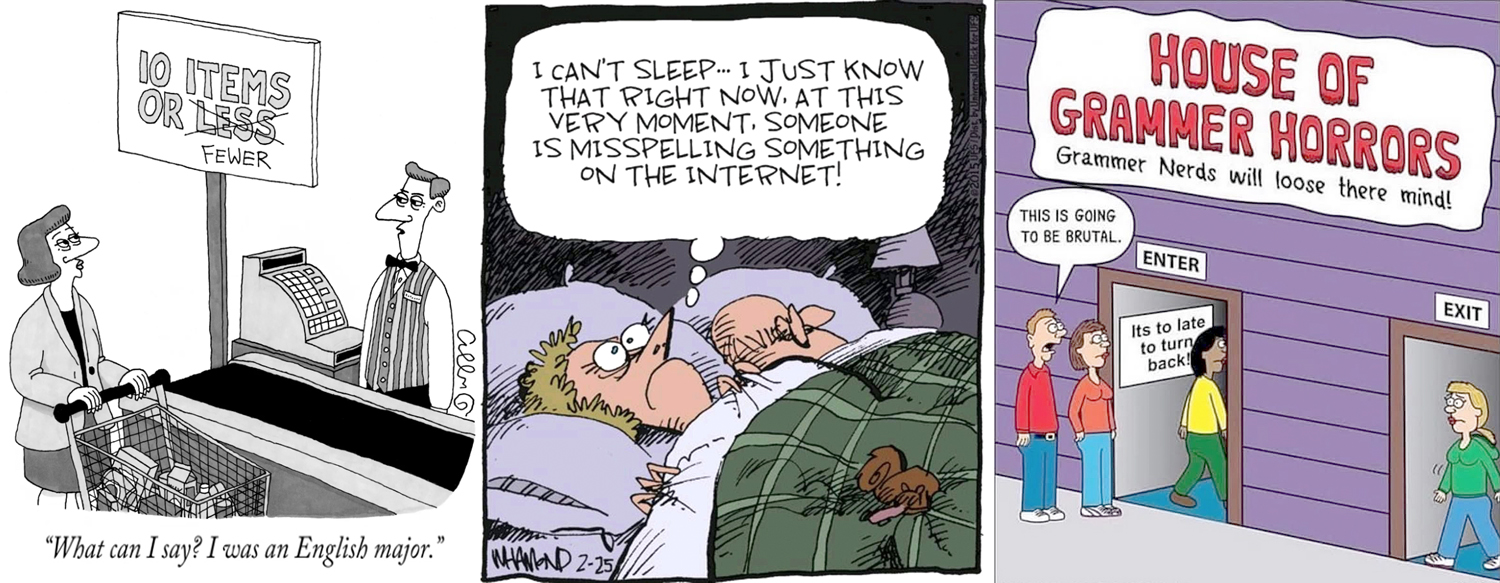
I was an English major and I’m married to an English major and it’s hard being an English major and only getting harder. An English major feels genuine pain hearing the language abused, mal-used, corrupted and perverted. 

I’m not talking here about outdated grammar rules and a fussy sort of prisspot pedantry. As a matter for fact, one of the most persistent pains a true English major suffers is such misplaced censure, especially when interrupting a casual speaker to let them know that “them” is plural and “speaker” is singular. In my book, this is merely rude. A caboose preposition is nothing to lose sleep over. 

No, what I’m writing about here is are things that are genuinely ugly or purposely unclear, or overly trendy, to the point of losing all meaning. You know — politics. That and corporate language, or management speech — which I call “Manglish” — is a great corrupter of speech. 

“We have assessed the unprecedented market shifts and have decided to pivot this company’s new normal to a deep-dive into a robust holistic approach to our core competency, circling back to a recalibrated synergy amid human capital in solidarity with unprecedented times.”

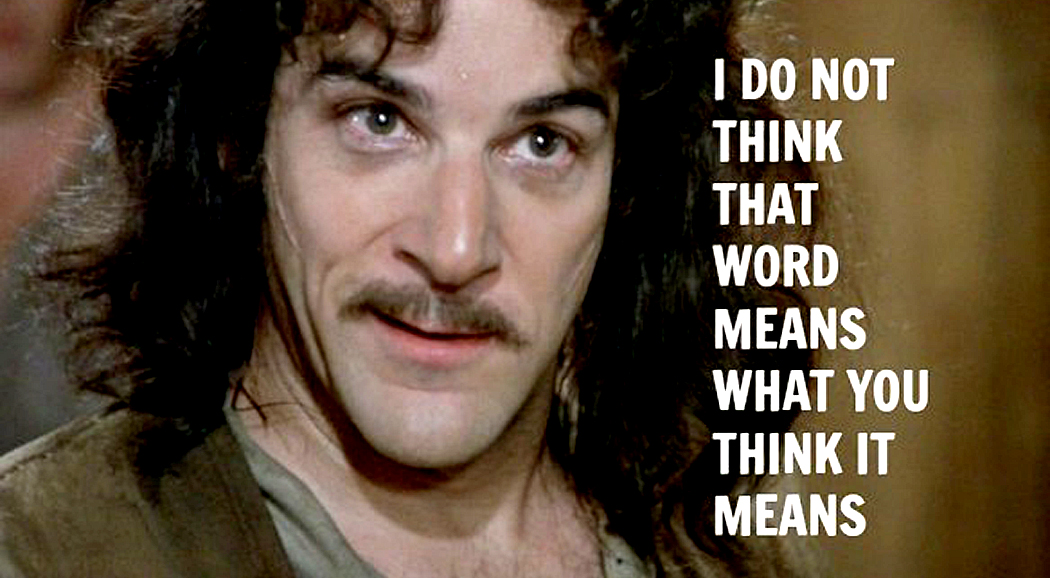
Committees try to make language sound profound and wind up writing piffle. I’m sure it was a committee that agreed in Iredell County, N.C., to make the county slogan, “Crossroads for the future.” I do not think that word means what you think it means. 

I wrote for a daily newspaper and language was my bread and butter, but the higher you go up the corporate ladder, the worse your words become. I remember the day they posted a new “mission statement” on every other column in the office, filled with buzz-word verbiage that didn’t actually mean anything. I looked at my colleague and said, “If I wrote like that, I’d be out of a job.”

But it isn’t just Manglish. Ordinary people are becoming quite lax about words and meanings. Too often, if it sounds vaguely right, it must be so. And you get “For all intensive purposes,” “It’s a doggy-dog world,” being on “tender hooks,” or “no need to get your dandruff up.”

“I’ve seen ‘viscous attack’ too many times recently,” my wife says. “It gives me an interior pain like a gall bladder attack.” 

And the online world is full of shortcuts, some of which are quite clever, but most of which are just barbarous. An essay about digital usage is a whole nother thing. Not room here to dive in. 

But, there is a world of alternative usage that is not standard English, that any real English major will welcome as adding richness to the mother tongue. Regionalisms, for instance. Appalachian dialect: “I’m fixin’ to go to the store;”— actually, that is “stoe,” rhymes with “toe” —  “I belong to have a duck;” “I have drank my share of Co-Cola.”

And Southern English has served to solve the historical problem of having lost the distinction between the singular “thee,” and the plural “you,” with the plural “you all,” or “y’all.” Although, more and more “y’all” is now being used also for the singular, and so is becoming replaced with “all y’all.” Keep up, folks. 

Then, there’s African-American English, which has enriched the American tongue immensely, as has Yiddish: “Shtick,” “chutzpah,” “klutz,” “schmooze,” “tchotchke.”

Regionalisms and borrowings are like idioms. Sometimes they don’t really make sense, but they fall comfortably on the tongue. “Who’s there?” “It’s me.” Grammatically, it would be proper to say “It is I,” but no one not a pedant would ever say such a thing. The ear is a better arbiter than a rulebook. 

George Orwell ended his list of rules for writing with the most important: “Break any of these rules sooner than say anything outright barbarous.”

English is a happily promiscuous tongue and so much of the richness of the language comes from borrowings. But there are still other problems: bad usage, misuse of homonyms, loss of distinctions. The English major’s ears sting with each onslaught. 

What causes our ears to burn falls into three broad categories. Things that are just wrong; things that are changing; and things that offend taste. Each is likely to set off an alarm ping in our sensitive English major brains. 

Every time I go to the grocery store I am hit with “10 items or less.” Few people even notice, but the English major notices; we don’t like it. “Comprised of” is a barbarism. “Comprises” includes all of a certain class, not some items in a list of choices. I feel slapped on the cheek every time I come across it mal-used. 

And homonyms: a king’s “rein,” or a book “sited” by an article, or a school “principle” being fired. It happens all the time. It is endemic online. “Their,” “they’re,” “there” — do you know the difference? “You’re,” “your?” Most young’uns IM-ing on their iPhones don’t seem to care. 

And fine distinctions of usage: I am always bothered when I see a murderer get “hung” in an old Western, when we know he was “hanged.” 

Again, most Americans hardly even notice such things. They all get by just fine not caring about the distinction between “e.g.” and “i.e.” In fact, they can get all sniffy about it. 

I know a former medical transcriptionist who typed up a doctor’s notes each day, and would correct his grammar and vocabulary. She corrected the man’s “We will keep you appraised of the outcome,” with “apprised,” and each time, he would “correct” that back to “appraised.” Eventually, she gave up on that one. 

English majors know the difference between “imply” and “infer,” and it causes a hiccup when they are mixed up. “Disinterested” mean having no stake in the outcome; “uninterested” means you cannot be arsed. They are not interchangeable. 

We EMs cringe when we hear “enormity” being used to mean “big,” when it actually means a “great evil.” And “unique” should remain unique, unqualifiable. Of course, “literally” is used figuratively literally all the time.  Something is not “ironic” simply because it is coincidental. 

I hear the phrase “begging the question” almost every day, and always misused. It refers to circular reasoning, not to “raising the question.” I hold my ears and yell “Nya-nya-nya” until it is over. 

Some things, which used to be wrong, are slowly being folded into the language quietly, and our EM ears may still jump at hearing them. “Can” and “may” used to mean distinct things, but that difference was lost at least 100 years ago. We can give that one up. And “hopefully” used to be a pariah word, but we have to admit, it serves a grammatical function and we have to let it in, however grudgingly. 

My wife is particularly sensitive to the non-word, “alot.” She absolutely hates it. I understand, although I recognize a need for it. “A lot” is a noun, and sometimes we use it as an adjective: “I like chocolate a lot.” Perhaps “alot” will eventually become an adjective. Not for Anne. 

People are different and have differing talents. We seem to be born with them. Some people grasp mathematics in a way a humanities student will never be able to match. Some have artistic or musical talent. We can all learn to play the piano, but only certain people can squeeze actual music out of the notes. 

And each of us can learn our native tongue, but some of us were born with a part of our brains attuned to linguistic subtlety. We soaked up vocabulary in grade school; we won spelling bees; we wrote better essays; we cringe at the coarseness of political speech. Language for the born English major is a scintillating art, with nuance and emotion, shadings and flavors. We savor it: It is not merely functional. 

(I loved my vocabulary lessons in grade school, and when we were asked to write sentences using that week’s new words, I tried to use them all in a single sentence. People who show off like that often become writers.)

Just as my piano playing, even when I learned whole movements of Beethoven sonatas, was always the equivalent of speaking English as a second language, my best friend, Sandro, could sit at a piano and every key was fluent, natural, and expressive. It was a joy to hear him play; a trial for me just to hit the right notes. 

I am saying that those of us who gravitate to speech, writing, and language in general, have something akin to that sort of talent. It is inherent, and it can be a curse. Bad language has the same effect on our ear as a wrong note on a piano. 

We can feel the clunkiness of poorly expressed thoughts, even if they are grammatical. Graceful language is better. And so, we can rankle at awkward expressions.

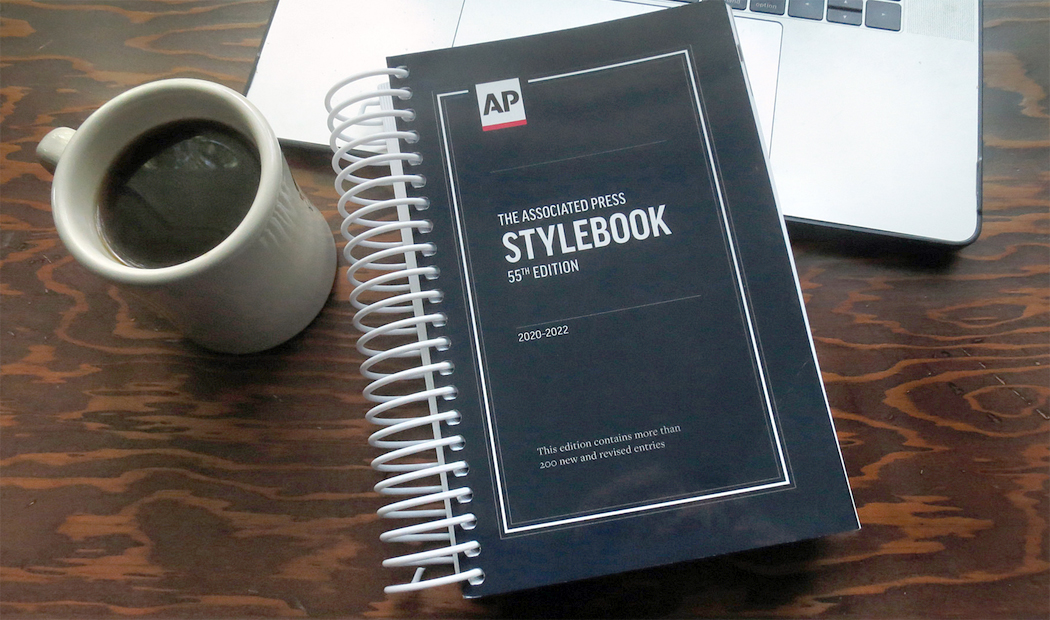
I have a particular issue, which I share with most aging journalists, which is that I had AP style drummed into me — that is, the dicta of the Associated Press Stylebook, that coil-bound dictator of spelling, grammar and usage. One understands that AP style was never meant to be an ultimate arbiter of language, but rather a means of maintaining consistency of style in a newspaper, so that, for instance, on Page 1 we didn’t have a “gray” car and on Page 3 one that was “grey.” 

And so, the rules I lived by meant that there was no such thing as 12 p.m. Is that noon or is that midnight? Noon was neither a.m. nor p.m. Same for midnight. They had their own descriptors. “Street” might be abbreviated in an address, but never “road.” Why? I never knew, but in my first week on the copy desk I had it beaten into me when I goofed. 

“Back yard” was two words, but one word as an adjective, “backyard patio.” Always. “Air bag,” two words; “moviegoer, one word. “Last” and “past” mean different things, so, not “last week,” unless Armageddon is nigh, but “this past week.” Picky, picky. 

I had to learn all the entries in the stylebook. The 55th edition of the AP Stylebook is 618 pages. And this current one differs from the one I had back in 1988; some things have changed. Back then, the hot pepper was a “chilli pepper,” and the Southwestern stew was “chili.” I lived and worked in Phoenix, Ariz., and we all understood this would get us laughed off the street, and so exceptions were made: yes, it’s a chile. 

Here I am, nearly 40 years later, and retired for the past 12 years, and I still tend to follow AP style in this blog, with some few exceptions I choose out of rebellion. But I still italicize formal titles of books, music and art, while not italicizing chapter names or symphony numbers, per AP style. I still spell out “r-o-a-d.” It’s a hard habit to break. 

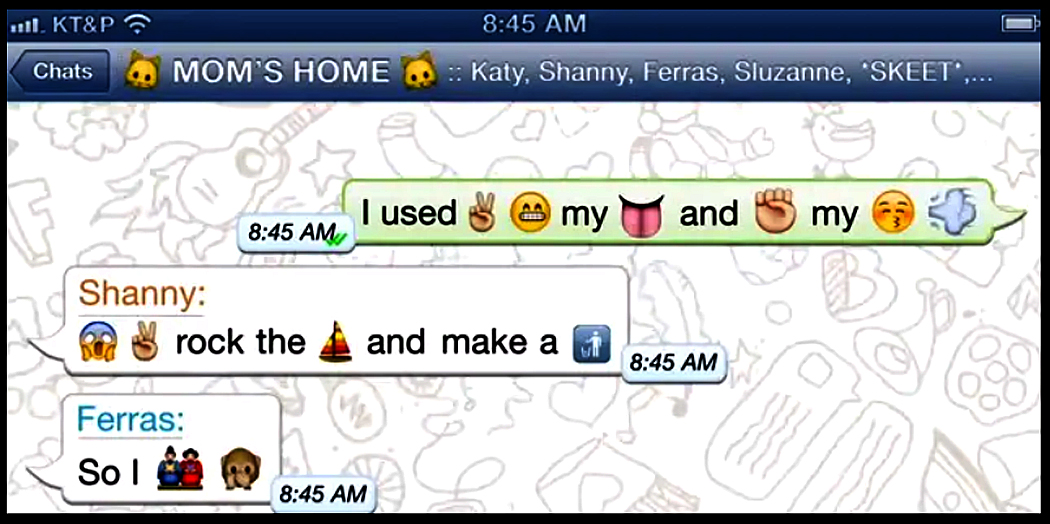
The online world seems to care little for the niceties of English. We are even tending back to hieroglyphs, where emojis or acronyms take the place of words and phrases. LMAO, and as a card-carrying alte kaker, I often have to Google these alphabet agglutinations just to know what my granddaughters are e-mailing me. Their seam to be new 1s each wk. 

And don’t get me started on punctuation.

“Postmodernism” is a catchall word that seems to have lost all meaning, especially because it hardly seems “post-“ at all. In the popular mind — if it thinks about such art-historical buzzwords at all — it means paintings of “Donald Duck Crossing the Delaware,” a mashup of pop culture and the history of fine art. 

But such things are hardly new. In fact, rejiggering the past has been a central tenet of Modernism for more than a century. Old wine in new bottles. It could be argued that remaking the old is central to all art for as long as it has existed. Virgil remade Homer and Milton remade them both, and Derek Walcott’s Omeros does it all over again. And even the Iliad is the result of its previous oral tellings and retellings. Churn and rechurn. 

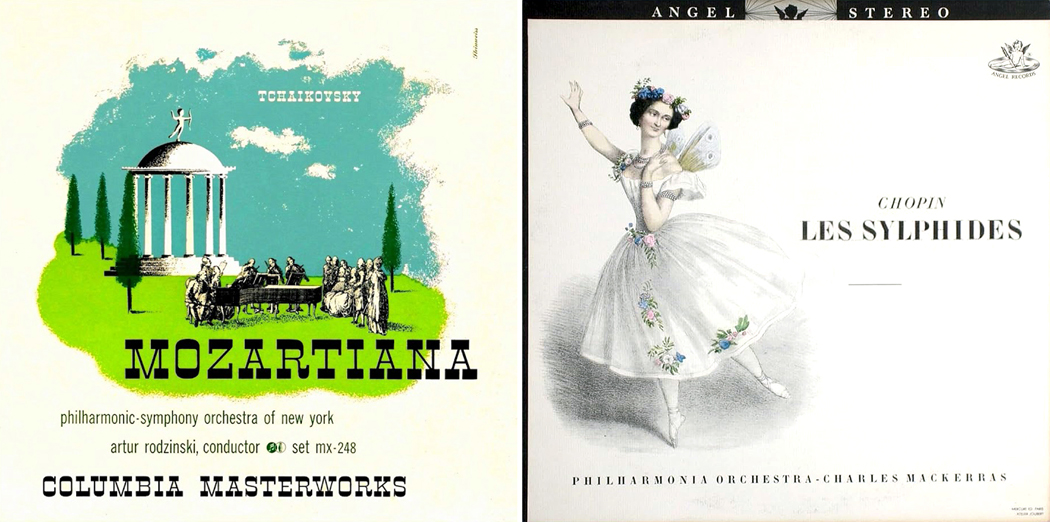
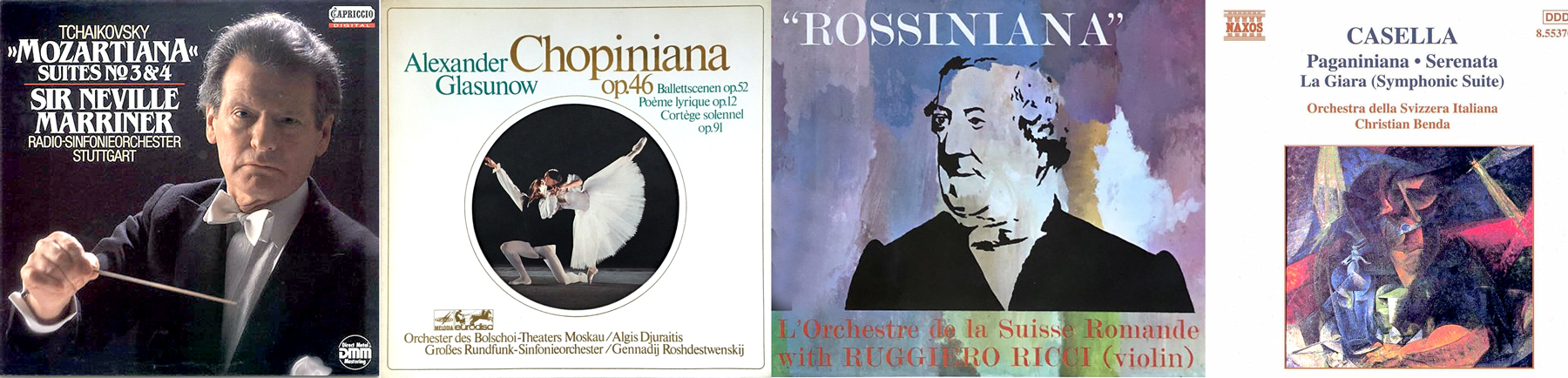
This is true in music, also. Not just the parody masses of the 15th century, or all those Baroque composers “borrowing” tunes from themselves or their contemporaries, or the many recomposings of La Folie, but more recently, Tchaikovsky rescoring Mozart and Glazunov turning Chopin into the ballet Les Sylphides

Of course, all the arts build on previous, if not through quoting or re-use, but at the very least just by existing in a continuum of culture. You could not have had the Renaissance without Classical Rome, or Hedda Gabler without As You Like It. All one forward surge. 

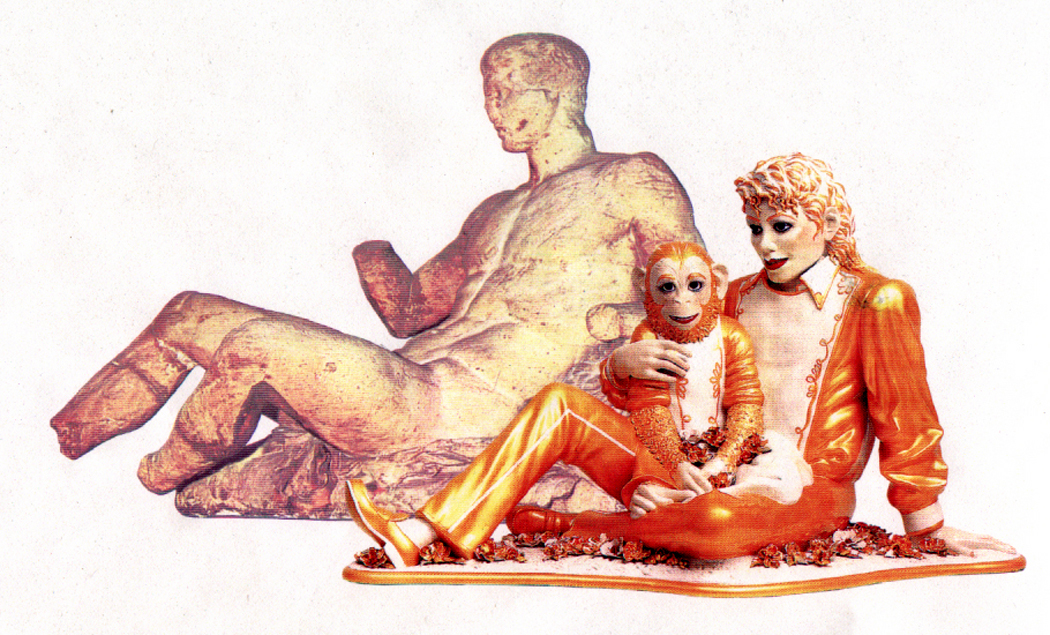
All art is, on one level, a conversation with the past. Even Jeff Koons’  sculptural portrait of Michael Jackson and Bubbles is a gloss on Pheidias’ statue of Dionysos from the east pediment of the Parthenon from the Fifth Century BCE.

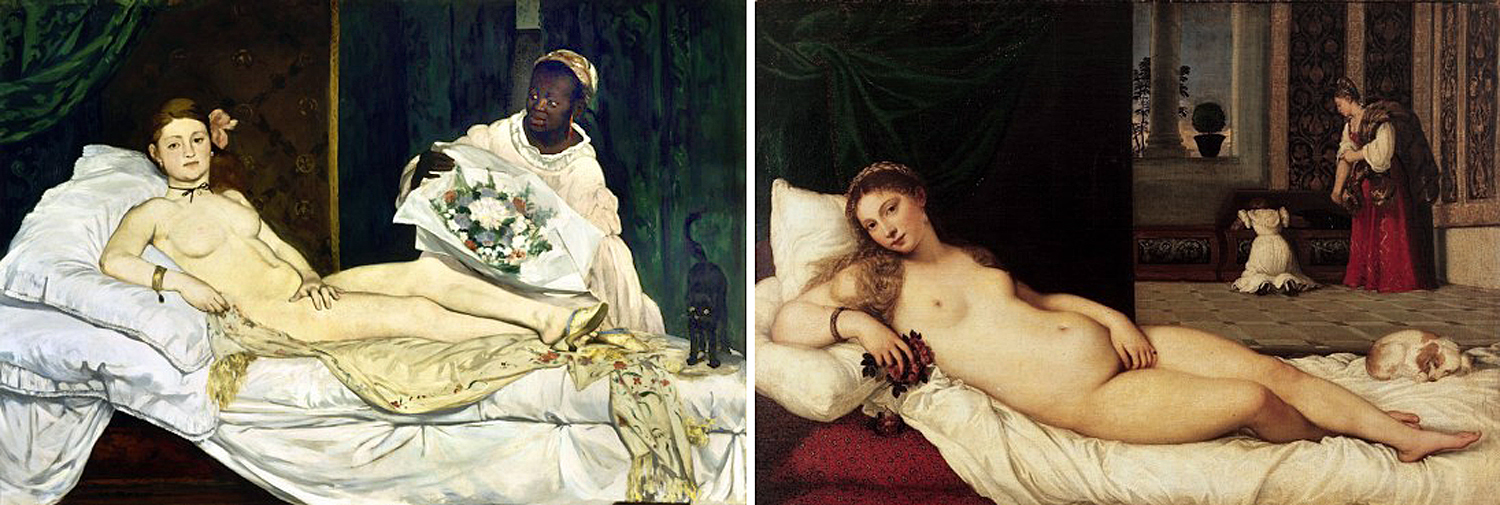
Or, take Manet’s Olympia, which ironically quotes Titan’s Venus of Urbino. (I wrote an exhaustive essay in “Meme and Variations,” from this blog in 2014. Link Here

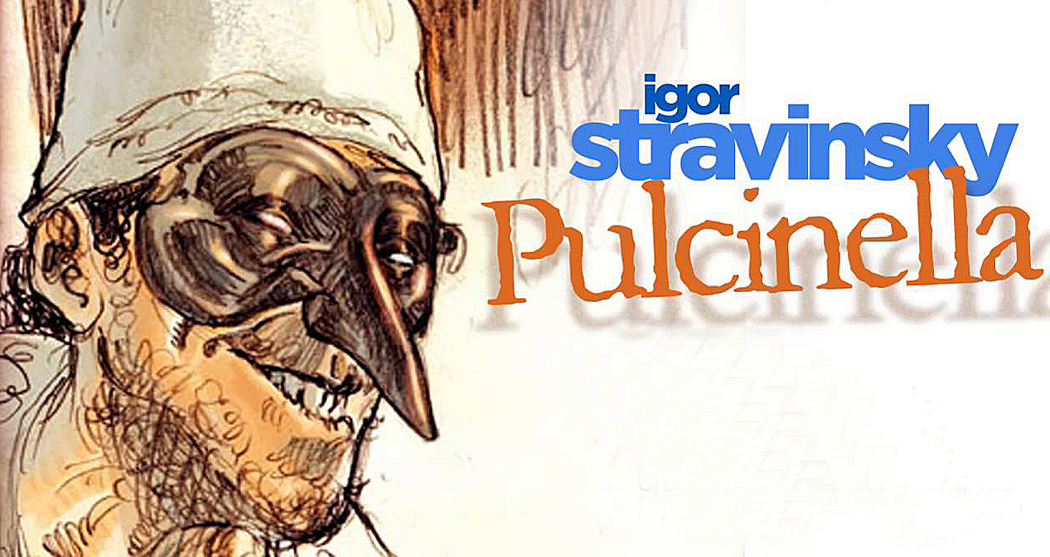
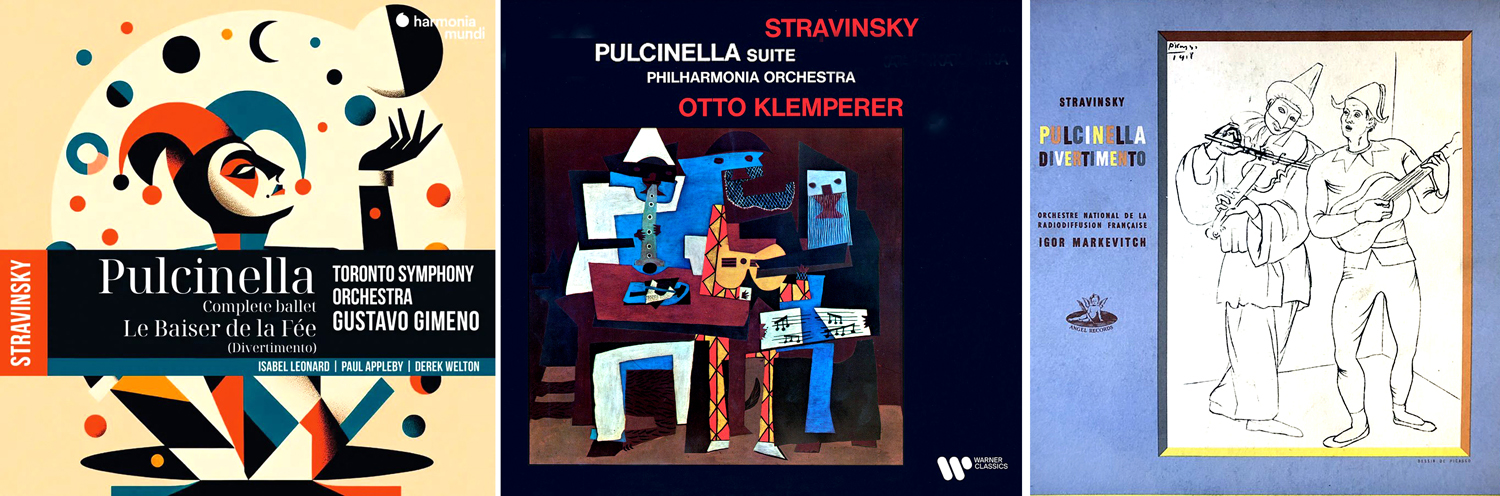
Manet was tweaking his nose at the Renaissance painting, and in 1920, Igor Stravinsky was doing something similar to what he assumed was the music of Giovanni Pergolesi, in his ballet score, Pulcinella

In 21 movements, he rebuilt and re-orchestrated the 18th-century music and made it sound utterly Stravinskian. “Uncle Igor’s Asymmetry Machine,” as Leonard Bernstein called it. Catchy tunes and astringent orchestration. (The fact that the source-music wasn’t Pergolesi but mostly keyboard music by Milanese composer Carlo Ignazio Monza and trio sonatas by Domenico Gallo, a lesser known Venetian composer, both of  whose works were sometimes bootlegged under the more salable name of Pergolesi. A YouTube video with the original compositions is available. Link here)

It’s surprising how little Stravinsky changed his originals, except by a little nipping and tucking, and using brilliant and cheeky orchestration. 

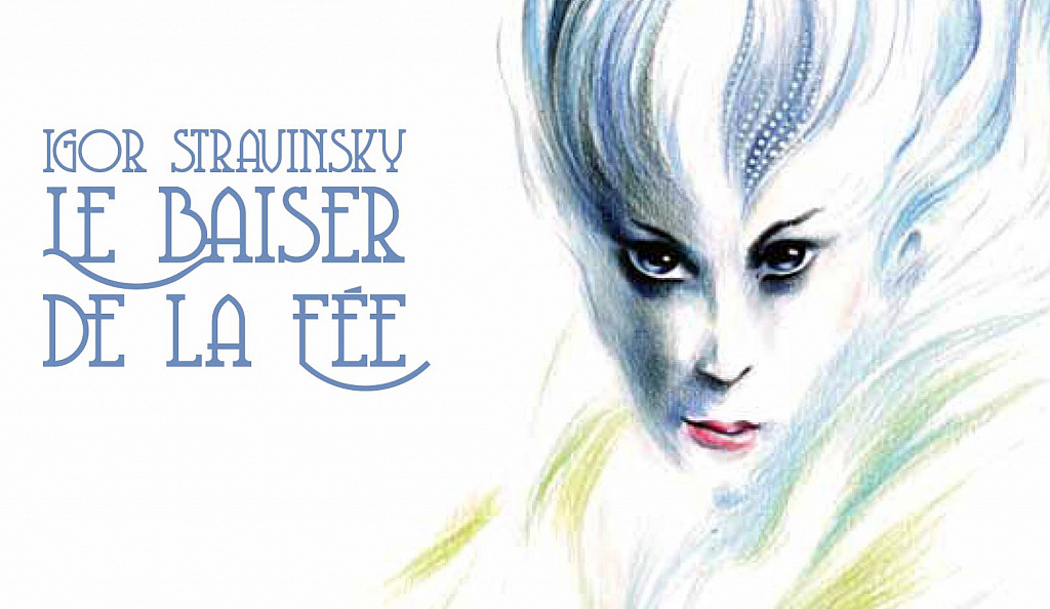
But this habit of updating ancient music was a frequent technique among composers, especially in the 20th century. Stravinsky himself applied the spice to Tchaikovsky in Le Baiser de la Fée (“The Fairy’s Kiss”) from 1928. 

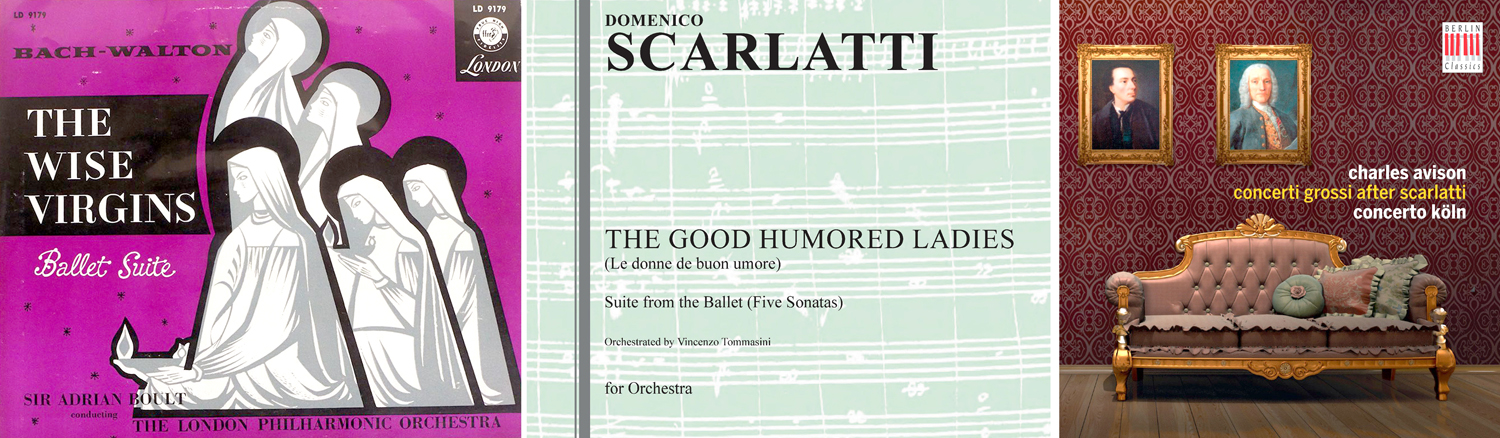
When I was a young recent college graduate, with little or no money in my pocket, I found a battered LP in a castaway bin of a local bookstore. It was on an Eastern European recording label, perhaps a Soviet one, lost to time and my ancient loss of memory. It cost 98 cents and contained William Walton’s The Wise Virgins on one side and Domenico Tomassini’s The Good Humored Ladies on the other. That LP’s fate is lost to 60 years of peregrination, and I only recently found a CD with these works on it. I was emotionally transported to another time and place. 

The Walton was a re-orchestration and revamp of work by Johann Sebastian Bach, and the Tomassini did the same with music by Domenico Scarlatti. Both were designed as ballet scores. 

(Scarlatti’s keyboard sonatas were first orchestrated in 1743 by English Baroque composer Charles Avison in 12 Concerti Grossi After Scarlatti, but Avison did the opposite of Stravinsky: He smoothed over Scarlatti’s pungent harmonies and expressive dissonances, to make them “pretty.” Avison did the same for a dozen violin sonatas by Francesco Geminiani.) 

All this piqued my interest, and I spent the past week listening to recordings of all the refurbished music I could find, and there is a lot of it. Two people, in particular, are the source for a great deal of it. 

The conductor Thomas Beecham performed the music of Handel back in the early 20th century when Baroque music was practically unheard, outside of the annual Messiah productions. But Beecham not only recorded whole Handel operas and oratorios, he brought excerpts of them into ballet scores he compiled, with his own modern re-orchestrations of them, but often played bits in his concerts. 

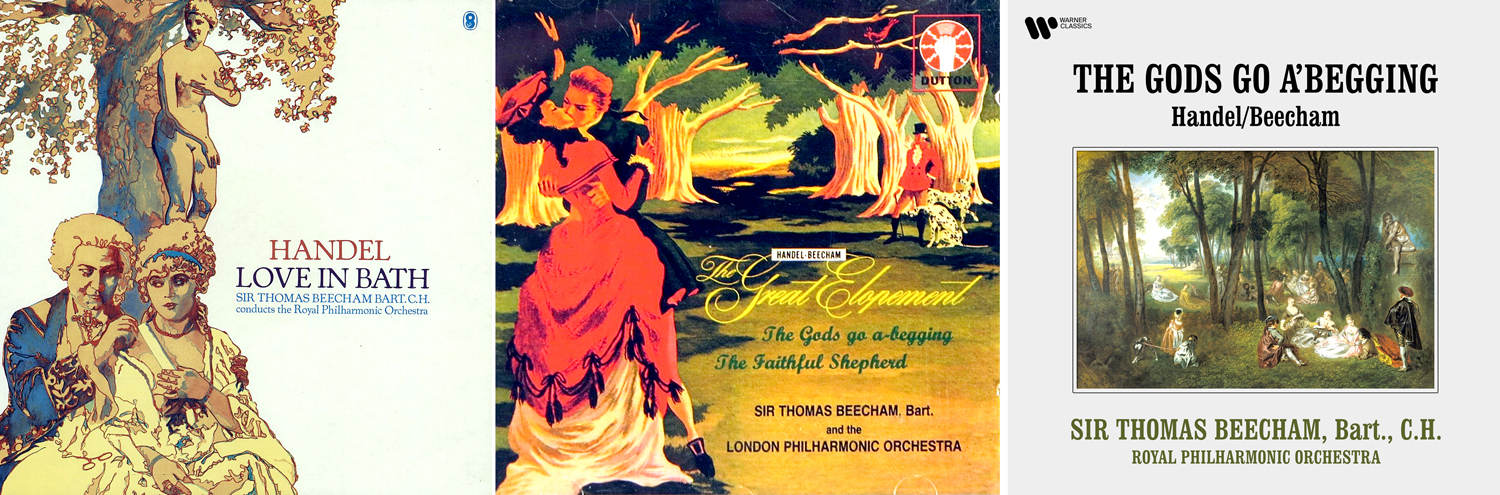
The best known is probably Love in Bath, a ballet score made from arias, choruses and sinfonias from various Handel works, in rescorings much less snarky than Stravinsky’s, and entirely pleasant on the ear. 

He began with The Gods Go a’Begging in 1928, then The Origin of Design (1932), The Faithful Shepherd (1940), Amaryllis (1944), The Great Elopement (1945) and finally, Love in Bath (1956). They often varied each time he presented them, changing suite movements according to his pleasure each time they were programmed. 

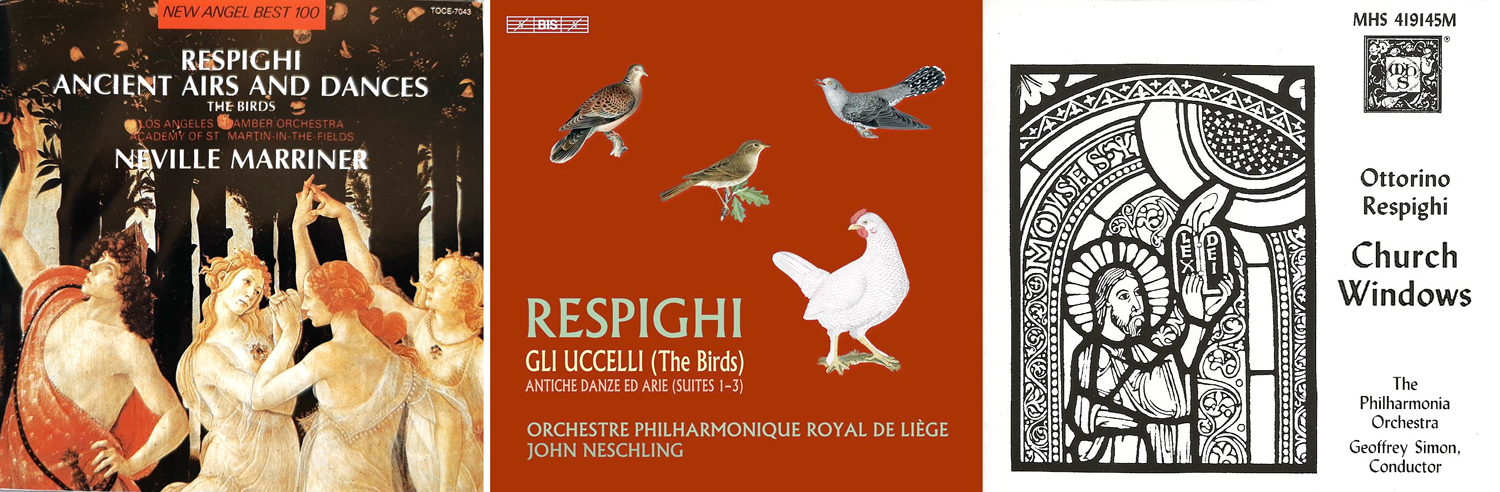
The other popular champion of ancient music was Ottorino Respighi, who made popular hits out of Renaissance and Baroque lute and keyboard music, most famously in his three suites of Antiche danze ed arie (“Ancient Airs and Dances”) which he wrote from 1917 to 1931. They remain popular in concert and have often been recorded. It’s hard not to love them and whistle the tunes for the rest of the day. 

Then, there’s Gli Uccelli (“The Birds”) from 1928, in which Respighi orchestrated keyboard pieces by early (mostly) Italian composers from the 17th and 18th centuries. And Vetrate di chiesa (“Church Windows”) from 1926, based on Gregorian chant and plainsong. 

Richard Strauss wrote two suites updating and orchestrating keyboard music by François Couperin. First, Tanzsuite (“Dance Suite”) from 1923, consisting of eight movements, and then Divertimento, from 1942, with 25 keyboard pieces arranged in eight movements. 

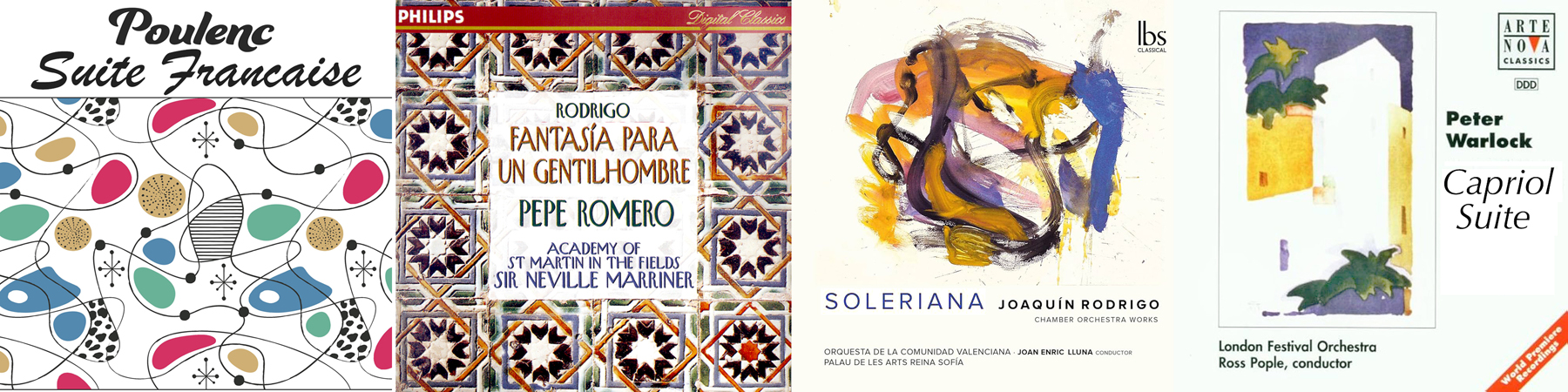
In 1935, Francis Poulenc wrote a suite for wind band, called Suite Français, using the tunes of 16th century composer Claude Gervaise. 

And among the most popular pieces from the 20th century was a four-movement guitar concerto, based on six compositions by the 17th century Spanish composer Gaspar Sanz. It was written in 1954 by Joaquin Rodrigo and titled Fantasia para un Gentilhomo (“Fantasy for a Gentleman”) Dozens of guitarists have recorded it. 

Rodrigo also put together an eight movement suite called Soleriana, orchestrating the harpsichord music of 18th century composer Antonio Soler. I had a hard time tracking down a recording, but I found one and have to say it was just as catchy and memorable as the Fantasia

Finally, among works of this kind, I should mention Peter Warlock’s Capriol Suite, built, according to the composer, on tunes in Thoinot Arbeau’s Orchésographie, a manual of Renaissance dances. 

But all this rewriting and modernized orchestration wasn’t only applied to antique music. There’s plenty of 19th century music that gets reworked, usually to accompany a ballet. And a lot of them get named some form of “ianna.” Like Mozartiana, Rossiniana, Paganiniana, Soleriana, and Offenbachiana. (Not to mention Bachianas Brasileiras, but that’s another thing.)

Gioachino Rossini wrote 39 hugely profitable operas by the age of 39. Then, in 1832, he retired to live comfortably for the next 40 years. But starting in or about 1857, he began writing short pieces, songs, piano works, choral works — some 150 of them — meant for friends and family and never intended for public performance. He called them his Péchés de vieillesse – “sins of old age.”

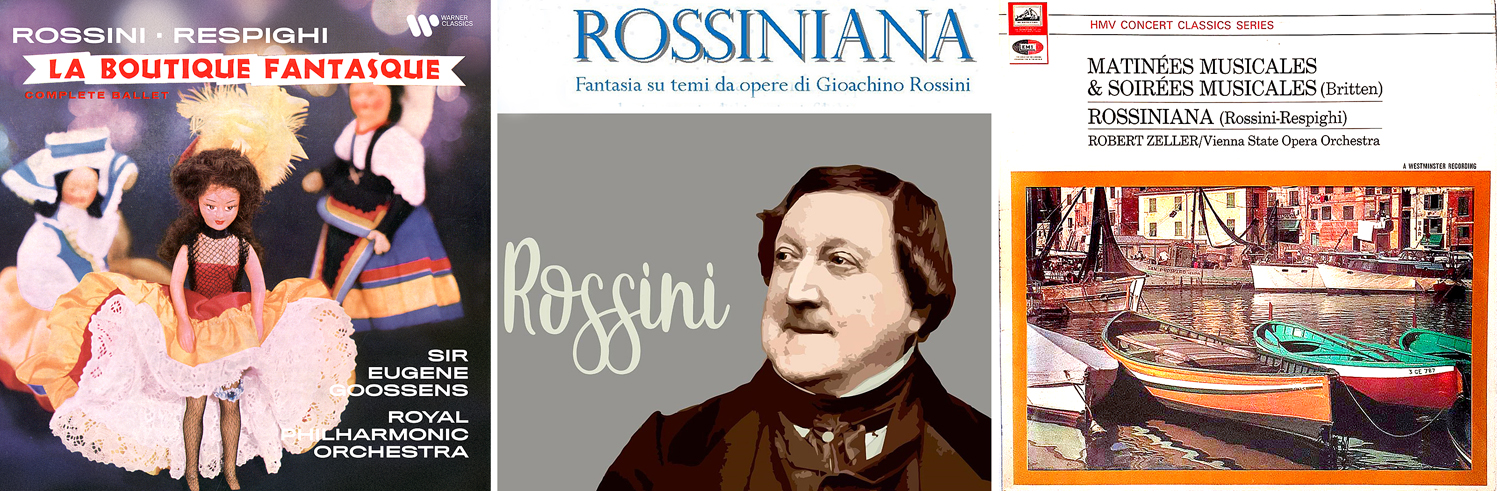
In 1918, Respighi orchestrated nine of these “sins” for a ballet, La Boutique Fantasque. It remains enormously popular with dozens of recordings. Later, in 1925, he dove back into the collection to “freely orchestrate” his Rossiniana

Benjamin Britten used bits from Rossini’s late works for his Soirées Musicales from 1937, and later, his Matinées Musicales from 1941. 

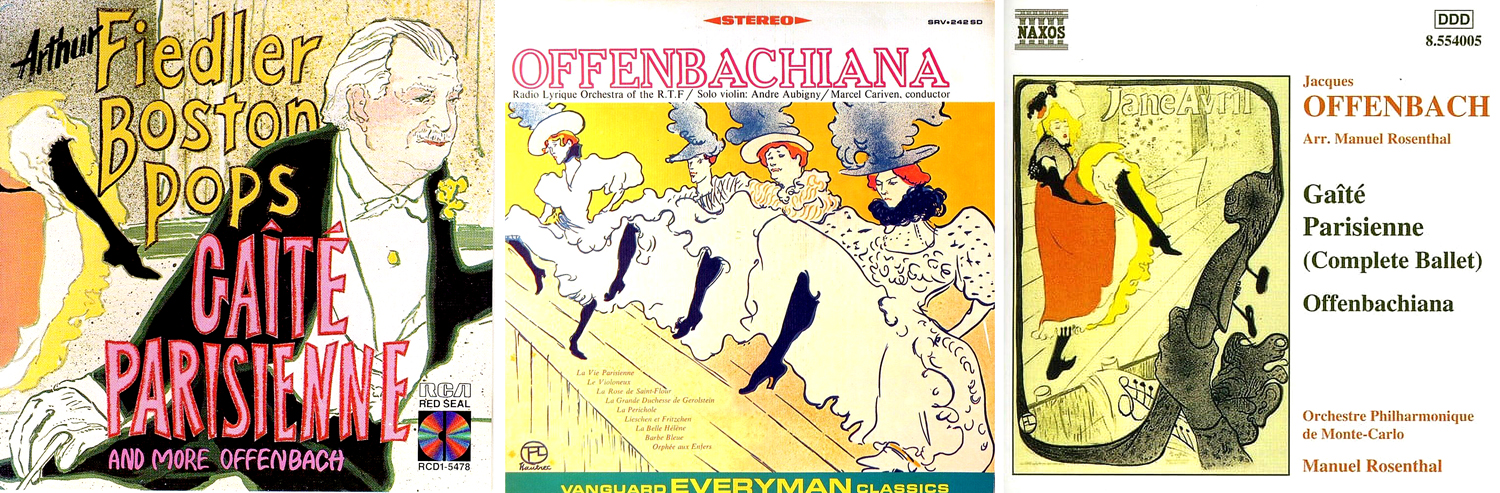
Strangely by default, French composer Manuel Rosenthal was tasked with selecting and orchestrating music by operetta champion Jacques Offenbach for a Massine ballet, Gaité Parisienne, in 1938. It remains popular in concert. Then, in 1953, he dipped once more into the well for Offenbachiana

But let’s face it, this becomes a rabbit hole: There are endless workings and reworkings of music, turning piano pieces into orchestral showpieces, or chamber works into ballets. I should mention just a few of the most famous or popular. 

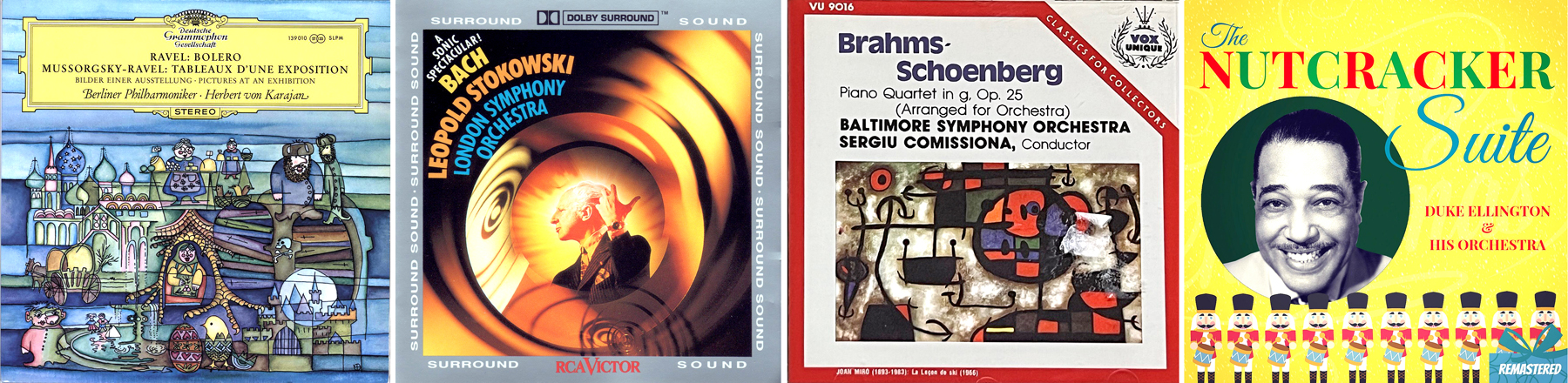
Maurice Ravel took Modest Mussorgsky’s Pictures at an Exhibition and did such a number on those short keyboard works, that some people are shocked to discover they weren’t originally written for the orchestra. 

Leopold Stokowski made a career of turning Bach organ works into hyper-lush symphonic showpieces. (He was also not shy about changing around, cutting, or adding cymbals or tam-tam crashes to established symphonies.) 

Arnold Schoenberg decided to orchestrate Brahms’ G-minor piano quartet because, he said, “1. I like the piece; 2. It is seldom played; and 3. It is always very badly played, because the better the pianist, the louder he plays, and you hear nothing from the strings. I wanted once to hear everything, and this I achieved.” He was also commissioned to do it by L.A. Phil conductor Otto Klemperer, where it was first played in 1937. 

And finally, I should mention Duke Ellington, who recorded his jazz-orchestra versions of both Tchaikovsky’s Nutcracker Suite, and Grieg’s Peer Gynt Suite. Both hugely fun. 

It never ends. Kismet, a broadway musical with songs borrowing tunes by Borodin. A nearly infinite number of variations by a nearly infinite number of composers on Paganini’s 24th Caprice for solo violin. All those “Reminiscences” of various operas for solo piano by Franz Liszt. Charles Gounod’s Ave Maria built on top of Bach’s C-major prelude from the Well Tempered Clavier.  Franz Waxman’s Carmen Fantasie. Paul Hindemith’s Symphonic Metamorphoses on Themes by Weber

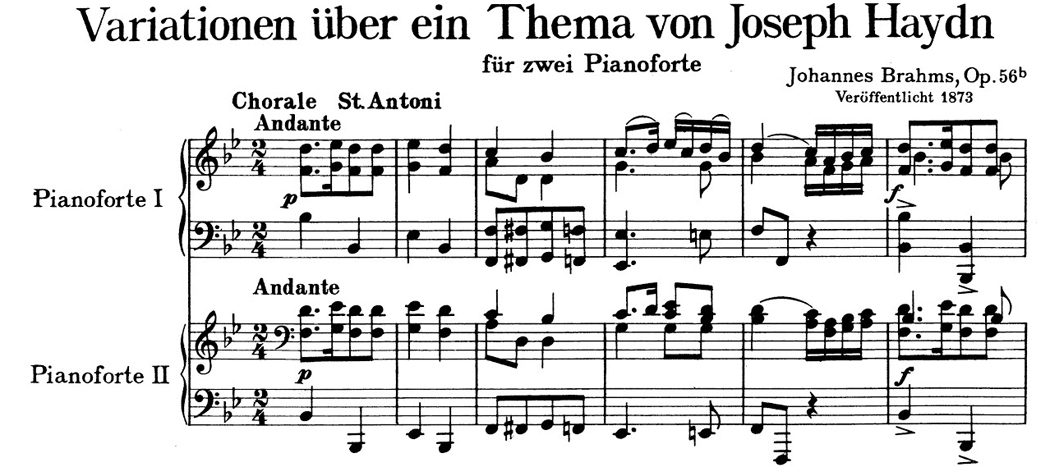
And let’s not leave out Brahms’ Variations on a Theme by Haydn, which was on a theme Haydn had borrowed in the first place. He didn’t write it. 

A quick check of Wikipedia lists hundreds, perhaps thousands (too many for me to count and still have a life) of “variations on” or “hommage to” or quotations from or transcriptions of orchestral music for home piano, or vice versa, piano music turned orchestral. No Haydn, no Beethoven, no Beethoven no Wagner, no Wagner, no Schoenberg, no Schoenberg, no  Lutosławski. Piles on piles. 

So, this idea that anything Postmodern is new needs to be chucked out the window. Postmodernism is a catchall phrase, with rather more meaning in architecture than in art or music. After all, we’ve been feeding on the past since the beginning. 

Every once in a while as if by a miracle, something good is transformed by art into something godawful. Case in point: the most recent remake of the detective stories of Georges Simenon that go under the heading “Maigret.” 

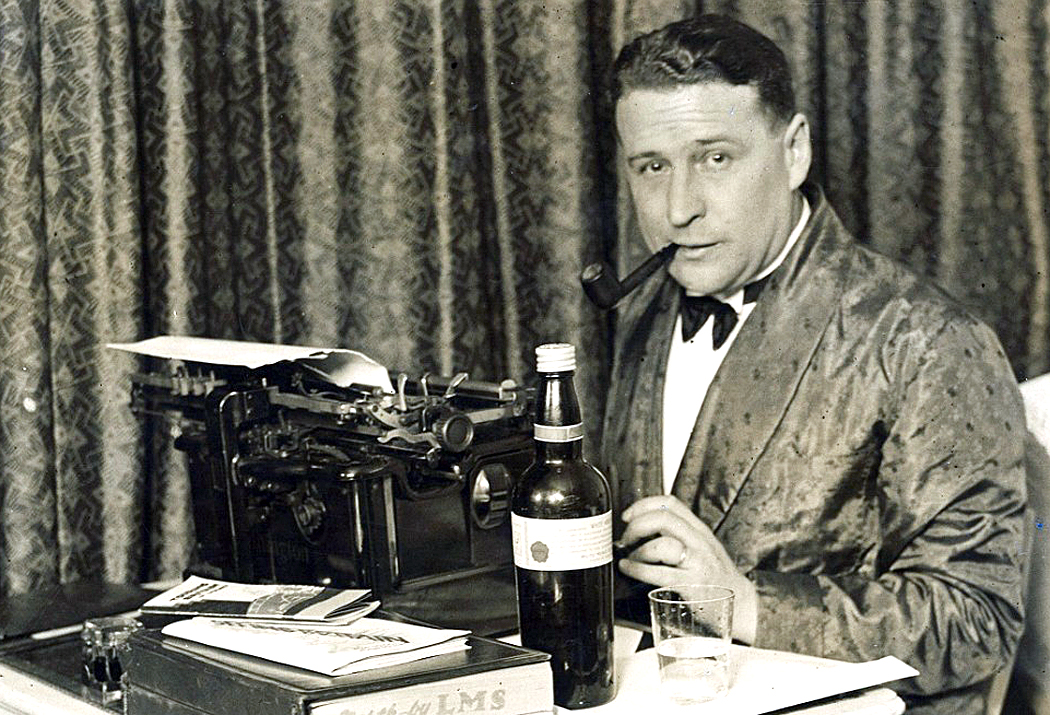
The Belgian writer pumped out (and that is about the only way you can describe his method) some 75 novels and piles of short stories featuring his creation Jules Maigret, commissaire of the police judiciaire at le Quai des Orfèvre in Paris. 

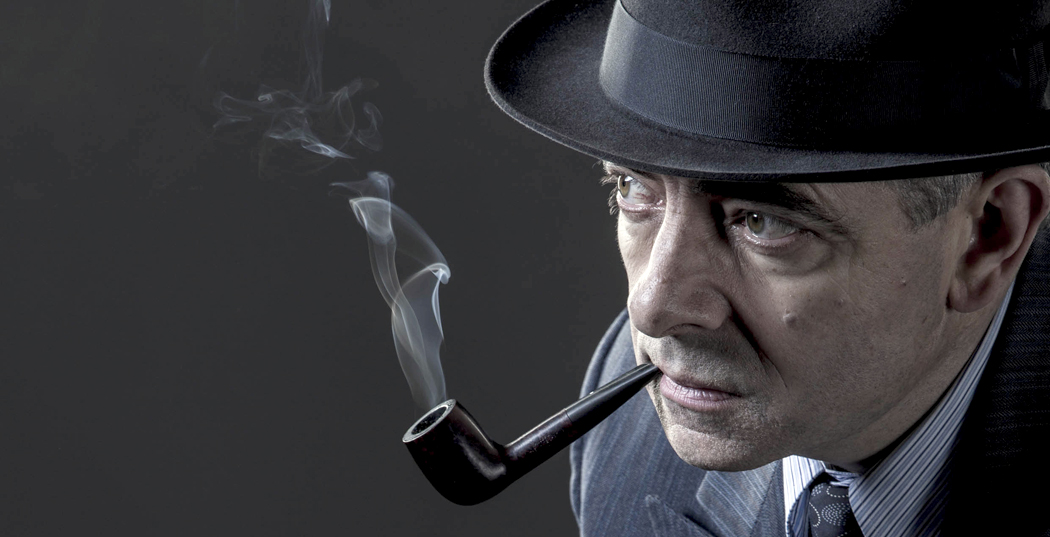
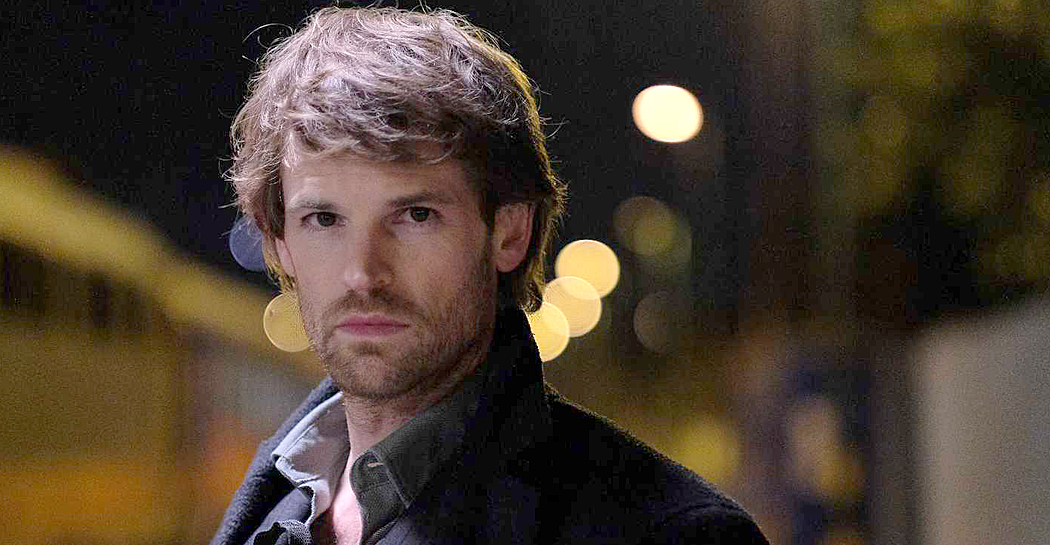
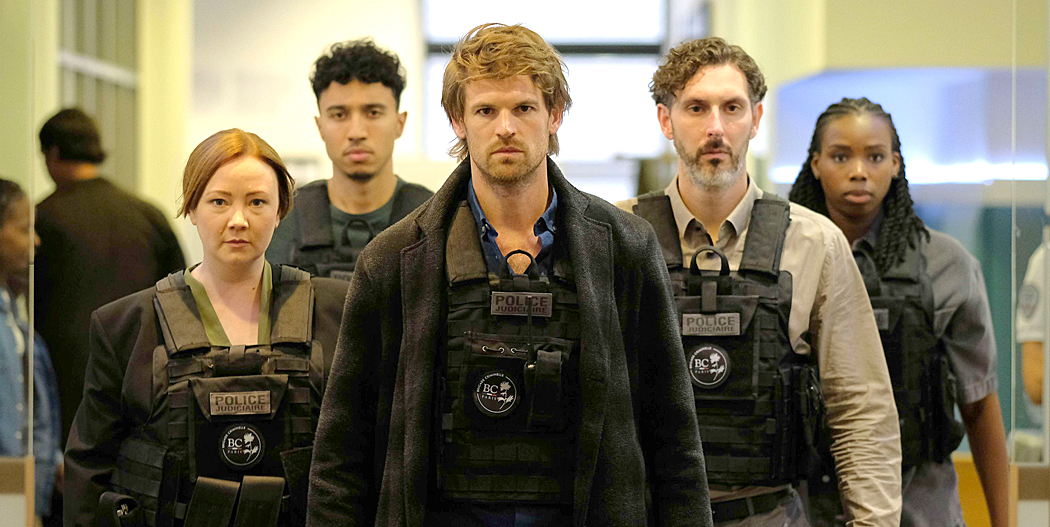
I just tried watching the new Maigret series on PBS Mysteries and, honestly, someone needs to be shot before a firing squad. They seem to have turned Maigret and his team into “Le Mod Squad.” Simenon’s Maigret is famously middle aged and looks like a tired bureaucrat. That’s how Simenon wrote him. To turn him into a — and I quote — “young, streetwise leader of an elite crime unit known as ’The Maigrets’” — is worse than a travesty, it is pandering of the worst sort. 

“Le Mod Squad” hardly ridicules it enough. “Montmartre 90210”  perhaps — No pipe, no hat, no overcoat. Probably doesn’t even drive a Citroen. And that curated day-old chin scruff — what a tired cliche! And from the images I’ve seen online, the series seems to be lit in the contemporary flat digital style, with faces darker than the background. Oy veyzmir. 

In other words, I don’t think I’ll be watching this series. I could barely make it through the first episode. In fact, I couldn’t. The episode was a two-parter and I quit after the first part. 

Its sins are legion. Perhaps if it had been made under some other title, like “Les Flics a la Mode,” it might have served a purpose on network TV, alongside long running series. Maybe even “CSI: Paris.” But its questionable status as a remake of the famous French detective is not its only or worst sin. Its dialog is straight out of a soap opera, with great lumps of exposition floating like unincorporated lumps of flour in a gravy. The script seemed assembled rather than written. 

It’s not that I object to modernizing or updating a classic. Mark Gatiss and Steven Moffat did a great job with the BBC’s Sherlock, with Benedict Cumberbatch, keeping all the quirkiness but adding a digital world. But the new Maigret is simply ham-handed. 

Simenon wrote his Maigret books from 1931 until 1972, which were only a fraction of his immense literary output. Right from his apprenticeship, writing under 17 pen names, he produced 358 pulp novels and short stories from 1921 to 1934. He was writing at a pace of 70 typed pages a day. Even after he began writing under his own name, his production was prodigious. There can be no count, only approximations. Estimates have run from 170 books to about 500. What is more amazing is the quality level. No less than Andre Gide wrote, “I consider Simenon a great novelist, perhaps the greatest, and the most genuine novelist that we have had in contemporary French literature.”

Simenon’s mysteries are functionally different from the standard model, where, as in Agatha Christie books, suspects and clues pile up and at the end, Miss Marple sorts it all out and solves the crime. With Maigret, we often know who the perpetrator is in the first few chapters and the bulk of the book is Maigret figuring out how to catch the bad guy, or what motivates him and could lead to his capture. The heart of a Maigret book is not the mystery, but the characters and their psychologies. It seems almost as if Simenon begins with a vivid character or two and builds a story around that. We read them not to find out “whodunnit,” but to spend time with fascinating personages. 

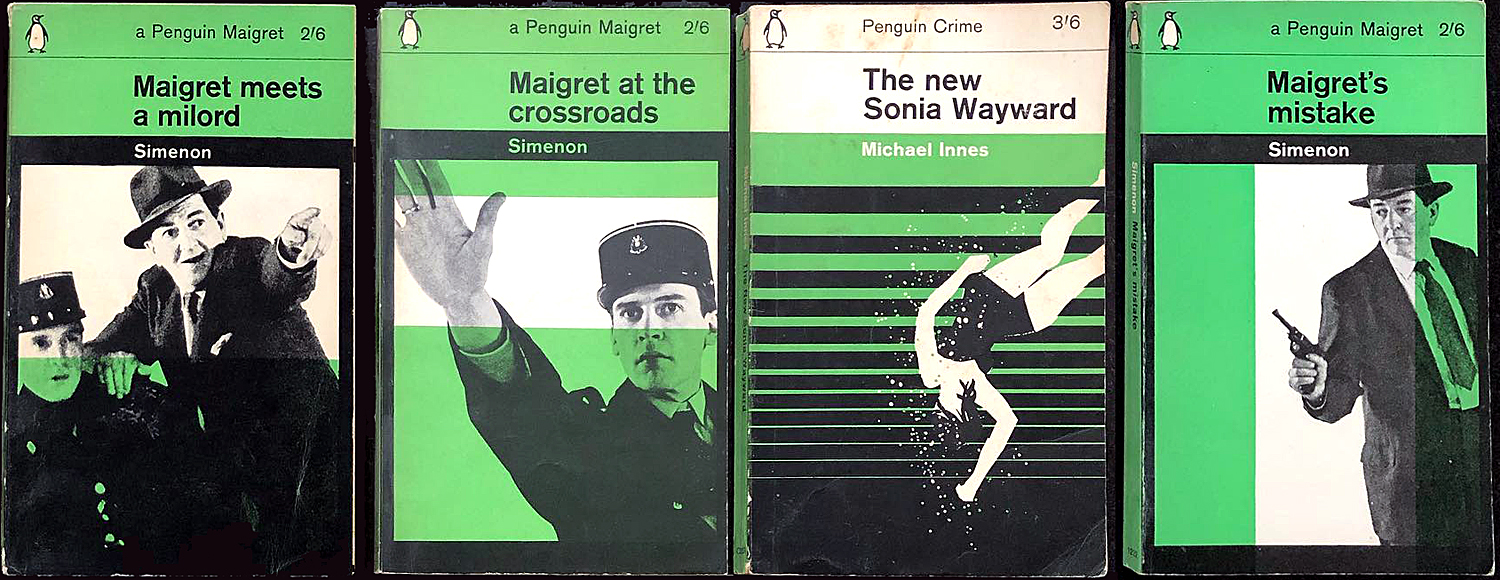
All of his Maigret novels remain in print — the whole series in English translation is published by Penguin Books. Numerous other translations are available, and multiple compilations. 

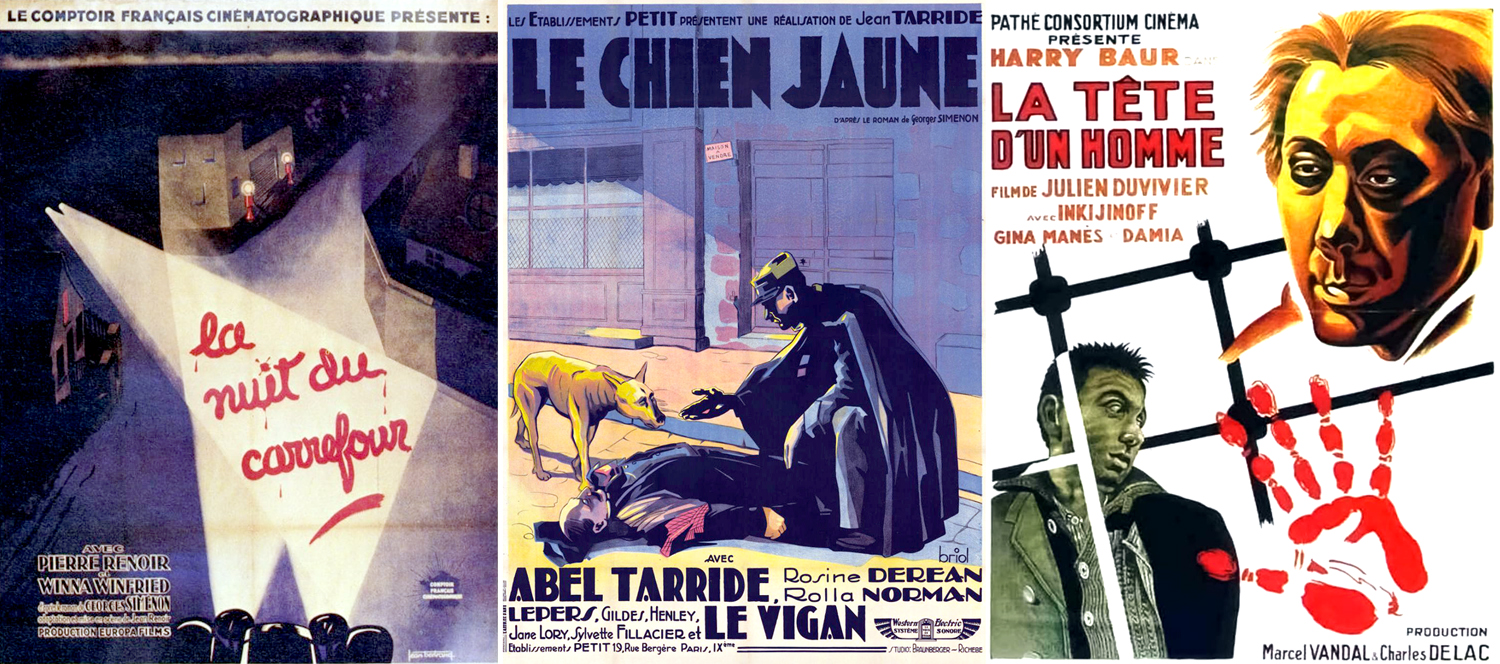
At least 70 films and TV series have been made from his works, beginning with Jean Renoir’s La Nuit du Carrefour, from 1932, starring the director’s brother Pierre Renoir as Maigret. The same year saw Le Chien Jaune (“The Yellow Dog”), with Abel Tarride as the commissaire, directed by his son, Jean Tarride. The following year, Julien Duvivier directed Harry Baur as Maigret in La tête d’un homme (“A Man’s Neck.”) 

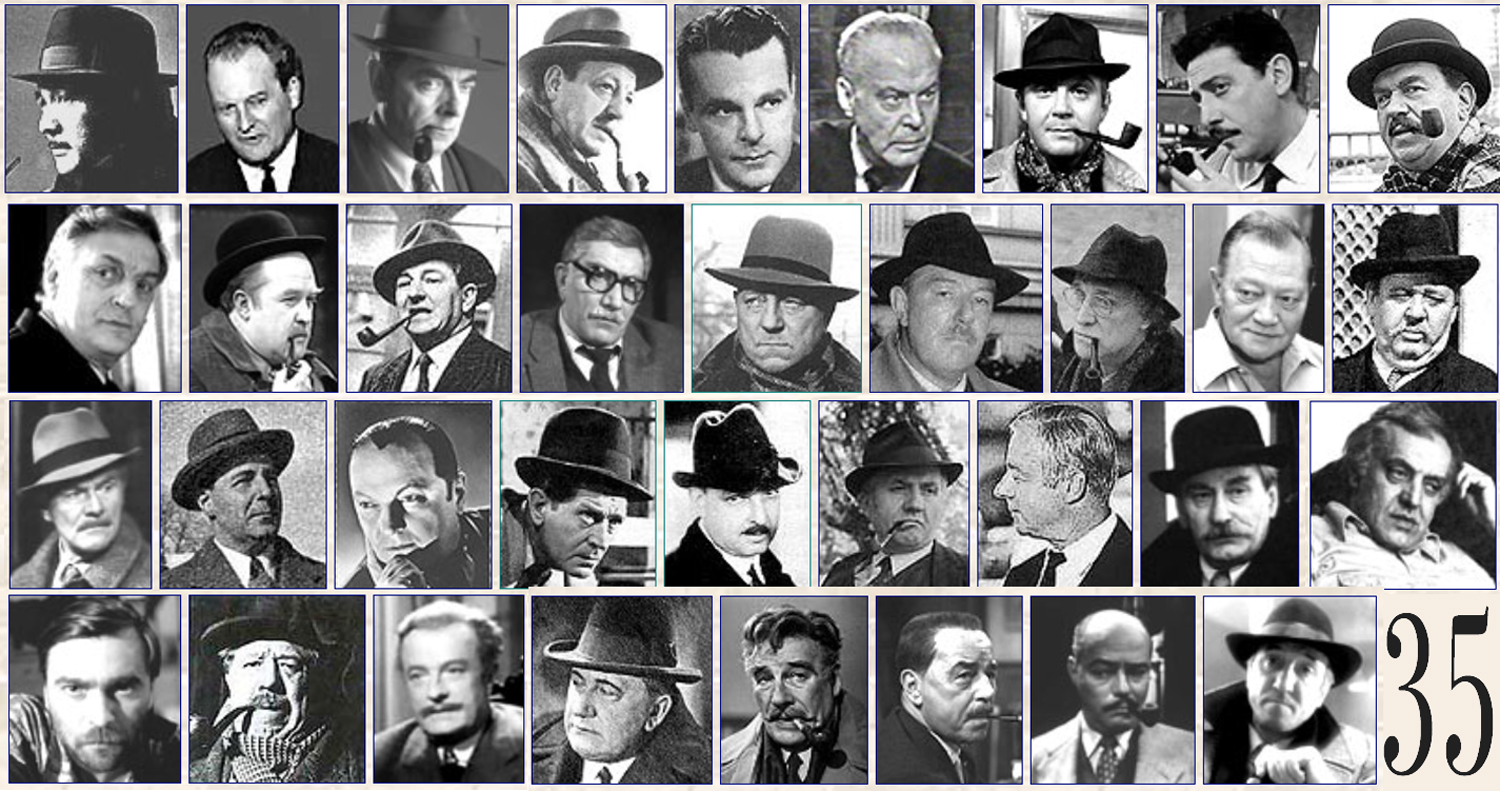
Over the years, at least 35 actors have smoked the pipe as Inspector Maigret, give or take some forgotten versions. They were made in several languages, including Italian, German, Russian, and Japanese. 

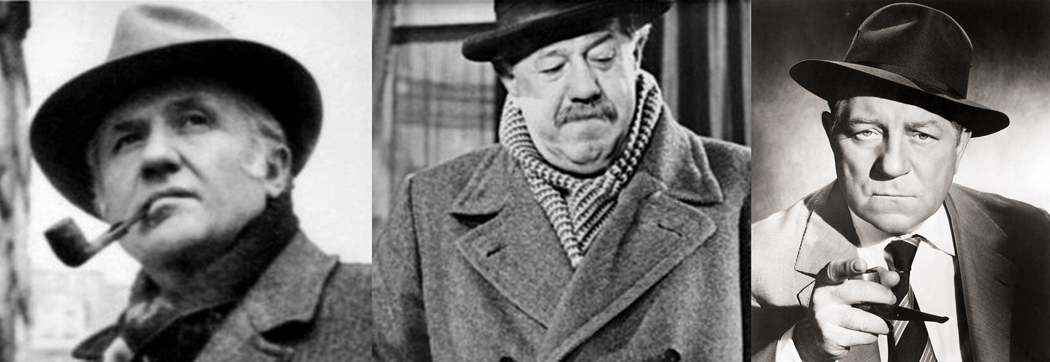
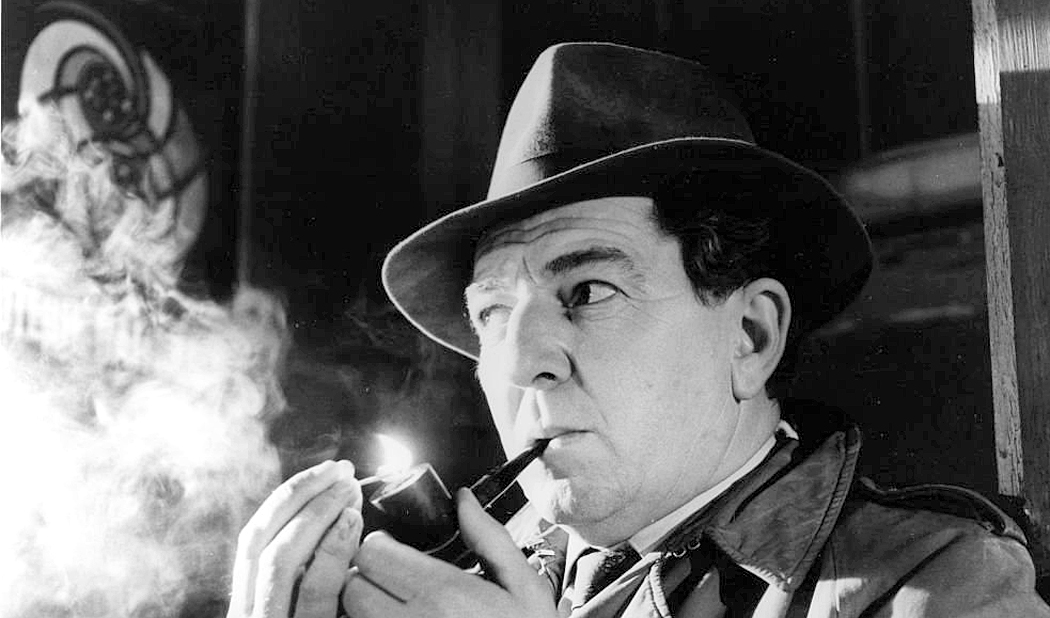
Albert Prejean, Michel Simon, Jean Gabin

But most notable, in English or French, including three films made with Albert Prejean as Maigret in the mid-1940s, by a wartime German film company in occupied France; and another three, from 1958 to 1963 with Jean Gabin. The great Michel Simon took his turn in 1952 in one-third of the anthology film Brelan d’as. Maurice Manson played him in Maigret dirige l’enquête (1955). 

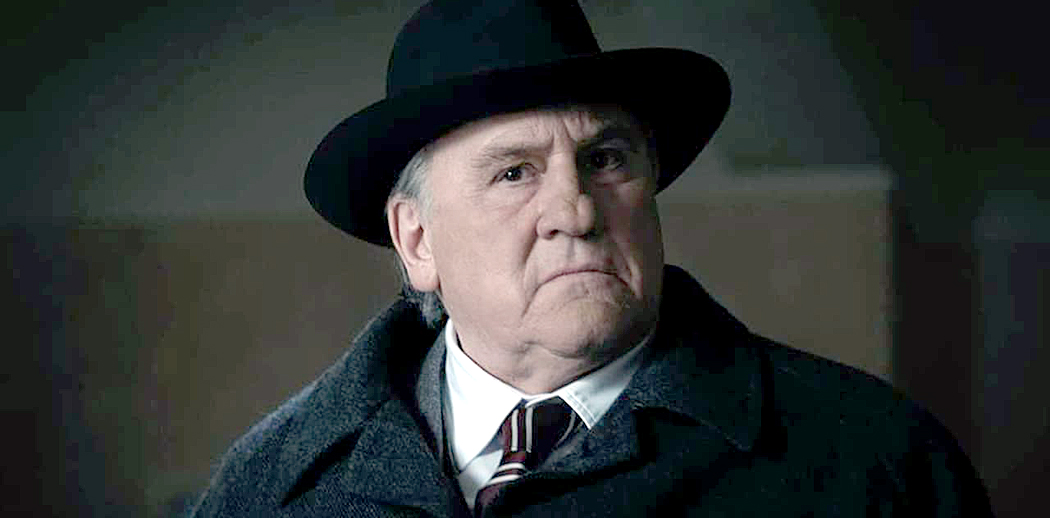
And Gerard Depardieu was an especially bulky commissaire in Maigret (2022). The prolific (and prodigious) French actor had previously played a Maigret clone in 2009’s Inspector Bellamy

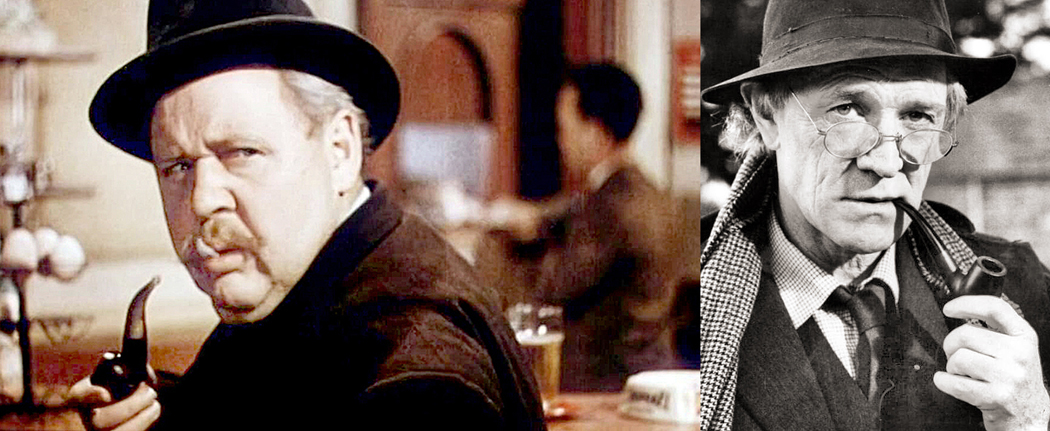
Charles Laughton, Richard Harris

English language one-offs begin with Charles Laughton in The Man on the Eiffel Tower (1950), and Richard Harris, in a tweed hat, in Maigret (1988), of which, the less said, the better. 

Rupert Davies

But, when you have 75 novels and 28 short stories to draw from, the ideal version of Inspector Maigret is a television series. The first — 53 episodes from 1960 to 1963 — featured Rupert Davies, who would have been the ideal Maigret except for the fact that the episodes were only 50 minutes long, and the production was rather studio-bound (other than some excellent exteriors actually shot in Paris). Standard TV lighting and sets. 

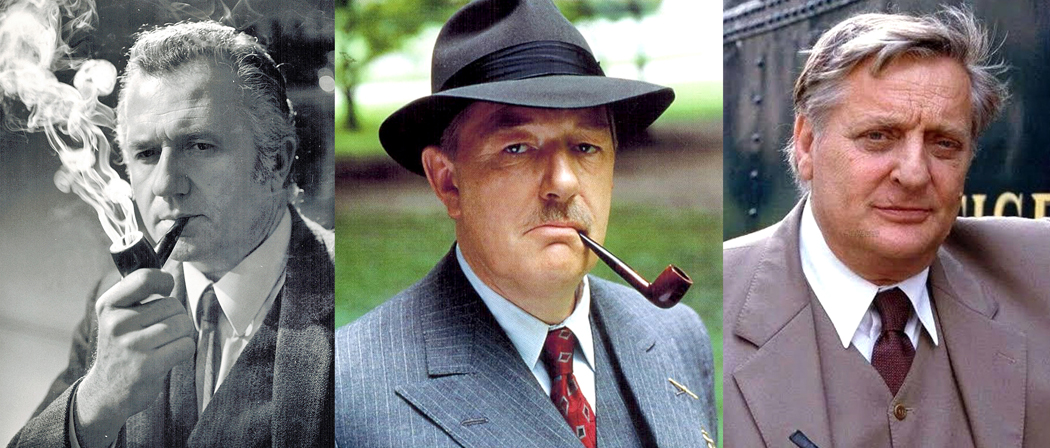
Jean Richard, Michael Gambon, Bruno Cremer

Jean Richard starred in 88 90-minute episodes from 1967 to 1990, and was the version Simenon said he liked best. Bruno Crèmer filmed 53 episodes from 1991 until his death in 2005, each 90 minutes long. These are probably my favorites. 

Michael Gambon gave what might be the definitive English language version in only 12 episodes from 1992 and 1993. Although each episode was only 50 minutes, he embodied Maigret so perfectly, at least for an English-language audience, that his successors all pale in comparison. 

And those include Rowan Atkinson in four 90-minute versions from 2016 and 2017. Atkinson (aka Mr. Bean) does a very good job, but the filmmakers attempted to turn the books into noir films, mostly shot at night or in moody rain, and dumped so much dialog, they were almost silent films. The Maigret books are almost pure dialog, very like the earliest Dragnet episodes. 

I have not seen the Dutch versions, first with Kees Brusse in 6 episodes from 1964; or 17 episodes with Jan Teulings from 1966-1969. Nor the Italian version with Gino Cervi from 1967-1972. And not the 25 episodes in Japanese with Kinya Aikawa from 1978, where the inspector’s name is transliterated as “Megure.” “Meg-goo-ray.” I’m not sure where any of these might be found. 

And that leaves us with the latest misery, a poor substitute for the real Maigret. 

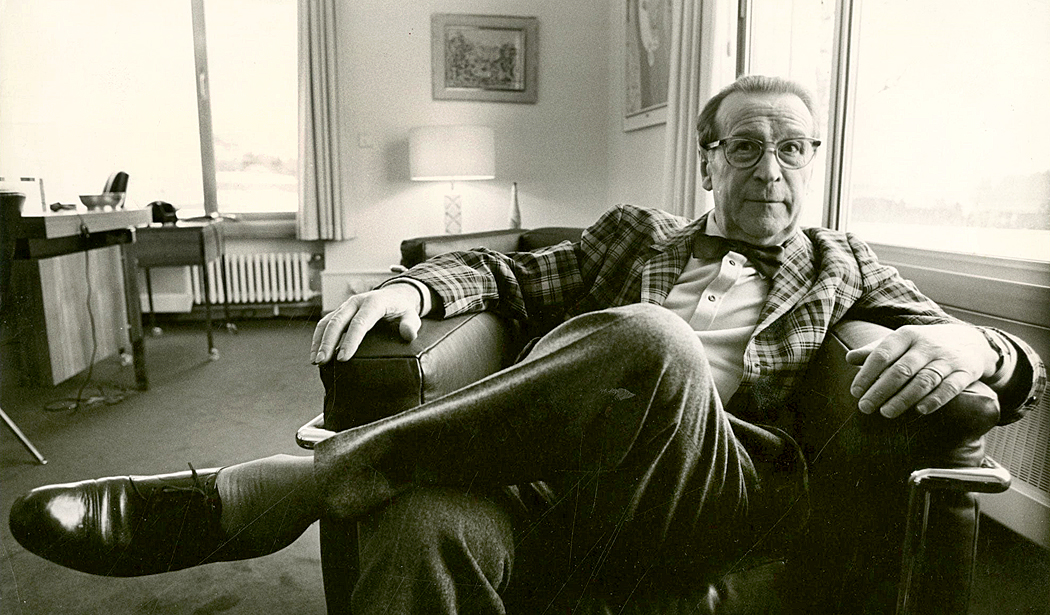
Simenon

L’Envoi

Georges Simenon was as much a character as those he stuffed into his novels. His writing was prodigious — those hundreds of novels — but so was his sex life. He was one astonishing horn dog. 

When he married, the pair took on a young housemaid, and by the evening of her hiring, Simenon had already had sex with her. This went on for some time. His wife seems to have become inured to his proclivities, which included frequent visits to brothels. 

When his wife went away for a spell, he hired a second maid. Same result. When his wife finally left him, everyone moved up a notch. Later a third maid took over from the second, in a kind of musical beds. Although beds are not really the issue. One report has him coming home one day and seeing his maid washing dishes, and then coming up behind her, lifting her skirts, having his way while she continued the scrubbing. 

He once claimed to have had sex with 10,000 women, although his second wife, Denyse, said, “Georges always exaggerates. We worked it out ourselves once and it came to no more than 1,200 women.” 

How strange, then, that Jules Maigret was so faithful and attentive to his wife, Louise — aka Madame Maigret.

We look at history all wrong. In school, history seems like a bunch of random dates we have to remember. You know: 1492; 1066; 1929; 1588. Just numbers. But history isn’t like that. History is continuous, all connected. 

It all needs to be looked at a different way. I think of history as a series of grandmas. It makes history more relatable, but also a good deal shorter than you might imagine. 

My grandmother was born in 1900. It is now 2025. That’s a 125 years. The way the Romans counted centuries — grandparents birth to grandchild’s death — was called a “saeculum,” which we tend to translate either as “era” or “century.” But I know my grandmother was born before the Wright brothers flew and didn’t die until after Neil Armstrong walked on the moon. An augenblick in time. 

And so, I try to line up these consecutive eyeblinks to imagine how distant, really, is the past. Now, I understand that not all grandma-to-grandkid timespans are the same. Some are considerably shorter. But I use my own as a milestone to count my way through the past I’ve learned about. In that way, the Declaration of Independence was from my grandmother’s grandmother’s time. Only two grandma’s ago, so to speak. 

The Roman Empire, in the east, fell in 1453, which is just 4.5 grandmas in time. My grandmother’s grandmother’s grandmother’s grandmother could have witnessed it. 

We think we have been on this planet so long, that prehistory seems interminable. But I attempted to calculate how long it has been since humans painted aurochs on the cave walls at Lascaux. The date for the original artwork is usually given as about 19,000 years ago. A long time, no? 

Well, in grandmas, that is just 152 grandmas ago. Your standard charter bus carries about 50 people, and so it would only take three busloads of grandmas and their grandmas to get us back to the cave paintings. It really isn’t all that long ago. 

In sum, I have long believed we should never teach history simply as dates, and shouldn’t teach it from back then to now, but rather from now, counting grandmas — or some other measure of time — backwards through time to see the continuous thread we are connected with. 

I have been listening seriously to classical music since 1965, and I have attended hundreds of concerts and recitals since then. Most of those were enjoyable, well-played, musical and provided emotional nourishment, yet almost every one was ultimately digested and forgotten. How could it be otherwise? It takes an exceptional performance to register permanently on the psyche, so that, even 60 years later, they are still resonant in the memory. Now that I am 77, I think about them again. 

I grew up in a household with very little music, outside of watching Perry Como or Dinah Shore on the TV. But my high school girlfriend was a musician. She was studying bassoon with Loren Glickman, the man who played the opening notes of The Rite of Spring on the recording conducted by Igor Stravinsky. (She later studied with Bernard Goldberg, primary bassoonist with the Philadelphia Orchestra — she was the real deal). She later went on to work with both PDQ Bach and Philip Glass. 

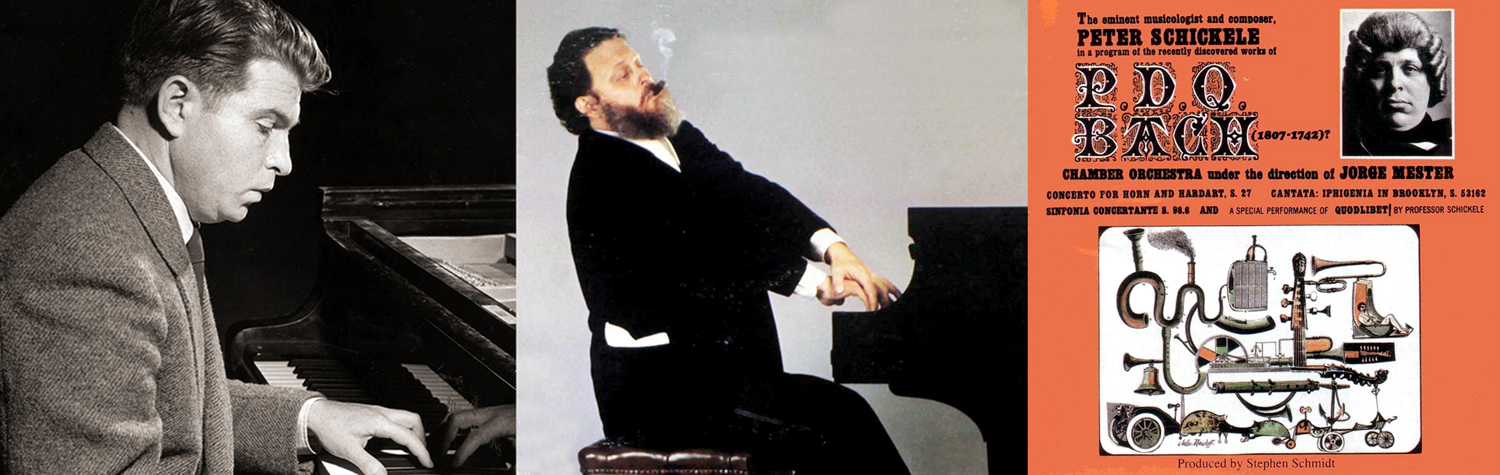
She and I often took the bus into Manhattan to attend concerts. We heard Emil Gilels play the Liszt sonata at the Brooklyn Academy of Music and we went to the very first PDQ Bach concert at Carnegie Hall, hearing both the Concerto for Horn and Hardart and the cantata, Iphegenia in Brooklyn. (For about 20 years after that I went to at least one PDQ Bach concert each year, no matter where I was living). But most of all, we went to the New School concerts led by violinist Alexander Schneider. Tickets were $3 and we could afford them. 

And on Christmas Eve, Schneider held an annual midnight concert which allowed me to escape to New York and avoid the boring evenings with my coffee-drinking repressed Norwegian aunts and uncles. 

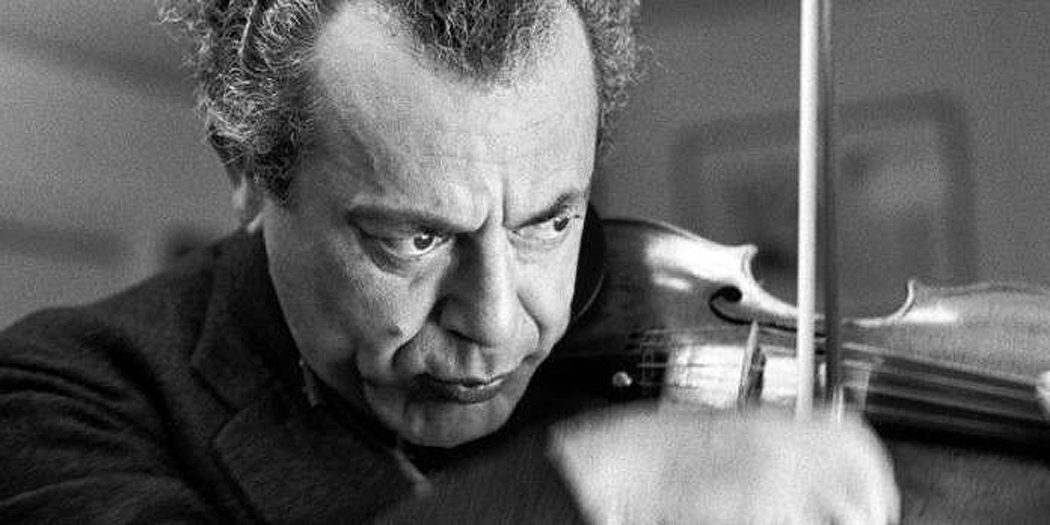
Schneider has always remained my ideal of committed musicianship. He led his chamber group from his seat, with his leg wrapped around the chair leg like the serpent of a caduceus, leaning forward into the music with the intensity of a man defusing a bomb. The music was always exciting. (To this day, I seek out the rare Schneider recordings, such as his Handel op. 6 Concerti Grossi and his Haydn quartets. Schneider was a force.)

New York Times critic Howard Klein wrote about Schneider at the time, “… the playing was that rare ideal of single-mindedness, give-and-take, technical polish and heart. There were a few slides to Mr. Schneider’s melodic playing, just enough to remind one of his romantic tradition. Some scholars might object to the rhythmic liberties that were taken, those marvelous pauses, the slackenings of pace, then the eager striding forth into a fugue, or slipping into a dance rhythm. But this was not romantic Handel, just human warmth. As usual, Mr. Schneider was totally consumed with playing, putting his back into every bow stroke and exhorting the others from his chair to join in the fun. Mr. Schneider is one of the city’s most valuable musicians.”

To this day, Schneider remains my touchstone. 

I owe a lot to that first serious girlfriend, but high school romances notoriously don’t last, and this one didn’t, but the music did. I became a serious classical music junkie, going to concerts, recitals, chamber music, and buying endless reams of LPs, tapes and CDs. 

Shelly and Benny

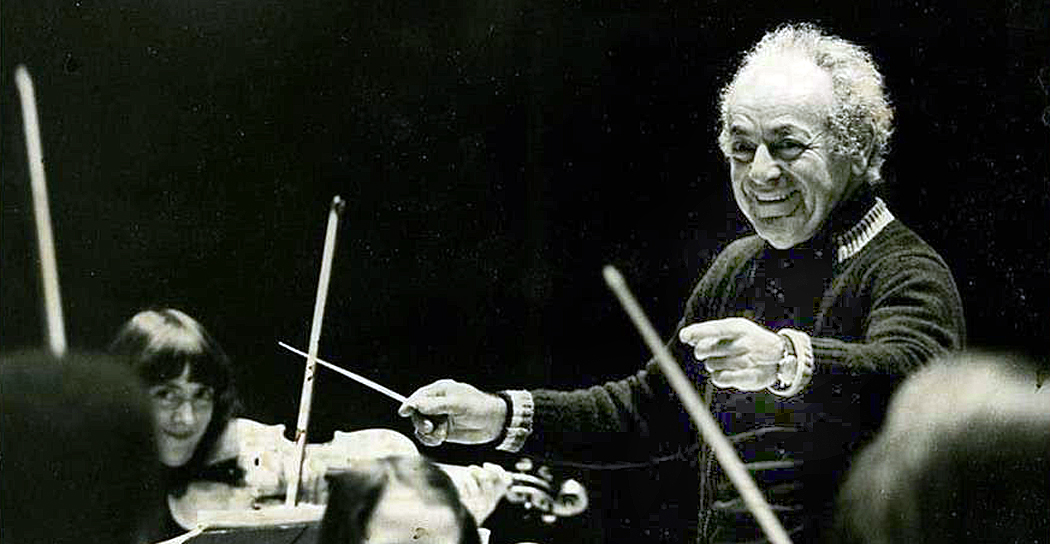
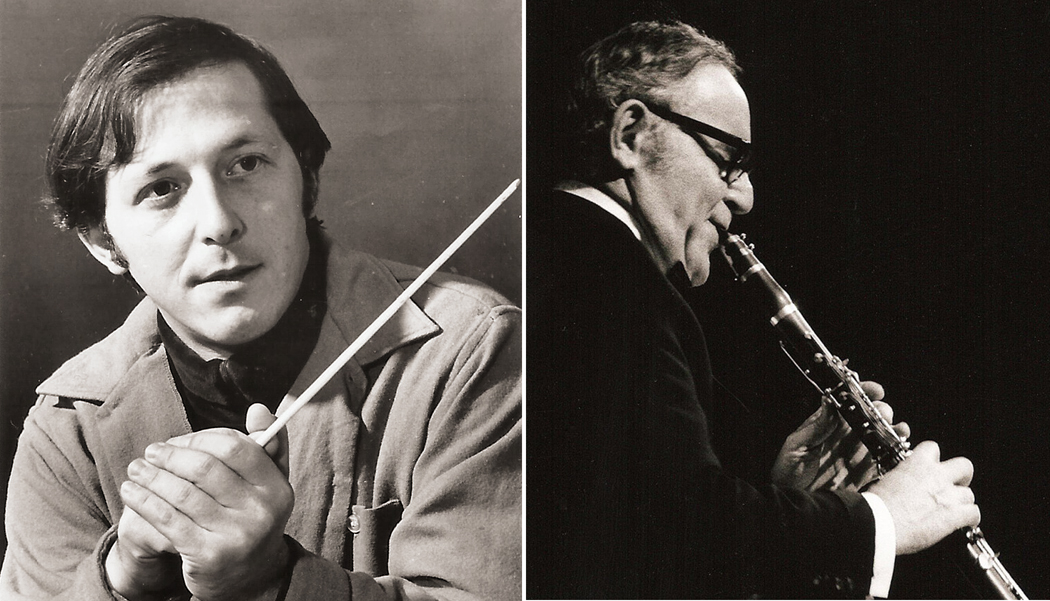
In my college years, most of the music I heard, at Greensboro Symphony concerts, under first Sheldon Morgenstern and then Peter Paul Fuchs, was what you would expect from a community orchestra, although I was still happy to hear the music live. I also heard Benny Goodman play the Weber Clarinet Concerto in F-minor there (and after intermission, play the rest of the evening with his jazz trio). 

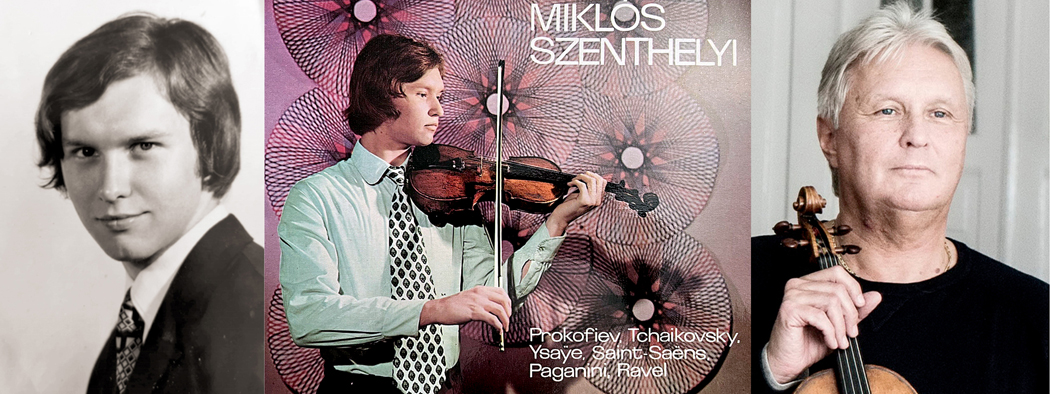
Morgenstern became director of the Eastern Music Festival held each summer at Guilford College in Greensboro, where I was a student, and I heard some world-class soloists come to play with the festival orchestra. The Hungarian Wunderkind Miklos Szenthelyi played the rarely heard Bartok First Violin Concerto and I fell in love with it. Szenthelyi was the most dignified soloist, with the most erect posture I’ve ever seen and played like the music was the most important ever written. It was wonderful. Szenthelyi is now the elder statesman of Hungarian violinists. It has been that long. 

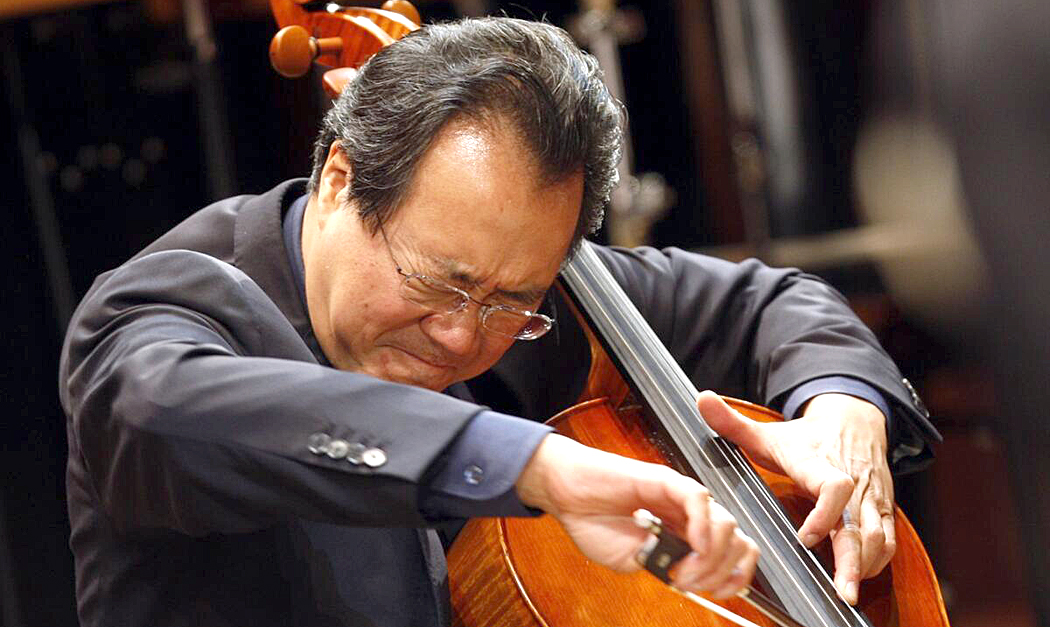
Beyond the EMF, one concert stands out from that time. A still-teenage Yo-Yo Ma played both Haydn concertos with the High Point Symphony, one before intermission and one just after and the tunes became ear worms for weeks. Yo-Yo Ma has been a constant ever since, and I have heard him live over and over throughout my concert-going life. 

Over the next decades, I moved around quite a bit, often with low-paying jobs, or none at all, and could not often afford tickets. But I still managed to hear Bernstein and the New York Phil play La Mer, and later the same orchestra under Kurt Masur play Schoenberg’s Transfigured Night and Beethoven’s Eighth Symphony. Masur had a reputation as a mere Kappelmeister, a time-beater, but he played Beethoven’s smallest symphony as if it were a tiger as big and muscular as the Fifth. I was surprised and blown away. Ever since, I have had greater respect for the power possible to be found in the Eighth. 

Haitink and the LSO

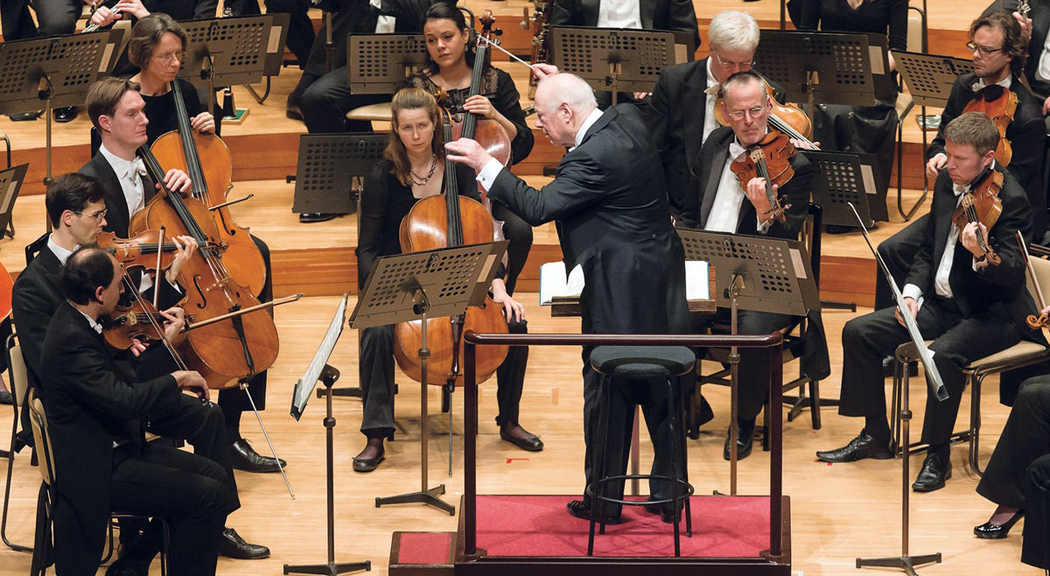
There is a class of musician whose recordings have a reputation for being bland, but hearing live, they take the chances they never do for records. Masur was one. Bernard Haitink was another. All the CDs I had of Haitink were safe and, while well-played, were kind of boring. But then I heard him with the London Symphony at the Salle Pleyel in Paris playing the Eroica with all the fire and passion that could be wrung from the piece. Completely changed my mind about the Dutchman, although it didn’t make the CDs better.

I have to admit that my cherished Yo-Yo could be that way, too. Not that his recordings are bad or boring, but they never capture the buzz and excitement of hearing him live, where he is electric. I heard him playing the Dvorak concerto in Phoenix and I was in tears, almost shaking with emotion after hearing it. It was one of the greatest concert performances I ever attended. His recording of the concerto is really good, but nothing like the live beast. 

He has recorded the Bach cello suites three times over his career. The first two are dependable, even excellent, but I’ve heard him doing them live several times and the metaphor again shows up: Played with the intensity of someone defusing a bomb. In his third recording of the six suites, he finally got something of that adventurous power into the CD. 

In Seattle, I got to hear the Berlioz Requiem, a piece, because of its logistical demands (expanded orchestra and chorus, four extra brass bands at the four corners of the hall and eight tympani blasting away) I never expected to hear live. It may not have been the best performance of the piece ever, but it yanked my hair back. In the late 1970s, when I lived in Seattle, my regular date was a former professional violinist, turned bicycle messenger, and we went to many concerts together. Unfortunately, although we were good friends, she played for the other team. 

By the late 1980s, I was living with my late espoused saint in Phoenix, Arizona, and was the art critic for the major daily newspaper, and later became to classical music critic as well. When you don’t have to pay for your tickets, you get to go to a lot more music. And I heard some great music, not only from local Arizona musicians and from touring groups, but because the paper sent me all over the country, I got to hear music in Los Angeles, New York, Chicago, Boston and Philadelphia (and Boulder, Colo., too). 

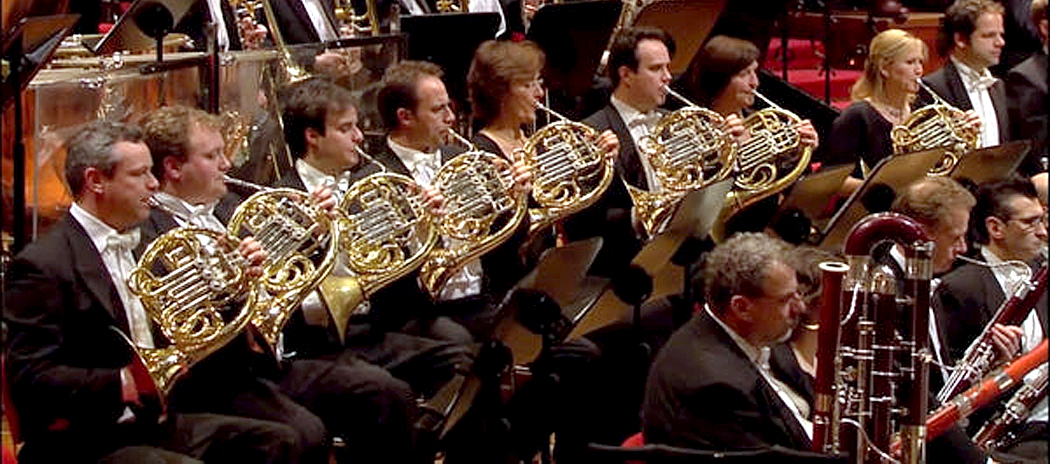
One of the most unforgettable experiences was hearing the Philadelphia Orchestra under Wolfgang Sawallisch play Richard Strauss’ Don Juan. If I ever needed to be persuaded that live music offers something recordings cannot, it was the great horn call in Don Juan, when eight French horns sound off in unison and one doesn’t just hear the sound in one’s ears, but vibrating through the fundament: It was music with a physical presence of a brick wall. No recording can capture that shudder. You have to be there. 

I heard Maurizio Pollini in LA playing a first half of all the Chopin Preludes and a second half doing Stravinsky’s Two Scenes from Petruschka (with an intermission of over an hour while, from the lobby, we heard a piano being tuned to his satisfaction in the emptied hall) and ending with the Prokofiev Piano Sonata No. 7. That was the single most daunting program I had ever heard up to that point. 

At least until I heard pianist Jeremy Denk at Zankel Hall, part of Carnegie Hall, when the first-half of the recital was Charles Ives’ Concord Sonata and the second half Beethoven’s Hammerklavier — two of the longest and most difficult pieces in the repertoire. He then re-played the “Hawthorne” movement of the Concord Sonata as an encore. His fingers must have been bloody stumps after all that. 

I later heard Denk in Scottsdale playing Beethoven’s Eroica Variations, and showing their comic side, and several Ligeti etudes, showing that composer was more than the film score to 2001: A Space Odyssey

Some of these memorable cases come in pairs, like the Denk’s. 

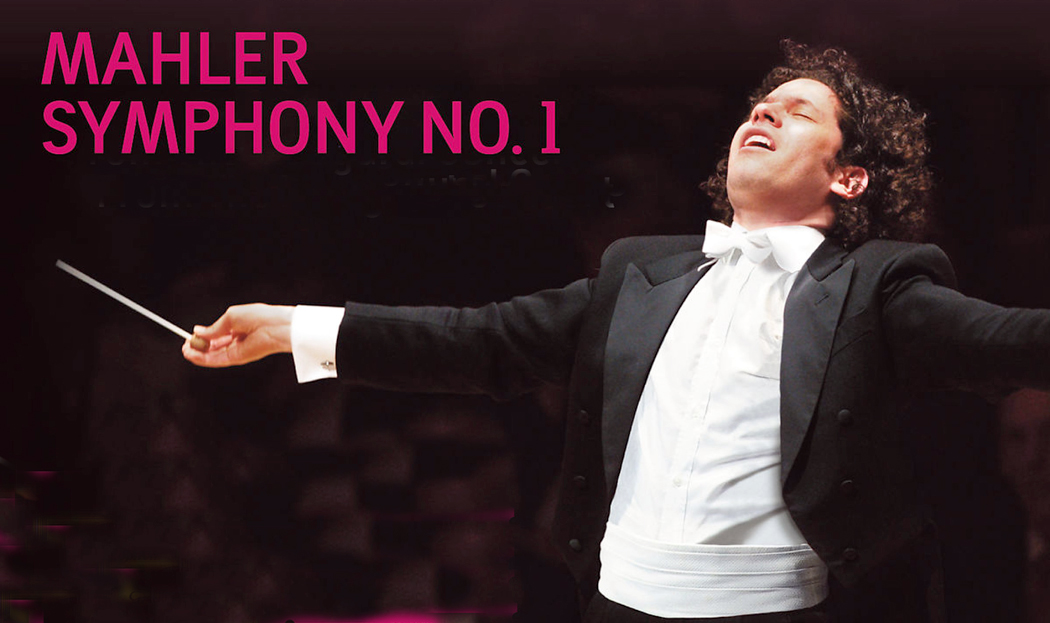
At Carnegie Hall, I heard the Israel Philharmonic play the Tchaikovsky Fourth Symphony under Gustavo Dudamel, and it was pure magic. The 80 or so old Israeli pros were turned back into teenagers by the young enthusiasm of the Dude. They played their hearts out for him. At the end, Dudamel did not take the customary audience bows, but ran up into the orchestra, shaking the hand of every musician, making them all stand up and accept the applause. 

Later, with the LA Phil, I heard him lead the Mahler First. These were two of the greatest orchestral concerts I ever heard. 

One might expect great sounds from these orchestras, but two of the best live performances I have under my belt came from the Phoenix Symphony and its concertmaster Steven Moeckel, under the direction of Music Director Michael Christie. Moeckel played the greatest version of the Beethoven Violin Concerto I ever heard live, perfect in every expressive detail, and powerfully emotional. I was so blown away that I came back the next night to hear it again, but the magic had passed. It was a very fine performance, but not the same. You are not allowed back into Eden. 

Several times, I had lunch with Moeckel and we talked of many things. He mentioned that he had always wanted to play the Elgar concerto, a piece I didn’t know, having always thought of Elgar as a stuffy English imperialist. But he persuaded Christie to let him do it, and I was transfixed and realized how much I had been missing all my life. The Elgar Violin Concerto is one of the five or six greatest ever written, up there with Beethoven, Brahms, Sibelius, Tchaikovsky, Berg, and Mendelssohn. And Moeckel’s performance couldn’t have sold it any better. It changed my musical life. 

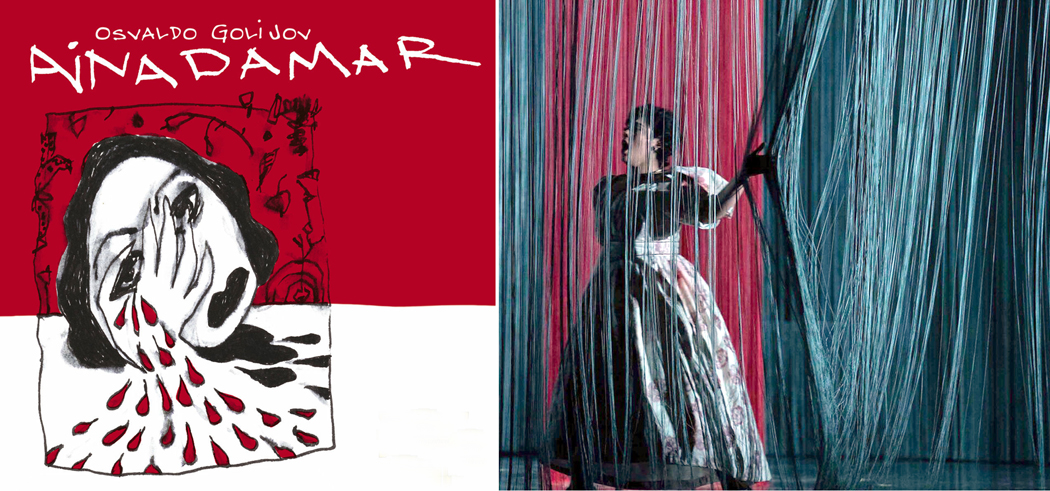
Then, there were two concert opera performances by the Phoenix Symphony and Christie. They engaged Dawn Upshaw to sing in Osvaldo Golijov’s Ainadamar, about the death of Spanish poet Gabriel Garcia Lorca at the hands of the Fascist forces of Franco. 

As the music critic for The Arizona Republic, I often had issues with conductor Michael Christie over 19th century classics — Christie had not a Romantic bone in his body — but he was brilliant with contemporary music. I fell in love with Golijov’s eclectic style.

And Christie led a great semi-staged version of John Adams’ Nixon in China, one of the rare contemporary operas to make it into the mainstream repertoire. What a great piece, and the Phoenix Symphony played the daylights out of it. 

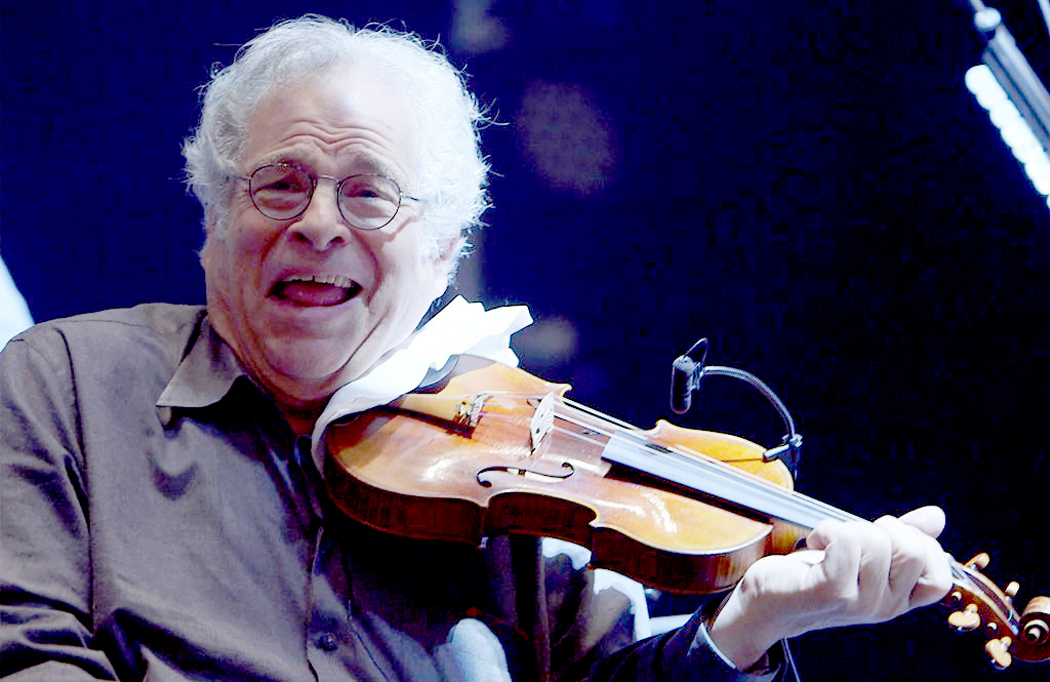
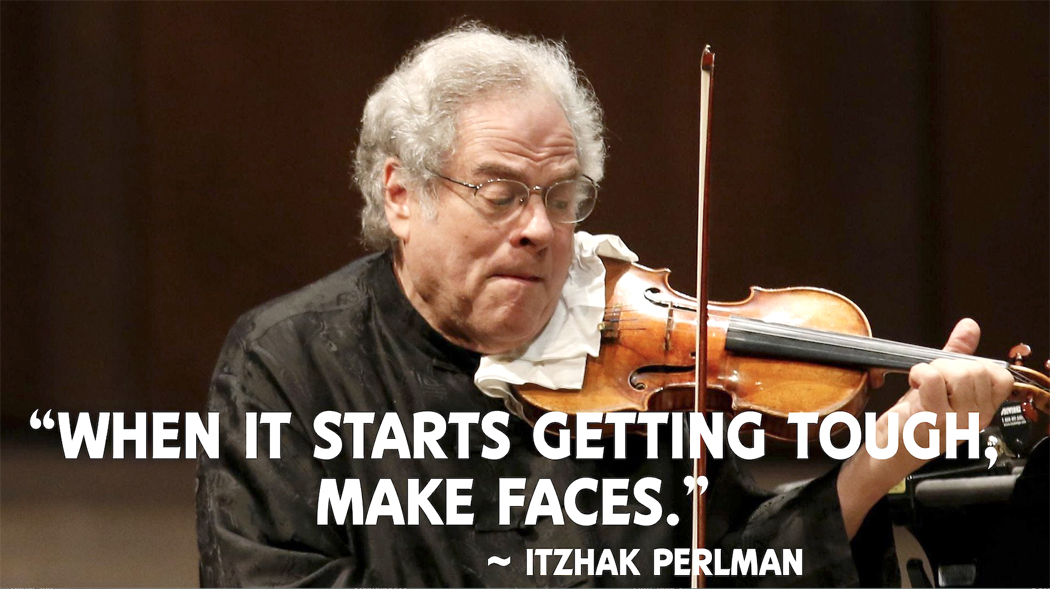
Twice I heard Itzhak Perlman give recitals in Mesa, Ariz. and each time the same thing happened. He opened with a slight sonata, at the first recital a Bach sonata for violin and keyboard and at the second, one of the op. 12’s of Beethoven. I don’t remember which exactly. Perlman played them expertly and even brilliantly, but he just didn’t seem all that involved. I thought, Oh, he’s playing for the boonies and just phoning it in. 

Then, the second piece on the program he played like the Greatest Living Violinist, with all the deep engagement, excitement and power anyone ever had. I realize those first pieces were just warm-up. In one recital, it was Beethoven’s “Kreutzer” Sonata and in the other, it was the Strauss Violin Sonata, a piece generally ignored as turgid and overlong, one of the composer’s less inspired works. Well, not when played by Perlman: This was one of the great musical experiences of my life. Geezus! Who knew this was really great music? If I ever had any doubts about Perlman, I lost them completely. 

Of course, all that makes up for after intermission, when Perlman puts on his embarrassing Borscht Belt act. The program just says, “selections to be announced from the stage,” which means the violinist plays a series of short schmaltzy pieces once played by the likes of Fritz Kreisler, Ole Bull or Bronislaw Huberman, catchy virtuoso show-off pieces that once fit on a single side of a 78rpm record: Hora Staccato, Liebeslied, Salut d’Amour. And worse, Perlman spends even more time with a pile of dad jokes and cornball puns, as if he really wanted to be a baggy-pants vaudeville comedian rather than a great fiddler. A comic he is not. I shoulda left at intermission with the warm memory of the Strauss still in my mind. 

Finally, I want to mention three pianists I heard, whose appearances have permanent real estate in my psyche. 

The first is Andre Watts, who I heard several times, but once at the Scottsdale Center for the Arts playing the same Liszt sonata I heard Gilels play at the beginning of my listening life. This time, I understood what I was hearing, and watching Watts’ fingers on the keys, dancing and pouncing. It was a wonderful, performance of clarity and power. 

Second, quite different, was Olga Kern playing the Rachmaninov Paganini Rhapsody with the Phoenix Symphony. It is clearly a 20th century piece, but often played as if it were late Romanticism, like his famous concertos. But it is an ironic masterpiece, and Kern played it with such lightness and humor that it was reinvigorated. And the audience gasped at the audacious ending when Kern began standing up even before knocking out the last cadence as if it were an afterthought. Yes, it was a coup de theatre, but it worked and perfectly summed up the tone of the piece as she played it.

And third, a problem performer. You never know what you’re gonna get with Lang Lang. He is often seen as a flashy product of PR and promotion, and doesn’t help himself by often showing off and posturing for audiences, making faces as he stares at the ceiling and waving his arms around. I’ve heard Lang Lang live four times and sometimes he is very good and earns his credit, and sometimes you just wanna slap him. But one time, he played the first Chopin concerto with the Phoenix Symphony and time stopped still for the entire slow movement. Dead still. The world disappeared. Eternity opened up. It cannot be played better or more affectingly than Lang Lang did it that evening. I am forever grateful for what he gave me — one of the greatest performances I ever heard. 

Of course, the next time he came to town, it was the other Lang Lang who showed up. 

Casablanca is one of the best loved films ever to come out of the Hollywood studio machine, but it is hardly the story that makes it so. After all, the basic plot is “boy loses girl,” “boy finds girl” and “boy loses girl again.” A pretty thin thread to hang an epic on, even if the boy and girl are Humphrey Bogart and Ingrid Bergman. 

And the movie’s success is especially surprising considering what a mess its making was, well-documented in several books: many rewrites; a team of script doctors; and an ending that wasn’t known or decided upon until the last moment. And that is beside the fact that most of the plot details were simply not believable, or had no basis in historical fact. In other words, pure succotash. 

The love story may have been enough to make Casablanca a successful run-of-the-mill studio release in 1942 — after all, Warner Brothers churned them out by the bucketload — but the film has a secret ingredient that lifts it up to a classic. And sometimes, they barely spoke English. 

The love story may be the mortar that holds the story together, but it is the hundred extras, with their vivid vignettes, that are the bricks that form the substance and power of the movie. And those bit parts, most played by actual refugees from the war and from the Nazis, breathe actual life into the film. 

Each goes by so fast, you may not notice how many of them there are. Between each scene that advances the plot, there are interlarded brief glimpses into the lives of those made stateless, seeking a way to escape the horrors of war and fascism. The complete cast list on IMDb of those uncredited actors is a hundred names long, and most of those were actual refugees, making scant living in Hollywood. 

In fact, of the credited actors at the top of the cast, only three were born in America, and of the three primary characters, only Bogart, who was born in New York City in 1899. Down the roster, you have Dooley Wilson, born in Texas in 1886; and Joy Page, who also happened to be the step-daughter of Warner studio head, Jack Warner (she played the Bulgarian refugee, Annina, who almost gives herself to police chief Louis in order to save her husband). 

Let’s go down the list. Not all of them fled Nazis, but all were caught up in the turmoil in Europe.  

Ingrid Bergman (Ilse Lund) — Born in Stockholm in 1915 to a German mother, she spent summers as a child in Germany. In 1938, she made a film for the German movie conglomerate, UFA. But she said, “I saw very quickly that if you were anybody at all in films, you had to be a member of the Nazi party.” She never worked in Germany again. 

Paul Henreid (Victor Laszlo) — Born in 1908 as Georg Julius Freiherr von Hernreid, Ritter von Wasel-Waldingau in Trieste, which at the time was part of the Austro-Hungarian Empire. His father was born a Jew, but converted to Catholicism in 1904 to avoid the anti-Semitism in Austria. Henreid was nevertheless persecuted as Jew by the Nazis after the Anschluss, and his application to work in the German film industry was rejected personally by Joseph Goebbels. 

When he helped a Jewish comedian escape from Germany in 1938, he was declared an “official enemy of the Third Reich” and his assets were confiscated. He then escaped to England and then to Hollywood in 1940. 

Conrad Veidt (Major Heinrich Strasser) — Veidt, born in 1893 in Berlin, had a long, successful career in German silent films (famously playing Cesare the somnambulist in The Cabinet of Dr. Caligari in 1920), but when the Nazis came to power, like all German actors, he was required to fill out a “racial questionnaire” and declared himself a Jew, although he wasn’t, but his wife, Ilona Prager, was. He smuggled his in-laws from Austria to neutral Switzerland, and even helped his former wife, Radke, and their daughter escape. He also got out, first moving, to England in 1939 and to the US in 1941. 

A staunch anti-Nazi, he wound up playing many Nazis in American movies, although his contract stipulated that he would only do so if they were villains. Veidt said it was ironic that he was praised for playing “the kind of character who had force him to leave his homeland.”

“You know, Rick, I have many a friend in Casablanca, but somehow, just because you despise me, you are the only one I trust.”

Peter Lorre (Signor Ugarte) — Hungarian Lorre was born Laszlo Lowenstein in what is now part of Slovakia in 1904 (many borders have changed). He had been a very successful actor in German films — playing child murderer Hans Beckert in 1931 in Fritz Lang’s M, a film the Nazis later condemned and they even used a clip of Lorre in the propaganda film The Eternal Jew, implying that Beckert was typical of Jews. 

Lorre’s parents were German-speaking Jews (his mother died in 1908). The actor left for Paris in 1933, later moving first to London and in 1935, to Hollywood. 

Claude Rains (Captain Renault) was born in London in 1889 and moved to the US in 1912; and Sydney Greenstreet (Signor Ferrari) was born in Kent, England in 1879, the son of a tanner, and began working for Warner Brothers in 1941.

So, the rise of Hitler and Nazism affected the majority of the above-the-line cast of Casablanca, but it is the character actors and the extras where the story really plays out. Most of these were not even part of the source material for the movie.

In 1940, writers Murray Burnett and Joan Alison wrote an anti-Nazi play called Everybody Comes to Rick’s, about the cafe owner in Morocco helping a Czech resistance fighter escape, with “Lois,” the woman Rick, the cafe owner, is in love with. That play, unproduced, was bought by Warner Brothers and handed over to studio screenwriters, who buffed it up, rewrote dialog and dithered over its ending. First Casey Robinson (writer on Captain Blood) worked over the play, beefing up the romantic plot of Rick and Ilse; then Howard Koch (writer on The Sea Hawk), worked on the politics; and twin-brother writers, Julius and Philip Epstein, script doctors punched up dialog and restructured the plot (together they had brightened up the banter in The Man Who Came to Dinner). 

Koch and the Epsteins won the Oscar as Casablanca’s screenwriters; Burnett, Alison, and Robinson were nowhere to be mentioned. 

The original play was compelling enough finally to be successfully produced in London in 1991, and it provided what Koch called “the spine” of the movie, but it is the dozens of brief details that make so much of the film memorable, beginning near the opening, when a middle class English couple (Gerald Oliver Smith and Norma Varden, both British) are interrupted by a thin, nervous pickpocket (Curt Bois). 

“I beg of you, Monsieur, watch yourself. Be on guard. This place is full of vultures, vultures everywhere, everywhere.” A moment later, the Englishman says, “Oh, how silly of me. I’ve left my wallet at the hotel.” 

The scene takes only seconds on screen, but sets the tone for irony, cynicism and dark comedy. Bois was a Jew born in Berlin, who escaped Germany in 1934, after the rise of Hitler. 

(To understand what the Epsteins gave the movie, the original script has Bois saying only, “M’sieur, I beg of you, watch yourself. Take care. Be on guard.”)

Such slight moments, throughout the movie, keep every second alive and vivid. And most play out with actors who have fled Europe. Such as:

Melie Chang, Torben Meyer and Trude Berliner

Trude Berliner — born 1903 in Berlin. Jewish. Left Europe in 1933 when Nazis came to power. In the film, she portrayed a woman playing baccarat with a Dutch banker, played by Torben Meyer, Danish, born 1884, who came to the US in 1927. In one scene, she asks Carl, the waiter, “Will you ask Rick if he will have a drink with us?” “Madame, he never drinks with customers. Never. I have never seen it.” When Meyer say he runs “the second largest banking house in Amsterdam” “Second largest?” says Carl. “That wouldn’t impress Rick. The leading banker in Amsterdam is now the pastry chef in our kitchen.”

Then, there’s the sweet old couple who are learning English for their trip to America. “Liebchen, sweetheart, what watch?” “Ten watch.” “Such much?” They are:

Ilka Grünig — Jewish actress from Vienna, born 1876. Left Germany in 1938 after the Nazis came to power. and:

Ludwig Stössel — Born 1883 in Leika, Hungary (now Lockenhaus, Austria. I mentioned borders changed a lot) After the Anschluss, Stössell was imprisoned several times but was able to escape Vienna and get to Paris, and then to London.

And the woman who “has to sell her diamonds,” Lotte Palfi Andor, born 1903 in Bochum, Germany, a Jewish stage actress who had to flee in 1934 with her husband, Victor Palfi, after the Nazis came to power. Offered a small amount for her jewels, she asks, “But can’t you make it just a little, more? Please?” The buyer says, “Sorry, but diamonds are a drug on the market. Everybody sells diamonds. There are diamonds everywhere.”

Marcel Dalio, born in Paris in 1899 as Marcel Benoir Blauschild, had featured in two of the greatest films ever made, Rules of the Game and The Grand Illusion, for Jean Renoir. He was born to Romanian-Jewish immigrants and left Paris in 1940, ahead of the invading German army, reached Lisbon, went to Chile, to Mexico, to Canada and finally to Hollywood, where he found small roles, such as Emil the Croupier in Casablanca. In occupied France, his face was used on posters as a representative of “a typical Jew.” All other members of Dalio’s family died in Nazi concentration camps.

After the Bulgarian youth wins twice at the roulette, betting on the same number, Rick asks Emil, “How we doing tonight.” The surprised croupier answers, “Well, a couple of thousand less than I thought there would be.” 

The youth was played by Helmut Dantine, born 1918 in Vienna. When he was 19, after the Anschluss, he was rounded up with hundreds of opponents of the Third Reich and sent to a Nazi concentration camp. He parents bought his release and sent him to California, where he made a living playing Nazis in various movies. 

Madeleine Lebeau played Bogart’s discarded girlfriend, Yvonne. “Where were you last night?” she asks Rick. “That’s so long ago, I don’t remember.” “Will I see you tonight?” “I never make plans that far ahead.” 

Lebeau married Marcel Dalio in 1939 and the both had to flee Paris ahead of the German advance. Her best moment in the movie is when the French sing La Marseillaise against the Germans singing Die Wacht am Rhein. Many of the actors in the scene were real-life refugees from Europe, and Lebeau ends with “Vive la France! Vive la democratie!” with tears in her eyes. “They’re not tears of glycerin shed by an actress,” recalled Leslie Epstein, son of the screenwriter. “The tears in her eyes are real.” Another actor noticed everyone was crying: “I suddenly realized they were all real refugees.”

Richard Ryen was born Richard Anton Robert Felix Revy in Hungary (now Croatia) in 1885 and worked as an actor in Germany and became a well-respected stage director at the Munich Kammerspiele (Munich Chamber Theater). He was expelled by the Nazis and emigrated to Hollywood, where he made a living playing Nazis. In Casablanca, he follows behind Major Strasser like a puppydog. 

Louis V. Arco was born in 1899 in Baden bei Wien, in Austria Hungary as Lutz Altschul. He escaped to America after the Anschluss. Near the beginning of Casablanca, he is looking very depressed and has one line: “Waiting, waiting, waiting. …I’ll never get out of here. …I’ll die in Casablanca.”

Wolfgang Zilzer was a special case. He was born in 1901 in Cincinnati, Ohio to touring German film actor, Max Zilzer and moved with his family back to Germany in 1905. The young Zilzer worked for UFA before the war, but after Hitler’s rise to power, he fled to France. He returned briefly to Germany in 1935, but then applied for a visa to emigrate to the US, only then realizing he was already a US citizen. In Hollywood, he made several anti-Nazi pictures with Ernst Lubitsch, but used a pseudonym to protect his father, still in Germany. Zilzer married German Jewish actress Lotte Palfi. In Casablanca, Zilzer played a man without a passport who is shot by the police at the beginning of the film.

Probably the best known of the emigres was S.Z. Sakall, born in 1883 in Budapest to a Jewish family, and known by everyone as Cuddles. He played the head waiter Carl. “Carl, see that Major Strasser gets a good table, one close to the ladies.” “I have already given him the best, knowing he is German and would take it anyway.” 

Sakall was a familiar character actor in Hollywood in the ’40s and ’50s appearing in scores of films as kindly European uncles and befuddled shopkeepers. He escaped the Nazis in 1940 and moved to Hollywood. Sakall’s three sisters and his wife’s brother and sister all died in Nazi concentration camps. 

Hans Heinrich von Twarkowski was born in 1898 in Stettin, Pomerania, in Germany (now Szczecin, Poland). He escaped Germany as a homosexual, threatened by the Nazis, and like so many refugees, ended ironically playing Nazis in the movies. 

Not all the actors escaped the Nazis. Some fled Stalin’s Soviet Union, such as Leonid Kinskey, born 1903 in St. Petersburg. He fled first to Germany in 1921 and then came to the U.S. in 1924. He played the bartender Sascha in Casablanca. “Sascha, she’s had enough.” “I love you, but he pays me.”

Gregory Gaye was also born in St. Petersburg, in 1900, and had been a cadet in the Imperial Russian navy. He fled the USSR in 1923, and worked as an actor in Europe and Asia before moving America. In Casablanca, he played an official in Hitler’s Reichsbank and tries to enter the back-room casino in Rick’s cafe, but is stopped by Abdul (Dan Seymour). He tells Rick, “I have been in every gambling room between Honolulu and Berlin, and if you think I’m going to be kept out of a saloon like this, you’re very much mistaken.” Rick tells him, “Your cash is good at the bar.” He responds, “What? Do you know who I am?” To which Rick replies, “I do, you’re lucky the bar is open to you.” Gaye angrily responds, “This is outrageous! I shall report it to the Angriff” and storms away. (The Angriff was the official Nazi propaganda newspaper.) 

They weren’t all Germans or Jews, but some 34 different nationalities were found in the cast and crew of Casablanca, including Hungarian-born director Michael Curtiz, who worked as a film director for UFA in Germany before moving to America in 1926; and English-born film editor Owen Marks who came to the US in 1928 (and won an Oscar for Casablanca); and Carl Jules Weyl, born in Stuttgart, German and was the art director; and composer Max Steiner, born in Vienna and naturalized as an American citizen in 1920. 

John Qualen, who played Berger the jewelry-selling Norwegian resistance member was born in Vancouver; Frank Puglia, the Moroccan rug merchant was born in Sicily; Nino Bellini, who played a gendarme, was from Venice, Italy.

And, of course, the studio heads, the Warner brothers, Harry, Albert, Sam and Jack, born in Poland and victims of vicious anti-Semitism there, who came basically penniless to the US and built up one of the largest movie studios, and notably the first to make films about the dangers of Nazism, which, in the 1930s was not a popular position. 

Charles Lindbergh at America First Rally in Fort Wayne, Indiana

An overwhelming majority of Americans opposed the resettling of Jewish refugees; hundreds of thousands of people were turned away in the 1930s. As late as 1939, 20,000 American Nazis held a rally in Madison Square Garden in New York. And America aviation hero Charles Lindbergh headed the isolationist America First movement. Father Charles Coughlin and industrialist Henry Ford preached rabid anti-Semitism and praised Adolf Hitler. 

In 1932, Joseph Breen, soon to become head of the Production Code Administration (PCA), the censorship arm of the Motion Picture Producers and Distributors of America, called Jews “the scum of the scum of the earth” and “dirty lice.” Breen would soon be charged with enforcing a ban on anti-Nazi films in Hollywood between 1934 and 1941, at the behest of Joseph Goebbels, by way of the Nazi consul in Los Angeles, Georg Gyssling.

“Confessions of a Nazi Spy,” 1939 Warner Bros.

While most of the studio heads complied with the ban, which also strongly discouraged the production of films about Jewish subjects or featuring Jewish actors, the Warner brothers did their best to fight back. The studio ended all business relations with Germany in 1934, and even a year earlier had made fun of Hitler as an incompetent ruler in an animated film. The Warners were the only studio heads to support the 1936-created Anti-Nazi League, and most notably, made the 1939 film, Confessions of a Nazi Spy, based on a real-life espionage case and starring Edward G. Robinson (born Emanuel Goldenberg in 1893 to a Yiddish-speaking Jewish family in Bucharest, Romania). 

The film defied the PCA ban on films attacking foreign leaders, but Jack Warner said, “It is time America woke up to the fact that Nazi spies are operating within our borders. Our picture will tell the truth — all of it.” Confessions predated the later Chaplin film, The Great Dictator and the Three Stooges short, You Nazty Spy!, both released in 1940. 

So, Casablanca has a studio history behind it. 

Later, in the 1950s, when McCarthyism threatened America with its own brand of fascism, many Hollywood notables were called to inform on their colleagues. The Epstein twins were reported to the House Un-American Activities Committee and were quizzed if they had ever been members of a “subversive organization,” and they answered, “Yes. Warner Brothers.” 

Envoi

Thanks to its many screenwriters, and especially the Epstein brothers, Casablanca is famously quotable from first to last. We all have our favorites. The American Film Institute, which publishes lists of greatest films and greatest performances, put out a list of the “Top 100 Quotes from American Cinema” and Casablanca takes six of the spots, twice as many as second place — a tie between Gone With the Wind and The Wizard of Oz.

No. 5 “Here’s looking at you, kid.”

No. 20 “Louis, I think this is the beginning of a beautiful friendship.”

No. 28 “Play it, Sam. Play As Time Goes By.”

No. 32 “Round up the usual suspects.”

No. 43 “We’ll always have Paris.”

No. 67 “Of all the gin joints in all the towns in all the world, she walks into mine.”

This is a repeat posting of a piece I wrote in 2017, during the first Trump administration. But I believe it may still be apposite, although the stakes are even higher this time around.

I avoid writing about current politics for several reasons. Firstly, because the situation so quickly changes, nothing you write today may hold for tomorrow. Secondly, because it is so touchy a subject, you risk alienating your reader for minor offenses that can be taken as index markers for major disagreements. Thirdly, because politics is such a minor part of what makes a difference in our individual lives; so many other things are more important and more interesting.

Nevertheless, the chaos of the current American situation calls for some small clarification. Arguments muddy when thinking is unclear.

To begin, there is the issue of Donald Trump, which is a great squirt of squid juice, obscuring more lasting problems. It is easy to make fun of the Great Pumpkin, he practically satirizes himself. While he has fervent supporters, it is hard to know exactly what he stands for, because his words are so vague in application, no matter how blunt in expression. It is always possible to assume he is your ally, because you only listen to those words that honk your horn. Is he conservative? Conservatives value free trade. Is he pro-business? Business has told him they need an immigrant workforce. What does he stand for besides ignorance?

He is an obfuscation on the surface, a chaos beyond that because, of course, he has no ideology, other than Trumpism. It is not his supposed conservatism that I object to; there have been many thoughtful conservatives. Trump is not one of them; he isn’t even a conservative at all. What scares the bejeezus out of me about him is that he is so clearly unbalanced mentally. The word Andrew Sullivan has used is “bonkers,” and that can hardly be improved for accuracy. The constant wheezing about his vote count, poll numbers, inauguration crowd, all spouted against obvious and visual evidence, is a clear indication that he is unmoored from reality.

Then, there are the speeches, barely in English. They are really just sentence fragments thrown together with unattached adjectives. Yuge, sad, unbelievable, disgusting. They, as Philip Roth has counted them, are constructed from a vocabulary of a mere 77 words, reused and rearranged ad hoc. They jump around from topic to topic with little or no segue. And then, they are filled with things that are demonstrably untrue. One watches over an over when Trump says he never said this or that, followed by the videotape of him saying exactly what he now says he never said. Does he not know that his words have been recorded?

It cannot be easily said that Trump is a liar, because a liar knows what he is saying is untrue. Others manipulate statistics to make their arguments; Trump just pulls stuff out of his ass. Evidence is irrelevant.

Further, he uses these exanus pronouncements to support his chaotic policy pronouncements, which tend to be simple-minded in the extreme. Problems are usually complex and systemic; his solutions are simple-minded and blunt as a cudgel. He shows contempt for subtlety. If the problem is illegal immigration, his solution is not to consider the cause of the immigration, but to build a wall, despite the fact that the majority of the illegal immigration does not cross the desert border, but flies into our airports. My favorite joke about the wall: “Wall — cost: $12 billion; ladder — cost: $35.”

But this is not meant to be a jab at Trump, who is clearly unhinged, not very bright, not at all subtle, and basically a bully at heart. It is too easy to target him; he is a joke. A dangerous joke, who may very well destroy the world at the push of a button, but a joke nonetheless.

No, what I want to point out is that there is, beyond Trump, a basic misunderstanding of the political divisions in the country.

The divisions are very real. Between urban and rural, between liberal and conservative, between Republican and Democrat. But I want to point out that these may overlap, like Venn diagrams, the dipoles are not identical. We too often confuse conservative with Republican and liberal with Democrat. There may be overlap, but more important, their goals are different.

There is a clear difference between liberal and conservative. As they are defined nowadays (very different from when they originated and when conservatism favored a strong central government), the conservative now seeks a smaller central government and the liberal, an activist government working for the betterment of its citizens. The one favors the individual, the other, the community. The one is exclusionary, the other inclusive. And it is clear that as the political scene is currently deployed, Republicans tend to favor conservatism and Democrats tend to the liberal, although Republicans are more extremely weighted to the far-end of conservatism than the Democrats are to the left wing.

But, such thoughts of political philosophy are largely irrelevant to the actualities of politics. One should never conflate Republican with conservative, nor Democrat with liberal. The aims of ideology are to promote a world view and an action plan to enforce that world view. But that is not the aim of the Republican party. Certainly, it will use conservative ideas to further its ends when it can, but its primary driving aim is the accrual and preservation of power. This is central and should never be forgotten: Republicans will do whatever they need to to gain and keep power. Democrats have a similar, but weaker drive. Many Democrats join the party because they think they can make the world a better place. Some Republicans do that, too, but the aim of the party on the whole is not the improvement of society, but the exercise of power. It is King of the Hill on a hemispheric playing field.

This is not to say that most Republicans don’t believe, by and large, that conservative policies would help the nation, but that whether or not they do is secondary to the accretion of political power. Hence, the contorted, serpentine Congressional districts, gerrymandered into silliness in order to ensure Republican supremacy. (Yes, Democrats have done the same — in fact, they invented the procedure in the 19th century — but they were pikers compared to the modern attempt to engineer a “permanent Republican majority.”) Hence, the bald-faced hypocrisy of choosing sides on an issue solely on the basis of whether a Republican or Democrat is offering it for a vote (as with the Republican-designed Affordable Care Act, which became an unswallowable “disaster” when recycled by the Obama administration. Hence, the use of arcane Senate or House rules, or the threat of the “nuclear option,” when it favors them, and outrage when used against them.

And it is why Republicans were gulled into supporting Trump when it looked like he might win the White House back for the party, despite the problem of Trump espousing ideas contrary to longstanding Republican policies. Trump is, after all, not a Republican, except in name, and not a conservative, as it is usually defined. He is sui generis, a propounder of Trump now, Trump tomorrow, Trump forever.

One area in which Trump and Republican world views agree is that the primary lens through which to view policy is economic. Money is the gravity that holds that world together. Whether it’s tax cuts, deregulation or fear of unions and a raise in minimum wage, the heart and soul of the conservative world view is money. The very idea of “running government like a business” is a consequence of this Weltanschauung. But across the world, this idea is changing. Governments are not businesses.

There is a historical storyline here. In the feudal past, with the king at the top of the pile, government was essentially a protection racket, with each level of vassalage “wetting its beak” in the next level down, and everyone feeding on the peasants. The general welfare of the populace was not even an empty platitude. As nation states developed from the Medieval sense of monarchal real estate, the idea of decent governance took hold. Since the New Deal in the U.S., and post-war in the better part of the rest of the world, governments have assumed the duty of protecting the welfare of its populace. All through Europe, governments guarantee health care, safety, minimum living wages, shorter work weeks and longer vacations. The U.S. has resisted such things. For Republicans (distinct from conservatives, who also have many social issues) and Trump see the world through dollar-tinted glasses. It is a reversion to the Medieval model, where all wealth floats upward like a bubble in the champagne. And it is power that guarantees the income. The goal of the Republican party is not so much the institution of conservative ideas, rather it is the use of conservative ideas to protect and increase individual wealth.

The problem is, that while money can make life easier to navigate, money cannot make life worth living. For that, you need the other aspects of life that Democrats — and most of the rest of the world — embrace. Freedom from oppression, sufficient means for living, cooperative communities, aid for the less fortunate, an even playing field for all. Among the things that make life worth living are family, love, art, religion, good health, and shared interests and shared mythology.

For Trump and the Republican party both, the world they see is transactional. It is also a zero-sum game, and the winning is all. We need to recall that when we let ourselves be gulled into arguing over conservative and liberal. Those labels are merely the masks worn in the more brutal fight over who will be the alpha dog.

Originally published Feb. 17, 2017