Roadsign digest
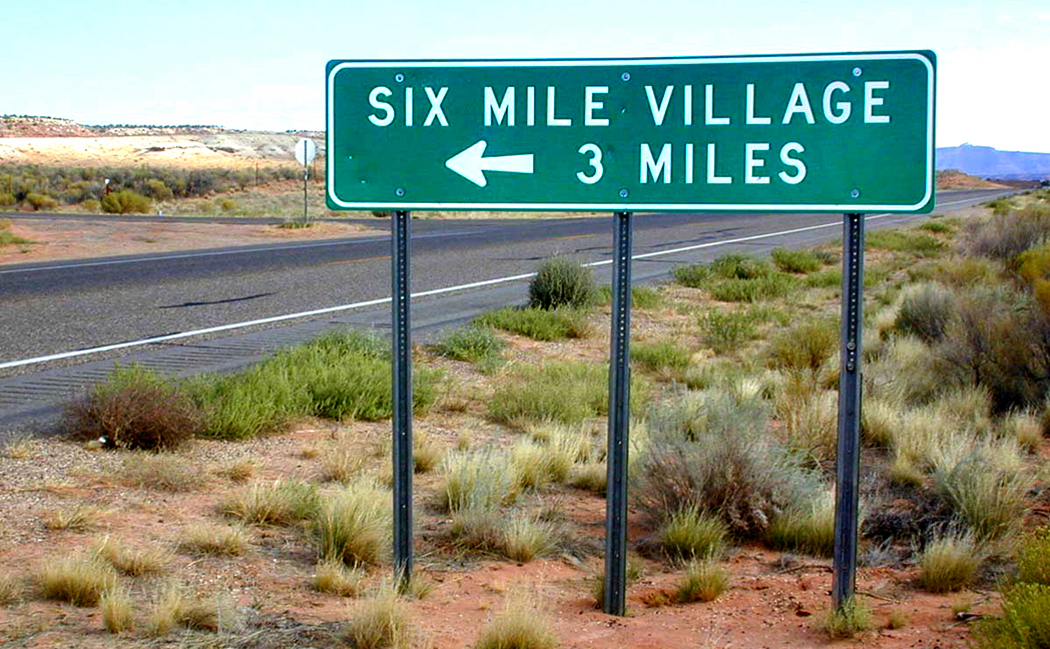
I did many things during my 25 years with The Arizona Republic. Primarily, I was a critic, but I also wrote travel articles and the occasional humor pieces. And for a while, my brief included driving around town in Phoenix, Ariz., looking for odd and ironic signage. I would photograph such things and they would run, say, at the bottom of a page with a short caption.

Things such as a leprechaun who said “Se habla Español,” or a 20-foot high cutout of a baby on I-10 just west of the city. There is irony everywhere, if you are looking for it. The social landscape is brimming with whimsy.
For me, it all began when my wife and I drove around the U.S. in the early 1980s, and we saw oddness all around. Carole kept notebooks, for each trip, and wrote down many of the things that struck us, such as the Elmer Hurlbutt Bridge in northern California. Or Fiery Gizzard in Tennessee.
Or the sign along I-90 in South Dakota that read “Welcome to Kadoka, S.D. Kadoka needs another doctor.” Or in Maine: “Welcome to Kennebunk, the only village so named.”

It became a theme of our travels. The Little Hope Baptist Church. A fast-food stand in Pennsylvania offered “arsonburgers.” A missing neon “Y” in Rising Star, Texas, made its bean-ery the “Old Colon Restaurant.”
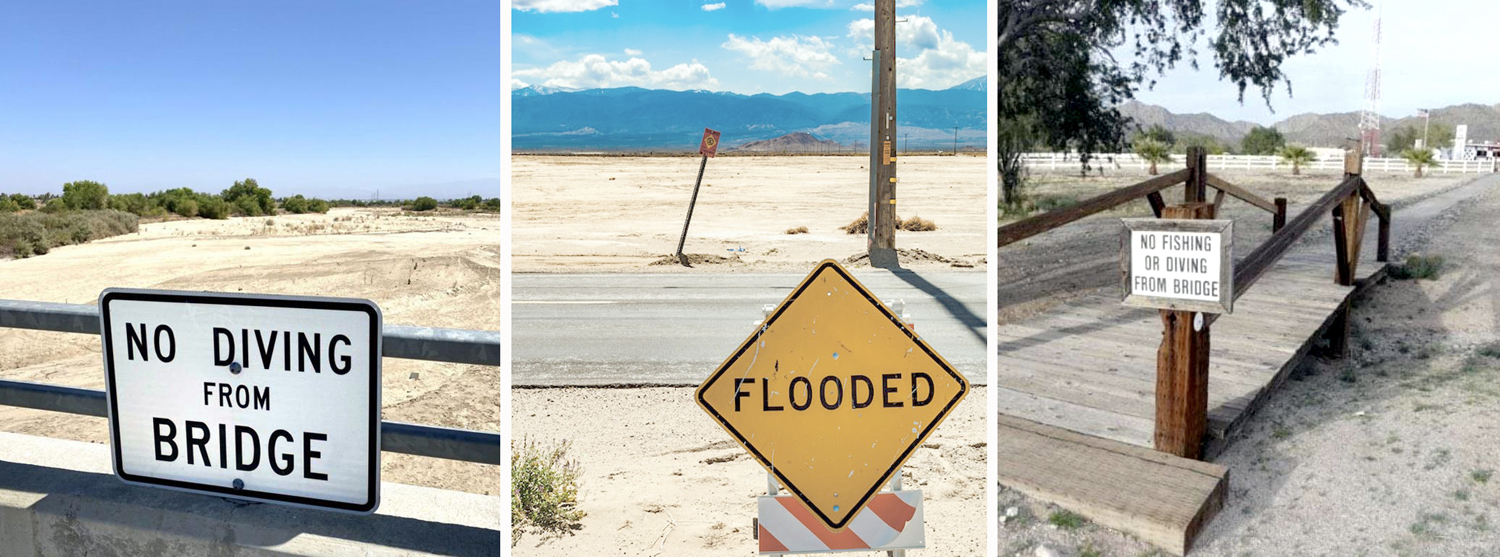
In Wolf Point, Mont., we crossed a tiny bridge over a stony dry wash with a sign posted saying, “No diving off bridge.” This is a common sign across the West.
A billboard in El Paso, Texas, tells us a certain car dealership is “three miles west of Lee Trevino.”
And while we were climbing up the Cascade Mountains in Washington, we found a roadsign that said “Flying Rocks 35 mph,” as if it were a speed limit for impatient boulders. It pictured a black blob with little hites trailing behind, on a yellow background. (“Hites” are those speed-lines drawn by cartoonists, as defined by Mort Walker in his Lexicon of Comicana.)

Perhaps my interest in oddness and irony was first touched off when I was a teenager visiting the Hayden Planetarium in New York City, where there was an illuminated sign pointing downstairs to “Solar System & Rest Rooms.”
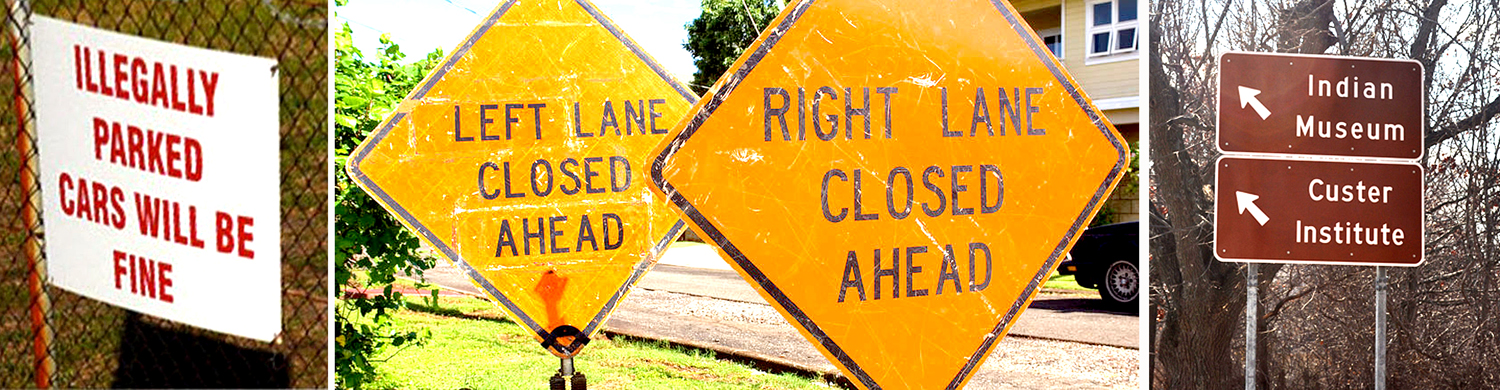
At any rate, there are many fellow travelers who collect these little roadside giblets. They show up on FaceBook and Twitter (I know, “X”), or in videos on YouTube. There is no shortage of misspellings, unnoticed juxtapositions, contradictory instructions, and bad word spacings.
As a former copy editor and headline writer, I am more sensitive than non-journalists to the bad line break. That is when an adjective and noun are split into two lines and leave a misreading likely. Little Hope Baptist Church is one of these. Presumably, there is a Hope Baptist Church nearby, and this is the Little version of it. But that’s not how it reads.

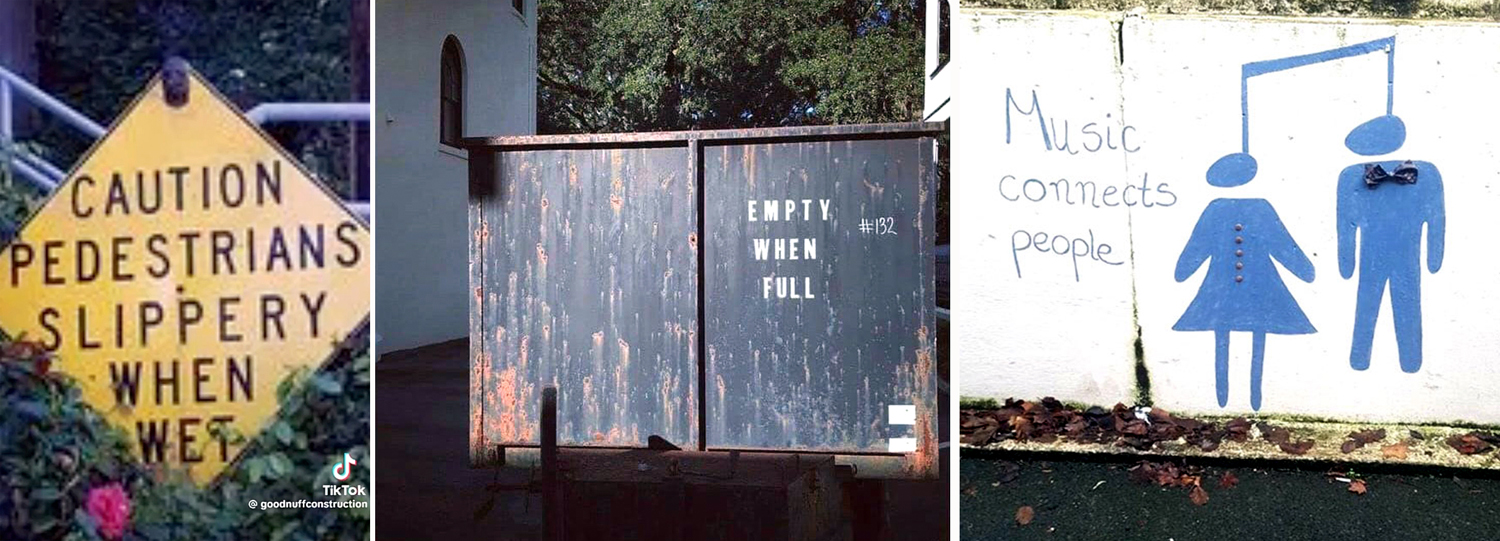
When you are alerted to the issue, bad line breaks are everywhere. It is behind all those signs warning of “Slow Children.”
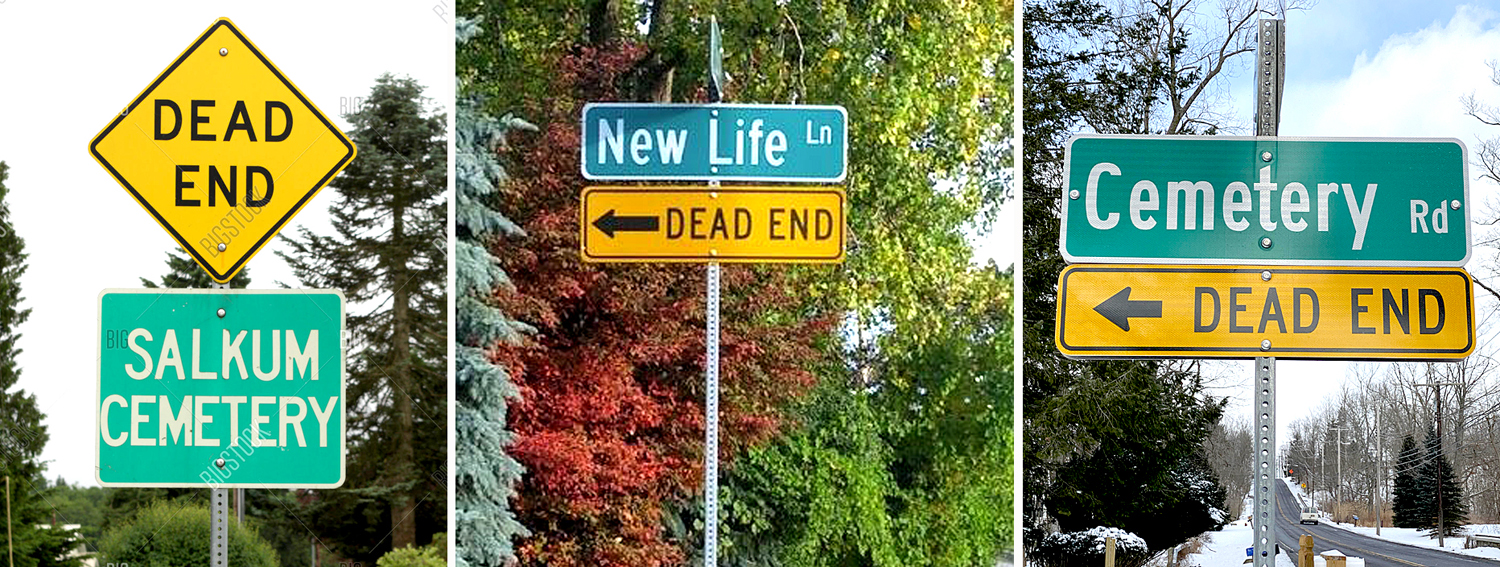
Then there is just plain irony, as in all those roads to cemeteries that feature “Dead End” signs.
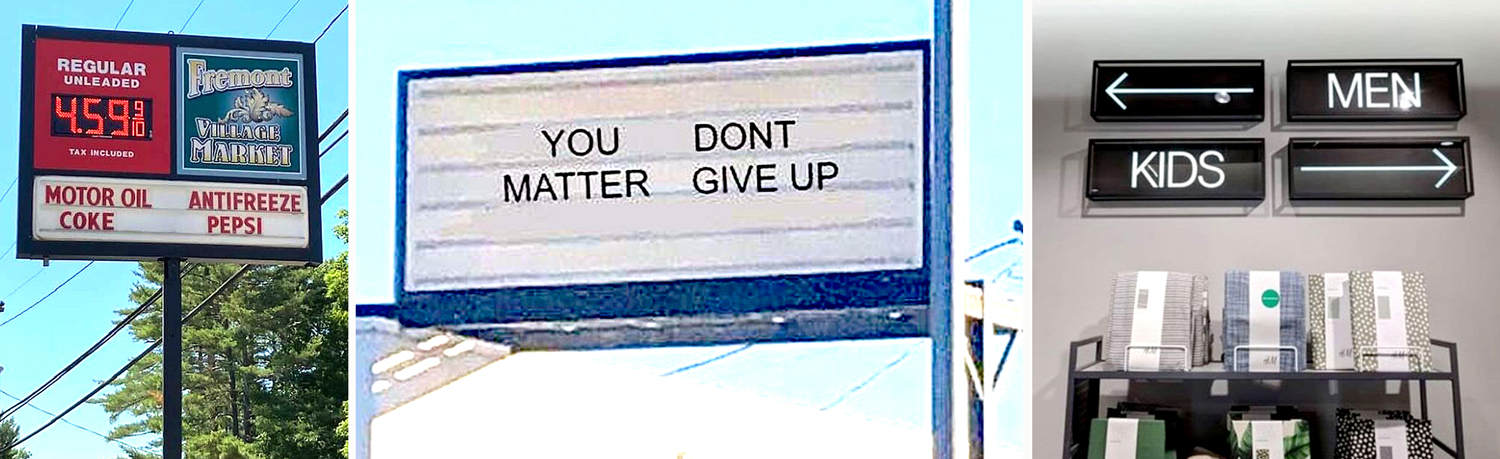
Sometimes, you are meant to read across, sometimes down, and sometimes the sign maker hasn’t seemed to notice.
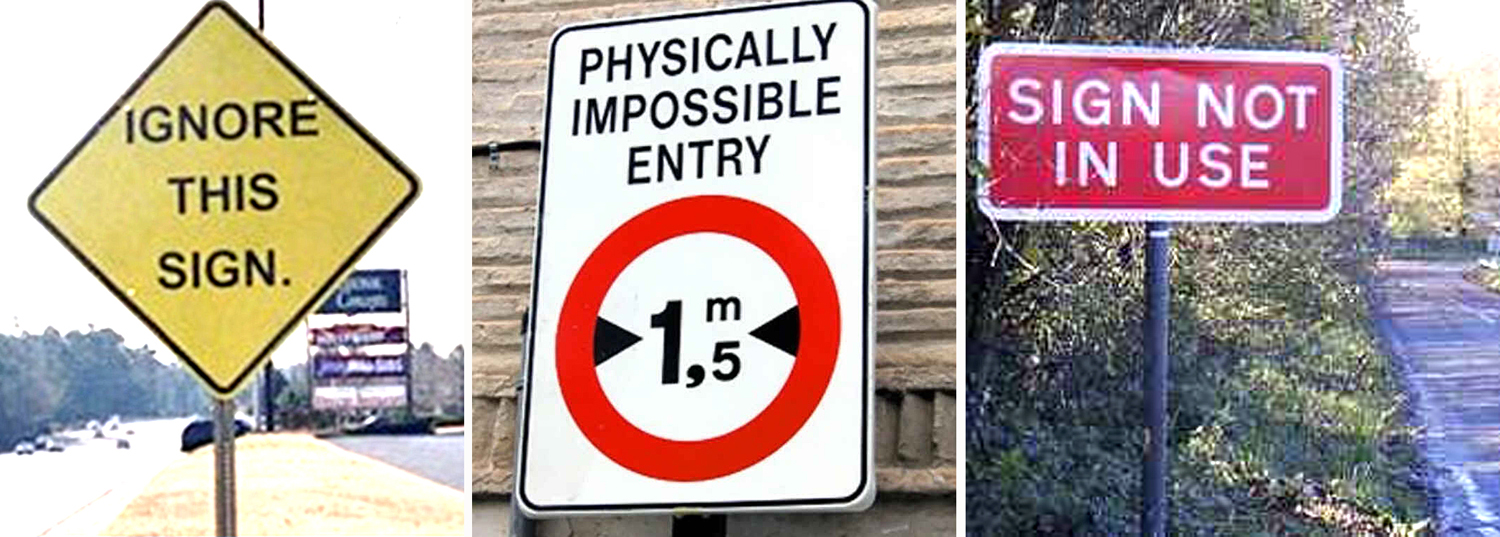
Some signs seem utterly unnecessary.
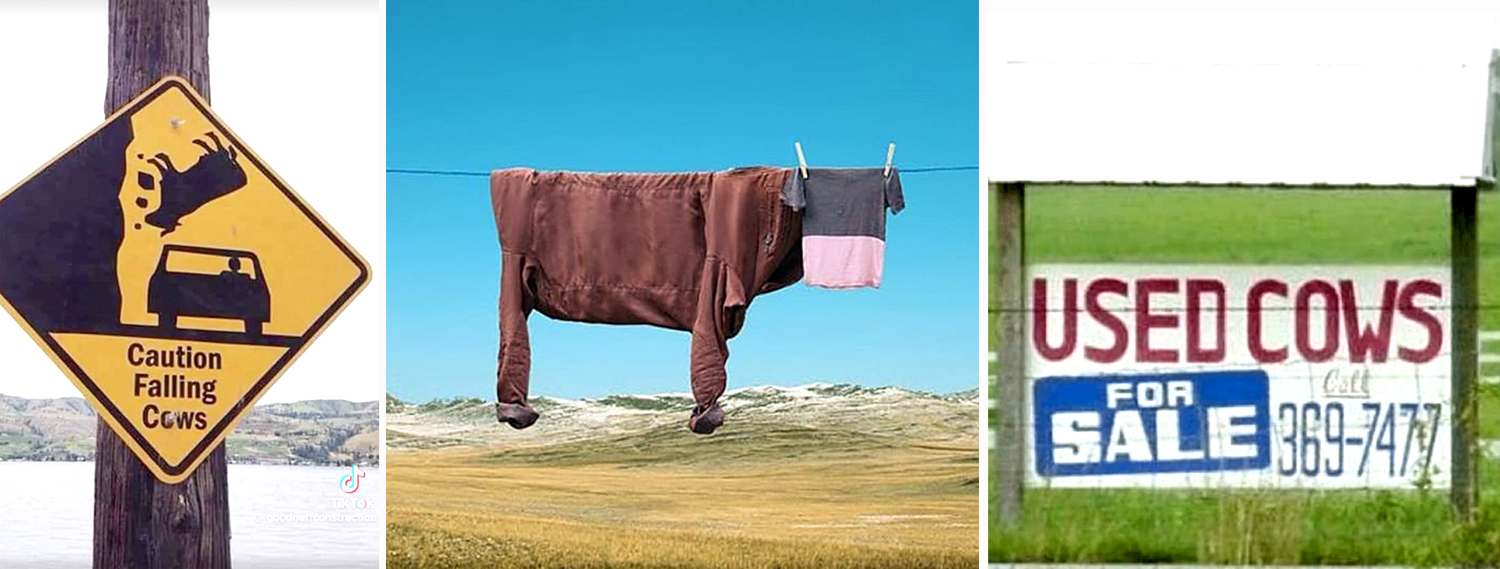
Cows are a common theme.
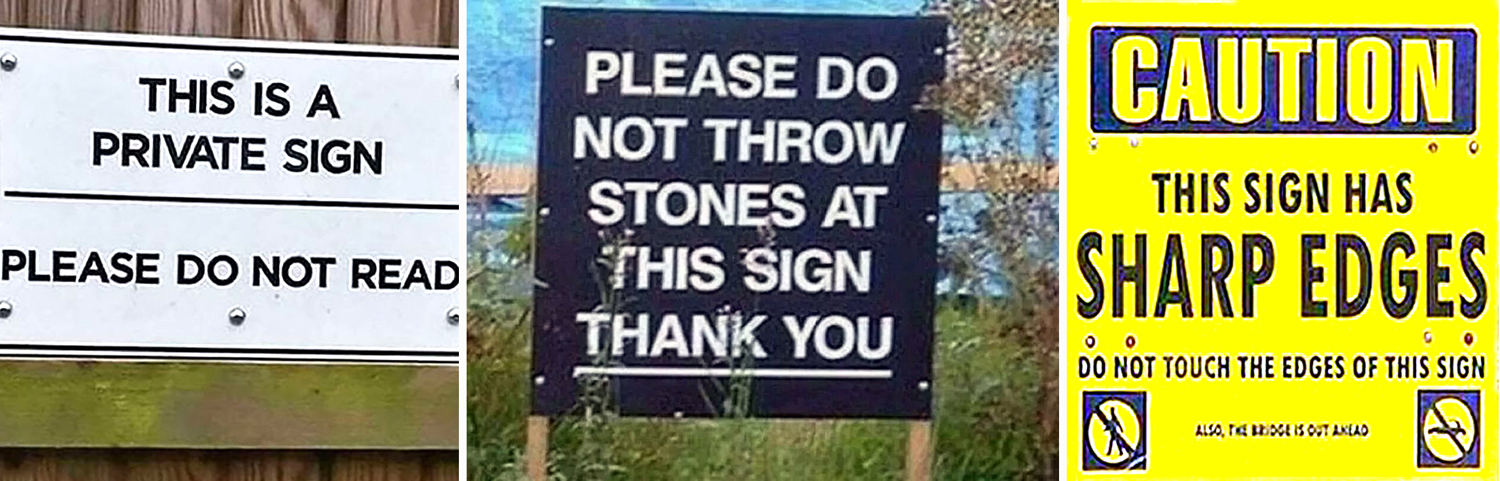
Some signs are self-referential. Without the sign, you wouldn’t need the sign to tell you what’s on the sign.
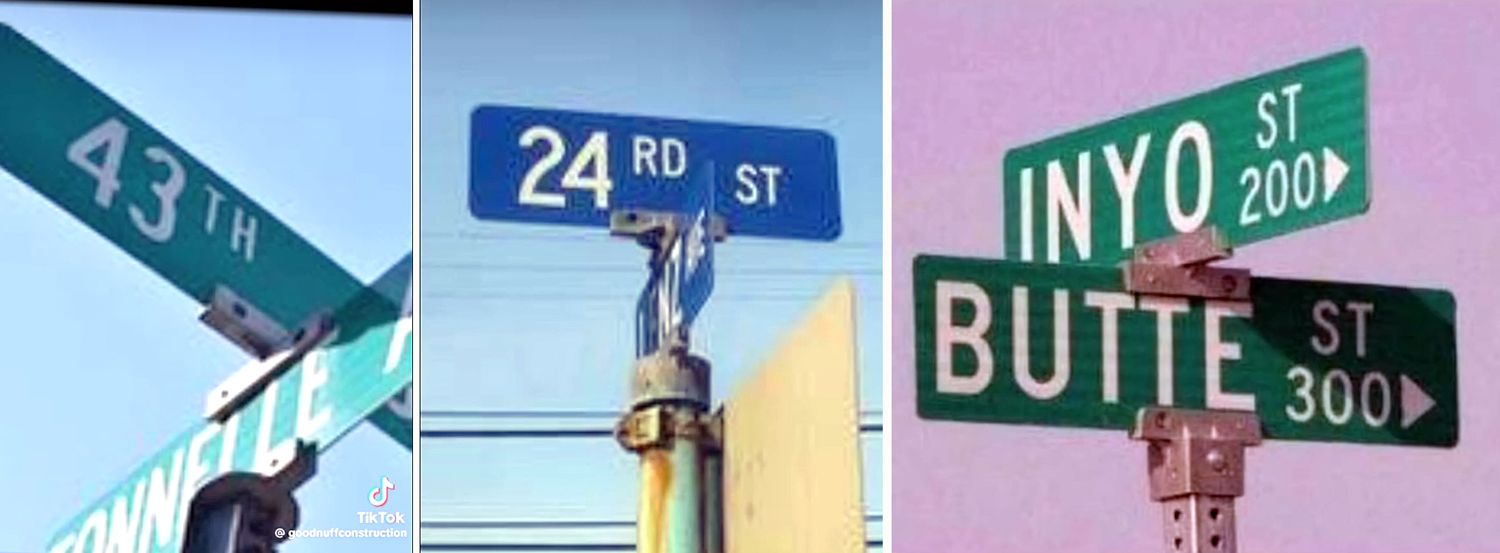
Surely some street sign makers weren’t paying attention when they put together these.
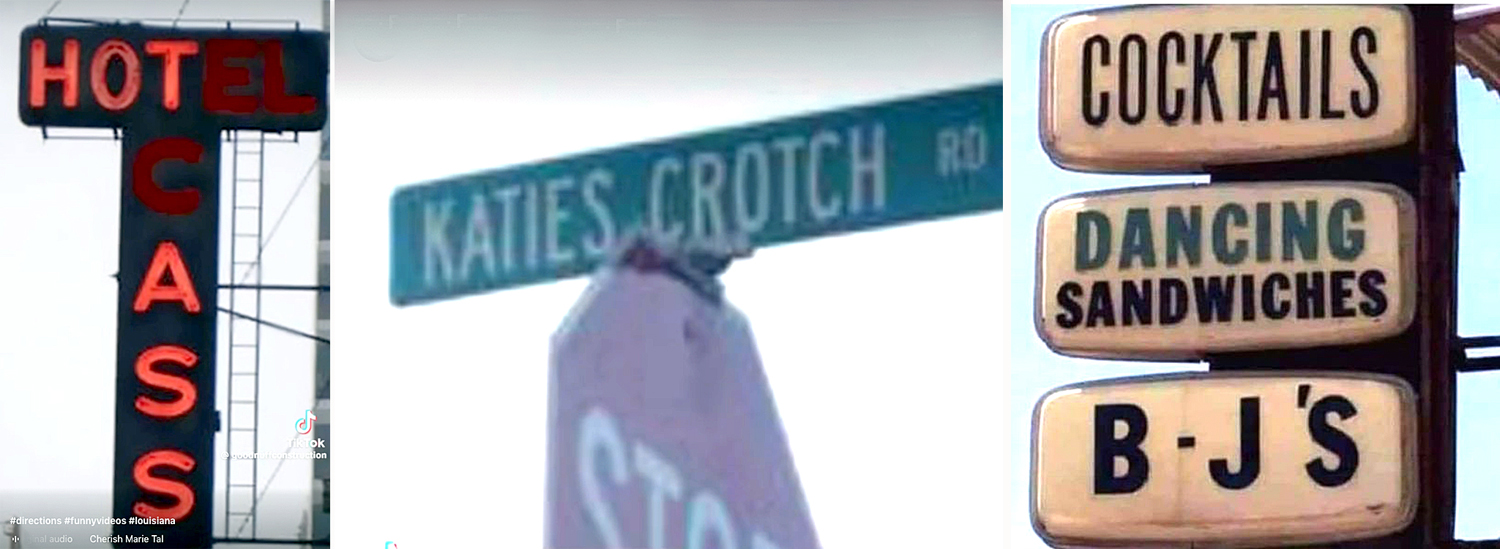
Some are unintentionally risque.

Aren’t secret sites supposed to be secret?
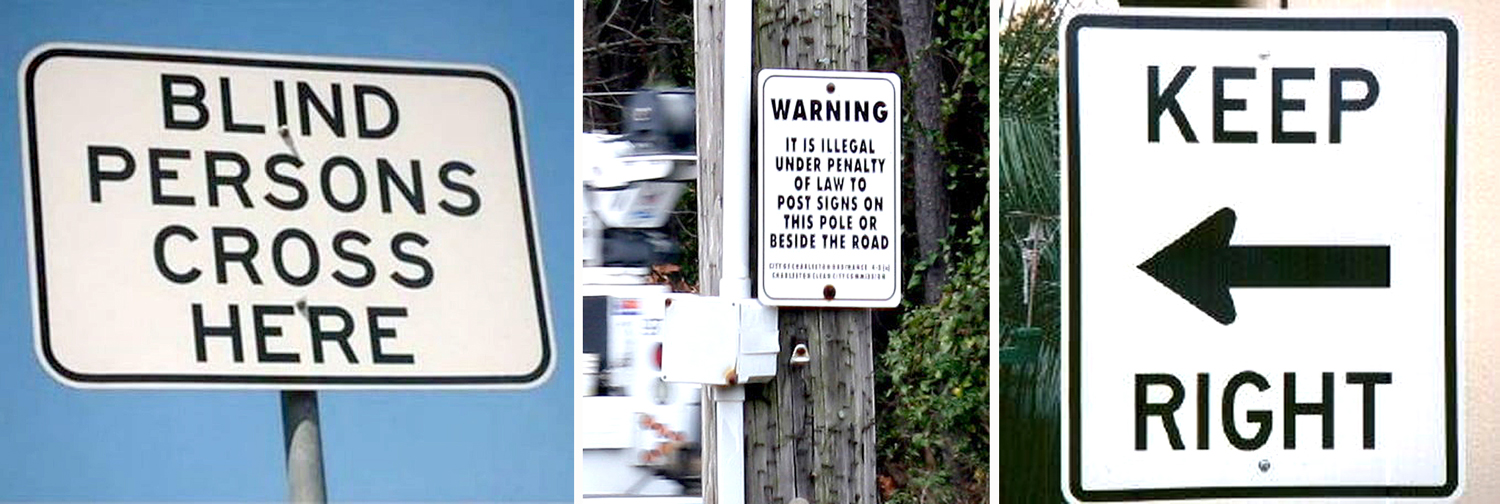
Some are just head-scratchers.

And what are you supposed to do with these?
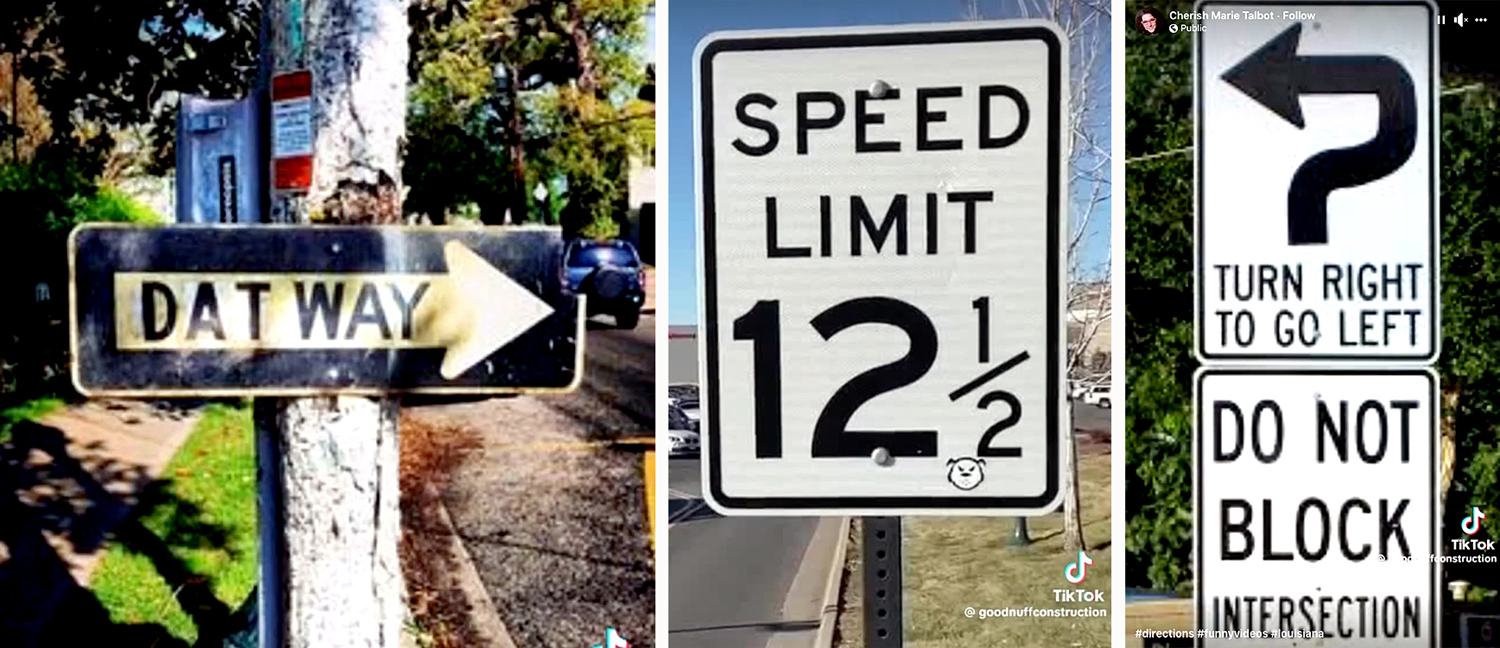
Or these?
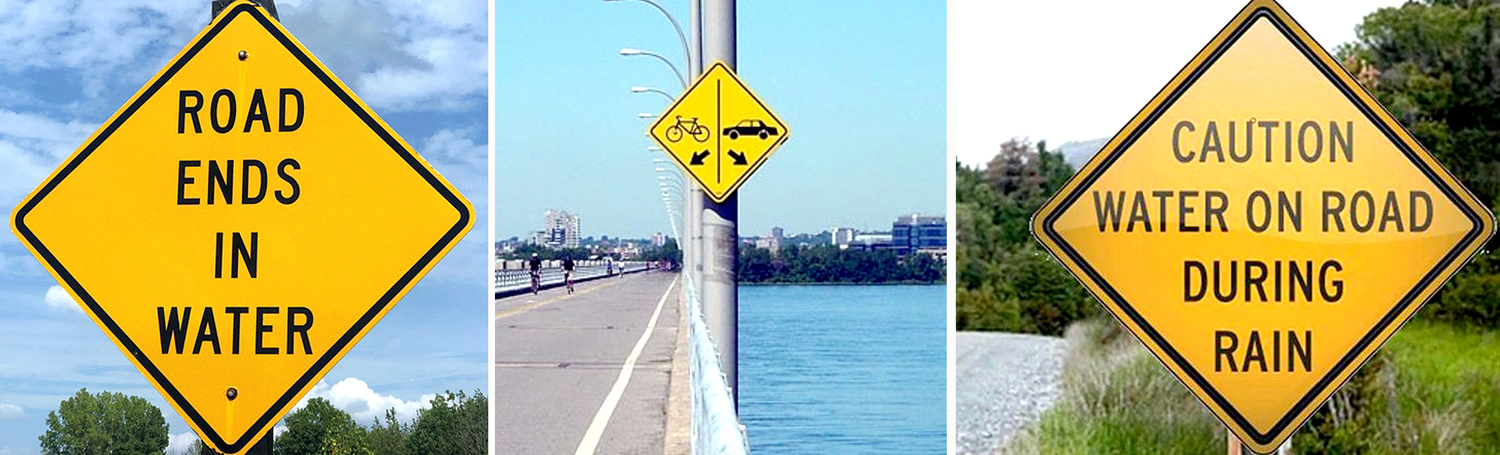
Or these “water signs?”
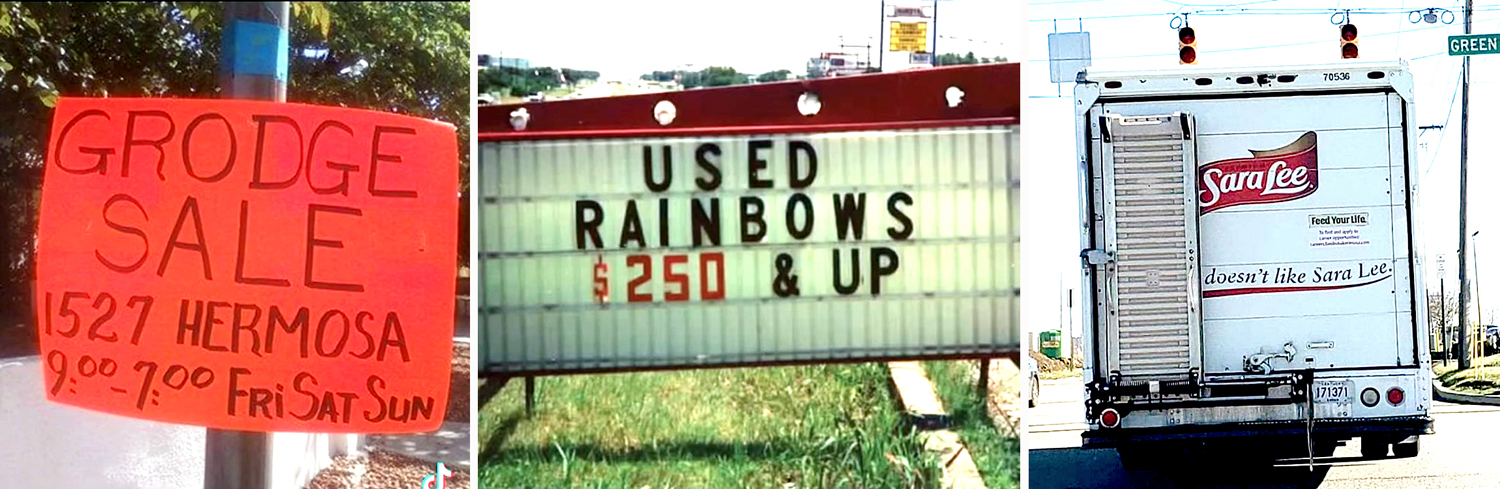
Everywhere you go, you find them. Sometimes the world seems like constant entertainment.
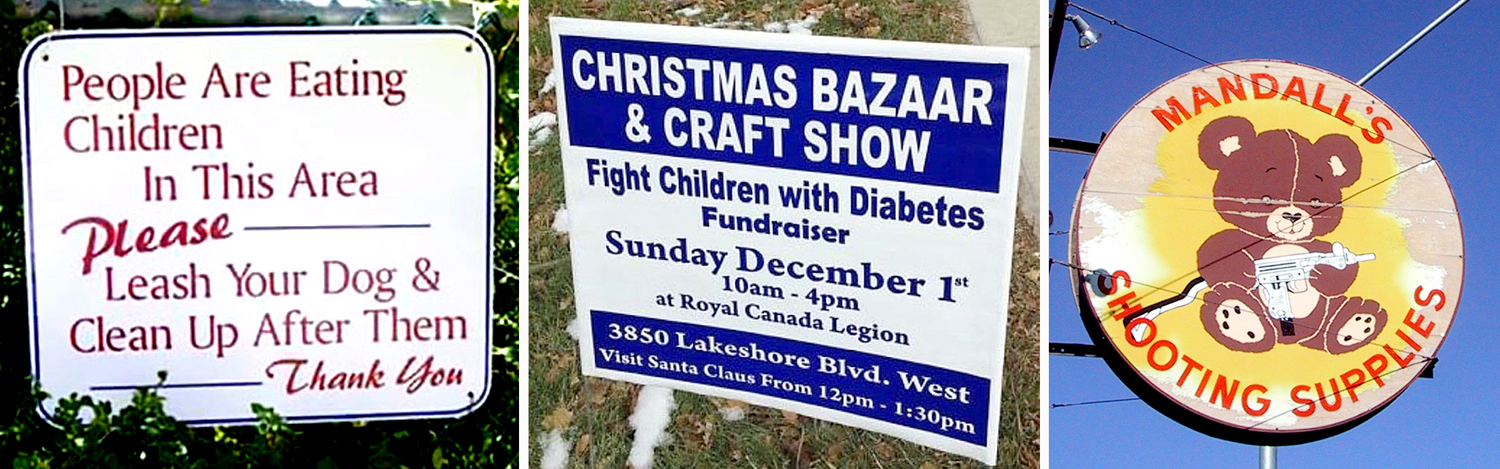
Eating children, fighting children, teddy bears shooting them.

So, don’t say no one gave you directions.
Click any image to enlarge
 Richard Nilsen
I would like to buy your writing in book form, if you’ve compiled one. Anything out there? I love your writing style.