Archive

Monthly Archives: January 2024

When I was a wee lad, in the 1950s and television was about the same age, I watched the images on the screen flash by with no critical eye. It was all the same: old movies, kiddie shows, talk shows, variety shows, sitcoms — it all wiggled on the toob and that was enough. 

If there were any difference in production quality, or acting ability, it made no difference. I just watched the story, or listened to the music. The very idea that there were people behind the camera never occurred. I didn’t really even think about there being a camera. Things just appeared. I suspect this is true for most kids. It may be true for quite a few grown-ups, too. 

There were certainly programs I liked more than others, but I could not have given any reason why one and not the other. Mostly, in the daytime, I watched cowboy movies and cartoons, and in the evening, I watched whatever the rest of the family was watching. 

In all that, there were a good number of Westerns. There were those for the kids, such as The Lone Ranger or The Cisco Kid, and later, those in the after-dinner hours aimed at the grown-ups — Gunsmoke or Death Valley Days. There were also the daytime screenings of old Western movies with such stars as Buck Jones, Hoot Gibson, Bob Steele or Johnny Mack Brown. 

I mention all this because I have recently begun watching a series of reruns of old TV Westerns on various high-number cable channels, seeing them in Hi-Def for the first time. I have now seen scores of original Gunsmoke episodes and my take on them is entirely different from when I was in grammar school. I can now watch them critically.

It’s been 70 years since I was that little kid, and since then I’ve seen thousands of movies and TV shows, served a stint as a film critic, written about movies, and introduced films in theaters. I have a different eye, and understand things I couldn’t know then. 

And so, a number of random thoughts have come to me, in no particular order:

1. 

Old TVs were fuzzy; new TVs are sharp. In the old days of cathode-ray tubes, TV pictures were made up of roughly 480 lines, running from top to bottom of the screen, refreshing themselves every 60th of a second. Broadcast TV was governed by what is called NTSC standards (altered slightly over time). Such images were of surprisingly low definition (by modern standards). 

The sharpness of those early TV pictures was not of major importance because most people then really thought of television as radio with pictures, and story lines were carried almost entirely by dialog. The visual aspect of them was of minor concern (nor, given the resolution of the TVs at the time, should it have been.)

Of course, now, we watch those old Gunsmoke episodes on HD screens. And two things become apparent. 
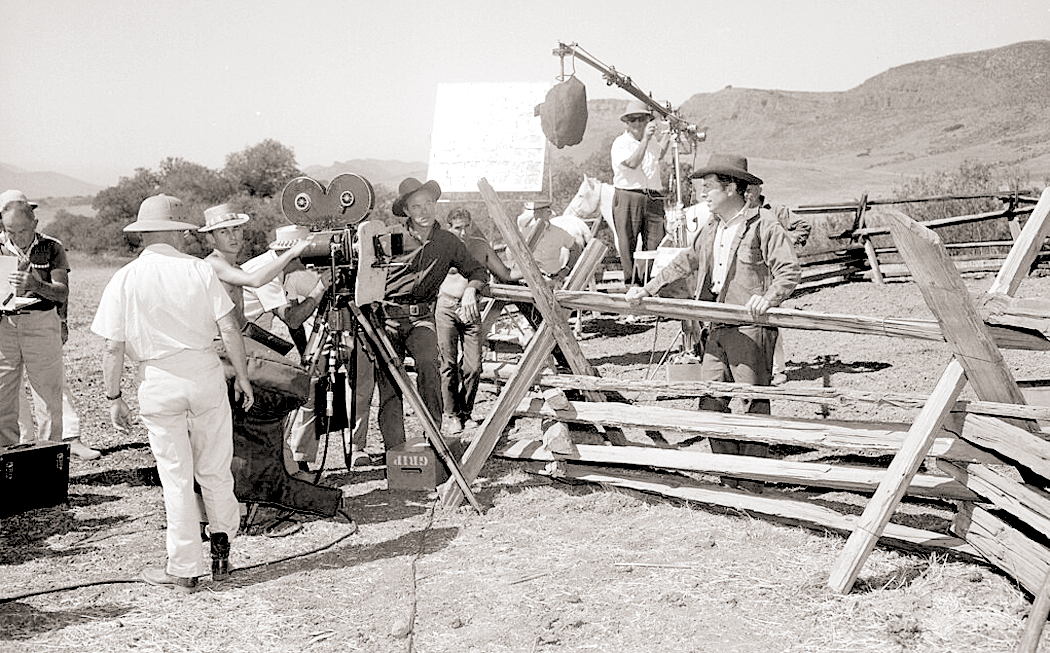
First, is that shows such as Gunsmoke were made better than they needed to be. They were made mainly by people trained in the old Hollywood studio system, where such things as lighting, blocking, focus, camera angles, and the such were all worked out and professionally understood. They were skilled craftsmen. 

However, second, some things were designed for analog screens, and so, often, painted backdrops used, especially for “outdoor” scenes shot in the studio, have become embarrassingly obvious, when, originally, they would have passed unnoticed on the fuzzy screen. 

Outdoor scenes were often shot in studios. Dodge City, during some seasons, was built indoors and the end of the main street in town was a backdrop. Again, on the old TVs you would not notice, but today, it’s embarrassing how crude that cheat was. 
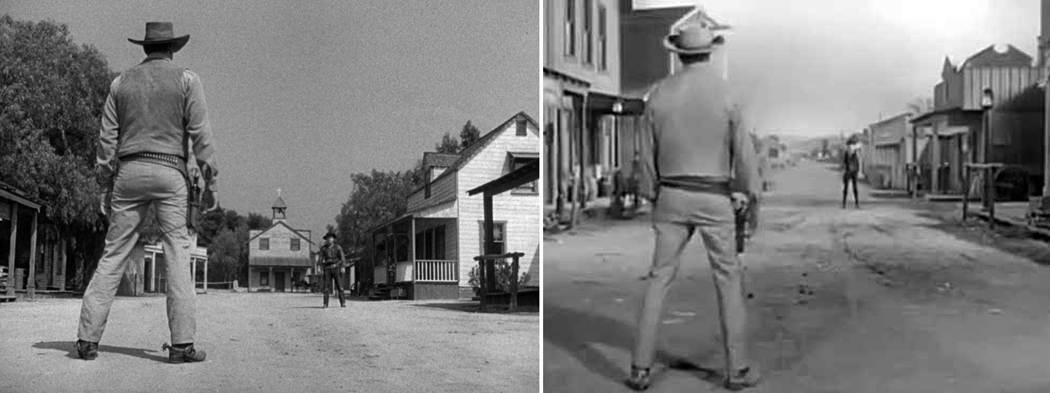
You can see it in the opening shootout during the credits. In early seasons, Dillon faces the bad guy outdoors. In later seasons, he’s in the studio. 
2. 

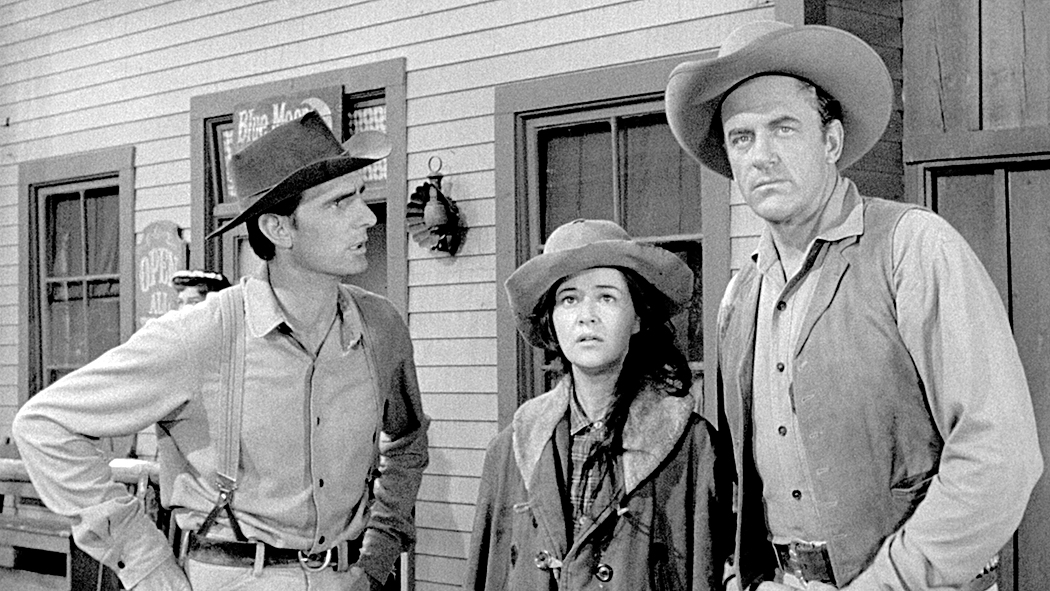
Because Gunsmoke is now seen on a widescreen HD screen, but were originally shot for the squarer 4-by-5 aspect ratio, the image has to be rejiggered for the new screen. There are three ways of doing this, and as they show up on current screens, they are either shown with black bars on either side of the picture, to retain the original aspect ratio, or they are cropped and spread out across the wider 16:9 space. And if so, there are two ways this happens. 
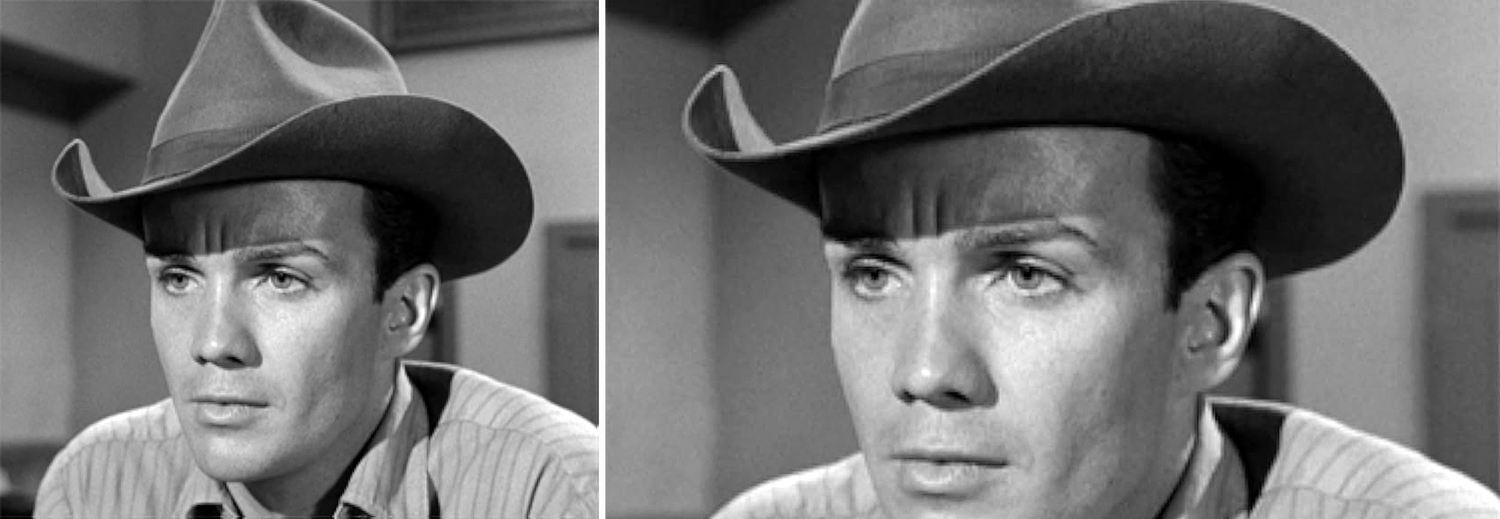
If the transfer is done quickly and cheaply, the cropping is done by just chopping off a bit of the top and bottom of the picture, leaving the middle unchanged. The problem is this often leaves the picture awkwardly framed, with, in close ups, the bottoms of characters’ faces left out. 

However, in some of the newly broadcast Gunsmokes, someone has taken care to reframe the shots — moving the frame up or down — so as to include the chins and mouths of the characters. To do this, the technician has to pay attention shot by shot as he reframes the image. 

And so, it seems as if the Gunsmoke syndications have been accomplished either by separate companies, or at different times for different series packages. You can see, for instance, on the INSP cable network, examples of all three strategies. (My preference, by far, is for the uncropped original squarer picture.)

3. 

Gunsmoke changed over its 20-year TV run. There are three main versions: Black and white half-hour episodes (1955-1961); black and white hour-long episodes (1961-1966); and hour-long color episodes (1966-1975). The shorter run times coincided with the period when Dennis Weaver played Matt Dillon’s gimpy-legged sidekick Chester Goode. Chester continued for a season into the hour-longs, but was replaced by Ken Curtis as Festus Haggen, the illiterate countrified comic relief. 

Technically, the black and white seasons were generally better made than the color ones. When the series began, TV crews had been those previously at work in cinema, and brought over what they learned about lighting, framing, editing, blocking, use of close-ups. The black and white film stock allowed them to use lighting creatively, using shadows to effect, and lighting faces, especially in night scenes, with expressive shadows. Looking at the older episodes, I often admire the artistry of the lighting. 

But when color came in, the film stock was rather less sensitive than the black and white, and so the sets had to be flooded with light generally for details to be rendered. This led to really crass generic lighting. Often — and you can really spot it in night scenes — a character will throw two or three shadows behind him from lights blasting in different directions. Practicality drowns artistry. 

Gunsmoke wasn’t alone in this: This bland lighting affected all TV shows when color became normal. It took decades — and better film stock — before color lighting caught up. (One of the hallmarks of our current “golden age” of TV is the cinematic style of lighting that is now fashionable. Color has finally caught up with black and white.) 

4. 

One of the pleasures of watching these reruns is now noticing (I didn’t when I was a little boy) the repertory company of actors who showed up over and over again, playing different characters each time. 

I’m not just talking about the regular actors playing recurring roles, such as Glenn Strange as Sam the barkeep or Howard Culver, who was hotel clerk Howard Uzzell in 44 episodes, but those coming back over and over in different roles. Victor French was seen 18 times, Roy Barcroft (longtime B-Western baddie) 16 times; Denver Pyle 14 times, Royal Dano 13 times, John Dehner, John Anderson and Harry Carey Jr. a dozen times each.
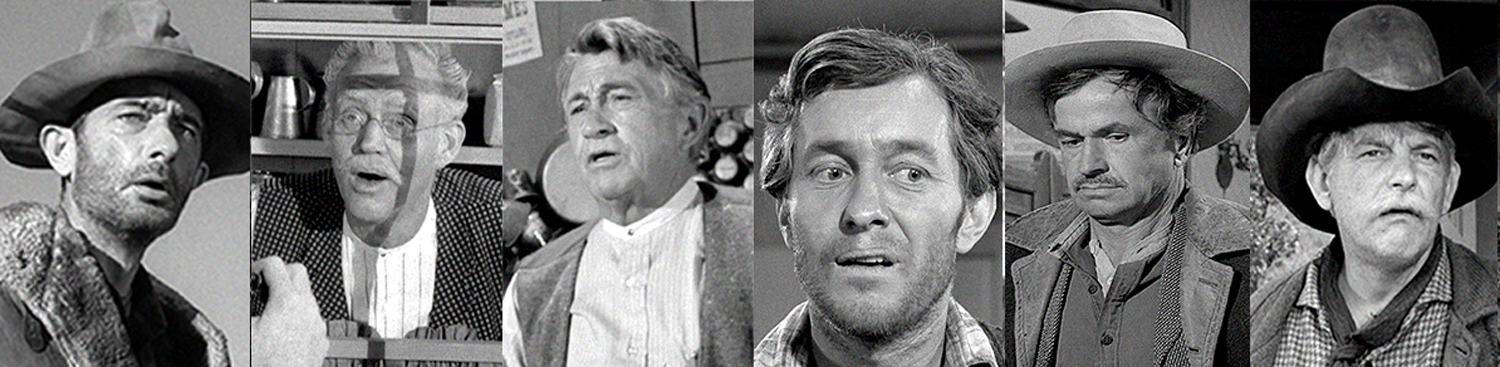
Other regulars with familiar faces include Strother Martin, Warren Oates, Claude Akins, Gene Evans, Harry Dean Stanton, Jack Elam. Some were established movie actors: George Kennedy, Dub Taylor, Pat Hingle, Forrest Tucker, Slim Pickens, Elisha Cook Jr., James Whitmore. Bette Davis, too. 
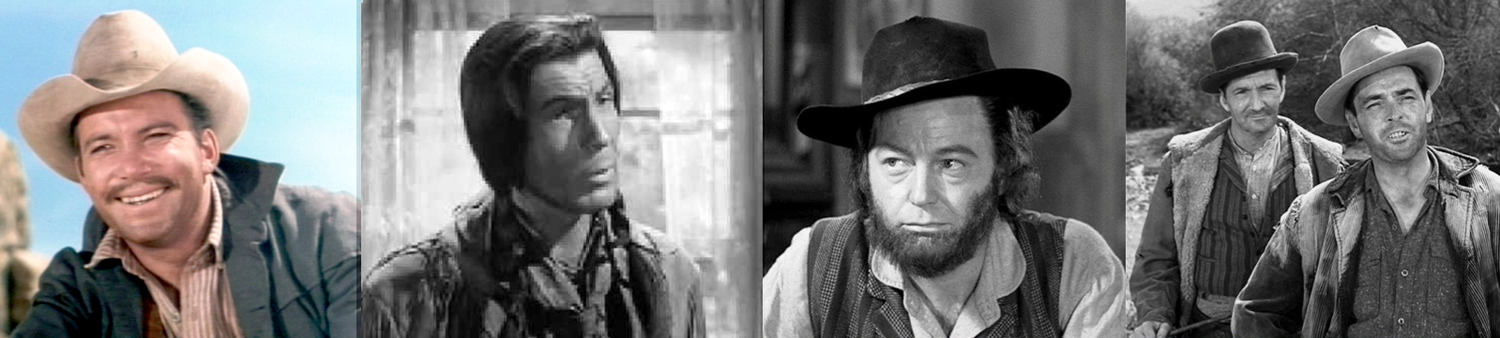
William Shatner, Leonard Nimoy, DeForest Kelley, James Doohan

And a few surprises. Who knew that Leonard Nimoy was in Gunsmoke (four times), or  Mayberry’s George Lindsay (six times — usually playing heavies and you realize that the goofy Goober Pyle was an act — Lindsay was an actor, not an idiot), Mayberry’s barber Howard McNear showed up 6 times. Jon Voight, Carroll O’Connor, Ed Asner, Harrison Ford, Kurt Russell, Suzanne Pleshette, Jean Arthur, DeForest Kelley, Werner Klemperer (Colonel Klink), Angie Dickenson, Dennis Hopper, Leslie Nielsen, Dyan Cannon, Adam West, and even William Shatner — all show up. 

It becomes an actor-spotting game. John Dehner, in particular, was so very different each time he showed up, once a grizzled old miner, another a town drunk, a third as an East-coast dandy, another as a hired gunslinger — almost never looking or sounding the same. “There he is, Dehner again!” 

And it makes you realize that these were all working actors, needing to string together gigs to make a living, and the reliable actors would get many call-backs. It is now a pleasure to see how good so many of these old character actors were. 

5. 

I have now watched not only Gunsmoke, but other old TV Westerns, and the quality difference between the best Gunsmoke episodes and the general run of shows is distinct. While I have come to recognize the quality that went into the production of Gunsmoke, most of the other shows, such as Bonanza, simply do not hold up. They are so much more formulaic, cheaply produced, and flat. Stock characters and recycled plots. 

Gunsmoke was designed to be an “adult Western” when it was first broadcast, in 1952, as a radio show, with stocky actor William Conrad as Matt Dillon. In contrast to the kiddie Westerns of the time, it aimed to bring realism to the genre. 
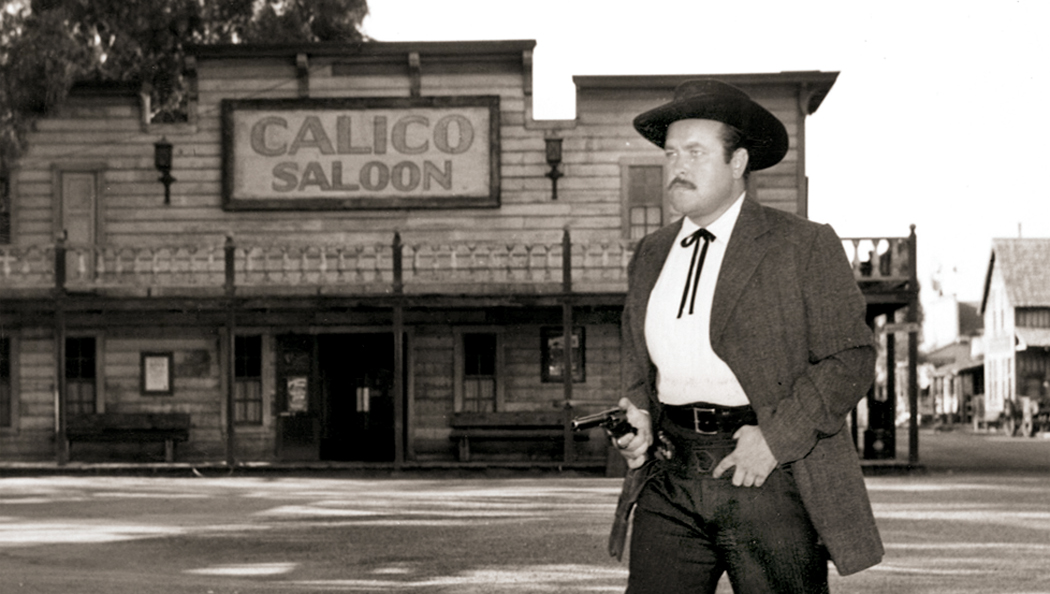
William Conrad as Marshal Dillon

It ran on radio from ’52 to 1961, and on TV from 1955 to 1975, and then continued for five made-for-TV movies following Dillon in his later years. There were comic books and novelizations. Dillon became a household name.

Originally, Matt Dillon was a hard-edged, lonely man in a hard Western landscape. As imagined by writer and co-creator of the series John Meston, the series would overturn the cliches of sentimental Westerns and expose how brutal the Old West was in reality. Many episodes were based on man’s cruelty to both men and women. Meston wrote, “Dillon was almost as scarred as the homicidal psychopaths to drifted into Dodge from all directions.” 

On TV, the series mellowed quite a bit, and James Arness was more solid hero than the radio Dillon. But there was still an edge to the show, compared with other TV Westerns. After all, according to True West magazine, Matt Dillon killed 407 people over the course of the TV series and movie sequels. He was also shot at least 56 times, knocked unconscious 29 times, stabbed three times and poisoned once. 

And the TV show could be surprisingly frank about the prairie woman’s life and the painful treatment of women as chattels. 
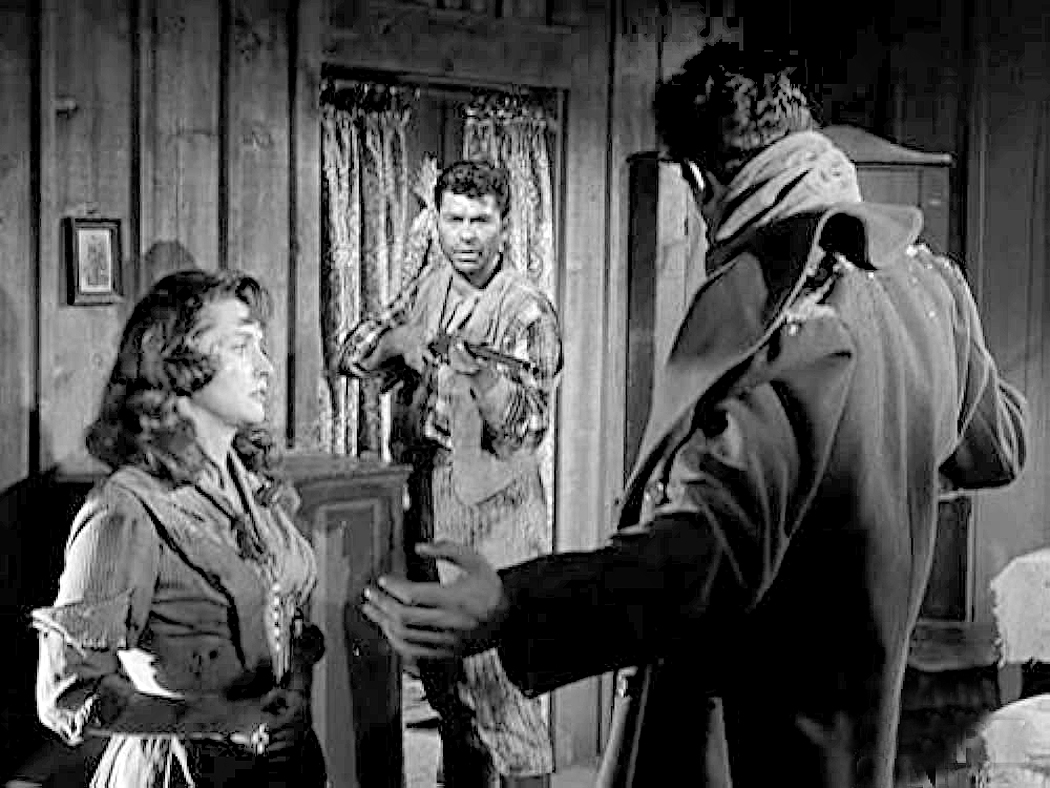
In Season 3 of the TV series, an episode titled “The Cabin,” two brutal men (Claude Akins and Harry Dean Stanton) kill a woman’s father and then serially beat and rape her over the course of 35 days, when Dillon accidentally comes upon the cabin to escape a snowstorm. The thugs plan to kill the marshal, but he winds up getting them first. When Dillon suggests that the woman can now go back to living her life, the shame she feels will not let her. No one has to know what has happened here, he tells her, but, she says, she will know. And so she tells Dillon she will go to Hayes City, “buy some pretty clothes” and become a prostitute. “It won’t be too hard, not after all this,” she says. 

“Don’t let all this make you bitter,” Dillon says. “There are a lot of good men in this world.”

“So they say” she says. 

This is pretty strong stuff for network TV in 1958. There were other episodes about racism, and especially in the early years, not always happy endings. 

Dodge City, 1872

6. 

According to Gunsmoke producer John Mantley, the series was set arbitrarily in 1873 and in Dodge City, Kansas, on the banks of the Arkansas River, although the river plays scant role in the series. In 1873, the railroad had just arrived, although in only a few episodes of the TV series is the train even mentioned. 

The Dodge City of the series is really just a standard Hollywood Western town, with the usual single dusty street with wooden false-front buildings along either side. 

In reality (not that it matters much for a TV show, although Gunsmoke did try to be more realistic than the standard Western), Dodge was built, like most Southern and Western towns, with its buildings all on one side of the street (called Front Street in Dodge) and the railroad tracks on the other. Beyond that, the river. 
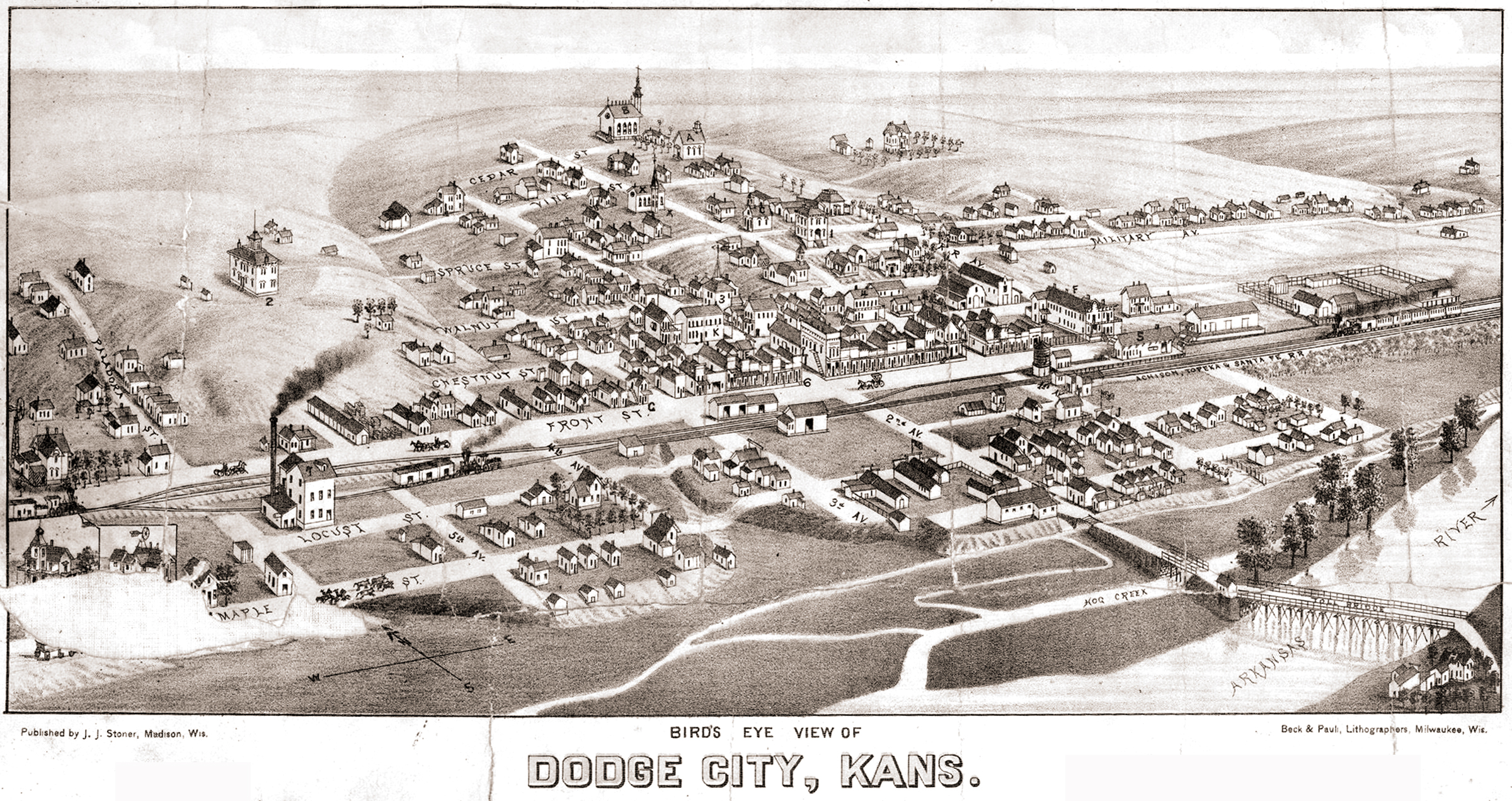
Dodge City, Kansas 1888

And in general, the geography of Gunsmoke’s Kansas would come as a surprise to anyone visiting the actual city. The state is famously flat, while the scenery around Matt Dillon often has snow-capped mountains, and at other times, mesas and buttes of the desert Southwest. 
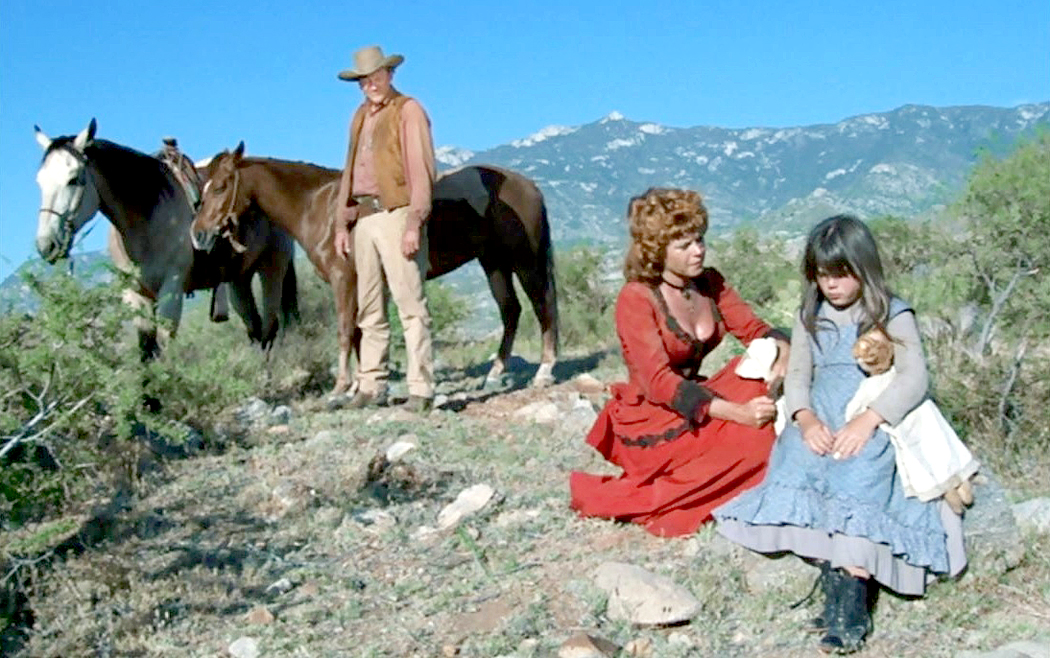
Hollywood’s sense of geography is often peculiar. So, I don’t think it is fair to hold it against the TV series that its sense of the landscape has more to do with California (where the series was generally shot) than with the Midwest prairies. 

I remember one movie where James Stewart travels from Lordsburg, N.M., to Tucson, Ariz., and somehow manages to pass through the red rocks or Sedona on the way. Sedona is certainly more picturesque than Wilcox, Ariz., but rather misplaced.
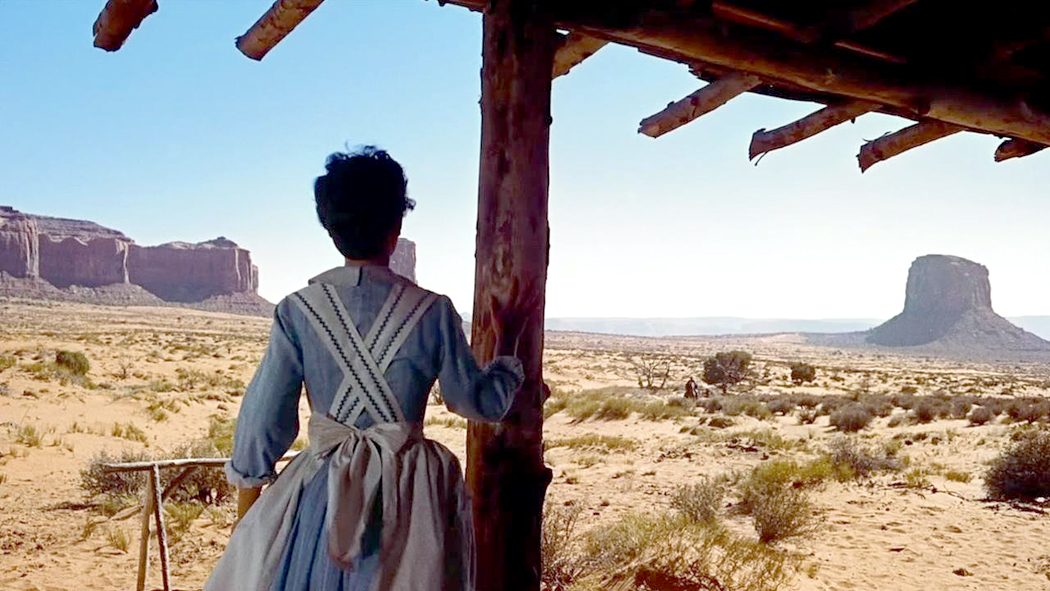
Or John Ford’s The Searchers, where the Jorgensen and Edwards families are farming in Monument Valley, Ariz., which has no water, little rain, sandy soil and no towns within a hundred miles. It is ludicrous place to attempt to farm. Of course, it is said, in the movie, to be set in Texas, but Texas doesn’t look like the Colorado Plateau at all. 

We forgive such gaffes because the scenery is so gorgeous, and because we’ve been trained by decades of cowboy movies to have a picture of “The West” as it is seen in Shane rather than how most of it actually was: flat, grassy, and boring. And often, it is not even the West, as we think of it. Jesse James and his gang robbed banks in Missouri. The Dalton Gang was finished off in Minnesota. The “hanging judge” Parker presided in Arkansas. Some of the quintessential Western myths are really Midwestern or Southern. 

So, many of the tropes of Hollywood Westerns still show up in Gunsmoke, despite its attempt at being “more realistic” than the standard-issue cowboy show. 
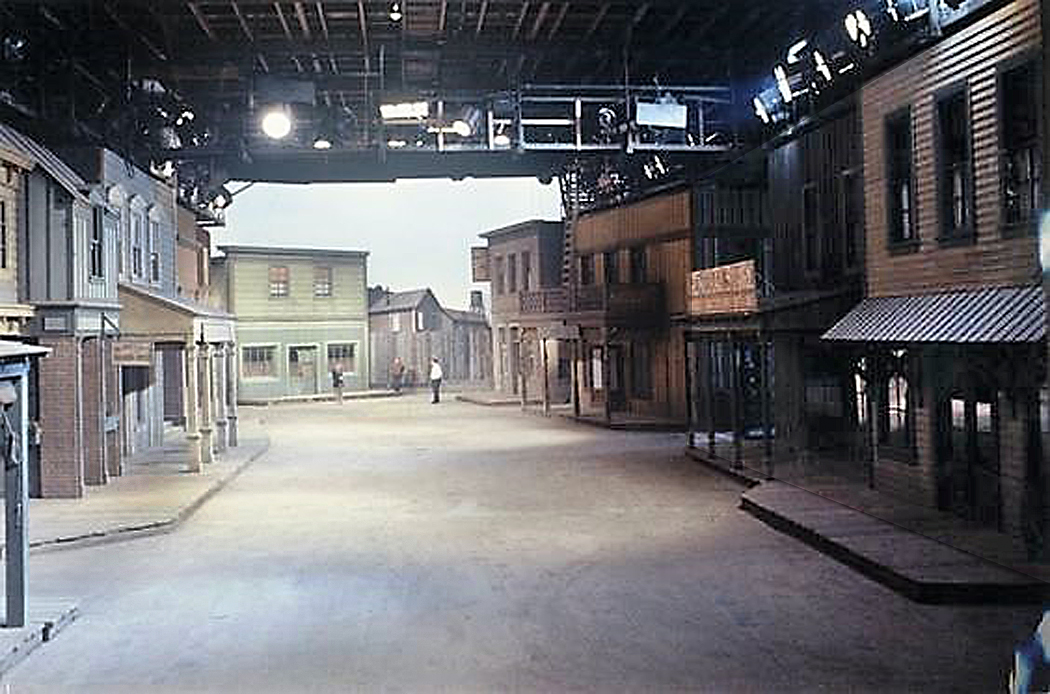
“Gunsmoke” studio set

Two things, however, that are hardly ever mentioned that seems germane to the question of realism on film. The first is the pristine nature of the streets. Historians have shown that, with all the horses, not only in Westerns, but even in 19th-century Manhattan, the streets were paved with horseshit. Cities even hired sanitation workers to collect the dung in wheeled bins, so as not to be buried in the stuff. 

OK, I get that perhaps on TV shows broadcast into our homes, we might not want to see that much horse manure. In reality, the dirt dumped in the studio set of Dodge City had to be cleaned out, like kitty litter, each day, or under the hot lights, the whole set would stink of horse urine. 

But the second issue relates to the very title of the show: Gunsmoke. Strangely, smoke never appears from the many guns being fired in the course of 20 years of episodes. But the series is set in an era at least a decade before the invention of a practical smokeless powder (and 30 years before its widespread usage). And so Matt Dillon’s gun should be spouting a haze of nasty smoke each time he fires at a miscreant. 

Me firing a black powder rifle

We know, from records of the time, that Civil War battlefields, and before that, Napoleonic battlefields, were obscured by clouds of impenetrable smoke, blocking the views of soldiers aiming at each other. And I know from my own experience firing black powder weapons, that each show spews a cloud of smoke from the barrel. So, why no gun smoke on Gunsmoke?

Click on any image to enlarge

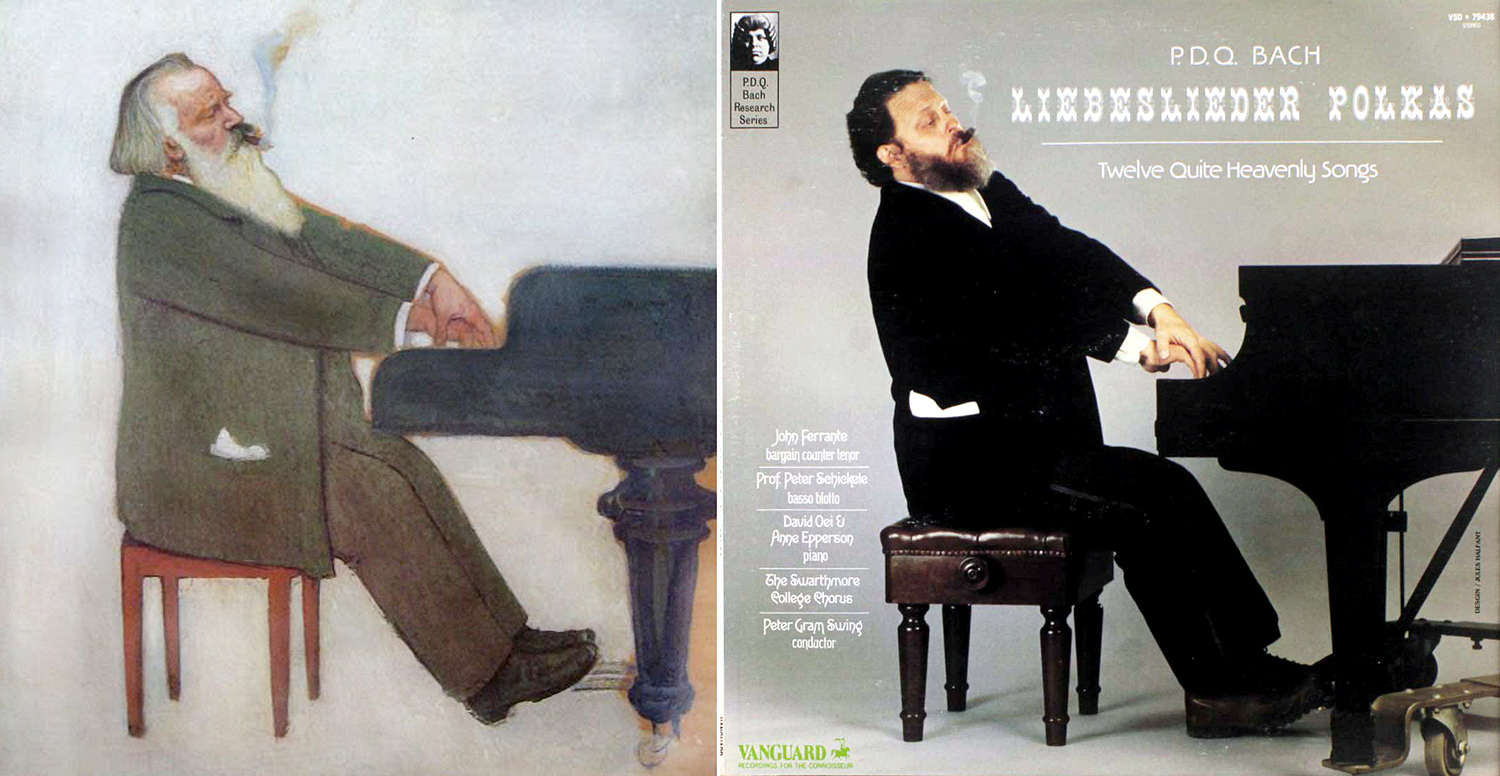
Professor Peter Schickele has died, and there is one less star twinkling in the sky. 

Schickele, who was the creator of PDQ Bach, was 88 and had been ill. 

I have a long history with PDQ Bach, and I will miss his music and wit terribly. He came from a notable line of musical satirists and clowns, including Spike Jones, Anna Russell, Victor Borge and, of course, the Hoffnung Festival in Great Britain. But, at least initially, his target was Baroque music in particular. 

At the beginning of what was called the “Baroque revival” in the 1960s, Schickele devised PDQ as a way to parody some of the excesses, cliches, tropes, and habits of the newly popular historical style. His first concert was in April of 1965 at Town Hall in New York. I did not attend that one, but in December of that year, he brought the program to Philharmonic Hall, and I was there for the Concerto for Horn and Hardart, the cantata Iphigenia in Brooklyn, and the Pervertimento for Bagpipes, Bicycle and Balloons. Schickele was there as narrator and explicator; he arrived late at the hall, and swung onto the stage, Tarzan-style from the balcony. 

It was one of the funniest things I ever saw or heard. 

“In general, the dance music of PDQ Bach suggests that one of his legs was shorter than the other.”

The cantata — “Scholars are unaware Iphigenia ever was in Brooklyn” — has Orestes “being chased … by the Amenities” and he sings the sorrowful aria “Who knows what it is to be running? Only he who is running knows,” followed by “Run-running knows, run-running knows, ru-u-u-u-u-ning running knows.”

It was all a bit goofy, but made fun of things familiar from Baroque music. (Anyone familiar with actual Baroque opera will realize this “running knows” isn’t that much sillier than the real thing.)

The Hardart was a vast instrument made up of bells, whistles and gongs, each tuned to a different pitch, and with little windows on its front from which you could get pie. The second movement was a theme and variations, but “the variations have nothing whatever to do with the theme.” 

I was a teenager then, and attended the concert with my high-school girlfriend, who became a professional bassoonist, and, in fact, later played with Schickele in PDQ concerts, and even occasionally appeared with him on radio interviews promoting concerts. 

We came the next year to the second season of PDQ Bach, then at Carnegie Hall, to hear The Seasonings, The Echo Sonata for Two Unfriendly Groups of Instruments, and Eine Kleine Nichtmusik

In fact, through marriages, break-ups, divorces and remarriages, I attended a PDQ Bach concert every year for more than 20 years. Schickele took his act on the road, and wherever I was living, whether Greensboro, N.C., Seattle, Wash., Norfolk, Va., or Phoenix, Ariz., Schickele found his way and I found a ticket. 

In Norfolk, I caught up with him backstage after the concert and we talked about my bassoonist ex-girlfriend. Unfortunately, she wasn’t part of the Norfolk performance. I would have loved to catch up. 

PDQ Bach always functioned on two levels. Even those who knew little about classical music could enjoy the slapstick and the bad puns; but anyone with familiarity with music history could catch the often sophisticated in-jokes. 

Schickele in Phoenix

I, of course, bought all the albums, and later, CDs. The last time I got to hear a PDQ Bach concert was in Phoenix in March, 2001, when Schickele and the Phoenix Symphony performed Oedipus Tex with Michèle Eaton as Billie Jo Casta, and Schickele as Tex. The program also included Swing Sweet, Low Chariot.

As his career-shtick progressed, Schickele widened his target to include the Classical era, giving the treatment to Mozart and Rossini with such things as The Civilian Barber, and The Abduction of Figaro, and into the Romantic era, with a parody opera, Hansel and Gretel and Ted and Alice

Schickele and his sidekick Robert Dennis famously gave a sportscast of Beethoven’s Fifth Symphony. “I can’t tell if it’s fast or slow because it keeps stopping.” In one live performance of this, in the early 1970s, when the Vietnam War was still an issue, the “game” began with what started as the National Anthem. Half the audience stood up, hand over heart; the other half, self-righteously in protest, sat motionless. Except that the arpeggiated beginning of the anthem ended immediately with a descending arpeggio ending after a couple of bars. The whole thing took less than five seconds. Everyone in the audience, standing or sitting, was caught red faced. 

He took on contemporary music, also, with Philip Glass’s Einstein on the Beach turned into Einstein on the Fritz. and Koyaanisqatsi became Coy Hotsie-Totsie.

The titles of his schlamperei are enough to draw whoops, especially for anyone familiar with the originals. Among them: Concerto for Piano vs. Orchestra; Fanfare for the Common Cold; Goldbrick Variations; Hindenburg Concerto; Liebeslieder Polkas; No-no Nonette; Notebook for Betty-Sue Bach; Royal Firewater Musick; Safe Sextet; Schleptet in E-flat; The Short-Tempered Clavier; Traumarei for Unaccompanied Piano; The Triumphs of Thusnelda. Wikipedia lists more than a hundred titles. 

In fact, he had leftover titles, ready to attach to newly “discovered” works: Rosenkavalier and Guildenstern; The Passion According to Hoyle; the Half-Nelson Mass; and Famous Last Words of Christ.

The Hoffnung Music Festival in London lasted for only seven concerts. PDQ Bach lasted from 1965 through 2015 (with a break in the 1990s) and encompassed 20 albums, 2 video recordings (many more on YouTube), and the definitive biography of PDQ Bach, titled The Definitive Biography of PDQ Bach

I should mention that Schickele was also a serious composer, with many works published under his own name, and wrote the film score for the 1972 movie, Silent Running

So, it wasn’t all tomfoolery. But even his parodistic work is well crafted and full of memorable tunes. PDQ will likely last a very long time. 

I will miss hearing new works and weird concerts. 

At the bottom of every product entry on the Amazon webpage you will find customer reviews. Some are quite thoughtful, others merely complain that the package they got was dented. Too often, close reading shows that the review shown is for some other product altogether and simply slung in with the rest by someone — or some algorithm — that wasn’t paying close attention. 

Check out Google’s list of restaurants near you and you will find any number of reviews by those who have eaten there, and often with an iPhone photo of their dinner plate. These range from “The worst scungilli I’ve ever tasted” to “The cleanest restroom I’ve had to use.” Again, perhaps with a photo. 

My favorites are those where someone posts a four-star CD review with the words, “I haven’t heard this yet.” 

More than ever, we are led to believe that “everyone’s a critic.” Opinions are like noses (I’m being polite): Everyone’s got one. But I spent 30 years of my life as a professional art critic, and it has always bothered me that the wider public seems to think that real criticism, by people who are actually paid to think about such things, is little more than “I liked it,” or “I didn’t like it.” 

On such a level, yes, everyone’s opinion is valid. If you liked it, then to say so is an obvious truth. But that is not what a professional critic is paid to do. 

Granted, there are some people out there with the title on the masthead who do little more than report their likes and dislikes. But the kind of criticism I’m talking about — and that I did my best to engage in — has very little to do with simple likes and dislikes. 

I was paid, rather, for my range of knowledge about the subject, about the history of it, the variety of it, the consensus about it, and my ability to say something meaningful and coherent — and interesting — about it. 

I was paid to explain what I was seeing, put it in context, say why it is important — or not — and, especially with new art, to attempt to unknot difficulties that may make understanding elusive. The art world is full of “elusive.” 

 I began as a freelance art critic with the Virginian-Pilot in Norfolk, Va. in the mid-1980s, and became staff critic with The Arizona Republic in Phoenix, Ariz., in 1987, where I worked for 25 years until I retired in 2012. By then, newspapers were in decline and few still had any critics on staff as layoffs became as regular as seasons. When I left, I was not replaced. All across the nation, critics are not being replaced; lights are blinking out all over the heavens. The loss is considerable. 

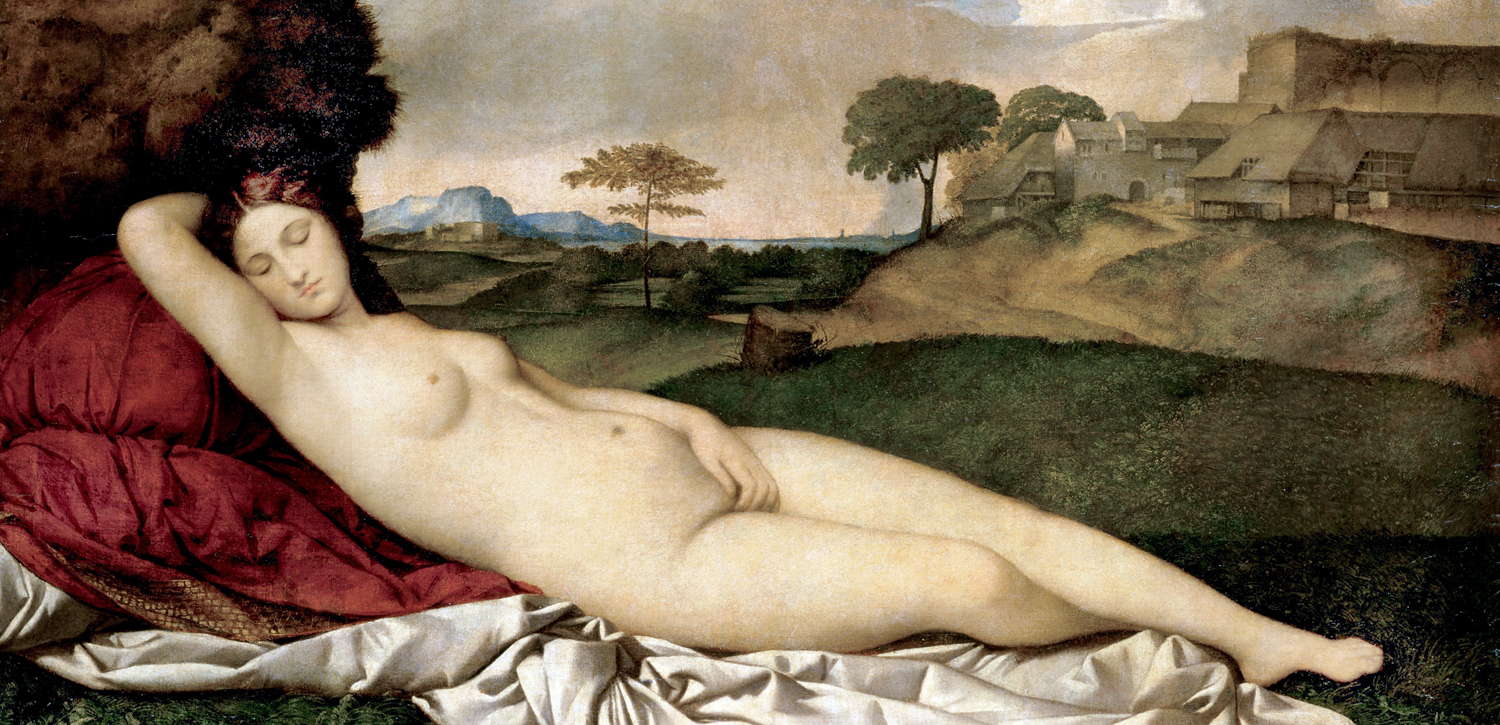
I have continued to post about art on this blog. There was a long piece about Jacques-Louis David’s Death of Marat. Another on the long echoes from the pose of Giorgione’s Sleeping Venus. I wrote about photographers Nan Goldin and Garry Winogrand. Some of these have been the most frequently visited blog entries on my site. 

Over those three decades in journalism, I covered an awful lot of art, both locally and nationally. Much of the art, I loved. Some not so much, and there were even shows of art I had little sympathy for. All of it, I tried to say something real about and meaningful. So, I feel I have established my bona fides to write about criticism.

My tastes didn’t stop me from recognizing quality or importance, even if it was art I didn’t much care for. And there was, correspondingly, art I knew wasn’t especially important that I really, really enjoyed. My likes and dislikes didn’t count much, and weren’t supposed to. 

Let me give you some examples either way. 

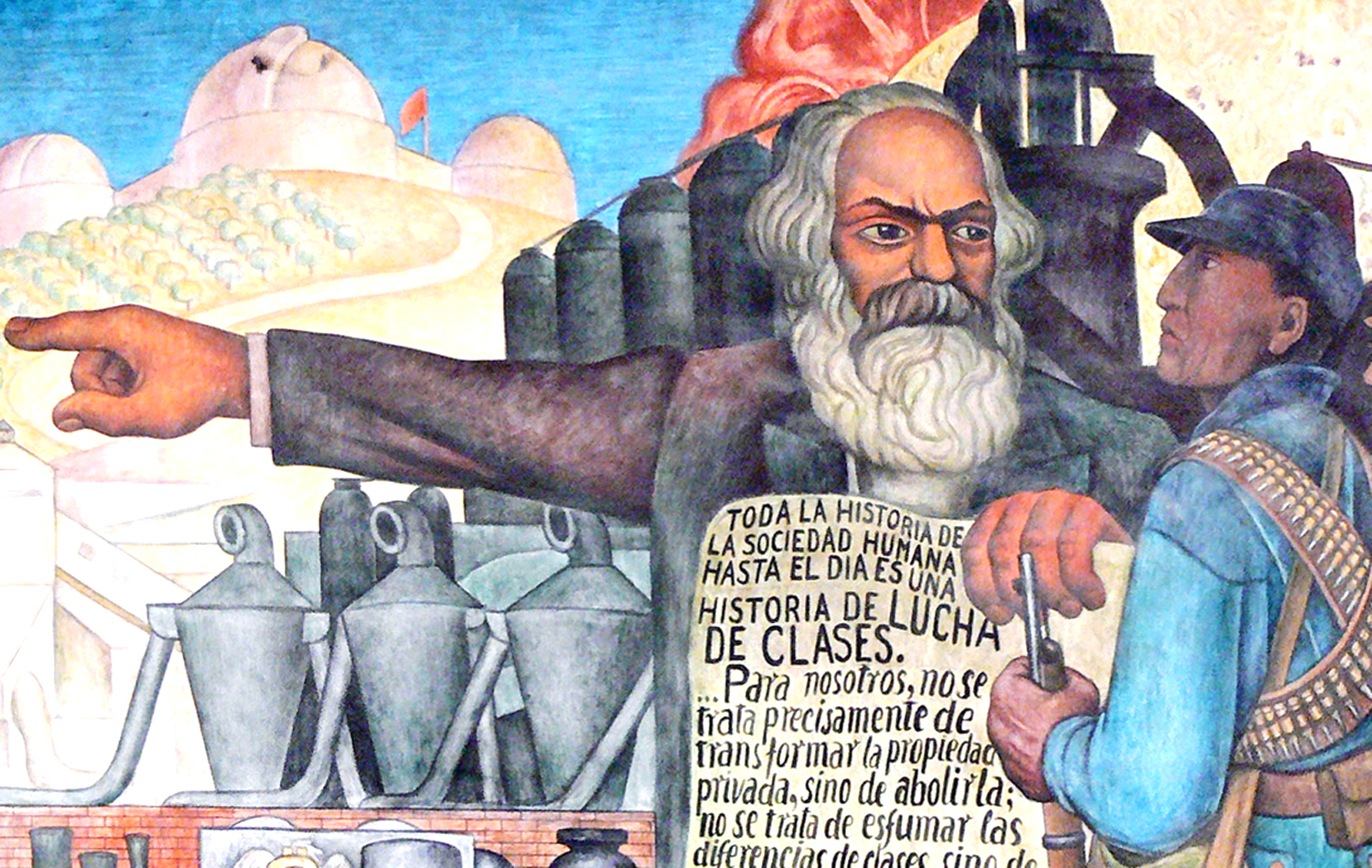
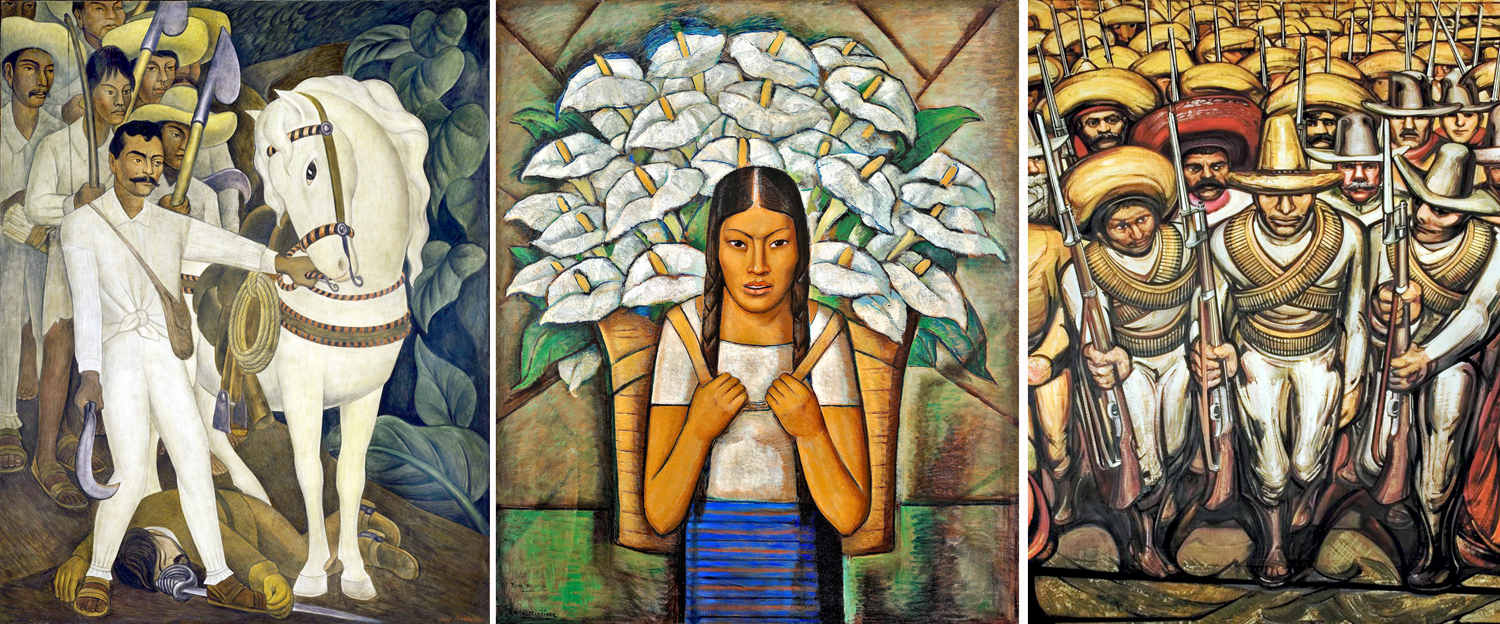
One of the very few times I had a contretemps with my editor was about a show at the Phoenix Art Museum of art by the so-called Mexican Muralists. I mentioned to my editor that I was thinking of giving the show a pass and she nearly bit my head off, making it absolutely clear that I wasn’t being paid not to write about an important show, or to care whether I liked the work. I knew this, of course, but I had to confess my lack of simpatico with the work. Of course, I wrote about it. Without expressing my own qualms. 

In general, I have little love for art that is primarily propaganda, and that is just what the work of Diego Rivera or David Siqueiros is. There is good ol’ Karl Marx pointing the way to the future for the downtrodden campesinos. There are the peasants displaying solidarity by all wearing the exact same clothes and carrying the exact same weapons. For me, this is a big snooze. 

And on top of that, the colors used favor rather dull browns and ochers. It just isn’t very inviting or attractive art. Nevertheless, the movement, from the 1920s through the 1940s, defines an era of Mexican culture, and was immensely important. And, moreover, some of the muralist art was clearly better than other, and it was my job to show that and explain why and how. 

It should be pointed out that it isn’t Mexican art I have a problem with. I love the crazy work of Frida Kahlo; I wrote an appreciative review of Rufino Tamayo for ARTnews  magazine. I enjoy the skeletons and calaveras of Jose Posada and the volcanic landscapes of Dr. Atl. And all that colonial-era art, and all the bright, colorful, energetic folk art. 

It’s just the dreary, politically sentimentalized work of the muralists I dislike. 

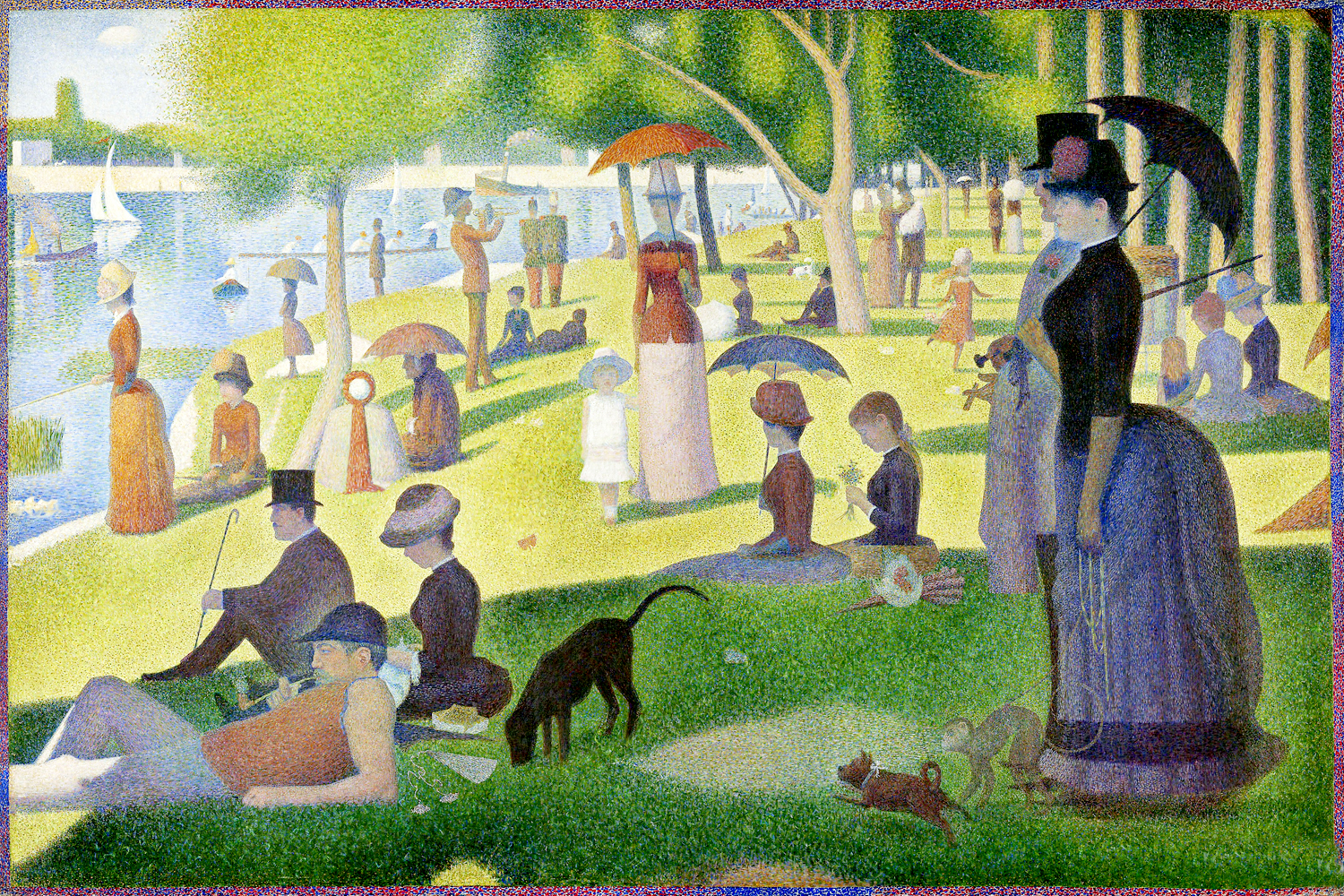
Let me give you some other examples. There is no question but that the pointillist works of Georges Seurat are masterpieces, and important in the history of art. But I find Sunday Afternoon on the Island of the Grandes Jattes a huge bore. Stiff and unyielding, all the life sucked out of what should be a bustling joy. It seems to me a painting made to justify a theory, and not something that had any more lively reason to burst out of his imagination. 

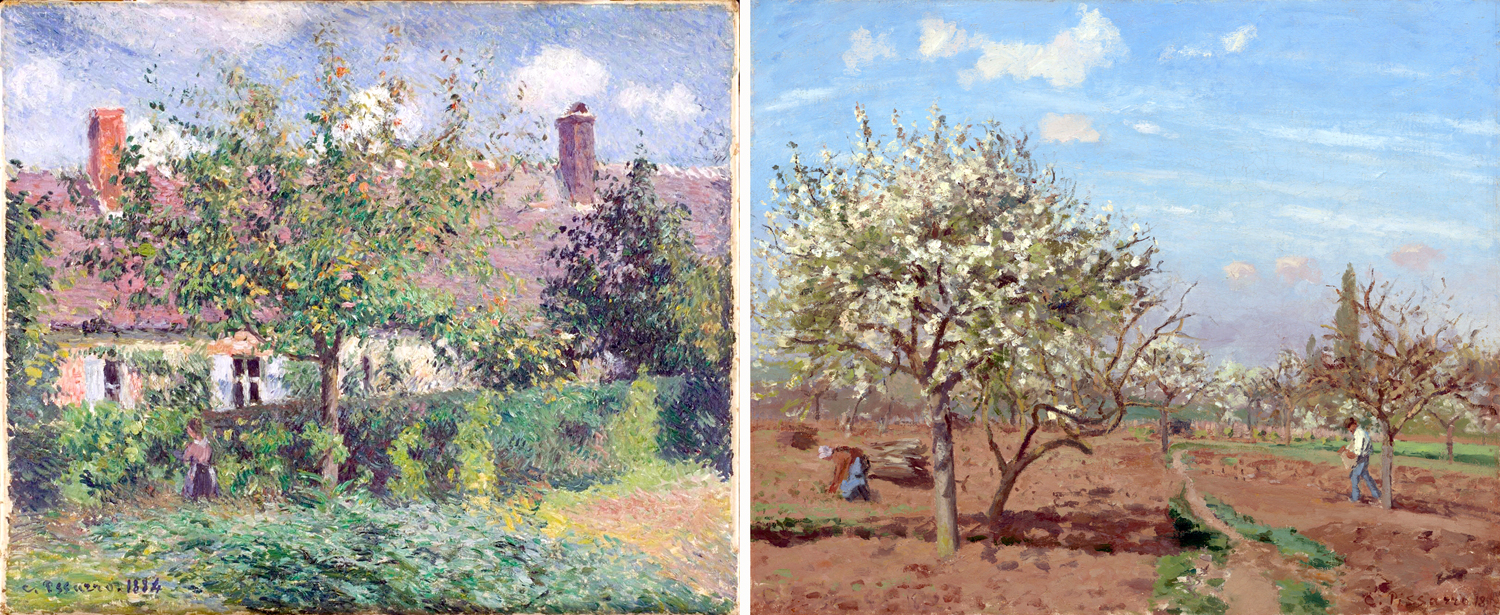
And there is his older contemporary Camille Pissarro. I don’t dislike Pissarro’s painting, but it just seems a trifle dull. He is the painterly version of a composer who can write perfect fugues, knows voice-leading, and can orchestrate magnificently, and yet cannot write a tune I can whistle. 

I’m specifically writing about art I have actually seen in person, and not just stuff I find in books or magazines. Reproduction cannot give anyone a clear idea of the art, its size, gloss, color. You can only get the iconography and some loose sense of everything else. 

The necessity of seeing the art in person was brought home by Paul Cezanne. I never cared much for the work of Cezanne. But then, I spent some time with the actual work, and it exploded in my eye with form and color that just eludes reproduction. Now, Cezanne is one of my most loved artists and I kick myself for all those years when I paid him scarce attention. Those apples and pears — I want to lick the paint off the canvas. 

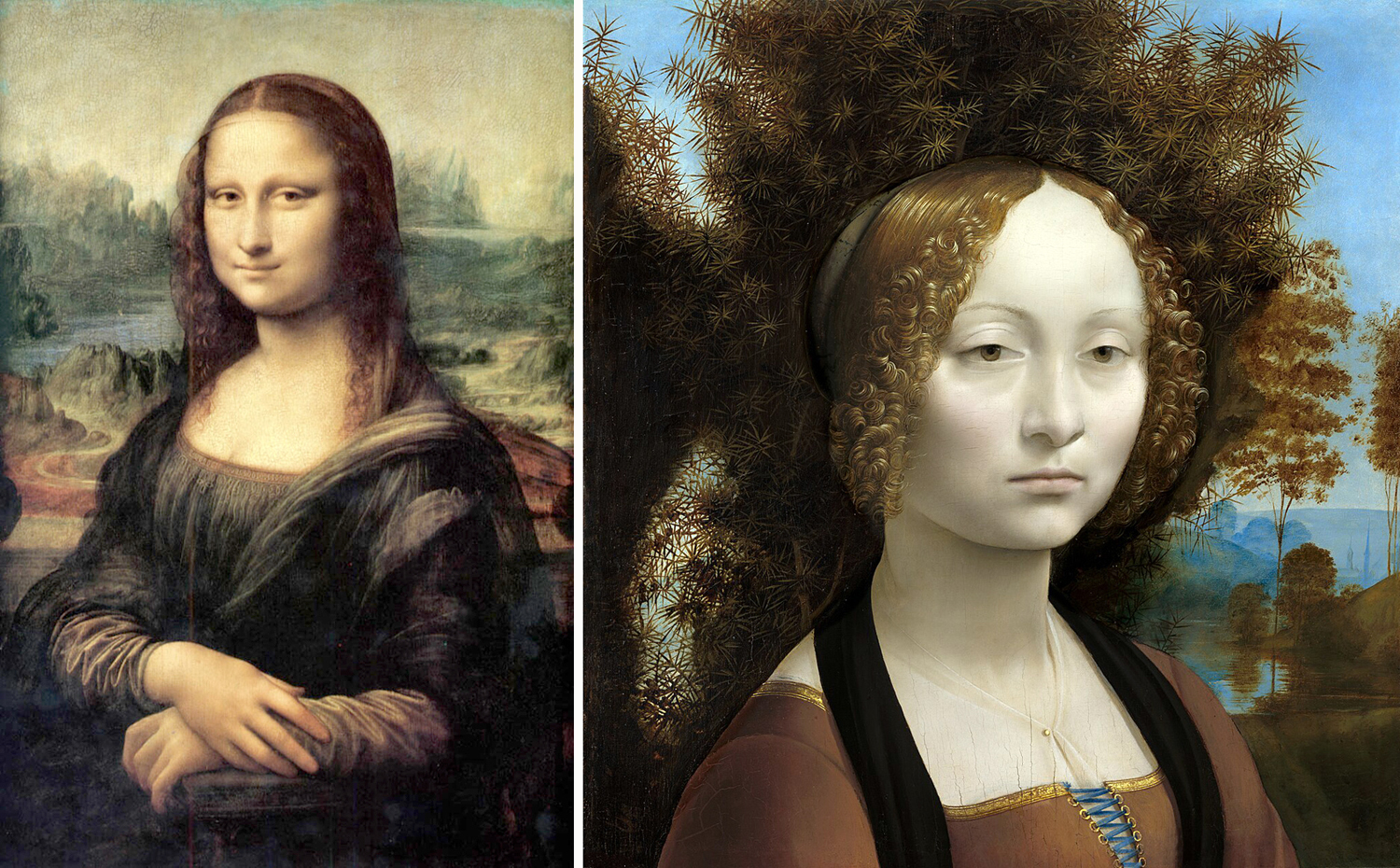
Another confession: I never cared for Leonardo’s Mona Lisa. I’ve been to the Louvre now, several times, and in person, the Mona Lisa is no more exciting. It is a small, rather ordinary portrait. Yes, the sfumato technique is quite pretty, but the painting itself does not deserve the fame it seems to suffer. 

On the other hand, I do love the same artist’s Ginevra de’ Benci, at the National Gallery in Washington, D.C. It has all the glow and spirit that poor Mona Lisa just doesn’t have. 

But even Ginevra doesn’t draw the pleasure from me that I get from Raphael’s portrait of Baldassare Castiglione, one of the most perfect paintings I have ever seen. 

Rembrandt saw the portrait, copied it in pen and ink, and later used it as inspiration for one of his self-portraits, now at the National Gallery in Washington. I love that one, too. 

So, it is not that I hate great paintings and love minor ones. It is just a matter of taste. My taste drifts toward some and is left unmoved by other. But, as a critic, I certainly know the difference. 

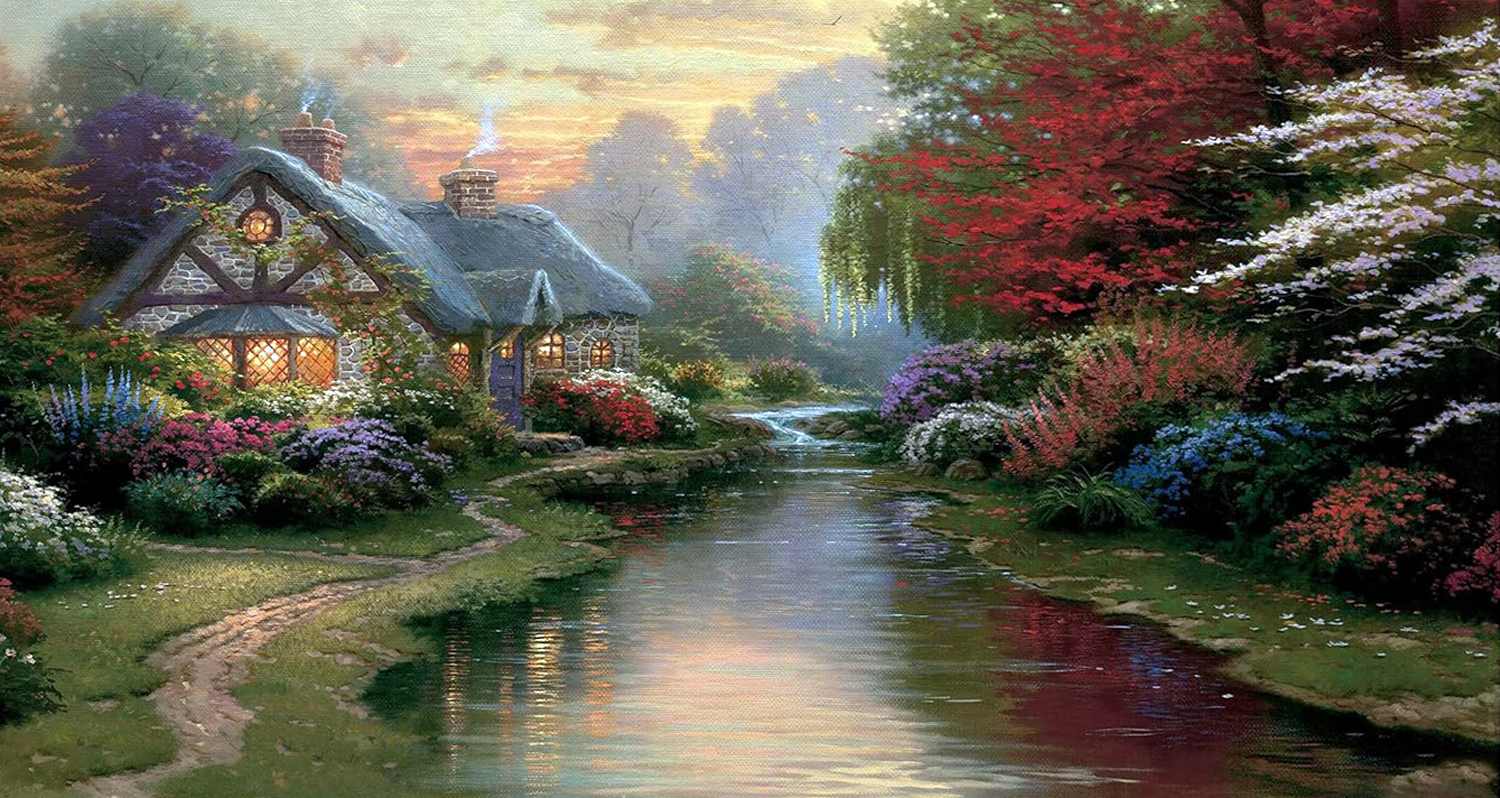
I have no issue with anyone liking or disliking any piece of art. Not everything has to appeal to everyone. If you think Damien Hirst’s pickled shark is disgusting, I have no issue with you. If you think the hands on Michelangelo’s David too large, and his privates too small, that’s fair. Even if you find yourself moved emotionally by the light inside the cottage of a work by Thomas Kinkade, I say, enjoy. But that doesn’t qualify you as a critic. 

The art I love — and “love” is not too strong a word — includes some famous and important paintings. I grew up with Picasso’s Guernica when it was hanging at the Museum of Modern Art in New York. In my teen years, I visited MoMA often and thought I’d have Guernica to see for my lifetime. But it returned to Spain in 1981. Seeing it stretched across 25 feet of wallspace helped steer me into a life with art. 

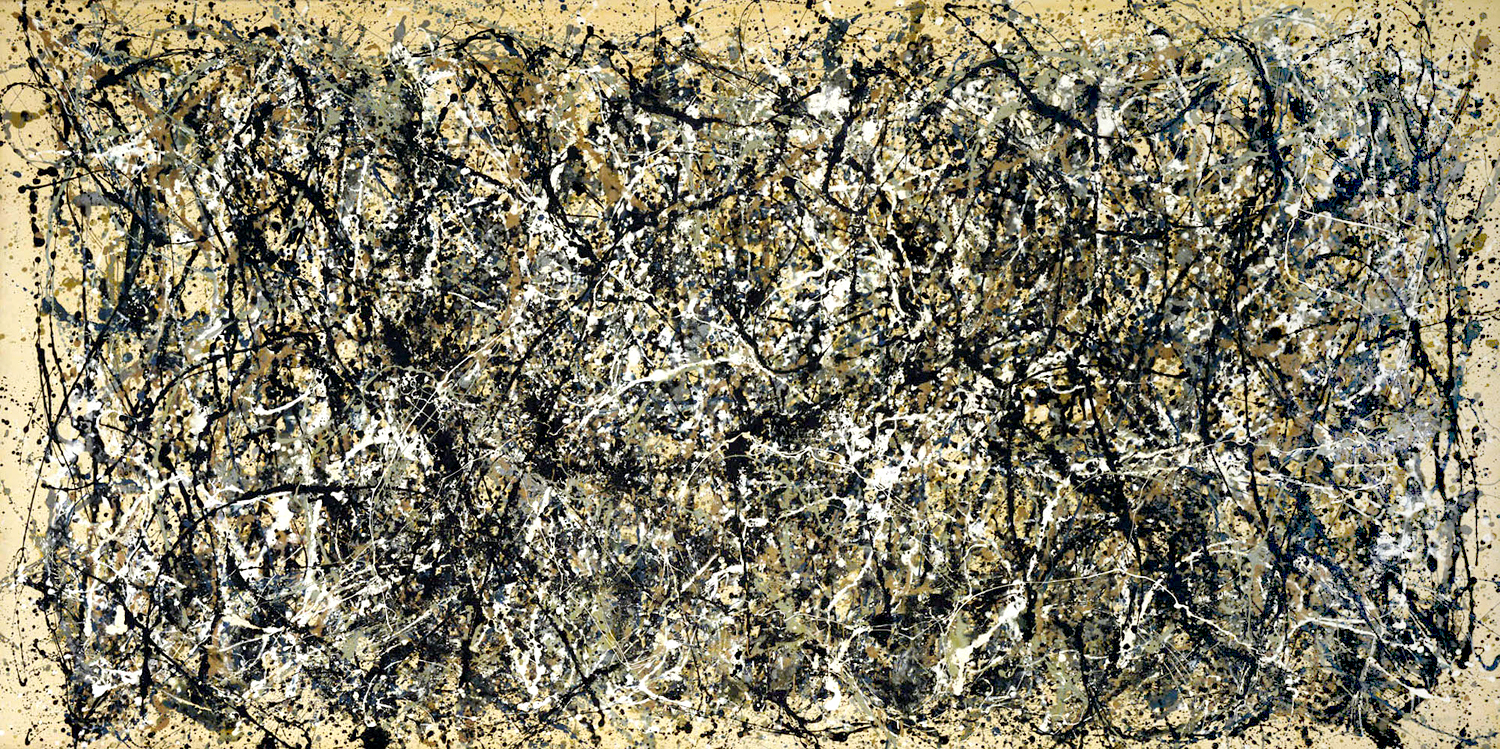
I loved seeing Jackson Pollock’s One Number 31, also at MoMA, back when abstract art was still seen with suspicion by the public. It hit me like a brick, and I loved its visual busy-ness and textural depth. It was a painting I could lose myself in.

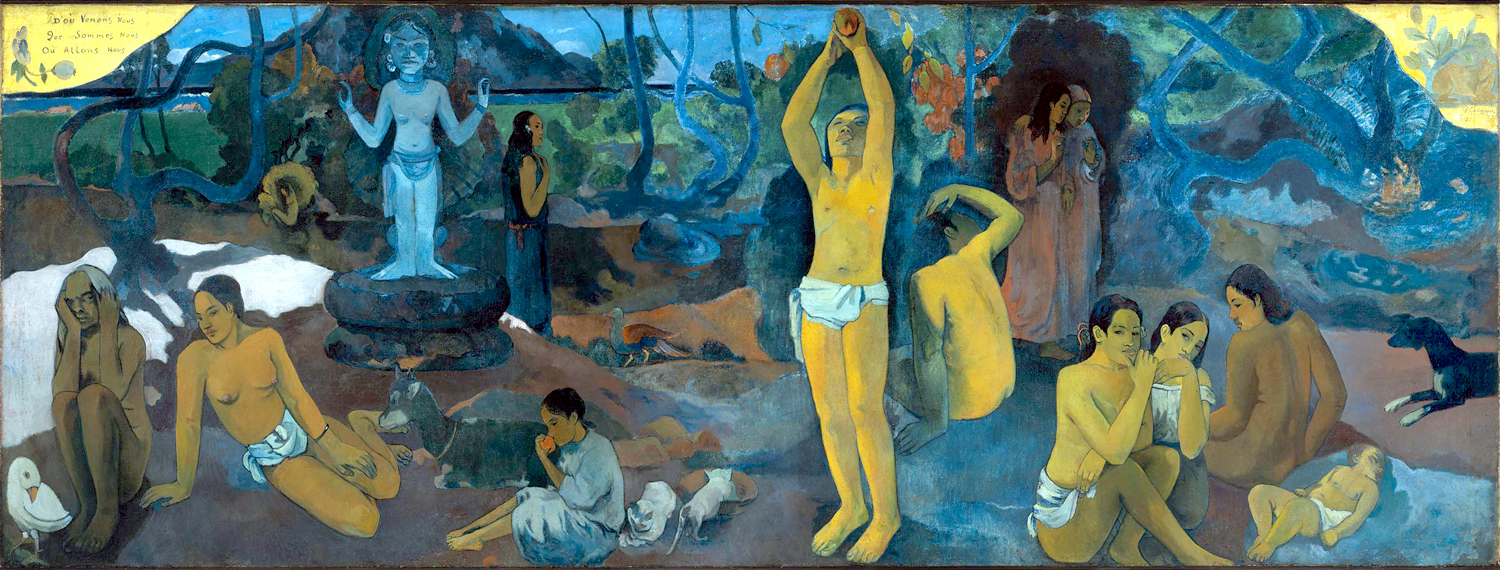
In Boston, I finally saw Paul Gauguin’s Where Do We Come From? What Are We? Where Are We Going?, another panoramic picture. Unlike the Mona Lisa, it makes a stronger affect in person than reproduced. 

At the National Gallery in Washington, there are a number of paintings I visit, as if on a pilgrimage. Perhaps the main one is Mary Queen of Heaven by the 15th-century Master of the St. Lucy Legend, an unknown artist (so many were anonymous back then) with a magical ability to create detailed fabric and rich color. It is not one of the superstars of the collection, but it is dear to me. It is 7 feet tall, and busy with detail. I love art that highlights texture and color, and am less drawn to iconography or storytelling for itself (such as features in propaganda). The virgin Mary means nothing to me religiously, but this painting I worship. 

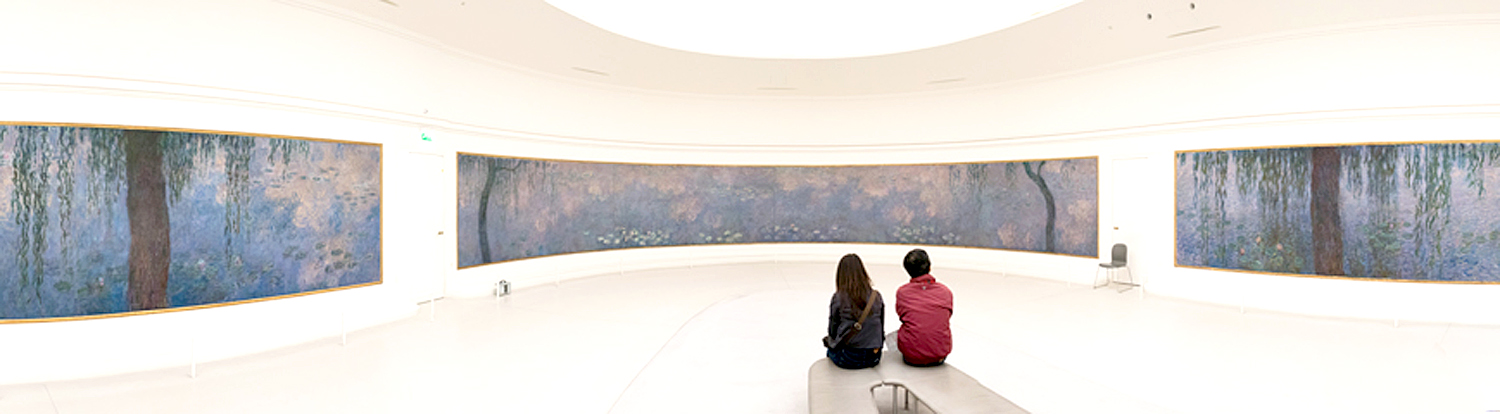
All the work of Claude Monet pleases me, but it is the large waterlilies that move me. When I finally got to see the group of them at the Orangerie in Paris, I had to sit down. Two oval rooms with walls banded with waterlilies. It was a holy place. 

These are all works that both give me great pleasure, and are also historically important works, anthologized in any art history text. 

 Yet, some of the art that I love most and that gives me great pleasure is art not especially important, or at least not widely known. There are so-called “local artists” who never get the national reputation; there are artists I know personally and whose work speaks to me in part because I see their personalities so clearly in what they produce. 

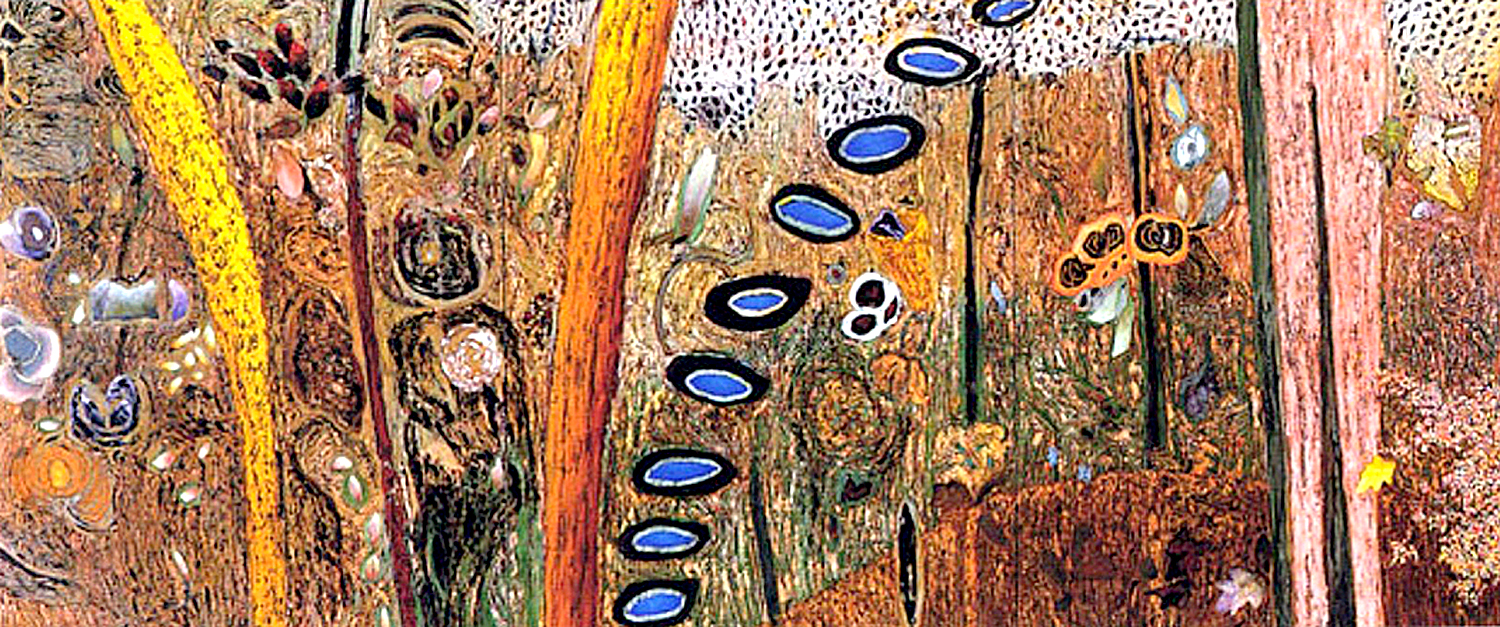
I love the art of Arizona’s Mayme Kratz. I’ve written about her work several times. Mostly, she finds discarded bits of the natural world — seeds, husks, birdnests, grains, twigs, shells — and embeds them in patterns in colored acrylic, finished with a fine sheen. They are intensely beautiful. Kratz makes a living from her work and has buyers and collectors, but I don’t know why she isn’t featured in galleries in New York or Berlin. Her work deserves to be. 

Tucson painter Jim Waid has a growing reputation and has representation outside of Arizona. But his large canvases, electric with color and texture, were featured (during my time) primarily at one gallery in Scottsdale. As I wrote about him for the newspaper, “Is there any reason that David Hockney is ubiquitous and that Jim Waid is not? Waid is clearly as good a painter, and his canvases as original and distinctive, yet Hockney jet sets, and Waid paints in his studio in Tucson.” One of the highlights of my year was the annual Waid show at Riva Yares Gallery. 

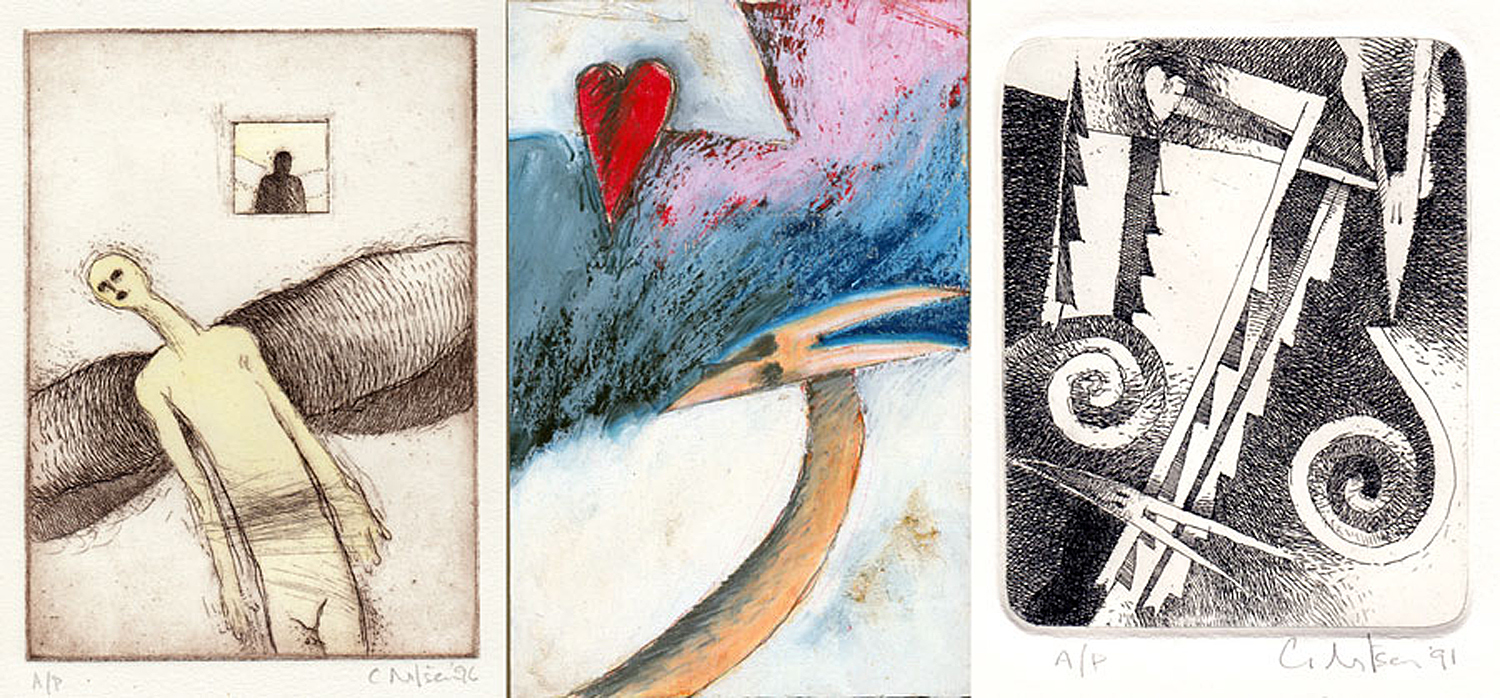
My brother, Craig Nilsen, is a painter and printmaker from Virginia. I have seen his work all his life and I cannot help but see him in the paintings so particularly and often heartbreakingly. He is now retired, as I am, and I am lucky to own quite a few of his pieces. I love them all. 

And finally, my brother-in-law Mel Steele, who has a pretty good reputation in North Carolina, although not always for his best work. He made his living for years selling prints of North Carolina rural scenes. But his real work has always been his abstractions, layers of shapes and colors, creating virtual depth and space on the canvas. I am not alone in enjoying his art, but I feel my life would be much less rich without it. 

And so, I feel as if my immersion in art has two channels: One is the official one, where I write for a public and attempt to be somewhat objective; and a second which is what I feel most emotionally connected with. 

There are many other examples of work I feel deep in my bones, but I can’t catalog them all. What I can say, is that a life immersed in paintings, as in music, dance, film, theater, architecture and literature, is a life more deeply connected with being human. I am grateful for having been able to make a living writing about it all.

Click on any image to enlarge