Archive

Monthly Archives: January 2025

“It was six degrees last night,” I said. I was on the phone with Stuart. “A huge mass of cold has dropped down from the north. Tonight, it’s predicted to hit 5 degrees.”

“Sounds nasty,” Stuart said, although I know he was being diplomatic — He and Genevieve live in Portland, Maine. I’m pretty sure he’s seen his share of six-degree days. 

“But,” he went on, “I’m not sure cold actually exists.” I settled in for a Stuart session. He has these bouts of brain flurries. 

“It’s something I’ve been thinking about recently,” he said. “Cold is a judgment, not a thing. I mean, there’s no such entity as cold; it’s really just the absence of heat. Heat is real — the commotion of molecules. Cold is our perception of the lack of heat.” 

I don’t think he was being deliberately sophistical; it’s just that sometimes the gears in his brain spin rather fast. 

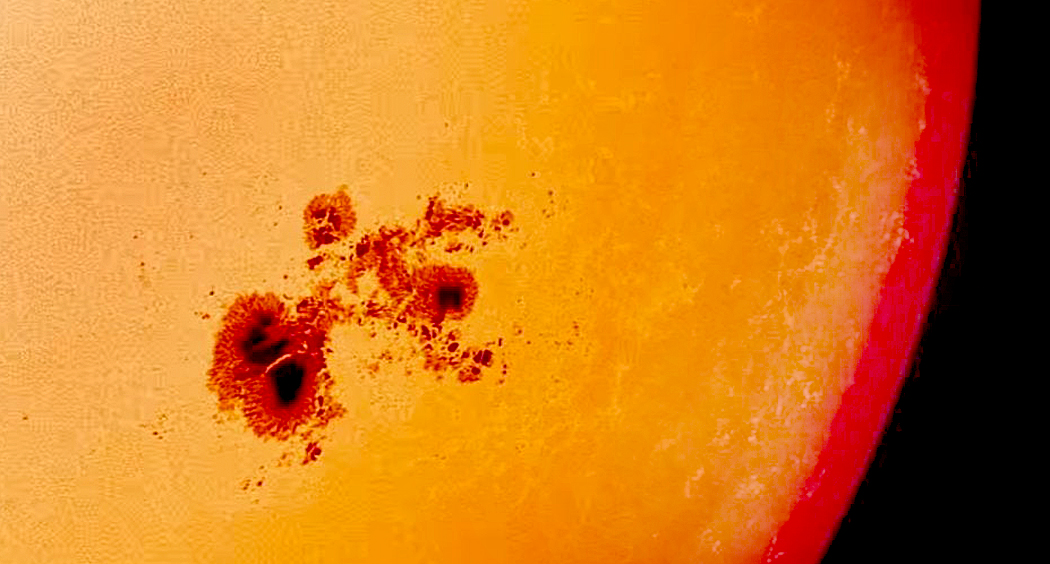
“We think of things being hot or cold,” he said. “But they are a single thing, which is an amount of heat. Sunspots, for instance, are ‘cold spots’ on the sun’s surface, even though they can measure 7000 degrees Fahrenheit, and frozen nitrogen can melt when heated above 346 degrees below zero.”

He knows this is a hobby-horse of my own: the gap between language and reality. I’ve written many times about how what we call opposites are usually just points on a single scale. A thermometer measures heat and we express it with words like “hot” and “cold.” We usually take words as reality, when they are merely a separate, parallel thing, with its own rules and forms. 

“There are things that we take for granted that only make sense in the language we use to describe them, but don’t really exist in any real way,” he said. “Real life isn’t so black-and-white.” 

Stuart went on: “Take black and white, for instance. You’ve heard it said that white is the combination of all the colors added together, cancelling each other out. That was what Newton demonstrated with his prism. But that’s if you are talking about light. If you are painting, the combination of all the colors is black. So which is it really? Well, we aren’t talking about color so much as about hue. There are millions of colors and we give them names, like ‘teal’ or ‘pink.’ They are the combination of hue, shade and tint. Hue is a specific spot on the spectrum, a basic ingredient, like an atom. From them we build molecules — specific colors. A blue can be light or dark and still be the same hue, although the colors are sky blue or ultramarine. 

“So, realistically, both black and white are the absence not of color, but of hue. In reality black and white are the same thing, just different shades of it, with all the grays in between. If you realize that black and white are simply variations of the same thing, then you realize that darkness, like cold, doesn’t exist: It is merely the absence of light.” 

OK, I thought. But does that really shed much light on our day-to-day lives? 

“We take these confusions of language as something real, when they are not,” he said. “When I hear terms like ‘left wing’ and ‘right wing,’ or ‘conservative’ and ‘liberal’ bandied about, as if they actually mean something, I develop a kind of psychic acid reflux. Beliefs shift with time and what was once considered conservative, is suddenly dangerously leftie. And vice versa. Is it conservative to believe in a strong central government or in a small government? Is it conservative to try to minimize change and keep things in place that have been there for ages? Or to radically transform government and shake things up? It changes over time, making the terms we use basically useless. Republicans call themselves conservative, but have complained for decades about an ‘imperial president,’ and yet have happily elected just that.”

It seems to me, this has immediate relevance to our lives today. Language matters. 

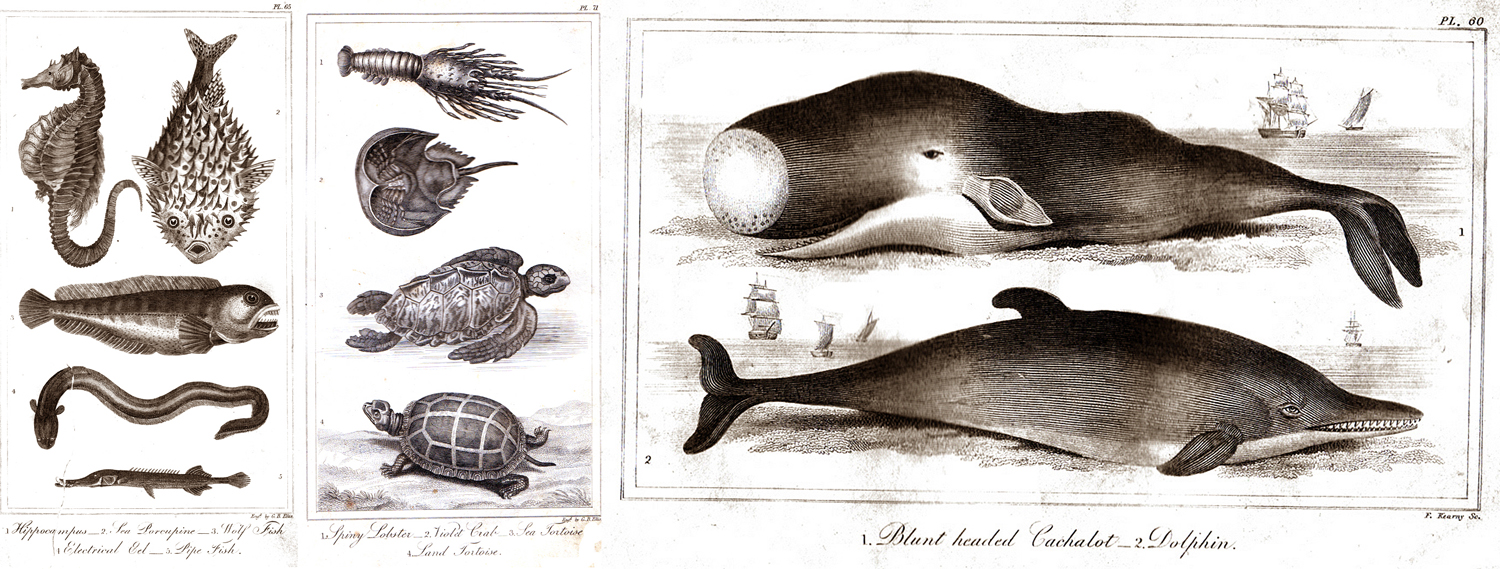
“You know, scientists have decided fish don’t exist,” I said. “Turns out a salmon is more closely related to a camel than it is to a hagfish. Just because it looks like a duck and quacks like a duck doesn’t mean it’s a duck. Just because something has fins and gills and swims in the water, doesn’t mean it’s in a common group called ‘fish.’ In the 17th century, a whale was a fish, too. And in earlier times, squids and mussels were also counted as fish. Jonah, after all, was swallowed by ‘a great fish,’ which tradition has it, was a whale.”

Once, these were all fish

“I have been thinking that language is really myth,” he said. “I don’t mean it doesn’t exist — that’s not the kind of myth I mean. 

“The world is itself. It was before there were humans to perceive it. We see it, however, through language. Take a car. We all know what a car is. That car is in a terrible crash and smashed up. Is it still a car? It gets taken to a junk yard and disassembled for parts. Are the parts still a car? Grind them up into bits of metal and ask the same question. Melt down the metal into a molten form. The same atoms every time, but at what point did it stop being a car? The thing was the thing; the word was just the word.”

“The ship of Theseus,” I said, “that Plutarch wrote about, that had each of its parts replaced as they rotted, leaving the identical ship but completely new. Is it the same ship?” 

“Our brains are hard-wired to see the world as things and those things have names,” Stuart said. “And we take the names seriously. It’s quite silly to worry if it’s the same ship: The question is entirely linguistic. All that piffle that Plato went on about, it’s all really just about language.

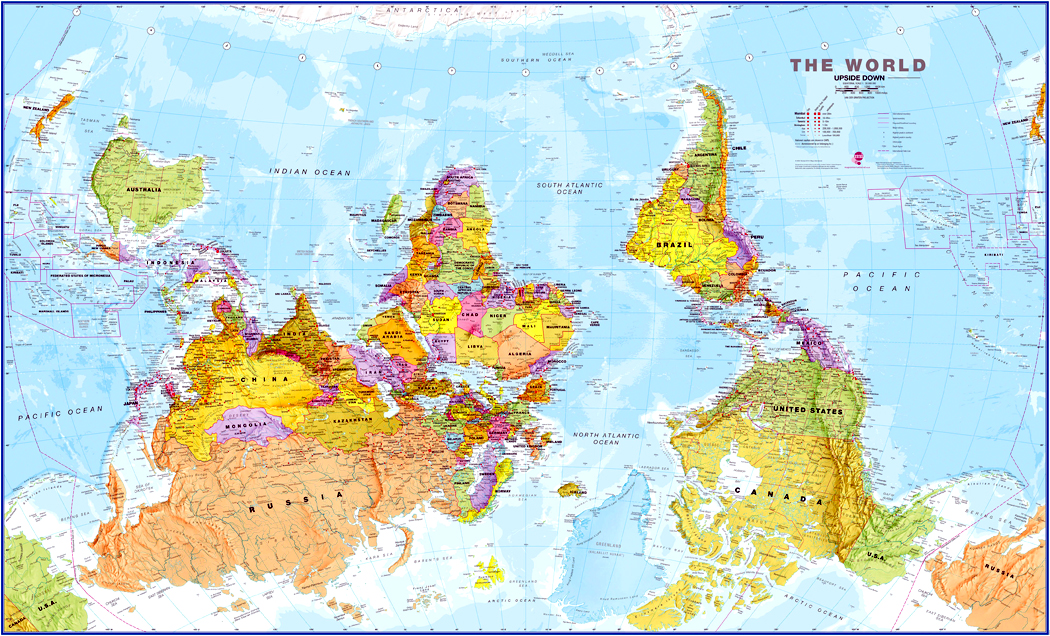
“It is our Umwelt,” he continued. “Which, as I’m using it, is a model of the world built into our psyches not only by experience, but by evolution, and through which we tend to filter our perception of the world, narrowing it down to what seem to be comprehensible limits. A pattern we impose on experience. In our Umwelt, the sky is up, the ground is down. Without thinking, we assume that north is up and south is down, although in a round world in a chaotic cosmos, up and down are meaningless terms. If we hang our world map on the world with Antarctica at the top, it looks wrong. Just wrong. It shouldn’t. 

“It’s why quantum physics is so hard to accept. Our Umwelt is built from human-size experience and the quantum theory makes no sense. In a world of things, we understand atoms as tiny pellets. How could they be vibrating strings? We attribute human emotions to animals, we assume other beasts see the same colors we see, we take anything larger than ourselves as big and anything smaller as little — but why should human size be the standard? 

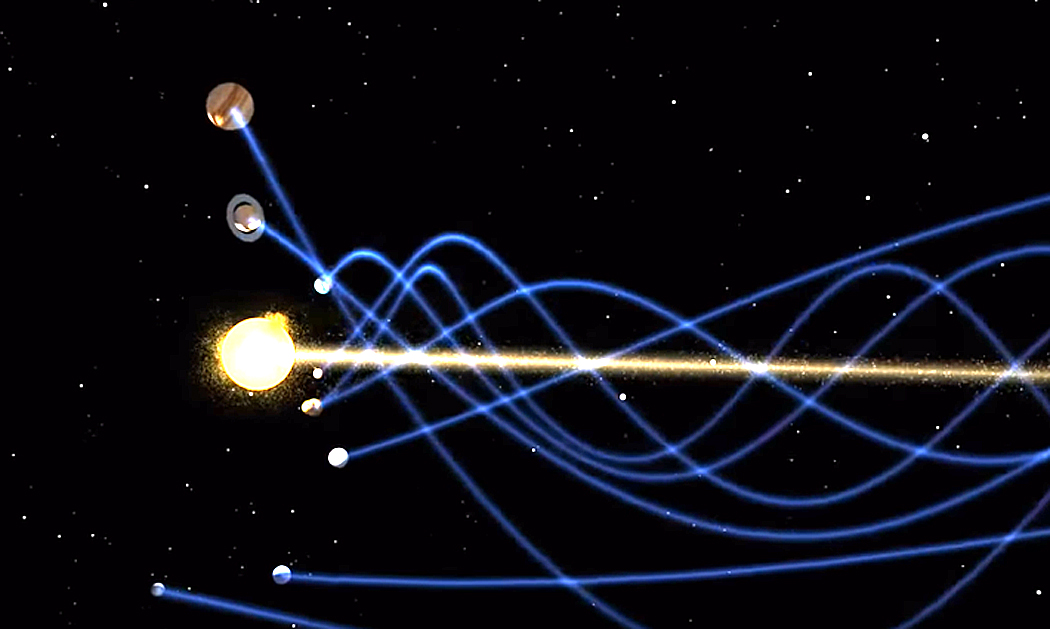
“Weeks.” Stuart was on a roll. “We take weeks for granted, but they don’t exist except as a custom. We’d be rather upset if we didn’t have weekends punctuating our worktime. The metric system the world uses and believes is derived from nature, is all nowadays built on a measured second, which is an utterly arbitrary duration — no natural fraction of experience, but one counted by an arbitrary number of cesium vibrations. We think of the earth as flat, although we know it isn’t. I mean, we know the earth is a globe, but if I separate out North Carolina in my mind, spread out, it is as flat as a map. It’s how it feels. That we orbit around the sun, when in fact sun, earth, all the planets and moons spiral around in complex motions as the whole shebang skitters through space. 

“If we don’t simplify and schematize the world, we could never navigate it. That is what I mean when I claim that language is myth. It  explains what cannot be explained. It actually functions as myth, explaining the world to us. And so, we can personify nameless things by naming them.” 

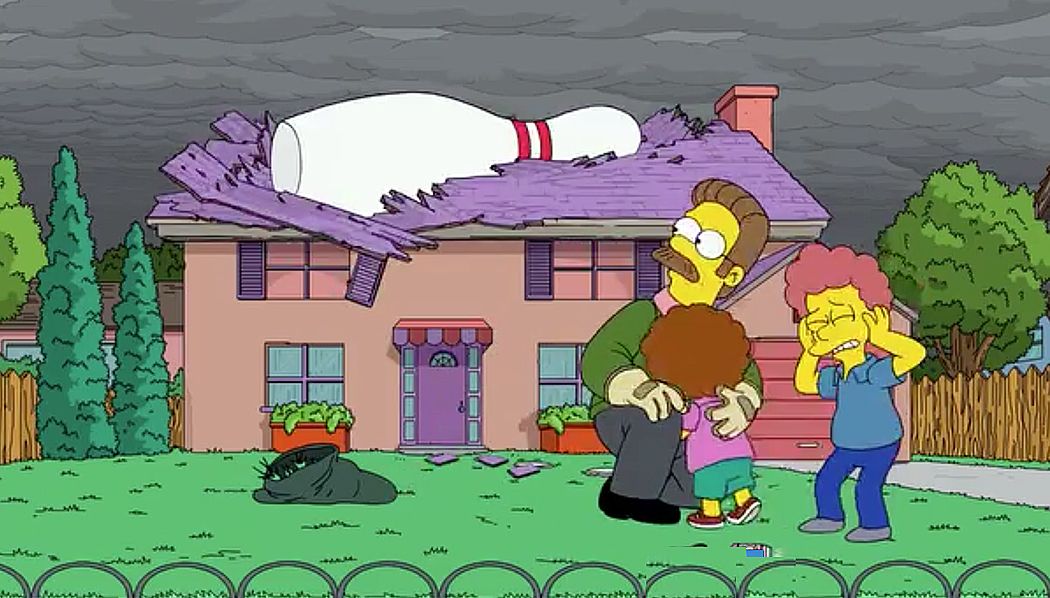
“We think of myth as being, like Zeus and Theseus, but if Ancient Greeks thought of Zeus as a deity, he becomes a folk story when no one worships him anymore. But myths are also ways of explaining the world when science has no good answer — or rather, when the reality exceeds our tiny brain’s ability to grasp it all. Like when we were children and when we were scared of thunder, our parents might tell us not to worry, the noise was just angels bowling in the sky. It was a story that made sense to our infantile brains. 

“Language is angel bowling for grown-ups. We use words to box up ideas, tidying them so our feeble brains can swallow them. We cannot begin to understand where the cosmos came from, so we use Genesis to explain it, or, nowadays, we use the Big Bang. Existence is something so far more complex and chaotic than our tiny minds can begin to understand. So, we make language, a 2-D version of a 3-D world.”  

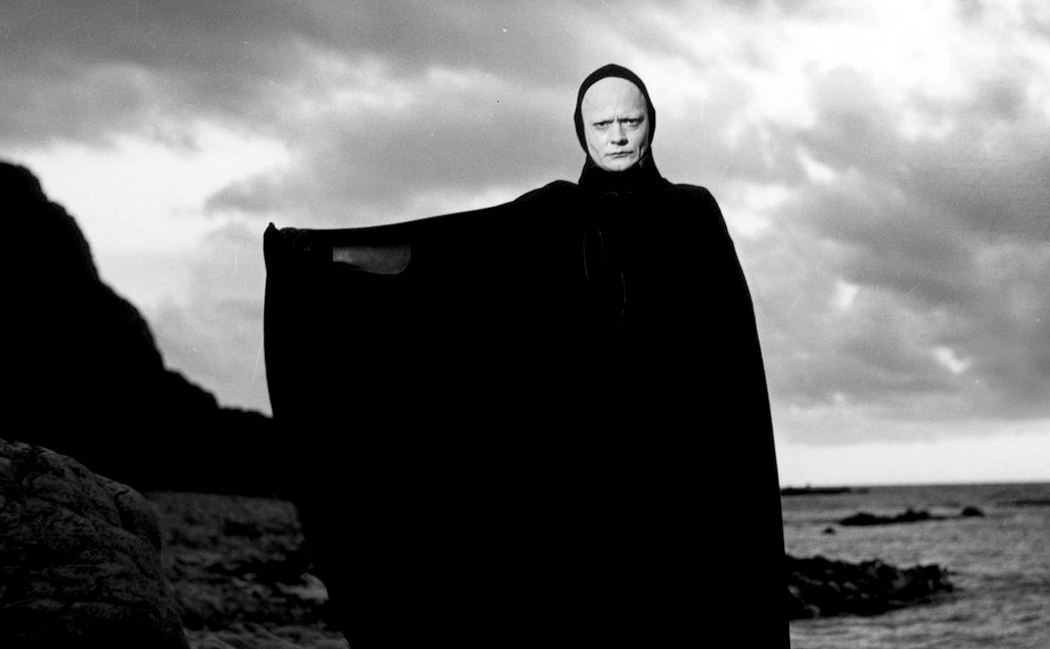
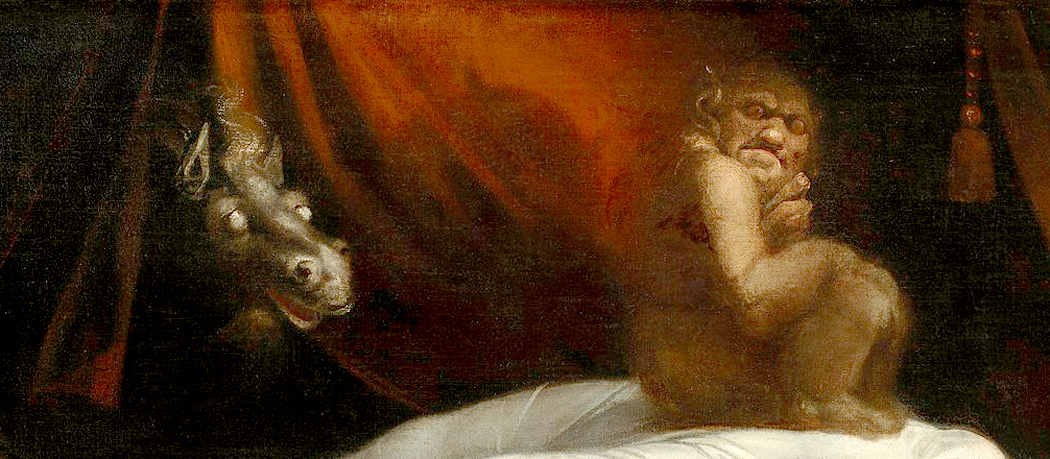
“Like death,” I said. “Death is a skeleton with a scythe in myth, or on a pale horse, or death hovers bedside over the terminally ill. But death doesn’t exist. Dying exists, but death is a myth. Death doesn’t take over our bodies, but the metabolism of our bodies ceases manufacturing life. The machine breaks down.”

“Yes,” Stuart said. “I remember someone pointing out that ‘life’ is not the opposite of ‘death,’ but that ‘birth’ is the opposite. They are verbs, not nouns.”

“I saw this with gut-tightening immediacy when Carole died,” I said. We watched her last inhalations, and then they stopped. She ceased being Carole. There were no 21 grams floating away, she just ceased manufacturing her own life. The light bulb burned out. Light didn’t go anywhere, it just stopped being generated. Almost instantly, her flesh began feeling like clay, cooling off. I’m sure it might soften the loss for those who believe in religion that her soul went somewhere else, but I just saw a factory close down, leaving an empty building.”

“Nice metaphor,” Stuart said. “All language is ultimately metaphor, and metaphor and myth are essentially the same thing. A way of talking about the unsayable.”

This was the moment I heard the faint voice of Stuart’s partner, Genevieve, somewhere in the other room say, simply, “Sophomore dorm room!” and we moved on. And I remembered that women know the real world a lot more than men. 

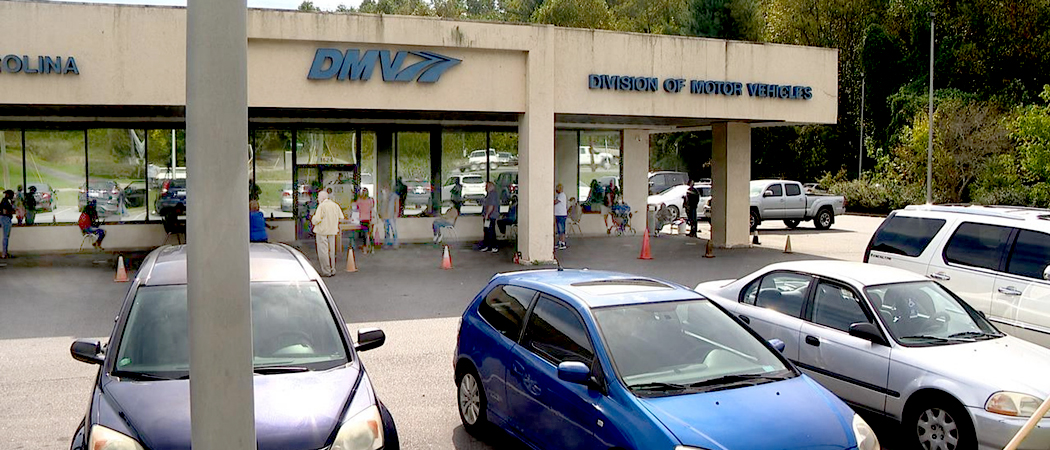
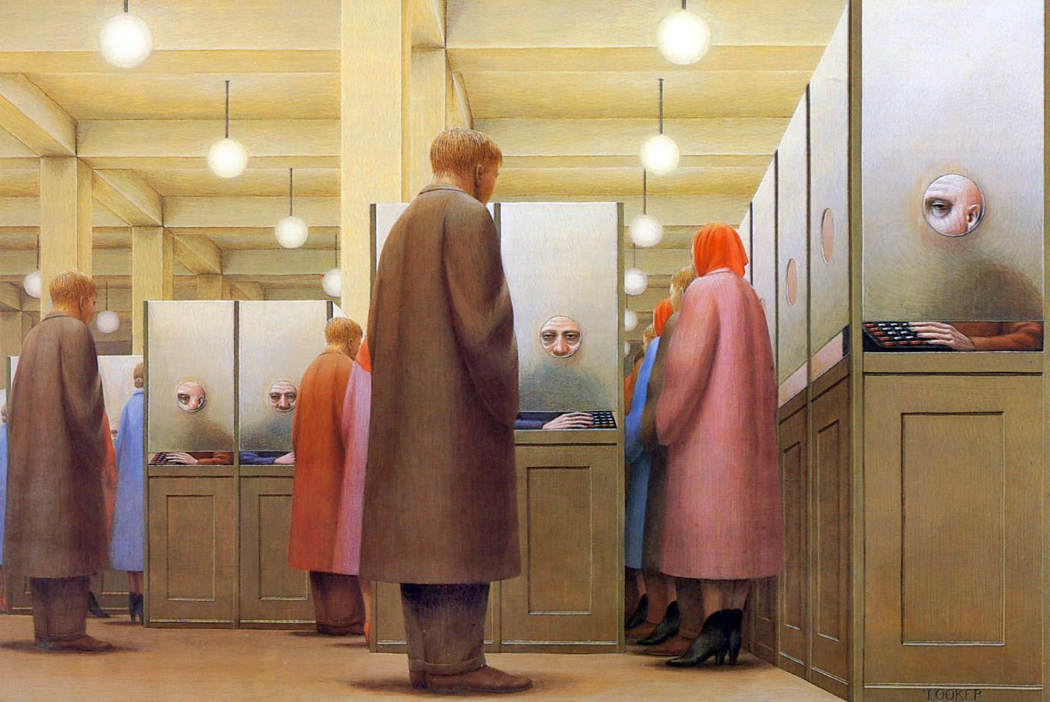
No matter where one lives in this country, there is little that instills a deep, thriving fear in a person than a visit to the Division of Motor Vehicles. There is a reason that Selma and Patty represent the general tenor of things. 

But it has been 12 years since I had to come face to face with the horror of dealing with the DMV here in North Carolina. And I learned just why it has the miserable reputation it has earned. My license was set to expire on my birthday, and I needed to renew it. 

Nightmare: The Prelude

The DMV sent me an e-mail more than three months ago, reminding me that my license would expire, and they offered to make it easy for me to renew online and gave me a link. “Great,” I thought. That sounds easy. Hold on there, pardner — when I went to the clunky website and rattled around in its web-maze, it said that you had to be under the age of 70 to renew it online, so I would have to show up in person to the DMV office. Frustration No. 1. 

Then, Hurricane Helene hit and Asheville closed down completely for a good two months (it is still not up and running completely). Roads were closed, offices shut down. No water, no electricity and fallen trees blocking streets. The pictures and videos online give only a hint of the devastation. It was actually worse. 

After a few weeks stuck in the house, we managed to evacuate and drive down to the flatlands to stay with my brother- and sister-in-law, who were tremendously generous to us. 

Yet, even when we got back to Asheville, so many streets were closed and the town so discombobulated, that I put off going to the DMV office. 

There was a sub-office a couple of miles from the house, but when I went there, a few days before my birthday, there was yellow police tape across the entrance and a sign that said “Closed indefinitely” and said that it would reopen soon. I checked online and it said repairs were being made for a leaky roof. Frustration No. 2. 

I knew I would have to deal with the main office, on the far side of town in the section of the city full of mattress stores and bail-bond offices. So, a couple of days after my birthday, I went to the main DMV office in West Asheville, a drive of about 12 miles, negotiating various detours along the way. When I got there, the joint was crowded and a sign posted just inside the main entrance, “No more walk-ins today.” They said I should go online and make an appointment. Frustration No. 3

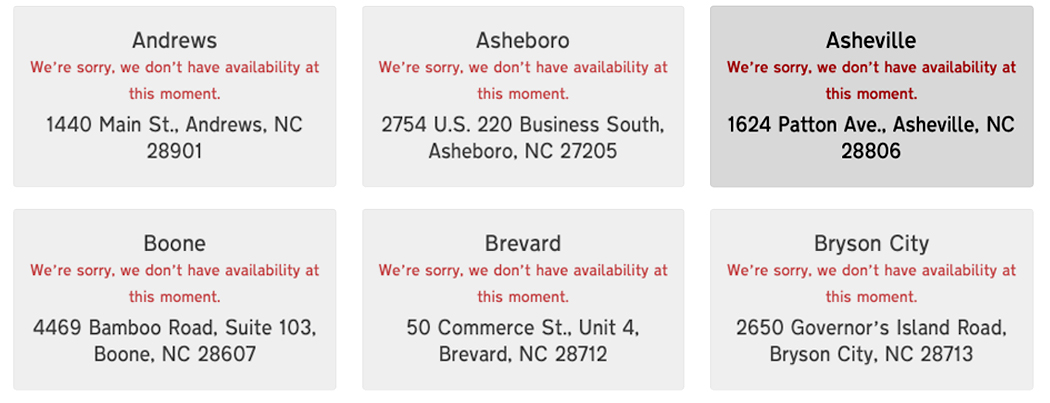
I drove all the way home, around several more detours and traffic jams, and went online to create an appointment, via a website that was horribly designed and confusing, only to find, when I finally found the right webpage, that the site said “No new appointments available.” No explanation of when appointments might be had or how to find out. Frustration No. 4.

(The website is a mess, poorly designed and engineered, making any useful information obscure, difficult to find and even more difficult to understand. If anyone needs to find out how not to design a website, they could not do better than to check out NCDMV.) 

And so, a few days ago, I decided to get up early and get to the DMV office before they filled up. I went past the East Asheville DMV office to check if it was still closed (it was), so I got on the Interstate and drove all the way to the West Asheville office and when I got through the entrance, there was a sign saying “No walk-ins till noon.” Frustration No. 5. 

It was then 9:30 a.m. I got on a line for the info desk and when I made it up to the front, they told me that they only take walk-ins in the afternoon. I told them my sad story, and they were very nice but unyielding. I could wait in the parking lot for two and a half hours till they allowed walk-ins, or I could come back the next day after noon. 

When I asked them about making an appointment and how the internet told me there were no appointments available, they explained that appointments were booked up 90 days in advance. And so, piled on, a Catch-22: Have to make an appointment; no appointments to be had. Frustration No. 6. 

I thanked providence for my cool Norwegian blood and I didn’t explode at the poor clerks. They were only doing their job. The policy wasn’t their fault, and at least they weren’t going full Selma and Patty and blowing cigarette smoke in my face. They sympathized, yet, there was nothing they could do. “Come back tomorrow,” they said. “The line for walk-ins usually begins about 11:30 a.m., so I should make sure I get there early enough not to get so far back in the line I get closed out once again. I smiled the kind of smile you do when the only other option is thrusting a knife into their throats, and turned and walked back to the car and drove home. 

Nightmare: Part 2

OK, so the next day I planned to go the the DMV a half-hour before they were supposed to allow walk-ins to enter the building, hoping I could finally renew my license. I drove around the detours over the 12 miles to the office and got there at 11:30 a.m., to find a line already formed, with about 25 people in it, standing in the cold outside the building. I got on the end of the line. The temperature was in the low 40s, but the sun was shining. The line got longer behind me as we waited. At exactly noon, exactly nothing happened. The doors didn’t open. We all stood in the numbing cold for the next hour and a half. 

Then, a guy from inside told the first 8 people to go inside, and we all moved up in the line and at the head of the line there were chairs with their backs up against the front window of the building, and I got the last seat. After standing in the cold for hours, my knees were stiff and the seat was quite welcome. Unfortunately, the chairs were under the canopy and so we sat in the shade. The breeze picked up and it got colder. Much colder. Nothing moved for the next 90 minutes or so and I sat shivering — literally — and getting colder and colder. It was torture Guantanamo level, and I was ready to confess. “I am willing to name names,” I thought. “I’ll tell you anything. I thought the Geneva Conventions outlawed this kind of torture.” I half-expected them to come out and spray us with cold water, just to amplify the misery. 

Several times I thought to give up and leave. But, it is the torturer’s trick to let to expect relief will arrive soon, so you keep waiting. I kept putting off the leaving and sat in the progressing hypothermia like a frozen lump. Face turning blue, fingers now numb. At least it wasn’t raining and they didn’t bring out hoses. 

Eventually the same guy came out with a clipboard and began taking our names. We signed in and explained what service we were there for, and then he went back inside and we heard no more from him. Several of the people ahead of me, sitting in the cold shade got up and walked back out to the parking lot to stand in the sunlight for the illusion of heat. I was afraid of losing my place, but also afraid that my knees, already throbbing from all that standing, would give way if I tried to stand up again. 

The guy eventually let three more people in and we shifted chairs to move closer to the door. A rebellion was brewing: The woman seated next to me got up a few minutes later and said, “I don’t care what they say, I’m going in where it’s warm and stand,” and she went in. Another followed, then I did too. Inside the door was another queue, in front of the admission desk. The man there chased us all back outside, but we had seen the promised land, and had seen a half-dozen empty waiting-area chairs and decided they were doing it on purpose. We went back outside and sat down again. Then the guy with the clipboard came out and started calling off names from the clipboard and my name was the last one he called. We all trundled finally in to the warmth, where we formed another line to get registered and be given a number. I was E473. 

The DMV is has all the architectural grace of an old supermarket, with the back area walled off and a set of 11 numbered desks ringing the waiting area. Four — only four — of them had examiners working them. I sat in the waiting area, still shivering involuntarily, with my core temperature dropped somewhere into the orange sherbet range. There were probably 60 people in the waiting area waiting for their number to be called. 

It was now after 3 p.m. and I watched the call board ring out numbers. A1, then A2. Where does E473 fit in, I wondered. I dreaded. Turns out the letter in front of the number signified what the person who held it needed from the DMV — a new license, a chauffeur’s license, etc. “C123 now being served at Window 3” came the announcement. Number after number came up. Finally some E numbers “E465 is now being served at Window 7.” 

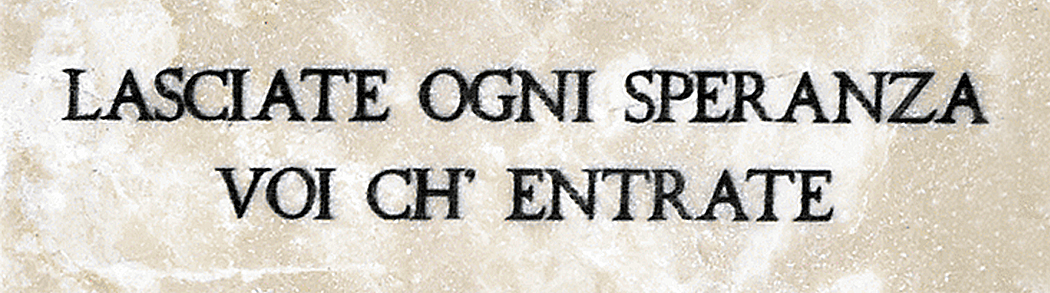
Waited and waited. At 4:30 p.m., the guy with the clipboard stood up and told the waiting masses that anyone who needed a driving test would have to go home and try again another day. They stopped giving driving tests for the day. A handful of people got up and left the building, looking grumpy but as played out and exhausted as a late-round boxer. I had no watch, and there were no public clocks, but I could feel we were getting close to 5 p.m. closing time and maybe I would have to go home empty-handed and try again another day — I had already resolved to give up and drive without a license and hope just not to get caught. A fine would be preferable to suffering another day at the DMV. 

Then “E471 is being served…” then “E472…” My hopes went up. The “C346 is being served…” and I lost all hope. It was DMV hell. Finally they called my number and I went to the desk, answered a few questions, had my picture taken and paid $38 and was given a printout temporary license and told the real one would come in the mail next week. The ordeal was over. The sun was setting and I drove home in the twilight. A day I will never get back. 

When I got home and ate dinner with numb hands, it was then almost 7 p.m. and I was still cold to the core. It would take some time to warm up again. This was a trial by ordeal. But at least the new license will carry me through 2030. 

Afterword

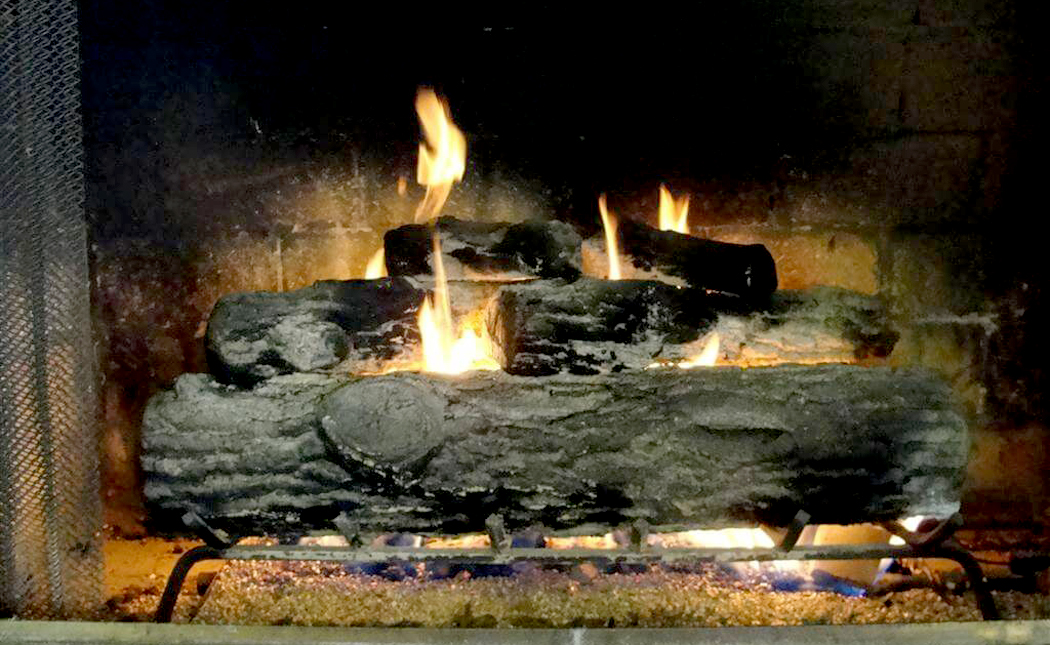
It took till nearly 10 p.m. sitting beside the gas-log fire wearing a sweater, with four lap blankets over me and drinking hot tea before I felt that my inner core was finally warmed back to normal, or nears enough. Getting cold on the outside is one thing, feeling the temperature on your skin, but it’s a whole other thing when the cold penetrates into the bones of your fingers, arms and into the core of your torso so you feel like you’re a refrigerated ham.  

For all the misery, I don’t hold it against the DMV staffers. They were each as calm and helpful as they could be. Even at the end of the day, after dealing with an exasperated public for eight hours, my examiner could still make pleasant conversation and help me get through the paperwork quickly. (Five minutes it took, after an icy, information-starved wait of more than five hours — a ratio that feels imbalanced, to put it diplomatically). 

I’ve known several public employees and they all wanted to do their jobs as well as possible. It is the system to blame — if you can call it a system at all. I hardly seems planned. The website is a mess. The process is incompetent. The office understaffed by at least half. Little information shared with the victims, and what there is is often incomprehensible.

No doubt, in the Pleistocene, when the protocols of license renewal were first established, an era, no doubt, of dial-up internet, and before the designated-hitter rule, the procedures may have been state of the art, but it seems as if nothing has been updated or rethought. What they are stuck with is not up to the task. 

We often make fun of government bureaucracy and its inefficiencies, and in the case of DMV, any shaming we give is truly deserved. I don’t know why we don’t all march on Raleigh with pitchforks and torches and demand action on the part of state government to make the DMV more humane.  

Intro: What We Get Wrong

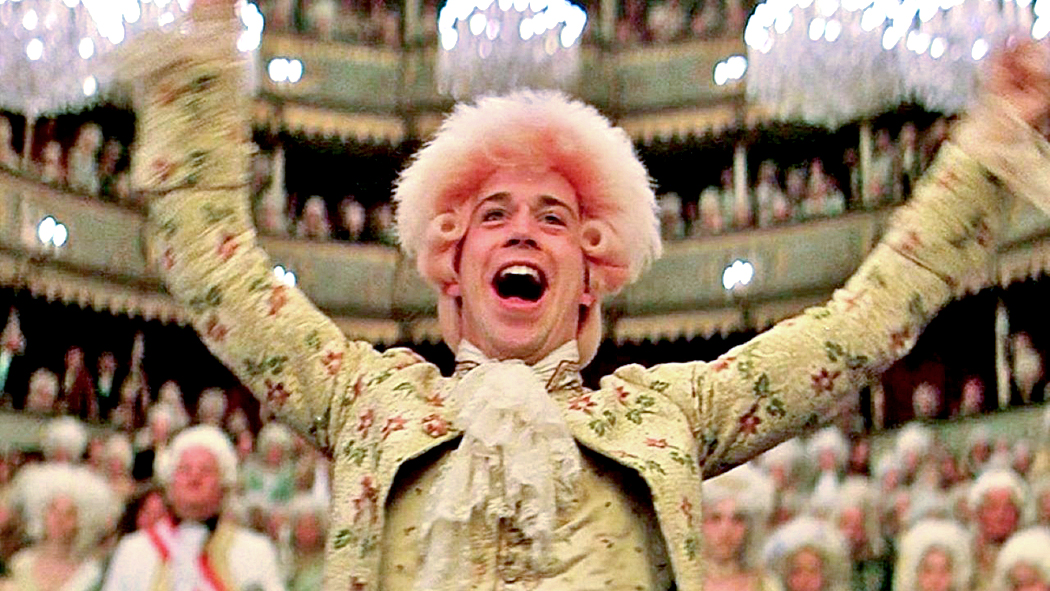
The 1984 movie, Amadeus, won eight Oscars and has been seen by millions of people. It was an excellent film, but it lied through its teeth. Mozart was not an arrested-development adolescent potty mouth. And Antonio Salieri never tried to kill him. 

Poor Mozart, he has had his life twisted over the centuries to illustrate cultural trends, and those trends have changed over those years. 

The 19th century first saw him as old fashioned, then he became a proto-Romantic, with his life deeply mythologized. The 20th century first saw him as a kind of porcelain doll, and after WWII, saw him as a polite precursor to Beethoven. In the 21st century, he has been the victim of countless historical-performance strictures that leave his music in a kind of inexpressive jog-trot strait-jacket. 

The man sometimes considered the greatest composer of all time has been so mauled over by his biographers, fans and later writers and filmmakers that the legend has taken over from the fact.

So, the plot of Amadeus is only one of a myriad of distortions, legends, myths and factifications. The truth, as usual, is more interesting.

What are some of the worst Mozart myths?

— Mozart began writing masterpieces before he turned 10.

* Yes, he wrote music beginning before he turned six. But some of that music was arrangements of other composers’ work, some may have been outlined by his father for the boy to complete, and none of them are masterpieces, or noteworthy, other than for them to have been jotted down by one so young. The early works are generic. They get played, when they are played at all, simply because they have Mozart’s name attached. 

— Mozart was buried in a pauper’s grave.

* Although it’s often said he died so poor he was buried in a pauper’s grave, the fact is Viennese law required anyone other than an aristocrat to be buried in a common grave, after a funeral service at the church. It was a reaction to recent outbreaks of plague in the country. And Mozart wasn’t poor. He lived quite well, although, working in what we would now call a “gig economy,” he had his income ups and down. 

But, over his last year, he earned 10,000 florins when an average laborer averaged 25 florins a year. It put him in the top 5 percent of the population of Vienna, according to H.C. Robbins Landon, author of 1791: Mozart’s Last Year. The man was no pauper, and his music was hugely popular, not only in Vienna, but across Europe. And when he died, he had a hit on his hands: The Magic Flute. He left his widow reasonably comfortable. 

— Mozart wrote his music spontaneously, without effort.

* Mozart’s facility with music was remarkable, but there are plenty of sketches and studies for his music. The pieces without such preliminary work most likely had them at one time, but they don’t survive. His widow, Constanze, burned most of the sketches, not thinking that fragments had any value. Mozart even writes to his father about doing such preliminary work. 

In 1787, he told the conductor of his opera, Don Giovanni, “It is a mistake to think that the practice of my art has become easy to me. I assure you, dear friend, no one has given so much care to the study of composition as I.”

— His middle name was Amadeus.

* He was baptized as Joannes Chrysostomus Wolfgangus Theophilus Mozart but his parents called him Wolfgang Gottlieb (Gottlieb being German for Theophilus). He usually signed his name Wolfgang Amadé. It was only after his death that people began regularly calling him Wolfgang Amadeus, which is a Latinized form of Gottlieb.

— His music is simple, direct, easy to listen to, easy to perform.

* And at the time of his death in 1791, at a mere 35 years old, his music was considered difficult to play and demanded careful listening. Mozart asked a lot. When the progressive Emperor Joseph II famously told Mozart his music had “too many notes, my dear Mozart. Too many notes.” he wasn’t being an ignoramus; he was reflecting the general taste of his times. To understand this, we need to place him in context. 

Some Context: The Classical Era

Something else we get wrong: It is usually said that Mozart and his contemporary Joseph Haydn wrote in the classical style, as if such a thing existed, and all they did was follow the rules. That’s got it completely backasswards. They didn’t write in the classical style; they invented the classical style. They were making it up as they went along.

Music history is taught as consisting of succeeding eras. The Renaissance gave way to the Baroque, which led to the Classical era and on to the Romantic, to Modernism and currently, Postmodernism. As if they were clearly defined and separate. And it is true that after about 1740 or so the heavily contrapuntal Baroque lost its hold on the ears of its listeners. They wanted something simpler, clearer, more charming and that wouldn’t be so serious. All those fugues and counterpoint of what was called “the learned style” gave way to homophony — that is, tuneful melodies and supporting harmonies. Something you could hum along with: Simpler and more direct. 

This is sometimes called the Style Galant; it followed the Baroque the way Rococo followed in the visual arts. Composers such as J.C. Bach, Johann Joachim Quantz, Johann Stamitz, or Domenico Alberti published torrents of light, catchy three-movement sinfonias and bright concertos, to say nothing of keyboard music to be played after dinner by the daughters of aspiring middle-class burghers. I’m grossly simplifying this, but the outlines are true. 

This is the kind of music both Mozart and his older contemporary Haydn produced in their younger days. Mozart wrote more than 20 symphonies in this popular style before the age of 17 and if they still get played it is because, again, they have Mozart’s name on them, and also, because they are full of great tunes. Mozart always wrote great tunes. 

Haydn had his own orchestra, paid for by his boss, Prince Nikolaus Esterhaza, a ridiculously wealthy Hungarian nobleman, who loved music. Hidden away at the prince’s countryside palace in Esterhazy for some 30 years, Haydn developed on his own, inventing new ways to delight and surprise an educated audience who learned and grew along with the composer. The palace was far from Vienna. Haydn said, “I was cut off from the world. There was no one to confuse or torment me, and I was forced to become original.” 

He basically invented the modern form of the symphony and the string quartet. 

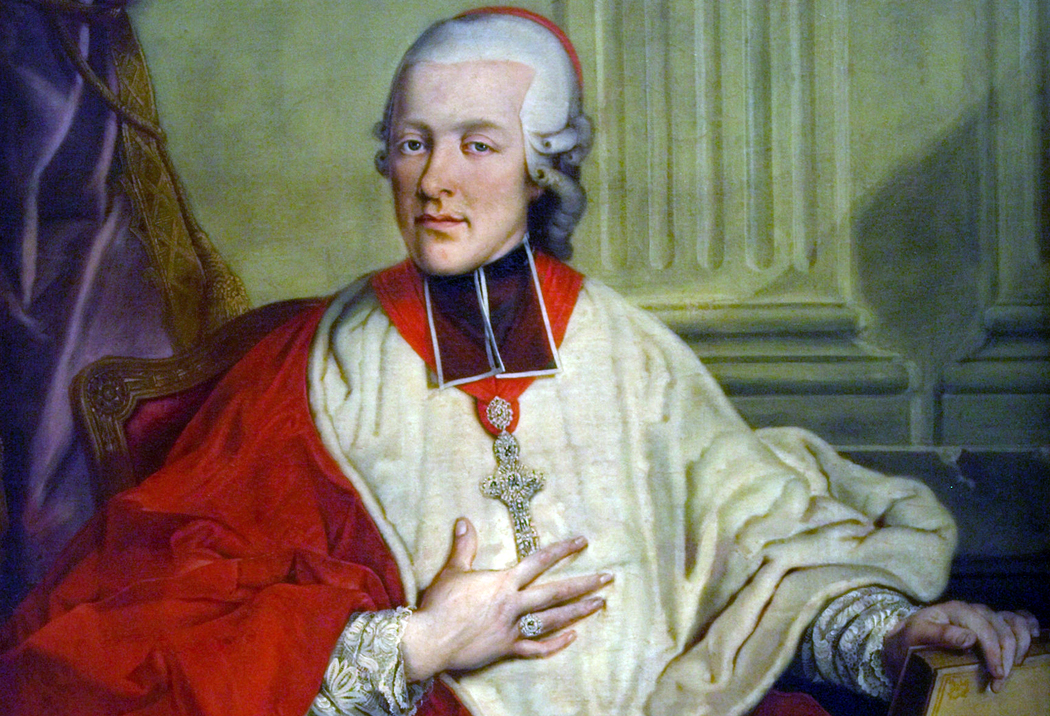
Prince-Archbishop Colloredo

Mozart, however, was truly cosmopolitan and after freeing himself from the employment of Salzburg’s prince-archbishop Colloredo, earned his crust as a freelancer in what was becoming a “gig” economy, living from commission to commission, and from concert to concert and opera to opera. 

He learned a lot from Haydn, and joined him in making his music increasingly more complex than the usual run of gallantries. They added back counterpoint to their works, increased chromatic and harmonic subtleties. Mozart’s music, for instance, is always more complex than it sounds.

Mozart asked his musicians to do more than did other composers: to play higher, lower, more quickly; to play notes unfamiliar to their instruments or voices; to attempt unusual phrasings and colorations.

At the end of Act I in Don Giovanni, three bands play onstage at the same time, performing different music in three different rhythms, but entwining their harmonies so they mesh perfectly in a tour de force of compositional cleverness.

His music sounds simple and perfect and symmetrical, but you look at the phrase structure and it’s highly irregular. Normally, you expect 4- and 8-bar phrases, but you take a look at one of Mozart’s late scores and you see phrases of 4, 5, 3, 7, 8, 6 — but you would never guess it was so irregular just from hearing it. It always sounds smooth.

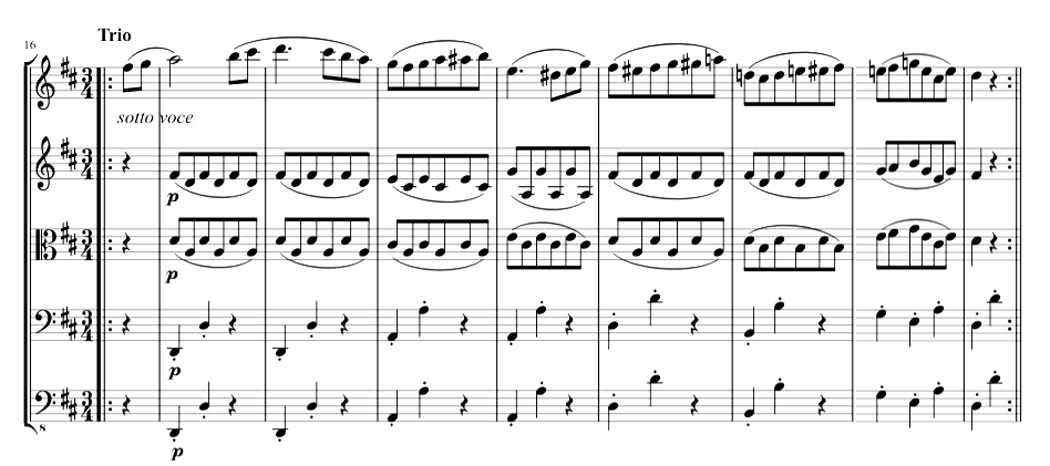
And although the surface of the music is always velvety and seductive, it’s frequently chromatic, introducing notes that shouldn’t belong. Even so graceful and simple a tune as the trio from the minuet in the popular Eine kleine nachtmusik manages to use 11 of the 12 notes in the chromatic scale. It verges on Schoenberg, though it sounds as simple as a nursery rhyme.

While Haydn’s metier was primarily instrumental music, Mozart shone in vocal music, and especially opera, where he brought psychological complexity to what is sung. 

Mozart as Shakespeare

Mozart was the Shakespeare of music. No composer ever displayed a wider sympathy for the human condition or a greater breadth of musical style. At the bottom of his music is a profound humanism, which is all the more obvious in his best operas — The Marriage of Figaro, Così fan tutte, The Magic Flute and Don Giovanni.

Of all the great composers, Mozart also is the easiest to love. Bach may be more sublime, Haydn wittier, Beethoven more in-your-face and Schubert one of the few who could write melody to equal Mozart, but Mozart remains the most accessible. He speaks directly to us, because he is the most humane.

That quality underlies all his major operas: His plots are filled with three-dimensional people, not the stock characters of most other operas. No hero is flawless, no villain unredeemable.

The miracle is that it isn’t just the libretti that convey this complexity, but the music itself. It gives us the subtle psychological undertow.

Mozart understood all of his characters well. None of them is tossed off as inconsequential. He imbues each character with definitive musical qualities.

So that Don Giovanni’s ebullient life force is expressed in his headlong “Champagne Aria,” with barely a moment to inhale. Or the Queen of Night’s rage in Magic Flute, when she launches into Baroque arabesques and arpeggios in her showpiece “The vengeance of hell boils in my heart.”

Even in Figaro: Has adolescent horniness ever been better expressed than the “amorous butterfly” take the hero sings about the love-struck Cherubino?

All these characterizations are built on the composer’s willingness to accept without judgment everything that is human. Perhaps that’s why nobody ever wrote forgiveness better than Mozart.

Each of his major operas has a scene of forgiveness in it, and it’s usually the turning point of the action, when a character recognizes the frailty of human nature. Such forgiveness is not bestowed from a feeling of superiority but from shared compassion.

It’s not that we believe the Count in Figaro will now be faithful to the wife who forgave him, but that we know she will always forgive him, because this is what it means to accept the human condition.

But the particular mood Mozart raises in such moments also is carried into his purely instrumental music: The slow movement of his Piano Concerto No. 18 is the echo of such a moment in Figaro. It sighs, and we sigh with it.

Such genius, whether Shakespeare or Mozart, can’t be explained. You just accept that it is.

Don Giovanni

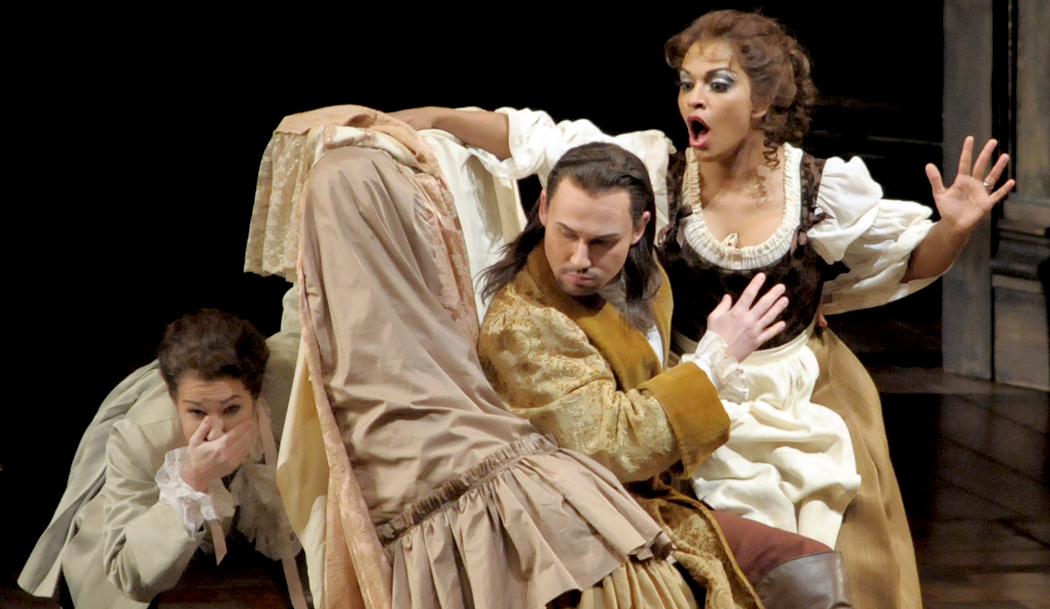
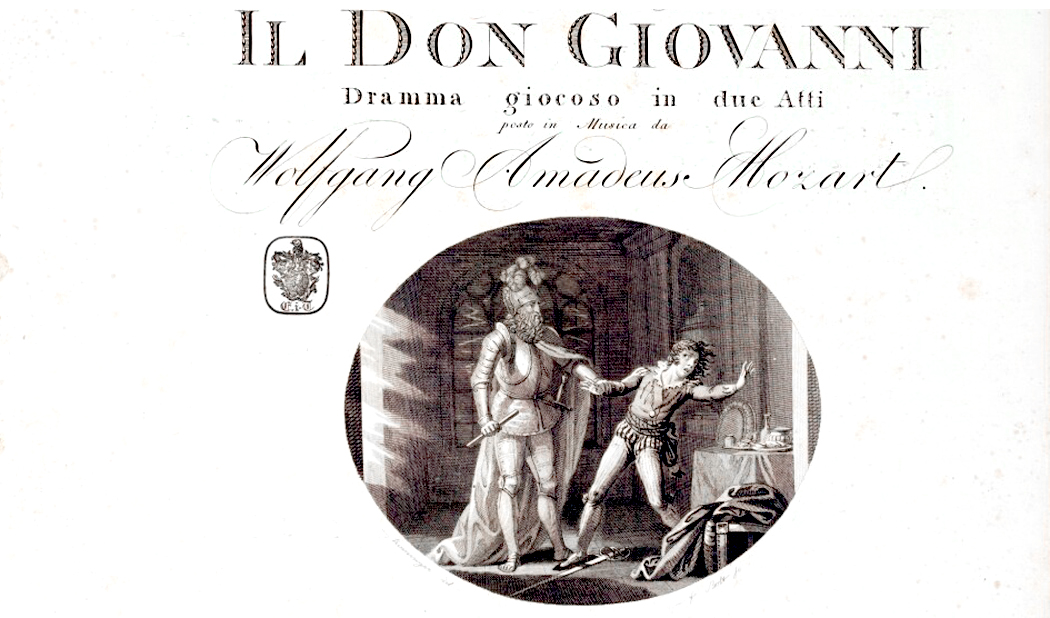
Mozart’s Don Giovanni has been called the perfect opera. It ingeniously balances comedy and drama, music and theater, the aristocracy and the peasantry, the past and the future.

It was first performed in 1787 in Prague, where the composer was a musical superstar, and told the story of the seducer Don Juan (Don Giovanni in Italian).

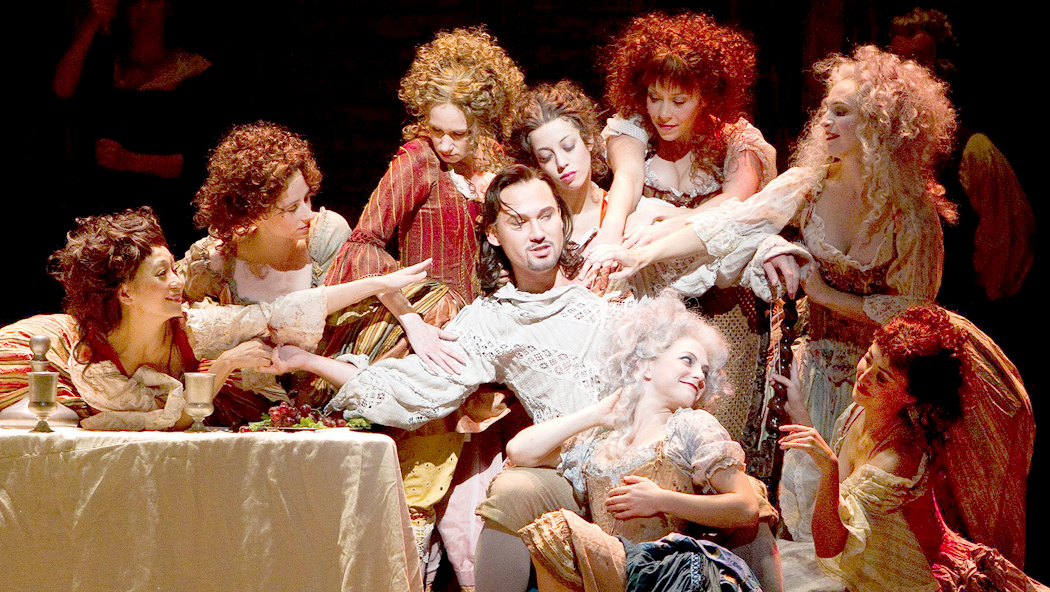
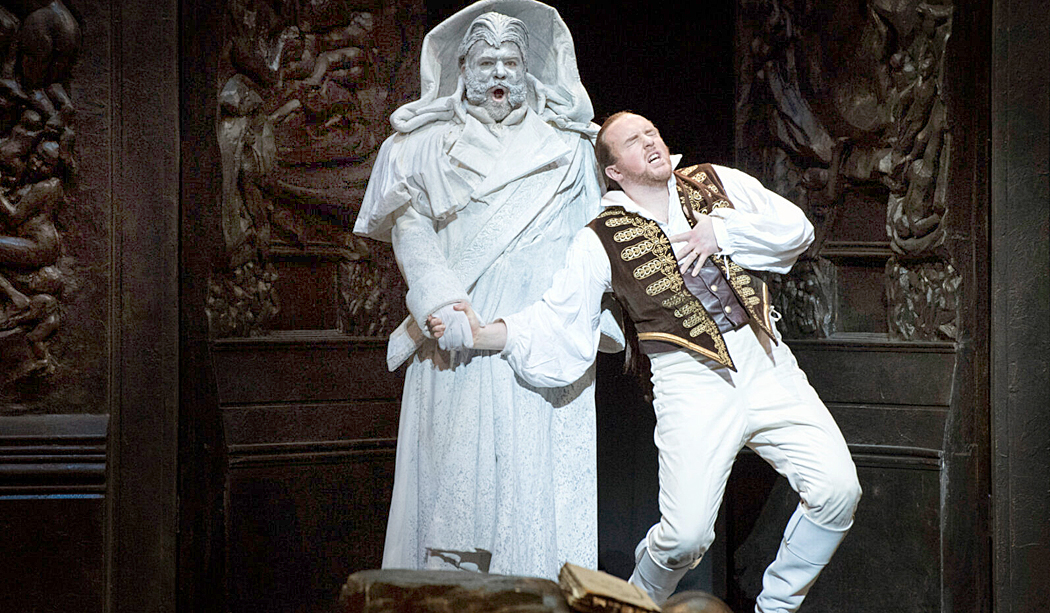
The story is simple in outline: After he kills the outraged father of one of his amorous conquests, Don Giovanni is tracked down by his victims. When he hides in a cemetery, the statue of the dead father miraculously asks him to dinner and, later, when the don shows up, the statue drags him to his judgment in hell.

But Mozart and his librettist, Lorenzo da Ponte, took what was a traditional story of sin and punishment and made it into a paean to the life force. Technically, Don Giovanni is still the villain, but Mozart and da Ponte made him such an engaging and vital presence that in the end, when he refuses to repent, despite the demons that surround him and the brimstone that burns, he actually rises to the heroic. Is he hero or villain? Or both.

This is where the Classic past meets the Romantic future: The cautionary moral tale of the past turns into the Byronic hero of the upcoming 19th century, and Mozart is in the avant-garde.

Digression I: Rake with a Quill Pen

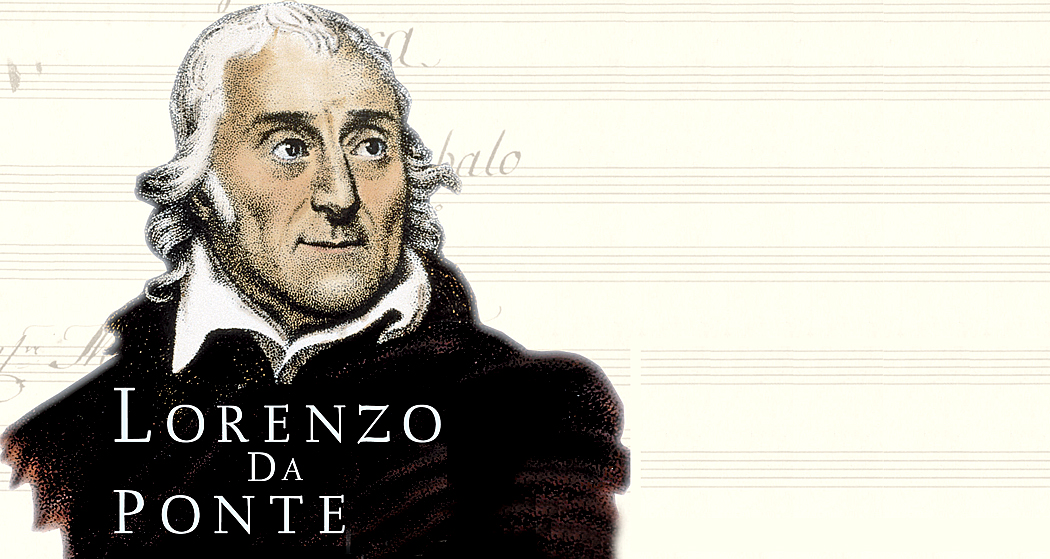
Opera is a collaborative art. Mozart’s music is great, but so was the libretto written by Lorenzo da Ponte. Da Ponte was born a Jew in Venice in 1749, was ordained a priest and opened a brothel with his mistress, where he entertained the clients by playing violin in his priest’s vestments. He was the perfect choice to write the libretto for Mozart’s dramma giocosa, Il dissoluto punito o sia Il Don Giovanni (“The Rake Punished, or Don Giovanni”).

Da Ponte was a friend of the infamous seducer Casanova and was forced to flee Venice after a trial for sedition, settling in Vienna, where he wangled a position from Joseph II, the Holy Roman Emperor. When he was asked how many plays he had written, he answered, “None, sire,” to which the emperor replied, “Good, then we’ll have a virgin muse.”

He wrote libretti for dozens of lesser operas by lesser composers, such as Antonio Salieri, before landing a job writing — or rather rewriting — Beaumarchais’ popular play The Marriage of Figaro as a libretto for Mozart. He also wrote Don Giovanni and Così fan tutte before being shown out of the city by the police.

Da Ponte’s post-Mozart life is hardly less interesting. After marrying (quite a trick for a priest), he moved to the United States, where he failed as a grocer, became friends with Clement Moore (reputed author of ’Twas the Night Before Christmas), who helped him gain a faculty post at Columbia College (now Columbia University), where he was the first faculty member to have been born a Jew.

In 1828, he became an American citizen, died 10 years later, had a grand funeral at St. Patrick’s Cathedral and is buried in Green-Wood Cemetery in Brooklyn.

The Pop Star

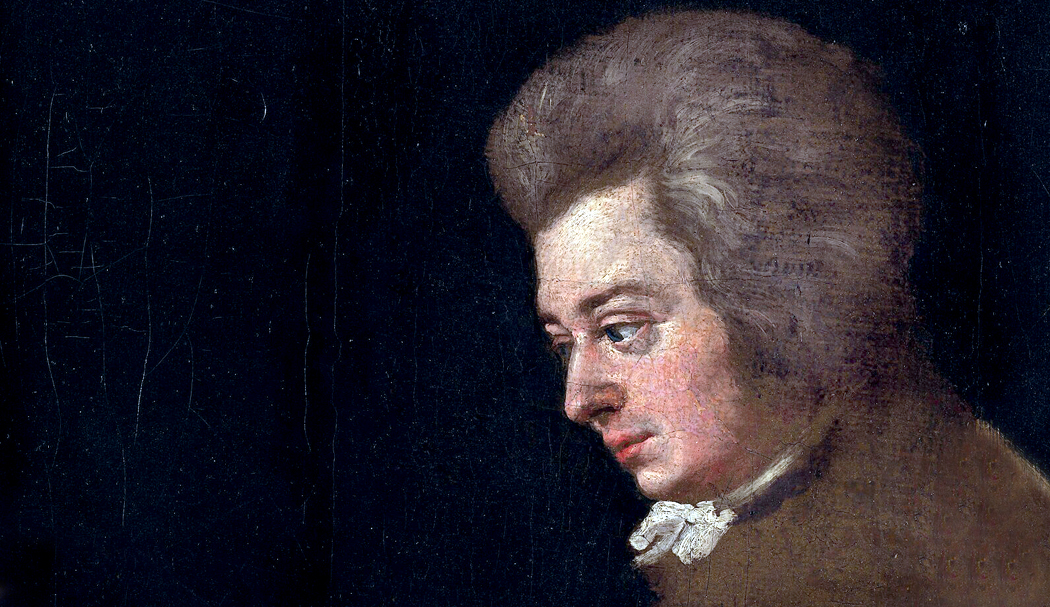
Mozart’s time was the late 18th century. He was born in Salzburg, Austria, in 1756 and was one of the great child prodigies of all time, picking up the violin when he was four and composing by the time he was five. His first opera was written when he was 12.

He was trooped across Europe by his father, playing for the amazed aristocracy and gathering gifts of money and jewels.

He outgrew his boyhood cuteness but grew to be one of the most prodigious composers of all time: He wrote 22 operas, 50 or so symphonies, 27 piano concertos, 23 string quartets, 17 settings of the Roman Catholic Mass. His complete works take up 170 CDs in one current set.

And he became enormously popular.

Mozart was the pop artist of the time. People wanted to play and hear that music so much, they transcribed the music for all kinds of ensembles. Every town had a wind band and they played arrangements. Every little village in Belgium or Bavaria could play arias from the latest Mozart opera, the way halftime marching bands now play show tunes.

Mozart makes fun of this phenomenon in the finale of Don Giovanni, when the don has a dinner in his castle, with a band playing the latest hits from operas, including “amorous butterfly” from Figaro.

He dismisses it: “I’ve heard this piece too much, he says. We laugh because it shows Mozart could take a joke. And that only makes him more human.

Digression II: Mozart and Haydn

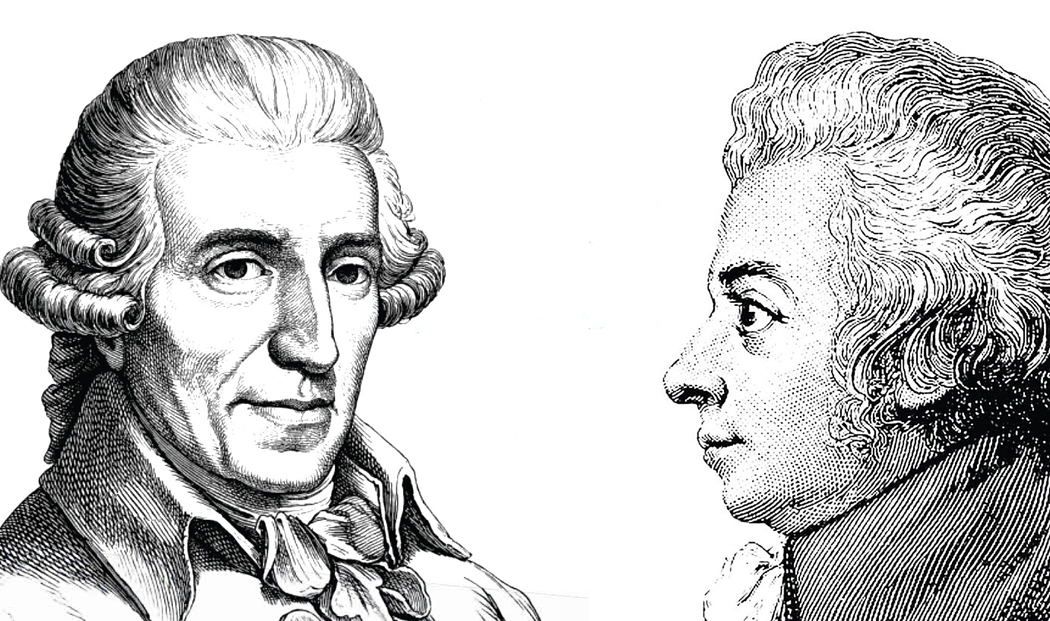
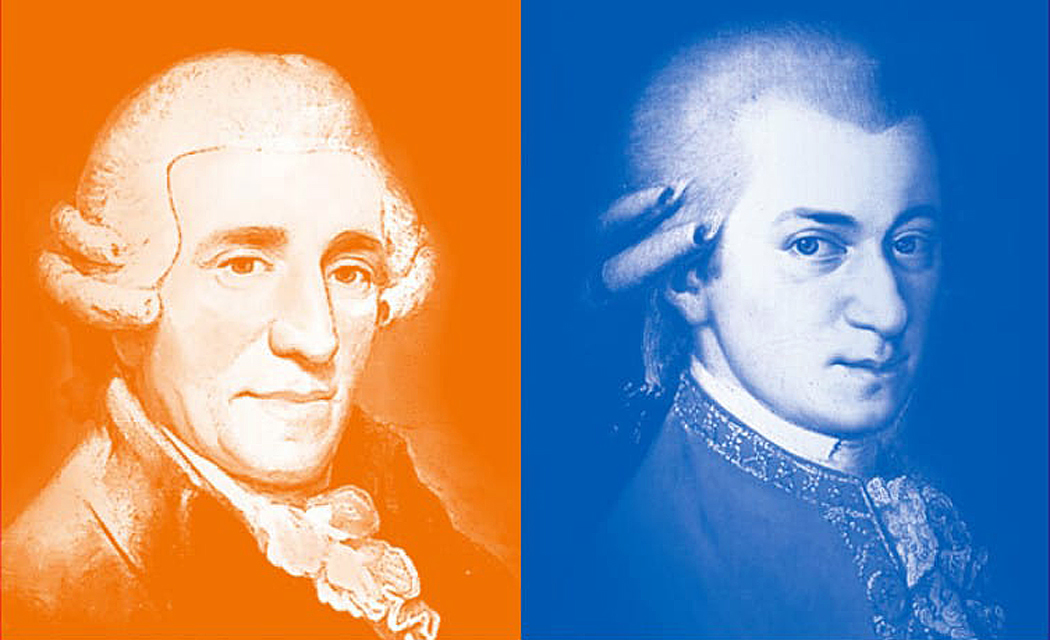
The era from about 1770 to 1810 is called “Classical.” It’s the age of music defined by two names: Joseph Haydn and Wolfgang Mozart.

They were the twin colossuses of the time: one witty and bright, the other deeper and more melodious.

But the two men were very different. Haydn brighter and more brittle sounding, with an emphasis on what the 18th century valued as wit, making in-jokes in his symphonies and working simple themes into complex textural patterns that his audience recognized with pleasure — they got the joke.

Mozart’s music is darker, more chromatic, with a more blended sound, and he focused his attention on grace and style.

If Haydn is the brain of 18th-century music, Mozart is the heart.

They valued each other above anyone else and recognized each other’s genius. Mozart learned more from Haydn than from any other source. Haydn said Mozart was the greatest composer alive.

To many, Haydn and Mozart sound alike. They are very different but shared a musical language. So, how do you tell them apart?

One wise old professor explained his simple test: “If you can remember the tune after it is over, it was Mozart.”

Reason and order

The 18th Century is called “The Age of Reason,” although sometimes I think it may be said ironically, since, after all, it was also the age of Rousseau, the French Revolution and the Reign of Terror. But the overall tenor of the era was one of rationality and balance, of a just God in his heaven keeping proportionality in everything human and cosmic. 

In German-speaking lands, it was the Aufklärung, the “clearing up,” and prompted enlightened rulers, such as Joseph II in Vienna, to downplay religious fervor, mindful of the chaos of the Thirty-Years War, and promote scientific enquiry and philosophy. Coffeehouses rose filled with debate and Freemasonry became fashionable. Mozart became a Freemason, and his final opera, The Magic Flute, was a Masonic allegory, of sorts. 

There were certainly many points of view, but the general sense was one of moderation in all things. Don’t go overboard. Keep an even keel. Music followed suit: nothing too extreme, but nothing too simple-minded, either. It was a perfect walk between opposites.

And the major musical innovation of the era was the rise of the Sonata-Allegro form. It was the primary organizing principle for Haydn and Mozart and held sway in various permutations for the next century and a half. It is usually taught in a technical way: first theme in the home key, second theme in the dominant, followed by a development section and rounded off with a recapitulation of the two primary themes, but now both in the home key. But that is not why the form became so dominant. That is like describing an angel as having wings and white robes, without ever noting it is a messenger from God. 

The point of the sonata form was to establish an order, in terms of recognizable melodies, to then disrupt the order by breaking up the tunes into bits, rearranging them, and playing those pieces in a hodge-podge of shifting key-centers, leaving the listener with no firm ground to stand upon, and then reasserting clear order once again, so the universe is set right. Order – disorder – order reaffirmed. 

Once you understand the metaphor of the sonata form, you will never again be hoodwinked by the academic palaver. The music is about the primacy of providential order. 

This is a metaphor that has provided the foundation of much of art. Shakespeare’s histories and tragedies are all about disturbed natural order that has to be set right. Opera plots are almost all about illegitimate threats to the way things are supposed to be. It is the mega “A-B-A” of countless poems and novels. 

The form made such satisfying intellectual and emotional sense that it ruled western instrumental music almost until now. Those composers who didn’t write sonata form wrote in protest to it. Take a side. It was that influential.

L’Envoi

It is nearly impossible to write words about music. One tends to write impressionistically and metaphorically about what one hears, but such language become like trying to describe color to a blind person. 

The result is that when most people talk about their favorite popular music, they talk about the lyrics. The music is barely mentioned. In fact, most popular music contains scant little actual music at all: just a few familiar chord changes under a meandering set of melodic intervals. You may mention the beat, but that, too, tends to drone on monotonously through the song. 

You could, if you wanted to, talk about the music, but it would take specialist vocabulary that would convey almost nothing to the lay reader: “The composer used the Neapolitan relationship to modulate from B-minor to A-flat major while dividing the treble from the bass line in hemiola.” There, does that mean anything to you? Two against three? 

One reads scores rather than text to understand what is going on, but even that does not really tell you what you are hearing, only how it was done. 

And so, when writing about Mozart, almost everyone falls immediately into biography. We can tell you fascinating things about his family, his sister, he relationship with his patrons or the order in which his symphonies were composed. 

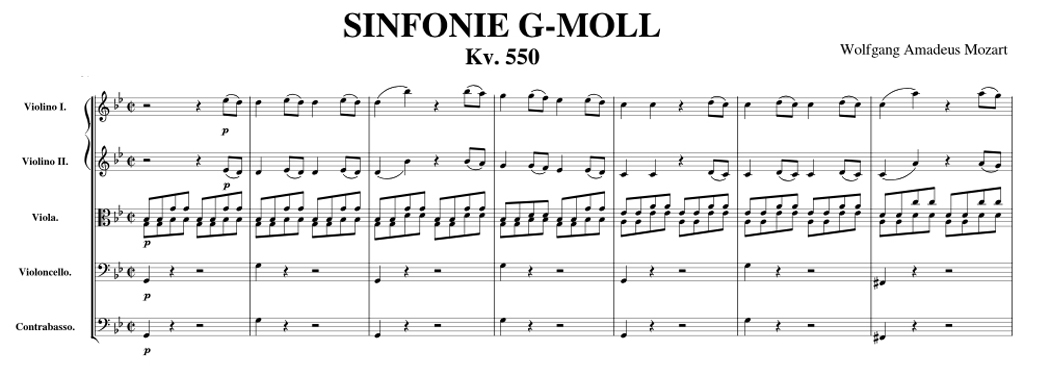
But the ear can hear how, in sonata form, we hit the comfort of the home key as the recapitulation calms down the churn of the development. It is something instantly felt through the ear — if you are paying attention. But how to write about that in the Jupiter Symphony or the K. 545 piano sonata comes a cropper. Just listen. It’s obvious. 

One can say that Mozart blends his wind instruments while Haydn tends to keep his winds distinct. It is true, but you have to hear it to understand. Mozart’s recapitulations are usually a return to order, while Beethoven uses his recaps (in his mature work) to take the music to a new place, a “new normal” that means we have moved through the development from Point A to Point B. Mozart’s melodies tend to be step-wise, as a human voice might sing, while Haydn often jumps around because fingers on a keyboard can do so. 

These are swooping generalities, and there are plenty of exceptions, but they are attempts to write about the music rather than the historiography. 

The only recommendation is to listen to more music, lots of it, and absorb what you can, so you can distinguish the difference between a sonata form and a rondo, between an English horn and a bassoon in its upper register. Hear it and pile it into your trove of experience. It is the sounds that are made that is the music. Words get in the way. 

And pay attention. Music isn’t a warm bath you slide comfortably into, but a conversation the composer is having with you.