Archive

Monthly Archives: November 2025

We’ve all heard of Alexander the Great, William the Conqueror, or Suleiman the Magnificent. Who wouldn’t want to be known to history by such flattering names? But among the many kings, princes, barons and otherwise leaders, there are a few names a bit less splendiferous.

Alexander the Great; William the Conqueror; Suleiman the Magnificent

Every literate English speaker has probably heard of Ethelred the Unready, but what about Ivar the Boneless? We think of the third Julian Roman emperor as Caligula, although his actual name was Gaius Caesar Augustus Germanicus. “Caligula” was a less-than-laudatory nickname which actually means “little boots,” because when he was a boy, he tried wearing a real soldiers footware and the troopers made fun of him by calling him Little Boots, or “Bootsie.”

But the list of unflattering cognomens, sobriquets and nicknames is really quite long. Not everyone was the Sun King. There was also Sebastian the Asleep of Portugal, who reigned from 1554 to 1578. And Barefoot Magnus III of Norway (1073-1103). Or Johann Georg the Beer Jug, Elector of Saxony from 1611 to 1656. As you might have surmised, he loved to bend his elbow. 

Alfonso the Leper; Ivaylo the Cabbage; Piero the Gouty

None of these men seem to have had press agents spinning their boss’ reputations. Richard I may have been Lion-Hearted, but the Third was Richard Crookback. Ivaylo the Cabbage ruled Bulgaria in the 13th century. The grandson of Barefoot Magnus ruled Norway from 1130 to 1135 as Magnus the Blind. Vasili Kosoi ruled Moscow in the 15th century as Vasili the Cross-eyed. And, of course, Charles the Bald, or Charles II of France, who apparently had a full head of hair. 

Physical debility seems to have been popular. William the One-Eyed of Meissen; Peter the Stutterer of Portugal; Sverker the Clubfoot of Sweden; Piero the Gouty of Florence; Alfonso the Leper of Portugal. Eric XI of Sweden (1216-1250) was called Eric the Lisp and Lame.

 The most famous was probably Timur the Lame, who conquered much of the world and best known as Tamerlane. And don’t forget Uros the Weak of Serbia. Or Wilfred the Hairy of Catalonia. 

Wilfred the Hairy; Ethelred the Unready; Halfdan the Bad Entertainer

The 1100s featured Bolesłav the Curly in Poland, Conan the Fat in Brittany, and Ragnvald Roundhead in Sweden. 

John the Posthumus was born in France in 1316 after his father’s death and so was born a king already. He lived only a few days, and so was king from birth to death. 

In AD741 Constantine was born in Byzantium and when he was baptized, the infant defecated in the baptismal font and so became ever after Emperor Constantine the Dung Named. 

Sancho the Populator was king of Portugal in the 13th century (that nation seems to get a lot of these names). He had 20 children, both legitimate and otherwise. But he is beat out by John the Babymaker of the Holy Roman Empire in the 16th century, who had 63 illegitimate kids. Something for Elon Musk to aim for, I guess. 

On the other hand, there was Henry the Impotent of Castile in the 15th C. and nasty old King John of England was called John Soft-Sword. 

Louis Do-Nothing; Louis the Unavoidable; James the Shit

England has had its share of names, some glorious, like Elizabeth I as Gloriana, but otherwise, there was George IV, known as the Prince of Whales because of his obesity, and George III, known as derisively as Farmer George for his less-than-regal interest in agriculture. And James II was known in Ireland as Seamus as Chaca or “James the Shit” for his treatment of that country.

I love encountering these historical names. Constantius the Pale was Roman emperor. Stupid Willy was Wilhelm I of Germany. Louis Do-Nothing was Louis V of France. Germany had Wenceslaus the Drunkard. And Portugal (again) had Manuel I, the Grocer-King. 

Coloman the Bookish ruled Hungary in the 12th century and Ivan I of Russia was Ivan Moneybags. And King Ludwig of Bavaria was Mad King Ludwig. And while Vlad Tepec is remembered to history as “Vlad the Impaler” and the model for Dracula, Besarab IV gained the throne of Wallachia with Vlad’s help and was then known as Besarab Tepalus, or “The Little Impaler.”

Then, there’s Alfonso the Slobberer, King of Galicia from 1188-1230, who foamed at the mouth when angered. And Eystein Halfdansson, an 8th century Norwegian king known as Eystein the Fart. Eystein’s son was known as Halfdan the Bad Entertainer — couldn’t throw a decent party. Another Norwegian king, from the 13th century was Haakon the Crazy. King Harald I of Norway from 1454 to 1474 had several names. He was Harald Fairhair, but that may have been meant ironically, since he was also Harald Tanglehair, Harald Shockhead and Harald the Lousy.  

Harald Tanglehair, aka Harald the Lousy

Finally, Eric II of Denmark was Eric the Memorable but doesn’t seem to have done anything of note in his short four-year reign, at least not that anyone can remember.

These are just a few epithets and sobriquets. Wikipedia lists more than 200 historical figures once named as “The Great,” From Abbas the Great of Iran (1587-1629) to Zayn al-Abadin the Great, Sultan of Kashmir (1418-1470). Alexander the Great wasn’t called that until the Roman playwright Plautus named him that in a play, Mostellaria, in the Third Century BCE. He was also known, in Persia as Iskander the Accursed. 

A list of monarchs by nickname in Wikipedia contains a thousand entries, some quite familiar, like Ivan the Terrible, some more obscure, such as Piero the Gouty of Florence, Italy. 

Constantine Dung-Named; Childeric the Idiot; Ferdinand the Bomb

Some have more than one alternate identity. Napoleon Bonaparte had at least 21, including L’Aiglon (The Eagle), Le Petit Caporal (The Little Corporal), The Corsican, The Gunner of Toulon, Little Boney, and more. Most of them authored by his enemies, who seemed hesitant to pronounce his actual name. And so: The Nightmare of Europe, the Corsican Ogre, The Devil’s Favorite, The Fiend of Europe (or just, The Fiend). The British seemed to hate and fear Nappy the most and never seemed to run out of insulting names for the man. 

Superstition about saying certain names out loud have given us many of these. Avoiding the name of the Devil has given us a bunch of  folktale cognomens: Old Scratch, Old Nick, The Evil One Split-Foot, Father of Lies, Green-horned Monster, Jimmy Square-Foot, Old Adam, Tail-N-Horns, the Wicked One, Rule of Demons. 

Which brings us to Donald John Trump. No one recently has accrued so many alternate cognomens, epithets or sobriquets. One single website lists 409 of them. Nixon might have been Tricky Dick and Clinton was Slick Willy, but no one before has had them delivered by the truckload. I stopped looking after about 800 of them. (I’m not going to list them all — I haven’t the heart). Everyone has their favorites. 

They fall into several vast categories: His lying; his heft; his thin skin; his greed and self-dealing; his tweeting; his name-calling; his business failures; his sexual predation; his fascism; his failing mental powers; his word salad — the list goes on. And let’s not forget his orange hue or his hair, or his too-long ties, his golf cheating, or his bragging or the garish bad taste of a tinpot dictator. He makes it easy. 

In his first term I began calling him — Moose-a-Loony. It’s almost a party game to make up new to call him. It’s fun; try it. Orange Foolius. (Although younger readers might not know where that one comes from.) Large-mouth Ass. Keep it going. Your turn. 

Among my favorites: Trumplethinskin: Trumpster Fire; Mango Mussolini; Cheat-O; Tangerine Palpatine; Mar-a-Lardo; Captain Bonespur; Hair Furor; Prima Donald; Assaulter-in-Chief; Boss Tweet; Deadbeat Donald; the Lyin’ King; The Man of Steal; Forrest Trump; Donny Dementia. Use these and no one needs to be told who you are referring to. The Creature from the Orange Lagoon. 

Everyone who wants is free to invent more of them. Late night talk show hosts seem to come up with new ones each night for a good laugh. 

Stephen Colbert called him the Orange Manatee; John Oliver said he was Rome Burning in Man Form; Seth Meyers dubbed him Creep Throat; Jon Stewart said he was a Decomposing Jack-O-Lantern. Samantha Bee called him a Screaming Carrot Demon, and also America’s Burst Appendix. Trevor Noah said he was a Pile of Old Garbage Covered in Vodka Sauce (although I would have thought “ketchup” more apt). 

The characterization that seems to have gotten under the Tangerine-Tinted Trashcan Fire (S. Bee) more than any other was delivered almost 40 years ago in 1988 when Vanity Fair editor Graydon Carter called him a “short-fingered vulgarian.” 

Carter said that he made the comment “just to drive him a little bit crazy.” And according to Carter, it still does.

“To this day, I receive the occasional envelope from Trump. There is always a photo of him — generally a tear sheet from a magazine. On all of them he has circled his hand in gold Sharpie in a valiant effort to highlight the length of his fingers,” Carter said. “I almost feel sorry for the poor fellow because, to me, the fingers still look abnormally stubby.”

But whether his fingers are abnormally short or not, there is no question he is a vulgarian. Every time DJT opens his pie-hole he demonstrates how little class he possesses. “Quiet, Piggy!” 

And so, we keep renaming the Yam-colored Yammerer, as if we don’t want to have to say his name. 

A linguist named Jenny Lederer said, “people feel like not repeating his name is [a way of] not speaking to the brand and the value system that goes along with his political ideology.”

Even a mention of his name is a problem, with a kind of folk-magic power, causing many of us to avoid it. Tweets will spell the name “Tr*mp,” like it’s a four-letter profanity, although that doesn’t really hide the name, but it does make the Tweet unsearchable by the keyword, “Trump,” and so limits its spread.  And the asterisk implies that his name is vulgar, like the the dirty words censored in old books. 

One is left to wonder what posterity (if there is posterity) will finally settle on as the epithet for “He-Who-Must-Not-Be-Named.” 

We have Old Hickory, Honest Abe, Silent Cal, the Gipper, Bubba and Dubya — but how will we ever choose from the superfluity of imprecations  swirling around Trump as he circles the drain? 

I was an English major and I’m married to an English major and it’s hard being an English major and only getting harder. An English major feels genuine pain hearing the language abused, mal-used, corrupted and perverted. 

I’m not talking here about outdated grammar rules and a fussy sort of prisspot pedantry. As a matter for fact, one of the most persistent pains a true English major suffers is such misplaced censure, especially when interrupting a casual speaker to let them know that “them” is plural and “speaker” is singular. In my book, this is merely rude. A caboose preposition is nothing to lose sleep over. 

No, what I’m writing about here is are things that are genuinely ugly or purposely unclear, or overly trendy, to the point of losing all meaning. You know — politics. That and corporate language, or management speech — which I call “Manglish” — is a great corrupter of speech. 

“We have assessed the unprecedented market shifts and have decided to pivot this company’s new normal to a deep-dive into a robust holistic approach to our core competency, circling back to a recalibrated synergy amid human capital in solidarity with unprecedented times.”

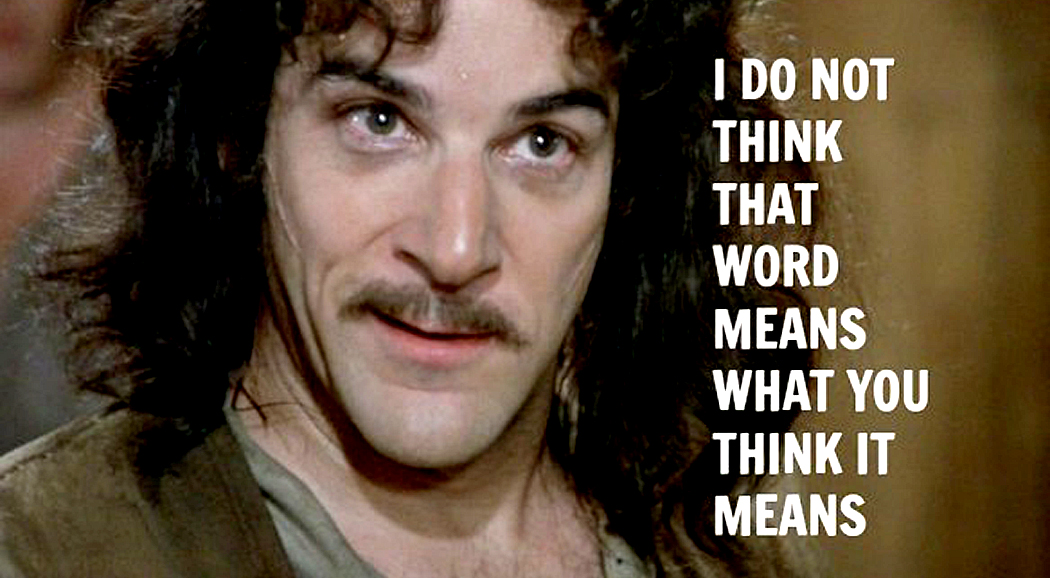
Committees try to make language sound profound and wind up writing piffle. I’m sure it was a committee that agreed in Iredell County, N.C., to make the county slogan, “Crossroads for the future.” I do not think that word means what you think it means. 

I wrote for a daily newspaper and language was my bread and butter, but the higher you go up the corporate ladder, the worse your words become. I remember the day they posted a new “mission statement” on every other column in the office, filled with buzz-word verbiage that didn’t actually mean anything. I looked at my colleague and said, “If I wrote like that, I’d be out of a job.”

But it isn’t just Manglish. Ordinary people are becoming quite lax about words and meanings. Too often, if it sounds vaguely right, it must be so. And you get “For all intensive purposes,” “It’s a doggy-dog world,” being on “tender hooks,” or “no need to get your dandruff up.”

“I’ve seen ‘viscous attack’ too many times recently,” my wife says. “It gives me an interior pain like a gall bladder attack.” 

And the online world is full of shortcuts, some of which are quite clever, but most of which are just barbarous. An essay about digital usage is a whole nother thing. Not room here to dive in. 

But, there is a world of alternative usage that is not standard English, that any real English major will welcome as adding richness to the mother tongue. Regionalisms, for instance. Appalachian dialect: “I’m fixin’ to go to the store;”— actually, that is “stoe,” rhymes with “toe” —  “I belong to have a duck;” “I have drank my share of Co-Cola.”

And Southern English has served to solve the historical problem of having lost the distinction between the singular “thee,” and the plural “you,” with the plural “you all,” or “y’all.” Although, more and more “y’all” is now being used also for the singular, and so is becoming replaced with “all y’all.” Keep up, folks. 

Then, there’s African-American English, which has enriched the American tongue immensely, as has Yiddish: “Shtick,” “chutzpah,” “klutz,” “schmooze,” “tchotchke.”

Regionalisms and borrowings are like idioms. Sometimes they don’t really make sense, but they fall comfortably on the tongue. “Who’s there?” “It’s me.” Grammatically, it would be proper to say “It is I,” but no one not a pedant would ever say such a thing. The ear is a better arbiter than a rulebook. 

George Orwell ended his list of rules for writing with the most important: “Break any of these rules sooner than say anything outright barbarous.”

English is a happily promiscuous tongue and so much of the richness of the language comes from borrowings. But there are still other problems: bad usage, misuse of homonyms, loss of distinctions. The English major’s ears sting with each onslaught. 

What causes our ears to burn falls into three broad categories. Things that are just wrong; things that are changing; and things that offend taste. Each is likely to set off an alarm ping in our sensitive English major brains. 

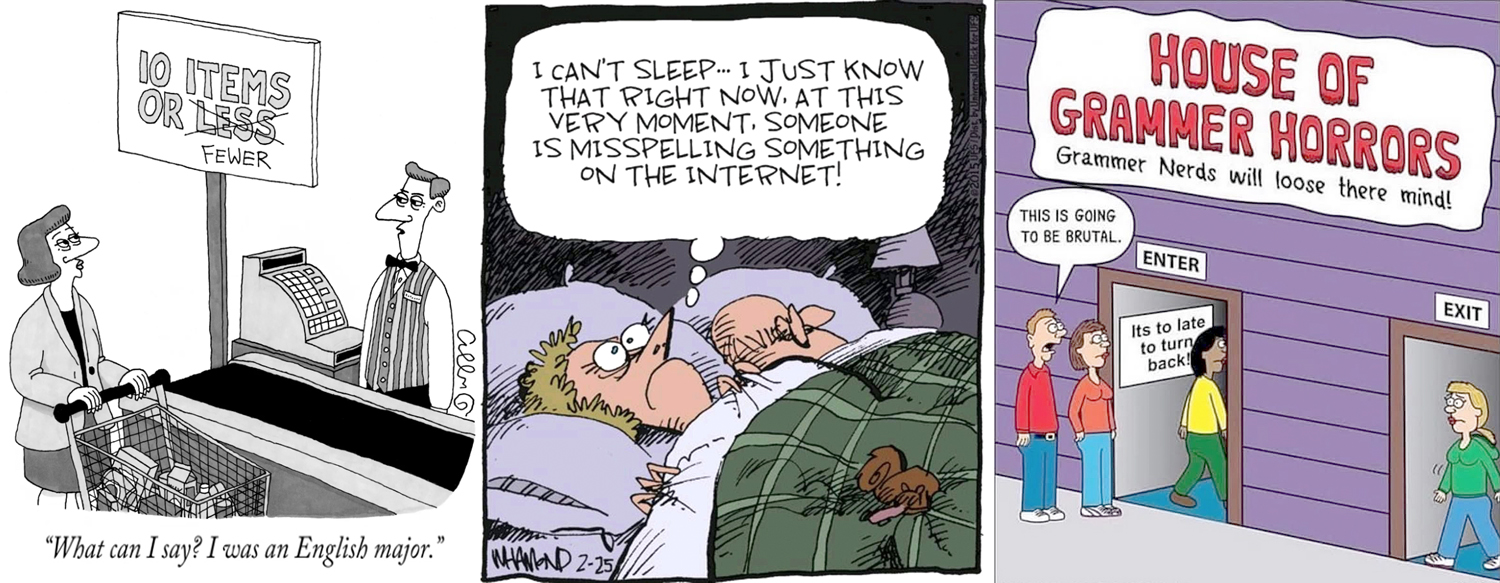
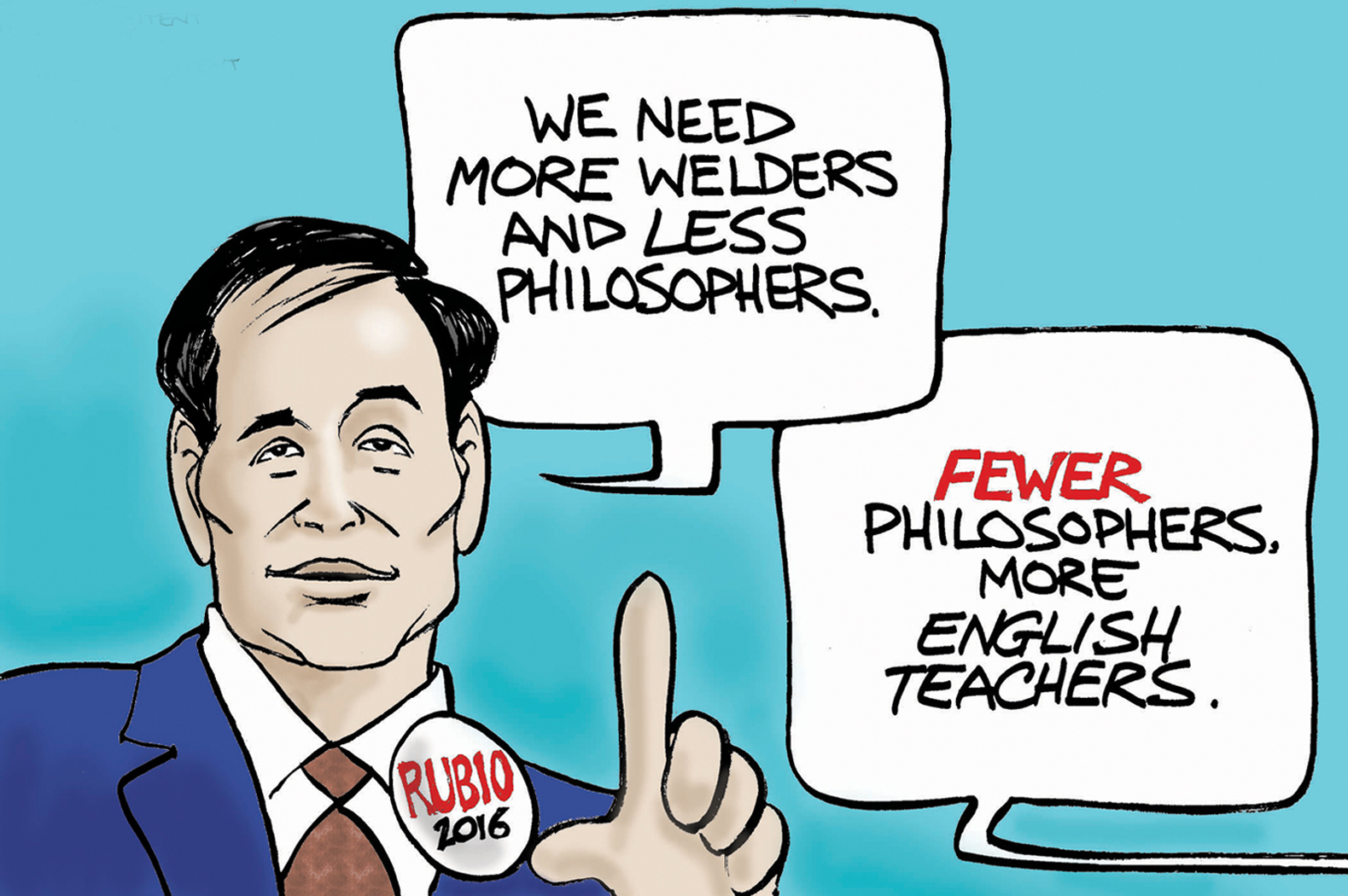
Every time I go to the grocery store I am hit with “10 items or less.” Few people even notice, but the English major notices; we don’t like it. “Comprised of” is a barbarism. “Comprises” includes all of a certain class, not some items in a list of choices. I feel slapped on the cheek every time I come across it mal-used. 

And homonyms: a king’s “rein,” or a book “sited” by an article, or a school “principle” being fired. It happens all the time. It is endemic online. “Their,” “they’re,” “there” — do you know the difference? “You’re,” “your?” Most young’uns IM-ing on their iPhones don’t seem to care. 

And fine distinctions of usage: I am always bothered when I see a murderer get “hung” in an old Western, when we know he was “hanged.” 

Again, most Americans hardly even notice such things. They all get by just fine not caring about the distinction between “e.g.” and “i.e.” In fact, they can get all sniffy about it. 

I know a former medical transcriptionist who typed up a doctor’s notes each day, and would correct his grammar and vocabulary. She corrected the man’s “We will keep you appraised of the outcome,” with “apprised,” and each time, he would “correct” that back to “appraised.” Eventually, she gave up on that one. 

English majors know the difference between “imply” and “infer,” and it causes a hiccup when they are mixed up. “Disinterested” mean having no stake in the outcome; “uninterested” means you cannot be arsed. They are not interchangeable. 

We EMs cringe when we hear “enormity” being used to mean “big,” when it actually means a “great evil.” And “unique” should remain unique, unqualifiable. Of course, “literally” is used figuratively literally all the time.  Something is not “ironic” simply because it is coincidental. 

I hear the phrase “begging the question” almost every day, and always misused. It refers to circular reasoning, not to “raising the question.” I hold my ears and yell “Nya-nya-nya” until it is over. 

Some things, which used to be wrong, are slowly being folded into the language quietly, and our EM ears may still jump at hearing them. “Can” and “may” used to mean distinct things, but that difference was lost at least 100 years ago. We can give that one up. And “hopefully” used to be a pariah word, but we have to admit, it serves a grammatical function and we have to let it in, however grudgingly. 

My wife is particularly sensitive to the non-word, “alot.” She absolutely hates it. I understand, although I recognize a need for it. “A lot” is a noun, and sometimes we use it as an adjective: “I like chocolate a lot.” Perhaps “alot” will eventually become an adjective. Not for Anne. 

People are different and have differing talents. We seem to be born with them. Some people grasp mathematics in a way a humanities student will never be able to match. Some have artistic or musical talent. We can all learn to play the piano, but only certain people can squeeze actual music out of the notes. 

And each of us can learn our native tongue, but some of us were born with a part of our brains attuned to linguistic subtlety. We soaked up vocabulary in grade school; we won spelling bees; we wrote better essays; we cringe at the coarseness of political speech. Language for the born English major is a scintillating art, with nuance and emotion, shadings and flavors. We savor it: It is not merely functional. 

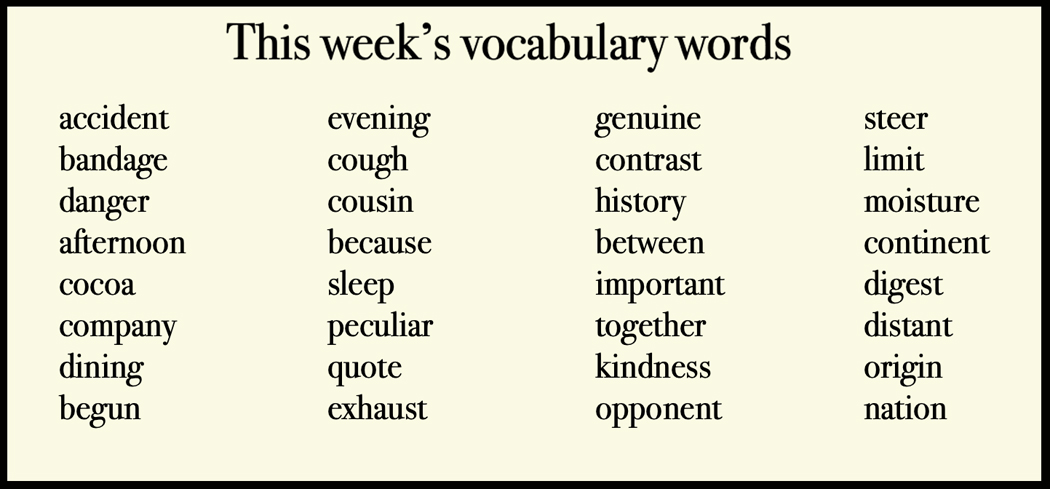
(I loved my vocabulary lessons in grade school, and when we were asked to write sentences using that week’s new words, I tried to use them all in a single sentence. People who show off like that often become writers.)

Just as my piano playing, even when I learned whole movements of Beethoven sonatas, was always the equivalent of speaking English as a second language, my best friend, Sandro, could sit at a piano and every key was fluent, natural, and expressive. It was a joy to hear him play; a trial for me just to hit the right notes. 

I am saying that those of us who gravitate to speech, writing, and language in general, have something akin to that sort of talent. It is inherent, and it can be a curse. Bad language has the same effect on our ear as a wrong note on a piano. 

We can feel the clunkiness of poorly expressed thoughts, even if they are grammatical. Graceful language is better. And so, we can rankle at awkward expressions.

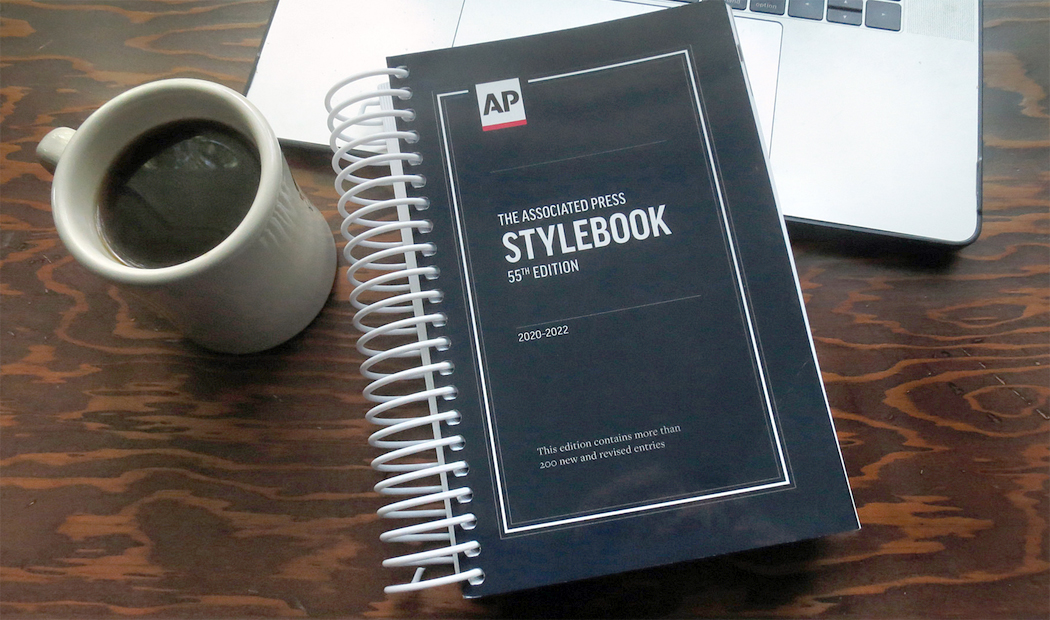
I have a particular issue, which I share with most aging journalists, which is that I had AP style drummed into me — that is, the dicta of the Associated Press Stylebook, that coil-bound dictator of spelling, grammar and usage. One understands that AP style was never meant to be an ultimate arbiter of language, but rather a means of maintaining consistency of style in a newspaper, so that, for instance, on Page 1 we didn’t have a “gray” car and on Page 3 one that was “grey.” 

And so, the rules I lived by meant that there was no such thing as 12 p.m. Is that noon or is that midnight? Noon was neither a.m. nor p.m. Same for midnight. They had their own descriptors. “Street” might be abbreviated in an address, but never “road.” Why? I never knew, but in my first week on the copy desk I had it beaten into me when I goofed. 

“Back yard” was two words, but one word as an adjective, “backyard patio.” Always. “Air bag,” two words; “moviegoer, one word. “Last” and “past” mean different things, so, not “last week,” unless Armageddon is nigh, but “this past week.” Picky, picky. 

I had to learn all the entries in the stylebook. The 55th edition of the AP Stylebook is 618 pages. And this current one differs from the one I had back in 1988; some things have changed. Back then, the hot pepper was a “chilli pepper,” and the Southwestern stew was “chili.” I lived and worked in Phoenix, Ariz., and we all understood this would get us laughed off the street, and so exceptions were made: yes, it’s a chile. 

Here I am, nearly 40 years later, and retired for the past 12 years, and I still tend to follow AP style in this blog, with some few exceptions I choose out of rebellion. But I still italicize formal titles of books, music and art, while not italicizing chapter names or symphony numbers, per AP style. I still spell out “r-o-a-d.” It’s a hard habit to break. 

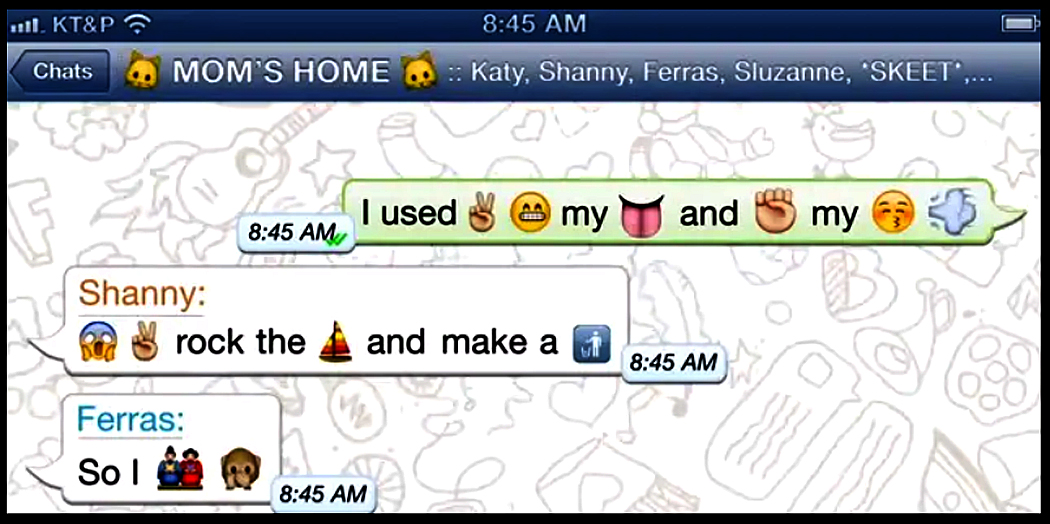
The online world seems to care little for the niceties of English. We are even tending back to hieroglyphs, where emojis or acronyms take the place of words and phrases. LMAO, and as a card-carrying alte kaker, I often have to Google these alphabet agglutinations just to know what my granddaughters are e-mailing me. Their seam to be new 1s each wk. 

And don’t get me started on punctuation.