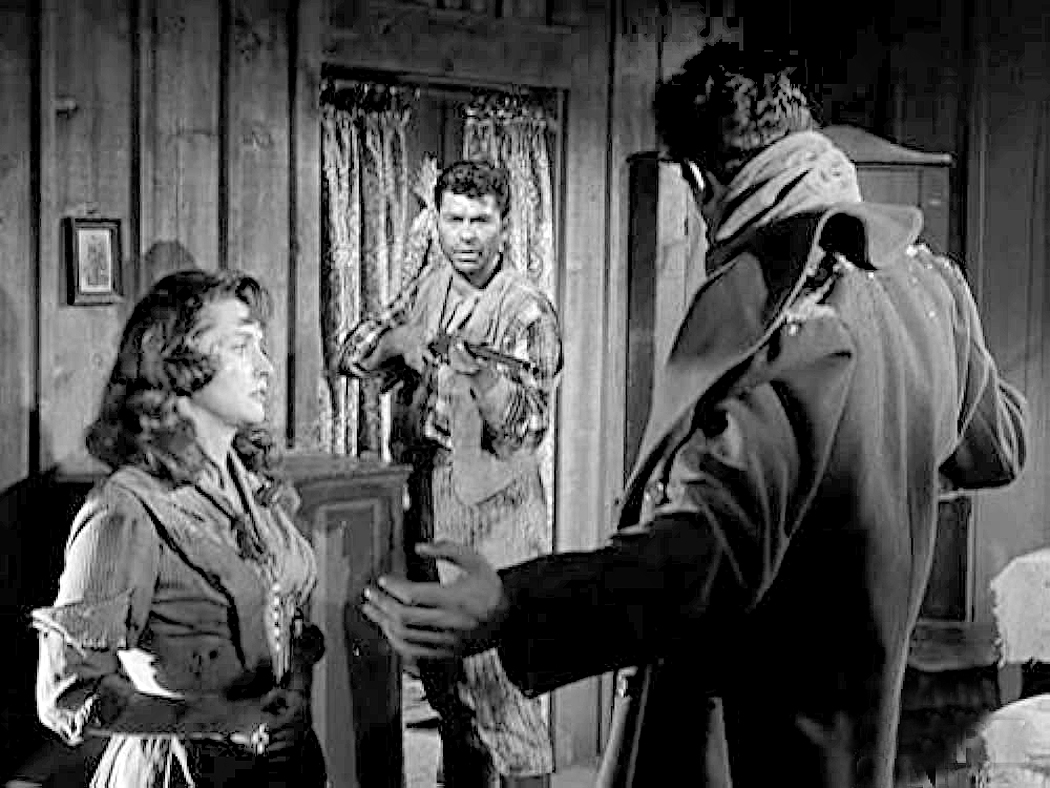
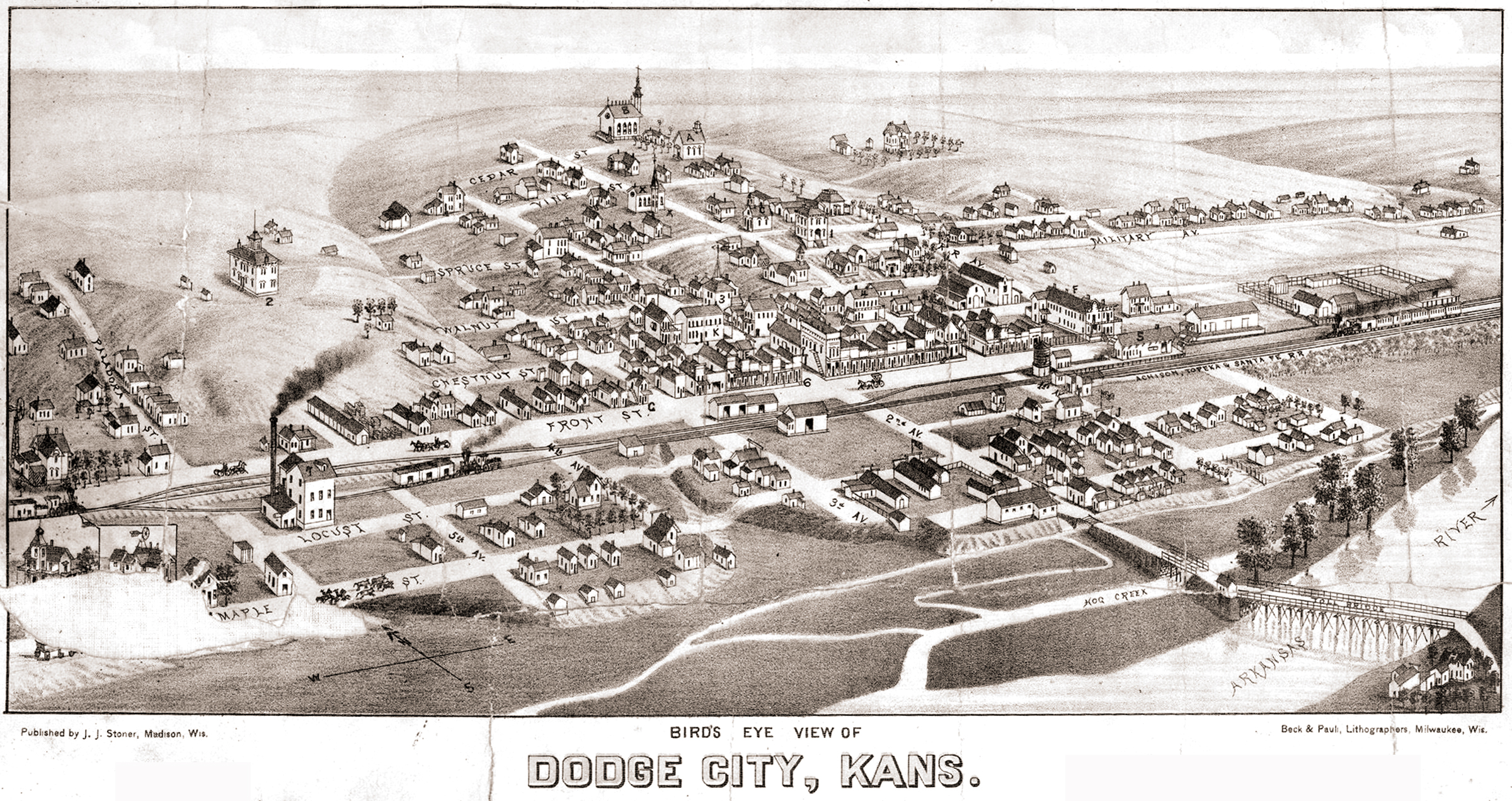
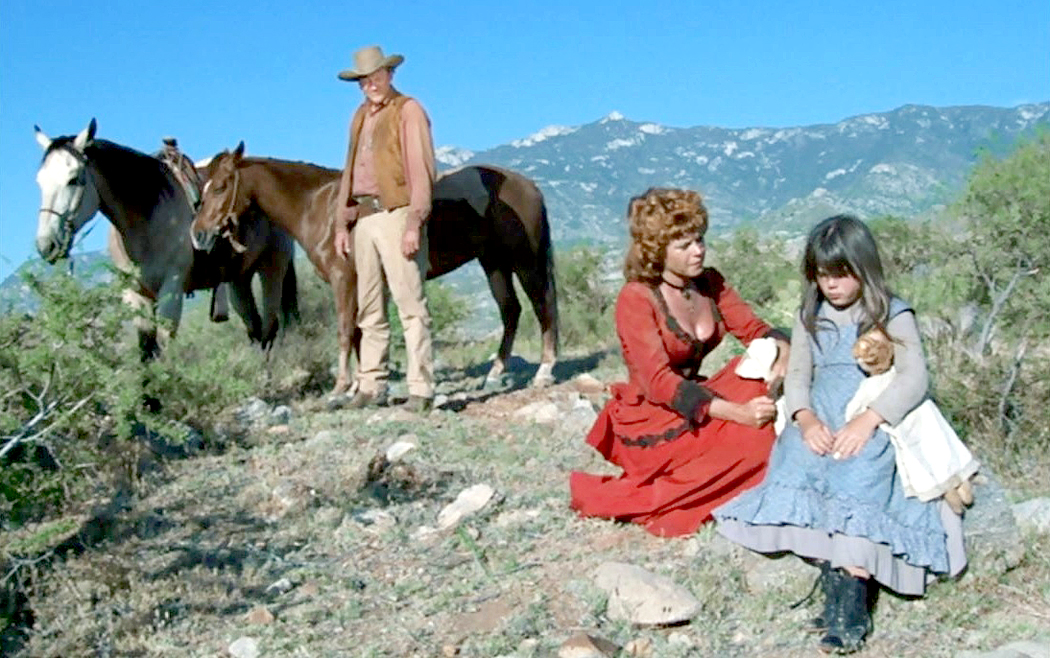
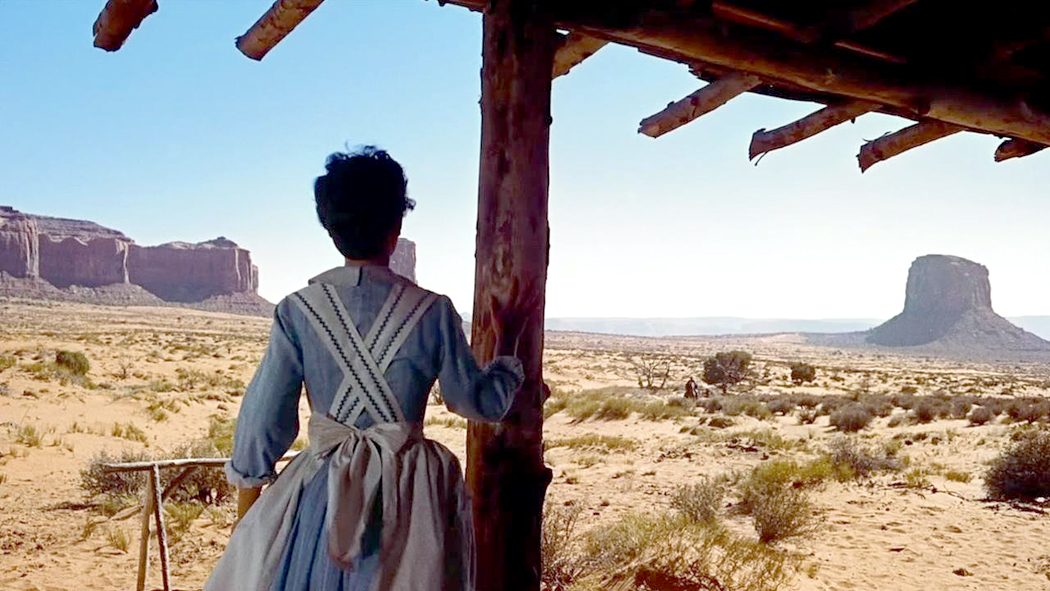
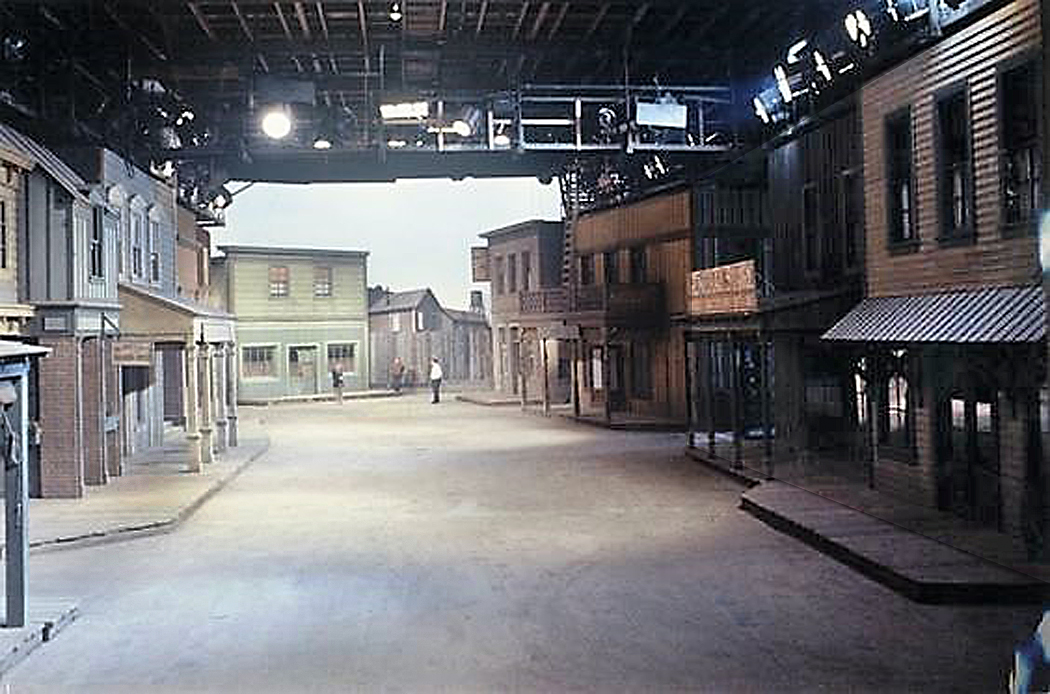
Some years ago, there was an unusual installation at the Scottsdale Museum of Contemporary Art. It was a 34-minute video by Mungo Thompson titled The American Desert (for Chuck Jones) and consisted of altered clips from old Warner Brothers Roadrunner cartoons, with the protagonists filtered out, leaving a series of edited backdrops of the American Southwest, with mesas, buttes, canyons and cliffs. 

Screen grabs of Mungo Thompson’s “The American Desert (for Chuck Jones)

The video loop (it played continuously) showed me the landscape I knew so well, but translated into cartoon visuals, with all the shapes, colors and weirdness I loved from the Colorado Plateau — Monument Valley, Canyonlands National Park, Capitol Reef NP and Arches NP, the Navajo and Hopi reservations — simplified and turned into theatrical backdrops. 

That region has served its term many times over more than a century, as backdrop for drama, from early silent Westerns (The Vanishing American, 1925), through classic John Ford films (beginning with Stagecoach, 1939), and most recently in the Coen Brothers’ Ballad of Buster Scruggs. The Southwest is photogenic, if nothing else. 

But the Warner Bros.-Chuck Jones animation presented a stripped-down, diagrammatic version of the landscape that gave us the essentials only — the rocks, cactus, roads and precipices. 

Warner Brothers, already famous for its Bugs Bunny and Daffy Duck cartoons, tried something new in 1949, with the first of its series of Roadrunner cartoons, Fast and Furry-ous, with characters created by writer  Michael Maltese and drawn by Chuck Jones. 

Michael Maltese (l.), Chuck Jones (r.) and their star (c.) 

The seven-minute short was a series of attempts by a hungry coyote (originally named “Don Coyote” after Don Quixote) to capture and dine on a roadrunner (given spurious scientific names in the cartoons, such as “Disappearialis Quickius,” although in the natural world, Geococcyx Californianus). The Coyote comes up with an endless series of Rube Goldberg contraptions to catch the bird, who perpetually escapes usually leaving the coyote blown up by dynamite or falling to a sodden crash at the bottom of a canyon. 

For 49 animated cartoons, the formula never really changed, each film just a catalog of gags with the same outcome. And after Warner Brothers closed down their animation studio in 1963, Jones took his Roadrunner into various newer permutations, both in theaters and on TV, never varying the formula, but later adding a sheepdog, or Bugs Bunny into the works — even a baby roadrunner and coyote. 

The formula never changed, but the desert did. Several background designers worked on the films. The earlier ones, by Robert Gribbroek, were more realistic, but as time went on the landscape, designed by Maurice Noble, became both more abstract and more surreal. 

Roadrunner landscape, early (l.) and late (r.)

But, to be honest, how can you really make such a landscape more abstract or more surreal than the actual thing. The Southwest, and particularly the Colorado Plateau of northern Arizona and southern and central Utah, is a wonderland of geoforms, with buttes rising up and canyons dropping down. And in the popular mind, they have become a generic version of the American West, the place setting for countless cavalry-and-Indians movies, and endless TV series. 

The idea of a cartoonish Southwest landscape goes back before the Roadrunner. Beginning in 1913 and continuing until his death in 1944, cartoonist George Herriman filled Hearst newspapers with Krazy Kat comic strips, set in a bizarro world Coconino County, the original of which sits in northern Arizona. 

Although now famous, the Krazy Kat cartoon strips were not terribly popular when they first ran. They were too weird for popular tastes. Only because the big boss, Hearst himself, loved them, they continued until Herriman’s death. But since then, Krazy has become a cult favorite. 

Of course, just like the Roadrunner cartoons, they never changed. Gender-fluid Krazy is in love with Ignatz the mouse, who hurls bricks at the cat and is punished or admonished by Offissa Pup, the doggy policeman of Coconino County. A thousand changes are rung on the formula. 

And behind them, the surreal landscape that was a stylized version of the Four Corners region, a landscape Herriman himself came to love through many visits to the Kayenta area just south of Monument Valley.

But, it should be noted that Herriman wasn’t the first cartoonist to fall in love with the Western landscape. It is often stated that the first cartoon strip ever created was The Yellow Kid, by Richard Outcault, which ran in the Pulitzer and later Hearst papers at the end of the 19th century. But the prize for being first has an equal claimant in Jimmy Swinnerton (1875-1974), who began producing the Little Bears strip for the San Francisco Examiner a few years earlier than The Yellow Kid

Panel from Swinnerton comic strip, with Hopi kachinas

Like Herriman, the California-born Swinnerton loved the American West. When diagnosed with tuberculosis, he moved to Arizona. In 1922, he began a cartoon strip for Good Housekeeping magazine, titled Canyon Kiddies, about Navajo children and life in the Four Corners region. Each was a series of pictures with rhyming verse underneath. 

In one, he almost predicts the Roadrunner cartoons, as a coyote eyes a rabbit (instead of a roadrunner) but asks, “It’s simply terrible to have a meal/ That can run much faster than yourself.” 

Swinnerton was also a serious painter, and from the 1920s on, made many landscapes of the West. They were more realistic than his comic-strip landscapes, but were still a kind of stripped-down style that borrowed from the popular Art Deco esthetic of the times. 

That style has proved durable over the decades. There are artists who prefer a more detailed, more photographic style, but many others seem to have realized that a smoothed-out, simplified version of the landscape was perhaps more expressive. They emphasized tones and colors above detail. 

Maynard Dixon

Among the first serious artists who adopted the style was Maynard Dixon (1875-1946). Born in California, he later lived, and died, in Arizona. 

Dixon began as an illustrator and painter of a kind of generic California Impressionism, but his career hit its stride with the landscape of the West, and a more Modernist approach. 

What was a distinct style with Dixon later became a common vision for painters of the West. Simplified mesas and buttes, huge clouds above a low horizon, and dusty pastel colors. 

Maynard Dixon 

With Georgia O’Keeffe, geology turns almost to biology, as her many paintings of New Mexico seem almost like bulging muscles and twisting torsos. 

Of all the artists working in this style, no one did more to make the style personal. You can spot an O’Keeffe from the other side of the room. Who knew that the most stubbornly cussed Modernist painter of the Southwest could share so much with Roadrunner cartoons? 

What all these artists have in common is the reduction of sharp detail and an emphasis on color and general form. The desert Southwest surely demands such.

As the turn-of-the-20th-century art critic John C. Van Dyke wrote in his book, The Desert (1902): “Painters for years have been trying to put it upon canvas — this landscape of color, light, and air, with form almost obliterated, merely suggested, given only as a hint of the mysterious. Men like Corot and Monet have told us, again and again, that in painting, clearly delineated forms of mountains, valleys, trees, and rivers, kill the fine color-sentiment of the picture.”

Van Dyke continues: “The great struggle of the modern landscapist is to get on with the least possible form and to suggest everything by tones of color, shades of light, drifts of air. Why? Because these are the most sensuous qualities in nature and in art. The landscape that is the simplest in form and the finest in color is by all odds the most beautiful.”

Dixon (l.) and O’Keeffe (r.)

 In my years as an art critic in Arizona, I knew many artists who found the color more important than the texture. The Art Deco style of Dixon or (more idiosyncratically) O’Keeffe proved to be infinitely malleable for their work. 

Many more recent artists have adopted and adapted this style for their landscapes of the Southwest. 

Dennis Ziemienski (l.), Martin Sabransky (c.), and David Jonason (r.)

There is a thriving market for Western paintings. (I had to deal with quite a bit of it during my stretch as art critic in Arizona, where a kitschy version, called “Cowboy Art,” was popular in toney art galleries. These artworks, filled with bronco busters and noble Indians, were often painted with considerable technical skill, but very little originality — they were really more merchandise than art). 

But among the kitsch are quite a number of landscape artists, including Brett Allen Johnson … 

G. Russell Case … 

Gary Ernest Smith, who usually paints more Midwestern scenes, but occasionally gives a go at the Southwest … 

And Doug West, whose work is often done in silkscreen, or mimics the silkscreen style, which is the simplified color-and-shape taken to extremes. 

If you think we have wandered too far from the Roadrunner cartoons, they consider at least this one painting by Carol Bold:

Roadrunner cartoon (l.) and Carol Bold (r.)

But there are two artists I want to mention in particular, both of whom I knew back when I kept track of all the art being made in Arizona. 

The first is Ed Mell, who began his career painting fancy cars as a commercial illustrator. Not finding personal satisfaction as a New York advertising artist, he took a job teaching on the Hopi Indian Reservation and rediscovered the landscape of the Colorado Plateau. 

His early works tended to be influenced by Maynard Dixon, but as his career progressed, his painting tended to combine the Art Deco with a kind of Cubism, to what one might call “Cubist Deco.” More like the stylized landscape of the cartoons.

That Cubist Deco has made it to other artists, as well, including the above-mentioned David Jonason …

The other artist I want to bring up is Bill Schenck, who has also given us work in the Deco style …

But has also branched out into what can only be called a “paint-by-numbers” esthetic. It gives a hard edge to the otherwise more Impressionistic styles of his contemporaries. 

The style has also been mixed with the techniques of Bob Ross, to make a kind of “furniture store” art. One example shows up as a background to MSNBC security analyst Frank Figliuzzi. It is a painting by gallery-owner and artist Diana Madaras. 

And I couldn’t end this study without mentioning the Roadrunner esthetic of Wes Anderson’s Asteroid City

He even has a few appearances of a roadrunner, just to let you know, wink-wink.

I collected more than 200 images for this essay, and I had to leave out so many that I wanted to include. But there is only so much space, and so much attention willing to be subjected to this rabbit hole. 

But I did want to end with one final road runner, set in the landscape we’ve been discussing. 

Click on any image to enlarge

I did many things during my 25 years with The Arizona Republic. Primarily, I was a critic, but I also wrote travel articles and the occasional humor pieces. And for a while, my brief included driving around town in Phoenix, Ariz., looking for odd and ironic signage. I would photograph such things and they would run, say, at the bottom of a page with a short caption. 

Things such as a leprechaun who said “Se habla Español,” or a 20-foot high cutout of a baby on I-10 just west of the city. There is irony everywhere, if you are looking for it. The social landscape is brimming with whimsy. 

For me, it all began when my wife and I drove around the U.S. in the early 1980s, and we saw oddness all around. Carole kept notebooks, for each trip, and wrote down many of the things that struck us, such as the Elmer Hurlbutt Bridge in northern California. Or Fiery Gizzard in Tennessee. 

Or the sign along I-90 in South Dakota that read “Welcome to Kadoka, S.D. Kadoka needs another doctor.” Or in Maine: “Welcome to Kennebunk, the only village so named.” 

It became a theme of our travels. The Little Hope Baptist Church. A fast-food stand in Pennsylvania offered “arsonburgers.” A missing neon “Y” in Rising Star, Texas, made its bean-ery the “Old Colon Restaurant.”

 In Wolf Point, Mont., we crossed a tiny bridge over a stony dry wash with a sign posted saying, “No diving off bridge.” This is a common sign across the West. 

A billboard in El Paso, Texas, tells us a certain car dealership is “three miles west of Lee Trevino.” 

And while we were climbing up the Cascade Mountains in Washington, we found a roadsign that said “Flying Rocks 35 mph,” as if it were a speed limit for impatient boulders. It pictured a black blob with little hites trailing behind, on a yellow background. (“Hites” are those speed-lines drawn by cartoonists, as defined by Mort Walker in his Lexicon of Comicana.)

Perhaps my interest in oddness and irony was first touched off when I was a teenager visiting the Hayden Planetarium in New York City, where there was an illuminated sign pointing downstairs to “Solar System & Rest Rooms.” 

At any rate, there are many fellow travelers who collect these little roadside giblets. They show up on FaceBook and Twitter (I know, “X”), or in videos on YouTube. There is no shortage of misspellings, unnoticed juxtapositions, contradictory instructions, and bad word spacings. 

As a former copy editor and headline writer, I am more sensitive than non-journalists to the bad line break. That is when an adjective and noun are split into two lines and leave a misreading likely. Little Hope Baptist Church is one of these. Presumably, there is a Hope Baptist Church nearby, and this is the Little version of it. But that’s not how it reads. 

When you are alerted to the issue, bad line breaks are everywhere. It is behind all those signs warning of “Slow Children.” 

Then there is just plain irony, as in all those roads to cemeteries that feature “Dead End” signs. 

Sometimes, you are meant to read across, sometimes down, and sometimes the sign maker hasn’t seemed to notice. 

Some signs seem utterly unnecessary. 

Cows are a common theme. 

Some signs are self-referential. Without the sign, you wouldn’t need the sign to tell you what’s on the sign. 

Surely some street sign makers weren’t paying attention when they put together these. 

Some are unintentionally risque.

Aren’t secret sites supposed to be secret? 

Some are just head-scratchers.

And what are you supposed to do with these? 

Or these?

Or these “water signs?”

Everywhere you go, you find them. Sometimes the world seems like constant entertainment.

Eating children, fighting children, teddy bears shooting them. 

A traffic signs announces that there are “No Traffic Signs”

So, don’t say no one gave you directions.

Click any image to enlarge

In 2012, I posted a blog entry about the incoherence of the so-called conservative movement in America. A decade and more later, this disjunction in idea needs to be re-emphasized, and so I am reprinting it. There is very little that is conservative in current conservatism. Having devolved into a personality cult, conservatism is an immanent danger. 

I was unduly optimistic in my final paragraphs, as a large percentage of the population has been taken in by the charlatanism that leads the Republican party now. I do, however, still harbor a hope that the majority may shrink from the political mayhem that is on offer. A small hope, perhaps, but a hope nevertheless. 

Here, originally posted Dec. 13, 2012:

Contemporary American conservatism is a very strange duck. Maybe a platypus. 

To begin with, it espouses what has always previously been called liberalism: When our nation was founded, it was the conservative Hamilton who imagined a strong central government and the liberal Jefferson who feared it. 

Conservatism has traditionally been in favor of strong government. It is one of its hallmarks through history. Of course, behind that belief in central power was the heart of true conservatism: maintaining privilege for those who enjoyed it. That is why we could talk about Soviet hardline conservatives hanging on to Communism. It was their own privilege they were attempting to save. 

It was conservatives who supported the aristocracy in monarchist Europe; it was conservatives who fought reform in 19th century England and justified the subjugation of Ireland; it was conservatives who supported segregation in the American Jim Crow South. The record of conservatives on the progress of human liberation is a dismal one. 

There is a graspingness and miserliness at the heart of historical conservatism. All change threatens the status quo and that threatens those who hold the best cards.

But what remains the oddest thing about the current iteration of conservatism in America is the way it marries this retention of old social norms — even unjust ones — with a form of political radicalism that would have dumbfounded the founders. 

At the heart of the Tea Party movement is what can only be described as “soft” anarchism. One central tenet is the dictum that government is not the solution, government is the problem, and therefore, we need to eradicate government. This is not, in any way, shape or form, conservatism. It has no relation to conservatism historically, nor conservatism in ideal or theory. 

Mikhail Bakunin Peter Kropotkin Max Stirner

The philosophical grandfathers of the Tea Party, let’s face it, are Mikhail Bakunin, Peter Kropotkin and Max Stirner. Get the government out of the way and everything will be peachy-hunky.

Those who call themselves libertarians can sign on to this soft anarchism and feel their views are coherent. But so-called conservative Republicans have a hard time reconciling this anti-government sentiment with the converse idea that everyone should behave according to the Judeo-Christian norms they observe. On one hand, they extoll personal freedom, and on the other hand, they negate it to anyone who disagrees with them. 

Even more, those Republicans who have signed on to the Tea Party’s soft anarchism have a difficult time matching that up with their own drive for political power. And we must face the fact that our two-party system is just a bipolar grasping of power. Republicans can claim that government should be smaller, but a short gander at the record proves that after years of striving for the power, when they have it, Republicans use it just as much as Democrats. What’s the point of winning if you don’t get the perks? 

That’s why I call this a platypus. The parts don’t belong together.

I suppose one shouldn’t expect any political movement to be philosophically coherent. Politics remains sausage manufacturing and always will. But the part that causes thoughtful people profound disquiet comes with the reflection on history.

This marriage of one radical idea with reactionary social conservatism has a long history, and not a history that inspires much confidence or hope.

Every tyranny or reign of terror has its own version of a radical idea melded with a nostalgic longing for a past where everyone was good and righteous and behaved in the old-fashioned ways. Look at the incorruptible Robespierre; look at the agrarian virtues of Mao; look at xenophobic Stalin. 

Not to put too fine a point to it, and I don’t mean to equate one-to-one Republicans with Nazis, but the same principle is at work. No one extolled the virtues of family and marriage more than the National Socialists. Hitler loved children and dogs, as they say. The combination of reactionary social ideas with radical political ideas has fueled this kind of crackpotism since the days of Plato. 

During the last election [i.e. 2012], a healthy percentage of Americans turned away from the extremism of the Tea Party, and I don’t have a fear that this platypus will reconquer our politics. America has a long history of quietism, and has always in the past, so far, retreated from any radical departure from the comfort it finds in a stodgy middle class normality. It’s one of our country’s saving graces: We don’t go in, like the French, for theory. 

But nonetheless, this water-and-oil mixture of radicalism and reaction is something, as the doctors always say, we should keep an eye on. 

I remember, as a child, going to the zoo and being impatient if I couldn’t see the animal immediately. The lion was off in the shade at the back? Move to the next animal. Children often have short attention spans, and I was no different. 

As I’ve aged, I’ve been surprised to discover how much more I can concentrate, how much more patient I’ve become. I can look long and hard until I see the lion, and wait to see what it will do next. Perhaps lick its paw; perhaps roll over and snooze. Oddly, with less time left on this earth, the amount of time I’m willing to wait has become inversely proportional. 

I am now an old man, with a powerful sense of how few years I will be able to enjoy this existence. People I knew and loved have left before me, giving me an imminent sense of what to expect.  

Maybe I am just growing soft in the head, or is it simply old age and the recognition that annihilation isn’t that far off, or some other cause, but I am almost daily having moments of utter beauty that remind me what I love about being. Moments that James Joyce might have called “epiphanies.” 

I have been going out and sitting on the back patio pretty much every day, usually for a half-hour at a time, sometimes longer, and saying to myself — or is it to the universe — “Show me something.” And every day, if I wait long enough and be patient enough, something will happen. 

Yesterday, a hummingbird flew not more than a couple of feet from my face to hover in front of a basil flower and then buzz back past me as he left. Another time, it was two cottontail rabbits hopping across the back yard, first one and as I watched it, a second one caught up. 

Once, I watched 15 vultures soar and climb in the air currents, one eventually so far up it was no bigger than a period at the end of a sentence in a book held at arm’s length. Yet again, a mockingbird sat on the roof of the shed beside the patio and sang his medley over and over, like I wasn’t there. Squirrels run around with acorn in their tiny front arms. A towhee landed on the steps of the shed. A rise of cumulus clouds was so white against the sky blue it nearly blinded. 

It never seems to fail. Each day, it is something new to delight me, and to remind me of the tremendous animation of the cosmos, and how minor fluctuations pile on top of one another to make it all new. 

A bright red cardinal flew directly at me, just a few feet above the grass, and turned away at the last minute to fly to my right and up over the roof behind me. 

A groundhog poked out from the brush and glanced at me and then, apparently deciding I was no threat, waddled across the full stretch of the back lawn to disappear in the brush at the other side. Not a lot happens over the course of an hour sitting there, but every time I go out, there is something for me, as if the cosmos knew I was paying attention and wished to reward my efforts. 

Recently, I heard a crow caw, looked up and watched as he flew in a great “S” curve, coming from behind me on my right, flying past me to the left no more than 20 feet away, then looped back to the right, circled away and looping back to the left and eventually behind the stand of trees, uttering caws the whole way. The curve was so graceful, I felt it in my esthetic sense. “As the crow flies?” Not a straight line. 

And so, every day, I sit and wait for the moment that the butterfly will land on the flowers at the edge of the patio, or the wasp will pause on the bluish florets of the mint. Or I will notice a small yellow flower that wasn’t there the day before. 

It is fall, and one of those flower seeds with its wisp of fibers landed on my shirt. I held it up in the light to see its tiny hard black seed and it reminded me of Carl Sagan’s “spaceship of the imagination.” 

Today, it looks like rain. Dark clouds are everywhere, with the occasional white brightness poking through. And I sat in my silent seat when the wind came up, as it often does just before a rain, and all of a sudden, from the tall oak tree at the top of the hill in the back yard, a hundred leaves let go to flutter down, but, since the wind was blowing toward me, the leaves did not drop straight down, but all floated toward me, up in the air, like a hundred butterflies, or snow in the wind, or bubbles bobbing around in the currents. And so, from a hundred feet up at the top of the tree at the top of the hill, the tumbling leaves filled the sky from edge to edge of my vision, dancing in the air, each showing shadow and light as it twisted, making a glitter in the sky. It was so ungodly beautiful, I began weeping. 

This is the beauty I don’t want to leave. It fills me up. I know I will have to leave, and sooner rather than at some indistinct time in a future that once was only imaginary, but now is palpable in muscle and bone. 

So, perhaps I am going soft in the head. Should I be so moved by such pedestrian events? I am more aware now than when I was young and had other goals in mind, of the complex connectedness of all of the sensate  world, and how that makes an organism too immense to take it all in or understand it. Little things we may understand and describe, but the wholeness of it all can only be apprehended as beauty.

And so I feel gratitude for the world and what it is willing to show me. I do not want ever to leave it, though I know I must. 

And when the final curtain drops on the final scene, I can say “NO” to the end, and “YES” with the same conviction. 

When I was a boy, one thing divided us into tribes: Was Willie Mays the greatest baseball player, or was Mickey Mantle? (This was before Mantle’s legs gave out). 

And of course, this was a silly argument, first because there were many other great ballplayers at the time, but mostly because choosing the “greatest” anything is a meaningless endeavor. (Just in the 1950s, we’re counting Stan Musial, Duke Snider, Hank Aaron, Ernie Banks, Yogi Berra, Ted Williams, Gil Hodges, Jackie Robinson, Ken Boyer.) 

But for us kids on the sandlot, it was a clear choice between Mays and Mantle. Was Mays the better hitter? Was Mantle as good a fielder? And are we comparing each player at the height of his abilities? Are we comparing lifetime batting averages, number of home runs, percentage of votes to enter the Hall of Fame? In the era of sabermetrics, there are so many obscure statistics to weigh, it all becomes bogged down and pointless. (Who is best at hitting with a 2-and-1 count, on an overcast day with men on second and third — it can get quite specific, i.e. quite anal). 

By the way, I was a Mays guy. Perhaps I was swayed by the fact that my father hated the Yankees. He was National League all the way. 

It’s all really quite silly. Above a certain level, players just count as exceptional and comparisons are meaningless. I mean, who was the greatest pitcher? Sandy Koufax? Bob Gibson? Nolan Ryan? Greg Maddux? They were all so different, with different strengths, and playing for widely different teams and different eras. (I remember when Roger Craig lost 20 games for the NY Mets, but was still considered the team’s pitching ace — how can you measure his quality when playing for one of the worst teams ever? How many games could Gibson have won playing for the 1962 Mets? They went 40-120.)

Ranking is a game, but one that is ultimately meaningless. Let’s face it, the most mediocre ballplayer in the major leagues is still hugely talented. We’re talking gradients of excellence. 

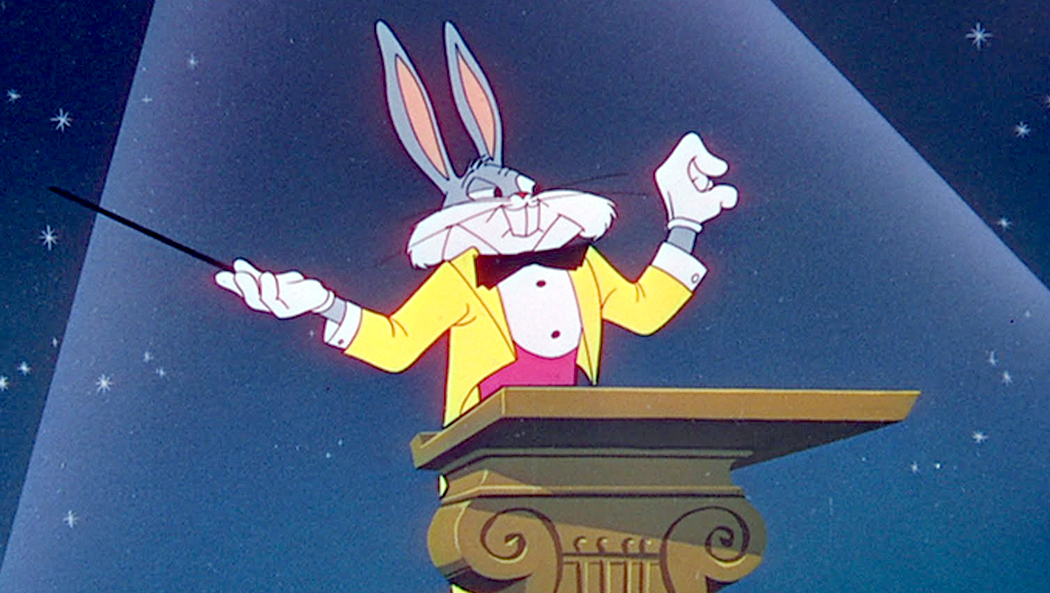
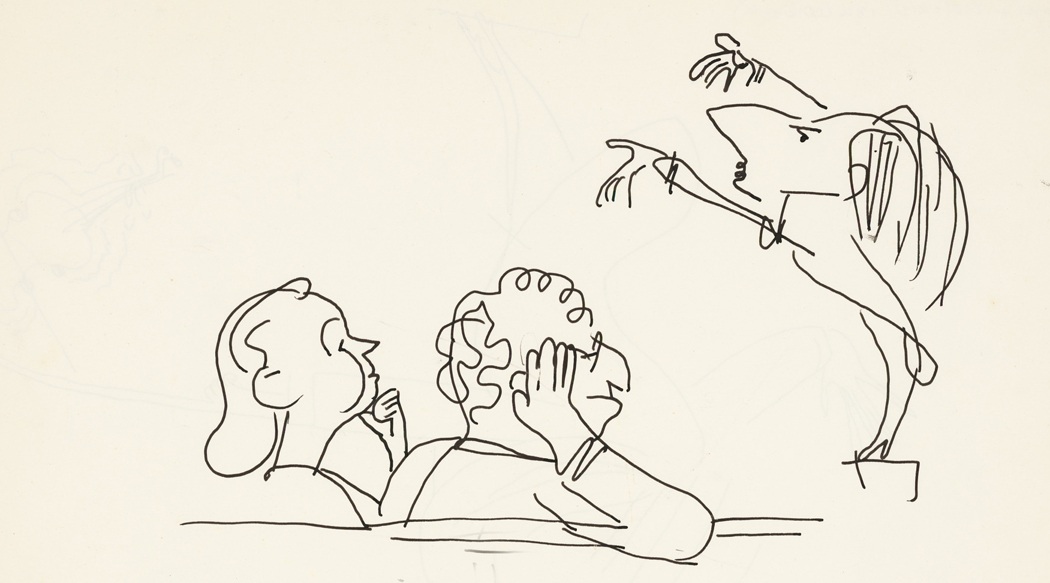
All this comes to mind when I remember how classical music listeners talk similar nonsense over the “greatest” conductor or orchestra, or recording of the Mahler Second. 

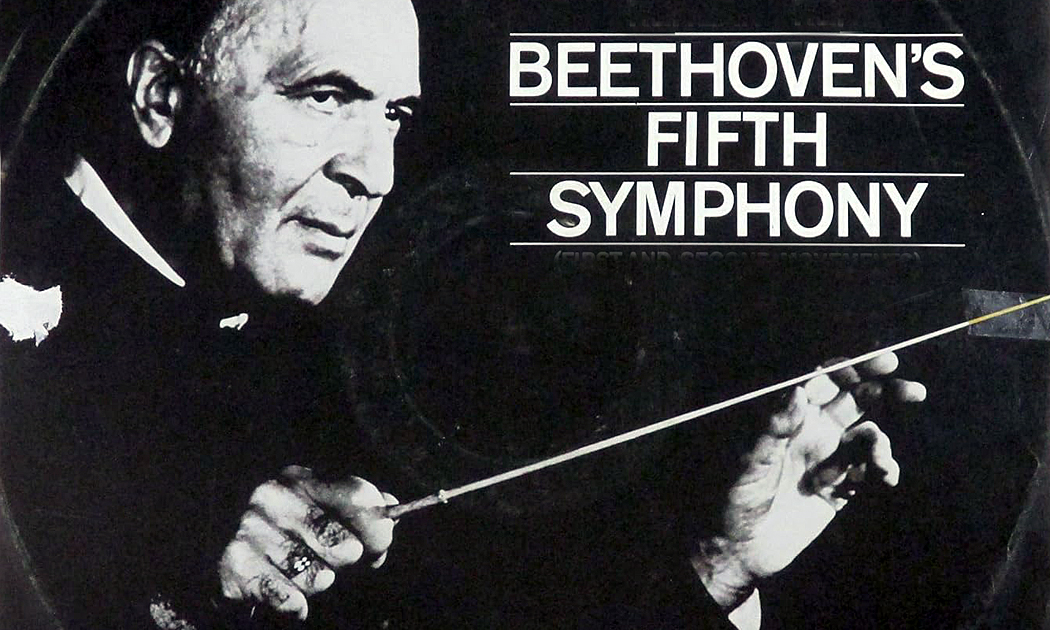
I was guilty of such silliness earlier in my life. When I was in high school, there was no question in my mind that Arturo Toscanini was the greatest. I had all his Beethoven symphonies on LP. Later, having listened to a wider range of recordings, it was clear that Toscanini had his limitations. And not the least of these were the lousy quality of his recordings — they were hardly hi-fi. 

Open any Gramophone book of recording ratings and you will find a “top ten” and the “best” recording of any particular work. Top 10 lists are immensely popular as clickbait on YouTube. Critics argue endlessly about why this Mahler Ninth is the greatest and that one is just awful. 

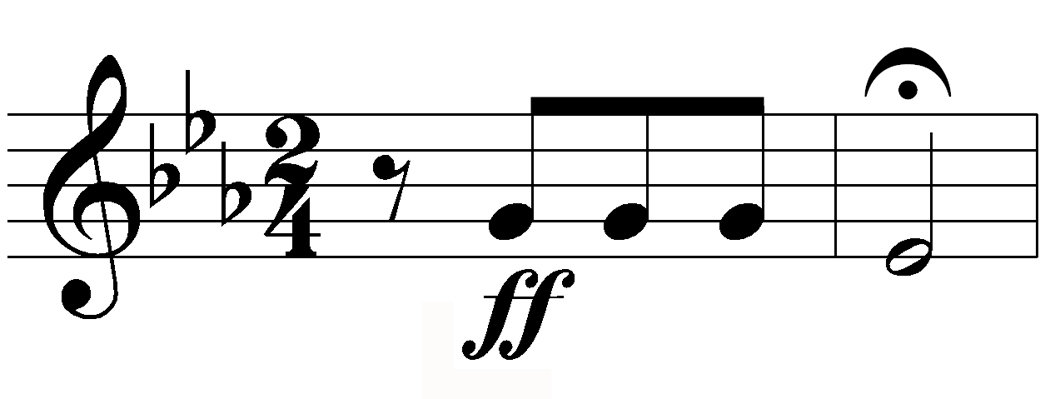
But the truth is, that pretty much any recording you buy will give you the music you want, in a performance that is generally very good. Even a middling performance of Beethoven’s Fifth will give you 80 or 90 percent of what’s in the music. 

The arguing usually comes over trivial details that the critic considers essential: Was the tam-tam audible in the finale? Was the oboe in the second movement a bit squeaky? Was the tempo in the finale too fast, or too slow? We all have these benchmarks that define what we demand from a performance of a particular piece. But should that disqualify an entire performance? 

I have to fess up to a level of insanity here — I have 30 complete Beethoven symphony cycles (I used to own more, but have since divested of some). It was a decades-long quest for the ultimate set, the perfect lineup of Beethoven symphonies. Which is best? 

Well, now, I see them lined up on the shelf, and I realize they are all fine. They all deliver the goods. They are quite different, from Karajan’s smooth unctuousness to Hermann Scherchen’s outright weirdness. Toscanini (which I still own, now on CD) is quick, abrupt and rhythmic; Bruno Walter is gentle, humane, and warm. And so, at different times, in different moods, I will choose one over the other for the moment. But they are all perfectly good. Why rank them? 

Yes, there are some outliers, badly played or outrageously conducted — Listen to Sergiu Celibidache doing the Eroica and you wonder if you are playing the disc at the wrong speed — it’s the speed a novice orchestra might play for an initial sight reading. Glacial in a way that is just nuts. Or Roger Norrington, who conducts as if his bladder is bursting and he needs to get it all over with fast. (Norrington races through the adagio of Beethoven’s Ninth in 10 minutes; Bernstein in Berlin takes 20 minutes for the same music. You pays your money and you takes your choice.)

But the mainstream recordings, from George Szell to Andre Cluytens to Pierre Monteux to Joseph Krips, all give perfectly fine, reputable, performances, whether Beethoven, Brahms, Sibelius, Stravinsky or Shostakovich. They are excellent musicians with excellent orchestras (some, such as Maurice Abravenel, had less than excellent orchestras, but made them play on a level you can hardly credit). 

So, we search endlessly for that one performance that will send us into paroxysms of ecstasy, that single transcendental recording, and each CD we buy we hope will be that one. Wilhelm Furtwängler recorded Beethoven’s Fifth 13 times from 1929 to 1954 (most of them miserably low-fi, even amateur recordings), and the Furtwängler cult will search endlessly for a 14th, hoping it will finally fulfill their hunger for the ultimate, the one after which they will gladly give up life with a satisfied smile on their faces. 

It is widely opined that Klaus Tennstedt’s live 1991 recording of Mahler’s Sixth Symphony is more emotional, more tragic, more vital than his earlier 1983 studio recording with the London Philharmonic. And that’s probably true. But if you only heard the earlier version, you would not be aware of anything missing or lesser in urgency or power. 

Martha Argerich has a habit of recording the same few concertos over and over again (how many Beethoven second piano concertos do we need from her? She has recorded it at least 13 times, and I may have missed a few.) And some people swear one or another is “the best,” but they are all excellent, and whether you prefer her with Abbado or Dutoit or Sinopoli is nothing more than a matter or taste. If you own one and you like it, there is no reason to buy the others, unless you are part of the Argerich cult, and if so, there’s nothing we can do for you. (Classical music does tend to generate cults: Maria Callas, Celibidache, Arturo Michelangeli, Jascha Horenstein, Toscanini, and, above all, Furtwängler. Cult members will search world over for the one missing 1949 partial recording from a radio broadcast from Rio de Janeiro. The heart goes pitter-pat.)

(Just for the record, Argerich has recorded once with herself conducting the London Sinfonietta; and also with Vladimir Ashkenazy; Gabor Takacs-Nacy; Gabriel Chmura; Lorin Maazel, Charles Dutoit; Neeme Jarvi; Giuseppe Sinopoli; Claudio Abbado; Riccardo Chailly; Seiji Ozawa; Lahav Shani; and again with Takacs-Nagy Please make her stop. She’s wonderful, but she needs to branch out.)

Yes, you will undoubtedly develop favorites, conductors who play more to your tastes. I know I have mine. But I cannot in honesty say that the ones I like best are demonstrably better than the ones I have less affection for. Taste is a different issue from quality. Basically, with a few unfortunate exceptions, if a performance was good enough to justify the expense of being recorded, produced, distributed and promoted, it will be perfectly fine. You don’t need 30 complete sets of Beethoven symphonies. 

So, one should not worry about what performance, what orchestra or conductor you get. Chances are, it will give you what you need. Bernstein or Walter; Mays or Mantle — they were each great players and picking one over the other is just silly.

Over the past dozen years, since my retirement, I have written and posted some 730 blog entries. But I have started many more than that. Some just get forgotten when something more urgent appears; some end short because nothing longer needs to be said. Some just led nowhere. Others began as lists, but ended as lists, unfilled by full sentences. And still more still wait to be written. 

The odd thing, to me, is that there is always something new to write about. With 75 years of life packed into this aging piece of meat, there are endless stories, bits, adventures, ideas, experiences, disappointments and discoveries to draw upon. The well keeps refilling. 

But here are a few fragments that never filled out beyond their early inspiration. Maybe I will get around to it, sometime. 

What is it that women see in men? Because I am a man, I know what men see in women, but I have a hard time reversing the equation. 

I am not here talking of sex or the ardor of the loins — understanding is not required for that; it is simple, direct action — but the desire of women to share company with men. What is the reward for that? Women are so much more interesting, and interested in such a variety of vital issues. Men seem interested only in sports and politics, neither of which carry much import in the lives we live. As I used to say, “Politics answers no question worth asking.” 

____________

2. I was a writer for many years, making my living from putting words against words, hoping to find the best way to express something I hoped would be genuine. 

Recently, my old employer, Gannett, made a new hire, and announced it in such a clot of management-buzz that I got a bad case of hiccups. Newspapers used to have editors, now, with middle management bloated beyond belief, while laying off reporters, photographers and copy editors, what they have is a “Chief Content Officer.” 

The announcement came with a gnat-swarm of buzz words, which may mean something to other management types, but not anything penetrable by actual human beings:

“ ‘We are thrilled to welcome Kristin to Team Gannett to champion innovative storytelling opportunities and develop strategic content initiatives to expand our audience and drive growth,’ Reed said in a Monday news release.”

“Strategic content initiatives?” You would think that those people who run a newspaper would have some sensitivity to language. If I had written prose like that, I would have been out of a job. 

3. The glory that was Greece and the grandeur that was Rome. Or maybe not so much. 

We owe a great deal to ancient Greece. At least, we pay lip service to our debt of democracy, philosophy, literature, science and not least, saving European culture from being overrun by that of Persia. But there are a host of words that describe the part of ancient Greece we would rather forget: Misogyny, xenophobia, pedophilia — come to us dressed in Greek etymology, and descend to us from Greek ideas and practice. We need to address some of the less attractive legacies of that Golden Age. 

Such as patriarchy, idealism, imperialism, colonialism, religious intolerance, cults, ethnocentrism, slavery. To say nothing of understanding sex as an exercise in dominance. And while we may think of Plato as the source of all philosophy, remember that he despised democracy and was an ardent believer in totalitarianism. 

____________

4. Columbus Day is a month away. I expect more anti-Columbus newspaper columns, art, a few tracts and manifestoes and perhaps a new opera. Much current art that tries to be political is really just polemical. To espouse any ideology is to strip life of its complexity. Yes, Columbus was a bad man and the evils he brought with him are real. But instead of preaching to us self-righteously, there are real problems to be discussed, such questions as, “What is in the nature of humans that causes territorial expansion, that causes them to make invisible the people they subjugate, that causes them to divide the world into Them and Us? Why does the boundary of ‘us’ expand and shrink periodically? Why is a world once headed in the direction of one-world nationhood, where the ‘tribe’ is humanity — why is that world now constricting so that nationhood is more tightly defined by blood, so that Serb kills Croat, Azerbaijani kills Armenian? The ethnic separatism that is emerging worldwide is, I believe, a source of exactly the same intolerance that the European West has for so many centuries visited on the rest of the world. Will it devolve to the point that Chiricahua despises Mescalero, or Venetian rises to kill Neopolitan? At what point does a coalition of interests grow from our recognition of our shared humanity?”

Questions such as these are avoided by nearly all political diatribes, whose authors prefer to point fingers and whine like grade-school tattle-tales. If a short perusal of the history of the world teaches us anything, it teaches us that war, inhumanity, violence, intolerance are universal. It isn’t only the Hebrews with their God-ordained genocide of Moabites and Amonites; it isn’t only the Pol Pot regime in Cambodia; it isn’t only Hitler killing Jews and homosexuals; it isn’t only Japan subjugating Manchuria; it isn’t only Custer at Sand Creek; it isn’t only the Hopi at Awatovi.

No one gets off the hook. Native Americans are no more righteous in this than anyone else, from Inca to Aztec to Lakota. If artists and writers chose to look a little closer, they could use Columbus as a metaphor for something richer, profounder, truer. They could have seen that Columbus was not sui generis, but rather representative of the species.

As it is, they came off sounding self-righteous. And no one self-righteous ever has much self-knowledge.

____________

5. Stasis is the enemy. Or rather, because stasis is utterly impossible, the idea of stasis is the enemy. It is the fatal stumbling block of every religion, political philosophy and marriage that has ever existed. Over and over, hundreds, thousands, millions of people die because someone promised them that if we only do things my way, everything will be forever hunky peachy. 

It is the lie behind the “original intent” argument espoused by some Supreme Court justices, and behind the infantile promises of politicians — most on the right, these days — that their policies will “finally” fix things and make them good forever. (In the past, it was the left and Marxism that promised a final end of historical change. It is not the sides one takes, but the phantom of permanence). 

The problem is that stasis is always temporary, which makes it not stasis. I.e., stasis is a pipe dream. 

____________

6. In America, “no” has become a dirty word. Americans like the positive attitude, the gung-ho approach to things. We feel actual moral disapproval of the word “no.” 

It can make your life easier and simpler. It can shake a load of guilt off your back. Although people talk of simplifying their lives, you can never simplify by doing something, you can simplify only by not doing something.  Just say no. It is the yang to “yes’s” yin, and the universe cannot function without both. 

“Yes” is kind of namby-pamby. “Yes” doesn’t want to hurt anyone’s feelings. “Yes” is go-along to get along. 

“No” is emphatic, direct, take-no-prisoners. “No” means no. Every change and improvement in life, every revolution begins with a “no.” 

In some way, every important historical development starts with somebody or some group saying no. Dissatisfaction, after all, is the great inspirer of humanity. If we were all duck happy all the time, nothing would ever get done.

7. I am 75 and am near death (Oh, I’m generally fine, but old and weak) and I think about non-being quite a lot, but not with fear, but a kind of objective interest in the whole idea of no longer hearing birds or feeling the breeze on my skin. Death seems to me a natural “rounding off” of a life and not something that I need to hold in my mouth like a tough crust of bread. 

I saw Carole take her last breath. I felt her turn instantly cool to my touch, like I was touching unfired clay. She ceased being. It was uncanny. My grief was incalculable — and it still is, although worn down — but it felt as inevitable or as natural as the coming of winter. I know the same awaits me — “To die — to sleep no more.” No dreams. Nothing. 

I didn’t sense a spirit or soul leaving her body, just her body ceasing to produce her being, like a light bulb blown out. We don’t ask a burnt-out lightbulb “where did the light go?” It ceases being generated. 

____________

8. One of my problems with Rilke is that I have no use for categorizing angels and animals. Angels don’t exist — not even as metaphors for me — and I accept that I, as a human being, am an animal. I am not so fast to accept that no animals know they are going to die. We have no evidence for that assumption. Perhaps they do; perhaps they don’t. I suspect that some, such as porpoises or whales, may very well have some concept of death. I remember when we human beings were so sure that what separated us from the beasts was tool-making. Ah, but then we discovered how many other animals forge tools.

9. It has seemed to me that part of the German soul is to speak in general and categorical terms, in ideas, rather than in things. It leads to mistaking words for reality. Logic has its own logic, but it is not the logic of the world. (Whole rafts of philosophy, including my hated Plato, only seem to work in words. You can prove with logic that Achilles can never catch the tortoise, but that ain’t how it works in reality.)

But I fear that they are much more about language than about experience. And that is my problem in a nutshell. I made my living with language, and I love words to distraction, but the older I get the more I am convinced that language is merely a parallel universe, with an order and meaning of its own, roughly mirroring the world, but never actually connecting, never touching the pulse of reality. I know, it’s all we have, but I still counsel wariness. 

10. “These fragments I have shored against my ruins.” Why write at all? It is a question I have wrestled with all my life. Do I have anything worth saying to be value to anyone else? Dr. Johnson said that “nobody but a blockhead ever wrote except for money.” Well, I’m a blockhead: I no longer get paid to string words together. But it doesn’t seem to come as a choice. Some may choose to write; I write with the same volition as I breathe. 

Early in my life, words were thin and sparse; it seemed as if there were a lack of hydrostatic pressure from within: I needed to fill myself first. But after living a certain time, the inside pressure grew and it had to come out. It became a fountain I could not stop if I had wanted to. And the well was constantly recharged. 

Now I am old, and travel becomes difficult, habits become settled, reading more and more becomes re-reading. In retirement I can no longer afford to attend concerts, plays and dance the way I used to. The incoming has slowed, and I suppose the outflow has dwindled in response, but the backpressure is still there. Hoping to cease not till death.

“What do humans sound like?” That was a question that my late wife, Carole, used to ask. She meant something quite specific by it. Carole was the smartest person I ever knew, but her intelligence was not contained within the usual structures of thought. Not so much that she thought “outside the box,” as that there was no box to begin with. 

She used to ask if it were possible to “fall into blue.” When she was a little girl, she used to bend over to see the world behind her, upside down, as she looked at it through her legs. “I wanted to see what it really looked like, and not just what I had grown to know it looked like,” she said. She wondered, as a girl, if the night’s darkness could leak into her bedroom from under the window sill. She was awake to all the input the world offered. 

When she asked about the sound of the human voice, she meant, what it sounds like aside from its meaning. We know what a dog sounds like, for instance, or a bird or a cat. But what is the pitch, rhythm, tempo and tune of a person speaking? We know a bird’s song in part because we don’t know what the song means, only its music — but not even music is the right comparison, since music comes with a syntax and structure of its own. We know the raw sound of the birdcall, but we cannot normally know the same for human speech because our brains process the language instantly into content. We bypass the awareness of the sound for the sense. 

I got some inkling of the sound this morning while sitting in my back yard. Normally, I hear birds and maybe the chatter of squirrels. But there is a house just beyond the trees that border my yard where the family runs a little day-care operation. And I can hear the children talking and yelling, but not well enough to hear what they are saying. I hear only the pitch and rhythm, the overlap, the space left between utterances, the rise in volume with excitement. I hear the adult voices, too, and their pitch and rhythm, all without knowing what they are saying. I am hearing the sound that humans make.

Yes, I know it is being filtered through the English language. I’m sure if I heard little Mexican children playing, their rhythm would be a variant, or French kids behind the walls of their school in Paris (which I once heard and listened to). French has a less percussive sound. Spanish has a rapid-fire rattle to it. And Chinese comes with a melody that imparts its own meaning. But the basic sound was there. 

And so, I hear, in my back yard, the combined sounds of distant dogs barking, the “kweet… kweet” of a towhee, the “shshsh” of the breeze rustling the tree leaves, and the vocalizations of those dozen or so children. And it is all of a piece. It is an experience of the world before knowing. 

One of the problems is that the human mind is a pattern-recognition machine. It seeks and spots them, even without our willing to do so. Understanding speech is an example. The sounds become words involuntarily and the words get in the way of hearing the sounds as sounds. Of course, the words are the point of speech and the desire to hear the sounds without the words is a peculiarity of mind that Carole had. For most of us, the actual sounds are irrelevant, as long as our brains recognize them as phonemes, morphemes, words, phrases, sentences and thoughts. 

Yet, the patterns we recognize — not just in speech, but throughout our lives and culture — are, in some sense, second hand, a gloss on the primary experience. They are a colored glass through which we see the world. The patterns, like so many mullions in a large window, force us to see, hear, taste, smell, the world in the patterns that our brains force on it. 
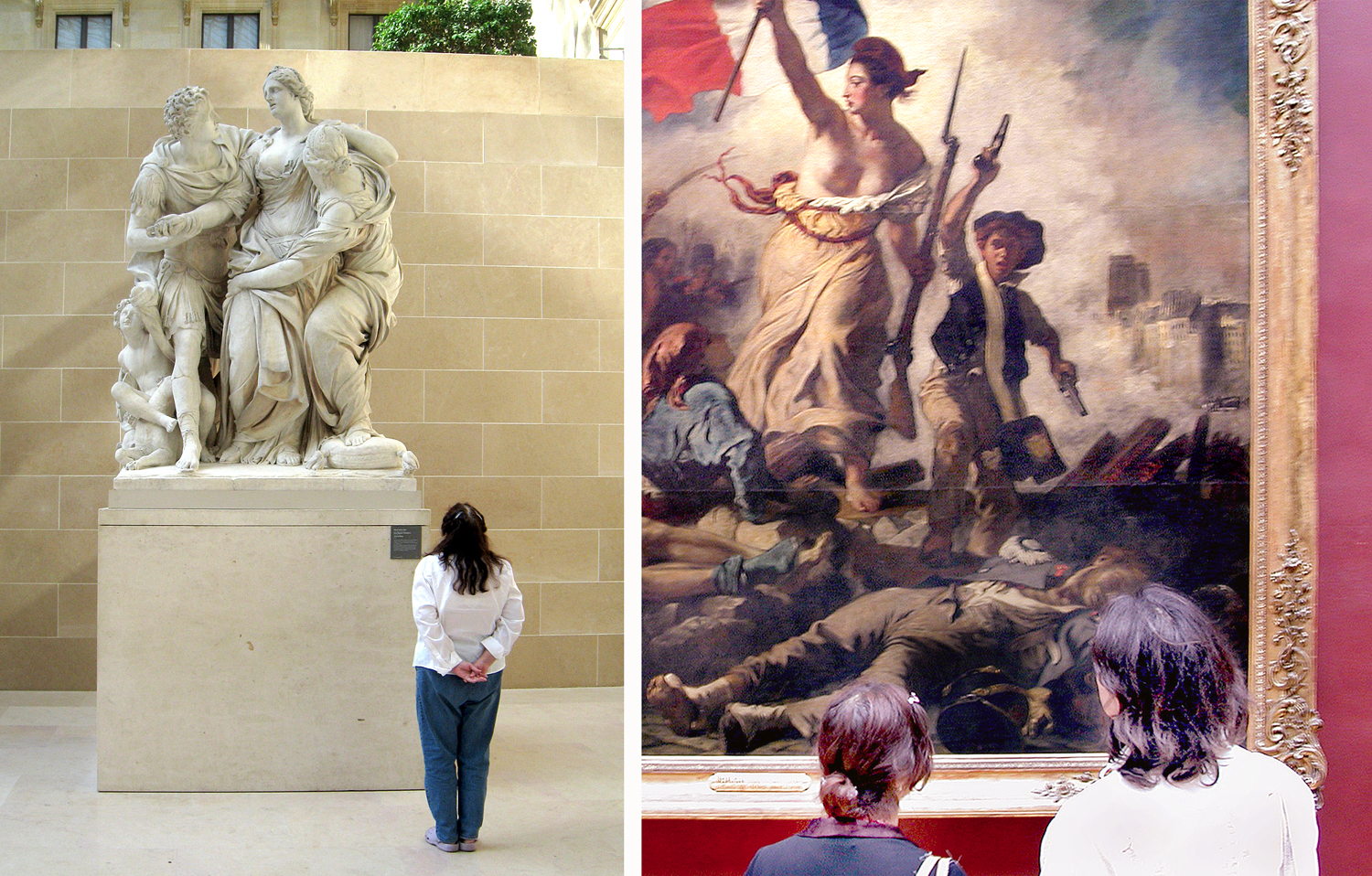
A frame separates the subject of a picture and points it out to us, but it also cuts away everything not in the picture — the wider context. 

You might laugh, because functioning in the world requires us to make sense of it and our brains do that. But that pattern-making and pattern-finding aspect of our consciousness can also prevent us from experiencing existence directly. Really, only artists, visionaries and crazy people get to lift that veil. Artists want to; visionaries get to; and the insane have no choice. 

Some of those patterns are the cultural baggage we carry. We have the expectation of a certain pattern for governments, for marriages, for friendships, for gender, for tribal affinities. These patterns may merely be inherited habits, but they are buried deeply in us. An attempt to escape them is one of the things that artists do. Entrenched interests often become agitated by the art and fight back. Eventually, the art becomes classic and everyone more or less agrees that the artists had it right in the first place. But by then, the art has become the pattern and is itself entrenched. 

Trying to escape not only the patterns, but the incessant pattern-finding and pattern-making of the brain is difficult. Sometimes that brain outweighs the rest of our bodies. Getting rid of the “middle man” and experiencing things directly can be a revelation. 

It is, I believe, what Walt Whitman was getting at in his Song of Myself: “The atmosphere is not a perfume, it has no taste of the distillation, it is odorless,/ It is for my mouth forever, I am in love with it,/ I will go to the bank by the wood and become undisguised and naked,/ I am mad for it to be in contact with me.” 

 To smell the new-mown grass without knowing it is new-mown grass; to feel the radiant heat on your skin and not know it is caused by the summer sun; to taste the sweetness of spring water without knowing what you are drinking; to hear the sound of children playing without hearing mere words; to feel the earth under your toes and the air against your skin and never parse their meanings. 

“You shall no longer take things at second or third hand, nor/ look through the eyes of the dead, nor feed on the spectres in books,/ You shall not look through my eyes either, nor take things from me,/ You shall listen to all sides and filter them from your self.”

I’m not recommending that we all turn into gibbering idiots; our minds’ ability to forge sense of it all makes life possible. We couldn’t give that up even if we wanted to. What I am trying to do is supplement its meaning-making drive with the ability to let that go for the sake of pure experience, non-judging, non-deciding experience. It would be a kind of return to roots, before all the layering of culture and idea, where we might discover some of those ideas have no foundation. 

Meaning is important, and we all want meaning in our lives. But perhaps we are missing something more primary, more direct. 

A wise person once said, “What we seek is not the meaning of life, but the experience of life.” The experience has precedence. We can hardly make meaning without it. 

My brother-in-law, Mel Steele, is a painter whose work I not only admire, but truly enjoy. They give my eyes great pleasure. 

We visit Mel and his wife, Deborah, a few times each year and usually I bring along a big bag of DVDs, mostly art or foreign films. Mel and I share a common taste for such things.

Indeed, our tastes match up surprisingly well, not only in movies, but in music and art as well. We love the more difficult music, like Bartok quartets or 20th century operas, and for all that we get along admirably. 

But there is a sticking point, a point of contention that we have never been able to resolve. There is a movie he hates and I love; and one I cannot stand that he adores. And I see no way of settling the dispute. 

Mel grew up in Madison, N.C., in the 1940s and ’50s and only a block from his house was the local movie theater. He and his sister went to the movies at least once a week growing up. They saw all the usual Hollywood offerings, with Burt Lancaster, Greer Garson, Veronica Lake, Dorothy Lamour, Kirk Douglas — you get the picture. 

I am a few years younger than Mel and since there was no movie house where I grew up, my film education came via television — old movies packaged by studios for rebroadcast on fledgling TV channels, such as WOR-TV from New York and its Million Dollar Movie. I was fed a lot of films from the 1930s, and, of course, all those marvelous-awful sci-fi films made for a pittance with Richard Carlson or Sonny Tufts. 

I don’t know if our different childhoods made the difference, or what, but that sticking point revolves around the best Western (not the motel chain). I mentioned once that I love The Searchers from 1956, a film in which John Wayne shows that he can actually act. It is a tough film, in which Wayne is an unsympathetic character, a bigot returned from the Civil War, having fought for the Confederacy. For my money, it is the best Western ever made, highlighting the shadings of culture clash and personality. 

“Can’t stand the thing,” says Mel. “Can’t stand John Wayne.” 

Indeed, it seems as if the presence of Wayne is the primary objection Mel has to the film. And I suspect that Mel’s dislike of Wayne has more to do with Wayne’s later right-wing politics — and the number of undistinguished star vehicles he made as an ever-paunchier alpha male — than with Wayne’s actual performance in The Searchers

It is clear that Wayne didn’t always have to act, and could rely on nothing more than his screen persona in lesser films, such as North to Alaska, The Comancheros, McLintock!, Hatari, or The War Wagon. He seemed always to be playing a caricature of himself. 

And then, there are those absolutely embarrassing moments in The Alamo or The Green Berets. Wayne’s shallow jingoism does not wear well. Nor does his support of the Vietnam War or Richard Nixon. 

I used to share Mel’s disdain for John Wayne. The actor was pretty much a punchline. Really? Genghis Khan in The Conqueror? Gimme a break. 

I first became acquainted with Wayne when I was a little kid, watching ancient Westerns on TV, where he was Stony Brook in the Three Mesquiteers films, or as “Singing Sandy” in a bunch of old Republic or Monogram Westerns. Compared with some of the old cowboys, Wayne had a graceful presence on screen, if no great acting chops. 

Only as an adult, did I come across films in which Wayne played a character not merely himself. After seeing Howard Hawks’ Red River, director John Ford famously said, “Who knew the big lug could actually act?” Well, he could, even if he didn’t always feel the need to. 

Then there are such films as The Man Who Shot Liberty Valance and She Wore a Yellow Ribbon, where he convincingly played a part 20 years older than he was at the time. And most of all, perhaps, his role as John Books in The Shootist, his final film, in when he seems to want to prove once and for all he can be an actor and not just a star. 

Mel, of course, was having none of it. “Can’t stand the guy.” 

In contrast, Mel proclaimed that the greatest Western ever is Shane, a movie I cannot abide. For me, it is the epitome of Hollywood phoniness. It is pure artifice, with not a believable moment in it. 

Even its widescreen projection on release was fake: Paramount wanted something to compete with the then-new Cinemascope and Panavision — both anamorphic widescreen formats — and so they cropped the original Academy Ratio Shane at top and bottom to make a phony widescreen version. 

“But it’s so beautiful,” Mel says. “Look at that landscape.” Yeah, I feel, a rip-off of Ansel Adams, with the Teton Mountains prominent in the background. It seems so self-consciously meaningful, so arty, so pretentiously “mythic,” that I cannot take it seriously. There is not a second in it that feels real — apart from the acting of Jean Arthur, who is the only fully human character in the film. These are not people but ideas moving around in the plot, as if they each wore a sign telling us what they signify. Again, only Arthur feels like a real person. 

Allegory, for me, is always a tough sell. 

I’ve never been able to warm to Alan Ladd. He is one of those movie stars from that era of Hollywood movie in which the dying studios made turkey after turkey. 

Van Heflin always feels to me like someone the studios felt they could turn into a major star, but never managed to. 

And Brandon deWilde is a blank-faced homunculus, as if that look of animal stupidity  should be taken as the face of innocence. Actually the kid gives me the creeps. 

The Searchers, in contrast, is filled with all the great character actors that John Ford used over and over. They are people, not cardboard cutouts.

Perhaps I have overstated my case. There are other great Westerns that may be as good as The Searchers. Ford probably made them. Modern Westerns tend to be more period-aware and historically better informed. And perhaps Shane isn’t the worst Western. There are plenty of hack Westerns with much less ambition than George Stevens brought to his work. 
But the fact is, the comic disagreement Mel and I had was about these two films in particular. I was not able to persuade him; he was not able to persuade me. Let’s leave it at that. 

Sometimes, while driving through a neighborhood, I will see an old person, a retiree, sitting in a chair on the front porch, or in the driveway, just watching the traffic go by. It’s become a meme, much like the “Get off my lawn,” thing that shows up in single-panel cartoons. 

I have to admit, I am of that age, although I don’t find traffic that interesting. 

But after several years of being partially house-bound by the Covid virus, and at times suffering from cabin fever — to say nothing of the fatigue that comes with hours staring into an iPad screen checking out the news or watching cat videos — I have discovered the pleasures of sitting quietly in my back yard. It gets me out of the house and it reacquaints me with what I jokingly call “reality.” That is, the sense that there is a world without electromagnetic signals commandeering my attention, a world that has been there always, before my greatest-grandparent was born, and will be there when all the power grids in the world are rusting back into the soil. 

I can sit there for half-an-hour at a time, maybe 40 minutes, without thinking about anything and just watching this tiny bit of the world as it moves in the breeze, as the cardinals and mockingbirds swoop across it into the low tree branches, as a white butterfly flits over the irises and a rabbit lopes across the bit of lawn. 

Occasionally, there is a groundhog who will waddle into the yard, get about halfway across before noticing me sitting there; stare at me for two or three seconds before turning back and returning to where he came from. 

This morning a bumble-bee dive-bombed me briefly. I don’t think he was attacking me; more likely he didn’t even recognize I was there. 

After a morning of staring at a computer screen, or watching an iPad, it is important to move to somewhere so my eyes can refocus at a distance, perhaps to infinity. I watch the clouds and notice which direction they travel. I listen to the birds nattering, or hear the neighbor on the next block mowing the lawn. An airplane may cut across the blankness leaving a contrail, and dropping a rumbling jet sound that always seems to be coming from some distance behind where you see the plane. 

It may seem to some, in the rush of civilization, that nothing is happening, that sitting quietly and watching is the very definition of boring. But for me, it is not. Something is always happening. It may be subtle, but it is happening. The leaves wiggle, the sky shifts from sunlight to shadow as the clouds pass, a mockingbird lights on the top of the shed and repeats his mantra over and over; he seems to notice that I’m there, but perhaps I am no different to him from the patio furniture. 

But I have noticed, over the weeks I have been doing this, at least three psychological states I have found myself in. 

First, if I am distracted by other thoughts, or if I am not really paying attention, my relationship with the yard is that I am looking at nature, almost as if I was still staring at my computer screen. I may notice things, may enjoy what I see, but it is quite separate from me and is, as I look, clearly something in front of me. 

There is nothing wrong with this, but it isn’t why I go out each day and sit there. I consider it a failure when I can’t get to the second state. 

That second state is when I feel not that I am looking at nature, but rather I am in nature. That is, it is all around me, and what is more it exists behind as well as in front. It extends into the air and to the clouds; I become aware of the soil under me, the weeds to the right and the undergrowth beneath the tree branches. 

To be in Nature is to be taken away from the self and redeposited into the wider world. I can easily lose myself in this state and that is when the watching becomes something more. I can feel the space around me expanding to the rest of the earth and sky and my bit in it, however tiny, is plugged in. I feel alive in a live world. 

These two states of mind depend primarily on my mood. If I am tired or distracted, I cannot reach the higher state; it just doesn’t come. But when I can silence my brain for a bit, it is like the coupling of a locomotive to a train. There is a click and it all becomes connected. 

It is the same state you enter when you are absorbed in a book and the room you are in disappears because you are so focused. 

But I said there is a third state, and that comes only with something like grace. It is when I neither look at nature nor feel in nature, but rather am nature. 

The barriers between me and the rest of the world, even the universe, vanish and I realize that I am part of it all. No. I don’t realize it. It just is. The very idea of realizing, or thinking, ceases to have meaning. If I look at the rabbit, I know he looks at me, too. No, again. It isn’t a question of knowing. We look at each other. A recognition. The metabolism that takes place in the cells of my meat is the same as that in the green iris leaf. The motion of the clouds across the blue is the motion of my blood through my arteries and veins. “For every atom belonging to me as good belongs to you.”

I disappear, except that I don’t. In fact, I am more present. It becomes one thing, and it is not that I am a part of the one thing, but that it is just one thing. 

That is, of course, a truism. Even Miss America might say the same thing through a Pepsodent smile. But just saying, or knowing it is not what I’m talking about. It is not knowledge I mean; it is the experience. I sit there in the back yard and it just is.

This cannot happen every time I sit in the back yard. And it isn’t necessary to have a back yard. It is just, as I say, a kind of state of grace, psychologically. 

What is required is receptivity, an openness without expectation. Paying attention. 

As I get closer and closer to the point when every atom belonging to me will belong again to the soil, I remember the lines in Thomas, that “it will not come by expectation, but it is all around us and we do not see it.” 

But once in a while, the veil is lifted and we can see. It is not what we see but that we see.

Until relatively recently, 20th century concert music was a tough sell. It had the reputation of being dissonant, noisy, difficult, and unpleasant. It was a century that began with Arnold Schoenberg dispensing with harmony and Igor Stravinsky upending rhythm, followed by a World War that knocked the complaisance out of any rational being and told us that the coming century was going to be anything but calm and easy. 

A number of composers felt that music needed to reflect the mood of the angst-ridden age. 

But even Schoenberg admitted “There is still plenty of music left to be written in C-major.” He didn’t believe his 12-tone revolution would destroy all tunes to come, but was simply a logical conclusion to music history from Bach through Wagner, from tonality through chromaticism to atonality. And we shouldn’t blame poor Arnold for all the dreary ruckus that followed: His own music is quite emotional and beautiful, even if it often requires some serious commitment from his listeners. 

He was right about one thing certainly: There was plenty of music written in C-major, throughout the century. And F-major and D-minor. In fact, most of the music written in that century was based on familiar scales, albeit with plenty of playing around and trying new ways to use them. 

 It’s just that the music-industrial complex, so to speak, was hijacked around mid-century by a clutch of academically-minded composers — the “Darmstadt Mafia” — insisting that serialism was the only music to take seriously, and that the more unlistenable it was, the greater it must therefore be. (Some of these composers did write interesting music in that style — it wasn’t a complete loss — but they looked down their noses at anything that might stink of a tune.) 

And so, contemporary music turned its back on the concert audiences and those composers wrote only for other composers of their ilk, and audiences shrunk from any concert program that insisted they listen to the stuff. Modern music acquired a very bad reputation. 

But I find that after 60 years of concert-going and music absorption, I listen to 20th century music more than that of any other era. It is music that speaks directly to me. Oh, I listen to bunches of Haydn, Mozart, Beethoven, Brahms and Tchaikovsky, but the plurality of my music listening edges to the century in which I grew up. 

So, I wanted to create a list of representative compositions from the century in question and present them as a course in great music that anyone can listen to and enjoy. 

I went through my collection of thousands of CDs and chose 30 pieces to offer. I listened to each one, in order, to refresh my memory — and to flat out enjoy them all over again. 

The roughly chronological list begins with a surprising entry. Most people think of Ives’ music (if they think of it at all) as noisy, crashing, impish tomfoolery. But Ives was a well-trained musician, with a degree from Yale University. His Symphony No. 2 is pretty tame, except for his borrowing of familiar popular tunes, and a raspberry at the end. 

Here is my list:

1900-1920

Charles Ives (1874-1954) — Symphony No. 2 (1902; premiered in 1951) (42 minutes long). Performance listened to: Eugene Ormandy, Philadelphia Orchestra, recorded 1973.

Ives studied under the respectable, if stuffy Yale professor Horatio Parker, and after graduating in 1898, began working on his second symphony (the first was his senior thesis composition for Parker) and included bits from Camptown Races, Turkey in the Straw and Columbia the Gem of the Ocean run through a kitchen blender. He finished Symphony No. 2 in 1902, although, with Ives, he was never completely finished and continued tinkering until his death in 1952. The symphony wasn’t premiered until Leonard Bernstein and the New York Philharmonic played it in a radio performance in 1951. The house-bound but still cantankerous Ives heard it on his radio in Connecticut and his response was that he spit. 

I listened to Ormandy’s version from 1973. The recordings listed here are not my choices as “best” — although they are all good — but merely the ones I had to hand when I started this project. 

Frederick Delius (1862-1934) — On Hearing the First Cuckoo of Spring (1912) (7 minutes long). Performance: Thomas Beecham and Royal Philharmonic, recorded 1958.

Delius’ score instructs, “With easy flowing movement,” and the quiet, peaceful evocation of the countryside (presumably English) and its birdcalls, it is a calming balm for a tussled soul. Originally, it was one of Two Pieces for Small Orchestra, the other half being Summer Night on the River. Beecham championed the composer’s music and his performances of the music are definitive.

Manuel de Falla (1876-1946) — Nights in the Gardens of Spain (1916) (21 minutes long). Performance: Arthur Rubinstein, piano, Ormandy, Philadelphia Orch., recorded 1969.

Falla was an Andalusian composer and the quasi-Impressionist Nights in the Gardens of Spain functions as a kind of piano concerto, with three movements, each describing a different Andalusian garden. Rubinstein heard it first soon after its premiere in 1916 and performed it regularly after that.   

Serge Prokofiev (1891-1953) — Classical Symphony (1918) (13 minutes long) Performance: Ormandy, Philadelphia Orchestra, recorded 1961.

Prokofiev’s Symphony No. 1 is the Sara Lee of symphonies: No one doesn’t love it. It is a jaunty, energetic gloss on the Classical-era symphonies of Haydn, seen through the “wrong-note Romanticism” of the composer’s style.  

Gustav Holst (1874-1934) — The Planets (1918) (50 minutes long)

 Performance: Ormandy, Philadelphia, recorded 1975.

Marketed as “space-age music,” the intent of Holst’s seven-movement suite is astrological, not astronomical, and each movement is a musical description of a psychological type. It has become enormously popular, and it has been recorded more than 80 times, first in 1926 with the composer conducting.  

Igor Stravinsky (1882-1971) — Pulcinella (1920) (39 minutes long) Performance: Claudio Abbado, London Symphony Orchestra, recorded 1979.

Stravinsky took some old compositions by 18th century composers and reworked them into bright, colorful Stravinskian cogs in what Leonard Bernstein once called “Uncle Igor’s Asymmetry Machine,” giving them new life as a ballet score, complete with voices. 

1920s

Ralph Vaughan Williams (1872-1958) — The Lark Ascending (1921) (16 minutes long) Performance: Zina Schiff, violin, Dalia Atlas, Israel Philharmonic, recorded 1989.

Poet George Meredith wrote of the lark in his poem from 1881, “He rises and begins to round, He drops the silver chain of sound…” and Vaughan Williams gives us the violin and orchestra version, with the British pastoral, And whose primary intent seems to be the creation of simple beauty.

Darius Milhaud (1892-1974) — La Création du Monde (1923) (17 minutes long) Performance: Simon Rattle, London Sinfonietta, recorded 1986.

European composers began hearing jazz and they loved it. Milhaud even moved to Harlem for a while, to soak it all up. One of the best translations of jazz to the classical idiom is his Création du Monde, with its resonant  saxophone solo at the beginning. 

Arthur Honegger (1892-1955) — Pacific 231 (1923) (6 minutes long) Performance: Charles Dutoit, Bavarian Radio Symphony, recorded 1985.

A steam locomotive begins to move, gathers speed, churns along and comes slowly to a stop, in this propulsive tone poem to modernity. Trains have been a theme in 20th century music, from Duke Ellington’s Happy-Go-Lucky Local to Villa-Lobos’ Little Train of the Caipira. Chug-chug. 

Ottorino Respighi (1879-1936) — The Pines of Rome (1924) (20 minutes long) Performance: Ormandy, Philadelphia, recorded 1958.

There were no flying humpback whales in Respighi’s original score; blame Disney for that. But what you do get are rousing tunes and some spooky catacomb music, with a grand finish, the kind that gets you out of your chair cheering. 

Jean Sibelius (1865-1957) — Symphony No. 7 (1924) (22 minutes long) Performance: John Barbirolli, Halle Orchestra, recorded 1966.

Sibelius’ final symphony is also his shortest, being in one movement, but by some accounts his best. My old teacher said when he was young, he wanted to play the French horn, because it had all the great solos. But he wound up with the trombone, which “only plays supporting material,” he said. But in this symphony, the trombones get the big tune, the one you will most likely remember and hum after it’s over. 

George Gershwin (1898-1937) — Piano Concerto in F (1925) (32 minutes long) Performance: Andre Previn, piano and conductor, Pittsburgh Symphony, recorded 1998.

Who was Arnold Schoenberg’s favorite composer in America? His frequent tennis partner, George Gershwin, who was much more than a Tin-Pan Alley songster. At the time, there was a big rush to figure out how to incorporate jazz into concert music. Well, here’s how. 

Leos Janacek (1854-1928) — Sinfonietta (1926) (23 minutes long) Performance: Claudio Abbado, Berlin Philharmonic, recorded 1989

What grabs you at first are the 14 trumpets, four horns, trombones, tuba and euphoniums. But the rest of the music pops with chunks of memorable tunes, piled like crabs in a bucket, and the way Janacek uses musical “jump cuts” to go from one to the next. 

1930s

Howard Hanson (1896-1981) — Symphony No. 2 “Romantic” (1930) (29 minutes long) Performance: Gerard Schwarz, Seattle Symphony, recorded 1989.

All those American symphonies written in the 1930s and ’40s have been largely forgotten, despite their quality, but when Ridley Scott used Hanson’s music during the closing credits of his 1979 film Alien, it resurrected this “Romantic” symphony, which developed a second life. Scott did it without Hanson’s permission, which pissed off the composer, but Hanson never sued, probably because of the boost it gave his music with audiences. 

Maurice Ravel (1875-1937) — Piano Concerto in G (1932) (21 minutes long)

Performance: Samson François, piano, André Cluyten, Orchestre de la Société des Concerts du Conservatoire, recorded 1959.

The French were just as taken with jazz as Americans were, in the 1930s. Lots of composers attempted to weave the syncopations and blues notes into their work. Ravel did it twice, with each of his piano concertos. But this one has a slow movement of such hypnotic ethereal peaceful beauty that you feel in a trance, broken by the explosion of the finale. 

Alexander Glazunov (1865-1936) — Saxophone Concerto (1934) (14 minutes long) Performance: Marc Chisson, saxophone, José Serebrier, Russian National Orchestra, recorded 2010.

Glazunov was exiled to Paris when he wrote his own jazz-influenced concerto for alto saxophone, which is perhaps less jazzy than Russian, but is nevertheless probably the best concerto ever written for the instrument. 

Samuel Barber (1910-1981) — Adagio for Strings (1936) (8 minutes long) Performance: Ormandy, Philadelphia, recorded 1957.

Canadian filmmaker Guy Maddin made a movie in 2003 titled The Saddest Music in the World, about a contest to find such music. Well, he needn’t have worried: Hands down, the winner (ignored by the film) is Sam Barber’s orchestral transcription of the slow movement of his string quartet. Unbearably beautiful, it is near impossible to hear it without weeping. 

Colin McPhee (1900-1964) — Tabuh-Tabuhan: A Toccata for Orchestra (1936) (17 minutes long) Performance: Howard Hanson, Eastman-Rochester Orchestra, recorded 1956.

McPhee heard Javanese gamelan music on a visit to Bali and then moved there. He became an ethnomusicologist as well as composer and wrote his own gamelan-influenced music full of the percussive tintinnabulation that is so catchy. Tabuh-Tabuhan is his most popular work, meaning it’s pretty much the only piece most people know, McPhee having otherwise fallen into undeserved oblivion.

Heitor Villa-Lobos (1887-1959) — Bachianas Brasileiras No. 5 (1938) (7 minutes long) Performance: Bidú Sayão, soprano, orchestra of cellos, conducted by Leonard Rose, recorded 1949.

The composer was fascinated by the long-line melodies that Bach sometimes wrote and came up with his own. Originally a single movement for soprano and eight cellos, it was recorded that way in 1949 by Bidú Sayão in a recording of singular beauty and power. It is very difficult, as the final third of the movement is required to be hummed through the nose, with the mouth closed, and ending on a nearly impossible octave leap. He later wrote a second movement, but this recording of just the first is so exceptional, it has to be heard. 

1940s

Sergei Rachmaninoff (1873-1943) — Symphonic Dances (1940) (35 minutes long) Performance: Leonard Slatkin, Detroit Symphony, recorded 2002.

It is sometimes hard to realize that Rachmaninoff is essentially a 20th century composer. And all his later music (the Paganini Rhapsody, Third Symphony and this, the Symphonic Dances) is rife with irony and astringency. Heart no-longer on sleeve, but with unforgettable tunes and absolutely brilliant orchestration. These Dances were his final composition, and for my money, his best. 

Aram Khachaturian (1903-1978) — Violin Concerto (39 minutes long) Performance: Ruggiero Ricci, violin, Anatole Fistoulari, London Philharmonic Orch., recorded 1956.

Khachaturian doesn’t get much love. His music is catchy, tuneful, and never very deep. And so, the Music-Industrial Complex (i.e. German musicographers) turn their noses up. But what is music if not melody? And bright arresting orchestrations. At some point, the world will catch up with Khachaturian and realize there’s room for music that is simply enjoyable, with no philosophical baggage attached. 

Bela Bartok (1881-1945) — Concerto for Orchestra (1943) (47 minutes long) Performance: Fritz Reiner, Chicago Symphony Orchestra, recorded 1958.

Bartok was ill and in hospital when Serge Koussevitzky visited him in 1943 and presented him with the commission for this orchestral masterpiece. Bartok had fled Hungary because of the war and was dying of leukemia, but he got out of bed, left the hospital and wrote what became his most popular work, essentially his symphony, a five movement piece featuring brilliant solo work for pretty much everyone member of the orchestra. He died two years later. 

Paul Hindemith (1895-1963) — Symphonic Metamorphosis on a Theme by Weber (1943) (22 minutes long) Performance: Wolfgang Sawallisch, Philadelphia Orchestra, recorded 1994.

So much of the century’s music seems to have been written as gloss on music of the past: Stravinsky’s Pulcinella, Rachmaninoff’s Paganini Rhapsody; Prokofiev’s Classical Symphony — even Ives’ symphonies constantly quote old tunes. Hindemith’s most popular piece (popularity not having followed the composer into the 21st century) is his recasting of melodies written by Carl Maria von Weber. It is brilliant. Hindemith should be played more. 

Aaron Copland (1900-1990) — Appalachian Spring (1944) (24 minutes long) Performance: Leonard Bernstein, New York Phil, recorded 1961.

When the century’s music seemed to becoming more intellectualized and abstruse, Aaron Copland developed a simpler, more audience-friendly style, best captured in this hugely popular ballet score. Copland became the American composer. Originally for a chamber group, the orchestral version is now a standard concert piece. 

Erich Wolfgang Korngold (1897-1957) — Violin Concerto in D (1945) (24 minutes long) Performance: Jascha Heifetz, Alfred Wallenstein, LA Philharmonic, recorded 1953.

Korngold was a prodigy once compared to Mozart, came to America and became the Ur-film composer (three Oscar nominations). But after WWII, he tried to reestablish his bona fides as a serious composer, with this most beautiful of 20th century violin concertos, now in the standard repertoire. It begins with a startling two-octave run in just five notes. Championed by Jascha Heifetz, it is now in every serious violinists repertoire. 

Benjamin Britten (1913-1976) — Variations and Fugue on a Theme by Purcell (“Young People’s Guide to the Orchestra”) (1946) (17 minutes long) Performance: Ormandy, Philadelphia, recorded 1974-1978.

Another gloss on old music, Britten wrote his “Young People’s Guide to the Orchestra” as a means to teach about the instruments, along with narration.  But much better without the sometimes condescending talking, it is a brilliant showpiece for the orchestra. 

1950s

Joaquin Rodrigo (1901-1999) — Fantasia para un Gentilhombre (1954) ( 22 minutes long) Performance: Manuel Barrueco, guitar, Philharmonia Orchestra, Placido Domingo, conductor, recorded 1996. 

Rodrigo reworked the music of 17th-century Spanish composer Gaspar Sanz, in another retro work, mixing the old dance music with eminently listenable modern orchestra colors.  

Alan Hovhaness (1911-2000) — Mysterious Mountain (Symphony No. 2) (1955) (19 minutes long) Performance: Fritz Reiner, Chicago, recorded 1958. 

Hovhaness wrote 67 symphonies and sometimes it is hard to tell them apart: His style was his style and he stuck to it. But his second symphony, called Mysterious Mountain, is his most popular and a perfect introduction into what you get with this Armenian-American stalwart. 

Leonard Bernstein (1918-1990) — Candide Overture (1956) (4 minutes long)  Performance: Leonard Bernstein, London Symphony Orchestra, recorded 1989. 

The best overtures are bouncy, tuneful, catchy and bright. It is almost as if Bernstein had absorbed all of the best overtures of the past and wrapped them up in his ultra-brilliant Candide overture, certainly the composer’s most-often programmed work. 

Dimitri Shostakovich (1906-1975) — Piano Concerto No. 2 (1957) (20 minutes long) Performance: Christina Ortiz, piano, Royal Philharmonic Orchestra, Vladimir Ashkenazy, cond., recorded 1989.  

The composer write this late concerto for his son, Maxim, to perform. He didn’t have a very high opinion of the work, thinking it a throw-away piece, but it is his most accessible concerto, with a second movement nearly as hypnotic as the Ravel. It may be lightweight Shostie, but it is nothing to sneeze at. 

In going through these recordings, some of which had to be dug up out of the lower shelves of my collection, I have redoubled my admiration for the music of the previous century.