Archive

Tag Archives: abstract art

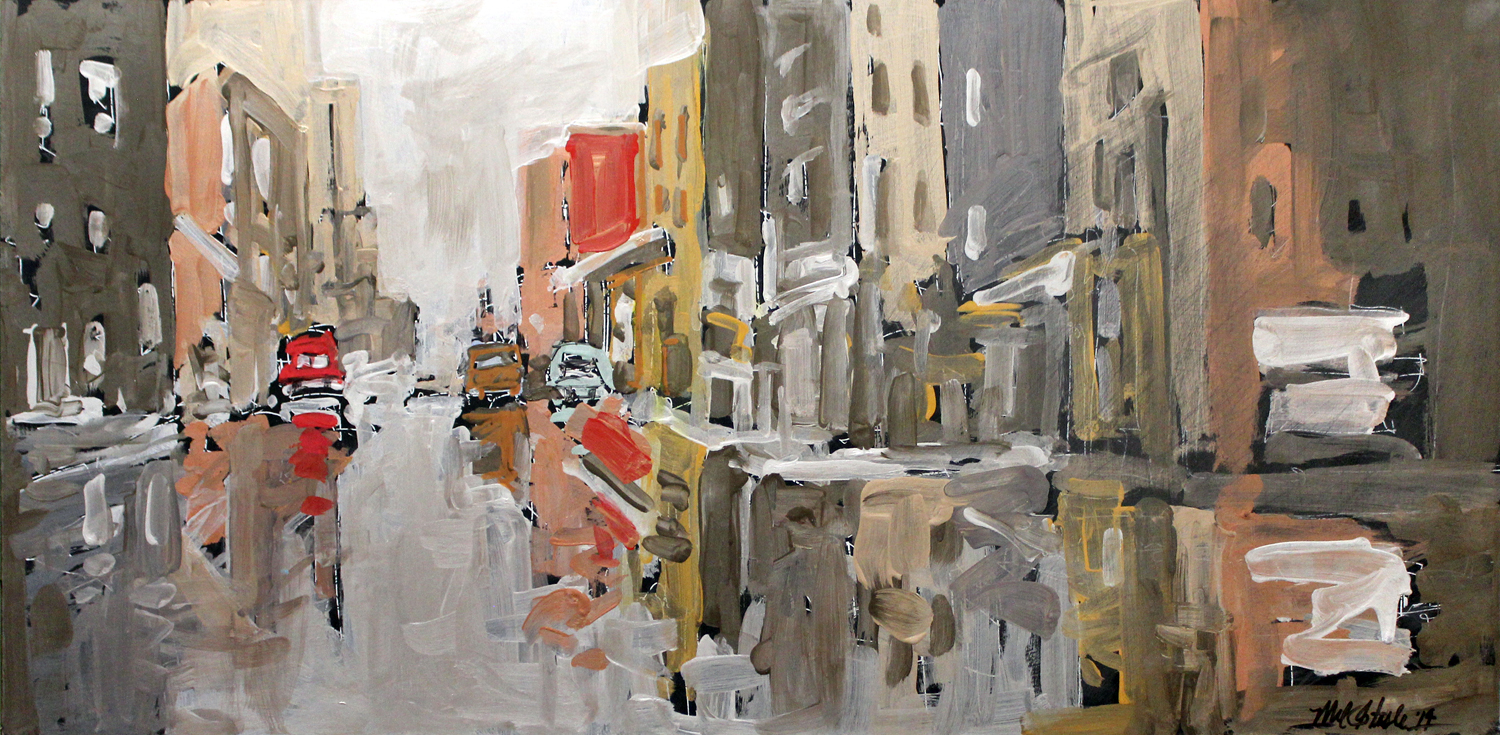
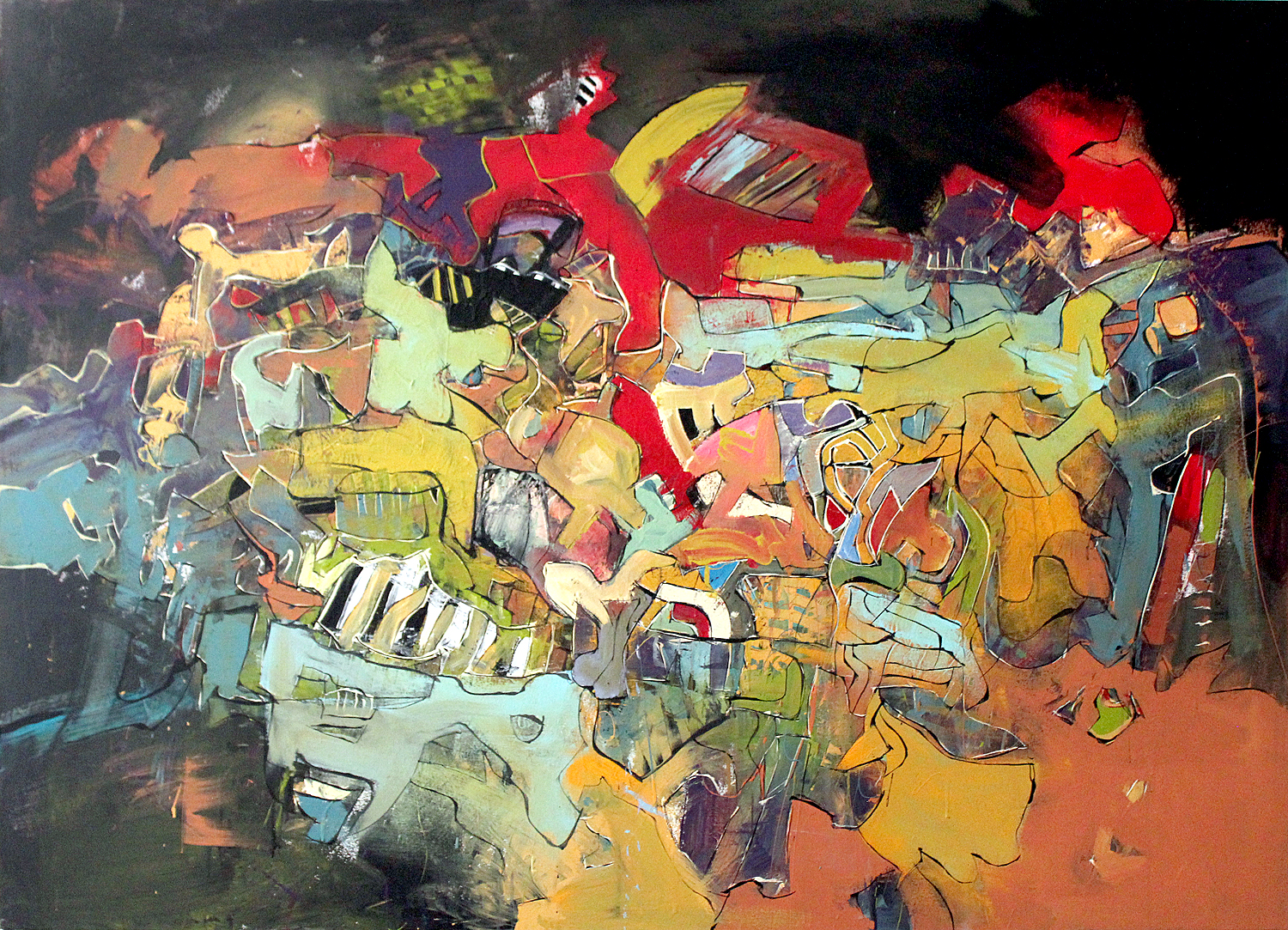
Artist Mel Steele turned 85 recently. I have known Mel for nearly five decades, through the motorcycle years, the goat-herding years, the gun collecting years, the opera years. He is my brother-in-law and a friend. And I love his recent paintings as much as I’ve loved any art I’ve seen in person. So, I thought I might write a little something about his work.  

I made my living as an art critic, and during my time as a journalist, I made it a practice never to write about the art of any of my friends, both because I feared insulting them through misunderstanding, but mostly because I wanted to avoid the charge of favoritism. (There were artists I wrote about who later became friends, but that was different.) 

But I have been retired now for a dozen years, and I would not write anything about Mel’s paintings that I have not said to him face-to-face. 

Mel Steele was born two years before America joined World War II, and was raised in Madison, N.C., about 30 miles north of Greensboro, and I doubt there was any question about what he would be when he grew up. From childhood, he had a brilliant talent for draftsmanship. I remember seeing a small painting of a rooster head he made when a schoolboy and it was as fully finished as any professional illustrator could have managed — almost photographic in its detail. 

He has always drawn and painted animals.

But what do you become when you are an enormously talented child? There is not a lot of expectation for a rural North Carolina boy to become a famous painter. He could have grown up to become a plumber, like his father, and perhaps doodled on his customer’s bills. 

 He wound up  going to the Richmond Professional Institute (now Virginia Commonwealth University) at age 20 and became a commercial artist, graduating from talented amateur to knowing professional. Commercial art seemed like the only meaningful way to use his gifts. Selling paintings in art galleries is an iffy prospect; a paid job is more dependable. As fashion-photographer great Richard Avedon once said about his own choice, “You can’t really make a living photographing trees.” 

Yet, at school, Mel was introduced to the larger world of contemporary art. It was 1959, and New York had become the world center for art, with the buzz of abstract painting at the center. 

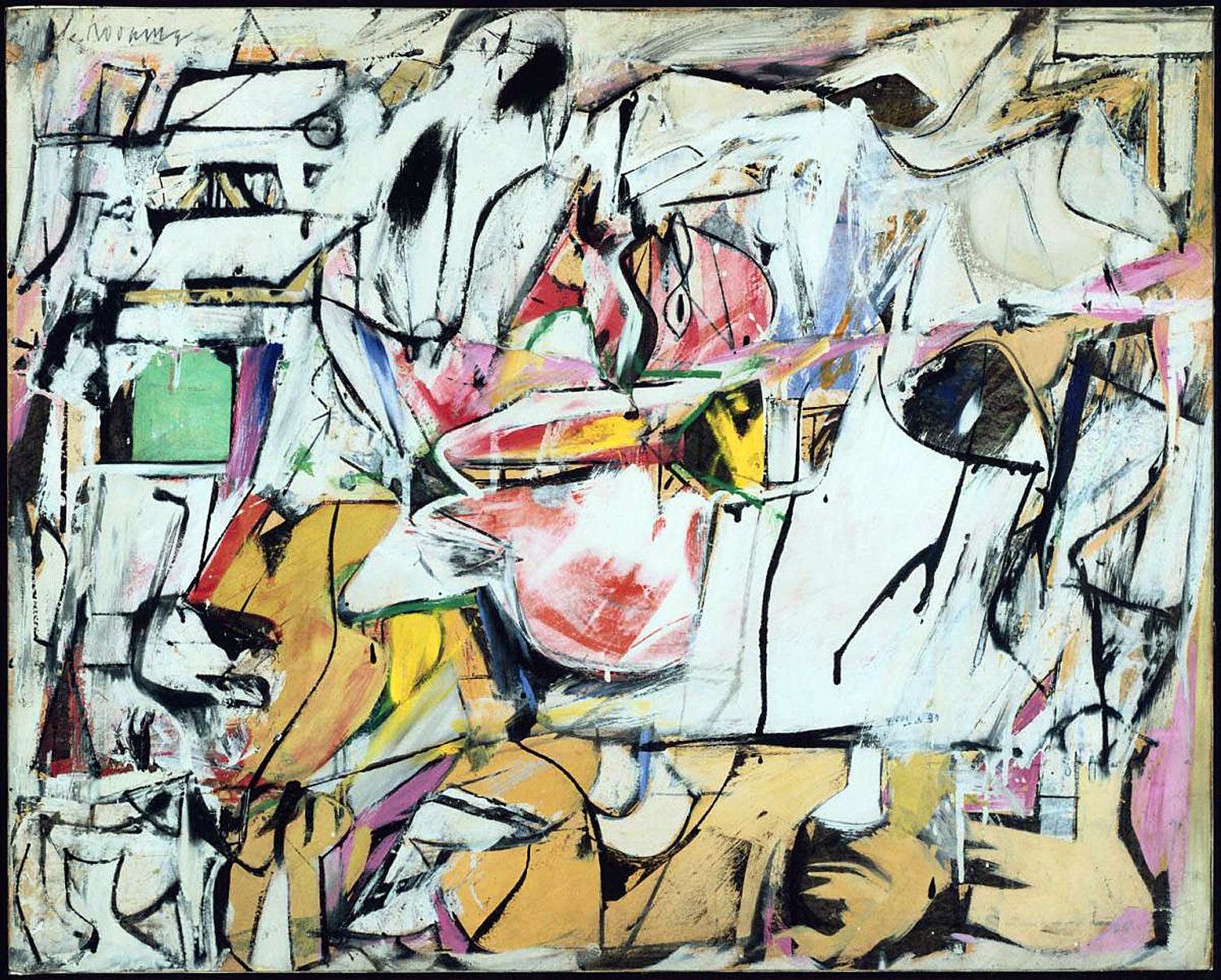
Mel entered school wanting to paint like Norman Rockwell, but, as he says, “Most of the leading guys weren’t teaching just the standard way;  they were teaching what was going on right now.” And that meant Willem de Kooning, Jasper Johns, Robert Rauschenberg. Mel loved the new work. 

“Asheville” Willem de Kooning, 1948

But there was still that need to make a living, and when he graduated, he worked in advertising, employed initially for Belk department stores. Later, he opened up his own agency in Charlotte, N.C. He was good at what he was doing, enough so that he could pick and choose his clients. And move out of the city to a farmhouse in Rockingham County, N.C., where he and his wife, Deborah Ballington, took up raising goats and chickens. 

This is when I first came to know Mel and Deborah, when my wife —  Mel’s sister, Carole —and I would visit and get fed goat meat (absolutely fabulous) and perhaps do a bit of target shooting in the yard. (I was introduced to the .45 caliber Browning semi-automatic pistol, which had the kick of an angry horse and could knock a tree stump off its feet.) 

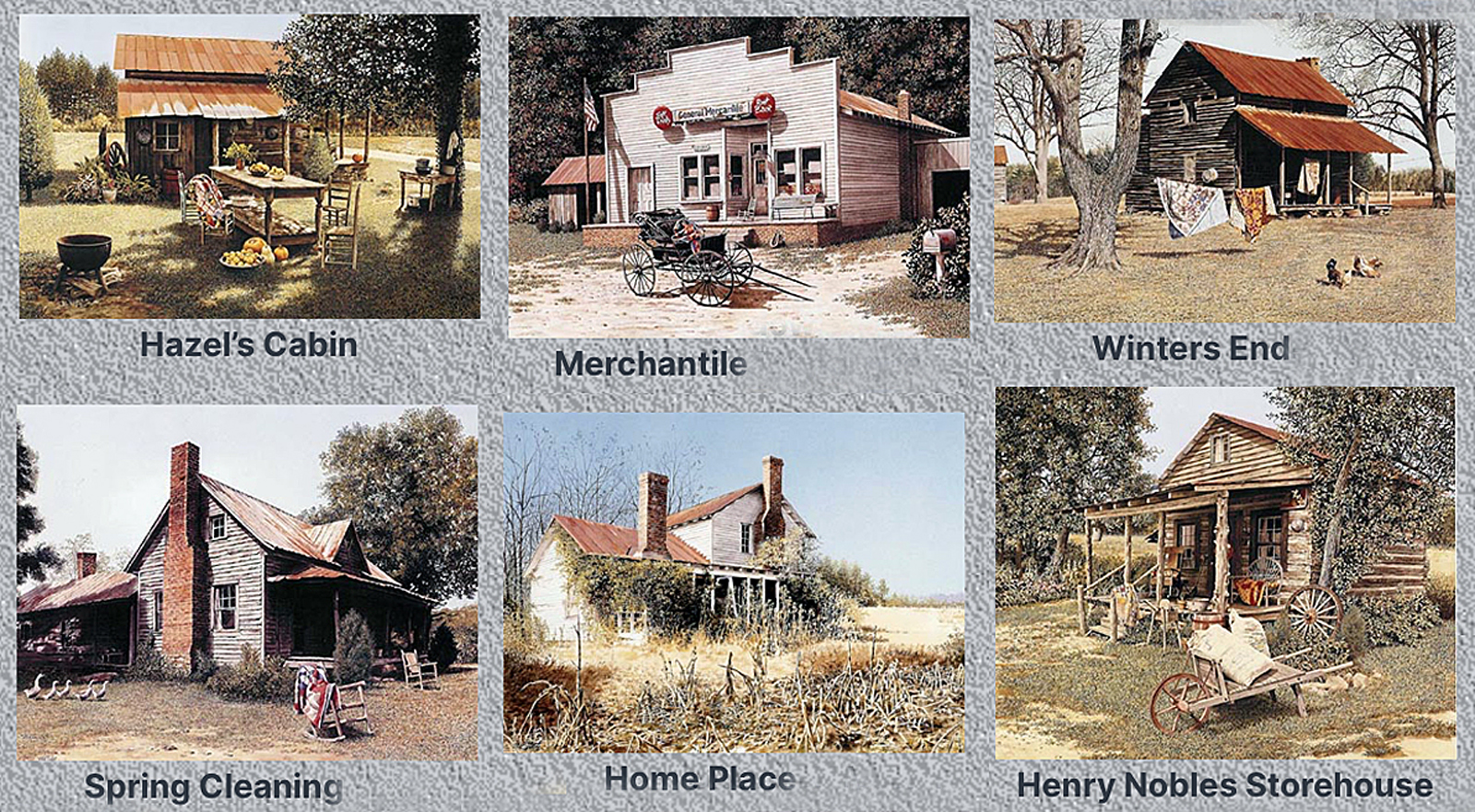
And by then, Mel had begun selling what are euphemistically called “limited edition prints” of rural scenes. These were essentially “posters” made from painted originals, printed up in volume and given evocative titles, like Down East or Wentworth Winter

Most regions of the U.S. have some populist art tradition that sells well commercially. In Maryland, it is pictures of skipjacks on Chesapeake Bay; in Maine, it is lobstering; in Arizona, it is cactus or Indians; in Texas, cowboys. In North Carolina, it was barns. Mel painted barns and farming scenes and became known statewide for his paintings and the prints made from them. 

He did well with these, enough he could buy some land in the woods outside of Reidsville, N.C., and design and build a new house and studio. And his prints were popular enough, he could begin selling not just the prints, but the original paintings. 

Mel would sometimes cynically denigrate the art he was making, thinking of it as hack work. But it put food on his table and motorcycles in his garage. In retrospect, these images were better than they needed to be. They often had some edge to them, such as the print of a fox skulking near a barn, titled Thief, and presumably looking for chickens to grab.

Thief

Or, more graphically, a dead rabbit, run over in the road.

Highway 704

I say these prints were made better than they needed to be, and compared with many of the regional prints from around the country, they were. The most famous in North Carolina is Bob Timberlake, who has turned his talent into a marketing juggernaut, selling prints and furniture from his gallery in Lexington, N.C. But compared with Mel’s paintings, Timberlake’s are simplified and verge on the cartoonish. And they traffic in a greeting-card sort of nostalgia. 

“Boyd’s Creek” Bob Timberlake

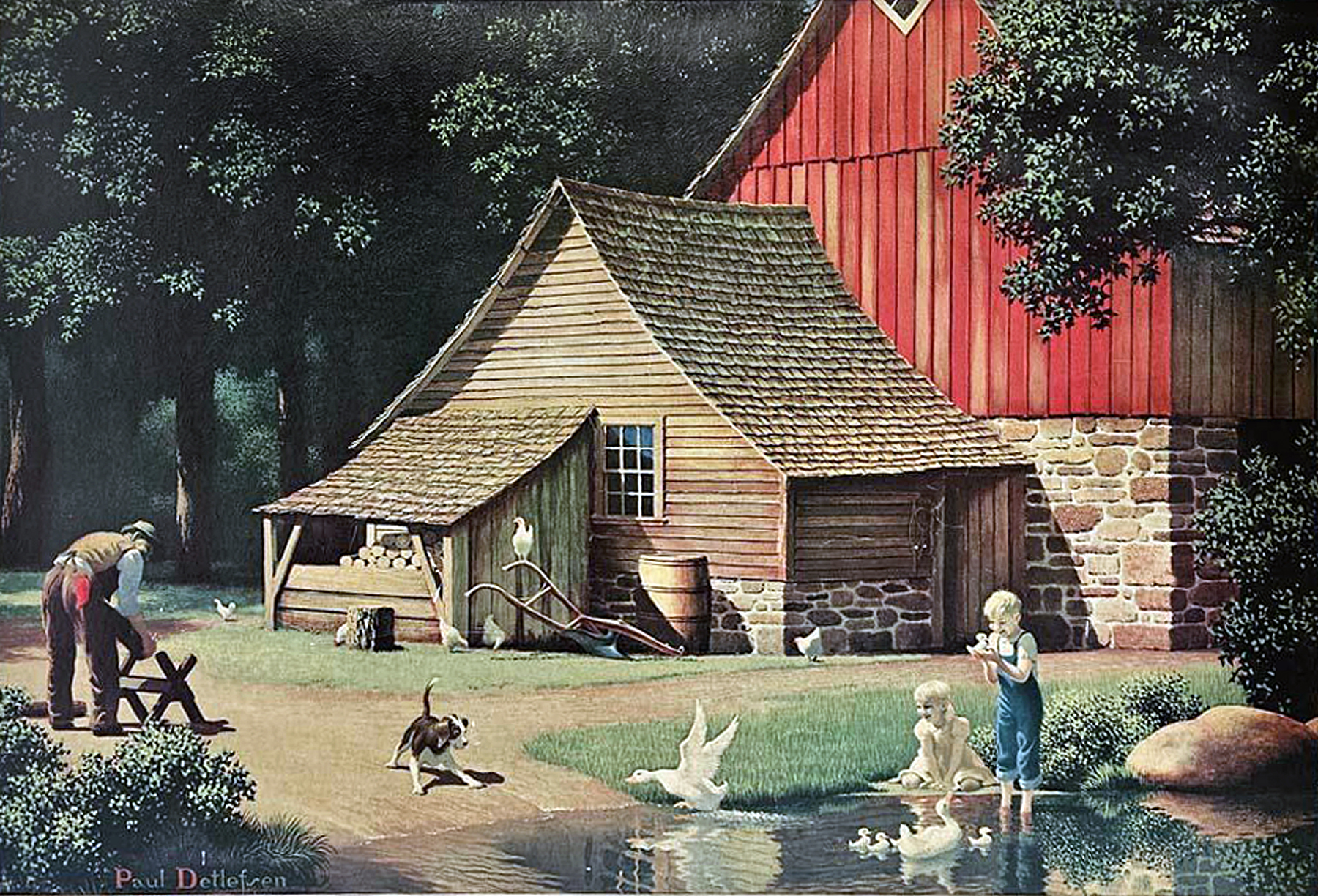
There is a long tradition of such sentimental fluff. People have always longed for a past they remember as better than it was. Victorian genre painting is full of such stuff. And artists, such as Paul Detlefsen, made a career out of sentimental Americana, painted for calendars and nowadays reproduced on jigsaw puzzles. Happy ragamuffin farmboys with fishin’ poles, covered bridges, horse-drawn wagons. 

By Paul Detlefsen

The point is, the artists who make these images never actually lived such lives — Detlefsen was born in Denmark. It is a fictional history they proffer, a mythologized lie. 

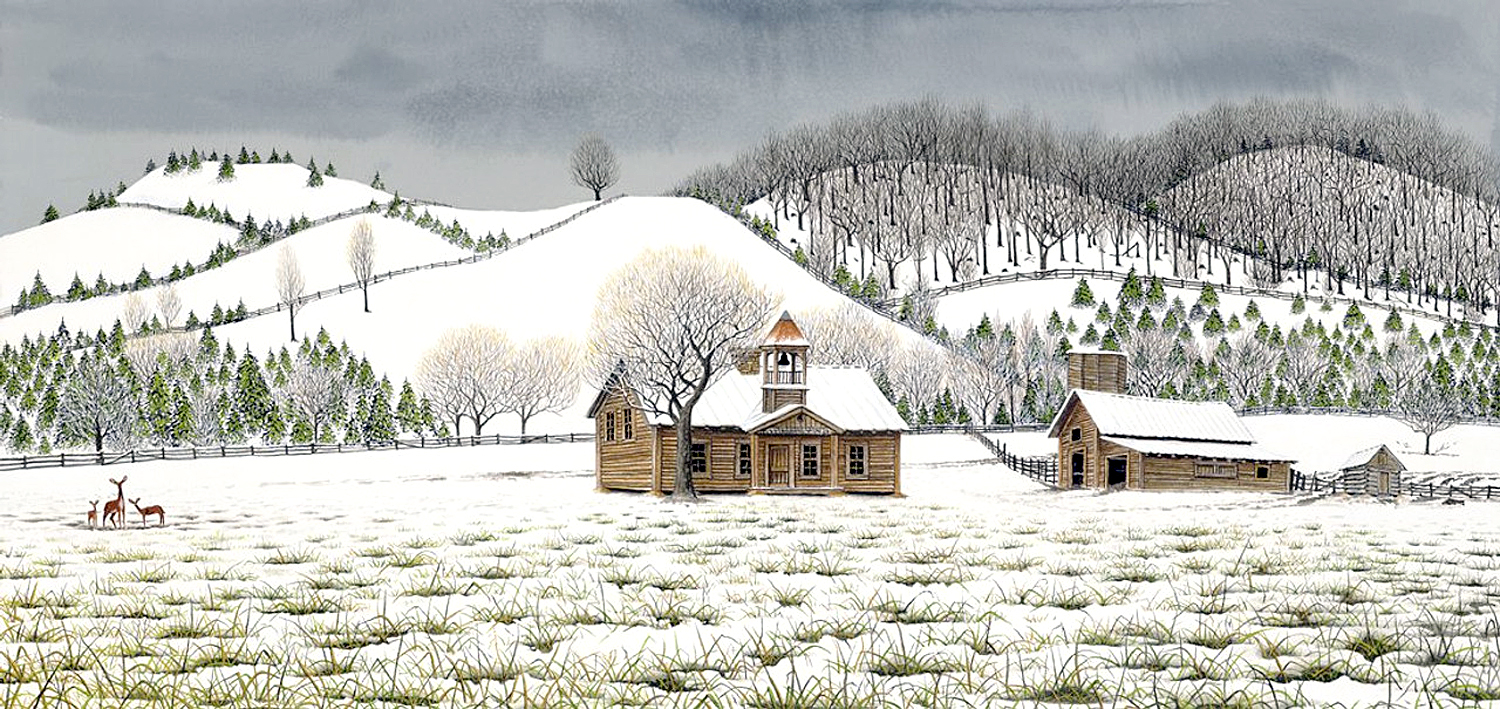
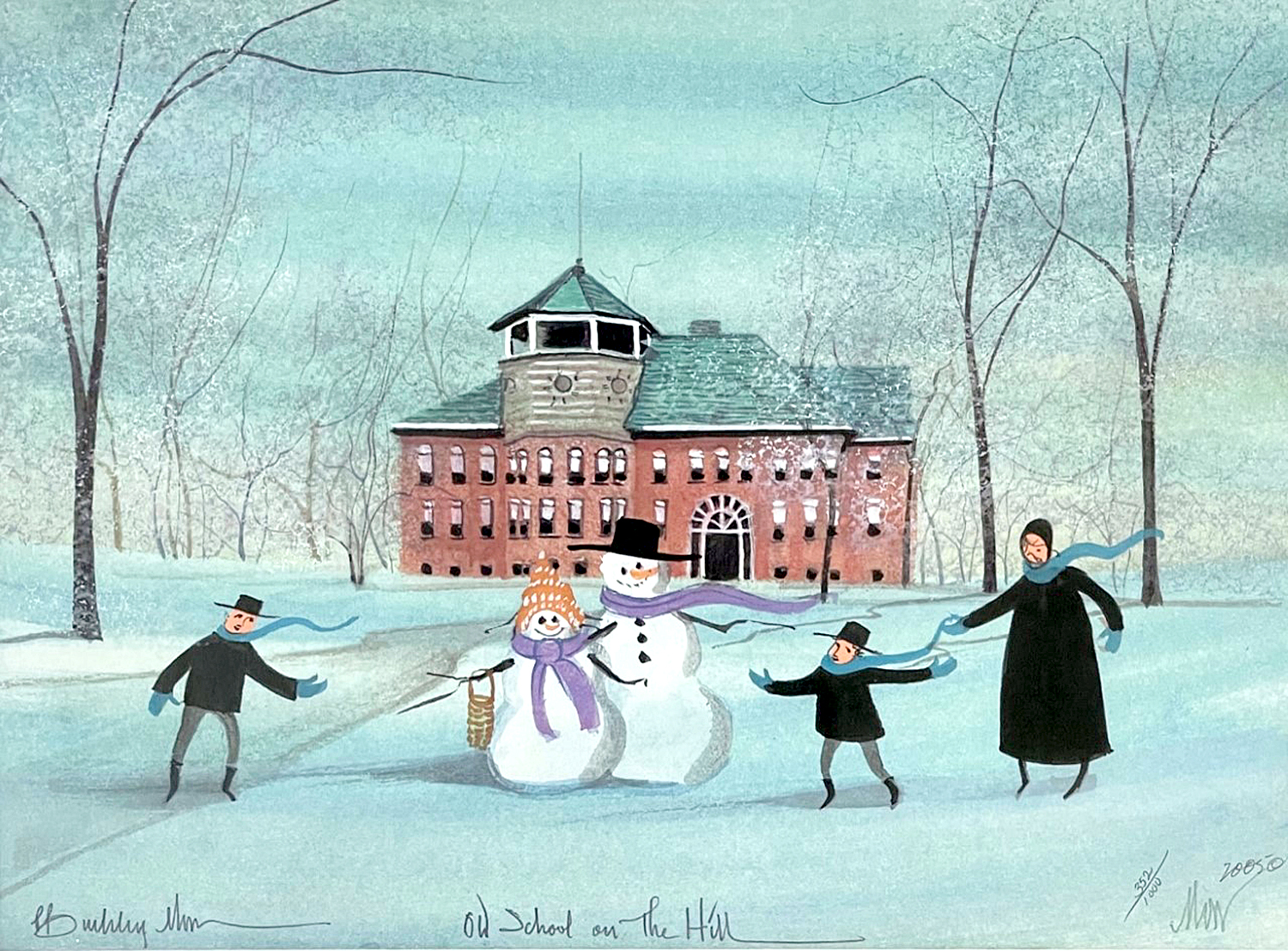
“Old School On the Hill” P. Buckley Moss

I don’t know if P. Buckley Moss had any real talent — she didn’t really need it for the kind of work she did, cartoonish prints of Mennonite farmers in northern Virginia — but Mel put some solid effort into his prints. 

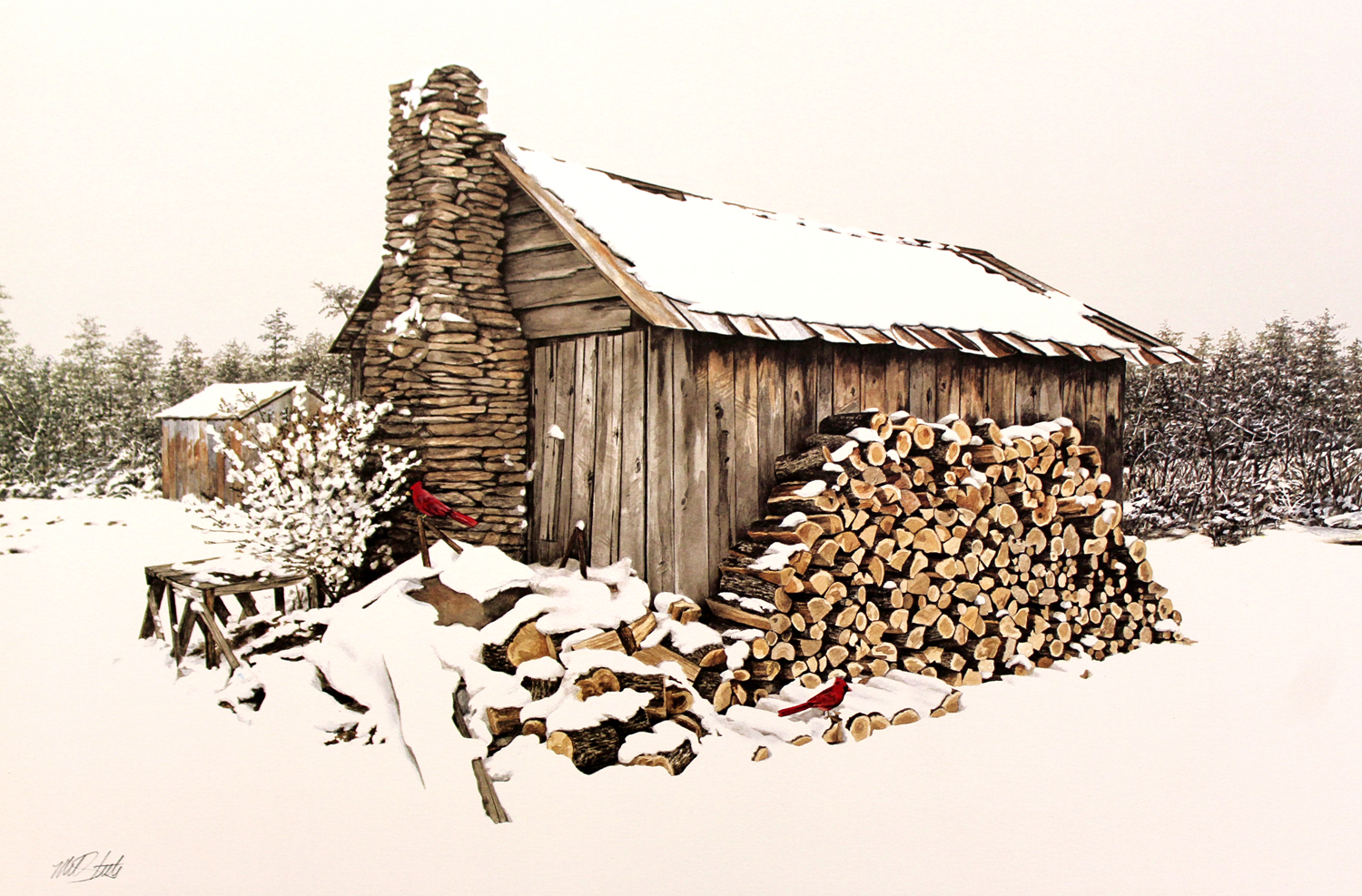
Of course such prints all play on a kind of sentimental nostalgia, but the nostalgia in Mel’s prints is earned: He and his sister did live for a while in a log cabin growing up. They did know the houses and barns that show up in his prints. And rather than knock off simplified versions, he worked hard on detail and finish.

“The Thicket’s Edge” Mel Steele

Not that there wasn’t some tacky marketing involved. Mel knew his audience and often played to them. When he thought he could sell three prints instead of a single one, he tried making “trilogies,” such as the “Quilt Trilogy” — three prints featuring old-timey quilts in them. 

Or, discovering that he could charge more if his prints were “remarqued” — that is, a small detail from the image could be repainted in miniature on the border in actual paint — he began doing just that. You got a tiny bit of genuine painting along with your photomechanical print of the main picture. There should be no forgetting this was a commercial endeavor. 

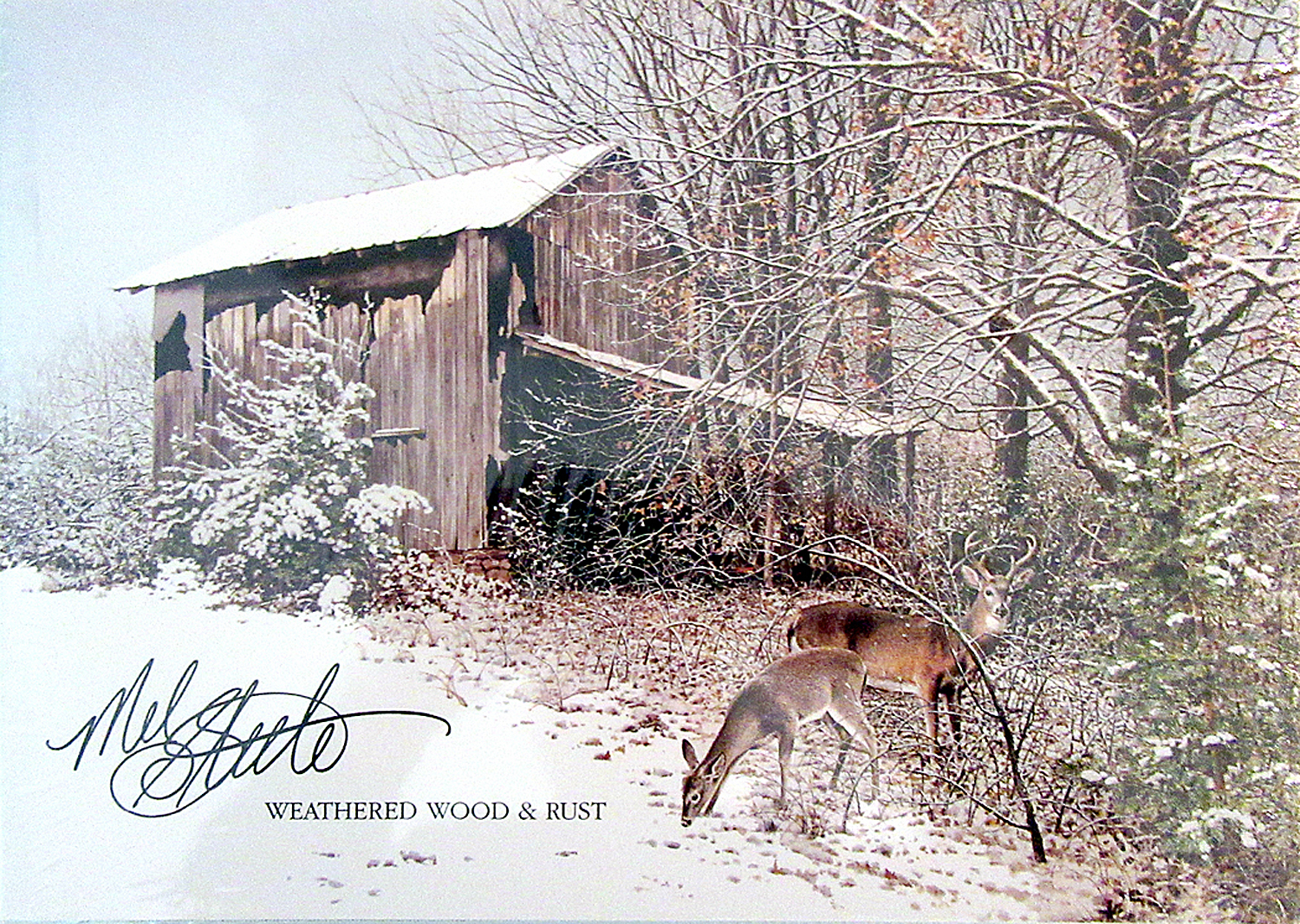
Timberlake had published a coffee-table book to market his prints and Mel did the same, in a 1993 book called Weathered Wood & Rust. The text is godawful and smarmy — they hired a writer to come up with some cliché-filled pabulum — but the images were beautifully made. 

Marketing was an essential part of the limited-edition print business. But such things could get out of hand. I remember visiting the Moss studio in Virginia and seeing a framed print for sale with added “value” for having three signatures. First, on the original painting, which was then photographed and printed in large-number editions, with each prints given a second signature. And third, after the prints was framed, the glass was given an extra John Hancock, with gold ink. I don’t remember Mel ever going that far. 

I’ve spent a long time on this part of Mel’s career. I believe he often felt sheepish about courting popular fandom when what he was really interested in was more serious art. I have been telling him for years that he has nothing to be ashamed of for those populist prints. They really were often so much better than they needed to be. 

I’ve pointed out that his subjects, while they may have had an aura of nostalgia about them, were nevertheless genuine to his life and upbringing. I believe he felt genuine emotion toward them — even if he might have expressed a knowing disdain for what might have been taken as “cornball.” His professional training led him in one direction; his life experience informed another. 

I want to discuss two prints in particular. The first is Mitchell’s Mercantile, a gouache from 1980, that is just an old chair on a store’s front porch. 

Mitchell’s Mercantile

One of the things you notice in Bob Timberlake’s prints is their general lack of shadow. They are “cartoonish” in the sense that their subjects are simplified and usually portrayed in an overall wash of light. In Mel’s pictures, real objects tend to throw real shadows. Also, in the popular prints of other artists, objects — buildings, people, animals — are generalized, sketchy and not particular. But this chair on this porch is not just a chair, it is this chair. It is almost photographic; Mel has spent time and effort to look and to pay attention to the world. This is not some generalized metal chair. 

Paying attention is the unacknowledged secret of fine art. That is true of abstract art as well as naturalistic art. Nothing is glossed over or ignored. And so, the very exact angle that the chair’s seat leans back is paid attention to. The quotidian is afforded dignity. It is the idea behind the German expression “Ding an Sich.” The Thing in Itself. 

One does not need to get all academic over it. But look at the chair, the wood floor, the rusted Coke sign and the light that plays out over it all, from a distinct direction and shaping the images and recognize that Mel Steele has looked with care and internalized each millimeter of his picture. 

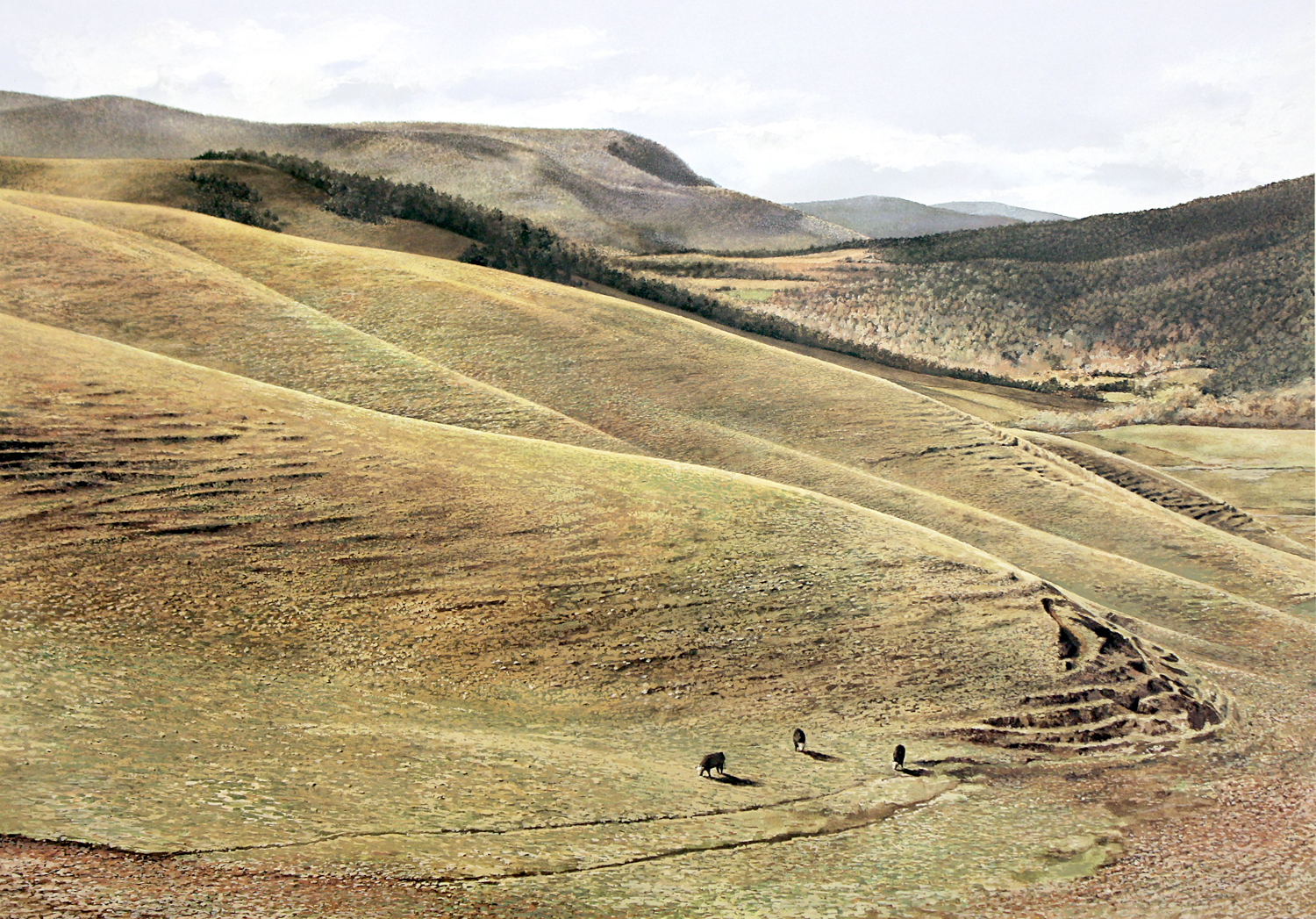
The other print is my favorite of all of them, and that is for entirely personal reasons. When Carole and I moved in together in the early 1980s, we lived in the Blue Ridge Mountains of North Carolina, along the New River in Ashe County and many of the hills were cleared for cattle, and other hills were natural “balds.” 

West Jefferson

Mel made a painting of this bare and unprepossessing landscape. It resonated strongly for me. I know this landscape and no one I know has better caught its sense of isolation and innigkeit — of being alone in an expansive space. I am convinced Mel made this picture because he felt something genuine in it. Surely it could never have been one of his more popular sellers. (In fact, Deborah tells me it was never made for sale, but as a Christmas gift for several valued regular collectors of his work.) 

So, there are two directions I sense Mel has always been pulled in. On one hand, as a professional and commercial artist, he knows his public and is able to aim his work at that market. But on the other hand, he truly wants to make something worth more than mere dollars, and so even making commercial work, puts an extra effort into it — and something personal — that lifts it above its mere purpose. 

I shouldn’t overstate my case here. Mel has made his share of purely pandering images, and often they are not as well crafted, and maybe a little more quickly tossed off. The buying public is looking for rural nostalgia and Mel could give it to them. But in his best prints, he has invested himself and his life experience. 

 His success in the print world meant that he could also sell original paintings in art galleries, and accept commissions. And he made quite a few paintings for himself. Landscapes, 

still lifes, 

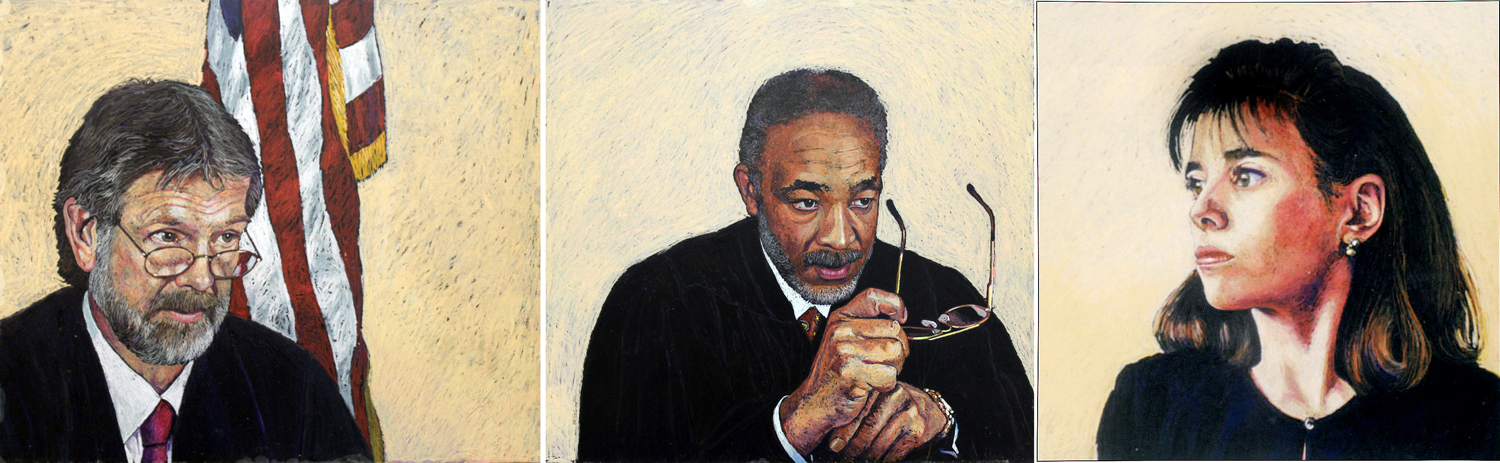
portraits 

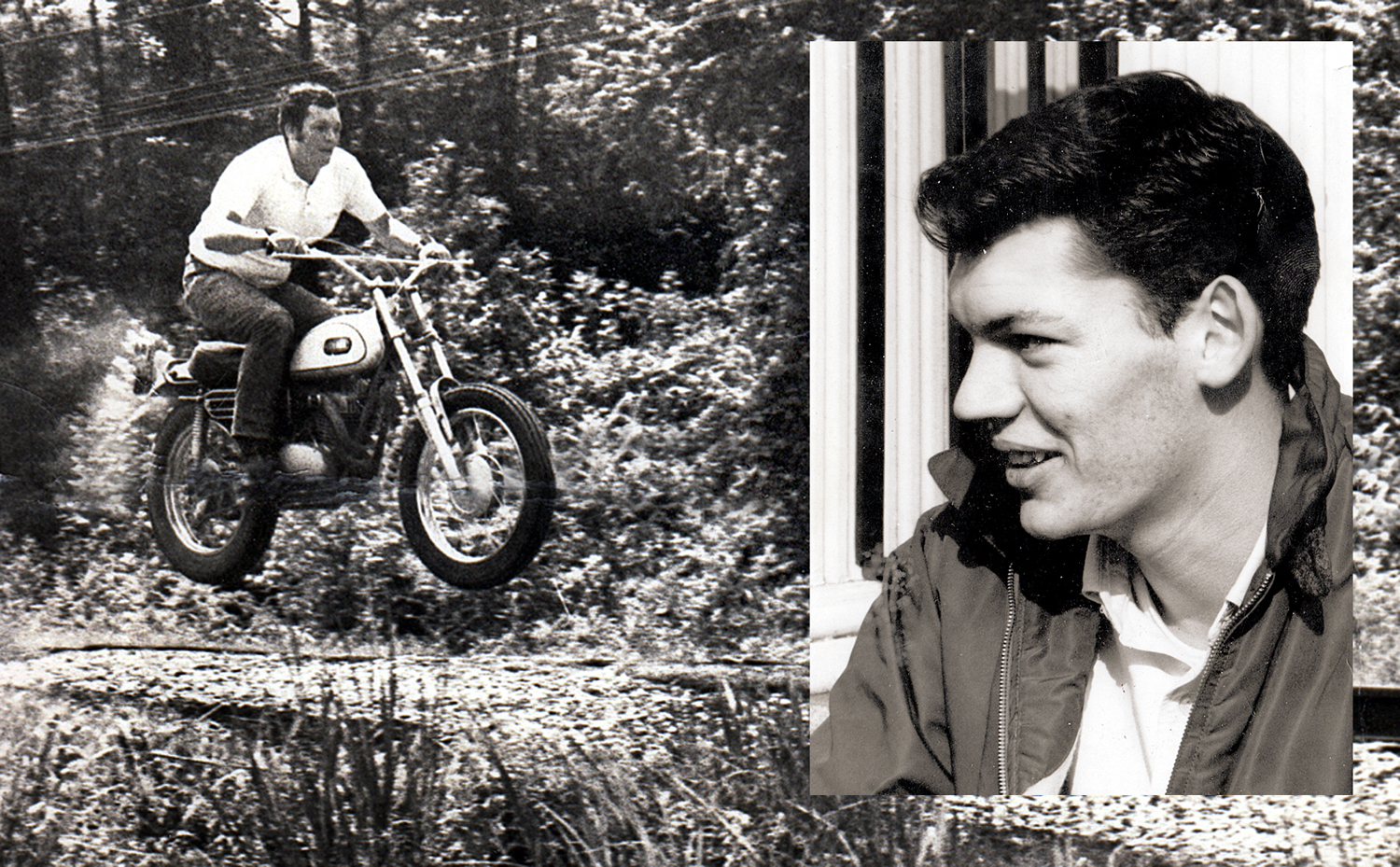
— even the motorcycles he loved and collected (he had been a big motocross fan as a young man

Which showed up in a series of motorcycle paintings

He experimented with a series of paintings made from little squares with letters, numbers of text in them, such as the red pepper. A detail shows how the picture is made up of tiny glyphs. 

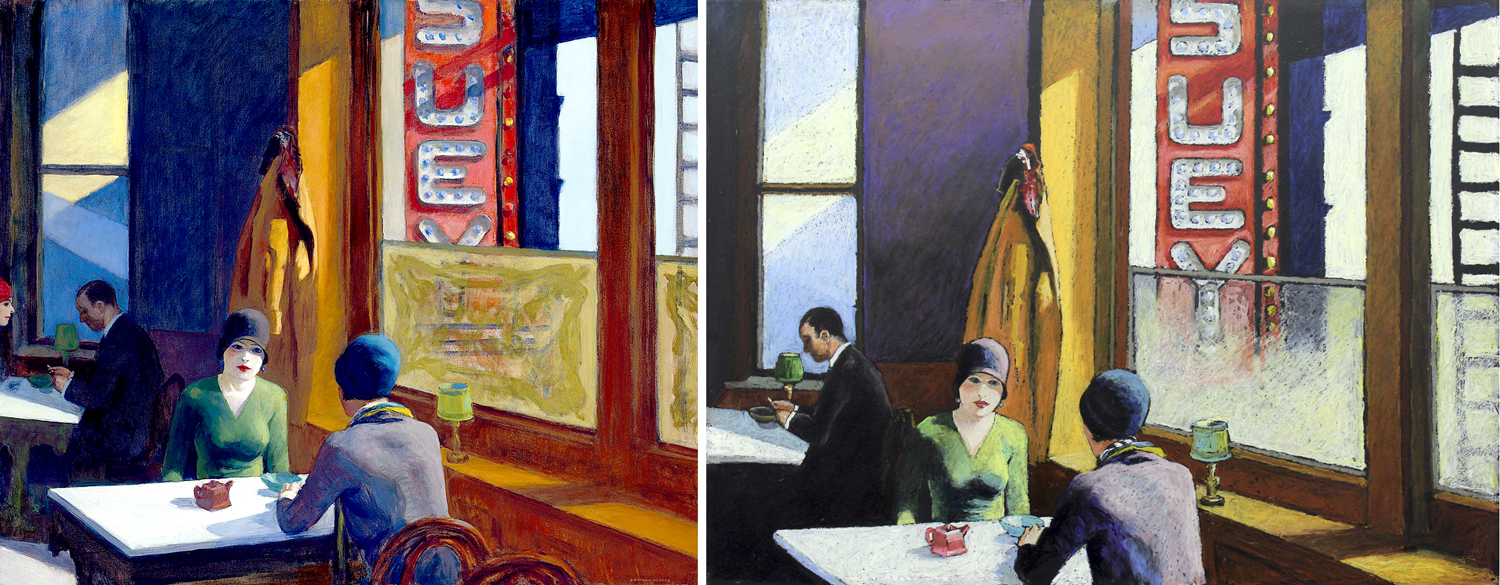
He made another series of copies of famous paintings, usually in oil crayon, but always he made little “improvements” in them (as he called them), like this copy of Edward Hopper’s Chop Suey.

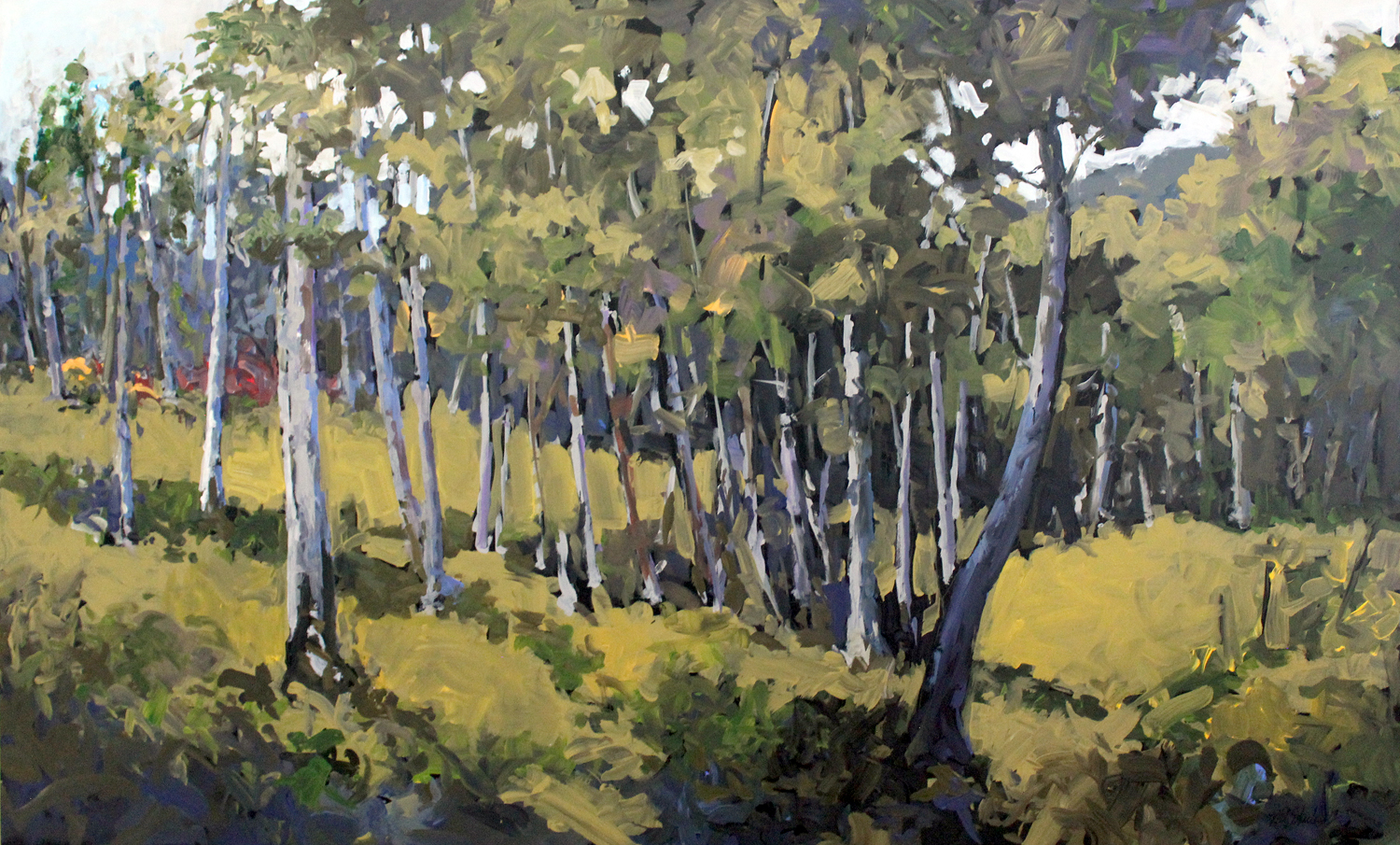
Mel could take on any style of art. His popular prints were photorealistic. But he could also do impressionistic

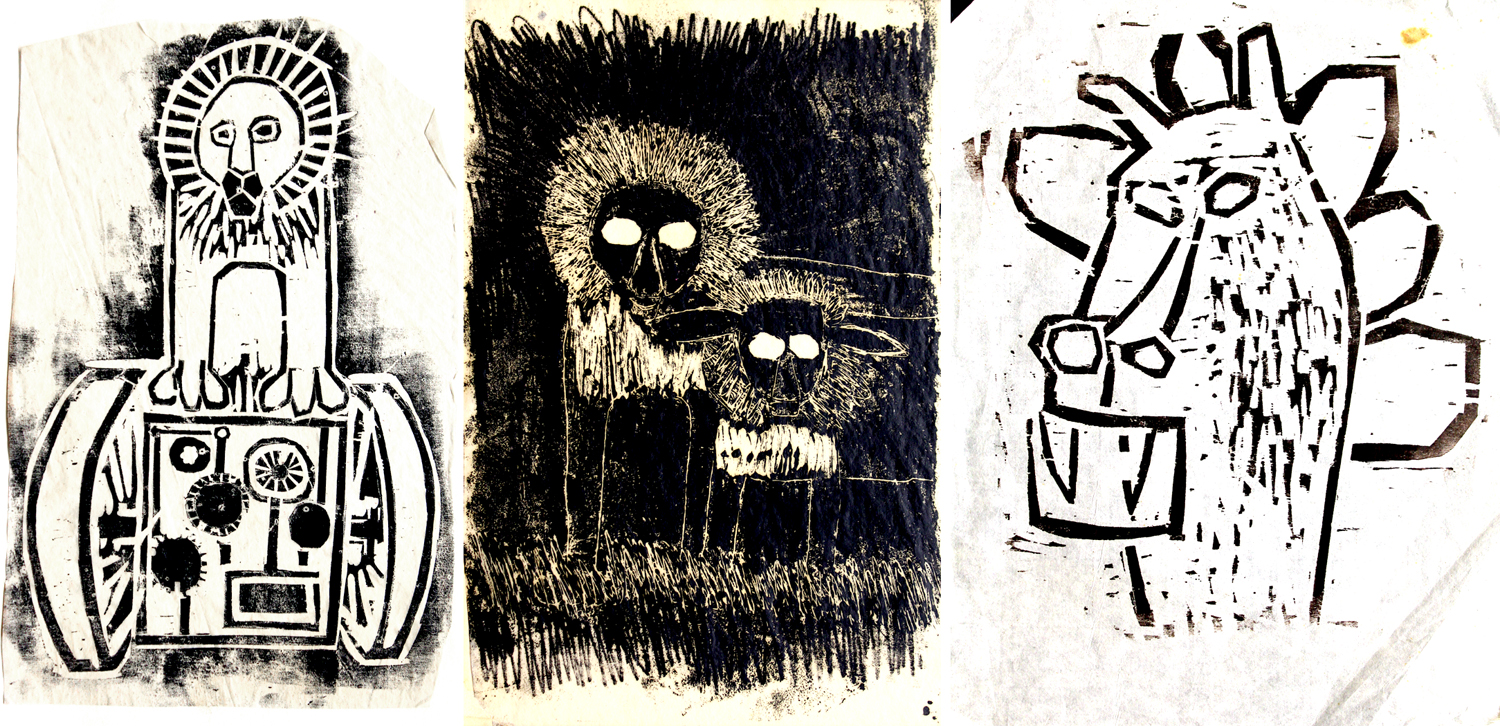
Or primitive

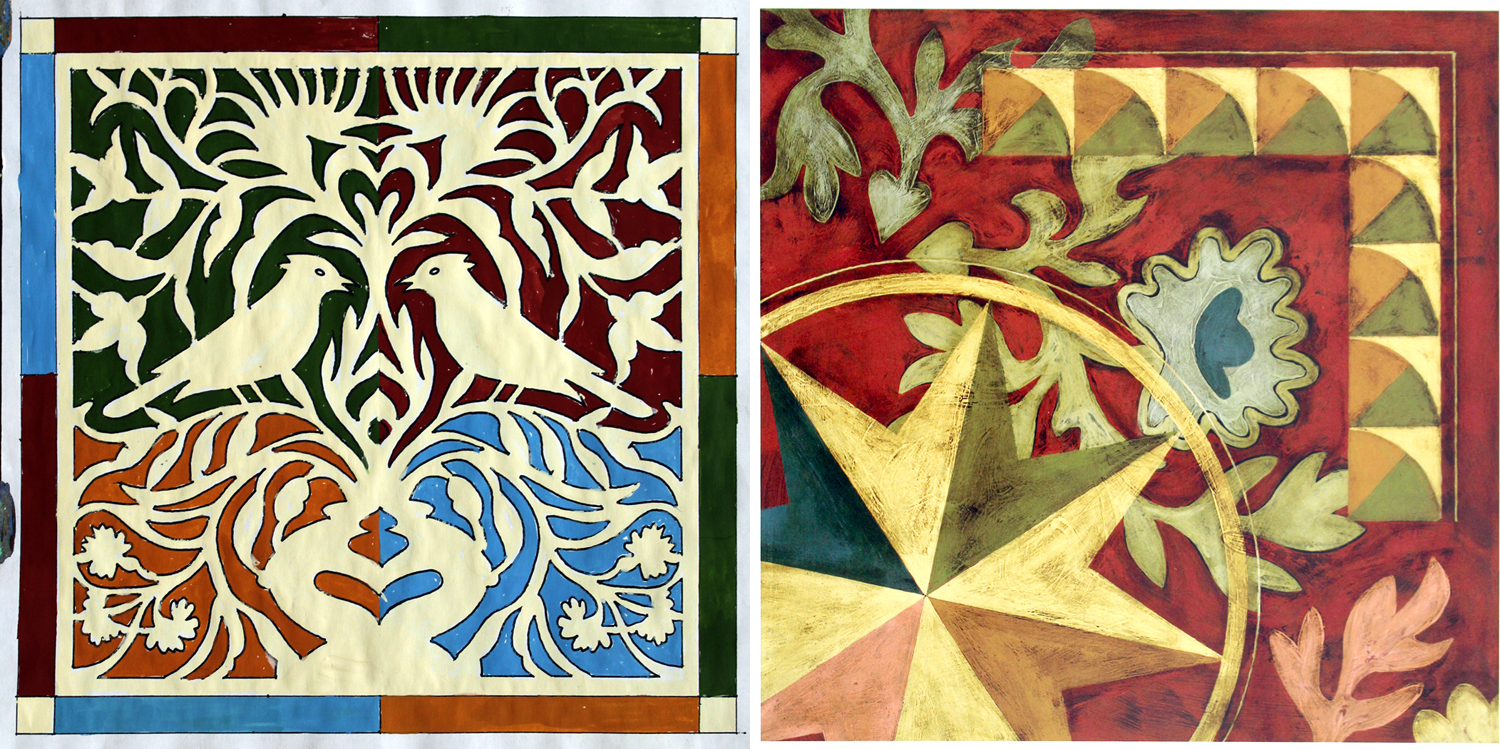
Or design work

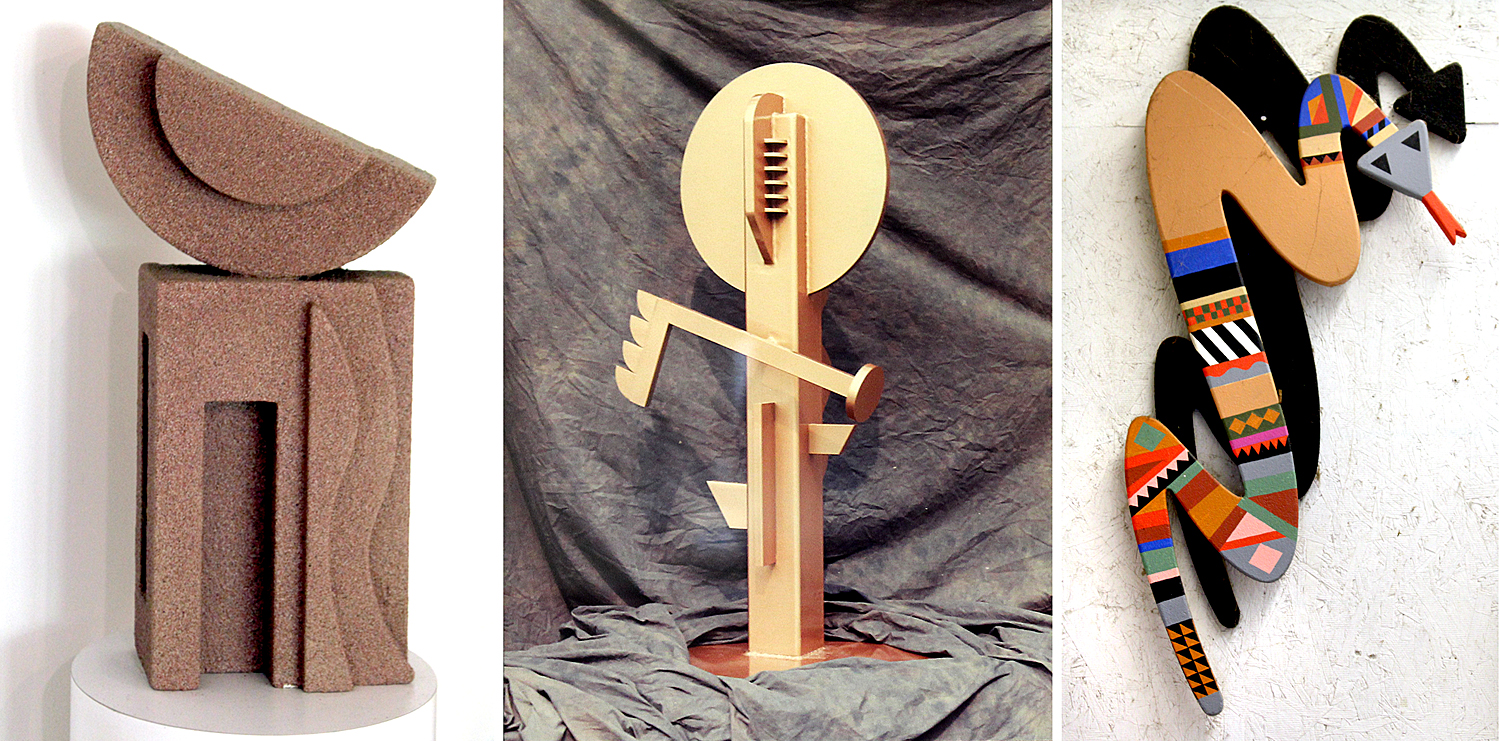
Or even sculpture

Mel can tackle pretty much any style or genre. Yet, what he really wanted to do, since his early days at art school, was the abstract painting he discovered there. 

It sometimes needs to be pointed out that abstract painting isn’t necessarily easier or faster than detailed realism. In fact, quality in any variety of art depends on careful attention to color, line, design, mass, balance, and a sense of depth (or lack of, when that is the point). A successful photo-realist scene will only work as art if all its parts work in harmony. A good abstract painting is the same as a good realistic painting, except without a subject matter you can name — like a barn or owl.

Believe me, as an art critic (often asked to judge local art shows and give out blue ribbons), I saw a deplorable boatload of bad abstract painting, and almost always, the problem was that the artist really just threw some colors on the canvas in a haphazard fashion. Bad abstract art is a dime-a-dozen. 

Bad, indifferent, tossed haphazardly

It isn’t just the public, but too often the artists themselves, that think an abstract is made by energetically slathering paint on the canvas, and that the energy of its creation will be conveyed to the appreciative viewer. Das ist schlamperei. Sloppy; lazy; careless. 

Sometimes a painting can give the appearance of spontaneity, but such doesn’t happen through accident. One may look at an abstract painting by Mel’s hero, Willem de Kooning, and believe he tosses them off in a fit of athletic frenzy, but there is film of the artist painting and mostly he stands back from his easel by about 10 feet and looks at the canvas for two or three minutes and then approaches with his brush and adds a few strokes and steps back again to look. It is a slow accumulation of careful decisions made through a lot of just looking and thinking. 

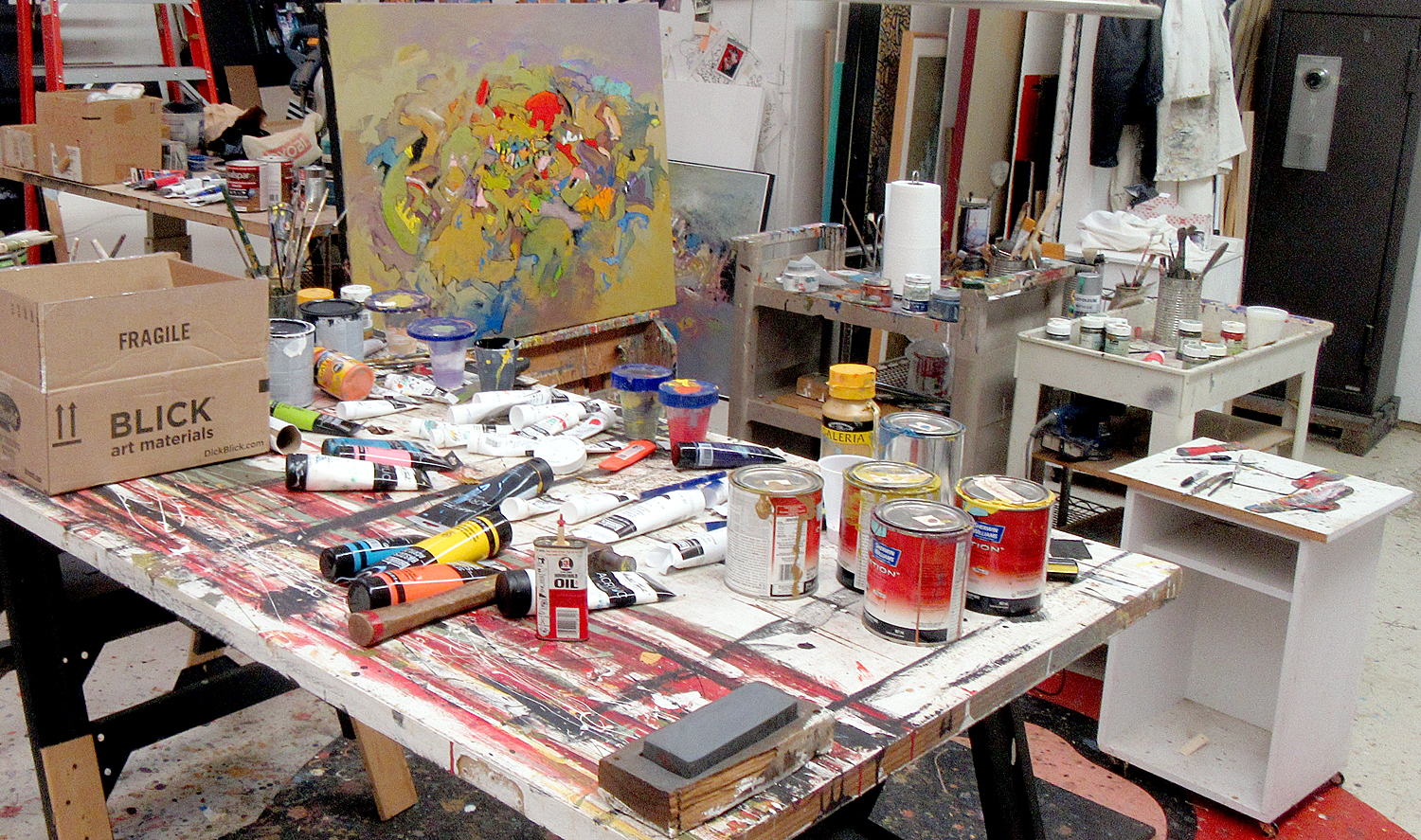
I have watched paintings by Mel in the process of being “builded.” He likes to work alone, but I have snuck into his studio in off hours and seen paintings change slowly over days until he gets the final version he is happy with. Whole quarters of the canvas may be covered over and repainted; new details added or others scrubbed out. 

Subtle differences in three states of the same work

When the famous Japanese Ikiyo-e artist, Hokusai, turned 80 he said, “I have drawn things since I was six. All that I made before the age of 65 is not worth counting. At 73, I began to understand the true construction of animals, plants, trees, birds, fishes, and insects. At 90 I will enter into the secret of things. At 110, everything — every dot, every dash — will live.” 

Mediocre artists will find a “style” and stick with it. Better artists continue to grow their whole lives. You can follow the growing maturity of Mel’s abstract work from his early canvases to his most recent. 

His early abstracts suffer from the rigorous training he got at art school. His abstract paintings are notably careful, well-lined, almost as if he were making photorealist versions of abstract paintings. When architects attempt to make gallery art, they often make this sort of deracinated art — more design-y than resonant. It’s what I have always called “architect’s art.” 

Even in this early work, you can see some through-lines to the later. Unlike many abstract paintings, which may as well be wall-paper, Mel tends to situate shapes against a background. Often the background is a tiny sliver at the top of the canvas, sometimes the shapes occupy a spot at the center like a vase of flowers on a table. 

You see that in the early paintings and in more recent ones.

This gives Mel’s abstracts a solid sense of structure. Squiggles don’t just run off the edge of the frame. 

He also uses the size of shapes and their colors to create a sense of near-and-far, a sense of depth in the painting, so you can look at it as if you were gazing at a landscape. (I don’t want to get caught up here in an argument about Clement Greenberg, the influential mid-century critic who claimed that painting should be flat and that two-dimensionality was its essential fact and that to attempt the illusion of depth was somehow anti-art. That was always pure balderdash and if he had had eyes instead of theories, he would have seen that.) 

Some shapes cover up parts of other shapes. Cool colors and darker shades can recede while warmer colors and brighter ones can appear more forward. It isn’t all just a great bowl of oatmeal. There is visual structure available to those who take the time to immerse themselves in the art. Art takes time to look at and the longer you look, the more complex the painting, and the more intense the emotions that may be evoked. 

I mentioned that in his more commercial prints, at least in the best of them, Mel found ways to put his own life into them. Unlike some popular print artists, who present a nostalgic world that never actually existed, Mel’s barns and farm houses are part of the life he’s actually lived — at least in his childhood, and after a city life in Charlotte, once again in his life back in rural Rockingham County. 

When I have gone to visit Mel and Deborah in Reidsville, as I drive north from Winston-Salem on U.S. 158, I pass many tobacco barns like the ones in his prints. They are still there, and there is often a damaged barbed-wire fence around them. Nostalgia-mongers love white picket fences; there’s little quite so warm and fuzzy about barbed wire. Yet, it’s that detail that makes Mel’s print carry a weight greeting-card art never even attempts. 

Softer art likes flowers; Mel’s best paintings show weeds. 

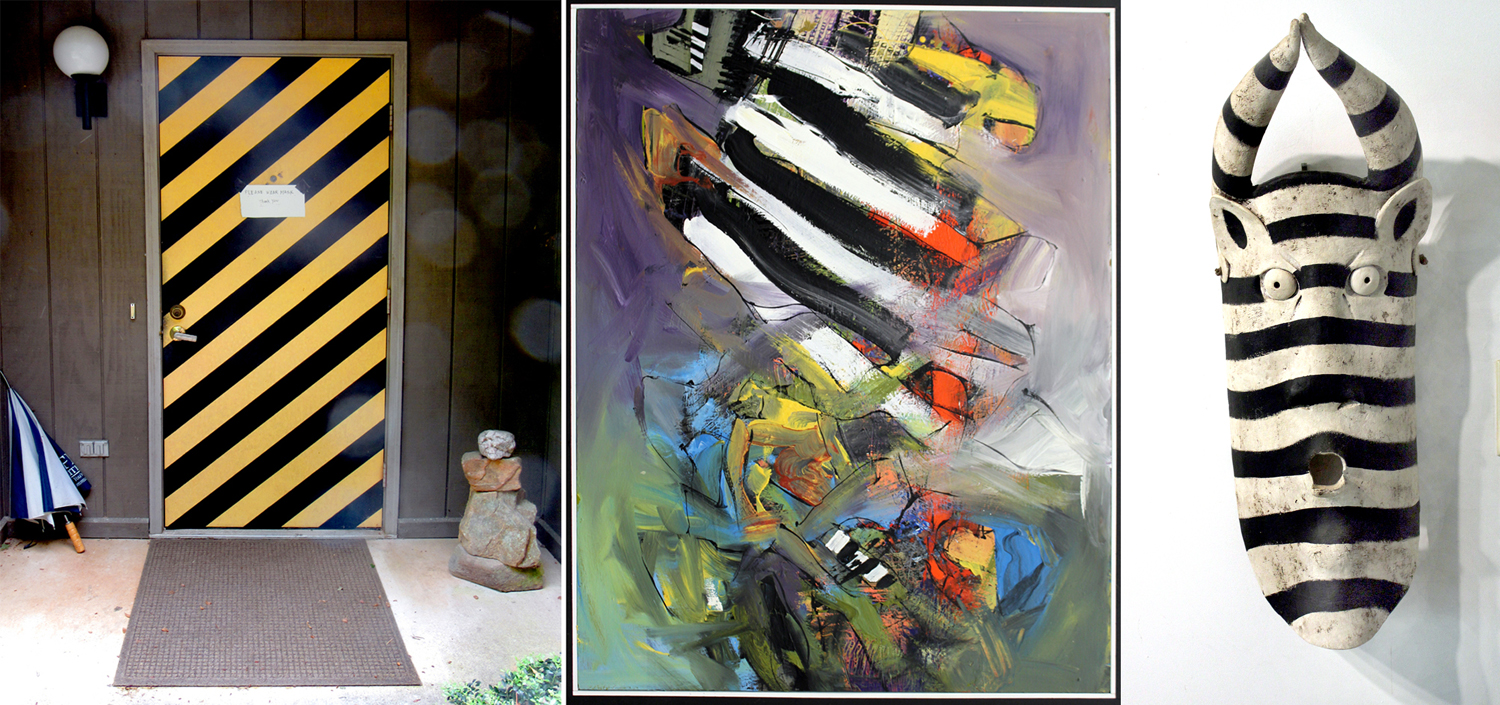
And I think there is something similar in the abstract paintings. In most of them, there is a recurring detail of zebra stripes. A shape, either large or small, will be crossed with black-and-white stripes. I’ve asked Mel why and he doesn’t have a thought-out answer. “I just like it,” he says. But Mel grew up in a house in Madison, N.C., just across the street from a railroad grade crossing. I suspect that this detail has lodged in his consciousness and shows up as an emotional nexus in work that is otherwise non-figurative.

After all, the front door of his studio-home is striped also, and a spooky mask that sits on his wall. You can find these stripes all around his house, including on throw pillows on his sofa. 

 Like many creative people, Mel doesn’t seem to want to look too deeply into, or talk about the wellsprings of his work. Many artists I’ve talked to are afraid if they look too closely, their inspiration might dry up. 

One should always be wary of claiming to know what is going on in another person’s noggin. And I may have completely misunderstood Mel’s muse. If so, I’m sorry. It is only a guess, from watching from the outside. 

But over a very long work life, Mel has seemed to avoid talking about anything too deep in his art, while at the same time putting great effort into its making, even when less care would have been enough. 

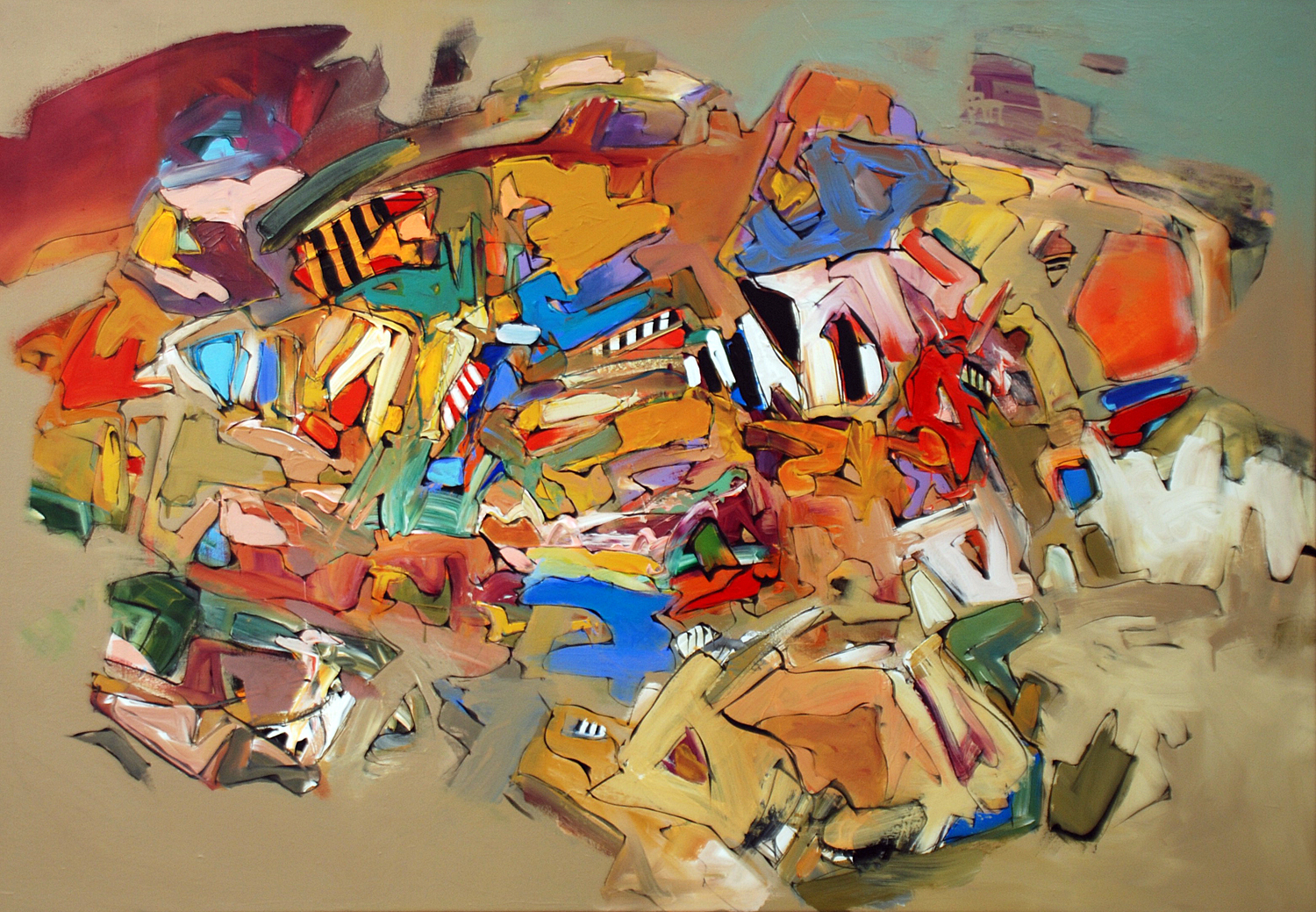
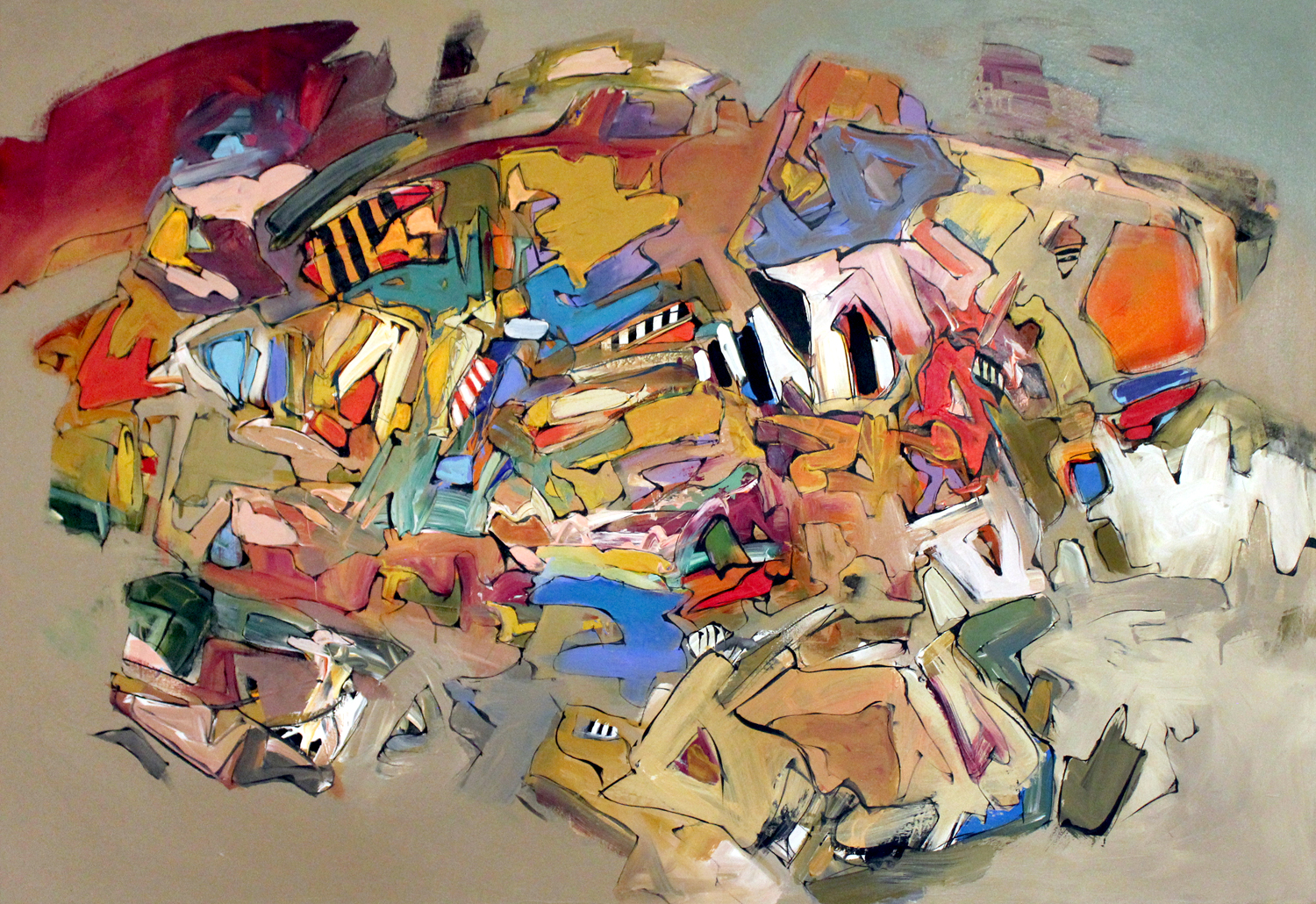
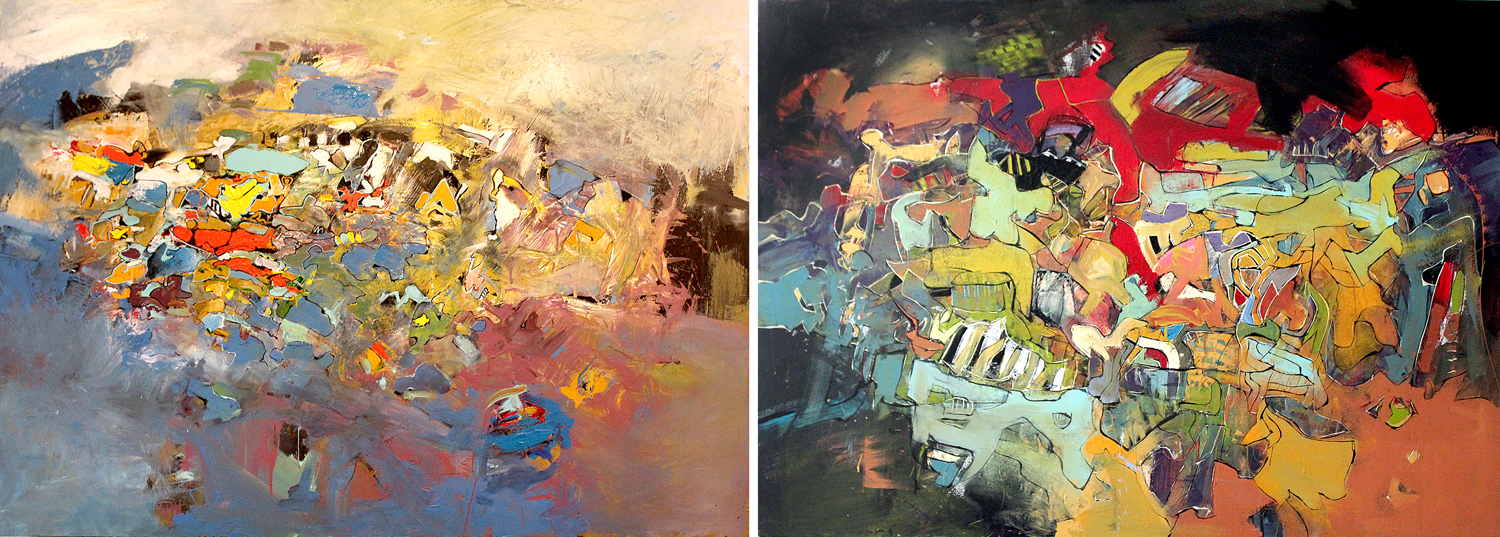
For the past dozen years or so, Mel has painted landscapes on commission for certain collectors, mostly sold through his agent, and painted canvas after canvas working on his abstracts, using patches of color, on top or beneath each other, as if they were landscape paintings of imaginary shapes rather than trees and streams. 

You can see the layout of shapes running through the middle of these canvases, with a clear patch — almost a sky — above and another patch, almost like a meadow, below. The fact that the middle is made up of a bustle of shapes and colors might stand in for a forest — except that they don’t need to. It is sufficient that they are tangible shapes. 

It is the way some classical music has a “program” that tells you the story being depicted in the orchestra, but if you didn’t know the program, you would still be able to feel the movement of the music in a specific direction. 

It is in this sense that I say Mel’s abstracts can be seen as quasi landscapes. Not that they are meant to be literally so, but that they display a visual form that mimics the mental idea we have of a landscape. Take away anything in a scene that has a name and this is what is left. Color, shape, form, space, frame. 

I have included a passel of Mel’s artwork in the blog entry, but I have at least another 200 images I simply don’t have room for. Mel has been an extraordinarily prolific and various artist, using many styles and many media over the years — gouache, oil crayon, acrylic, pen-and-ink. There is almost no style, genre or medium he has not taken on over the past 60 years. 

He is better than he lets on. 

Click any image to enlarge

Many years ago, my late wife bought me a copy of A Book of Clouds, published in 1925 by author William A. Quayle. It is a hefty clothbound volume, primarily of old black-and-white photographs of clouds, layered with Quayle’s particular garish encomia and reminiscence about the glories of skywatching. 

Clouds seem to bring out the gooey and poeticizing cliches in a writer. “I was kinsman of the clouds,” Quayle writes. “And as I grew, the clouds still sailed their crafts of  snowy sail across the blue sea of my heart. Clouds, so to say, were indigenous to my soul. I did not begin to notice them: I always noticed them. I did not learn to love them: I always loved them.” 

The book is fervid with such expostulations: “When clouds give reports of portentous skies, of prepending tempests, when they are black as pools of midnight water, their eminences wrinkled as if zigzag lightnings had been the shears which cut their patterns, then as the sun lurches behind their darkness, the fine fire that rims them and seizes all their peaks gives a touch of delirium to the soul.”  

I love this book, for all its gushy writing, because Carole gave it to me, and because, in an era of irony and unbelief, there is something utterly sincere under the purple prose. 

A few years later, she gave me another book, The Cloud Collector’s Handbook by Gavin Pretor-Pinney, a small volume and kind of a field guide to cloud identification — almost a Peterson guide. In it, Pretor-Pinney gives genus and species names of various formations, implying that a taxonomy of anything as gaseous and impermanent as a cloud might be spoken of almost as if it were a wildflower or a bunting. 

And so, there are is a list of Latinate names, not just the familiar “cumulus” and “cirrus,” but also “lenticularis,” “castellanus,” “radiatus,” and “undulatus.” Carl von Linné would have been proud. Each page is devoted to another cloud form, or cloud-related or -adjacent subjects: “pileus,” “virga,” “nacreous,” “noctilucent,” etc. It’s lots of fun. 

Pretor-Pinney, it turns out, is a veritable cheerleader for cloud watching. His full name is Gavin Edmund Pretor-Pinney, son of Anthony Robert Edmund Pretor-Pinney and Laura Uppercu, daughter of George Winthrop Haight — in other words, he’s British and has the “twitcher’s” enthusiasm, but for clouds rather than finches. And in 2004, he founded the Cloud Appreciation Society and two years later, wrote both The Cloud Collector’s Handbook and The Cloudspotter’s Guide. In 2019, he wrote A Cloud A Day, which features 365 cloud images accompanied with a short piece of cloud science, an inspiring sky quotation or a detail of the sky depicted in a classic painting. 

The Society has its website (link here) and features galleries of cloud art by painter-members, collections of cloud poetry, and many, many photographs. The paintings are especially entertaining, and hugely varied in approach.

Artists L-R — Top: Peter Nisbet; Carol McCumber; Elizabeth Busey. Bottom: Judy Friesem; Jethro Buck; Barbara Miller. 

And there is a Cloud Appreciation Manifesto (of course, there is): 

“We believe that clouds are unjustly maligned and that life would be immeasurably poorer without them. We think that clouds are Nature’s poetry, and the most egalitarian of her displays, since everyone can have a fantastic view of them.

“We pledge to fight ‘blue-sky thinking’ wherever we find it. Life would be dull if we had to look up at cloudless monotony day after day. We seek to remind people that clouds are expressions of the atmosphere’s moods, and can be read like those of a person’s countenance. We believe that clouds are for dreamers and their contemplation benefits the soul. Indeed, all who consider the shapes they see in them will save money on psychoanalysis bills.

“And so we say to all who’ll listen: Look up, marvel at the ephemeral beauty, and always remember to live life with your head in the clouds!”

Of course, Pretor-Pinney isn’t alone. 

There are loads of books, including a raft of children’s books, all about clouds. 


The sky is a slate upon which we can project our sense of beauty, our sense of meaning, the expanse of creation, and the progress of time. We look up and always, it is new. Always it is moving. To rephrase Heraclitus, you can never look at the same sky twice. 

And the sky has been there in painting for centuries, but usually as a background for more important goings-on in the foreground. Then, in the late 18th- and early 19th-centuries several artists began studying the clouds and the sky for its own sake.

Most famously, a series of cloud studies by John Constable and sketches by Alexander Cozens. 

Cozens:

Constable:

“Clouds, for Constable, were a source of feeling and perception, an ‘Organ of sentiment’ (heart or lungs) as much as meteorological phenomena,” writes author Mary Jacobus in the book Romantic Things: A Tree, a Rock, a Cloud. “If painting is another name for feeling, and the sky an organ of sentiment, then his cloud sketches are less a notation of changing weather effects than a series of Romantic lyrics: exhalations and exclamations, meditations and reflections, attached to a specific location and moment in time.”

In other words, the clouds, either painted or merely watched, become a subject for contemplation, even meditation. Beginning in the 20th century, paintings became increasingly abstract and the point being not subject matter but the substance of paint — color, shape, line, form, design. To look at a Jackson Pollock painting, or one by Mark Rothko, you are asked not to name a subject matter, but to relate the canvas to human affect, i.e., what does the painting make you feel?

A number of artists and photographers have turned to clouds to make images that are both abstract and descriptive. The clouds themselves provide the abstraction. 

At the beginning of the 20th century, Modernist photographer Alfred Stieglitz made a tremendous series of images of clouds, which he titled, “Equivalents,” meaning that the visual was an equivalent of the emotion. 

He made more than 200 such images, with the intent that they could express emotions, much as music can, purely by abstraction. They are images of actual clouds, but they are also shapes on a piece of photographic paper. You can see them as photographs of the sky, or as pure abstractions. Either way, for Stieglitz, the important part was that an emotion be evoked. 


Another photographer, Edward Weston made pictures of clouds through his lifetime, less consciously manipulated than Stieglitz’s, but cloud abstractions nonetheless. 

The German painter Gerhard Richter made a series of cloud paintings in the 1970s. A Sotheby’s catalog said, “the clouds are caught in a moment of confrontation between the painterly and the photographic, the representative and the abstract, the natural and the supernatural.” Much of Richter’s art is political or otherwise Postmodern tricks about the nature of art itself. As for the clouds, Richter himself said, “I felt like painting something beautiful.”

He kept a notebook of images, which he called “Atlas,” in which he kept many sketches, photos and paintings of everyday items, and a whole section on nothing but clouds. 

I have made countless photographs of clouds. I step out of the house pretty much every day, just to look up and watch clouds. They keep my eyes fresh and my mind invigorated. I have two books I have made: one of images of landforms and clouds seen from my airplane window; and a second of clouds pictures made all on a single afternoon in Arizona during the rising and waning of a monsoon storm. They can be viewed online here and here

When we spend as much time indoors as most people have these past two pandemic years, it is a relief to refocus our eyes outward (and upward) to a distance beyond the four walls. The clouds are far enough that our stereoscopic vision interprets the distance as indistinguishable from infinity. That refocus is necessary to keep us in touch with the greater things. Too often our eyes are focused on electronic screens held less than arms distant. Stretch your eyes back out. Look up. Keep watching the skies. 

Click on any image to enlarge


Why do I do this?

The year I was born, the New York School of painters was coalescing. When I was an adolescent, they were ascendant. They were my boys: Jackson, Willem, Franz, Barney and Mark. 

(And they were boys. It was years before Helen and Lee were fully recognized.) 

During those years, the boys were flying high, but they still needed to be argued for. The mass of people continued to make fun of them. “My three-year-old could do that.” 

But to me, their power and meaning was manifest. During my teenage years, I spent many hours at the Museum of Modern Art, soaking in those great works. I spent way more of my time at MoMA than I did at the MET. 

They were called “Abstract Expressionists,” but at the time, for most people, abstract meant distorted. Picasso was the most famous artist in the world — the most famous abstract painter, and his subjects were still recognizable as bulls and guitars.

But for the New York School, it would be hard to name a subject. When Jackson Pollock was quizzed about what was his audience looking at, he said, “A painting.” 

There came to be a distinction made between abstract art and what was called “Non-Objective.” My boys were the latter. They weren’t imitating the world, but creating a new one. 

Yet, while I can honestly say I spent 10 hours at MoMA for every one I spent at the Metropolitan, the museum that became my spiritual home was the American Museum of Natural History. I didn’t just enjoy it; I loved it. I still do. 

At AMNH, I met the wonders of the natural world, from the giant blue whale hanging from the ceiling to the “Soil Profiles of New York State.” There were dinosaur bones and the colossal Olmec head. Rooms filled with rock collections and the great, illuminated theater of dioramas with their dramatis personae of stuffed bears and lions. 

I had the luck of growing up in rural New Jersey. While it was only a short bus ride to the George Washington Bridge and civilization, it was also a land of woods and streams — one ran through our property. Red fox and white-tailed deer would occasionally pass through our lawn. Tract housing and mini-malls had not yet taken over. 

So, I had these two very polar influences pulling me: On one hand, there was the manifesto of the art world that painting should be painting, and not an image of the world; on the other, I was in love with nature and the world of seasons, leaves, birds and geology. 

This tension still thrives in me. In 1998, I got to see the huge Pollock retrospective at MoMA and the painter’s 1952 masterpiece, Blue Poles, which was on loan from its home in Australia. The 16-foot-wide painting was intensely beautiful; I stood in awe — and that is not too strong a word, despite its current depreciation among the cell-phone generation, for whom even a cheese doodle can be “awesome.” 

Yet, on the same trip, I also went back to the Natural History Museum. Entering its dark and marble halls was an act of love — and that is not too strong a word. 

Since then, the art world has walked through several new rooms: Pop, Conceptual, Postmodern. And each of them seems to step further back from the physical sensation of the the natural world. 

Pop wants us to recognize cultural artifacts as worthy subjects for consideration — and they certainly are. 

Conceptual art removes us from even that, into a world of pure idea, and those ideas are often so removed from our everyday experience as to be unintelligible for the mass of people. And often kind of silly. Often the art would be better expressed in words. Write an essay. 

Postmodernism seems to tell us that there is nothing but rehash of old imagery, and what is more, even those are really about power relationships and keeping the little guy down, especially if he is a she or is melanin-enhanced. 

Certainly, there is among these isms, much art of value and meaning. And I often agree with the political ideas expressed. But I have always missed in them a sense of love for the things of this world — the smells, textures, colors, shapes of the things we use and inhabit. 

I have never given up on that. 

In some ways, this dichotomy is the difference between reason and empiricism. Conceptual and Postmodern art think their way through the world. What I value is experiencing my way through it. Seeing, hearing, touching, smelling, tasting. 

But I still have this memory lodged in my psyche of Pollock and Kline and Rothko and de Kooning. 

So, I have at times attempted a synthesis. I love nature. Rocks and trees and birds and bees. The ocean and lakes; the canyons and grasslands; the swamps and forests.

Ah, but even as I read that, I know those are words. It isn’t rocks and trees, really. It is the hardness and grain of a particular granite, the different bark of birch and yew. It is the spot upon which I stand at any given moment and what I feel as breeze on my skin, what sun glare I shade my eyes from. 

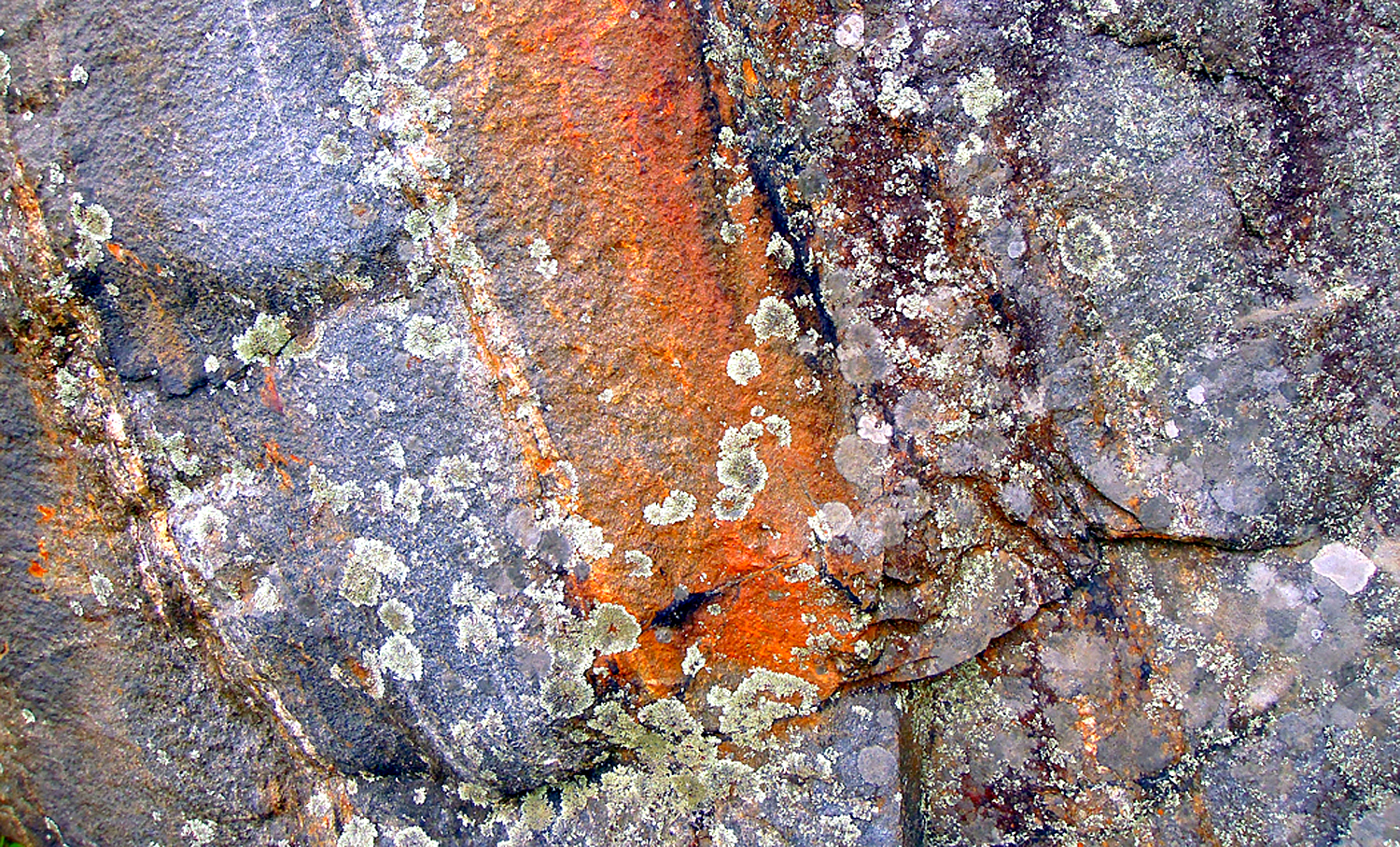
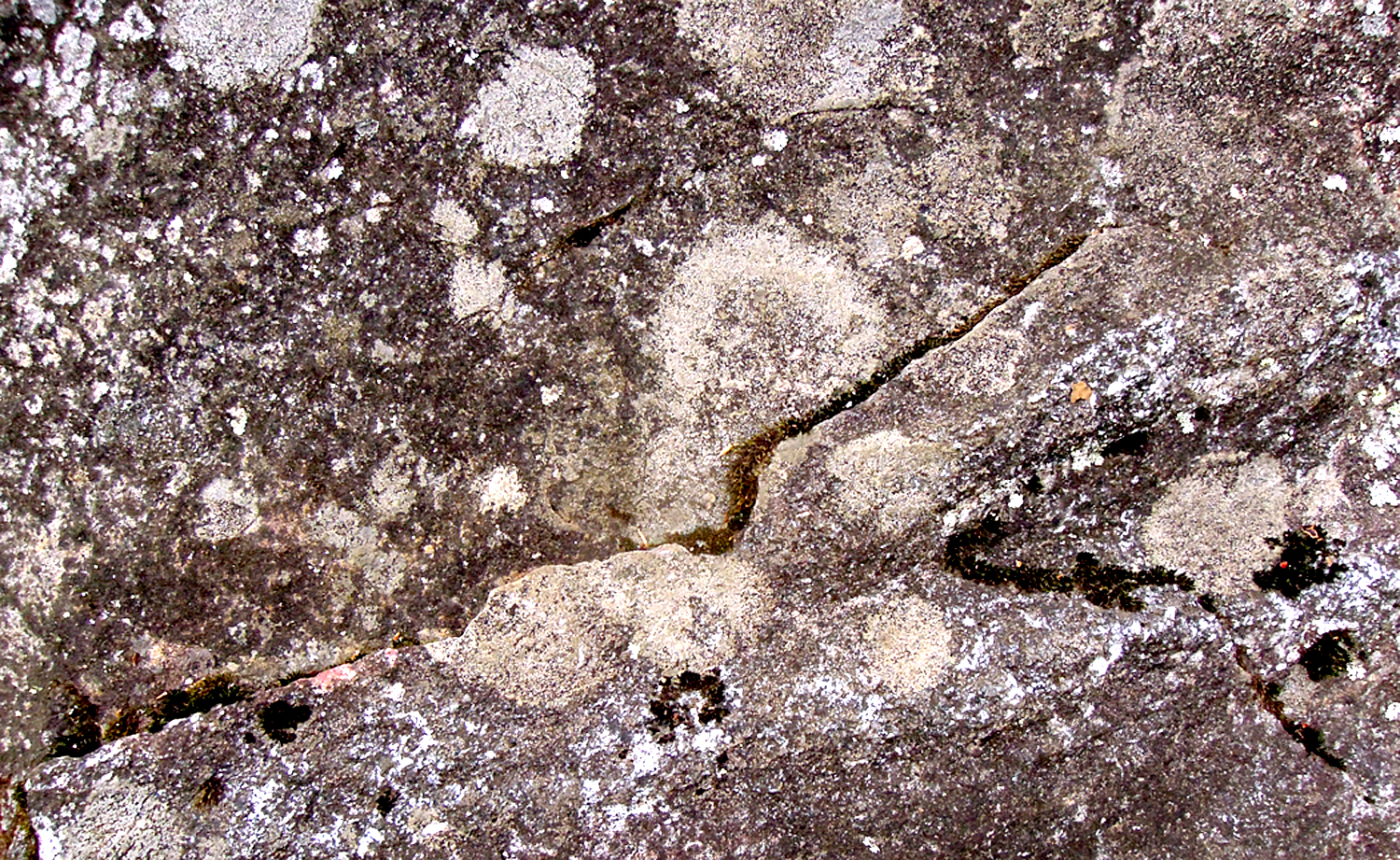
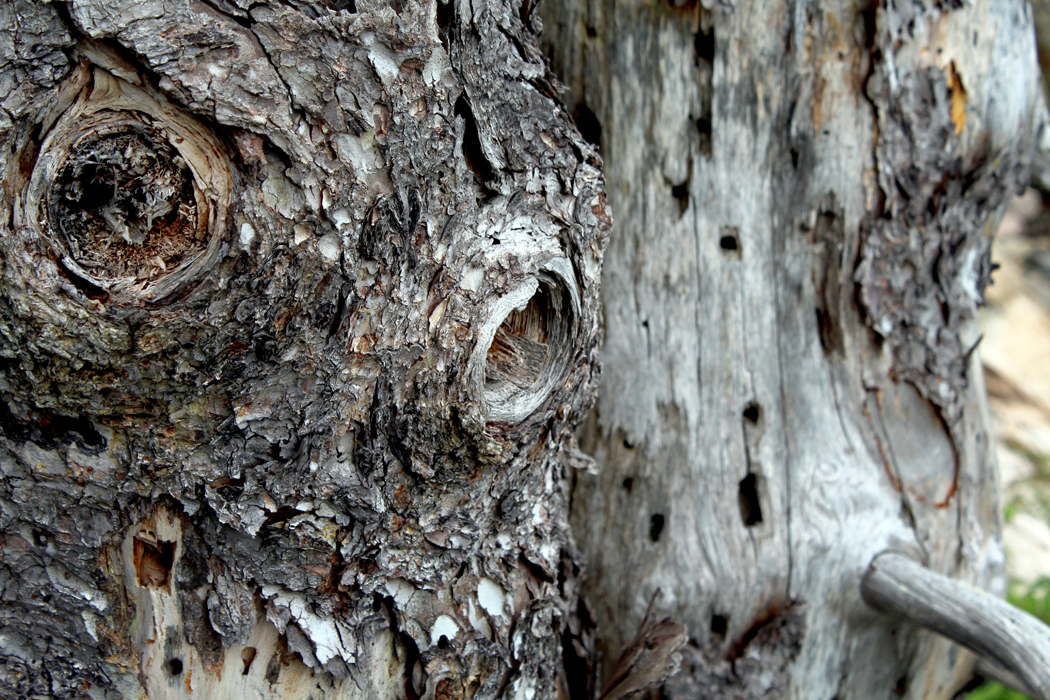
And in that granite or in that tree bark, there are shapes, textures, colors. I touch them. I see them.

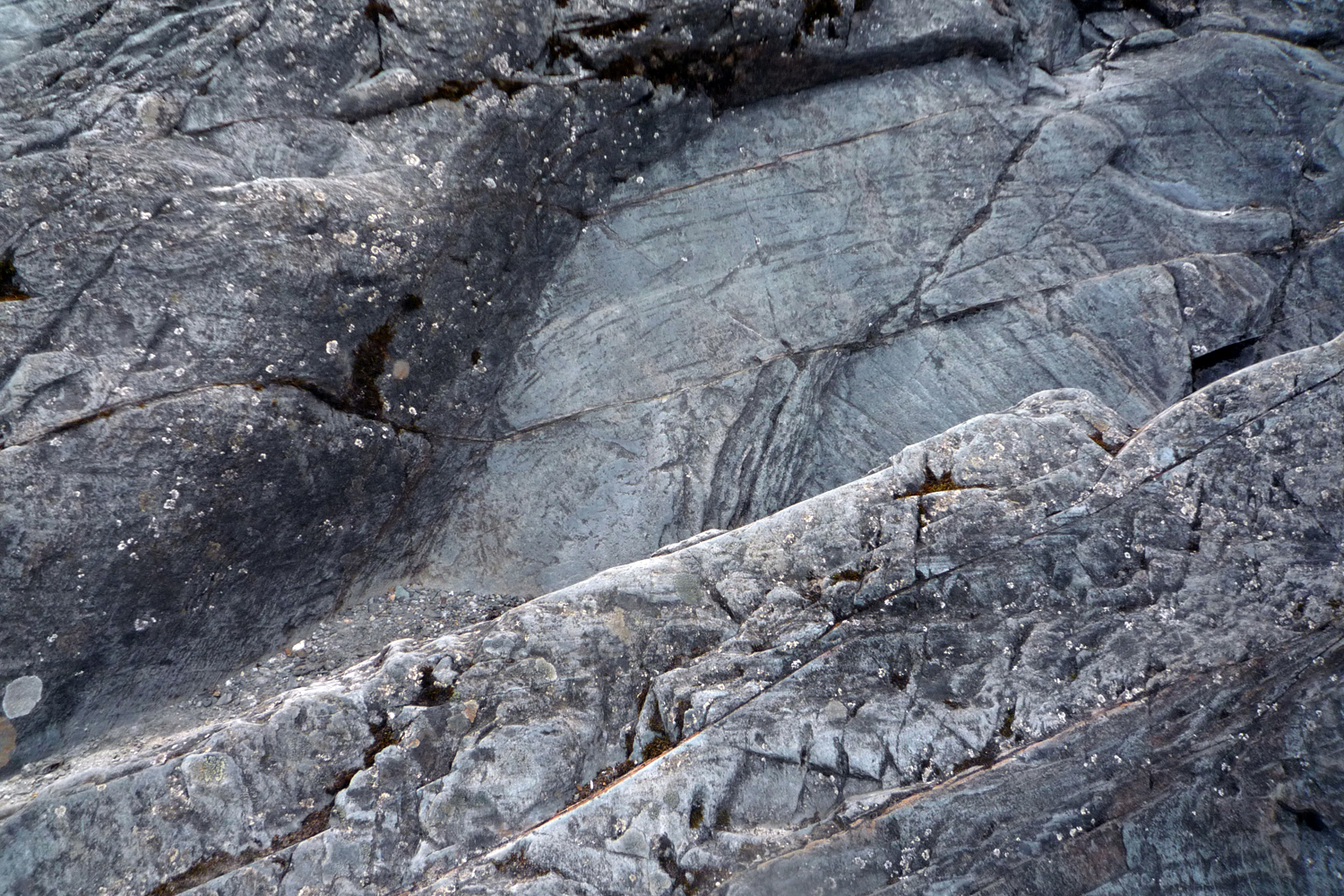
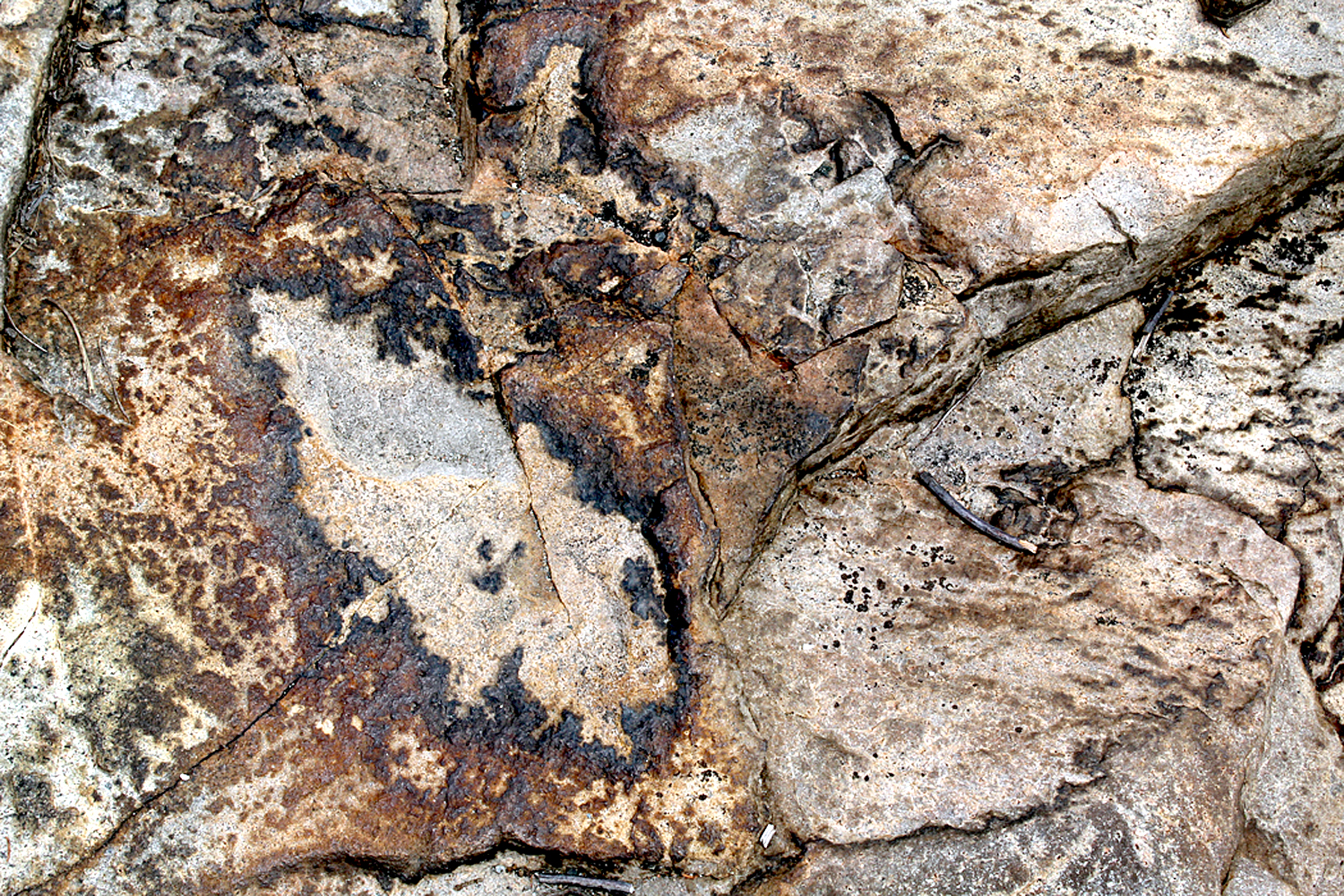
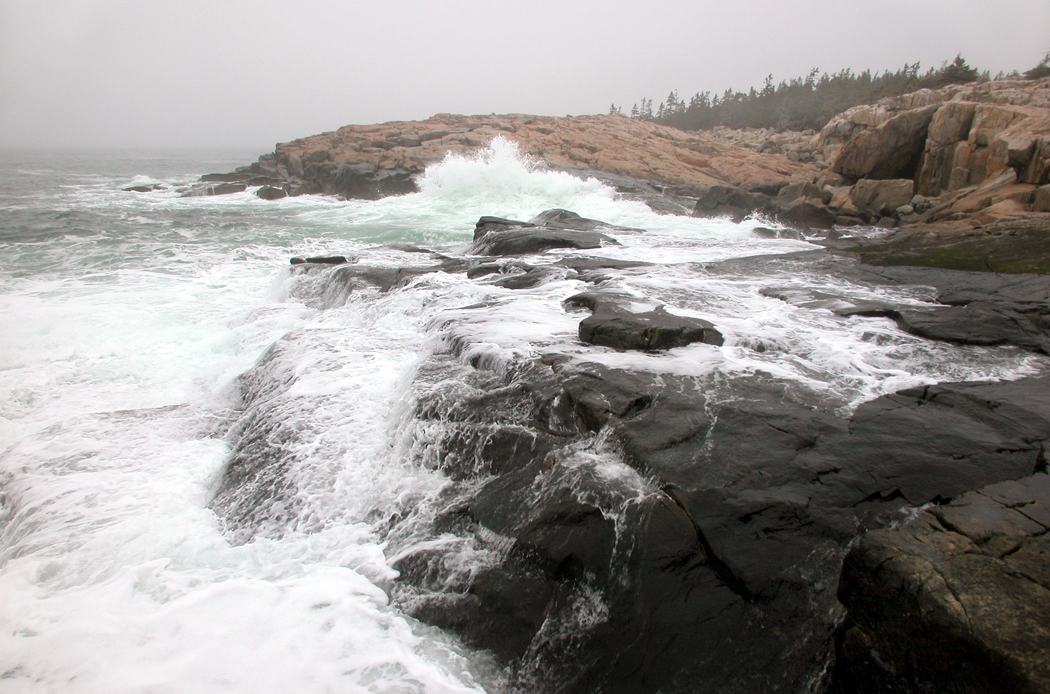
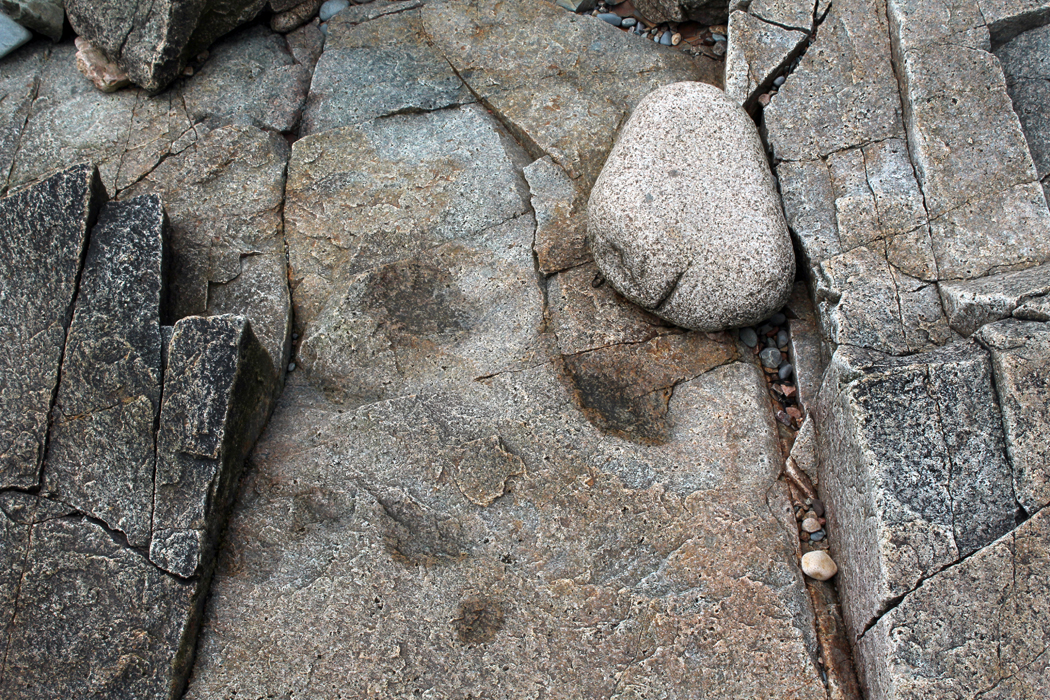
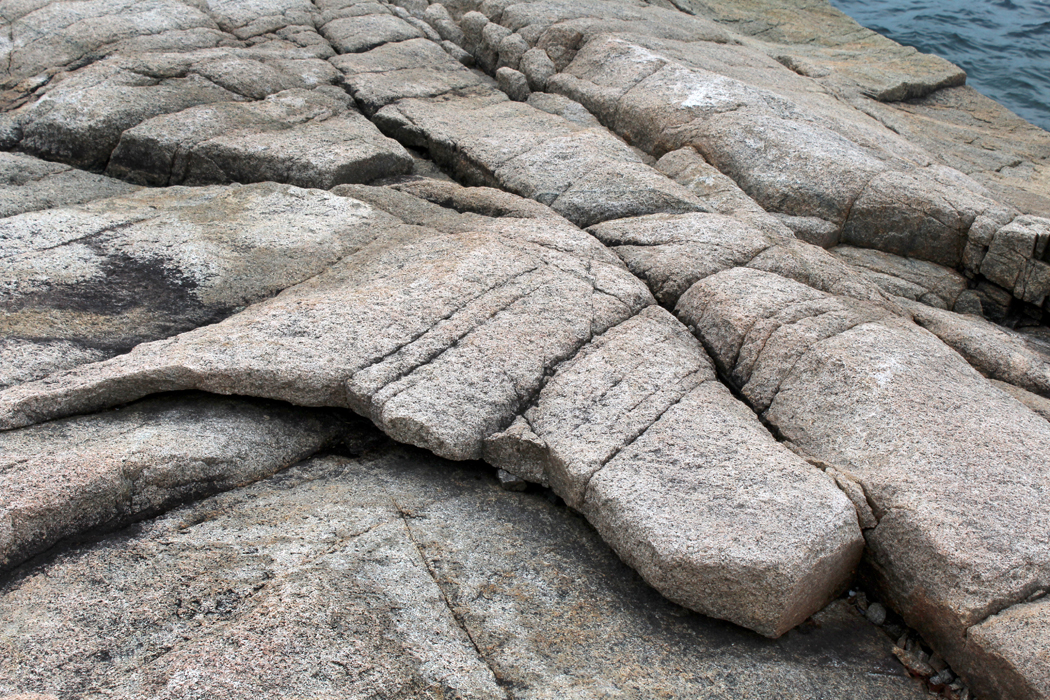
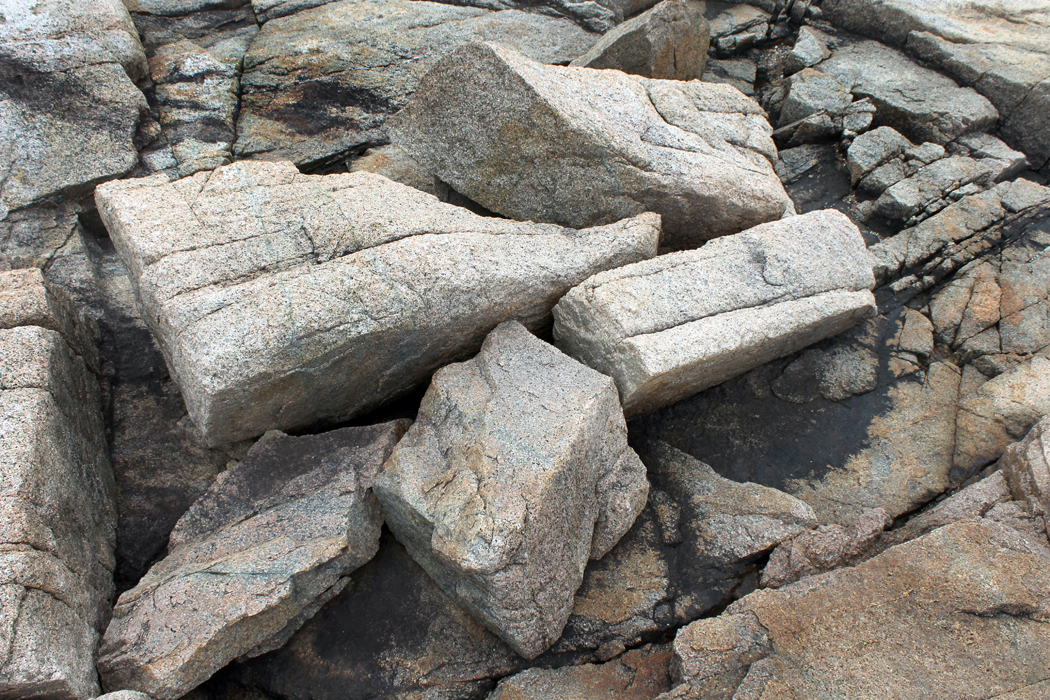
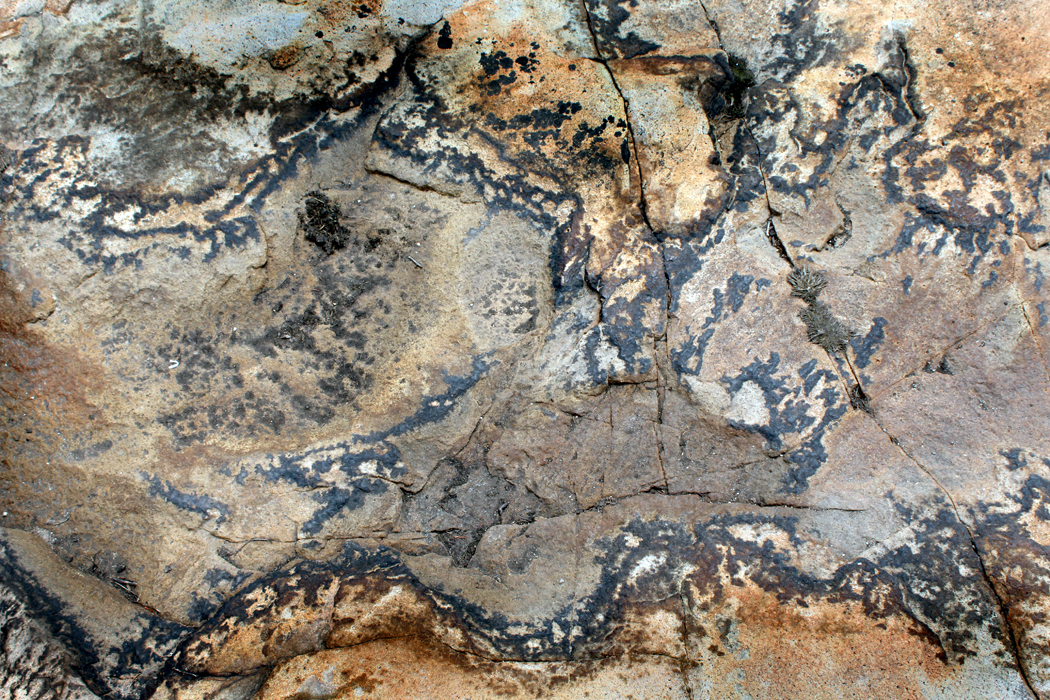
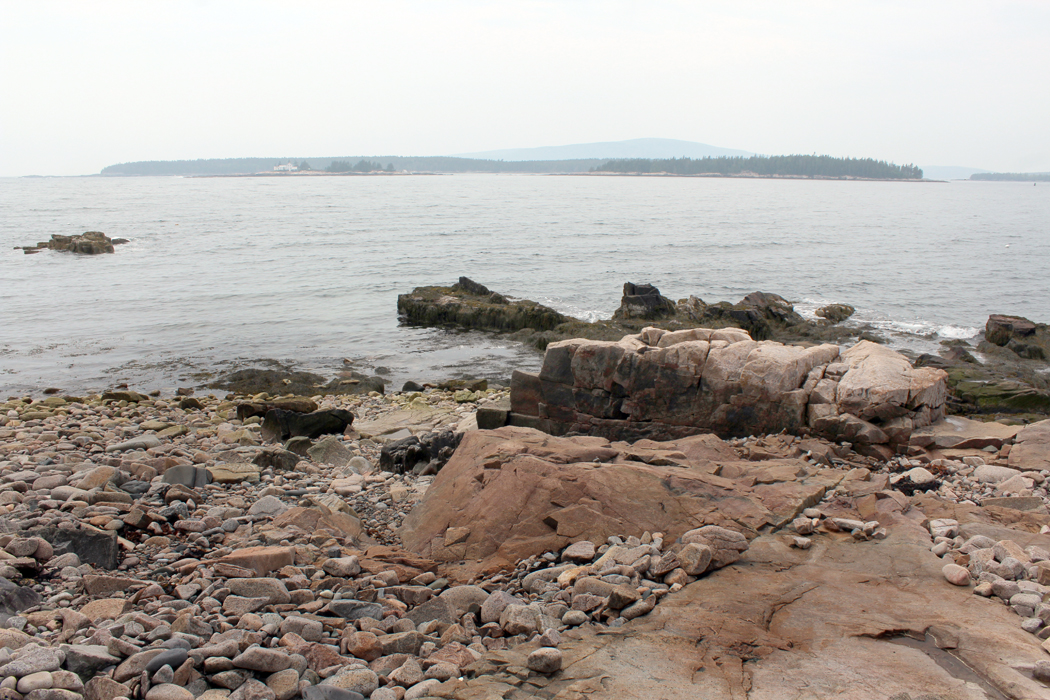
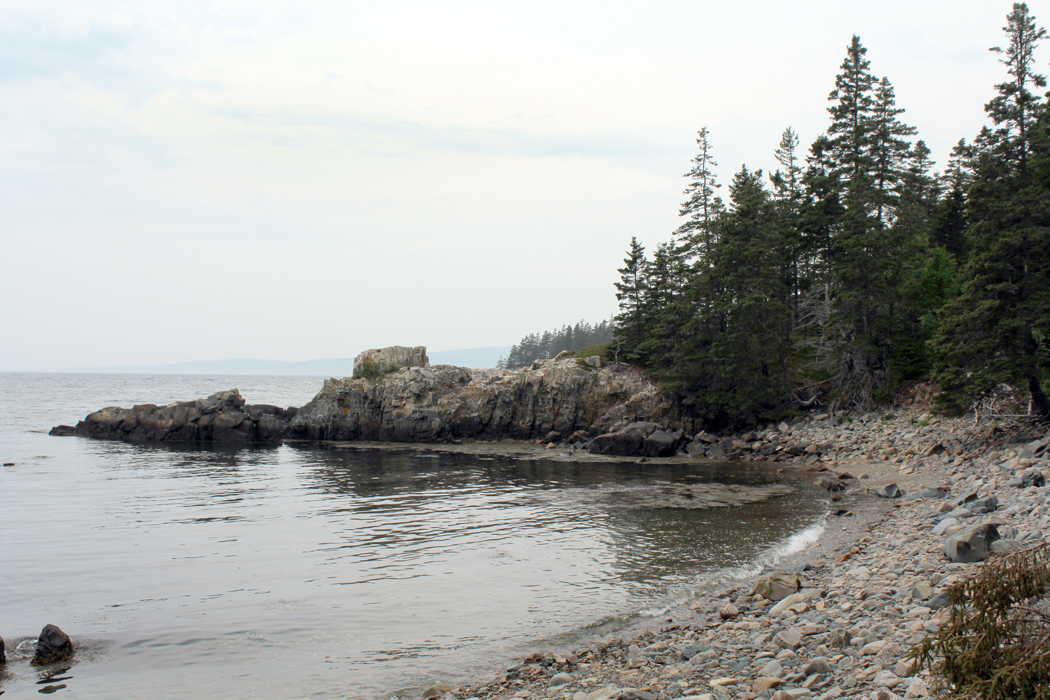
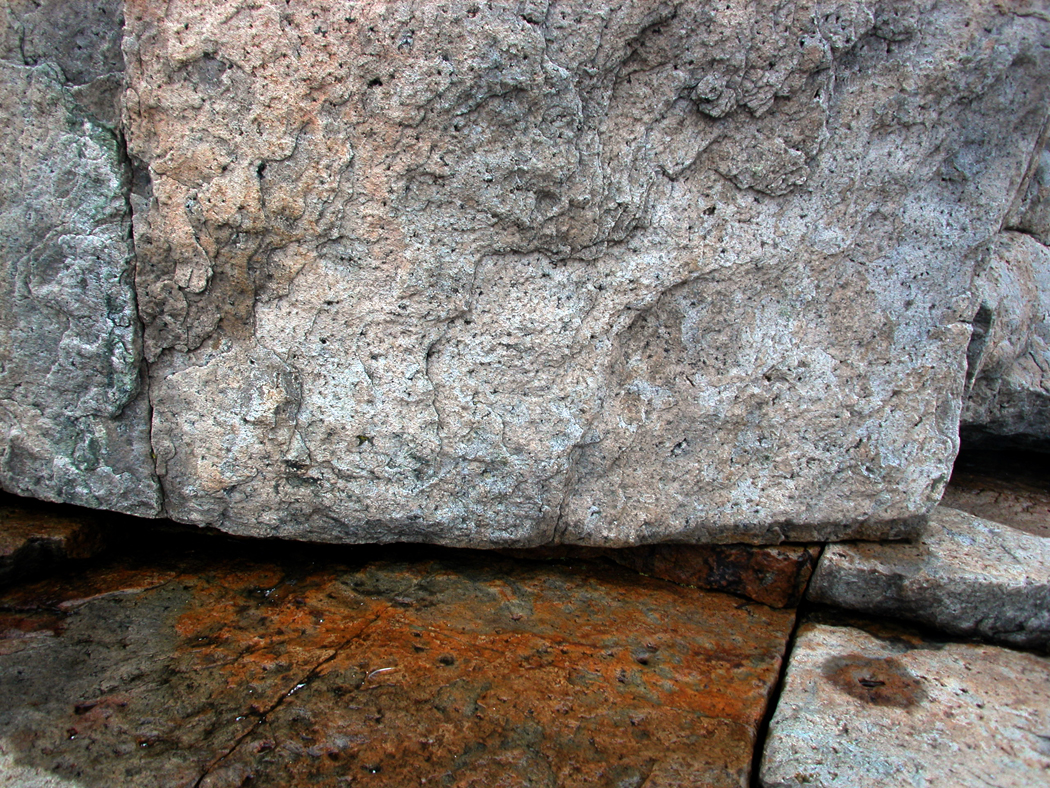
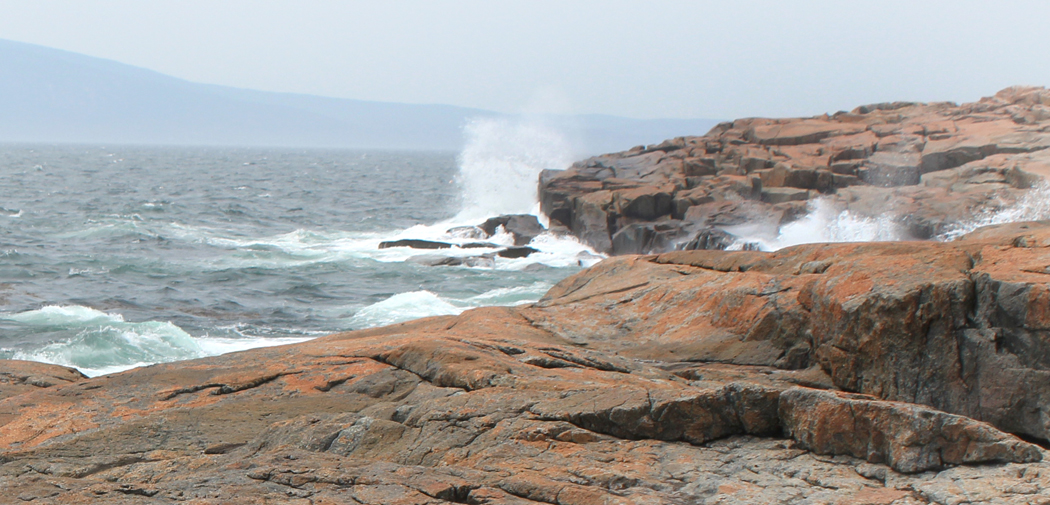
There is a place I have visited many times in Maine. It is Schoodic Point, which is a part of Acadia National Park. The main park on Mt. Desert Island, is crowded and developed, but some 40 miles northeast, by road, there is the Schoodic Peninsula, jutting out into the ocean. At its tip, it is bare, hard rock and spume and surf. The wind is usually raw and comparatively few visitors come there, especially in the fall and winter. 

(The double-O in the middle of Schoodic is pronounced like the double-O in “good.”)

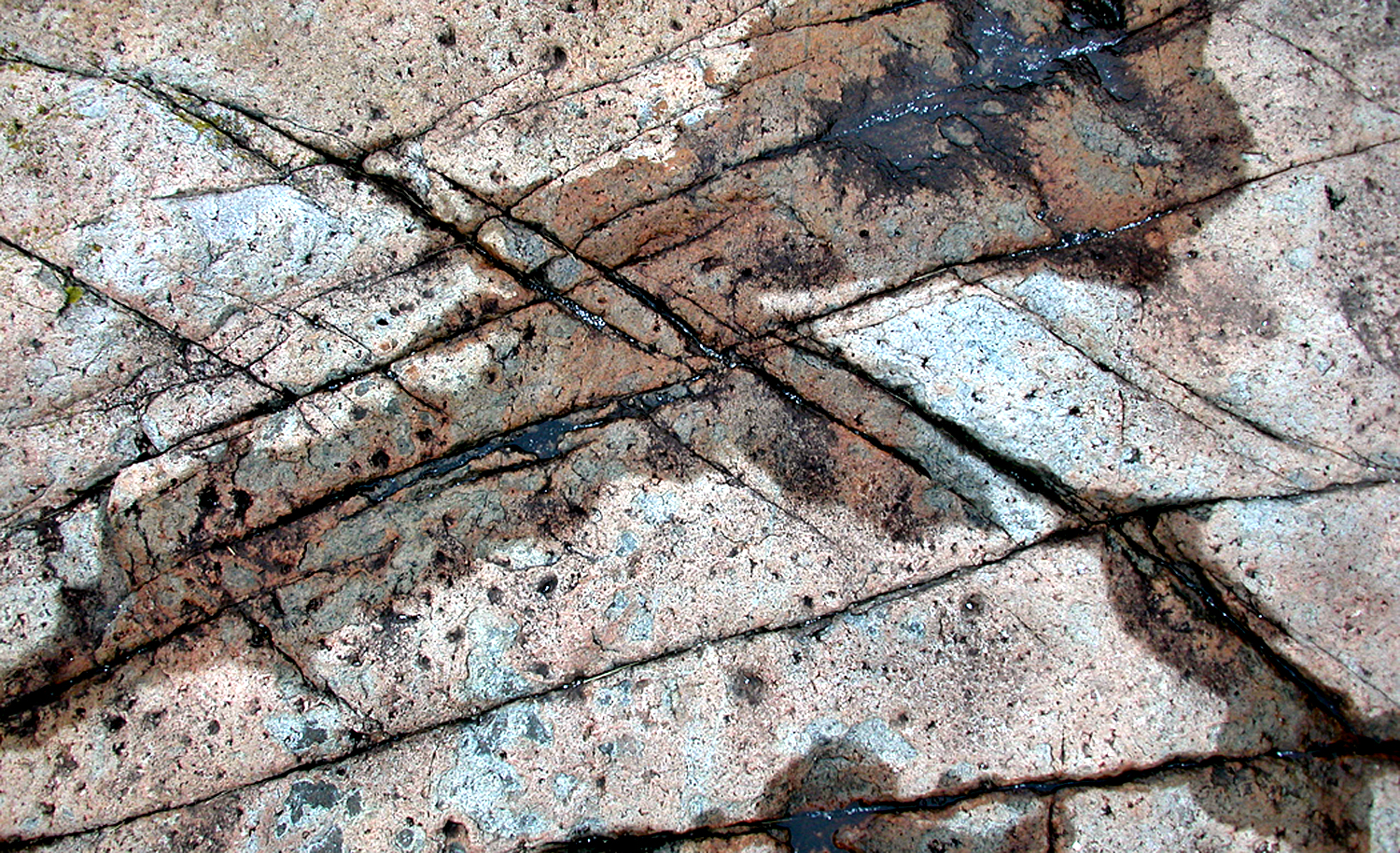
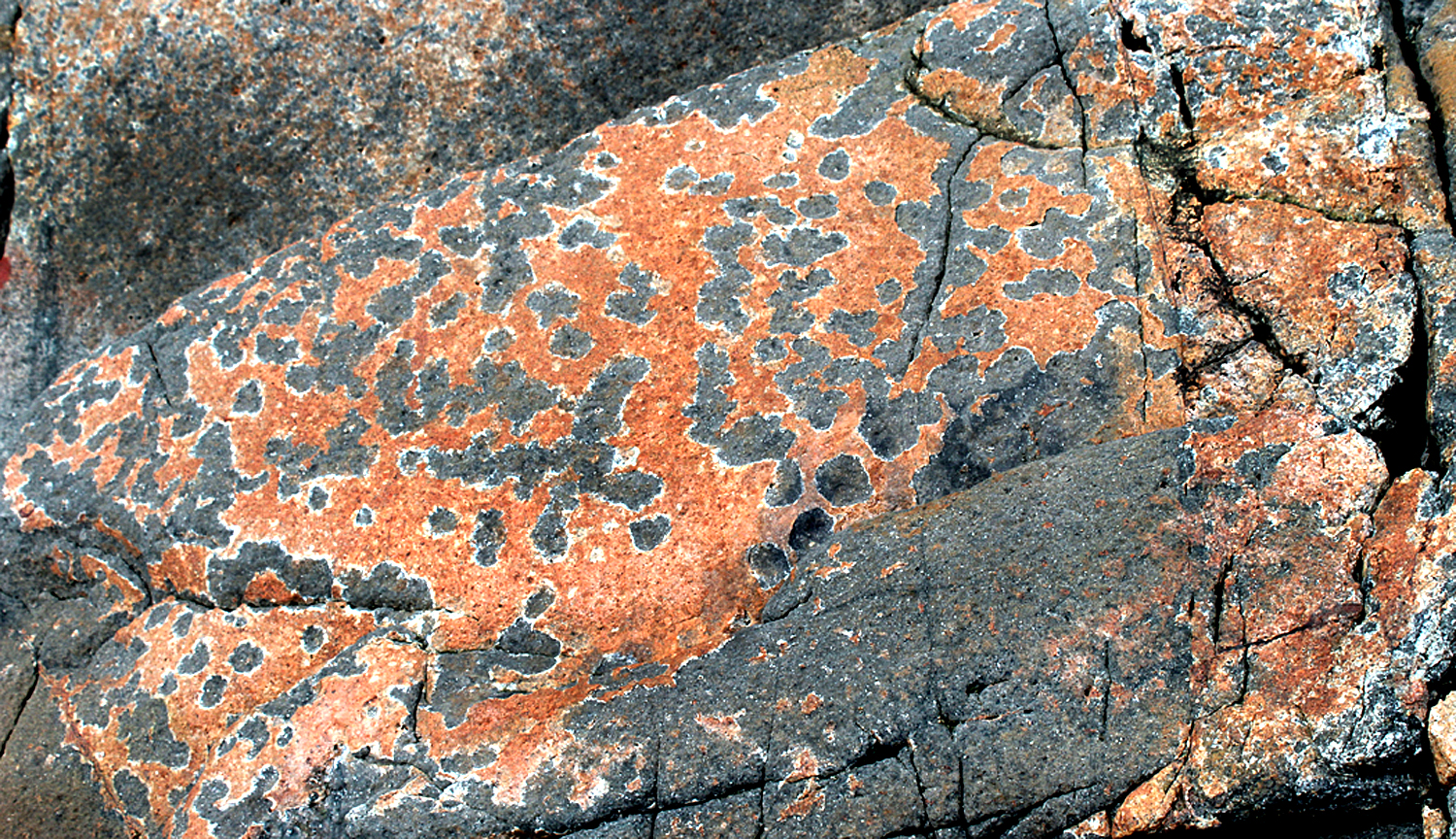
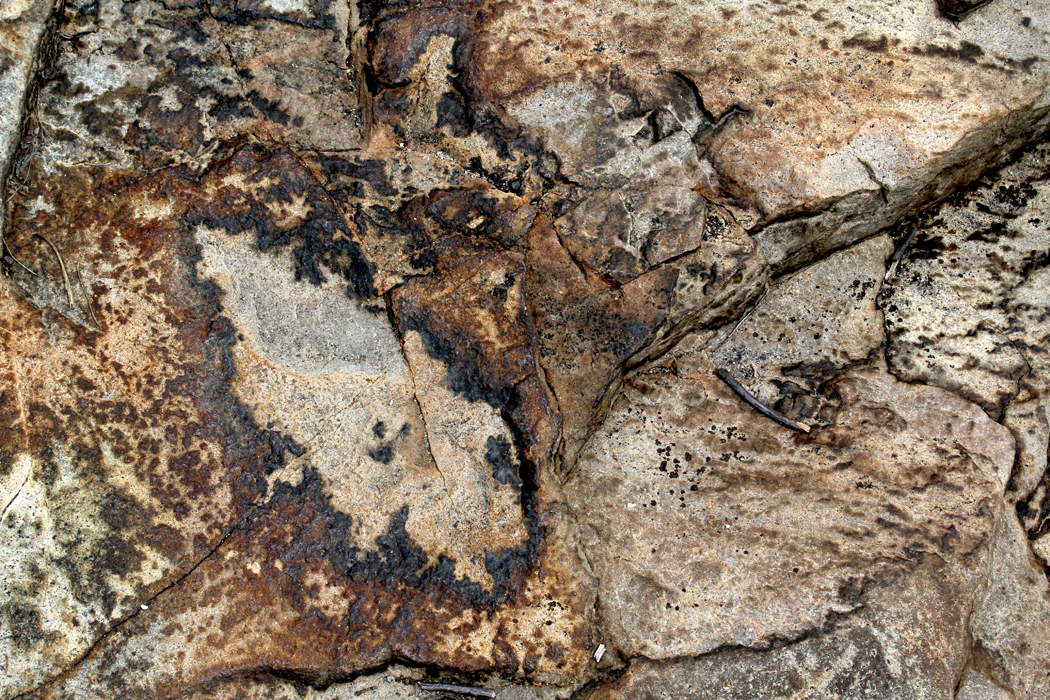
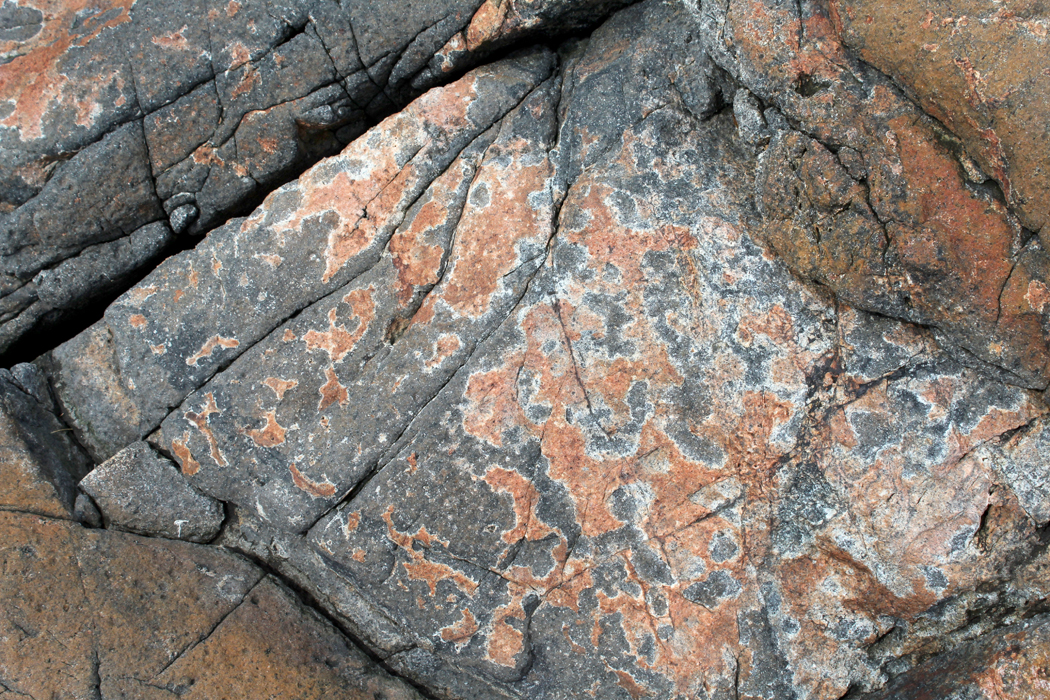
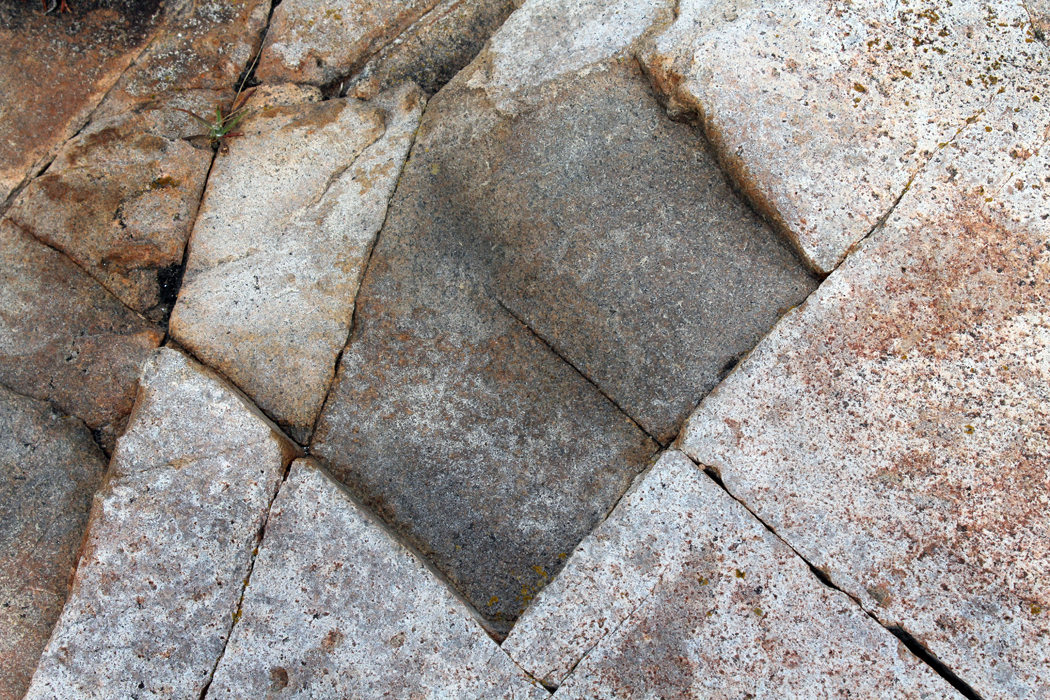
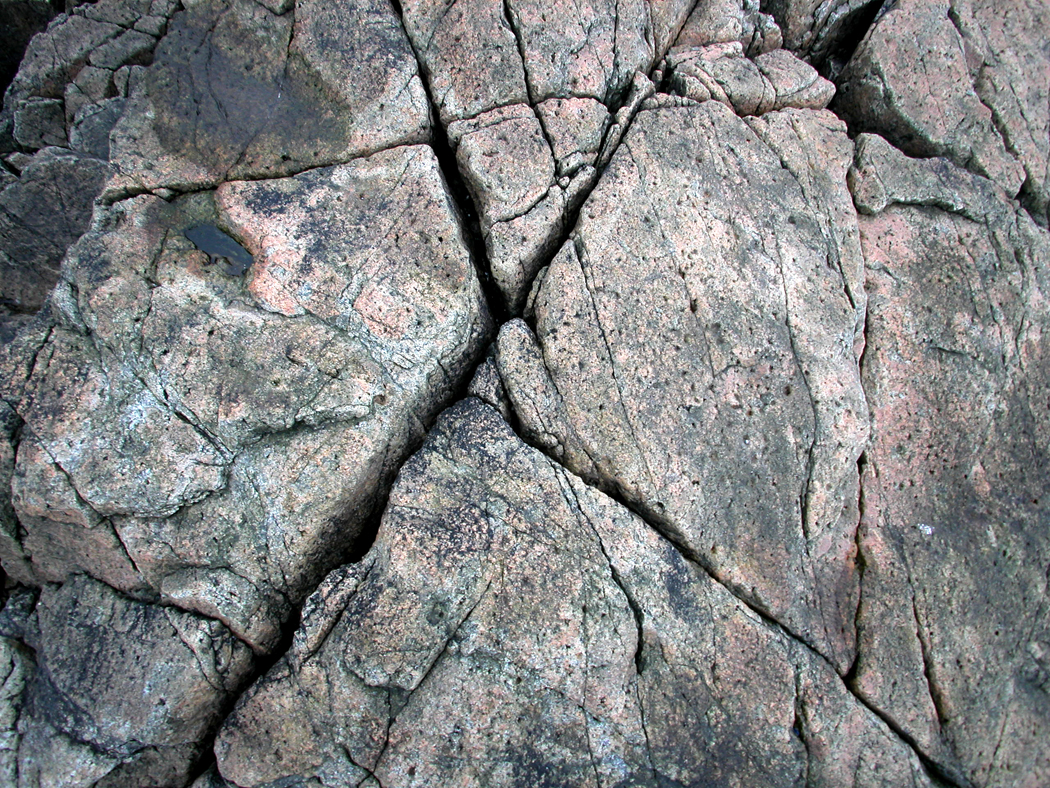
There, I can use my camera to record the abstract expressionist details that combine the emphasis on form and texture with an engagement with the natural world. It is a chance to reconcile those conflicting parts of my being. 

There is in some religions and mystical philosophies a contemptus mundi that I cannot share. The world is beautiful — not pretty, but beautiful; even its ugliness is beautiful. 

In 1928, the German photographer Albert Renger-Patzsch published a book in which his images of the world, both natural and industrial, found pattern and form in details excerpted from context. It was named, Die Welt ist schoen. 

That has become a watchword for me: When you engage with it as deeply as you can — and we are each different in this respect — when you so engage with it, you discover that Moses was not exceptional; every bush is the burning bush.

That is what makes those cypresses of Van Gogh so penetrating, the haywain of Constable, the waterlilies of Monet, the peppers of Edward Weston, the simple crockery of Chardin, the rabbit of Durer. Die Welt ist schoen. 

So, I cannot worry if my humble images are important art or not, or whether it is art at all. Muche wele stant in litel besinesse. 

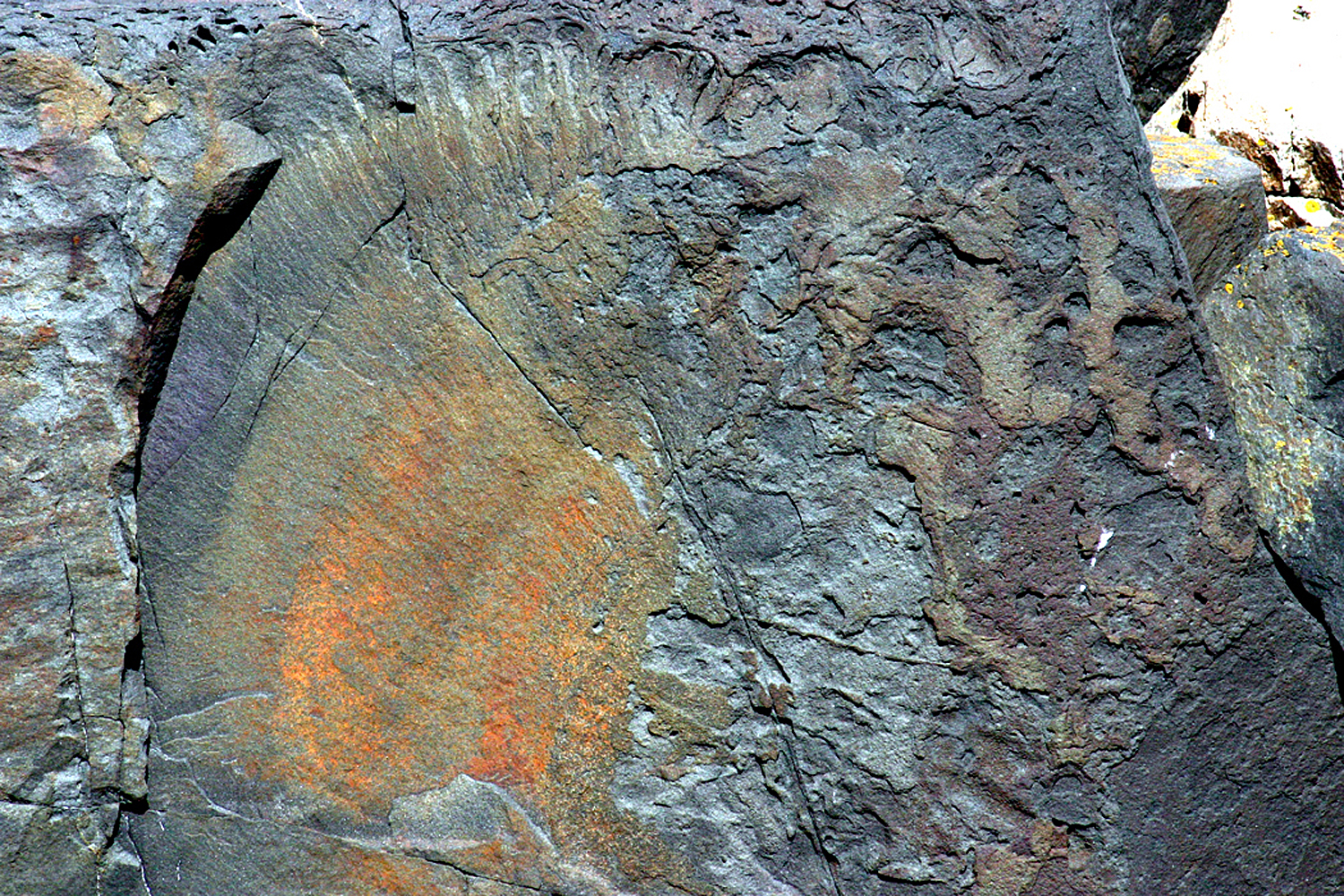
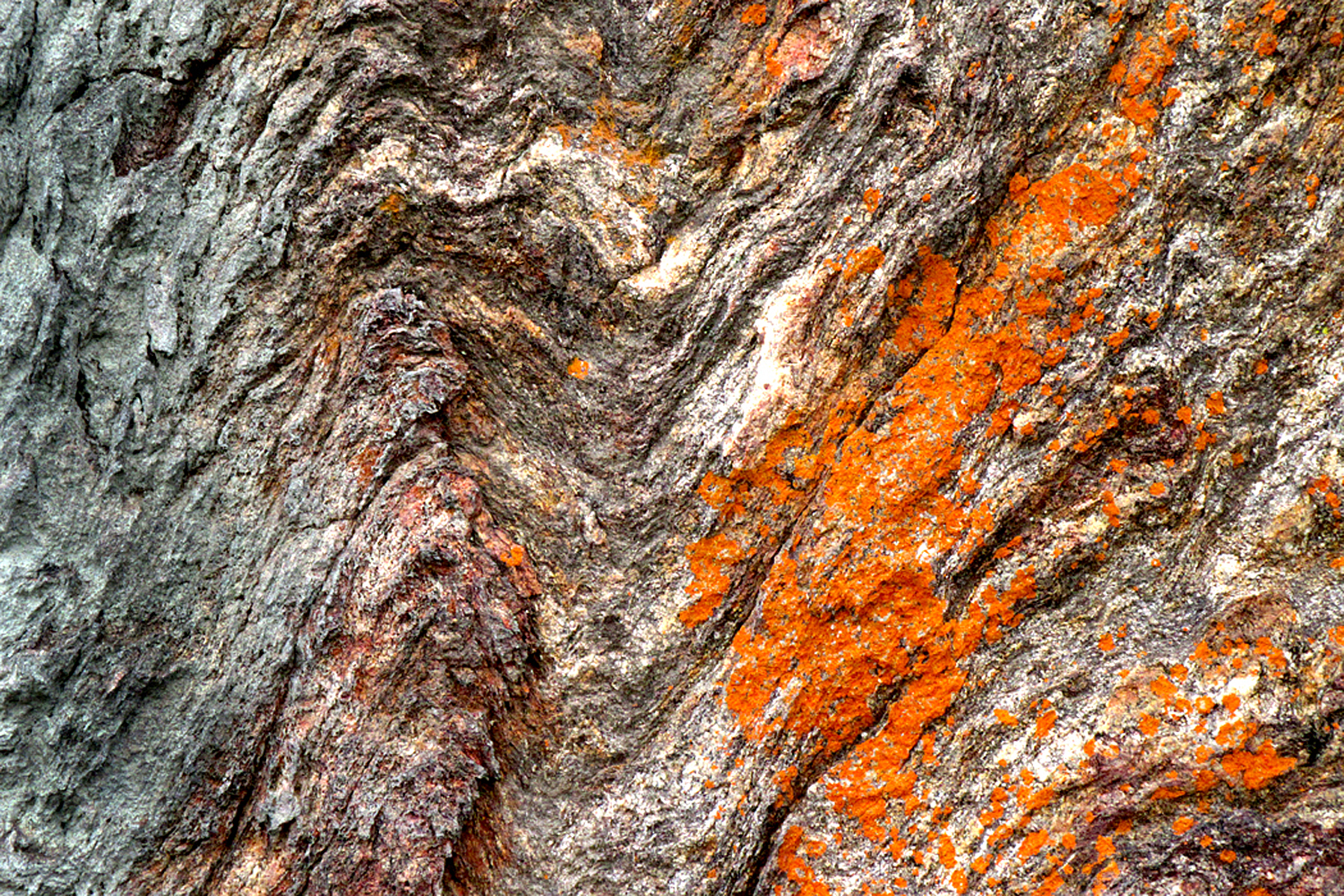
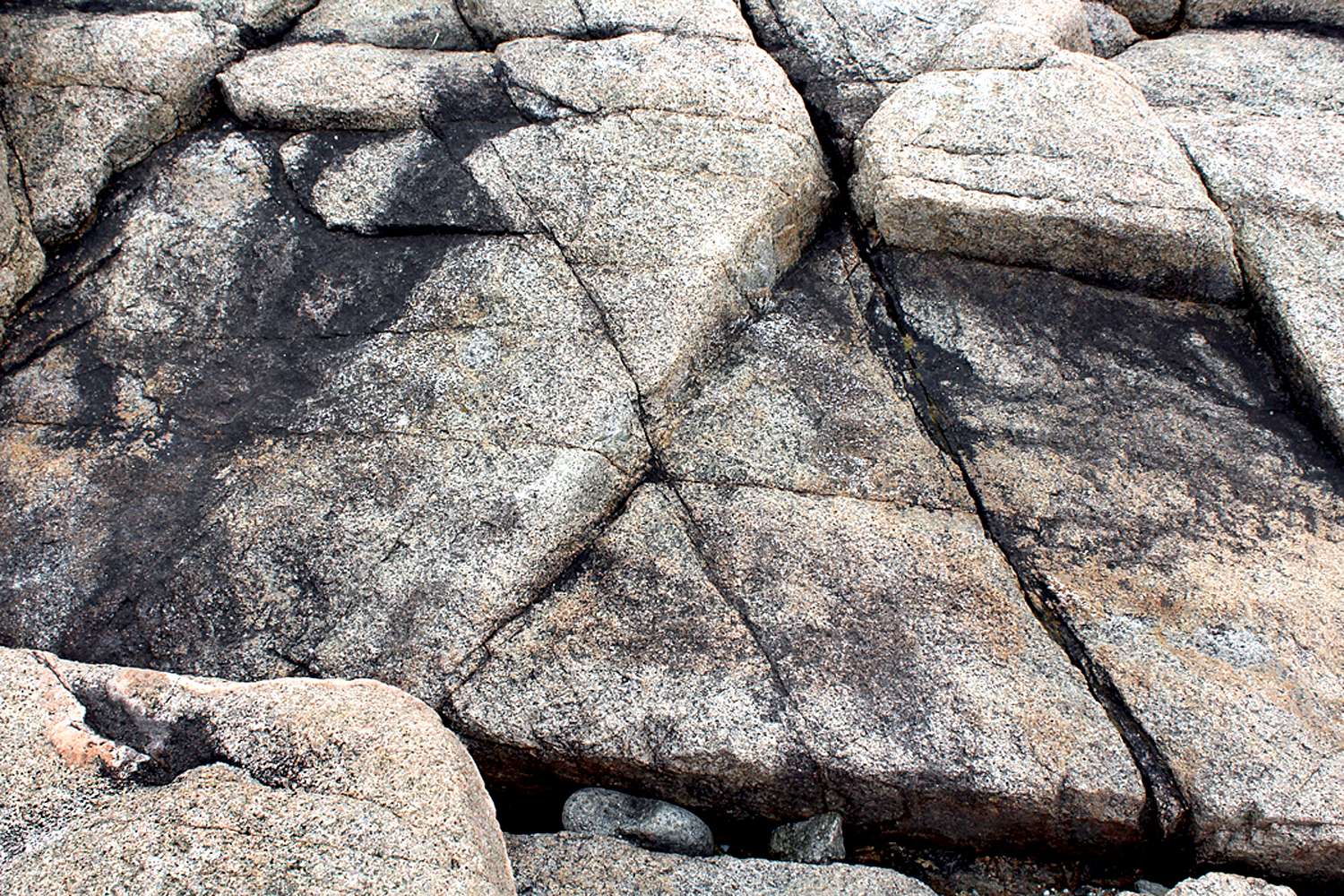
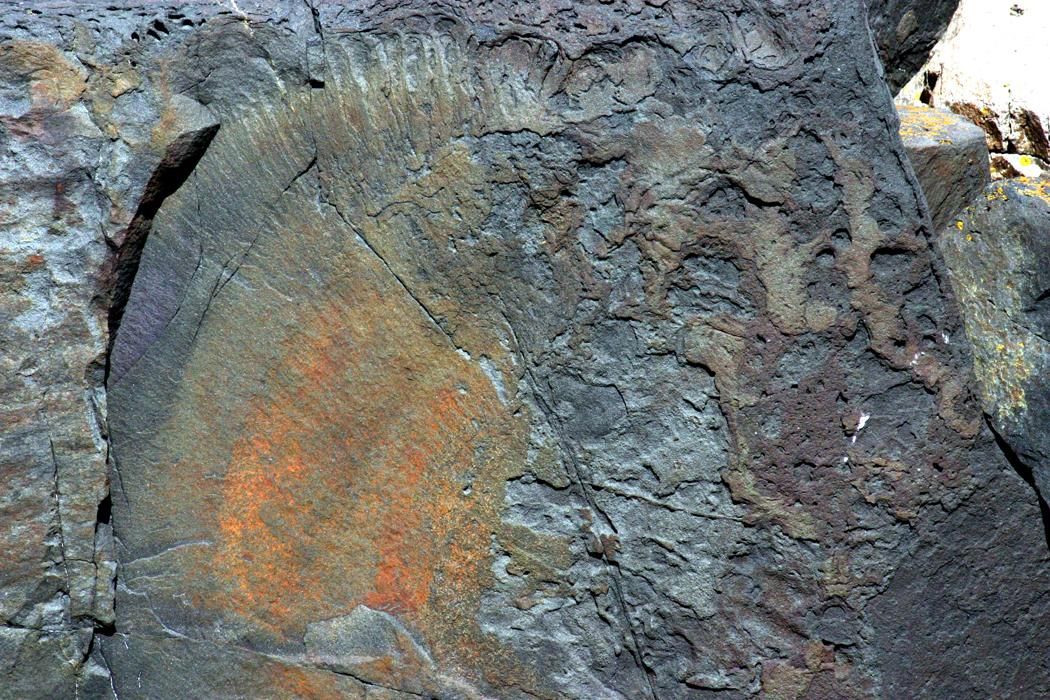
This is my tiny translation of Schoodic into image, the finding of the same elements Pollock sublimated into his canvasses, but here extracted from the hard edge of stone.

Click on any image to enlarge


Part 1: The Thing

Abstract art has several jobs, but one of the most important is to take the bits of the visual world around us, separate them from their context, and allow us to see them freshly. By removing color, texture, and pattern from their received meaning allows us to pay attention to the building blocks of vision. As if we could take the music of speech and remove the words from them, so only the sensuous vestige remains.

In most of the visual world we live in, we have given meanings to what we see, like seeing the diagrammatic picture of a man or woman on the restroom door. And in “reading” the visual world this way, as a sort of language, we too easily fail to actually see what we are looking at: We simplify and name: That is “green,” rather than “that is the green of kelp,” or “the green of grass.” Two very different greens. And there are thousands of greens. If we abstract the color from its worldly signature, we can place two greens next to each other and force ourselves to notice.

The same is true for texture, reflectivity, surface (whether matte or glossy), size or scale, the opacity or translucency of pigment — a thousand different qualities of sight, and of the visual world we inhabit, but where habit has dulled our perception — and our delight.

Still, no matter how abstracted from the quotidian an image may be, there remains some remnant of its source. We tend to recognize a certain green by the chords it sounds in our memory, our sense memory. We respond to this green or that in part — and idiosyncratically — by the way it calls to mind the emotions and pleasures we attach to it in a rather Proustian way.

Thus, although we may think of abstract art as a kind of rationalized set of color and pattern, line and texture, we can never entirely divorce our response to it from the experience of our own lives.

So, we are left with complicated response to art that on the surface seems to have no meaning.

(It’s no use making the argument that such response is too subjective, too personal. Our response to any art, no matter how abstract or how realistic, is always personal. Abstraction, again, reminds us of what we don’t normally think about.)

Painters have the advantage that they can invent shapes and lines from nothing but cobalt blue and vermilion. But a photographer is left with a more direct connection to the world outside his head. The camera must be pointed at something.

So, to make the same sort of visual argument as an abstract painter, the photographer has to use the real world and re-see it in some way as to make it unrecognizable. The two most immediate ways to do that are to get so close that all context is stripped away, or to step so far back that the perspective is one that no ordinary human can recognize it.

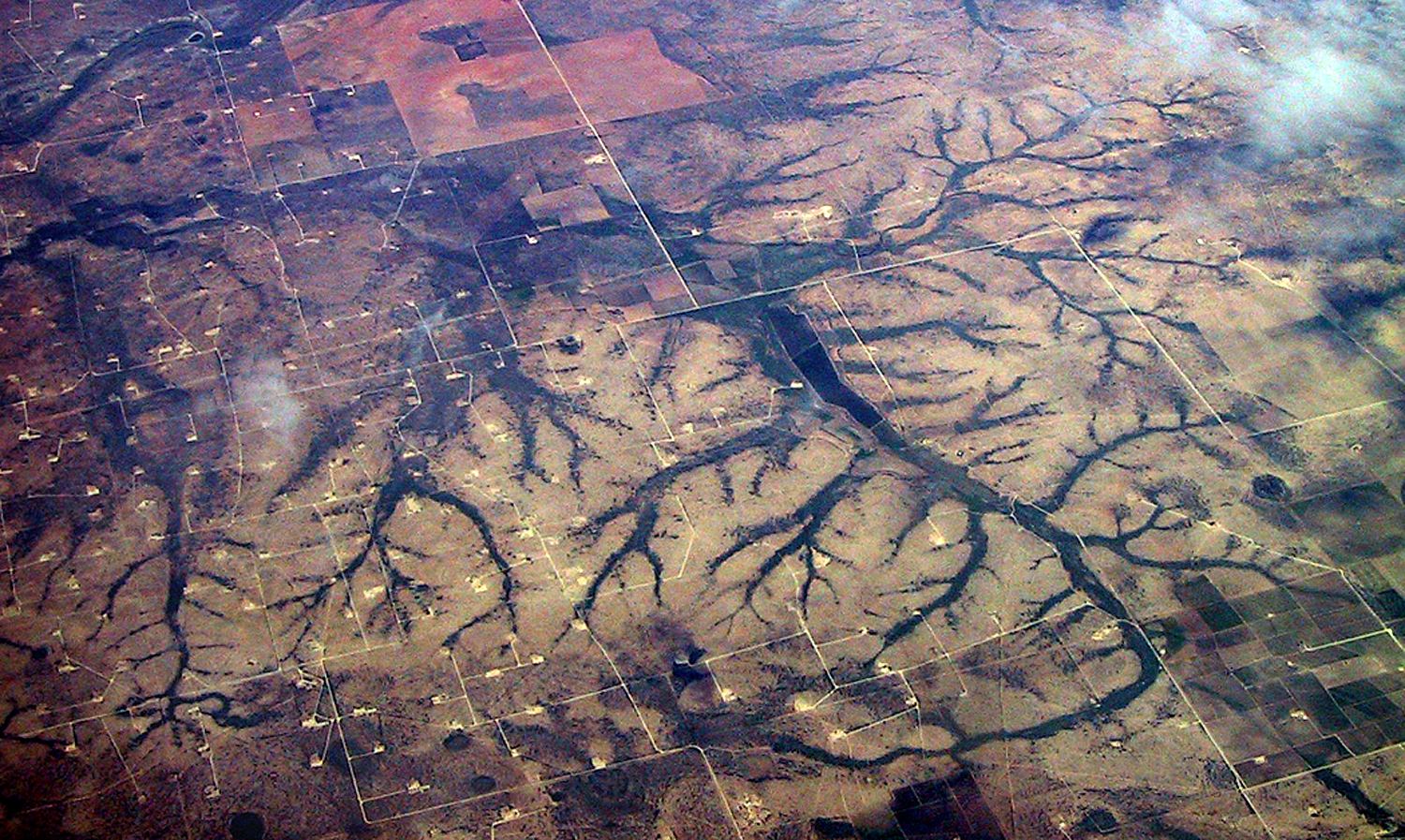
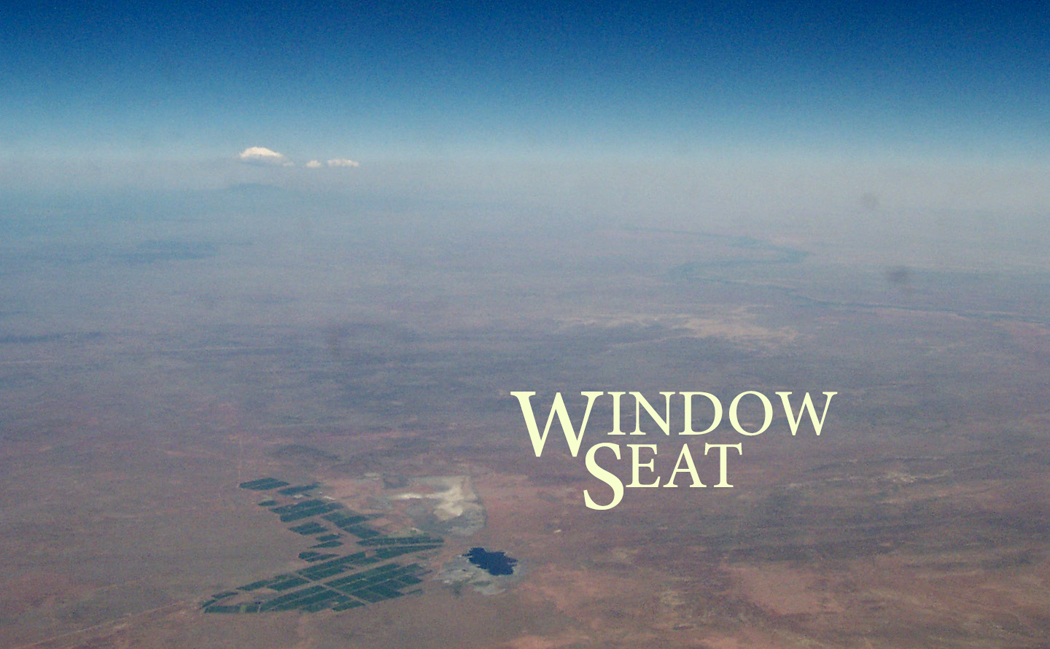
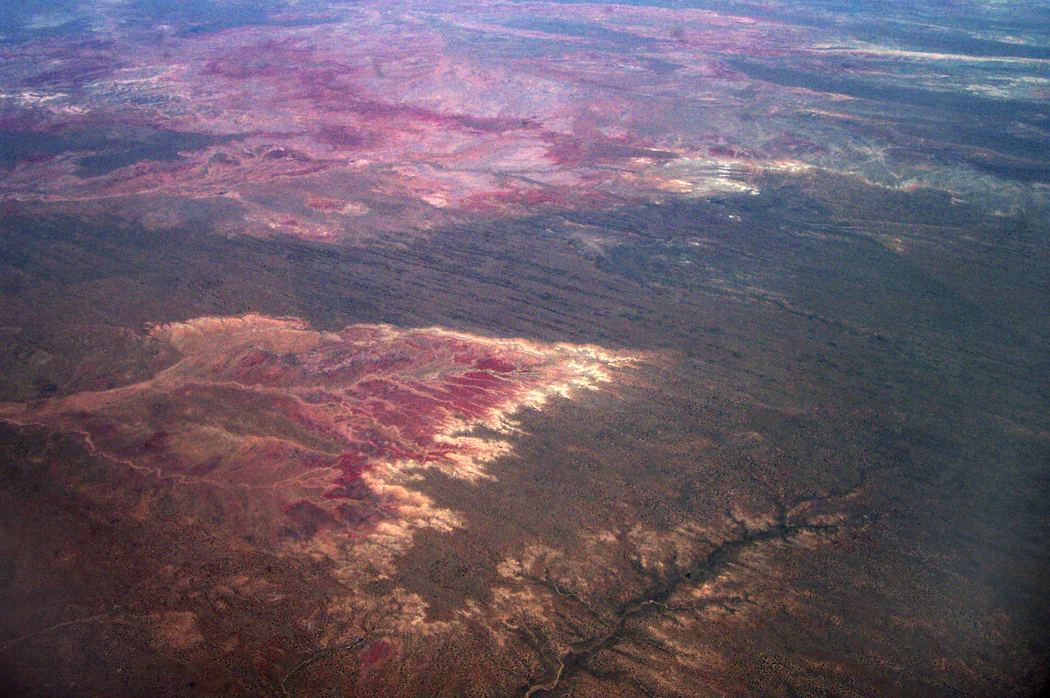
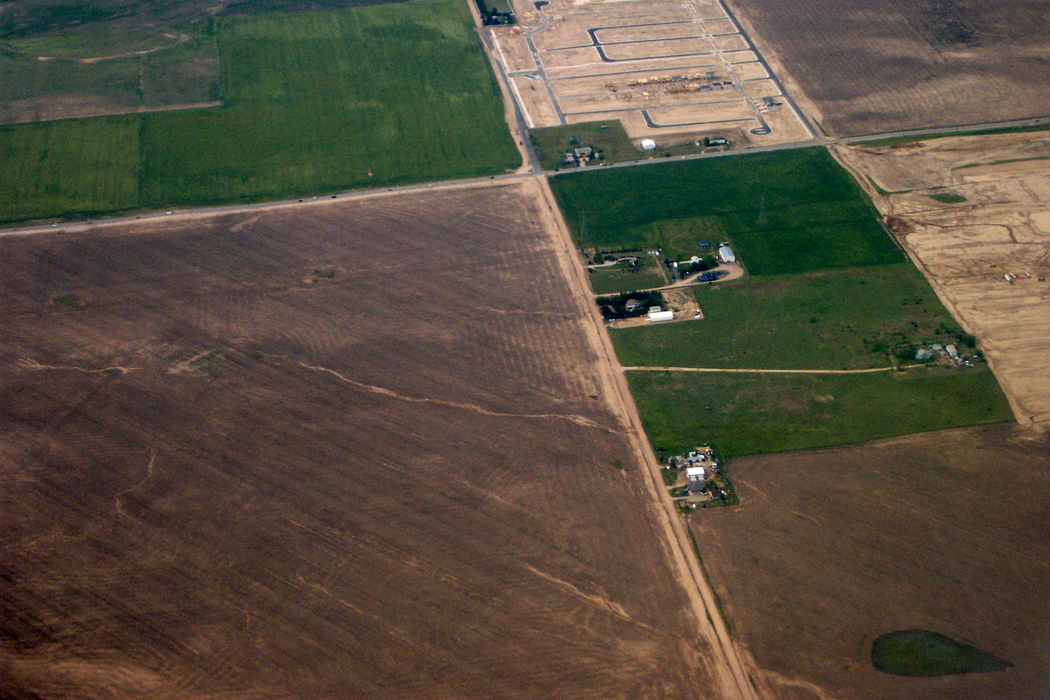
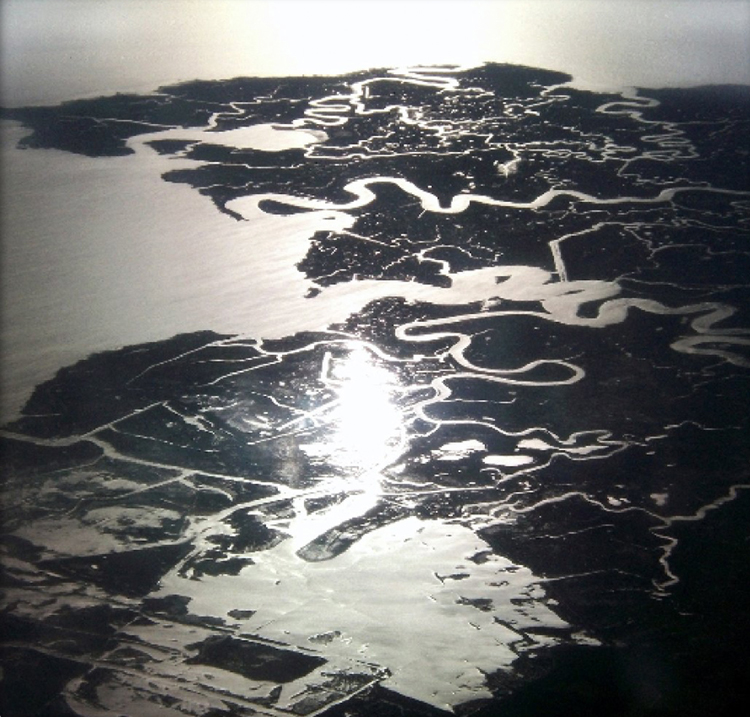
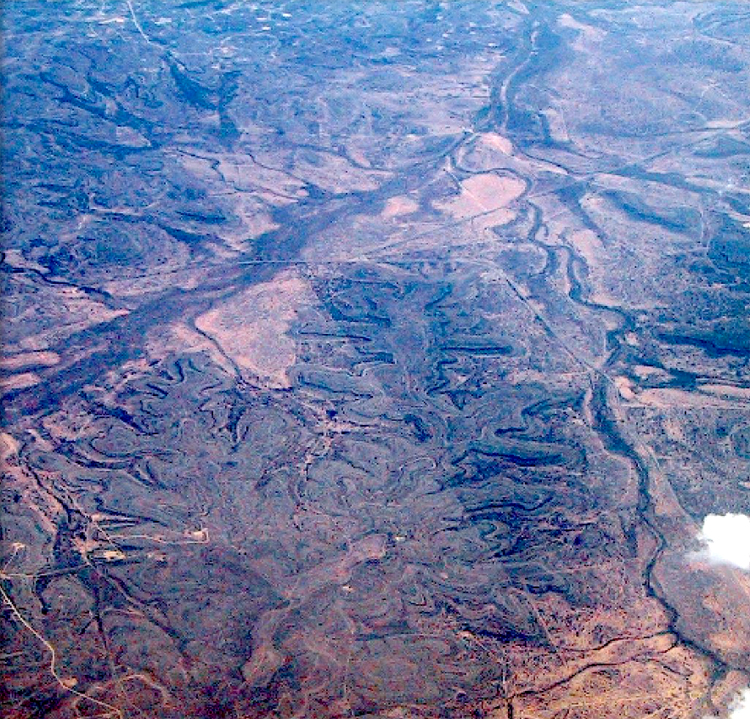
It is why I always book a seat by a window when I fly. I can look out the window and see the colors, textures and patterns of the planet below me, and make designs with them with my camera.

I self-published a book of such abstractions using the website, blurb.com. You can find the book here, and open it up in preview mode: http://www.blurb.com/b/1376943-windowseat

The skin of the continent becomes a canvas painted in swirls and pools, like some de Kooning or Pollock, Rothko or Diebenkorn. If you look, you can see again.

Part 2: The Metaphor

We live on a planetary canvas; colors and shapes are spread across the stretched linen of the Earth’s surface, although we have to step back to see it with any clarity.

The best way to do that is to climb up into the air. Up a tree and the neighborhood looks different; up a mountain and the valleys change; up in a jet plane and whole quarters of the continent are transformed.

That is the gift of the window seat. The view out and down paints a completely different picture of the world: clouds below us; shadows stretch out for dozens of miles late in the day, or as the sun rises; seas catch the sunlight in a scatter of sparks; the sky overhead is so dark a blue as to mimic midnight at midday.

I love flying. There is nothing quite so exciting as seeing a whole state underneath you opened up like a life-size map.

From 30,000 feet, you get a sense of the world as a tiny globe and can see whole ranges of many mountains as single features, like wrinkles on a face.

Few of us will ever see the Earth from the moon, or even from orbit, but anyone with a boarding pass can have his sensibility slapped silly with the incredible beauty of the planet.

So I always book a window seat for the show. And no matter how long the flight, I’m glued, stiff-necked, to the view.

You can spot the Rio Grande and its terrace, the Mississippi and its wiggle. You can tell Chicago from Detroit, Oklahoma from Arkansas.

Several times on cross-country flights, sitting on the north side of the plane, away from the glare of the direct sun, I looked out the window and down below the jet would be a floating pool of light, moving with the plane at some 500 mph. It is called a “glory” and it is certainly well-named. It is a visual effect much like a rainbow, and no two people see it in just the same place.

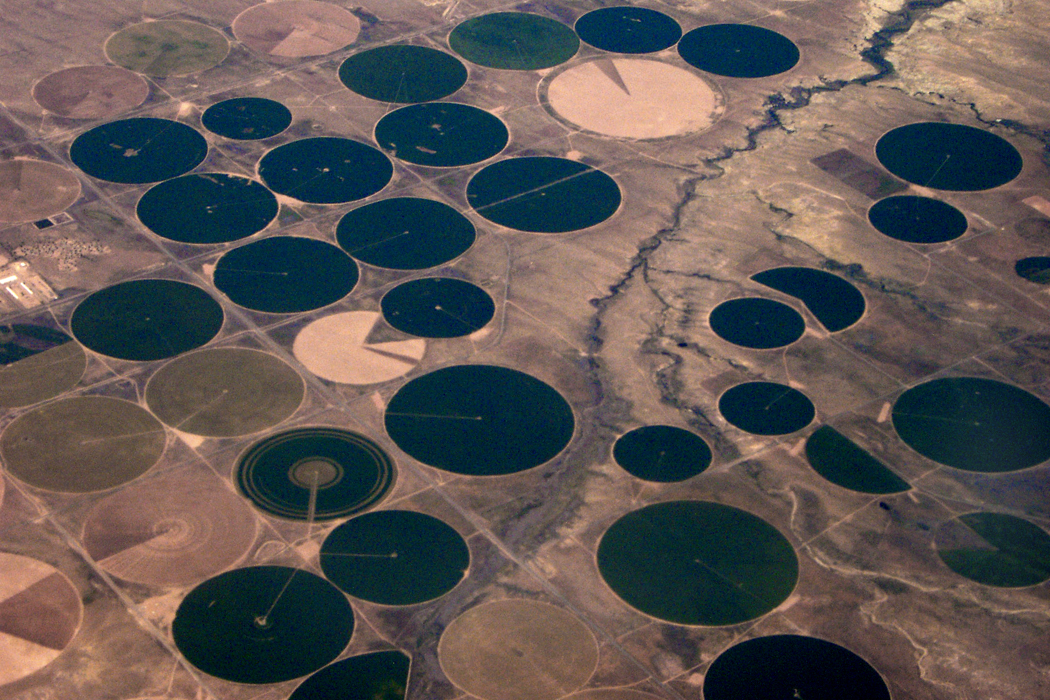
It can be seen at a point 180 degrees opposite the sun, speeding across the map-landscape below, crossing interstates and rivers, past the pegged dots of new housing developments, looking like mitochondria in an electron microscope, or the great circles of irrigated crops — great green coins spaced across Texas.

But it isn’t just the landforms that excite me. Even bad weather keeps my attention. Think of all the thousands of generations of humans who were never able to see the tops of clouds, which form their own fantastic landscapes, with mountains and valleys of crenellated whiteness.

The pilot curves the jet route in wide circles around a towering thunderhead, bleach-white at top and sooty at bottom, with its cauliflower protuberances catching new light. The distance is crowded with them, sprouting like mushrooms to the horizon. Dozens of fresh, new thunderstorms rising sunward like children reaching up for their mothers.

Over California once, after a rainstorm, with a low mist of water evaporating up into the atmosphere, the millions of puddles aggregated their mirror effect into a single flash, moving at the speed of the plane and making Fourth of July lightning bolts that flashed just beneath the surface of the mist, the way you can sometimes see the blood pulsing under the skin of a newborn. It gave me a feeling of intimacy with the planet.

Or a night flight, with the ground black underneath you as you fly over the empty expanses of the Southwest, with the small embers of tiny desert communities coming periodically into view, glowing like the last bit of a dying campfire. As you approach Phoenix, those embers gather into a vast pattern of incandescence, like some great lava field, with the glowing magma breaking through the cracks of the cooling stone above it. Almost nothing is as radiant as a city at night seen from the air. You want to hold your palms out toward it, to warm your hands in its heat.


Earthbound, we have a very bland, utilitarian sense of the celestial body we ride around on. It is all streets and signage, houses and mini malls. It is the place we go to work every day, the place where we watch television in the evening.

It is true, to those who have the eyes to see it, the planetary nature of our home is there to be seen: Daybreak shows us the sun breeching the horizon and moving across the heavens; the stars are there to see at night; there are rainy days and lightning storms to remind us of the larger forces. But they have all become ordinary through habit and usage. How many of us take the time to look up and admire a mackerel sky or a fair-weather cumulus cloud floating puffy on the slightly denser air beneath it?

But take an elevator to 30,000 feet and you get the god’s-eye view, moving across the curved surface of the world, where the people aren’t even ants and where the Earth is one small aggie in a great colliding pile of cosmic marbles.

Click any image to enlarge
We know what photography is: You point a camera at something and take its picture. But what if you don’t use a camera? And what if there is nothing to make a picture of?

Certainly, many have used their cameras to make abstract or quasi abstract images. Sometimes you just have to get close enough to avoid any context, or take it from some extreme angle.
Many decades ago, when I was teaching photography — so long ago that the photo lab was filled with noxious chemicals and darkness visible — I played around with making abstract photographs. Most of my photographs were landscapes and portraits, but in the darkroom between classes, I had time on my hands and tried a number of things out.

But let’s take this a step at a time. First, some straight photographs.

Many years before I began teaching, I knew an artist in Greensboro, NC, named Aime Groulx (he signed his name with a dot over the “X” as if it were an “I”). He was primarily a sculptor, but he also made photographs. One he made was of a doorknob in his house that looked like nothing else but a newly discovered planet. He called it “Doorknob to the Door of Perception.” He was an indifferent printer, but I used his negative to make a good silver print, which I still have.

The image was both totally realistic — it was a doorknob — and yet, as Minor White used to say, it is “what it is, and what else it is.”
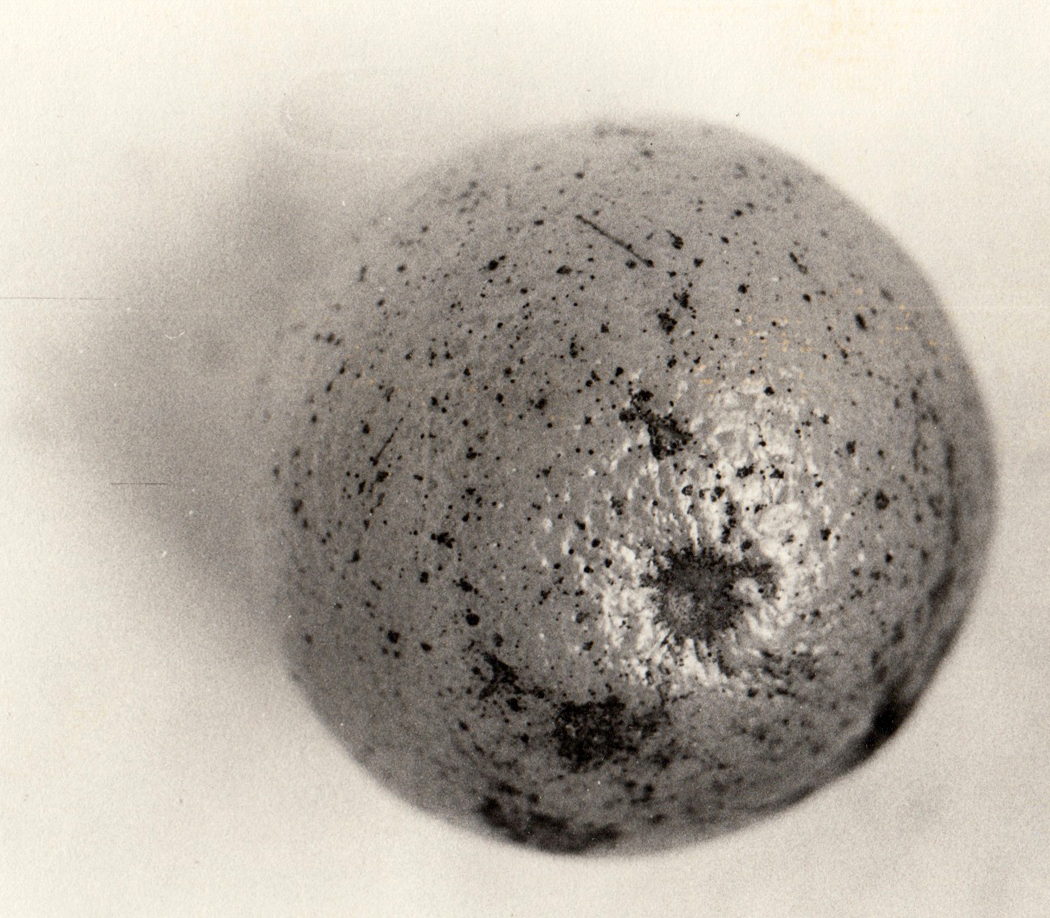
Over the years, I took this lesson to heart and made many an image that seemed to be something more than what it is. An orange can be a planet, too.
Or a sand dune can be a spiral.

Finding interesting and beautiful shapes divorced from their quotidian meaning can make us see them more sharply, make us understand something about the colors, shapes, textures, that being able simply to name the subject of a photo prevents us from acknowledging. When we recognize too easily what our photo is of, the image ceases being visual and becomes instead a word. “That’s a picture of a house;” “That’s a picture of a dog,” and by naming it, we find we have done our job and neglect to actually look and to see.

Making something abstract forces us to see those colors, shapes, textures — allows us to find new emotional meanings in the familiar, and new designs.

So, then, let’s take the camera out of the process. Once digital photography nudged out the silver, dried out the Dektol and replaced the Beseler 23C with Photoshop, there were other ways of making image files.

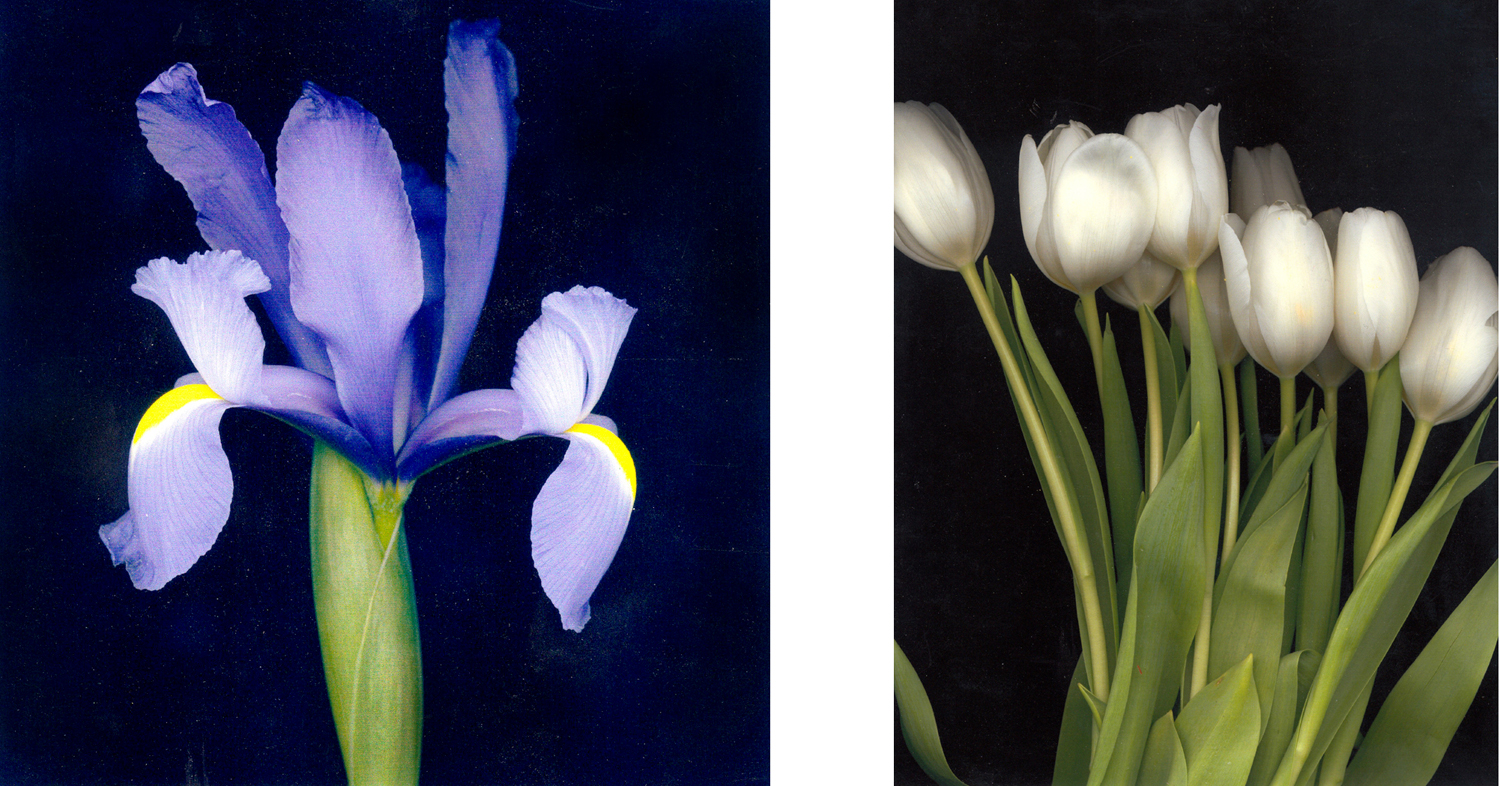
I began experimenting with a flatbed scanner, making extremely high-definition images of flowers. With the scanner cover left open, the background of these images became a very deep black or blue-black and only the parts of the flowers held flat on the glass platen were fully focused. The images were stunning and essentially shadowless.

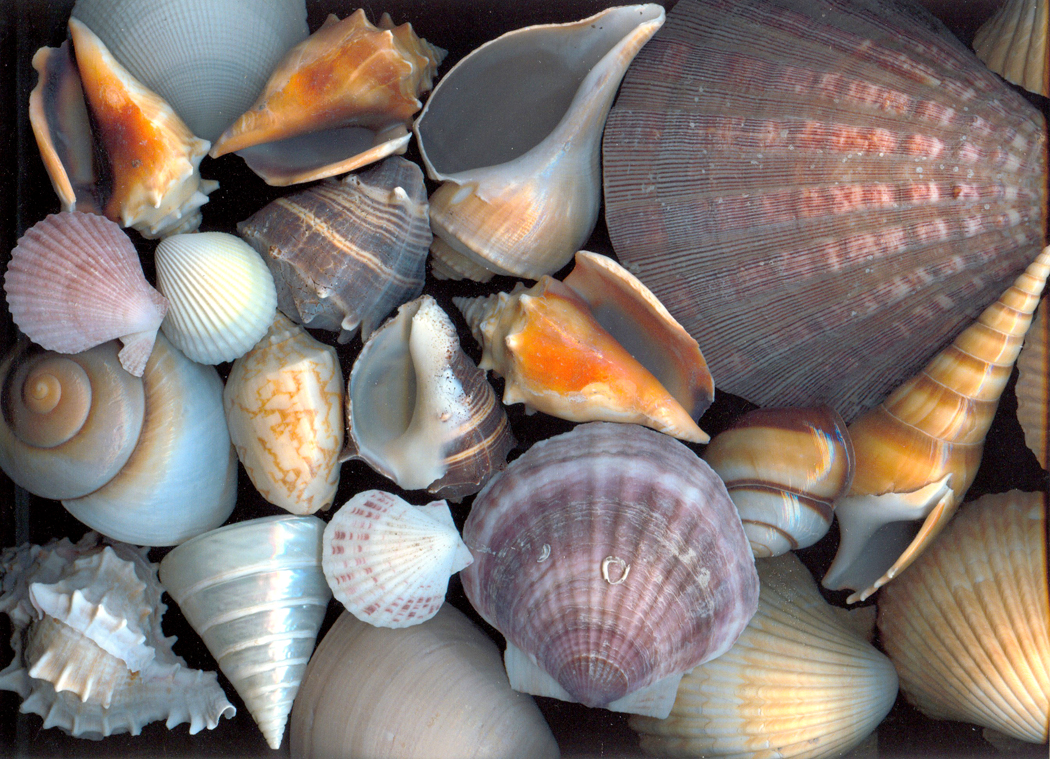
I tried other things, too.

But there was still a lens involved in the scanner. So, let us return to earlier days, when chemicals still stained a photographer’s hands. I tried scratching the end-bits of developed rolls of film and printing them as if they were negatives.

Still, however, there was the lens of the enlarger focusing the negative down onto the silver paper.

I wanted to get into the image directly, with no mechanical mediation. I wanted to get my hands into the process the way a potter gets his hands into the clay.

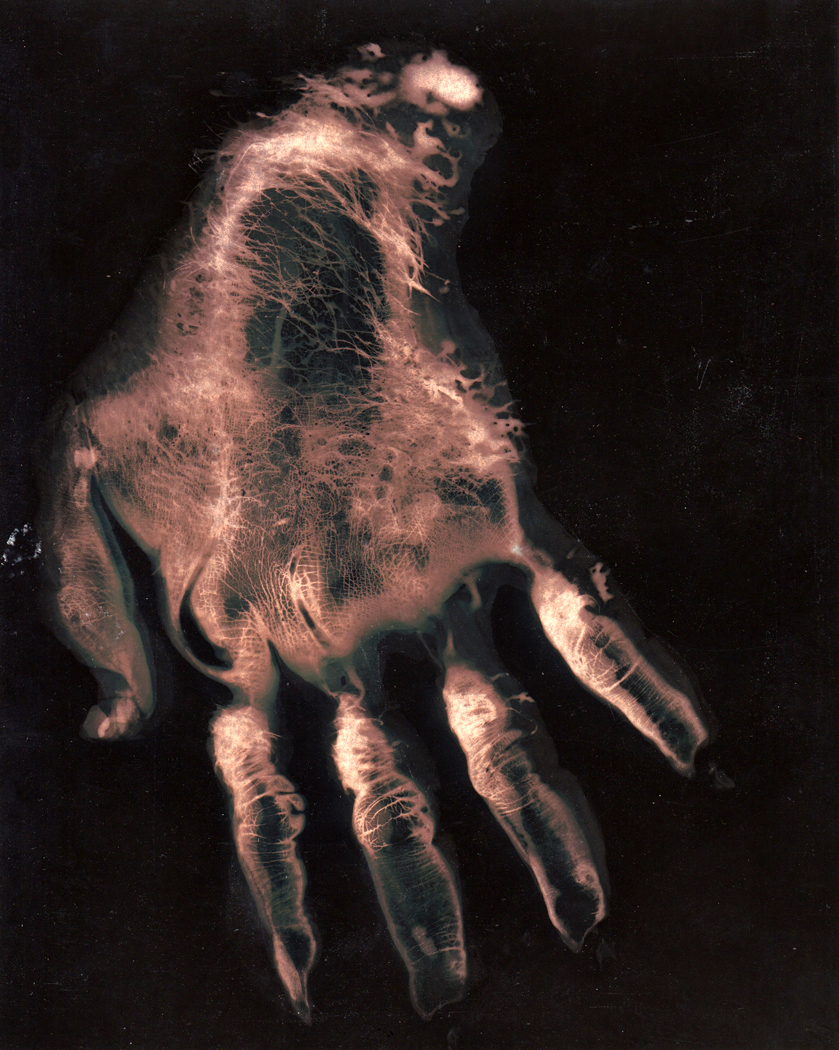
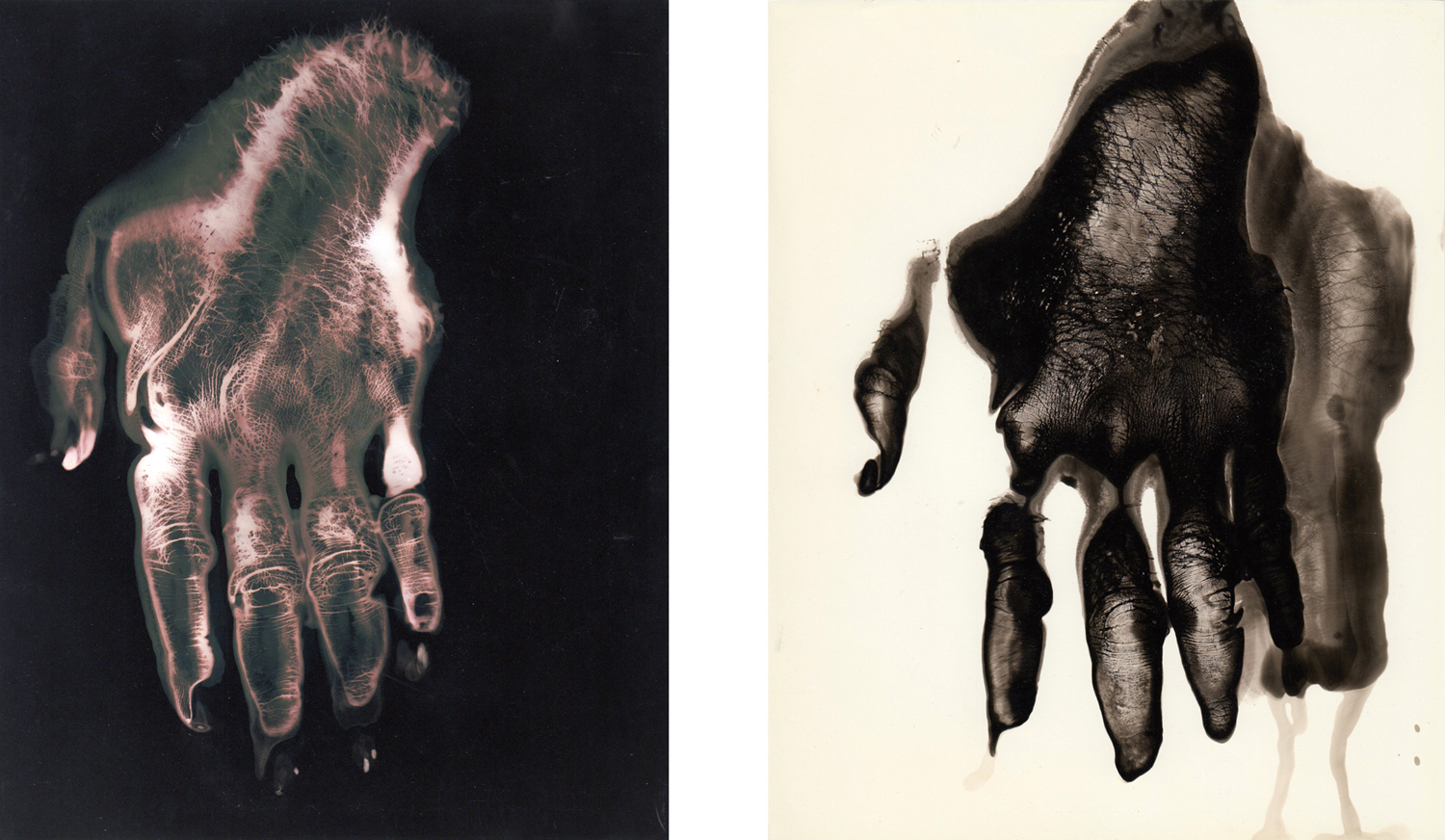
So, I dipped my hand into the tray of sodium hyposulfite and pressed it wet onto a sheet of light-sensitive paper, then washed the hypo off the paper and doused it in the developer, which turned the image black except for where the hypo had left its imprint. It made for rather spooky gorilla hands.

I tried it in the reverse way, too, dipping my hand into the developer and then, after the blacked image appeared, finished the process in stop bath and hypo. That gave me a black hand on a white sheet.

Certainly, this gave me an image of the familiar that was decontextualized and made strange. I saw my hand very differently.

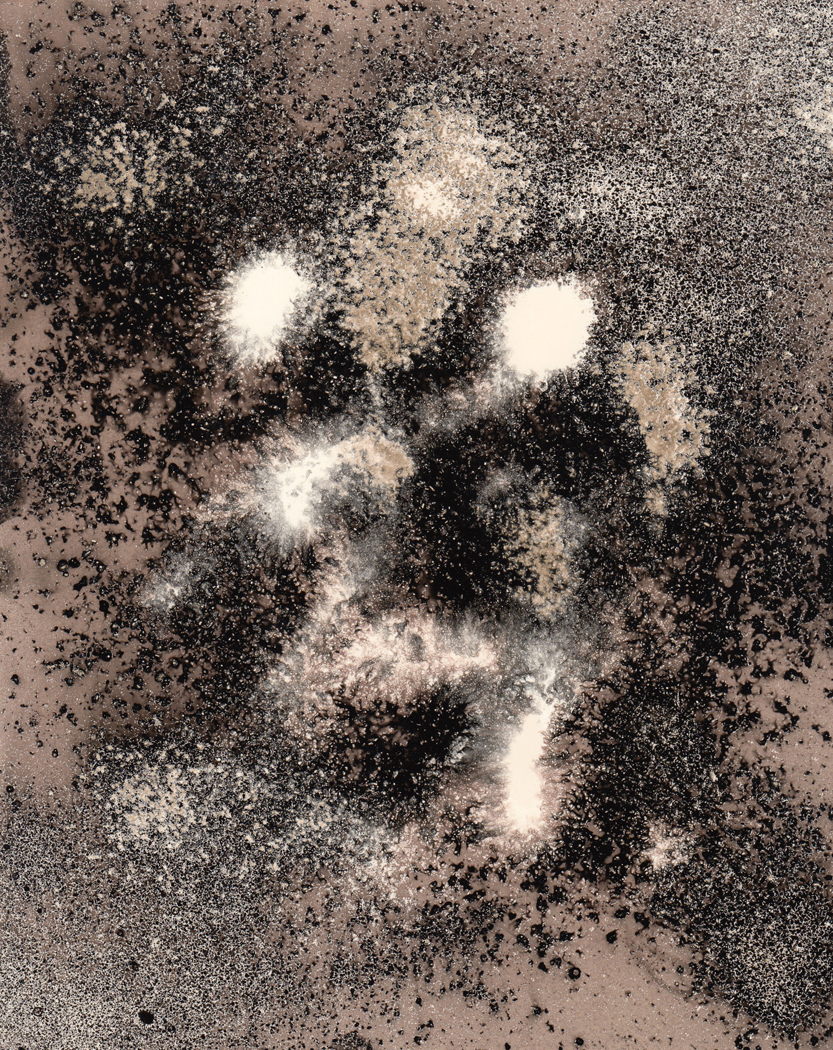
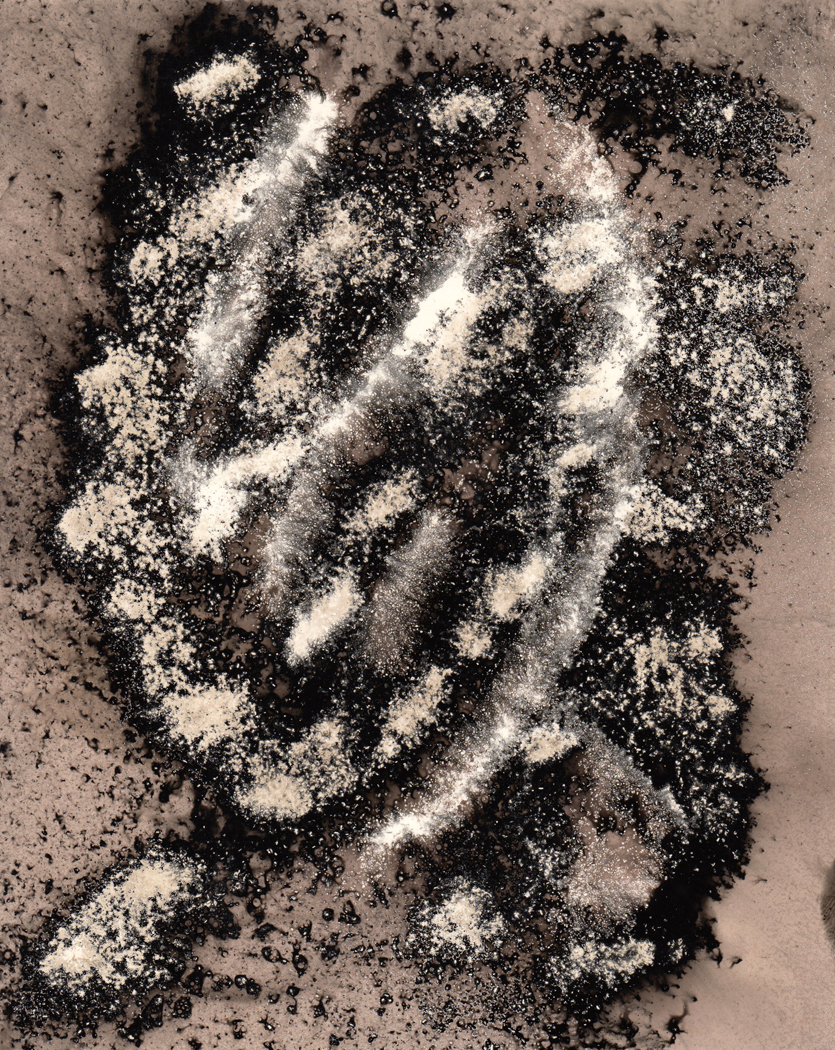
There is, however, only so much you can do with a hand. After the first hundred or so versions of my hand, I tried some other things. Like scattering salt on the paper and spraying the developer like Windex down onto the sheet, leaving a scattering of stars on the paper.

I also tried dusting the paper with dry developer granules and spraying it with water, making the black specks on the lighter background. The spray made the salt or the developer wash weakly over the paper, making mid-tones that I enjoyed.

You could make an image that vaguely resembled a portrait.

These experiments continued over the six years I taught, but when I left that job, I became a writer instead of a photographer. My camera was used primarily to illustrate stories I was writing.

I look back at some of the images I made so long ago and feel there might have been something in them. Whether there is or not, the process was worth the time; it gave me great pleasure.

Click on any image to enlarge