Archive

Tag Archives: age of reason

Intro: What We Get Wrong

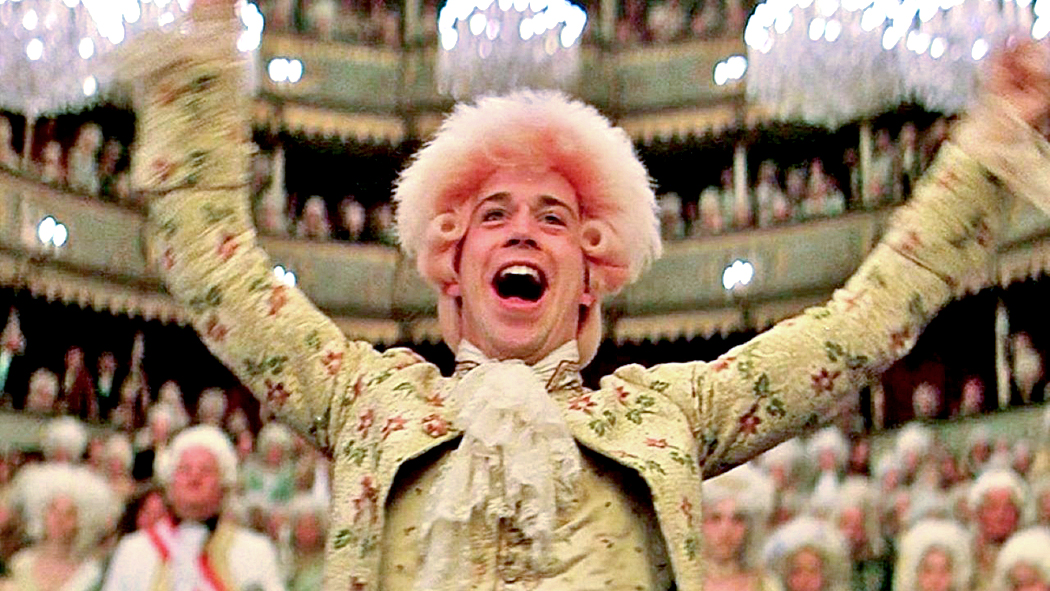
The 1984 movie, Amadeus, won eight Oscars and has been seen by millions of people. It was an excellent film, but it lied through its teeth. Mozart was not an arrested-development adolescent potty mouth. And Antonio Salieri never tried to kill him. 

Poor Mozart, he has had his life twisted over the centuries to illustrate cultural trends, and those trends have changed over those years. 

The 19th century first saw him as old fashioned, then he became a proto-Romantic, with his life deeply mythologized. The 20th century first saw him as a kind of porcelain doll, and after WWII, saw him as a polite precursor to Beethoven. In the 21st century, he has been the victim of countless historical-performance strictures that leave his music in a kind of inexpressive jog-trot strait-jacket. 

The man sometimes considered the greatest composer of all time has been so mauled over by his biographers, fans and later writers and filmmakers that the legend has taken over from the fact.

So, the plot of Amadeus is only one of a myriad of distortions, legends, myths and factifications. The truth, as usual, is more interesting.

What are some of the worst Mozart myths?

— Mozart began writing masterpieces before he turned 10.

* Yes, he wrote music beginning before he turned six. But some of that music was arrangements of other composers’ work, some may have been outlined by his father for the boy to complete, and none of them are masterpieces, or noteworthy, other than for them to have been jotted down by one so young. The early works are generic. They get played, when they are played at all, simply because they have Mozart’s name attached. 

— Mozart was buried in a pauper’s grave.

* Although it’s often said he died so poor he was buried in a pauper’s grave, the fact is Viennese law required anyone other than an aristocrat to be buried in a common grave, after a funeral service at the church. It was a reaction to recent outbreaks of plague in the country. And Mozart wasn’t poor. He lived quite well, although, working in what we would now call a “gig economy,” he had his income ups and down. 

But, over his last year, he earned 10,000 florins when an average laborer averaged 25 florins a year. It put him in the top 5 percent of the population of Vienna, according to H.C. Robbins Landon, author of 1791: Mozart’s Last Year. The man was no pauper, and his music was hugely popular, not only in Vienna, but across Europe. And when he died, he had a hit on his hands: The Magic Flute. He left his widow reasonably comfortable. 

— Mozart wrote his music spontaneously, without effort.

* Mozart’s facility with music was remarkable, but there are plenty of sketches and studies for his music. The pieces without such preliminary work most likely had them at one time, but they don’t survive. His widow, Constanze, burned most of the sketches, not thinking that fragments had any value. Mozart even writes to his father about doing such preliminary work. 

In 1787, he told the conductor of his opera, Don Giovanni, “It is a mistake to think that the practice of my art has become easy to me. I assure you, dear friend, no one has given so much care to the study of composition as I.”

— His middle name was Amadeus.

* He was baptized as Joannes Chrysostomus Wolfgangus Theophilus Mozart but his parents called him Wolfgang Gottlieb (Gottlieb being German for Theophilus). He usually signed his name Wolfgang Amadé. It was only after his death that people began regularly calling him Wolfgang Amadeus, which is a Latinized form of Gottlieb.

— His music is simple, direct, easy to listen to, easy to perform.

* And at the time of his death in 1791, at a mere 35 years old, his music was considered difficult to play and demanded careful listening. Mozart asked a lot. When the progressive Emperor Joseph II famously told Mozart his music had “too many notes, my dear Mozart. Too many notes.” he wasn’t being an ignoramus; he was reflecting the general taste of his times. To understand this, we need to place him in context. 
Some Context: The Classical Era

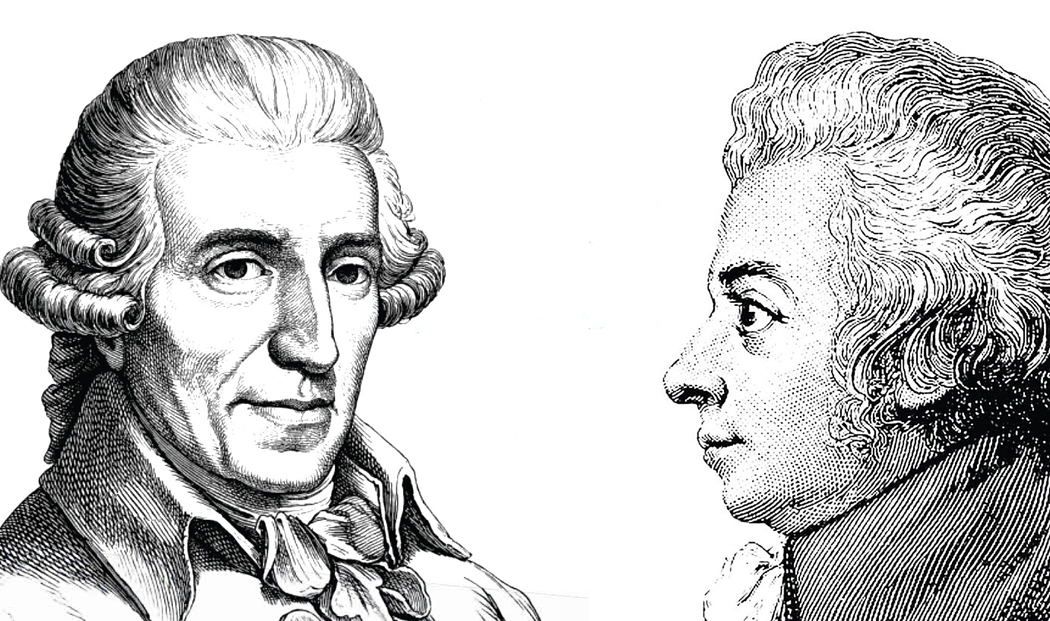
Something else we get wrong: It is usually said that Mozart and his contemporary Joseph Haydn wrote in the classical style, as if such a thing existed, and all they did was follow the rules. That’s got it completely backasswards. They didn’t write in the classical style; they invented the classical style. They were making it up as they went along.

Music history is taught as consisting of succeeding eras. The Renaissance gave way to the Baroque, which led to the Classical era and on to the Romantic, to Modernism and currently, Postmodernism. As if they were clearly defined and separate. And it is true that after about 1740 or so the heavily contrapuntal Baroque lost its hold on the ears of its listeners. They wanted something simpler, clearer, more charming and that wouldn’t be so serious. All those fugues and counterpoint of what was called “the learned style” gave way to homophony — that is, tuneful melodies and supporting harmonies. Something you could hum along with: Simpler and more direct. 

This is sometimes called the Style Galant; it followed the Baroque the way Rococo followed in the visual arts. Composers such as J.C. Bach, Johann Joachim Quantz, Johann Stamitz, or Domenico Alberti published torrents of light, catchy three-movement sinfonias and bright concertos, to say nothing of keyboard music to be played after dinner by the daughters of aspiring middle-class burghers. I’m grossly simplifying this, but the outlines are true. 

This is the kind of music both Mozart and his older contemporary Haydn produced in their younger days. Mozart wrote more than 20 symphonies in this popular style before the age of 17 and if they still get played it is because, again, they have Mozart’s name on them, and also, because they are full of great tunes. Mozart always wrote great tunes. 

Haydn had his own orchestra, paid for by his boss, Prince Nikolaus Esterhaza, a ridiculously wealthy Hungarian nobleman, who loved music. Hidden away at the prince’s countryside palace in Esterhazy for some 30 years, Haydn developed on his own, inventing new ways to delight and surprise an educated audience who learned and grew along with the composer. The palace was far from Vienna. Haydn said, “I was cut off from the world. There was no one to confuse or torment me, and I was forced to become original.” 

He basically invented the modern form of the symphony and the string quartet. 
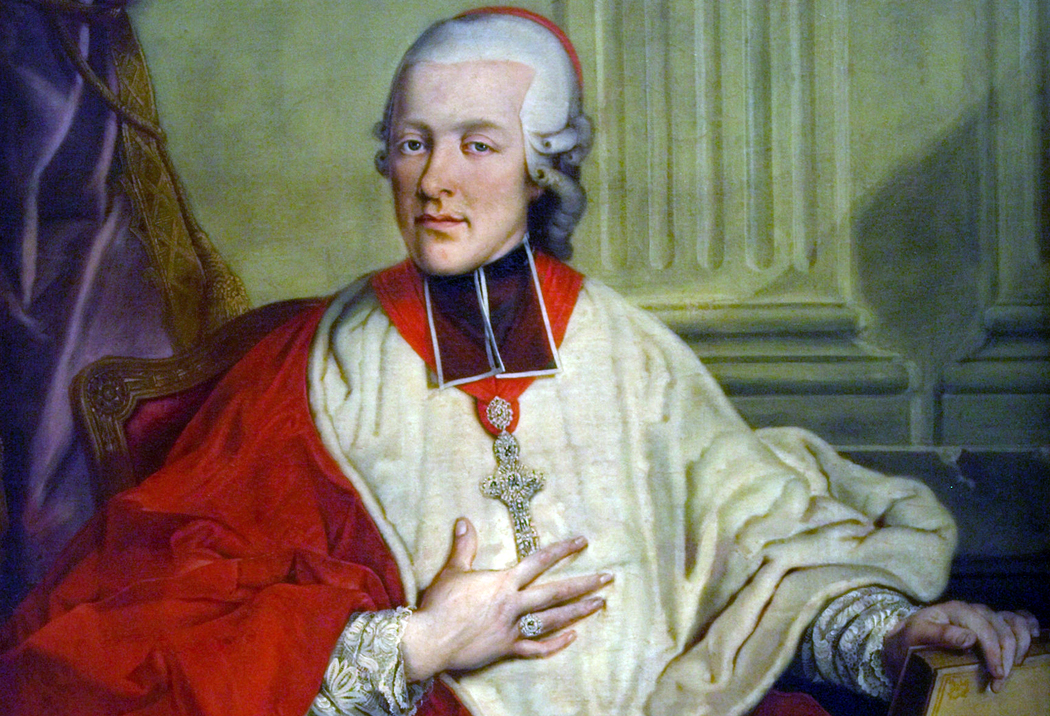
Prince-Archbishop Colloredo

Mozart, however, was truly cosmopolitan and after freeing himself from the employment of Salzburg’s prince-archbishop Colloredo, earned his crust as a freelancer in what was becoming a “gig” economy, living from commission to commission, and from concert to concert and opera to opera. 

He learned a lot from Haydn, and joined him in making his music increasingly more complex than the usual run of gallantries. They added back counterpoint to their works, increased chromatic and harmonic subtleties. Mozart’s music, for instance, is always more complex than it sounds.

Mozart asked his musicians to do more than did other composers: to play higher, lower, more quickly; to play notes unfamiliar to their instruments or voices; to attempt unusual phrasings and colorations.

At the end of Act I in Don Giovanni, three bands play onstage at the same time, performing different music in three different rhythms, but entwining their harmonies so they mesh perfectly in a tour de force of compositional cleverness.

His music sounds simple and perfect and symmetrical, but you look at the phrase structure and it’s highly irregular. Normally, you expect 4- and 8-bar phrases, but you take a look at one of Mozart’s late scores and you see phrases of 4, 5, 3, 7, 8, 6 — but you would never guess it was so irregular just from hearing it. It always sounds smooth.
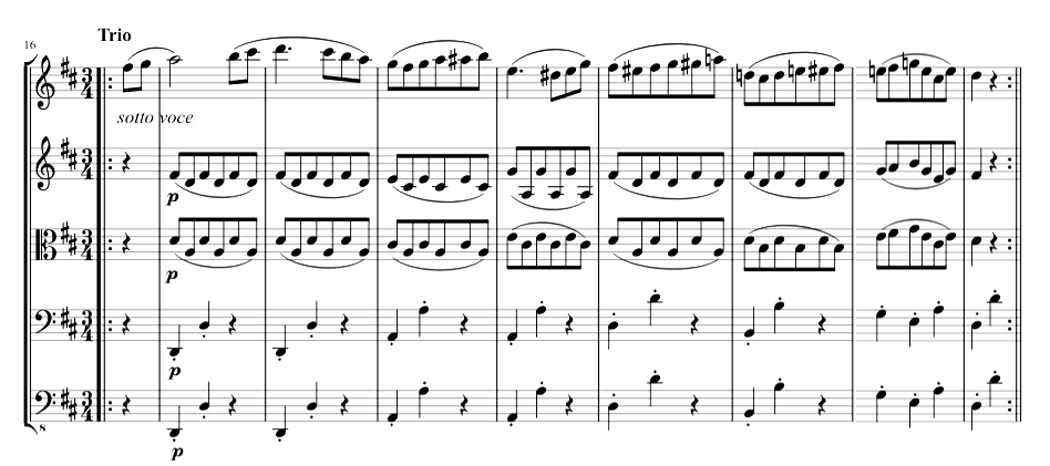
And although the surface of the music is always velvety and seductive, it’s frequently chromatic, introducing notes that shouldn’t belong. Even so graceful and simple a tune as the trio from the minuet in the popular Eine kleine nachtmusik manages to use 11 of the 12 notes in the chromatic scale. It verges on Schoenberg, though it sounds as simple as a nursery rhyme.

While Haydn’s metier was primarily instrumental music, Mozart shone in vocal music, and especially opera, where he brought psychological complexity to what is sung. 
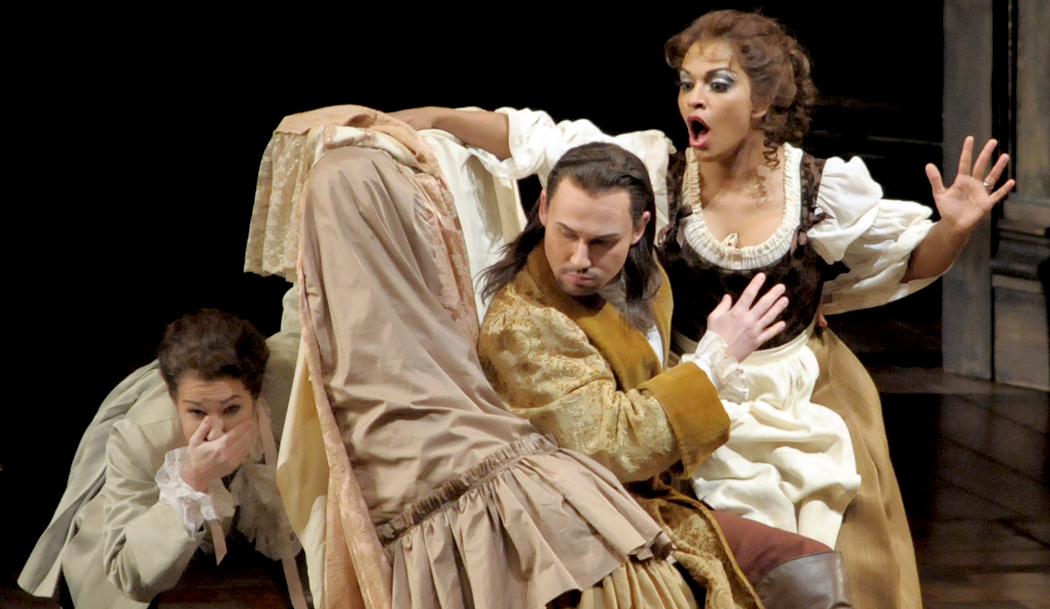
Mozart as Shakespeare

Mozart was the Shakespeare of music. No composer ever displayed a wider sympathy for the human condition or a greater breadth of musical style. At the bottom of his music is a profound humanism, which is all the more obvious in his best operas — The Marriage of Figaro, Così fan tutte, The Magic Flute and Don Giovanni.

Of all the great composers, Mozart also is the easiest to love. Bach may be more sublime, Haydn wittier, Beethoven more in-your-face and Schubert one of the few who could write melody to equal Mozart, but Mozart remains the most accessible. He speaks directly to us, because he is the most humane.

That quality underlies all his major operas: His plots are filled with three-dimensional people, not the stock characters of most other operas. No hero is flawless, no villain unredeemable.

The miracle is that it isn’t just the libretti that convey this complexity, but the music itself. It gives us the subtle psychological undertow.

Mozart understood all of his characters well. None of them is tossed off as inconsequential. He imbues each character with definitive musical qualities.
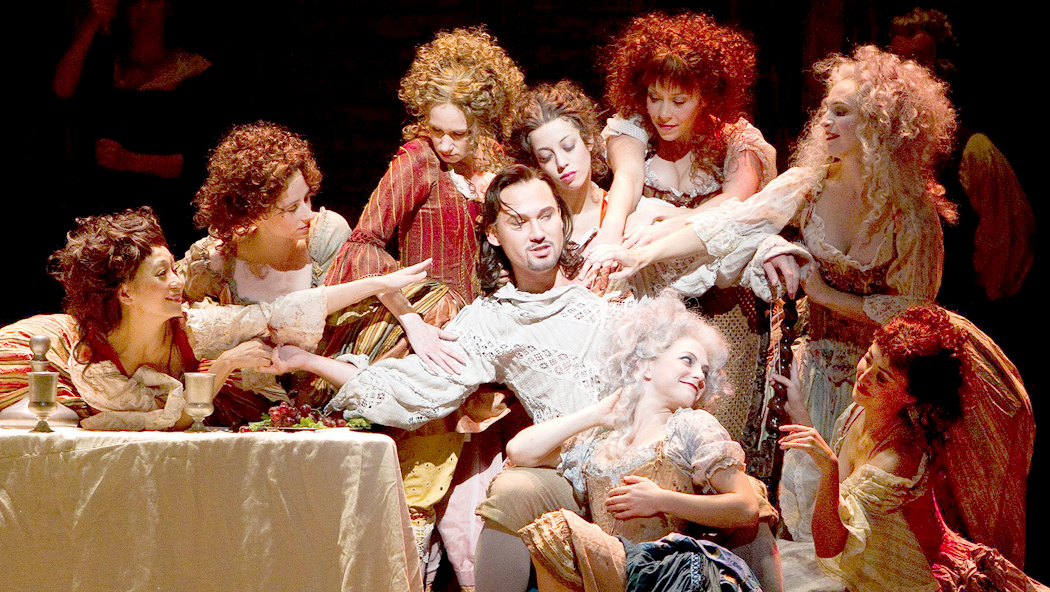
So that Don Giovanni’s ebullient life force is expressed in his headlong “Champagne Aria,” with barely a moment to inhale. Or the Queen of Night’s rage in Magic Flute, when she launches into Baroque arabesques and arpeggios in her showpiece “The vengeance of hell boils in my heart.”

Even in Figaro: Has adolescent horniness ever been better expressed than the “amorous butterfly” take the hero sings about the love-struck Cherubino?

All these characterizations are built on the composer’s willingness to accept without judgment everything that is human. Perhaps that’s why nobody ever wrote forgiveness better than Mozart.

Each of his major operas has a scene of forgiveness in it, and it’s usually the turning point of the action, when a character recognizes the frailty of human nature. Such forgiveness is not bestowed from a feeling of superiority but from shared compassion.

It’s not that we believe the Count in Figaro will now be faithful to the wife who forgave him, but that we know she will always forgive him, because this is what it means to accept the human condition.

But the particular mood Mozart raises in such moments also is carried into his purely instrumental music: The slow movement of his Piano Concerto No. 18 is the echo of such a moment in Figaro. It sighs, and we sigh with it.

Such genius, whether Shakespeare or Mozart, can’t be explained. You just accept that it is.
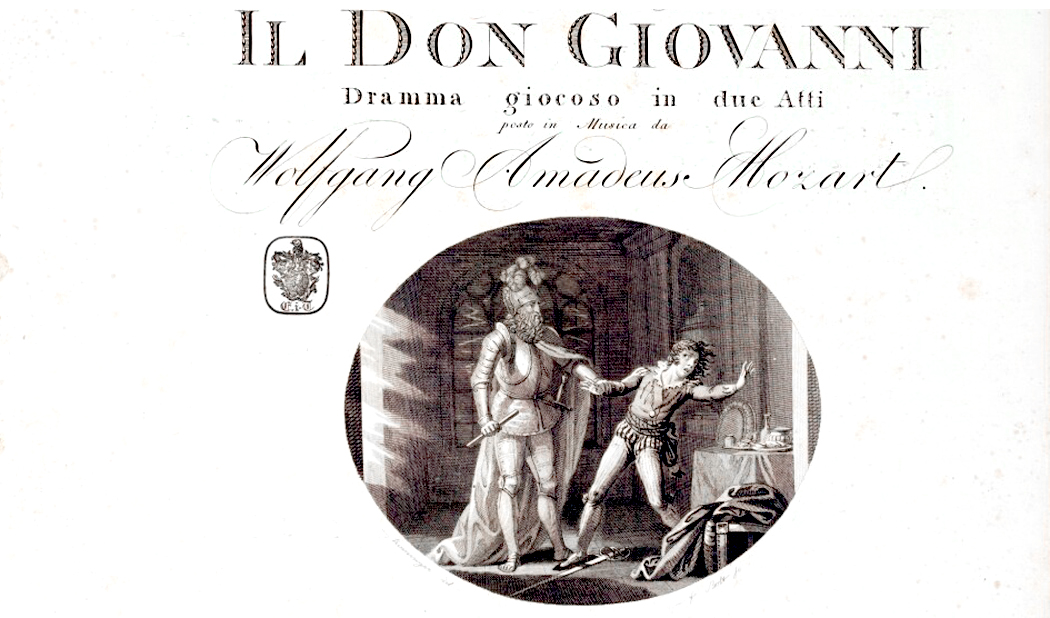
Don Giovanni

Mozart’s Don Giovanni has been called the perfect opera. It ingeniously balances comedy and drama, music and theater, the aristocracy and the peasantry, the past and the future.

It was first performed in 1787 in Prague, where the composer was a musical superstar, and told the story of the seducer Don Juan (Don Giovanni in Italian).

The story is simple in outline: After he kills the outraged father of one of his amorous conquests, Don Giovanni is tracked down by his victims. When he hides in a cemetery, the statue of the dead father miraculously asks him to dinner and, later, when the don shows up, the statue drags him to his judgment in hell.
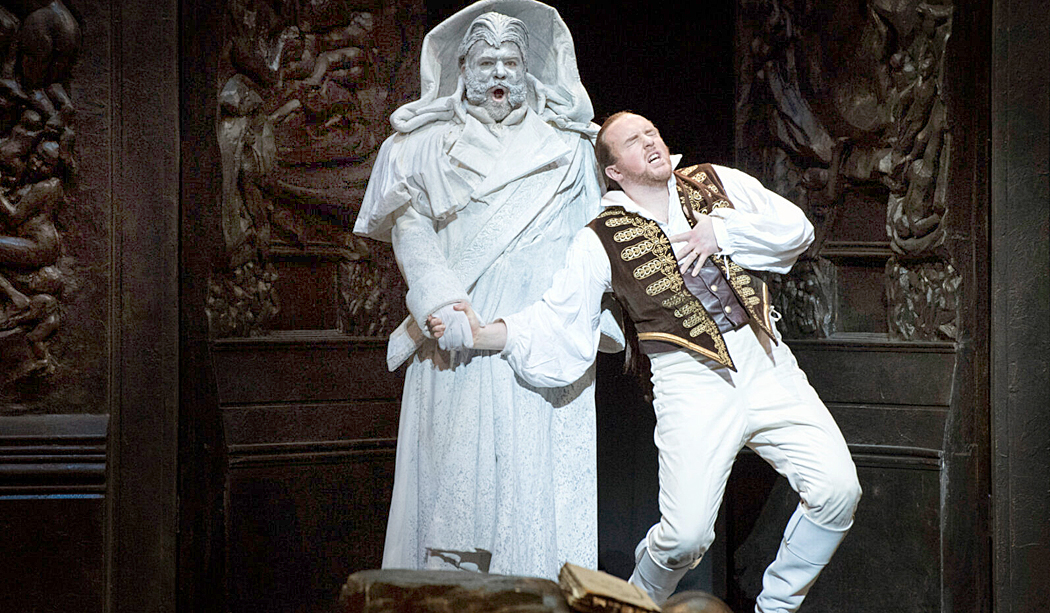
But Mozart and his librettist, Lorenzo da Ponte, took what was a traditional story of sin and punishment and made it into a paean to the life force. Technically, Don Giovanni is still the villain, but Mozart and da Ponte made him such an engaging and vital presence that in the end, when he refuses to repent, despite the demons that surround him and the brimstone that burns, he actually rises to the heroic. Is he hero or villain? Or both.

This is where the Classic past meets the Romantic future: The cautionary moral tale of the past turns into the Byronic hero of the upcoming 19th century, and Mozart is in the avant-garde.
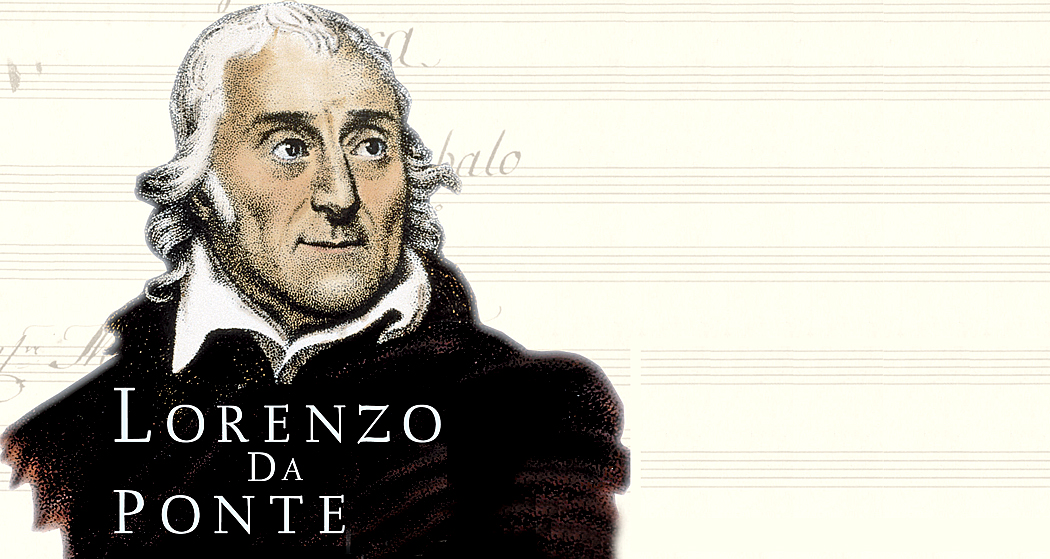
Digression I: Rake with a Quill Pen

Opera is a collaborative art. Mozart’s music is great, but so was the libretto written by Lorenzo da Ponte. Da Ponte was born a Jew in Venice in 1749, was ordained a priest and opened a brothel with his mistress, where he entertained the clients by playing violin in his priest’s vestments. He was the perfect choice to write the libretto for Mozart’s dramma giocosa, Il dissoluto punito o sia Il Don Giovanni (“The Rake Punished, or Don Giovanni”).

Da Ponte was a friend of the infamous seducer Casanova and was forced to flee Venice after a trial for sedition, settling in Vienna, where he wangled a position from Joseph II, the Holy Roman Emperor. When he was asked how many plays he had written, he answered, “None, sire,” to which the emperor replied, “Good, then we’ll have a virgin muse.”

He wrote libretti for dozens of lesser operas by lesser composers, such as Antonio Salieri, before landing a job writing — or rather rewriting — Beaumarchais’ popular play The Marriage of Figaro as a libretto for Mozart. He also wrote Don Giovanni and Così fan tutte before being shown out of the city by the police.

Da Ponte’s post-Mozart life is hardly less interesting. After marrying (quite a trick for a priest), he moved to the United States, where he failed as a grocer, became friends with Clement Moore (reputed author of ’Twas the Night Before Christmas), who helped him gain a faculty post at Columbia College (now Columbia University), where he was the first faculty member to have been born a Jew.

In 1828, he became an American citizen, died 10 years later, had a grand funeral at St. Patrick’s Cathedral and is buried in Green-Wood Cemetery in Brooklyn.
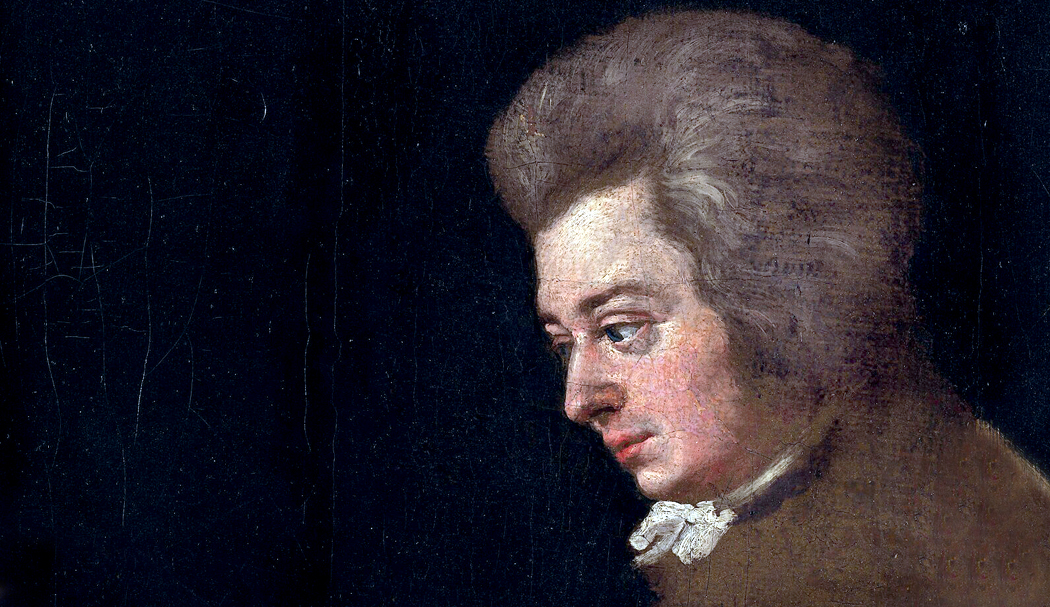
The Pop Star

Mozart’s time was the late 18th century. He was born in Salzburg, Austria, in 1756 and was one of the great child prodigies of all time, picking up the violin when he was four and composing by the time he was five. His first opera was written when he was 12.

He was trooped across Europe by his father, playing for the amazed aristocracy and gathering gifts of money and jewels.

He outgrew his boyhood cuteness but grew to be one of the most prodigious composers of all time: He wrote 22 operas, 50 or so symphonies, 27 piano concertos, 23 string quartets, 17 settings of the Roman Catholic Mass. His complete works take up 170 CDs in one current set.

And he became enormously popular.

Mozart was the pop artist of the time. People wanted to play and hear that music so much, they transcribed the music for all kinds of ensembles. Every town had a wind band and they played arrangements. Every little village in Belgium or Bavaria could play arias from the latest Mozart opera, the way halftime marching bands now play show tunes.

Mozart makes fun of this phenomenon in the finale of Don Giovanni, when the don has a dinner in his castle, with a band playing the latest hits from operas, including “amorous butterfly” from Figaro.

He dismisses it: “I’ve heard this piece too much, he says. We laugh because it shows Mozart could take a joke. And that only makes him more human.
Digression II: Mozart and Haydn

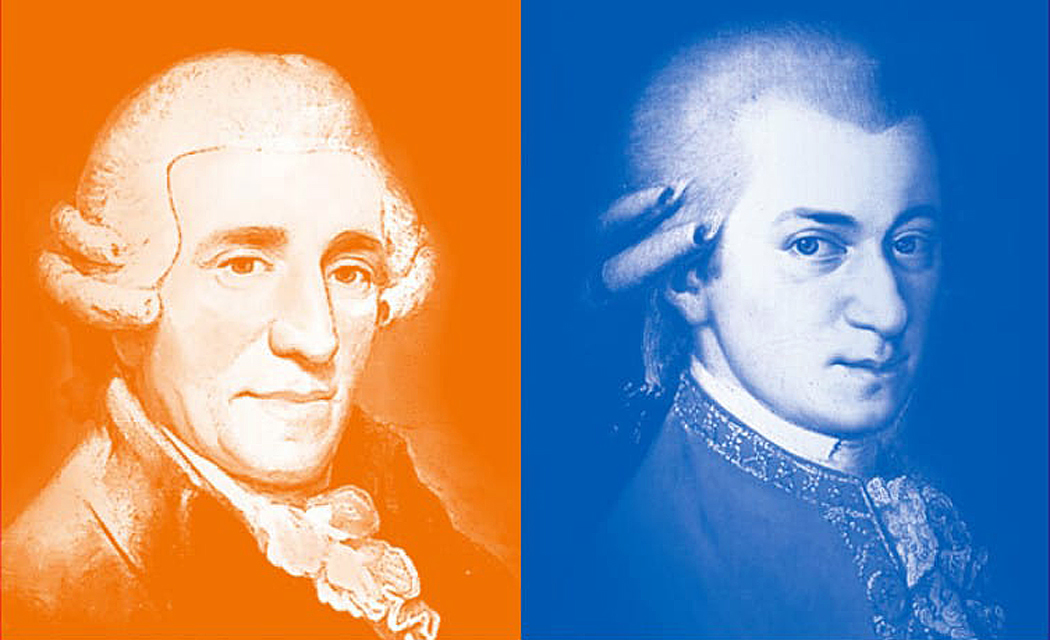
The era from about 1770 to 1810 is called “Classical.” It’s the age of music defined by two names: Joseph Haydn and Wolfgang Mozart.

They were the twin colossuses of the time: one witty and bright, the other deeper and more melodious.

But the two men were very different. Haydn brighter and more brittle sounding, with an emphasis on what the 18th century valued as wit, making in-jokes in his symphonies and working simple themes into complex textural patterns that his audience recognized with pleasure — they got the joke.

Mozart’s music is darker, more chromatic, with a more blended sound, and he focused his attention on grace and style.

If Haydn is the brain of 18th-century music, Mozart is the heart.

They valued each other above anyone else and recognized each other’s genius. Mozart learned more from Haydn than from any other source. Haydn said Mozart was the greatest composer alive.

To many, Haydn and Mozart sound alike. They are very different but shared a musical language. So, how do you tell them apart?

One wise old professor explained his simple test: “If you can remember the tune after it is over, it was Mozart.”

Reason and order

The 18th Century is called “The Age of Reason,” although sometimes I think it may be said ironically, since, after all, it was also the age of Rousseau, the French Revolution and the Reign of Terror. But the overall tenor of the era was one of rationality and balance, of a just God in his heaven keeping proportionality in everything human and cosmic. 

In German-speaking lands, it was the Aufklärung, the “clearing up,” and prompted enlightened rulers, such as Joseph II in Vienna, to downplay religious fervor, mindful of the chaos of the Thirty-Years War, and promote scientific enquiry and philosophy. Coffeehouses rose filled with debate and Freemasonry became fashionable. Mozart became a Freemason, and his final opera, The Magic Flute, was a Masonic allegory, of sorts. 

There were certainly many points of view, but the general sense was one of moderation in all things. Don’t go overboard. Keep an even keel. Music followed suit: nothing too extreme, but nothing too simple-minded, either. It was a perfect walk between opposites.

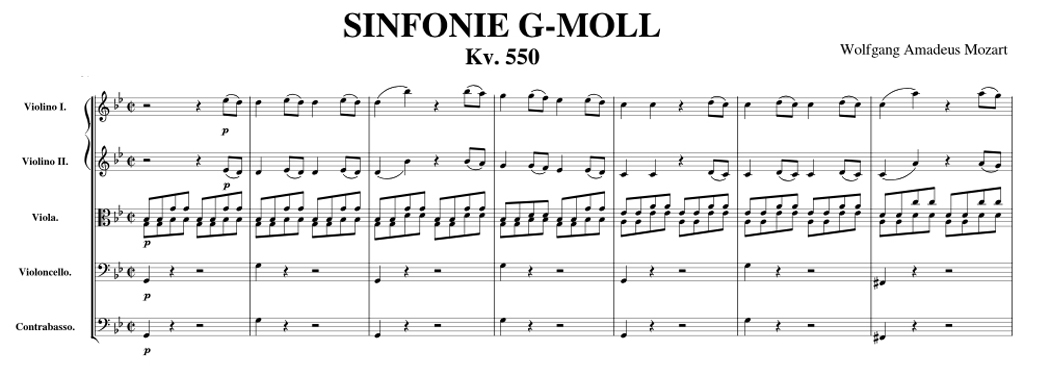
And the major musical innovation of the era was the rise of the Sonata-Allegro form. It was the primary organizing principle for Haydn and Mozart and held sway in various permutations for the next century and a half. It is usually taught in a technical way: first theme in the home key, second theme in the dominant, followed by a development section and rounded off with a recapitulation of the two primary themes, but now both in the home key. But that is not why the form became so dominant. That is like describing an angel as having wings and white robes, without ever noting it is a messenger from God. 

The point of the sonata form was to establish an order, in terms of recognizable melodies, to then disrupt the order by breaking up the tunes into bits, rearranging them, and playing those pieces in a hodge-podge of shifting key-centers, leaving the listener with no firm ground to stand upon, and then reasserting clear order once again, so the universe is set right. Order – disorder – order reaffirmed. 

Once you understand the metaphor of the sonata form, you will never again be hoodwinked by the academic palaver. The music is about the primacy of providential order. 

This is a metaphor that has provided the foundation of much of art. Shakespeare’s histories and tragedies are all about disturbed natural order that has to be set right. Opera plots are almost all about illegitimate threats to the way things are supposed to be. It is the mega “A-B-A” of countless poems and novels. 

The form made such satisfying intellectual and emotional sense that it ruled western instrumental music almost until now. Those composers who didn’t write sonata form wrote in protest to it. Take a side. It was that influential.
L’Envoi

It is nearly impossible to write words about music. One tends to write impressionistically and metaphorically about what one hears, but such language become like trying to describe color to a blind person. 

The result is that when most people talk about their favorite popular music, they talk about the lyrics. The music is barely mentioned. In fact, most popular music contains scant little actual music at all: just a few familiar chord changes under a meandering set of melodic intervals. You may mention the beat, but that, too, tends to drone on monotonously through the song. 

You could, if you wanted to, talk about the music, but it would take specialist vocabulary that would convey almost nothing to the lay reader: “The composer used the Neapolitan relationship to modulate from B-minor to A-flat major while dividing the treble from the bass line in hemiola.” There, does that mean anything to you? Two against three? 

One reads scores rather than text to understand what is going on, but even that does not really tell you what you are hearing, only how it was done. 

And so, when writing about Mozart, almost everyone falls immediately into biography. We can tell you fascinating things about his family, his sister, he relationship with his patrons or the order in which his symphonies were composed. 

But the ear can hear how, in sonata form, we hit the comfort of the home key as the recapitulation calms down the churn of the development. It is something instantly felt through the ear — if you are paying attention. But how to write about that in the Jupiter Symphony or the K. 545 piano sonata comes a cropper. Just listen. It’s obvious. 

One can say that Mozart blends his wind instruments while Haydn tends to keep his winds distinct. It is true, but you have to hear it to understand. Mozart’s recapitulations are usually a return to order, while Beethoven uses his recaps (in his mature work) to take the music to a new place, a “new normal” that means we have moved through the development from Point A to Point B. Mozart’s melodies tend to be step-wise, as a human voice might sing, while Haydn often jumps around because fingers on a keyboard can do so. 

These are swooping generalities, and there are plenty of exceptions, but they are attempts to write about the music rather than the historiography. 

The only recommendation is to listen to more music, lots of it, and absorb what you can, so you can distinguish the difference between a sonata form and a rondo, between an English horn and a bassoon in its upper register. Hear it and pile it into your trove of experience. It is the sounds that are made that is the music. Words get in the way. 

And pay attention. Music isn’t a warm bath you slide comfortably into, but a conversation the composer is having with you.

The Seventeenth Century produced in Europe giants of science and philosophy and brought to birth the beginnings of Western Modernism. Their names are a pantheon of luminaries: Francis Bacon; Galileo Galilei; Thomas Hobbes; Rene Descartes; Blaise Pascal; Isaac Newton; Johannes Kepler; Gottfried Wilhelm Leibnitz; Baruch Spinoza; John Locke — names that mark the foundations of the culture we now live in. 

But during their lifetimes, their pioneering work remained the province of a rare sliver of humankind, those others of their intellectual gift who could understand and appreciate their thought. The mass of European population remained illiterate, and subject to centuries-old traditions and institutions of monarchy and religion. It wasn’t until the next century that the dam broke and the results of rationalism and empiricism made a wide splash in society, in a movement that self-congratulated itself as The Enlightenment.

And in the center of it all, in France, was Denis Diderot, one of the so-called “philosophes,” a group of writers and thinkers advocating secular thinking, free speech, the rights of humans, the progress of science and technology, and the general betterment of the human condition. 

Among the philosophes were Voltaire, Montesquieu, Abbé de Mably, Jean-Jacques Rousseau, Claude Adrien Helvétius, Jean d’Alembert, the Marquis de Condorcet, Henri de Saint-Simon, and the Comte de Buffon. They wrote about science, government, morals, the rights of women, evolution, and above all, freedom of speech and freedom from dogma. They advocated the expansion of knowledge and inquiry. And they didn’t write merely for other intellectuals, but for a wider, middle-class literate readership. It was a blizzard of books, pamphlets and magazines.

Denis Diderot was born in 1713 in the Champagne region of France, the son of a knife-maker who specialized in surgical equipment. His father expected him to follow in the family business, but Diderot first considered joining the clergy before studying for the law and by the early 1740s, had dropped out to become a professional writer, a metier that paid little and brought him into conflict with the royal censors with notorious frequency. 

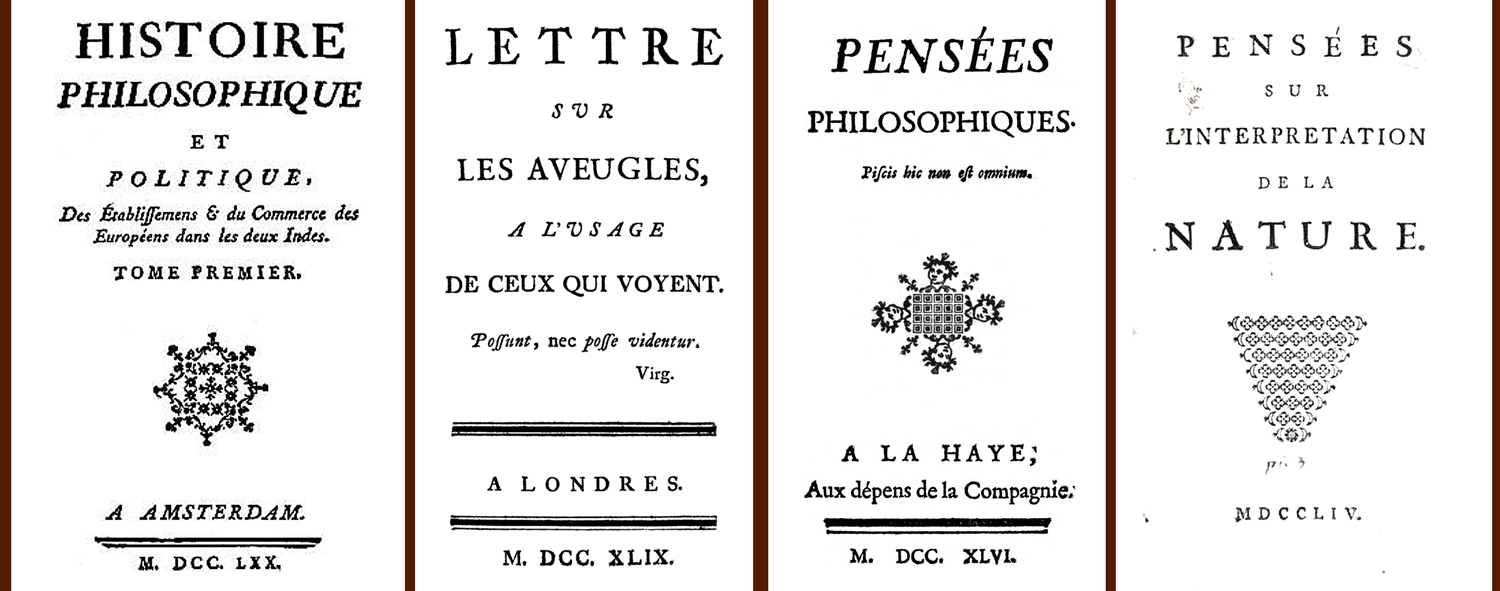
He translated several works, including a medical dictionary, and in 1746, he published his Pensées Philosophiques (“Philosophical Thoughts”), which attempted to reconcile thought and feeling, along with some ideas about religion and much criticism of Christianity. 

He wrote novels, too, including  in 1748, the scandalous Les Bijoux Indiscrets (“The Indiscreet Jewels,” where “jewels” is a euphemism for vaginas), in which the sex parts of various adulterous women confess their indiscretions to a sultan who has a magic ring that can make vaginas talk. 

His most famous and lasting novel is Jacques le Fataliste et son Maître (“Jacques the Fatalist and his Master”), from 1796, a picaresque comedy in which the servant Jacques relieves the tedium of a voyage by telling his boss about various amorous adventures. 

But Diderot is remembered primarily for his work on the Encyclopédie, which he edited along with Jean le Ronde d’Alembert, and for which he wrote some 7,000 entries. It was published serially and periodically revised from 1751 to 1772 and mostly published outside of France and imported back in — censorship was strict and many books were published in the Netherlands or Switzerland to avoid French government oversight. 

In fact, Diderot spent some months in prison for his work on the Encyclopédie

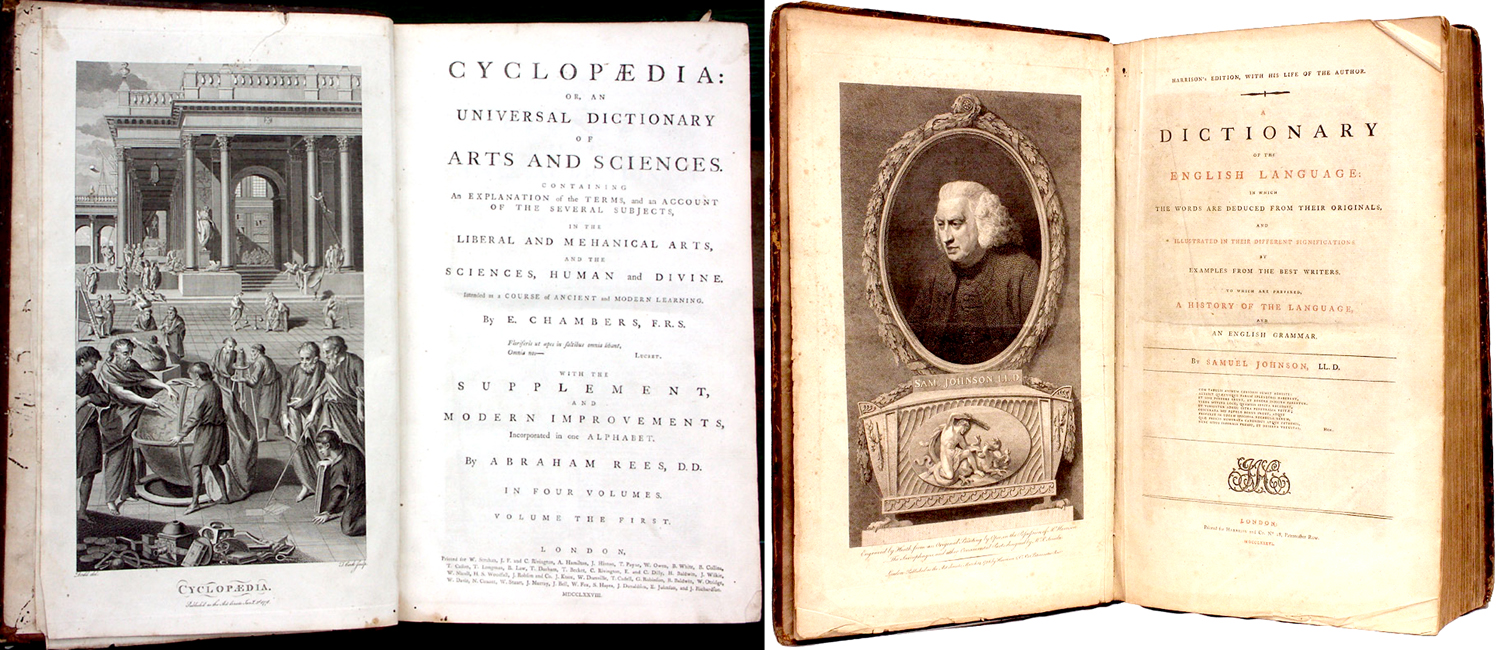
There had been earlier attempts at encyclopedias, including Ephraim Chamber’s Cyclopedia, or an Universal Dictionary of Arts and Sciences published in London in 1728, and John Harris’ 1704 Lexicon Technicum: Or, A Universal English Dictionary of Arts and Sciences: Explaining Not Only the Terms of Art, But the Arts Themselves. The 18th century wallowed in long book titles. 

Among the projects of this age with an appetite for inclusiveness was Samuel Johnson’s Dictionary of the English Language of 1755. 

And the idea of binding all of human knowledge up in a single volume goes all the way back to the Naturalis Historia of Pliny the Elder in the First Century CE. 

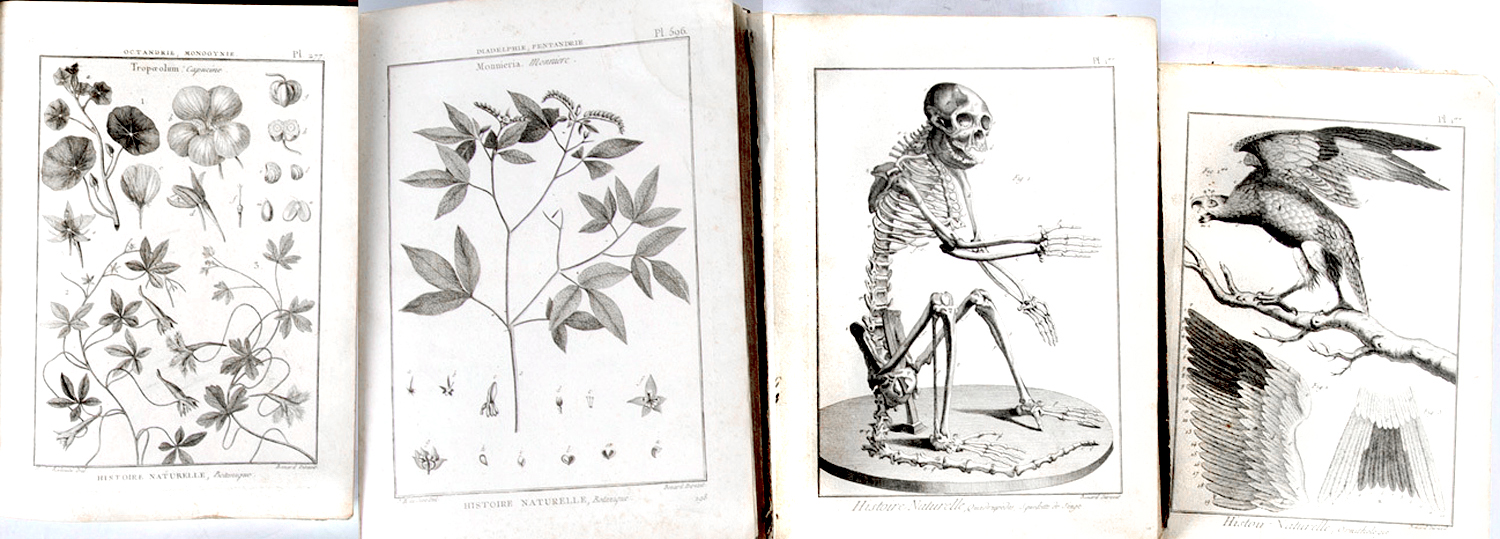
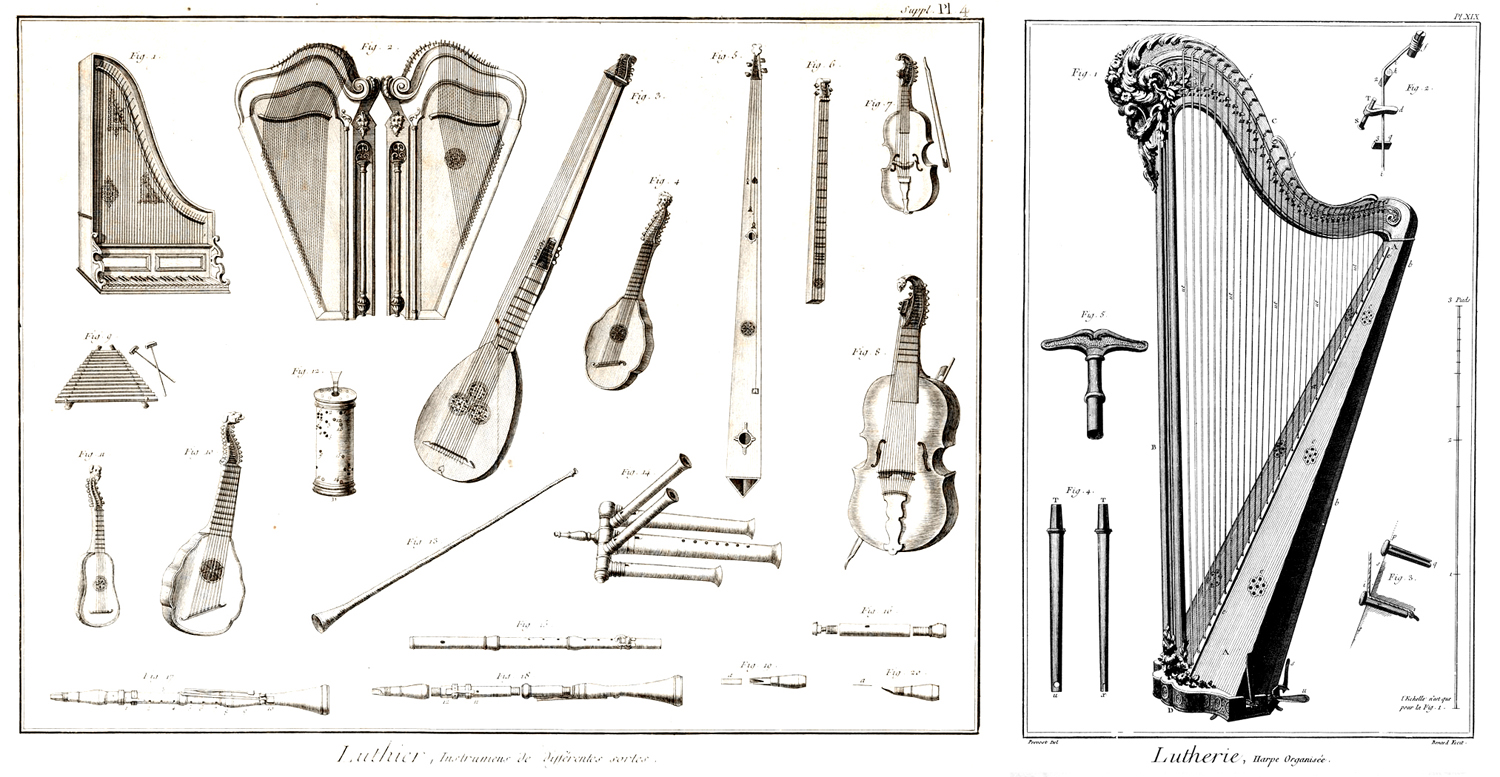
But none of these were as compendious in intent as the French Encyclopédie, which initially ran for 28 volumes and included 71, 818 articles and 3,129 illustrations. It comprised some 20 million words over 18,000 pages of text. It was a huge best-seller, earning a profit of 2 million livres for its investors. 

In his introduction, Diderot wrote of the giant work, “The goal of an Encyclopédie is to assemble all the knowledge scattered on the surface of the earth, to demonstrate the general system to the people with whom we live, & to transmit it to the people who will come after us, so that the works of centuries past is not useless to the centuries which follow, that our descendants, by becoming more learned, may become more virtuous & happier, & that we do not die without having merited being part of the human race.”

In the article defining “encyclopedia,” Diderot wrote that his aim was “to change the way people think.” 

Their goal was no mean or paltry one, but to encompass everything known to humankind. So that, according to Diderot himself, if humankind descended once again into a Dark Age, and if just one copy of his Encyclopédie survived, civilization could be reconstructed from reading its pages. 

A good deal of its content concerned technical issues, such as shoe-making or glass blowing. But other articles addressed political and religious ideas. These are what got the Encyclopédie contributors into legal trouble. The Catholic church and the monarchy were not happy about the generally deist and republican leanings of its authors. 

And there were a lot of authors. Most of the leading philosophes wrote one or another of the entries. Louis de Jaucort wrote some 17,000 of them — about a quarter of the total. Each of the contributors wrote about his specialties. D’Alembert, who was a mathematician, wrote most of the math entries. Louis-Jean-Marie Daubenton took on natural history. Jean-Jacques Rousseau wrote about music and political theory. Voltaire on history, literature and philosophy. 

All under the editorship of Diderot and d’Alembert, and, after 1759, by Diderot alone. 

Diderot divided all of human knowledge into three parts: memory; reason, and imagination. In his Preliminary Discourse to the Encyclopedia of Diderot, d’Alembert explained these as “memory, which corresponds with History; reflection or reason, which is the basis of Philosophy; and imagination, or imitation of Nature, which produces Fine Arts. From these divisions spring smaller subdivisions such as physics, poetry, music and many others.” 

In fact, d’Alembert asserts, all of human knowledge is really just one big thing: a unified “tree of knowledge,” which if we could grasp, would explain everything with a single simple principle, which rather prefigures the unified field theory of modern physics. 

It would be hard to overemphasize the influence of the Encyclopédie in the 18th century and in the political changes of France up to and through the Revolution. The Encyclopédie disparaged superstition, of which they counted religion as an example, and it saw the purpose of government to be the welfare of its people and the authority of government to be derived from the will of its citizens. The king existed, they said, for the benefit of the people, and not the people for the benefit of the monarchy. 

It’s no wonder, then, that the church and the aristocracy tried to suppress parts of the Encyclopédie, and that many of its authors spent time in prison. 

Its successor, the Enyclopedia Britannica, wrote of Diderot’s labors, “No encyclopedia perhaps has been of such political importance, or has occupied so conspicuous a place in the civil and literary history of its century.” 

Beyond the Encyclopédie, Diderot continued as a freelance writer, as an art and theater critic, a playwright, novelist, political tract writer and freethinker. 

But despite his fame and productivity, Diderot never made much money from his work, and when Russian empress — and groupie to the philosophes — Catherine the Great, heard of his poverty, she offered to buy his extensive library, paying him an enormous sum for the books and as salary for his employment as librarian to his own collection. 

In 1773, Diderot traveled to St. Petersburg to meet Catherine. Over the next five months, they talked almost daily, as Diderot wrote, “almost man-to-man,” rather than monarch to subject. 

Catherine paid for his trip in addition to his annuity and in 1784, when Diderot was in declining health, Catherine arranged for him to move into a luxurious suite in the rue de Richelieu, one of the most fashionable streets in Paris. He died there a year later at the age of 70. 

Despite her admiration for Diderot and his revolutionary ideas, Catherine ignored all of them in her own autocratic rule of Russia. But Diderot and his Encyclopédie pointed the way to the Declaration of the Rights of Man and of the Citizen, the triumph of democracies, and even the American Declaration of Independence and Constitution. 

According to philosopher Auguste Comte, Diderot was the foremost intellectual in an exciting age, and according to Goethe, “Diderot is Diderot, a unique individual; whoever carps at him and his affairs is a philistine.” 

 —————————————————————-

“On doit exiger de moi que je cherche la vérité, mais non que je la trouve.”

“I can be expected to look for truth but not that I should find it.”

—Denis Diderot, Pensées Philosophiques (1746)

 ————————————————————

When I was a young man, more than a half century ago, I had a simple ambition: To know everything. I suppose I was thinking mainly of facts; I would have no inkling of anything that couldn’t be named and catalogued. I wanted to read everything, name every bird and wildflower, every tree and understand every philosopher. I read all the poetry I could find, listened to all the symphonies and quartets and attempted to ingest all of astronomy and physics and history. Yes, I was an idiot. 

As early as the second grade, I believed that when I got to college, then I would finally have access to everything. And so, when I went to Guilford College in North Carolina, I couldn’t wait and in my first semester, I signed up for 24 credit hours of courses. I had to get permission from the dean for the extra hours above the normal 18 that for most students was a full course load. I grabbed Ancient Greek language, astronomy, Shakespeare, the history of India, esthetics, music theory — and over four years, everything I could think of. 

To my surprise and disappointment, not all of it was as edifying as I had hoped and not all the professors as brilliant as I had imagined. Still, it was a lot better than high school. 

What I sought was knowledge that was encyclopedic, encompassing all there was to know. Yes, I know now that all this was silly. I was young, naive and idealistic. Always a poor combination. 

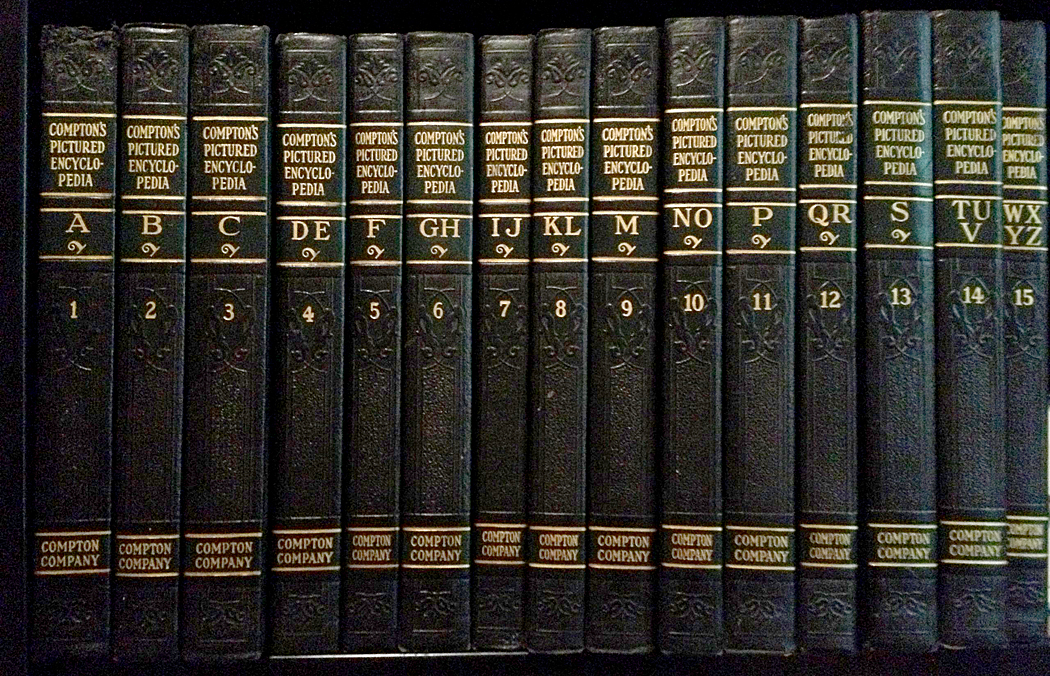
The match that ignited this quest was probably the first actual encyclopedia I had. When I was in grade school, our next door neighbor, who worked for Doubleday publishing in New York, gave us boxes of books, mostly old, and that included a full set of Compton’s Pictured Encyclopedia — probably the set our neighbor had when he was a boy. It dated from the 1930s and had great imagination-burning articles on such things as “The Great War,” dirigibles, and steam locomotives. The endpapers of each volume included illustrations of such things as elevated roads, autogyros, and speedboats. 

It didn’t matter that much in the set was out of date. It was a multi-volume key to unlock a whole world.

Later, our parents bought a more up-to-date Funk and Wagnalls encyclopedia, purchasing a single volume each week through a promotional deal at the A&P supermarket. It was a much cheaper production, on cheaper paper, with blank endpapers, but at least it included the Second World War. 

All through my childhood and adolescence, I would grab a volume and randomly read entries. I would pore over its pages, reading it all for fun. When I had to write a term paper in high school, I did my research in our Funk and Wagnalls. 

I can’t say I read every article in the whole encyclopedia, but I may have come close. 

And as I grew, my ambition grew: I wanted, more than anything, to own the two great compendia of all human knowledge: The Oxford English Dictionary and the Encyclopedia Britannica. Both were well out of my price range, but I lusted, the way most boys my age lusted after Raquel Welch. 

Years later, after college, the OED was published in a two-volume compact form, with microscopic print and a magnifying glass to read it, and I managed to get a copy through signing up for a book-of-the-month club. I still have it, and I still browse through it to find random words, their histories and the curious way language changes over the years. 

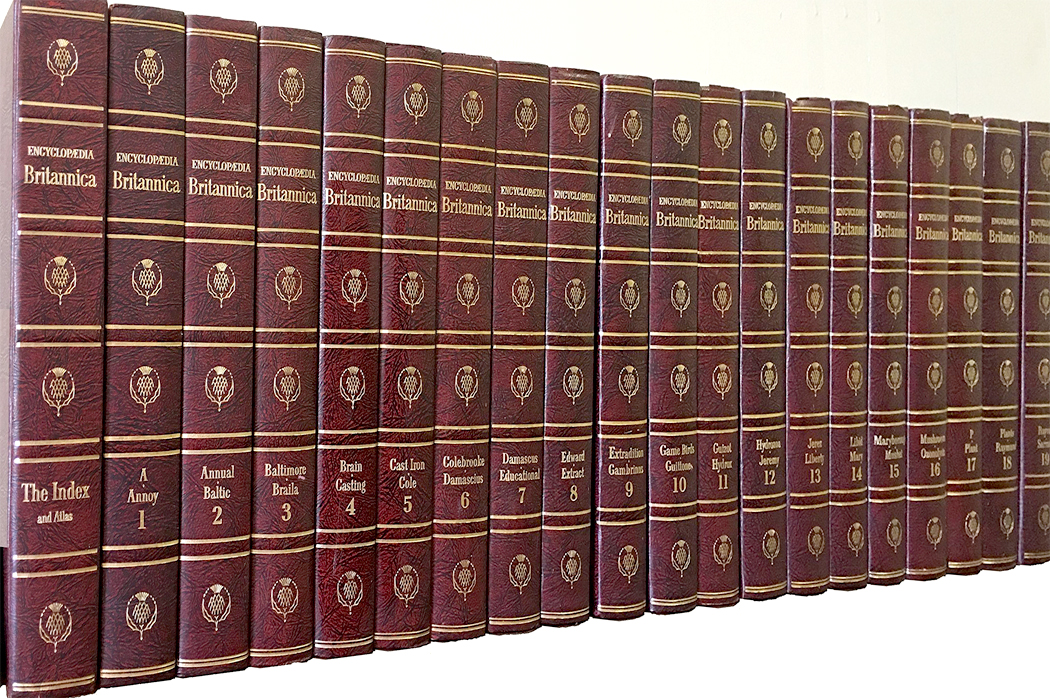
The Britannica took longer. The Encyclopædia Britannica, or, A Dictionary of Arts and Sciences, compiled upon a New Plan, was published in Edinburgh first in 1768, as an answer to Diderot’s Encyclopédie. At first, it was bound in three equally sized volumes covering: Aa–Bzo; Caaba–Lythrum; and Macao–Zyglophyllum. There have been 15 editions since, but each edition was continually updated, making the Britannica a constantly evolving entity. It was briefly owned by Sears and Roebuck, and eventually migrated to the University of Chicago. Currently it is privately owned and only available digitally. They stopped printing it in 2010. 

It wasn’t until I was in my 30s, when working as a teacher in Virginia, I found an old used set of Britannicas at a giant book sale held annually in the city’s convention center. It was an 11th Edition version — still the standard as most desirable edition. I felt like Kasper Gutman finally getting his hands on the Maltese Falcon. But when I unwrapped my prize, it was, in fact, the real thing. 

It sat, in pride of place, on my bookshelves, more as trophy than anything else. And when we moved to Arizona, I had to give it up in the great divestment of worldly goods necessary to truck our lives across a continent. I hated to give it up, but had to admit, I wasn’t using it as much as I had expected. I had an entire library of other books that I could consult. 

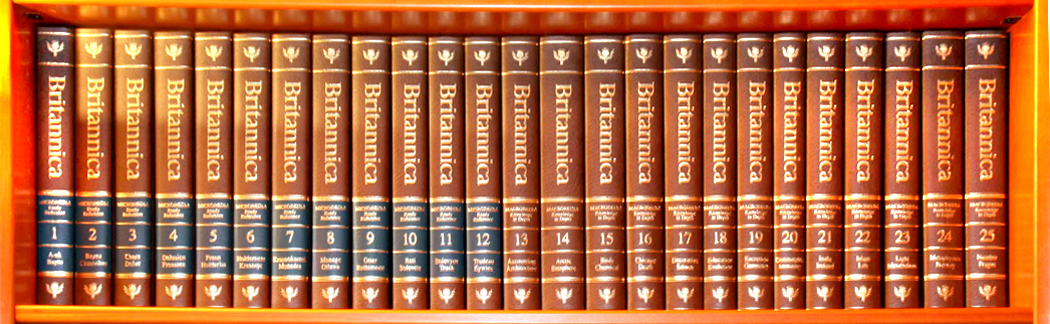
Then, in Arizona, I came across a more recent edition of the Britannica for sale at Bookman’s, a supermarket-size used book store in Mesa, Ariz. It was the version divided into a “macropedia” and “micropedia.” I bought it to replace the earlier version I had once coveted. 

I have never warmed to this version of the encyclopedia — a smaller set with simpler, introductory articles about a wider range of subjects, and a longer set with in-depth scholarly articles about a smaller range of more commonly referenced subjects. It felt dumbed down — and worse, confusing, because you could never quite tell if you should first consult the micro- or the macro- section of the series. 

But at least, I still owned a Britannica, and felt that somehow, I possessed, if not the actual knowledge of the universe, at least access to it.

The end of Britannica was also the end of my obsession with it. With the advent of Wikipedia, I no longer needed to shuffle through pages of multiple volumes, sort through indexes, or cross-reference material. In researching a story for my job as art critic with the newspaper, I could just go online and get the birth date of Picasso or the list of art at the Armory Exhibit of 1913. Wikipedia was easier to use, and for my purposes, just as accurate as my beloved Britannica. 

And so much easier to use. I cannot now imagine being a writer without Wikipedia. If I need a date or check spellings, it is instantly available. 

And just as I spent time as an adolescent swimming through my Compton’s or Funk and Wagnalls, reading random articles for the fun of it, I now spend some portion of my time sitting in front of my computer screen hitting the “random article” button on Wikipedia to read about things I wouldn’t have known to be interested in. Lake Baikal? Yes. Phospholipidosis? It is a “lysosomal storage disorder characterized by the excess accumulation of phospholipids in tissues.” De Monarchia? A book by Dante Alighieri from 1312 about the relationship of church and state, banned by the Roman Catholic Church. I know of some politicians who might profit by reading Dante. 

It’s fun picking up random bits of information like this. But it also demonstrates why my interest in owning all the world’s knowledge in book form has evaporated. 

First, the cosmos is infinite and packing 20 volumes of an encyclopedia with information about it is really like taking a teacup to the ocean. Second, knowledge keeps changing and growing. What we thought we knew a hundred years ago has been replaced by more complete data and theory — and so knowledge is not so much a teacup as a sieve. 

Then, there is the even more knotty problem, that knowledge isn’t even the most important part of understanding. Facts are good, and I wouldn’t want to be without them, but infinitely more essential is the interrelationship between them; the complexity of human mind as it interacts with what it knows, or thinks it knows; the moiling stew that is the mix of thought and emotion; the indistinct borders of learning and genetic inheritance; the atavistic tribalism that seems to overcome any logic; the persistence of superstition, magic and religion in how we understand our Umwelt; and ultimately, the limitations of human understanding — how much more is there that we not only don’t know, but cannot know, any more than a goldfish can understand nuclear fission. 

The reality of our existence is both infinite and unstable. Trapping it in print is an impossibility. It swirls and gusts, churns and explodes. Any grasping is grasping handfuls of air. We do our best, for the nonce, and must be satisfied with what we can discern in the welter. 

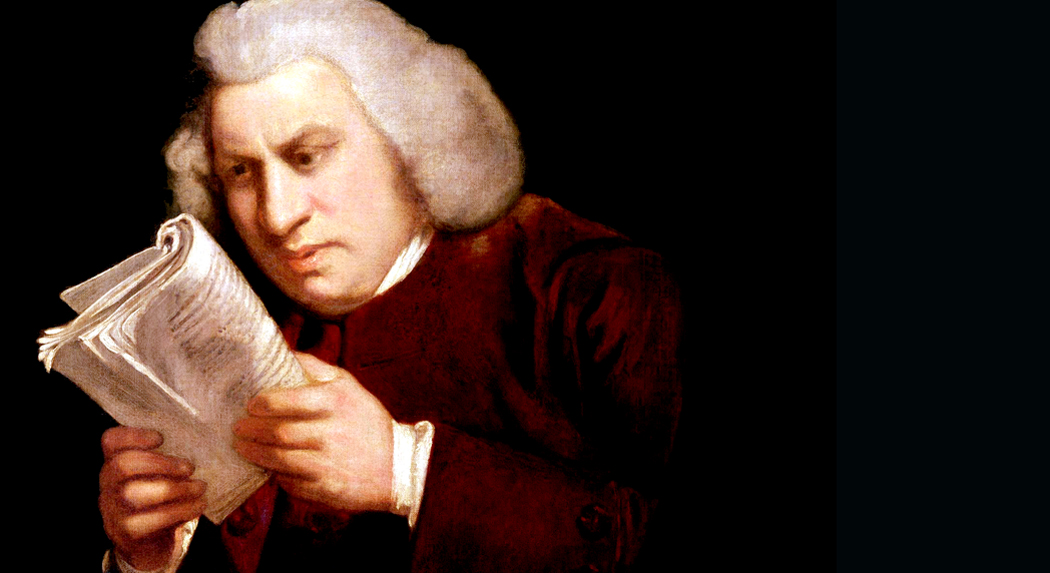
I think of Samuel Johnson’s heartbreaking preface to his 1755 Dictionary, which every thoughtful person should read and lock to mind. “To have attempted much is always laudable, even when the enterprise is above the strength that undertakes it: To rest below his own aim is incident to every one whose fancy is active, and whose views are comprehensive; nor is any man satisfied with himself because he has done much, but because he can conceive little. … When I had thus enquired into the original of words, I resolved to show likewise my attention to things; to pierce deep into every science, to enquire the nature of every substance of which I inserted the name, to limit every idea by a definition strictly logical, and exhibit every production of art or nature in an accurate description, that my book might be in place of all other dictionaries whether appellative or technical. But these were the dreams of a poet doomed at last to wake a lexicographer. … I saw that one enquiry only gave occasion to another, that book referred to book, that to search was not always to find, and to find was not always to be informed; and that thus to pursue perfection, was, like the first inhabitants of Arcadia, to chase the sun, which, when they had reached the hill where he seemed to rest, was still beheld at the same distance from them.”

Amen.

Signing_of_Declaration_of_Independence_by_Armand-Dumaresq,_c1873

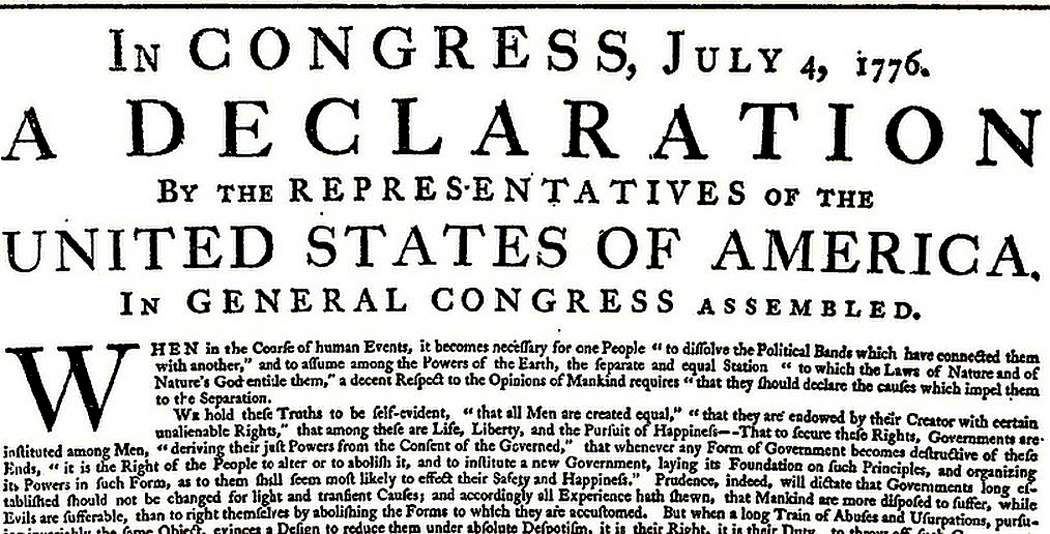
Perhaps the most peculiar thing about the Declaration of Independence is that the portion of it that seemed commonplace when it was written now seems revolutionary, and the part that seemed to its framers as most central, to us seems trivial, even whiny.

As a piece of rhetoric, it begins in generalities, narrows to specifics, and ends in a course of action. It couldn’t be more concisely structured. The committee charged with drafting it in the summer of 1776 chose wisely when it asked Thomas Jefferson to write the first version. Jefferson’s prose is a model of late 18th-century style: precise, lucid and syllogistic.

But the only part of the Declaration that most people can recall, outside the opening, “When in the course of human events,” is the second paragraph. That second stanza contains the seed of every revolution that followed, from the bloody French to the bloody Russian. It is a statement of belief that is the foundation of American society, and almost every government created since 1776.

US-original-Declaration-topIt states baldly and without argument or support, that all men are born equal, have certain rights by virtue solely of being born, and that when a government fails egregiously to effect the safety and happiness of the people, it is their right to replace it.

But Jefferson didn’t invent its ideas whole cloth. In fact, as Jefferson wrote years later, the purpose of his stirring words was “not to find out new principles, or new arguments, never before thought of, but to place before mankind the common sense of the subject, in terms so plain and firm as to command their assent, and to justify ourselves in the independent stand we are compelled to take.”

Much of the remainder of the Declaration is given over to a litany of complaints the colonies had about British governance. Some of these complaints still seem legitimate; many seem trivial, even trumped up. “The King did this” and “The King did that.” ”

He has plundered our seas, ravaged our coasts, burnt our towns and destroyed the lives of our people,” it says. Pure hyperbole.

These complaints were the part of the Declaration that was “news” in 1776. They constituted what made the document inflammatory.

Few can read through the whole of the Declaration of Independence now without a sense of fatigue: Those complaints were the issues of 1776, not of today.

It is the second paragraph that seems told to all people at all times, and remains news to us in the 21st century.

Bridge between ages

But to follow those ideas from the century before the Declaration into the ink on its page shows just how important its year of birth was. It was born in the cusp between two great ages, two overriding sensibilities, and partakes of both.

The period from about 1750 to about 1825 is one of the richest in humankind’s history, fertile, even febrile. It is in many ways, the hinge between the past and the modern, between the classically minded 18th century and the Romantic 19th. From an age of Reason to one of Sentiment — as it was called at the time. In Europe, it was the age of Goethe and Rousseau.

And no figure in the American experiment better demonstrates that shift of sensibilities than Jefferson.

On one hand, he epitomized the faith in science and logic of the Enlightenment; on the other, he shared with the revolutionary Rousseau the belief in the nobility of humanity and its drive to social improvement.

You can hardly fail to notice this point when you visit Jefferson’s home in Virginia.

Monticello is a mirror of its maker. Jefferson built a model of Palladian proportion and filled it with moose antlers. The outside lines of the house are clean and mathematically rational. The inside is a warren of peculiar and unnerving spaces.

Jefferson never fully reconciled these two aspects of his personality. He was a slave owner who sings of the dignity of the free man. How much more conflicted than that can you be?

The Declaration of Independence speaks to us now, in large part, because of this clash of sensibilities in Jefferson.

On the one hand, you have the ideas of the Enlightenment, that brilliant flame of philosophy and science that sprang up in Europe in the 17th and 18th centuries.

On the other hand, you have the growth of the individual as a thinking and feeling person.

The Enlightenment preached rationality and temperance, tolerance and universal principals. One of its most influential writers was John Locke, who, in his Second Treatise on Civil Government, from 1690, wrote that all human beings have natural rights and that these included “life, liberty and the pursuit of property.”

It was an idea that took hold and flourished.

By the time of the American Revolution, the idea was commonplace. It shows up in George Mason’s Virginia Declaration of Rights in June 1776, in slightly altered form:

“That all men are by nature equally free and independent and have certain inherent rights, of which, when they enter into a state of society, they cannot by any compact, deprive or divest their posterity; namely, the enjoyment of life and liberty, with the means of acquiring and possessing property, and pursuing and obtaining happiness and safety.”

When you compare that with what Jefferson first wrote, you can see how much better a writer Jefferson was. He only needed 31 words to say what Mason required 57 for, and say it more forcefully and memorably.

An economy of words

Writing_the_Declaration_of_Independence_1776_Jefferson’s first take on this was considerably more sonorous, but still not quite there:

“We hold these truths to be sacred, that all men are endowed by their Creator with certain unalienable rights, and that among these are life, liberty and the pursuit of property.”

It was a committee of five, delegated by the Second Continental Congress, that were given the responsibility to draw up the Declaration. Jefferson wrote that first draft, but Benjamin Franklin, also on the committee, struck out “sacred” and replaced it with “self-evident.”

By 18th-century reasoning, self-evidence was universal, while sacredness could be construed as sectarian. Franklin wanted to emphasize the universal truth of the proposition.

And Jefferson himself changed “property” to “happiness,” and with that stroke made the Declaration jump from the past into the future.

The past was Thomas Hobbes, with his sense of the nastiness, brutishness and shortness of life, and a belief that the natural order of mankind was greed, rapine and thievery. Only strong central government, he wrote, could possibly control the natural impulses of humankind.

The future was Rousseau’s perfectibility of man, his belief in the nobility of those uncorrupted by society and government, the “natural man.”

The middle was Jefferson, perfectly if perilously balanced between.

The right of life remained pretty much the same looking forward and back, but the other two rights changed meaning over the cusp of 1800.

Locke believed that all humans coveted was property; Jefferson realized that there were many routes besides ownership to humanity’s true goal, individual happiness. Hence, the change in language.

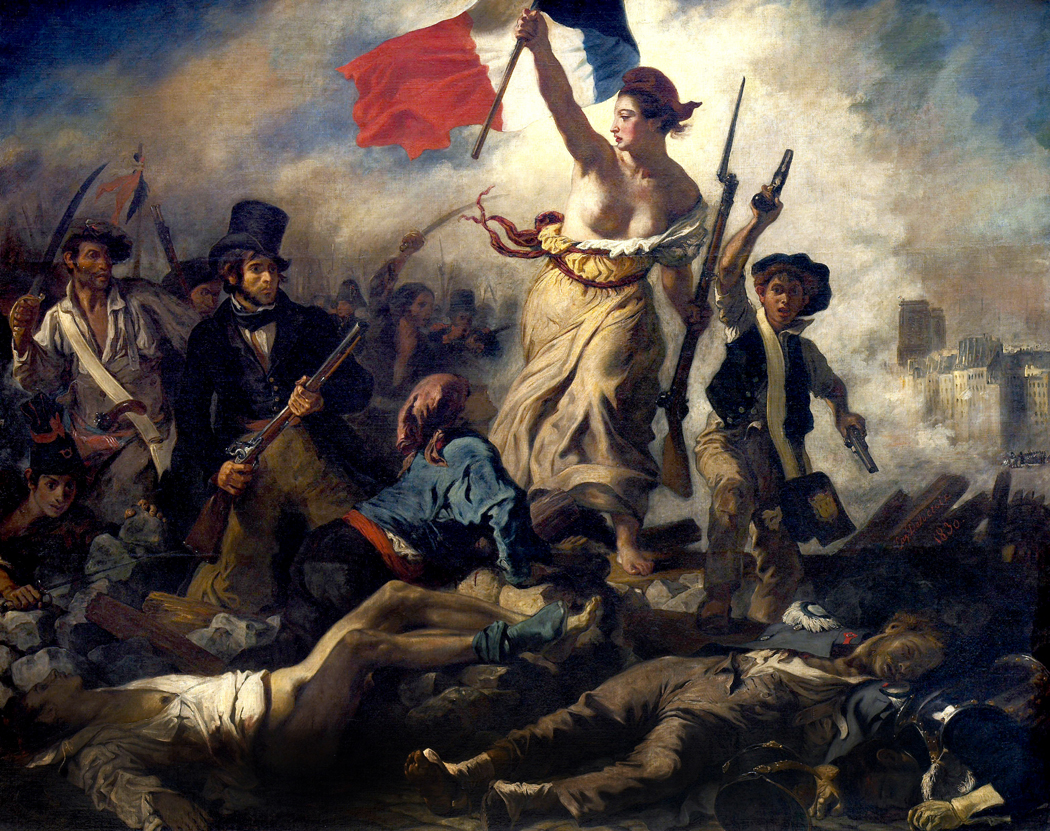
Liberty is the word that has changed the most. In the 18th century, it meant being left alone, basically. Your government let you be: Taxes shouldn’t be too onerous and armies shouldn’t be quartered in your home at the whim of the commandant.La_liberté_guidant_le_peuple

But by the 19th century, liberty took on a more revolutionary turn: Romantic writers saw liberty as the antidote to repressive regimes around the world and one read poems to Count Egmont, the Prisoner of Chillon and Nat Turner. It fueled popular movements all across Europe and led to a crisis year in 1848. Liberty meant revolt — a very different thing from what John Locke had in mind.

(And it makes almost comic the confusion of the two versions of liberty conflated by contemporary anti-tax factions and the paranoid fringe looking for the black helicopters that we can get all belligerent and militant about “tyranny” in Washington, when compared to what is happening in Sudan, Russia or North Korea, we remain among the most liberty-ridden people on earth. Admittedly, the Declaration of Independence itself is full of the same sort of inflated rhetoric.)

“Life, liberty and the pursuit of happiness.”

This meant that the Declaration could speak, Janus-like, forward and backward. The fulcrum of modern history. The Enlightenment is emerging from its chrysalis into the age of Romanticism.