Archive

Tag Archives: art museum

I’ve been to the Louvre in Paris a number of times, but no matter how long I spend there, I never feel as if I’ve seen more than two percent of it. It is vast. It is the largest museum in the world, with 782,910 square feet of floor space (topping the No. 2 museum, St. Petersburg’s Hermitage, by more than 60,000 sq. feet) and a collection of more than 600,000 pieces. 

It’s where you go to find the Mona Lisa, the Winged Victory of Samothrace and the Venus de Milo.

It’s one of the oldest museums around, but never seems quite finished. It began as a royal palace in the 12th century, and has been added on to, parts burned down, parts replaced, and even a glass pyramid added to the top. 

When Louis XIV moved the court from the Louvre to Versailles in 1682, the building became a warehouse for kingly treasures and much of his art collection. in 1699, the first “open house,” or salon was held, and for a century, the royal academy of art was located there. 
The French Revolution ended the monarchy, and all the art once owned by the king became public property, and in 1793, the new government decreed that the Louvre should be open to the citizens as a free art museum. 
But soon after, the collection expanded exponentially, as Napoleon Bonaparte conquered half of the continent, and sent back to Paris a good deal of the art from conquered lands. He even had the museum renamed Musée Napoléon. That didn’t last, but neither did Napoleon. 

Over the 19th century, the museum collection grew, from bequests, purchases and colonial expropriations. For a while, it included a whole section of Pre-Columbian art from the New World, but that spun out into its own museum, leaving the Louvre for the Musée d’Ethnographie du Trocadéro in 1887; in 1945, the Louvre’s extensive collections of Asian art were moved to the Guimet Museum; and by 1986, all the museum’s art made after 1848, including Impressionist and Modernist work, was transferred to the Musée d’Orsay, a refurbished railways station. It seemed the Louvre kept bursting its seams. 
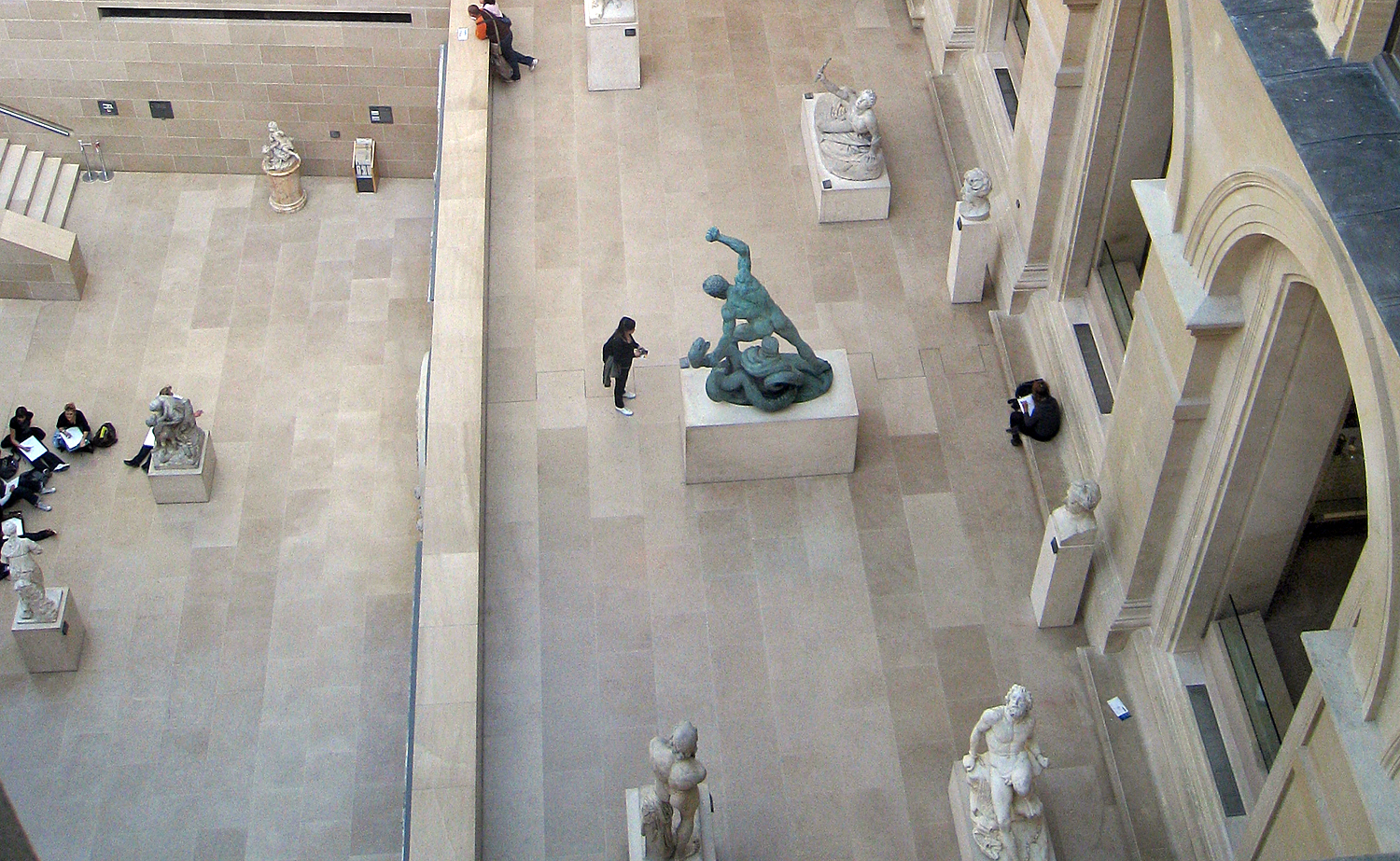
Then came François Mitterrand. Serving as French president from 1981-1995, Mitterrand conjured up the Grand Project to transform the cultural profile of Paris, with additional monuments, buildings, museums, and refurbishment of existing locations. Taxes were raised to accomplish this project, said to be on a scale that only Louis XIV had attempted. 
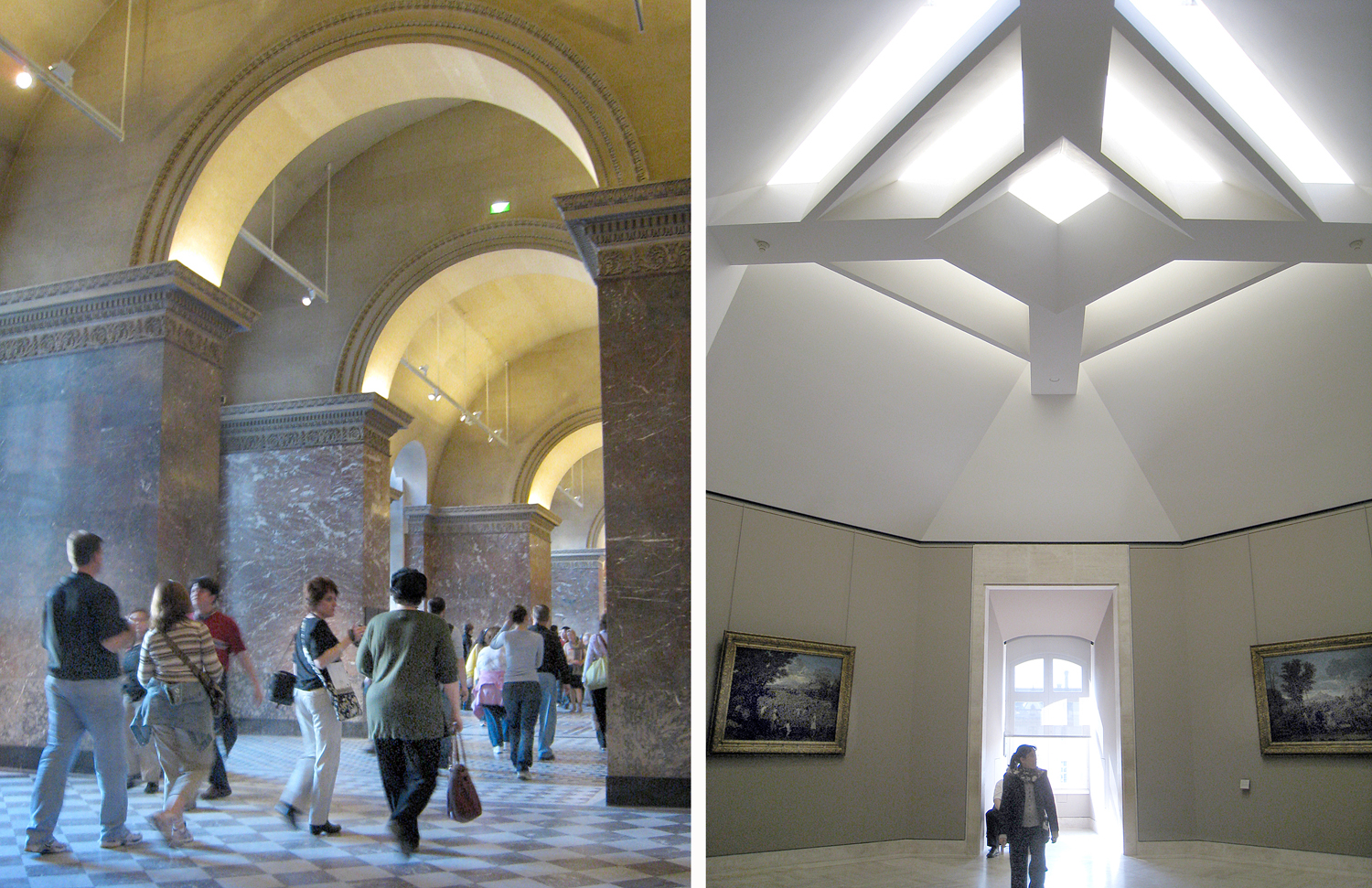
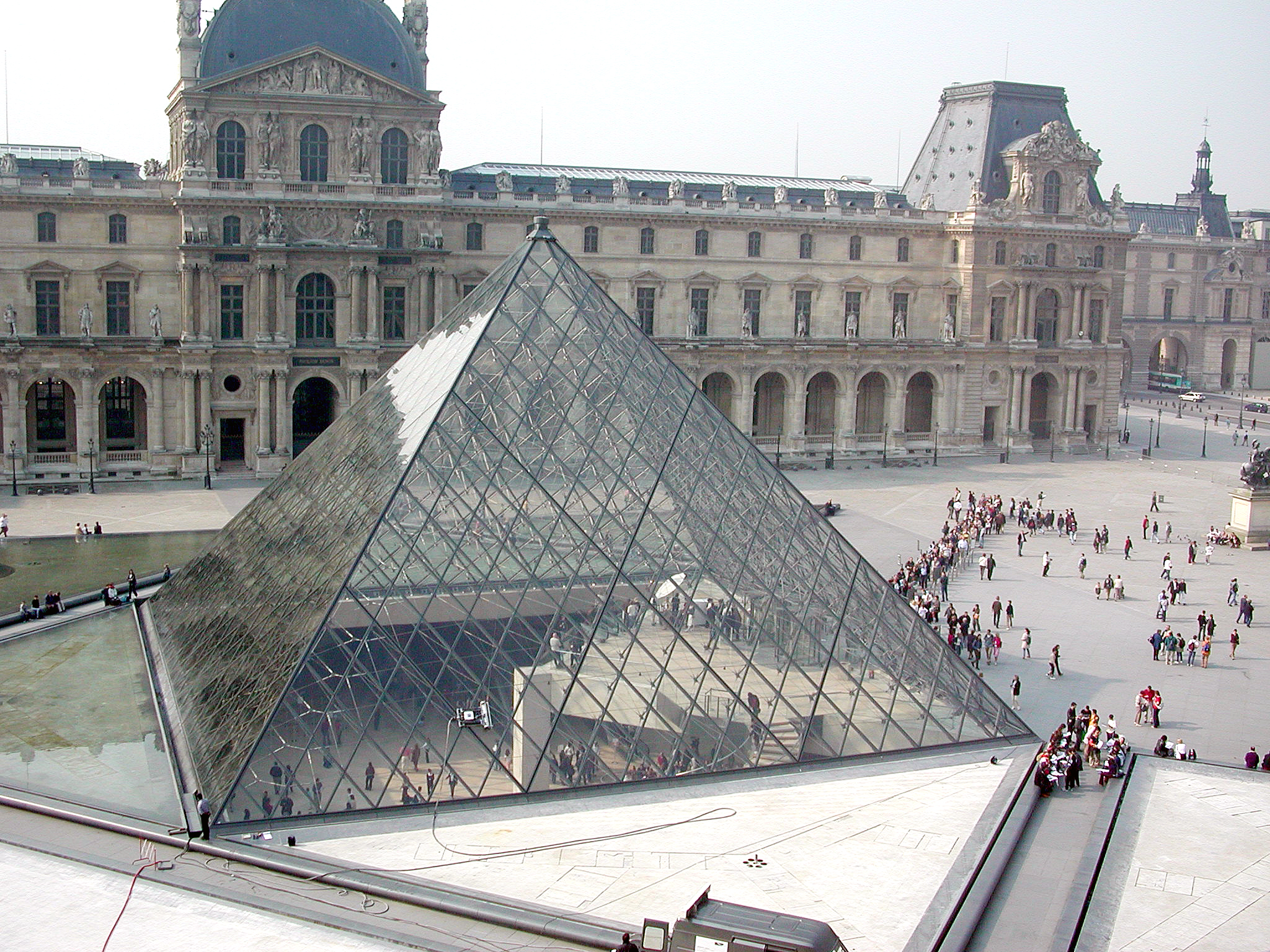
Part of this plan was the Grand Louvre, to remodel and expand the museum, and to regularize (as much as possible) the maze and warren of galleries in the old accretion of palace rooms. The most visible of the changes was the addition of the glass pyramid in the center courtyard of the palace. It was designed by architect I.M. Pei and although it has long become part of the landscape of the museum, it still angers many of the country’s more conservative grouches. In 2017, The American Institute of Architects noted that the pyramid “now rivals the Eiffel Tower as one of France’s most recognizable architectural icons.” 
The entire central underground of the courtyard was remodeled to create a new entrance, and to attempt to make sense of the confusion of corridors, rooms, staircases and doorways. It was completed in 1989. 
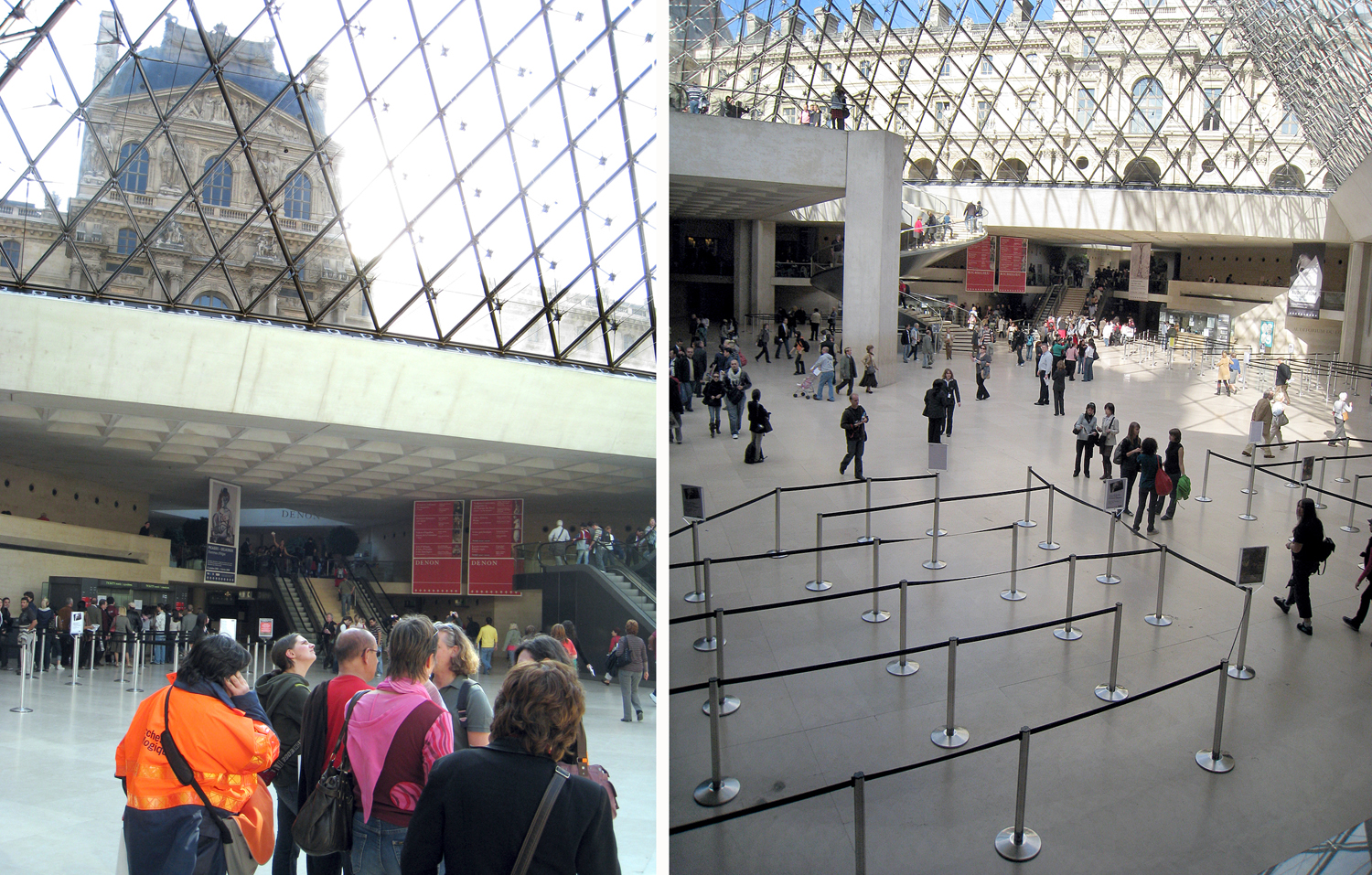
Now, one cannot think of the Louvre without its pyramid, but speaking as a visitor, while the Hall Napoléon (the underground foyer) has made some sense of the confusion, I cannot honestly claim the chaos has been tamed. The museum remains a labyrinth and you can be easily lost. 
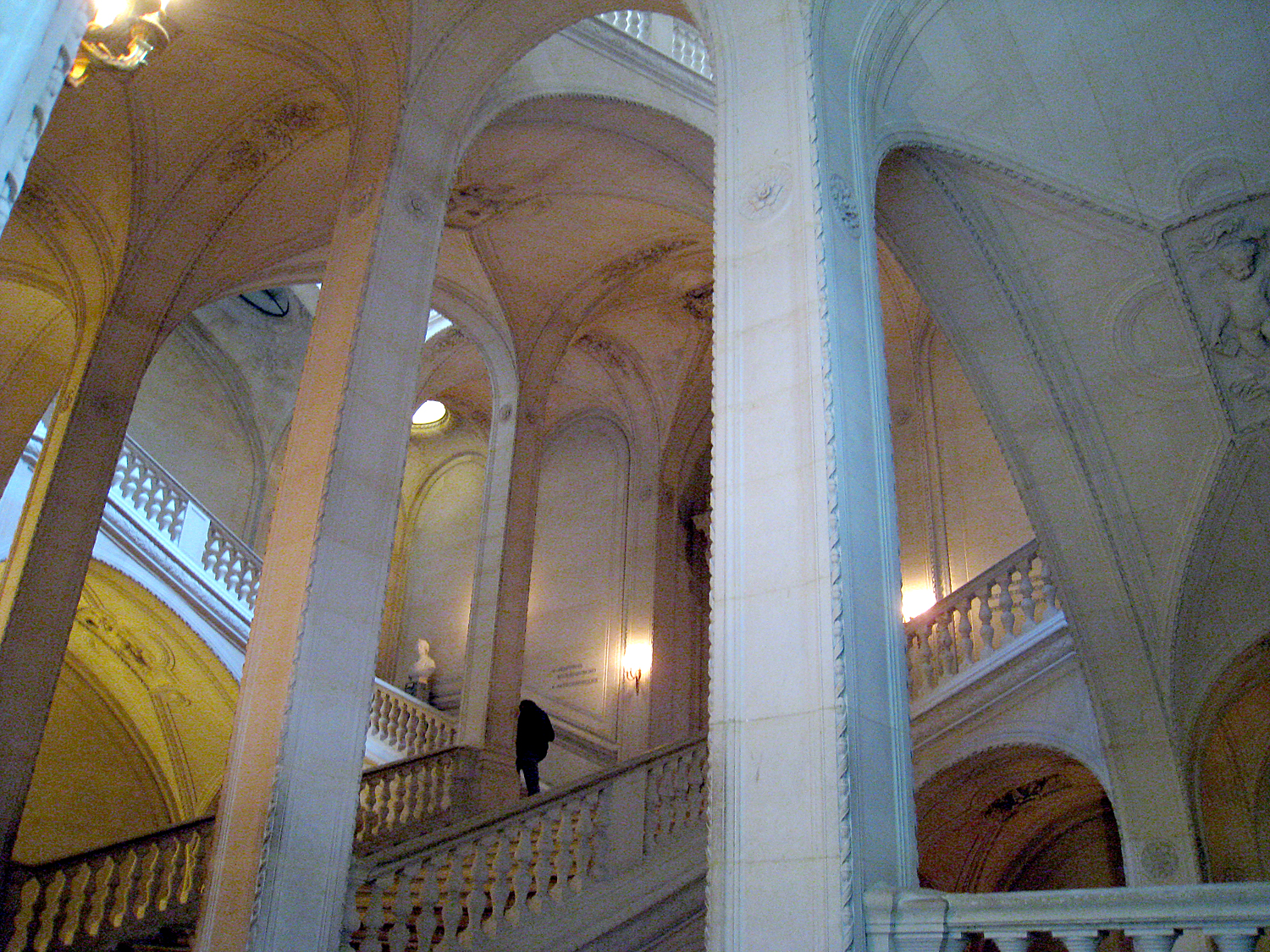
And, unless you have budgeted a month or more to spelunk the entire museum, you will need to prioritize what you want to see in a visit — or two, or three. 

Quick word: Forget the Mona Lisa. It’s a tiny little painting of little artistic note, buried under a Times Square-size crowd of tourists all wanting to see the “most famous painting in the world.” It is what good PR will get you. It may be a historically noteworthy piece as one of the very few paintings Leonardo completed, but there is much better to be seen in the museum. Don’t exhaust yourself in the mêlée

Seek out the unusual, like Jan Provost’s Sacred Allegory, from about 1490, which I like to call “God’s Bowling Ball;” or The Ascension, by Hans Memling, from the same time, which shows Christ rising into heaven, but shows only his feet dangling from the clouds. There’s some quirky stuff on the walls of the Louvre. 
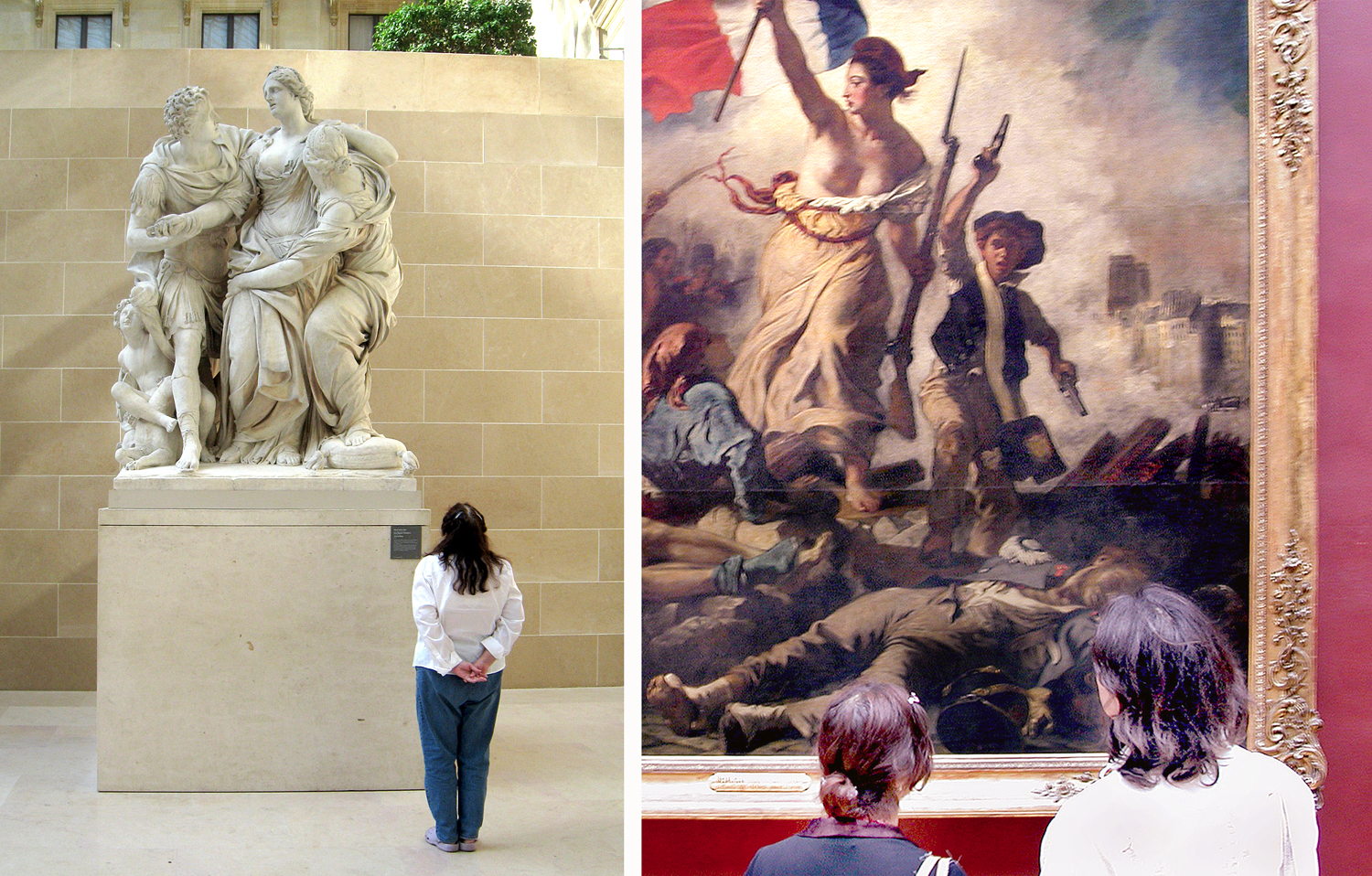
One of the goals of the museum is to collect, preserve, and display the cultural history of the Western world. This is our art, the stuff we have made for more than 3,000 years, from Ancient Sumer and Egypt, through classical Greece and Rome, wizzing past the Middle Ages and brightening with the Renaissance and the centuries that followed. You get the whole panoply and see what tropes have persisted, the ideas that have evolved, the stuff of our psychic landscape. 

(See how the fallen soldier in Jacques-Louis David’s Intervention of the Sabine Women echoes in Picasso’s Guernica. One way of looking at all cultural history is as an extended conversation between the present and the past. The reverberations are loud and clear.)
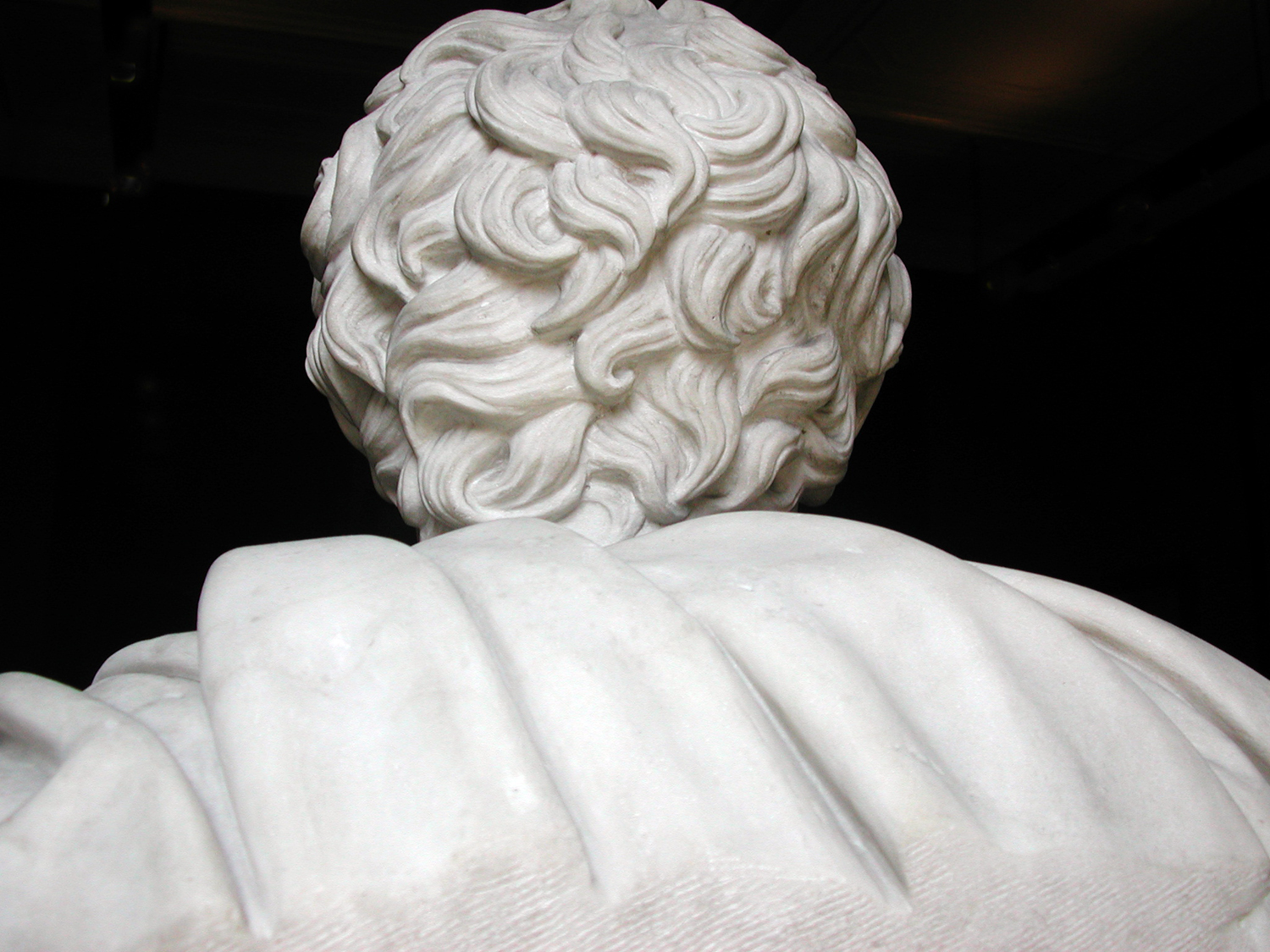
You can look at the paintings on the wall and see them for the beauty of their colors and brushwork, or the familiar (or not-so-familiar) stories they depict; or you can see them as the physical embodiment of the collective unconscious. 

I have always been a museum-goer. From my earliest times as a boy going to the American Museum of Natural History in New York, through my days as an art critic, rambling through the art museums of the U.S. and abroad. There is little I get more pleasure from. 
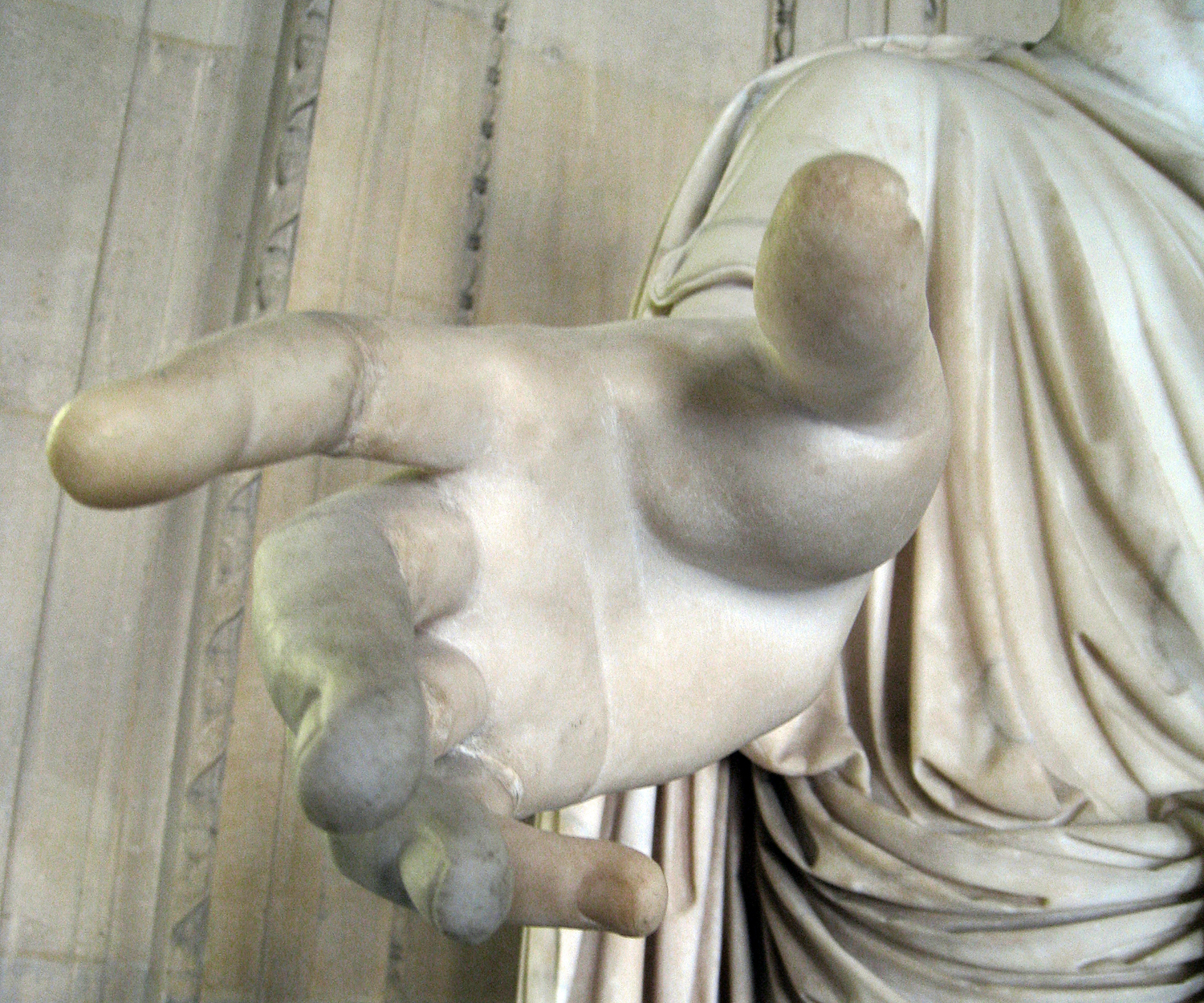
One soaks up the visual patterns, makes connections, recognizes the habits of humankind. Recognizes the shared humanity. The differences between me and Gilgamesh are merely surface tics. When I see the hand of the Roman emperor, it is my hand. I feel kinship with all those whose works and images appear in the galleries. 
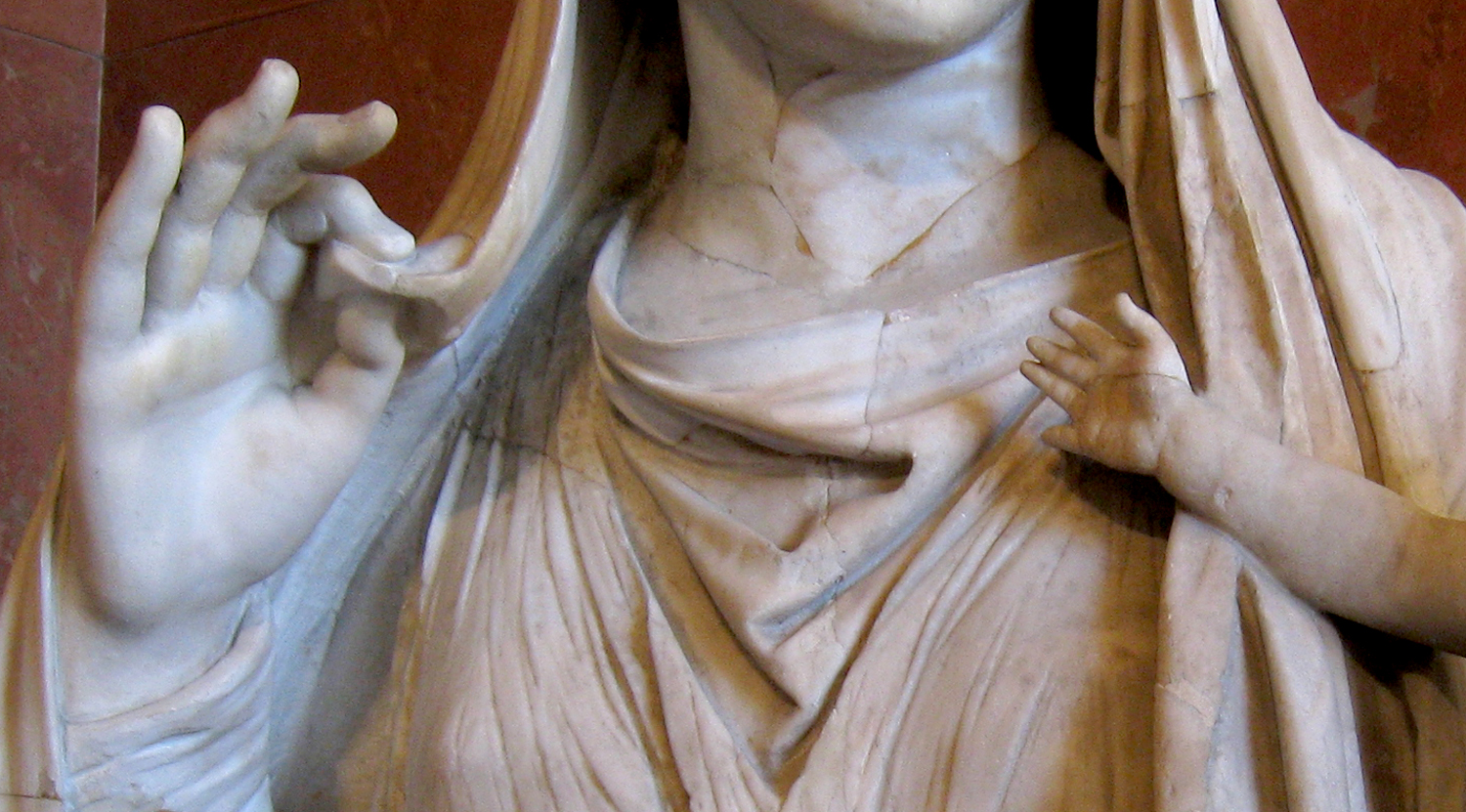
And so, if it is two percent of the Louvre I have managed to absorb, I know the rest is there, and that it is me, also. 
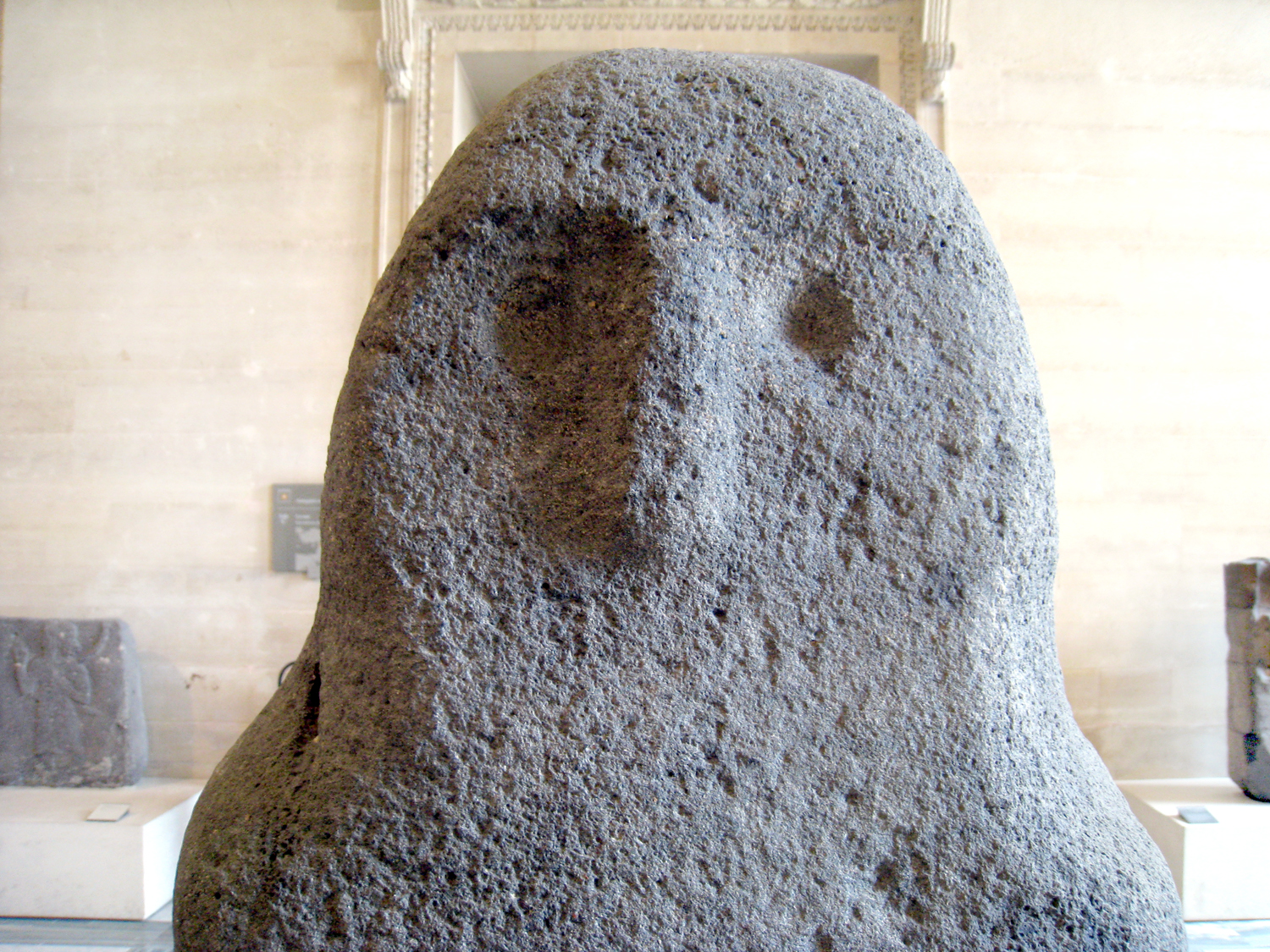
Click on any image to enlarge

The Morris Museum of Art

I have been out of the art game for nearly six years now. A good deal of the need for currency has sloughed off me. I was an art critic for 25 years, but now in retirement, I no longer keep up with this week’s latest and greatest. 

There was a time when I believed that knowing where the art world was headed seemed important. The biggest names were those breaking new ground, forging ahead into an unseen future of art history. Now, such things seem unimportant, and the concern misguided. For one, prognosticators are almost always wrong; we always seem to head in some new directions unforeseeable. When I was very young, the future of art was most certainly found in abstraction. Nothing was so disparaged as figurative art, and worse, art with narrative. 

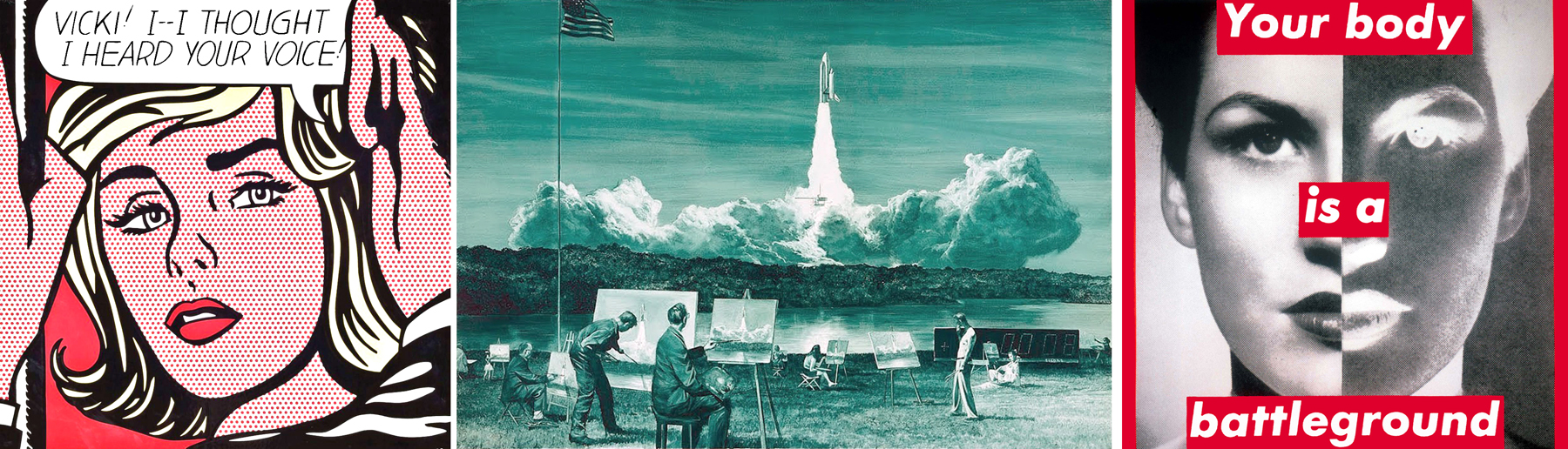
Then came Pop. Cool, ironic, lowbrow and — fun. After that, bingo, along came Robert Longo, Mark Tansey and Cindy Sherman. Narrative and figurative — albeit with a great frosting of irony. There was politically engaged art, conceptual art, ironic politically engaged conceptual art. Comic book characters came, signing the Declaration of Independence. Then balloon animals made of shiny chrome. And, of course, the shark in formaldehyde. 

I am not writing to disparage any of this art, but to remind you that trends come and go. Julian Schnabel is first the new thing, then the forgotten thing and then the joke reference. 

But none of this actually matters. That is all stuff for the “Art World.” The Art World is only tangentially related to art. It is a parallel universe. The Art World in 1890 paid no attention at all to Vincent Van Gogh. Later, his paintings sell for million and millions. Did they get better over the years since his death? 

Making such judgments of art-value are really rather pointless. You can fix the price of any painting or painter at auction, but, like the stock market, the values go up and down. The art remains unchanged.  

No, keeping up with the latest shows, the hottest news, the catchiest trend, it has all fallen away. I no longer care. Let CNN announce the latest unfathomable number from the latest Christie’s auction; let Fox make fun of Jeff Koons. The art remains, waiting for us to see it for ourselves. 

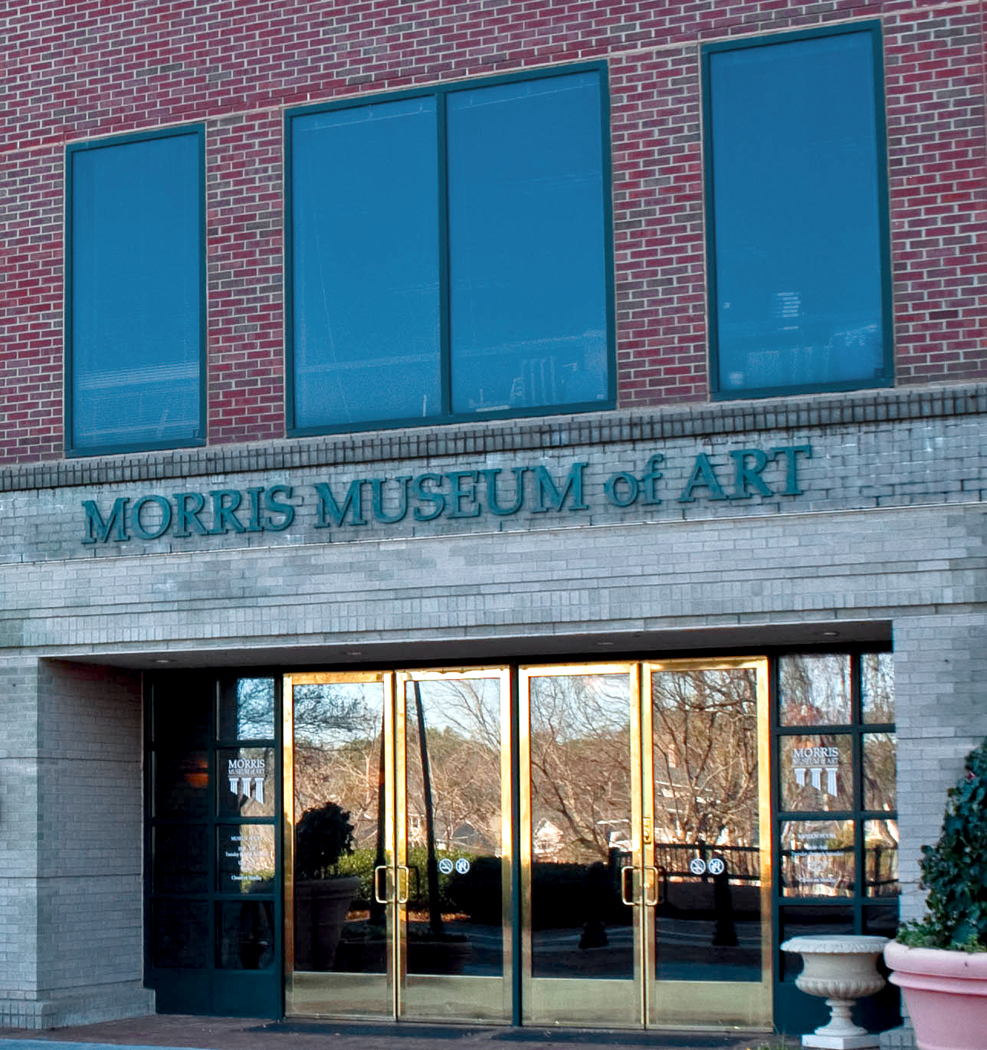
I am reminded of all this once again as I walk through the Morris Museum of Art in Augusta, Ga. The Morris is a small museum, dedicated to Southern art: art by Southern artists; art by non-native artists living in the South; and art made anywhere about the South. It opened in 1992 on the second floor of an office building in downtown Augusta, by the river. With some 5,000 works in its collection, it is small by comparison with any of the Big Boys. 

“Candidates for the Horse Show,” 1893, John Martin Tracy

Yet, walking through its galleries gave me immense pleasure. There were a few familiar names, but most of the art was made by those with either regional reputations or little reputation at all. But what I came away with is the sense, reinforced, that there is an amazing amount of talent out there. You don’t have to be a brand name in a New York gallery to be worth the time. There is a great deal of art being made that is well-made, thoughtful, distinct and individual. Art that, if the cards had been shuffled just a bit differently, might well be the work we cover in the big art magazines. 

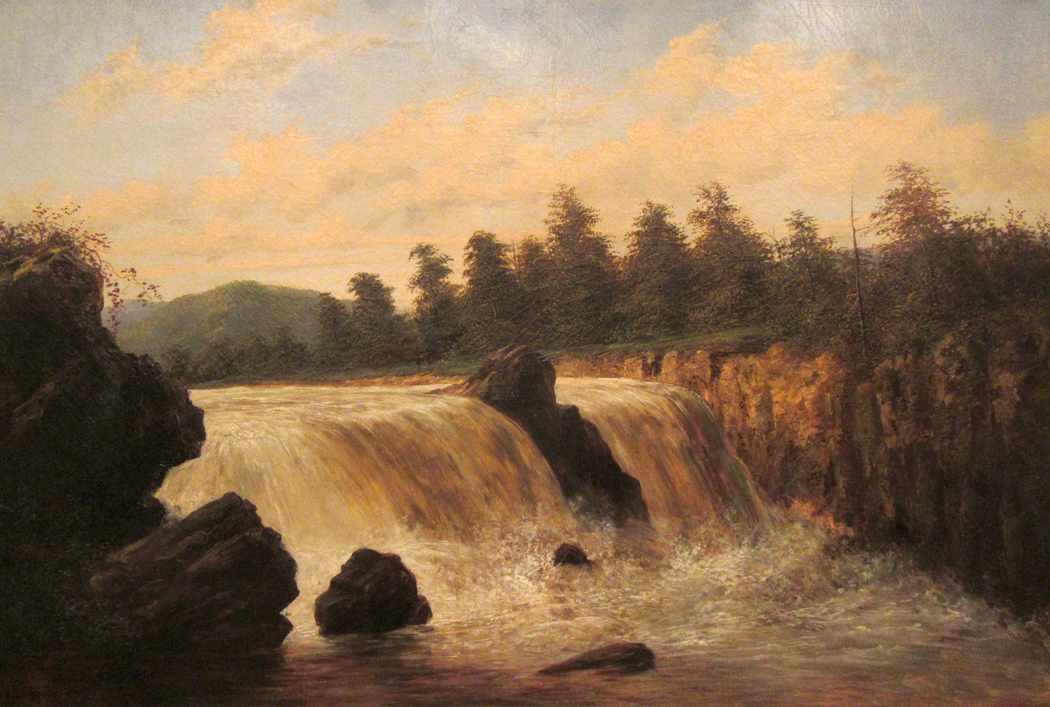
“Toula Waterfalls,” William C.A. Frerichs

I knew at least five artists in my years in Arizona who could have shown in any 57th Street gallery with pride. I loved their work: Jim Waid; Mayme Kratz; Marie Navarre; Anne Coe; Bailey Doogan. Actually, I can think of another dozen whose work I enjoyed. Each state has its share of excellent artists who just never won the Blue New York Ribbon. All giving great pleasure and thoughtful content. 

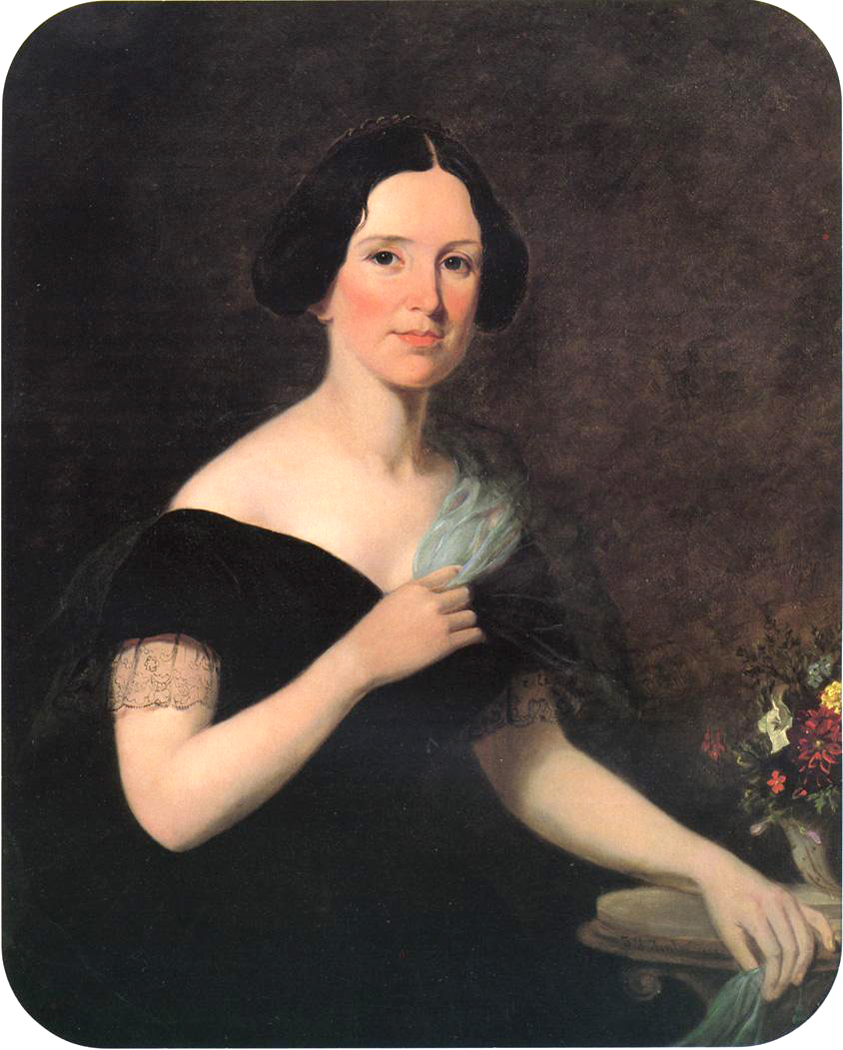
“Mrs. James F. Robinson,” Trevor Thomas Fowler

The Morris Museum features some historic art, mostly portraits from the 19th century, and a treasure of modern and contemporary art. There is glass and there are prints. 

“The Art of Drawing” 1998, James William “Bo” Bartlett III

The longest gallery contains the modern and contemporary work and moving from canvas to canvas provided me with one pleasure after another. This may not be cutting edge, but it is sharp enough. 

“The Merry Boatmen,” 2000, Terry Rowlett

The currents of Postmodernism are strong, but also the awareness of cultural roots. 

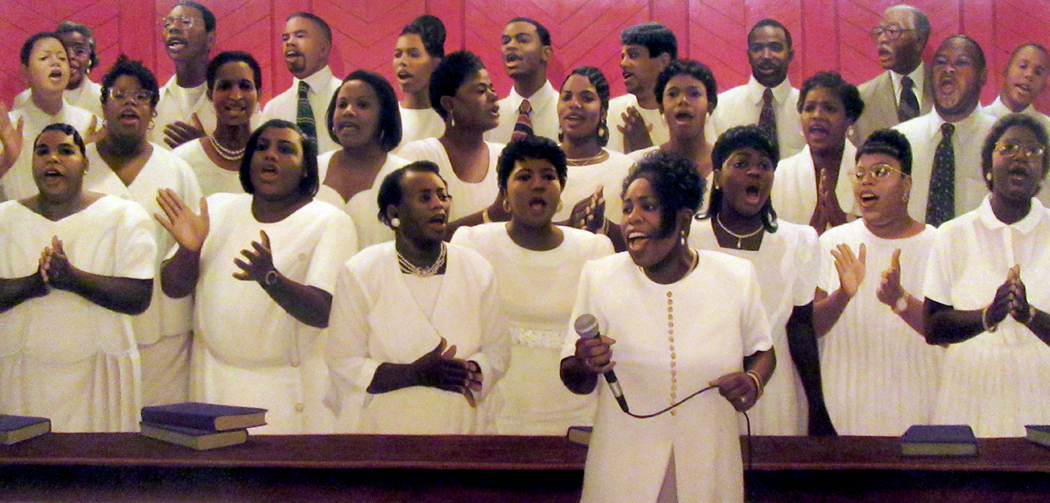
“Gospel Sing,” 1997, Dale Kennington

The artists represented are diverse; not all old white men. 

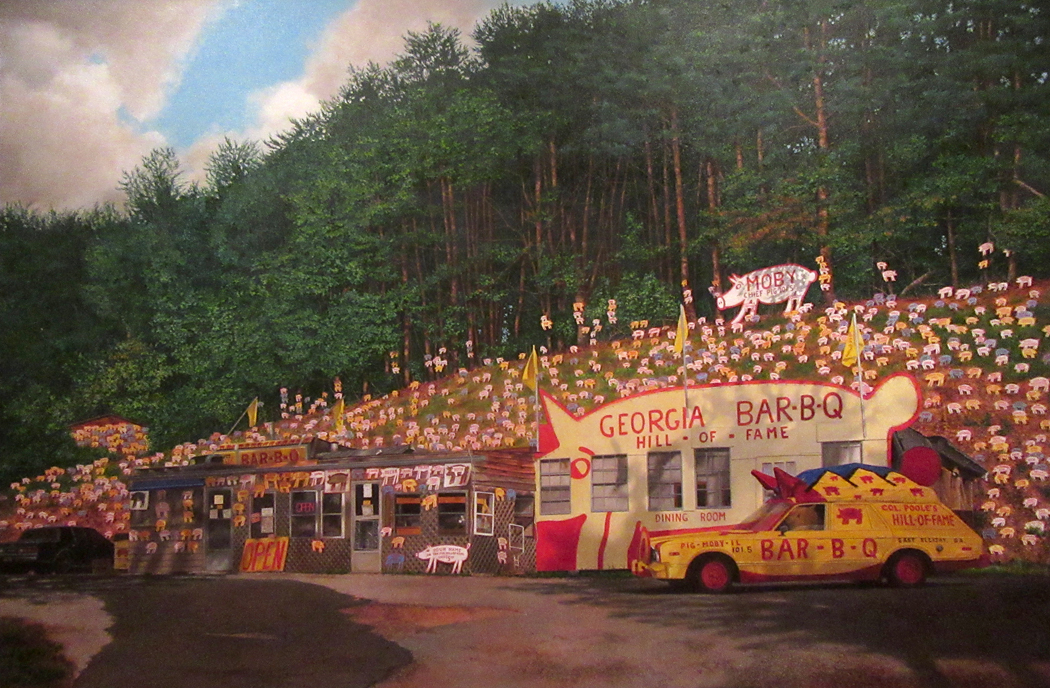
“Col. Poole’s Pig Hill of Fame,” 1995, John Braeder

The sense of Southernness is strong, and since I have been an adopted Southerner, deeply buried in a profoundly Southern family, much of it resonates strongly. 

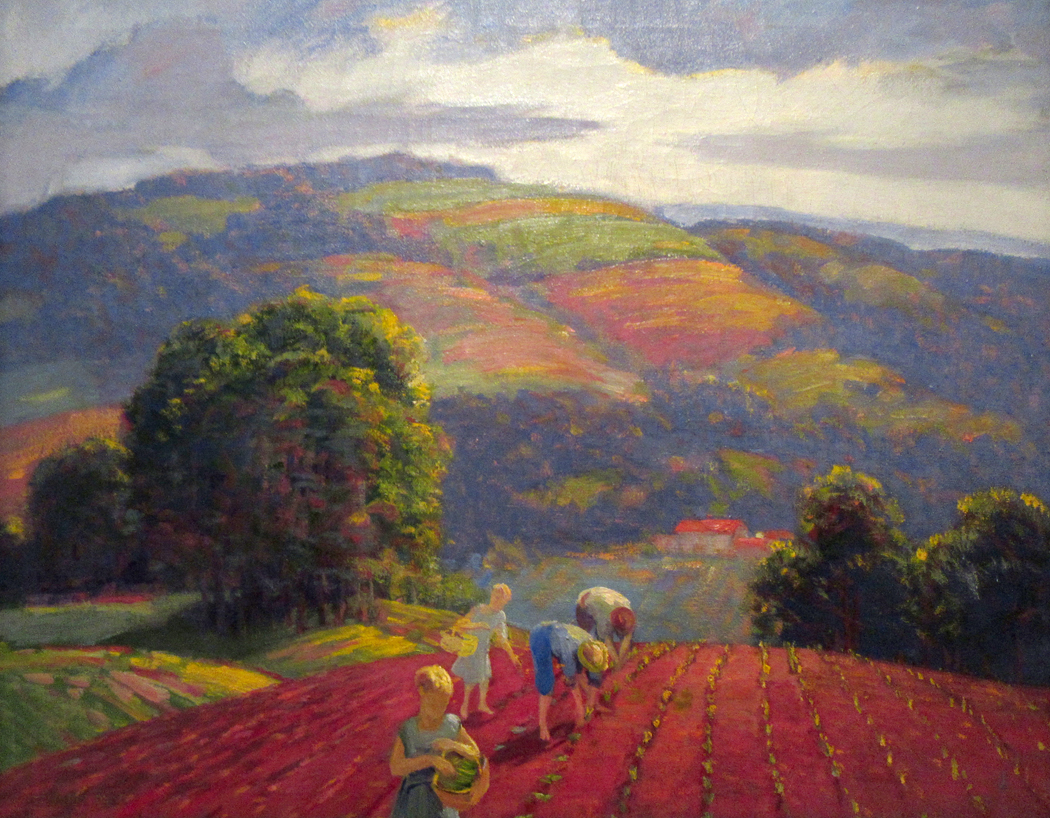
“Tobacco Setters on a Hilltop,” 1938, Stephen Alke

If the South ever was the “Desert of the Bozart,” it no longer is. (Really, it never was — count your Nobel Prize winners, the writers anthologized in school texts, the “classical music” of America: Jazz. The South is more profoundly aware of its cultural heritage, Black and White, than any other region I have lived in). 

“Boundary Marker,” 2000, Kesler Woodward

We are misled if we think that art only counts if it is published in books. The fact is, that most of us only get to see the famous works in reproduction. But halftones can never capture the reality of a live work of art. You can gain more from seeing a lesser-known regional painting in person than from any slide in an art history class or jpeg on Google. The real thing is alive, not embalmed. 

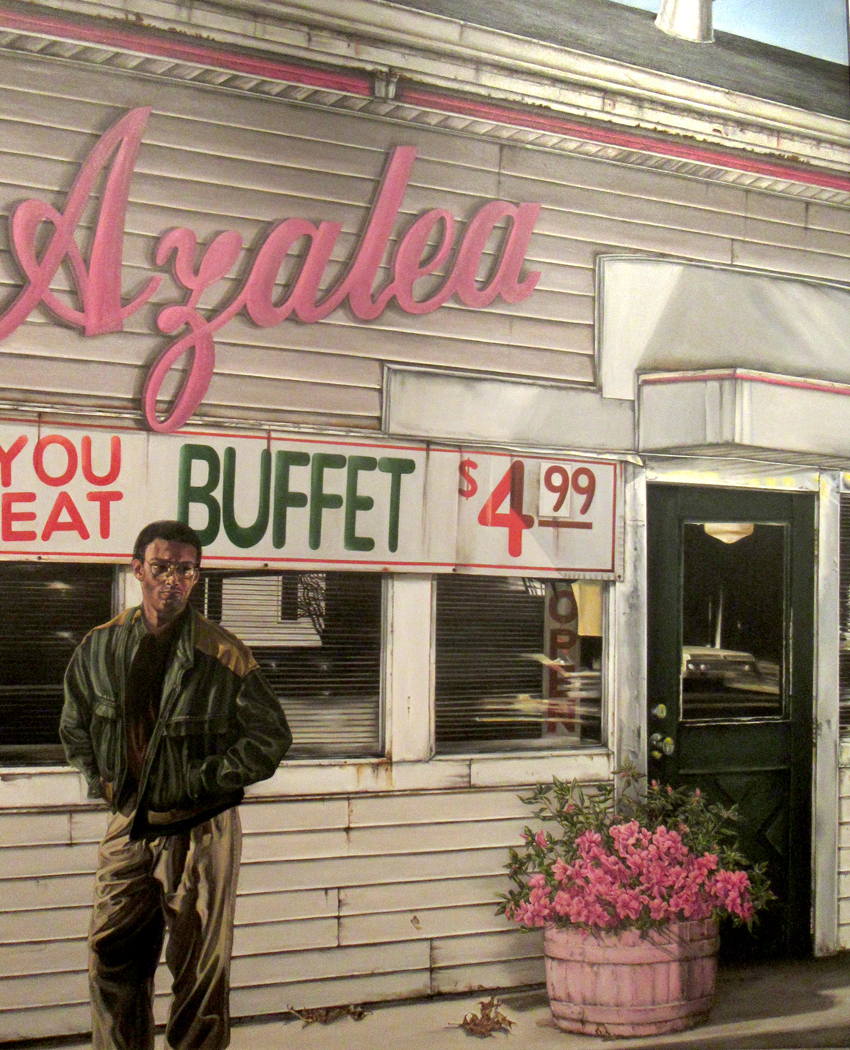
“Azalea Cafe,” 1994, Shirley Rabe Masinter

Indeed, just the work you read about is already second-hand; the opinion you have of it has already been filtered and siphoned by those who have gone before. 

“Daughters of the South,” 1993, Jonathan Green

Seeing something fresh, uncategorized by authority, gives you the chance to discover it for yourself. Finding something unknown to the urbanized critics can make it your own. Like discovering a geode in the woods, or a Hermes handbag at the Goodwill. 

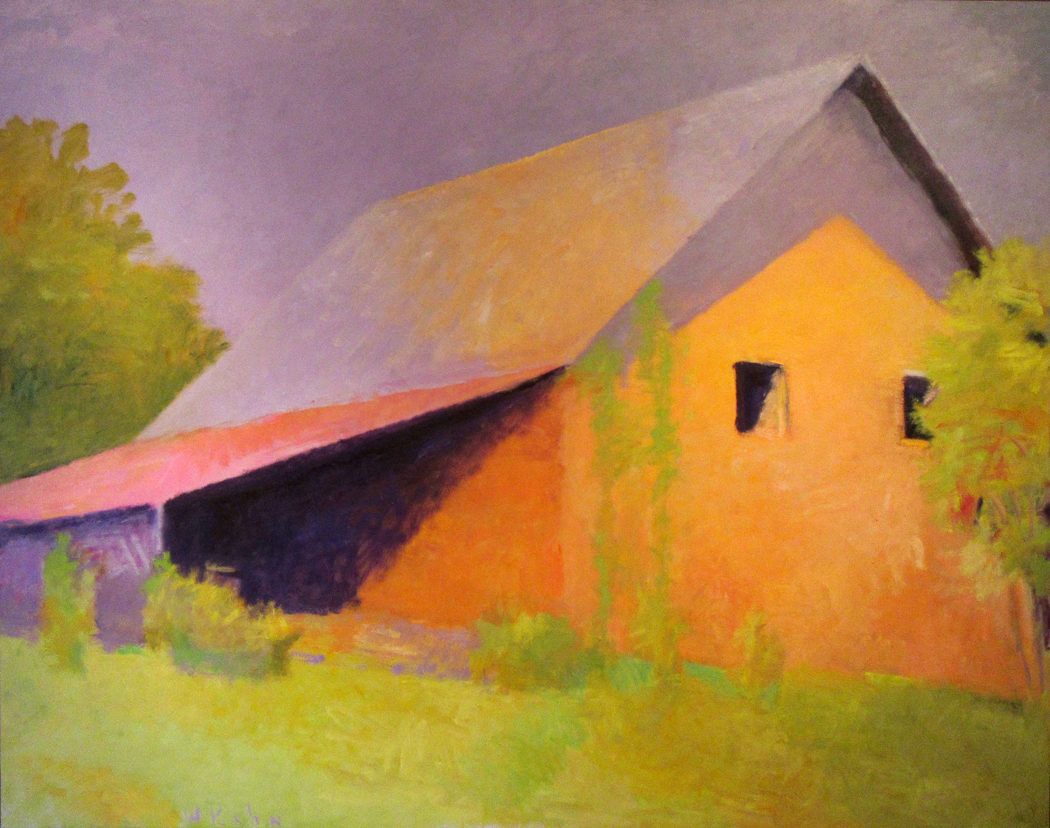
“Cotton Barn at Beech Island, S.C.,” 1998, Wolf Kahn

There are many such smaller art museums around the country. The Portland Art Museum in Maine; the Wadsworth Atheneum in Connecticut; the Storm King Art Center in New York; the Brandywine River Art Museum in Pennsylvania; the American Visionary Art Museum in Maryland; the Delaware Museum of Art; the Maier Museum of Art in Virginia; Bainbridge Museum of Art in Washington; the Reno Museum of Art in Nevada; the Rahr-West Art Museum in Wisconsin; the Eli and Edythe Broad Art Museum in Michigan; and too many others to list. Check out what you have near you. 

“Rock Shop Billboard,” 2007, Julyan Davis

Most universities have art museums or galleries that are worth visiting. 

Pretty much any way you can get to see art in the flesh is worth it. There is an astonishing amount of talent out there to be enjoyed. 

Art is not some unimaginable enterprise reserved only for the cognoscenti. It is not something only made by the Enormous Reputations. Any art you actually get pleasure or ideas from is worth the time. And it’s all around. 

Click on any image to enlarge

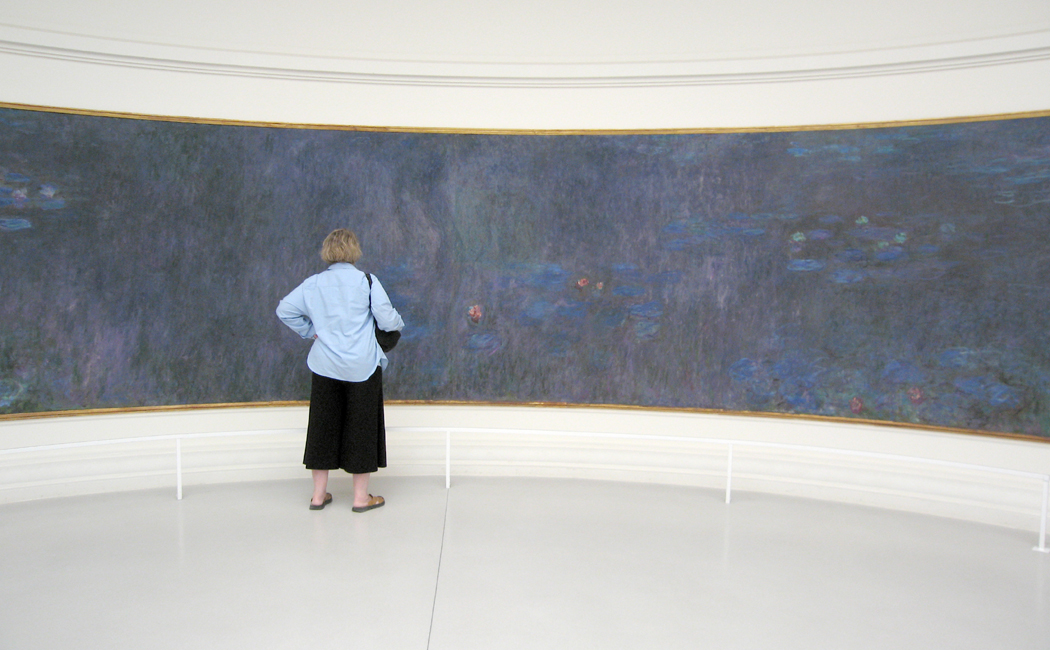
Orangerie, up close, 2006

You wander through one of a city’s great art museums and watch the people. They spend an average of maybe 15 seconds in front of any painting that catches their attention before moving on.

Or more likely, they spend another 15 seconds reading the label on the wall. And if the label contains a legend explaining who the artist was or what the painting is about, they may very well spend more time with the label than with the art on the wall. It’s disheartening to watch.

One of the problems is that we are a verbal, not a visual culture. I know the common wisdom is currently that we are a visual people, but it simply isn’t true: Even those things we think of as symptomatic of being visual are things we “read” for information rather than see: like the stick figure man or woman that lets us know which restroom is appropriate.

But even more than that, it is that we are a problem-solving people. America’s national mythology describes us as doers and go-getters. We simply don’t believe in wasting our time. We’re too busy. Our heads are too crowded.

There are all those yapping voices, all those different aspects of our personalities, all clamoring for attention.

”Mmm, doughnuts!”

”Don’t forget the dentist appointment.”

”Do these socks go with this tie?”

”Is the ozone hole getting bigger?”

”Mmm, doughnuts!”

So, it’s hard to appreciate art these days.

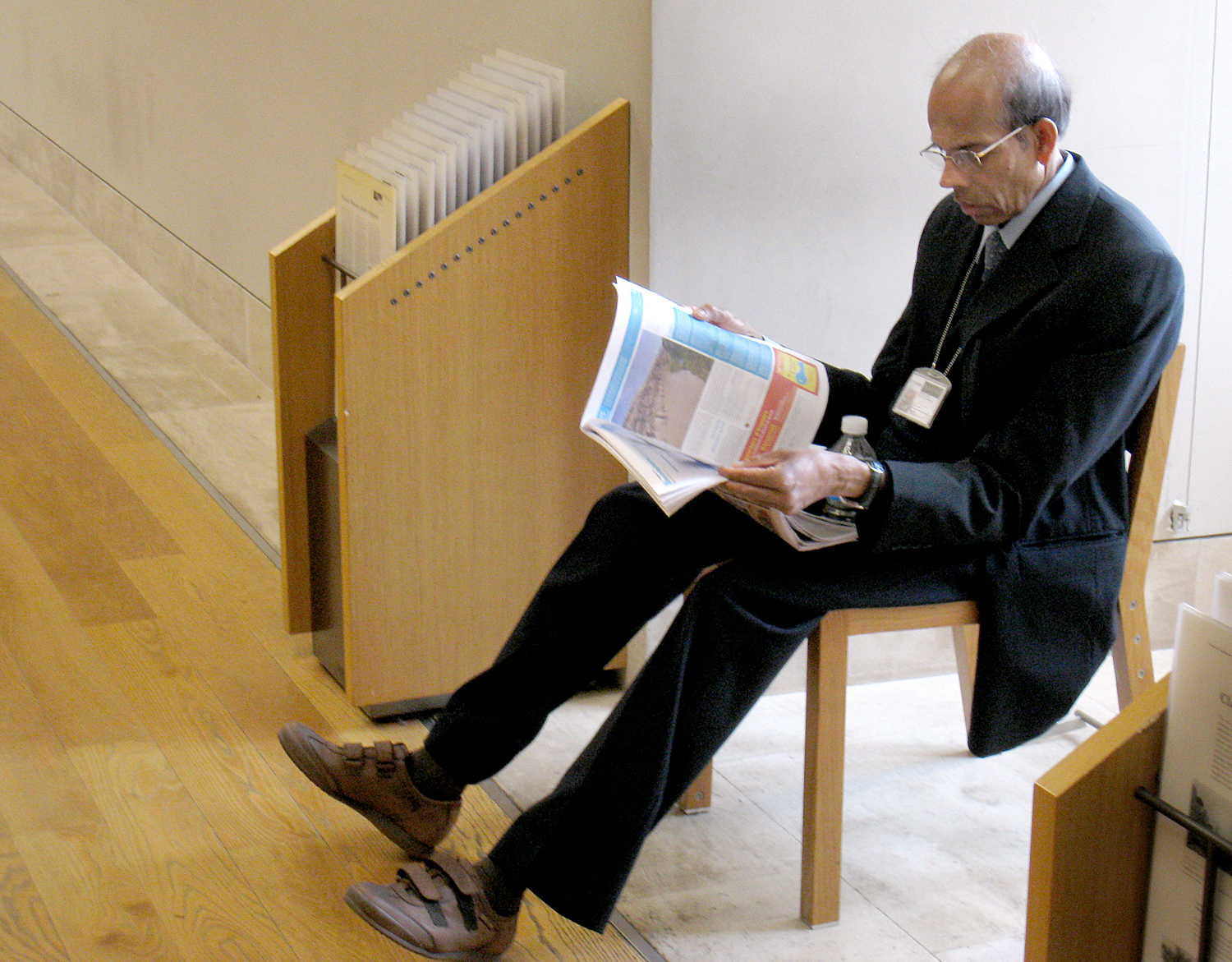
And it’s no wonder that a management class steps forward to create some order.Orangerie, the critics, 2006

Each of us has it: The executive in our heads that tries to get through life quickly and efficiently, cutting through the baloney and making the decisions for everyone else in there.

It’s a necessity in an information top-heavy age with bumper-to-bumper traffic on the freeways.

Unfortunately, this tendency to empty the ”in box” and get on to the next problem runs completely counter to what art is about. To see art, or read poetry, or listen to chamber music, we have to kidnap, blindfold and gag the executive in our brains and give ourselves over to a different kind of experience.

And ”experience” is the operative word, for the primary function of art is to provide an aesthetic experience.

That executive in our cranium is used to dealing with information, not experience. There is life on one hand, and there are words and symbols about life on the other. Most of what life requires of us in the late 20th century deals with words and symbols: filling out forms, scanning in our Visa numbers, looking down the stock listings in the Business section of the newspaper. We are drowned in words.

But at least we are used to them. Experience is scary: sensuous, messy, confused.

So how do you deal with art? How do you prepare yourself to appreciate it, enjoy it, and grow from the experience of being exposed to it?

First of all, you have to slow down. Your interior life moves slowly, implacably. It is only your cerebral cortex that buzzes with frenetic energy. The deeper, more meaningful emotions, the underlying rhythm of life is more measured: a pedal note under the jangling fugue subject above.

Art requires that you work on this slower time scale. It doesn’t give itself up, like the punch line on a New Yorker cartoon; it slowly releases its value to those who can wait.

You have to spend time with a painting or statue. The Manager wants to look at a painting and say, ”Yes, I know that: It’s a Renoir. File it under ’19th Century, Impressionism, French.’ ” And then move on to the next: ”17th Century, Dutch, Genre: Rembrandt.”

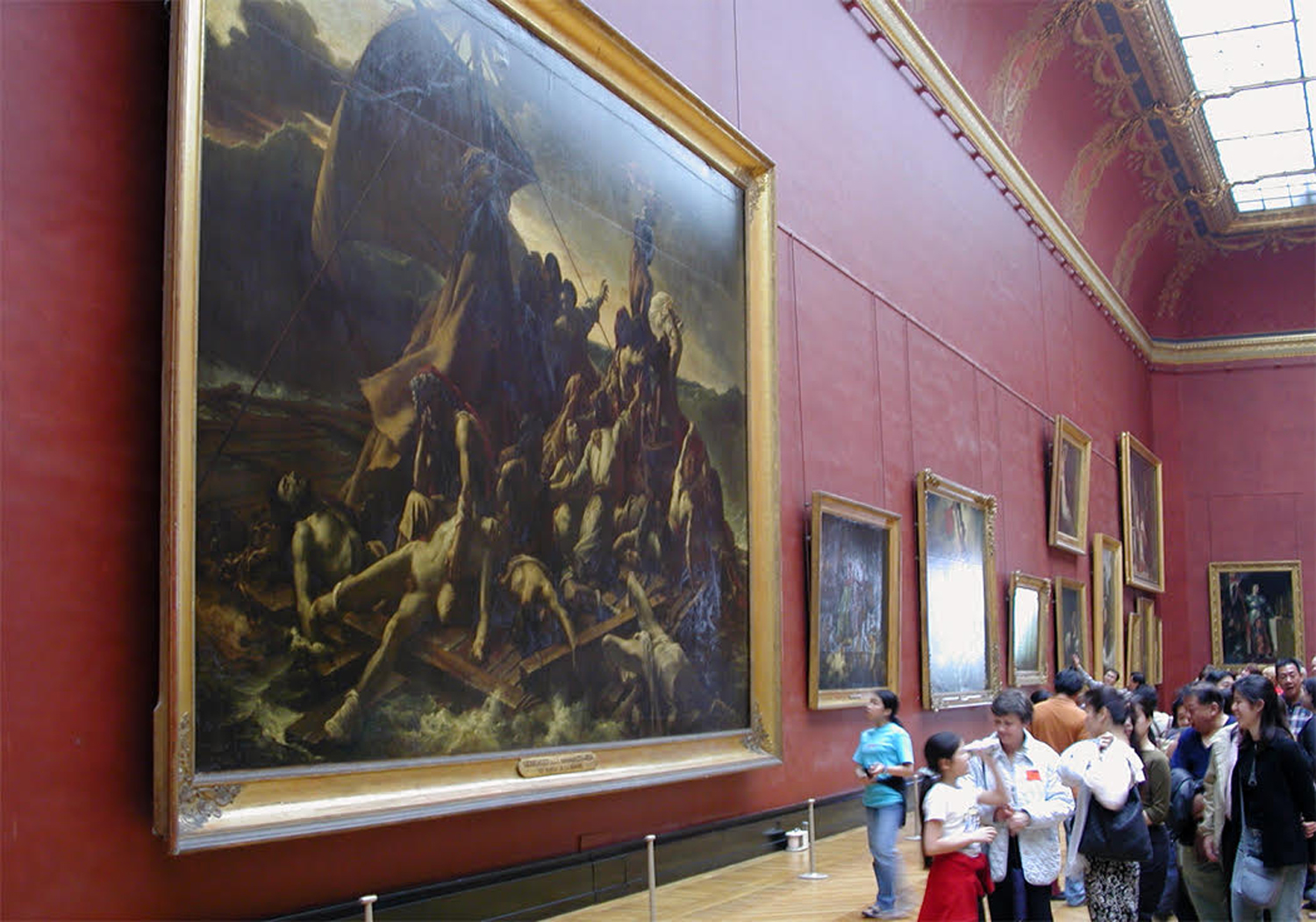
It is as if knowing the name of the painting is the same thing as knowing the painting.Orangerie gawkers, 2006

But if you look at a single painting for, say, an hour, you will learn things about it. You will be forced to discover all the richness that the artist took the time to put there.

What colors has the artist used? What shapes? Is it dark or is it light? What is the subject? Can you make sense of it? If not, is the ambiguity important? Is the paint thickly applied, or flat and textureless? How does that help the painting convey what it has to give you?

You swish it around in your mouth like a good wine, looking for the complexities of taste and aftertaste.

How does the painting make you feel? Is it an emotion you’ve felt before? If not, is it related to one you’ve felt? If it’s completely new, how do you feel about that?

The art slowly unfurls, like a rose opening from a bud. The attention you pay will pay you back.

In the next installment, we’ll take a look at just one painting and see how this approach might pay off.