Archive

Tag Archives: art


It is a commonplace that America is materialistic, that it grasps after money and wealth and lacks the spiritual values it used to have.
Of course, that nostalgic view ignores that Americans have always chased wealth: It’s built into the Constitution.
But more importantly, it ignores the fact that America isn’t really materialistic at all, and in fact, is largely indifferent to the material world.
If we were really materialistic, we would never tolerate walnut-woodgrain plastic.
No, the physical composition of their existence is simply not a high priority for most Americans. Yes, they are after wealth, but wealth isn’t a material value, but a spiritual one.
When we say Americans “worship the almighty dollar,” we aren’t saying that they value material objects over spiritual ones, but rather that they place worth on one set of spiritual values instead of another, more worthy set.
Money, after all, isn’t a physical object. It isn’t material. It is no more physical than an inch or a pound. It is a measuring item, to measure wealth.
Real wealth is the possession of useful or meaningful things. To own land, or to grow 40 acres of artichokes is to possess wealth. You can eat artichokes; you can’t eat money.
Money cannot be worn, it cannot be used to build with. It must be translated back from its symbolic existence to a material existence by spending it.
I’m not saying that money isn’t nice to have around. But that it is a mental construct, not a physical reality. If we want money, it isn’t because sewn together, dollar bills make a nice quilt.
Even the things Americans spend their money on tend to be owned for spiritual rather than physical reasons. If we want to own a BMW or a Lexus, it isn’t because these are better cars than a Honda or an Ford — though they may be (I’m not convinced) — but because they are status symbols that let other Americans know where we rank on the totem pole. Armani suits and Gucci bags are not something most Americans really enjoy on a physical level. They are the civilized equivalent of the eagle feathers the chief wears, or the lion-ruff anklets worn by the Zulu leader: They confer prestige and denote status.
These are spiritual values.
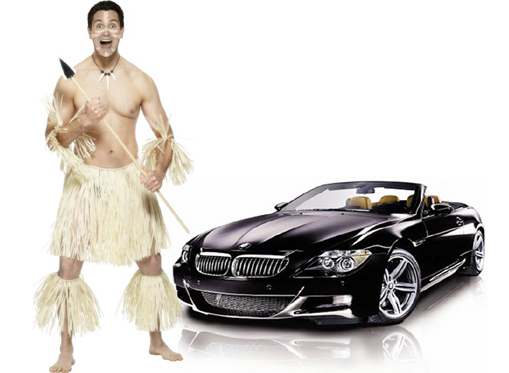
As a matter of fact, America would be a whole lot better off if it were more materialistic. The planet is bursting with stuff: It all has a texture, a feel, a smell, a taste, a sound. If we were materialistic, we would be aware of how much richness the material existence affords, and we would revel in it. We would be mad — as Walt Whitman says — for us to be in contact with it.
And what is more, the deeper we involve ourselves in the physical world, the more spiritualized we will become — that worthy spirituality. It is because we are so unmaterialistic that our environment suffers so. We don’t value the physical world we live in. It doesn’t bother us that there are fewer birds singing in the morning, or that codfish are disappearing.
In part, this is a remnant of the contempus mundi that was fostered under Medieval Christianity. It is that suspicion of the physical world that the Old World monks felt would seduce them from the righteousness of prayer and ritual.
We have inherited the contempt, but without the prayer. It leaves us in a hollow place.
As an adult I have come not to trust anyone who doesn’t love the physical world.
I don’t trust him to make policy choices about oil drilling or lawn seeding. I cannot imagine how it is possible not to fall in love with the things of this world, but I see just that happening all the time.
I pick up the lump of spring earth and squeeze it in my fist to judge whether it is time to plant my potatoes. I listen for the birds globing and twisting as they rise from the trees in the morning. I look for the light caught in the cholla spines and the twill in my gabardine. There is velvet in heavy cream and scratchiness in wool blankets.
The physical sensations make us more aware, more awake. The love of the physical world keeps us from becoming dullards. Living in a world of symbol and status dulls us. At its worst, it leads to ideology.
Would that America really were a materialistic society.
Image

Vulgarity is everywhere these days, from T-shirts to dinner conversation. This is a vulgar society we live in, one that supports a Howard Stern and a Rush Limbaugh: vulgar brothers under the skin, although the one has more skin than the other.

But conversely, vulgarity is also undervalued.

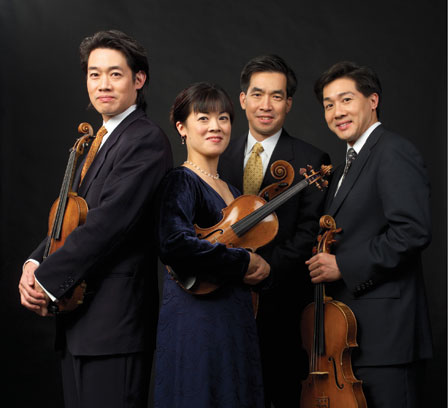
I recognized that at a concert recently, listening to the wonderful Ying String Quartet, which played Mozart, Bartok and Debussy with taste and refinement. But I knew that, as good as they were, they lacked that last touch of vulgarity that all really great art has access to.

I have heard the Guarneri and the Budapest quartets and they were both capable of making vulgar sounds — the buzzing tone of playing by the bridge, the taffy-pull of tempo, sudden shift from aggressive to sweet. It gave life to the music.

There are those who hold that the fine arts are supposed to be a safe haven from the vulgarity of daily life, that they should offer only the highest, finest and most elevated thoughts and emotions. To them, it is a way of insulating us from the barbarians we see on television each night.

But I’m afraid that is the very definition of snobbery, and misunderstands the nature of art.

Yes, fine art is more elevated than Two and a Half Men, yet it also embraces the possibility of such slapstick: Art is large, it contains multitudes.

First, what is vulgarity?

It is the awareness of the animal side of humanity — the body processes and appetites; and it is the trivial in an otherwise important context. It is the introduction of the quotidian into the ceremonial; it is farting in church.

It is also the reaquaintance of mind with body and it is vitality giving breath to the spirit.

It is found in all the greatest, most profound and elevated works of art.

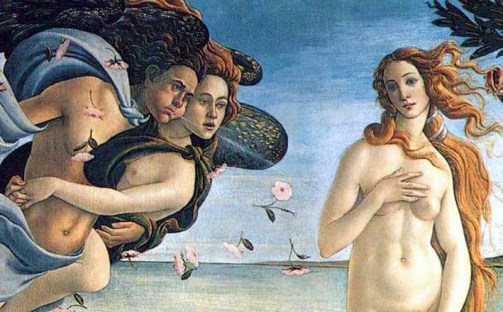
Think of Botticelli’s Birth of Venus, for instance. What could be less vulgar? Yet, there is that cherub with his cheeks pooched out, like Dizzy Gillespie, blowing the sea wind that animates Venus’ hair. His expression is close to grotesque.

And, more subtly, although her nudity is certainly not vulgar, the goddess’ attempts to cover that nudity is. It is bourgeois propriety.

Or, at the height of Beethoven’s Ninth Symphony, a hymn to universal love and brotherhood, the music stops for the belch of a double bassoon and a Hogan’s Heroes march.

Don’t misunderstand me: I am not saying that vulgarity is fine art, but that the greatest art of our culture does not ignore vulgarity, but includes it in the mix.

It is the bumptious Minuet in the Classical symphony, the seemingly-naive tone-painting in a Schubert song accompaniment, the exaggerated muscles in a Michelangelo nude.

It is the Miller’s Tale in Chaucer, the porter’s scene in Macbeth, it is the cacophany of marching bands in Charles Ives and the Jewish wedding in Mahler.

Even Josquin, that most angelic of Renaissance voices, whose music for the Catholic Mass defined for centuries what religious music should be — at other times, he can also have his singers chirp like crickets.

Sometimes vulgarity is expressed by choice, sometimes by miscalculation, as when Keats writes, “She heaved her precious dainties meant to still an infant’s cry.” But no first-rank artist has any fear of the vulgar.

It is Ray Nanton’s growling trombone in Duke Ellington’s impressionism.

It is Pablo Neruda calling for the impure in poetry.

It is the ornament reaquainted with architecture in Postmodernism, a reaction to the dull inhuman “purity” of the International style.

And when you think of the greatest musicians, you recognize Horowitz, Kreisler, Casals, each capable of the most obvious vulgarity — the gauche portamento, the foot-stomping downbeat. Compare Leonard Rose with Mstislav Rostropovich and you will understand why the Russian is considered the greater cellist: He is unafraid of the peasant in him.

Art is not about being bloodless and noble, but about being human.

Hence the Hungarian peasant dances in Bartok’s Modernism, the Austrian folksongs and dancing bears in Haydn.

“Nothing that is human is alien to me,” said Cicero.

And being human begins — although it doesn’t end — with the body.

That is why Ezra Pound said that poetry atrophies the further it gets from music, and that music atrophies removed from dance. Dance is the body in motion, the foot — bunions and all — hitting the floor. (Someone once defined a ballerina as “a beautiful woman with ugly feet”).

There is a separation in Western culture between body and spirit. Art can reconnect them. And the pinch of vulgarity thrown into the mix act as an anchor, firmly keeping the more ethereal impulses in art from floating away on the ether of their own enthusiasms.

That art is greatest, not that hits the greatest heights alone, but that has the greatest reach: Homer, Michelangelo, Cervantes.

They reacquaint me with my own life and make it possible to aspire, not by setting the stars beyond human grasp, but by teaching me my connection with them: The dirt I stand on and the constellations over my head are of a piece.