Archive

Tag Archives: authoritarianism

This is a repeat posting of a piece I wrote in 2017, during the first Trump administration. But I believe it may still be apposite, although the stakes are even higher this time around.
I avoid writing about current politics for several reasons. Firstly, because the situation so quickly changes, nothing you write today may hold for tomorrow. Secondly, because it is so touchy a subject, you risk alienating your reader for minor offenses that can be taken as index markers for major disagreements. Thirdly, because politics is such a minor part of what makes a difference in our individual lives; so many other things are more important and more interesting.

Nevertheless, the chaos of the current American situation calls for some small clarification. Arguments muddy when thinking is unclear.

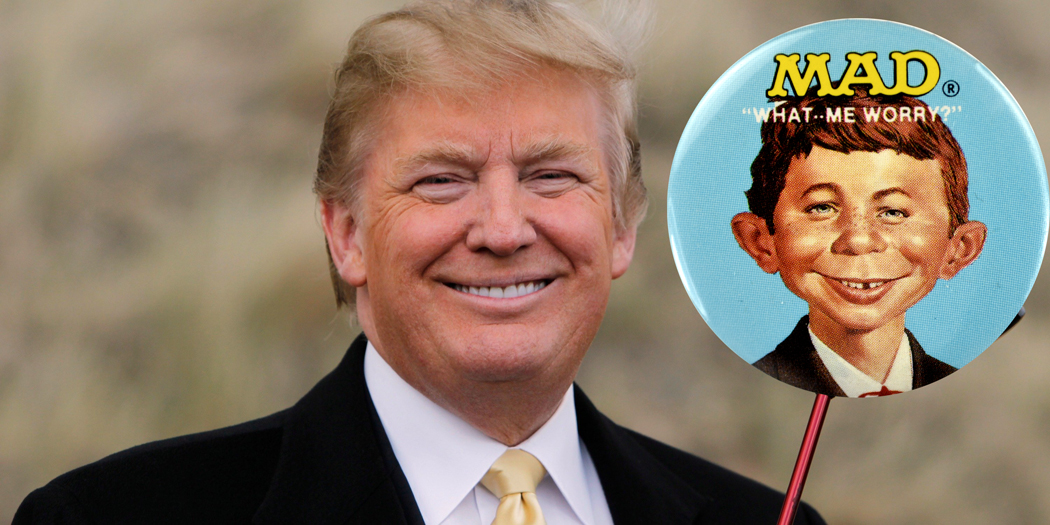
To begin, there is the issue of Donald Trump, which is a great squirt of squid juice, obscuring more lasting problems. It is easy to make fun of the Great Pumpkin, he practically satirizes himself. While he has fervent supporters, it is hard to know exactly what he stands for, because his words are so vague in application, no matter how blunt in expression. It is always possible to assume he is your ally, because you only listen to those words that honk your horn. Is he conservative? Conservatives value free trade. Is he pro-business? Business has told him they need an immigrant workforce. What does he stand for besides ignorance?

He is an obfuscation on the surface, a chaos beyond that because, of course, he has no ideology, other than Trumpism. It is not his supposed conservatism that I object to; there have been many thoughtful conservatives. Trump is not one of them; he isn’t even a conservative at all. What scares the bejeezus out of me about him is that he is so clearly unbalanced mentally. The word Andrew Sullivan has used is “bonkers,” and that can hardly be improved for accuracy. The constant wheezing about his vote count, poll numbers, inauguration crowd, all spouted against obvious and visual evidence, is a clear indication that he is unmoored from reality.

Then, there are the speeches, barely in English. They are really just sentence fragments thrown together with unattached adjectives. Yuge, sad, unbelievable, disgusting. They, as Philip Roth has counted them, are constructed from a vocabulary of a mere 77 words, reused and rearranged ad hoc. They jump around from topic to topic with little or no segue. And then, they are filled with things that are demonstrably untrue. One watches over an over when Trump says he never said this or that, followed by the videotape of him saying exactly what he now says he never said. Does he not know that his words have been recorded?

It cannot be easily said that Trump is a liar, because a liar knows what he is saying is untrue. Others manipulate statistics to make their arguments; Trump just pulls stuff out of his ass. Evidence is irrelevant.

Further, he uses these exanus pronouncements to support his chaotic policy pronouncements, which tend to be simple-minded in the extreme. Problems are usually complex and systemic; his solutions are simple-minded and blunt as a cudgel. He shows contempt for subtlety. If the problem is illegal immigration, his solution is not to consider the cause of the immigration, but to build a wall, despite the fact that the majority of the illegal immigration does not cross the desert border, but flies into our airports. My favorite joke about the wall: “Wall — cost: $12 billion; ladder — cost: $35.”

But this is not meant to be a jab at Trump, who is clearly unhinged, not very bright, not at all subtle, and basically a bully at heart. It is too easy to target him; he is a joke. A dangerous joke, who may very well destroy the world at the push of a button, but a joke nonetheless.

No, what I want to point out is that there is, beyond Trump, a basic misunderstanding of the political divisions in the country.

The divisions are very real. Between urban and rural, between liberal and conservative, between Republican and Democrat. But I want to point out that these may overlap, like Venn diagrams, the dipoles are not identical. We too often confuse conservative with Republican and liberal with Democrat. There may be overlap, but more important, their goals are different.

There is a clear difference between liberal and conservative. As they are defined nowadays (very different from when they originated and when conservatism favored a strong central government), the conservative now seeks a smaller central government and the liberal, an activist government working for the betterment of its citizens. The one favors the individual, the other, the community. The one is exclusionary, the other inclusive. And it is clear that as the political scene is currently deployed, Republicans tend to favor conservatism and Democrats tend to the liberal, although Republicans are more extremely weighted to the far-end of conservatism than the Democrats are to the left wing.

But, such thoughts of political philosophy are largely irrelevant to the actualities of politics. One should never conflate Republican with conservative, nor Democrat with liberal. The aims of ideology are to promote a world view and an action plan to enforce that world view. But that is not the aim of the Republican party. Certainly, it will use conservative ideas to further its ends when it can, but its primary driving aim is the accrual and preservation of power. This is central and should never be forgotten: Republicans will do whatever they need to to gain and keep power. Democrats have a similar, but weaker drive. Many Democrats join the party because they think they can make the world a better place. Some Republicans do that, too, but the aim of the party on the whole is not the improvement of society, but the exercise of power. It is King of the Hill on a hemispheric playing field.

This is not to say that most Republicans don’t believe, by and large, that conservative policies would help the nation, but that whether or not they do is secondary to the accretion of political power. Hence, the contorted, serpentine Congressional districts, gerrymandered into silliness in order to ensure Republican supremacy. (Yes, Democrats have done the same — in fact, they invented the procedure in the 19th century — but they were pikers compared to the modern attempt to engineer a “permanent Republican majority.”) Hence, the bald-faced hypocrisy of choosing sides on an issue solely on the basis of whether a Republican or Democrat is offering it for a vote (as with the Republican-designed Affordable Care Act, which became an unswallowable “disaster” when recycled by the Obama administration. Hence, the use of arcane Senate or House rules, or the threat of the “nuclear option,” when it favors them, and outrage when used against them.

And it is why Republicans were gulled into supporting Trump when it looked like he might win the White House back for the party, despite the problem of Trump espousing ideas contrary to longstanding Republican policies. Trump is, after all, not a Republican, except in name, and not a conservative, as it is usually defined. He is sui generis, a propounder of Trump now, Trump tomorrow, Trump forever.

One area in which Trump and Republican world views agree is that the primary lens through which to view policy is economic. Money is the gravity that holds that world together. Whether it’s tax cuts, deregulation or fear of unions and a raise in minimum wage, the heart and soul of the conservative world view is money. The very idea of “running government like a business” is a consequence of this Weltanschauung. But across the world, this idea is changing. Governments are not businesses.

There is a historical storyline here. In the feudal past, with the king at the top of the pile, government was essentially a protection racket, with each level of vassalage “wetting its beak” in the next level down, and everyone feeding on the peasants. The general welfare of the populace was not even an empty platitude. As nation states developed from the Medieval sense of monarchal real estate, the idea of decent governance took hold. Since the New Deal in the U.S., and post-war in the better part of the rest of the world, governments have assumed the duty of protecting the welfare of its populace. All through Europe, governments guarantee health care, safety, minimum living wages, shorter work weeks and longer vacations. The U.S. has resisted such things. For Republicans (distinct from conservatives, who also have many social issues) and Trump see the world through dollar-tinted glasses. It is a reversion to the Medieval model, where all wealth floats upward like a bubble in the champagne. And it is power that guarantees the income. The goal of the Republican party is not so much the institution of conservative ideas, rather it is the use of conservative ideas to protect and increase individual wealth.

The problem is, that while money can make life easier to navigate, money cannot make life worth living. For that, you need the other aspects of life that Democrats — and most of the rest of the world — embrace. Freedom from oppression, sufficient means for living, cooperative communities, aid for the less fortunate, an even playing field for all. Among the things that make life worth living are family, love, art, religion, good health, and shared interests and shared mythology.

For Trump and the Republican party both, the world they see is transactional. It is also a zero-sum game, and the winning is all. We need to recall that when we let ourselves be gulled into arguing over conservative and liberal. Those labels are merely the masks worn in the more brutal fight over who will be the alpha dog.

Originally published Feb. 17, 2017

In 2012, I posted a blog entry about the incoherence of the so-called conservative movement in America. A decade and more later, this disjunction in idea needs to be re-emphasized, and so I am reprinting it. There is very little that is conservative in current conservatism. Having devolved into a personality cult, conservatism is an immanent danger. 

I was unduly optimistic in my final paragraphs, as a large percentage of the population has been taken in by the charlatanism that leads the Republican party now. I do, however, still harbor a hope that the majority may shrink from the political mayhem that is on offer. A small hope, perhaps, but a hope nevertheless. 

Here, originally posted Dec. 13, 2012:

Contemporary American conservatism is a very strange duck. Maybe a platypus. 

To begin with, it espouses what has always previously been called liberalism: When our nation was founded, it was the conservative Hamilton who imagined a strong central government and the liberal Jefferson who feared it. 

Conservatism has traditionally been in favor of strong government. It is one of its hallmarks through history. Of course, behind that belief in central power was the heart of true conservatism: maintaining privilege for those who enjoyed it. That is why we could talk about Soviet hardline conservatives hanging on to Communism. It was their own privilege they were attempting to save. 

It was conservatives who supported the aristocracy in monarchist Europe; it was conservatives who fought reform in 19th century England and justified the subjugation of Ireland; it was conservatives who supported segregation in the American Jim Crow South. The record of conservatives on the progress of human liberation is a dismal one. 

There is a graspingness and miserliness at the heart of historical conservatism. All change threatens the status quo and that threatens those who hold the best cards.

But what remains the oddest thing about the current iteration of conservatism in America is the way it marries this retention of old social norms — even unjust ones — with a form of political radicalism that would have dumbfounded the founders. 

At the heart of the Tea Party movement is what can only be described as “soft” anarchism. One central tenet is the dictum that government is not the solution, government is the problem, and therefore, we need to eradicate government. This is not, in any way, shape or form, conservatism. It has no relation to conservatism historically, nor conservatism in ideal or theory. 

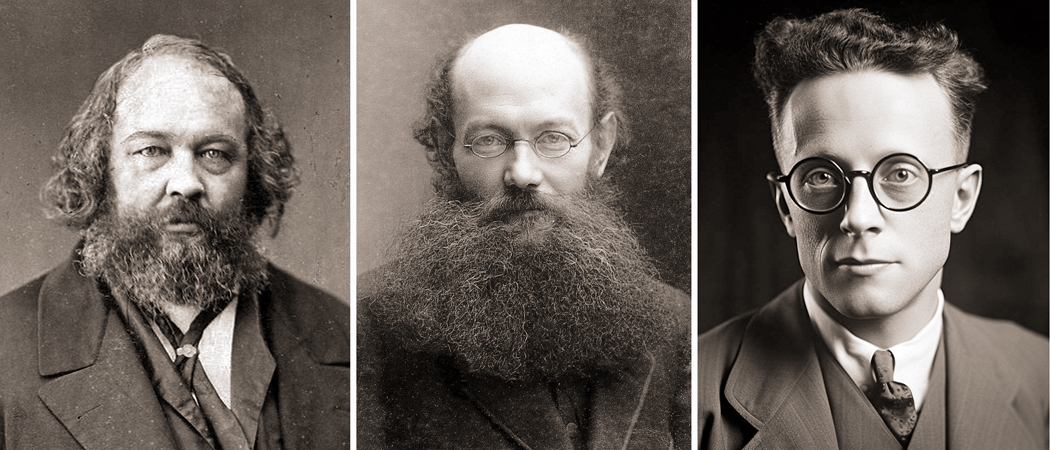
Mikhail Bakunin Peter Kropotkin Max Stirner

The philosophical grandfathers of the Tea Party, let’s face it, are Mikhail Bakunin, Peter Kropotkin and Max Stirner. Get the government out of the way and everything will be peachy-hunky.

Those who call themselves libertarians can sign on to this soft anarchism and feel their views are coherent. But so-called conservative Republicans have a hard time reconciling this anti-government sentiment with the converse idea that everyone should behave according to the Judeo-Christian norms they observe. On one hand, they extoll personal freedom, and on the other hand, they negate it to anyone who disagrees with them. 

Even more, those Republicans who have signed on to the Tea Party’s soft anarchism have a difficult time matching that up with their own drive for political power. And we must face the fact that our two-party system is just a bipolar grasping of power. Republicans can claim that government should be smaller, but a short gander at the record proves that after years of striving for the power, when they have it, Republicans use it just as much as Democrats. What’s the point of winning if you don’t get the perks? 

That’s why I call this a platypus. The parts don’t belong together.

I suppose one shouldn’t expect any political movement to be philosophically coherent. Politics remains sausage manufacturing and always will. But the part that causes thoughtful people profound disquiet comes with the reflection on history.

This marriage of one radical idea with reactionary social conservatism has a long history, and not a history that inspires much confidence or hope.

Every tyranny or reign of terror has its own version of a radical idea melded with a nostalgic longing for a past where everyone was good and righteous and behaved in the old-fashioned ways. Look at the incorruptible Robespierre; look at the agrarian virtues of Mao; look at xenophobic Stalin. 

Not to put too fine a point to it, and I don’t mean to equate one-to-one Republicans with Nazis, but the same principle is at work. No one extolled the virtues of family and marriage more than the National Socialists. Hitler loved children and dogs, as they say. The combination of reactionary social ideas with radical political ideas has fueled this kind of crackpotism since the days of Plato. 

During the last election [i.e. 2012], a healthy percentage of Americans turned away from the extremism of the Tea Party, and I don’t have a fear that this platypus will reconquer our politics. America has a long history of quietism, and has always in the past, so far, retreated from any radical departure from the comfort it finds in a stodgy middle class normality. It’s one of our country’s saving graces: We don’t go in, like the French, for theory. 

But nonetheless, this water-and-oil mixture of radicalism and reaction is something, as the doctors always say, we should keep an eye on. 

If I say we have entered a new Romantic era, you may lick your chops and anticipate the arrival of great poetry and music. But hold on. 

Nothing gets quite so romanticized as Romanticism. It all seems so — well — romantic. We get all fuzzy inside and think pretty thoughts. Romanticism means emotional music, beautiful paintings, expansive novels, and poetry of deep feeling.

Or so we think, forgetting that Johann Wolfgang von Goethe called Romanticism a “disease.” 

The surface of Romanticism may be attractive, but its larger implications are more complex. We should look deeper into what we mean by “Romanticism.”

Initially, it is a movement in art and literature from the end of the 18th century to the middle or latter years of the 19th century. It responded to the rationalism of the Age of Reason with a robust faith in emotion, intuition and all things natural. We now tend to think of Romanticism as a welcome relief from the artificiality of the aristocratic past and a plunge into the freedom of unbuttoned democracy. We read our Shelley and Keats, we listen to our Chopin and Berlioz and revel in the color of Turner and Delacroix. Romanticism was the ease of breathing after we have unlaced our corset or undone our necktie.

Yet, there is something adolescent about Romanticism, something not quite grown up. It is too concerned with the self and not enough with the community. There is at heart a great deal of wish fulfillment in it, and a soft pulpy core of nostalgia and worse, an unapologetic grandiosity. One cannot help think of Wagner and his Ring cycle explaining the world to his acolytes. Music of the Future, indeed.

I’m not writing to compose a philippic against a century of great art, but to consider the wider meanings of what we narrowly define as Romanticism.

Most importantly, one has to understand the pendulum swing from the various historical classicisms to the various historical romanticisms. Romanticism didn’t burst fully grown from the head of Beethoven’s Eroica, but rather recurs through history predictably. One age’s thoughtfulness is the next generation’s tired old pusillanimity. Then, that generation’s expansiveness is followed by the next and its judiciousness.

The classicism of Pericles’ Athens is followed by the energy of Hellenism. The dour stonework of the Romanesque is broken open by the lacy streams of light of the Gothic. The formality of Renaissance painting is blown away by the extravagance of the Baroque. Haydn is thrown overboard for Liszt, and later the tired sentimentality of the Victorians (the last gasping breaths of Romanticism) is replaced by the irony and classicism of Modernism. Back and forth. This is almost the respiration of cultural time; breathe in, breathe out. You could call it “cultural yoga.”

We tend to label the serene and balanced cultures as classical and the expansive and teetering ones as romantic. The labels are not important. Nietzsche called them Apollonian and Dionysian. William Blake personified them in his poems as reason and energy.

We are however misled if we simplify the two impulses as merely rationality vs. emotion. The twin poles of culture are much more than that.

Classicism tends to engage with society, the interactions of humans, the ascendency of laws instituted by men (and it is men who have instituted most of them and continue to do so — just look at Congress). AT its heart, it is a recognition of limits. 

Romanticism, of whatever era it reveals itself, engages with the cosmos, with history, with those things larger than mere human institutions, with Nature with a capital “N.” Romanticism distrusts anything invented by humans alone, and surrenders to those forces mortals cannot control. Romanticism has no truck with limits. 

These classical-romantic oppositions concern whether the artist is engaged with man as a social being, an individual set in a welter of humanity — or whether he is concerned with the individual against the background of nature or the cosmos.

Yet there is an egotism in the “me vs. the universe” formulation. It tends to glorify the individual as hero and disparage the community which makes life possible. 

In the 18th Century, for instance, Alexander Pope wrote that “The proper study of mankind is man.” The novel, which investigates human activity in its social setting, came from the same century. Fielding and Defoe come from that century.

The succeeding century is concerned more with man in nature, or man in his loneliness, or fighting the gods and elements. One thinks of Shelley’s Prometheus Unbound or Byron’s Manfred.

There are many more polarities to these movements in art and culture. One side privileges clarity, the other complexity. Just compare a Renaissance painting with a Baroque one. The classical Renaissance tends to line its subjects up across the canvas in a line, while the Baroque wants to draw us in to the depth of the painting from near to far. Renaissance paintings like to light things up evenly, so all corners can be seen clearly. The romanticised Baroque loves the great patches of light and dark, obscuring outlines and generally muddying up the works.

Look at this Last Supper by Andrea del Castagno. See how clear it all is. 

But the Baroque painter Tintoretto had a different vision of the same biblical event. It is writhing, twisting out into deep space, with deep shadows and obscure happenings. The Renaissance liked stability and clarity; the Baroque, motion and confusion.

One side values unity, the other, diversity. One side values irony, the other sincerity. One side looks at the past with a skeptical eye, the other with nostalgia. One side sees the present as the happy result of progress, the other sees the present as a decline from a more natural and happier past. One side unabashedly embraces internationalism, the other, ethnic identity and nationalism. If this sounds familiar, think red and blue states.

One of the big shifts is between what I call “ethos” and “ego.”

That is, art that is meant to embody the beliefs of an age, thoughts and emotions that everyone is assumed to share — or art that is the personal expression of the individual making it.

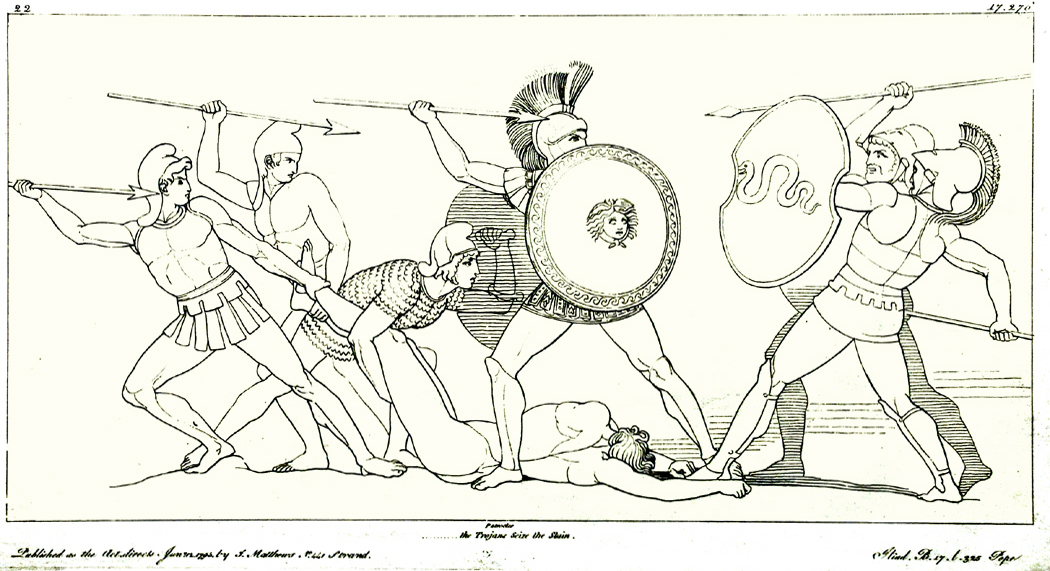
We have so long taken it for granted that an artist is supposed to “express himself,” that we forget it has not always been so. Did Homer express his inner feelings in the Iliad? Or are those emotions he (or she) described the emotions he expected everyone would understand and share? He tells of what Achilles is feeling, or Ajax or Hector or Priam — and they are deep and profound emotions — but they give no clue to what Homer was feeling.

In music, Haydn’s symphonies were written about in his day as being powerfully emotional. Nowadays, we think of Haydn as a rather witty and cerebral composer. If we want emotion, we go to Beethoven or Schubert. You cannot listen to Schubert’s string quintet and not believe it expresses the deepest emotions that its composer was suffering at the time. It is his emotion. We may share it, but it is his.

The history of art pulsates with the shift from nationalistic to international styles, from that which is specific to an ethnic or identity group, and that which seeks to transcends those limitations.

In music, Bach imitated the national styles in his English and French suites and his Italian Concerto. The styles are distinct and identifiable.

But the Galant and Classical styles that replaced it vary little from country to country. Perhaps the Italian is a little lighter and the German a little more complex, but you can’t get simpler or more direct than Mozart.

Nationalism reasserted itself in the next century, so that you have whole schools of Czech music, French, Russian. In the early 20th Century, internationalism took charge once more and for a while, everybody was writing like Stravinsky.

The main architectural style of the first half of this century is even called “The International Style.” That style is now so passé as to be the butt of jokes.

The classical eras value rationality and clear thinking, while its mirror image values irrationality and chaos.

You’re ahead of me if you have recognized that much of what I am calling Romanticism is playing out in the world and in current politics as a new Romantic age.

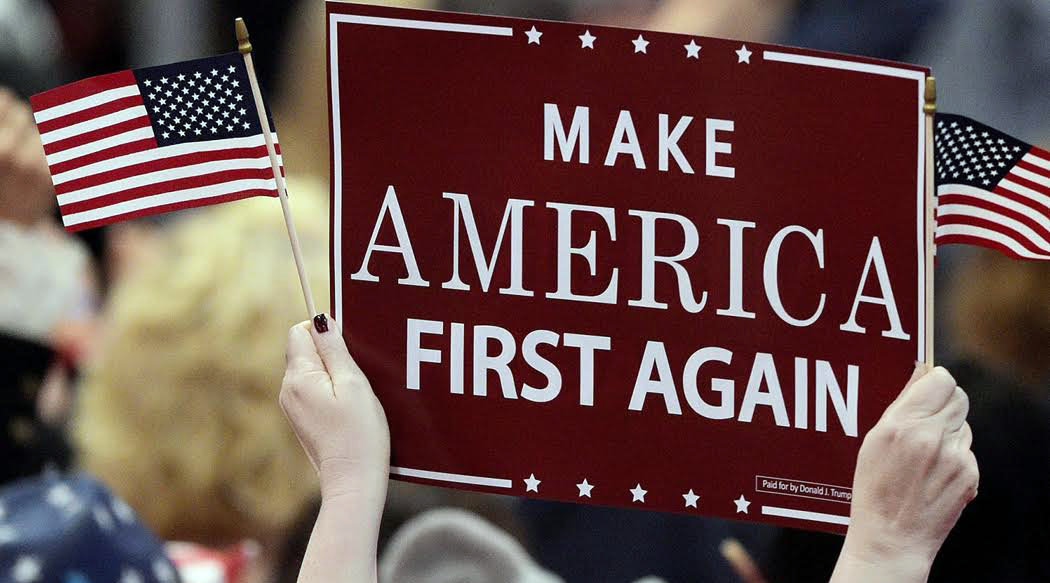
Nationalism is reasserting its ugly head in Brexit, in Marine Le Pen, Vladimir Putin — and in Donald Trump and his followers.

The mistrust or outright disbelief in science is a recasting of Rousseau. Stephen Colbert invented the term “truthiness,” and nothing could be a better litmus test of Romanticism: The individual should be the arbiter of truth; if it feels true, we line up and salute. In a classical age, the judgments of society are taken as a prime value. Certainly, there are those who resist, but by and large, the consensus view is adopted.

The previous Romantic age had its Castle of Otranto and its Frankenstein. The current one has its Game of Thrones and its hobbits, and wizards and witches. The 19th Century looked to the Middle Ages with a nostalgia; the Postmodern 21st Century looks to a pre-civilized barbarian past (equally mythologized) with a vision for a post-apocalyptic future. 

(Right-wing nostalgia is for a pre-immigrant, pre-feminist, pre-integration utopia that never actually existed. The good old days — before penicillin.) 

This neo-barbarianism also shares with its 19th Century counterpart a glorification of violence, both criminal and battlefield — as the huge armies that contend in the Lord of the Rings films, to say nothing of the viciousness of Game of Thrones

As we enter a new Romantic age around the world, one of dissociation, confusion and realignment, we need to recognize the darker side of Romanticism and not merely its decorative accoutrements.

We will have to accept some of those adages propounded in William Blake’s Marriage of Heaven and Hell:  “Sooner murder an infant in its cradle than nurse unacted desires.” And, “The tigers of wrath are wiser than the horses of instruction.” Is this not the Taliban? The Brexiteers? The Republican Party? And those elements in academia who want cover their ears and yell “nyah-nyah-nyah” when faced with anything outside their orthodoxy? 

Because it isn’t only on the right. The Noble Savage has come back to us as a new privileging of indigenous cultures over Western culture. The disparagement of European science, art, culture and philosophy as “hegemonic” and corrupt is just Rousseau coming back to bite us on the butt. (The West has plenty to answer for, but clitoridectomies are not routine in New Jersey. There is shame and blame found everywhere.) 

And the political right has discovered “natural immunity” and fear of pharmaceuticals, while still thinking it OK to run Clorox up the kiester. 

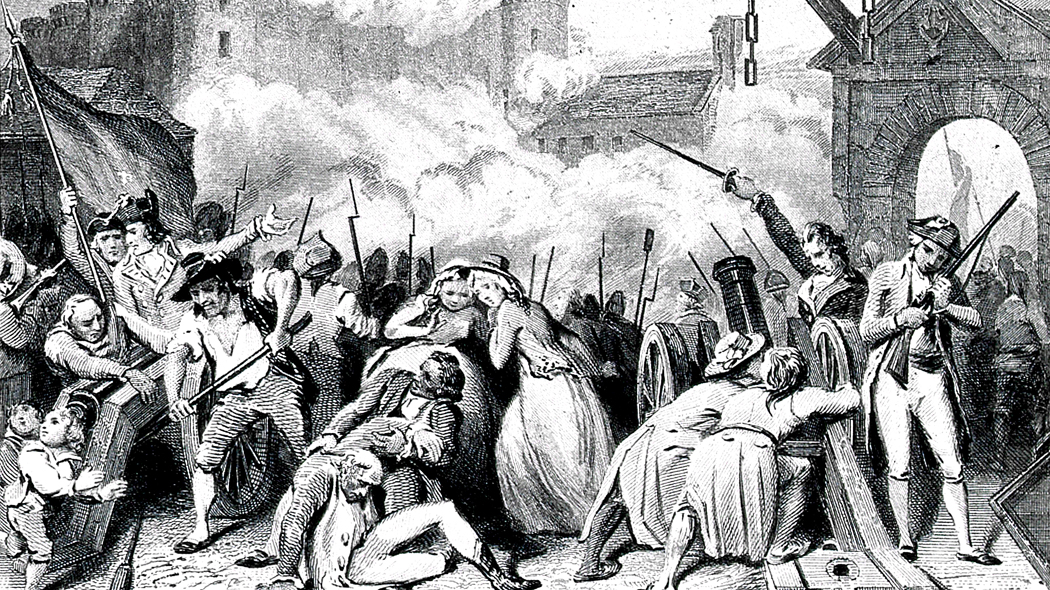
The last Age of Romanticism kicked off with the storming of the Bastille — a tactically meaningless act (only seven prisoners remained prison, four of them were forgers and another two were mentally ill) which inspired the French Revolution and all the bloodshed of Terror, but had enough symbolic significance to become the focus of France’s national holiday. We have our January 6, just as meaningless and perhaps just as symbolic. But perhaps that riot has more in common with a certain putsch in Munich. 

The first time America entered a Romantic age, in the 19th century, it elected Andrew Jackson, arguably the most divisive president (outside the Civil War) before Donald Trump, and certainly the most cock-sure of himself and the truthiness he felt in his gut. Facts be damned. For many of us, Trump feels like the reincarnation of Jackson, and this era feels like the reemergence of a Romantic temperament, and we may need to rethink just how warm and cuddly that truly is.

This piece is updated, expanded and rewritten from an April 2017 essay for the Spirit of the Senses