Archive

Tag Archives: babi yar

Classical music critic David Hurwitz recently posted a YouTube video on works that “reduce me to a quivering puddle of emotional resonance.” He cited 10 compositions that seem to work, no matter how they are performed (although, they can be ruined by a miserable performance). 

“The crying can be sadness; it can be happiness. Usually for me it’s a confrontation with something which is so beautiful … it just seems to get to the heart of the universe and makes me weep. What can I tell you? It happens.”

He then invited his viewers to submit their own lists of works that bring on the waters. A subsequent video addressed those lists. 

Such lists usually come in round numbers: “Top Ten,” or “The Hundred Best,” etc. But when I made my own list, I realized I could go on for quite some time. 

I begin my list with the sarabande in J.S. Bach’s Suite No. 5 for unaccompanied cello. It is a ridiculously simple composition, barely more than a hundred individual notes, almost all unrelieved slow eighth-notes, but notes that plumb the deepest depths of innigkeit — that profound sense of inner subjective experience, of aloneness from the world, contemplation of things beyond words. 

The tears come, not from sadness, but from a sense of being left to your own thoughts in the darkness, the knowledge that, no matter how much you love or engage, there is always an awareness of separation. An aloneness we share with everyone else on the planet. 
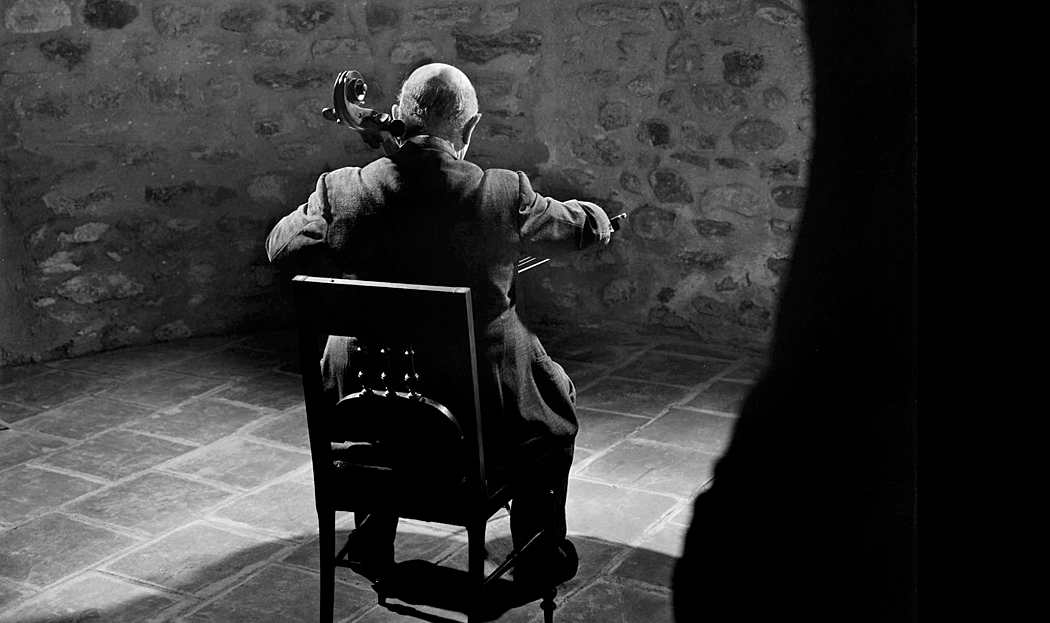
I’ve heard the sarabande, and the suite, countless times, both live and on recordings. The one that always does me in is the version played by Pablo Casals in 1939. Casals was the person most responsible for the resurrection of the score, after he found a forgotten copy in a used book store in 1889, when he was 13 years old. He waited until he was 60 before recording them. There is some fuzz and hiss to the old 78rpm recordings, but the depth of Casal’s playing speaks through it all. 

The sarabande has struck many as special, even among the whole of Bach’s works. Cellist Paul Tortelier called it an “extension of silence.” Yo-Yo Ma played it on Sept. 11, 2002, at the site of the World Trade Center, while the names of the dead were spoken, on the first anniversary of the attack. 

Second on my list is the final chorus of Bach’s Passion According to St. Matthew, Wir setzen uns mit Tränen nieder, which expresses grief over the death of Jesus on the cross. That chorus transcends religious doctrine so that I, as a non-believer, can internalize the sense of loss, of death, and grieve along with them. “We sit down in tears,” they sing, with a section that also asks for “peace, sweet peace.” 
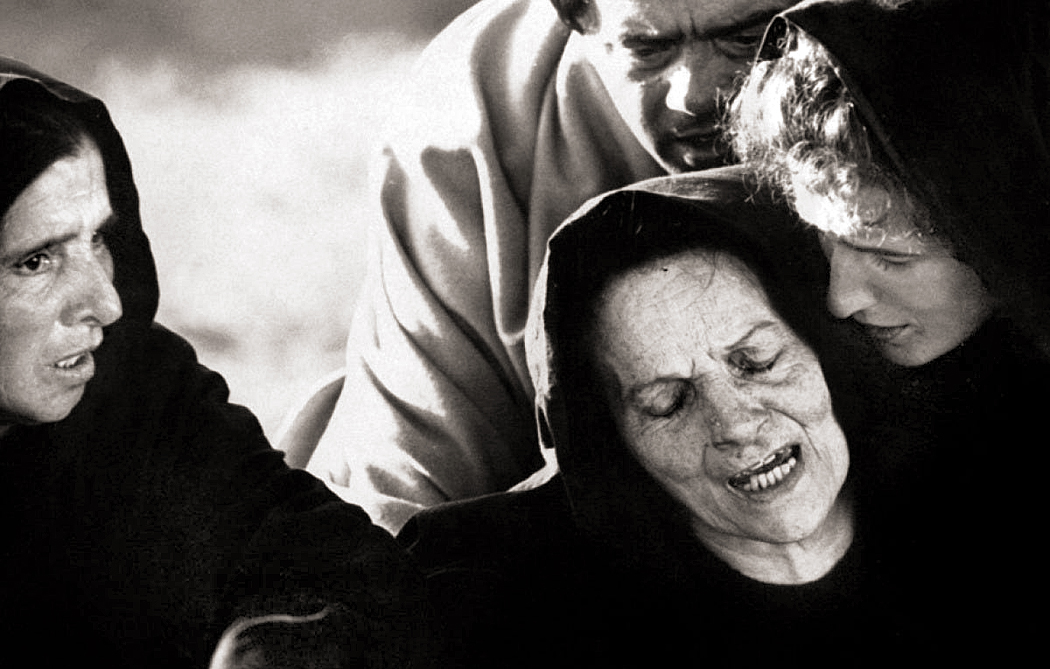
I first head the chorus as film-score music for Pier Paolo Pasolini’s Neorealist retelling of The Gospel According to St. Matthew, a dour black-and-white version, almost word for word from the Bible (and how peculiar that the most successful Christian film should come from a homosexual Communist atheist, but with reverence for the humanity of the story; no Cecil B. DeMille hokum and claptrap for this one). 
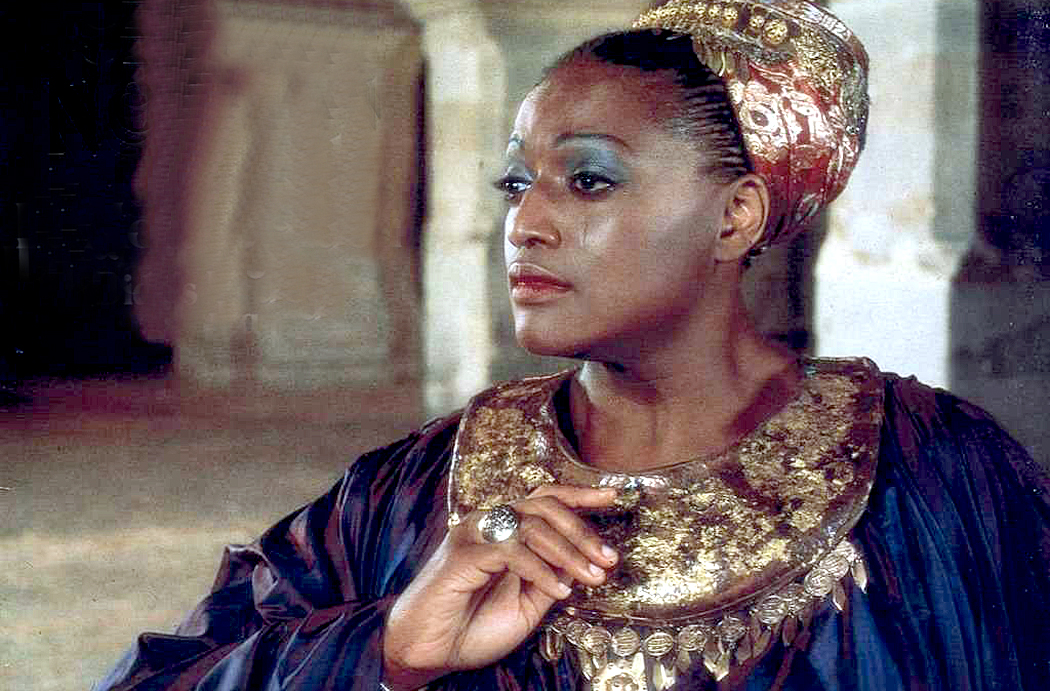
Grieving is one cause for the waterworks in listeners. How can you not feel the intense sadness of Dido as she faces her own death in Henry Purcell’s Dido and Aeneas, in the section known as Dido’s Lament, “When I am Laid to Rest.” It is a ground bass (repeated bass line), over which she sings “Remember me … remember me.” It is heartbreaking. 

Alban Berg used his entire Violin Concerto to express mourning over the death of Manon Gropius, daughter of Walter Gropius and Alma Mahler, who died of polio in 1935 at the age of 18. Berg dedicated his concerto “To the memory of an angel.” 

It begins quietly on the violin’s open strings, builds to an angry climax, and reaches a point of cosmic acceptance with a quote of J.S. Bach’s chorale, “Es ist Genug” (“It is enough.”) 
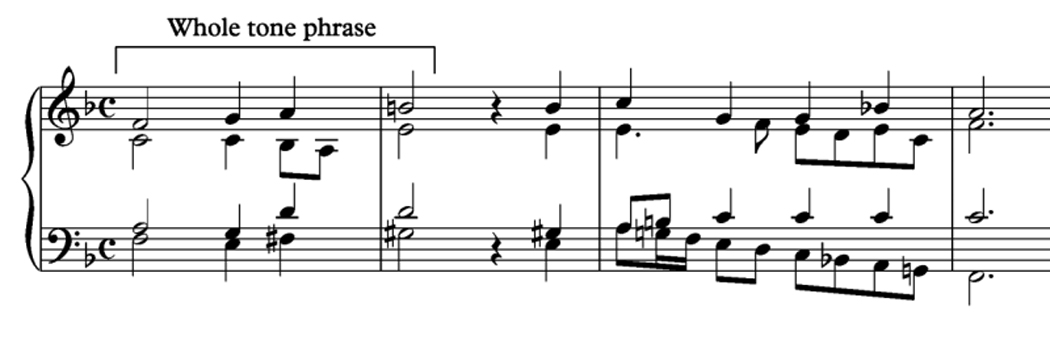
After all the turbulence of the anger, the simple hymn, albeit harmonized in a very 20th-century way, seems like the peace of the angels, a calm in the universe. I, for one, cannot listen to the concerto without tears streaming down my cheeks. 

Although it is written in his idiosyncratic 12-tone style, the Berg Violin Concerto is never simply noise: Even those who hate modern serial music love this concerto. It is music, not theory. 

These several pieces work because, while they are expressing their grief over a specific death, they also subsume the rest of us. And there is music which expresses not individual grief, but Weltschmerz — “the sorrows of the world” — that sense that all lives have an end, that life is suffering, that “no one gets out alive.” 

The work that seems to hit everyone in the gut with this is Samuel Barber’s Adagio for Strings. Originally the slow movement of a string quartet, Barber orchestrated it to create the version known best. 

The music is simple, barely more complex than a Gregorian chant, but builds slowly to an overwhelming climax, then silence, then a short peroration of calmness and repose. Never a dry eye. 

The only problem with the Adagio for Strings is that it has become so popular, played at the funerals of Franklin Roosevelt, John F. Kennedy, Princess Grace of Monaco, Albert Einstein, and Barber himself. It has become de rigeur for public tragedies such as Sept. 11, The Charlie Hebdo attack, the 2016 Brussels bombing and the Orlando nightclub shooting, and the 2017 Manchester Arena bombing, and in 2020 for the victims of the Coronavirus. To say nothing of how many movies it provides a trigger for emotions, as in Platoon, The Elephant Man and Lorenzo’s Oil. So that, for some, it can no longer be heard innocently, but only with irony, as in its appearance in Seinfeld, The Simpsons, and South Park

But so far, the Adagio has proved bulletproof. It always works. Emotions pour out. The music is powerful.
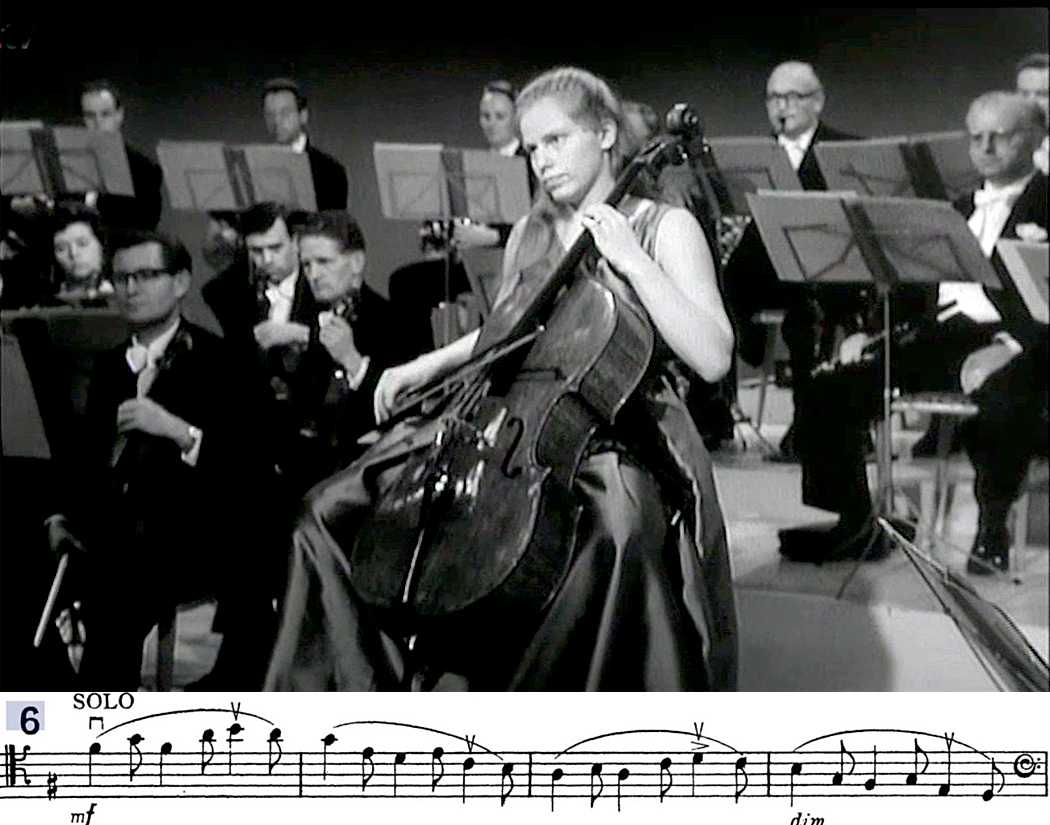
And talk about Weltschmerz: Another concerto brings out the emotions almost instantly, and that is Elgar’s Cello Concerto. Unlike most classical music concertos, it opens with the solo cello playing widely spaced E-minor chords, ringing sad and hollow, followed by a short cadenza before the orchestra ever plays a note. 

Elgar wrote it in 1919 in distress over the death and destruction of the First World War. It is a musical evocation of the famous lament of British Foreign Secretary Sir Edward Grey in 1914: “The lamps are going out all over Europe and we shall not see them lit again in our lifetime.” It is hard, with our distance from the events, and after the Second World War and the horrors of the Cold War, to fathom what a psychological wrench that first cataclysm was for the world, and how much it was clear that everything anyone knew had changed utterly and forever. So much was lost. Elgar’s concerto puts that sentiment into music. 

That sense of loss is personal as well as civic, and you sense it in the greatest of Richard Strauss’ Four Last Songs, “Im Abendrot.” It is a song for soprano and orchestra that conveys such a sense of longing and loss that even without the words, the orchestra alone can bring out the tears. 

In it an old couple stands on a hill looking at a sunset, a lark flies off into the twilight and the words by German poet Joseph von Eichendorff, say, “Wie sind wir wandermüde — Is dies etwa der Tod?” “How weary we are of wandering — Is this perhaps death?” 

There is something of the same feeling (and similar orchestral lushness) in Gustav Mahler’s Der Abschied, the final song of the cycle, Das Lied von der Erde, “The Song of the Earth.” The half-hour song tells of the beauty and permanence of nature and in the brevity of the human life. Even for a Mahler nut like me, who loves pretty much everything the man put on paper, Der Abschied is the single most beautiful and heartbreaking thing that composer ever wrote. 
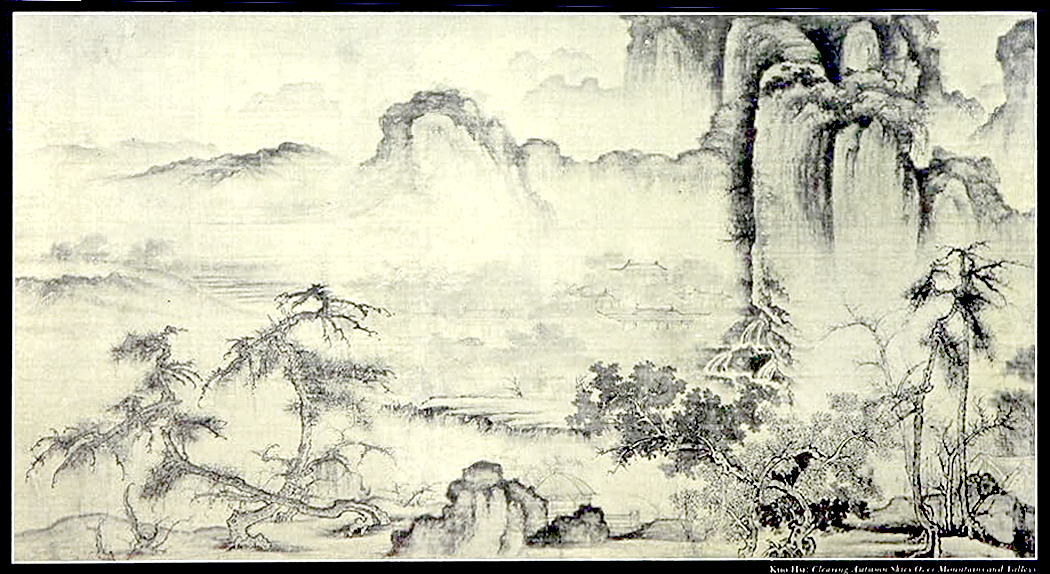
O Schönheit! O ewigen Liebens – Lebens – trunk’ne Welt!” “O beauty! O eternal loving-and-life-drunk world!” And the voice finally shrinks down to near-silence repeating the word “Ewig,” “forever…” over and over until it and the orchestra dissolve in emptiness. 

Mahler himself asked whether the music should even be played. “Won’t people go home and shoot themselves?” he asked. The thing is that the highest art may tell the most dismal tale, yet the beauty of the telling is life-enriching and leaves us weeping but full of joy. 

Mahler gave us also a song of such inwardness and reflection in the Rückert Lieder, “Ich bin der Welt abhanden gekommen,” a setting of a poem by Friedrich Ruckert. “I am become lost to the world, with which I used to waste so much time. It has for known nothing of me for so long, it may well believe me dead.” The slow tread of the song, with its repeated incomplete upward motive, leaves you floating between earth and sky. 

That Mahler song may not be the deepest expression of giving up on life. That honor has to fall to the final song in Franz Schubert’s song cycle Winterreise, “Winter Journey.” The cycle of 24 songs by German poet Wilhelm Müller collectively tell the story of a romantic young man spurned in love, who travels in suffering through a winter landscape, telling of loneliness, heartsickness, futility, fate, and finally, in Die Leiermann, “The hurdy-gurdy man,” finds an image of utter hopelessness. 
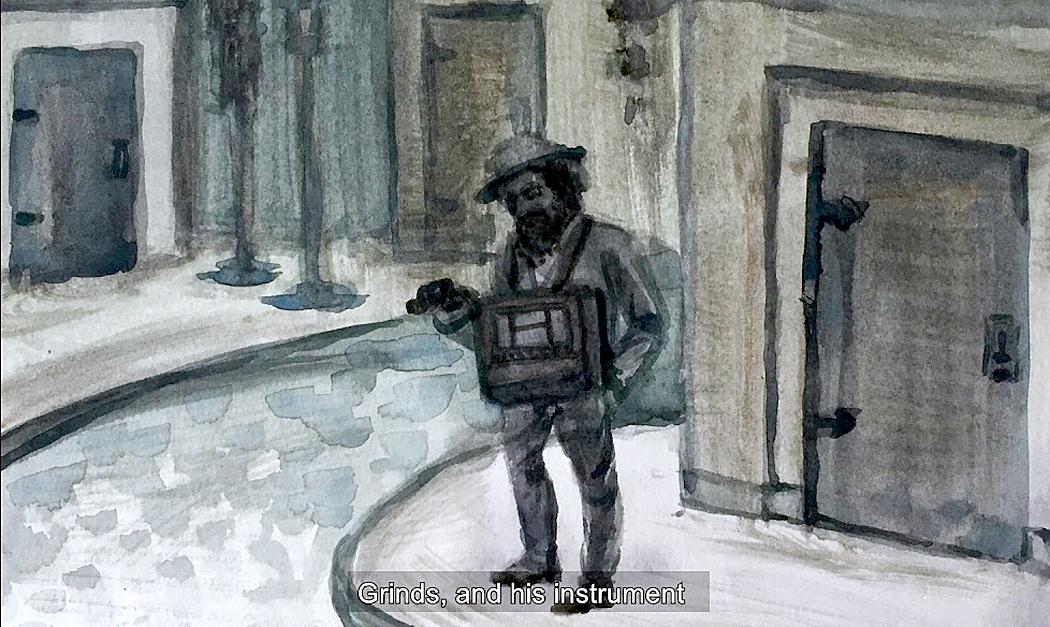
“Barefoot on the ice, he sways to and fro, and his little collection plate remains empty. No one wants to listen to him; no one looks at him. … He plays and his hurdy-gurdy never stops.” The piano accompaniment repeats the same figure over and over, with no sense of forward motion, and the singer sings his words over and over with little variation. This is psychological depression at its peak expression. “Strange old man, shall I go with you?” The implication is that the Leiermann is simply Death itself. 

 But I may be giving the wrong impression. While music of woe may bring on the deepest emotion, so, too, can music of joy and beauty. There is a reason people cry at weddings. When any emotion, from grief to ecstasy, fills the interior space, it can swell and overflow, and the overflow valves in the human being are the eyes. The emotional pressure in the body swells until it cannot be held in check. Tears of joy, tears in the face of beauty. 

I remember the words that playwright Peter Shaffer put in the mouth of Antonio Salieri in his play, Amadeus. Salieri overheard the adagio of Mozart’s Gran Partita for winds. 
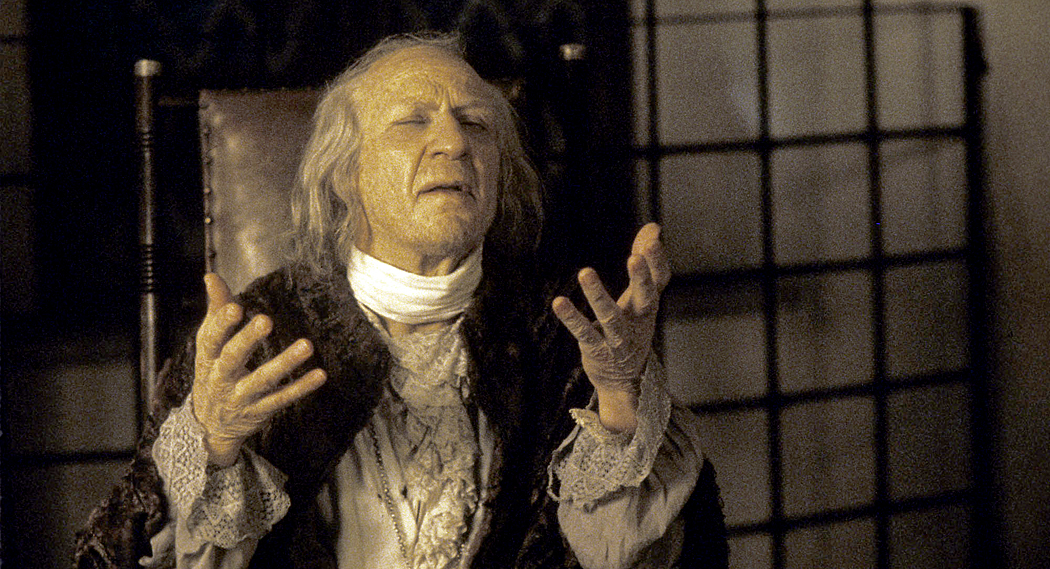
“Extraordinary!,” he says. “On the page it looked nothing! The beginning simple, almost comic. Just a pulse. Bassoons, basset horns — like a rusty squeezebox. And then, suddenly, high above it, an oboe. A single note, hanging there, unwavering. Until a clarinet took it over, sweetened it into a phrase of such delight! This was no composition by a performing monkey! This was a music I had never heard. Filled with such longing, such unfulfillable longing. It seemed to me that I was hearing the voice of God.”

It is an astonishing thing about beauty, real beauty, that it can sit beside the horrors of the world, the miseries, the deaths, the wars, the hatreds and injustices, and make you pause, fill you with emotions and remind you that no matter how bad things are, you still cling to life. The beauty can not excuse the suffering, but in some inexplainable way can somehow balance it. Beauty can stop time and fill you up to overflowing. 

Shostakovich wrote his 13th symphony, setting the Yevtushenko poem, Babi Yar, about the 1941 massacre of more than 30,000 Jews by Nazis at Babi Yar, near Kiev. It is a powerful poem denouncing anti-Semitism and the horrors of war and hatred (and a warning about Soviet anti-Semitism). The following movements of this choral symphony take on bitter humor as antidote to bureaucracy and tyranny; the hunger of food shortage; the use of fear by totalitarians; and finally, the difference between amoral careerism and the need for artists to express truth. 

This finale is introduced by a flute duet of such sweet delight, such soothing calmness, that although it cannot gainsay the horrors, it somehow balances them. The music itself, while beautiful, is nothing special in itself, but coming as it does at the end of this explosion of the miseries of the world (and especially Stalin’s Soviet Union), is such an unexpected release, it seems a miracle, and with the pressure taken off, at least momentarily, it can only be felt and expressed by its audience in the immediate explosion of waterworks. 

Now, all I have to hear is the flute bit, and I instantly recall all that went before, and I weep uncontrollably. 

That sense of beauty as counterbalance is the overwhelming sense you can get from the slow movement of Beethoven’s Ninth Symphony, which gives us 15 to 20 minutes (depending on performance) of stillness in the universe, a slow pulse that seems more cosmic than corporeal. It comes after a terrifying first movement and a relentless scherzo. The world then, after flowing through turbulent rapids, empties out into the calm ocean of the adagio. The release is overwhelming. 

It is also the slow motion of the finale of Mahler’s Third Symphony, which, after earlier movements titled “What the flowers in the meadow tell me,” “What the animals in the forest tell me,” What Man tells me,” and “What the angels tell me,” ends his symphony with a half-hour movement, “What Love tells me.” 
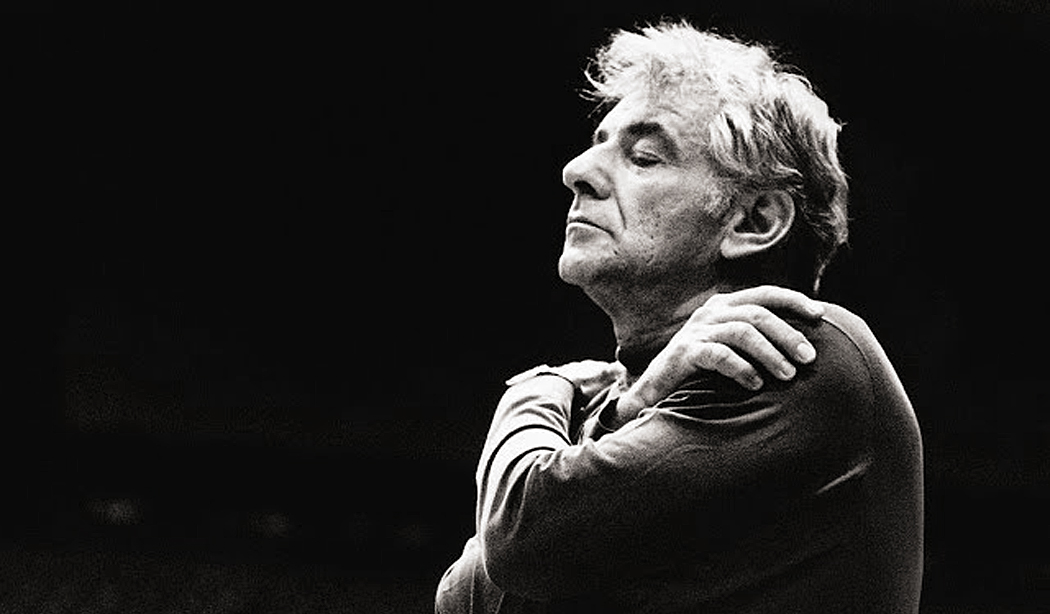
It is marked “Langsam — Ruhevoll — Empfunden,” (Slowly — Peacefully — Deeply felt,” and moves at a slow tread, first in the strings and building, a half-hour later, with trombones and brass and a final chord that can last to eternity. Conductor Bruno Walter, who knew Mahler and conducted the premieres of both his Ninth Symphony and Das Lied von der Erde, said of this movement, “Words are stilled — for what language can utter heavenly love more powerfully and forcefully than music itself? The Adagio, with its broad, solemn melodic line, is, as a whole — and despite passages of burning pain — eloquent of comfort and grace.”

The Swiss critic William Ritter said it was, ”Perhaps the greatest Adagio written since Beethoven.” Another anonymous critic wrote about the Adagio: “It rises to heights which situate this movement among the most sublime in all symphonic literature.” At its premier in 1902, Mahler was called back to the podium 12 times, and the local newspaper reported that “the thunderous ovation lasted no less than 15 minutes.”

That sense of time standing still reaches a much quieter apotheosis in the slow movement of Maurice Ravel’s Piano Concerto in G. With subtle cross-rhythms and a melody that seldom rises above a mezzo-piano, it is entirely hypnotic. The beauty of it brings me to tears almost even just thinking of it. 

And there is the sublime beauty of Mozart’s Ave Verum Corpus, a choral work that lasts a mere four minutes in just 46 bars of sighing chromaticism and sotto voce music, and, as one critic put it, is “capable of leaving the listener just as moved as might an entire five-day long cycle of Wagner’s Ring.” 

Some of these may work their magic only on my ears, some seem to work for everyone. And there are times when the listener may be too tired, to caught up in other things, or a bad meal or just in a sour mood, when such music can pass by almost unnoticed. And there are times in a concert when I am so tuned in, that almost any music, played well, may bring on the waterworks. 

But for me, this music almost never fails. The music triggers some empathetic response, and the emotions shiver to life. I am human; these are human feelings; these emotions are what make us human. 

Music can do that better, and more immediately, than any other art. 
There are two great crossing shadows that have darkened the lives of those of us born near the end of the Second World War. 

The first was cast by the mushroom cloud. I was one of those elementary-school boys who was herded down to the basement of my school to lean against the wall over the poor crouching girls huddled underneath to protect them from a potential nuclear blast. We had a siren in our town that went off to alert volunteer firemen they were needed, but the siren was also supposed to let us know that an air raid was immanent. Every time the siren went off, kids my age all feared it would be “the big one.” 

And I remember watching film on TV of Nevada atomic bomb tests where we would see houses blown away by the shock waves or crumble in flames. It seemed very real and very soon. We all had dreams with mushroom clouds in them and talked about “the A-bomb.” 

And there were maps in newspapers and magazines showing circles of destruction if a nuclear bomb hit New York and I looked anxiously to see whether our town was inside the circumference. And it usually was. 

It was a background anxiety for most of my childhood and is still there, somewhere at the margins of my psyche. 

But the other shadow was the Holocaust. I recently watched all six-and-a-half hours of the Ken Burns documentary, The U.S. and the Holocaust, and I felt the cheeriness drain from my cheeks. And that second shadow all came back. It was something I knew about way too young to be able to process. Now I am 74 and still can’t adequately grasp it. 

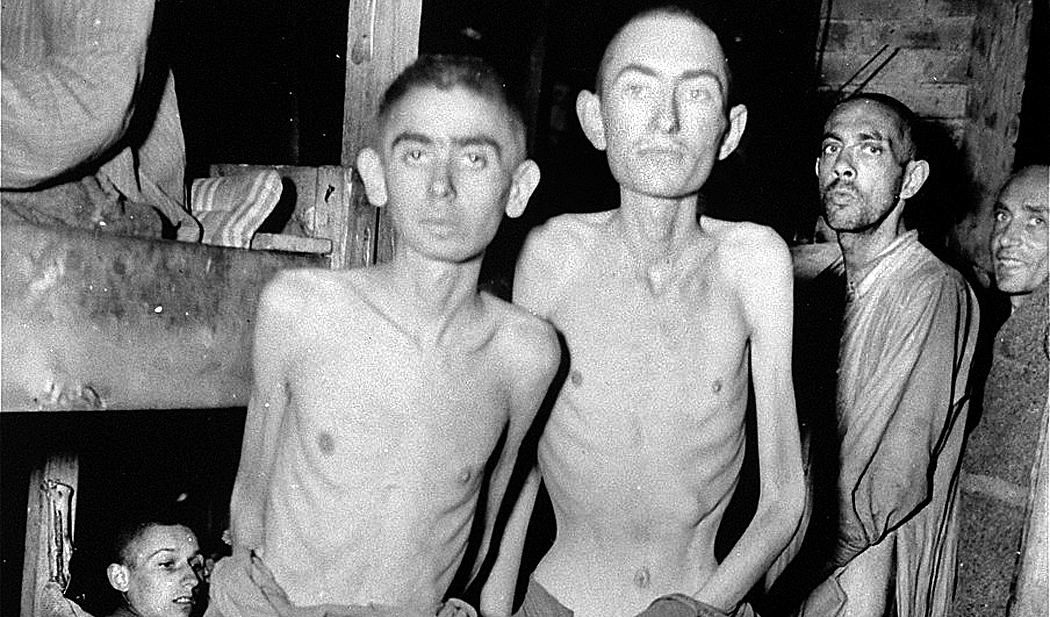
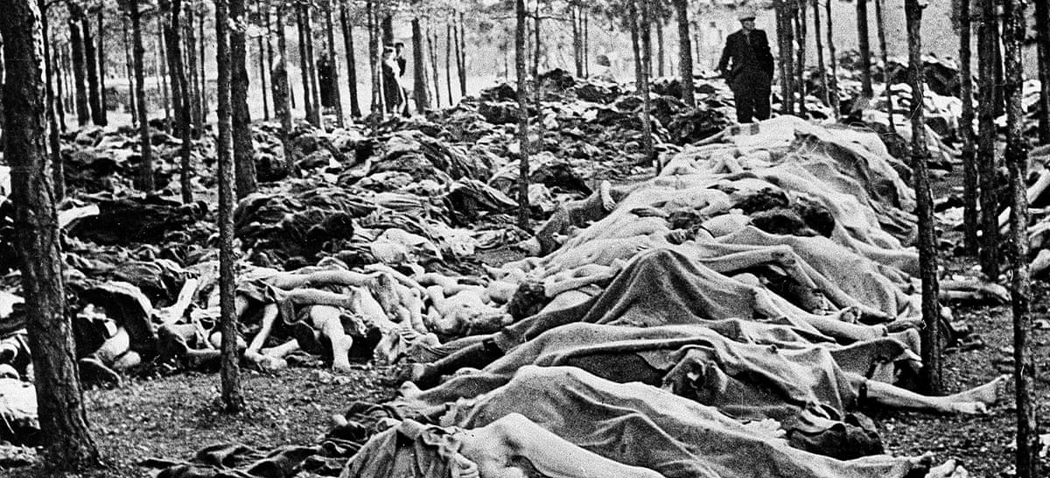
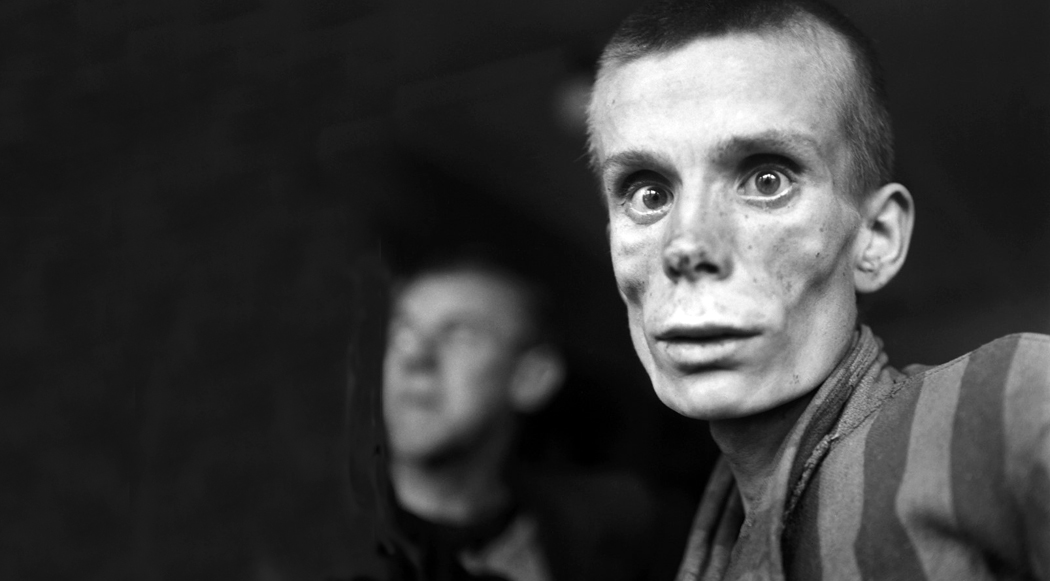
I remember, from the age of six or seven, when early television was still struggling to find content, and often filled out Saturday mornings with industrial films or films made by the Army or State Department. Particularly a show called The Big Picture, and on it — at that tender age — I remember seeing film footage of the liberation of the death camps and the piles of skeletonized bodies piled up and the hollow-eyes survivors shaking with cold and hunger, and it is a kind of measuring stick I have, morally, on the depth of human evil. Because of how that footage burned its way into me from childhood, I was sensitized to the horror and outrage. It trips a button in me — this is what humans do to humans. 

Such scenes are permanently playing somewhere in the back of my head, never too far submerged, and seeing the Burns documentary brought it all back into the front of my awareness. 

It is not merely because of the grim nature of the documentary, but because of its historical ripples, forward and back in time. The series tells two different but parallel stories. The first is about Hitler and Nazism and the results of rabid anti-Semitism; the second is about America’s response to all that. 

The first is unsettling because of the many resonant parallels between the National Socialist political plan and the current Republican plan — not merely Trump (or “Moose-a-loony” as I call him) (Or as Stephen Colbert called him, “the Count of Mostly Crisco”) — but the whole of the Republican party, which seems to have cynically chosen transparent lies, xenophobia and racism, not as a belief, so much, but as a strategy. There may be a few true believers, but most of them know what they are doing. 

The second, perhaps even more disturbing, is the American public’s willingness to absorb these lies, xenophobia and racism. Before World War II, the isolationist mood of the electorate was quite clear, and the rhetoric used is the same as that used today. “America First” is not a new slogan. 

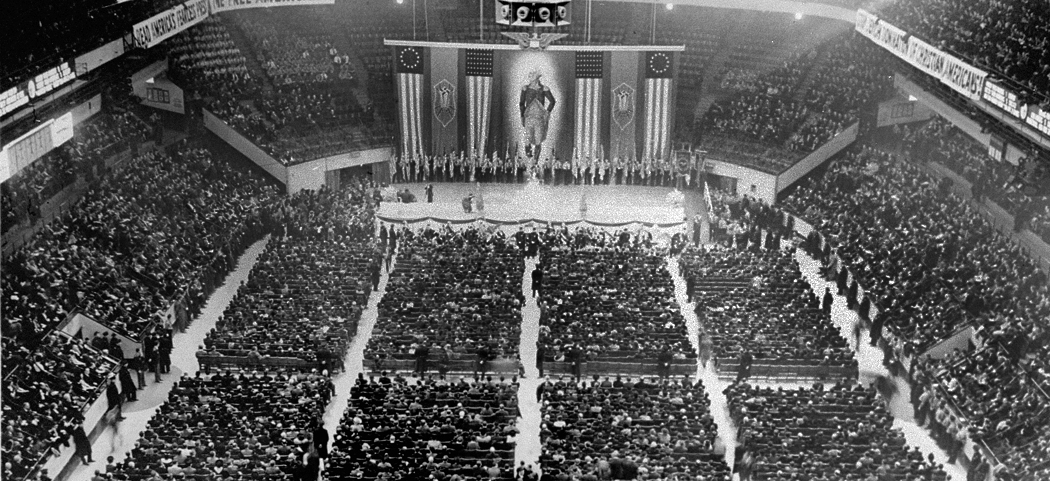
The old news photos of Madison Square Garden “America First” rallies are hard to distinguish from Trump rallies. The same flags, the same slogans. There were Nazi supporters in both crowds. The prefix “Neo-“ doesn’t help. Hitler’s National Socialist party didn’t have more than a third of the vote before he became chancellor — it was a minority party when it took power — and now Republicans (Trump with less than a third of the vote) are figuring out how they can get and keep power without majority support. 

I grew up in New Jersey, in a place that has half Protestant, half Catholic and half Jewish, and no distinctions were made, anymore than if someone were Irish, or German, or blond or redheaded — just an interesting bit of fact about your friends. And so, the idea that you would murder a few million people because they were Jewish was not simply horrifying, but made absolutely no sense at all. It was crazy, and perhaps the craziness of it was the scariest part: People don’t act through thoughtfulness or rationality, but are easily led to adopt absolutely insane ideas. 

And, of course, we’re seeing it all over again with Trump supporters. And seeing it quite literally, not just a faint echo. Word for word. 

So, when I speak of “ripples” both back and forward in time, I remember not just the Holocaust, but also the Holodomor, Babi Yar, Katyn, the Armenian Genocide, the massacres of Native Americans, 250 years of race slavery, the Sichuan Massacres in China in 1645, the 100,000 killed by the Spanish Inquisition, Cambodian genocide, Rwandan genocide, not to mention the pyramids of skulls created by Tamerlane or the biblical command to murder all “the Hittites and the Amorites, the Canaanites and the Perizzites, the Hivites and the Jebusites,” and to “save alive nothing that breathes, but you shall devote them to complete destruction.” God could sound almost human in his viciousness, as in 1 Samuel 15: “Now go and strike Amalek and devote to destruction all that they have. Do not spare them, but kill both man and woman, child and infant, ox and sheep, camel and donkey.”

One of the most important books I have read in the past 10 years is Timothy Snyder’s Bloodlands, about Poland, Ukraine and Belarus and the death and devastation under first Stalin and then Hitler. It seems the book has not ended and we see its sequel in Ukraine right now. 

History is an endless tale of woe. 

And so, at the end of Burns’ documentary, when he tells, again, the story of Anne Frank, and quotes her famous line, “in spite of everything I still believe that people are really good at heart,” the irony is absolutely unbearable. 

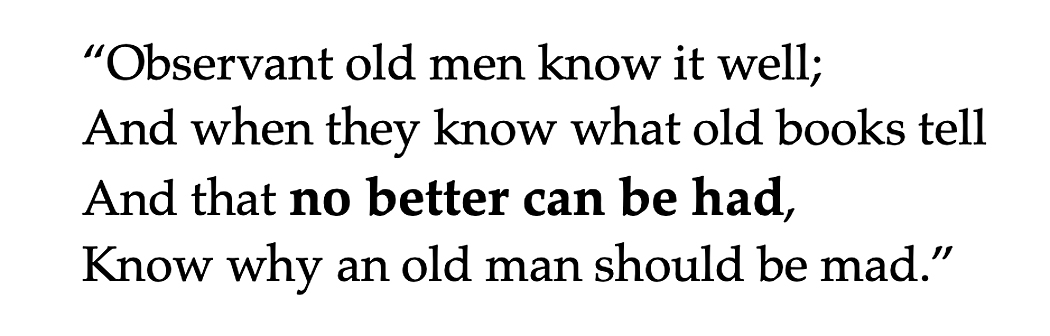
I think of the lines by Yeats, written in a much lighter context, but still relevant here: 

The thought comes over one that perhaps the planet would be better off without the scab of humans on its surface, that perhaps we should just let it run its course, let Putin set off the back-and-forth of our missiles passing his on the way across the oceans to mutually assured destruction. The earth could get on with being the earth — a new start. 

But I have a son and a daughter, and two granddaughters, whose lives are cantilevered into the dark chasm of the future, and I cannot wish that on them. Like every generation before, we have failed them again.

“There is something sinister about the past.”

—Artist Kahinde Wiley

“History is a nightmare from which I am trying to awake.”

— Character Stephen Dedalus in James Joyce’s Ulysses

The study of history is endlessly fascinating. It is the biggest segment of non-fiction book publishing, a favorite of Civil War re-enactors, the grist for endless op-ed writers, a healthy chunk of the lecture series offered by the Great Courses, and a third of C-Span’s weekend programming. We are all at least amateur historians. 

Everyone knows the major narratives: George Washington as father to the country, Abe Lincoln as martyred Great Emancipator, Hitler as madman, Napoleon with his hand in his shirt, D-Day as the greatest victory of World War II. 

But almost all such interest in history is falsely benign, even when not entirely false. It is history as familiar story, and history with beginning, middle and satisfying end. Rather too neat compared with the messy, chaotic reality. 

It isn’t just that I wish to point out that it is largely a white male history, justifying the status quo, but that the overwhelming lesson of history is human misery. History is not a pageant on a grade-school stage, it is the eternal recurrence of peoples massacring, conquering, colonizing and enslaving each other. 

What we are taught in schools as history is overwhelmingly a list of the dates of the great battles and world-changing wars. There is a reason for this. The bulk of history is one of improved ways of bashing the skulls of opponents into bloody splinters. 

Yes, you can read about how Lincoln used and corralled his team of rivals, or how LBJ managed to pass the Civil Rights bills, but a better gauge of the norm is Timothy Snyder’s Bloodlands, about the millions of human beings starved, shot, bombed, buried alive or tortured.

Einsatzgruppe shooting naked women

One writer summarized the theme of the book as the “deliberate mass starvation and shootings in the Soviet Union in the period from 1933 to 1938; mass shootings in occupied Poland more or less equally by Soviet and German killers in 1939 to 1941; deliberate starvation of 3.1 million Soviet prisoners of war and mass shooting and gassing of more than 5 million Jews by the Germans between 1941 and 1945.”

And that is separate from the wartime military deaths, which is more millions of abruptly ended lives. 

Wikipedia lists more than 125 mass killings, genocides, pogroms and massacres before 1945, counting only those that have deserved names: St. Bartholomew’s Day Massacre; Mountain Meadows Massacre; Wounded Knee Massacre; Rape of Nanking; Babi Yar; Holodomor; Shoah. 

Since World War II, massacres notable enough to have acquired names have occurred on the average of more than two per year. 

Skulls of Spanish, Djerba, Tunisia, 1558

I could make a list, but it would go on for pages, from the pyramid of skulls left by Tamerlane to the Cathar genocide of the 13th century to the death of 90 percent of the Carthaginians during the Third Punic War in 149 BCE. 

We can think of all these genocides and massacres as something that took place in distant years and distant lands. But there is ethnic cleansing going on right now, and as for the distance, the U.S. has to answer for both the decimation of Native American populations and the enslavement of millions of Africans and African-Americans. 

As written about in American Philosophy: From Wounded Knee to the Present, by Erin McKenna and Scott L. Pratt, It is also apparent that the shared history of the hemisphere is one framed by the dual tragedies of genocide and slavery, both of which are part of the legacy of the European invasions of the past 500 years. Indigenous people north and south were displaced, died of disease, and were killed by Christian Europeans through slavery, rape, and war. In 1491, about 145 million people lived in the western hemisphere. By 1691, the population of indigenous Americans had declined by 90-95 percent, or by around 130 million people.”

But let’s not make this into a game of blame the nasty Europeans. Everyone has his share of guilt. We cannot forget the Qing Dynasty’s 18th century Zunghar Genocide, which wiped out 80 percent of the Oirat Mongols of the Altai region; or 19th century genocide of the Moriori, on the Chatham Islands of New Zealand, when 95 percent of them were eradicated by Maoris; or the Indonesian mass killings of 1965 and ’66, when up to 3 million people were murdered; or another 3 million by the Khmer Rouge in Cambodia, who eliminated a third of the country’s population, including 100 percent of the Cambodian Viets, 50 percent of the Cambodian Chinese, 40 percent of their Lao and Thai, and a quarter of all city dwellers. 

The Hopi — called the “Peaceful People” in their own language — murdered the entire male population of their village of Awotovi in 1700 for being ka-Hopi: “un-Hopi.” This is the universal truth of humanity. 

2.

All this — and a hundred times more I am not writing about — is just prologue and context for what I want to say. Not just that the past is a slaughterhouse, but that history continues either to make us do stupid and bloody things or to justify our doing them. The past is not only always with us, it too often governs the present.

History oppresses us; it’s what we mean when we say the generals are always fighting the previous war. Or how so-called “originalists” use a 230-year-old Constitution to attempt to halt the flow of time and bind us to outdated strictures. The past is a ruler-wielding schoomarm. It is the punitive fantasy of MAGA. It is the excuse used by every murderous regime.  

The present is simply the sharp point of a blood-smeared sword whose shaft extends at least 3,000 years back into the past. While it is not the cause of every war, history fuels much of conflict. Even when there is more proximate cause, history is soon recruited to justify the fight. History is animated by grievance and payback. It is the Greeks and Turks, the Arabs and Israelis, the Tamils and Sinhalese, the Croats and Serbs, each side revenging the slights of centuries past, even millennia ago. 

The justification made for flying airplanes into the World Trade Center and the Pentagon was that it was payback for Western interference in the Middle East, which includes the partition of the Levant after World War I, and before that, going back to the Crusades. In turn, we invade Iraq, in turn ISIS slaughters women and children. Hamas (which means “violence” in Hebrew and “Zeal” in Arabic) shoots rockets into Israel; Israel fires artillery into the Gaza Strip. 

It’s like the back seat on a road trip: “Peter hit me.” “Johnny hit me first.” 

You can carry it back, no doubt to Deuteronomy 20, when Jehovah demands genocide toward the Canaanites: “…you shall not leave alive anything that breathes. But you shall utterly destroy them, the Hittite and the Amorite, the Canaanite and the Perizzite, the Hivite and the Jebusite, as the Lord your God has commanded you…”

Massacre at Drogheda

During the Troubles in Northern Ireland, as during the Irish Revolt of the early 20th century, retribution was taken for the deprivations of Oliver Cromwell in the 17th century (estimates of Irish death during that campaign range up to 80 percent of the Catholic population.) 

The power of grievance to sustain is appalling. There is a great line in Auden’s poem, September. 1, 1939: “I and the public know/ What all schoolchildren learn,/ Those to whom evil is done/ Do evil in return.”

When I first went to college in North Carolina in 1966, the first day on campus I was puzzled by a banner hanging from the second story of my dorm. It read: “Forget? Hell!” Being a naive Northerner, I did not fathom the historic resonance of the Civil War in the South. There is still a sectional animosity that plays out. 

This mechanism of grievance and retribution is the mythic substance of Aeschylus’ Oresteia trilogy of Greek tragedies. The short and oversimplified version is this: Tantalus butchered his son, Pelops, and cooked and served him to an assembly of the gods. Pelops had two sons, Atreus and Thyestes; Atreus killed his brother’s sons and cooked and fed them to Thyestes. For revenge, Thyestes then fathered another son on his own daughter, Pelopia, in order that the son would grow up and kill Atreus, which he did. Then, Atreus’ son, Aegisthus, took up with the wife of another of Atreus’ sons, Agamemnon, while Agamemnon was away at the Trojan War. I know this gets complicated, but stay with me. When Agamemnon returned from war, Clytemnestra murdered him, upon which, their son, Orestes was tasked with revenging his father’s death by killing his own mother and her lover. This tit for tat might have continued forever, revenge upon revenge, but for the intercession of Athena, who put an end to the vengeance by putting Orestes on trial in Athens, where he is acquitted. Hence, justice was to be meted out by a jury rather than by blood feud. 

Or that’s the story, anyway. Please let no Classical scholar take umbrage at the violence I have done by streamlining the plot and vow vengeance upon me. 

One can take this myth and open it into the macro world and see the attempt to do as Athena did by setting up first, the League of Nations, and then the United Nations as means of circumventing the natural antipathies that lead to war in the modern world. Alas, we have seen how well that works. 

The world and history is one big Hatfield and McCoy back-and-forth.  A lex talionis writ large and over millennia. 

So as W.B. Yeats had it: “… when they know what old books tell/ And that no better can be had,/ Know why an old man should be mad.”