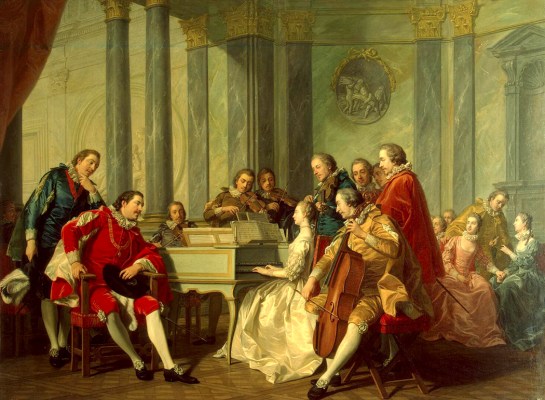
In the 1970s, a few crackpot music directors attempted to play early classical music — primarily Baroque music — on the instruments that were available 250 years ago: valveless trumpets and horns, keyless oboes and violins with gut strings. Those early attempts today are hard to listen to, with scratchy fiddles and sour brass, all terribly out of tune.
Things have gotten a lot better since then.
But those pioneers were the vanguard of a burgeoning movement in the classical music world, and in the intervening years have wielded such power, they are now the mainstream of the art, even when they aren’t there.
That is, even standard symphony orchestras now attempt to play what they call “historically informed performance practice,” or HIPP. Even if they use modern instruments, they have been infected with the dogma of the original instrument cadre. It has not been to the advantage of Bach, Mozart or Beethoven.
As the HIPP movement extends its tentacles into the 19th century repertoire, it has been more than unkind to that century’s composers, it has mangled and misrepresented them.
Because, in fact, the historical performance movement is less about historical accuracy in performance technique, and more about making classical music become like the popular music of our own time: There is a decided de-emphasis on harmonic movement and structure, and a peculiar emphasis on forward movement and the beat. Always the inflexible beat. It is so relentlessly percussive, might as well be rock and roll.
I don’t know how its proponents can be so blind to their own propaganda. If you want to know what’s going on in Bach’s music, look at it. Don’t worry about a lot of dogma. How can Baroque specialists so completely misread Bach’s music? How can they break up those long, flowing lines into short choppy phrases and not understand they are butchering the score.
“Baroque music is all based on the dance,” they say. It is dance music. So, they say, it should be bouncy and rhythmic. Well, maybe. But the allemandes and courantes of Bach are only as close to their original dances as Chopin’s Polonaise-Fantasie is to the original Polish court dance, which is to say, very distantly. They are no longer dance music, they are musical essays on the dance. To turn them into jiggy-boom-boom is to do violence to the profound thought and imagination that have transformed them.
It’s like the way an undergrad grabs onto some small and obvious insight and thinks he has found the key to unlock the universe.
This isn’t to say that the HIPP movement hasn’t helped us hear once more a good deal of pre-Bach music that had been previously ignored or misunderstood. Certainly Handel has benefited from the rethinking of his music. We cannot now hear a Furtwangler performance of a Handel concerto grosso without feeling it is soggy and underwater. The new brightness and fleetness helps.
But that doesn’t make HIPP a kind of syrup we pour over the entire history of music.
My biggest gripe, after the loss of the Bach long line, is the enfeeblement of Beethoven.
One can see how the century has moved in this direction. An ironic 20th century didn’t know quite what to do with a 19th century that believed in such things as nobility, heroism, providence, fate and triumph. After even the First World War, these concepts seemed iffy at best. After the Second World War, they seemed downright dangerous.
So, nobility and heroism are out the window. One can understand why, but without them, Beethoven no longer seems important. He might as well be dinner music.
This ties in with Modernism’s faith in the abstract form, and so, music lost its belief in narrative, in the possibility of carrying philosophical thought.
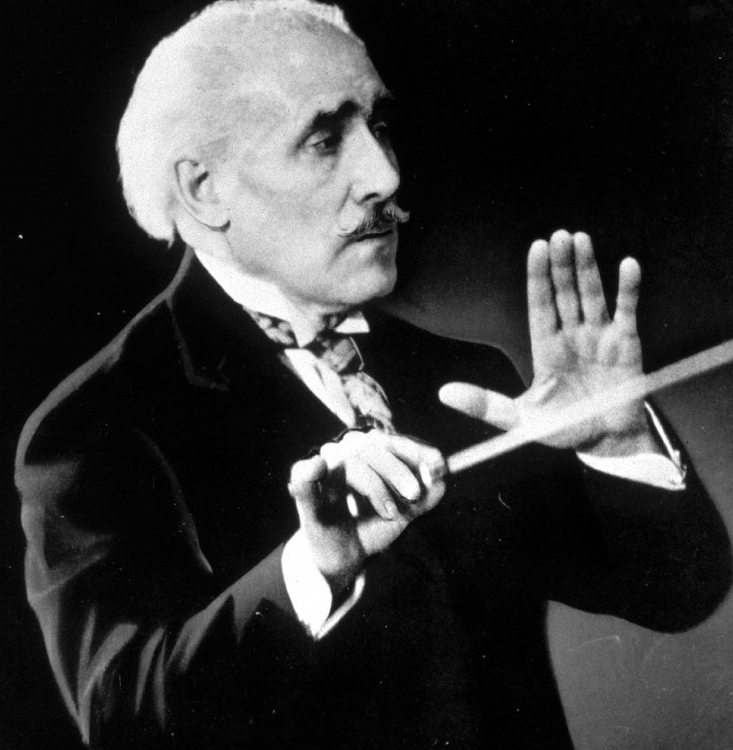
“To some, the Eroica is about heroism,” said conductor Arturo Toscanini. “To me it is just allegro con brio.”
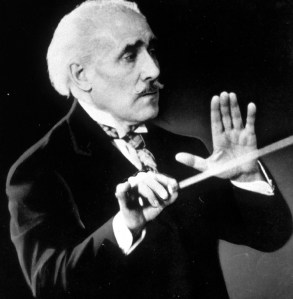
Arturo Toscanini
Or, as Igor Stravinsky put it, “Music can express nothing.”
It was a provincialism of the 20th century. It could not possibly understand what was going on in Beethoven’s most difficult music.
(I understand that the 19th century didn’t make things easy for us, by going overboard on “programs” for symphonies, and tying specific narratives to otherwise abstract music. Perhaps if those programs hadn’t been so universally mawkish and sentimental, they wouldn’t have caused such a backlash in the century that followed).
But Beethoven himself said as clearly as could be, that he put those extra-musical ideas into his music. They are meant to be there. Excising them in a kind of battlefield surgery: an amputation that only leaves the music disfigured or dead.
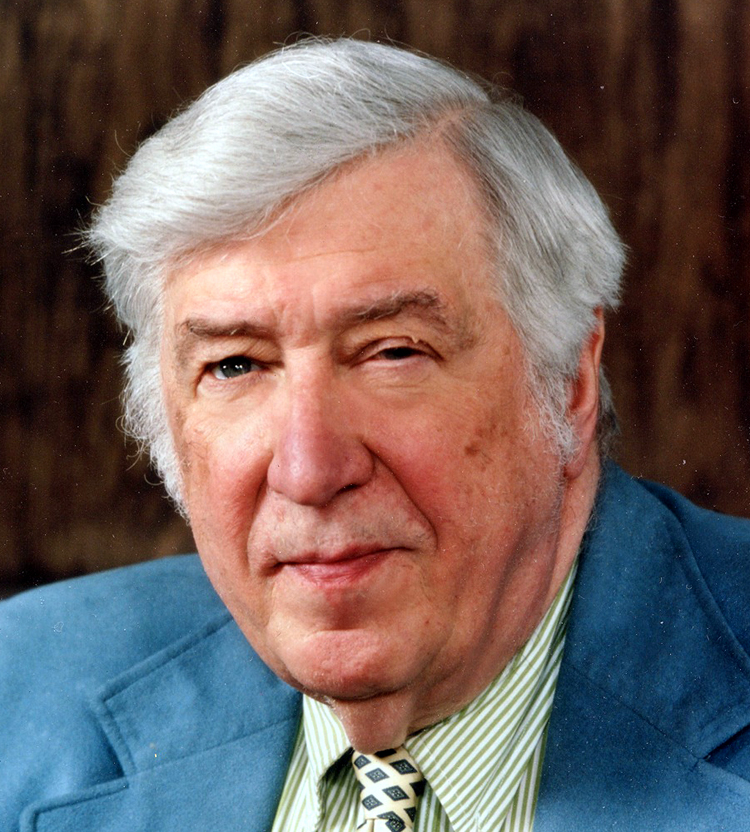
If you want to hear the difference, you should listen first to a modern recording of Beethoven’s Fifth Symphony. One could stack the deck and try the recording by Gunther Schuller and a studio orchestra, made in 1995 as a companion to his book, The Compleat Conductor. His argument: That a conductor should not “interpret” the music, but just present what there in the score.

Gunther Schuller
That means, an inflexible beat, a speed based on questionable metronome markings left by the composer years after having written the music, and a complete lack of expressivity.
Or, try recordings by David Zinmann or John Eliot Gardiner, both fine conductors as far as it goes. But they both have been influenced by HIPP, and therefore play the music too fast, too metronomically and purposely suck the philosophical subtext out of the music. They simply don’t believe in it.
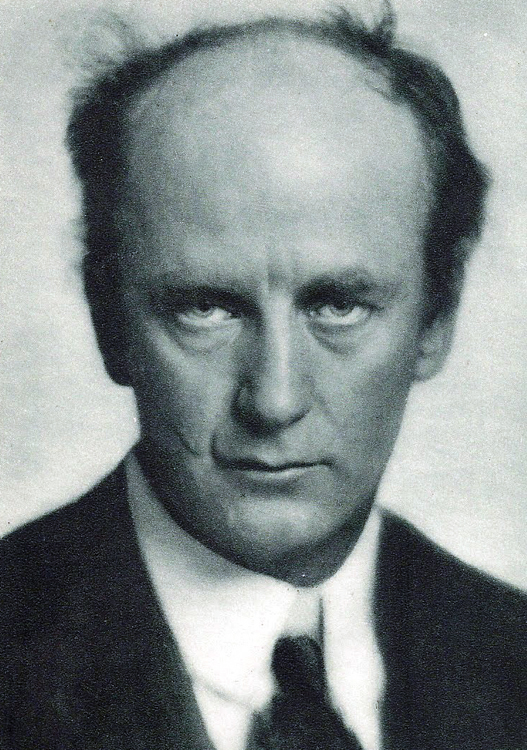
Compare any of those with the wartime recording by Wilhelm Furtwangler, in which the weight of the world is felt in the music, and the hope of transcendence burns brightly in the finale. It is an emotional experience that will leave you breathless and sweaty. Beethoven’s struggle is your own struggle.
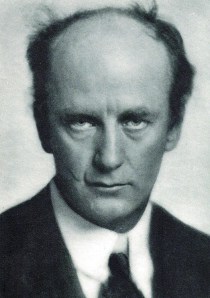
Wilhelm Furtwangler
Many listeners today prefer the modern performances, and find the Furtwangler version overwrought. I can do nothing for them; they should listen to pop music outright and not look for a “classier” simulacrum. But they are missing the overwhelming experience classical music can give them. What they get instead is background music.
The musicians are not robots, reproducing some Platonic ideal; they are rather deeply feeling artists who use the score to express their own inner selves. To complain that Bernstein’s Beethoven is more Lenny than Ludwig is to miss the point entirely. He was doing his job, bringing the music alive from the cage of the music staff, freeing it into life. Gardiner’s Beethoven is likewise more John Eliot than Ludwig, too, but no one seems to notice.
This isn’t just a question of rubato. It is a question of how the rhetoric of performance can communicate the essence of the music. There are some conductors who speed up and slow down irrationally; that doesn’t help the music. But a great conductor will change speeds when it makes his point.
Heck, even Toscanini changes tempo constantly, although by such a small amount, some people don’t even notice it.
One problem is that the tradition has been broken.
Toscanini famously said, “Tradition is nothing but the last bad performance,” but he was wrong. Nowadays, we could turn that on its head: “HIPP is nothing but the last bad performance.”
Tradition is essential. It is the way all classical art forms, whether Indian classical music, Japanese Noh theater or Russian ballet. They are handed down elder to student over generations. Classical music is no different, except that there is a notation to help guide us. We are fooled if we think the one is a substitute for the other.
The 20th century piety is that the score is everything and faithfulness to the score is somehow a measure of the success of a performance. On the contrary, the score is only a guide. It has some information; it is a blueprint, not an edifice. But much is also missing; that missing part comes from a teacher handing down a tradition to the student. Without that tradition learned in the bone from an early age, there can be no early second beat in a Viennese waltz, no paring of dotted notes from fourths to thirds in jazz. Learning the tradition, getting it in your blood, is why American orchestras do Copland and Ives better than a German orchestra, and why, if you want to hear the Blue Danube played right, you have to go to Vienna, or hear musicians trained in the Viennese tradition.
HIPP is instant tradition, like instant tea. It is tradition not learned from elders but picked up from books and research. Book learning ain’t music.
I’ve sat in a number of master classes, taught by some of the greatest musicians of the first half, and middle of the 20th century. They learned from the old masters, and they handed over the wisdom they had learned — the musicianship — from their elders. It is a glorious thing to see: the lumpen student plays the notes, and then the teacher plays the music.
Faithfulness to the score is such a canard. Completely beside the point. All the great conductors of the past jimmied the orchestrations around when they felt it necessary to make the music communicate more directly. Even Toscanini, the poster child for the “objective” conductor, altered the scores, adding brass to the coda of the Eroica where they knew Beethoven’s valveless instrument couldn’t play the notes it was clear he would have had them play if they could.
Mahler re-orchestrated Schumann. Even Mozart re-wrote Handel’s Messiah. There is plenty of precedent for using the score as a starting point, not a prison. What you’re looking for is music, not a museum exhibit.
All of the arguments I have heard in favor of HIPP fail to persuade me. We cannot listen to 18th century music with 18th century ears. It’s an impossibility. To pretend that if we play Bach on recorders and harpsichords, with short-neck gut-string violins, we are somehow more “faithful” to the composer’s intentions is simple-minded. As someone once said, “The loudest sound Bach heard was a door slamming. If you wanted to give our listeners the experience that Bach had, you’d have to create a world without the last two centuries of history.”
Our ears are more assaulted every day. The context for an “authentic” performance cannot be had, making the performance inauthentic.
I admit to enjoying a performance or two of Mozart or Bach played on the original instruments, but it is only as an experiment, or as an approximation, for historical understanding. I no more want to hear only HIPP any more than I want to read text printed with the long “S” and ligatures. They look quaint, but they get in the way of reading.
Unexamined through all this is the basic premise that music should reflect the composer’s intent. It’s taken as an axiom. But few people are asking why.
We don’t insist that Shakespeare be performed outdoors, with boys playing the women’s parts and with the rhetorical delivery of Elizabethan actors. We don’t blanch at Richard Burton playing Hamlet in suit and tie. So why do we argue over whether Bach’s musicians played with a vibrato or not?
The music, after all, no longer belongs to Bach. It belongs to us.
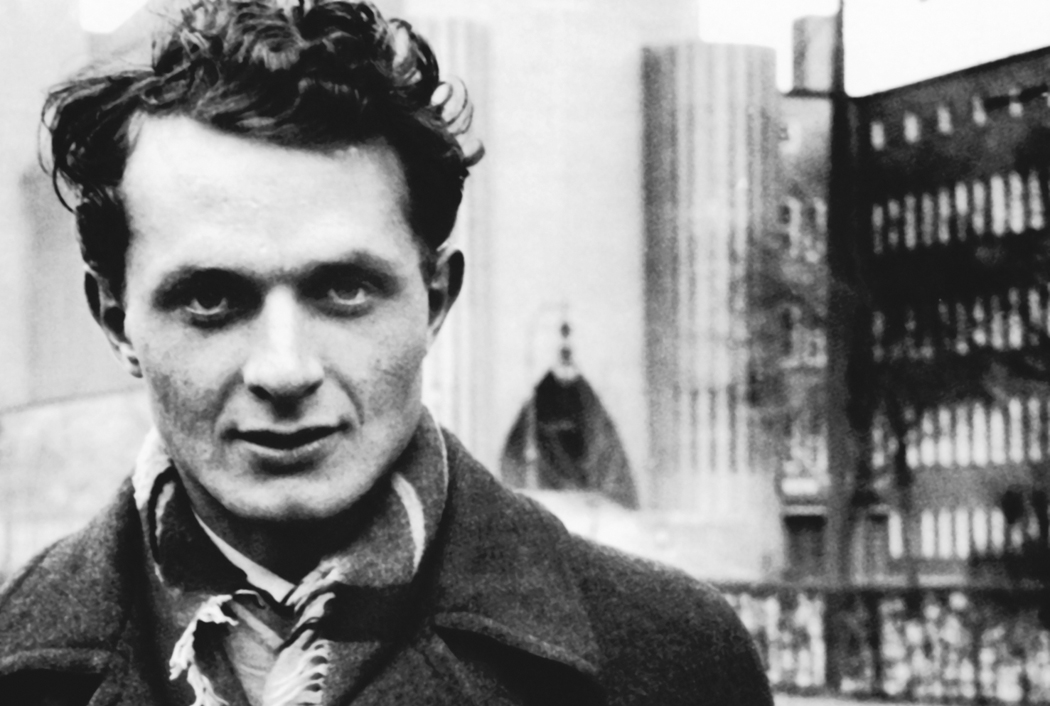 The English poet Stephen Spender wrote a poem whose first line I can’t get out of my head: “I think continually of those who were truly great.”

 Richard Nilsen