Archive

Tag Archives: back yard

I was sitting on the backyard patio this morning, soaking up sunlight, when a squirrel skittered across the lawn, back and forth like a pinball. Eventually, he came to within 10 feet of me. I sat stock still, and he stared, twitching his nose, standing on hind legs like a deacon. After about a minute — which can feel like quite a long time — I must have blinked, because he jumped, startled, and took off running away. 

I often sit in the back yard, to hear the birds and watch the clouds. It feels like an unmediated soak in existence. I sit trying to notice everything, the birds singing, the clouds moving, the wind making the trees wiggle in random motion, and until recently, the incessant noise of the cicadas, sounding like the A Train rushing through the 81st Street subway station. I felt the breeze in my hair, saw the bluish greens of the iris plants and the yellower green of the grass, I enjoyed the warm concrete on the soles of my bare feet and the incipient sunburn on the backs of my hands.

Bill Moyers once asked Joseph Campbell about the search for meaning, but Campbell switched focus: “People say that what we’re all seeking is a meaning for life. I don’t think that’s what we’re really seeking. I think that what we’re seeking is an experience of being alive, so that our life experiences on the purely physical plane will have resonances with our own innermost being and reality, so that we actually feel the rapture of being alive.”

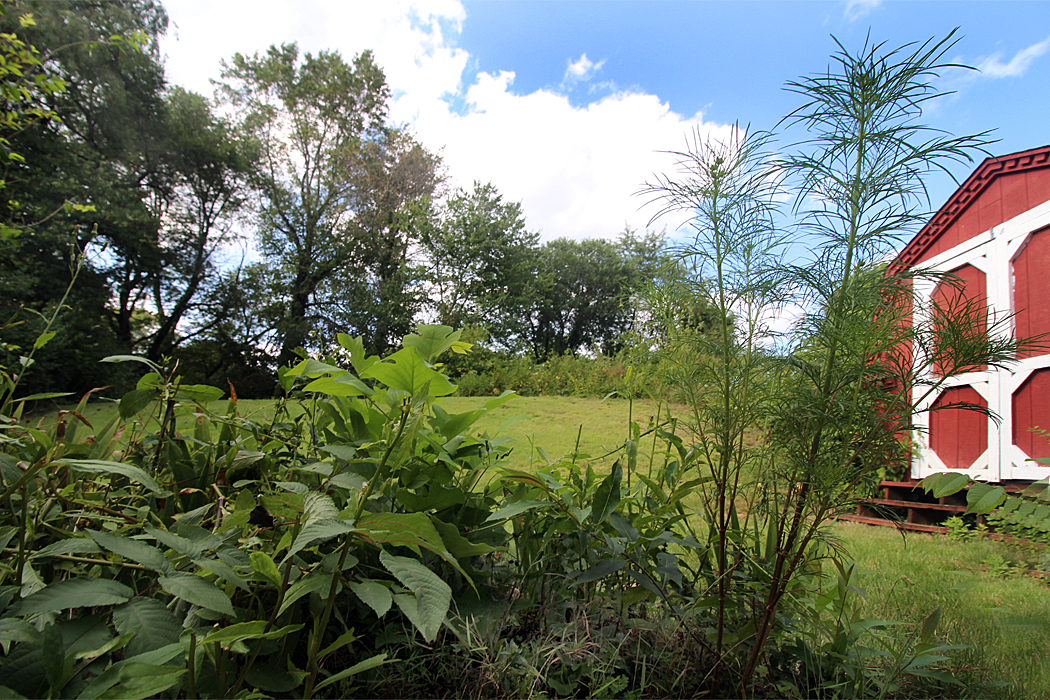
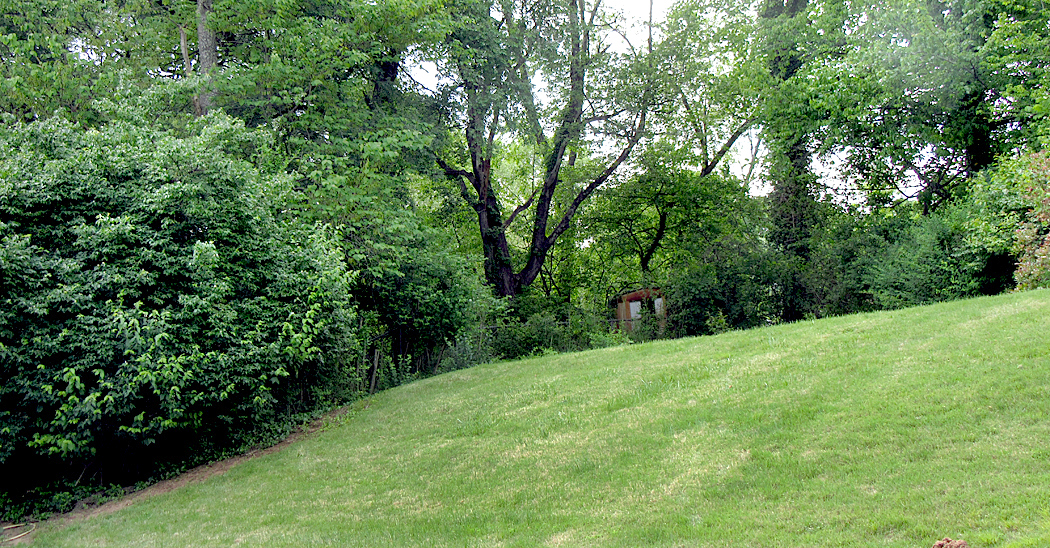
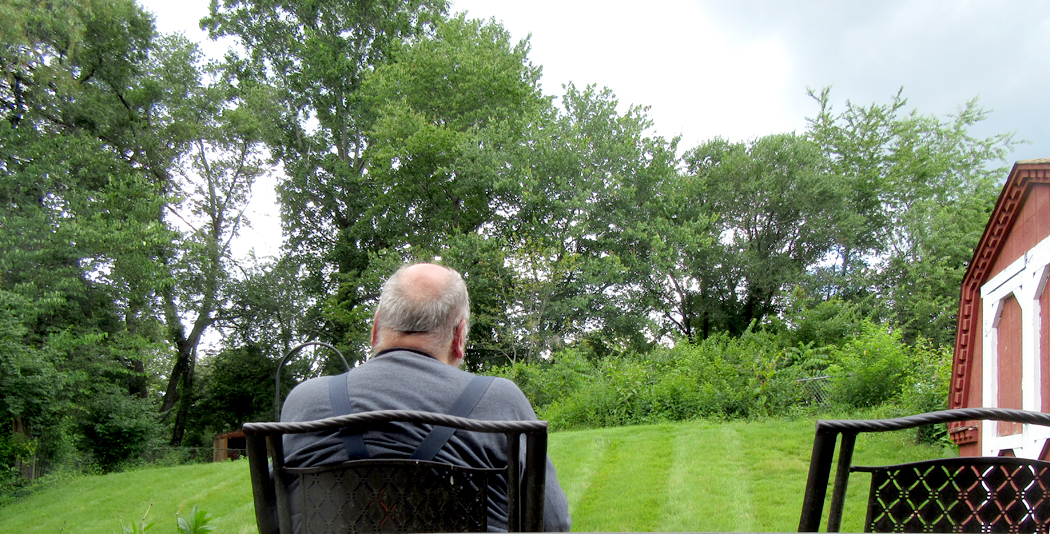
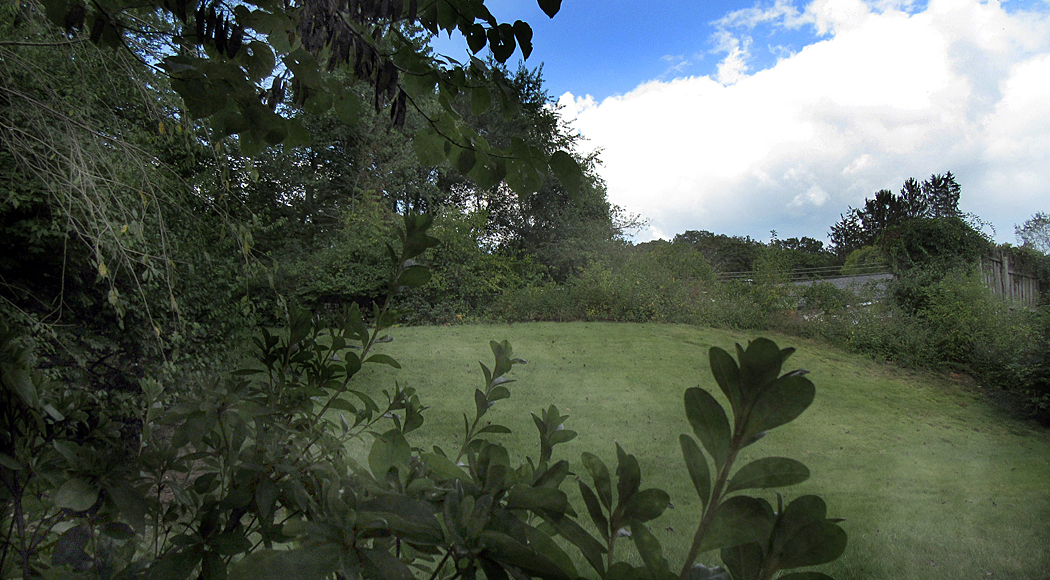
And so, I sit watching my back yard, the trees that line it and the sky above it. I can feel myself breathing, wiggling my toes and being alive, and what is more, recognizing the world being alive around me. For a moment, there is no boundary between my existence and the sea of being in which I swim. 

A wren flits down and sits on the steps to the shed and moves from one position to another with no apparent intervening motion, as if it were a jump-cut in a movie. A really bossy mockingbird runs through his repertoire of bird calls, claiming this patch as his own. A cardinal flies from my left to land on a bush to the right. A white butterfly bounces on the air waves to disappear behind the bushes. 

I’ve seen so much life in this tiny patch of ground, it sometimes astounds me. I cannot count the birds. Crows, even a raven. Way up in the sky, I’ve seen up to a dozen buzzards at a time circle as they catch the updraft coming from the river and up the bluff to this house. 

There have been cottontails and many squirrels. Two years ago, coming home from a trip to Maine, as I pulled into the driveway, two bear cubs were climbing up a tree at the back of the property. We watched them having their fun, and then mama bear climbed up behind them to encourage them to come back down. A dog barked aggressively from somewhere down the neighborhood and the bears all dropped to the ground and ran off. I’ve seen bears waddling through the streets here, and long ago learned not to put the trash out until garbage delivery day. 

A groundhog has crossed the back yard so often, he has left a permanent trace in the lawn. I have seen him multiple times harrumphing his way along. If he spots me sitting, he will take a moment to stare and consider his next move, but then run faster than you think he can move, back where he came from. 
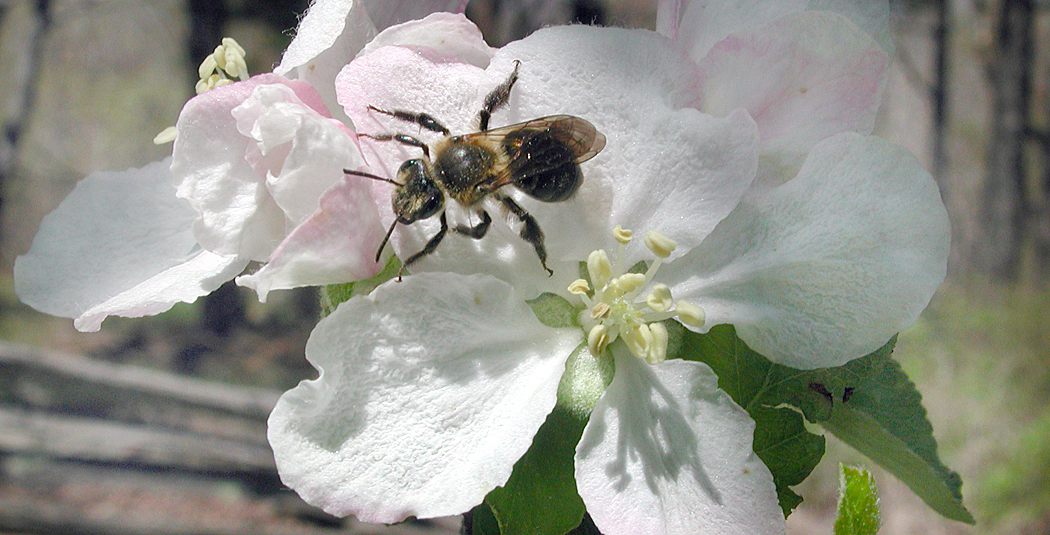
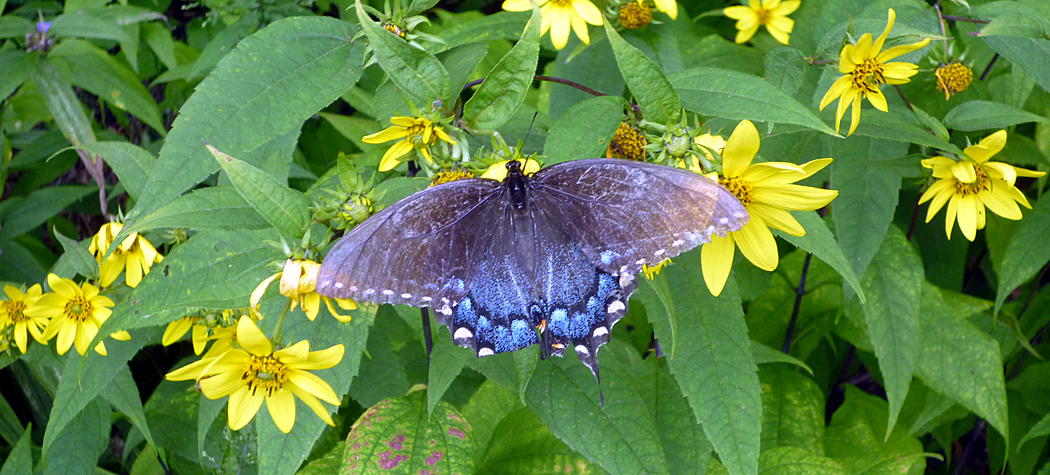
Then, there are the bumble bees, the honey bees, the wasps and the ant lions — their little sandy funnels in the dirt of the front garden. Big black butterflies, and their yellow and orange doubles light on the hedges and weeds. Ants build their nests in the cracks of the driveway, leaving tiny ridges of dirt where they have dug down. 
Yesterday, as I was headed out the back door to have my daily sit-down on the patio, before opening the door, I saw the groundhog plopped down right by my chair, butt-flat on the concrete and motionless as a garden gnome, while an angry mockingbird jumped in a half-circle around him aiming “Cht-Cht — Cht Cht” at him. They continued this performance for a good two minutes until I must have made a noise and the great, heaving woodchuck became disturbed, turned its head my way and waddled off to hide under the shed and the bird, having had its way, flew up to a tree and quieted down. 

When I was little and visited the Bronx Zoo, I was impatient to see the animals, who sometimes hid in the shade at the back of their enclosure, or sat behind some rocks, and if I did not have my interest piqued in the first five seconds, I moved on to the next animal. But my father told me to wait. Just watch. Eventually something would happen. I didn’t understand that then; I do now. I find myself in my yard patiently waiting for the next miracle. 

(Many years later, I worked at the Woodland Park Zoo in Seattle, and saw crowds of impatient kids moving from exhibit to exhibit. And it is only worse now, in an era of cell phones and digital immediacy.) 

Writing in the Fourth Century, the Christian poet Prudentius identified in his Psychomachia (“Battle of the Souls”) his version of the Seven Deadly Sins, and the corresponding Seven Virtues, at war with those sins, and among the virtues was Patience. 
I don’t know if I learned it from my father, or inherited it from his DNA, but, like him, I have become rather patient. Or maybe I’m just sluggish. But, I believe it served both of us well. The old man was slow to judge, slow to anger, and would never think to get outraged at traffic. Being raised that way, I, too, am willing to wait, when waiting seems either inevitable or purposeful. In fact, I can sit quietly in a chair neither talking or thinking for ages at a time. When I’m being philosophical about it, I call it meditation.
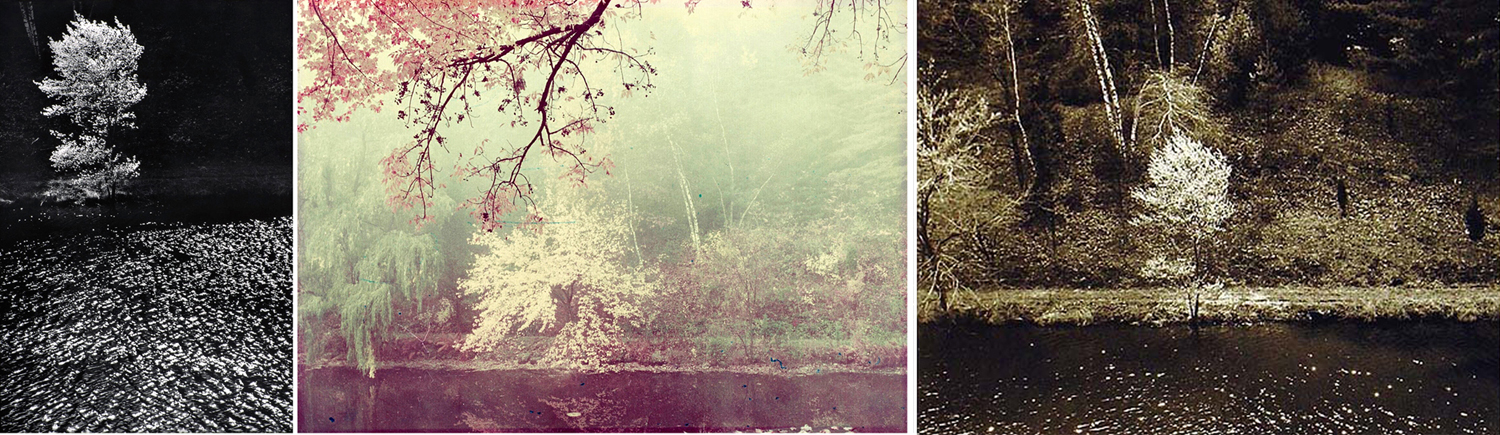
In the 1950s, the aging photographer Edward Steichen rarely left his home in West Redding, Connecticut, and began photographing a serviceberry tree (he called it a shadblow tree) through his window. He watched the seasons shift across the face of the pond and the tree and pictured them in all seasons and hours of the day, under varied weather, and made a case you could spend an infinite amount of time in a single place with a single subject and discover everything. As Yogi Berra once famously said, “You can observe a lot by just watching.” 

And it is the little things, carefully watched, that won’t happen again. The flow of the world is that it won’t happen again, all in constant forward motion and I sit to watch it move past me, and take me with it. 

 I just want to sit and soak, to sense the universe around me without thinking. We tend to glorify rationality, and the power of our brains to think meaningful thoughts, and we diminish the value of pure sensation, the sensuous awareness of colors, shapes, earthforms, clouds, birds, song, rhythm, touch, smells, and tastes. But these things are primal and exist before thought. Sensation is primary; making sense is an afterthought. 

And so I sit, trying to lose myself in the larger pattern.  

But, damn it, I can’t help being a writer and so I need to belittle what I enjoy, turning it all into words, into capsules of meaning that when read by others will be turned into ideas about sensations. Words not experience. And so, I can’t stop myself from writing this, hoping you share some of that delight when you step outdoors on the right day, with the right breeze, and the right mockingbird and crow squawking, and can see the trees dancing and the sun moving slowly across the sky blotted with whatever variety of cloud you have that moment.
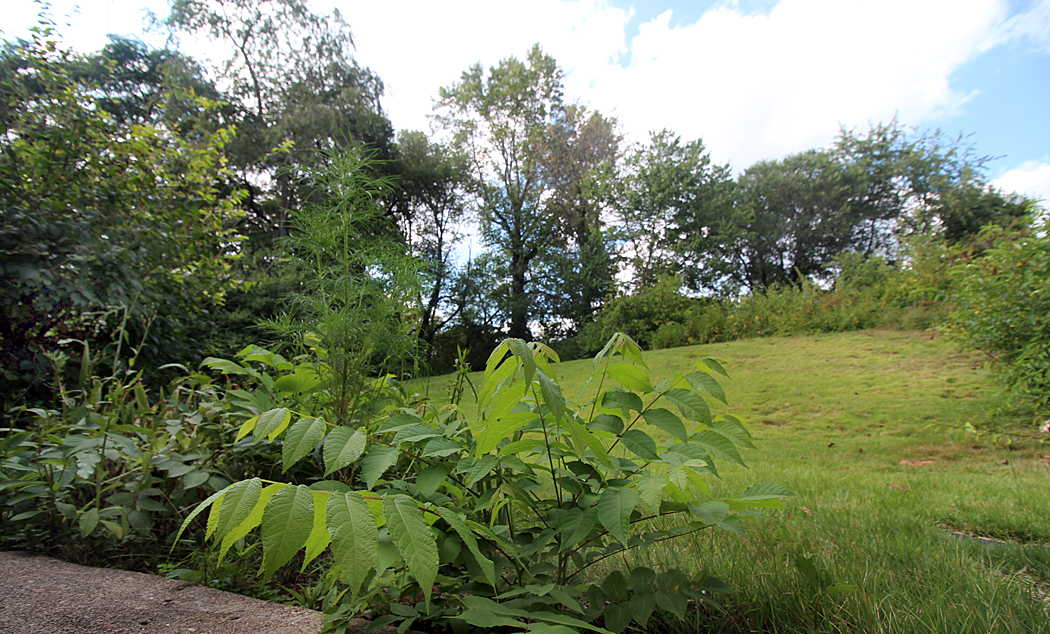
I remember, as a child, going to the zoo and being impatient if I couldn’t see the animal immediately. The lion was off in the shade at the back? Move to the next animal. Children often have short attention spans, and I was no different. 

As I’ve aged, I’ve been surprised to discover how much more I can concentrate, how much more patient I’ve become. I can look long and hard until I see the lion, and wait to see what it will do next. Perhaps lick its paw; perhaps roll over and snooze. Oddly, with less time left on this earth, the amount of time I’m willing to wait has become inversely proportional. 

I am now an old man, with a powerful sense of how few years I will be able to enjoy this existence. People I knew and loved have left before me, giving me an imminent sense of what to expect.  

Maybe I am just growing soft in the head, or is it simply old age and the recognition that annihilation isn’t that far off, or some other cause, but I am almost daily having moments of utter beauty that remind me what I love about being. Moments that James Joyce might have called “epiphanies.” 

I have been going out and sitting on the back patio pretty much every day, usually for a half-hour at a time, sometimes longer, and saying to myself — or is it to the universe — “Show me something.” And every day, if I wait long enough and be patient enough, something will happen. 

Yesterday, a hummingbird flew not more than a couple of feet from my face to hover in front of a basil flower and then buzz back past me as he left. Another time, it was two cottontail rabbits hopping across the back yard, first one and as I watched it, a second one caught up. 

Once, I watched 15 vultures soar and climb in the air currents, one eventually so far up it was no bigger than a period at the end of a sentence in a book held at arm’s length. Yet again, a mockingbird sat on the roof of the shed beside the patio and sang his medley over and over, like I wasn’t there. Squirrels run around with acorn in their tiny front arms. A towhee landed on the steps of the shed. A rise of cumulus clouds was so white against the sky blue it nearly blinded. 

It never seems to fail. Each day, it is something new to delight me, and to remind me of the tremendous animation of the cosmos, and how minor fluctuations pile on top of one another to make it all new. 

A bright red cardinal flew directly at me, just a few feet above the grass, and turned away at the last minute to fly to my right and up over the roof behind me. 

A groundhog poked out from the brush and glanced at me and then, apparently deciding I was no threat, waddled across the full stretch of the back lawn to disappear in the brush at the other side. Not a lot happens over the course of an hour sitting there, but every time I go out, there is something for me, as if the cosmos knew I was paying attention and wished to reward my efforts. 

Recently, I heard a crow caw, looked up and watched as he flew in a great “S” curve, coming from behind me on my right, flying past me to the left no more than 20 feet away, then looped back to the right, circled away and looping back to the left and eventually behind the stand of trees, uttering caws the whole way. The curve was so graceful, I felt it in my esthetic sense. “As the crow flies?” Not a straight line. 

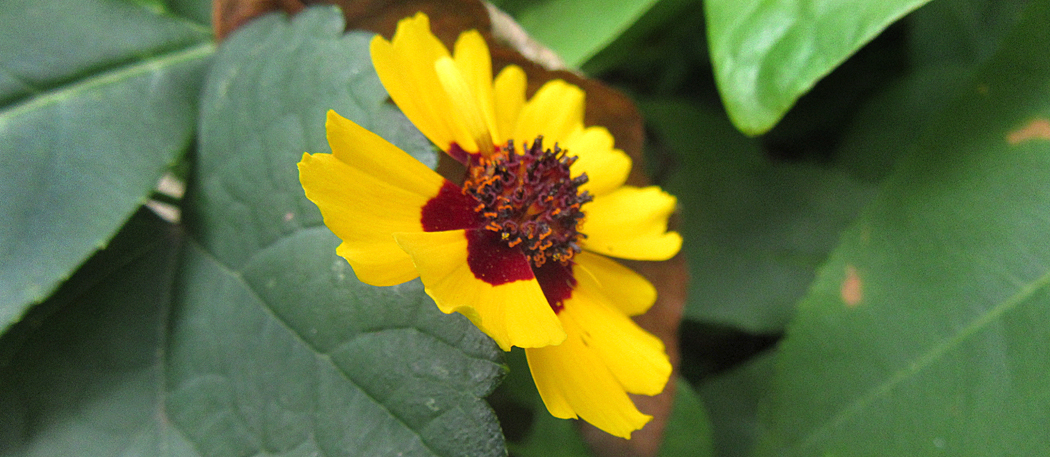
And so, every day, I sit and wait for the moment that the butterfly will land on the flowers at the edge of the patio, or the wasp will pause on the bluish florets of the mint. Or I will notice a small yellow flower that wasn’t there the day before. 

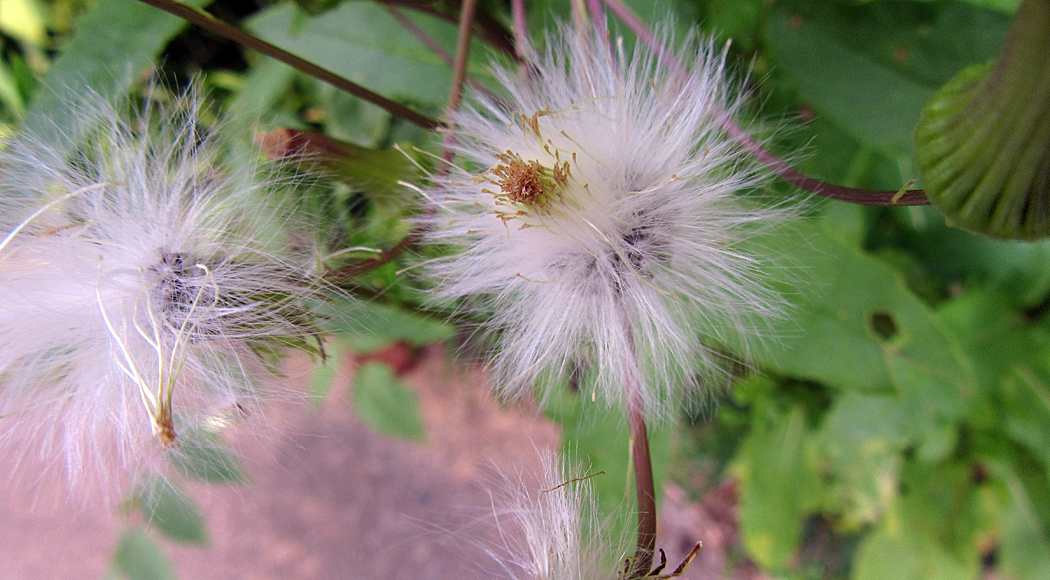
It is fall, and one of those flower seeds with its wisp of fibers landed on my shirt. I held it up in the light to see its tiny hard black seed and it reminded me of Carl Sagan’s “spaceship of the imagination.” 

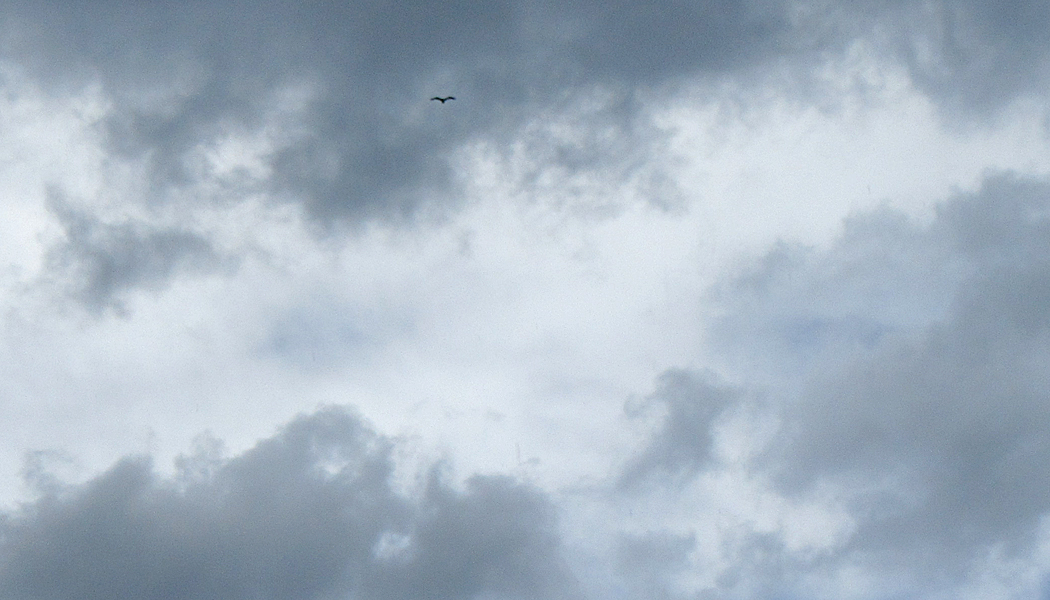
Today, it looks like rain. Dark clouds are everywhere, with the occasional white brightness poking through. And I sat in my silent seat when the wind came up, as it often does just before a rain, and all of a sudden, from the tall oak tree at the top of the hill in the back yard, a hundred leaves let go to flutter down, but, since the wind was blowing toward me, the leaves did not drop straight down, but all floated toward me, up in the air, like a hundred butterflies, or snow in the wind, or bubbles bobbing around in the currents. And so, from a hundred feet up at the top of the tree at the top of the hill, the tumbling leaves filled the sky from edge to edge of my vision, dancing in the air, each showing shadow and light as it twisted, making a glitter in the sky. It was so ungodly beautiful, I began weeping. 

This is the beauty I don’t want to leave. It fills me up. I know I will have to leave, and sooner rather than at some indistinct time in a future that once was only imaginary, but now is palpable in muscle and bone. 

So, perhaps I am going soft in the head. Should I be so moved by such pedestrian events? I am more aware now than when I was young and had other goals in mind, of the complex connectedness of all of the sensate  world, and how that makes an organism too immense to take it all in or understand it. Little things we may understand and describe, but the wholeness of it all can only be apprehended as beauty.

And so I feel gratitude for the world and what it is willing to show me. I do not want ever to leave it, though I know I must. 

And when the final curtain drops on the final scene, I can say “NO” to the end, and “YES” with the same conviction. 

Sometimes, while driving through a neighborhood, I will see an old person, a retiree, sitting in a chair on the front porch, or in the driveway, just watching the traffic go by. It’s become a meme, much like the “Get off my lawn,” thing that shows up in single-panel cartoons. 

I have to admit, I am of that age, although I don’t find traffic that interesting. 

But after several years of being partially house-bound by the Covid virus, and at times suffering from cabin fever — to say nothing of the fatigue that comes with hours staring into an iPad screen checking out the news or watching cat videos — I have discovered the pleasures of sitting quietly in my back yard. It gets me out of the house and it reacquaints me with what I jokingly call “reality.” That is, the sense that there is a world without electromagnetic signals commandeering my attention, a world that has been there always, before my greatest-grandparent was born, and will be there when all the power grids in the world are rusting back into the soil. 

I can sit there for half-an-hour at a time, maybe 40 minutes, without thinking about anything and just watching this tiny bit of the world as it moves in the breeze, as the cardinals and mockingbirds swoop across it into the low tree branches, as a white butterfly flits over the irises and a rabbit lopes across the bit of lawn. 

Occasionally, there is a groundhog who will waddle into the yard, get about halfway across before noticing me sitting there; stare at me for two or three seconds before turning back and returning to where he came from. 

This morning a bumble-bee dive-bombed me briefly. I don’t think he was attacking me; more likely he didn’t even recognize I was there. 

After a morning of staring at a computer screen, or watching an iPad, it is important to move to somewhere so my eyes can refocus at a distance, perhaps to infinity. I watch the clouds and notice which direction they travel. I listen to the birds nattering, or hear the neighbor on the next block mowing the lawn. An airplane may cut across the blankness leaving a contrail, and dropping a rumbling jet sound that always seems to be coming from some distance behind where you see the plane. 

It may seem to some, in the rush of civilization, that nothing is happening, that sitting quietly and watching is the very definition of boring. But for me, it is not. Something is always happening. It may be subtle, but it is happening. The leaves wiggle, the sky shifts from sunlight to shadow as the clouds pass, a mockingbird lights on the top of the shed and repeats his mantra over and over; he seems to notice that I’m there, but perhaps I am no different to him from the patio furniture. 

But I have noticed, over the weeks I have been doing this, at least three psychological states I have found myself in. 

First, if I am distracted by other thoughts, or if I am not really paying attention, my relationship with the yard is that I am looking at nature, almost as if I was still staring at my computer screen. I may notice things, may enjoy what I see, but it is quite separate from me and is, as I look, clearly something in front of me. 

There is nothing wrong with this, but it isn’t why I go out each day and sit there. I consider it a failure when I can’t get to the second state. 

That second state is when I feel not that I am looking at nature, but rather I am in nature. That is, it is all around me, and what is more it exists behind as well as in front. It extends into the air and to the clouds; I become aware of the soil under me, the weeds to the right and the undergrowth beneath the tree branches. 

To be in Nature is to be taken away from the self and redeposited into the wider world. I can easily lose myself in this state and that is when the watching becomes something more. I can feel the space around me expanding to the rest of the earth and sky and my bit in it, however tiny, is plugged in. I feel alive in a live world. 

These two states of mind depend primarily on my mood. If I am tired or distracted, I cannot reach the higher state; it just doesn’t come. But when I can silence my brain for a bit, it is like the coupling of a locomotive to a train. There is a click and it all becomes connected. 

It is the same state you enter when you are absorbed in a book and the room you are in disappears because you are so focused. 

But I said there is a third state, and that comes only with something like grace. It is when I neither look at nature nor feel in nature, but rather am nature. 

The barriers between me and the rest of the world, even the universe, vanish and I realize that I am part of it all. No. I don’t realize it. It just is. The very idea of realizing, or thinking, ceases to have meaning. If I look at the rabbit, I know he looks at me, too. No, again. It isn’t a question of knowing. We look at each other. A recognition. The metabolism that takes place in the cells of my meat is the same as that in the green iris leaf. The motion of the clouds across the blue is the motion of my blood through my arteries and veins. “For every atom belonging to me as good belongs to you.”

I disappear, except that I don’t. In fact, I am more present. It becomes one thing, and it is not that I am a part of the one thing, but that it is just one thing. 

That is, of course, a truism. Even Miss America might say the same thing through a Pepsodent smile. But just saying, or knowing it is not what I’m talking about. It is not knowledge I mean; it is the experience. I sit there in the back yard and it just is.

This cannot happen every time I sit in the back yard. And it isn’t necessary to have a back yard. It is just, as I say, a kind of state of grace, psychologically. 

What is required is receptivity, an openness without expectation. Paying attention. 

As I get closer and closer to the point when every atom belonging to me will belong again to the soil, I remember the lines in Thomas, that “it will not come by expectation, but it is all around us and we do not see it.” 

But once in a while, the veil is lifted and we can see. It is not what we see but that we see.

Now that it is well into spring, I like to sit in the back yard and just soak up the experience. On a chair on the patio, I can sit for a half-hour or so and just listen to what is going on around me. Often, I just close my eyes and enjoy the bird calls, the distant lawnmower, the occasional and distant roar of a passing jet high in the air. It is my form of meditation. 

It affords me great pleasure to hear all the sounds, and more, to hear them all at once, piled up in counterpoint, like so many voices in a Bach fugue. Indeed, I try with the same effort to be able to hear all the parts simultaneously. It is great training to hear the more traditional music of the concert hall. 

For, in any decent music, there are many things going on at the same time. Not only in dense Baroque counterpoint, but in all music. There is melody, harmony, rhythm, timbre, texture — to say nothing about a bass line. If you listen only for the tune, you miss so much else. 

And so, in the concert hall, I often close my eyes and concentrate on taking in all the bits. It takes some practice, but it is possible to hear multiple lines of melody at the same time. At the very basic, to hear the tune on top and the bass line at the bottom playing off one another. 

In my back yard, I enjoy the stereo effects of a cardinal squawking to my right, while a chickadee yawps to the left, while the mower sounds two blocks away and a dog barks somewhere behind me, down the hill. There is always traffic on the main road, about a quarter-mile up the hill, and the breeze shuffles the leaves on the trees that ring my yard in an aleatory rhythm that serves as bass line to the rest. The mockingbird has his repetitive medley of greatest hits. You can’t fool me. I know it is you. 

Listening to it all tells me the world is alive. It is animated and bustling, and it sings an earthy chant. 

I am reminded of John Cage’s infamous 4’33’’ — the piece where the pianist sits in front of his keyboard for that amount of time and plays nothing at all. Often seen as a hoax by those unwilling to take Cage at his word, and feeling they are being cheated, such a listener misses the point. The composer intends for his audience to actually hear the sounds of the hall — the rustling of programs, the passing truck outside, the AC unit clicking on, the throat clearing and feet shuffling — and appreciate them as a kind of music of their own.

It is one of the primary functions of art, and music included, to wake you up to the world, to see what is usually ignored, to hear what surrounds you, to feel what is churning inside. It all boils down to paying attention. 

The world is full of miraculous sound. I remember Kathy Elks, from eastern North Carolina, telling us of when she was an infant, just after World War II, and would hear the propeller sounds of an airplane too high in the sky to see, and how she always thought that buzz was “just the sound the sky makes.” 

Or Emily Dickinson’s “I heard a fly buzz when I died.” Or the “good grey poet,” Walt Whitman: “Now I will do nothing but listen,/ To accrue what I hear into this song, to let sounds contribute toward it./ I hear bravuras of birds, bustle of growing wheat, gossip of flames, clack of sticks cooking my meals…” 

Samuel Taylor Coleridge, in the Ancient Mariner: “A noise like of a hidden brook/ In the leafy month of June,/ That to the sleeping woods all night/ Singeth a quiet tune.” 

“Listen to them. Children of the night. What myoosik they make,” says Bela Lugosi in Dracula (1931). 

Beethoven included a quail, nightingale and cuckoo in the slow movement of his Pastoral symphony. Messiaen wrote whole symphonies built from transcribed birdcalls. Charles Ives built the sounds of his Connecticut village into his music. Rautavaara’s Concerto for birdsong and orchestra. Vivaldi imitates birds in his Spring concerto. Alan Hovhaness And God Created Great Whales, with its whalesong sounds buried in orchestral texture. 

Gustav Mahler said the symphony must embrace the world, and he included cowbells, hammer blows, distant military bands, bird calls, the memory of the postillion’s watery horn call, and even begins his first symphony with seven-octaves of unison A-naturals, almost a tinnitus of the universe — the music of the spheres — interrupted by a cuckoo in the woods. His own defective heartbeat was the opening of his final completed symphony. 

Bedrich Smetana wrote his tinnitus into his first string quartet, “From My Life,” in the form of a long-held high “E.” 

 The same world of sound that fills all this music waits outside my back door, waiting to be organized into coherence. The first step is paying attention. Engagement is the secret to unlocking the world. The ear is a gate to paradise. 

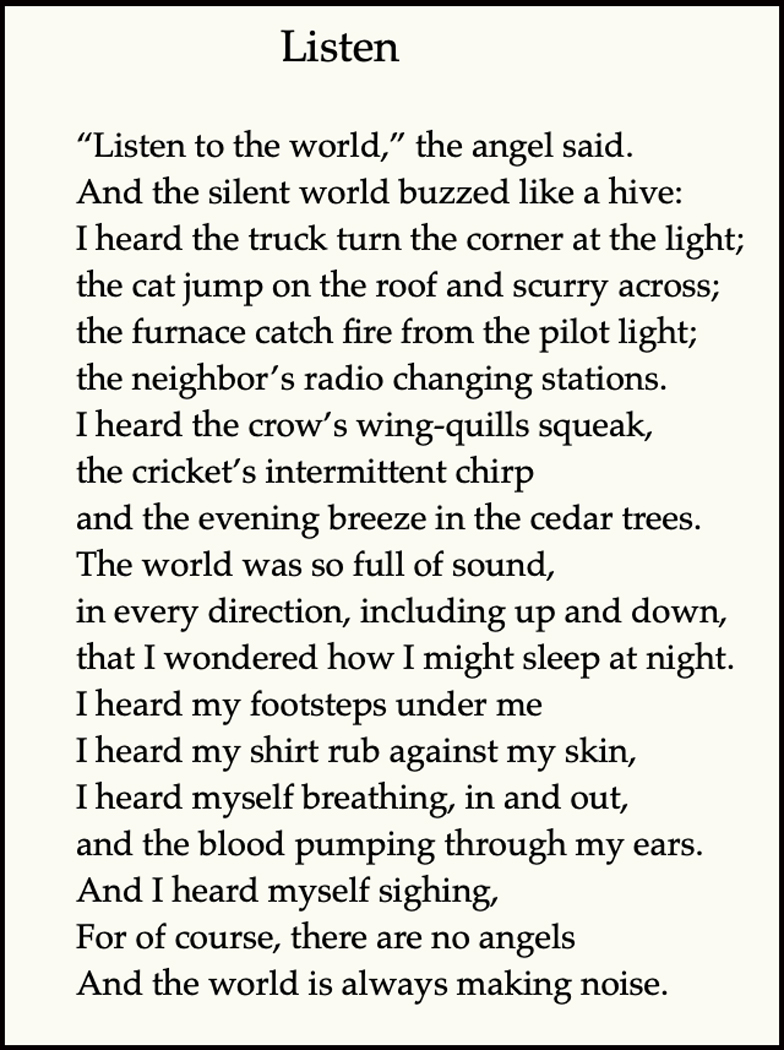
Some years ago, when I was still regularly penning verse, I wrote about this:

I wanted to write something about the tree in my back yard.

It is a big red oak, growing on the hill that rises at the back of our house in the Blue Ridge Mountains of North Carolina. It is an old tree, with wide-spreading branches that swoop out over us like wooden contrails against the sky. It is a sky tree, high up over us, elevated by hill and by tree trunk.

Its bark is shingled and cracked. Its leaves in summer are insect-eaten, dry and leathery. Moss grows on the north side of its lower stories.

It dominates the small hill like “Charlemagne among his peers.” All lesser vegetation remain vassals, and the lawn mere peonage.

One sees on its trunk the evidence of cities of insects, largely black ants, which use its bark for highways. At night in June, fireflies act as streetlamps.

One could look at the tree and think it is just an old-growth oak. There are many such trees in the mountains. They grew back after the farms that covered the area fell into disuse decades or centuries ago. Now that old growth has been parted again for housing developments, but my one old tree survives. It is hard not to think of it as an individual and not merely a Quercus rubra, something from a page in a Peterson Guide.

It seems to be a kind of spiritual umbrella, protecting this house from whatever ashfall of misfortune may drop from the heavens.

The back yard is full of vegetative growth, each shoot contending with the rest for sunlight and water. Grandfather oak watches over the welter.

It is a mythic tree.

The world is filled with such mythic trees, from Yggdrasil, the Viking “World Ash Tree” to the Boddhi tree of the Buddha. Most fall into one of two varieties of tree in myth: the fruit tree of paradise or the druidic oak that marks the axis of the world.

Of the first, the best known is the tree of the knowledge of good and evil from the Bible, although only close readers of Genesis may notice there is yet another fruit tree there, the tree of eternal life, which the god does not forbid Adam and Eve, although they never get to test it.

Such trees of fertility include the vines that Bacchus makes grow on the pirate ship and the trees of life in Mexican folk art.

But my tree is the other kind, like an Ent from Tolkein, or the so-called “Lawrence Tree” in New Mexico, painted by Georgia O’Keeffe.

This is not a tree of beginnings, not a tree of new fruit, but the kind of tree that functions as a “witness.” It sees all that happens. It cannot change what happens; it cannot interact. But it knows. What it knows, we mere humans can never fully know, but myth tells us over and over, it is not necessarily a happy knowledge. The Garden of Eden may have contained the tree of immortality, but my tree tells me of a longer time, when everything passes. It is a tree of the knowledge of death.

What makes such a tree notable is that it does not comment on this fact: It just is. That is its role as witness. It sees the suffering and knows it cannot be otherwise. It sees the long time, when whole empires are born and vanish. Perhaps even the time when the cosmos explodes into existence and then fades like a dying ember into a wash of undifferentiated particles, the ash of the burned out universe.

This is why that Odin chose Yggdrasil as the tree on which to hang himself as a sacrifice to himself, to gain wisdom. And it is perhaps why Odin is not portrayed as a happy god.

That is my tree in the back yard, today dripping with the sweat of rain in the summer heat, in a humidity so thick it is almost a mist.

As you read this, you think, but it’s just a tree. And so it is. All mythology comes not from the things themselves, but from our investing them with significance. They seem to have meaning.

It can be like a dream, which, when we wake we remember and feel was trying to tell us something important. We don’t know what, but we felt its meaning.

And myth is that state, in waking life. Things are what they are, but they are also what else they are.

This may be something like a schizoid state, but it is where art comes from, and after art, where myth, and later religion comes from. Myth is our sense of the importance of things. Not important, like the paying of monthly bills, or remembering a wedding anniversary, but important in and of itself. It is significance.

You can see it in the utter care and utter frenzy of the paintings and drawings of Vincent Van Gogh. (Really, in every artist, whether Titian or Joseph Beuys). Look at those lines of energy as Vincent draws cypress trees.

This is his recognition that every bush is the burning bush.