Archive

Tag Archives: Beethoven

I have been listening seriously to classical music since 1965, and I have attended hundreds of concerts and recitals since then. Most of those were enjoyable, well-played, musical and provided emotional nourishment, yet almost every one was ultimately digested and forgotten. How could it be otherwise? It takes an exceptional performance to register permanently on the psyche, so that, even 60 years later, they are still resonant in the memory. Now that I am 77, I think about them again. 

I grew up in a household with very little music, outside of watching Perry Como or Dinah Shore on the TV. But my high school girlfriend was a musician. She was studying bassoon with Loren Glickman, the man who played the opening notes of The Rite of Spring on the recording conducted by Igor Stravinsky. (She later studied with Bernard Goldberg, primary bassoonist with the Philadelphia Orchestra — she was the real deal). She later went on to work with both PDQ Bach and Philip Glass. 
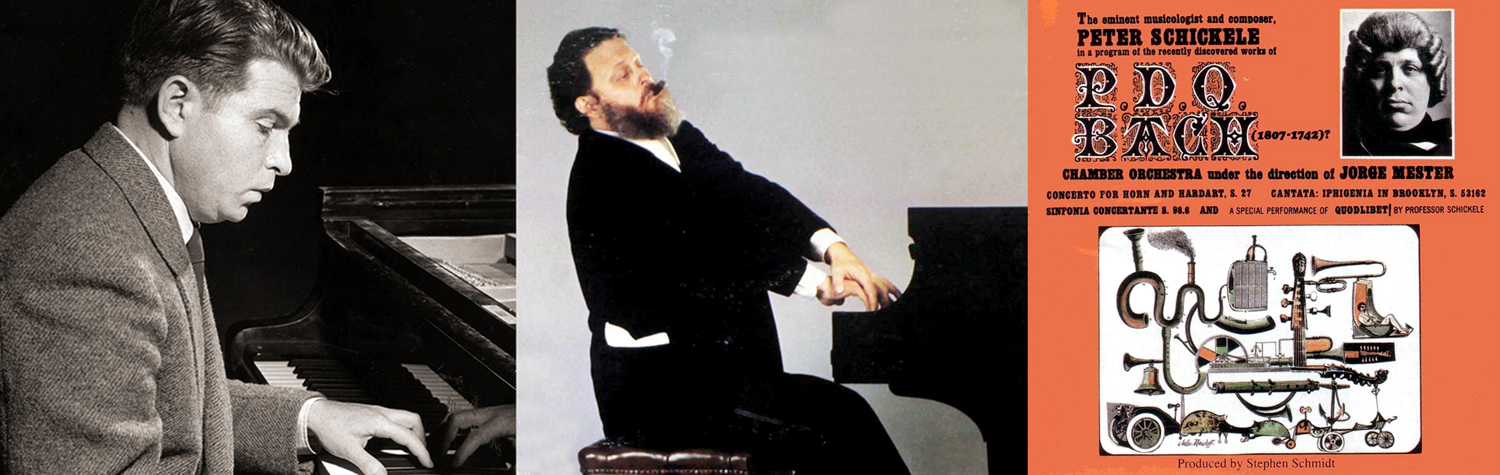
She and I often took the bus into Manhattan to attend concerts. We heard Emil Gilels play the Liszt sonata at the Brooklyn Academy of Music and we went to the very first PDQ Bach concert at Carnegie Hall, hearing both the Concerto for Horn and Hardart and the cantata, Iphegenia in Brooklyn. (For about 20 years after that I went to at least one PDQ Bach concert each year, no matter where I was living). But most of all, we went to the New School concerts led by violinist Alexander Schneider. Tickets were $3 and we could afford them. 

And on Christmas Eve, Schneider held an annual midnight concert which allowed me to escape to New York and avoid the boring evenings with my coffee-drinking repressed Norwegian aunts and uncles. 
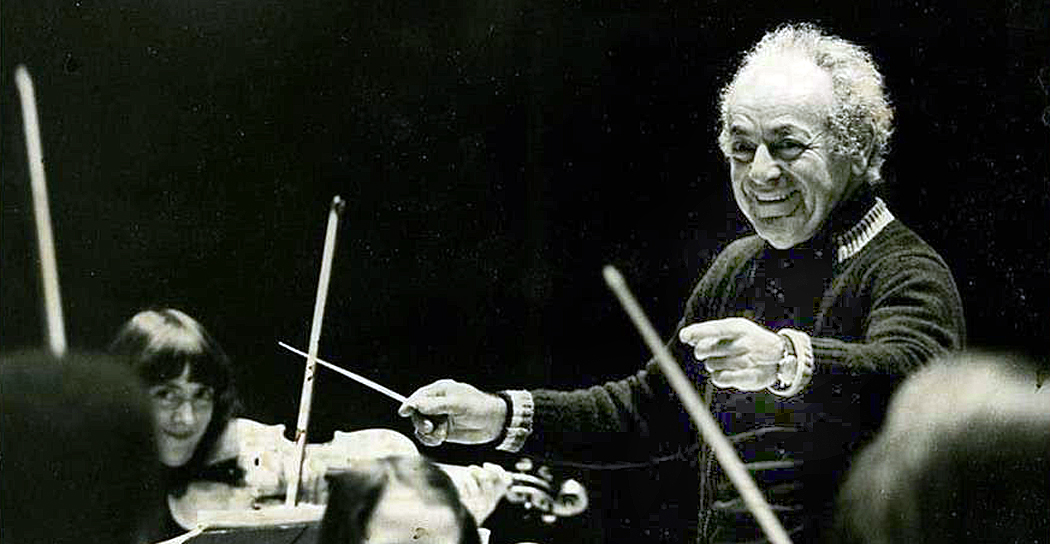
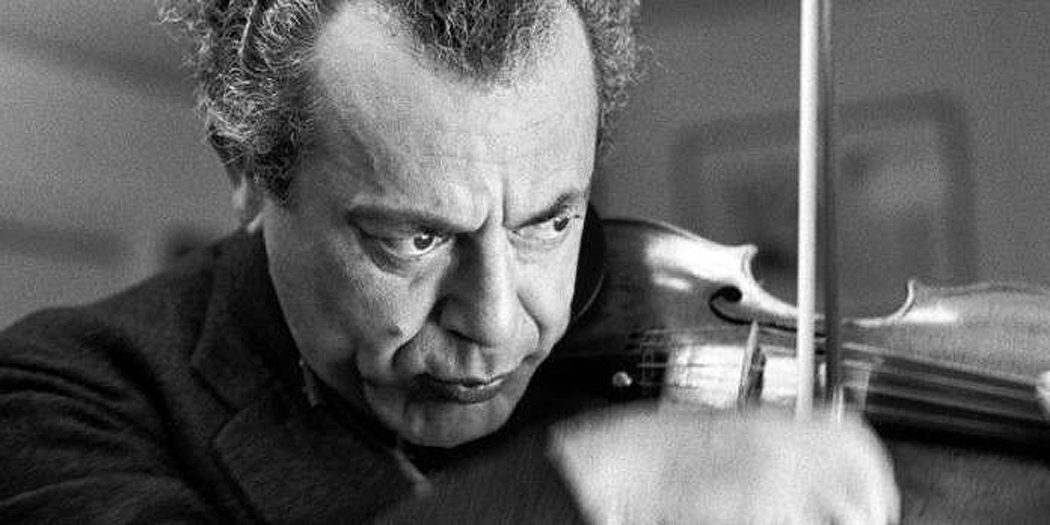
Schneider has always remained my ideal of committed musicianship. He led his chamber group from his seat, with his leg wrapped around the chair leg like the serpent of a caduceus, leaning forward into the music with the intensity of a man defusing a bomb. The music was always exciting. (To this day, I seek out the rare Schneider recordings, such as his Handel op. 6 Concerti Grossi and his Haydn quartets. Schneider was a force.)

New York Times critic Howard Klein wrote about Schneider at the time, “… the playing was that rare ideal of single-mindedness, give-and-take, technical polish and heart. There were a few slides to Mr. Schneider’s melodic playing, just enough to remind one of his romantic tradition. Some scholars might object to the rhythmic liberties that were taken, those marvelous pauses, the slackenings of pace, then the eager striding forth into a fugue, or slipping into a dance rhythm. But this was not romantic Handel, just human warmth. As usual, Mr. Schneider was totally consumed with playing, putting his back into every bow stroke and exhorting the others from his chair to join in the fun. Mr. Schneider is one of the city’s most valuable musicians.”

To this day, Schneider remains my touchstone. 

I owe a lot to that first serious girlfriend, but high school romances notoriously don’t last, and this one didn’t, but the music did. I became a serious classical music junkie, going to concerts, recitals, chamber music, and buying endless reams of LPs, tapes and CDs. 
Shelly and Benny

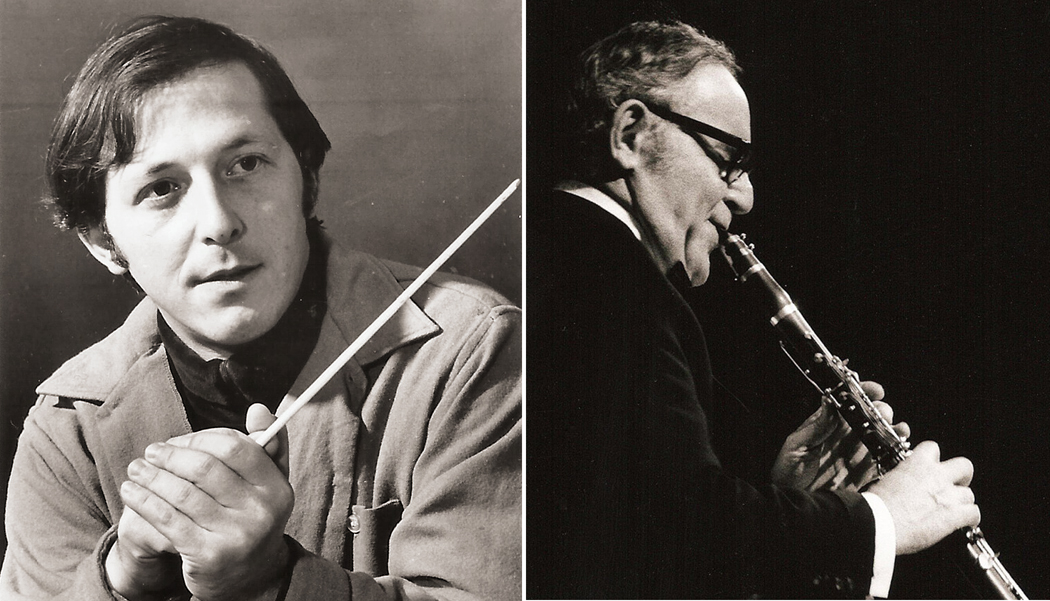
In my college years, most of the music I heard, at Greensboro Symphony concerts, under first Sheldon Morgenstern and then Peter Paul Fuchs, was what you would expect from a community orchestra, although I was still happy to hear the music live. I also heard Benny Goodman play the Weber Clarinet Concerto in F-minor there (and after intermission, play the rest of the evening with his jazz trio). 

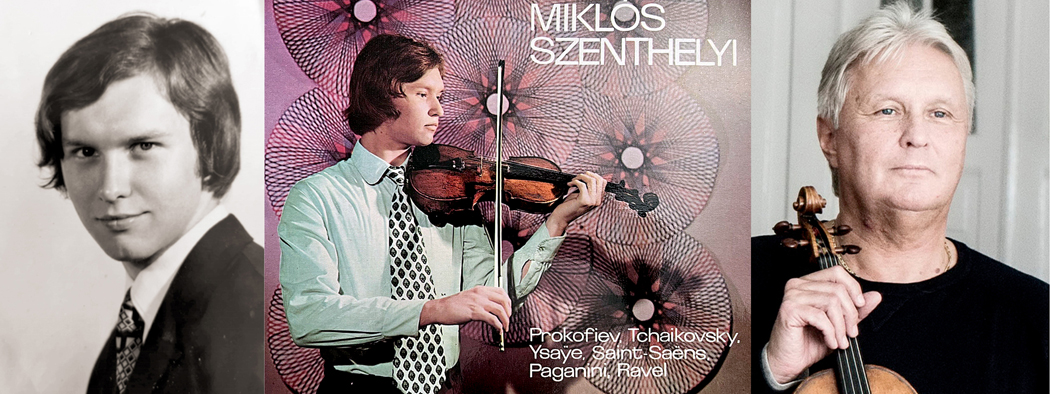
Morgenstern became director of the Eastern Music Festival held each summer at Guilford College in Greensboro, where I was a student, and I heard some world-class soloists come to play with the festival orchestra. The Hungarian Wunderkind Miklos Szenthelyi played the rarely heard Bartok First Violin Concerto and I fell in love with it. Szenthelyi was the most dignified soloist, with the most erect posture I’ve ever seen and played like the music was the most important ever written. It was wonderful. Szenthelyi is now the elder statesman of Hungarian violinists. It has been that long. 
Beyond the EMF, one concert stands out from that time. A still-teenage Yo-Yo Ma played both Haydn concertos with the High Point Symphony, one before intermission and one just after and the tunes became ear worms for weeks. Yo-Yo Ma has been a constant ever since, and I have heard him live over and over throughout my concert-going life. 

Over the next decades, I moved around quite a bit, often with low-paying jobs, or none at all, and could not often afford tickets. But I still managed to hear Bernstein and the New York Phil play La Mer, and later the same orchestra under Kurt Masur play Schoenberg’s Transfigured Night and Beethoven’s Eighth Symphony. Masur had a reputation as a mere Kappelmeister, a time-beater, but he played Beethoven’s smallest symphony as if it were a tiger as big and muscular as the Fifth. I was surprised and blown away. Ever since, I have had greater respect for the power possible to be found in the Eighth. 
Haitink and the LSO

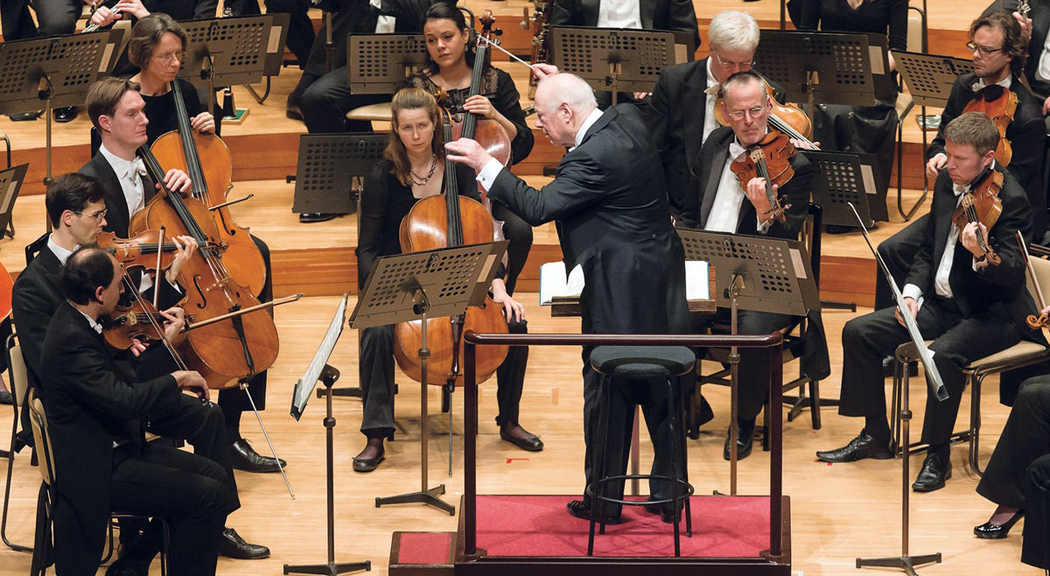
There is a class of musician whose recordings have a reputation for being bland, but hearing live, they take the chances they never do for records. Masur was one. Bernard Haitink was another. All the CDs I had of Haitink were safe and, while well-played, were kind of boring. But then I heard him with the London Symphony at the Salle Pleyel in Paris playing the Eroica with all the fire and passion that could be wrung from the piece. Completely changed my mind about the Dutchman, although it didn’t make the CDs better.

I have to admit that my cherished Yo-Yo could be that way, too. Not that his recordings are bad or boring, but they never capture the buzz and excitement of hearing him live, where he is electric. I heard him playing the Dvorak concerto in Phoenix and I was in tears, almost shaking with emotion after hearing it. It was one of the greatest concert performances I ever attended. His recording of the concerto is really good, but nothing like the live beast. 
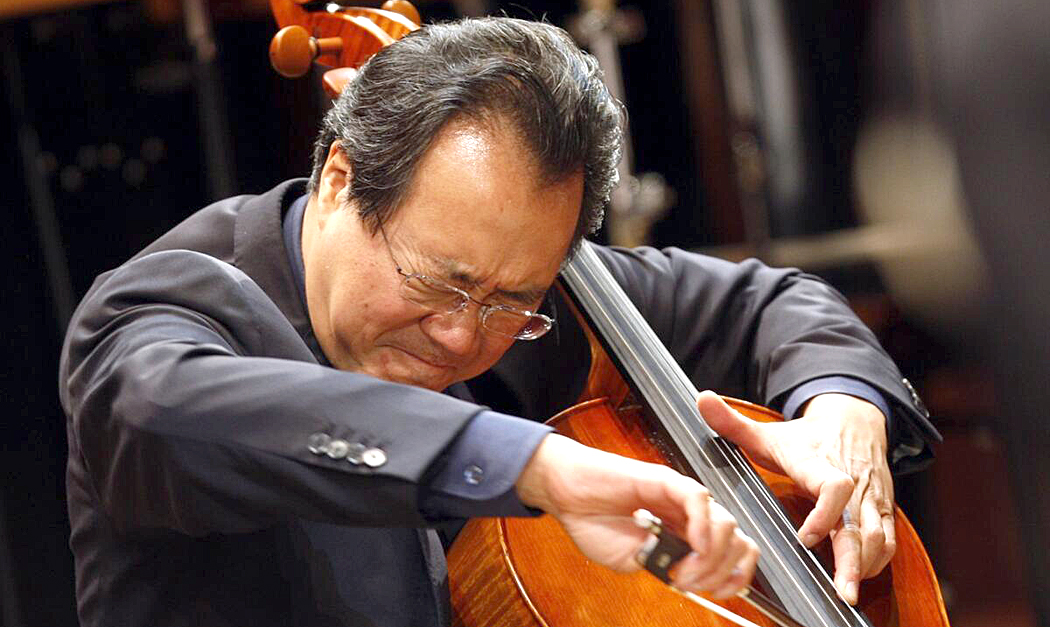
He has recorded the Bach cello suites three times over his career. The first two are dependable, even excellent, but I’ve heard him doing them live several times and the metaphor again shows up: Played with the intensity of someone defusing a bomb. In his third recording of the six suites, he finally got something of that adventurous power into the CD. 

In Seattle, I got to hear the Berlioz Requiem, a piece, because of its logistical demands (expanded orchestra and chorus, four extra brass bands at the four corners of the hall and eight tympani blasting away) I never expected to hear live. It may not have been the best performance of the piece ever, but it yanked my hair back. In the late 1970s, when I lived in Seattle, my regular date was a former professional violinist, turned bicycle messenger, and we went to many concerts together. Unfortunately, although we were good friends, she played for the other team. 

By the late 1980s, I was living with my late espoused saint in Phoenix, Arizona, and was the art critic for the major daily newspaper, and later became to classical music critic as well. When you don’t have to pay for your tickets, you get to go to a lot more music. And I heard some great music, not only from local Arizona musicians and from touring groups, but because the paper sent me all over the country, I got to hear music in Los Angeles, New York, Chicago, Boston and Philadelphia (and Boulder, Colo., too). 
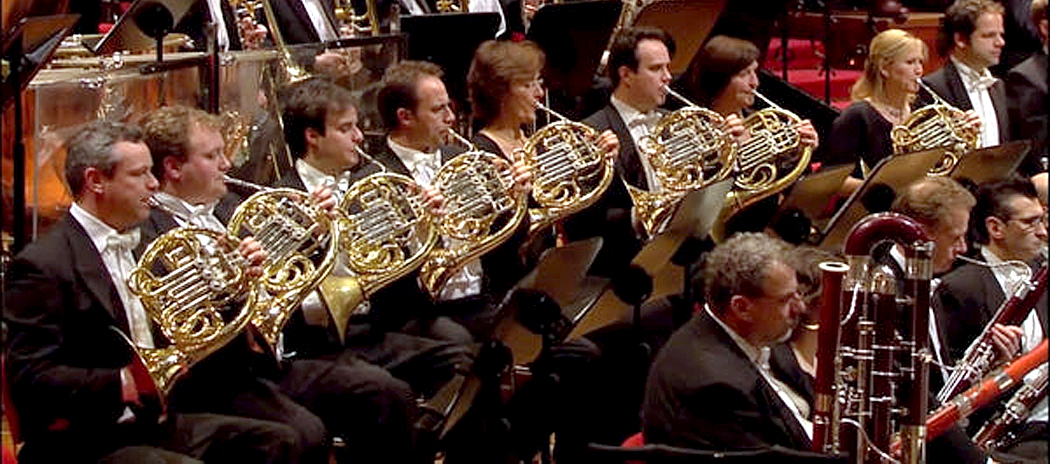
One of the most unforgettable experiences was hearing the Philadelphia Orchestra under Wolfgang Sawallisch play Richard Strauss’ Don Juan. If I ever needed to be persuaded that live music offers something recordings cannot, it was the great horn call in Don Juan, when eight French horns sound off in unison and one doesn’t just hear the sound in one’s ears, but vibrating through the fundament: It was music with a physical presence of a brick wall. No recording can capture that shudder. You have to be there. 

I heard Maurizio Pollini in LA playing a first half of all the Chopin Preludes and a second half doing Stravinsky’s Two Scenes from Petruschka (with an intermission of over an hour while, from the lobby, we heard a piano being tuned to his satisfaction in the emptied hall) and ending with the Prokofiev Piano Sonata No. 7. That was the single most daunting program I had ever heard up to that point. 
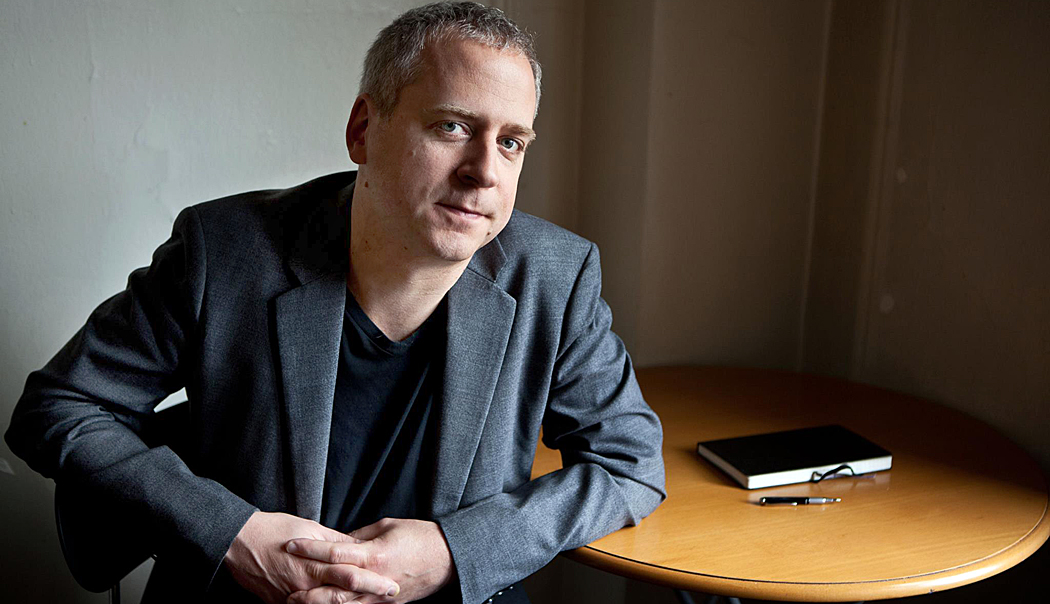
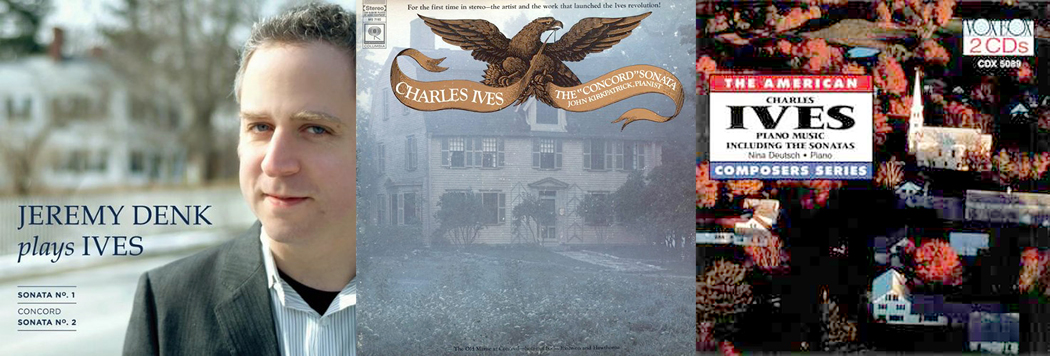
At least until I heard pianist Jeremy Denk at Zankel Hall, part of Carnegie Hall, when the first-half of the recital was Charles Ives’ Concord Sonata and the second half Beethoven’s Hammerklavier — two of the longest and most difficult pieces in the repertoire. He then re-played the “Hawthorne” movement of the Concord Sonata as an encore. His fingers must have been bloody stumps after all that. 

I later heard Denk in Scottsdale playing Beethoven’s Eroica Variations, and showing their comic side, and several Ligeti etudes, showing that composer was more than the film score to 2001: A Space Odyssey

Some of these memorable cases come in pairs, like the Denk’s. 

At Carnegie Hall, I heard the Israel Philharmonic play the Tchaikovsky Fourth Symphony under Gustavo Dudamel, and it was pure magic. The 80 or so old Israeli pros were turned back into teenagers by the young enthusiasm of the Dude. They played their hearts out for him. At the end, Dudamel did not take the customary audience bows, but ran up into the orchestra, shaking the hand of every musician, making them all stand up and accept the applause. 
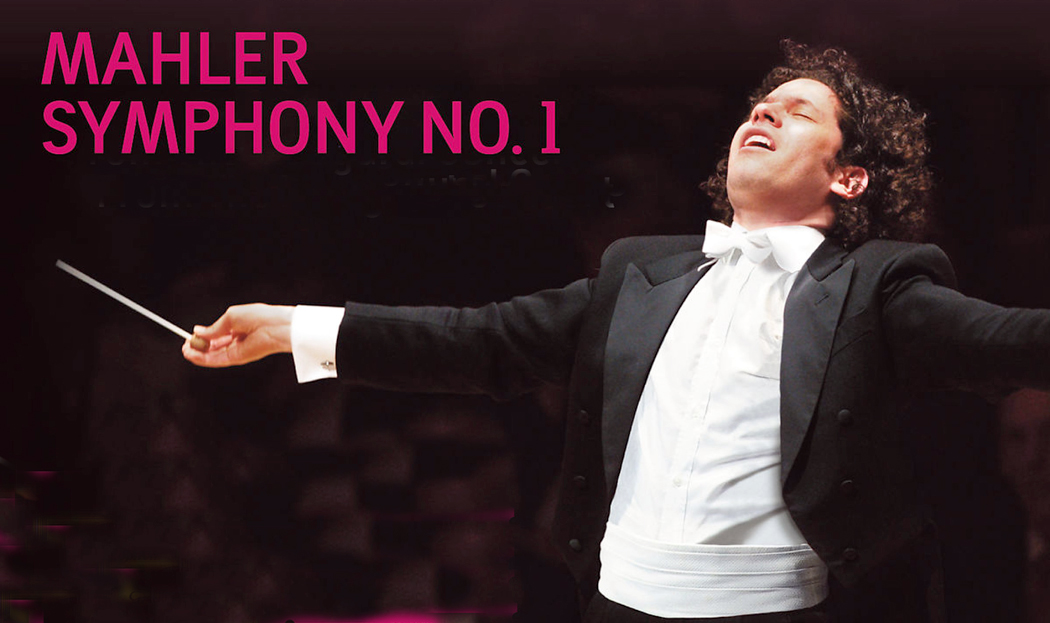
Later, with the LA Phil, I heard him lead the Mahler First. These were two of the greatest orchestral concerts I ever heard. 

One might expect great sounds from these orchestras, but two of the best live performances I have under my belt came from the Phoenix Symphony and its concertmaster Steven Moeckel, under the direction of Music Director Michael Christie. Moeckel played the greatest version of the Beethoven Violin Concerto I ever heard live, perfect in every expressive detail, and powerfully emotional. I was so blown away that I came back the next night to hear it again, but the magic had passed. It was a very fine performance, but not the same. You are not allowed back into Eden. 

Several times, I had lunch with Moeckel and we talked of many things. He mentioned that he had always wanted to play the Elgar concerto, a piece I didn’t know, having always thought of Elgar as a stuffy English imperialist. But he persuaded Christie to let him do it, and I was transfixed and realized how much I had been missing all my life. The Elgar Violin Concerto is one of the five or six greatest ever written, up there with Beethoven, Brahms, Sibelius, Tchaikovsky, Berg, and Mendelssohn. And Moeckel’s performance couldn’t have sold it any better. It changed my musical life. 

Then, there were two concert opera performances by the Phoenix Symphony and Christie. They engaged Dawn Upshaw to sing in Osvaldo Golijov’s Ainadamar, about the death of Spanish poet Gabriel Garcia Lorca at the hands of the Fascist forces of Franco. 
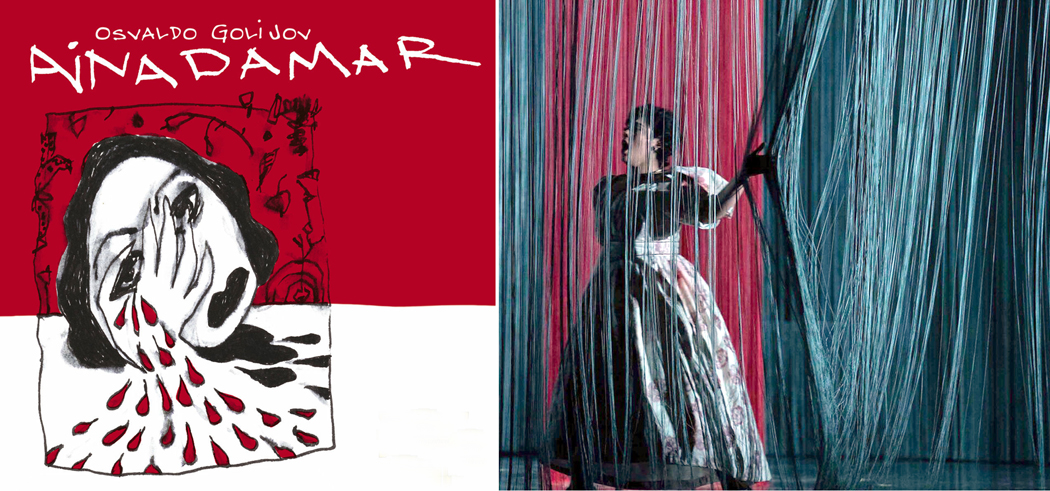
As the music critic for The Arizona Republic, I often had issues with conductor Michael Christie over 19th century classics — Christie had not a Romantic bone in his body — but he was brilliant with contemporary music. I fell in love with Golijov’s eclectic style.

And Christie led a great semi-staged version of John Adams’ Nixon in China, one of the rare contemporary operas to make it into the mainstream repertoire. What a great piece, and the Phoenix Symphony played the daylights out of it. 
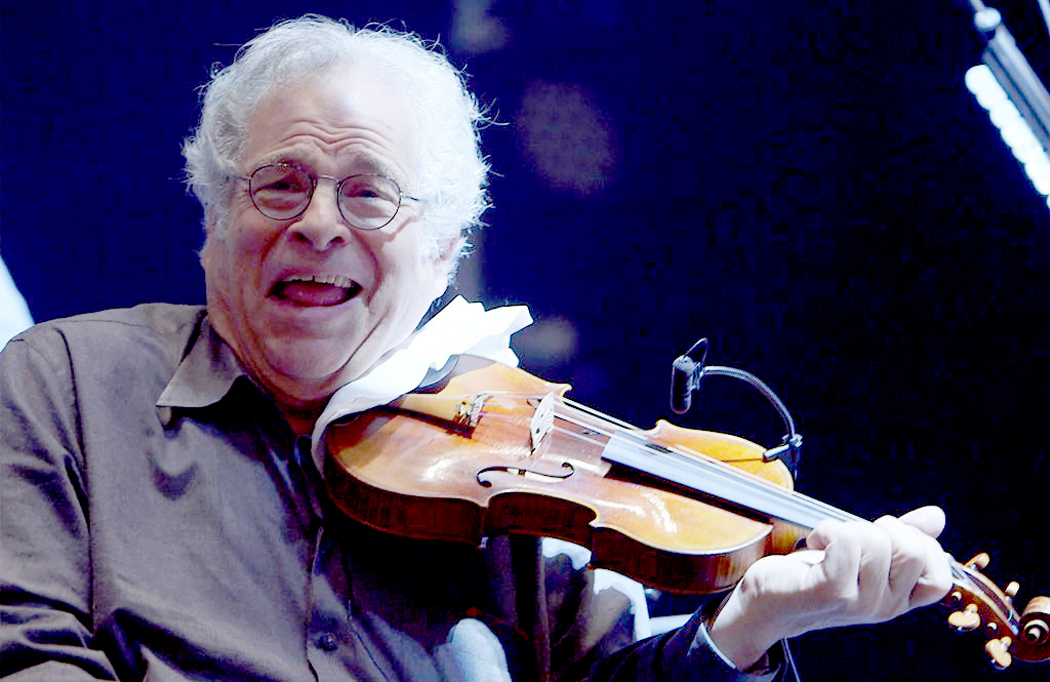
Twice I heard Itzhak Perlman give recitals in Mesa, Ariz. and each time the same thing happened. He opened with a slight sonata, at the first recital a Bach sonata for violin and keyboard and at the second, one of the op. 12’s of Beethoven. I don’t remember which exactly. Perlman played them expertly and even brilliantly, but he just didn’t seem all that involved. I thought, Oh, he’s playing for the boonies and just phoning it in. 

Then, the second piece on the program he played like the Greatest Living Violinist, with all the deep engagement, excitement and power anyone ever had. I realize those first pieces were just warm-up. In one recital, it was Beethoven’s “Kreutzer” Sonata and in the other, it was the Strauss Violin Sonata, a piece generally ignored as turgid and overlong, one of the composer’s less inspired works. Well, not when played by Perlman: This was one of the great musical experiences of my life. Geezus! Who knew this was really great music? If I ever had any doubts about Perlman, I lost them completely. 
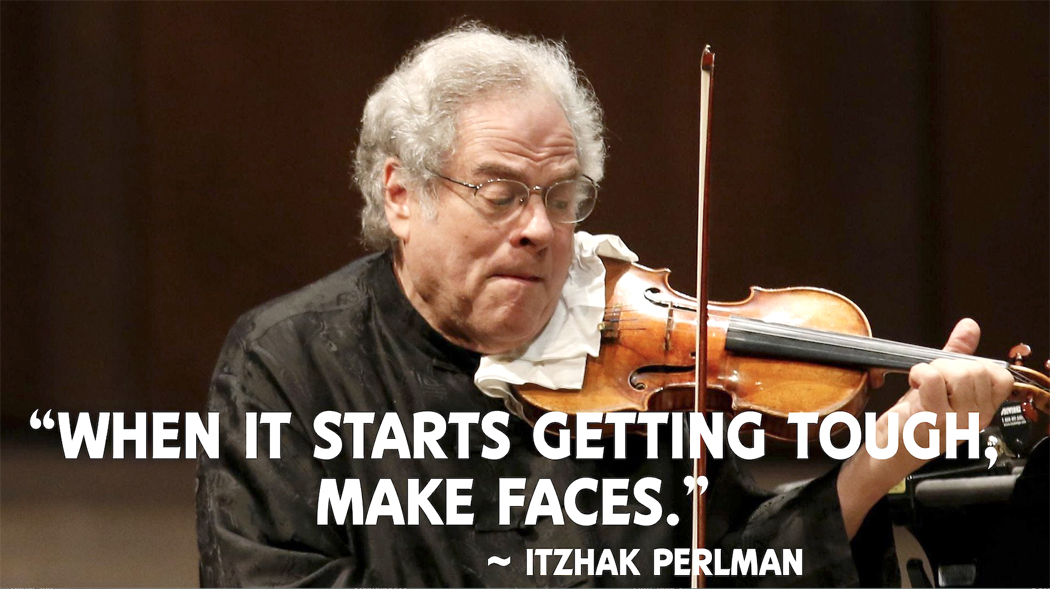
Of course, all that makes up for after intermission, when Perlman puts on his embarrassing Borscht Belt act. The program just says, “selections to be announced from the stage,” which means the violinist plays a series of short schmaltzy pieces once played by the likes of Fritz Kreisler, Ole Bull or Bronislaw Huberman, catchy virtuoso show-off pieces that once fit on a single side of a 78rpm record: Hora Staccato, Liebeslied, Salut d’Amour. And worse, Perlman spends even more time with a pile of dad jokes and cornball puns, as if he really wanted to be a baggy-pants vaudeville comedian rather than a great fiddler. A comic he is not. I shoulda left at intermission with the warm memory of the Strauss still in my mind. 

Finally, I want to mention three pianists I heard, whose appearances have permanent real estate in my psyche. 
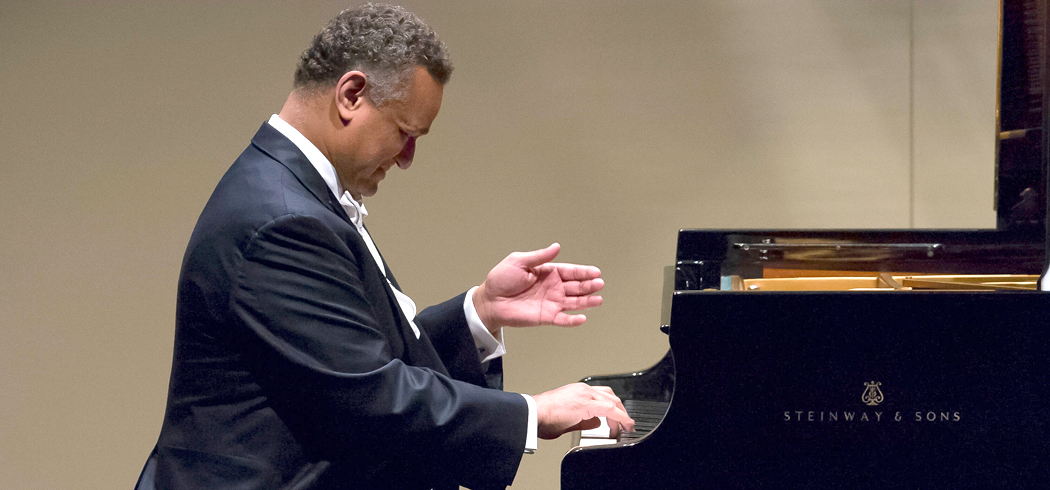
The first is Andre Watts, who I heard several times, but once at the Scottsdale Center for the Arts playing the same Liszt sonata I heard Gilels play at the beginning of my listening life. This time, I understood what I was hearing, and watching Watts’ fingers on the keys, dancing and pouncing. It was a wonderful, performance of clarity and power. 

Second, quite different, was Olga Kern playing the Rachmaninov Paganini Rhapsody with the Phoenix Symphony. It is clearly a 20th century piece, but often played as if it were late Romanticism, like his famous concertos. But it is an ironic masterpiece, and Kern played it with such lightness and humor that it was reinvigorated. And the audience gasped at the audacious ending when Kern began standing up even before knocking out the last cadence as if it were an afterthought. Yes, it was a coup de theatre, but it worked and perfectly summed up the tone of the piece as she played it.
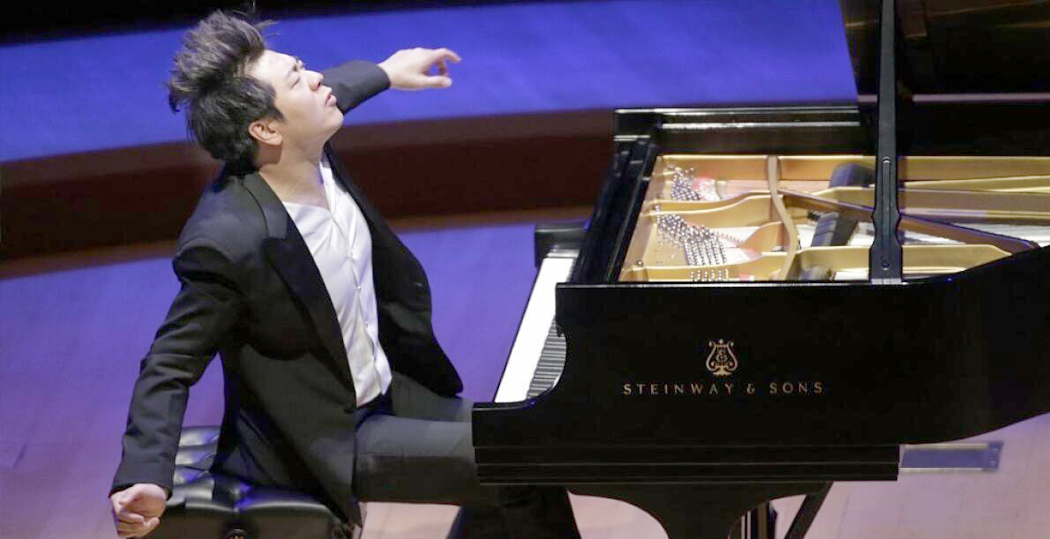
And third, a problem performer. You never know what you’re gonna get with Lang Lang. He is often seen as a flashy product of PR and promotion, and doesn’t help himself by often showing off and posturing for audiences, making faces as he stares at the ceiling and waving his arms around. I’ve heard Lang Lang live four times and sometimes he is very good and earns his credit, and sometimes you just wanna slap him. But one time, he played the first Chopin concerto with the Phoenix Symphony and time stopped still for the entire slow movement. Dead still. The world disappeared. Eternity opened up. It cannot be played better or more affectingly than Lang Lang did it that evening. I am forever grateful for what he gave me — one of the greatest performances I ever heard. 

Of course, the next time he came to town, it was the other Lang Lang who showed up. 

David Attenborough on Desert Island Discs with host Kirsty Young in 2012

One of the longest running radio shows is Desert Island Discs, which has been on the BBC since 1942. It is often said to be the second longest-running radio show after the Grand Ole Opry, which cranked up in 1925, although a few critics have discovered some obscure programs in foreign climes that may have been on longer, and there’s also the British Shipping Forecast which began in 1861, before radio was even invented, and first disseminated via telegraph before switching to radio in 1924. 

On Desert Island Discs, prominent people, whether politicians, entertainers, sports stars or academics, are asked to choose eight recordings they would take with them to the proverbial desert island, and place them in the context of their lives. Since the 1950s, they have also been asked to name a book, other than the Bible or Shakespeare, they would also take, and later still, adding on a “luxury item” they couldn’t live without. 

Nearly 4,000 episodes have been broadcast, with some predictable results. The music most often mentioned is Beethoven’s Ninth Symphony, and the luxury item most chosen is pen and paper, or “writing materials,” although Tom Hanks specifically mentioned “a Hermes 3000 manual typewriter and paper.” 

Many of the archived broadcasts can be heard from various online sources, and you can learn, for instance, that Alfred Hitchcock’s book choice was Mrs. Beeton’s Household Management, and his luxury item was “a continental railway timetable.” Some of the choices were equally eccentric. Oliver Reed wanted Winnie-the-Pooh to read and “an inflatable rubber woman.” Actress Janet Suzman wanted a “mink-lined hammock,” and Hugh Laurie asked for an encyclopedia and “a double set of throwing knives.” His long-time double-act partner Stephen Fry wanted a PG Wodehouse anthology and a “suicide pill.” 

My favorite, so far, is John Cleese, who asked for Vincent Price’s cookery book and “a life-size statue of Margaret Thatcher and a baseball bat.” 

One of the inevitable by-products of such a format is the urge to create your own list. And so, I have my own. 

I grew up in New Jersey in a family largely indifferent to music. What music there was came on TV in such variety shows as Perry Como or Dinah Shore. When I was little, there was a small portable record-player on which I played children’s songs, but I don’t count any of that. “Fire, fire, fire, raging all about. Here come the firemen to put the fire out.” 

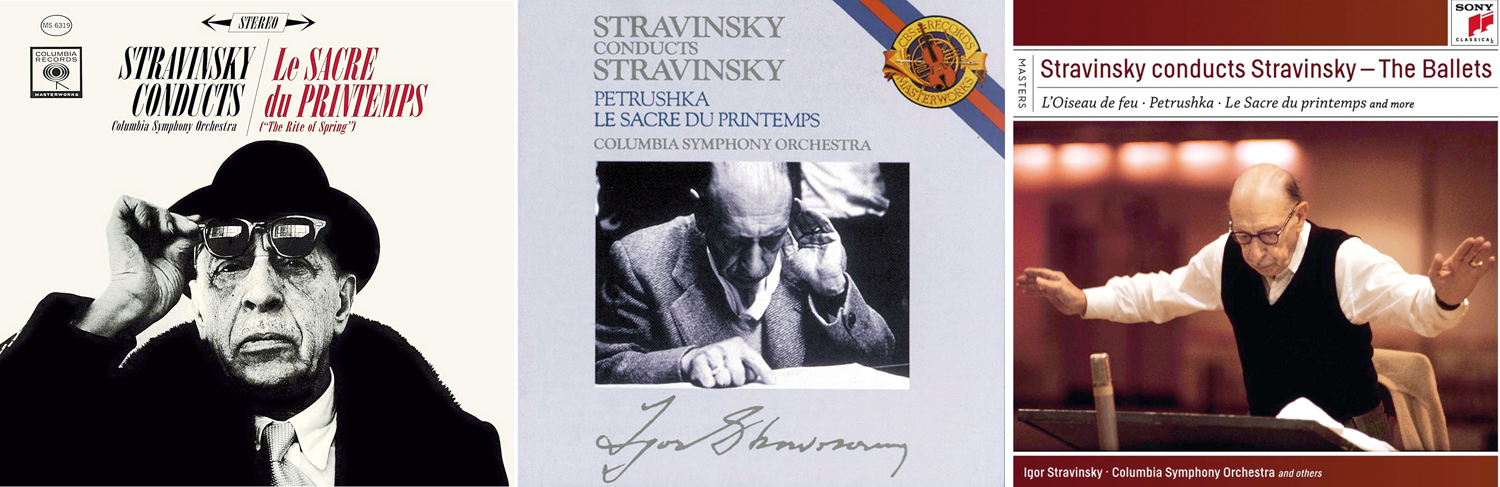
My musical education began in high school when my first serious girlfriend played music on the phonograph while we spooned on the sofa in her parents’ house. She went on to become a professional bassoonist and was studying at the time with Loren Glickman, who played the difficult opening bassoon solo on Igor Stravinsky’s recording of his Rite of Spring. I hadn’t known such music existed. It was mesmerizing. Who knew it was great make-out music? And so, that is my first choice for my desert island disc. 

There have been hundreds of other recordings of that music, and a few, perhaps, more exciting or primitive than the composer’s own, but that recording has never been out of print and comes in many versions, from LP to 8-Track to CD and now, streaming. As an introduction to classical music, I could hardly have done better — dive into the deep end. 

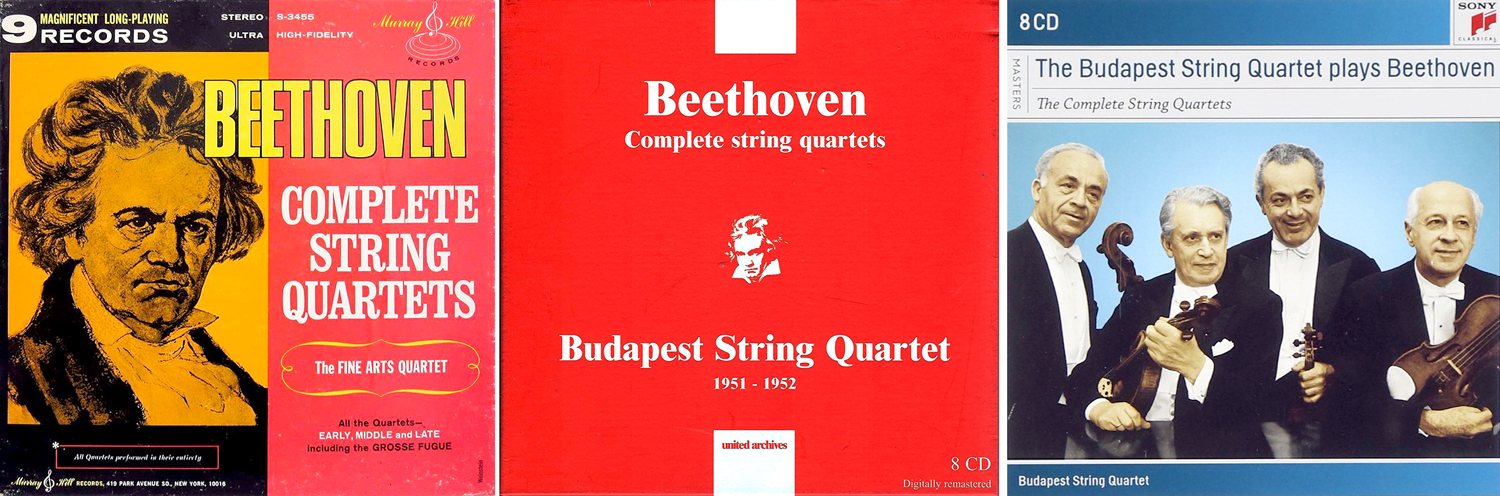
When I got to college in North Carolina, I made the acquaintance of Alexander Barker, who has remained my best friend for 60 years. He was as enthusiastic about classical music as I was and we spent hours in our dorm rooms spinning LPs and introducing each other to music that was our favorites. We were, of course, very serious about great music, as only college students can be, but we knew Beethoven’s string quartets were as serious as you could get. I bought a budget-line set of the quartets, by the Fine Arts Quartet on the off-brand Murray Hill label, and one evening, we started with Opus 18, No. 1 and played through all 16 of them, plus the Grosse Fuge, in one marathon session. (We later attempted the same thing with the piano sonatas, but gave up in exhaustion and the need for sleep by the time we hit the Hammerklavier.)

I have not been able to find a CD version of the Fine Arts Quartet set, but I found much better-played versions later on. I have owned a half-dozen or so complete sets of the Beethoven quartets, and as many of just the late quartets, but on the desert island, I would take the original mono versions by the Budapest String Quartet. They redid them later in stereo, but I like the earlier set better. I could have chosen the Guarneri, or the Tokyo or the Emerson, but I still think the Budapest have the measure of them best.

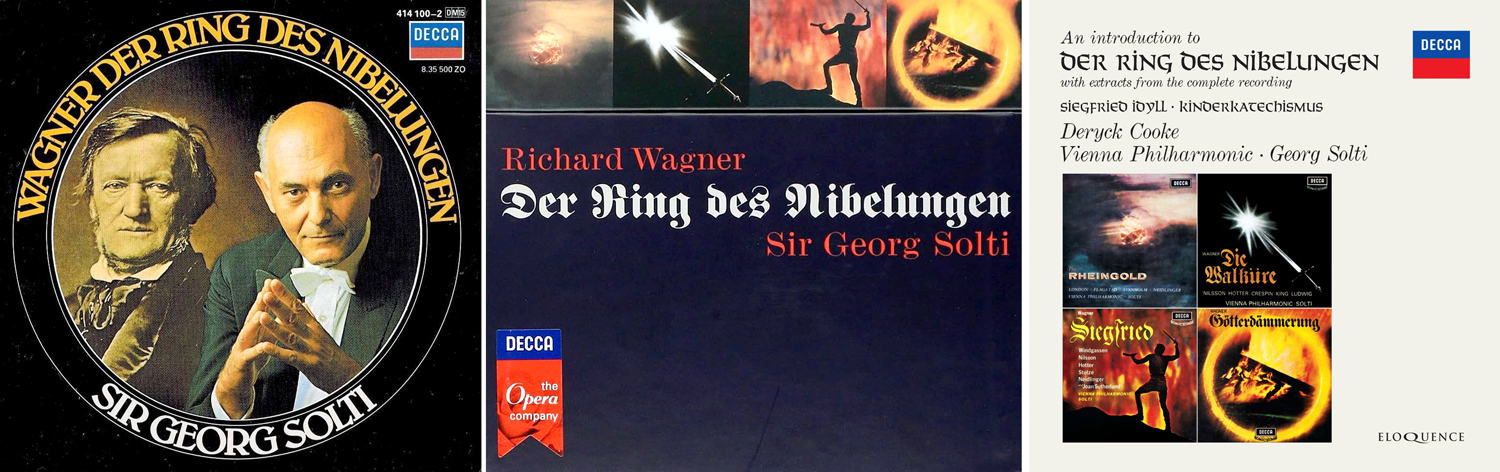
If you have the earnest seriousness of youth, you will eventually get into Wagner. After college and after a failed first marriage, I was living in North Carolina with my favorite redhead, scratching by on subsistence jobs, and I managed to save enough money to finally buy the Solti Ring. Something like 16 hours of music subsuming four operas, it opened up a world of myth and raw musical power. Now in retirement, I own five Ring cycles on CD and another two on DVD. And I’ve attended two complete live Ring cycles (not a patch on my late friend Dimitri Drobatschewsky, who went to Bayreuth 16 times beginning just after World War II.) But the Solti Ring of the Nibelungs is still my go-to set. And with it, I must also take the Deryck Cooke explication of the cycle, An Introduction to “Der Ring des Nibelungen.” Can’t have one without the other; they’re a set.

When the redhead and I split up, after seven years, I moved to Seattle and began working at the zoo, where I met a zookeeper whose hair was as blond as the sun. I fell. She had been a professional swing dancer at one time, and she played me old swing records on her Wurlitzer jukebox, which she had at her home. I had a whole new universe of music to learn about. But the one who stuck was the jazz musician closest to writing classical music, Duke Ellington. 

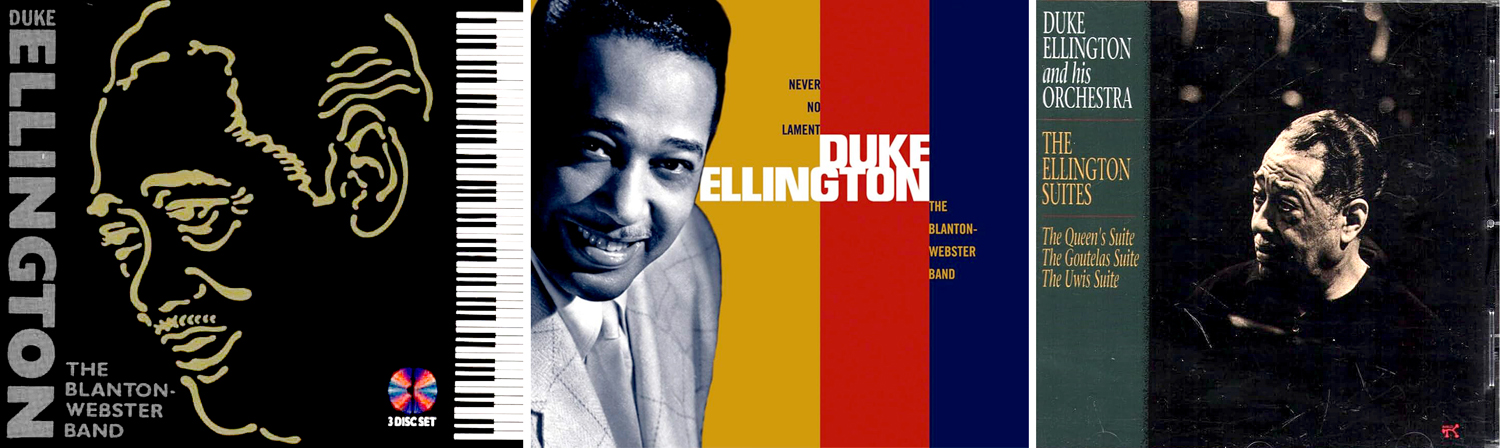
I still have about 50 CDs of Ellington’s recordings. There are counted several epochs of Ellington’s career, beginning with the “jungle music” of the 1920s and going through his rebirth at the Newport Jazz Festival in 1956. But most count the high point of his band and music to be those years in the early 1940s when Ben Webster was his tenor sax man and Jimmie Blanton was his string bass player. A collection of their recordings has been issued several times as “The Blanton-Webster Band.” It was the era of Take the A Train, Ko-Ko, Harlem Airshaft, and Perdido

But then, neither can I do without The Queen’s Suite, which he wrote with Billy Strayhorn in 1971, and is his most completely classically composed work. I love it. And so, I’m adding it to my Ellington entry. 

The zookeeper dumped me and I moved back to North Carolina. A few years later, I met Carole, who I married and lived with for 35 years, until her death in 2017. Marriage humanized me, and the most human composer is Mozart and the most humanistic of conductors was Bruno Walter. It was the the last years of the LP era, in 1980, and before digital took over, I found the last six symphonies of Mozart played by Walter and the Columbia Symphony Orchestra (a pickup ensemble, mostly of musicians from the New York Philharmonic). 

Walter’s Mozart remains the most humane and beautiful version of these works, which are now buried under historical-performance rhetoric and bounce along at a jog-trot, mechanistic pace. But one can still find the echt-Mozart, songful, emotional, and velvety rich, under Walter’s baton. Like all of my choices for the desert island, it has never been out of print. 

Carole and I moved to Arizona in 1987, where she took up teaching art to elementary pupils, and I began writing for The Arizona Republic as its art critic (later also its classical music critic). 

When we moved to a house at the foot of Camelback Mountain, it was a 20 to 30 minute drive (depending on traffic) to the Republic office downtown, and I found the perfect drive-time music, playing a Haydn symphony each way. I eventually went through all 104 symphonies, driving back and forth, three times, and absorbed their spirit from the Austro-Hungarian Haydn Orchestra and Adam Fischer. They have become my go-to performers for this music. I also have the earlier Antal Dorati version, which sometimes sounds like a quick read-through, and later was sent a review copy of the Dennis Russel Davies versions on Sony, which proved to be the most utterly humorless Haydn possible and I had to give them away. How can anyone misunderstand this music so thoroughly? 

When Carole died, and I sunk into grief, from which I have never fully recovered, I found myself listening with my whole being to Brahms German Requiem. I have spent the anniversary of her death every year driving up the Blue Ridge Parkway to find an old fire road into the woods, and sit quietly to Bruno Walter’s recording of the German Requiem. It is the most sympathetic, consoling music ever written. 

On Desert Island Discs, they also ask the guests to choose the one recording, above all, which they would take if everything else were not possible. And for me that is Johann Sebastian Bach’s Passion According to Saint Matthew, a three-hour musical retelling of the last days of Jesus and his death. I am not religious. (I am so not religious, I not even an atheist.) But every note of Bach’s music speaks to me on the deepest level of humanity. The opening chorus and the ending chorus are, for me, the greatest musical utterances ever penned. I’m keeping it with me.

There are many performances, and no one really does it badly, but most recordings now have been run through the historical performance wringer and the juice has been squeezed out. This is majestic and noble music, not something from a squeeze box. And the recording left behind by Otto Klemperer is the one I listen to over and over. He’s got the measure of this music. 

That leaves us a book and a luxury. People value books for, usually, one of three reasons. Either for the information they gather, or for the stories that are told, or for the prose they are written in. I fall into the last camp. I thought about Gibbon’s Decline and Fall of the Roman Empire, which is an utter joy to read, whether you care about the factual history of Rome or not. I revel in its river of words. But I read it in short segments, ultimately filling up like a rich meal and need to wait some hours before hitting the table again. And, for all the wonderful writing, there is a sameness that can creep in. 

Or I might have chosen a classic that somehow I’ve missed in 77 years of life. Many on Desert Island Discs have taken Marcel Proust’s Á la Recherche du Temps Perdu. But when it comes to monster works, I already put in my time, having gotten through The Gulag Archipelago. I no longer need to prove myself. 

So, I have chosen Joyce’s Ulysses, the book I can read and re-read over and over, with such a variety of prose and method and such delicious words, that I don’t think I could ever tire of it. 

As for a luxury item, I had some difficulty coming up with something, because I am not much for luxury. But I have always owned a pear-wood handled Opinel folding knife. The current one sits in the glove compartment of the car, ready for anything called for. A man needs his tools.

Of course, the whole exercise is entirely pointless. There is no desert island, and with a house full of books, CDs, musical scores, and art, I don’t need to choose so parsimoniously. The whole idea is merely a pleasant game to play. 

But going through the process, and forcing myself to narrow the list arbitrarily, I come to see myself in a dusty mirror. And I surprise myself, looking back at me. 

Intro: What We Get Wrong

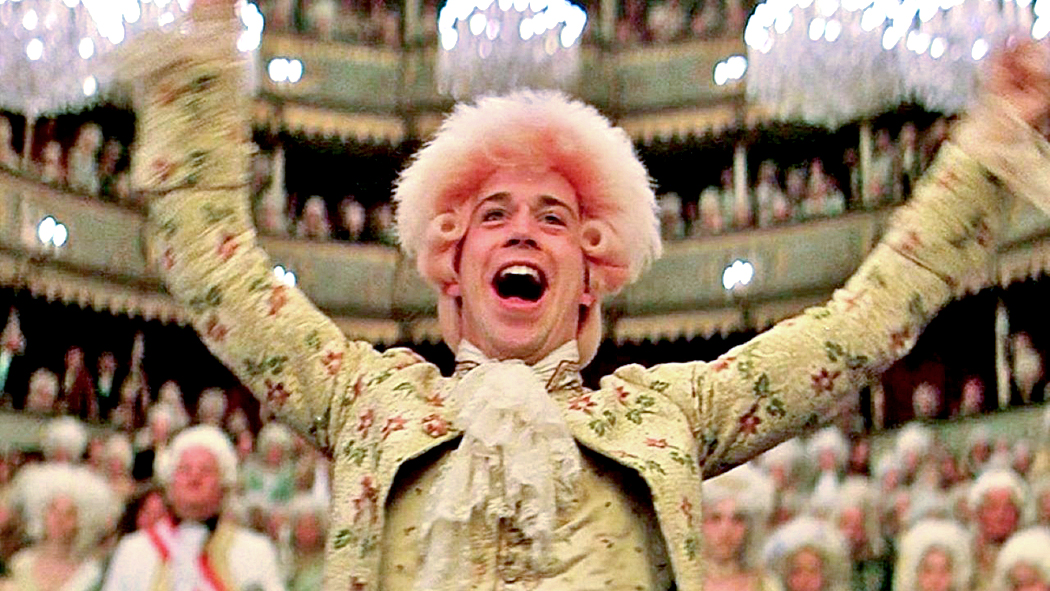
The 1984 movie, Amadeus, won eight Oscars and has been seen by millions of people. It was an excellent film, but it lied through its teeth. Mozart was not an arrested-development adolescent potty mouth. And Antonio Salieri never tried to kill him. 

Poor Mozart, he has had his life twisted over the centuries to illustrate cultural trends, and those trends have changed over those years. 

The 19th century first saw him as old fashioned, then he became a proto-Romantic, with his life deeply mythologized. The 20th century first saw him as a kind of porcelain doll, and after WWII, saw him as a polite precursor to Beethoven. In the 21st century, he has been the victim of countless historical-performance strictures that leave his music in a kind of inexpressive jog-trot strait-jacket. 

The man sometimes considered the greatest composer of all time has been so mauled over by his biographers, fans and later writers and filmmakers that the legend has taken over from the fact.

So, the plot of Amadeus is only one of a myriad of distortions, legends, myths and factifications. The truth, as usual, is more interesting.

What are some of the worst Mozart myths?

— Mozart began writing masterpieces before he turned 10.

* Yes, he wrote music beginning before he turned six. But some of that music was arrangements of other composers’ work, some may have been outlined by his father for the boy to complete, and none of them are masterpieces, or noteworthy, other than for them to have been jotted down by one so young. The early works are generic. They get played, when they are played at all, simply because they have Mozart’s name attached. 

— Mozart was buried in a pauper’s grave.

* Although it’s often said he died so poor he was buried in a pauper’s grave, the fact is Viennese law required anyone other than an aristocrat to be buried in a common grave, after a funeral service at the church. It was a reaction to recent outbreaks of plague in the country. And Mozart wasn’t poor. He lived quite well, although, working in what we would now call a “gig economy,” he had his income ups and down. 

But, over his last year, he earned 10,000 florins when an average laborer averaged 25 florins a year. It put him in the top 5 percent of the population of Vienna, according to H.C. Robbins Landon, author of 1791: Mozart’s Last Year. The man was no pauper, and his music was hugely popular, not only in Vienna, but across Europe. And when he died, he had a hit on his hands: The Magic Flute. He left his widow reasonably comfortable. 

— Mozart wrote his music spontaneously, without effort.

* Mozart’s facility with music was remarkable, but there are plenty of sketches and studies for his music. The pieces without such preliminary work most likely had them at one time, but they don’t survive. His widow, Constanze, burned most of the sketches, not thinking that fragments had any value. Mozart even writes to his father about doing such preliminary work. 

In 1787, he told the conductor of his opera, Don Giovanni, “It is a mistake to think that the practice of my art has become easy to me. I assure you, dear friend, no one has given so much care to the study of composition as I.”

— His middle name was Amadeus.

* He was baptized as Joannes Chrysostomus Wolfgangus Theophilus Mozart but his parents called him Wolfgang Gottlieb (Gottlieb being German for Theophilus). He usually signed his name Wolfgang Amadé. It was only after his death that people began regularly calling him Wolfgang Amadeus, which is a Latinized form of Gottlieb.

— His music is simple, direct, easy to listen to, easy to perform.

* And at the time of his death in 1791, at a mere 35 years old, his music was considered difficult to play and demanded careful listening. Mozart asked a lot. When the progressive Emperor Joseph II famously told Mozart his music had “too many notes, my dear Mozart. Too many notes.” he wasn’t being an ignoramus; he was reflecting the general taste of his times. To understand this, we need to place him in context. 

Some Context: The Classical Era

Something else we get wrong: It is usually said that Mozart and his contemporary Joseph Haydn wrote in the classical style, as if such a thing existed, and all they did was follow the rules. That’s got it completely backasswards. They didn’t write in the classical style; they invented the classical style. They were making it up as they went along.

Music history is taught as consisting of succeeding eras. The Renaissance gave way to the Baroque, which led to the Classical era and on to the Romantic, to Modernism and currently, Postmodernism. As if they were clearly defined and separate. And it is true that after about 1740 or so the heavily contrapuntal Baroque lost its hold on the ears of its listeners. They wanted something simpler, clearer, more charming and that wouldn’t be so serious. All those fugues and counterpoint of what was called “the learned style” gave way to homophony — that is, tuneful melodies and supporting harmonies. Something you could hum along with: Simpler and more direct. 

This is sometimes called the Style Galant; it followed the Baroque the way Rococo followed in the visual arts. Composers such as J.C. Bach, Johann Joachim Quantz, Johann Stamitz, or Domenico Alberti published torrents of light, catchy three-movement sinfonias and bright concertos, to say nothing of keyboard music to be played after dinner by the daughters of aspiring middle-class burghers. I’m grossly simplifying this, but the outlines are true. 

This is the kind of music both Mozart and his older contemporary Haydn produced in their younger days. Mozart wrote more than 20 symphonies in this popular style before the age of 17 and if they still get played it is because, again, they have Mozart’s name on them, and also, because they are full of great tunes. Mozart always wrote great tunes. 

Haydn had his own orchestra, paid for by his boss, Prince Nikolaus Esterhaza, a ridiculously wealthy Hungarian nobleman, who loved music. Hidden away at the prince’s countryside palace in Esterhazy for some 30 years, Haydn developed on his own, inventing new ways to delight and surprise an educated audience who learned and grew along with the composer. The palace was far from Vienna. Haydn said, “I was cut off from the world. There was no one to confuse or torment me, and I was forced to become original.” 

He basically invented the modern form of the symphony and the string quartet. 

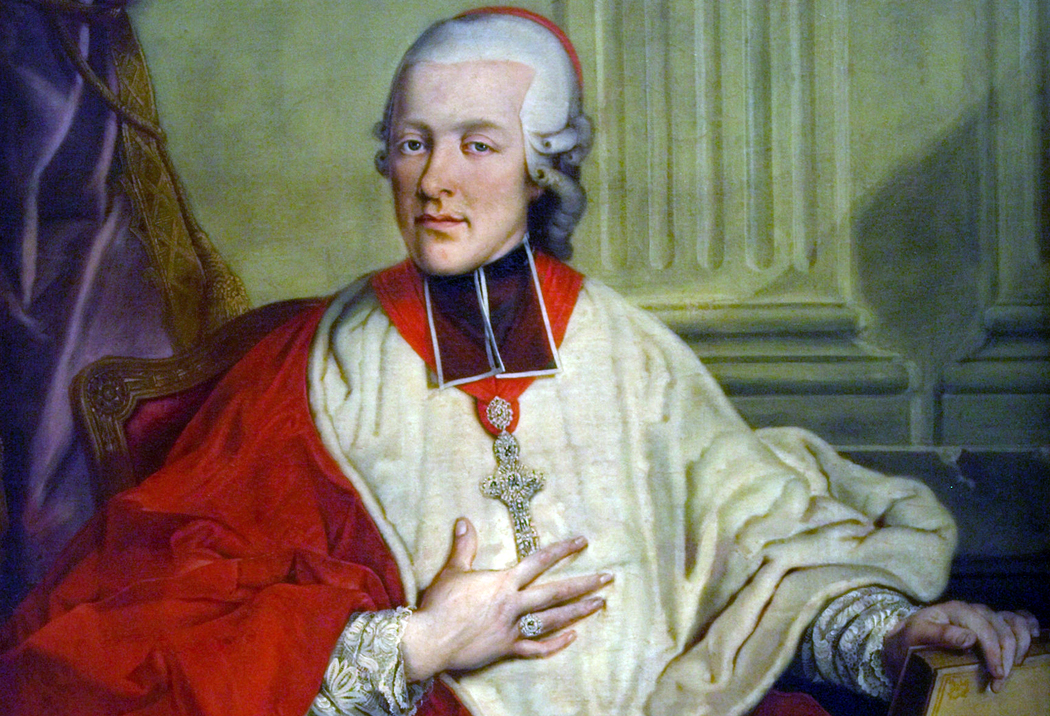
Prince-Archbishop Colloredo

Mozart, however, was truly cosmopolitan and after freeing himself from the employment of Salzburg’s prince-archbishop Colloredo, earned his crust as a freelancer in what was becoming a “gig” economy, living from commission to commission, and from concert to concert and opera to opera. 

He learned a lot from Haydn, and joined him in making his music increasingly more complex than the usual run of gallantries. They added back counterpoint to their works, increased chromatic and harmonic subtleties. Mozart’s music, for instance, is always more complex than it sounds.

Mozart asked his musicians to do more than did other composers: to play higher, lower, more quickly; to play notes unfamiliar to their instruments or voices; to attempt unusual phrasings and colorations.

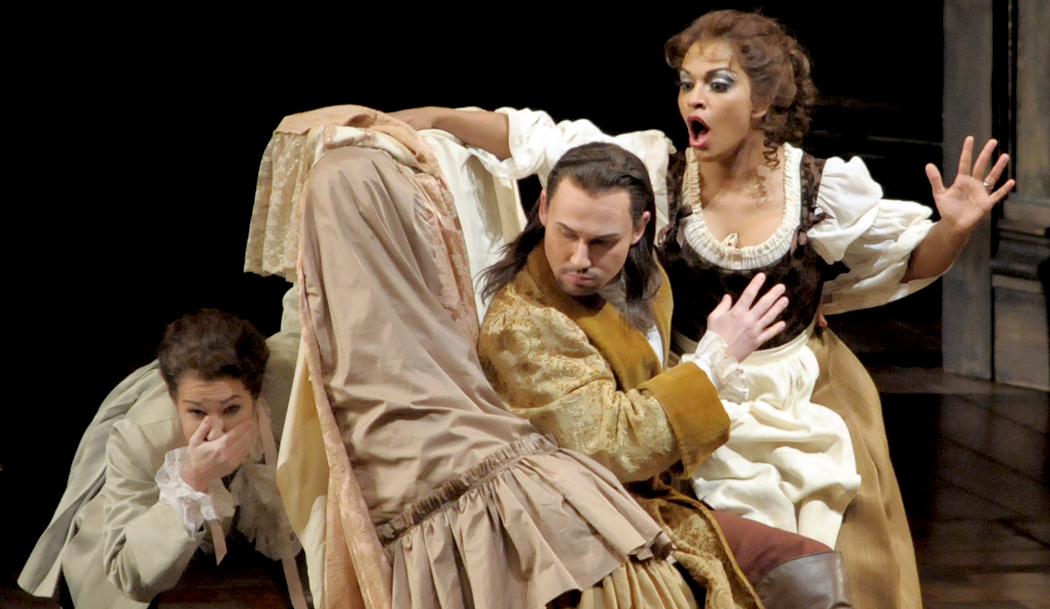
At the end of Act I in Don Giovanni, three bands play onstage at the same time, performing different music in three different rhythms, but entwining their harmonies so they mesh perfectly in a tour de force of compositional cleverness.

His music sounds simple and perfect and symmetrical, but you look at the phrase structure and it’s highly irregular. Normally, you expect 4- and 8-bar phrases, but you take a look at one of Mozart’s late scores and you see phrases of 4, 5, 3, 7, 8, 6 — but you would never guess it was so irregular just from hearing it. It always sounds smooth.

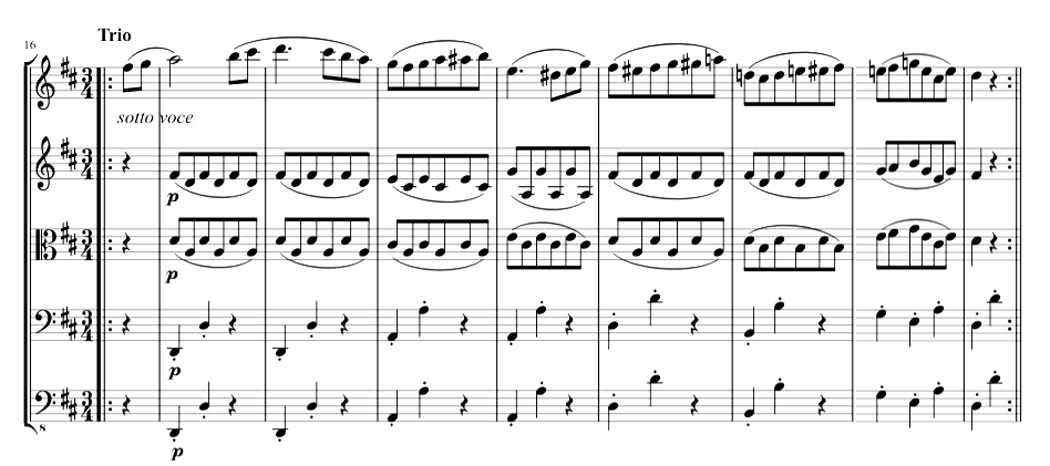
And although the surface of the music is always velvety and seductive, it’s frequently chromatic, introducing notes that shouldn’t belong. Even so graceful and simple a tune as the trio from the minuet in the popular Eine kleine nachtmusik manages to use 11 of the 12 notes in the chromatic scale. It verges on Schoenberg, though it sounds as simple as a nursery rhyme.

While Haydn’s metier was primarily instrumental music, Mozart shone in vocal music, and especially opera, where he brought psychological complexity to what is sung. 

Mozart as Shakespeare

Mozart was the Shakespeare of music. No composer ever displayed a wider sympathy for the human condition or a greater breadth of musical style. At the bottom of his music is a profound humanism, which is all the more obvious in his best operas — The Marriage of Figaro, Così fan tutte, The Magic Flute and Don Giovanni.

Of all the great composers, Mozart also is the easiest to love. Bach may be more sublime, Haydn wittier, Beethoven more in-your-face and Schubert one of the few who could write melody to equal Mozart, but Mozart remains the most accessible. He speaks directly to us, because he is the most humane.

That quality underlies all his major operas: His plots are filled with three-dimensional people, not the stock characters of most other operas. No hero is flawless, no villain unredeemable.

The miracle is that it isn’t just the libretti that convey this complexity, but the music itself. It gives us the subtle psychological undertow.

Mozart understood all of his characters well. None of them is tossed off as inconsequential. He imbues each character with definitive musical qualities.

So that Don Giovanni’s ebullient life force is expressed in his headlong “Champagne Aria,” with barely a moment to inhale. Or the Queen of Night’s rage in Magic Flute, when she launches into Baroque arabesques and arpeggios in her showpiece “The vengeance of hell boils in my heart.”

Even in Figaro: Has adolescent horniness ever been better expressed than the “amorous butterfly” take the hero sings about the love-struck Cherubino?

All these characterizations are built on the composer’s willingness to accept without judgment everything that is human. Perhaps that’s why nobody ever wrote forgiveness better than Mozart.

Each of his major operas has a scene of forgiveness in it, and it’s usually the turning point of the action, when a character recognizes the frailty of human nature. Such forgiveness is not bestowed from a feeling of superiority but from shared compassion.

It’s not that we believe the Count in Figaro will now be faithful to the wife who forgave him, but that we know she will always forgive him, because this is what it means to accept the human condition.

But the particular mood Mozart raises in such moments also is carried into his purely instrumental music: The slow movement of his Piano Concerto No. 18 is the echo of such a moment in Figaro. It sighs, and we sigh with it.

Such genius, whether Shakespeare or Mozart, can’t be explained. You just accept that it is.

Don Giovanni

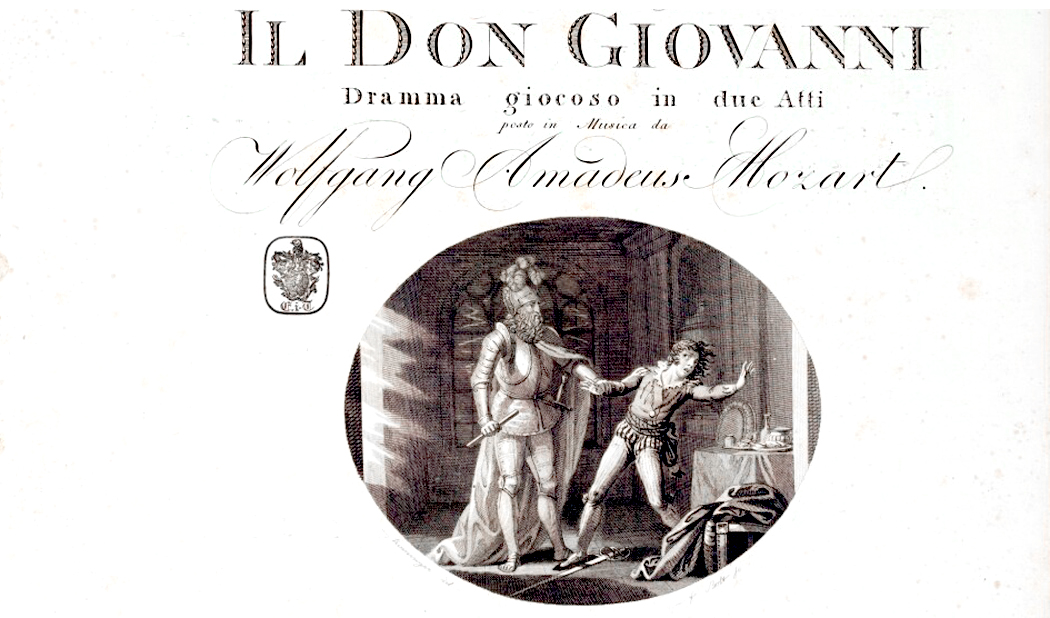
Mozart’s Don Giovanni has been called the perfect opera. It ingeniously balances comedy and drama, music and theater, the aristocracy and the peasantry, the past and the future.

It was first performed in 1787 in Prague, where the composer was a musical superstar, and told the story of the seducer Don Juan (Don Giovanni in Italian).

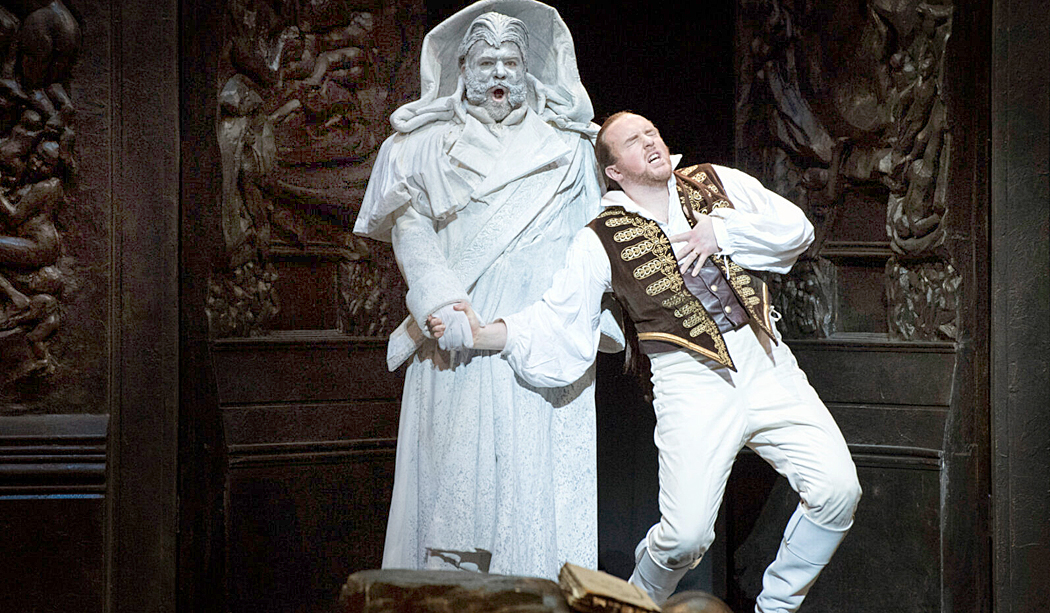
The story is simple in outline: After he kills the outraged father of one of his amorous conquests, Don Giovanni is tracked down by his victims. When he hides in a cemetery, the statue of the dead father miraculously asks him to dinner and, later, when the don shows up, the statue drags him to his judgment in hell.

But Mozart and his librettist, Lorenzo da Ponte, took what was a traditional story of sin and punishment and made it into a paean to the life force. Technically, Don Giovanni is still the villain, but Mozart and da Ponte made him such an engaging and vital presence that in the end, when he refuses to repent, despite the demons that surround him and the brimstone that burns, he actually rises to the heroic. Is he hero or villain? Or both.

This is where the Classic past meets the Romantic future: The cautionary moral tale of the past turns into the Byronic hero of the upcoming 19th century, and Mozart is in the avant-garde.

Digression I: Rake with a Quill Pen

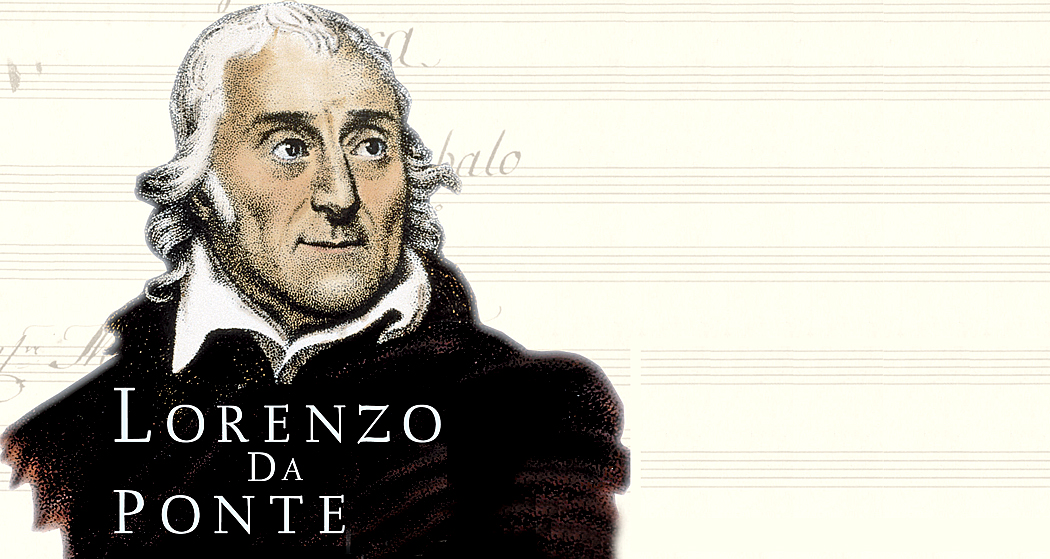
Opera is a collaborative art. Mozart’s music is great, but so was the libretto written by Lorenzo da Ponte. Da Ponte was born a Jew in Venice in 1749, was ordained a priest and opened a brothel with his mistress, where he entertained the clients by playing violin in his priest’s vestments. He was the perfect choice to write the libretto for Mozart’s dramma giocosa, Il dissoluto punito o sia Il Don Giovanni (“The Rake Punished, or Don Giovanni”).

Da Ponte was a friend of the infamous seducer Casanova and was forced to flee Venice after a trial for sedition, settling in Vienna, where he wangled a position from Joseph II, the Holy Roman Emperor. When he was asked how many plays he had written, he answered, “None, sire,” to which the emperor replied, “Good, then we’ll have a virgin muse.”

He wrote libretti for dozens of lesser operas by lesser composers, such as Antonio Salieri, before landing a job writing — or rather rewriting — Beaumarchais’ popular play The Marriage of Figaro as a libretto for Mozart. He also wrote Don Giovanni and Così fan tutte before being shown out of the city by the police.

Da Ponte’s post-Mozart life is hardly less interesting. After marrying (quite a trick for a priest), he moved to the United States, where he failed as a grocer, became friends with Clement Moore (reputed author of ’Twas the Night Before Christmas), who helped him gain a faculty post at Columbia College (now Columbia University), where he was the first faculty member to have been born a Jew.

In 1828, he became an American citizen, died 10 years later, had a grand funeral at St. Patrick’s Cathedral and is buried in Green-Wood Cemetery in Brooklyn.

The Pop Star

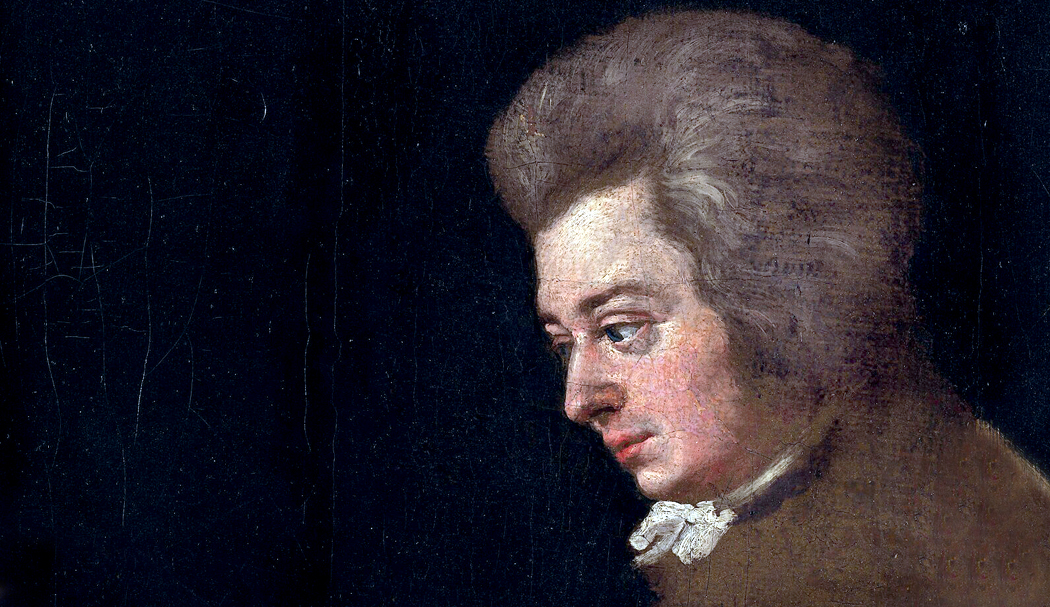
Mozart’s time was the late 18th century. He was born in Salzburg, Austria, in 1756 and was one of the great child prodigies of all time, picking up the violin when he was four and composing by the time he was five. His first opera was written when he was 12.

He was trooped across Europe by his father, playing for the amazed aristocracy and gathering gifts of money and jewels.

He outgrew his boyhood cuteness but grew to be one of the most prodigious composers of all time: He wrote 22 operas, 50 or so symphonies, 27 piano concertos, 23 string quartets, 17 settings of the Roman Catholic Mass. His complete works take up 170 CDs in one current set.

And he became enormously popular.

Mozart was the pop artist of the time. People wanted to play and hear that music so much, they transcribed the music for all kinds of ensembles. Every town had a wind band and they played arrangements. Every little village in Belgium or Bavaria could play arias from the latest Mozart opera, the way halftime marching bands now play show tunes.

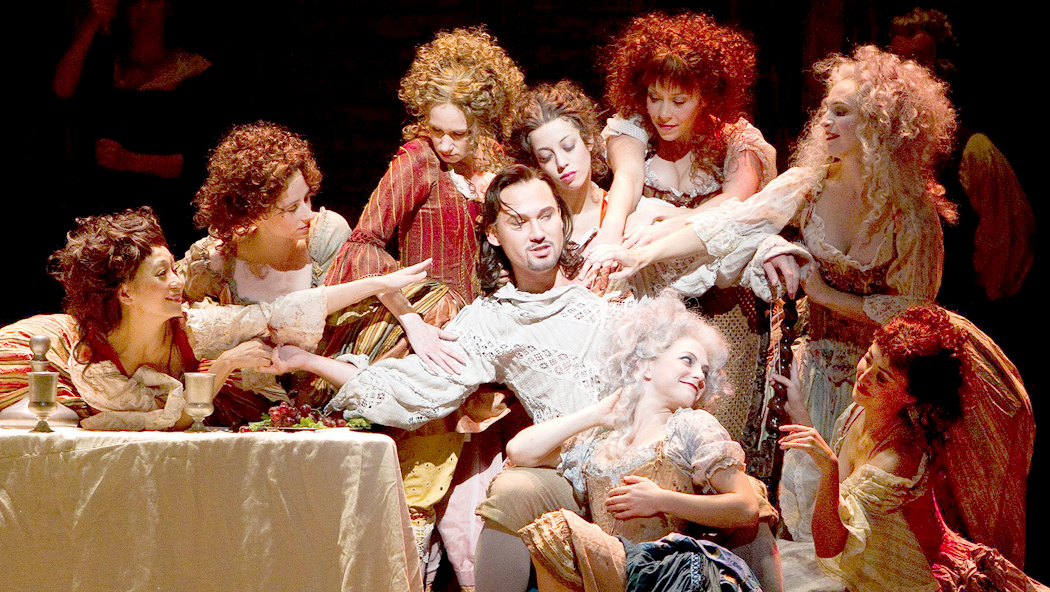
Mozart makes fun of this phenomenon in the finale of Don Giovanni, when the don has a dinner in his castle, with a band playing the latest hits from operas, including “amorous butterfly” from Figaro.

He dismisses it: “I’ve heard this piece too much, he says. We laugh because it shows Mozart could take a joke. And that only makes him more human.

Digression II: Mozart and Haydn

The era from about 1770 to 1810 is called “Classical.” It’s the age of music defined by two names: Joseph Haydn and Wolfgang Mozart.

They were the twin colossuses of the time: one witty and bright, the other deeper and more melodious.

But the two men were very different. Haydn brighter and more brittle sounding, with an emphasis on what the 18th century valued as wit, making in-jokes in his symphonies and working simple themes into complex textural patterns that his audience recognized with pleasure — they got the joke.

Mozart’s music is darker, more chromatic, with a more blended sound, and he focused his attention on grace and style.

If Haydn is the brain of 18th-century music, Mozart is the heart.

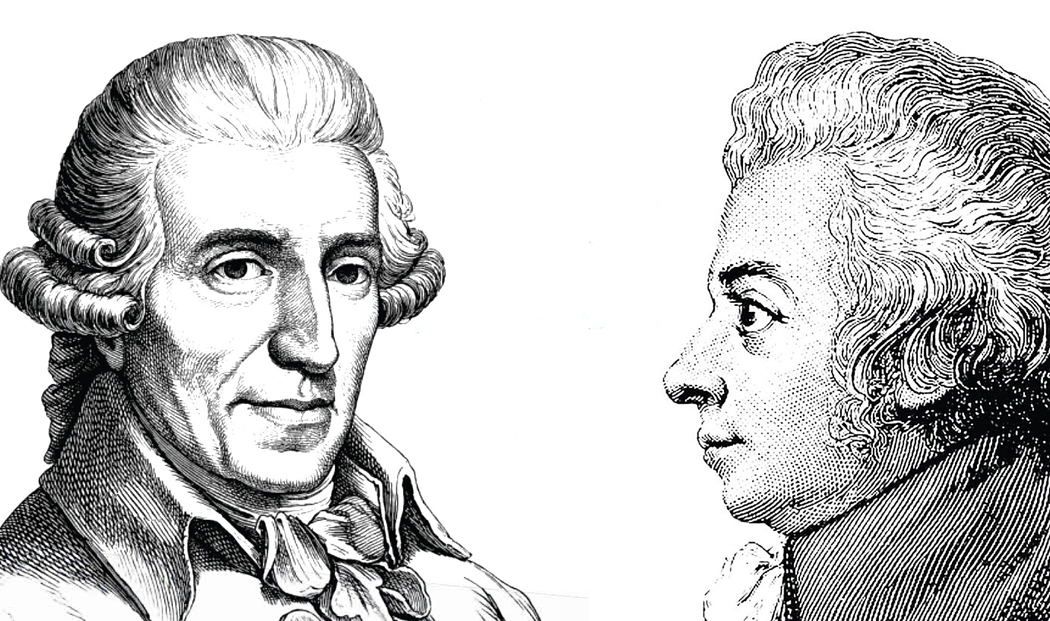
They valued each other above anyone else and recognized each other’s genius. Mozart learned more from Haydn than from any other source. Haydn said Mozart was the greatest composer alive.

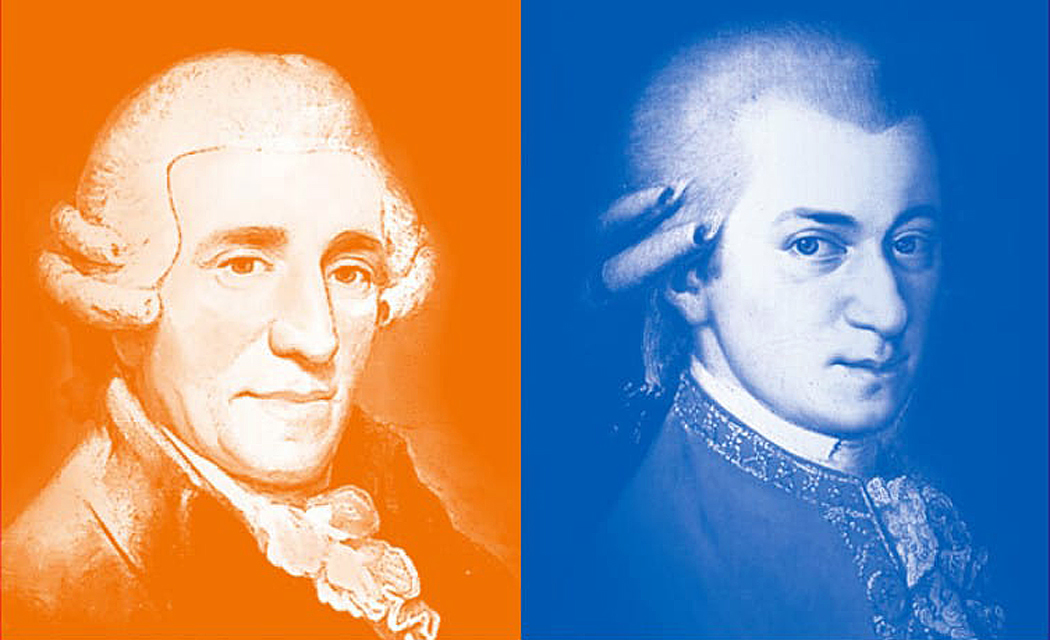
To many, Haydn and Mozart sound alike. They are very different but shared a musical language. So, how do you tell them apart?

One wise old professor explained his simple test: “If you can remember the tune after it is over, it was Mozart.”

Reason and order

The 18th Century is called “The Age of Reason,” although sometimes I think it may be said ironically, since, after all, it was also the age of Rousseau, the French Revolution and the Reign of Terror. But the overall tenor of the era was one of rationality and balance, of a just God in his heaven keeping proportionality in everything human and cosmic. 

In German-speaking lands, it was the Aufklärung, the “clearing up,” and prompted enlightened rulers, such as Joseph II in Vienna, to downplay religious fervor, mindful of the chaos of the Thirty-Years War, and promote scientific enquiry and philosophy. Coffeehouses rose filled with debate and Freemasonry became fashionable. Mozart became a Freemason, and his final opera, The Magic Flute, was a Masonic allegory, of sorts. 

There were certainly many points of view, but the general sense was one of moderation in all things. Don’t go overboard. Keep an even keel. Music followed suit: nothing too extreme, but nothing too simple-minded, either. It was a perfect walk between opposites.

And the major musical innovation of the era was the rise of the Sonata-Allegro form. It was the primary organizing principle for Haydn and Mozart and held sway in various permutations for the next century and a half. It is usually taught in a technical way: first theme in the home key, second theme in the dominant, followed by a development section and rounded off with a recapitulation of the two primary themes, but now both in the home key. But that is not why the form became so dominant. That is like describing an angel as having wings and white robes, without ever noting it is a messenger from God. 

The point of the sonata form was to establish an order, in terms of recognizable melodies, to then disrupt the order by breaking up the tunes into bits, rearranging them, and playing those pieces in a hodge-podge of shifting key-centers, leaving the listener with no firm ground to stand upon, and then reasserting clear order once again, so the universe is set right. Order – disorder – order reaffirmed. 

Once you understand the metaphor of the sonata form, you will never again be hoodwinked by the academic palaver. The music is about the primacy of providential order. 

This is a metaphor that has provided the foundation of much of art. Shakespeare’s histories and tragedies are all about disturbed natural order that has to be set right. Opera plots are almost all about illegitimate threats to the way things are supposed to be. It is the mega “A-B-A” of countless poems and novels. 

The form made such satisfying intellectual and emotional sense that it ruled western instrumental music almost until now. Those composers who didn’t write sonata form wrote in protest to it. Take a side. It was that influential.

L’Envoi

It is nearly impossible to write words about music. One tends to write impressionistically and metaphorically about what one hears, but such language become like trying to describe color to a blind person. 

The result is that when most people talk about their favorite popular music, they talk about the lyrics. The music is barely mentioned. In fact, most popular music contains scant little actual music at all: just a few familiar chord changes under a meandering set of melodic intervals. You may mention the beat, but that, too, tends to drone on monotonously through the song. 

You could, if you wanted to, talk about the music, but it would take specialist vocabulary that would convey almost nothing to the lay reader: “The composer used the Neapolitan relationship to modulate from B-minor to A-flat major while dividing the treble from the bass line in hemiola.” There, does that mean anything to you? Two against three? 

One reads scores rather than text to understand what is going on, but even that does not really tell you what you are hearing, only how it was done. 

And so, when writing about Mozart, almost everyone falls immediately into biography. We can tell you fascinating things about his family, his sister, he relationship with his patrons or the order in which his symphonies were composed. 

But the ear can hear how, in sonata form, we hit the comfort of the home key as the recapitulation calms down the churn of the development. It is something instantly felt through the ear — if you are paying attention. But how to write about that in the Jupiter Symphony or the K. 545 piano sonata comes a cropper. Just listen. It’s obvious. 

One can say that Mozart blends his wind instruments while Haydn tends to keep his winds distinct. It is true, but you have to hear it to understand. Mozart’s recapitulations are usually a return to order, while Beethoven uses his recaps (in his mature work) to take the music to a new place, a “new normal” that means we have moved through the development from Point A to Point B. Mozart’s melodies tend to be step-wise, as a human voice might sing, while Haydn often jumps around because fingers on a keyboard can do so. 

These are swooping generalities, and there are plenty of exceptions, but they are attempts to write about the music rather than the historiography. 

The only recommendation is to listen to more music, lots of it, and absorb what you can, so you can distinguish the difference between a sonata form and a rondo, between an English horn and a bassoon in its upper register. Hear it and pile it into your trove of experience. It is the sounds that are made that is the music. Words get in the way. 

And pay attention. Music isn’t a warm bath you slide comfortably into, but a conversation the composer is having with you.

When I was a young and poor college student and wanted to buy a classical music LP, I was faced with a choice. Most of the biggest names in the field recorded for one of the major labels: Deutsche Grammophon, Decca, Columbia, RCA or Angel (aka EMI). And those disks were pricey. 

In some cases, I would just have to suck it up and spend more than I really should have. But there was an alternative. There were budget labels, offering their records at cheapie prices. 

Most were sub-labels of the pricier brands, as Seraphim sold older versions of Angel releases, or Victrola from RCA and Odyssey for Columbia. And Vanguard Everyman. And there were some bottom of the barrel labels, with really poor recordings of Eastern European, and Russian musicians, such as Melodiya and Urania. Those sounded awful. 

And their album covers were usually cheaply designed, or copies of how the premium brands showed themselves, with photos of the conductors or musicians, or with pretty landscapes. After all, classical music was serious. It was art. 

But then came the Baroque revival, and instead of Beethoven symphonies, we were offered Vivaldi, Telemann and Monteverdi madrigals. The Sixties were in full swing, the budget labels dove into bright, colorful, more lively album covers, often with whimsical illustrations. 

These were Nonesuch recordings and the Vox budget label, Turnabout. My collection was full of them

There were two labels in particular that went for the comic and the hip. Westminster and Crossroads. The created memorable cover art, but took very different paths. 

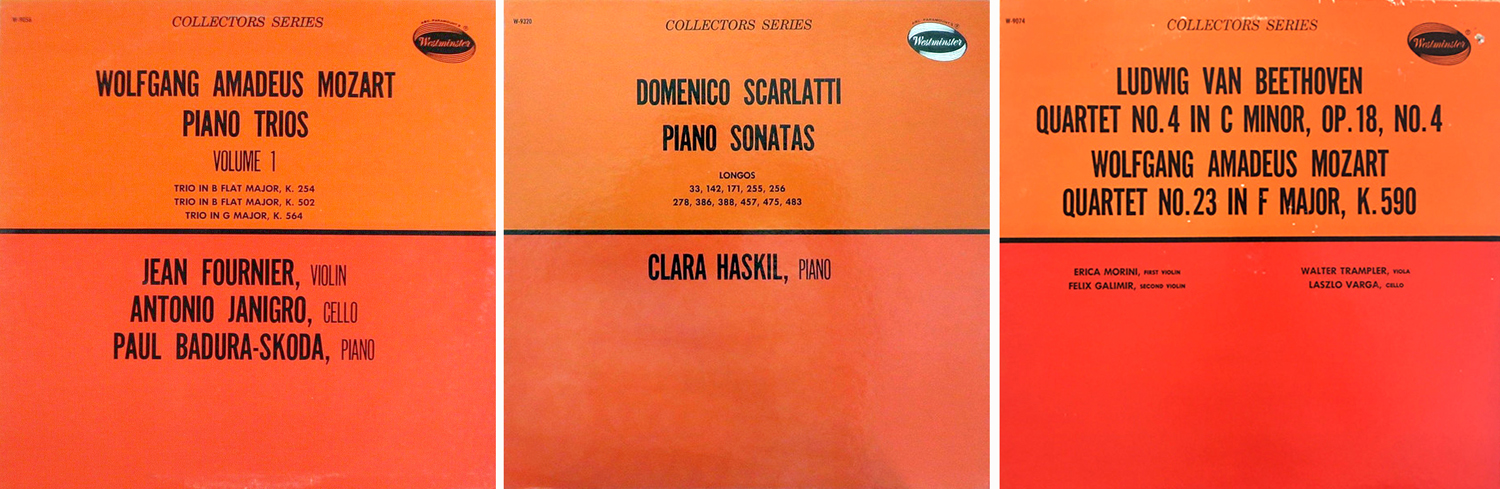
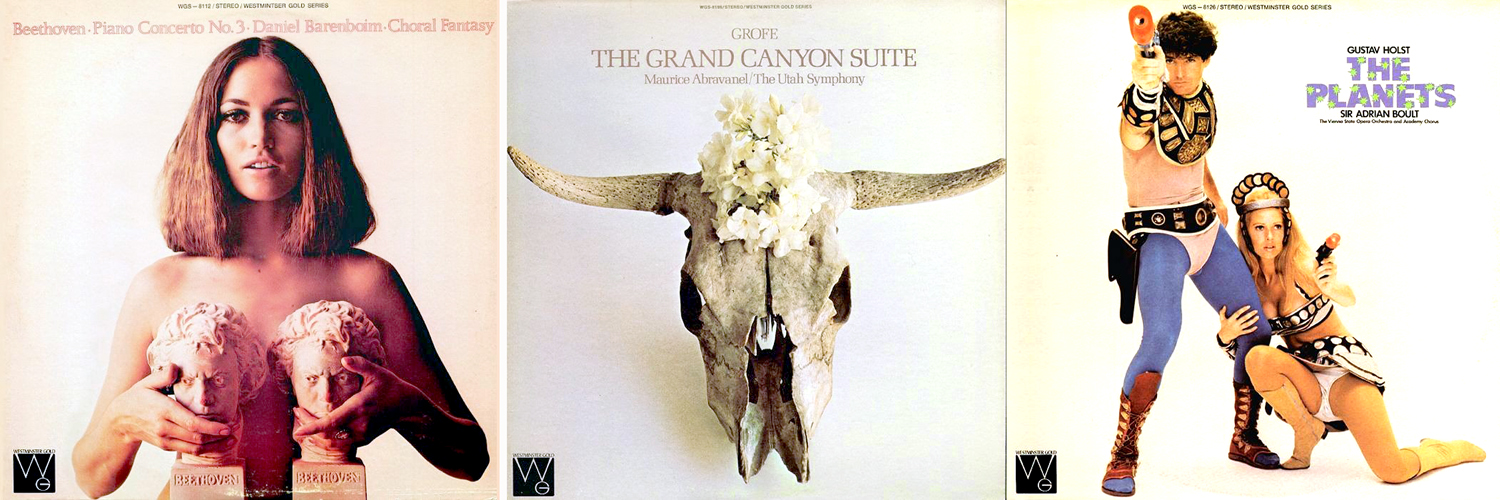
Westminster Records began life in 1949 as a high-end audiophile label, but by the time I came to know them, they were a low-end budget brand, and their covers were as simple and unadorned as the “plain brown wrapper” that used to hide racy novels. Those red covers, with a horizontal black line were easy to spot in the record store bins, and for those of us on a limited budget, an instant look-see. The performances were generally very good, if by musicians more noted more in Hungary or Poland than in Carnegie Hall. They were dependable. I owned bunches. 

But, the label was bought out by ABC-Paramount and by 1970, they began marketing their back-issue catalog with sometimes ridiculous and campy cover art. To attract the kids, I guess. 

They included a Beethoven concerto with a busty brunette, whose busts were those of the composer, strategically placed. Or Ferde Grofe’s Grand Canyon Suite with a faux Georgia O’Keeffe cow skull, or — my favorite — a Barbarella knock-off of cheap sci-fi for Gustav Holst’s Planets

(Click on any of these images for a clearer look)

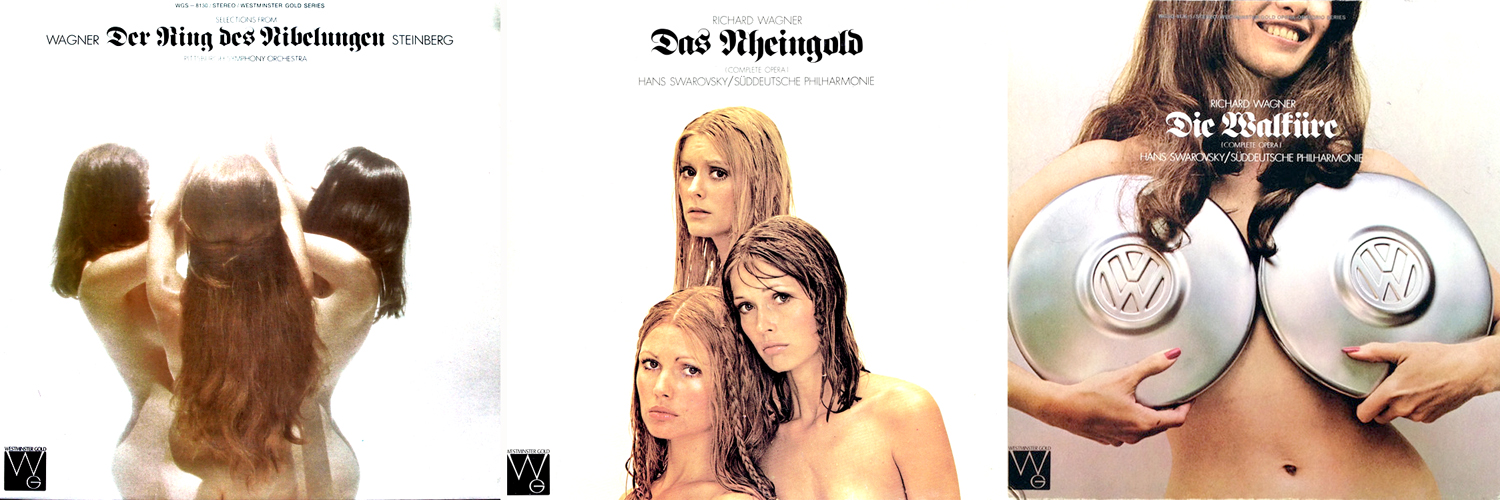
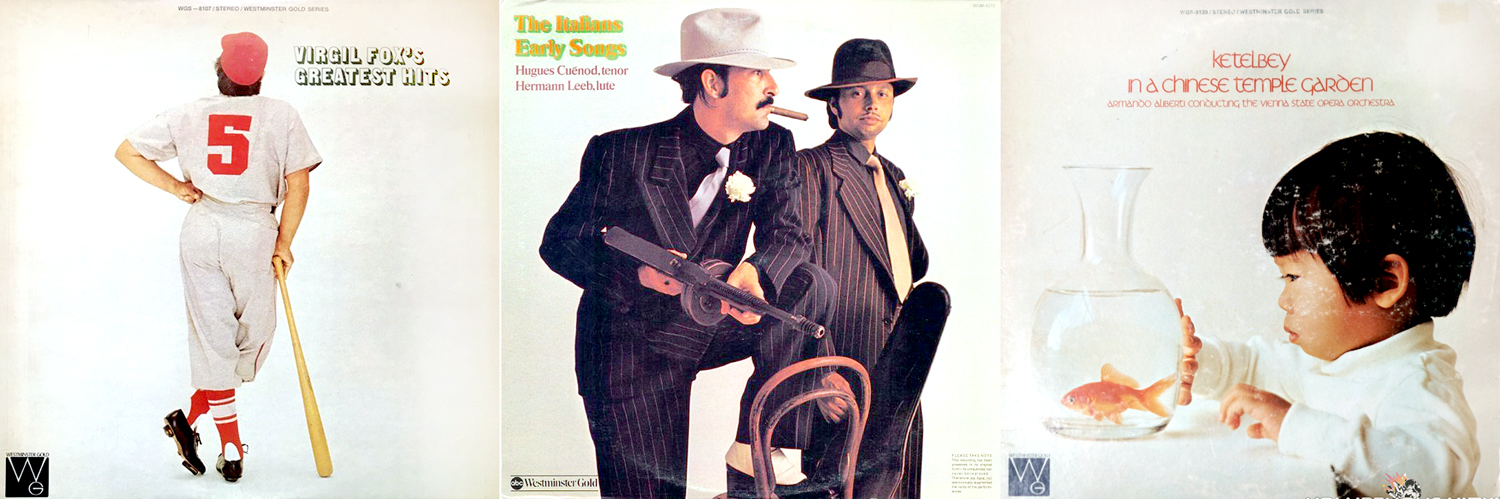
These covers are now collector items for a memorable gallery of time-stamp art. I have gathered images of well over a hundred of these gems, and thought I should share a few of them.

Westminster sold the 1968 Hans Swarowsky Nuremberg Ring Cycle with Carnaby Street Valkyries, Rhine Maidens and Norns. 

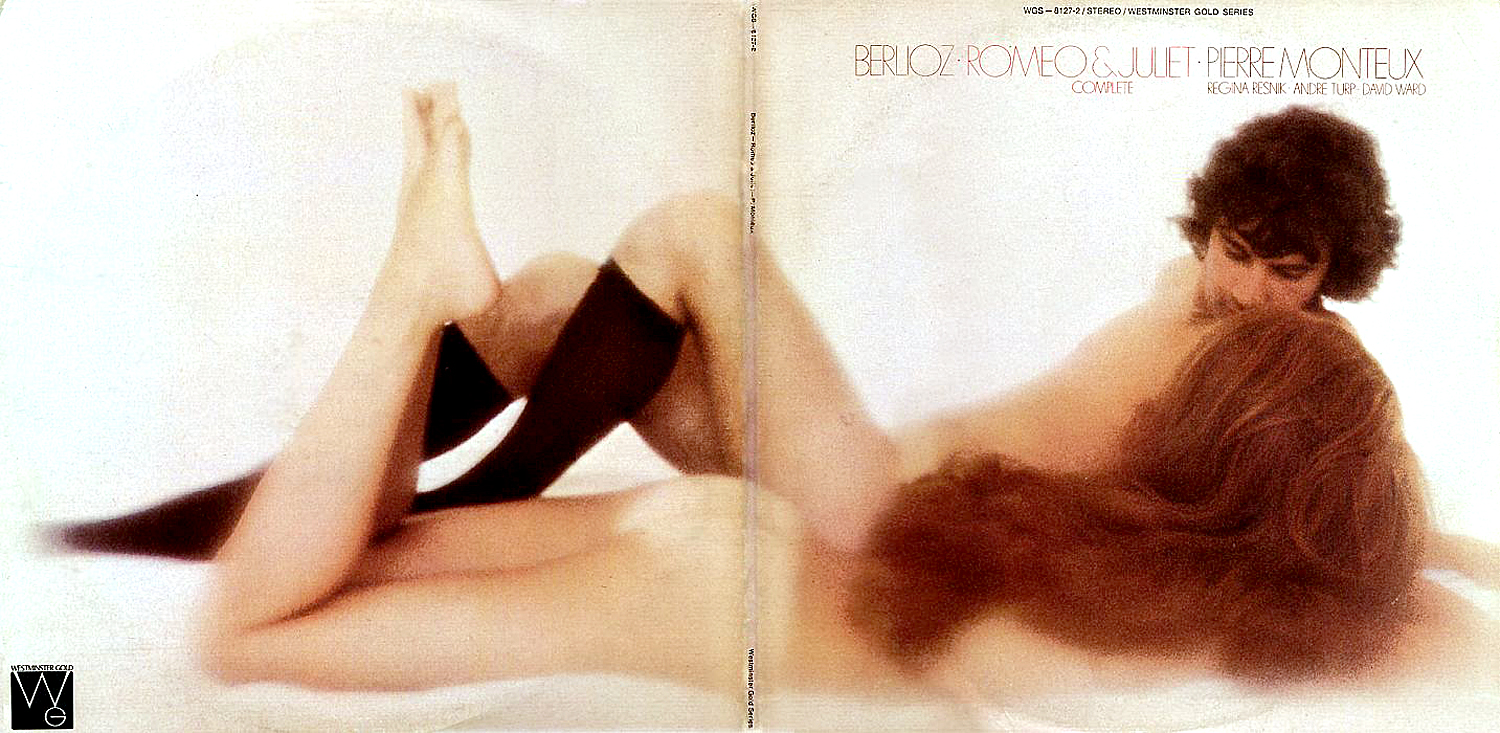
And there was the two-disk recording of Berlioz’s Romeo and Juliet, coming out hot on the heels of the Franco Zeffirelli film starring Olivia Hussey and Leonard Whiting. Could this cover be a coincidence? See the image at the top of this column. The album folds open to give us the whole picture (Love those socks). 

Then, there is organist Virgil Fox’s “Greatest Hits,” with the baseball player; traditional Italian songs with, of course, just the kind of mafiosi who regularly croon such tunes; and to round out the ethnic stereotypes, there is Albert Ketelby’s In a Chinese Temple Garden. Subtlety is no object. 

Then, there’s the sex and death contingent. Although what a cast-off bra has to do with Mozart is hard to tell. Tosca, though, surely liked to show off her décolleté, although I am unaware she ever had a tattoo. The obvious follow-up is a requiem. 

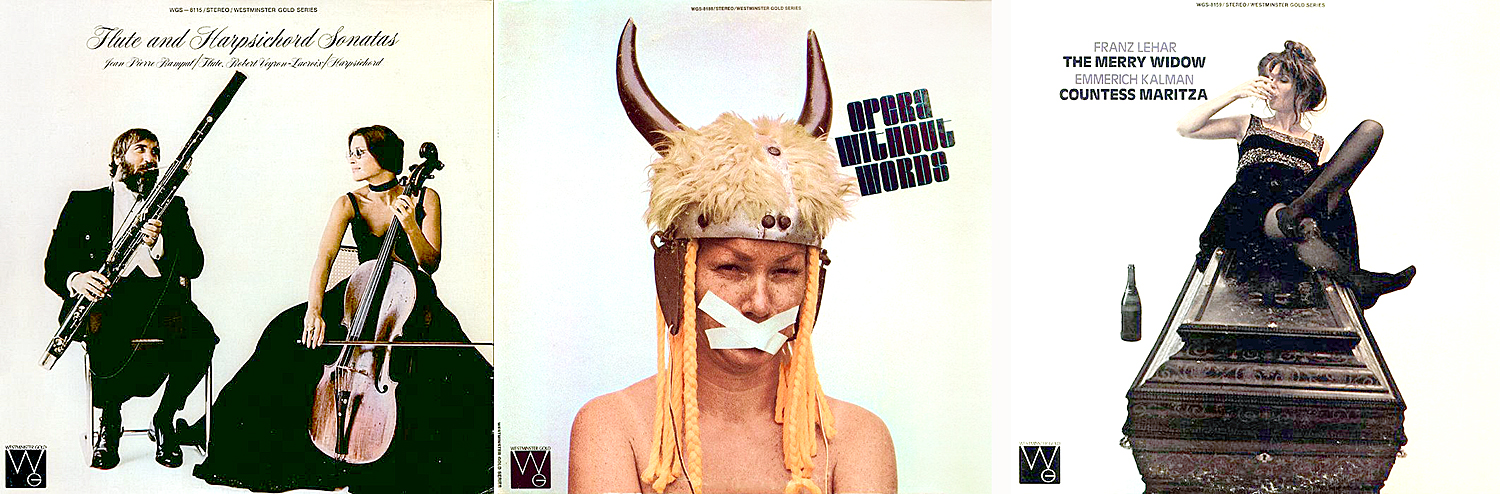
For some reason, the recording of Baroque flute and harpsichord sonatas shows us a bassoon and cello. And if you are going to have opera without words, you need a horned helmet and bandaged mouth. And there’s the merry widow drinking wine on a coffin. 

Haydn’s clock symphony, some Beethoven trios (apparently for teddy bears), and Bach cello sonatas. 

An American in Paris, selling risque pictures, a lipstick Bolero, and a gang of Russians selling us Rachmaninoff and Tchaikovsky. 

Judas Maccabaeus was known as the Jewish Hammer, so, OK. The William Tell Overture has its connotations, and the Skaters’ Waltz is obvious. 

Pictures at an Exhibition needs a camera; Porgy and Bess share a disk — and eyeglasses — with an American in Paris; and, if the composer is Matthew Locke, you clearly had no choice. 

There are many more, just as hokey, corny, and campy. As I said, I have about 130 of them in my files. 

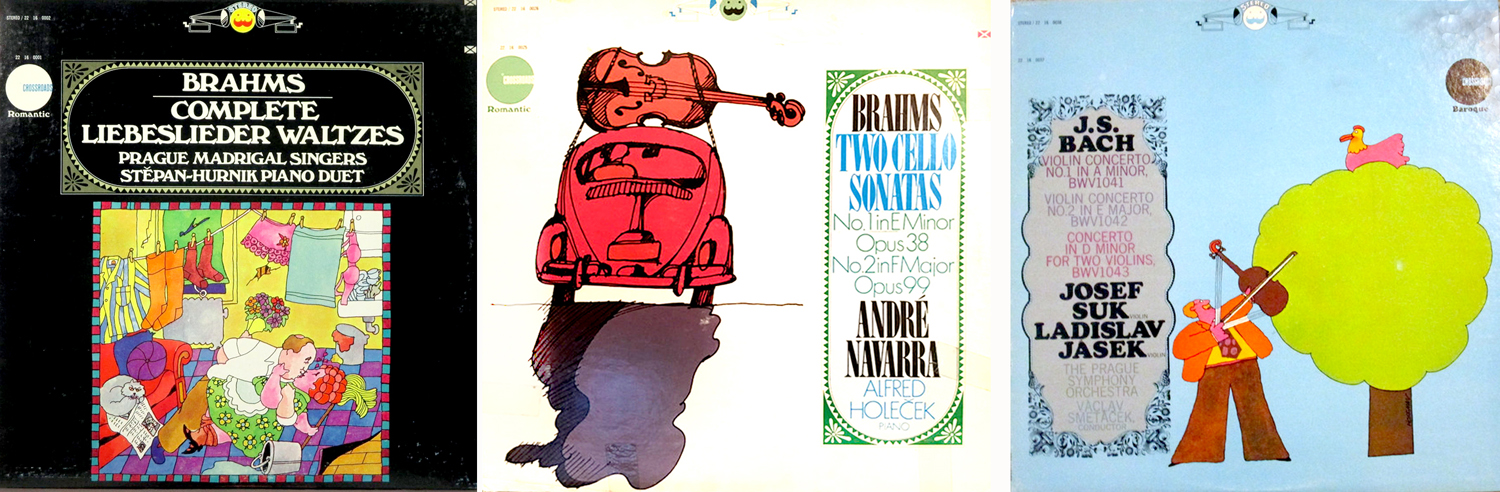
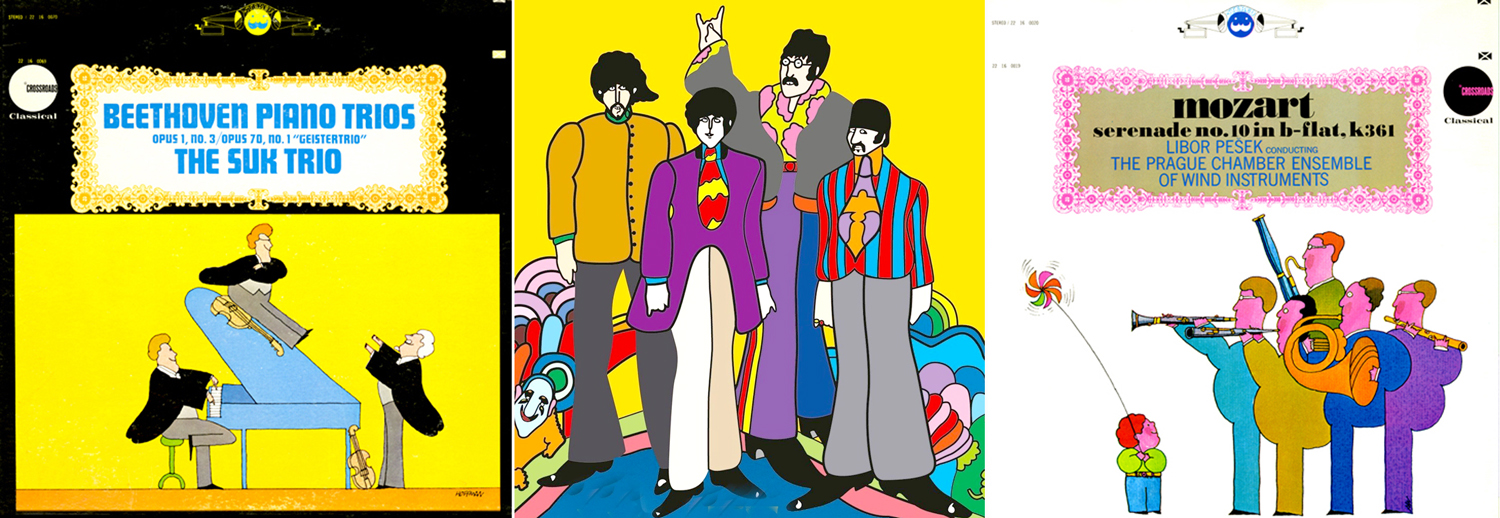
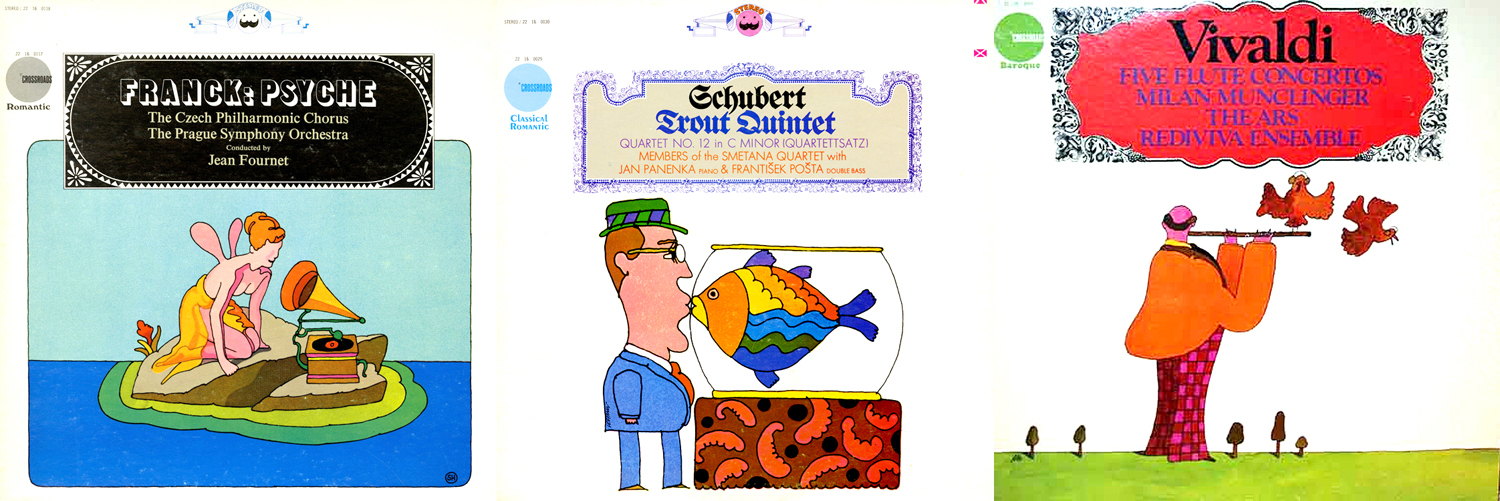
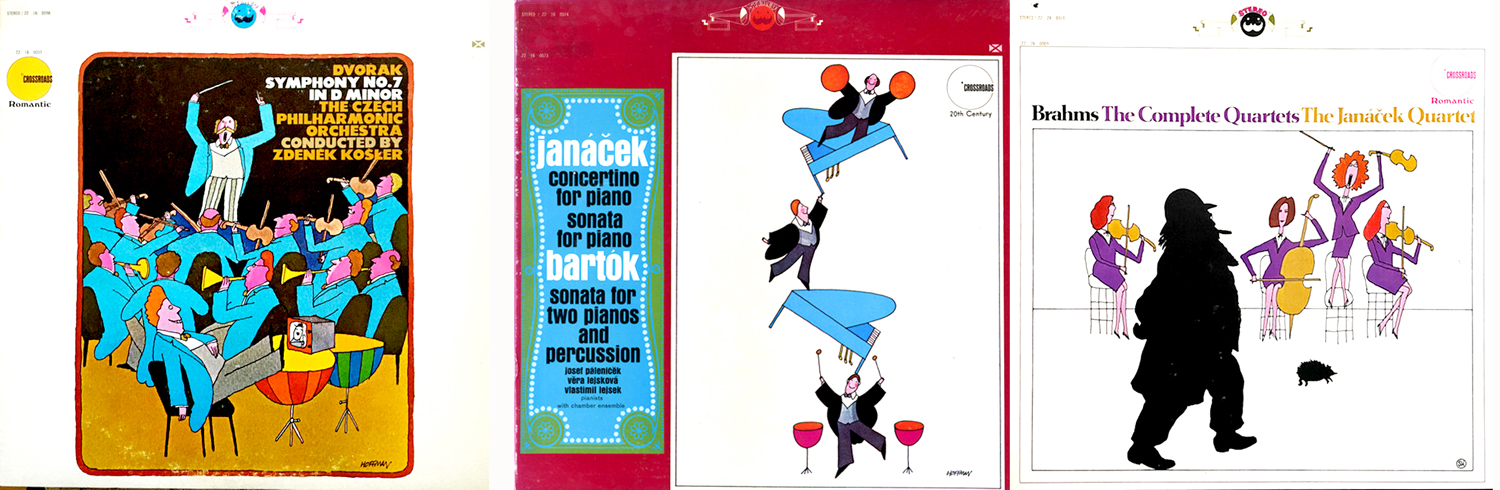
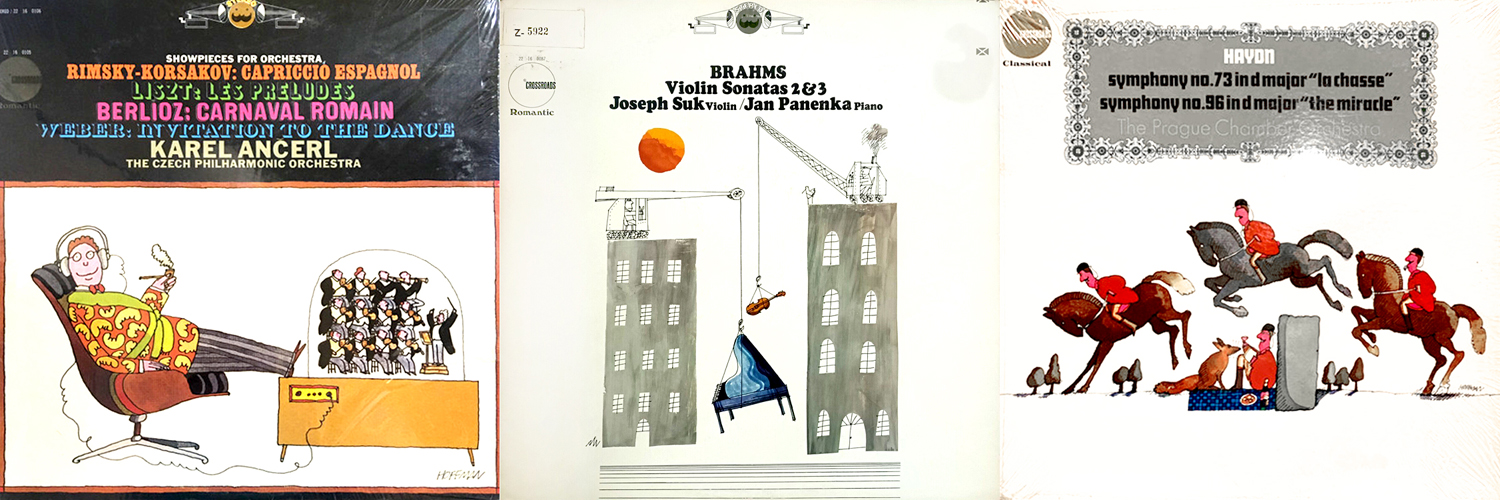
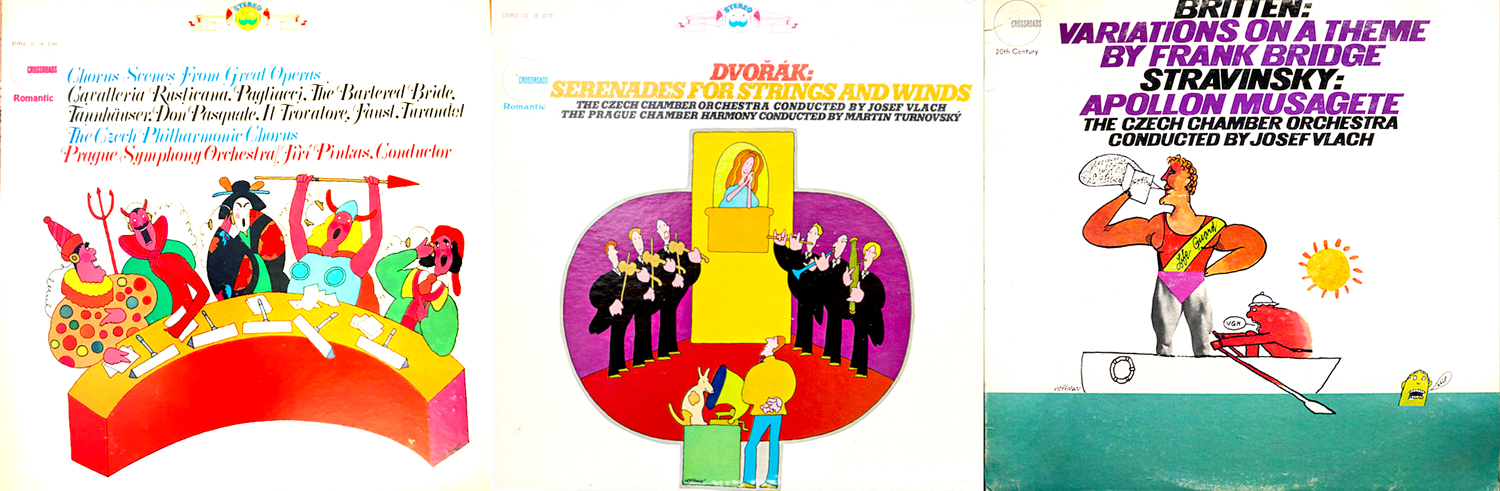
But, it is the other label I really like better. Crossroads was a subsidiary of Epic Records. Epic dealt mostly in popular music and jazz, but in the late 1960s, they licensed reams of Supraphon recordings, mostly recorded with Czech musicians, and sold them under the Crossroads label, with often quite witty cartoon album art. The level of performance was top-notch, with some of the world’s best soloists and orchestras. 

I have gathered about 70 Crossroads album cover images, and offer a few here.

The Prague Madrigal Singers recording of Brahms Liebeslieder Waltzes was the perfect performance, light, with a happy amateur feeling of a group of friends singing together. Other recordings I have owned were too operatic and artsy for Brahms’ gemütlich bourgeois lovesongs. And the cover art perfectly reflected the tone of the performance, and of the music Brahms wrote:

Unfortunately for me, this performance has never shown up on CD and I long ago got rid of all my LPs. 

Many of the other Crossroads releases have subsequently been rereleased on other labels, including the original Supraphon recordings. But the album covers of the CDs never quite match the joie of these LP covers. It is also obvious that these came out about the same time as the animated Yellow Submarine movie. The style is unmistakeable. 

There’s a bit of Hokusai’s Great Wave in this Debussy. More Yellow Submarine for unknown classical-era composers and Someone has to vacuum up all the dropped notes.

There is, of course, a lot of Dvorak and Smetana in these Crossroads releases. 

But it’s not all Czech. Here’s some Franck and a great Schubert “Trout” quintet. And even some of the musicians are not Czech. There are Germans, too.

The covers are a delight, even for heavier music: Dvorak’s most Germanic symphony, Bartok raucous Sonata for Two Pianos and Percussion and the deep slog of going through Brahms’ string quartets. 

Villa-Lobos, Milhaud and others; Schubert’s giant op. 99 Trio; and 18th century Bohemian composer Jan Voríšek, apparently having his tooth pulled. 

Listening to the Loud Classics on earphones; two Brahms violin sonatas (you cannot find a better performance than the great Josef Suk and pianist Jan Panenka; I owned this LP for years — a delight); and Haydn’s “Chase” symphony.

The tradition of budget recordings continued into the CD era, with some super-cheapie labels, such as Pilz and Laserlight, and there was a deluge of rare repertoire items that came out on Naxos, before that label went upscale. And the classical music recording industry has just about collapsed with fewer new recordings, but a raft of back-catalog items being issued in budget boxes by Sony, Warner, and Brilliant, often for as little as a buck a disk. 

And now that I am retired, I find myself back in the same situation I was when I was newly graduated from college and making $50 a week at a retail store (well, not quite that bad off), and I find myself again stocking up on piles and piles of budget issues.

Click on any image to enlarge

Occasionally I get asked (OK, once) where should I start listening to classical music. Classical music is something that a few people as they age past Top 40 songs, come to believe they should begin to know, the way they should read Proust or watch foreign films. 

Philip Larkin mentions the drive in his poem Church Going: “Much never can be obsolete,/ Since someone will forever be surprising/ a hunger in himself to be more serious.” 

I have been listening to what is called classical music for 60 years, and my first thought is that classical music does not exist. Not really. 

What is called classical is a combination of old church music; popular music that has been around so long, it no longer sounds like the pop music we know; and music meant to entertain, first, a class of aristocrats who could afford to pay for it, and then an aspirational middle class that took up the buying of tickets. 

It wasn’t until late in the 19th century that anyone really considered such music “classical.” And only in the 20th century that most symphony orchestras were organized to play what in the past had just been music, but was now given this new label. 

Until then, most concerts consisted of new music mixed with a few old favorites (much like modern pop music — they wanted to hear the hits). And so, old standards became classics. 

Not all of the old standards were heavy and serious. Mozart wrote tons of divertimenti to be played as the count and countess ate lunch. It was only meant to sound nice, with catchy tunes. Yes, some classical music is meant to evoke deeper thoughts and emotions, some even meant to change lives. 

But there is pop music that is serious, too. Consider the Beatles’ A Day in the Life, or Queen’s Bohemian Rhapsody. They aren’t always short. 

And so, when you ask about classical music, you aren’t asking about a single thing. If you were to open up that can of worms and try to learn what classical music has to offer, you will have to recognize that no one thing can suffice. Nor any one style; nor any one century. 

If there is anything that marks music as classical, it is its length. Most tunes last three or four minutes, while a symphony can run anywhere from a half-hour to 90 minutes. The popular music is meant to put a tune in your head and you like it (or not) and may sing it to yourself as you wash the dishes. Such music is usually meant to be absorbed passively. 

What is called classical tends to be more like a story, even a novel, with multiple characters and changing moods, so where you start is not where you end up. It is music you pay active attention to. It goes somewhere and you have to pay attention to notice the plot. 
The story told in music, though, is not one that can be translated into words. It is one you listen to as it unfolds in musical terms: the melody changes, sometimes broken into pieces, the harmony turns grim or lilting, sometimes the melody might be played half-speed, or faster, or even upside down. These are all part of the musical story-telling. 

So, what do I say to my friend asking advice on how to start listening to classical music? 

The complaint I hear often is that classical music all sounds the same. It doesn’t. And so, I want to offer examples both of the stories and of the diversity. And I want to start off with a symphony with the clearest, most direct “story” to tell.

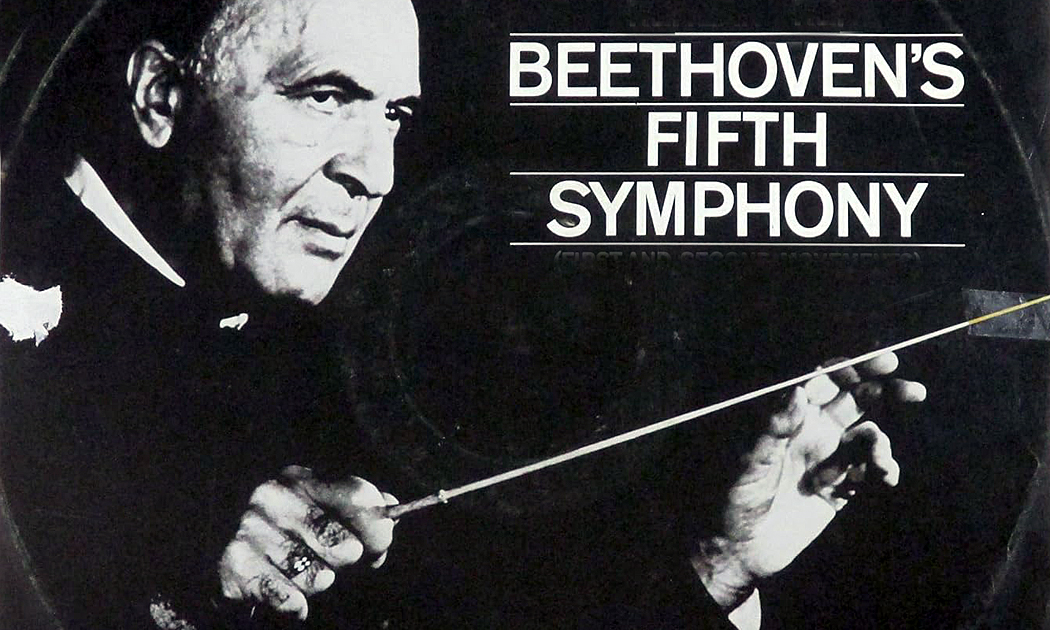
If there is any single place to begin, it is with Beethoven’s Fifth Symphony, or, more formally, Symphony in C-minor, op. 67, first performed in December, 1808, in a freezing cold concert hall in Vienna, along with a host of other new works by the composer, making for a concert lasting more than four hours. For all that music, the orchestra — a pickup ensemble paid for by Beethoven himself — had only a single rehearsal to work out the kinks. In one of the pieces played that evening, the orchestra got lost and had to stop and begin the whole piece all over again. 
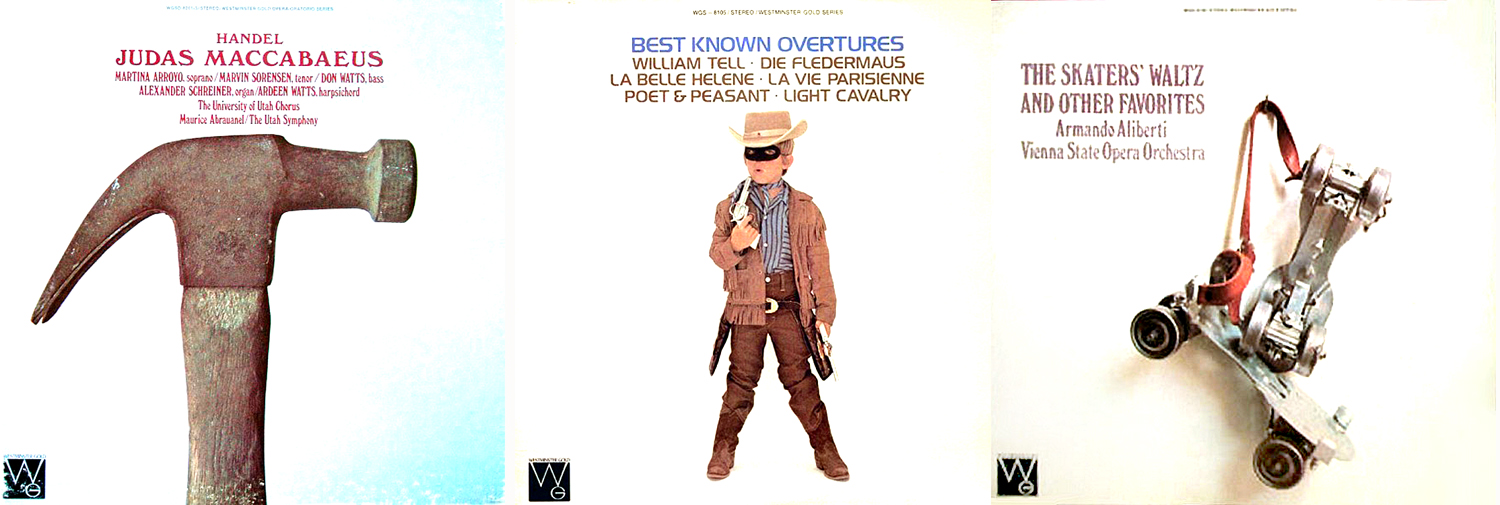
But that Fifth Symphony eventually became iconic — the single stand-in for all of symphonic music. 

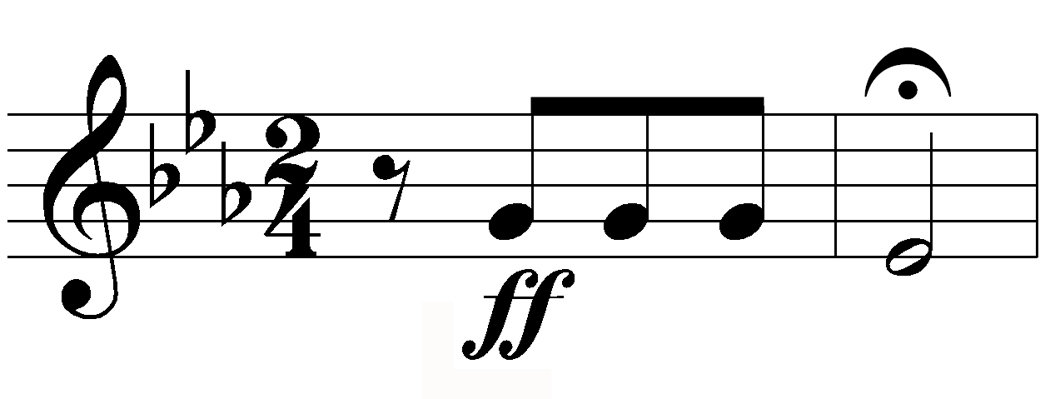
It begins, as almost everyone knows with the heavy tread of the dah-dah-dah-DUMM. Those four notes are played over and over through all four movements of the symphony, sometimes straight, sometimes altered, sometimes as a drumbeat underneath another tune. I once counted in the symphony score more than 700 repetitions of dah-dah-dah-dumm. That works out to once every three seconds of music from start to finish. It’s almost OCD. It’s no wonder the notes are often compared with hammer blows. 

The symphony is in the minor key, a key of angst, anger, uncertainty, which Beethoven underlines by having the music stop outright several times after we hear the four-note motif. As Peter Schickele said, in his comic sportscast of the symphony, “I can’t tell if it’s fast or slow, because it keeps stopping.” 

But it picks up steam to an intense, driving rhythmic motor, all in that relentless C-minor. It blasts you over the head with it. The first movement (of four) lasts, in most performances, only about five minutes, but you may very well be worn out by all that hammering and minor-keying. 

The second movement is a relief from the drive of the first, but the dah-dah-dah-dumm is often there, heard beating away in the bass line. The third movement starts with an ambiguous arpeggiated melody in the basses, but then brings back dah-dah-dah-dumm as a main theme, with the drive of a forced march. The movement doesn’t really end, but rather morphs into a chaotic repeated note pattern that doesn’t seem to be going anywhere, until … until… it does — and it explodes into a big, brassy blast of C-major — the major key the entire symphony has been trudging toward for all its length. The feeling is absolutely triumphant. The spirit soars. 

And yet, if you listen carefully, you will recognize that those happy, brilliant tunes are actually a metamorphosis of the dah-dah-dah-dumm, buried in a longer, rising optimistic melody. And at the very end, Beethoven drives home that C-major with 25 bars of pounding C-major chords in the full orchestra. You know you have reached the finish line with the last long-held chord. Having won it, he’s not going to let go. 

The story the symphony tells is from anger and angst into triumph and joy. It is this long development of an idea that marks what is called classical music as different from popular music. 

And even in classical music that doesn’t have the symphony-long coherent story to tell, each movement has its own plot and narrative. The most common narrative in classical music is presenting a theme or two, or three, in order, then mixing it all up, taking them apart, replaying them in foreign keys and disruptive orchestration, and then, finally, bringing them back in something like their original form so that you have a satisfying feeling of having returned home after a journey. Roughly half of all classical music is built on this pattern — with infinite variations. 

It is the surprise variations from the standard pattern that often delights music listeners. But to get the variants, you have to have become familiar with the expectations. It is hardly different from knowing the general plan of a TV sitcom, and being delighted when the show gives you a turn on your expectations. In a modern sitcom, you almost always have a main plot, a secondary plot, and a third, smaller background action, and they alternate in your attention, but are all wrapped up by the end. Same with a symphony or sonata. 

Next, about classical music all sounding the same (I have my own ignorance, too: For me, all pop music sounds the same). I have come up with a list of five classical pieces to spread the parameters. Each of these pieces can be found on YouTube to be listened to for free. 

Orchestral music is what most people think of as classical music. But there is so much more. 

Let’s start with some choral music. Before the late 17th century, most art music was vocal, and most often for the church. What instrumental music there was was usually improvised, rather like jazz. 

So, first, listen to Spem in Alium by English composer Thomas Tallis (1505-1585). It is a 40-part motet setting the Latin text “I have never put my hope in any other but in thee, God of Israel.” (Spem in alium — “Hope in other”). It was written about 1570 for a combined eight choirs of five voices each. 

It starts with a single soprano voice, adding others until, about three minutes into the piece, the entire five choirs all burst forth in a glorious racket. It is quite sublime. 

Then, let’s go the other direction. In 1913, Igor Stravinsky’s Le Sacre du Printemps (“The Rite of Spring”) was premiered as the score to Vaslav Nijinsky’s choreography for the Ballets Russes in Paris. That premiere famously caused a riot. Stravinsky fled the theater in fear for his life. Or so he claimed — one never knows just what to believe in a self-mythologizing artist. 

The music is rhythm torn apart, pounded home as part of what Leonard Bernstein called “Uncle Igor’s Asymmetry Machine.” It tells the ballet story of primitive Russian society and its ritual sacrifice of a young woman who dances herself to death. With its riotous dissonance, pounding percussion, and extreme orchestration, it remains perpetually modern. 

But we should not forget chamber music — music for a small group of players, often just two, such as violin and piano. César Franck’s Violin Sonata in A-major is about the most tuneful sonata ever written. He wrote it in 1888 as a wedding present for the famous violinist Eugene Ysaye. 

Its four movements borrow tunes from each other, and so although the movements are quite distinct emotionally, they are all tied together by the memorable melodies. 

And I cannot forget song. Most of the great composers also wrote songs, though they are nowadays called lieder, which is just the German word for “song,” but gives a higher-toned, more prestigious ring to the name. But they are songs nonetheless. 

The greatest of these classical song-writers is undoubtedly Franz Schubert (1797-1828). Poor all his life, and hardly recognized as a great composer by any but his closest friends, he was a gushing fountain of melody. His song Erlkönig tells the story of a father and son riding through the night on a horse, stalked by the evil elf-king who wants to take the boy. The child screams in fear, the father tries to protect him, and the goblin tries to seduce the kid away. It is a frightening song, but full of tremendous melody. 

This should give you some sense of the incredible range of the art music of Western culture. And a start in classical music. 

Next: A look at the changing eras of classical music

French composer Camille Saint-Saens was smarting from a concert tour in Germany that didn’t go over well, and so, in 1886, he withdrew to small Austrian village and wrote a short piece about music critics, which he called Personnages à longue oreilles, or “Characters with long ears,” in which the critics bray in imitation of asses — “hee-haw.” It is barely 45 seconds long, but it seems to have given him a bigger idea. 

And so, he wrote thirteen accompanying short, mostly comic,  compositions, each describing another animal, and had them played privately as La Carnaval des Animaux, or “The Carnival of Animals.” He wrote his publisher in Paris that he knew he should be working seriously on his Third Symphony, but that instead, he was having “such fun.” 

Yet, fun wasn’t what he wanted to be remembered for. He was to be a serious and honored composer of five symphonies, many concertos and 12 operas. And so, he refused to allow the Carnival of Animals to be published until after his death. 

The irony is that, along with his Danse Macabre and the Bacchanale from his opera Samson et Dalila, what he is best remembered for, and most loved, is this 25-minute-long musical menagerie. In fact, his best-known piece is undoubtedly The Swan, for cello and piano, the second-to-last section of the Carnival

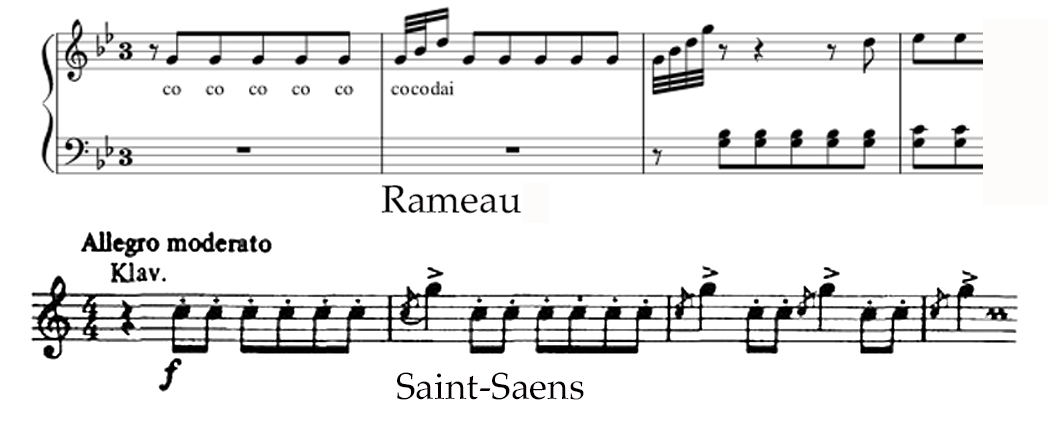
Many of the pieces parody famous music by other composers and popular songs, but I want to pick out, in particular, the second section, Poules et Coqs (“Hens and Roosters”), which gets its main theme from a 1726 piece for harpsichord by Jean-Philippe Rameau, called La Poule (“the Hen”), from his Suite in G from his Nouvelles Suites de Pièces de Clavecin

You can see the similarity, even in these few bars. 

But that set me off on a search for other music about or imitating animals. It’s not just “Old MacDonald” and his “oink, oink, here and an oink, oink there,” but in fact, a long history of musical animals. Some famous, some obscure. 

Of course, such animal imitations go back to prehistory, if we believe the musicologists, who tell us that they often feature in folk songs, from all around the world. “Old MacDonald” is only one of them in English. But there are Chinese songs, Turkish songs, Swahili songs, all with animal noises as part of their lyrics. 

But I was most interested in Western art music, after the invention of musical notation and printing, where the music could be tracked down and maybe even listened to (on YouTube when available). 

The earliest I found was from the middle of the 13th century, a ditty called Sumer is icumin in, with its lyrics “lhude sing cucu,” which have been set to various tunes, most of those I have heard include a melodic line that imitates the falling third of the cuckoo birdcall. 

No doubt because the cuckoo’s call is so distinct and so clearly a falling third, it is about the most frequently used birdsong in classical music, as we will see (followed by the trilling of the nightingale). 

Indeed, the next entry is Par Maintes Foy, by 14th century composer Jean Vaillant, which not only has the singers call out the cuckoo and the nightingale, but also the goldfinch, starling and quail. “Lire, lire, lirelon,” Toowee, toowee, toowee.” 

But it isn’t all birds. In 1505, Josquin de Prez, perhaps the most famous of all early composers, published his El Grillo, which has its singers imitate the sound of a cricket. 

Clement Jannequin (11485-1558) wrote Le Chant des Oiseaux (“Song of the Birds”) with a blackbird singing “Ti-ti, pi-ti;” the nightingale trilling on “Frian, frian;” and the cuckoo again doing his “Cu cu, cu cu.” 

Pierre Passereau (1503-1553) wrote Il est Belle et Bon, in which a wife praises her husband for being so compliant and even feeding the chickens, which she then imitates “co co co co da.” 

In his Book of Ayres with a Triplicitie of Musicke, from 1606, John Bartlett published a madrigal called Of All the Birds That I Do Know, in which words get repeated in a way that clearly evokes the chatter of birds. “Of all the birds that I do know, Philip my sparrow hath no peer … Philip will cry still, ‘yet, yet, yet, yet, yet, yet.’” 

As we leave the vocal Renaissance and enter the more instrumental Baroque age, we begin having fiddles and hautboys imitating various birds and beasts. 

Sonata Representativa (1669) by Heinrich Biber dedicates a movement each to imitations of nightingales, cuckoos, frogs, hens and roosters, quails and cats. Written for violin and continuo, it alternates short interludes with sections depicting animal sounds. After a Preludio, a Nightingale on the violin sings four eighth notes repeated and a long trill over a pedal; a Cuckoo hits repeated fast eighth notes making the usual cuckoo sound; then come Frogs with an appoggiatura of dissonant seconds, sounded together, and resolved upward, over and over to make croak; Hens cluck with upward portamento; quail have a repeated dotted rhythm “dah, da-dah;” a Cat comes mewing portamenti in nursery-rhyme-like tune; then all is rounded off with a march.

Georg Phillip Telemann wrote his Alster Overture, with a fourth movement imitating “Concertizing Frogs and Crows.” There is also a swan in another movement. 

Of course, the most famous and familiar sounds come from Antonio Vivaldi’s Four Seasons. In the opening movement of the four concertos, we hear the squawking of birds. In the second movement, he has dogs barking, and in Summer, the slow movement has the strings buzzing around as a swarm of flies. 

But it wasn’t only the Seasons: In his Flute Concerto, op. 10, no. 3, “Il Gardellino,” he has the flute imitate a goldfinch. 
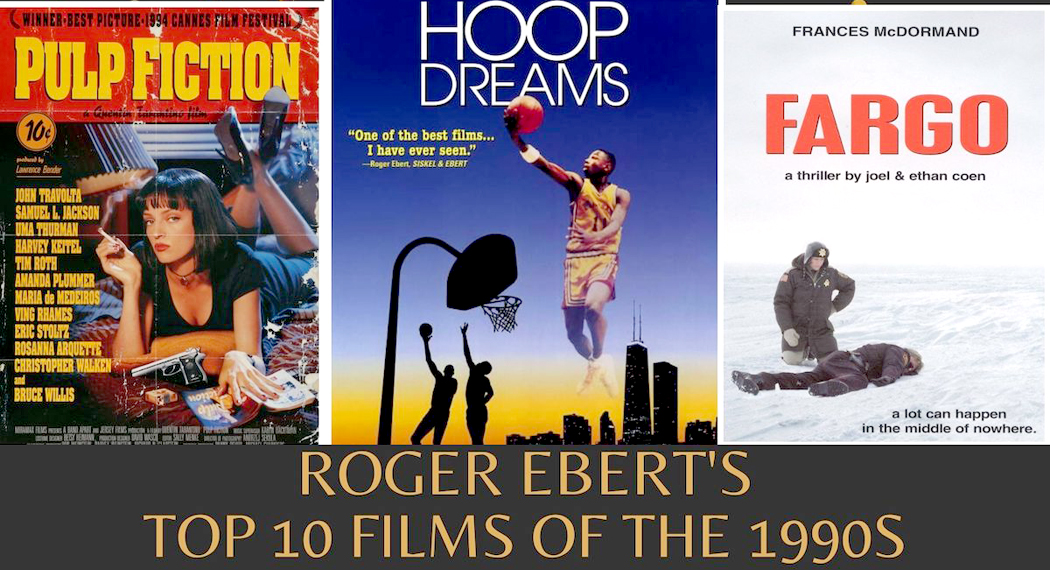
The keyboard is well represented, too. In addition to Rameau’s La Poule, there is Louis-Claude Daquin’s The Cuckoo and Francois Couperin’s Le Moucheron (“The Gnats”), to say nothing of Domenico Scarlatti’s Sonata No. 30 in E-flat, known as the “Cat Fugue,” with a tune that imitates a cat walking distractedly up a harpsichord keyboard (an early version, I guess, of Zez Confrey’s Kitten on the Keys).

 Then, there’s Georg Friedrich Händel’s Organ Concerto No. 13, known as “The Cuckoo and the Nightingale,” from 1739, with birdsong in the second movement. 

There’s no counting the birds, beasts and bugs in the music of Franz Joseph Haydn. He loved a good joke, and among his 104 symphonies and 68 string quartets (to say nothing of his 41 piano trios, 52 piano sonatas, and 126 baryton trios — not counting the additional 36 baryton works for that obsolete instrument with other pairings) you can find Symphony No. 82, “The Bear;” Symphony No. 83, “The Hen;” String Quartet op. 33, no. 3, “The Bird;” Quartet op. 50, no. 6, “The Frog;” Quartet op. 64, no. 5, “The Lark.” 

And in his magnum opus, The Creation, in Part 2, describing Days 5 and 6 of the biblical creation, he has the orchestra imitate multiple birds and animals, including an eagle, a whale, a stag, lowing cattle, and even a worm.

As we move into the Romantic 19th century, the animals are truly fruitful and multiply, beginning with the slow movement of Beethoven’s Pastoral Symphony, which ends with a cadenza that quote quail, nightingale and cuckoo. 

So, let’s make a quick list — as quick as it can be with such a long zoo parade. There is Schubert’s song, The Trout; Robert Schumann’s Papillon and the Prophet Bird; the braying donkey in Mendelssohn’s Overture to A Midsummer Night’s Dream; Chopin’s Etude, op. 25, no. 9, known as “The Butterfly Etude.” Not forgetting that it was said that Chopin’s “Minute Waltz” was inspired by the composer watching his dog, named Marquis, chasing its tail.

Cats screech over and over in the Cat Duet, attributed to Gioacchino Rossini (jury’s out on the authorship). 

To continue: There are birdsongs in the woodwinds in Bedrich Smetana’s Bohemian Woods and Fields; The Flight of the Bumble Bee, from the opera Tsar Saltan by Rimsky-Korsakov; The Lark by Mikhail Glinka; the Ballad of the Unhatched Chicks from Mussorgsky’s Pictures at an Exhibition; the “Dying Swan” and the “Dance of the Cygnets” from Tchaikovsky’s Swan Lake; and The Swans of Tuonela by Jean Sibelius. 

In Scandanavia also, we have, but Edvard Grieg: The Butterly; Little Bird; The Pig; The Horsefly and the Fly; and Cow Call. And from his contemporary Norwegian composer The Hare and the Fox by Harald Saeverud. 

Serge Rachmaninoff’s Etude Tableau, op. 39, no. 2 for piano is called “The Sea and the Gulls.” Enrique Granados wrote The Maiden and the Nightingale. And Richard Strauss caused some grumpiness and consternation in his staid German audience when, in the middle of his tone poem Don Quixote, he has the orchestra imitate a herd of sheep. But Strauss was no stranger to vulgarity: It is one of his strong points. 

Which brings us up to date with Saint-Saens’ Carnival of the Animals, which gives us, in order: a lion; hens and roosters; wild asses; tortoises, the elephant, kangaroos, fish in an aquarium, personnages a longue oreilles; a cuckoo in the woods; birds in the air (aviary); pianists practicing scales; fossils; the swan; and a finale that brings back many of the menagerie. 

But it’s not over yet. As we move into the 20th century (and the winding-up of the 19th), there are some very beautiful evocations of nature and the animals in it. Such as: Delius’s On Hearing the First Cuckoo in Spring. Or the fourth movement of his North Country Sketches, called “The March of Spring: Woodlands, Meadows and Silent Moors.” 

Ralph Vaughn Williams gave us one of the most beautiful violin show-off pieces in his The Lark Ascending. He also put some swarm sounds in the overture to his ballet The Wasps. Edward Elgar wrote for voices a very peculiar piece called Owls: An Epitaph. Pianist Leopold Godowsky gave us, in his Java Suite, a movement called “Chattering Monkeys.” 

Claude Debussy wrote Poissons d’Or (“Goldfish”) in his Images, Book 2, no. 3; and his counter-Impressionist Maurice Ravel wrote Oiseaux Triste (“Sad Birds”) in his Miroirs. Paraguayan guitar virtuoso Agustin Barrios wrote Las Abejas (“The Bees”). 

Ottorino Respighi took music from early composers and reworked and orchestrated it in his Gli Ucelli (“the Birds”), with movements called “The Dove,” “The Hen,” “The Nightingale,” and “The Cuckoo.” But he goes one better in his Pines of Rome, by including an actual sound recording of a real nightingale. (Tape recorded animal sounds return later in the century.)

Whole chapters might be given over to Gustav Mahler, who began his very first symphony with cuckoo calls, and inserted all sorts of animals, birds, and natural sounds into his music, including cow bells in his Sixth Symphony and a donkey braying in his Third, so say nothing of the sleigh bells in the Fourth, fish in his song Saint Anthony of Padua Preaches to the Fishes. They show up again in his Second Symphony. Nature is never far from the surface in Mahler’s music. 

But more than in Mahler, bird song is everywhere in the music of Olivier Messiaen. The man was obsessed with bird sounds. He used them often as the source of his thematic material (I hesitate to call them tunes), not simply transcribed, but often lowered in pitch, slowed down radically, or even played upside down or backwards. 

His 1958 Catalogue d’Oiseaux (“Catalog of Birds”) is a collection of 13 pieces for piano, each of which is based on the call of a different bird, running from the Alpine chough, the Eurasian golden oriole, the blue rock thrush and the tawny owl, through the woodlark, Cetti’s warbler, the common buzzard and the Eurasian curlew. The whole catalog takes just short of three hours to perform. 

Then, there is the Petites Esquisses d’Oiseaux (“Small Sketches of Birds”) from 1985, six short piano pieces, about 2 minutes each, that picture blackbird, skylark, thrush and robin. The L’Abîme d’Oiseaux (“Abyss of Birds”) is one movement from the Quartet for the End of Time. Le Merele Noire (“Blackbird”) is from Le Reveil des Oiseaux (“Dawn Chorus”), La Fauvette des Jardins (“Garden Warbler”) — on and on through his works, the birds are the foundation of his music. A devout Catholic, Messiaen saw birds and their song as emblematic of the beauty of God’s creation. 

Although, to be honest, it is usually hard to hear the music as bird calls, since they are so transformed by the composer. You kind of have to take his word for it. 

It’s hard to keep up with Bela Bartok, also. He wrote many short piano pieces, some of which bear the names of animals. But there’s The Diary of a Fly (Mikrokosmos vol. 6, no. 42), and the famous Bear Dance from his Ten Easy Pieces

But he is best known for the several “Night Music” pieces, from his Out of Doors suite for piano; the slow movement of his Music for Strings, Percussion and Celesta; and the middle of his Piano Concerto No. 3. Wikipedia lists some 20 compositions where Bartok employs his Night Music, which imitates the sounds of a Hungarian summer evening, with insects chirping, birds singing and frogs croaking. The effect can be miraculous. 

(Duke Ellington wrote his own versions of night music in his Queen’s Suite, with movements called “Sunset and the Mockingbird,” “Lightning Bugs and Frogs,” and “Apes and Peacocks.” I mention it here because, really, Ellington is classical music.)

Igor Stravinsky has elephants dancing in his Circus Polka, and nightingales warbling in his Chant du Rossignol. It has been reported that his Rite of Spring contains quotations from Russian folk songs about animals. I’m taking the musicologists’ word for that. 

Sergei Prokofiev has his own menagerie in Peter and the Wolf, and Malcolm Arnold attempted to add animals to Saint-Saens’ zoo with his own Carnival of the Animals, written for the comic Hoffnung Festival in 1960. His additions are: The Giraffe; Sheep; Cows; Mice; Jumbo; and Chiroptera (Bats) — the last of which is a joke, since the musicians “play” so high in frequency that “only bats can hear it.” The audience hears silence until a final tinkling on a bell. 

Several 20th century animal-musics were created as humor or jokes, including The Monk and His Cat from Hermit Songs, op. 29, no. 8, by Samuel Barber; The Cat and the Mouse by Aaron Copland; the Promenade (Walking the Dog), written by George Gershwin for the Fred Astaire film, Shall We Dance, and The Procession of the Cats on Solstice Night by Bohuslav Martinu. 

Then, there’s Ferde Grofe’s On the Trail from the Grand Canyon Suite, with its clopping hooves and braying donkey. 

The Critics

Francis Poulenc took on the grasshopper, bear, lion and roosters for his Les Animaux Modèles, a ballet from 1942 based on the fables of La Fontaine. 

I mentioned earlier Respighi’s recorded nightingales in The Pines of Rome. Alan Hovaness famously used recordings of the humpback and bowhead whales in his And God Created Great Whales. (George Crumb’s Vox Balaenae does not include actual whale songs, but uses electric flute, electric cello and amplified piano to imitate both whale songs and seagulls.)

And in 1972, Finnish composer Einojuhani Rautavaara wrote his Cantus Arcticus, subtitled Concerto for Birds and Orchestra, which uses recorded sounds of birds from northern Finland against a symphony orchestra. 

This list does not exhaust the trove of animal-inspired concert music, but it is what I could dig up without spending two years on a doctoral dissertation. It is a tradition that continues, both in a simple vein, as with Sally Beamish’s Songs from Hafez, which reference the nightingale, the peacock and the hoopoe, and the more avant-garde work, such as Chris Hughes’ piece for cello and bird recording, Slow Motion Blackbird, which repeats the blackbird call for six minutes, slowing down each bar of music 5 percent (without changing pitch) until it is a slow, almost unfollowable adagio. 

Most of this music is easily available, either on commercial recordings or through a YouTube video. Chirp chirp. 

Ouroboros: Infinity

When I was a boy, one thing divided us into tribes: Was Willie Mays the greatest baseball player, or was Mickey Mantle? (This was before Mantle’s legs gave out). 

And of course, this was a silly argument, first because there were many other great ballplayers at the time, but mostly because choosing the “greatest” anything is a meaningless endeavor. (Just in the 1950s, we’re counting Stan Musial, Duke Snider, Hank Aaron, Ernie Banks, Yogi Berra, Ted Williams, Gil Hodges, Jackie Robinson, Ken Boyer.) 

But for us kids on the sandlot, it was a clear choice between Mays and Mantle. Was Mays the better hitter? Was Mantle as good a fielder? And are we comparing each player at the height of his abilities? Are we comparing lifetime batting averages, number of home runs, percentage of votes to enter the Hall of Fame? In the era of sabermetrics, there are so many obscure statistics to weigh, it all becomes bogged down and pointless. (Who is best at hitting with a 2-and-1 count, on an overcast day with men on second and third — it can get quite specific, i.e. quite anal). 

By the way, I was a Mays guy. Perhaps I was swayed by the fact that my father hated the Yankees. He was National League all the way. 

It’s all really quite silly. Above a certain level, players just count as exceptional and comparisons are meaningless. I mean, who was the greatest pitcher? Sandy Koufax? Bob Gibson? Nolan Ryan? Greg Maddux? They were all so different, with different strengths, and playing for widely different teams and different eras. (I remember when Roger Craig lost 20 games for the NY Mets, but was still considered the team’s pitching ace — how can you measure his quality when playing for one of the worst teams ever? How many games could Gibson have won playing for the 1962 Mets? They went 40-120.)

Ranking is a game, but one that is ultimately meaningless. Let’s face it, the most mediocre ballplayer in the major leagues is still hugely talented. We’re talking gradients of excellence. 

All this comes to mind when I remember how classical music listeners talk similar nonsense over the “greatest” conductor or orchestra, or recording of the Mahler Second. 

I was guilty of such silliness earlier in my life. When I was in high school, there was no question in my mind that Arturo Toscanini was the greatest. I had all his Beethoven symphonies on LP. Later, having listened to a wider range of recordings, it was clear that Toscanini had his limitations. And not the least of these were the lousy quality of his recordings — they were hardly hi-fi. 

Open any Gramophone book of recording ratings and you will find a “top ten” and the “best” recording of any particular work. Top 10 lists are immensely popular as clickbait on YouTube. Critics argue endlessly about why this Mahler Ninth is the greatest and that one is just awful. 

But the truth is, that pretty much any recording you buy will give you the music you want, in a performance that is generally very good. Even a middling performance of Beethoven’s Fifth will give you 80 or 90 percent of what’s in the music. 

The arguing usually comes over trivial details that the critic considers essential: Was the tam-tam audible in the finale? Was the oboe in the second movement a bit squeaky? Was the tempo in the finale too fast, or too slow? We all have these benchmarks that define what we demand from a performance of a particular piece. But should that disqualify an entire performance? 

I have to fess up to a level of insanity here — I have 30 complete Beethoven symphony cycles (I used to own more, but have since divested of some). It was a decades-long quest for the ultimate set, the perfect lineup of Beethoven symphonies. Which is best? 

Well, now, I see them lined up on the shelf, and I realize they are all fine. They all deliver the goods. They are quite different, from Karajan’s smooth unctuousness to Hermann Scherchen’s outright weirdness. Toscanini (which I still own, now on CD) is quick, abrupt and rhythmic; Bruno Walter is gentle, humane, and warm. And so, at different times, in different moods, I will choose one over the other for the moment. But they are all perfectly good. Why rank them? 

Yes, there are some outliers, badly played or outrageously conducted — Listen to Sergiu Celibidache doing the Eroica and you wonder if you are playing the disc at the wrong speed — it’s the speed a novice orchestra might play for an initial sight reading. Glacial in a way that is just nuts. Or Roger Norrington, who conducts as if his bladder is bursting and he needs to get it all over with fast. (Norrington races through the adagio of Beethoven’s Ninth in 10 minutes; Bernstein in Berlin takes 20 minutes for the same music. You pays your money and you takes your choice.)

But the mainstream recordings, from George Szell to Andre Cluytens to Pierre Monteux to Joseph Krips, all give perfectly fine, reputable, performances, whether Beethoven, Brahms, Sibelius, Stravinsky or Shostakovich. They are excellent musicians with excellent orchestras (some, such as Maurice Abravenel, had less than excellent orchestras, but made them play on a level you can hardly credit). 

So, we search endlessly for that one performance that will send us into paroxysms of ecstasy, that single transcendental recording, and each CD we buy we hope will be that one. Wilhelm Furtwängler recorded Beethoven’s Fifth 13 times from 1929 to 1954 (most of them miserably low-fi, even amateur recordings), and the Furtwängler cult will search endlessly for a 14th, hoping it will finally fulfill their hunger for the ultimate, the one after which they will gladly give up life with a satisfied smile on their faces. 

It is widely opined that Klaus Tennstedt’s live 1991 recording of Mahler’s Sixth Symphony is more emotional, more tragic, more vital than his earlier 1983 studio recording with the London Philharmonic. And that’s probably true. But if you only heard the earlier version, you would not be aware of anything missing or lesser in urgency or power. 

Martha Argerich has a habit of recording the same few concertos over and over again (how many Beethoven second piano concertos do we need from her? She has recorded it at least 13 times, and I may have missed a few.) And some people swear one or another is “the best,” but they are all excellent, and whether you prefer her with Abbado or Dutoit or Sinopoli is nothing more than a matter or taste. If you own one and you like it, there is no reason to buy the others, unless you are part of the Argerich cult, and if so, there’s nothing we can do for you. (Classical music does tend to generate cults: Maria Callas, Celibidache, Arturo Michelangeli, Jascha Horenstein, Toscanini, and, above all, Furtwängler. Cult members will search world over for the one missing 1949 partial recording from a radio broadcast from Rio de Janeiro. The heart goes pitter-pat.)

(Just for the record, Argerich has recorded once with herself conducting the London Sinfonietta; and also with Vladimir Ashkenazy; Gabor Takacs-Nacy; Gabriel Chmura; Lorin Maazel, Charles Dutoit; Neeme Jarvi; Giuseppe Sinopoli; Claudio Abbado; Riccardo Chailly; Seiji Ozawa; Lahav Shani; and again with Takacs-Nagy Please make her stop. She’s wonderful, but she needs to branch out.)

Yes, you will undoubtedly develop favorites, conductors who play more to your tastes. I know I have mine. But I cannot in honesty say that the ones I like best are demonstrably better than the ones I have less affection for. Taste is a different issue from quality. Basically, with a few unfortunate exceptions, if a performance was good enough to justify the expense of being recorded, produced, distributed and promoted, it will be perfectly fine. You don’t need 30 complete sets of Beethoven symphonies. 

So, one should not worry about what performance, what orchestra or conductor you get. Chances are, it will give you what you need. Bernstein or Walter; Mays or Mantle — they were each great players and picking one over the other is just silly.

One of the most popular — but meaningless — excrescences in current culture is the explosion of Top 10 and Top 5 lists. They are everywhere, on the internet, in magazines and newspapers, and on TV. 

When I took an early buyout from my newspaper a decade ago, it was largely because, as a feature writer, I was increasingly asked to provide what are artlessly called “listicles,” that is, newspaper articles in the form of lists: “Five things to do in Sedona,” “Five best pancake toppings,” “Top five wines from Indiana.” 

The direction the newspaper was going was to avoid any actual writing of prose and substitute a quick list — easy to put together, popular with readers, and completely and utterly devoid of substance. I could see the handwriting on the wall, and decided it must be time to leave the profession. 

Of course, I am guilty of making such lists, too. We all are. For this blog I have written several lists, including the ultimate lists of the 50 greatest lists of all times (link here). My list of the Top 10 films of all time has at least 40 movies on it. Heck, my list of best foreign films counts 100 of them (link here). But I am now doing penance for my sins. 

Top 10 lists, such as the year-end lists by movie critics, are only just a record of the taste and opportunity of the critic in question: No critic has actually seen all the movies released in a given year, and the final choices depend entirely on the likes and dislikes of the reviewer. There is usually some overlap, but no two critics will offer quite the same list. Such lists are fun to read, and may be a vague guide to what films might be worth seeing, but as an ultimate judgment of quality and ranking, the lists are just smoke to blow away with time. 

There is no actual, objective, outside omniscient and divine judge to parse differences between, say The Godfather and The Godfather Part II. Above a certain level, it is all cream. 

Many of the artists who show up on such lists, whether actors or directors or costume designers, know full well that art is not a competition, and that comparing a great tragedy and a great comedy is worse than apples and oranges. Hilary Swank was voted best actress in 2000 for her role in Boys Don’t Cry, and it was a powerful and moving performance, no doubt. But was she quantifiably better than Annette Bening, Janet McTeer, Julianne Moore and Meryl Streep? They were all good — as were a passel of actors who had films out that year who weren’t even nominated. Should Moore consider herself a failure because Swank came out on top? Silly, of course. 

People working at that high a level of accomplishment are all beyond mere ranking. 

This came flooding back on me because lately, I’ve been immersing myself in recordings of Beethoven symphonies. When I first began listening to them, more than 50 years ago, I had the Toscanini set on LP, which I played on one of those ancient drop-front Sears Silvertone record players, and as a mere youth, thought Toscanini was the greatest conductor ever in the history of the universe anywhere. When you are young, you are prone to rash and categorical judgments. (I have always owned a set of Toscaninis, in its various release permutations and remasterings. I’m not ready to toss him overboard just because I have found others who also do well.) 

Since then, I have heard the music uncounted times in concert and even more often on recordings. For many years, in the middle of my time on earth, I foreswore them, having — as I believed — worn out my ability to hear them as anything but background music. I knew them too well; they were too often programmed at concerts. Another Beethoven Fifth? God help us.

But after taking a 30-year break (outside of the concerts I attended or reviewed), I have come back to them and can hear them all again with fresh ears. And they are a marvel. There is always something fresh to hear. 

I currently possess  26 full sets of the Beethoven symphonies, ranging from the historical (Mengelberg) to the historically informed (Gardiner) and when I listen to them, yes, I have my favorites, and could (if paid) produce a list ranking the top 10. But they would merely be the ones I, personally, like the best. If I am fair, I have to say that pretty much all of them deliver the goods. 

(The only two exceptions are a set I no longer own — the Roger Norrington set — which is pure ordure in a garden of blooms. I threw it away; and the recordings of Sergiu Celibidache, which are perverse, and which I keep, mostly as a party record, to play for friends as a joke). 

But I can put on a Pastoral by Josef Krips, or an Eroica by George Szell, and I am hearing Beethoven. The wayward rubatos of Furtwangler or the strict disco beat of John Eliot Gardiner both bring me worthy Beethovens. 

The fact is, while you may absolutely detest the oozy legato strings of Herbert von Karajan, or the granitic tempos of Otto Klemperer, they are all excellent performances, and if you only owned one set (heaven forfend) you could be completely satisfied. Monteux, Chailly, Zinman, Bernstein, Leinsdorf, MTT, Harnoncourt — any of them — all give excellent, if different performances of the symphonies. You can have your favorite, but you have to admit, none of them is negligible, and all have something to say. 

It is like having to choose between Rembrandt and Vermeer. Is one of the better? Stupid question. Is Titian a better painter than Monet? What is the greatest novel? War and Peace? Don Quixote? Madame Bovary? Ulysses? Á la recherche du temps perdu? C’mon, man, rankings are idiotic. 

As an art critic for 25 years, I got to visit hundreds of art shows, from major international exhibits in New York, Chicago or LA, down to children’s art in grade school, and it is not that I am saying it was all wonderful — some art is certainly more accomplished than other art — but that universal approbation is no indicator of value. 

Yes, Jeff Koons or Kara Walker may be the names on trendy lips, and we may think of them as among the leading artists of our times, but I saw work by local artists that, given the right breaks, could be just as famous and lauded. There are tons of artists — painters, actors, musicians — just as good as some of our most praised, but who either lacked the vaulting ambition for publicity, or never had the dumb luck to have been discovered by some influential critic. 

Is there any reason that David Hockney is ubiquitous and that Jim Waid is not? Waid is clearly as good a painter, and his canvases as original and distinctive, yet Hockney jet sets, and Waid paints in his studio in Tucson, Ariz. (I don’t mean to imply that Waid has no reputation — he does nationally — but nothing like the magazine-cover familiarity of Hockney). And I could find a dozen artists from any of the United States whose work would be as worthy. 

Sports may seem easier to listify, as we can always quantify the ten highest batting averages for any season or for career, although any real baseball fan knows that batting average doesn’t tell the whole story. And while we might compile a list of the greatest pitchers of all time, and there might be some agreement on the names, ranking them from the best on down will depend on one’s team allegiance or the era in which you most closely watched the game. Walter Johnson on top? Nolan Ryan? Bob Gibson? Sandy Koufax? Mad Dog Greg Maddux? Again, at that level, it’s all just opinion. 

Top 10 presidents? Again, there is cream at the top, and some sludge sinking to the bottom — and a fair consensus for top and bottom, even if the vast middle ground is murky, but how do we rank them all? Was Polk a better president than Hayes? Does Grover Cleveland get two spots on the list? Or just one, combined? 

List making is addicting, perhaps, but it is also empty calories. When I go scrounging through YouTube offerings, I am besieged by lists. They are click-bait and I have long ago learned to ignore them. Who was the worst mass-murdering tyrant in history? Who was the best defensive player in basketball? What are the Harry Potter books listed from best to worst? I don’t care. If you have something substantive to say about Hitler or Genghis Khan, about Bill Russell, or about the philosopher’s stone, then write something meaningful. Lists are an easy way to avoid engaging with actual thought. 

And I’ve made a list of them… 

Yesterday, I accidentally came across a YouTube video of Leonard Bernstein conducting the Vienna Philharmonic in the finale of Joseph Haydn’s Symphony No. 88, which is one of the composer’s bounciest, most ebullient movements, and therefore one of the bounciest, most ebullient in all music. And I was transfixed: After a tiny initial tempo beat with the baton, the conductor dropped his arms and stood there, letting the orchestra play the entire movement, indicating directions entirely with facial expressions. (Link here). 

He was conducting with his face. It was brilliant. Every fleeting emotion played across his face, as if he were the music. And each expression came a half-second before the orchestra reacted, so Bernstein wasn’t following the music, but leading it. Extraordinary. It was one of the best performances of that finale I’ve ever heard, with a naturalness and clarity, but more important, a joy and spontaneity. 

I go back a long way with Lenny. When I was a mere bairn, I watched him on the Young People’s Concerts and I remember his explanation of Beethoven’s Fifth Symphony on the Omnibus TV show. I was just six years old in 1954, so I don’t remember much of what he said, but I remember the set, with the score of the symphony on the floor, so he could position his players on their staffs to show what they were doing. I was fascinated. 

Since then, Lenny has been a part of my life. Sometimes a small part, in the background, sometimes I spent extra money to buy one of his recordings over a cheaper Turnabout or Vox recording, with the trust that I would be rewarded by something special. I usually was. 

I heard Lenny conduct at New York’s Philharmonic Hall (later Avery Fisher Hall, now David Geffen Hall — it changes as much as the names on ballparks). I remember a rousing version of Debussy’s La Mer with the New York Phil. But mostly, I heard Lenny via recordings, first LP and then CD. There were also videos and TV presentations. 

I don’t deny that Lenny talking could be hard to take, with that resonant basso voice that he seemed to be in love with, and sometimes a ham actor’s thesbianicity. But if you can get past that surface, what he says is almost always revelatory, precise, and true. I listen to his Harvard lectures over and over, and despite some tedious Chomskian linguistic folderol, really insightful. (He drops the Chomsky in the latter lectures, thank god). 

But it is the music that really counts. For many, Bernstein was the great podium presence of the second half of the 20th century. The singer Christa Ludwig, who performed with Lenny often, once said she worked with three truly great conductors: Karl Böhm, Herbert von Karajan and Bernstein, but the difference was, she said, “Bernstein was a genius.” 

Others have commented that when he conducted, he “became” the music. A member of the Vienna Philharmonic told my old friend, the late music critic Dimitri Drobatschewsky, “Name one other conductor who, just by standing in front of the orchestra, could make them play better than they thought they could.” Bernstein seemed to have a special relationship with the Vienna Phil, and many of his later recordings were with them.

Lenny had his detractors, who thought he was showing off in front of the audience and orchestra, or that he exaggerated details, or — especially later in his career — dragged tempos. But, as critic David Hurwitz has said many times, “Every time I think Bernstein has distorted something, I look in the score and see that it is exactly what the composer had notated. He was truer to the score than almost any other conductor I know.” 

It is true that for Lenny, as for Old Lodge Skins in Little Big Man, “Sometimes the magic works, sometimes it doesn’t.” But the best recordings have something to give that few others can match: commitment, power, emotion, persuasiveness. 

I have chosen 10 of Lenny’s recordings that for me summarize his best. There are many others. He was especially great with Haydn, with Beethoven, with Mahler, with Stravinsky, with Shostakovich. And Modern music — if it was tonal or polytonal, like Milhaud — he made it all just bounce. 

We’ll start with Haydn’s Paris Symphonies, that is symphonies Nos. 82-87, including “The Hen” and “The Bear.” It is pretty well consensus that Bernstein’s Paris Symphonies are the reference recordings. Sprightly, bright, witty, energetic and beautifully played. Bernstein was always good in Haydn, and I would have listed his Creation here, or his Nelson Mass or Tempore Belli Mass. You can’t go wrong with Bernstein and Haydn. In comparison, almost everyone else just feels soggy. 

In roughly chronological order, we come to one of his most controversial recordings ever: the live recording of Beethoven’s Ninth Symphony from 1989 and the fall of the Berlin Wall. Bernstein substituted the word “Freiheit” (“freedom”) for Schiller’s “Freude” (“joy”) in the finale, caught up in the moment’s exhilaration over the fall of East Berlin and Communism. Actually, he only does it once, and later reverts back to the original. But it is jarring when you hear the baritone intone it at the start of the finale. Yet, I am listening to it now as I write this and it is an absolutely thrilling version of the Beethoven’s greatest symphony. Members of six different orchestras came together and meld perfectly under Lenny’s baton. It is my go-to version of the symphony. It is a symphony played so often (I can’t count the number of times I’ve heard it live) that it has lost some of its magic as occasion, but here, it magnifies that sense of occasion. Despite the mutilation of the “Freiheit,” but because of the intensity and emotional engagement of the 20-minute Adagio — more like a prayer than anything else. (Roger Norrington takes it in 10 minutes of throw-away carelessness.) 

Then, there’s Berlioz’s Grande Messe de Morts, or Requiem. There are few decent recordings, and most fail for exactly the same reason: They attempt to make sense of the thing, toning it down into something “normal.” That is the issue with Colin Davis’ version. But Lenny lets it all hang out. What is fevered and hysterical, comes across as fevered and hysterical, just as Berlioz wrote it. 

If there is any symphony from the 19th century more Haydnesque than Bizet’s Symphony in C, I have yet to discover it. It is fresh, bright, tuneful and unendingly happy. The composer wrote it in 1855, when he was 17, and it remained unplayed until 1935 and I feel pity for all those audiences who, for 80 years could have been enjoying it, but never had the chance. Lenny was the perfect conductor for its joie de vivre and rhythmic snap. It is as if Bizet wrote it with Bernstein in mind. 

Lenny recorded Tchaikovsky’s Sixth Symphony at least twice, once with the New York Philharmonic, in 1964 for Columbia, and then again in 1987 for Deutsche Grammophon, with the same orchestra. What a difference. The first — an excellent version — takes about the usual 45 minutes. The second comes in at just a chip under an hour. Most of that extra time comes in the finale, which in the second recording is wrenching and heartbreaking. One critic wrote that it “devastates the emotions. … At the end of the last movement, the despair is complete.” Of course, the performance has its detractors, with some finding it distended and, as one always hears the complaint against Lenny, “is more about the conductor than the composer.” Poppycock. This is Tchaikovsky titrated and distilled into pure essence. 

Lenny recorded Stravinsky’s Rite of Spring many times, also, but there is no quibbling about the one to go to. It is his first, from 1958 with the New York Phil. When the composer first heard the recording, his only response was “Wow!” Lots of conductors have the measure of the Rite, but there is a rhythmic vitality, a violence and explosiveness to the 1958 recording that has never been matched, even by Lenny. 

Just seven years after Stravinsky’s blast, came Darius Milhaud’s Le Boeuf sur le toit (“The Bull on the Roof”), which he says he wrote as “fifteen minutes of music, rapid and gay, as a background to any Charlie Chaplin silent movie.” It is a piling up of Brazilian tunes, in several keys at once, and is as bright and toe-tappy as anything. Indeed, it becomes an ear-worm and you will be hearing its tunes over and over in your head for the rest of the day. The Bernstein recording also features La Création du Monde from 1923, which is a fully realized jazz composition for a ballet about an African creation story. This is Lenny in his element. You can just see him dancing on the podium with happiness and joy. 

Then, there is another highly controversial recording — his DG performance of George Gershwin’s Rhapsody in Blue. Lenny, playing the piano part himself, plays it not as a jazz riff, but as if it were, from bottom-to-top, a classical piano concerto, rather like Ravel’s Concerto in G. Critics miss the easy jazzy element of famous performances by Earl Wilde or Oscar Levant, but Bernstein’s version seems to those who adore it (as I do) as a perfectly genuine alternate view. And it is gorgeous. Did I mention that? Absolutely gorgeous. 

Dimitri Shostakovich wrote his massive Symphony No. 7 “Leningrad” during the German siege of that city in 1942. It is a piece that defeats many orchestras and conductors; it is very difficult to keep it from diffusing into long, undigested sections. Lenny keeps it going as a single directional line from beginning to glorious end, and the Chicago Symphony has the cojones to perform what is asked of them. Almost everyone agrees, this is the Leningrad Symphony to hear. 

Finally, I’ve kept last (and out of order), Mahler, which sometimes seems like Bernstein’s personal property. It isn’t, of course, but he brings something special to his Mahler performances, and none more so than with the Ninth, which he recorded at least six times (1965 NY Phil; 1971 Vienna Phil; 1979 Berlin Phil; 1979 Boston Symphony; 1985 Concertgebouw; 1985 Israel Phil). It is perhaps the Mahler symphony Bernstein felt closest to. Only four of these are genuine releases, not bootlegs, and among them it is hard to choose, but I suppose I migrate to the late Concertgebouw recording. Berlin has the intensity, but there is a major cock-up in the finale when the trombone section failed to play in the climax (apparently an audience member had died of a heart attack directly behind the brass section and there was some commotion that distracted the players). But listening to any one of them seems as if the music becomes more than music; it is a direct communication from one soul or heart to another. There are other great performances of the Ninth — it seems to draw out the best in most conductors — but there is something extra in the Bernstein versions, something more immediate, more direct. 

That is a list of 10 (or more), but I feel I’ve left out so much. There’s his Bartok Music for Strings, Percussion and Celeste; there’s two complete surveys of Beethoven symphonies; there’s his Copland, his Ives, his Schumann, his Sibelius. And so much more. But I believe the 10 I’ve chosen are not just great, but peculiar to Lenny — and I choose the word carefully. He was an idiosyncratic conductor, but all the personality that went in to his performances meant they are often memorable in a way more straightforward ones are not. 

Many moons ago, when I was a snotty college kid, I went through a period of disdaining Lenny. I bought the canard that he was shallow, heart-on-sleeve and bombastic. I wuz a idjit. One should never let the opinions of others block your ears. There is a world of difference between words and sounds, and the sounds are always more meaningful. I am older now, have experienced a great deal more of living, discovered depths in myself I hadn’t understood, and now Lenny’s insistence on finding the marrow is what I value. My ears are opened to what is gifted to me. 

Click on any image to enlarge

When piano sonatas first became popular, in the 18th century, they were primarily written for home use, for talented amateurs to play for evenings with the family. Some sonatas were obviously more difficult than others, and a few by Haydn or Mozart, required a professional level of ability, and indeed, were written for the composers themselves to show off their performing abilities. But most were written to be sold as sheet music, and that’s how their composers made their livings. 

At the time, there were no public piano recitals to attend. There were private performances given for the aristocracy. Public concerts tended to feature concertos and concert arias, with maybe a little symphony or two thrown in. But no one bought tickets to hear a piano sonata — why? when you could play them yourself at home after dinner.

Then came Beethoven. 

Piano sonatas also used to run from perhaps 10 minutes to 15 or 20 minutes. Mozart’s C-major sonata (K. 545) comes in three movements. The first runs a tad over two minutes; the second just under four minutes; and the finale about a minute and a half. The bigger sonatas, such as his Sonata in A (K. 331) with the famous Ronda a la Turca, comes in at about 14 minutes, as played by pianist Mikhail Pletnev. 

Then came Beethoven, the revolutionary pounder of the keyboard, who shocked his contemporary listeners with the power, difficulty and length of his piano sonatas. The Appassionata Sonata of 1805 is devilishly difficult and a bit over 21 minutes. 

Then there’s the Hammerklavier Sonata of 1818, which is twice as long (Barenboim’s most recent recording takes 50 minutes) and 10 times more difficult, ending with a giant double fugue that confused his first listeners. What the heck is going on? It’s the original knucklebuster. Just look at that pile of notes:

Things changed after Beethoven. The 19th century saw fewer piano sonatas, but much bigger and more difficult specimens. You could say that Beethoven seems to have presented a challenge to all those who came after him: how to live up to his example. 

And the example he gave was for a longer, more complicated sonata — a kind not to be played by prosperous daughters of the middle class after dinner, but by traveling virtuosi giving piano recitals to a paying public. Franz Liszt began the practice, but the long, knucklebusting piano sonata was established. 

There were less ambitious works written, and the standard for most of the 19th century was the character piece, not the sonata. These were short catchy pieces sometimes singly and sometimes strung together in a suite, such as Schumann’s Carnivale or Tchaikovsky’s The Seasons

This was the heyday of Chopin’s waltzes, mazurkas and polonaises, of Grieg’s Lyric Pieces, of Brahms’ intermezzi and capriccios. 

And when there were sonatas, they went big. They became symphonies for the keyboard. 

I’ve chosen six of these knucklebusters as exemplars. There were more, but they haven’t joined the repertoire of regular performances. But these six as regulars of the recital hall. 

I’ve also appended a list of my favorite recordings of these sonatas. Notice, I did not say “best.” There are too many CDs out there and I haven’t listened to them all (although I have come close with the Hammerklavier — I once owned 21 complete sets of Beethoven piano sonatas and another five sets of the late sonatas by themselves, so I’ve heard quite a few). I’ve only listed recordings I have listened to. 

Beethoven Sonata No. 29 in B-flat, opus 106, “Hammerklavier”

Beethoven was at the height of his fame after the premiere of his Seventh Symphony, but the years that followed were thin ones for the composer. He was tied up in endless legal difficulties over his nephew, Karl, and was suffering from endless bouts of gastritis. He produced little between 1813 and 1818. But then came the final flourishing of late quartets, late piano sonatas and, of course, the Ninth. 

The first big explosion was the “Hammerklavier” sonata, that giant monstrosity of pianistic torture. It begins with a grand military fanfare, makes fun of the same in the teensy second movement, reaches the heart of things in a 20-minute adagio and concludes with a monumental fugue which demonstrates every trick in the book of fugue writing —- play the tune upside down, play it backwards, slow it down, speed it up, slow it down upside down, speed it up backwards and end it all with an explosion of hiccups and trills. 

It was the longest piano sonata written to that point and still one of the most challenging. 

It is the adagio that holds the key and the emotional power of the sonata. It has been called a “mausoleum of collective sorrow,” and “the apotheosis of pain, of that deep sorrow for which there is no remedy, and which finds expression not in passionate outpourings, but in the immeasurable stillness of utter woe.” It is that rare sort of music that you inhabit rather than simply listen to. 

My favorite recording, since I first heard it 50 years ago is also the first recording made, in 1935, by Artur Schnabel. It has been in print since it was first made and despite being in rusty sonics, comes across clearly as music of the most profound sort. 

If you want more modern sound, I recommend the 1970 recording by Rudolf Serkin. In completely modern sound, I love — especially the adagio — by Daniel Barenboim in his 2012 release of the complete sonatas. 

Schubert Sonata No. 21 in B-flat, op. posthumus, D. 960

When Franz Schubert reached the age when Mozart had died, he’d been dead for four years already. Mozart died at age 35 and mourned as a genius who died too soon. Schubert died at 31 and we can only mourn the lost of what he could have written in those missing four years, to say nothing of what we could have had if he had lived a normal life span. 

As it was, in the last year or so of Schubert’s life — when he knew he was dying — he produced a stunning series of works of such profound depth and beauty, it can only be called a miracle. There were the final three string quartets, the C-major Quintet, and the final three piano sonatas. If all we had from Schubert were these works, he would be given a first-class ticket at the front of the bus with Bach, Mozart, and Beethoven. 

The final sonata, in B-flat, is one of the longest written by that time, rivaling Ludwig’s “Hammerklavier.” It, too, has a central slow movement of intense emotion. Arthur Rubinstein, who played the sonata as well as anyone ever has, said of the adagio, “This movement is like death. There is nothing else as close as this music that shows us what death feels like.”

Rubinstein recorded it twice, only a few years apart, but it is his first, from 1965, that I think is the best ever. There is a gracefulness and a humanity in the playing that is uniquely Rubinstein’s. 

There are tons of other performances, from everyone from Horowitz (a bit clangy) to Alfred Brendel (a bit stodgy). But I also recommend the versions by Radu Lupu and by Mitsuko Uchida. 


 Liszt Sonata in B-minor

Franz Liszt is the guy who invented the piano recital: people paying good money to hear a pianist on stage all by himself, amazing them with his showmanship and technical brilliance. Liszt was the equivalent of a rock star in his day. Oh the women! Oh the humanity!

A lot of what Liszt wrote is surely just showboating — “Look what I can do!” But he wanted to establish his bona fides, also, as a great composer, and among those things he wrote of more serious intent is his gigantic Piano Sonata in B-minor. 

Written in 1853, it divided the listening audience in two, half hating, half loving it. Brahms fell asleep while hearing it. The critic Eduard Hanslick said “Anyone who has heard it and finds it beautiful is beyond help.” Another German critic, Otto Gumprecht, referred to it as “an invitation to hissing and stomping.” 

Liszt sent Clara Schumann a copy of the sonata. In her diary she described the sonata as “a blind noise … and yet I must thank him for it. … It really is too awful.” 

Yet, the more avant-garde audiences found it thrilling, adventurous and exciting. Richard Wagner loved it. And today, it is a staple of the concert repertoire. I have heard two great live performances of it, first by Emil Gilels and more recently by Andre Watts — both overwhelming experiences.

My favorite performance is by Ukranian pianist Valentina Lisitsa. Too many upstanding and earnest pianists have attempted to overcome the showmanship and flash in Liszt to, supposedly, “find the music.” But Liszt without the dash and flash isn’t really Liszt. The exhibitionism is built into the score, and Lisitsa’s Liszt (not just in the sonata) is the perfect presentation of what Liszt is supposed to be. It’s louder, faster, more dazzling. (Hence, Lisitsa is sometimes pooh-poohed by the snobbier critics).

If you don’t mind a slightly older audio sound, you also can’t go wrong with Vladimir Horowitz, who also knows what this music is about. Finally, I treasure the CD of Watts playing the sonata, with panache and taste, which reminds me of hearing him do it live. 

Brahms Sonata No. 3 in F#-minor, op. 5

We think of Brahms as the old man with the beard spattered with cigar ash, but he was young once, full of piss and vinegar, and at the start of his career he wrote three monumental piano sonatas, opuses 1, 2, and 5. Each busting knuckles with the best of them. They are big, even by the standards of the time. 

The third is the one that caught on. He wrote it in 1853, the same years as Liszt wrote his sonata, and when he was just 20. It is vast, passionate, and gawky. It’s aggressive opening uses the whole length of the keyboard from booming bass to tintinnabulating treble. The second movement is tender andante inspired by a poem about pale moonlight and love. A rumbling scherzo follows and then an extra movement thrown in — a “recollection” or “remembrance” (“Rückblick”) that recalls the sweet andante with sweet nostalgia. (Did I mention that through all five movements, there is also a subtle recollection of the Dah-dah-dah-Dum of Beethoven’s Fifth Symphony — a ghost in the mechanism). Finally, an agitated rondo finale. The contrast between the more assertive segments and the more quiet, thoughtful parts give this sonata a sense of encompassing the range of human thought and emotion. 

No one plays Brahms better than Arthur Rubinstein. Period. Brahms is his mother tongue and compared with him, every other pianist, no matter how good, is speaking a second language in Brahms idiosyncratic keyboard style — the opposite of the natural pianism of, say, Chopin. But Rubinstein makes it flow and sing. 

He recorded it twice. The more recent, from 1959, is in better sound, so it is my first choice, but I have to put the 1949 version in as my second choice. There are many other good recordings of the sonata, but the only one which comes close to Rubinstein (that I have heard) is by Helene Grimaud. 

Ives Sonata No. 2, “Concord, Mass. 1840-1860” 

England has a centuries-long tradition of eccentrics, but America, in contrast, has its crackpots. Charles Ives was one of them. 

He began writing his second piano sonata in 1904, but didn’t finish it until 1915. I use the word “finished” provisionally, because after it was published, in 1920, Ives continued fiddling with it, rewriting it and republishing it in 1947. It was not performed, in full, before a paying public until 1939. And each performance after was slightly different, partly because there are ad lib sections of the score, and partly because Ives kept jiggering with it. He said it was never meant to be finished, but always to be a work in progress. 

Oh, and it comes with a 120-page preface, called Essays Before a Sonata, in which he discusses not just the music, but the whole of the Transcendentalist movement in New England in the 19th century. 

Ives wrote the work was his “impression of the spirit of transcendentalism that is associated in the minds of many with Concord, Massachusetts of over a half century ago. This is undertaken in impressionistic pictures of Emerson and Thoreau, a sketch of the Alcotts, and a scherzo supposed to reflect a lighter quality which is often found in the fantastic side of Hawthorne.”

The first movement, “Emerson,” is quite craggy, but there is humor in the following “Hawthorne,” and quotes from Beethoven’s Fifth, played after dinner on a parlor piano, in “Alcotts,” and finally a quiet, moody reflection of Nature, with a capital “N” in “Thoreau.” 

I got to hear Jeremy Denk play the Concord Sonata at Zankel Hall in New York, in a program that also included the “Hammerklavier.” Back to back in the same recital was more than impressive: It was like watching someone run a marathon in the morning and after lunch complete an iron man competition. It was exhausting. For a recording of the sonata, Denk is my man. 

But I also have a soft spot for a recording I have cherished for almost 50 years, first on vinyl and now on CD — Nina Deutsch in a Vox Box with a host of other Ives piano music. She brings a slightly softer edge to the Ives. And there is the original recording, made in 1949 by John Kirkpatrick, who first championed the piece. 


Prokofiev Sonata No. 7 in B-flat, op. 83

Schubert had his final three sonatas; Brahms had his first three. Knucklebusters seem to like coming in threes. Serge Prokofiev wrote his group of three during World War II, and are hence often grouped as his “War Sonatas.” Each is a job-and-a-half to tackle, and any of them could be chosen to represent Prokofiev as a knucklebuster. But the one that has become popular is the Seventh, in the middle of the trio. 

The sonata is usually seen as a reflection on the war, but, like so much Soviet music of the time, it holds an unspoken reference to the terror under Stalin. Prokofiev was friends and working colleague with theater director Vsevolod Meyerhold, who was arrested, tortured and murdered by the NKVD in 1939. Meyerhold’s wife, the actress Zinaida Reich, was stabbed 27 times in her apartment after Meyerhold’s arrest, also by the NKVD. Prokofiev (like Shostakovich) constantly feared they might come for him, also. He wrote a panegyric cantata “To the Glory of Stalin” for the dictator’s 60th birthday, in hopes to be left alone, but also wrote this piano sonata, in a more personal style, to maintain his self-respect. 

The first movement is a rough and tumble Allegro Inquieto. The second movement, Andante Caloroso, quotes a song by Robert Schumann, with lyrics that read, “I can sometimes sing as if I were glad, yet secretly tears well … everyone delights, yet no one feels the pain, the deep sorrow in the song.” It is one of the most beautiful moments Prokofiev ever wrote.

That is all followed by the toccata-like finale, Precipitato, which explodes and doesn’t relent until the final pounding chords. It is an angry, propulsive moto perpetuo, with an obsessive repetition in the left hand of a figure in the odd time signature of ⅞. It beats and crashes over and over till audience and pianist are exhausted. 

I heard Maurizio Pollini play the Prokofiev Seventh in Los Angeles many years ago in another monumental program (which also included all the Chopin Preludes and ended with Stravinsky’s Three Scenes from Petrushka). Pollini was great. 

But my first choice remains a dark horse: Barbara Nissman, on a disc with all three of the War Sonatas. Nissman makes the music less brutal, more musical, and I have loved this disc since I first got it in 1989. Nissman was the first pianist to record all the Prokofiev sonatas on CD. The first recording of the Seventh Sonata, by itself, was by Vladimir Horowitz, and it is still a show-off piece. And there is also a great recording by Pollini. 

Not on the list

These six pieces hardly exhaust the 19th century’s love of the big and difficult piano piece. I stuck with sonatas. I could have included Schumann’s Fantasie, op. 17, which could be considered a sonata. I could have included Cesar Franck’s Prelude, Choral et Fugue, which could also pass as a sonata incognito. Or either of Serge Rachmaninoff’s piano sonatas, which are clearly knucklebusters — but not so firmly established in the repertoire as the pieces I have chosen. Some will complain I didn’t include Alkan, but his music will probably never be generally popular. 

You may have your own candidates, either for compositions or performances. These are mine.