Archive

Tag Archives: bernstein

Until relatively recently, 20th century concert music was a tough sell. It had the reputation of being dissonant, noisy, difficult, and unpleasant. It was a century that began with Arnold Schoenberg dispensing with harmony and Igor Stravinsky upending rhythm, followed by a World War that knocked the complaisance out of any rational being and told us that the coming century was going to be anything but calm and easy. 

A number of composers felt that music needed to reflect the mood of the angst-ridden age. 

But even Schoenberg admitted “There is still plenty of music left to be written in C-major.” He didn’t believe his 12-tone revolution would destroy all tunes to come, but was simply a logical conclusion to music history from Bach through Wagner, from tonality through chromaticism to atonality. And we shouldn’t blame poor Arnold for all the dreary ruckus that followed: His own music is quite emotional and beautiful, even if it often requires some serious commitment from his listeners. 

He was right about one thing certainly: There was plenty of music written in C-major, throughout the century. And F-major and D-minor. In fact, most of the music written in that century was based on familiar scales, albeit with plenty of playing around and trying new ways to use them. 

 It’s just that the music-industrial complex, so to speak, was hijacked around mid-century by a clutch of academically-minded composers — the “Darmstadt Mafia” — insisting that serialism was the only music to take seriously, and that the more unlistenable it was, the greater it must therefore be. (Some of these composers did write interesting music in that style — it wasn’t a complete loss — but they looked down their noses at anything that might stink of a tune.) 

And so, contemporary music turned its back on the concert audiences and those composers wrote only for other composers of their ilk, and audiences shrunk from any concert program that insisted they listen to the stuff. Modern music acquired a very bad reputation. 

But I find that after 60 years of concert-going and music absorption, I listen to 20th century music more than that of any other era. It is music that speaks directly to me. Oh, I listen to bunches of Haydn, Mozart, Beethoven, Brahms and Tchaikovsky, but the plurality of my music listening edges to the century in which I grew up. 

So, I wanted to create a list of representative compositions from the century in question and present them as a course in great music that anyone can listen to and enjoy. 

I went through my collection of thousands of CDs and chose 30 pieces to offer. I listened to each one, in order, to refresh my memory — and to flat out enjoy them all over again. 

The roughly chronological list begins with a surprising entry. Most people think of Ives’ music (if they think of it at all) as noisy, crashing, impish tomfoolery. But Ives was a well-trained musician, with a degree from Yale University. His Symphony No. 2 is pretty tame, except for his borrowing of familiar popular tunes, and a raspberry at the end. 

Here is my list:

1900-1920

Charles Ives (1874-1954) — Symphony No. 2 (1902; premiered in 1951) (42 minutes long). Performance listened to: Eugene Ormandy, Philadelphia Orchestra, recorded 1973.

Ives studied under the respectable, if stuffy Yale professor Horatio Parker, and after graduating in 1898, began working on his second symphony (the first was his senior thesis composition for Parker) and included bits from Camptown Races, Turkey in the Straw and Columbia the Gem of the Ocean run through a kitchen blender. He finished Symphony No. 2 in 1902, although, with Ives, he was never completely finished and continued tinkering until his death in 1952. The symphony wasn’t premiered until Leonard Bernstein and the New York Philharmonic played it in a radio performance in 1951. The house-bound but still cantankerous Ives heard it on his radio in Connecticut and his response was that he spit. 

I listened to Ormandy’s version from 1973. The recordings listed here are not my choices as “best” — although they are all good — but merely the ones I had to hand when I started this project. 

Frederick Delius (1862-1934) — On Hearing the First Cuckoo of Spring (1912) (7 minutes long). Performance: Thomas Beecham and Royal Philharmonic, recorded 1958.

Delius’ score instructs, “With easy flowing movement,” and the quiet, peaceful evocation of the countryside (presumably English) and its birdcalls, it is a calming balm for a tussled soul. Originally, it was one of Two Pieces for Small Orchestra, the other half being Summer Night on the River. Beecham championed the composer’s music and his performances of the music are definitive.

Manuel de Falla (1876-1946) — Nights in the Gardens of Spain (1916) (21 minutes long). Performance: Arthur Rubinstein, piano, Ormandy, Philadelphia Orch., recorded 1969.

Falla was an Andalusian composer and the quasi-Impressionist Nights in the Gardens of Spain functions as a kind of piano concerto, with three movements, each describing a different Andalusian garden. Rubinstein heard it first soon after its premiere in 1916 and performed it regularly after that.   

Serge Prokofiev (1891-1953) — Classical Symphony (1918) (13 minutes long) Performance: Ormandy, Philadelphia Orchestra, recorded 1961.

Prokofiev’s Symphony No. 1 is the Sara Lee of symphonies: No one doesn’t love it. It is a jaunty, energetic gloss on the Classical-era symphonies of Haydn, seen through the “wrong-note Romanticism” of the composer’s style.  

Gustav Holst (1874-1934) — The Planets (1918) (50 minutes long)

 Performance: Ormandy, Philadelphia, recorded 1975.

Marketed as “space-age music,” the intent of Holst’s seven-movement suite is astrological, not astronomical, and each movement is a musical description of a psychological type. It has become enormously popular, and it has been recorded more than 80 times, first in 1926 with the composer conducting.  

Igor Stravinsky (1882-1971) — Pulcinella (1920) (39 minutes long) Performance: Claudio Abbado, London Symphony Orchestra, recorded 1979.

Stravinsky took some old compositions by 18th century composers and reworked them into bright, colorful Stravinskian cogs in what Leonard Bernstein once called “Uncle Igor’s Asymmetry Machine,” giving them new life as a ballet score, complete with voices. 

1920s

Ralph Vaughan Williams (1872-1958) — The Lark Ascending (1921) (16 minutes long) Performance: Zina Schiff, violin, Dalia Atlas, Israel Philharmonic, recorded 1989.

Poet George Meredith wrote of the lark in his poem from 1881, “He rises and begins to round, He drops the silver chain of sound…” and Vaughan Williams gives us the violin and orchestra version, with the British pastoral, And whose primary intent seems to be the creation of simple beauty.

Darius Milhaud (1892-1974) — La Création du Monde (1923) (17 minutes long) Performance: Simon Rattle, London Sinfonietta, recorded 1986.

European composers began hearing jazz and they loved it. Milhaud even moved to Harlem for a while, to soak it all up. One of the best translations of jazz to the classical idiom is his Création du Monde, with its resonant  saxophone solo at the beginning. 

Arthur Honegger (1892-1955) — Pacific 231 (1923) (6 minutes long) Performance: Charles Dutoit, Bavarian Radio Symphony, recorded 1985.

A steam locomotive begins to move, gathers speed, churns along and comes slowly to a stop, in this propulsive tone poem to modernity. Trains have been a theme in 20th century music, from Duke Ellington’s Happy-Go-Lucky Local to Villa-Lobos’ Little Train of the Caipira. Chug-chug. 

Ottorino Respighi (1879-1936) — The Pines of Rome (1924) (20 minutes long) Performance: Ormandy, Philadelphia, recorded 1958.

There were no flying humpback whales in Respighi’s original score; blame Disney for that. But what you do get are rousing tunes and some spooky catacomb music, with a grand finish, the kind that gets you out of your chair cheering. 

Jean Sibelius (1865-1957) — Symphony No. 7 (1924) (22 minutes long) Performance: John Barbirolli, Halle Orchestra, recorded 1966.

Sibelius’ final symphony is also his shortest, being in one movement, but by some accounts his best. My old teacher said when he was young, he wanted to play the French horn, because it had all the great solos. But he wound up with the trombone, which “only plays supporting material,” he said. But in this symphony, the trombones get the big tune, the one you will most likely remember and hum after it’s over. 

George Gershwin (1898-1937) — Piano Concerto in F (1925) (32 minutes long) Performance: Andre Previn, piano and conductor, Pittsburgh Symphony, recorded 1998.

Who was Arnold Schoenberg’s favorite composer in America? His frequent tennis partner, George Gershwin, who was much more than a Tin-Pan Alley songster. At the time, there was a big rush to figure out how to incorporate jazz into concert music. Well, here’s how. 

Leos Janacek (1854-1928) — Sinfonietta (1926) (23 minutes long) Performance: Claudio Abbado, Berlin Philharmonic, recorded 1989

What grabs you at first are the 14 trumpets, four horns, trombones, tuba and euphoniums. But the rest of the music pops with chunks of memorable tunes, piled like crabs in a bucket, and the way Janacek uses musical “jump cuts” to go from one to the next. 

1930s

Howard Hanson (1896-1981) — Symphony No. 2 “Romantic” (1930) (29 minutes long) Performance: Gerard Schwarz, Seattle Symphony, recorded 1989.

All those American symphonies written in the 1930s and ’40s have been largely forgotten, despite their quality, but when Ridley Scott used Hanson’s music during the closing credits of his 1979 film Alien, it resurrected this “Romantic” symphony, which developed a second life. Scott did it without Hanson’s permission, which pissed off the composer, but Hanson never sued, probably because of the boost it gave his music with audiences. 

Maurice Ravel (1875-1937) — Piano Concerto in G (1932) (21 minutes long)

Performance: Samson François, piano, André Cluyten, Orchestre de la Société des Concerts du Conservatoire, recorded 1959.

The French were just as taken with jazz as Americans were, in the 1930s. Lots of composers attempted to weave the syncopations and blues notes into their work. Ravel did it twice, with each of his piano concertos. But this one has a slow movement of such hypnotic ethereal peaceful beauty that you feel in a trance, broken by the explosion of the finale. 

Alexander Glazunov (1865-1936) — Saxophone Concerto (1934) (14 minutes long) Performance: Marc Chisson, saxophone, José Serebrier, Russian National Orchestra, recorded 2010.

Glazunov was exiled to Paris when he wrote his own jazz-influenced concerto for alto saxophone, which is perhaps less jazzy than Russian, but is nevertheless probably the best concerto ever written for the instrument. 

Samuel Barber (1910-1981) — Adagio for Strings (1936) (8 minutes long) Performance: Ormandy, Philadelphia, recorded 1957.

Canadian filmmaker Guy Maddin made a movie in 2003 titled The Saddest Music in the World, about a contest to find such music. Well, he needn’t have worried: Hands down, the winner (ignored by the film) is Sam Barber’s orchestral transcription of the slow movement of his string quartet. Unbearably beautiful, it is near impossible to hear it without weeping. 

Colin McPhee (1900-1964) — Tabuh-Tabuhan: A Toccata for Orchestra (1936) (17 minutes long) Performance: Howard Hanson, Eastman-Rochester Orchestra, recorded 1956.

McPhee heard Javanese gamelan music on a visit to Bali and then moved there. He became an ethnomusicologist as well as composer and wrote his own gamelan-influenced music full of the percussive tintinnabulation that is so catchy. Tabuh-Tabuhan is his most popular work, meaning it’s pretty much the only piece most people know, McPhee having otherwise fallen into undeserved oblivion.

Heitor Villa-Lobos (1887-1959) — Bachianas Brasileiras No. 5 (1938) (7 minutes long) Performance: Bidú Sayão, soprano, orchestra of cellos, conducted by Leonard Rose, recorded 1949.

The composer was fascinated by the long-line melodies that Bach sometimes wrote and came up with his own. Originally a single movement for soprano and eight cellos, it was recorded that way in 1949 by Bidú Sayão in a recording of singular beauty and power. It is very difficult, as the final third of the movement is required to be hummed through the nose, with the mouth closed, and ending on a nearly impossible octave leap. He later wrote a second movement, but this recording of just the first is so exceptional, it has to be heard. 

1940s

Sergei Rachmaninoff (1873-1943) — Symphonic Dances (1940) (35 minutes long) Performance: Leonard Slatkin, Detroit Symphony, recorded 2002.

It is sometimes hard to realize that Rachmaninoff is essentially a 20th century composer. And all his later music (the Paganini Rhapsody, Third Symphony and this, the Symphonic Dances) is rife with irony and astringency. Heart no-longer on sleeve, but with unforgettable tunes and absolutely brilliant orchestration. These Dances were his final composition, and for my money, his best. 

Aram Khachaturian (1903-1978) — Violin Concerto (39 minutes long) Performance: Ruggiero Ricci, violin, Anatole Fistoulari, London Philharmonic Orch., recorded 1956.

Khachaturian doesn’t get much love. His music is catchy, tuneful, and never very deep. And so, the Music-Industrial Complex (i.e. German musicographers) turn their noses up. But what is music if not melody? And bright arresting orchestrations. At some point, the world will catch up with Khachaturian and realize there’s room for music that is simply enjoyable, with no philosophical baggage attached. 

Bela Bartok (1881-1945) — Concerto for Orchestra (1943) (47 minutes long) Performance: Fritz Reiner, Chicago Symphony Orchestra, recorded 1958.

Bartok was ill and in hospital when Serge Koussevitzky visited him in 1943 and presented him with the commission for this orchestral masterpiece. Bartok had fled Hungary because of the war and was dying of leukemia, but he got out of bed, left the hospital and wrote what became his most popular work, essentially his symphony, a five movement piece featuring brilliant solo work for pretty much everyone member of the orchestra. He died two years later. 

Paul Hindemith (1895-1963) — Symphonic Metamorphosis on a Theme by Weber (1943) (22 minutes long) Performance: Wolfgang Sawallisch, Philadelphia Orchestra, recorded 1994.

So much of the century’s music seems to have been written as gloss on music of the past: Stravinsky’s Pulcinella, Rachmaninoff’s Paganini Rhapsody; Prokofiev’s Classical Symphony — even Ives’ symphonies constantly quote old tunes. Hindemith’s most popular piece (popularity not having followed the composer into the 21st century) is his recasting of melodies written by Carl Maria von Weber. It is brilliant. Hindemith should be played more. 

Aaron Copland (1900-1990) — Appalachian Spring (1944) (24 minutes long) Performance: Leonard Bernstein, New York Phil, recorded 1961.

When the century’s music seemed to becoming more intellectualized and abstruse, Aaron Copland developed a simpler, more audience-friendly style, best captured in this hugely popular ballet score. Copland became the American composer. Originally for a chamber group, the orchestral version is now a standard concert piece. 

Erich Wolfgang Korngold (1897-1957) — Violin Concerto in D (1945) (24 minutes long) Performance: Jascha Heifetz, Alfred Wallenstein, LA Philharmonic, recorded 1953.

Korngold was a prodigy once compared to Mozart, came to America and became the Ur-film composer (three Oscar nominations). But after WWII, he tried to reestablish his bona fides as a serious composer, with this most beautiful of 20th century violin concertos, now in the standard repertoire. It begins with a startling two-octave run in just five notes. Championed by Jascha Heifetz, it is now in every serious violinists repertoire. 

Benjamin Britten (1913-1976) — Variations and Fugue on a Theme by Purcell (“Young People’s Guide to the Orchestra”) (1946) (17 minutes long) Performance: Ormandy, Philadelphia, recorded 1974-1978.

Another gloss on old music, Britten wrote his “Young People’s Guide to the Orchestra” as a means to teach about the instruments, along with narration.  But much better without the sometimes condescending talking, it is a brilliant showpiece for the orchestra. 

1950s

Joaquin Rodrigo (1901-1999) — Fantasia para un Gentilhombre (1954) ( 22 minutes long) Performance: Manuel Barrueco, guitar, Philharmonia Orchestra, Placido Domingo, conductor, recorded 1996. 

Rodrigo reworked the music of 17th-century Spanish composer Gaspar Sanz, in another retro work, mixing the old dance music with eminently listenable modern orchestra colors.  

Alan Hovhaness (1911-2000) — Mysterious Mountain (Symphony No. 2) (1955) (19 minutes long) Performance: Fritz Reiner, Chicago, recorded 1958. 

Hovhaness wrote 67 symphonies and sometimes it is hard to tell them apart: His style was his style and he stuck to it. But his second symphony, called Mysterious Mountain, is his most popular and a perfect introduction into what you get with this Armenian-American stalwart. 

Leonard Bernstein (1918-1990) — Candide Overture (1956) (4 minutes long)  Performance: Leonard Bernstein, London Symphony Orchestra, recorded 1989. 

The best overtures are bouncy, tuneful, catchy and bright. It is almost as if Bernstein had absorbed all of the best overtures of the past and wrapped them up in his ultra-brilliant Candide overture, certainly the composer’s most-often programmed work. 

Dimitri Shostakovich (1906-1975) — Piano Concerto No. 2 (1957) (20 minutes long) Performance: Christina Ortiz, piano, Royal Philharmonic Orchestra, Vladimir Ashkenazy, cond., recorded 1989.  

The composer write this late concerto for his son, Maxim, to perform. He didn’t have a very high opinion of the work, thinking it a throw-away piece, but it is his most accessible concerto, with a second movement nearly as hypnotic as the Ravel. It may be lightweight Shostie, but it is nothing to sneeze at. 

In going through these recordings, some of which had to be dug up out of the lower shelves of my collection, I have redoubled my admiration for the music of the previous century. 

Yesterday, I accidentally came across a YouTube video of Leonard Bernstein conducting the Vienna Philharmonic in the finale of Joseph Haydn’s Symphony No. 88, which is one of the composer’s bounciest, most ebullient movements, and therefore one of the bounciest, most ebullient in all music. And I was transfixed: After a tiny initial tempo beat with the baton, the conductor dropped his arms and stood there, letting the orchestra play the entire movement, indicating directions entirely with facial expressions. (Link here). 

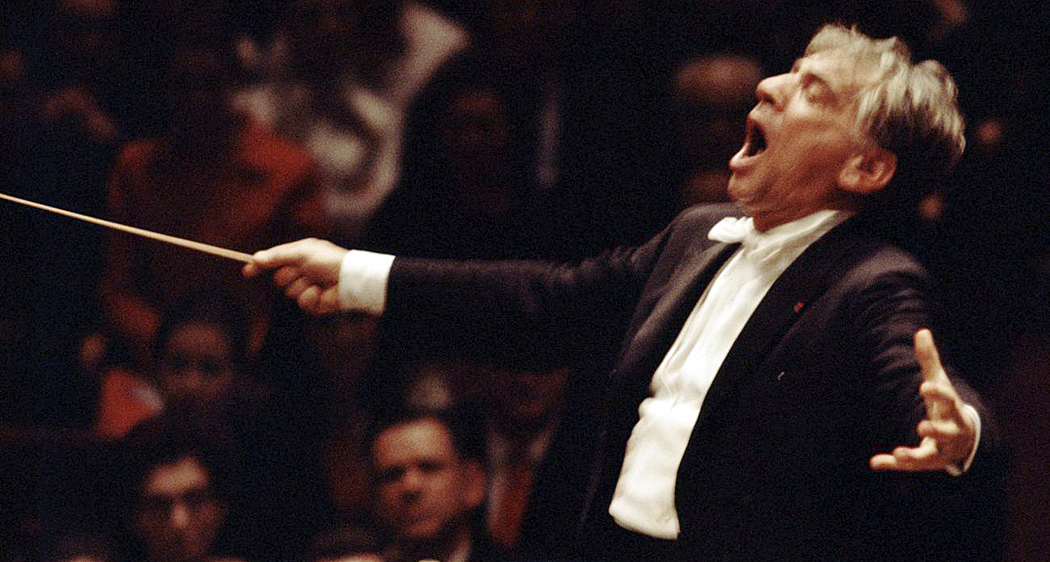
He was conducting with his face. It was brilliant. Every fleeting emotion played across his face, as if he were the music. And each expression came a half-second before the orchestra reacted, so Bernstein wasn’t following the music, but leading it. Extraordinary. It was one of the best performances of that finale I’ve ever heard, with a naturalness and clarity, but more important, a joy and spontaneity. 

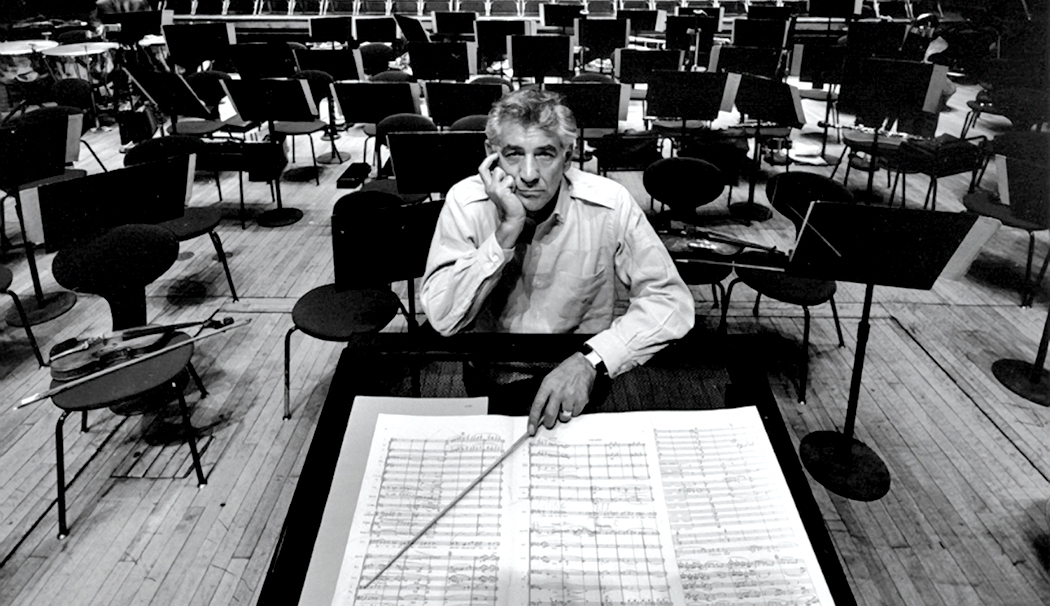
I go back a long way with Lenny. When I was a mere bairn, I watched him on the Young People’s Concerts and I remember his explanation of Beethoven’s Fifth Symphony on the Omnibus TV show. I was just six years old in 1954, so I don’t remember much of what he said, but I remember the set, with the score of the symphony on the floor, so he could position his players on their staffs to show what they were doing. I was fascinated. 

Since then, Lenny has been a part of my life. Sometimes a small part, in the background, sometimes I spent extra money to buy one of his recordings over a cheaper Turnabout or Vox recording, with the trust that I would be rewarded by something special. I usually was. 

I heard Lenny conduct at New York’s Philharmonic Hall (later Avery Fisher Hall, now David Geffen Hall — it changes as much as the names on ballparks). I remember a rousing version of Debussy’s La Mer with the New York Phil. But mostly, I heard Lenny via recordings, first LP and then CD. There were also videos and TV presentations. 

I don’t deny that Lenny talking could be hard to take, with that resonant basso voice that he seemed to be in love with, and sometimes a ham actor’s thesbianicity. But if you can get past that surface, what he says is almost always revelatory, precise, and true. I listen to his Harvard lectures over and over, and despite some tedious Chomskian linguistic folderol, really insightful. (He drops the Chomsky in the latter lectures, thank god). 

But it is the music that really counts. For many, Bernstein was the great podium presence of the second half of the 20th century. The singer Christa Ludwig, who performed with Lenny often, once said she worked with three truly great conductors: Karl Böhm, Herbert von Karajan and Bernstein, but the difference was, she said, “Bernstein was a genius.” 

Others have commented that when he conducted, he “became” the music. A member of the Vienna Philharmonic told my old friend, the late music critic Dimitri Drobatschewsky, “Name one other conductor who, just by standing in front of the orchestra, could make them play better than they thought they could.” Bernstein seemed to have a special relationship with the Vienna Phil, and many of his later recordings were with them.

Lenny had his detractors, who thought he was showing off in front of the audience and orchestra, or that he exaggerated details, or — especially later in his career — dragged tempos. But, as critic David Hurwitz has said many times, “Every time I think Bernstein has distorted something, I look in the score and see that it is exactly what the composer had notated. He was truer to the score than almost any other conductor I know.” 

It is true that for Lenny, as for Old Lodge Skins in Little Big Man, “Sometimes the magic works, sometimes it doesn’t.” But the best recordings have something to give that few others can match: commitment, power, emotion, persuasiveness. 

I have chosen 10 of Lenny’s recordings that for me summarize his best. There are many others. He was especially great with Haydn, with Beethoven, with Mahler, with Stravinsky, with Shostakovich. And Modern music — if it was tonal or polytonal, like Milhaud — he made it all just bounce. 

We’ll start with Haydn’s Paris Symphonies, that is symphonies Nos. 82-87, including “The Hen” and “The Bear.” It is pretty well consensus that Bernstein’s Paris Symphonies are the reference recordings. Sprightly, bright, witty, energetic and beautifully played. Bernstein was always good in Haydn, and I would have listed his Creation here, or his Nelson Mass or Tempore Belli Mass. You can’t go wrong with Bernstein and Haydn. In comparison, almost everyone else just feels soggy. 

In roughly chronological order, we come to one of his most controversial recordings ever: the live recording of Beethoven’s Ninth Symphony from 1989 and the fall of the Berlin Wall. Bernstein substituted the word “Freiheit” (“freedom”) for Schiller’s “Freude” (“joy”) in the finale, caught up in the moment’s exhilaration over the fall of East Berlin and Communism. Actually, he only does it once, and later reverts back to the original. But it is jarring when you hear the baritone intone it at the start of the finale. Yet, I am listening to it now as I write this and it is an absolutely thrilling version of the Beethoven’s greatest symphony. Members of six different orchestras came together and meld perfectly under Lenny’s baton. It is my go-to version of the symphony. It is a symphony played so often (I can’t count the number of times I’ve heard it live) that it has lost some of its magic as occasion, but here, it magnifies that sense of occasion. Despite the mutilation of the “Freiheit,” but because of the intensity and emotional engagement of the 20-minute Adagio — more like a prayer than anything else. (Roger Norrington takes it in 10 minutes of throw-away carelessness.) 

Then, there’s Berlioz’s Grande Messe de Morts, or Requiem. There are few decent recordings, and most fail for exactly the same reason: They attempt to make sense of the thing, toning it down into something “normal.” That is the issue with Colin Davis’ version. But Lenny lets it all hang out. What is fevered and hysterical, comes across as fevered and hysterical, just as Berlioz wrote it. 

If there is any symphony from the 19th century more Haydnesque than Bizet’s Symphony in C, I have yet to discover it. It is fresh, bright, tuneful and unendingly happy. The composer wrote it in 1855, when he was 17, and it remained unplayed until 1935 and I feel pity for all those audiences who, for 80 years could have been enjoying it, but never had the chance. Lenny was the perfect conductor for its joie de vivre and rhythmic snap. It is as if Bizet wrote it with Bernstein in mind. 

Lenny recorded Tchaikovsky’s Sixth Symphony at least twice, once with the New York Philharmonic, in 1964 for Columbia, and then again in 1987 for Deutsche Grammophon, with the same orchestra. What a difference. The first — an excellent version — takes about the usual 45 minutes. The second comes in at just a chip under an hour. Most of that extra time comes in the finale, which in the second recording is wrenching and heartbreaking. One critic wrote that it “devastates the emotions. … At the end of the last movement, the despair is complete.” Of course, the performance has its detractors, with some finding it distended and, as one always hears the complaint against Lenny, “is more about the conductor than the composer.” Poppycock. This is Tchaikovsky titrated and distilled into pure essence. 

Lenny recorded Stravinsky’s Rite of Spring many times, also, but there is no quibbling about the one to go to. It is his first, from 1958 with the New York Phil. When the composer first heard the recording, his only response was “Wow!” Lots of conductors have the measure of the Rite, but there is a rhythmic vitality, a violence and explosiveness to the 1958 recording that has never been matched, even by Lenny. 

Just seven years after Stravinsky’s blast, came Darius Milhaud’s Le Boeuf sur le toit (“The Bull on the Roof”), which he says he wrote as “fifteen minutes of music, rapid and gay, as a background to any Charlie Chaplin silent movie.” It is a piling up of Brazilian tunes, in several keys at once, and is as bright and toe-tappy as anything. Indeed, it becomes an ear-worm and you will be hearing its tunes over and over in your head for the rest of the day. The Bernstein recording also features La Création du Monde from 1923, which is a fully realized jazz composition for a ballet about an African creation story. This is Lenny in his element. You can just see him dancing on the podium with happiness and joy. 

Then, there is another highly controversial recording — his DG performance of George Gershwin’s Rhapsody in Blue. Lenny, playing the piano part himself, plays it not as a jazz riff, but as if it were, from bottom-to-top, a classical piano concerto, rather like Ravel’s Concerto in G. Critics miss the easy jazzy element of famous performances by Earl Wilde or Oscar Levant, but Bernstein’s version seems to those who adore it (as I do) as a perfectly genuine alternate view. And it is gorgeous. Did I mention that? Absolutely gorgeous. 

Dimitri Shostakovich wrote his massive Symphony No. 7 “Leningrad” during the German siege of that city in 1942. It is a piece that defeats many orchestras and conductors; it is very difficult to keep it from diffusing into long, undigested sections. Lenny keeps it going as a single directional line from beginning to glorious end, and the Chicago Symphony has the cojones to perform what is asked of them. Almost everyone agrees, this is the Leningrad Symphony to hear. 

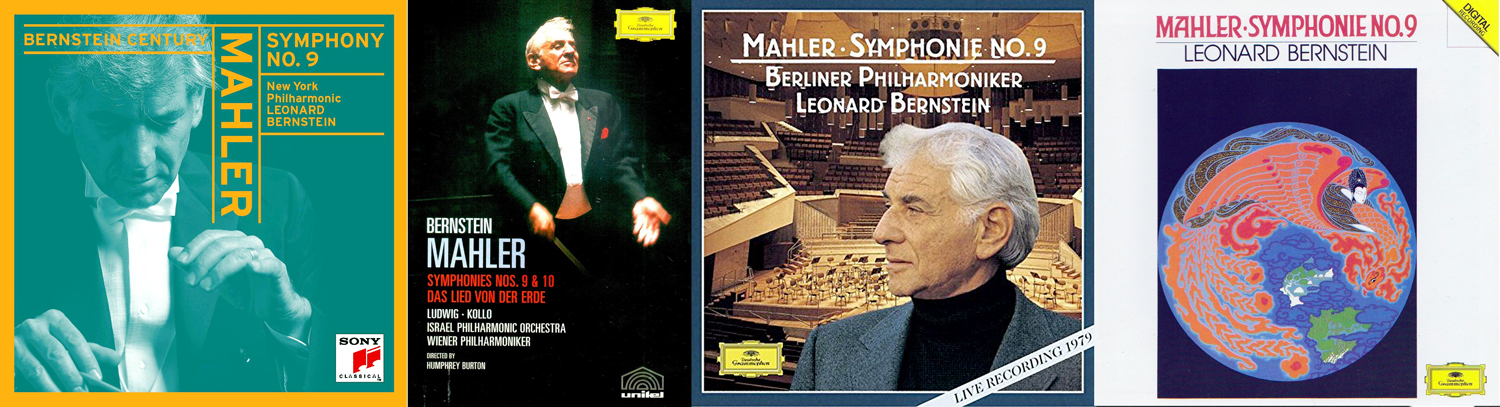
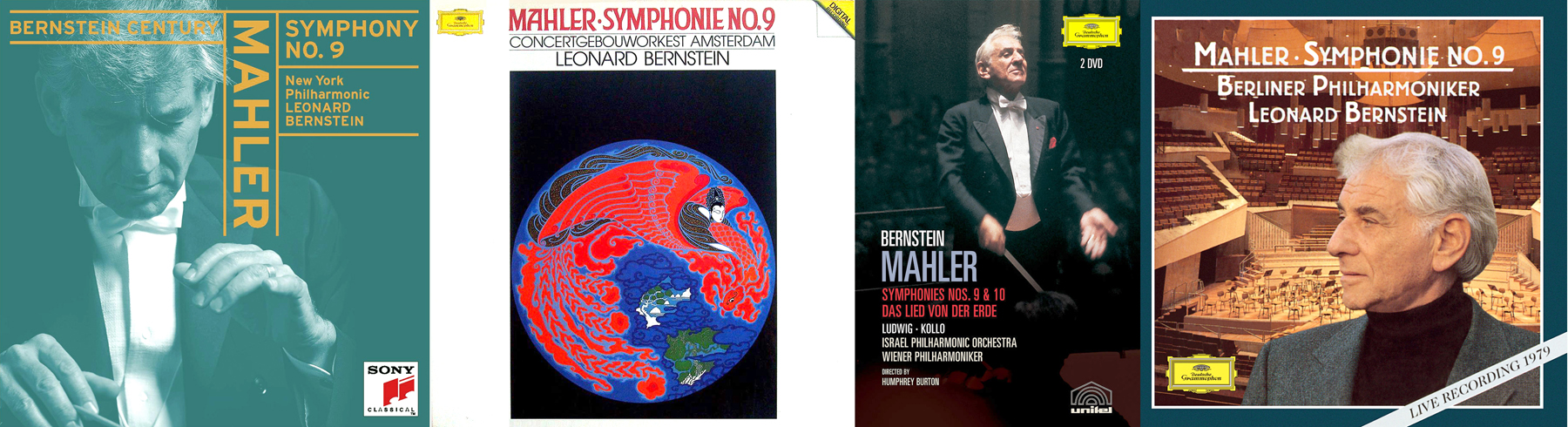
Finally, I’ve kept last (and out of order), Mahler, which sometimes seems like Bernstein’s personal property. It isn’t, of course, but he brings something special to his Mahler performances, and none more so than with the Ninth, which he recorded at least six times (1965 NY Phil; 1971 Vienna Phil; 1979 Berlin Phil; 1979 Boston Symphony; 1985 Concertgebouw; 1985 Israel Phil). It is perhaps the Mahler symphony Bernstein felt closest to. Only four of these are genuine releases, not bootlegs, and among them it is hard to choose, but I suppose I migrate to the late Concertgebouw recording. Berlin has the intensity, but there is a major cock-up in the finale when the trombone section failed to play in the climax (apparently an audience member had died of a heart attack directly behind the brass section and there was some commotion that distracted the players). But listening to any one of them seems as if the music becomes more than music; it is a direct communication from one soul or heart to another. There are other great performances of the Ninth — it seems to draw out the best in most conductors — but there is something extra in the Bernstein versions, something more immediate, more direct. 

That is a list of 10 (or more), but I feel I’ve left out so much. There’s his Bartok Music for Strings, Percussion and Celeste; there’s two complete surveys of Beethoven symphonies; there’s his Copland, his Ives, his Schumann, his Sibelius. And so much more. But I believe the 10 I’ve chosen are not just great, but peculiar to Lenny — and I choose the word carefully. He was an idiosyncratic conductor, but all the personality that went in to his performances meant they are often memorable in a way more straightforward ones are not. 

Many moons ago, when I was a snotty college kid, I went through a period of disdaining Lenny. I bought the canard that he was shallow, heart-on-sleeve and bombastic. I wuz a idjit. One should never let the opinions of others block your ears. There is a world of difference between words and sounds, and the sounds are always more meaningful. I am older now, have experienced a great deal more of living, discovered depths in myself I hadn’t understood, and now Lenny’s insistence on finding the marrow is what I value. My ears are opened to what is gifted to me. 

Click on any image to enlarge

There is Mahler before Bernstein, and Mahler after him. This is not to say that Lenny is the summum bonum of these nine-plus symphonies, but that before his 1960’s advocacy, Mahler was one of those niche composers that a few people knew about and appreciated, and afterwards, no right-thinking conductor could fail to offer a complete cycle — Mahler joined Beethoven, Brahms and Tchaikovsky and one of those whose works would be recorded by the yard. A Mahler program now draws a paying audience like almost no other. 

But there is Mahler and there is Mahler. When everyone gets into the act, the quality level evens out — It’s hard to find a really bad recording anymore, and it is also hard to stand out with something exceptional. Yet, both ends do still exist. 

I have not heard every release; no one could, not even David Hurwitz, who is as close to nuts as anyone I know of. But I have experienced a whole raft of Mahler recordings and I have my favorites, and a few excrescences that I have to keep as “party records” to share with commiserating friends. 

My bona fides include more than a half-century of listening to classical music, reading scores, and being a retired classical music critic on a major daily newspaper. I have owned at least 15 complete Mahler cycles and uncounted individual CDs and LPs — going back to the 1960s. I did disgorge about two-thirds of my collection of CDs when I retired eight years ago, but even since, I have added more Mahler (among others) and currently sit with 10 full sets and two shelves of individual recordings. Am I as nuts as Hurwitz? I leave that to the jury. (It isn’t only Mahler: I once owned 25 complete sets of Beethoven piano sonatas and 45 recordings of the Beethoven Violin Concerto). 
Yes, I listen to a boatload of music. I cannot imagine my life without music. 

And I have my Top 10 list of Mahler recordings. Really, a Top 11 — one for each of the nine completed symphonies, and add-ons for the incomplete 10th, for Das Lied von der Erde, and the song cycles, so it’s really like a Top 15 or so. And there are a few bombs I want to include, just for fun. Let’s take them in order. 

Symphony No. 1 in D

The symphony begins with an ethereal A, barely audible and transforms into a cuckoo call, evincing nature, the woods and eternity, but then opens up into the fields and streams borrowed from Ging heut’ Morgen über’s Feld in his song cycle Lieder eines fahrenden Gesellen.  The first four Mahler symphonies all borrow from his songs. The third movement is a grotesquerie built from a minor-key version of Frere Jacques played first by a solo double bass; it is an ironic funeral march, interrupted by klezmer music and a bit of gypsy wedding. It is one of the most peculiar movement from anyone’s symphonies.

Then it all burst out in a tormented and blazing fourth movement with horns wailing out over all, and comes to an abrupt conclusion with an orchestral hiccup. 

The symphony is qualitatively different from the ones that follow, but it is easier for most first-time listeners to comprehend. It is a great place to start a Mahler journey. 

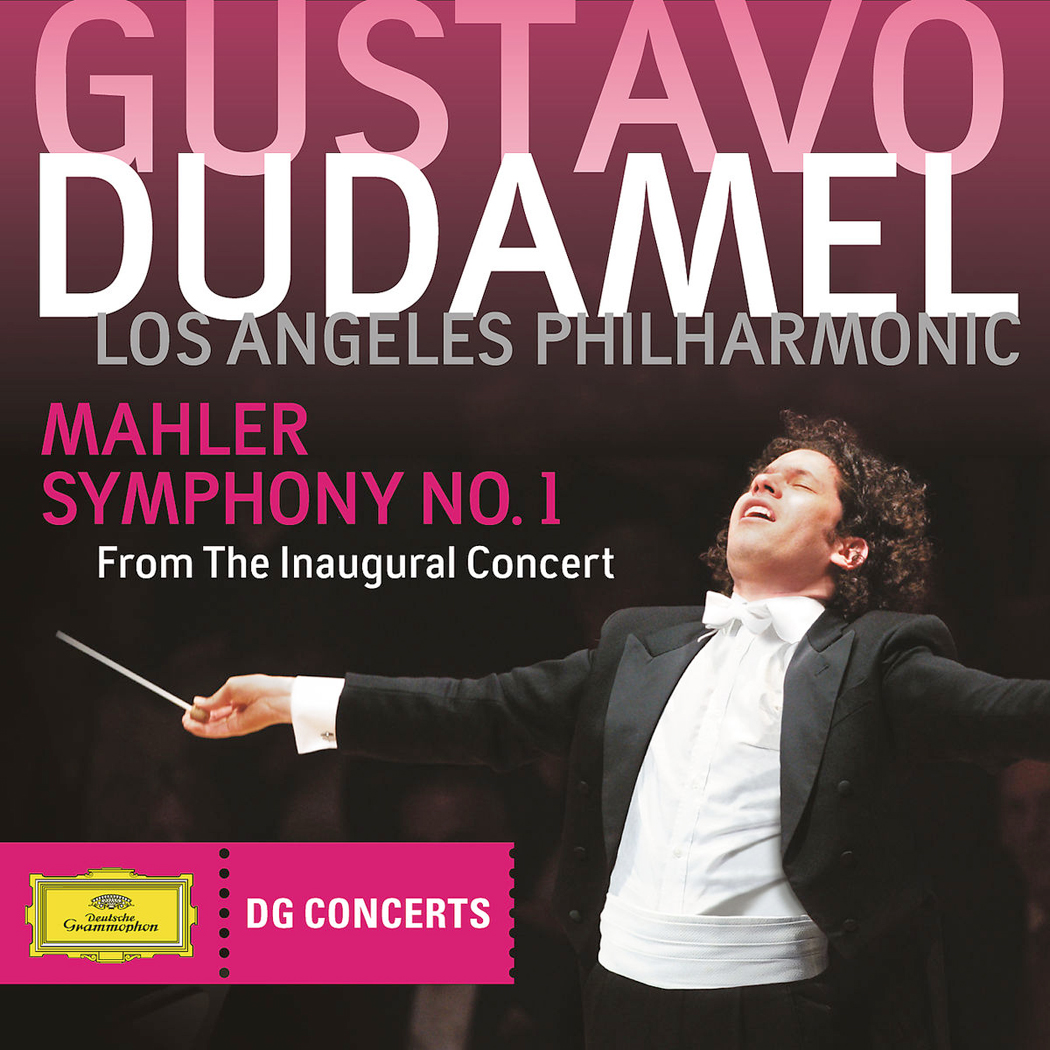
The greatest version I ever heard live was Gustavo Dudamel and the Los Angeles Philharmonic; it blew me away. There is a live recording, from the young maestro’s debut concert in LA. It is hard to get the same effect from a recording, but this is my sentimental favorite. But there are some other great ones. 

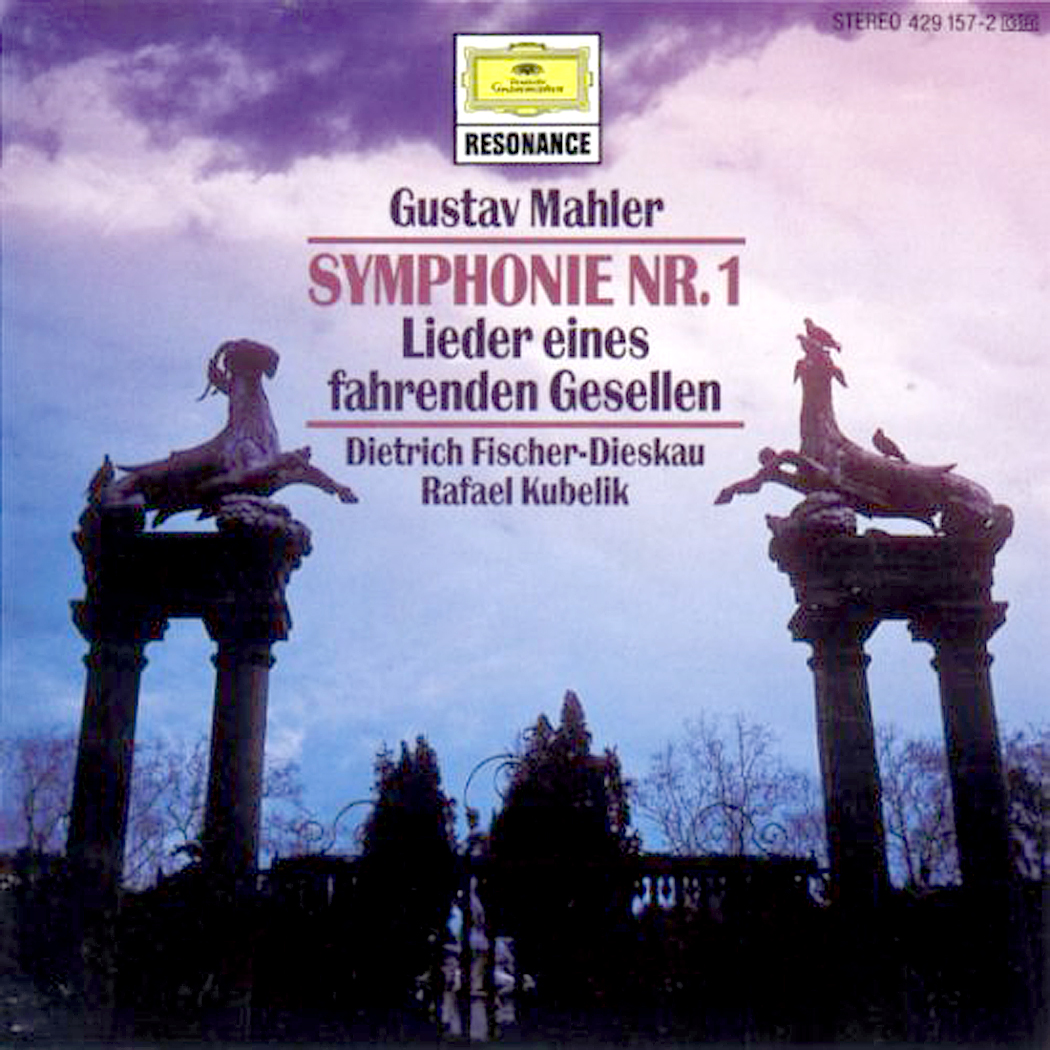
The consensus (but not universal) favorite is Raphael Kubelik and the Bavarian Radio Symphony Orchestra from 1968. It includes the Lieder eines fahrended Gesellen and Dietrich Fischer-Deiskau. 

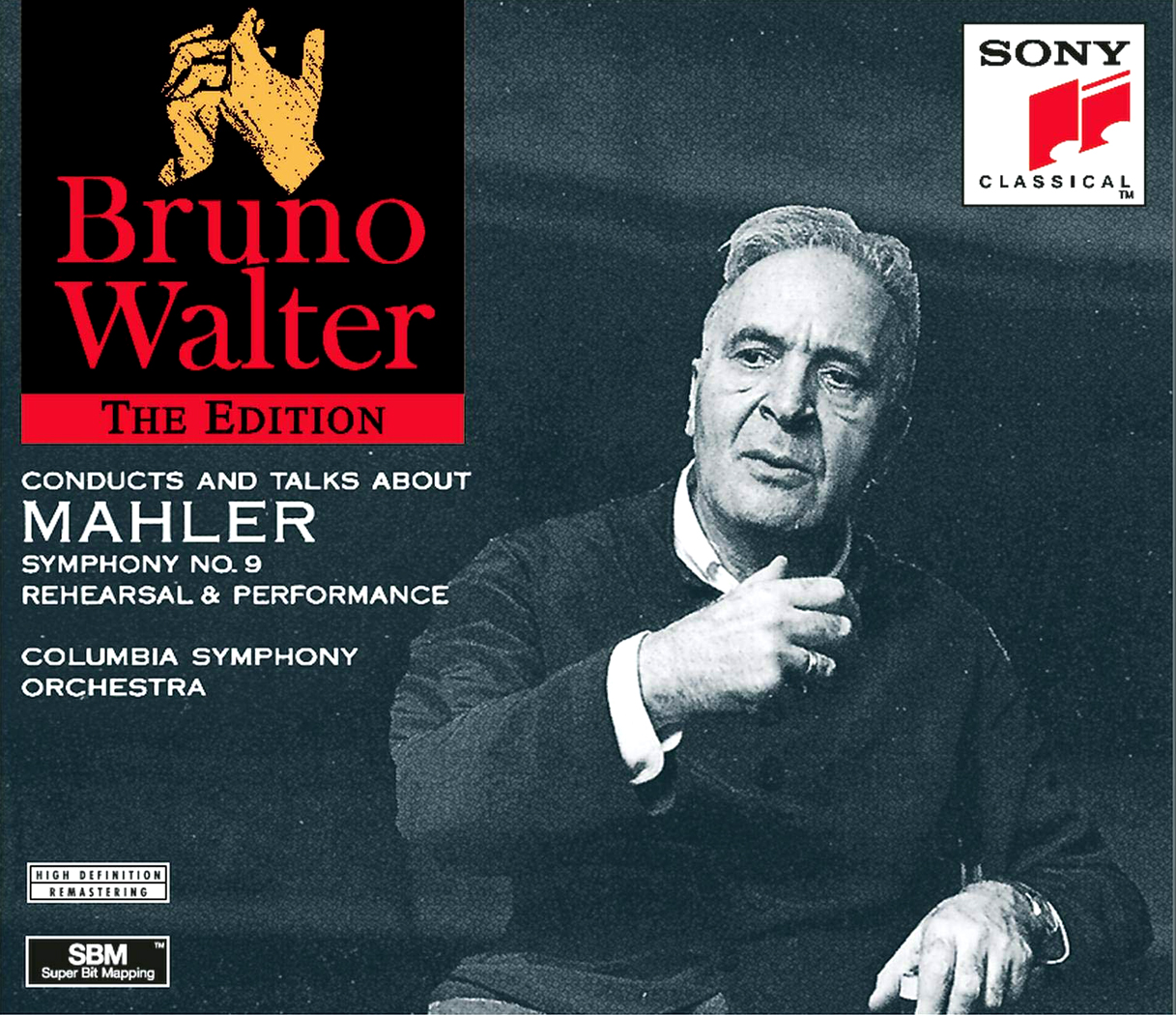
The version I first learned from, a billion years ago in another galaxy, and on vinyl, was Bruno Walter’s with the Columbia Symphony Orchestra. Walter knew Mahler and premiered his Ninth Symphony. The sonics are not always great, but there is tremendous authority in Walter’s Mahler. 

Symphony No. 2 in C-minor (“Resurrection”)

Many people hold the “Resurrection Symphony” as their nearest and dearest, with its uplifting finale of rebirth and optimism. But I have always found the end a touch forced and insincere, as if Mahler really, really wanted to believe in a renewed life after death, but couldn’t, and could only mouth the words. “Words without thoughts never to heaven go.” 

Yet, its music is still magnificent, especially the first movement funeral march, which comes to a climax so disturbing and dissonant, he never matched it until the orphan adagio of his 10th symphony. The inner movements are some of the most beautiful he ever wrote and the alto solo, Urlicht, is transcendental. 

Everyone, it seems, has taken a crack at the “Resurrection”, including businessman Gilbert Kaplan, who learned to conduct only to lead this symphony and never conducted anything else. (OK, he did make a stab at the Adagietto from the Mahler Fifth, but that hardly counts.)

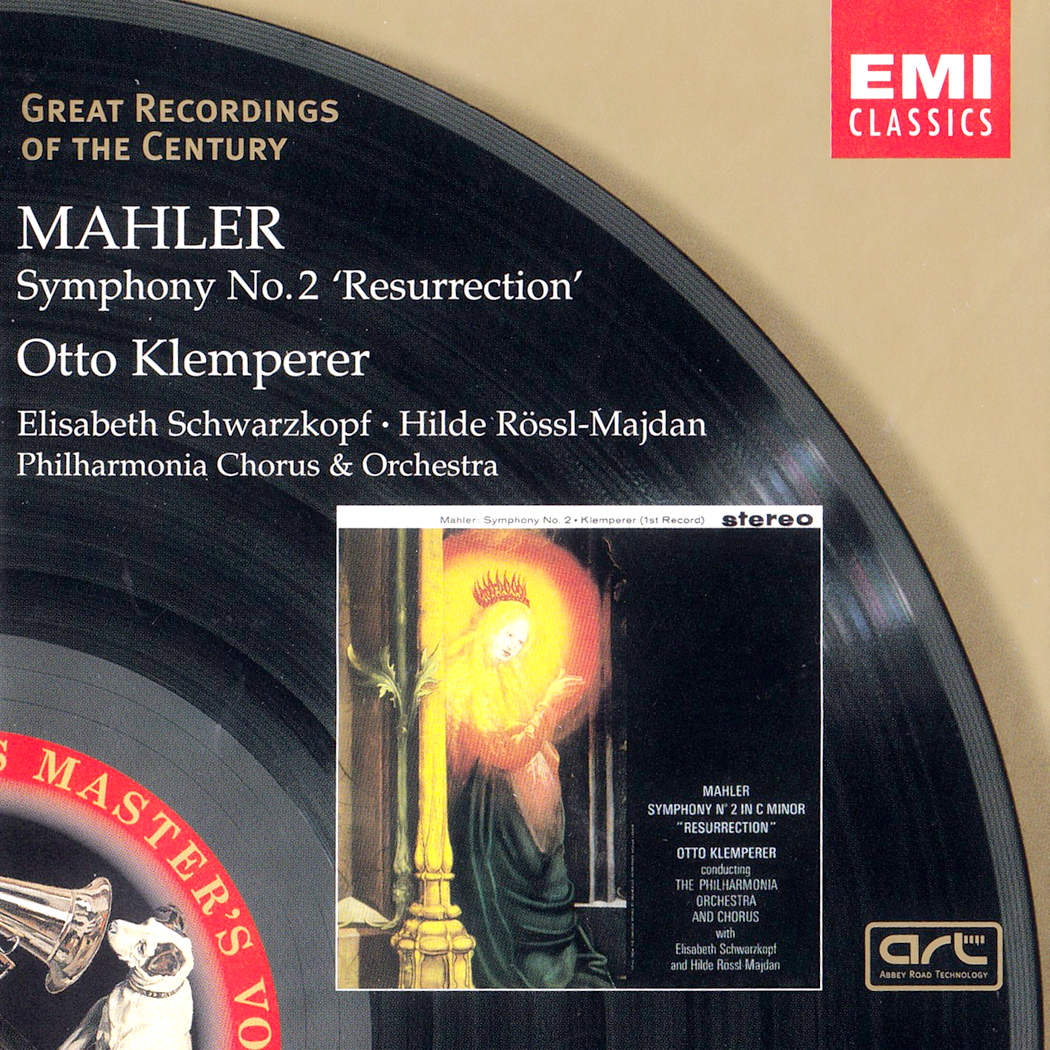
My favorite is Otto Klemperer with the Philharmonia Orchestra and Chorus. Klemperer always makes the music feel as important as it needs to be; he seems to believe in what it says, not merely to play the notes.

Symphony No. 3 in D-minor

There are some music you cannot listen to very often. Beethoven’s Ninth, for instance, or the Bach Matthew Passion. They are too big, too meaningful, too overwhelming, that to maintain the sense of occasion, you can only pull them out at special moments. You have to be ready to accept what they have to offer. It is almost a religious experience. 

The Mahler Third last an hour and a half. It is almost an opera without words, except there are singers. It is a full evening by itself. But if you are not in the right frame of mind, it can just seem endless. The first movement alone lasts longer than any Haydn symphony.

Mahler explained his ideas for the symphony, though he later recanted. The words are not what the symphony says, but they give an approximation. The first movement is “Pan awakes; summer marches in,” and pits a relentless and ruthless nature, “red in tooth and claw,” against the riotous optimism of the season of growth, in an overwhelming march of joy and hedonism. 

The second movement is “What the flowers of the meadow tell me.” The third is “What the animals of the forest tell me.” In the fourth, an alto sings “What man tells me,” in a doleful lament that “Die Welt ist tief,” “The world is deep.” Following that comes “What the angels tell me,” with a choir and bells telling of “himmlische Freude” — heavenly joy. 

But all of this, for an hour, is really prolog to the final movement Adagio, “What love tells me.” It is built on a theme taken from Beethoven’s final quartet and its “Muss es sein? Es muss sein.” (“Must it be; it must be”).  It is a 22-minute-long meditation, rising to ecstasy. 

When the premiere was given in 1902, Swiss critic William Ritter wrote this finale was “Perhaps the greatest adagio written since Beethoven.” If you can come away without collapsing into a puddle of weeping, you’re a better person than I am. 

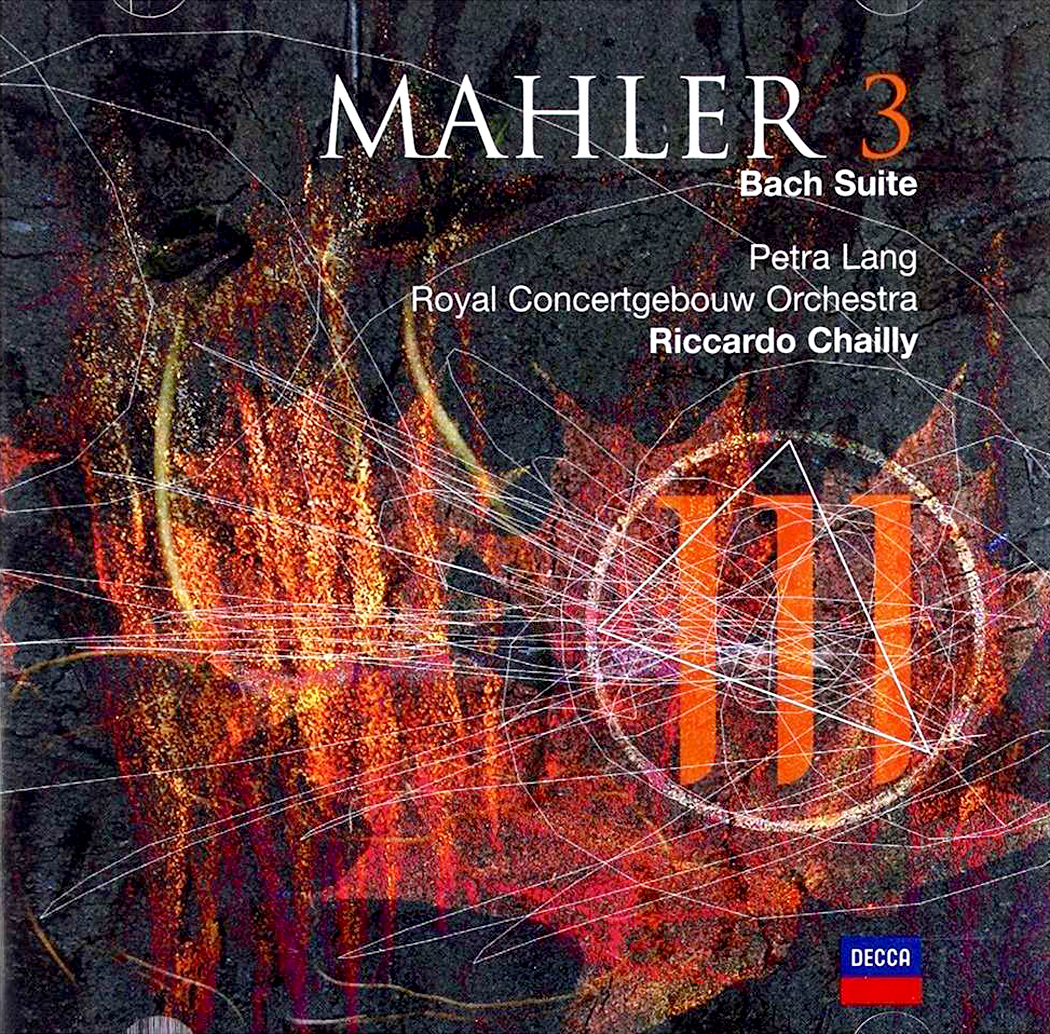
The recording that overwhelms me more than any other, not only because of the performance, but because of its engineering and immediacy of sound quality is Riccardo Chailly and the Royal Concertgebouw. 

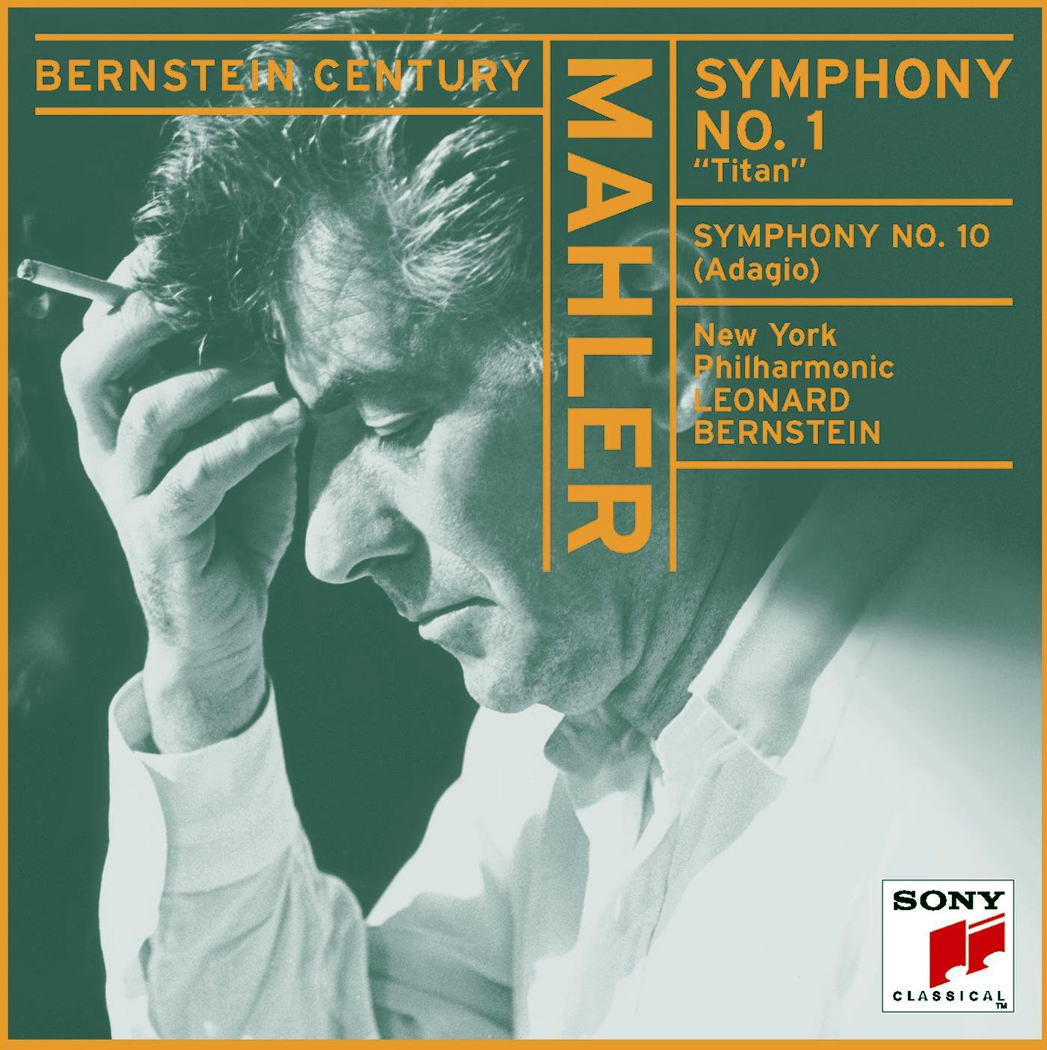
A nearly equal second, in slightly less perfect sound, is Leonard Bernstein’s 1961 recording with the New York Philharmonic. It is the gold standard for the finale. 

Symphony No. 4 in G

On the opposite end of the emotional scale — and what a relief — comes the Fourth Symphony, with its sleigh bells and Kinderhimmel. It is, without doubt, Mahler’s happiest symphony. It is also his shortest. Coincidence? 

But I’ve got a problem picking a best, because there are three performances I cannot do without, each highlighting a different aspect of the work. 

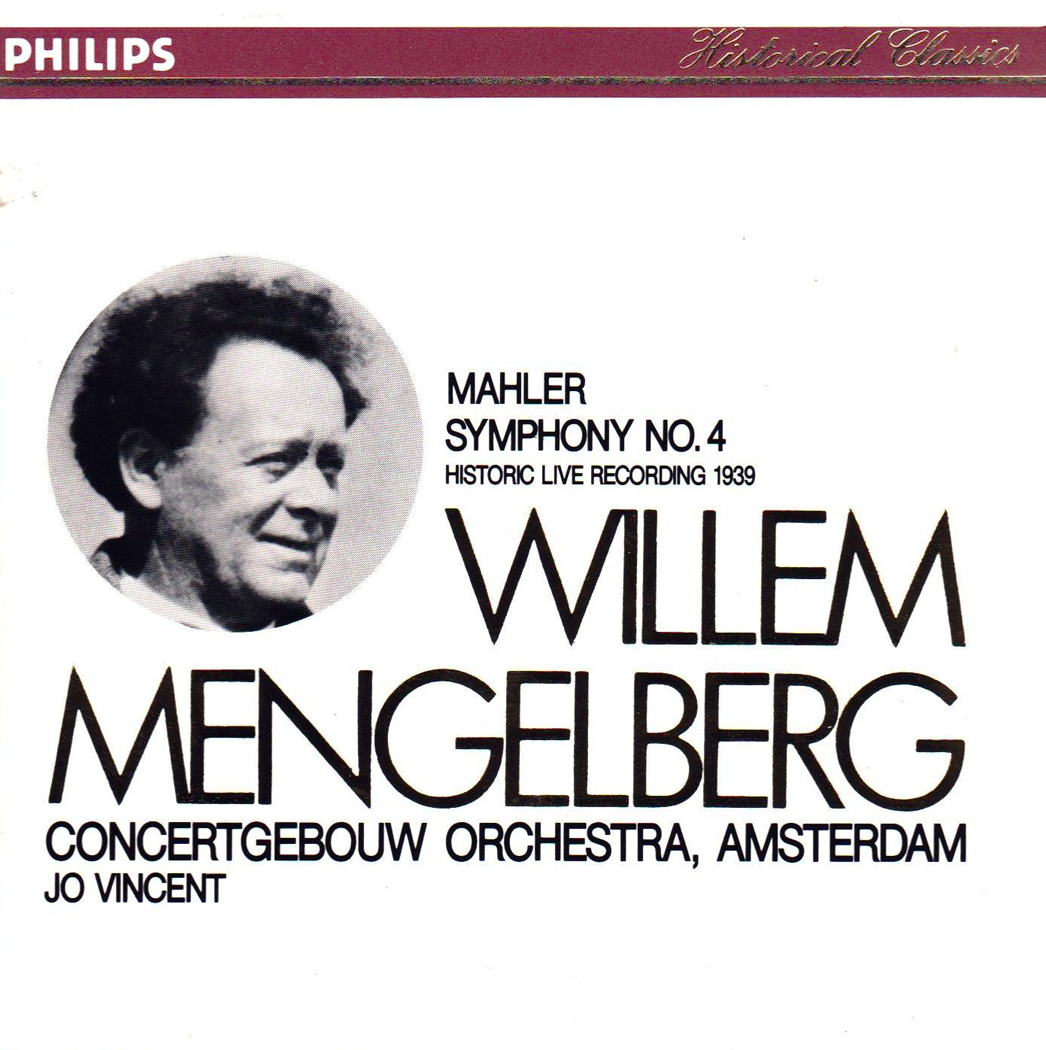
First, there is Willem Mengelberg and the Concertgebouw  Orchestra, recorded in November, 1939. Mengelberg knew Mahler, and we have evidence that Mahler endorsed Mengelberg’s interpretation of the symphony, although that endorsement came for earlier performances. Mahler died in 1912 and this recording is from 27 years later. Still, it is the best evidence we have for the way Mahler probably intended his work to sound. And, compared to the way it is played nowadays, it is ripe with violent tempo changes and swooping portamentos. 

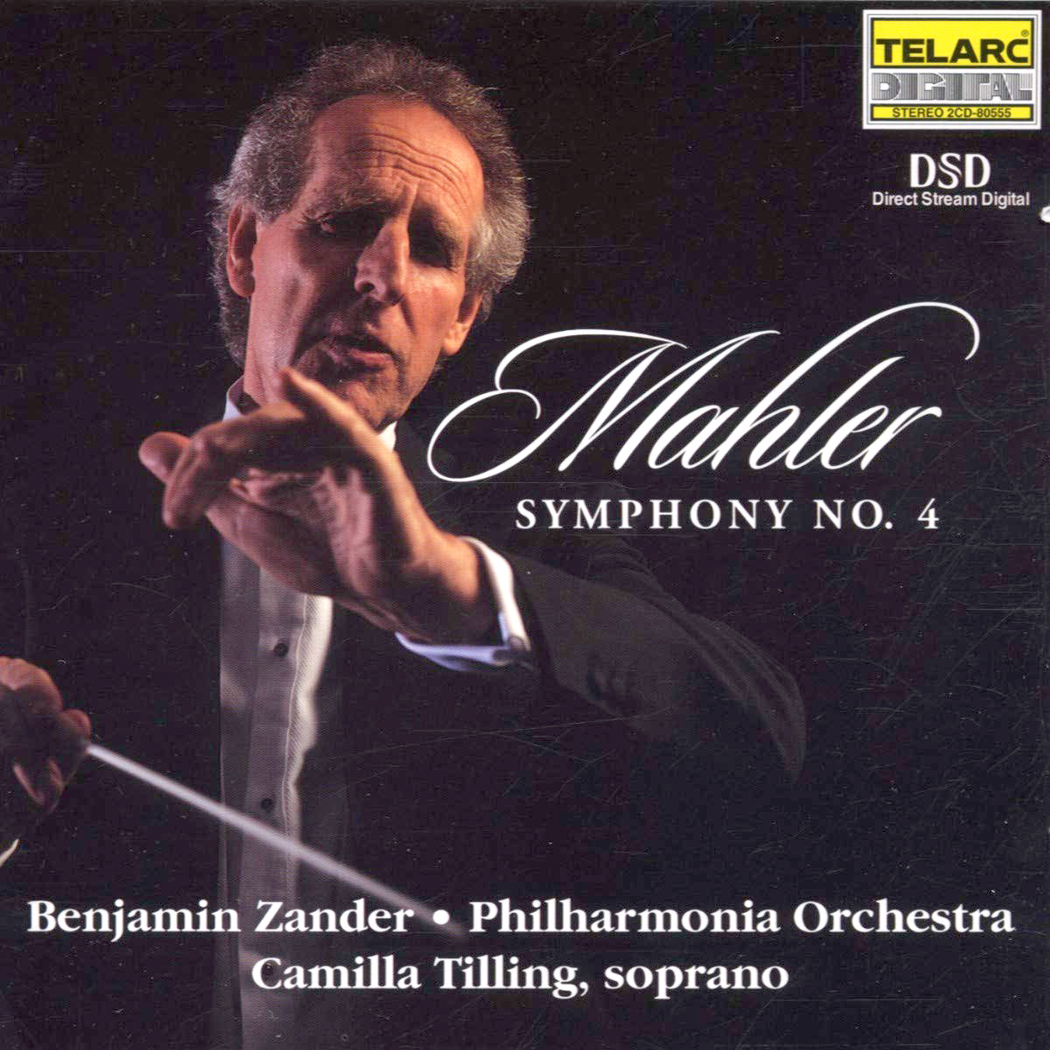
Second, there is Benjamin Zander, with the Philharmonia. In the hour-long discussion disc packaged with the performance, Zander makes the case that Mahler wanted the violin soloist in the second movement to play like a country fiddler, not a trained violinist. A “Geige,” not a “Violine.” He has the violinist retune his fiddle a full tone sharp to play the Totentanz — he is to be Freund Hein, or “Friend Hank,” a nickname for the Grim Reaper. Zander is the only conductor to really take the composer at his word; most recordings, the soloist can’t bring himself to make the ugly sounds Mahler wanted, and smooths the part’s rough edges. It should sound like the Devil’s fiddle in Stravinsky’s L’Histoire du Soldat, with that edge. 

In all his Mahler recordings, Zander is scrupulous in following the anal retentive storm of written instructions Mahler included in his scores. If this means the long-haul structure of the work is sometimes disrupted for the spotlit detail, well, that’s the nature of Romanticism over Classicism. Those details were put there for a reason; we should hear them. 

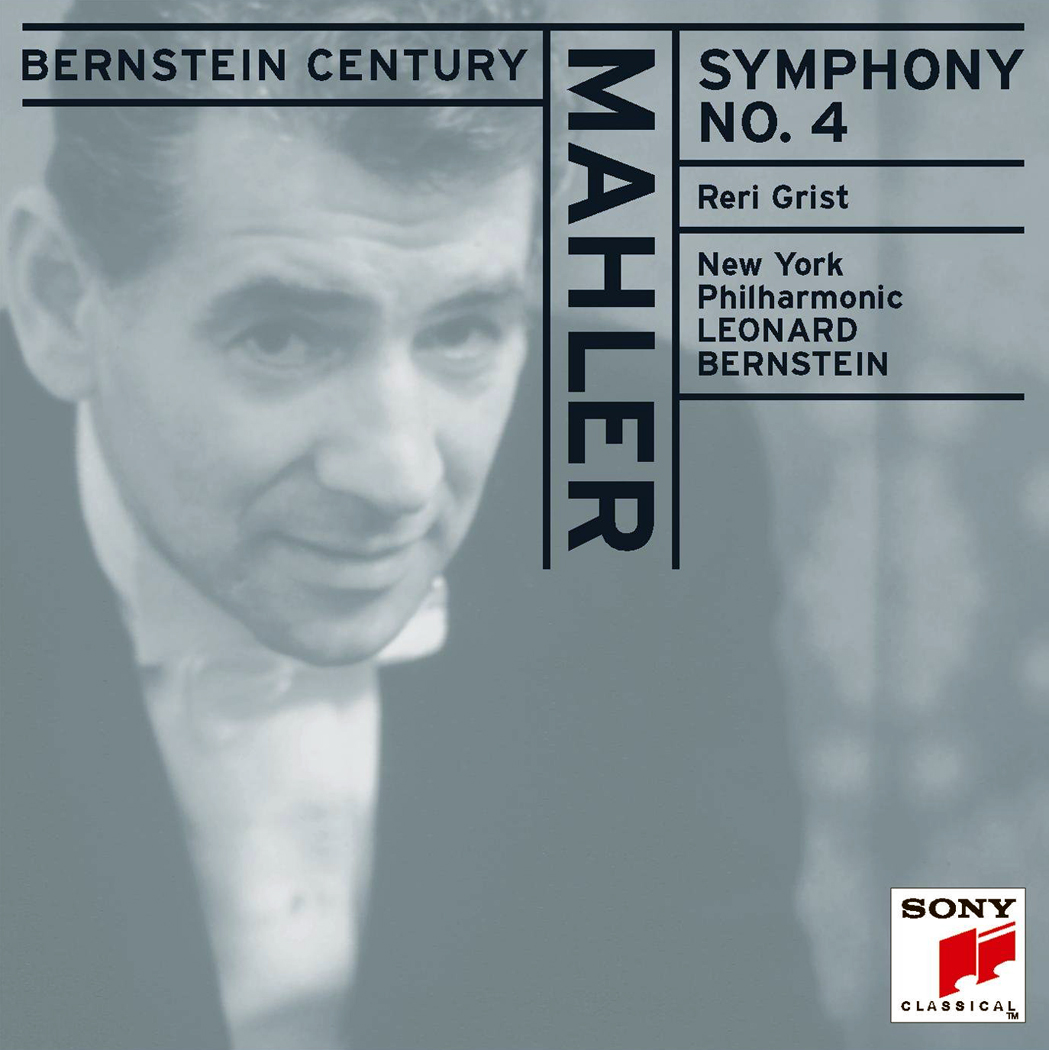
The third recording is Bernstein’s first version, with the New York Philharmonic and soprano Reri Grist. Bernstein’s Mahler is always good, but sometimes, it is the best, and this is one of those times. Grist has a fresh voice that is perfect for the innocent text of the finale, which is a child’s vision of what heaven will be like (“Good apples, good pears, good grapes … St. Martha must be the cook.”) 

Symphony No. 5

Wagner has his “bleeding chunks,” and Mahler has his Adagietto. Everyone knows the Adagietto, from movies and TV commercials. But the whole symphony, the first one since the First Symphony not to have voices, is a great rumbustious tussle, from its funeral march start to its manic contrapuntal finale, where he takes five melodic fragments, stated at the outset, and combines and recombines them like a Braumeister. 

The Adagietto fourth movement was, per Mahler, intended as a love letter to his wife, Alma, but is so elegiac that it has become the aural metaphor for loss and grief. Considering Alma’s serial infidelities, perhaps it is only fitting that the movement has morphed in its cultural meaning. (One critic calls Mahler “a composer with a dodgy heart who married a trollop.” “Alma, tell us: All modern women are jealous. You should have a statue in bronze, for bagging Gustav and Walter and Franz.”)

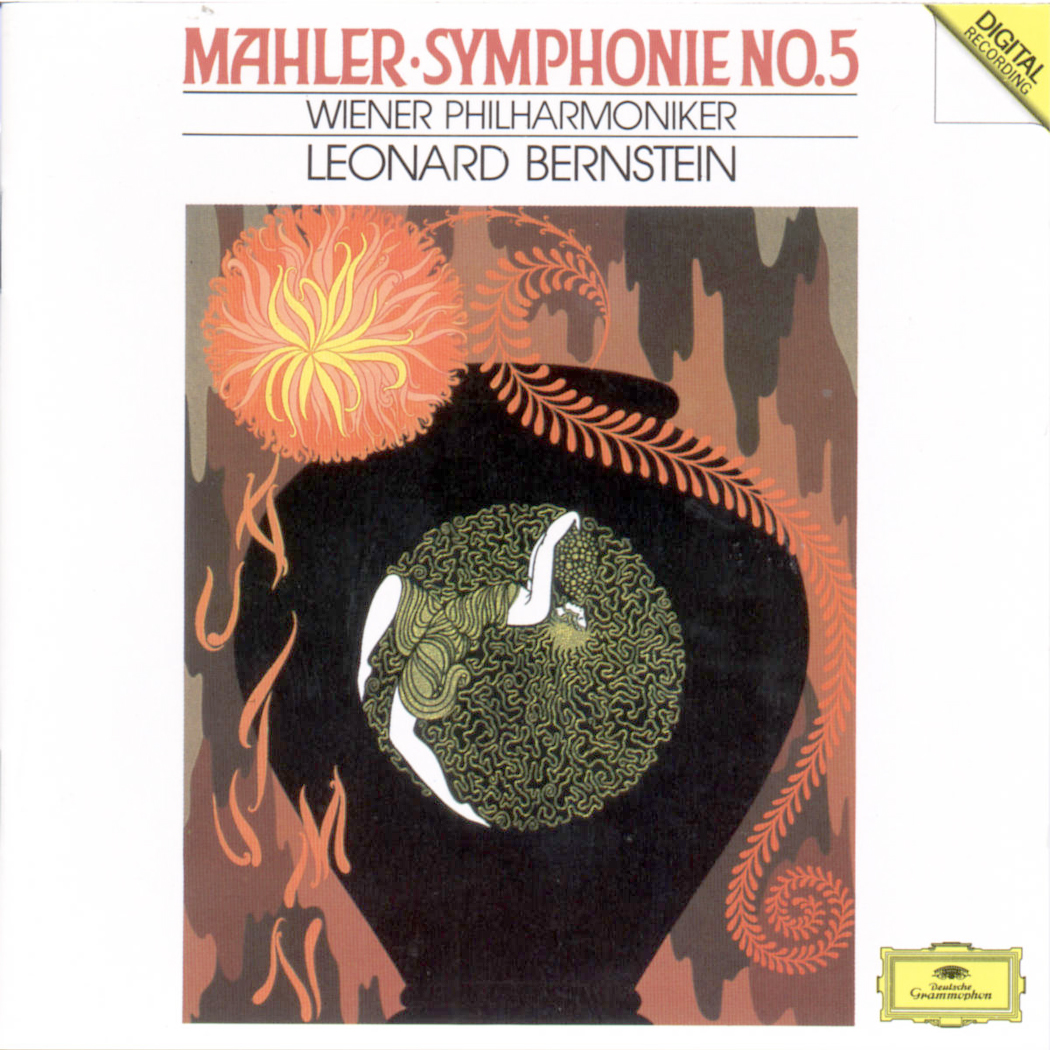
The recording to have is Bernstein’s second recording, with the Vienna Philharmonic. It has beautiful playing from one of the world’s best orchestras, and all the energy and commitment that emanates from Lenny’s spiritual leadership. 

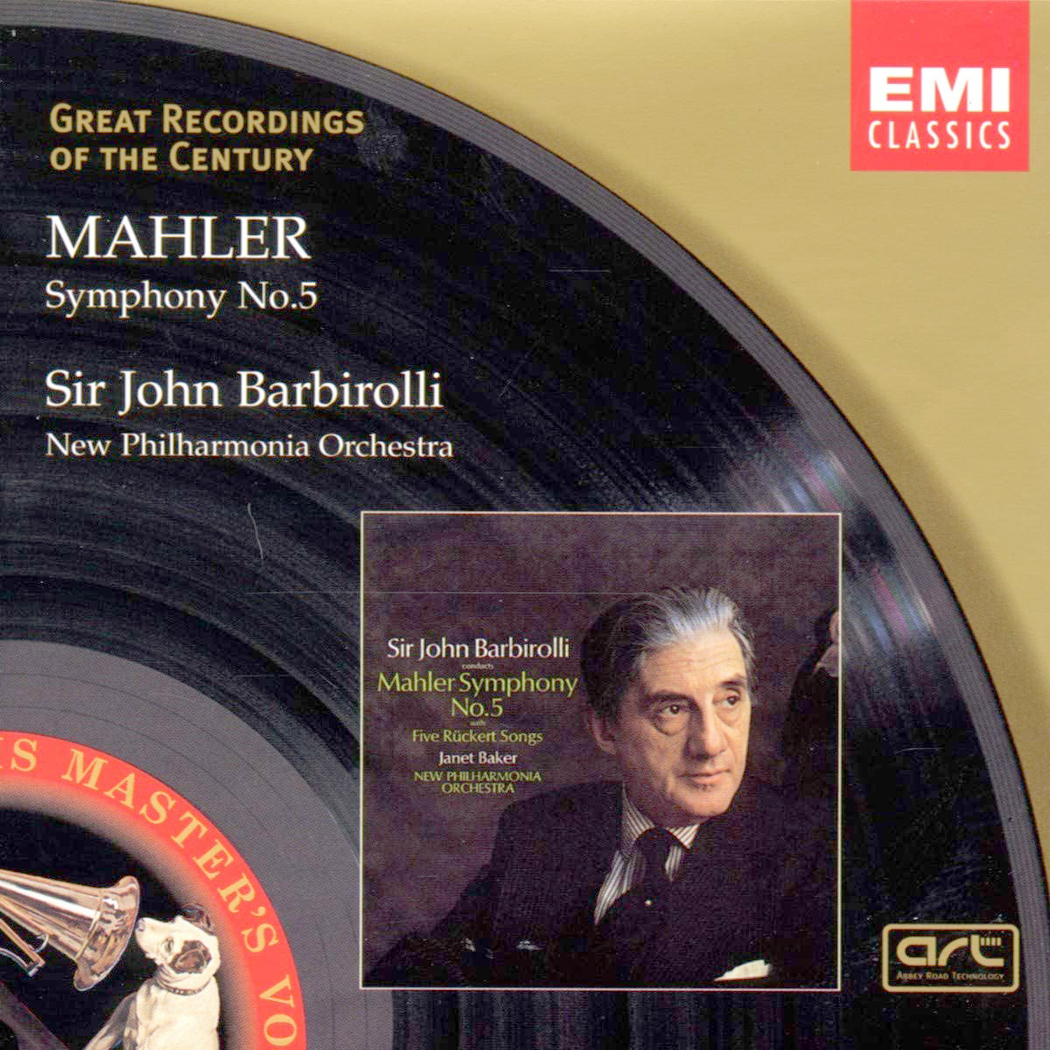
Another legendary performance is John Barbirolli’s with the New Philharmonia. If you think Bernstein’s fever is suspect, then reach for a cold bottle of Sir John.

Symphony No. 6 (“Tragic”)

Labeling any of Mahler’s symphonies as “Tragic” may seem redundant, but this is clearly his gloomiest, opening with a relentless stomp, stomp, stomp of a marche fatale and leading to the crushing hammer blows of destiny in the finale. 

Nevertheless, it has what I think is an even more persuasive love letter to Alma in the slow movement, which has to be one of the most tender and lovely in all of the canon. 

But Mahler never quite figured out if it should be the second or third movement, so nowadays, you find it both ways in performance, and find angry and assertive essays by critics proving once and for all it simply has to be the way they see it. Me, I like the adagio second to separate the angry first movement from the angry scherzo, which shares its rhythm with the first. Play them back to back before the adagio and it can seem like too much of the same thing. But then, that’s my opinion; you are free to have yours. 

Then, in the finale, Mahler never quite resolved whether there should be three hammer blows or only two. He was a seriously superstitious man and feared that a third hammer blow might prefigure his own death, and took it out of the score. But hammer blows come in threes in life — at least in Mahler’s — and I prefer all three to be there. Nor did he ever quite specify what he meant by hammer blows; they are written into the score, but how should they be produced? Each orchestra is left to come up with its own solution. Some have used hammer and anvil, others have built large resonant wooden boxes hit with great wooden mallets. There’s a lot of room for interpretation. 

Ben Zander comes to the rescue: His recording includes both the duple and triple hammer blows. You get to choose which finale you want to hear. As usual, Zander is perfect for following Mahler’s precise instructions in the score: a sforzando here, a ritardando there, a subito piano or a purposeful mix-mash of rhythms there. Now make the clarinet sound like a dying cat, now let the violins swoop with a portamento. Zander obeys where most other conductors smooth it all out to make pretty. This should not be a pretty symphony. 

Symphony No. 7

Guess what? Whether two or three hammer blows, Mahler didn’t die after the Sixth Symphony, which may explain why the Seventh is so giddy. All the other symphonies are programmatic in some way, with funeral marches, or heroic deaths, but the Seventh is just music. Mahlerian music, which means fantastic orchestrations and effects. But no overt meaning. 

It has five movements. The inner three are a scherzo sandwiched between two nostalgic sweetnesses he called “Nachtmusik,” or “night music.” In them, he uses rustic cowbells to symbolize — cowbells — and adds a mandolin and guitar. They couldn’t be lovelier. Between them is a vicious scherzo. 

But then, there’s the finale, which really makes no sense at all. It’s a complete hodge-podge, starting with a manic tympani solo and rushing off like a Turkish Pasha into what sounds like Ottoman grandiosity. But you have to remember the advice of the Talking Heads: “Stop Making Sense.” Just enjoy the effervescent joy of it all, up to the penultimate C-augmented horn chord before the final tonic C. One of the oddest endings before Sibelius’s Fifth. 

 The Third and the Ninth are certainly deeper and more profoundly moving, but the Seventh is my favorite for when I just want to hear Mahler without having to weep and sob and contemplate the Weltschmerz of it all. 

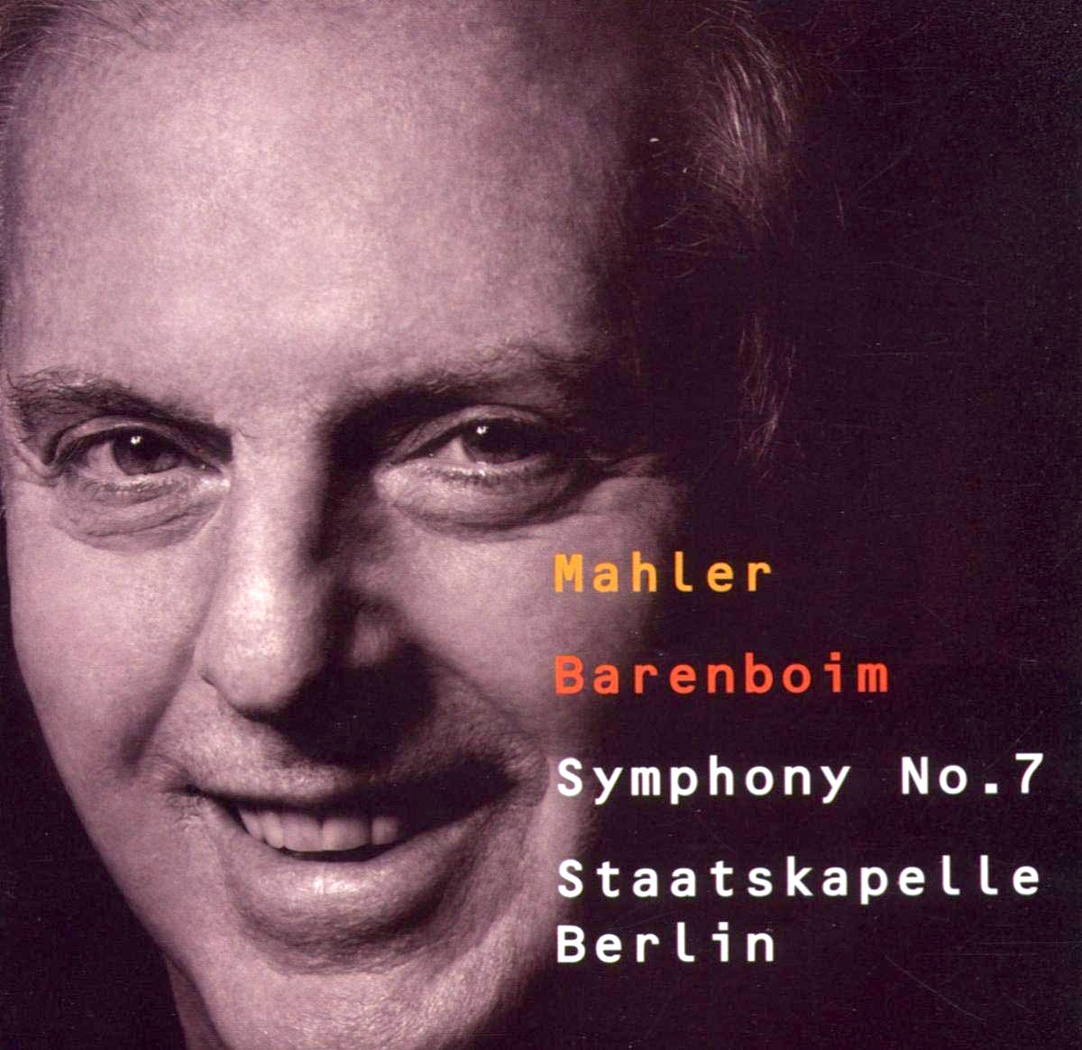
My go-to recording is a sleeper. Daniel Barenboim is not known as a great Mahler conductor, but his recent Mahler Seventh, with Staatskapelle Berlin on Warner Classics is brilliant and one of the best engineered recordings I’ve heard, so you get not only a perfect performance, but a recording that sounds more like an orchestra playing live in your room than any other. He hits the crazed finale with the perfect get-on-the-roller-coaster attitude. 

I’ve been choosing great performances to recommend, but really bad ones can be fun, too. There is a Mahler Seven that is so unbelievably bad, you just have to hear it. Otto Klemperer is — let’s be honest — a really great Mahler conductor. Many of his recordings rank at the top of the list. But his Seventh is a real dog. What was he thinking? Barenboim comes in at 74 minutes. Klemp’s Seventh goes on for an hour and 40 minutes. Cheez Louise. It’s like Glenn Gould’s Appassionata, playing it like they were sight-reading it for the first time. 

Symphony No. 8 (“Symphony of a Thousand”)

I’m afraid I have never warmed up to the Eight Symphony. Its first movement is outright hysterical — I don’t mean it’s funny, but rather the manic half of a bipolar cycle; and its second movement is an opera manque built on Goethe’s Faust that just seems to wander without getting anywhere. Maybe I just need to listen to it another 20 times or so to get it into my head. It was Mahler’s biggest popular success during his life, but it has not worn well with me. 

It is a choral symphony with an alleged 1000 performers taking part, including eight solo voices, two different choruses and an organ, which blares at the beginning when it all explodes open in a “Veni creator spiritus” — “Come, Creator Spirit” — like one of those tweets typed in all caps. 

It has its fans. I am happy for them. George Solti and the Chicago Symphony is a consensus recommendation and zips through it all in under 80 minutes, which is shorter than almost all other performances, and therefore qualifies it as the greatest.

Symphony No. 9

Mahler had a congenital heart defect and he put its irregular rhythm into the beginning of his Ninth Symphony, an off-kilter beat that is the first thing we hear as the orchestra begins. Over that we hear the harp and muted trumpet. Added to that comes a little shiver in the strings followed by a two-note descending theme. These layers form the basis of the entire symphony, the way dot-dot-dot-dash forms the genesis of Beethoven’s Fifth. 

There follows an earthy Ländler as a second movement and a scurrilous Rondo Burlesque for the third. The final adagio is a kind of culmination of Mahler’s death music. Instead of a funeral march or a heroic death, the music dwindles to a quiet and inevitable cessation of its heartbeat. It trails off in a morendo so still and hushed that in a good performance, you can never quite tell when the orchestra stops playing. It just dies away. The effect can be overwhelming. In some famous performances, the audience refrains from applauding for as long as five whole minutes before exhaling in bravos and cheers. It is music that strikes deep. 

Bernstein made a meal of this symphony and recorded it four times, not counting a few live performances caught on tape outside the Bernstein canon. In the only time he ever performed with the Berlin Philharmonic, he recorded the Mahler Ninth. It is held in reverence by many, despite a glaring lapse by the trombone section in the finale (reputedly, an audience member sitting behind the section had a heart attack and died and the trombonists were understandably distracted). Even so, it is a powerfully emotional recording. But then, all of Lenny’s Ninths carry that wallop. 

If you wish to escape the Bernstein reality distortion field, there are other tremendous Ninths. Barbirolli’s with the Berlin Philharmonic, from 1964, is a clear and unsentimental, but still emotional performance. Bruno Walter premiered the work in 1912, a year after Mahler’s death, with the Vienna Philharmonic. He made a stereo recording with the Columbia Symphony exactly 50 years later; that recording is a benchmark for many. 

It has been recorded by almost every conductor out there, up to Bernard Haitink and the Royal Concertgebouw just last year. 

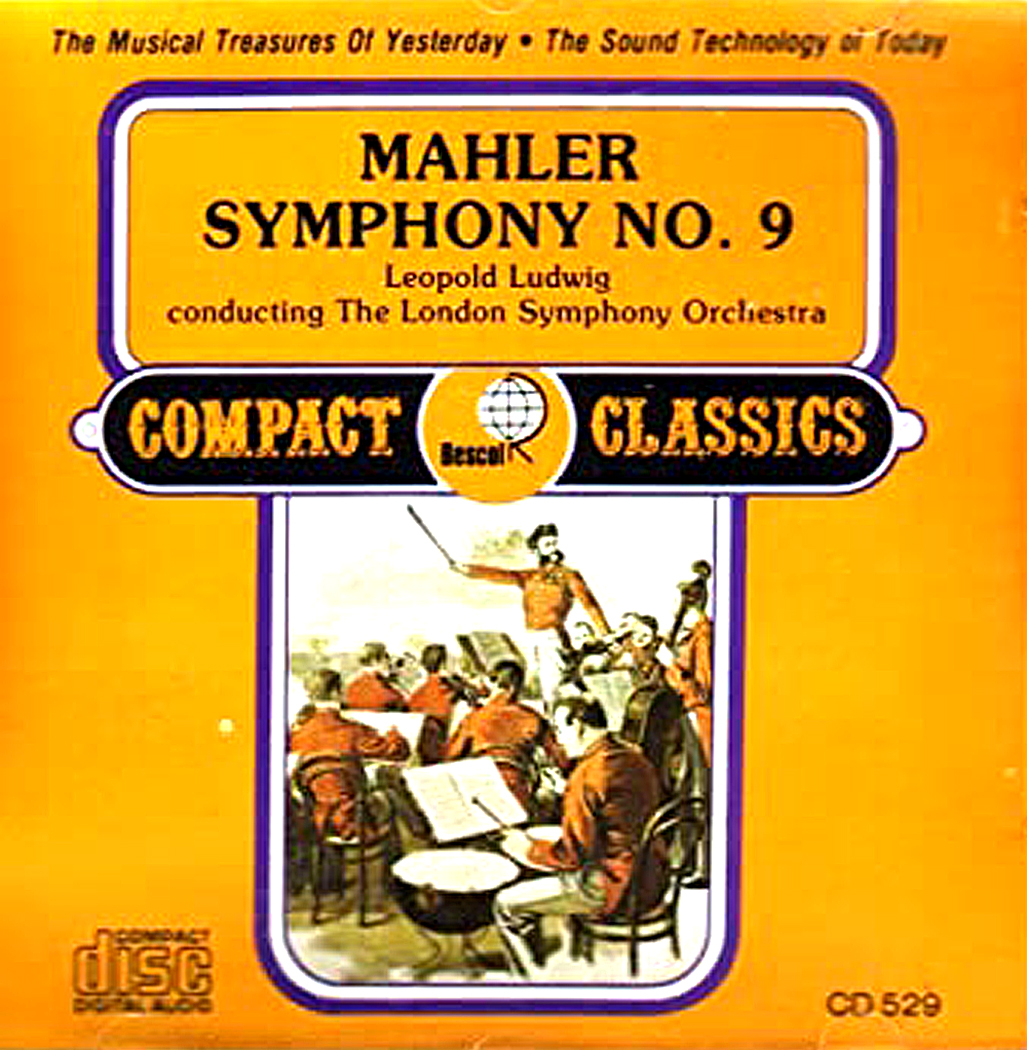
The version I learned on was a surprisingly good version by Leopold Ludwig and the London Symphony, from 1960, on the old Everest label. I still enjoy his Ländler above most.   

Symphony No. 10

Mahler never finished his Tenth Symphony, but left it in tantalizing form as piano short score. He did orchestrate the opening adagio, and until recently, the adagio was performed as a stand-alone. That piano sketch has been orchestrated since, essentially by committee, and there are now many full recordings out there. 

I have never been convinced by the attempted realizations of the whole, but the adagio is absolutely scarifying. It slowly builds up to a climax that is so frightening that in a good performance, your fight-or-flight hormones should get nightmares, the hair on the back of your neck should prickle and you should feel as if the gates of hell have opened and disgorged its contents. It is a scream of pain, an Edvard Munch level scream: “Ich fühlte das grosse Geschrei durch die Natur” (“I felt the great scream in nature.”)

Mahler had found out about Alma’s infidelity and he scribbled in his score several pained comments about it. He was devastated and the music shows it. At one point, nearly all twelve chromatic notes are played in a single harrowing dissonance, distributed across the orchestra in a way to make a musical chord rather than simply noise, and then a screaming trumpet breaks through the din to make things even more unbearable. After that moment, things go quiet and the movement continues to its distressed end. 

If you want to hear all five movements, there are many good performances, including Simon Rattle with the Berlin Philharmonic. But I will cling to the adagio alone and the first version I knew — Bernstein’s first with the New York Philharmonic. Any time the emotion is more to the point than the music, Bernstein conducts the emotion. This is Mahler at his most Mahlerian, and Lenny at his most Bernsteinian. 

Das Lied von der Erde

After all that, if I were forced to accept having only a single work of Gustav Mahler, it would be Das Lied von der Erde (“The Song of the Earth”), a six-song cycle-symphony. Mahler had planned to publish it as his ninth symphony, but, superstitious about ninth symphonies (the final symphonies of so many composers), he refused to give it the title. When he then came to publish his next, he could name it the Ninth, knowing that fate would understand it was really his tenth.

But aside from that biographical titbit, Das Lied is an overwhelming and emotional work, even among an oeuvre that practically set the parameters for overwhelming and emotional. 

Mahler’s output falls into three large groups. The first four symphonies are called his “Wunderhorn” symphonies, because they make use of his settings of songs from a book of poetry called Des knaben Wunderhorn (“A Boy’s Magic Horn”). The second group are his purely orchestral symphonies, numbers 4 through 7. The Eighth is sui generis and doesn’t count (see above). But the final three works, the Ninth Symphony, the trunk of the Tenth and Das Lied von der Erde are profoundly inward. You get the feeling that Mahler didn’t write them so much for audiences, but as a way to question his own existence. 

The songs of this symphony are taken from a book of Chinese poetry, translated into German (or invented) called “The Chinese Flute.” The texts investigate beauty, isolation, nature and death, and where all these intersect. “Dunkel ist das Leben, ist der Tod.” 

The sixth and final song — Der Abschied (“The Farewell”) — lasts as long as the first five and features some of the most ethereal orchestral writing Mahler ever penned, and a text that Mahler supplemented with several lines of his own. 

“I seek peace for my lonely heart,” the contralto sings. And ends, “The dear Earth everywhere/ blooms in spring and grows green anew./ Everywhere and forever blue is the horizon./ Forever … Forever.” 

That last word — “ewig” in German — repeats and repeats ever more silent, until it completely evaporates. It is impossible to hear it without sobbing. 

The symphony was premiered by Bruno Walter in 1911, six months after Mahler’s death, and Walter recorded it at least three times, in 1936, 1952 and 1960, the last in stereo. Either of the last two can be considered the one to have: Each has its champions and both are magnificent and echt Mahler. 

But the one you cannot do without is by Otto Klemperer, released in 1967, with Fritz Wunderlich and Christa Ludwig. It has better sound than any of the Walters and magnificent singing. This is music right in Klemp’s wheelhouse. 

Complete sets

Warning at the outset: No single set of complete recordings is great in all of the symphonies. But having a complete set gives you a consistent vision of what the work is all about. 

Bernstein recorded them all three times. The first for Columbia (now Sony), mostly with the New York Philharmonic. The second for Deutsche Grammophon, mostly with the Vienna Philharmonic. And finally, a video set, on DVD, for Unitel, mostly with the Vienna Phil. The first two are canonic, and while each cycle has its proponents, you really should have both. 

Pierre Boulez is kind of the anti-Bernstein, cool and analytical, precise and controlled. For Boulez, Mahler is a 20th century composer — or at least a prefiguring, and the source of the Second Viennese School. You can hear every instrument with clarity

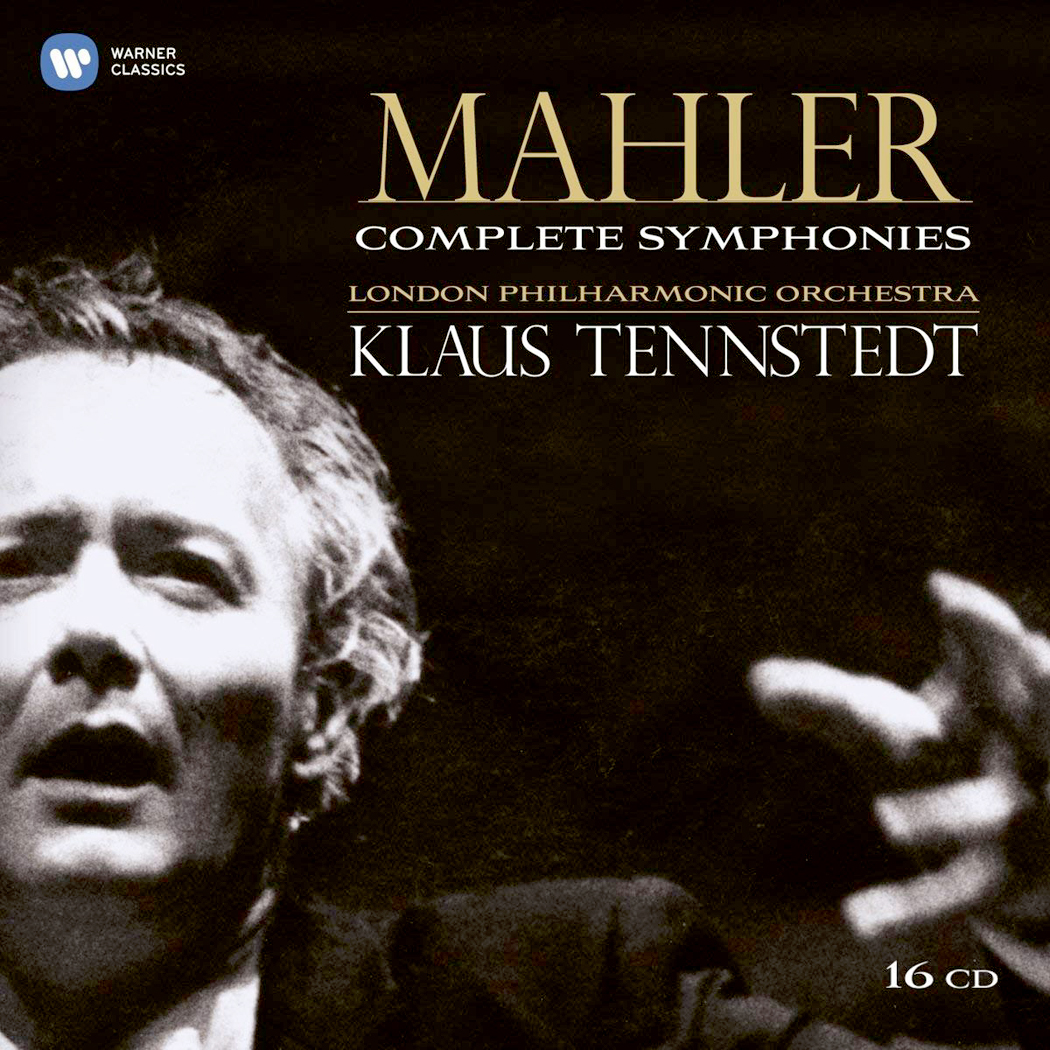
But is Mahler Mahler without going over the top emotionally? Klaus Tennstedt has many devotees, and falls more into the Bernsteinian camp. He recorded them with the London Philharmonic. It is a great set. I gave mine away, not because I didn’t like them, but because I gave them to my best friend; he deserved them. 

A sleeper among sets is David Zinman with the Tonhalle Orchestra Zurich. It is the best engineered set I have heard and with beautiful playing by the orchestra. 

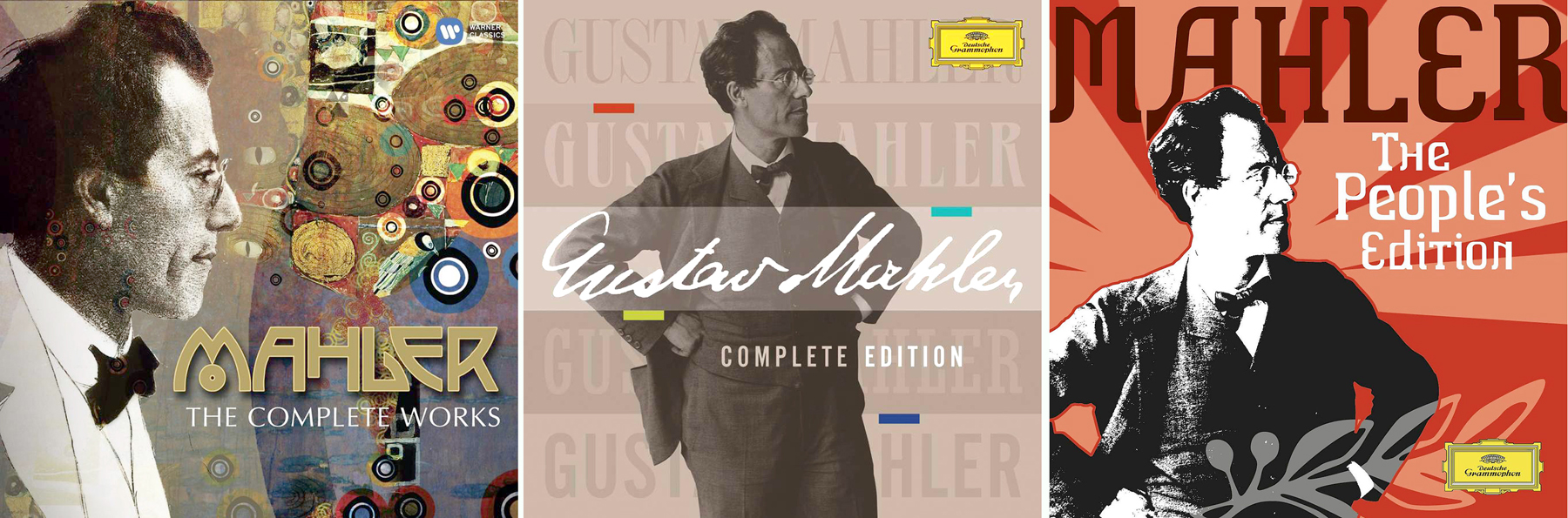
There have been sets that mixed and matched conductors and orchestras. Both DG and Warners have great sets. Another, called the “People’s Edition” had a promotional vote to choose which recordings to include. The fact that each set chooses from their proprietary recordings means that there is no agreement on what are the best recordings. Everyone, after all, has their opinion. In Mahler-World, opinions are strong. 

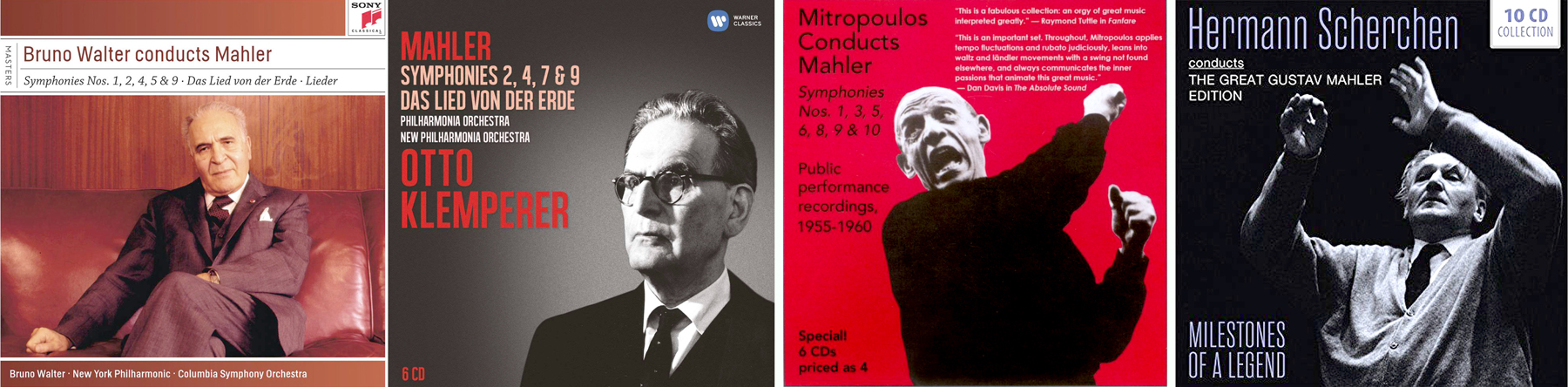
Other conductors have less-than-complete boxes out there. Klemperer only recorded Symphonies 2, 4, 7, 9 and Das Lied von der Erde. His No. 2 and Das Lied are consensus choices for best ever. The Seventh is just awful, but you should hear it anyway. 

Hermann Scherchen has a box with all but the Fourth and no Das Lied. He recorded with second-rate orchestras, for the most part, and is often so wayward his interpretations have been called “Variations on Themes by Mahler.” The sound engineering is highly variable. This one is for specialists only. 

In the BB list (“Before Bernstein”), you get to hear all nine symphonies with Ernest Ansermet and the Utah Symphony and hear what they sound like before the current Mahler Tradition was assembled (largely by Lenny). They are surprisingly good, and you get a different slant on the music (less peculiar than Scherchen’s). 

Benjamin Zander and the Philharmonia has not yet recorded the Seventh or Eighth, but the rest are among my favorites and I listen to them often. More than any other conductor, Zander follows Mahler printed directions accurately, and brings out expressive details glossed over in other recordings. There are those who disparage Zander for this detail orientation, but for me, it is the heart of a Romantic interpretation. This is the way they were played under Mahler, I am convinced. I love them all. And each comes with an hour-long lecture, explaining many of the details. He is a great speaker as well as conductor. 

There are others: Chailly, Bertini, Gielen, Sinopoli, Rattle. And all have their merits. 

The sets just keep coming. Everyone gets into the act. I have not been anywhere near complete. 

But these are the ones I have come to love. And, of course, there are many individual recordings, not part of sets. And many of these are among the greatest. 

And I have not even mentioned the other song cycles. Maybe another time.

gould goldbergs

Periodically the publishing world throws out a book put together by a critic or writer listing the “best of” or “greatest” and then lists books, recordings, movies, DVDs, TV shows or places to visit. The lists are always a great way to start off a conversation, even if they are always flawed, biased and at best partial.

So it is with Tom Moon’s book, 1,000 Recordings to Hear Before You Die (Workman, $19.95).bookpix

I can’t comment on most of his selections, although it would be hard to quarrel with the idea that you should be familiar with Miles Davis’ Bitches Brew  or Jimi Hendrix’s  Are You Experienced.  To say nothing of Duke Ellington’s  Blanton-Webster Band  or Ray Charles’  Modern Sounds in Country and Western.

These are all recordings that anyone with a musical curiosity should know, and probably love. And Moon has a thousand of ’em.

But Moon chooses to include classical music in his selections, too, and there he really seems to miss the boat. It is clear that he is a part-timer when it comes to Bach, Bartok  and Boccherini.

It isn’t that the music he chooses is wrong: You can’t really argue that anyone who loves music should have listened to Beethoven’s symphonies or Bach’s keyboard music. But while his popular and jazz albums recognize truly great performances, his choices for the classical selections are      invariably bland and middle-of-the-road. Safe. Boring, even.

The title of the books is “recordings to hear before you die,” and should be recordings that you grab someone by the lapels over and say, with scary enthusiasm in your eyes, “You gotta hear this!”

That won’t always be the best performance, in classical music, but rather the most grabbing, the one that says something new or different, that makes you rethink the music, or just sit up and take notice.

And the classical catalog is full of such recordings: Not just for classical music snobs, but for anyone who cares deeply about music in general, whether their favorite is Led Zeppelin  or Public Enemy.  These are performances that have appeal outside their narrow intended audiences.

So here are 25 classical recordings you have to hear before you die.


gould1. Bach, Goldberg Variations, Glenn Gould, piano  – The 1955 performance by the strange Canadian pianist turned classical music world on its head, with playing faster and slower than anyone else, and with an extraterrestrial energy and clarity that has never been matched, even by Gould’s second recording, from 1981.


2. Tchaikovsky, Symphony No. 6 “Pathetique,” New York Philharmonic, Leonard Bernstein, cond.  – The hyper-emotional Pathetique normally takes 45 minutes to play. Bernstein’s later recording (on DG) takes an hour and wrings from the music the deepest tragedy, perfect accompaniment for a suicide.


3. Mozart, Piano Sonatas, Mikhail Pletnev, pianist – Wolfgang’s piano sonatas are normally thought of as his “B” material; not under the hands of crazy Russian genius Mikhail Pletnev. He plays them like his life depends on them – the greatest recording of these works ever.


celi4. Bruckner, Symphony No. 4, Munich Philharmonic, Sergiu Celibidache, cond. –  Playing something slowly doesn’t always add weight, but here Bruckner’s most accessible symphony is played with the slow, careful intensity you might expect from someone defusing a bomb.


5. Mahler, Symphony No. 4, Concertgebouw Orchestra, Willem Mengelberg, cond. – Mahler was always over the top, even though many modern conductors rein him in. Mengelberg knew Mahler, heard him conduct, and gives us echt-Mahler, full of its requisite retardandos and portamentos. This is how Mahler is supposed to be played.


6. Wagner, Tristan und Isolde, Philharmonia Orchestra and soloists, Wilhelm Furtwangler, cond.  – Don’t be afraid of Wagner. If you like Lord of the Rings,  Wagner is just the same thing with tunes. With Kirsten Flagstad and Ludwig Suthaus,  this is the Tristan for the ages.


casals7. Bach, Brandenburg Concertos, Marlboro Festival Orchestra, Pablo Casals, cond.  – Politically incorrect performances of Bach’s essential concertos, meaty, expressive, lush, vibrant – and a slap in the face to those who believe there is only one right way to perform Bach.


8. Bach, Suites for Unaccompanied Cello, Pablo Casals, cello  – Casals singlehandedly resurrected these profound works, where Bach made the single instrument as rich and varied as a full orchestra. He plays them as if he were alone in the universe. Only Casals could do that.


9. Beethoven, Diabelli Variations, Uri Caine, piano, with Concerto Koln  – Postmodern Beethoven, with the 33 variations Beethoven wrote turned into marches, show tunes and fireworks. Not for the faint of heart, but explains to a new generation why Beethoven is worth knowing about.


10. Schulz-Evler, Arabesques on Johann Strauss II’s “Blue Danube Waltz,” Josef Lhevinne, piano  – The great show-off piece played as no one else has ever managed: You swear on your grandmother’s babushka that there are at least two pianists working up a sweat, maybe three. This is what a virtuoso is.


shostie11. Shostakovich, Symphony No. 7, Chicago Symphony, Leonard Bernstein, cond.  – Lenny finds the core of this long, often-derided masterpiece, that can turn into shlock in lesser hands. This is one of the most glorious orchestral recordings ever made, blazing with brass and passion.


12. Vivaldi, The Four Seasons, Concentus Musicus Wien, Alice Harnoncourt, violin, Nikolaus Harnoncourt, cond.  – Unconventional approach to familiar music turns these little concertos into tone pictures: Vivaldi meant them to create sound images, and here, you hear the dogs barking and the rain falling.


13. Barber, Adagio for Strings, Los Angeles Philharmonic, Leonard Bernstein, cond.  – There are people who cannot listen to Samuel Barber’s mournful, tragic piece without breaking into uncontrollable sobs, and Bernstein seemed to feel a special connection to the music, which he plays for all he is worth.


kissin14. Chopin, Piano Concertos, Evgeny Kissin, piano, Moscow Philharmonic, Dmitri Katayenko, cond.  – Wunderkind Kissin was only 12  when he recorded these, but it would be hard to find anyone who has better captured the verve and spirit of these Chopin concertos. This is magic.


15. Chopin, Nocturnes, Maurizio Pollini, piano  – Pollini finds more pith and mettle in these nocturnes, usually played to bring out their dreaminess. For Pollini, one of the superstars of the piano, they have more shadow and threat, things lurking behind corners, and military bands playing in the distance.


gabrieli16. Gabrielli, The Antiphonal Music of Gabrieli, various performers  – The assembled brass sections of the Chicago, Philadelphia and Cleveland orchestras play the glorious music of the Gabrielis the way it must sound in Heaven. This is virtuoso brass playing from a legendary album. You gotta hear this!


17. Brahms, piano music, selections, Glenn Gould, piano  – Thought he could only play Bach? Gould was at heart a romantic, and his Brahms is subtler, more nuanced, more beautiful than anyone else’s. This playing comes as a complete surprise, and utter joy.


rachmaninoff18. Rachmaninoff, A Window in Time, piano music, selections, Serge Rachmaninoff, piano  – The dour Russian was one of the greatest pianists of the century, but his electric recordings are dulled by scratches and boom. These are digitally enhanced Duo-Art  piano rolls, played on a Yamaha Synclavier,  that brings back the luster to his piano.


19. Chopin, Sonata No.2 “Funeral March,” Serge Rachmaninoff, piano  – Or you could try the thing itself, un-reconstructed. Rachmaninoff’s take on the familiar sonata is so fresh, powerful and driven, you’ll be shocked to hear it again as if it were for the first time.


valentina20. Liszt, Virtuosa Valentina, piano selections, Valentina Lesitsa, piano – Franz Liszt  was a showman, who brought to piano the same sense of spectacle that Spielberg brings to the seashore; Valentina Lesitsa plays them that way, all out, thunder and cannon-shot, fireworks and passion.


21. Beethoven, Symphony No. 3, “Eroica,” Russian National Orchestra, Mikhail Pletnev, cond.  – Pletnev plays the Eroica like it means something, and replaces tunes and rhythms with the kind of persuasive rhetoric that starts nations marching.


22. Wagner, Liebestod, Vladimir Horowitz, piano  – Real virtuosity isn’t just lots of notes real fast, but rather total control of the piano and expression. In Horowitz’s final CD, The Last Recording,  made when the was 86,  the ol’ magician wrings thunder and tears out of the death of Isolde. It becomes our death, too.


tureck23. Bach, The Great Solo Works, Rosalyn Tureck, piano  – Too often we think of Bach as mathematical, but he was really a crazy Baroque composer, layering hysterical detail on detail. Tureck plays him that way with the Capriccio on the Departure of a Beloved Brother,  and the Italian Variations,  with notes sweeping in like a tidal surge.


24. Gershwin, Rhapsody in Blue, Los Angeles Philharmonic, Leonard Bernstein, piano and cond.  – Bernstein plays Gershwin’s familiar symphonic jazz almost as if it were Brahms, big, romantic, serious. This is not everyone’s cup of Gershwin, but you simply have to hear it.


25. Grieg, Peer Gynt Suite, Royal Philharmonic Orchestra, Thomas Beecham, cond.  – Peer Gynt? Seriously? Hall of the Mountain KingAnitra’s Dance? Beecham plays the music with such suave joy, and with not a single mote of condescension, and revivifies the old chestnut. You’ll tap your toes and sing in the shower.

Mahler conducting

There are rainstorms, and then there are hurricanes.

There are symphonies, and then there is Gustav Mahler.

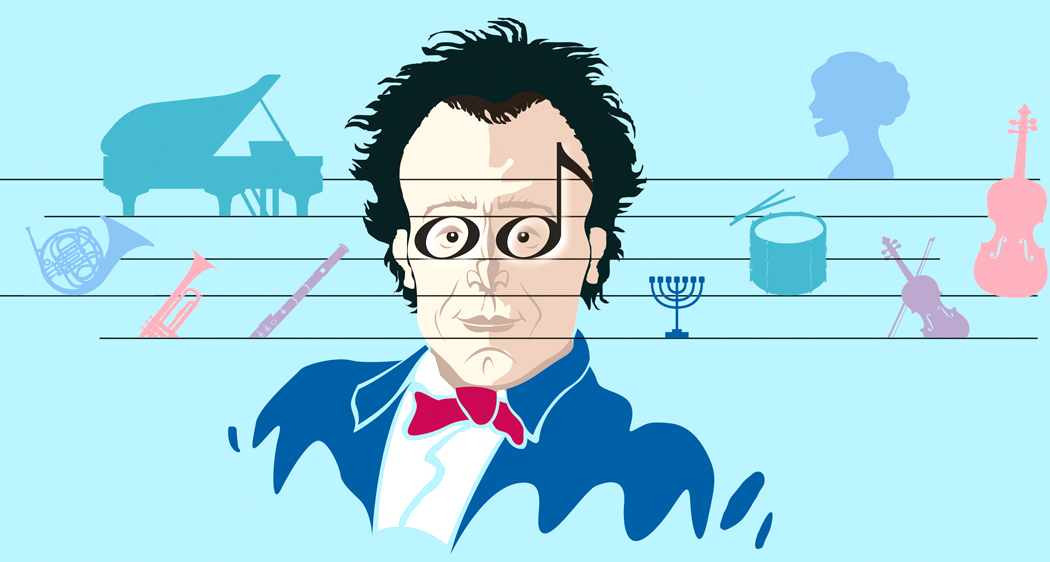
The Austrian composer is like nothing else in classical music, and his unique brand of emotional fury inspires a cultish following. You may love Mozart or Chopin, but if you’re a Mahler fan, you are in love. Devoted. An acolyte; it’s akin to religious conversion.

“I love all composers,” said the late music critic Dimitri Drobatschewsky, “but the composer for whom I will make the greatest effort, or spend the most money, is Mahler. There is nothing in life that can replace what Mahler’s music does to and for me.”

It is almost an addiction.

The music hits closer to the experience of being alive than almost any other: deeper, more emotional, more direct. The Mahler addict measures a performance not so much by whether he leaves the hall whistling the tunes, as whether he has lost control of his lacrimal glands and has to hide his face as he leaves, so as not to show himself weeping in public. Mahler’s music is personal; it batters your heart. Zasche Theo Gustav Mahler 1906

He asks you the questions you think about only at the most extreme moments of your life: Why are we here? What is death? Love? How has the child become the man? It isn’t the intellectual answers he seeks, but the emotional landscape of the questions themselves.

There is nothing moderate in music or performance. Leonard Bernstein, often credited with starting the modern Mahler revival, was a particularly passionate exponent of the music.

“People are always saying that I exaggerate Mahler, which is so stupid,” he said, “because you cannot exaggerate Mahler enough! To play a Mahler symphony, you have to give it your whole heart and body and soul and everything.”

As William Blake said, “Enough or Too Much! Less than all cannot satisfy.”

‘3 times an outsider’

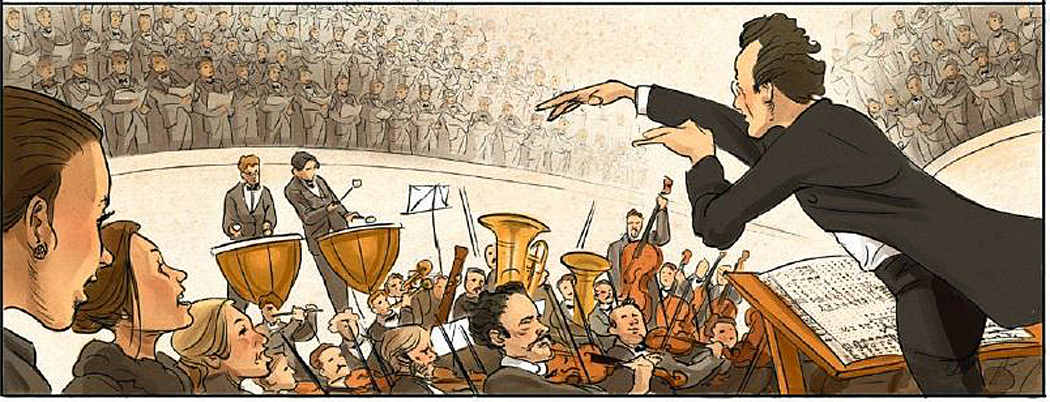
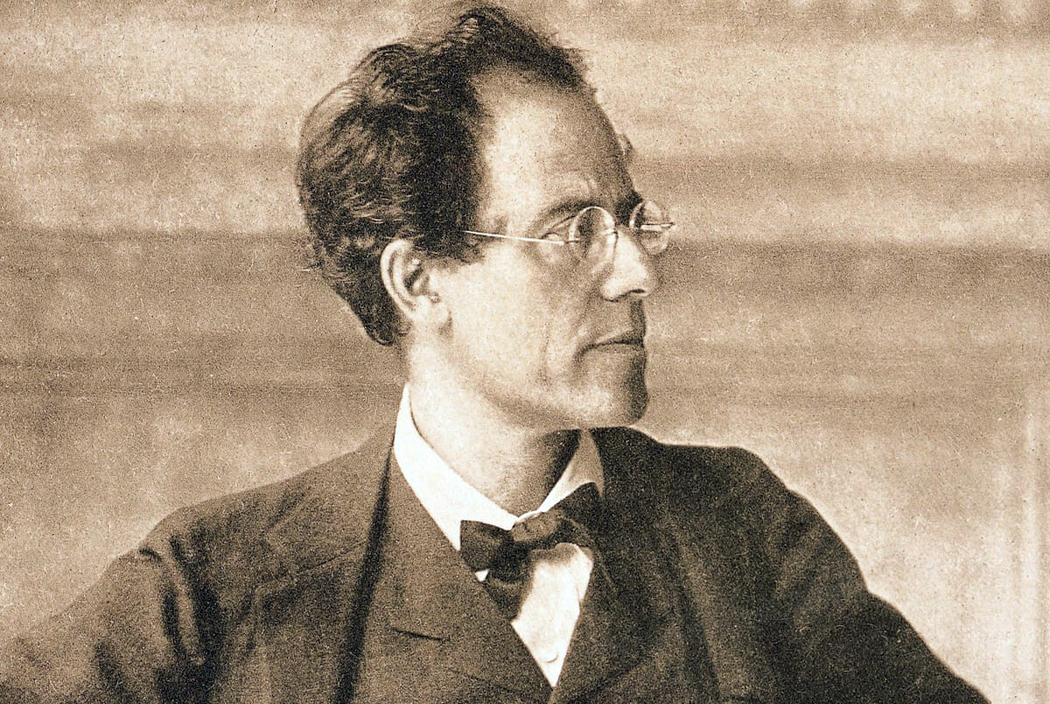
Gustav Mahler was born in 1860, one year before the American Civil War began, to a Jewish family in what now is the Czech Republic. He rose to prominence as a conductor in Vienna, where he was alternately lionized and vilified. By all accounts, he was one of the greatest conductors of his time, but a vicious element of anti-Semitism conspired against him, despite his careerist conversion to Roman Catholicism.Gustav Mahler Emil Orlik 1902

“I am three times an outsider,” he famously said, “as a Bohemian in Austria, as an Austrian among Germans and as a Jew throughout the world.”

He finished his first symphony in 1889, and he put into it much of his life up to that time. Every Mahler symphony is in some way autobiographical. It’s not just abstract music; the symphonies are his life.

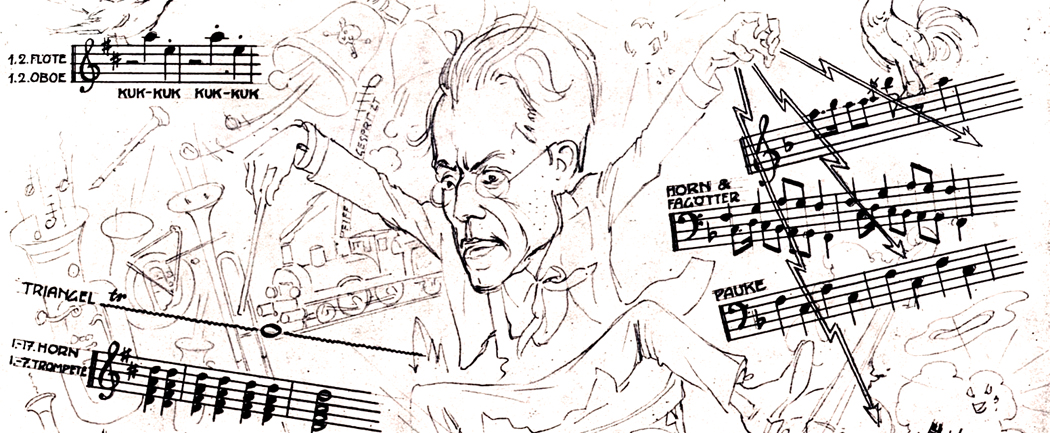
Even in the First, the opening section depicts recollections of his childhood, of taking walks in the woods in Moravia with his father. So those high harmonics in the violins depict the wind blowing through the pine needles, and the clarinet depicts cuckoo calls, and then an offstage trumpet plays a fanfare because, in the woods they used to walk, there was a distant army barracks.

Mahler himself said, “A symphony must be like the world. It must embrace everything.”

It must be made the musical version of D.H. Lawrence’s “bright book of life.”

A challenge

Mahler presents an initial challenge to the newcomer, who is used to attending a concert for the purpose of hearing the great abstract artform left to us by Mozart, Beethoven, Brahms, Stravinsky, Copland, Prokofiev. But nothing in Mahler is merely abstract: It is all personal. All life. All extreme. The composer asks his audience not to enjoy his melodies, but to use the music to search their own lives for the return of serve he rockets into your court.

The Fourth Symphony is the best entry point for the neophyte: Mahler’s shortest symphony, filled with all the things that make the composer so compelling. There are great tunes, inspired orchestration, a vocal part and many of the deeper themes that pervade all his symphonies: Nature, nostalgia, tragedy, death and innocence.Mahlercartoon 1907

From there, you can move on to his more intense symphonies, where he feels compelled to throw at you everything he knows, everything he’s ever felt.

For him, that meant adding to his already huge orchestra such things as sleigh bells (which open the Fourth Symphony), cowbells, mandolins and — in his tragic Sixth Symphony, hammer blows that “fell a man like an ax cutting a tree.” The First Symphony has everything from klezmer bands to military marches.

He was trying to make a world, and that world is as much marching bands, elegant waltzes and earthy landlers as it is soaring, breathless melodies.

There is Mahler counterpoint, too: layers of tunes and snippets of tunes, less like the long line of a Bach fugue, and more like a Picasso collage, with torn fragments overlapped.

That mixture of high and low is both the hallmark of Mahler’s world view and our own Postmodern world. Perhaps that is why Mahler feels so contemporary to us. For Mahler’s contemporaries, his symphonies too often seemed to be infected by the worst sort of vulgarity. They had come to hear hochste deutsche Kunst — high German art — and got tin whistles and banjos thrown in in the bargain.

The “unmedicated” Mahler

If Mahler is about anything, it is about these extremes: sublimity and camp, aspiration and despair, irony and sentimentality.

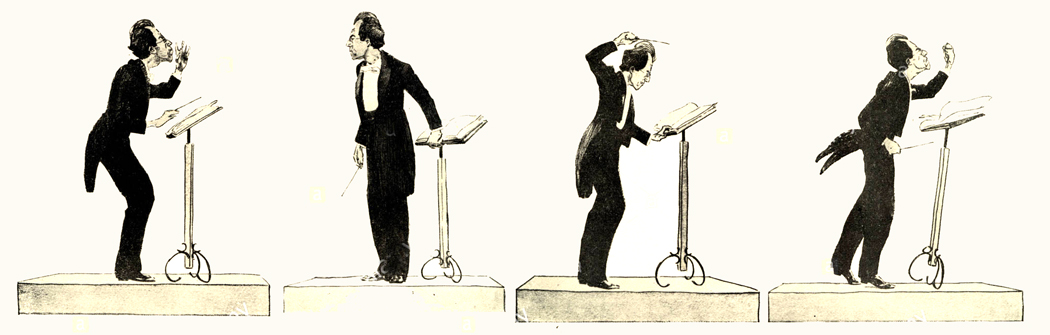
In his famous essay about the composer, Bernstein wrote: “Think of it, Mahler the creator vs. Mahler the performer; the Jew vs. the Christian; the believer vs. the doubter; the naif vs. the sophisticate; the provincial Bohemian vs. the Viennese homme du monde; the Faustian philosopher vs. the Oriental mystic; the operatic symphonist who never wrote an opera.”mahler caricature 4

Mahler can whip you around these opposites, turning his music on a dime, snapping your emotions back and forth like a pennant in a Wrigley Field bluster. Not only between movements, but he can be ecstatic for three bars, and, suddenly, you’re in the deepest depression for six, only to snap to attention with 12 bars so alert that they seem electrified.

If he were alive today, he’d probably be on medication.

The slow movement of the Fourth Symphony is that way: It is a theme and variations on two themes, one elevated and serene, the other devilish and taunting. The two themes merge in variations, finally both stopping as the orchestra bellows a loud cry — for some, it is the gates of heaven opening. Time, and the music’s forward motion, stop dead in glory.
All that is followed in the finale by a song sung by a soprano, directed to sing in a childlike, innocent way, about the wonders of that heaven, imagined by a child, where “the angels bake the bread.” From the sublime to the ridiculous in one easy step.

Exhausting pinnacle of art

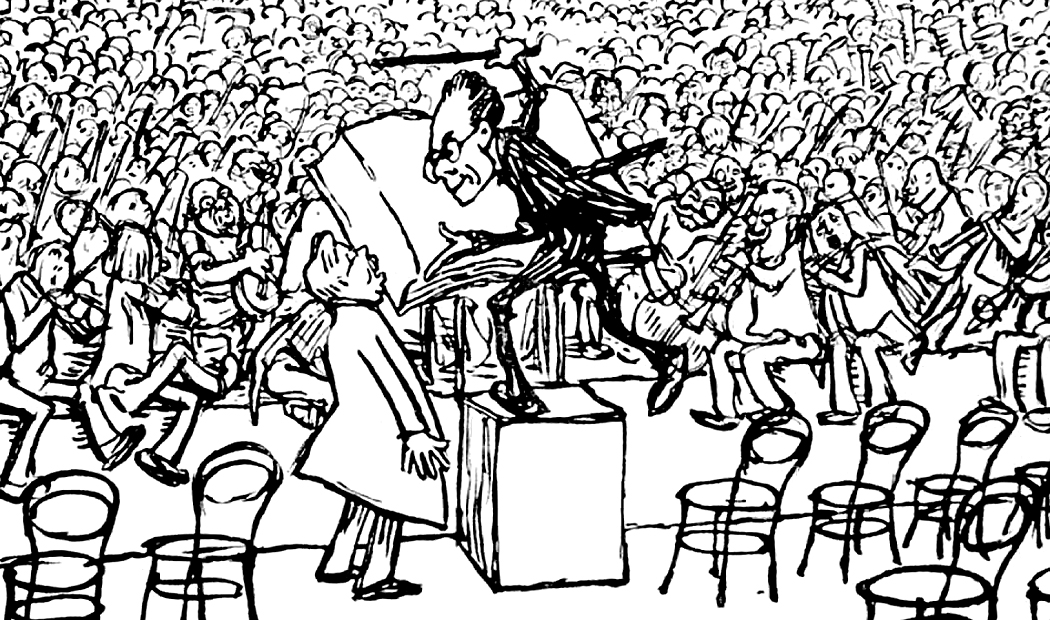
You can leave a concert humming Mozart’s tunes or inspired by Beethoven’s nobility, but after Mahler, you are simply spent. You’ve been “rode hard and put up wet.” He has dragged you from pillar to emotional post, pounded your deepest fears, pointed with your most fervent hopes. Mahler exhausts.mahler caricature 2

For those who are up to it, it is the pinnacle of art. For those who ask for something less exaggerated from their music, Mahler can be interminable and exasperating.

The symphonies are long — some single movements are longer than whole Beethoven symphonies. Mahler is an acquired taste.

Yet, while they are sonically splendorous, they are spiritually deep, and if music is an expression of the human spirit, Mahler is exploring its deepest depths.

For Drobatschewsky, it is summed up in the Mahler Ninth that he heard conducted by Claudio Abbado in Amsterdam.

“I am not a religious man, but what other people get out of religion, I get out of Mahler: solace, joy, every feeling that’s known to man.

“All out of Mahler’s music.”

NAG NAG NAG: An ADDENDUM

Gustav Mahler was a control freak.

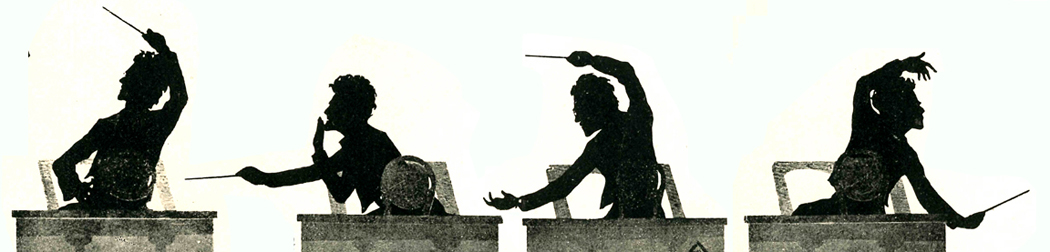
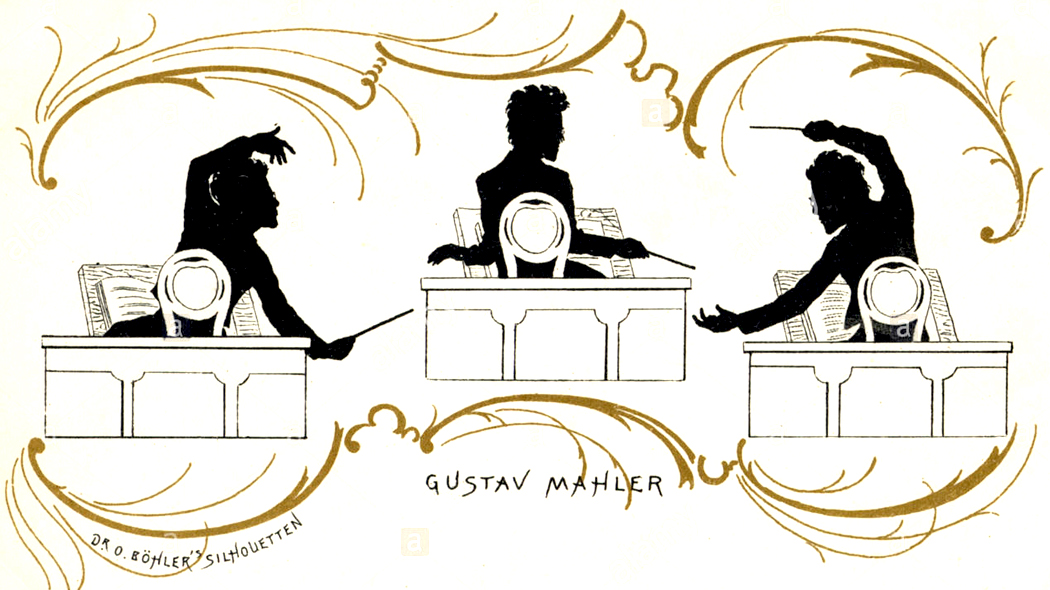
Look at most music scores and you see not only notes but some basic instruction: tempo markings, how loud to play, whether to speed up or not.Mahler silhouette Otto Böhler

Look at a Mahler symphony score and you see enough writing to fill a book. He was a micromanager.

The Dover miniature score for his Fifth Symphony, for instance, has four pages of small-print glossary to translate Mahler’s German instructions. Hardly a bar goes by without some nudge by the composer.

In the first four bars alone of Mahler’s Fourth Symphony, he asks the orchestra to play “Moderately, not rushed,” and with “Grace notes very short,” “staccato” and “piano” (“quietly”), followed by “sempre piano” (“always quiet”), followed immediately by a diminuendo (“get quieter) — which would seem to contradict the sempre piano by asking the orchestra to change. Meanwhile, he asks that the music be played “grazioso” (gracefully), while also asking for a “poco ritardando” (“slow down a little”).

That’s in three bars. In the fourth, he asks for a return to the original tempo, but it should also now be “comfortable.” Meanwhile, he throws in a reminder: “Expressively.”

That’s only four bars out of an hourlong symphony.

You have to give yourself over to Mahler’s intentions, perhaps more than for any other composer, due to the sheer volume of specific instructions he has left us.

The markings can be difficult to interpret, however. The very first instruction Mahler gives for his “Songs of a Wayfarer,” before he says anything else, is “Faster.” Faster than what? That is followed by “Slower” and, two bars later, “Faster,” and back and forth until he gets to “Smoothly agitated.”

Most conductors mark up their scores with little notes to themselves to remember this or that detail in the music. Mahler was a conductor, too, and has given the performer the benefit of his own marking up.

Basically, Mahler was a backseat driver.