Archive

Tag Archives: canada

Delmarva Peninsula

When I was a kid, most things in the world just were. Everything was normal, even if it wasn’t. People lived in houses, roads were paved, families had a mom and dad. And, for a kid, parents were just parents; I never gave much thought to why they did what they did. It wasn’t even that if they did something, they must have had a reason. They just did things. They were Mom and Dad, and as children, me and my brothers just followed along. As a child, the world is a given. 

It’s hard to recall that state of affairs, when things happened because they happened. That they might have done things for the abstract good of their children never dawned on me. Of course, now that I am old, I look back and realize how much they did for us, things they didn’t have to do, or things they probably would have preferred to do some other way, including some other things they might have wanted to do with their sparse vacation time. 
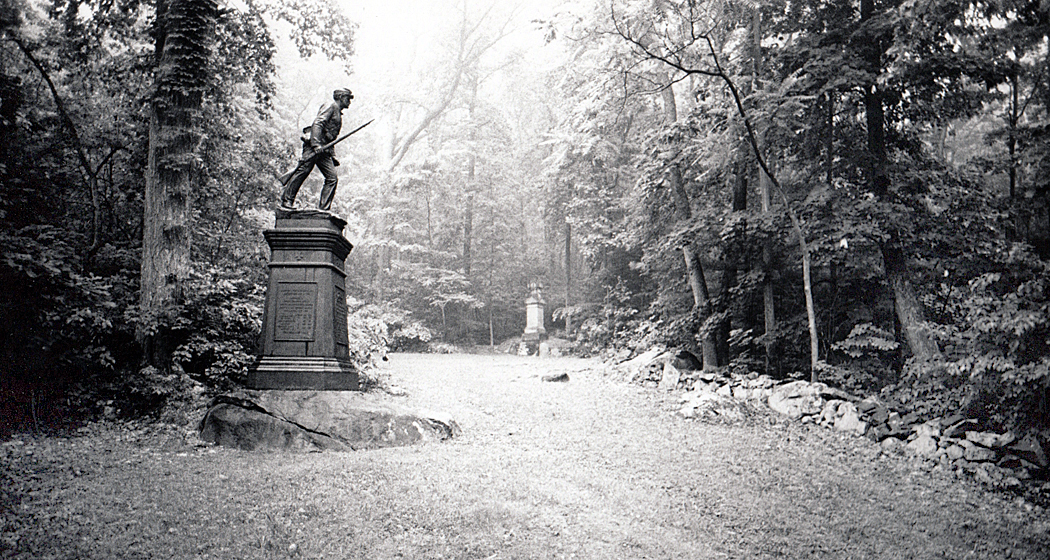
Gettysburg, Pennsylvania

But one of the things they did for us was travel. When we had our summer school vacations, Mom would pore over various brochures, magazine articles, and roadmaps and carefully plan routes to drive and sites to take in, and then, when it came time, we would load up the car and take off. We went to Washington D.C., to Niagara Falls, to Fort Ticonderoga, to Gettysburg — and many spots in between. Only later did I come to understand there was a purpose to these vacation trips. they chose these things to expose their children to history, geography, politics and to let us see what was possible outside suburban New Jersey. Travel was part of our education. 

Back when they were children, they didn’t get to travel. They both grew up in northern New Jersey and neither had more than a high school education. Dad’s family was heavily religious and didn’t approve of having fun, and Mom had to raise her two younger siblings after her father died when she was still in grade school and her mother had to find work in New York City. And so, the worlds they grew up in were limited.

German gun, Omaha Beach, Normandy, France

But when my father was drafted in 1940, he was sent to Camp Wheeler in segregated Georgia. He didn’t talk much about his army life, but he did express shock at discovering the pervasiveness of racial discrimination. And then he was sent overseas after D-Day to France, Czechoslovakia and Germany and found that other peoples had various ways of making a decent life. His horizons were involuntarily expanded. 

When they got married, shortly after the war, they felt it was important to broaden their children’s horizons, too, and to make sure we got the best educations. There was never any question that their kids would go to college. (I was told that when I entered second grade, I asked if that meant I could go to college “next year?”) Education was Priority One. Travel was a component of that. 
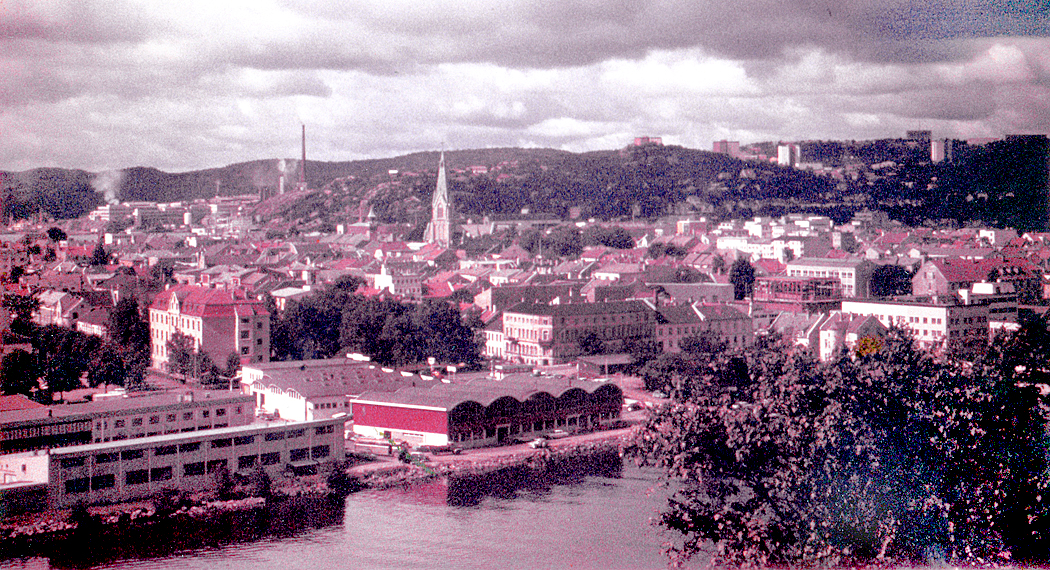
Kristiansand, Norway

Later, when I was in high school, they made it possible for me to go to Europe, accompanying my immigrant grandmother to her birthplace in Norway, and to take a bus tour through France, Germany, the Netherlands, Belgium and Luxembourg. A few years later, my younger brother, Craig, was sent off on a similar trip. 

Mark Twain famously said that “Travel is fatal to prejudice, bigotry, and narrow-mindedness, and many of our people need it sorely on these accounts. Broad, wholesome, charitable views of men and things cannot be acquired by vegetating in one little corner of the earth all one’s lifetime.” 

The vast bulk of the MAGA world, it seems to me, is made up of those who have never ventured far from their birthplace. If they had seen how others live, they would not accept the lies. 
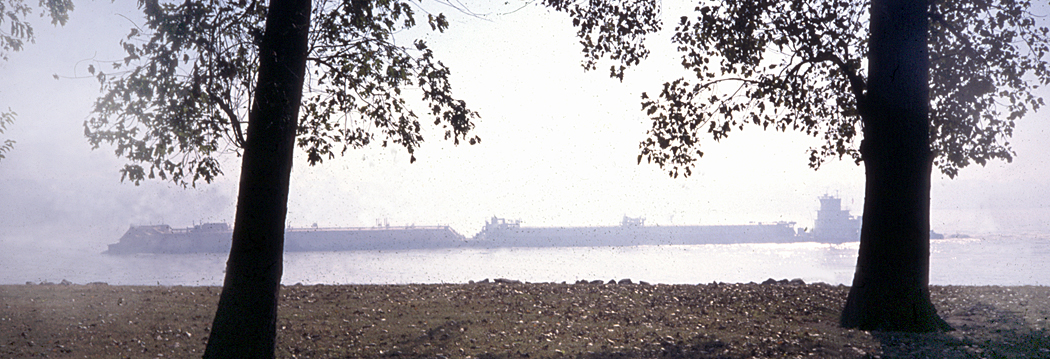
Cairo, Illinois

Travel, then, has pretty much always been an essential part of my life, and having become an adult — at least as quantified in years accrued on the planet — I have continued the habit instilled by my parents. Education wasn’t only in books; I read Huckleberry Finn, of course, but I’ve also been to Mark Twain’s childhood hometown of Hannibal, Mo., and to what remains of Cairo, Ill. I’ve driven along the entire length of the Mississippi River, from Lake Itasca, Minn., to the Venice Marina where the road ends in Louisiana. 
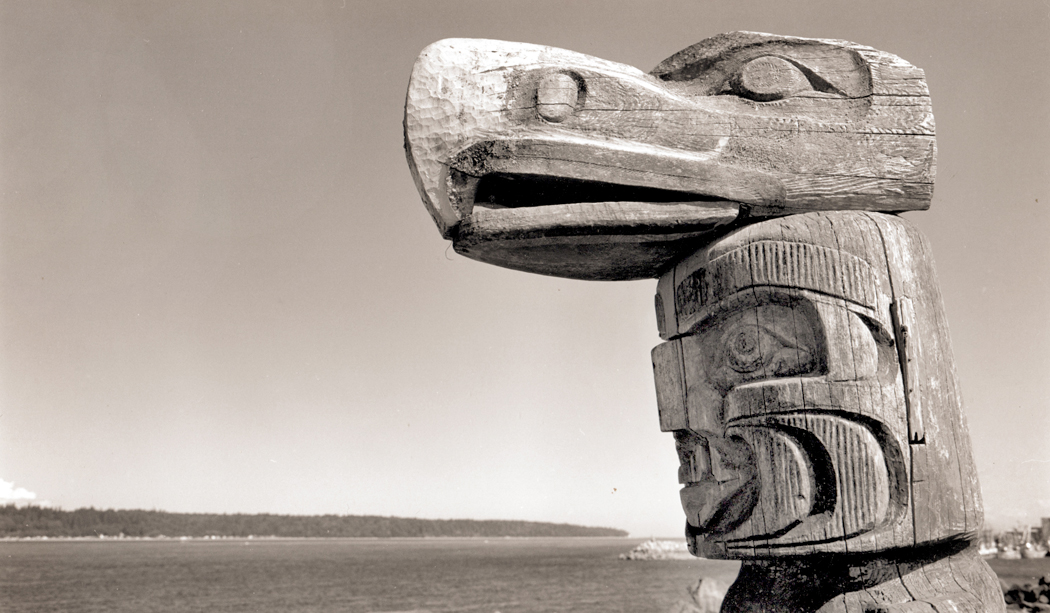
Vancouver Island, British Columbia

It is rare to mention a place I haven’t been in the continental United States or provincial Canada. Big Sur; Mt. Katahdin; the Everglades; El Paso;, the Union Pacific Bailey Train Yard in North Platte, Neb.; Hudson Bay; Halifax, Nova Scotia; the Tehachapi Loop in California; the Sturgis Rally in South Dakota; even Glacier Bay in Alaska.
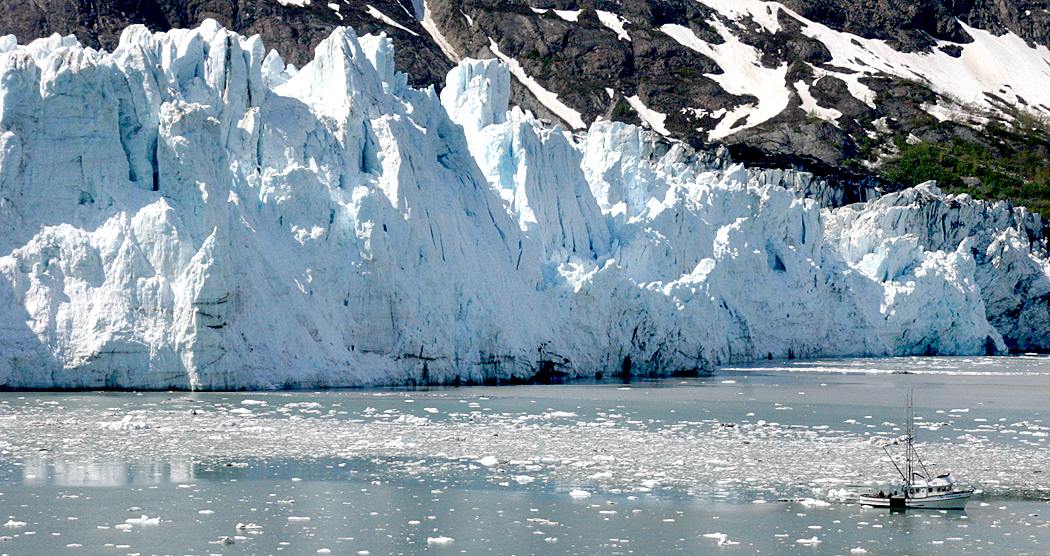
Glacier Bay, Alaska

Believe me, I can be quite irritating, when someone mentions some far-off place and I chime in, “Oh, yeah, I’ve been there. Had a great Po Boy sandwich in a little shack along the road in Pecan Island.” Which is a tiny community along the southernmost road in Louisiana. Or “Abiquiú? Yes, we visited Georgia O’Keeffe’s place there.” I am slowly learning to keep my yap shut. 

Red Mesa, Navajo Reservation, Arizona

I’ve been to every state except Hawaii, and most of them many times, and every province in Canada, save only Prince Edward Island and Newfoundland. I’ve lived in four corners of the continental states, growing up in the Northeast, moving to the American South, then to Seattle in the Northwest, and spending 25 years as a writer in the Southwest. Each move gave me a chance to explore all the territory nearby, often in some detail (There’s hardly a square meter of Arizona that I haven’t been to. Go ahead, name something obscure: Ajo? Red Mesa? Tumacacori? Freedonia? Gadsden? Quartzsite? Check, check, check, check, check and check.)
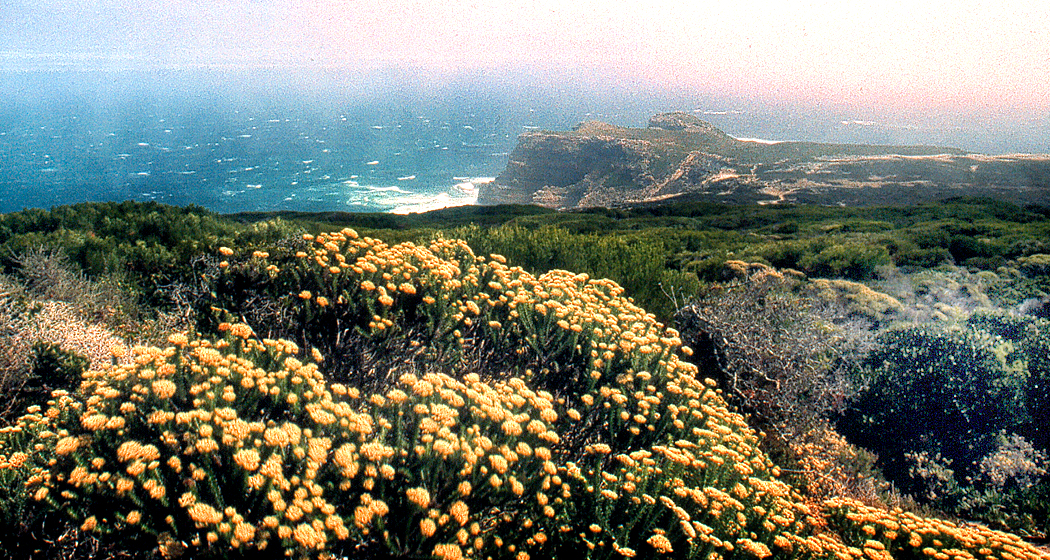
Cape of Good Hope, South Africa

I’ve been to the Cape of Good Hope in South Africa and to Marylebone Road in London; I’ve been to the Chartres Cathedral, and to the bull ring in Arles, in Provence. My late wife and I went back to France many times, and drove to all six corners of “The Hexagon.” 

And so, yes, I’ve been to the D-Day beaches at Normandy and to the bomb craters still evident in Verdun, to the cave art along the Vézère Valley, to the paleolithic menhirs and dolmens near Locmariaquer. 
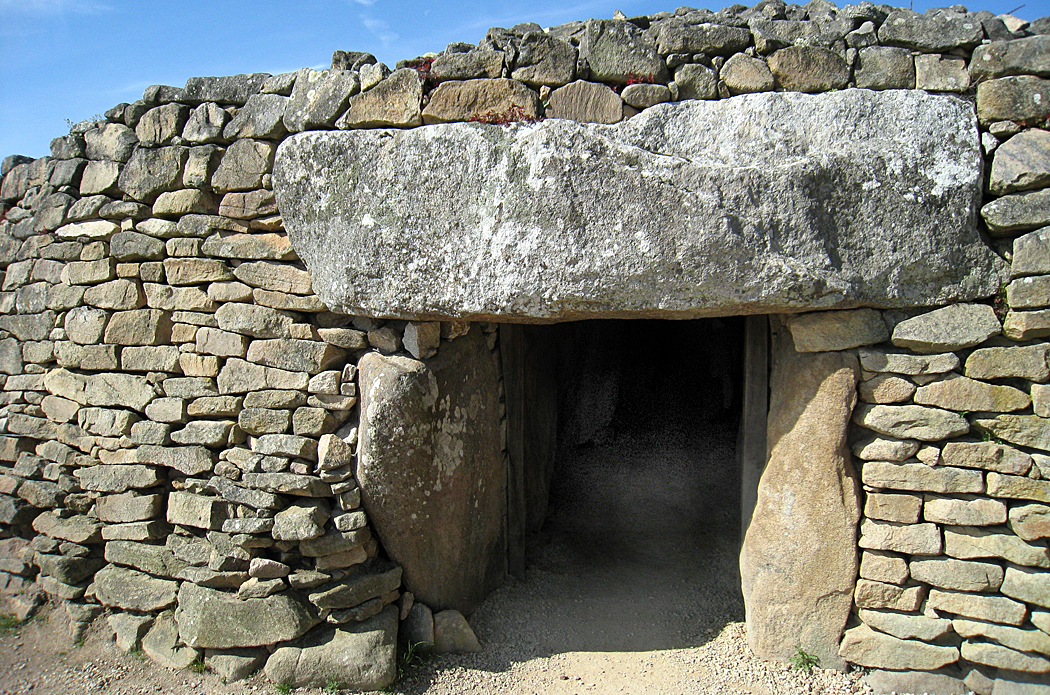
Dolmen, Locmariaquer, Brittany, France

I’ve visited the Museum of Questionable Medical Devices, the Museum of Jurassic Technology and the Hammer Museum of Haines, Alaska. 

And it has all been an education. I certainly learned that the omelet I get at Denny’s is a pale mutilation of the rich, creamy offering you can find at any neighborhood cafe in Paris. 

O’Keeffe Country, New Mexico

Of course, I’ve also learned how little of the world I’ve actually seen. I have so much of the non-European inflected planet yet to see, although, at my age, it’s almost certain I will never get to Japan or the Seychelles or Samoa. Just as, no matter how many books I’ve read, there is always a hundred times more books I will never get to read, and not enough time left even to put a dent in that list. I keep trying. 
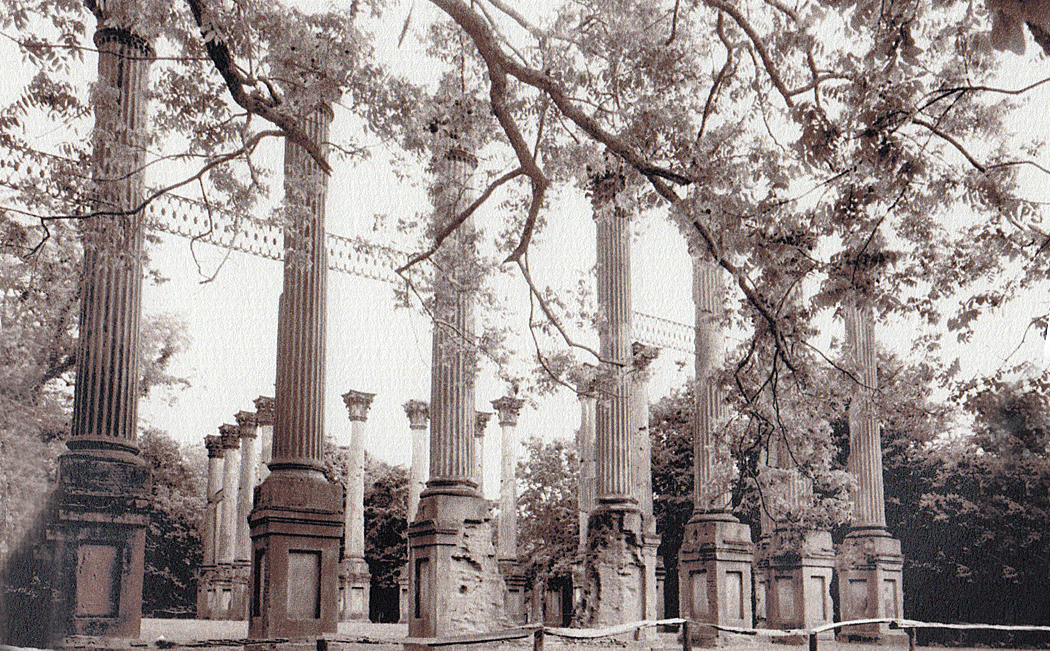
Windsor Ruins, Mississippi

And so, in addition to bragging about all the places I’ve been, I am shamed by all those places I have not gone to, just as all the art I haven’t seen, all the books I haven’t read, all the music I have never heard. But I think that it is only because of all I have read, seen, and heard, that I know enough to feel the gaping holes in my education.

Conclusion: In which the mountains dip into the sea

St. Georges de Malbaie Gaspe

St. Georges de Malbaie Gaspe

The Gaspe Peninsula in southern Quebec sticks out beneath the mouth of the St. Lawrence Seaway like a pouting lower lip.

It juts into the Gulf of St. Lawrence, protected from the open Atlantic by Nova Scotia and Newfoundland. There it sits, home to cod fisherman and farmers and an increasing number of vacationers. gaspesie 5

The peninsula’s interior is wild and mountainous — the last hurrah for the Appalachian chain — but its perimeter is bucolic, with small, quiet villages, each with a church steeple at its center.

Between Matane, where the peninsula begins, and Cape Gaspe, where it ends 200 miles later, there are only two roads that cross the interior.

Chic-Choc mountains

Chic-Choc mountains

From north to south, the roads leave the St. Lawrence, climb the Notre Dame and Shickshock mountains (aka Chic-Choc, in the bilingual nation) and wander down the deep river valleys lined with pine, fir and birch, only to come out on the prairie-lined towns along the Baie des Chaleurs.

The spine of the Appalachians runs the length of the Gaspe and it finally dives under the salt water at Forillon National Park, only to churn up the water beyond land’s end in a series of offshore shoals before sinking down into the sea bottom.

That last flowering of the ancient mountain chain is a splendid one, as the rock hangs over the water in a scalloped series of cliffs, each with a small semicircle of beach under it. The beach is made up, though, not of sand, but of small, smooth lozenges of stone that hiss and rattle as the breakers foam through them.

Cap Bon Ami, Forillon National Park

Cap Bon Ami, Forillon National Park

Nor does the shore slope smoothly into the water. All along the water’s edge, there are upended strata of rock that make for good clambering. At Cap Bon Ami — named for an old sea captain who spelled his own name Bonamy, and not for the scouring powder — the park road ends and you begin to hike.

A short way downhill from the parking lot, there is an observation deck and a set of several hundred stairs down to the beach. From that point, you can see the whitish cliffs spreading out in both directions. Cormorants and sea gulls swoop around you. Behind you rises Mont St. Alban, the last high peak of the Appalachians, which isn’t even 1,000 feet above the sea.

And in front of you, the sea itself spreads out like a gleaming satin tablecloth, flat and rippling with the sheen of daylight.

This is the sea that Jacques Cartier saw in 1534 when he made his first voyage to the New World. The French explorer discovered the native peoples of the area and kidnapped two of them to take back to show off to the king. On his second voyage, Cartier did not stop at Gaspe. Perhaps he knew his welcome no longer would be warm.

Gaspesie

Gaspesie

The few hardy French pioneers who took to living in the ”Gaspesie,” as the area is called by Francophones, found their towns burned down in the first half of the 18th century, when the English attempted a takeover of the whole New World. The Acadians, as the local French were known, were arrested, deported or forgotten.

In the following years, wars in Europe and North America sent migrants to Gaspe. Among them were American Loyalists fleeing the American Revolution, Irish fleeing potato famine, and merchants and fishermen from the islands of Guernsey and Jersey.

They settled in a patchwork across the peninsula, leaving towns along the coast as ethnic enclaves. That is why, in this corner of the French-chauvinist province of Quebec, you find towns named New Carlisle, Chandler and Newport, where English is the predominant language.

Mont Louis

Mont Louis

The interaction of languages produced a few oddities: What originally had been ”Hunger Point” in French, or Pointe a la Faim, was translated by the English as Point Fame, which later was retranslated into French as the current Pointe a la Renommee.

What was once ”Grande Grave” — named for the type of pebble beach called grave in French — was pronounced ”Grand Grave” in English, like a burial plot. This then later was spelled in French as Grand Greve, to match the sound of the English.

Most who lived in the region became fishermen. In the 19th century, large fishing corporations set up and ran ”company towns” that abused their workers in the same manner as mine owners in West Virginia. The families always owed money to the company store. There was no money; debts were paid in dried codfish, which the companies shipped out and resold at good profit.

Those who were lucky enough to avoid the codfish treadmill turned to subsistence farming. A few became whalers.

Peggy's Cove

Peggy’s Cove

Such a life continued unchanged until the 1920s, when roads were built, a railroad came through, and mail-order catalogs appeared. Electricity showed up after World War II, and the area, once as remote as anything in North America, began joining the 20th century.

Today, the southern and northern rims of the peninsula are very different.

Along the southern shore the towns collect around river mouths, surrounded by prairies of long grass blowing in the almost-constant wind. The land is flat, but you can look inland to the mountains.

The north shore, though, is right up against the hills, which break off into the water in bright bluffs and craggy cliffs. The one road that manages to squirrel from town to town is constantly climbing steep slopes and dropping down to the town in the next hollow.

And although the southern shore is ethnically varied, the north is almost entirely French.

There are two towns of note: Perce and Gaspe, both at the sea-end of the peninsula.

Perce

Perce

Perce is a tiny resort town parked near Perce Rock, an offshore seastack with a hole eroded through it like a giant stony donut. The town is the closest thing the Gaspe has to a tourist trap and the road through town will slow you down in summer with traffic stopping for souvenir shops and fancy restaurants.

There are also boat trips available to the large Ile de Bonaventure, sitting just offshore and one of the great bird-watching spots in the world.

Gaspe, on the other hand, is a working town and capital of the region. It is not particularly scenic, with its banks and gas stations, but it sits near the head of Gaspe Bay, the small inlet that separates the Forillon Park from the rest of the peninsula. It is at Gaspe that Cartier first landed. A museum commemorates the event.

Forillon Nationa Park

Forillon Nationa Park

And it is at Gaspe that we met the woman who runs the bookstore called the Librairie Alpha on the town’s hillside among the narrow, gray streets. She lamented the passing of the old days, and more, the old winters.

”It snows quite a lot in Gaspe,” she said in heavily accented English. ”But it doesn’t snow like it used to 20 years ago.

”I don’t know what has happened, but it isn’t so deep as it was in my childhood.”

In the winter, the bay ices over. It freezes ”as far out as the horizon,” she said. It stays frozen from December to April and people go out on the ice and fish.

”But they aren’t really there for fish,” she said. ”They bring beer and have parties on the ice.

”It freezes down two meters.”

In the winter, an icebreaker sails up into town as far as the bridge, breaking up the ice, but in a week, it is solid again, she told us.

But it doesn’t snow like it used to.

”I remember my father telling us about the really deep snows and how the snow would be so deep that everyone in the village would slide down their own rooftops into the snow.”

She said she remembered doing that when she was a child, but except once, the snow doesn’t pile up to the eaves anymore.

”Two years ago, it snowed so much, I took my children up to the roof to slide down. They may never have that chance again.”


L’ENVOI

 house montage

Gaspe is the ”roof of the Appalachians.” It is the final glory of the mountain range that begins in Alabama and rises like a spine through the East.

It is also a place of roofs. The old houses with their clapboard siding and double-insulated windows sport shingles of many bright colors. There are some that are royal blue, others Kelly green. If there are no shingles, but a tin roof, it is painted. I saw one that was the color of lilacs. Orange and red are also popular. house 5

But it isn’t only the roofs. The houses themselves are often quite garish. One two-story house we passed in Grande Vallee was green on the bottom and pink on the top, with corner accents of opposing hues. house 1

There was a green barn in Perce that was the color of mint. Its owner must have had a little left over, because he painted only one face of his house, sitting next to the barn, with the same breath-mint shade. The other three sides of the house were a peeling white. house 8

There were yellow houses, purple houses, pink houses and orange ones. The shades of green were staggering, sometimes two shades on the same building. house 10

Not all houses were oddly colored; the majority remained white and their roofs remained black or gray. Yet enough houses were tarted up to prove that it is a folkway on the Gaspe. house 2

It is true, however, that the majority of garish houses were on the south shore of the peninsula. Once we hit the northern shore, the strange colors nearly disappeared. Only once or twice in each village would you find a tin roof painted sky blue or vermilion.

ontario goofy splice1

There must be something in these northern Ontario winters that drives a man to fill his world with giant concrete animals.

It isn’t just animals, of course, and it’s not all concrete, but in the 400-mile stretch of Canada 11 from Cochrane to Thunder Bay, there are quite a number of oddball statues by the side of the road.

It begins in Cochrane with the famous giant white concrete polar bear, named ”Chimo,” that marks the place where the Polar Bear Express excursion train leaves the station for Moosonee, 186 miles to the north on the edge of James Bay.

But it isn’t too much farther west, in the tiny but clean community of Moonbeam, that the local Chamber of Commerce office is decorated with an 18-foot-wide flying saucer made of Space Age plastics, on a tripod fabricated from playground swing-set pipes.

When I asked the woman at the information desk, she just told me the town was named for the beautiful moonbeams you can see there at night, and residents thought the flying saucer would remind them.

No, it doesn’t make sense to me, either. Perhaps it is a problem of translation. This section of Ontario is primarily Francophone, and the woman spoke English as a second language. Perhaps in French, it makes sense. It seems that when you speak French, a lot of things make sense that everyone else in the world scratches their heads over. Think of Jerry Lewis.

A local newspaper story lets on that there was controversy over the construction of the saucer, part of a $300,000 community revitalization program. Some residents wanted a giant beaver instead.

”The flying saucer won’t attract many jobs, like the beaver would have,” said local UFO critic Butch Bouchard.

Leaving the 25th century of Buck Rogers, we find ourselves back in the age of dinosaurs: In Mattice, the town’s only motel sits next to, and rather under, a giant freckled-concrete Tyrannosaurus rex, whose teeth have been further graced with a line of Christmas tree lights. Beside him sits a concrete stegosaur with a look on his face of a contented cow.

There is no mention of the dinosaurs in tourist literature; neither is there any reasonable connection with the motel. But there they stand, no more commented on than a couple of trees, with a few yapping dogs chasing each other around the lawn.

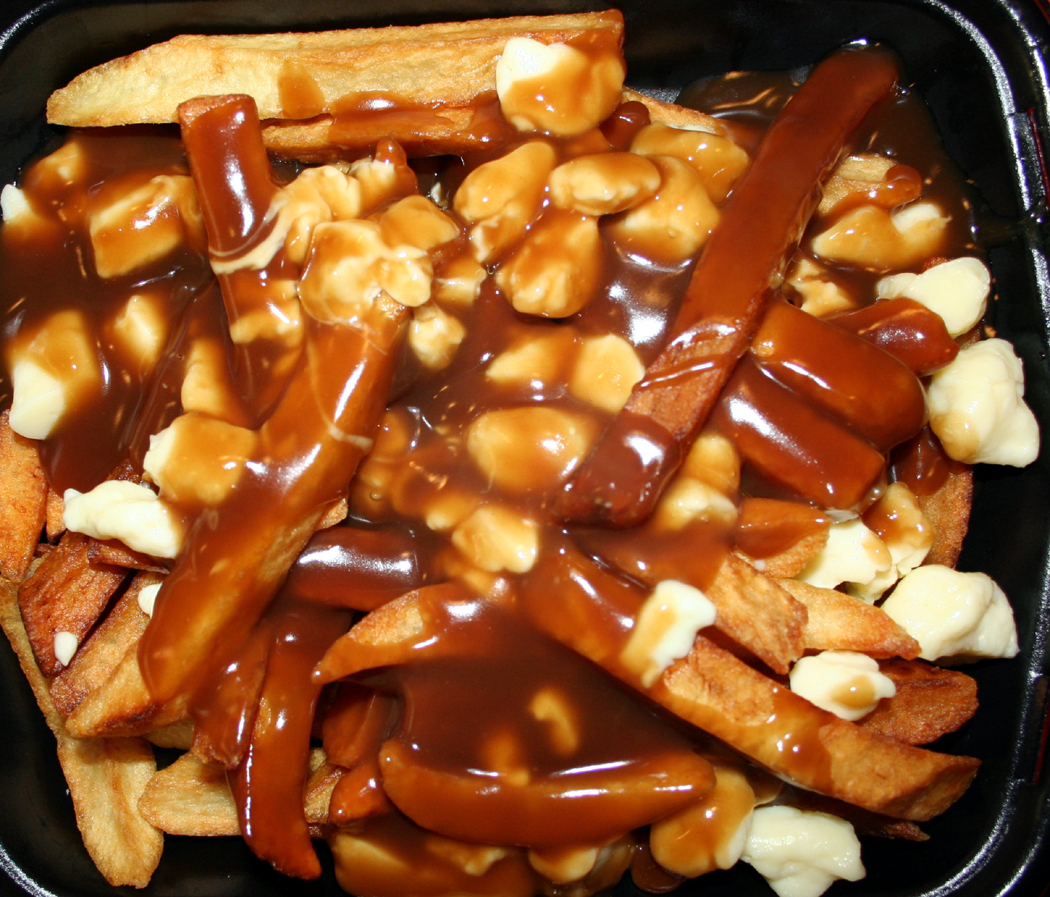
The community of Hearst is a mill town where almost everyone speaks French. Poutine1

One of the things that make sense to them is poutine, a local delicacy made from french fries covered in beef gravy and cheese curds. It’s what they serve at the local McDonalds: ”Do you want poutine with that?”

It’s not as bad as it sounds, but neither is it health food — a triple whammy of grease and enough cholesterol to clog the Chunnel.

Hearst is also the heart of moose country, so the local tourist office has a giant bronze moose out front. In comparison with the other animals, it is rather staid and conventional.

After Hearst, there is a long, long stretch of road with nothing to see but the walls of trees on either side of a straight two-lane road. Occasionally, the forest breaks open for a crystal river or waterfall.

But then, at Beardmore, a tiny village of Nipigon Indians, there is a 40-foot plywood snowman. It is, with the exception of an abandoned hotel, the biggest structure in town, and it wears a silly grin beneath eyes that look as if they come from a Hindu idol.

Next to it is one of those plywood paintings with circles cut out where you can put your head through and have a picture taken of yourself, in this instance, looking like a snowman. Perhaps this all makes better sense in the winter, when skiing becomes the regional passion.

And when Canada 11 meets Canada 17 to wind down to Thunder Bay, there is a small motel next to a 6-foot concrete trout. I should have expected it.

What I couldn’t have expected was a few miles on, standing in front of an auto-parts store: a 15-foot-tall Bigfoot chomping a cigar like a theatrical agent and giving a big thumbs up to passing motorists.

In Dorian, we stopped for the night. We could tell we had left the French area because we ate pirogis as heavy as einsteinium that sat in our bellies and weighed us down under the drowning pull of sleep.

We had a choice of two rooms at the Dorian Inn. One on the ground floor with two queen beds for $55 or one on the second floor above the bar for $26. I’m no fool. I paid the premium.