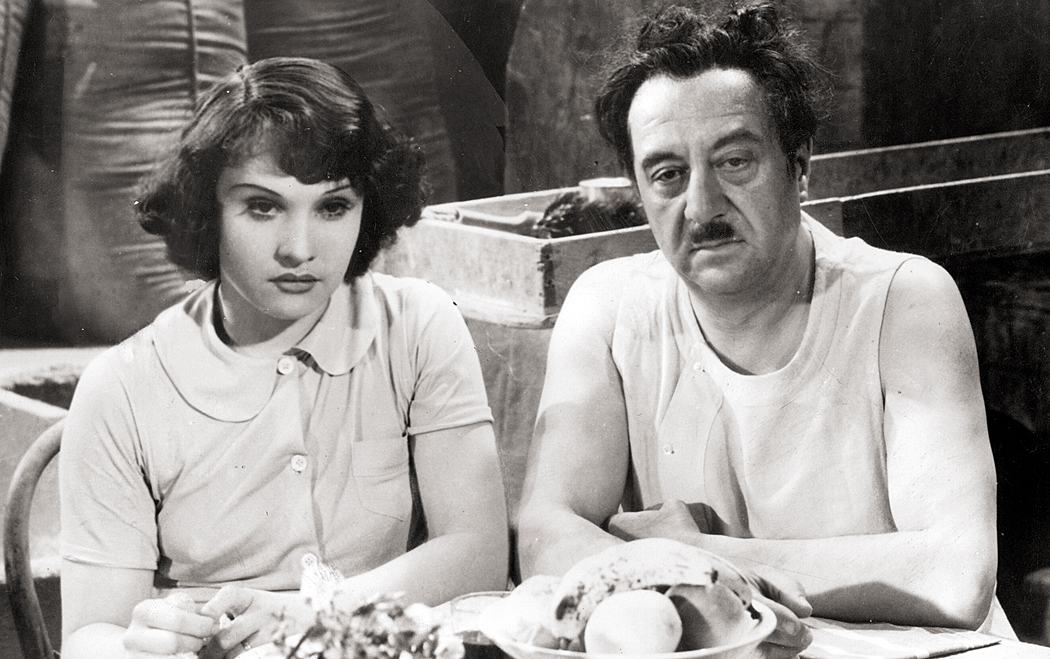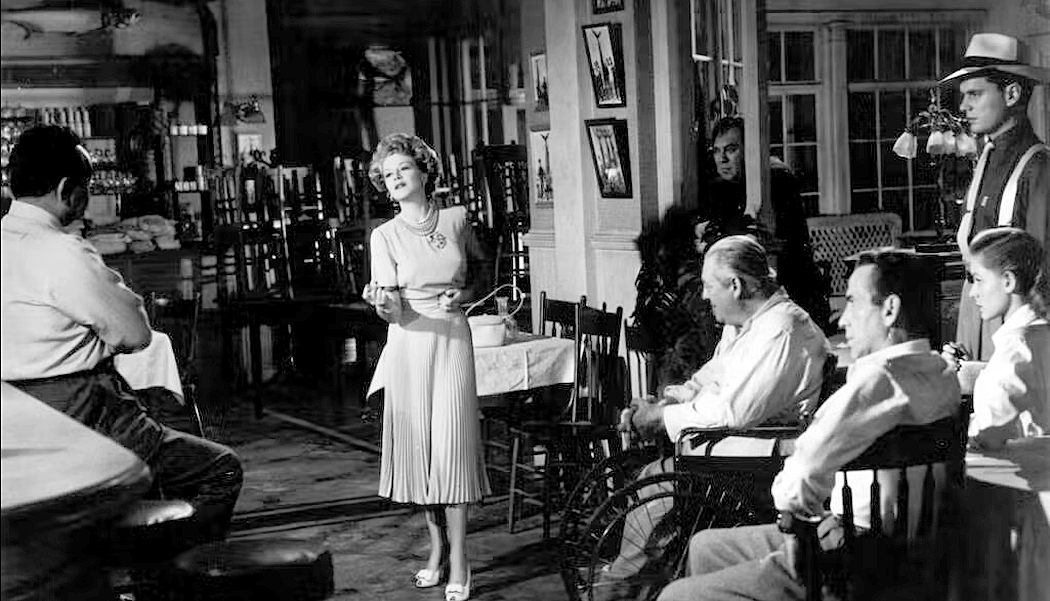
Archive

Tag Archives: cinema

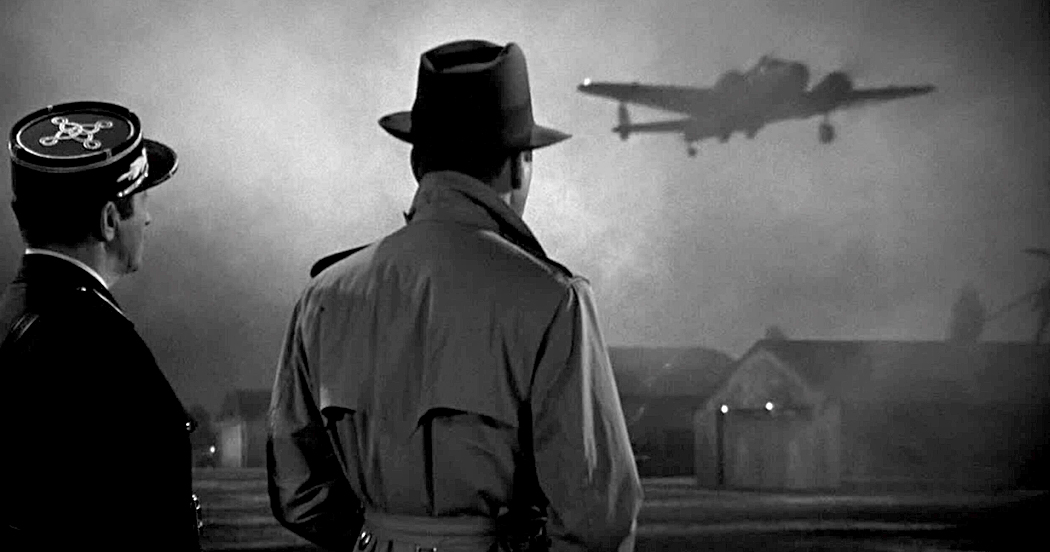
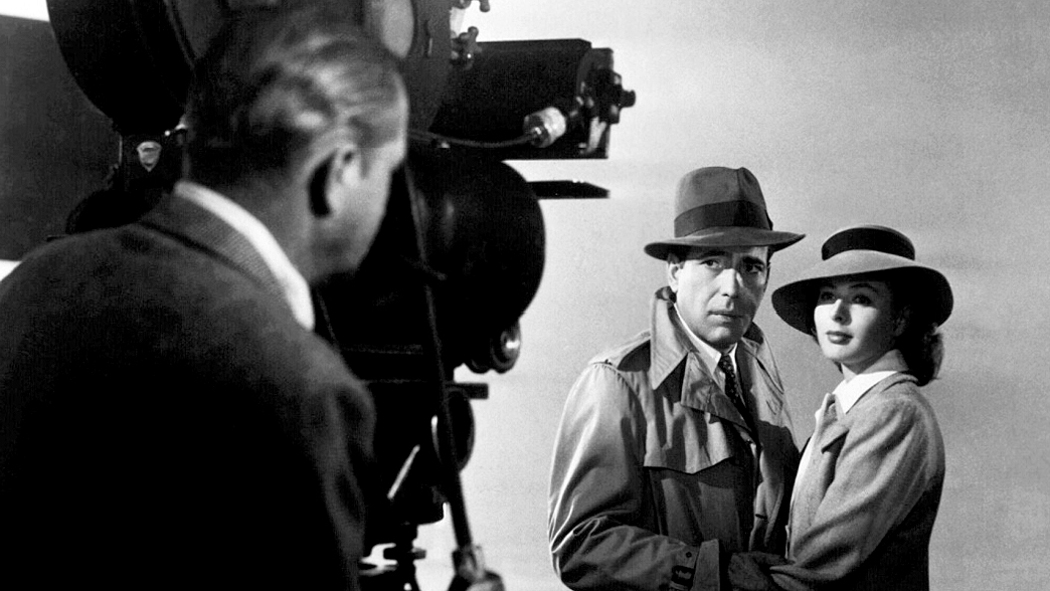
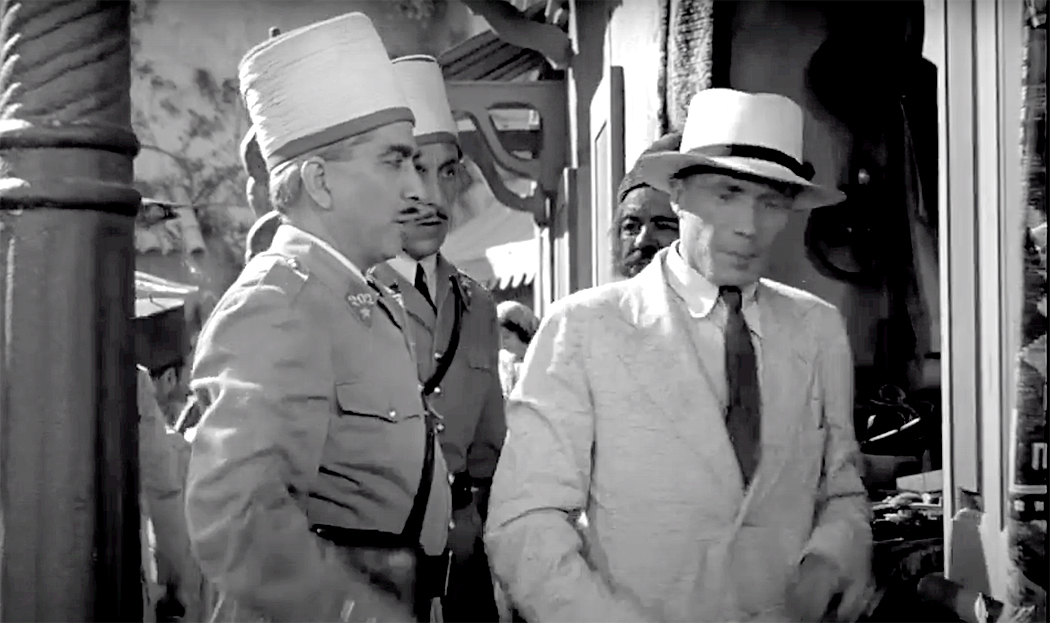
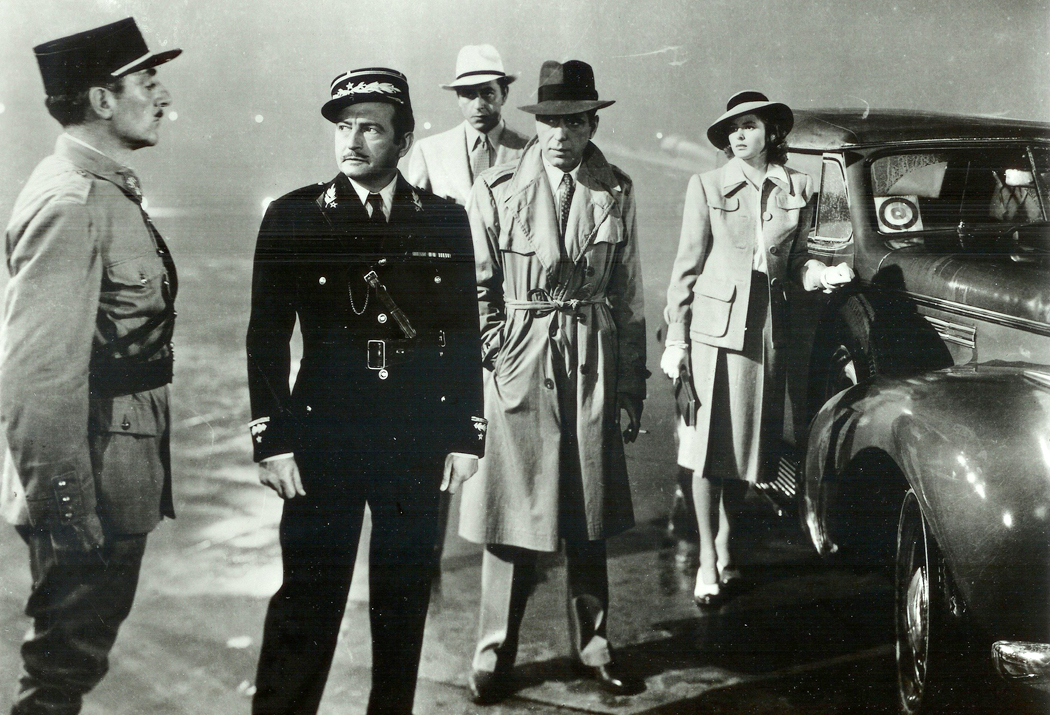
Casablanca is one of the best loved films ever to come out of the Hollywood studio machine, but it is hardly the story that makes it so. After all, the basic plot is “boy loses girl,” “boy finds girl” and “boy loses girl again.” A pretty thin thread to hang an epic on, even if the boy and girl are Humphrey Bogart and Ingrid Bergman. 

And the movie’s success is especially surprising considering what a mess its making was, well-documented in several books: many rewrites; a team of script doctors; and an ending that wasn’t known or decided upon until the last moment. And that is beside the fact that most of the plot details were simply not believable, or had no basis in historical fact. In other words, pure succotash. 

The love story may have been enough to make Casablanca a successful run-of-the-mill studio release in 1942 — after all, Warner Brothers churned them out by the bucketload — but the film has a secret ingredient that lifts it up to a classic. And sometimes, they barely spoke English. 

The love story may be the mortar that holds the story together, but it is the hundred extras, with their vivid vignettes, that are the bricks that form the substance and power of the movie. And those bit parts, most played by actual refugees from the war and from the Nazis, breathe actual life into the film. 

Each goes by so fast, you may not notice how many of them there are. Between each scene that advances the plot, there are interlarded brief glimpses into the lives of those made stateless, seeking a way to escape the horrors of war and fascism. The complete cast list on IMDb of those uncredited actors is a hundred names long, and most of those were actual refugees, making scant living in Hollywood. 

In fact, of the credited actors at the top of the cast, only three were born in America, and of the three primary characters, only Bogart, who was born in New York City in 1899. Down the roster, you have Dooley Wilson, born in Texas in 1886; and Joy Page, who also happened to be the step-daughter of Warner studio head, Jack Warner (she played the Bulgarian refugee, Annina, who almost gives herself to police chief Louis in order to save her husband). 

Let’s go down the list. Not all of them fled Nazis, but all were caught up in the turmoil in Europe.  

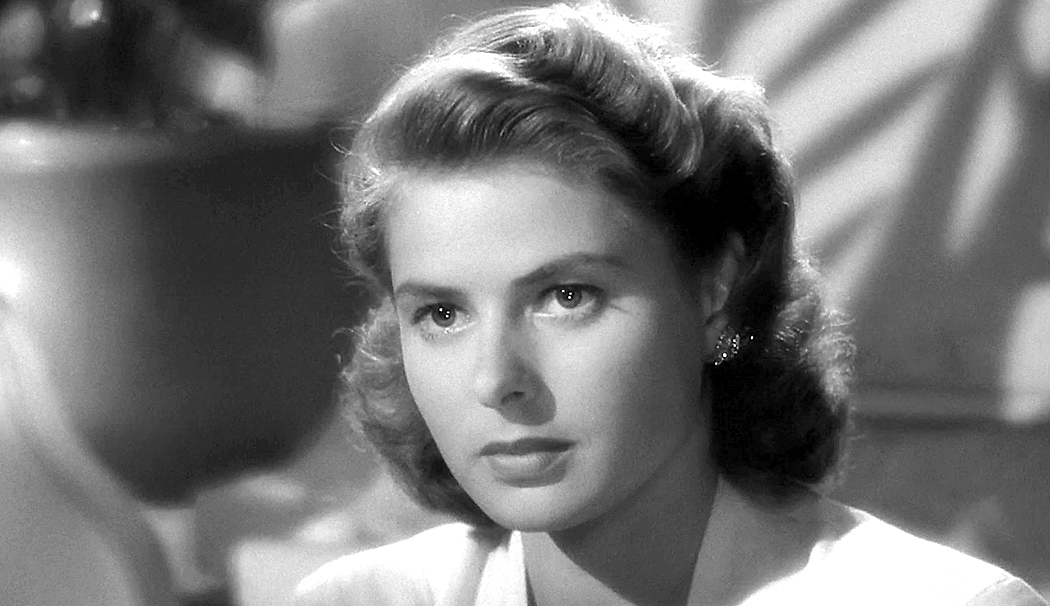
Ingrid Bergman (Ilse Lund) — Born in Stockholm in 1915 to a German mother, she spent summers as a child in Germany. In 1938, she made a film for the German movie conglomerate, UFA. But she said, “I saw very quickly that if you were anybody at all in films, you had to be a member of the Nazi party.” She never worked in Germany again. 

Paul Henreid (Victor Laszlo) — Born in 1908 as Georg Julius Freiherr von Hernreid, Ritter von Wasel-Waldingau in Trieste, which at the time was part of the Austro-Hungarian Empire. His father was born a Jew, but converted to Catholicism in 1904 to avoid the anti-Semitism in Austria. Henreid was nevertheless persecuted as Jew by the Nazis after the Anschluss, and his application to work in the German film industry was rejected personally by Joseph Goebbels. 

When he helped a Jewish comedian escape from Germany in 1938, he was declared an “official enemy of the Third Reich” and his assets were confiscated. He then escaped to England and then to Hollywood in 1940. 

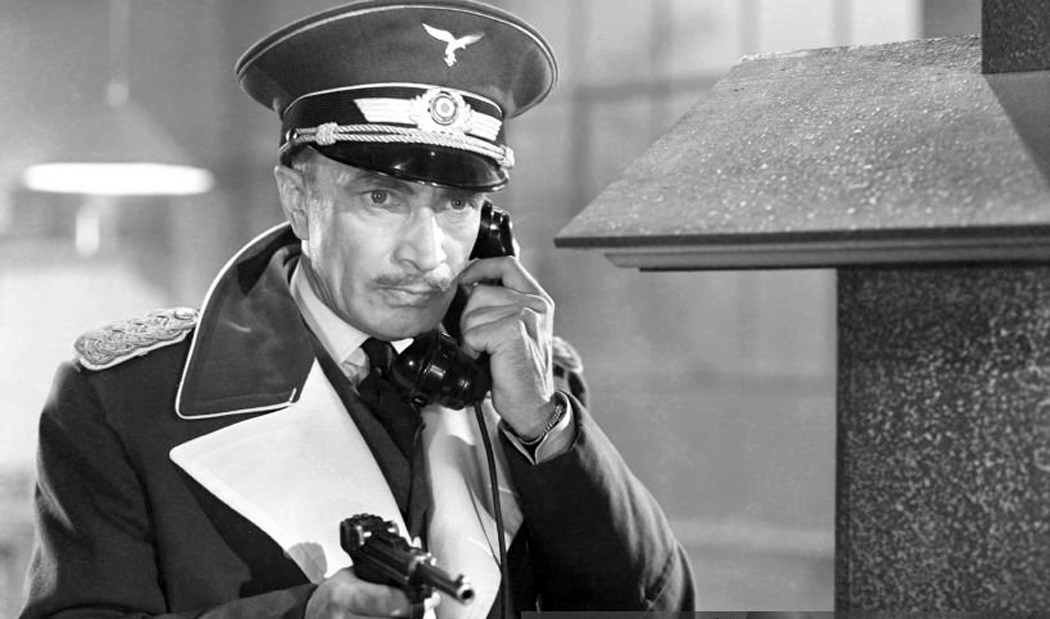
Conrad Veidt (Major Heinrich Strasser) — Veidt, born in 1893 in Berlin, had a long, successful career in German silent films (famously playing Cesare the somnambulist in The Cabinet of Dr. Caligari in 1920), but when the Nazis came to power, like all German actors, he was required to fill out a “racial questionnaire” and declared himself a Jew, although he wasn’t, but his wife, Ilona Prager, was. He smuggled his in-laws from Austria to neutral Switzerland, and even helped his former wife, Radke, and their daughter escape. He also got out, first moving, to England in 1939 and to the US in 1941. 

A staunch anti-Nazi, he wound up playing many Nazis in American movies, although his contract stipulated that he would only do so if they were villains. Veidt said it was ironic that he was praised for playing “the kind of character who had force him to leave his homeland.”

“You know, Rick, I have many a friend in Casablanca, but somehow, just because you despise me, you are the only one I trust.”

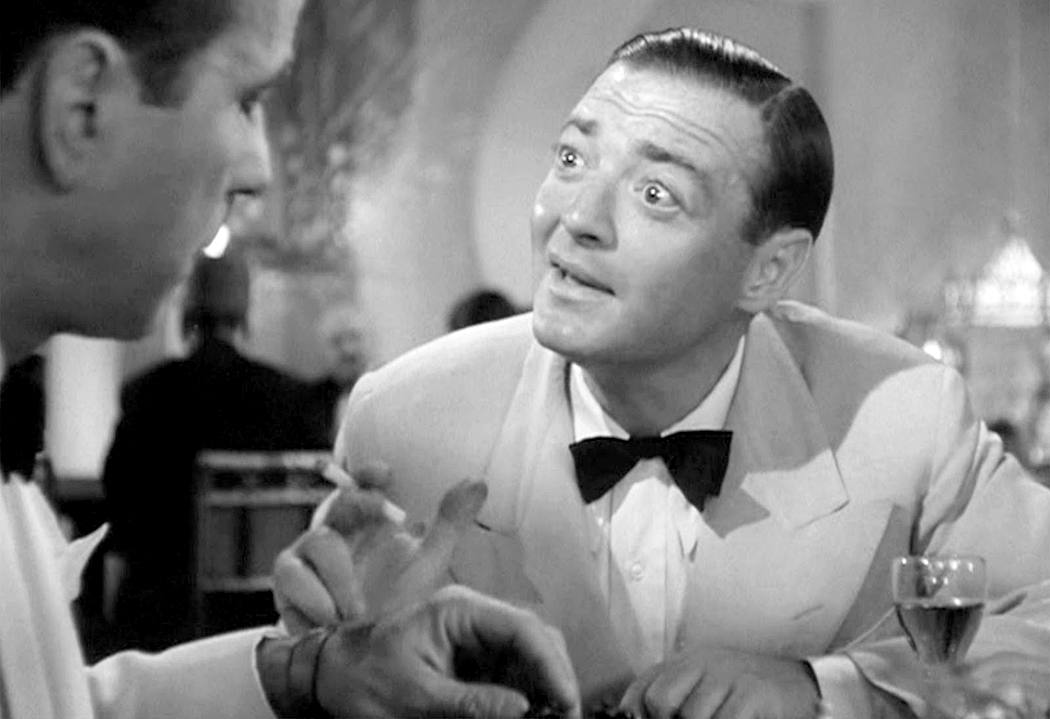
Peter Lorre (Signor Ugarte) — Hungarian Lorre was born Laszlo Lowenstein in what is now part of Slovakia in 1904 (many borders have changed). He had been a very successful actor in German films — playing child murderer Hans Beckert in 1931 in Fritz Lang’s M, a film the Nazis later condemned and they even used a clip of Lorre in the propaganda film The Eternal Jew, implying that Beckert was typical of Jews. 

Lorre’s parents were German-speaking Jews (his mother died in 1908). The actor left for Paris in 1933, later moving first to London and in 1935, to Hollywood. 

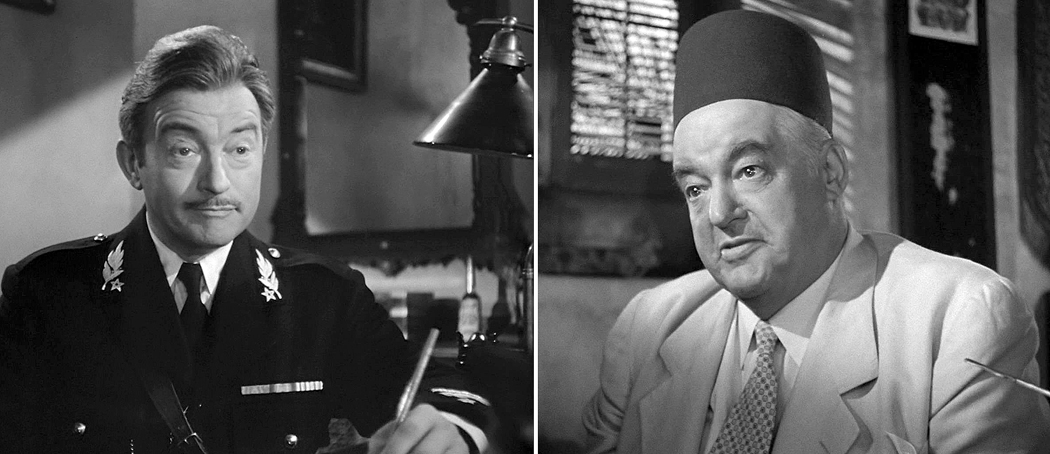
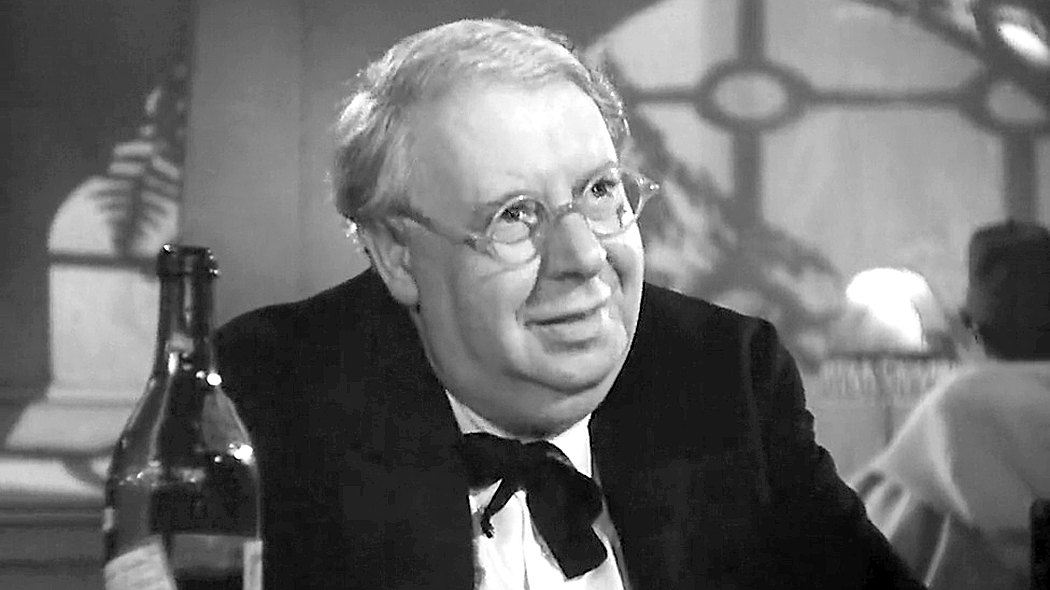
Claude Rains (Captain Renault) was born in London in 1889 and moved to the US in 1912; and Sydney Greenstreet (Signor Ferrari) was born in Kent, England in 1879, the son of a tanner, and began working for Warner Brothers in 1941.

So, the rise of Hitler and Nazism affected the majority of the above-the-line cast of Casablanca, but it is the character actors and the extras where the story really plays out. Most of these were not even part of the source material for the movie.

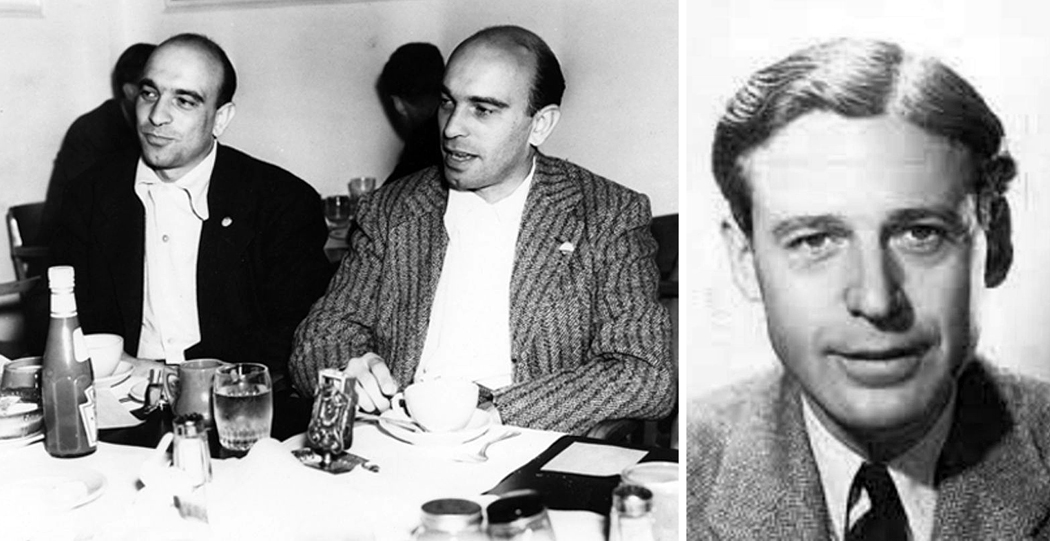
In 1940, writers Murray Burnett and Joan Alison wrote an anti-Nazi play called Everybody Comes to Rick’s, about the cafe owner in Morocco helping a Czech resistance fighter escape, with “Lois,” the woman Rick, the cafe owner, is in love with. That play, unproduced, was bought by Warner Brothers and handed over to studio screenwriters, who buffed it up, rewrote dialog and dithered over its ending. First Casey Robinson (writer on Captain Blood) worked over the play, beefing up the romantic plot of Rick and Ilse; then Howard Koch (writer on The Sea Hawk), worked on the politics; and twin-brother writers, Julius and Philip Epstein, script doctors punched up dialog and restructured the plot (together they had brightened up the banter in The Man Who Came to Dinner). 

Koch and the Epsteins won the Oscar as Casablanca’s screenwriters; Burnett, Alison, and Robinson were nowhere to be mentioned. 

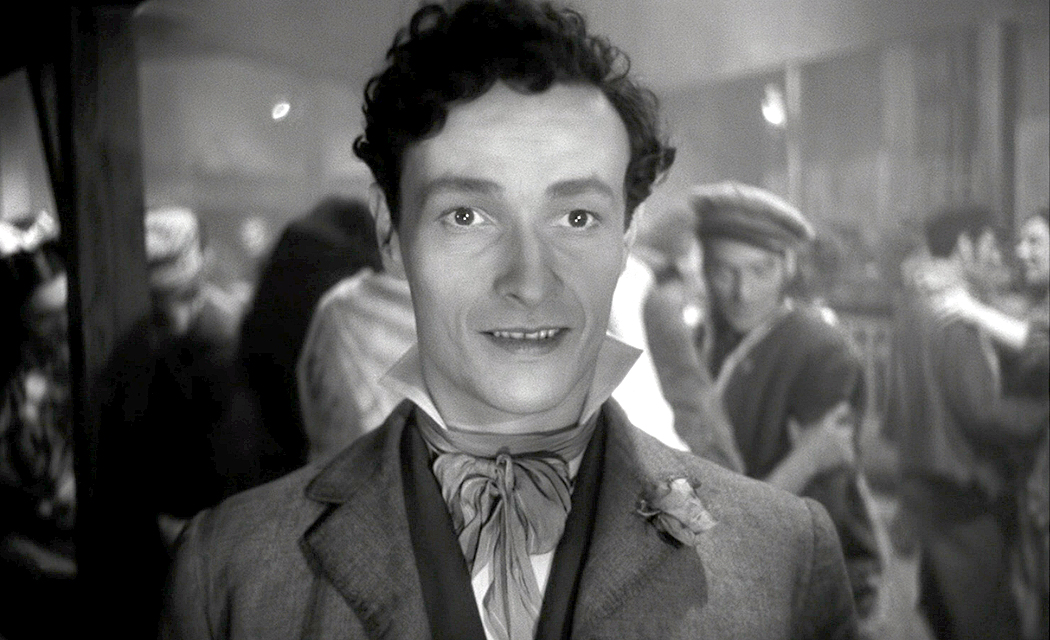
The original play was compelling enough finally to be successfully produced in London in 1991, and it provided what Koch called “the spine” of the movie, but it is the dozens of brief details that make so much of the film memorable, beginning near the opening, when a middle class English couple (Gerald Oliver Smith and Norma Varden, both British) are interrupted by a thin, nervous pickpocket (Curt Bois). 

“I beg of you, Monsieur, watch yourself. Be on guard. This place is full of vultures, vultures everywhere, everywhere.” A moment later, the Englishman says, “Oh, how silly of me. I’ve left my wallet at the hotel.” 

The scene takes only seconds on screen, but sets the tone for irony, cynicism and dark comedy. Bois was a Jew born in Berlin, who escaped Germany in 1934, after the rise of Hitler. 

(To understand what the Epsteins gave the movie, the original script has Bois saying only, “M’sieur, I beg of you, watch yourself. Take care. Be on guard.”)

Such slight moments, throughout the movie, keep every second alive and vivid. And most play out with actors who have fled Europe. Such as:

Melie Chang, Torben Meyer and Trude Berliner

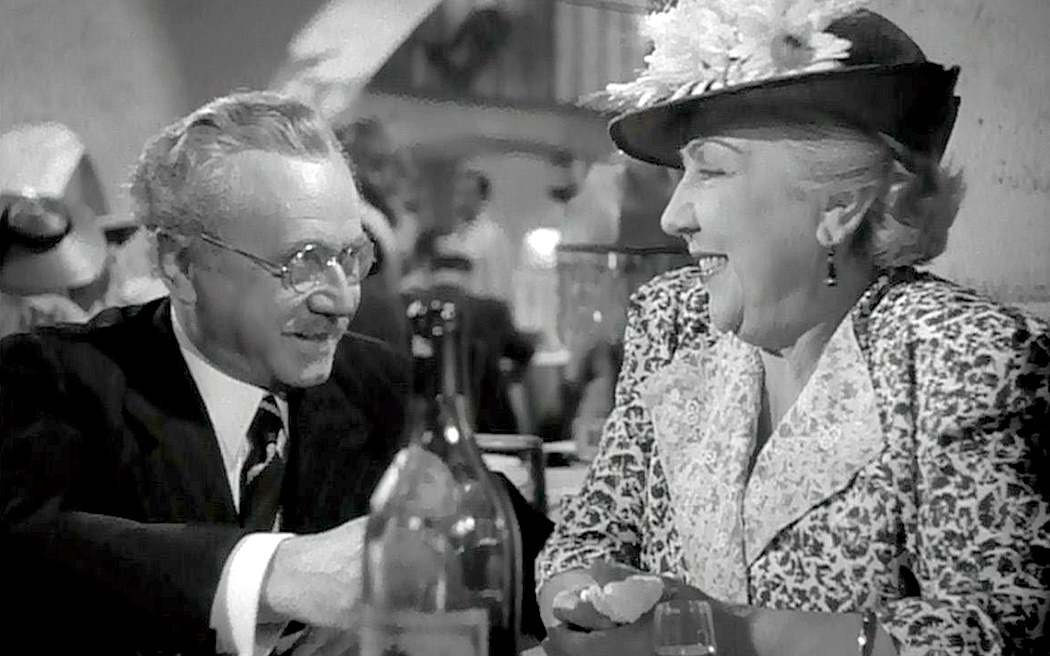
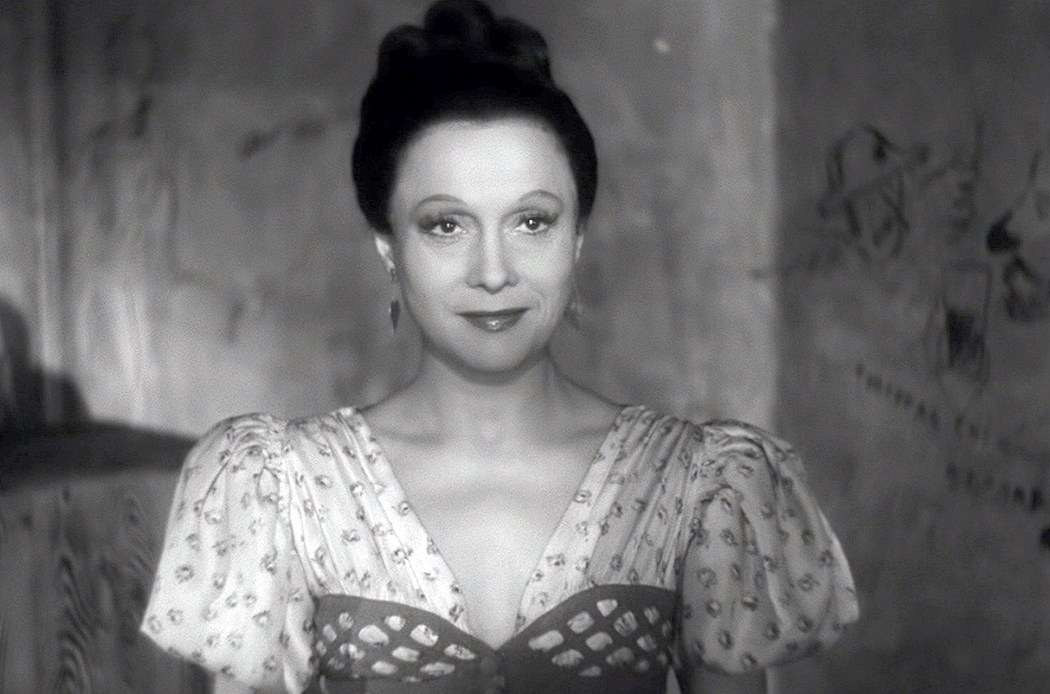
Trude Berliner — born 1903 in Berlin. Jewish. Left Europe in 1933 when Nazis came to power. In the film, she portrayed a woman playing baccarat with a Dutch banker, played by Torben Meyer, Danish, born 1884, who came to the US in 1927. In one scene, she asks Carl, the waiter, “Will you ask Rick if he will have a drink with us?” “Madame, he never drinks with customers. Never. I have never seen it.” When Meyer say he runs “the second largest banking house in Amsterdam” “Second largest?” says Carl. “That wouldn’t impress Rick. The leading banker in Amsterdam is now the pastry chef in our kitchen.”

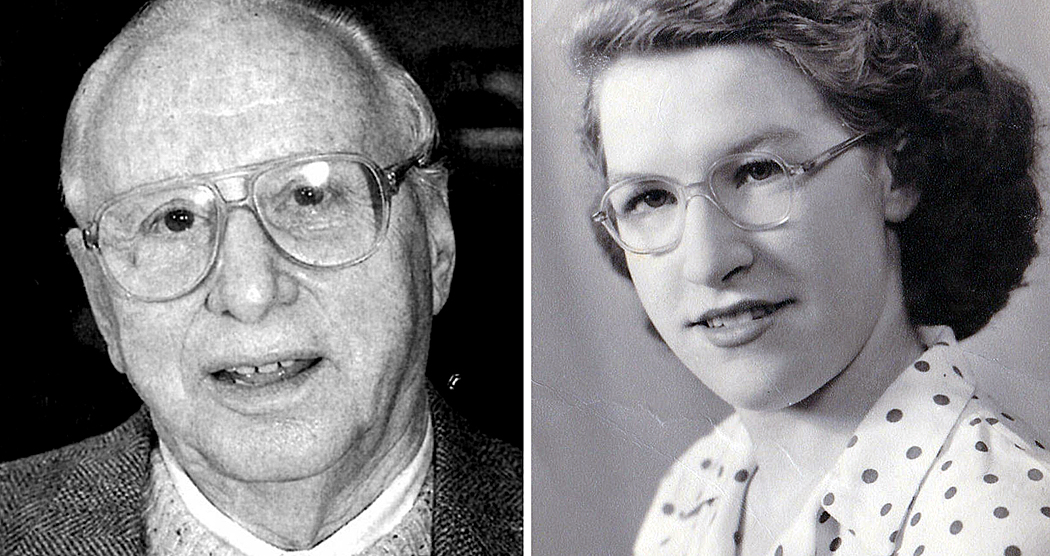
Then, there’s the sweet old couple who are learning English for their trip to America. “Liebchen, sweetheart, what watch?” “Ten watch.” “Such much?” They are:

Ilka Grünig — Jewish actress from Vienna, born 1876. Left Germany in 1938 after the Nazis came to power. and:

Ludwig Stössel — Born 1883 in Leika, Hungary (now Lockenhaus, Austria. I mentioned borders changed a lot) After the Anschluss, Stössell was imprisoned several times but was able to escape Vienna and get to Paris, and then to London.

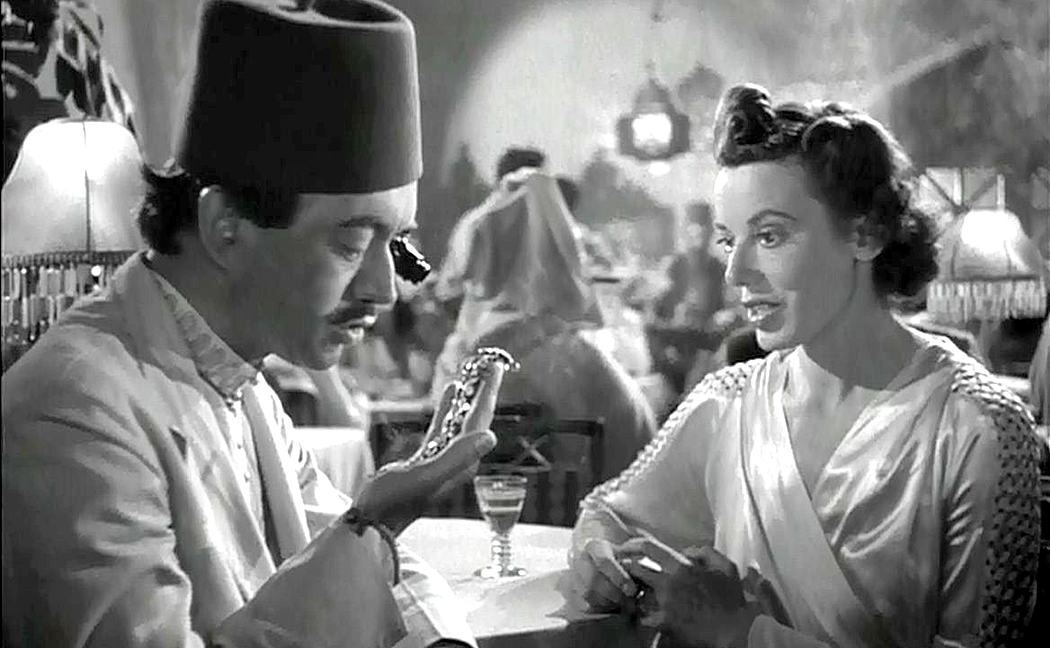
And the woman who “has to sell her diamonds,” Lotte Palfi Andor, born 1903 in Bochum, Germany, a Jewish stage actress who had to flee in 1934 with her husband, Victor Palfi, after the Nazis came to power. Offered a small amount for her jewels, she asks, “But can’t you make it just a little, more? Please?” The buyer says, “Sorry, but diamonds are a drug on the market. Everybody sells diamonds. There are diamonds everywhere.”

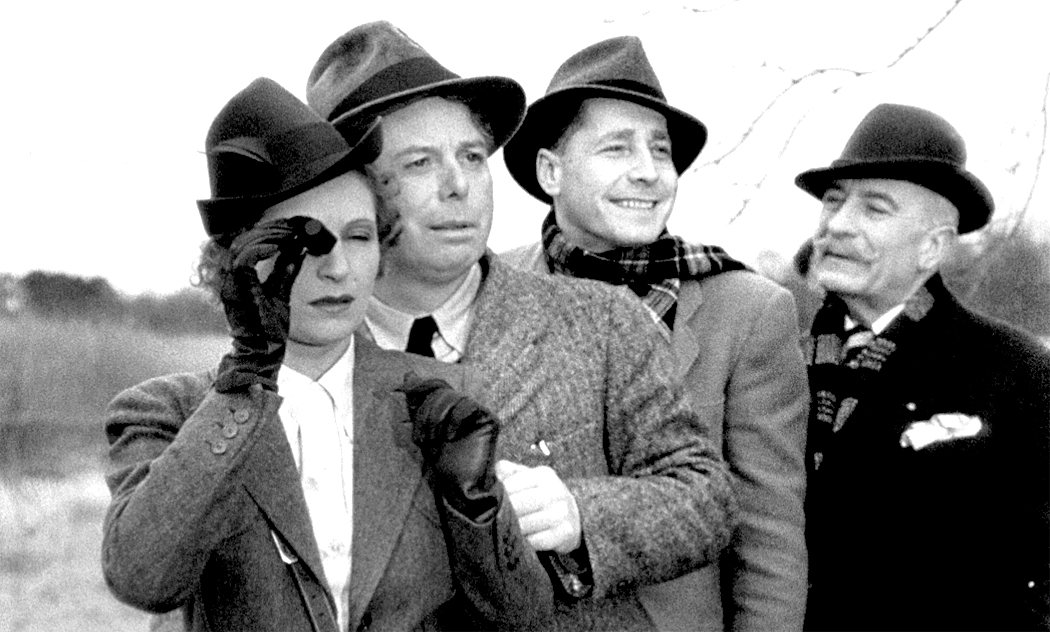
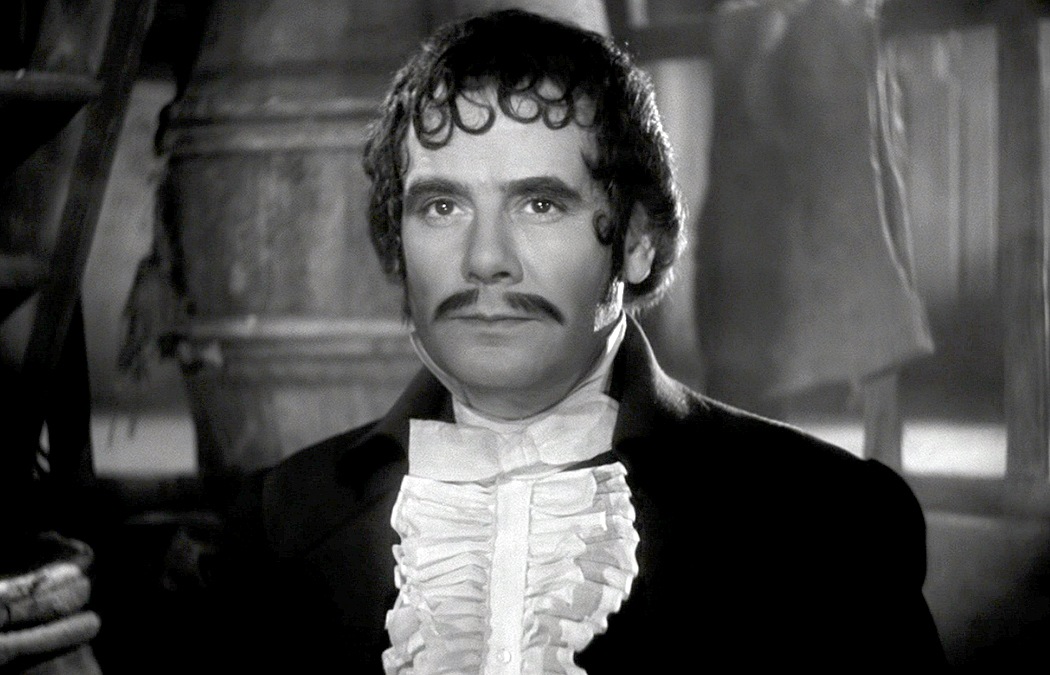
Marcel Dalio, born in Paris in 1899 as Marcel Benoir Blauschild, had featured in two of the greatest films ever made, Rules of the Game and The Grand Illusion, for Jean Renoir. He was born to Romanian-Jewish immigrants and left Paris in 1940, ahead of the invading German army, reached Lisbon, went to Chile, to Mexico, to Canada and finally to Hollywood, where he found small roles, such as Emil the Croupier in Casablanca. In occupied France, his face was used on posters as a representative of “a typical Jew.” All other members of Dalio’s family died in Nazi concentration camps.

After the Bulgarian youth wins twice at the roulette, betting on the same number, Rick asks Emil, “How we doing tonight.” The surprised croupier answers, “Well, a couple of thousand less than I thought there would be.” 

The youth was played by Helmut Dantine, born 1918 in Vienna. When he was 19, after the Anschluss, he was rounded up with hundreds of opponents of the Third Reich and sent to a Nazi concentration camp. He parents bought his release and sent him to California, where he made a living playing Nazis in various movies. 

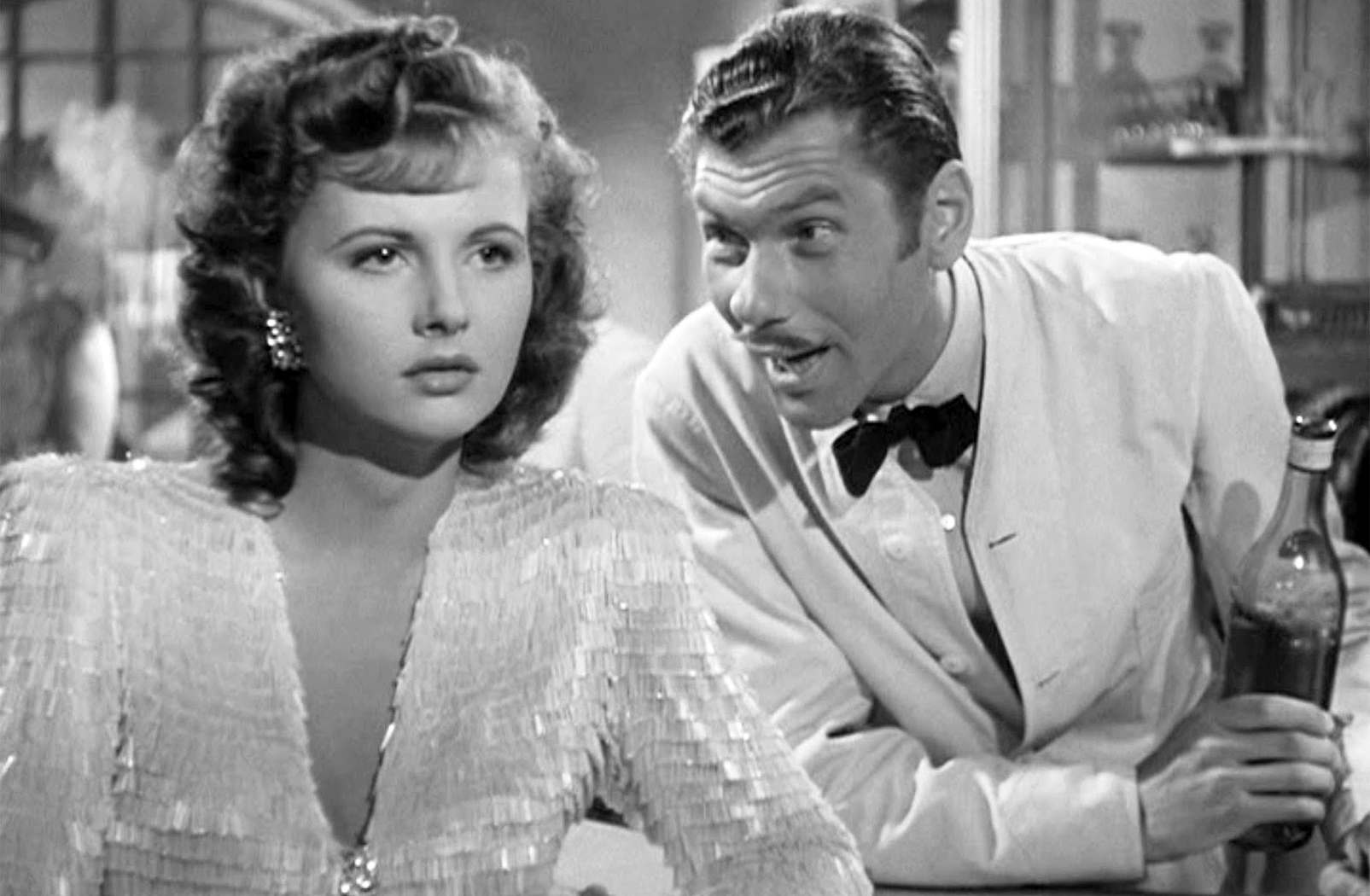
Madeleine Lebeau played Bogart’s discarded girlfriend, Yvonne. “Where were you last night?” she asks Rick. “That’s so long ago, I don’t remember.” “Will I see you tonight?” “I never make plans that far ahead.” 

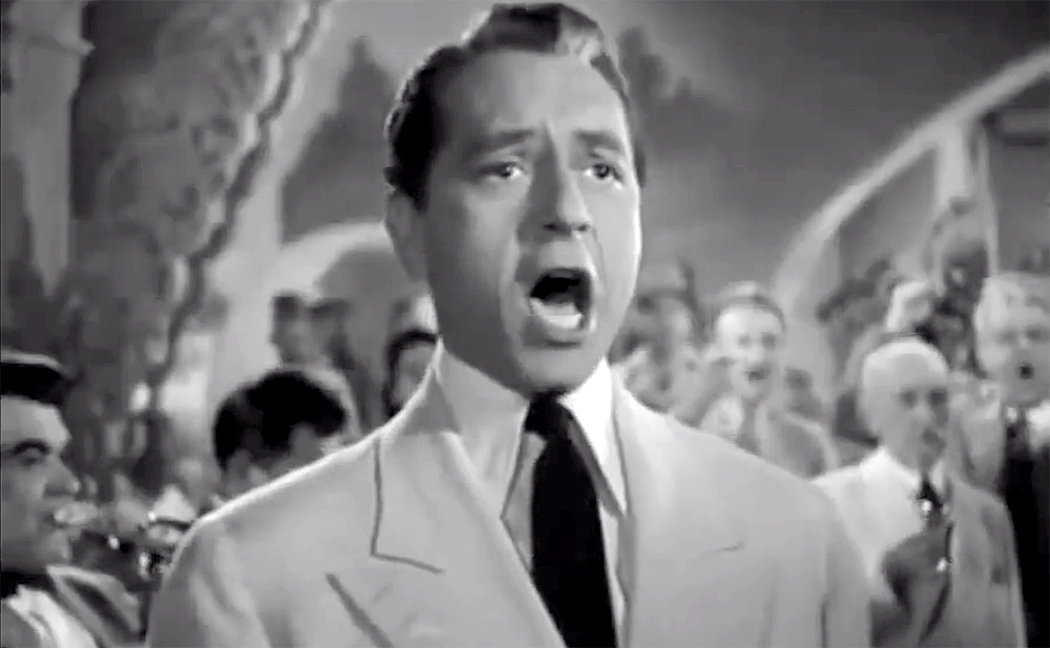
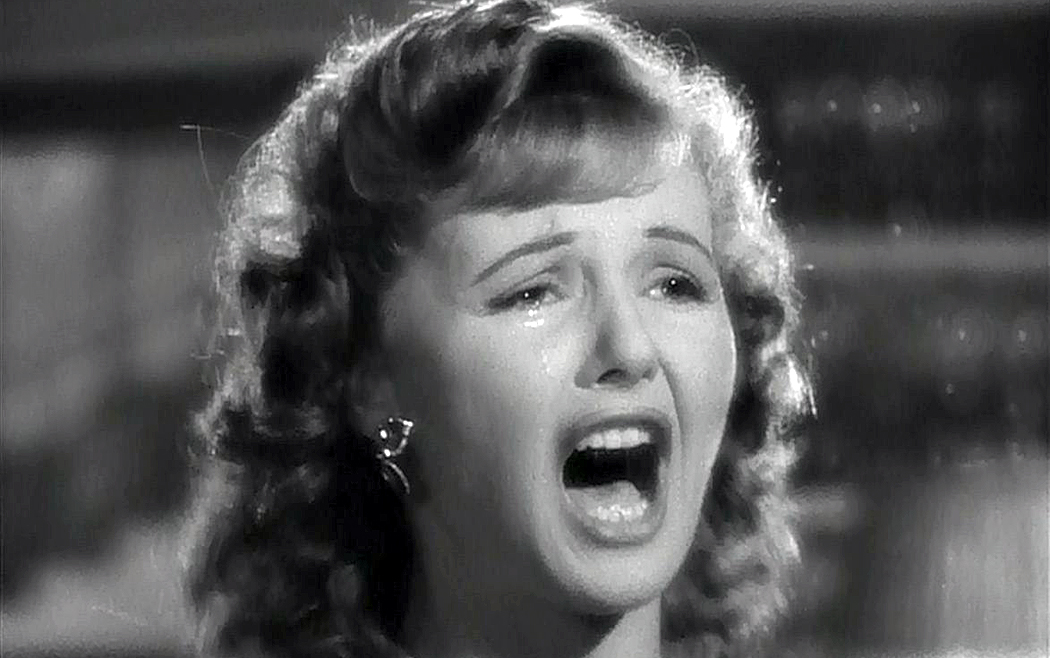
Lebeau married Marcel Dalio in 1939 and the both had to flee Paris ahead of the German advance. Her best moment in the movie is when the French sing La Marseillaise against the Germans singing Die Wacht am Rhein. Many of the actors in the scene were real-life refugees from Europe, and Lebeau ends with “Vive la France! Vive la democratie!” with tears in her eyes. “They’re not tears of glycerin shed by an actress,” recalled Leslie Epstein, son of the screenwriter. “The tears in her eyes are real.” Another actor noticed everyone was crying: “I suddenly realized they were all real refugees.”

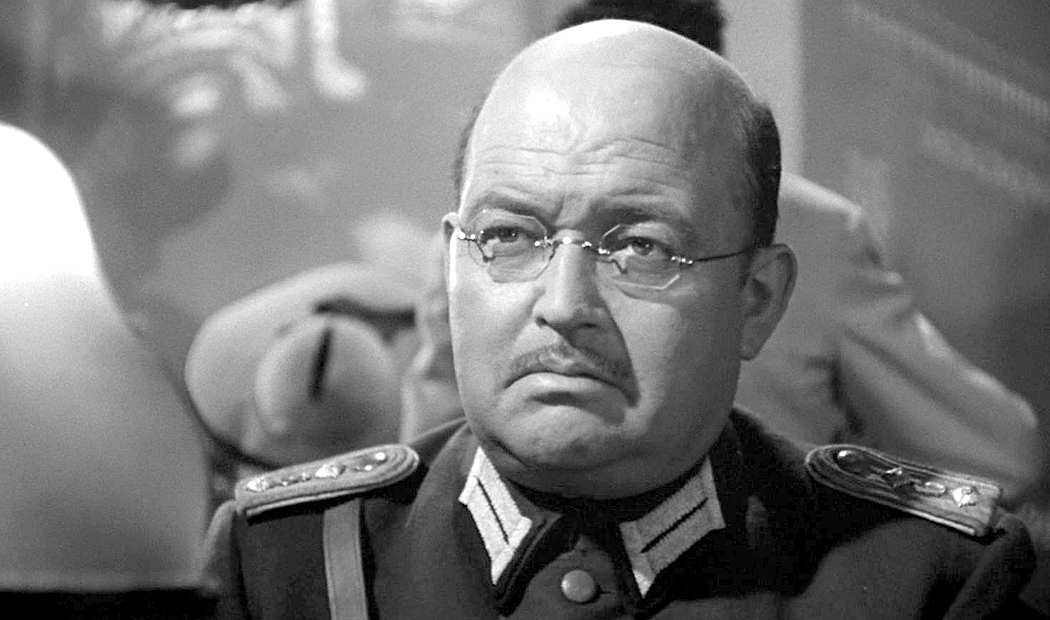
Richard Ryen was born Richard Anton Robert Felix Revy in Hungary (now Croatia) in 1885 and worked as an actor in Germany and became a well-respected stage director at the Munich Kammerspiele (Munich Chamber Theater). He was expelled by the Nazis and emigrated to Hollywood, where he made a living playing Nazis. In Casablanca, he follows behind Major Strasser like a puppydog. 

Louis V. Arco was born in 1899 in Baden bei Wien, in Austria Hungary as Lutz Altschul. He escaped to America after the Anschluss. Near the beginning of Casablanca, he is looking very depressed and has one line: “Waiting, waiting, waiting. …I’ll never get out of here. …I’ll die in Casablanca.”

Wolfgang Zilzer was a special case. He was born in 1901 in Cincinnati, Ohio to touring German film actor, Max Zilzer and moved with his family back to Germany in 1905. The young Zilzer worked for UFA before the war, but after Hitler’s rise to power, he fled to France. He returned briefly to Germany in 1935, but then applied for a visa to emigrate to the US, only then realizing he was already a US citizen. In Hollywood, he made several anti-Nazi pictures with Ernst Lubitsch, but used a pseudonym to protect his father, still in Germany. Zilzer married German Jewish actress Lotte Palfi. In Casablanca, Zilzer played a man without a passport who is shot by the police at the beginning of the film.

Probably the best known of the emigres was S.Z. Sakall, born in 1883 in Budapest to a Jewish family, and known by everyone as Cuddles. He played the head waiter Carl. “Carl, see that Major Strasser gets a good table, one close to the ladies.” “I have already given him the best, knowing he is German and would take it anyway.” 

Sakall was a familiar character actor in Hollywood in the ’40s and ’50s appearing in scores of films as kindly European uncles and befuddled shopkeepers. He escaped the Nazis in 1940 and moved to Hollywood. Sakall’s three sisters and his wife’s brother and sister all died in Nazi concentration camps. 

Hans Heinrich von Twarkowski was born in 1898 in Stettin, Pomerania, in Germany (now Szczecin, Poland). He escaped Germany as a homosexual, threatened by the Nazis, and like so many refugees, ended ironically playing Nazis in the movies. 

Not all the actors escaped the Nazis. Some fled Stalin’s Soviet Union, such as Leonid Kinskey, born 1903 in St. Petersburg. He fled first to Germany in 1921 and then came to the U.S. in 1924. He played the bartender Sascha in Casablanca. “Sascha, she’s had enough.” “I love you, but he pays me.”

Gregory Gaye was also born in St. Petersburg, in 1900, and had been a cadet in the Imperial Russian navy. He fled the USSR in 1923, and worked as an actor in Europe and Asia before moving America. In Casablanca, he played an official in Hitler’s Reichsbank and tries to enter the back-room casino in Rick’s cafe, but is stopped by Abdul (Dan Seymour). He tells Rick, “I have been in every gambling room between Honolulu and Berlin, and if you think I’m going to be kept out of a saloon like this, you’re very much mistaken.” Rick tells him, “Your cash is good at the bar.” He responds, “What? Do you know who I am?” To which Rick replies, “I do, you’re lucky the bar is open to you.” Gaye angrily responds, “This is outrageous! I shall report it to the Angriff” and storms away. (The Angriff was the official Nazi propaganda newspaper.) 

They weren’t all Germans or Jews, but some 34 different nationalities were found in the cast and crew of Casablanca, including Hungarian-born director Michael Curtiz, who worked as a film director for UFA in Germany before moving to America in 1926; and English-born film editor Owen Marks who came to the US in 1928 (and won an Oscar for Casablanca); and Carl Jules Weyl, born in Stuttgart, German and was the art director; and composer Max Steiner, born in Vienna and naturalized as an American citizen in 1920. 

John Qualen, who played Berger the jewelry-selling Norwegian resistance member was born in Vancouver; Frank Puglia, the Moroccan rug merchant was born in Sicily; Nino Bellini, who played a gendarme, was from Venice, Italy.

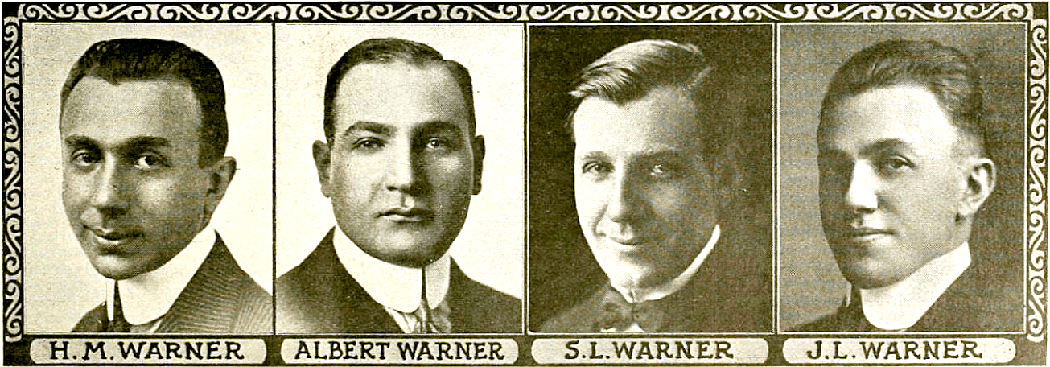
And, of course, the studio heads, the Warner brothers, Harry, Albert, Sam and Jack, born in Poland and victims of vicious anti-Semitism there, who came basically penniless to the US and built up one of the largest movie studios, and notably the first to make films about the dangers of Nazism, which, in the 1930s was not a popular position. 

Charles Lindbergh at America First Rally in Fort Wayne, Indiana

An overwhelming majority of Americans opposed the resettling of Jewish refugees; hundreds of thousands of people were turned away in the 1930s. As late as 1939, 20,000 American Nazis held a rally in Madison Square Garden in New York. And America aviation hero Charles Lindbergh headed the isolationist America First movement. Father Charles Coughlin and industrialist Henry Ford preached rabid anti-Semitism and praised Adolf Hitler. 

In 1932, Joseph Breen, soon to become head of the Production Code Administration (PCA), the censorship arm of the Motion Picture Producers and Distributors of America, called Jews “the scum of the scum of the earth” and “dirty lice.” Breen would soon be charged with enforcing a ban on anti-Nazi films in Hollywood between 1934 and 1941, at the behest of Joseph Goebbels, by way of the Nazi consul in Los Angeles, Georg Gyssling.

“Confessions of a Nazi Spy,” 1939 Warner Bros.

While most of the studio heads complied with the ban, which also strongly discouraged the production of films about Jewish subjects or featuring Jewish actors, the Warner brothers did their best to fight back. The studio ended all business relations with Germany in 1934, and even a year earlier had made fun of Hitler as an incompetent ruler in an animated film. The Warners were the only studio heads to support the 1936-created Anti-Nazi League, and most notably, made the 1939 film, Confessions of a Nazi Spy, based on a real-life espionage case and starring Edward G. Robinson (born Emanuel Goldenberg in 1893 to a Yiddish-speaking Jewish family in Bucharest, Romania). 

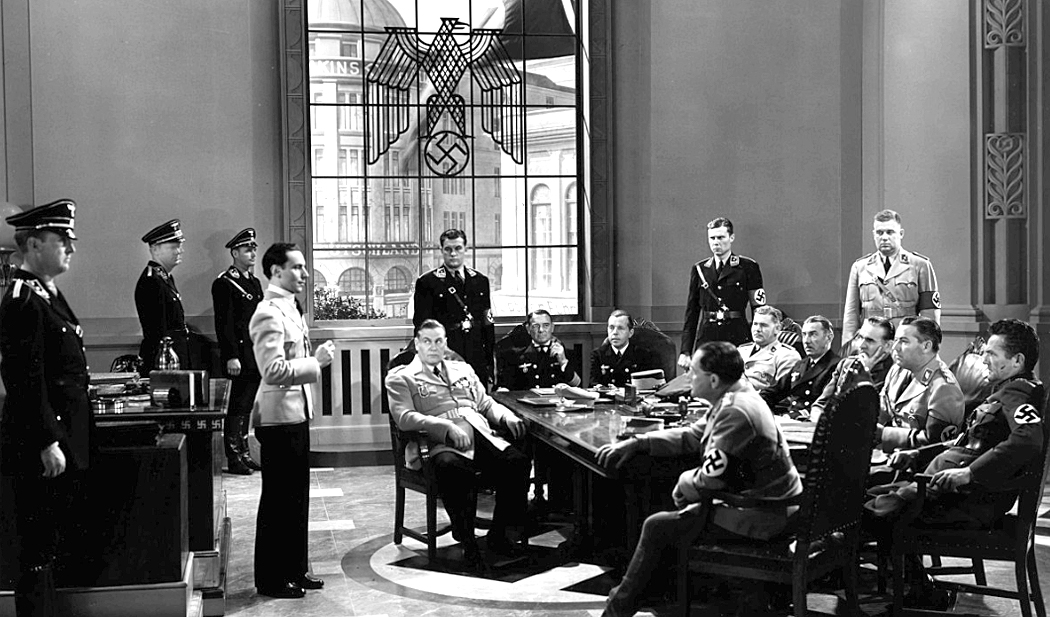
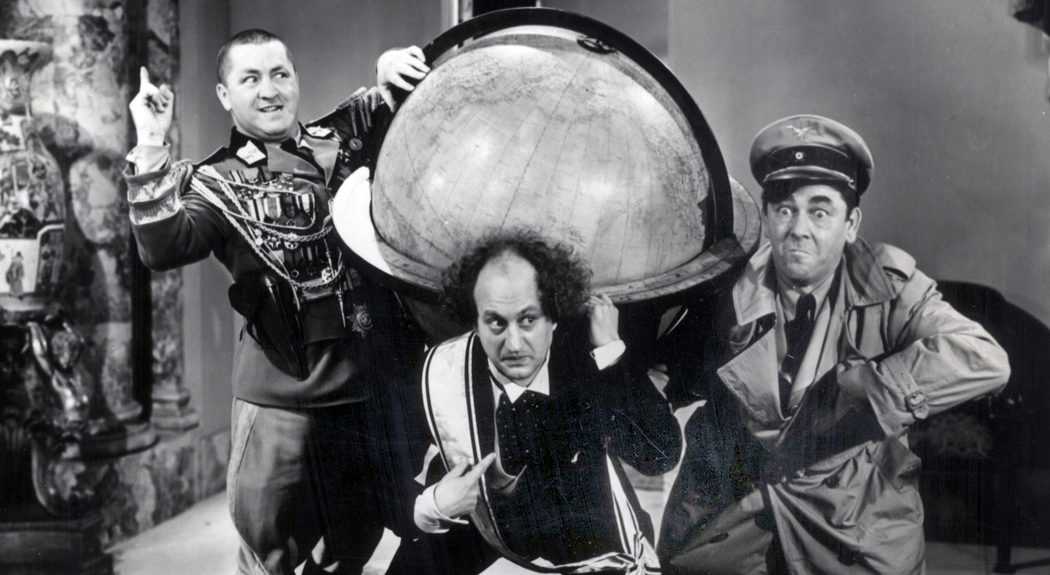
The film defied the PCA ban on films attacking foreign leaders, but Jack Warner said, “It is time America woke up to the fact that Nazi spies are operating within our borders. Our picture will tell the truth — all of it.” Confessions predated the later Chaplin film, The Great Dictator and the Three Stooges short, You Nazty Spy!, both released in 1940. 

So, Casablanca has a studio history behind it. 

Later, in the 1950s, when McCarthyism threatened America with its own brand of fascism, many Hollywood notables were called to inform on their colleagues. The Epstein twins were reported to the House Un-American Activities Committee and were quizzed if they had ever been members of a “subversive organization,” and they answered, “Yes. Warner Brothers.” 

Envoi

Thanks to its many screenwriters, and especially the Epstein brothers, Casablanca is famously quotable from first to last. We all have our favorites. The American Film Institute, which publishes lists of greatest films and greatest performances, put out a list of the “Top 100 Quotes from American Cinema” and Casablanca takes six of the spots, twice as many as second place — a tie between Gone With the Wind and The Wizard of Oz.

No. 5 “Here’s looking at you, kid.”

No. 20 “Louis, I think this is the beginning of a beautiful friendship.”

No. 28 “Play it, Sam. Play As Time Goes By.”

No. 32 “Round up the usual suspects.”

No. 43 “We’ll always have Paris.”

No. 67 “Of all the gin joints in all the towns in all the world, she walks into mine.”

I was once taken aback, talking with my young twin granddaughters about what movies they liked, that they refused, flat out, to consider any movie made in black and white. Not even a question. Jamais. Never. 

For them, black-and-white meant antique, superannuated, something with no relevance to their lives. They wouldn’t even see a current movie if it was in black and white. Life was color; monochrome was irrelevant. 

There are other disqualifications that some people maintain. “Read any good movies lately?” They won’t see a film with subtitles, which, of course, cuts out an entire half (at least) of all movie history and some of the greatest films ever. 

But by far, the biggest disqualification for the majority of filmgoers is what are called silent movies — movies made from the invention of the medium through roughly 1930, when sound synchronization became the standard. 

Without sound, dialog becomes disruptive title cards held motionless for long moments, long enough that the slowest readers in the audience can parse their way through; audio clues, such as traffic noises or train whistles are mute; and worse — actors have to act like semaphore signals to convey their thoughts and feelings. Silent movie acting seems grotesquely over-the-top, more like pantomime than anything we now consider proper acting. 

There are other problems, too. In the earlier days of movie-making, frame speed was not standardized, and to complicate matters, most cameras were hand-cranked, which means that the idiosyncratic crank-timing of the cameraman could vary quite a lot. This meant that for decades, long after sound had taken over, and movies began showing up on TV, the old films were projected at the wrong speed, too fast, making everything herky-jerky. 

And, because the studios that made those old films never thought of them as anything but disposable entertainment, there was no incentive to archive them or care for the old prints. Add to that, they were made with flammable nitrate film stock, which deteriorated over time, and that there were several devastating studio fires that consumed whole catalogs, what is left is often only a fossilized remnant of what the old films actually were. As a result, an estimated 70 percent of all the movies made before 1930 are lost. Ceased to be. Gone to meet their maker. Joined the bleedin’ choir invisible. 

And what survived was seen most often in poorly made copies of copies, bleached out, scratchy, grainy and out of focus. As if silent film technology was roughly akin to the Stone-Age chipping of flint arrowheads. 

But that is not what they were when they were made, as we have seen when film restoration has brought us clean prints of some of the more important movies from the era. The photography was as good as anything done currently. The motions of the actors, when projected at the proper speed seem less silly. 

You can look at the development of cinema from its earliest beginnings in the 19th century as a constant advance, not only of technology, but of the esthetics of film. At first, a stationary camera just records a few things in front of it. Later, the camera learns how to move. Film learns to tell stories and directors figure out how to edit bits of film together to make those stories move faster and express more. Wholesale changes in blocking, acting, lighting, editing, camera angles and motion all add to the growing sophistication of the art. There are the traditional mileposts in this development: the close-up; the intercutting; the over-the-shoulder back and forth; the use of double-exposure; and of matting. 

By the time sound came in, intermittently beginning in 1927 or so (the dates are hard to pin down, depending on how complete the process was and which competing technology was used), silent film had become a fully developed art form, capable of expressing a huge range of thought and emotion. In fact, the advent of sound caused more problems than it solved, and the constraints of microphones and movie-set noise, took away some of the expressive possibilities of the silents. 

Cameras tended to stay still (they often had to be ensconced in stationary booths or sound-cancelling “blimps” so that the microphones wouldn’t pick up the noise of the machinery) and actors needed to stay still near the microphones. Films became more stagey and set-bound. Early sound films often looked more like recorded stage plays. 

Worse, because sound made dialog possible, much was explained rather than shown and talkies became rather talky. The best continued the old dictum, “show, don’t tell,” but it became economically advantageous to let the tongues do the talking rather than the images. 

Alfred Hitchcock, who had been making artistically sophisticated silent films, initially thought that “the silent pictures were the purest form of cinema,” and the first talkies were little beside “photographs of people talking.” 

All this has been well covered by myriad books and videos about the history of Hollywood. But there is one aspect of silent films that has too often been neglected, and that is that they were never silent films. 

During their era, movies were always accompanied by either a live orchestra playing in the pit, a pianist, or an organist. Major features usually had a bespoke musical score that was distributed along with the film, so that orchestras in the large theaters could play along with the movie. In smaller venues, a piano or organ reduction would be provided. For lesser films, music publishers provided regular cues — short bits of piano score describing certain types of action or emotion — for the in-house pianist to improvise from. 

The process was very like the incidental music written — often by major composers — for stage plays. Mendelssohn’s music for Midsummer Night’s Dream, or Grieg’s for Peer Gynt, for instance. Several major composers, such as Camille Saint-Saens, also wrote scores for movies. 

Or more apt, like the music that accompanied ballet. Tchaikovsky or Leo Delibes or Prokofiev would write music to order, according to the needs of a dance scenario. “I need three minutes of mazurka for Act 2,” the composer might be told, and would produce it on order. We think of composers being divinely inspired by their muses and pumping out symphonies, but really, they often made a living as subcontractors, part of the team that produced popular entertainment. Even Beethoven wrote incidental music and ballets. 

So, the tradition of writing music for films was much like that for ballet. It would be silly to imagine Swan Lake with no music, only dancers. But nobody would ever call ballet, “silent theater.” 

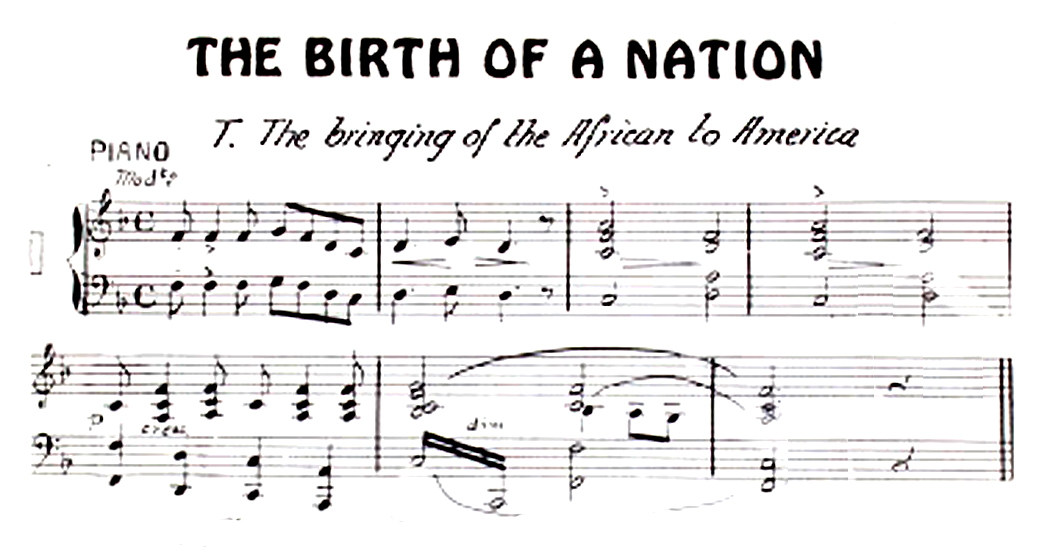
But the first time I ever saw The Birth of a Nation was at my college film series where it was run with no sound. I complained to the projectionist that he forgot to turn on the audio and he looked at me like I was an ignoramus. “It’s a silent film; there is no sound.” Yes, there is, and it was written for the movie by composer Joseph Carl Breil who created a three-hour-long musical score made up of adaptations of existing works by classical composers, new arrangements of well-known melodies, and original composed music. (The British Film Institute’s Blu-Ray restoration of the film includes Breil’s music). (Although, if you never get a chance to see Birth of a Nation and its promotion of racism and the Ku Klux Klan, you may be intellectually poorer, but your soul will be so much cleaner.)

It helps to keep the ballet model in mind when considering silent film. Movies developed together with the music that accompanied them, and we would appreciate them more if we saw them that way. 

Of course, the basic level of appreciation is the story being told, and most movie-goers even in those early years, were there for the plot. Good over evil; love conquers all; the hero saves the maiden. 

But we, watching now, should notice not just that surface level, but also how the movie was made: How the director uses a moving camera to advance the story; how the lighting underlines the mood of a scene; how the editing manages to keep us up-to-speed on parallel plot points, back and forth; how the close-up lets us into the mind of the actor. 

And so, watching a silent film should be more like watching the dance. It is a different art form from sound film, and one that needs to be understood in its own way. The story drives the action in Swan Lake too, but we watch for the dancing and choreography.

I have a list of 10 silent films that demonstrate what the silent film can do. Recent film restorations have improved image quality, when a print can be struck from the original studio negative, and with restored musical scores, either from original sources, or new scores written in period style. 

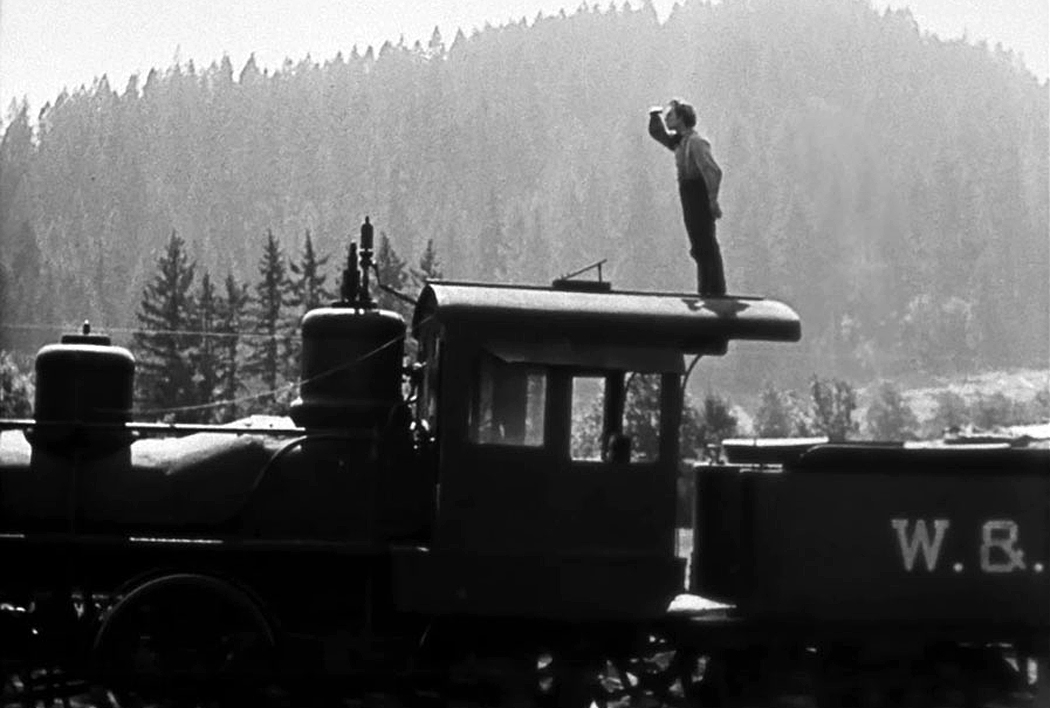
We’ll go from the easiest to understand and love to more adventurous films. In my experience, one of the best places to start is Buster Keaton’s Civil War film, The General

The General

Keaton’s 1926 story is easy to follow, as Southern railroad engineer Johnny Gray spends most of the movie chasing a locomotive stolen by Yankee forces and then being chased by them. There are plenty of gags — Keaton was a genius with those — but also a comprehensible plot, easy to follow, and believable. Keaton’s direction is always clear, and with many exceptionally beautiful or intricate shots. The most expensive special effect shot of its time was later copied for The Bridge on the River Kwai, as Keaton has a train crashing off a burning bridge, followed by a dam breaking and a flood washing soldiers downriver. It’s a great film and for a wide audience. One of the great films of all times, silent or sound. 

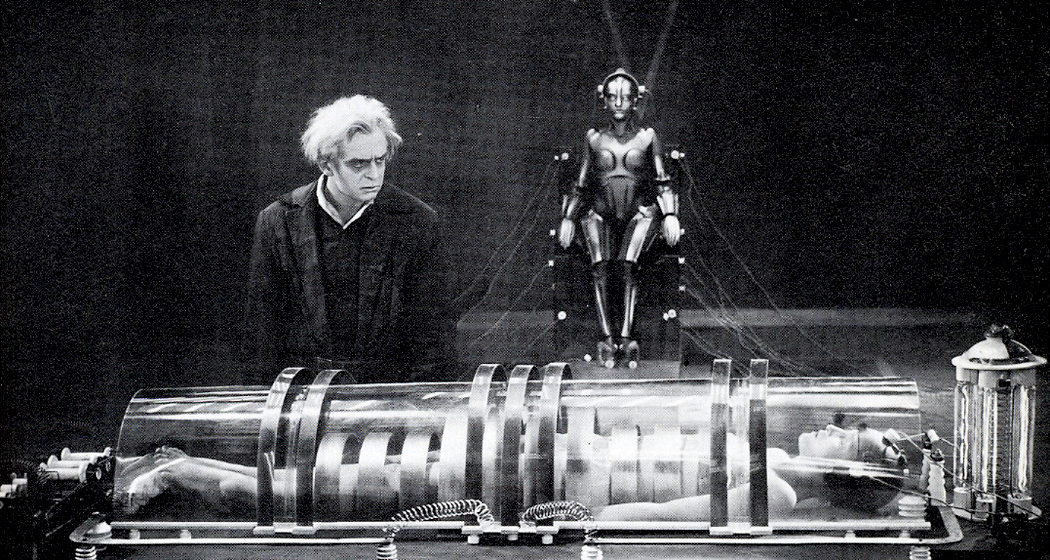
Metropolis

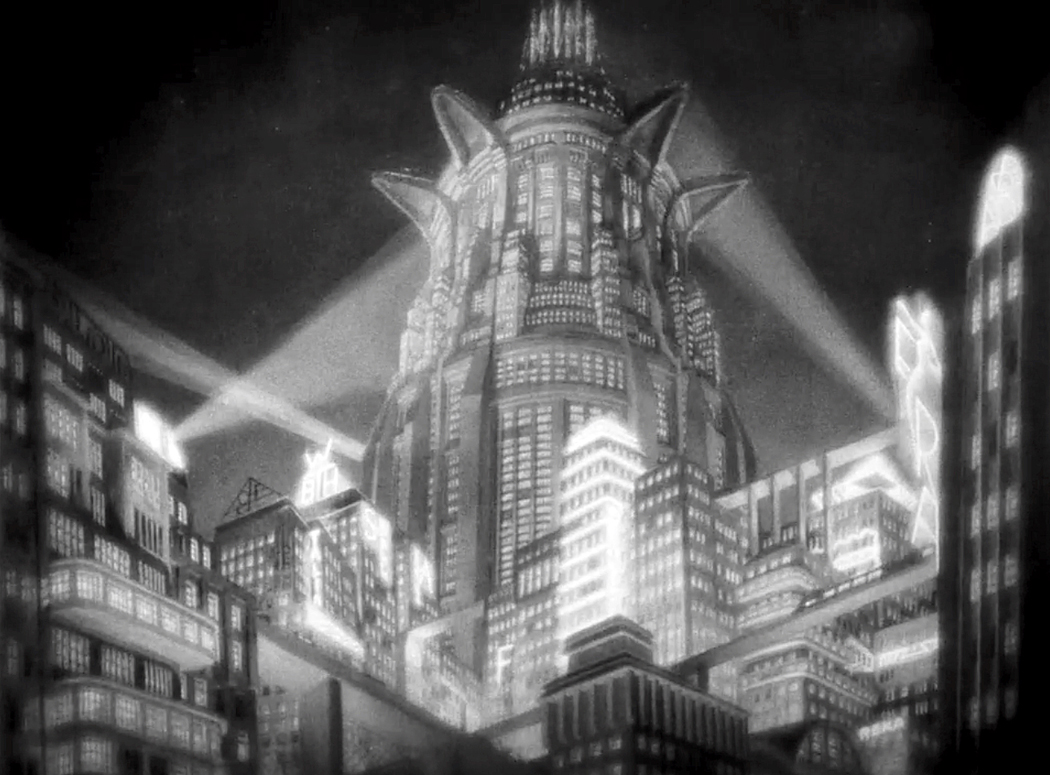
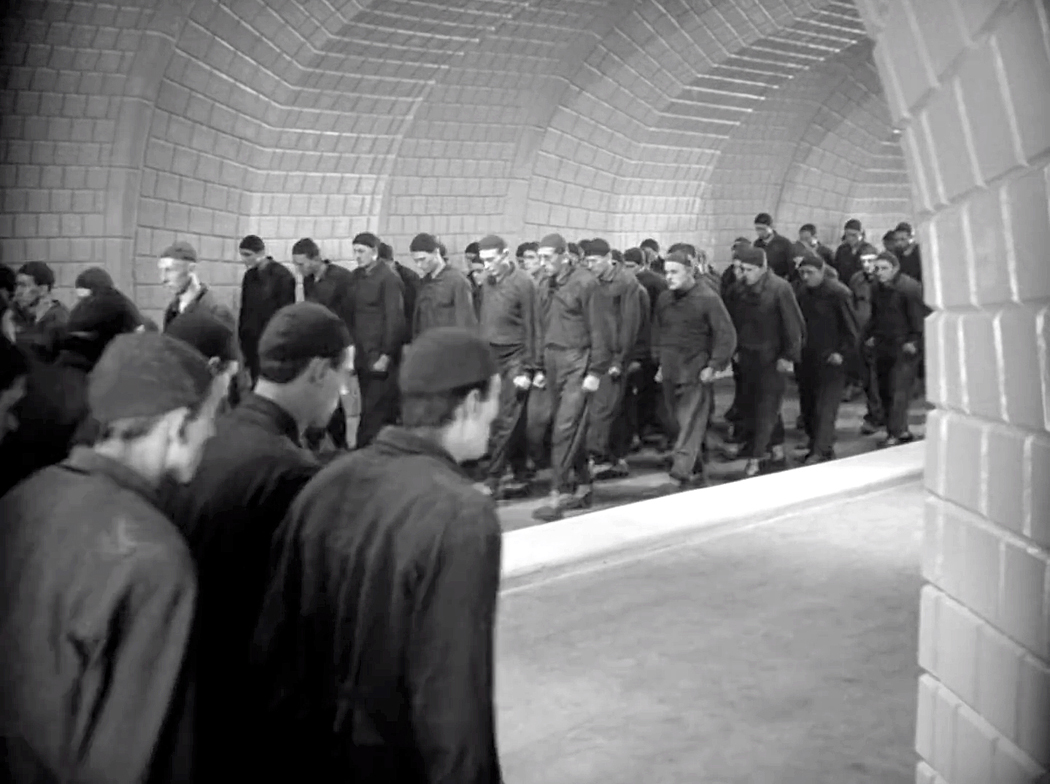
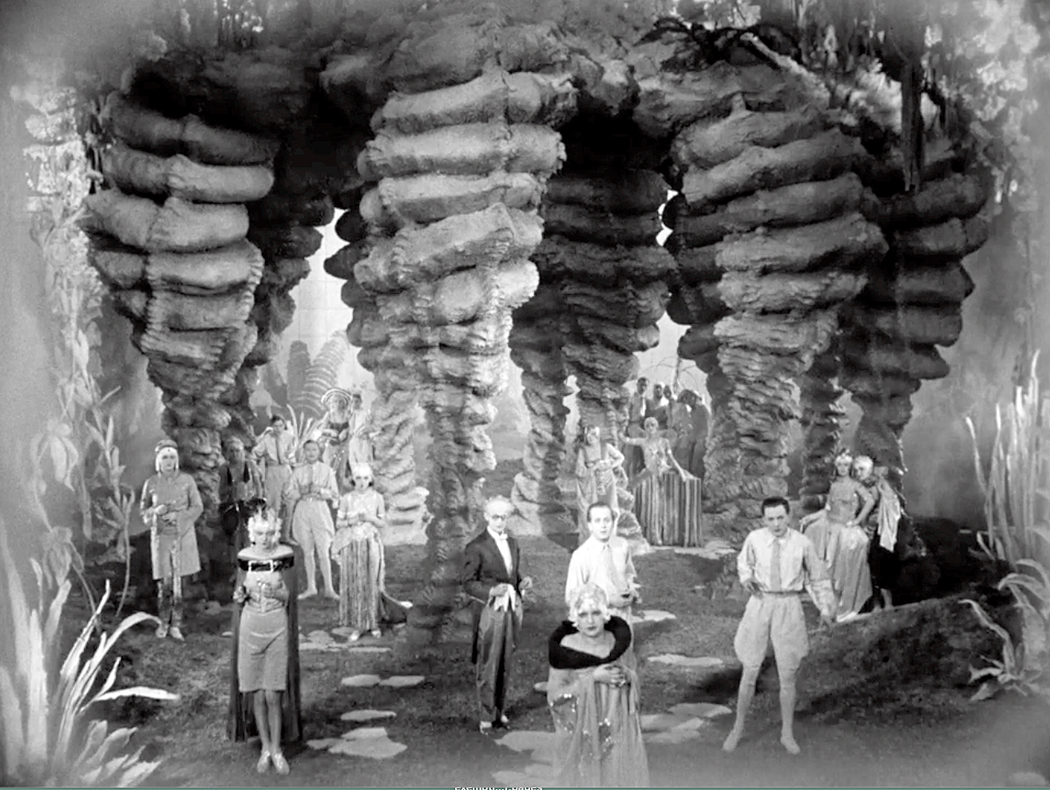
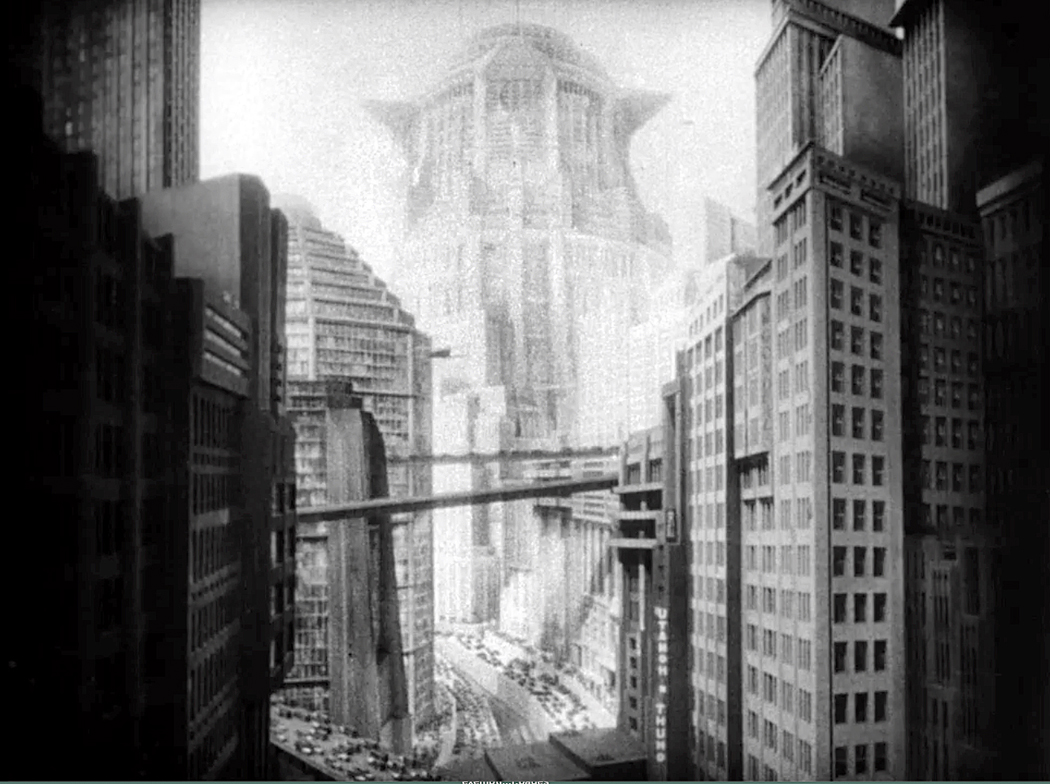
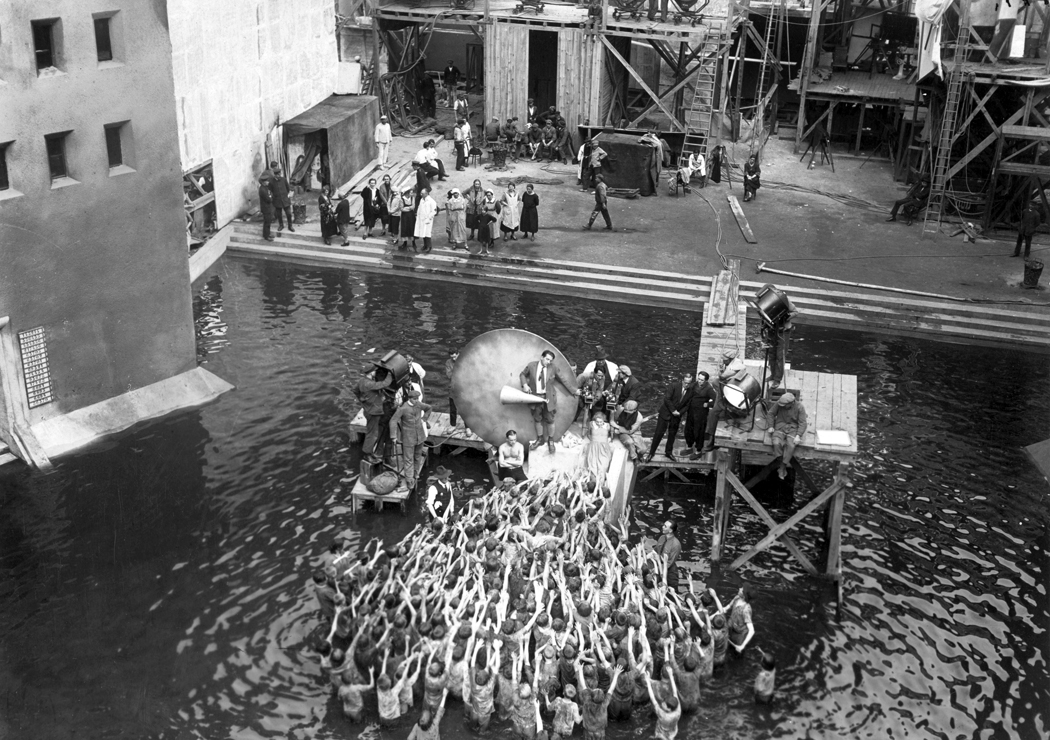
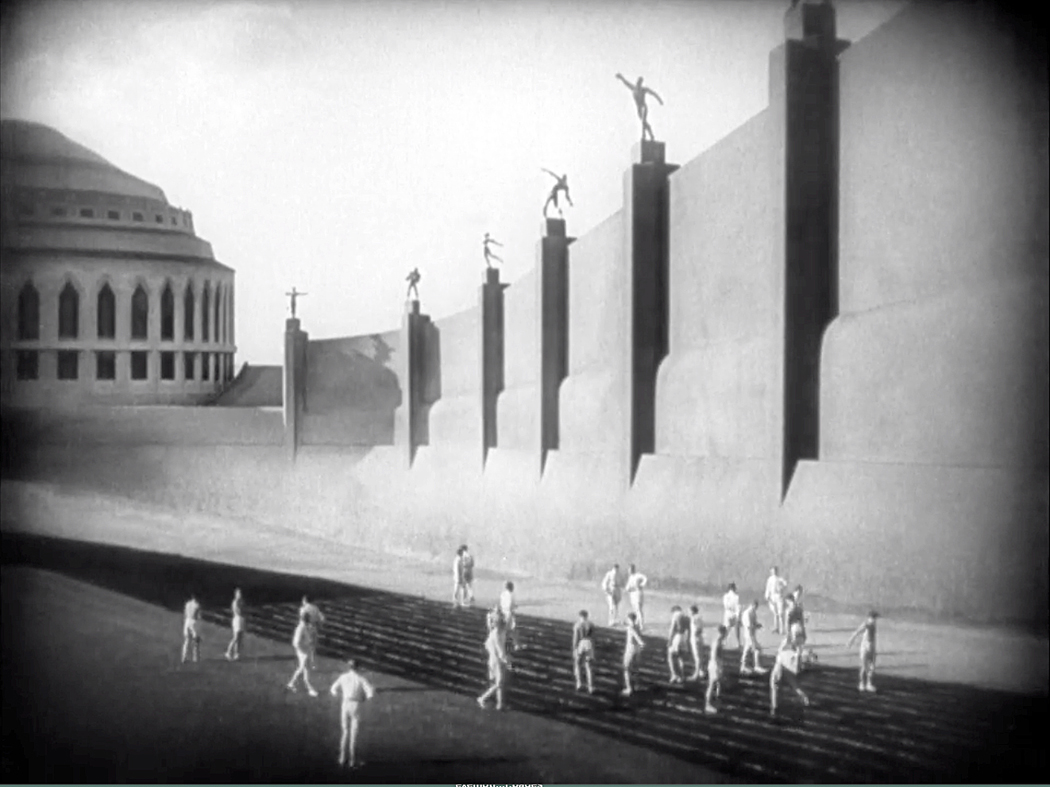
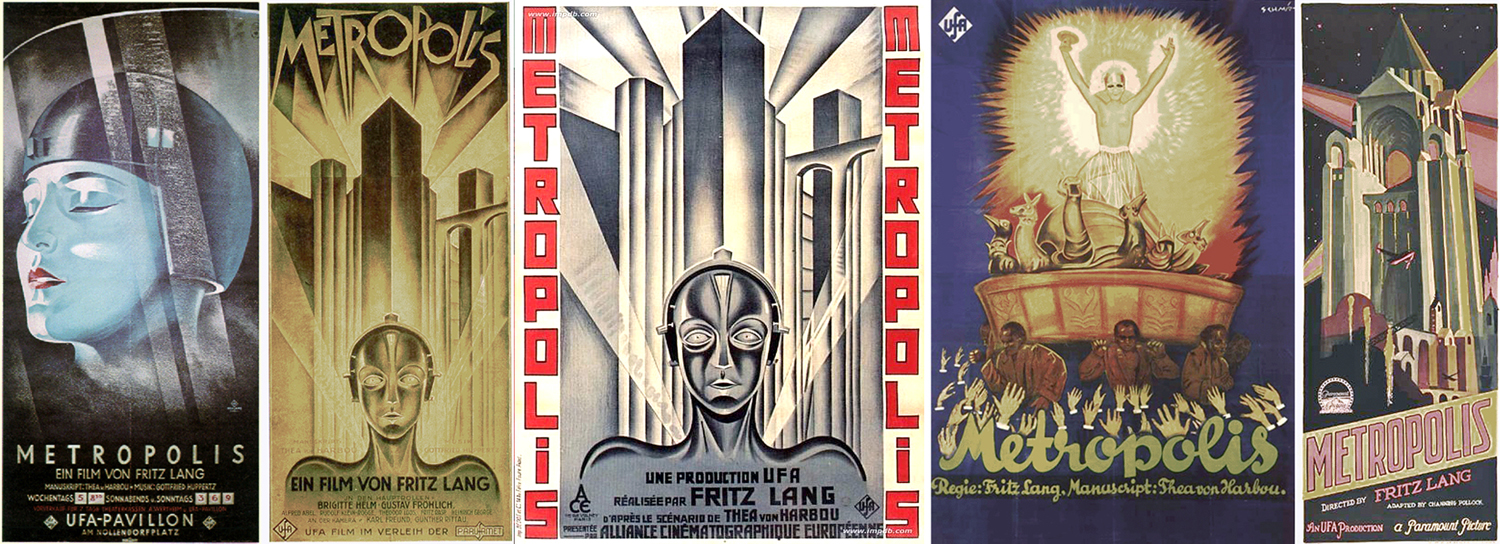
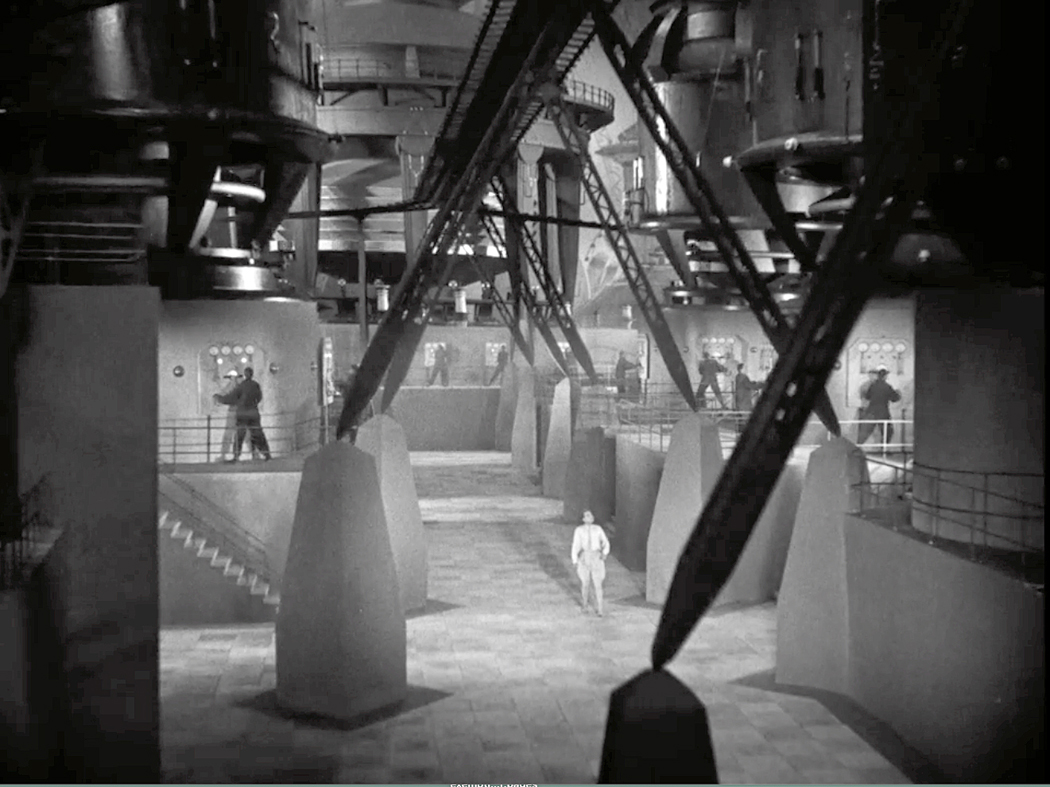
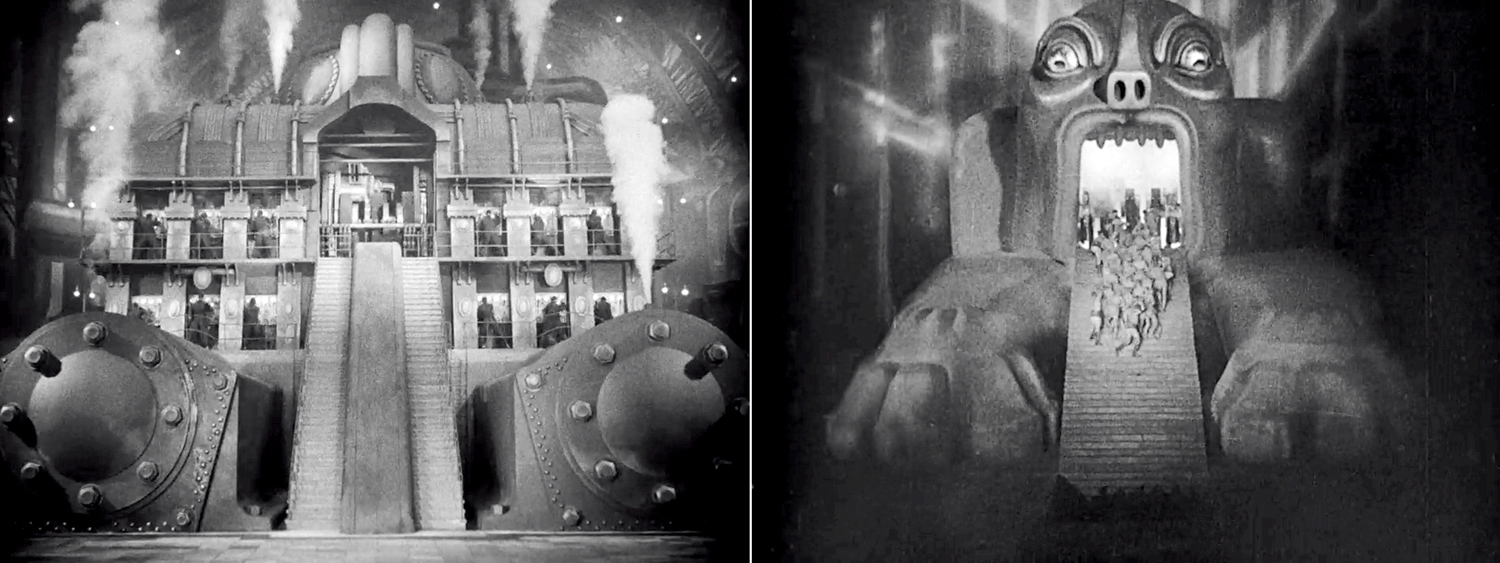
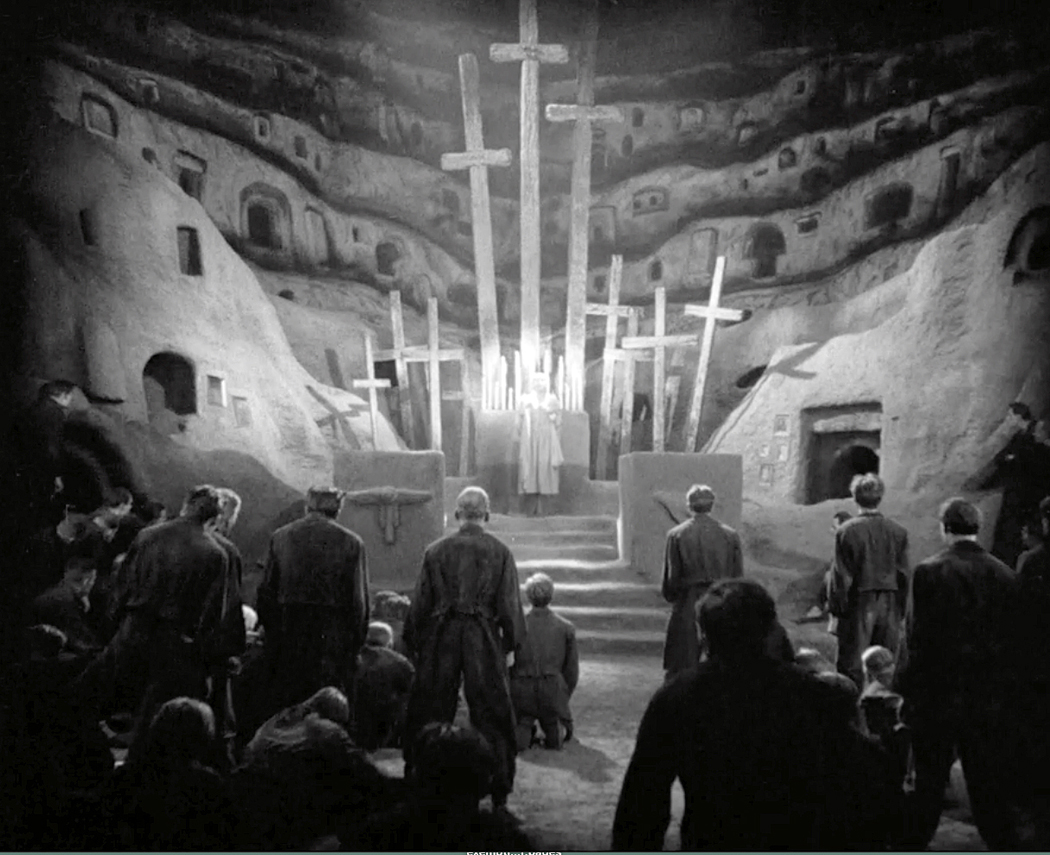
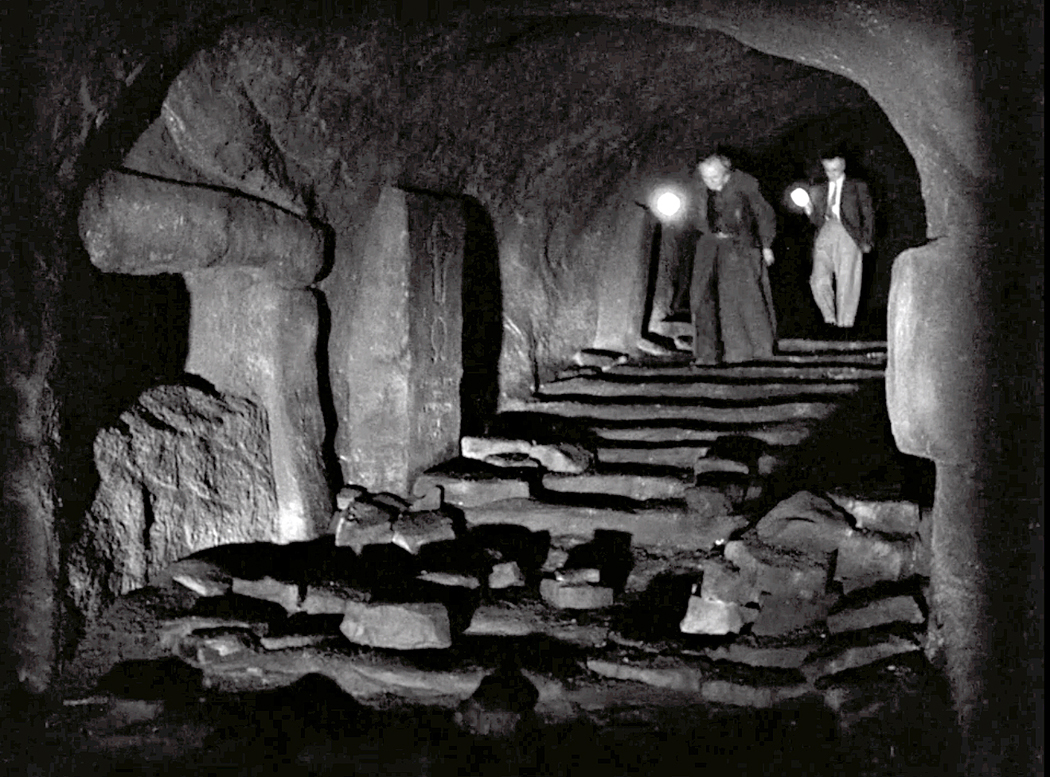
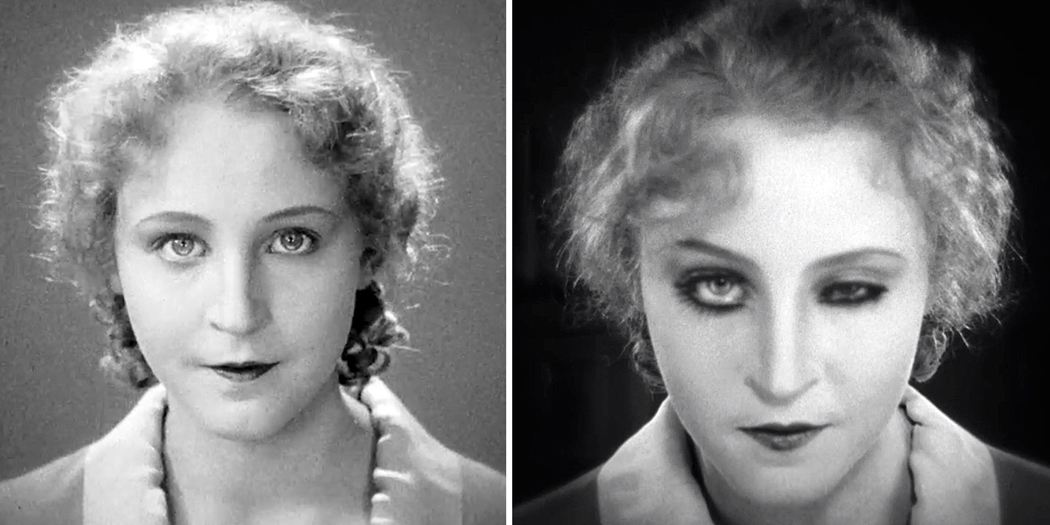
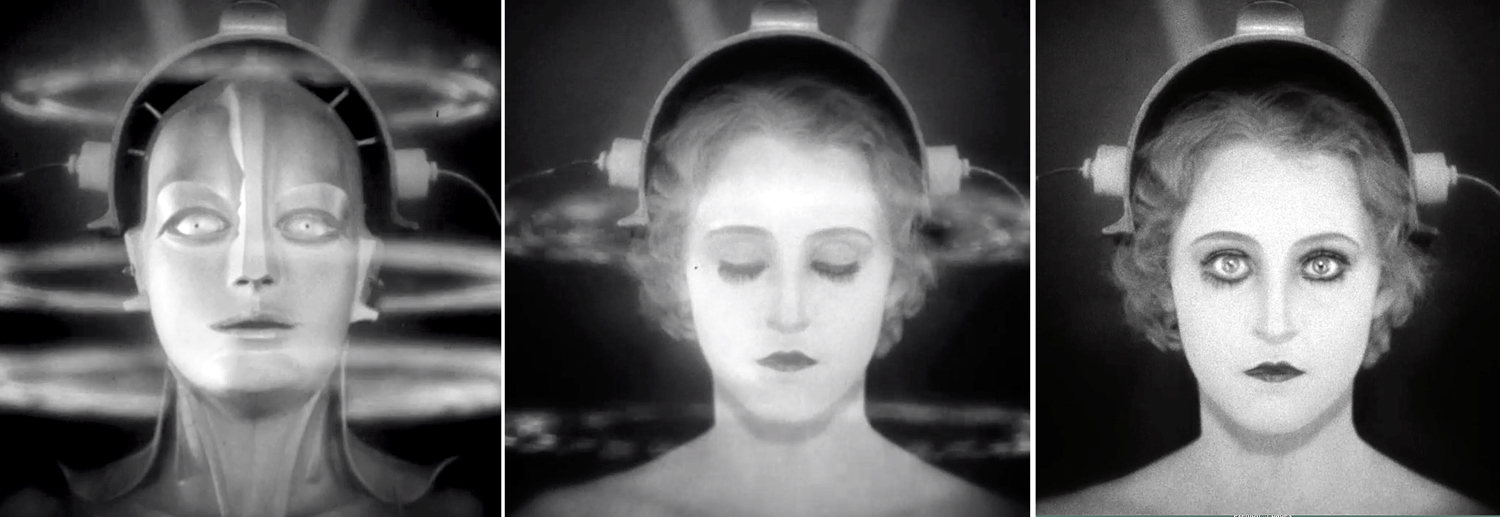
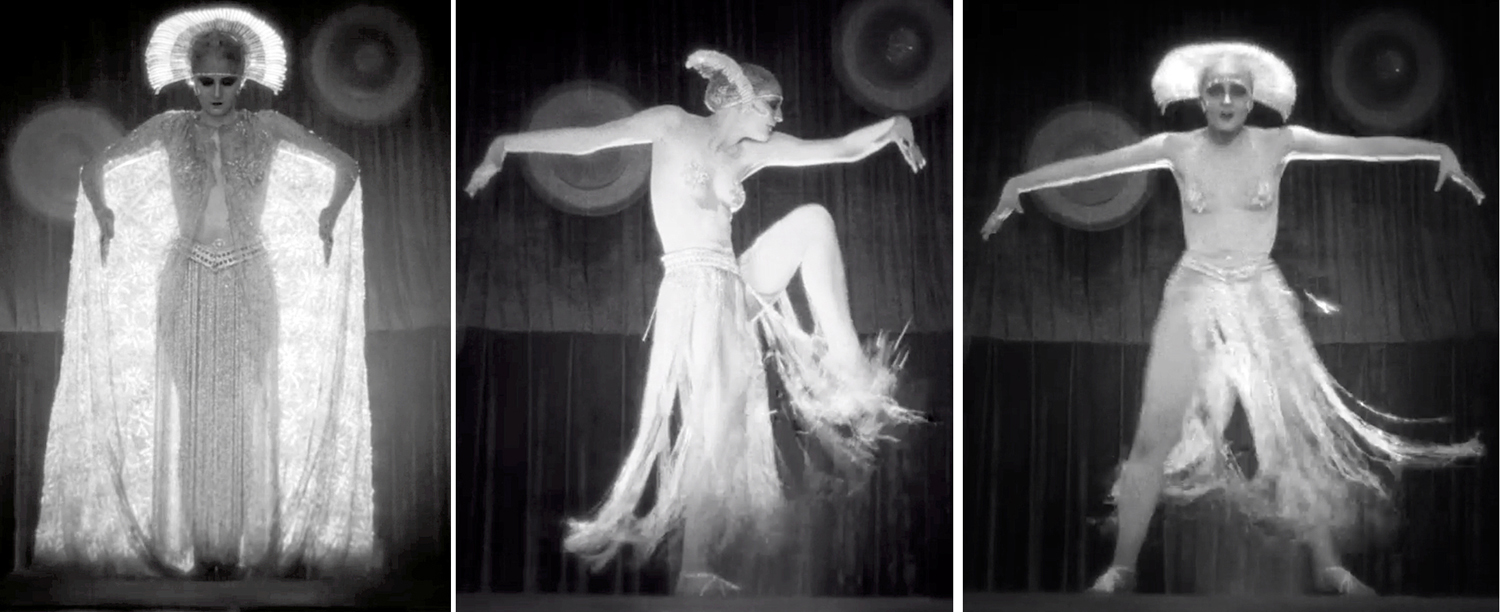
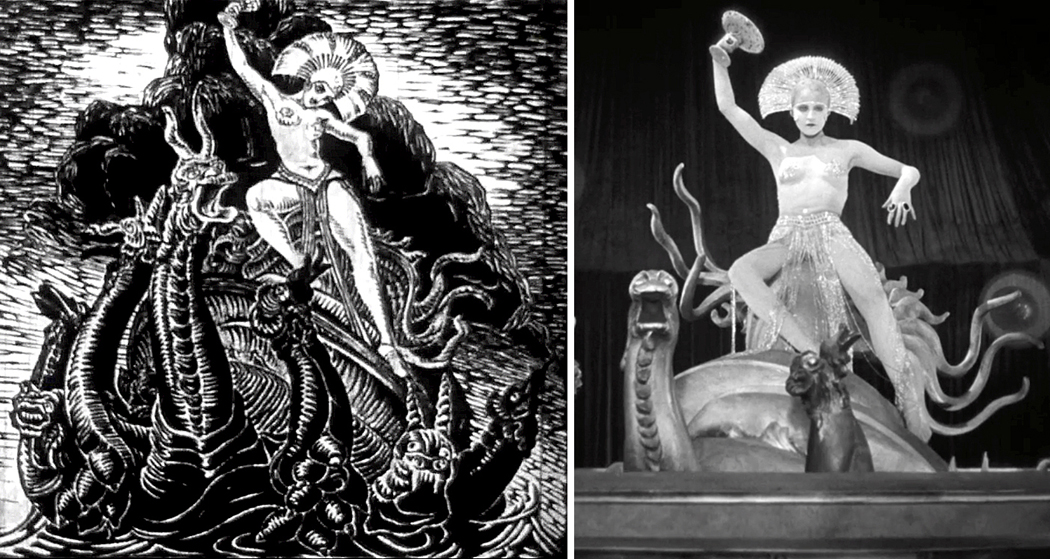
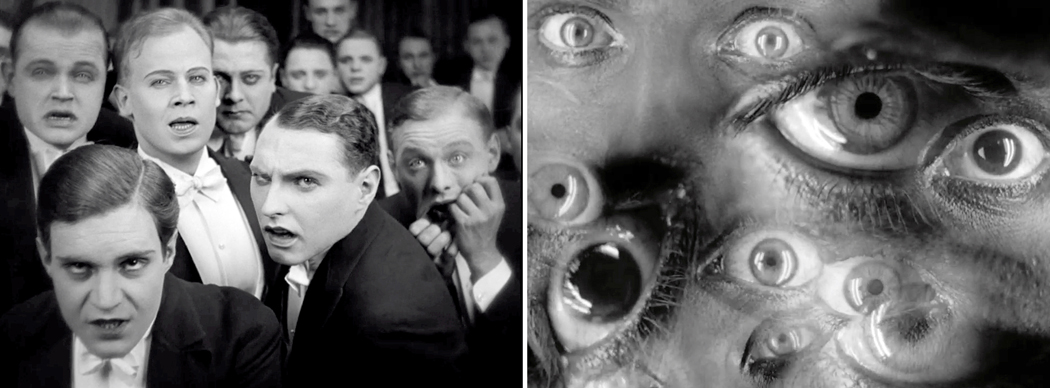
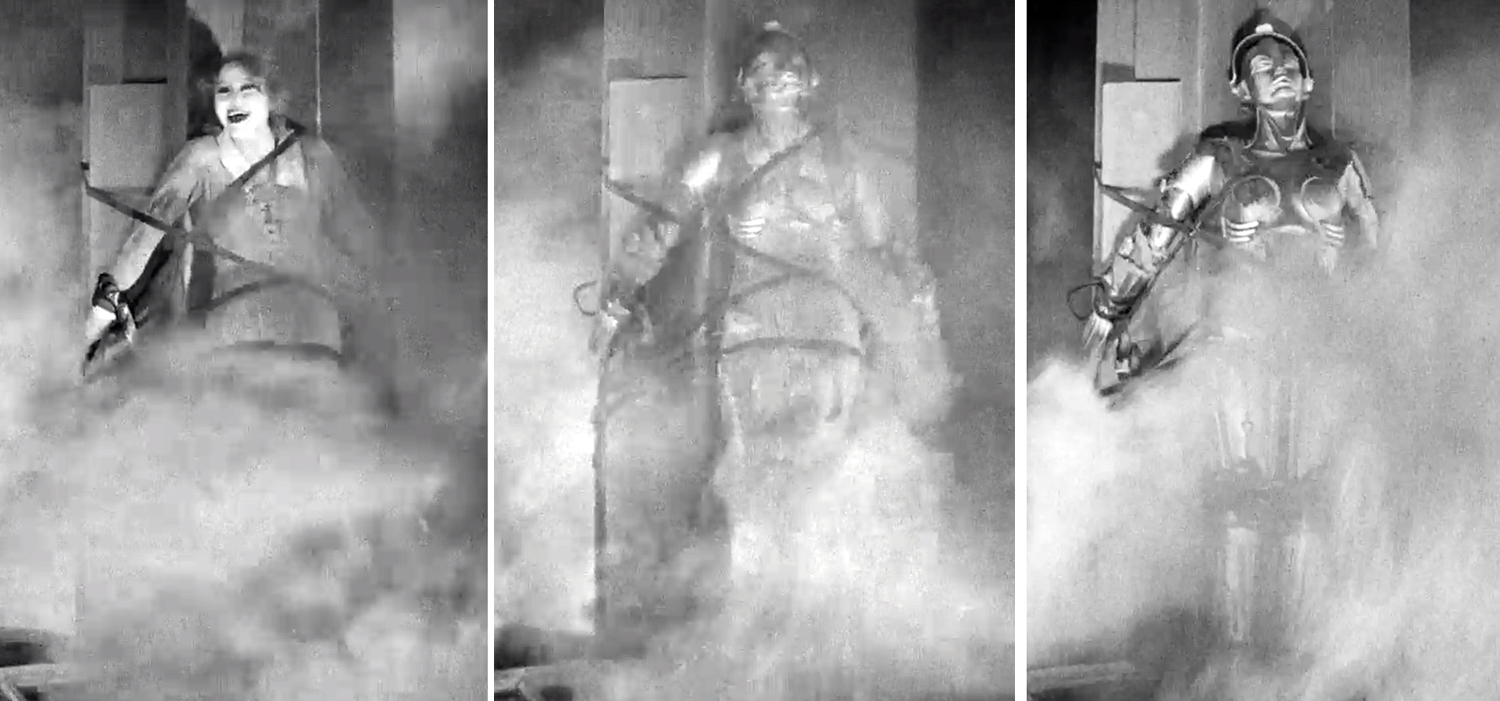
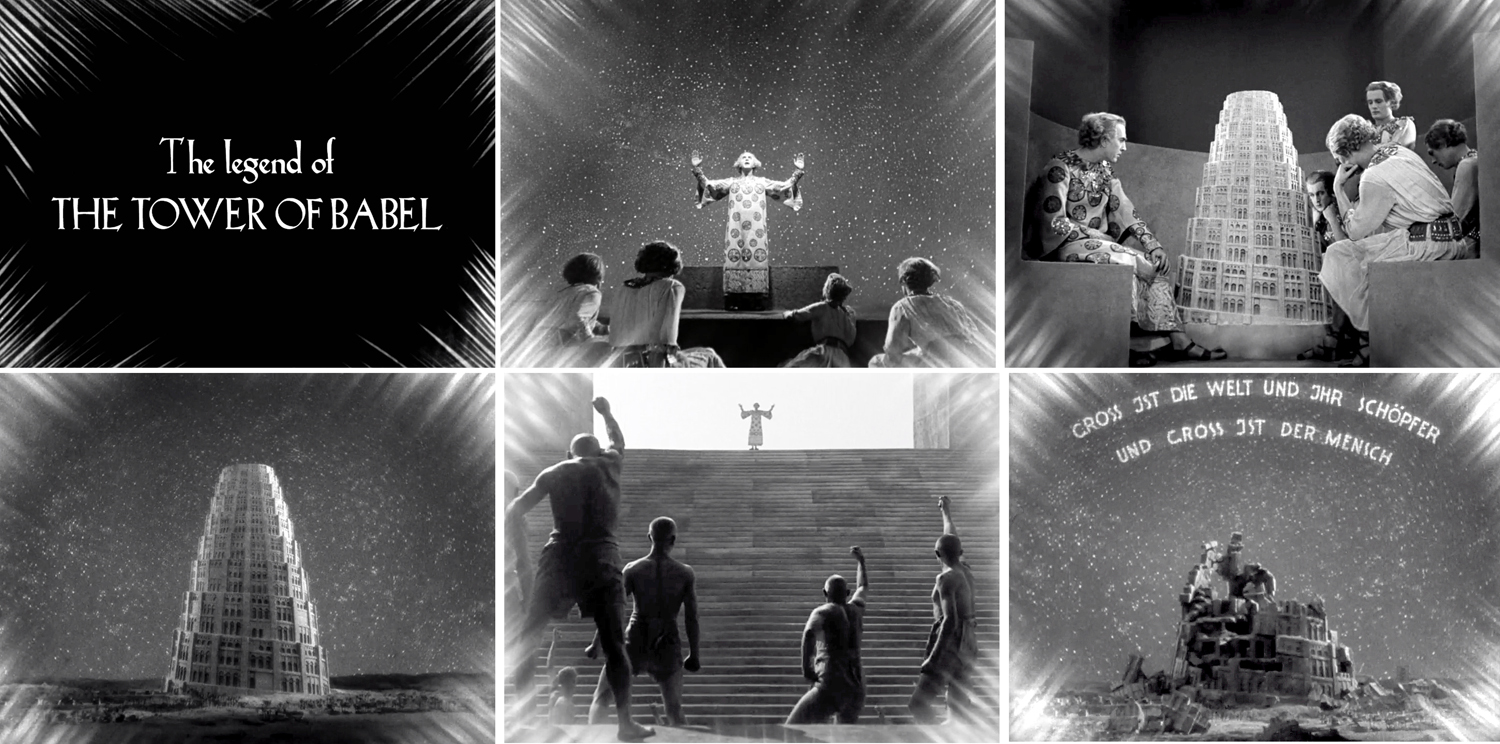
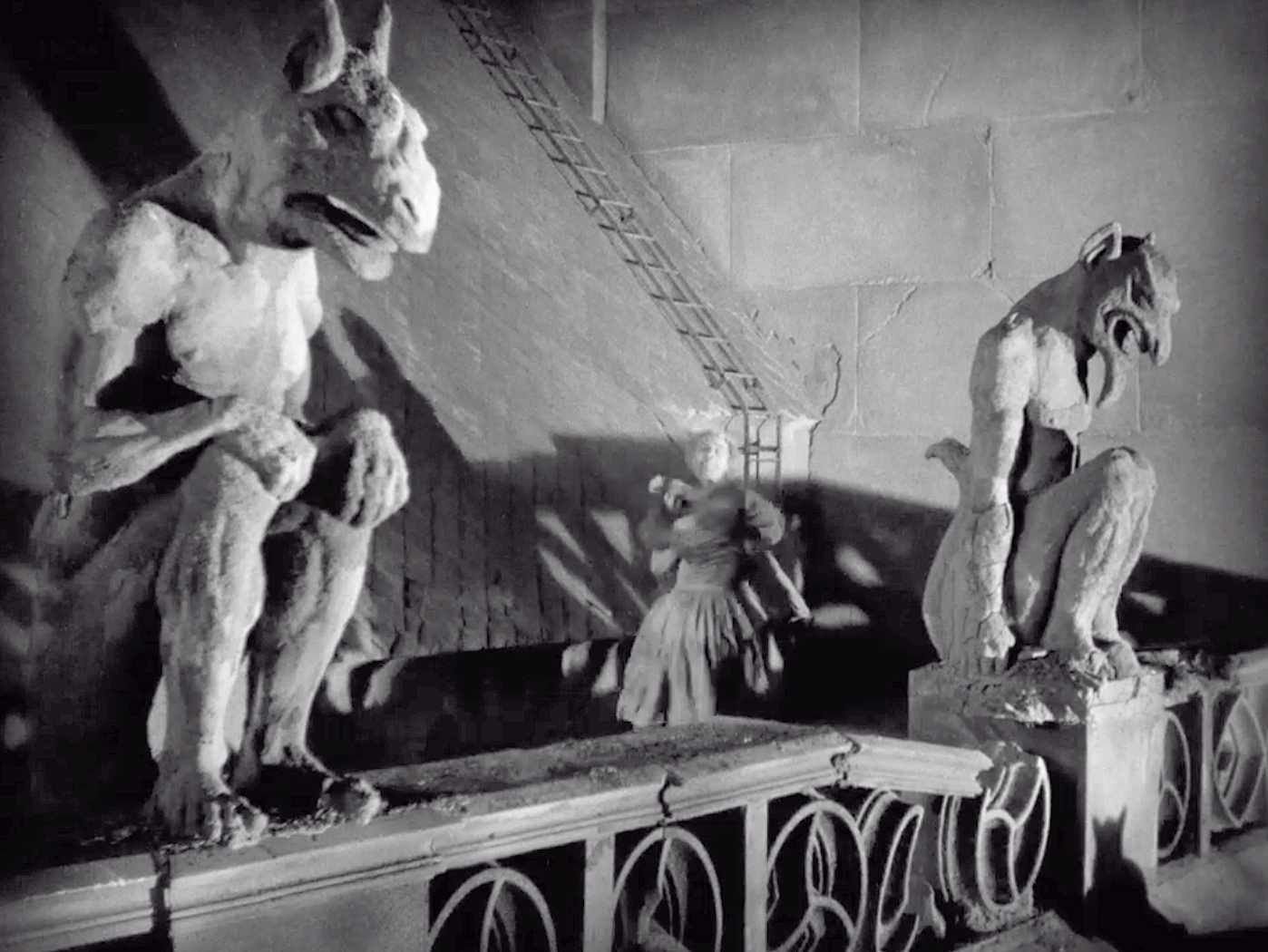
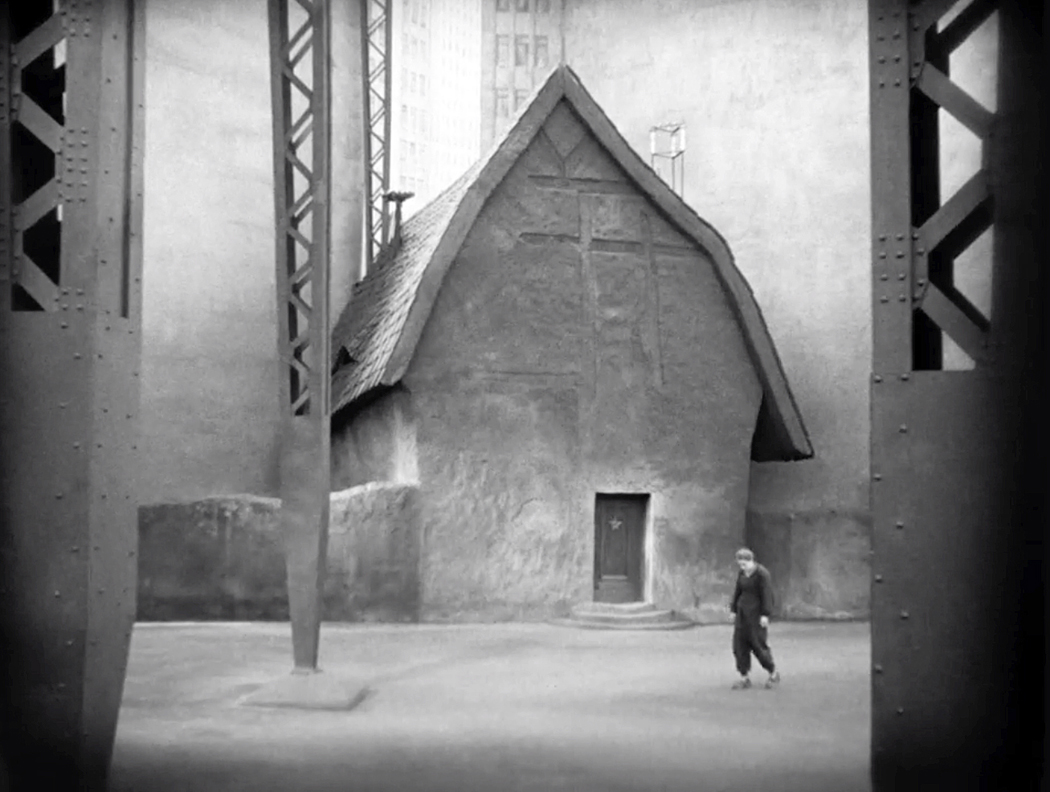
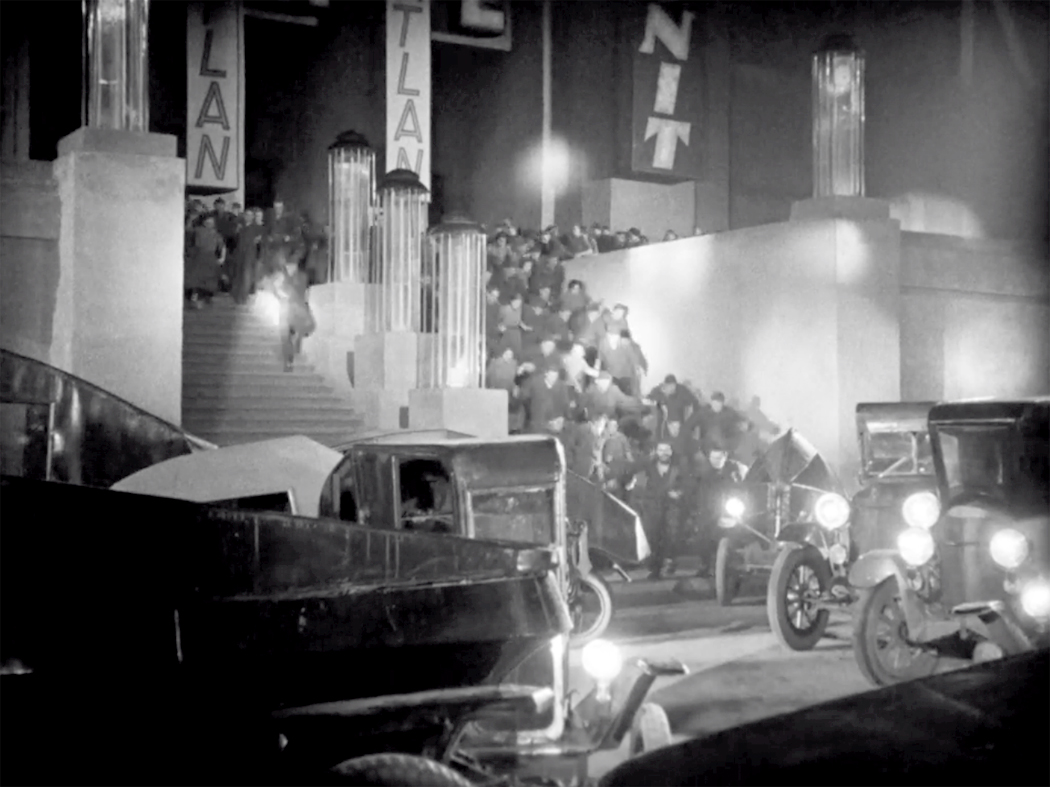
Fritz Lang’s 1926 sci-fi masterpiece has benefitted more than most from restoration. Seen previously in shortened versions, a new version has most of the missing footage returned so that story begins to make sense (even at its best, the plot never really made much sense). But it has some of the most stunning visuals ever put in front of a camera. It is a glorious film to watch, even if the acting sometimes seems maybe a smidge over the top. Despite that, it is also one of the greatest films of all time, and one of the most influential. 

The Lodger: A Story of the London Fog

This 1927 Alfred Hitchcock thriller is a masterpiece of visual storytelling. Called the “first true Hitchcock film,” it plays with the fear raised by a Jack-the-Ripper style murderer in London and a mysterious lodger in a boarding house who may or may not be the killer. The film is chock full of Hitchcockian ticks, including a “wrong-man” plot, the obsession with blondes, and the plot-twist ending. 

These three films offer little problem to the modern viewer and can be seen with little forgiveness needed for their lack of spoken dialog.

——————————

The next three are milestones in technical experimentation and the invention of cinematic conventions that are in common use today

Battleship Potemkin

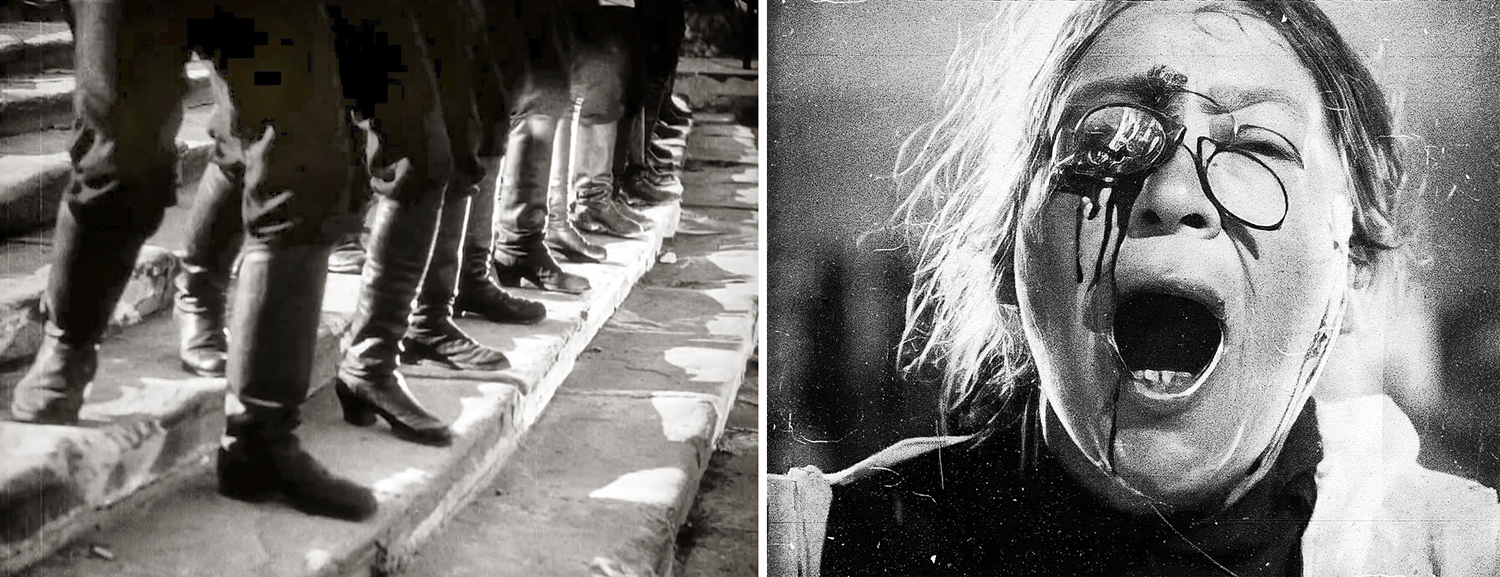
In 1925, Soviet filmmaker Sergei Eisenstein told a story of the aborted 1905 rebellion through a version of the mutiny aboard the Russian battleship Potemkin. The film uses editing as fast as an MTV video to further the story, and inventing the montage. The section called “The Odessa Steps” still carries as much punch as anything ever made. 

Napoleon

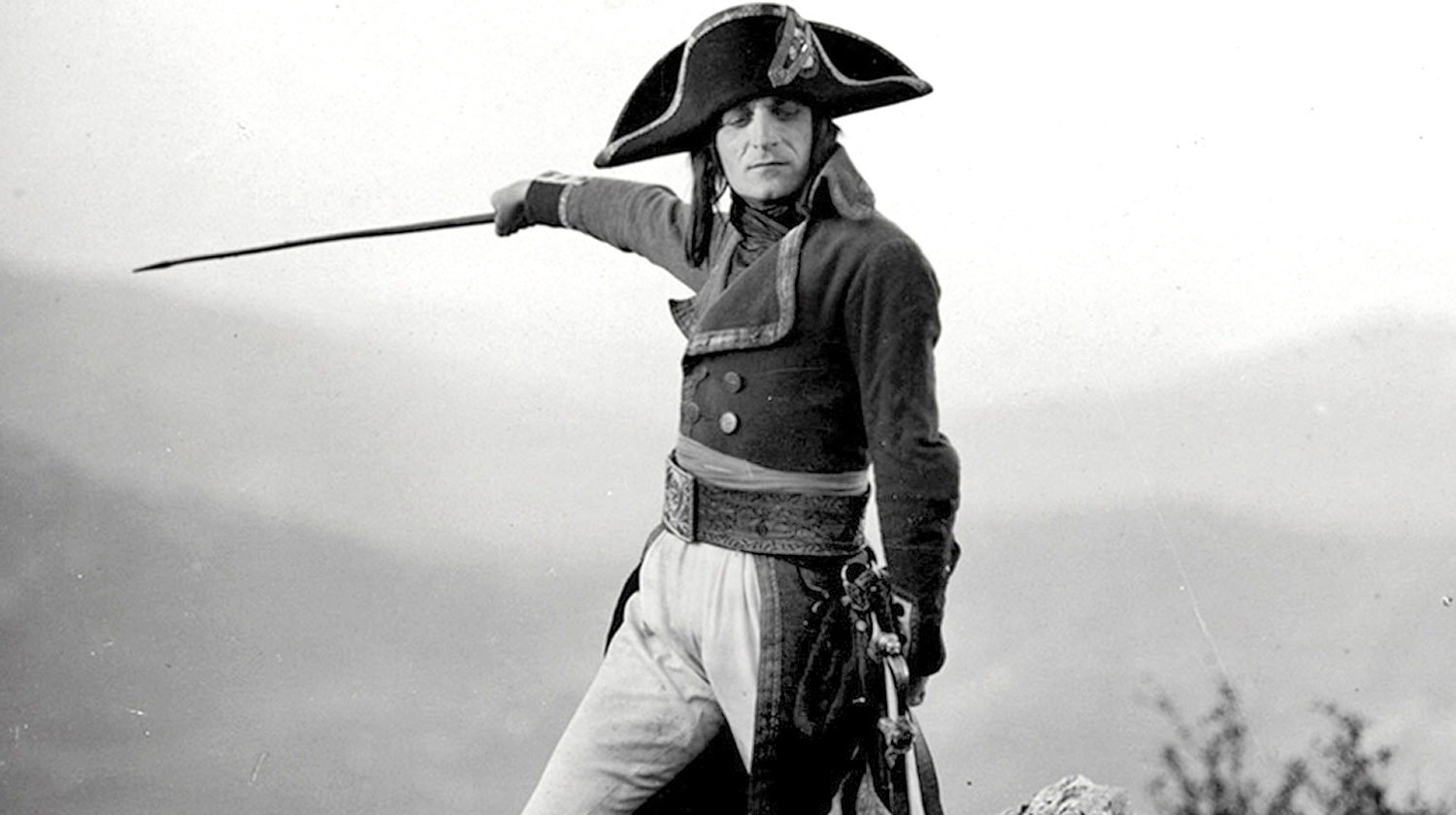
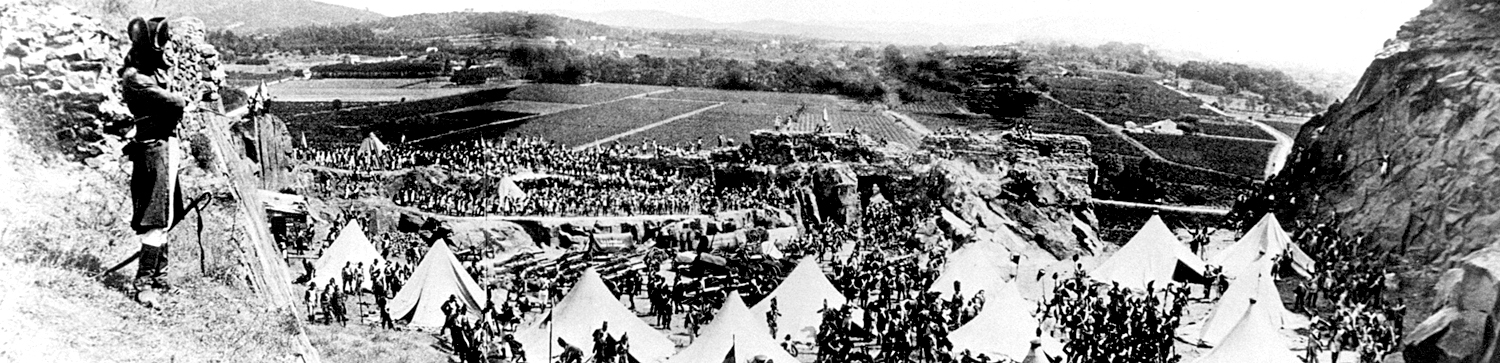
French filmmaker Abel Gance intended to make six films covering the life of Napoleon, but only finished the first. But it is five and a half  hours long and uses many experimental techniques, putting his camera on a swing, or on the back of a galloping horse. 

And in its climax, using three cameras and three movie screens to make a precursor version of Cinerama — huge widescreen images. It is an astonishing film for 1927. 

The Passion of Joan of Arc

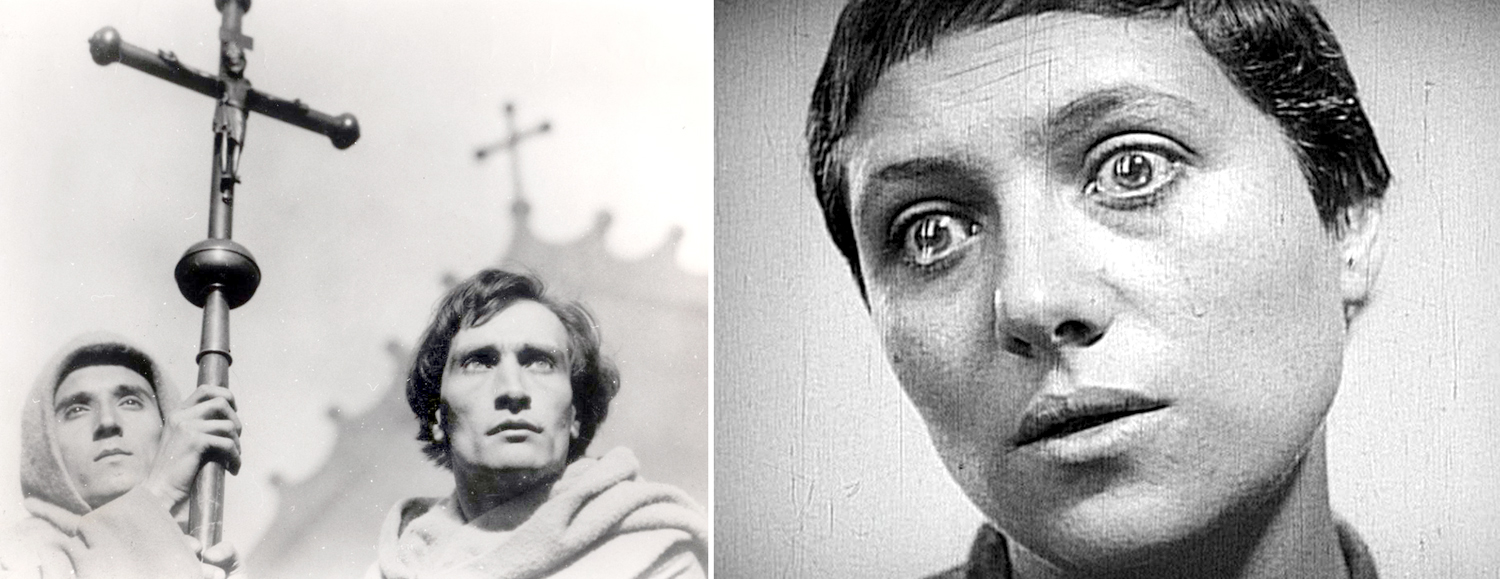
It sometimes seems as if Danish director Carl Theodor Dreyer’s 1928 The Passion of Joan of Arc is entirely made up of close-ups of lead actress Maria Falconetti’s anguished face. But if proof was ever needed of the power of human expression, this movie is Exhibit A. It is emotionally overwhelming. 

——————————

The next three films are documentaries, made before documentary film became hamstrung by an inflexible puritan ethic (fooey on you, Frederick Wiseman). Some use recreations and re-enactments, but give us real information nonetheless. 

Häxan

Häxan, from 1925, is a Swedish film that investigates the phenomenon of witchcraft through the ages. It was banned or censored in many places for its anticlericism, nudity, and depictions of depravity, but ultimately comes down on the side of modern understandings of schizophrenia, hallucination and bigotry to explain the witch stories. It is mostly filmed recreations by actors, but tells a real story. 

Grass: A Nation’s Battle for Life

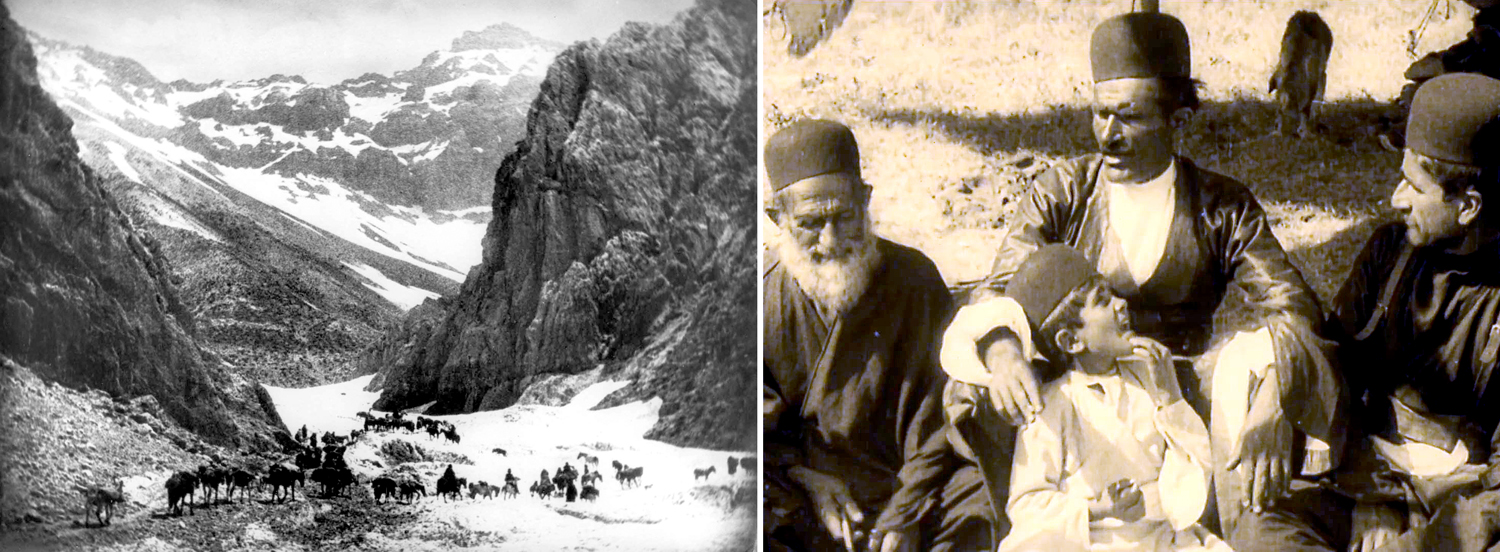
From 1925, the story of Grass’s creation is as breathtaking as the story it tells of the annual migration of 50,000 of Iran’s Bakhtiari people across the vast Zagros mountain range with their cattle. Stunning landscapes and death-defying river crossings, all captured on film by Merian C. Cooper, Ernest B. Schoedsack, and Marguerite Harrison (Cooper and Schoedsack later made King Kong). The filmmakers took the migration along with the tribespeople, and suffered all they did along with them. This is one of my favorite films of all time. 

Nanook of the North

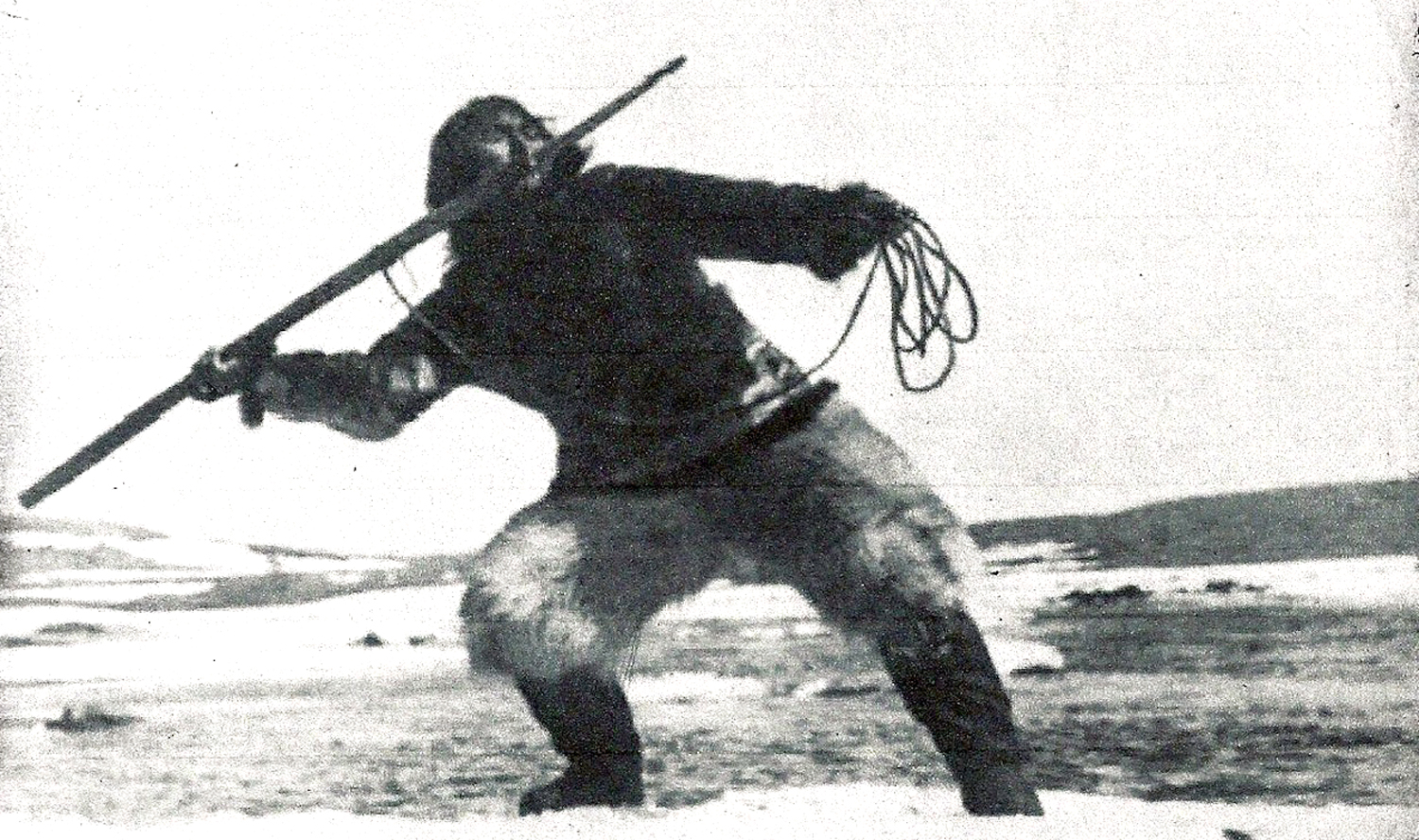
Three years earlier, Robert Flaherty made what many consider the first film documentary, when he took his camera to northern Canada to film the lives of Inuk native, Nanook (“The Great Bear”) and his family. 

It shows us how they lived and how they survived. Purists now complain that some of the shots were staged and that Nanook was an “actor” (although he was a genuine Inuk native. But the ideas of documentary right-mindedness didn’t exist in 1922, and there is a genuineness in Flaherty’s film that many more virtuous documentaries cannot equal. 

——————————

Number 10 on my list is actually a group of films. One thing that silent film did immeasurably well is horror. German filmmakers in the 1920s were immersed in an Expressionistic milieu that gave us films such as Nosferatu, The Cabinet of Dr. Caligari, and The Golem and How He Came into the World. But Germany wasn’t the only place that worked out the magic of film images of the supernatural and spooky. Hollywood had its share, also. 

Nosferatu

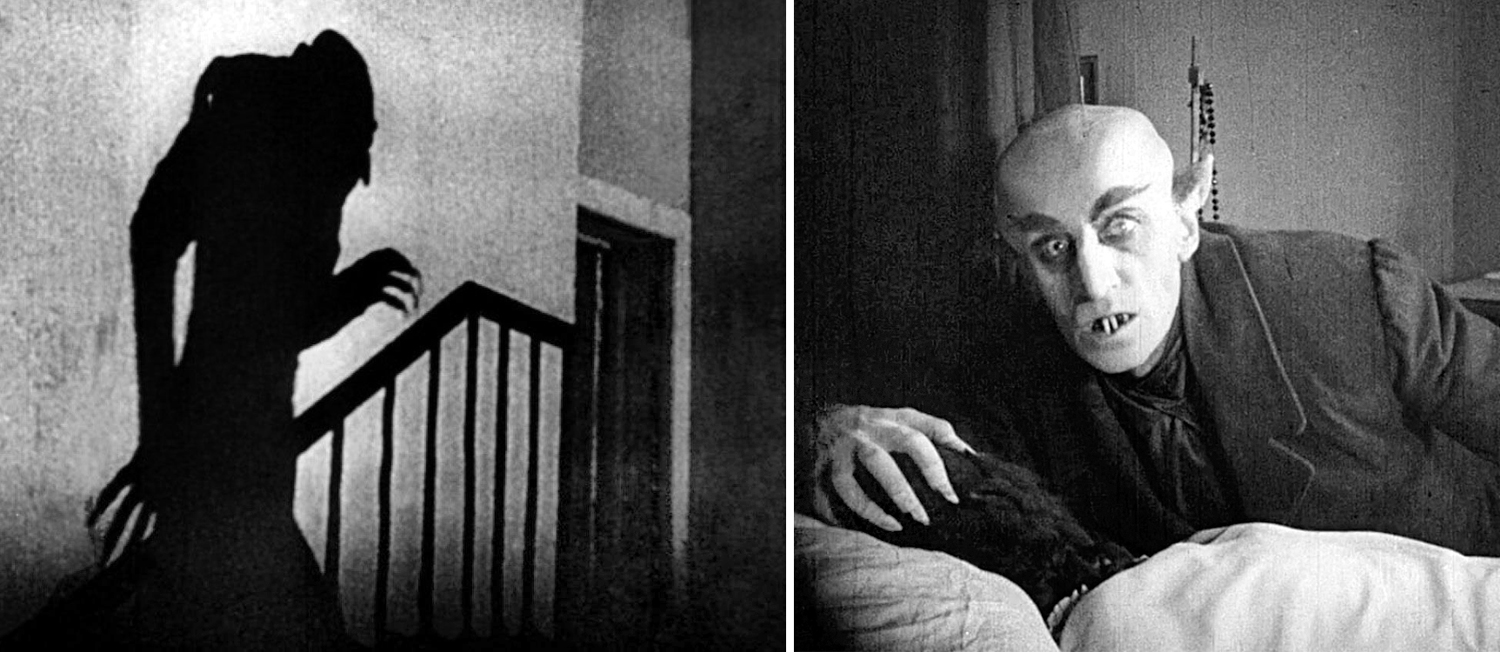
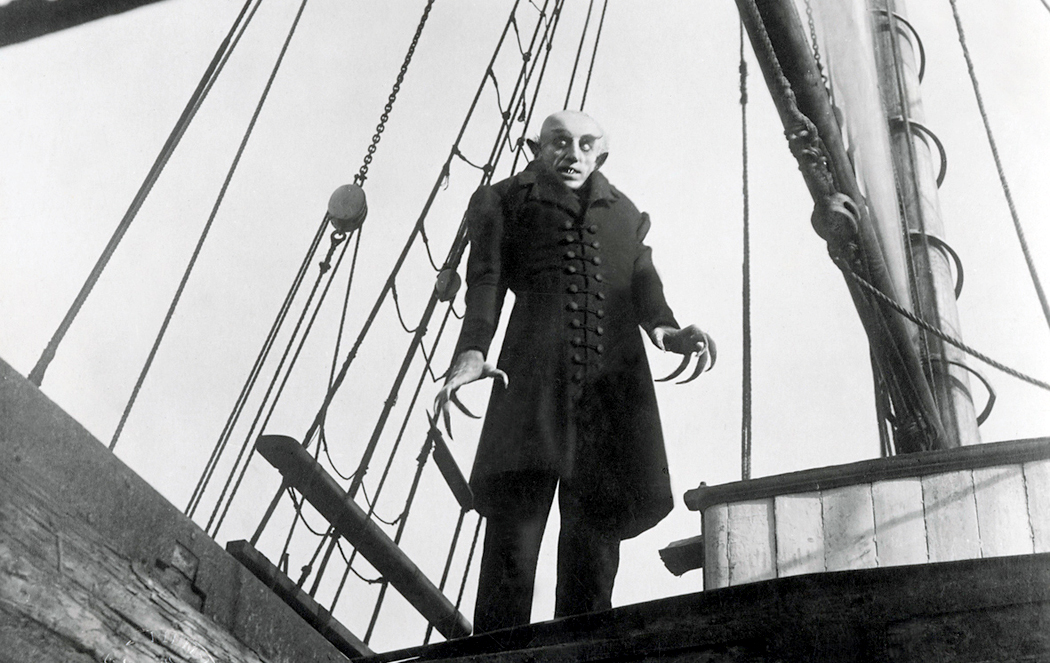
F.W. Murnau’s plagiarized version of Bram Stoker’s Dracula nearly was lost to history. Stoker’s estate sued over the film, which Murnau had not secured the rights to, and the court decided all copies of Nosferatu should be destroyed. Luckily, a copy survived and is now seen as one of the true masterpieces of silent film. All shadows and sharp angles, gothic castles and claw-like hands, it is a much spookier version of the story than 1931’s sound version with Bela Lugosi. 

The Cabinet of Dr. Caligari

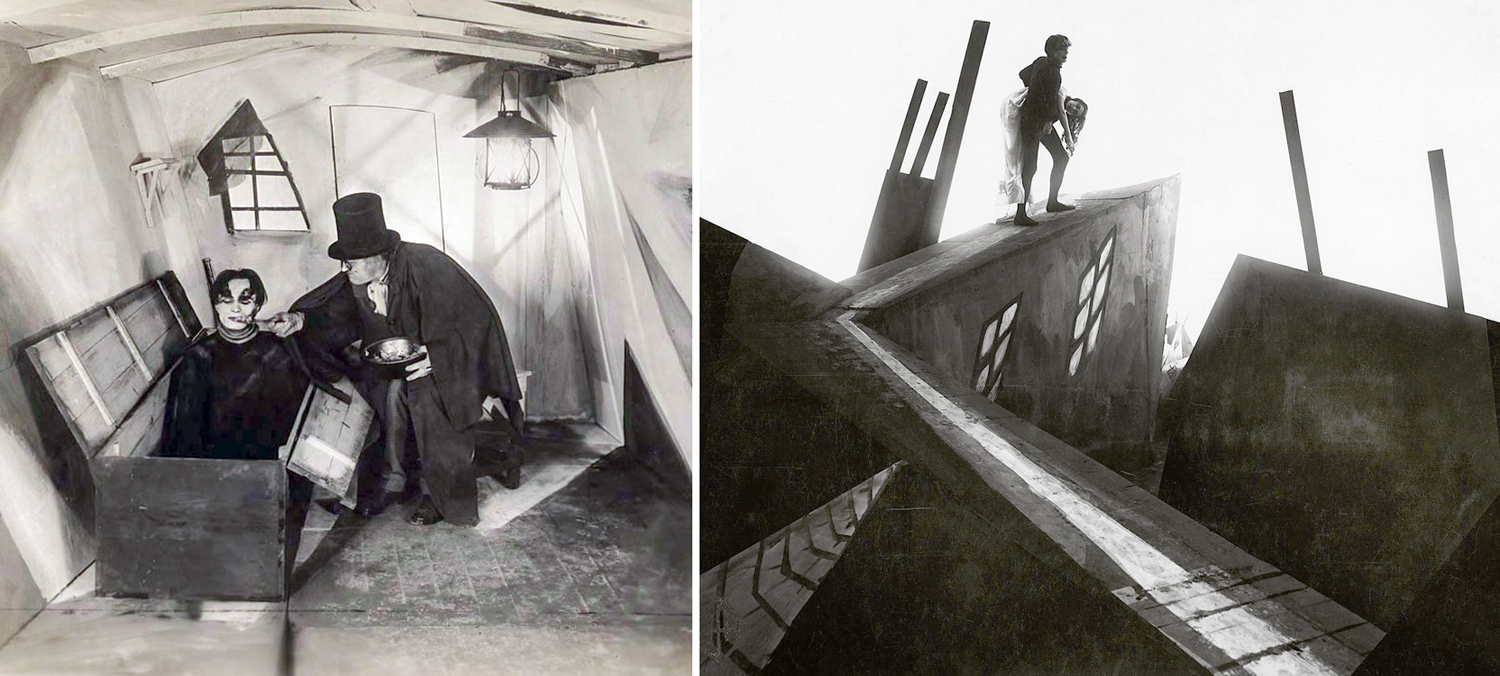
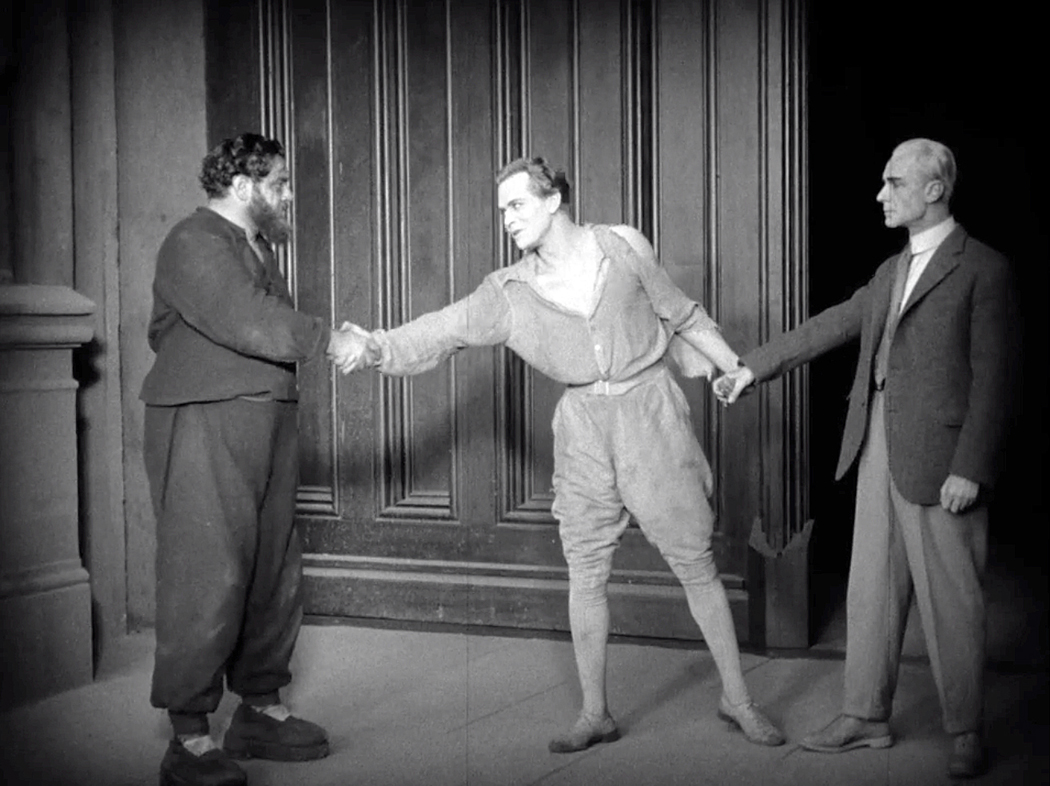
With its Expressionist cityscapes, with nary a right angle to be seen, and with Conrad Veidt’s pasty-faced somnambulist, the film is an absolute feast of visual inventiveness. If you ever needed a picture of what insanity might look like from the inside, this film is it. 

The Phantom of the Opera

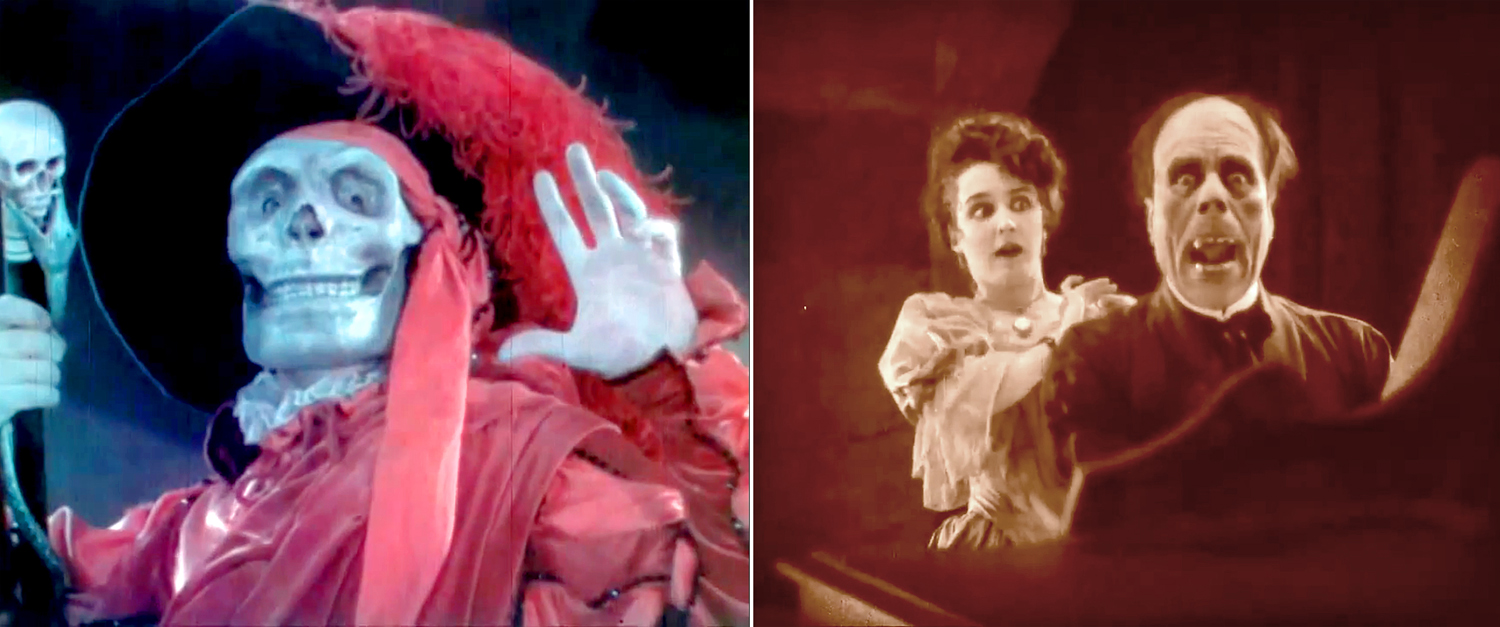
All of the films I have discussed here are among the best made in the silent era. Phantom of the Opera, if seen merely as the result of film direction and writing, is rather ordinary. But its visuals are unforgettable. Lon Chaney’s skull-like make-up for the phantom, the Gothic underworld of the Paris Opera, and perhaps most of all, the Two-Strip Technicolor episode where the phantom descends the grand staircase of the opera house wearing the costume of the Mask of Red Death. 

Visually stunning, if less than brilliantly told, the Phantom of the Opera is buried in the consciousness of its audiences. I doubt that the several remakes of the film or the eponymous musical would have ever existed if the original film hadn’t been so compelling. 

This hasn’t been my list of the Top 10 (or 12) silent films. Such a list would have to include Sunrise: A Song of Two Humans; Greed; City LightsThe Big Parade; Pandora’s Box; The Last Laugh; Flesh and the Devil; Cabiria — and a host of other contenders. Nor are these just my favorite films. I have others among the silents, including The Lost World or Hell’s Hinges

Nor have I listed any of the many silent short comedies — especially missing: the films of Chaplin, Arbuckle, Lloyd, Keaton, the Keystone Cops or Laurel and Hardy. They are familiar enough and require no special pleading from me. 

But I have hoped to make the case for an entire era of cinema, and that it is its own artform, and not merely film manqué, waiting quietly to be perfected by Al Jolson. 

Click on any image to enlarge

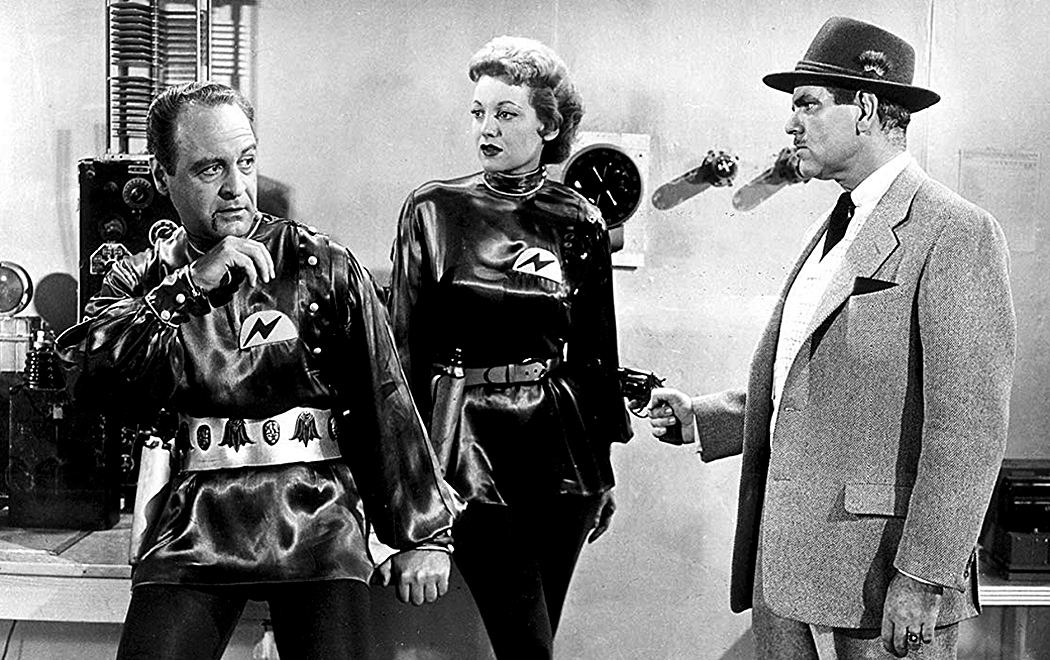
Recently, Turner Classic Movies ran a cheesy science-fiction film I had never seen before. I grew up on bad sci-fi movies from the 1950s and always enjoyed them, in the uncritical way a 9-year-old watches movies on television: Quality never entered the picture. At that age, oblivious there even was such a thing. It wiggled on the screen; I watched. 

But this film was released in 1968, too late for me. When I had gone off to college, the only films I watched were snooty art films. And so I never got to see The Green Slime. Now, here it was, and it was prodigiously awful. Actor Robert Horton fights an alien invasion of tentacled, red-eyed monsters. 

Everything about The Green Slime was awful: the acting, the lighting, the set design, the special effects — and, of course, the science. Or lack of it. There was the garish color of sets and costumes and the over-use of the zoom lens, the way of made-for-TV movies of the era. I have outgrown my open-hearted love of bad science fiction. I stared in wonder at the horribleness I was seeing on the TV screen. 

And it was the acting, more than anything, that appalled me. Why were these actors so stiff, wooden, even laughable? And something I guess I had always known, but never really thought about jumped to mind: Actors are at the mercy of writers. The dialog in Green Slime was stupid, awkward and wooden.

There is some dialog so leaden, so unsayable, that even Olivier can’t bring it off. Robert Horton, while no Olivier, was perfectly fine on Wagon Train, but here he looked like he was lip-synching in a foreign tongue. 

“Wait a minute — are you telling me that this thing ‘reproduced’ itself inside the decontamination chamber? And, as we stepped up the current, it just … it just grew?”

I remember, years ago, thinking that Robert Armstrong was a stiff. I had only seen him in King Kong and thought he was a wooden plug of an actor (not as bad, perhaps as Bruce Cabot, but still bad. But years later, I’d seen him in other films where he was just fine. Even in Son of Kong, he was decent. But no one, absolutely no one can pull off a line like “Some big, hardboiled egg gets a look at a pretty face and bang, he cracks up and goes sappy!”

Even in a famous movie, clunky dialog can make an otherwise fine actor look lame. Alec Guinness and James Earl Jones may be able to pull off the unspeakable dialog of the original Star Wars, but for years, I thought Mark Hamill was a cardboard cut-out. It was only when seeing him in other projects I realized that Hamill could actually act. I had a similarly low opinion of Harrison Ford because of what he was forced to mouth in those three early franchise films. George Lucas did them no favors. 

There is certainly a range of talent in movies and some genuinely untalented actors who got their parts by flashy looks or sleeping with the producer. But I have come to the opinion that most (certainly not all) actors in Hollywood films are genuinely talented. Perhaps limited, but talented, and given a good script and a helpful director, can do fine work. 

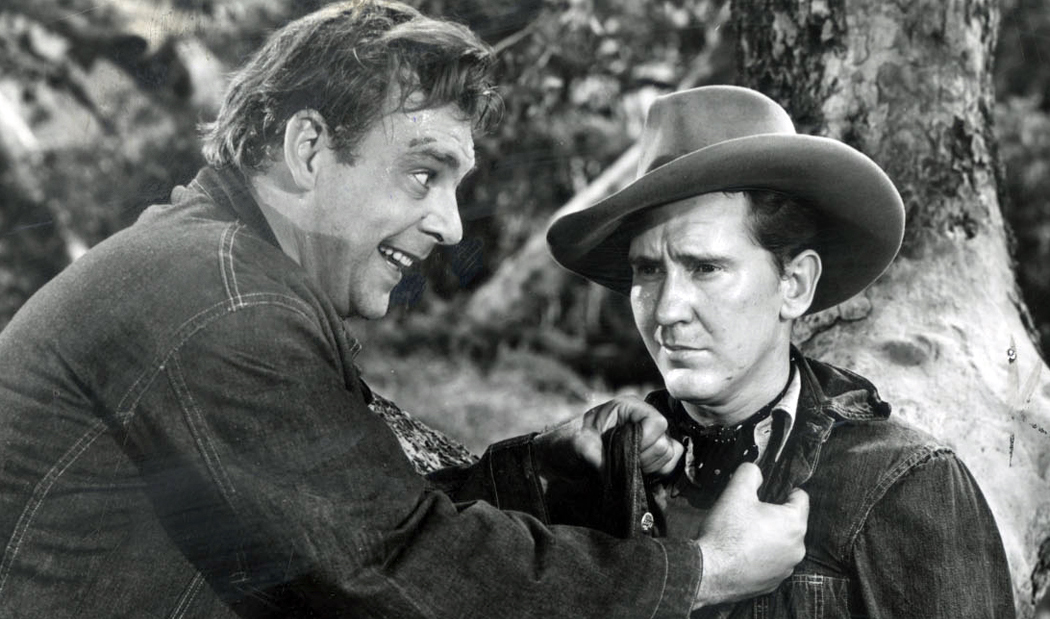
One thinks of Lon Chaney Jr., who is wooden, at best, as the Wolfman. But he is heartbreaking as Lenny in Of Mice and Men — perhaps the only chance he ever got to show off what he was actually capable of. 

“Lon Chaney was a stiff, but he had Lenny to redeem him,” said my brother Craig, when we discussed this question. Craig can be even more critical than me. 

He continued, “I’ve been trying to think of the worst actors ever — someone who has never said a word like a human being. There are a lot of people who got into a movie because they were famous for something else (Kareem Abdul-Jabbar, Joe Louis, Audie Murphy) so it’s hard to judge them fairly as actors, like you can’t criticize a pet dog for barking the national anthem but not hitting the high notes. But even Johnny Weissmuller was pretty effective in the first Tarzan; Elvis had Jailhouse Rock where he actually played a character; and Madonna can point to Desperately Seeking Susan without shame. (Everything else, shameful. There just isn’t enough shame in the world anymore.)

“There are any number of old cowboy stars who couldn’t speak a believable line of dialog and that can’t be totally blamed on the writing. (Gabby Hayes rose above it.) There are bad actors who still had some life and energy about them that made them fun to watch. Colin Clive was silly, and he made me giggle, so he was entertaining. And  Robert Armstrong. But there’s just no excuse for Bruce Cabot.

“I’ve never actually seen a Steven Seagal movie,” Craig said, “but I know enough to say with conviction that he should have been drowned as a baby.”

I said Craig can be tougher than me, but here, I have to concur. 

“It’s probably not fair to pick out silent movie actors for being silly and over the top, but there is Douglas Fairbanks to prove you can be silent and great.”

Silent acting was a whole different thing, and hard to judge nowadays. As different from modern film acting as film acting is from acting live on stage. The styles don’t often translate. John Barrymore was the most acclaimed Shakespearean actor in America in the early years of the 20th century, but his style on celluloid came across as pure ham. (Yes, he was often parodying himself on purpose, but that doesn’t gainsay what I am saying about acting styles). 

Every once in a while, I see some poor slob I always thought was a horrible actor suddenly give an outstanding performance. Perhaps we have underestimated the importance of the casting director. A well-placed actor in a particular part can be surprising perfection. There is creativity in some casting offices that is itself an artform. You find the right look, voice, or body language, and a minor part becomes memorable. Some actors are wonderful in a limited range of roles. I can’t imagine Elisha Cook as a superhero, but he is perfect as a gunsel. 

And Weissmuller was the perfect Tarzan before his clumsy line reading became obvious in the Jungle Jim series. I am reminded of Dianne Wiest in Bullets Over Broadway: “No, no, don’t speak. Don’t speak. Please don’t speak. Please don’t speak.”

Keep in mind, actors are subject to so many things that aren’t in their control. In addition to good writing, they need a sympathetic director, decent lighting, thoughtful editing, even good costume design. Filmmaking is collaborative and it isn’t always the actor’s fault if he comes across like a Madame Tussaud waxwork. I’ve even seen Charlton Heston be good. 

In reality, I think of film actors much as major league ballplayers. The worst baseball player on a major league team may be batting under the Mendoza line, and even leading the league in fielding errors, but in comparison with any other ballplayers, from college level to minor leagues, he is superhumanly talented. Even Bob Uecker managed to hit a home run off Sandy Koufax. I doubt any of us could have done that. And so, we have to know who we’re comparing them to.

I saw a quote from Pia Zadora the other day (she just turned 70) and with justifiable humility, she said, “I am often compared to Meryl Streep, as in ‘Pia Zadora is no Meryl Streep.’” Still, compared to you or me, she is Bob Uecker. 

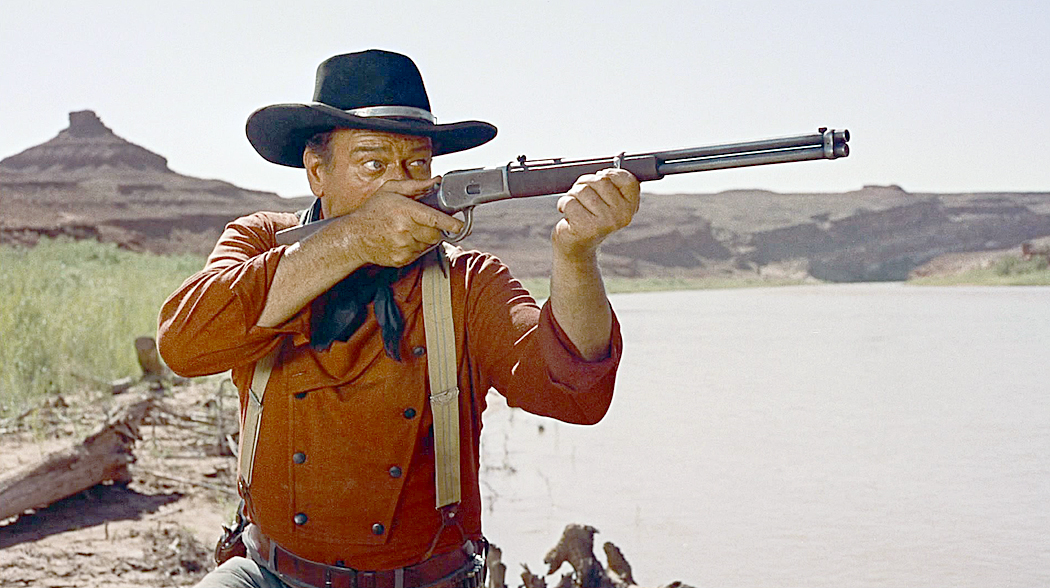
I have had to reassess my judgment of many actors. I had always thought of John Wayne as a movie star and not an actor. But I have to admit, part of my dislike of his acting was disgust over his despicable political beliefs. And I thought of him as the “cowboys and Indians” stereotype. 

But I have now looked at some of his films with a clearer eye, and realize that, yes, most of his films never asked anything more from him than to be John Wayne — essentially occupying a John Wayne puppet suit — but that when tasked by someone such as John Ford or Howard Hawks, he could actually inhabit a character. “Who knew the son-of-a-bitch could actually act!” Ford himself exclaimed. 

But there it is, in The Searchers, She Wore a Yellow Ribbon, Red River, The Quiet Man, Rio Bravo, The Shootist. Those were all true characterizations. (Does all that cancel out The Alamo or The Conqueror or The War Wagon, or balance all the undistinguished Westerns he made? We each have to judge for ourselves). 

Even in his early Monogram oaters, playing Singing Sandy, he brought a naturalness to his presence that is still exceptional in the genre (and researching Wayne, my gasts were flabbered at how good looking he was as a young man. So handsome he was almost pretty. And that hip-swinging gait that predates Marilyn Monroe. “It’s like Jell-O on springs.” It seems notable that so much feminine could become the model of such lumpen masculinity.)

And even great actors have turned in half-ass performances, or appeared in turkeys. In Jaws: The Revenge, Michael Caine has to utter things like, “Remind to tell you about the time I took 100 nuns to Nairobi!” Caine famously said, “I have never seen the film, but by all accounts it was terrible. However I have seen the house that it built, and it is terrific.”

Even Olivier had his Clash of the Titans.

Actors have to work, and they don’t always get to choose. “An actor who is not working is not an actor,” said Christopher Walken. The more talented actors sometimes get to be picky, but the mid-range actor, talented though he or she may be, sometimes just needs the paycheck. 

I sometimes think of all the jobbing actors, the character actors of the 1930s, working from picture to picture, or the familiar names on TV series from the ’50s and ’60s — the Royal Danos, the John Andersons, the Denver Pyles, dressed as a grizzled prospector for a week on one show, going home at night for dinner and watching Jack Benny on the tube, and then driving back to the set the next morning and getting back into those duds. And then, next week dressing as a banker for another show, putting together a string of jobs to make a living. And all of them complete professionals, knowing what they are doing and giving the show what it needs. A huge amount of talent without ever having their names above the title. 

Royal Dano times four

And so, I feel pity for those actors of equal talent who never broke through, or who were stuck in badly-written movies and couldn’t show off their chops. When I watch reruns of old episodic TV, I pay a good deal more attention than I ever did when I was young, to all the parts that go into making such a show. I notice the lighting, the editing, the directing, and most of all, the writing. The writing seems to separate, more than anything else, the good series from the mediocre ones. And how grateful those working actors must feel when they get a script that gives them a chance to shine. 

There is a class of movie that deserves special mention. The films aren’t necessarily the best, although they tend to be decent. They don’t usually show up on Top 10 lists or all time greats. But the fact is, that when they show up on TV, often late at night, we will watch them over and over. I don’t necessarily tune in on purpose, and don’t set the DVR to record, but if I tune in halfway through, I’ll see them out to the end. 

These are movies we know almost by heart. There is an amiability to them. Like a favorite tune we like to hum along with, I’ll recall the dialog or the set pieces. A good tune never wears out its welcome. 

I thought about this one night when I was clicking the clickerator and came upon Support Your Local Sheriff. It was bedtime and I was about to turn off the tube, but instead, I sat back down and saw the thing through. Not a notably good movie, but just so pleasant, that I watched yet again to see Walter Brennan do his Walter Brennan imitation. And there’s Bruce Dern and Jack Elam, and Gene Evans and Henry Jones and Harry Morgan and Walter Burke. All great character actors doing what they do best: carefully etched characters, albeit caricatures, but all memorable and distinct. 

This is not a claim that the movie is one of the great classics of cinema, but I can’t help but just enjoy the heck out of it whenever it’s on. Old friends I’d drop in on and visit. 

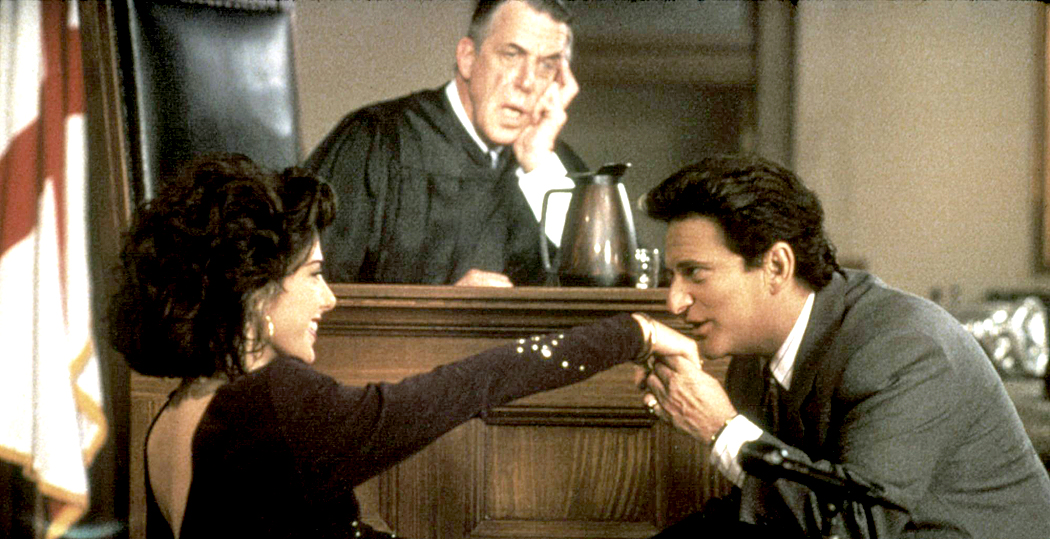
And it’s far from the only such film. There’s a whole class of them. Among notable “rewatchables” are My Cousin Vinny or Key Largo or The Blues Brothers. Such a list will be entirely personal, although there are probably movies that show up on a majority of lists, the consensus rewatchables. 

There are movies I will choose to watch again and again. They are favorites and I will seek them out. But this list isn’t about that, but about happening on one when channel surfing and finding one that is an old shoe, comfy, familiar. I have the dialog memorized, and no matter if it’s just starting or soon ending, I will keep it on and watch, under various levels of engagement, until it ends. Not so much movies I choose to watch, but that I happen upon and stay with. 
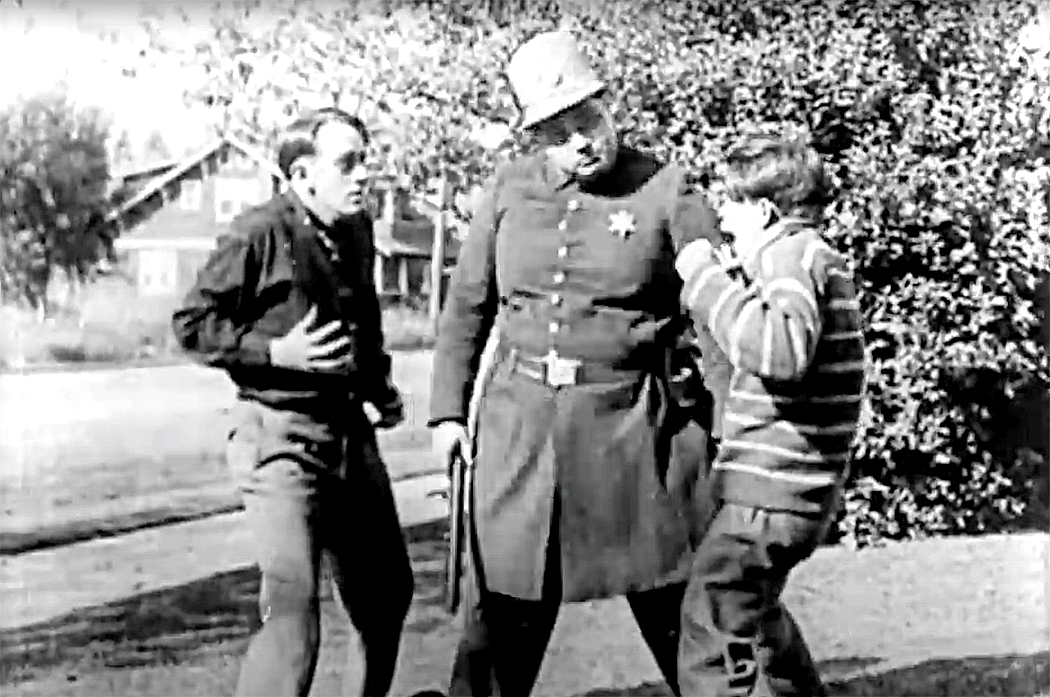
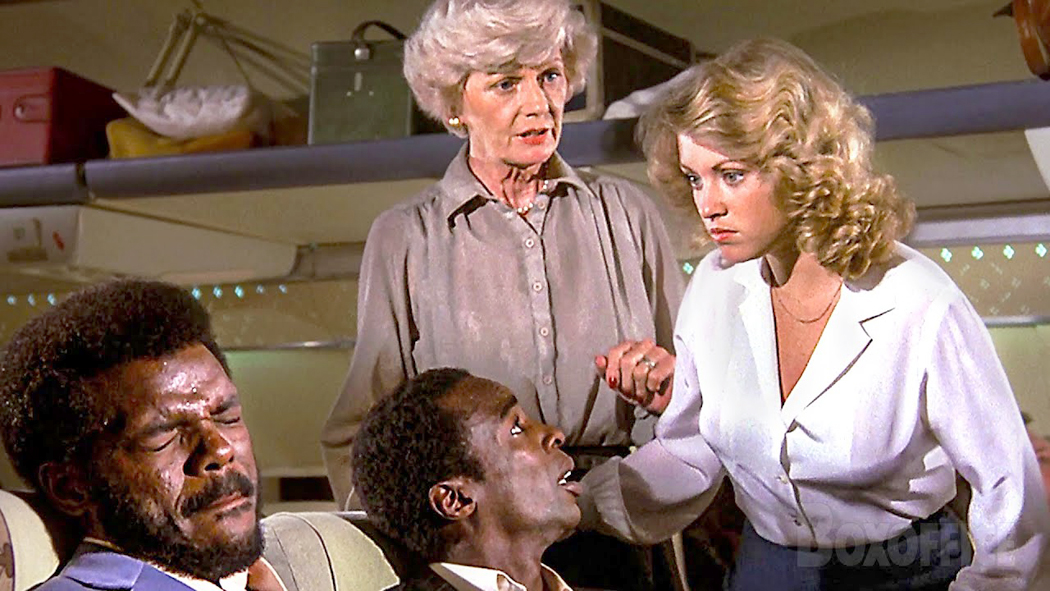
There are movies that, because of this habit, I have seen the end of many times, but seldom see the beginning. For all the times I’ve seen the beginning of Airplane! or The Fifth Element, I’ve seen their endings at least a dozen times. You catch these films mid-flight and ride until they land. 

(There is a subset of films where it is only the beginning that I watch over and over — If Turner Classic Films is showing 2001: A Space Odyssey, I will watch the prehistoric beginning but then tune out. Not that I don’t think the rest of the movie is good, but because it is only the opening that has this over-and-over quality of a favorite song that scratches a certain cinematic itch.)

When I consider what makes a movie rewatchable by this standard, there are a few things that seem to be true. 

First, plot doesn’t matter much. Movies that I will stay to watch are composed of memorable set pieces rather than a story with a goal-oriented ending. It is the set-pieces that I want to see, each scene a mini-story in itself. 

Second, they feature memorable dialog. Snappy chatter and witty responses. 

Third, they feature memorable characters, whether germane to the plot or not, and usually played by memorable character actors. 

Sometimes the attraction is none of the above, but just how bad the movie is. My brother says, “Growing up, I’d watch any movie with robots in it. Still will. I’ll visit most any ’50s movie with a monster or a rocket ship (or monster in a rocket ship). Stupid and cheesy and incompetent don’t matter.” 

And so, Plan 9 From Outer Space is a Class-A dip-in-at-any-time film (I hesitate to even use the word “film” in this context, as the word implies a certain level of craftsmanship famously missing in this “classic.”) But it has memorably dippy dialog (“We are all interested in the future, for that is where you and I are going to spend the rest of our lives. And remember, my friend: Future events such as these will affect you in the future.”) It has memorable characters, like Vampira or Tor Johnson. And it has character actors, such as Lyle Talbot and cowboy star Tom Keene, doing their best with the unspeakable script. 

At the opposite end of the quality spectrum is Citizen Kane, which is the acme of episodic great dialog with wonderful actors. Lots of scenes to remember in discrete chunks, any of which can be pulled out and dissected line by line and feel complete in themselves. 

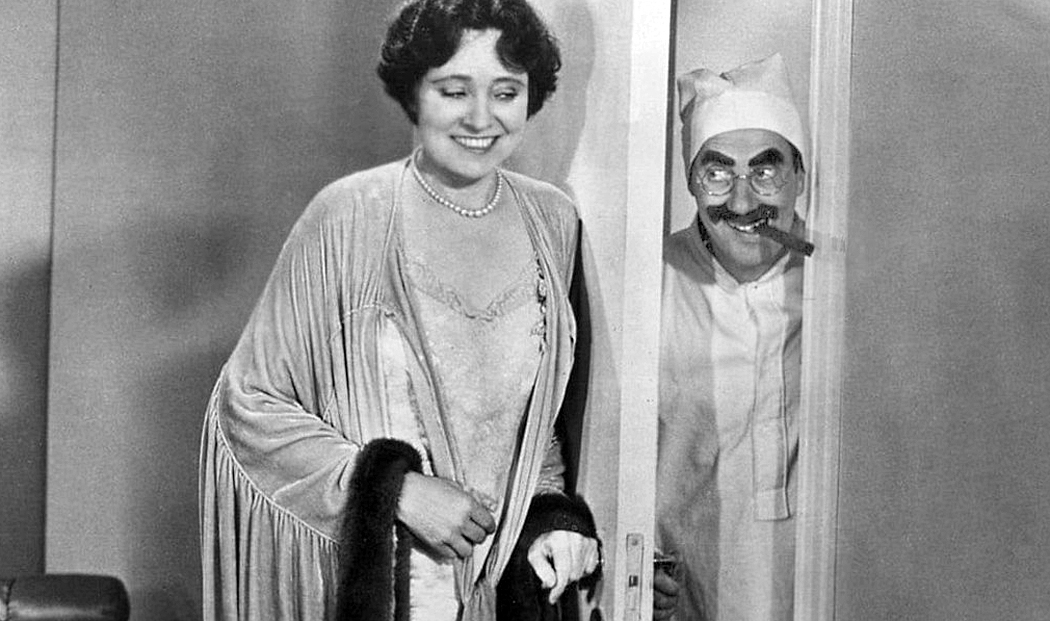
I came up with a list of about 40 films that fill the bill and I know there are at least that many again I have forgotten to include. Among them are The Bride of Frankenstein (mostly for the scenes with Ernest Thesiger), Them!, Duck Soup, Dracula, Rio Bravo, and Beetlejuice. There is no average quality level, they run from Seventh Seal to Harold and Kumar Go to the White Castle

The most important quality of most of the films on my list (although not all of them) is that episodic structure. Francis Coppola’s Godfather is often described as “operatic,” and that is dead-on: Like opera, the rewatchable film is made up of recitatives, arias and choruses. And the same way you can make a concert program of favorite arias, you can do the same with favorite movie scenes. 

I will watch any black-and-white Fred Astaire film for the dance scenes. And any film with a Busby Berkeley extravaganza in it, although, once the plot creaks back into action, I’ll tune out. Each Berkeley choreography is an esthetic whole complete in itself.

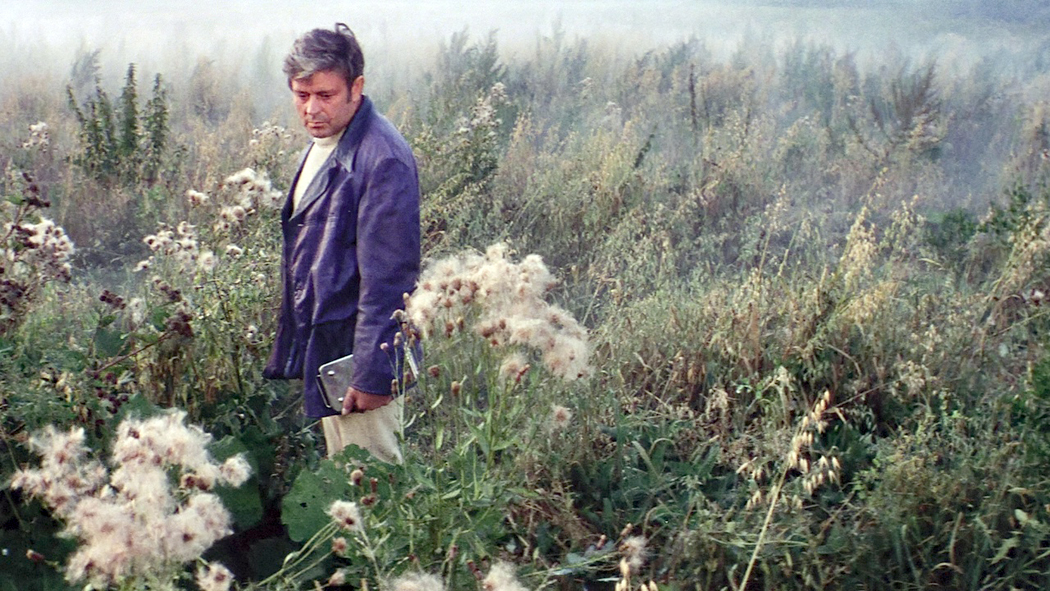
The opening 20 minutes of Tarkovsky’s Solaris is intensely beautiful and I will set my DVR for it, just for those minutes, I don’t often take on the whole, long film that trails behind. 

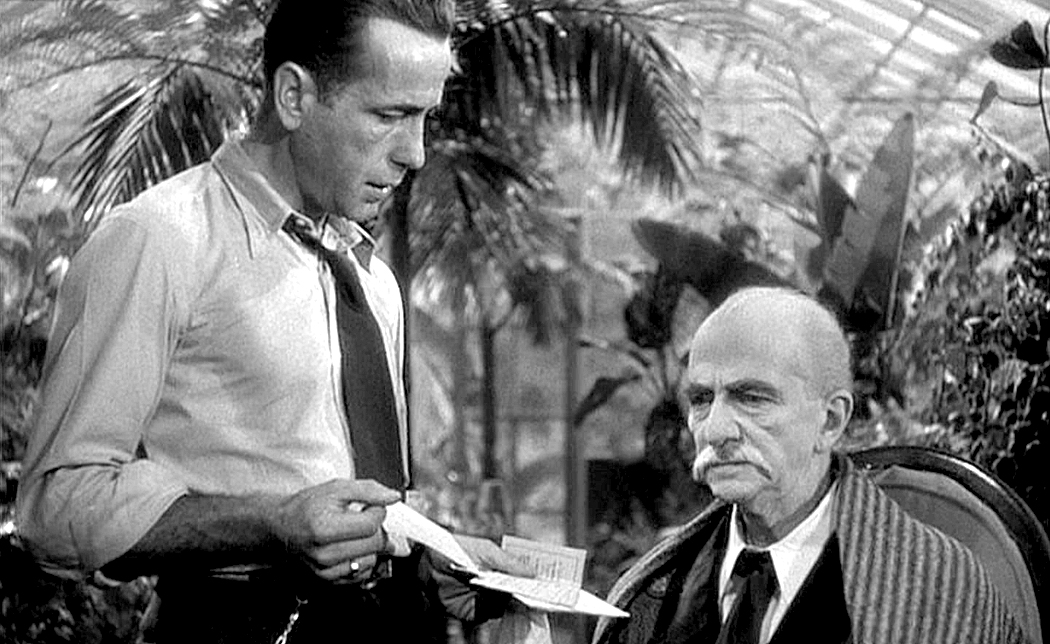
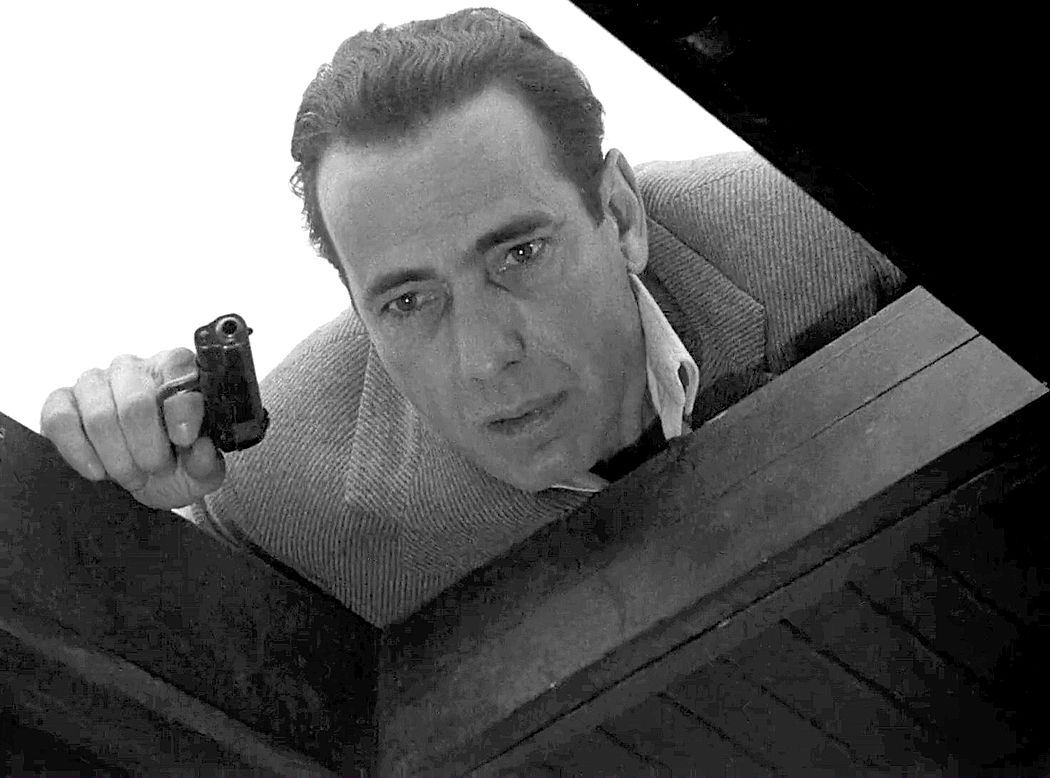
Bogart and Charles Waldron, upper left; with Sonia Darrin, upper right; with Dorothy Malone, lower left; with Lauren Bacall, lower right

The essential set-piece rewatchable film is Howard Hawks’ The Big Sleep. You cannot watch it for the plot. As a whodunnit, it is hopeless. But each scene is a carefully crafted gem, beginning with perhaps my favorite, Bogart’s interview with the old General Sternwood. (“If I seem a bit sinister as a parent, Mr. Marlowe, it’s because my hold on life is too slight to include any Victorian hypocrisy. I need hardly add that any man who has lived as I have and who indulges, for the first time, in parenthood, at my age, deserves all he gets.”) Includes verbal fencing with Lauren Bacall and Martha Vickers (“Your not very tall, are you?” “I try to be.”) Snappy parrying with Sonia Darrin (“You do sell books. Hmm?” “What do those look like, grapefruit?”) A racy scene with Dorothy Malone skirting the boundaries of the Code, and lines with the cab driver Joy Barlow, John Ridgely (Eddie Mars), Regis Toomey, Charles D. Brown (Norris) and Louis Heydt (Joe Brody), to say nothing about some really cruel lines given to Bob Steele as Canino. 

In the end, you don’t really care who did what to whom, but you are grabbed by the gloss and flash of the individual scenes. Which makes Big Sleep the champ of rewatchable movies. 

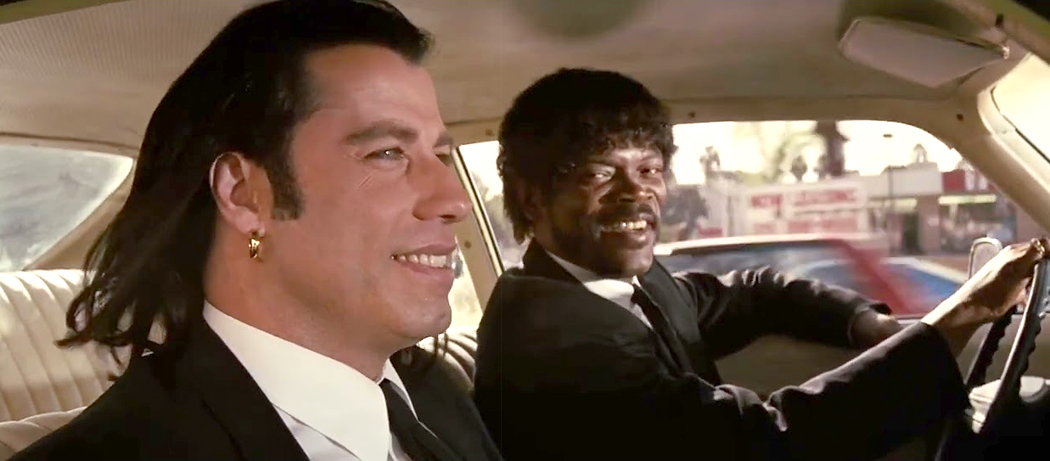
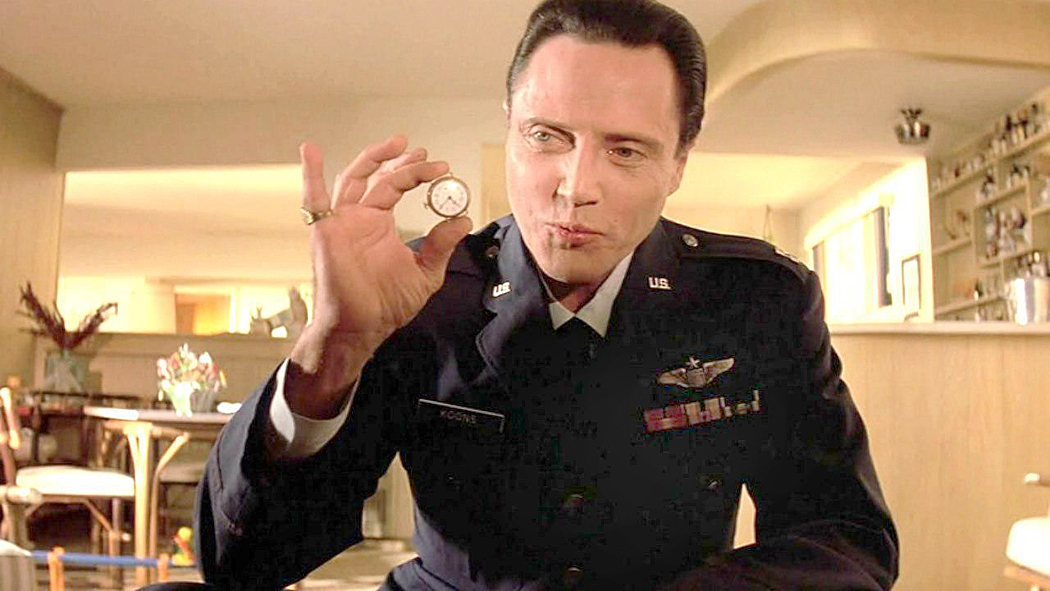
Pulp Fiction is another film built from scene-blocks, in this case all shuffled around. Is there anything more memorable — or more extraneous to the plot — than Christopher Walken explaining the provenance of a watch? It seems that the best parts of the film are all those that are completely unnecessary for the story. “You know what they call the Big Mac in France?” 

A film like North by Northwest might seem to be about a through-driven story, but really, it is also just a series of memorable scenes strung together. Each scene — the cropduster attack; the auction scene; the Mount Rushmore scene; and the final dirty joke — are all just pearls on a string.

Many of the series movies from Hollywood in the ’30s and ’40s are endlessly rewatchable, in part because what plots they have are practically interchangeable. “I’ll watch any Charlie Chan,” says my brother, and TCM devotee, Craig. ”I’ll watch Mr. Moto, but they are a rung below Charlie Chan, and the Falcon movies are a rung below that, and Boston Blackie, another rung down, but, hell, I’ll still watch them.” 

You just want to soak up the cinematic ambience of their docksides and back alleys. The fog, the boat horns, the apartment staircases, the eavesdropping at closed doors. 

“Mostly, my list taunts me, saying ‘You are a man of Low Tastes,’ and I guess it’s true,” Craig says. “And my list seems to be almost all American, and old. But these are just the movies that occur to me off the top of my old and balding head. There are a ton of movies that could be on my list, if I could remember them.”

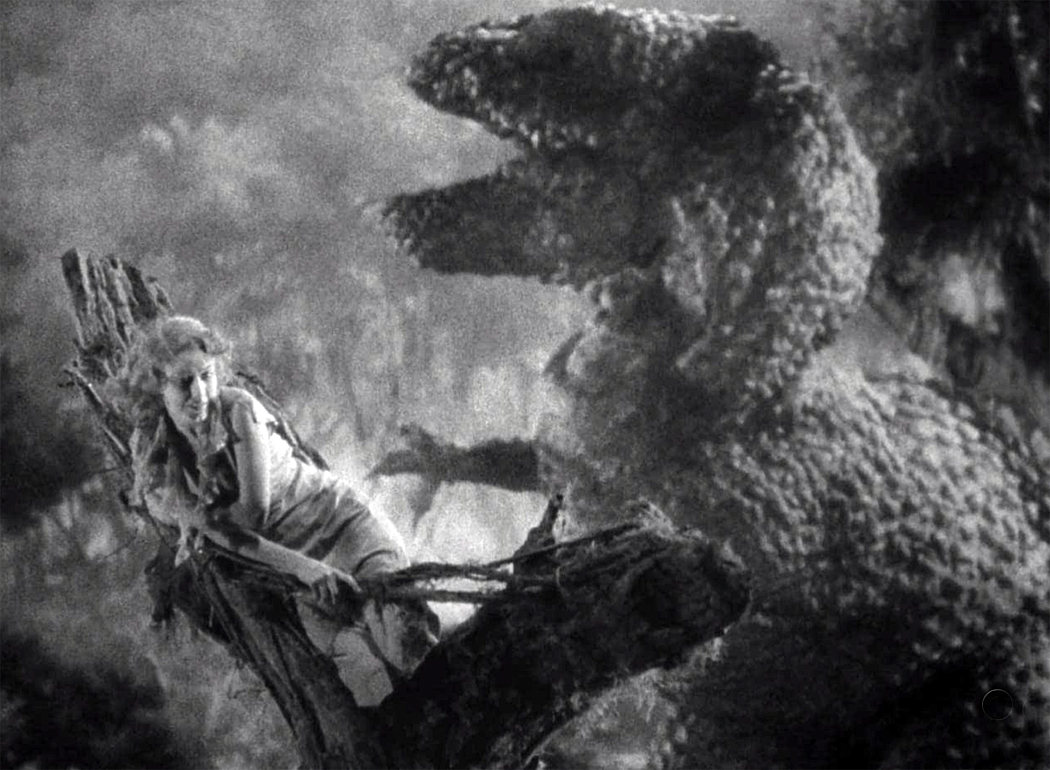
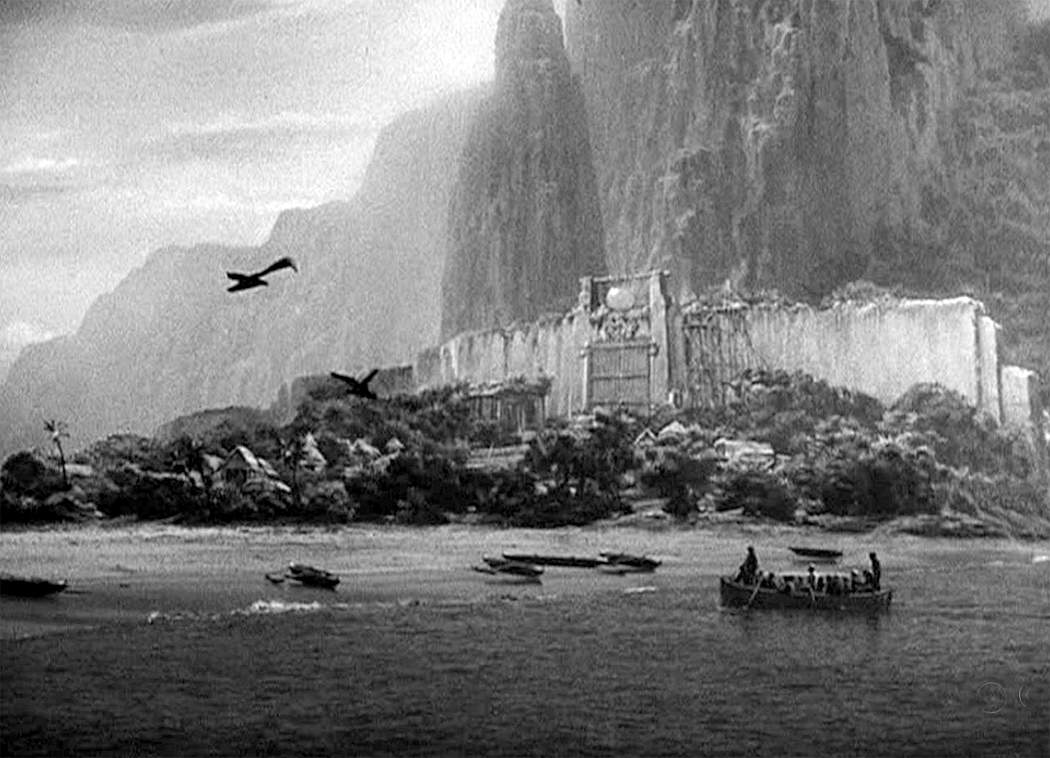
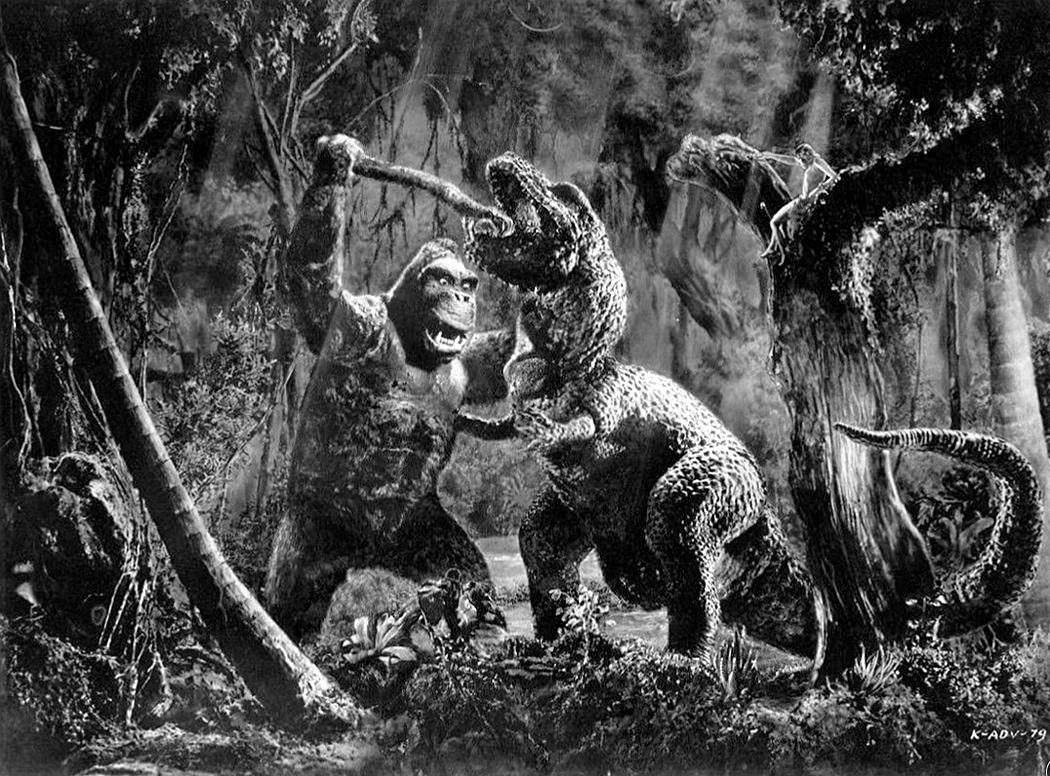
The first movie I began watching endlessly was King Kong, which I first saw when I was in first or second grade and was shown over and over on New York’s Channel 9 (WOR-TV). In the seven decades that have followed, I must have seen it close to a hundred times — maybe more. I will still watch it whenever I catch it being played. And that despite the creaky borrowed plot (mainly from the silent Lost World) the stilted dialog, and the acting, where Bruce Cabot shows off all the acting prowess of a loblolly pine. 

It was Kong that showed to me the possibility that a movie was worth watching multiple times. There are those who don’t partake, for whom the main interest in the film is the plot and having once seen it, “I know how it ends, so why would I watch it again?” And, indeed, there are many movies for which that is the main draw: The story line pulls you along and having once satisfied your need to know “what happens next,” you have emptied the film of its meaningful content. 

But, for me, the movies I’m talking about are more like music. You can listen to Beethoven’s Fifth many times, drawing something fresh from it with each hearing. Or listen to the Beatles’ Hey Jude over and over, and each time, it tickles just the spot that needs the stimulus. Bingo. Dead on. 

Who ever heard of someone who didn’t want to hear their favorite song again because “I’ve already heard it?” (I remember that bastion if intellectual curiosity Ronald Reagan saying “You’ve seen one redwood tree, you’ve seen them all.”) 

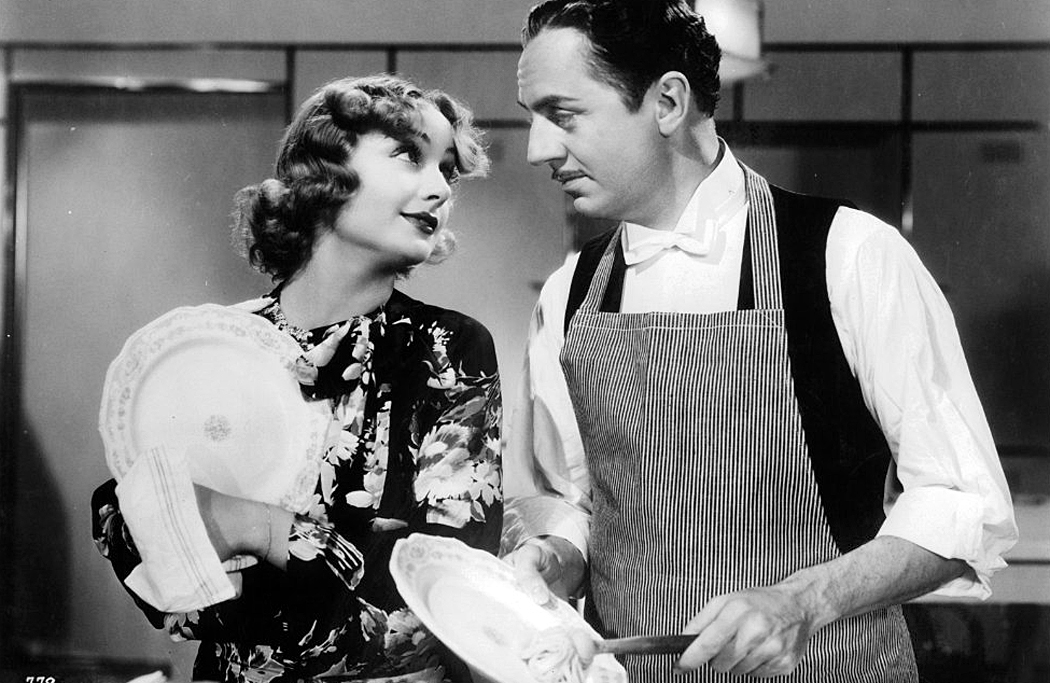
I will never get enough of any of the Thin Man movies, even Song of. Nor will I turn down The Thing with James Arness, nor M with Peter Lorre, nor Touch of Evil, nor Time Bandits

You see this is an eclectic list of movies, and not based on quality alone, nor on subject matter or genre, but entirely on that subjective and personal sense of rewatchability. 

What is on your list? 

Click on any image to enlarge

My brother-in-law, Mel Steele, is a painter whose work I not only admire, but truly enjoy. They give my eyes great pleasure. 

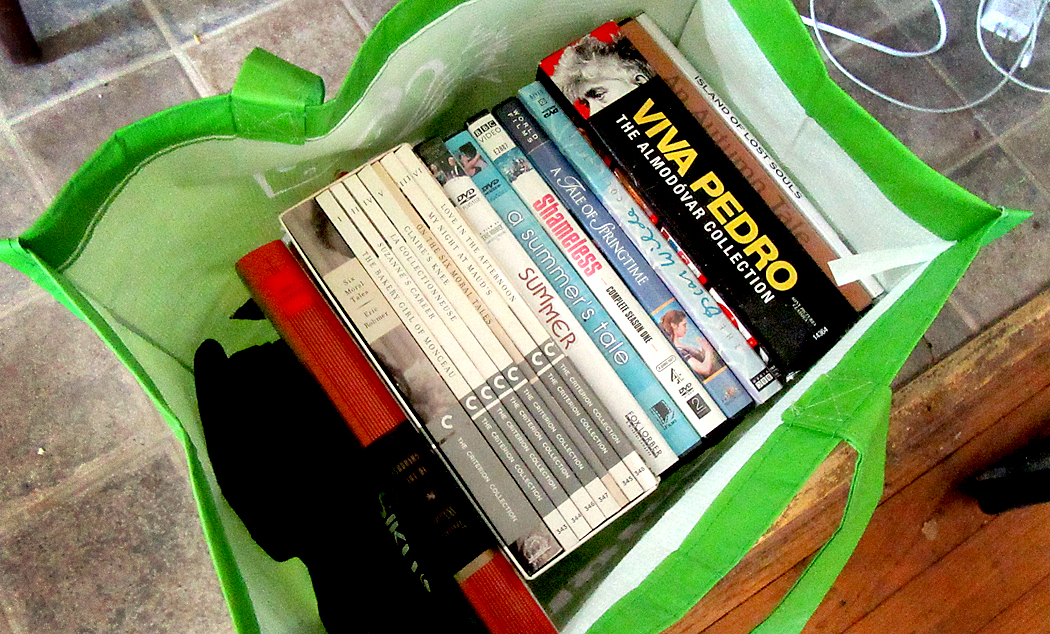
We visit Mel and his wife, Deborah, a few times each year and usually I bring along a big bag of DVDs, mostly art or foreign films. Mel and I share a common taste for such things.

Indeed, our tastes match up surprisingly well, not only in movies, but in music and art as well. We love the more difficult music, like Bartok quartets or 20th century operas, and for all that we get along admirably. 

But there is a sticking point, a point of contention that we have never been able to resolve. There is a movie he hates and I love; and one I cannot stand that he adores. And I see no way of settling the dispute. 

Mel grew up in Madison, N.C., in the 1940s and ’50s and only a block from his house was the local movie theater. He and his sister went to the movies at least once a week growing up. They saw all the usual Hollywood offerings, with Burt Lancaster, Greer Garson, Veronica Lake, Dorothy Lamour, Kirk Douglas — you get the picture. 

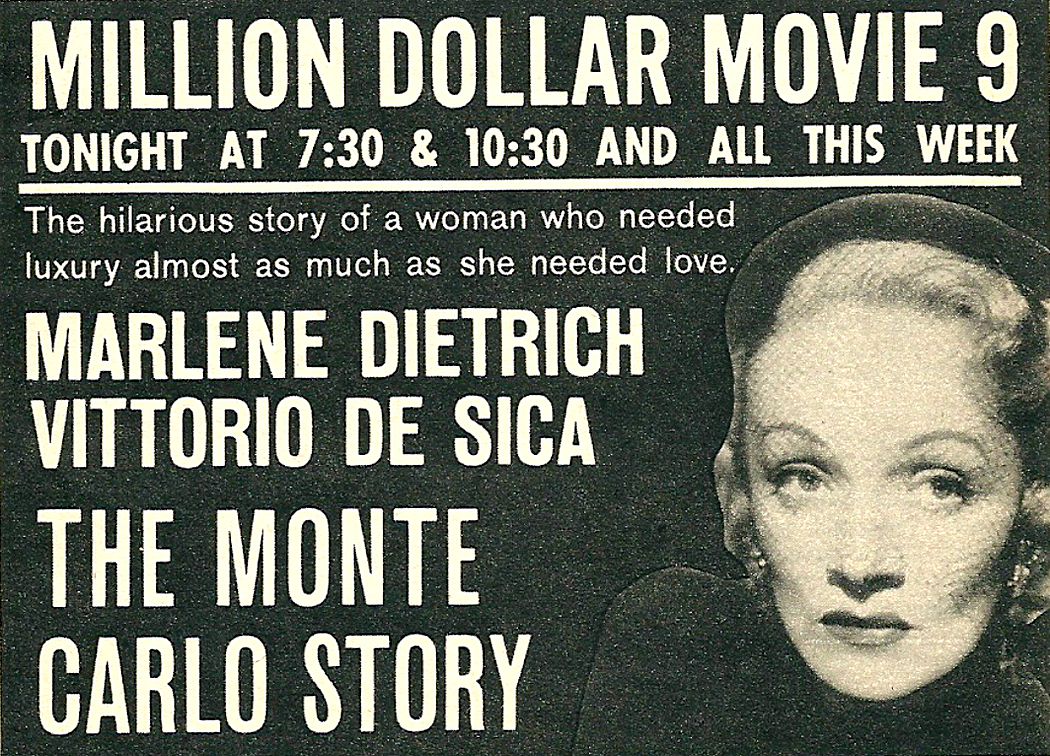
I am a few years younger than Mel and since there was no movie house where I grew up, my film education came via television — old movies packaged by studios for rebroadcast on fledgling TV channels, such as WOR-TV from New York and its Million Dollar Movie. I was fed a lot of films from the 1930s, and, of course, all those marvelous-awful sci-fi films made for a pittance with Richard Carlson or Sonny Tufts. 

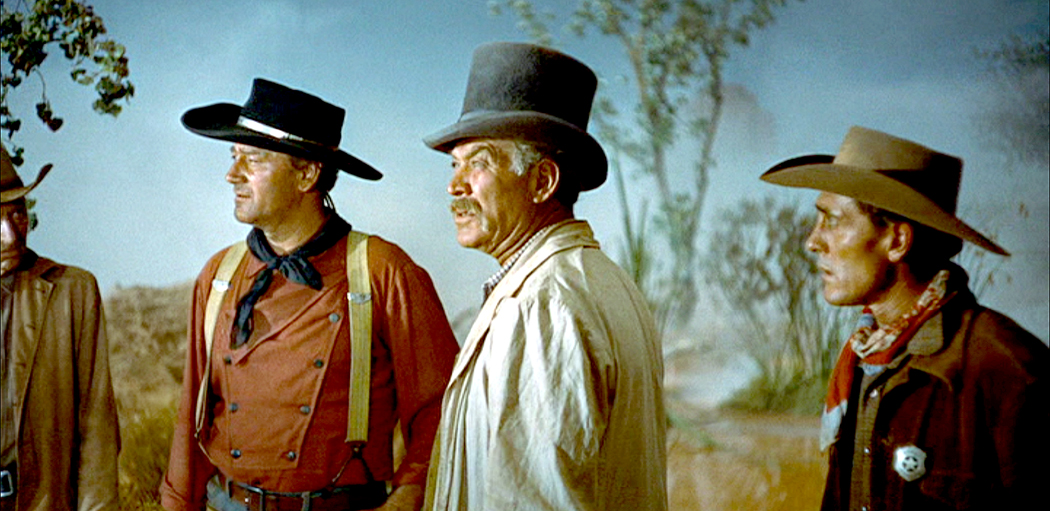
I don’t know if our different childhoods made the difference, or what, but that sticking point revolves around the best Western (not the motel chain). I mentioned once that I love The Searchers from 1956, a film in which John Wayne shows that he can actually act. It is a tough film, in which Wayne is an unsympathetic character, a bigot returned from the Civil War, having fought for the Confederacy. For my money, it is the best Western ever made, highlighting the shadings of culture clash and personality. 

“Can’t stand the thing,” says Mel. “Can’t stand John Wayne.” 

Indeed, it seems as if the presence of Wayne is the primary objection Mel has to the film. And I suspect that Mel’s dislike of Wayne has more to do with Wayne’s later right-wing politics — and the number of undistinguished star vehicles he made as an ever-paunchier alpha male — than with Wayne’s actual performance in The Searchers

It is clear that Wayne didn’t always have to act, and could rely on nothing more than his screen persona in lesser films, such as North to Alaska, The Comancheros, McLintock!, Hatari, or The War Wagon. He seemed always to be playing a caricature of himself. 

And then, there are those absolutely embarrassing moments in The Alamo or The Green Berets. Wayne’s shallow jingoism does not wear well. Nor does his support of the Vietnam War or Richard Nixon. 

I used to share Mel’s disdain for John Wayne. The actor was pretty much a punchline. Really? Genghis Khan in The Conqueror? Gimme a break. 

I first became acquainted with Wayne when I was a little kid, watching ancient Westerns on TV, where he was Stony Brook in the Three Mesquiteers films, or as “Singing Sandy” in a bunch of old Republic or Monogram Westerns. Compared with some of the old cowboys, Wayne had a graceful presence on screen, if no great acting chops. 

Only as an adult, did I come across films in which Wayne played a character not merely himself. After seeing Howard Hawks’ Red River, director John Ford famously said, “Who knew the big lug could actually act?” Well, he could, even if he didn’t always feel the need to. 

Then there are such films as The Man Who Shot Liberty Valance and She Wore a Yellow Ribbon, where he convincingly played a part 20 years older than he was at the time. And most of all, perhaps, his role as John Books in The Shootist, his final film, in when he seems to want to prove once and for all he can be an actor and not just a star. 

Mel, of course, was having none of it. “Can’t stand the guy.” 

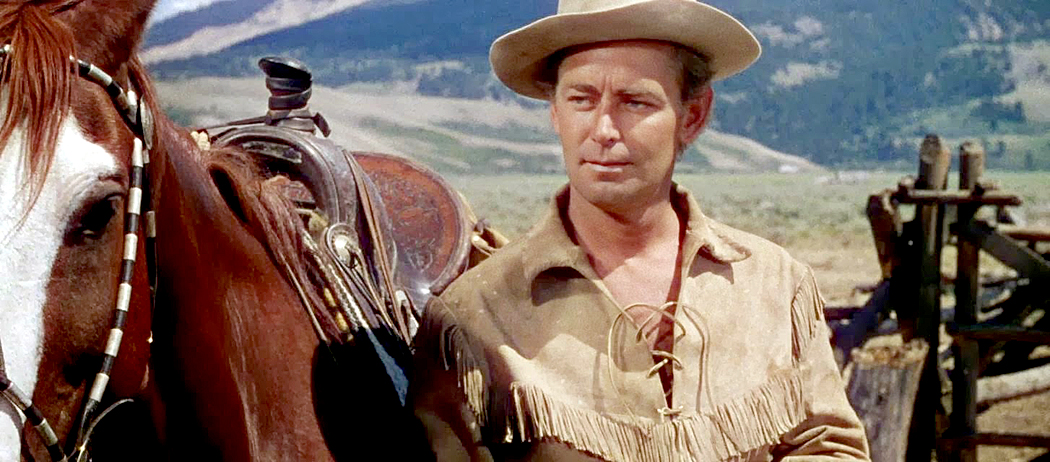
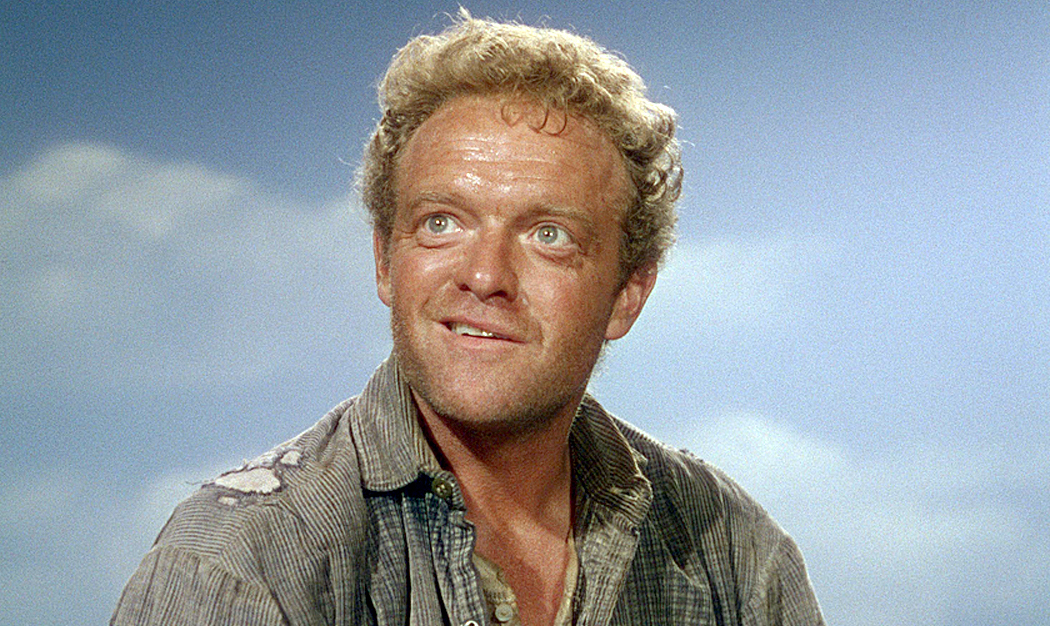
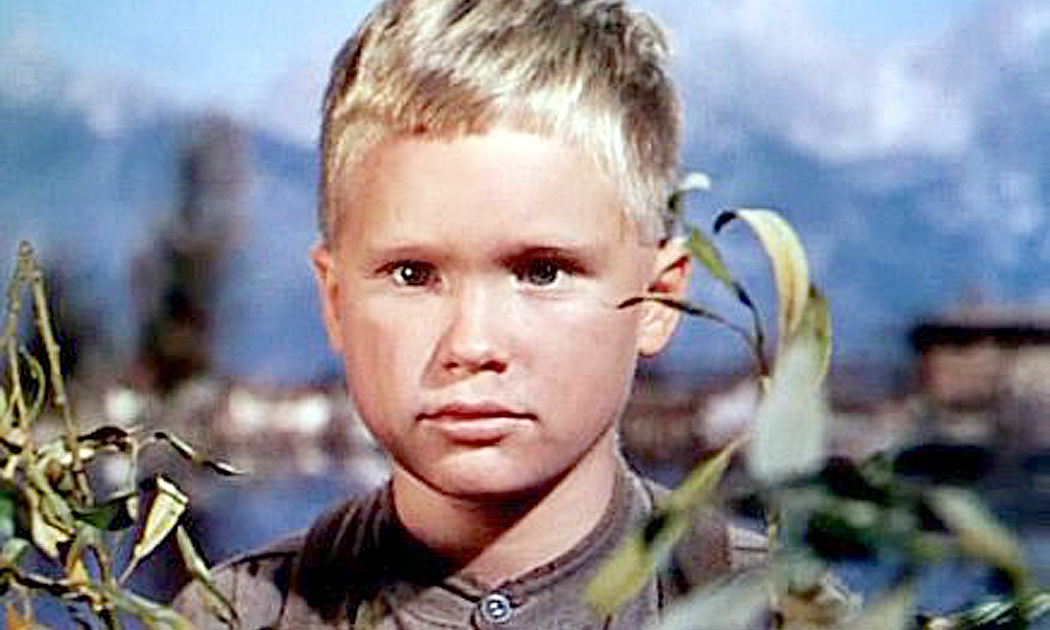
In contrast, Mel proclaimed that the greatest Western ever is Shane, a movie I cannot abide. For me, it is the epitome of Hollywood phoniness. It is pure artifice, with not a believable moment in it. 

Even its widescreen projection on release was fake: Paramount wanted something to compete with the then-new Cinemascope and Panavision — both anamorphic widescreen formats — and so they cropped the original Academy Ratio Shane at top and bottom to make a phony widescreen version. 

“But it’s so beautiful,” Mel says. “Look at that landscape.” Yeah, I feel, a rip-off of Ansel Adams, with the Teton Mountains prominent in the background. It seems so self-consciously meaningful, so arty, so pretentiously “mythic,” that I cannot take it seriously. There is not a second in it that feels real — apart from the acting of Jean Arthur, who is the only fully human character in the film. These are not people but ideas moving around in the plot, as if they each wore a sign telling us what they signify. Again, only Arthur feels like a real person. 

Allegory, for me, is always a tough sell. 

I’ve never been able to warm to Alan Ladd. He is one of those movie stars from that era of Hollywood movie in which the dying studios made turkey after turkey. 

Van Heflin always feels to me like someone the studios felt they could turn into a major star, but never managed to. 

And Brandon deWilde is a blank-faced homunculus, as if that look of animal stupidity  should be taken as the face of innocence. Actually the kid gives me the creeps. 

The Searchers, in contrast, is filled with all the great character actors that John Ford used over and over. They are people, not cardboard cutouts.

Perhaps I have overstated my case. There are other great Westerns that may be as good as The Searchers. Ford probably made them. Modern Westerns tend to be more period-aware and historically better informed. And perhaps Shane isn’t the worst Western. There are plenty of hack Westerns with much less ambition than George Stevens brought to his work. 

But the fact is, the comic disagreement Mel and I had was about these two films in particular. I was not able to persuade him; he was not able to persuade me. Let’s leave it at that. 

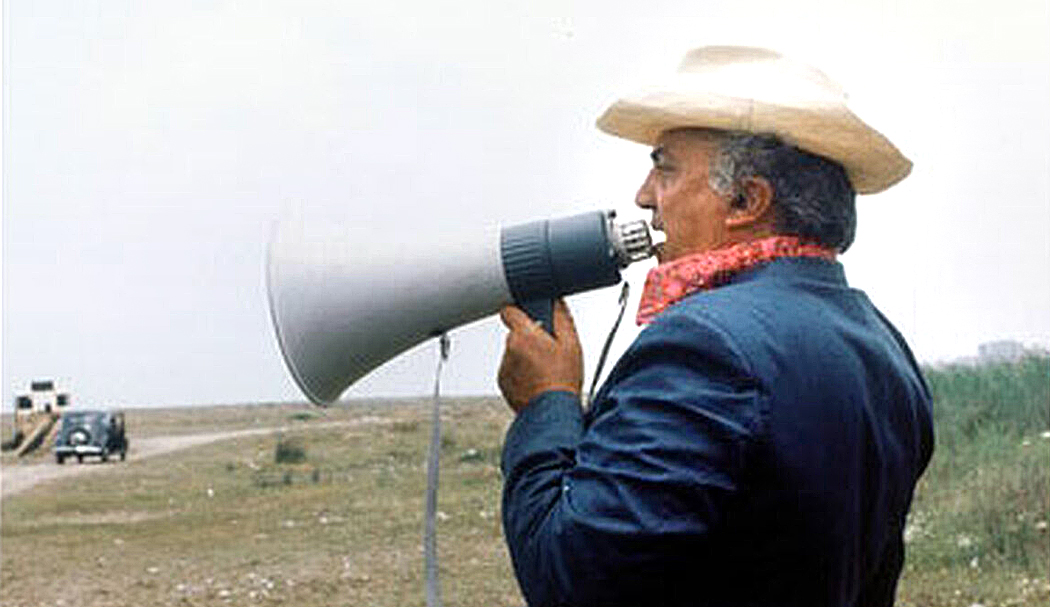
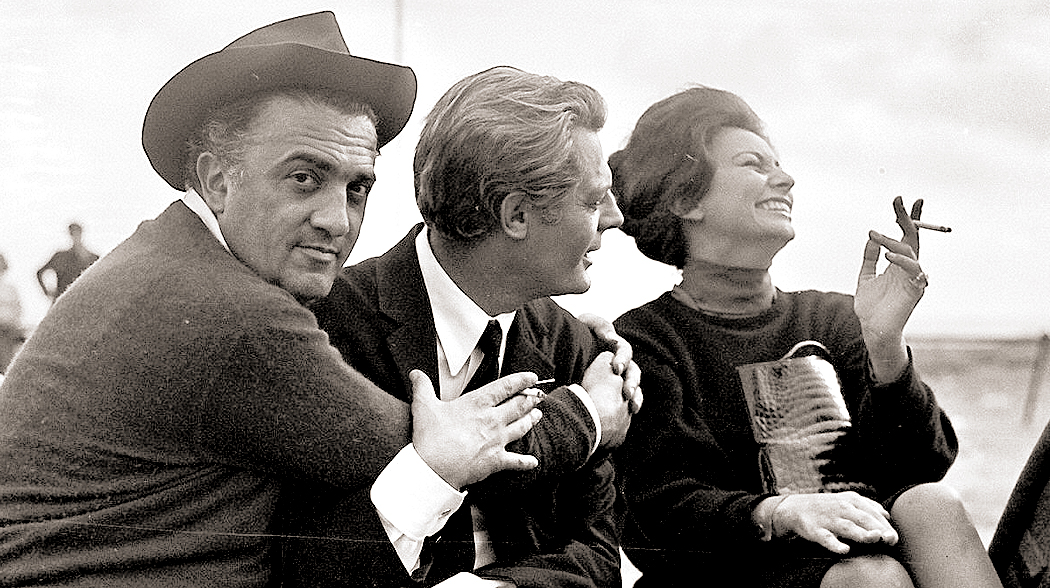
Federico Fellini is unquestionably one of the greatest of all filmmakers. He is on everyone’s list. He won five Oscars, was nominated for a total of 17 of them. Heck, he was nominated twice before he even made his first film (as screenwriter for two Rossellini films). He made two of the movies on my own 10-Best list.

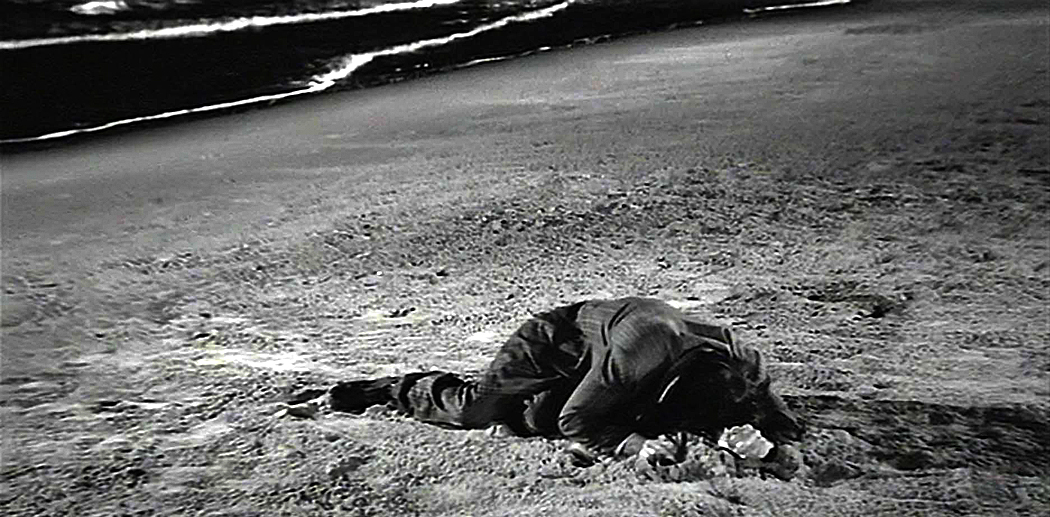
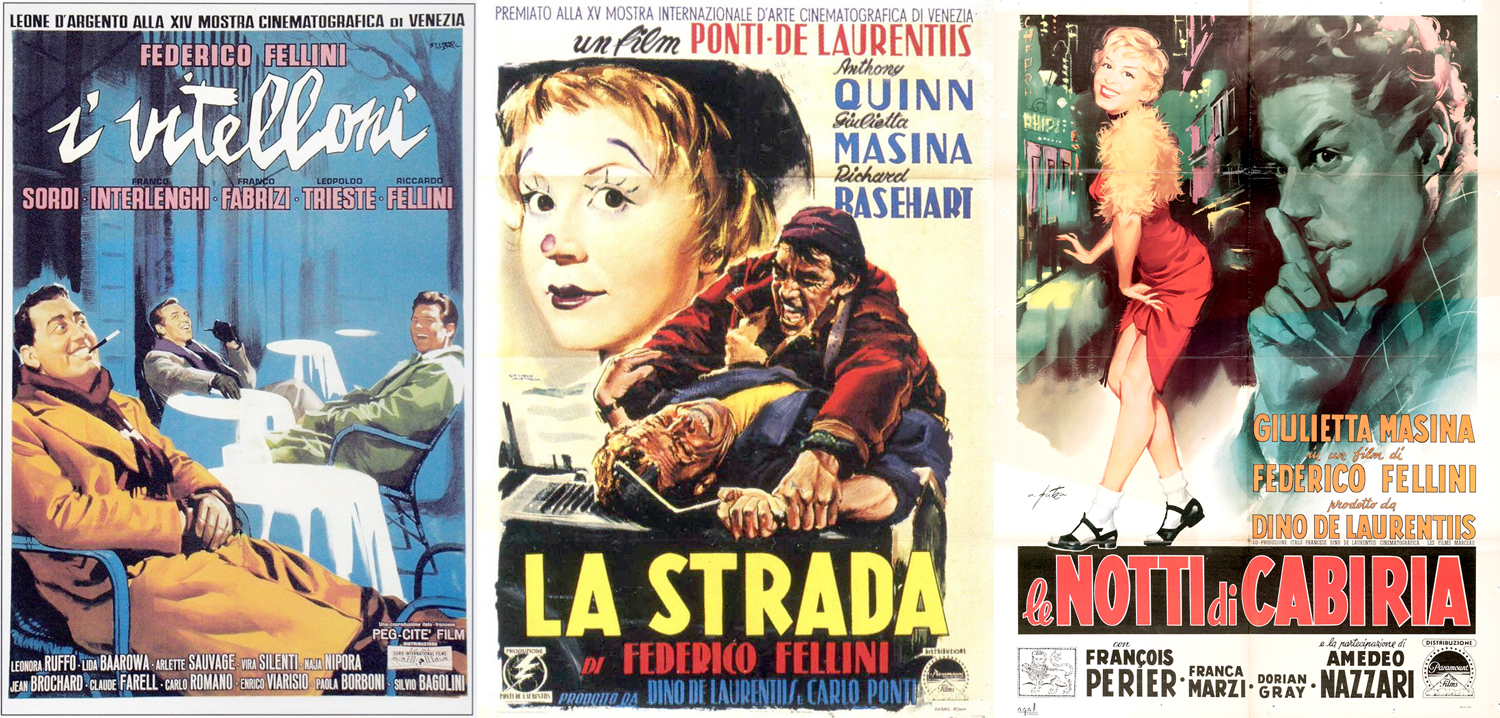
His 1954 film, La Strada, changed my idea of what movies could be. When I was growing up, the movies I saw, mostly on TV, were filled with car chases and gunfights. Movies were an entertainment. But, in my college film series, I saw La Strada and realized, for the first time, that film could be about real things, and that they could leave me weeping. The final scene with the brutish Zampano (Anthony Quinn) on the beach, wailing for what he knew he had lost, left me drained. 

And La Strada isn’t even one of the two Fellini films on my 10-Best. 

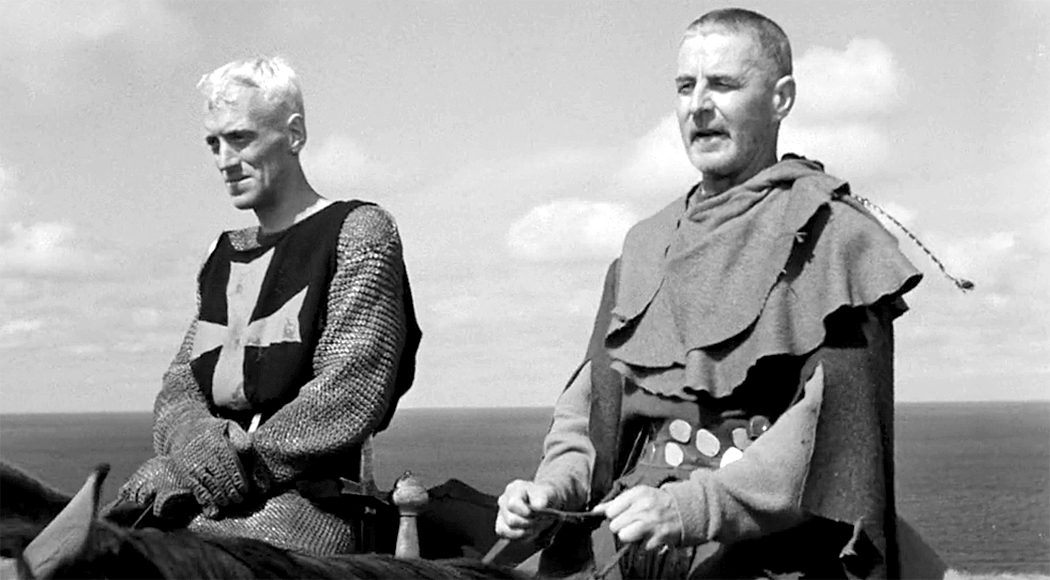
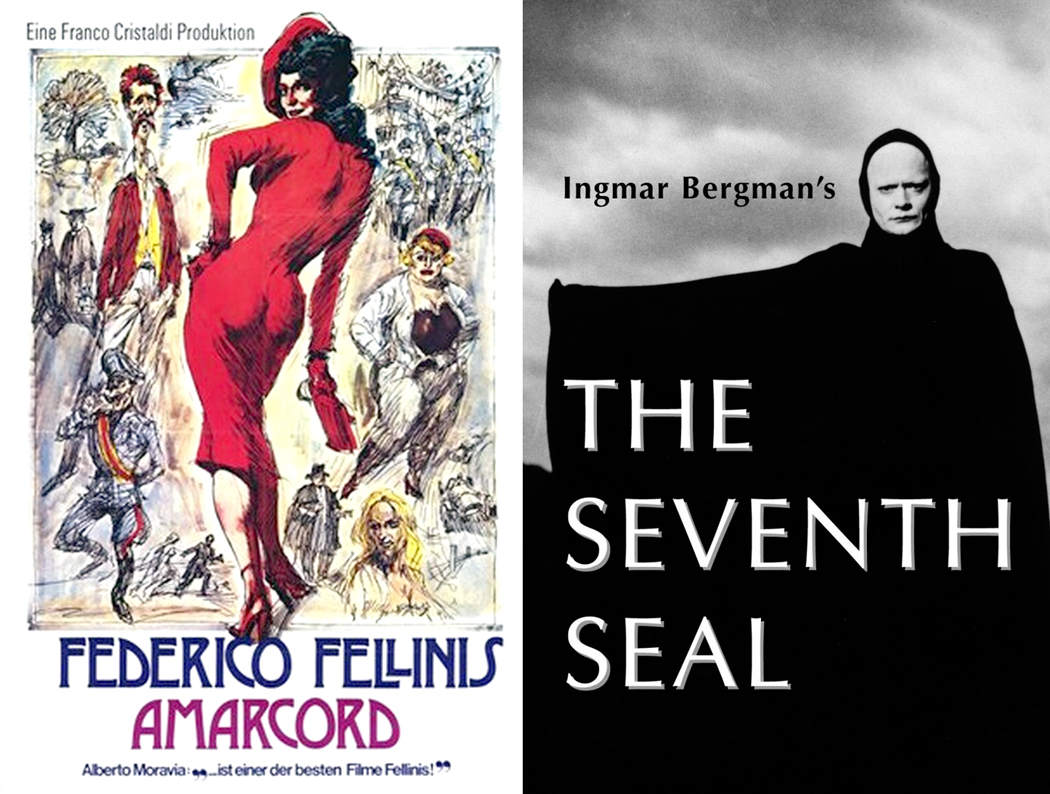
There are only a few film directors who have words added to the dictionary defining their style, but we all know what “Fellini-esque” means: an almost surreal grotesquerie tied to a very personal sense of human psychology. There are other great filmmakers, but there is no “Scorsese-esque,” no “Renoir-esque,” although these directors, too, had a personal style. Only two directors have joined the dictionary, with “Fellini-esque” and “Bergmanesque.” The two directors couldn’t be more different, but their styles are each identifiable, even when another filmmaker uses them. 

So, Fellini’s is a distinct and individual voice. Yet, the arc of his career is also distinct, and not toward ever greater or more profound films. It is a career with an upward start, a middle as high as it gets, and then a slacking as he declined. What is interesting is that it is that the cause for both up and down is the same: Fellini being Fellini. 

Federico Domenico Marcello Fellini was born in 1920, two years before Mussolini’s rise to power, in the Adriatic city of Rimini. His father was a salesman and hoped his son would rise to be a lawyer. And although he enrolled in law school, Fellini’s biographers says that “there is no record of his ever having attended a class.” Instead, he dropped out to become a cartoonist and caricaturist, and he wrote for several satirical magazines. 

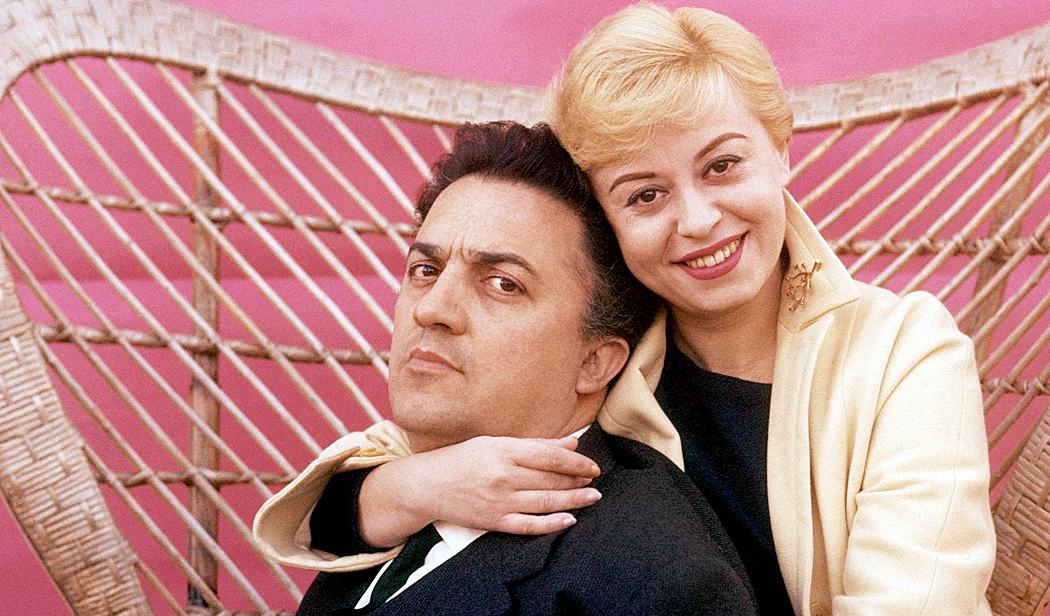
He expanded to writing gags for radio shows and managed to avoid the Italian draft during the early years of World War II. He also met his wife and muse, radio actor Giulietta Masina (they remained married from 1943 to his death in 1993). 

His work in radio brought him to the attention of Neo-Realist film pioneer Roberto Rossellini, who hired him to work on the script of Rome, Open City (1945) and later, Paisan (1946). Both efforts won him Academy Award nominations. 

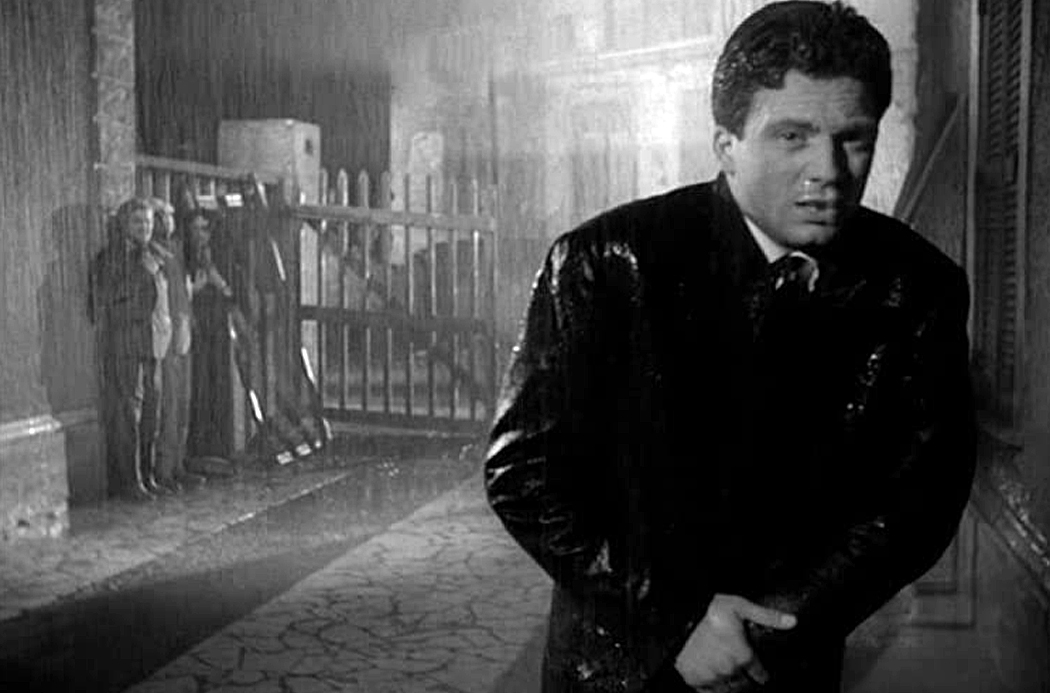
In 1950, he got to direct his first film, Variety Lights, followed the next year with The White Sheik, two low-budget comedies of middling success and reputation. But then, in 1952, he got to make the first genuine Fellini movie, I Vitelloni (“The Young Bulls”, or, idiomatically, “The Layabouts”), an autobiographical Neo-Realist film about his own teen years in Rimini, which won him a fourth Oscar nomination for screenplay. (The film wasn’t released in America until after the success of La Strada and Nights of Cabiria, — both Oscar winners for Best Foreign Language Film — hence, the later nomination.)

These three early masterpieces — I Vitelloni, La Strada and Nights of Cabiria — all have their roots in Italian Neo-Realism, although with Fellini’s particular stamp of both humor and grotesquerie. There is no confusing them with films by Rossellini, De Sica or Visconti. While each of Fellini’s first great films concern themselves with social conditions, poverty and the Post-War problems, they are really more concerned with individuals. Fellini was never overtly political. 

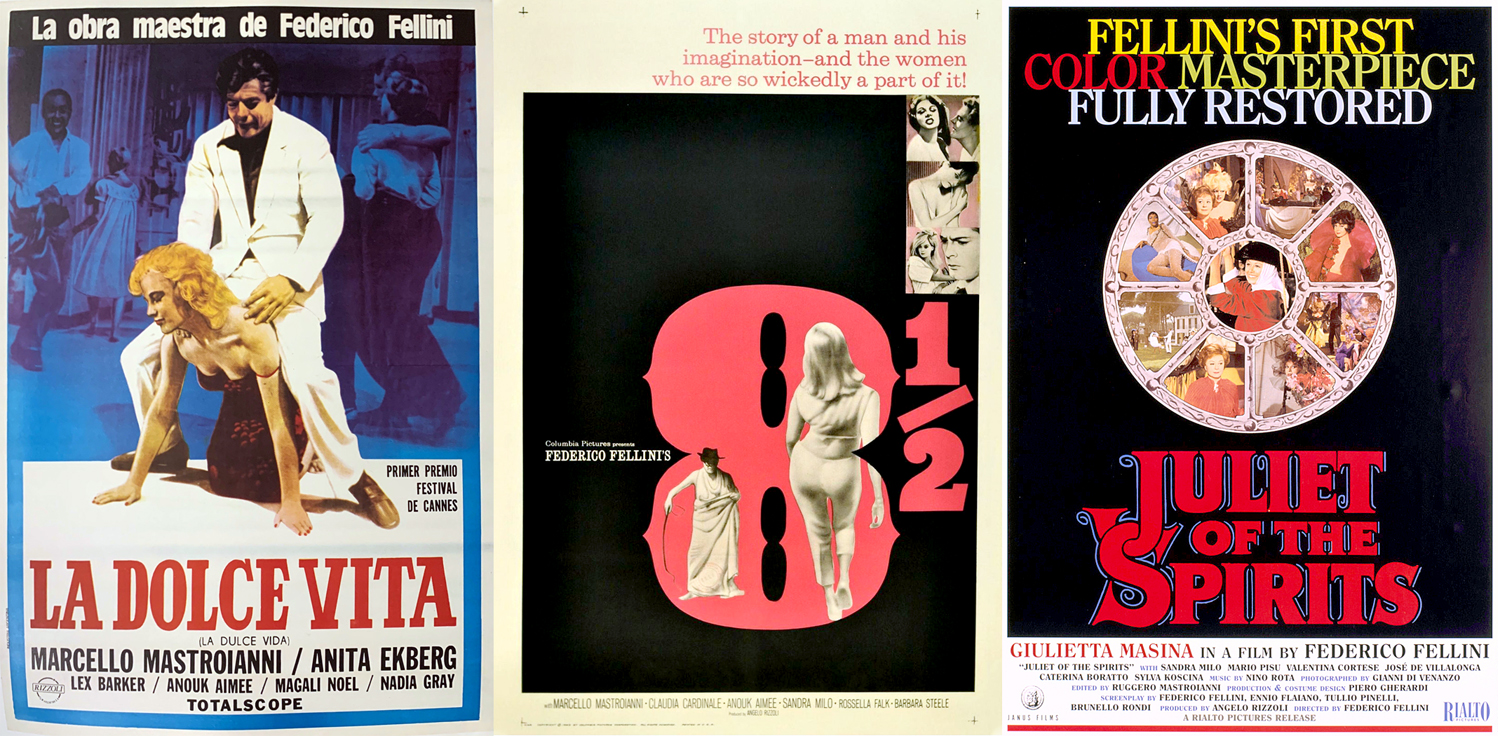
Fellini had, by 1957, been nominated for six Academy Awards and won two. But they could not have foretold what came next. Arguably his greatest film, La Dolce Vita, was also his greatest box office success. 

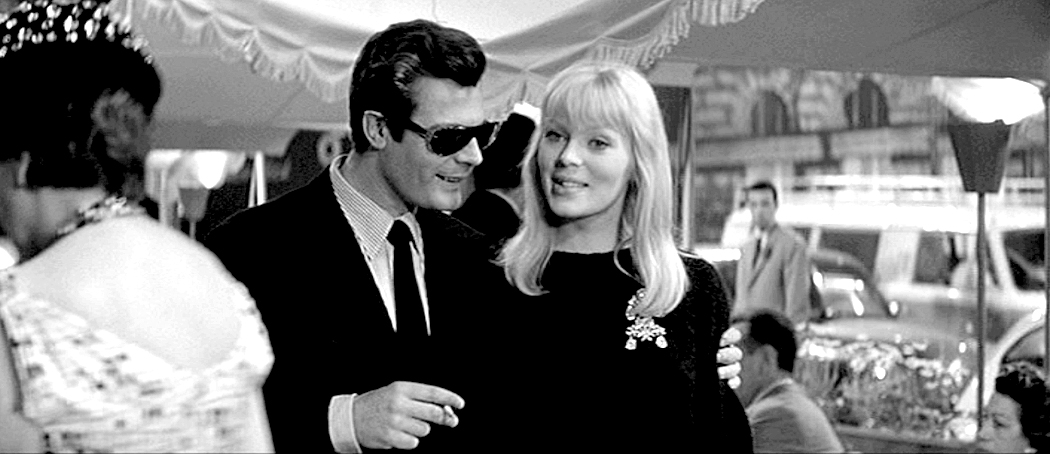
The great 1960 Italian classic of the Roman “sweet life” in the postwar years shows us nine days and eight nights in the life of tabloid celebrity journalist Marcello Rubini (Marcello Mastroianni) as he negotiates personal relationships, professional crises and spiritual doldrums.

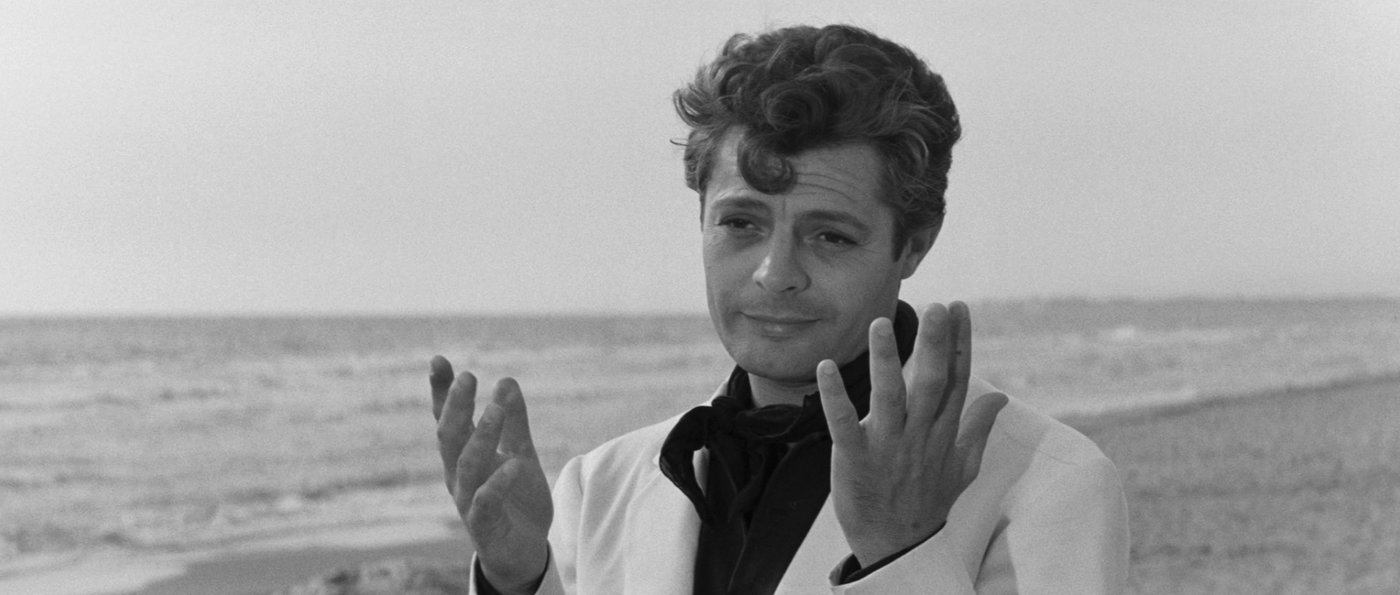
“Rarely, if ever, has a picture reflected decadence, immorality and sophistication with such depth,” Box Office magazine said when the film was released. Rather than a plot, the film is a collection of episodes as our hero recognizes the emptiness of his life, decides to do something about it, and ultimately, cannot. The final scene with Mastroianni on the beach, shrugging at the girl across the way as a sign of giving up, is one of the most heartbreaking ever shot on film. 

Fellini structured the film in a series of climactic nights each followed by a dissolving dawn. In each of the nighttime episodes, Marcello faces one of his demons — although he doesn’t recognize them as such. Each night rises to a crux, a point that might waken Marcello to the aimlessness of his life, and at each sunrise, there comes not a culmination, but a dissipation of the situation — all its air is let out.

La Dolce Vita occupies a pivotal point in the career of Fellini, between the early Neo-Realist films, such as I Vitelloni and La Strada, and his later, sometimes visionary films. In La Dolce Vita, there is a balance between the sense of external reality — Italy’s boom economy in the decade after World War II, and its forgotten underclass — and the purely subjective sense of individual psychological crisis. 

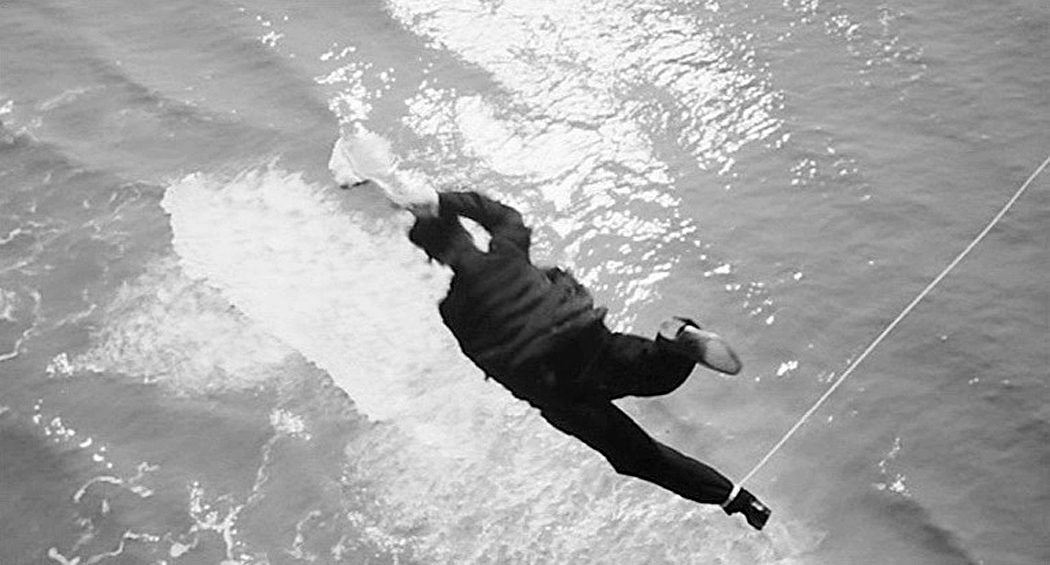
In his next film, the crisis becomes personal: Otto e Mezzo or “8½” is about a filmmaker who can’t figure out what to do next. It begins with one of Fellini’s most visionary scenes: The filmmaker (again played by Mastroianni) is stuck in his car and imagines being trapped, then floats away above the car, held only by a kite-string attached to his ankle. As an opening scene, it would be hard to match, let alone beat. Through the rest of the film, he attempts to avoid his responsibility, to his producer, to his wife, to his mistress, to his crew, to his financial backers, to his fans. He imagines committing suicide, and in the end, in one of the most enigmatic and memorable scenes ever, joins a dance to the circus music of Nino Rota. As a concluding scene, it would be hard to match, let alone beat. 

What does that scene mean? We all have our own solutions. I tend to see it as the same message that Krishna gave to Arjuna in the Bhagavad-Gita, that the end or the meaning isn’t the point. The doing is. Joining in life is the point of life. Or as writer Joseph Campbell once phrased it, “the joyful participation in the sorrows of the world.” 

Whatever you decide about the ending, it is clear that these two films, together, are among the highest points of film art, at the same time, clever, funny, moving, heartbreaking, hugely cinematic and visual, and ultimately, wise. 

There are grotesque scenes in La Dolce Vita and Otto e Mezzo, but they are just part of the mix. In some of his later films, such as Roma or Fellini Satyricon, the grotesque predominates. But at the midpoint of his career, in his two best films, he balances the real and the freakish like a saint balancing heaven and hell.

Then, Fellini discovered Carl Jung, read the psychiatrist’s autobiography, Memories, Dreams, Reflections, began visiting a psychoanalyst, experimented with LSD, and became fascinated with dreams, archetypes, spirits and the unconscious. He famously defined a movie as “a dream we dreamt with our eyes open.” Jung is a dangerous thing put in the hands of an artist with no governor on his engine. 

Fellini made Juliet of the Spirits in 1963, about a repressed housewife (Masina) entering a world of debauchery, visions, memories, and mysticism to find herself. It was Fellini’s first full-length color film, and uses what one critic called “caricatural types and dream situations to represent a psychic landscape.”

As critic Roger Ebert wrote, “The movie is generally considered to mark the beginning of Fellini’s decline.” 

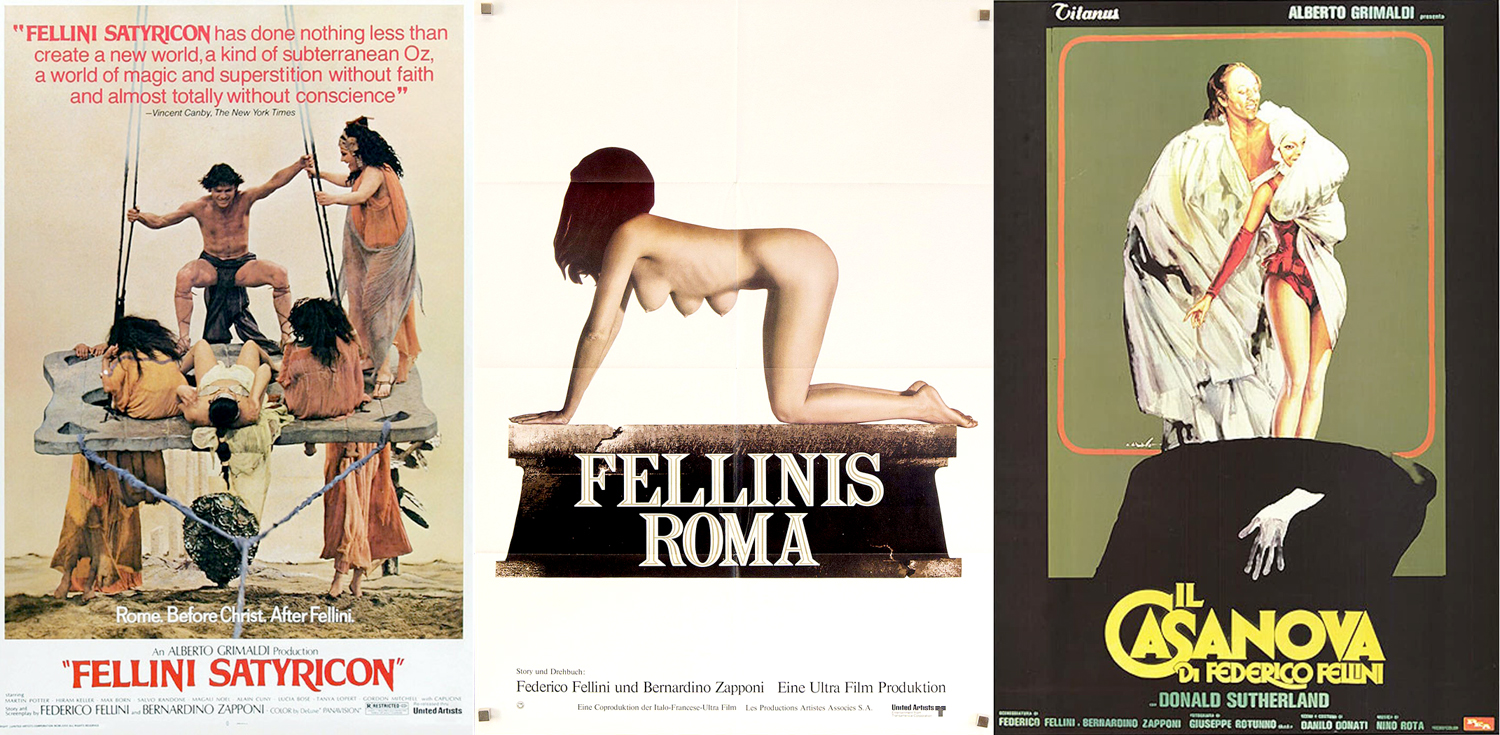
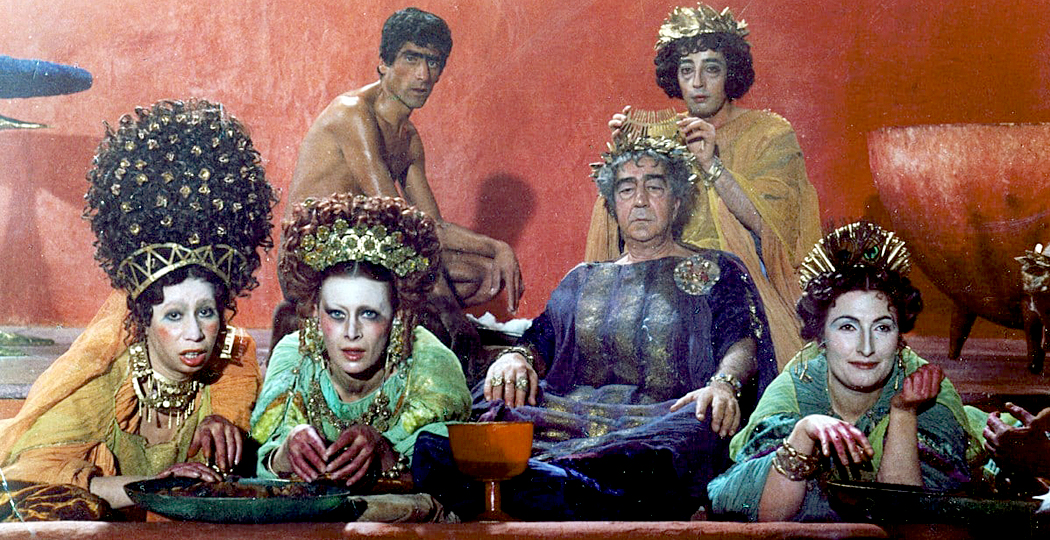
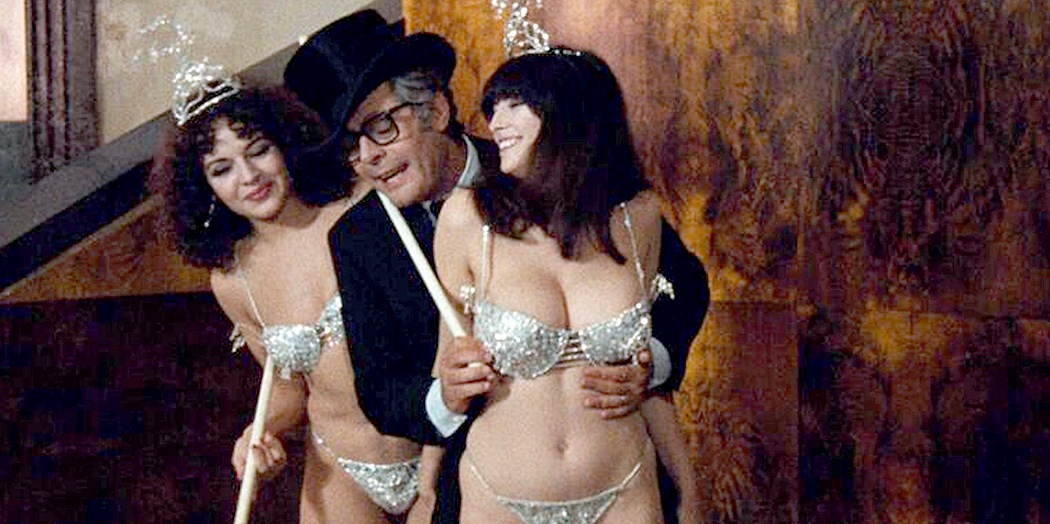
And three of the next four of Fellini’s major films are given over to grotesquerie, hallucination and oneiric excess: Fellini Satyricon (1969), Fellini’s Roma (1972), and Fellini’s Casanova (1976). The fact that the director’s name is attached to these three titles should tell you something. There is nothing historical or documentary about them: They are exudations of the filmmaker’s fevered brain.

Satyricon is the best of the three films, and actually captures rather accurately the spirit of Petronius’ First Century tale of Nero’s Rome. Although Fellini invented most of the episodes, they capture the tone of the picaresque original pretty well. 

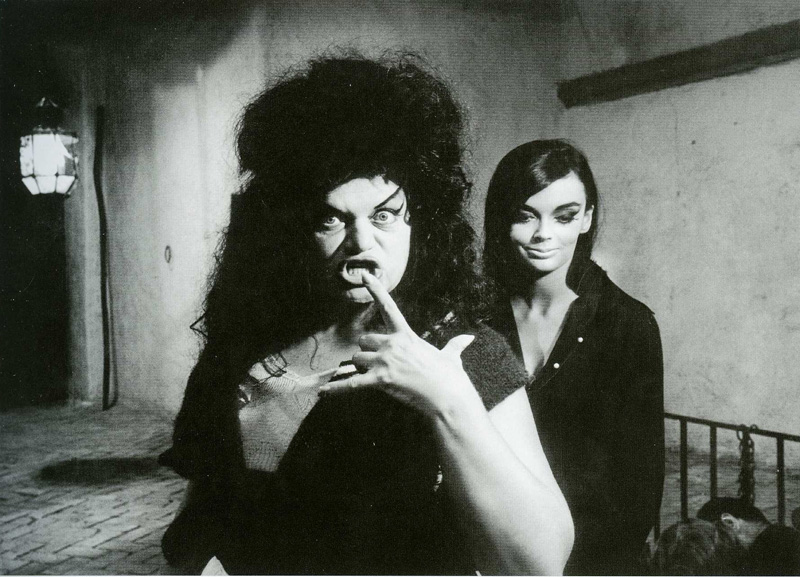
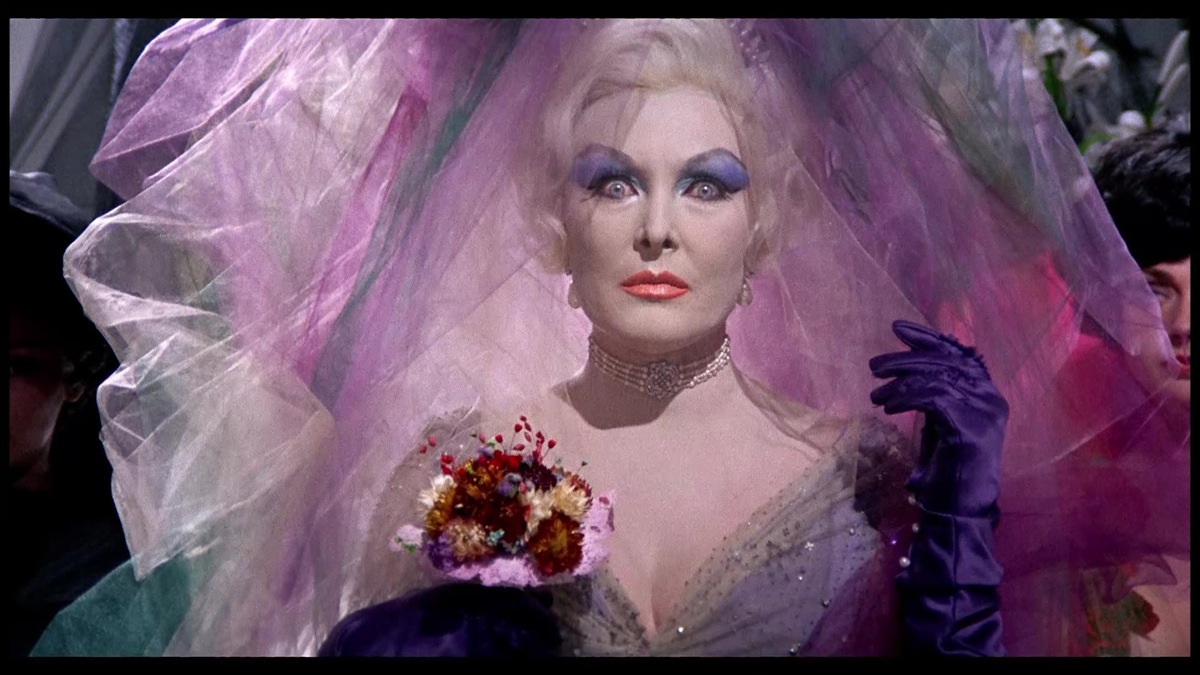
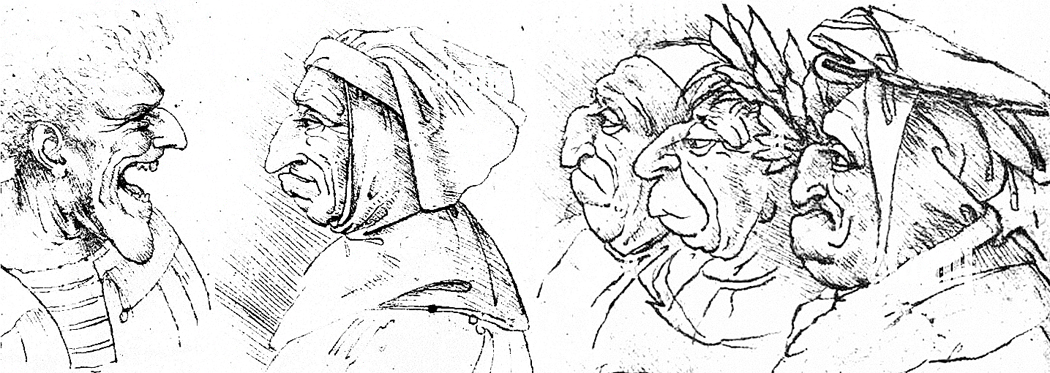
Satyricon, Roma and Casanova all prominently feature parades of caricatural grotesques, people buried under exaggerated make up and hairdos, rather like some of the more peculiar drawings of Leonardo da Vinci. 

Even if they don’t succeed as whole works of art, each is stuffed like a cannolo with brilliant imagery, unforgettable moments. It is as if he was more concerned with the moment-by-moment, than the story coherence — the way a dream moves. “Don’t tell me what I’m doing,” he said. “I don’t want to know.” 

If La Dolce Vita and were satires on modern mores, the later films pass beyond satire to a rather personal misanthropy dredged up from his unconscious. 

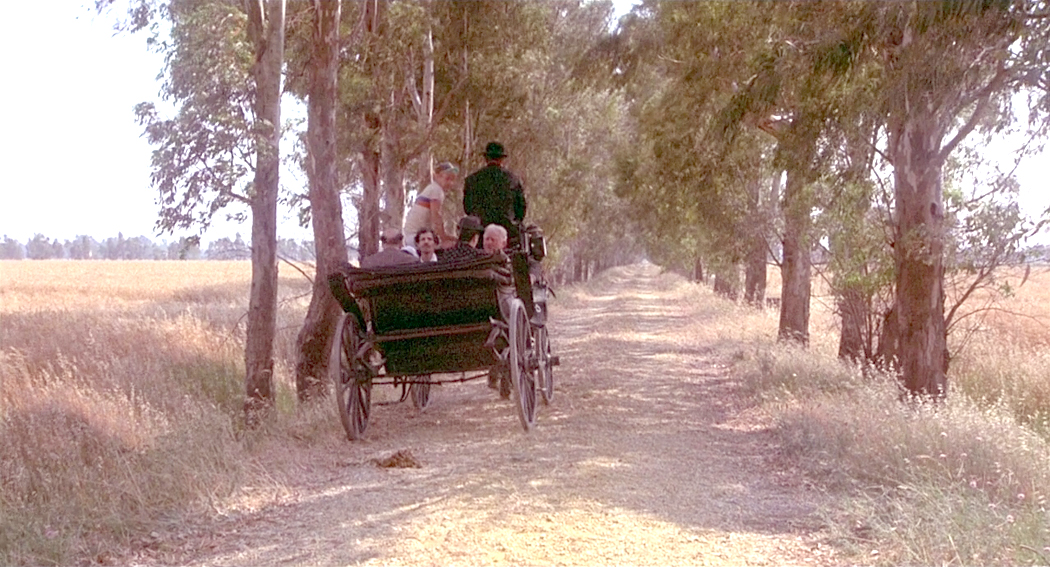
There was one very bright and beautiful exception, though, a final grace note to his career — the 1973 film, Amarcord, which is a comic, forgiving and joyful reminiscence of Fellini’s childhood in Rimini. In 1953, his I Vitelloni explained why the young Fellini desperately wanted to escape his provincial hometown; twenty years later, he felt the need to show what he had lost by leaving. Everything that he was bitterly satirical about in his earlier films becomes the very human qualities of his dramatis personae in Amarcord. It is a gentle, affectionate, humane account of human folly, and the easiest of all of Fellini’s films to love. 

He made a handful of films after that, but none catches fire. There was Ginger and Fred (1986) and, more dubiously, City of Women (1980) in which Fellini, as his frequent alter ego Marcello Mastroianni, attempts to deal with his fear of, and lack of understanding of — women. 

Fellini made his last film, The Voice of the Moon, in 1990, and died of a heart attack in 1993, a day after his 50th wedding anniversary, and just a few months after receiving his Oscar for lifetime achievement. 

As is so often the case, Fellini’s best and worst were manifestations of the same thing — his ability and his need to put himself into his films. As he once said, “Even if I set out to make a film about a fillet of sole, it would be about me.” It gave him the secret of breaking out of the Neo-Realist mold and find his own way, but it also let him wander off into a sometimes almost solipsistic dream world of images and obsessions. When focused, as in La Dolce Vita and , he was one of the three or four greatest filmmakers of all, and even when he was noodling in fevered Fellini-Land, still provided indelible visions and emotions. There was no one like Federico Fellini.

_____________________________

We are not in control of our memories. 

One doesn’t own one’s memories. 

One is owned by them.

—Federico Fellini

______________________________

I used to have long discussions with friend and colleague Sal Caputo, who was pop music critic for the newspaper I worked for. Sal — or Salvatore — was as Italian in ancestry as I was Norwegian. And it played out in our conversations. Sal was always intense and expressive, and sometimes prone to anger and moods. He took things personally when I didn’t — I always remembered the line from Renoir’s film, Rules of the Game: “The terrible thing about life is that everyone has their reasons.” I.e., it isn’t personal. 

Searching the Internet for Sal, I could only find a couple of mug shots

Anyway, we once had a talk about movies and our varying takes on Federico Fellini and Ingmar Bergman. It wasn’t about which was the better filmmaker, but about how we internalized the films. We both appreciated both directors. But there was a difference.

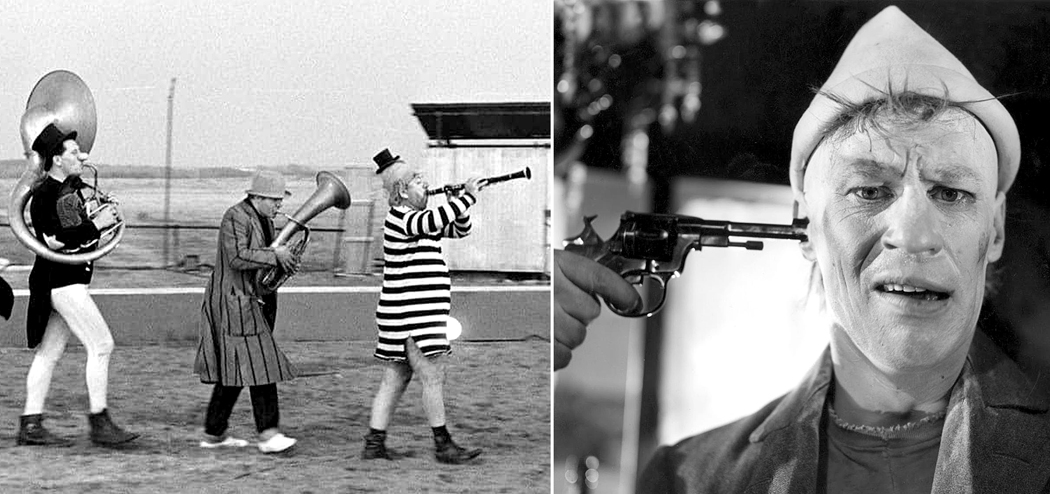
The difference was almost comic. Consider the ways each director portrayed clowns. In , they play Nino Rota’s music and point the way to salvation for our lost Marcello; in Bergman’s Sawdust and Tinsel, well, you get the picture.

 I loved Fellini’s films and could appreciate both the filmmaking craft that went into them, and also the humanistic concerns of the director. Fellini rates very high on my list of movie directors. Top three or four. But somehow, I always feel as if I’m watching him from the outside. In contrast, when I see a Bergman film, it is in the blood — I know this world from the bones out. It is a world I didn’t just see, but lived. 

And for Sal, it was quite the opposite: Fellini felt to him like home, like everything he knew and felt in the fibers of his nervous system. 

In Bergman, all the action is internal; his characters are all suffering midnights of the soul. Their torture is self-imposed.

While Fellini’s people have trouble with other people, with society, with Catholicism, with Fascism, with their wives.

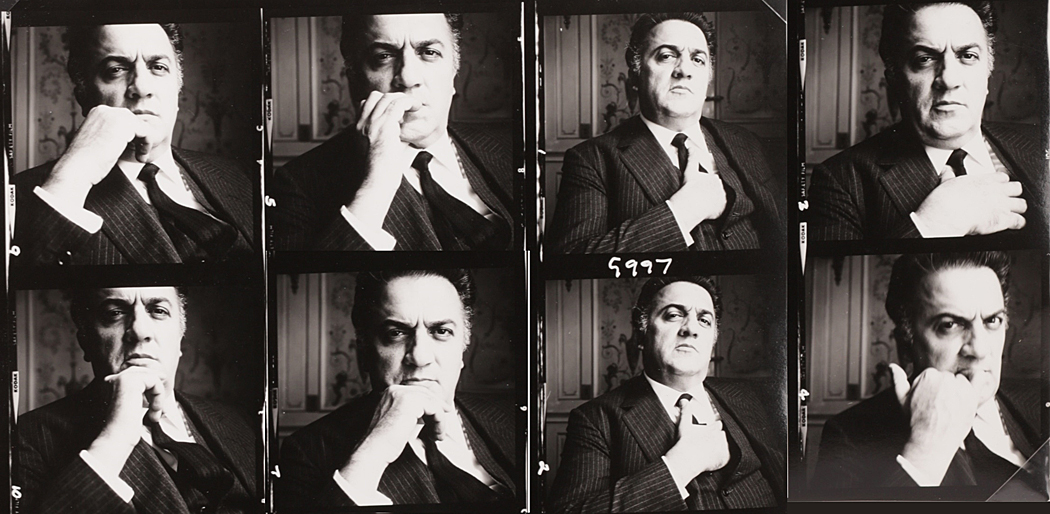
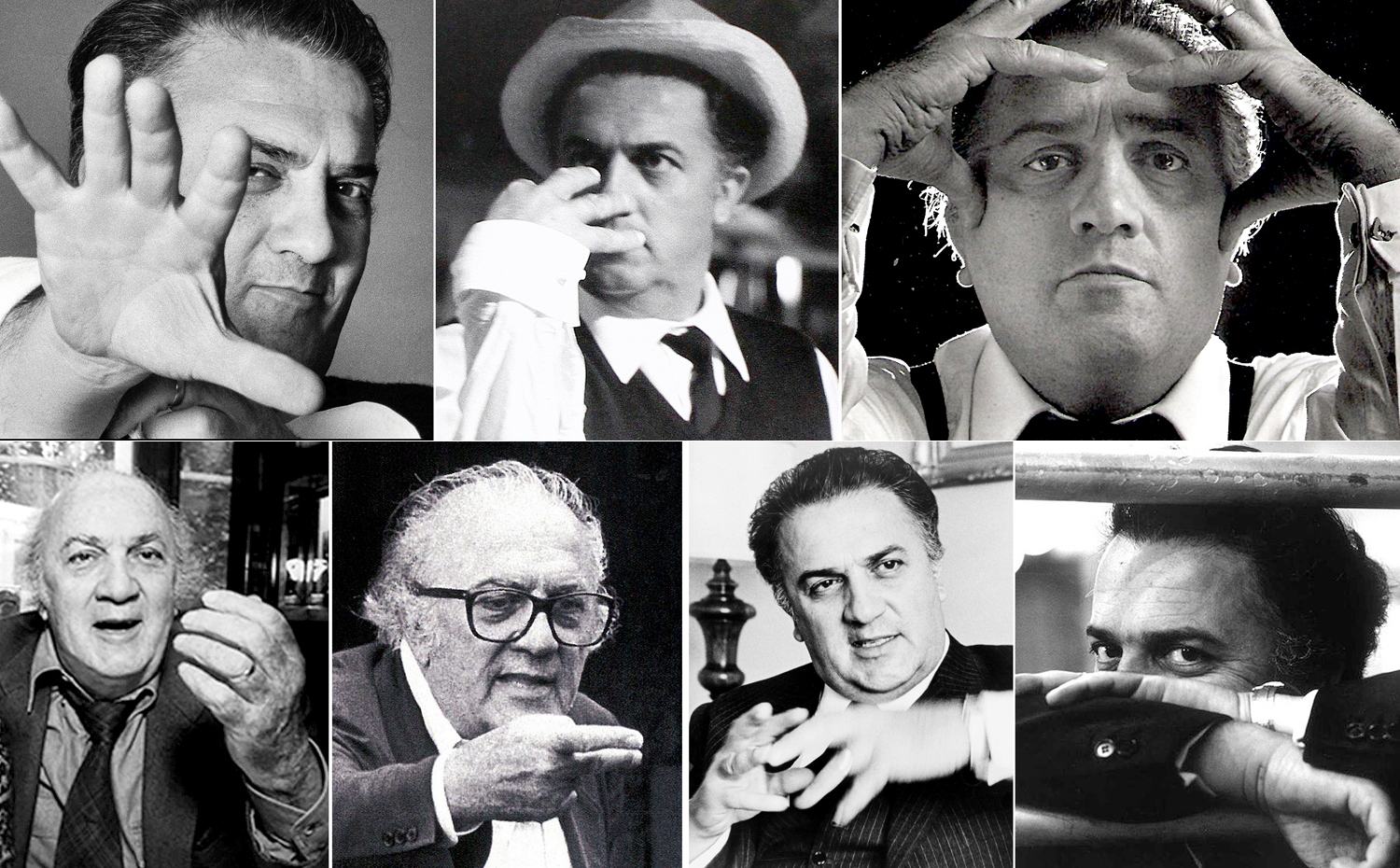
Bergman’s people sit silently, brooding. Fellini has hardly a photo of himself without his hands waving in the air, expostulating. 

This sense of recognition in the films, different for Sal and for me, has always made me wonder if there is something genetic about national difference. All the Squareheads I know feel Bergmanesque and all the Italians seem to feel Fellini-esque. This may just as easily have grown out of cultural familiarity as from DNA, and I’m not sure its origin makes a difference. 

I’m cheating a little with these images — not all German painting is so dour, or Italian so extravagant — but only to make a point. But there are national and regional styles, psychologies, approaches and techniques that show up across the arts. German painting is instantly told apart from Italian painting. French music from Viennese. Russians have their novels; Italians their opera; Iberians their fado and zarzuealas.

You can hear six bars of Elgar, Holst or Vaughn Williams and you know they are English. 

This has been recognized for centuries. In Baroque music, national styles were standard descriptions, as Bach’s French Suites or his Italian Concerto, or his Overture in the French Style. And you could never confuse Telemann’s music for Vivaldi’s or either for Couperin’s. 

(In deliberately oversimplified terms, German music emphasizes harmony and counterpoint; Italian music emphasizes melody and singing; French music emphasizes timbre and ornament.) 

And there does seem to be a generalized North-South axis. If you compare the Gothic cathedrals of northern France with those of Italy, you see a spare austere style, even with all the statuary, and in Italy or Spain, a kind of Plateresque extravagance. 

In the European south, expression seems to be extrovert and unrepressed; in the north, introvert and brooded over. It would be wrong to say that Italians are more emotional than Scandinavians. But in the north, the emotions are directed at themselves, whereas in the south, they are almost theatrical. 

So far, I’m using European examples, but this national or folk identity is global. Chinese art is instantly identifiable. And except for those examples of conscious imitation, Japanese art is very different. Hindu sculpture on the Indian subcontinent is easily told from Buddhist sculpture in Southeast Asia. 

Nor, in Africa, could you confuse a Benin bronze with a Fang mask or a Kota reliquary figure. 

These differences are not merely stylistic, but grow from very different world views and historical experience. There is a world of difference between the Tlingit of the rainy Northwest Coast of North America and the Navajo of the desert Southwest. 

Many years ago, I was first made aware of this kind of difference when I moved from New Jersey to North Carolina and discovered a culture radically alien to the one I was brought up in. It was agrarian rather than suburban; it held a tremendous grudge from the previous century that had not made a twinkle of a dent in my Northern psyche. It had a sense of history tied to the land, whereas I grew up in a world of second- and third-generation immigrants. These kinds of cultural differences make their way into the art, whether it is the difference between Hemingway and Faulkner, or between Fellini and Bergman.

It may be only a metaphorical expression, but it is profound: It is in the blood. 

“There’s no such thing as bad art.” This was a dictum of the late classical music critic Dimitri Drobatschewsky. He explained: “If it’s bad, it’s not art.” But I have to take exception. There are examples of works that are deeply flawed, yet they stick in our psyches in just the same way as a masterpiece. 

To take an extreme: Ed Wood’s Plan 9 From Outer Space is often nominated as the “worst movie ever made,” yet, there are piles of other bad movies that have fallen into justified oblivion. Something about Plan 9 wheedles into our brains and lodges there, despite dialog such as, “We are all interested in the future, for that is where you and I are going to spend the rest of our lives. And remember my friend, future events such as these will affect you in the future.”

The movie is a peculiar kind of classic and draws viewers every time it is screened. 

And speaking of tin-eared dialog, the 1933 King Kong is full of stuff such as, “It never fails. Some big hard-boiled egg goes goofy over a pretty face, and bingo! He cracks up and gets sappy.” And the acting is often wooden (Bruce Cabot especially; and even Robert Armstrong can’t make this dialog work) and the story line is racist in a way common to its era, but Kong is as much part of our cultural landscape as George Washington’s cherry tree or the Gettysburg Address. 

There is something about these films that buries into our unconscious and lives there like a dream. There is a logic to real life, a cause and effect, but there is an alternate logic to dreams, and that is where Plan 9 or King Kong comes to life. Ordinary rules don’t apply.

There are many better-made movies that are completely forgettable. Shakespeare in Love won an Oscar, but can you remember anything about it? I can’t. But Kong is buried there, in the neurons, permanently, mythically. 

Which brings us to one of the greatest movies ever made, or at least one of the most memorable. in a 2012 Sight & Sound poll of critics, Metropolis was voted as the 35th greatest film of all time, tied with Hitchcocks Psycho and just ahead of Truffaut’s 400 Blows. It also ranked 12th in the film magazine Empire’s “The 100 Best Films Of World Cinema” in 2010 and second in a list of the “100 greatest films of the Silent Era.”

It didn’t achieve such eminence through its plot or acting. The plot is silly and preposterous and the acting is often so over the top as to be laughable. 

All built on a silly and sentimental bromide. 

The film’s director, Fritz Lang, agreed about the moral, telling Peter Bogdanovich in an interview, “You cannot make a social-conscious picture in which you say that the intermediary between the hand and the brain is the heart. I mean, that’s a fairy tale — definitely.” 

It looks like science fiction, but there’s no science in it. It could be a dystopian future, but it’s not set in any particular time. It is mostly a fever-dream of capitalism, except there are no economics in it.       

Yet, the film has a power that many arguably better films simply can’t muster. Scene after scene in Metropolis bores deep into the subconscious. 

Right from the opening scene, when the factory shift changes and one phalanx of exhausted workers exit the giant elevators, shuffling at half-speed, while the fresh phalanx marches, in step in the opposite direction at full speed. It is a striking bit of choreography, worthy of Pina Bausch, and a clue to how the rest of the movie will unfold. 

In the next segment, we find our hero, Freder, cavorting with a bevy of nymphs in the “Eternal Gardens,” in a set that is actually unnerving.

Scene after scene is unreal but unforgettable. 

While the plot is tangled and confused, the set-up is simple. The city is divided into an upper part, where the rich live in luxury, and an underground inhabited by the workers and the machines that keep the city running. A Romeo and Juliet story intervenes and so does a mad scientist, who makes a robot in the image of our Juliet. Chaos ensues. 

Don’t look for it to make any sense. It doesn’t. 

The film was conceived by director Lang when visiting New York City in 1924. “I looked into the streets — the glaring lights and the tall buildings — and there I conceived Metropolis,” he told an interviewer.  He said that “the buildings seemed to be a vertical sail, scintillating and very light, a luxurious backdrop, suspended in the dark sky to dazzle, distract and hypnotize.”

At the time, Lang was married to novelist Thea von Harbou (who already had published more than 40 books) and they worked out a story, which she turned into a novel. Later, Lang and Harbou translated the book into a script. 

Thea von Harbou and first edition hardcover (l.) and paperback (r.)

(I’ve just read the original novel and it is terrible, grossly overwritten and both silly and sentimental. And it used enough exclamation points to fill an oil tanker. Here is a sample: “Ah! The intoxication of the lights. Ecstasy of Brightness! — Ah! Thousand-limbed city, built up of blocks of light. Towers of Brilliance! Steep mountains of splendour! From the velvety sky above you showers golden rain, inexhaustibly, as into the open lap of the Danae. Ah — Metropolis! Metropolis!”)

Lang and Harbou working on script

Lang began filming Metropolis in 1926 at the Ufa studios in Berlin. It took 17 months to film, with 310 shooting days and 60 shooting nights and went over budget by 310 percent, costing 5.3 Reichsmarks (something like $23 million in today’s money) and nearly sent the studio into bankruptcy.

Brigitte Helm, who played the lead, and the robot Maria, said “the night shots lasted three weeks, and even if they did lead to the greatest dramatic moments — even if we did follow Fritz Lang’s directions as though in a trance, enthusiastic and enraptured at the same time — I can’t forget the incredible strain that they put us under. The work wasn’t easy, and the authenticity in the portrayal ended up testing our nerves now and then. For instance, it wasn’t fun at all when Grot drags me by the hair, to have me burned at the stake. Once I even fainted: during the transformation scene, Maria, as the android, is clamped in a kind of wooden armament, and because the shot took so long, I didn’t get enough air.”

Lang brought in 500 children from the poorest districts of Berlin to play the Workers’ children and had them in ice-cold water for two weeks, as the Workers’ City was flooded.

The film was a financial failure on its initial release, but has become one of the great classics of all time. Its afterlife, though, was inauspicious. The movie was first released at a length of two and a half hours. The studio then cut it down to about two hours, and in the U.S., it was hacked down further, and in 1936, Nazi objections to its supposed Communist subtext, it was reduced to 90 minutes. Since its rediscovery in the 1960s, there have been many restoration attempts, but even today, with 95 percent of the film rediscovered and re-edited, it is still short of the director’s cut. 

And speaking of Nazis, Lang and Harbou divorced as her Nazi leanings became clear (she became a party member in 1933 and worked for the studio under Nazi rule during the war), and as for Lang, it was his bad luck that Joseph Goebbels and Adolf Hitler both liked the film and offered Lang the job as boss of all Nazi film production. Lang took the hint and fled Germany (by his own account, the very next day). 

(An early scene in the movie shows a race in the Club of Sons in which the stadium architecture is astonishingly prescient of Albert Speer’s fascist architecture.)

So, why is this movie, with all its faults, such a memorable film? Unlike most, it doesn’t count on story to carry us through, and certainly not the acting. Rather, it burrows into our unconscious like a dream, with image after image that cannot be forgotten. One after the other, they pile on, right from that opening bit with the workers’ choreography.

The city is the kind of future the past used to project, with its biplanes circling the buildings and the elevated roadways around skyscrapers so tall, we cannot see their tops. In the center is the giant tower called the “New Babylon

Then, there is the Workers’ City, hidden below ground, with its Soviet-style faceless apartment buildings. The social structure of Lang’s Metropolis is a parody of the rich-poor division manifesting itself in the between-wars Weimar Republic — and echoed today. Between the upper and lower levels is the Machine Level, where the workers put in their toilsome hours. 

Our hero, Freder, wanders into this level, where he sees the great machine overheat and explode, scalding and killing scores of workers. He is horrified and hallucinates the machine turning into “Moloch,” devouring its human sacrifices.

He comes across Worker 11811, working a mysterious machine, who collapses from overwork and Freder takes his place. The scene recalls the famous Leonardo drawing of the “Vitruvian Man.” 

The whole underworld is a purgatory, and below the Workers’ City there are the catacombs, where the virtuous Maria lectures the workers about justice — and the importance of waiting for a “mediator.” 

This is not a movie about people, but about archetypes. There is father, son, city, death, all presented almost naked, with little attempt to disguise them as anything real. 

The world is divided, in Nordic and Wagnerian style into an underworld, a middle world and an upper world. The catacombs are deep caves, and the home of religion and myth.

The Workers’ City and their machines are in the middle.

And the privileged world of the elite rides above it all, and depends on all that resides — like a subconscious — below, normally unseen and unthought of. 

The architecture is a strange mix of the Moderne (Art Deco and German Expressionist); the dull efficiency of a Socialist utilitarian greyness; and relics of the Gothic; and prehistoric caverns. 

The main characters are the father, Joh Fredersen, who is master of the city; his son, Freder; the mad scientist Rotwang; and, most central of all, the woman, Maria. 

Fredersen (looking suitably Napoleonic); Freder; Rotwang; Maria

Maria, played by Brigitte Helm, is the central and most interesting character. She is really two characters, and the embodiment of two archetypes: virgin and whore. Rotwang creates a robot in the form of Maria and programs her to undo everything the good Maria has done. Helm differentiates the two personae in a way that they cannot be confused.

The two Marias separate in the very Frankentsteinian laboratory of Rotwang, in one of the most hypnotic sections of the movie, with rings of light rising and falling around the body of the robot, 

until it takes on the visage of the good Maria.

This Bad Maria, or False Maria, is sent to the workers to foment rebellion (why is never really made clear — it doesn’t make any sense, economically, to destroy the whole city), and she turns up in a nightmare hallucination of Freder as the Whore of Babylon, dancing at the Yoshiwara cabaret, doing a provocative dance.

And morphing into a Medieval vision of Die Grosse Babylon — the Great Babylon, from a verse in the biblical Apocalypse.

Which drives the men at the cabaret crazy with desire.

When the film was released in the U.S., Variety magazine’s reviewer commented: “Some sex stuff here and there, and a cooch dancer! Yes, sir, a coocher, in the revigorated mechanical figure, and a pretty good coocher, too, but not so thick around the hips as German coochers generally are. But then you must remember that this young lady was made to order.”

This False Maria persuades the workers to destroy the machines, which automatically floods the Workers’ City (don’t ask why), threatening all the children, and the workers, horrified, burn the False Maria at the stake, where, of course, she turns back into the robot.

Not to worry, Freder and the Good Maria save the children.  

The film is shot through with biblical references, not for theological reasons — there is no actual religion in the movie — but as cultural markers, symbols that will resonate with an audience familiar with the Bible. 

In the catacombs, the Good Maria teaches a lesson about the Tower of Babel, and how the conceivers of the tower failed to teach the workers who made the tower why they should do so, and a rebellion ensues and the tower is destroyed. 

In Freder’s fever-hallucinations, the figures of the Seven Deadly Sins, from the cathedral, step down from their pedestals and the figure of Death comes to life.

And Death approaches Freder with his scythe.

There’s Freder’s vision of the exploding machine as the biblical Moloch

And the movie comes to its climax when Rotwang abducts the Good Maria and chases her to the top of the cathedral, among the gargoyles.

And drags her to the very rooftop, where he fights it out with Freder.

While his father (remember him?) falls to his knees in fear among the crowds in the parvis.

But Rotwang falls to his death and Freder saves the Good Maria, leading to the point where Maria gets the heart (Freder) to mediate (shake hands) between the hands (the worker) and the head (Joh Fredersen) and therefore satisfying the prediction of the opening epigram of the movie. 

It’s rather a sappy ending for so visionary a movie. But then, the plot has never been the point. 

Which is something novelist H.G. Wells didn’t seem to understand when he reviewed the film on its release in 1927. In his piece for The New York Times, he wrote, “I have recently seen the silliest film. I do not believe it would be possible to make one sillier.”

His beef was that the film didn’t realistically portray the future. 

How can it, when Rotwang’s Medieval house in the middle of the city is, like the Tardis, bigger on the inside than on the outside?  

Its economics didn’t make sense, Wells wrote. “The machines make wealth. How, is not stated. … One is asked to believe that these machines are engaged quite furiously in the mass production of nothing that is ever used, and that [Fredersen] grows richer and richer in the process. This is the essential nonsense of it all.”

Where are the suburbs? Wells asks. Why, in the future, do all the cars look like the Model T? Where in the catacombs under the city are all the gas mains, sewer conduits and electrical infrastructure? His literal-mindedness is comic.

How can you be literal when the clocks in the film cannot even agree on how to measure time — Salvador Dali must have been their clocksmith.

Wells goes on and on, completely missing the point. Obviously, Metropolis was never intended to be realistic. It is not even meant to be the future. It exists in no time, according to both Lang and Harbou. It is a fever dream, an oneiric fantasy, and the glories of the film are all to be found in its visuals, not in its story. 

You can watch the film on YouTube in decent resolution, and it is available on DVD and Blu-Ray. It is one of the great films of all times, and one of the most memorable. 

Lang went on to make such great films as Woman in the Moon, also with Helm; M, with Peter Lorre; The Testament of Dr. Mabuse, with Rudolf Klein-Rogge (Rotwang from Metropolis); then, in Hollywood: Fury, with Spencer Tracy; Rancho Notorious, with Marlene Dietrich; and Clash by Night with Barbara Stanwyck. And many other great films. But none burrows into the brain in quite the same way as Metropolis.  

Click on any image to enlarge

We were watching Turner Classic Movies, as we so often do during the Covid in-house stay-at-home and the next movie up was Casablanca

“I don’t want to watch it. I’ve seen it,” she said. She has this reaction frequently. Once she has seen a film, she says, she knows how it ends, and so why sit through it again? 

I, of course, was non-plussed. “Do you listen to a song only once and never again, because you know how it goes?,” I asked. No, you listen over and over and get pleasure from it each time. It’s a familiar tune. And so it is, for me, with something like Casablanca. Or The Seventh Seal, or — the tune I’ve heard most often in my life — King Kong. It’s a familiar and favorite song and I can watch over and over. 

Certainly, not every movie is worth multiple viewings. The vast majority of them come and go with the urgency of mud. In fact, for many, the first time is one too many. But there are classics and while I don’t necessarily wish to see them over and over in the space of a single week, when I’m channel surfing and one of my favorites pops up, I will usually stay to the end. 

Each of us has our own list of which movies hit that button, but a favorite film has the same appeal as a favorite song — the pleasure is in hearing yet again. It has nothing to do with plot, or “how it ends.” It’s not like a TV mystery and when we come to the end and find out who dun it, we don’t need to see it over again. The air has been let out of the reason for watching in the first place. 
But a movie such as The Rules of the Game or Seven Samurai bear repeated watchings. There is such pleasure in revisiting these old friends. 

Beyond that, however, there is the issue of getting older and accruing experience — understanding things you didn’t when you were a callow youth. 

This is most near to me in rewatching Marcel Carné’s 1945 classic Les Enfants du Paradis (“Children of Paradise”). It is a long film, at 3 hours and 10 minutes, and I don’t watch it all that often (just as I don’t listen to Beethoven’s Ninth too often, so as not to diminish its special potency), and I have found that the movie itself has changed dramatically over the 50 years since I first watched it. 

Set in Paris in the 1840s, it tells the complicated story of four main characters — 

Baptiste Deburau, a mime at the low-rent pantomime theater; 

Frédérick Le Maître, an aspiring tragedian of indifferent morals; 

a petty criminal, Pierre-François Lacenaire; 

and the ambiguous Garance, with whom they all become involved. As the movie progresses, Garance’s allegiance shifts with the winds. Her motto: “Love is simple.” 

The films is one of the most highly regarded in cinema history, making almost all top 100 lists, and many Top Tens. “I would give up all my films to have directed Les Enfants du Paradis,”said French New Wave film director François Truffaut. Marlon Brando called it “maybe the best movie ever made.” And a 1995 vote by 600 French critics and professionals lent it the plain tag “Best Film Ever.” It can be an overwhelming experience — if you are not simply watching for “what happens next.” 

Each of the characters embodies a distinct idea and world view. Baptiste is an idealist; Le Maître is a practical realist; Lacenaire is a cynic; Garance is a survivor. (There are other characters, too, and they each have distinct world-views that direct their actions. One thinks of Dostoevsky and his ability to embody ideas in distinct personalities.) 

And so, the first time I saw Les Enfants, I was in college and as naively idealistic as Baptiste, and so I saw the film through his eyes and the tragedy of the film as his. 

In my 30s, and disabused of the simple understanding, I was drawn instead to Le Maître as a realist, taking the world as it is and making the most of it. By then Baptiste seemed embarrassingly sentimental. The worldly and world-wise tragedian seemed the anchor for the swirl of relationships that fill the movie. 

It is very hard to avoid becoming cynical, however, by the events of the world, and of the vicissitudes of life, and so, later viewings of the film made me feel quite sympathetic with Lacenaire, who has no illusions about his chosen profession (although he is rife with illusions — and vanity — about himself). It is hard to view Lacenaire’s story as tragedy, but rather as farce. He says so himself. 

But now I am old. And my entree into the movie are the two main women. When Garance abandons Baptiste, he ends up marrying his childhood sweetheart, Nathalie. And the film seems now to me to hover between the twin poles of Garance and Nathalie, both of whom seem so much more real than any of the men, who are all caught up in their own ideas of themselves. The women are the true realists. And both disappointed as the movie closes. They both know love is not simple. 

And so, watching Les Enfants du Paradis over five decades has been the experience of watching several completely different movies. 

The fact that the film is rich enough to  offer such different readings is reason to continue to re-watch some of our favorite movies. 

The Seventh Seal has been different films at different times: Do you identify with the soul-searching knight, the cynical squire — or perhaps with the character of Death himself. Different viewings give you various reactions. On last viewing (only last month and perhaps the 30th time I’ve seen the film) it was the itinerant showpeople Joff and Mia that seemed the point of it all. 

In such a way, re-watching a movie is the same as rereading a book. The best books can take many re-readings. Both so that we may learn different lessons from them, but also so we can re-hear the words that make up the “tune” of the book. I re-read Moby Dick just for the language. 

Perhaps my inclination to rewatch movies came from my childhood, when the New York TV Channel Nine presented the “Million Dollar Movie” several times a day for a week, offering the same film perhaps a dozen times in a week. I saw many movies over and over. 

And the champion — the movie I have seen more than any other, and by a huge margin, is the 1933 King Kong. When I first saw it on TV, I was maybe five years old and am told I watched it from behind a chair, peeking out gingerly during the “scary” stuff. My brother, then age 2 or so, sat in the big chair just happily giggling at the moving images on the screen. 

Since then, I believe I have seen King Kong as many as a hundred times, either in full or in part, picking up another showing on Turner mid-film and holding on to the end. It is neither a well-written or well-acted movie. Indeed some of the acting is among the most leaden in film history. But it has a mythic hold on my imagination, with its Gustave Doré inspired landscapes and mist-shrouded jungle and its tooth-and-claw dinosaurs. 

If anything is a familiar and favorite “tune,” it is King Kong. I have no illusions about its quality, but I cannot gainsay its effect. And yes, I know how it ends, but that makes no difference at all. 

What other tunes rattle round my head? The Big Sleep; Jules and Jim; Nosferatu; Orphée; The Third Man. Many so-called “art films.” There are probably a score, maybe up to 50 movies I re-watch with pleasure and with most of them, I learn something new each time, usually something new about myself.

Sometimes I forget just how stodgy I am. What an old pedant. Just how deeply embedded in a certain class of art and culture. 

And it is good to be given a peek at a different way of seeing things, a different esthetic judgment. 

It happens about once a year when my son, Lars, comes to visit his mother and me in Asheville, and brings along a trove of his favorite movies for us to watch. 

Lars is head programmer for the Austin Film Society in Texas, an organization founded by film director Richard Linklater (Slacker, Dazed and Confused, School of Rock, Bernie, Waking Life, Boyhood). Lars visits the big film festivals to view potential movies for the AFS theaters, but he got his start hosting the “Weird Wednesday” genre film series at Austin’s Alamo Draft House, that featured the kind of movies that used to run in drive-in theaters in the 1970s. Lars has seen more movies than anyone else I know, and I’ve known a number of professional film critics — at least one of whom burnt out watching too many movies per week. Not Lars, at least, not yet. 

That Weird Wednesday series spawned the American Genre Film Archive, which now collects neglected 35mm prints abandoned in old drive-ins and warehouses, restores them and digitizes them. It now owns some 6,000 movie prints, including such timeless masterpieces as Ninja Zombies, Bloodsuckers from Outer Space, and The Return of Superfly — to say nothing of Sometimes Aunt Martha Does Dreadful Things (1971, Thomas Casey, director). Lars is on AGFA’s board of directors, and he’s written a new book, Warped & Faded (Mondo Books, 415pp.), that chronicles the birth and growth of AGFA, and highlights many of the films in the archive. 

In the book, he makes it clear he is not writing about movies “so bad they’re good.” He hates that formulation. No, he finds something in each of these films he genuinely appreciates for its filmmaking, its storytelling, its mythic resonance or its acting. He finds what he believes are moments in them that deserve recognition. These films, he wrote in the book are “worthwhile and deserving of serious consideration.” 

When he comes to visit ma and pa, he brings a trove of titles for us to see, and he seems to take great glee in finding things he knows dear old dad would never, on his own, choose to watch. (I should mention that Lars doesn’t only watch exploitation films — he has a great background in the classics of world cinema, also, and can discuss the films of Vittorio De Sica or Yasujiro Ozu as well as the giallo genre of lesbian vampire films. His erudition is both wide and deep.) 

During this past visit, which lasted three days, we watched 10 movies. Lars’ enthusiasm for them was infectious and we talked about the films late into the early hours of the following day, with me scratching my head over some of them, and Lars making the case for them, as well as any lawyer arguing a case. He didn’t always persuade me, but I am glad I got to see all of them. 

In the end, I found several of these films to be real treasures, a few I still ponder over, and at least one that originally struck me as utter trash, I cannot now get out of my head and have to admit — long after Lars has gone home to Austin — that he was right and I was wrong. 

We started the first night with an easy one: Hi Diddle Diddle  (1941, Andrew Stone, director). Barely an hour long, and light as the foam on a latte, it starred Adolphe Menjou as an amiable con man married to an opera star (Pola Negri, in her last role). His son, home on leave from the military, has 48 hours in which to marry his fiancee (Martha Scott), but complications ensue. Also starring Billie Burke and June Havoc, there is not much more substance than a TV sitcom, but good actors can make a meal of even an undistinguished script, and my particular epiphany watching it was just how good an actor Menjou was — especially in those moments when he is not talking and only reacting. 

After that, we plunged into the deep end with Blood (1975, Andy Milligan). Milligan was an angry man, making his cheapie films on Staten Island in a home-made way, badly photographed with lots of scratches on the film. Sometimes he’d frame a shot so the top of the head was included, but the bottom half cut off. It was a kind of grand guignol horror flick, with a vampire and an lycanthrope and a mad scientist trying to save his dying wife — who, by the way, kills people. It was a complete mess. Sort of fun in its own way — a la Ed Wood — but I don’t think I’ve ever seen such a badly made movie. Perhaps the oddest thing about it is that Milligan also designed and sewed all the lavish period costumes. They were gorgeous. The film was set in the 1880s and the dresses the women wore in the film would have been not out of place if they had been made by Edith Head. 

Then came the first masterpiece: Election (2006, Johnnie To). In previous visits Lars had introduced me to the films of Hong Kong director To. I had always thought of Hong Kong movies like bad Kung Fu films, with garish colors, bad acting and stupid plots. But Lars first showed me To’s The Mission (1999) several visits back and I was blown away. It was incredibly beautifully photographed and intelligently plotted and acted. Who knew? Well, Lars knew. On a later visit, we watched A Hero Never Dies (1998), and it was also a revelation. 

Election is about a disputed succession among Hong Kong crime bosses — one cold-blooded and strategic (like Michael in Godfather), and his rival hot-blooded and impulsive (like Sonny).  But the film is not simply about plot. To develops his characters and gives them extra dimensions. It was a gem of a movie. 

So much for the first night. On the second, we opened with From Beyond the Grave (1973, Kevin Connor), an anthology horror film from Amicus Productions — a rival British company to Hammer Films. It tells four separate tales with a bookend story enclosing them all — like Scheherazade or Chaucer’s pilgrims. It features a pile of popular English actors, each in for a few days work to add up to a 97-minute movie. Look for Peter Cushing, Donald Pleasence, Diana Dors, David Warner, Ian Carmichael, Ian Bannen, Lesley-Anne Down, Margaret Leighton and Nyree Dawn Porter (from the 1967 BBC and PBS series The Forsyte Saga).  

Then we did Man on the Eiffel Tower (1949, Burgess Meredith) from the Georges Simenon novel, with Charles Laughton as the famous detective Maigret. The film only exists in a poor-quality print on faded Ansco Color stock, which leaves the colors shifted to the reddish-orange, and somewhat bleached out. Simenon’s book, La Tête d’un homme, is not one of his most distinguished, and the plot boils along, with Franchot Tone playing a too-clever villain, teasing the detective to find the evidence for the crimes everyone knows he has committed. 

The four-film night ended with the first big revelation of the visit: Brian De Palma’s Phantom of the Paradise (1974). It is a film I had always meant to see, but hadn’t yet. It was brilliant, funny, spooky, clever and spectacularly cinematic. I’m not much into rock music, but it worked perfectly in this updated version of the Gaston Leroux classic, Phantom of the Opera.  

There are many films — and many more books — that one lifetime isn’t long enough to get to. I could name a dozen off the cuff that I haven’t yet managed to see — a bunch of Ozu, the later films of Satyajit Ray, just the tip of the iceberg — and I know that at 73, I don’t have enough time to see them all. I was grateful that Lars brought me Phantom. It was worth the wait. 

The fourth film from the second night was the crux, the fulcrum of the visit, and a tough go for me on first encounter. I could not, for the life of me, figure out why Switchblade Sisters (1975, Jack Hill) should figure on Lars’ list of his four favorite films of all time. It is a cheapie girl-gang film, and I have to admit that my prejudice kept me from appreciating it. To any standard criteria, it is an awful film, full of cliche fights and stilted dialog. I hated it. 

I was wrong. Lars made his best case for it, saying it was amazing considering the budget. “It is a film better than it needs to be,” Lars said. Hill does great work, he argued, considering the script and the merely-adequate actors, and the schedule he had to work with. I wasn’t sure that making something out of straw and sawdust elevates the film to more than drive-in fodder, but Lars persisted. 

Here’s what Lars wrote about it in Warped & Faded: “It’s hard to imagine a more perfect girl-gang movie. All the elements — tone, pacing, performances — are dead-on. The revenge and betrayal-filled plot brings to mind the nastier Elizabethan dramas that were so popular with working-class audiences of 400 years ago, who crammed into disreputable theaters to watch the blood-drenched intrigues of kings and thieves. Some things never change. Hill combines the complicated plot effortlessly with the crisp, classical gangster movie tone of the old Warner Brothers James Cagney films and the directness and intensity of ’70s drive-in cinema. The result is a perfect storm of red-hot teenage bad girls, flashing knives, and social commentary.” 

So, the film, for all its gore and vengeance, is really just a modern version of Elizabethan revenge plays. I could see that, but, beyond Shakespeare, most Elizabethan theater is dreadful. And even Shakespeare has a hard time salvaging Titus Andronicus. (It took Julie Taymor to do that). And it was clear, the bare bones of Othello run under the movie. But my reaction was extreme. I hated, hated, hated Switchblade Sisters. The problem was, I couldn’t get it out of my mind. One of my old definitions of great art is “what you might not understand but can’t get out of your mind.” And here I was faced with something very close to that. 

There are any number of things — books, music, theater — that on first encounter, I found difficult to appreciate, like Bruckner symphonies, which took me years to understand, but later, after time to digest, I came around to seeing their very estimable value. There is something in Switchblade Sisters that sticks to the ribs, and I cannot gainsay its effect. I’m not putting it on my four-favorites-of-all-times list, but I have to admit, a week or so after seeing it, that Lars was right and I was wrong. 

The third night’s viewing was a coda and conclusion. We opened with one of the strangest movies I’ve ever seen: Nothing Lasts Forever (1984, Tom Schiller) — A surrealist comedy with tons of names in the cast, including Bill Murray, Imogene Coca, Sam Jaffe, Eddie Fisher, Mort Sahl, Zach Gilligan and Dan Aykroyd. Shot in mock-studio style, like an old Joan Crawford film, it features a plot to get retirees to travel by bus to the moon to shop at an out-of-this-world mall. A film no studio or distribution company admits owning the rights to, and therefore never released commercially. Warner has the film, but won’t admit it. (Really.) Lars had to lobby two corporations and a half dozen lawyers to get his hands on a print to show in Austin. 

Then, we watched Housekeeping (1987, Bill Forsyth), a small, quiet coming-of-age film about two sisters living in the Northwest mountains. When their mother commits suicide, eventually their aunt (Christine Lahti) comes to take over. She is either a free spirit or not quite right in the head. The movie never makes up its mind about that. One sister rejects the aunt, the other embraces her, and her idiosyncratic ways. 

Forsyth made the earlier Local Hero (1983), which is also as deeply felt as Housekeeping. The visit with Lars underlined the different esthetics we have. He is much more interested in the filmmaking itself — as so many of his generation are. It is a meta world they inhabit. He likes genre films, with lesbian vampires, girl prisons, ninja warriors and car chases. (Again, I remind you that he also loves the great art films, he is not one-note). 

But, for me, art — including cinema — is a humanistic concern, and I am more focused on content than style (I have a healthy appreciation of style, also; it’s a matter of priorities). I most enjoy films that address human concerns, the inner feelings of people, the choices, moral and otherwise, that they make, the tragedy that the universe thrusts on us. 

I understand the other argument, too. When I listen to a Haydn symphony or quartet, there is emotion and melody, yes, but most of his power is in establishing a formal expectation and then subverting it, giving the listener a pleasant surprise and pleasure in the recognition of it. It is the 18th century definition of “wit.” And Lars’ knowledge of film and filmmaking instills in him the norms that his favorite films play with and the best ones transcend. 

Still, I want my art to be more than clever. The final film we watched on his visit was Over the Edge (1979, Jonathan Kaplan), another teen gang movie, but one more sociological and realistic, with a nihilistic group of teens in the sterile Denver suburbs with nothing to fill their lives but boredom and mischief. Petty vandalism and low-grade burglary occupy their time, until one of them steals a gun. The emptiness of their lives is soul destroying. One thinks of the anomie of Larry Clark’s Tulsa

The fact that the parents of these kids have lives no more fulfilling only makes the movie more depressing. The apocalypse at the end feels like the only worthwhile thing in the lives of both parents and kids. 

And so, 10 movies in three days. My parameters have been stretched, which is only a good thing. When my head is buried too deeply in Ovid or Tolstoy, I need once in a while to look up, out of the page, and into the rest of the world, and Lars’ films at least briefly give me a glimpse into another way of aiming my sensibility. Whether it takes or not is up in the air. Ovid is awfully good. 

Click on any image to enlarge

I have seen a boatload of movies over the span of my life, some more significant than others. Those few important ones are outweighed by those that are completely unmemorable, even when perfectly enjoyable while sitting through them. That describes most movies and that’s fine. Not every film needs to be Citizen Kane

This is my list of significant films, listed decade by decade. It is a personal catalog and limited first by including only movies I have actually seen. There are significant films I have not yet been able to view. Further,  the list tends to reflect my own tastes, although it is not a list of my favorite films or of the “best” films, but of those that I believe have some significance in the history of cinema. You should make your own list. It would undoubtedly be different from mine. 


What makes them significant? Here are my criteria: In order to make my list a movie must hit one or more of these markers: 1. Be of historical importance; 2. Advance film grammar or technique; 3. Be influential on other films and filmmakers; 4. Have something profound to say about existence and humanity; or 5. Simply be so memorable as to be missed if not included. That’s a pretty wide and pretty loose range of qualities. Most films on this list hit more than one of them. And for my esthetic, No. 4 counts above all the others. 

Most movies, whether from Hollywood, Bollywood or Cinecittà, seek only to tell a good story and keep our attention. Many of these are truly enjoyable, but their making is merely efficient, using the tried-and-true techniques which remain invisible to the average moviegoer. The vast majority of films created never attempt to do more — nor should we ask them to. The old Hollywood studios were brilliant at this: perfect camera work, lighting, editing, sound recording, etc., but with never a thought to making us see these techniques. If we had noticed them, they would have felt that they had failed at their job. Others, like Citizen Kane, dance and sing their innovations. The significant filmmakers, for me, are those that do something above and beyond the call of duty. 

I make this apology: My taste tends toward the more arty. That’s why you should consider making your own list. I own hundreds of DVDs, perhaps more than a thousand. The way some readers read not books, but authors, so some filmgoers watch not individual films, but filmmakers: all of Bergman or all of Almodovar. I could not include all of their films in this list without it becoming more cumbersome than it already is, and so have whittled their works down to a few exemplars. So, for each of the big names, I have included mostly just the first important film they’ve made (a film that defined their style or themes), or when including more than one, when subsequent films meaningfully expanded their work. 

Some of these films might lead you to scratch your head. But I can justify any one of them. Or try to. 

Among the earliest films are the shorts made by the Lumière brothers in France in the 1890s. They are each under a minute long and show everyday scenes. They astonished their original audiences, but are of mostly historical interest now. The first filmmaker to create something we might still want to see and enjoy was the P.T. Barnum of early filmmakers, Georges Méliès, who used trick photography and surreal plots to draw his ticket-buyers in. 

When we get to 1915, we have to take a deep breath and watch Birth of a Nation, which is so blatantly and obscenely racist, I feel dirty even listing it. But it is, apart from its story and acting, so important in the development of cinema and film language, you kinda have to hold your nose and see it. 

Film really took off in the 1920s — the first “golden age” of cinema. A language and grammar of filmmaking developed that could tell a story with a minimum of words in intertitles. So many films are lost now, but many of those that remain are classics, including the amazing five-hour Napoleon by French director Abel Gance. It has been difficult to find commercially for years (blame Francis Coppola), but now is available on Region 2 DVD and Region B Blu-ray from the British Film Institute in a magnificent restoration by Kevin Brownlow. It’s worth it to buy a region-free player just to see this film. (You can also find things on Amazon UK that are otherwise not available in the U.S., and Region 2 versions of some films that are cheaper than their American counterparts. A region-free player is a treasure.)


The 1930s were another “golden age,” when the studios ran things and did it right. Even the lowliest of studio B pictures was made with a professionalism that is hard to credit. Everyone was on top of his game. 

But Hollywood was interested more in melodrama and comedy than in searching explorations of the human condition. They were really, really good at it. But in Europe, the darker tides of history were leading to more textured work, as in the work of Fritz Lang, Jean Renoir and Marcel Pagnol. In the U.S., we had Ernst Lubitsch, who could be more sophisticated than the Hollywood norm, but then, he was born in Berlin. 

The one thing America had that no one else seemed able to copy was the “screwball comedy.” I have only one on my list, but there could be dozens. I have My Man Godfrey because I think it is the most perfect one. But I love ’em all. By the war, they couldn’t make them anymore without seeming to be too self-conscious about it. A genre no longer possible. 

The Adventures of Robin Hood is a film I have never cared for, but it is on my list for its score by Erich Wolfgang Korngold, as exemplifying the great movie music by European emigres. 

I have to apologize for Leni Riefenstahl being on this list. Like Birth of a Nation, there is a moral stink to her films, but one should see them anyway for their influential filmmaking. Yell at the screen while you watch if you want — I do — but see them at least once before washing your eyes with lye.   

Even the worst eras of filmmaking have their gems. After 1939, the high-water mark for Hollywood films, we hit a lull. The war is certainly one cause — so many actors, technicians and filmmakers joined up and spent the war in Europe or the Pacific. But John Wayne stayed home to fight the enemy on the screen. I watched tons of those films on TV when I was a kid. I can’t say how many times I watched Guadalcanal Diary on the Million Dollar Movie. 

I include Maltese Falcon as the closest a film has ever adhered to the book. If you read Hammett’s book, you will think you’re reading a novelization of the film. John Huston did a great job with it. Casablanca is there as proof that a committee can make a masterpiece. Grapes of Wrath is here for its cinematography, which so perfectly catches the tone of the FSA photographs of the Great Depression. 

Still, the majority of movies on my list are European. They deal with real things; they had to. 

The 1950s were the great age of European art film. When we think of an art film, we are likely to picture The Seventh Seal, Rashomon or Orphée. Hollywood could squeeze out an occasional great film, but mostly it was sinking into the doldrums with flat TV-style lighting, uninspired editing, and a dependence on big-name stars, often miscast. Yet, it managed to make On the Waterfront, Anatomy of a Murder and Some Like It Hot — the closest thing Hollywood ever made to a post-1930s screwball comedy. I wish I had room on the list for more Billy Wilder. 

Oh, and Godzilla is here, not as the kiddie monster movie that it was turned into with Raymond Burr added on, but as its original Japanese parable of the atomic bomb and Hiroshima. If properly seen, Godzilla is a heartbreaking film.

The French New Wave hits full force in the Sixties, taking up the slack  from Hollywood, which, in the first two-thirds of the decade was practically moribund, making dreck like Mad Mad Mad Mad World and Cleopatra. Oy veyzmir. 

Things brightened up in the last years of the decade as the studios threw up their hands and let the young turks in to update the artform. (Don’t feel sorry for the studios, they have come back with a vengeance with superheroes and CGI, but for the time being, they were playing dead. Never count out Capitalism, while there is still money to be made.)

The one great studio film of the era is Lawrence of Arabia. I had not counted it much until I saw it on the giant screen (the 70-foot screen of the old Cine Capri in Phoenix, Ariz., in a 70mm print in 1989.) It was a wonder. I weep for the kids watching movies on their iPhones.  

What started in the Sixties continued for the next decade, but the warnings were there to be seen. Young turks grew in style and technique, but the worm in the apple had jaws, then it had Star Wars. Filmmaking mega-corporations saw where the big bucks could be had. 


Before le déluge, though, a cadre of brilliant auteurs were given money to make Chinatown, Nashville and Taxi Driver. And the crazed, driven Werner Herzog broke through consciousness with Aguirre. And who else, really, was der Zorn gottes

Filmmakers who first popped their heads above ground in the 1970s went on to be the grandmasters of the next several decades. 

A new generation of auteurs arose in the 1980s to again refresh the cinematic cosmos. Some had made earlier films, but they all hit their stride in the Reagan years: Terry Gilliam, Brian De Palma, the Coen Brothers, David Lynch, Jonathan Demme, Spike Lee, Steven Soderbergh, John Sayles, Errol Morris. 

There was coming problem, though: film schools. In the old days, directors learned their craft on the job. Increasingly, they learned it all in school and became ever so glib at the three-act script and the POV, the Final Cut Pro. They knew their B roll and their axial cut, their Dutch angle, their key light and post production color timing. Result: filmmakers more interested in technique than in content. But the full misery of all that happens after the ’80s, when these well-trained technicians were given the reins of a $200 million CGI and green-screen superhero epic, where they functioned more as field generals than as artists. 

The film-school esthetic was also the natural result of the rising Postmodernism: the knowingness that made the process of filmmaking its own subject, along with the expectation that the audience knew what you were doing and could nod their heads knowingly. The story became its own MacGuffin. 

For me, the ’90s is the Kieslowski decade. The Polish filmmaker had been working since the ’60s, but didn’t break out into international note until The Double Life of Veronique in 1991, following that with his masterpiece trilogy, Colors (Blue, White, and Red). His 10 shorter TV films, Dekalog, had come out at the end of the previous decade, but together, all his later work makes a case for film as art in the same manner as the films of Bergman and Fellini in the 1950s. They are one of the high-water marks of film as literature. 

New names appeared and stuck: Jean-Pierre Jeunet, Richard Linklater, Baz Luhrmann, Darren Aronofsky, Wes Anderson, Spike Jonze, Paul Thomas Anderson, the Wachowskis. They all continued to make interesting films of lasting power. Pedro Almodovar finally won international fame after decades of making idiosyncratic films in Spain. And Martin Scorsese continued to up his game, becoming the de facto “greatest living film director.” (Not that there is such a thing, but if there has to be someone named, most agree Scorsese wears the badge.) 
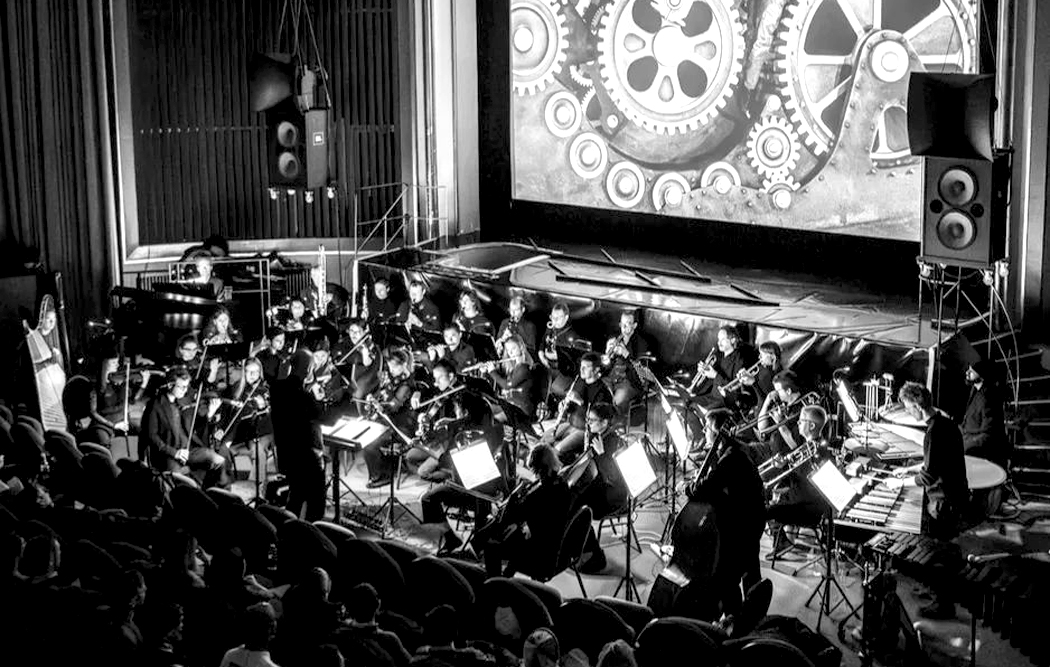
 It’s hard to believe, but Peter Jackson made the first Lord of the Rings movie 20 years ago. With those films, and with King Kong, Jackson became the field general commanding the largest forces and a budget rivaling that of the invasion of Normandy. That the films were as good as they were proves Jackson could overcome the disadvantage of so much money. Not everyone given such a purse could. The major movies of the decade were also blockbusters, a form that took over the studios, leaving behind small budget indie films to the do-it-yourself crowd. Lucky for all, digital cameras and editing made it possible to make meaningful films with almost no budget at all. The bifurcation of the film industry was nearly complete. 

Outside Hollywood, however, worthwhile films continued to be made by directors who actually had something to say. Increasingly, they said it in Spanish. Since the shift in the millennium, four of the putative top 10 movie auteurs are either Mexican or Spanish (Cuarón, del Torro, Iñarritu and Almodovar). We’ve come a long way from those cheesy old El Santo movies. 

Among the others are two very peculiar directors: Lars von Trier and Guy Maddin, both acquired tastes that I have acquired. I had to narrow it down to a film apiece for this list, but I would love to have included Maddin’s My Winnipeg

I’m afraid that when I retired in 2012, my moviegoing dropped precipitously. So, my list for the past decade is incomplete. I leave it to younger eyes to see the future. 

So, that’s my list. If I had made it tomorrow or next week, it would likely be entirely different. I’m sure I’ve forgotten some I wish I had included, and I might change my mind about some of those I listed. If I had made the list when I was 20, or 30, or 40, it would have reflected a very different — and unfinished — sensibility. Now, at 73, I’ve pretty well rounded off my sense of taste and esthetic. 

The list is mine and no one else should be blamed for it. And your list would undoubtedly head off in some other direction. Vaya con los dioses.