Archive

Tag Archives: classical music

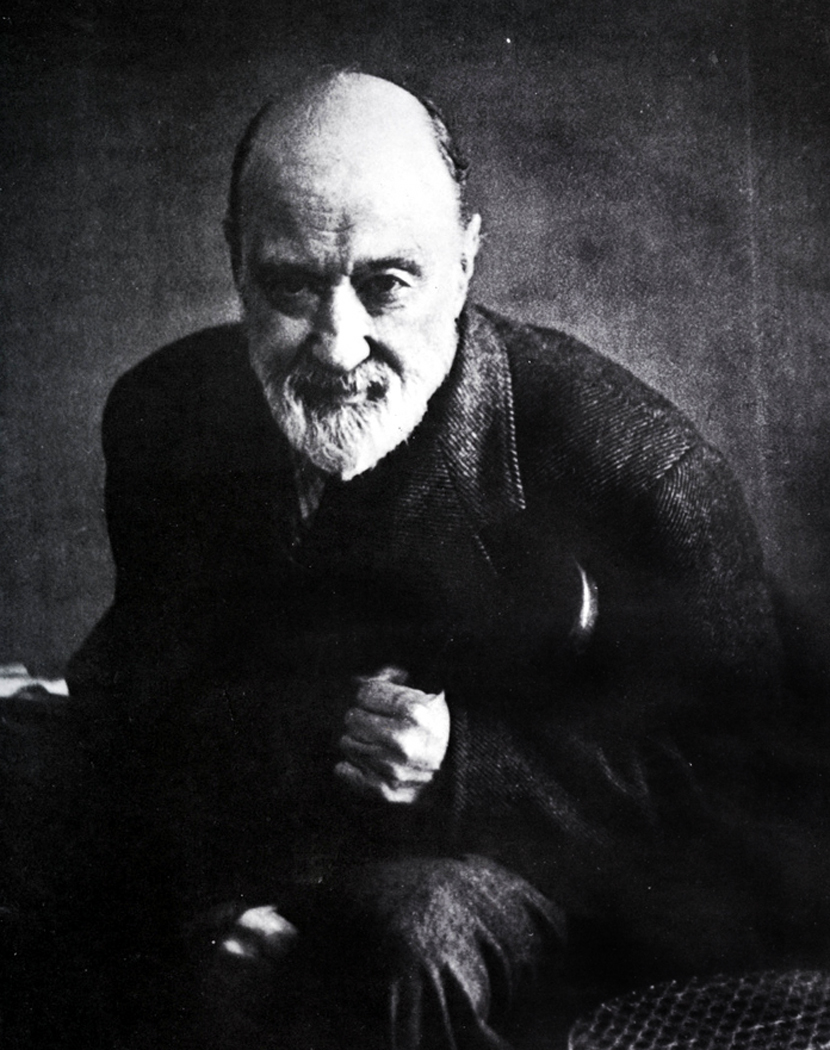
Ives portrait

The music of Charles Ives has been thought gnarly and noisy, difficult and dissonant. And it is, for sure. But it is also profoundly nostalgic and deeply American.

Instead of avoiding his music because it is so “modern,” you should let the music steep inside your consciousness and let it dredge up all your most inkept feelings of loss and childhood. Ultimately, his music is not so much avant-garde as it is heartbreaking. Fireworks, parades, summer vacations, church picnics — it’s all there in the music. And all the more potent for its evocation of the New England that Ives grew up in.

For Ives, New England was America. He was born from the soil of New England and finally was returned 79 years later to that same soil. He inherited the culture of Emerson, Thoreau and Hawthorne and turned it into sound.

His piano sonata Concord, Mass. 1840-1860, his Holidays Symphony and his Third Symphony (Camp Meeting) all grow from his New England roots, full of the marching-band tunes, patriotic airs and revival-meeting hymns he heard as a boy.

But one piece above all sums up his New England experience, and it is one of his easiest to digest and, therefore, most popular. It is Three Places in New England, and it describes in music three very precise landscapes.

Sometimes called the “New England Symphony,” it was written by Ives between 1903 and 1911. It contains three movements that are unforgettable impressions of the land and people.

Landscape plays a big part in the history of painting and hardly less in literature. We can visit the very square foot of land in Canada where painter Frederic Edwin Church stood to paint his monumental Niagara Falls or we can tour the Lake District that inspired William Wordsworth and Samuel Taylor Coleridge.

But it is not often that landscape inspires music. There is the occasional Moldau or La Mer, but scene-painting in sound is not often as precise as a painting. Smetana takes in the whole river, not a single view, and Debussy’s ocean is any ocean.

Yet Ives gave us in his Three Places three distinct sites that can be visited and enjoyed and compared with the sound portraits.

Shaw Memorial, Boston

Shaw Memorial, Boston

The SHAW MEMORIAL, Boston

The first section in Ives’ music is titled ”The St. Gaudens in Boston Common” and is subtitled ”Col. Shaw and his Colored Regiment.”

The St. Gaudens is a Civil War monument, considered by some people to be the best American example of memorial sculpture. It was created by Augustus Saint-Gaudens and unveiled in 1897 at the northeast end of Boston Common, across the street from the Massachusetts Statehouse.

The deep-relief sculpture commemorates the 54th Massachusetts Volunteer Infantry Regiment and its commander, Col. Robert Gould Shaw, who died in the Civil War.

The 54th was unusual at the time because its enlisted ranks were composed entirely of African-Americans. On May 28, 1863, the largest crowd in Boston’s history came out to see the 54th march off. They saw the thousand Black soldiers marching, accompanied by their White officers on horseback.

A souvenir of the day quoted Byron: ”Who would be free, themselves must strike the blow.”

Two months later, Shaw and a third of his command were dead, killed in the attack on South Carolina’s Fort Wagner in Charleston Harbor. Their charge had failed, but the soldiers had fought so well that they legitimized what had been considered a questionable idea: African-Americans in combat.

Shaw initially was buried in a common combat grave with his dead troops, and after the war, when plans were made to exhume the gallant young officer and give him an official ceremony in a Massachusetts cemetery, his parents refused, writing that they could hope for ”no holier place” for him than ”surrounded by his brave and devoted soldiers.”

Saint-Gaudens, America’s premier sculptor at the time, was commissioned in 1883 to monumentalize Shaw, and briefly considered a standard equestrian statue, but finally decided that the Black troops deserved the memorial as much as Shaw and devised plans to include them.

He wanted to represent the soldiers accurately; some were as young as 16, others were bearded grandfathers. So he hired African-Americans to pose for him and made 40 heads as studies. Sixteen went into the final bronze.

So Shaw rides his horse in front of a rhythmical line of marching soldiers, their heads, sleeping packs and rifles creating a visual drumbeat.

Ives’ 8-minute portrait of the monument is a diffuse, dissonant wash, as though not only the images of the Civil War but also its very idea were obscured in the haze of memory and history.

”Moving — marching — faces of souls! Marked with the generations of pain, Part-freers of a destiny, slowly, restlessly swaying us on with you towards other freedom!” Ives wrote in his score.

The monument was only a few years old when Ives began writing about it, and the layers of time show through in the music: the war, the remembrance of war, the causes and unfinished business of the war in a conflicting mass of sound.

Often, in the welter, you can make out a familiar tune: Marching Through Georgia or Battle Hymn of the Republic.

Then it all fades away into the nostalgic past.

Today, the sculpture is nearly black in its patina. It sits on its granite plinth looking vaguely like a plaque on a headstone. The tour buses stop, and the tourists pour out with their cameras. Some shoot the gold-domed statehouse, others shoot the St. Gaudens.

One bus unloads two dozen Japanese tourists. They also point their cameras. The amplified sound of a tour guide overpowers the street noise — but in Japanese — and I cannot possibly know what she is saying or what the Japanese tourists can make of the racial complexity involved in the war, the monument and American history.
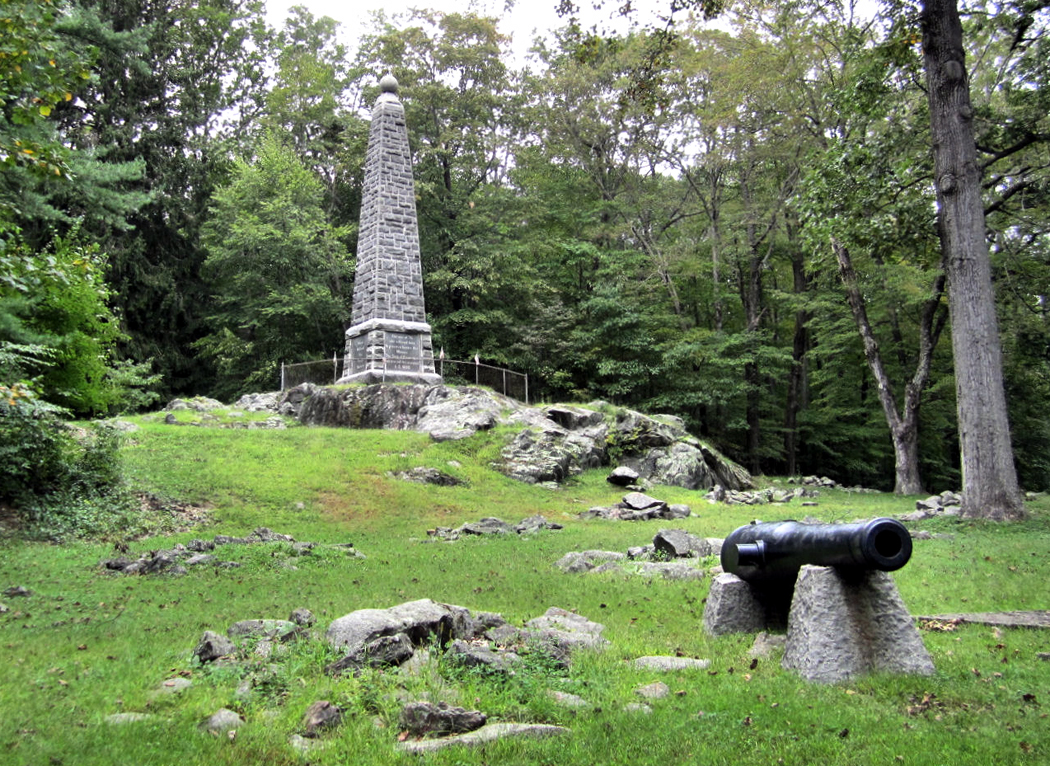
Putnam's Camp, Redding, Connecticut

Putnam’s Camp, Redding, Connecticut

PUTNAM’S CAMP

The second movement is called ”Putnam’s Camp, Redding, Connecticut.”

Gen. Israel Putnam, like most American generals in the Revolutionary War, was better known for strategic and tactical retreats than for victories. Charged with holding the Hudson Highlands in 1777, he lost Fort Monroe and Fort Clinton while backing up into Connecticut.

He and his troops wintered near Redding, Conn., in 1778, undergoing much of the same privation and hardship Washington endured at Valley Forge.

But Ives isn’t remembering the Revolutionary War in his music. Rather, he is remembering his childhood, when he used to visit the site of Putnam’s Camp and fantasize what it must have been like in the winter of 1778-79.

He also recalls the patriotic Fourth of July picnics he attended there and the brass bands that played.

”Long rows of stone campfire-places still remain to stir a child’s imagination,” Ives wrote.

What he hears is a grand cacophony of marching bands, playing different tunes at the same time. It is loud, bouncy and ear-blasting, getting louder and louder, with strains of The British Grenadiers and other songs, and ending in a misquoted bar and a half of reveille.

It is all a jolly 6-minute joke but the kind of music Ives loved best. ”Pretty sounds are for pretty ears,” he said, deriding those who wanted pleasant melodies from his orchestra.

Once, upset over the hoots and boos of an audience listening to some modern music, Ives got out of his seat and exhorted the unappreciative crowd to ”Stand up and take your music like a man!”

Putnam’s Camp is today a state park, half on the east side of Connecticut 58, half on the west. It is the eastern half that is most visited; it has a lake, a parking lot and picnic tables, and many of the people who come there probably give little thought to the Colonial army that once wintered there.

On the other side of the road, there is a path through the woods that passes the lines of camp hearths and a hilltop cemetery full of the unmarked graves of those who died fighting for American independence.

At the lake, a man — who looks like he’s playing hooky from work — casts his fishing line into the water. The fall remnants of waterlily leaves are curled and brown on the water, and a few Canada geese honk on the lawn.

The sky is overcast, and the woods are brown as tweed, with neither shadows nor highlights. And the old-fashioned New England Fourth of July patriotic and religious picnic is as much a part of the past as Putnam’s war.

Housatonic River, Stockbridge, Massachusetts

Housatonic River, Stockbridge, Massachusetts

HOUSATONIC at STOCKBRIDGE

The last section of Three Places in New England is perhaps the most moving. It is ”The Housatonic at Stockbridge.”

That is, the Housatonic River at Stockbridge, Mass.

The Housatonic is one of those alternating lazy and cascading streams that run from north to south, along which New England’s factories were built in the early years of the Industrial Revolution.

It begins at a small pond in Washington, Mass., and wends its way 149 miles to Long Island Sound at Stratford, Conn.

Along its banks are both towns and woods. Ives honeymooned in the Berkshires in 1908 with his new wife, Harmony, and one Sunday morning, they strolled near Stockbridge and the river.

”We walked in the meadows along the river,” he wrote many years later, ”and heard the distant singing from the church across the river. The mist had not entirely left the riverbed and the colors, the running water, the banks and the trees were something that one would always remember.”

The 4-minute movement that Ives wrote captures the quiet and the mist: It is ambiguous tonally and melodically, like a remembered dream, builds to a climax that evaporates abruptly, uncovering the quiet chords playing on the orchestral strings as if they had been sounding all along, but drowned out by the noise.

Like the strings in Ives’ Unanswered Question, which are drowned out by chattering woodwinds, the final quiet strings in Three Places are the eternal harmonies of nature.

Ives liked his piece well enough that he turned it into a song later, with words by poet Robert Underwood Johnson:

”Contented river! In thy dreamy realm — the cloudy willow and the plumy elm.”

It is an elegy to nostalgia.

Stockbridge has changed since the Iveses visited. It is now a prime tourist destination, full of gift shops and art galleries, with frozen yogurt. It is also the home of the Norman Rockwell Museum. Rockwell made his home there and used Stockbridge natives as models for his magazine-cover paintings.

The river eases in and out of town, crossed by four or five small bridges. The Housatonic is an average of only 35 yards across in Stockbridge, hardly more than a brook.

On a cloudy day in October, it also is hidden by the grayness. I have visited every spot along the river in town and enjoyed its quiet but missed its beauty.

Until late that afternoon when I stand on the hill by the Rockwell Museum looking over the river out at Pleasant Hill and a chink in the clouds widens, throwing a spotlight on the meadow across the water. The bare winter sycamores along its banks suddenly stand out like neon, and the band of sunlight sweeps from left to right, finally in its passing leaving the scene in gray once more.

And the riverbed and the colors, the running water, the banks and the trees were something that one would always remember.

DEEP TIME 

The search for Ives’ three places has turned into a pile of time on time, present on past, past on deeper past, all wound up in a single point of geography.

It is as if the Indians, who were in New England before the Pilgrims came, had a deeper understanding of reality. When something happens, they believed, it is always happening. Time is not a straight line but a basket full of harvest, all piled in together.

So that I cannot see this single piece of real estate, the Housatonic, the Yankee military camp or the St. Gaudens statue, without thinking of history, memory, my past and my nation’s past, all balled up into a single, complex thing.

All happening at once and all happening in my eye, looking at the past.

And I know it is not just true for these three places, caught in Ives’ web of meaningful noise, but for all places and all times.

Charles and Harmony Ives

Charles and Harmony Ives

CHARLES IVES

Charles Ives is the father of American music.

Before him, what American composers wrote for the concert hall was a dim reflection of European — and especially German — art music, with its sonatas and symphonies. After him, it was possible to feel truly American.

You can see his influence in the folk tunes that show up in Aaron Copland, the spare orchestrations and open harmonies of Roy Harris and the avant-garde fun John Cage has with noise.

Ives was a funny duck. Born in 1874, he studied composition at Yale, but instead of becoming a poverty-stricken composer, he became a wealthy insurance executive. Ives and his partner, Julian Myrick, founded a successful agency that pioneered much of the industry’s modern practice. Myrick had the business sense, Ives brought the creativity.

Together they prospered, ultimately becoming the largest insurance agency in America. In 1929, the firm sold $49 million worth of insurance.

But he was also a genius in music, taking little stock of what he learned from his stuffy college professors and feeding large on the oddball music education he received from his father, George Ives, who was bandmaster for the small Connecticut town of Danbury.

George Ives loved to experiment with sound, playing with microtones, out-of-tune instruments, polytonality and organized noise. That enthusiasm for experiment, which in George was a variety of practical Yankee inventiveness, became for his son a creed and a muse.

Yet although Charles Ives’ music was more modern than Stravinsky’s and more dissonant than Bartok’s, he really was not concerned with fitting into the long history of European art music. It is obvious in the music; Ives was not writing about modern things.

For although the music is filled with ear-splitting dissonances, it is unabashedly nostalgic. Ives felt a powerful nostalgia for the past — his past — and his music drips with bits of the music he heard when he was a boy: old hymn tunes and marching-band music.

No matter how loud and incoherent Ives sounds at first, at long last, it settles into Bringing in the Sheaves and Columbia the Gem of the Ocean — not whole but in snippets, as if half-remembered.

Ives wrote the bulk of his music in the first years of this century. His business and his ailments — he suffered from a poor heart muscle — kept him from concentrating on composition after 1918.

Or perhaps, as Ives’ early biographers, Henry and Sidney Cowell, suggested, ”The war was a shock of the first magnitude to a man whose life was based on his confidence in human progress.”

He lived on until 1954, becoming for many American composers a kind of father figure and rallying point.

Academy of the Overrated

In Woody Allen’s Manhattan, Mary (Diane Keaton) and Yale (Michael Murphy) devise what they call the “Academy of the Overrated” for such notables as Gustav Mahler, Scott Fitzgerald, Isak Dinesen and Carl Jung.

“Lenny Bruce, Can’t forget him, can we?”

“How about Norman Mailer?”

“I think those people are all terrific,” Woody argues back.

They go on to name Heinrich Boll, Vincent Van Gogh and Ingmar Bergman.

“Gee, what about Mozart?” says Woody. “You guys don’t wanna leave out Mozart.”

Suffice it to say, none of these artists is overrated. Reputations come and go, and sometimes an artist lauded in one generation is ignored in the next. But real work by real artists, sweating blood, can never be simply “overrated.”

Some may be overexposed, however. There is a problem in hearing a piece of music too often, or seeing a painting or a play too many times, so that familiarity breeds contempt.

Take Beethoven’s Fifth Symphony. Can anyone actually hear it anymore? It has been so overplayed for the past 200 years, that it no longer astonishes us, but rather fits into the comfortable, velvet-lined depression we have made for it in the jewel case of classical music. It is too well known to be heard.

Or Michelangelo’s Creation of Adam from the Sistine Chapel ceiling. How many angels support the Creator in his cloud of flowing robes? Without checking, you don’t know, because the picture has been largely reduced to our recognition of the electric spark that invisibly pops between the two mated fingers at the center of the scene. The picture as a whole doesn’t much count: The only thing that we think about is the punchline.

Michelangelo Creaton of adam

Or maybe the snigger we pretend not to snig at the tiny peanut between Adam’s immense, muscular thighs.

These things are not “overrated” any more than their creators are. They are simply overexposed.

Of course, the symphony a great piece of music – one of the greatest – but heard so often, we cannot absorb it anymore. It is nothing but “dah-dah-dah-DUMB” now.

It is a problem many things face in life: Too much of a good thing and we become vaccinated against it.

Pachelbel’s Canon, Ravel’s Bolero, Tchaikovsky’s 1812 Overture. They are all overexposed.

The Nutcracker is a fine ballet, with great music, but when it’s performed 23 times every December, it wears out its welcome for the dance aficionado. It becomes Muzak.

The eye-rolling is a response that many things get, and not just in opera and classical music.

— In pop music, Led Zeppelin’s anthem, Stairway to Heaven, is now a joke, and ripe for snarky parody. Bruce Springsteen’s Born in the U.S.A. has been ground into the dust by overuse, and usually for reasons at odds with the song’s actual content.

— The TV show, M*A*S*H, has been in reruns for so long, that the thought of another 30 minutes with Alan Alda can drive us to emigrate to Siberia – where they probably run it dubbed into Russian or Yakut.

— Robert Frost’s Road Not Taken, or Stopping by the Woods on a Snowy Evening are turned into one-dimensional parodies of their author. Both are subtle poems with equivocal readings, but not in the popular mind.

There are others:

— Ingmar Bergman’s Seventh Seal or Orson Welles’ Citizen Kane.

— The Seagram’s Building in Manhattan. It has come to stand for all the bland steel-and-glass International Style architecture that followed, but there’s elegance, proportion and detail there.

seagram's building

The Beethoven’s Fifth dilemma even extends to typefaces. Everyone’s computer comes with the Helvetica font installed. It’s everywhere, to the point one designer always calls it the “dread Helvetica.”

But it is an exceptionally well designed typeface, which is exactly why it is so miserably overused.

And more:

— Ahi tuna.

— The New York Yankees.

— The Mona Lisa.

— The Grand Canyon.

The problem is that it isn’t just that familiarity breeds contempt, but that it breeds invisibility. Overexposure itself wouldn’t be a big problem – we could just refrain from programming such things for a while – but something else happens: Wide dispersal of anything in popular culture transmutes it from an experience to a reference. All you have to do is refer to the Hallelujah Chorus and your audience “gets it.”And so, God’s creation of Adam turns into a potato chip ad.

Creation potato chips

It keeps us skimming along the surface of things.

You have to pay attention, to react deeply enough to get the most out of a poem. Otherwise it becomes possible that The Road Not Taken, or Sylvia Plath’s Daddy become completely so decontextualized that we can refer to a phenomenon without registering the emotions, or understanding its complexity.

Another way of putting it is that the familiar work becomes a shorthand. When we want sad, we go to Samuel Barber’s Adagio for Strings, when we want momentous, we go to Strauss’s Also Sprach Zarathustra. Never mind that the originals are complex and layered.

They become a shorthand for “funny music,” or “dramatic music,” or “ironic music.”

When referencing or quoting these things, it’s not about the original anymore, but about a new meaning that’s been given to it. Some of these things – which we may only know as a catch-phrase, joke or a snatch of music – are never considered on their own terms and we forget the quality of the original.

The Godfather, a sprawling multi-part epic, gets reduced to Marlon Brando mumbling. And the image of Marlon Brando mumbling now means something else – a cultural stereotype of the Italian Mafia or the promise and perils of method acting.

So, Beethoven’s Fifth becomes a shorthand of: 1. Classical (i.e. “longhair”) music in general; 2. “Fate knocking at the door;” 3. The granitic monumentality of “Great Art” (and conversely, its ponderousness, compared with pop culture); 4. the triumph of the finale over the hardships of the beginning movement, and a template for symphonies to come for the next hundred years; 5. The morse-code ensign for Victory in WWII (to the point that it even becomes, in altered form, the wartime fanfare at the beginning of Fox films).

It is also the theme song to OCD. (In the seven or so minutes of the symphony’s first movement, you hear the four-note rhythm 382 times.)

So, can we actually hear the damn thing anymore? It takes a concerted effort of will to listen to it “again for the first time.”

But to hear, or see, how good something it is, it has to be more than a tic in the cultural compost pile. You have to actively pay attention. You have to engage. Art is not a warm bath.

Certainly, this is one of the wellsprings of any contemporary art: the need to make art new, fresh and meaningful, to break through the cliches that the older art has become. We need to keep making it new.

Sometimes, that comes in the form of a new performance practice for the older music, as when a Roger Norrington or John Eliot Gardiner takes up the Beethoven Fifth and plays it at race-course speed, glossing over the speed bumps that its composer put there. It gives us a fresh take on an golden oldie.

But is that enough? Perhaps Gardiner misses something essential from the original by tossing out the 200 years of tradition behind it.

There will come a day when the new, zippier performances of 19th-century classics becomes so old hat, a new generation will discover the depth in performances by Wilhelm Furtwangler or Willem Mengelberg. And what now seems old will be fresh once again.

beer creation

TOP 10 BEETHOVEN FIFTHS

Beethoven’s Fifth – A number of Fifth Symphonies could make this list: Tchaikovsky’s, Sibelius’s, even Mahler’s – at least the Adagietto. But Beethoven’s is the champ, so familiar it is almost impossible to hear anymore.

‘Also Sprach Zarathustra’ – The opening “Sunrise” section has become the de facto theme song of any momentous introduction, most famously in Stanley Kubrick’s 2001: A Space Odyssey, but also for former professional wrestler Ric Flair’s entry into the ring.

‘Nessun Dorma’ – This tenor showpiece from Puccini’s Turandot shows up everywhere from car commercials to the theme song of the 1990 FIFA World Soccer Cup and in so many films: The Killing Fields, and Bend It Like Beckham. Aretha Franklin even sang it for the Grammies.

Pachelbel’s Canon – The bane of classical music radio stations everywhere. When satirist Peter Schickele made up his mock radio station for his PDQ Bach series, he called it WTWP – “Wall-to-Wall Pachelbel.”

‘O Fortuna’ from ‘Carmina Burana’ – The powerful choral piece once expressed Medieval violence in movies such as Excalibur, and the torments of drug addiction in Oliver Stone’s The Doors. Now it sells Gatorade and Old Spice after-shave. It’s everywhere.

Vivaldi’s ‘Four Seasons’ – There are 220 CDs available currently: Everyone with a fiddle has recorded it, and there’s even a version for Japanese kotos and another for pennywhistle. Dude, he wrote 600 other concertos. They’re good, too.

Bach’s Toccata and Fugue in D-minor – Bach wrote this improvisatory organ work to test new organs; now it tests our patience. It shows up anytime you need “spooky” music in a haunted house, and it is also the “inspiration” for much of the faux-organ music in Phantom of the Opera.

Ravel’s ‘Bolero’ – The most demoniacal offender: Not only has Bolero been repeated endlessly in movies, TV commercials and ice-dancing routines, it repeats endlessly in any performance: The one tune over and over till it drives you nuts. The New York Times suggests Ravel was in early stages of frontotemporal dementia when he wrote it. We give it a “10.”

Hallelujah Chorus – Another movie cliché: When the hero or heroine finally understands, or opens the door to discover something unexpected, cue the Hallelujah Chorus.

‘Adagio for Strings’ – Once voted the “saddest classical” work ever, it has become the movie cliché of all times, giving emotional weight to Platoon, The Elephant Man, Amelie, Lorenzo’s Oil, S1m0ne, and even Michael Moore’s Sicko. The Internet Movie Database lists its use 26 times.

There are two pieces of music that never fail to set off the waterworks in me.

I’m sure we all have some signature tune that turns us into maudlin fools crying into our beer.

Lots of music can have that effect, when you’re in the right mood. Mozart is full of such tunes. No one ever wrote about the forgiveness of human foibles like Mozart. It isn’t only in his “forgiveness arias,” but the same tone of music turns up in piano concertos and wind sextets. He had some tap into divine understanding.

When I’m in the right mood, Mozart wells up in my throat. But heck, if I’m really depressed, Stars and Stripes Forever can set me off.

But I’m talking about something that doesn’t require the right mood to work.

Anyone playing Shenandoah, for instance. I don’t care what the arrangement. You can play it on a chorus of kazoos and trombones. You can play it calypso style on steel drums — the moment I’m transported “across the wide Missouri,” I’m reduced to a blubbering mass.

Clearly, I’m responding to some sort of deep seated nostalgia, some trauma of childhood or failed romance. But strike up the tune and I’m like some drunk in a bar yelling “Play Melancholy Baby.”

Actually, I know what it is with Shenandoah: I know the Shenandoah River and the great valley it troughs through in northern Virginia, heading north to join the Potomac at Harper’s Ferry.

It is an especially beautiful river, and only more so on a cool autumn morning when a low fog hangs over the water and the sycamore trees along its banks seem to grow out of white nothing.

The Shenandoah Valley separates the Blue Ridge in the east from the great ridges of iron- and coal-laden mountains to the west. The river rises in twin forks, one on either side of Massanutten Mountain, which rises like a long, low bread loaf in the middle of the valley.

I used to live in the Blue Ridge; I have just moved back. It was the most beautiful place I ever knew. I missed it.

And when the song says, “I long to see your smiling valley,” I knew just what it meant. “Tis seven long years since I last saw thee,” the song continues. It was 25 years since my wife and I lived in the Appalachians.

We lived in Arizona, which has a beauty all its own, but is different from the Blue Ridge. And when the song reaches its climax, “across the wide Missouri,” I knew that I was on the wrong side of the Missouri, too, in a kind of self-imposed Babylonian captivity.

“By the waters of the Rio Salado, there we sat down, yea, we wept.”

The song speaks to me — as it does to so many other people — of that lost Eden we know we can never regain.

And so, I blubber.

But that second tune that sets me off is something different.

It is Christoph Willibald Gluck’s Dance of the Blessed Spirits.

Gluck was a Czech-born composer of the 18th century who rebelled against the ornate and conventional opera of the time. His opera, Orfeo ed Euridice, tells a simple myth in simple music. Almost too simple.

Two set pieces from that opera still are widely known. The Dance of the Furies was used behind the chase scene in almost every Hopalong Cassidy movie ever made. In those “B” Westerns, budgets didn’t allow new music, so they played old classics behind the action. The music was loud and furious.

But Dance of the Blessed Spirits was something else: quiet, almost  static, and with the grace only utter simplicity can convey.

Two flutes play the song-like melody over the accompaniment of strings. Chords change slowly and never stray from simple diatonic harmonies.

And when the tune’s first phrase reaches conclusion, it stretches out in a feminine ending, a slow suspension off the beat. Nothing is insistent in the music, but rather, like the Grecian maiden on Keats’ urn, it seems suspended in time, permanently in a state of grace.

I melt when I hear it.

But its power comes from the same kind of emotion that drives Shenandoah: a sense of loss and a sense that somewhere there is an Eden where spirits are blessed.

Yet the tunes are very different, too. My reaction to Shenandoah is personal, very personal. Its power — for me — comes from my biography. I don’t expect everyone will react the same way.

The Gluck, though, has a more ritualized, formal power. It comes from its stylization.

For Gluck was aiming not for biography, but for the universal.

Art’s emotional wallop often comes not from its literal portrayal of raw feelings, but from the Apollonian distancing and formalization of those feelings. By understatement, it draws up a skeleton that we flesh out with our own experience.

The so-called Romantic artist often fails to exactly the extent he overplays his hand. Such an artist wants us to feel his feelings.

The Classic speaks not of his personal emotion, but of human emotion. Hence, they are our emotions.

In other words, when I hear Shenandoah, I feel the turns my life has taken; when I hear the Gluck I weep for the inescapable lot of humankind. The one traps me in my ego, the other frees me from it.

This is the power one feels in Homer, in Joyce, in Flaubert. It is the reason Haydn is still played along with the more personal Berlioz.

And it is the power at the end of Beethoven’s immense Diabelli Variations, those 32 monumental changes on the “cobbler’s patch” waltz sent to Beethoven by music publisher Anton Diabelli, who asked the great composer for a variation he might publish.

Through those variations, Beethoven dives deep into some of the most personal music he ever wrote, with adagios of desolation and pathos, culminating in a clattering, raging fugue that is as hard to listen to as to play.

But he winds up in Arcadia, just like Gluck: His final overwhelming variation is a dignified minuet, which takes all the terror and anger, all the humor and misery of the previous 31 variations and sublimates all that personal angst into an Olympian, stylized dance.

It is this ritualization of the overwhelming emotions that make those emotions important: The personal is mere autobiography. The ritual dispenses grace: the freedom from ego.

It is why our most important thoughts and feelings are turned into meter and rhyme, why our bodies move to the numbers of choreography, why the novel is the “bright book of life.”

And why art matters.