Archive

Tag Archives: colonialism

Over the past dozen years, since my retirement, I have written and posted some 730 blog entries. But I have started many more than that. Some just get forgotten when something more urgent appears; some end short because nothing longer needs to be said. Some just led nowhere. Others began as lists, but ended as lists, unfilled by full sentences. And still more still wait to be written. 

The odd thing, to me, is that there is always something new to write about. With 75 years of life packed into this aging piece of meat, there are endless stories, bits, adventures, ideas, experiences, disappointments and discoveries to draw upon. The well keeps refilling. 

But here are a few fragments that never filled out beyond their early inspiration. Maybe I will get around to it, sometime. 

What is it that women see in men? Because I am a man, I know what men see in women, but I have a hard time reversing the equation. 

I am not here talking of sex or the ardor of the loins — understanding is not required for that; it is simple, direct action — but the desire of women to share company with men. What is the reward for that? Women are so much more interesting, and interested in such a variety of vital issues. Men seem interested only in sports and politics, neither of which carry much import in the lives we live. As I used to say, “Politics answers no question worth asking.” 

____________

2. I was a writer for many years, making my living from putting words against words, hoping to find the best way to express something I hoped would be genuine. 

Recently, my old employer, Gannett, made a new hire, and announced it in such a clot of management-buzz that I got a bad case of hiccups. Newspapers used to have editors, now, with middle management bloated beyond belief, while laying off reporters, photographers and copy editors, what they have is a “Chief Content Officer.” 

The announcement came with a gnat-swarm of buzz words, which may mean something to other management types, but not anything penetrable by actual human beings:

“ ‘We are thrilled to welcome Kristin to Team Gannett to champion innovative storytelling opportunities and develop strategic content initiatives to expand our audience and drive growth,’ Reed said in a Monday news release.”

“Strategic content initiatives?” You would think that those people who run a newspaper would have some sensitivity to language. If I had written prose like that, I would have been out of a job. 
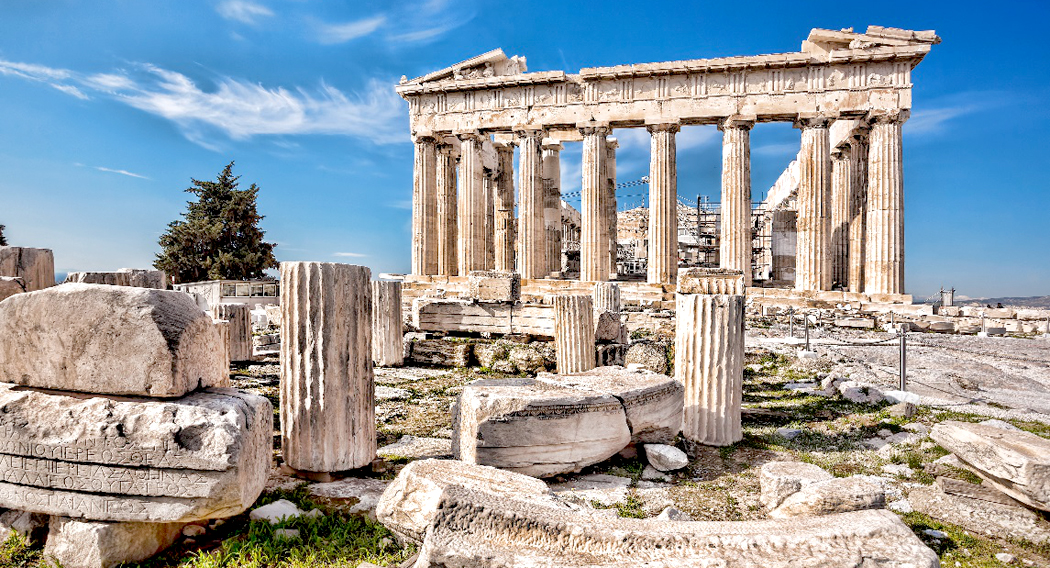
3. The glory that was Greece and the grandeur that was Rome. Or maybe not so much. 

We owe a great deal to ancient Greece. At least, we pay lip service to our debt of democracy, philosophy, literature, science and not least, saving European culture from being overrun by that of Persia. But there are a host of words that describe the part of ancient Greece we would rather forget: Misogyny, xenophobia, pedophilia — come to us dressed in Greek etymology, and descend to us from Greek ideas and practice. We need to address some of the less attractive legacies of that Golden Age. 

Such as patriarchy, idealism, imperialism, colonialism, religious intolerance, cults, ethnocentrism, slavery. To say nothing of understanding sex as an exercise in dominance. And while we may think of Plato as the source of all philosophy, remember that he despised democracy and was an ardent believer in totalitarianism. 

____________

4. Columbus Day is a month away. I expect more anti-Columbus newspaper columns, art, a few tracts and manifestoes and perhaps a new opera. Much current art that tries to be political is really just polemical. To espouse any ideology is to strip life of its complexity. Yes, Columbus was a bad man and the evils he brought with him are real. But instead of preaching to us self-righteously, there are real problems to be discussed, such questions as, “What is in the nature of humans that causes territorial expansion, that causes them to make invisible the people they subjugate, that causes them to divide the world into Them and Us? Why does the boundary of ‘us’ expand and shrink periodically? Why is a world once headed in the direction of one-world nationhood, where the ‘tribe’ is humanity — why is that world now constricting so that nationhood is more tightly defined by blood, so that Serb kills Croat, Azerbaijani kills Armenian? The ethnic separatism that is emerging worldwide is, I believe, a source of exactly the same intolerance that the European West has for so many centuries visited on the rest of the world. Will it devolve to the point that Chiricahua despises Mescalero, or Venetian rises to kill Neopolitan? At what point does a coalition of interests grow from our recognition of our shared humanity?”

Questions such as these are avoided by nearly all political diatribes, whose authors prefer to point fingers and whine like grade-school tattle-tales. If a short perusal of the history of the world teaches us anything, it teaches us that war, inhumanity, violence, intolerance are universal. It isn’t only the Hebrews with their God-ordained genocide of Moabites and Amonites; it isn’t only the Pol Pot regime in Cambodia; it isn’t only Hitler killing Jews and homosexuals; it isn’t only Japan subjugating Manchuria; it isn’t only Custer at Sand Creek; it isn’t only the Hopi at Awatovi.

No one gets off the hook. Native Americans are no more righteous in this than anyone else, from Inca to Aztec to Lakota. If artists and writers chose to look a little closer, they could use Columbus as a metaphor for something richer, profounder, truer. They could have seen that Columbus was not sui generis, but rather representative of the species.

As it is, they came off sounding self-righteous. And no one self-righteous ever has much self-knowledge.

____________

5. Stasis is the enemy. Or rather, because stasis is utterly impossible, the idea of stasis is the enemy. It is the fatal stumbling block of every religion, political philosophy and marriage that has ever existed. Over and over, hundreds, thousands, millions of people die because someone promised them that if we only do things my way, everything will be forever hunky peachy. 

It is the lie behind the “original intent” argument espoused by some Supreme Court justices, and behind the infantile promises of politicians — most on the right, these days — that their policies will “finally” fix things and make them good forever. (In the past, it was the left and Marxism that promised a final end of historical change. It is not the sides one takes, but the phantom of permanence). 

The problem is that stasis is always temporary, which makes it not stasis. I.e., stasis is a pipe dream. 

____________

6. In America, “no” has become a dirty word. Americans like the positive attitude, the gung-ho approach to things. We feel actual moral disapproval of the word “no.” 

It can make your life easier and simpler. It can shake a load of guilt off your back. Although people talk of simplifying their lives, you can never simplify by doing something, you can simplify only by not doing something.  Just say no. It is the yang to “yes’s” yin, and the universe cannot function without both. 

“Yes” is kind of namby-pamby. “Yes” doesn’t want to hurt anyone’s feelings. “Yes” is go-along to get along. 

“No” is emphatic, direct, take-no-prisoners. “No” means no. Every change and improvement in life, every revolution begins with a “no.” 

In some way, every important historical development starts with somebody or some group saying no. Dissatisfaction, after all, is the great inspirer of humanity. If we were all duck happy all the time, nothing would ever get done.

7. I am 75 and am near death (Oh, I’m generally fine, but old and weak) and I think about non-being quite a lot, but not with fear, but a kind of objective interest in the whole idea of no longer hearing birds or feeling the breeze on my skin. Death seems to me a natural “rounding off” of a life and not something that I need to hold in my mouth like a tough crust of bread. 

I saw Carole take her last breath. I felt her turn instantly cool to my touch, like I was touching unfired clay. She ceased being. It was uncanny. My grief was incalculable — and it still is, although worn down — but it felt as inevitable or as natural as the coming of winter. I know the same awaits me — “To die — to sleep no more.” No dreams. Nothing. 

I didn’t sense a spirit or soul leaving her body, just her body ceasing to produce her being, like a light bulb blown out. We don’t ask a burnt-out lightbulb “where did the light go?” It ceases being generated. 

____________

8. One of my problems with Rilke is that I have no use for categorizing angels and animals. Angels don’t exist — not even as metaphors for me — and I accept that I, as a human being, am an animal. I am not so fast to accept that no animals know they are going to die. We have no evidence for that assumption. Perhaps they do; perhaps they don’t. I suspect that some, such as porpoises or whales, may very well have some concept of death. I remember when we human beings were so sure that what separated us from the beasts was tool-making. Ah, but then we discovered how many other animals forge tools.

9. It has seemed to me that part of the German soul is to speak in general and categorical terms, in ideas, rather than in things. It leads to mistaking words for reality. Logic has its own logic, but it is not the logic of the world. (Whole rafts of philosophy, including my hated Plato, only seem to work in words. You can prove with logic that Achilles can never catch the tortoise, but that ain’t how it works in reality.)

But I fear that they are much more about language than about experience. And that is my problem in a nutshell. I made my living with language, and I love words to distraction, but the older I get the more I am convinced that language is merely a parallel universe, with an order and meaning of its own, roughly mirroring the world, but never actually connecting, never touching the pulse of reality. I know, it’s all we have, but I still counsel wariness. 

10. “These fragments I have shored against my ruins.” Why write at all? It is a question I have wrestled with all my life. Do I have anything worth saying to be value to anyone else? Dr. Johnson said that “nobody but a blockhead ever wrote except for money.” Well, I’m a blockhead: I no longer get paid to string words together. But it doesn’t seem to come as a choice. Some may choose to write; I write with the same volition as I breathe. 

Early in my life, words were thin and sparse; it seemed as if there were a lack of hydrostatic pressure from within: I needed to fill myself first. But after living a certain time, the inside pressure grew and it had to come out. It became a fountain I could not stop if I had wanted to. And the well was constantly recharged. 

Now I am old, and travel becomes difficult, habits become settled, reading more and more becomes re-reading. In retirement I can no longer afford to attend concerts, plays and dance the way I used to. The incoming has slowed, and I suppose the outflow has dwindled in response, but the backpressure is still there. Hoping to cease not till death.

World Map 1689Stuart got a job recently. Well, a part-time job — as adjunct faculty teaching a history course. I’m not sure how he got it; he doesn’t have a degree in history. But he said he talked the department head into it by describing his take on world civilizations. He did his Stuart dance for his dinner.

“Well, I said I wanted to teach world history a different way,” he said to me over lunch the other day. “I wanted to look at it through the lens of geography. It explains so much.”

Mostly, he said, he just wanted to try organizing the Big Picture a different way, because looking at something differently opens a subject up for fresh insights. At least, that’s my stuffy way of saying what he was up to.
aegean sea map

“From even prehistoric times,” Stuart explained, “human cultures have organized themselves in two ways — either around a body of water or in the middle of a chunk of land. These two societies tend to approach the rest of the world differently.

“You can see this in the signal conflict of the classical world — the Persian Wars. We may think of Greece as a nation, like France or Argentina, but back then, Greek civilization was a constellation of cities and islands around the Aegean Sea. It was built facing the water, so to speak, and like the ancient Lake People of Switzerland, they looked across the pond and saw trading partners. They built ships and launched out across the water to find their likeness on the far shore.

“Rome was built around the Mare Nostrum, the Mediterranean. In the Middle Ages, the Hanseatic League was all about trade.

Persia satellite view“But Persia was a continental power, built on land, surrounded primarily by land, where other people may have been trading partners, but they were primarily a threat. All through the Middle East, you have one conquering nation after another invading their neighbors. Their gods told them to. Persia, like the standard model continental power, wanted to expand, to push its borders out farther, absorb the neighbors to nullify the threat.

“These are two fundamentally different ways of approaching the outer world, and those two ways govern so much of what happens in history.”

“And this is what you told the department head?” I asked. “And he bought it?”

“She did,” he said — which explained a bit more about Stuart’s persuasiveness. If you know anything about Stuart, you know he approached the world, not so much by riparian or continental cultures, but through the interaction of men and women.

“And so, now you’re teaching world history to students at a two-year school.”

“It’s great, although class is rather early for me: It starts at 10 every Tuesday and Thursday morning. But I can get up for it; it’s been really fun so far.”

“It’s always fun until the grading starts,” I said.

“I haven’t got there yet,” he said. “But I’ve assigned the first paper.”

I remembered my time teaching, and the surprising papers that were turned in. I used to read the really bad ones at dinner parties for fun; we all had a good laugh. Bad grammar, misunderstood concepts, lazy ideas. Once, in an art history class, I had 16 students and 16 different spellings of “Coliseum,” and not one of them correct — despite the fact there were two acceptable spellings: “Coliseum” and “Colosseum.” I knew Stuart was in for a disappointing surprise when those papers were turned in. Indus river map

“Think of all the early civilizations,” Stuart went on. “Egypt on the Nile, the Indus River civilization, the Chinese living along the Huang Ho and Yangtze. Later, you have Vikings around the Baltic Sea and North Atlantic. China is interesting, because it starts as a riparian civilization, but as it grew, it turned continental. It gives a distinct flavor to Chinese history.”

“And the continental?” I asked.

“Think of the Mongolian Hordes,” he said. “Or early American tribes conquering each other. Persia, the Ottomans, Moguls.

“If you look at pre-colonial Africa, you see some cultures are riparian, like Ghana, and some are continental, like the Berbers. The distinctions have been blurred over by the pie-slicing of the continent by its colonial powers into supposed nation-states mimicking those of Europe. Quite unnatural. But they were there: riparian and continental ways of looking at the world.

thirteen colonies“I thought, this explains a lot about us,” he said. “About America. When we were founded, we were an outpost on the other side of the pond. We looked across the Atlantic and saw our compadres there. Europe and the New World were built around the ocean, whether it was England and the 13 colonies, France and Quebec, or Spain and Latin America. It may be a distortion to consider the interrelation between the Old and New Worlds as trade, considering we didn’t really give the native peoples a choice in the matter, but from the point of view of the colonizers, who really didn’t take the original inhabitants seriously, they saw themselves as Europeans trading with their parent nations.

“And for the 13 colonies, when they were still colonies, they were Englishmen trading with England, later making alliance with France. We began, like China, as a riparian society. There were even laws passed to prevent settlers from moving west of the Appalachian Mountains, to keep it a riparian culture.

“But we expanded anyway and became, over time, a continental power. Expansion was seen as not only good, but necessary, even ordained by God. This change explains the current political landscape.”

“How so,” I said, innocently, while waiting for the punchline.red and blue

“Think about it. Where are the blue states and where are the red? By and large, the blue states are on the edge of the continent, both on the Atlantic and and on the Pacific, or around the Great Lakes. The red ones are in the center, where they remain continental in outlook, fearful of foreigners and the core of isolationism.”

“I thought the difference was between the agrarian states and the urban states,” I said.

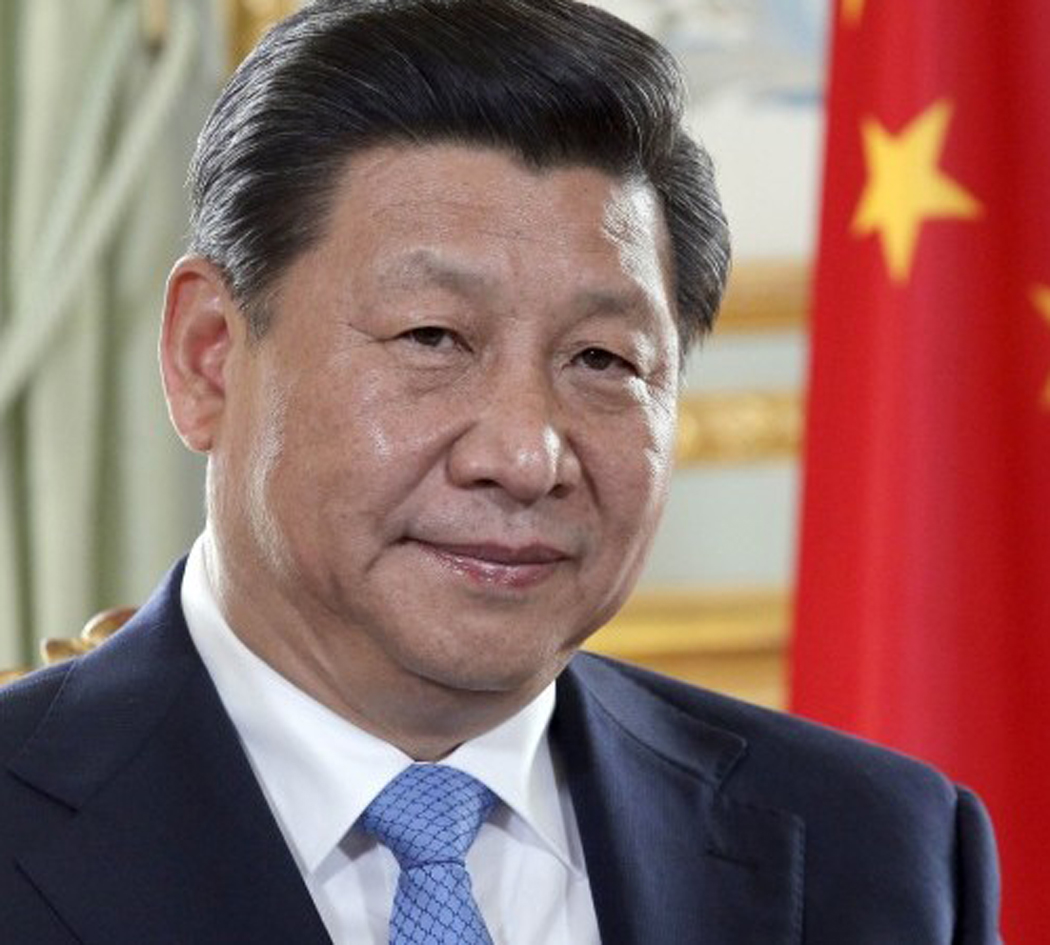
xi jinping 2“Certainly. My outlook isn’t the only factor in this. But it is there, not often mentioned, and is in part also the reason the coastal states built their economies on trade and the interior states on farming and ranching. I’m not making the case that this theory explains everything, or that it is the only thing that made us what we are, but I am saying that it helps explain it, and that you can see the same forces acting out elsewhere in the world. Maoism was continental in China, but the coastal cities of China were built on trade. The new China of Xi Jinping has grown as it has seen its place in the larger world — and as a riparian economy, not a continental one. The burgeoning economy is largely a coastal event. The Chinese poor are largely in the interior.

“And so, blue states look outward to the world, the red states are xenophobic.eurasia

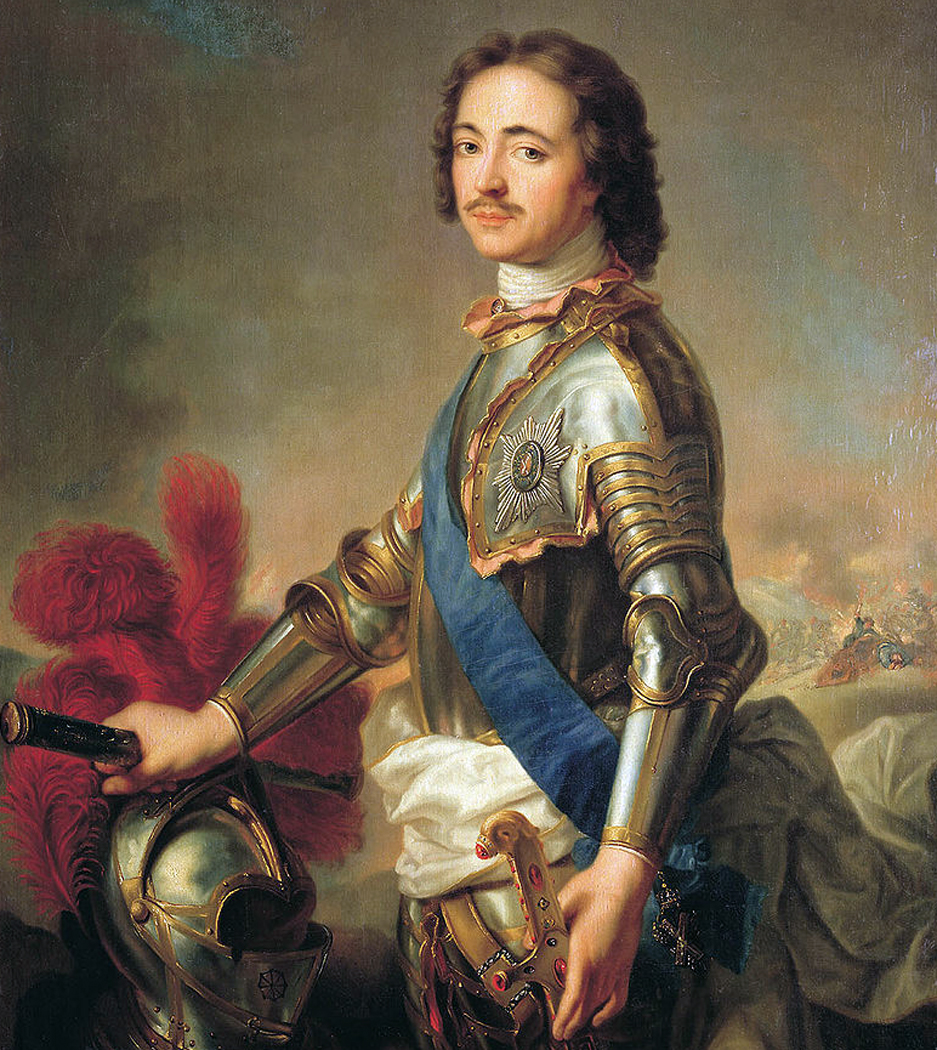
“Look at Russia,” Stuart said. “They are a quintessential continental power, hunkering down in the middle of Eurasia. Invaded by Tatars, Verangians, and Teutonic Knights, they came to fear the outside and built a national identity on creating a fortress mentality, and conquered neighboring lands to make redouts to protect the national core from attack. Peter the GreatPeter the Great attempted to turn Russia into a riparian culture by building his capital on the Baltic, hoping to become part of the European world of trade. But since then, the country has retreated to Moscow and glowered out at the rest of the world. It’s how the Union of Soviet Socialist Republics accrued, and after a brief period of glasnost, why PutinVladimir Putin has resumed the essential Russian inwardness, and his need to expand the borders again to build up those protective buffer nations around the national heartland. Lookout, Ukraine.”

I wondered if Stuart taught any of this chronologically, or was the whole course built around this theory. Were there any parts of history unrelated to his bifurcation of world outlooks.

“Oh, I fit all that other stuff in, too,” he said. “But mainly I wanted to explore this idea for myself. Teaching is the best way to learn.”

I couldn’t argue that.

“And your department head thinks this is OK? To use your class for you to explore your ideas?”

“Oh, didn’t I tell you? I moved in with her last week. We’re good.”

apostle 1When I was leaving the theater after seeing Robert Duvall’s The Apostle, way back in 1997, a loud woman in the back of the crowd screamed out, somewhat redundantly, ”That’s the worst movie I have ever seen … in my entire life.”

At first, I couldn’t understand her reaction. It was a very good film, a quiet, intense character study of a Southern preacher. Perhaps, I thought, there were not enough car crashes in it, not enough glowing, cherry-red petro-explosions.

Certainly the film had not fulfilled her expectations.

And that was the sticking point. I have thought about it long and hard. Was The Apostle an outlier or a harbinger? There have been many articles written about the death of irony, yet, irony refuses quite to go away. The attacks of Sept. 11, 2001, led to a brief hiccup in our otherwise comforting embrace of the snarky, but it soon returned. If we briefly took a breath and said to ourselves, some things are too real, too important to sniff at, well, then it didn’t stop Stephen Colbert, it didn’t put an end to The Onion.

But there was still something in Duvall’s film. The singular quality of the film is its lack of irony. Everything is presented utterly straight, with no snide comments under the breath, no revelation of hypocrisy, no hidden agenda. Duvall neither makes fun of the Apostle’s deeply held religion, nor does he proselytize for it: It is not a “Christian” film, but a sober look at the complexities of a Christian life, fully rounded, and not a summation of a generic Christian life, but rather only this one person. Irony depends on stereotypes, on “classes” of people, not on individuals.

This straightforwardness is rare in Hollywood, perhaps unique, where we expect a cushion of irony to protect us from messy experience. hangover 1

Irony, narrowly defined, is saying one thing but meaning another. As when we see a friend green-skinned and hung over in the morning and say to him, ”You look bright and chipper today.”

In that, we are both in on the joke. Often, though, an audience is split between those who get it and those who don’t. Irony is thus used frequently as a kind of shibboleth for a clique. Those who ”get it” are in, those who don’t move to a retirement community in Florida.

Irony is also a literary trope, which means, its expectations are linguistic and not experiential. Most Hollywood movies set up a form and audiences know where the story is going. A gun flashed in an early scene will by expectation be used in a later scene. The surprise we wait for is the when.

But The Apostle never quite does this. Each time we spot an obvious plot development, the movie goes elsewhere, and where it goes is closer to what might happen in real life than what we would normally expect in a movie.

All setups are frustrated.

Unlike almost any mainstream Hollywood film, there was no ”in joke” to be in on.

Instead, the story of the Apostle E.F. is given to us as an esthetic construct, something to apprehend and appreciate, to hold in our mind, whole, as we might hold in our hands a glass orb, rotating it and seeing it from all angles.

In its lack of irony, The Apostle is an odd fit for our cultural moment. The 20th Century was a century of irony; irony has been our lingua franca. But, there are some indications that as we descend into the 21st, irony has begun to wear out its welcome. It is still pervasive, but oftentimes, it seems to come by rote, as in so many sitcom pilots, seemingly written from some formula. Irony is tired; it wants to put up its feet and rest. We expect the irony, but we don’t really believe in it anymore. It’s just the norm, which we also are too tired to give up.

This shift away from irony has happened before: It is clearest in the change from the 18th to 19th centuries, from the irony of Alexander Pope to the sincerity of William Wordsworth.

daffodilsOne has only to compare the mock epic tone of The Rape of the Lock with the straightforwardness, almost blandness of “I wandered lonely as a cloud/ That floats on high o’er vales and hills,/ When all at once I saw a crowd,/ A host, of golden daffodils.”

A younger generation back then, tired of the artificiality of the older and sought to substitute an authenticity for the artifice.

There were things that were important to be said, the younger generation thought, and to be said clearly and meaningfully. The century that followed Wordsworth was a century without irony — and almost, at times, it seemed without a sense of humor.

Eventually, the century gagged on its own sincerity, so that when the new one began, the page flipped back. Poets such as T.S. Eliot and Ezra Pound stoked their verses heavily with irony, never saying quite what they meant, always approaching their subject obliquely.

We no longer trusted the Great Truth spelled out in large, direct letters, and for good reason. Too many Great Truths turned out to be miserable lies. Colonialism, Imperialism, racism, purity, idealism. There have been many deaths. picasso violin

This wasn’t true only in literature. Music turned from Tchaikovsky’s grand passions to Stravinsky’s tweaked noses, art from grand historical paintings to pasted bits of daily newspapers and deconstructed violins.

One has only to compare the historical straggler, such as D.W. Griffith’s sentimental Way Down East with Ernst Lubitsch’s brassy Ninotchka. It is the same change. You can see the pendulum swing, saeculorum decursum, over and over.

Between the irony and the directness there is constant battle, for neither is sufficient. Each mode has both its strengths and weaknesses. Direct sentiment soon devolves into Victorian sentimentality, so that we laugh now at the mawkishness of much of it. But irony declines into mere cleverness, so that we admire an author’s wit, without much regard for his sense.

This has certainly been the case in Hollywood. It is rare to find a film in which actors behave the way any real people behave or feel the feelings of real people. Instead, they speak in catch phrases that ring with bell-like cleverness. The plots are artificial; their resolutions preposterous.

”Hasta la vista, baby!”

”Go ahead, punk, make my day!”

”Show me the money.”

“I have had it with these motherfucking snakes on this motherfucking plane!”

On television, it is even thicker. Seinfeld was a wonderfully clever sitcom, but it was, by its own admission, about ”nothing.” All style, no substance.

Most sitcoms are the same, and most hourlong dramas are numbingly formulaic. Forrest gump

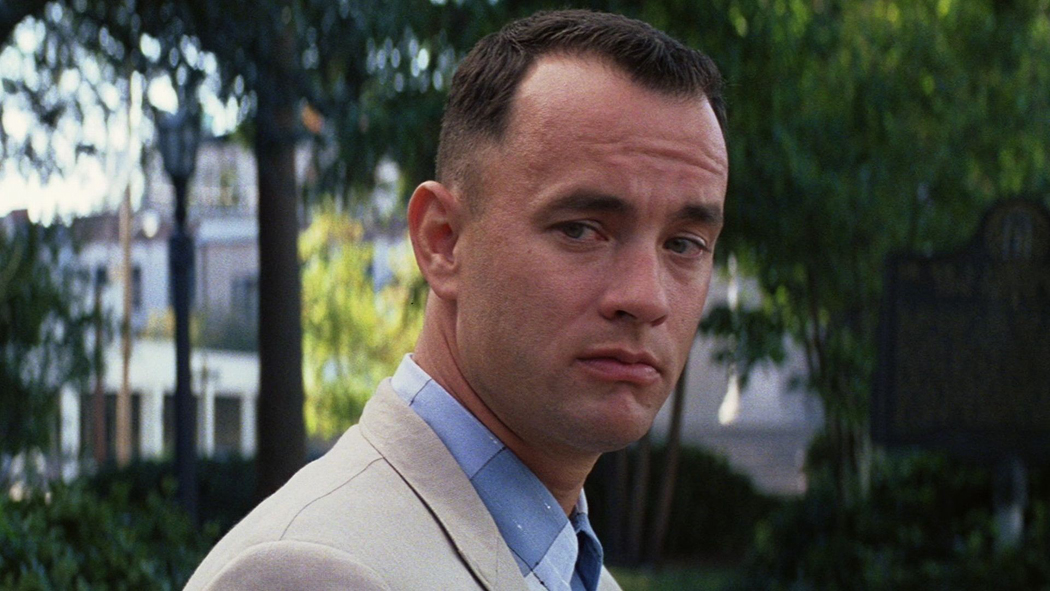
Yet, there is a hunger for substance. It shows up in such mainstream places as movies like Forrest Gump, where the sincerity and lack of irony of its main character seems like a breath of life. The movie itself was mildly ironic, but the character was guileless. And what is more, his earnestness — that is, his ”pure heart” — won him all his prizes. (I am not defending the film as a whole, but only making a point about its underlying proposal of directness and sincerity — many people despise the film for this very reason).

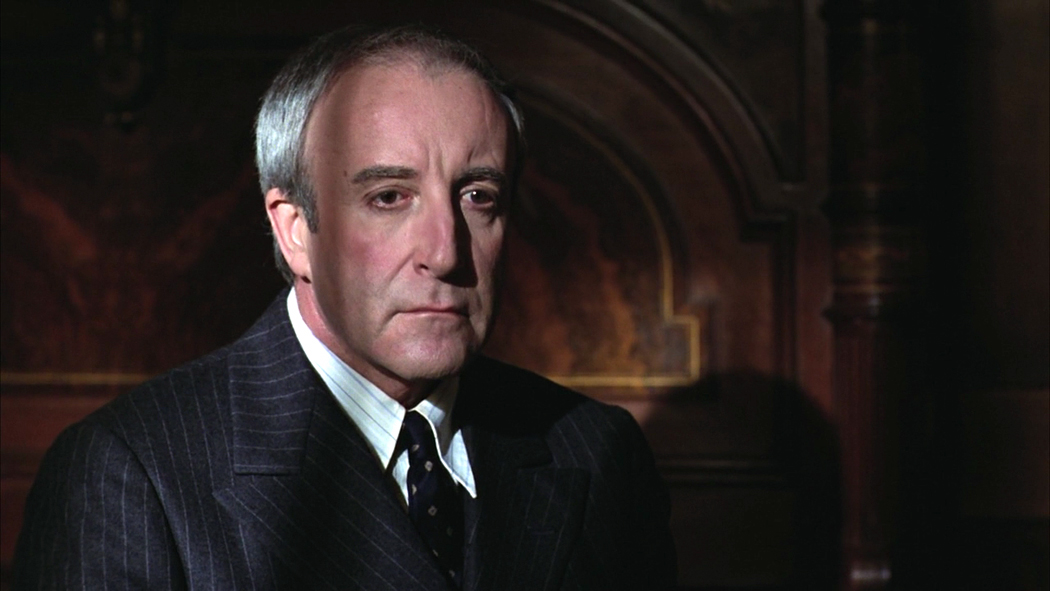
In that, the tone of the movie was completely at odds with its predecessor, Being There, where we were all in on the great in-joke, as the idiot gardener, Chance, fools all the supposedly smart stuffed shirts into finding profundity in his inanities. Chauncey Gardner

And just as a clever century distrusts an earnest one, the pendulum swings back and we are beginning to be unsatisfied by the cleverness. The deeper Quentin Tarantino dives into genre film pastiche, the more irrelevant he becomes. His first films were about something — the deaths in Pulp Fiction, however clever in terms of plot, were real deaths with consequences; in Kill Bill, the deaths are just tin ducks in a shooting gallery. They carry no punch.

This great cultural sea change may be due, but it hasn’t become pervasive yet. Still, there are warning signs: Sincerity has also brought us political correctness; it has brought New Age philosophy; it has brought us any part of a Tyler Perry movie that isn’t Madea.

For, while irony requires a modicum of intelligence, sincerity is democratic: Everyone is invited — no brain too small. It runs the gamut from genius to imbecility. Not every 19th century poet was Wordsworth; heck, even Wordsworth was only Wordsworth on a good day.

The watchword for irony is skepticism; for sincerity, credulity. Blind faith in alternative medicines, UFOs and astrology is only possible in a time when our irony is eroding.

Yet, irony doesn’t get off the hook so easily, either. There are reasons some people feel compelled to give it up as the new century reaches its teen years.

The first is that irony is words, not life. It is essentially linguistic. That is, its rules and habits are linguistic rules, not experiential rules.

With irony, as with a joke, you have to have the setup and punch line come in the right order, followed by the rim shot. Out of sequence, they fall flat and meaningless.

Real life has other demands, but with irony, we translate the experience of life into the language. Language is a kind of parallel universe, divorced from reality, but somehow accepted as its mirror: When we are laughing at a joke on a sitcom, we are laughing not at life, but at language.

It is at the core of what is called Modern Art, that the process becomes the subject: The painter paints paintings about paint, the playwright constructs dialogue about speech, the sculptor shows us the raw surface of stone. Modernism has been about the tools it uses.

And that is why, at the end of the Modern century, the armor of irony that has protected our egos from the embarrassment of our sentiment has begun to fall off. We demand real experience.

When that woman yelled out her frustration at The Apostle, she was complaining that her linguistic expectations — the language of film we have all become accustomed to — were violated. Robert Duvall was doing something different.

But our culture now requires of all of us that we rise above our comfortable irony and attempt to see what is actually out there, floating in reality.

And deal with it.