Archive

Tag Archives: creation

Imagine nothing. Got it? Now, imagine that not even nothing exists.  For after all, nothing is something. At the very least “nothing” implies its opposite, and I’m asking you to imagine a time before opposites are even possible, before time is possible. 

Then, imagine a point, the way geometry defines a point, with no dimensions. This point is something. But it can exist for only a billion-trillionth of a second — although a second is something that doesn’t really exist yet. The word “yet” implies that a future does exist, however, and in that infinitesimal fraction of eternity the point — which is everything that exists or ever will exist — physicists tell us that the point “expanded,” although that word cannot adequately express the explosion. In fact, the universe ejaculated into both something and nothing. It gave rise to particles and antiparticles and we were off to the races.
Chaos 1

It is important to note that the “point” did not expand into a great big empty nothingness but rather something and nothing together expanded — and they keep expanding, even as we sit sipping our tea and watching Big Bang Theory in endless reruns on TV. There is math to show this, but you wouldn’t understand it. I certainly don’t. It’s complicated. 

“Alice laughed. ‘There’s no use trying,’ she said. ‘One can’t believe impossible things.’

“‘I daresay you haven’t had much practice,’ said the Queen. ‘When I was your age, I always did it for half-an-hour a day. Why, sometimes I’ve believed as many as six impossible things before breakfast.’”

As it says in the Tao Te Ching, “Thus something and nothing produce each other.”
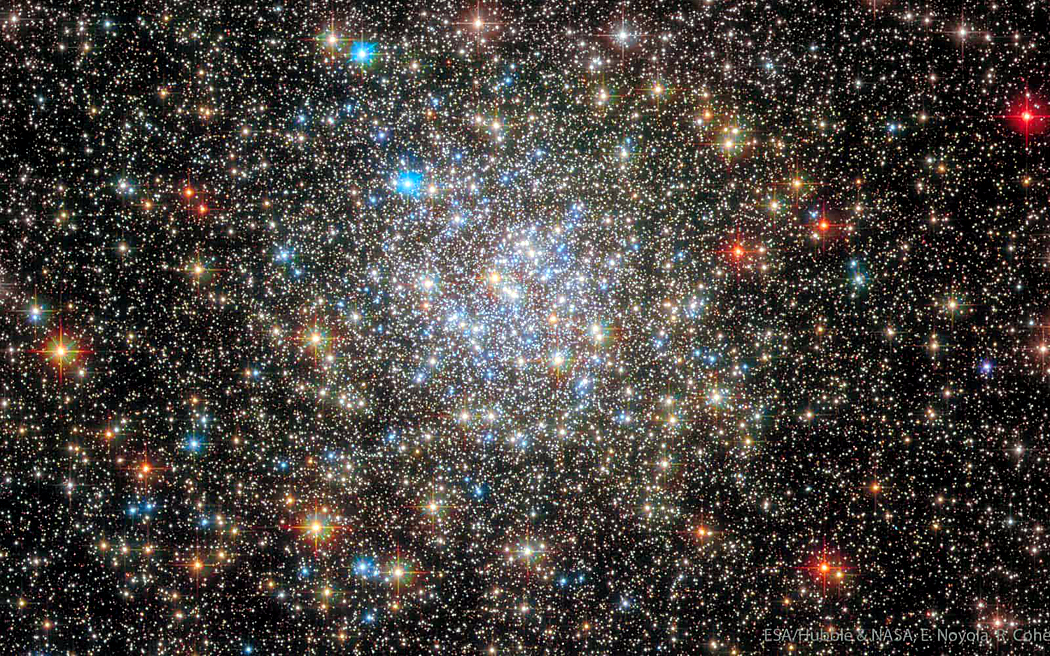
Now, it is 13.799 billion years later, and the universe is still expanding, ever faster and faster. And we are riding on one meager little mote in that great soup, called the planet Earth. It is something. Now, “nothing” is what exists between the bits of “something.”

That is our Creation Myth. 
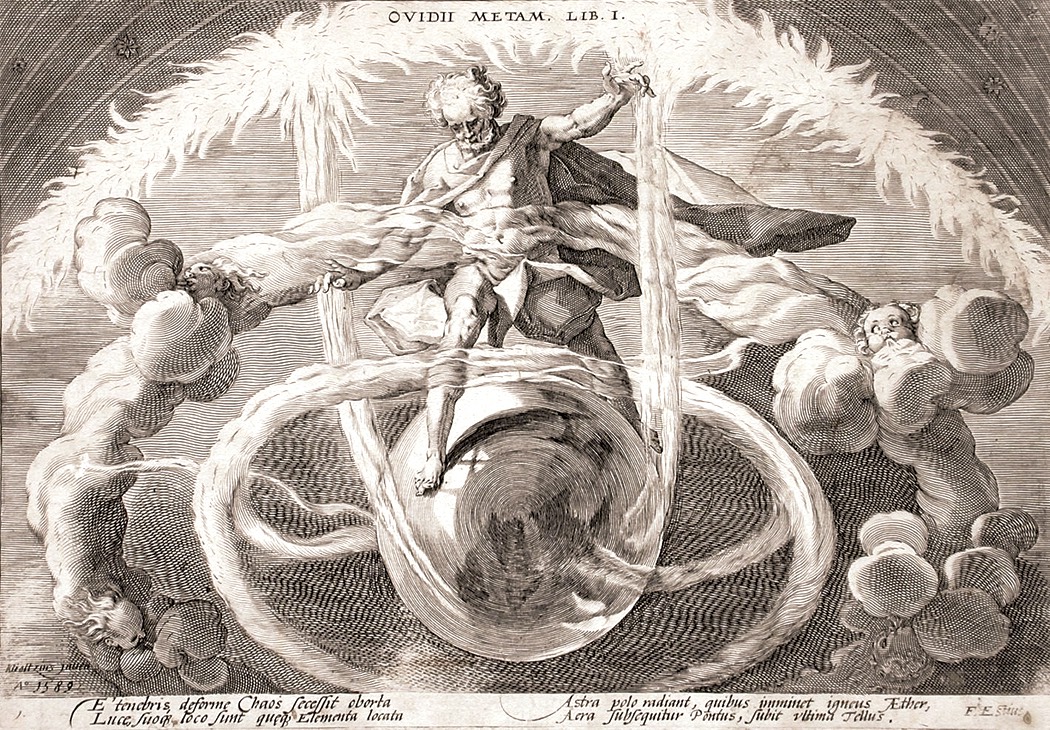
By calling it a myth, I am not implying it is not true, or not factual. Myth does not mean something is untrue, but means it is our way of comprehending what is beyond our actual understanding. 

Myth is our explanation to ourselves of something. It may be factual, it may be fantastical. It may be taken literally or it may be understood as metaphor. Either way, it is an approach to the comprehension of something too complex to be held in the mind any other way. 

Chaos 2

A physicist may be able to put the math together and parse out the myth in non-mythic terms (I use the word “may” advisedly), but for the rest of us, we take it on faith that our creation myth is scientifically verifiable and therefore, factual. It is the myth we believe in, i.e., the story we take as true. (That it is true is irrelevant to its function as myth). 

We mistakenly tend to look on myth as something from the past: Zeus or Achilles, or Odin, or Indra fighting Vritra, or Quetzalcoatl, or the Chinese dragon. It is something we condescend to, having learned better. We know that thunder isn’t clouds crashing together. But such an attitude misunderstands myth and its function. We all live by myth, even now. 
Chaos 3

There are things we do not or cannot understand. Either too complicated to grasp or just plain unknowable. We need a metaphor to help us come to grips with such things. Language cannot describe such things with the precision of a dictionary, but rather it has to fall back on not “what it is,” but “what is it like.” We tell a story.

The Big Bang is our story. When we assume our superiority, we fail to understand that for most of us, we are relying on the argument from authority no less than the Middle Ages did. We must accept that the physicist knows what we merely accept. (I am making the assumption that a physicist has a more complete understanding than even an educated lay person).

And since we cannot know every corner of relativity or quantum mechanics, we simplify it all into a comprehensible story. The Big Bang. 
Chaos 4

I am not claiming what science has parsed out is false, but that our understanding as non-scientists is a mythological understanding, not a literal one. And for that matter, I doubt any scientist is equally conversant in all aspects of the field — relativity, quantum theory, the math and the particle physics. Perhaps he or she has a good grasp on black holes, but how much has he or she published on quarks with spin? Specialization is necessary for modern science, and even a scientist has to rely on and trust the work of others. 

And it is important to remember that not all scientists agree. The popular version of the Big Bang is certainly wrong, or at the very least wildly simplified. New theories are always coming forth. No version is entirely consistent and coherent, not even the Bible’s. 
Chaos 5

All of which takes me off point: Creation myth. There are so many of them, from the Chinese cosmic egg to the Mesopotamian butchery of the sea goddess Tiamat. The one we in the West are most familiar with is that of Genesis. 

“In the beginning God created the heaven and the earth. And the earth was without form and void; and darkness was upon the face of the deep. And the Spirit of God moved upon the face of the waters. And God said, Let there be light.”

We are so used to the organ tones of the King James translation that sometimes putting it into modern English takes away some of the majesty. 

“When God began creating the sky and earth, the earth was formless and empty.”
Chaos 6

There are many believers who take this story literally, just as most of us take the Big Bang. For most of us, the Bible story is a story. So, if we had to stake our lives on it, we would more likely defend physics — even if we were Christian believers — and accept that ancient Middle-Eastern poetry is just that. The King James Genesis is transcendent poetry. But so is our story of the Big Bang.  

“Mythology opens the world so that it becomes transparent to something that is beyond speech, beyond words, in short, to what we call transcendence,” said scholar Joseph Campbell.

“The energies of the universe, the energies of life, that come up in the sub-atomic particle displays that science shows us, are operative. They come and go. Where do they come from? Where do they go? Is there a where?”

Which returns us to the Big Bang. 
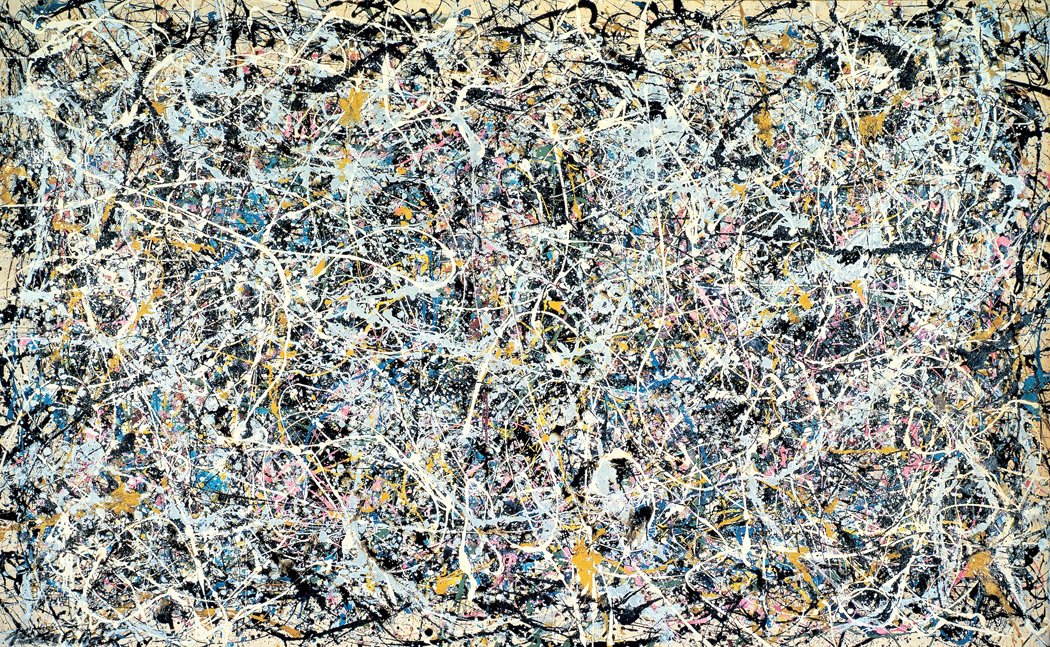
Chaos 7

Physicist Paul Dirac in 1930 imagined a where: Now called the “Dirac Sea,” it is an infinite or unnumbered source of subatomic particles that exist “beneath” our visible world. An electron may pop up anywhere, as quantum physics has shown, and may disappear also. Where they come from, where they go is the Dirac Sea. Using the nautical term is another case of mythology making familiar what cannot be grasped otherwise. 

Imagine a billiard table, he said, completely covered in balls, leaving no room. Place another ball on top and it sits there, on top of the rest. But push it down and that forces another ball to pop up elsewhere. We cannot predict where. The one above the rest is the one we see and measure, the rest, below, are the “Dirac Sea,” unavailable for study in the visible universe. 

Yes, it’s a story. Most of us would run screaming from the math involved in a more proper explanation. 
Chaos 8

“The ultimate ground of being transcends definition, transcends our knowledge,” said Campbell. “When you begin to ask about ultimates, you are asking about something that transcends all the categories of thought, the categories of being and non-being. True, false; these are, as Kant points out in The Critique of Pure Reason, functions of our mode of experience. And all life has to come to us through the esthetic forms of time and space, and the logical ones of the categories of logic, so we think within that frame,” he wrote.

“But what is beyond? Even the word beyond suggests a category of thought. So transcendence is literally transcendent.”
Chaos 9

Vedic mythology has many creation stories, but the one most widely seen has the Brahman, or the ultimate ground of reality, as the source of all. However as it says in the Upanishads, the Brahman is just a word, and already it is a distortion of the ultimate, which is beyond words, beyond category, beyond comprehension.

True “of all knowledge,” Campbell said, that is beyond comprehension. “In the Kena Upanishad, written back in the seventh century BC, it says very clearly, ‘that to which words and thoughts do not reach.’ The tongue has never soiled it with a name. That’s what transcendent means. And the mythological image is always pointing toward transcendence and giving you the sense of riding on this mystery.”
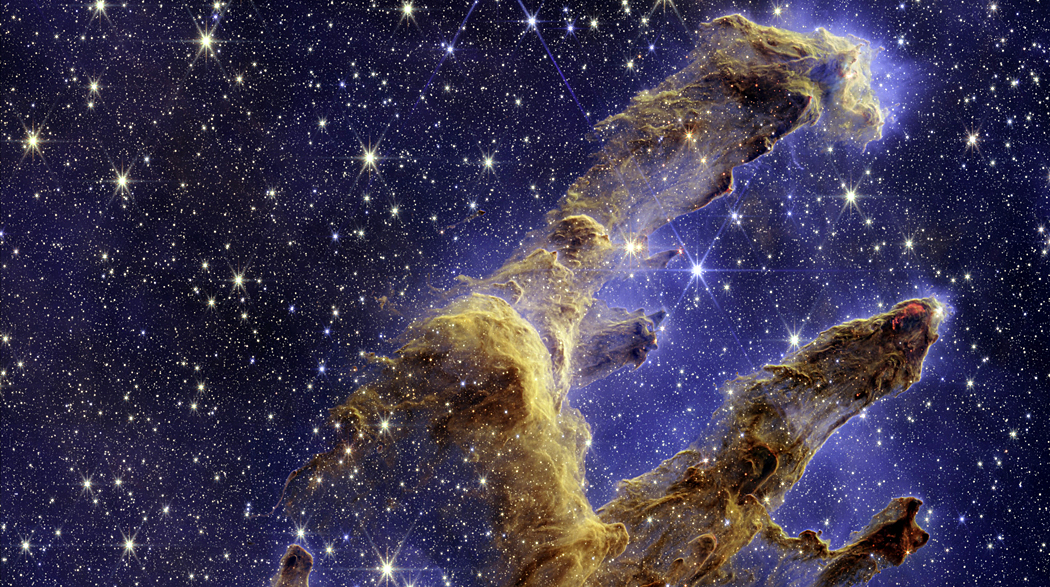
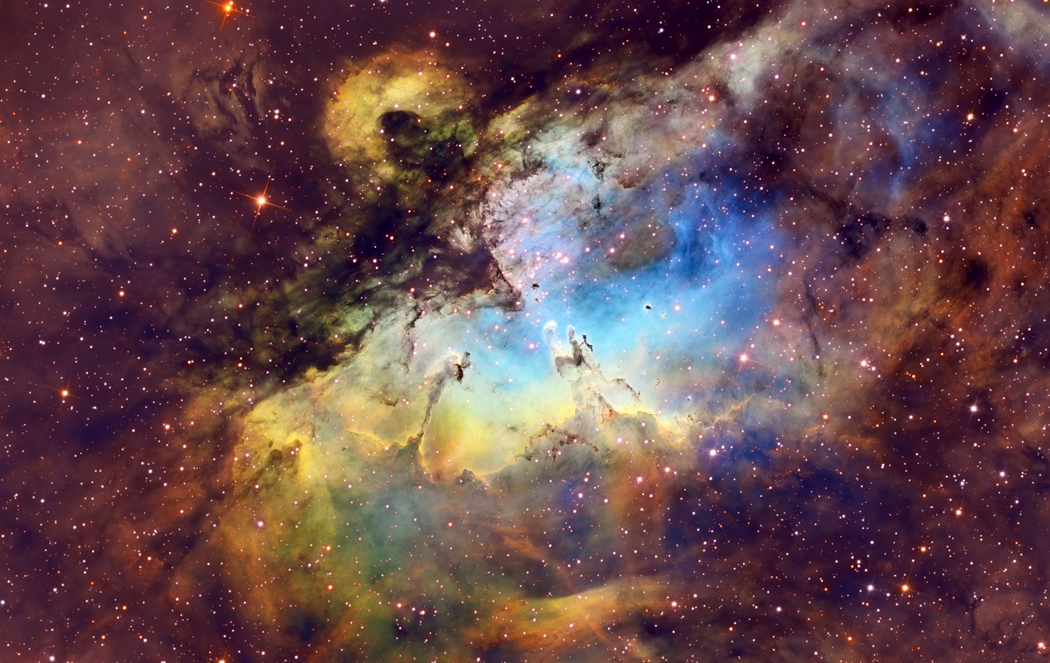
Pillars of Creation

So, we look at the Hubble image of a portion of the Eagle Nebula and have named it “The Pillars of Creation.” It is a transcendent image, and fills most of us with genuine awe. But of course, it is a photograph in false color: It would not look that way if seen by a human eye through a telescope. It is a myth. Again, I am not saying it is not true — even the false color is true in its way — it provides a way to see wavelengths that cannot register in a human eye, but are there nonetheless.

But let us go back again to that bit before “something” and before “nothing” — those pairs of opposites. 
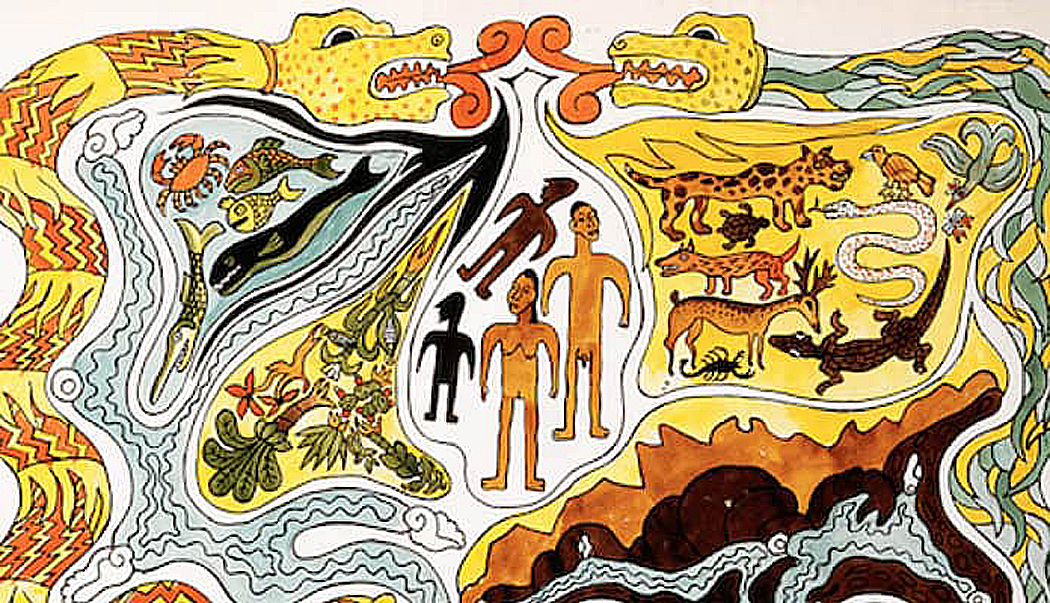
In many recorded myths, before anything, there was Chaos. We should not be fooled by modern science’s version of Chaos Theory. In that, chaos is just something so complex it cannot be predicted by mathematical formula. But mythological Chaos is something else again: It is to order what eternity is to time — which is not simply forever, but rather outside of time altogether. 

Likewise Chaos in myth is not a lack of order, but something outside the very idea of order. It is before the organization of “categories of thought,” and cannot be described either in words or algebra. 
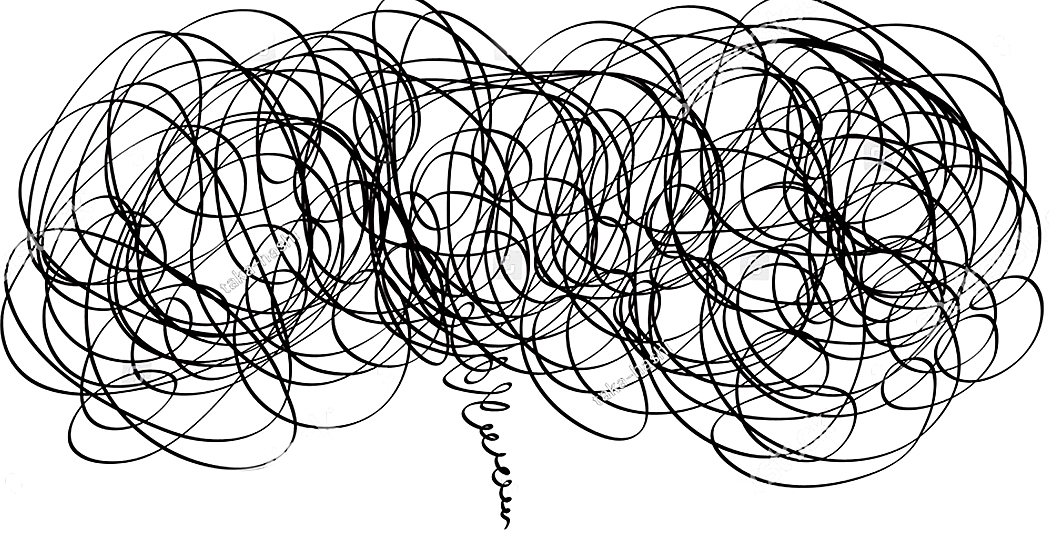
Chaos 10

The word comes from the Greek χάος meaning “emptiness, vast void, chasm, abyss,” related to the verbs χάσκω and χαίνω “gape, be wide open,” from Proto-Indo-European cognate that gives rise, millennia later, to the English “yawn.”

In Shelley’s Prometheus Unbound, the Spirit of the Hour talks about “The loftiest star of unascended heaven,/ Pinnacled dim in the intense inane.” And here the poet’s unfortunate word choice doesn’t mean insipidity, but rather translates from the Latin word inanis, which meant “empty,” or “void.” And so I like to think of chaos as an intense emptiness. 
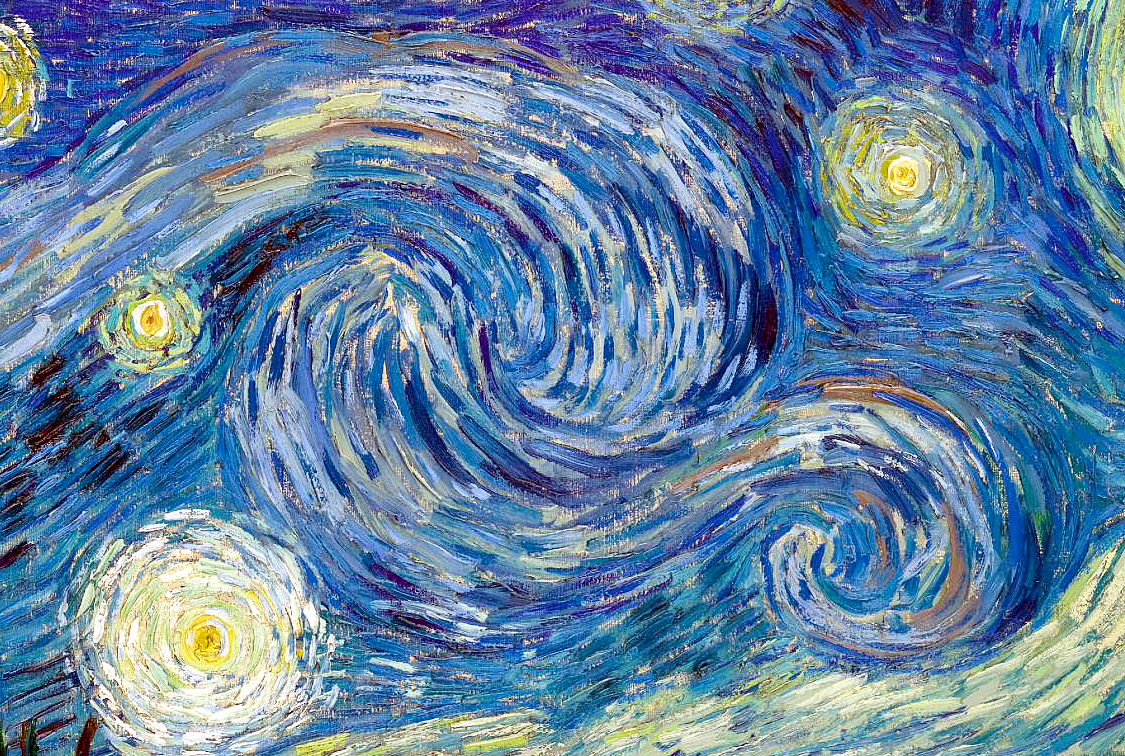
Chaos 11

My favorite Creation myth is found in the opening of Ovid’s Metamorphoses: “Before the sea was, and the lands, and the sky that hangs over all, the face of Nature showed alike in her whole round, which state have men called chaos: a rough unordered mass of things, nothing at all save lifeless bulk and warring seeds of ill-matched elements heaped in one.” 

In his De Rerum Natura (“On  the Nature of Things”), the Roman writer Lucretius (ca. 99-55 BC) comes very close to both modern astrophysics and to quantum mechanics, although told in mythic terms rather than mathematical formula. 
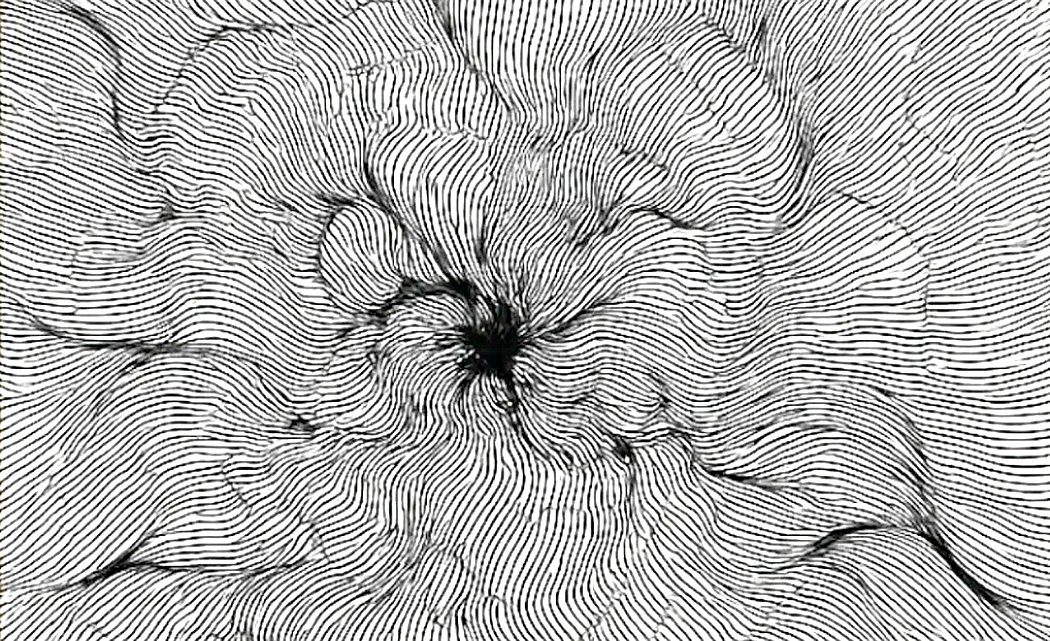
Chaos 12

For Lucretius, the universe has always existed. Nothing can be created from nothing, he wrote, nor can it be destroyed — anticipating the conservation of matter and energy. But the universe originally was an undifferentiated mass of atoms, all traveling in straight lines, he wrote — anticipating Newton’s First Law of Motion — but oddly the atoms had an irrational  tendency to “swerve.” This unaccounted divergence of the atoms’ direction led them to bump into each other, to make concentrations of matter in some localities and voids of matter in others — very like the astrophysicists’ explanation of how the cooling of the Big Bang led to unequal distribution of matter in the early universe through gravity and density fluctuations. 
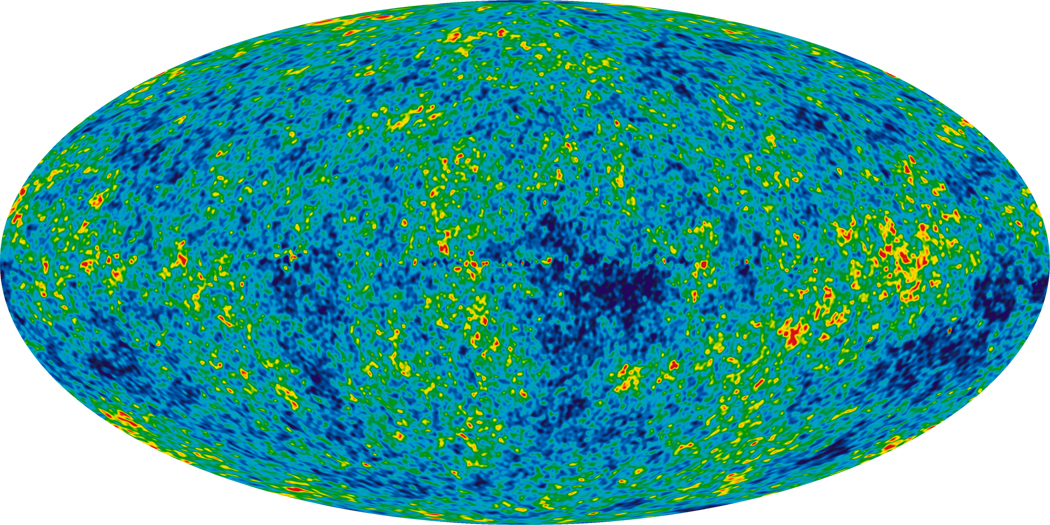
Map of cosmic background microwave radiation

We have an image of this in the map of the cosmic microwave background radiation, discovered by accident in 1965, which supported the Big Bang theory — and Lucretius — with actual data. The two scientists who found this at first thought the data was “noise” in the signal caused by pigeons nesting in the Holmdel Horn Antenna, in New Jersey, where they did their work. Turned out, no, it was evidence of the universe before condensing into protons and electrons. 
And so, the Big Bang is now part of the wider public’s sense of where the universe came from. Physicists and cosmologists worry over the many corners that don’t neatly fit, and reams of arcane mathematical formulae are published to support one idea or another. Standard model relativity doesn’t fit, tab-into-slot, with quantum mechanics, and scientists scratch their heads and try new ideas. And they sometimes torture the English language with things like “temperature inhomogeneities,” and torture math with paragraph-long formulas with no actual numbers in them. Looks good on a white board, but it’s Greek to me. 
Someday a newer common myth will be created to refine or supplant the version of Big Bang that the educated laymen currently accept. Again, it doesn’t mean the myth isn’t true, but that it is a story that attempts to make the unexplainable facts comprehensible to the puny human mind, which evolved, after all, when we were still banging rocks together. Sometimes it’s like watching a monkey trying to open a jar of pickles. 

The committee of gods met once again. They decided to make something.

“It’s been a long time,” they said.

It’s something they do every once in a while, or every once in an aeon. Sometimes it works, sometimes it doesn’t. They began again.

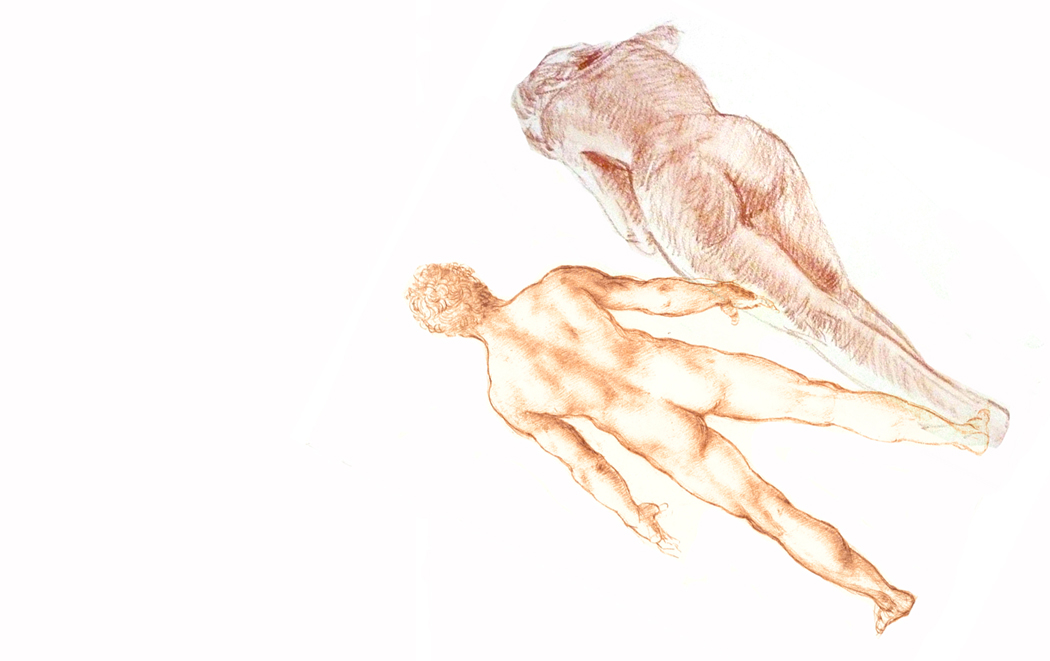
They made a person, two arms, two legs, hands and feet, and as an afterthought, a head.

But something wasn’t satisfying about this new thing they made. Or rather, the new thing wasn’t satisfied. It sat in the middle of nothing, nowhere to put its feet. Nowhere to look, nothing to hear. Nothing to eat.

Then they decided this thing was not enough, so teased the creation into two, pulling here and there until there were separate beings. The pulling distorted their bodies here and there, making one with wider hips, and leaving something pulled long and dangly between the other’s legs.

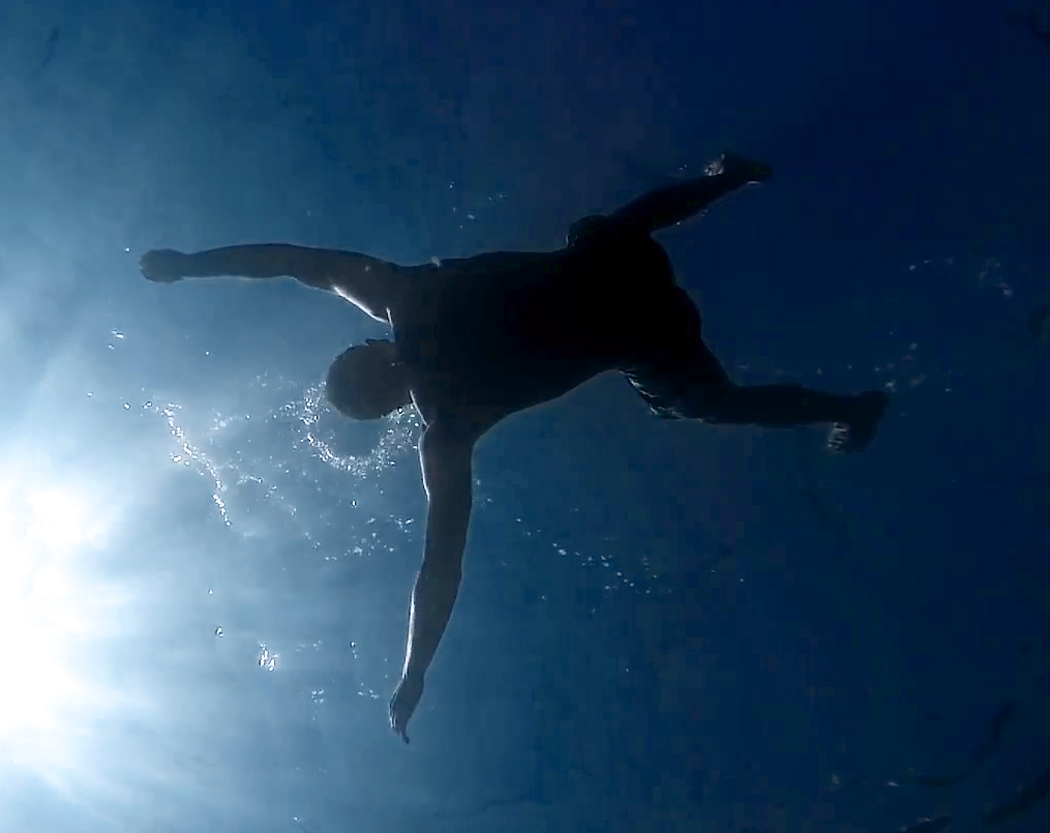
Half of them thought this was just fine; the other half recognized that even that now there were two things, they had no context. They just sort of floated there.

So, the committee decided they would have to work harder. They built a cube for the beings, with four walls, ceiling and floor, so they had somewhere to put their feet, and something to look at. There was a window in one wall, and a door in the wall opposite.

But, still, there was nothing outside the window to see, and nothing to eat. The room just floated in space, no up, no down, no sideways.

The gods hardly noticed this detail, but they did decide to provide something to look at out the window, So, the committee approved a motion to make some animals and some plants. This seemed to work well, so they made more and more of both.

The problem seemed to be that although the plants and beasts gave the people something outside the window to look at, and, if they had figured out how, something to eat, there was still something inchoate about this new creation.

“The last one didn’t work out quite right,” the committee agreed, “so we need to think this one out more thoroughly.” A motion for further study was passed and a subcommittee formed.

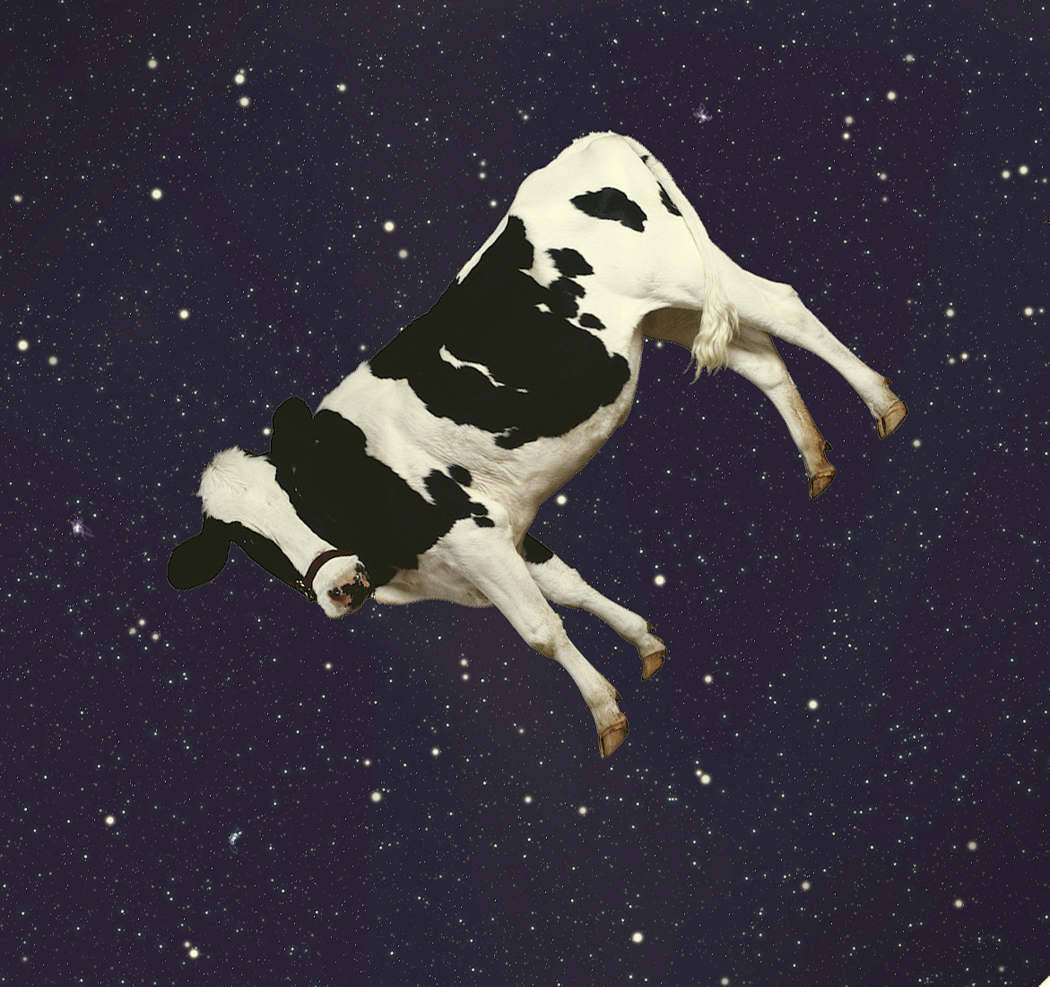
Having the beasts float aimlessly through nothingness gave them nothing to stand on, and while a floating cow might pass some floating grass and grab a bite, it was hardly working out efficiently.

“I think they need somewhere to stand,” said the chairman.

“I second the motion,” said the CEO (actually, in heavenly terms, the DEO), who was the first goddess hired for the post.

And so, they decided to make a world. It seems obvious to us, but when it’s all brand new, you don’t always spot the simplest things. So, they made a world.

There were problems, however. The first world was flat, which made a large plain for the animals to graze upon, but also meant that, without something to support the flat earth, it could easily tilt and dump its cargo back into the emptiness. So, they rested the disc of the earth on the back of an elephant. But with only one as a pivot in the center, the world still wobbled. So, they made four elephants, one at each 90 degrees of the clock-circle of the disc. Oh, the problems — the elephants were then given a very large turtle to stand upon. You know the metaphysical problem here, and yes, it was turtles all the way down.

Next, the committee decided to separate the dry land from the waters. This led to a cock-up, because with the earth being flat and all, the water just poured off the edges, leaving the earth with nothing to drink.

“Perhaps if we put a ring around the edge,” said one.

“Like a dike or a dam,” said the CEO.

So they took some of the dry earth and built a circular berm around the perimeter of the thing they had made. They refilled the seas and took a long look at what they had made. It looked good, so far. Good for a day’s work.

“We’ll convene again tomorrow.”

The next day, they looked at what they had made.

“But, it is all rather dark, isn’t it?” So they put a light up above the earth. They didn’t quite think this one through, though. The center of the earth was closer to the light than the edges, like a chandelier over a table, and so, the center began to whither and burn up.

“We’ve got the geometry all wrong,” said the DEO.

“Wait, I know,” said the gruff head of the Board, shifting a cigar in his mouth, “We’ve got the geometry all wrong.”

“That’s what I said. Oh, never mind.”

So, they took the earth and balled it up like a tablecloth headed for the laundry, and created a globe. To keep everything from falling off, they put a great graviton at its center, and made everything cling to the surface of the ball.

“That seems to be working,” they said. “But what do we do with this lamp? And how do we keep it from burning the part of the earth closest to it?”

“I know. Let’s make the ball spin, so no part is always facing the light.”

“Brilliant!”

But someone accidentally bumped the ball and sent it rolling away.

“Put some of that gravity in the light, too.” And so the rolling, spinning ball started to revolve around the light. It made a pretty sort of machine that delighted the board members.

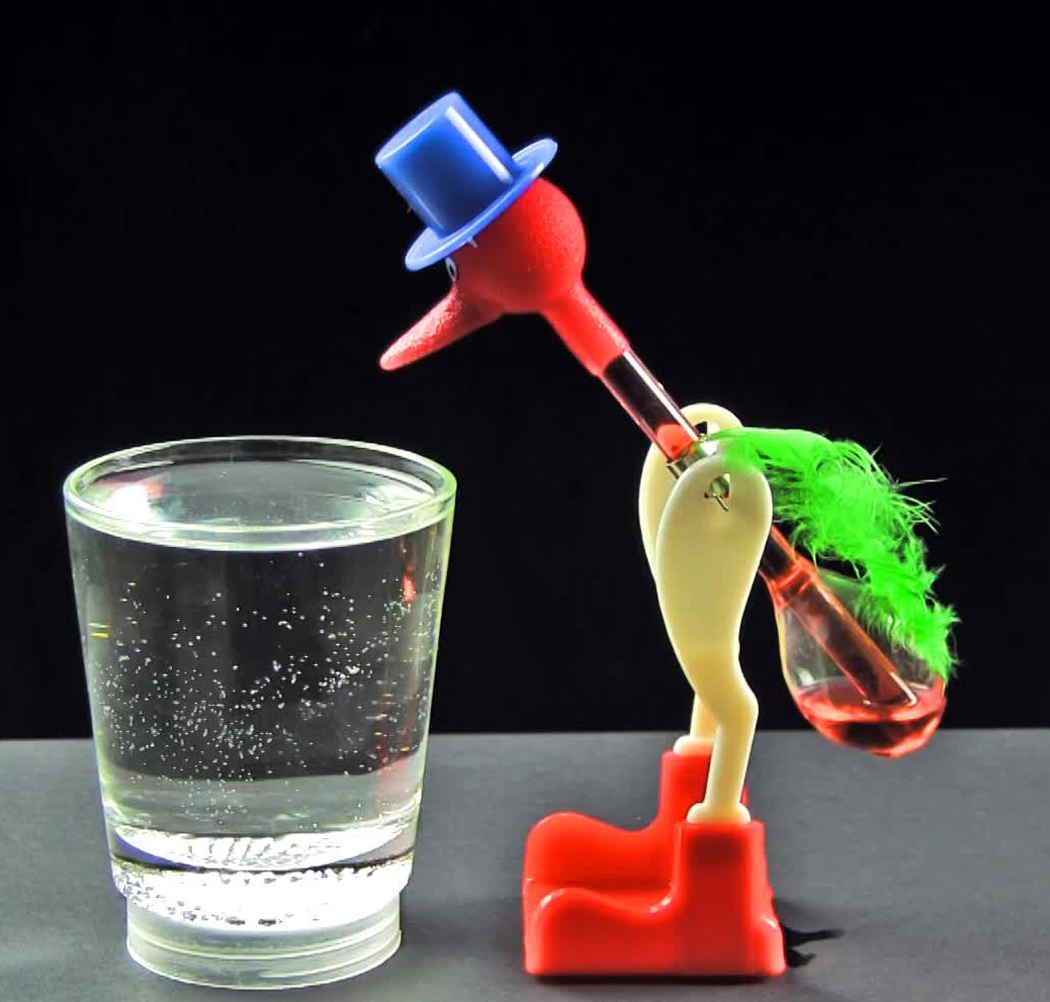
The problem now was, that the man and woman, in the room on the planet buzzing around the sun sat in the middle of nowhere, a simple toy for the gods, like the giant pecking bird that dipped its beak into the water they made some aeons ago, or the hanging steel balls that knocked each other back and forth. That was Vulcan’s idea, and they ultimately decided it was utterly useless.

So, they began to pack the emptiness. If one ball was good, a handful of others must be better. Toss in some smaller rocks, like chocolate sprinkles, and let them wander around the big light.

They saw it was good and knocked off for the day. The next two days were the weekend, so the office was dark.

But come Monday, they began to dot the emptiness with more lights, enough to make a galaxy. That was fun, so they made more galaxies, making sure to load them all up with the magic gravity. This was exhausting, so they took the next day off, too.

Come Wednesday, it began to dawn on them that the operational manual for this new cosmos they had built was getting rather long, like a Congressional budget bill. There were rather a lot of rules governing how everything functioned. While it seemed to be running like a top, they worried that if anything went wrong, they might not be able to fix it.

“I remember when I had a VW,” said Phaethon. “I could fix anything wrong with a hammer and a screwdriver. This is all getting out of hand. I miss the good old days.”

Well, things did start going wrong. The first man developed an enlarged prostate; the woman eventually had to have a hysterectomy. The gods had to admit, they had rather botched the design of the human nether parts.

One of the planets they made sideswiped the earth and ripped off a chunk.

“Hey, we’ve got a moon. Why didn’t we think of that ourselves?”

Gravity got out of hand, too. Chunks began falling into each other, sometimes so much detritus that it all collapsed into a dark hole.

“Hey, we’ve created black,” said one of the gods.

“We had that before we started,” reminded the DEO.

“Oh, yeah.”

The whole thing began wobbling, like an elephant on a beach ball that had lost its balance and next thing you know, it seized up. No amount of grease could get it unstuck. Then, it began collapsing, faster and faster, until it shrunk into a singularity — an infinitesimal dot, like the one you used to see when you turned off the TV. Then, boink, it was gone.

“Damn it,” said the god at the far end of the conference table. “Why can’t we ever get this right?”

“I blame the Titans,” said Jupiter. “The previous administration should have addressed these issues more forthrightly.”

“The shareholders will not be happy,” said Neptune. “I believe we need a change at the top. I move that the DEO resign.”

She resisted this suggestion, saying it was all a design flaw.

“We started at the wrong end,” she said. “We went about it all backwards.”

“I have an idea,” offered a nervous intern, afraid to speak up in such august company. “Perhaps next time, in the beginning, we should start by creating the heavens and the earth. The rest should fall into place.”

The gods looked at each other, gave a passing thought and in one voice responded, “Nah.”

Dore chaos
My friend Stuart sent me a letter:

You can learn a great deal from a springer spaniel. For instance:

Total order and total chaos are the same thing. Identical. Not a dime’s worth of difference. And neither is very helpful.

Think of it in terms of the Linnean metaphor. I’ll get to the spaniel in a moment.

At one end of the spectrum is chaos, a totality that is unordered, a cosmic goo. This is not the current chaos of the eponymous theory, which is merely a complexity beyond calculation, but rather the mythic chaos out of which the gods either create the cosmos, or arrive unannounced from it like Aphrodite from the sea. It has no edges, no smell, no shape, no parts, no color, no anything. Inchoate muddle. john martin chaos

So, in the beginning was the word: Or rather, our ability to organize this chaos through language. The universe exists without form and void. Then we begin the naming of parts to help us understand the welter.

And so, god created the heaven and earth, dividing the parts. And this division of parts is in essence what the Creation is all about. Ouroboros

Of course, the incessant need to divide and name is only a metaphor, but it will help us understand the conundrum of order in the universe, and how the ouroboros of Creation begins and ends at the same place, no matter which direction we go in: The law of entropy and the law of increasing order both have the same final destination.

When we look at the world around us, we immediately split what we see into two camps: That which is living and that which isn’t. It helps us understand the world we live in and we make many of our biggest decisions on this basis: Ethics, for instance. We have no problem splitting a rock in half with a hammer, but would feel rather evil doing the same to a dog.

But the living things fall into two large camps, also: Animal and vegetable (again, I’m simplifying. I haven’t forgotten the bacteria, but we can ignore them for the sake of the metaphor).

Some of us have a problem eating animals but not eating vegetables. So, again, our ethical world depends on how we sort out the chaos.

Let’s take the animals and subdivide them, the way Carl von Linne did, into classes, orders, families, phyla, genera and species.

Each level makes our divisions less inclusive, more discriminatory.

Let’s take the dog, for instance. It is classified as a chordate, which means it has a central nervous system stretched out into a spinal chord. This is different from, say, a starfish or a nematode. But there are many chordates, so, if we want to differentiate a dog from a shark, we have to look to its class. It is a mammal. That makes it distinct from birds and fish.

But there are lots of mammals, too. Some of them eat other animals; we call them carnivores. A dog is a carnivore.

Notice how each level of nomenclature narrows our definition down to a smaller and smaller group of initiates. When we had only living and non-living, there were only two groups; with each level, we add dozens, hundreds and then thousands of other groups disincluded in our catalog.

The order carnivora is one of many orders in the class of mammalia, which is one of many in the phylum chordata, which in turn is one of many in the kingdom animalia.

The order separates our subject, but lets us see in relief that it is just one constellation in the heavens populated by many other constellations.

The same poor pup is in the family canidae, which includes all the dog-like animals, from fox to coyote to jackal. Among them, it is in the genus Canis, and species lupus, which makes it brother with the wolf.

But our wolf is a friendly one, as long as you aren’t the postman. So, now we call it Canis lupus familiaris, or the family dog. And our particularization of the beast means we are conversely aware of all of creation — each in its own genus and species — that makes up the non-dog, and each of them is like the billions and billions of stars that make up the many constellations in the night sky.

Yet, this isn’t far enough. For the dog I’m thinking of isn’t just a dog, but a spaniel, which is a type of dog which isn’t a poodle and isn’t a terrier. It is a dog with “a long silky coat and drooping ears.”
Sylvie

Each time we subclassify, we are adding to the order we impose on existence, and each classification adds to the proliferation of categories just as it reduces the members inside each class.

So, there are also different kinds of spaniels. The dog I’m thinking of is a springer spaniel, which come in two forms, with a brown-and-white coat and a black-and-white coat.

My brother’s dog is a brown-coated springer spaniel named Sylvie. She is getting old now, and her backside — very much like humans — is getting broader.

And now, by classifying things to the level of the individual, we have as many categories as there are things in the universe, which is effectively the same as nothing being categorized: It is all primordial goo and might as well not be cataloged: Total order and total chaos are the same thing. QED.

pizza slice
People approach the arts generally in one of two ways: with taste and judgment or with curiosity.

critic

You can spot the first group by the arch of their eyebrow, the second group by the gleam in their eye.

The first group includes a good number of academics, critics and — worse — politicians. They all suck the life out of creation (with a lower-case “c”). I speak as a lifelong critic myself. In all three cases, they have criteria outside the issues of art by which they judge the art.
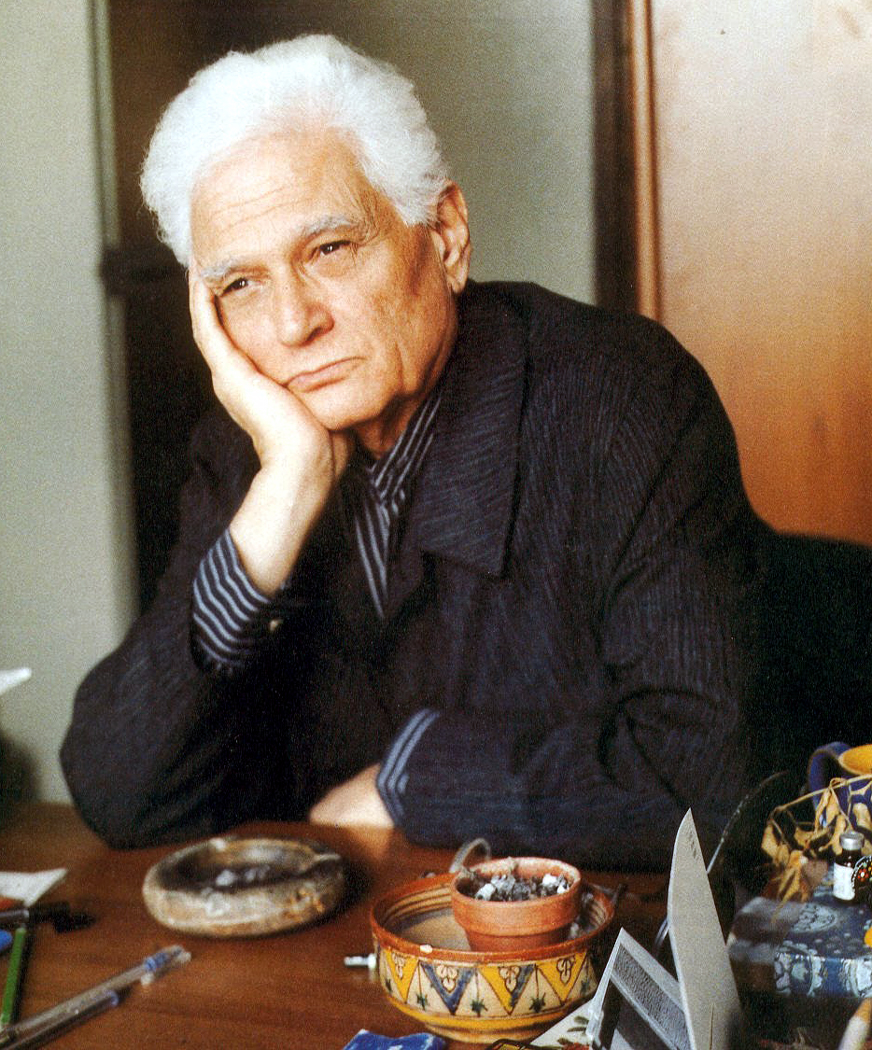
jacques derrida

The academic asks whether the art promotes his particular hobby horse, whether it is Marxism, Feminism or Post-structuralism. The politician looks to issues of biblical morality or economic theory or national pride. The critic, too, has his narrows and straits.

They all have ideals — or limitations — they ask the art to live up to and tend to filter out divergent opinions and make moral judgments, not merely aesthetic ones, against those who failed to live up to their standards.

They ran the gamut from the most enlightened connoisseurship to the most craven bigotry.

But each came to a final and immovable resting place, so to speak. They came to a certainty from a certainty. Not much of a voyage.Epimetheus opening Pandora's Box

Curiosity is the libido of art and it is always searching and always finding new pleasures, deeper enlightenment. It begins not with certainty and knowledge, but with openness and ignorance.

There is this one simple truth that we cannot escape: What you know prevents learning. It is only when we give up believing in our knowingness that we can grow. There is nothing so stunted as theory; it is the brain wearing a whalebone corset.

And curiosity is where all the greatest artists have begun. It is also where any art lover needs to start: Judgment is for the censorious; art aims for the unprogrammed curiosity.rembrandt

Obviously, I have stacked the deck in curiosity’s favor, but that is only as it should be.

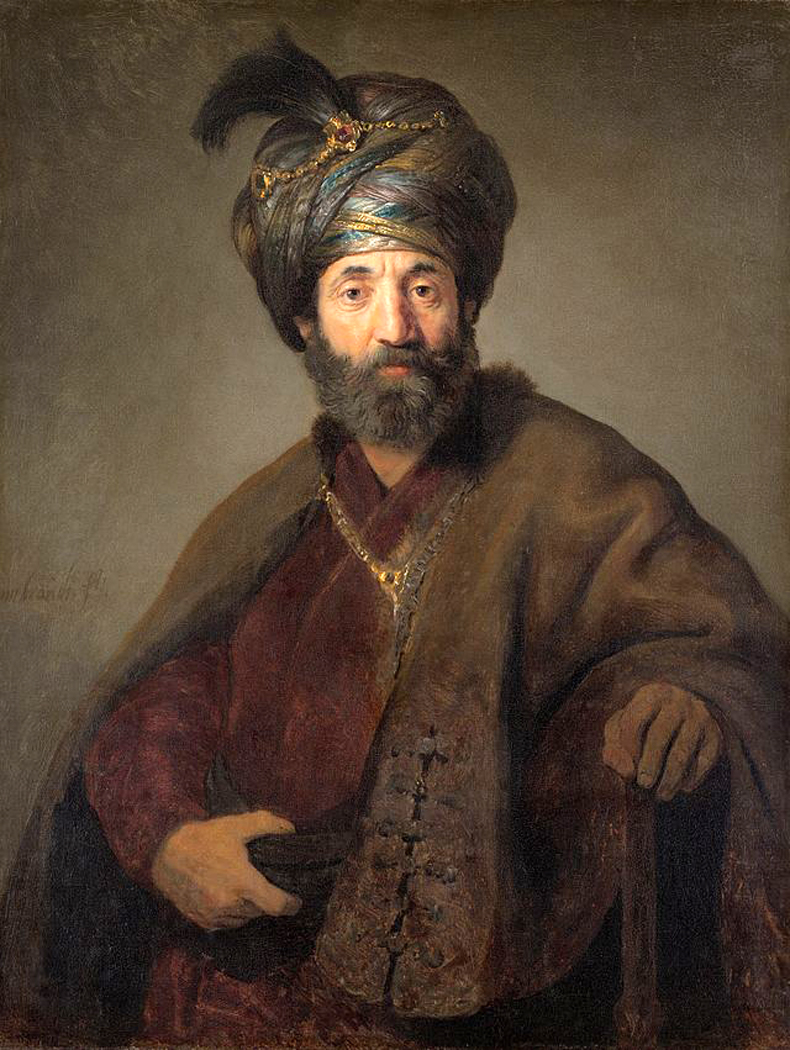
The greatest artists have always been open to the world. Rembrandt had his Orientalism, Hokusai his Occidentalism. Leonardo had the most promiscuous curiosity in the history of our culture.

For me, these are the heroes of art.

And I think of them every time the issue of multiculturalism comes up. The concept seems simple and desirable to me, but it is a bugaboo for those who have wished to see culture ossified at a certain time and place, usually late 19th century and Europe.sesshu

I am not one to knock European art. I fall in rapture over Beethoven’s late quartets, Rembrandt’s self-portraits, Goethe’s Faust. But I also hunger to know as much as I can about the music of India, China, South America, Africa. I want to hear Ali Akhbar Khan on sarod, the clang of a Javanese gamelan. I want to see sumi paintings of Sesshu, the stonework of Macchu Picchu.

Shakespeare is a prodigy, but I also want to see Noh plays, Shakuntala and Chinese opera.

They all have something for me to experience and something to teach me.

picassoAnd they have something to teach the finest artists working today, a fact the finest artists are fully aware of. All the best artists borrow and steal from elsewhere, whether it’s Papa Haydn borrowing Alsatian folksongs or Pablo Picasso ripping off African masks.

But there are critics who decry Philip Glass for the Hindu in his minimalism or the Asiatic spectacle of Robert Wilson’s stagings.

But these are the people who are revivifying our high culture, just as Paul Simon and David Byrne, musical thieving magpies, are doing for our popular culture.

gauguinAnd artists have always been awake to these cultural borrowings, as Gauguin borrowed from the South Seas, Bartok borrowed from Hungarian folk music, as Shakespeare borrowed from anything he thought would be useful.

Everything, from top to bottom, is grist for fine art.

I know there is a politically correct aspect of multiculturalism that is ignorance incarnate: the enforced belief that anything from another culture is wonderful and we shouldn’t say anything bad about it. But that is a political consideration, not an aesthetic one.

I’m all for saying bad things about bad art, wherever it comes from, but let’s see and hear it first. Hold judgment in abeyance and just soak it all in.

There is not a culture anywhere on this planet that has nothing to teach us. We should never be so smug.

The critics and connoisseurs are concerned about being right. But much more important is maintaining a lively mind. What is correct and proper in any age is very likely to change over time. Such are not the “eternal verities” that their proponents like to think they are; they are mere fashion.

But a lively mind, whether it is in Third Century China, 18th Century France or 21st Century Brazil, will always be the medium of exchange for thinking, feeling people.

Remember when tomatoes were considered poison? If the reactionaries had had their way, we would not now have pizza. I rest my case.

Blake_ancient_of_days

I’ve always been interested in the way things translate from one language to another. Of course, that also means from one culture to another, and, as in the case of Bible translation, from one era to another. Time changes, language metamorphoses, and our world-views alter with our understanding of the world around us.

There is no question that the most powerful translation of Genesis can be found in the King James version, but words that meant one thing in the era of Shakespeare may very well mean something different now. And the verse forms of ancient Hebrew are different from our expectations of poetry, now.

So, I’ve always wondered, what does the original Hebrew mean in the Torah? Is there a way to make a translation that hews closely to the original meaning, the tribal meaning of the language?

I’ve gone through several interlinear translations, several translations in clear text, and lots and lots of footnotes to come up with something that gives me as close as I can tell, what the original Creation story meant in its Hebrew iteration, uninflected by several millennia of religious interpretation, sectarian wars and violence, pogroms and anathemae.

In the interests of disclosure, I should admit up front that I have no stake in this game: I am not a believer (when asked, I usually say I have no religion, I’m not even an atheist), so I’m not trying to persuade anyone that the Bible is true, or not true, or that this or that dogma is the “true” one. This is just my attempt to understand what metaphors and language was used in the ancient Middle East as they slowly came to terms with what would become their religion.

Believe me, I don’t claim this is a good translation of the first Creation story in Genesis. But it is a defensible one.

King James is still the king, but its rather archaic feeling — which, of course, was not archaic when it was written — has unfortunately become the default diction and rhetoric of belief. (So much that Joseph Smith’s “Book of Mormon” is written in a botched imitation of the sound of KJV, albeit with lousy grammar and many gross lexical misunderstandings).

There are many points in the Hebrew text where scholars either disagree, or throw up their hands and say, “We just don’t know what is being said here.” They give it their best guess, like the bit about the stars being created for calendar use. The original Hebrew is obscure.

Anyway, here’s my version:

Genesis, the beginning

When it all started up, and the gods were arranging the sky and the ground,

When the earth was emptiness with darkness over the ocean,

the wind of the gods hung over the face of the water

The gods said:

“Let there be light,” and light happened.

And the gods said, “We did a good job.”

the gods split up the light and the dark,

calling the light “Day,” and the dark, “Night.”

There was a sunset; there was a sunrise — One Day.

The gods said:

“Let there be a bowl over the water and let it split up water from water.”

The gods made the bowl

and separated the water that was below the bowl

from the water that was above the bowl.

It Was.

The gods called the bowl, “Sky.”

There was a sunset; there was a sunrise — Two Days.

The gods said:

“Let the water under the sky be brought together in one place

and let the dry land be seen.”

It Was.

The gods called the dry part “Ground,” and the collected waters they called “Sea.”

The gods saw the craftsmanship was good.

The gods said:

“Let the ground sprout with growing sprouts —

plants that seed-forth seeds, fruits trees that fruit, according to their type.”

It Was.

The ground grew growing sprouts, seeding plants seeding seed plants, fruiting fruit trees.

The gods recognized they were well made.

There was a sunset; there was a sunrise — Three Days.

The gods said:

“Let there be lamps in the bowl of the sky to split up the day from the night, that they may be signs (Hebrew “difficult”) for a calendar, and let them be lamps in the bowl of the sky to provide light on the ground.”

It Was.

The gods made two big lamps:

The bigger lamp for ruling the day; the smaller lamp for ruling the night.

And the stars.

The gods placed them in the bowl of the sky to provide light on the ground and to rule the day and the night.

The gods liked what they saw.

There was a sunset; there was a sunrise — Four Days.

The gods said:

“Let the water swarm with a swarm of beings, and let the birds fly across the bowl of the sky.”

The gods created huge sea serpents and all the crawly things that crawl about, with which the water swarmed, after their type, and all the birds, after their type.

And the gods saw they looked good.

And the gods blessed them, saying:

“Grow fruit and be many and fill the water of the seas and let the birds be many.”

There was a sunset; there was a sunrise — Five Days.

The gods said:

“Let the ground bear creatures in types, herd-animals, crawling things, wild things of the earth, all divided by type.”

It Was.

The gods made the wild things of the earth, divided by type, and the herd animals, divided by type, and the crawling things in the dirt, divided by type.

The gods saw it was working out well.

The gods said:

“Let us make people in our shape, looking like us.

Let them rule over the fish in the sea, the birds in the sky, all the earth, all the crawling things that crawl on the ground.”

So the gods made people in their shape, so they looked like the gods,

male and female, the gods created them.

The gods blessed them and said to them:

“Grow fruit and be many and fill up the earth and conquer it. Have rule over the fish in the sea, the birds in the sky and all the crawly things that crawl on the ground.”

The gods said:

“Here, we give you all the seeding plants that seed that are on the face of the earth, all the trees in which fruits fruit. For you they will be for eating. And also for all the living things of the earth — all the birds of the sky and the crawly things that crawl about on the ground — all green plants for eating.”

It Was.

Then the gods looked at all they had done with exceeding satisfaction.

There was a sunset; there was a sunrise — Six Days.

So, everything was finished — sky and earth, with all their entourages.

The gods had finished, on the seventh day, the work they had done

Then they stopped on the seventh day, all the work they had done.

The gods gave the seventh day their blessing and made it sacred, for on that day, they stopped working on all that they had done.

This is how it all began, the sky and the earth and all history.