
“All great love ends in death,” Stuart said.
“Maybe in literature, but not in real life,” I said.
“Yes. All love ends in death. On one hand, sometimes it’s love that dies and then you are stuck. But even if love doesn’t die, the lovers do.”
“You mean like Romeo and Juliet?” I asked.
“Yes, like Romeo and Juliet. Like Tristan and Isolde.”
“But can’t love end happily?” I put forward that possibility; I’ve been married 30 years.
“Yes, but even the most successful love ends in death,” Stuart said. “Either for one or the other and eventually, both. They may be 80 years old, but eventually, love ends in death.”
“Oh. I see what you mean. It’s a trick. Like a trick question.”
“No, it’s not a trick, except that it is a trick the universe plays on all of us. I don’t mean it as a trick.
“Romeo didn’t have to die the way he did,” Stuart went on, “but he had to die eventually. Even if they got married and lived long lives, he would have to die some time, and then, Juliet loses him anyway.”
It is the underlying metaphor of all tragic love stories, he thought. His own, for instance. Stuart had never seen a great gulf between literature and his own life. Others, well, they may be banal and ordinary, but his own life had all the electricity of a great book or epic myth.
The one thing that separated Stuart most from the accountants and dentists of the world was that he recognized in himself the hero of his own life — the sense that he was the main character in a story of infinite significance. When something happened to Stuart, it happened to the universe.
The joke was, of course, that this is true. But there was a stinger, too: Although it was true, the universe is so vast that no matter how big it was to Stuart, it added up to zilch in the big picture.
“That is truly depressing,” I made a sour face.
“But that is not the real issue,” Stuart said. “The real issue is the frame.”
“The frame?”
“Yes. This is something I’ve been wondering about for a while. Every comedy ends in a marriage, it is said. The curtain drops and the audience goes home enjoying the happy ending.
“But, if we followed Beatrice and Benedick after the end of the play, in a few years, at least, there would be divorce — or more likely, murder. Happy endings are always provisional. So, there is an artificiality to comedies that is ineradicable. The happiest comedy, if drawn out to the uttermost, ends in dissolution.”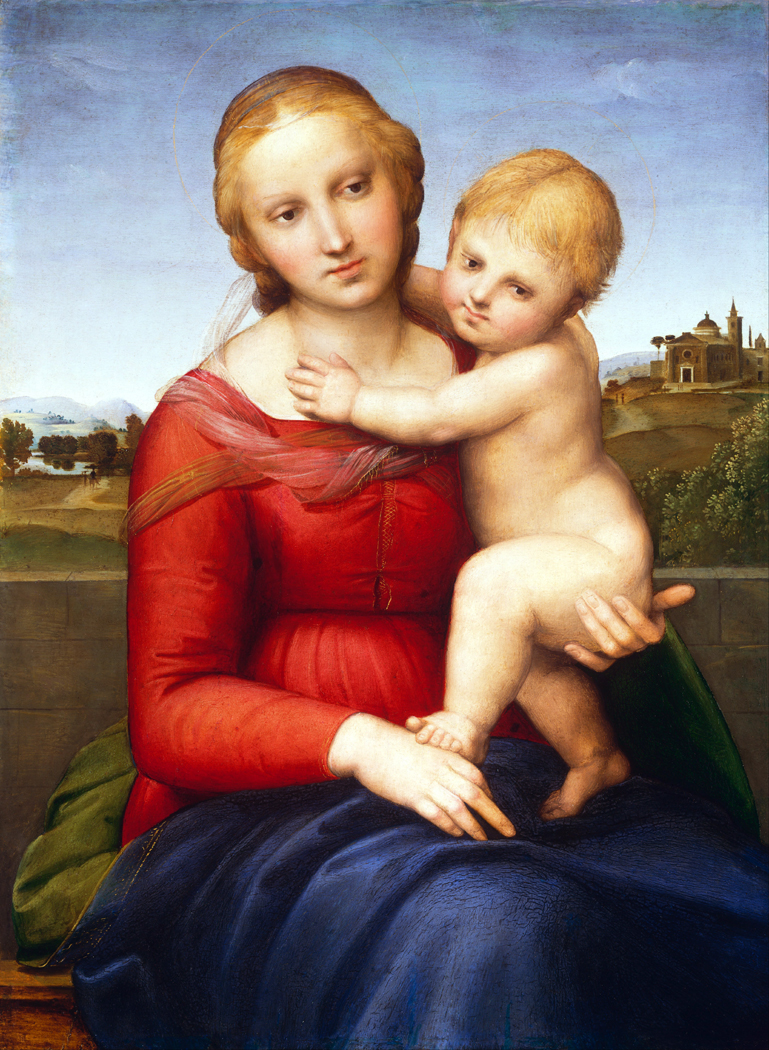
“So, you’re saying that the frame — the curtain — reveals any art as an artifice.”
“Yes. And not just in theater. Take the photographs of Garry Winogrand. We are meant to see the frame — the edge of the photograph — as an arbitrary border drawn around some episode, but beyond the frame, there are other people doing other things. This has become something of a trope in photography.
“It used to be that we understood the frame in a painting — say a Renaissance crucifixion, or a Madonna — as merely the point at which our interest in the visual matter evaporates. It is the Christ or Virgin that sits in the middle that is meant as an object of contemplation. A frame could be larger or smaller and still contain the essential action.
“In Baroque painting, there is often the growing sense that the frame cannot contain the action, but that there is something worth knowing just beyond the edge. That sense has become central in certain strains of contemporary photography.  A photograph may contain an image of someone looking back at the camera, over the photographer’s shoulder, at something behind him that we can never see.
“The first kind of frame serves as a kind of fence, or corral in which the important information is contained. The second is more like a cookie cutter, which sticks into the welter of existence and excises this small bit for us to consider.
“That is the frame, the ‘beginning, middle and end’ that gives us such satisfaction in a play or opera.”
My concern at this point is that I could see that Stuart was unwinding his own life from the bobbin, and holding it out in his fingers to examine, and what he was finding was deflating. What set Stuart apart from most people was about to be undone. 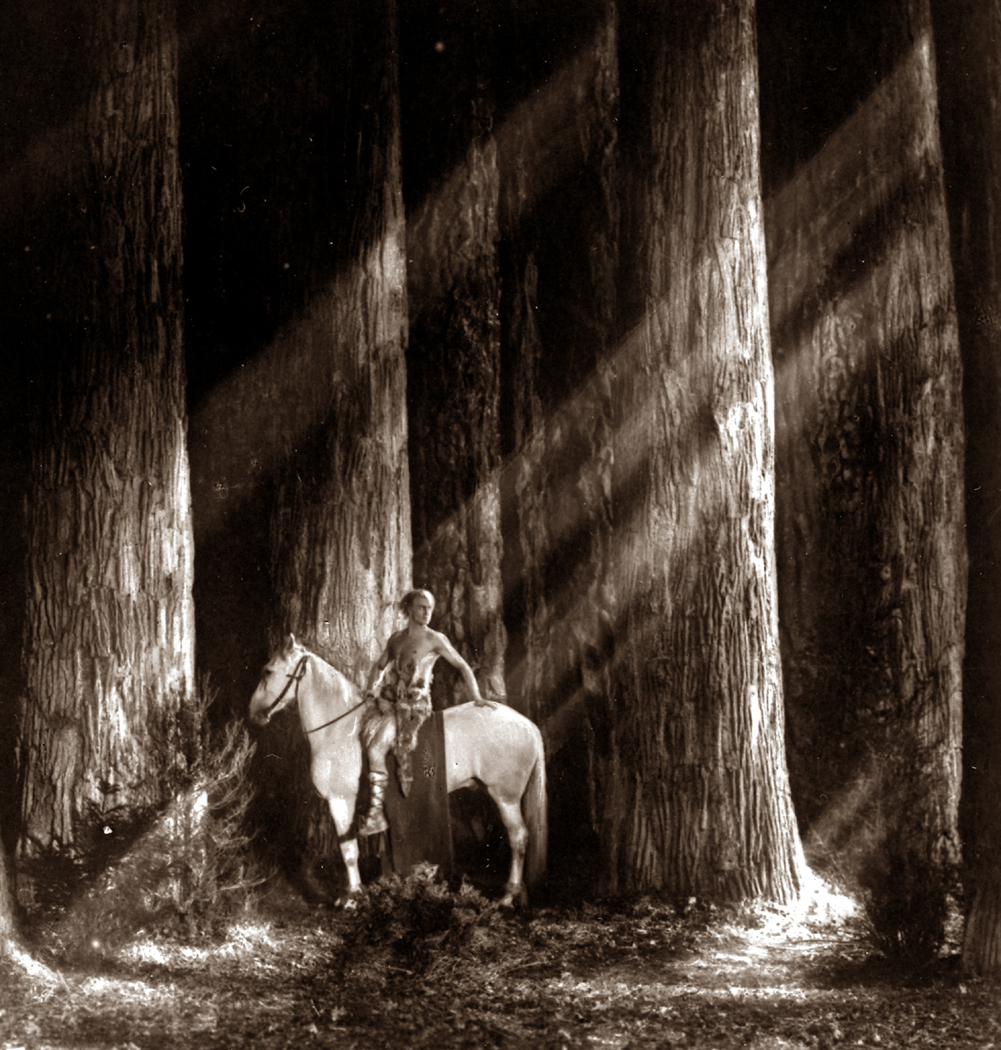
I had known Stuart since college, and what made him glow from the inside was not just his energy — or jittery intelligence — but his sense that he was the star in his own movie. Or rather, that he saw in himself a larger, mythological version of himself playing out among the chess pieces of the universe. He was Siegfried voyaging down the Rhine; he was Odysseus; he was stout Cortez.
Don’t misunderstand, please. He was never grandiose — in his exterior behavior, he was as normal as you or me. But inside, was something larger, bursting to get out. He saw the world swirling the way Van Gogh did. For Stuart, every bush was the burning bush. Take away that internal furnace, and what would be left of Stuart? He would have grown up. Not something that any of us who knew him would wish for.
“This is the fundamental fallacy of American conservatism,” he went on, making another 90-degree turn.
“They seek to enforce a static vision of society, of law, of human behavior. They keep telling us, that if only we would do things their way, everything would finally be peach-hunky, into eternity — the happy ending that we know (and they don’t admit) is always provisional. They see a — excuse me for the exaggeration — ‘final solution’ for something that has no finality to it.
“Politics — real politics — is always the flux of contending interests. You want this, I want that, and we wind up compromising. Conservatives see compromise as surrender, precisely because they see politics with a frame. Get the picture right, and then it is done. Deficits are erased; the wealthy get to keep what is rightfully theirs; order is established. It is the underlying metaphor of all Shakespeare’s plays: The establishment of lasting, legitimate order, final harmony. 
“Only, we know that after Fortinbras takes over, there will be insurgencies, dynastic plots, other invasions, a claim by mainland Danes over island-dwelling Danes, or questions of where tax money is going. It is never ending. Fortinbras is only a temporary way-station.
“Existence is a seething, roiling cauldron and sometimes this bit of onion and carrot comes to the surface, and sometimes it is something else. It is never finished, there is no frame, no beginning, middle and end.”
“So, where does this leave poor Juliet?”
“Juliet?”
“Yes, where does this leave us all, we who are all bits of carrot. We who are married for 30 years, we who entered the field of contention, worked for our required decades and left the battlefield to become Nestors — or Poloniuses. All this washes over us and we see that, in fact, we have a frame. Existence may not have one, but I do. I am getting old.  I just turned 67 and I feel it. And I know that my Juliet will die, or I will go before her. We do have, in fact, a frame, a curtain that draws down and leaves us — as Homer says — in darkness.”
“Exactly,” Stuart said, “and this is my point. Every one of us lives two very different lives. You can call them the external and internal lives. The first is the life in which we share the planet with 7 billion others. We are a tiny, insignificant cog in the giant machine. The second is the mythic life, the life we see ourselves as central to, in which we are the heroes of our own novels or movies, and everyone we know is a supporting actor. If we live only in the first life, we are crushed and spit out. But if we live only in the second life, we are solipsists. Sane people manage to balance the two lives. A beautiful counterpoint.
“We are most engulfed by that second life when we fall in love. We are certain that we invented this condition. No one else has ever felt what we feel. It’s comic, of course, but it is also profound. Without this feeling, life is unbearable. We have to have meaning, and meaning is created by how we imagine ourselves.
“Politics hovers oddly in the intersection of these two worlds. We need to sober up and consider the other 7 billion people if we are to create useful policy, but we mythologize those who lead us, and those who lead do so most effectively when they mirror back some version of mythology. The most extreme example I can think of is Nazism in Germany. A whole nation bought into the fantasy. Disaster follows.
“But all ideology is ultimately built on mythology: on a version of the world with one or two simple dimensions, when existence is multi-dimensional. The political myth is always a myth of Utopia, whether right-wing or left-wing. And it is always a static myth: Racism ends and everything is great, or government spending is curtailed and everything is great. That simply isn’t the way existence is.”
“The world is always bigger and more varied than our understanding of it, and it will always come back to whack us upside the haid.”
“Right. The conservative sees the world only with his ego eyes, not from outside himself. That frame — his death — is something he cannot see beyond. There is something egoistic about conservatism. Often selfish, also, but the selfishness isn’t the problem, it is the egoism — the frame they put around the world, the static sense of what is finally right — the so-called end of history. In this, the conservative — or at least the tin-foil-hat variety — is no different from the dyed-in-the-wool Communist. Both see the establishment of their Utopia as the endgame of human existence.” 
“You’ve been reading Ovid again.”
“How did you know?”
“The Pythagoras chapter.”
“Right again. Panta Horein, as Heraclitus said: ‘Everything is flowing.’ As Ovid has it, even landscapes change over time, and Hercules’ brawn withers and Helen’s breasts sag. Cities grow and are demolished; Mycenae gives way to Athens, to Alexandria, to Rome, to Byzantium and Baghdad, then to London and now to Washington, with Beijing waiting in the hopper. ‘Mais ou sont les neiges d’antan?’ “
“How’s that?”
“In saecula saeculorum: World without frame.”
 Richard Nilsen