Archive

Tag Archives: dimitri drobatschewsky

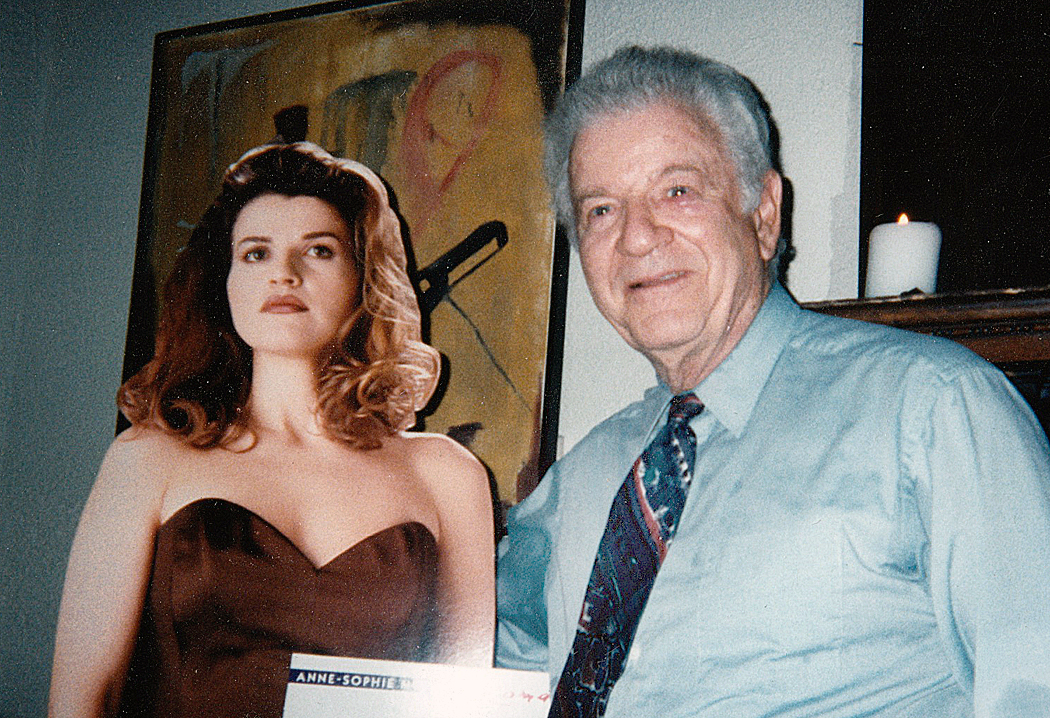
Dimitri Drobatschewsky was the most erudite man I ever knew. He spoke, wrote and read in German, French, and English. Born in Berlin and raised mostly in Luxembourg, his French and German were native, down to idiom, argot and accent. He was also conversant in Spanish, Italian and Polish (at least, he said, he knew several dirty jokes in Polish). 

He was born in 1923, fled the Nazis with his family, joined the French Foreign Legion, deserted to fight with the Free French forces in Italy in World War II. Later, he became the classical music critic with The Arizona Republic, where he and I became friends. 

(Once, when confronted by a musician who had gotten a bad review, he was challenged on his credentials. “What do you think is the most important qualification for a classical music critic?” the musician demanded. “Well,” Dimitri said. “He must have a long and unpronounceable name.”) 

Because he was still a boy when moving to Luxembourg, he was able to learn French as a native. “I had to,” he told me. “French girls wouldn’t date you if you didn’t speak perfect French.” And that’s why, after the war, when he emigrated to the U.S., he kept his accent. “American girls loved a foreign accent.” 

Dimitri felt that French was the most beautiful language, by the sounds it makes in your mouth. But for Dimitri, the best poetry was in German, and further, the greatest poet was Johann Wolfgang von Goethe. For this, I had to take his word.

Because I don’t read German, and when I approach Goethe in translation, he sounds earthbound, even banal. 
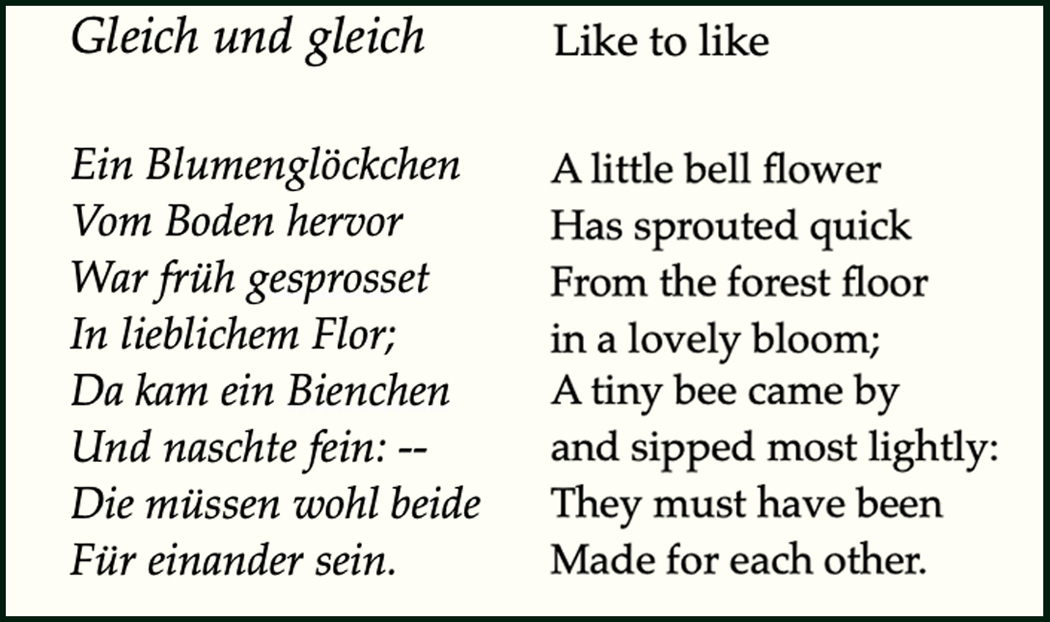
I try to hear the German in my mind to catch its melody, but I am walled out by my English. All I can gain from the reading is a commonplace. 

“Little rose, little rose, little red rose

Little rose of the heath.”

It sounds better when set to Schubert’s music, but still, in English, the words are a touch sappy, and the sentiment pedestrian.

“You have to read him in German,” Dimitri said. “The sound of words, the language is unbelievably beautiful.”

Röslein, Röslein, Röslein rot,

Röslein auf der Heiden.”

So, I’m afraid Goethe is closed to me. I’ve read Faust several times in several translations, and it never seems to quite get airborne, yet everyone who knows the original feels it is one of the greatest works of literature ever, and that Goethe is the equal of Shakespeare. 

I have the same problem with Quintus Horatius Flaccus, or Horace, in English. In English, his poetry is flat as yesterday’s ginger ale. “You have to read him in Latin,” says my friend Alexander, whose degree is in Classical languages. “In Latin, he is truly exceptional — lapidary perfection.”

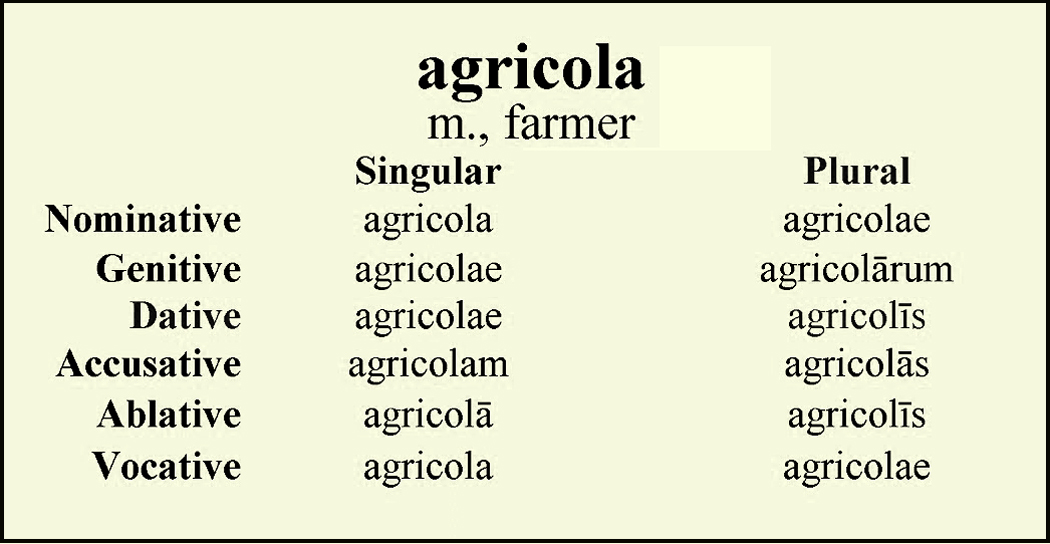
Again, I have to take his word for it. Shakespeare may have had “small Latin and less Greek,” but my Latin is even smaller than the Bard’s. I studied it in eighth grade, and mostly what I recall is “agricola.” 
I freely confess it is my loss. But there it is; I am stuck with it. 

There are those who hold that all literature is untranslatable, that you have to read it in the original language, and while I concede that you can never get all of a poem in a translation, nevertheless, I feel there is a class of work that functions perfectly well shapeshifted. 

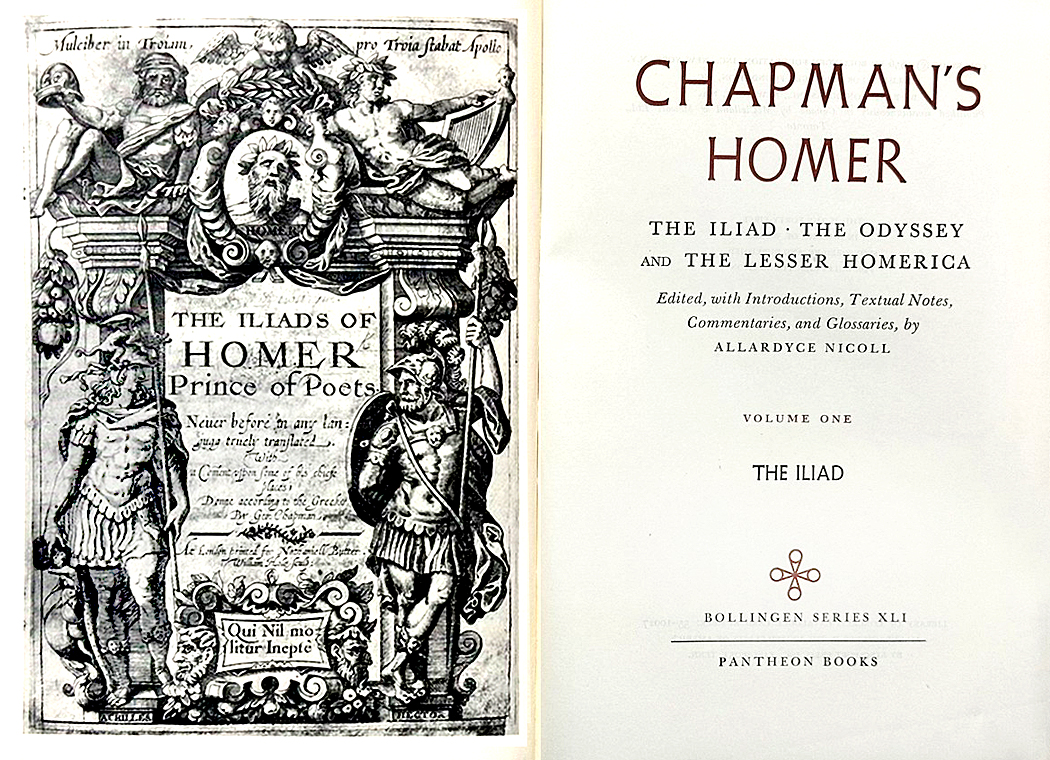
I can read my Homer not only in English, but in multiple translations, from Chapman to Pope to Fitzgerald to Fagles and I am sucked in by the poetry every time. It may very well be better in Greek, but it’s the best thing I’ve ever read even in English. I reread the Iliad once a year, and try to find a new translation each time. (I read the Odyssey, too, and I especially love the translation by T.E. Lawrence — Lawrence of Arabia. Who knew?)
The same thing happens with Dostoevsky. I’m sure it’s better in Russian, but even a good translation moves swiftly and powerfully and I am rapt by the story and moved by the humanity. There is a swift current underneath the surface of language. 

It can make a difference which translation you read. I am told by those who know, that the Scott Moncrieff translation of The Remembrance of Things Past is closest to the quality of Proust’s French, yet I find his English stuffy and outdated. The newer translations — by a range of translators for Viking (Swann’s Way is translated by Lydia Davis) — is easier to digest and flows with the quickness that ensures pleasure in the reading. But am I getting the pith of Proust? My French is better than my German, but it is still small beer. 

Constance Garnett gave us English versions of what must be every Russian novel ever written. She was a factory. And her versions are still the most widely read. But the more recent by Richard Pevear and Larissa Volokhonsky are much easier going. The duo now seem to be challenging Garnett also for the shear number of volumes converted.

Tolstoy’s War and Peace, in the English of Louise and Aylmer Maude, is the most profound and moving piece of literature I have ever read, despite the profusion of names. How much better would it read if I could understand it in Russian (and French, let’s not forget)? Its power transcends its tongue. 

This all raises the question, however, of why Homer or Tolstoy can be read in translation and Horace cannot. And the reason, I believe, is that greatness in writing comes on two essential levels: content and style. That is, how deeply it connects with our human-ness, on one hand, and on the other, how deeply it connects with its medium. This is not an either-or situation; there should always be awareness of both sides. But in practice, one side or the other tends to predominate. The more it is the universal connection with life and experience that we read, the easier the literature can travel. The more it is the words themselves, the more insular the audience.

It would be difficult to illustrate this dichotomy if we try to look at examples of foreign literature translated to English; we would need to be conversant with the original language to see how it morphs in the conversion. But consider attempting to translate several English authors into some other language.
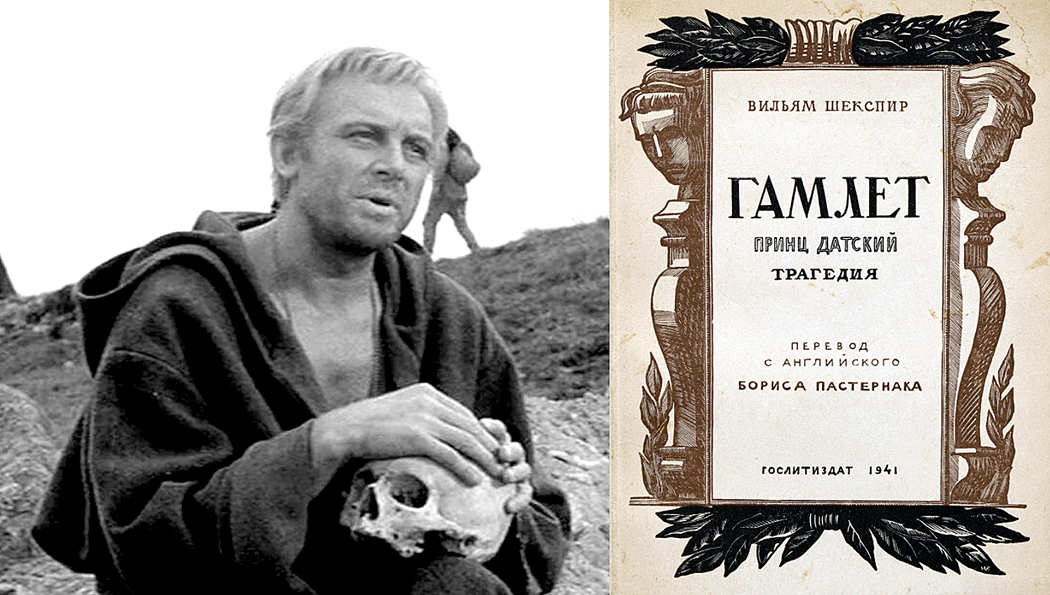
Shakespeare tends to travel well. His plays are valued in many lands and many languages. There are famous examples of Macbeth in Swahili, of Hamlet in Russian, and dozens of operatic versions in Italian, French and German. They all pack a wallop. And Shakespeare is loved in all those languages by their native speakers.

On the other hand, how in hell can you translate John Milton into French? You can tell the story of Paradise Lost, sure, but how can you convey the special organ-tone quality of his language.
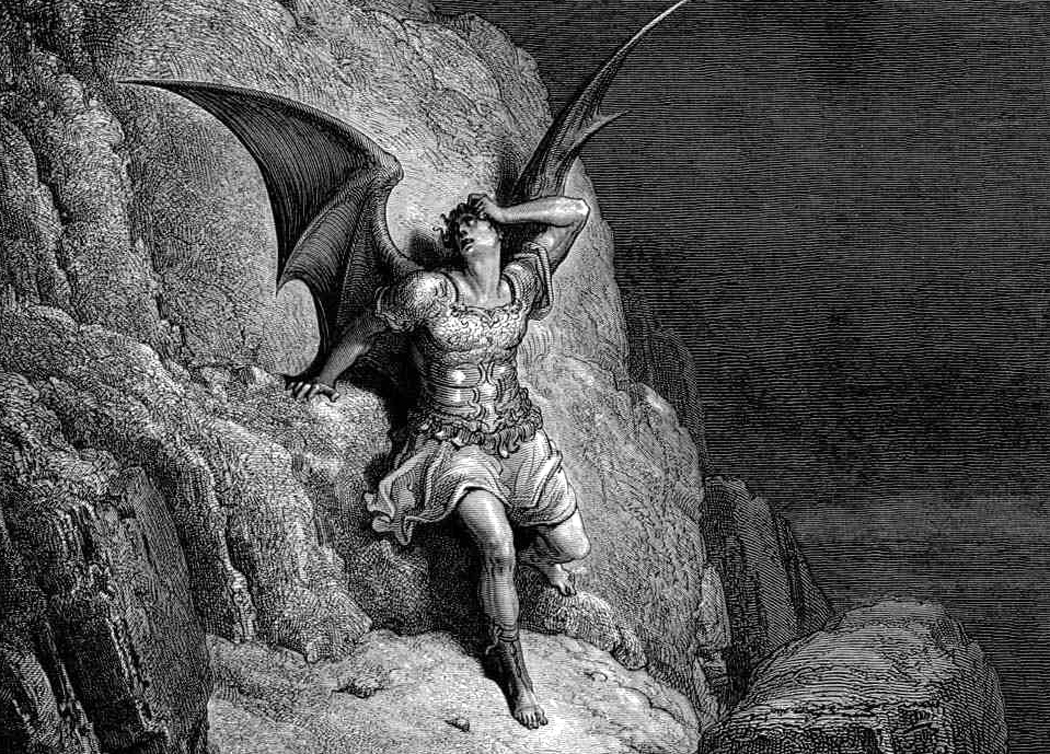
“Round he throws his baleful eyes.”

Translate it into French and it comes out as the equivalent of: “He looks around malevolently.” Not the same thing, all the poetry is gone out of it. Deflated; a flat tire.

Or: “When I consider how my light is spent.”

It is only in English that the word “spent” has the two meanings: a spent taper; or money (or life) spent. The word in the opening of his sonnet “On his Blindness” has a nimbus of ambiguity about it. The primary meaning is that he is now blind, but he spreads the halo out from the word “spent” by following it up with several other financial words: “the one Talent which is death to hide” where a talent is also a biblical monetary denomination, and brings to mind the New Testament story of the servants and the talents, and the poor servant who is “cast into the outer darkness, where there will be much weeping and gnashing of teeth.” And then there is, “present my true account,” and its hint of double entry bookkeeping. It is this expansiveness in language that is the key to Milton’s greatness. He is large; he contains multitudes. But they are bound in English, anodized, as it were, not separable. How do you work that magic in French? Or German? Or Japanese?

These things are untranslatable, and hence, Milton can never have the global currency of Shakespeare. 

Or consider translating Chaucer from his own time to ours. The poetry — The sound of the words, phrases, sentences and stanzas — cannot hypnotize us as the original does. Yes, we get the sense, but we miss the art.

“And smale fowles maken melodye, that slepen all the night with open ye.” 

Or imagine James Joyce in German. The melody is gone. “Stattlich rundlich Buck Mulligan…” 
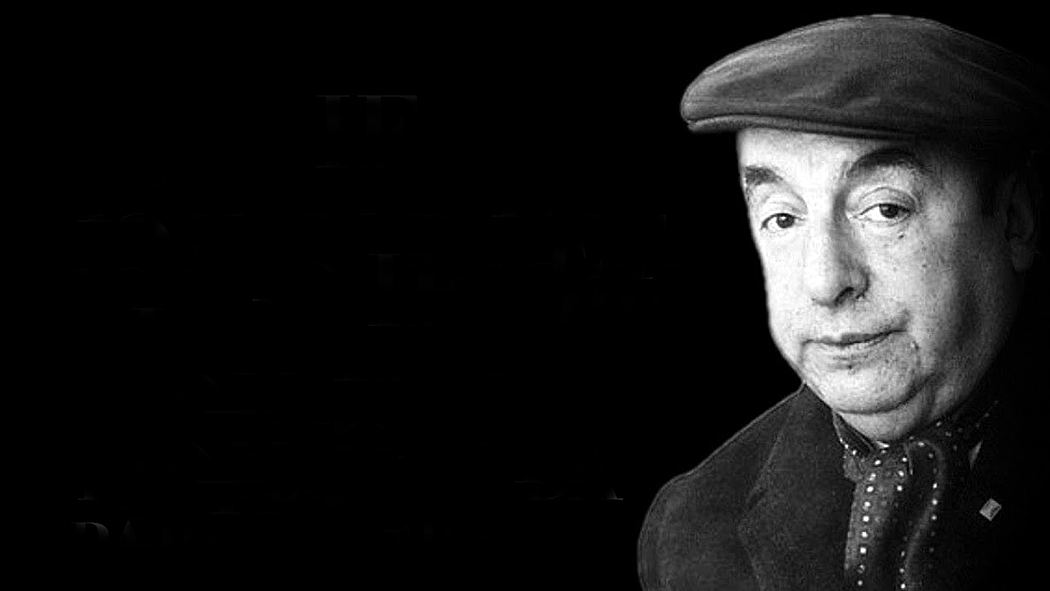
If I turn to a poet I love very deeply, and whose language I can parse, it survives translation very well. Pablo Neruda’s Spanish is so transparent, that the ideas embodied in it are clearly seen in any lingo. It is that Neruda’s primary concern in his poetry is not language, but experience. They are real pears and plums in his poetry, real life and death, real love, real sex, real toes and real stones. The poetry is about the things of this world, and not the way we express them.

The poetry is highly wrought, and in Spanish, there is a linguistic layer Neruda also cares about, but the power of the poems come from Neruda’s connection with his own life, his own experience, and that it is possible to share in any language.

Quiero conocer este mundo,” “I want to know this world,” he says in his Bestiario/“Bestiary.”

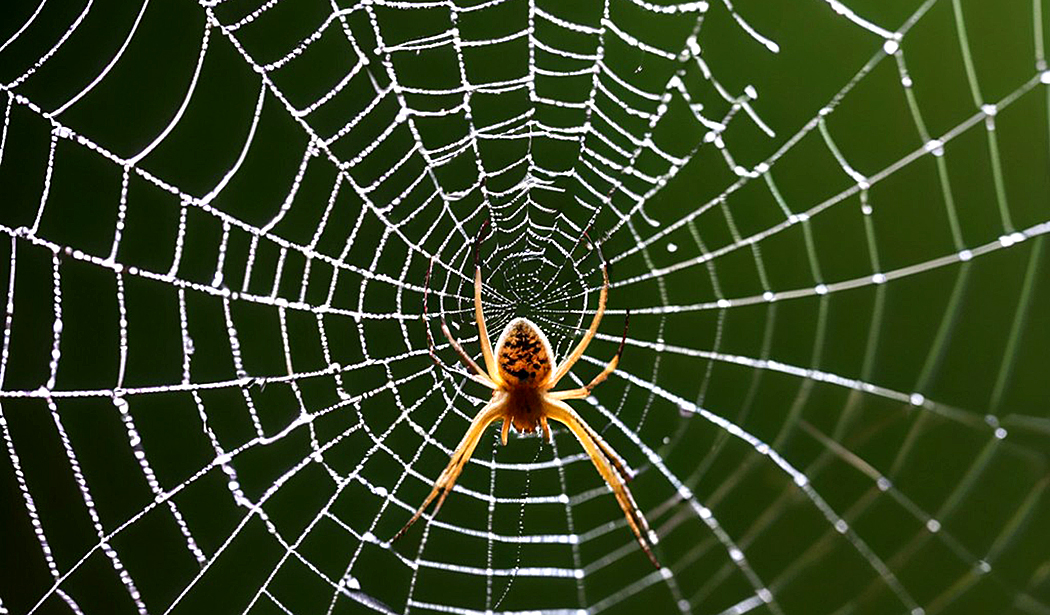
“The spider is an engineer,/ a divine watchmaker./ For one fly more or less/ the foolish can detest them:/ I wish to speak with spiders./ I want them to weave me a star.”
Language is a mask. Behind it there is a world. You can concentrate on the language, or on the world. It is easy to be lulled into forgetting the difference, to think that words describe the world, and that the best language is the most accurate lens on the things of this world — este mundo — but they are not the same, but rather, parallel universes, and what works in words does not necessarily explain how the world functions. In reality, there are no nouns, no participles. There is only “is.” Can you squeeze that “is” through words? We try. And we try again.

I woke up this February morning to a gray, cloudy, cold day, with reaches of fog climbing up the sides of the mountains, giving them all the look of a Chinese painting. Brouillard in French. Nebel in German. 

And that set me to thinking about Long John Nebel, a radio personality from WOR-AM in New York, who had an all-night talk show when I was a kid, interviewing people who claimed they had been in flying saucers, or explained there was a civilization that lived in the center of the earth, or that could bend spoons with their minds. It is where I first heard of Charles Fort, Edgar Cayce and astral projection. 

Long John’s theme song was originally written for the movie The Forbidden Planet by David Rose, but was never used there. It was distinct and spooky, just like most of Long John’s guests.

Remembering Long John reminded me also of Jean Shepherd, whose program ran on the station just before Long John. For 45 minutes each night, Shep told stories of his childhood or army life, ranted about modern culture, played the Jew’s harp or kazoo along with The Sheik of Araby, and drove his engineers and management nuts. His theme music was Eduard Strauss’s polka Bahn Frei, in a Boston Pops arrangement by Peter Bodge. Eduard was the lesser known younger brother of  Johann Strauss II and you could call him the Eric of the Strauss family. I listened to Shepherd night after night and heard the polka so many times — thousands — that as soon as I think of it, it becomes an ear worm and for the next couple of days, it plays in my head endlessly. 

And so, I’m sitting there this morning, enjoying the nasty weather outside and my mind wanders to TV show theme music. There’s the William Tell Overture and The Lone Ranger; Love in Bloom for Jack Benny; Love Nest for Burns and Allen.

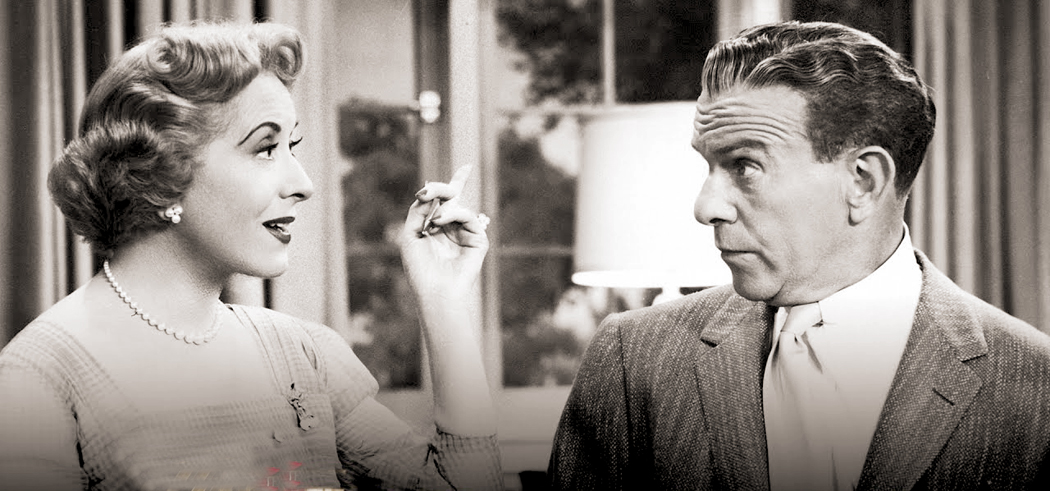
Burns and Allen was a show we watched regularly in the 1950s, and in retrospect, I can see it as the first Postmodern series, as George would retreat to his study above the garage and watch the same show we were watching, on his TV and commenting on the plot as it played out. This level of knowingness became common later with such shows as It’s Like, You Know… Everyone’s doing it now. 

These connections, from fog on the mountain to Postmodernism, are the way the human mind works. One damn thing leads to another. We might all like to think we are rational beings and think logically, but no, it’s a slow bumping from one thing to another, and sometimes we make them fit together like the Tab A and Slot B of a puzzle. 

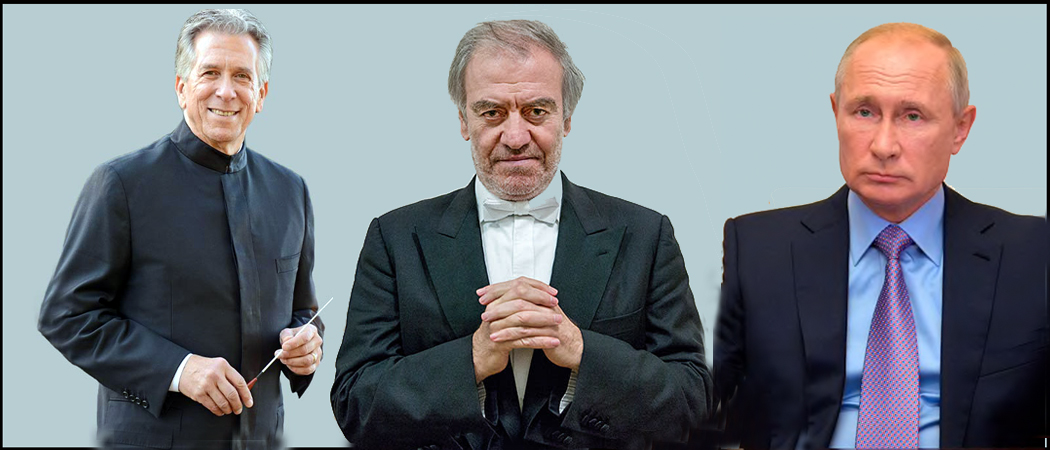
It’s a version of the Kevin Bacon game. How many steps to get from this to that. For instance, I can get to Vladimir Putin in only three steps. When I was music critic in Phoenix, I was friends with the director of the Arizona Opera, the late Joel Revzen (an unfortunate  Covid victim late last year; I will miss him). After he left Arizona, Revzen worked at the Metropolitan Opera in New York and became the designated repetiteur for Valery Gergiev (Revzen would rehearse the orchestra and singers for weeks to get them ready for the jet-set conductor who would swoop in the last week and put the finishing touches on the performance). Gergiev also invited Revzen to conduct his orchestra in Moscow, the Mariinsky Orchestra. Gergiev, in turn, is pals with Putin. Three jumps and bingo. 

I can connect with Albert Einstein in two steps: My friend and predecessor as music critic in Arizona was Dimitri Drobatschewsky, who was born in Berlin. Dimitri’s father was a noted violinist, and when Dimitri was a young boy, the family played string quartets at home, and occasionally, Einstein — an amateur fiddler — would sit in. A quick two-step. 

Dimitri knew many of the most famous musicians of the 20th century, and through them, I could trace connections to Rachmaninoff, Heifetz, Rubinstein, even George Gershwin. And through Gershwin to Arnold Schoenberg, and through him to Gustav Mahler. Short trips and many connections. 

Let’s see how many connections I need to make it to Johann Sebastian Bach.

—I knew Dimitri; who knew cellist Gregor Piatagorsky; who recorded Beethoven’s Cello Sonata No. 2 with Artur Schnabel; who studied piano with Theodor Leschetizky; who learned piano from Carl Czerny; who was a pupil of Ludwig von Beethoven; who met Wolfgang Mozart; who knew Johann Christian Bach; whose father was Johann Sebastian. Nine steps over 271 years, an average of 30 years per step.

That’s a bit over the standard Kevin Bacon line, but I can still claim only six degrees from Beethoven. I knew someone who knew someone who knew someone, etc., who knew Beethoven. Finding connections, whether of acquaintance or through association of ideas, everything is connected to everything else. When we isolate anything, we rip it from its context, and its context extends, however tenuously, to the edges of the universe. 

And I cannot think of 271 years as being all that long ago. I have lived for nearly three-quarters of a century; my father was born 102 years ago. That’s the year of the Versailles Treaty and the year Pierre-Auguste Renoir died. So, that’s a century, a father-son century. Only 10 of those father-son centuries and we are in the reign of King Canute of England. The Middle Ages. A millennium. And only 10 of those brings us to the very beginnings of agriculture and civilization itself, growing along the Fertile Crescent, the Indus River Valley and in China. That’s just the father-son century times 10 times 10. All of civilization, there between your thumb and forefinger. 

It’s hardly surprising, then, that everyone with even a drop of European in their DNA can count Charlemagne in their family tree. We are all related. Further back, we seem all to have the bones of Lucy as our great-great-great, etc. grandma. 

And anyone who saw the 1978 James Burke television series, Connections, knows that the world doesn’t progress in a linear fashion, but by accretion. It takes a handful of previous inventions to permit the breakthrough we all know. It’s a web, not a line. 

Even today’s weather in Asheville is dependent on yesterday’s rain in Tennessee and last month’s disturbance over the Pacific Ocean. 

In my own life, I realize I could have had a Ph.D. in some specialty, maybe a sinecure in a college or university. It was actually what my life-arc seemed to predict. But I could never narrow down my interests. I wanted to learn everything. An impossibility, of course. But I have spent my seven decades looking for the way all things are related, for the bigger picture. The beaker into which it all mixes. The mind casts a wide net, wide enough to move from a gray day through a radio talk show to Charlemagne and even to Gobekli Tepe in Turkey. 

apple cut

Have you ever been in love? Do you love chocolate?

Do you love your mother? Do you love heavy metal music? The smell of dew in newly cut grass? Perhaps you love irony.dinner knife

We toss the word ”love” around as if it meant only one thing, but love of Monday Night Football is significantly different from Tristan’s love for Isolde. We use the same word, but we mean different things.

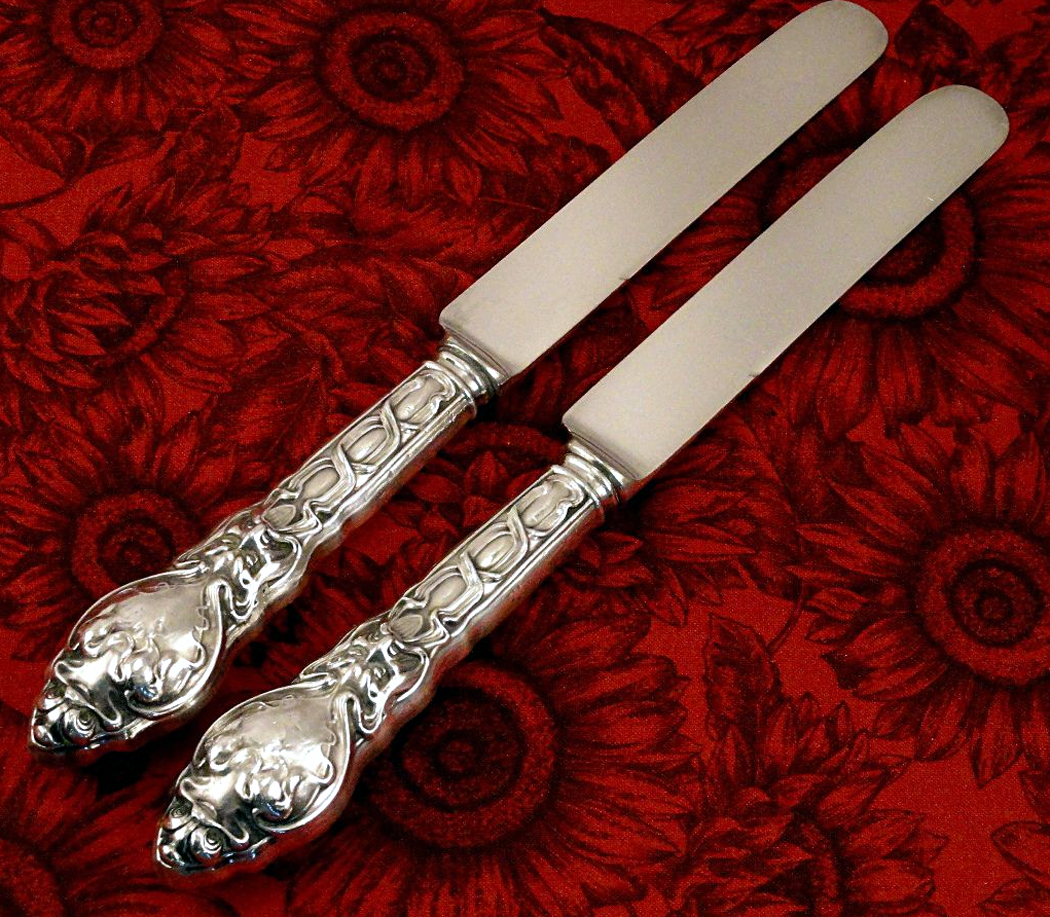
It’s the same way with ”art.” The tiny trigram covers an enormous range, from late Beethoven quartets to the design on your dinner knife. And then we have trouble defining it, because we are looking for one single definition that will fit all cases. It should be no surprise that we can’t find it.

The problem with discussing art is that one person’s Rembrandt is the next person’s Hershey bar.elvis 2

So when I write that black-velvet Elvis paintings simply aren’t art, I’m guilty of hyperbole. Of course that is art. It just isn’t good art.

(There are some people who believe that ”bad art” is an oxymoron. Or as my late friend, the great Dimitri Drobatschewsky, used to say, “There’s no such thing as bad art; if it is bad, it isn’t art.”)

Working on the assumption that art requires ability, they make the analogy that bad art isn’t art the same way ”bad ability” isn’t ability.

Yet, there is a very wide range of abilities. Can we discount Henri Rousseau because he didn’t have the technique of Raphael? Surely it still deserves the name of art. And how about Jeff Koons’ basketballs floating in a fish tank? mbulu nguluHow much craftsmanship did that require? And yet, if it isn’t art, what the hell is it? Surely the definition of art is broad and deep.

If we attempt to be inclusive, if we attempt to find a definition that covers Rembrandt, Shakespeare, the prints that hang on a motel-room wall, the designs cut into a Western belt, the mbulu-ngulu figure of Africa and shakuhachi music from Japan, things get murky.

But that is only because we have set an impossible task: finding that illusive single definition for art.

APPLE SLICES

Yet, if we step back and attempt to see art as a whole rather than attempt to make a polemical case for our favorite corner of the art universe, we can begin to see at least the general outline of the subject. It also becomes clear that art must have a four-sided definition: The whole can be divided in half from side to side, or from front to back.

Sliced from side to side, there are two apple-halves of art.

First, there is the decorative side of art. Whether it is racing stripes on a car or a landscape over the sofa, art of this order attempts to make our lives more graceful. We use it to decorate our lives and the things of our lives.

On a more serious note, it is art that is a palliative against the abrasiveness of living. If we must suffer in love and business, we should be able to escape that in art. Hence, Broadway musicals.bass buckle

On the simplest level, it is the shape of your belt buckle, the color you choose for your Toyota, the typeface of your letterhead.

On a more refined level, it is Monet painting mural-size pictures of waterlilies for the Orangerie.

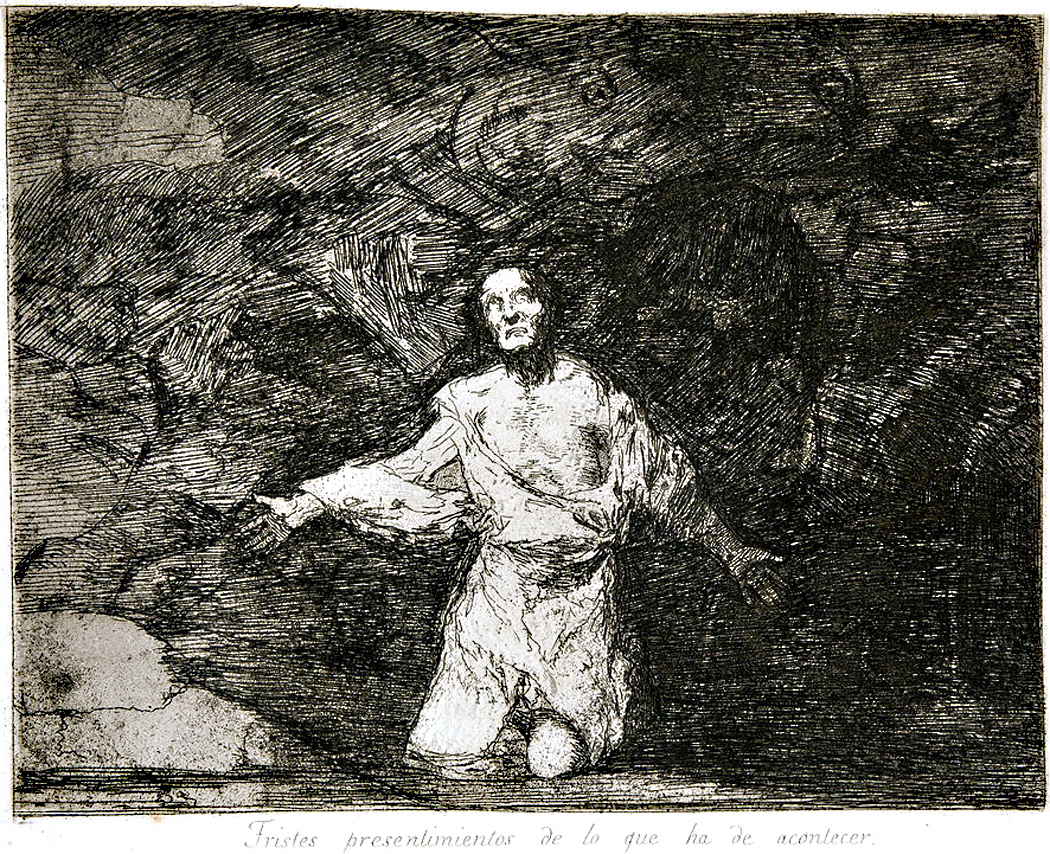
Overall, it is the sense that beauty is somehow the opposite of life and that art should embrace beauty and turn its back on pain and suffering, or at least idealize them and therefore freeze them into powerlessness.disasters of war

CONFRONTING TRUTH

But the other apple-half wants us to engage with life, complete with all its sufferings, frustrations and complexities. This view recognizes that art is a means we use to come to terms with life. All of life.

It says that art is the test we give to truth. As science confronts fact, art confronts truth. In this sense, art distinguishes between the genuine and counterfeit, the possible from the impossible, the passion from the sentimentality, the moral from the moralistic.

Art is in some sense a virtual reality, a model of the world that we can use, as an airplane designer uses his computer model or a climatologist uses his, to test our version of reality.

In another way of putting it, art isn’t the opposite of reality, but in fact, art creates reality.

It is one of the often overlooked verities that without art to picture what the world looks and feels like, we would not be able to see or feel the world at all.

The worlds of sensation and emotion are so infinitely complex, such a swirling mass of input, that we are forced to filter the information and organize it to make sense of it. Art is the means by which we do this.

THE CREATION OF ORDER

Egyptian figuresIt is the cumulative power of all our arts that defines our culture and its view of reality. The arts create civilization and not the other way around.

The style differences between cultures are not questions of fashion and taste but of how those cultures decide to see the world.

An ancient Egyptian wall painting, with its stylized poses and almond eyes, probably looked as real to the ancient Egyptians as a Renaissance painting looks to us.

Because we are not part of that culture, we can spot the artifice on the pharaoh’s tomb, but are harder pressed to see the distortion and artificiality of Renaissance perspective. But it is just as schematic, just as false as the Egyptian. Always, the image that falls on your retina is different from the image that forms in your mind. Art is how we learn to transform the one into the other.Waiting-for-Godot

From this view, art is the discovery or creation of meaning and order from the chaos of perception and experience.

And that is why some people prefer Waiting for Godot over The Odd Couple. Godot feels more true.

With the apple sliced this way, the argument is Vladimir and Estragon vs. Felix and Oscar.

A NOUN OR A VERB?

Ah, but if we slice the apple from front to back, we have a completely different argument on our hands.

This one asks, ”Is art a noun or a verb?”

If art is a noun, then it is an artifact. Seen this way, the art is the painting on the wall, the poem on the page. Art is what the artist creates, what is left when the artist walks away.

But if art is instead a verb, it is seen as the process that creates the painting. In this view, the finished canvas is only a byproduct of the art.

In this view, what counts is what the artist learns in the process of making the art. A residue of what he learns is evident in the resultant poem, painting or symphony, and an attentive audience, as they experience the art, must in essence re-create the journey the artist took.

This view requires rather more effort on the part of the audience. When the process becomes the point, the viewer cannot remain a couch potato.

It is what we mean when we say a certain play or piece of music is ”difficult.” It is art as hard work.

Art as noun leads to a scholar’s view of art, or a connoisseur’s. All one needs to possess it is a large enough bank account.

But with art as a verb, you cannot have it unless you earn it through your own emotional and intellectual effort.horse barn paint by number

A MOMENTARY DEFINITION

So let us reassemble the apple and see if all art can be encompassed in its sphere. Here is a provisional definition of art:

Art is something made by human hand or mind, or the making of something by hand or mind, that graces our lives or the things of our lives with beauty; or the same thing that explores experience and attempts to discover or create meaning. That meaning can be personal or communal, spiritual or perceptual, emotional or intellectual.

I have no doubt that there is a worm in this apple, and I encourage readers to search for it. If this definition is where I light for the moment, I am not unaware that the problem of coming to terms with art has remained difficult through the eons. But maybe this short explication sets the mark as high as I can stretch for the time.

It is as Sappho once wrote: ”Like an apple ripening on an upper branch, passed over by apple pickers — no, not passed over, but too high to reach.”

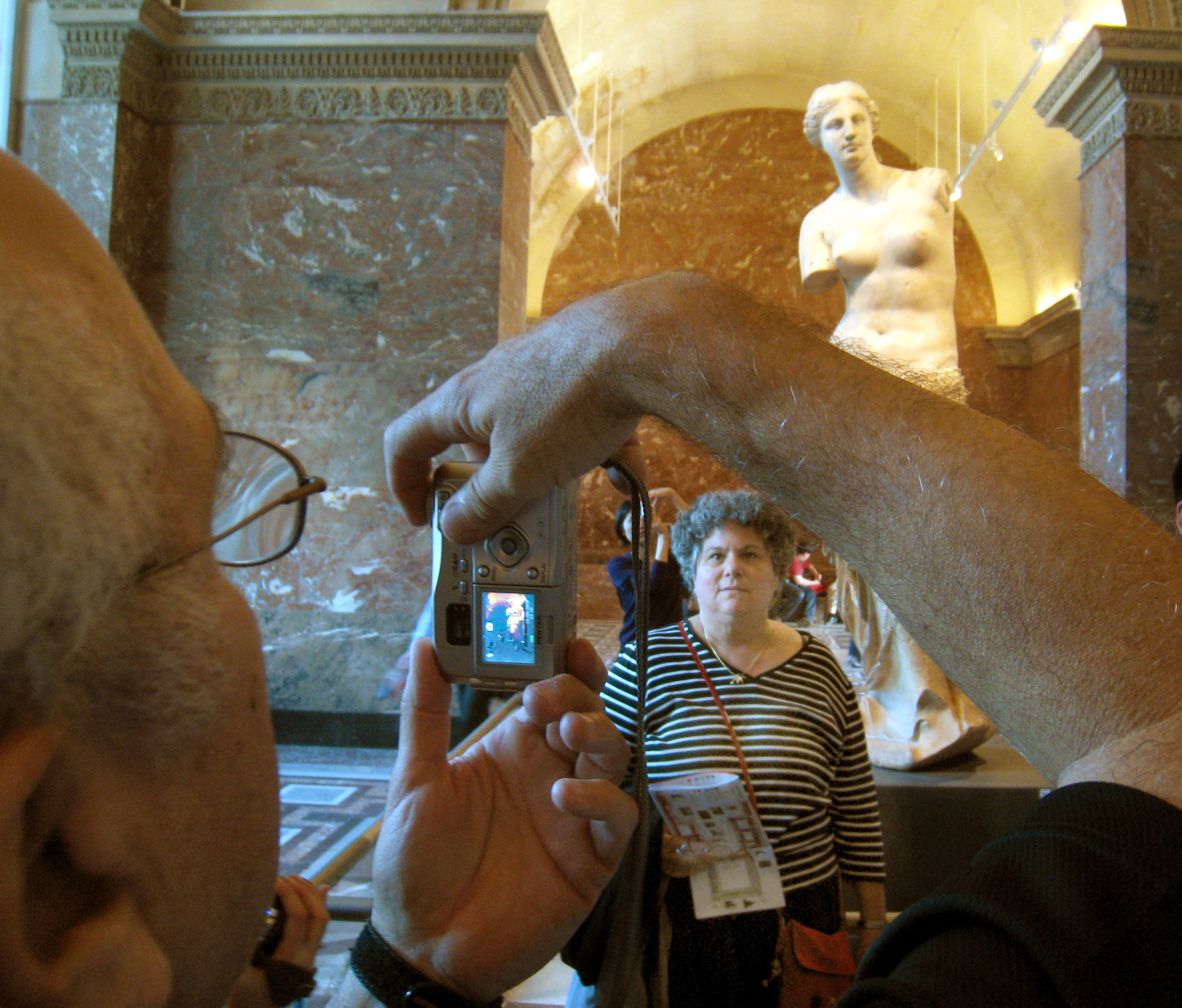
Memo:031a venus di milos


WHAT ART CAN DO

— Art can teach us to see

— Art can grace the ugliness

— Art can be used to express the mythology we believe in

— Art can be the note pad of the unconscious

— Art can be propaganda

— Art can be merchandise

— Art can be a value judgment

— Art can investigate the nature of reality

— Art can unify the senses and the intellect

— Art can be a means of causing meditation or contemplation

— Art can give names to things that have no names

— Art can illustrate a text, adding emotional resonance or clarity

— Art can give us roots

— Art can give us a past

— Art can be used to enforce a political agenda

— Art can be a means of recapturing what we think we have lost

— Art can establish class distinctions

— Art can be the satisfaction of form

— Art can be misunderstood and still be effective

— Art can be subversive, but not on a political level

— Art can be evidence of maturing taste

— Art may raise your IQ

— Art can be wealth

— Art can be instruction

— Art can be substitute language (including international symbols)

— Art can be fashion

— Art can be design

— Art can be secret communication

— Art can be an exploration of the non-verbal

— Art can be anything beyond the primary body needs

— Art can make a fetish from simple body needs: a certain way of eating

— Art can encompass everything mental, as opposed to physical

— Art can be packaging

— Art can be comic, lyric, epic or dramatic

— Art can lie to us profoundly

— Art can yank our chains

— Art can provide models for behavior

— Art can clarify something insufficiently clear in words

— Art can be the codification of values

— Art can unseat old values

— Art can be creation of order in a chaotic universe

— Art can be creation of chaos in an orderly society

— Art can unify a culture

— Art can separate elements of the culture

— Art can be as rigorous as physics

— Art can be as sloppy as mud wrestling

— Art can heal a wounded psyche

— Art can open wounds

— Art can be the object hanging on the wall

— Art can be the process that makes the object

— Art can be the means of defining the ego

— Art can be the means of defining the culture

— Art can be the communal experience of audience

— Art can be singular experience

— Art can provide an entree into the past

— Art can provide the key to understanding an alien culture

— Art can amuse us

— Art can bore us

— Art can be craftsmanship

— Art can make magicrousseau