Archive

Tag Archives: don giovanni

I once made a list of my Top Ten Films and the list had 40 movies on it. What is more, if I had made the list a year before, or a year later, the 40 movies might have been quite different. One cannot really pick a permanent set. 

So, when Classics Today executive editor David Hurwitz published his list of “12 Operas I Cannot Live Without,” and challenged his audience to come up with their own lists, the same problem popped up. “You mean the dozen I cannot live without today?”

While I love opera, like Hurwitz, I have to admit I am not an opera nut. That’s a different breed. Opera does seem to attract the crazies — the ones who swear by a 1948 barely audible recording, made over a telephone line, of Maria Callas singing La Sonnambula — in the unauthorized 1848 edition only performed once, in Belfast, Ireland in 1873. You know, the one with the interpolated aria in Act 2. Yes, crazy like that. 

I have been listening to classical music for more than 60 years, and am a classical music generalist: I love it all, from pianists to chamber music to symphonic and vocal music — and, of course, opera. But opera has no special place for me. Opera people care who the tenor is; I am more interested in the composer, which means I’m not included in the opera inner circle. 

So, my list is not made up of the usual names: Verdi, Bellini, Puccini, and doesn’t automatically include the ABCs of opera popularity — Aida, Boheme, Carmen. It’s not that I dislike them, but I have seen them enough times that I don’t need to experience them yet again. They will always sell enough tickets, even without my attendance. 

These are the works that I choose when I want to hear opera, to enjoy the music in them and the emotions they arouse. I could list more than 12, but Hurwitz’s assignment limits the number — although I might cheat a bit.
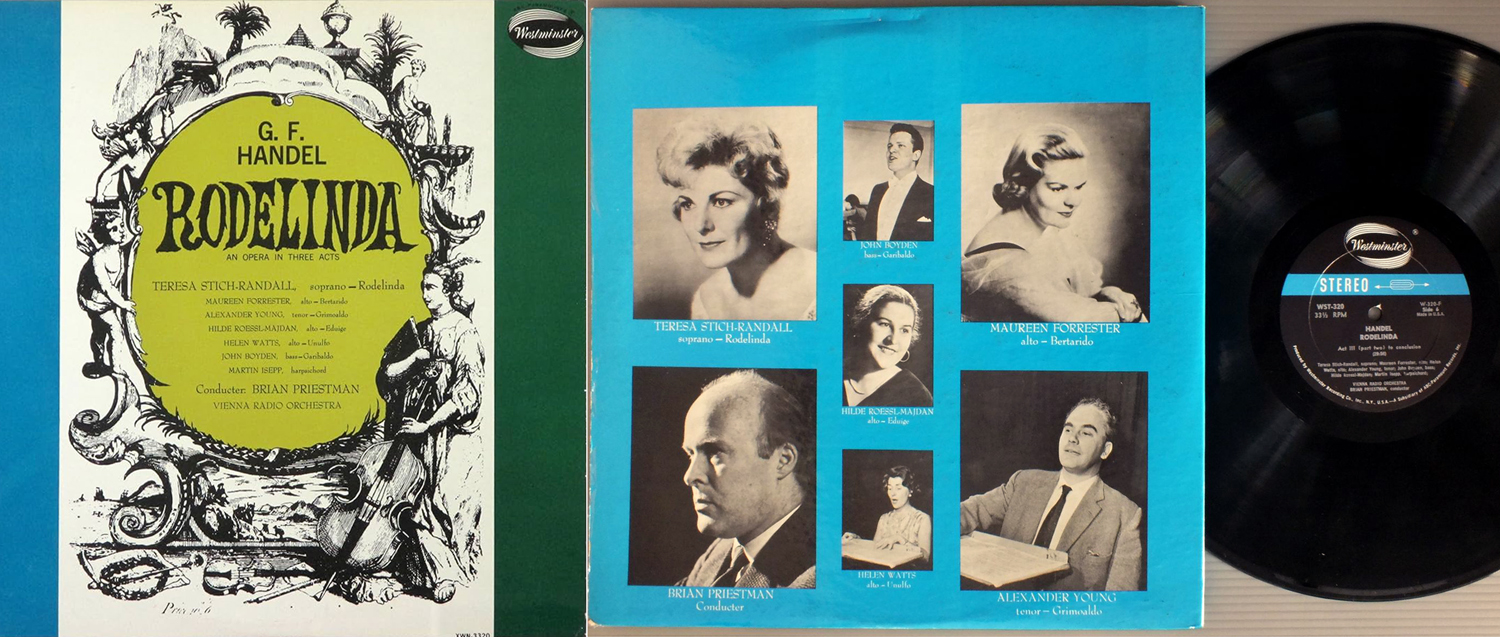
1. Handel: Rodelinda

The first opera I ever attended was in 1966 when the Handel Society of New York staged Rodelinda at Carnegie Hall with Teresa Stich-Randall and Maureen Forrester with a pick-up pit orchestra conducted by Brian Priestman. I couldn’t stop humming the tunes. 

Years later, I found a three-disk LP album of the opera in a smooshed-up box in a thrift store. I don’t remember who performed it, probably some Eastern Europe company on a back-water label no one’s ever heard of. I played it over and over. The familiar melodies were comforting.

The same year I saw Rodelinda, the same group also performed Xerxes and I saw that, too. Since, I have seen Giulio Cesare live and a truly brilliant staging of Semele by the Arizona Opera Company, but it is Rodelinda that sticks.
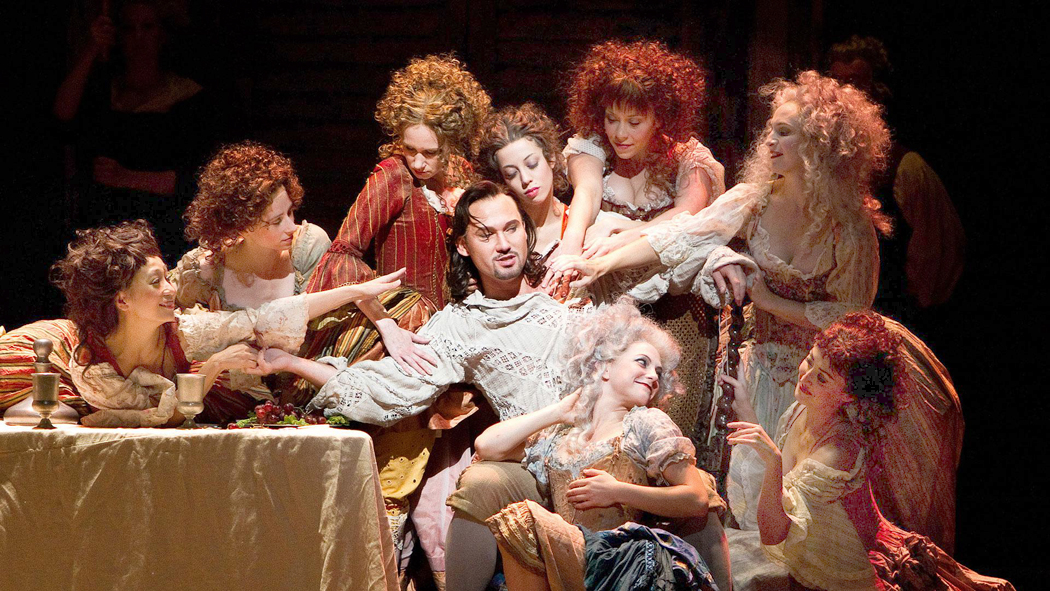
2. Mozart: Don Giovanni

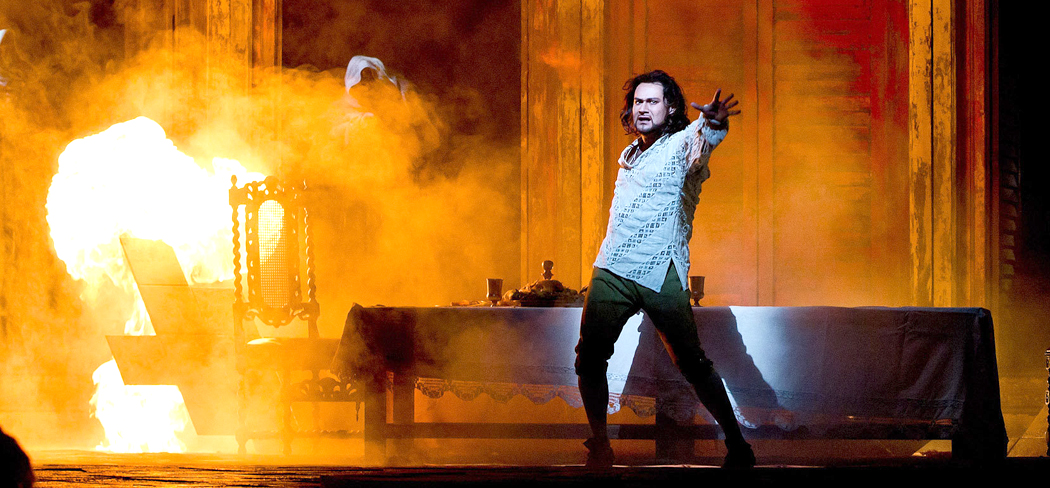
The opera I have seen most, and that I love as music as well as theater, is Don Giovanni. I’ve seen it more often than any other live opera (except the infinite Bohemes and Carmens I saw through duty as my newspaper’s opera critic). 

Most operas, even the really good ones, can not be defended on the basis of their plots, which are, at best, nonsensical and goofy. But Don Giovanni has a story with action, believable characterizations, and psychological subtlety. To say nothing of some really great tunes. 

And it is a truly revolutionary work, written at a revolutionary moment in history. I love when the partygoers at the end of the first act just kind of stop everything and belt out the words, “Viva la Libertad!” And also that, at the end, the Don has the courage to refuse to repent. He may be the villain of the piece, but he is also the hero. 

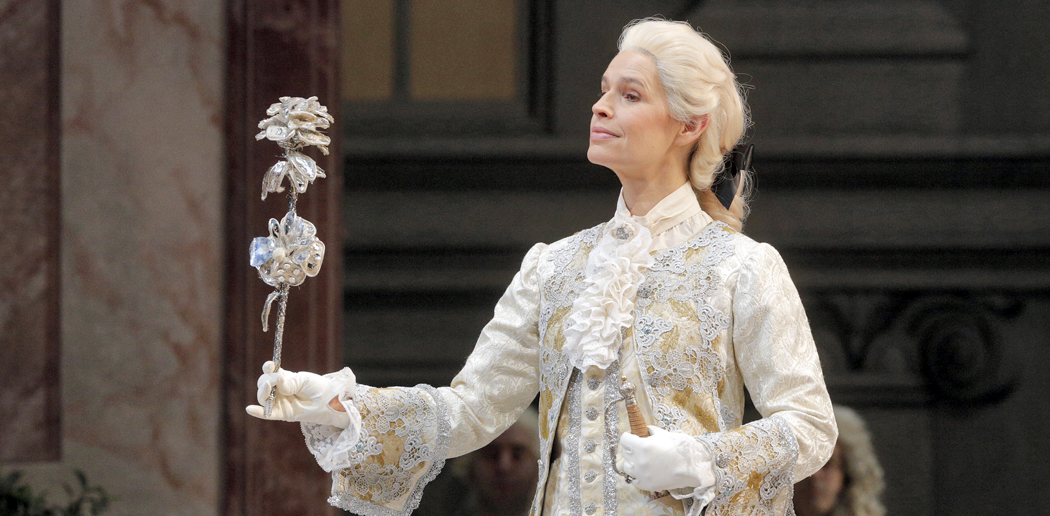
I’ve owned a half-dozen versions of the piece on LP and now CD, but my go-to performance is the oddly cinematic, opened-up film staging with Cesare Siepi as the Don, and conducted by Wilhelm Furtwängler, available on DVD. 
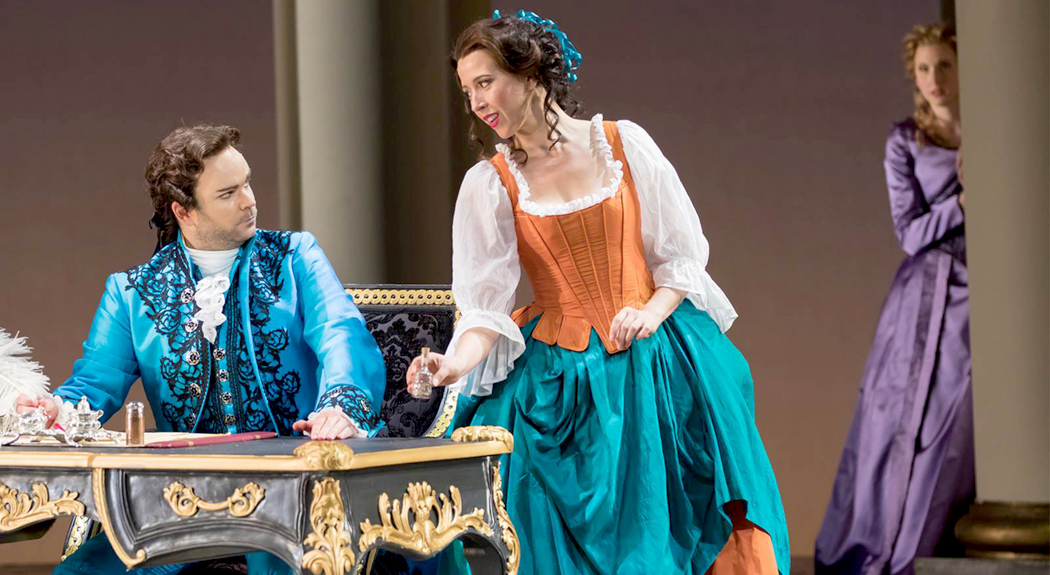
3. Mozart: Nozze di Figaro

On his list, Hurwitz permits only one opera per composer, but I can’t do that, because the three operas I love most, and can listen to over and over, are all by Mozart. Years ago, I wrote about what I was calling the “perfect” operas — that is, those with no longueurs, boring parts, added and unnecessary show-off arias to highlight the tenor or soprano. These are operas with plots that are defensible, if not great, pacing that doesn’t drag, and some level of human reality in them. 

By any of those standards La Nozze di Figaro tops the list. These are all real people doing real people things, hurting like real people, loving like real people, and most importantly, forgiving like real people. And, all the the perfectly psychologically apt music of Mozart. If I were to choose the best opera ever written, this would be it.
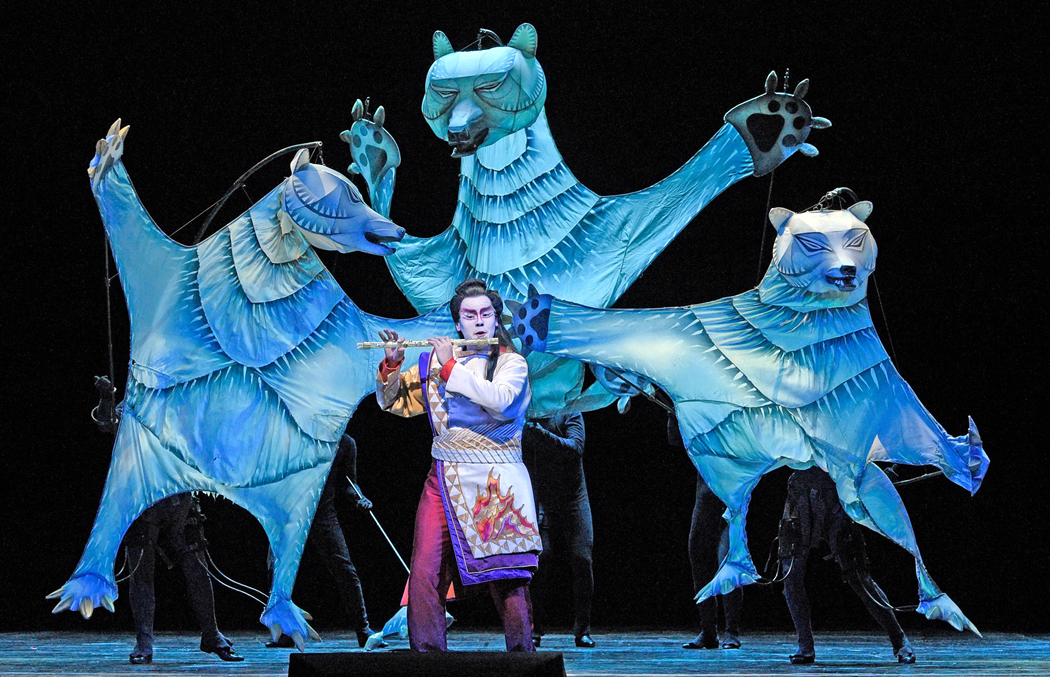
4. Mozart: Zauberflöte

Talk of silly plots: Just about the worst story in opera is found in one of the most popular works. Everything about the story in The Magic Flute is preposterous. But the music is so infectious, you give up and don’t care.

Especially if you get to see the staging by Julie Taymor with its giant bunraku puppets. It is stage magic along with great music. It is a slightly abridged version and sung in English, but it is so good, and so much fun, you really have to watch it. 

Or there’s Ingmar Bergman’s film version, sung in Swedish, which captures all the fairy-tale flavor of the thing. But really, there are dozens of recorded versions, both on CD for listening and DVD or Blu-Ray for watching. 

5. Berlioz: Le Damnation de Faust

I hadn’t ever thought of it as an opera, but I saw the Metropolitan Opera staging of it in 2009 and was persuaded: It works really well in that Postmodern presentation. Actually thrilling. 

As with so much of Berlioz, its reach much exceeds its grasp. Since the composer couldn’t include everything from even Part 1 of Goethe’s Faust, he chose to pick episodes to put to music, making a rather choppy story. Still, the music can be overwhelming when performed with the right belief and energy.  
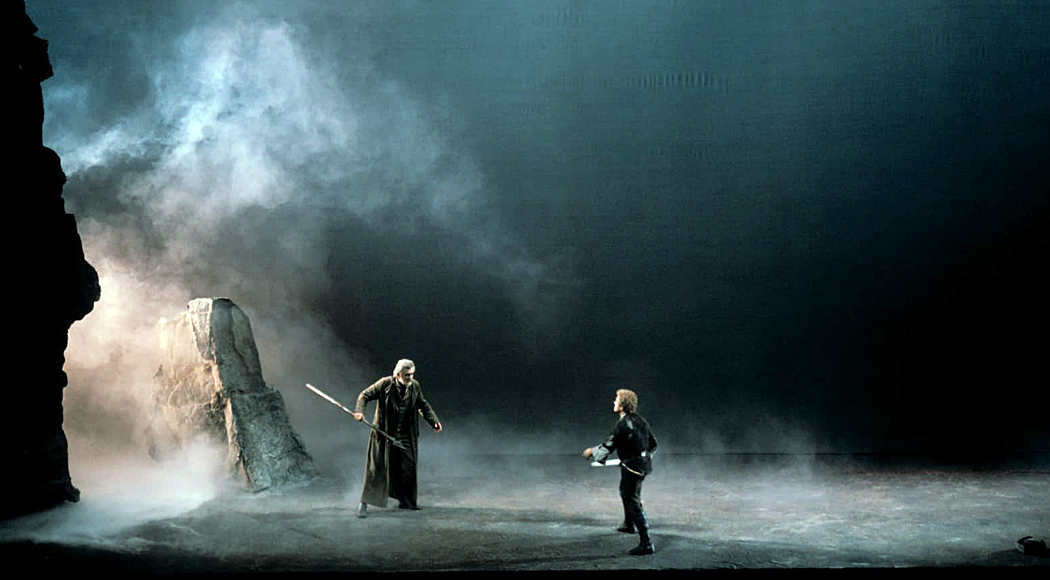
6. Wagner: Der Ring des Nibelungen

I’ve attended two live Ring cycles, which were quite magnificent (although I am humbled by the fact my dear friend, the late Dimitri Drobatschewsky went to Bayreuth 16 times). But I have to admit this four-opera trilogy (yes, that’s an oxymoron) is best heard on recordings. Not so much because with the great voices of the past, the singing is better (although that is true), but because the action in these “music dramas” is so mythic, and so German Romantic, that no scenery or stage machinery can adequately portray the Rhine maidens singing underwater, the valkyries riding their horses in the air, the gods crossing a rainbow bridge, or the Rhine river overflowing its banks to quench the fire that has set alight the entire world and ended the reign of the gods. Watching it onstage can seem a little tawdry. 

But listening to the recording with your eyes closed and imagining the rocky crags, the dark forests, the ring of fire on the mountain top, is so much more convincing as theater of the mind. I say with eyes closed, but you really also need to read the libretto as you listen. Or not libretto — that sounds too much like opera — Wagner doesn’t have a libretto; he has a text. 

I have five Ring cycles on CD (Barenboim, Böhm, Furtwängler, Janowski and Solti) and another two on DVD (Boulez and Levine). Is that a little nuts? I suppose. The one I listen too over and over is Solti, which was specifically designed to be played on speakers, with various sound effects added to it by producer John Culshaw. 

And yes, I’m counting all 15 hours of the Ring as a single entry. 

7. Offenbach: Les Contes d’Hoffmann

If the Ring is too serious, The Tales of Hoffmann counters with frivolity. I love this mini-trilogy (in four parts), especially when all three heroines are sung by the same soprano. 

It has some of the chunky episodic feeling of the Berlioz, (compare the Chanson de Kleinzach tavern song here with Mephistopheles’ Song of the Flea in Damnation. Both completely extrinsic to the story, but a chance for the composers to interpolate a great bit of ditty. 

The opera is a bit of a mess, as Offenbach never settled on a final version. But any version is a delight.
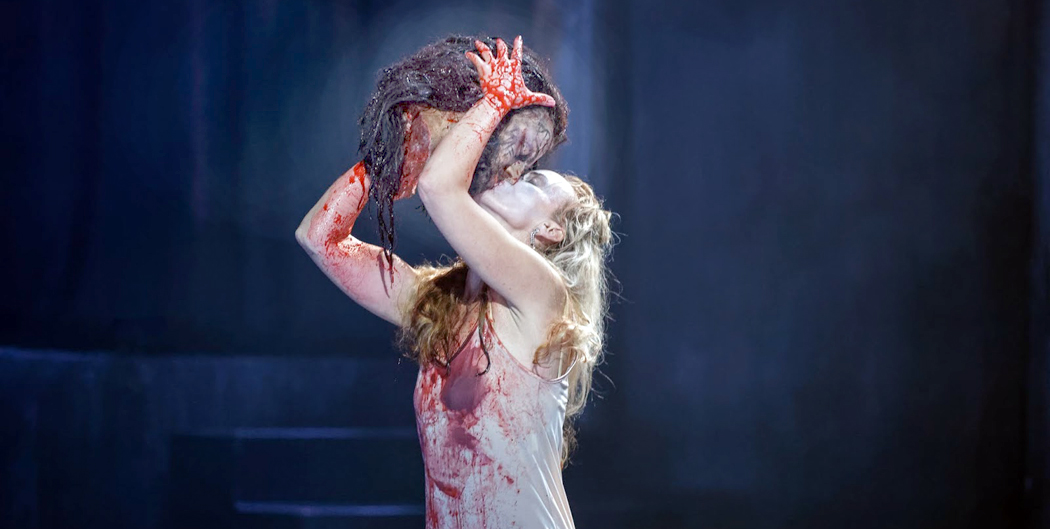
8. Strauss: Salome

I’ve seen several versions of Richard Strauss’ first opera, and it always seems to work on stage. It’s a short one, in a single act and tells of King Herod, his wife and daughter — Salome — and the prisoner John the Baptist, who Salome has a “thing” for. The prophet rejects her advances and she dances a striptease and has her daddy behead the prophet, whereupon she kisses the severed head. Grand Guignol, for sure, but great music and a surefire staging. 

If the Ring fares best on recording, this opera needs to be seen live (or at least on DVD). It is as much theater as music. 
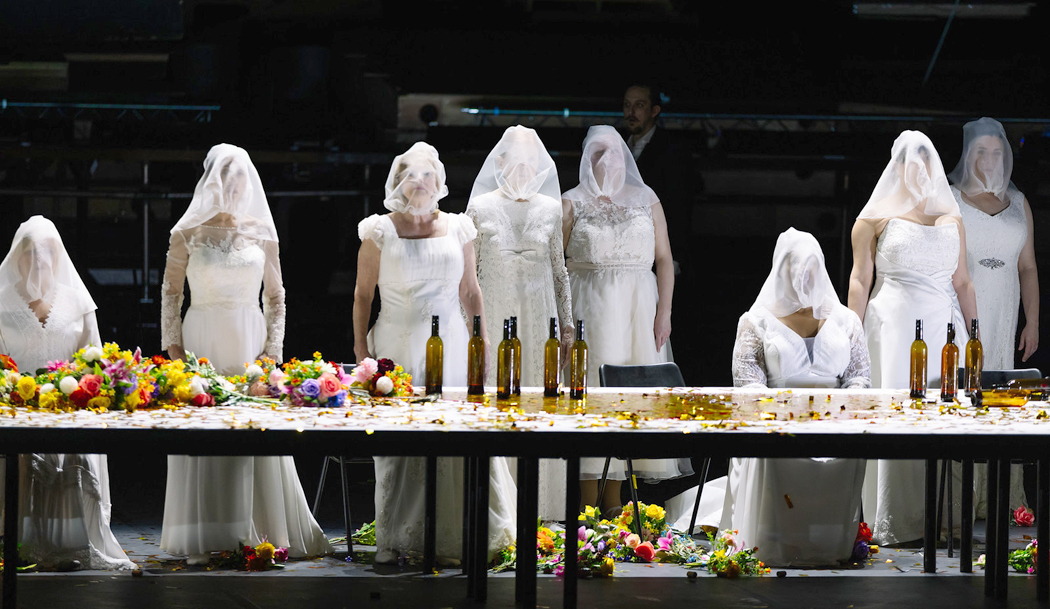
9. Bartok: Bluebeard’s Castle

Another short, one-act work of psycho-sexual complexity, Bela Bartok’s early work, which seems to take place entirely in the nation of Allegory, tells the story of Duke Bluebeard and his new wife, who can’t seem to let alone the secrets of her husband’s previous marriages. She forces the secrets out and winds up prisoned with all of them. All very Freudian.

Those secrets are hidden behind doors, and as she opens each door, she finds a world of shimmering music and deadly horrors. There are only two singers/actors in this story, one who wants to uncover the past, and the other who begs her to let them lie. But it is the impressionistic score that makes this work so irresistible.
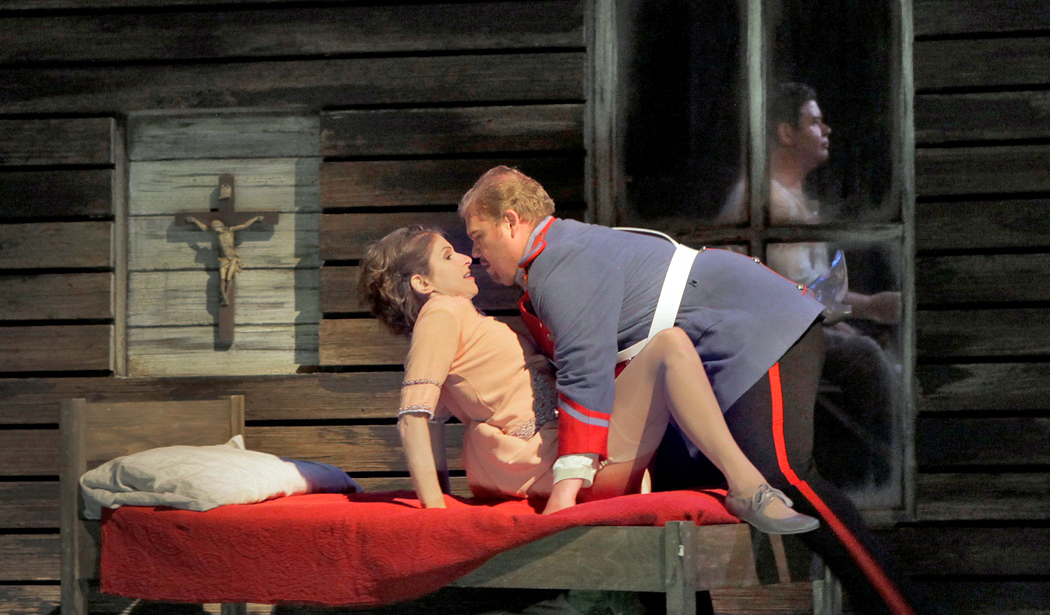
10. Berg: Wozzeck

There is a second “perfect” opera, after The Marriage of Figaro, one with no unnecessary bits, and everything leading to a single inescapable and shattering climax. It is written in a sort of atonal, 12-tone style (purely Berg’s own version) and is both musically inevitable, and emotionally devastating. Too many people avoid this work, fearing the music will be too dissonant, but every note serves a purpose, and even those fearing to enter the opera house will likely leave knowing they have experienced a work of utter genius. 

I claim Wozzeck as my favorite opera of all. There are many versions on disc. This is another one, like Salome, where it is so well designed for performance that almost any version will do, and it’s amazing how many versions there are on Amazon. A serial opera that is actually popular!

11. Adams: Nixon in China

Initially, I thought this piece by John Adams was a gimmick, but I saw it performed in concert by the Phoenix Symphony under Michael Christie and it blew me away. As no other contemporary work for the opera stage, this has joined the repertoire. (Did anyone else notice how the showstopping aria, “I am the wife of Mao Tse Tung” is a gloss on the“Tuba Mirum” section of Mozart’s Requiem?)  

No other figure in recent American history figures as so deeply mythic as Richard Nixon — a version of Nixon he seems to have bought into himself (check out the opening line of his autobiography: “I was born in the house my father built.” Can’t get much more Jungian.)

12. Golijov: Ainadamar

Christie also brought Dawn Upshaw to Phoenix to perform Osvaldo Golijov’s Postmodern take on the death of Spanish poet Garcia Lorca. With its mix of musical styles and bouncy, infectious score, it tells of the Spanish actress Margarita Xirgu, who recounts the life and execution of her friend Lorca. 

Like all great tragedies, it is both depressing at emotionally exhilarating at the same time. To say nothing of it now being an uncomfortably historical warning about fascist governments. 

There seems to be only a single recording of the opera, but with Upshaw in the lead role. The opera led me to seek out other music by Golijov, and I have loved all of it. 
Postlude

You may wonder, where is Verdi? Rossini? Puccini? Are they not worthy? Of course they are, and I love them, too. And how can I have omitted Rosenkavalier, which I love to pieces? There is so much more that could have been included, from Monteverdi’s Orfeo to Weill’s Dreigroschenoper

But this is a list of operas I can’t live without, the ones closest to my heart. The one’s that will make me actually buy tickets. Your list will be different, but if my selection prompts you to try something new, so much the better. 

And, finally, seeing opera (with one exception, noted above) is always better than just hearing it. Live is best of all, but DVDs will do in a pinch, and many movie theaters present showings of operas live on their screens, most famously the Metropolitan Opera. Check with your local theaters to see where such performances might be scheduled.  
Intro: What We Get Wrong

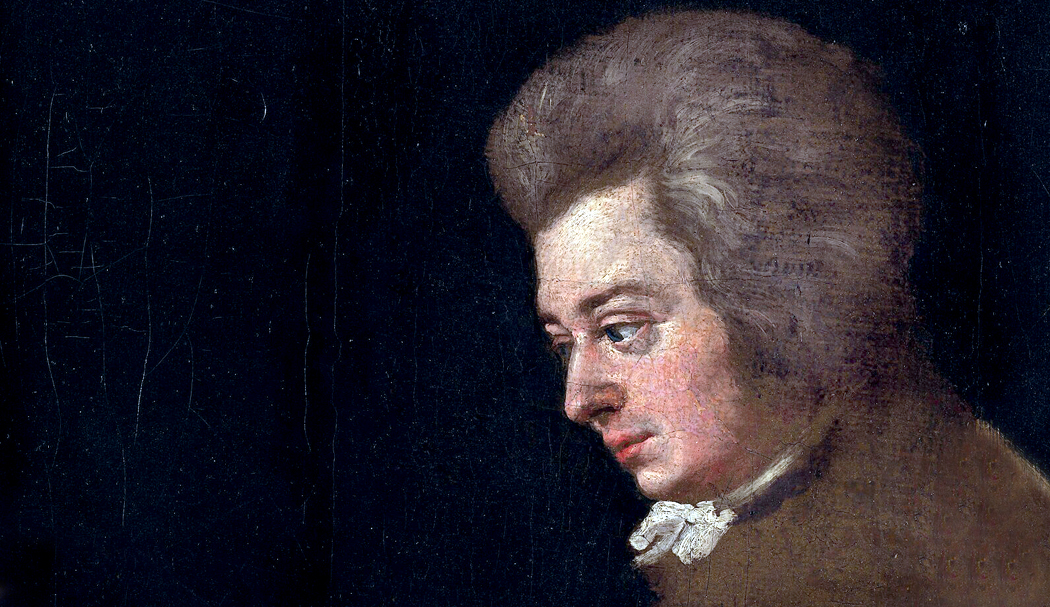
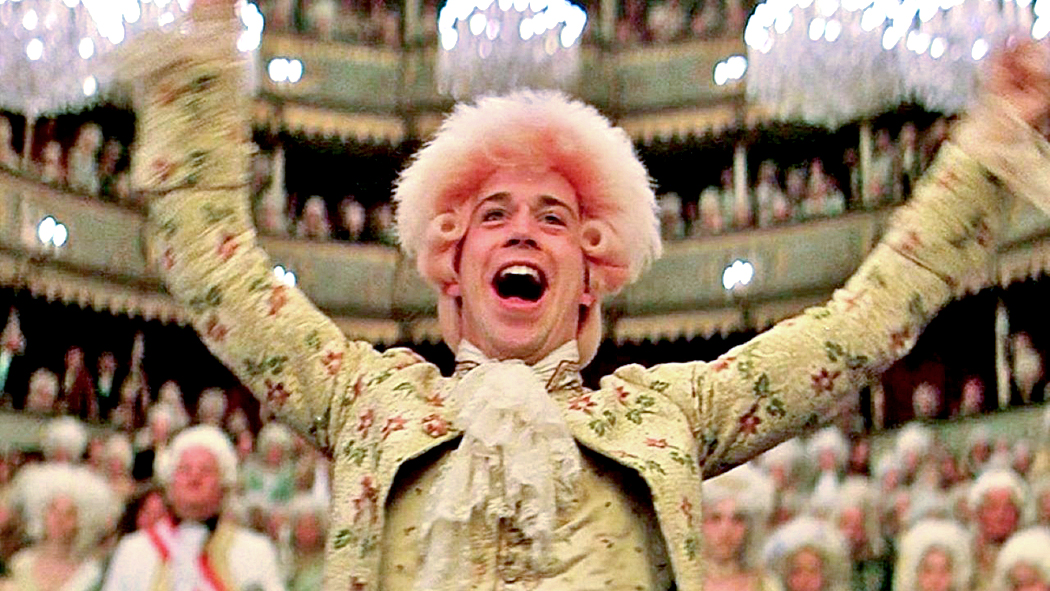
The 1984 movie, Amadeus, won eight Oscars and has been seen by millions of people. It was an excellent film, but it lied through its teeth. Mozart was not an arrested-development adolescent potty mouth. And Antonio Salieri never tried to kill him. 

Poor Mozart, he has had his life twisted over the centuries to illustrate cultural trends, and those trends have changed over those years. 

The 19th century first saw him as old fashioned, then he became a proto-Romantic, with his life deeply mythologized. The 20th century first saw him as a kind of porcelain doll, and after WWII, saw him as a polite precursor to Beethoven. In the 21st century, he has been the victim of countless historical-performance strictures that leave his music in a kind of inexpressive jog-trot strait-jacket. 

The man sometimes considered the greatest composer of all time has been so mauled over by his biographers, fans and later writers and filmmakers that the legend has taken over from the fact.

So, the plot of Amadeus is only one of a myriad of distortions, legends, myths and factifications. The truth, as usual, is more interesting.

What are some of the worst Mozart myths?

— Mozart began writing masterpieces before he turned 10.

* Yes, he wrote music beginning before he turned six. But some of that music was arrangements of other composers’ work, some may have been outlined by his father for the boy to complete, and none of them are masterpieces, or noteworthy, other than for them to have been jotted down by one so young. The early works are generic. They get played, when they are played at all, simply because they have Mozart’s name attached. 

— Mozart was buried in a pauper’s grave.

* Although it’s often said he died so poor he was buried in a pauper’s grave, the fact is Viennese law required anyone other than an aristocrat to be buried in a common grave, after a funeral service at the church. It was a reaction to recent outbreaks of plague in the country. And Mozart wasn’t poor. He lived quite well, although, working in what we would now call a “gig economy,” he had his income ups and down. 

But, over his last year, he earned 10,000 florins when an average laborer averaged 25 florins a year. It put him in the top 5 percent of the population of Vienna, according to H.C. Robbins Landon, author of 1791: Mozart’s Last Year. The man was no pauper, and his music was hugely popular, not only in Vienna, but across Europe. And when he died, he had a hit on his hands: The Magic Flute. He left his widow reasonably comfortable. 

— Mozart wrote his music spontaneously, without effort.

* Mozart’s facility with music was remarkable, but there are plenty of sketches and studies for his music. The pieces without such preliminary work most likely had them at one time, but they don’t survive. His widow, Constanze, burned most of the sketches, not thinking that fragments had any value. Mozart even writes to his father about doing such preliminary work. 

In 1787, he told the conductor of his opera, Don Giovanni, “It is a mistake to think that the practice of my art has become easy to me. I assure you, dear friend, no one has given so much care to the study of composition as I.”

— His middle name was Amadeus.

* He was baptized as Joannes Chrysostomus Wolfgangus Theophilus Mozart but his parents called him Wolfgang Gottlieb (Gottlieb being German for Theophilus). He usually signed his name Wolfgang Amadé. It was only after his death that people began regularly calling him Wolfgang Amadeus, which is a Latinized form of Gottlieb.

— His music is simple, direct, easy to listen to, easy to perform.

* And at the time of his death in 1791, at a mere 35 years old, his music was considered difficult to play and demanded careful listening. Mozart asked a lot. When the progressive Emperor Joseph II famously told Mozart his music had “too many notes, my dear Mozart. Too many notes.” he wasn’t being an ignoramus; he was reflecting the general taste of his times. To understand this, we need to place him in context. 

Some Context: The Classical Era

Something else we get wrong: It is usually said that Mozart and his contemporary Joseph Haydn wrote in the classical style, as if such a thing existed, and all they did was follow the rules. That’s got it completely backasswards. They didn’t write in the classical style; they invented the classical style. They were making it up as they went along.

Music history is taught as consisting of succeeding eras. The Renaissance gave way to the Baroque, which led to the Classical era and on to the Romantic, to Modernism and currently, Postmodernism. As if they were clearly defined and separate. And it is true that after about 1740 or so the heavily contrapuntal Baroque lost its hold on the ears of its listeners. They wanted something simpler, clearer, more charming and that wouldn’t be so serious. All those fugues and counterpoint of what was called “the learned style” gave way to homophony — that is, tuneful melodies and supporting harmonies. Something you could hum along with: Simpler and more direct. 

This is sometimes called the Style Galant; it followed the Baroque the way Rococo followed in the visual arts. Composers such as J.C. Bach, Johann Joachim Quantz, Johann Stamitz, or Domenico Alberti published torrents of light, catchy three-movement sinfonias and bright concertos, to say nothing of keyboard music to be played after dinner by the daughters of aspiring middle-class burghers. I’m grossly simplifying this, but the outlines are true. 

This is the kind of music both Mozart and his older contemporary Haydn produced in their younger days. Mozart wrote more than 20 symphonies in this popular style before the age of 17 and if they still get played it is because, again, they have Mozart’s name on them, and also, because they are full of great tunes. Mozart always wrote great tunes. 

Haydn had his own orchestra, paid for by his boss, Prince Nikolaus Esterhaza, a ridiculously wealthy Hungarian nobleman, who loved music. Hidden away at the prince’s countryside palace in Esterhazy for some 30 years, Haydn developed on his own, inventing new ways to delight and surprise an educated audience who learned and grew along with the composer. The palace was far from Vienna. Haydn said, “I was cut off from the world. There was no one to confuse or torment me, and I was forced to become original.” 

He basically invented the modern form of the symphony and the string quartet. 

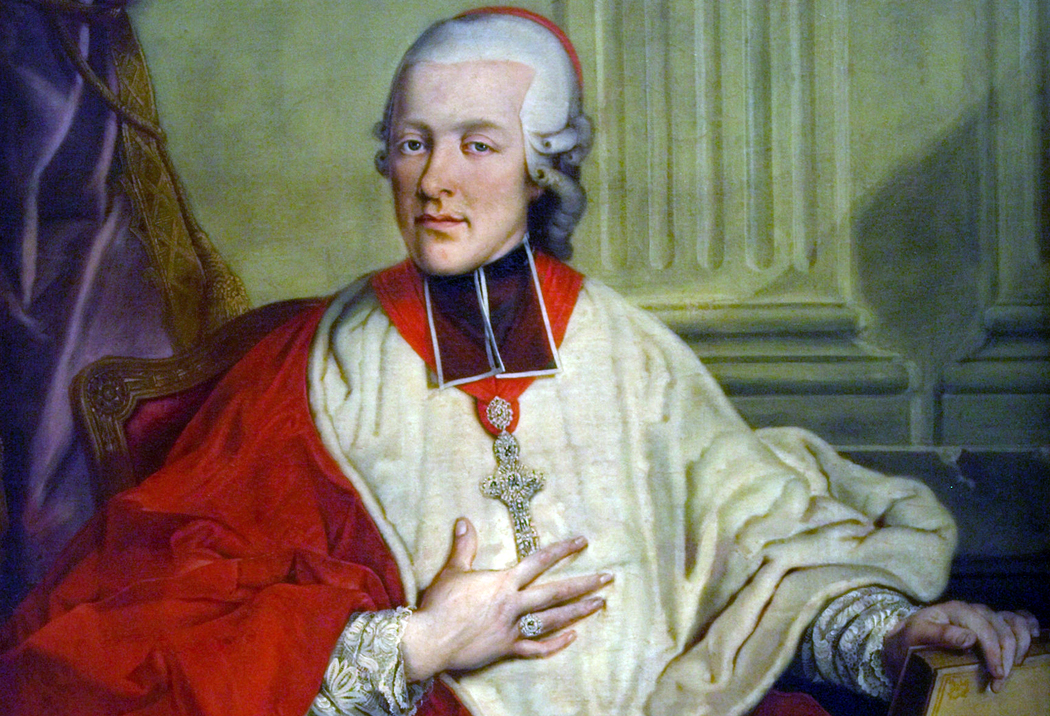
Prince-Archbishop Colloredo

Mozart, however, was truly cosmopolitan and after freeing himself from the employment of Salzburg’s prince-archbishop Colloredo, earned his crust as a freelancer in what was becoming a “gig” economy, living from commission to commission, and from concert to concert and opera to opera. 

He learned a lot from Haydn, and joined him in making his music increasingly more complex than the usual run of gallantries. They added back counterpoint to their works, increased chromatic and harmonic subtleties. Mozart’s music, for instance, is always more complex than it sounds.

Mozart asked his musicians to do more than did other composers: to play higher, lower, more quickly; to play notes unfamiliar to their instruments or voices; to attempt unusual phrasings and colorations.

At the end of Act I in Don Giovanni, three bands play onstage at the same time, performing different music in three different rhythms, but entwining their harmonies so they mesh perfectly in a tour de force of compositional cleverness.

His music sounds simple and perfect and symmetrical, but you look at the phrase structure and it’s highly irregular. Normally, you expect 4- and 8-bar phrases, but you take a look at one of Mozart’s late scores and you see phrases of 4, 5, 3, 7, 8, 6 — but you would never guess it was so irregular just from hearing it. It always sounds smooth.

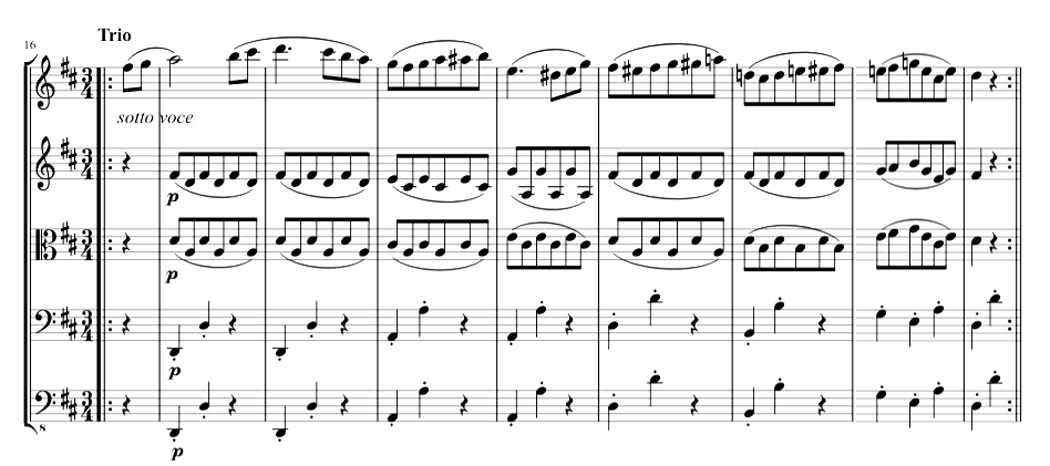
And although the surface of the music is always velvety and seductive, it’s frequently chromatic, introducing notes that shouldn’t belong. Even so graceful and simple a tune as the trio from the minuet in the popular Eine kleine nachtmusik manages to use 11 of the 12 notes in the chromatic scale. It verges on Schoenberg, though it sounds as simple as a nursery rhyme.

While Haydn’s metier was primarily instrumental music, Mozart shone in vocal music, and especially opera, where he brought psychological complexity to what is sung. 

Mozart as Shakespeare

Mozart was the Shakespeare of music. No composer ever displayed a wider sympathy for the human condition or a greater breadth of musical style. At the bottom of his music is a profound humanism, which is all the more obvious in his best operas — The Marriage of Figaro, Così fan tutte, The Magic Flute and Don Giovanni.

Of all the great composers, Mozart also is the easiest to love. Bach may be more sublime, Haydn wittier, Beethoven more in-your-face and Schubert one of the few who could write melody to equal Mozart, but Mozart remains the most accessible. He speaks directly to us, because he is the most humane.

That quality underlies all his major operas: His plots are filled with three-dimensional people, not the stock characters of most other operas. No hero is flawless, no villain unredeemable.

The miracle is that it isn’t just the libretti that convey this complexity, but the music itself. It gives us the subtle psychological undertow.

Mozart understood all of his characters well. None of them is tossed off as inconsequential. He imbues each character with definitive musical qualities.

So that Don Giovanni’s ebullient life force is expressed in his headlong “Champagne Aria,” with barely a moment to inhale. Or the Queen of Night’s rage in Magic Flute, when she launches into Baroque arabesques and arpeggios in her showpiece “The vengeance of hell boils in my heart.”

Even in Figaro: Has adolescent horniness ever been better expressed than the “amorous butterfly” take the hero sings about the love-struck Cherubino?

All these characterizations are built on the composer’s willingness to accept without judgment everything that is human. Perhaps that’s why nobody ever wrote forgiveness better than Mozart.

Each of his major operas has a scene of forgiveness in it, and it’s usually the turning point of the action, when a character recognizes the frailty of human nature. Such forgiveness is not bestowed from a feeling of superiority but from shared compassion.

It’s not that we believe the Count in Figaro will now be faithful to the wife who forgave him, but that we know she will always forgive him, because this is what it means to accept the human condition.

But the particular mood Mozart raises in such moments also is carried into his purely instrumental music: The slow movement of his Piano Concerto No. 18 is the echo of such a moment in Figaro. It sighs, and we sigh with it.

Such genius, whether Shakespeare or Mozart, can’t be explained. You just accept that it is.

Don Giovanni

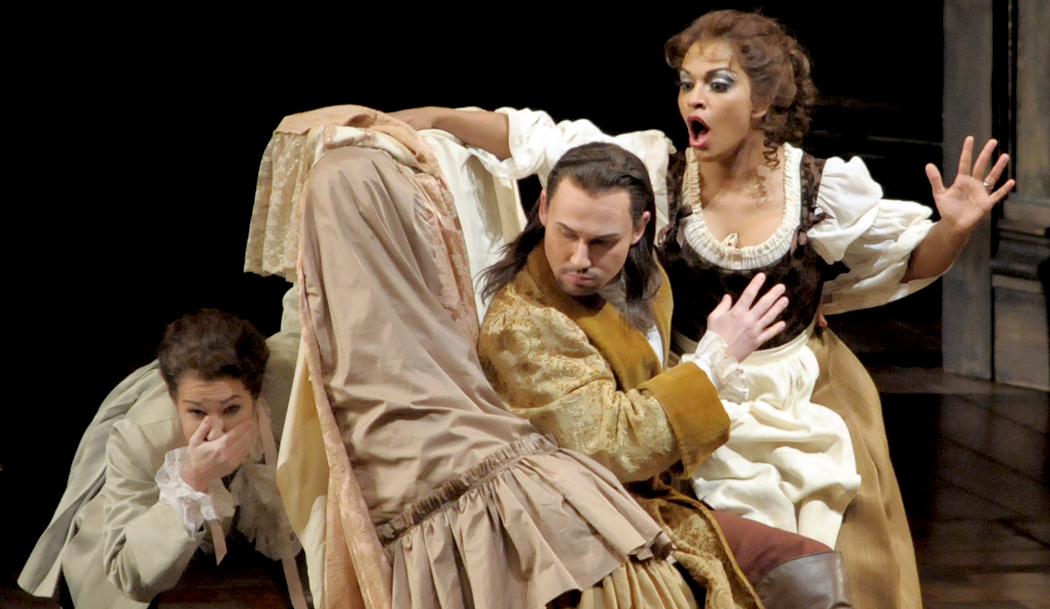
Mozart’s Don Giovanni has been called the perfect opera. It ingeniously balances comedy and drama, music and theater, the aristocracy and the peasantry, the past and the future.

It was first performed in 1787 in Prague, where the composer was a musical superstar, and told the story of the seducer Don Juan (Don Giovanni in Italian).

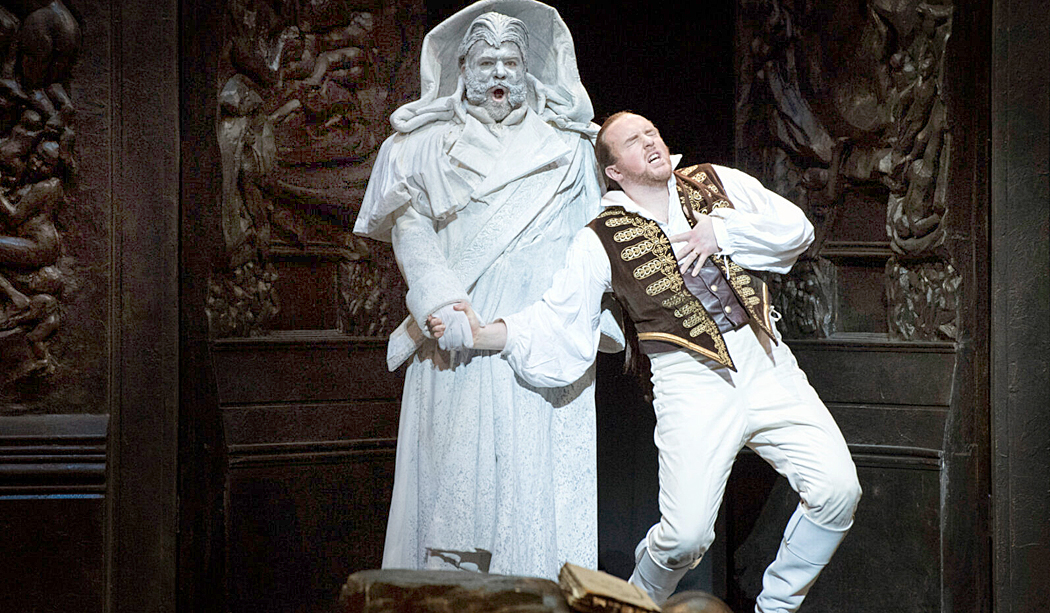
The story is simple in outline: After he kills the outraged father of one of his amorous conquests, Don Giovanni is tracked down by his victims. When he hides in a cemetery, the statue of the dead father miraculously asks him to dinner and, later, when the don shows up, the statue drags him to his judgment in hell.

But Mozart and his librettist, Lorenzo da Ponte, took what was a traditional story of sin and punishment and made it into a paean to the life force. Technically, Don Giovanni is still the villain, but Mozart and da Ponte made him such an engaging and vital presence that in the end, when he refuses to repent, despite the demons that surround him and the brimstone that burns, he actually rises to the heroic. Is he hero or villain? Or both.

This is where the Classic past meets the Romantic future: The cautionary moral tale of the past turns into the Byronic hero of the upcoming 19th century, and Mozart is in the avant-garde.

Digression I: Rake with a Quill Pen

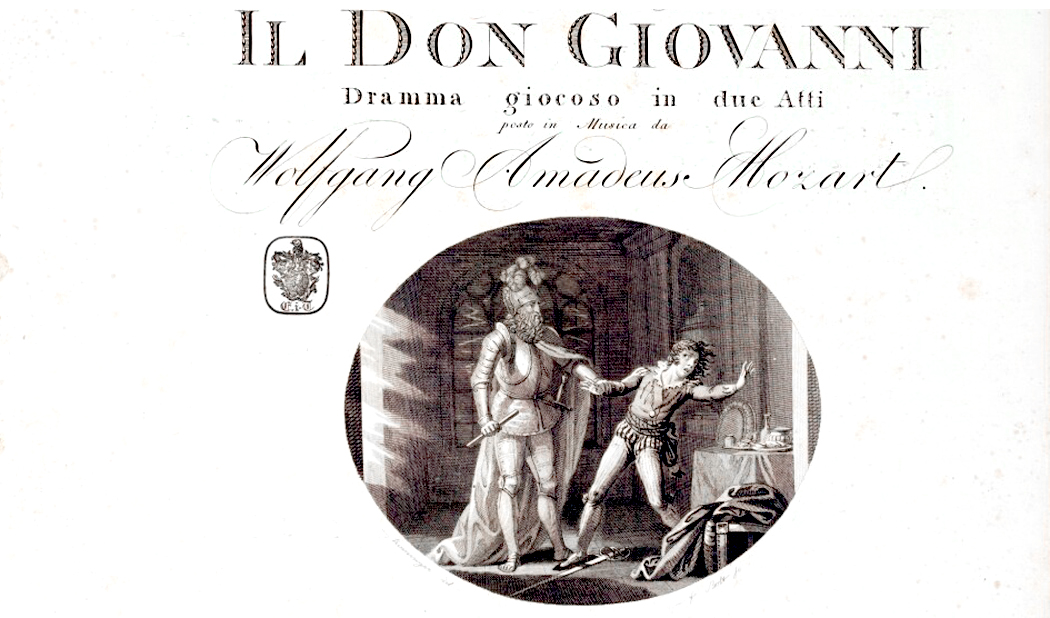
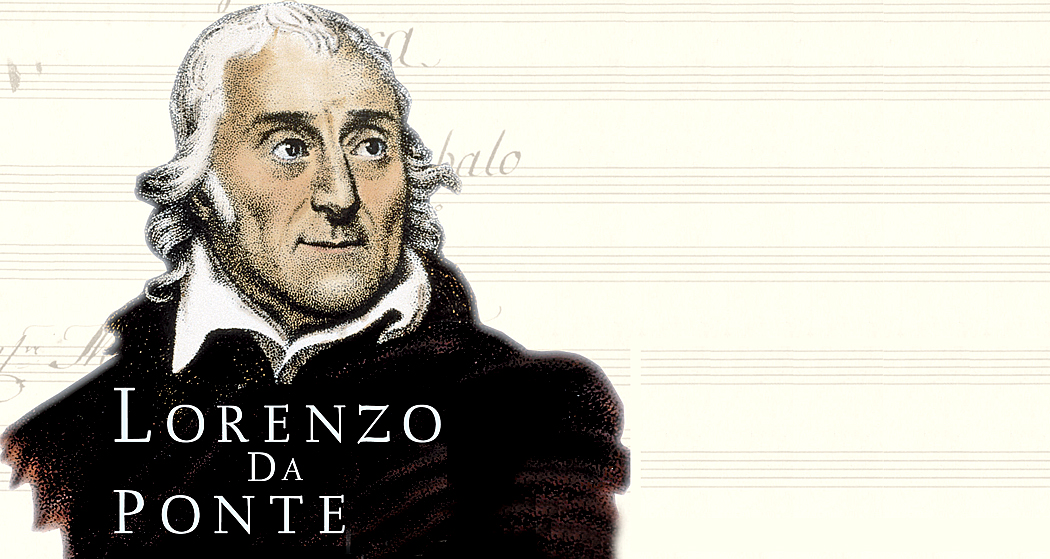
Opera is a collaborative art. Mozart’s music is great, but so was the libretto written by Lorenzo da Ponte. Da Ponte was born a Jew in Venice in 1749, was ordained a priest and opened a brothel with his mistress, where he entertained the clients by playing violin in his priest’s vestments. He was the perfect choice to write the libretto for Mozart’s dramma giocosa, Il dissoluto punito o sia Il Don Giovanni (“The Rake Punished, or Don Giovanni”).

Da Ponte was a friend of the infamous seducer Casanova and was forced to flee Venice after a trial for sedition, settling in Vienna, where he wangled a position from Joseph II, the Holy Roman Emperor. When he was asked how many plays he had written, he answered, “None, sire,” to which the emperor replied, “Good, then we’ll have a virgin muse.”

He wrote libretti for dozens of lesser operas by lesser composers, such as Antonio Salieri, before landing a job writing — or rather rewriting — Beaumarchais’ popular play The Marriage of Figaro as a libretto for Mozart. He also wrote Don Giovanni and Così fan tutte before being shown out of the city by the police.

Da Ponte’s post-Mozart life is hardly less interesting. After marrying (quite a trick for a priest), he moved to the United States, where he failed as a grocer, became friends with Clement Moore (reputed author of ’Twas the Night Before Christmas), who helped him gain a faculty post at Columbia College (now Columbia University), where he was the first faculty member to have been born a Jew.

In 1828, he became an American citizen, died 10 years later, had a grand funeral at St. Patrick’s Cathedral and is buried in Green-Wood Cemetery in Brooklyn.

The Pop Star

Mozart’s time was the late 18th century. He was born in Salzburg, Austria, in 1756 and was one of the great child prodigies of all time, picking up the violin when he was four and composing by the time he was five. His first opera was written when he was 12.

He was trooped across Europe by his father, playing for the amazed aristocracy and gathering gifts of money and jewels.

He outgrew his boyhood cuteness but grew to be one of the most prodigious composers of all time: He wrote 22 operas, 50 or so symphonies, 27 piano concertos, 23 string quartets, 17 settings of the Roman Catholic Mass. His complete works take up 170 CDs in one current set.

And he became enormously popular.

Mozart was the pop artist of the time. People wanted to play and hear that music so much, they transcribed the music for all kinds of ensembles. Every town had a wind band and they played arrangements. Every little village in Belgium or Bavaria could play arias from the latest Mozart opera, the way halftime marching bands now play show tunes.

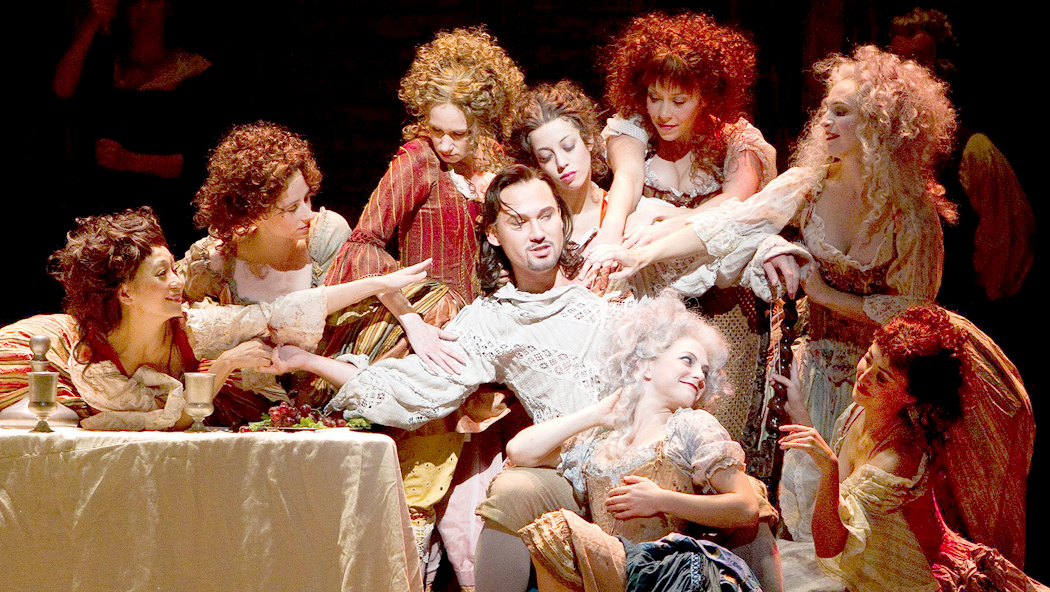
Mozart makes fun of this phenomenon in the finale of Don Giovanni, when the don has a dinner in his castle, with a band playing the latest hits from operas, including “amorous butterfly” from Figaro.

He dismisses it: “I’ve heard this piece too much, he says. We laugh because it shows Mozart could take a joke. And that only makes him more human.

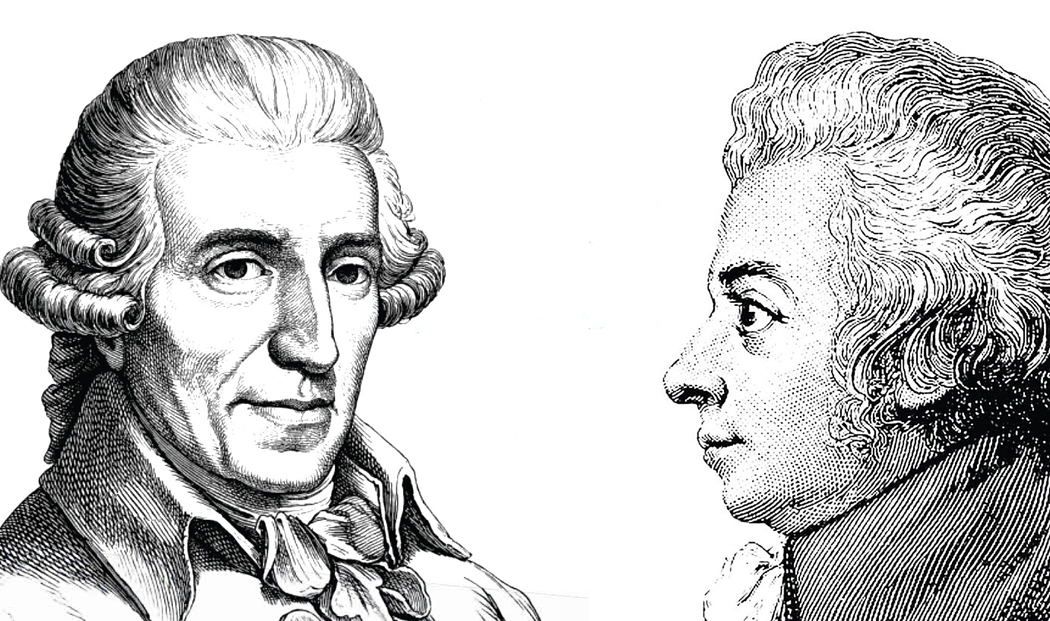
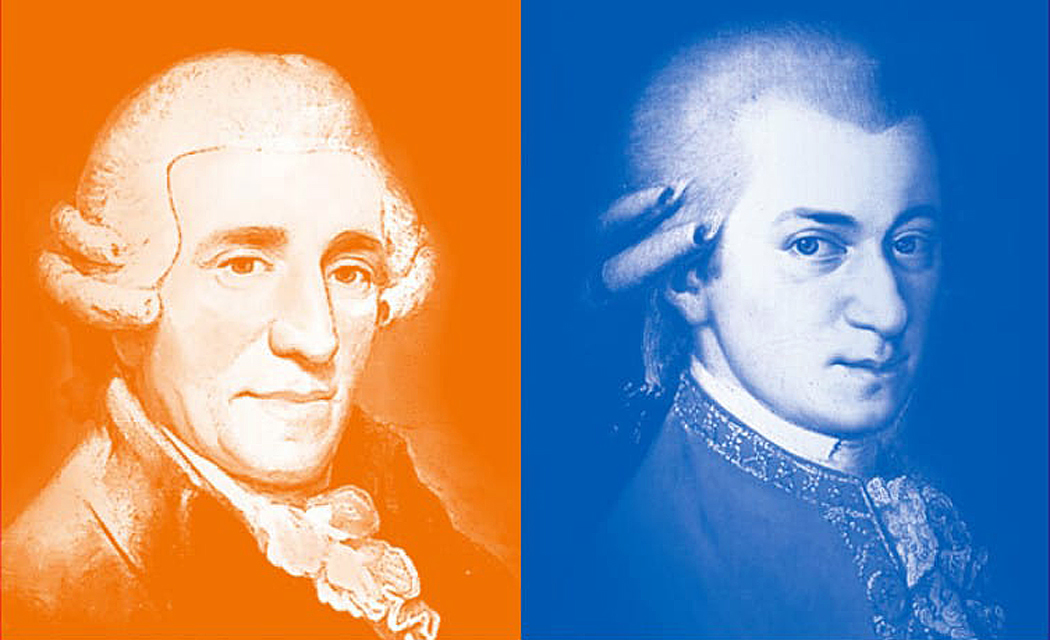
Digression II: Mozart and Haydn

The era from about 1770 to 1810 is called “Classical.” It’s the age of music defined by two names: Joseph Haydn and Wolfgang Mozart.

They were the twin colossuses of the time: one witty and bright, the other deeper and more melodious.

But the two men were very different. Haydn brighter and more brittle sounding, with an emphasis on what the 18th century valued as wit, making in-jokes in his symphonies and working simple themes into complex textural patterns that his audience recognized with pleasure — they got the joke.

Mozart’s music is darker, more chromatic, with a more blended sound, and he focused his attention on grace and style.

If Haydn is the brain of 18th-century music, Mozart is the heart.

They valued each other above anyone else and recognized each other’s genius. Mozart learned more from Haydn than from any other source. Haydn said Mozart was the greatest composer alive.

To many, Haydn and Mozart sound alike. They are very different but shared a musical language. So, how do you tell them apart?

One wise old professor explained his simple test: “If you can remember the tune after it is over, it was Mozart.”

Reason and order

The 18th Century is called “The Age of Reason,” although sometimes I think it may be said ironically, since, after all, it was also the age of Rousseau, the French Revolution and the Reign of Terror. But the overall tenor of the era was one of rationality and balance, of a just God in his heaven keeping proportionality in everything human and cosmic. 

In German-speaking lands, it was the Aufklärung, the “clearing up,” and prompted enlightened rulers, such as Joseph II in Vienna, to downplay religious fervor, mindful of the chaos of the Thirty-Years War, and promote scientific enquiry and philosophy. Coffeehouses rose filled with debate and Freemasonry became fashionable. Mozart became a Freemason, and his final opera, The Magic Flute, was a Masonic allegory, of sorts. 

There were certainly many points of view, but the general sense was one of moderation in all things. Don’t go overboard. Keep an even keel. Music followed suit: nothing too extreme, but nothing too simple-minded, either. It was a perfect walk between opposites.

And the major musical innovation of the era was the rise of the Sonata-Allegro form. It was the primary organizing principle for Haydn and Mozart and held sway in various permutations for the next century and a half. It is usually taught in a technical way: first theme in the home key, second theme in the dominant, followed by a development section and rounded off with a recapitulation of the two primary themes, but now both in the home key. But that is not why the form became so dominant. That is like describing an angel as having wings and white robes, without ever noting it is a messenger from God. 

The point of the sonata form was to establish an order, in terms of recognizable melodies, to then disrupt the order by breaking up the tunes into bits, rearranging them, and playing those pieces in a hodge-podge of shifting key-centers, leaving the listener with no firm ground to stand upon, and then reasserting clear order once again, so the universe is set right. Order – disorder – order reaffirmed. 

Once you understand the metaphor of the sonata form, you will never again be hoodwinked by the academic palaver. The music is about the primacy of providential order. 

This is a metaphor that has provided the foundation of much of art. Shakespeare’s histories and tragedies are all about disturbed natural order that has to be set right. Opera plots are almost all about illegitimate threats to the way things are supposed to be. It is the mega “A-B-A” of countless poems and novels. 

The form made such satisfying intellectual and emotional sense that it ruled western instrumental music almost until now. Those composers who didn’t write sonata form wrote in protest to it. Take a side. It was that influential.

L’Envoi

It is nearly impossible to write words about music. One tends to write impressionistically and metaphorically about what one hears, but such language become like trying to describe color to a blind person. 

The result is that when most people talk about their favorite popular music, they talk about the lyrics. The music is barely mentioned. In fact, most popular music contains scant little actual music at all: just a few familiar chord changes under a meandering set of melodic intervals. You may mention the beat, but that, too, tends to drone on monotonously through the song. 

You could, if you wanted to, talk about the music, but it would take specialist vocabulary that would convey almost nothing to the lay reader: “The composer used the Neapolitan relationship to modulate from B-minor to A-flat major while dividing the treble from the bass line in hemiola.” There, does that mean anything to you? Two against three? 

One reads scores rather than text to understand what is going on, but even that does not really tell you what you are hearing, only how it was done. 

And so, when writing about Mozart, almost everyone falls immediately into biography. We can tell you fascinating things about his family, his sister, he relationship with his patrons or the order in which his symphonies were composed. 

But the ear can hear how, in sonata form, we hit the comfort of the home key as the recapitulation calms down the churn of the development. It is something instantly felt through the ear — if you are paying attention. But how to write about that in the Jupiter Symphony or the K. 545 piano sonata comes a cropper. Just listen. It’s obvious. 

One can say that Mozart blends his wind instruments while Haydn tends to keep his winds distinct. It is true, but you have to hear it to understand. Mozart’s recapitulations are usually a return to order, while Beethoven uses his recaps (in his mature work) to take the music to a new place, a “new normal” that means we have moved through the development from Point A to Point B. Mozart’s melodies tend to be step-wise, as a human voice might sing, while Haydn often jumps around because fingers on a keyboard can do so. 

These are swooping generalities, and there are plenty of exceptions, but they are attempts to write about the music rather than the historiography. 

The only recommendation is to listen to more music, lots of it, and absorb what you can, so you can distinguish the difference between a sonata form and a rondo, between an English horn and a bassoon in its upper register. Hear it and pile it into your trove of experience. It is the sounds that are made that is the music. Words get in the way. 

And pay attention. Music isn’t a warm bath you slide comfortably into, but a conversation the composer is having with you.

It’s completely meaningless to rate art. Is Picasso greater than Rembrandt? Beethoven than Mozart? Is Beethoven’s Fifth better than Beethoven’s Eroica? Pointless.

But there is a different question: faves. It’s possible to have favorites without making claims to supremacy. We all have them. Yes, they shift over the years: The older me appreciates different art and appreciates it in different ways than the young me did. But even day-to-day the favorites may change. Often my favorite symphony is the one I’m listening to at the moment. 

Still, Top Ten lists will be made. Or Top Five, or Top 100. There’s no hope for it. It’s instinctive, built into our DNA. And so, I’ve put together my list of my Top Dozen  favorite works of art — a baker’s dozen. Your mileage may vary. (For the ultimate list of lists, link here). 

And so, here are my favorites, listed by genre. I’ve tried to narrow my choices to art I have experienced in person — paintings I have actually seen, dances I have attended, books I have read. Book reproductions or sound recordings don’t count. I have a lifetime of art-going and concert-attending, and so I may have access to more than the average bear. But I am well aware that there’s a whole lot more that I haven’t seen. 

And by favorite, I don’t just mean something I like, but rather, something that has wormed into my very being and become a part of who I am, so that encountering it can explain to others a bit of who I am. It has been grafted into my personality. 

This list is entirely personal, flexible and apologetically incomplete. Ask me again tomorrow and this could be a very different list. 

Painting: None of these choices changes more often than painting. today’s favorite fades with tomorrow’s. I’ve simply come to love too many paintings to have a single choice. But today, I will go with Jackson Pollock’s Blue Poles. It was a painting I had wanted to see for years, and then got my chance when the Museum of Modern Art held a Pollock retrospective in 1998 and the elusive work was borrowed back from Australia, where it had sat for decades, out of the reach of us Northern Hemisphere shut-ins. Its appeal came from its elusiveness, for sure, but also for its unique place in Pollock’s catalog — more than just paint squiggles, it had the structure of the bars across its surface. I loved it in reproduction, but it bowled me over in person. 

Alternate takes: Picasso’s Guernica; John Singleton Copley’s Watson and the Shark

Sculpture: I grew up visiting the American Museum of Natural History in New York City as often as I could. I loved the place — and I mean loved. And deep in its bowels resided the giant Olmec head, chiseled from basalt (actually, the one in New York is a plaster copy, but I didn’t know that when I was 10 years old and rapt in wonder). In the darkened hall of the museum, the head seemed immense and the original weighs 20 tons. It impressed me no end and to this day, it is my favorite sculpture. No doubt there is other, more important sculpture elsewhere, but I have not been to Rome or Egypt to see them. I have spent considerable time in the Louvre in Paris and have several faves there, such as the Three Graces or the Winged Victory, but none has stuck in my psyche with quite the force of the Olmec head. 

Alternate takes: Rodin’s Burghers of Calais; Louvre’s Three Graces

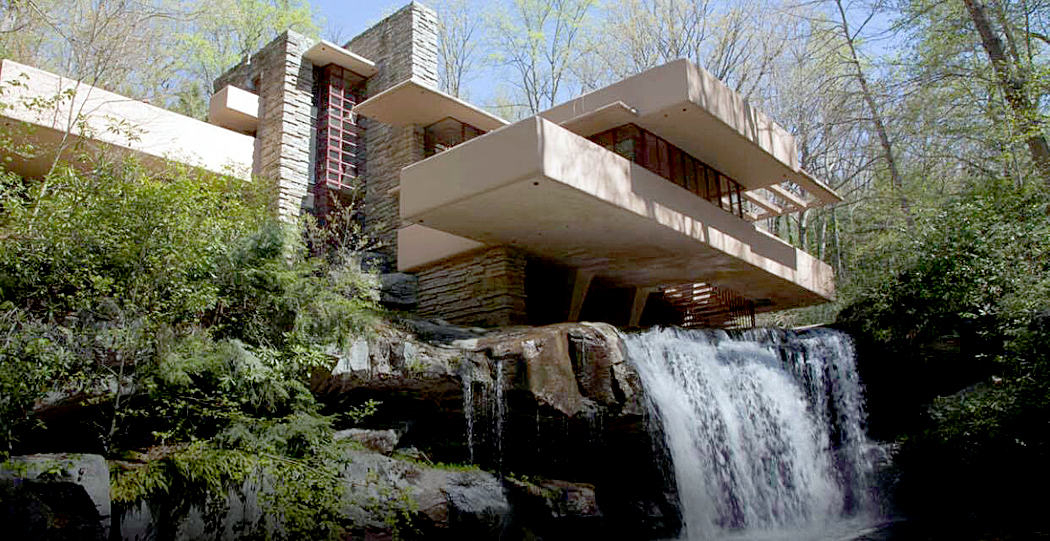
Architecture: As architecture critic for The Arizona Republic, I got to visit a lot of buildings, including most of the Frank Lloyd Wright sites in the U.S. (Wright was a longtime resident of Scottsdale, Ariz.) I was blown away by Taliesin in Wisconsin and his studio in Oak Park, Ill. But the building that struck me as most beautiful was Falling Water in Pennsylvania. Everything you have ever heard about it is true — about its siting in the woods over the waterfall; about how its interior is micromanaged by Wright’s designs; and (I’m one of the few who have been given access to this) the pathetic orphan of a bathroom hidden in the basement. Wright really didn’t like having to deal with kitchens or bathrooms. 

Alternate takes: Chartres cathedral; George Washington Bridge

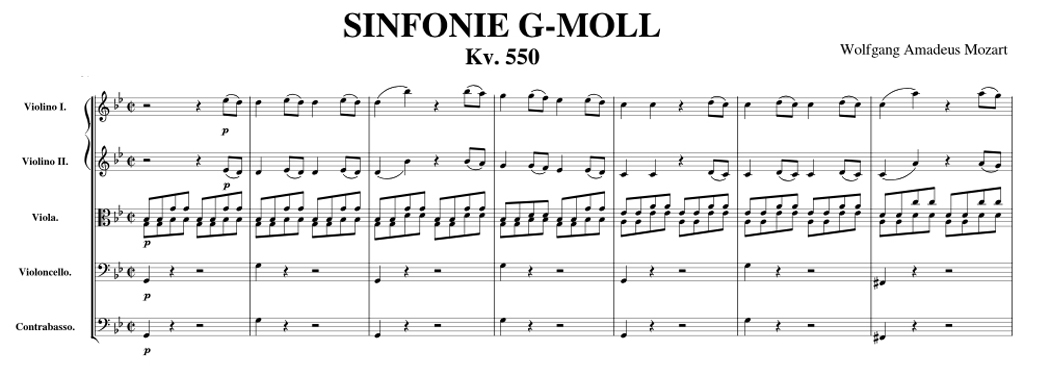
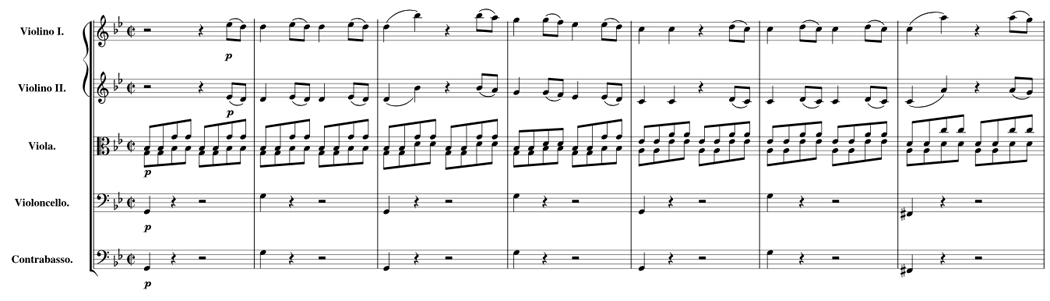
Orchestral music: this is the hardest category for me because I have so much music bottled up in the ol’ storage batteries, and faves change not only day to day, but hour to hour. But I studied Mozart’s Symphony in G-minor, K. 550, score in hand, for most of an entire semester in college and it is drilled into my memory so that I can hear the whole thing in my head, from beginning to end, even without the score. If ever a piece of music felt like home to me, it is Mozart’s 40th Symphony. Dissecting it has given me an approach to all other classical music. 

Alternate takes: Mahler’s Symphony No. 3; Stravinsky’s Rite of Spring

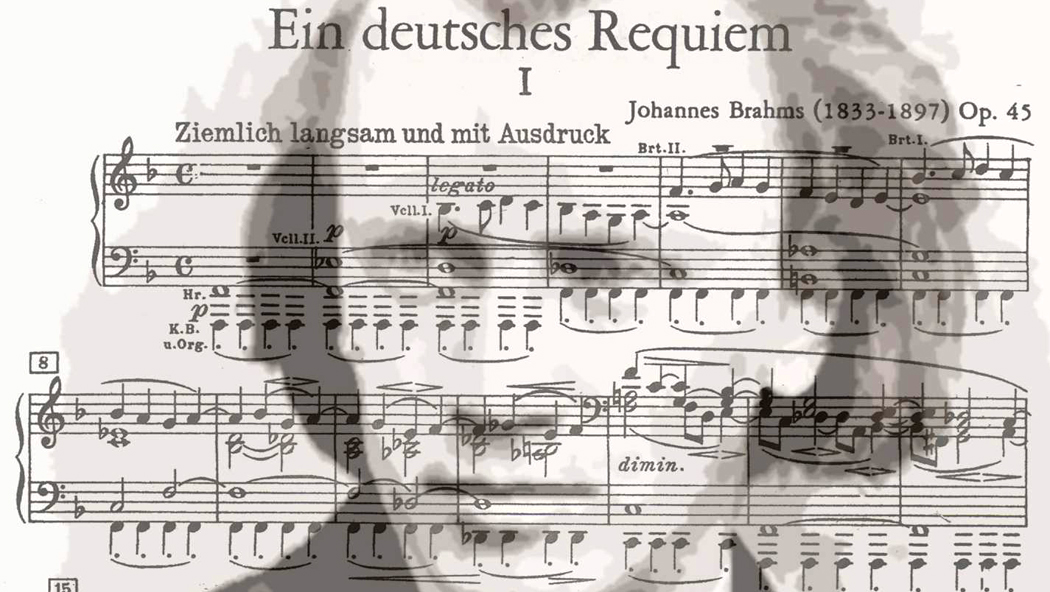
Choral music: I’m not a religious man, and neither was Johannes Brahms, so his German Requiem can console my most grief-stricken moments in a way more devout music cannot. More than any other music, I go to the Deutsches Requiem for consolation and peace. Each year, on the anniversary of the death of my wife, I drive up the Blue Ridge Parkway, find a quiet forest road and park and listen to my Brahms and weep for my loss and for the loss all humankind must suffer. 

Alternate takes: Haydn’s Creation; Rachmaninoff All-Night Vigil

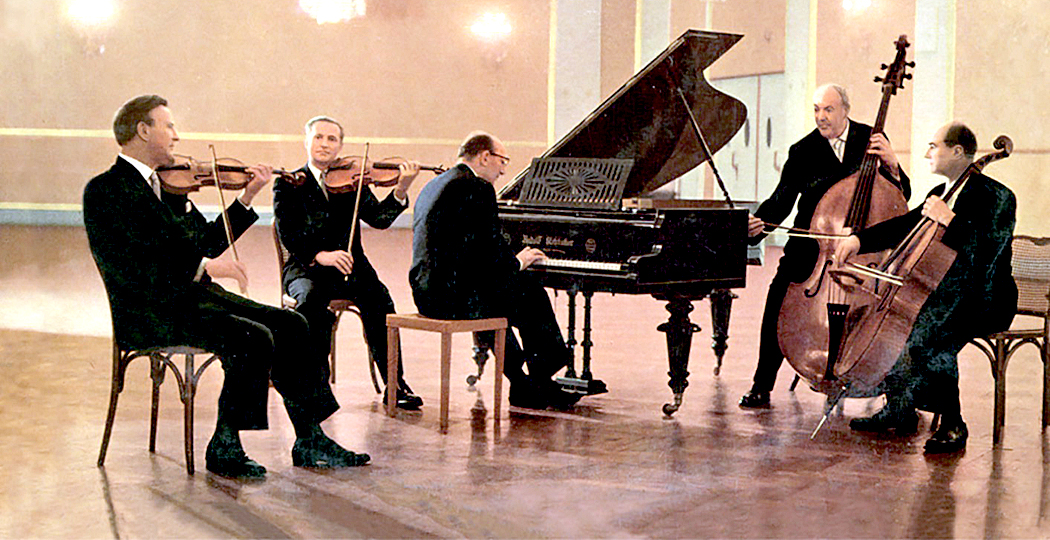
Chamber music: I want so much to claim Schubert’s C-major String Quintet, for it is the deepest, most emotionally moving piece of chamber music in the repertoire. Yet, I cannot, as long as there is Schubert’s competing “Trout” Quintet, which must be the most ebullient, life-affirming piece of music ever written. One cannot come away from it not feeling — despite all the sorrows of the world — that life is pure joy. It is no end of astonishment for me that Schubert wrote both. 

Alternate takes: Brahms Clarinet Quintet; Shostakovich Piano Trio No. 2 

Opera: Mozart’s most subversive opera wasn’t The Marriage of Figaro, which was often banned for making fun of the aristocracy, but rather Don Giovanni, with its lusty chorus of “Viva la libertad” and its turning topsy-turvy the villain-hero model. The Don is the life force embodied, for good and bad, and when he is threatened with hell, he laughs and refuses to recant, choosing damnation over hypocrisy. Its first act is the most completely flawless in all of opera history and despite the phony ending usually tacked-on to the second act, a model of moral complexity. 

Alternate takes: Alban Berg’s Wozzeck; Richard Strauss’s Der Rosenkavalier 

Dance: Of all the artforms, dance moves me the most. And I was extremely lucky, because when I became dance critic, Ballet Arizona was taken over by Ib Andersen, former star dancer for George Balanchine and brilliant choreographer himself. He staged many Balanchine ballets and I was hooked. I have now seen Balanchine’s Apollo four times, once by the New York City Ballet in Paris, and I cannot watch it now without welling up with emotion. I love dance and Apollo stands in for all of it. 

Alternate takes: Ib Andersen’s choreography for Prokofiev’s Romeo and Juliet; Frances Smith Cohen’s choreography for Center Dance Ensemble’s Rite of Spring

Theater: Bad theater, or worse, mediocre theater can give the impression that live drama is hopelessly, well, theatrical. You know: dinner theater. But when it is done well, there is nothing that can match it, a lesson I learned by seeing the original Broadway production of Tony Kushner’s Angels in America. I’ve now seen it — both parts together — four times and it destroys me every time. In great theater, you soon forget all the artifice and everything becomes immediate and real. Movies are great, but they can’t match the breathing now-ness of live theater. 

Alternate takes: Eugene O’Neill’s Long Day’s Journey into Night; Peter Shaffer’s Amadeus

Film: There are films that are exciting, films that are visually beautiful, that are clever, that are cultural barometers, and there are films that are wise. Jean Renoir’s La Règle du Jeu has informed my own life more than any other film I’ve seen. How can you beat Octave’s observation: “The terrible thing about life is that everybody has their reasons.” I will watch Rules of the Game over and over for the rest of my life. It is cinematic comfort food. 

Alternative takes: Andrei Tarkovsky’s Andrei Rublev; Ingmar Bergman’s Seventh Seal

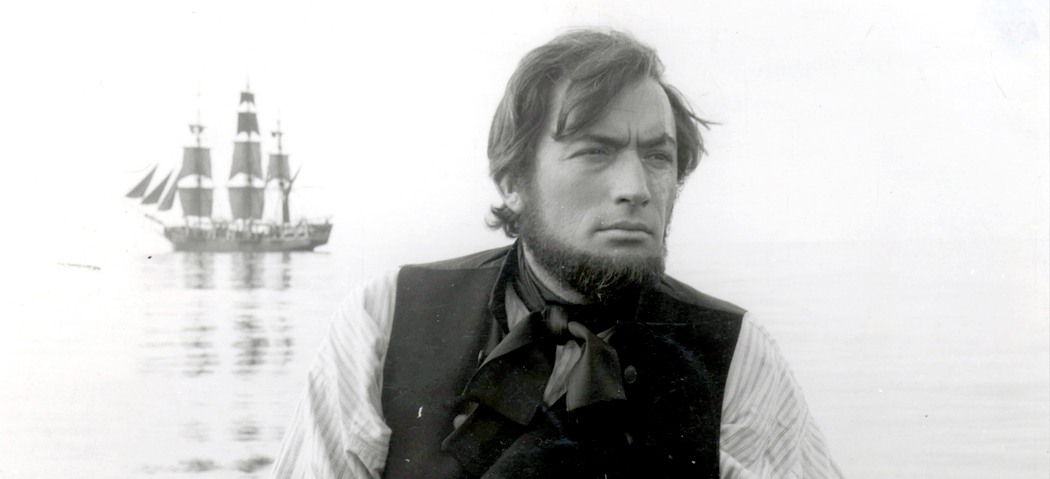
Novel: Most books, you read once. If it’s a mystery, you have the killer caught; if it’s a Victorian saga, you get the heroine married. But some books you can read over and over and get intense pleasure from the language used and the perspective offered. For me, that book is Herman Melville’s Moby Dick. I don’t always read the whole thing from beginning to end, but I bet I’ve read the first chapter, at least, a hundred times. Melville’s language has seeped into my own writing more than any other (for good or ill). 

Alternative takes: James Joyce’s Ulysses; Laurence Sterne’s Tristram Shandy

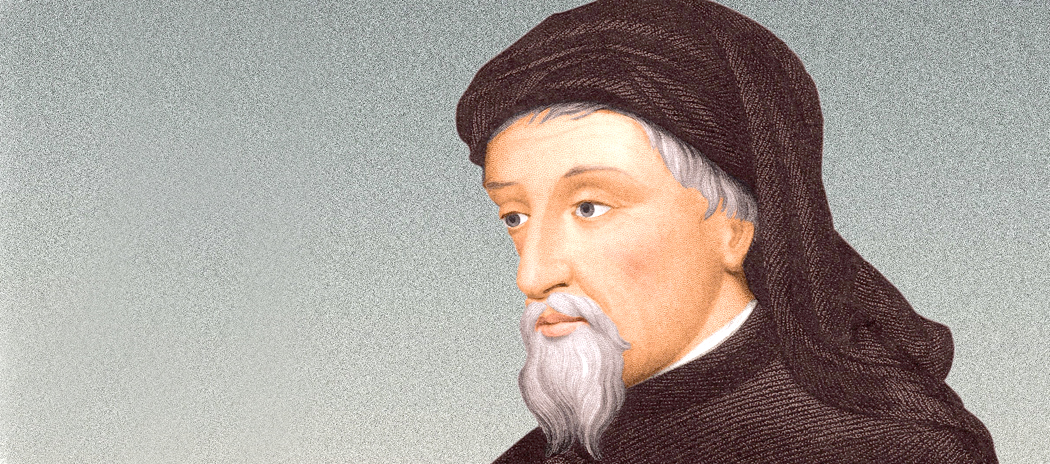
Poetry: I read a lot of poetry, mostly modern and contemporary, but the poem I go back to over and over, read out loud for the sound the words make in my mouth, proselytize to others and keep in my heart is Geoffrey Chaucer’s Trouthe. The antique language isn’t so hard, once you get used to it — sort of like listening to a working class Mancunian accent, or a Yorkshireman gabble — and once you’ve caught the knack of it, it’s like any other English. God, I love that poem. “The wrastling for the worlde axeth a fal.” 

Alternative takes: Eliot’s Four Quartets; Pablo Neruda’s Odas Elementales

And the Number One, hors compétition and sans genre, is: 

The north rose window, Chartres cathedral. As I have written many times, the north rose window is the single most beautiful human-made object I have ever seen. I am in awe of it. Reproduction cannot give you a sense of its glowing color and implied motion — it virtually spins (and I mean virtually literally). I can sit in its presence for an hour at a time. 

Again, I am not making the claim that these are all the greatest works, although they may be, but that they, more than their compeers, have buried their way into my innermost being, where they reside as a permanent part of my unconscious. They are who I am. 

We’re approaching a full year of pandemic lockdown, barely leaving the house except to restock the larder. But at least the house is full of books, music and DVDs. It would take more than a single year to run out. 

But it puts me in mind of the old cliche: What book would you take to a desert island? It’s a silly question, really. If you are stranded on a desert island, a source of fresh water is a need infinitely more immediate than a good read. But even if we take it as simply a trope, the answers people give are seldom very satisfying. Most list a book they enjoy, which is fine, except that you can only read most of those books once, maybe twice, before they grow stale. 

No, the trick is to find a book that can reward multiple re-readings. And the same for “desert island music” or “desert island movies” (ignoring the problem of finding a DVD player in the middle of the Pacific, or the electrical outlet to plug it into.) Just picking favorites is a sucker’s game. How long would it take before listening to Stairway to Heaven for the hundredth or thousandth time to reduce you to a gibbering idiot? 

So, I set to make a list of things that could reward many traversals. This is, of course, a game and is utterly meaningless — but then most fun is. I task each of you to find a list of your own of things you could stand listening to, re-reading, or re-watching for endless times. I’m going to present my choices as they would an awards show: nominees and winners. 

Desert Island book

The sign of any good book is its re-readability. But even some of the best have just so much to offer. Madame Bovary is a great book, but once you’ve unwrapped its meaning, you are finished — unless you can read it in French and can unpack its verbal brilliance. I’ve seen many desert-island lists that offer things like Harry Potter books or Diana Gabaldon’s Outlander. And no knock on them as good reads, they aren’t books you can marry for the long haul. 

My nominees for Desert Island Book are:

War and Peace, by Leo Tolstoy. This may be the best novel I have ever read, full of people who are so real they seem not to be characters in a book, but transcriptions of life. I am in awe of this book. 

Moby Dick, by Herman Melville. This counts as my favorite book, and I have indeed re-read it many times — at least I’ve re-read the opening chapter, “Loomings,” scores of times. It was my original problem with the book. I loved Melville’s way with words so much, that each time I picked up the book, I’d start from the beginning, which made it a very long time before I ever actually finished the thing. When I pick it up again, I’ll start with “Call me Ishmael.” Again. 

Tristram Shandy, by Laurence Sterne. This is the funniest book I’ve ever read (pace P.G. Wodehouse), but funny books tend not to outlive their punchlines. You can only tell a joke once to the same audience. But Tristram Shandy isn’t a joke book, and its inhabitants are so ridiculously human and its wordplay so trippingly choreographed, that it never wears out for me. 

À la recherche du temps perdu, by Marcel Proust. This seems like the perfect choice for the desert island. First, it is exceedingly long — seven volumes and more than 4,000 pages. Second, it is filled with memorable people and discursive episodes that never seem to come to a final conclusion. It goes on. And on. The biggest problem with it, in English, is to find a decent translation that isn’t too Victorian sounding and stuffy, or too modern and chatty. 

Ulysses, by James Joyce. This is a book that not only can stand a re-reading, it requires it. No one can get it all in one go-through. Joyce’s prose, in those chapters that aren’t purposely difficult, is the most perfect prose I know in the English language. Its cadence is musical, its word-choice precise, its flavor yummy. And the difficult chapters — you know who you are — take parsing like so many physics formulae and can keep you fully occupied while you wait for a passing steamship. 

And the award goes to:

Ulysses. It wins because it is in English to begin with. You can never be sure with Tolstoy or Proust, that you are getting what is in the original. They are always at a remove. Ulysses is your own tongue, taken to its stretching point. I can’t imagine, say, reading it in a French translation, or in Mandarin. It is not transmutable. And it can stand a lifetime of re-reading without ever being sucked dry. 

Desert Island Music

This is the category that most exposes the problem. For most people, music means song, and no three-minute ditty can wear long enough to keep you going under the coconut tree. This isn’t a place for your favorite tune. This then requires something like classical music. But even most classical music can’t take the over-and-over again requirements of the island isolation. The obvious choice would be Beethoven’s Ninth, but really, you can only listen on special occasions. Over and over would be torture. 

My nominees for Desert Island Music are:

 —Quartet in C-minor, op. 131, by Ludwig van Beethoven. Really, any of the late quartets. But this is music so profound and so emotional that any barrier between the highest thought and deepest emotion is erased. They are the same thing. The C-minor quartet has six movements and each is distinct and each is a pool to dive deeply into. 

—The Goldberg Variations, BWV 988, by Johann Sebastian Bach. Thirty variations on a simple sarabande tune, arranged with a complex cleverness hard to credit. This is music to last a lifetime. Indeed, it was the first thing that pianist Glenn Gould ever recorded and the last thing. To paraphrase Sam Johnson, “To tire of the Goldbergs is to tire of the world.” 

—Symphony No. 3 by Gustav Mahler. The composer said a symphony “should contain the world,” and no work more completely attempts this than Mahler’s Third, with a first movement that is longer than most full Haydn symphonies (“Pan Awakes: Summer Marches In”) and ends with an adagio just as long, which is built from a theme borrowed from Beethoven’s final string quartet and utters “What Love Tells Me.” I cannot hear the work without disintegrating into a puddle. 

—The Passion According to St. Matthew, BWV 244, by Johann Sebastian Bach. This is the human condition in sound. All of it. No music I know of is more profound nor more emotionally direct. It lasts for nearly three hours and includes not only all the world, but heaven and hell, too. From the opening chorus, with three choirs and two orchestras, to the final “Wir setzen uns mit Tränen nieder,” which expresses infinite sorrow, this is music that shoots directly into the psyche and soul. It cannot be worn out. 

—24 Preludes and Fugues, op. 87, by Dmitri Shostakovich. I considered Bach’s Well Tempered Clavier, but I already have Bach down twice. He is the obvious choice for desert island music, so rich is his music, but I also think of Shostakovich’s version, which is just as varied both technically and emotionally. I could live with this for a very long time. 

And the winner is: 

St. Matthew Passion. This is so all-encompassing, so complex technically, so disturbing emotionally, that I cannot bear to give it up. I am not religious and the doctrinal aspects of the story mean nothing to me, but the metaphorical import is overwhelming. This is what it means to be human. And what music!

Desert Island Film

Of course, the film you want on a desert island is a documentary about how to get off a desert island. And if you need a film you can watch over and over, I’ve proved already I can do that with the 1933 King Kong. I’ve watched it a thousand times since I was four years old. But that is not the kind of thing I mean, not what can sustain you through multiple dives into a film’s interior.

My nominees for Best Desert Island Film are: 

Rules of the Game, directed by Jean Renoir. La Règle du Jeu (1939), which many critics have called the best movie ever made, is certainly the most human, humane and forgiving film ever, while at the same time being satirical and biting about human foible and hypocrisy. Yes, it’s in French, with subtitles.

La Dolce Vita, directed by Federico Fellini. The great 1960 Italian classic of the Roman “sweet life” in the postwar years shows us Marcello Rubini (Marcello Mastroianni) as he negotiates personal relationships, professional crises and spiritual doldrums. The meaning of the movie has been debated for 40 years. It has been seen as anti-Catholic and as a reactionary embrace of religion. It has been seen as an angry critique of modern life, but also a celebration of it. It has been called pornography, and also one of the most moral movies ever made. It’s rich enough to embrace many meanings. Fellini said he was not a judge, “but rather an accomplice.”

Andrei Rublev, directed by Andrei Tarkovsky. If La Dolce Vita was ambiguous, Andrei Rublev is close to impenetrable. There is no slower film, outside Andy Warhol’s 8-hour-long Empire State Building. It is not so much a story as a dream, full of significance, but not explainable meaning. It is so unutterably beautiful it simply doesn’t matter what is happening on screen.  I love this film. I don’t mean enjoy, I mean love. 

Fanny and Alexander, directed by Ingmar Bergman. Some films are art, some are great stories, some are deeply understanding. Fanny and Alexander is all three. It exists in multiple versions — a single one for movie houses at 188 minutes and a 312 minute version originally intended as a TV miniseries. I choose the longer version for my desert island. This is Bergman at his most human, least artsy and symbolic. It can engulf you. 

Dekalog, directed by Krzysztof Kieślowski. Polish director Kieślowski made this 10-part film on the Ten Commandments, although not in any literal way. Each film is directed in a different style, and none is religious. The two best concern “Thou shalt not kill” and “not commit adultery,” Your heart will be wrenched from your chest and stomped upon. 

And my choice is:

Rules of the Game. I cannot count the number of times I have watched this film. Not as many as King Kong, I guess, but close. And I know from experience it can hold up under uncounted viewings. There is plenty to enjoy from a filmmaking point of view, just as there is in Citizen Kane, but it is also a profoundly forgiving film — the single most important quality in a human life. 

Bonus 

I have a few more categories, that I’ll suggest in abbreviated form. There you are on the desert island with a bookshelf and a DVD player. You can add a desert island opera, a desert island epic poem, a desert island play. 

Opera

An art form that puts it all together in one package, opera would be an excellent way to spend your island time. But again, we have to consider which opera can stand multiple viewings, that has multiple meanings or interpretations. We all love La Boheme, but there is only so much there under the hood. And Wagner would just wear us out. We are down to Mozart. The Marriage of Figaro is a perfect choice, but I’m going with my favorite: 

Don Giovanni, by W.A. Mozart and Lorenzo da Ponte. Is it a comedy? Is it a tragedy? Is it a dramedy? Whatever it is, it is filled with real people doing things real people do (aside from talking to statues and falling into hell, that is) and with some of the best music Mozart ever wrote. Fin ch’han dal vino

Epic poem

There is not a wide field to choose from, and how can you pick among the Iliad, the Odyssey, Dante’s Commedia, or Milton’s Paradise Lost? (Notice, I did not include Vergil. Dull stuff). Nor can I pick an Icelandic saga or a Medieval droner, like Parzival or the Nibelungenlied. I’ve tried slogging my way through Tasso and Ariosto, but get dragged down in slow motion. There is just one for me, and I re-read it every year: 

The Iliad, by Homer. How can the first entry in the Western canon still be the best? Nothing beats Homer. His imagination is immense, from the largest cosmic scene to the fingernail of a flea, it is all encompassing, and moves with the instantaneity of movie cutting from the one to the other. Actually, if I had to leave behind novel, music, film and everything else, and had only one companion with me, it would be the Iliad. 

Live theater

What do you mean “live theater?” We’re on a desert island. But, if I can imagine a DVD player and an electric socket on the bare sand, I can imagine a stage play. This is all theoretical anyway, remember? 

Angels in America, by Tony Kushner. Without doubt the greatest thing I’ve ever seen on the live stage is the original New York production of Angels in America — both parts. It is overwhelming, and will demonstrate to anyone who hasn’t had the experience yet, that live theater is unmatchable by seeing the same thing on PBS Live From Lincoln Center or even in Mike Nichols’ filmed version. Wow. And I’ve seen some great Shakespeare live, even by the Royal Shakespeare Company. Angels rules. 

————————————

And so, we’ve turned an isolated desert island into a library, concert hall, movie house, opera house and legitimate stage. Far from being solitary, we’re crowded. Pandemic be damned.