Archive

Tag Archives: emotion

Classical music critic David Hurwitz recently posted a YouTube video on works that “reduce me to a quivering puddle of emotional resonance.” He cited 10 compositions that seem to work, no matter how they are performed (although, they can be ruined by a miserable performance). 

“The crying can be sadness; it can be happiness. Usually for me it’s a confrontation with something which is so beautiful … it just seems to get to the heart of the universe and makes me weep. What can I tell you? It happens.”

He then invited his viewers to submit their own lists of works that bring on the waters. A subsequent video addressed those lists. 

Such lists usually come in round numbers: “Top Ten,” or “The Hundred Best,” etc. But when I made my own list, I realized I could go on for quite some time. 

I begin my list with the sarabande in J.S. Bach’s Suite No. 5 for unaccompanied cello. It is a ridiculously simple composition, barely more than a hundred individual notes, almost all unrelieved slow eighth-notes, but notes that plumb the deepest depths of innigkeit — that profound sense of inner subjective experience, of aloneness from the world, contemplation of things beyond words. 

The tears come, not from sadness, but from a sense of being left to your own thoughts in the darkness, the knowledge that, no matter how much you love or engage, there is always an awareness of separation. An aloneness we share with everyone else on the planet. 
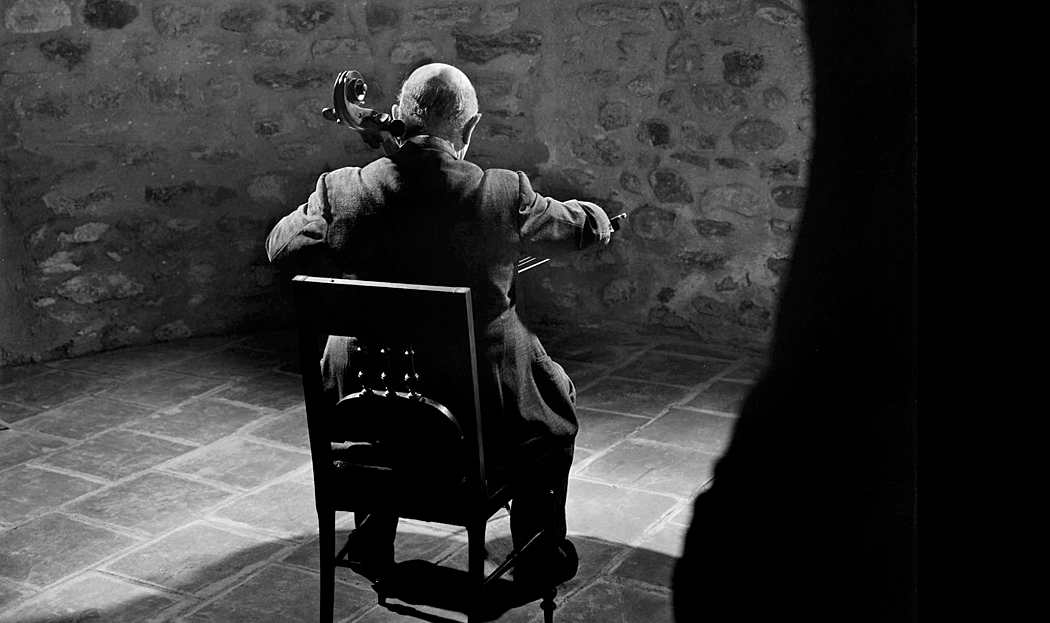
I’ve heard the sarabande, and the suite, countless times, both live and on recordings. The one that always does me in is the version played by Pablo Casals in 1939. Casals was the person most responsible for the resurrection of the score, after he found a forgotten copy in a used book store in 1889, when he was 13 years old. He waited until he was 60 before recording them. There is some fuzz and hiss to the old 78rpm recordings, but the depth of Casal’s playing speaks through it all. 

The sarabande has struck many as special, even among the whole of Bach’s works. Cellist Paul Tortelier called it an “extension of silence.” Yo-Yo Ma played it on Sept. 11, 2002, at the site of the World Trade Center, while the names of the dead were spoken, on the first anniversary of the attack. 

Second on my list is the final chorus of Bach’s Passion According to St. Matthew, Wir setzen uns mit Tränen nieder, which expresses grief over the death of Jesus on the cross. That chorus transcends religious doctrine so that I, as a non-believer, can internalize the sense of loss, of death, and grieve along with them. “We sit down in tears,” they sing, with a section that also asks for “peace, sweet peace.” 
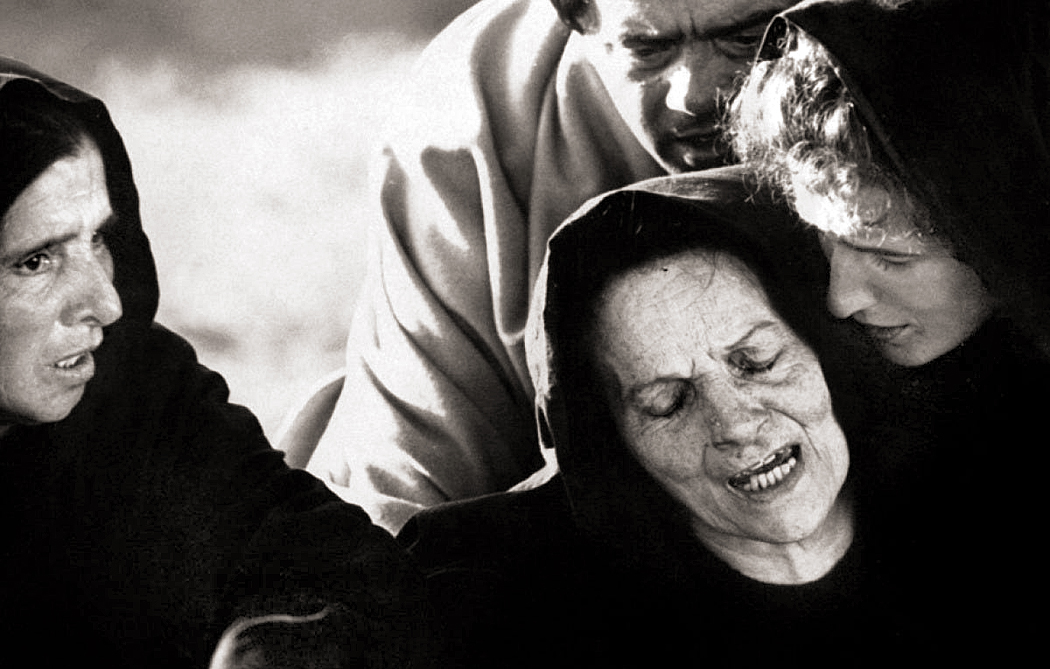
I first head the chorus as film-score music for Pier Paolo Pasolini’s Neorealist retelling of The Gospel According to St. Matthew, a dour black-and-white version, almost word for word from the Bible (and how peculiar that the most successful Christian film should come from a homosexual Communist atheist, but with reverence for the humanity of the story; no Cecil B. DeMille hokum and claptrap for this one). 
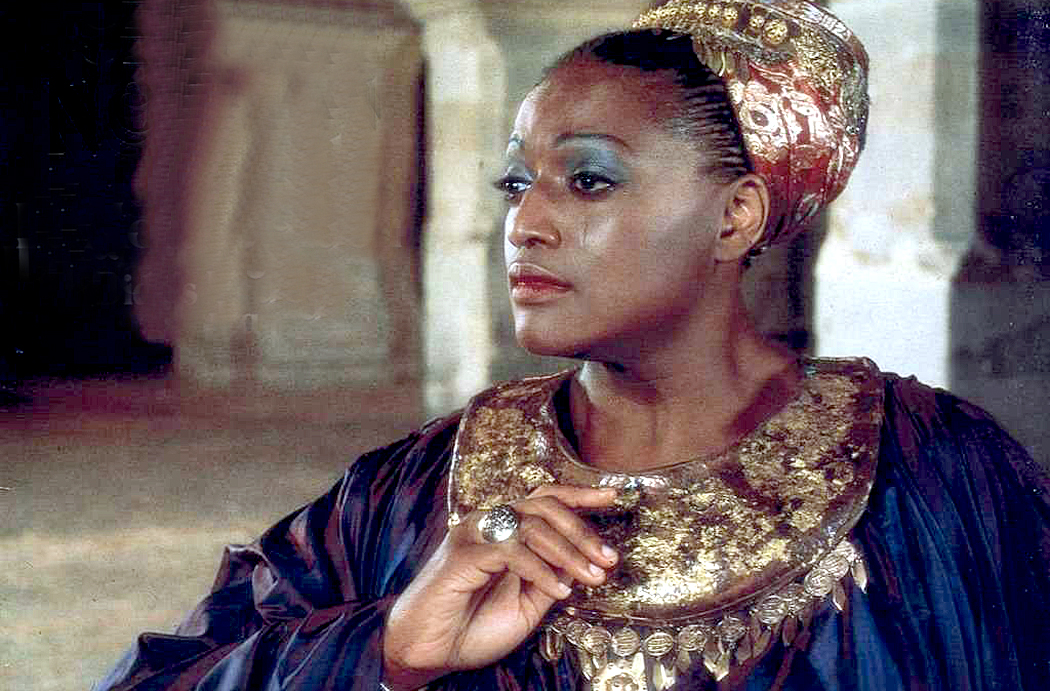
Grieving is one cause for the waterworks in listeners. How can you not feel the intense sadness of Dido as she faces her own death in Henry Purcell’s Dido and Aeneas, in the section known as Dido’s Lament, “When I am Laid to Rest.” It is a ground bass (repeated bass line), over which she sings “Remember me … remember me.” It is heartbreaking. 

Alban Berg used his entire Violin Concerto to express mourning over the death of Manon Gropius, daughter of Walter Gropius and Alma Mahler, who died of polio in 1935 at the age of 18. Berg dedicated his concerto “To the memory of an angel.” 

It begins quietly on the violin’s open strings, builds to an angry climax, and reaches a point of cosmic acceptance with a quote of J.S. Bach’s chorale, “Es ist Genug” (“It is enough.”) 
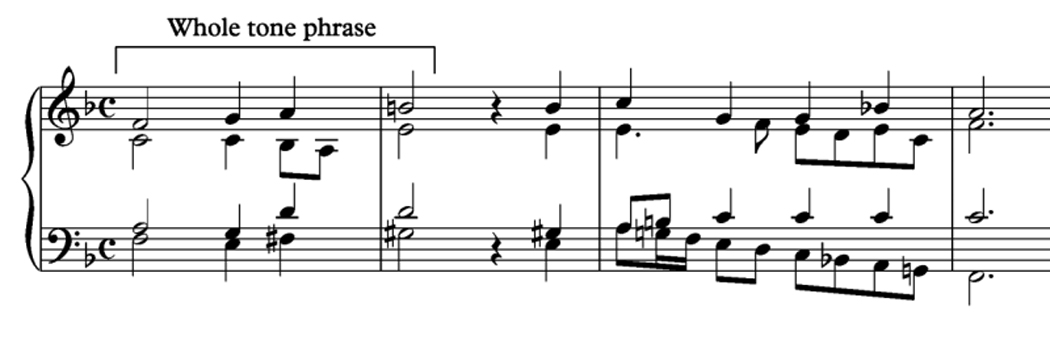
After all the turbulence of the anger, the simple hymn, albeit harmonized in a very 20th-century way, seems like the peace of the angels, a calm in the universe. I, for one, cannot listen to the concerto without tears streaming down my cheeks. 

Although it is written in his idiosyncratic 12-tone style, the Berg Violin Concerto is never simply noise: Even those who hate modern serial music love this concerto. It is music, not theory. 

These several pieces work because, while they are expressing their grief over a specific death, they also subsume the rest of us. And there is music which expresses not individual grief, but Weltschmerz — “the sorrows of the world” — that sense that all lives have an end, that life is suffering, that “no one gets out alive.” 

The work that seems to hit everyone in the gut with this is Samuel Barber’s Adagio for Strings. Originally the slow movement of a string quartet, Barber orchestrated it to create the version known best. 

The music is simple, barely more complex than a Gregorian chant, but builds slowly to an overwhelming climax, then silence, then a short peroration of calmness and repose. Never a dry eye. 

The only problem with the Adagio for Strings is that it has become so popular, played at the funerals of Franklin Roosevelt, John F. Kennedy, Princess Grace of Monaco, Albert Einstein, and Barber himself. It has become de rigeur for public tragedies such as Sept. 11, The Charlie Hebdo attack, the 2016 Brussels bombing and the Orlando nightclub shooting, and the 2017 Manchester Arena bombing, and in 2020 for the victims of the Coronavirus. To say nothing of how many movies it provides a trigger for emotions, as in Platoon, The Elephant Man and Lorenzo’s Oil. So that, for some, it can no longer be heard innocently, but only with irony, as in its appearance in Seinfeld, The Simpsons, and South Park

But so far, the Adagio has proved bulletproof. It always works. Emotions pour out. The music is powerful.
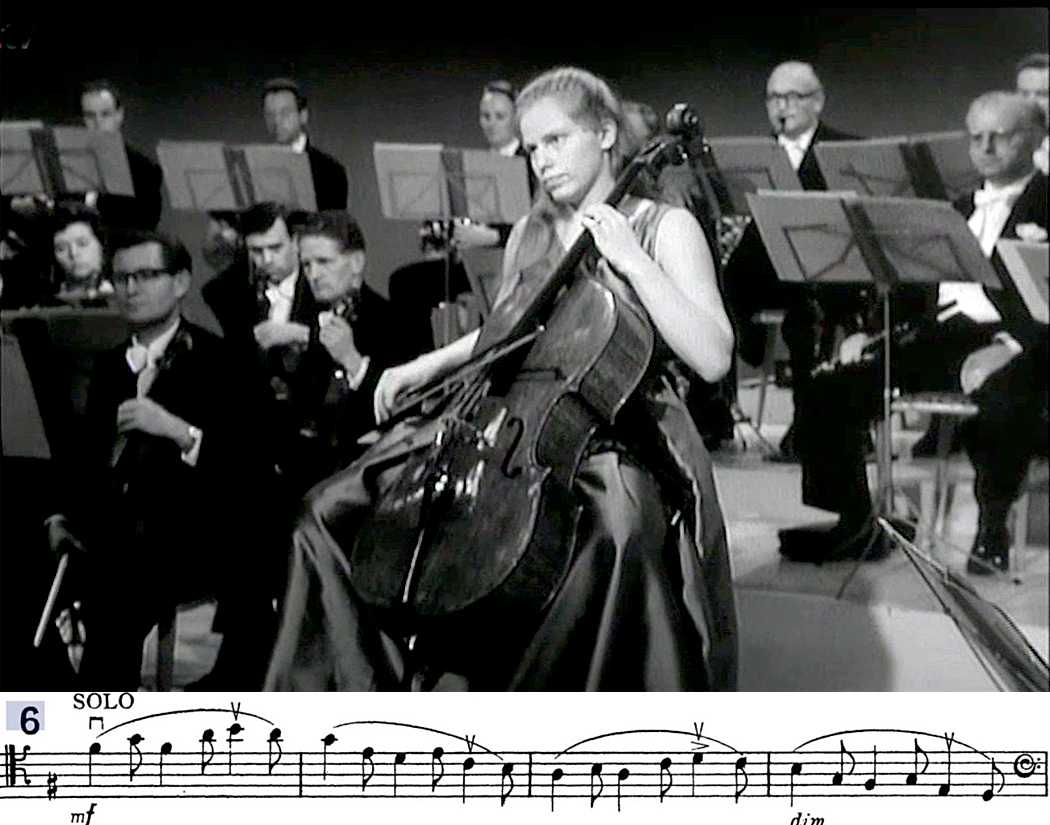
And talk about Weltschmerz: Another concerto brings out the emotions almost instantly, and that is Elgar’s Cello Concerto. Unlike most classical music concertos, it opens with the solo cello playing widely spaced E-minor chords, ringing sad and hollow, followed by a short cadenza before the orchestra ever plays a note. 

Elgar wrote it in 1919 in distress over the death and destruction of the First World War. It is a musical evocation of the famous lament of British Foreign Secretary Sir Edward Grey in 1914: “The lamps are going out all over Europe and we shall not see them lit again in our lifetime.” It is hard, with our distance from the events, and after the Second World War and the horrors of the Cold War, to fathom what a psychological wrench that first cataclysm was for the world, and how much it was clear that everything anyone knew had changed utterly and forever. So much was lost. Elgar’s concerto puts that sentiment into music. 

That sense of loss is personal as well as civic, and you sense it in the greatest of Richard Strauss’ Four Last Songs, “Im Abendrot.” It is a song for soprano and orchestra that conveys such a sense of longing and loss that even without the words, the orchestra alone can bring out the tears. 

In it an old couple stands on a hill looking at a sunset, a lark flies off into the twilight and the words by German poet Joseph von Eichendorff, say, “Wie sind wir wandermüde — Is dies etwa der Tod?” “How weary we are of wandering — Is this perhaps death?” 

There is something of the same feeling (and similar orchestral lushness) in Gustav Mahler’s Der Abschied, the final song of the cycle, Das Lied von der Erde, “The Song of the Earth.” The half-hour song tells of the beauty and permanence of nature and in the brevity of the human life. Even for a Mahler nut like me, who loves pretty much everything the man put on paper, Der Abschied is the single most beautiful and heartbreaking thing that composer ever wrote. 
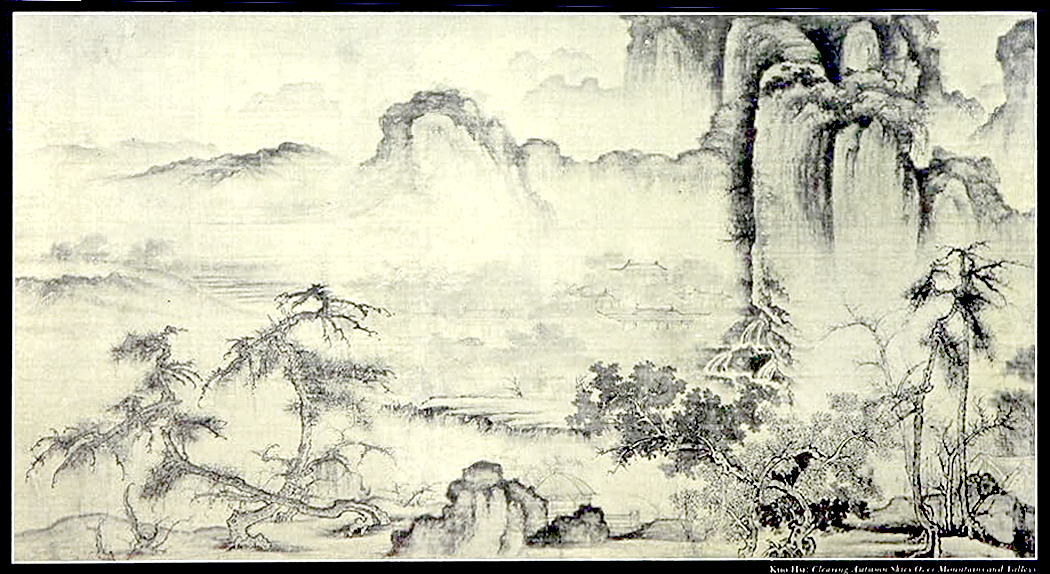
O Schönheit! O ewigen Liebens – Lebens – trunk’ne Welt!” “O beauty! O eternal loving-and-life-drunk world!” And the voice finally shrinks down to near-silence repeating the word “Ewig,” “forever…” over and over until it and the orchestra dissolve in emptiness. 

Mahler himself asked whether the music should even be played. “Won’t people go home and shoot themselves?” he asked. The thing is that the highest art may tell the most dismal tale, yet the beauty of the telling is life-enriching and leaves us weeping but full of joy. 

Mahler gave us also a song of such inwardness and reflection in the Rückert Lieder, “Ich bin der Welt abhanden gekommen,” a setting of a poem by Friedrich Ruckert. “I am become lost to the world, with which I used to waste so much time. It has for known nothing of me for so long, it may well believe me dead.” The slow tread of the song, with its repeated incomplete upward motive, leaves you floating between earth and sky. 

That Mahler song may not be the deepest expression of giving up on life. That honor has to fall to the final song in Franz Schubert’s song cycle Winterreise, “Winter Journey.” The cycle of 24 songs by German poet Wilhelm Müller collectively tell the story of a romantic young man spurned in love, who travels in suffering through a winter landscape, telling of loneliness, heartsickness, futility, fate, and finally, in Die Leiermann, “The hurdy-gurdy man,” finds an image of utter hopelessness. 
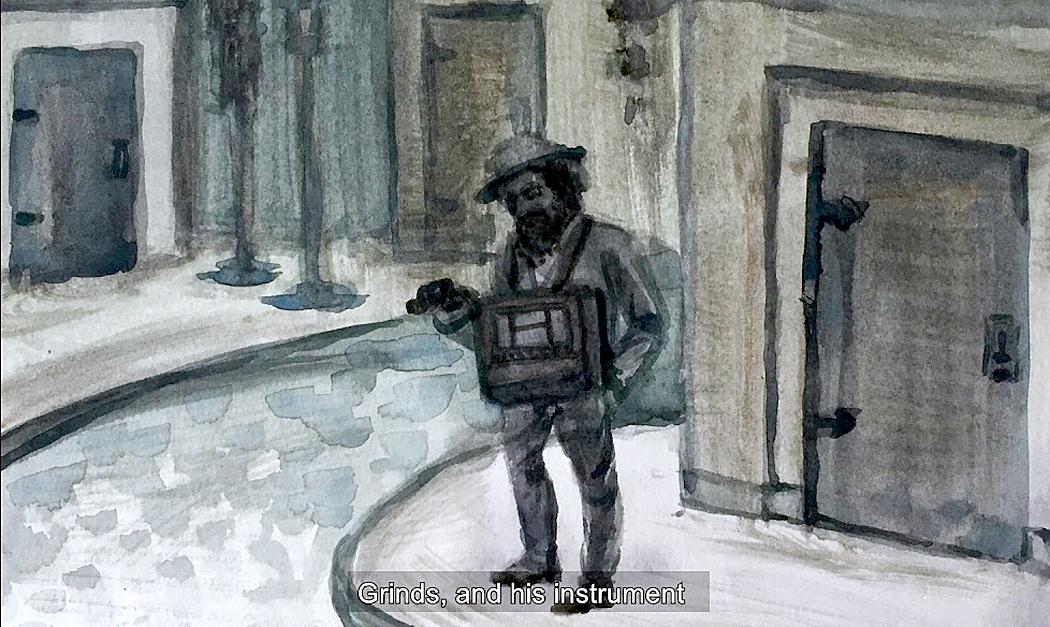
“Barefoot on the ice, he sways to and fro, and his little collection plate remains empty. No one wants to listen to him; no one looks at him. … He plays and his hurdy-gurdy never stops.” The piano accompaniment repeats the same figure over and over, with no sense of forward motion, and the singer sings his words over and over with little variation. This is psychological depression at its peak expression. “Strange old man, shall I go with you?” The implication is that the Leiermann is simply Death itself. 

 But I may be giving the wrong impression. While music of woe may bring on the deepest emotion, so, too, can music of joy and beauty. There is a reason people cry at weddings. When any emotion, from grief to ecstasy, fills the interior space, it can swell and overflow, and the overflow valves in the human being are the eyes. The emotional pressure in the body swells until it cannot be held in check. Tears of joy, tears in the face of beauty. 

I remember the words that playwright Peter Shaffer put in the mouth of Antonio Salieri in his play, Amadeus. Salieri overheard the adagio of Mozart’s Gran Partita for winds. 
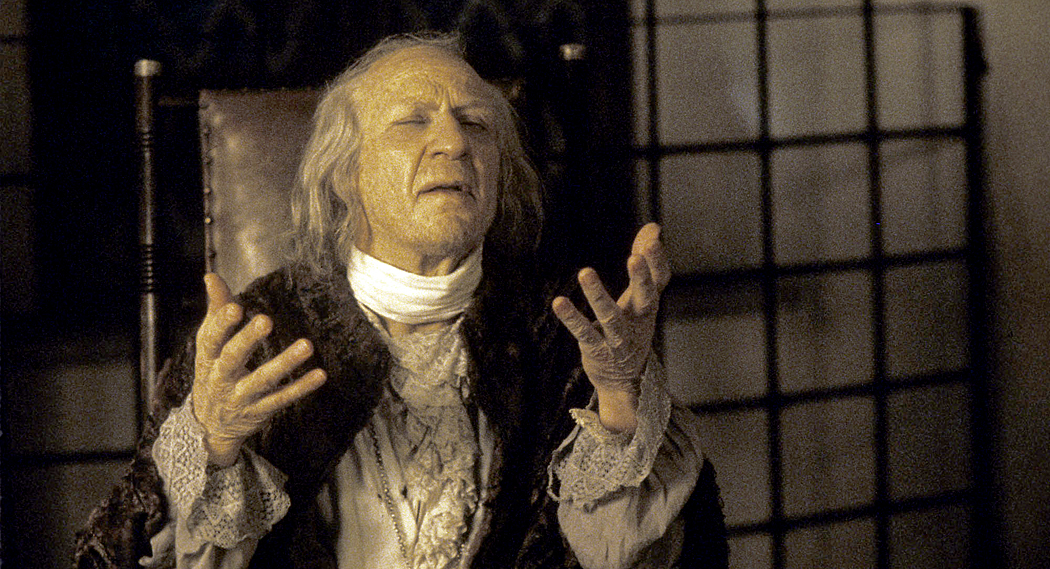
“Extraordinary!,” he says. “On the page it looked nothing! The beginning simple, almost comic. Just a pulse. Bassoons, basset horns — like a rusty squeezebox. And then, suddenly, high above it, an oboe. A single note, hanging there, unwavering. Until a clarinet took it over, sweetened it into a phrase of such delight! This was no composition by a performing monkey! This was a music I had never heard. Filled with such longing, such unfulfillable longing. It seemed to me that I was hearing the voice of God.”

It is an astonishing thing about beauty, real beauty, that it can sit beside the horrors of the world, the miseries, the deaths, the wars, the hatreds and injustices, and make you pause, fill you with emotions and remind you that no matter how bad things are, you still cling to life. The beauty can not excuse the suffering, but in some inexplainable way can somehow balance it. Beauty can stop time and fill you up to overflowing. 

Shostakovich wrote his 13th symphony, setting the Yevtushenko poem, Babi Yar, about the 1941 massacre of more than 30,000 Jews by Nazis at Babi Yar, near Kiev. It is a powerful poem denouncing anti-Semitism and the horrors of war and hatred (and a warning about Soviet anti-Semitism). The following movements of this choral symphony take on bitter humor as antidote to bureaucracy and tyranny; the hunger of food shortage; the use of fear by totalitarians; and finally, the difference between amoral careerism and the need for artists to express truth. 

This finale is introduced by a flute duet of such sweet delight, such soothing calmness, that although it cannot gainsay the horrors, it somehow balances them. The music itself, while beautiful, is nothing special in itself, but coming as it does at the end of this explosion of the miseries of the world (and especially Stalin’s Soviet Union), is such an unexpected release, it seems a miracle, and with the pressure taken off, at least momentarily, it can only be felt and expressed by its audience in the immediate explosion of waterworks. 

Now, all I have to hear is the flute bit, and I instantly recall all that went before, and I weep uncontrollably. 

That sense of beauty as counterbalance is the overwhelming sense you can get from the slow movement of Beethoven’s Ninth Symphony, which gives us 15 to 20 minutes (depending on performance) of stillness in the universe, a slow pulse that seems more cosmic than corporeal. It comes after a terrifying first movement and a relentless scherzo. The world then, after flowing through turbulent rapids, empties out into the calm ocean of the adagio. The release is overwhelming. 

It is also the slow motion of the finale of Mahler’s Third Symphony, which, after earlier movements titled “What the flowers in the meadow tell me,” “What the animals in the forest tell me,” What Man tells me,” and “What the angels tell me,” ends his symphony with a half-hour movement, “What Love tells me.” 
It is marked “Langsam — Ruhevoll — Empfunden,” (Slowly — Peacefully — Deeply felt,” and moves at a slow tread, first in the strings and building, a half-hour later, with trombones and brass and a final chord that can last to eternity. Conductor Bruno Walter, who knew Mahler and conducted the premieres of both his Ninth Symphony and Das Lied von der Erde, said of this movement, “Words are stilled — for what language can utter heavenly love more powerfully and forcefully than music itself? The Adagio, with its broad, solemn melodic line, is, as a whole — and despite passages of burning pain — eloquent of comfort and grace.”

The Swiss critic William Ritter said it was, ”Perhaps the greatest Adagio written since Beethoven.” Another anonymous critic wrote about the Adagio: “It rises to heights which situate this movement among the most sublime in all symphonic literature.” At its premier in 1902, Mahler was called back to the podium 12 times, and the local newspaper reported that “the thunderous ovation lasted no less than 15 minutes.”

That sense of time standing still reaches a much quieter apotheosis in the slow movement of Maurice Ravel’s Piano Concerto in G. With subtle cross-rhythms and a melody that seldom rises above a mezzo-piano, it is entirely hypnotic. The beauty of it brings me to tears almost even just thinking of it. 

And there is the sublime beauty of Mozart’s Ave Verum Corpus, a choral work that lasts a mere four minutes in just 46 bars of sighing chromaticism and sotto voce music, and, as one critic put it, is “capable of leaving the listener just as moved as might an entire five-day long cycle of Wagner’s Ring.” 

Some of these may work their magic only on my ears, some seem to work for everyone. And there are times when the listener may be too tired, to caught up in other things, or a bad meal or just in a sour mood, when such music can pass by almost unnoticed. And there are times in a concert when I am so tuned in, that almost any music, played well, may bring on the waterworks. 

But for me, this music almost never fails. The music triggers some empathetic response, and the emotions shiver to life. I am human; these are human feelings; these emotions are what make us human. 

Music can do that better, and more immediately, than any other art. 

Happiness is the most innocuous of emotions; it is plain and uninflected. Compared with its brawny cousins, such as hatred, passion, grief or joy, it is rather simple and nondescript. It is to those as water is to wine. 

Happiness is what you see on the faces of children playing outdoors. It is for them, who don’t yet have the burdens of adulthood or the cares of life. They can innocently play with happy abandon. Heaven lies about us in our infancy! 

Yet, in those cares of life, who doesn’t wish for a few seconds freedom to experience once again the simple happiness of when we were young and didn’t know any better.

Most of our art and music concerns the bigger things. The emotions you get from Mahler are big, complex emotions, piled Pelion on Ossa, building overpowering climaxes that leave us hollowed and purged. 

Think about Bach’s B-minor mass, Wagner’s Tristan, Stravinsky’s Oedipus Rex and you find the complexity of life threaded around itself. Of the big emotions, none is uninflected, but includes a tincture of its opposite.   “Our sweetest songs are those that tell of saddest thought. Our sincerest laughter with some pain is fraught.” 

Happiness, as I’m using the term here, is unalloyed. And while most of the greater emotions are felt as “happening” to yourself, happiness takes you out of yourself. You are unaware of your self when experiencing it. It is a grace.

In that sense, there is ego invested in the transcendence of Mahler or the Ode to Joy of Beethoven, but when you are happy, you barely exist: Only the happiness exists. You are only really aware of it when you wake from it and realize what you have been gifted. 

Of course, such a state can only last a comparatively short time. When the philosopher asks if you have had a happy life, the only accurate answer is that life is not happy, but only moments are. 

Art can rouse in us a huge range of emotions, and classical music is designed to explore the subtleties of them, and we are overwhelmed by the passions in Mahler, the transcendence in Bruckner, the joy in Beethoven’s Ninth, the angst in Berg’s violin concerto. All huge, complex emotions. 

But surely, there must be some music completely devoid of such cares, and can arouse in us those feelings of abandon and freedom we had as little children. Is there music that is simply happy? This is music I put in the CD player when I just want to rock back and enjoy the simple tunes and unfettered sounds of being happy. Bouncy, tune-filled, catchy feel-good music. 

The place to start, where most of the habits of classical music start, is Joseph Haydn. He seems to have invented everything: the symphony, the string quartet, the sonata form — they all descend from Haydn. And Haydn was perhaps the sanest person ever to write music, burdened by no metaphysical agonies. But even his music expresses a variety of thoughts and emotions, movement by movement, from the depth of the Seven Last Words of Christ to the finale of Symphony No. 88, which bounces with unfettered happiness. (Link here). 

That kind of ebullience is hard to sustain, but here are five examples from classical music that bounce from beginning to end, along with some suggestions for recordings. (Not “the best” for I have not heard all of the recordings, but these are my favorites). 

Franz Schubert Piano Quintet in A “The Trout”

The Trout Quintet is unusual in that it includes a double bass, which provides a solid bottom for the music, which allows the tunes to float along like rafters down a river. It is a sunny quintet, with hardly the whisper of a shadow in its five bright movements. Even the minor-key variation in the fourth movement is dispelled with a major chord — “I was just playing,” its composer seems to be saying.

It was written in 1819, when Schubert was 22, for piano, violin, viola, cello and bass. Through most of his best music — the late piano sonatas, late quartets and the great C-major string quintet — there is a strain of despair that is heartbreaking. Even in his short piano pieces, beloved of amateurs for a century and a half, there runs a vein of deep melancholy that shades even his happiest moments.

But none of this in the Trout. It spreads sunshine from beginning to end.

Almost any performance of The Trout will leave you giddy, but the one essential element of any recording is that you can hear — even feel — the string bass at the bottom. It is the foundation for the edifice. 

I’ve always loved two performances. The first is Alexander Schneider with Peter Serkin on piano, Michael Tree on viola, David Soyer on cello and the indomitable Julius Levine on bass. It was on the Vanguard label. And Peter’s father, Rudolf Serkin anchors the Marlboro Festival musicians on Sony (then, Columbia). With Serkin is Jaime Laredo on fiddle, Philipp Naegele on viola, Leslie Parnas on cello and Levine, again, on bass. A classic performance, much loved by many, features Clifford Curzon on piano, with musicians from the Vienna Philharmonic. Originally on Decca (classical music labels are in constant flux, as mega-corporations gobble up older established labels; you never know where a classic performance will show up. Just check Amazon and you’ll find it.)

YouTube video at this link

Gioacchino Rossini String Sonata No. 1 in G

It shouldn’t be surprising that most of the music that expresses mere happiness should have been written by very young composers. The six sonatas for strings were written by Rossini when he was 12 years old, arranged for four string parts: two violin parts, one for cello and one for double bass — again providing that delightful solid bottom for the tunes. 

The bass is there because Rossini wrote them while visiting the home of bass player Agostini Triossi in Ravenna, Italy, in 1804, and tossed all six sonatas out in the space of three days to be played by members of the household, with Rossini himself on second violin. 

Although written for a quartet of players, they are usually performed by a full ensemble. Versions have been adapted for normal string quartet and for wind band, but the string ensemble has that fresh appeal that matches the music. 

I could have chosen any of the six sonatas. They are each in three movements, fast-slow-fast, and in major keys. But I mention the first because I particularly love its jaunty finale, with a tune I can’t get out of my head. 

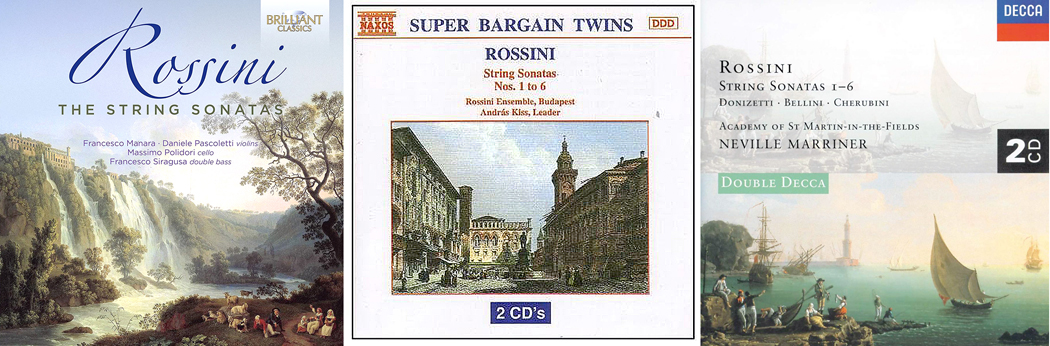
I’ve never heard a bad performance on disc, but mostly I listen to the Naxos recording of the Rossini Ensemble, Budapest. They almost always come in a pack of all six sonatas, so you are likely to love them all. Neville Marriner has a smooth set with the Academy of St. Martin’s in the Field, and Brilliant Classics has the version with four solo players. 

YouTube video at this link


 Georges Bizet Symphony in C

Another prodigy, Bizet wrote his symphony when he was 17 years old and a student at the Paris Conservatoire. It was never performed in the composer’s lifetime and indeed was lost and forgotten until 1933, when it was found in the composer’s papers, and was given a first performance by Felix Weingartner in 1935. Since then, its infectious tunes and untroubled elan have found it a place in the repertoire. 

I have always thought of it as a 19th century version of a Haydn symphony — perfectly proportioned, tuneful, and with no dead spots. Others may have stormed the heavens with Wagnerian thunder and Blitzen, but this symphony contents itself with pleasing its listener with melody, rhythm and smooth harmony. 

It has also been lucky on disc, when three of the most lively conductors have taken it on. Leonard Bernstein with the NY Phil, and Leopold Stokowski with the National Philharmonic (a pickup orchestra), and Thomas Beecham with the Royal Philharmonic. You can’t go wrong. 

YouTube video at this link

Serge Prokofiev Classical Symphony in D major, Op. 25

Another student work, in 1917 Serge Prokofiev wrote his first symphony in a kind of parodistic style of Haydn or Mozart, but with modern piquant dissonances — what has been derisively called “wrong-note romanticism.” 

But the four-movement symphony has proved enormously popular. It bounces from first to last, with memorable tunes and sharp wit. 

The composer Boris Asafyev, according to Prokofiev, “put into my mind an idea he was developing, that there is no true joyfulness to be found in Russian music. Thinking about this, I composed a new finale, lively and blithe enough for there to be a complete absence of minor triads in the whole movement, only major ones.” 

The energy in this music is propulsive. If anyone is feeling down, with the feeling of systematically knocking the hats off anyone you meet on the streets, a listen to the Classical Symphony will cure you and leave you with a goofy grin on your face. 

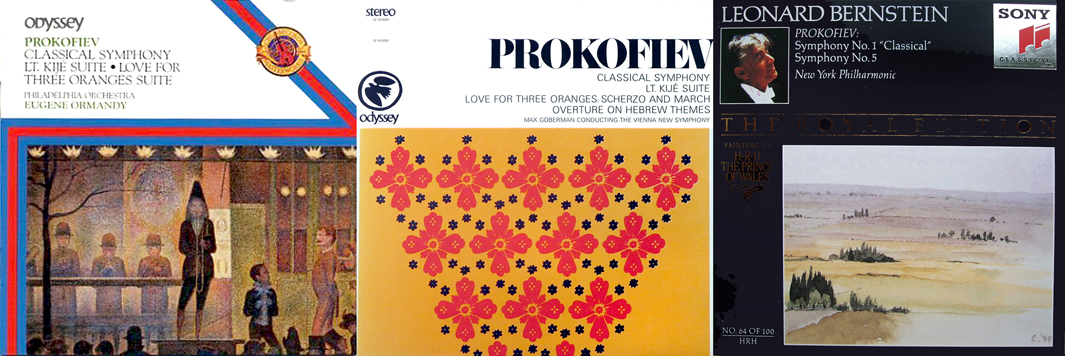
Many have recorded the symphony. The only failures are when the conductor takes the music too seriously or lacks any sense of humor. There are several dry versions. But I have three that I have loved. Leonard Bernstein and the NY Phil have all the elan and vigor you could ask for, if the ensemble is a tad scruffy. Eugene Ormandy and Philadelphia cannot be topped. It is a perfect recording of the music, bright and witty with gorgeous string playing. And I remember an old Odyssey LP I once owned with Max Goberman and the Vienna New Symphony. Perhaps one day a CD version will be offered. 

YouTube video at this link


Darius Milhaud Le Boeuf sur le Toit, Op. 58

Imagine you are in a Brazilian dance hall and the crowd, sloppy with  drink and dance, are bouncing to the music of an exuberant band — not all of whom are playing the the same key. And you cannot help but tap your toe, then jiggle your leg, and then get up and dance and sweat with the crowd. That is Milhaud’s Le Boeuf sur le Toit (“The Bull on the Roof”). 

It is a string of mostly Brazilian tunes, some borrowed, some invented by Milhaud, all of which are infectious and life-affirming. It is the most single-mindedly happy music I have ever encountered, completely unselfconscious and joyful. Milhaud himself called it, “15 minutes of music, rapid and gay, as a background to any Charlie Chaplin silent movie.” 

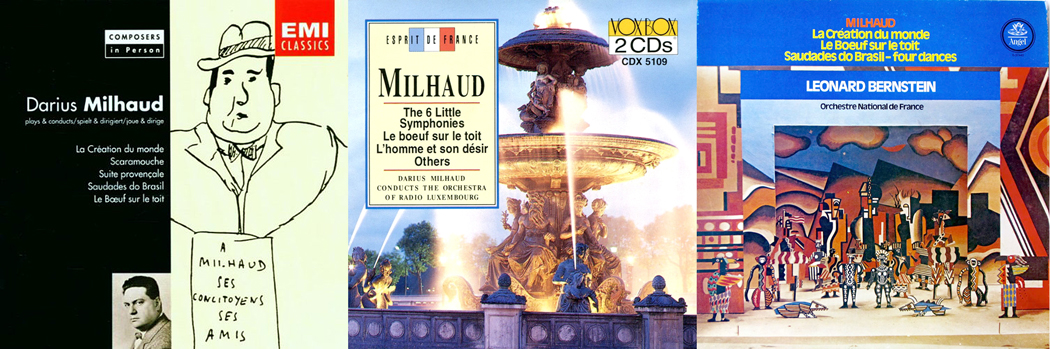
 You can get a recording of Milhaud himself conducting the Orchestre du Théâtre des Champs-Elysées from 1958, perhaps a bit ragged, but with all the spirit. A standard for decades has been Louis de Froment and the Orchestra of Radio Luxumbourg. But for me the perfect embodiment of this happy music is the Orchestra National de France under Leonard Bernstein; he is the perfect vehicle for the life-spirit of this music. 

YouTube video at this link

Those are my five suggestions. There are others: Benjamin Britten’s 1834 Simple Symphony, made up of tunes he wrote when he was 10 years old; or  perhaps Shostakovich’s Three Fantastic Dances from 1920, which he wrote between the ages of 14 and 16 — before the specter of Joseph Stalin darkened his art. Perhaps you have other suggestions to leave in the comments. 

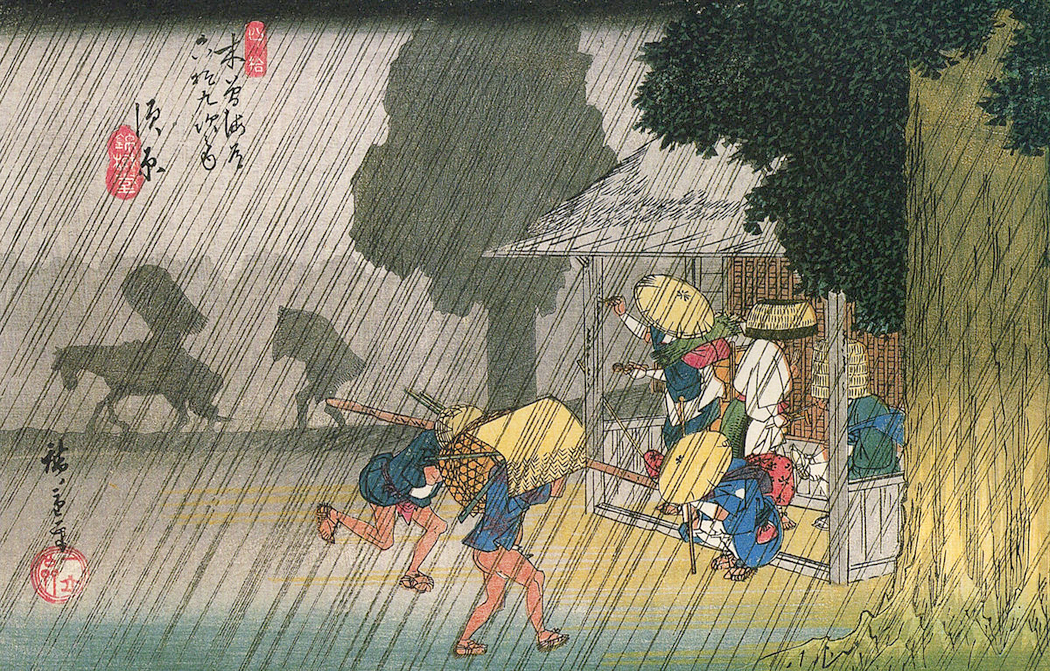
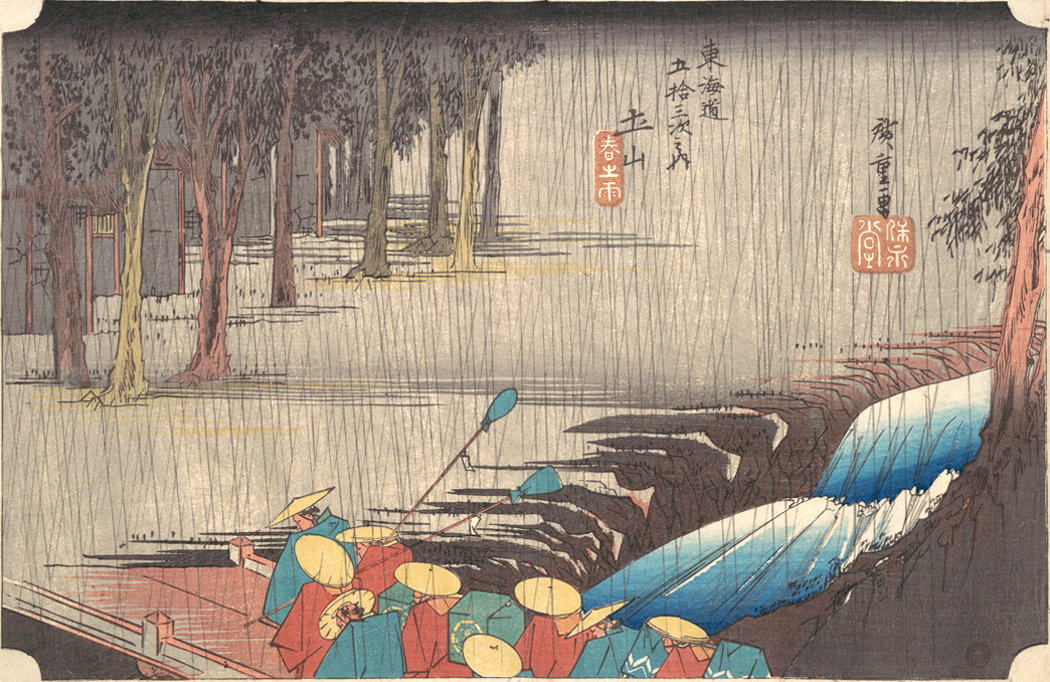
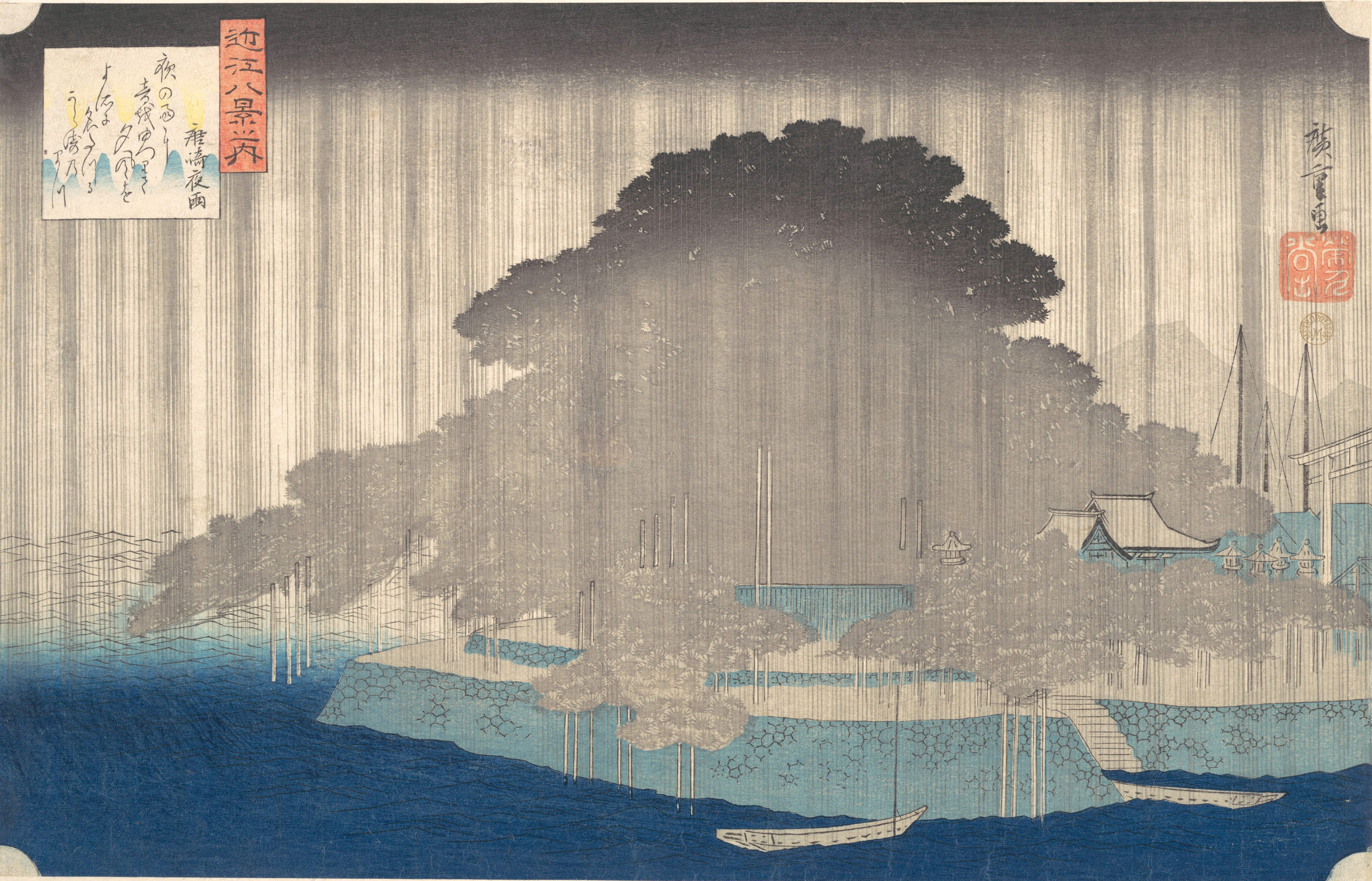
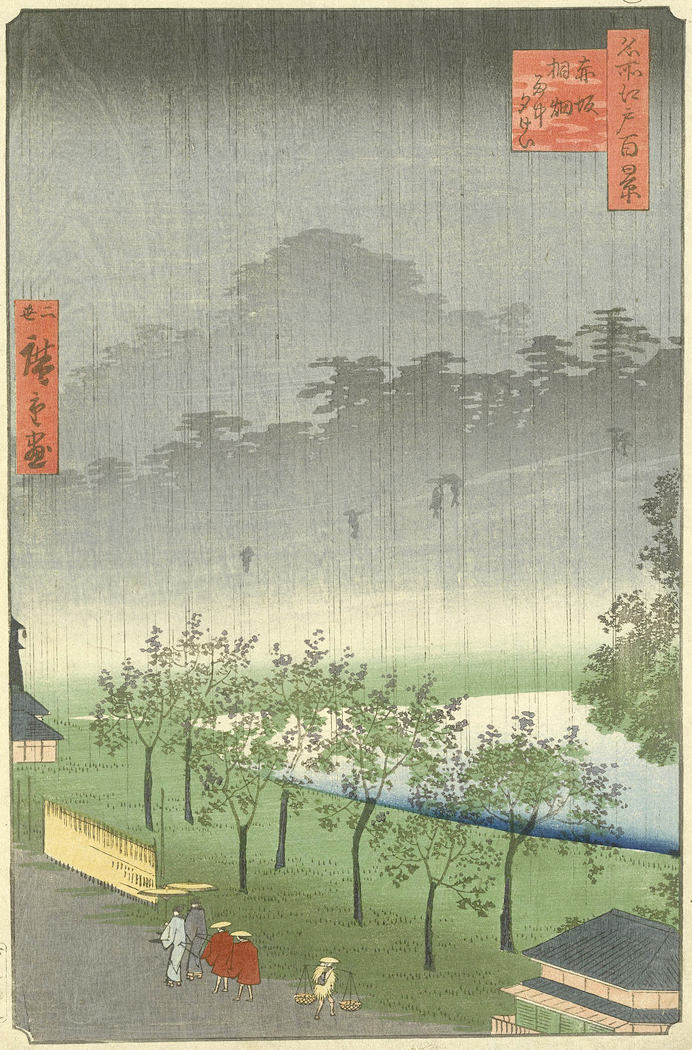
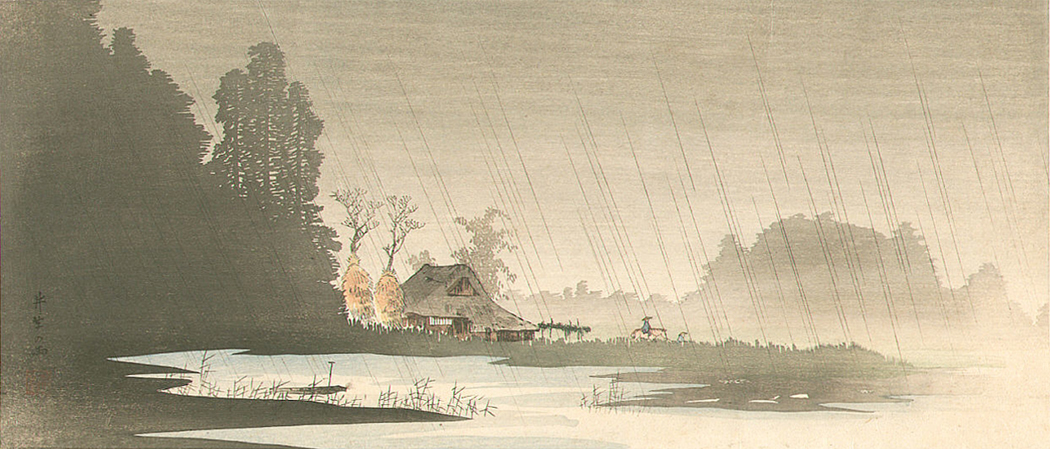
On an August afternoon in the Blue Ridge Mountains the late afternoon rain grays out the trees and streaks my vision with vertical lines. In the distance I can hear a low rumble, but this is no storm, but a gentle, constant rain. When I lived in the desert many years ago, this was called a “she-rain.” 

It has been muggy, with air so thick you can feel it smear on your skin, but the rain clears it out and leaves a fresh smell of green in my nostrils. I step out the front door to soak in the feel of it all. 

I look out, up and down the street and see the trees shiver as the drops tag the leaves and comes over me a distinct and particular emotion. I don’t want this feeling to stop, but rather I wish to drink it in and let it swirl through my body. It is not an easy emotion to describe; words are not sufficient. But it is a sense that the world is larger than I am and runs on a pattern and scale that I am only an observer of. There is comfort in that. 

Weather carries emotion. We don’t always remember that perhaps because sometimes the emotion is frustration or disappointment, as when you can’t go our in a snowstorm, or fear when it looks like a tornado might be brewing. But the moving air is an agent and cause, the sky and its clouds a ripe metaphor for our interior lives. 

Weather is a ground upon which our lives are painted, always there under the surface. A sunny day can make us happier — unless you live in the desert when after two months of continuous sun, you get rather antsy and wish for even just a little reprieve. 

I remember once visiting Washington D.C., covering an exhibit at the National Gallery for the newspaper. I was put up in a hotel near Georgetown and in the afternoon a rainshower blew up. I could see it from my room window. I went out the revolving door and a doorman offered me an umbrella. I refused, looking straight up at the sky and letting the drops pelt my face. He looked at me like I was nutty. 

“Don’t worry,” I said. “I live in Arizona. I haven’t seen rain for three months. I love this. I love getting wet.” 

I remember when I was a schoolkid and it would snow in the New Jersey winter. The snow would be as deep as my belly and I went out into it and dug a cave in the accumulation and pulled away snow from around my hole, making an ersatz igloo. The snow was ecstatic, and not merely the snow, but my breath clouding the air in front of me, the numbness in my fingers and the cracking in my nose. 

When I was living at the beach in Virginia, I once drove down to the water during a nor’easter, with the wind blowing at 40 or 50 miles per hour. The car faced directly into the wind and it bounced violently so that I thought I would go airborne. I couldn’t help but think of an aircraft carrier heading into the wind so the planes could take off with a short run. 

Which reminds me of going airborne in a tent. We were camping in Shamrock, Texas, when an evening thunderstorm hit. A tornado had passed through the previous day and we were worried about another. As the rain came down in multiple Niagaras, the wind tore through and, first the tent began to float on the flood, and then began to rise around us. We had to abandon ship and head to the campground office for safety. As I got out, the tent pulled loose from its stakes and I grabbed it by the frame and it flew over my head like a kite. I held on, thinking I might begin flying myself, but managed to pull it down and flatten it and drag the rags with me to the building, where we — and all the other campers — waited out the storm. 

But back to today’s rain, gentle and quiet, a hiss on the road and paradiddle on the leaves. It is the middle of a pandemic and we have been sequestered in the house for months. To stand on the stoop and feel the rain and enjoy the welling of emotion is a treat. 

It reminds me again that the feeling of emotion is what makes us human. We may be rational beings (at least that’s the argument — I’m not so sure that isn’t wishful thinking), but it is emotion that reminds us we are alive. A computer can think, but I have no evidence that it can stand on a doorstep and enjoy, absolutely enjoy, the rain. And enjoy it to the extent that it warrants the name of joy. 

I am 72 years old, and I face the absolute certainty that whatever life I have remaining will be a mere fraction of what I have already lived. The end is within sight, be it even 20 years off. And I feel my existence on this planet more sharply than ever. I am here; I am alive; I take in my breath and let it out again, and with each inhalation comes the smell of the rain-filled air. 

There is much suffering in the world, and I have had a small share of it, but when I look at the pale green of the maple tree in the front yard, contrast lowered with the obscuring rainfall, I recognize that even with the pain and misery, there is still beauty — an afflatus that fills my frame and almost brings tears, tears of awareness. Of being alive. Of feeling my fingers and toes wiggle. 

Let it rain.   

“The older I get, the more the complexities of life narrow down to simpler components,” said Stuart. “The interactions become more complex, but the basics seem fewer.”

“Yes,” I prodded.

“I’ve been thinking about emotions, or more precisely, about how emotions are manifested by our bodies in terms of muscle reactions, hormonal dumps, brain chemistry — emotions as a physical reaction to external or internal stimuli.”

“Sounds clinical.”

“Well, I’m no scientist and I can’t claim any justification for this, but I’ve spent nearly 70 years examining my self — my inner self — and trying to understand just how I’ve reacted to the many events in my life, both the good and the bad.”

Stuart and I have both been around for a long time, been through many things, some of them together. Marriages, divorces, trips, jobs, houses, friends, pets, births, and more recently, deaths. 

“And I’ve come to believe that there are really only six emotions.”

“Surely, there are an infinite number of emotions,” I said. “At least an uncounted number. ‘I am large, I contain multitudes.’ ”

“Yes, it sometimes seems that way, but I think it is more like the taste  buds on your tongue. Only a few, but the combinations of them allow us to identify a huge range of flavors.

“The six emotions I have winnowed it all down to are: sadness, anger, fear, contentment, joy, and finally, desire — erotic desire. Each of these manifests itself in a distinct part of the body, or combination of corporeal locations.”

“I know where desire is felt.”

“Well, yes, but I don’t mean this as a joke. Let’s take them one by one and examine them.

“I start with sadness, because that’s the one most proximate, at least for you.”

“You’ve got that right.”

“Sadness — and I mean sadness, I don’t mean depression, which is a lack of affect and therefore, the opposite of emotion — sadness wells up in the eyes, in the higher portions of the chest, in a pursing of lips graduating into a pulling apart of the corners of the mouth and stretching of the neck ligaments. 

“Each of these emotions is a range, not a single thing. Sadness can run from a kind of wistfulness into a full blown gnashing of teeth and rending of garments.”

“Been there.” 

“Fear hits the pit of the stomach and the back of the neck; it widens the eyes and tightens the throat. Anger tenses the whole face and focuses the eyes, tightening their orbits; it also stiffens the back of the throat and may also clench the fists. 

“Contentment is a warm feeling throughout the body, a relaxation of tightnesses. It is what we most often call happiness. And it is very different from joy, which is an inhalation, or alternately, a holding of breath, along with a swelling of chest and perhaps a throwing back of arms. You almost escape your skin. 

“And desire — and I mean specifically sexual desire, not just the inclination to acquire what one doesn’t have — desire swells the loins.”

“And what about love? Isn’t that one of the big emotions?”

“In my way of thinking about it, love is a cause of emotions, not an emotion itself.

“Think about it. When you are young, at first flush, love is a combination of joy and desire; as you age, it may become contentment and desire, then, perhaps contentment alone. Certainly it can also cause anger in one, or fear, and ultimately, love can be expressed through sadness. You know about that all too directly. These are all the pipes attached to the keys of the organs, from flute to diapason.”

“And hate?”

“Likewise, it triggers a range of notes: anger and fear mostly.”

I can never tell just how seriously to take Stuart. His enthusiasms are certainly genuine, but they are not often long lived. He gets on a topic, drives it to its logical or illogical end and than, like an infant tempted by some new shiny object, moves on to something else. Still, there is often something to be learned by looking at the world from an angle outside even the periphery. 

“I imagine some sort of sliders on a sound studio mixing panel, pull up the fear and anger, deaden the joy and contentment. Fingers constantly pushing the controls up and down.

“Again, my disclaimer: I am no scientist, this is all just self-examination, but science does seem to have correlated certain hormones and neurotransmitters with emotional reactions. Fear and adrenaline, contentment and serotonin. Endorphins and joy. Cocktails mixing them make for some astonishing complexity. We all know it’s possible to love and hate at the same time. Shaken, not stirred.”

“You have me remembering a girlfriend I had many years ago, in Seattle,” I said. “I was crazy in love at the time, but her reaction was that ‘Love is just pheromones.’ Rather knocked me down a bit.” 

“I remember her,” Stuart said. “Nothing blonder than her hair but the sun.”

“Yes, that’s her.”

“Well, it started me thinking. We almost always pit emotion against  rational thought, as if they were opposites. Bones and Spock. What if thought was the same as emotion — a physical and chemical reaction that the body washes over us? Are there peptides and purines that channel or produce reason? Is it all ‘just pheromones?’ We privilege reason over emotion in our culture, but let’s face it, reason does not always provide better outcomes than emotion. Remember Halberstam’s book with the ironic title?”

The Best and the Brightest.”

“Yes. Logic, I’ve always said, is a provincialism of our culture. I blame Plato.”

“You usually do.”

“Or maybe Zeno. His paradox only works in language, not in reality. The tortoise will always be passed by Achilles in just a couple of bounds. Yet, the logic proves that Achilles cannot possibly ever catch up. I have doubted reason ever since I thought that one through. 

“So, I’m imagining a gushing brain chemistry that makes us divide each question into ones and zeros, yes or no, black or white, salt or pepper, chocolate or vanilla. Is there a bestiary of thought as there seems to be one of emotion?  You love Beethoven’s late quartets, right?”

“Who wouldn’t?”

“And what have you always said about the ‘Heiliger Dankgesang’ or the cavatina? ‘At its highest levels,’ you said, ‘thought and emotion cannot be told apart.’ Isn’t that right?”

“To quote a First Century prophet from the Levant: ‘You have said it.’ ”

“So, I’m trying to work out another mixing board, one for thought. Or, is it the same mixing board, but turned sideways? Does thinking create facial expressions or muscle contractions the way emotions do? When I’m lost in thought, I can feel me face go all flabby as I’m lost in thought — or sometimes the reverse, I screw up my lips and nose as I work through a knotty problem.

“At the very least, I’m convinced that the body and the mind are not separate entities, but rather a single thing looked at from different ends. We get all flummoxed when we divide ourselves up between thinking and feeling, between body and soul, between heaven and earth, between realism and idealism. I imagine it all as Medieval humors, only with modern, scientific names like urocortin and oxytocin. They didn’t have microscopes and magnetic resonance machines, but those Medieval people were not simple-minded idiots. Their brains were just as good as ours. It’s just their research facilities were underfunded. And they didn’t have as many giants on whose shoulders to stand.”

“So, she was right? It’s all just pheromones?”

“Perhaps. Remember, I’m no scientist, and even if it is all just pheromones, it doesn’t feel as if it is.”

“Well, I think it’s dinner time and I’m feeling hungry. Let’s go see what we can cook up. I’ve got a new pasta recipe that I think Genevieve will like.”

There are two pieces of music that never fail to set off the waterworks in me.

I’m sure we all have some signature tune that turns us into maudlin fools crying into our beer.

Lots of music can have that effect, when you’re in the right mood. Mozart is full of such tunes. No one ever wrote about the forgiveness of human foibles like Mozart. It isn’t only in his “forgiveness arias,” but the same tone of music turns up in piano concertos and wind sextets. He had some tap into divine understanding.

When I’m in the right mood, Mozart wells up in my throat. But heck, if I’m really depressed, Stars and Stripes Forever can set me off.

But I’m talking about something that doesn’t require the right mood to work.

Anyone playing Shenandoah, for instance. I don’t care what the arrangement. You can play it on a chorus of kazoos and trombones. You can play it calypso style on steel drums — the moment I’m transported “across the wide Missouri,” I’m reduced to a blubbering mass.

Clearly, I’m responding to some sort of deep seated nostalgia, some trauma of childhood or failed romance. But strike up the tune and I’m like some drunk in a bar yelling “Play Melancholy Baby.”

Actually, I know what it is with Shenandoah: I know the Shenandoah River and the great valley it troughs through in northern Virginia, heading north to join the Potomac at Harper’s Ferry.

It is an especially beautiful river, and only more so on a cool autumn morning when a low fog hangs over the water and the sycamore trees along its banks seem to grow out of white nothing.

The Shenandoah Valley separates the Blue Ridge in the east from the great ridges of iron- and coal-laden mountains to the west. The river rises in twin forks, one on either side of Massanutten Mountain, which rises like a long, low bread loaf in the middle of the valley.

I used to live in the Blue Ridge; I have just moved back. It was the most beautiful place I ever knew. I missed it.

And when the song says, “I long to see your smiling valley,” I knew just what it meant. “Tis seven long years since I last saw thee,” the song continues. It was 25 years since my wife and I lived in the Appalachians.

We lived in Arizona, which has a beauty all its own, but is different from the Blue Ridge. And when the song reaches its climax, “across the wide Missouri,” I knew that I was on the wrong side of the Missouri, too, in a kind of self-imposed Babylonian captivity.

“By the waters of the Rio Salado, there we sat down, yea, we wept.”

The song speaks to me — as it does to so many other people — of that lost Eden we know we can never regain.

And so, I blubber.

But that second tune that sets me off is something different.

It is Christoph Willibald Gluck’s Dance of the Blessed Spirits.

Gluck was a Czech-born composer of the 18th century who rebelled against the ornate and conventional opera of the time. His opera, Orfeo ed Euridice, tells a simple myth in simple music. Almost too simple.

Two set pieces from that opera still are widely known. The Dance of the Furies was used behind the chase scene in almost every Hopalong Cassidy movie ever made. In those “B” Westerns, budgets didn’t allow new music, so they played old classics behind the action. The music was loud and furious.

But Dance of the Blessed Spirits was something else: quiet, almost  static, and with the grace only utter simplicity can convey.

Two flutes play the song-like melody over the accompaniment of strings. Chords change slowly and never stray from simple diatonic harmonies.

And when the tune’s first phrase reaches conclusion, it stretches out in a feminine ending, a slow suspension off the beat. Nothing is insistent in the music, but rather, like the Grecian maiden on Keats’ urn, it seems suspended in time, permanently in a state of grace.

I melt when I hear it.

But its power comes from the same kind of emotion that drives Shenandoah: a sense of loss and a sense that somewhere there is an Eden where spirits are blessed.

Yet the tunes are very different, too. My reaction to Shenandoah is personal, very personal. Its power — for me — comes from my biography. I don’t expect everyone will react the same way.

The Gluck, though, has a more ritualized, formal power. It comes from its stylization.

For Gluck was aiming not for biography, but for the universal.

Art’s emotional wallop often comes not from its literal portrayal of raw feelings, but from the Apollonian distancing and formalization of those feelings. By understatement, it draws up a skeleton that we flesh out with our own experience.

The so-called Romantic artist often fails to exactly the extent he overplays his hand. Such an artist wants us to feel his feelings.

The Classic speaks not of his personal emotion, but of human emotion. Hence, they are our emotions.

In other words, when I hear Shenandoah, I feel the turns my life has taken; when I hear the Gluck I weep for the inescapable lot of humankind. The one traps me in my ego, the other frees me from it.

This is the power one feels in Homer, in Joyce, in Flaubert. It is the reason Haydn is still played along with the more personal Berlioz.

And it is the power at the end of Beethoven’s immense Diabelli Variations, those 32 monumental changes on the “cobbler’s patch” waltz sent to Beethoven by music publisher Anton Diabelli, who asked the great composer for a variation he might publish.

Through those variations, Beethoven dives deep into some of the most personal music he ever wrote, with adagios of desolation and pathos, culminating in a clattering, raging fugue that is as hard to listen to as to play.

But he winds up in Arcadia, just like Gluck: His final overwhelming variation is a dignified minuet, which takes all the terror and anger, all the humor and misery of the previous 31 variations and sublimates all that personal angst into an Olympian, stylized dance.

It is this ritualization of the overwhelming emotions that make those emotions important: The personal is mere autobiography. The ritual dispenses grace: the freedom from ego.

It is why our most important thoughts and feelings are turned into meter and rhyme, why our bodies move to the numbers of choreography, why the novel is the “bright book of life.”

And why art matters.