Archive

Tag Archives: epiphany

We were camping at Huntington Beach in South Carolina, and I woke up before dawn and walked down to the ocean. The sky was beginning to brighten to the east and I watched for the coming sunrise. 

When the sun broke the horizon, its motion was noticeable and I watched it slowly lift from the water. But then, something happened: The sun stopped dead in its tracks and my frame of reference shifted involuntarily and instead of the sun moving up, the earth I was standing on jerked forward, as if I were coming over the top of a ferris wheel and I nearly lost my balance. It seemed the ground was moving away from under my feet, toward the immobile sun. 

At the same time, seawaves reflected the bright copper sheen and the shadowed portions of the water formed a network of glossy black, making the entire landscape before me into a shimmering enameled lattice and more, it seemed not so much to reflect the sun, but rather to be glowing from within. 

The magic lasted only a few moments and the earth stood still again and the sun began climbing once more. I felt that I had been given a chance to see how things really were — a stationary sun and a rotating earth — and the whole, with its copper and black waves, was unutterably beautiful.

Such visions are epiphanies. 

Of course, “Epiphany” means different things. In the Roman church, it is the name for the visitation of the wise men; in the Orthodox churches, it marks the baptism of Jesus and the descent of the dove; according to some early Church fathers, it marks the miracle at the wedding feast at Cana; and for Syriac Christians, it celebrates the rising light of dawn, as expressed in Luke 1:78. In all these versions, it refers to the recognition of divinity as it shines forth. 

But I take the word for its otherwise secular meanings. It is a sudden recognition of reality, or the momentary transformation of the ordinary into something strange, or the psychological state of overlaying the personal in registration with the objective world, the way you might orient a map to match the landscape in front of you. Then the two meld into a single thing. In any version, you experience a moment out of time. 

It is the word James Joyce used when referring to such experiences, usually something quite ordinary, but seen in a new, illuminating way. A theophany with no theos

In his early novel, Stephen Hero, he defined these epiphanies as “a sudden spiritual manifestation, whether in the vulgarity of speech or of gesture or in a memorable phase of the mind itself.” And he “believed that it was for the man of letters to record these epiphanies with extreme care, seeing that they themselves are the most delicate and evanescent of moments.” 

In an early manuscript, Joyce collected 22 pages of these moments he found in his own life, and used many of them later in his finished works. At one point, there were at least 71 epiphanies written down in Joyce’s own handwriting. 

Later in his career, the term grew in meaning and significance, and tends to mean moments of behavior observed or experienced that seem to metaphorically summarize some insight or contain “meaning” in some way or other. 

In ordinary usage, “meaning” is a term of translation: “This means that,” but it has another purpose: significance. An experiences doesn’t have to “mean” something that we can express in paraphrase, or take as a lesson we have learned, but can have meaning, unexplainable except in terms of itself, as when a dream feels meaningful even if you don’t know why. 

I believe we all have such moments. They tend to stick with us. I know I have had them throughout my life. The first one I can remember was at the age of four or five and driving with my family along the Palisades at night, looking across the Hudson River at the constellation of lights in the darkened Manhattan buildings. It was my first remembered experience of something I would call beauty. I couldn’t wait for the next time we visited my grandparents so I could see those lights again. 

Often we function as actors in a stage set, with the world as backdrop. Our focus is on the particular action or conversation, with the set merely happenstance; it could easily be some other set. But the epiphany is when you step back and see actor, set, words, as a single unit, all of a piece. We can live our lives barely noticing the world we walk through, except as it helps or hinders us — it is functional. But that moment comes when the boundary between us and the rest of it all evaporates and we sense ourselves as part of a whole. That instant is the epiphany and for it, time stops, even as the clock keeps moving. It is an uncanny feeling.

It feels as if you are taken out of the real world for a moment, but actually, you are dropped into it. The illusion of separateness is dispelled and you become face to face with something bigger. 

When I was about 10, my younger brother, Craig, and I thought to follow the brook that ran through our property in New Jersey, through the woods behind the house, to see where it went. It ended as it fed into the Hackensack River. We then followed the river to the Oradell Reservoir and followed the railroad tracks. We were crossing a little bridge when a train arrived and we ducked under the bridge, sitting on the concrete abutment  not more than a couple of feet from the screaming wheels of the train as it passed over. Time may have stopped, but the train didn’t. It was thrilling. It was untameably real. 

In high school, I spent one summer vacation in Europe, crossing over the Atlantic on a steamship. After days of faceless unchanging ocean horizon, one  night came when on deck I looked out and saw pinpricks of light in the darkness, maybe 8 or ten miles away. It was the Orkney Islands and I was dumbstruck at their remoteness. They were ghostly lights strung out along the horizon in a seemingly infinite blackness. They seemed unmoored to this now. 
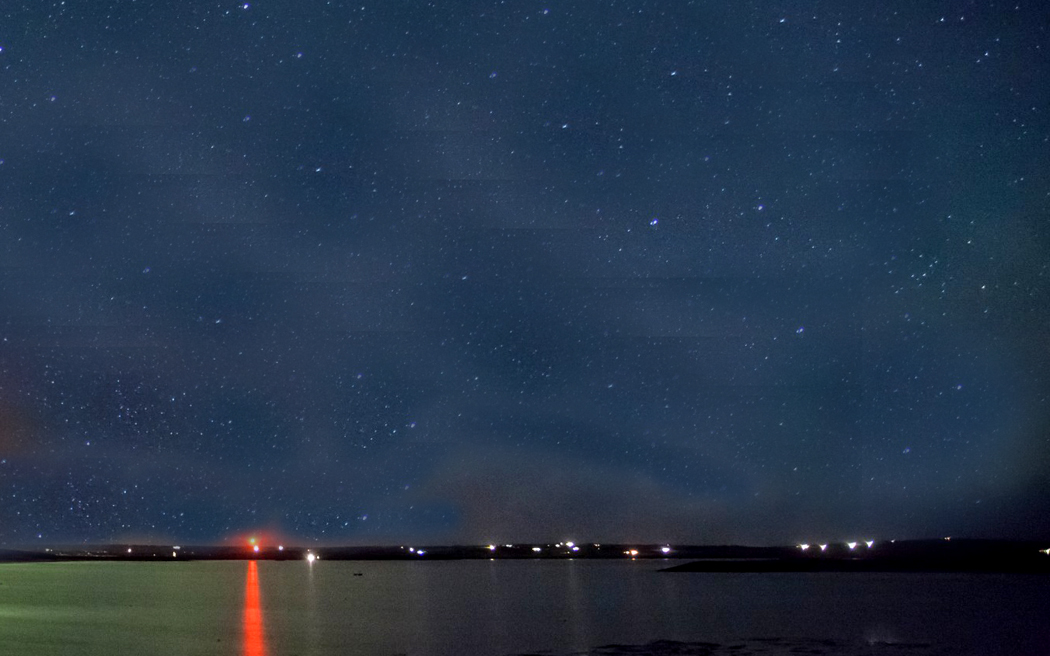
There is often sense of the uncanny, of something we don’t quite see, but feel it is there. 

On night, I was driving up the Big Sur, between San Luis Obispo and Monterey. With the sun finally below the horizon, it was completely black, but with grades of black showing in front of me. The blackest black is rock, rising in cliffs to the right side of the road. The glossiest black was the ocean on the left below. As I whipped along the road with my up-beams gleaming back at me from the reflectors on the road stripe, I could occasionally see a flash of light in the corner of my eye. When I looked, there is nothing, but when I turned back to the road, it flashed again. But there seemed to be something riding beside my car. I called it the “God of the Nighttime Highway.” 

It turned out to be my own running lights reflecting off the guard rail at the edge of the road. But for 10 minutes or so, until I figured it out, the experience was eerie and I almost believed in a spirit world that I don’t believe in. 

I imagine it must be episodes like this that gave rise to the myths and folklores of the ancients. The experience feels so real, it must be real. 
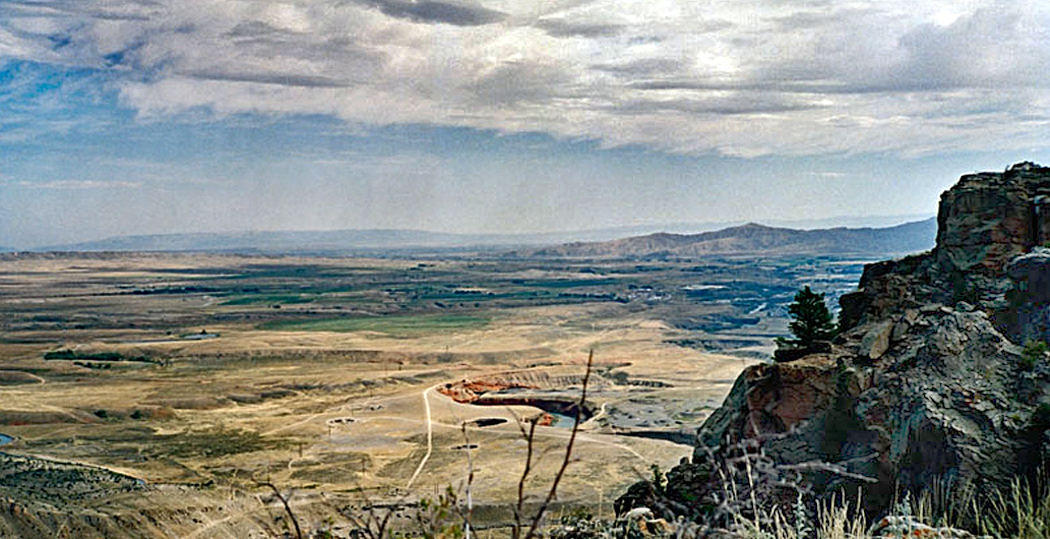
And these epiphanies are not especially rare. I’ve had many in my life. My wife and I had left Yellowstone National Park early on a gray, rainy day, driving eastward on the North Fork Highway through Wyoming’s Shoshone Canyon. At the canyon’s mouth the land broadened out and dipped down into vast plains with the Buffalo Bill Reservoir in the distance. We had just turned on the radio and the skies suddenly parted and the scene before us was drenched in sunlight just as the radio began pouring out the early morning sign-on music of “America the Beautiful,” and the Mormon Tabernacle Choir sang, “Oh beautiful for spacious skies and amber waves of grain…” And there it was, before us, just as in the song, and we had to laugh, but also we had to recognize the emotional power of what we were seeing. 

Once, camping at the Outer Banks with my friend Sandro, we walked along the beach at Hatteras Point at night, carrying a Coleman lantern. The air was so humid that it was on the edge of becoming fog. And the light we carried threw our shadows up into the sky, among the stars, and we could see we were giants. 
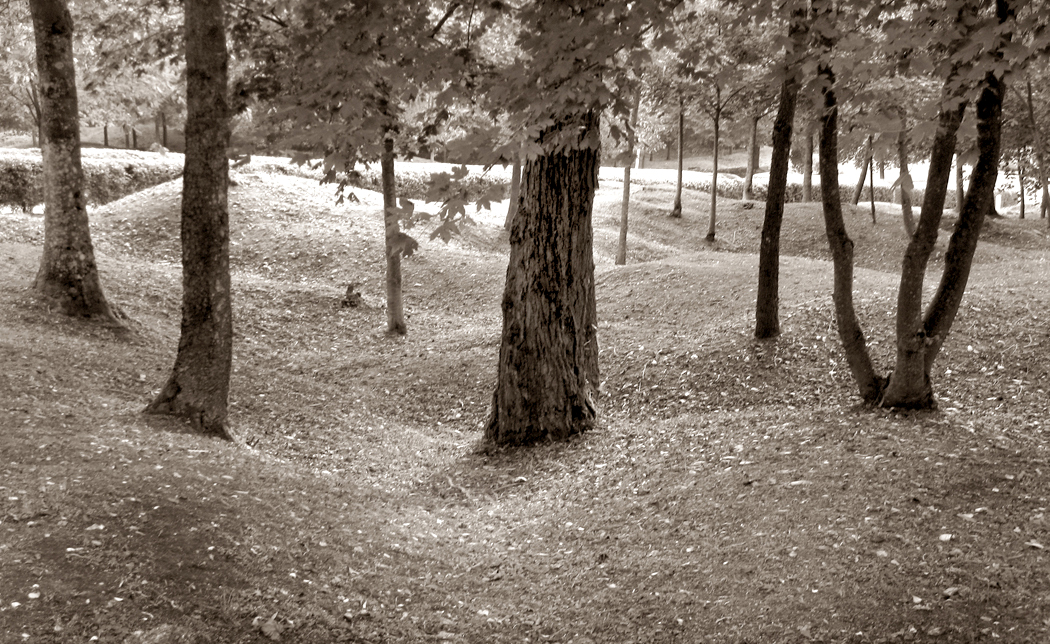
Or, visiting Verdun in France, my wife and I drove through the old World War I battlefields that had been blasted into moonscape by artillery fire, but now had grown back into woodlands. But there, between the tree trunks, the shell craters were still there, pock-marking the ground nearly a hundred years later. 

I’ve had that strange recognition many times when visiting old battle sites — as if the past is always present. I’ve had it at Antietam, at the Little Bighorn, at Shiloh, at the Normandy beaches, at Wounded Knee, at Appomattox. The epiphany that breaks through isn’t just history as you read it in books, but rather the persistence of events: that what once happened is still happening; wave ripples running out through time. 

I once spent the night alone on the North Rim of the Grand Canyon in Arizona. My campsite was a good 30 miles from any other human being and the sky was darker than any I had seen before or since and the stars were spilled like beach sand across the expanse, with the Milky Way splitting the dome in two. About 3 in the morning, I woke up, left the tent and sat on the hood of my car, staring up at the infinity. I stared for maybe 20 minutes or a half hour, and a kind of hypnosis took over and I no longer felt like I was on my back staring up, but rather as if I were at the forward point of a planet racing through infinite space toward those stars. The planet was at my back, and I could almost feel the wind on my face as this planetary vehicle was racing forward toward the lights. 
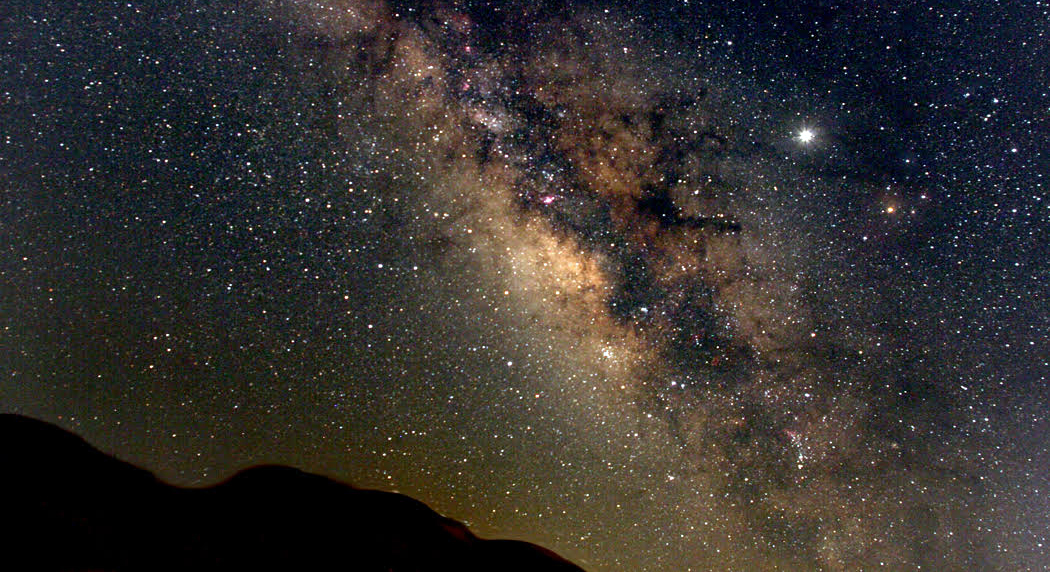
And, of course, this is exactly what was happening. The ordinary sense of terra firma under a wide sky is the illusion. The recognition of a giant ball of earth and water raging through an infinite void is the reality. Sometimes we see it that way. 

And that is the epiphany. 
I remember, as a child, going to the zoo and being impatient if I couldn’t see the animal immediately. The lion was off in the shade at the back? Move to the next animal. Children often have short attention spans, and I was no different. 

As I’ve aged, I’ve been surprised to discover how much more I can concentrate, how much more patient I’ve become. I can look long and hard until I see the lion, and wait to see what it will do next. Perhaps lick its paw; perhaps roll over and snooze. Oddly, with less time left on this earth, the amount of time I’m willing to wait has become inversely proportional. 

I am now an old man, with a powerful sense of how few years I will be able to enjoy this existence. People I knew and loved have left before me, giving me an imminent sense of what to expect.  

Maybe I am just growing soft in the head, or is it simply old age and the recognition that annihilation isn’t that far off, or some other cause, but I am almost daily having moments of utter beauty that remind me what I love about being. Moments that James Joyce might have called “epiphanies.” 

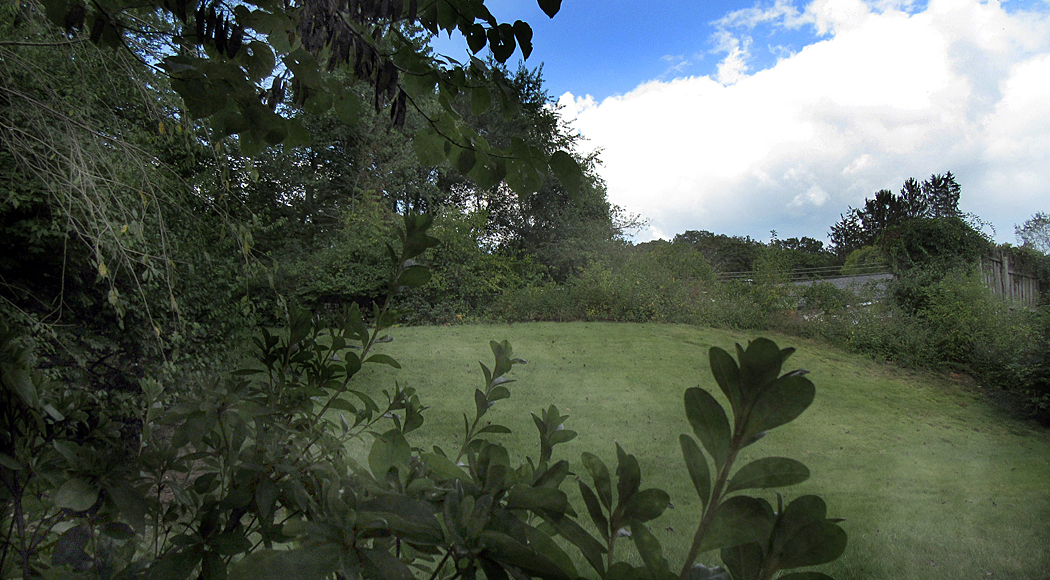
I have been going out and sitting on the back patio pretty much every day, usually for a half-hour at a time, sometimes longer, and saying to myself — or is it to the universe — “Show me something.” And every day, if I wait long enough and be patient enough, something will happen. 

Yesterday, a hummingbird flew not more than a couple of feet from my face to hover in front of a basil flower and then buzz back past me as he left. Another time, it was two cottontail rabbits hopping across the back yard, first one and as I watched it, a second one caught up. 

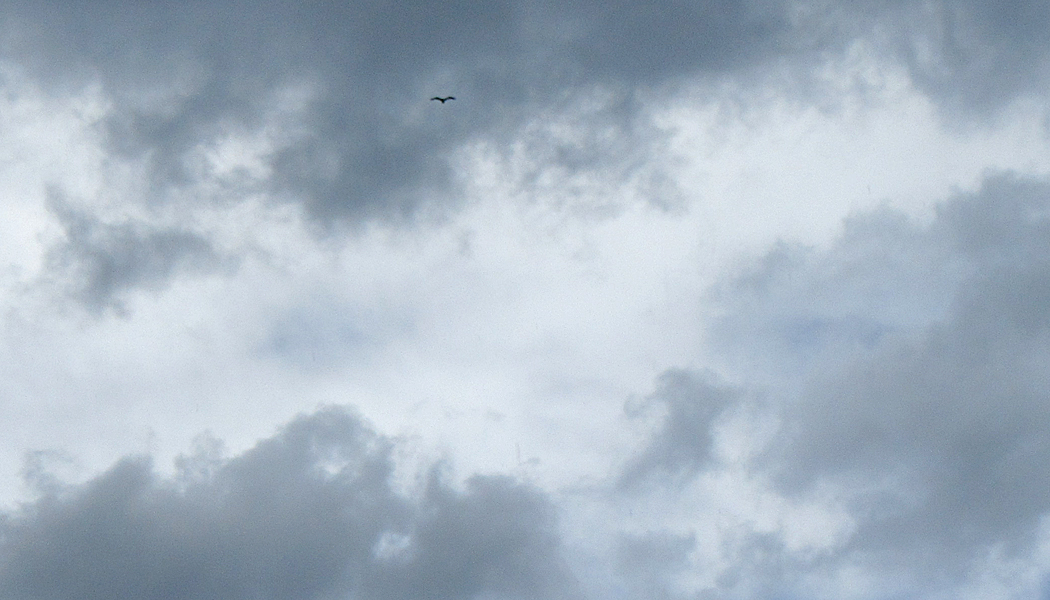
Once, I watched 15 vultures soar and climb in the air currents, one eventually so far up it was no bigger than a period at the end of a sentence in a book held at arm’s length. Yet again, a mockingbird sat on the roof of the shed beside the patio and sang his medley over and over, like I wasn’t there. Squirrels run around with acorn in their tiny front arms. A towhee landed on the steps of the shed. A rise of cumulus clouds was so white against the sky blue it nearly blinded. 

It never seems to fail. Each day, it is something new to delight me, and to remind me of the tremendous animation of the cosmos, and how minor fluctuations pile on top of one another to make it all new. 

A bright red cardinal flew directly at me, just a few feet above the grass, and turned away at the last minute to fly to my right and up over the roof behind me. 

A groundhog poked out from the brush and glanced at me and then, apparently deciding I was no threat, waddled across the full stretch of the back lawn to disappear in the brush at the other side. Not a lot happens over the course of an hour sitting there, but every time I go out, there is something for me, as if the cosmos knew I was paying attention and wished to reward my efforts. 

Recently, I heard a crow caw, looked up and watched as he flew in a great “S” curve, coming from behind me on my right, flying past me to the left no more than 20 feet away, then looped back to the right, circled away and looping back to the left and eventually behind the stand of trees, uttering caws the whole way. The curve was so graceful, I felt it in my esthetic sense. “As the crow flies?” Not a straight line. 

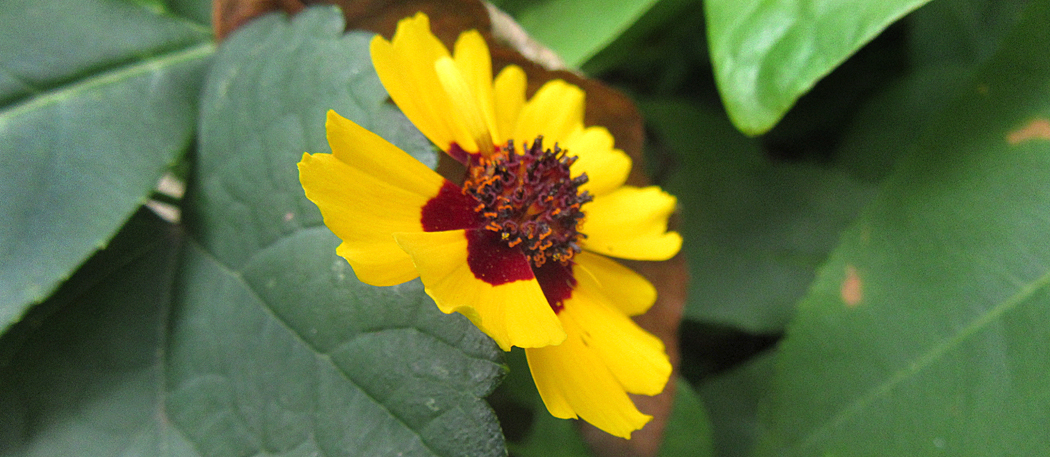
And so, every day, I sit and wait for the moment that the butterfly will land on the flowers at the edge of the patio, or the wasp will pause on the bluish florets of the mint. Or I will notice a small yellow flower that wasn’t there the day before. 

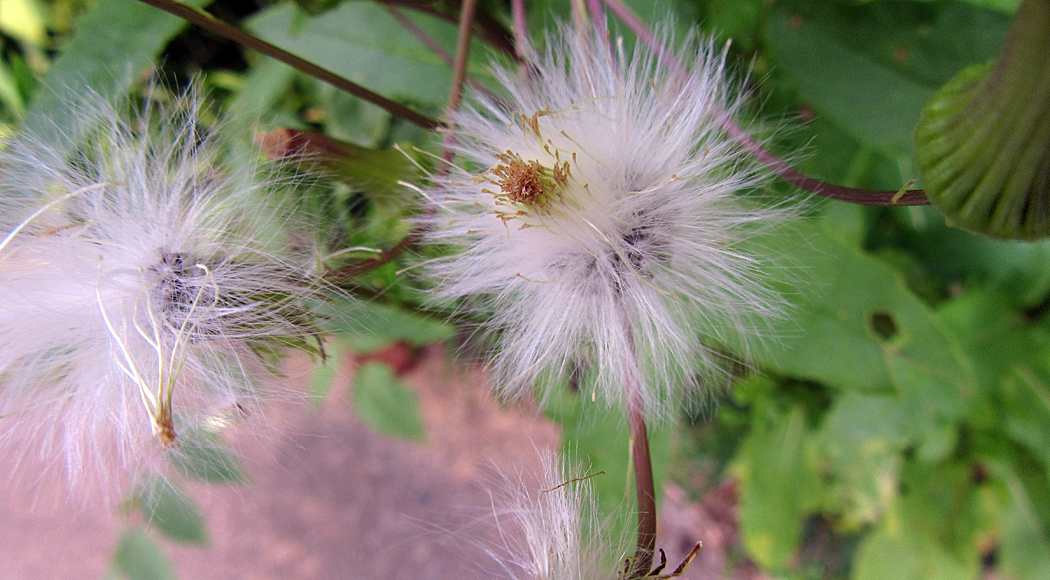
It is fall, and one of those flower seeds with its wisp of fibers landed on my shirt. I held it up in the light to see its tiny hard black seed and it reminded me of Carl Sagan’s “spaceship of the imagination.” 

Today, it looks like rain. Dark clouds are everywhere, with the occasional white brightness poking through. And I sat in my silent seat when the wind came up, as it often does just before a rain, and all of a sudden, from the tall oak tree at the top of the hill in the back yard, a hundred leaves let go to flutter down, but, since the wind was blowing toward me, the leaves did not drop straight down, but all floated toward me, up in the air, like a hundred butterflies, or snow in the wind, or bubbles bobbing around in the currents. And so, from a hundred feet up at the top of the tree at the top of the hill, the tumbling leaves filled the sky from edge to edge of my vision, dancing in the air, each showing shadow and light as it twisted, making a glitter in the sky. It was so ungodly beautiful, I began weeping. 

This is the beauty I don’t want to leave. It fills me up. I know I will have to leave, and sooner rather than at some indistinct time in a future that once was only imaginary, but now is palpable in muscle and bone. 

So, perhaps I am going soft in the head. Should I be so moved by such pedestrian events? I am more aware now than when I was young and had other goals in mind, of the complex connectedness of all of the sensate  world, and how that makes an organism too immense to take it all in or understand it. Little things we may understand and describe, but the wholeness of it all can only be apprehended as beauty.

And so I feel gratitude for the world and what it is willing to show me. I do not want ever to leave it, though I know I must. 

And when the final curtain drops on the final scene, I can say “NO” to the end, and “YES” with the same conviction. 

I opened the front door and stepped outside, where a choir of birds twittered and chirped. There must have been scores of them up in the still-bare trees of early spring, all blasting at once, and a kind of joy crept up in my chest at the sound, a sense that this was beautiful in a way that almost justified existence. 

It is another spring. I have seen 73 of them and the number I have left is dwindling. Now there is a sense, like Takashi Shimura at the end of Seven Samurai, talking to Daisuke Kato, saying: “Once more we have survived.” 

Another spring, another year. I see the bud tips on the maple tree spread and burst out in the million tiny sprays of maroon maple flowers. It is a moment I wait for each year. Another small moment of joy. Those moments are of immense importance. 

I want to avoid sounding like a Hallmark card here. For much of existence for much of the world is misery. People continue to bomb each other; children continue to die; famine spreads; refugees live by the thousands in makeshift tents; ethnic minorities are hounded and enslaved. Even in our so-called First World, otherwise comfortable people face death, betrayal, hate, disappointment and the hounding sense of their own meaninglessness. 

For much of history, we have lived through plagues, wars, superstitions and “continual fear, and danger of violent death; and the life of man, solitary, poor, nasty, brutish, and short.”

And yet, you see children in those refugee camps playing soccer in the dust. They are laughing. Mothers find great love in their children. Above the camps, birds still twitter and peep. I don’t mean to downplay the misery being suffered, but to point out that even in the midst of suffering, there are sprints of joy. It is so to be human. 

What affords those moments of joy — which come upon us unannounced always — is that they give us a glimpse of connectedness. To our kin and childers, to nature, even to the larger city in which we live. 

I was reading in Ezra Pound’s Cantos a few days ago, through the Pisan Cantos section of that monstrous, abstruse, inchoate mass of culture-shard, written when Pound, after World War II, was imprisoned in Italy for having given intemperate radio broadcasts lauding il Duce and fascism. He was a cranky, possibly insane old man and he was kept in an outdoor cage with a concrete floor for a bed. He wrote the bulk of his Pisan Cantos there, full of the usual blatherings about economics and world history, mixed with bits of incomparable poetry and the language gave even the most pathetic of imbecilities brief moments of majesty of utterance. But, like most of Pound’s verse, it is almost all literary, with little sense of the poet’s actual life, at least outside of books. 

But in the middle of Canto LXXIX, there appear, popping up in the jumble of classical allusion, several birds on the power lines strung above his cage. “With 8 birds on a wire/ or rather on 3 wires.” They make a melody on the music staff of those wires. And later, “4 birds on 3 wires, one bird on one.” Further on, “5 of them now on 2; on 3; 7 on 4.” The real birds keep breaking into his phantasmagoria of theory and the poet’s tirades about ancient China and Tallyrand seem vaporous in contrast with the physicality of those birds above his cage. Philomel and the Nachtigall give way to pigeons and starlings. 

And you sense, behind all the immense brickwork of culture and reference, that moment of real connection with an actual world. And in the misery of that cage, open to wind and rain, a brief moment of joy, left fleeting and unprocessed. 

Such moments are epiphany — the rending of a veil to see what is most essential. Joy is the ephemeral product of such an insight. 

Such moments come in a flicker; they cannot last long. No one is joyful all the time. We are not living in some Pepsodent commercial, skipping down the sidewalk with teeth so shiny they blind passersby. Indeed, we live the bulk of our lives in neutral, neither miserable nor happy, but plodding on. But then we have that glimpse, periodically, of a bliss that transports us from our own toad-like passivity. It is a seed waiting to sprout in our psyches. 

These moments don’t always stick, but sometimes they do, and inform the rest of our lives. I remember a visit to the National Gallery of Art in Washington DC in the 1970s. In the basement at the time, there was a small exhibit of Cezanne still lifes. I had never much valued Cezanne, but I had only seen his work in reproduction or on slides in art history class. But here was the real thing. Who knew there were that many greens in the world? Infinite seeming gradations of blues and greens that glowed almost like fire, “fire green as grass.” And it was, for that moment, the most beautiful thing I had ever seen. I’ve since been to the big retrospective of Cezanne at the Philadelphia Art Museum in 1996 and was bowled over. The color alone, glowing like neon, gave me intense pleasure.

Another time, I heard the Philadelphia Orchestra under Wolfgang Sawallisch play Strauss’ Don Juan and the palpability of the sound, especially from eight horns playing in unison and making the seat under me vibrate, let me feel the sound as a physical presence. Jericho would have shuddered. I know I did. 

Art has been at the root of much of my own experience of joy and epiphany. I could name dozens of concerts and hundreds of art exhibitions that have brought me to this afflatus — for that is what joy is. 

Other sources are family: my twin granddaughters when they were three, riding bouncy-horsey, each on one of my knees and laughing the way only three-year-olds can. Even such a trivial thing as one of them asking for seconds on the pot roast I have cooked for them. Seeing them enjoy what I have prepared is a constant source of joy. I imagine the same for some Syrian refugee in a tent making dinner for her children. These moments come to us as gifts. 

Nature is the third great source. I remember standing on the top of Roden Crater in Arizona, an extinct volcano being reshaped by artist James Turrell. It was dusk and the sun was setting. Turrell pointed out the now-obvious fact that night doesn’t “fall,” but rather, it rises. And you can see the edge of the shadow of the earth cast by the lowering sun against the sky forming a boundary between the light and the dark and as the sun drops, the line of demarkation rises until the night swallows all. It is an effect you don’t get to notice in the cities or suburbs, where the horizon is blocked by human busy-ness. 

I stood by the Rhine River in Dusseldorf at night, with the reflection of city lights flashing off the dark current like firesparks. The river flowed broad with a swiftness and power that felt almost as if it must be a god. This was the river Robert Schumann felt was worthy of writing a symphony about. 

On the plains of eastern Montana, at the Little Bighorn, I stood on a hill — one hill like a frozen wave peak in the ocean among many such peaks — and watched the wind curl the long grass in moving ripples across the landscape. The manifestation of Wakan Tanka, the great spirit that animates the cosmos. I had to stand very still among all the motion to absorb it as a moment of eternity. 

In the early ’70s, I visited Gaddys Pond, just east of Charlotte in North Carolina, which was home to tens of thousands of Canada geese, a midway stop in their annual migrations. And the sound of all of them honking over each other, the din of chaos, remains the single most joyful sound I have ever heard. Ever since I have sought to recapture that moment, my hound, bay horse and turtle-dove.

We talk about joy being an emotion, as if it were some abstract titillation of the neurons, but it is a physical effect: the chest swells to almost bursting. You can feel the inner pressure of the joy wanting to escape the confines of the meat that is your body. And you feel something rising in your throat and your eyes begin to tear and overflow. The experience surges inside you. It may last only a second, or even a fraction of a second, but in that moment, you know you are alive. You know that everything is alive, and that to be alive is everything. 

It is going to be 6 degrees  tonight. Even in the day, it won’t get over freezing until Wednesday. It is winter.

I have not been out of the house for three days.

I may climb into the refrigerator for warmth.

Now that I am old, winter gets into my bones. But when I was younger, I loved the bracing cold, the breath congealed on my beard. I made myself warm by chopping wood. A good walk in the woods, with snow crunching under my boots left my cheeks ruddy and numb. I felt like I was skin to skin with nature. It was a glorious feeling.

Many years before that, I remember building an igloo on the front lawn in New Jersey. I must have been 8 or 9 years old. Inside, it was dark and if you stayed there long enough, it began to get a little warmer. The neighbor’s yard was a hill, and my brothers and I would sled down it when it snowed.

In New Jersey, the snow only stayed white a short, glorious period before turning soot gray as the snowplows piled up moraines of the stuff along the roadsides.

So, I am not so fond of winter now as I was then. The cold makes my knees ache. Yet, there are still elements of the season I cherish. In North Carolina, there is always a midwinter spring, often in February, when the temperature rises for a week before dropping back into the bin-bottom of the thermometer to remind us winter is not so kind, nor so short.

In February, the red maples earn their name, with spreading leaf buds uncovering the red beneath. You can see, even as the winter grips hard, that spring is working its way to the surface.

In March, as winter recedes, the frozen ground melts and mud season descends. Boots get stuck in the mire; you have to watch out not to step completely out of them.

But it is January First, and a cold snap has bottled up Asheville. The trees seem brittle with the freeze. It is a perfect day to listen to Sibelius and stare out the window.

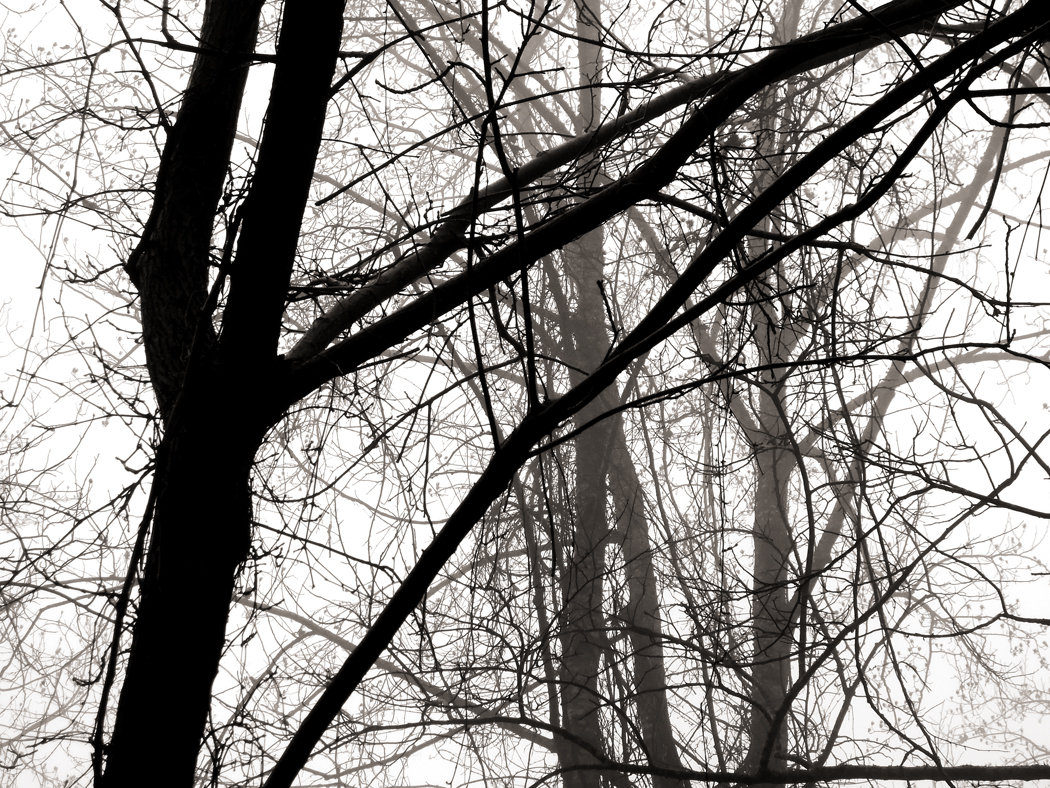
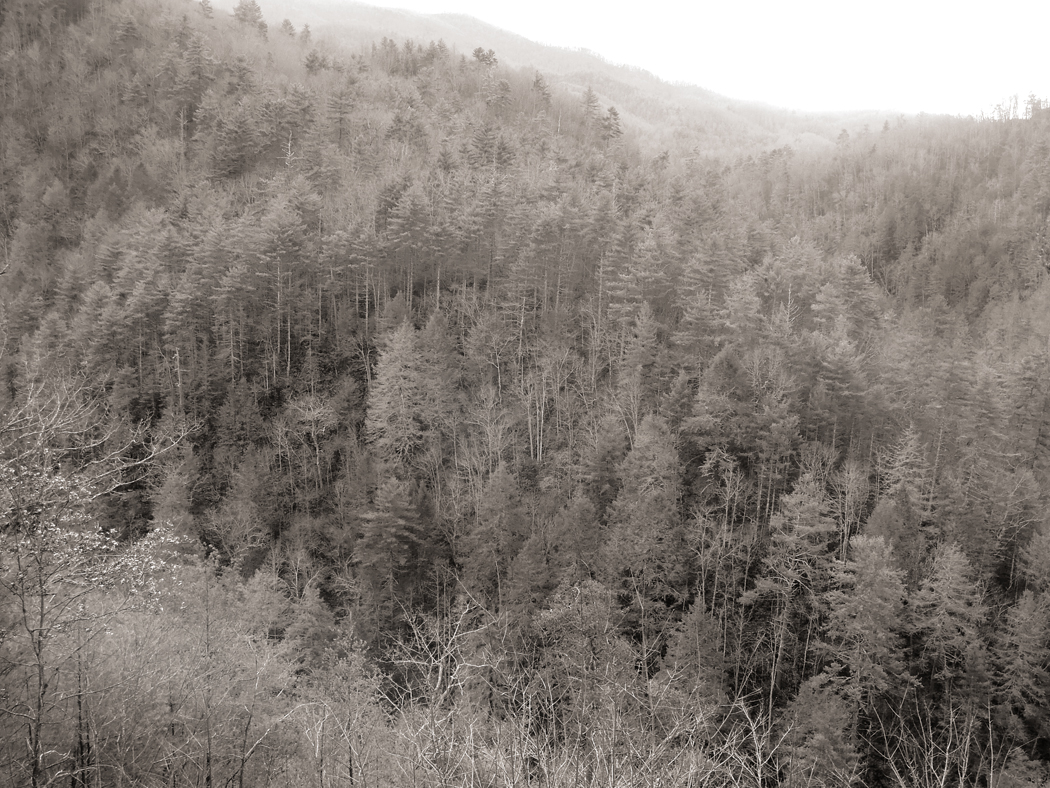
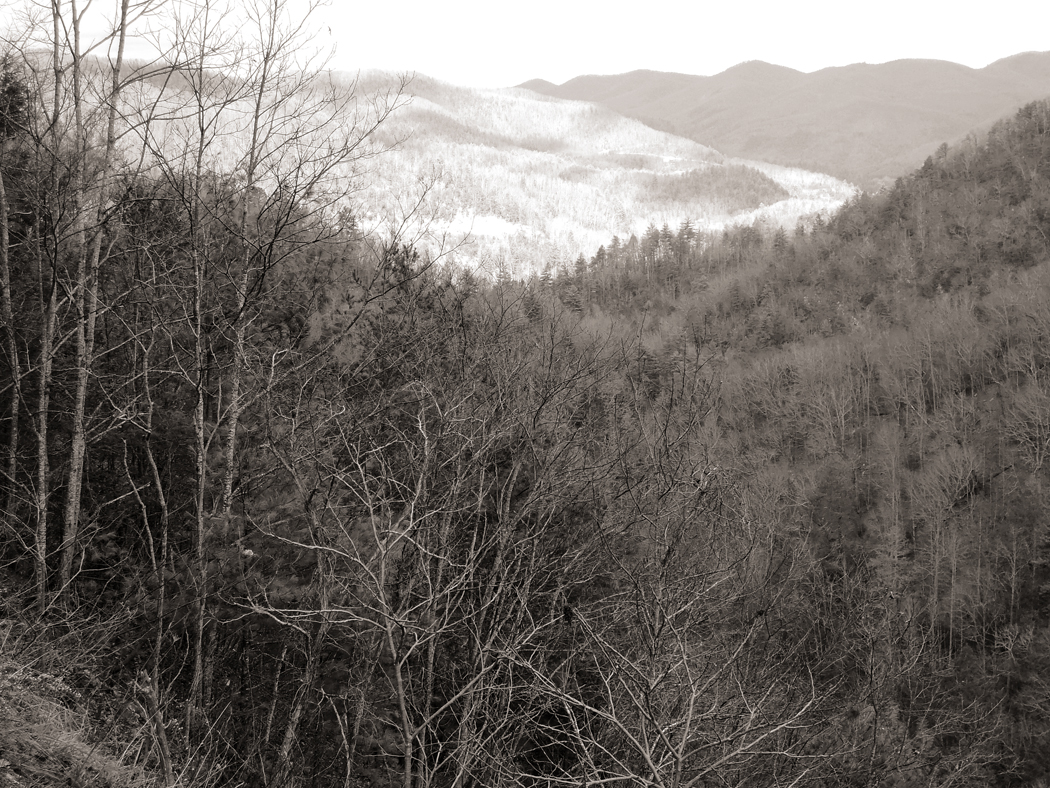
For some reason, although most other people seem to most appreciate trees in the spring, when they come back to sap-life or fall, when they turn gaudy colors, I have always responded to the empty trees of winter. Looking over the Blue Ridge in winter, the leafless trees, from a distance, become a gray fur on the backs of the mountains. The hills look almost soft.

I think of the winter trees as nudes. They have dropped their clothes to show their real form, the trunk, branch and stem.

If you remember your Wölfflin from art history, there are eras — and people — who prefer painting and those who prefer drawing. I have always been a drawing-guy. I appreciate the linear, the ink-on-paper scratches of tree limbs, the crosshatching of twigs. There is something dour in my soul that enjoys gray more than party colors. Not a flat, simple gray, but a complex gray built from dusty blues mixed with tawny beiges. A good gray has as much depth as a river.

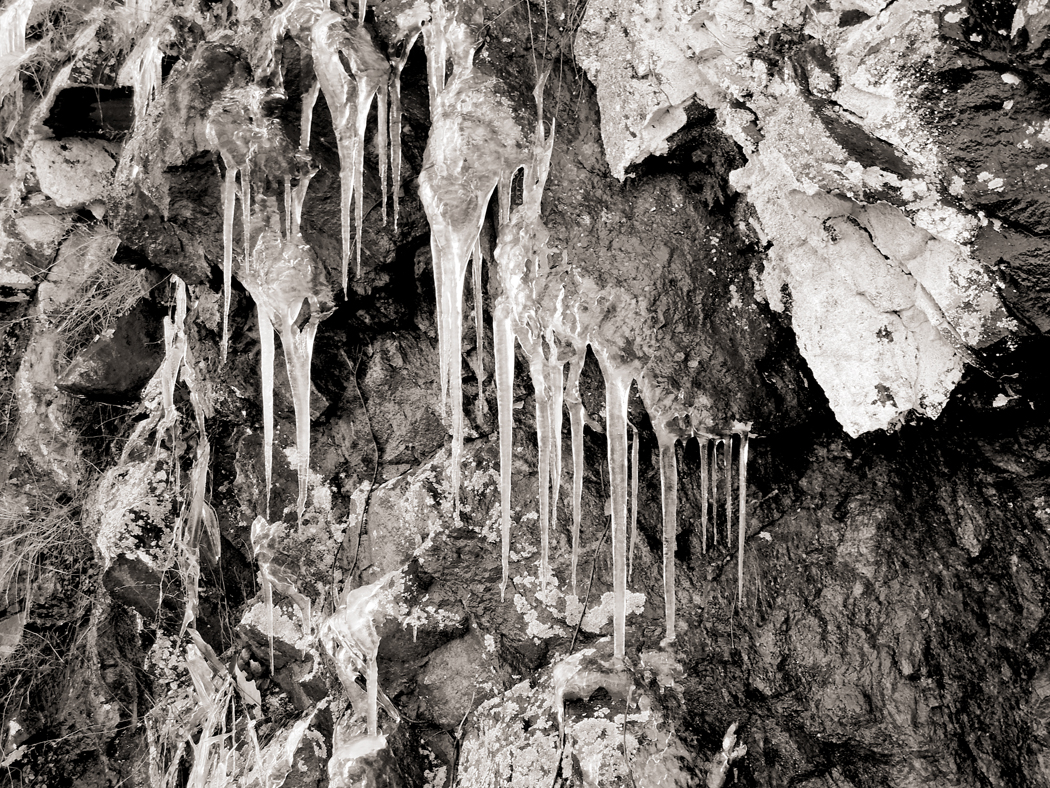
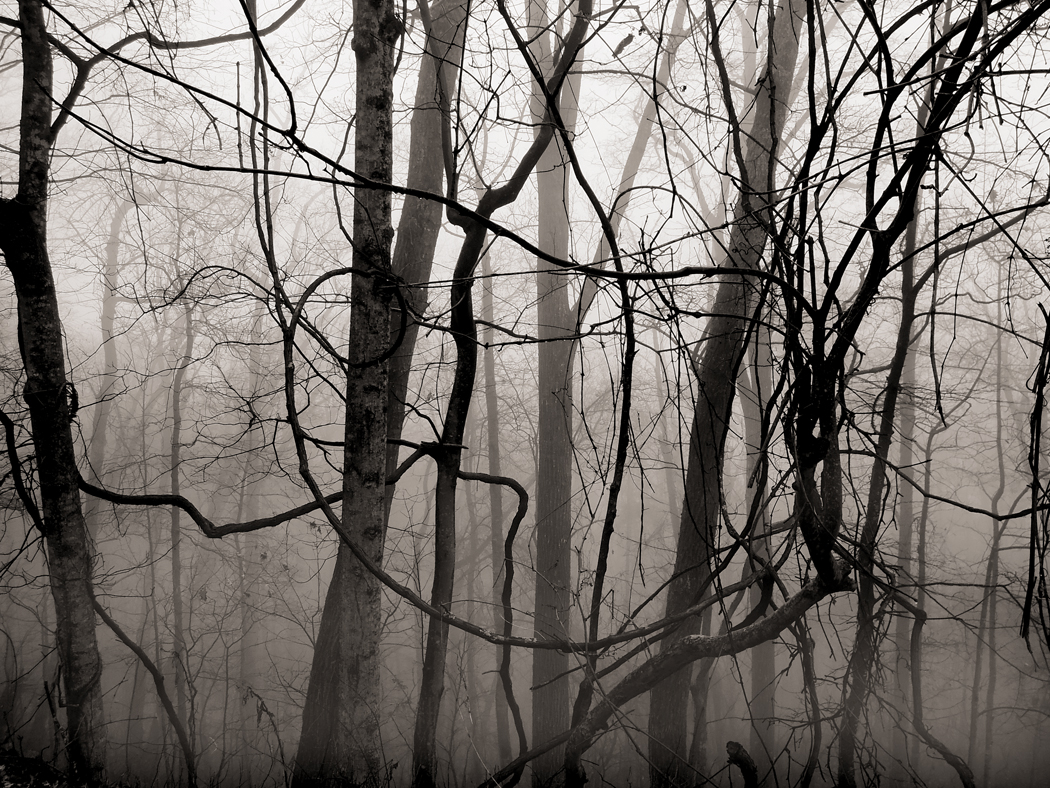
In winter, the air is clearer, except when a cold mist obscures the trees. The cold keeps you awake. The floors are icy underfoot, even if the room temperature inside is kept a comfortable 68. One sleeps well at night, with cool air in the nostrils.

A steaming stew or vegetable soup with a crusty bread and the evening seems just right.

Winter light, low and dim; early dusk, late dawn; the sun not strong enough to reach zenith, but arcing across the sky barely above the trees.

I remember one winter day, 40 years ago, walking across the railway bridge the cuts over Lake Brandt. It was probably 20 degrees and the air dead still. The surface of the water was not yet frozen, but it was mirror-smooth. The remains of snow covered the lake’s banks and no one seemed stirring in the landscape except me, walking tie by tie over the water beneath. It was silent; so quiet I could hear my breathing. It was one of those moments of epiphany, when suddenly the world becomes clear. It is almost a religious experience. You recognize that fact of the planet beneath your boot sole, and the atmosphere above your watch cap, bleeding into infinite dark space.

Such moments are delicious, and more valuable for their rarity. If we are lucky, we have perhaps a dozen or so such instants in our lives. For me, most of them have happened in freezing cold.

But now, my joints ache. What glimpses of eternity I get are less optimistic. Winter has a different meaning as you turn 70.

Appalachian Plateau wv 1I am standing on a peak in West Virginia. It is New Year’s Day and it’s 6 o’clock in the morning; the sun has not quite risen and the moon has not yet set. All around me on the ground, a rime has crusted the brown grass and it crunches under my foot. My breath fogs the air in front of me and congeals on my beard. The cold burns my trachea and numbs the flesh of my nose.

It is an experience that is etched by acid into the neural paths of my brain. It is one of those “peak” experiences that seems somehow more real than real, more alive than the light of day.

As the sun rises in the icy cold, streaking the mountain landscape with long morning shadows, I recognize that this is why I travel.

There is a “nowness” to this particular now that does not attach to any other. A placeness to this place. And my recognition of that nowness is a stronger stimulant than caffeine.

I am a traveler; I have been all my life. When I was a little boy, I couldn’t wait for my father to pull the keys to the ’50 Chevy out of his pocket and ask if I wanted to come with him. When other children slept in the back seat, I was always awake and wide eyed.

As a college student, I took the time between semesters to hitchhike to places I had never been. I wanted to know the planet.

And ever since, I am mad to find where the road goes next.

And the reason is the nowness of it, and the placeness.

You can see pictures in coffeetable travel books and watch PBS travel shows, but nothing compares to the physical, sensuous actuality of being there.

Travel is more than just dates and destinations, more than admissions fees and show schedules. Travel is about being somewhere, and that somewhere is always more alive than the place you have grown accustomed to.

It is the particular neon red color of the dirt in northern Mississippi; the waterfall of clouds over the crest of Table Mountain in Capetown, South Africa; the whoop of a loon on Daicey Pond in Maine.

Each of these is a dart that deflates the complacency of everyday living, which insulates me like a skin, and brings my bones into direct contact with the air.

I have known people for whom travel is a mere change of venue: the same show every night in a different city. For them, getting in a car is like getting in an elevator. They are impatient for the movement to stop so they can get on with whatever task drove them in the first place.

But it is not that way for me, or for anyone else who loves travel. I don’t mean “vacation” and I don’t mean mere tourism, though they may be aspects of the travel.

I mean the buzzing of the neurons that comes from pulling in to Kayenta in the late afternoon to see shadow-black excite the texture and sunlight-red excite the color of the bluffs, so that a small patch of green grass where some horses graze seems electric under the ruddy rock.OLYMPUS DIGITAL CAMERA

It is the early morning dew dripping from the pistils of a rhododendron along the Appalachian Trail in Virginia where the path is lined with geraniums, maypops and pinks.

It is also the bus fumes at the 175th Street bus terminal at the end of the George Washington Bridge, and the quickened pace of life in New York City.

Habitual life desensitizes us. We wake, we go to work, we eat and sleep. We wade through a week that is much like the last. Travel awakens us and reacquaints us with the pinpoint accuracy of the now and here.

And being there, wherever it is, is the very point of being alive.

NEXT: West Virginia, Part 2 — At the bottom of the mountain