Archive

Tag Archives: family

We look at history all wrong. In school, history seems like a bunch of random dates we have to remember. You know: 1492; 1066; 1929; 1588. Just numbers. But history isn’t like that. History is continuous, all connected. 

It all needs to be looked at a different way. I think of history as a series of grandmas. It makes history more relatable, but also a good deal shorter than you might imagine. 

My grandmother was born in 1900. It is now 2025. That’s a 125 years. The way the Romans counted centuries — grandparents birth to grandchild’s death — was called a “saeculum,” which we tend to translate either as “era” or “century.” But I know my grandmother was born before the Wright brothers flew and didn’t die until after Neil Armstrong walked on the moon. An augenblick in time. 

And so, I try to line up these consecutive eyeblinks to imagine how distant, really, is the past. Now, I understand that not all grandma-to-grandkid timespans are the same. Some are considerably shorter. But I use my own as a milestone to count my way through the past I’ve learned about. In that way, the Declaration of Independence was from my grandmother’s grandmother’s time. Only two grandma’s ago, so to speak. 

The Roman Empire, in the east, fell in 1453, which is just 4.5 grandmas in time. My grandmother’s grandmother’s grandmother’s grandmother could have witnessed it. 

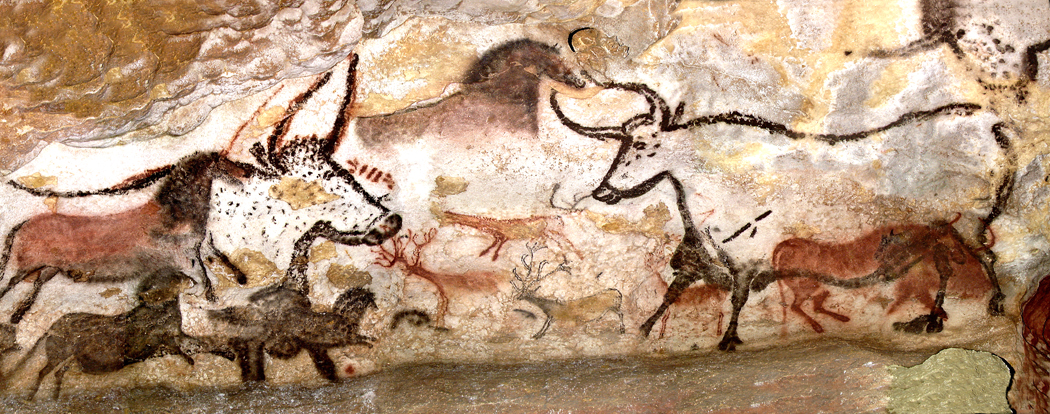
We think we have been on this planet so long, that prehistory seems interminable. But I attempted to calculate how long it has been since humans painted aurochs on the cave walls at Lascaux. The date for the original artwork is usually given as about 19,000 years ago. A long time, no? 

Well, in grandmas, that is just 152 grandmas ago. Your standard charter bus carries about 50 people, and so it would only take three busloads of grandmas and their grandmas to get us back to the cave paintings. It really isn’t all that long ago. 

In sum, I have long believed we should never teach history simply as dates, and shouldn’t teach it from back then to now, but rather from now, counting grandmas — or some other measure of time — backwards through time to see the continuous thread we are connected with. 

Delmarva Peninsula

When I was a kid, most things in the world just were. Everything was normal, even if it wasn’t. People lived in houses, roads were paved, families had a mom and dad. And, for a kid, parents were just parents; I never gave much thought to why they did what they did. It wasn’t even that if they did something, they must have had a reason. They just did things. They were Mom and Dad, and as children, me and my brothers just followed along. As a child, the world is a given. 

It’s hard to recall that state of affairs, when things happened because they happened. That they might have done things for the abstract good of their children never dawned on me. Of course, now that I am old, I look back and realize how much they did for us, things they didn’t have to do, or things they probably would have preferred to do some other way, including some other things they might have wanted to do with their sparse vacation time. 

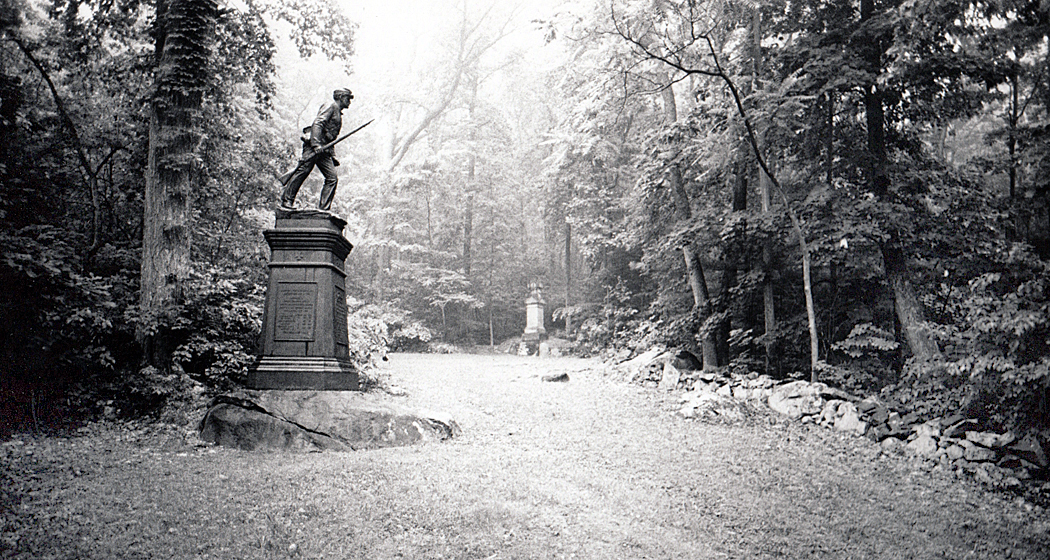
Gettysburg, Pennsylvania

But one of the things they did for us was travel. When we had our summer school vacations, Mom would pore over various brochures, magazine articles, and roadmaps and carefully plan routes to drive and sites to take in, and then, when it came time, we would load up the car and take off. We went to Washington D.C., to Niagara Falls, to Fort Ticonderoga, to Gettysburg — and many spots in between. Only later did I come to understand there was a purpose to these vacation trips. they chose these things to expose their children to history, geography, politics and to let us see what was possible outside suburban New Jersey. Travel was part of our education. 

Back when they were children, they didn’t get to travel. They both grew up in northern New Jersey and neither had more than a high school education. Dad’s family was heavily religious and didn’t approve of having fun, and Mom had to raise her two younger siblings after her father died when she was still in grade school and her mother had to find work in New York City. And so, the worlds they grew up in were limited.

German gun, Omaha Beach, Normandy, France

But when my father was drafted in 1940, he was sent to Camp Wheeler in segregated Georgia. He didn’t talk much about his army life, but he did express shock at discovering the pervasiveness of racial discrimination. And then he was sent overseas after D-Day to France, Czechoslovakia and Germany and found that other peoples had various ways of making a decent life. His horizons were involuntarily expanded. 

When they got married, shortly after the war, they felt it was important to broaden their children’s horizons, too, and to make sure we got the best educations. There was never any question that their kids would go to college. (I was told that when I entered second grade, I asked if that meant I could go to college “next year?”) Education was Priority One. Travel was a component of that. 

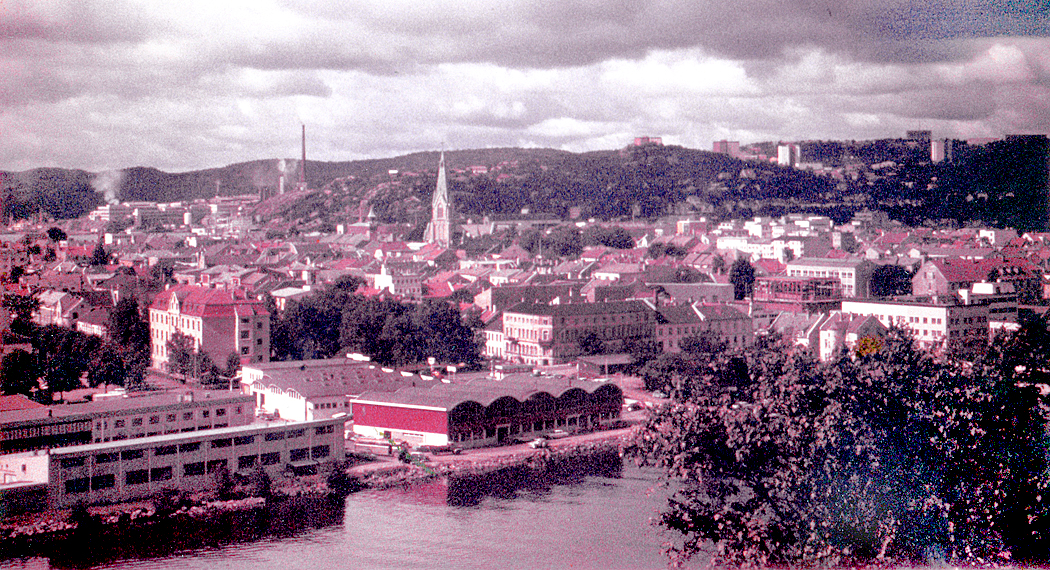
Kristiansand, Norway

Later, when I was in high school, they made it possible for me to go to Europe, accompanying my immigrant grandmother to her birthplace in Norway, and to take a bus tour through France, Germany, the Netherlands, Belgium and Luxembourg. A few years later, my younger brother, Craig, was sent off on a similar trip. 

Mark Twain famously said that “Travel is fatal to prejudice, bigotry, and narrow-mindedness, and many of our people need it sorely on these accounts. Broad, wholesome, charitable views of men and things cannot be acquired by vegetating in one little corner of the earth all one’s lifetime.” 

The vast bulk of the MAGA world, it seems to me, is made up of those who have never ventured far from their birthplace. If they had seen how others live, they would not accept the lies. 

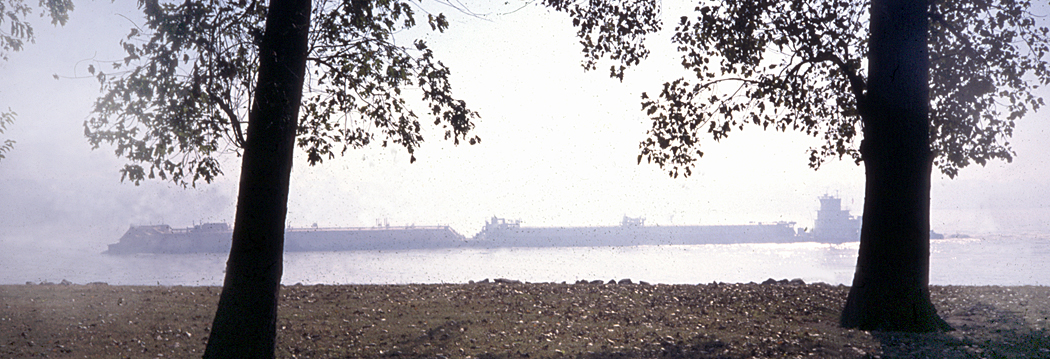
Cairo, Illinois

Travel, then, has pretty much always been an essential part of my life, and having become an adult — at least as quantified in years accrued on the planet — I have continued the habit instilled by my parents. Education wasn’t only in books; I read Huckleberry Finn, of course, but I’ve also been to Mark Twain’s childhood hometown of Hannibal, Mo., and to what remains of Cairo, Ill. I’ve driven along the entire length of the Mississippi River, from Lake Itasca, Minn., to the Venice Marina where the road ends in Louisiana. 

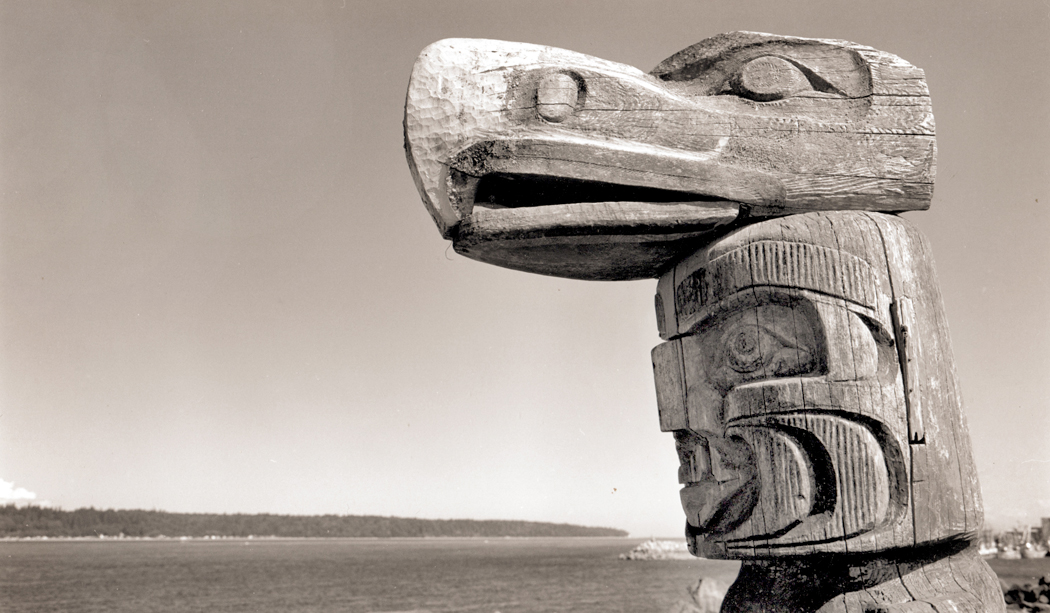
Vancouver Island, British Columbia

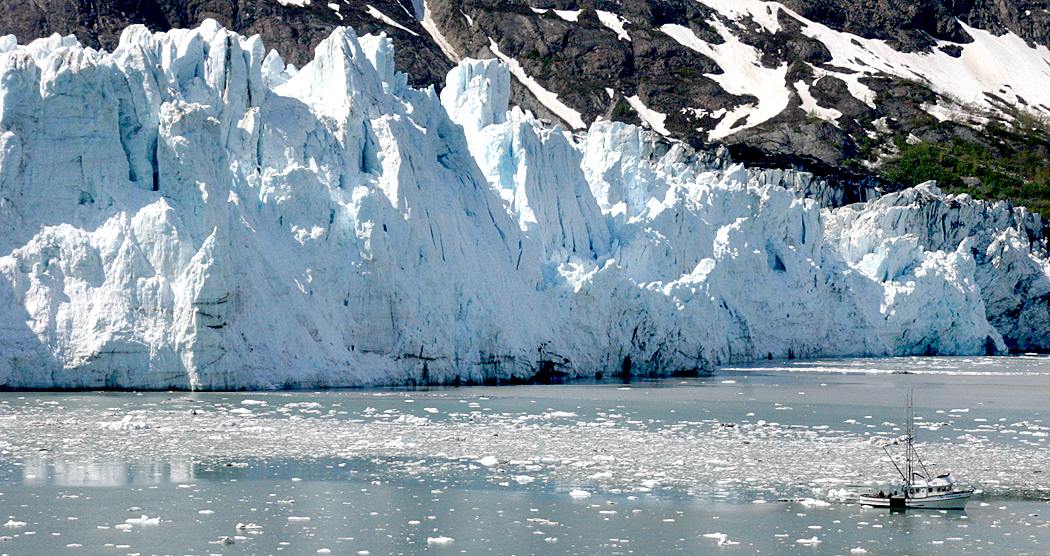
It is rare to mention a place I haven’t been in the continental United States or provincial Canada. Big Sur; Mt. Katahdin; the Everglades; El Paso;, the Union Pacific Bailey Train Yard in North Platte, Neb.; Hudson Bay; Halifax, Nova Scotia; the Tehachapi Loop in California; the Sturgis Rally in South Dakota; even Glacier Bay in Alaska.

Glacier Bay, Alaska

Believe me, I can be quite irritating, when someone mentions some far-off place and I chime in, “Oh, yeah, I’ve been there. Had a great Po Boy sandwich in a little shack along the road in Pecan Island.” Which is a tiny community along the southernmost road in Louisiana. Or “Abiquiú? Yes, we visited Georgia O’Keeffe’s place there.” I am slowly learning to keep my yap shut. 

Red Mesa, Navajo Reservation, Arizona

I’ve been to every state except Hawaii, and most of them many times, and every province in Canada, save only Prince Edward Island and Newfoundland. I’ve lived in four corners of the continental states, growing up in the Northeast, moving to the American South, then to Seattle in the Northwest, and spending 25 years as a writer in the Southwest. Each move gave me a chance to explore all the territory nearby, often in some detail (There’s hardly a square meter of Arizona that I haven’t been to. Go ahead, name something obscure: Ajo? Red Mesa? Tumacacori? Freedonia? Gadsden? Quartzsite? Check, check, check, check, check and check.)

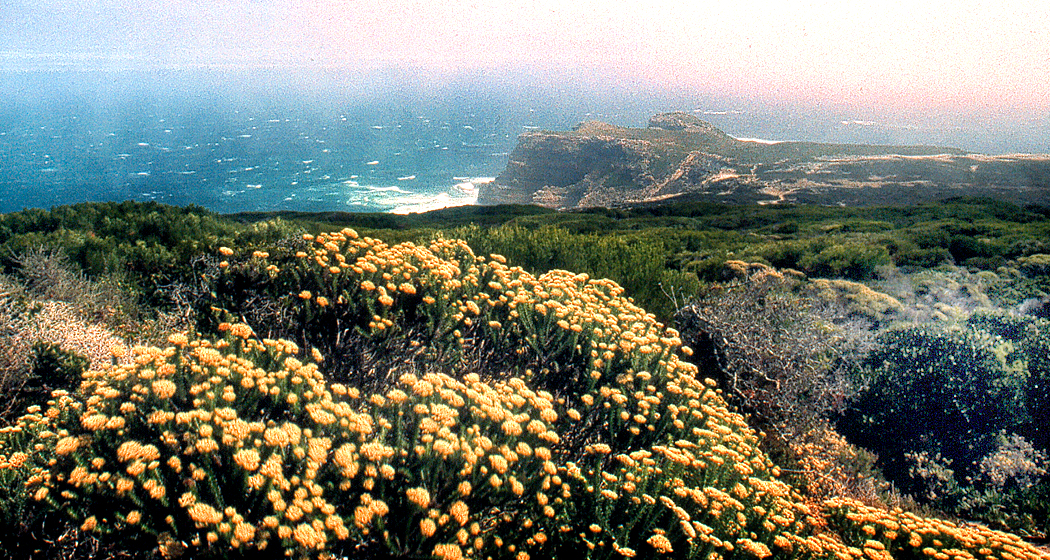
Cape of Good Hope, South Africa

I’ve been to the Cape of Good Hope in South Africa and to Marylebone Road in London; I’ve been to the Chartres Cathedral, and to the bull ring in Arles, in Provence. My late wife and I went back to France many times, and drove to all six corners of “The Hexagon.” 

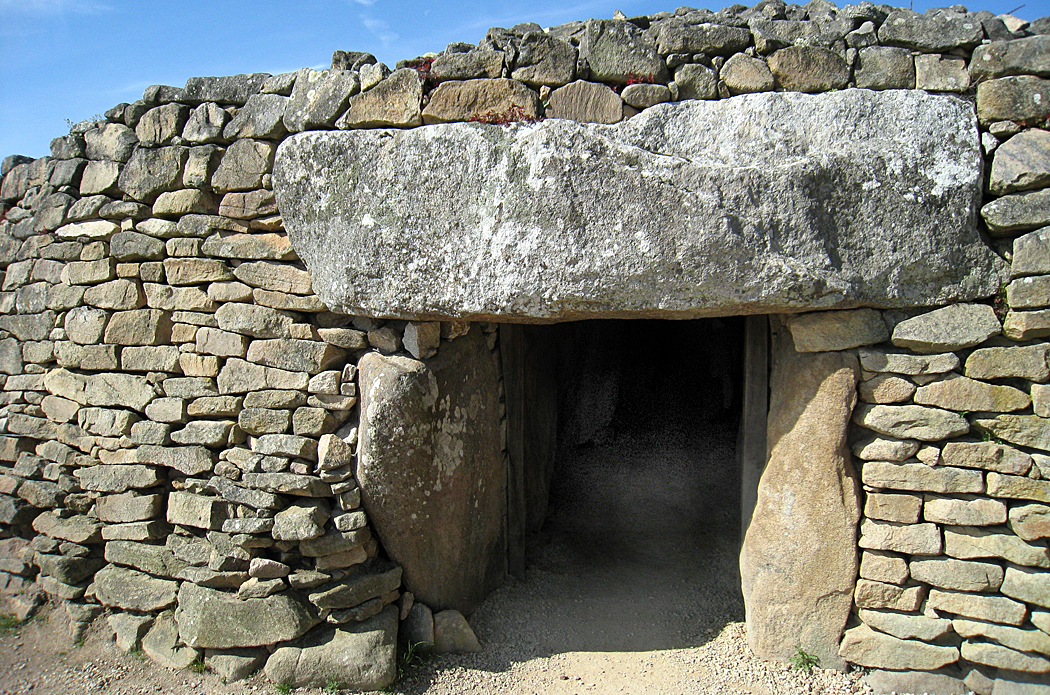
And so, yes, I’ve been to the D-Day beaches at Normandy and to the bomb craters still evident in Verdun, to the cave art along the Vézère Valley, to the paleolithic menhirs and dolmens near Locmariaquer. 

Dolmen, Locmariaquer, Brittany, France

I’ve visited the Museum of Questionable Medical Devices, the Museum of Jurassic Technology and the Hammer Museum of Haines, Alaska. 

And it has all been an education. I certainly learned that the omelet I get at Denny’s is a pale mutilation of the rich, creamy offering you can find at any neighborhood cafe in Paris. 

O’Keeffe Country, New Mexico

Of course, I’ve also learned how little of the world I’ve actually seen. I have so much of the non-European inflected planet yet to see, although, at my age, it’s almost certain I will never get to Japan or the Seychelles or Samoa. Just as, no matter how many books I’ve read, there is always a hundred times more books I will never get to read, and not enough time left even to put a dent in that list. I keep trying. 

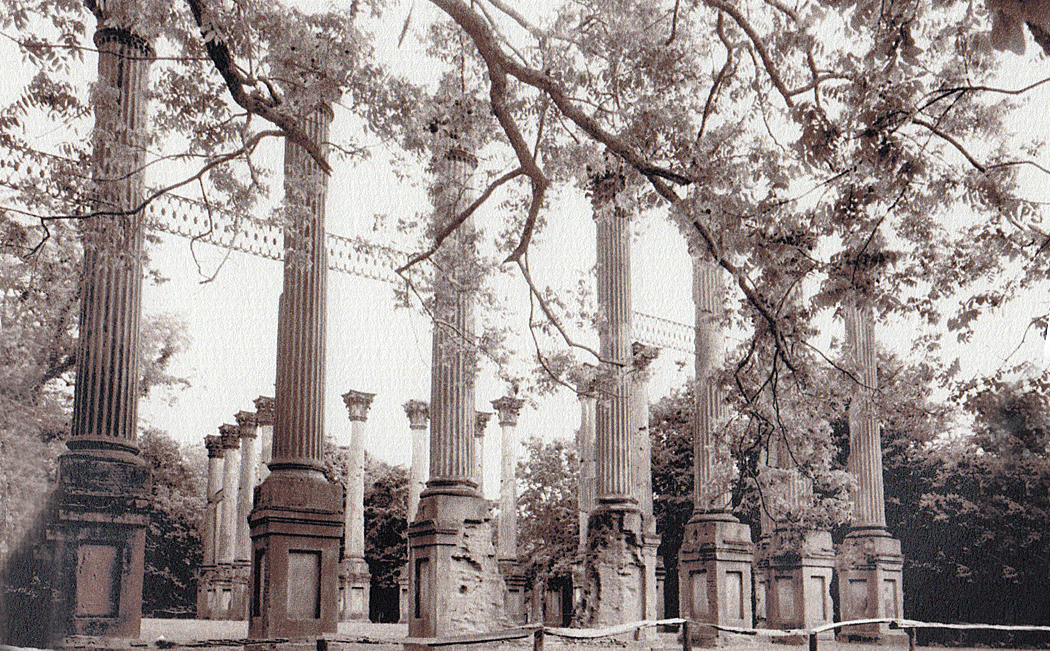
Windsor Ruins, Mississippi

And so, in addition to bragging about all the places I’ve been, I am shamed by all those places I have not gone to, just as all the art I haven’t seen, all the books I haven’t read, all the music I have never heard. But I think that it is only because of all I have read, seen, and heard, that I know enough to feel the gaping holes in my education.

three brothers 1978Some years ago, I began writing an autobiography. Don’t worry, you’ll never have to read it.

I didn’t begin it with any thought of publication. I may have worked at a zoo and lived in a coal bin, but my life is not so interesting or important that anyone else should be forced to know about it.

It began with a deal with my two brothers: I’ll write my life if you’ll write yours.

I realized that I didn’t know the details of their lives. We’ve always been close enough that I’ve known the basic direction of their lives, but from the point I left for college 40 years ago, the details became fuzzy. And it is the details that add up to create a personality.

So, I tasked them to write down the major points of their lives so we might better know each other: who their girlfriends were, what jobs they had, what books were important to them.

In the process, I thought, we might also get a different point of view on the shared episodes of our lives in childhood. Perhaps what I thought of as roughhousing, my younger brothers might have thought of as terrorism. Perhaps an uncle I thought hilarious, they might have found tedious.

But writing it has been one of the most engrossing tasks I have ever set myself.

I realize now, too, that this task really began when I visited my aging parents and began asking them all those questions that too many people ask only after their parents are dead. I recorded their recollections on my laptop and wrote up a piece of oral history to send to my brothers. It included family trees for both sides of the family, memories my mother had of her childhood and that my father had of World War II in Europe.Boys April 1956

It was a revelation: Relatives that had been vaporous ghosts in my own memory were brought back to life and their interrelationships made clear.

I came to know my parents much better and began to admire things in them that had been previously obscured by what I had taken to be their faults.

Perhaps, I reasoned, this same sort of thing could be undertaken amongst us brothers.

“Something like 20 pages,” I told them, “It shouldn’t be too hard.”

Neither of my brothers is a writer by trade, as I am. I didn’t want to make it too daunting for them.

But when I began writing my own version, I found that 20 pages was a mere sneeze.

I have now written about 250 pages and haven’t even gotten to the moment when I met my wife. The first 50 pages only get me through high school.

It turns out that writing one’s memoirs is an endless unfolding of  memory. Each tiny recollection is a door that opens into rooms with more doors. And each of these doors open on yet more. A memory, it turns out, is only an iceberg’s tip. Perhaps you recall a family picnic, but as you write about it, you discover you remember the way your mother made a certain sandwich, which connects, more surely than any internet link, with the larger issues of her cooking and the part food played in our family dynamics.Jack in Fla

We are each one of us a Proust waiting to unlock our own brains.

It is astonishing what is buried in the synapses, unused for decades, but still there for downloading.

The other lesson of writing an autobiography is to see the shape of one’s life unfold: What had seemed a jumble of unrelated episodes takes a narrative form and you discover that what you did as a 5-year-old flows with the certainty of a great river into what you do as a 50-year-old. It is all of a piece; the child is indeed father to the man.

It has been a while since I continued writing it: My brothers never took up the challenge. Now, one of them has died; I’ll never learn about his life. The other brother has more important things to do than write his autobiography. My version sits in my harddrive, worked over and rewritten several times, unread by anyone but me. The fervor for self-expression has died down like last week’s campfire.

One of the things that has dampened my enthusiasm is that as I’ve gotten to be an old man, I recognize how useless it is for anyone else to know about my life. It is one of the futilities of age that you recognize how much you have learned over six decades of life, and how little it helps the younger generation, who are feverishly intent on committing all the same mistakes you made, and are deaf to any guidance you may offer. This should be no surprise: I didn’t listen to my elders when I was young.

Perhaps one day, my granddaughters will want to read about their grandfather. I certainly wish I could have talked to mine, to find out more about the long line of people that led up to my entrance on the stage. But when I was young, I had better things to do. It wasn’t until after my grandfathers were both long dead that the wish came upon me to have asked them important questions only they could have answered.Craig in Fla 2

So, for whom am I writing these notes? Clearly, for myself. One doesn’t start an autobiography for the benefit of readers, but for the benefit of oneself, to find and delineate the patterns found in the weave, to discover or create the plot that conveys meaning to the life lived. We have a sense of ourselves not merely through our five senses, but through the remembered narrative we have created of our transport through this single, unexpectedly short lifetime. Pulling the memories out of the doors behind doors behind doors of our synapses gives us the matter for this novel we are writing by getting up each morning.

So, my autobiography is unfinished; it may remain so. I learned what I needed by the doing — I sifted through the first 35 years of my life to find the turns and bends that led me to this now. The subsequent 33 years have taken their own shape through the living. The only person I would wish to share them with has no need of my notes: She lived those years with me.

I would, though, love to read her version of those years. Perhaps I will attempt to persuade her to write her autobiography. It would be enlightening to compare notes.


mackerel sky   PART FIVE: THEORY OF RELATIVITY

1.

It was Thanksgiving and Stuart and Genevieve were fixing a big dinner.

Outside, it was a Maine November, dry and crisp but not yet cold. The fallen maple leaves textured the ground at the base of the trees. There was a mackerel sky.

Bernard was there with his wife. Stuart’s younger brother was there, too. Mitch came in from New Jersey with his new lady friend. Bernard’s two children had come, also. Both now grown and Liz had her own children. She came with her best friend, Dell. Jason came with his girlfriend. They all drove in from Allentown. Stuart’s father sat in the corner; he barely moved all day, taking in the scene — probably. It’s hard to know. Bernard and Ellen had picked him up on the way.

It was full house. Mia hadn’t shown up yet.

Bernard: “So, little brother, how’s life treating you?”

Mitch: “Just fine.”

In Stuart’s family, this counted as an extended conversation.

Liz: “Dell, can you take the brussels sprouts off the burner? I have to mix the Jell-O.”

Dell: “Which are the brussels sprouts? I’ve never had brussels sprouts.”

Pots were steaming, with rutabagas, potatoes, brussels sprouts and green beans. In the oven were the turkey and two pans of oyster stuffing. The gravy was yet to be made. That was Stuart’s job. He was the gravy man.

Mitch: “Hey, you’ve got Coltrane here.”coltrane

He was flipping through the CD collection.

Mitch: “A Love Supreme. Geez, what music.”

Stuart: “Put it on if you want.”

Thanksgiving was the only holiday Stuart enjoyed. The others seemed like obligations, but Thanksgiving seemed like a warm, humid, cozy indoors played against a cold, dry outdoors: You could feel it when you touched the window.

There was a brief discussion, as Bernie wanted to watch the game, but Mitch wanted to play Coltrane. They compromised and watched silent football with a jazz soundtrack.

Stuart: “Now that’s what I love about Thanksgiving.”

Meanwhile the grandkids were pinging and buzzing their Gameboys. The women gravitated to the kitchen. Mitch’s girl, Jerri, came in to help.

Jerri: “Pie!”

Liz: “Pumpkin”

Dell: “Cherry.”

In the living room, Mitch and Jason had taken to comparing political theory. Uncle Mitch was a Democrat; Jason was a Republican. It is one of the anomalies of history that as the millennium winds down, it should be the younger generation who turn conservative. It is as if time were out of joint.

Mitch: “Yeah? What do you know? You’re just a kid.”

Jason: “Well, I know Bush is going to trounce Gore.”reagan-bonzo-in-bed-time-for-bonzo

Mitch: “God help us. We’ll have gone from Reagan to Bonzo.”

Politics brings out the analytic elegance in people.

The doorbell rang and Stuart opened the door. Mia came from the bright blue sunny outdoors to the dark, warm inside, thick with the scent of turkey, dressing and nutmeg and cloves. With her came Michael. Yes, they were still together, 10 years later.

Mia: “Everyone, this is Michael.” Mia went around the room introducing everyone and they all shook hands.

Dinner was a feast; everyone ate till their bellies hurt. Conversation was warm, funny, by turns nostalgic.

To Mia, this was family, even if she wasn’t related by blood to any of them. She knew many of them well — Stuart and Genevieve might as well have been family; Bernie and Ellen; even Mitch, although she had never met Jerri. Others were more peripheral, but Mia knew which was which, for the most part. It was hard, though, to tell the twins apart at that age.

With the meal packed solidly in their collective guts, like sausages stuffed into their casings, the evening wore on. The women put up the leftovers. Stuart told them to leave the pots and dishes; he would get them in the morning. The men sat on the sofa; Mitch’s head was cocked back and a slow stertorous snore echoed in his gullet. Stuart began to talk about ancient Egypt.

“Not now,” Genevieve said, heading him off. It was not bossy, but teasing. He stopped.

After dessert and coffee, when the evening wore down, Bernie and family, along with dear old dad, left for the motel. A pile of others found a place in the guest room or on the sofa, wrapped in a down comforter.

2

Mia and Stuart stayed up late.

“Gen is great,” she said. “But you realize, don’t you, that you have been with her for more than a decade. You are breaking precedent.”

“Well, yes. But I have gotten old. It isn’t as easy to wander aimlessly. And we get to travel a lot, as she gets gigs all over. Spent most of the summer up in Hancock for the Monteux Festival. She got to play the Shostakovich sonata. It was great.”

“She’s a steady presence,” Mia said. “I can’t tell whether Michael is a steady presence for me, or if I’m the steady presence for him.”

“Does it matter?”

“Maybe not.”Dirty dishes

They stood over the kitchen sink, piled with dishes. Stuart had his arms up to the elbows in suds.

“Let me tell you about my first official marriage. Before I married your mother.

“I was unfaithful to my first ex-wife before we were married. I loved Ruth, although she drove me nuts. She was always worried about things like window curtains and insurance. She wanted kids; I wanted to continue being able to sleep late for the next 18 years and I knew that her plan would have made that impossible.

“But Ruth was really a great woman. She was beautiful. Had great eyes. And she was smart as hell. Maybe a little skinny. But there was this conventional side to her. In my lovesickness for Ruth, I pretended I didn’t see that, or at least pretended that it didn’t matter. She insisted we wait till marriage. I was so smitten, I didn’t even question that.

“Oh, but there was Helen. This was a different Helen. She wrote poetry. It wasn’t bad poetry, considering we were all just sophomores in college. Helen was not a beginner at love. In fact, she was the ‘college widow,’ as Groucho Marx might call it. A completely free spirit. I fell hard; Helen admitted me to the inner circle — so’s to speak — inner circle: I’ve never heard it called that before —  as one of many admirers.

“You should have seen me. I panted like a puppydog, waiting to be patted on the head. Helen and I hitchhiked one week to the coast and spent the nights sleeping in the sand. We made love in the dunes, in full sight of anyone. A fisherman in a passing boat waved to us.

“We left love stains all over campus. Our favorite was a practice room in the music building, and boy, we got lots of practice.”

“Yes, I remember you told me about the Organ Room on campus.”

“At night, it was unlocked for some reason, and we snuck in.

“Oh, but there was Ruth. And I loved Ruth, too. I didn’t know what I wanted. Sensible Ruth or crazy, passionate Helen? Should I go with the sensible choice or should I go with my gonads? Thrill or stability?

“I knew I was not terribly stable, that I was not really a fully mature human being, that I was flamboyant in my irresponsibility, and so I finally decided that I needed Ruth for balance. I did the sensible thing; we got married. I learned my lesson: Never do the sensible thing again.

“I made life miserable for her and without trying, she made it miserable for me. Years later, friends told me they knew it wouldn’t last and I wanted to slap them — Why didn’t you say anything then? But I also knew it wouldn’t have made any difference if they did.”

Mia looked confused.

“Wait a minute,” she said. “Isn’t this what you’re doing right now, with Gen? Aren’t you making the ‘sensible’ choice all over again?”

“Of course,” Stuart admitted. “Of course, I’m doing the same thing all over again. I’m a lot older now, so it’s different.”

“Different?”

“Well, maybe it’s not different. As you get older it isn’t so much you get wiser in the sense that you make better choices, but that you get wiser in that you recognize the fact that you’re never going to get any smarter and you’ll always do the same stupid thing.”

“That’s wisdom?”

“I dunno. Maybe.”

“That’s depressing.”

“No, not really. It’s liberating. That’s the thing about getting older. All the stuff that used to drive you nuts, you let go of. It no longer matters.”

“So, it’s OK to be comfortable in a relationship? Without fireworks?”

“Violas seldom break out in fireworks,” he said. “But I’m happy.”

“But you said it was a mistake.”

“Did I?”

3.

I’m coming out of my duck blind for the last time. I just turned 40; I got tenure. I published a book last year — a new translation — or retelling, really — of Ovid for children. I’ve been living with Michael for about as long as Stuart has lived with Genevieve. I’m not sure it’s a good idea to compare my life with his, but there is no one I’ve known as long or as closely as I’ve known Stuart. He is the only touchstone I have.

This has been a strangely skewed memoir — I have left out so much: my career at the university, several relationships that went nowhere, the whole world of Greek and Roman letters that are so central to my life — because I wanted to focus on this single aspect of my life that has been so muddled. Family. What is it, why is it, does it need to be?

When my dad died, it hit me in a way I didn’t foresee. I always thought of Stuart as my father; he’s the one who was there when I was a little girl, and he has remained there through my life in a way Dan never did. Yet, I felt so odd when I went to visit Dan in the hospital. I saw something in him — gesture, voice — that caught me unawares: They were mine, too. Dan had tried to tell me about it, but I didn’t have ears to hear, or to pay attention. He was dying, after all. Other things seemed more important.

It was the day after that Thanksgiving, when I talked with Stuart’s brother, Bernie, that he brought it all together for me. Stuart and Ellen went to the kitchen to finish cleaning up what we hadn’t washed the night before, and Gen was in her study practicing. The dulcet tones of the viola filled the house like dinner had the night before. Bernie and I sat in the front room and talked.

4.

“What do you think about family? Why is it important? Stuart always says his friends are his family — except for you, he says. You are more friend than family, he says.”

Bernie had bad knees, and sat on the sofa. His hair was mostly gone and his mouth had settled, the way they do as you get older: Younger mouths show off the upper teeth; aged mouths show the lowers.

“I take your point,” he said. “Families can be quite a burden. We have to take care of dear old dad, for instance. He’s barely there anymore. But I have the example of my wife.

“You’ve been with her a long time.”

“Thirty years …”

“Can’t fathom that. Mind you, Ellen’s great. You hit the lottery, as it were.”

“Ellen has a take on family I’d never really considered,” he said. “Family is something different for her. For her, it is where she came from.”

“You mean, like genealogy?”

“Sort of, but she isn’t so much into the family tree as such, or into whether or not she has a coat-of-arms, but rather, that she is made up of the hand-me-downs, genetically, of the ancestors, the piling up of character — of meaning — that has concentrated in her. Her family is her roots, deep in the ground, and she is connected to them as literally as the tree is to the root ball, all of a piece.Great grandmother

“She sees her hair in her grandmother’s hair, her jawline in her father’s, her love of nature — and, I might add, her stubbornness — in her grandfather. She grew up with her great-grandmother in the house, who was a Civil-War widow, and sees history not in paragraphs on a page in a book, but in her wrinkly skin. She wants to know how her great grandfather came to live in North Carolina, whether he is Scots-Irish, why they eat collards or sing certain hymns as opposed to others. Obviously, this is not all genetic. A good deal is cultural, but I don’t think Ellen makes that much distinction: It is all roots, all the long line of ancestors, which, for her, go back — and I’m not kidding — to Adam and Eve, or whoever you want to pick as the ur-progenitors. Her interest in cave men is part of the same thing. She calls it ‘the long man,’ the person drawn from one generation to the next the same way a plant goes to flower, a flower to seed, a seed to seedling, to plant, to flower, to seed and so on in a continuous recreation of the same life — the same DNA shuffled around — of which she is merely the latest flowering. Or the antepenultimate: She has now sprouted a daughter, and that daughter twin granddaughters. So now Ellen  can see she isn’t the end of a long line of ancestry, but only one link in a continuity.

“Thus, family for her isn’t simply the people who she shares Thanksgiving dinner with, as if they were all discrete entities, but rather as if they were the acorns hanging on the same oak tree, in a sense, a single person with multiple incarnations. At Thanksgiving, even if she is alone, she is having dinner with all of them.”

“Well, that is Ellen, through and through, isn’t it?”

“Yes, and it has made me think differently about family. I share your sense of relatives as something you’d rather not have to spend time with. I have chosen my own ‘family’ of friends, who mean a great deal to me. But I also have come to see the ‘mystic bonds’ of family — again, not as a question of whether I want to spend time with them. I don’t, really. But rather as a continuation of a process.

“Looked at another way, I am a bit of my parents planted in the future to grow, and to plant my children there in the future that extends beyond my harvesting.

“I had the oddest experience a few years ago. Did I ever tell you about it? You know, before Ellen, I was married and divorced. We had a son. When we split up, she took our son and I didn’t see him for something like 30 years.”

“I didn’t know.”

Mia was surprised. Bernie always seemed so rock solid. How could he have not seen his son for so long?

“I was young and a prat,” he explained. “So I moved on without much thought of it. Most men are prats when they are young; I was no exception.

“But a few years ago, I got a phone call and on the other end a voice said, “Are you my father?” It was my son. I had not seen or had any contact with him for 30 years.

“Well, Ellen and I went to Austin, Texas, where he was living and we met him and the shock was palpable: He looked exactly like I did when I was his age. Not just in physiognomy, but he wore the same kind of thick-rimmed glasses, the same plaid shirts, the same long hair I had back then. It was uncanny. He was living with a woman who came from the same county in North Carolina that Ellen came from. His house was a mess of books and CDs and DVDs. He worked, at the time, in a used bookstore and was in charge of the classics section and the poetry section. His favorite literature was the classics. The resemblance was uncanny.

“I had always assumed that in the ‘Nature vs. Nurture’ controversy, that nurture was by far the more important. We were raised at a time when we thought, ‘It’s all cultural.’ But here was evidence in front of me that perhaps it wasn’t all cultural. Perhaps DNA ruled not only the shape of our noses, but the preference we might have for Manhattan or New England clam chowder.globe

“The real clincher came when we walked through his office at the back of his house and there, on the top of a bookshelf, he had a world globe with the ball taken off, turned upside down with Antarctica now at the top, and replaced. I laughed. Back home, on top of my bookshelf in my office was a world globe that I had reversed to put Antarctica on the top. It was almost scary. How many people have done that with their globes? What are the chances that father and son, with no interaction for three decades, would each do the same peculiar thing?”

“So, you’re saying then, that as opposed to the question of whether you choose family or friends, that the question is basically irrelevant: That family is who you are, that ancestry defines your nature and you have family to thank or blame for it.”

“I remember having this discussion many years ago with a colleague. We had both grown up in New Jersey in the 1950s and ‘60s. We shared a good deal of nurture and could understand many of the same cultural references. But he was from an Italian family and I was from a Norwegian family. Despite how much we shared, he had a preference for Fellini films and I had a preference for Bergman.

“Not that I couldn’t appreciate Fellini — I do — but that deep in my bones, I knew the Bergman world; it was my interior world. While the Fellini was tremendous, but exterior to me. There is something in my genes that responds in a family way to the world of Bergman that Fellini doesn’t hit. But it was the reverse for my colleague. Italian genes felt at home in Fellini.

“In the old days, I would have chalked it all up to culture: He grew up in an Italian family and so the folk ways would have felt familiar. But now, I think — it’s only tentative, of course — but I think perhaps it may be something genetic. This may be the collective unconscious that Jung wrote about. The pile of chromosomal tendencies, tastes, judgments, behaviors, that have been reinforced over the generations by the distillation and concentration of DNA.

“I’m sure that upbringing and culture plays a part, no doubt, but I now think that there may be something inherent, that if I had been adopted by an Italian family, I would still feel more at home in Bergman. Not provable in my case, perhaps, but I think plausible.”

“So, I think you are saying, that you are inevitable in terms of family as you are in terms of history, that you may not like the times in which you are born, but you simply have no choice in the matter, and that all those relatives who bore you on holidays are just the titrations of chromosomes and you are thus embedded in your family like raisins in a muffin. No choice. Just is.”

“Yes.”

“Still don’t want them over for dinner.”
Anton, Laura and family copy 1
“I’m not sure I know why we have families,” he said. “Can you find any excuse in existence for them?”

Stuart was on about something again.

“I don’t know,” I said. I had pretty much always taken the existence of family for granted. Didn’t think about it much.

Stuart obviously had and his own experience of family was not encouraging.

“What I do know,” he said, “is that for me — and I think this is true for my generation — family seemed kind of irrelevant. I know when I was a kid, I never wanted to spend time with relatives. They were boring.

“What I had instead was friends. You don’t choose your family, so you’re stuck with the luck of the draw. You do choose your friends. So, when Thanksgiving comes around, I want to spend it with those near and dear to me, in other words, my friends, and not my family.”

“But aren’t you close to your brothers?”

“Well, I’m close to Bernie, but I chose him as a friend, I didn’t merely inherit him as a relative.”

“So,” I said, “friends are a substitute for family?”

“I don’t really think of it that way. Not a substitute; friends are my family. And I’ve talked to many of my friends about this, and they feel the same way. Perhaps it is only our generation; we grew up in the ‘60s, and the whole panoply of institutional authorities were not just drawn into question, but actively disparaged. It isn’t that we don’t like our parents, but rather that our parents did what they were supposed to do: They didn’t choose us, either. Oh, they chose to have us…”

He thought for a moment. “I guess,” he said.

“But whether they chose to have children or we came by accident, they didn’t choose to have the particular kids they did have. We came as strangers to their house, and pretty much, when we grew up, we left as strangers.”

“Then, how come everyone seems to think family is so damn important?” I asked. I was thinking of political speeches, lauding family; Biblical injunctions; I was thinking of all the literature I had read, family epics, family tragedies, family comedies. Homeric or Faulknerian. It was as if I were missing something.

“I’m not sure, but I think that in the past, and I mean centuries ago, maybe eons, people didn’t travel as much, didn’t meet as many people, and in more tribal times, clan and family gave you something you felt you could trust — despite the evidence of all those family epics you mention, whether Homeric or Faulknerian. Nowadays, we go off to university, meet many more people and community is formed around shared interests rather than shared blood.”

I thought about this and was not satisfied.

“You create a family when you marry.”

“Well, I’ve had …” and here he stopped to count, his eyes turned upward and this tongue between his lips … “lemme see, seven wives, official and unofficial, no, eight, if you count Helen, although she never actually moved in, and either I left them or they left me. Mostly, they left me.

“But the family you create is akin to the friends you make: It’s voluntary. At least in our culture, you get to choose your wife. If you do it right, your wife is your friend. Further, and this is an important point: Your wife or your husband is the only family member you actually want to have sex with, or at least that you are allowed by custom or law to have sex with. That makes a spouse an anomaly in family relations.

“This voluntary relationship — the ‘elective affinity’ — is essentially different from what you have with your cousins or your older brother. Any relationship there is purely accident. The lottery numbers pop up one by one, but you cannot predict any of them.”Dad, Ricky July 1948 copy

“That may be, but when you get married, whether your wife is your friend or not, you have kids and you love your kids and want to give them preferential treatment in a hard and harsh world. They may be accidents, in terms of personality and how you interact with them, and even if they are teenagers and don’t want to be seen with you in public, you still love them in a way you cannot love even your best friends.”

“Well,” said Stuart sheepishly, “I haven’t got any kids, so I wouldn’t know.”

“But you have nephews. Do you love them?”

“I guess so, but that doesn’t mean I want to have them over for Thanksgiving.”Carole-Steele

“I take your point. But I have the example of my wife.”

“Carole.”

“Yes, Carole.”

“You’ve been with her a long time.”

“Thirty years …”

“Can’t fathom that. Mind you, Carole’s great. You hit the lottery, as it were. But my longest stretch, I think, was seven years before it blew up.”

“But anyway, Carole has a take on family I’d never really considered. Family is something different for her. For her, it is where she came from.”

“You mean, like genealogy?”

“Sort of, but she isn’t so much into the family tree as such, or into whether or not she has a coat-of-arms, but rather, that she is made up of the hand-me-downs, genetically, of the ancestors, the piling up of character — of meaning — that has concentrated in her. Her family is her roots, deep in the ground, and she is connected to them as literally as the tree is to the root ball, all of a piece.

“She sees her hair in her grandmother’s hair, her jawline in her father’s, her love of nature — and, I might add, her stubbornness — in her grandfather. Great grandmother, Nancy Jane Lind Hutchison Steele, wife of Rowan Steele.She grew up with her great-grandmother in the house, who was a Civil-War widow, and sees history not in paragraphs on a page in a book, but in her wrinkly skin. She wants to know how her great grandfather came to live in North Carolina, whether he is Scots-Irish, why they eat collards or sing certain hymns as opposed to others. Obviously, this is not all genetic. A good deal is cultural, but I don’t think Carole makes that much distinction: It is all roots, all the long line of ancestors, which, for her, go back — and I’m not kidding — to Adam and Eve, or whoever you want to pick as the ur-progenitors. Her interest in cave men is part of the same thing. She calls it ‘the long man,’ the person drawn from one generation to the next the same way a plant goes to flower, a flower to seed, a seed to seedling, to plant, to flower, to seed and so on in a continuous recreation of the same life — the same DNA shuffled around — of which she is merely the latest flowering. Or the antepenultimate: She has now sprouted a daughter, and that daughter twin granddaughters. So now Carole can see she isn’t the end of a long line of ancestry, but only one link in a continuity.Five generations 1971 copy

“Thus, family for her isn’t simply the people who she shares Thanksgiving dinner with, as if they were all discrete entities, but rather as if they were the acorns hanging on the same oak tree, in a sense, a single person with multiple incarnations. At Thanksgiving, even if she is alone, she is having dinner with all of them.”

“Well, that is Carole, through and through, isn’t it?”

“Yes, and it has made me think differently about family. I share your sense of relatives as something you’d rather not have to spend time with. I have chosen my own ‘family’ of friends, who mean a great deal to me. But I also have come to see the ‘mystic bonds’ of family — again, not as a question of whether I want to spend time with them. I don’t, really. But rather as a continuation of a process.

“Looked at another way, I am a bit of my parents planted in the future to grow, and to plant my son there in the future that extends beyond my harvesting.

“I had the oddest experience a few years ago. Did I ever tell you about it? You remember when I was married to my first wife, we had a son.

“Yes. Boy, that was a long time ago.”

“And just after he was born, we split up and I didn’t see my son anymore. I lost touch with my ex-wife and with my son. I was young and a prat, so I moved on without much thought of it. But a few years ago, I got a phone call and on the other end a voice said, “Are you my father?” It was my son, some 30 years later. I had not seen or had any contact with him for 30 years.

“Well, Carole and I went to Austin, Texas, where he was living and we met him and the shock was palpable: He looked exactly like I did when I was his age. Not just in physiognomy, but he wore the same kind of thick-rimmed glasses, the same plaid shirts, the same long hair I had back then. It was uncanny. He was living with a woman who came from the same county in North Carolina that Carole came from. His house was a mess of books and CDs and DVDs. He worked, at the time, in a used bookstore and was in charge of the classics section and the poetry section. His favorite literature was the classics. The resemblance was uncanny. Patris et fili copy

“I had always assumed that in the ‘Nature vs. Nurture’ controversy, that nurture was by far the more important. We were raised at a time when we thought, ‘It’s all cultural.’ But here was evidence in front of me that perhaps it wasn’t all cultural. Perhaps DNA ruled not only the shape of our noses, but the preference we might have for Manhattan or New England clam chowder.

“The real clincher came when we walked through his office at the back of his house and there, on the top of a bookshelf, he had a world globe with the ball taken off, turned upside down with Antarctica now at the top, and replaced. I laughed. Back home, on top of my bookshelf in my office was a world globe that I had reversed to put Antarctica on the top. It was almost scary. How many people have done that with their globes? What are the chances that father and son, with no interaction for three decades, would each do the same peculiar thing?”

“So, you’re saying then, that as opposed to the question of whether you choose family or friends, that the question is basically irrelevant: That family is who you are, that ancestry defines your nature and you have family to thank or blame for it.”

“I remember having this discussion many years ago with a colleague. We had both grown up in New Jersey in the 1950s and ‘60s. We shared a good deal of nurture and could understand many of the same cultural references. But he was from an Italian family and I was from a Norwegian family. Despite how much we shared, he had a preference for Fellini films and I had a preference for Bergman.

“Not that I couldn’t appreciate Fellini — I do — but that deep in my bones, I knew the Bergman world; it was my interior world. While the Fellini was tremendous, but exterior to me. There is something in my genes that responds familially to the world of Bergman that Fellini doesn’t hit. But it was the reverse for my colleague. Italian genes felt at home in Fellini.

“In the old days, I would have chalked it all up to culture: He grew up in an Italian family and so the folk ways would have felt familiar. But now, I think — it’s only tentative, of course — but I think perhaps it may be something genetic. This may be the collective unconscious that Jung wrote about. The pile of chromosomal tendencies, tastes, judgments, behaviors, that have been reinforced over the generations by the distillation and concentration of DNA.

“I’m sure that upbringing and culture plays a part, no doubt, but I now think that there may be something inherent, that if I had been adopted by an Italian family, I would still feel more at home in Bergman. Not provable in my case, perhaps, but I think plausible.”

“So, I think you are saying, that you are inevitable in terms of family as you are in terms of history, that you may not like the times in which you are born, but you simply have no choice in the matter, and that all those relatives who bore you on holidays are just the titrations of chromosomes and you are thus embedded in your family like raisins in a muffin. No choice. Just is.”

“Yes.”

“Still don’t want them over for dinner.”


Dore chaos
My friend Stuart sent me a letter:

You can learn a great deal from a springer spaniel. For instance:

Total order and total chaos are the same thing. Identical. Not a dime’s worth of difference. And neither is very helpful.

Think of it in terms of the Linnean metaphor. I’ll get to the spaniel in a moment.

At one end of the spectrum is chaos, a totality that is unordered, a cosmic goo. This is not the current chaos of the eponymous theory, which is merely a complexity beyond calculation, but rather the mythic chaos out of which the gods either create the cosmos, or arrive unannounced from it like Aphrodite from the sea. It has no edges, no smell, no shape, no parts, no color, no anything. Inchoate muddle. john martin chaos

So, in the beginning was the word: Or rather, our ability to organize this chaos through language. The universe exists without form and void. Then we begin the naming of parts to help us understand the welter.

And so, god created the heaven and earth, dividing the parts. And this division of parts is in essence what the Creation is all about. Ouroboros

Of course, the incessant need to divide and name is only a metaphor, but it will help us understand the conundrum of order in the universe, and how the ouroboros of Creation begins and ends at the same place, no matter which direction we go in: The law of entropy and the law of increasing order both have the same final destination.

When we look at the world around us, we immediately split what we see into two camps: That which is living and that which isn’t. It helps us understand the world we live in and we make many of our biggest decisions on this basis: Ethics, for instance. We have no problem splitting a rock in half with a hammer, but would feel rather evil doing the same to a dog.

But the living things fall into two large camps, also: Animal and vegetable (again, I’m simplifying. I haven’t forgotten the bacteria, but we can ignore them for the sake of the metaphor).

Some of us have a problem eating animals but not eating vegetables. So, again, our ethical world depends on how we sort out the chaos.

Let’s take the animals and subdivide them, the way Carl von Linne did, into classes, orders, families, phyla, genera and species.

Each level makes our divisions less inclusive, more discriminatory.

Let’s take the dog, for instance. It is classified as a chordate, which means it has a central nervous system stretched out into a spinal chord. This is different from, say, a starfish or a nematode. But there are many chordates, so, if we want to differentiate a dog from a shark, we have to look to its class. It is a mammal. That makes it distinct from birds and fish.

But there are lots of mammals, too. Some of them eat other animals; we call them carnivores. A dog is a carnivore.

Notice how each level of nomenclature narrows our definition down to a smaller and smaller group of initiates. When we had only living and non-living, there were only two groups; with each level, we add dozens, hundreds and then thousands of other groups disincluded in our catalog.

The order carnivora is one of many orders in the class of mammalia, which is one of many in the phylum chordata, which in turn is one of many in the kingdom animalia.

The order separates our subject, but lets us see in relief that it is just one constellation in the heavens populated by many other constellations.

The same poor pup is in the family canidae, which includes all the dog-like animals, from fox to coyote to jackal. Among them, it is in the genus Canis, and species lupus, which makes it brother with the wolf.

But our wolf is a friendly one, as long as you aren’t the postman. So, now we call it Canis lupus familiaris, or the family dog. And our particularization of the beast means we are conversely aware of all of creation — each in its own genus and species — that makes up the non-dog, and each of them is like the billions and billions of stars that make up the many constellations in the night sky.

Yet, this isn’t far enough. For the dog I’m thinking of isn’t just a dog, but a spaniel, which is a type of dog which isn’t a poodle and isn’t a terrier. It is a dog with “a long silky coat and drooping ears.”
Sylvie

Each time we subclassify, we are adding to the order we impose on existence, and each classification adds to the proliferation of categories just as it reduces the members inside each class.

So, there are also different kinds of spaniels. The dog I’m thinking of is a springer spaniel, which come in two forms, with a brown-and-white coat and a black-and-white coat.

My brother’s dog is a brown-coated springer spaniel named Sylvie. She is getting old now, and her backside — very much like humans — is getting broader.

And now, by classifying things to the level of the individual, we have as many categories as there are things in the universe, which is effectively the same as nothing being categorized: It is all primordial goo and might as well not be cataloged: Total order and total chaos are the same thing. QED.