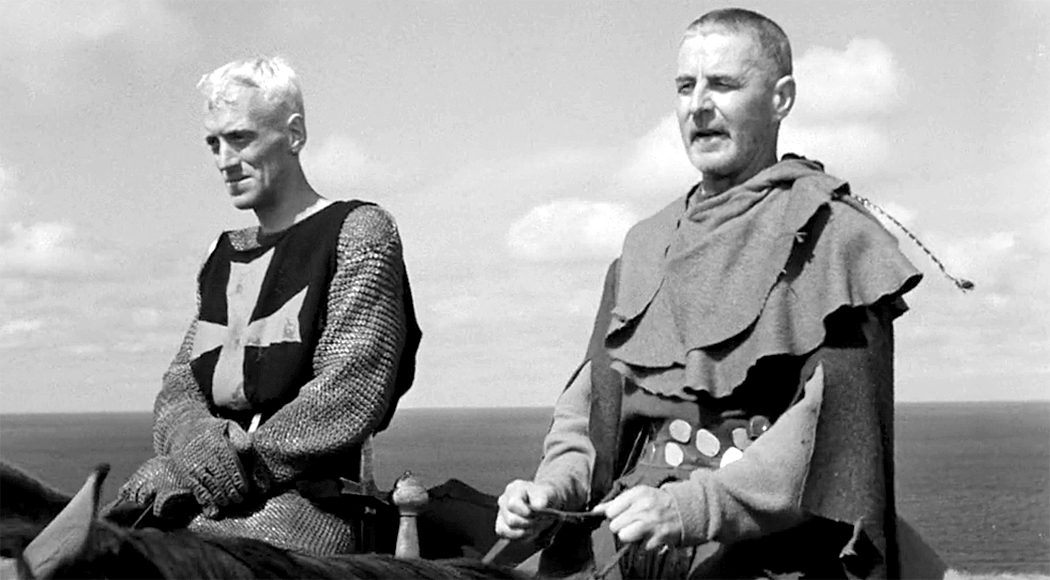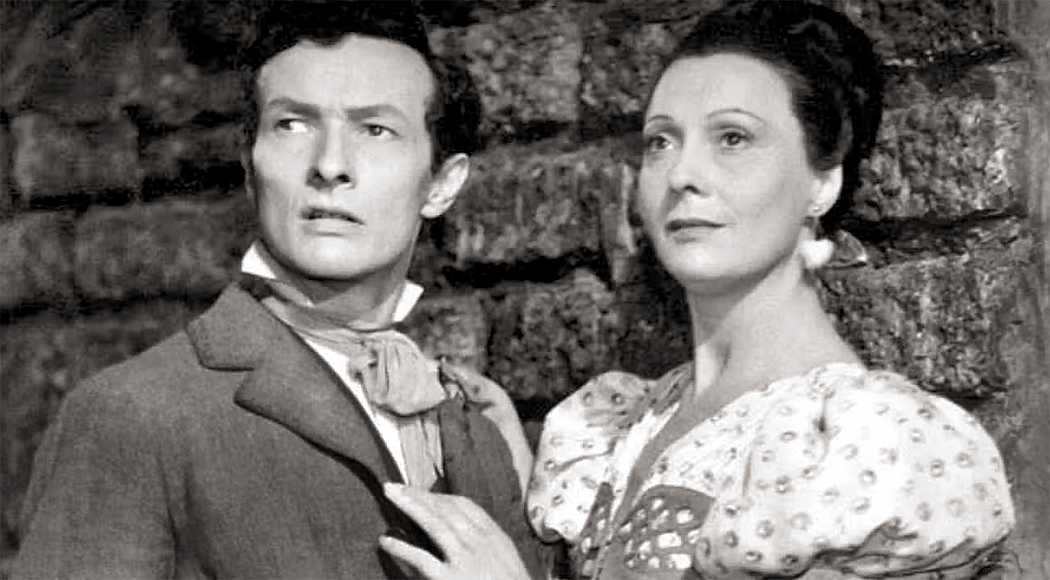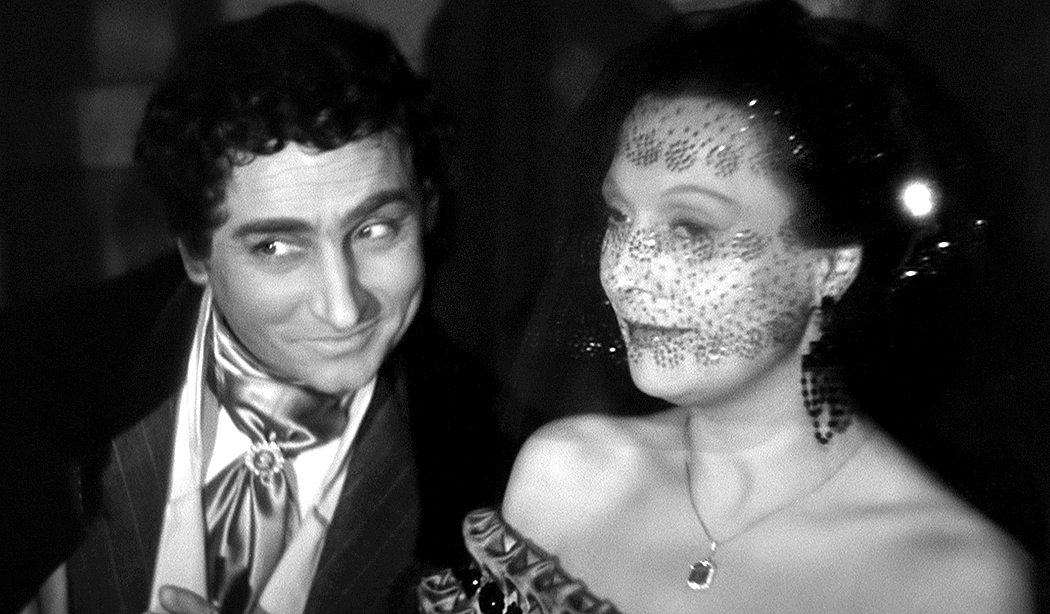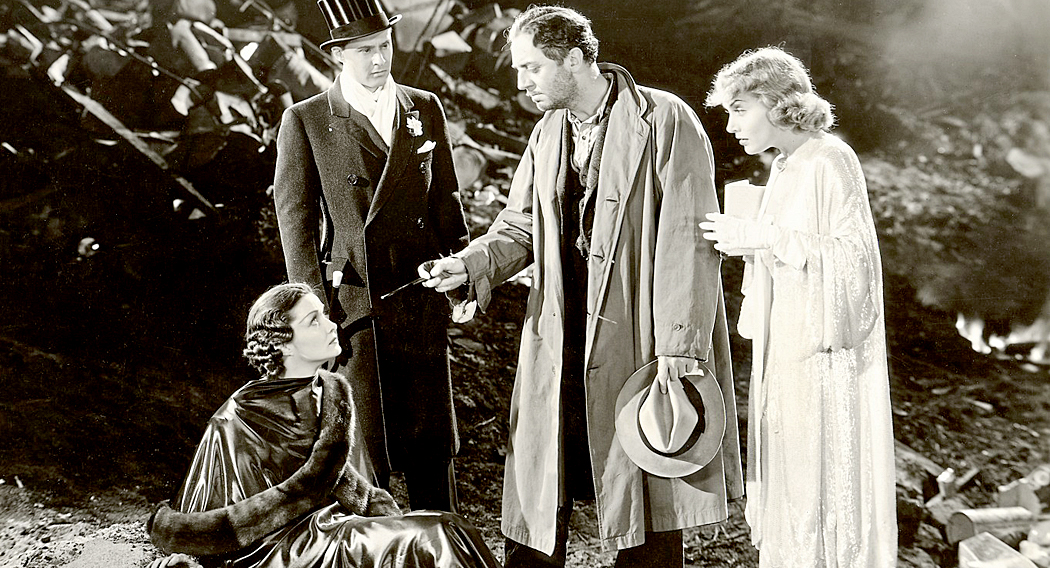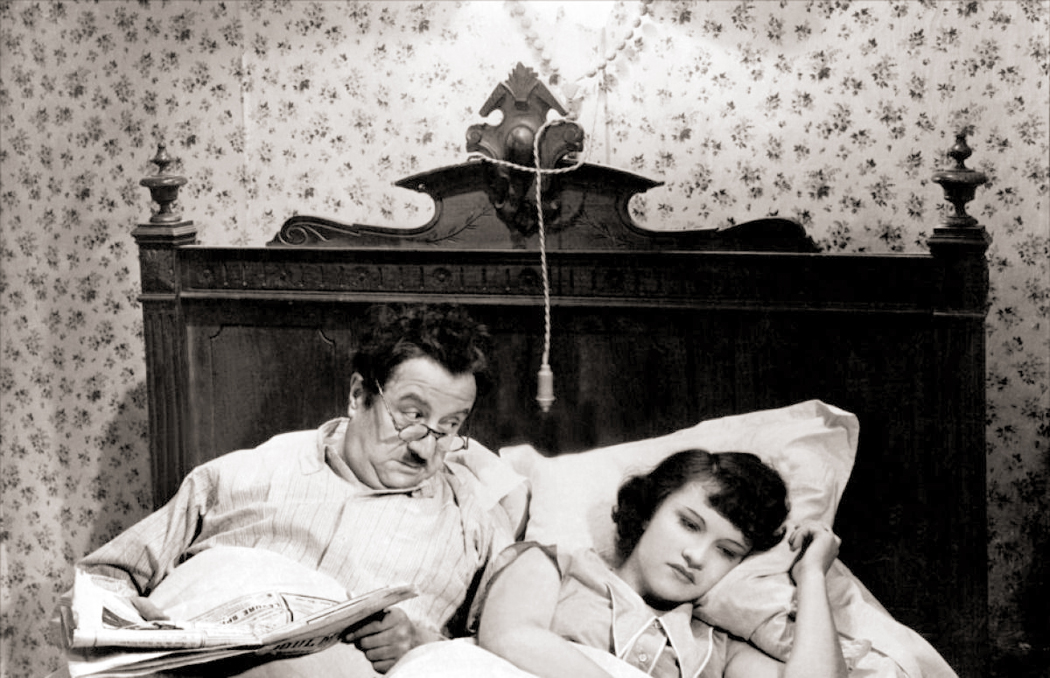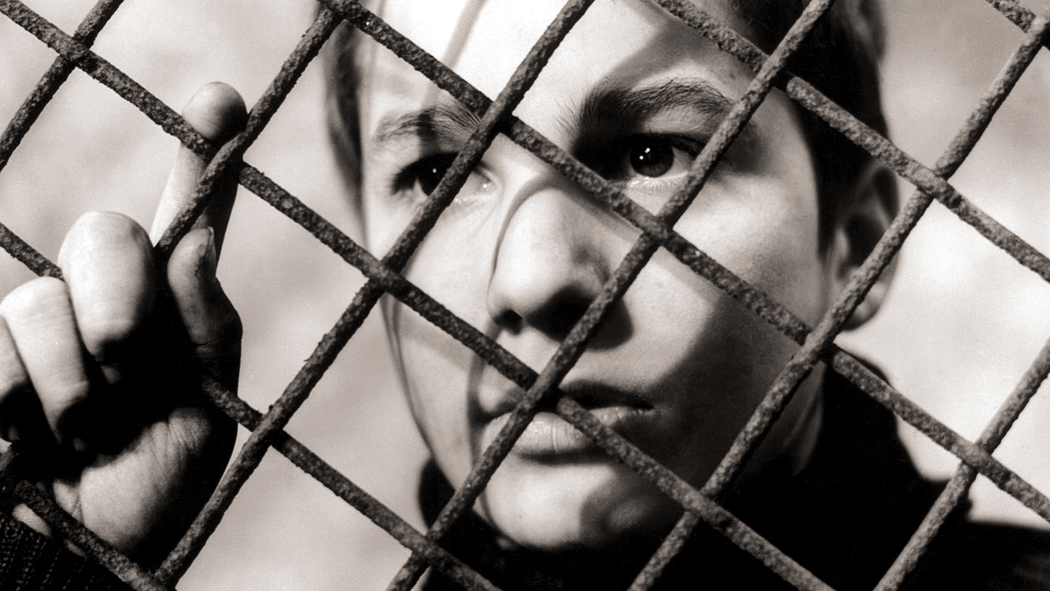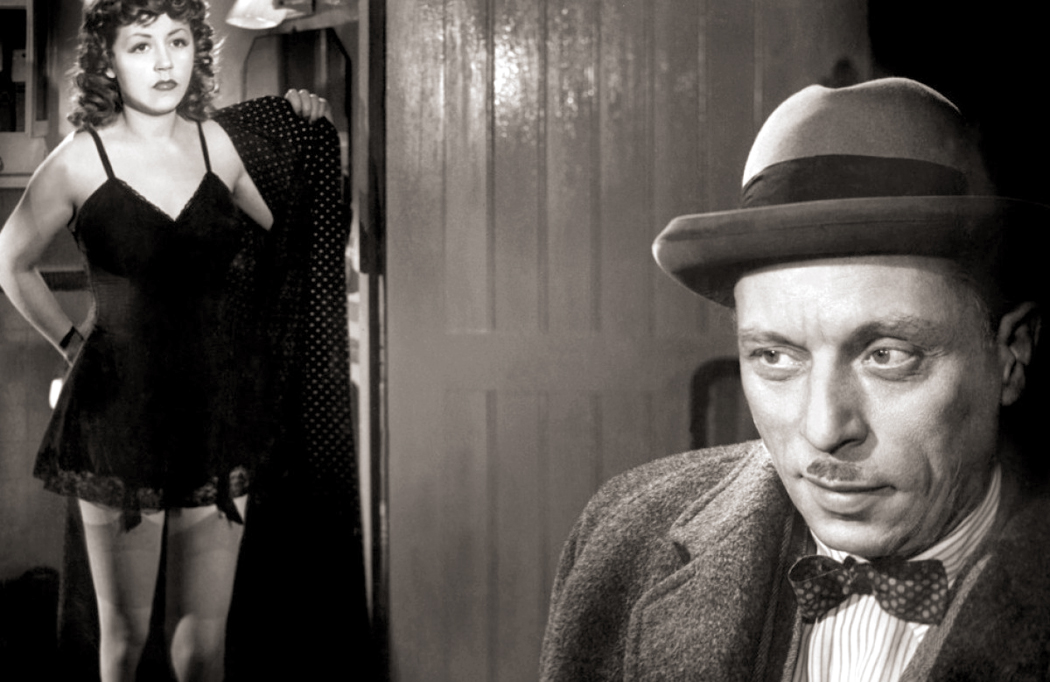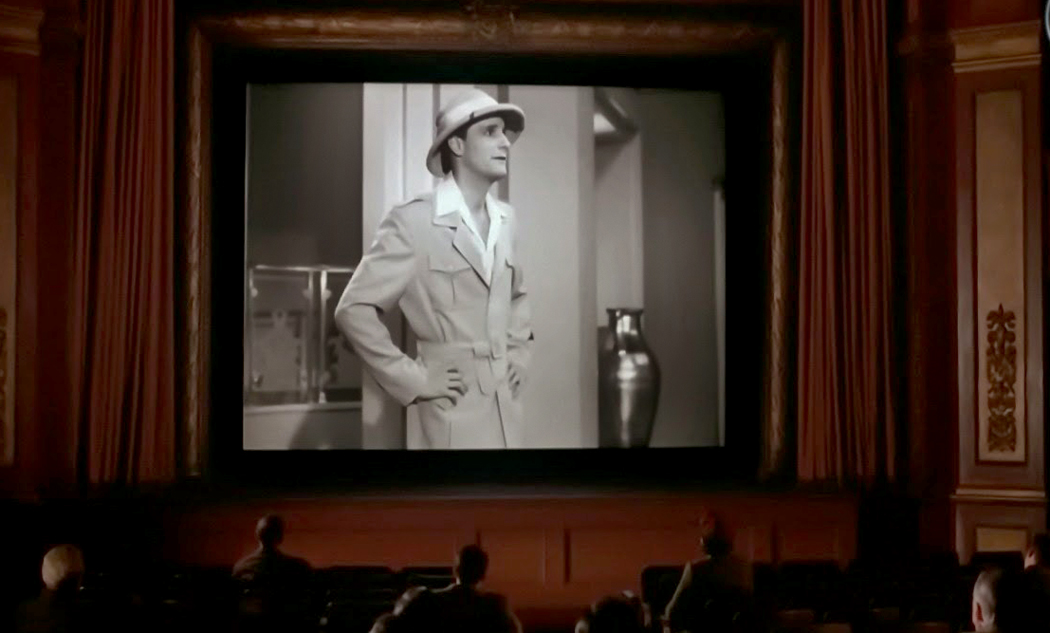
Archive

Tag Archives: film history

I was once taken aback, talking with my young twin granddaughters about what movies they liked, that they refused, flat out, to consider any movie made in black and white. Not even a question. Jamais. Never. 

For them, black-and-white meant antique, superannuated, something with no relevance to their lives. They wouldn’t even see a current movie if it was in black and white. Life was color; monochrome was irrelevant. 

There are other disqualifications that some people maintain. “Read any good movies lately?” They won’t see a film with subtitles, which, of course, cuts out an entire half (at least) of all movie history and some of the greatest films ever. 

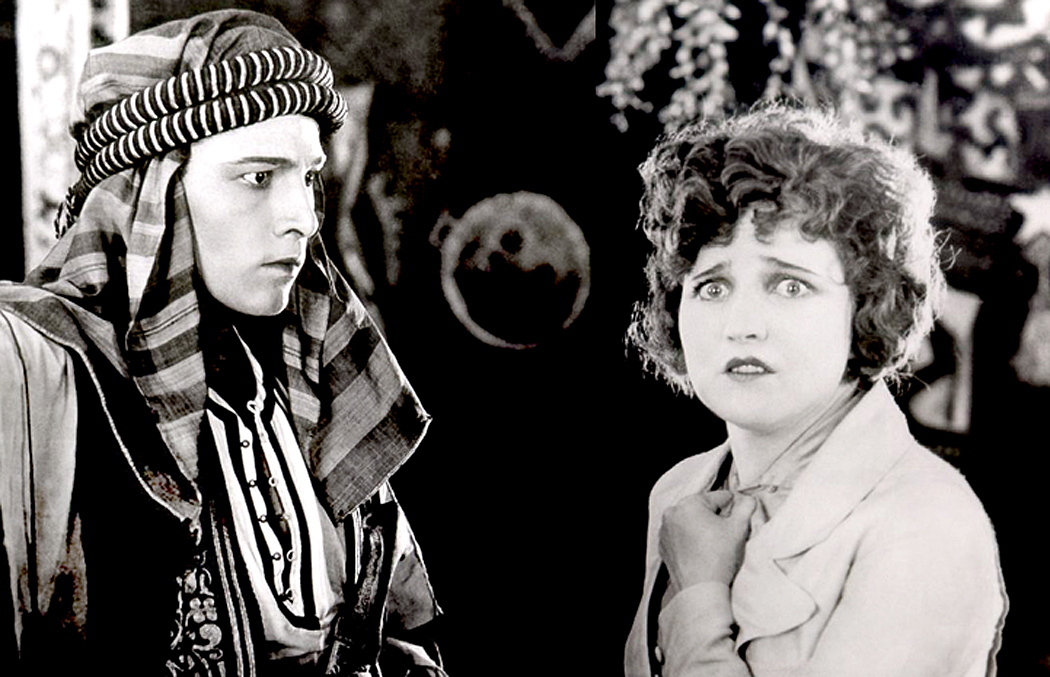
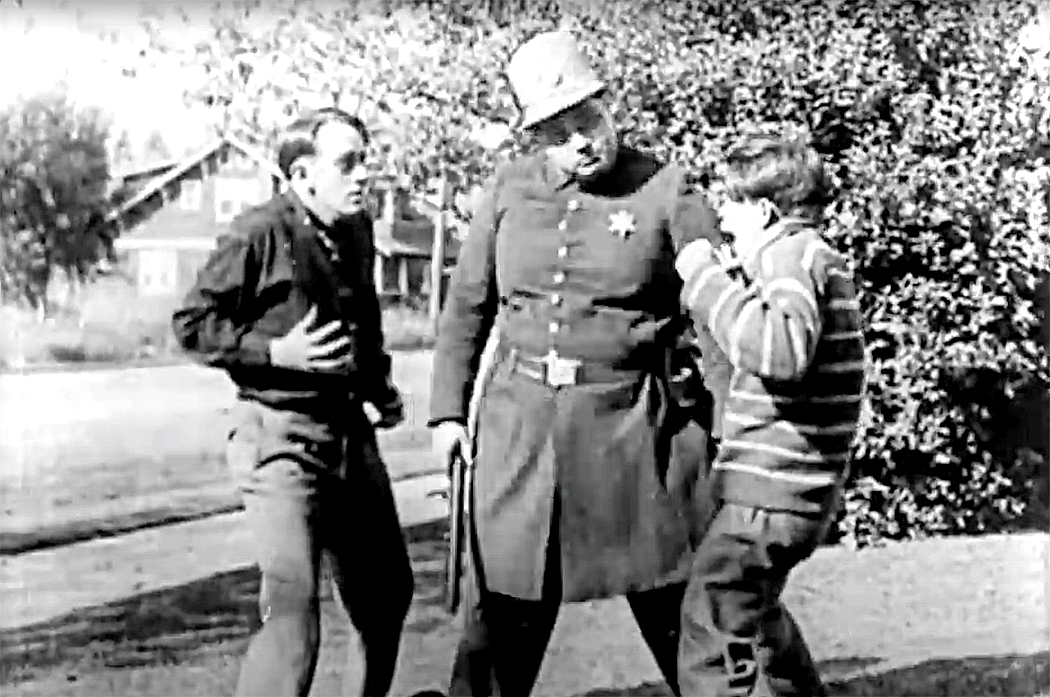
But by far, the biggest disqualification for the majority of filmgoers is what are called silent movies — movies made from the invention of the medium through roughly 1930, when sound synchronization became the standard. 

Without sound, dialog becomes disruptive title cards held motionless for long moments, long enough that the slowest readers in the audience can parse their way through; audio clues, such as traffic noises or train whistles are mute; and worse — actors have to act like semaphore signals to convey their thoughts and feelings. Silent movie acting seems grotesquely over-the-top, more like pantomime than anything we now consider proper acting. 

There are other problems, too. In the earlier days of movie-making, frame speed was not standardized, and to complicate matters, most cameras were hand-cranked, which means that the idiosyncratic crank-timing of the cameraman could vary quite a lot. This meant that for decades, long after sound had taken over, and movies began showing up on TV, the old films were projected at the wrong speed, too fast, making everything herky-jerky. 

And, because the studios that made those old films never thought of them as anything but disposable entertainment, there was no incentive to archive them or care for the old prints. Add to that, they were made with flammable nitrate film stock, which deteriorated over time, and that there were several devastating studio fires that consumed whole catalogs, what is left is often only a fossilized remnant of what the old films actually were. As a result, an estimated 70 percent of all the movies made before 1930 are lost. Ceased to be. Gone to meet their maker. Joined the bleedin’ choir invisible. 

And what survived was seen most often in poorly made copies of copies, bleached out, scratchy, grainy and out of focus. As if silent film technology was roughly akin to the Stone-Age chipping of flint arrowheads. 

But that is not what they were when they were made, as we have seen when film restoration has brought us clean prints of some of the more important movies from the era. The photography was as good as anything done currently. The motions of the actors, when projected at the proper speed seem less silly. 

You can look at the development of cinema from its earliest beginnings in the 19th century as a constant advance, not only of technology, but of the esthetics of film. At first, a stationary camera just records a few things in front of it. Later, the camera learns how to move. Film learns to tell stories and directors figure out how to edit bits of film together to make those stories move faster and express more. Wholesale changes in blocking, acting, lighting, editing, camera angles and motion all add to the growing sophistication of the art. There are the traditional mileposts in this development: the close-up; the intercutting; the over-the-shoulder back and forth; the use of double-exposure; and of matting. 

By the time sound came in, intermittently beginning in 1927 or so (the dates are hard to pin down, depending on how complete the process was and which competing technology was used), silent film had become a fully developed art form, capable of expressing a huge range of thought and emotion. In fact, the advent of sound caused more problems than it solved, and the constraints of microphones and movie-set noise, took away some of the expressive possibilities of the silents. 

Cameras tended to stay still (they often had to be ensconced in stationary booths or sound-cancelling “blimps” so that the microphones wouldn’t pick up the noise of the machinery) and actors needed to stay still near the microphones. Films became more stagey and set-bound. Early sound films often looked more like recorded stage plays. 

Worse, because sound made dialog possible, much was explained rather than shown and talkies became rather talky. The best continued the old dictum, “show, don’t tell,” but it became economically advantageous to let the tongues do the talking rather than the images. 

Alfred Hitchcock, who had been making artistically sophisticated silent films, initially thought that “the silent pictures were the purest form of cinema,” and the first talkies were little beside “photographs of people talking.” 

All this has been well covered by myriad books and videos about the history of Hollywood. But there is one aspect of silent films that has too often been neglected, and that is that they were never silent films. 

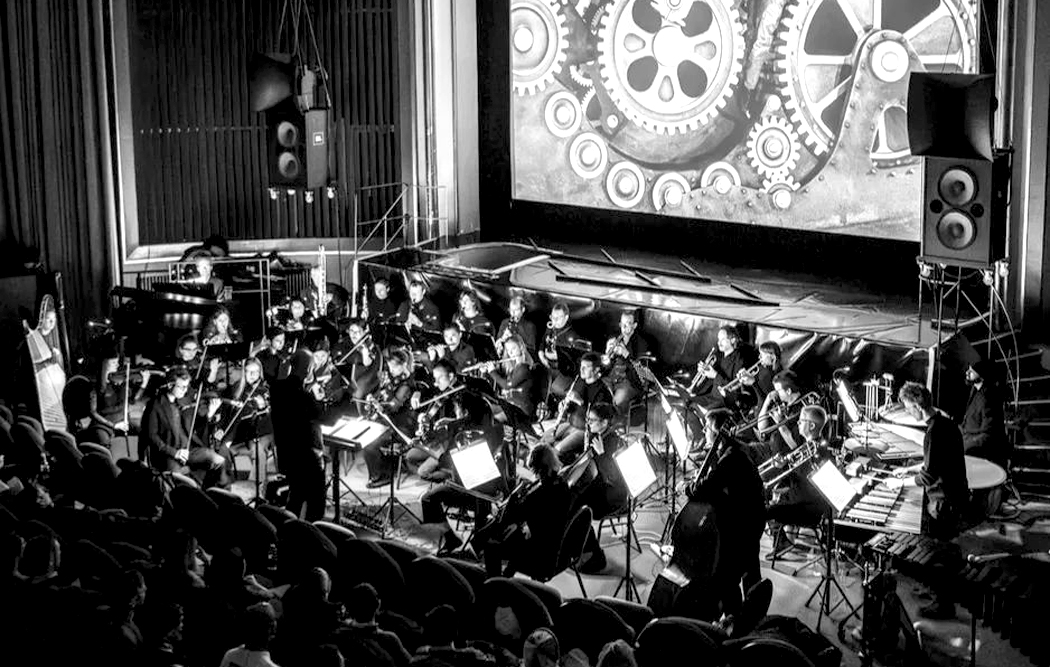
During their era, movies were always accompanied by either a live orchestra playing in the pit, a pianist, or an organist. Major features usually had a bespoke musical score that was distributed along with the film, so that orchestras in the large theaters could play along with the movie. In smaller venues, a piano or organ reduction would be provided. For lesser films, music publishers provided regular cues — short bits of piano score describing certain types of action or emotion — for the in-house pianist to improvise from. 

The process was very like the incidental music written — often by major composers — for stage plays. Mendelssohn’s music for Midsummer Night’s Dream, or Grieg’s for Peer Gynt, for instance. Several major composers, such as Camille Saint-Saens, also wrote scores for movies. 

Or more apt, like the music that accompanied ballet. Tchaikovsky or Leo Delibes or Prokofiev would write music to order, according to the needs of a dance scenario. “I need three minutes of mazurka for Act 2,” the composer might be told, and would produce it on order. We think of composers being divinely inspired by their muses and pumping out symphonies, but really, they often made a living as subcontractors, part of the team that produced popular entertainment. Even Beethoven wrote incidental music and ballets. 

So, the tradition of writing music for films was much like that for ballet. It would be silly to imagine Swan Lake with no music, only dancers. But nobody would ever call ballet, “silent theater.” 

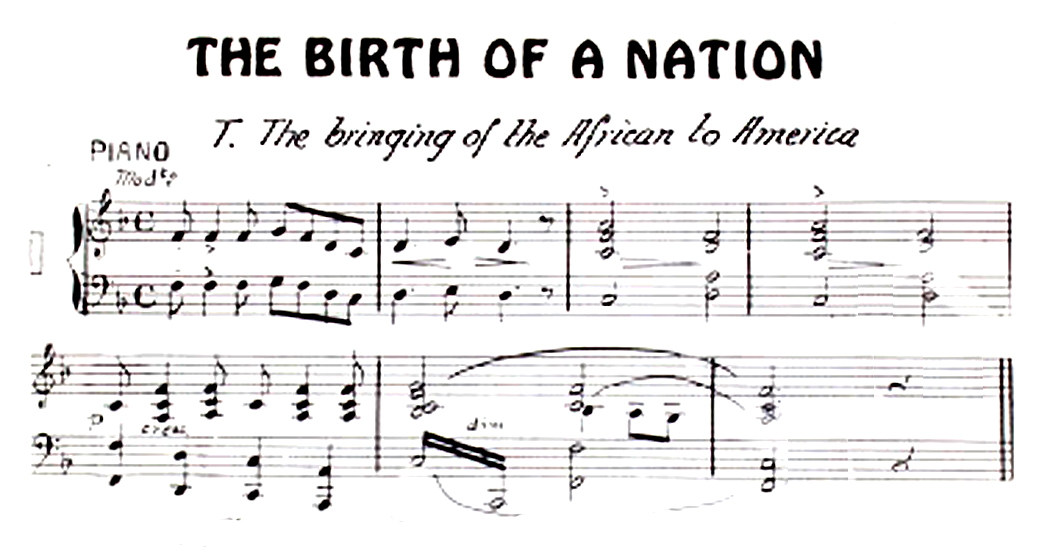
But the first time I ever saw The Birth of a Nation was at my college film series where it was run with no sound. I complained to the projectionist that he forgot to turn on the audio and he looked at me like I was an ignoramus. “It’s a silent film; there is no sound.” Yes, there is, and it was written for the movie by composer Joseph Carl Breil who created a three-hour-long musical score made up of adaptations of existing works by classical composers, new arrangements of well-known melodies, and original composed music. (The British Film Institute’s Blu-Ray restoration of the film includes Breil’s music). (Although, if you never get a chance to see Birth of a Nation and its promotion of racism and the Ku Klux Klan, you may be intellectually poorer, but your soul will be so much cleaner.)

It helps to keep the ballet model in mind when considering silent film. Movies developed together with the music that accompanied them, and we would appreciate them more if we saw them that way. 

Of course, the basic level of appreciation is the story being told, and most movie-goers even in those early years, were there for the plot. Good over evil; love conquers all; the hero saves the maiden. 

But we, watching now, should notice not just that surface level, but also how the movie was made: How the director uses a moving camera to advance the story; how the lighting underlines the mood of a scene; how the editing manages to keep us up-to-speed on parallel plot points, back and forth; how the close-up lets us into the mind of the actor. 

And so, watching a silent film should be more like watching the dance. It is a different art form from sound film, and one that needs to be understood in its own way. The story drives the action in Swan Lake too, but we watch for the dancing and choreography.

I have a list of 10 silent films that demonstrate what the silent film can do. Recent film restorations have improved image quality, when a print can be struck from the original studio negative, and with restored musical scores, either from original sources, or new scores written in period style. 

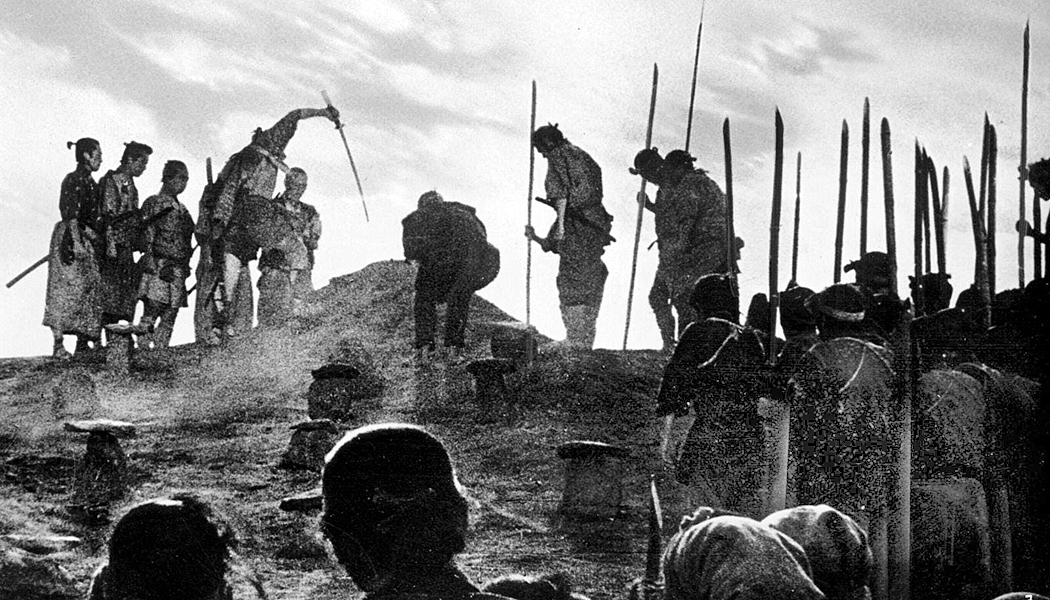
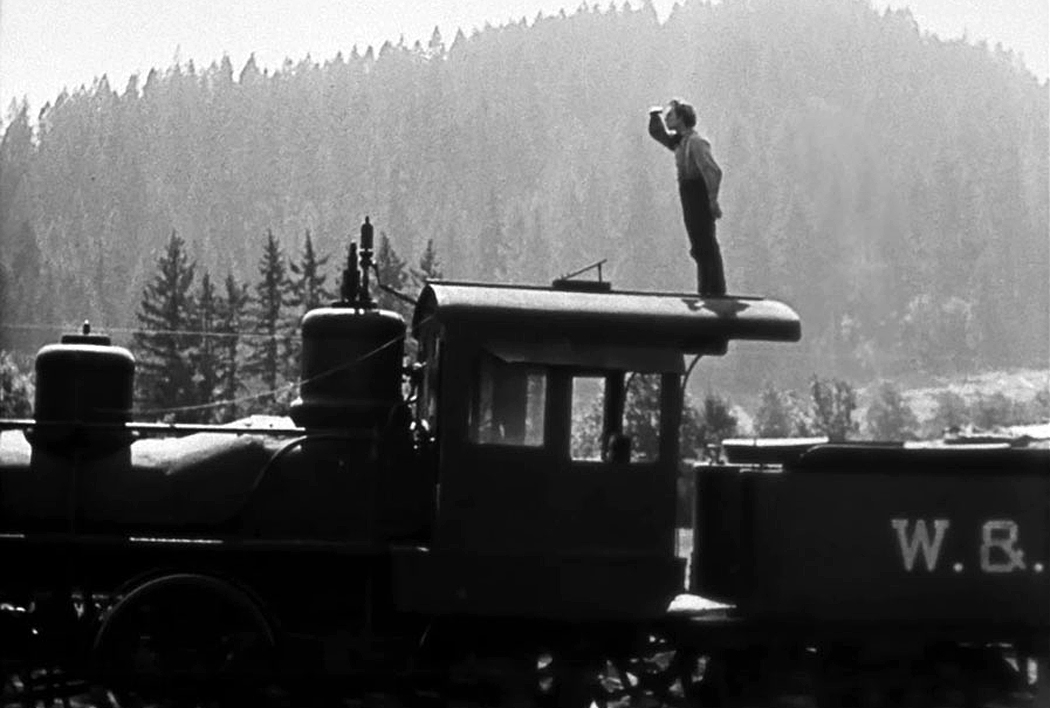
We’ll go from the easiest to understand and love to more adventurous films. In my experience, one of the best places to start is Buster Keaton’s Civil War film, The General

The General

Keaton’s 1926 story is easy to follow, as Southern railroad engineer Johnny Gray spends most of the movie chasing a locomotive stolen by Yankee forces and then being chased by them. There are plenty of gags — Keaton was a genius with those — but also a comprehensible plot, easy to follow, and believable. Keaton’s direction is always clear, and with many exceptionally beautiful or intricate shots. The most expensive special effect shot of its time was later copied for The Bridge on the River Kwai, as Keaton has a train crashing off a burning bridge, followed by a dam breaking and a flood washing soldiers downriver. It’s a great film and for a wide audience. One of the great films of all times, silent or sound. 

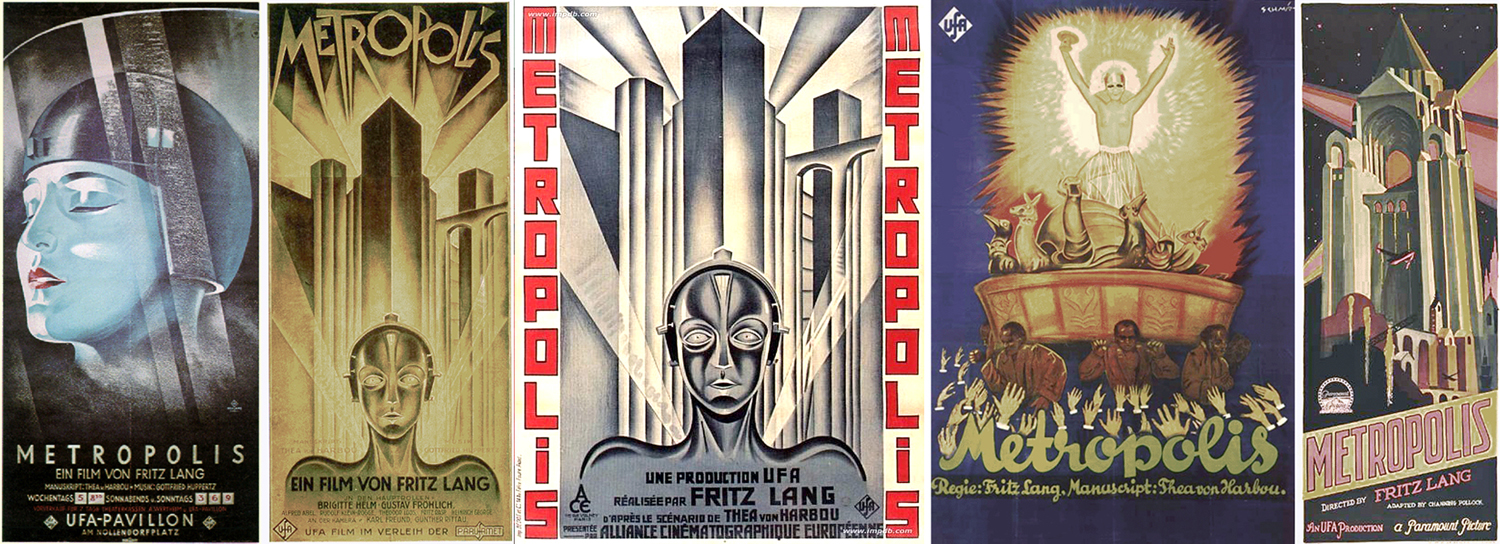
Metropolis

Fritz Lang’s 1926 sci-fi masterpiece has benefitted more than most from restoration. Seen previously in shortened versions, a new version has most of the missing footage returned so that story begins to make sense (even at its best, the plot never really made much sense). But it has some of the most stunning visuals ever put in front of a camera. It is a glorious film to watch, even if the acting sometimes seems maybe a smidge over the top. Despite that, it is also one of the greatest films of all time, and one of the most influential. 

The Lodger: A Story of the London Fog

This 1927 Alfred Hitchcock thriller is a masterpiece of visual storytelling. Called the “first true Hitchcock film,” it plays with the fear raised by a Jack-the-Ripper style murderer in London and a mysterious lodger in a boarding house who may or may not be the killer. The film is chock full of Hitchcockian ticks, including a “wrong-man” plot, the obsession with blondes, and the plot-twist ending. 

These three films offer little problem to the modern viewer and can be seen with little forgiveness needed for their lack of spoken dialog.

——————————

The next three are milestones in technical experimentation and the invention of cinematic conventions that are in common use today

Battleship Potemkin

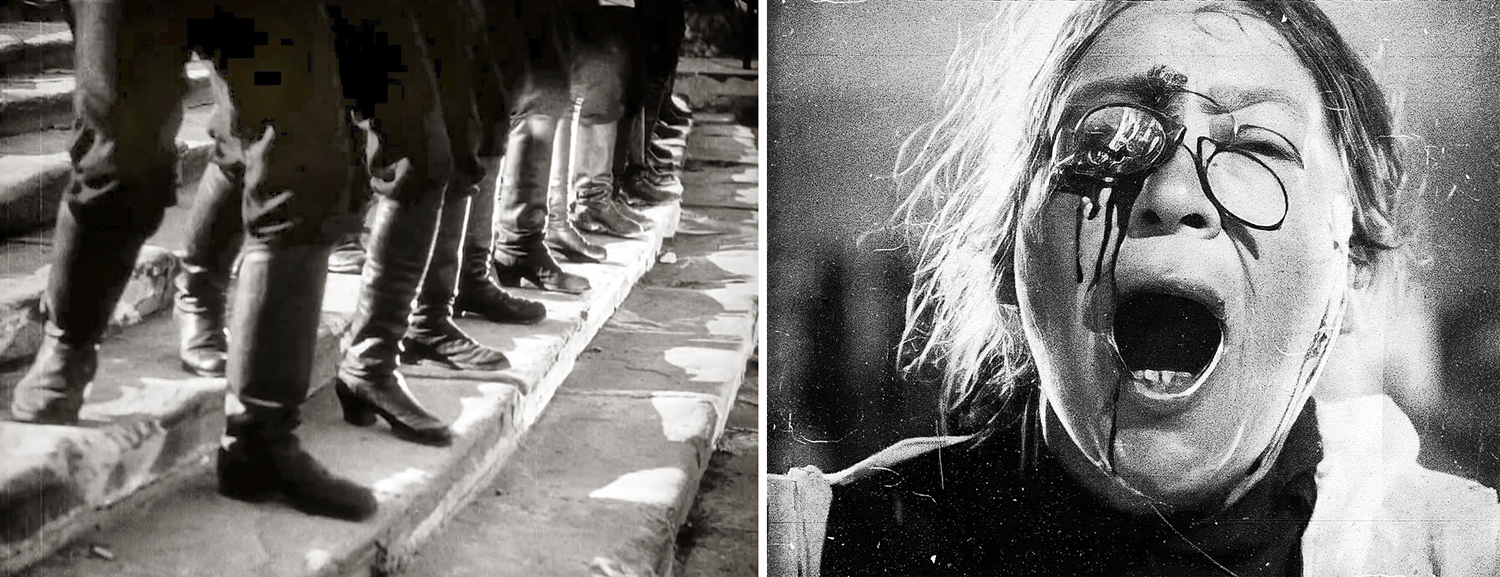
In 1925, Soviet filmmaker Sergei Eisenstein told a story of the aborted 1905 rebellion through a version of the mutiny aboard the Russian battleship Potemkin. The film uses editing as fast as an MTV video to further the story, and inventing the montage. The section called “The Odessa Steps” still carries as much punch as anything ever made. 

Napoleon

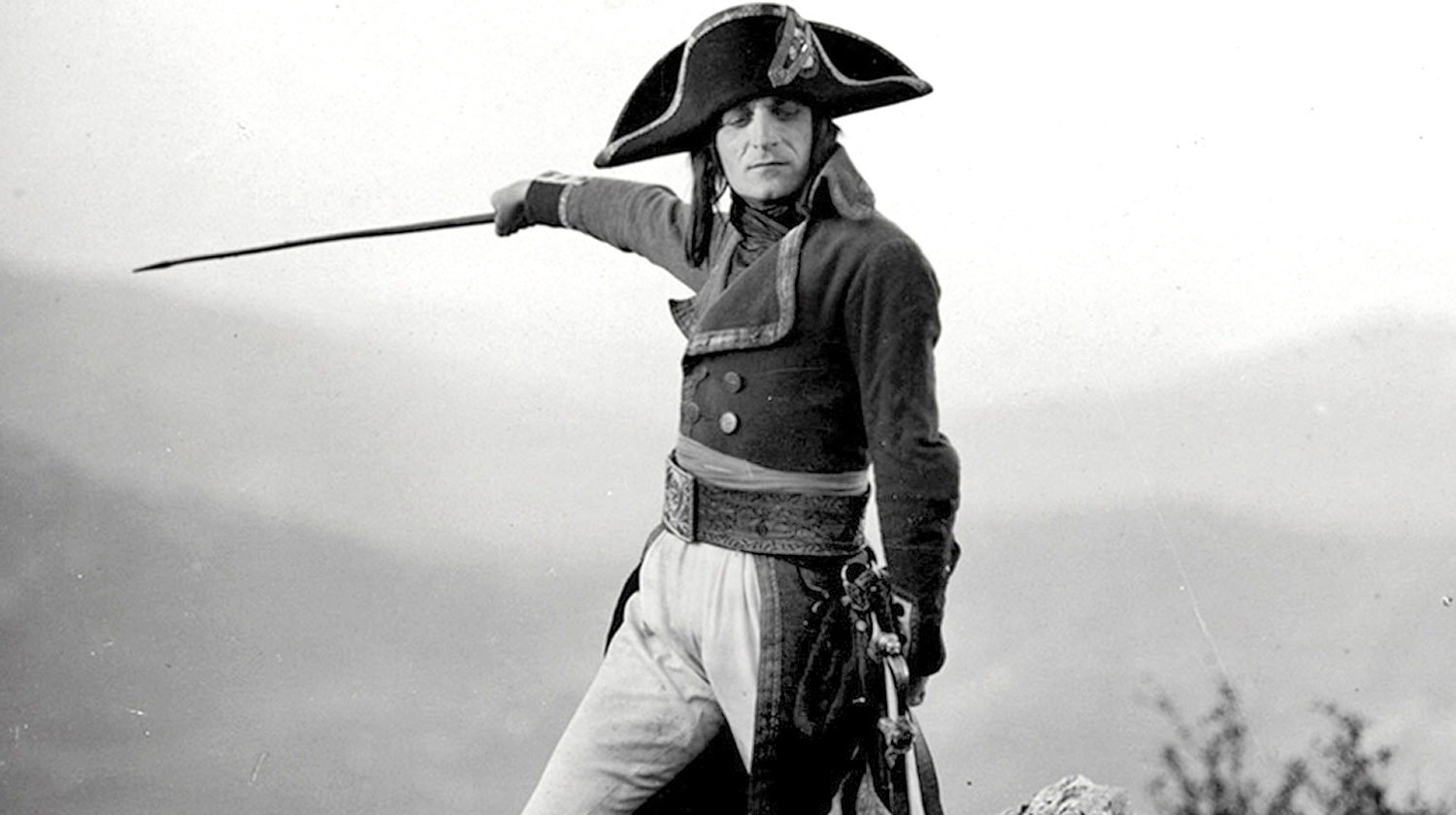
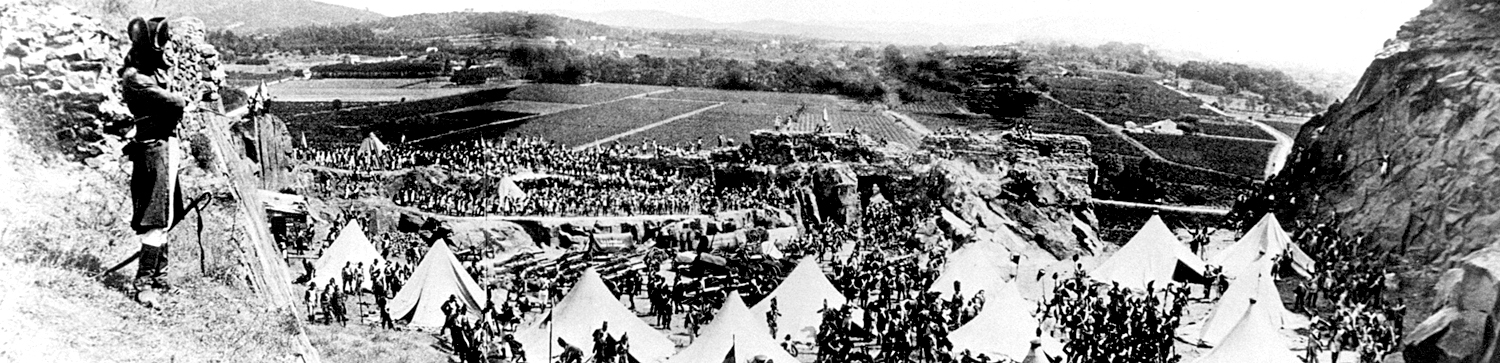
French filmmaker Abel Gance intended to make six films covering the life of Napoleon, but only finished the first. But it is five and a half  hours long and uses many experimental techniques, putting his camera on a swing, or on the back of a galloping horse. 

And in its climax, using three cameras and three movie screens to make a precursor version of Cinerama — huge widescreen images. It is an astonishing film for 1927. 

The Passion of Joan of Arc

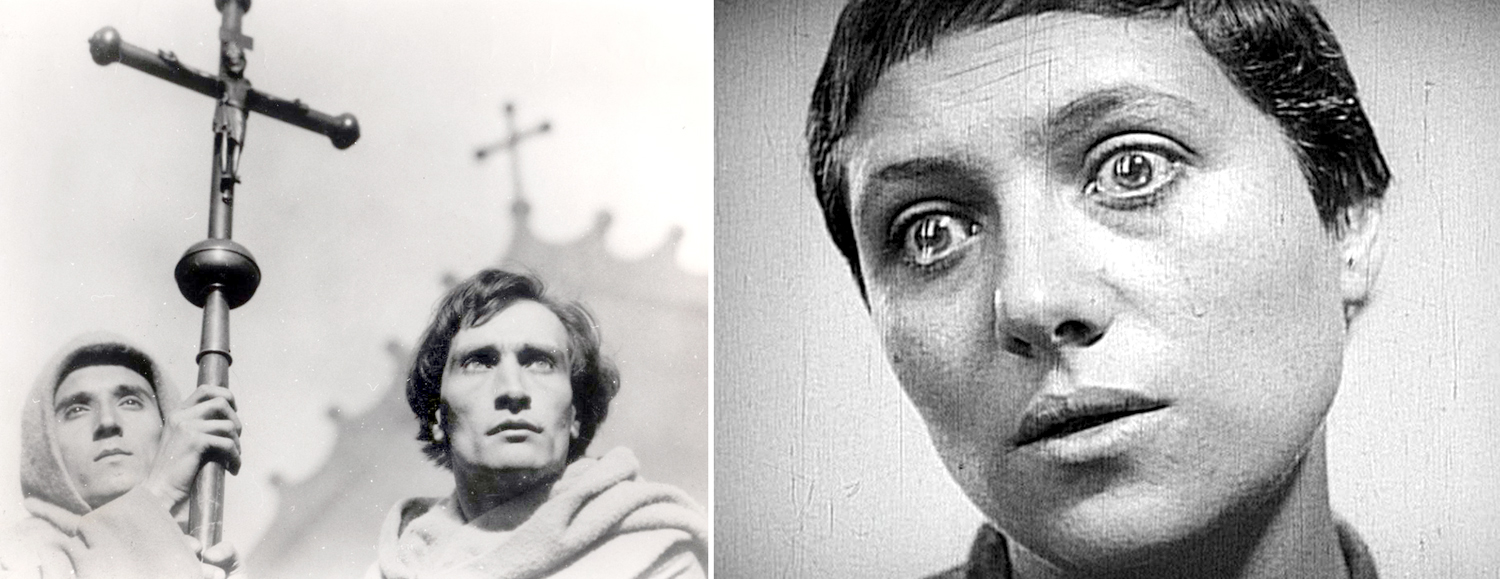
It sometimes seems as if Danish director Carl Theodor Dreyer’s 1928 The Passion of Joan of Arc is entirely made up of close-ups of lead actress Maria Falconetti’s anguished face. But if proof was ever needed of the power of human expression, this movie is Exhibit A. It is emotionally overwhelming. 

——————————

The next three films are documentaries, made before documentary film became hamstrung by an inflexible puritan ethic (fooey on you, Frederick Wiseman). Some use recreations and re-enactments, but give us real information nonetheless. 

Häxan

Häxan, from 1925, is a Swedish film that investigates the phenomenon of witchcraft through the ages. It was banned or censored in many places for its anticlericism, nudity, and depictions of depravity, but ultimately comes down on the side of modern understandings of schizophrenia, hallucination and bigotry to explain the witch stories. It is mostly filmed recreations by actors, but tells a real story. 

Grass: A Nation’s Battle for Life

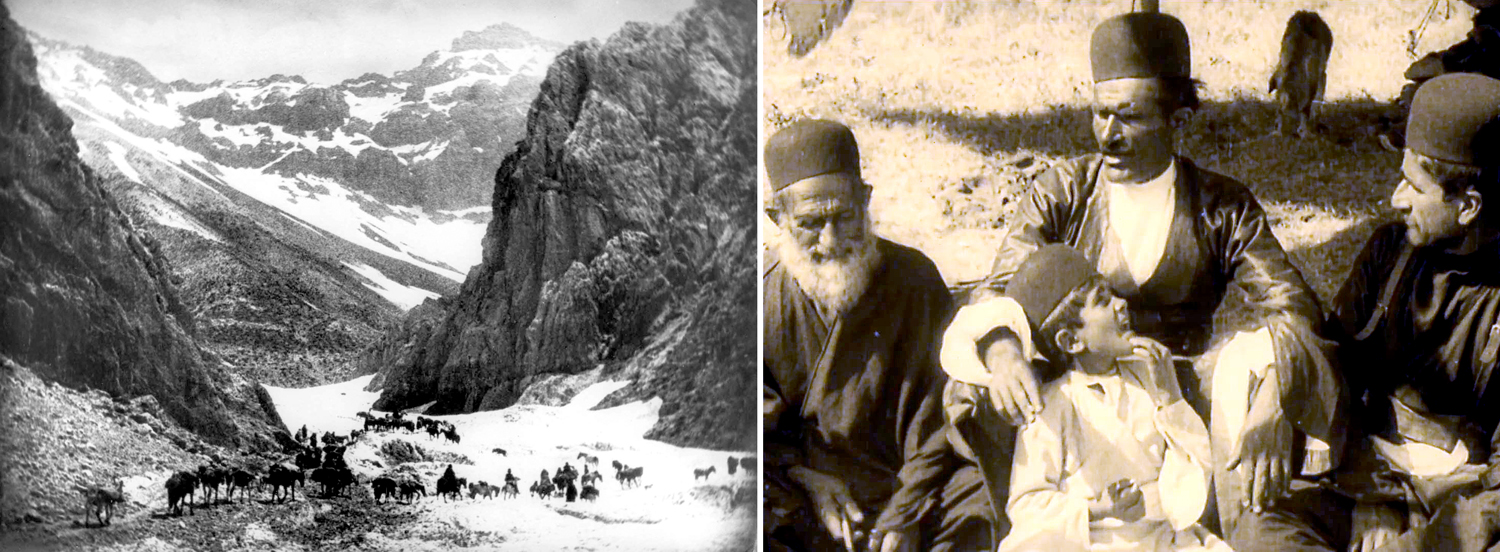
From 1925, the story of Grass’s creation is as breathtaking as the story it tells of the annual migration of 50,000 of Iran’s Bakhtiari people across the vast Zagros mountain range with their cattle. Stunning landscapes and death-defying river crossings, all captured on film by Merian C. Cooper, Ernest B. Schoedsack, and Marguerite Harrison (Cooper and Schoedsack later made King Kong). The filmmakers took the migration along with the tribespeople, and suffered all they did along with them. This is one of my favorite films of all time. 

Nanook of the North

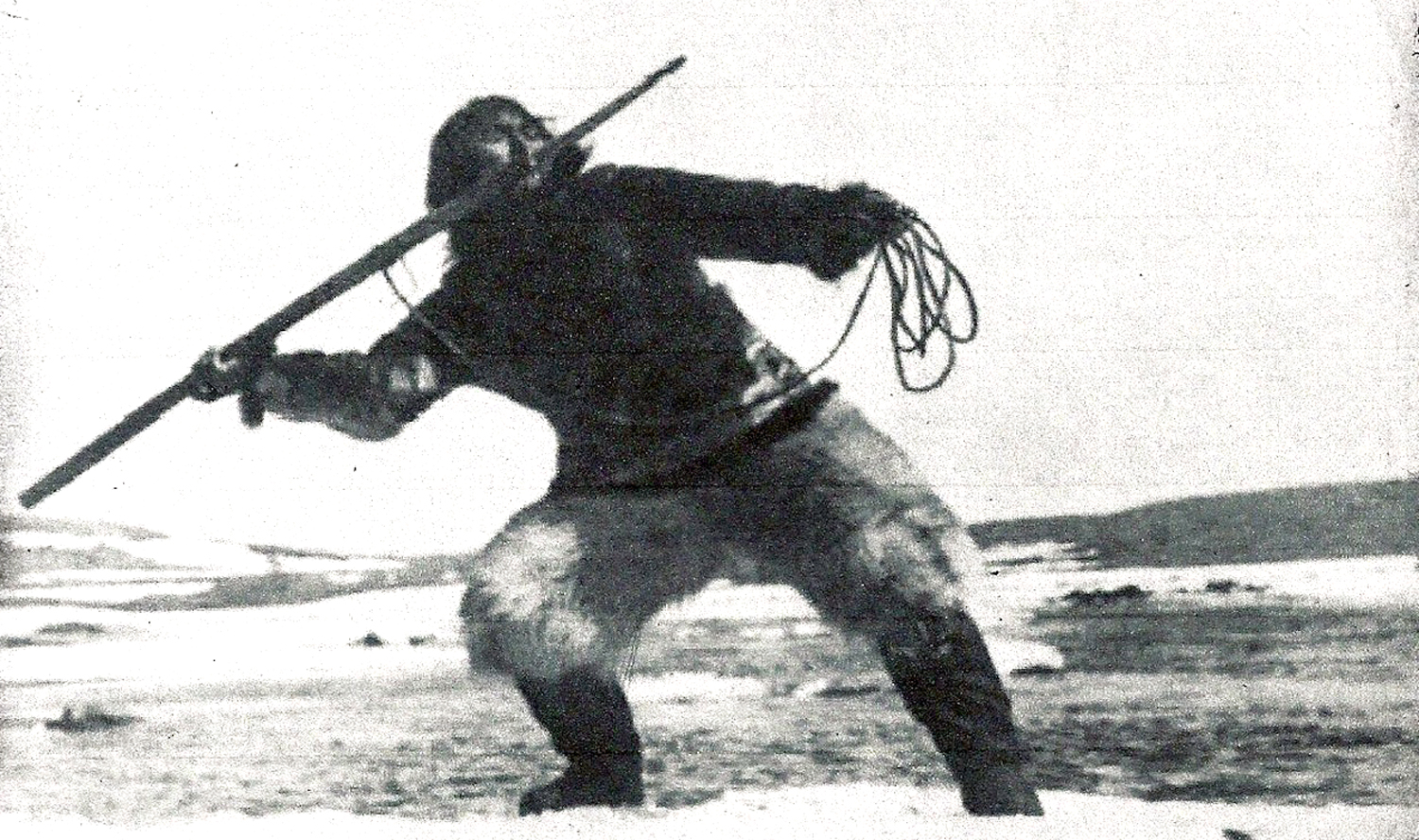
Three years earlier, Robert Flaherty made what many consider the first film documentary, when he took his camera to northern Canada to film the lives of Inuk native, Nanook (“The Great Bear”) and his family. 

It shows us how they lived and how they survived. Purists now complain that some of the shots were staged and that Nanook was an “actor” (although he was a genuine Inuk native. But the ideas of documentary right-mindedness didn’t exist in 1922, and there is a genuineness in Flaherty’s film that many more virtuous documentaries cannot equal. 

——————————

Number 10 on my list is actually a group of films. One thing that silent film did immeasurably well is horror. German filmmakers in the 1920s were immersed in an Expressionistic milieu that gave us films such as Nosferatu, The Cabinet of Dr. Caligari, and The Golem and How He Came into the World. But Germany wasn’t the only place that worked out the magic of film images of the supernatural and spooky. Hollywood had its share, also. 

Nosferatu

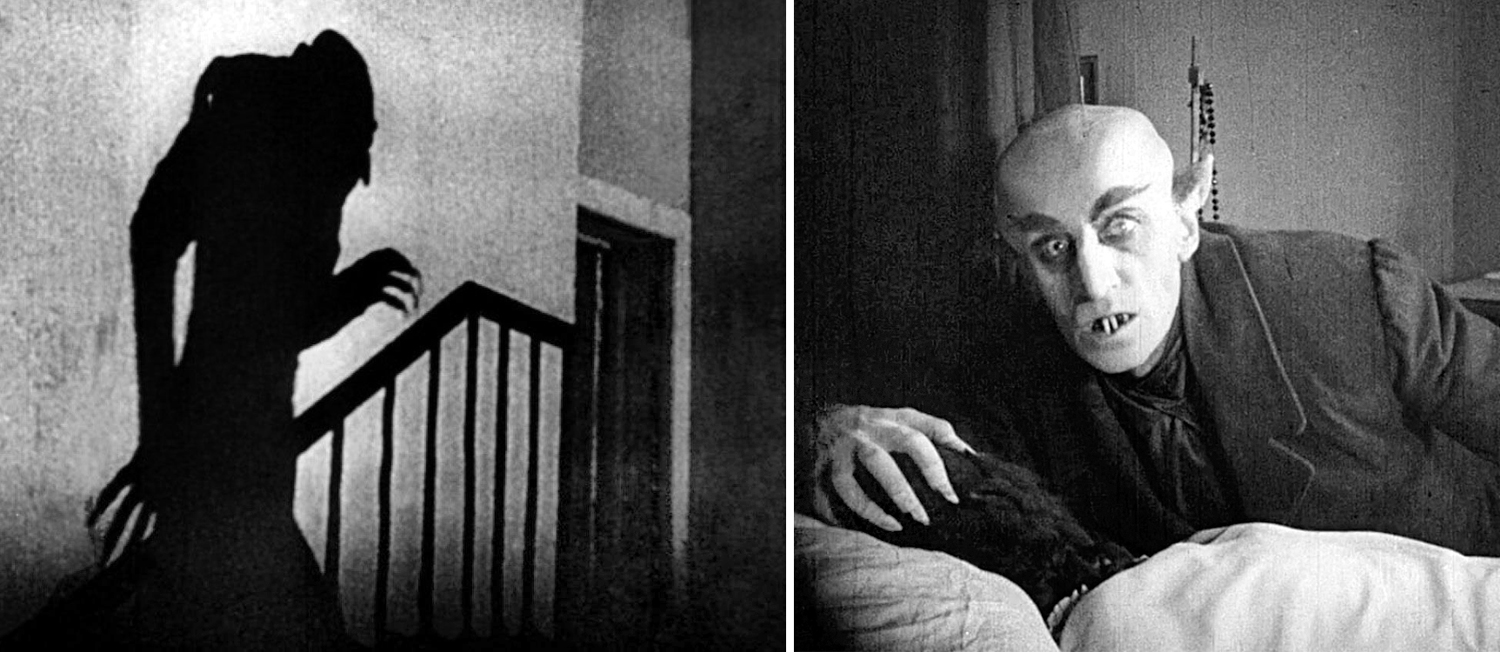
F.W. Murnau’s plagiarized version of Bram Stoker’s Dracula nearly was lost to history. Stoker’s estate sued over the film, which Murnau had not secured the rights to, and the court decided all copies of Nosferatu should be destroyed. Luckily, a copy survived and is now seen as one of the true masterpieces of silent film. All shadows and sharp angles, gothic castles and claw-like hands, it is a much spookier version of the story than 1931’s sound version with Bela Lugosi. 

The Cabinet of Dr. Caligari

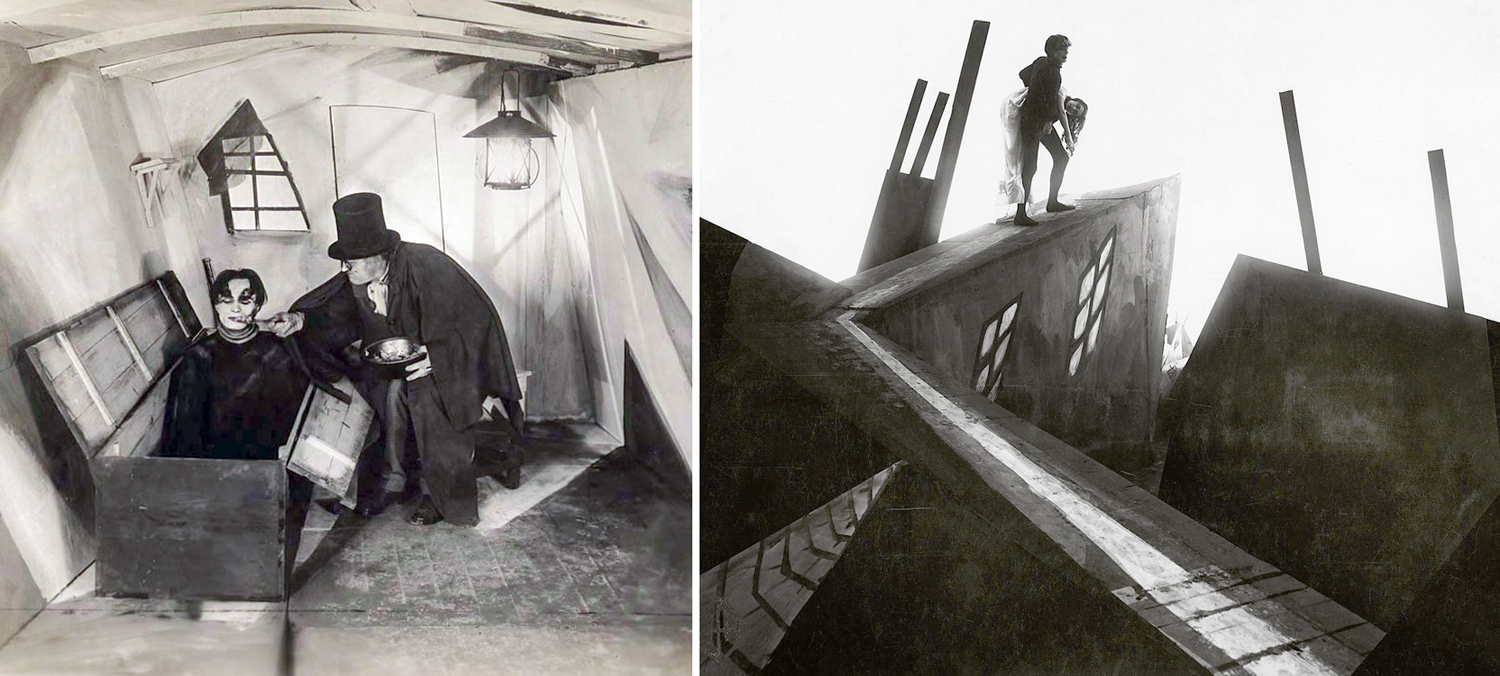
With its Expressionist cityscapes, with nary a right angle to be seen, and with Conrad Veidt’s pasty-faced somnambulist, the film is an absolute feast of visual inventiveness. If you ever needed a picture of what insanity might look like from the inside, this film is it. 

The Phantom of the Opera

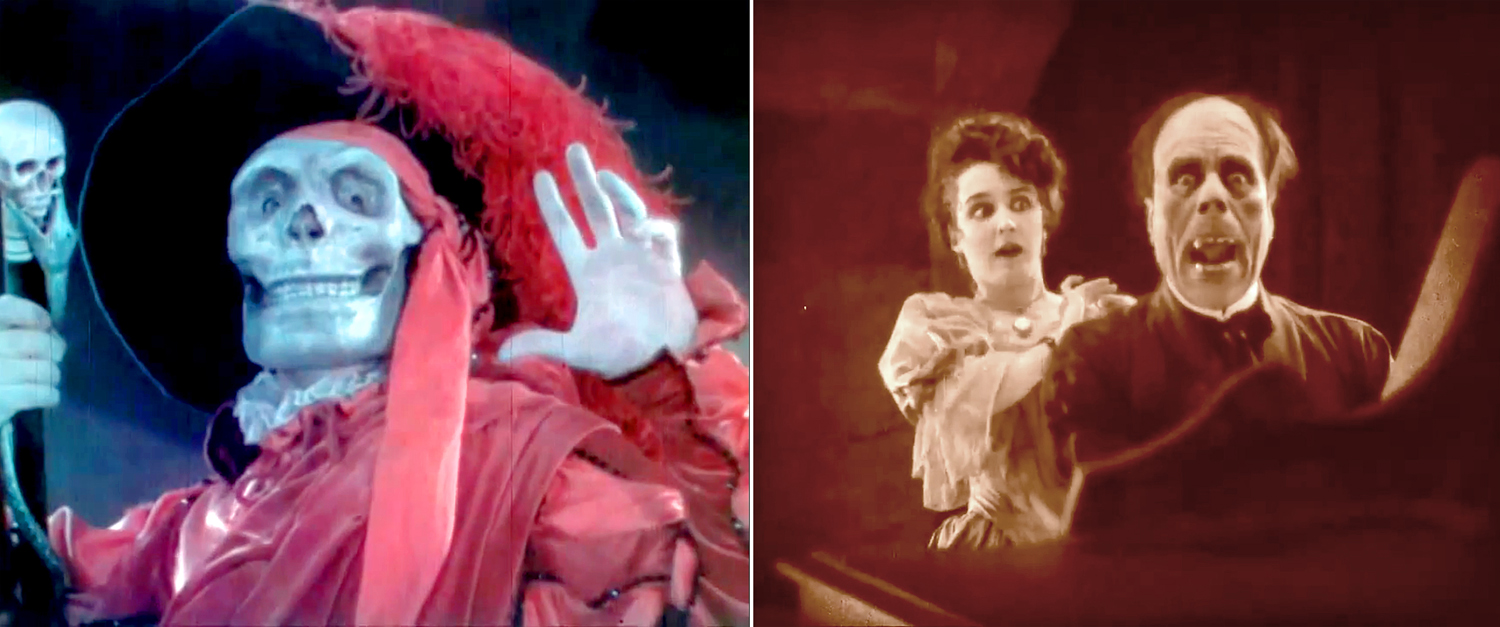
All of the films I have discussed here are among the best made in the silent era. Phantom of the Opera, if seen merely as the result of film direction and writing, is rather ordinary. But its visuals are unforgettable. Lon Chaney’s skull-like make-up for the phantom, the Gothic underworld of the Paris Opera, and perhaps most of all, the Two-Strip Technicolor episode where the phantom descends the grand staircase of the opera house wearing the costume of the Mask of Red Death. 

Visually stunning, if less than brilliantly told, the Phantom of the Opera is buried in the consciousness of its audiences. I doubt that the several remakes of the film or the eponymous musical would have ever existed if the original film hadn’t been so compelling. 

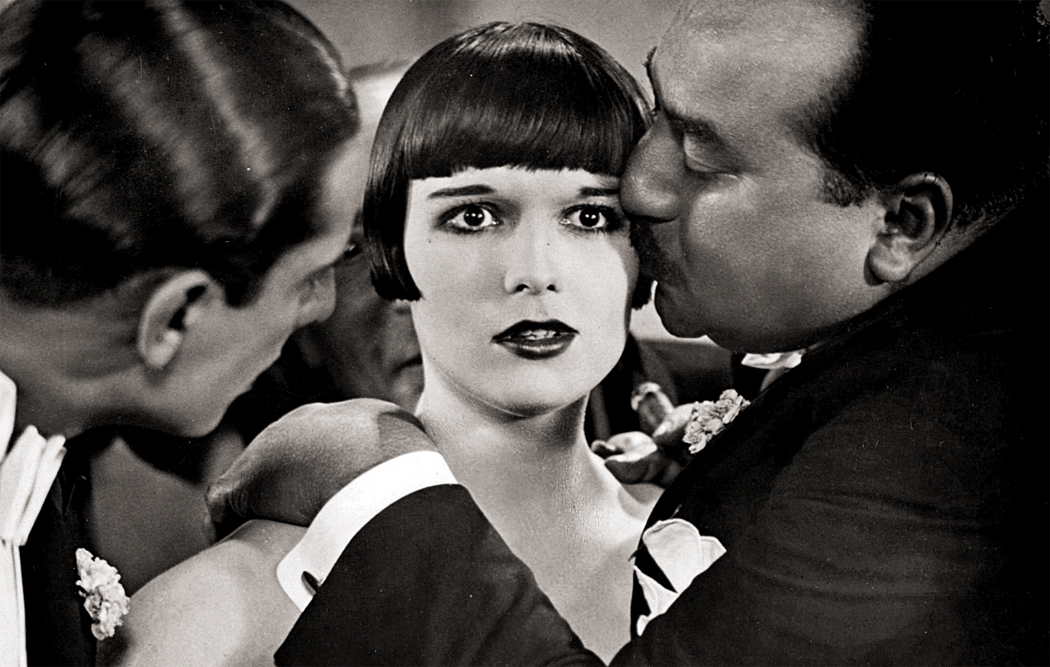
This hasn’t been my list of the Top 10 (or 12) silent films. Such a list would have to include Sunrise: A Song of Two Humans; Greed; City LightsThe Big Parade; Pandora’s Box; The Last Laugh; Flesh and the Devil; Cabiria — and a host of other contenders. Nor are these just my favorite films. I have others among the silents, including The Lost World or Hell’s Hinges

Nor have I listed any of the many silent short comedies — especially missing: the films of Chaplin, Arbuckle, Lloyd, Keaton, the Keystone Cops or Laurel and Hardy. They are familiar enough and require no special pleading from me. 

But I have hoped to make the case for an entire era of cinema, and that it is its own artform, and not merely film manqué, waiting quietly to be perfected by Al Jolson. 

Click on any image to enlarge

If you want to see the mountains surrounding Houston, Texas, you can do no better than watch Irwin Allen’s 1978 disaster epic, The Swarm. You also get to see a train run over the cliffs into the Gulf of Mexico. 

Mountains of Houston? Cliffs on the Gulf of Mexico? That’s just a start. Let’s add ludicrous dialog and cheesy special effects and a plot that tries to pull every heartstring but only manages to milk ever cliche. 

Richard Velt in the Wilmington Morning Star stated “The Swarm may not be the worst movie ever made. I’d have to see them all to be sure. It’s certainly as bad as any I’ve seen.” Velt also stated “All the actors involved in this fiasco should be ashamed.” The film has a score of 9 percent on Rotten Tomatoes. 

The film is credited with killing off the whole genre of disaster movies. 

I had the occasion of seeing the film recently on cable and could hardly believe my ears at some of the tin dialog. 

“That’s a complicated story. It begins a year ago. But let’s skip that.”

And don’t call me Shirley. 

The plot involves an invasion of killer bees who, at the start of the movie have attacked a military base in Houston. 

“So, the occupation of Houston has begun — and I am the first general in history to get is butt kicked by a mess of bugs!”

These are not your ordinary honeybees, but the Africanized variety, dubbed “killer bees,” and they are swarming by the billions. The American Bee Association was considering legal action against the filmmakers, claiming defamation. The film then ran a disclaimer at the end credits that read: “The African killer bee portrayed in this film bears absolutely no relationship to the industrious, hardworking American honey bee to which we are indebted for pollinating vital crops that feed our nation.”

Or as Michael Caine’s character says, “We’ve been fighting a losing battle against the insects for fifteen years …  I never dreamed that it would turn out to be the bees. They’ve always  been our friend.”

Yes, Michael Caine, who signed onto the film without even reading the script, persuaded by the all-star cast that had already been corralled. You would think that a movie featuring Caine, Katharine Ross, Richard Widmark, Richard Chamberlain, Olivia de Havilland, Ben Johnson, Lee Grant, José Ferrer, Patty Duke, Slim Pickens, Bradford Dillman, Henry Fonda and Fred MacMurray (in his last screen appearance) and costing somewhere between $12 million and $22 million (in 1978 dollars) would show some class on the screen. But you forget Irwin Allen, who was to film in the ’70s what Michael Bay is now: The ultimate in fromage. Allen’s most famous and successful films included The Towering Inferno and The Poseidon Adventure. Disasters R Us. 

Commenting on this film being one of the worst films he had ever made in an interview, Michael Caine said, “It wasn’t just me, Henry Fonda was in it, too, but I got the blame for it!” The cast featured seven Oscar winners: Caine, Dame Olivia de Havilland, Ben Johnson, José Ferrer, Patty Duke, Lee Grant, and Fonda; and two Oscar nominees: Richard Widmark and Katharine Ross. Caine has claimed in interviews that he used his fee from this film to buy his mother a house in Los Angeles.

(Caine is famous for taking some roles just for the paycheck, and quite candid about doing so, for such films as Ashanti (1979), Beyond the Poseidon Adventure (1979), Jaws: The Revenge (1987), The Island (1980), The Hand (1981), and 1984’s Blame It on Rio. A working class boy takes whatever job he can get. Work is work.)


When the bees threaten a nuclear power plant, Jose Ferrer’s Dr. Andrews says, “Billions of dollars have been spent to make these nuclear plants safe. Fail-safe! The odds against anything going wrong are astronomical, Doctor!”

And Richard Chamberlain, as Dr. Hubbard asks, “I appreciate that, Doctor. But let me ask you. In all your fail-safe techniques, is there a provision for an attack by killer bees?”

Apparently not. 

One general (Richard Widmark) wants to blast them with insecticide, but our hero, Caine, warns him about the ecological disaster that would follow. “Can explain to me, how you air drop chemicals, without killing the native insect life! If your chemical will kill the African bee, it will also kill the American bee, right?”

Widmark: “Right! And better a few American bees than a lot of AMERICAN PEOPLE!”

Caine: “That is the point, General! The honey bee is vital to the environment! Every year in America, they pollinate six billion dollars worth of crops! If you kill the bee, you’re gonna kill the crops! If you kill the plants, you’ll kill the people! No! No, General! There will be no air drop, until we know exactly, what we are dropping, and where, and how! Excuse me!”

You will notice there are quite a few exclamation points in this script. You might call them a swarm of exclamation points. 

The bees attack not only the nuclear plant, a missile silo and the military base, they go after a small town in Texas named Maryville. There is a real Maryville in the state, up on the border with Oklahoma. According to Wikipedia, it has a population of 15 people. Yet, in the movie, they are planning a flower festival. One young man, attacked by the bees has escaped and hallucinates a giant bee. 

As the bees destroy Houston, Widmark, as General Slater, worries, “Houston on fire. Will history blame me … or the bees?” 

Then, there’s the business with the army helicopter. “We have visual contact. … A black mass, sir. A moving black mass. Zero altitude. Dead ahead. They’re hitting us! Oh my God! We’re out … we’re out of control! Ahhhhhh!”

The copter spins wildly and as it tumbles in circles on the movie screen, the horizon, seen through the windows, tumbles in synch, making it crystal clear that the spinning is done by the camera, not the copter. Cheesy special effects are an Irwin Allen hallmark, as when the actors on the ship in The Poseidon Adventure all lean to one side and back on cue as the boat rocks — or doesn’t — and the camera alone lurches back and forth. 

Then, there’s the issue of scenes that cannot make up their minds whether it’s daytime or night, as they switch in the editing. One cannot but remember the same issue in Ed Wood’s Plan 9 From Outer Space, which gets its own votes for “worst film of all time.” 

There are some oddly racist lines in the film, although probably through sloppiness and neglect rather than intent. The General repeatedly drops the words “Killer Bee” when referring to the African killer bees, so we get uncomfortable moments of him informing Caine they have been “Rounding up Africans“ and stating that, “By tomorrow there will be no more Africans … at least not in the Houston sector.”

Sloppiness seems to be the modus operandi for Allen and his crew. Henry Fonda plays a paraplegic doctor in a wheelchair who nevertheless manages to kick open a door when needed. 

Chamberlain to Fonda about the bees: “They’re brighter than we thought.” Fonda: “They always are.” 

Caine: “It’s damn hard to believe that insects have accomplished what nothing in the world could have done, except germ warfare or a neutron bomb: neutralize a ICBM site.”

Widmark, as General, to Chamberlain: “Well, you dropped your poison pellets and the Africans spit at it. Now they’re moving towards Houston faster than expected.” Chamberlain: “General, you should know that the enemy’s always expected to do the unexpected.”

It was claimed that something like 20 million bees were used in the making of the film. Managing them was a huge challenge. About 800,000 of them were individually “de-stung,” by having their stingers removed so they could be used interacting with the actors. The film’s production went through several beekeepers before finding one who hired people to remove the bees’ stingers. Cold weather incapacitates bees, so it was done in a refrigerated trailer. A few stingers were missed, and some lingering venom did get into the air on the sound stages, causing allergic reactions. 

The bees in the film were housed in various countryside enclosures, and were moved every night to give them new forage and prevent “bee rustling” (i.e., theft of the bees or their honey). The bees on the film’s set were controlled by releasing queen bees, which beekeepers kept inside their protective bee suits. In addition, everyone had little yellow dots on their clothing, which were actually bee feces. Caine stated in an interview that during filming he thought the little yellow spots left by the bees on his clothing was honey so he began to eat it, unaware he was eating bee poop.

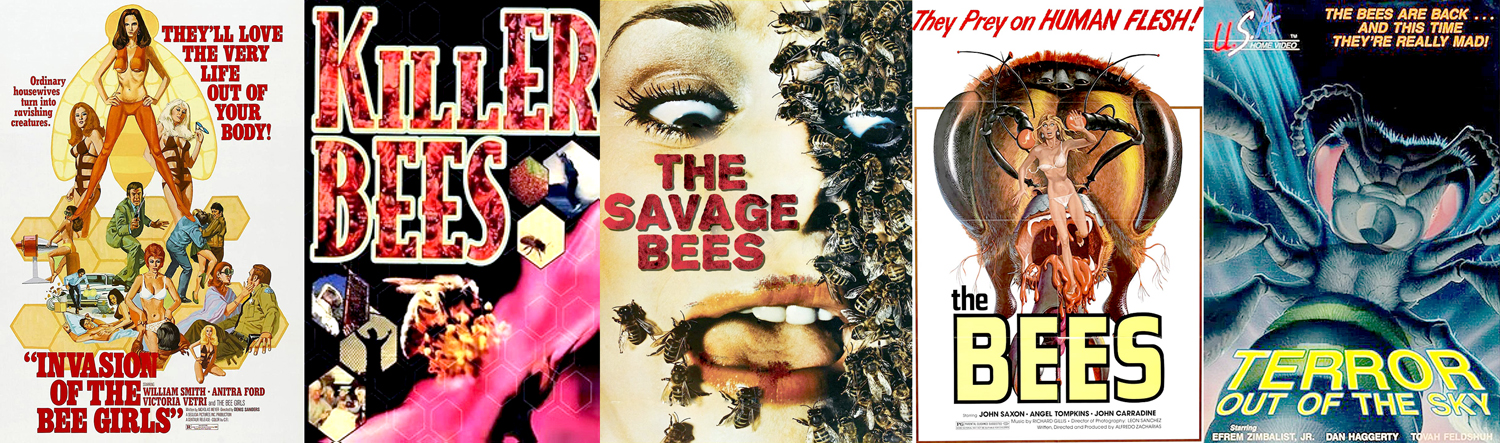
Killer bees were a hot topic in the news in the 1970s, with a fear that the Africanized honeybees would take over and present a real danger to humans. Of course, that led to quite a few killer bee movies, including Invasion of the Bee Girls (1973), Killer Bees (1974), The Savage Bees (1976), The Bees (1978), and Terror Out of the Sky (1978). The last film on this list is the sequel to the third one on it. Lucky for all of us, The Swarm did so poorly at the box office, a planned sequel was never made

Of course, the final lines of any horror or disaster film ends with setting up the potential sequel, and The Swarm is no exception, as Katherine Ross says, “Did we finally beat them? Or is this just a temporary victory?”

And Michael Caine replies: “I — I don’t know. But we did gain time. If we use it wisely, and if we’re lucky, the world might just survive.”

Click any image to enlarge

In the 1920s, the world of animated cartoons was the Wild West. The same group of animators all worked for each other, began their own studios, worked for other studios, went bankrupt and built new studios. There were Bray Productions, Van Beuren Studios, Terry Toons, Barré Studios. All populated by a circulating cast of the pioneers of movie cartoons: Paul Terry, Walter Lantz, John Bray, Amadee Van Beuren, Pat Sullivan, Ub Iwerks, Vernon Stallings, Earl Hurd, Grim Natwick. And, of course, Max and Dave Fleischer, and Walt Disney. 

Among them, they created a whole series of popular cartoon characters that populated the silent era of animation: Bobby Bumps, Colonel Heeza Liar, Felix the Cat, Oswald Rabbit, Ko-Ko the Clown, Milton the Mouse, Krazy Kat, Farmer Al Falfa, Mutt and Jeff, and an early, non-cat-and-mouse version of Tom and Jerry. 

There were popular series, such as the Aesop’s Fable animal cartoons and Disney’s early Alice cartoons. 

I watched tons of these old, silent cartoons as a kid when they were licensed to TV syndication. In those early years, television was desperate for content and these cartoon mice and cats filled up the after-school hours. They were part of the cultural landscape for early Boomers; they are now largely lost to prehistory and archivists. Some may be found, usually in fuzzy, bad prints, on YouTube. 

By the end of the 1920s, two studios stood on top of the pile. On the West Coast, via Missouri, there was Disney; in New York, there were the Fleischer brothers. 

The two studios were poles apart. Disney was bland and inoffensive; the Fleischers were urban, surreal and ballsy. Disney came up with Mickey Mouse, who, while visually identifiable, is about the most innocuous character in the history of animation. What is Mickey’s character? Well? He has none. 

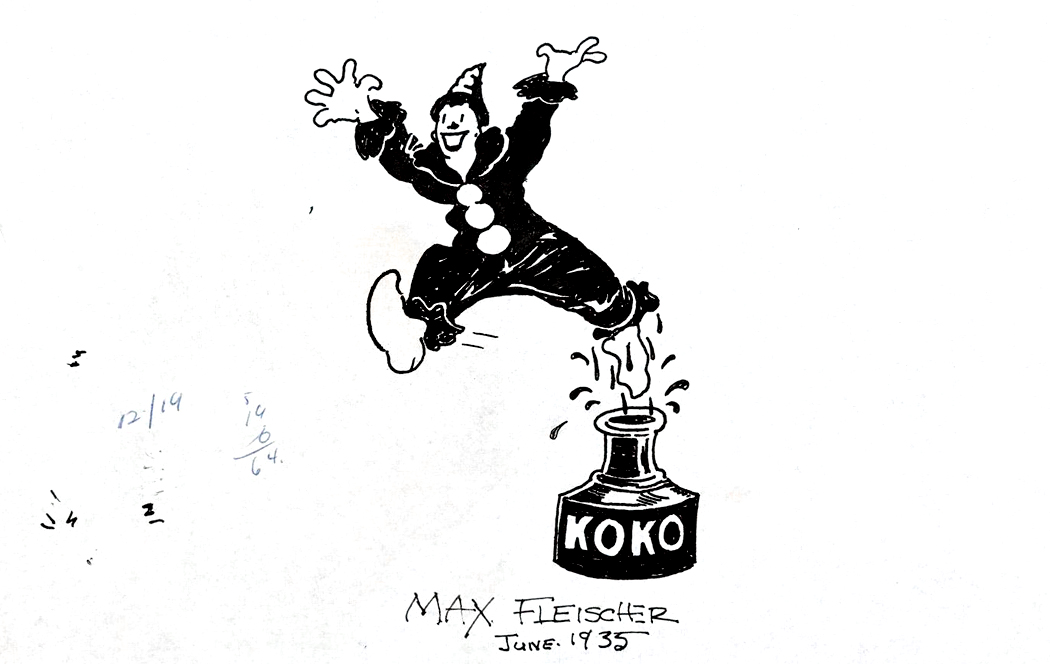
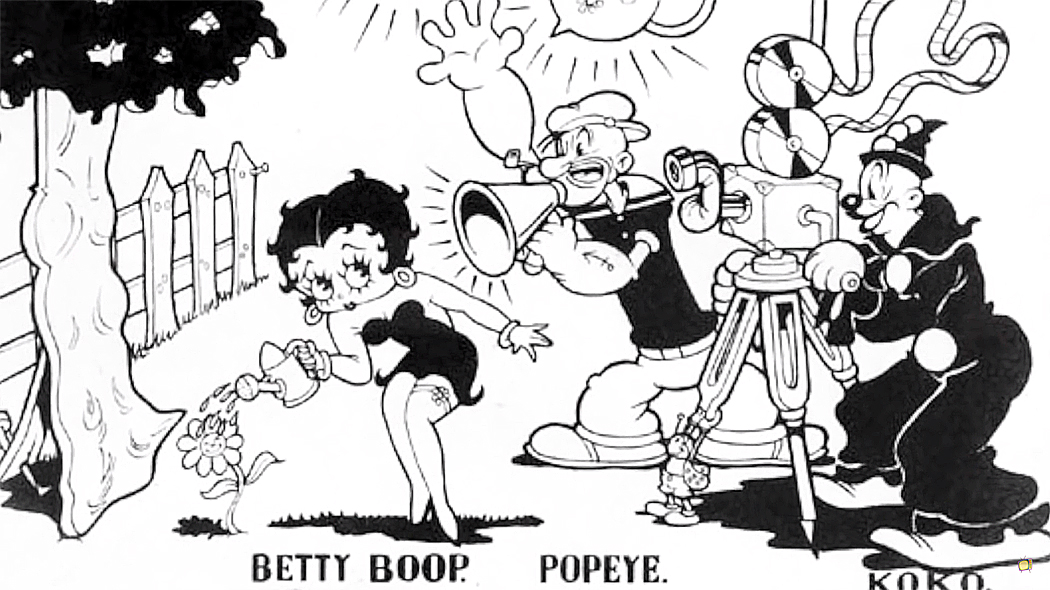
But in New York, the Fleischers created the “Out of the Inkwell” series, combining live action and animation. In most of these short cartoons, the dominant brother, Max, would open a bottle of ink and out would pop his characters, or he would draw them and they would come to life. His chief character was Ko-Ko the Clown (later, just Koko). 

Max Fleischer was an energetic inventor and came up with many of the techniques since common in animation. He held some 200 patents. Fleischer was an artist and could draw fluently. Disney, by contrast was an indifferent draftsman, but, in contrast with the hapless Fleischers, he was a world-class businessman who went on to found an empire of cartoons, films, TV shows and amusement parks. Disney made his cartoons for a researched audience; the Fleischers made their animations for themselves. By the end of World War II, they could no longer compete. 

But what a run they had, beginning with Koko, followed by Bimbo the dog and then, paydirt — Betty Boop was born. She arrived in this world at the same time as talkies. It is impossible to imagine Betty without her voice. 

Disney often claimed to have made the first animated cartoon with sound, in the 1928 short, Steamboat Willie, with Mickey Mouse. But by then, the Fleischers had been running cartoons with sound for four years. They pioneered the “bouncing ball” sing-along cartoons. And for that, Steamboat Willie is hardly a “talkie” — there is no dialog in it, only sound effects. And compared with Disney’s later slickness, it is a surprisingly crude cartoon. The Fleischers were miles ahead of Disney technically. 

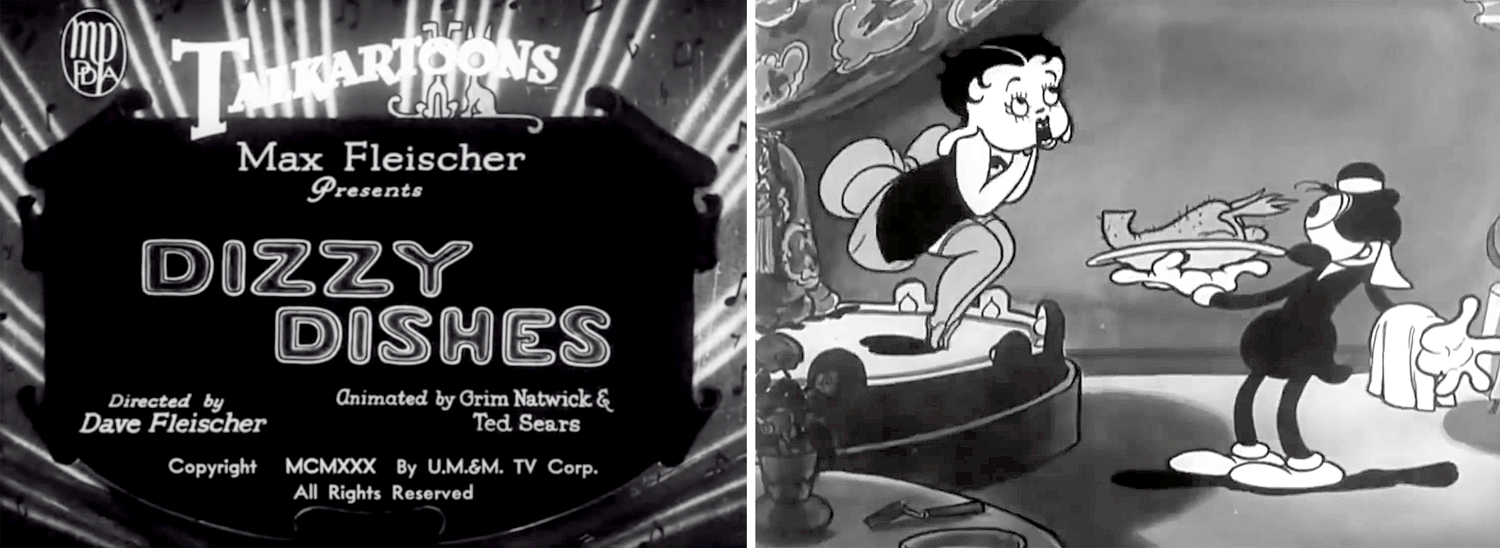
Betty first appeared in the 1930 cartoon Dizzy Dishes. Fleischer asked one of his animators, Grim Natwick, to come up with a girlfriend for their established character, Bimbo, and Natwick whipped up a sexy poodle. She has only a bit part in Dizzy Dishes, singing onstage, while the hero, Bimbo, sees her and falls in love. Betty has long doggy ears and a dark, wet doggy nose. 

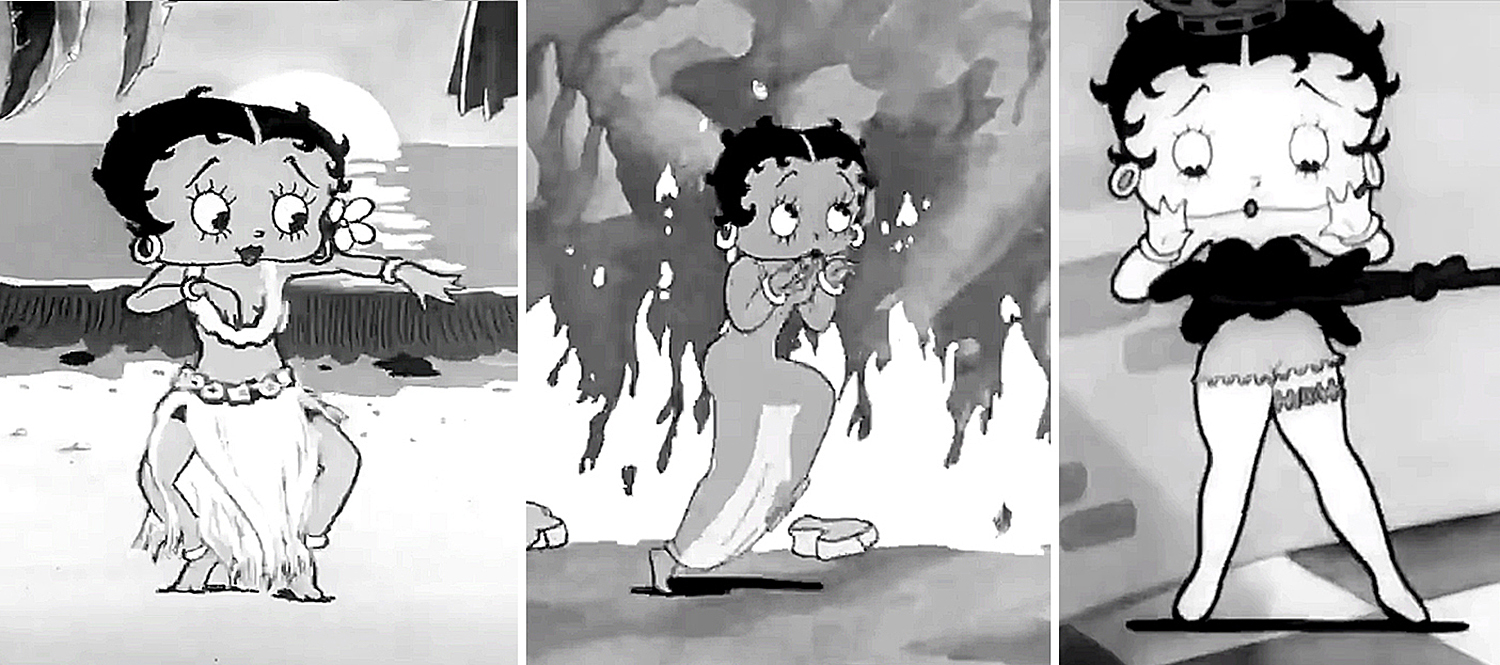
Later, Betty evolved into a Jazz-Age flapper with human ears and nose, and a sexy bareback dress, short enough to show off her garter. 

Betty got her own series of cartoons, and from 1930 to 1939, she starred in 90 releases. Her career spanned two eras in early film history — the pre-Code days until 1934, and then the clamp-down by the Catholic Legion of Decency and the Hollywood Hays Code, which put quite a crimp in Betty’s style. 

After her first 30 films, the Code kicked in. In her final pre-Code short, Betty Boop’s Trial (June, 1934), Betty turns her back on the camera, flips up her tiny skirt to show off her panties and bottom. 

It’s hard now to recognize just how shocking and adult the Betty Boop cartoons could be. The Fleischer cartoons were made for grown-up audiences, not just kids. There were sex, violence, gritty urban scenes and even a recognition of the Great Depression. She was, after all, a Jazz-Age independent woman. 

And despite some unfortunate blackface scenes, Fleischer films were surprisingly integrated. African-American musicians Louis Armstrong and Cab Calloway star in several Boop-toons. I don’t want to make too much of this, there are still some horrid African cannibal stereotypes  and some blackface in several of the cartoons. But the Fleischers seem to have been fairly progressive for their time. Some of their cartoons were refused showing in the South. 

And Betty was a Jazz Age Modern Woman — at least before 1934. Racy and risque, she dances a topless hula in Betty Boop’s Bamboo Isle (1932); prances before the fires of hell in a see-through nightie in Red Hot Mamma (1934); has her dress lifted up to show her underwear in Chess-Nuts (1932). 

Betty’s virtue is frequently besieged and there is little subtlety over what her signature phrase means in 1932’s Boop-Oop-A-Doop. Betty is a circus performer and the giant beast of a ringmaster lusts after her. In a creepy Harvey Weinstein move, the ringmaster paws all over Betty and implies that if she doesn’t do what he wants, she will lose her job. Betty sings “Don’t take my boop-oop-a-doop away.” 

By the end, she is saved by Koko the clown and her virginity is safe. “No! He couldn’t take my boop-oop-a-doop away!” 

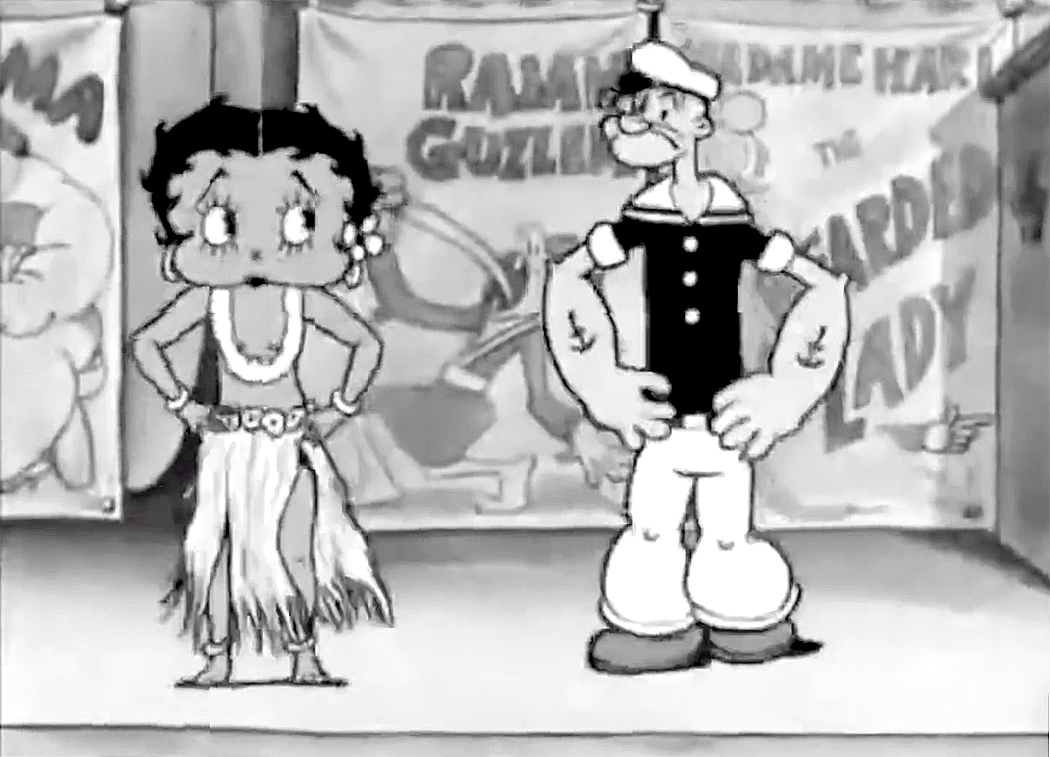
 In the 1933 Betty Boop cartoon, Popeye the Sailor, she only appears briefly, doing the topless hootchie-coochie dance she did in Bamboo Isle, joined by Popeye onstage, also wearing a grass skirt. The short introduced Popeye in his first appearance in an animated short. 

As Betty became tamed and dowdy after 1934, her popularity waned just as Popeye’s grew, eventually overtaking her as the Fleischer’s prime property. 

By the end, in 1939, Betty had turned into a swing-music figure. Her head-to-body ratio had subsided. Her skirts lengthened and her neckline rose. Then she disappeared.

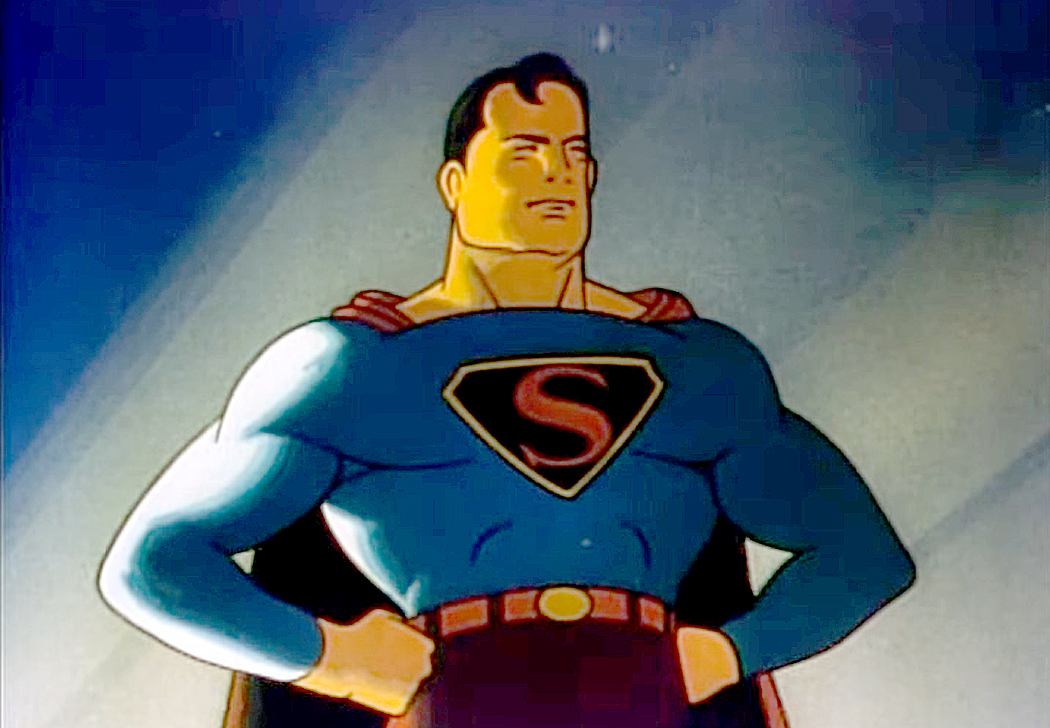
The Fleischers continued making Popeye cartoons, lost their company to Paramount Pictures, who then fired the brothers. Their last project with Paramount was the stylish Art-Deco inspired Superman cartoons. 

Betty had a resurgence, not as a cartoon star, but as a pop-culture star and even a feminist icon, in the 1980s, with a merchandising boom. She then appealed to a generation that may not even have known she had been an animated cartoon star. 

__________________________

“Don’t take my boop-oop-a-doop away!”

— “Boop-Oop-A-Doop,” 1932

__________________________

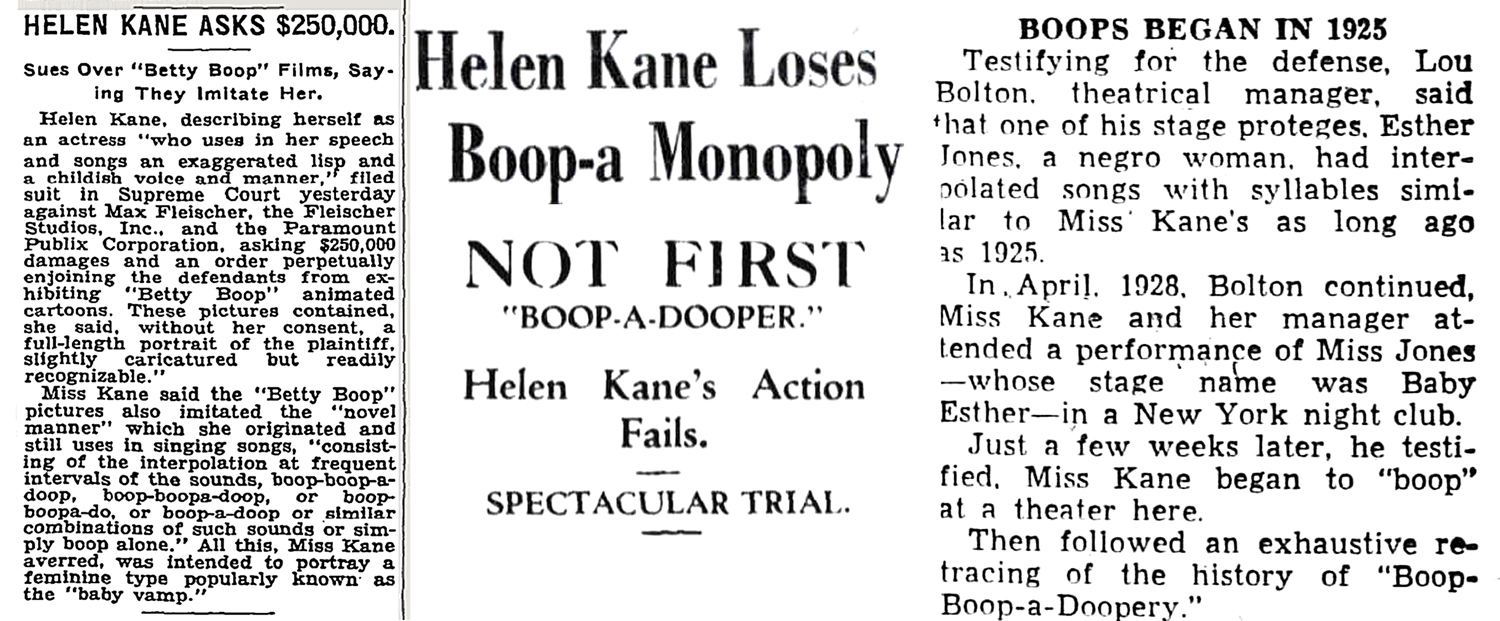
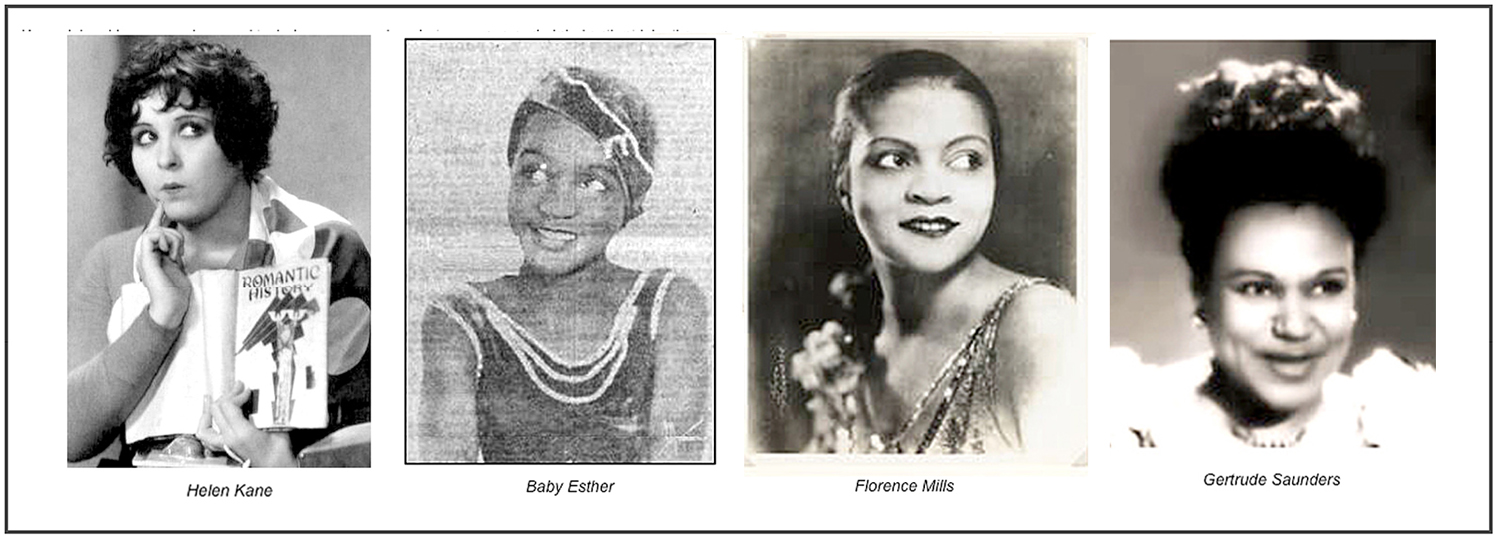
When Betty Boop was introduced in 1930, Fleischer animator Grim Natwick based her look and sound on popular singer Helen Kane, who had a baby-voice and scatted as she sang. In 1932, Kane sued the Fleischers over their use of her image. It came to trial in 1934. 

“Your honor,” said Kane’s lawyer to Justice Edward J. McGoldrick, “we contend this character [Betty Boop] has Miss Kane’s personality her mannerisms her plumpness, her curls, her eyes, and that she sings the songs Miss Kane made famous.” A style Kane called the “baby vamp.” 

Kane (1904-1966) was born in New York and by age 15 was performing professionally. She achieved popularity in the 1920s on stage in vaudeville and on Broadway. She recorded 22 songs and made seven films in Hollywood. Her trademark was a squeaky baby voice and scat singing. But her style of singing was going out of fashion by the early 1930s, although she continued to find work onstage. When Betty Boop came out, she sued the Fleischers for $250,000 (equivalent to about $5 million today). The trial lasted two weeks and filled the newspapers with juicy stories. 

Betty Boop was described in the court case as “combin[ing] in appearance the childish with the sophisticated — a large round baby face with big eyes and a nose like a button, framed in a somewhat careful coiffure, with a very small body of which perhaps the leading characteristic is the most self-confident little bust imaginable.”

Kane’s lawyers made a tactical mistake by basing their claim on the fact that she uses scat syllables in her singing, including the famous “Boop-oop-a-doop.” Kane claimed to have invented the practice of singing nonsense words to music, a claim too easily disproven. 

The Fleischers’ lawyer demonstrated that Kane had seen a juvenile Black performer, Baby Esther Jones, who shared a manager with Kane, and that Baby Esther (also sometimes called L’il Esther) used the same scat singing and baby voice before her. 

Kane caricature and Sweet Betty

Trial transcripts can be quite a kick in the pants to judicial dignity. Asked what Baby Esther did on stage, the manager said, “She sang the chorus and during her choruses, we had four bars omitted, which we called the break, of so-called ‘hot licks.’” Question: “During those breaks or ‘hot licks,’ what did Baby Esther do?” Answer: “A funny expression in her face and a meaningless sound.” Q: Will you tell us what those sounds were?” A: “At various times they differed, they sound like ‘boop-boop-a-doop,’ and sometimes…” Kane’s lawyer then objects. So Fleischer’s lawyer rephrases:

“Give us as nearly as you can how they sounded?” A: “I could do it better if I had rhythm with it.” Q: “Give us the sounds.” A: “Boo-did-do-doo.” Q: “Where there other sounds besides the one that you have just mentioned?” A: “Yes, quite a few.” Q: “Will you give us as many as you can remember?” A: “Whad-da-da-da” Q: “Others.” A: “There are quite a few — ‘Lo-di-de-do’” Q: Any others that you recall?” A: “Sounds like a time she would make a sound like sort of a moaning sound, finished off with ‘de-do’” 

According to one newspaper account, “That’s when the court stenographer threw up the sponge and admitted he couldn’t spell such things.” 

At one point, film of Betty Boop and film of Helen Kane were shown, without sound, to compare their styles. 

Another newspaper account reported “Except for the occasional throat-clearings of a roomful of attorneys, it was strictly a silent performance, the court having ruled agains any audible ‘booping.’

“Miss Kane’s attorneys strove vainly to have the sound tracks included, saying they wished to show how Betty Boop has ‘simulated our voice and our style of singing,’ but Justice McGoldrick ruled that any ‘booping’ would be incompetent, immaterial and irrelevant.”

Kane with three women who voiced Betty Boop in the cartoons

The fact that Betty Boop was clearly based on Kane (later readily admitted by Boop designer Grim Natwick) hardly mattered. The judge ruled that the sound of a voice cannot be copyrighted, and that the nonsense syllable singing was quite common beyond its use by Kane and found for the Fleischers. 

Three of the women who voiced Betty Boop in the Fleischer cartoons had all been participants earlier in a Helen Kane imitation contest. They had all performed, outside the Boop-toons as Kane knock-offs. 

The knowledge that Betty Boop imitated the White Kane who imitated the Black Baby Esther has recently raised the specter of “cultural appropriation” — a concept that has now become something of an ethical fad. I know of few things sillier or more pointless. 

After all, Baby Esther was known as a “Little Florence Mills,” imitating that singer. The actual Mills took over on Broadway from Gertrude Saunders in the 1921 hit, Shuffle Along. Each performer borrowing from the previous. 

In the Fleischer trial, the famous pianist and composer, Clarence Williams testified that he’d been using the scat technique since 1915. Very few things have virgin birth; most things are developments of other things. We could make the claim that scat began with Stephen Foster and Camptown Races and its “doo-dah, doo-dah” or trace it back to the 16th century and Josquin de Prez’s frotolla El Grillo, where the singer imitates the sound of a cricket. 

As the Fleischer trial judge ruled, “the vocables ‘boop-boop-a-doop’ and similar sounds had been used by other performers prior to the plaintiff.” 

The whole issue of cultural appropriation is bothersome, to say the least. I am not talking here about cases such as when an Anglo artist sells his work as Indian art, pretending to be Native American. That isn’t cultural appropriation, it is simply fraud. But when an artist finds something from another culture that piques his interest and creativity, well, that’s just normal. Everybody is always borrowing from everybody else. It is how culture moves forward. 

Is spaghetti cultural appropriation because the tomato came from indigenous cultures in the New World? 

Mexican Japanese and Filipino spaghetti

How about when spaghetti makes the journey back to the Americas and becomes Mexican chipotle spaghetti. Or further travels to Japan with added daikon, or to the Philippines, where they add hot dogs (pace Sheldon Cooper)? 

In the Columbian Exchange, the New World gave the Old not only tomatoes, but corn (maiz), cacao, vanilla, potatoes and tobacco. 

The Old gave back to the New grapes, onions, apples, wheat, to say nothing of swine, cattle, horses and honey bees. 

So, today, there is nothing more typically Navajo than satellite dishes and pickup trucks. 

It’s all a great mix, and to forbid such churn is to stall human progress. Culture is never static but always on the move. “Traditional” is always a museum-piece. 

I’m not making a case here for blackface minstrelsy — such things are rightfully seen as appalling. But should that mean that Vanilla Ice should not rap? Or that Jessye Norman shouldn’t sing opera? That we should all be stuck in our particular silos and never learn from others? 

George Harrison should never have learned the sitar? That Sergio Leone should have left the plot of A Fistful of Dollars to Akira Kurosawa? 

That Cubism should be trashed because Picasso became fascinated by African masks? 

This isn’t to say there aren’t egregious examples, but they mostly concern stereotyping —  which is to say, ignorance, a failure to see what is actually going on in the other culture. finding something good and useful in another culture and adapting it is rather different, even if you take the original completely out of context. 

Cross-fertilization is not only one of the pleasures of culture, but one of its essentials. Culture is a group enterprise, not an individual one, and it lives through free exchange. 

The current blather about cultural appropriation reminds me, more than anything else, of the Victorian fear of the body and sex, like calling legs “limbs.” It is blue-stocking puritanism and to hell with it. 

Click on any image to enlarge

“There’s no such thing as bad art.” This was a dictum of the late classical music critic Dimitri Drobatschewsky. He explained: “If it’s bad, it’s not art.” But I have to take exception. There are examples of works that are deeply flawed, yet they stick in our psyches in just the same way as a masterpiece. 

To take an extreme: Ed Wood’s Plan 9 From Outer Space is often nominated as the “worst movie ever made,” yet, there are piles of other bad movies that have fallen into justified oblivion. Something about Plan 9 wheedles into our brains and lodges there, despite dialog such as, “We are all interested in the future, for that is where you and I are going to spend the rest of our lives. And remember my friend, future events such as these will affect you in the future.”

The movie is a peculiar kind of classic and draws viewers every time it is screened. 

And speaking of tin-eared dialog, the 1933 King Kong is full of stuff such as, “It never fails. Some big hard-boiled egg goes goofy over a pretty face, and bingo! He cracks up and gets sappy.” And the acting is often wooden (Bruce Cabot especially; and even Robert Armstrong can’t make this dialog work) and the story line is racist in a way common to its era, but Kong is as much part of our cultural landscape as George Washington’s cherry tree or the Gettysburg Address. 

There is something about these films that buries into our unconscious and lives there like a dream. There is a logic to real life, a cause and effect, but there is an alternate logic to dreams, and that is where Plan 9 or King Kong comes to life. Ordinary rules don’t apply.

There are many better-made movies that are completely forgettable. Shakespeare in Love won an Oscar, but can you remember anything about it? I can’t. But Kong is buried there, in the neurons, permanently, mythically. 

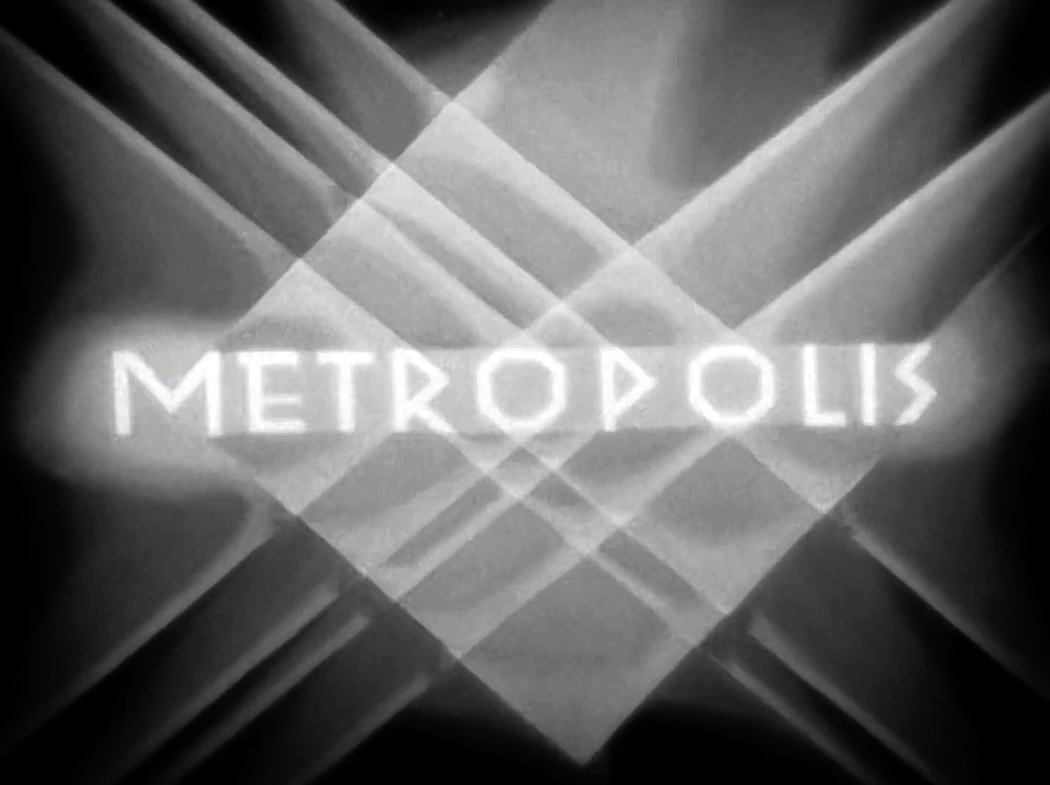
Which brings us to one of the greatest movies ever made, or at least one of the most memorable. in a 2012 Sight & Sound poll of critics, Metropolis was voted as the 35th greatest film of all time, tied with Hitchcocks Psycho and just ahead of Truffaut’s 400 Blows. It also ranked 12th in the film magazine Empire’s “The 100 Best Films Of World Cinema” in 2010 and second in a list of the “100 greatest films of the Silent Era.”

It didn’t achieve such eminence through its plot or acting. The plot is silly and preposterous and the acting is often so over the top as to be laughable. 

All built on a silly and sentimental bromide. 

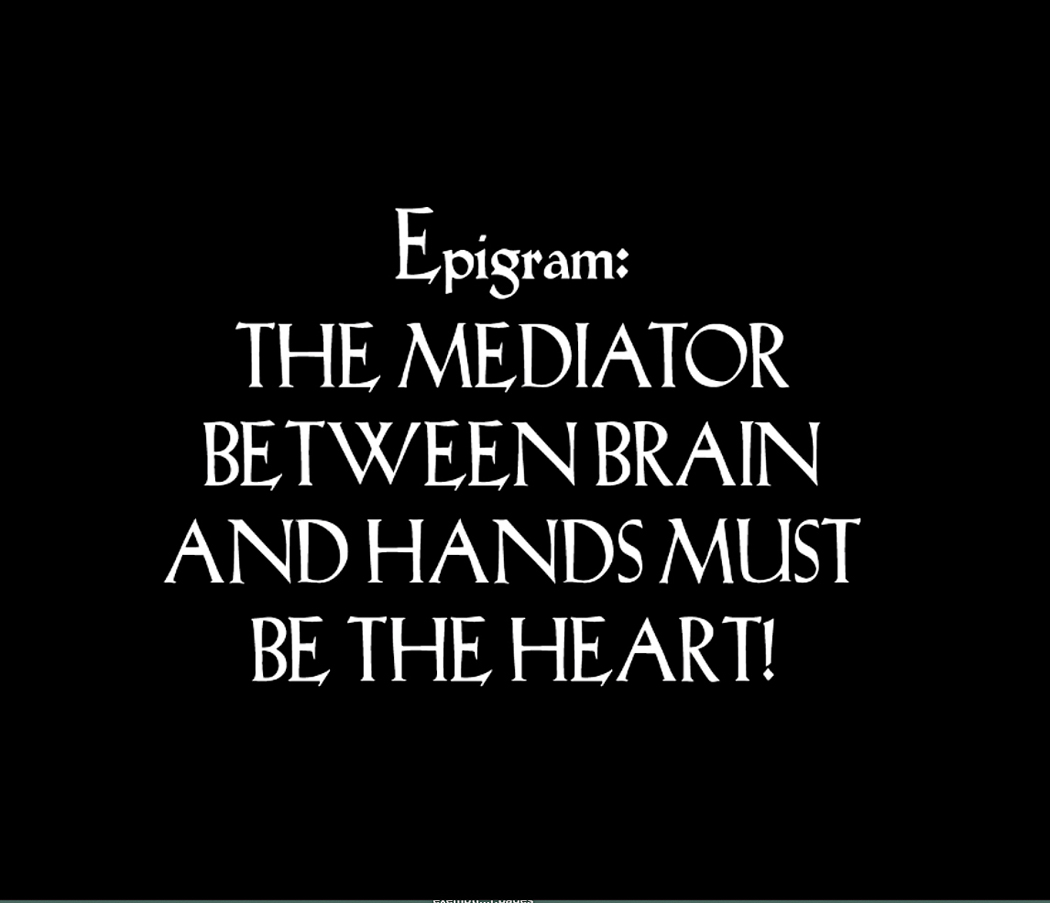
The film’s director, Fritz Lang, agreed about the moral, telling Peter Bogdanovich in an interview, “You cannot make a social-conscious picture in which you say that the intermediary between the hand and the brain is the heart. I mean, that’s a fairy tale — definitely.” 

It looks like science fiction, but there’s no science in it. It could be a dystopian future, but it’s not set in any particular time. It is mostly a fever-dream of capitalism, except there are no economics in it.       

Yet, the film has a power that many arguably better films simply can’t muster. Scene after scene in Metropolis bores deep into the subconscious. 

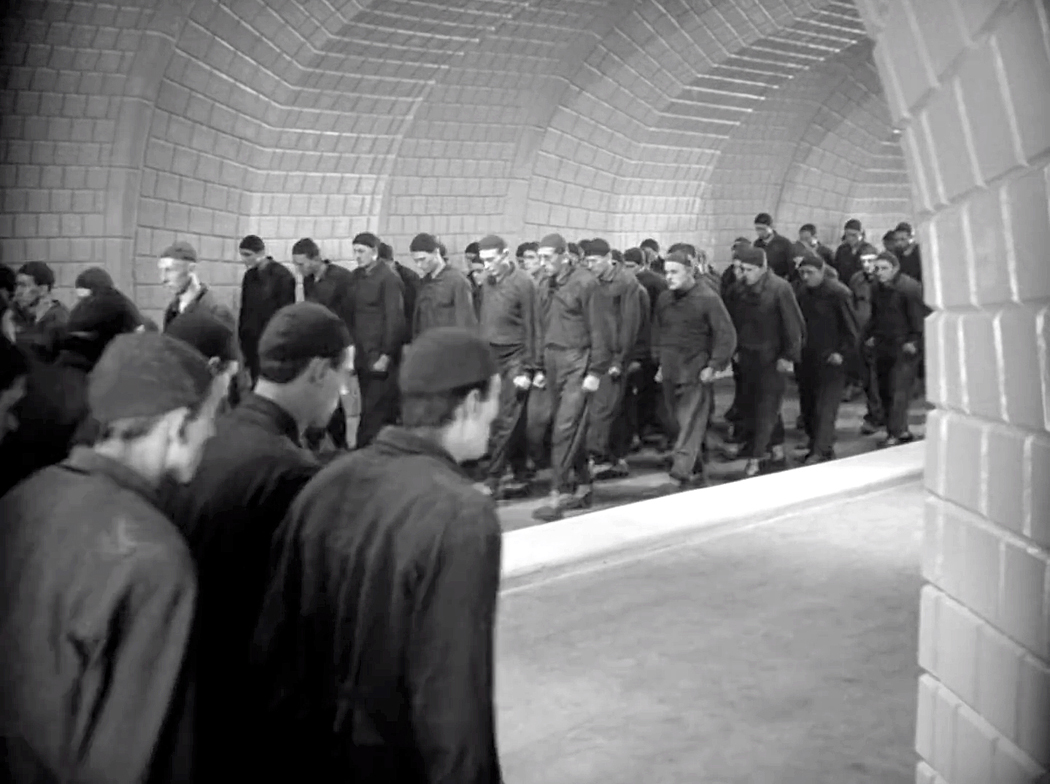
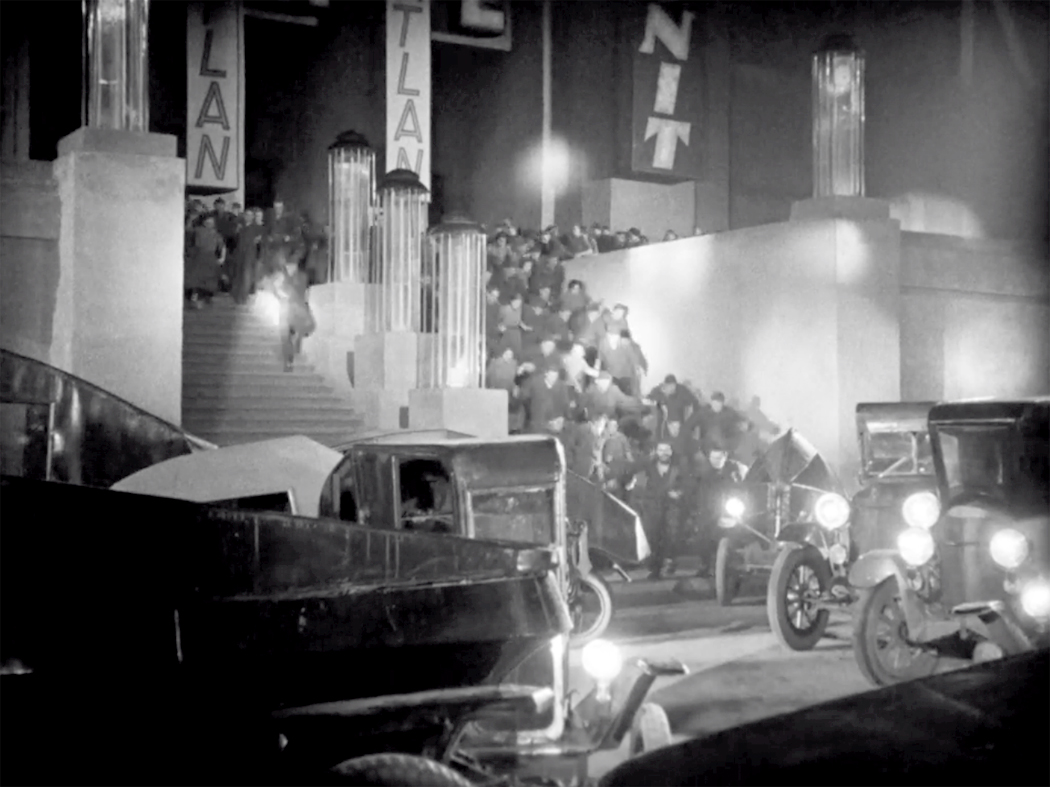
Right from the opening scene, when the factory shift changes and one phalanx of exhausted workers exit the giant elevators, shuffling at half-speed, while the fresh phalanx marches, in step in the opposite direction at full speed. It is a striking bit of choreography, worthy of Pina Bausch, and a clue to how the rest of the movie will unfold. 

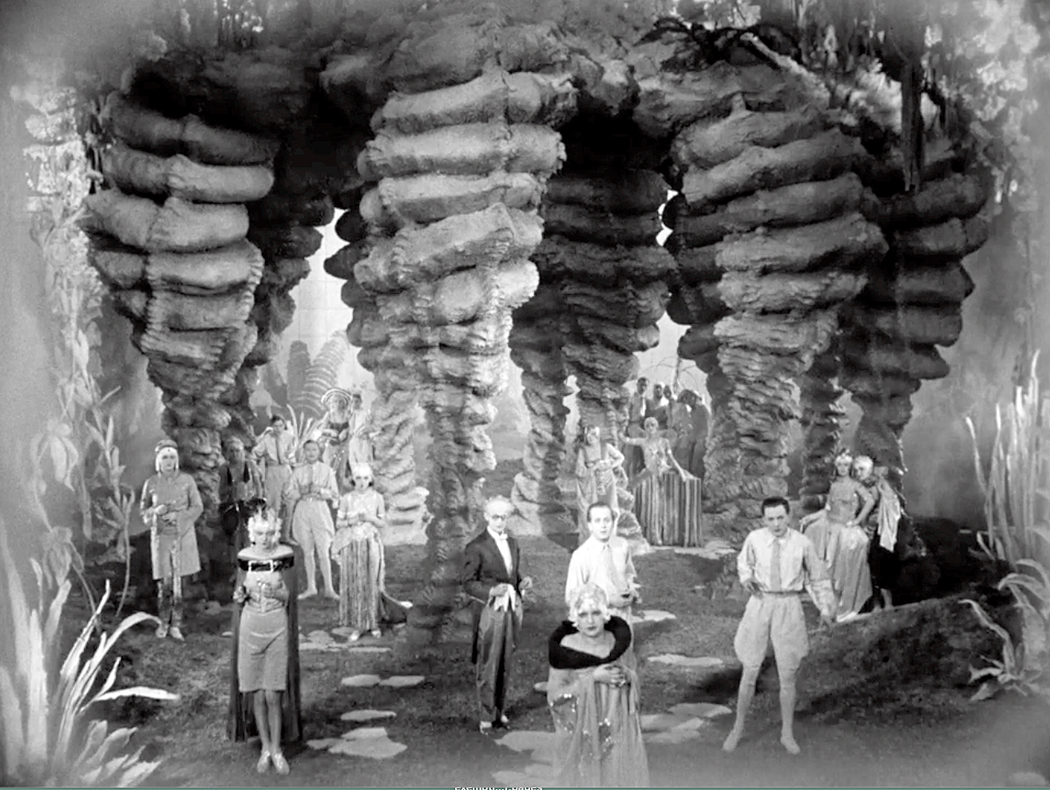
In the next segment, we find our hero, Freder, cavorting with a bevy of nymphs in the “Eternal Gardens,” in a set that is actually unnerving.

Scene after scene is unreal but unforgettable. 

While the plot is tangled and confused, the set-up is simple. The city is divided into an upper part, where the rich live in luxury, and an underground inhabited by the workers and the machines that keep the city running. A Romeo and Juliet story intervenes and so does a mad scientist, who makes a robot in the image of our Juliet. Chaos ensues. 

Don’t look for it to make any sense. It doesn’t. 

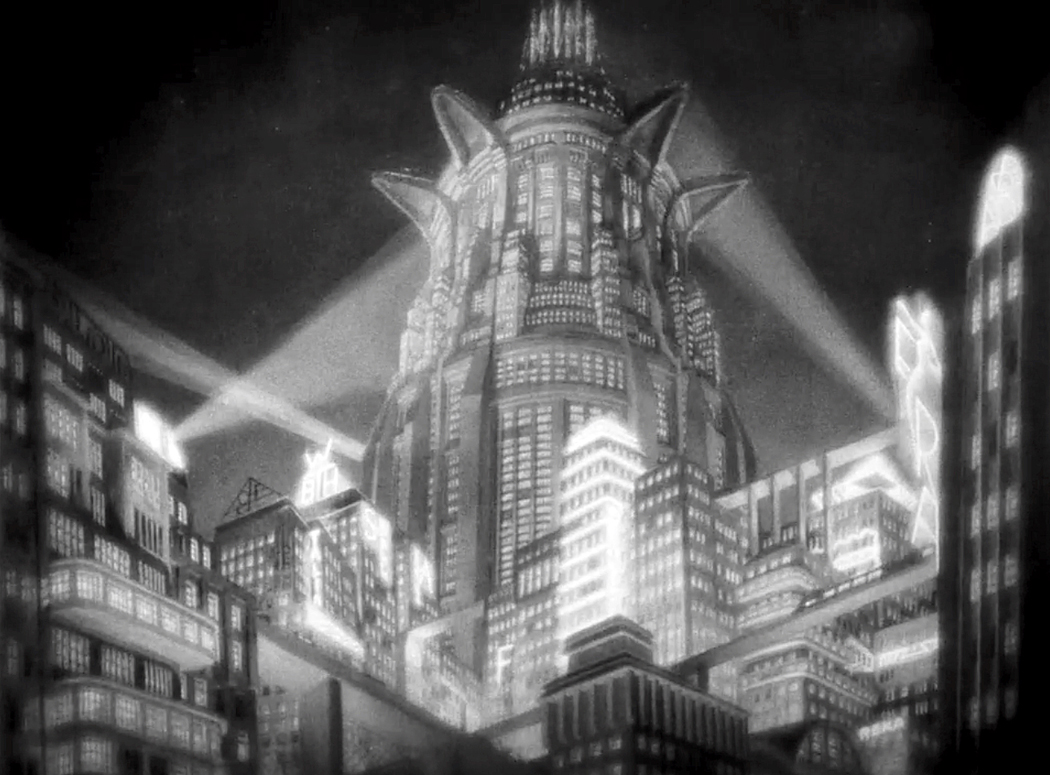
The film was conceived by director Lang when visiting New York City in 1924. “I looked into the streets — the glaring lights and the tall buildings — and there I conceived Metropolis,” he told an interviewer.  He said that “the buildings seemed to be a vertical sail, scintillating and very light, a luxurious backdrop, suspended in the dark sky to dazzle, distract and hypnotize.”

At the time, Lang was married to novelist Thea von Harbou (who already had published more than 40 books) and they worked out a story, which she turned into a novel. Later, Lang and Harbou translated the book into a script. 

Thea von Harbou and first edition hardcover (l.) and paperback (r.)

(I’ve just read the original novel and it is terrible, grossly overwritten and both silly and sentimental. And it used enough exclamation points to fill an oil tanker. Here is a sample: “Ah! The intoxication of the lights. Ecstasy of Brightness! — Ah! Thousand-limbed city, built up of blocks of light. Towers of Brilliance! Steep mountains of splendour! From the velvety sky above you showers golden rain, inexhaustibly, as into the open lap of the Danae. Ah — Metropolis! Metropolis!”)

Lang and Harbou working on script

Lang began filming Metropolis in 1926 at the Ufa studios in Berlin. It took 17 months to film, with 310 shooting days and 60 shooting nights and went over budget by 310 percent, costing 5.3 Reichsmarks (something like $23 million in today’s money) and nearly sent the studio into bankruptcy.

Brigitte Helm, who played the lead, and the robot Maria, said “the night shots lasted three weeks, and even if they did lead to the greatest dramatic moments — even if we did follow Fritz Lang’s directions as though in a trance, enthusiastic and enraptured at the same time — I can’t forget the incredible strain that they put us under. The work wasn’t easy, and the authenticity in the portrayal ended up testing our nerves now and then. For instance, it wasn’t fun at all when Grot drags me by the hair, to have me burned at the stake. Once I even fainted: during the transformation scene, Maria, as the android, is clamped in a kind of wooden armament, and because the shot took so long, I didn’t get enough air.”

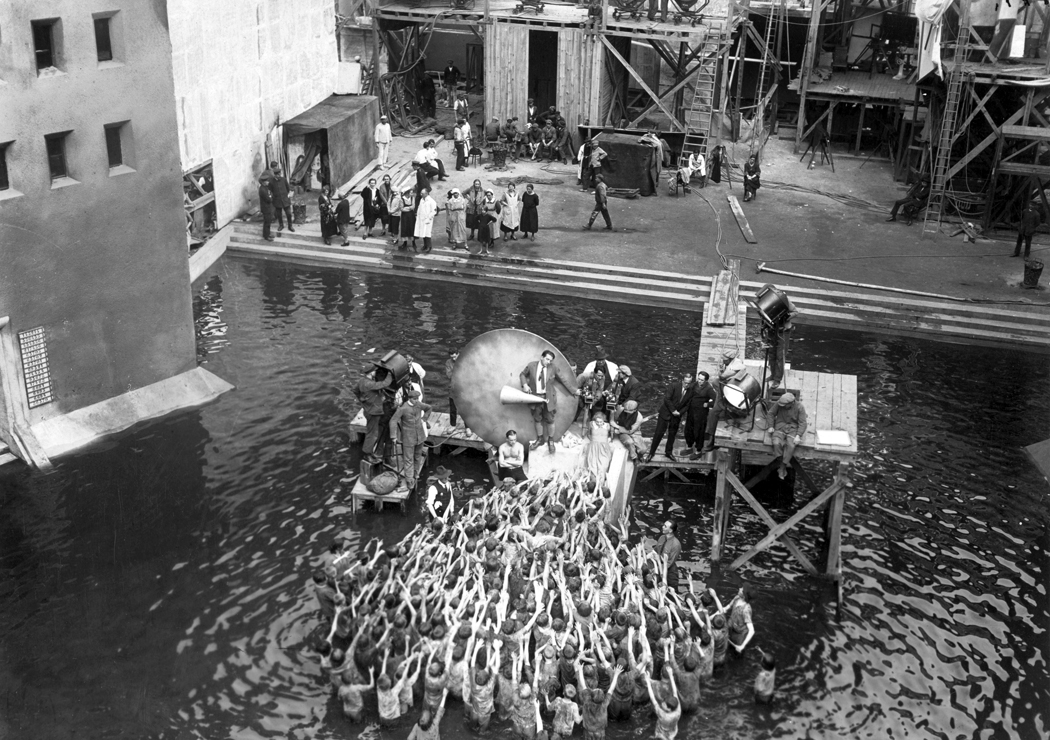
Lang brought in 500 children from the poorest districts of Berlin to play the Workers’ children and had them in ice-cold water for two weeks, as the Workers’ City was flooded.

The film was a financial failure on its initial release, but has become one of the great classics of all time. Its afterlife, though, was inauspicious. The movie was first released at a length of two and a half hours. The studio then cut it down to about two hours, and in the U.S., it was hacked down further, and in 1936, Nazi objections to its supposed Communist subtext, it was reduced to 90 minutes. Since its rediscovery in the 1960s, there have been many restoration attempts, but even today, with 95 percent of the film rediscovered and re-edited, it is still short of the director’s cut. 

And speaking of Nazis, Lang and Harbou divorced as her Nazi leanings became clear (she became a party member in 1933 and worked for the studio under Nazi rule during the war), and as for Lang, it was his bad luck that Joseph Goebbels and Adolf Hitler both liked the film and offered Lang the job as boss of all Nazi film production. Lang took the hint and fled Germany (by his own account, the very next day). 

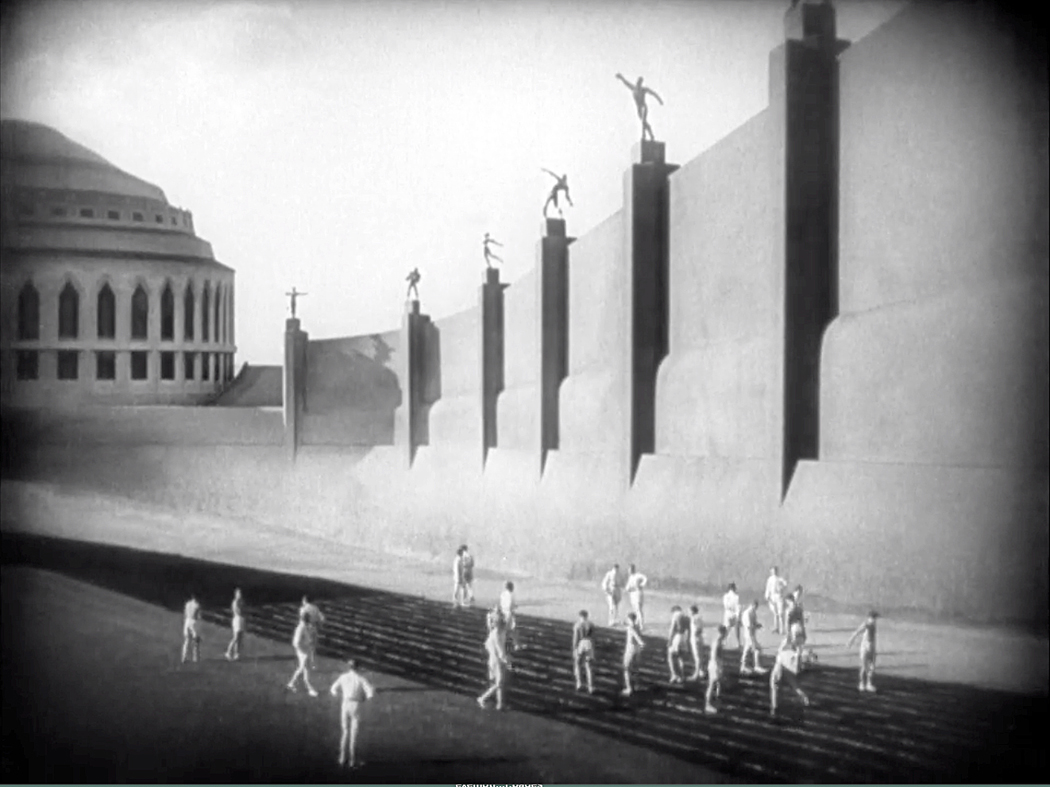
(An early scene in the movie shows a race in the Club of Sons in which the stadium architecture is astonishingly prescient of Albert Speer’s fascist architecture.)

So, why is this movie, with all its faults, such a memorable film? Unlike most, it doesn’t count on story to carry us through, and certainly not the acting. Rather, it burrows into our unconscious like a dream, with image after image that cannot be forgotten. One after the other, they pile on, right from that opening bit with the workers’ choreography.

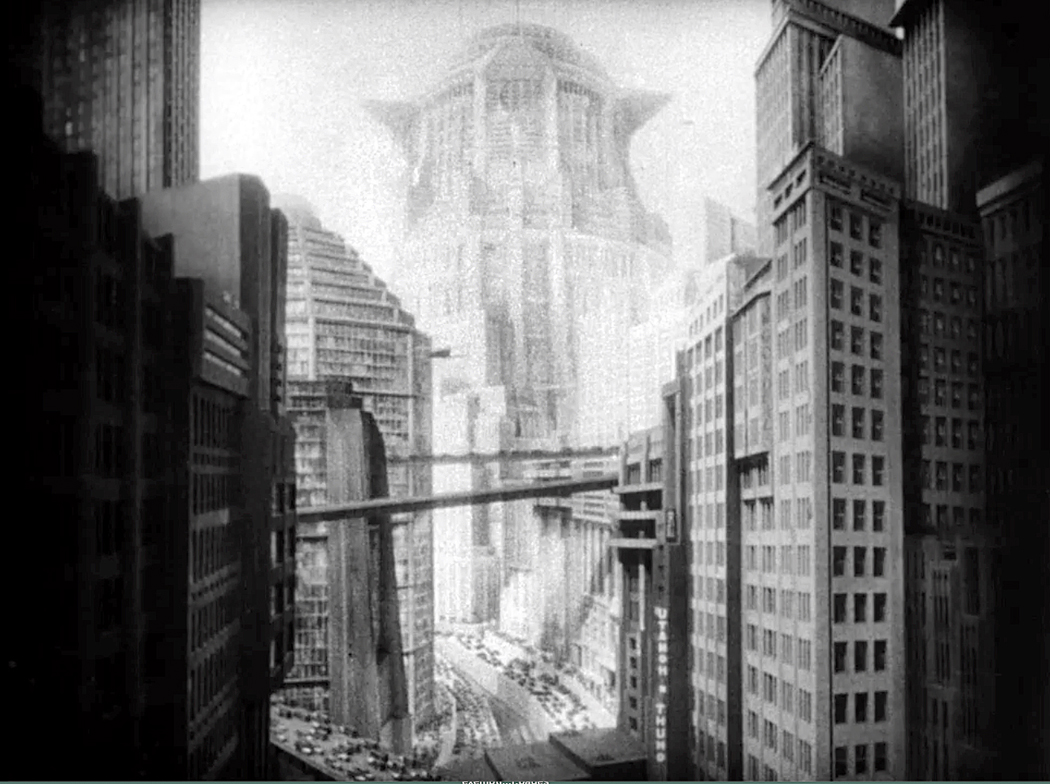
The city is the kind of future the past used to project, with its biplanes circling the buildings and the elevated roadways around skyscrapers so tall, we cannot see their tops. In the center is the giant tower called the “New Babylon

Then, there is the Workers’ City, hidden below ground, with its Soviet-style faceless apartment buildings. The social structure of Lang’s Metropolis is a parody of the rich-poor division manifesting itself in the between-wars Weimar Republic — and echoed today. Between the upper and lower levels is the Machine Level, where the workers put in their toilsome hours. 

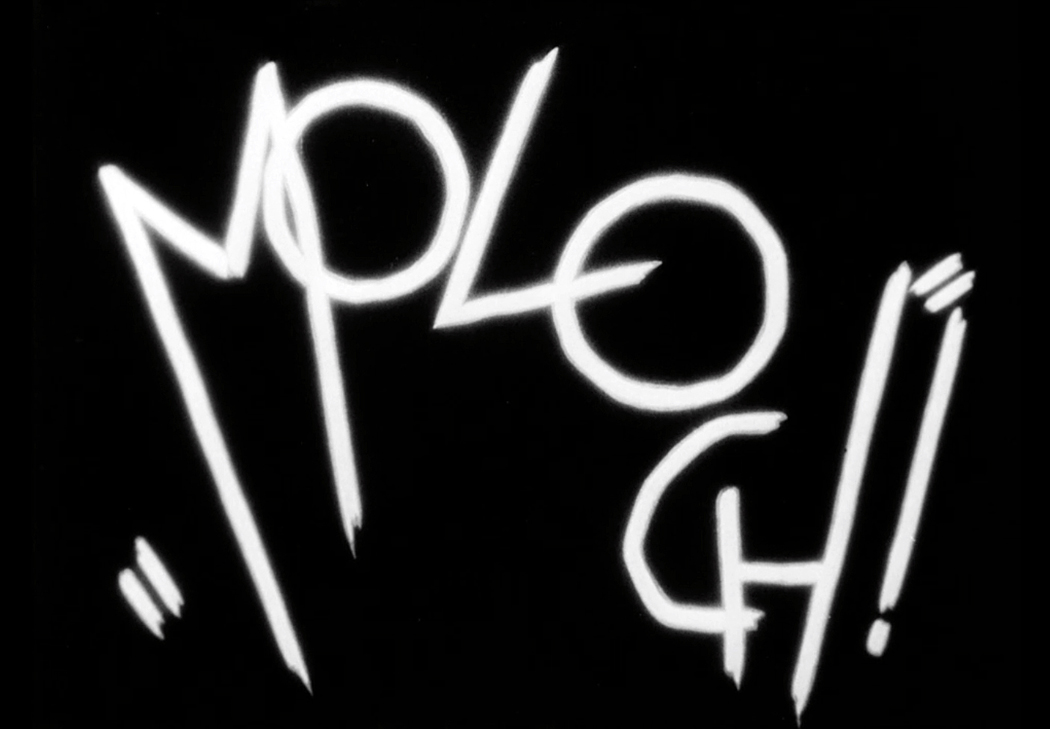
Our hero, Freder, wanders into this level, where he sees the great machine overheat and explode, scalding and killing scores of workers. He is horrified and hallucinates the machine turning into “Moloch,” devouring its human sacrifices.

He comes across Worker 11811, working a mysterious machine, who collapses from overwork and Freder takes his place. The scene recalls the famous Leonardo drawing of the “Vitruvian Man.” 

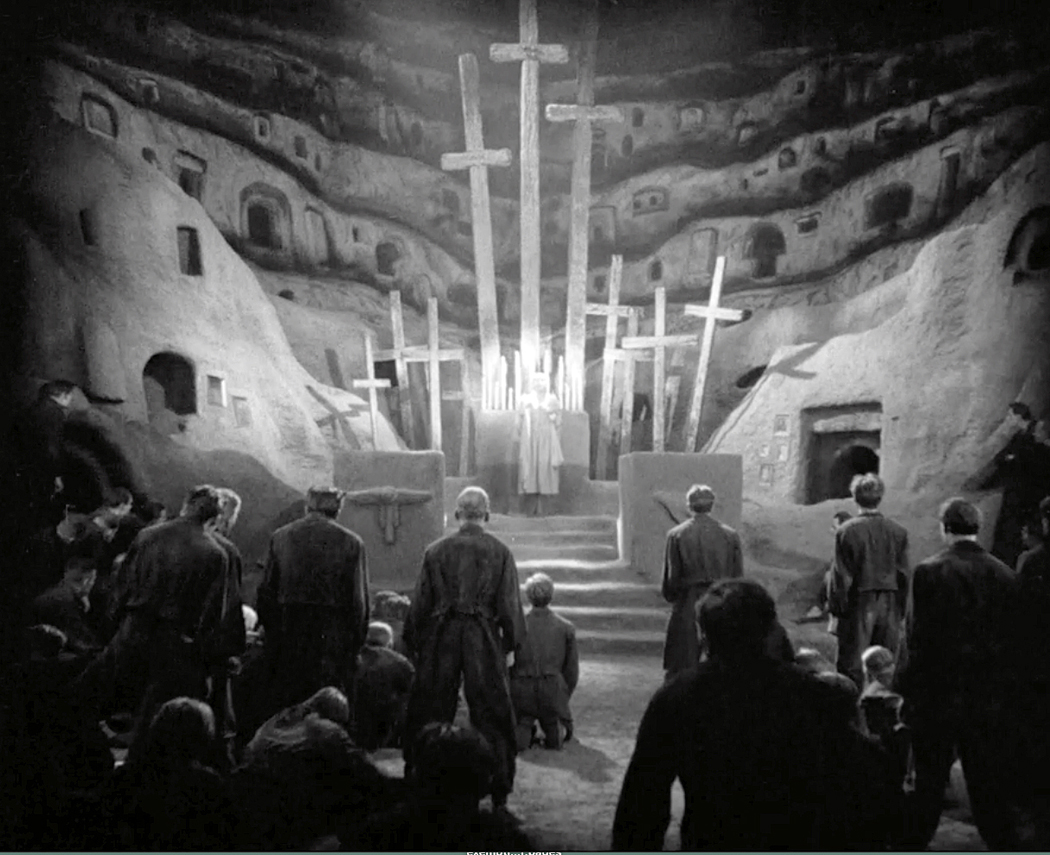
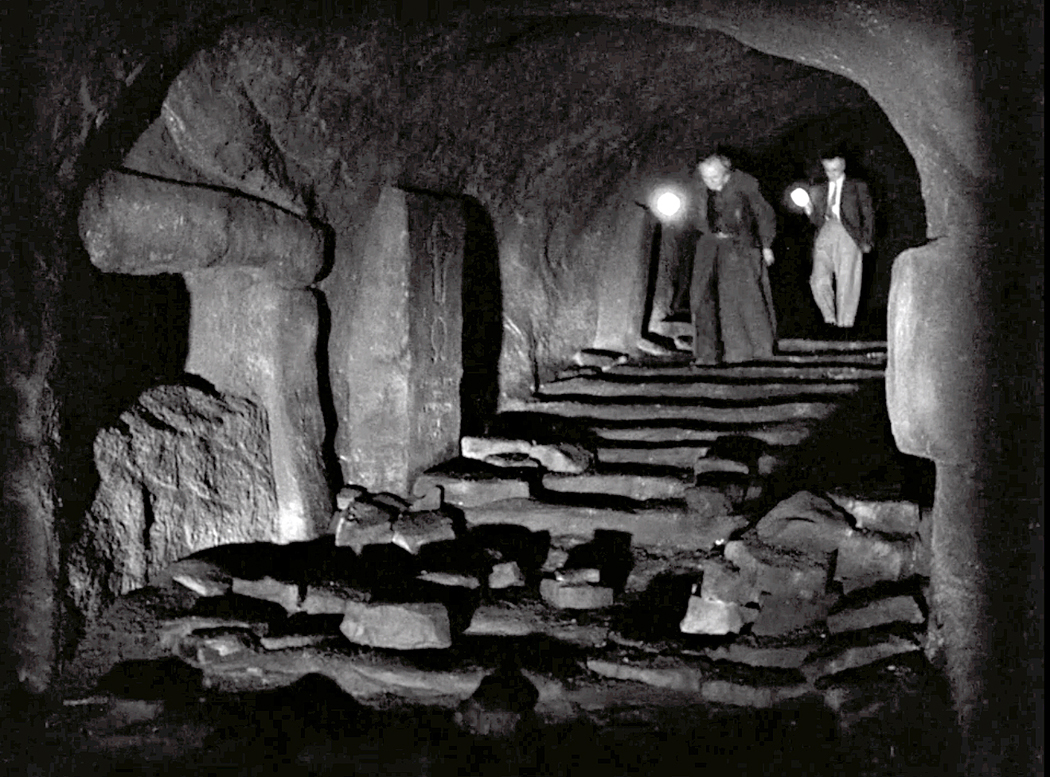
The whole underworld is a purgatory, and below the Workers’ City there are the catacombs, where the virtuous Maria lectures the workers about justice — and the importance of waiting for a “mediator.” 

This is not a movie about people, but about archetypes. There is father, son, city, death, all presented almost naked, with little attempt to disguise them as anything real. 

The world is divided, in Nordic and Wagnerian style into an underworld, a middle world and an upper world. The catacombs are deep caves, and the home of religion and myth.

The Workers’ City and their machines are in the middle.

And the privileged world of the elite rides above it all, and depends on all that resides — like a subconscious — below, normally unseen and unthought of. 

The architecture is a strange mix of the Moderne (Art Deco and German Expressionist); the dull efficiency of a Socialist utilitarian greyness; and relics of the Gothic; and prehistoric caverns. 

The main characters are the father, Joh Fredersen, who is master of the city; his son, Freder; the mad scientist Rotwang; and, most central of all, the woman, Maria. 

Fredersen (looking suitably Napoleonic); Freder; Rotwang; Maria

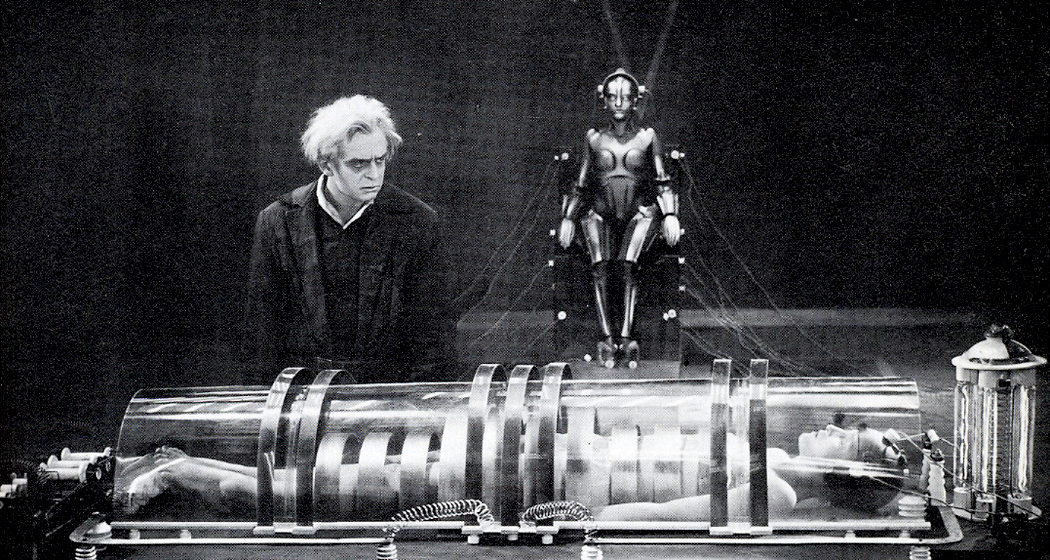
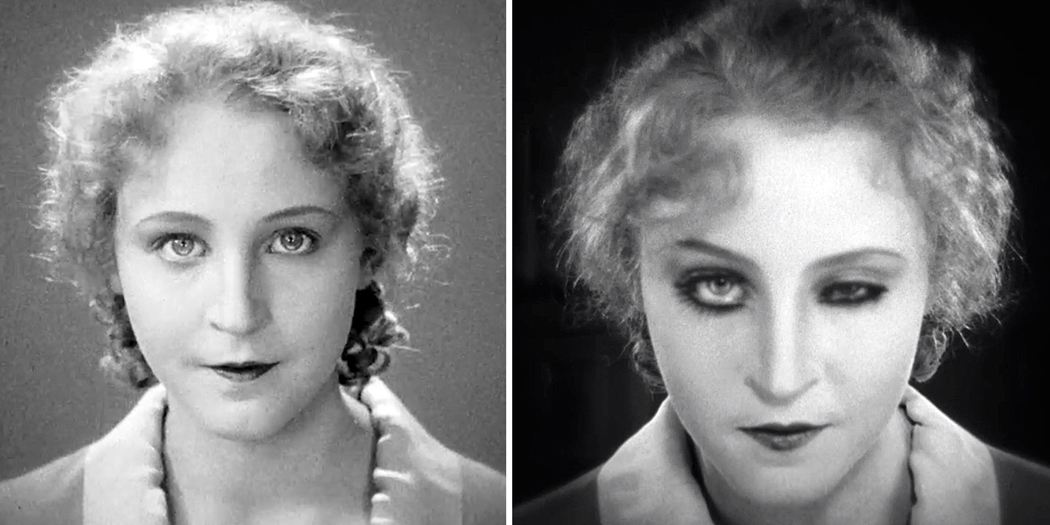
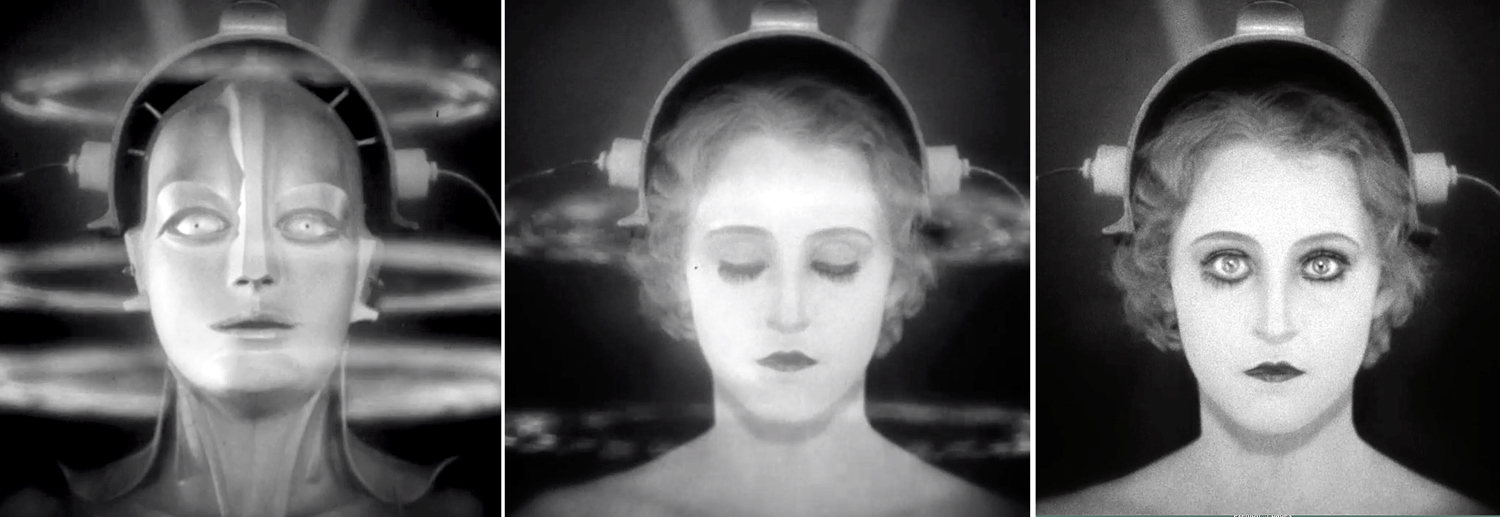
Maria, played by Brigitte Helm, is the central and most interesting character. She is really two characters, and the embodiment of two archetypes: virgin and whore. Rotwang creates a robot in the form of Maria and programs her to undo everything the good Maria has done. Helm differentiates the two personae in a way that they cannot be confused.

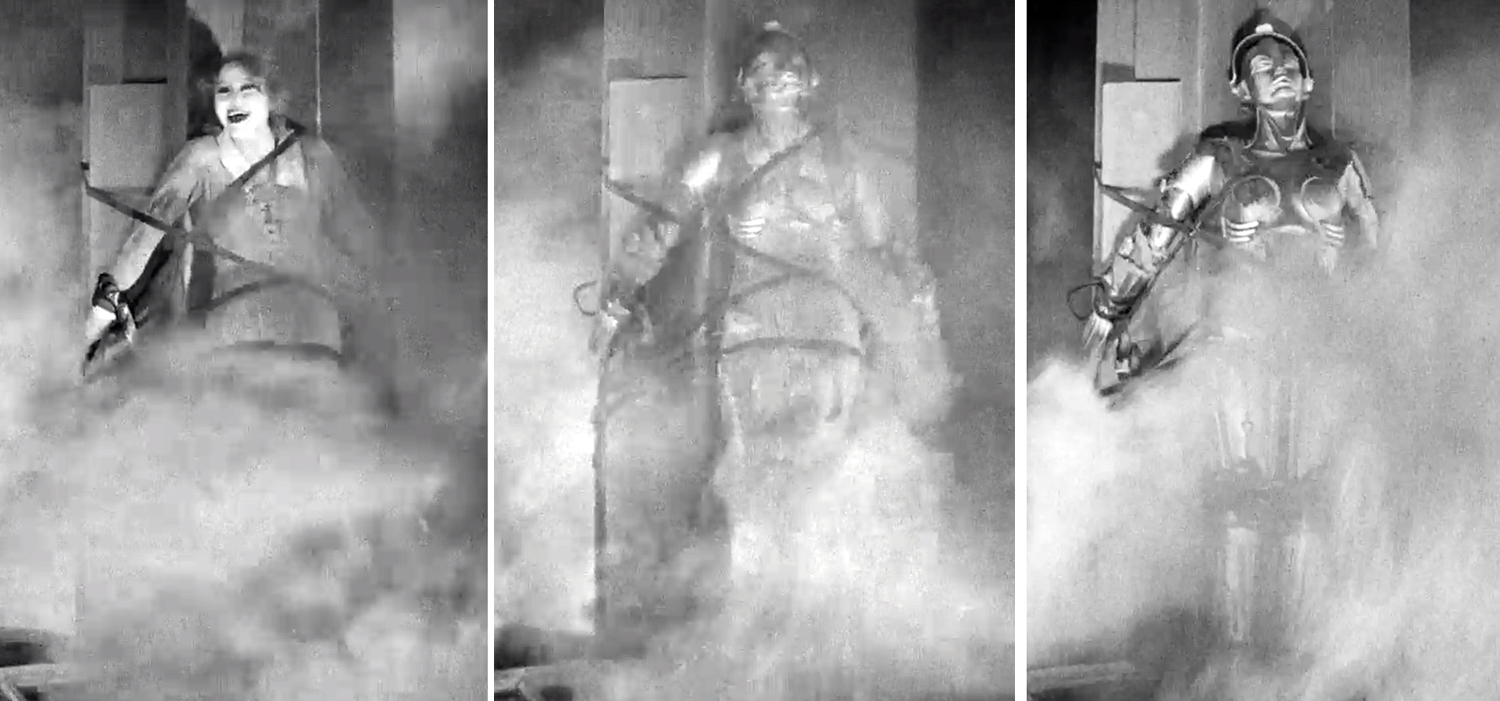
The two Marias separate in the very Frankentsteinian laboratory of Rotwang, in one of the most hypnotic sections of the movie, with rings of light rising and falling around the body of the robot, 

until it takes on the visage of the good Maria.

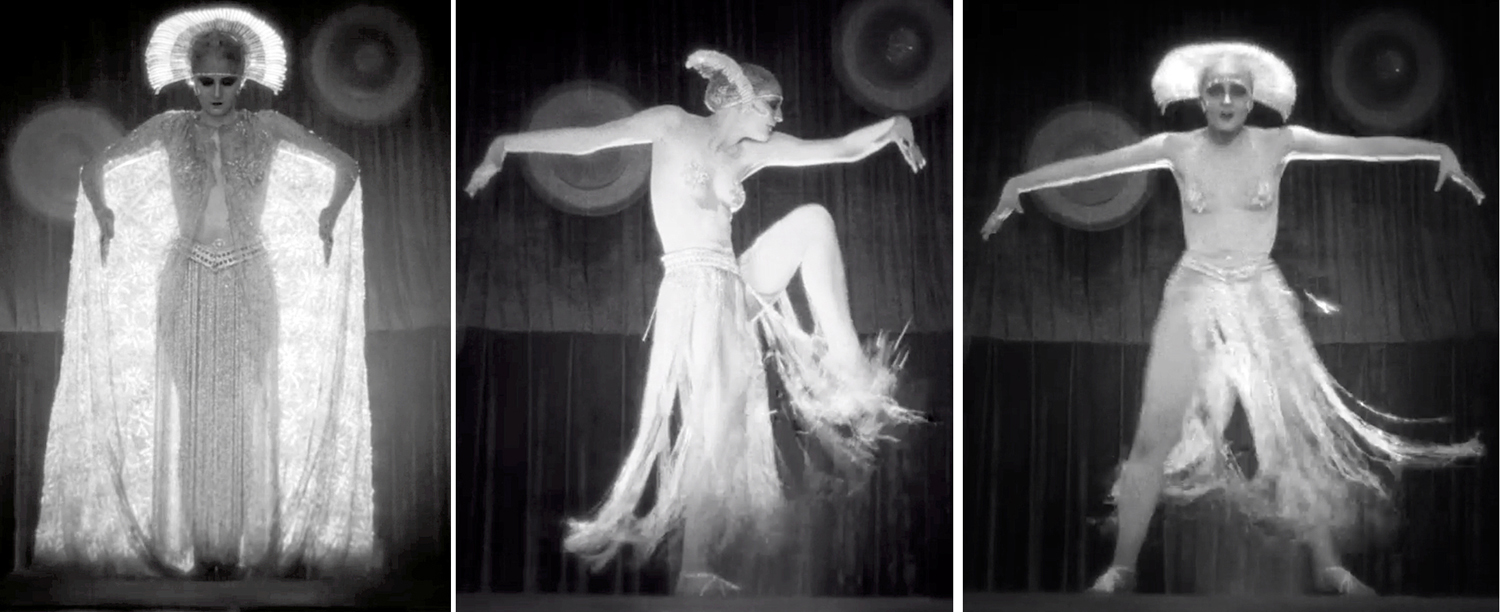
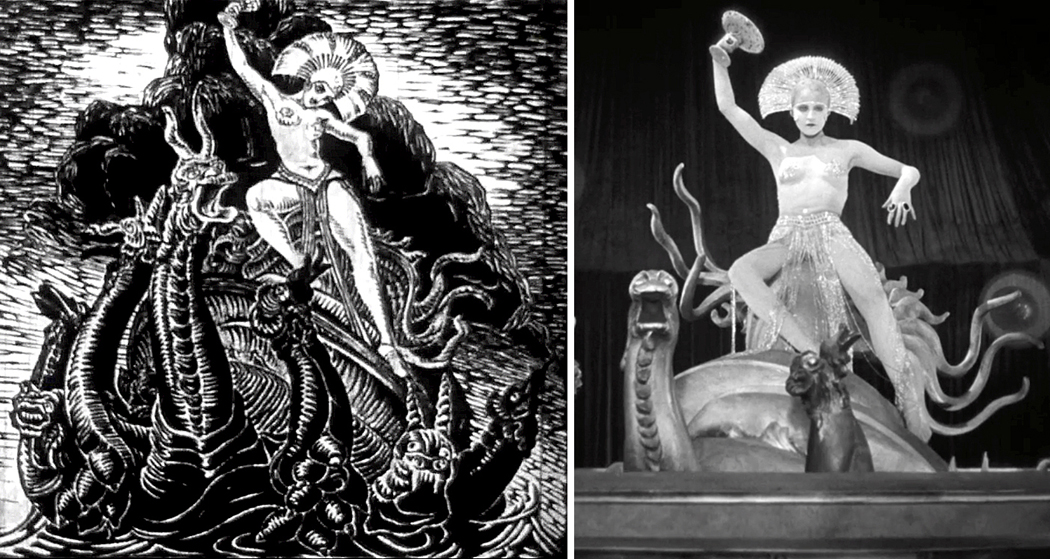
This Bad Maria, or False Maria, is sent to the workers to foment rebellion (why is never really made clear — it doesn’t make any sense, economically, to destroy the whole city), and she turns up in a nightmare hallucination of Freder as the Whore of Babylon, dancing at the Yoshiwara cabaret, doing a provocative dance.

And morphing into a Medieval vision of Die Grosse Babylon — the Great Babylon, from a verse in the biblical Apocalypse.

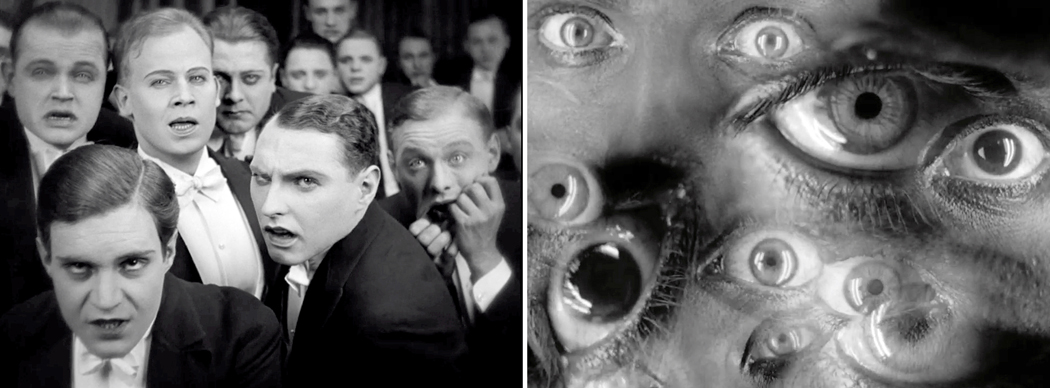
Which drives the men at the cabaret crazy with desire.

When the film was released in the U.S., Variety magazine’s reviewer commented: “Some sex stuff here and there, and a cooch dancer! Yes, sir, a coocher, in the revigorated mechanical figure, and a pretty good coocher, too, but not so thick around the hips as German coochers generally are. But then you must remember that this young lady was made to order.”

This False Maria persuades the workers to destroy the machines, which automatically floods the Workers’ City (don’t ask why), threatening all the children, and the workers, horrified, burn the False Maria at the stake, where, of course, she turns back into the robot.

Not to worry, Freder and the Good Maria save the children.  

The film is shot through with biblical references, not for theological reasons — there is no actual religion in the movie — but as cultural markers, symbols that will resonate with an audience familiar with the Bible. 

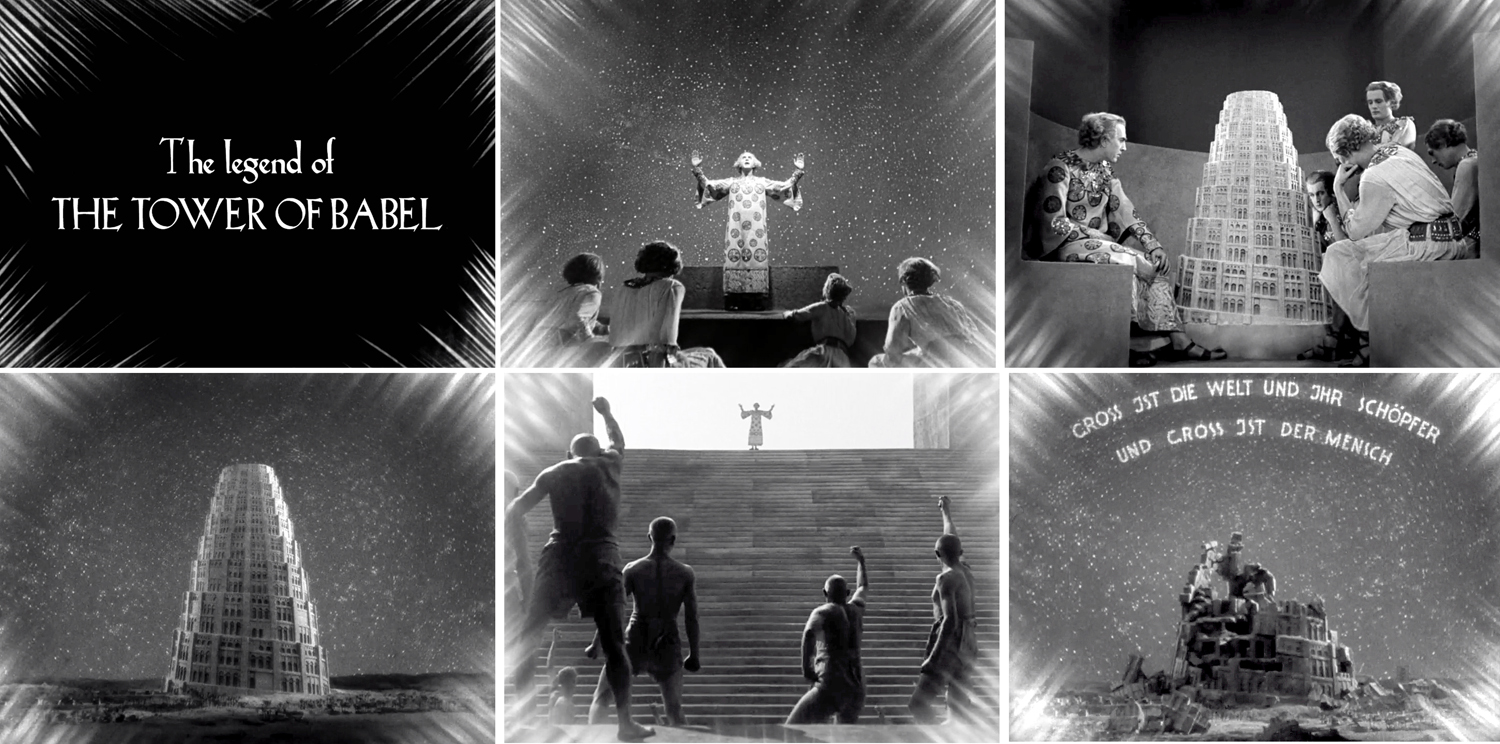
In the catacombs, the Good Maria teaches a lesson about the Tower of Babel, and how the conceivers of the tower failed to teach the workers who made the tower why they should do so, and a rebellion ensues and the tower is destroyed. 

In Freder’s fever-hallucinations, the figures of the Seven Deadly Sins, from the cathedral, step down from their pedestals and the figure of Death comes to life.

And Death approaches Freder with his scythe.

There’s Freder’s vision of the exploding machine as the biblical Moloch

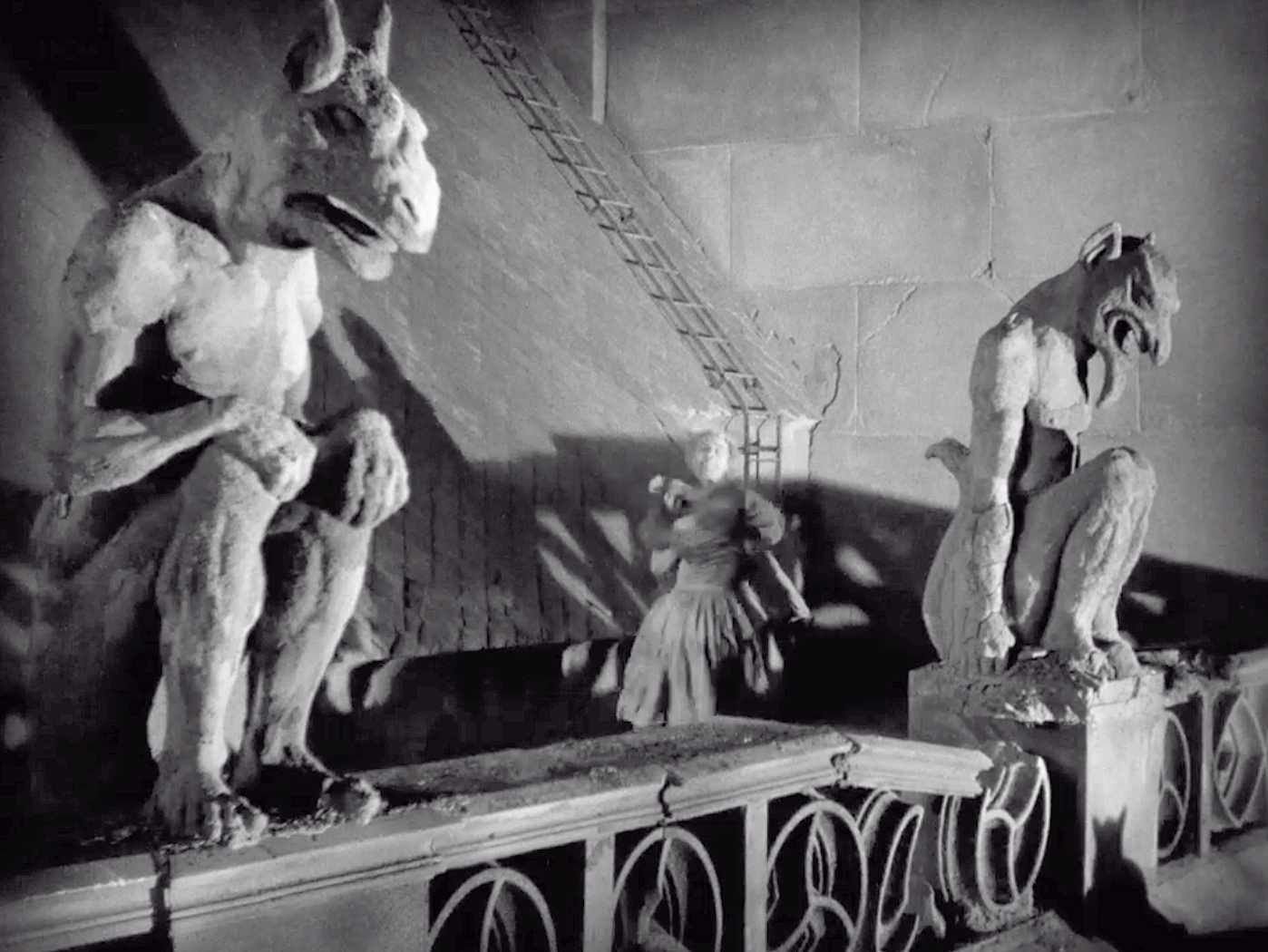
And the movie comes to its climax when Rotwang abducts the Good Maria and chases her to the top of the cathedral, among the gargoyles.

And drags her to the very rooftop, where he fights it out with Freder.

While his father (remember him?) falls to his knees in fear among the crowds in the parvis.

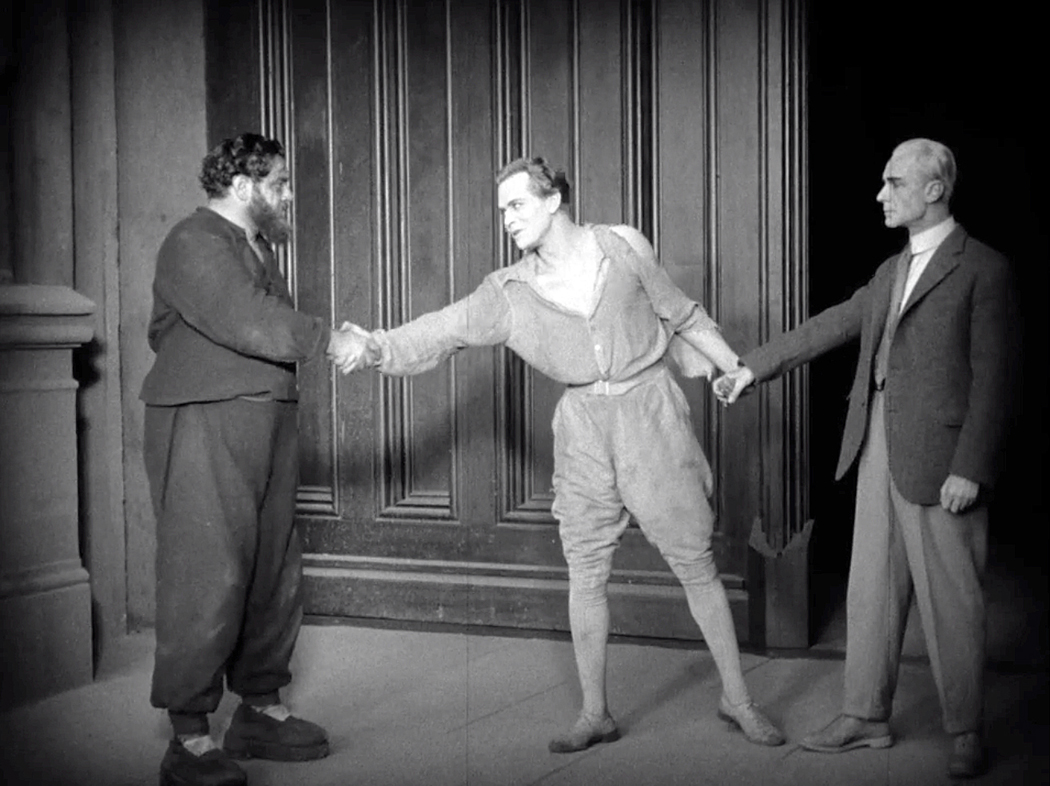
But Rotwang falls to his death and Freder saves the Good Maria, leading to the point where Maria gets the heart (Freder) to mediate (shake hands) between the hands (the worker) and the head (Joh Fredersen) and therefore satisfying the prediction of the opening epigram of the movie. 

It’s rather a sappy ending for so visionary a movie. But then, the plot has never been the point. 

Which is something novelist H.G. Wells didn’t seem to understand when he reviewed the film on its release in 1927. In his piece for The New York Times, he wrote, “I have recently seen the silliest film. I do not believe it would be possible to make one sillier.”

His beef was that the film didn’t realistically portray the future. 

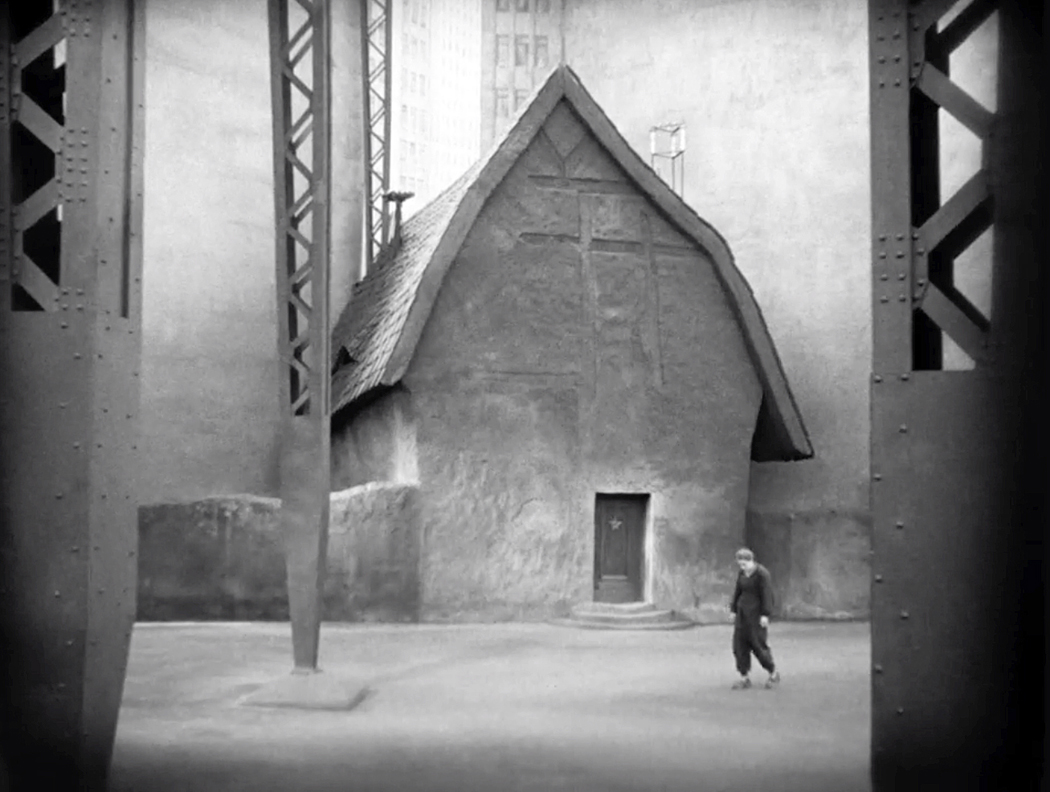
How can it, when Rotwang’s Medieval house in the middle of the city is, like the Tardis, bigger on the inside than on the outside?  

Its economics didn’t make sense, Wells wrote. “The machines make wealth. How, is not stated. … One is asked to believe that these machines are engaged quite furiously in the mass production of nothing that is ever used, and that [Fredersen] grows richer and richer in the process. This is the essential nonsense of it all.”

Where are the suburbs? Wells asks. Why, in the future, do all the cars look like the Model T? Where in the catacombs under the city are all the gas mains, sewer conduits and electrical infrastructure? His literal-mindedness is comic.

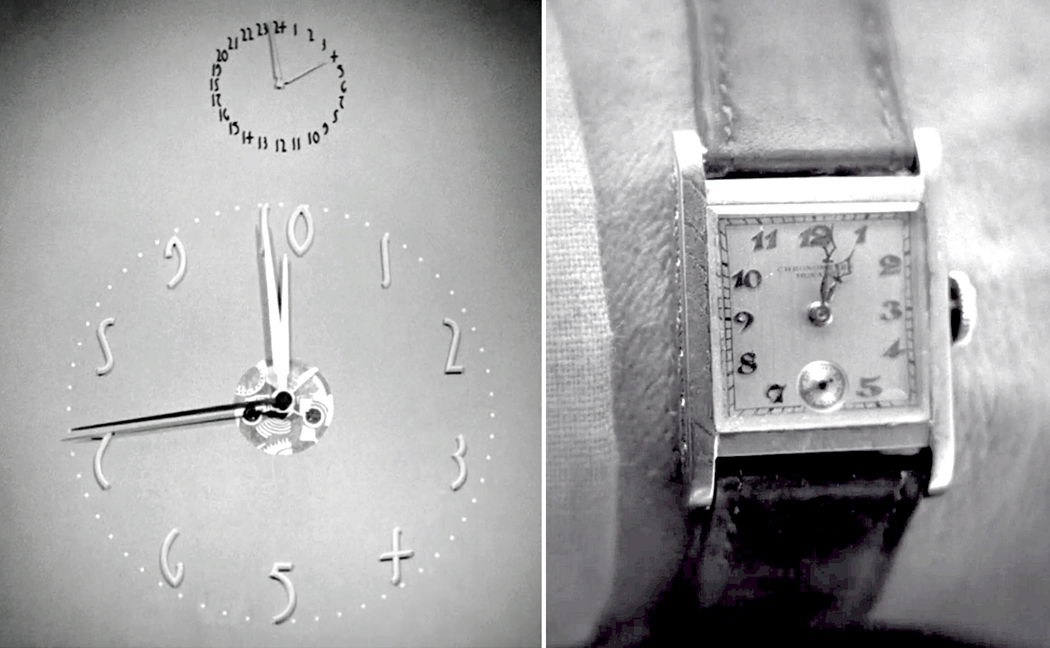
How can you be literal when the clocks in the film cannot even agree on how to measure time — Salvador Dali must have been their clocksmith.

Wells goes on and on, completely missing the point. Obviously, Metropolis was never intended to be realistic. It is not even meant to be the future. It exists in no time, according to both Lang and Harbou. It is a fever dream, an oneiric fantasy, and the glories of the film are all to be found in its visuals, not in its story. 

You can watch the film on YouTube in decent resolution, and it is available on DVD and Blu-Ray. It is one of the great films of all times, and one of the most memorable. 

Lang went on to make such great films as Woman in the Moon, also with Helm; M, with Peter Lorre; The Testament of Dr. Mabuse, with Rudolf Klein-Rogge (Rotwang from Metropolis); then, in Hollywood: Fury, with Spencer Tracy; Rancho Notorious, with Marlene Dietrich; and Clash by Night with Barbara Stanwyck. And many other great films. But none burrows into the brain in quite the same way as Metropolis.  

Click on any image to enlarge

I have seen a boatload of movies over the span of my life, some more significant than others. Those few important ones are outweighed by those that are completely unmemorable, even when perfectly enjoyable while sitting through them. That describes most movies and that’s fine. Not every film needs to be Citizen Kane

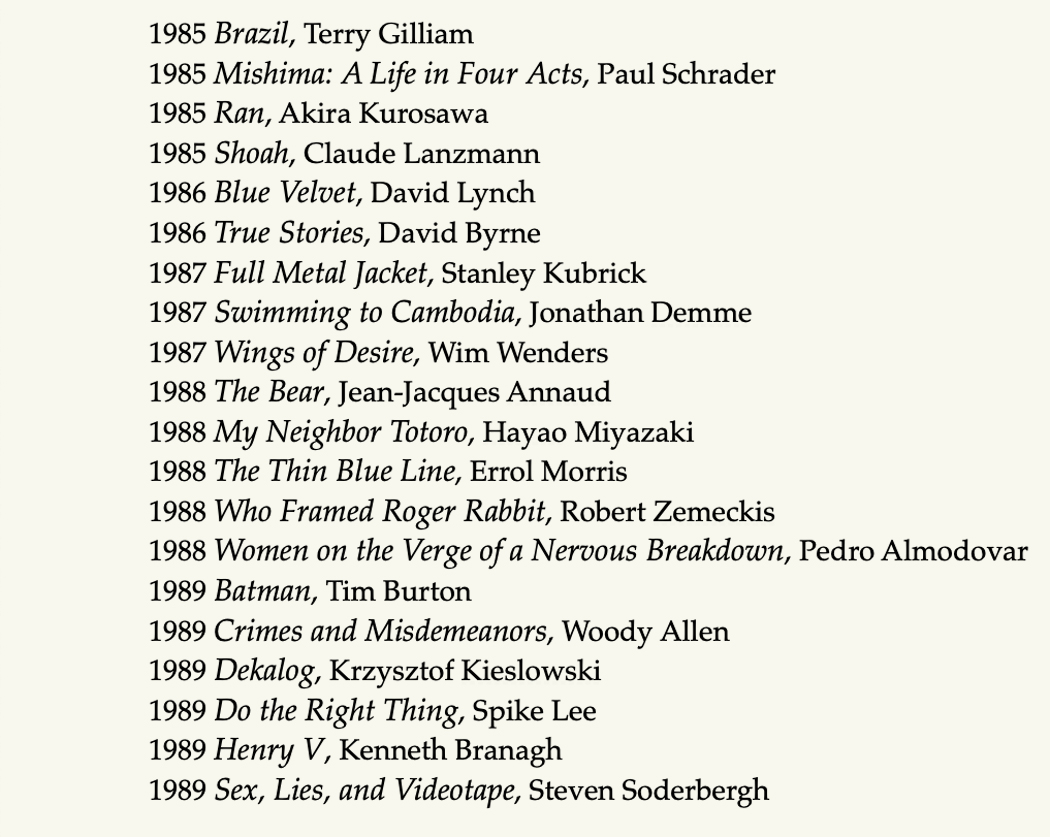
This is my list of significant films, listed decade by decade. It is a personal catalog and limited first by including only movies I have actually seen. There are significant films I have not yet been able to view. Further,  the list tends to reflect my own tastes, although it is not a list of my favorite films or of the “best” films, but of those that I believe have some significance in the history of cinema. You should make your own list. It would undoubtedly be different from mine. 


What makes them significant? Here are my criteria: In order to make my list a movie must hit one or more of these markers: 1. Be of historical importance; 2. Advance film grammar or technique; 3. Be influential on other films and filmmakers; 4. Have something profound to say about existence and humanity; or 5. Simply be so memorable as to be missed if not included. That’s a pretty wide and pretty loose range of qualities. Most films on this list hit more than one of them. And for my esthetic, No. 4 counts above all the others. 

Most movies, whether from Hollywood, Bollywood or Cinecittà, seek only to tell a good story and keep our attention. Many of these are truly enjoyable, but their making is merely efficient, using the tried-and-true techniques which remain invisible to the average moviegoer. The vast majority of films created never attempt to do more — nor should we ask them to. The old Hollywood studios were brilliant at this: perfect camera work, lighting, editing, sound recording, etc., but with never a thought to making us see these techniques. If we had noticed them, they would have felt that they had failed at their job. Others, like Citizen Kane, dance and sing their innovations. The significant filmmakers, for me, are those that do something above and beyond the call of duty. 

I make this apology: My taste tends toward the more arty. That’s why you should consider making your own list. I own hundreds of DVDs, perhaps more than a thousand. The way some readers read not books, but authors, so some filmgoers watch not individual films, but filmmakers: all of Bergman or all of Almodovar. I could not include all of their films in this list without it becoming more cumbersome than it already is, and so have whittled their works down to a few exemplars. So, for each of the big names, I have included mostly just the first important film they’ve made (a film that defined their style or themes), or when including more than one, when subsequent films meaningfully expanded their work. 

Some of these films might lead you to scratch your head. But I can justify any one of them. Or try to. 

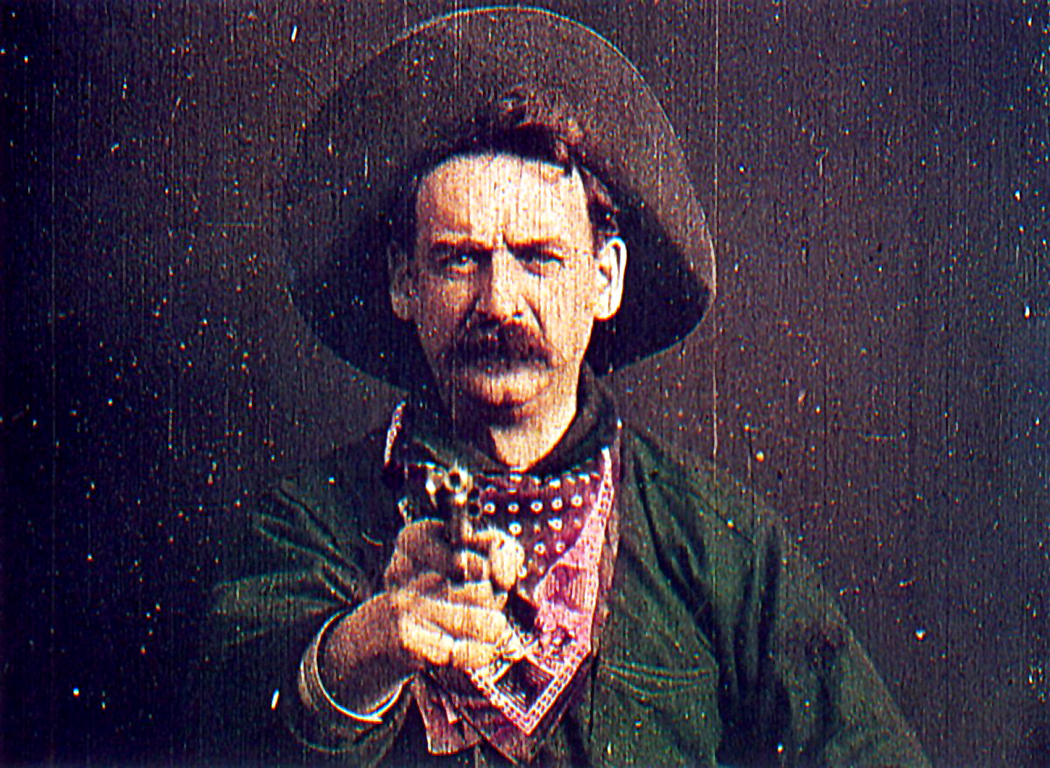
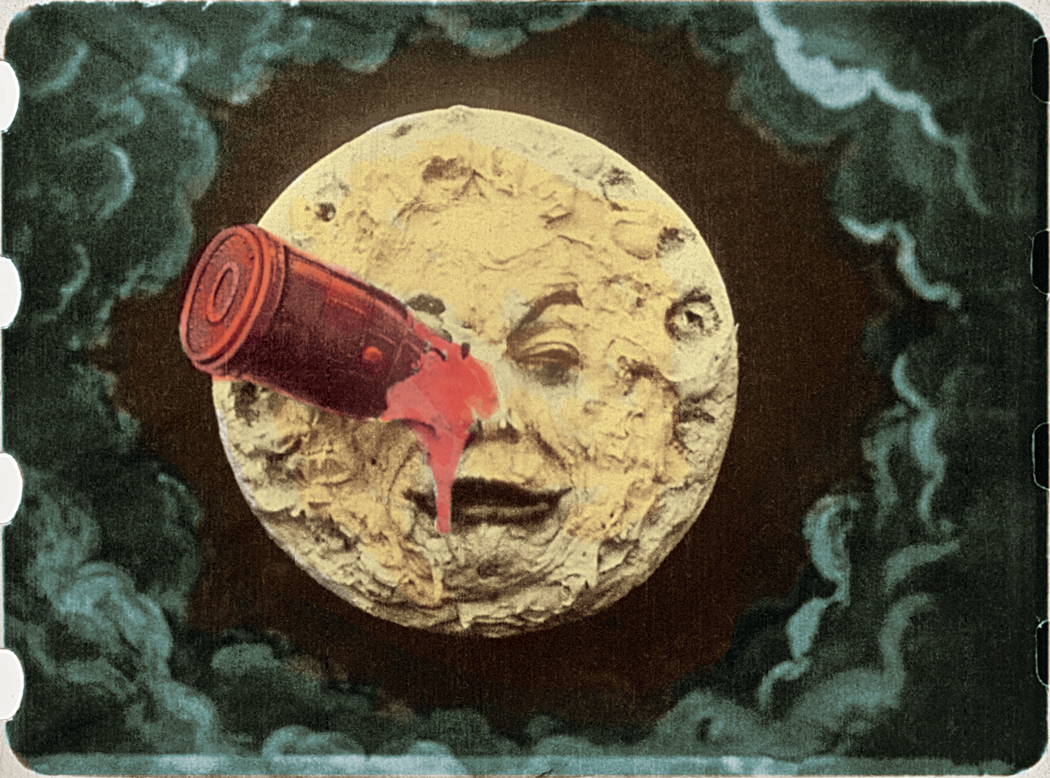
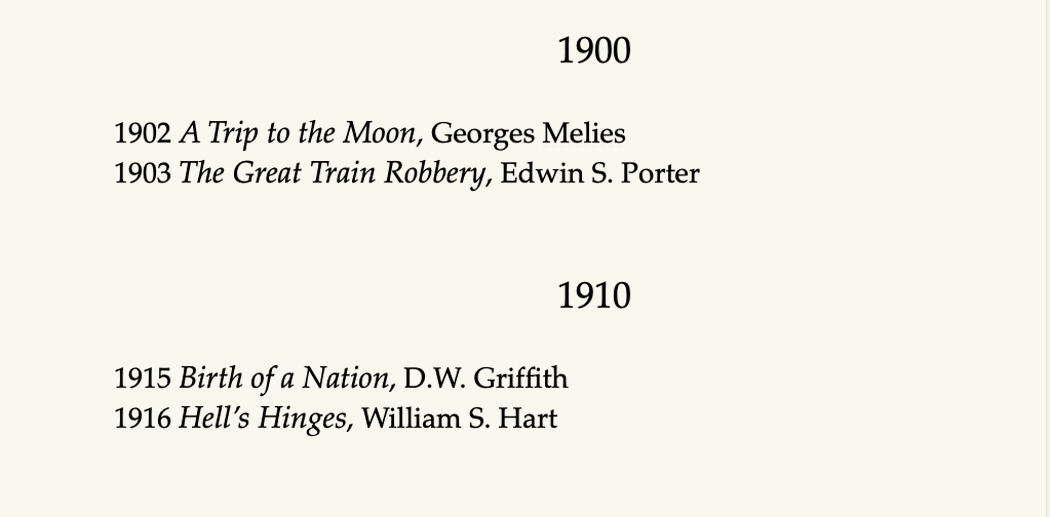
Among the earliest films are the shorts made by the Lumière brothers in France in the 1890s. They are each under a minute long and show everyday scenes. They astonished their original audiences, but are of mostly historical interest now. The first filmmaker to create something we might still want to see and enjoy was the P.T. Barnum of early filmmakers, Georges Méliès, who used trick photography and surreal plots to draw his ticket-buyers in. 

When we get to 1915, we have to take a deep breath and watch Birth of a Nation, which is so blatantly and obscenely racist, I feel dirty even listing it. But it is, apart from its story and acting, so important in the development of cinema and film language, you kinda have to hold your nose and see it. 

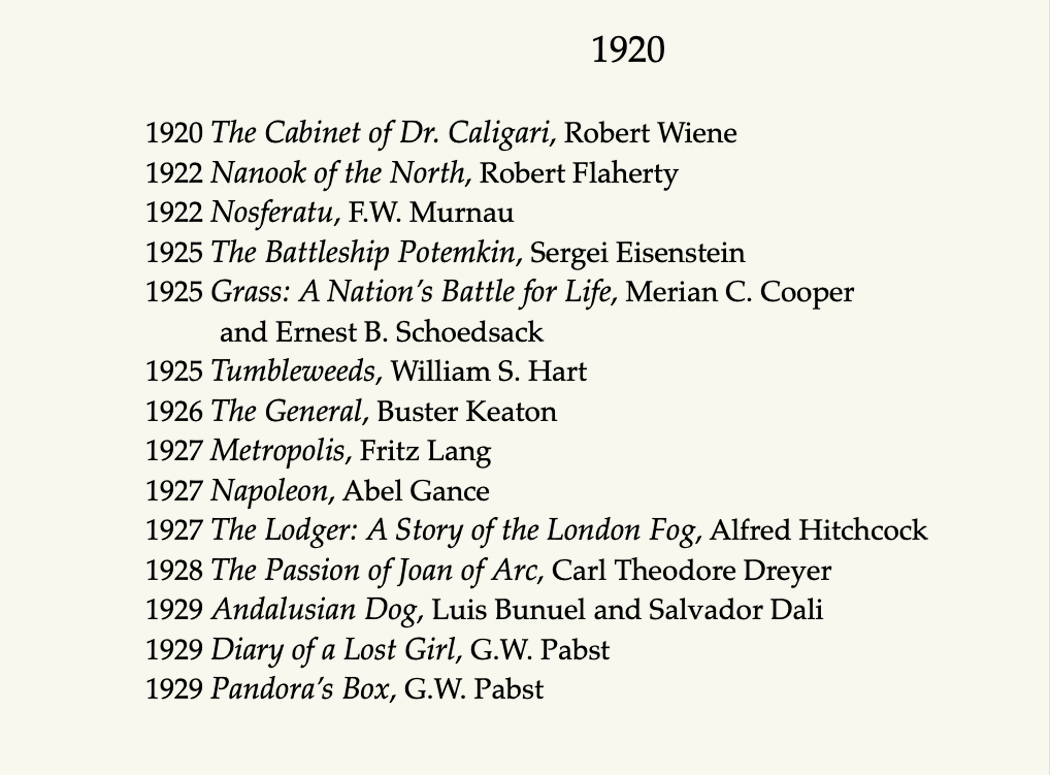
Film really took off in the 1920s — the first “golden age” of cinema. A language and grammar of filmmaking developed that could tell a story with a minimum of words in intertitles. So many films are lost now, but many of those that remain are classics, including the amazing five-hour Napoleon by French director Abel Gance. It has been difficult to find commercially for years (blame Francis Coppola), but now is available on Region 2 DVD and Region B Blu-ray from the British Film Institute in a magnificent restoration by Kevin Brownlow. It’s worth it to buy a region-free player just to see this film. (You can also find things on Amazon UK that are otherwise not available in the U.S., and Region 2 versions of some films that are cheaper than their American counterparts. A region-free player is a treasure.)


The 1930s were another “golden age,” when the studios ran things and did it right. Even the lowliest of studio B pictures was made with a professionalism that is hard to credit. Everyone was on top of his game. 

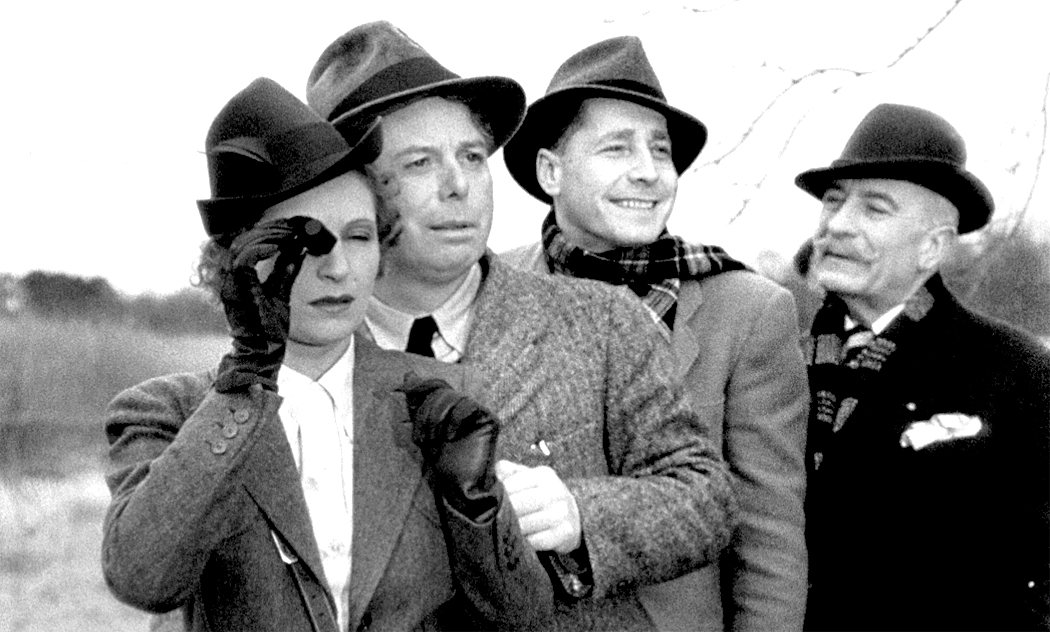
But Hollywood was interested more in melodrama and comedy than in searching explorations of the human condition. They were really, really good at it. But in Europe, the darker tides of history were leading to more textured work, as in the work of Fritz Lang, Jean Renoir and Marcel Pagnol. In the U.S., we had Ernst Lubitsch, who could be more sophisticated than the Hollywood norm, but then, he was born in Berlin. 

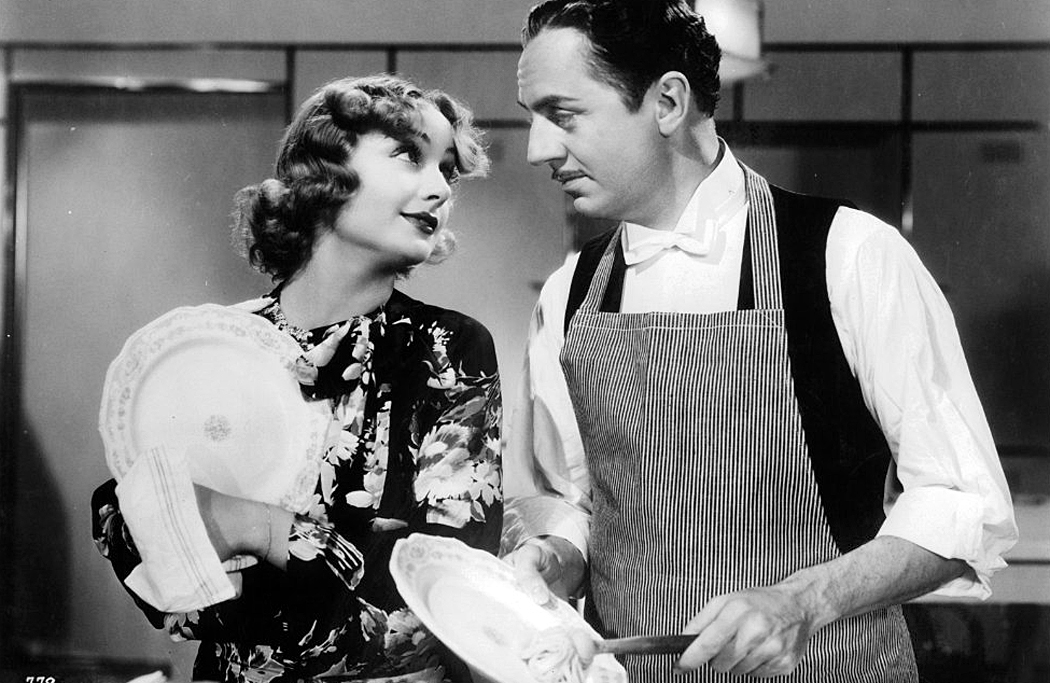
The one thing America had that no one else seemed able to copy was the “screwball comedy.” I have only one on my list, but there could be dozens. I have My Man Godfrey because I think it is the most perfect one. But I love ’em all. By the war, they couldn’t make them anymore without seeming to be too self-conscious about it. A genre no longer possible. 

The Adventures of Robin Hood is a film I have never cared for, but it is on my list for its score by Erich Wolfgang Korngold, as exemplifying the great movie music by European emigres. 

I have to apologize for Leni Riefenstahl being on this list. Like Birth of a Nation, there is a moral stink to her films, but one should see them anyway for their influential filmmaking. Yell at the screen while you watch if you want — I do — but see them at least once before washing your eyes with lye.   

Even the worst eras of filmmaking have their gems. After 1939, the high-water mark for Hollywood films, we hit a lull. The war is certainly one cause — so many actors, technicians and filmmakers joined up and spent the war in Europe or the Pacific. But John Wayne stayed home to fight the enemy on the screen. I watched tons of those films on TV when I was a kid. I can’t say how many times I watched Guadalcanal Diary on the Million Dollar Movie. 

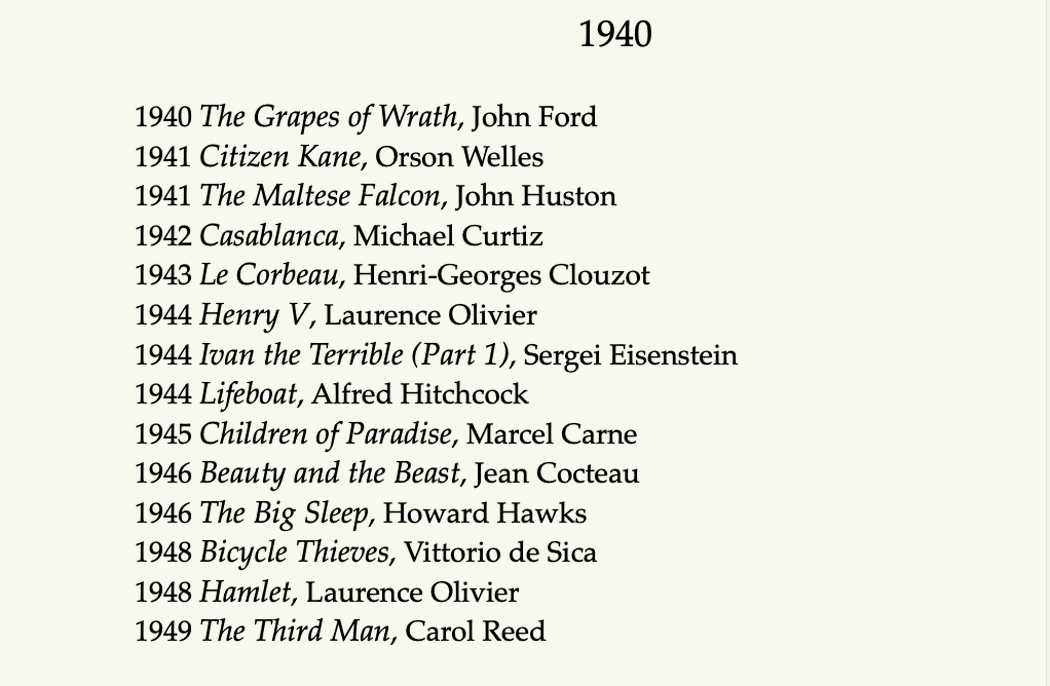
I include Maltese Falcon as the closest a film has ever adhered to the book. If you read Hammett’s book, you will think you’re reading a novelization of the film. John Huston did a great job with it. Casablanca is there as proof that a committee can make a masterpiece. Grapes of Wrath is here for its cinematography, which so perfectly catches the tone of the FSA photographs of the Great Depression. 

Still, the majority of movies on my list are European. They deal with real things; they had to. 

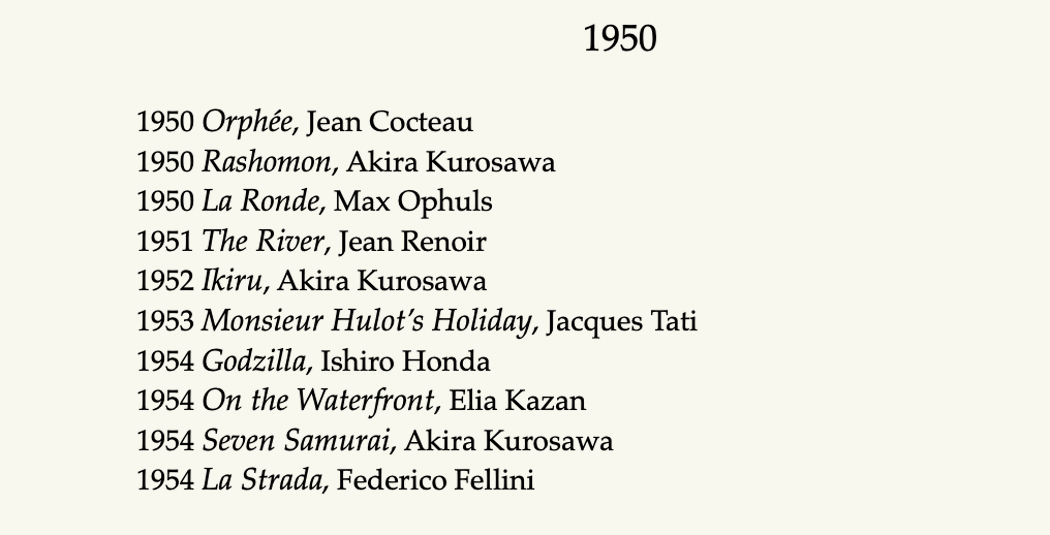
The 1950s were the great age of European art film. When we think of an art film, we are likely to picture The Seventh Seal, Rashomon or Orphée. Hollywood could squeeze out an occasional great film, but mostly it was sinking into the doldrums with flat TV-style lighting, uninspired editing, and a dependence on big-name stars, often miscast. Yet, it managed to make On the Waterfront, Anatomy of a Murder and Some Like It Hot — the closest thing Hollywood ever made to a post-1930s screwball comedy. I wish I had room on the list for more Billy Wilder. 

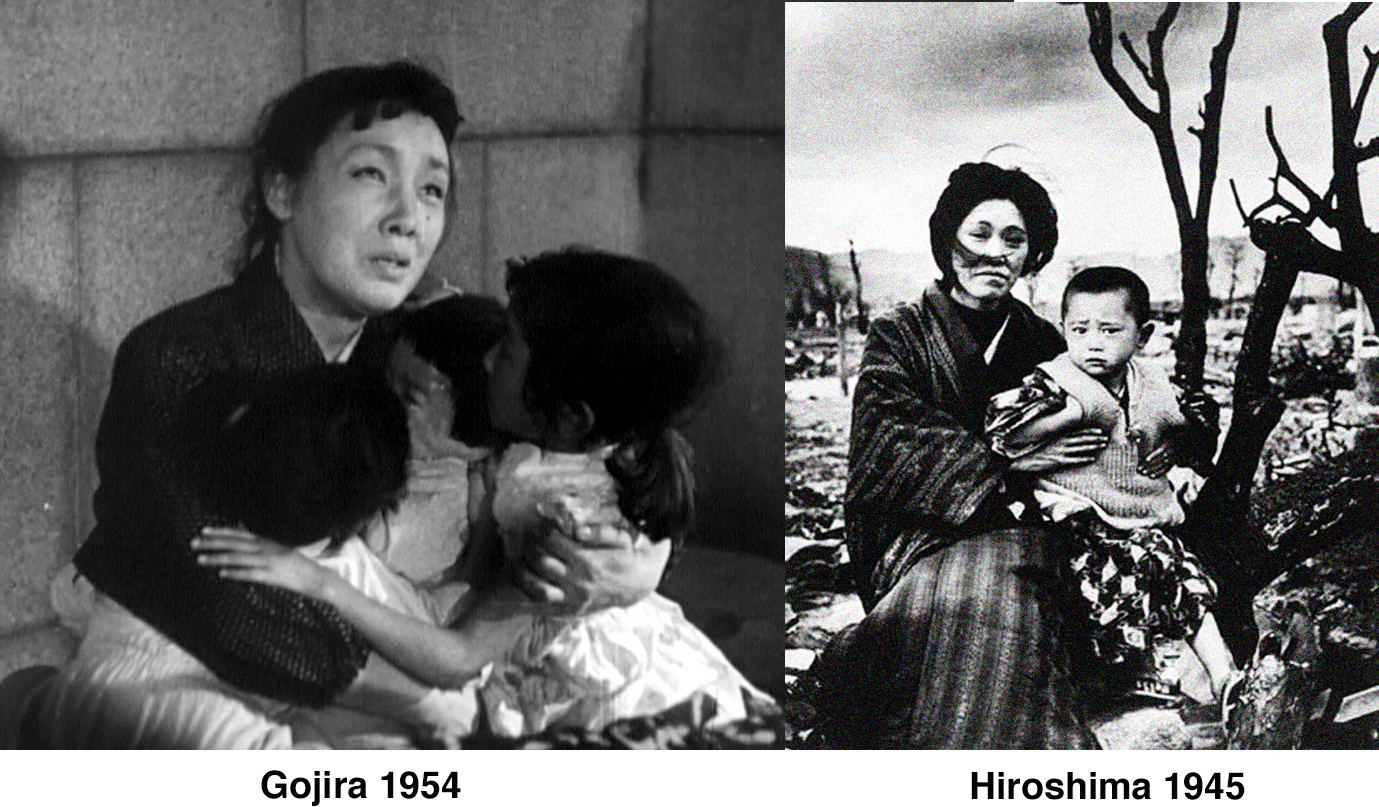
Oh, and Godzilla is here, not as the kiddie monster movie that it was turned into with Raymond Burr added on, but as its original Japanese parable of the atomic bomb and Hiroshima. If properly seen, Godzilla is a heartbreaking film.

The French New Wave hits full force in the Sixties, taking up the slack  from Hollywood, which, in the first two-thirds of the decade was practically moribund, making dreck like Mad Mad Mad Mad World and Cleopatra. Oy veyzmir. 

Things brightened up in the last years of the decade as the studios threw up their hands and let the young turks in to update the artform. (Don’t feel sorry for the studios, they have come back with a vengeance with superheroes and CGI, but for the time being, they were playing dead. Never count out Capitalism, while there is still money to be made.)

The one great studio film of the era is Lawrence of Arabia. I had not counted it much until I saw it on the giant screen (the 70-foot screen of the old Cine Capri in Phoenix, Ariz., in a 70mm print in 1989.) It was a wonder. I weep for the kids watching movies on their iPhones.  

What started in the Sixties continued for the next decade, but the warnings were there to be seen. Young turks grew in style and technique, but the worm in the apple had jaws, then it had Star Wars. Filmmaking mega-corporations saw where the big bucks could be had. 


Before le déluge, though, a cadre of brilliant auteurs were given money to make Chinatown, Nashville and Taxi Driver. And the crazed, driven Werner Herzog broke through consciousness with Aguirre. And who else, really, was der Zorn gottes

Filmmakers who first popped their heads above ground in the 1970s went on to be the grandmasters of the next several decades. 

A new generation of auteurs arose in the 1980s to again refresh the cinematic cosmos. Some had made earlier films, but they all hit their stride in the Reagan years: Terry Gilliam, Brian De Palma, the Coen Brothers, David Lynch, Jonathan Demme, Spike Lee, Steven Soderbergh, John Sayles, Errol Morris. 

There was coming problem, though: film schools. In the old days, directors learned their craft on the job. Increasingly, they learned it all in school and became ever so glib at the three-act script and the POV, the Final Cut Pro. They knew their B roll and their axial cut, their Dutch angle, their key light and post production color timing. Result: filmmakers more interested in technique than in content. But the full misery of all that happens after the ’80s, when these well-trained technicians were given the reins of a $200 million CGI and green-screen superhero epic, where they functioned more as field generals than as artists. 

The film-school esthetic was also the natural result of the rising Postmodernism: the knowingness that made the process of filmmaking its own subject, along with the expectation that the audience knew what you were doing and could nod their heads knowingly. The story became its own MacGuffin. 

For me, the ’90s is the Kieslowski decade. The Polish filmmaker had been working since the ’60s, but didn’t break out into international note until The Double Life of Veronique in 1991, following that with his masterpiece trilogy, Colors (Blue, White, and Red). His 10 shorter TV films, Dekalog, had come out at the end of the previous decade, but together, all his later work makes a case for film as art in the same manner as the films of Bergman and Fellini in the 1950s. They are one of the high-water marks of film as literature. 

New names appeared and stuck: Jean-Pierre Jeunet, Richard Linklater, Baz Luhrmann, Darren Aronofsky, Wes Anderson, Spike Jonze, Paul Thomas Anderson, the Wachowskis. They all continued to make interesting films of lasting power. Pedro Almodovar finally won international fame after decades of making idiosyncratic films in Spain. And Martin Scorsese continued to up his game, becoming the de facto “greatest living film director.” (Not that there is such a thing, but if there has to be someone named, most agree Scorsese wears the badge.) 

 It’s hard to believe, but Peter Jackson made the first Lord of the Rings movie 20 years ago. With those films, and with King Kong, Jackson became the field general commanding the largest forces and a budget rivaling that of the invasion of Normandy. That the films were as good as they were proves Jackson could overcome the disadvantage of so much money. Not everyone given such a purse could. The major movies of the decade were also blockbusters, a form that took over the studios, leaving behind small budget indie films to the do-it-yourself crowd. Lucky for all, digital cameras and editing made it possible to make meaningful films with almost no budget at all. The bifurcation of the film industry was nearly complete. 

Outside Hollywood, however, worthwhile films continued to be made by directors who actually had something to say. Increasingly, they said it in Spanish. Since the shift in the millennium, four of the putative top 10 movie auteurs are either Mexican or Spanish (Cuarón, del Torro, Iñarritu and Almodovar). We’ve come a long way from those cheesy old El Santo movies. 

Among the others are two very peculiar directors: Lars von Trier and Guy Maddin, both acquired tastes that I have acquired. I had to narrow it down to a film apiece for this list, but I would love to have included Maddin’s My Winnipeg

I’m afraid that when I retired in 2012, my moviegoing dropped precipitously. So, my list for the past decade is incomplete. I leave it to younger eyes to see the future. 

So, that’s my list. If I had made it tomorrow or next week, it would likely be entirely different. I’m sure I’ve forgotten some I wish I had included, and I might change my mind about some of those I listed. If I had made the list when I was 20, or 30, or 40, it would have reflected a very different — and unfinished — sensibility. Now, at 73, I’ve pretty well rounded off my sense of taste and esthetic. 

The list is mine and no one else should be blamed for it. And your list would undoubtedly head off in some other direction. Vaya con los dioses.

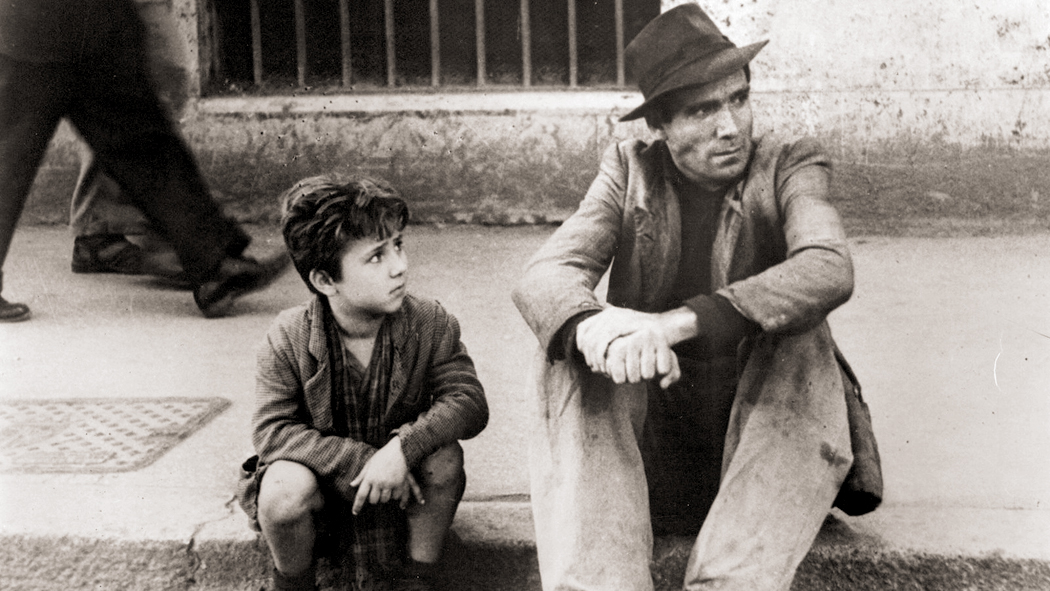
The year I was born was the year Vittorio de Sica released Bicycle Thieves. I am not claiming to have seen it when it first came out, but when I search Wikipedia for all the movies that were made in 1948, Bicycle Thieves was the one that, when I did finally see it, moved me the most and stays with me the most permanently. 

My birth year was a decent year for cinema. Olivier’s Hamlet won the best picture Oscar; John Huston won best director for The Treasure of the Sierra Madre; he also made Key Largo, which I will watch every time I come across it channel surfing, even if I see only the final 15 minutes: It is like a favorite tune you love hearing again. 

Others from 1948: Billy Wilder’s A Foreign Affair; Roberto Rossellini’s Germany Year Zero; Robert Flaherty’s Louisiana Story; Orson Welles’ Macbeth; Howard Hawks’ Red River; Hitchcock’s Rope; Visconti’s Terra Trema; and the last great screwball comedy, Mr. Blandings Builds His Dream House, with Myrna Loy and Cary Grant. And, I’m embarrassed to admit, one of the stalwarts of my childhood of TV watching: Abbott and Costello Meet Frankenstein

My 73rd birthday is looming and I began to think — among many more important things — about all the movies I have seen in those seven decades. When I was a kid, I saw piles of them on TV, including those that aired 15 times a week on Million Dollar Movie, where I was first introduced to those English “kitchen sink” movies of the 1950s: Look Back in Anger; The Loneliness of the Long Distance Runner; Room at the Top. There were a surprising number of British films on New York’s Channel 9. They certainly gave me a formative impression of the United Kingdom that later cleansed the palate after the Masterpiece Theatre syrup. 

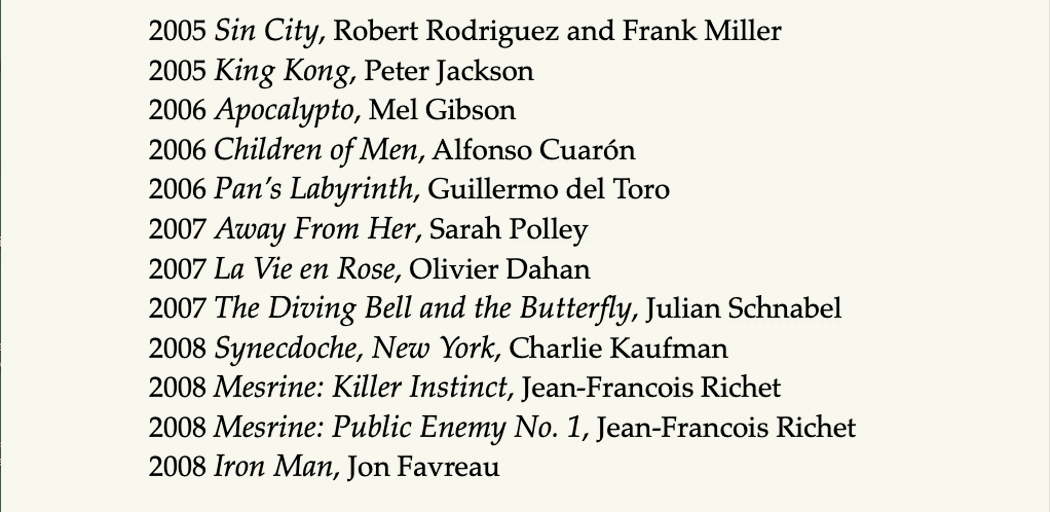
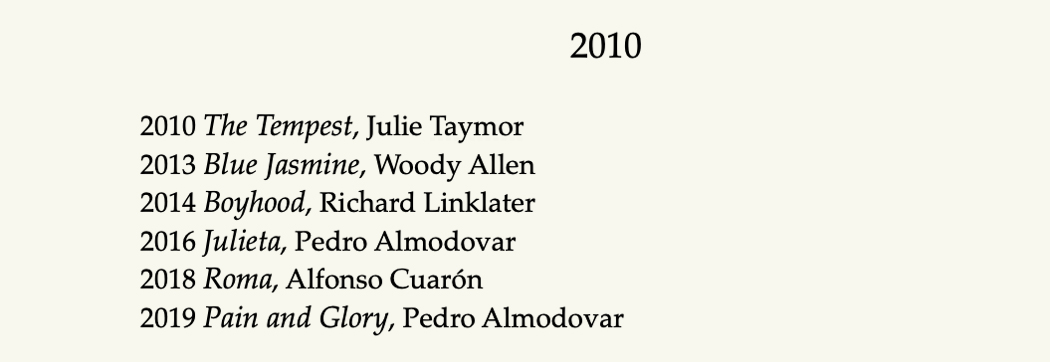
And so, I thought to list the best movies for each of the years I’ve been alive. “Best” is the wrong term, of course: I couldn’t have seen all the movies made. But these are the movies I saw that I loved the most. Taken year-by-year, they make an uneven list: Some years were bumper crops and some were slender picking, but year after year, these were my picks.

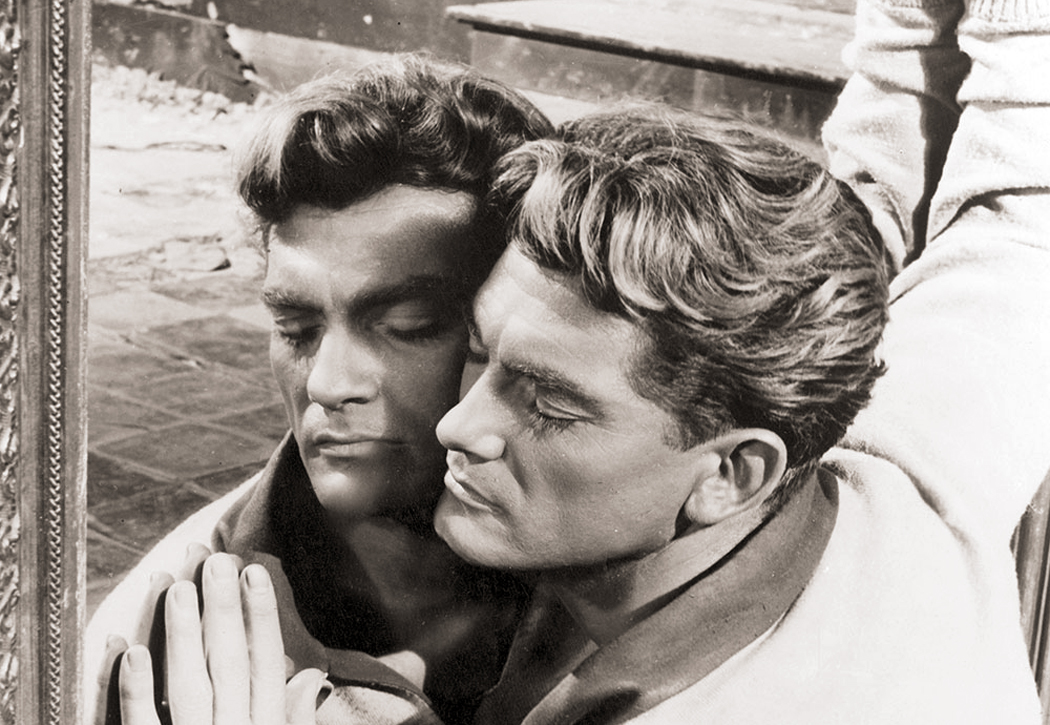
When I was 1 year old, Orson Welles dominated Carol Reed’s The Third Man. When I was 2, Jean Cocteau made Orphée, which remains on my Top Ten list (although, I must remind you, my Top Ten list has about 40 films on it.)

1948 Bicycle Thieves

1949 The Third Man

1950 Orphée

The next decade begins with Jean Renor’s The River, although I should admit it is a late addition to my list. The first several times I saw it, it was in a miserable print with scratches, washed-out colors and blown-out contrast. I passed it off as one of Renoir’s lesser efforts. I was very wrong. Since then, Criterion (god bless’em) has sent out a gorgeous print and it would be hard to find a more gloriously beautiful film visually.

I saw Kurosawa’s Ikiru for the first time in a porno theater. I was recently graduated from college and a local film society could afford to rent out the theater for their film series. The posters in the lobby challenged the imagination. 

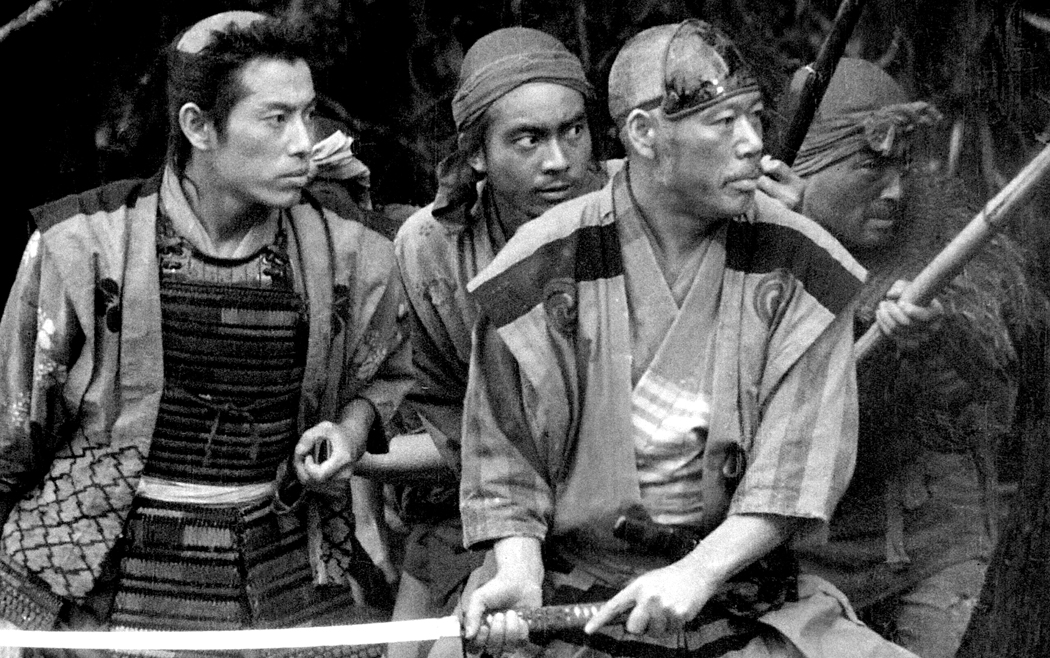
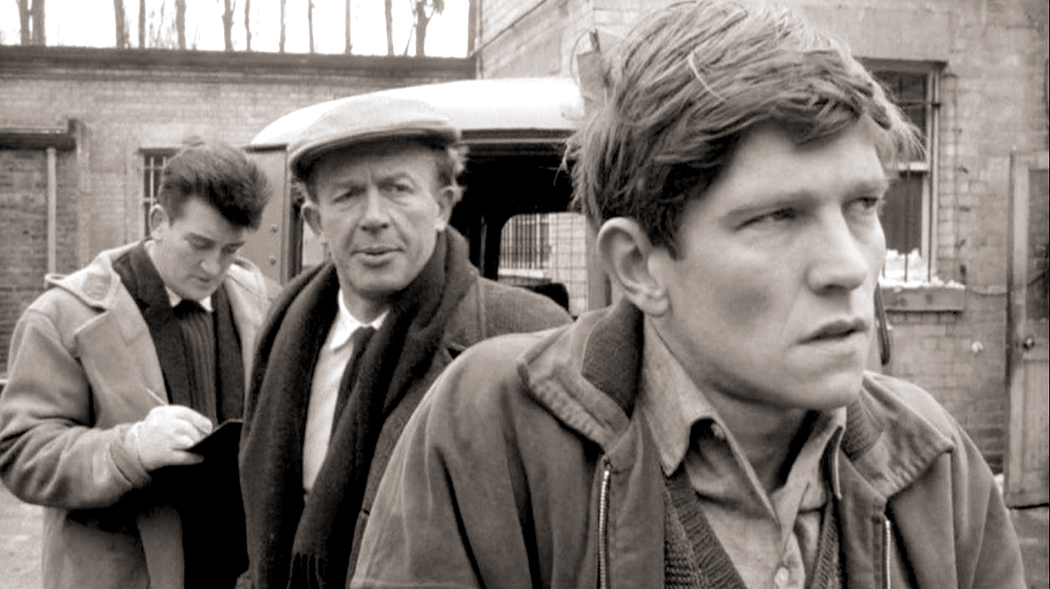
For 1954, I couldn’t decide between The Seven Samurai and Godzilla. When I was little and Million Dollar Movie ran the Americanized version of Godzilla with Raymond Burr, I thought it my favorite cheesy monster movie. Now that I am grown up and have seen the unmutilated version, Gojira, I recognize it as one of the most heartbreaking films ever made, up there with Bicycle Thieves and Mouchette, and is really an art film about the bombing of Hiroshima. It also has one of the greatest film scores, by Akira Ifukube, that expresses the grief. 

The decade ends with La Dolce Vita, which may top my Top Ten list. Every time I watch it, it seems deeper and more profound. 

1951 The River

1952 Ikiru

1953 The Earrings of Madame …

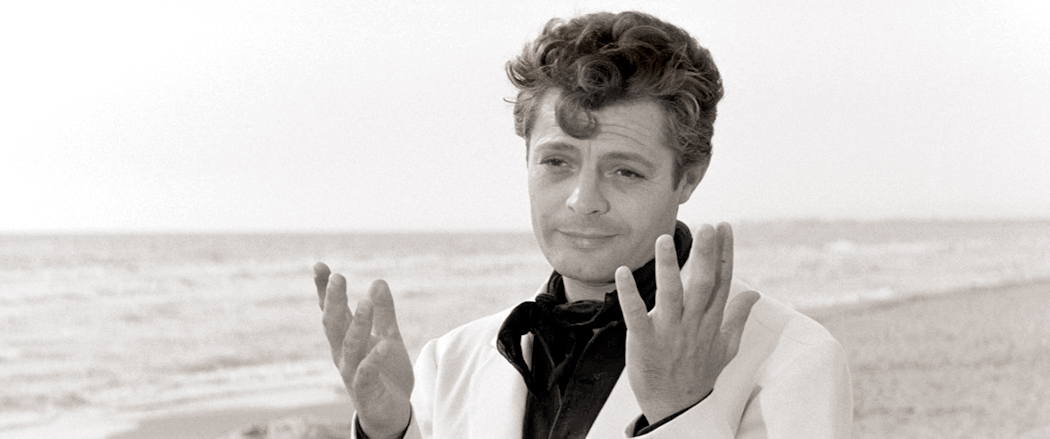
1954 Godzilla and Seven Samurai

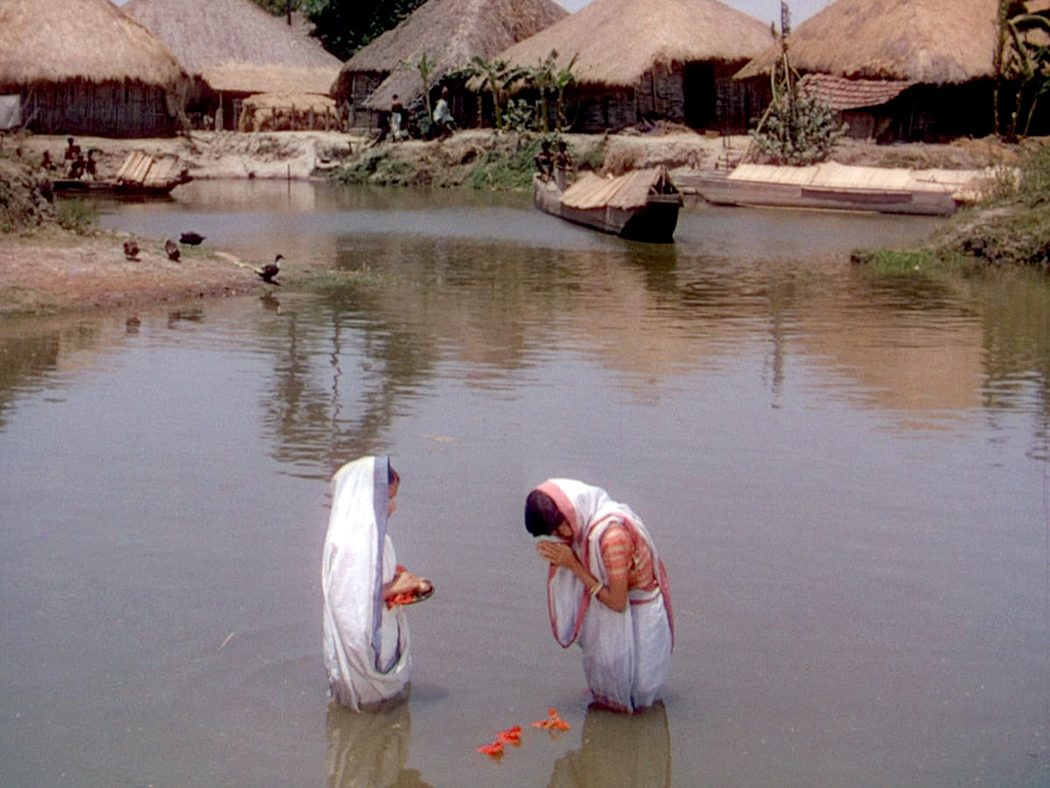
1955 Pather Panchali

1956 The Searchers

1957 Wild Strawberries

1958 Hidden Fortress

1959 400 Blows

1960 La Dolce Vita

Up until 1968, all the films on this list were seen in retrospect, on television or on DVD. I was not a big moviegoer in my youth. There was no theater in my town. But after taking a film course in college, I got hooked and from Kubrick’s 2001,saw all the films when they came out. 

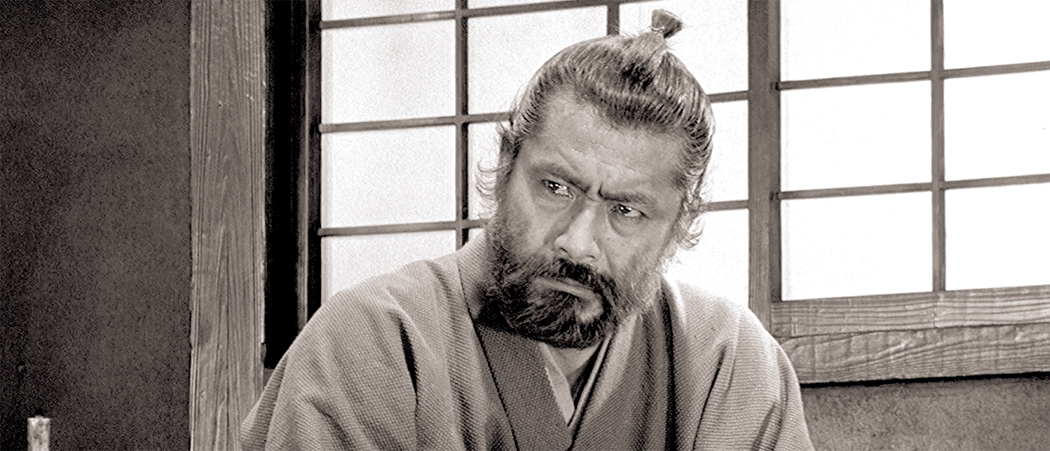
1961 Yojimbo

1962 Jules and Jim

1963 The Silence

1964 Dr. Strangelove

1965 Red Beard

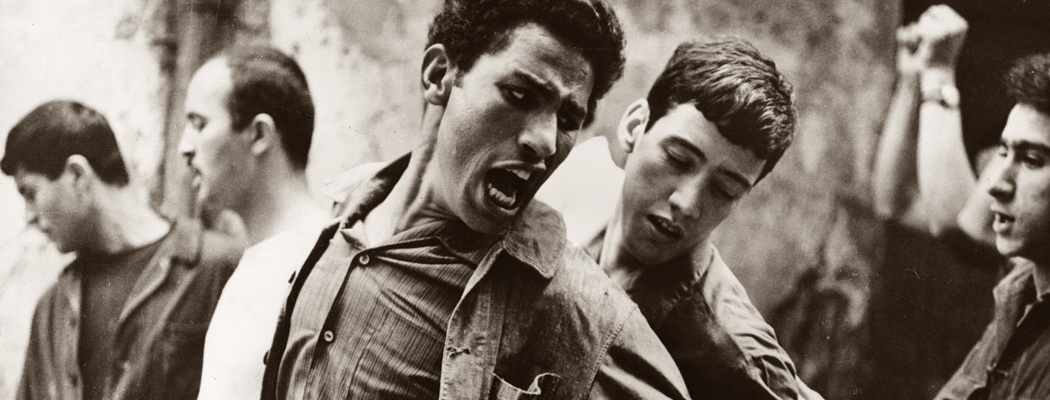
1966 The Battle of Algiers

1967 Ulysses

1968 2001: A Space Odyssey

1969 The Passion of Anna

1970 The Wild Child

Choosing one from many is fruitless. It’s just a game. Take 1975: My favorite from that year is Ingmar Bergman’s version of Mozart’s Magic Flute. But it was a toss-up between that and Antonioni’s The Passenger, which I saw again recently and was even better than I remembered it. 

But how can you choose when in the same year, you could have picked: Jaws; One Flew Over the Cuckoo’s Nest, Shampoo; Dog Day Afternoon; Nashville; Monty Python and the Holy Grail; Love and Death; Kurosawa’s Derzu Uzala; Picnic at Hanging Rock; Hester Street; Barry Lyndon; The Man Who Would Be King; The Story of Adele H.; Grey Gardens; The Lost Honor of Katharina Blum; and Arthur Penn’s Night Moves

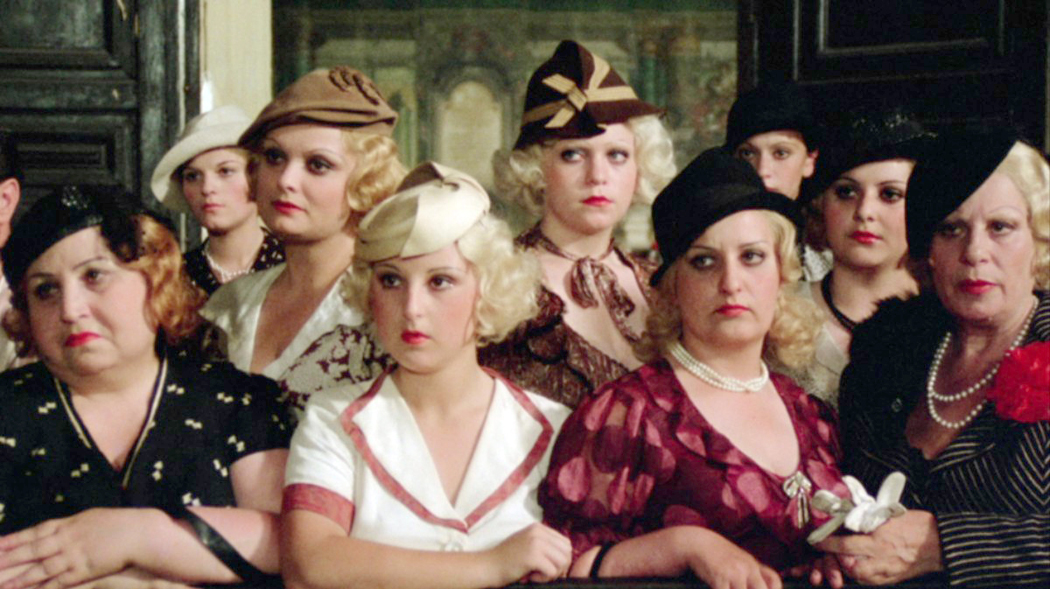
Lina Wertmuller gave us both Seven Beauties and Swept Away; Ken Russell released two over-the-top biopics on Mahler and Franz Liszt (Lisztomania) — to say nothing of Tommy. Pier Paolo Pasolini dared you to watch Salò, or the 120 Days of Sodom. And there was The Rocky Horror Picture Show

And 1975 was not exceptional. I could make a similar list for most of these years. 

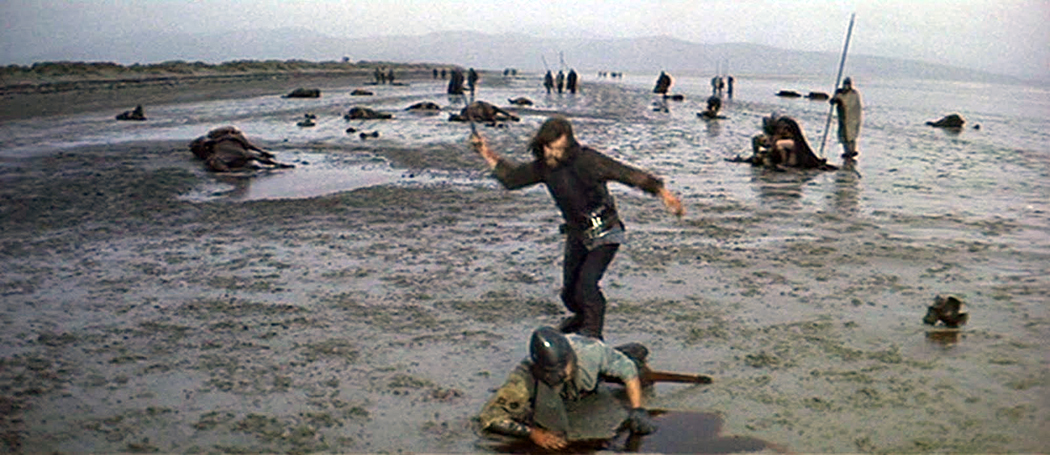
1971 Macbeth

1971 Macbeth

1972 The Godfather

1973 Amarcord

1974 Chinatown

1975 The Magic Flute

1976 Taxi Driver

1977 Annie Hall

1978 Pretty Baby

1979 Apocalypse Now

1980 Return of the Secaucus Seven

The 1980s was the decade it all went to hell. The top-grossing films of the decade were E.T. the Extra-Terrestrial; Return of the Jedi; The Empire Strikes Back; Batman; Raiders of the Lost Ark; Indiana Jones and the Last Crusade; and Indiana Jones and the Temple of Doom. (also: Ghostbusters; Beverly Hills Cop; and Back to the Future, all among the top 10). Hollywood knew where the future was and it wasn’t back (“I am small; it’s the pictures that got big”). 

Yet, there are always great movies made. My best of the decade is Kieslowski’s Dekalog, ten short films based on the Ten Commandments — sort of. They were made for Polish TV, and the director made longer cuts of two of the segments, and for 1988, I have chosen A Short Film About Killing, one of the most brutal and truthful films I have ever seen. 

1981 My Dinner with Andre

1982 Fanny and Alexander

1983 l’Argent

1984 This is Spinal Tap

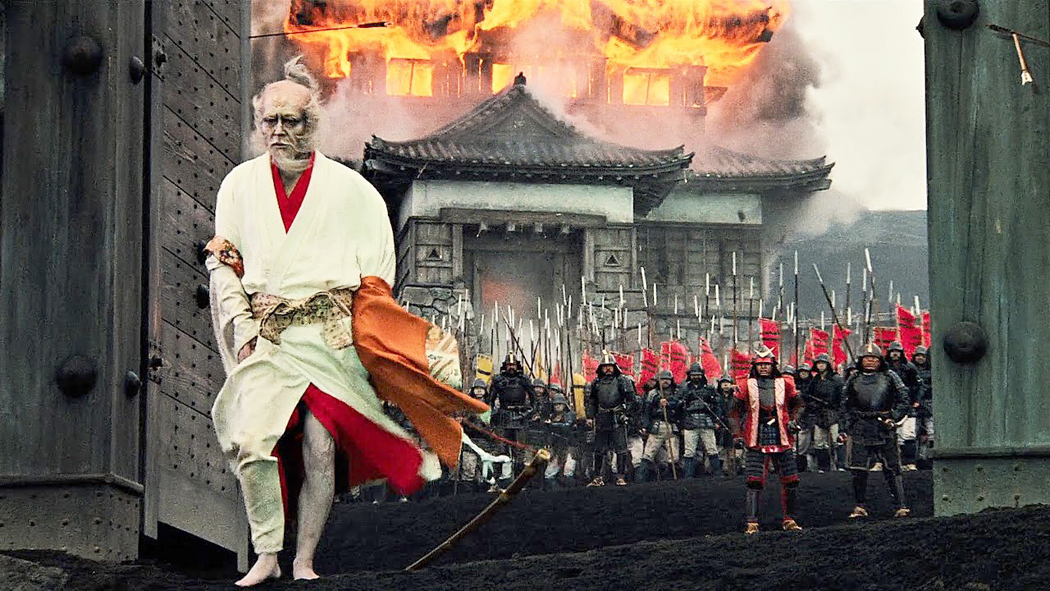
1985 Ran

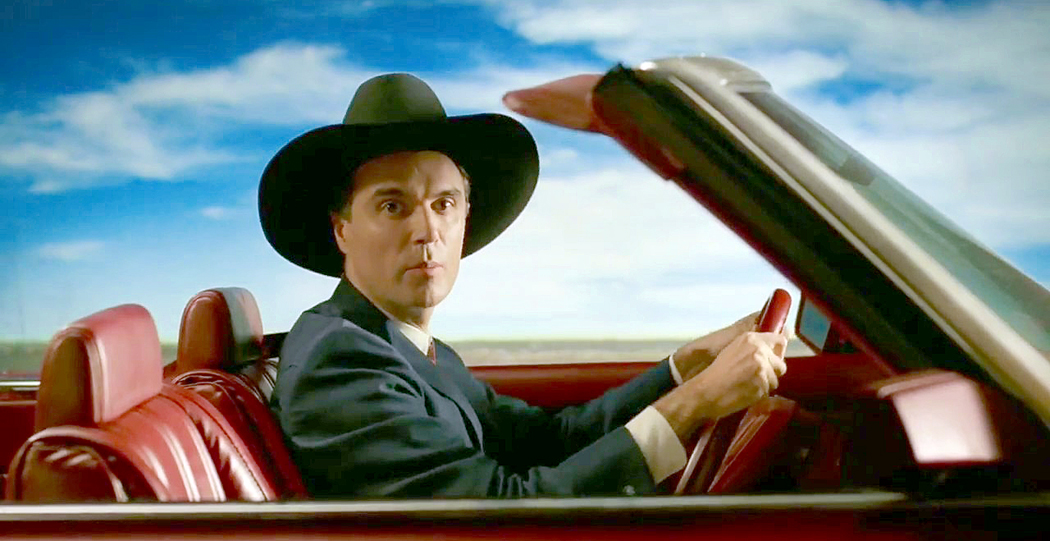
1986 True Stories

1987 Wings of Desire and Full Metal Jacket

1988 A Short Film About Killing

1989 Crimes and Misdemeanors

1990 Goodfellas

By the ’90s, I was working as a journalist and often functioned as back-up movie critic, and so got to see a lot of films, including a fair share of really bad ones, and so, perhaps, it made me a little more tolerant of those that were good but perhaps not classics to make the AFI list. Still, my list includes some of my all-time favorites. 

Krzystof Kieslowski’s Three Colors trilogy — and especially its conclusion, Red, are among the most moving I’ve ever seen, deeply humane. And it changed my thinking about coincidence both in fiction and in life. 

It was the decade I finally discovered Pedro Almodovar. I now own all of his films on DVD and share them with whoever is willing to sit still long enough. He is, with Kieslowski and Jean Renoir, among the most humane of filmmakers. 

1991 La Belle Noiseuse

1992 Reservoir Dogs

1993 Three Colors: Blue

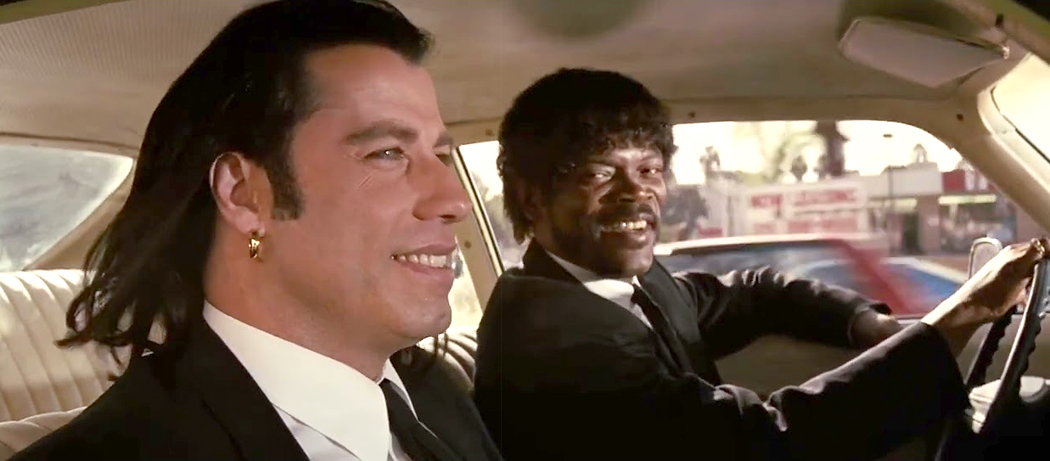
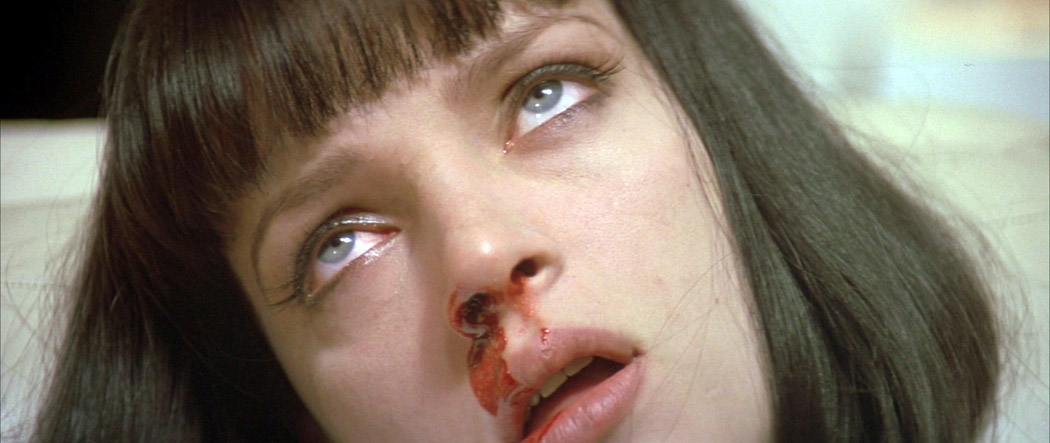
1994 Three Colors: Red and Pulp Fiction

1995 Before Sunrise

1996 Sling Blade

1997 The Apostle

1998 The Thin Red Line

1999 All About My Mother 

2000 O Brother, Where Art Thou

In 2017, some misguided Broadway producers attempted to make a stage musical from Jean-Pierre Jeunet’s film, Le Fabuleux Destin d’Amélie Poulain, a film so cinematic it lives in a world of its own. The musical closed shortly after it opened. How could it have been otherwise? The movie has elicited a good deal of hate from those who could only see an impossibly sweet smile and goofy haircut. There’s a lot more going on in it. It was my favorite film from 2001. I loved the color manipulation, the inventive camera movement and the quirky editing. It is a film you can simply sit back and have fun with. How is that any different from Tarantino, other than the violence? 

2001 Amelie

2002 Russian Ark

2003 Dogville

2004 The Merchant of Venice

2005 The Three Burials of Melquiades Estrada

2006 Children of Men

2007 The Diving Bell and the Butterfly

2008 Man on Wire

2009 The Girl with the Dragon Tattoo (Swedish version)

2010 Mesrine: Killer Instinct and Mesrine: Public Enemy No. 1

After retirement in 2012, I saw fewer and fewer films, at least in theaters. But I still ventured out for a few selected movies. In 2016, my wife became increasingly ill and I spent most of my time looking after her needs. There are no films for the whole year I can list. It is, until 2020, the only year left blank. After she died, I had little will to leave the house. But I have seen a few films since that I felt were notable. Now, most of the movies I watch are either streaming or from my DVD collection, which, at its peak, included about 200 French films, and all of Almodovar and nearly every drop of Werner Herzog. 

And I thank providence for Turner Classics and the Criterion Collection. 

2011 Tree of Life

2012 Lincoln

2013 Blue Jasmine

2014 Boyhood

2015 The Hateful Eight

2016 Nil

2017 The Death of Stalin 

2018 The Ballad of Buster Scruggs

2019 Once Upon a Time in Hollywood 

2020 Nil

2021 ?

This is my list. If I made it again, I’m sure I would list different films. I’m sure if you made your list, it would be completely different. Again, it’s just a game, an exercise. It doesn’t mean anything.

Finally! One of the great films of all times has become available. For years I have waited for a good copy of Marcel Pagnol’s La femme du boulanger (“The Baker’s Wife”) to be transferred to DVD. The only version I have is one I recorded from a Turner Classic Movies broadcast decades ago. The subtitles were horrible and the print none too good. I have treasured it for years and proudly introduced it to friends whenever I could. 

But now, Criterion will be offering a new, cleaned up, re-titled version. It is one of the greatest films ever. After watching it, Orson Welles claimed that its star, Raimu, was “the greatest actor in the world.” He called the move “perfect.” 

Raimu etches a perfect line between the comic and the tragic, playing a French village baker whose wife runs away with a younger man and who, heartbroken, refuses to bake another loaf until she returns. The villagers, despairing of ever again getting a good baguette, go all out to retrieve her. All the fine details of pre-war village life are drawn with subtle precision. As novelist Graham Greene said of the film, “the human actors are only part of the general setting — the well and the olive trees and the crude, crowded church and the Cercle Republicain (tavern) with the tin advertisements, and the hunter going out in the dawn with his dog and his gun while the baker sleeps in his (dough) trough beside the oven.”

It is a closely observed and beautifully seen world. 

(It is hardly the only great film too long unavailable: Abel Gance’s famous 6-hour silent film, Napoleon, has been restored, but is unavailable in the U.S. for ridiculous legal reasons — blame Francis Ford Coppola — but is available on a Region 2 disc from Amazon. All-region DVD players are common and inexpensive and worth the small investment.)

The popular conception of “foreign films” has changed over the years. Where once the term meant Bergman, Fellini and French films, it has now gone on to mean Pedro Almodovar, Johnnie To and Oscar-winning Mexican directors. A foreign language film is more likely to be in Cantonese than in Swedish. 

But I was born in the earlier era, and for me, the great movies are French. Yes, I have almost all of Bergman’s films on DVD, and most of Tarkovsky, but the great majority of the discs on my shelves are in French. I once catalogued them and counted well over 200 of them. 

Most people, when they think of French movies, think of the New Wave — that handful of directors in the late 1950s and into the 1960s who brought new techniques and new energy to the industry, along with an appreciation of Hollywood’s best work. 

But French cinema is much more. There were great movies before Truffaut ever came along. And great directors. Pagnol, Becker, Duvivier, Vigo, Clair, and above all, Jean Renoir. 

And there have been great directors since the wave hit the shore: Patrice Leconte, Jean-Pierre Jeunet, Agnes Jaoui, Catherine Breillat, Jamel Debbouze.  

I am going to suggest a few of their movies, all (at least when I bought them) available on disc. Many are also available on streaming video. 

I have listed no more than a single film from any one director, to ensure a variety and a wide scope. I have tried to avoid the obvious choices, because you may already be familiar with them: Rules of the Game, Grand Illusion, Breathless, Jules and Jim, Wages of Fear. And, I have not included any Renoir films, mostly because they are self-recommending and any real movie lover should already be familiar with them. 

The earliest of these films is Pepe Le Moko, which was remade (and sentimentalized) in the Hollywood remake with Charles Boyer, Algiers. The French original is much better, in large part because Jean Gabin is so much greater an actor than Boyer. Julien Duvivier was a great standard of French directors in the 1930s. 

I am including also a peculiar film, The Story of a Cheat by Sacha Guitry. Guitry is one of the great French comics, who wrote many stage comedies, was as famous a performer in his day as, say, Richard Pryor was in his. This film is unusual in that it is presented almost entirely as voice-over narration. It is excellently clever. 

Mainstream French films of the ‘40s and ‘50s include many wonderful genre films, almost all better plotted and with more interesting characters than their Hollywood cousins. 

Touchez pas au Grisbi, by Jacques Becker, is one of Gabin’s greatest roles. And that is saying a lot. (The title translates, roughly, as “Hands off the loot.”) 

Les Diaboliques, by Henri-George Clouzot is the greatest suspense movie of all time, outdoing Hitchcock by a large margin. It was remade in Hollywood  in 1996 with Sharon Stone. Oy. 

A third crime drama from the 1950s is Louis Malle’s Elevator to the Gallows, which has a great soundtrack by Miles Davis. It marks a shift in French film. Malle’s early work is not generally considered part of the New Wave, yet, there were several directors working at the time who prefigured the New Wave, giving us very personal films and often using locations rather than sets, and a more naturalistic style of acting.

Among those directors is Jean-Pierre Melville. Most of his work comprises heist dramas or crime stories. But I didn’t want to overweight this series of films with gritty thugs and grittier cops. And Army of Shadows tells an almost autobiographical story of the French underground in World War II. It has plenty of suspense and drama. 

Now we come to the New Wave itself. There were a handful of directors working in this new style, more free and improvisational, using location shooting rather than studio sets, and breaking up the normal beginning-middle-end narrative structure. 

The two gods of Nouvelle Vague couldn’t be more different. Jean-Luc Godard is anarchic, innovative and indefatigably political. He wants to destroy the status quo. He probably never made a completely successful film, but moments in every one of the astound with brilliance. He does things no one ever thought to do: drop out the soundtrack, edit arbitrarily, shoot dialog from behind the heads of the actors, shift from color to black and white and back, point the camera away from the actors. Godard freed up filmmaking for the next 40 years. Band of Outsiders is one of his most famous films, and includes the race through the Louvre that is quoted in several other films.

Francois Truffaut, on the other hand, is a dyed-in-the-wool humanist, and he finds the humanity in pretty much everything he films. As warm as Godard is cold, he is everyone’s favorite New Waver. So many of his films are so well known, I’ve tried to find one for you that you probably haven’t seen, The Woman Next Door. It’s a late film and features Gerard Depardieu before he became a joke. He was then a great actor. 

Claude Chabrol was the most prolific New Wave director, with nearly 60 films under his belt. He was also the most conventional of the New Wave directors, turning his talents primarily to suspense and crime films, but seen in the fresh style of the New Wave. Le Boucher is probably his most characteristic film. 

Eric Rohmer may be an acquired taste. They are talky, and were made in series, one group called “Moral Tales,” and another called “Comedies and Proverbs.” Summer (in French Le Rayon Vert: “The Green Ray”)  is one of the Comedies and Proverbs. 

Jacques Rivette is another New Waver, and he is notable for the length of his films, and his patience. It can try the patience of his viewers, but not if you pay attention. My favorite film, La Belle Noiseuse, is four hours long and spends a lot of that time showing an artist drawing with a crow-quill pen on paper. I’m not letting that out of my house. 

But I’m going to suggest instead, Va Savoir, probably his most accessible film, that has a great part for Jeanne Balibar. Claude Berri has a supporting part as a librarian.

I only mention that because Berri is really a director, and The Two of Us is a great film, and probably the only one in which an anti-Semite comes across as lovable. Michel Simon is a force of nature and I recommend seeing any film he is in. 

Finally, two recent films. French cinema has long ago taken what it could from the New Wave and moved on to more contemporary themes. 

One of my favorite living directors is Patrice Leconte. The Hairdresser’s Husband is quirky and heartbreaking and stars Jean Rochefort. He’s great in everything he does. 

There are several women directors who should be included. My favorite is Agnes Varda, but I’m including here instead Fat Girl by Catherine Breillat. It can be rather brutal, but it is definitely worth seeing. 

Lastly, I’m including a musical. Yes, a musical. It is Francois Ozon’s 8 Women, and it features an “all-star” cast of great French actresses: Catherine Deneuve, Isabelle Huppert, Emmanuelle Beart, Fanny Ardant, Virginie Ledoyen, Danielle Darrieux, Ludivine Sagnier and Firmine Richard. This is like lining up Lauren Bacall, Judy Garland, Ava Gardner, Veronica Lake, Barbara Stanwyck, Lucille Ball and Marilyn Monroe, all in the same movie. It’s a doozy. 

I hope you enjoy all these. There’s plenty more to see, if these whet your appetite for Gallic filmmaking and if any of these directors particularly hits your buzzer, there are another five or ten films by the same maker. 

That’s your first 15 recommendations. But here are 25 or so more (I cheated. Some are trilogies, one is a pair). These are all films I love dearly:

Quai des orfevres by Henri-Georges Clouzot

La bete humaine by Jean Renoir

La ronde by Max Ophuls

Une femme est une femme by Jean-Luc Godard

Bob, le flambeur by Jean-Pierre Melville

Betty by Claude Chabrol

Le quai des brumes by Jacques Prevert

Monsieur Hire by Patrice Leconte

Le Trou by Jacques Becker

Mouchette by Robert Bresson

Mesrine: Public Enemy No. 1 by Jean-Francois Richet

Under the Roofs of Paris by Rene Clair

Man on the Train by Patrice Leconte

The Taste of Others by Agnes Jaoui

Vagabond by Agnes Varda

The Dreamers by Bernardo Bertolucci

The Marseille Trilogy by Marcel Pagnol, three films: Marius; Fanny; and Cesar

The Earrings of Madame de … by Max Ophuls

Trilogy by Lucas Belvaux, including: Cavale on the Run; An Amazing Couple; and After Life

La Vie en Rose by Olivier Dahan

The Widow of St. Pierre by Patrice Laconte

Inspecteur Lavadin and Cop au Vin by Claude Chabrol

Le Samourai by Jean-Pierre Melville

Shoot the Piano Player by Truffaut

Jet Lag – (Decalage Horaire) by Danièle Thompson

Sex is Comedy by Catherine Breillat

Ridicule by Patrice Laconte

I am deeply embarrassed by the films I have left out. If you have a favorite, please add them to the comments.

Click any image to enlarge

purple rose 2

Most people, when they go to the movies, go to see aliens blow up the world, or they go to see the lovers win out over odds, or to see the superheroes beat out the supervillains.

end of ricoThat is not much different from why they went to see the movies 80 years ago, except then they might have gone to see the chorus girl become a star, Fred and Ginger glide over the dance floor, or the end of Rico.

In other words, the initial satisfaction of moviegoing is the story, setting up characters and then seeing what happens next. And next after that. We think of them as having happy endings, but such endings are not necessary; some movies end in tragedy.

One is reminded of director Sam Fuller, when asked “what makes a good movie?”

sam fuller“A story,” he said.

“And what makes a good story?”

“A story!”

There is, however, another level of satisfaction that comes from watching a film, and that is an awareness of how the film is made. Not everyone understands the process by which the story is told, and not everyone cares. If a story is well-told, it is enough that the story is appreciated.

But there is a separate class of film buff who are moment-by-moment aware of how the pieces of film are put together to tell that story. They are aware of the lighting, the editing, the camera angles, the camera movement, the point of view — and are aware of how all these things are used to manipulate the story and the emotions of the filmgoer. An entire critical apparatus is brought to bear on a film, and especially if it is a film made by a director known to be innovative or astute at using these elements of film. For these people, watching a film is always a dual-track affair, as if they were reading a book in translation, seeing not only the story, but how it has been constructed at the same time.stagecoach

One can look at the studio films of Hollywood’s golden age and dissect them and notice how well made they are, and one can catalog the special habits of some of the better movie directors of the time — William Wellman’s overlapping dialog, Hitchcock’s time distortion, John Ford’s landscapes — and, indeed, whole books have been written (to say nothing about doctoral dissertations, and worse: books made from doctoral dissertations) about what makes Woody Van Dyke different from Gregory La Cava, but this is film-school subculture grist. The people who paid their pennies and dimes to watch those films in the grand movie palaces of the 1930s seldom considered the problems of reverse shots in editing dialog. They just wanted to know what happens next.

citizen kane low angleNowadays, one can hardly turn over a stone and not find someone spotting the use of camera angle in Citizen Kane or yanking our lapels to point out the amazing tracking shot that begins A Touch of Evil.

There is a subset of this sensibility that brings to bear the whole history of cinema — especially genre film — when viewing a film. I call this the Tarantino effect; it is that if we want to truly appreciate what is going on in, say, Kill Bill, one needs to know who Sonny Chiba is, what are the differences between Hong Kong martial arts films and those made in mainland China, and what is more, individual scenes from individual movies that are quoted or referenced in Tarantino’s opus.sonny chiba

This is the foundation of the current bumper crop of superhero movies, too. Fans know the backstory of each character, and the full weight of the “Marvel universe,” or the “DC universe.” The fact that all comic-book superhero movies are basically the same hardly matters if fans argue minutia of the worlds inhabited by these cliches.

The problem with all this is that it becomes a form of in-joke, or worse, a shibboleth separating those who “get it,” from those who don’t. And in this eddy of thought, the references become the subject of the film and the plot becomes incidental. One of the results is that it fosters cliche, with a wink and a nod, and negates original ideas, or at least glibly assumes that original thought is no longer possible. In this it buys into the Postmodern mentality, wherein it is held everything worth saying has been said, and now our job is just to rearrange the game pieces in clever ways. This conveniently forgets the fact that it has always been hard to be original, even for Raphael or Goya.

So, in our film culture now we have two strata of movie appreciation. There are still those who go the movie theater to enjoy a good story, but there is another class that blogs endlessly about the subtext, meta-theory and the film-school techniques of their favorite movies.
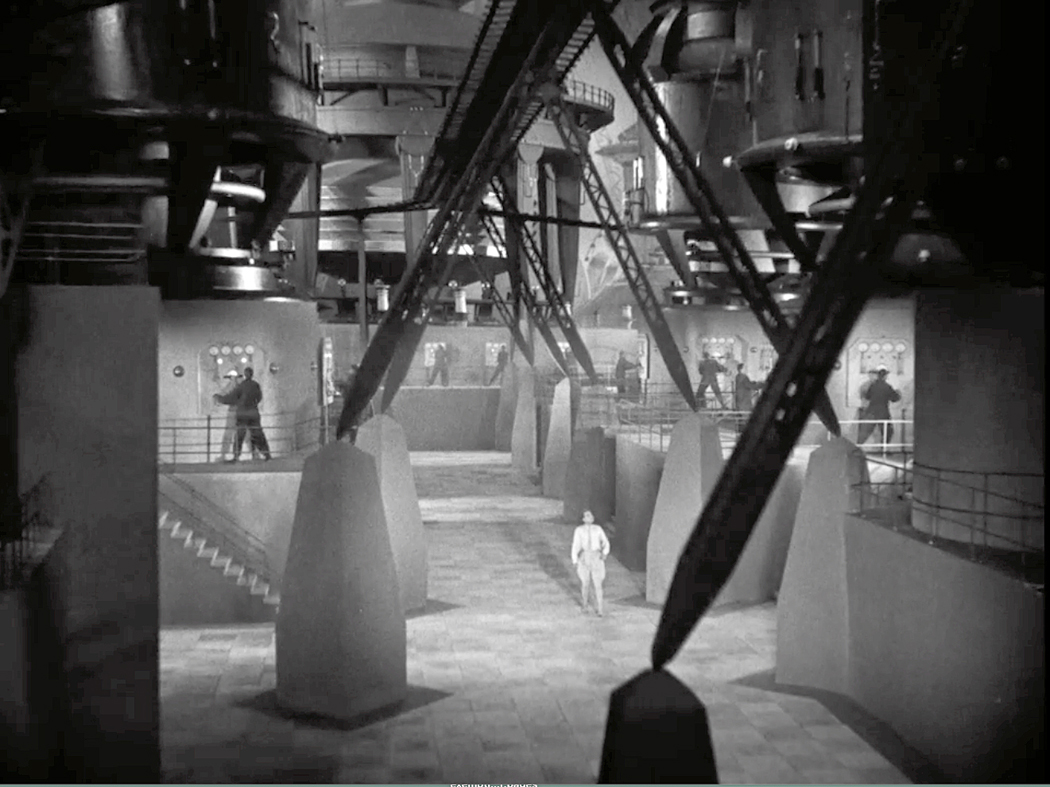
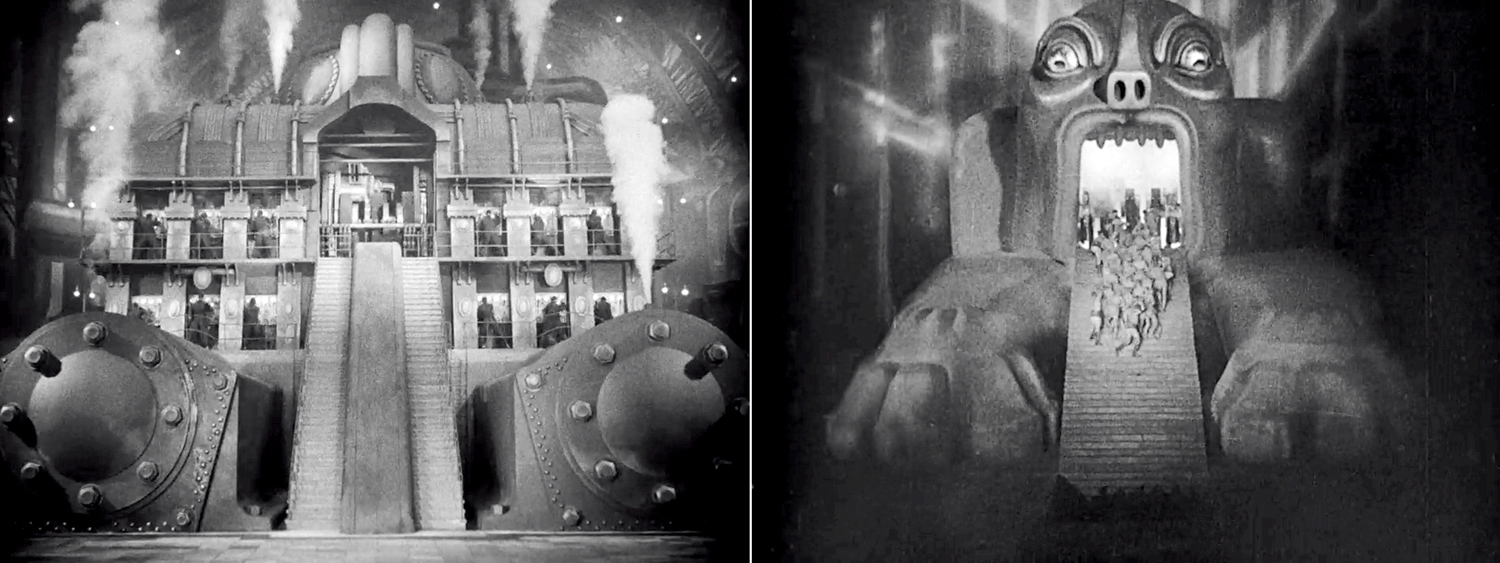
However there is a third level to be considered when assessing a film.  If most films don’t aspire to more than story and technique, in the greatest films both story and technique are just tools for for a further end: Expressing something real about life. These are films made by people who have something important to say, something to tell us. They are films that investigate our humanity.

Stories alone can be entertaining, and the meta-view can be engrossing to those whose minds are attuned to “what’s really happening underneath,” but when I make a list of the best movies ever made, it is neither of these levels I care about. Or rather, I assume them as given. No, what I look for is whether the movies have something to say about human existence, that I can weigh against my experience and decide if it is true or not, whether it has something to say about the experience of being alive.

battle of algiers

That is why my Top 10 list does not feature The Dark Knight or Star Trek II: The Wrath of Khan. Such films may be diverting, but they don’t say much about the real world. Instead, my list contains films such as Rules of the Game, The Battle of Algiers, and La Dolce Vita. I learn more about love and sex from My Night at Maud’s than from all the Wedding Crashers and Knocked Ups combined. It is this third dimension that is missing from most popular movies. Content to be clever or scary or thrilling, they forget to be human.

Such films put me in touch with the deepest well of my being, remind me that such depth is shared by all of humanity, and that all our lives are complex and what is most important to us is not our jobs or our automobiles, but the emotional connection we have with the earth. One leaves such films profoundly moved and deeply shaken.

uma pulp fiction

Pulp Fiction, to take one example, is certainly a cleverly told story, beautifully written and just scrambled enough to keep us attentive. Yet, unlike Tarantino’s more recent films, it has a third dimension. In Pulp Fiction, death has human meaning and aftermath. There are consequences. When Mia overdoses and Vincent rushes her to Lance’s house for an antidote, her immanent death is something felt by the audience and when Marvin is blown away in the back seat of the car, there is blood everywhere. Yes, it’s a joke, but it’s also very real. In Pulp Fiction, each of the characters is a believable human being. Compare those episodes with the fight scene in Kill Bill where a comic-book Uma Thurman slices and dices her way through “The Crazy 88.” Nowhere is anyone mourning the death of a father or brother. They are tin ducks in a shooting gallery.

Most truly great films have these three dimensions. I don’t want to denigrate a good story, and surely a badly made film won’t move us, no matter how profound the content. But of these three levels, the only one that can elevate a film to classic status is its humanity. Stories and film technique create patterns we recognize and respond to, but what we really need from patterns is more than mere recognition; what we need is meaning.

Of course, it isn’t only in film we need meaning, but in all of art. And so, we search paintings or poetry not just for pretty pictures or clever rhymes, but for what answers that need in us to understand, to find or create meaning.

cassattNone of this is to deny you the pleasure you may get from Captain America or from paintings of pretty flowers. There’s room for that, too. Such things are fine on days when your ambition is cooling out, but the real satisfactions of art come when you are challenged by something more substantive, where you find your life reflected back at you, and you are forced to confront moral dilemmas, the inevitability of death and loss, the complexities of ideas, and the ultimate interconnectedness of all life on the planet. More ambition is good.

So, when we look to justify art in a world increasingly dominated by technology and STEM disciplines on one hand, and an increasing reaction into superstition and tribalism on the other (nativism, fundamentalism, bigotry and its retinue), it is important to make a case for looking inward with a piercing eye to find what is there, at the bottom of the human well.