Archive

Tag Archives: franz joseph haydn

No, classical music doesn’t all sound the same. In fact, sometimes it’s hard to find any relationship at all between the far corners of the field. What do Gregorian Chant and Karlheinz Stockhausen have in common? 

When someone complains that “it all sounds the same,” you can be pretty sure that the reason is simply lack of exposure. A sample group too small to generalize from. So, I thought, as a followup to my previous blog entry about classical music, I should try to stretch the boundaries of the subject, to stretch out the definition tightly from end to end to see how far it spreads. 

If you listen to the items on this catalog, you will find music so different as to be hard to assign a common category. 

In the previous blog entry, I attempted to move from one suggestion to the next in the most contrasting way, from, say, Renaissance polyphony to Stravinsky’s Rite of Spring — a clear jerk from one mode of hearing to the other. 

This time, I hope to provide some framework to see how what we call classical music, or art music, developed over time. You may object that about half of the music comes from the 20th- and 21st-centuries, but that is only being fair: You should remember that the Rite of Spring — which is the traditional mark for the beginning of Modernism in music — is actually closer in time to the death of Haydn than it is to us today. Twentieth Century music is no longer new — it is classical. 

(I’ve chosen a single piece from each of the large clumps of music history, varying both style and genre, including keyboard, chamber, vocal, choral and symphonic. From each period, I have supplemented the examples with two contrasting pieces for further listening.) Beginning with: 
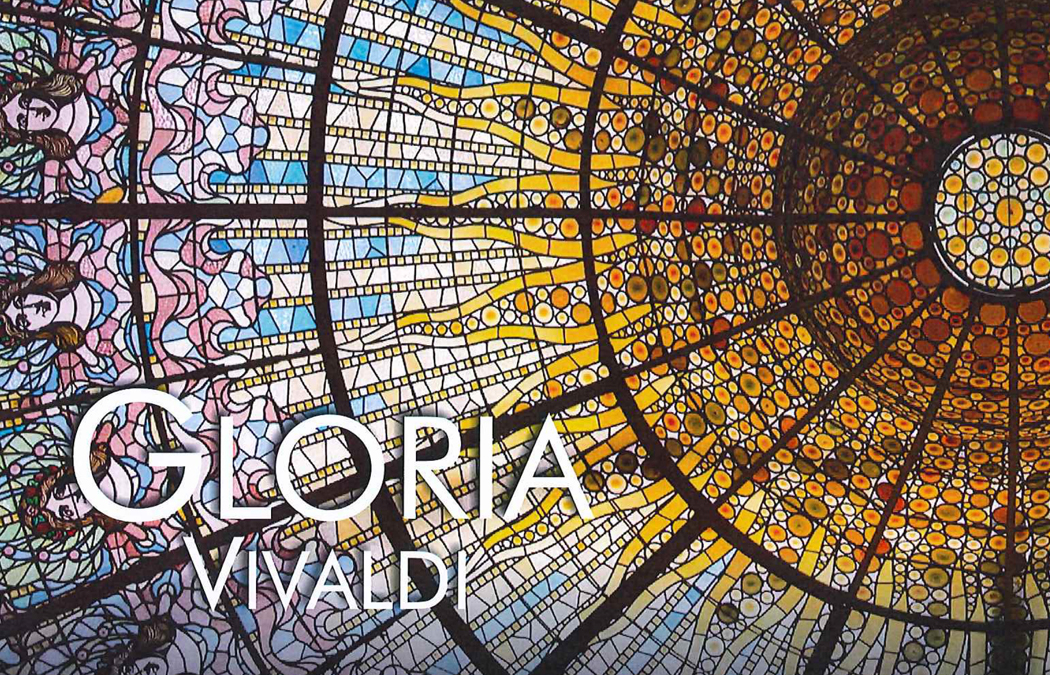
Vivaldi: Gloria in D Major, RV 589

Antonio Vivaldi (1678-1741) wrote at least three settings for the Gloria, but this one is the version everyone remembers, with its chugging motoric drive and its brassy fanfares. It is built from 12 short movements split between choral numbers, solos and a duet for soprano and contralto. 

Its catchy opening “one-TWO-three-four, one-TWO-three-four” with its octave leaps, returns later to unify the work. The Baroque era ran from roughly 1600 to 1750, although styles evolve slowly and overlap. It’s not like everyone stops writing one way and begins writing the new way. This piece, from 1715 lasts about 30 minutes and exemplifies the energetic forward motion of the Baroque. 

Alternates:
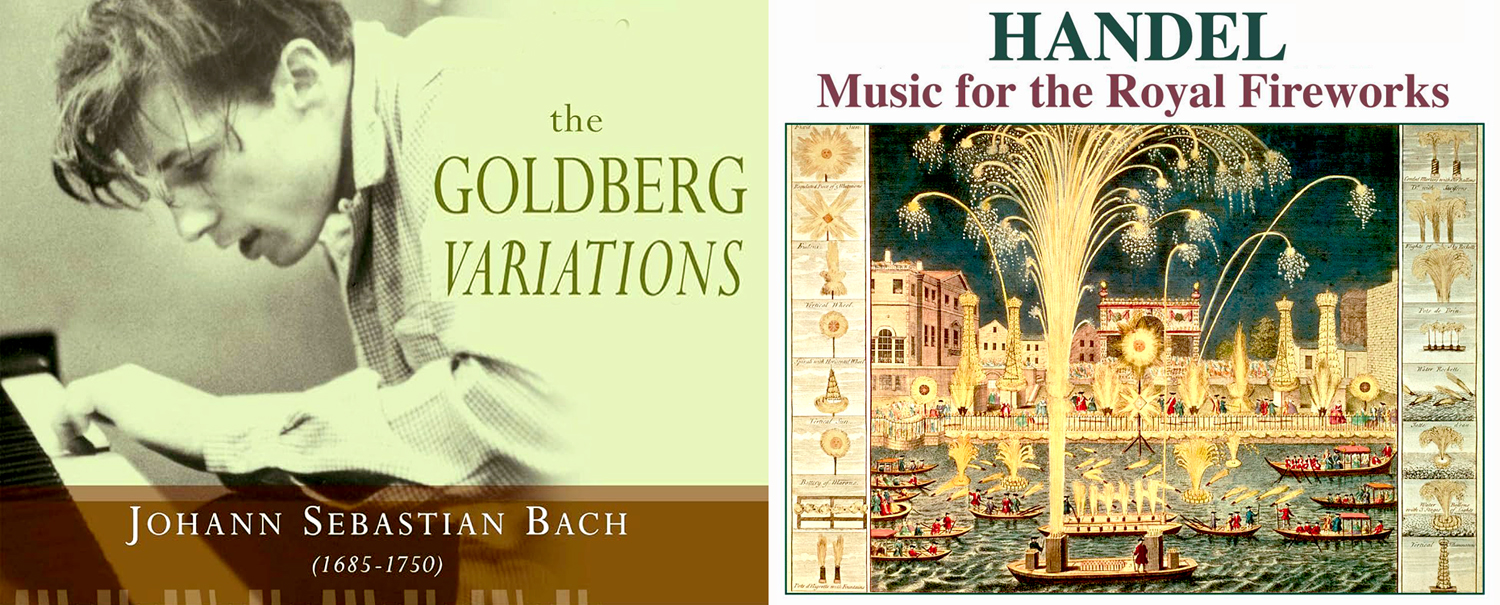
J.S. Bach (1685-1750), The Goldberg Variations (1714), a set of 30 variations on a repeating bass line, for keyboard; and George Friedrich Handel (1685-1759), Musick for the Royal Fireworks (1749), a suite for a large band of wind instruments, for outdoor performance during a famous fireworks display meant to celebrate the end of the War of Austrian Succession. The crowd loved the music, but the fireworks caused a building to burn down, blinded a soldier and injured several others. Later performances often added strings to the wind band, with no further reported injuries. 

Haydn: Quartet in D major, op. 64, no. 5 “The Lark”

It is often said that Joseph Haydn and Mozart wrote music in the classical style (roughly 1750-1828), but in fact, they created the classical style. If Haydn didn’t singlehandedly invent the symphony, he made it what we think of today; and he did the same for the string quartet — music for two violins, viola and cello. 

This is music generally less cluttered or fussy than the earlier Baroque, and seeks a kind of modest tastefulness, along with, in Haydn’s case, a witty sense of humor, as in the imitation bird calls at the start of this quartet, which was written in 1790 and has the usual four movements: an opening allegro, a dance movement, a slow movement and a jaunty finale. 

Alternates:

W.A. Mozart (1756-1791) Serenade No. 10 for 13 Winds in B-Flat, known as the Gran Partita (1781), which, in Peter Shaffer’s play, Amadeus, he has Antonio Salieri react by saying, “It seemed to me that I was hearing the voice of God.” Or Franz Schubert’s (1797-1828) Symphony No. 5 in B-Flat (1816), which is a really tuneful symphony built on Haydn’s model. 

Liszt: Piano Concerto No. 1 in E-Flat 

Franz Liszt (1811-1886) is the perfect Romantic composer, the greatest piano virtuoso of his time, and a matinee idol that all the ladies were in love with — something of which he took great advantage. His music, as in this 1855 concerto, is filled with all the wild emotion that the classical era avoided: over the top, loud, brash, and with a solo part for the triangle — it scandalized its first audiences. The jangle of the triangle was considered bad taste — but bad taste is the goal of much Romanticism. Audiences loved being scandalized. 

Alternates:

Robert Schumann (1810-1856) wrote a cycle of songs, telling a sad love story, called the Dichterliebe, or “A Poet’s Love,” in 1840, and includes a song claiming over and over, “I’m not angry,” to some of the angriest music ever. Clever. Or Bedrich Smetana’s (1824-1884) Moldau, an orchestral portrait of the Czech river (now usually called the Vlatva or Voltava), which is a perfect example of the Romantic Nationalism that swept over Europe. Great tunes. 

Debussy: Images for Piano, Book II

In the late 19th century and the 20th century before the First World War, music went through several changes. One of them is a rejection of Romantic excess, and the French composer Claude Debussy (1862-1918) came up with his own style — usually called Impressionism — of ambiguous tonality, exotic scales, and an approach to the piano that was soft and non-percussive. 

He wrote a great deal of piano music, including the famous Clair de Lune, but I’m offering the three pieces in his Images, second series (1907): Cloches à travers les feuilles (“Bells through the leaves”); Et la lune descend sur le temple qui fut (“And the moon descends on the temple that was”); and Poissons d’or (“Golden fish”).

Alternates:

Some composers went in the opposite direction, with larger orchestras, more chromatic harmonies of profound longing, in what is often called Late Romanticism, or Post-Romanticism. Gustav Mahler (1860-1911) often added voices to his orchestral music, or wrote orchestral song cycles, such as his Songs of a Wayfarer (1885). Richard Strauss (1864-1949) used huge orchestras and explodes out of the gate with Don Juan (1889), a musical version of a Don Juan more idealistic than lecherous. It is an avalanche of sound, with a huge six-horn signature that, in live performance, you feel through you fundament as much as hear with your ear. 

Janáček: Sinfonietta 

Now we are ripe in the 20th Century, and Leos Janáček’s Sinfonietta (1926), a five-movement piece for huge orchestra, including 25 brass instruments. The first movement has 10 trumpets alone, playing a hair-raising fanfare. 

All five movements are built from catchy tune-bits, extended and repeated. And although the music is clearly modernist, I’ve never come across anyone who didn’t instantly love the Sinfonietta

Alternates:

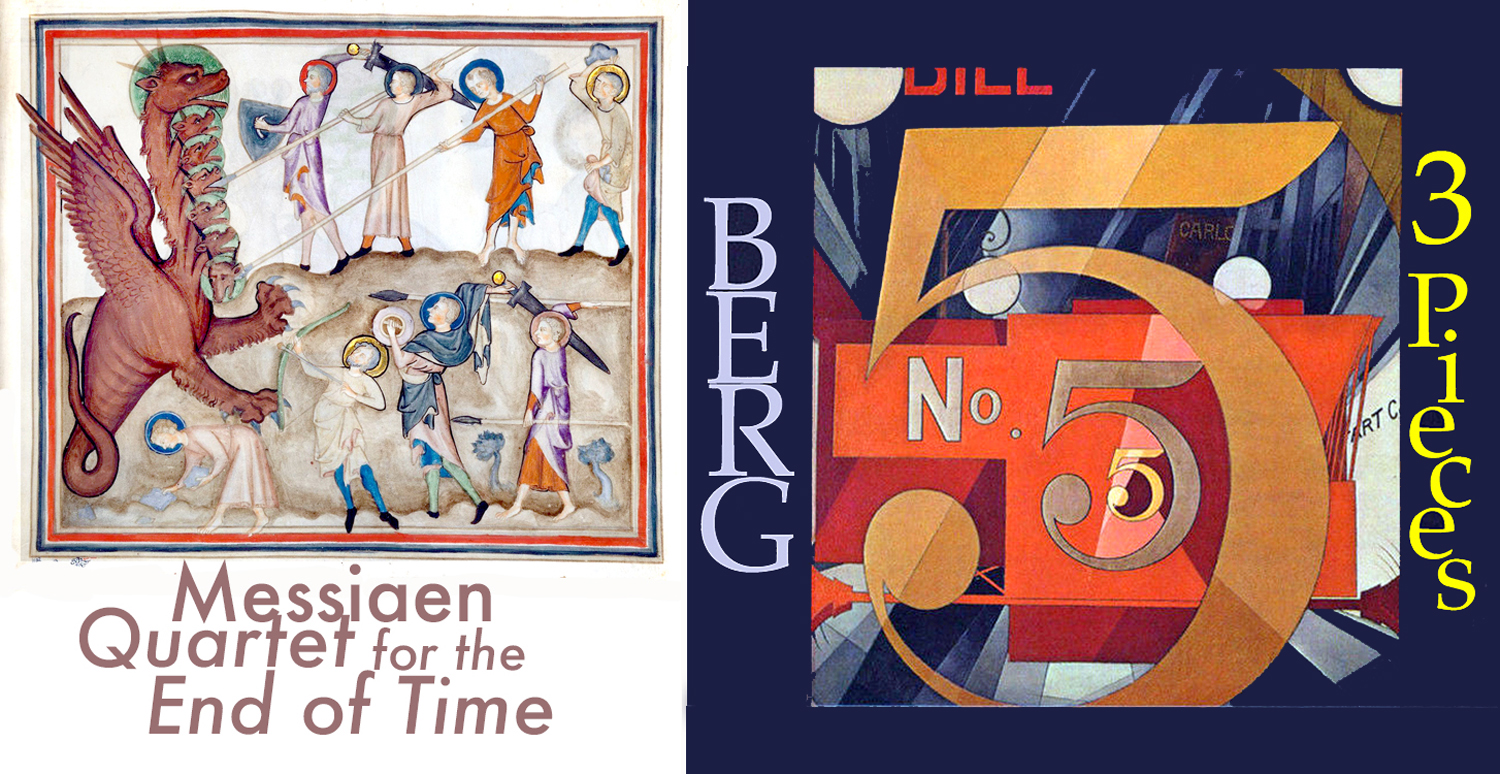
French composer Olivier Messiaen (1908-1992) was imprisoned by Nazis during World War II, and in prison camp, wrote his Quartet for the End of Time, for piano, clarinet, violin and cello (the instruments available in the camp). It is a hugely idiosyncratic piece, written to Messiaen’s own music theories, but can be overwhelmingly emotional in a good performance. And for the double-dip experience of atonal music, try Alban Berg’s (1885-1935) Three Pieces for Orchestra (1914), for something like what people used to call “modern music.” 

Penderecki: Threnody to the Victims of Hiroshima

Classical music, or art music, is still being written, and responds to life in the current world. We live in a post-Hiroshima age, and Polish composer Krzysztof Penderecki (1933-2020) summarized the feeling in his 1961 string-orchestra piece, Threnody to the Victims of Hiroshima, although you may have some difficulty recognizing it as string music made by violins, violas, cellos and double basses. It shrieks of the horror. 

It masses its 52 string players in tone clusters and dissonances, various vibratos and odd bowings, for 8 and a half minutes, that is not meant to be beautiful, but to evoke intense emotions. It is, nevertheless, beautiful. (Remembering Tom Robbins notion: “The ugly may be beautiful; the pretty, never.”)

Alternates:
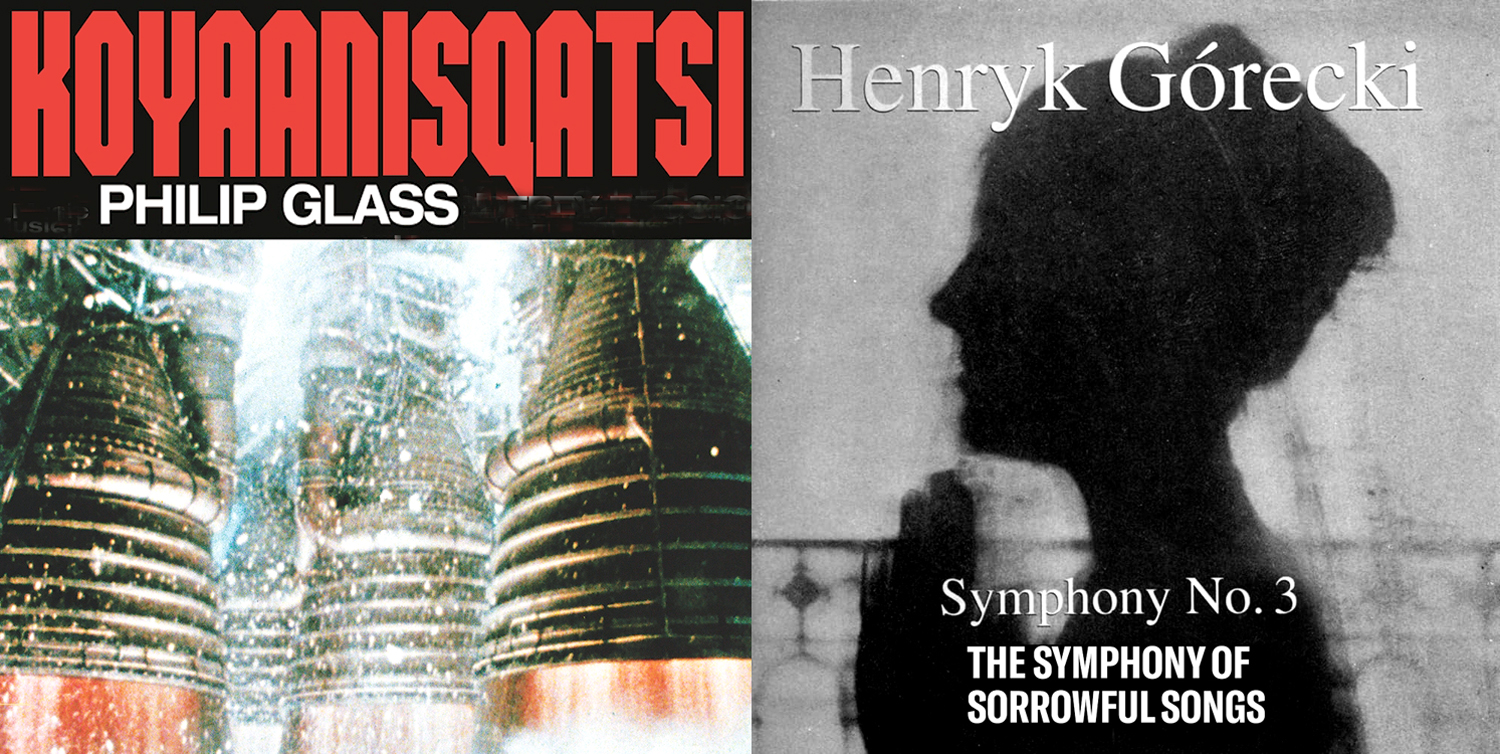
Minimalist composer Philip Glass (b. 1937) also reacts to the modern world in his film score for the Godfrey Reggio film, Koyaanisqatsi (1982). The modern world is a crazy world, as the film and music underline, but with quite a variety of minimalist techniques. The horrors of war fill Henryk Gorecki’s (1933-2010) Third Symphony (The Symphony of Sorrowful Songs) (1976), in which a soprano sings Catholic laments and words by victims of the Nazis, all to music so slow and so inexorable as to be almost a force of nature. Its 1991 recording by the London Sinfonietta sold more than a million copies. Gorecki, surprised at the popularity of such a sorrowful piece of music said, “perhaps people find something they need in this piece of music…. something they were missing. Something, somewhere had been lost to them.”

Epilogue

Of course, this diversity is among the European tradition of art or concert music. Most cultures have their own classical musics, such as the sitar or sarod music of India, the Chinese opera music, and Japanese flute music. Each is a tradition handed down from master to student and carried forth, with development and variation. That is what makes it classical. 

If I were to think of a purely American classical music, it would be jazz. It, likewise, has a wide range of styles and sounds, from Louis Armstrong through Duke Ellington and down through Ornette Coleman. 

But it is what we call classical music in the West that I am best familiar with and love. And writing this has given me the chance to listen once more to each of the pieces I’ve written about, and more joy me. 

If you were to name the greatest composers in the Western musical tradition, three or four names would come up uncontested.

Yes, you might have your favorites beyond these, and good arguments can be made, but by consensus, you would have to name Johann Sebastian Bach, Wolfgang Amadeus Mozart, Ludwig van Beethoven and …

Bach, because he is the source. He towers above everyone in his emotional power and technical brilliance. Different composers can fill the needs of various moods, but you can listen to Bach in any mood. He is universal.

Mozart, because no one ever had such fluency of expression or more immediate melody. Music seemed to grow from him like peaches from a tree.

Beethoven, because no one ever strove higher or struggled more painfully to find the exact note, the exact emotion, the exact nexus of human and transcendent.

And …

You might nominate Richard Wagner, or Franz Schubert. Johannes Brahms or Claude-Achille Debussy. Stravinsky or Schoenberg. All good choices, in their way, but the name that comes up more than any other as worthy of the company of Bach, Mozart and Beethoven is Franz Joseph Haydn, yet he is so often overlooked. His name does not spring up with the alacrity of the Big Three, but is almost always mentioned: And yes, there is Haydn.

Why is he given such short shrift? He is one of the Big Four. He practically invented the symphony and the string quartet; at least gave them the form we have encountered them ever since. And the wealth of his invention is mind boggling. He wrote 104 symphonies (depending on how you count), with almost as many minuets and yet, not one of those minuets  could be mistaken for any other. How can you create that many third movements and yet make each one emotionally, melodically and rhythmically distinct? And memorable.

His music has never left the repertoire, but is so often played as a warm-up piece to start a quartet recital, or tucked into a symphony program before the Big Piece after the intermission. We pay him lip service, but seldom really listen. Mostly, he is a pleasant bit of music before we have to wake up for the Mahler or Sibelius that will follow.

I believe the reason is that for many of the more popular composers, you don’t actually have to listen: You can let the music wash over you in emotional colors and flavors. You just float downstream with the tunes. (I don’t mean that if you do actively listen, you won’t find a logical argument, but that for most concertgoers, the musical argument is beside the point; Tchaikovsky swells your heart whether you recognize a sonata form or a polonaise).

But Haydn is music meant to be listened to actively, because what he does in his work is to give you a pattern of notes, and then take you on a journey of wit, through the permutations afforded by that pattern of notes. Your ability to follow all the clever things he does is the key to your understanding — and your pleasure. Yes, there are some good tunes, but they are the grist for his art, not the point of it.

Certainly, all good composers do this, but none to quite the degree you find with Haydn, or to quite the point. Through most of his career, he wasn’t writing for the common public, but for a sophisticated audience, who could follow his clever construction and deconstruction of the sonata form, or the variation form. In other words, they listened actively. I.e., they got the joke.

Nikolaus I

His boss through most of his time at the Esterhazy estate was Prince Nikolaus, an avid music lover and himself a performer on the baryton — a now obsolete instrument, a sort of combination cello and guitar. Haydn wrote 126 trios for his employer to play on that instrument.

Because the prince was musically knowledgable, his court followed suit, and it meant that Haydn could inject his music with many a musical in-joke his audience would enjoy. I use the word, “joke,” but that doesn’t mean they are meant to be overtly funny. No, the “joke” was some catch or punchline the audience was meant to pick up on, like an odd key change, or the turning upside-down of a them. Some of them are funny, but the point is the wit — the cleverness.

Wit is a word that meant something different, larger and more important in the 18th century than it does now. We tend to use the word as synonymous with “comedy.” We expect to laugh at wit. A witty saying, a witty remark.

But in the century of Haydn (and before, to some extent), wit was an entire class of thinking. It meant, as Sam Johnson expressed it, “a kind of discordia concors; a combination of dissimilar images, or discovery of occult resemblances in things apparently unlike.” Or in his other formulation: “The most heterogeneous ideas are yoked by violence together.”

An easy example: his Symphony No. 60 in C, called “Il Distratto,” or the absent minded, or distracted. The first movement is a pile of jokes, from the very first notes: a pompous introductory fanfare that goes absolutely nowhere, followed by a spritely tune. In Haydn’s style, a first theme is usually followed by a second theme in a contrasting key and mood. But here, the second theme also goes nowhere; it consists of just one note and its ornaments, over and over, losing speed and energy until, as if the orchestra has forgotten where it is and what it is doing, suddenly wakes up and charges ahead with renewed energy. (Link here).

The conductor Kenneth Woods describes it as funny and modern. “Possibly the funniest and most modern symphony ever written”, going on to say that “Haydn uses most of the 20th-century ‘isms’ in this piece—surrealism, absurdism, modernism, poly-stylism, and hops effortlessly between tightly integrated symphonic argument and rapid-fire cinematic jump-cutting. This is Haydn at his absolute boldest—he undermines every expectation, and re-examines every possible assumption about music.”

And at the very end, the orchestra stops, mid-phrase, and retunes the violins, before getting back to business. Yes, that is musical slapstick, but no one did it any better before PDQ Bach.

Or the finale of his Symphony No. 61, a sprightly prestissimo punctuated throughout by comic oboes playing the same two notes over and over again. Never changing; over and over. Da-dah. (Link here). Da-dah. (Click on the timing listed in the dooblydoo for the last movement).

Or the opening of final movement his quartet, Op. 76, no. 5, which places the kind of cadential chords used to punctuate the end of a movement instead at the very beginning. (Link here). And, of course, the movement ends with the same final chords.

Fugue theme, Symphony No. 70

My favorite is the finale of Symphony No. 70, which begins with a joke: Five repeated notes, quietly played, repeated several times, lulling you into a reverie, then, the same five notes blasted at full volume, waking you up. It does this again, and you figure, this is going to be one of Haydn’s great jests, then, just when you think you have it figured out, a great, furious and very serious fugue breaks out, occupying the center of the movement. Finally, back to the five-note joke, ending with a forte crash of those notes. Light-hearted, or deadly serious — you can’t tell. (Link here). That is yoking heterogeneous ideas together by violence.

But it all depends on an audience with some knowledgable expectation of what is likely to happen, so when it doesn’t, it comes as a delightful surprise. If you don’t have this background, it just becomes pleasant tunes.

The string quartets came with a knowledgable audience built in. They were not meant so much to be heard by an audience, as played by amateur musicians at home, and so the pleasure in them is as much in the playing as in the hearing. And the wit is there for the musicians to enjoy.

When Prince Nikolaus died, Haydn was freed to travel and make his reputation outside the estate. His music became more public, and instead of his symphonies being made up of cleverness piled on cleverness for the delectation of connoisseurs, he made them bigger, louder and gave each one at least one great joke for the middle-class audiences to remember, like the most memorable scene from a movie they could talk about over coffee after it was over. So, there is the tympani bang in the “Surprise” symphony, the Turkish military band in Symphony No. 100, the tick-tock in his “Clock” symphony and the righteous, bumptious fart joke made by the contrabassoon in the slow movement of his Symphony No. 93.

This is not to imply that Haydn was all punchlines and gags. There is great depth of emotion in many of his works. Take for one, the Seven Last Words of Christ, a liturgical piece, originally for orchestra and later turned into a piece for string quartet (the version most often heard today). It is eight great adagios, one after the other, meant to evoke an introduction and the last seven utterances of Jesus on the cross (Link here). It is Haydn’s genius to be able to write them so distinctly that you never have the feeling of one long slow piece, but rather seven great, separate meditations.

Or, the Piano Variations in F-minor, written over the death of his closest female friend, Maria Anna von Genzinger, one of his most sober compositions.

Sometimes Haydn’s wit is funny. Sometimes, it is profound. It is always surprising. It is meant to surprise.

And Haydn’s wit can be found in some of his most serious works. The opening of his oratorio, The Creation, depicts primordial chaos in a disjunctive series of phrases and fragments in disparate tonalities (Link here). And when, after that, the choir sings, very quietly, “And God said, let there be light, and there was …” all heavens break out in trumpets and kettle drums  in a great C-major chord” “LIGHT!!!!” (Link here). It is a simple, even naive effect, but in live performance can make the hair on the back of your neck stand up. Wit can also render the sublime.

Of all the great composers, Haydn seems the most sane and even-tempered. Bach could bluster to city officials and get into fights. Mozart could squander his money. Beethoven had his heaven-storming bouts of choler. But Haydn found decent happiness on this earth and expressed in his music a satisfying sense of order and sanguinity, if occasionally a touch of mischief. His is the happiest music I know that is not also simple-minded.

I spend this much time on Haydn, because I love him. As I get older, I find that Haydn’s music has a staying power that sustains me. I can confidently turn to any piece and find deep and abiding pleasure.