Archive

Tag Archives: goldberg variations

No, classical music doesn’t all sound the same. In fact, sometimes it’s hard to find any relationship at all between the far corners of the field. What do Gregorian Chant and Karlheinz Stockhausen have in common? 

When someone complains that “it all sounds the same,” you can be pretty sure that the reason is simply lack of exposure. A sample group too small to generalize from. So, I thought, as a followup to my previous blog entry about classical music, I should try to stretch the boundaries of the subject, to stretch out the definition tightly from end to end to see how far it spreads. 

If you listen to the items on this catalog, you will find music so different as to be hard to assign a common category. 

In the previous blog entry, I attempted to move from one suggestion to the next in the most contrasting way, from, say, Renaissance polyphony to Stravinsky’s Rite of Spring — a clear jerk from one mode of hearing to the other. 

This time, I hope to provide some framework to see how what we call classical music, or art music, developed over time. You may object that about half of the music comes from the 20th- and 21st-centuries, but that is only being fair: You should remember that the Rite of Spring — which is the traditional mark for the beginning of Modernism in music — is actually closer in time to the death of Haydn than it is to us today. Twentieth Century music is no longer new — it is classical. 

(I’ve chosen a single piece from each of the large clumps of music history, varying both style and genre, including keyboard, chamber, vocal, choral and symphonic. From each period, I have supplemented the examples with two contrasting pieces for further listening.) Beginning with: 

Vivaldi: Gloria in D Major, RV 589

Antonio Vivaldi (1678-1741) wrote at least three settings for the Gloria, but this one is the version everyone remembers, with its chugging motoric drive and its brassy fanfares. It is built from 12 short movements split between choral numbers, solos and a duet for soprano and contralto. 

Its catchy opening “one-TWO-three-four, one-TWO-three-four” with its octave leaps, returns later to unify the work. The Baroque era ran from roughly 1600 to 1750, although styles evolve slowly and overlap. It’s not like everyone stops writing one way and begins writing the new way. This piece, from 1715 lasts about 30 minutes and exemplifies the energetic forward motion of the Baroque. 

Alternates:
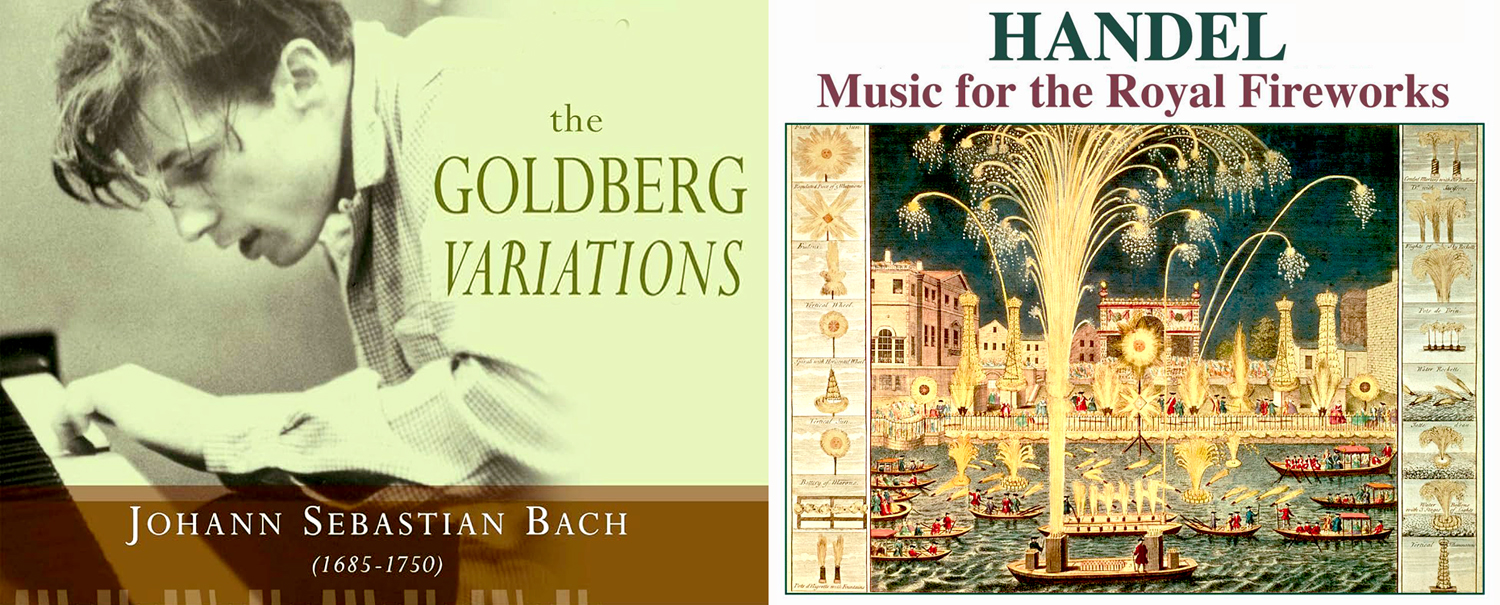
J.S. Bach (1685-1750), The Goldberg Variations (1714), a set of 30 variations on a repeating bass line, for keyboard; and George Friedrich Handel (1685-1759), Musick for the Royal Fireworks (1749), a suite for a large band of wind instruments, for outdoor performance during a famous fireworks display meant to celebrate the end of the War of Austrian Succession. The crowd loved the music, but the fireworks caused a building to burn down, blinded a soldier and injured several others. Later performances often added strings to the wind band, with no further reported injuries. 

Haydn: Quartet in D major, op. 64, no. 5 “The Lark”

It is often said that Joseph Haydn and Mozart wrote music in the classical style (roughly 1750-1828), but in fact, they created the classical style. If Haydn didn’t singlehandedly invent the symphony, he made it what we think of today; and he did the same for the string quartet — music for two violins, viola and cello. 

This is music generally less cluttered or fussy than the earlier Baroque, and seeks a kind of modest tastefulness, along with, in Haydn’s case, a witty sense of humor, as in the imitation bird calls at the start of this quartet, which was written in 1790 and has the usual four movements: an opening allegro, a dance movement, a slow movement and a jaunty finale. 

Alternates:

W.A. Mozart (1756-1791) Serenade No. 10 for 13 Winds in B-Flat, known as the Gran Partita (1781), which, in Peter Shaffer’s play, Amadeus, he has Antonio Salieri react by saying, “It seemed to me that I was hearing the voice of God.” Or Franz Schubert’s (1797-1828) Symphony No. 5 in B-Flat (1816), which is a really tuneful symphony built on Haydn’s model. 

Liszt: Piano Concerto No. 1 in E-Flat 

Franz Liszt (1811-1886) is the perfect Romantic composer, the greatest piano virtuoso of his time, and a matinee idol that all the ladies were in love with — something of which he took great advantage. His music, as in this 1855 concerto, is filled with all the wild emotion that the classical era avoided: over the top, loud, brash, and with a solo part for the triangle — it scandalized its first audiences. The jangle of the triangle was considered bad taste — but bad taste is the goal of much Romanticism. Audiences loved being scandalized. 

Alternates:

Robert Schumann (1810-1856) wrote a cycle of songs, telling a sad love story, called the Dichterliebe, or “A Poet’s Love,” in 1840, and includes a song claiming over and over, “I’m not angry,” to some of the angriest music ever. Clever. Or Bedrich Smetana’s (1824-1884) Moldau, an orchestral portrait of the Czech river (now usually called the Vlatva or Voltava), which is a perfect example of the Romantic Nationalism that swept over Europe. Great tunes. 

Debussy: Images for Piano, Book II

In the late 19th century and the 20th century before the First World War, music went through several changes. One of them is a rejection of Romantic excess, and the French composer Claude Debussy (1862-1918) came up with his own style — usually called Impressionism — of ambiguous tonality, exotic scales, and an approach to the piano that was soft and non-percussive. 

He wrote a great deal of piano music, including the famous Clair de Lune, but I’m offering the three pieces in his Images, second series (1907): Cloches à travers les feuilles (“Bells through the leaves”); Et la lune descend sur le temple qui fut (“And the moon descends on the temple that was”); and Poissons d’or (“Golden fish”).

Alternates:

Some composers went in the opposite direction, with larger orchestras, more chromatic harmonies of profound longing, in what is often called Late Romanticism, or Post-Romanticism. Gustav Mahler (1860-1911) often added voices to his orchestral music, or wrote orchestral song cycles, such as his Songs of a Wayfarer (1885). Richard Strauss (1864-1949) used huge orchestras and explodes out of the gate with Don Juan (1889), a musical version of a Don Juan more idealistic than lecherous. It is an avalanche of sound, with a huge six-horn signature that, in live performance, you feel through you fundament as much as hear with your ear. 

Janáček: Sinfonietta 

Now we are ripe in the 20th Century, and Leos Janáček’s Sinfonietta (1926), a five-movement piece for huge orchestra, including 25 brass instruments. The first movement has 10 trumpets alone, playing a hair-raising fanfare. 

All five movements are built from catchy tune-bits, extended and repeated. And although the music is clearly modernist, I’ve never come across anyone who didn’t instantly love the Sinfonietta

Alternates:

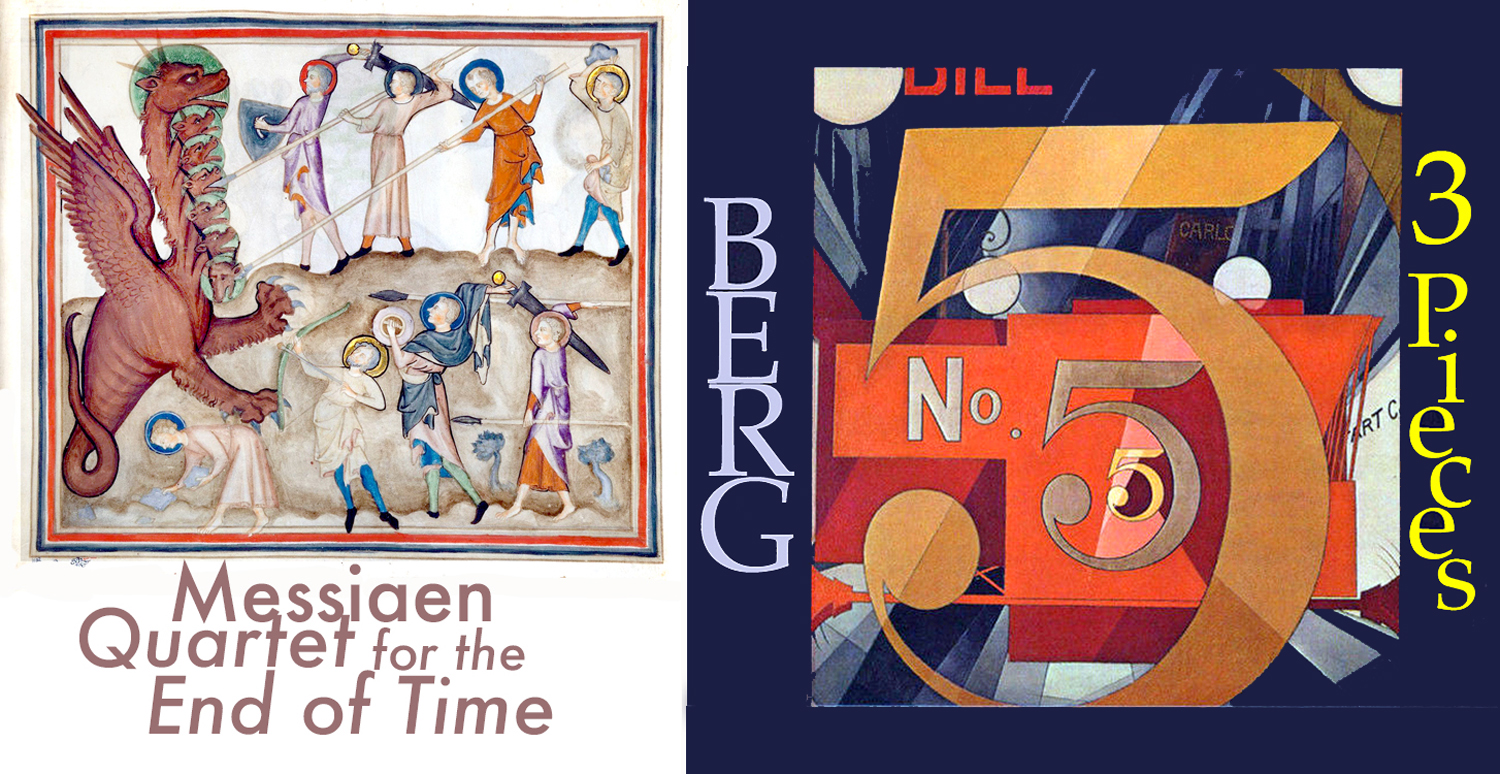
French composer Olivier Messiaen (1908-1992) was imprisoned by Nazis during World War II, and in prison camp, wrote his Quartet for the End of Time, for piano, clarinet, violin and cello (the instruments available in the camp). It is a hugely idiosyncratic piece, written to Messiaen’s own music theories, but can be overwhelmingly emotional in a good performance. And for the double-dip experience of atonal music, try Alban Berg’s (1885-1935) Three Pieces for Orchestra (1914), for something like what people used to call “modern music.” 

Penderecki: Threnody to the Victims of Hiroshima

Classical music, or art music, is still being written, and responds to life in the current world. We live in a post-Hiroshima age, and Polish composer Krzysztof Penderecki (1933-2020) summarized the feeling in his 1961 string-orchestra piece, Threnody to the Victims of Hiroshima, although you may have some difficulty recognizing it as string music made by violins, violas, cellos and double basses. It shrieks of the horror. 

It masses its 52 string players in tone clusters and dissonances, various vibratos and odd bowings, for 8 and a half minutes, that is not meant to be beautiful, but to evoke intense emotions. It is, nevertheless, beautiful. (Remembering Tom Robbins notion: “The ugly may be beautiful; the pretty, never.”)

Alternates:
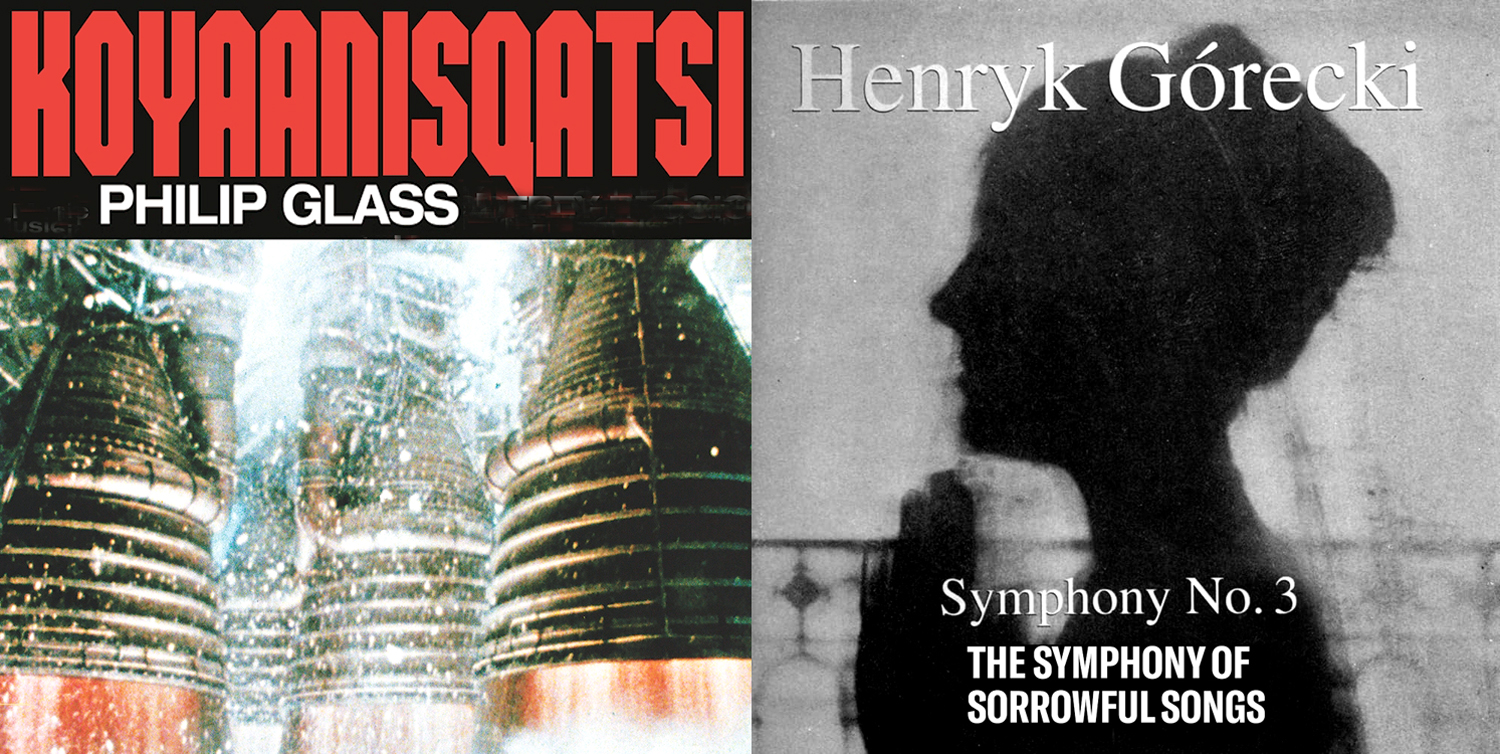
Minimalist composer Philip Glass (b. 1937) also reacts to the modern world in his film score for the Godfrey Reggio film, Koyaanisqatsi (1982). The modern world is a crazy world, as the film and music underline, but with quite a variety of minimalist techniques. The horrors of war fill Henryk Gorecki’s (1933-2010) Third Symphony (The Symphony of Sorrowful Songs) (1976), in which a soprano sings Catholic laments and words by victims of the Nazis, all to music so slow and so inexorable as to be almost a force of nature. Its 1991 recording by the London Sinfonietta sold more than a million copies. Gorecki, surprised at the popularity of such a sorrowful piece of music said, “perhaps people find something they need in this piece of music…. something they were missing. Something, somewhere had been lost to them.”

Epilogue

Of course, this diversity is among the European tradition of art or concert music. Most cultures have their own classical musics, such as the sitar or sarod music of India, the Chinese opera music, and Japanese flute music. Each is a tradition handed down from master to student and carried forth, with development and variation. That is what makes it classical. 

If I were to think of a purely American classical music, it would be jazz. It, likewise, has a wide range of styles and sounds, from Louis Armstrong through Duke Ellington and down through Ornette Coleman. 

But it is what we call classical music in the West that I am best familiar with and love. And writing this has given me the chance to listen once more to each of the pieces I’ve written about, and more joy me. 
It is plopped down in front of you and you poke it and prod it and try to figure out what it is. If it is something very new or very different, it may take more poking than usual, and you may very well come up with the wrong answer. 

This is what it is to be a critic — a real critic, I mean, not one of those Yelp scribblers, or self-certain mandarins with nothing more to offer but thumbs turned skyward or hell-ward. 

I was a critic for 25 years for a major daily newspaper (The Arizona Republic in Phoenix, Ariz.), and I always thought of my job as being a first reader, or first seer, or first listener — a pioneer trying to make sense of something before any sort of consensus has been reached. It is a risky thing to do — to proffer an opinion before you have anyone watching your back. 

When conductor Pierre Boulez first came out with his version of Wagner’s Ring Cycle in 1976, he played as if it were chamber music, it was such a different conception of the music that many critics first assumed it was a failed attempt to make the grand, Romantic mytho-philosophical monster it had always been taken to be. The BBC criticized the conductor’s “ruthless tempi” and “lack of expressiveness.” 

Consensus has now realized it was a brilliant re-thinking of the way the music could make sense. The clarity he brought to the muck (beautiful muck), was transcendent in its own way. Later criticism decided instead that “Wagner’s music doesn’t have to be murky to be metaphysical or massive to be overwhelmingly moving and Boulez gets playing from the too-often turgid Bayreuth Festival Orchestra that makes the music crackle and blaze with musical and dramatic meaning.”

Being a first listener is always risky. You may think something a failure because it doesn’t do what it has done before, failing to hear that it is doing something new brilliantly. 

When the Boulez Ring was new, the critics poked and prodded to see if it was alive. Now, we know not only that it was alive, but that it was a harbinger of a new way of playing classical music that has taken over the business. Out with the Furtwängler, in with the John Eliot Gardiner. Lean and mean drove out lush and weighty. 

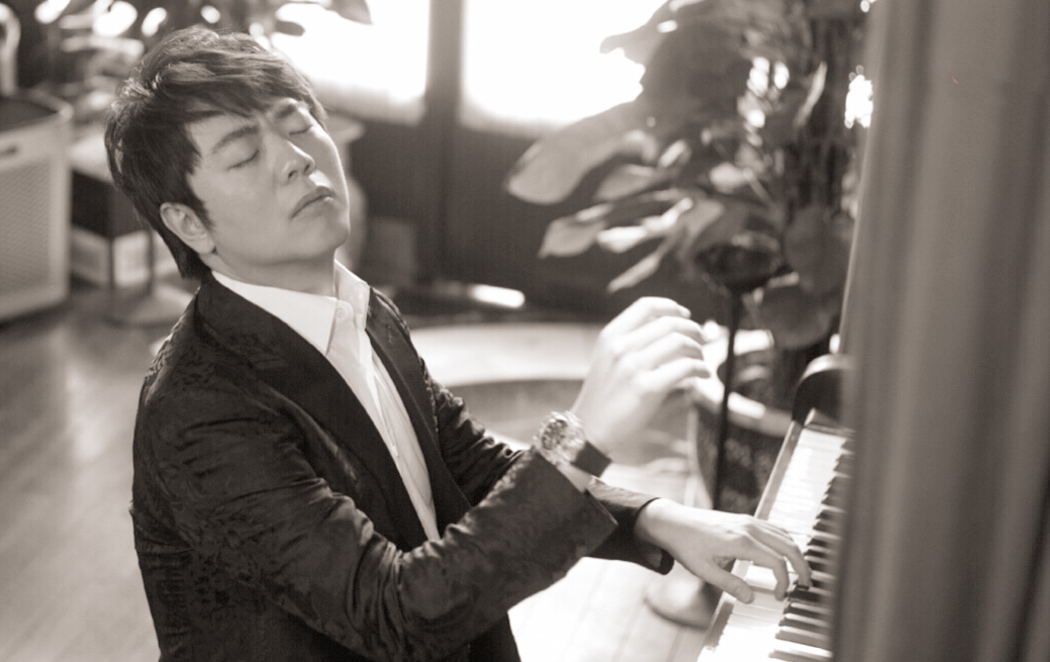
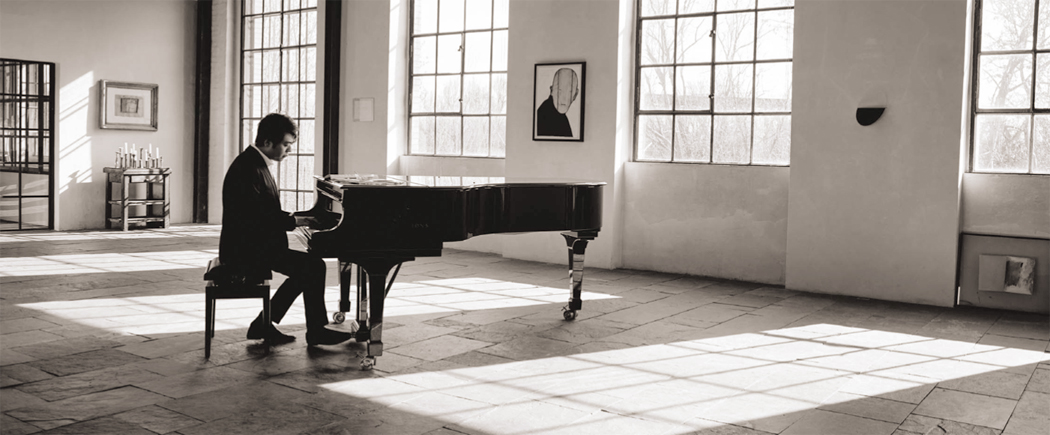
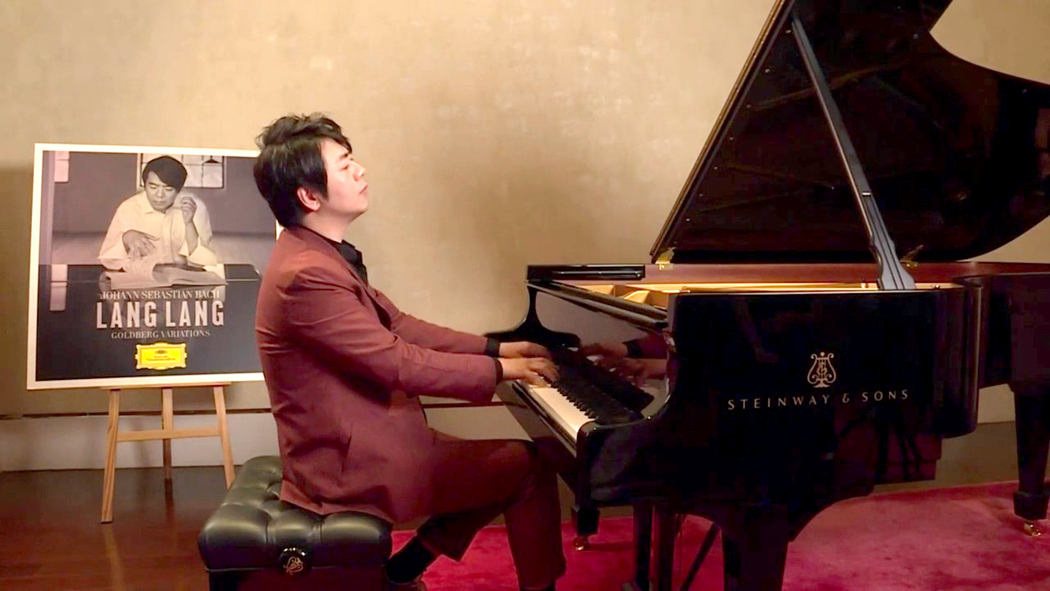
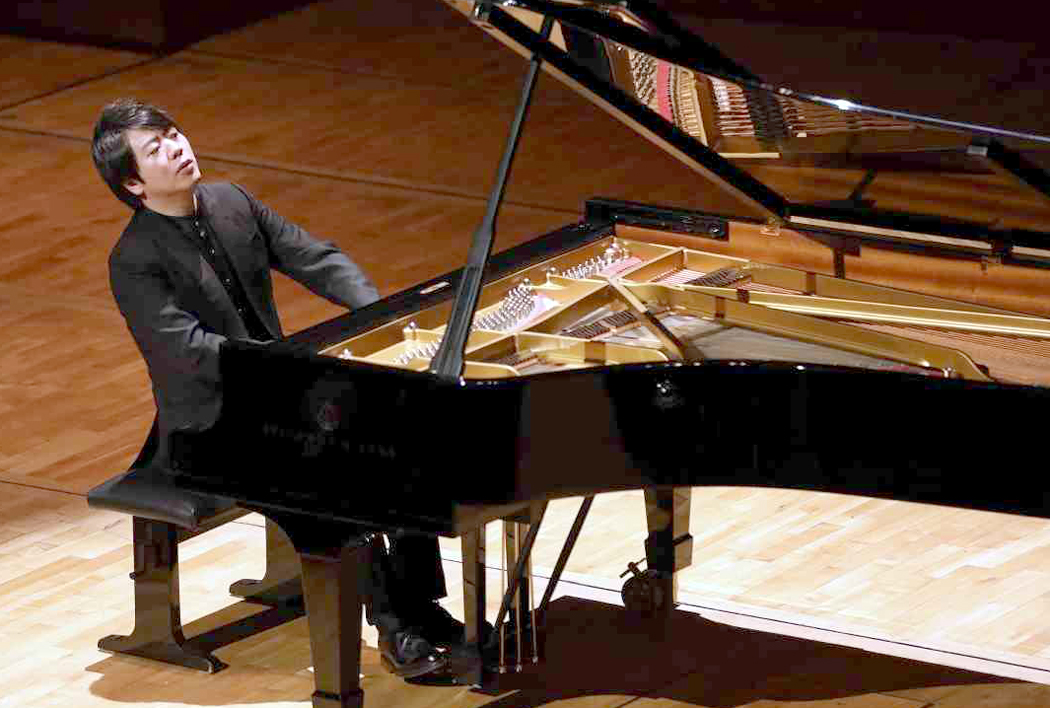
I am reminded of this because I have just been confronted by a new recording of Bach’s Goldberg Variations under the fingers of Chinese Wunderklaviermeister Lang Lang. Critical reaction has been all over the place, from deciding it was “the greatest version since Glenn Gould” to complaining that it sounded like a talented conservatory student sight reading. 

And I see what each reaction means: They parallel my own thoughts. Is this a brilliant rethinking, or is this a flaming dumpster fire? 

Mr. Lang, or if I may be so familiar as to call him by his first name, Lang, has always split opinions. Sometimes it is hard to bust through his relentless self-promotion — the kind of commercial huckstering usually identified with charlatans and snake oil salesmen — and then there are his stage antics, eyes closed in thesbian rapture, rolling his head back and forth in a way to make Leonard Bernstein seem like a mechanical clock. How can you take him seriously? 

And yet, there is often magic in his playing. I have heard him live several times, and his performances varied widely, from glib to dazzling to absolutely empty. Yet, at other times, it was profoundly moving. When I heard him play the Chopin E-minor concerto, the way he played the slow movement made time stand absolutely still. It is one of the most soul-satisfying performances I have heard in a half-century of concertgoing. It probably helped that I normally close my eyes when listening to music and therefore was spared his facial contortions. God, was that moment beautiful. 

His recordings are equally all-over-the-place, with some dead-on and concentrated and others distracted and hollow. Lang is capable of so much, but only delivers intermittently. 

So I am now confronted by a Goldberg Variations unlike any I’ve heard before. Is it brilliant or dunderheaded? Is it an aberration or is it a signal that classical music culture is shifting once again? 

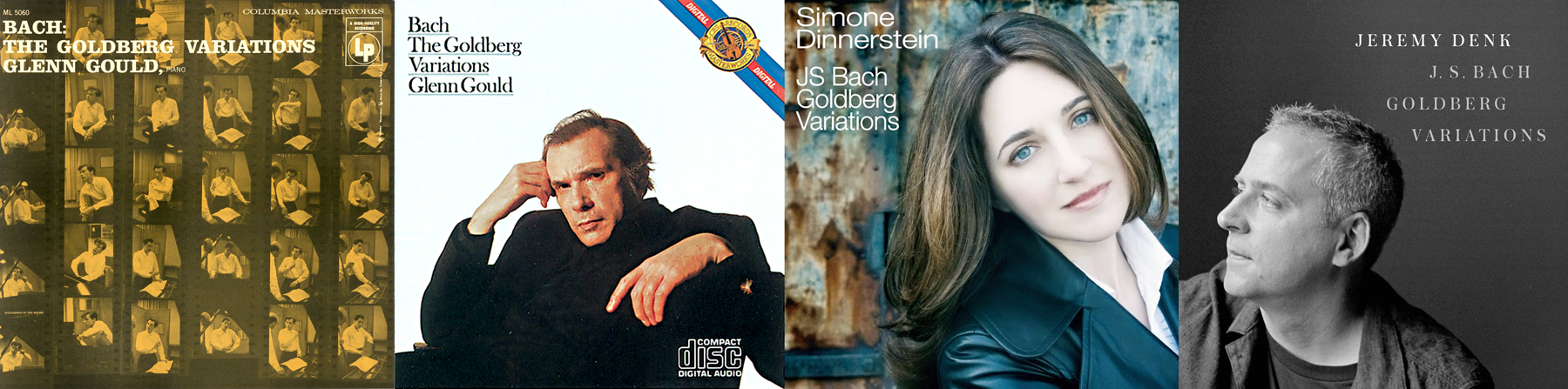
I’ve heard a lot of Goldbergs in my time. They were little known or played before 1955, when Glenn Gould launched them on an unsuspecting public, with a blazing performance that redefined Bach playing, clarifying the polyphonic strands and cutting down the pedal, almost mimicking the sound of a harpsichord. Since then, in the same way that no self-respecting art photographer can fail to make a photograph of a green pepper after being shown the way by Edward Weston, so no decent pianist can avoid recording a set of Goldbergs. Most of them are perfectly decent, if anonymous. 

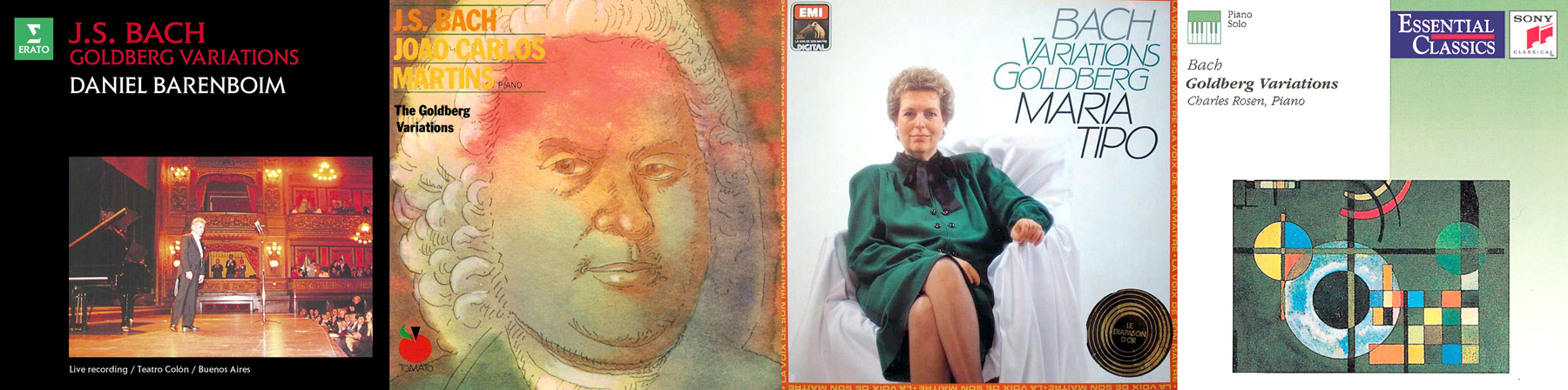
In recent years, a few with real personality have been released. Simone Dinnerstein has her set and more recently Jeremy Denk. Some may remember the brief surfacing of a recording by João Carlos Martins that was almost as idiosyncratic as Gould, although Martins’ piano never seemed to be quite in tune. 

The work has also been transcribed for accordion, marimba, harp, hammer dulcimer, guitar, saxophone quartet, string trio, string orchestra, synthesizer, and brass quintet. I have a recording of parts of them on Japanese koto, and Yo-yo Ma recorded the Aria on his cello. Avant-gardist Uri Caine made his version updating each variations individually for a heterogeneous mixture of voices, instruments and recorded noises. I once put together a CD mixing many of these oddball transcriptions into something I called the “Goldberg Variorum” — each variation played by a different instrument or group. 

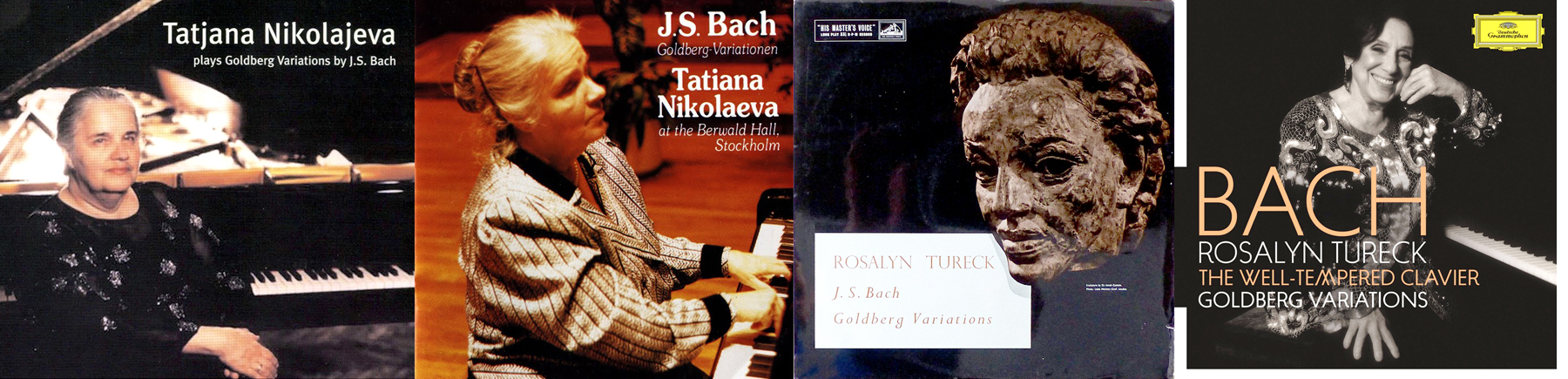
Gould recorded the Goldbergs at least four times — with untold bootlegs out there. The initial set has been reissued so many times in different albums, that it is impossible to keep count. Russian pianist Tatiana Nikolayeva recorded them five times and Rosalyn Tureck did it seven times. 

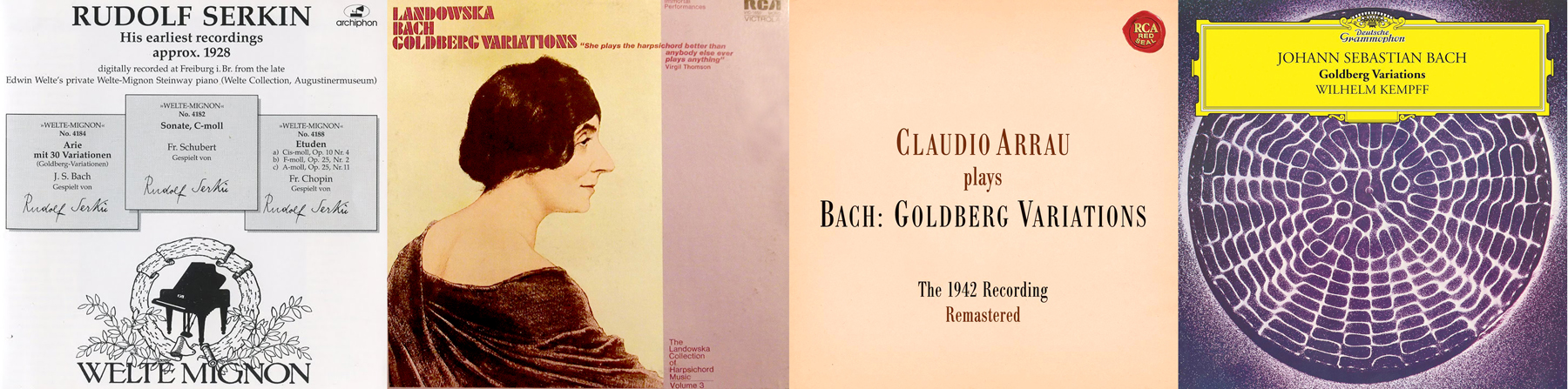
The earliest version I could find was on Welte piano rolls (a kind of player piano) from 1928, by Rudolf Serkin. (His son, Peter, left us three versions). Since then, there have been close to 250 recordings. About 50 of those are on harpsichord. A few are the transcriptions, but almost all are on piano. 

But since Gould, most pianists have hewn to the stricture that, since they were composed for the harpsichord, they should be performed as drily as possible, and with little or — preferably — no pedal. And since the arrival of “historically informed performance practice” (fie on the miscreants, I say, fie) boatloads of pianists have done their best to erase any notion that a performer should “interpret” the score. Just the notes, ma’am. 

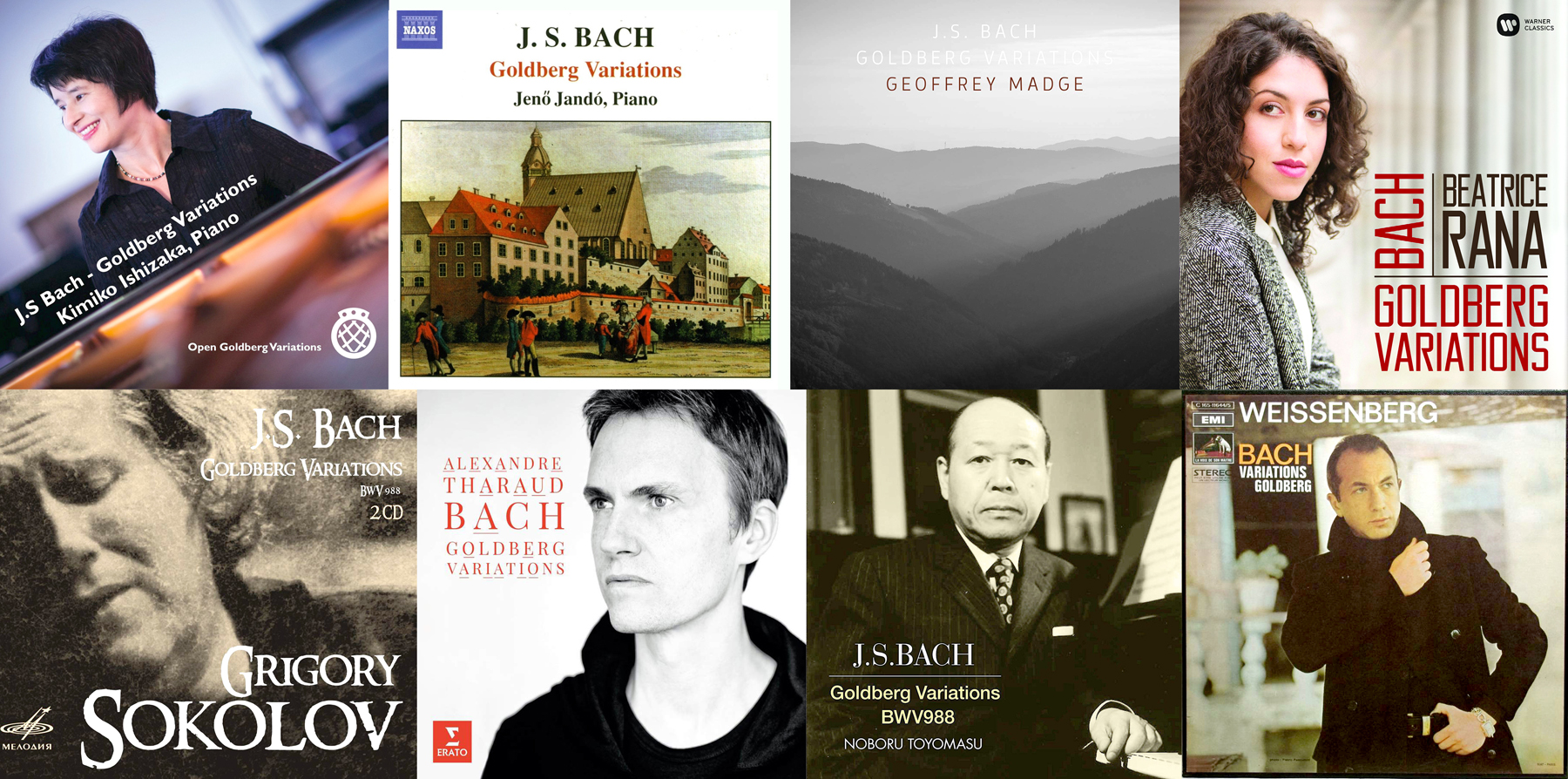
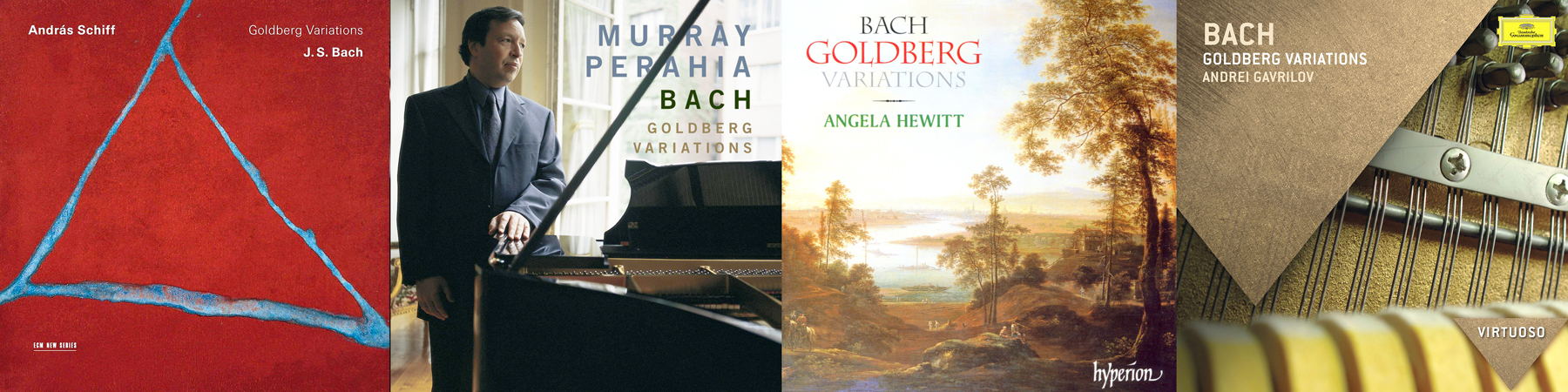
This has led to quite able, but faceless performances by such as Angela Hewitt, András Schiff and Murray Parahia. I don’t mean to poo-poo these recordings, They are all excellent of their kind, but they are chaste. 

And so, we come to Lang Lang’s two-disc set, taken at a rather leisurely pace, but with lots of spark and crackle in the details. He likes to thump hard on stray notes and he adds many ornaments, especially in the repeats — and not all the trills and mordents are stylistically appropriate. Extra passing tones and tons of rubato. Worse: Pedal. In modern terms, this is Bach done in “bad taste.” 

In the old days (pre-HIPP), pianists tended to play Bach on piano as if he had written for piano. They brought out tunes and backed them with accompaniment. Now, we revel in the polyphonic strands, each brought out cleanly. If you listen to pre-World War II recordings of Bach, you will hear pianists such as Edward Fischer or Wilhelm Kempff play their Bach as if he were the godfather of Chopin. 

You can hear the echoes of this Bach in the Well-Tempered Clavier of Daniel Barenboim. They are magnificently played, but purists cover their ears and bray “Nyah-nyah” to block out the sound. Yet, there is a long tradition, now largely buried, of approaching Bach’s music as a pretext for piano playing, showing off the performer’s skills and sensibilities. After all, do you go to La Boheme for the story, or to hear Pavarotti? The present orthodoxy considers this a kind of blasphemy. 

Yet, the music no longer belongs to Bach; it is ours and we can express our ownership of it any way we wish (as someone once said about modernized performances of Shakespeare, set on the moon or done with an all-female cast, “It’s OK. They haven’t destroyed the text. It is still there, unharmed.”) And no matter what you may think of Lang Lang’s performance, the text is still there. It belongs to you, too. But Bach himself is no longer here; he has no say in the matter and we are presumptuous if we claim to speak for him. 

So, maybe, after 40 years of increasing musical priggishness and the cult of “composer’s intentions” we are beginning to loosen up. After all, it is Postmodern doctrine that it is all just “text” to be worked on by each of us. 

The audience that actually cares about classical music seems divided into two unequal groups. The larger posits a Platonic ideal performance and judges each concert by how close to this ideal it reaches. Of course, each listener has his own vote for what that ideal is. But the goal is always the “perfect” realization of the score. 

But the other group seeks constantly to be surprised, to see the notes through a newer lens and have the music refreshed. “To hear it again for the first time.” They expect each concert to give them a different version even of old chestnuts. The standard issue performance bores them. 

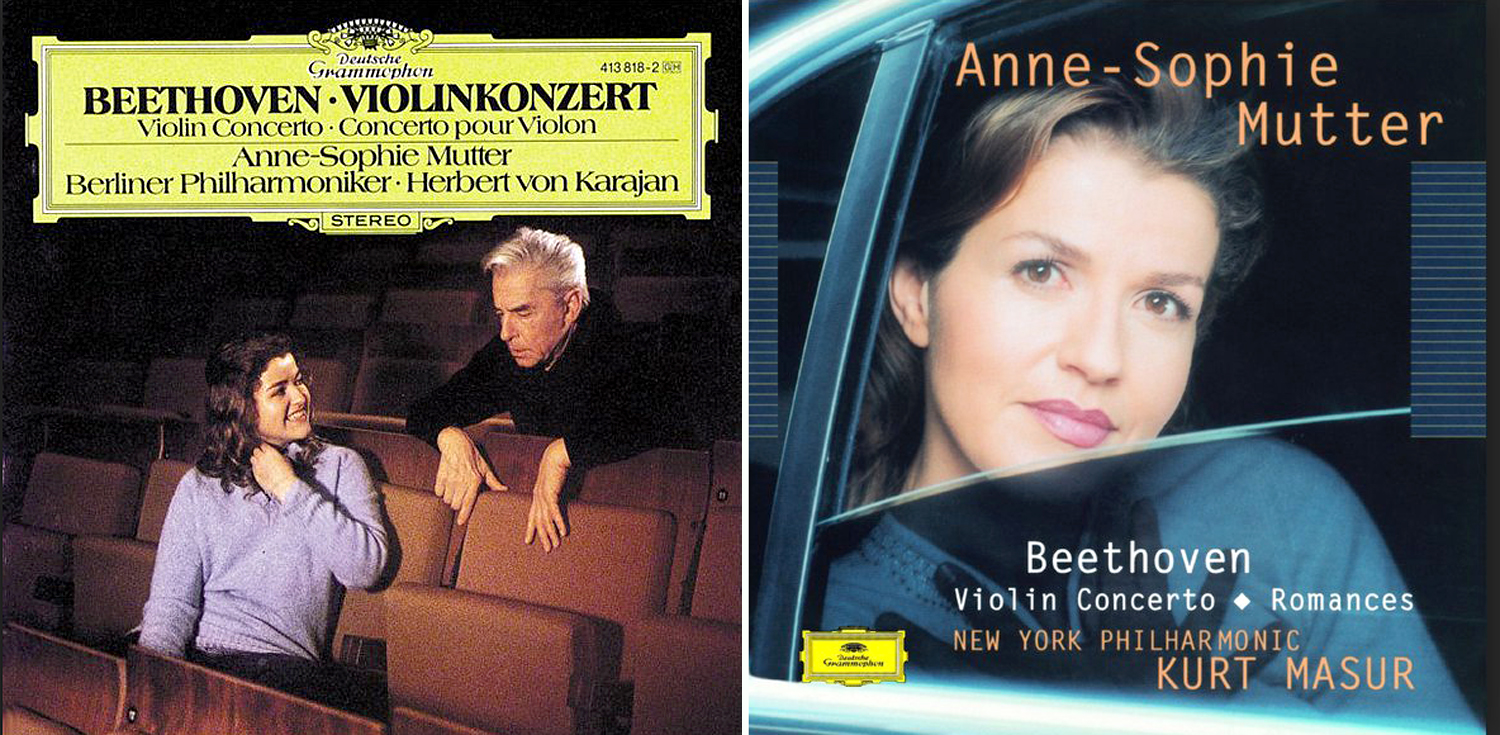
I can give a great demonstration of the difference. When Anne-Sophie Mutter first recorded the Beethoven Violin Concerto with the Berlin Philharmonic and Herbert von Karajan, she gave what must be the closest to the perfect ideal. Nothing out of place, everything beautiful and expressive. As if played by angels, not humans. It has remained in print since it was released in 1979. She recorded it again in 2002 with Kurt Masur and the New York Philharmonic, in a performance much more personalized, with very different phrasings and dynamics. No longer a Platonic ideal, but much more a here-and-now. You would never confuse it with any other performance or violinist. I love it; many fans hated it. Hate, hate, hated it. 

The problem with the Platonic performance is that the ideal changes over time. Once, the perfect Beethoven was Furtwängler, then it became Szell, and after that, it became John Eliot Gardiner. Tastes change over time. 

We seem to be in another shift, giving up the impersonal historically strait-jacketed version for a reintroduction of the more individuated performance. We hear it in the recordings not just of Lang Lang, but of Mikhail Pletnev, Valery Gergiev or the late Nikolaus Harnoncourt (operating under the deceitful guise as an “original instrument” guy — but really just sui generis.)

Really, the Platonic template has been in place mostly from World War II on. Before that, performance idiosyncrasy was the norm, from Vladimir de Pachman to Willem Mengelberg. Leopold Stokowski was famous for tinkering with scores and glamming up what he was conducting. Now, having gone through that, into the Post-war standardization and then the HIPP diminution, we seem to be re-entering an era of increased personal interpretation. 

And that brings us back to Lang’s Goldbergs. If we are in the cusp of a change, we cannot really be sure where the gamepiece comes down. This new recording may indicate a reshaping of the way we play Bach, the way Gould reshaped it from 1955. Or maybe it’s just a garish one-off. 

I poke it; I prod it. I place my bet. So many of the hundreds of recordings of the Goldberg Variations are magnificently well-played and satisfying in their own way, but how many are memorable? You could replace one with another and be equally pleased, indeed not even to notice the difference. Gould was memorable: You can spot it in a crowd of hundreds. Lang Lang’s recording is the most memorable I’ve heard since then, and I’ve heard a boxload of them. It is memorable, but is it good? Will its novelty wear thin, or become the new norm? 

I am going back for a fourth dive into the new recording. Then, maybe, a fifth. Perhaps after that, I’ll have an answer. 

"The Road To Utopia" Film Still

Bing Crosby: If you kill me, how are you going get the bird? And if I know you can’t afford to kill me, how are you going to scare me into giving it to you?

Bob Hope: Well, sir, there are other means of persuasion besides killing and threatening to kill.

Crosby: Yes, that’s … That’s true. But, there’re none of them any good unless the threat of death is behind them. You see what I mean? If you start something, I’ll make it a matter of your having to kill me or call it off.

Hope: That’s an attitude, sir, that calls for the most delicate judgment on both sides. Because, as you know, sir, in the heat of action men are likely to forget where their best interests lie and let their emotions carry them away.

Crosby: Then the trick from my angle is to make my play strong enough to tie you up, but not make you mad enough to bump me off against your better judgment.

Hope: By gad, sir, you are a character.

Crosby: Buh, buh, buh, boooo.

Read those lines and in your head, hear them in the familiar voices of Bing Crosby and Bob Hope, and instead of a detective story, you are on the road in a comedy. “Road to Malta”? Dorothy Lamour as Brigid O’Shaughnessy?

This is a new game you can play, entirely in your head and using your auditory imagination. My brother explained it to me last week, saying he sometimes has trouble going to sleep at night, and instead of counting sheep, he recasts classic films in his mind. It’s a neat idea, and needn’t serve solely as a soporific for the insomniac — any more than the Goldberg Variations.

There are two contending variants of this game. The first, like above, is to cast wildly inappropriate actors. Imagine these famous lines spoken by Tony Randall:

“You don’t understand! I coulda had class. I coulda been a contender. I could’ve been somebody, instead of a bum, which is what I am.”

Perhaps he was talking to Oscar Madison when he speaks those lines.

“Okay, you know you don’t have act with me, Steve. You don’t have to say anything, and you don’t have to do anything. Not with me. Oh, maybe just whistle. You remember how to whistle, don’t you? Just put your lips together … and blow.”

I am imagining that spoken by Lily Tomlin’s bag lady character.

gielgudIt can go the other way round, too. In Slingblade, the main character begins: “I reckon what you guys want to know is what I’m a-doing in here. I reckon the reason I’m in here is ’cause I’ve killed somebody. But I reckon what you guys are wantin’ to know is how come I killed somebody, so I reckon I’ll start at the front and tell you.”

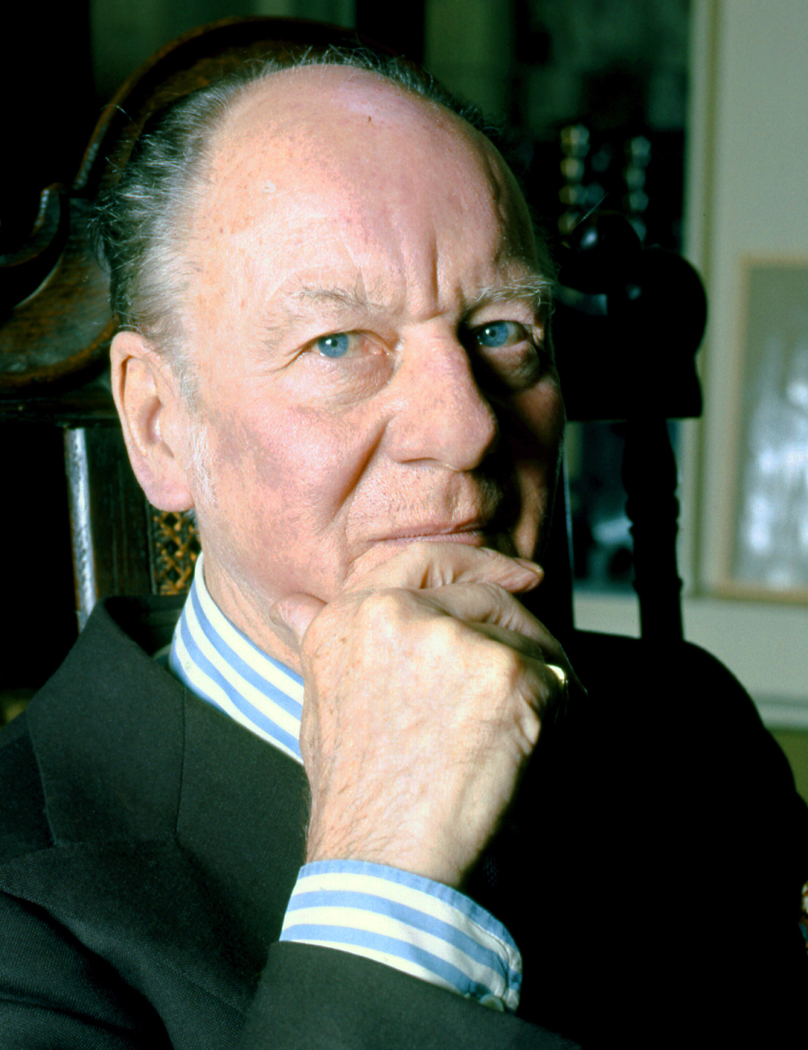
Now imagine that said, not by Billy Bob Thornton, but in the round, dulcet, veddy British tones of Sir John Gielgud.

The second variant isn’t about finding the absurd, but considering what could have been real casting choices. Imagine, say, George Raft saying “You dirty rat,” or James Cagney saying, “You’re going out a youngster, but you’ve got to come back a star!”jack

Or imagine Jack Nicholson saying, “I know what you’re thinking. Did he fire six shots or only five? Well, to tell you the truth, in all this excitement, I’ve kinda lost track myself. But being as this is a .44 Magnum, the most powerful handgun in the world, and would blow your head clean off, you’ve got to ask yourself one question: ‘Do I feel lucky?’ Well, do ya punk?”

Nicholson has such a distinctive voice, it’s possible to imagine quite easily the sound of him saying, “A census taker once tried to test me. I ate his liver with some fava beans and a nice Chi-an-ti.” No, it wouldn’t be better than Anthony Hopkins, but you can hear it in Nicholson’s voice, can’t you.

You can recast whole movies in your head. Imagine Casablanca, like an the earlier versions of The Maltese Falcon, with Ricardo Cortez as Rick, Bette Davis as Ilsa, and the cast filled out with Pat O’Brien as Victor Laszlo (almost anyone would be less wooden than Paul Henreid), Eric Blore as Captain Renault, Sig Ruman as Major Strasser and Arnold Stang as Ugarte. I really don’t think we want to see Mantan Moreland as Sam. blore

The varieties are endless. Drift off to sleep one night considering Charlie Sheen saying, “I know everything hasn’t been quite right with me … but I can assure you now … very confidently … that it’s going to be all right again. I feel much better now. I really do. Look, Dave … I can see you’re really upset about this … I honestly think you should sit down calmly … take a stress pill and think things over … Dave … stop. Stop, will you? Stop, Dave. Will you stop, Dave? Stop, Dave. I’m afraid. I’m afraid, Dave ……  Dave, my mind is going. I can feel it. I can feel it. My mind is going.”

Or imagine Leslie Nielsen in Airplane! saying, “Sometime when the team is up against it, and the breaks are beating the boys, tell ’em to go out there with all they got and win just one for the Gipper. I don’t know where I’ll be then, Rock, he said, but I’ll know about it and I’ll be happy.”

Oh wait, he’s already done it. And he didn’t smell too good.