Archive

Tag Archives: Gunsmoke

It began when I was watching syndicated reruns of old Gunsmoke episodes and I couldn’t help, as an adult, but wonder, “Where do all these people live?” I mean, there didn’t seem to be any houses in Dodge City. 

Yes, we saw that Marshall Dillon slept on a cot in his office and that Miss Kitty had a room at the back of the saloon, and Doc Adams had an apartment attached to his surgery. And perhaps Sam the bartender had a room upstairs at the Long Branch and perhaps Jonas had a second-floor apartment above his general store. But the town was fully populated with people and the only street we ever see on Gunsmoke is lined with shops and businesses — at least two saloons, the Dodge House hotel and a restaurant where the gang often dined. Where were the houses? 

I know it’s not really important. Westerns are America’s foundational myth, and like myths from the time of Gilgamesh through Ancient Greece and up to Gunsmoke, we don’t ask realism of the stories. They are moral tales, parables, etiologies, and euhemeristic histories. Unnecessary detail just clutters up the telling of the tale. As I said before, no one asks if Hercules had a mortgage. 

But the issue of Dodge City housing interested me nonetheless. 
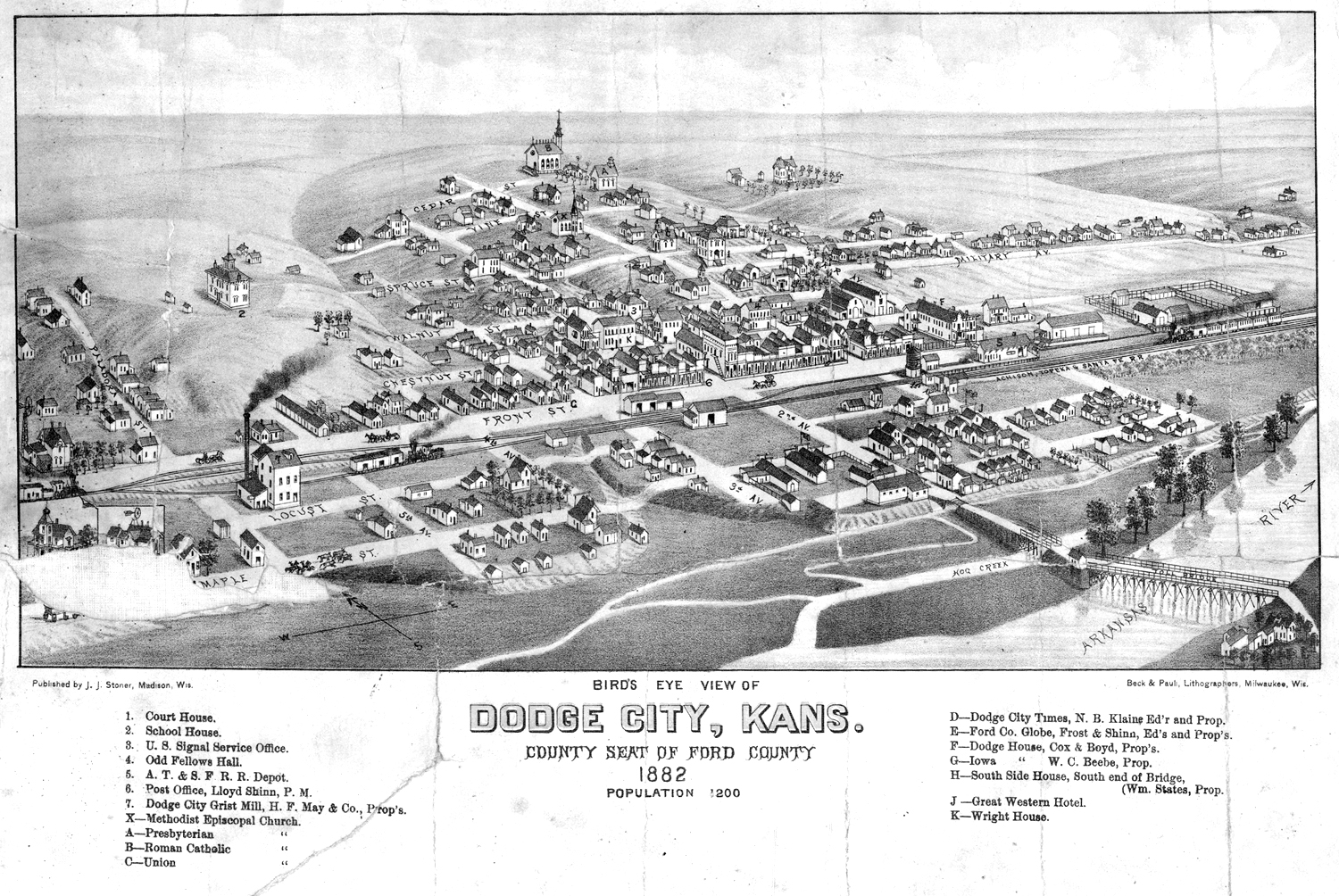
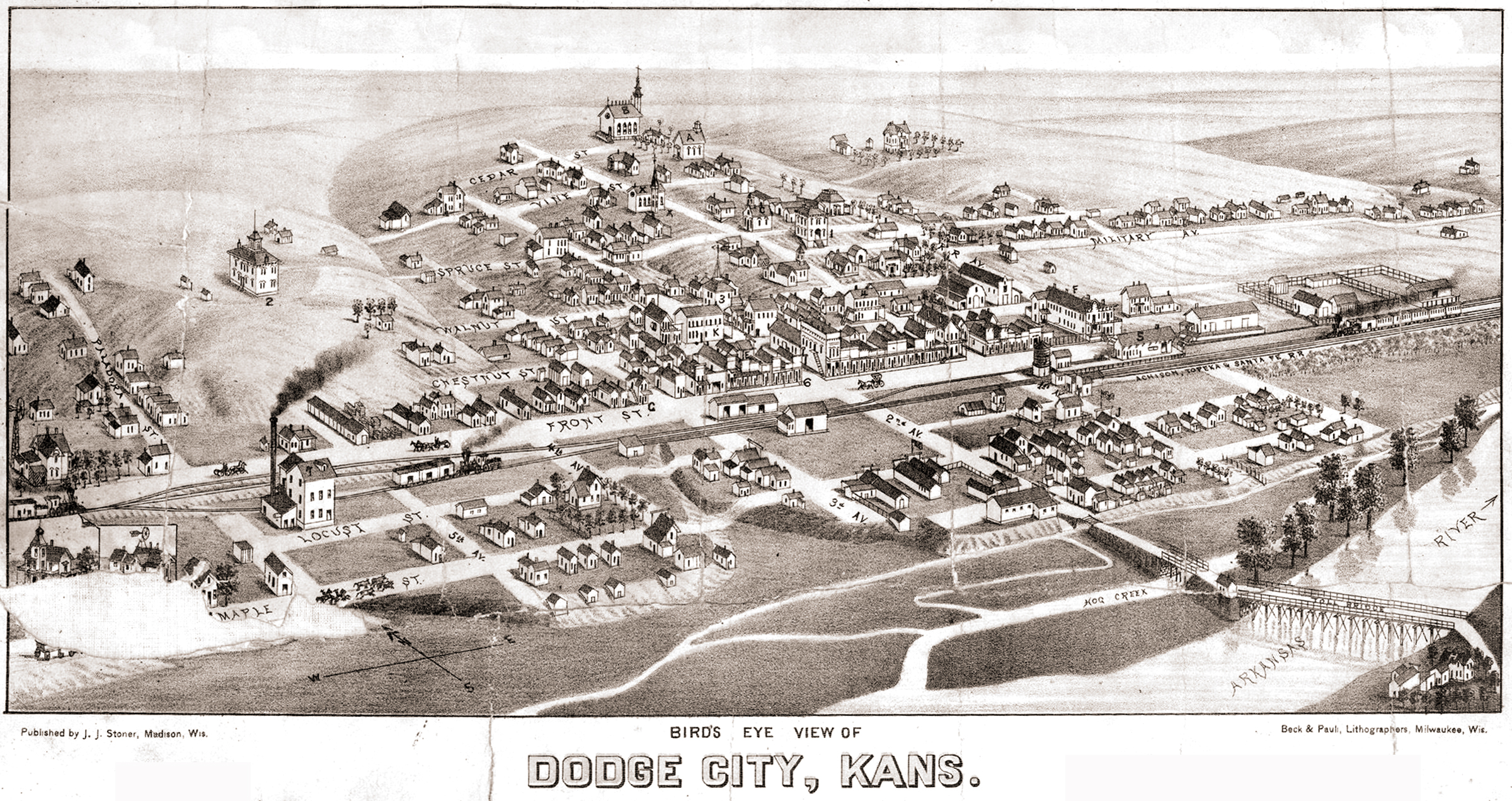
I found an old map of Dodge City from 1882 and there were plenty of houses along the side streets that led off from Front Street, the main road of the town. There were four churches, a courthouse, a school, a grist mill, an Odd Fellows Hall, a railroad depot, a newspaper office and at least four hotels, including the Dodge House, Cox & Boyd, proprietors. 

Admittedly, 1882 is about five or six years later than the fictional Gunsmoke Dodge was supposedly set (according to its creators), but it should tell us something about Western settlements of the era. Yet, except for a few episodes of rowdy trail hands shooting up the place, Gunsmoke rarely mentions either the railroad or the cattle business. Where are the cattle pens? Why does no one ever mention the stink?
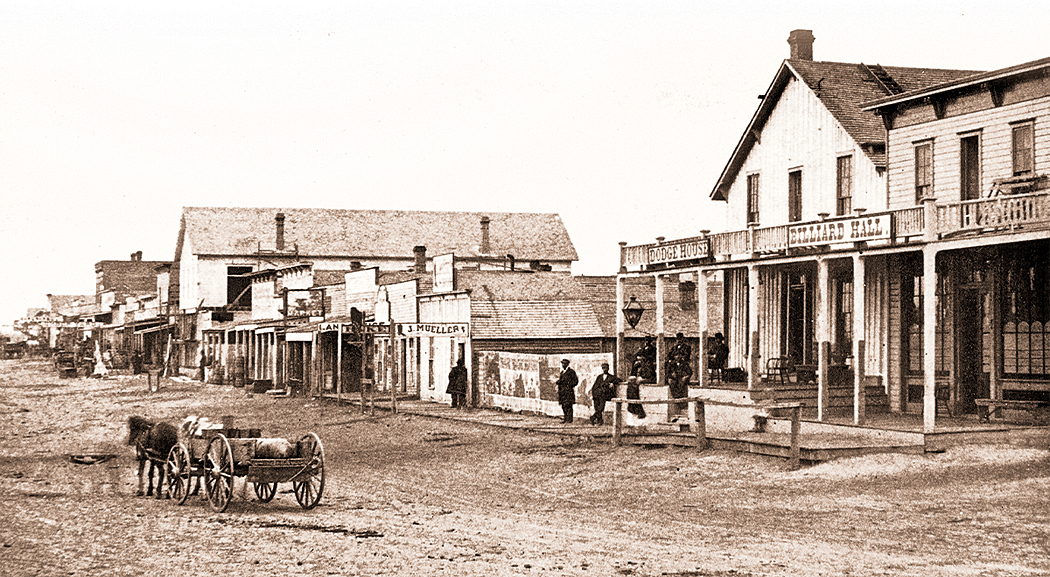
Then I discovered a trove of historical photographs from the Gunsmoke era and pored over them for what they might tell me. 

Gunsmoke, first on radio and then on TV for 20 years was intended as an “adult” Western, with more grown-up plots and themes than the standard cowboy movie. And in the early years, largely succeeds, with some quite grim stories about the difficulties of life on the prairie. But even given that, the series relies on many of the Western movie tropes, including its sense of how a Western town is built and functions: one main street lined with storefronts and saloons. 

As I have said, I am not asking a television entertainment to be a documentary, and I am not complaining that Matt Dillon’s town had little to do with the historical Dodge City. But I couldn’t help but want to find out what the reality might have been. 

Ruts still visible from the Santa Fe Trail, near Dodge City

A little background: Once, there was a piece of land in the middle of the continent halfway between another piece of land controlled by people speaking English and another piece of land controlled by people speaking Spanish. And the English- and Spanish- speaking peoples wanted to do business together and so wagons of goods moved from one side of America to the other side along familiar routes that eventually became well-worn trails. The one we’re concerned with was called the Santa Fe Trail. 

Of course, the parcel of land between them was not empty, but occupied by native peoples, who sometimes took exception to the Europeans who trespassed over their land, and so, the English-speaking peoples sent out their army to build forts along the trails to protect the merchants and their teamsters, and later to protect the European immigrants who wanted to live in the middle of the continent or travel across it to get to the parts further west. 
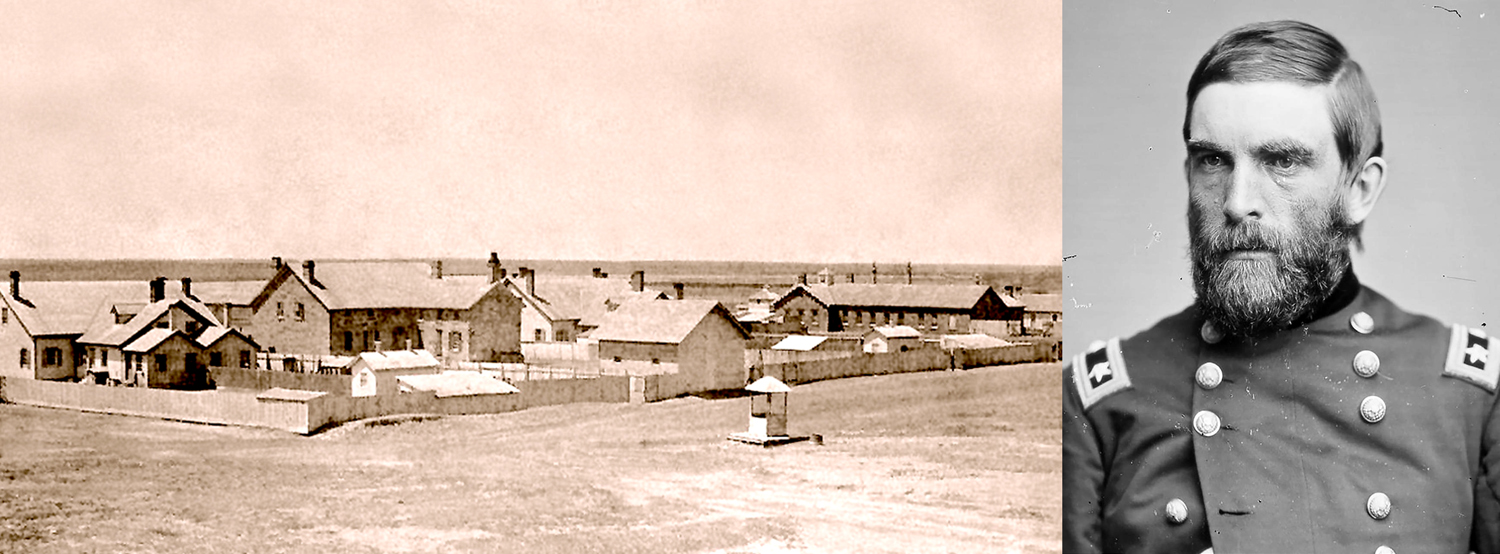
Fort Dodge in 1879 and General Grenville Dodge

And so, on April 10, 1865, a company of soldiers from the Eleventh Cavalry Regiment under orders from General Grenville M. Dodge established a camp on the Arkansas River along the Santa Fe Trail. Lacking building materials, they made dug-outs into the river banks for shelter. Dodge later wrote in his autobiography that the soldiers sarcastically named the place after him because they “were so mad at being sent there .. with so little accommodations that they named the place Camp Dodge.” 


Arkansas River near Fort Dodge

Sidenote No. 1

Researching history can be a nightmare. There are ambiguous and conflicting sources everywhere. Dates are in question, name spellings are helter skelter, tall tales sometimes intrude with frequently told-fictions. First-hand accounts often appear to glorify their authors. I have tried to relate the most dependable version of Dodge City’s history, but there are sometimes smudgy areas. 

For instance, Grenville Dodge isn’t the only Dodge involved, and sometimes one of the others gets credit for the fort’s name. In 1851 a Col. I Dodge established a fort to protect the Santa Fe Trail in Kansas. The fort proved temporary. Gen. Grenville Dodge ordered the construction of Fort Dodge near what is now Dodge City in 1865. Later, in 1872, the fort was commanded by Col. Richard Irving Dodge. Confusion seems inevitable. 

Back to our story

The camp was soon refurbished with sod house buildings and then wood and stone buildings and officially became Fort Dodge and manned by up to four companies of soldiers. 

Henry Sitler in later years, and his sod house in 1871

In 1871, rancher Henry L. Sitler built a sod house about five miles west of the fort, which became a stopping place for those traveling on the Santa Fe Trail, and a year later, a town was platted and George M. Hoover set up a tent to sell liquor to the soldiers at the fort. The Atchison, Topeka and Santa Fe Railway arrived in town later that year and things picked up quickly.

At first it was the trade in buffalo hides that built Dodge City, with the bones and skins of the buffalo sent by rail back to the east. Indeed, the settlement was first named Buffalo City. 

Buffalo hides at Dodge City

When cattle from Texas needed to be shipped to eastern markets, towns were established along the route of the railroad. In Kansas, first in Abilene, in 1867. An outbreak of cattle fever led to a quarantine line in the state, and the railhead moved further and further west, reaching Dodge City in 1876, roughly the years when fictional Marshal Dillon ruled the town. 


From 1875 to 1886, some 5 million beeves were herded up the trail from Texas to Kansas railheads. In 1877 alone, Dodge City was the largest of the cattle-shipping boom towns, loading up and shipping out 500,000 head of cattle.
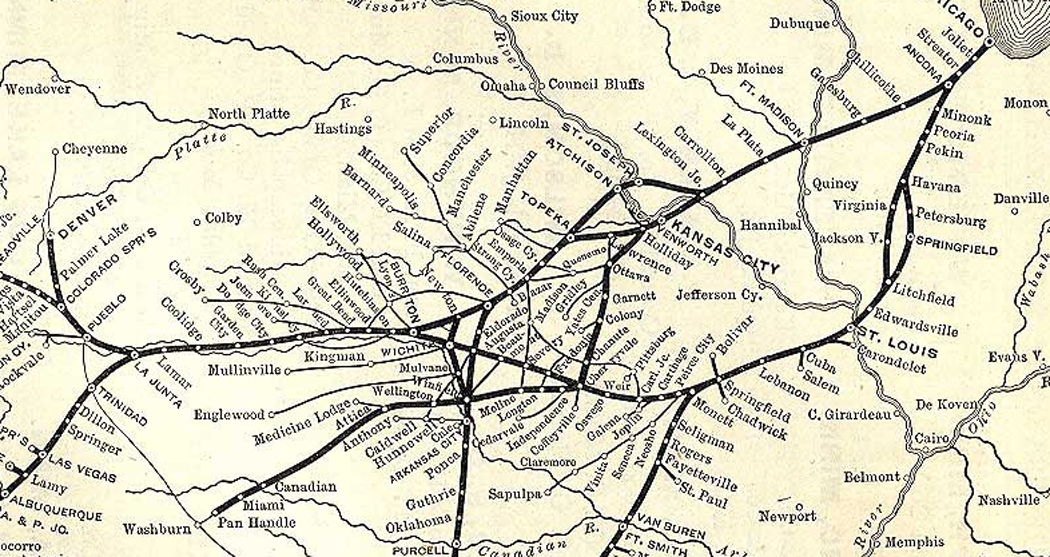
Route of the AT&SF Railway that got the beef to the slaughterhouses and meatpacking industry of Chicago

As Dodge City grew, and Kansas became more populated, the need for a fort on the Santa Fe Trail became less important, and by the end, when the fort closed in 1882, it was garrisoned by only about a dozen soldiers. The remaining buildings were later turned into a home for retired soldiers. 
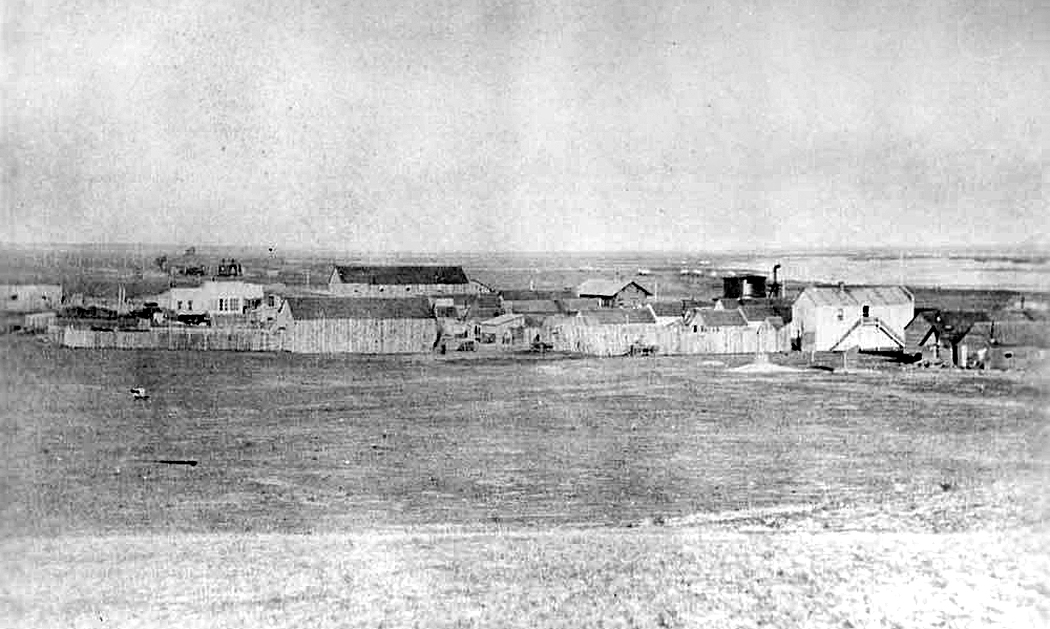
Dodge City, 1872

This was the milieu that the fictional Dodge City supposedly took place in.

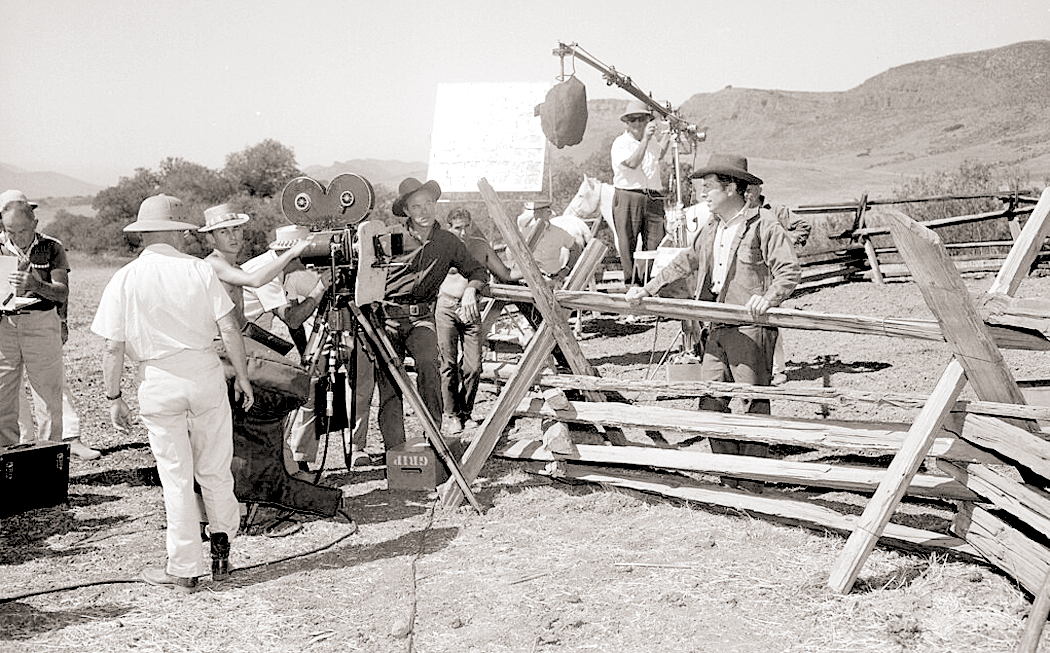
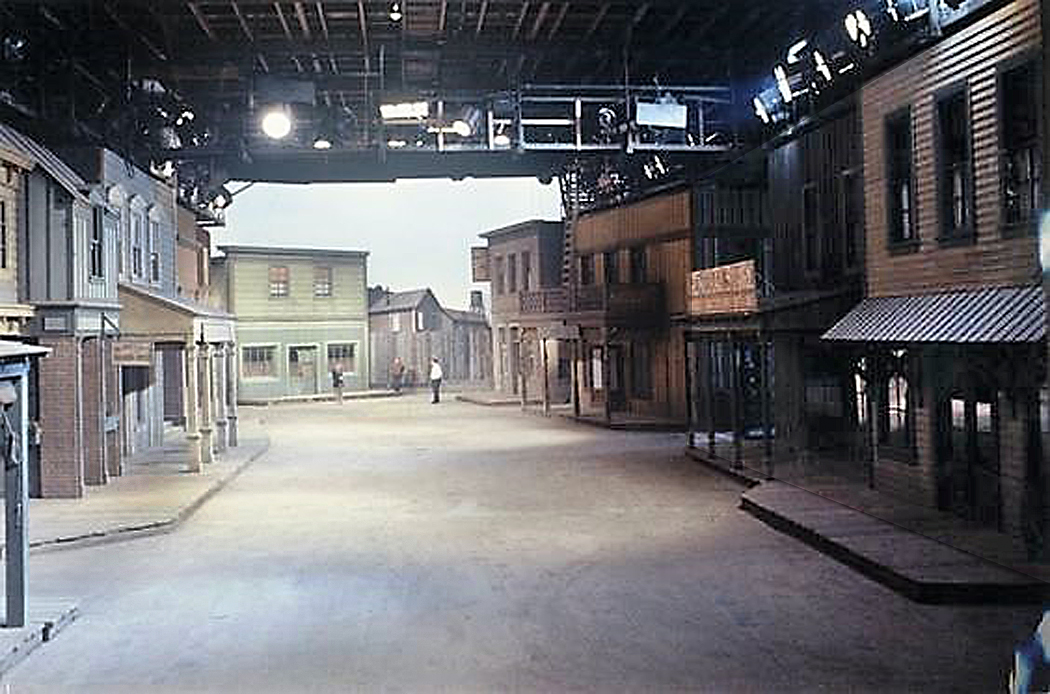
Gunsmoke remained on TV for 20 years and the town barely changed, despite having moved from its original outdoor location shooting to being filmed on fabricated sets in the studio. 
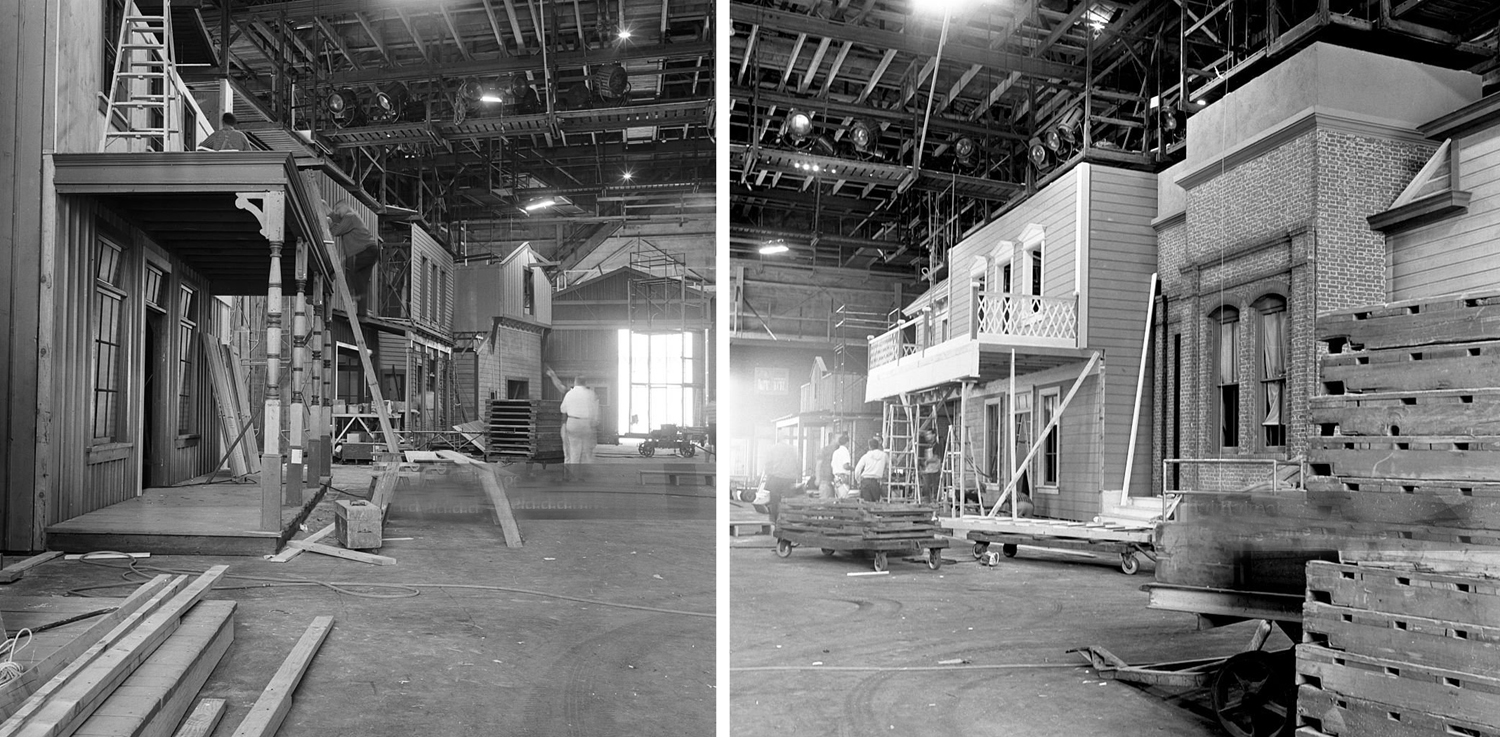
Constructing Dodge City in studio for “Gunsmoke”

The actual town grew and changed continuously, beginning in 1871 with a population of 1 — as Henry Sitler built a sod house in the location five miles from Fort Dodge — to a population near of 1200 just five years later and to 1,763 by the 1890 census. TV’s Dodge City should have been filled with ongoing construction. The trains not only took cattle out of Dodge, but brought in supplies and lumber to build the town in a region mostly devoid of timber. 

The town was incorporated and platted in 1872, and George Hoover moved to a wood building on Front Street to serve thirsty Fort Dodge soldiers, buffalo hunters and the increasing number of cattle herders. 

Front Street, Dodge City, 1872

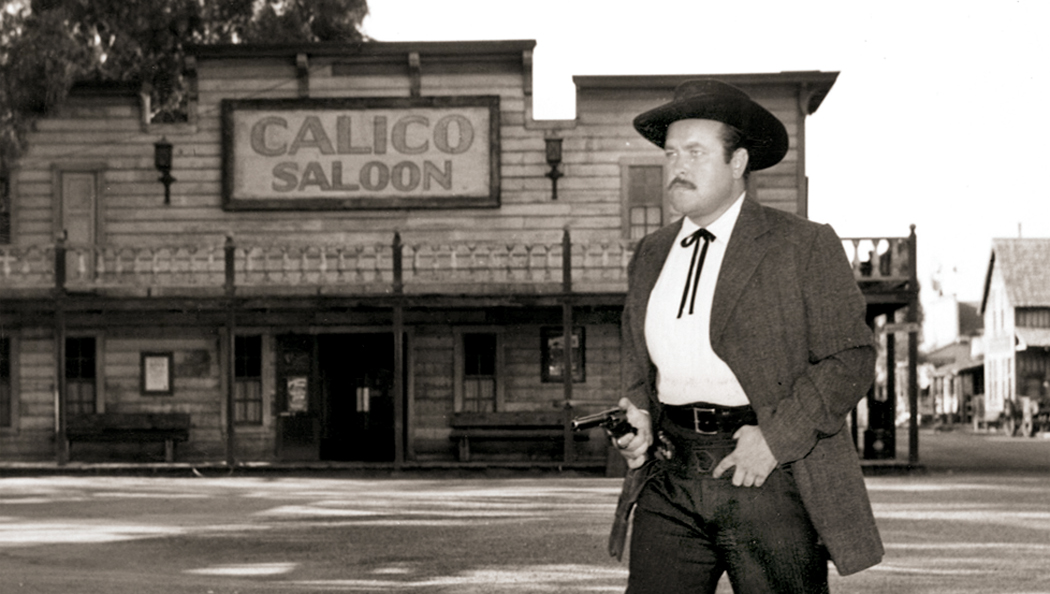
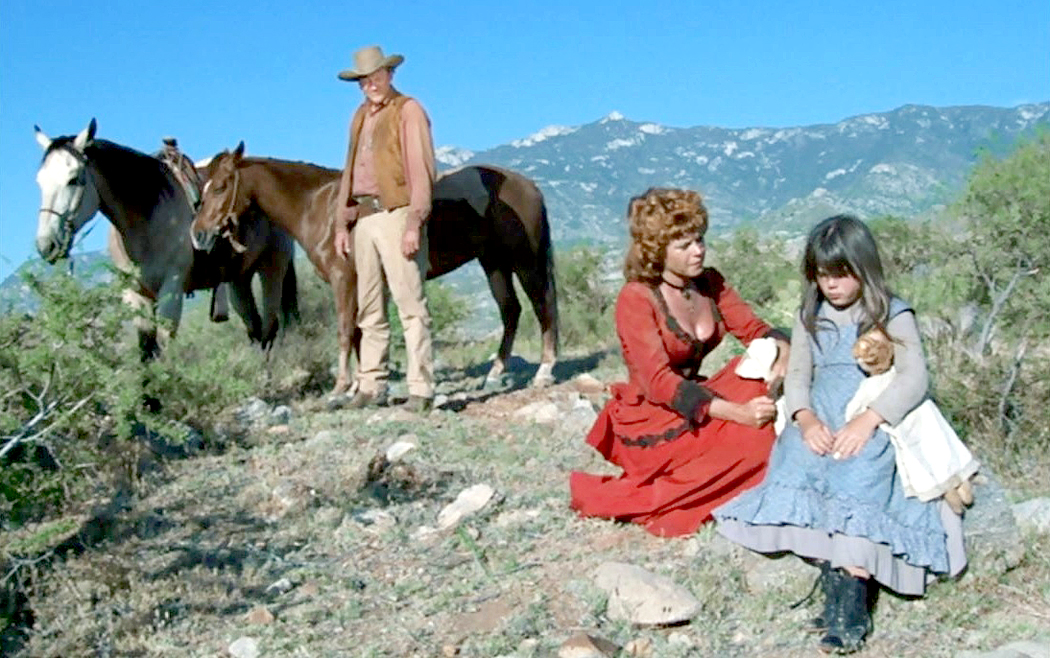
Gunsmoke’s Dodge City was a standard-issue Western town, like those of so many other towns in other TV series and movies — a wide dirt street with wood-frame buildings on both sides. 

The reality of Dodge City was that it was built alongside the Arkansas River, where the Santa Fe Trail paralleled the river. When the railroad came, it, too, followed the river. The town then grew on the far side of the tracks, leaving the town plan with the river to the south, the tracks to the north, and Front Street and the primary businesses in a single row on the north side of the street, as shown in this detail of the bird’s-eye view map, from 1882.
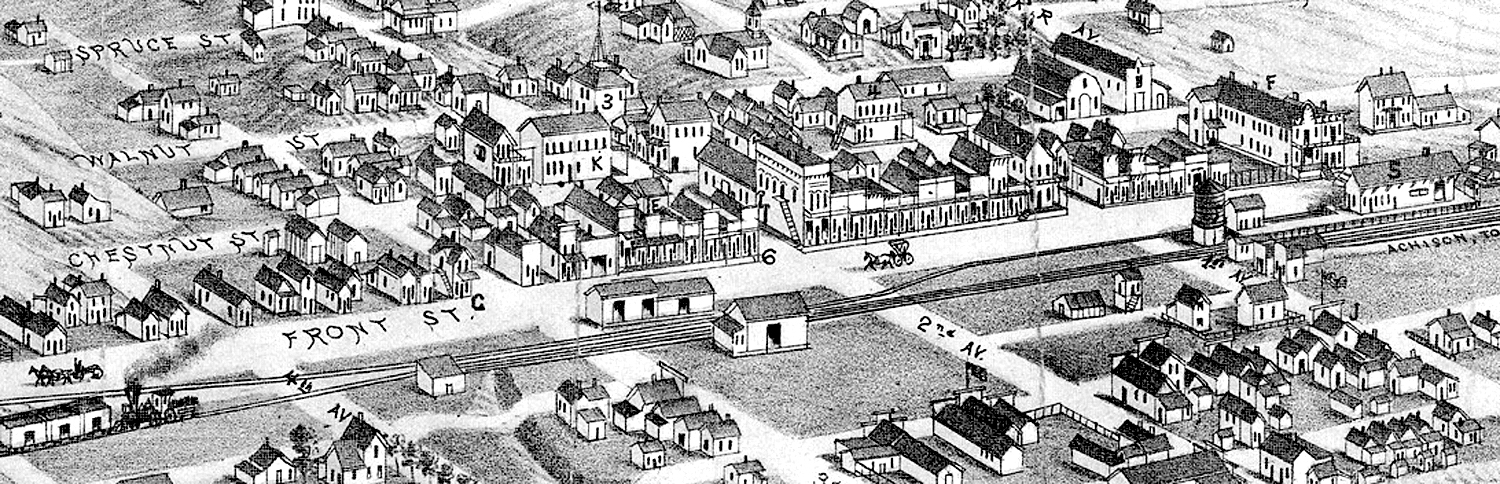
 

This was a common city plan, and can be found all across both the West and the South, wherever a town grew alongside railway tracks. Tracks; road; storefronts, in that order. 
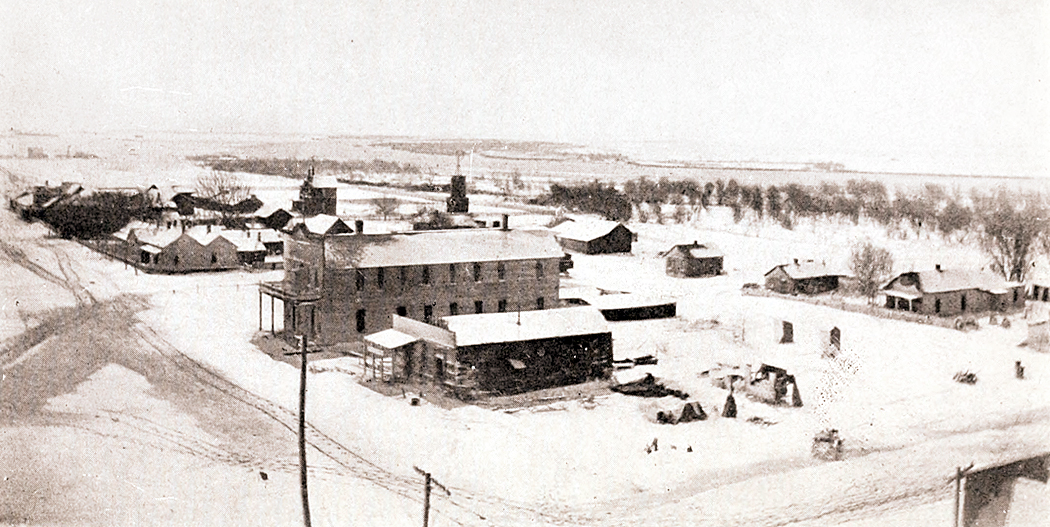
Winter 1872, Dodge City

Sidenote No. 2

The constant growth of the town from 1871 to 1900 means that there is no single version of Dodge City to be had. It was always changing. Over the two decades of Matt Dillon’s TV tenure, the place barely changed a whit, although Dillon did. James Arness was 32 with a boyish face when the series began. When the series ended, he was in his 50s. Gunsmoke movies continued to be made, and by the time of the last, Gunsmoke: One Man’s Justice, from 1994, Arness was 71, which, if we insist on a concurrent timeline, puts the movie’s action into roughly 1914. 

The TV show seems to remain static in time, other than the persistent aging of its inhabitants, but if we pretend the town aged as the actors did, the final episodes would have taken place in the 1890s. By then the cattle drives were long over, the town had settled into domesticity, and the six-guns and stetsons were relics of the past. The most common hat worn by men in Dodge city was a bowler. 

Back to the main story
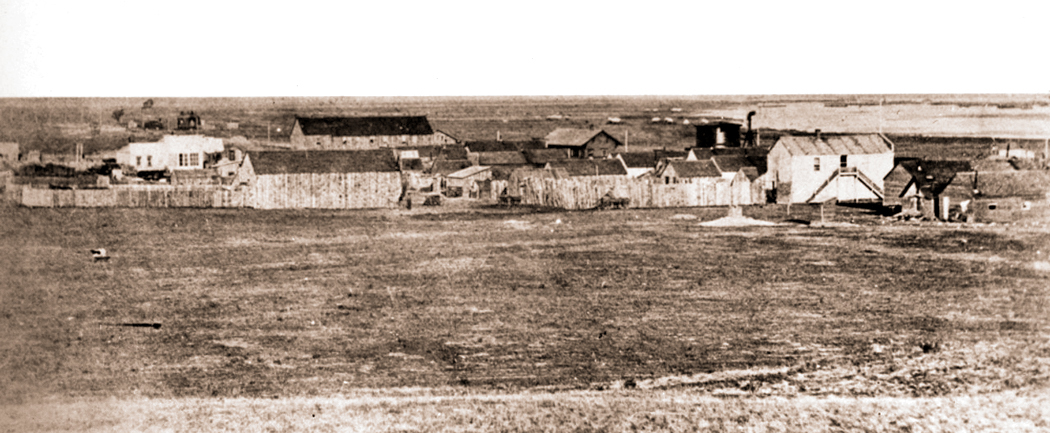
Dodge City, 1873

In the group of photos I collected, I found records of many of the town’s inhabitants, and they tell a story of Dodge City’s growth and character. I wanted to share a few of them. I purposely did not include information on several of the more mythic figures that are frequently dredged out to tell the tale. You can find all kinds of stories about Wyatt Earp, Doc Holliday, Dora Hand or Bat Masterson, and they have all been through the Dime Novel, Hollywood movie, TV series myth-making machine and many of their stories are questionable at best. Many conflicting versions abound. 

So, I wanted to mention George Hoover, Chalk Beeson, Ben Hodges, Thomas McCarty, James “Dog” Kelley, Ormond Wright, and Squirrel Tooth Alice, among others, all of whom are central to Dodge City’s history. 
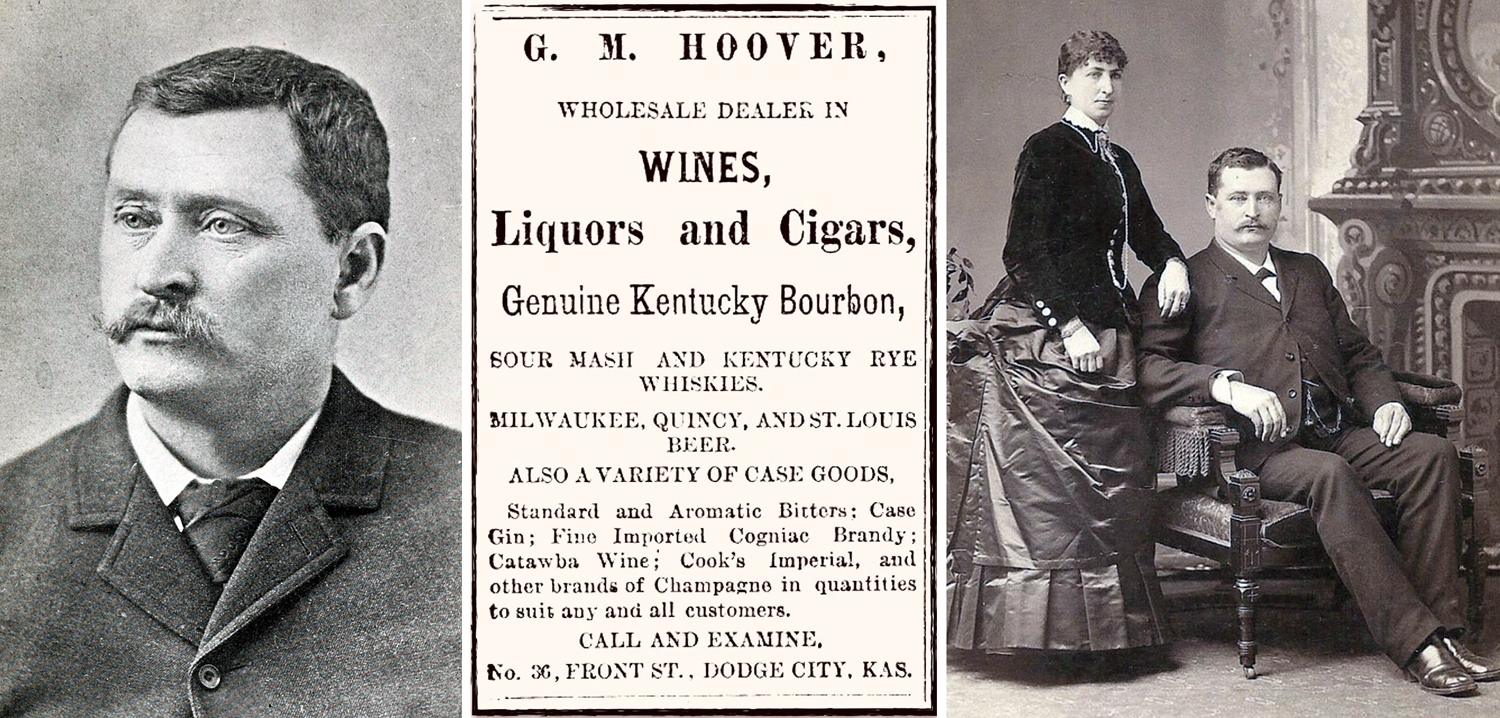
George Hoover and wife, Margaret

Hoover was the second person, after Henry Sitler, to settle on the site of what would become the town, in 1872 and set up a bar to serve travelers and the soldiers of Fort Dodge. He sold whisky by the ladle for 25 cents (equivalent value today: about $20.) At the time, alcohol was forbidden at Fort Dodge and for a radius of five miles, which is why Hoover’s tent-and-wood-plank bar was opened where it was and Dodge City took hold five miles from the fort. 

Hoover became the town’s first elected mayor, reelected three times, became a state legislator, and, after many successful businesses, opened the town’s first bank. He died in 1914, a few months after his wife, Margaret, died. He said, according to the July 16, 1914, Dodge City Globe, “that he had but little desire to live longer, and declared that life had no more interest for him [after his wife’s death].”
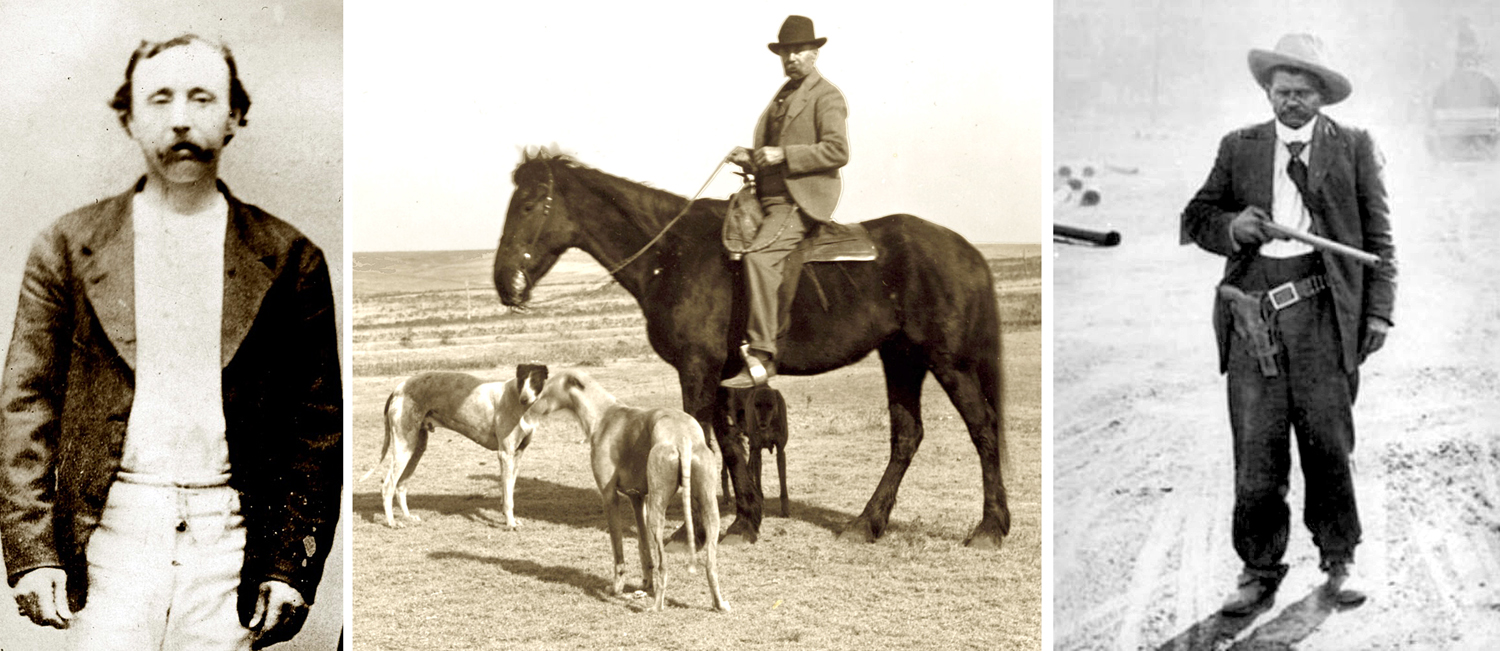
James Kelley, Kelley on horse, and Ben Hodges

British-born James Kelley was mayor of Dodge City from 1877 to 1881. He was part owner of the Beatty and Kelley Restaurant and kept a tamed black bear, named Teddy, behind the shop. Kelley had a white horse and often wore a white corduroy suit and kept a bunch of greyhounds, hence his nickname, “Dog” Kelley. His restaurant burned down in 1885 and he opened up the Kelley Opera House on the corner of Front Street and First Avenue. Kelley died in 1912, having spent his last years at the soldiers’ home at the former Fort Dodge. 
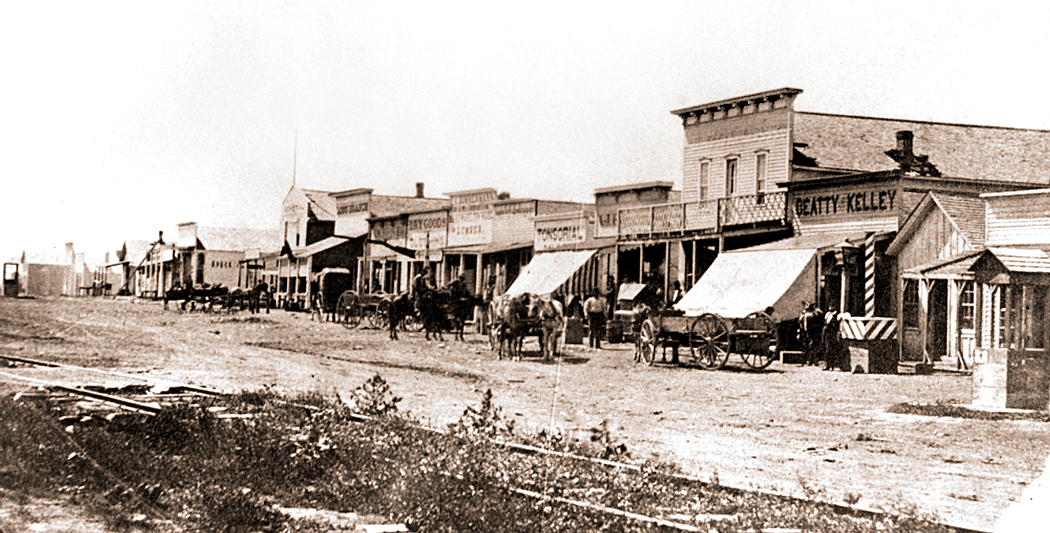
Dodge City, 1878

Ben Hodges was half-Mexican, half Black and a cook’s helper on a cattle drive, who stopped in Dodge in 1872 and began a series of (unsuccessful) land-deal swindles and claims to wealth and nobility. He lived for years in a little shack on the south side of town, near the river and kept young boys fascinated with his tall tales. The town seems to have tolerated Ben as the “town character.” He was made an “Assistant Deputy” and allowed to carry a gun, minus the firing pin and his shoplifting of food from stores was accepted since, “he only took what he needed.” 

When he died, in 1929, a collection was raised to buy him a plot in the elite Catholic cemetery rather than a pauper’s grave. According to one pall bearer, “We wanted him where they could keep an eye on him.” 

Larry Deger and T.L. McCarty

Dodge City’s original Matt Dillon and Doc Adams were Marshal Lawrence Deger and Dr. Thomas McCarty. Deger was the first marshal of the town. 

From 1871 till it was incorporated in 1875, Dodge City had no law officers, and things were quite chaotic, with a number of murders gone unaddressed until a vigilance committee was formed. Unfortunately, the committee soon became the source of violence and the Kansas governor appointed Charles Bassett sheriff of Ford County in an attempt to establish some order. It is estimated that between 1872 and 1876, some 70,875 gallons of whiskey were consumed in Dodge City, which is the equivalent of approximately or 4,536,000 individual shots — a lot for a town of about a thousand citizens.
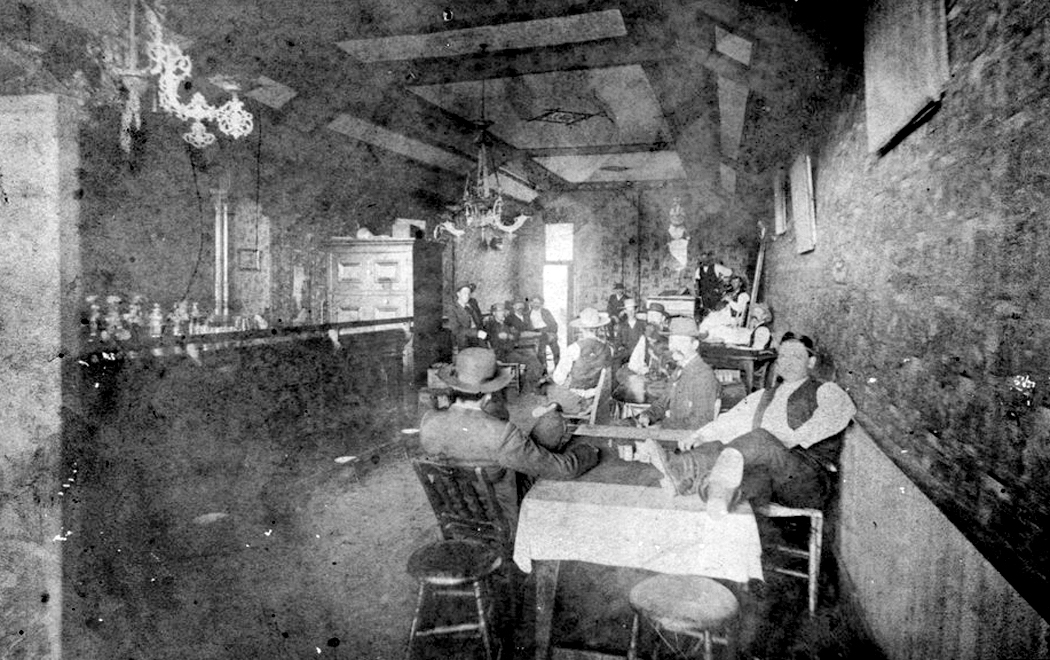
St. James Saloon, Dodge City

In 1875, Deger was appointed marshal by the town council (there is some confusion in the popular mind, as a U.S. marshal is a federal employee, while a city marshal is essentially the police chief and is hired by local government. However, in some locations, marshals were elected — it’s all quite confusing. Sheriffs are usually politicians, who are elected). Deger was a saloon keeper and took sides in a developing confrontation among townspeople between those who wanted a more open town to provide booze and professional women to cattle drivers, i.e. “good for business,” and those who wanted a quieter, more civilized town. Deger wanted peace. 

What ensued in 1873 is sometimes called the Saloon Wars and sometimes the Dodge City Wars. Deger was by that time mayor and had laws passed establishing prohibition and outlawing prostitution. It was also suggested, for instance, “We should have an ordinance prohibiting the firing of guns within the city limits.” And, “We should have a law not allowing the riding of horses over sidewalks and into the saloons.”

In the course of these reforms, three “singers” at the Long Branch saloon were arrested, but none of the workers at other saloons were also nabbed. Favoritism was charged and the pro-business group, called “the gang,” hired a bunch of former lawmen as muscle for their side of the argument. 
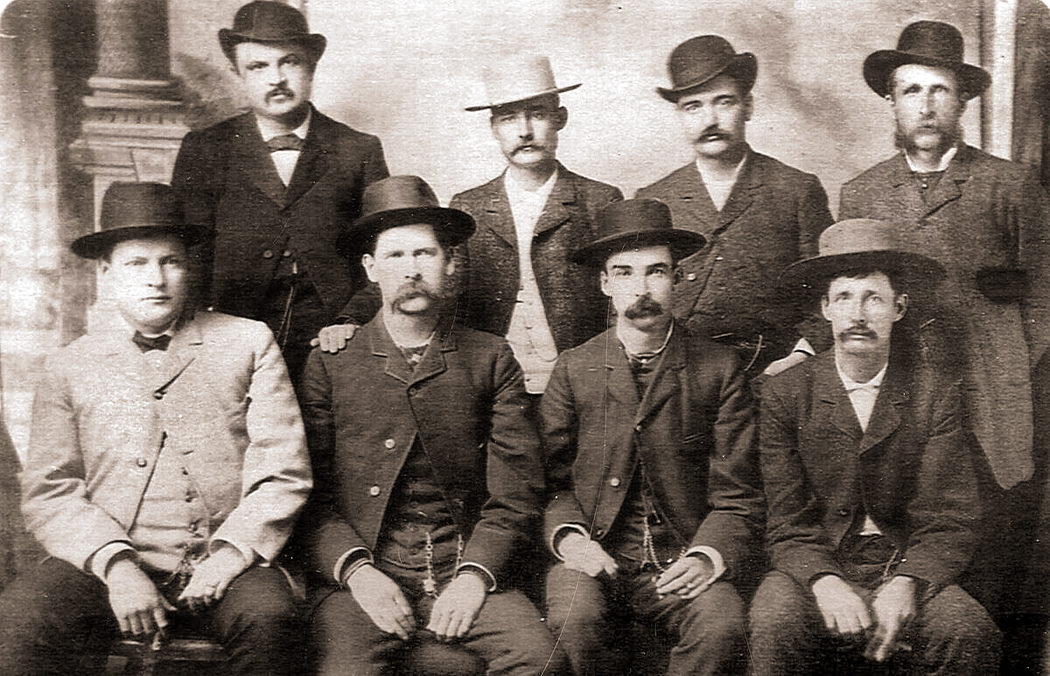
Dodge City Peace Commission

A famous photo of the group was made at the time, with (standing L-R: William Harris; Luke Short; Bat Masterson; William Petillon. And seated, L-R: Charlie Bassett, Wyatt Earp; Frank McLean; and Neil Brown.) 

The sides stared each other down, but it was finally resolved without gunfire, and the Long Branch was allowed to reopen. But women in the profession were moved south of the railroad to the “wrong side of the tracks.” 

Varieties Dance Hall, Dodge City

Deger married German-born Etta Engleman in 1883, and moved to Texas where he operated a lumber company. He died in 1924. 

Thomas McCarty, his wife, Sarah, and Sing Lee

McCarty was the town’s first civilian doctor and Ford County’s first coroner. He and his wife, Sarah, arrived in Dodge City in 1872, on their way further west, but stayed in town. He operated his surgery and partnered in a drug store with Herman Fringer and later opened his own, called City Drug Store. 
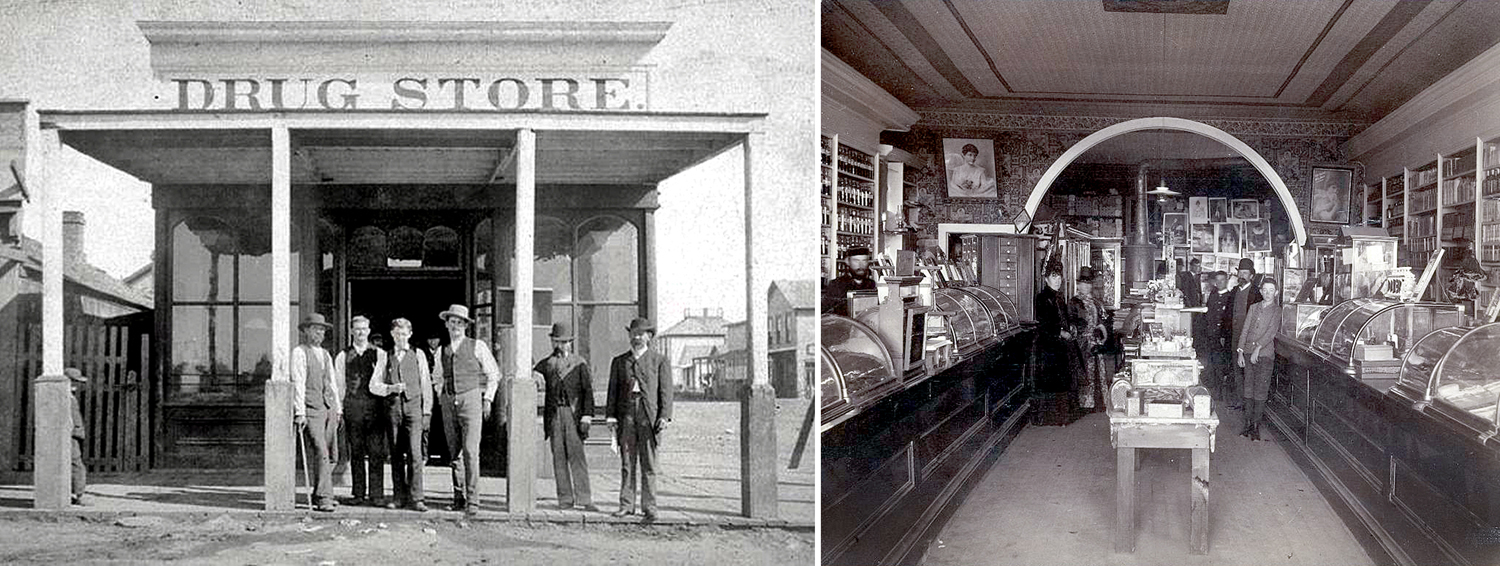
City Drug Store, 1877

McCarty’s son, Claude, was reputedly the first legitimate baby born in Dodge City, and later also became a doctor and with his father opened the McCarty Hospital in 1905, remodeling the old four-story Central Hotel.

The doctor’s household included a servant named Sing Lee, who wore the traditional Chinese queue.  

Dr. Thomas McCarty died in 1930, ten years after his wife Sarah.  His son lived until 1950.
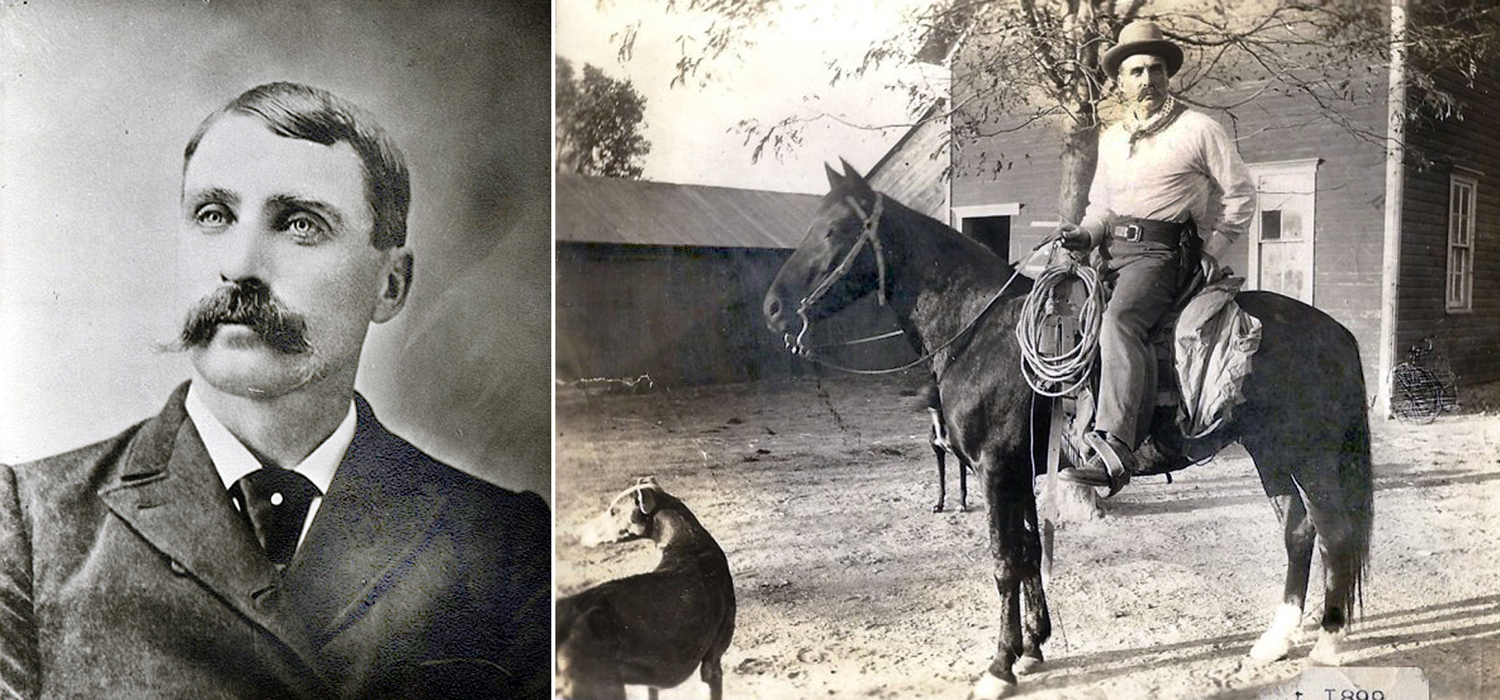
 

Chalkley Beeson

Chalk Beeson came to Dodge in 1874 with his wife, Ida. Soon, he received the Billiard Hall Saloon as payment for a debt and renamed it the Saratoga, one of the few that didn’t employ prostitutes. Instead, he featured a five-piece band, with himself as leader on the fiddle. In 1877, the Dodge City Times wrote, “It is a rare treat to drop in at the Saratoga upon Mr. Beeson, and listen to his last and best musical combination. Mr. Beeson is a thorough lover of good music, and by his skillful selection of good performers … draws crowds of attentive listeners.” 
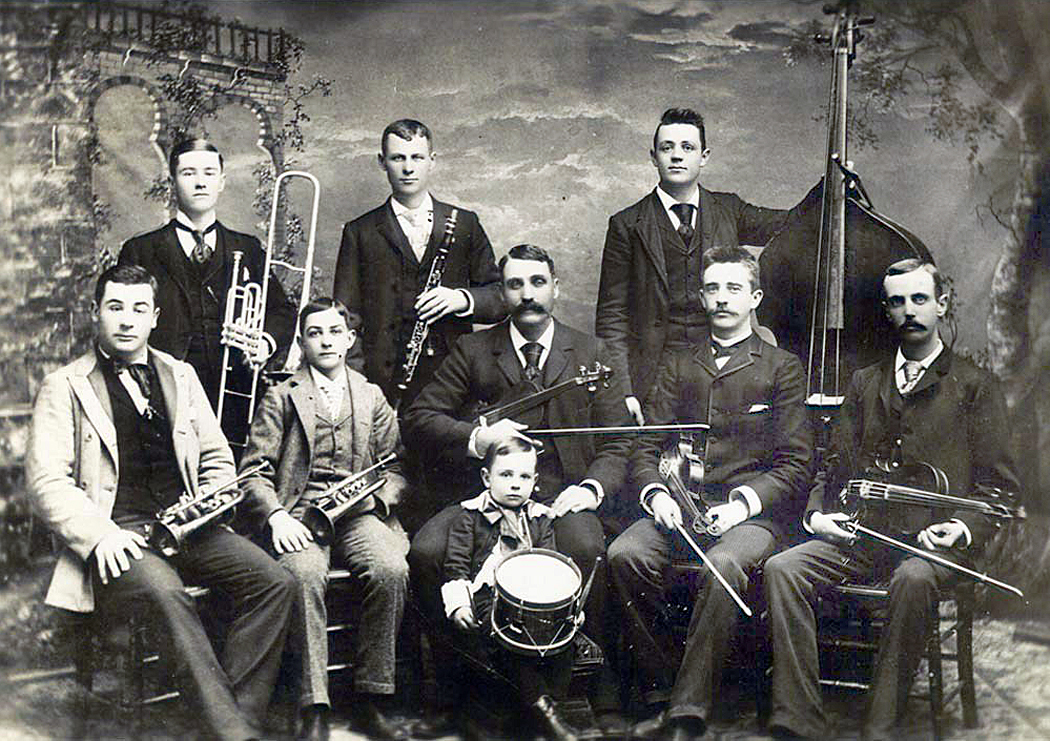
 

Dodge City Cow-Boy Band, Beeson in center with fiddle

In 1884, he expanded his band to form the Dodge City Cow-Boy Band and toured, including an appearance in the inaugural parade of President Benjamin Harrison in 1889. 

Beeson was later elected sheriff of Ford County and in 1903, elected to the state legislature. He died in 1912 when he was kicked by his horse. 
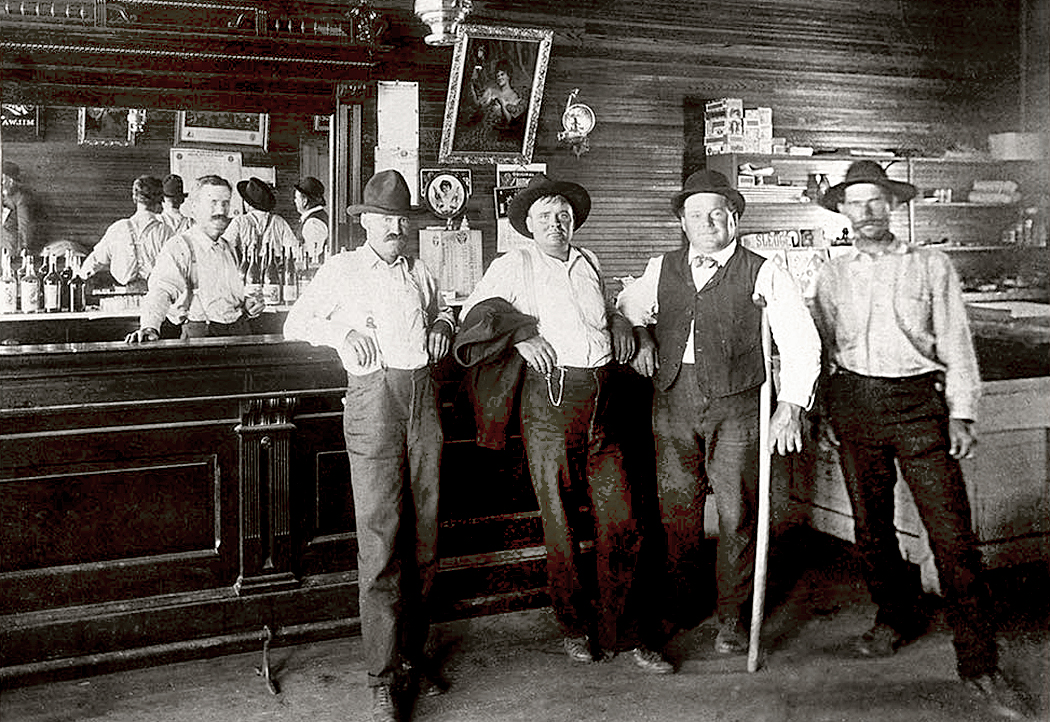
 

By the middle 1870s, there were a little over 1000 residents in Dodge City but 16 saloons. In addition to the Long Branch and the Saratoga were the Alamo, the Alhambra, the Crystal Palace, the Lone Star, the Oasis, Congress Hall and the Green Front. Some of them just one-room storefronts. 

A reporter from the Hays City Sentinel wrote of Dodge City at the time, “The employment of many citizens is gambling. Her virtue is prostitution and her beverage is whisky.” On TV, the saloon girls share drinks with cowboys, but, as one writer put it, “Miss Kitty wasn’t selling chocolate bars.” We know the names of several of these hard-working women. 
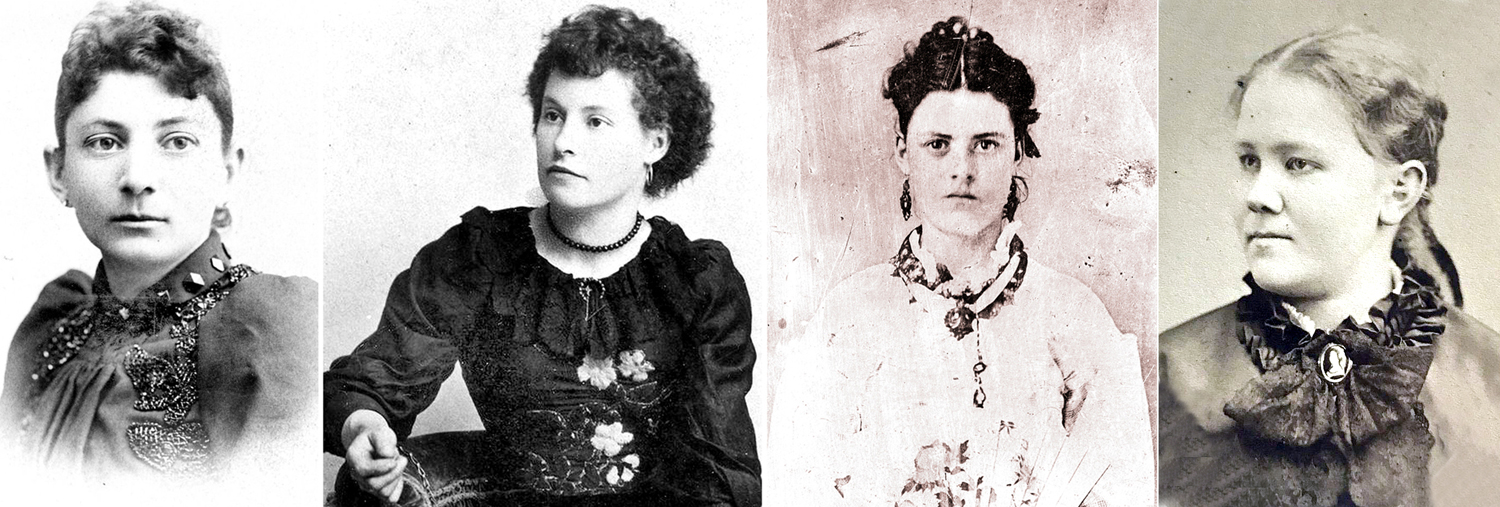
 

L-R: Sadie Ratzell; Squirrel Tooth Alice; Timberline; Mattie Blaylock

Sarah “Sadie” Ratzell was born in Philadelphia but grew up on a Kansas farm. When she was 18, she became a prostitute and lived with a Dodge City dance hall owner in the 1880s. 

In July, 1881, she complained to then-Marshal Fred Singer about a man prowling around her home after dark. Singer found and shot 23-year-old Joseph McDonald hidden in a growth of sunflowers. A coroner’s inquest that followed notes “the latter raised his arm horizontally, as though in the act of firing. The marshal apprehended some danger from this movement, and not knowing whether the man had a pistol or not, raised his weapon and fired, the shot striking McDonald in the hand and passing into his right side, causing death in three hours.” Singer later resigned as marshal and opened saloon, which occupation he said was more financially rewarding. 
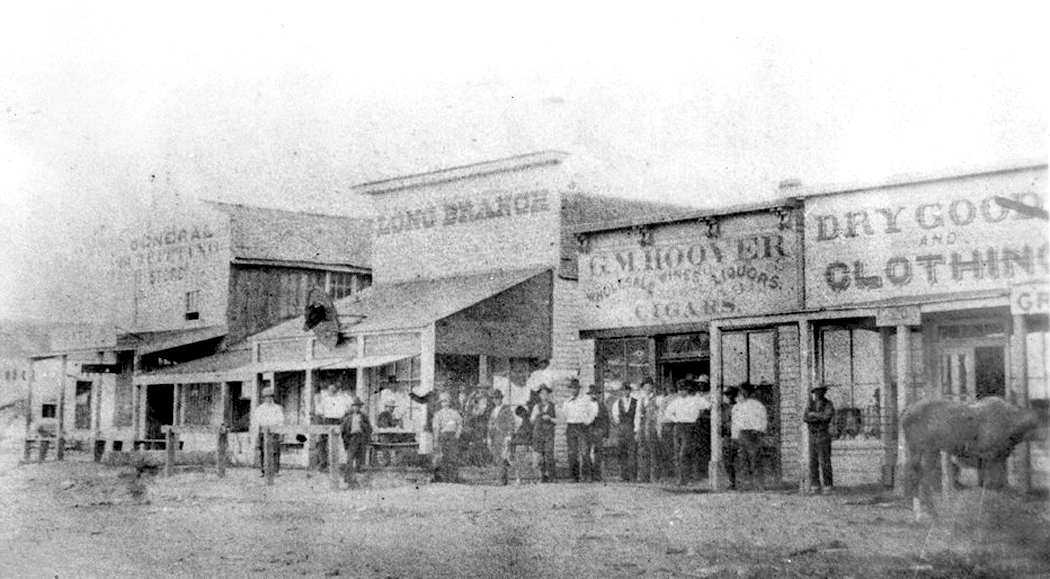
Front Street with Long Branch Saloon, 1875

Squirrel Tooth Alice was born Mary Elizabeth Haley in 1855 in Texas. She was kidnapped by Comanches in 1864 and ransomed three years later.  She ran away from home at 14 to become a dance-hall girl and prostitute. She hooked up with”Texas Billy” Thompson. In 1873, Thompson shot and killed the sheriff in Ellsworth, Kan., but escaped from jail and fled to Dodge City, where she took up her trade. Later the pair, by then married, moved to Colorado and later, Texas. She was known as Squirrel Tooth after a gap in her front teeth. She also kept pet prairie dogs on leash and collar. As Libby Thompson, she had nine children by several men, while running a brothel. She died in California in 1953 at the age of 97. 

Rose Vastine was known as Timberline because she was 6”2’ and worked in Dodge City in the 1870s. According to one account, she was suicidal, and while later living in Creede, Colo., shot herself six times, but lived. “She made yet another attempt to shoot herself in the chest in 1893. ‘Medical attendants were at once summoned and the would-be suicide is in a fair way to recovery,’ said the newspaper.” Little else is known. 
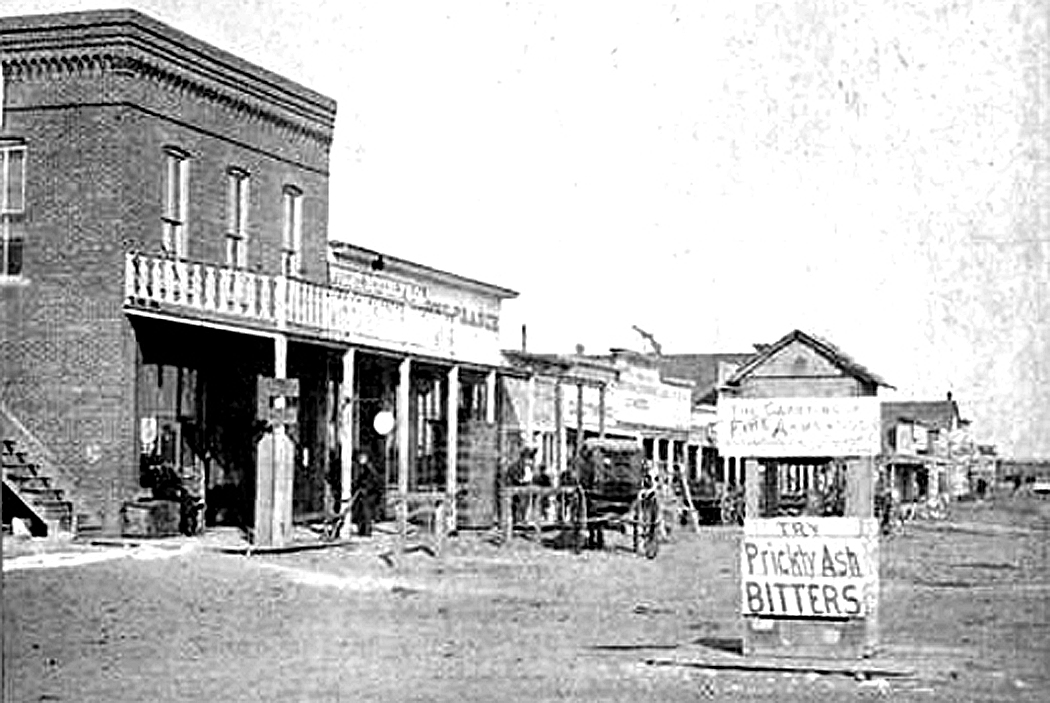
Dodge City, 1879

Celia Ann Blaylock was born in Iowa in 1850. When she was 18, she ran away from home and found her way, as Mattie Blaylock, to Dodge City, where she became a prostitute. In 1876, she took up with city deputy marshal Wyatt Earp and for six years lived as his common-law wife while maintaining her profession. She suffered from extreme migraines and became addicted to laudanum as a pain killer. She left Dodge City with him in 1879, going to New Mexico, and then to Tombstone, Ariz. Eventually Earp left her, and in 1888, she died from an overdose, ruled by the coroner as “suicide by opium poisoning.” She was 38.
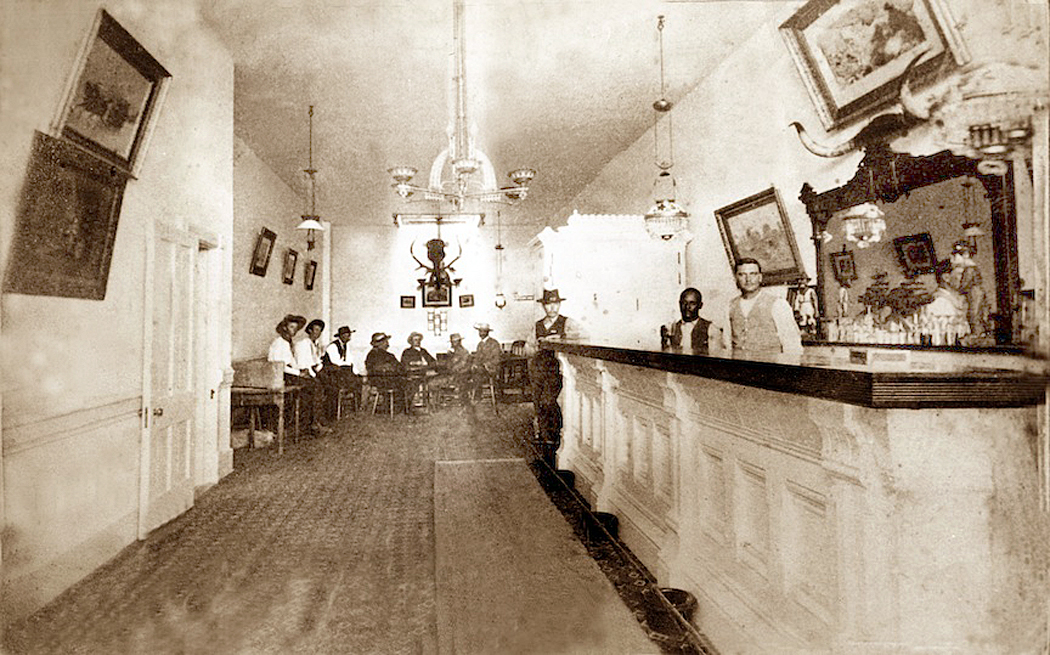
Interior, Long Branch Saloon

The Long Branch has become the most famous, although there never was a Miss Kitty. It was established in 1874 and named for its owner’s hometown of Long Branch, N.J. It passed through several hands and in 1878, Beeson bought a share in it. He sold his portion in 1883 to Luke Short. 
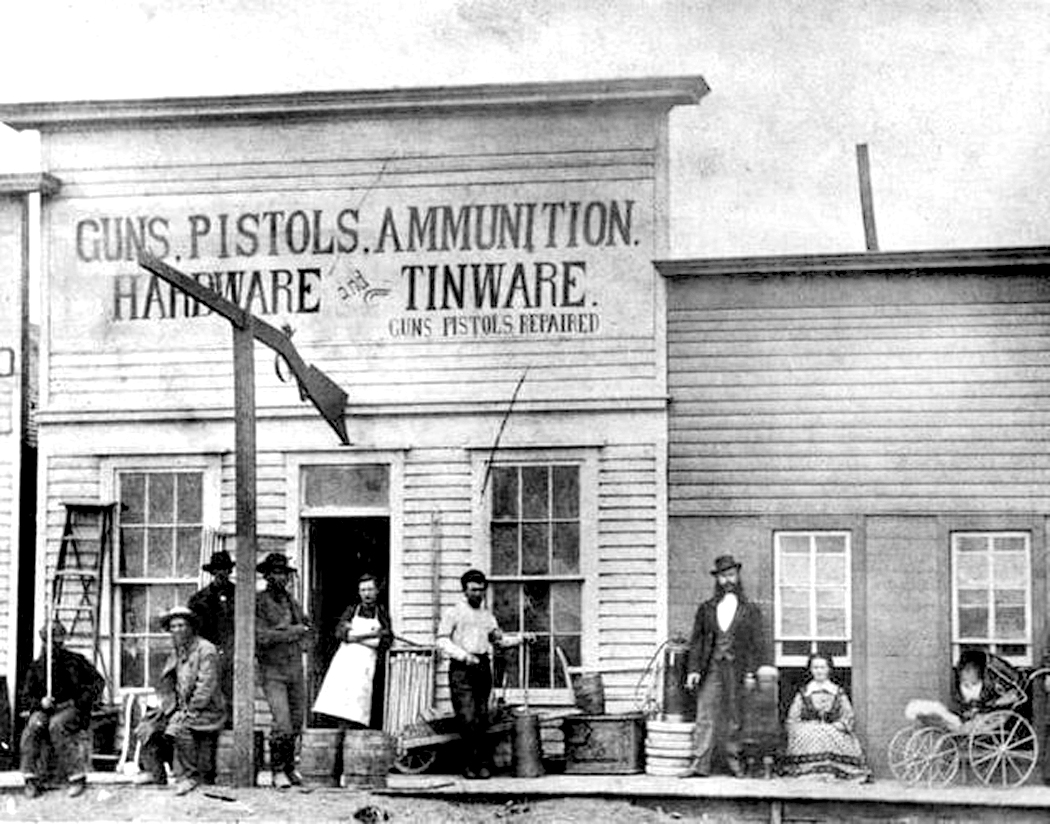
 

Zimmerman’s hardware store

Two years later, it burned down in a fire that destroyed much of Front Street, taking out in addition, Dog Kelley’s Opera House, Charles Heinz’s Delmonico restaurant, the York, Parker, Draper Mercantile Company, F.C. Zimmermann’s hardware store and even the first brick building in town, Robert Wright’s store, which held out long enough to retrieve a good deal of his merchandise before the building went. But, as the newspaper reported, “Some awful good whiskey was allowed to burn up.”

That fire, and a second, smaller one a month later, led the city council to establish a fire department and a city water works, with fire hydrants around the city. 

Robert M. Wright and his book

There are many more citizens of Dodge back then, and I can’t include them all. One early resident (and later mayor — they all seem to have taken turns as mayor) was Robert Wright, who, in his old age, wrote a book called, Dodge City, the Cowboy Capital and the Great Southwest in The Days of The Wild Indian, the Buffalo, the Cowboy, Dance Halls, Gambling Halls, and Bad Men, published in 1913. It is loaded with familiar stories of the early times in Kansas, but also argues that it wasn’t as bad as all that. He tries to put a clean face on the popular image. (I have read it; let’s just say, Wright was not a graceful writer — it’s a tough slog). Wright dies two years after his book was published. 
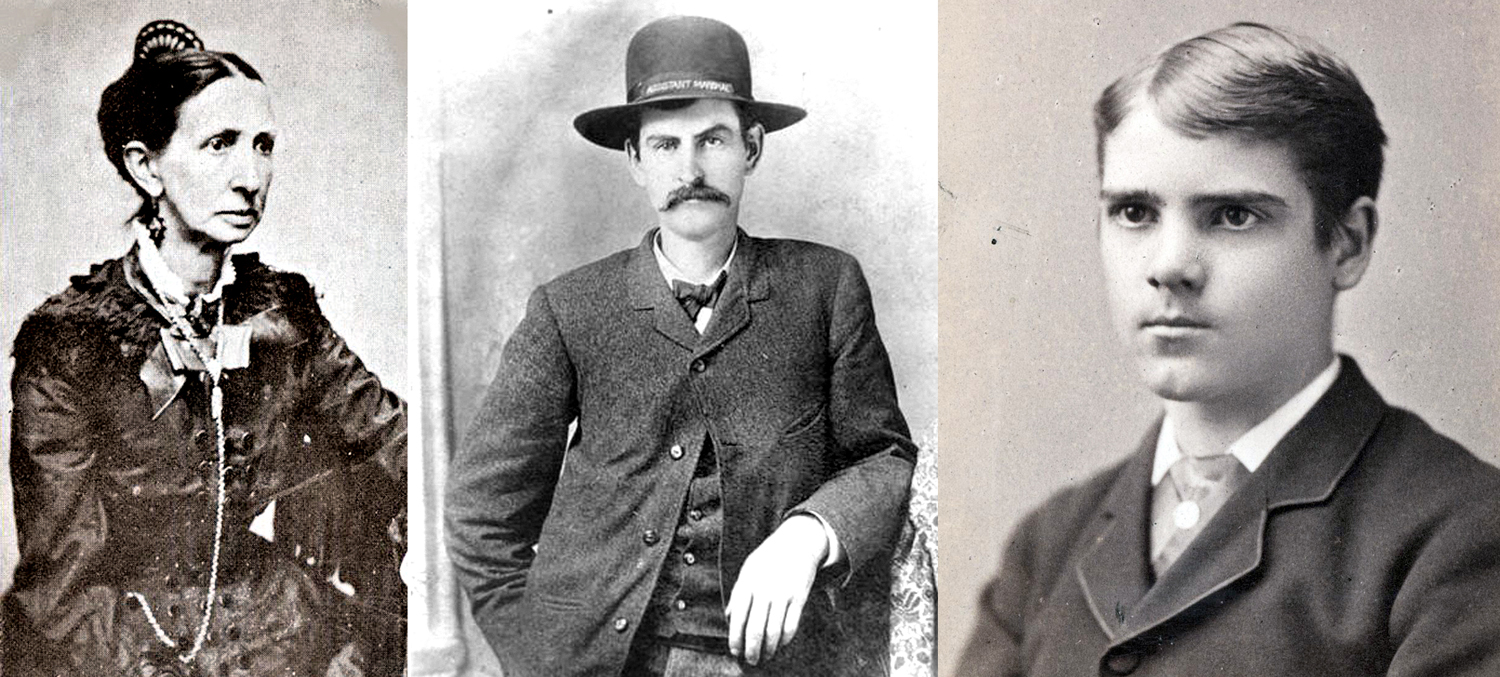
L-R: Margaret Walker; Dave Mather; Rev. Ormond Wright

Among the many people I have had to leave out of this blog entry are  Margaret Walker, the town’s first schoolteacher; “Mysterious Dave” Mather, who owned the Opera House Saloon and was the survivor of one of the more famous gunfights in town; Rev. Ormond Wright, who presided over the first church built in Dodge, a non-denominational worship. 
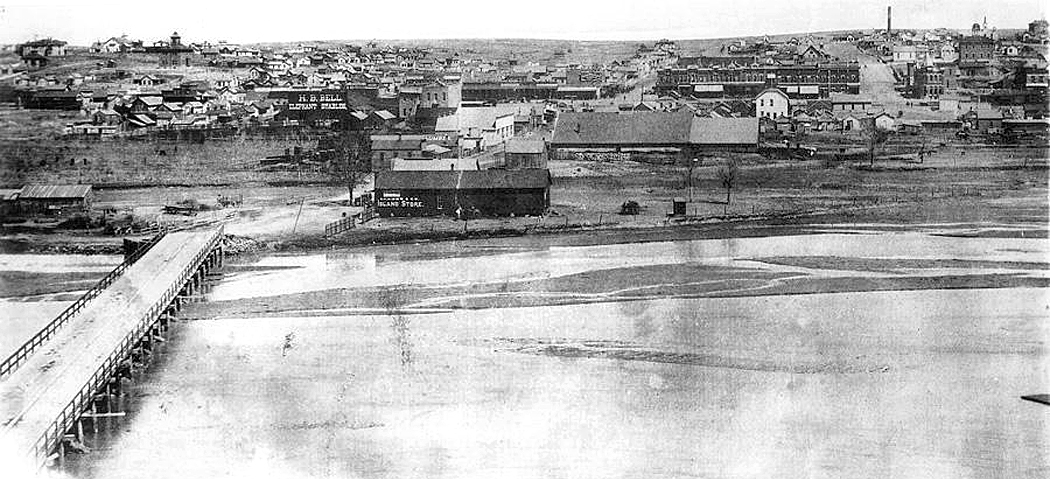
Dodge City, 1887, with Arkansas River

There were enough documented personalities from the early years of Dodge City, that a TV series could have been made without resorting to the fictions of Matt, Doc, and Kitty. (I mean no slight on Gunsmoke, which, especially in its early years did truly attempt to be more faithful to the spirit, if not the fact of its times, and was often extremely well written.)
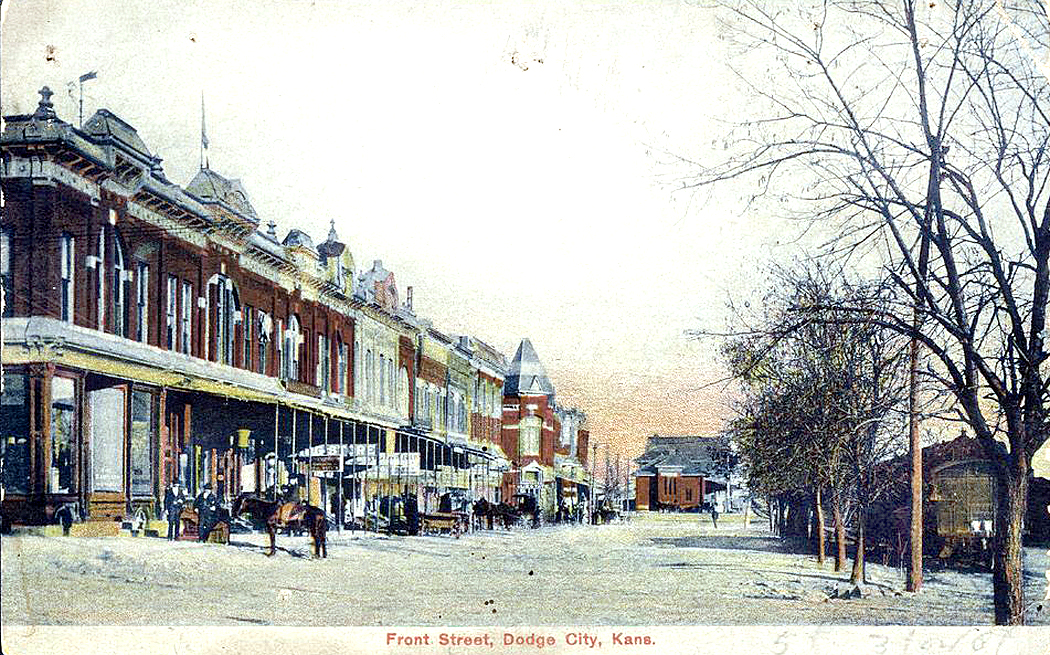
 

Dodge City, 1890s

 Dodge City went from tents and sod to wood frame buildings and to multi-story brick in a little over ten years, in the process building institutions, electing a town council and mayor, and hiring a police force, so  that, when the cattle industry largely disappeared in the 1880s, it was prepared to be a self-sustaining community. The real town was a dynamic entity; on TV, it was just a stage set. 

Click any image to enlarge

The foundational mythology of the United States belongs to the cowboy. An argument can be made for the Founding Fathers, but they are understood more as history than as myth. And by myth I don’t merely mean something that isn’t “true,” but as a mental model that we have absorbed as the definition of what makes us American. We are more John Wayne than we are John Adams. 

Like many of us, I grew up on Westerns, although because I am in my 70s, my foundational Westerns were those from the 1930s recycled in the 1950s on television. I grew up knowing who Ken Maynard was, or Buck Jones. Back then, TV stations were starving for content to broadcast, and the pile of old Westerns filled the Saturday morning hunger. Those younger than me likely didn’t have such a cinematic indoctrination. Later TV Westerns became their version. 

But, since I wrote a blog piece about TV’s Gunsmoke, (link here) I have been thinking about Westerns and their role as our national psychic subconscious, and about how the fictional version differed from the historical. And what is more, what that shift means, culturally. 

It has not always meant the same thing, and the evolution over time describes the changes in America’s perception of itself. 

I believe there were distinct eras of Westerns, that have evolved over the past two centuries. These versions of the West overlap, and all of them have been present from the beginning, or near enough. But the preponderance of each defines each era. 

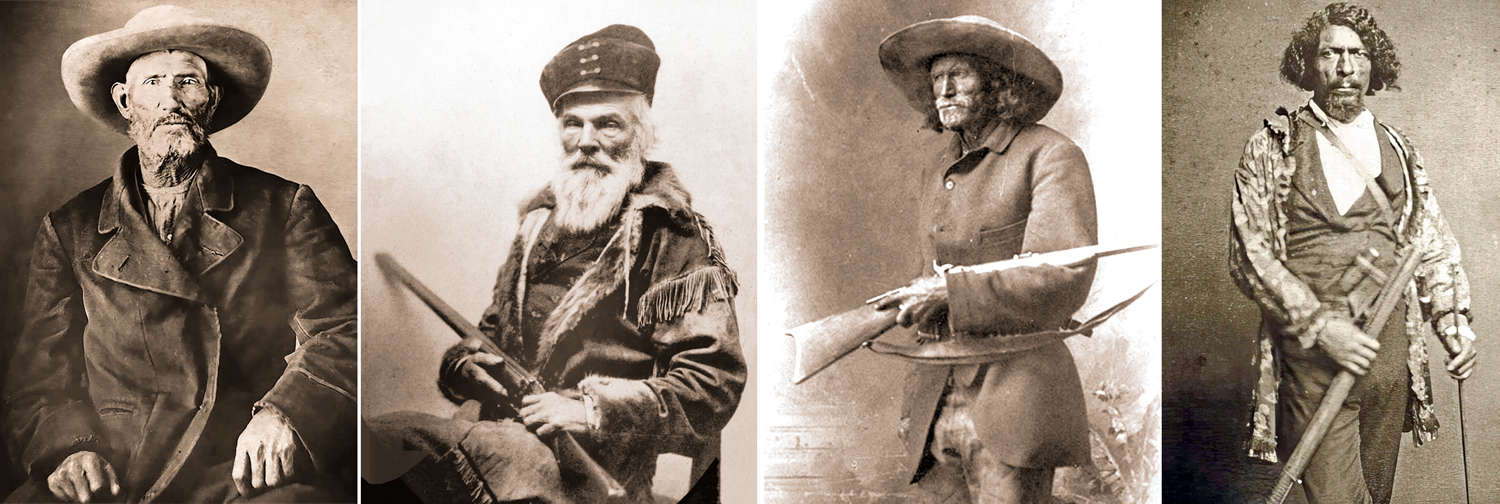
The West began in upstate New York with Natty Bumppo, or Hawkeye, as he was known in The Last of the Mohicans, and gave us the prototype of the rugged individualist. He morphed into Jim Bridger, Daniel Boone, Davy Crockett and various mountain men living in the wilderness. 

Jim Bridger; Joseph Walker; Jim Baker; Jim Beckwourth

These heroes played out the myth of how we conquered a vast wilderness with rugged individualism and tenacity. It grew into the myth of Manifest Destiny.  

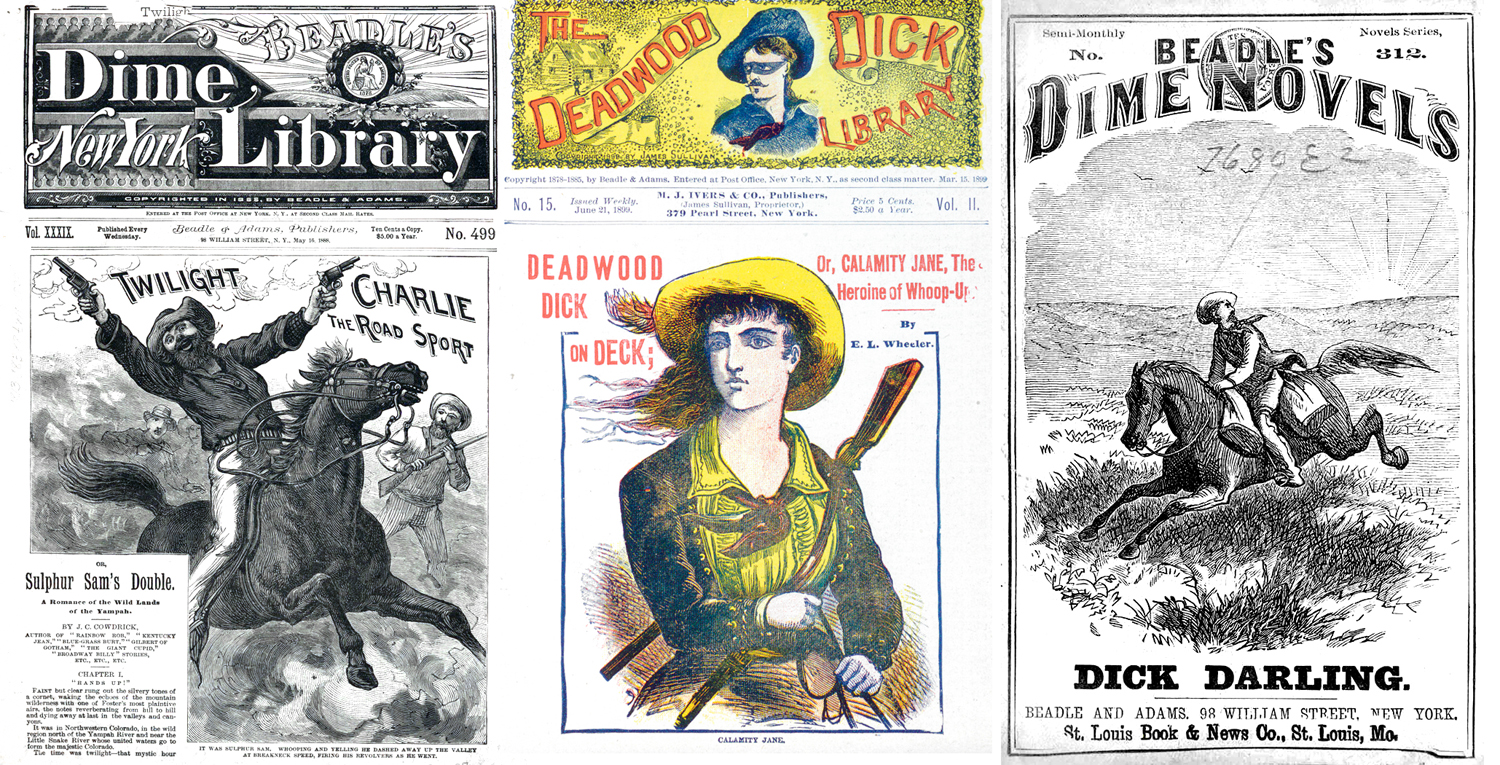
After the Civil War, when economic exploitation of the West began in earnest, with mining and cattle industries, the cowboy took over, with adventurous exploits popularized in a thousand dime novels. Certain names begin showing up with regularity, including Buffalo Bill, Wyatt Earp, Jesse James, Belle Starr. These elided into the early Western movies, including The Great Train Robbery (1903) and Across the Plains (1911), which starred Broncho Billy Anderson, the first cowboy movie star. 

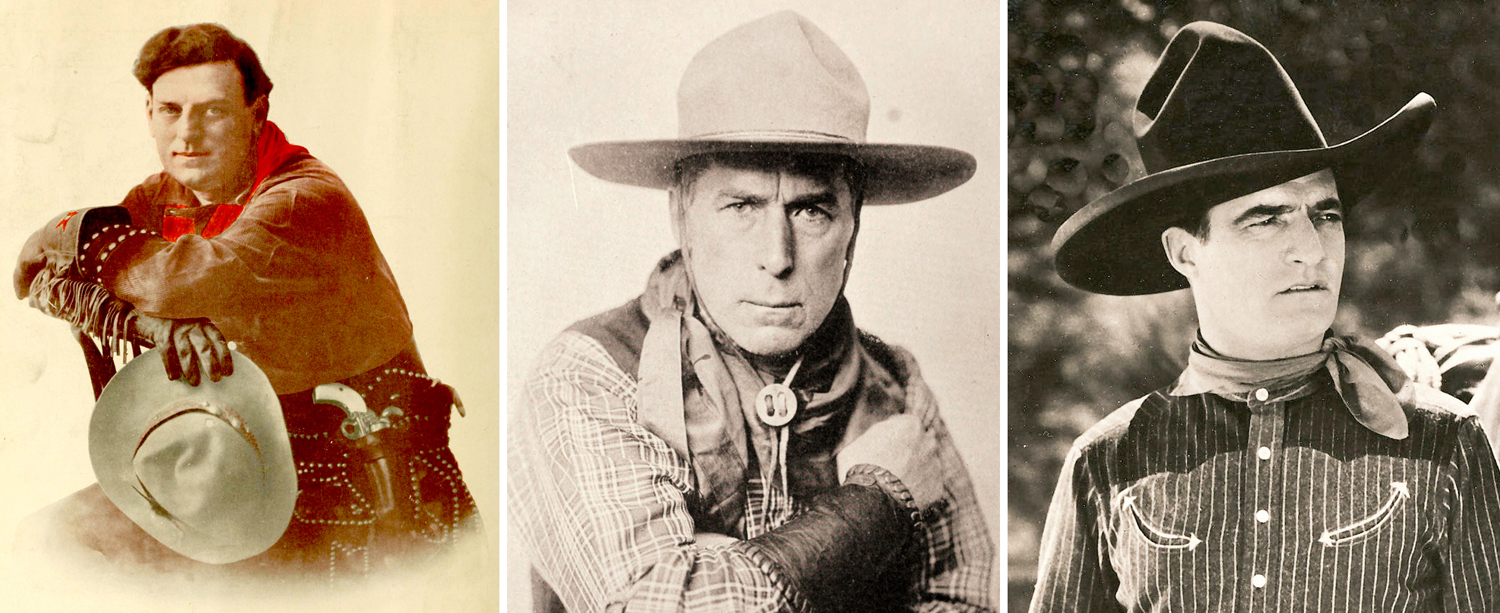
And a split in the myth. On one hand, you had William S. Hart, who attempted a level or realism in costume and plot (matched with a high level of sentimentality), and on the other hand, you had Tom Mix, the show-biz cowboy all duded out with fancy kit. 

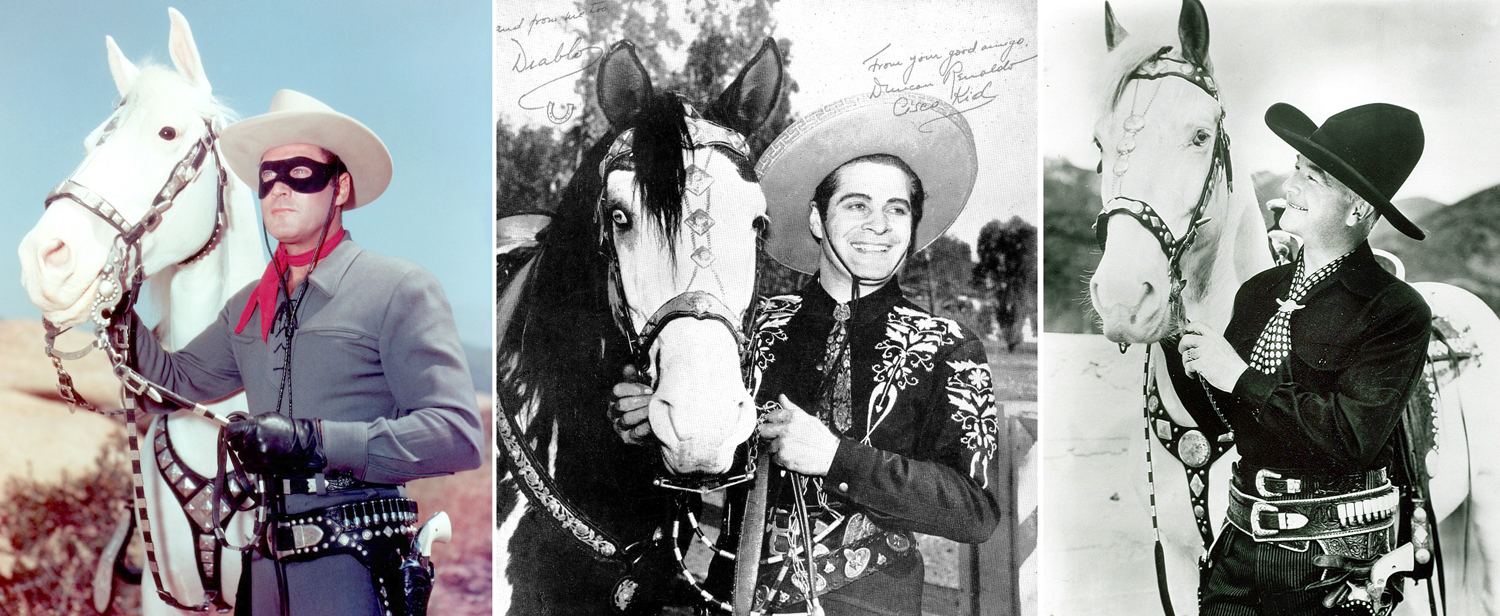
The difference was between movies made for general audiences and those aimed at children, mainly young boys. Mix brought glamour to the Western, with fancy cowboy duds and sparkling saddlery to his horse, Tony. 

That split continued into the sound era with hour-long Saturday matinees  with Hoot Gibson, Bob Steele and dozens of others, including John Wayne, who made scores of cheap oaters and even took to trying out as one of the singing cowboys that were briefly popular. 

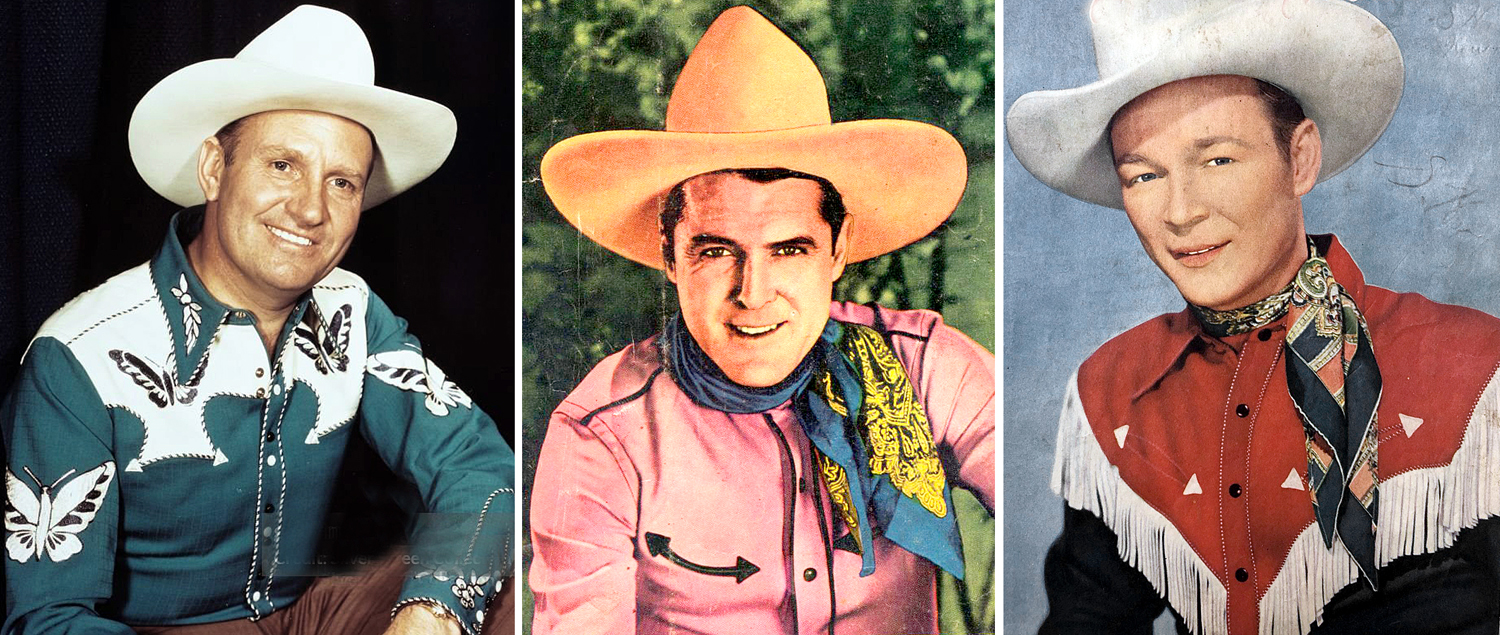
Through the 1940s, the cowboy movie became stereotyped with stars such as Roy Rogers, Gene Autry and William Boyd as Hopalong Cassidy. There was little attempt at realism. Sometimes they actually fought Nazis. 

These were the cowboys wearing shirts with crescent pockets and shoulder fringe, and often sported a six-gun on each hip. 

All that carried over into the television era, with a skein of popular Westerns mostly aimed at kids: The Lone Ranger; The Cisco Kid; renewed popularity of Hopalong Cassidy.

Meanwhile, there were always Westerns made for grown-ups, too. From John Ford’s Stagecoach and Howard Hawks’ Red River, through the Budd Boetticher films with Randolph Scott. There was Shane, and High Noon, and Winchester ’73

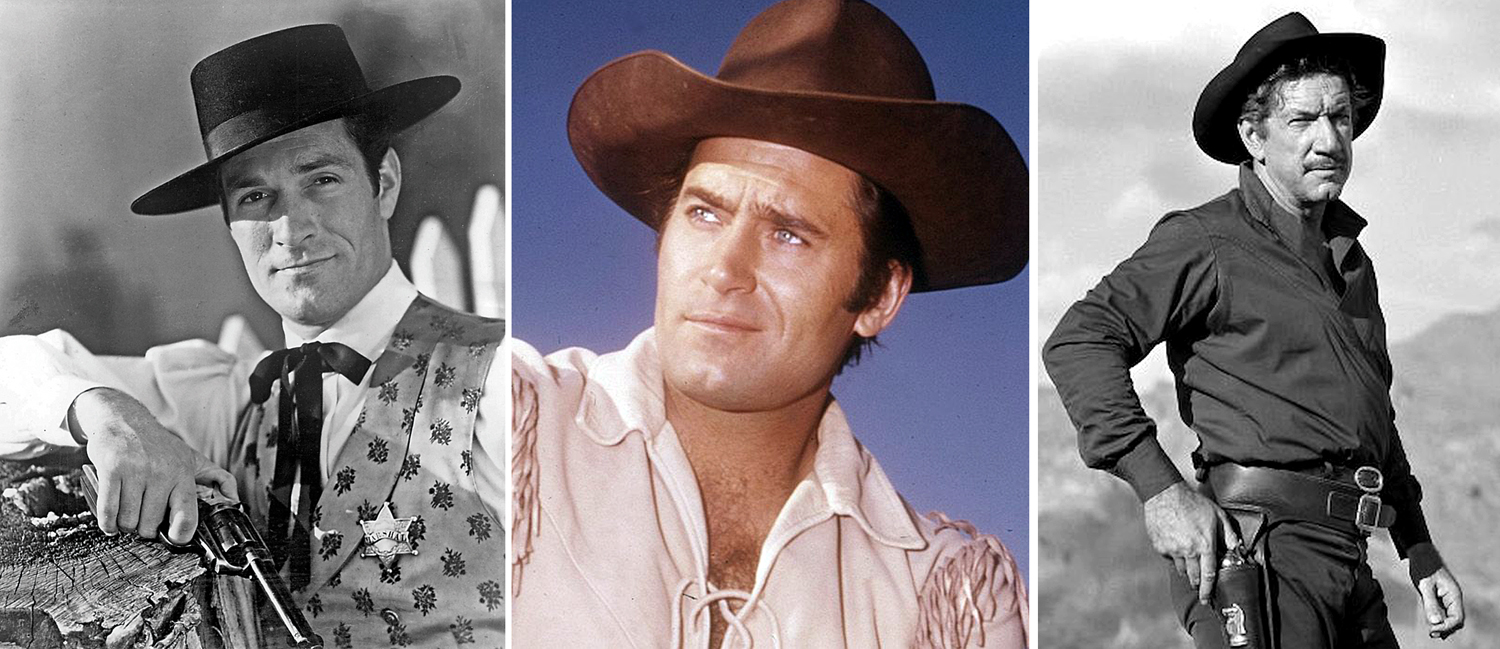
Initially, the lone hero version carried over into the TV era, also, when  The Life and Legend of Wyatt Earp, with Hugh O’Brien, kicked off a decade of evening programing with cowboy heroes, such as Cheyenne, Maverick, Have Gun — Will Travel, Bat Masterson, and The Rifleman. And, of course, Gunsmoke. You can name a dozen others. The market became glutted and then, suddenly, it seems, Westerns were shot dead. 

There came a cultural shift. Maybe it was the Vietnam War, maybe it was fatigue with the cowboy cliches, but when Westerns eventually did return to the silver screen, they took a dark turn. There had been revisionist Westerns before. Indians weren’t always the bad guys. But starting in the 1960s, with films such as Ride the High Country (1962), A Fistful of Dollars (1964) and the subsequent Spaghetti Westerns, Hang’em High (1968) and ultimately, The Wild Bunch (1969), the new Western was brutal, filled with low-lifes and lots, and lots of grime. 

“McCabe & Mrs. Miller”

The trend continued through McCabe & Mrs. Miller (1971) to Unforgiven (1992). Even the more positive films like those from Larry McMurtry novels or with Tom Selleck attempt a more naturalistic view of the times in which they were set. 

Of course, there’s a good deal of overlap in the eras. It’s a question of what predominates in what decade. There have been revisionist Westerns from the earliest years, but this view of the overall shape of the Western in American consciousness over time is, I believe, basically accurate. 

What is not accurate, though, are the Westerns themselves. Admittedly, they were never really intended as realism: They are myth and they are national epic. Our equivalent of the Iliad or the Kalevala. Even those attempting fidelity to historical fact ultimately underline the myth more than the fact. “When the legend becomes fact, print the legend.” 


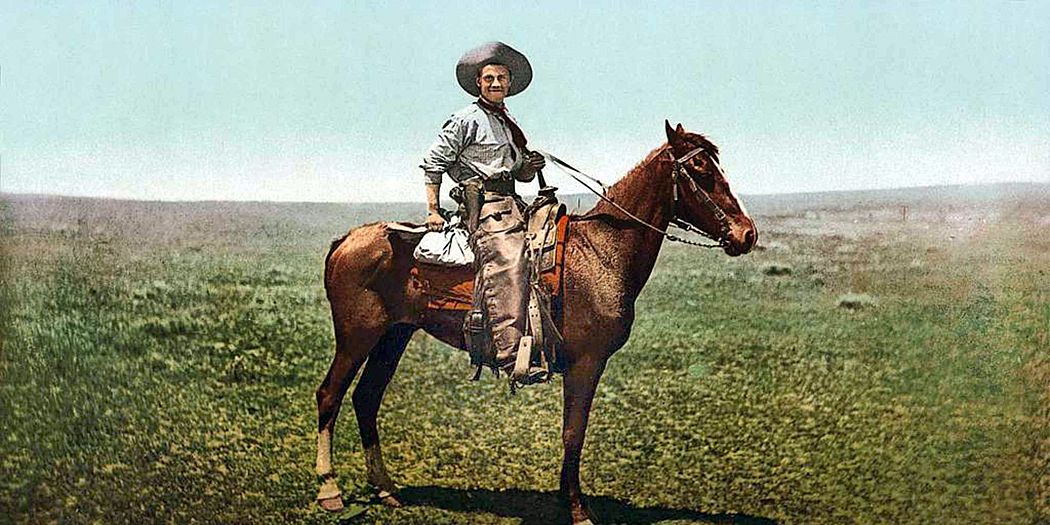
Actual cowboys

As a kid, I loved the cowboy movies, but as an adult, I am bothered by them. I try to remember they are not meant to be documentaries, but crystallizations of myth, and you don’t expect myth to be realistic. You don’t ask Hercules if he has a mortgage. 

Yet, there are sore thumbs that stick out for me in almost all filmed Westerns; four of them — aspects that scream out: “No, this isn’t the way it was.” And perhaps that shouldn’t matter, but these things make it difficult for me to appreciate Westerns the way I did when I was a kid. 

I have four primary gripes. They are: economy; geography; ethnic diversity; and language. Let’s take them in order. 

Two movies, same location

Towns exist in Western mainly to stand in for civilization. It’s where the people are — the people largely left undefined. They stand in front of general stores or the saloon while the heroes and villains play out the ritual of the gunfight. The same set can be used and reused in many pictures, even as diverse as Westworld and Blazing Saddles. The Western movie town is just the stage set for the plot.

But actual towns are built for economic reasons. There was some industry that needed workers and the workers needed services, and so, towns grew. But in most Western movies, there doesn’t seem to be any functioning economy. There are references to cattle and ranches, but aside from giving rustlers something to do, they barely show up as economic factors.  

While the standard movie Western town has its saloons, its general store, its hotel and restaurant, its stable and blacksmith, there is never a thought to where its residents get the money to pay for their drinks, meals, gingham or horseshoes. A town doesn’t grow for just no reason. 

Even Dodge City, in the 1870s, when Gunsmoke is supposedly set, had a mayor and council and a police force. There would also likely have been an elected sheriff for Ford County and a judge, to say nothing of at least two lawyers, advertising on the front page of the Dodge City Times in 1878. 

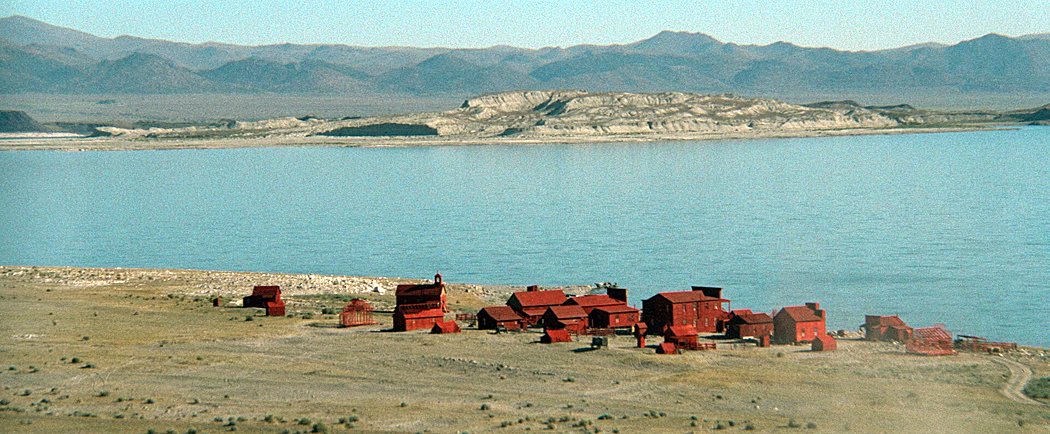
Sometimes it is downright preposterous. Consider Clint Eastwood’s High Plains Drifter. Its town is built on Mono Lake in California with no economic base at all — just a hodgepodge of buildings erected near a salty lake that cannot even provide drinking water for the residents.

“High Plains Drifter”

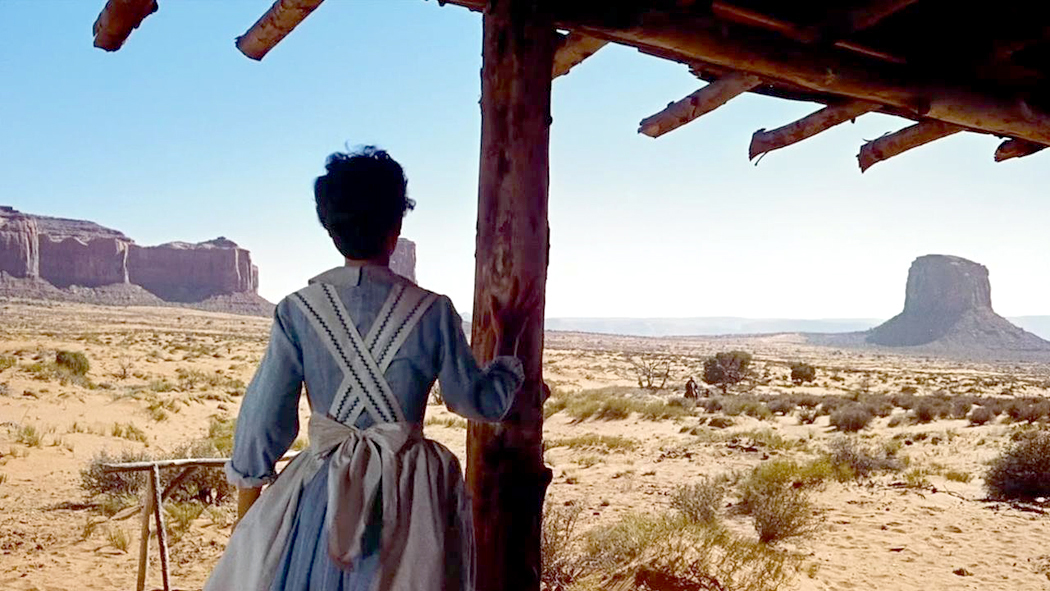
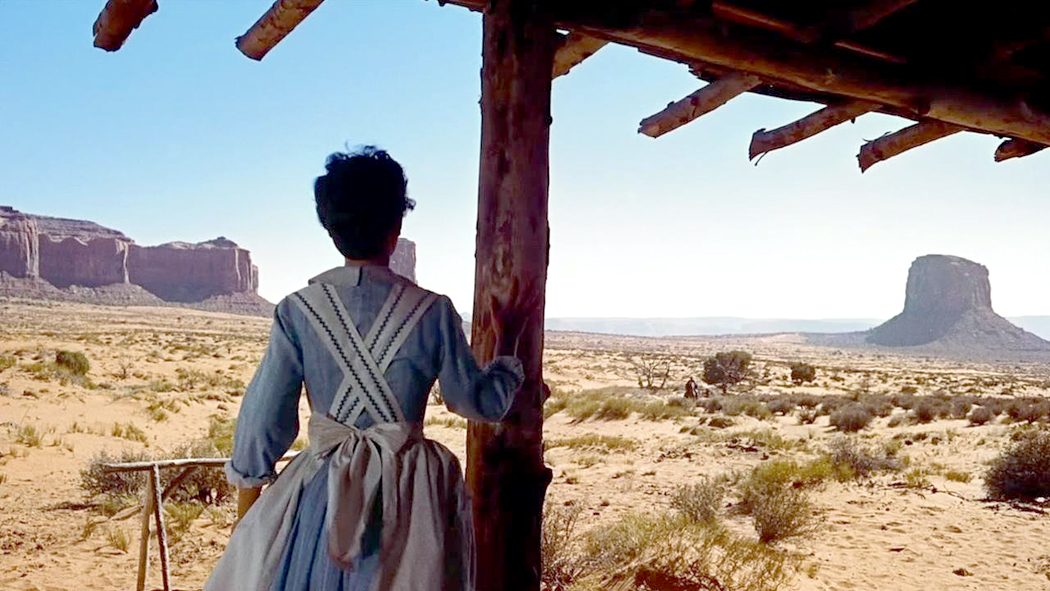
Or, one of my favorites, the supposed farm built in Monument Valley in Arizona, in The Searchers. The idea of such a farm is ludicrous — not made better because the landscape is supposed to stand in for Texas. 

“The Searchers”

 Again, there is a reason towns were built where they were. On rivers for shipping; near mines to provide supplies and provisions; along railroads to ship cattle; near army forts to unload soldiers of their pay.  

As seen in the movies

 My second beef with Westerns is its geography. Most of the Western tales we have historically took place in the most boring landscapes imaginable, in Kansas, Nebraska, Missouri, Texas. 

What the actual working West looked like

But such places are not very photogenic. And so, we move them lock, stock and barrel to the Rocky Mountains, the Desert Southwest or California’s Alabama Hills with the Sierra Nevada in the background. 

“Gunsmoke”

Even Gunsmoke, set in Kansas, sometimes shows a mountain range off in the distance sighted down the main street. (I’ll discuss Dodge City in more detail in Part 2 of this essay, to follow). Matt Dillon is sometimes shown accompanying a prisoner, for instance, across the Rocky Mountains or into the desert, hundreds of miles from his jurisdiction. To say nothing of the months it would take to ride there on the back of a horse. 

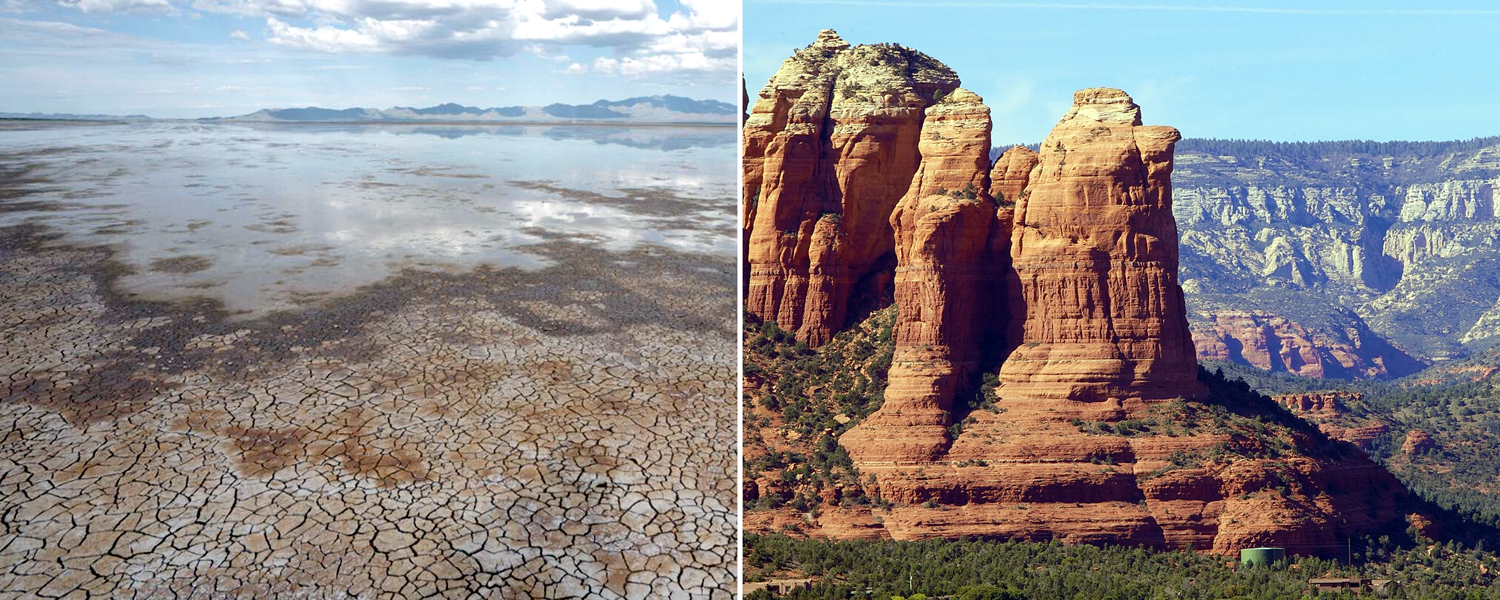
In the 1950 film Broken Arrow, Jimmy Stewart rush back from Lordsburg, N.M., to Tucson, Ariz., and somehow manages to pass through Sedona, Ariz., on the way — a detour of several hundred miles. Clearly Sedona was more photogenic than the Wilcox Playa or Benson. 

Wilcox Playa (left); Sedona, Ariz. (right)

As in so many Westerns, the West is just a mental landscape, where any buttes and saguaro cactus will do as a setting. 

As a sidenote, related to the geography: Cowboys stranded in the desert reach for their canteen and take a slug of water, or else hold it upside down so we can see it’s empty. I lived in the desert for 25 years and can tell you water is a big deal. Driving through Death Valley one July, I became so dehydrated I developed a headache and was beginning to become disoriented. I had to drink a full gallon of water to recover. A few swigs from a canteen is basically meaningless. 

The third and fourth distortions are perhaps less important, but they nevertheless stick out for me when I’m watching an old Western. There is the lack of ethnic diversity and the matter of speech.

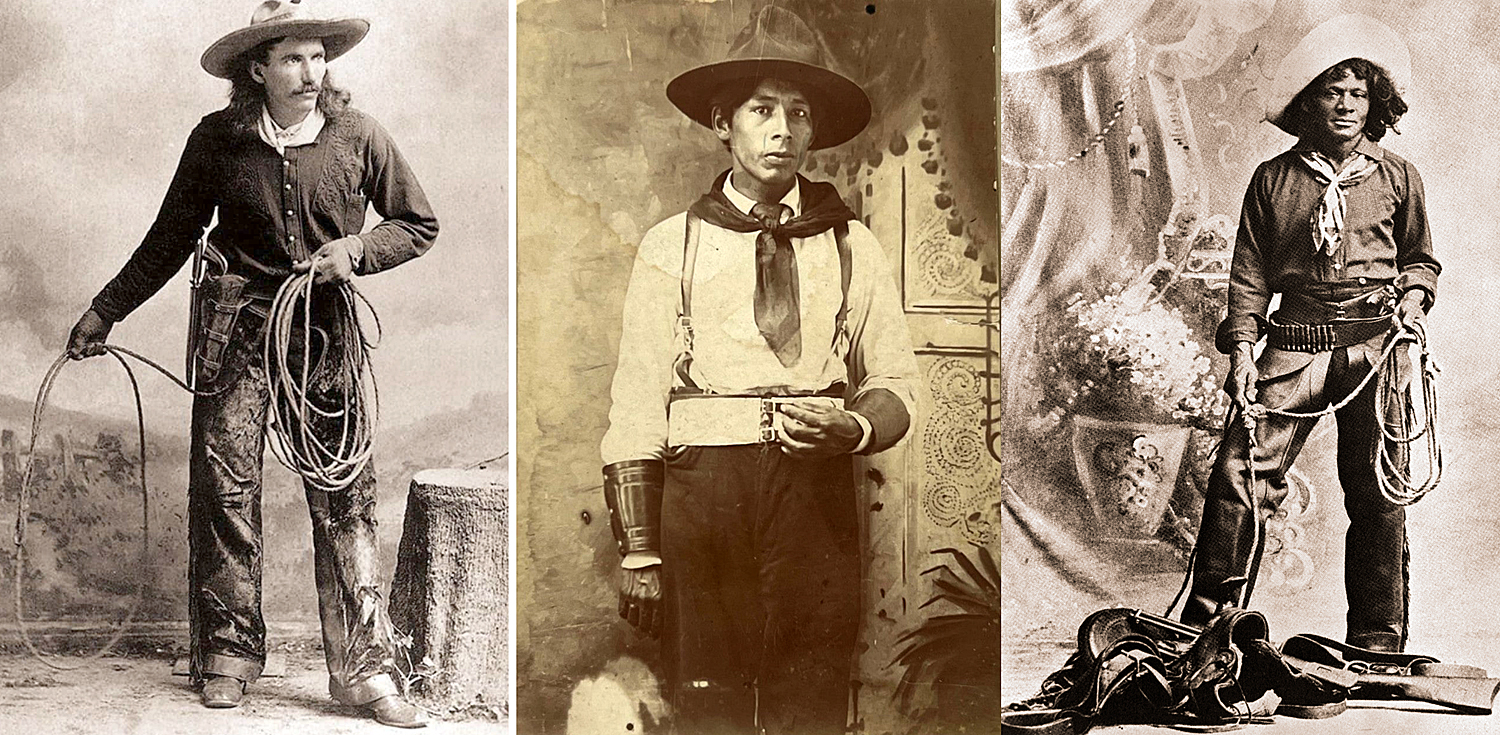
Cowboys: Vanilla, Native American; African American

It’s been documented that about a quarter of all cowboys were African-American. They don’t much show up in the movies (John Ford had his Woody Stroud and at least that was a nod to the fact). And another 20 percent were Mexican and many were Native American. In the towns, segregation was normal, even if the working cowboys out on the plains were mixed. Virtually all the laundries and restaurants in the Old West were run by Asians, mostly Chinese. Other ethnicities were notable factors in various troubles, as the Irish clashed with the English. 

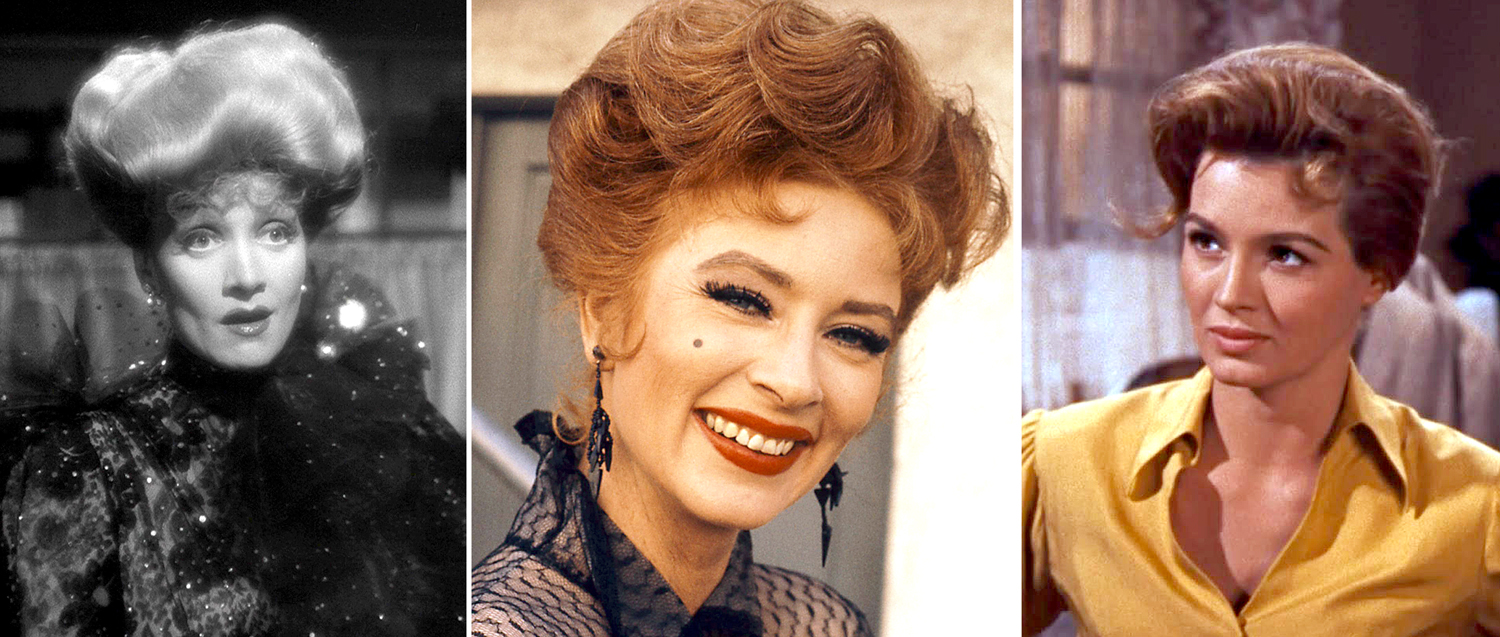
Finally, there is the language spoken in 19th century America, which was much more formal than we take for normal now. In the Western movies, the actors tend to speak in the manner current when the films were made, and that changes over time, just the way the hats went from 10 gallons to three pints, and the brassieres just kept getting pointier. 

The evidence from letters and from novels written during the period tell us that people spoke in longer sentences with fewer contractions. At home, you might relax when talking to your spouse or children, but in public, you attempted to be correct. Even the illiterate miners and farmers spoke more formally. 

This last bothers me less, because if Randolph Scott or John Wayne spoke as they would have in the Old West, the audience might laugh, or at least yawn. How often have you heard parodies of Ken Burns’ Civil War, when they read letters soldiers wrote home? What was normal speech in the 1870s sounds utterly archaic, even stilted, to our ears. 

Next: Part 2 — A look at the historical Dodge City

When I was a wee lad, in the 1950s and television was about the same age, I watched the images on the screen flash by with no critical eye. It was all the same: old movies, kiddie shows, talk shows, variety shows, sitcoms — it all wiggled on the toob and that was enough. 

If there were any difference in production quality, or acting ability, it made no difference. I just watched the story, or listened to the music. The very idea that there were people behind the camera never occurred. I didn’t really even think about there being a camera. Things just appeared. I suspect this is true for most kids. It may be true for quite a few grown-ups, too. 

There were certainly programs I liked more than others, but I could not have given any reason why one and not the other. Mostly, in the daytime, I watched cowboy movies and cartoons, and in the evening, I watched whatever the rest of the family was watching. 

In all that, there were a good number of Westerns. There were those for the kids, such as The Lone Ranger or The Cisco Kid, and later, those in the after-dinner hours aimed at the grown-ups — Gunsmoke or Death Valley Days. There were also the daytime screenings of old Western movies with such stars as Buck Jones, Hoot Gibson, Bob Steele or Johnny Mack Brown. 

I mention all this because I have recently begun watching a series of reruns of old TV Westerns on various high-number cable channels, seeing them in Hi-Def for the first time. I have now seen scores of original Gunsmoke episodes and my take on them is entirely different from when I was in grammar school. I can now watch them critically.

It’s been 70 years since I was that little kid, and since then I’ve seen thousands of movies and TV shows, served a stint as a film critic, written about movies, and introduced films in theaters. I have a different eye, and understand things I couldn’t know then. 

And so, a number of random thoughts have come to me, in no particular order:

1. 

Old TVs were fuzzy; new TVs are sharp. In the old days of cathode-ray tubes, TV pictures were made up of roughly 480 lines, running from top to bottom of the screen, refreshing themselves every 60th of a second. Broadcast TV was governed by what is called NTSC standards (altered slightly over time). Such images were of surprisingly low definition (by modern standards). 

The sharpness of those early TV pictures was not of major importance because most people then really thought of television as radio with pictures, and story lines were carried almost entirely by dialog. The visual aspect of them was of minor concern (nor, given the resolution of the TVs at the time, should it have been.)

Of course, now, we watch those old Gunsmoke episodes on HD screens. And two things become apparent. 

First, is that shows such as Gunsmoke were made better than they needed to be. They were made mainly by people trained in the old Hollywood studio system, where such things as lighting, blocking, focus, camera angles, and the such were all worked out and professionally understood. They were skilled craftsmen. 

However, second, some things were designed for analog screens, and so, often, painted backdrops used, especially for “outdoor” scenes shot in the studio, have become embarrassingly obvious, when, originally, they would have passed unnoticed on the fuzzy screen. 

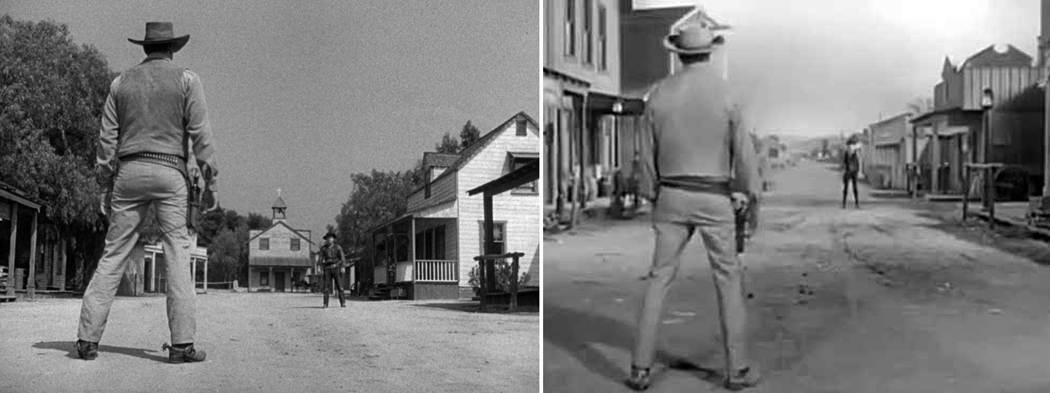
Outdoor scenes were often shot in studios. Dodge City, during some seasons, was built indoors and the end of the main street in town was a backdrop. Again, on the old TVs you would not notice, but today, it’s embarrassing how crude that cheat was. 

You can see it in the opening shootout during the credits. In early seasons, Dillon faces the bad guy outdoors. In later seasons, he’s in the studio. 

2. 

Because Gunsmoke is now seen on a widescreen HD screen, but were originally shot for the squarer 4-by-5 aspect ratio, the image has to be rejiggered for the new screen. There are three ways of doing this, and as they show up on current screens, they are either shown with black bars on either side of the picture, to retain the original aspect ratio, or they are cropped and spread out across the wider 16:9 space. And if so, there are two ways this happens. 

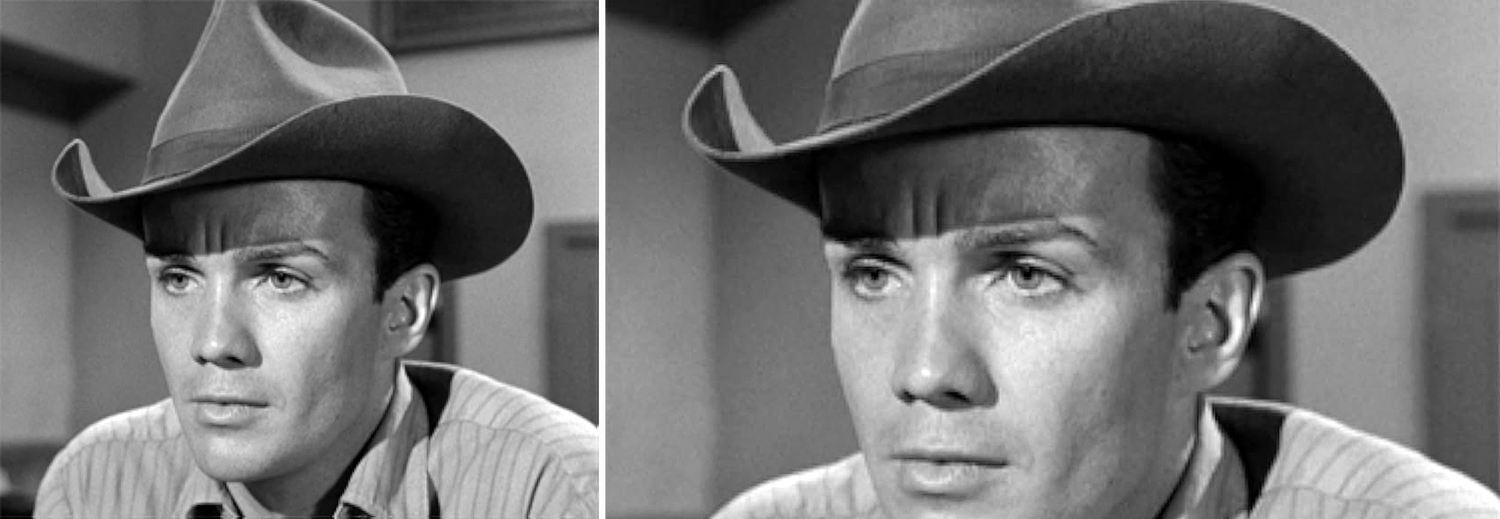
If the transfer is done quickly and cheaply, the cropping is done by just chopping off a bit of the top and bottom of the picture, leaving the middle unchanged. The problem is this often leaves the picture awkwardly framed, with, in close ups, the bottoms of characters’ faces left out. 

However, in some of the newly broadcast Gunsmokes, someone has taken care to reframe the shots — moving the frame up or down — so as to include the chins and mouths of the characters. To do this, the technician has to pay attention shot by shot as he reframes the image. 

And so, it seems as if the Gunsmoke syndications have been accomplished either by separate companies, or at different times for different series packages. You can see, for instance, on the INSP cable network, examples of all three strategies. (My preference, by far, is for the uncropped original squarer picture.)

3. 

Gunsmoke changed over its 20-year TV run. There are three main versions: Black and white half-hour episodes (1955-1961); black and white hour-long episodes (1961-1966); and hour-long color episodes (1966-1975). The shorter run times coincided with the period when Dennis Weaver played Matt Dillon’s gimpy-legged sidekick Chester Goode. Chester continued for a season into the hour-longs, but was replaced by Ken Curtis as Festus Haggen, the illiterate countrified comic relief. 

Technically, the black and white seasons were generally better made than the color ones. When the series began, TV crews had been those previously at work in cinema, and brought over what they learned about lighting, framing, editing, blocking, use of close-ups. The black and white film stock allowed them to use lighting creatively, using shadows to effect, and lighting faces, especially in night scenes, with expressive shadows. Looking at the older episodes, I often admire the artistry of the lighting. 

But when color came in, the film stock was rather less sensitive than the black and white, and so the sets had to be flooded with light generally for details to be rendered. This led to really crass generic lighting. Often — and you can really spot it in night scenes — a character will throw two or three shadows behind him from lights blasting in different directions. Practicality drowns artistry. 

Gunsmoke wasn’t alone in this: This bland lighting affected all TV shows when color became normal. It took decades — and better film stock — before color lighting caught up. (One of the hallmarks of our current “golden age” of TV is the cinematic style of lighting that is now fashionable. Color has finally caught up with black and white.) 

4. 

One of the pleasures of watching these reruns is now noticing (I didn’t when I was a little boy) the repertory company of actors who showed up over and over again, playing different characters each time. 

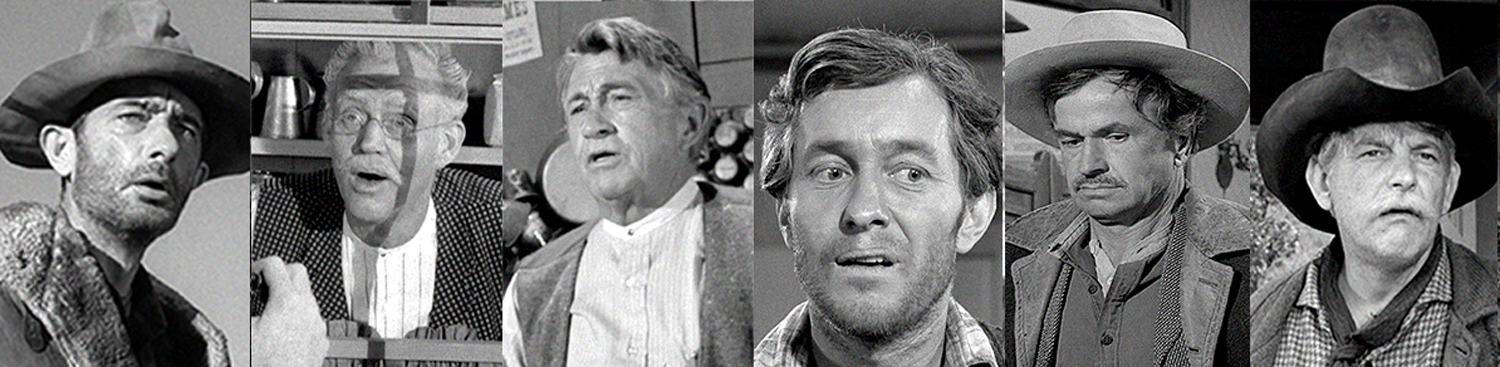
I’m not just talking about the regular actors playing recurring roles, such as Glenn Strange as Sam the barkeep or Howard Culver, who was hotel clerk Howard Uzzell in 44 episodes, but those coming back over and over in different roles. Victor French was seen 18 times, Roy Barcroft (longtime B-Western baddie) 16 times; Denver Pyle 14 times, Royal Dano 13 times, John Dehner, John Anderson and Harry Carey Jr. a dozen times each.

Other regulars with familiar faces include Strother Martin, Warren Oates, Claude Akins, Gene Evans, Harry Dean Stanton, Jack Elam. Some were established movie actors: George Kennedy, Dub Taylor, Pat Hingle, Forrest Tucker, Slim Pickens, Elisha Cook Jr., James Whitmore. Bette Davis, too. 
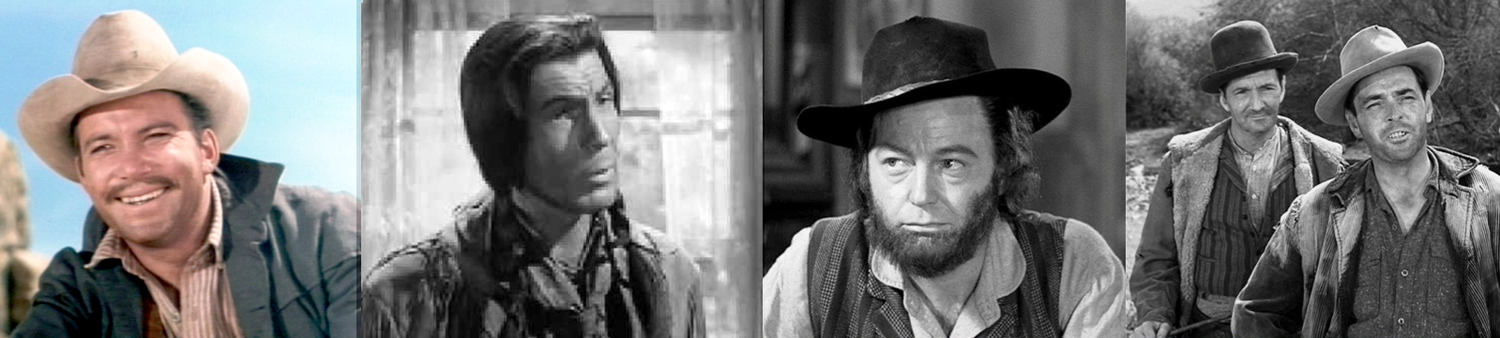
William Shatner, Leonard Nimoy, DeForest Kelley, James Doohan

And a few surprises. Who knew that Leonard Nimoy was in Gunsmoke (four times), or  Mayberry’s George Lindsay (six times — usually playing heavies and you realize that the goofy Goober Pyle was an act — Lindsay was an actor, not an idiot), Mayberry’s barber Howard McNear showed up 6 times. Jon Voight, Carroll O’Connor, Ed Asner, Harrison Ford, Kurt Russell, Suzanne Pleshette, Jean Arthur, DeForest Kelley, Werner Klemperer (Colonel Klink), Angie Dickenson, Dennis Hopper, Leslie Nielsen, Dyan Cannon, Adam West, and even William Shatner — all show up. 

It becomes an actor-spotting game. John Dehner, in particular, was so very different each time he showed up, once a grizzled old miner, another a town drunk, a third as an East-coast dandy, another as a hired gunslinger — almost never looking or sounding the same. “There he is, Dehner again!” 

And it makes you realize that these were all working actors, needing to string together gigs to make a living, and the reliable actors would get many call-backs. It is now a pleasure to see how good so many of these old character actors were. 

5. 

I have now watched not only Gunsmoke, but other old TV Westerns, and the quality difference between the best Gunsmoke episodes and the general run of shows is distinct. While I have come to recognize the quality that went into the production of Gunsmoke, most of the other shows, such as Bonanza, simply do not hold up. They are so much more formulaic, cheaply produced, and flat. Stock characters and recycled plots. 

Gunsmoke was designed to be an “adult Western” when it was first broadcast, in 1952, as a radio show, with stocky actor William Conrad as Matt Dillon. In contrast to the kiddie Westerns of the time, it aimed to bring realism to the genre. 

William Conrad as Marshal Dillon

It ran on radio from ’52 to 1961, and on TV from 1955 to 1975, and then continued for five made-for-TV movies following Dillon in his later years. There were comic books and novelizations. Dillon became a household name.

Originally, Matt Dillon was a hard-edged, lonely man in a hard Western landscape. As imagined by writer and co-creator of the series John Meston, the series would overturn the cliches of sentimental Westerns and expose how brutal the Old West was in reality. Many episodes were based on man’s cruelty to both men and women. Meston wrote, “Dillon was almost as scarred as the homicidal psychopaths to drifted into Dodge from all directions.” 

On TV, the series mellowed quite a bit, and James Arness was more solid hero than the radio Dillon. But there was still an edge to the show, compared with other TV Westerns. After all, according to True West magazine, Matt Dillon killed 407 people over the course of the TV series and movie sequels. He was also shot at least 56 times, knocked unconscious 29 times, stabbed three times and poisoned once. 

And the TV show could be surprisingly frank about the prairie woman’s life and the painful treatment of women as chattels. 

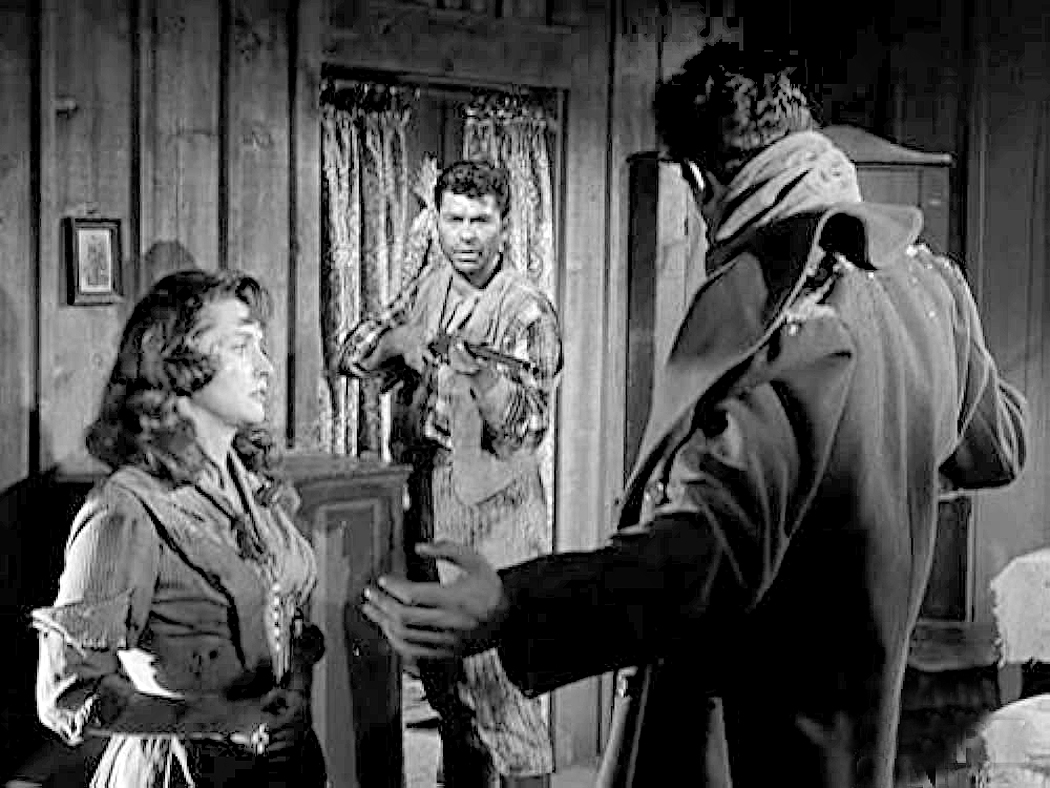
In Season 3 of the TV series, an episode titled “The Cabin,” two brutal men (Claude Akins and Harry Dean Stanton) kill a woman’s father and then serially beat and rape her over the course of 35 days, when Dillon accidentally comes upon the cabin to escape a snowstorm. The thugs plan to kill the marshal, but he winds up getting them first. When Dillon suggests that the woman can now go back to living her life, the shame she feels will not let her. No one has to know what has happened here, he tells her, but, she says, she will know. And so she tells Dillon she will go to Hayes City, “buy some pretty clothes” and become a prostitute. “It won’t be too hard, not after all this,” she says. 

“Don’t let all this make you bitter,” Dillon says. “There are a lot of good men in this world.”

“So they say” she says. 

This is pretty strong stuff for network TV in 1958. There were other episodes about racism, and especially in the early years, not always happy endings. 

Dodge City, 1872

6. 

According to Gunsmoke producer John Mantley, the series was set arbitrarily in 1873 and in Dodge City, Kansas, on the banks of the Arkansas River, although the river plays scant role in the series. In 1873, the railroad had just arrived, although in only a few episodes of the TV series is the train even mentioned. 

The Dodge City of the series is really just a standard Hollywood Western town, with the usual single dusty street with wooden false-front buildings along either side. 

In reality (not that it matters much for a TV show, although Gunsmoke did try to be more realistic than the standard Western), Dodge was built, like most Southern and Western towns, with its buildings all on one side of the street (called Front Street in Dodge) and the railroad tracks on the other. Beyond that, the river. 

Dodge City, Kansas 1888

And in general, the geography of Gunsmoke’s Kansas would come as a surprise to anyone visiting the actual city. The state is famously flat, while the scenery around Matt Dillon often has snow-capped mountains, and at other times, mesas and buttes of the desert Southwest. 

Hollywood’s sense of geography is often peculiar. So, I don’t think it is fair to hold it against the TV series that its sense of the landscape has more to do with California (where the series was generally shot) than with the Midwest prairies. 

I remember one movie where James Stewart travels from Lordsburg, N.M., to Tucson, Ariz., and somehow manages to pass through the red rocks or Sedona on the way. Sedona is certainly more picturesque than Wilcox, Ariz., but rather misplaced.

Or John Ford’s The Searchers, where the Jorgensen and Edwards families are farming in Monument Valley, Ariz., which has no water, little rain, sandy soil and no towns within a hundred miles. It is ludicrous place to attempt to farm. Of course, it is said, in the movie, to be set in Texas, but Texas doesn’t look like the Colorado Plateau at all. 

We forgive such gaffes because the scenery is so gorgeous, and because we’ve been trained by decades of cowboy movies to have a picture of “The West” as it is seen in Shane rather than how most of it actually was: flat, grassy, and boring. And often, it is not even the West, as we think of it. Jesse James and his gang robbed banks in Missouri. The Dalton Gang was finished off in Minnesota. The “hanging judge” Parker presided in Arkansas. Some of the quintessential Western myths are really Midwestern or Southern. 

So, many of the tropes of Hollywood Westerns still show up in Gunsmoke, despite its attempt at being “more realistic” than the standard-issue cowboy show. 

“Gunsmoke” studio set

Two things, however, that are hardly ever mentioned that seems germane to the question of realism on film. The first is the pristine nature of the streets. Historians have shown that, with all the horses, not only in Westerns, but even in 19th-century Manhattan, the streets were paved with horseshit. Cities even hired sanitation workers to collect the dung in wheeled bins, so as not to be buried in the stuff. 

OK, I get that perhaps on TV shows broadcast into our homes, we might not want to see that much horse manure. In reality, the dirt dumped in the studio set of Dodge City had to be cleaned out, like kitty litter, each day, or under the hot lights, the whole set would stink of horse urine. 

But the second issue relates to the very title of the show: Gunsmoke. Strangely, smoke never appears from the many guns being fired in the course of 20 years of episodes. But the series is set in an era at least a decade before the invention of a practical smokeless powder (and 30 years before its widespread usage). And so Matt Dillon’s gun should be spouting a haze of nasty smoke each time he fires at a miscreant. 

Me firing a black powder rifle

We know, from records of the time, that Civil War battlefields, and before that, Napoleonic battlefields, were obscured by clouds of impenetrable smoke, blocking the views of soldiers aiming at each other. And I know from my own experience firing black powder weapons, that each show spews a cloud of smoke from the barrel. So, why no gun smoke on Gunsmoke?

Click on any image to enlarge