Archive

Tag Archives: haydn

David Attenborough on Desert Island Discs with host Kirsty Young in 2012

One of the longest running radio shows is Desert Island Discs, which has been on the BBC since 1942. It is often said to be the second longest-running radio show after the Grand Ole Opry, which cranked up in 1925, although a few critics have discovered some obscure programs in foreign climes that may have been on longer, and there’s also the British Shipping Forecast which began in 1861, before radio was even invented, and first disseminated via telegraph before switching to radio in 1924. 

On Desert Island Discs, prominent people, whether politicians, entertainers, sports stars or academics, are asked to choose eight recordings they would take with them to the proverbial desert island, and place them in the context of their lives. Since the 1950s, they have also been asked to name a book, other than the Bible or Shakespeare, they would also take, and later still, adding on a “luxury item” they couldn’t live without. 

Nearly 4,000 episodes have been broadcast, with some predictable results. The music most often mentioned is Beethoven’s Ninth Symphony, and the luxury item most chosen is pen and paper, or “writing materials,” although Tom Hanks specifically mentioned “a Hermes 3000 manual typewriter and paper.” 

Many of the archived broadcasts can be heard from various online sources, and you can learn, for instance, that Alfred Hitchcock’s book choice was Mrs. Beeton’s Household Management, and his luxury item was “a continental railway timetable.” Some of the choices were equally eccentric. Oliver Reed wanted Winnie-the-Pooh to read and “an inflatable rubber woman.” Actress Janet Suzman wanted a “mink-lined hammock,” and Hugh Laurie asked for an encyclopedia and “a double set of throwing knives.” His long-time double-act partner Stephen Fry wanted a PG Wodehouse anthology and a “suicide pill.” 

My favorite, so far, is John Cleese, who asked for Vincent Price’s cookery book and “a life-size statue of Margaret Thatcher and a baseball bat.” 

One of the inevitable by-products of such a format is the urge to create your own list. And so, I have my own. 

I grew up in New Jersey in a family largely indifferent to music. What music there was came on TV in such variety shows as Perry Como or Dinah Shore. When I was little, there was a small portable record-player on which I played children’s songs, but I don’t count any of that. “Fire, fire, fire, raging all about. Here come the firemen to put the fire out.” 
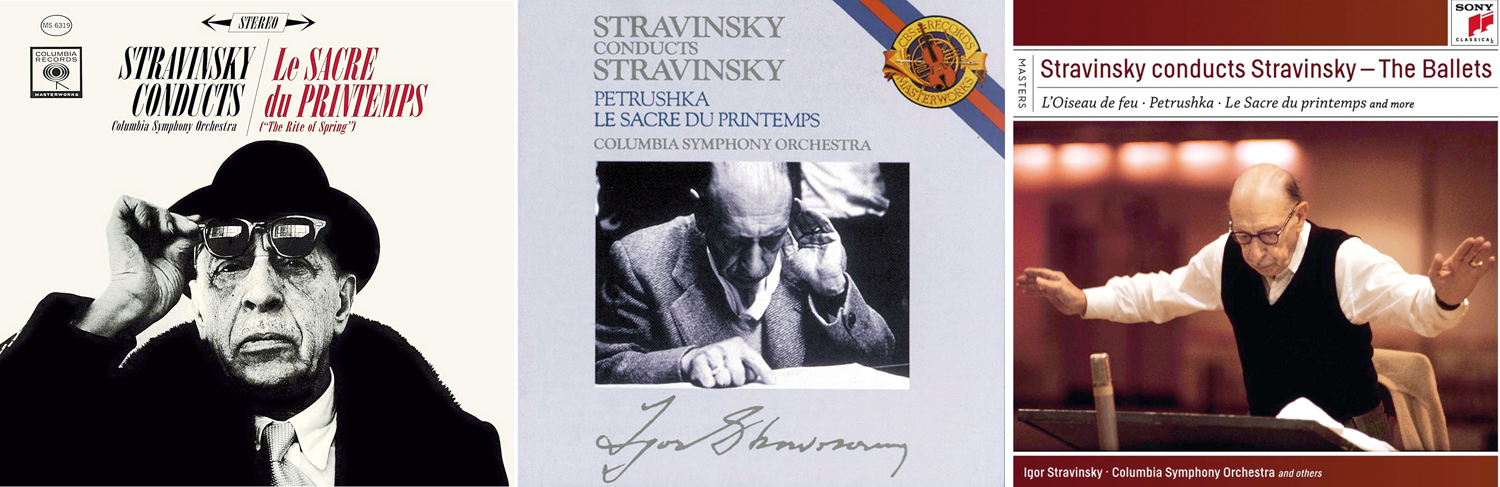
My musical education began in high school when my first serious girlfriend played music on the phonograph while we spooned on the sofa in her parents’ house. She went on to become a professional bassoonist and was studying at the time with Loren Glickman, who played the difficult opening bassoon solo on Igor Stravinsky’s recording of his Rite of Spring. I hadn’t known such music existed. It was mesmerizing. Who knew it was great make-out music? And so, that is my first choice for my desert island disc. 

There have been hundreds of other recordings of that music, and a few, perhaps, more exciting or primitive than the composer’s own, but that recording has never been out of print and comes in many versions, from LP to 8-Track to CD and now, streaming. As an introduction to classical music, I could hardly have done better — dive into the deep end. 
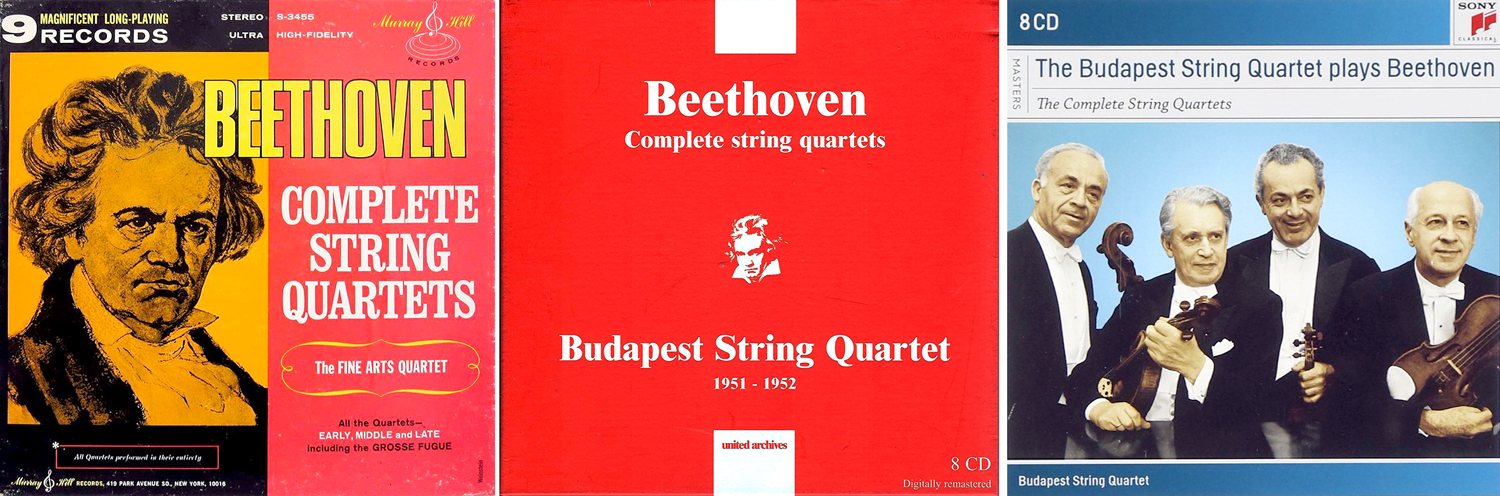
When I got to college in North Carolina, I made the acquaintance of Alexander Barker, who has remained my best friend for 60 years. He was as enthusiastic about classical music as I was and we spent hours in our dorm rooms spinning LPs and introducing each other to music that was our favorites. We were, of course, very serious about great music, as only college students can be, but we knew Beethoven’s string quartets were as serious as you could get. I bought a budget-line set of the quartets, by the Fine Arts Quartet on the off-brand Murray Hill label, and one evening, we started with Opus 18, No. 1 and played through all 16 of them, plus the Grosse Fuge, in one marathon session. (We later attempted the same thing with the piano sonatas, but gave up in exhaustion and the need for sleep by the time we hit the Hammerklavier.)

I have not been able to find a CD version of the Fine Arts Quartet set, but I found much better-played versions later on. I have owned a half-dozen or so complete sets of the Beethoven quartets, and as many of just the late quartets, but on the desert island, I would take the original mono versions by the Budapest String Quartet. They redid them later in stereo, but I like the earlier set better. I could have chosen the Guarneri, or the Tokyo or the Emerson, but I still think the Budapest have the measure of them best.
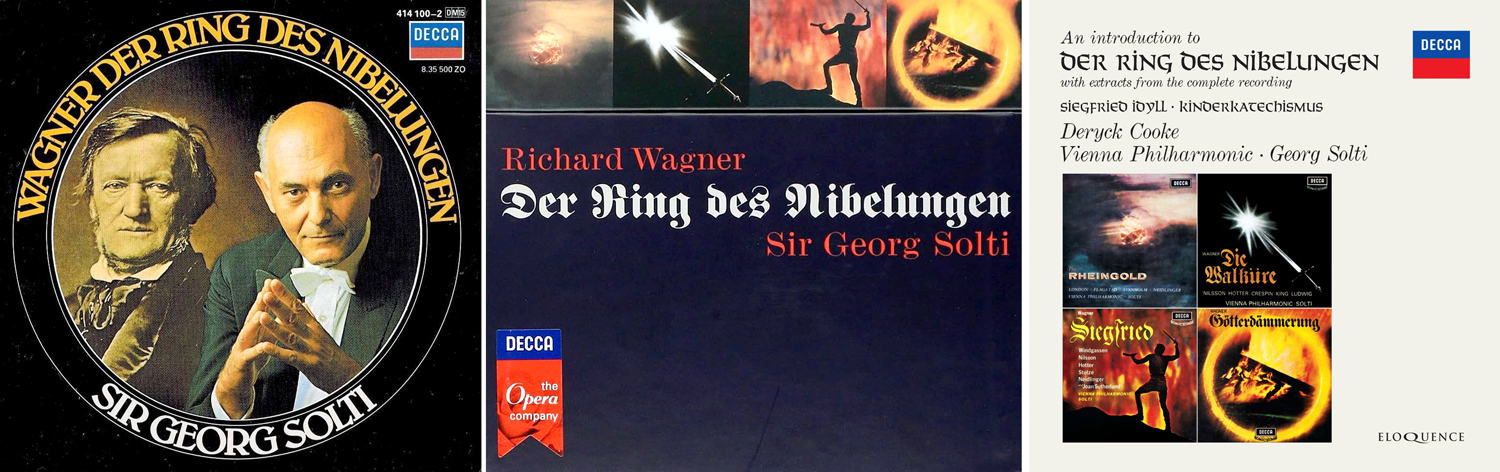
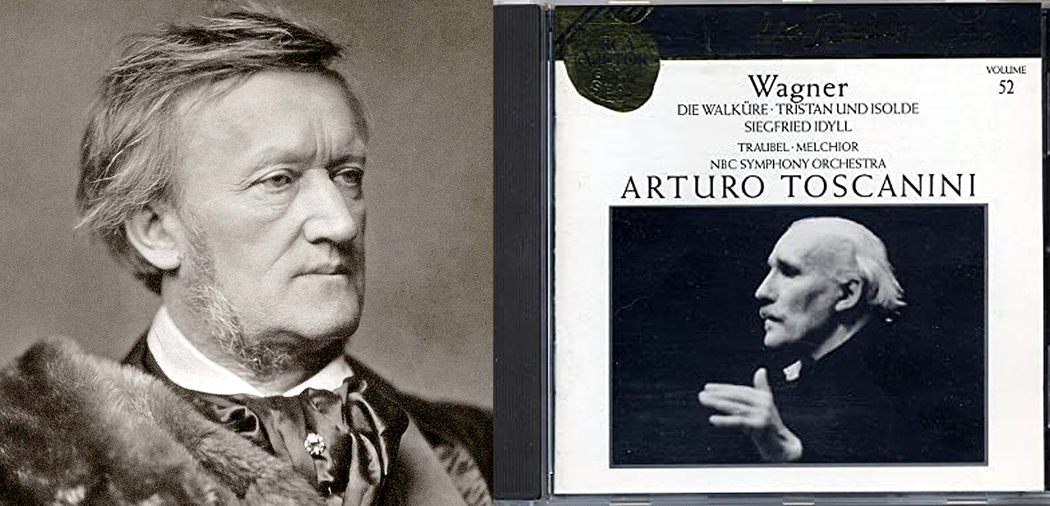
If you have the earnest seriousness of youth, you will eventually get into Wagner. After college and after a failed first marriage, I was living in North Carolina with my favorite redhead, scratching by on subsistence jobs, and I managed to save enough money to finally buy the Solti Ring. Something like 16 hours of music subsuming four operas, it opened up a world of myth and raw musical power. Now in retirement, I own five Ring cycles on CD and another two on DVD. And I’ve attended two complete live Ring cycles (not a patch on my late friend Dimitri Drobatschewsky, who went to Bayreuth 16 times beginning just after World War II.) But the Solti Ring of the Nibelungs is still my go-to set. And with it, I must also take the Deryck Cooke explication of the cycle, An Introduction to “Der Ring des Nibelungen.” Can’t have one without the other; they’re a set.
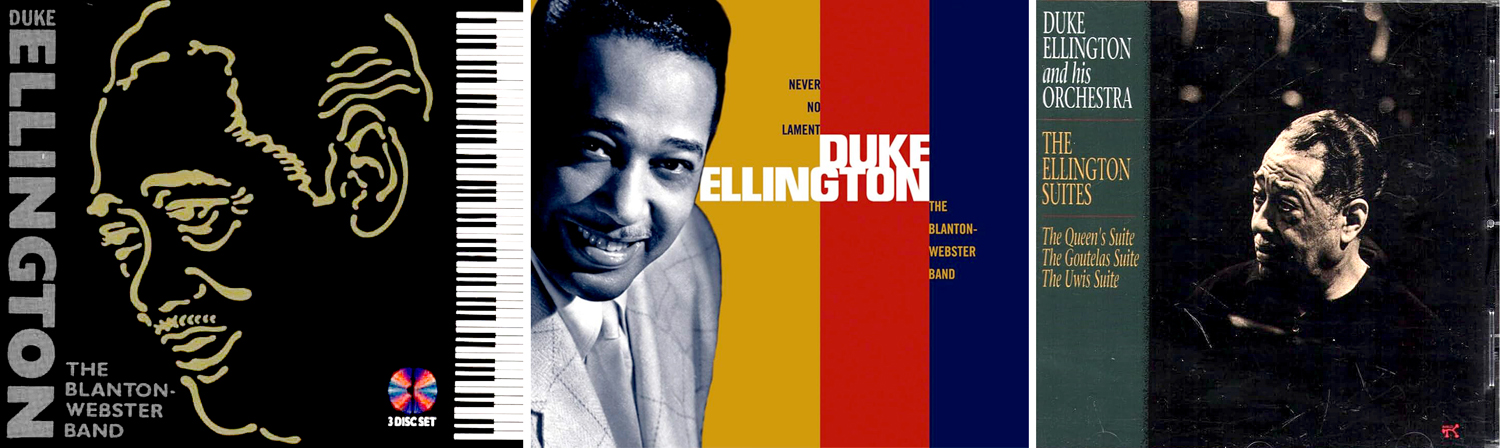
When the redhead and I split up, after seven years, I moved to Seattle and began working at the zoo, where I met a zookeeper whose hair was as blond as the sun. I fell. She had been a professional swing dancer at one time, and she played me old swing records on her Wurlitzer jukebox, which she had at her home. I had a whole new universe of music to learn about. But the one who stuck was the jazz musician closest to writing classical music, Duke Ellington. 

I still have about 50 CDs of Ellington’s recordings. There are counted several epochs of Ellington’s career, beginning with the “jungle music” of the 1920s and going through his rebirth at the Newport Jazz Festival in 1956. But most count the high point of his band and music to be those years in the early 1940s when Ben Webster was his tenor sax man and Jimmie Blanton was his string bass player. A collection of their recordings has been issued several times as “The Blanton-Webster Band.” It was the era of Take the A Train, Ko-Ko, Harlem Airshaft, and Perdido

But then, neither can I do without The Queen’s Suite, which he wrote with Billy Strayhorn in 1971, and is his most completely classically composed work. I love it. And so, I’m adding it to my Ellington entry. 

The zookeeper dumped me and I moved back to North Carolina. A few years later, I met Carole, who I married and lived with for 35 years, until her death in 2017. Marriage humanized me, and the most human composer is Mozart and the most humanistic of conductors was Bruno Walter. It was the the last years of the LP era, in 1980, and before digital took over, I found the last six symphonies of Mozart played by Walter and the Columbia Symphony Orchestra (a pickup ensemble, mostly of musicians from the New York Philharmonic). 

Walter’s Mozart remains the most humane and beautiful version of these works, which are now buried under historical-performance rhetoric and bounce along at a jog-trot, mechanistic pace. But one can still find the echt-Mozart, songful, emotional, and velvety rich, under Walter’s baton. Like all of my choices for the desert island, it has never been out of print. 
Carole and I moved to Arizona in 1987, where she took up teaching art to elementary pupils, and I began writing for The Arizona Republic as its art critic (later also its classical music critic). 

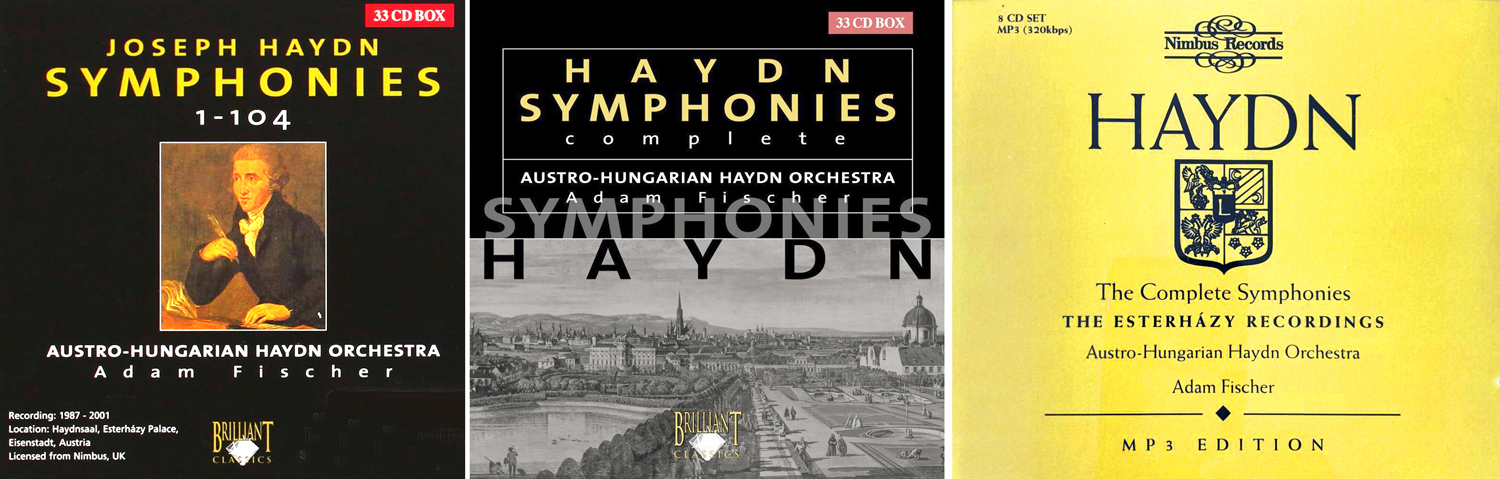
When we moved to a house at the foot of Camelback Mountain, it was a 20 to 30 minute drive (depending on traffic) to the Republic office downtown, and I found the perfect drive-time music, playing a Haydn symphony each way. I eventually went through all 104 symphonies, driving back and forth, three times, and absorbed their spirit from the Austro-Hungarian Haydn Orchestra and Adam Fischer. They have become my go-to performers for this music. I also have the earlier Antal Dorati version, which sometimes sounds like a quick read-through, and later was sent a review copy of the Dennis Russel Davies versions on Sony, which proved to be the most utterly humorless Haydn possible and I had to give them away. How can anyone misunderstand this music so thoroughly? 

When Carole died, and I sunk into grief, from which I have never fully recovered, I found myself listening with my whole being to Brahms German Requiem. I have spent the anniversary of her death every year driving up the Blue Ridge Parkway to find an old fire road into the woods, and sit quietly to Bruno Walter’s recording of the German Requiem. It is the most sympathetic, consoling music ever written. 

On Desert Island Discs, they also ask the guests to choose the one recording, above all, which they would take if everything else were not possible. And for me that is Johann Sebastian Bach’s Passion According to Saint Matthew, a three-hour musical retelling of the last days of Jesus and his death. I am not religious. (I am so not religious, I not even an atheist.) But every note of Bach’s music speaks to me on the deepest level of humanity. The opening chorus and the ending chorus are, for me, the greatest musical utterances ever penned. I’m keeping it with me.

There are many performances, and no one really does it badly, but most recordings now have been run through the historical performance wringer and the juice has been squeezed out. This is majestic and noble music, not something from a squeeze box. And the recording left behind by Otto Klemperer is the one I listen to over and over. He’s got the measure of this music. 
That leaves us a book and a luxury. People value books for, usually, one of three reasons. Either for the information they gather, or for the stories that are told, or for the prose they are written in. I fall into the last camp. I thought about Gibbon’s Decline and Fall of the Roman Empire, which is an utter joy to read, whether you care about the factual history of Rome or not. I revel in its river of words. But I read it in short segments, ultimately filling up like a rich meal and need to wait some hours before hitting the table again. And, for all the wonderful writing, there is a sameness that can creep in. 

Or I might have chosen a classic that somehow I’ve missed in 77 years of life. Many on Desert Island Discs have taken Marcel Proust’s Á la Recherche du Temps Perdu. But when it comes to monster works, I already put in my time, having gotten through The Gulag Archipelago. I no longer need to prove myself. 

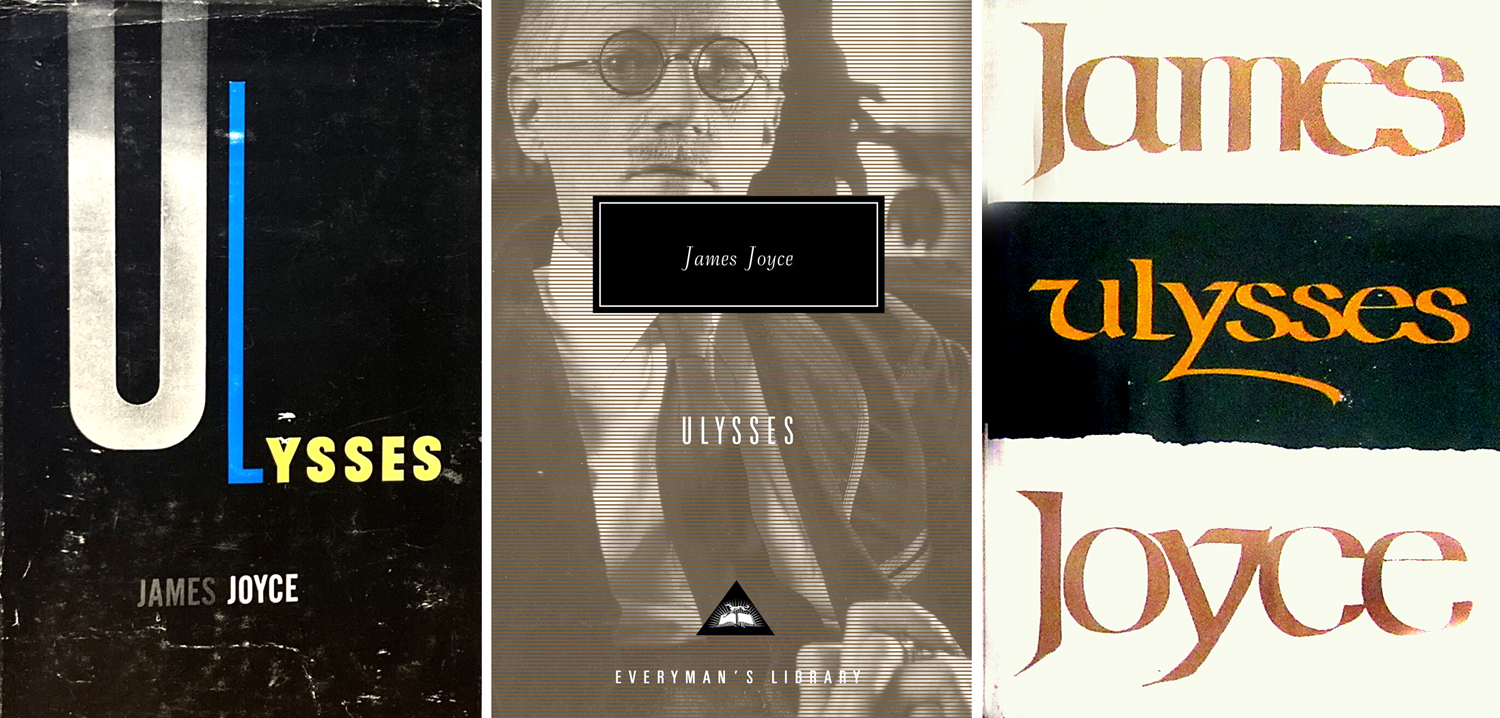
So, I have chosen Joyce’s Ulysses, the book I can read and re-read over and over, with such a variety of prose and method and such delicious words, that I don’t think I could ever tire of it. 

As for a luxury item, I had some difficulty coming up with something, because I am not much for luxury. But I have always owned a pear-wood handled Opinel folding knife. The current one sits in the glove compartment of the car, ready for anything called for. A man needs his tools.

Of course, the whole exercise is entirely pointless. There is no desert island, and with a house full of books, CDs, musical scores, and art, I don’t need to choose so parsimoniously. The whole idea is merely a pleasant game to play. 

But going through the process, and forcing myself to narrow the list arbitrarily, I come to see myself in a dusty mirror. And I surprise myself, looking back at me. 

Happiness is a strange emotion, not a single thing, but really an umbrella term for a diffuse group of hard-to-define states. Periodically, studies are published about which nation is the happiest (usually, it seems, a Scandinavian country.) But what they are measuring is a rather tepid version of happiness. Usually, if we ask if someone is happy, what we mean is an absence of problems — basically a neutral state in which we are not currently threatened, hurting, being oppressed, or worried. “Are you happy?” “Yeah, sure, I guess so.” Enough to eat, a roof over the head, a relationship that isn’t a chore, no pending hospital bills or tax audits. 

Really, that is a condition to be wished for, as dull as it sounds. For most people in the world, its achievement would be a godsend. So, I don’t want to downplay such a state. Not getting bombed is a net positive. Yet, there are other happinesses. Falling in love, birth of a child, success at work — these all provide a joyful uplift that raises the psyche above the day-to-day and makes life more radiant, if only briefly. It is a state we cannot maintain over long periods without being considered a bit loopy. So, we return back to the state of happiness that is unremarkable. 

But, as adults, we can watch our children at play and recognize in their faces such a state of unreflective happiness that can only break our hearts. Oh, what they don’t know yet about being alive. It’s not just an emotion: The entire body explodes with it.

There is what I might call “body happiness,” which they express in movement, in play, in dancing and skipping, singing, letting out squeals that express the inner state that, as adults, we can only mourn the loss of. “There hath passed away a glory from the earth.” 

I mention all this because one of the reasons I listen to music — primarily, for me, what is called classical music — is its ability to evoke emotions in its listeners. They arise sympathetically and are often emotions more subtle than mere language can name. It has been said that music is more precise than words, and I recognize that, whenever I am moved by a quartet or sonata but cannot speak exactly the words that would distort the emotion into easily fixed categories. 

A standard symphony moves from thought to thought, emotion to emotion, in ways that express the same sort of progress a story makes, beginning, middle, end. Episodes all build together to a longer, coherent emotional or intellectual ride. Our limbic system moves along with that progress and we can basically take our emotional selves through the moves. The widest range is the most completely human. 

And one of the things music can express is that ebullient, body happiness, so that we can feel it again. 

Mostly, it jumps out of a single movement in the whole, or even a few bars in the movement, but it is inexpressible joy, and it makes our body move, to tap toes or sway our bodies to and fro, often with a surprised smile on our faces. I think of the finale of Haydn’s Symphony No. 88, for instance, or the scherzo from Dvorak’s Eighth Symphony. I can’t sit still while listening. 

George Frideric Handel has two “happy”numbers in his Acis and Galatea. The opening chorus sings of “Oh the pleasures of the plains, happy nymphs and happy swains,” which extolls the life of the peasants, and a love duet that repeats endlessly, “Happy, happy, happy we.” It all sets up the tragic ending. 

But, there are a very few works that take that body happiness from start to finish, works you can play or stream, that will infallibly lift your mood and remind you of the happiness that is upwards of neutral, and can replace all the fret and sorrow for the length of its performance, and usually, for some time after, as you bathe in the memory of its tunes. 

There are at least eight of these that I can name, which always leave me uplifted, my senses turned up several notches, and my memory of childhood’s version of happiness is re-animated. 

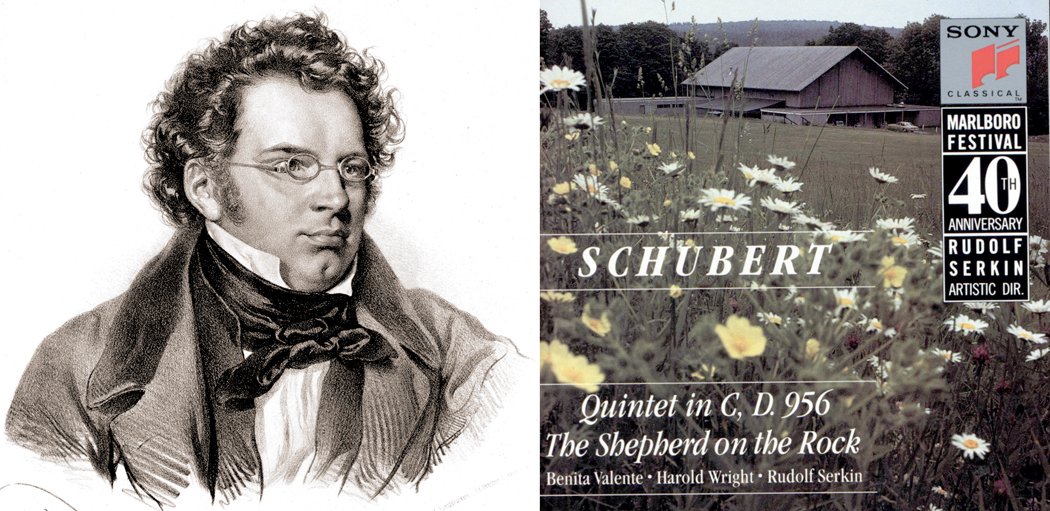
Prime among these is Franz Schubert’s “Trout” Quintet. It bounces and sings through five distinct movements, each of which floods with tune, rhythm and color, anchored by the bottom notes of the double bass. 

It was written in 1819, when Schubert was 22 years old, and before the lingering illness that eventually killed him nine years later. The haunting of death darkens the later String Quintet that he completed in 1828, just two months before his death. But the “Trout” is the antithesis of all that: Life giving, life affirming, joyful from first bar to last. What can you do when every tune is an ear-worm. Once inside your body, you carry the “Trout” with you the rest of your life. Play it every time you need it. 

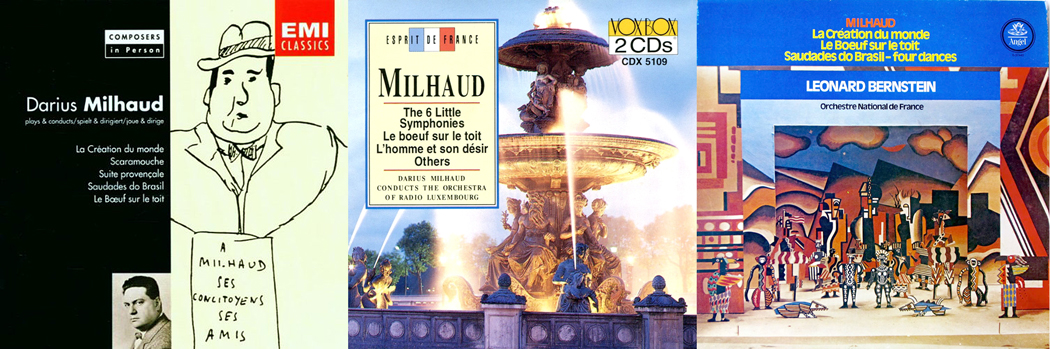
Less well-known, but even more relentless is Darius Milhaud’s Le Boeuf sur le Toit, or “The Ox on the Roof.” Milhaud wrote it in 1919 after living in Brazil for two years in the French diplomatic service, and quotes dozens of Brazilian folk songs, adapted into a dance-hall band playing Latin rhythms, complete with güiro. He employs a polytonal technique, where different parts of the band play in different keys at the same time, giving the whole a piquancy and aliveness that has a feeling of spontaneity, like an amateur band in a smoky bar. It’s always just about to come apart. 

Written in the Baroque form of ritornello, with an 8-bar tune coming back over an over between alternate dances, it has some 20 Brazilian tunes buried in it, with infectious beats that express the unabashed happiness of a sweaty dance hall. Evybody dance now!

Mostly we think of Johannes Brahms as a sober German burgher writing symphonies with the seriousness required of höchste Deutsches Kunst. But the boy could let his hair down, which he did with two sets of vocal quartets, Liebeslieder Waltzes, op. 52 and op. 65. 

Brahms made his living, early in his career, when he moved to Vienna, as leader of various choruses such as the Singakademie and Musikverein, for which he wrote tons of choral music and songs. So, he had a popular streak in him. 

The 33 songs, each no longer than a minute or two, celebrate bourgeois domestic love in tunes so meltingly gemütlich that you will have them running through your head for days. They were meant to be sung in homes or in taverns, so they are best with normal voices, not the operatically trained soloists that so often record the set. “Ich gäbe dir so gern hunderttausend Küsse” — “I long to give you a hundred thousand kisses.” 

When Georges Bizet was a mere stripling of 17, he wrote a Symphony in C as an exercise for his studies at the Paris Conservatoire. It was never performed in his lifetime and ultimately forgotten about, until it was rediscovered in 1933, and performed two years later by Felix Wiengartner, a suitable conductor, whose first name means “happy.” 

Bouncy and tuneful from first note to last, it has proven hugely popular since then, and one wonders why Bizet never had it published, in fact, never even mentioned it. It is a masterpiece, but not on one of those marble pedestals, but the kind that makes your ears grateful to be on your head. It is breezy and fluent and just makes you happy to be alive. 

Georges Balanchine choreographed it for the Paris Opera Ballet, and I was lucky enough to see the New York City Ballet perform it with a live orchestra at the Palais Garnier in Paris, (where it was first performed in 1947). One of the highlights of my life. 

Also a youthful work is Serge Prokofiev’s Classical Symphony, written in 1916 when he was a conducting student at the St. Petersburg Conservatory. When one of his teachers, Boris Asafyev, mused “that there is no true joyfulness to be found in Russian music,” as Prokofiev wrote, he responded with one of the happiest works ever written by a Russian. 

And so, he wrote in his diary, “I composed a new finale, lively and blithe enough for there to be a complete absence of minor triads in the whole movement, only major ones.” 

It displays what is often called the composer’s “wrong note Romanticism,” with catchy tunes and ascerbic harmonies, and was meant to mimic the spirit of Haydn and Mozart. What a joy. 

Much shorter, at merely five minutes, but so fresh and lively as to become its composer’s most frequently performed piece, the overture Leonard Bernstein wrote to his musical Candide just can’t stop laughing, and teasing, with bubbling wit and elan. 

The musical (or operetta — it could never entirely make up its mind and went through multiple reworkings) never quite caught on the way West Side Story has, but its overture, shaped as a mock Rossini overture, is irresistible. 

Johann Strauss II produced music the way a lawn sprinkler sprays water. The “Waltz King” composed over 500 waltzes, polkas, quadrilles, and other types of dance music and several operettas, all of surprisingly consistent craftsmanship.

No one in his right mind, though, would sit for all of it; before too long the program would become monotonous: How do you tell one polka from another. That is, except for the large handful of truly memorable masterpieces, all of which will raise you spirits and make you want to dance. 

I mean, the Blue Danube, the Voices of Spring, Tales of the Vienna Woods, the Artist’s Life, the Kaiser Waltz — a CD full of the best Strauss is a must-have for any collection. It’s hardly surprising that Brahms envied Strauss’ gift for melody. Each is basically a tone poem in three-four time. Lift the spirits, make you smile and move your body. 

Finally, there is Benjamin Britten’s Simple Symphony, which displays a childlike joy in just spinning tunes, which is hardly surprising, since he wrote those tunes when he was a child, between the ages of 10 and 13. When he turned 20, he reworked the tunes into this four-movement suite for strings, with movements titled “Boisterous Bouree,” “Playful Pizzicato,” “Sentimental Sarabade,” and “Frolicsome Finale.” It premiered in 1934 with Britten conducting. 

Since then, it has been recorded dozens of times, usually as a filler on discs with other Britten pieces. 

There are other joyful pieces, but these are eight that come immediately to mind. They are each available in videos on YouTube, and worth seeking out, especially if you’re having a bit of a down day. 

Intro: What We Get Wrong

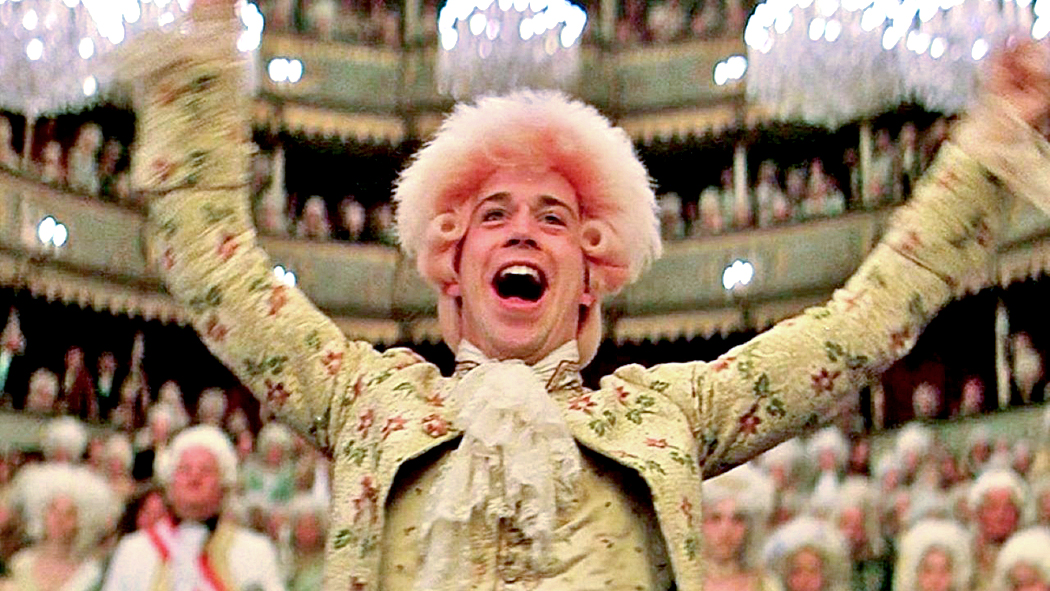
The 1984 movie, Amadeus, won eight Oscars and has been seen by millions of people. It was an excellent film, but it lied through its teeth. Mozart was not an arrested-development adolescent potty mouth. And Antonio Salieri never tried to kill him. 

Poor Mozart, he has had his life twisted over the centuries to illustrate cultural trends, and those trends have changed over those years. 

The 19th century first saw him as old fashioned, then he became a proto-Romantic, with his life deeply mythologized. The 20th century first saw him as a kind of porcelain doll, and after WWII, saw him as a polite precursor to Beethoven. In the 21st century, he has been the victim of countless historical-performance strictures that leave his music in a kind of inexpressive jog-trot strait-jacket. 

The man sometimes considered the greatest composer of all time has been so mauled over by his biographers, fans and later writers and filmmakers that the legend has taken over from the fact.

So, the plot of Amadeus is only one of a myriad of distortions, legends, myths and factifications. The truth, as usual, is more interesting.

What are some of the worst Mozart myths?

— Mozart began writing masterpieces before he turned 10.

* Yes, he wrote music beginning before he turned six. But some of that music was arrangements of other composers’ work, some may have been outlined by his father for the boy to complete, and none of them are masterpieces, or noteworthy, other than for them to have been jotted down by one so young. The early works are generic. They get played, when they are played at all, simply because they have Mozart’s name attached. 

— Mozart was buried in a pauper’s grave.

* Although it’s often said he died so poor he was buried in a pauper’s grave, the fact is Viennese law required anyone other than an aristocrat to be buried in a common grave, after a funeral service at the church. It was a reaction to recent outbreaks of plague in the country. And Mozart wasn’t poor. He lived quite well, although, working in what we would now call a “gig economy,” he had his income ups and down. 

But, over his last year, he earned 10,000 florins when an average laborer averaged 25 florins a year. It put him in the top 5 percent of the population of Vienna, according to H.C. Robbins Landon, author of 1791: Mozart’s Last Year. The man was no pauper, and his music was hugely popular, not only in Vienna, but across Europe. And when he died, he had a hit on his hands: The Magic Flute. He left his widow reasonably comfortable. 

— Mozart wrote his music spontaneously, without effort.

* Mozart’s facility with music was remarkable, but there are plenty of sketches and studies for his music. The pieces without such preliminary work most likely had them at one time, but they don’t survive. His widow, Constanze, burned most of the sketches, not thinking that fragments had any value. Mozart even writes to his father about doing such preliminary work. 

In 1787, he told the conductor of his opera, Don Giovanni, “It is a mistake to think that the practice of my art has become easy to me. I assure you, dear friend, no one has given so much care to the study of composition as I.”

— His middle name was Amadeus.

* He was baptized as Joannes Chrysostomus Wolfgangus Theophilus Mozart but his parents called him Wolfgang Gottlieb (Gottlieb being German for Theophilus). He usually signed his name Wolfgang Amadé. It was only after his death that people began regularly calling him Wolfgang Amadeus, which is a Latinized form of Gottlieb.

— His music is simple, direct, easy to listen to, easy to perform.

* And at the time of his death in 1791, at a mere 35 years old, his music was considered difficult to play and demanded careful listening. Mozart asked a lot. When the progressive Emperor Joseph II famously told Mozart his music had “too many notes, my dear Mozart. Too many notes.” he wasn’t being an ignoramus; he was reflecting the general taste of his times. To understand this, we need to place him in context. 

Some Context: The Classical Era

Something else we get wrong: It is usually said that Mozart and his contemporary Joseph Haydn wrote in the classical style, as if such a thing existed, and all they did was follow the rules. That’s got it completely backasswards. They didn’t write in the classical style; they invented the classical style. They were making it up as they went along.

Music history is taught as consisting of succeeding eras. The Renaissance gave way to the Baroque, which led to the Classical era and on to the Romantic, to Modernism and currently, Postmodernism. As if they were clearly defined and separate. And it is true that after about 1740 or so the heavily contrapuntal Baroque lost its hold on the ears of its listeners. They wanted something simpler, clearer, more charming and that wouldn’t be so serious. All those fugues and counterpoint of what was called “the learned style” gave way to homophony — that is, tuneful melodies and supporting harmonies. Something you could hum along with: Simpler and more direct. 

This is sometimes called the Style Galant; it followed the Baroque the way Rococo followed in the visual arts. Composers such as J.C. Bach, Johann Joachim Quantz, Johann Stamitz, or Domenico Alberti published torrents of light, catchy three-movement sinfonias and bright concertos, to say nothing of keyboard music to be played after dinner by the daughters of aspiring middle-class burghers. I’m grossly simplifying this, but the outlines are true. 

This is the kind of music both Mozart and his older contemporary Haydn produced in their younger days. Mozart wrote more than 20 symphonies in this popular style before the age of 17 and if they still get played it is because, again, they have Mozart’s name on them, and also, because they are full of great tunes. Mozart always wrote great tunes. 

Haydn had his own orchestra, paid for by his boss, Prince Nikolaus Esterhaza, a ridiculously wealthy Hungarian nobleman, who loved music. Hidden away at the prince’s countryside palace in Esterhazy for some 30 years, Haydn developed on his own, inventing new ways to delight and surprise an educated audience who learned and grew along with the composer. The palace was far from Vienna. Haydn said, “I was cut off from the world. There was no one to confuse or torment me, and I was forced to become original.” 

He basically invented the modern form of the symphony and the string quartet. 

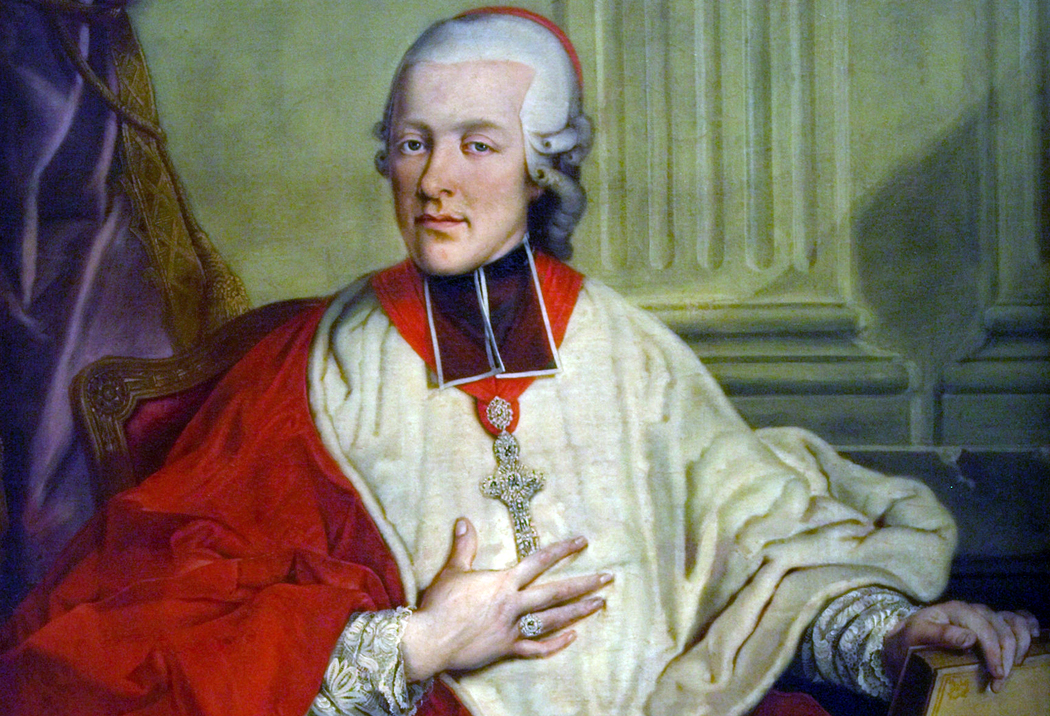
Prince-Archbishop Colloredo

Mozart, however, was truly cosmopolitan and after freeing himself from the employment of Salzburg’s prince-archbishop Colloredo, earned his crust as a freelancer in what was becoming a “gig” economy, living from commission to commission, and from concert to concert and opera to opera. 

He learned a lot from Haydn, and joined him in making his music increasingly more complex than the usual run of gallantries. They added back counterpoint to their works, increased chromatic and harmonic subtleties. Mozart’s music, for instance, is always more complex than it sounds.

Mozart asked his musicians to do more than did other composers: to play higher, lower, more quickly; to play notes unfamiliar to their instruments or voices; to attempt unusual phrasings and colorations.

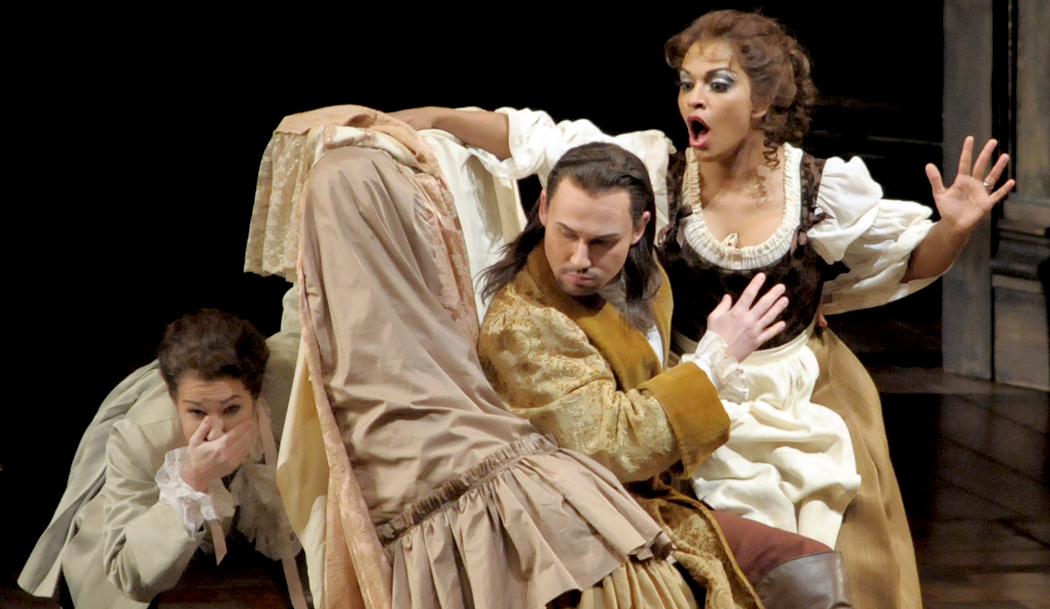
At the end of Act I in Don Giovanni, three bands play onstage at the same time, performing different music in three different rhythms, but entwining their harmonies so they mesh perfectly in a tour de force of compositional cleverness.

His music sounds simple and perfect and symmetrical, but you look at the phrase structure and it’s highly irregular. Normally, you expect 4- and 8-bar phrases, but you take a look at one of Mozart’s late scores and you see phrases of 4, 5, 3, 7, 8, 6 — but you would never guess it was so irregular just from hearing it. It always sounds smooth.

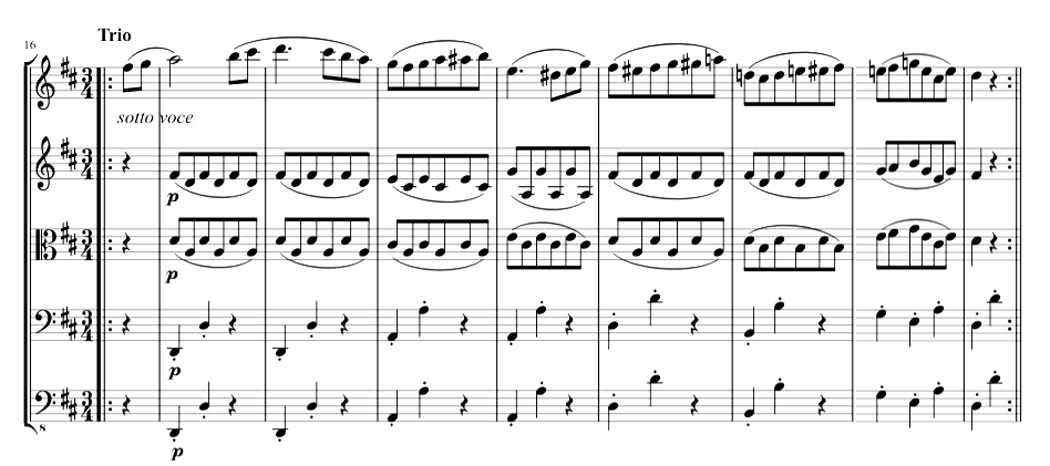
And although the surface of the music is always velvety and seductive, it’s frequently chromatic, introducing notes that shouldn’t belong. Even so graceful and simple a tune as the trio from the minuet in the popular Eine kleine nachtmusik manages to use 11 of the 12 notes in the chromatic scale. It verges on Schoenberg, though it sounds as simple as a nursery rhyme.

While Haydn’s metier was primarily instrumental music, Mozart shone in vocal music, and especially opera, where he brought psychological complexity to what is sung. 

Mozart as Shakespeare

Mozart was the Shakespeare of music. No composer ever displayed a wider sympathy for the human condition or a greater breadth of musical style. At the bottom of his music is a profound humanism, which is all the more obvious in his best operas — The Marriage of Figaro, Così fan tutte, The Magic Flute and Don Giovanni.
Of all the great composers, Mozart also is the easiest to love. Bach may be more sublime, Haydn wittier, Beethoven more in-your-face and Schubert one of the few who could write melody to equal Mozart, but Mozart remains the most accessible. He speaks directly to us, because he is the most humane.

That quality underlies all his major operas: His plots are filled with three-dimensional people, not the stock characters of most other operas. No hero is flawless, no villain unredeemable.

The miracle is that it isn’t just the libretti that convey this complexity, but the music itself. It gives us the subtle psychological undertow.

Mozart understood all of his characters well. None of them is tossed off as inconsequential. He imbues each character with definitive musical qualities.

So that Don Giovanni’s ebullient life force is expressed in his headlong “Champagne Aria,” with barely a moment to inhale. Or the Queen of Night’s rage in Magic Flute, when she launches into Baroque arabesques and arpeggios in her showpiece “The vengeance of hell boils in my heart.”

Even in Figaro: Has adolescent horniness ever been better expressed than the “amorous butterfly” take the hero sings about the love-struck Cherubino?

All these characterizations are built on the composer’s willingness to accept without judgment everything that is human. Perhaps that’s why nobody ever wrote forgiveness better than Mozart.

Each of his major operas has a scene of forgiveness in it, and it’s usually the turning point of the action, when a character recognizes the frailty of human nature. Such forgiveness is not bestowed from a feeling of superiority but from shared compassion.

It’s not that we believe the Count in Figaro will now be faithful to the wife who forgave him, but that we know she will always forgive him, because this is what it means to accept the human condition.

But the particular mood Mozart raises in such moments also is carried into his purely instrumental music: The slow movement of his Piano Concerto No. 18 is the echo of such a moment in Figaro. It sighs, and we sigh with it.

Such genius, whether Shakespeare or Mozart, can’t be explained. You just accept that it is.

Don Giovanni

Mozart’s Don Giovanni has been called the perfect opera. It ingeniously balances comedy and drama, music and theater, the aristocracy and the peasantry, the past and the future.

It was first performed in 1787 in Prague, where the composer was a musical superstar, and told the story of the seducer Don Juan (Don Giovanni in Italian).

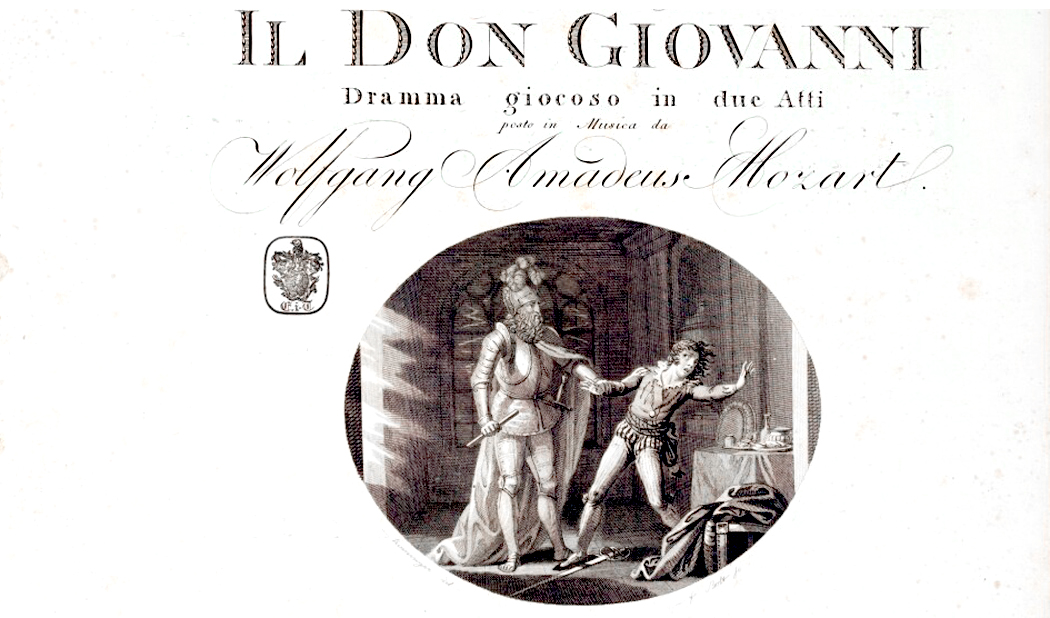
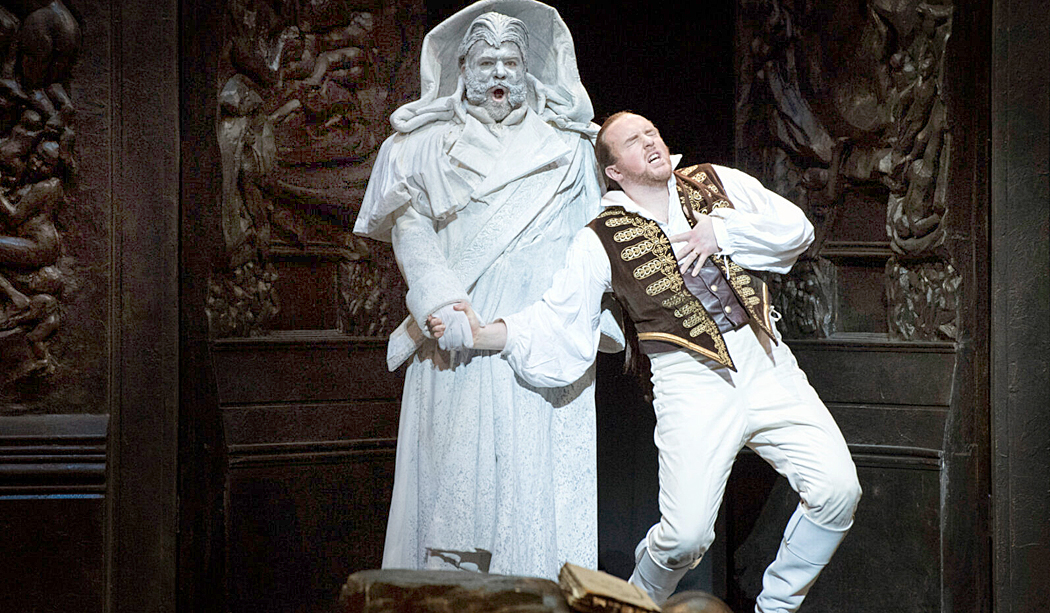
The story is simple in outline: After he kills the outraged father of one of his amorous conquests, Don Giovanni is tracked down by his victims. When he hides in a cemetery, the statue of the dead father miraculously asks him to dinner and, later, when the don shows up, the statue drags him to his judgment in hell.

But Mozart and his librettist, Lorenzo da Ponte, took what was a traditional story of sin and punishment and made it into a paean to the life force. Technically, Don Giovanni is still the villain, but Mozart and da Ponte made him such an engaging and vital presence that in the end, when he refuses to repent, despite the demons that surround him and the brimstone that burns, he actually rises to the heroic. Is he hero or villain? Or both.

This is where the Classic past meets the Romantic future: The cautionary moral tale of the past turns into the Byronic hero of the upcoming 19th century, and Mozart is in the avant-garde.

Digression I: Rake with a Quill Pen

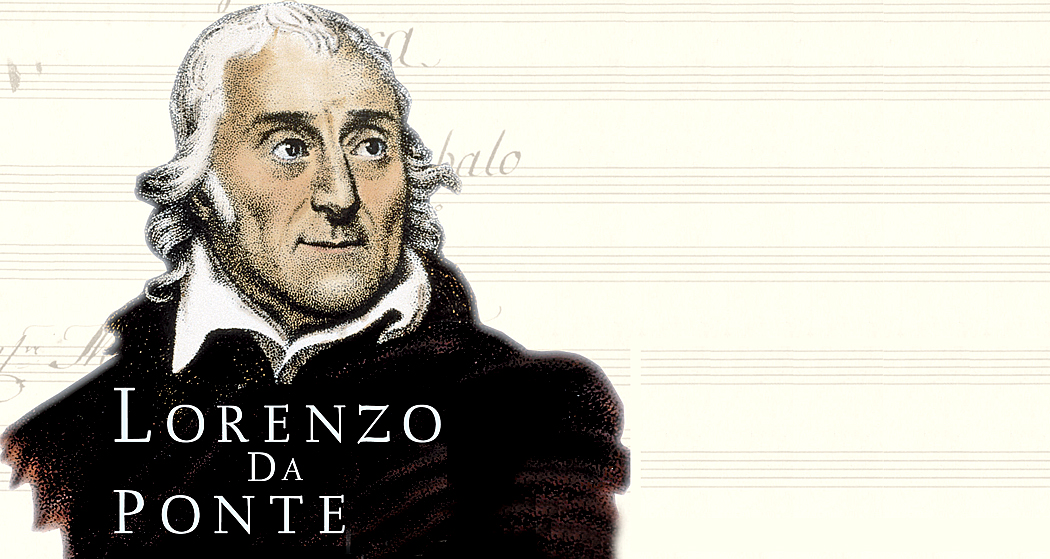
Opera is a collaborative art. Mozart’s music is great, but so was the libretto written by Lorenzo da Ponte. Da Ponte was born a Jew in Venice in 1749, was ordained a priest and opened a brothel with his mistress, where he entertained the clients by playing violin in his priest’s vestments. He was the perfect choice to write the libretto for Mozart’s dramma giocosa, Il dissoluto punito o sia Il Don Giovanni (“The Rake Punished, or Don Giovanni”).

Da Ponte was a friend of the infamous seducer Casanova and was forced to flee Venice after a trial for sedition, settling in Vienna, where he wangled a position from Joseph II, the Holy Roman Emperor. When he was asked how many plays he had written, he answered, “None, sire,” to which the emperor replied, “Good, then we’ll have a virgin muse.”

He wrote libretti for dozens of lesser operas by lesser composers, such as Antonio Salieri, before landing a job writing — or rather rewriting — Beaumarchais’ popular play The Marriage of Figaro as a libretto for Mozart. He also wrote Don Giovanni and Così fan tutte before being shown out of the city by the police.

Da Ponte’s post-Mozart life is hardly less interesting. After marrying (quite a trick for a priest), he moved to the United States, where he failed as a grocer, became friends with Clement Moore (reputed author of ’Twas the Night Before Christmas), who helped him gain a faculty post at Columbia College (now Columbia University), where he was the first faculty member to have been born a Jew.

In 1828, he became an American citizen, died 10 years later, had a grand funeral at St. Patrick’s Cathedral and is buried in Green-Wood Cemetery in Brooklyn.

The Pop Star

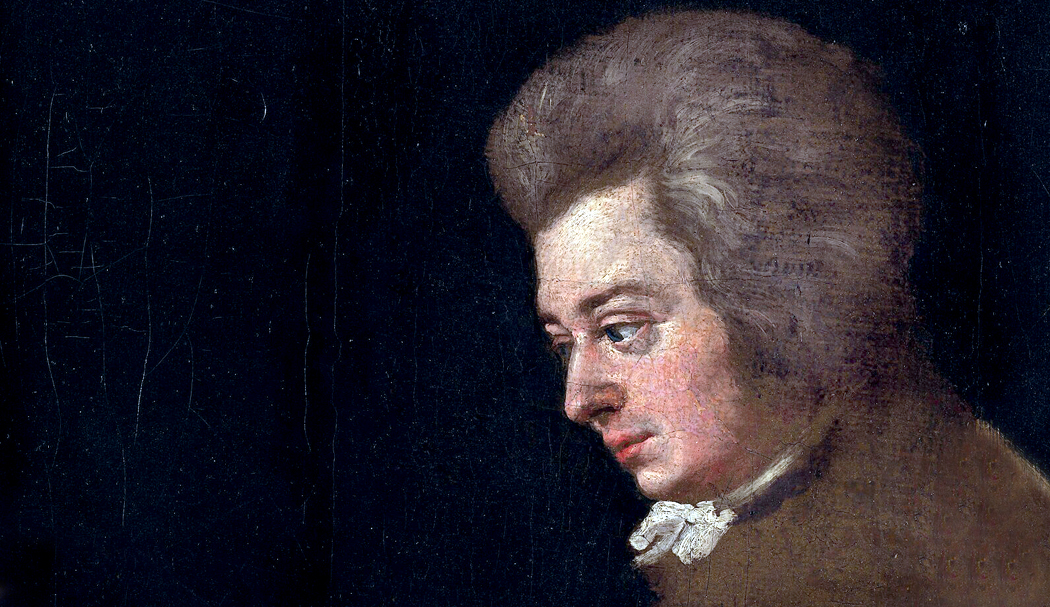
Mozart’s time was the late 18th century. He was born in Salzburg, Austria, in 1756 and was one of the great child prodigies of all time, picking up the violin when he was four and composing by the time he was five. His first opera was written when he was 12.

He was trooped across Europe by his father, playing for the amazed aristocracy and gathering gifts of money and jewels.

He outgrew his boyhood cuteness but grew to be one of the most prodigious composers of all time: He wrote 22 operas, 50 or so symphonies, 27 piano concertos, 23 string quartets, 17 settings of the Roman Catholic Mass. His complete works take up 170 CDs in one current set.

And he became enormously popular.

Mozart was the pop artist of the time. People wanted to play and hear that music so much, they transcribed the music for all kinds of ensembles. Every town had a wind band and they played arrangements. Every little village in Belgium or Bavaria could play arias from the latest Mozart opera, the way halftime marching bands now play show tunes.

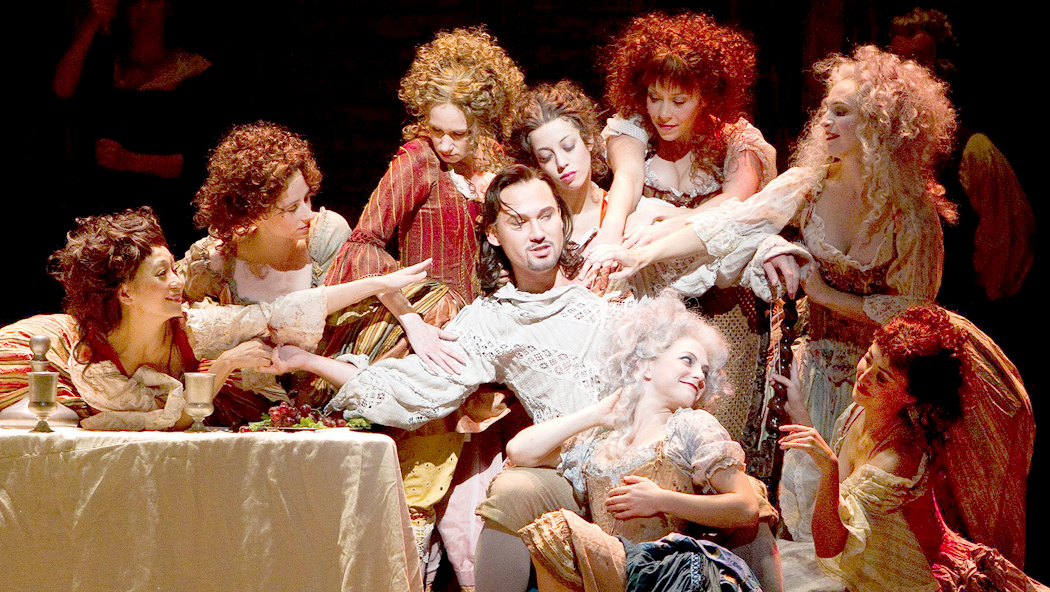
Mozart makes fun of this phenomenon in the finale of Don Giovanni, when the don has a dinner in his castle, with a band playing the latest hits from operas, including “amorous butterfly” from Figaro.

He dismisses it: “I’ve heard this piece too much, he says. We laugh because it shows Mozart could take a joke. And that only makes him more human.

Digression II: Mozart and Haydn

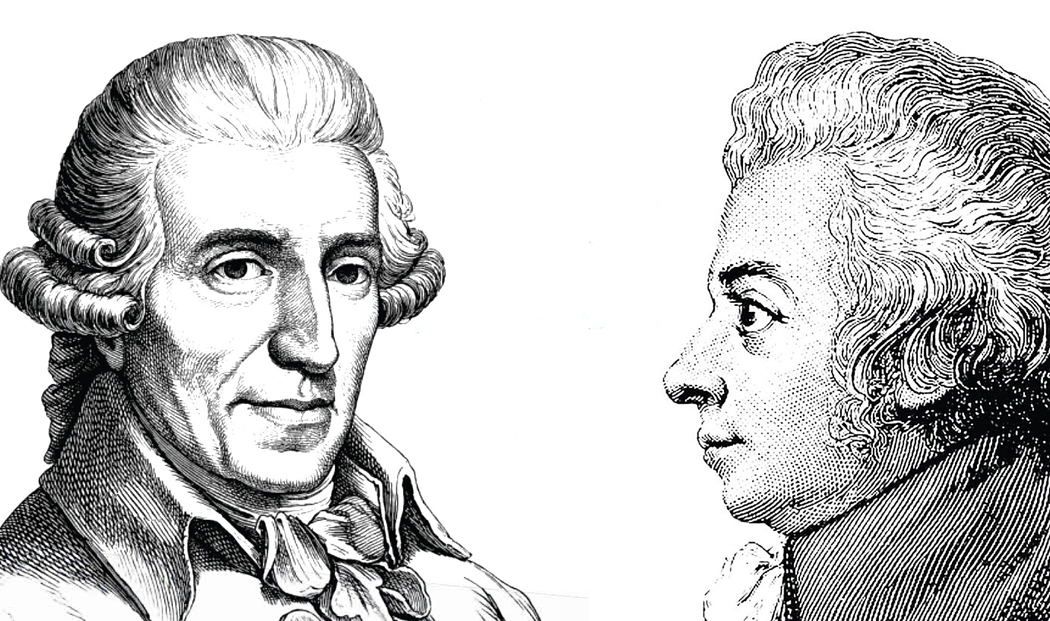
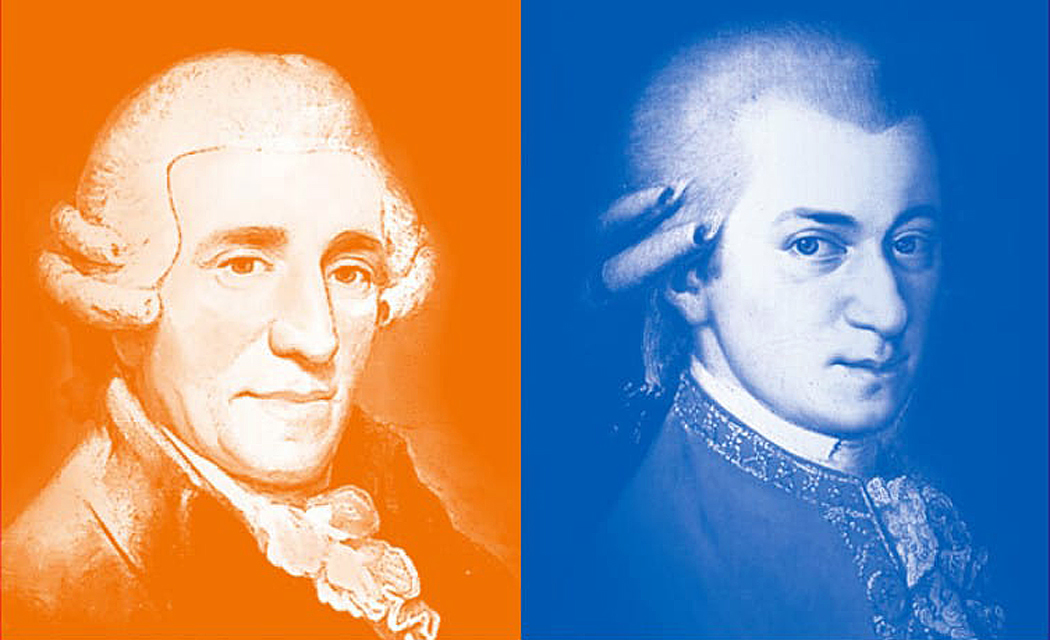
The era from about 1770 to 1810 is called “Classical.” It’s the age of music defined by two names: Joseph Haydn and Wolfgang Mozart.

They were the twin colossuses of the time: one witty and bright, the other deeper and more melodious.

But the two men were very different. Haydn brighter and more brittle sounding, with an emphasis on what the 18th century valued as wit, making in-jokes in his symphonies and working simple themes into complex textural patterns that his audience recognized with pleasure — they got the joke.

Mozart’s music is darker, more chromatic, with a more blended sound, and he focused his attention on grace and style.

If Haydn is the brain of 18th-century music, Mozart is the heart.

They valued each other above anyone else and recognized each other’s genius. Mozart learned more from Haydn than from any other source. Haydn said Mozart was the greatest composer alive.

To many, Haydn and Mozart sound alike. They are very different but shared a musical language. So, how do you tell them apart?

One wise old professor explained his simple test: “If you can remember the tune after it is over, it was Mozart.”

Reason and order

The 18th Century is called “The Age of Reason,” although sometimes I think it may be said ironically, since, after all, it was also the age of Rousseau, the French Revolution and the Reign of Terror. But the overall tenor of the era was one of rationality and balance, of a just God in his heaven keeping proportionality in everything human and cosmic. 

In German-speaking lands, it was the Aufklärung, the “clearing up,” and prompted enlightened rulers, such as Joseph II in Vienna, to downplay religious fervor, mindful of the chaos of the Thirty-Years War, and promote scientific enquiry and philosophy. Coffeehouses rose filled with debate and Freemasonry became fashionable. Mozart became a Freemason, and his final opera, The Magic Flute, was a Masonic allegory, of sorts. 

There were certainly many points of view, but the general sense was one of moderation in all things. Don’t go overboard. Keep an even keel. Music followed suit: nothing too extreme, but nothing too simple-minded, either. It was a perfect walk between opposites.

And the major musical innovation of the era was the rise of the Sonata-Allegro form. It was the primary organizing principle for Haydn and Mozart and held sway in various permutations for the next century and a half. It is usually taught in a technical way: first theme in the home key, second theme in the dominant, followed by a development section and rounded off with a recapitulation of the two primary themes, but now both in the home key. But that is not why the form became so dominant. That is like describing an angel as having wings and white robes, without ever noting it is a messenger from God. 

The point of the sonata form was to establish an order, in terms of recognizable melodies, to then disrupt the order by breaking up the tunes into bits, rearranging them, and playing those pieces in a hodge-podge of shifting key-centers, leaving the listener with no firm ground to stand upon, and then reasserting clear order once again, so the universe is set right. Order – disorder – order reaffirmed. 

Once you understand the metaphor of the sonata form, you will never again be hoodwinked by the academic palaver. The music is about the primacy of providential order. 

This is a metaphor that has provided the foundation of much of art. Shakespeare’s histories and tragedies are all about disturbed natural order that has to be set right. Opera plots are almost all about illegitimate threats to the way things are supposed to be. It is the mega “A-B-A” of countless poems and novels. 

The form made such satisfying intellectual and emotional sense that it ruled western instrumental music almost until now. Those composers who didn’t write sonata form wrote in protest to it. Take a side. It was that influential.

L’Envoi

It is nearly impossible to write words about music. One tends to write impressionistically and metaphorically about what one hears, but such language become like trying to describe color to a blind person. 

The result is that when most people talk about their favorite popular music, they talk about the lyrics. The music is barely mentioned. In fact, most popular music contains scant little actual music at all: just a few familiar chord changes under a meandering set of melodic intervals. You may mention the beat, but that, too, tends to drone on monotonously through the song. 

You could, if you wanted to, talk about the music, but it would take specialist vocabulary that would convey almost nothing to the lay reader: “The composer used the Neapolitan relationship to modulate from B-minor to A-flat major while dividing the treble from the bass line in hemiola.” There, does that mean anything to you? Two against three? 

One reads scores rather than text to understand what is going on, but even that does not really tell you what you are hearing, only how it was done. 

And so, when writing about Mozart, almost everyone falls immediately into biography. We can tell you fascinating things about his family, his sister, he relationship with his patrons or the order in which his symphonies were composed. 

But the ear can hear how, in sonata form, we hit the comfort of the home key as the recapitulation calms down the churn of the development. It is something instantly felt through the ear — if you are paying attention. But how to write about that in the Jupiter Symphony or the K. 545 piano sonata comes a cropper. Just listen. It’s obvious. 

One can say that Mozart blends his wind instruments while Haydn tends to keep his winds distinct. It is true, but you have to hear it to understand. Mozart’s recapitulations are usually a return to order, while Beethoven uses his recaps (in his mature work) to take the music to a new place, a “new normal” that means we have moved through the development from Point A to Point B. Mozart’s melodies tend to be step-wise, as a human voice might sing, while Haydn often jumps around because fingers on a keyboard can do so. 

These are swooping generalities, and there are plenty of exceptions, but they are attempts to write about the music rather than the historiography. 

The only recommendation is to listen to more music, lots of it, and absorb what you can, so you can distinguish the difference between a sonata form and a rondo, between an English horn and a bassoon in its upper register. Hear it and pile it into your trove of experience. It is the sounds that are made that is the music. Words get in the way. 

And pay attention. Music isn’t a warm bath you slide comfortably into, but a conversation the composer is having with you.

No, classical music doesn’t all sound the same. In fact, sometimes it’s hard to find any relationship at all between the far corners of the field. What do Gregorian Chant and Karlheinz Stockhausen have in common? 

When someone complains that “it all sounds the same,” you can be pretty sure that the reason is simply lack of exposure. A sample group too small to generalize from. So, I thought, as a followup to my previous blog entry about classical music, I should try to stretch the boundaries of the subject, to stretch out the definition tightly from end to end to see how far it spreads. 

If you listen to the items on this catalog, you will find music so different as to be hard to assign a common category. 

In the previous blog entry, I attempted to move from one suggestion to the next in the most contrasting way, from, say, Renaissance polyphony to Stravinsky’s Rite of Spring — a clear jerk from one mode of hearing to the other. 

This time, I hope to provide some framework to see how what we call classical music, or art music, developed over time. You may object that about half of the music comes from the 20th- and 21st-centuries, but that is only being fair: You should remember that the Rite of Spring — which is the traditional mark for the beginning of Modernism in music — is actually closer in time to the death of Haydn than it is to us today. Twentieth Century music is no longer new — it is classical. 

(I’ve chosen a single piece from each of the large clumps of music history, varying both style and genre, including keyboard, chamber, vocal, choral and symphonic. From each period, I have supplemented the examples with two contrasting pieces for further listening.) Beginning with: 

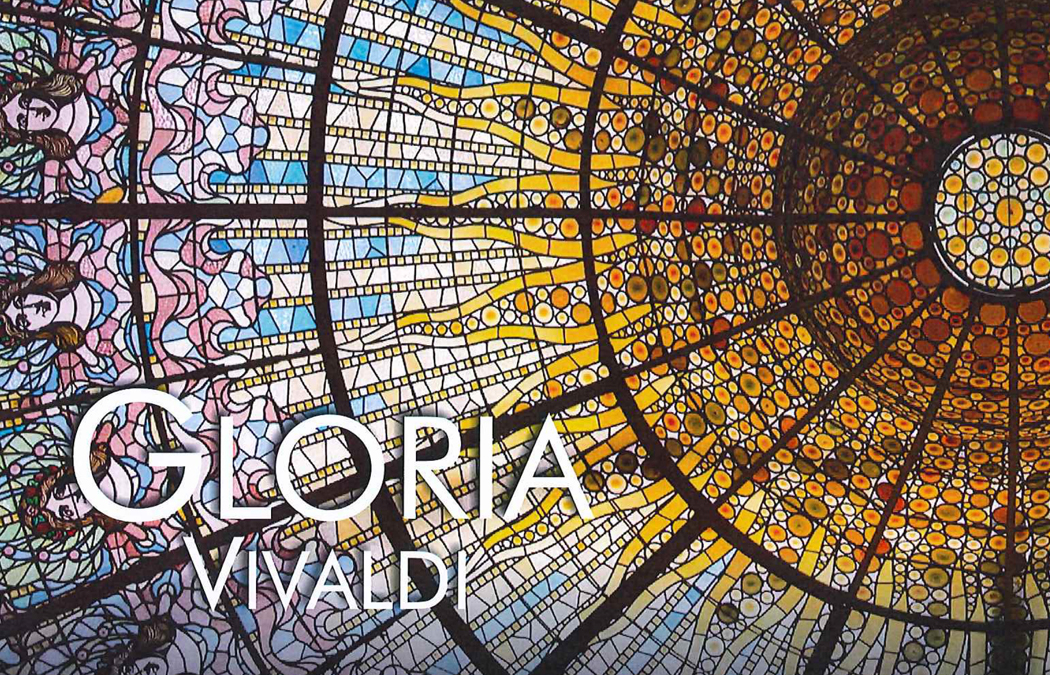
Vivaldi: Gloria in D Major, RV 589

Antonio Vivaldi (1678-1741) wrote at least three settings for the Gloria, but this one is the version everyone remembers, with its chugging motoric drive and its brassy fanfares. It is built from 12 short movements split between choral numbers, solos and a duet for soprano and contralto. 

Its catchy opening “one-TWO-three-four, one-TWO-three-four” with its octave leaps, returns later to unify the work. The Baroque era ran from roughly 1600 to 1750, although styles evolve slowly and overlap. It’s not like everyone stops writing one way and begins writing the new way. This piece, from 1715 lasts about 30 minutes and exemplifies the energetic forward motion of the Baroque. 

Alternates:

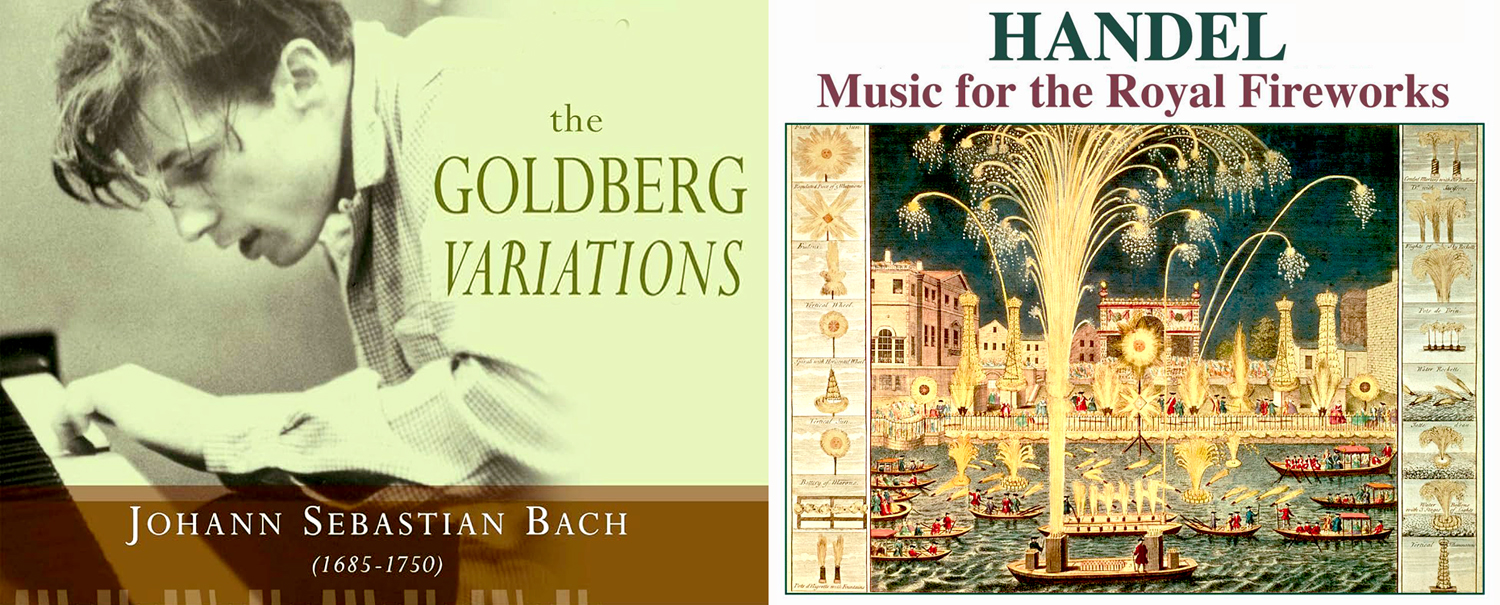
J.S. Bach (1685-1750), The Goldberg Variations (1714), a set of 30 variations on a repeating bass line, for keyboard; and George Friedrich Handel (1685-1759), Musick for the Royal Fireworks (1749), a suite for a large band of wind instruments, for outdoor performance during a famous fireworks display meant to celebrate the end of the War of Austrian Succession. The crowd loved the music, but the fireworks caused a building to burn down, blinded a soldier and injured several others. Later performances often added strings to the wind band, with no further reported injuries. 

Haydn: Quartet in D major, op. 64, no. 5 “The Lark”

It is often said that Joseph Haydn and Mozart wrote music in the classical style (roughly 1750-1828), but in fact, they created the classical style. If Haydn didn’t singlehandedly invent the symphony, he made it what we think of today; and he did the same for the string quartet — music for two violins, viola and cello. 

This is music generally less cluttered or fussy than the earlier Baroque, and seeks a kind of modest tastefulness, along with, in Haydn’s case, a witty sense of humor, as in the imitation bird calls at the start of this quartet, which was written in 1790 and has the usual four movements: an opening allegro, a dance movement, a slow movement and a jaunty finale. 

Alternates:

W.A. Mozart (1756-1791) Serenade No. 10 for 13 Winds in B-Flat, known as the Gran Partita (1781), which, in Peter Shaffer’s play, Amadeus, he has Antonio Salieri react by saying, “It seemed to me that I was hearing the voice of God.” Or Franz Schubert’s (1797-1828) Symphony No. 5 in B-Flat (1816), which is a really tuneful symphony built on Haydn’s model. 

Liszt: Piano Concerto No. 1 in E-Flat 

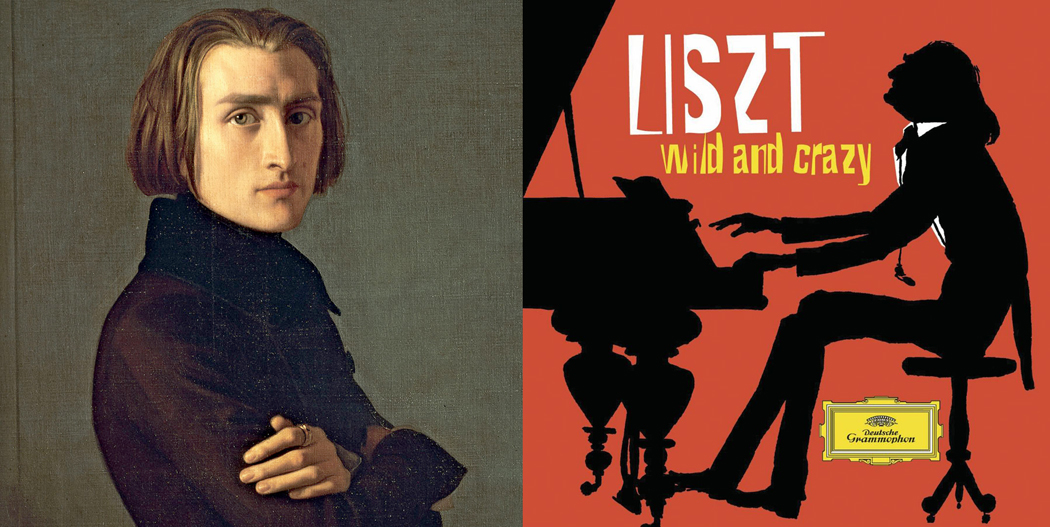
Franz Liszt (1811-1886) is the perfect Romantic composer, the greatest piano virtuoso of his time, and a matinee idol that all the ladies were in love with — something of which he took great advantage. His music, as in this 1855 concerto, is filled with all the wild emotion that the classical era avoided: over the top, loud, brash, and with a solo part for the triangle — it scandalized its first audiences. The jangle of the triangle was considered bad taste — but bad taste is the goal of much Romanticism. Audiences loved being scandalized. 

Alternates:

Robert Schumann (1810-1856) wrote a cycle of songs, telling a sad love story, called the Dichterliebe, or “A Poet’s Love,” in 1840, and includes a song claiming over and over, “I’m not angry,” to some of the angriest music ever. Clever. Or Bedrich Smetana’s (1824-1884) Moldau, an orchestral portrait of the Czech river (now usually called the Vlatva or Voltava), which is a perfect example of the Romantic Nationalism that swept over Europe. Great tunes. 

Debussy: Images for Piano, Book II

In the late 19th century and the 20th century before the First World War, music went through several changes. One of them is a rejection of Romantic excess, and the French composer Claude Debussy (1862-1918) came up with his own style — usually called Impressionism — of ambiguous tonality, exotic scales, and an approach to the piano that was soft and non-percussive. 

He wrote a great deal of piano music, including the famous Clair de Lune, but I’m offering the three pieces in his Images, second series (1907): Cloches à travers les feuilles (“Bells through the leaves”); Et la lune descend sur le temple qui fut (“And the moon descends on the temple that was”); and Poissons d’or (“Golden fish”).

Alternates:

Some composers went in the opposite direction, with larger orchestras, more chromatic harmonies of profound longing, in what is often called Late Romanticism, or Post-Romanticism. Gustav Mahler (1860-1911) often added voices to his orchestral music, or wrote orchestral song cycles, such as his Songs of a Wayfarer (1885). Richard Strauss (1864-1949) used huge orchestras and explodes out of the gate with Don Juan (1889), a musical version of a Don Juan more idealistic than lecherous. It is an avalanche of sound, with a huge six-horn signature that, in live performance, you feel through you fundament as much as hear with your ear. 

Janáček: Sinfonietta 

Now we are ripe in the 20th Century, and Leos Janáček’s Sinfonietta (1926), a five-movement piece for huge orchestra, including 25 brass instruments. The first movement has 10 trumpets alone, playing a hair-raising fanfare. 

All five movements are built from catchy tune-bits, extended and repeated. And although the music is clearly modernist, I’ve never come across anyone who didn’t instantly love the Sinfonietta

Alternates:

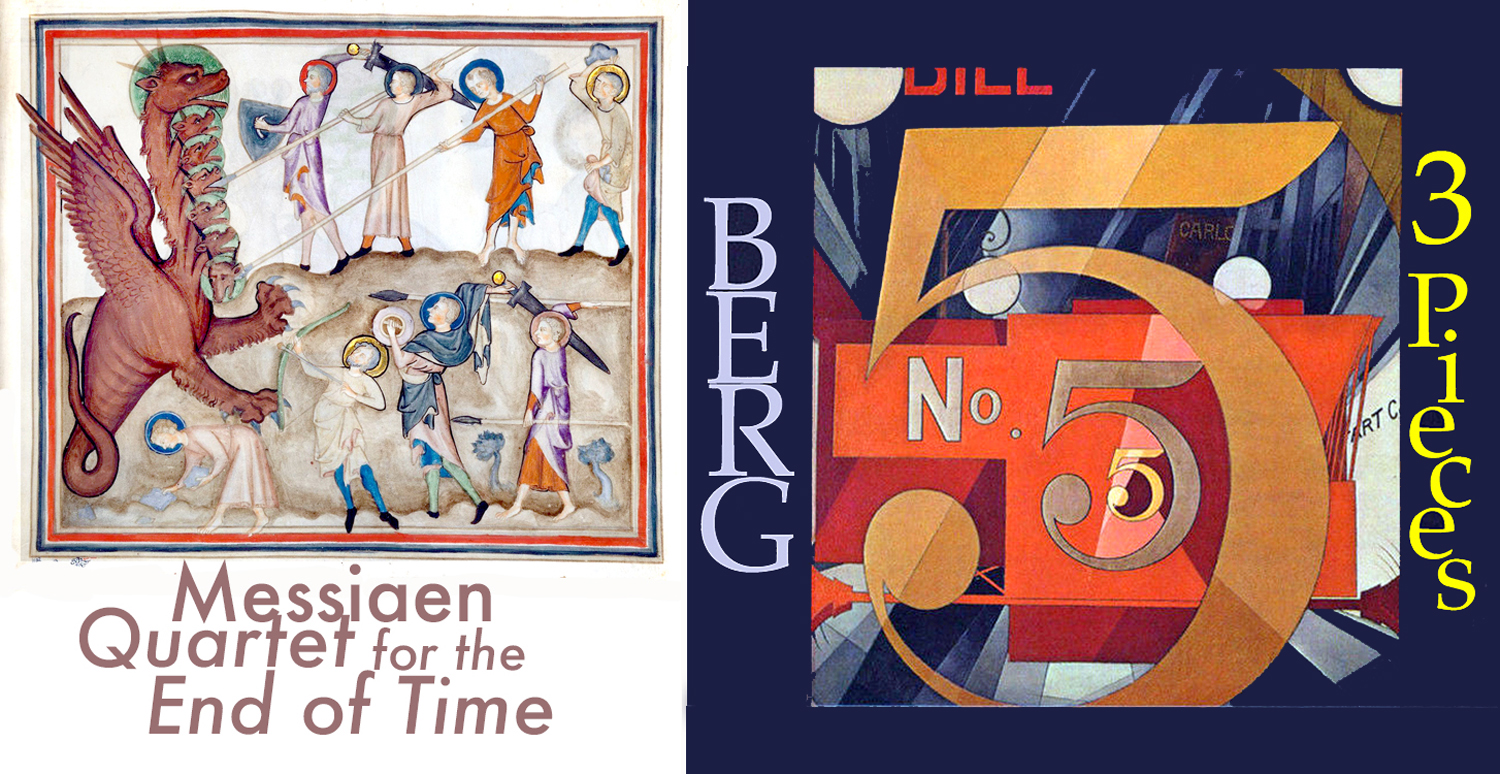
French composer Olivier Messiaen (1908-1992) was imprisoned by Nazis during World War II, and in prison camp, wrote his Quartet for the End of Time, for piano, clarinet, violin and cello (the instruments available in the camp). It is a hugely idiosyncratic piece, written to Messiaen’s own music theories, but can be overwhelmingly emotional in a good performance. And for the double-dip experience of atonal music, try Alban Berg’s (1885-1935) Three Pieces for Orchestra (1914), for something like what people used to call “modern music.” 

Penderecki: Threnody to the Victims of Hiroshima

Classical music, or art music, is still being written, and responds to life in the current world. We live in a post-Hiroshima age, and Polish composer Krzysztof Penderecki (1933-2020) summarized the feeling in his 1961 string-orchestra piece, Threnody to the Victims of Hiroshima, although you may have some difficulty recognizing it as string music made by violins, violas, cellos and double basses. It shrieks of the horror. 

It masses its 52 string players in tone clusters and dissonances, various vibratos and odd bowings, for 8 and a half minutes, that is not meant to be beautiful, but to evoke intense emotions. It is, nevertheless, beautiful. (Remembering Tom Robbins notion: “The ugly may be beautiful; the pretty, never.”)

Alternates:

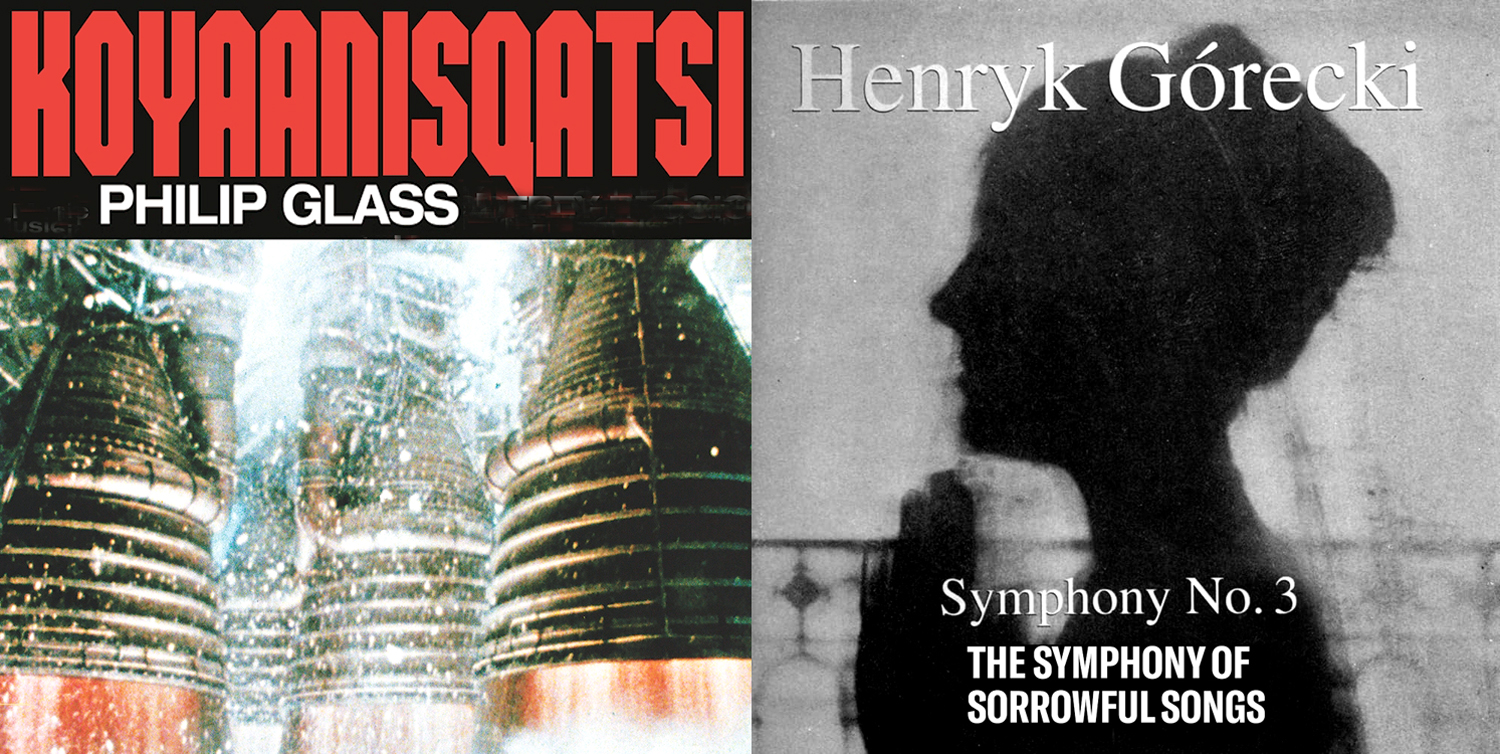
Minimalist composer Philip Glass (b. 1937) also reacts to the modern world in his film score for the Godfrey Reggio film, Koyaanisqatsi (1982). The modern world is a crazy world, as the film and music underline, but with quite a variety of minimalist techniques. The horrors of war fill Henryk Gorecki’s (1933-2010) Third Symphony (The Symphony of Sorrowful Songs) (1976), in which a soprano sings Catholic laments and words by victims of the Nazis, all to music so slow and so inexorable as to be almost a force of nature. Its 1991 recording by the London Sinfonietta sold more than a million copies. Gorecki, surprised at the popularity of such a sorrowful piece of music said, “perhaps people find something they need in this piece of music…. something they were missing. Something, somewhere had been lost to them.”

Epilogue

Of course, this diversity is among the European tradition of art or concert music. Most cultures have their own classical musics, such as the sitar or sarod music of India, the Chinese opera music, and Japanese flute music. Each is a tradition handed down from master to student and carried forth, with development and variation. That is what makes it classical. 

If I were to think of a purely American classical music, it would be jazz. It, likewise, has a wide range of styles and sounds, from Louis Armstrong through Duke Ellington and down through Ornette Coleman. 

But it is what we call classical music in the West that I am best familiar with and love. And writing this has given me the chance to listen once more to each of the pieces I’ve written about, and more joy me. 
French composer Camille Saint-Saens was smarting from a concert tour in Germany that didn’t go over well, and so, in 1886, he withdrew to small Austrian village and wrote a short piece about music critics, which he called Personnages à longue oreilles, or “Characters with long ears,” in which the critics bray in imitation of asses — “hee-haw.” It is barely 45 seconds long, but it seems to have given him a bigger idea. 

And so, he wrote thirteen accompanying short, mostly comic,  compositions, each describing another animal, and had them played privately as La Carnaval des Animaux, or “The Carnival of Animals.” He wrote his publisher in Paris that he knew he should be working seriously on his Third Symphony, but that instead, he was having “such fun.” 

Yet, fun wasn’t what he wanted to be remembered for. He was to be a serious and honored composer of five symphonies, many concertos and 12 operas. And so, he refused to allow the Carnival of Animals to be published until after his death. 

The irony is that, along with his Danse Macabre and the Bacchanale from his opera Samson et Dalila, what he is best remembered for, and most loved, is this 25-minute-long musical menagerie. In fact, his best-known piece is undoubtedly The Swan, for cello and piano, the second-to-last section of the Carnival

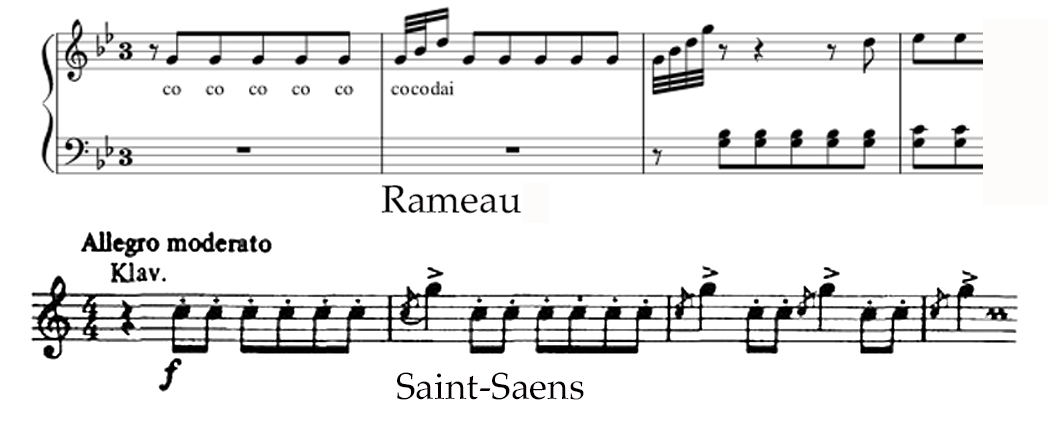
Many of the pieces parody famous music by other composers and popular songs, but I want to pick out, in particular, the second section, Poules et Coqs (“Hens and Roosters”), which gets its main theme from a 1726 piece for harpsichord by Jean-Philippe Rameau, called La Poule (“the Hen”), from his Suite in G from his Nouvelles Suites de Pièces de Clavecin

You can see the similarity, even in these few bars. 

But that set me off on a search for other music about or imitating animals. It’s not just “Old MacDonald” and his “oink, oink, here and an oink, oink there,” but in fact, a long history of musical animals. Some famous, some obscure. 

Of course, such animal imitations go back to prehistory, if we believe the musicologists, who tell us that they often feature in folk songs, from all around the world. “Old MacDonald” is only one of them in English. But there are Chinese songs, Turkish songs, Swahili songs, all with animal noises as part of their lyrics. 

But I was most interested in Western art music, after the invention of musical notation and printing, where the music could be tracked down and maybe even listened to (on YouTube when available). 

The earliest I found was from the middle of the 13th century, a ditty called Sumer is icumin in, with its lyrics “lhude sing cucu,” which have been set to various tunes, most of those I have heard include a melodic line that imitates the falling third of the cuckoo birdcall. 

No doubt because the cuckoo’s call is so distinct and so clearly a falling third, it is about the most frequently used birdsong in classical music, as we will see (followed by the trilling of the nightingale). 

Indeed, the next entry is Par Maintes Foy, by 14th century composer Jean Vaillant, which not only has the singers call out the cuckoo and the nightingale, but also the goldfinch, starling and quail. “Lire, lire, lirelon,” Toowee, toowee, toowee.” 

But it isn’t all birds. In 1505, Josquin de Prez, perhaps the most famous of all early composers, published his El Grillo, which has its singers imitate the sound of a cricket. 

Clement Jannequin (11485-1558) wrote Le Chant des Oiseaux (“Song of the Birds”) with a blackbird singing “Ti-ti, pi-ti;” the nightingale trilling on “Frian, frian;” and the cuckoo again doing his “Cu cu, cu cu.” 

Pierre Passereau (1503-1553) wrote Il est Belle et Bon, in which a wife praises her husband for being so compliant and even feeding the chickens, which she then imitates “co co co co da.” 

In his Book of Ayres with a Triplicitie of Musicke, from 1606, John Bartlett published a madrigal called Of All the Birds That I Do Know, in which words get repeated in a way that clearly evokes the chatter of birds. “Of all the birds that I do know, Philip my sparrow hath no peer … Philip will cry still, ‘yet, yet, yet, yet, yet, yet.’” 

As we leave the vocal Renaissance and enter the more instrumental Baroque age, we begin having fiddles and hautboys imitating various birds and beasts. 

Sonata Representativa (1669) by Heinrich Biber dedicates a movement each to imitations of nightingales, cuckoos, frogs, hens and roosters, quails and cats. Written for violin and continuo, it alternates short interludes with sections depicting animal sounds. After a Preludio, a Nightingale on the violin sings four eighth notes repeated and a long trill over a pedal; a Cuckoo hits repeated fast eighth notes making the usual cuckoo sound; then come Frogs with an appoggiatura of dissonant seconds, sounded together, and resolved upward, over and over to make croak; Hens cluck with upward portamento; quail have a repeated dotted rhythm “dah, da-dah;” a Cat comes mewing portamenti in nursery-rhyme-like tune; then all is rounded off with a march.

Georg Phillip Telemann wrote his Alster Overture, with a fourth movement imitating “Concertizing Frogs and Crows.” There is also a swan in another movement. 

Of course, the most famous and familiar sounds come from Antonio Vivaldi’s Four Seasons. In the opening movement of the four concertos, we hear the squawking of birds. In the second movement, he has dogs barking, and in Summer, the slow movement has the strings buzzing around as a swarm of flies. 

But it wasn’t only the Seasons: In his Flute Concerto, op. 10, no. 3, “Il Gardellino,” he has the flute imitate a goldfinch. 

The keyboard is well represented, too. In addition to Rameau’s La Poule, there is Louis-Claude Daquin’s The Cuckoo and Francois Couperin’s Le Moucheron (“The Gnats”), to say nothing of Domenico Scarlatti’s Sonata No. 30 in E-flat, known as the “Cat Fugue,” with a tune that imitates a cat walking distractedly up a harpsichord keyboard (an early version, I guess, of Zez Confrey’s Kitten on the Keys).

 Then, there’s Georg Friedrich Händel’s Organ Concerto No. 13, known as “The Cuckoo and the Nightingale,” from 1739, with birdsong in the second movement. 

There’s no counting the birds, beasts and bugs in the music of Franz Joseph Haydn. He loved a good joke, and among his 104 symphonies and 68 string quartets (to say nothing of his 41 piano trios, 52 piano sonatas, and 126 baryton trios — not counting the additional 36 baryton works for that obsolete instrument with other pairings) you can find Symphony No. 82, “The Bear;” Symphony No. 83, “The Hen;” String Quartet op. 33, no. 3, “The Bird;” Quartet op. 50, no. 6, “The Frog;” Quartet op. 64, no. 5, “The Lark.” 

And in his magnum opus, The Creation, in Part 2, describing Days 5 and 6 of the biblical creation, he has the orchestra imitate multiple birds and animals, including an eagle, a whale, a stag, lowing cattle, and even a worm.

As we move into the Romantic 19th century, the animals are truly fruitful and multiply, beginning with the slow movement of Beethoven’s Pastoral Symphony, which ends with a cadenza that quote quail, nightingale and cuckoo. 

So, let’s make a quick list — as quick as it can be with such a long zoo parade. There is Schubert’s song, The Trout; Robert Schumann’s Papillon and the Prophet Bird; the braying donkey in Mendelssohn’s Overture to A Midsummer Night’s Dream; Chopin’s Etude, op. 25, no. 9, known as “The Butterfly Etude.” Not forgetting that it was said that Chopin’s “Minute Waltz” was inspired by the composer watching his dog, named Marquis, chasing its tail.

Cats screech over and over in the Cat Duet, attributed to Gioacchino Rossini (jury’s out on the authorship). 

To continue: There are birdsongs in the woodwinds in Bedrich Smetana’s Bohemian Woods and Fields; The Flight of the Bumble Bee, from the opera Tsar Saltan by Rimsky-Korsakov; The Lark by Mikhail Glinka; the Ballad of the Unhatched Chicks from Mussorgsky’s Pictures at an Exhibition; the “Dying Swan” and the “Dance of the Cygnets” from Tchaikovsky’s Swan Lake; and The Swans of Tuonela by Jean Sibelius. 

In Scandanavia also, we have, but Edvard Grieg: The Butterly; Little Bird; The Pig; The Horsefly and the Fly; and Cow Call. And from his contemporary Norwegian composer The Hare and the Fox by Harald Saeverud. 

Serge Rachmaninoff’s Etude Tableau, op. 39, no. 2 for piano is called “The Sea and the Gulls.” Enrique Granados wrote The Maiden and the Nightingale. And Richard Strauss caused some grumpiness and consternation in his staid German audience when, in the middle of his tone poem Don Quixote, he has the orchestra imitate a herd of sheep. But Strauss was no stranger to vulgarity: It is one of his strong points. 

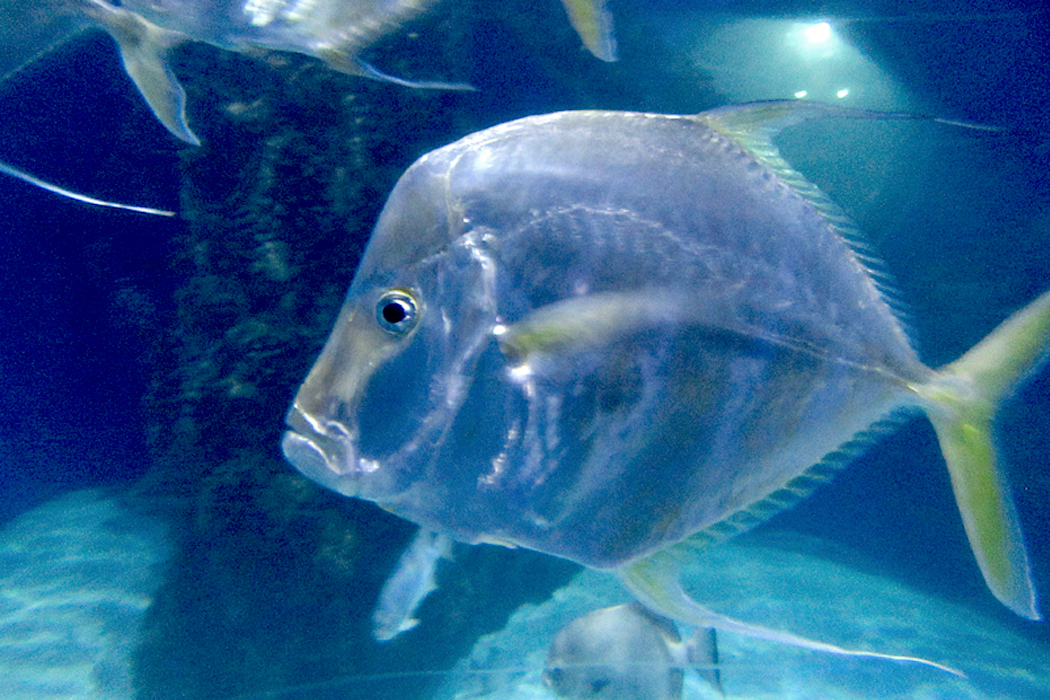
Which brings us up to date with Saint-Saens’ Carnival of the Animals, which gives us, in order: a lion; hens and roosters; wild asses; tortoises, the elephant, kangaroos, fish in an aquarium, personnages a longue oreilles; a cuckoo in the woods; birds in the air (aviary); pianists practicing scales; fossils; the swan; and a finale that brings back many of the menagerie. 

But it’s not over yet. As we move into the 20th century (and the winding-up of the 19th), there are some very beautiful evocations of nature and the animals in it. Such as: Delius’s On Hearing the First Cuckoo in Spring. Or the fourth movement of his North Country Sketches, called “The March of Spring: Woodlands, Meadows and Silent Moors.” 

Ralph Vaughn Williams gave us one of the most beautiful violin show-off pieces in his The Lark Ascending. He also put some swarm sounds in the overture to his ballet The Wasps. Edward Elgar wrote for voices a very peculiar piece called Owls: An Epitaph. Pianist Leopold Godowsky gave us, in his Java Suite, a movement called “Chattering Monkeys.” 

Claude Debussy wrote Poissons d’Or (“Goldfish”) in his Images, Book 2, no. 3; and his counter-Impressionist Maurice Ravel wrote Oiseaux Triste (“Sad Birds”) in his Miroirs. Paraguayan guitar virtuoso Agustin Barrios wrote Las Abejas (“The Bees”). 

Ottorino Respighi took music from early composers and reworked and orchestrated it in his Gli Ucelli (“the Birds”), with movements called “The Dove,” “The Hen,” “The Nightingale,” and “The Cuckoo.” But he goes one better in his Pines of Rome, by including an actual sound recording of a real nightingale. (Tape recorded animal sounds return later in the century.)

Whole chapters might be given over to Gustav Mahler, who began his very first symphony with cuckoo calls, and inserted all sorts of animals, birds, and natural sounds into his music, including cow bells in his Sixth Symphony and a donkey braying in his Third, so say nothing of the sleigh bells in the Fourth, fish in his song Saint Anthony of Padua Preaches to the Fishes. They show up again in his Second Symphony. Nature is never far from the surface in Mahler’s music. 

But more than in Mahler, bird song is everywhere in the music of Olivier Messiaen. The man was obsessed with bird sounds. He used them often as the source of his thematic material (I hesitate to call them tunes), not simply transcribed, but often lowered in pitch, slowed down radically, or even played upside down or backwards. 

His 1958 Catalogue d’Oiseaux (“Catalog of Birds”) is a collection of 13 pieces for piano, each of which is based on the call of a different bird, running from the Alpine chough, the Eurasian golden oriole, the blue rock thrush and the tawny owl, through the woodlark, Cetti’s warbler, the common buzzard and the Eurasian curlew. The whole catalog takes just short of three hours to perform. 

Then, there is the Petites Esquisses d’Oiseaux (“Small Sketches of Birds”) from 1985, six short piano pieces, about 2 minutes each, that picture blackbird, skylark, thrush and robin. The L’Abîme d’Oiseaux (“Abyss of Birds”) is one movement from the Quartet for the End of Time. Le Merele Noire (“Blackbird”) is from Le Reveil des Oiseaux (“Dawn Chorus”), La Fauvette des Jardins (“Garden Warbler”) — on and on through his works, the birds are the foundation of his music. A devout Catholic, Messiaen saw birds and their song as emblematic of the beauty of God’s creation. 

Although, to be honest, it is usually hard to hear the music as bird calls, since they are so transformed by the composer. You kind of have to take his word for it. 

It’s hard to keep up with Bela Bartok, also. He wrote many short piano pieces, some of which bear the names of animals. But there’s The Diary of a Fly (Mikrokosmos vol. 6, no. 42), and the famous Bear Dance from his Ten Easy Pieces

But he is best known for the several “Night Music” pieces, from his Out of Doors suite for piano; the slow movement of his Music for Strings, Percussion and Celesta; and the middle of his Piano Concerto No. 3. Wikipedia lists some 20 compositions where Bartok employs his Night Music, which imitates the sounds of a Hungarian summer evening, with insects chirping, birds singing and frogs croaking. The effect can be miraculous. 

(Duke Ellington wrote his own versions of night music in his Queen’s Suite, with movements called “Sunset and the Mockingbird,” “Lightning Bugs and Frogs,” and “Apes and Peacocks.” I mention it here because, really, Ellington is classical music.)

Igor Stravinsky has elephants dancing in his Circus Polka, and nightingales warbling in his Chant du Rossignol. It has been reported that his Rite of Spring contains quotations from Russian folk songs about animals. I’m taking the musicologists’ word for that. 

Sergei Prokofiev has his own menagerie in Peter and the Wolf, and Malcolm Arnold attempted to add animals to Saint-Saens’ zoo with his own Carnival of the Animals, written for the comic Hoffnung Festival in 1960. His additions are: The Giraffe; Sheep; Cows; Mice; Jumbo; and Chiroptera (Bats) — the last of which is a joke, since the musicians “play” so high in frequency that “only bats can hear it.” The audience hears silence until a final tinkling on a bell. 

Several 20th century animal-musics were created as humor or jokes, including The Monk and His Cat from Hermit Songs, op. 29, no. 8, by Samuel Barber; The Cat and the Mouse by Aaron Copland; the Promenade (Walking the Dog), written by George Gershwin for the Fred Astaire film, Shall We Dance, and The Procession of the Cats on Solstice Night by Bohuslav Martinu. 

Then, there’s Ferde Grofe’s On the Trail from the Grand Canyon Suite, with its clopping hooves and braying donkey. 

The Critics

Francis Poulenc took on the grasshopper, bear, lion and roosters for his Les Animaux Modèles, a ballet from 1942 based on the fables of La Fontaine. 

I mentioned earlier Respighi’s recorded nightingales in The Pines of Rome. Alan Hovaness famously used recordings of the humpback and bowhead whales in his And God Created Great Whales. (George Crumb’s Vox Balaenae does not include actual whale songs, but uses electric flute, electric cello and amplified piano to imitate both whale songs and seagulls.)

And in 1972, Finnish composer Einojuhani Rautavaara wrote his Cantus Arcticus, subtitled Concerto for Birds and Orchestra, which uses recorded sounds of birds from northern Finland against a symphony orchestra. 

This list does not exhaust the trove of animal-inspired concert music, but it is what I could dig up without spending two years on a doctoral dissertation. It is a tradition that continues, both in a simple vein, as with Sally Beamish’s Songs from Hafez, which reference the nightingale, the peacock and the hoopoe, and the more avant-garde work, such as Chris Hughes’ piece for cello and bird recording, Slow Motion Blackbird, which repeats the blackbird call for six minutes, slowing down each bar of music 5 percent (without changing pitch) until it is a slow, almost unfollowable adagio. 

Most of this music is easily available, either on commercial recordings or through a YouTube video. Chirp chirp. 

Ouroboros: Infinity

Happiness is the most innocuous of emotions; it is plain and uninflected. Compared with its brawny cousins, such as hatred, passion, grief or joy, it is rather simple and nondescript. It is to those as water is to wine. 

Happiness is what you see on the faces of children playing outdoors. It is for them, who don’t yet have the burdens of adulthood or the cares of life. They can innocently play with happy abandon. Heaven lies about us in our infancy! 

Yet, in those cares of life, who doesn’t wish for a few seconds freedom to experience once again the simple happiness of when we were young and didn’t know any better.

Most of our art and music concerns the bigger things. The emotions you get from Mahler are big, complex emotions, piled Pelion on Ossa, building overpowering climaxes that leave us hollowed and purged. 

Think about Bach’s B-minor mass, Wagner’s Tristan, Stravinsky’s Oedipus Rex and you find the complexity of life threaded around itself. Of the big emotions, none is uninflected, but includes a tincture of its opposite.   “Our sweetest songs are those that tell of saddest thought. Our sincerest laughter with some pain is fraught.” 

Happiness, as I’m using the term here, is unalloyed. And while most of the greater emotions are felt as “happening” to yourself, happiness takes you out of yourself. You are unaware of your self when experiencing it. It is a grace.

In that sense, there is ego invested in the transcendence of Mahler or the Ode to Joy of Beethoven, but when you are happy, you barely exist: Only the happiness exists. You are only really aware of it when you wake from it and realize what you have been gifted. 

Of course, such a state can only last a comparatively short time. When the philosopher asks if you have had a happy life, the only accurate answer is that life is not happy, but only moments are. 

Art can rouse in us a huge range of emotions, and classical music is designed to explore the subtleties of them, and we are overwhelmed by the passions in Mahler, the transcendence in Bruckner, the joy in Beethoven’s Ninth, the angst in Berg’s violin concerto. All huge, complex emotions. 

But surely, there must be some music completely devoid of such cares, and can arouse in us those feelings of abandon and freedom we had as little children. Is there music that is simply happy? This is music I put in the CD player when I just want to rock back and enjoy the simple tunes and unfettered sounds of being happy. Bouncy, tune-filled, catchy feel-good music. 

The place to start, where most of the habits of classical music start, is Joseph Haydn. He seems to have invented everything: the symphony, the string quartet, the sonata form — they all descend from Haydn. And Haydn was perhaps the sanest person ever to write music, burdened by no metaphysical agonies. But even his music expresses a variety of thoughts and emotions, movement by movement, from the depth of the Seven Last Words of Christ to the finale of Symphony No. 88, which bounces with unfettered happiness. (Link here). 

That kind of ebullience is hard to sustain, but here are five examples from classical music that bounce from beginning to end, along with some suggestions for recordings. (Not “the best” for I have not heard all of the recordings, but these are my favorites). 

Franz Schubert Piano Quintet in A “The Trout”

The Trout Quintet is unusual in that it includes a double bass, which provides a solid bottom for the music, which allows the tunes to float along like rafters down a river. It is a sunny quintet, with hardly the whisper of a shadow in its five bright movements. Even the minor-key variation in the fourth movement is dispelled with a major chord — “I was just playing,” its composer seems to be saying.

It was written in 1819, when Schubert was 22, for piano, violin, viola, cello and bass. Through most of his best music — the late piano sonatas, late quartets and the great C-major string quintet — there is a strain of despair that is heartbreaking. Even in his short piano pieces, beloved of amateurs for a century and a half, there runs a vein of deep melancholy that shades even his happiest moments.

But none of this in the Trout. It spreads sunshine from beginning to end.

Almost any performance of The Trout will leave you giddy, but the one essential element of any recording is that you can hear — even feel — the string bass at the bottom. It is the foundation for the edifice. 

I’ve always loved two performances. The first is Alexander Schneider with Peter Serkin on piano, Michael Tree on viola, David Soyer on cello and the indomitable Julius Levine on bass. It was on the Vanguard label. And Peter’s father, Rudolf Serkin anchors the Marlboro Festival musicians on Sony (then, Columbia). With Serkin is Jaime Laredo on fiddle, Philipp Naegele on viola, Leslie Parnas on cello and Levine, again, on bass. A classic performance, much loved by many, features Clifford Curzon on piano, with musicians from the Vienna Philharmonic. Originally on Decca (classical music labels are in constant flux, as mega-corporations gobble up older established labels; you never know where a classic performance will show up. Just check Amazon and you’ll find it.)

YouTube video at this link

Gioacchino Rossini String Sonata No. 1 in G

It shouldn’t be surprising that most of the music that expresses mere happiness should have been written by very young composers. The six sonatas for strings were written by Rossini when he was 12 years old, arranged for four string parts: two violin parts, one for cello and one for double bass — again providing that delightful solid bottom for the tunes. 

The bass is there because Rossini wrote them while visiting the home of bass player Agostini Triossi in Ravenna, Italy, in 1804, and tossed all six sonatas out in the space of three days to be played by members of the household, with Rossini himself on second violin. 

Although written for a quartet of players, they are usually performed by a full ensemble. Versions have been adapted for normal string quartet and for wind band, but the string ensemble has that fresh appeal that matches the music. 

I could have chosen any of the six sonatas. They are each in three movements, fast-slow-fast, and in major keys. But I mention the first because I particularly love its jaunty finale, with a tune I can’t get out of my head. 

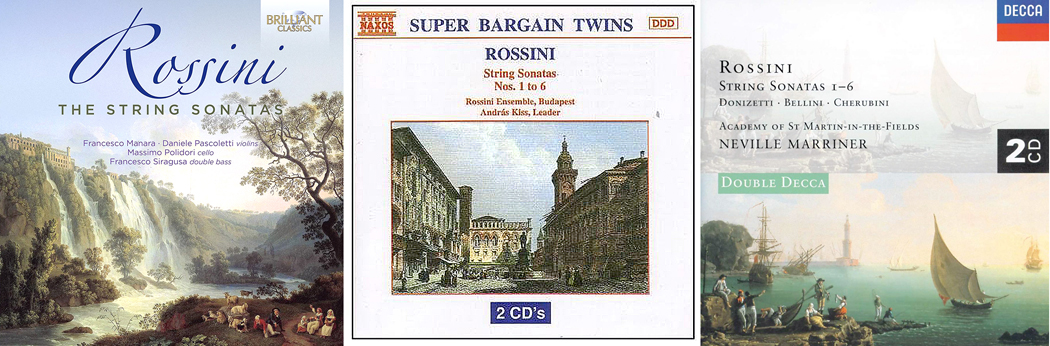
I’ve never heard a bad performance on disc, but mostly I listen to the Naxos recording of the Rossini Ensemble, Budapest. They almost always come in a pack of all six sonatas, so you are likely to love them all. Neville Marriner has a smooth set with the Academy of St. Martin’s in the Field, and Brilliant Classics has the version with four solo players. 

YouTube video at this link


 Georges Bizet Symphony in C

Another prodigy, Bizet wrote his symphony when he was 17 years old and a student at the Paris Conservatoire. It was never performed in the composer’s lifetime and indeed was lost and forgotten until 1933, when it was found in the composer’s papers, and was given a first performance by Felix Weingartner in 1935. Since then, its infectious tunes and untroubled elan have found it a place in the repertoire. 

I have always thought of it as a 19th century version of a Haydn symphony — perfectly proportioned, tuneful, and with no dead spots. Others may have stormed the heavens with Wagnerian thunder and Blitzen, but this symphony contents itself with pleasing its listener with melody, rhythm and smooth harmony. 

It has also been lucky on disc, when three of the most lively conductors have taken it on. Leonard Bernstein with the NY Phil, and Leopold Stokowski with the National Philharmonic (a pickup orchestra), and Thomas Beecham with the Royal Philharmonic. You can’t go wrong. 

YouTube video at this link

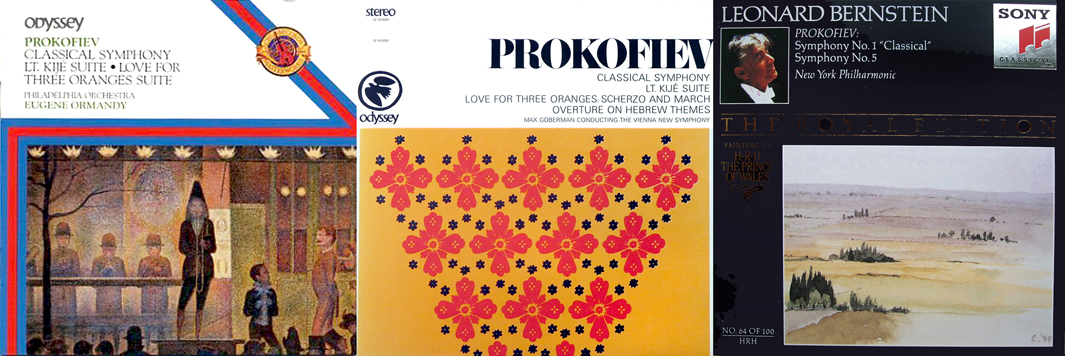
Serge Prokofiev Classical Symphony in D major, Op. 25

Another student work, in 1917 Serge Prokofiev wrote his first symphony in a kind of parodistic style of Haydn or Mozart, but with modern piquant dissonances — what has been derisively called “wrong-note romanticism.” 

But the four-movement symphony has proved enormously popular. It bounces from first to last, with memorable tunes and sharp wit. 

The composer Boris Asafyev, according to Prokofiev, “put into my mind an idea he was developing, that there is no true joyfulness to be found in Russian music. Thinking about this, I composed a new finale, lively and blithe enough for there to be a complete absence of minor triads in the whole movement, only major ones.” 

The energy in this music is propulsive. If anyone is feeling down, with the feeling of systematically knocking the hats off anyone you meet on the streets, a listen to the Classical Symphony will cure you and leave you with a goofy grin on your face. 

Many have recorded the symphony. The only failures are when the conductor takes the music too seriously or lacks any sense of humor. There are several dry versions. But I have three that I have loved. Leonard Bernstein and the NY Phil have all the elan and vigor you could ask for, if the ensemble is a tad scruffy. Eugene Ormandy and Philadelphia cannot be topped. It is a perfect recording of the music, bright and witty with gorgeous string playing. And I remember an old Odyssey LP I once owned with Max Goberman and the Vienna New Symphony. Perhaps one day a CD version will be offered. 

YouTube video at this link


Darius Milhaud Le Boeuf sur le Toit, Op. 58

Imagine you are in a Brazilian dance hall and the crowd, sloppy with  drink and dance, are bouncing to the music of an exuberant band — not all of whom are playing the the same key. And you cannot help but tap your toe, then jiggle your leg, and then get up and dance and sweat with the crowd. That is Milhaud’s Le Boeuf sur le Toit (“The Bull on the Roof”). 

It is a string of mostly Brazilian tunes, some borrowed, some invented by Milhaud, all of which are infectious and life-affirming. It is the most single-mindedly happy music I have ever encountered, completely unselfconscious and joyful. Milhaud himself called it, “15 minutes of music, rapid and gay, as a background to any Charlie Chaplin silent movie.” 

 You can get a recording of Milhaud himself conducting the Orchestre du Théâtre des Champs-Elysées from 1958, perhaps a bit ragged, but with all the spirit. A standard for decades has been Louis de Froment and the Orchestra of Radio Luxumbourg. But for me the perfect embodiment of this happy music is the Orchestra National de France under Leonard Bernstein; he is the perfect vehicle for the life-spirit of this music. 

YouTube video at this link

Those are my five suggestions. There are others: Benjamin Britten’s 1834 Simple Symphony, made up of tunes he wrote when he was 10 years old; or  perhaps Shostakovich’s Three Fantastic Dances from 1920, which he wrote between the ages of 14 and 16 — before the specter of Joseph Stalin darkened his art. Perhaps you have other suggestions to leave in the comments. 

Yesterday, I accidentally came across a YouTube video of Leonard Bernstein conducting the Vienna Philharmonic in the finale of Joseph Haydn’s Symphony No. 88, which is one of the composer’s bounciest, most ebullient movements, and therefore one of the bounciest, most ebullient in all music. And I was transfixed: After a tiny initial tempo beat with the baton, the conductor dropped his arms and stood there, letting the orchestra play the entire movement, indicating directions entirely with facial expressions. (Link here). 

He was conducting with his face. It was brilliant. Every fleeting emotion played across his face, as if he were the music. And each expression came a half-second before the orchestra reacted, so Bernstein wasn’t following the music, but leading it. Extraordinary. It was one of the best performances of that finale I’ve ever heard, with a naturalness and clarity, but more important, a joy and spontaneity. 

I go back a long way with Lenny. When I was a mere bairn, I watched him on the Young People’s Concerts and I remember his explanation of Beethoven’s Fifth Symphony on the Omnibus TV show. I was just six years old in 1954, so I don’t remember much of what he said, but I remember the set, with the score of the symphony on the floor, so he could position his players on their staffs to show what they were doing. I was fascinated. 

Since then, Lenny has been a part of my life. Sometimes a small part, in the background, sometimes I spent extra money to buy one of his recordings over a cheaper Turnabout or Vox recording, with the trust that I would be rewarded by something special. I usually was. 

I heard Lenny conduct at New York’s Philharmonic Hall (later Avery Fisher Hall, now David Geffen Hall — it changes as much as the names on ballparks). I remember a rousing version of Debussy’s La Mer with the New York Phil. But mostly, I heard Lenny via recordings, first LP and then CD. There were also videos and TV presentations. 

I don’t deny that Lenny talking could be hard to take, with that resonant basso voice that he seemed to be in love with, and sometimes a ham actor’s thesbianicity. But if you can get past that surface, what he says is almost always revelatory, precise, and true. I listen to his Harvard lectures over and over, and despite some tedious Chomskian linguistic folderol, really insightful. (He drops the Chomsky in the latter lectures, thank god). 

But it is the music that really counts. For many, Bernstein was the great podium presence of the second half of the 20th century. The singer Christa Ludwig, who performed with Lenny often, once said she worked with three truly great conductors: Karl Böhm, Herbert von Karajan and Bernstein, but the difference was, she said, “Bernstein was a genius.” 

Others have commented that when he conducted, he “became” the music. A member of the Vienna Philharmonic told my old friend, the late music critic Dimitri Drobatschewsky, “Name one other conductor who, just by standing in front of the orchestra, could make them play better than they thought they could.” Bernstein seemed to have a special relationship with the Vienna Phil, and many of his later recordings were with them.

Lenny had his detractors, who thought he was showing off in front of the audience and orchestra, or that he exaggerated details, or — especially later in his career — dragged tempos. But, as critic David Hurwitz has said many times, “Every time I think Bernstein has distorted something, I look in the score and see that it is exactly what the composer had notated. He was truer to the score than almost any other conductor I know.” 

It is true that for Lenny, as for Old Lodge Skins in Little Big Man, “Sometimes the magic works, sometimes it doesn’t.” But the best recordings have something to give that few others can match: commitment, power, emotion, persuasiveness. 

I have chosen 10 of Lenny’s recordings that for me summarize his best. There are many others. He was especially great with Haydn, with Beethoven, with Mahler, with Stravinsky, with Shostakovich. And Modern music — if it was tonal or polytonal, like Milhaud — he made it all just bounce. 

We’ll start with Haydn’s Paris Symphonies, that is symphonies Nos. 82-87, including “The Hen” and “The Bear.” It is pretty well consensus that Bernstein’s Paris Symphonies are the reference recordings. Sprightly, bright, witty, energetic and beautifully played. Bernstein was always good in Haydn, and I would have listed his Creation here, or his Nelson Mass or Tempore Belli Mass. You can’t go wrong with Bernstein and Haydn. In comparison, almost everyone else just feels soggy. 

In roughly chronological order, we come to one of his most controversial recordings ever: the live recording of Beethoven’s Ninth Symphony from 1989 and the fall of the Berlin Wall. Bernstein substituted the word “Freiheit” (“freedom”) for Schiller’s “Freude” (“joy”) in the finale, caught up in the moment’s exhilaration over the fall of East Berlin and Communism. Actually, he only does it once, and later reverts back to the original. But it is jarring when you hear the baritone intone it at the start of the finale. Yet, I am listening to it now as I write this and it is an absolutely thrilling version of the Beethoven’s greatest symphony. Members of six different orchestras came together and meld perfectly under Lenny’s baton. It is my go-to version of the symphony. It is a symphony played so often (I can’t count the number of times I’ve heard it live) that it has lost some of its magic as occasion, but here, it magnifies that sense of occasion. Despite the mutilation of the “Freiheit,” but because of the intensity and emotional engagement of the 20-minute Adagio — more like a prayer than anything else. (Roger Norrington takes it in 10 minutes of throw-away carelessness.) 

Then, there’s Berlioz’s Grande Messe de Morts, or Requiem. There are few decent recordings, and most fail for exactly the same reason: They attempt to make sense of the thing, toning it down into something “normal.” That is the issue with Colin Davis’ version. But Lenny lets it all hang out. What is fevered and hysterical, comes across as fevered and hysterical, just as Berlioz wrote it. 

If there is any symphony from the 19th century more Haydnesque than Bizet’s Symphony in C, I have yet to discover it. It is fresh, bright, tuneful and unendingly happy. The composer wrote it in 1855, when he was 17, and it remained unplayed until 1935 and I feel pity for all those audiences who, for 80 years could have been enjoying it, but never had the chance. Lenny was the perfect conductor for its joie de vivre and rhythmic snap. It is as if Bizet wrote it with Bernstein in mind. 

Lenny recorded Tchaikovsky’s Sixth Symphony at least twice, once with the New York Philharmonic, in 1964 for Columbia, and then again in 1987 for Deutsche Grammophon, with the same orchestra. What a difference. The first — an excellent version — takes about the usual 45 minutes. The second comes in at just a chip under an hour. Most of that extra time comes in the finale, which in the second recording is wrenching and heartbreaking. One critic wrote that it “devastates the emotions. … At the end of the last movement, the despair is complete.” Of course, the performance has its detractors, with some finding it distended and, as one always hears the complaint against Lenny, “is more about the conductor than the composer.” Poppycock. This is Tchaikovsky titrated and distilled into pure essence. 

Lenny recorded Stravinsky’s Rite of Spring many times, also, but there is no quibbling about the one to go to. It is his first, from 1958 with the New York Phil. When the composer first heard the recording, his only response was “Wow!” Lots of conductors have the measure of the Rite, but there is a rhythmic vitality, a violence and explosiveness to the 1958 recording that has never been matched, even by Lenny. 

Just seven years after Stravinsky’s blast, came Darius Milhaud’s Le Boeuf sur le toit (“The Bull on the Roof”), which he says he wrote as “fifteen minutes of music, rapid and gay, as a background to any Charlie Chaplin silent movie.” It is a piling up of Brazilian tunes, in several keys at once, and is as bright and toe-tappy as anything. Indeed, it becomes an ear-worm and you will be hearing its tunes over and over in your head for the rest of the day. The Bernstein recording also features La Création du Monde from 1923, which is a fully realized jazz composition for a ballet about an African creation story. This is Lenny in his element. You can just see him dancing on the podium with happiness and joy. 

Then, there is another highly controversial recording — his DG performance of George Gershwin’s Rhapsody in Blue. Lenny, playing the piano part himself, plays it not as a jazz riff, but as if it were, from bottom-to-top, a classical piano concerto, rather like Ravel’s Concerto in G. Critics miss the easy jazzy element of famous performances by Earl Wilde or Oscar Levant, but Bernstein’s version seems to those who adore it (as I do) as a perfectly genuine alternate view. And it is gorgeous. Did I mention that? Absolutely gorgeous. 

Dimitri Shostakovich wrote his massive Symphony No. 7 “Leningrad” during the German siege of that city in 1942. It is a piece that defeats many orchestras and conductors; it is very difficult to keep it from diffusing into long, undigested sections. Lenny keeps it going as a single directional line from beginning to glorious end, and the Chicago Symphony has the cojones to perform what is asked of them. Almost everyone agrees, this is the Leningrad Symphony to hear. 

Finally, I’ve kept last (and out of order), Mahler, which sometimes seems like Bernstein’s personal property. It isn’t, of course, but he brings something special to his Mahler performances, and none more so than with the Ninth, which he recorded at least six times (1965 NY Phil; 1971 Vienna Phil; 1979 Berlin Phil; 1979 Boston Symphony; 1985 Concertgebouw; 1985 Israel Phil). It is perhaps the Mahler symphony Bernstein felt closest to. Only four of these are genuine releases, not bootlegs, and among them it is hard to choose, but I suppose I migrate to the late Concertgebouw recording. Berlin has the intensity, but there is a major cock-up in the finale when the trombone section failed to play in the climax (apparently an audience member had died of a heart attack directly behind the brass section and there was some commotion that distracted the players). But listening to any one of them seems as if the music becomes more than music; it is a direct communication from one soul or heart to another. There are other great performances of the Ninth — it seems to draw out the best in most conductors — but there is something extra in the Bernstein versions, something more immediate, more direct. 

That is a list of 10 (or more), but I feel I’ve left out so much. There’s his Bartok Music for Strings, Percussion and Celeste; there’s two complete surveys of Beethoven symphonies; there’s his Copland, his Ives, his Schumann, his Sibelius. And so much more. But I believe the 10 I’ve chosen are not just great, but peculiar to Lenny — and I choose the word carefully. He was an idiosyncratic conductor, but all the personality that went in to his performances meant they are often memorable in a way more straightforward ones are not. 

Many moons ago, when I was a snotty college kid, I went through a period of disdaining Lenny. I bought the canard that he was shallow, heart-on-sleeve and bombastic. I wuz a idjit. One should never let the opinions of others block your ears. There is a world of difference between words and sounds, and the sounds are always more meaningful. I am older now, have experienced a great deal more of living, discovered depths in myself I hadn’t understood, and now Lenny’s insistence on finding the marrow is what I value. My ears are opened to what is gifted to me. 

Click on any image to enlarge

“Manfred on the Jungfrau” John Martin, 1837

From the last half of the Eighteenth Century through the last quarter of the Nineteenth, an idea permeated popular and intellectual culture and showed itself in literature, art and music, although no one could quite agree on its definition. Like wit in the seventeenth and early eighteenth centuries, which also defied simple definition, the sublime was something no one couldn’t quite pin down, but like Justice Potter Stewart said, you knew it when you saw it. 

The Sublime features representations of vast spaces, horrifying disasters and universal chaos. Anything dark, scary, awe inspiring or supernatural. 

“Alpine Avalanche,” Philip James de Loutherbourg, 1803

Of course, the idea isn’t limited to the Eighteenth and Nineteenth centuries. It has been around as long as there has been art and literature. There is The Sublime in the epic of Gilgamesh and it is all over the Bible. 

There had always been a subspecies of The Sublime in art. It is in Shakespeare, in Titian, in Rubens. It runs throughout John Milton’s Paradise Lost, especially in those parts describing Satan and his acts. 

But The Sublime steps into the spotlight with the advent of Romanticism. It is in the poetry of Byron, the novels of Victor Hugo, the paintings of Caspar David Friedrich. It is behind the fad for Gothic novels and the nature poetry of Wordsworth and Coleridge. 

The first clear enunciation of The Sublime in literature was set down in the First Century by an anonymous author, usually called Longinus. His treatise, usually called On the Sublime, is primarily a guidebook to rhetoric, with all the usual tropes, but he also discusses how great writing — as opposed to the merely good — overwhelms us, and it is great subjects that lend themselves to great writing. 

In the climactic 35th chapter, he writes: “What was it they saw, those godlike writers who in their work aim at what is greatest and overlook precision in every detail? … (W)e are by nature led to marvel, not, indeed, at little streams, clear and useful though they be, but at the Nile, the Danube, or the Rhine, and still more at the Ocean.  … nor do we consider out little hearthfire more worthy of admiration than the craters of Etna whose eruptions throw up rocks and boulders or at times pour forth rivers of lava from that single fire within the earth.

“Vesuvius Erupting,” Pierre-Jacques Volaire, 1877

“We might say of all such matters that man can easily understand what is useful or necessary, but he admires what passes his understanding.”

What happened between the century of Voltaire and that of Shelley is the cultural shift from Neo-classicism to Romanticism. It is a shift from a concern for society and relations of humans to humans to a different frame of reference — to the relation of the individual to the cosmos. 

Relations between people are between roughly equal, similar size entities; relations with the cosmos pit the infinitesimal human being against the infinite. There is no satisfactory reaction but awe, terror, and admiration: That is The Sublime. 


“The Deluge” William Westall, 1848

Coleridge describes a Sublime experience in his 1818 lecture on “European Literature” by recalling: “My whole being expands into the infinite; earth and air, nature and art, all swell up into eternity, and the only sensible expression left is, ‘that I am nothing!’ which concludes that his ultimate realization of The Sublime was of his own human insignificance.” 

In 1757, a young Edmund Burke wrote an influential treatise, A Philosophical Enquiry into the Origin of our Ideas of the Sublime and Beautiful. He wrote: “Whatever is fitted in any sort to excite the ideas of pain, and danger, that is to say, whatever is in any sort terrible, or is conversant about terrible objects, or operates in a manner analogous to terror, is a source of the sublime; that is, it is productive of the strongest emotion which the mind is capable of feeling.”

He sorted The Sublime into seven constituents: darkness; obscurity; deprivation; vastness; magnificence; loudness; and suddenness. When used in art or literature, The Sublime reminds us of things we find frightening in the world, but by being framed in art, lets us contemplate it in safety, and thus we find pleasure in it. 

“Chamounix, Mont Blanc and the Arve Valley” JMW Turner 1803

The next generation sought out The Sublime in reality as well as in literature. When Mary and Percy Shelley visited the valley of the Arve River in the Alps, they noted in their History of a Six Weeks Tour through a Part of France, Switzerland, Germany, and Holland: “Mont Blanc was before us, but it was covered with cloud; its base, furrowed with dreadful gaps, was seen above. Pinnacles of snow intolerably bright, part of the chain connected with Mont Blanc, shone through the clouds at intervals on high. I never knew — I never imagined what mountains were before. The immensity of these aerial summits excited, when they suddenly burst upon the sight, a sentiment of ecstatic wonder, not unallied to madness.”

Shelley transformed this into his poem, Mont Blanc: Lines Written in the Vale of Chamouni:

In her 1794 gothic novel The Mysteries of Udolpho, Ann Radcliffe has her heroine face the Alps: 

“They quitted their carriages and began to ascend the Alps. And here such scenes of Sublimity opened upon them as no colors of language must dare to paint … Emily seemed to have arisen in another world, and to have left every trifling thought, every trifling sentiment, in that below: those only of grandeur and sublimity now dilated her mind and elevated the affections of her heart.”

“Hannibal Crossing the Alps in Snowstorm” JMW Turner 1812

And Byron is nothing without The Sublime. He takes his doomed hero to the Jungfrau in Manfred and used it in Childe Harold’s Pilgrimage over and over, as in the lines, “Roll on thou deep and dark blue Ocean — roll!”

In Canto 3 of Childe Harold, he takes his hero to the Alps: 

Coleridge’s Rime of the Ancyent Marinere (1798) is all about The Sublime and its terror — and ultimately, its beauty. 

Its hero, aboard a death ship is surrounded by a sea of monsters: “The very deep did rot: O Christ!/ That ever this should be!/ Yea slimy things did crawl with legs/ Upon a slimy sea.” But our mariner has a transformation of heart:

 Certain artists and painters became transfixed by The Sublime. First comes Joseph Wright of Derby (he is always referred to this way, apparently to distinguish him from other Joseph Wrights, including an American artist of the same time, who designed the Liberty Hat penny). 

In many of the English Wright’s paintings, a bright light glows in the darkness. He painted multiple canvasses of the eruption of Mt. Vesuvius in the 1770s. 

“Vesuvius in Eruption, With a View of the Bay of Naples,” Joseph Wright of Derby, 1776

Although he didn’t have to travel that far. Many of his landscapes feature brooding moonlight scenes, or images of fire in the darkness, such as

“Cottage on Fire,” Joseph Wright of Derby 1786

This fascination with The Sublime is primarily a northern European thing. You find it in British art, in German art and Scandinavian art, but less so in Italian or Spanish (Goya excepted). 

Germany produced Caspar David Friedrich, who specialized in images of the contemplation of vast nature.

The arctic inspired a good deal of Sublime art, as in Friederich’s Sea of Ice, with its barely noticeable shipwreck.

“Das Eismeer” Caspar David Friedrich, 1823

The ice of the arctic is where Mary Shelley had her Frankenstein creature float away on an ice raft to his death.

“We are still surrounded by mountains of ice, still in imminent danger of being crushed in their conflict. The cold is excessive, and many of my unfortunate comrades have already found a grave amidst this scene of desolation.”

And the final words of the novel:

“He sprang from the cabin-window as he said this, upon the ice raft which lay close to the vessel. He was soon borne away by the waves and lost in darkness and distance.”

Later in the century, American painter Frederick Edwin Church painted a dozen or so studies of icebergs. 

“Floating Iceberg,” Frederick Edwin Church 1859

Church also painted volcanoes, such as Cotopaxi in Ecuador.

“Cotopaxi,” Frederick Edwin Church 1862

Church’s most famous painting, now at the National Gallery in Washington DC, is his Niagara, a nearly 8-foot across panorama of the falls. It was shown in New York in 1857, where visitors could pay 25 cents to view the painting in a darkened art gallery (for best effect). The painting went on a cross-Atlantic tour, shown the same way. 

“Niagara,” Frederick Edwin Church 1857

Its effect was stunning for the time. Even a century later, writer David Harrington could say “Niagara is the American’s mythical Deluge which washes away the memory of an Old World so that man may live at home in a New World. The painting is an icon of psychic natural purgation and rebirth. Poetically a New World emerges as the waters of a flood subside. The rainbow, sign of the ‘God of Nature’s’ covenant with man, transfixes the beholder. … Niagara is a revelation of the cosmos to each and every man.”

The biblical reference is apposite. Much of the imagery of The Sublime in the 19th Century comes from the Bible. Painters loved to depict certain scenes from the Old Testament: the Deluge; the Destruction of Sodom and Gomorrah; Balshazzar’s Feast; Samson destroying the temple of the Philistines; the Plagues of Egypt — anything that would have delighted Cecil B. Demille.

In such paintings, you can see the difference between earlier ages and the rise of The Sublime. In Renaissance and Baroque paintings, the action centers on the people involved. Landscape is mere backdrop. But in the century and a half I’m writing about, the people shrink to insignificance and the landscape takes over, full of rocky climes, lightning bolts, hurtling boulders, spewing volcanoes and roiling stormclouds. You can almost make a stop-action movie, like watching a flower unfold in a nature film, showing the people getting smaller and smaller and the landscape becoming ever more menacing. 


“Gordale Scar, Yorkshire,” James Ward 1812

It is clear that as you go later into the 19th Century, The Sublime verges all too often at the edge of kitsch. The sense of cosmic overload funnels into a kind of religious sentimentality. Where you draw the line, personally, depends very much on your willingness to accept the underlying metaphor of the vastness and impenetrability of the universe. 

There are two British artists who straddle that line. John Martin and Joseph Mallord William Turner. Martin was very popular in the early years of the century, but is largely forgotten now. Turner was popular then and even more so today. Still, I have to admit a soft spot in my head for John Martin and his extravagance. 

“Pandemonium,” John Martin 1841

I first learned of him and his large painting (now in the St. Louis Art Museum) called Sadak in Search of the Waters of Oblivion. First painted in 1812, it exists in several forms, both in paint and as print. In it, the Persian prince, Sadak, must fulfill a quest for the legendary Waters of Oblivion, in order to save his kidnapped wife. It is based on one of the Tales of the Genii, by English author James Ridley and was a huge success when first exhibited. 

Martin turned to printmaking to make his work available to a wider audience and published, in 1824, an enormously popular series of illustrations to John Milton’s Paradise Lost. (These were, in part, the inspiration for the later Gustave Dore to make his own series for the epic poem). 

“The Bridge Over Chaos” from “Paradise Lost,” John Martin 1826

Biblical subjects became Martin’s bread and butter. The more grandiose the image, the more popular became his prints. They include The Fall of Babylon

The Destruction of Sodom and Gomorrah:

The Seventh Plague of Egypt:

And Joshua Commanding the Sun to Stand Still Upon Gideon:

And my favorite — The Great Day of His Wrath:

He ventured out of his biblical Fach for the historical:

“The Destruction of Pompeii,” John Martin 1822

And even the prehistorical — on of my favorite for its goofiness. It was the frontispiece illustration for Gideon Mantell’s book, The Wonders of Geology:

“The Country of the Iguanodon,” John Martin 1837

Martin’s appeal was to vastness and number. His Balshazzar’s Feast prompted Charles Lamb to deem it “vulgar and bombastic.” 

“Balshazzar’s Feast,” John Martin 1821

In contrast, JMW Turner also painted one of the plagues of Egypt, and it has its share of grandiosity, but Turner’s shtick was mist and fog, indistinct outlines — and uncertain scholarship (It is titled the Fifth Plague, but actually illustrates the biblical Seventh Plague). 

 “The Fifth Plague of Egypt,” JMW Turner 1800

In 1840, Turner exhibited a painting called Slavers Throwing Overboard the Dead and Dying — Typhoon Coming On. It depicts an event from 1781 when the captain of the slave ship Zong threw overboard 132 of his captives when drinking water was running low. Since insurance would not cover the cost of slaves dying of natural causes, he drowned them instead, so he could collect. Turner seems to have added the typhoon for effect.  

“Slave Ship,” JMW Turner 1840

The storm, the swirling air and sea, the lurid color and the loose brushwork all contribute to the sense of disaster. While the painting had an abolitionist intent, it is its forward-looking esthetics that appealed to critic John Ruskin. Turner is often seen as a precursor to the Impressionists. But while they tended to paint everyday scenes, Turner favored turmoil and disaster. 

“Disaster at Sea,” JMW Turner 1835

The circular swirl was a trademark of the later Turner. In 1842, he had himself lashed to the mast of a ship in a snowstorm in order to paint Snow Storm – Steam-Boat off a Harbour’s Mouth Making Signals in Shallow Water, and going by the Lead. The Author was in this Storm on the Night the “Ariel” left Harwich. Yes, that was its full title when first exhibited. 

“Snow Storm: Steam-Boat off a Harbour’s Mouth,” JMW Turner 1842

He also did a snow storm in the Alps. 

“Valley of Aosta: Snowstorm, Avalanche and Thunderstorm,” JMW Turner 1836

In the United States, The Sublime was a natural. The American West lent itself to large paintings of vast landscape, often in mist or early sunrise. An entire school of artists, usually called the Hudson River School, latched onto The Sublime, beginning with Thomas Cole.

“The Expulsion from Eden,” Thomas Cole 1828

Cole’s most famous protege was Frederic Edwin Church, whose paintings of South America brought the exotic landscape to the U.S.

“Rainy Season in the Tropics,” Frederic Edwin Church 1866

And Martin Johnson Heade verged on the surreal in many of his paintings.

“Approaching Storm — Beach Near Newport,” Martin Johnson Heade 1859

But it was the West that threw open the gates of heaven, with any number of painters, first among them, German-born Albert Bierstadt. 

“Among the Sierra Nevada, California,” Albert Bierstadt 1858

Latterly among them was Thomas Moran, whose huge and colorful canvases persuaded Congress to create our first national parks. 

“Shoshone Falls,” Thomas Moran 1900

These painters are the clear progenitors of the landscape photographs of Ansel Adams. 

“Clearing Storm, Yosemite,” Ansel Adams 1944

But The Sublime had pretty well worked itself out by the end of the 19th Century. It was harder to believe in the awesome beauty of Providence after the First World War, to say nothing of the horrors that followed. Post-Traumatic Stress wasn’t quite the same thing. Still, The Sublime hung on in the paintings of Jackson Pollock, and especially Mark Rothko, whose mysterious canvases of hovering colors evoke the same sort of awe among those willing to be seduced by them. 

“Black on Maroon,” Mark Rothko 1958

I’ve covered literature and painting, but The Sublime appears in music, also. The first sound depiction of it occurred when Franz Joseph Haydn depicted biblical Chaos as the prelude to his oratorio The Creation, which premiered in 1803. 

Hector Berlioz assayed The Sublime in several of his works, but none more grippingly than in the Tuba Mirum section of the Dies Irae of his Requiem Mass of 1837, which requires, in addition to a huge orchestra and chorus, four extra brass bands, set into the four corners of the concert hall, and 20 tympani, which roll doom out in the Dies Irae. 

Another Dies Irae with the power to blow you away is Giuseppe Verdi’s, from his Requiem Mass, which whacks the bass drum in alternation of staccato blasts from the strings and brass. 

Perhaps the cake is taken by Gustav Mahler’s Symphony of a Thousand — his Symphony No. 8, which in an ideal performance has an orchestra of about 200 and a chorus of 800. It is gargantuan, and the opening Veni Creator Spiritus is as close to manic insanity as music can probably sustain. 

There are moments in Wagner, in Liszt, Bruckner and many in Mahler’s other symphonies. 

Then, there’s The Ninth. I don’t need to mention whose. The Sublime makes itself present in each of the four movements, but rises to a climax in the choral finale, where voices and instruments poise at the limits of their abilities and hold those notes as they sing, “Seid umschlungen, Millionen!” — “Be embraced, you millions” and then “Ahnest du den Schopfer… — hold it, and then belt out — “Welt?” There follows a coda of ecstasy bringing home the central message of the symphony: “Freude, schöner Götterfunken” — “Joy, beautiful spark of divinity.” 

But perhaps the greatest moment of The Sublime, as terror and grandeur, comes with the recapitulation section of the first movement. The theme that began the symphony in uncertainty and mist — we don’t even know originally what key it is in — comes back forte underlined by two solid minutes of rolling tympani thunder. Some conductors downplay this moment, letting the tympani merely enforce the bass line, but done right, the drums are an earthquake of apocalyptic rumble. 

Perhaps I have been fascinated by The Sublime in art and poetry so much because I have experienced in life — probably a dozen times or so, maybe a score if I catalogued them — a moment when you don’t merely feel the joy of beauty found in nature, but experience a cosmic tingle, a sense of life magnified, intensified, made mythic. A body-sense of the vastness of existence and my minuscule place in it. 

It tends to come, as it does in art, in mountains or deserts or at sea. I recall the sense while crossing the Atlantic on a ship and walking the deck after midnight and seeing in the vast emptiness of the ocean a twinkle of a light on a ship many miles off, heading in the opposite direction. The sea swells were rocking the boat and I could make out the shifting facets of waves in the dark, where some starlight was caught in the reflection of the water.  

Or the Grand Canyon at five in the morning just before the sun broke the horizon. 

Once, driving east in North Carolina on my way to Cape Hatteras, it was near sunset and in front of me in the windshield was a sooty-dark thunderhead and rain on the road perhaps a mile in front of me, obscuring the road and any horizon. It was a canyon of charcoal cloud climbing up to the stratosphere, with spikes of lightning, while in the rear window, the sun was brilliant and red in a clear sky. It was the definition of The Sublime. 

Click any image to enlarge

Where I sit at my desk, typing this piece, I am surrounded by shelves filled with CDs. There are thousands of them. Eleven complete Mahler cycles (and I just ordered another). I don’t know how many boxes of Beethoven symphonies I have. I have literally lost count. Some are filed with Beethoven, some under the name of the conductor, some in my historical bin. Too much. Too much.

Henry David Thoreau famously advised “Simplify. Simplify.” And so, I’ve been cogitating, Marie Kondo style, how to reduce this agglomeration into a fine sauce, into the absolute essentials. 

And so, I decided I would pick a single composition and recording from each of the major composers and stack them up in a neat, tiny pile, figuring they would do me for the remaining years of my declining life. 

I realized, too, that I had to limit my list. There are simply too many composers out there. Do I really need Hans Pfitzner? Can I do without Louis Spohr, Max Reger, David Diamond? Surely, there is a short list of the pillars of Western art music. If not, I would make one. 

If you don’t find Palestrina on this list, or Josquin de Prez, it is not because I don’t value their work. I don’t even include Antonio Vivaldi, although I love his music and probably should include at least the Four Seasons. But I have chosen to start with Bach. He really is the fountainhead of the 250-year project we now call “classical music.” At least, those composers who followed him considered him so. 

Each of these winnowed-down composers can enter only a single work on my list, and I have chosen for each of these, a single performance to put in my “keepers” pile. 

Here are my suggestions, in roughly chronological order.

Johann Sebastian Bach — Since I want as much of him as possible on my pile, I will add the St. Matthew Passion, one of the greatest works of art ever assembled. It goes on for as much as three hours, depending on whether you’re listening to Otto Klemperer or Riccardo Chailly, who can squeeze the whole thing onto two discs. 

For my pile, I’m going with Klemperer, who brings a majesty and awe that few can match. In fact, if I had to have only a single recording on my pile, it would be Klemperer’s Matthew Passion. 

(If you find the passion too dour and downbeat, you can substitute the Mass in B-minor. I won’t complain. Klemp is good in that, too.)

George Frederic Handel — If I can have three discs of Bach, I can do the same with Handel. I love the 12 concertos of Op. 6. They come in two forms: currently, the historically informed performance practice, bouncy, quick, staccato versions that dominate the market; and the old-fashioned warm Mitteleuropean version. No one does that anymore. 

I grew up hearing violinist Alexander Schneider in New York, and his brand of committed music making. And I have a set of his Op. 6 recordings, with a pick-up ensemble, that it horribly out of date, but glorious. Into the pile. 

Domenico Scarlatti — On the shelves are all 555 sonatas, played on harpsichord by Scott Ross. But I hate the clangy, monotonous sound of the harpsichord and prefer my Scarlatti translated to piano. Most pianists now attempt to imitate the harpsichord by using no pedal and dry staccato. I want someone not afraid of using what the piano offers. My favorite used to be Vladimir Horowitz. He is still great. But I have since discovered an even richer performer in Mikhail Pletnev. This is magnificent piano playing. 

Joseph Haydn — Papa is hard to narrow down for me. He is one of my absolute dearest composers. But how do you choose a symphony over a quartet? Or a single symphony or quartet over all the others. Haydn’s work is so consistently excellent, it makes it hard to pick one as more essential than another. But there is The Creation. It is unlike anything else, and has the greatest sonic description of chaos ever devised. In his lifetime, The Creation was recognized as his crowning achievement. 

I have something like half a dozen recordings of it, including two by Leonard Bernstein, who had a magic sympathy with Haydn always. I will choose his second recording, with Deutsche Grammophon although I think the earlier with the New York Philharmonic is just as good. 

Wolfgang Amadeus Mozart — The problem with Wolfie is similar to that with Haydn: consistency. But Mozart is best in opera. I would have chosen The Marriage of Figaro — his most nearly perfect work and the world’s most perfect opera — but instead I pick Don Giovanni, which, although it sags a bit in the second act, has more emotional power and heft. 

There are many great performances, and lots by the newer, faster, punchier conductors who follow historically informed performance practice (pardon me while I spit at their feet). And my choice is the recording with Cesare Siepi as the Don, with the Vienna Philharmonic conducted by Wilhelm Furtwangler. What a supporting cast! 

Ludwig von Beethoven — I hate to be caught out as predictable, but after considering one of the late quartets, or the Hammerklavier sonata, I realized that there is only one possible choice. I am sorry for it, but I have to pick the Ninth. If I had been really snobbish, I would have suggested the Missa Solemnis, but I don’t know anyone who really enjoys that music. Respects it, yes. Reveres it, even. But enjoys? No. But the Ninth. It was the sign over the door to the Nineteenth Century. Enter who dare. It cast a shade over the next hundred years. You wrote in emulation or reaction against. 

I’ve got to fess up to liking the first and third movements more than the second and fourth. The scherzo seems a little thin melodically speaking, and I always have to get through the first half of the finale before hitting the solid core of gold, which starts with the fugue after the Hogan’s Heroes’ march. The Adagio, though, is as sublime as music gets, and when it is done right, the first movement is a vision from Dante: If the conductor lets the tympani roar properly, the recapitulation can rouse the fight-or-flight in you. Too many conductors smooth that bit out, letting the kettle drums murmur underneath the themes. In 1942, Furtwangler unleashed his tympani in a recording that is both the greatest performance and one of the sloppiest and poorly recorded in history. You have to put up with a lot in that historical document (including knowing that Hitler was in the audience), but it is the version I put on my pile.

Franz Schubert — The riches are there: the Unfinished Symphony, the Trout Quintet, the B-flat Sonata, the Death and the Maiden quartet. Heck, the F-minor Fantasie for Two Pianos, the two piano trios, to say nothing of the songs, especially Winterreisse. But the most moving of all, deeply emotional and profound is the String Quintet in C, sometimes considered the greatest piece of chamber music ever — even topping Beethoven’s late quartets. That’s saying something. 

Lots of great performances, but my favorite and the one on my pile is by musicians from the Marlboro Festival. Some find it a bit over the top; I find the top cannot be gone over in this music. The disc also gives us The Shepherd on the Rock, sung by Benita Valente and so we have one of the songs, also. 

Robert Schumann — Bobbie doesn’t get a lot of props these days, and he can get repetitious. And as he aged, he became outright boring. But in his hot youth, he wrote a lot of the world’s most memorable tunes. For me, what goes on the pile is Carnaval, a series of sort-of variations, a necklace of character pieces for piano. 

There are two essential recordings of it: Artur Rubinstein and Sergei Rachmaninoff. When push comes to shove, I’m taking Rach with me. 

Felix Mendelssohn — My absolute favorite Mendelssohn is his Hebrides Overture, but it is too short for my pile, and so I pass by his symphonies and, god help us, his tedious oratorios, and pick the most elegant and refined of all the great violin concertos. 

I am in luck, though, because Pinchas Zukerman plays the bejeezus out of the concerto with Leonard Bernstein and the New York Phil and pairs it with the Hebrides and as a bonus, a rousing performance of the “Italian” Symphony. That’s hard to beat.

Hector Berlioz — This will probably be a controversial choice. How can you not choose the Symphonie Fantastique? It is his signature piece, and under the baton of Charles Munch, it can’t be beat. But my heart belongs to the Requiem. I love it without regard for its faults. It is ingenious, tuneful, and loud. (My college roommate’s brother used to love what he called “the loud classics,” by which he meant things like the 1812 Overture and Beethoven’s Fifth, but you can’t get much louder than the Dies Irae in the Berlioz “Wreck.” 

And there is one recording above all: Eugene Ormandy and the Philadelphia Orchestra. Too many other conductors (I’m looking at you, Colin Davis) attempt to make sense of this irrational music, to tame it and have it make sense. But Ormandy lets it all hang out, and his tenor, Cesare Valletti, is just cheesy enough. 

Frederic Chopin — This is a toughie. Chopin wrote mainly short pieces, and so picking just one would be giving him short shrift. I don’t particularly like his piano concertos, and his sonatas are fine, but what he really calls for is a program of mazurkas, scherzos, ballades, waltzes and the bunch. 

There are two contenders, almost opposite poles apart, interpretively, but they are the best at getting the spirit of Chopin. Most modern pianists are too dry and all seem to hate the pedal. The older Chopin tradition is closer to what the composer wanted. One could choose the 10-CD box of Artur Rubinstein Plays Chopin, which is a delight. But it is made of his later, stereo recordings, and his older mono ones were more idiosyncratic. Still, it is a great box. But on my pile goes Vladimir Horowitz: The Chopin Collection, with seven CDs. Volodya has all the snap and jump that sit in the music waiting to spring out. It’s a close call. The Rubinstein is more complete, but Horowitz is the only pianist who has ever taken the measure properly of the Polonaise-Fantasie, and so, I’m going with Horowitz. 

Franz Liszt — Like Chopin, Liszt is best in the shorter to medium size pieces. I’d want a compilation.

The best Liszt pianist going is Valentina Lesitsa, who understands that Liszt without the theatrics is not really Liszt. Those pianists who try to extract the “music” from the glitz only destroy the essence. The problem is that Lisitsa has not released a really good single Liszt disc; the best is spread out on several. No one does the second Hungarian Rhapsody with as much schmaltz as she does. She is great. But, I have to choose, and so, I’m going with a great 2-disc compilation on DG called Liszt: Wild and Crazy, with the works spread out among more than a dozen great pianists. 

Richard Wagner — Oy, Wagner. This is a kind of classical music Everest, not just because the music is great, but because it takes a mountain-climber’s stamina. To a true Wagnerite, the music is transcendental, mythic, epic. To the not-so-convinced, it can seem bombastic, never-ending, and pretentious. I’m with the first group. I’ve attended two full Ring Cycles live, and own six cycles on disc. So sue me. 

But I’m not going to take all that with me, and so, Kondo-style, I will divest and choose a single disc. Each of Wagner’s operas contain longueurs, segments of what can seem like filler, as the story is rehashed once again. But the first act of Walküre is a perfectly enclosed whole, musically. Arturo Toscanini recorded Act 1, scene 3 with Helen Traubel and Lauritz Melchior that is, for me, the perfect Wagner recording. The disc also includes the Siegfried Idyll and the Prelude and Liebestod from Tristan und Isolde

Anton Bruckner — Sometimes, it is hard to tell one Bruckner symphony from another. He had one tone, one message, one purpose in all his music. Symphonies Four and Seven are the easiest to love; Eight is the longest and most sublime; the unfinished Nine is profound. But if I choose just one, it will be Symphony No. 5 in B-flat. It has that fugal finale, and a first-movement ear-worm that you will carry with you for life.

And my recording of choice is with Hans Knappertsbusch and the Vienna Philharmonic. No one gets Bruckner quite like the quirky Kna. The disc also gives us Wagner’s Dawn and Rhine Journey, and so we get to cheat a little on our Wagner. 

Johannes Brahms — OK, this is painful. Old beard-face is very close to my heart. I’m going to want to add to my pile the DG box of “Complete Works,” but that would be cheating. Brahms is the greatest composer of chamber music since Beethoven and Schubert, and no one has equalled him since. His symphonies and concertos are top tier. But the music that moves me the most, that I could not live without, for it provides me with the deepest consolation is his German Requiem. “Denn alles Fleisch es ist wie Gras.” It is the most human, compassionate, loving music I have ever heard. I weep just remembering it. 

The greatest performance ever recorded, by general acclamation, is that of Otto Klemperer, with the Philharmonia and Elisabeth Schwarzkopf, Christa Ludwig, Dietrich Fischer-Dieskau, and Ralph Downes. I’m putting on top of my pile, so I can reach for it first. 

Giuseppe Verdi — I’m afraid am giving opera the short stick in this selection. I shouldn’t. And Joe Green is going to take a beating here. Because, although I would love to add Otello or La Traviata to my pile, I’m going to choose instead his Requiem. It is operatic, after all. 

Into the pile goes my Barenboim version, with the La Scala orchestra and chorus and Anja Hareros, Elīna Garanča, Jonas Kaufmann and Rene Pape. It is stunning. 

Antonin Dvorák — After Haydn, no composer has been more mentally and emotionally sound and hale than Dvorak. And that has translated, as with Haydn, into a remarkable consistency of quality across genres. You pretty much can’t go wrong with him. I’m going to go against the grain, here, though, and not choose the cello concerto or the New World Symphony, but an old Columbia box of the two piano quartets, the piano quintet and the lovely bagatelles for two violins and harmonium with the Juilliard Quartet and pianist Rudolf Firkusny. This recording is a delight.

Piotr Ilich Tchaikovsky — When I was younger, there was a prejudice against Tchaikovsky. My generation preferred irony and detachment. Tchike was all heart-on-sleeve. And besides, he wasn’t German, which meant he didn’t build his symphonies out of tiny germs of thematic material, like Brahms. We were too sophisticated for Tchaikovsky. We were, of course, stupid. Tchaikovsky was a great composer, a brilliant orchestrator, and put more of himself into his best music than almost anyone. For my pile, I’m going to pick his Sixth Symphony, the “Pathetique.” Everything about it is brilliant, emotionally deep and how can you not love the five-beat “waltz?” 

The performance I choose is Bernstein’s from 1987, with the New York Philharmonic, on DG. It is nearly an hour long (most performances run 40-45 minutes), and with anyone else, that slowness would dissipate all the forward motion of the music, but Lenny manages, even at the crawl, to keep the drive going, and the emotion he wrings from the performance is sui generis. Not to everyone’s taste, but it makes the music an experience, not just a pleasant listen. 

Nicolai Rimsky-Korsakov — I can’t live without Scheherazade. It is Rimsky-Korsakov’s greatest bit of tune-making and orchestrating. It is lush and washes over your ears like gentle surf. 

There are some great performances, including Beecham and Stokowski (I have both), but the one I’m gonna keep is Ormandy and the Philadelphia Orchestra, not only because it is a delicious recording, but it also includes the most joyous Capriccio Espagnol and the Russian Easter Overture, making it a Rimsky trifecta. 

_______________________

This takes us up to the end of the 19th Century. In the next piece, I’ll clean out my 20th and 21st century clutter.

If you were to name the greatest composers in the Western musical tradition, three or four names would come up uncontested.

Yes, you might have your favorites beyond these, and good arguments can be made, but by consensus, you would have to name Johann Sebastian Bach, Wolfgang Amadeus Mozart, Ludwig van Beethoven and …

Bach, because he is the source. He towers above everyone in his emotional power and technical brilliance. Different composers can fill the needs of various moods, but you can listen to Bach in any mood. He is universal.

Mozart, because no one ever had such fluency of expression or more immediate melody. Music seemed to grow from him like peaches from a tree.

Beethoven, because no one ever strove higher or struggled more painfully to find the exact note, the exact emotion, the exact nexus of human and transcendent.

And …

You might nominate Richard Wagner, or Franz Schubert. Johannes Brahms or Claude-Achille Debussy. Stravinsky or Schoenberg. All good choices, in their way, but the name that comes up more than any other as worthy of the company of Bach, Mozart and Beethoven is Franz Joseph Haydn, yet he is so often overlooked. His name does not spring up with the alacrity of the Big Three, but is almost always mentioned: And yes, there is Haydn.

Why is he given such short shrift? He is one of the Big Four. He practically invented the symphony and the string quartet; at least gave them the form we have encountered them ever since. And the wealth of his invention is mind boggling. He wrote 104 symphonies (depending on how you count), with almost as many minuets and yet, not one of those minuets  could be mistaken for any other. How can you create that many third movements and yet make each one emotionally, melodically and rhythmically distinct? And memorable.

His music has never left the repertoire, but is so often played as a warm-up piece to start a quartet recital, or tucked into a symphony program before the Big Piece after the intermission. We pay him lip service, but seldom really listen. Mostly, he is a pleasant bit of music before we have to wake up for the Mahler or Sibelius that will follow.

I believe the reason is that for many of the more popular composers, you don’t actually have to listen: You can let the music wash over you in emotional colors and flavors. You just float downstream with the tunes. (I don’t mean that if you do actively listen, you won’t find a logical argument, but that for most concertgoers, the musical argument is beside the point; Tchaikovsky swells your heart whether you recognize a sonata form or a polonaise).

But Haydn is music meant to be listened to actively, because what he does in his work is to give you a pattern of notes, and then take you on a journey of wit, through the permutations afforded by that pattern of notes. Your ability to follow all the clever things he does is the key to your understanding — and your pleasure. Yes, there are some good tunes, but they are the grist for his art, not the point of it.

Certainly, all good composers do this, but none to quite the degree you find with Haydn, or to quite the point. Through most of his career, he wasn’t writing for the common public, but for a sophisticated audience, who could follow his clever construction and deconstruction of the sonata form, or the variation form. In other words, they listened actively. I.e., they got the joke.

Nikolaus I

His boss through most of his time at the Esterhazy estate was Prince Nikolaus, an avid music lover and himself a performer on the baryton — a now obsolete instrument, a sort of combination cello and guitar. Haydn wrote 126 trios for his employer to play on that instrument.

Because the prince was musically knowledgable, his court followed suit, and it meant that Haydn could inject his music with many a musical in-joke his audience would enjoy. I use the word, “joke,” but that doesn’t mean they are meant to be overtly funny. No, the “joke” was some catch or punchline the audience was meant to pick up on, like an odd key change, or the turning upside-down of a them. Some of them are funny, but the point is the wit — the cleverness.

Wit is a word that meant something different, larger and more important in the 18th century than it does now. We tend to use the word as synonymous with “comedy.” We expect to laugh at wit. A witty saying, a witty remark.

But in the century of Haydn (and before, to some extent), wit was an entire class of thinking. It meant, as Sam Johnson expressed it, “a kind of discordia concors; a combination of dissimilar images, or discovery of occult resemblances in things apparently unlike.” Or in his other formulation: “The most heterogeneous ideas are yoked by violence together.”

An easy example: his Symphony No. 60 in C, called “Il Distratto,” or the absent minded, or distracted. The first movement is a pile of jokes, from the very first notes: a pompous introductory fanfare that goes absolutely nowhere, followed by a spritely tune. In Haydn’s style, a first theme is usually followed by a second theme in a contrasting key and mood. But here, the second theme also goes nowhere; it consists of just one note and its ornaments, over and over, losing speed and energy until, as if the orchestra has forgotten where it is and what it is doing, suddenly wakes up and charges ahead with renewed energy. (Link here).

The conductor Kenneth Woods describes it as funny and modern. “Possibly the funniest and most modern symphony ever written”, going on to say that “Haydn uses most of the 20th-century ‘isms’ in this piece—surrealism, absurdism, modernism, poly-stylism, and hops effortlessly between tightly integrated symphonic argument and rapid-fire cinematic jump-cutting. This is Haydn at his absolute boldest—he undermines every expectation, and re-examines every possible assumption about music.”

And at the very end, the orchestra stops, mid-phrase, and retunes the violins, before getting back to business. Yes, that is musical slapstick, but no one did it any better before PDQ Bach.

Or the finale of his Symphony No. 61, a sprightly prestissimo punctuated throughout by comic oboes playing the same two notes over and over again. Never changing; over and over. Da-dah. (Link here). Da-dah. (Click on the timing listed in the dooblydoo for the last movement).

Or the opening of final movement his quartet, Op. 76, no. 5, which places the kind of cadential chords used to punctuate the end of a movement instead at the very beginning. (Link here). And, of course, the movement ends with the same final chords.

Fugue theme, Symphony No. 70

My favorite is the finale of Symphony No. 70, which begins with a joke: Five repeated notes, quietly played, repeated several times, lulling you into a reverie, then, the same five notes blasted at full volume, waking you up. It does this again, and you figure, this is going to be one of Haydn’s great jests, then, just when you think you have it figured out, a great, furious and very serious fugue breaks out, occupying the center of the movement. Finally, back to the five-note joke, ending with a forte crash of those notes. Light-hearted, or deadly serious — you can’t tell. (Link here). That is yoking heterogeneous ideas together by violence.

But it all depends on an audience with some knowledgable expectation of what is likely to happen, so when it doesn’t, it comes as a delightful surprise. If you don’t have this background, it just becomes pleasant tunes.

The string quartets came with a knowledgable audience built in. They were not meant so much to be heard by an audience, as played by amateur musicians at home, and so the pleasure in them is as much in the playing as in the hearing. And the wit is there for the musicians to enjoy.

When Prince Nikolaus died, Haydn was freed to travel and make his reputation outside the estate. His music became more public, and instead of his symphonies being made up of cleverness piled on cleverness for the delectation of connoisseurs, he made them bigger, louder and gave each one at least one great joke for the middle-class audiences to remember, like the most memorable scene from a movie they could talk about over coffee after it was over. So, there is the tympani bang in the “Surprise” symphony, the Turkish military band in Symphony No. 100, the tick-tock in his “Clock” symphony and the righteous, bumptious fart joke made by the contrabassoon in the slow movement of his Symphony No. 93.

This is not to imply that Haydn was all punchlines and gags. There is great depth of emotion in many of his works. Take for one, the Seven Last Words of Christ, a liturgical piece, originally for orchestra and later turned into a piece for string quartet (the version most often heard today). It is eight great adagios, one after the other, meant to evoke an introduction and the last seven utterances of Jesus on the cross (Link here). It is Haydn’s genius to be able to write them so distinctly that you never have the feeling of one long slow piece, but rather seven great, separate meditations.

Or, the Piano Variations in F-minor, written over the death of his closest female friend, Maria Anna von Genzinger, one of his most sober compositions.

Sometimes Haydn’s wit is funny. Sometimes, it is profound. It is always surprising. It is meant to surprise.

And Haydn’s wit can be found in some of his most serious works. The opening of his oratorio, The Creation, depicts primordial chaos in a disjunctive series of phrases and fragments in disparate tonalities (Link here). And when, after that, the choir sings, very quietly, “And God said, let there be light, and there was …” all heavens break out in trumpets and kettle drums  in a great C-major chord” “LIGHT!!!!” (Link here). It is a simple, even naive effect, but in live performance can make the hair on the back of your neck stand up. Wit can also render the sublime.

Of all the great composers, Haydn seems the most sane and even-tempered. Bach could bluster to city officials and get into fights. Mozart could squander his money. Beethoven had his heaven-storming bouts of choler. But Haydn found decent happiness on this earth and expressed in his music a satisfying sense of order and sanguinity, if occasionally a touch of mischief. His is the happiest music I know that is not also simple-minded.

I spend this much time on Haydn, because I love him. As I get older, I find that Haydn’s music has a staying power that sustains me. I can confidently turn to any piece and find deep and abiding pleasure.