Archive

Tag Archives: haydn

conductor ecstasy

“It doesn’t matter how badly they played,” said my old mentor, Dimitri, “if the symphony ends with a lot of loud, rousing brass, it will get a standing ovation.”

It is the end of a symphony, more than anything that has gone before, that leaves the most vivid impression on its audience. And I don’t mean the coda of the finale, but those last repeated chords that hammer home the end, those tonic, dominant, tonic, dominant tuttis that were so viciously lampooned by Eric Satie in his Embryons Deséchés.

Satie embryons deseches 1

Sometimes they never seem to be willing to give up and let you go home. Beethoven’s Fifth is the poster child for this cliche (not that it was a cliche when the composer first did it).

But ever since, the bringing home the tonic key and signing off a 45-minute symphony has been left to block chords pounding our ears.

There are exceptions, of course, and there are many examples of composers doing something interesting, surprising and creative with those end notes.

Here are my top five symphony conclusions:

Brahms symphony 2 with arrows

Brahms, Symphony No. 2 in D, op. 73 — This is the symphony that Dimitri meant when he talked about rousing brass. No symphony comes close to the exciting, fresh, explosive yelling-it-out in ecstasy rah-rah that winds up this monument. It’s already loud and compelling when the trumpets, horns and winds sing out a quadruple-repeated and harmonized Nachschlag (turn) and do it again a third higher (first yellow arrow in the score). The audience is going “whoopee” and then the trombones and bass trombone hit and hold a D-major chord (which Brahms particularly marks fortissimo) over the staccato final chords of the rest of the orchestra, and finally resting on a tutti D. Wow. You always want to stand up and cheer at the end — which audiences habitually do.

Haydn Farewell Symphony

Haydn, Symphony No. 45 in F-sharp, “Farewell” — Modern instruments can negotiate most keys fairly well, but in Haydn’s day, F-sharp was a pretty out-there key, which made this symphony strange sounding to begin with. There was an extra bite of instruments that could not quite play easily in key. This is the only symphony Haydn wrote in this orphan key. It is a “Sturm und Drang” symphony, full of sound and fury, accentuated by the odd key choice, but the finale ends in a whimper, not a bang. It is the opposite of the Brahms. In fact, Haydn has the instruments stop playing, one by one, and walk off the stage, leaving only two violins at the end playing a simple A-sharp below an F-sharp, as the concertmaster blows out the candle that would have illuminated his sheet music. A visually dramatic end, and a musically audacious feat.

Sibelius symphony 5 piano score

Sibelius, Symphony No. 5 in E-flat, op. 82 — Silence is the astonishing surprise at the end of Sibelius’s Fifth, also, but loaded in between otherwise standard cadential chords. It was a really audacious thing to do — bring the symphony to a rousing climax and then stop everything for five beats, then hit another chord and wait again. Over and over at the end, with irregular silences between the bang-chords. If you count them, you can see the rests are oddly spaced, which gives the music a real off-balance feeling, like you cannot know what to expect. If you count out the rests in quarter-note time and the outbursts of tutti, you get: 1-2-Bang, 1-2-3-4-5-Bang, 1-2-3-4-5-6-7-Bang, 1-2-3-4-5-6-7-Bang, 1-2-3-4-5-6-7-8-9-Bang, 1-2-3-Bang. (When he wrote the first draft of the symphony, those rests were filled in with noodling in the orchestra, the effect was bland, but he left these “black holes” there instead and blew the minds of his audience.)

Mahler symphony 9

Mahler, Symphony No. 9 — The last notes of Mahler’s final symphony, after 80 minutes of angst and rancor, are marked “ersterbend,” “dying.” The last two pages of the symphony take a full six minutes to play, attenuated and stretched to the limit of concentration by player and audience alike. They are orchestral whispers — death-bed speech as the music quietly accepts death. When played with the proper attitude, the audience greets the final silence not with applause, but with hush. In Amsterdam in 1995, when Claudio Abbado played it with the Berlin Philharmonic at the Mahler Festival, the audience stayed silent for several literal minutes before any applause, each member gazing into his or her own private abyss before coming back to reality and applauding the performance.

Leningrad children prepare for gas attack

Shostakovich, Symphony No. 15 in A, op. 141 — This has to be one of the most peculiar symphonies in the repertoire, with its quotation of the Lone Ranger tune from Rossini’s William Tell in the first movement, and turning Wagner’s Tristan und Isolde into a waltz in the finale. But the final moments of the symphony are a complete enigma: Over a hushed pedal point in the violins, which goes on for two minutes, the percussion ding, snap and clang quietly in a mechanical tick-tock over and over, with xylophone, woodblock, castanets, glockenspiel, tympani, snare drum and triangle until a final C-sharp (the third of the tonic A-major chord) dings a final punctus, sounded on glockenspiel and celeste. What was Shostakovich thinking? He never explained. He smiled like the Cheshire cat.

Beethoven symphony 9 strings

One last note — There is one symphony ending that has a surprising finish that you almost never phase 4hear. It is buried under a welter of excited sound. When the chorus sings its final “Götterfunken” at the end of Beethoven’s Ninth Symphony, the coda that follows builds up steam quickly and drives home to a final D major chord. It is in the final chords that Beethoven hides an extra fillip: He has his fiddles, which are already racing as fast as they can go, double the number of notes they have to play — dig-ga-dig-ga to diggadada–diggadada — and the tympani doubles its speed, too. This detail is usually buried in the overwhelming drive of the rest of the orchestra, but one recording makes the change clear: a 1967 recording by Leopold Stokowski and the London Symphony, originally released on a London Phase 4 LP, with singers Heather Harper, Helen Watts, Alexander Young and Donald McIntyre. Its drive is overwhelming.

jumping for joyIn Shelley’s Ode to a Nightingale, he reminds us that “our sweetest songs are those that tell of saddest thought.” And in classical music, our greatest symphonies, quartets, sonatas and trios all give us a complex emotional universe — and the greater the music, the more likely it will contain heavy, dark, profound and difficult emotions. When it’s doing its job, a symphony is not background music.

You can go through it all: Even music that is ostensibly about joy tends to be about a kind of manic fervor or about the transcendence of the pains of mortal life — not simple happiness. Beethoven’s “Ode to Joy,” for instance, is so over the top, that sometimes you just want to say, “Boy, get a grip.”

Happiness would seem to be the province of the popular song — Feelin’ Groovy, or Irving Berlin’s Blue Skies (you should hear Duke Ellington’s take on that one in Blues No End). What you feel coming out of a performance of Mahler’s Third Symphony is something different — rung out, depleted yet renewed, taken through the paces of all of life. Happiness is irrelevant. Beethoven’s Fifth, Brahms’ First, Tchaikovsky’s Pathetique, Mozart’s Jupiter — They are all large, complex and attempts at metaphor for the joys and pains of being alive.

“Our sincerest laughter/ With some pain is fraught.”

But mere happiness? You can look long and wide to find anything that simple in classical music. And yet …

And yet, as I was driving to the store the other day, with Brahms’ First Serenade in the CD player, I felt a swelling of pure happiness as I listened. The music flew by with a genuine joie de vivre, a thought you rarely think when Brahms comes along. Johannes is all gravitas, Weltschmerz, longing — it used to be joked of Brahms that when he is happy, he sings, “The grave is my joy.”

But here he is, without a thought in his head, spinning out tunes of unreflexive pleasure. The horns and clarinets seem to dance their way through the six movements, with no angst over whether the G-major of this theme leads to the e-minor of that one, or whether the rising fourth here is balanced by a descending fifth in the finale. None of it, just tunes. Bouncy, happy tunes. Who knew Brahms had it in him.

And I began to consider other pieces in the standard repertoire that might share something of this simplicity, this sheer pleasure in the notes —  that feeling of walking along on a sunny day with some spare change in your pocket, knowing you will see your sweetie in the evening and whistling a happy chune. Happy couple

Could I list at least 10 such compositions: It was a challenge I set myself.

First up, of course, come Schubert’s “Trout” quintet. No one has ever written so many hummable tunes in a single piece of music, from beginning to end, pure forward-moving bouncy, danceable melody. It is the counterweight to that other quintet, the string quintet that seems to bind up in its aching arms all the sorrow and pain of the world. In the “Trout,” there is none of that, only hope and pleasure and everything that a major key can shout.

Did Beethoven ever write anything so worry-free? Beethoven had bigger fish to fry. He was busy creating a new century. And yet …

Buried in that treasure hoard of piano sonatas — the so-called “New Testament” of piano literature — there is one tiny sonata in G-major, op. 78 — alla Tedesca — that has nothing but bounce and verve. It is short, clever, witty and fun. Not your usual Beethoven adjectives.

Haydn, of course, is the fountain here. You can pick almost any of his works and find acres of wit, bounce, pleasure and fun. There are his more profound moments, but pick any symphony in the 60s or 70s and you can run from start to finish with a smile in your heart. When I want to feel good, I snap in a Haydn symphony to listen to.

For instance, the Symphony No. 73 in D, “La Chasse,” which ends with a fox hunt, a rousing ride through the countryside with horn and hounds.

Or the Symphony No. 60 in C, “il Distratto,” which has a joke larded into it every 11 bars — you never have to wait long for another one, like a New York City bus. There’s the place where he stops and has the orchestra retune, right in the middle of the finale; there’s the second theme in the first movement, that just stops in its tracks harmonically and seems to fall asleep. But it isn’t the jokes, per se, that I am touting here, but the sheer joy of the music, unalloyed with anything like “the saddest thought.”

If you want to find the same music, but in a 19th century idiom, you have it in Georges Bizet’s Symphony in C, which he wrote when he was a mere stripling of 17. It begins with joie and ends with enthusiasm and in between it is stuffed with buoyancy and energy. You cannot listen to it without it putting a bounce in your step.

I had the pleasure of seeing the New York City Ballet perform George Balanchine’s Symphony in C at the Palais Garnier in Paris, and I couldn’t tell which thrilled me more, the choreography or the music. It is one of the high points of my esthetic life and kept me smiling for days, even weeks.

You get something of the same confident buoyancy in Nikolai Rimsky-Korsakov’s Capriccio Espagnol, written as a virtuoso piece for orchestra, and everyone gets to join in the party. No shadow hangs over the music — it is all joy.

The 20th century is a sorry one, filled from end to end with war, murder, oppression and genocide. But there are points of light in the music. Prokofiev may have the three great “War Sonatas,” with all the weight of the world on them, but he started out with his Classical Symphony, which is a nod back to the music of Haydn, but with all the hot sauce of Modern dissonance tossed in for spice. The music bounces its way from the get-go. You can’t have a heavy thought while listening to it.

And Paul Hindemith — who used to count as one of the big three of Modern music with Stravinsky and Schoenberg (how the mighty have fallen) — joins my list with his Symphonic Metamorphoses on Themes of Carl Maria von Weber. He is helped out, of course, with the jaunty tunes that he culled from Weber, but he costumes those tunes with the happiest, bounciest orchestrations and developments.

And finally, to round out my self-assigned Ten, there is the verve and sass of Darius Milhaud’s Le boeuf sur le toit, which is 15 minutes of toe-tapping polytonality based on dance tunes from Brazil and named after a cabaret in Paris where the avant-garde met and drank and did their best to show off to each other. Listen to the music once and you will not be able to get it out of your head for days — or out of you hips, knees and feet. Not a care in the world.

The cares of the day will come back, as they always do, and even such happiness as embedded in this music can wear out its welcome, joyful, but a bit thin compared to the Big-Boy cousins in the concert hall, but for a moment, like that happiness you feel skipping down the street on a good day, it seems like all the world needs.

Here’s my list. Please add to it or make your own:

–Symphony No. 60 in C “il Distratto” by Joseph Haydn

–Symphony No. 73 in D “la Chasse” by Joseph Haydn

–Piano Sonata No. 25 in G, op. 79 “alla Tedesca” by Ludwig van Beethoven

–Piano Quintet in A, op. 114, D. 667 “Trout” by Franz Schubert

–Symphony No. 1 in C major by Georges Bizet

–Serenade No. 1 in D, op. 11 by Johannes Brahms

–Capriccio Espagnol, op. 34 by Nikolai Rimsky-Korsakov

–Symphony No. 1 in D, op. 25 “Classical Symphony” by Serge Prokofiev

–Symphonic Metamorphoses on Themes of Carl Maria von Weber by Paul Hindemith

–Le Boeuf sur le Toit, op. 58 by Darius Milhaud

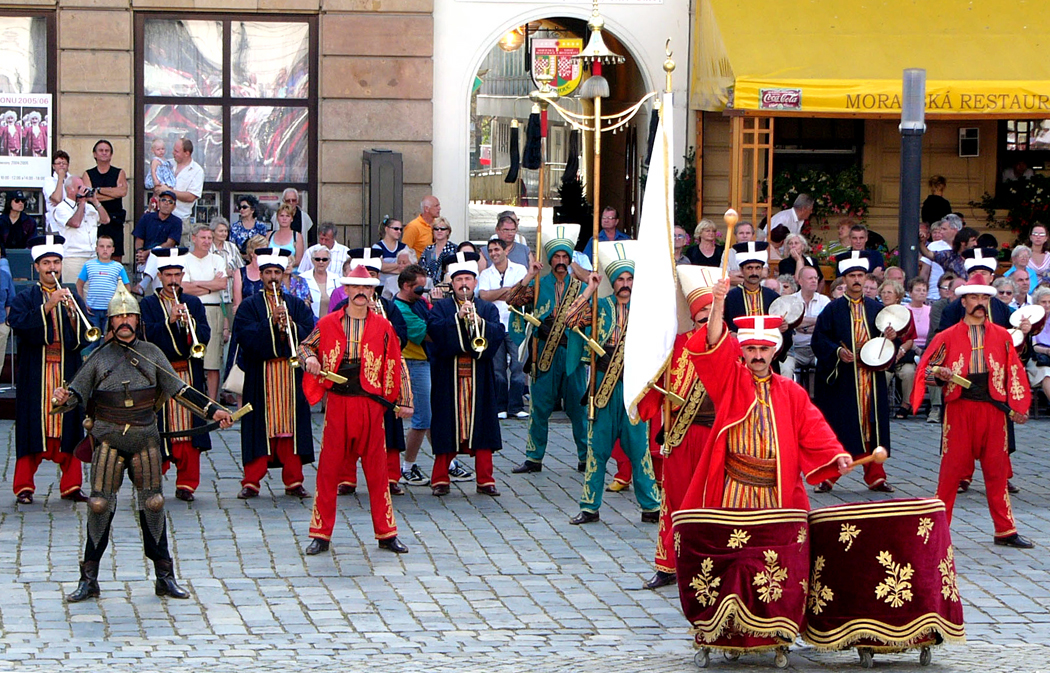
janissary 1

East is east and west is west. But the twain have met many times before the current unpleasantness.

The West and Islam go way back.

On the serious side, there were the Crusades, the Moorish conquest of Spain and Charlemagne. On the more trivial side, there was the Dutch craze for Asian tulips in the 17th century.

And one of the more interesting collisions between the West and Islam occurred in Europe in the 18th century with a craze for all things Turkish. It gave us coffee, croissants, Angora sweaters and Mozart’s Rondo “alla Turca.”

It also finally gave us Rossini’s Italian Girl in Algiers (L’Italiana in Algeri), and its sequel, The Turk in Italy (Il Turco in Italia).

Europe had been under the gun from the Ottoman Empire for centuries, but when the Treaty of Karlowitz was signed in 1699, it ushered in not only an era of peace but a fad in fashion. For the next century and a half, all things Turkish, Moorish and Islamic became the source of the culturally exotic in European minds.

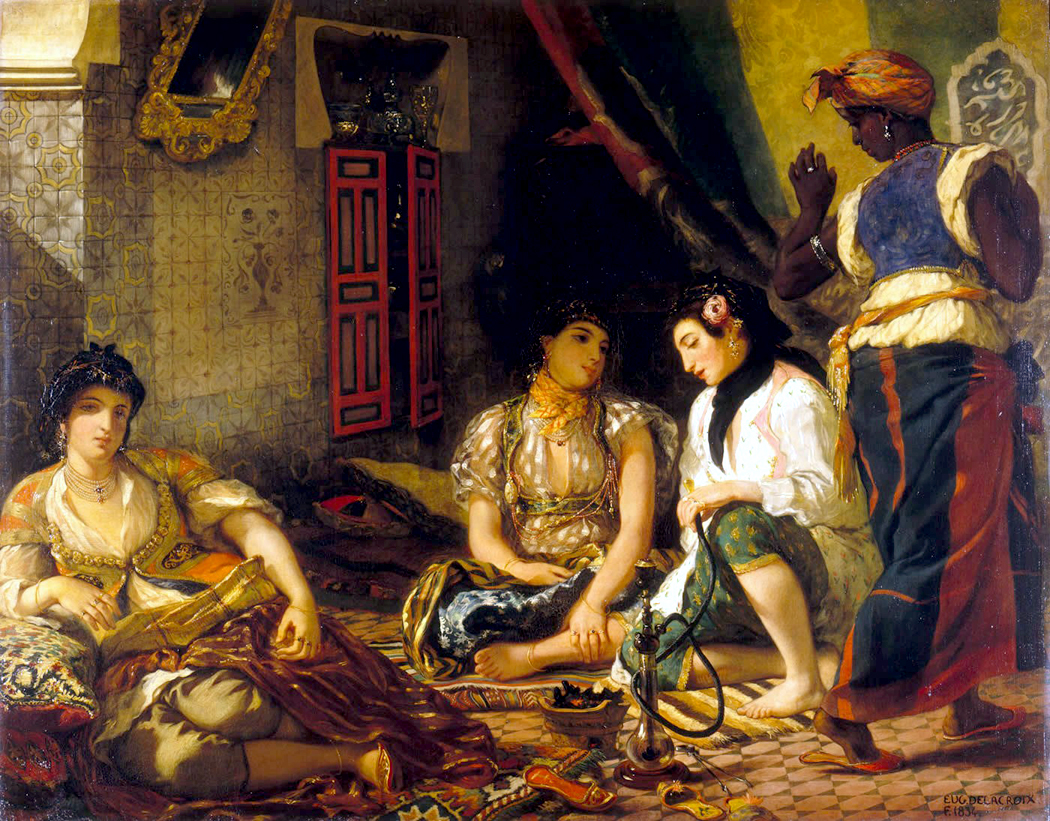
Eugene Delacroix "Women of Algiers" 1834

Eugene Delacroix “Women of Algiers” 1834

It’s really quite stunning to see it all: Turkish cigarettes, Turkish baths, Turkish carpets, harem pants, slippers with upturned toes. There were harem girls painted by Ingres and Delacroix. The turkey named for the color of its wattles, which matched a popular fabric dye of the time, called “Turkey red.”

And one of the most pervasive effects was the popularity of “Turkish music.” Haydn, Mozart and Beethoven all wrote versions of Turkish music.

When the Ottoman Turks sent janissary bands — their military bands — to Vienna as a kind of cultural-exchange program, the European ears were perked by the exotic sounds of their drums, cymbals and chimes. It was a clattery music with an insistent rhythmic drive.

You hear the European orchestra expanded with new percussion instruments at just this time, when Haydn wrote his Military Symphony and Mozart his Turkish concerto for violin.

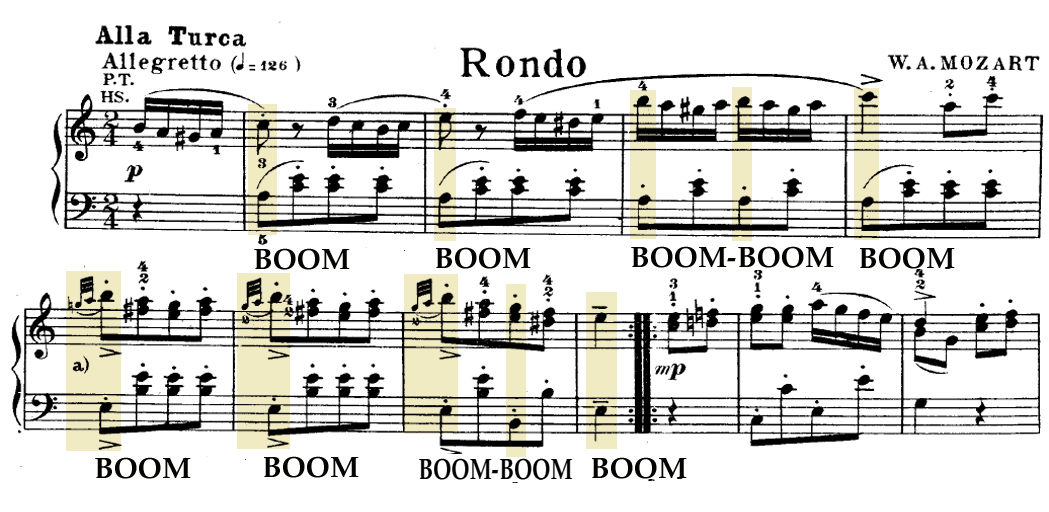
The characteristic rhythm of Turkish music was the march beat of “Left… left … left, right, left,” and you can hear it in Mozart’s Turkish rondo as well as in the concerto.

rondo boom

And Beethoven even included a segment of Turkish music in his sublime Ninth Symphony, the “Ode to Joy,” when the whole thing comes to a momentary halt, interrupted by the burps of a contrabassoon, followed by the Turkish marching music that sounds remarkably like the theme song to Hogan’s Heroes.

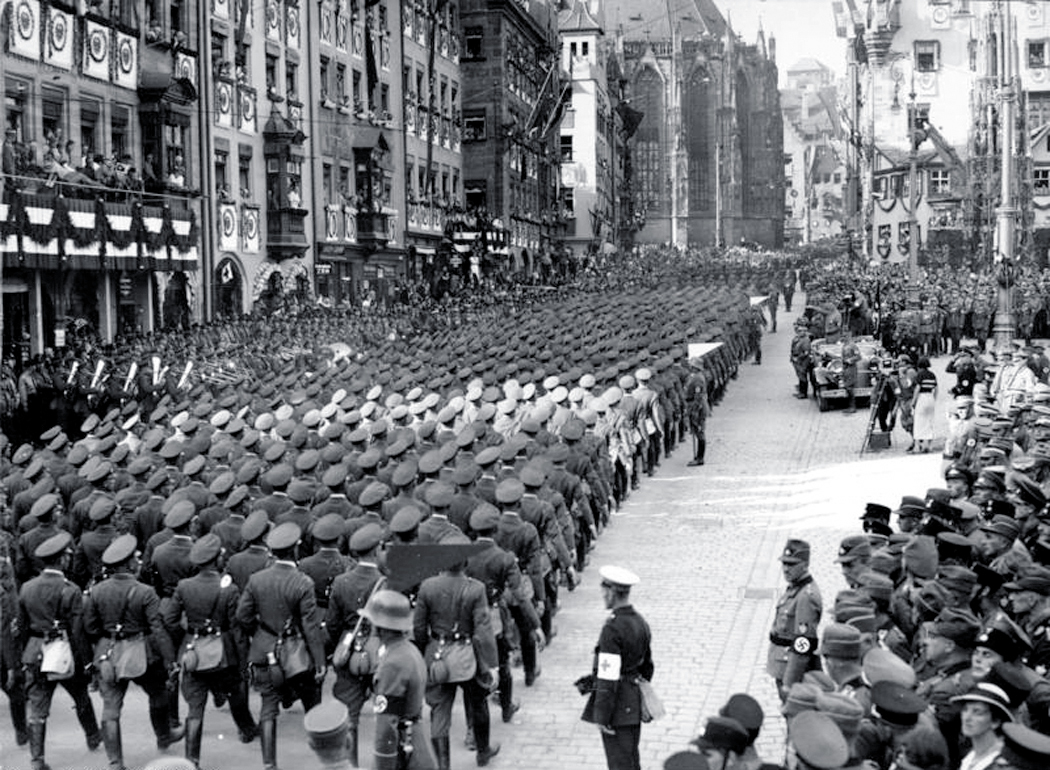
In fact, German military music made such pervasive use of the Turkish rhythm that it soon lost all sense of being exotic and became the drumbeat of Germanic militarism: If you watch the Leni Riefenstahl film, Triumph of the Will, about the Nazi Party rallies in Nuremberg before the war, you are nearly oppressed with that “boom … boom … boom-boom-boom” rhythm. Nürnberg, Reichsparteitag, Marsch der Wehrmacht

That is a baleful end to what began as pure fluff. Operas about Turkish pashas and European women were a regular occurrence.

Mozart wrote his Abduction From the Serail, filled with Turkish effects, and Rossini, decades later, imitated that sound — and pretty well stole the plot — from the Mozart, for his Italian Girl in Algiers. In it, a crafty Italian woman outwits a foolish Turkish bey and saves herself and her fiance from a fate worse than Wagner.

It’s a wonderful opera, full of Rossini’s best tunes and imbroglios.

spilled glue

When you’ve heard a piece of late 18th century music on the radio and you don’t know who wrote it, how do you tell whether it was by Haydn or by Mozart?

A former teacher of mine had a simple answer: “If you can remember the tunes when it’s over, it’s by Mozart.”

They were both great composers, but Mozart — in his best music — had a quality that Haydn lacked: He could write “sticky” tunes.

I’ve lately been thinking about this quality, because while we instantly recognize “stickiness” (that recognition itself is practically the definition of “sticky”), it’s difficult to know why one tune is sticky and another isn’t.sticky bun

And it is important to recognize that stickiness is only one quality of good music. Some composers, like Haydn, still wrote great music without it. Heck, the composer most people name as the greatest ever — Beethoven — hardly ever wrote a memorable tune. I mean memorable in the way that even a Rodgers and Hammerstein tune can be memorable. Let’s face it, “Da-Da-Da-Dum” is not really even a tune: It’s a pattern repeated so many times in that damn symphony it is pile-driven into our memories. Anything we rehearse over and over can be memorized. Like multiplication tables.

In contrast, the first thing you hear in, say, the Mendelssohn violin concerto is so sticky, if heard once, it is instantly becomes part of your life.

It should be acknowledged that stickiness is not the be-all and end-all of music. Marvin Hamlisch had it and Stephen Sondheim lacks it, but who is generally held to be the better composer? Sometimes, a catchy tune just means a shallow tune. library paste

There are those composers we instantly recognize for the warmth and catchiness of their melody writing: Mozart, Rossini, Schubert, Dvorak, Tchaikovsky, Verdi, Mendelssohn, Schumann. And there are those whose music finds its strength in other qualities, such as Beethoven, Brahms, Stravinsky.

That stickiness is a distinct quality of music can be seen in the descending careers of both Mendelssohn and Schumann. After Schumann’s breakdown, his music lost its stickiness. It maintained all its craft, but none of its memorability. Mendelssohn wrote the Octet and the Overture to Midsummer Night’s Dream when he was a teenager, but by the time he became the pious paragon of English Victorian culture, he was pumping out some very dull music, indeed. The two composers simply lost their adhesiveness. rolling stones sticky fingers

In contrast, two later composers took the other route: Early music by Cesar Franck and by Leos Janacek chuff-chuffs by on sheer force of will, while when their hair turned gray, they were both touched by the sticky muse and gave us music we can’t get out of our heads.

One thing that seems to be true about sticky melodies is that they feel somehow complete in themselves. The secret of most great symphonic music is that it is built on patterns of notes that can be altered and developed, the tune can be taken apart and rearranged, turned upside down, slowed down or sped up, without losing its fly paperidentity — like Beethoven’s “Da-Da-Da-Dum.” But a sticky tune, like the Mendelssohn concerto, is so complete in itself that it doesn’t easily bear symphonic development: Change a note or rhythm and it loses its identity. This is the downfall of so much music from the Romantic era, where a tune is so good to start with, the composer has nowhere to go with it, so he just repeats it with different instruments or at a different register. It can make for monotony in a 40-minute symphony, a monotony that Haydn never courts, because he is always doing something fresh and new with his themes.

But stickiness isn’t just for music. Some paintings are sticky, even after they’ve dried. Some poetry is sticky, some architecture is sticky.

Just compare, say, Alexander Pope with John Dryden. Pope, sticky, Dryden, dry. All the craft is there in Dryden, and some very lovely turns of phrase, but nothing as memorable as “The proper study of mankind is man.” Pope ranks third as most quoted poet in Bartlett’s.

Keats: sticky. Shelley: not so much.

Wordsworth, like Schumann, lost his youthful stickiness.jam face

Again, stickiness is not the sole measure of worth. Joyce Kilmer’s “Trees” is as sticky as a caramel apple, but not exactly on a level with John Milton.

Claude Lorrain, sticky; Nicolas Poussin, not so sticky. Henri Toulouse-Lautrec is one of the stickiest artists ever. You can come up with your own list of sticky paintings, sculpture and photographs. The subject of stickiness is wide and deserves deeper critical attention.

Stickiness is what every “hook” is in a pop tune, it is the sine-qua-non of a magazine ad or a TV commercial. It may have something to do with simplicity and clarity, but even a complex tune can be sticky.

I would welcome some scientific study of stickiness.