Archive

Tag Archives: hopalong cassidy

The foundational mythology of the United States belongs to the cowboy. An argument can be made for the Founding Fathers, but they are understood more as history than as myth. And by myth I don’t merely mean something that isn’t “true,” but as a mental model that we have absorbed as the definition of what makes us American. We are more John Wayne than we are John Adams. 

Like many of us, I grew up on Westerns, although because I am in my 70s, my foundational Westerns were those from the 1930s recycled in the 1950s on television. I grew up knowing who Ken Maynard was, or Buck Jones. Back then, TV stations were starving for content to broadcast, and the pile of old Westerns filled the Saturday morning hunger. Those younger than me likely didn’t have such a cinematic indoctrination. Later TV Westerns became their version. 

But, since I wrote a blog piece about TV’s Gunsmoke, (link here) I have been thinking about Westerns and their role as our national psychic subconscious, and about how the fictional version differed from the historical. And what is more, what that shift means, culturally. 

It has not always meant the same thing, and the evolution over time describes the changes in America’s perception of itself. 

I believe there were distinct eras of Westerns, that have evolved over the past two centuries. These versions of the West overlap, and all of them have been present from the beginning, or near enough. But the preponderance of each defines each era. 

The West began in upstate New York with Natty Bumppo, or Hawkeye, as he was known in The Last of the Mohicans, and gave us the prototype of the rugged individualist. He morphed into Jim Bridger, Daniel Boone, Davy Crockett and various mountain men living in the wilderness. 
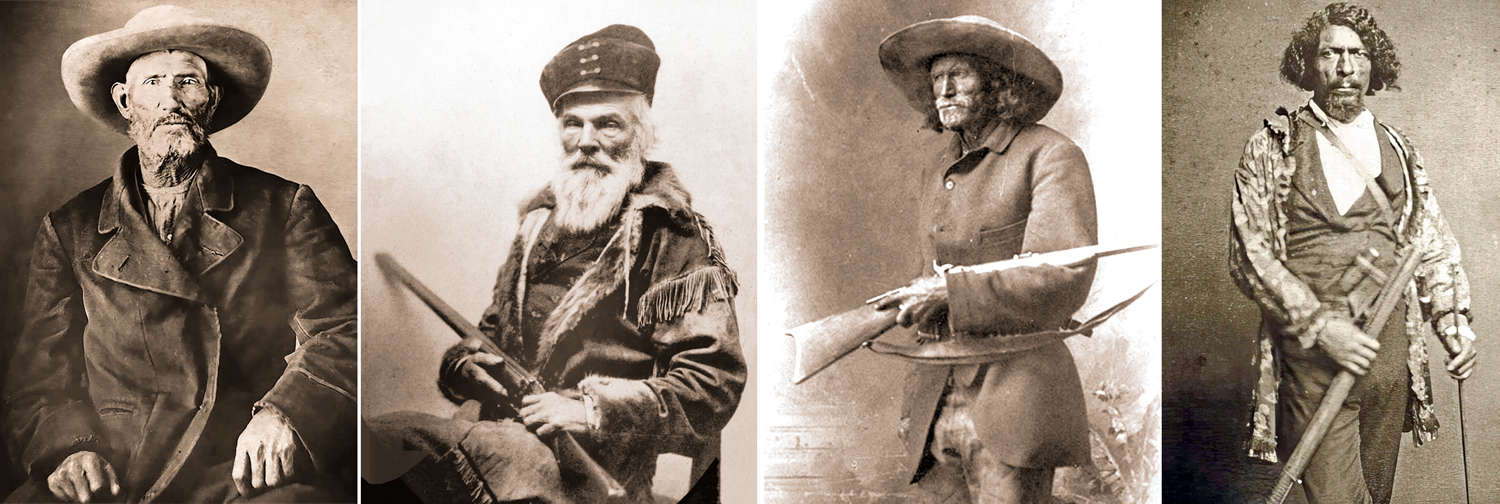
Jim Bridger; Joseph Walker; Jim Baker; Jim Beckwourth

These heroes played out the myth of how we conquered a vast wilderness with rugged individualism and tenacity. It grew into the myth of Manifest Destiny.  
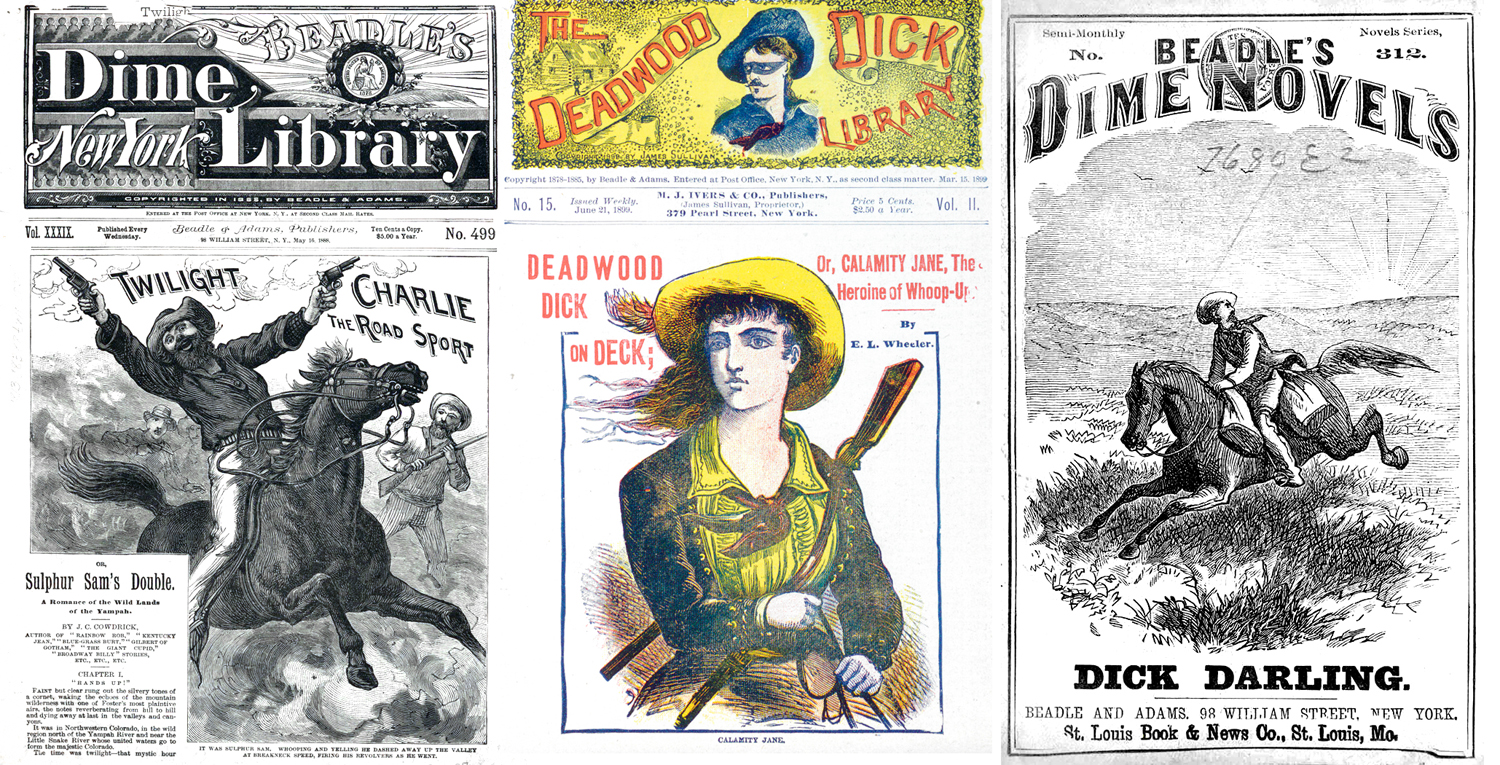
After the Civil War, when economic exploitation of the West began in earnest, with mining and cattle industries, the cowboy took over, with adventurous exploits popularized in a thousand dime novels. Certain names begin showing up with regularity, including Buffalo Bill, Wyatt Earp, Jesse James, Belle Starr. These elided into the early Western movies, including The Great Train Robbery (1903) and Across the Plains (1911), which starred Broncho Billy Anderson, the first cowboy movie star. 
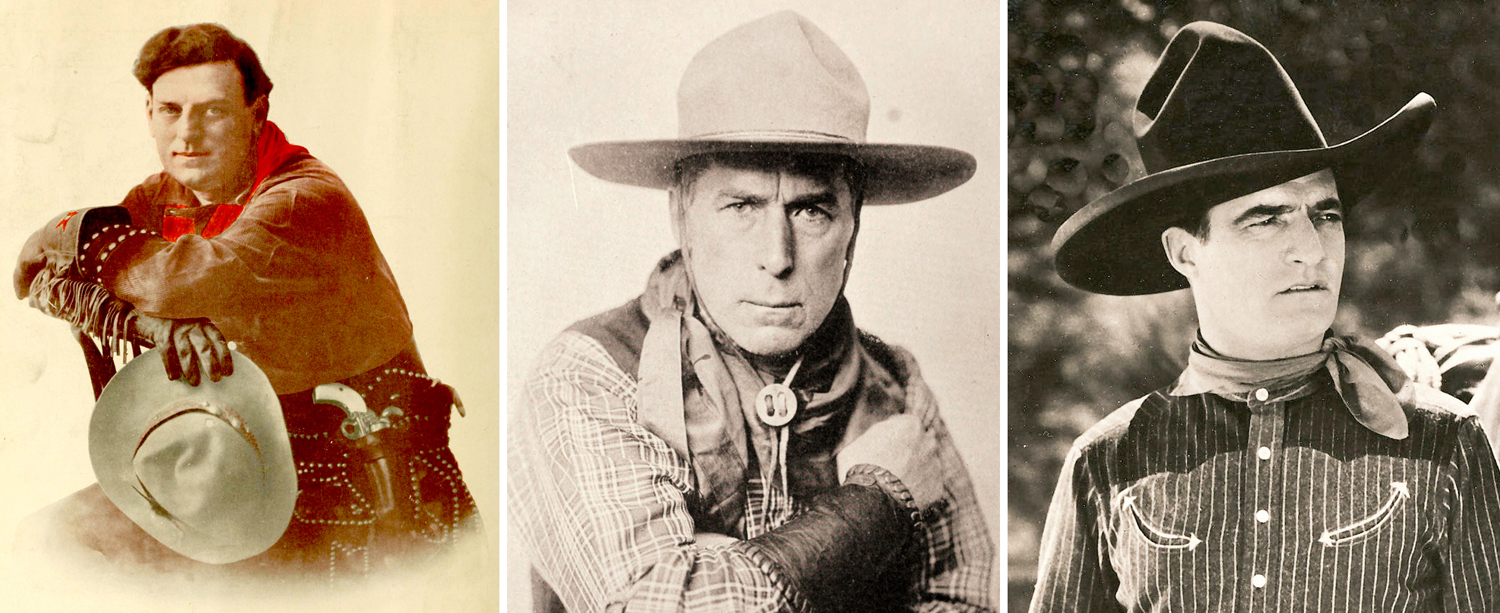
And a split in the myth. On one hand, you had William S. Hart, who attempted a level or realism in costume and plot (matched with a high level of sentimentality), and on the other hand, you had Tom Mix, the show-biz cowboy all duded out with fancy kit. 

The difference was between movies made for general audiences and those aimed at children, mainly young boys. Mix brought glamour to the Western, with fancy cowboy duds and sparkling saddlery to his horse, Tony. 

That split continued into the sound era with hour-long Saturday matinees  with Hoot Gibson, Bob Steele and dozens of others, including John Wayne, who made scores of cheap oaters and even took to trying out as one of the singing cowboys that were briefly popular. 

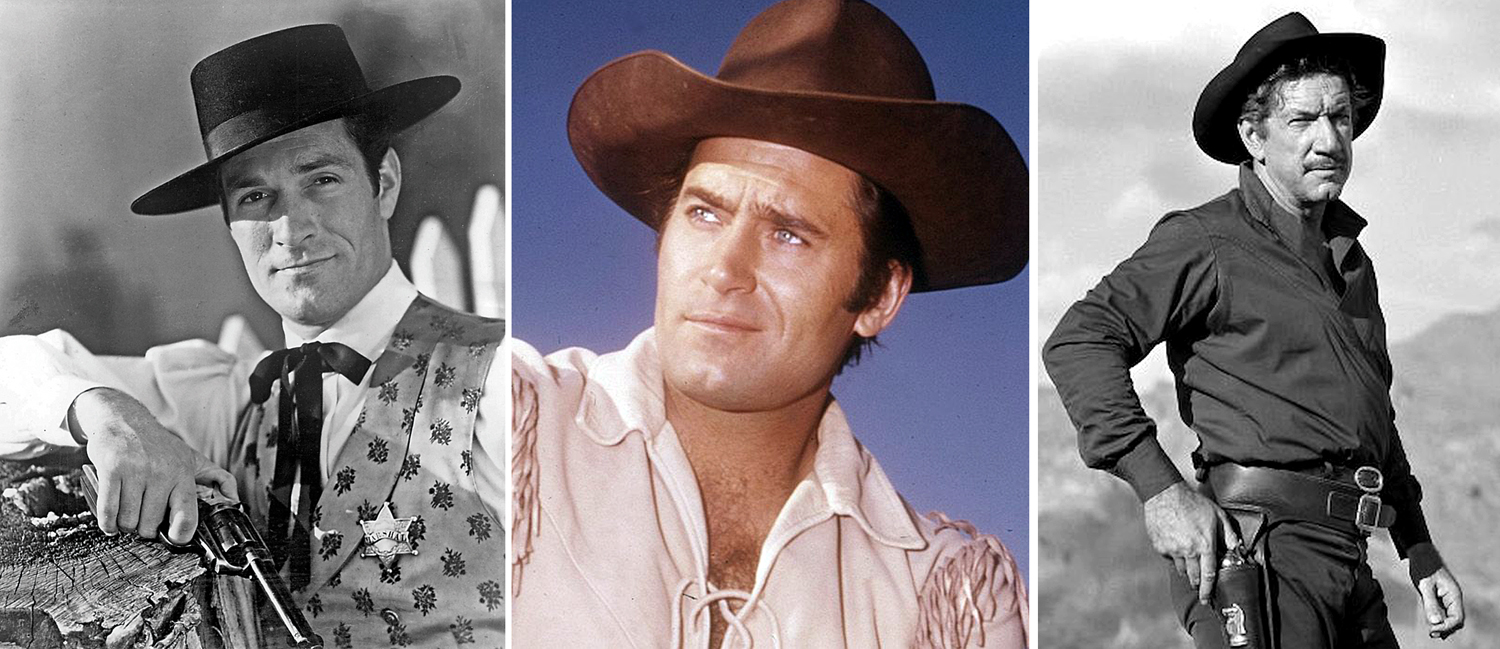
Through the 1940s, the cowboy movie became stereotyped with stars such as Roy Rogers, Gene Autry and William Boyd as Hopalong Cassidy. There was little attempt at realism. Sometimes they actually fought Nazis. 
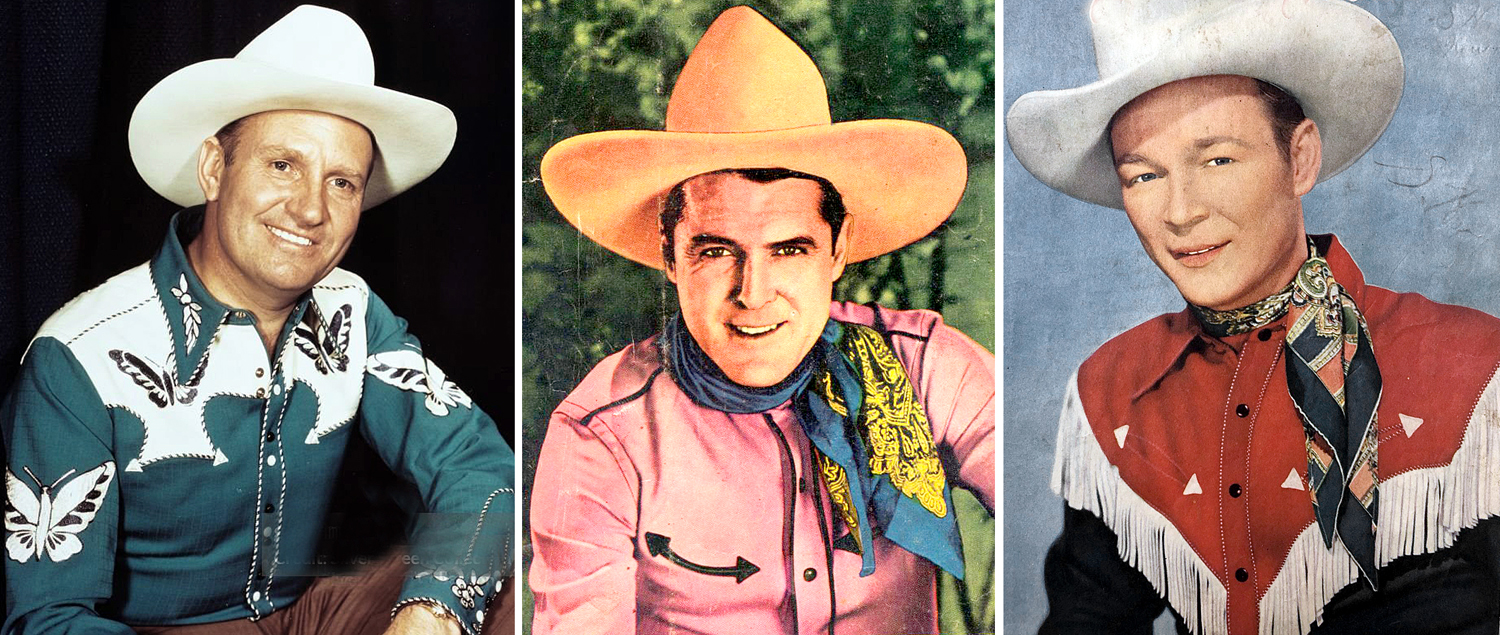
These were the cowboys wearing shirts with crescent pockets and shoulder fringe, and often sported a six-gun on each hip. 
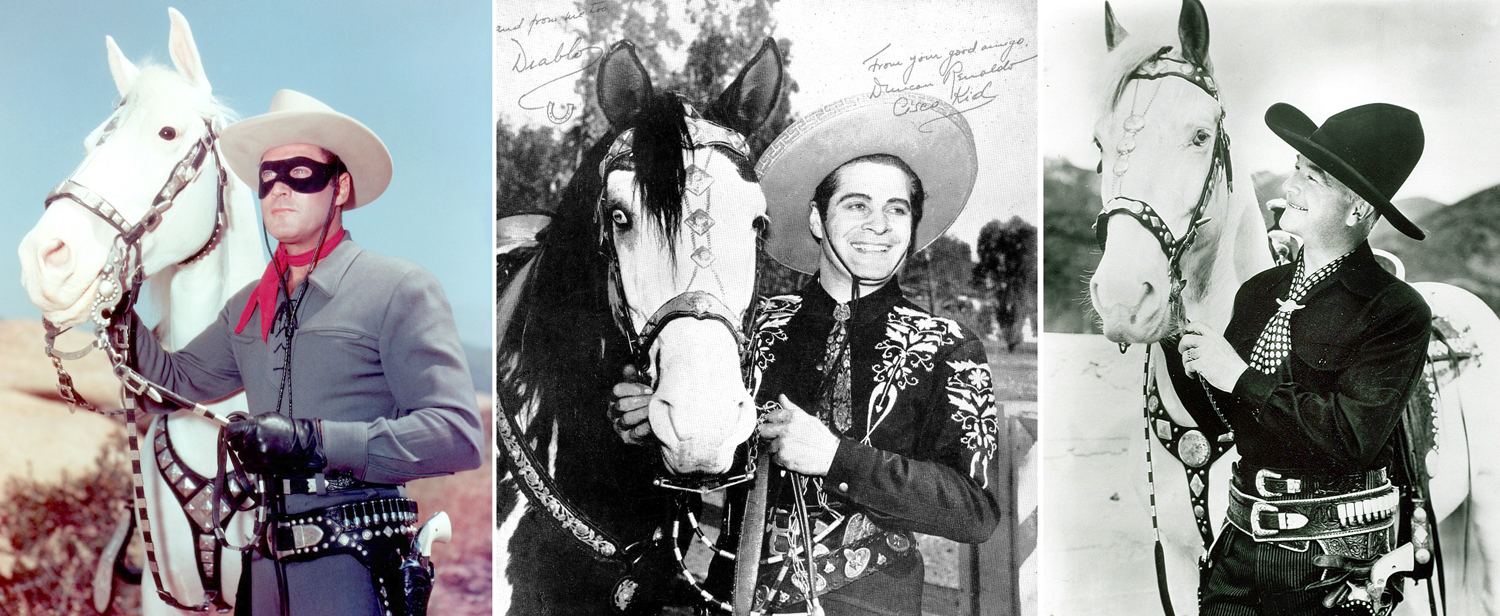
All that carried over into the television era, with a skein of popular Westerns mostly aimed at kids: The Lone Ranger; The Cisco Kid; renewed popularity of Hopalong Cassidy.

Meanwhile, there were always Westerns made for grown-ups, too. From John Ford’s Stagecoach and Howard Hawks’ Red River, through the Budd Boetticher films with Randolph Scott. There was Shane, and High Noon, and Winchester ’73

Initially, the lone hero version carried over into the TV era, also, when  The Life and Legend of Wyatt Earp, with Hugh O’Brien, kicked off a decade of evening programing with cowboy heroes, such as Cheyenne, Maverick, Have Gun — Will Travel, Bat Masterson, and The Rifleman. And, of course, Gunsmoke. You can name a dozen others. The market became glutted and then, suddenly, it seems, Westerns were shot dead. 

There came a cultural shift. Maybe it was the Vietnam War, maybe it was fatigue with the cowboy cliches, but when Westerns eventually did return to the silver screen, they took a dark turn. There had been revisionist Westerns before. Indians weren’t always the bad guys. But starting in the 1960s, with films such as Ride the High Country (1962), A Fistful of Dollars (1964) and the subsequent Spaghetti Westerns, Hang’em High (1968) and ultimately, The Wild Bunch (1969), the new Western was brutal, filled with low-lifes and lots, and lots of grime. 

“McCabe & Mrs. Miller”

The trend continued through McCabe & Mrs. Miller (1971) to Unforgiven (1992). Even the more positive films like those from Larry McMurtry novels or with Tom Selleck attempt a more naturalistic view of the times in which they were set. 

Of course, there’s a good deal of overlap in the eras. It’s a question of what predominates in what decade. There have been revisionist Westerns from the earliest years, but this view of the overall shape of the Western in American consciousness over time is, I believe, basically accurate. 

What is not accurate, though, are the Westerns themselves. Admittedly, they were never really intended as realism: They are myth and they are national epic. Our equivalent of the Iliad or the Kalevala. Even those attempting fidelity to historical fact ultimately underline the myth more than the fact. “When the legend becomes fact, print the legend.” 


Actual cowboys

As a kid, I loved the cowboy movies, but as an adult, I am bothered by them. I try to remember they are not meant to be documentaries, but crystallizations of myth, and you don’t expect myth to be realistic. You don’t ask Hercules if he has a mortgage. 

Yet, there are sore thumbs that stick out for me in almost all filmed Westerns; four of them — aspects that scream out: “No, this isn’t the way it was.” And perhaps that shouldn’t matter, but these things make it difficult for me to appreciate Westerns the way I did when I was a kid. 

I have four primary gripes. They are: economy; geography; ethnic diversity; and language. Let’s take them in order. 

Two movies, same location

Towns exist in Western mainly to stand in for civilization. It’s where the people are — the people largely left undefined. They stand in front of general stores or the saloon while the heroes and villains play out the ritual of the gunfight. The same set can be used and reused in many pictures, even as diverse as Westworld and Blazing Saddles. The Western movie town is just the stage set for the plot.

But actual towns are built for economic reasons. There was some industry that needed workers and the workers needed services, and so, towns grew. But in most Western movies, there doesn’t seem to be any functioning economy. There are references to cattle and ranches, but aside from giving rustlers something to do, they barely show up as economic factors.  

While the standard movie Western town has its saloons, its general store, its hotel and restaurant, its stable and blacksmith, there is never a thought to where its residents get the money to pay for their drinks, meals, gingham or horseshoes. A town doesn’t grow for just no reason. 

Even Dodge City, in the 1870s, when Gunsmoke is supposedly set, had a mayor and council and a police force. There would also likely have been an elected sheriff for Ford County and a judge, to say nothing of at least two lawyers, advertising on the front page of the Dodge City Times in 1878. 

Sometimes it is downright preposterous. Consider Clint Eastwood’s High Plains Drifter. Its town is built on Mono Lake in California with no economic base at all — just a hodgepodge of buildings erected near a salty lake that cannot even provide drinking water for the residents.
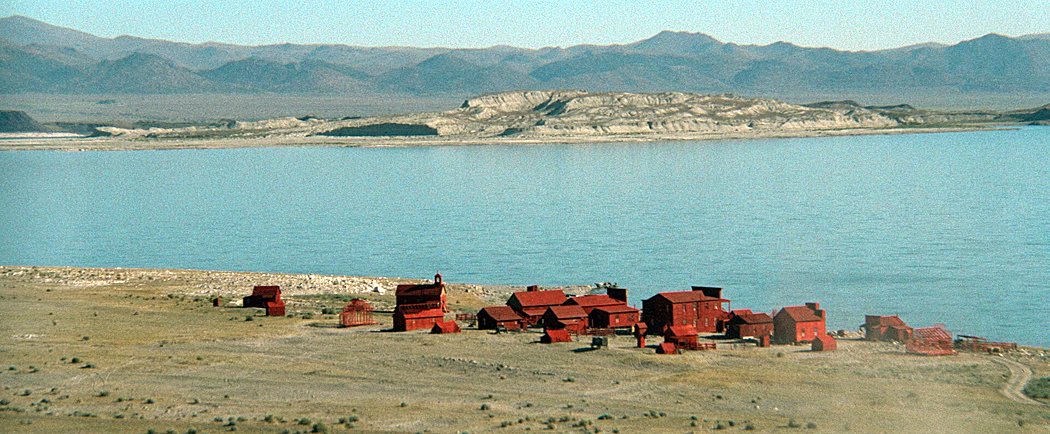
“High Plains Drifter”

Or, one of my favorites, the supposed farm built in Monument Valley in Arizona, in The Searchers. The idea of such a farm is ludicrous — not made better because the landscape is supposed to stand in for Texas. 
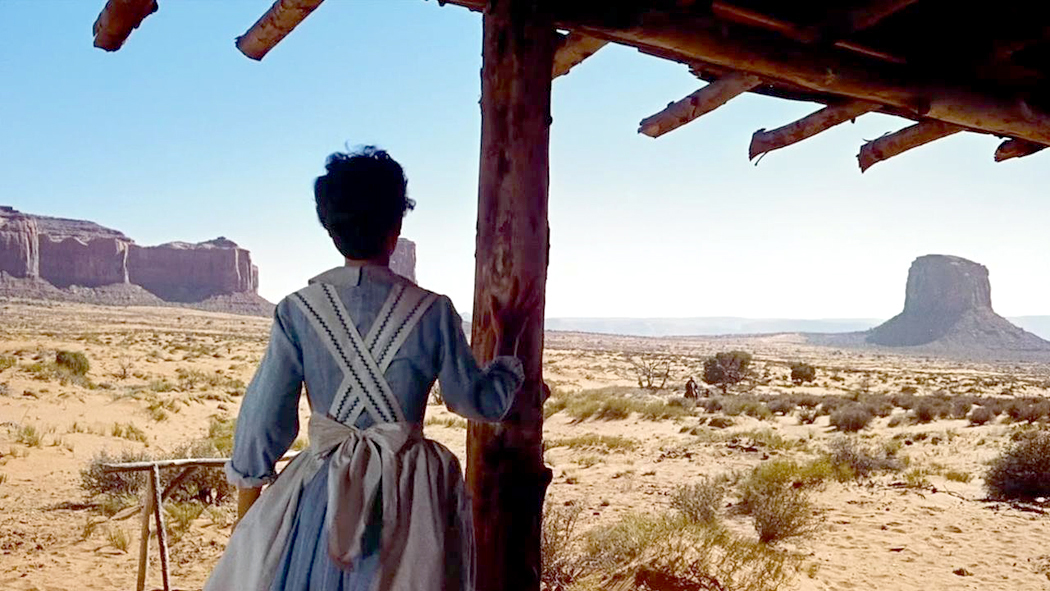
“The Searchers”

 Again, there is a reason towns were built where they were. On rivers for shipping; near mines to provide supplies and provisions; along railroads to ship cattle; near army forts to unload soldiers of their pay.  

As seen in the movies

 My second beef with Westerns is its geography. Most of the Western tales we have historically took place in the most boring landscapes imaginable, in Kansas, Nebraska, Missouri, Texas. 
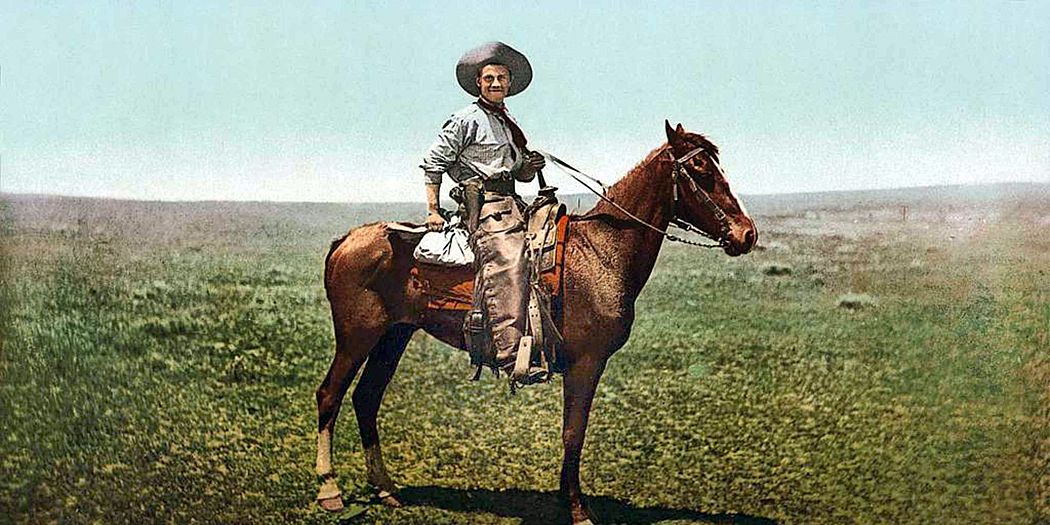
What the actual working West looked like

But such places are not very photogenic. And so, we move them lock, stock and barrel to the Rocky Mountains, the Desert Southwest or California’s Alabama Hills with the Sierra Nevada in the background. 

“Gunsmoke”

Even Gunsmoke, set in Kansas, sometimes shows a mountain range off in the distance sighted down the main street. (I’ll discuss Dodge City in more detail in Part 2 of this essay, to follow). Matt Dillon is sometimes shown accompanying a prisoner, for instance, across the Rocky Mountains or into the desert, hundreds of miles from his jurisdiction. To say nothing of the months it would take to ride there on the back of a horse. 

In the 1950 film Broken Arrow, Jimmy Stewart rush back from Lordsburg, N.M., to Tucson, Ariz., and somehow manages to pass through Sedona, Ariz., on the way — a detour of several hundred miles. Clearly Sedona was more photogenic than the Wilcox Playa or Benson. 
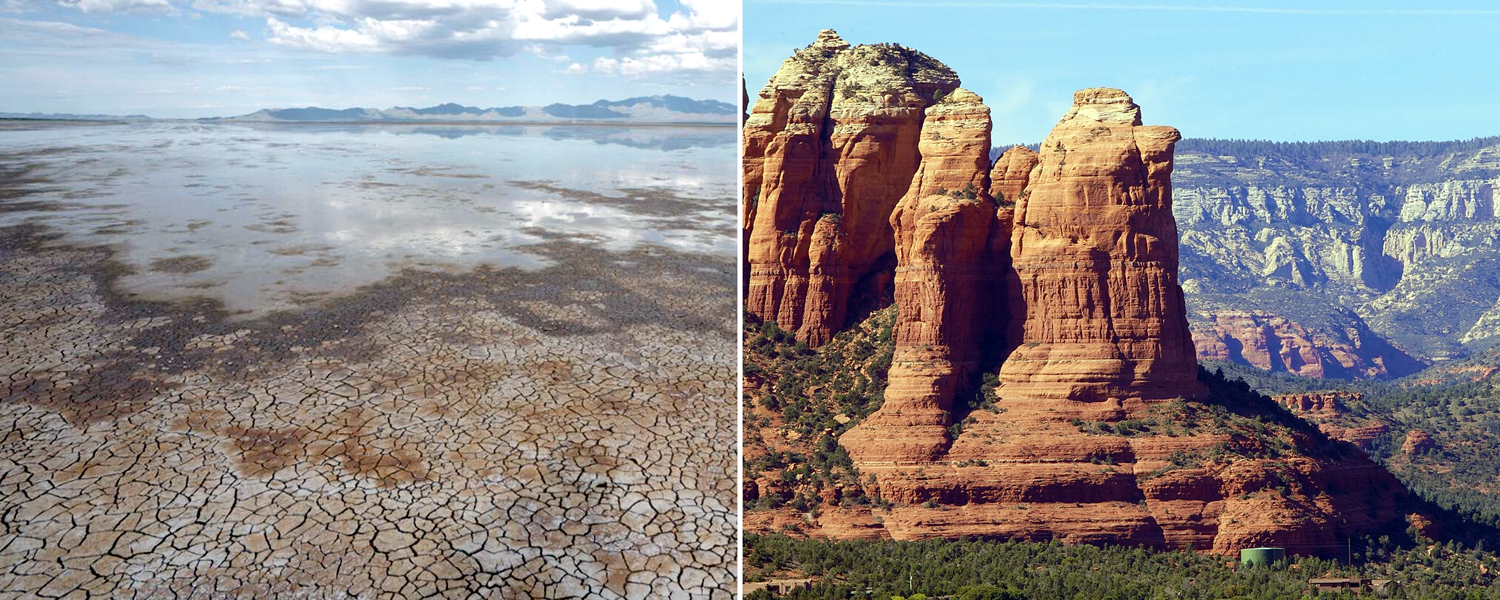
Wilcox Playa (left); Sedona, Ariz. (right)

As in so many Westerns, the West is just a mental landscape, where any buttes and saguaro cactus will do as a setting. 

As a sidenote, related to the geography: Cowboys stranded in the desert reach for their canteen and take a slug of water, or else hold it upside down so we can see it’s empty. I lived in the desert for 25 years and can tell you water is a big deal. Driving through Death Valley one July, I became so dehydrated I developed a headache and was beginning to become disoriented. I had to drink a full gallon of water to recover. A few swigs from a canteen is basically meaningless. 

The third and fourth distortions are perhaps less important, but they nevertheless stick out for me when I’m watching an old Western. There is the lack of ethnic diversity and the matter of speech.
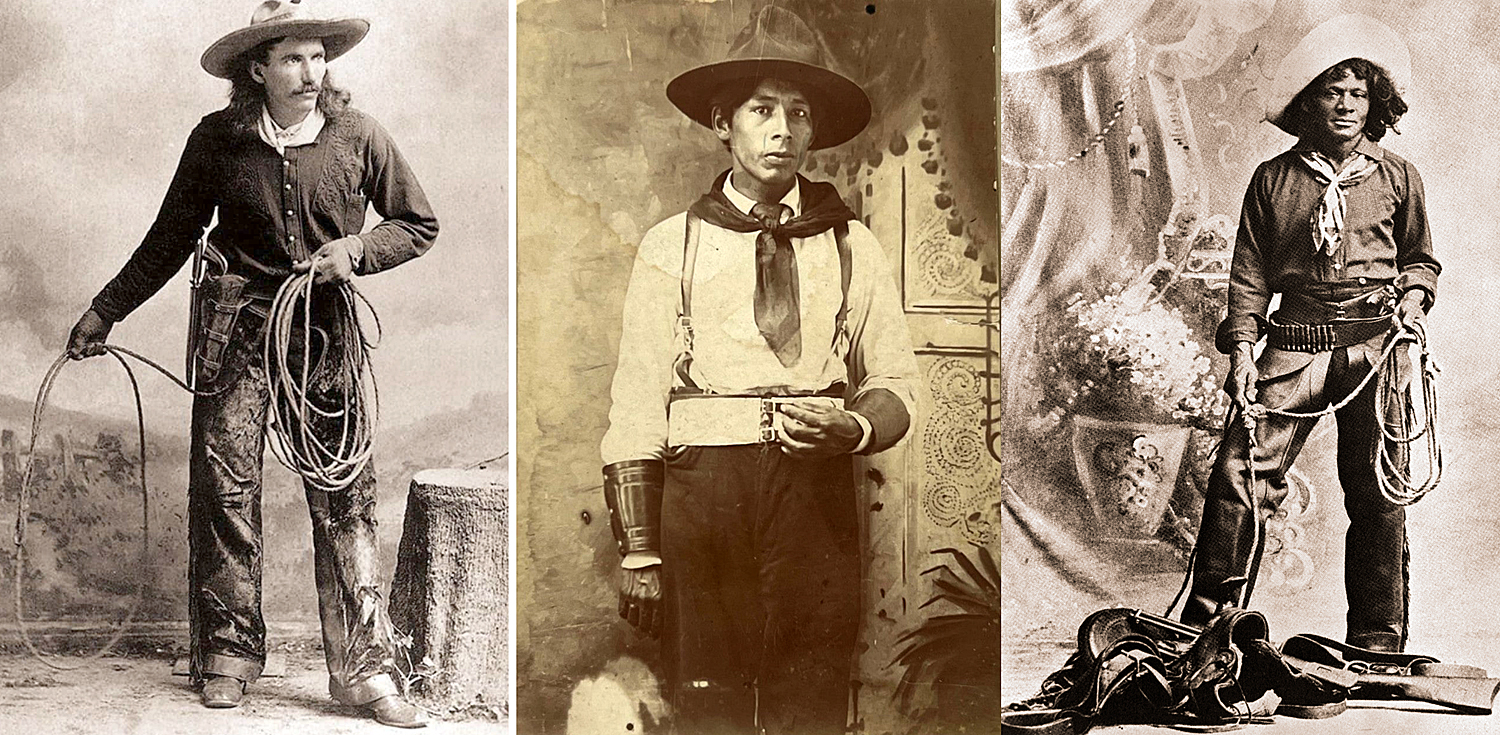
Cowboys: Vanilla, Native American; African American

It’s been documented that about a quarter of all cowboys were African-American. They don’t much show up in the movies (John Ford had his Woody Stroud and at least that was a nod to the fact). And another 20 percent were Mexican and many were Native American. In the towns, segregation was normal, even if the working cowboys out on the plains were mixed. Virtually all the laundries and restaurants in the Old West were run by Asians, mostly Chinese. Other ethnicities were notable factors in various troubles, as the Irish clashed with the English. 
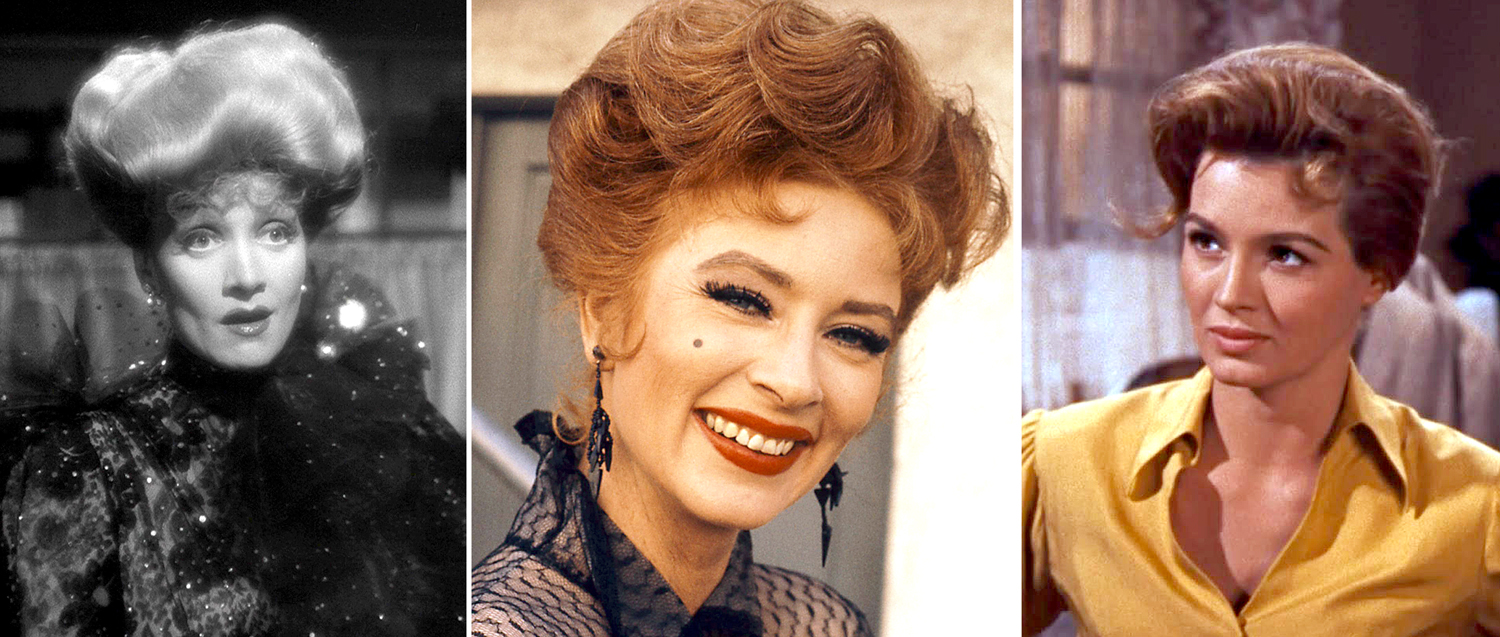
Finally, there is the language spoken in 19th century America, which was much more formal than we take for normal now. In the Western movies, the actors tend to speak in the manner current when the films were made, and that changes over time, just the way the hats went from 10 gallons to three pints, and the brassieres just kept getting pointier. 

The evidence from letters and from novels written during the period tell us that people spoke in longer sentences with fewer contractions. At home, you might relax when talking to your spouse or children, but in public, you attempted to be correct. Even the illiterate miners and farmers spoke more formally. 

This last bothers me less, because if Randolph Scott or John Wayne spoke as they would have in the Old West, the audience might laugh, or at least yawn. How often have you heard parodies of Ken Burns’ Civil War, when they read letters soldiers wrote home? What was normal speech in the 1870s sounds utterly archaic, even stilted, to our ears. 

Next: Part 2 — A look at the historical Dodge City

As Stephen Colbert says, “I don’t know if these are actually sins, but I do feel bad about them.”

I have a seven-decade long reputation to maintain as a dour, serious-minded  stick-in-the-mud, with no time for trivialities. My theme song is Party Pooper. My favorite color is gray. My wife used to call me, “The man who can’t have fun.”

I argued back that I have lots of fun, but for me fun is reading Gilgamesh or Xenophon, listening to Beethoven piano sonatas while following along with the Schnabel edition of the score (including reading all the footnotes), listening to lectures on the Indus Valley Civilization or the Black Death from the Great Courses Plus, watching C-Span Booknotes and waiting with great anticipation for the C-Span bus to visit Sheboygan or Wilkes-Barre. These things give me great pleasure and fill my life with great joy.

Yet, that doesn’t mean I don’t have my guilty pleasures — bits of pop culture that I partake of on odd occasions. There are times I switch away from the PBS Newshour or online lectures from M.I.T. and let my hair down. You won’t tell anyone, will you?

Here, then, are five guilty pleasures that I recommend to you. (There are more, but my quotient for mortification is limited).

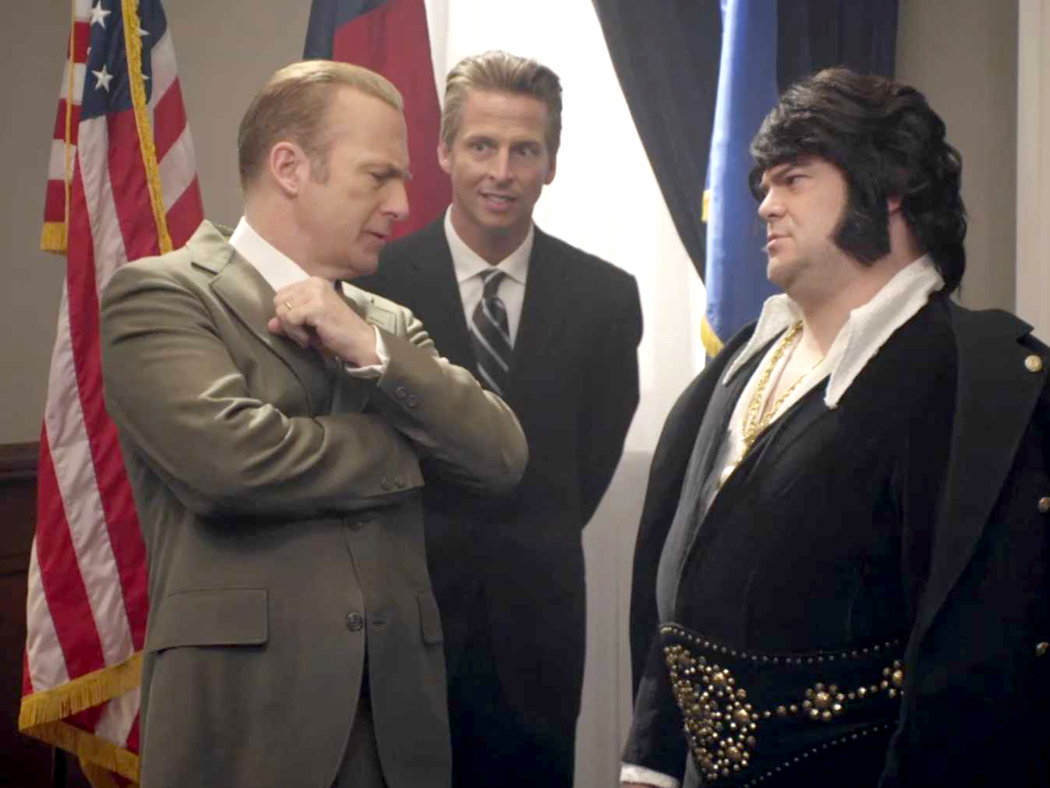
Drunk History — It would be hard to find anything sillier than Comedy Central’s Drunk History. Created by comic Derek Waters and Jeremy Konner, it asks various, mostly D-list entertainers to drink themselves goofy and attempt to tell the story of some historical figure, while various, mostly A-list actors and comedians lip-synch costumed re-enactments of the events.

The camera switches back and forth between the drunkard, in a home with an equally plastered Waters, and the beautifully photographed recreations, in which the actors perfectly mime the words of the storyteller, right down to the hiccups and incoherence. A fair number of the drinkers wind up finishing their tales while driving the porcelain bus; others pass out on the couch.

A few for-instances: Actor Eric Edelstein tells the story of Elvis and Nixon, while we see the re-enactment with Jack Black playing Elvis, Bob Odenkirk as Nixon and Jack McBrayer as H.R. Haldeman.

In another, Tiffany Haddish (they’re not all D-list) tells us about French Resistance fighter Rose Valland, who saved and helped retrieve hundreds of art treasures threatened or stolen by the Nazis, with Busy Philipps playing Valland in the dramatization.

For most of the half-hour shows, three stories are told, with the first two taking up 5 to seven minutes each, separated by annoying commercials, and the third filling two segments, with annoying commercials in between. (As usual, the best solution is to Tivo the show so you can fast-forward through the muck).

One of the best shows recently was when Lin-Manuel Miranda got himself pie-eyed and tried to summarize the life of Alexander Hamilton. He got the whole half-hour. Blind-casting adds extra confusion to the show: Hamilton was played by Alia Shawkat; Aaron Burr was Aubrey Plaza; Bokeem Woodbine was George Washington; and Tony Hale was James Monroe. I am astonished that Miranda would risk reputation, alcohol poisoning and brain damage to take part, but it was a scream.

And one can actually learn things from this show, although you will want to verify what you find out by actual reading and research. Sometimes the drunks get confused.

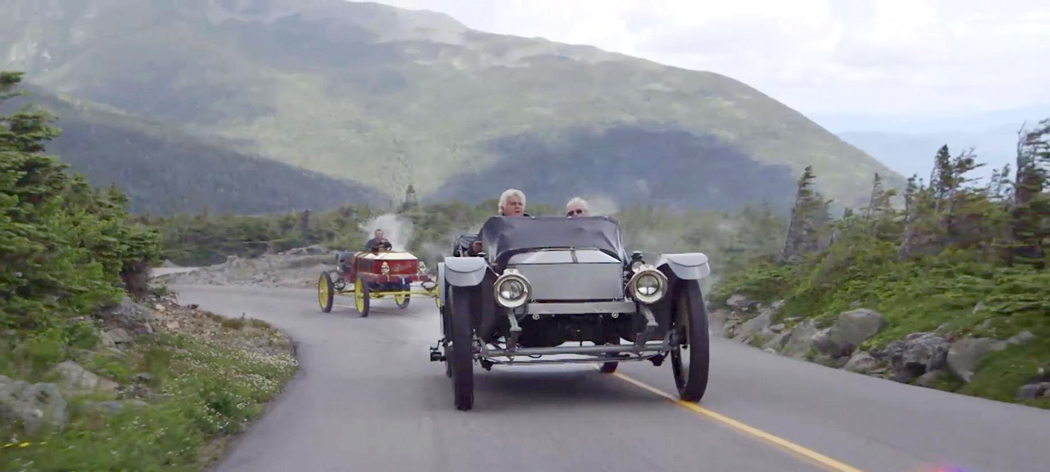
Climbing Mount Washington, N.H., in Stanley Steamers

Jay Leno’s Garage — I’m old enough to remember when Jay Leno was funny. Before the Tonight Show de-clawed him and turned him into a toothless shill for Hollywood celebrity backslapping, Leno was edgy, took chances and snookered the very thing he later became mouthpiece for. Now retired from the daily grind of pleasing his corporate masters, Leno, now 67, is still a workaholic, but it seems now he can put his energy into something he actually cares about: cars.

With Gabriel Iglesias and his 1966 VW bus

Reportedly, he owns 286 vehicles, both cars and motorcycles, and has a garage that could double as a museum. In his current show, on CNBC — a network that as far as I can tell, is watched by no one — Leno gets to play with his toys and his enthusiasm is infectious.

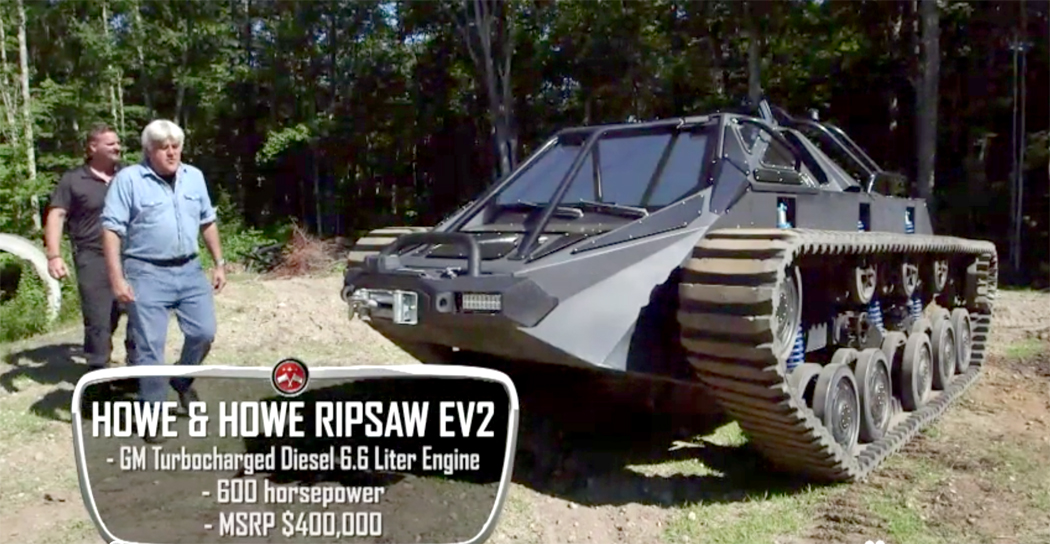
As someone who does not care about cars — I think of them as being appliances, like washing machines on wheels — I am surprised myself at how much I enjoy watching Leno enjoy driving Maseratis, Bugattis, Abrams tanks, fire engines, monster trucks, drag racers, and a 1939 Ford pickup truck loaded with the radial engine of a Cessna airplane.

He often has Hollywood friends show up with their own favorite autos and bikes. Keanu Reeves manufactures high-end motorbikes. Comic Adam Corolla has been collecting race cars once owned and driven by actor Paul Newman. Tim Allen plays “Stump the Car Nerd.” Arnold Schwarzenegger shows off his electric Mercedes-Benz G-Wagen conversion.

It is less the high-end muscle cars that interest me and more the peculiar vehicles he encounters, like the Mars Rover, the Ripsaw EV-2 civilian tank that can reach 60 mph, the two-story tall dump truck that carries borax from the mines, the wienermobile, a convertible filled with water and turned into a mobile hot tub. There are a lot of these.

But mostly, it is the obvious pleasure Leno takes in his toys that makes this series a joy to watch.

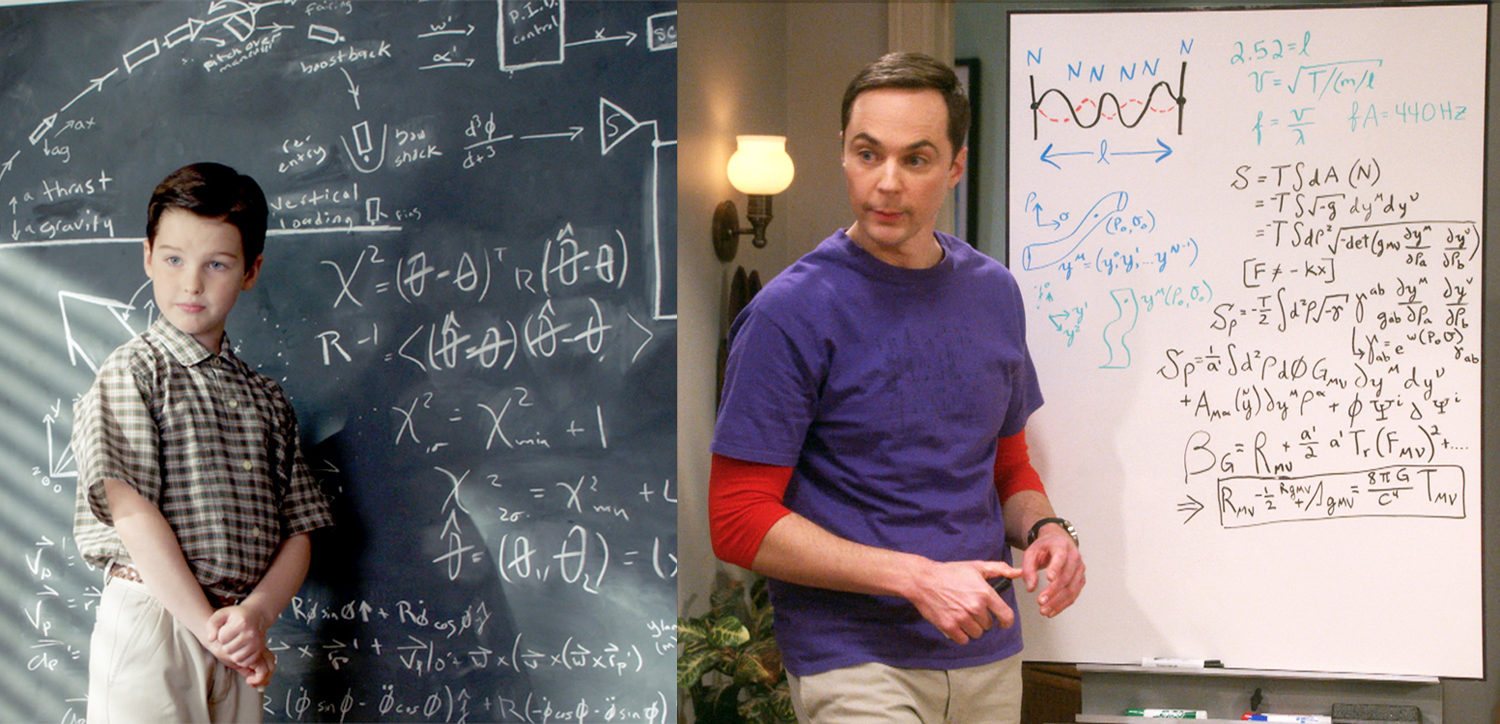
Young Sheldon — This never sounded like a good idea. A spin-off from The Big Bang Theory, this show follows the 9-year-old genius, Sheldon Cooper, as he negotiates life, neuroses and high school.

The parent show has long jumped the shark (although I continue to watch it because, even worn out, it has more energy — and more smarts — than most things on TV).

Many years ago, when the Colbert Report first broadcast, it was sharp and funny, but I was sure — and most people I knew were sure — there was no way to keep this up. But it kept up for nearly 10 years. In the same way, I don’t see how Young Sheldon can keep it up. But I was wrong once; maybe again.

Young Sheldon is quite different in tone from its predecessor. Big Bang is a three-camera, live-audience show and written to showcase gags and caricatures. (This is not a complaint: It has done that very well for many years). But Young Sheldon is a one-camera show, with no laugh track, which allows it to be more real.

Zoe Perry and Laurie Metcalf

And, while it is hard to actually care for the Big Bang characters — they are all there to be laughed at — Young Sheldon has so far given us warm, three-dimensional human characters. None more warm or more human than Sheldon’s mother, Mary Cooper, played by Zoe Perry, who happens to be the daughter of Laurie Metcalf, who has long played Sheldon’s mother on Big Bang Theory. The physical resemblance is striking, but more so, the personalities. There is a harried, confused wisdom in her character.

Just as good, 10-year-old Iain Armitage plays the 9-year-old Sheldon without ever being cute, without downplaying his atheism or his neuroses. Or his innocent bafflement at the complexities of the human condition.

The core of the show is Mary’s relationship with the gifted Sheldon and with her mother, the cantankerous Meemaw (Annie Potts). If there is a flaw, it is that the rest of the family, father George, sister Missy and older brother George Jr., are rather less developed, although Lance Barber brings warmth to a blustery father George, who we know from Big Bang, will die of a heart attack. That gives added resonance to the show.

Please excuse me if I sound like a critic writing a review. It’s what I am; I cannot shake it.

But, I recommend Young Sheldon. It really surprised me.

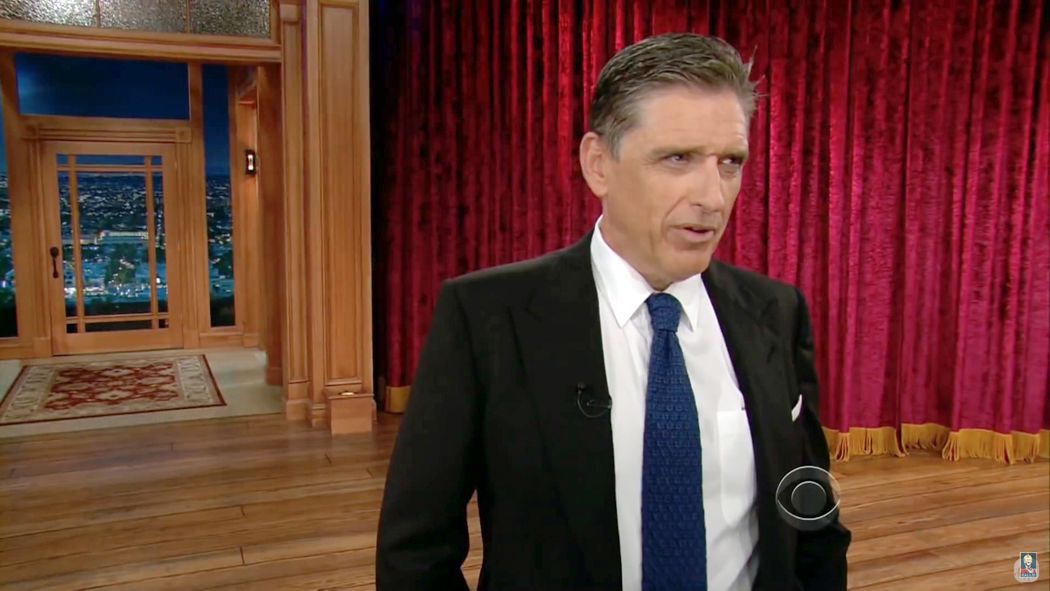
The Late Late Show with Craig Ferguson — Ferguson left the Late Late Show in 2014, after nine years behind the desk. But segments of the show are all over YouTube, uploaded by several perseverant chroniclers.

When the show was live, I often watched (via Tivo the next day, so I could fast-forward through those damned Shamwow and boner pill commercials) but even I have to admit there were bits of the show that proved tedious. I could never enjoy the e-mail and tweet segments, and the monolog was often rather shaggy. And when there was a musical guest, I just turned the thing off.

Sarah Paulson and Craigyferg

But Ferguson must be the best late night interviewer there has ever been. The purpose of late night TV is for celebrities to come on, pretend to be regular people and plug their latest project with the assiduity of a used-car salesman. The whole set-up is unashamedly artificial.

Ferguson, in contrast, didn’t interview his guests so much as have a conversation with them. It was not unusual for them never to get around to the current “project.” Oh, there were guests who were duds, who wanted to coerce the talk back to their sales pitch, guests who did not seem to understand the nature of Ferguson’s self-described deconstruction of the late night talk show.

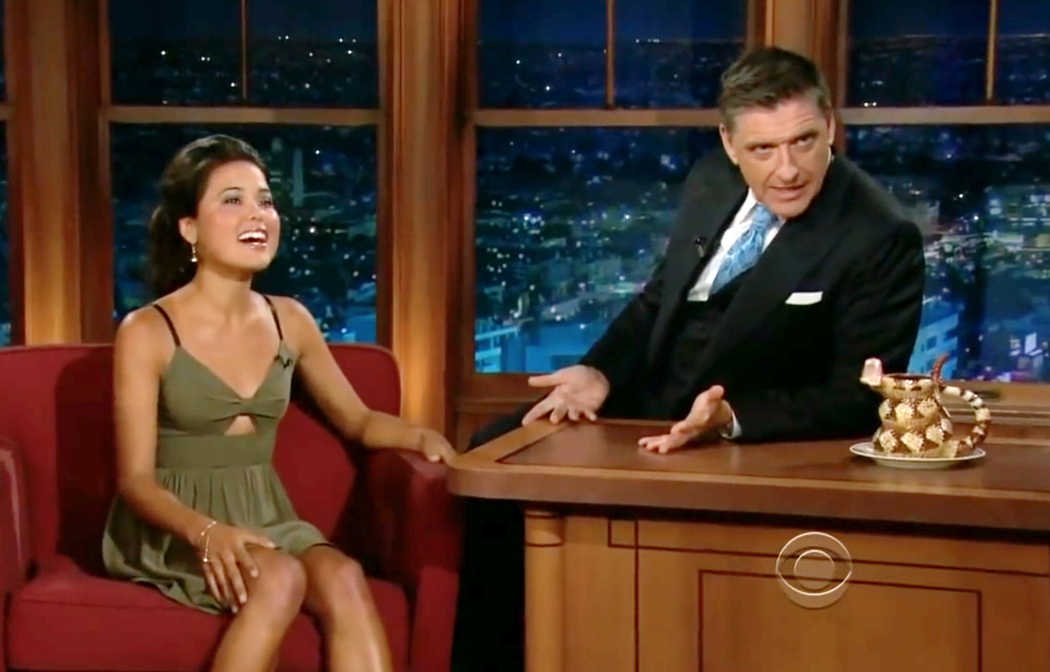
But there were many guests who got it, and they often came back over and over. Kristen Bell appeared 28 times. William Shatner 25, Regis Philbin 25, Betty White 22.

Ariel Tweto, one of his regulars

I am old enough to remember Jack Paar. Paar had a stable of regulars who came back over and over and took part in witty conversation. Peter Ustinov, Robert Morley, Oscar Levant, Hermione Gingold, Genevieve, Jonathan Winters, Dick Gregory.

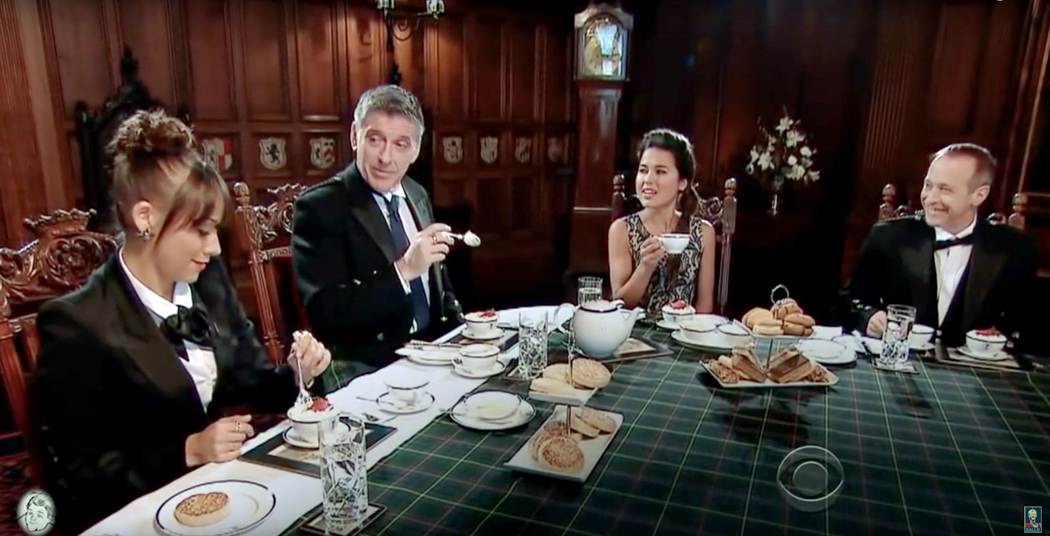
Ferguson had his crew, too. They were those who obviously adored Ferguson, and understood the subversive nature of the broadcast. They often showed up with nothing to promote. Just to be there and talk. Bell was prime among them, but so, too, were Rashida Jones, Michael Clark Duncan, Paula Poundstone, Larry King, Kathy Griffin, Carrie Fisher, Mila Kunis, Lauren Graham, Jeff Goldblum, Morgan Freeman, Marion Cotillard.

Ferguson in Scotland with Rashida Jones, Ariel Tweto and David Sederis

This was a fabulous stable of personalities, including several that had obviously been previous amours of the host, and they hinted furiously at it.

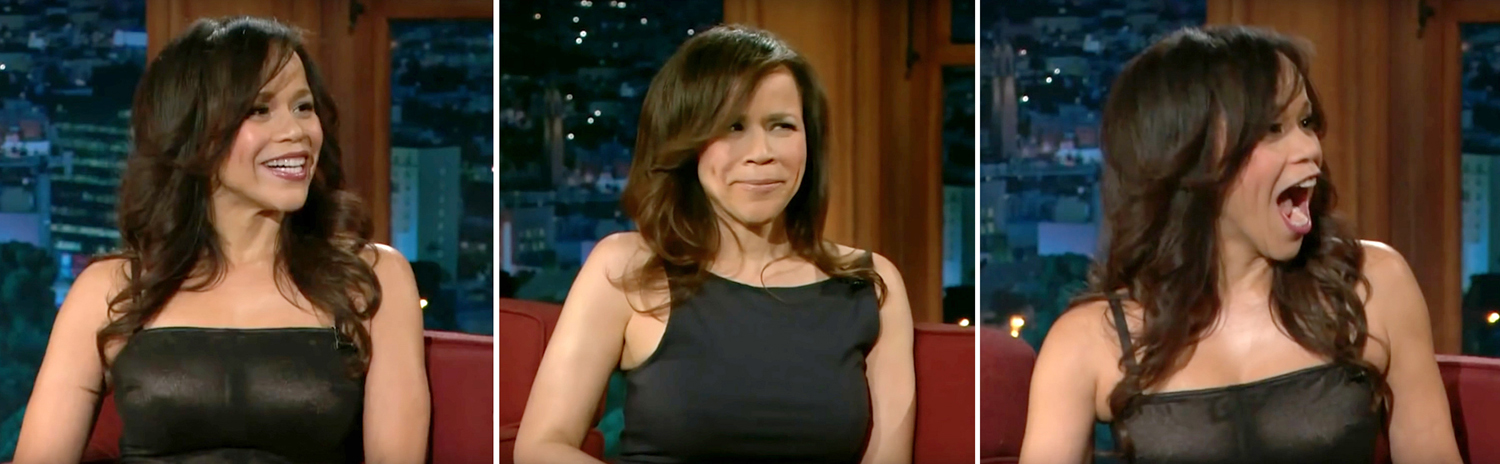
The advantage of the YouTube videos is that you can see the interviews, often strung together (the set of Kristen Bell interviews lasts 4 hours, 41 minutes). Among the most infectious: Rosie Perez’s 8 visits;

Ferguson is also obviously intelligent, although he did his best to downplay that. But he has had many authors on, spent an entire hour with Archbishop Desmond Tutu (for which he won a Peabody Award), and another hour with Stephen Fry — and once had as a guest a professor of moral philosophy (who happened to be Claire Danes’ father-in-law).

Bob Steele

Cowboy movies — I use this term instead of “Westerns” because I mean a specific type of film: the cheaply made series films from the late silent era through the 1930s with stars such as Buck Jones, Col. Tim McCoy, Hoot Gibson, Bob Steele, Ken Maynard, William Boyd and, of course John Wayne.

Buck Jones

I was born at roughly the same time as television, and in those early years, stations scrambled to find content to fill those broadcast hours, and reams of old cowboy films were re-released cheaply to the stations and ran constantly, especially on the independent channels. I saw a ton of them through my pre-school years and into grade school. I loved them.

So, it is with some nostalgia that I watch them again as a grown-up.

I am not talking here about the legitimate Westerns by John Ford or Howard Hawkes, but of those films pumped out week-by-week from tiny studios such as Monogram and Republic. They were “programmers,” with repetitive plots, recognizable landscapes and often acting just this side of organic when compared with a dead tree.

Hoot Gibson

Not that there weren’t some good actors. Boyd, as Hopalong Cassidy, had a natural screen presence and a comfortable way with dialog. And John Wayne was magic on the screen, even in those early films when he was saddled with playing Singing Sandy, the singing cowboy.

And the secondary actors and the villains were played by what was almost a stock company of real pros such as Earl Dwyer, Charles Middleton, Harry Woods, Charles King, and Roy Barcroft. Dependable, every one. It was mostly the heroes who were stiffs.

But what most impressed me in these movies was their settings, the imaginary West of the cowboy, kicking up dust galloping through the Alabama Hills of California, with the glorious Sierra Nevadas in the distance, or the Santa Clarita Valley. Those backgrounds show up over and over again. I almost memorized them.

In the Alabama Hills of California

Alas, such a golden age couldn’t continue. Singing cowboys invaded the screens, such as Gene Autry and Roy Rogers, in movies much slicker and emptier than the earlier ones. And worse, the rising need to include a boy sidekick. Cowboy movies gave up on adults and became pabulum for children. In the ’30s, even grown-ups watched Hoot Gibson. He was my late father-in-law’s favorite actor.

Some good B-Westerns continued to be made in the early 1940s, but by the time Eisenhower became president, we had descended to Lash LaRue and Whip Wilson and the most stolidly oaken of all of them, Tim Holt. The lighting flattened out, as it tended to do in the TV-influenced ’50s, and no one really seemed to believe in what they were doing.

The quality of many cable channel Westerns is atrocious, all grainy and contrasty, and at least one S.O.B. has added synthesized music to the originals. But a good print is as beautiful and professional as anything else the studios pumped out in that wonderful era of film. Luckily, one can still occasionally find a good print on Turner Classics, and the Hoppy movies are usually in good shape, thanks to the foresight of Boyd, who bought them all up in the late ’40s and curated them carefully.

So, there you have it, the pleasures I am embarrassed to admit to. I have no defense. But I know I share some of these sins with some of you.  

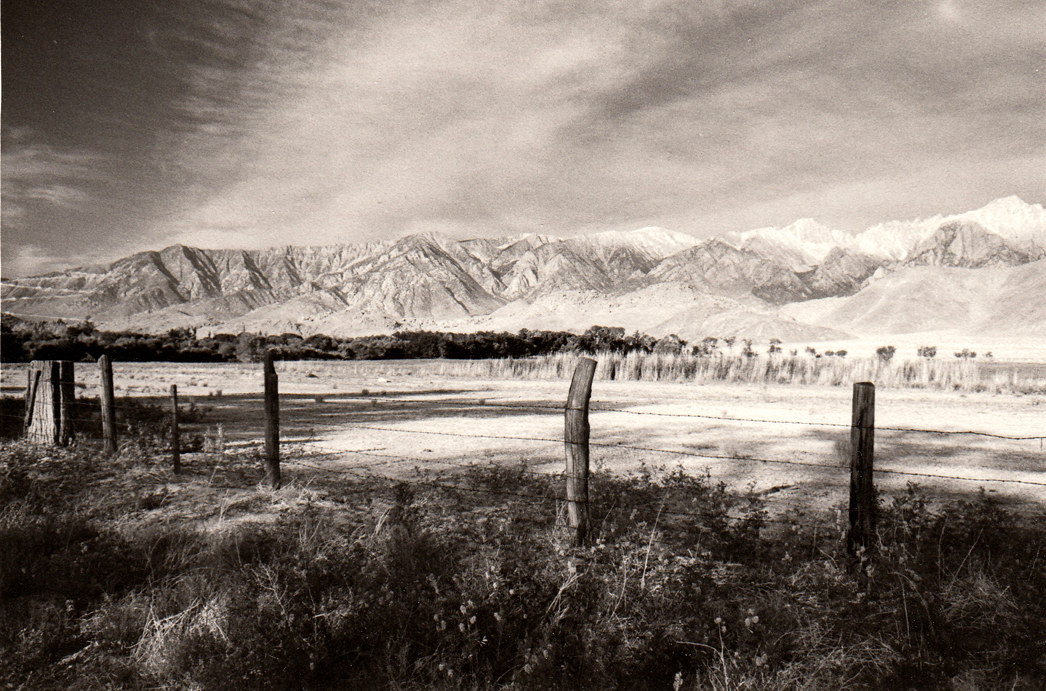
Mt Whitney, Sierra Nevada from Lone Pine Calif

I first visited Lone Pine, Calif., in 1982, but I’ve known it by heart since the early ’50s. I didn’t know where it was, but I saw the boulder piles of its Alabama Hills in every B-Western I watched on TV. For a small boy growing up in New Jersey, the Alabama Hills was the West.

The tiny, dusty town lies directly under Mt. Whitney, the tallest mountain in the Sierra Nevadas, and the the highest in the lower 48. The snow streaked arete forms an impenetrable wall to the west of Owen’s Valley, which Lone Pine sits in the center of. To the east, the impressive Inyo Mountains look soft and velvety in contrast to the hard, stony face of the Sierras.Hoppy Rocks Hiding

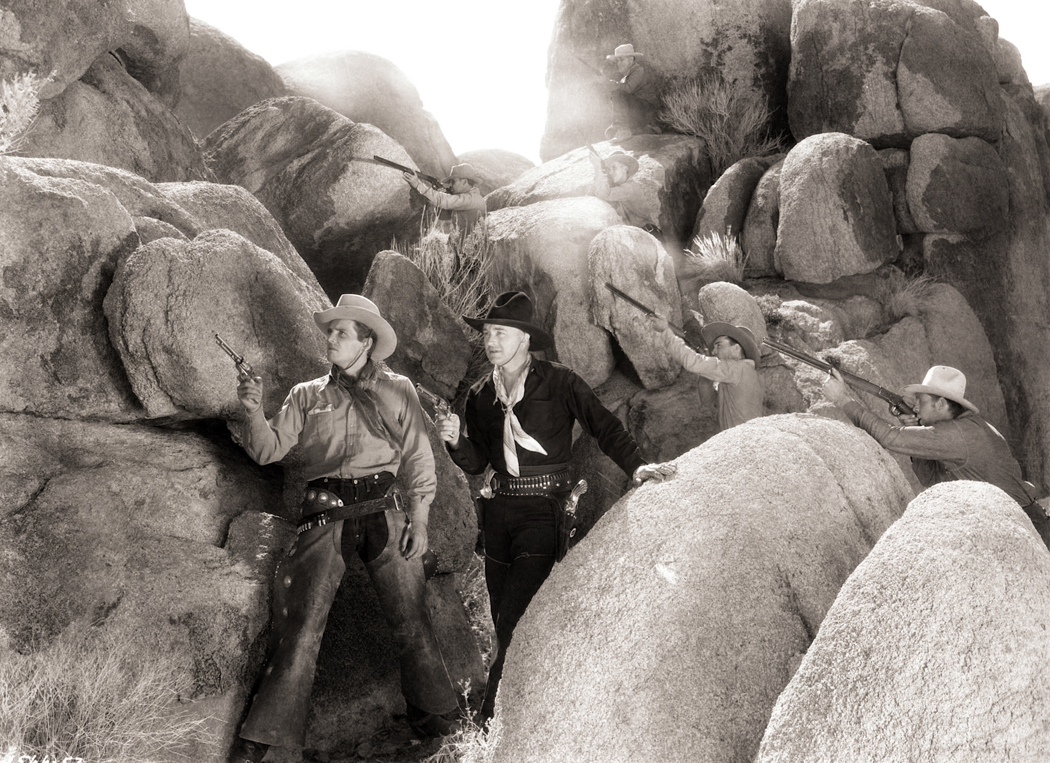
And the low, brown foothills of the Sierras were the location sets of hundreds of Hopalong Cassidy, Three Mesquiteers, Bob Steele and Tom Mix films. Whenever Hoppy had to evade the gang of bad guys chasing him, he’d duck behind the rocks of the Alabama Hills and watch them thunder by in a dust cloud. One such rock-pile is still known as the “Hoppy Rocks.”

It wasn’t just Westerns that were made in Lone Pine, though. The valley and hills stood in for India in The Lives of the Bengal Lancers, Kim, King of the Khyber Rifles and Gunga Din. For the last, a great “Temple of Kali” was built up in the hills.

It was also the location for Humphrey Bogart’s “Mad Dog” Earle in High Sierra.

Later, the terrain was the backdrop for The Lone Ranger, Wild Bill Hickock, Gunsmoke, Rawhide, Bonanza and Have Gun, Will Travel.

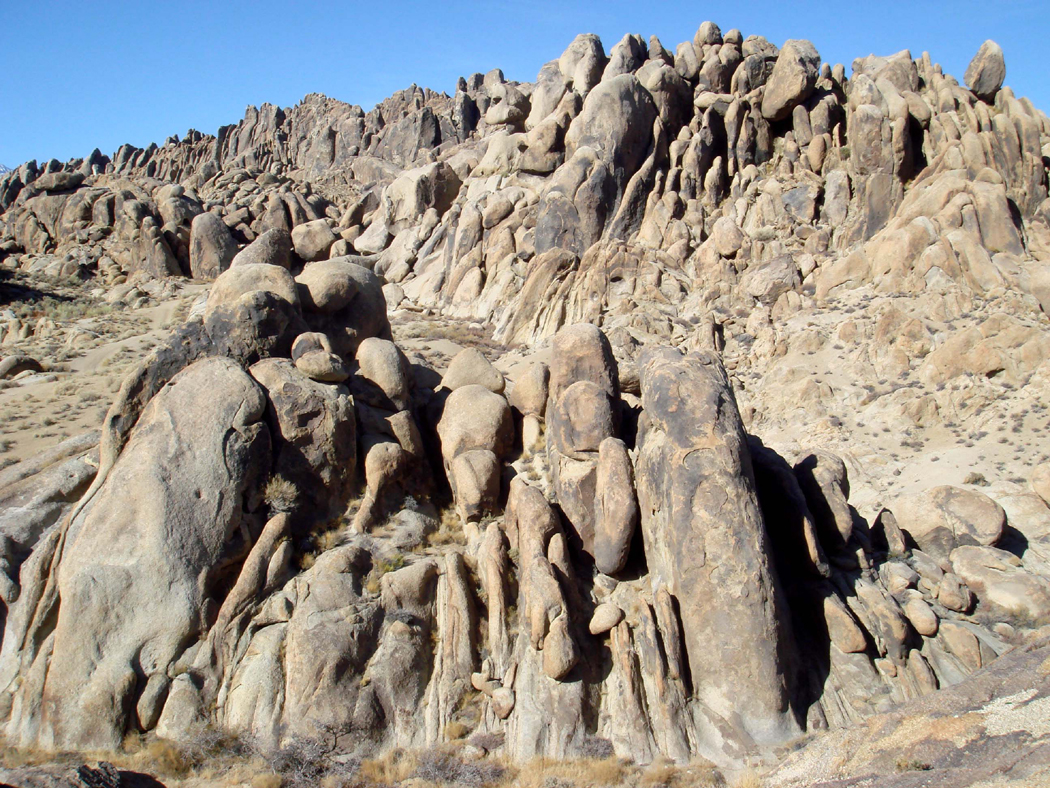
You can hardly watch a Western without seeing those great rubble-heaps of boulders catching the afternoon sun.AlaHills rocks

But for me, it is the silvery grays of the landscape, shot in orthochromatic film in the ’30s, that define what the West looks like. It is the scenery in every Hoot Gibson, Ken Maynard, Buck Jones and Gene Autry film.

You can drive down Movie Road, up the west slopes of the Alabama Hills, and see where the Lone Ranger was ambushed in the very first episode, see where John Wayne and his Singing Riders captured Black Bart’s gang in Westward Ho, and see where Gene Autry jumped from his horse, Champion, to a speeding convertible in Trail to San Antone.

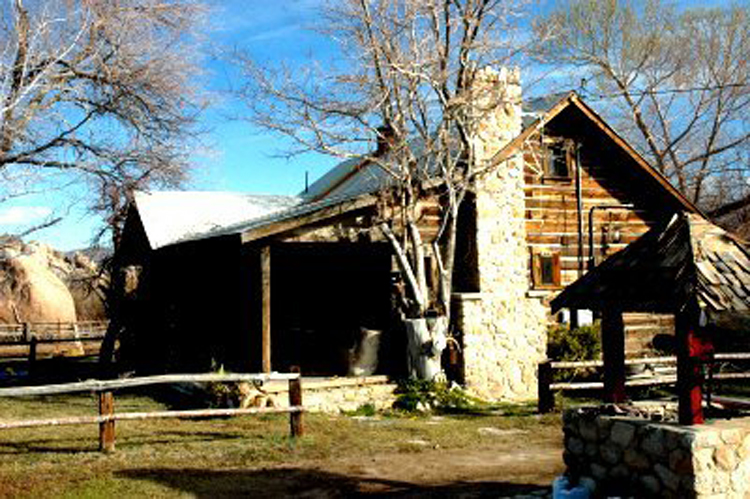
There are more sites up Tuttle Creek Road, including the “Hoppy Cabin,” where William Boyd lived during the shooting of the Hopalong Cassidy films. The cabin is still there. You will recognize it from other films it’s been in.hoppys cabin

Over the years, many sets have been built in the hills, but except for the Hoppy Cabin, they are all gone. The Bureau of Land Management, which administers the area, has dedicated nearly 30,000 acres as the Alabama Hills Recreation Area and plans to preserve the Hills in as close to a natural state as possible.

The hills, by the way, were named at the time of the Civil War by a group of Southern-sympathizer miners, who were looking for gold among the rocks. When the Confederate cruiser, C.S.S. Alabama, wreaked havoc on Union shipping, they named their claimsite after the ship.

In retaliation, 15 miles to the north, Union-sympathizing miners named their claim “Kearsarge,” after the Yankee ship that sank the Alabama. That name remains on a mountain peak, a pass and a town east of Independence in the Inyos.AlaHills medium view hiding place