Archive

Tag Archives: horizon

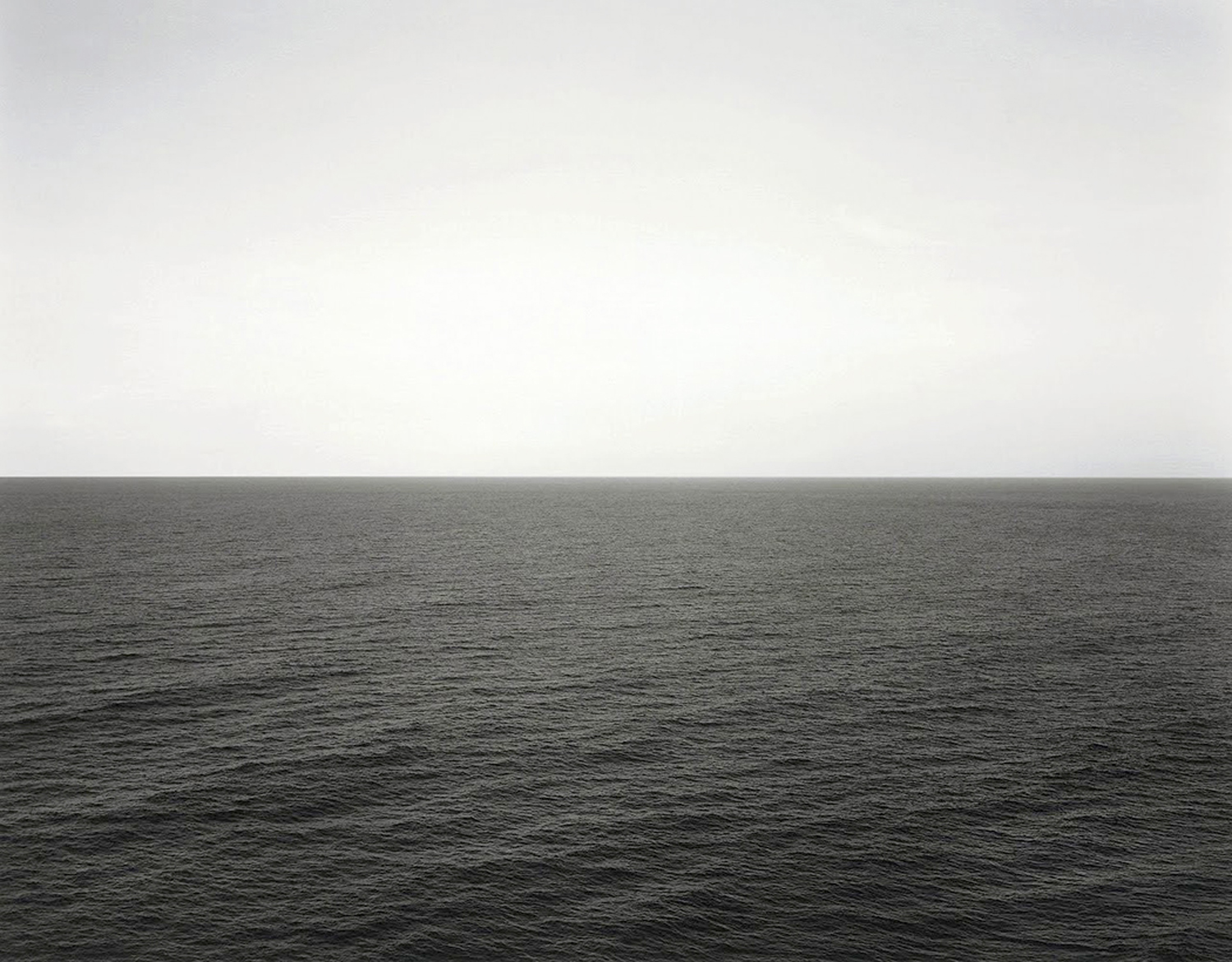
Many years ago, when I was still teaching photography in Virginia, I visited an art show that bothered me. In the gallery were a series of large black-and-white seascape photographs by Hiroshi Sugimoto. Each was about 3-feet square and each was divided exactly in half by the horizon line. 
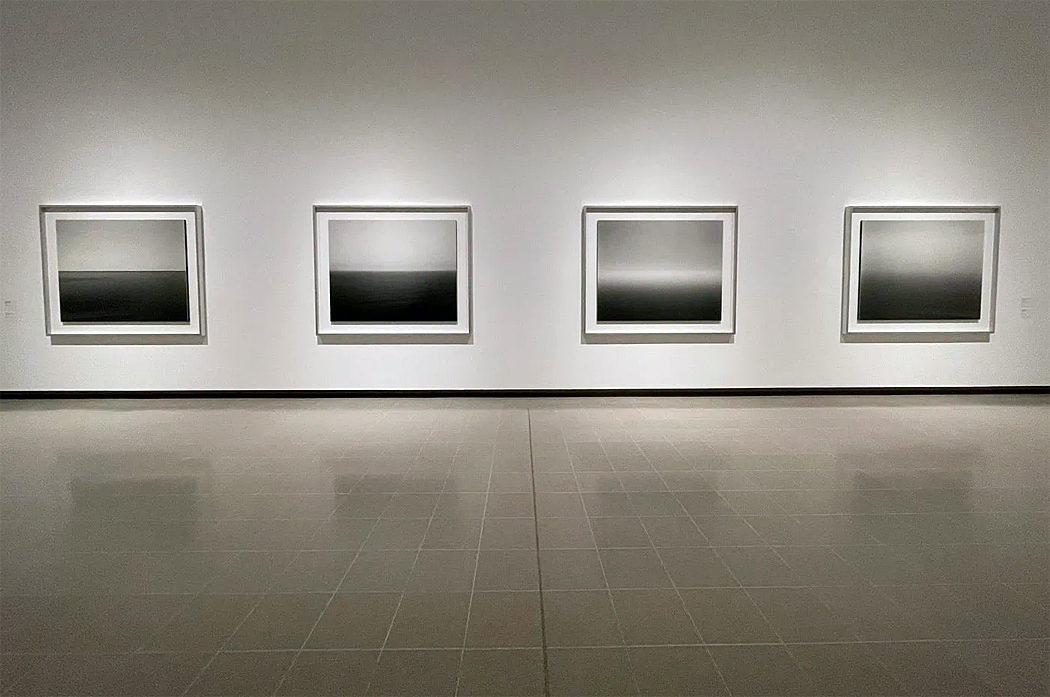
Sugimoto, who is exactly my age, is a Japanese architect and artist who created a project of making pictures of various seas, oceans and great lakes, at different times of year and different times of day and different weathers. But every one was the same size and with the top and bottom divided in half, sky and water. 
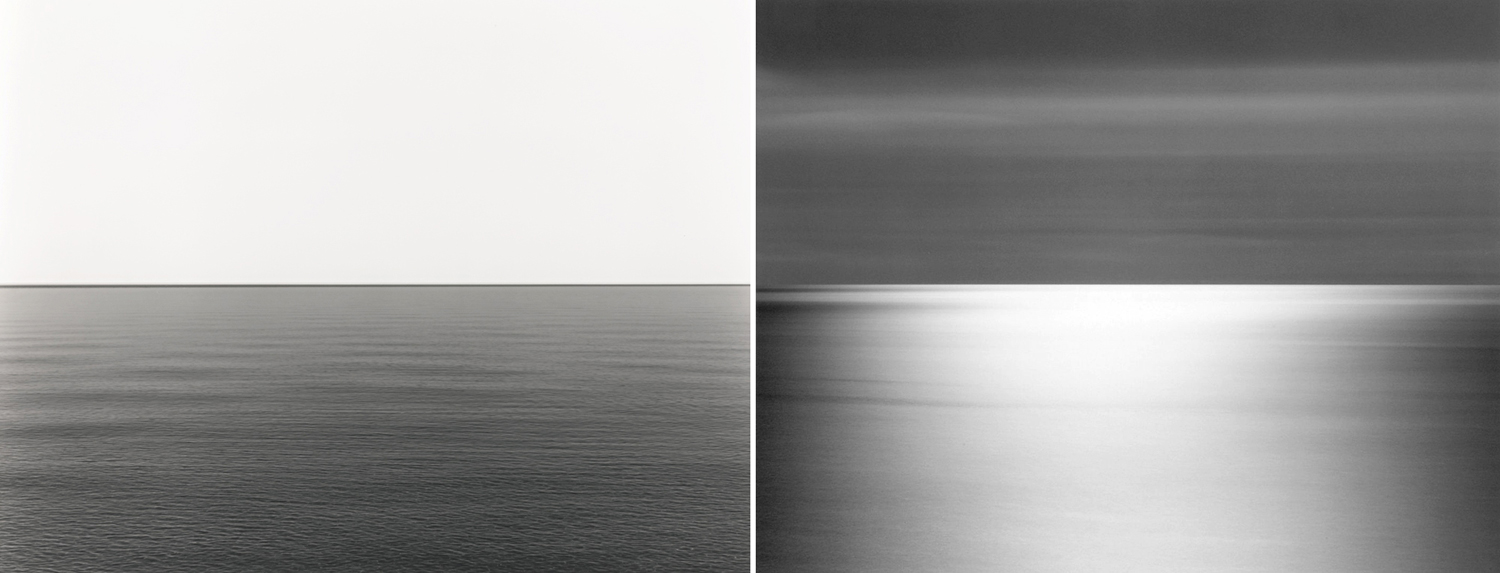
What bothered me, initially, was the featurelessness of the images. The seas were generally calm and the skies usually cloudless. 

At the time, in my class, I was trying to get ordinary students to make better pictures. Most of the students had no ambition to show in galleries, but rather had wanted to be able to make better family snapshots, or to improve as hobbyists and learn darkroom techniques. And so, I taught such normal things as making sure their images had a center of interest — a person or a dog, placed foreground against a background. If they wanted to make a landscape, to include some center of attention and not just make a dull grab-all of the scene. 

These were not “rules,” but ways to get beginners to improve. First steps, as it were.
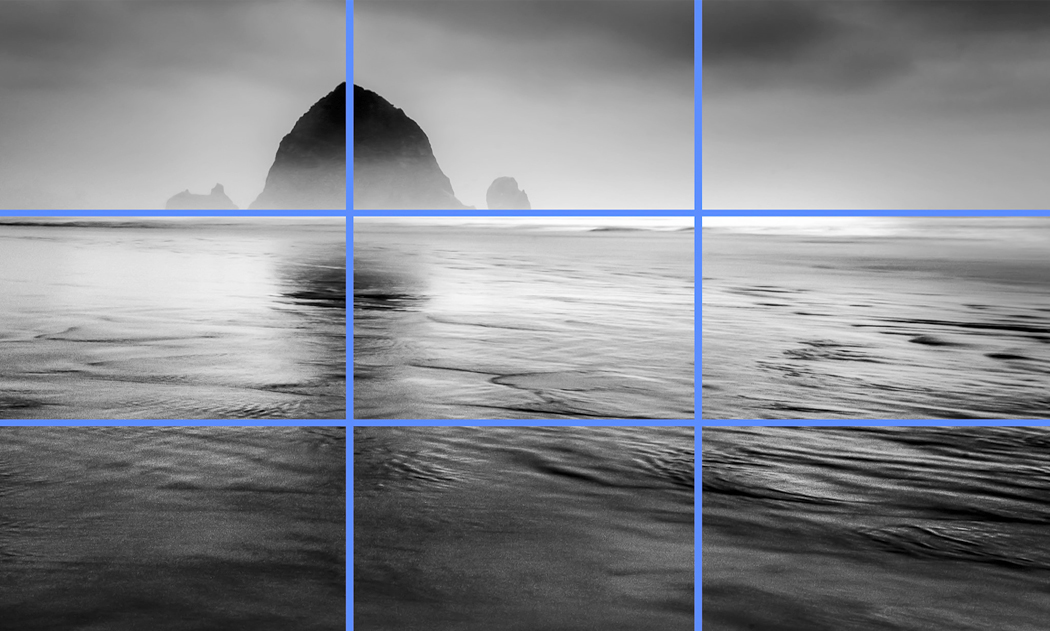
And I taught the ubiquitous “rule of thirds,” in which you help the design of a photograph by placing things a third of the way from the bottom or top, or a third of the way in from the sides of the picture. Or, also, to place your horizon line a third of the way from the bottom or two-thirds up from the bottom. And never, ever, put your horizon through the center of the image. The center is the most boring and static place in the frame. 

(Of course, no accomplished photographer pays any attention to these notions, but I was helping beginners up their games and making their pictures marginally more interesting.) 
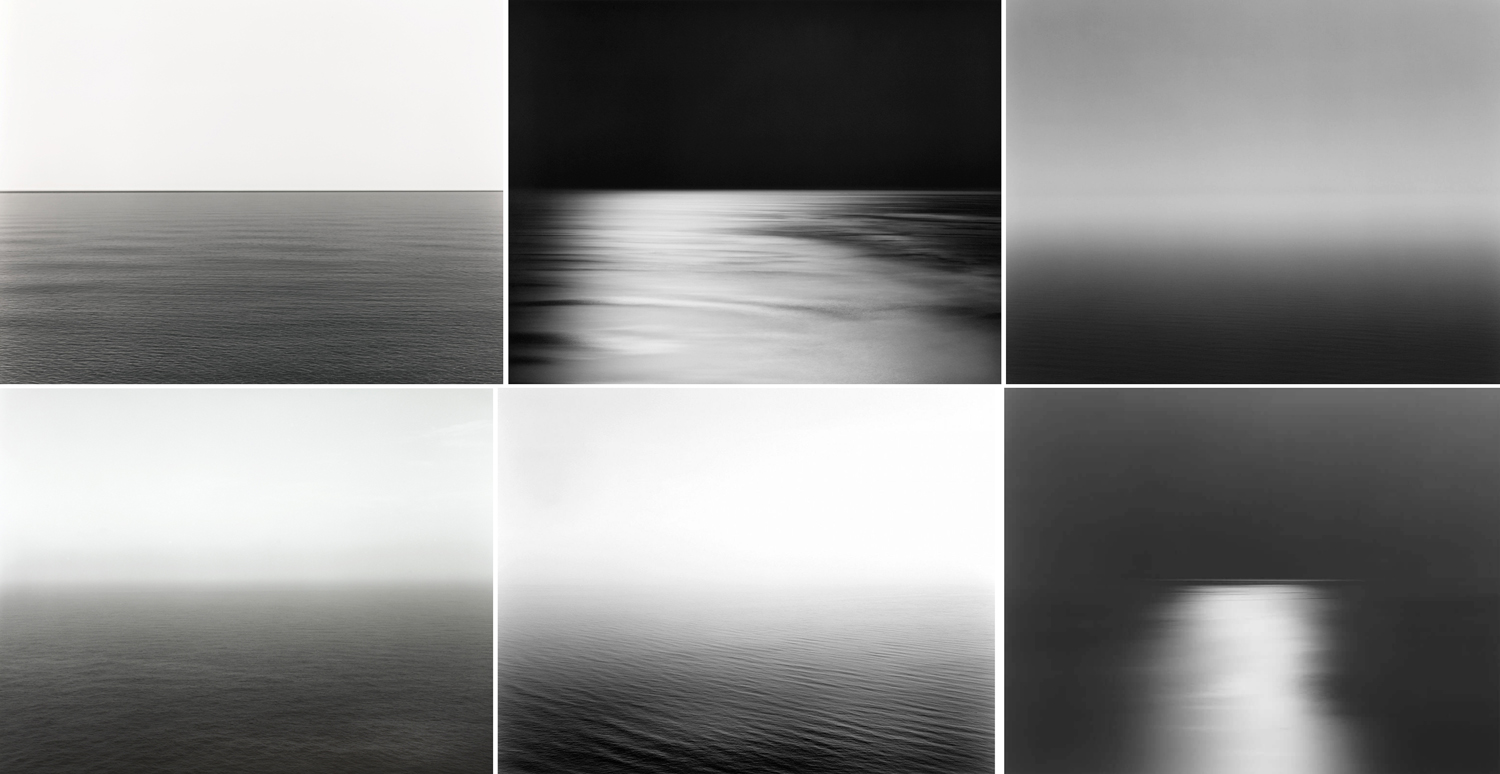
But here were Sugimoto’s seascapes, centered and otherwise featureless. It bothered me for a long time — enough so that decades later, I can remember that show, burned in my memory, when so many others that I went to in so many galleries, have faded into time and oblivion. 

I was aware that if the images stuck in my craw and couldn’t be dislodged, there must have been something to what Sugimoto was doing. I have thought long and hard on the subject. And I came to the conclusion that their very inexplicability, tied with the elemental themes of nature and the vast oceans, gave them their power. That, in fact, they were a projection of the sublime. 

The sublime is a subset of esthetics, a particular experience of the beautiful, set in distinction to what is attractive and pleasing, by showing what is immense, often frightening, and which gives the viewer a palpable sense of his own unimportance in a vast and radiant universe. 
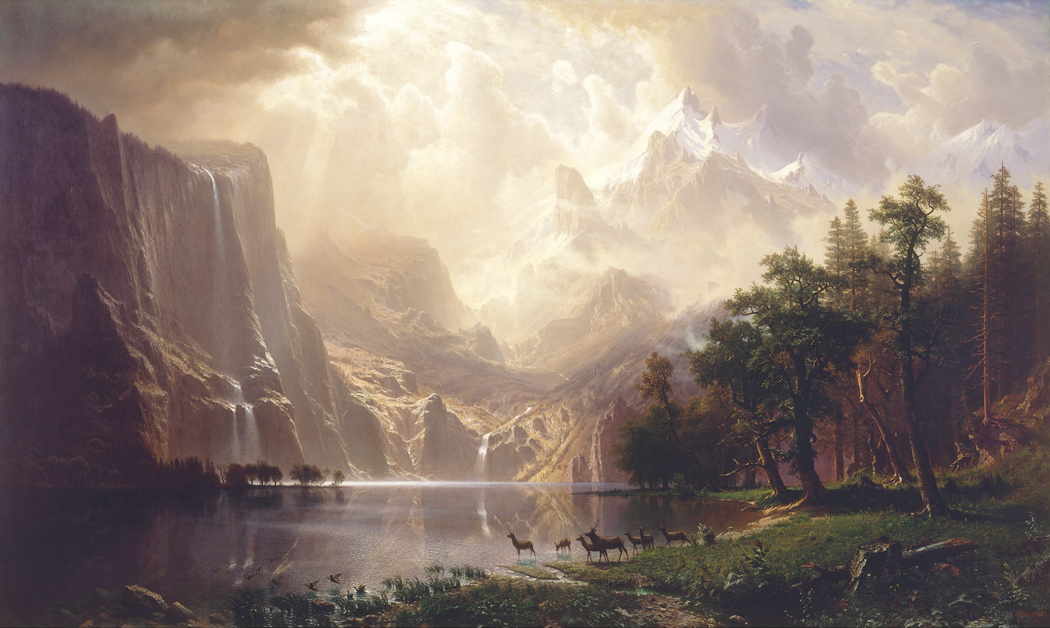
“Among the Sierra Nevadas” Albert Bierstadt 1868

It was a popular theme in 19th century art, with landscapes of the mountains of the American wilderness, or, in England, of vast biblical scenes, or or battles or storms. You have Jacob Mallord William Turner painting disasters at sea, John Martin showing the apocalypse in giant canvases, Gustave Dore engraving images of Dante’s hell and Satan’s flight through chaos.
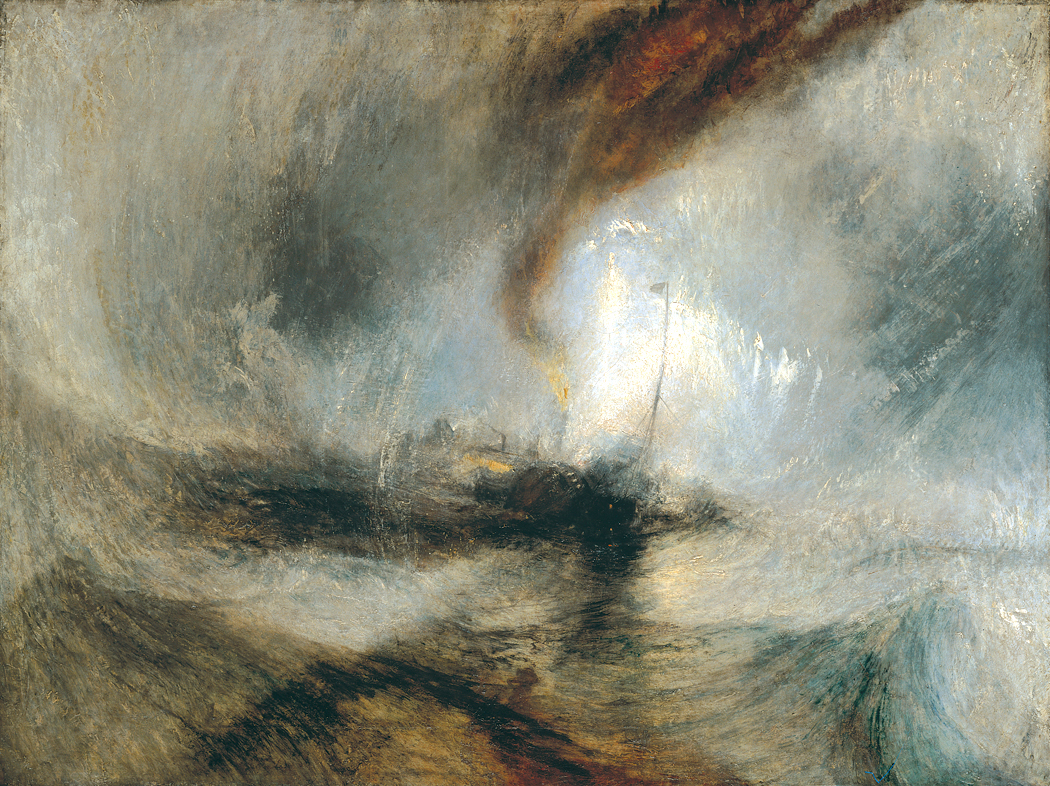
“Snow Storm at Sea” JMW Turner 1842

You have poets describing limitless scenes of the Alps or the Arctic. Mary Shelley’s Frankenstein ends in such a scene, with a ship stranded in the Arctic ice and the monster choosing white oblivion over life. The ship’s captain writes in his log: “We are still surrounded by mountains of ice, still in imminent danger of being crushed in their conflict. The cold is excessive, and many of my unfortunate comrades have already found a grave amidst this scene of desolation.”

Nature could be pretty. It could be daffodils. But it could be overpowering, desolate, dangerous. As in Percy Shelley’s Mont Blanc: “In the wild woods, among the mountains lone,/ Where waterfalls around it leap for ever,/ Where woods and winds contend, and a vast river/ Over its rocks ceaselessly bursts and raves.”
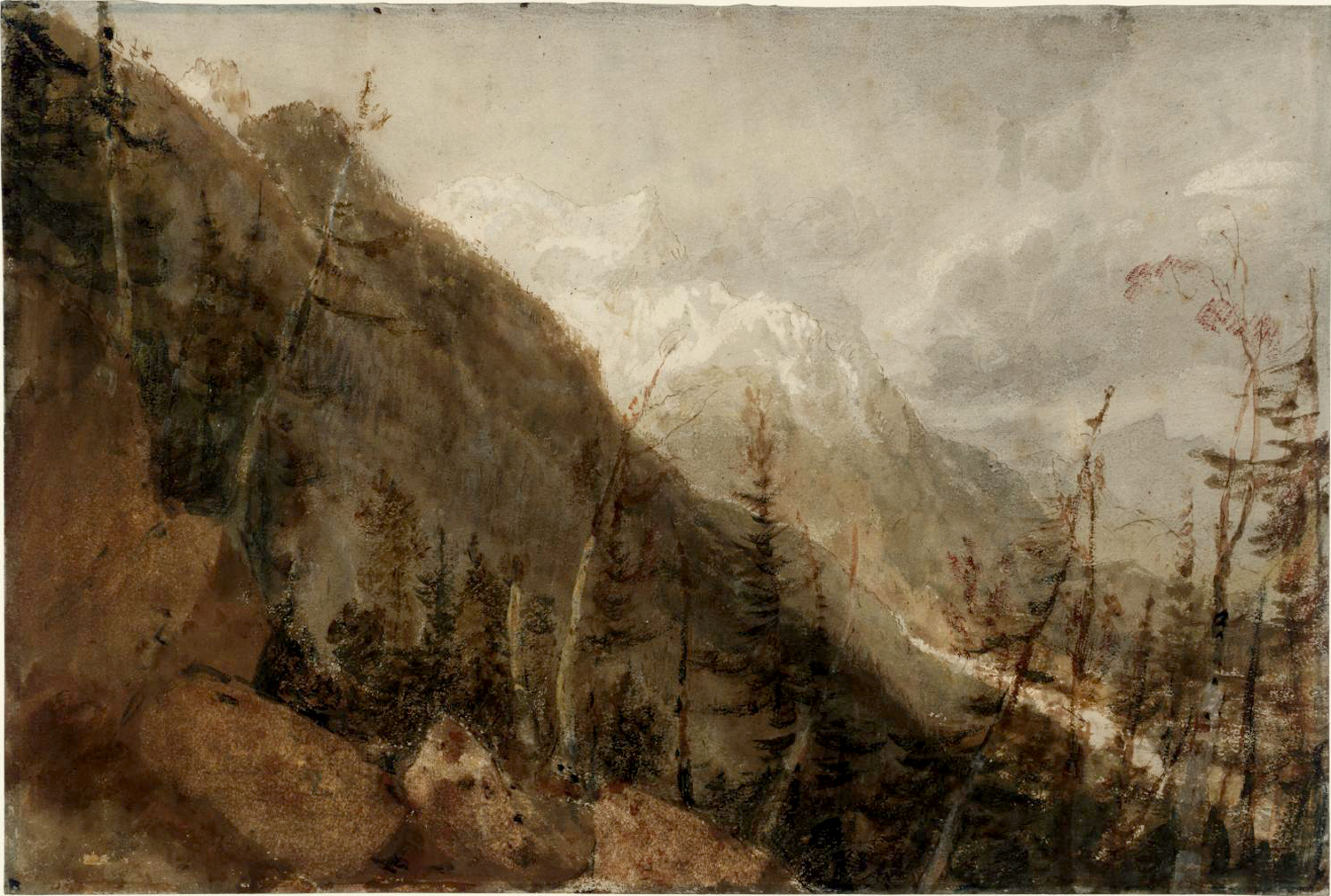
“Chamonix: Mont Blanc and the Arve Valley from the Path to the Montenvers” JMW Turner 1802

Hardly a better example could be found than Sam Coleridge’s Kublai Khan: “But oh! that deep romantic chasm which slanted/ Down the green hill athwart a cedarn cover!/ A savage place! as holy and enchanted/ As e’er beneath a waning moon was haunted/ By woman wailing for her demon-lover!”

In Byron’s Childe Harold’s Pilgrimage: “Roll on, thou deep and dark blue Ocean — roll!”

It’s all over the place in English Romantic poetry — “Tyger Tyger, burning bright,/ In the forests of the night” or later, in the works of Americans such as Walt Whitman (“Out of the cradle endlessly rocking”) or Emily Dickenson. 

British poet Samuel Taylor Coleridge describes the sublime in his 1818 lecture on “European Literature” by recalling: “My whole being expands into the infinite; earth and air, nature and art, all swell up into eternity, and the only sensible expression left is, ‘that I am nothing!’ which concludes that his ultimate realization of the sublime was of his own human insignificance.” 
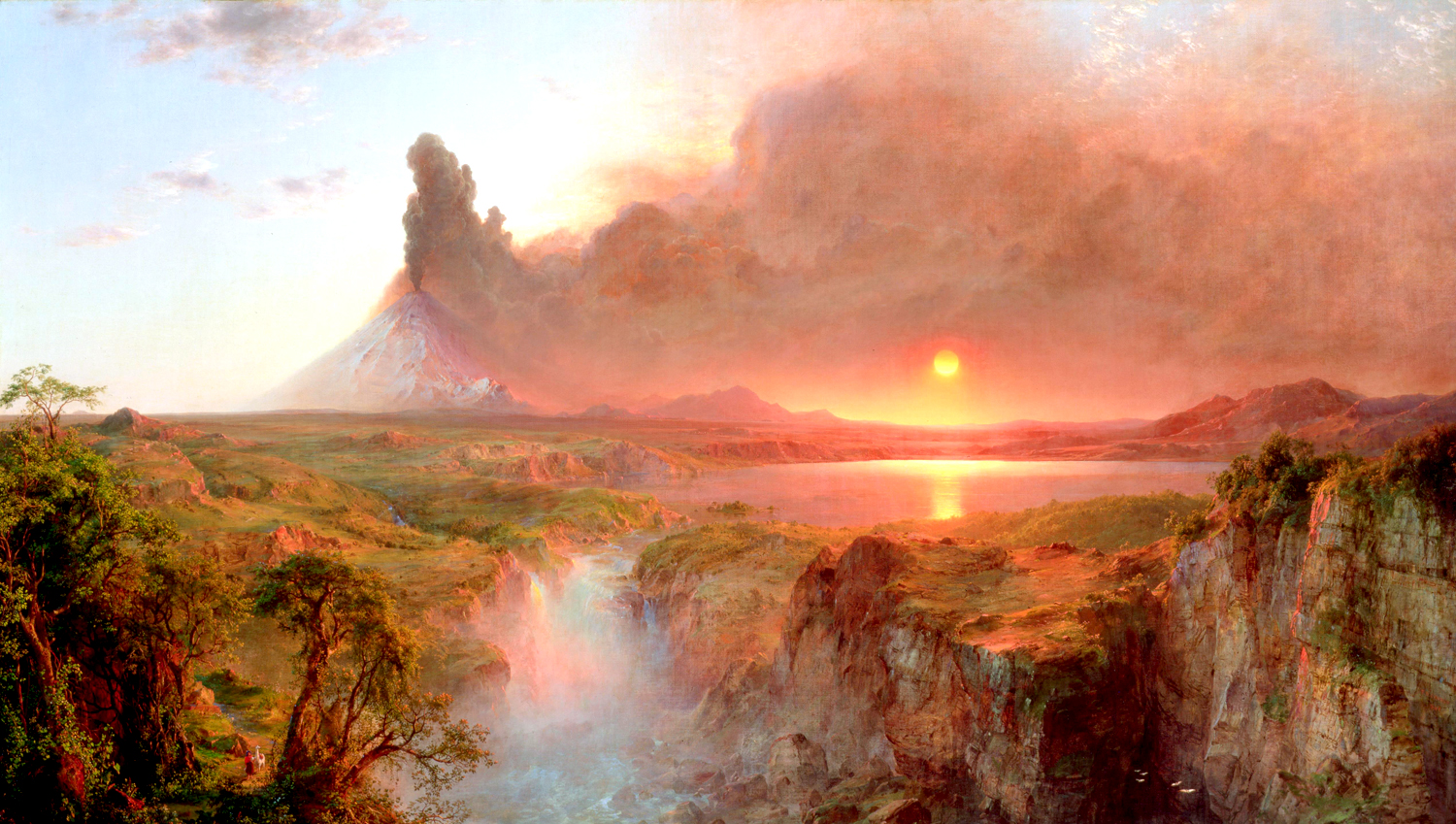
“Cotopaxi” Frederic Edwin Church 1862

Giving in to the infinite — or the emotional experience of it — can hit you whenever you are open to it. Not necessarily seeking it, but nevertheless open to it. Most often, we spend our lives closed, trying to make sense of the everyday things that take up most of our time. But there are moments when it all breaks in. These moments tend to stick in our psyches, to be brought back in memory to refresh our lives. 

In music, the sublime is found in Haydn’s depiction of Chaos at the beginning of his oratorio, The Creation. Or in the ecstatic chorus of Beethoven’s Ninth Symphony, the trumpets of apocalypse in Berlioz’s Requiem or the vastness of Mahler’s Symphony of a Thousand.
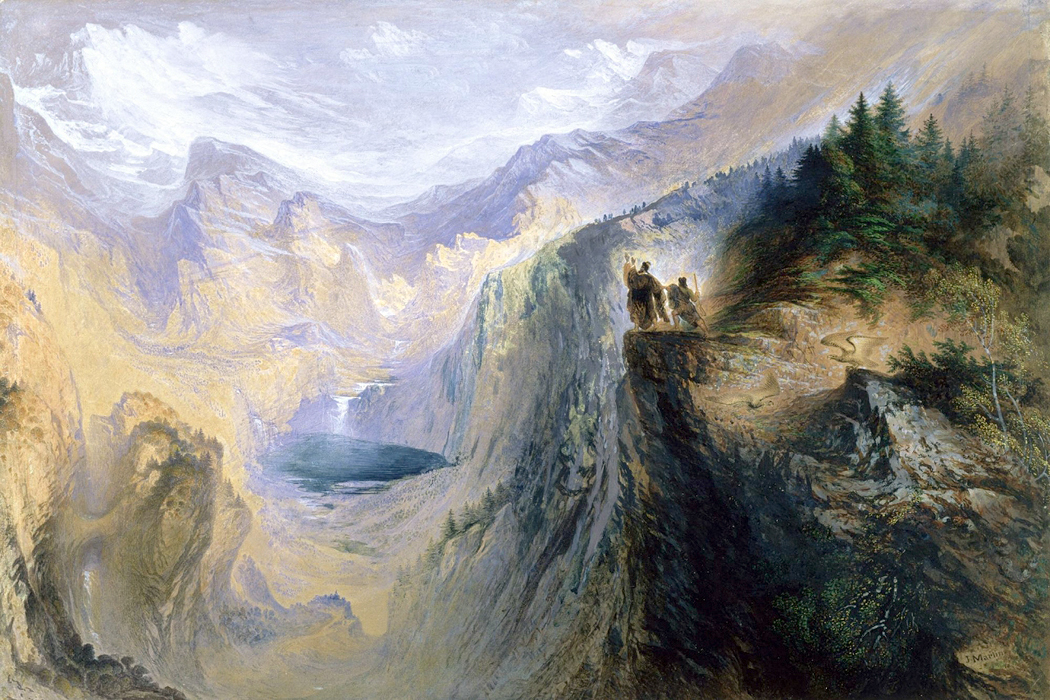
“Manfred on the Jungfrau” John Martin 1837

The problem with the Romantic vision of the sublime is that it can too easily devolve into kitsch. The sense of cosmic overload shrinks into a kind of religious sentimentality and you wind up with Charlton Heston and Cecil B. DeMille. Where you draw the line, personally, depends very much on your willingness to accept the underlying metaphor of the vastness and impenetrability of the universe. 

Any theme, including the sublime, can peter out in too-familiar tropes and cliches. And so, in the 20th century, artists and poets have needed to find new ways to explore the idea, without the hurling boulders and cataclysmic storms of the 19th century. The old ideas still persist, of course, in such things as the photographs of Ansel Adams. It came to a banal end in 1968 when Adams let his photos grace the cans of Hills Bros. coffee. 
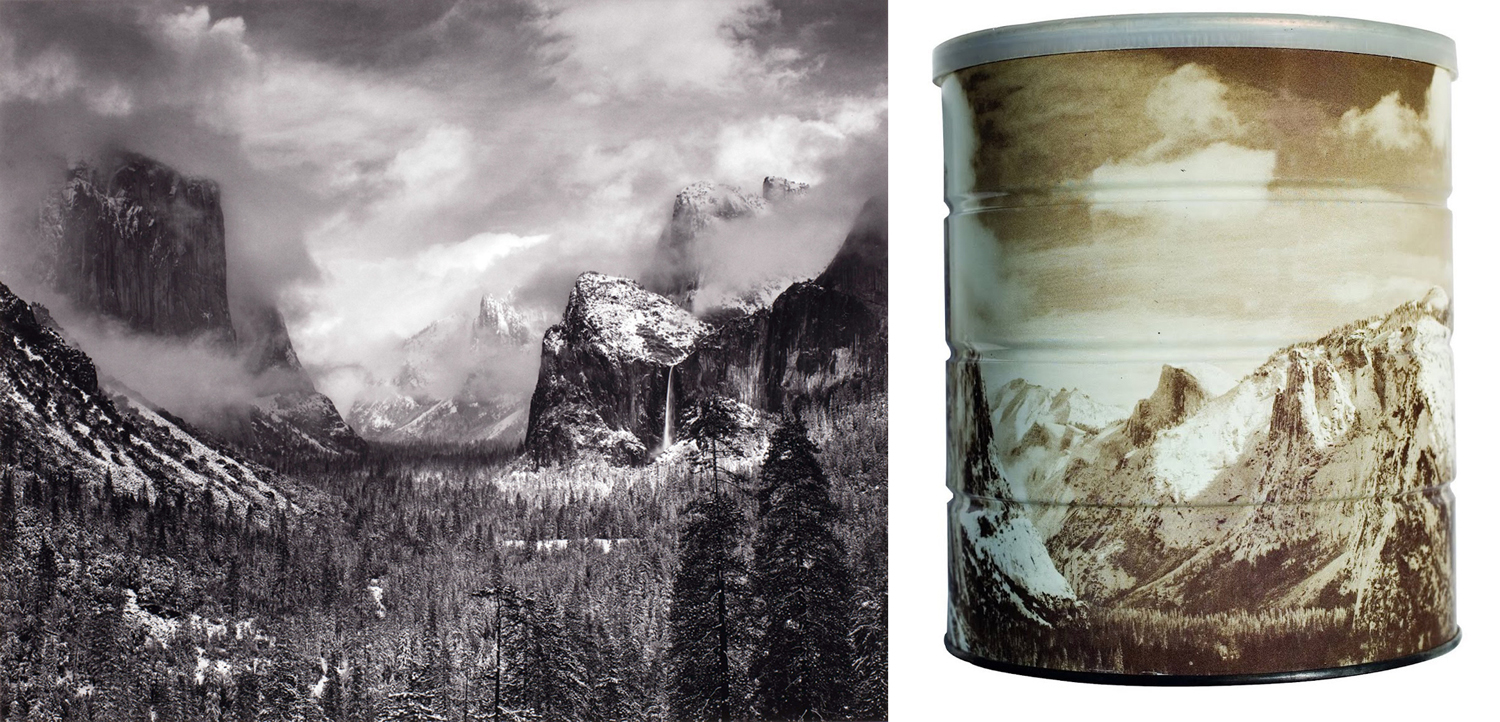
But, for the most part, the sublime has quieted down for the past hundred years or so, with priority given to social and political themes, from Brecht to Basquiat. We have a suspicion of grandiosity. Two world wars made us modest. 

Nevertheless, that cosmic power is still out there, seducing and threatening us. The night sky, the city-flattening hurricane, the ever-retreating horizon, the glimpse over the edge of the Grand Canyon precipice. And, always, our awareness of the inevitable extinction of our personal consciousness. 
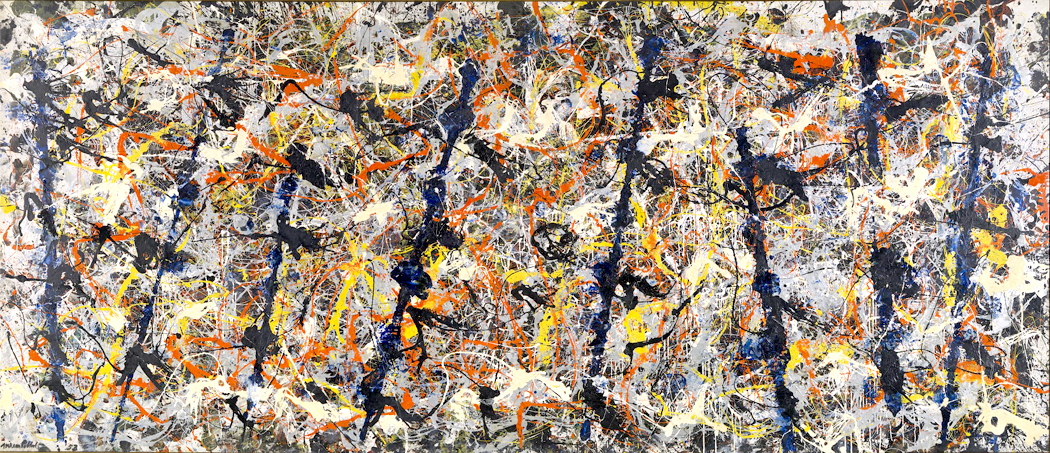
“Blue Poles” Jackson Pollock 1952

And some artists attempted to address this, but without the baggage of 19th century Romanticism. People like Barnett Newman with his huge blank colors, Jackson Pollock with his impenetrable scribbles, and Mark Rothko with his inscrutable floating squares. 

In fact, it was Rothko that first unlocked the Sugimoto seascapes for me. 

Rothko was another artist whose work initially I didn’t understand. Having only seen reproductions in books, I thought of his paintings as simply boxes of pleasing colors splashed on the canvas. 
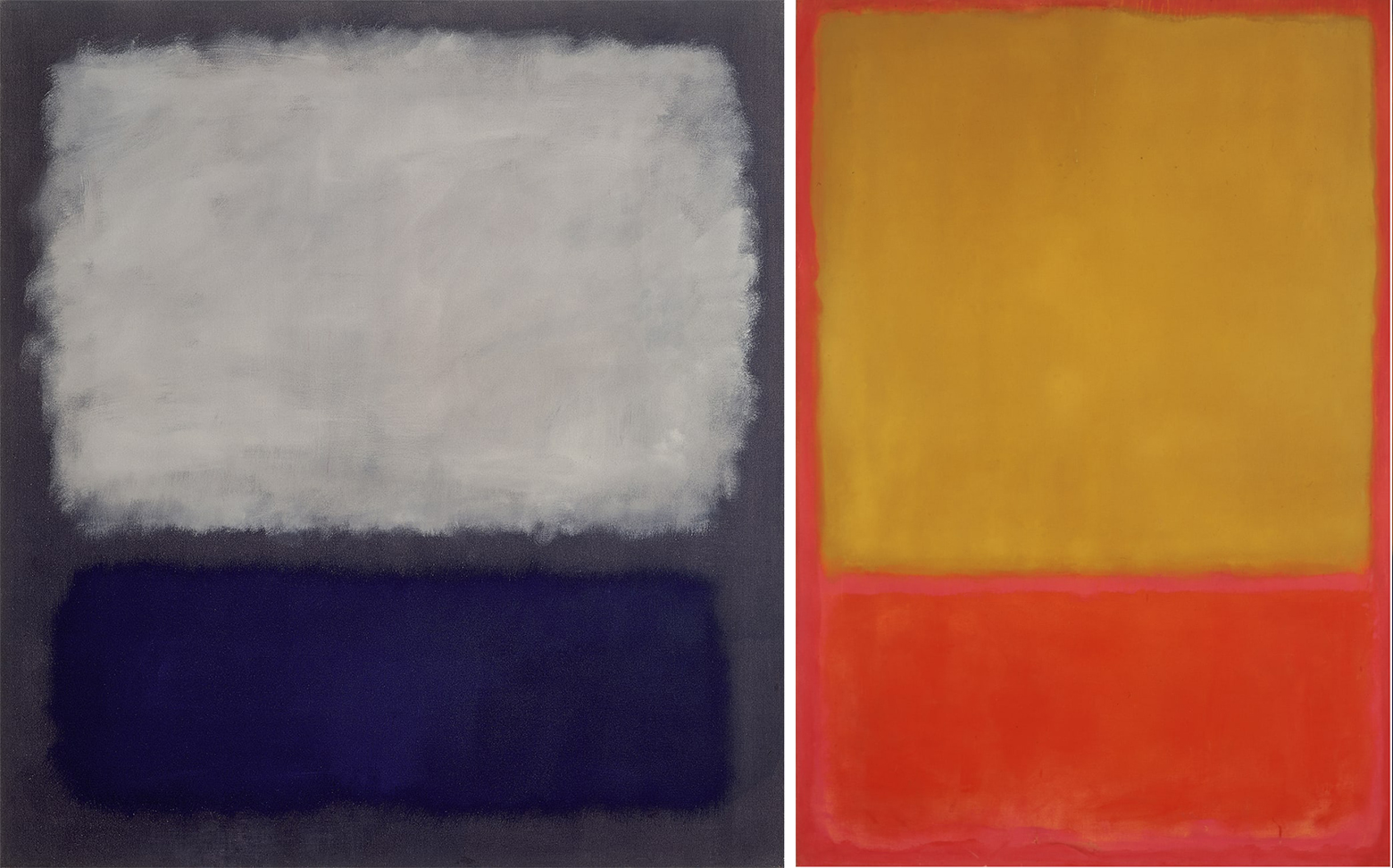
“Blue and Gray” 1962” and “Ochre and Red on Red” 1954 Mark Rothko

All that changed when I got to see the actual work, hanging on museum walls, and I realized those colors actually floated — visually — above the canvas. The colors of ink in a book illustration couldn’t do that the way actual pigment on canvas did. The difference between seeing a picture of an airplane and the actual flying at 30,000 feet. 

And so, it hit me, Rothko’s quiet illuminations were the 20th century version of the sublime. I couldn’t explain the emotions they roused in me, but they were the sense of seeing the primordial meanings of life, something no words could convey. 
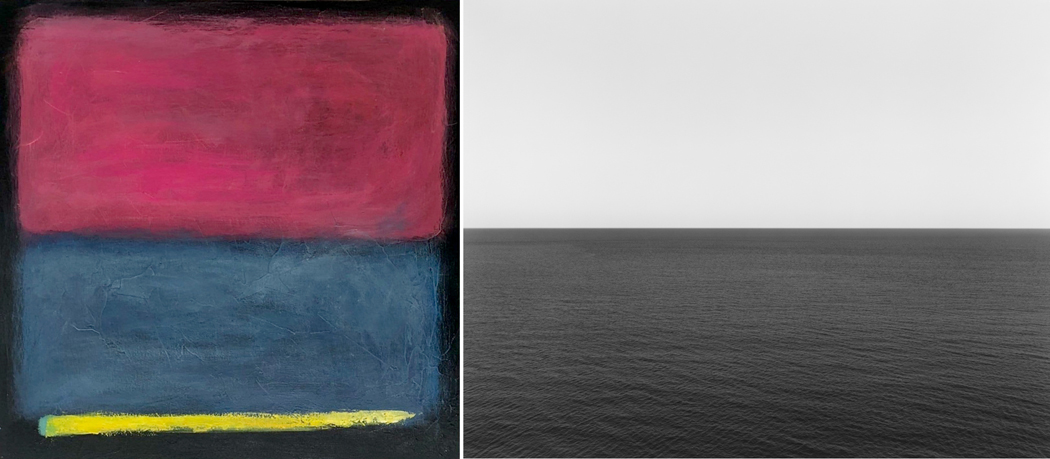
It was this same thing that nagged at me in Sugimoto’s photographs. The sky and sea were yin and yang, something primeval and immutable. 

“When you look up at outer space there’s the Moon and the Stars,” Sugimoto said. “But on the surface of the Earth, the farthest place people can see is an ocean horizon.”

Sugimoto also said that seascapes are pivotal in that they are a  scenery that we, in our modern world, still share with the ancients. Cities all look modern; even rural landscapes are crossed by interstates and power lines. But the ocean looks today the same as it did for Homer. 

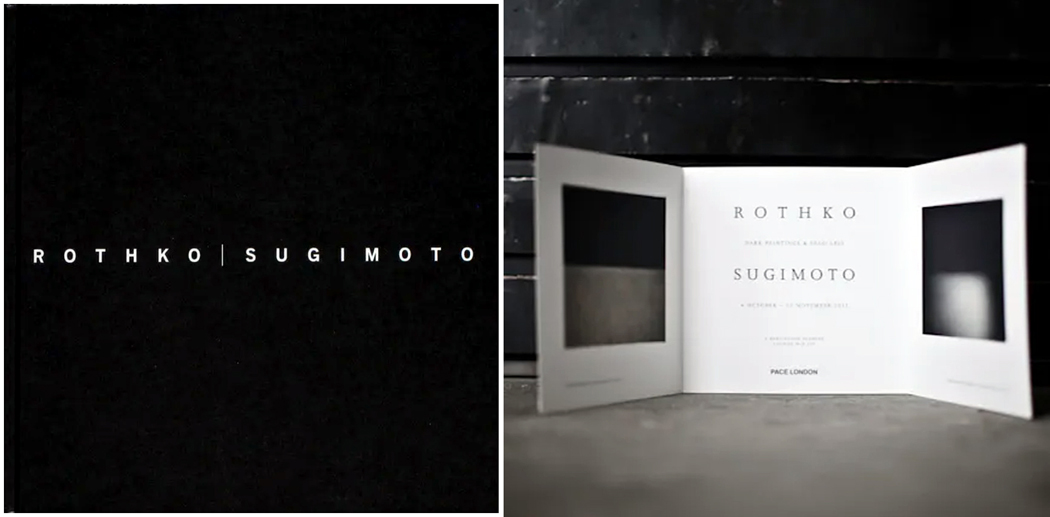
(Only recently, I discovered that the Pace Gallery in London had mounted a joint exhibit of Rothko and Sugimoto in 2012, and had even published a book about it.)
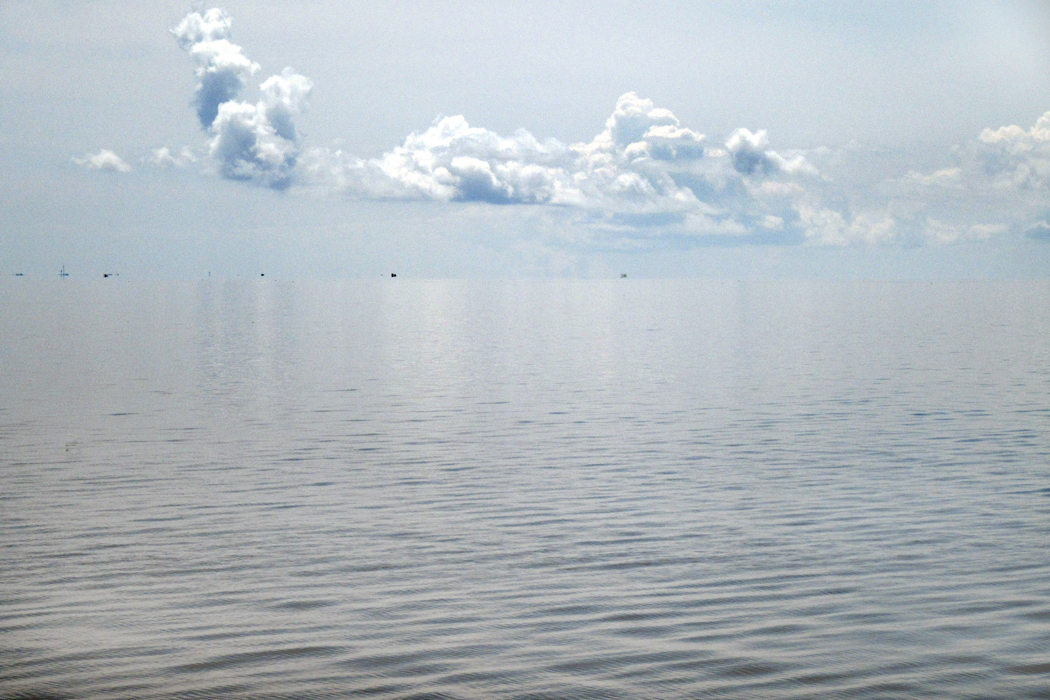
When I lived in Virginia, all those decades ago, it was on the ocean and I would almost daily have the opportunity to look out over the waves and into the horizon. I saw the seascape in sun and under the wind-blown scud of a nor’easter. It changed every day, even hourly. There were times when the sky color and sea color were so matched that the actual horizon line vanished and what I saw was a great blankness. A void. An infinity of sameness without edge. That blankness was a key to the modern sublime. 
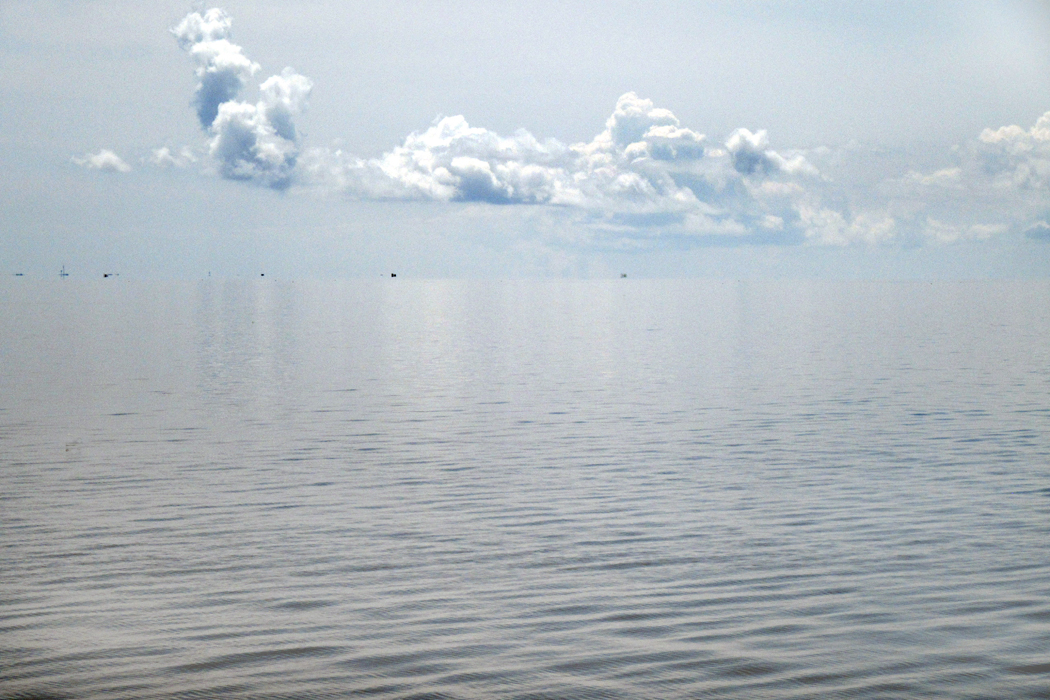
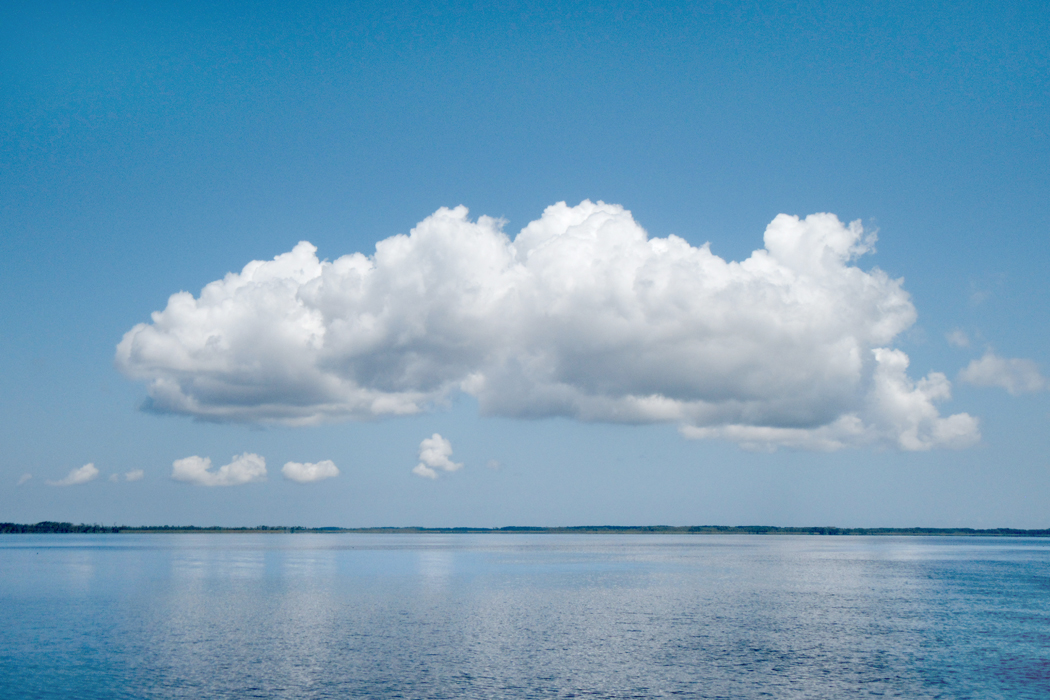
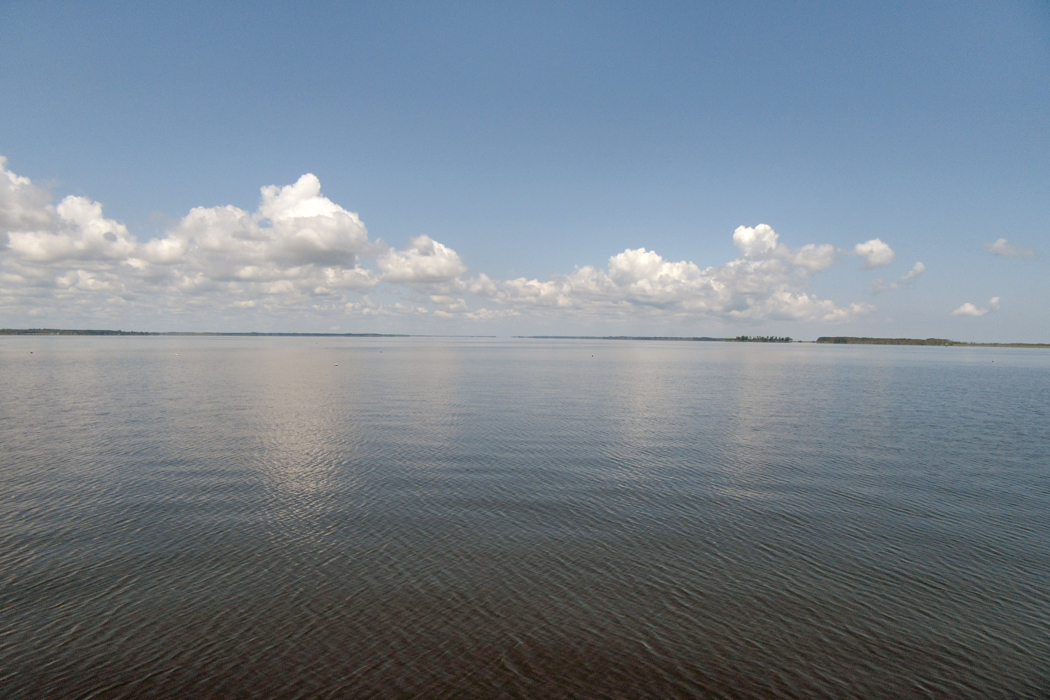
Currituck Sound, N.C.

Usually what I saw was just “the beach,” with its swimsuits and sunscreen. The everyday tends to crowd out — needs to crowd out — the eternal. After all, we have lives to live, jobs to get to, families to care for, and we cannot function if our adrenaline is always at the boil. But there were also times that I could look out at the water and air and realize that I was seeing the fundamental sense of existence. The quotidian keeps us functioning in society, but the sublime absorbs us into the universe. 

There is such a thing as an intense blankness. It is both frightening and beautiful. 
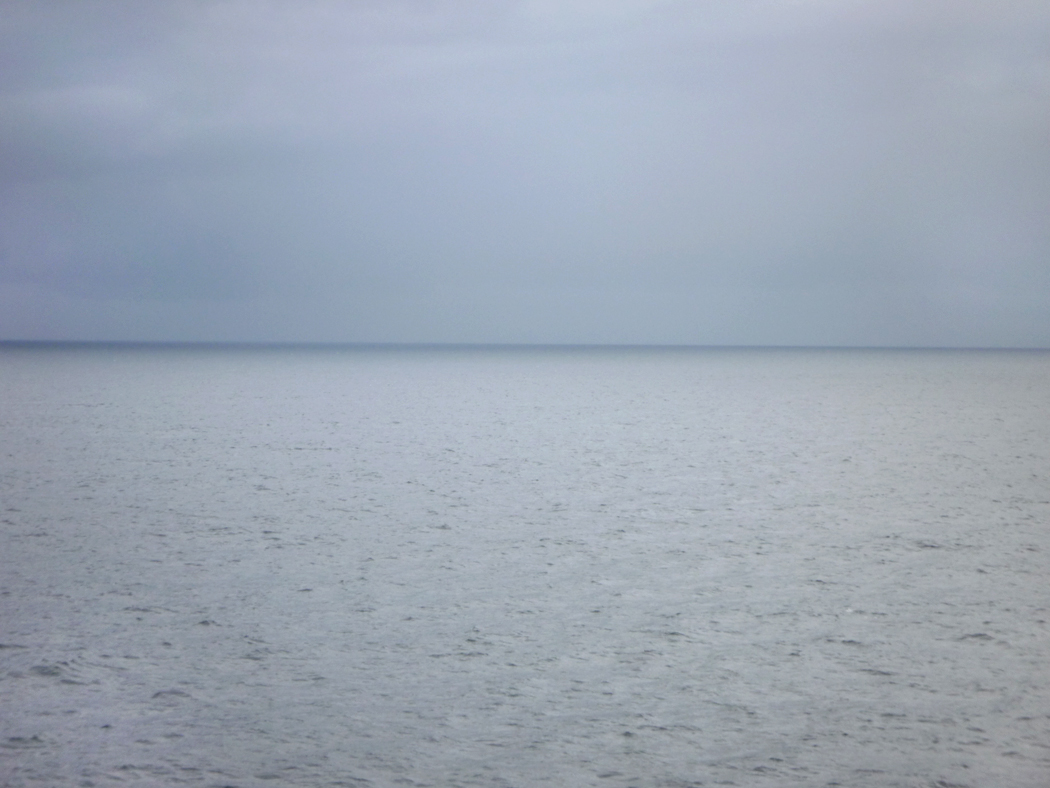
Alaska

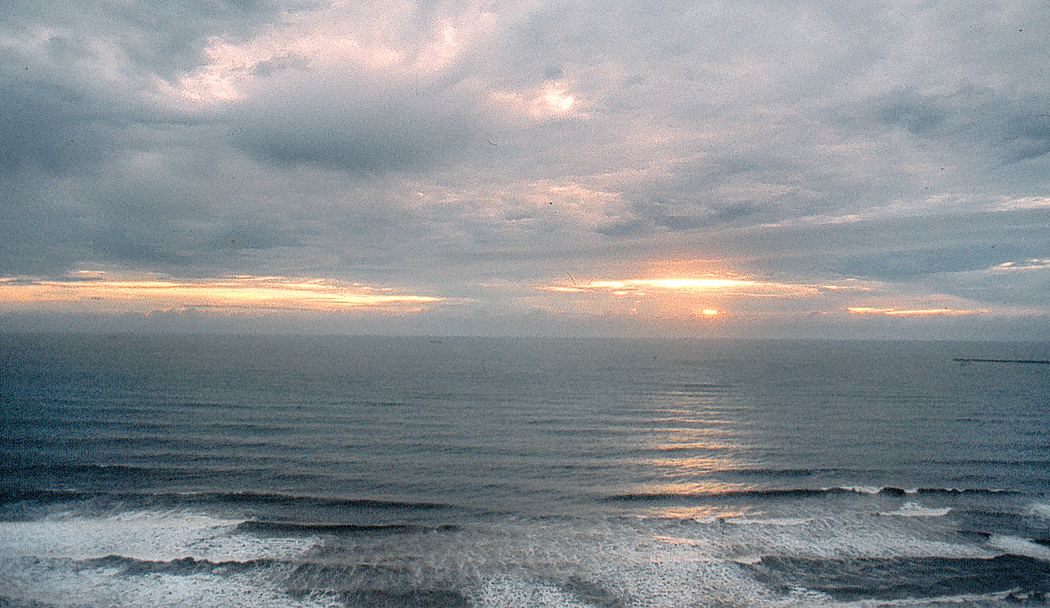
And without consciously realizing it, those Sugimoto photos had buried their way into my psyche, and without consciously imitating his work, I had begun making my own photographs of that phantom horizon. I did so all around the world, like this one of the Indian Ocean from South Africa:
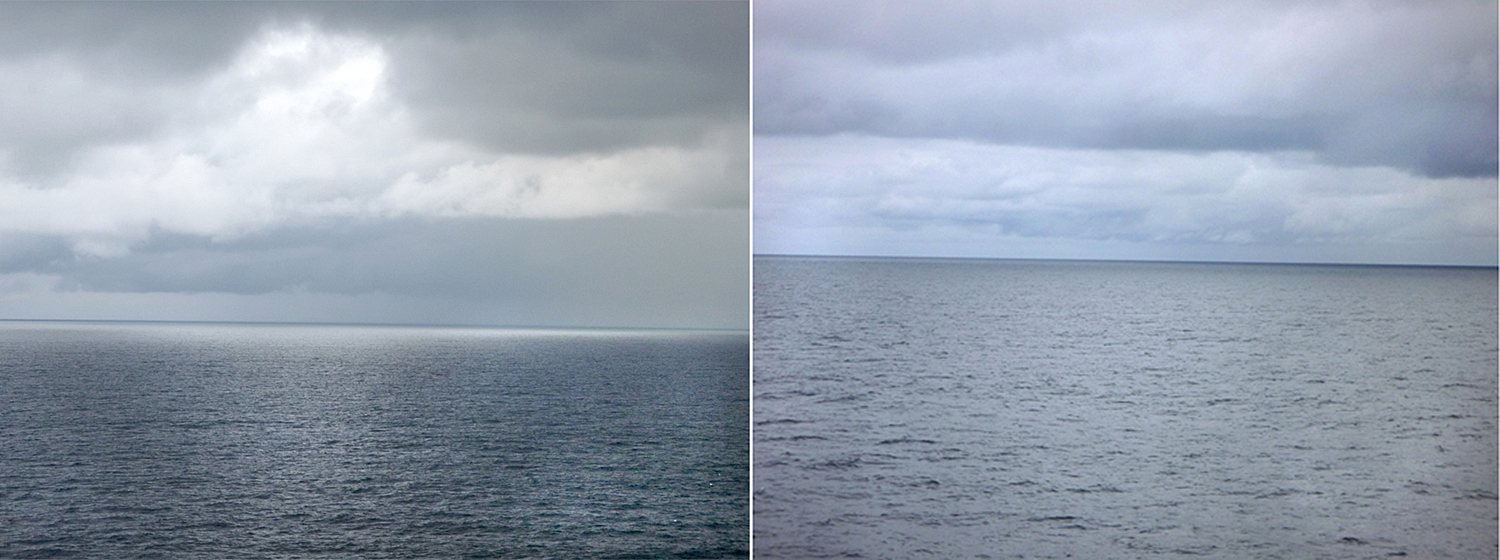
Or these from Alaska:
Or this coup de soleil on Puget Sound: 
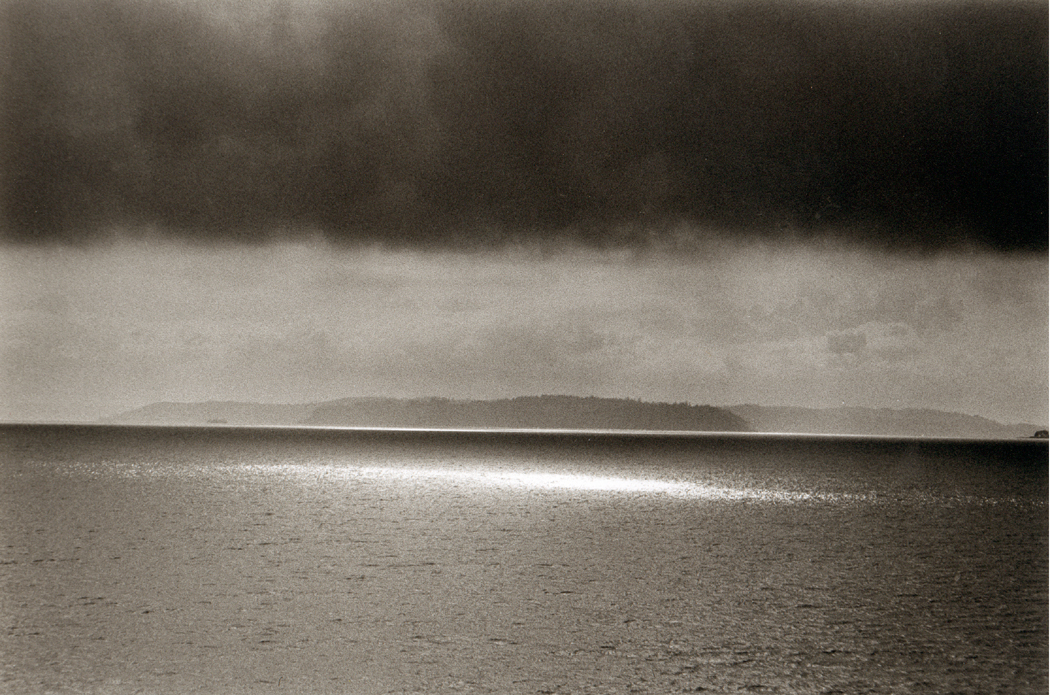
Although I was not aware, when making these images, that Sugimoto was buried in them, I was aware that they were informed by the sublime, and specifically, from a 20th- and now 21st-century version of the concept. 
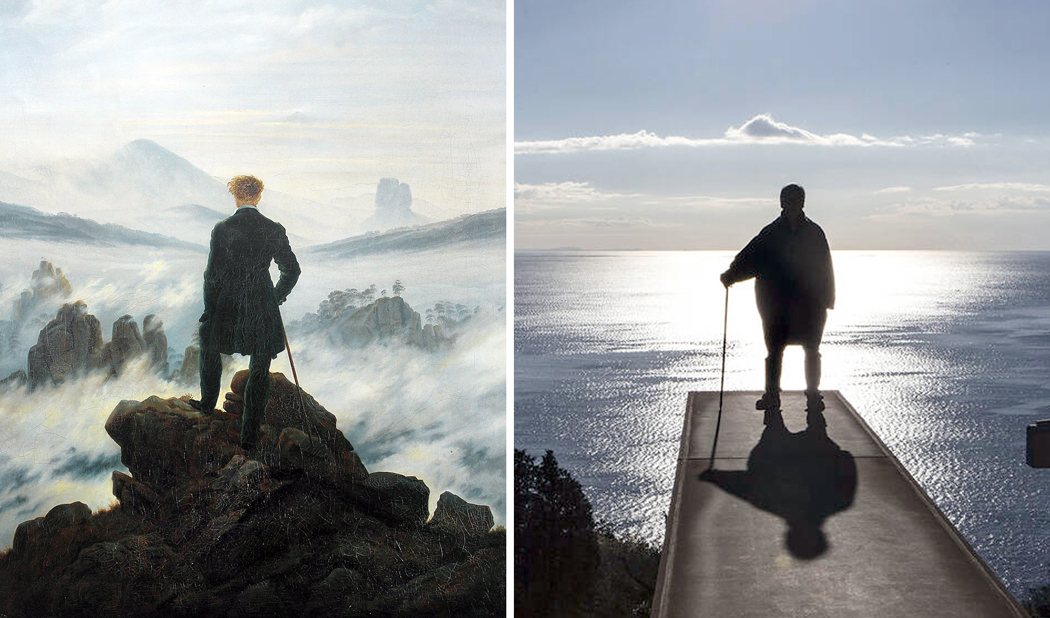
Finally, if I needed any confirmation that Sugimoto was striving for the sublime, I found it in this photo of the artist, posed to mimic the painter who was perhaps the poster-boy for 19th-century Romantic sublime, Caspar David Friedrich. 

In 1956, psychologist Benjamin Bloom published his Taxonomy of Educational Objectives, a hierarchical ranking of thought processes, often recast as “Bloom’s Taxonomy.” It has been often revised and recast, but most often, at the bottom were simple tasks such as memorizing, at the top came creativity. 

My late wife, who was at least as smart as Bloom, had her own version of this taxonomy, and for her, the lowest level was “naming.” She taught school for more than 30 years and saw brain-burn at the individual level. Being able to say, “Horsie” or “Duckie” is naming. This is simple rote. Learn the name and repeat it when appropriate. 

Naming also shades into the second level — the level most people get stuck in — that of sorting. Finding categories and shunting the names into silos to contain them. As if that explained anything. 

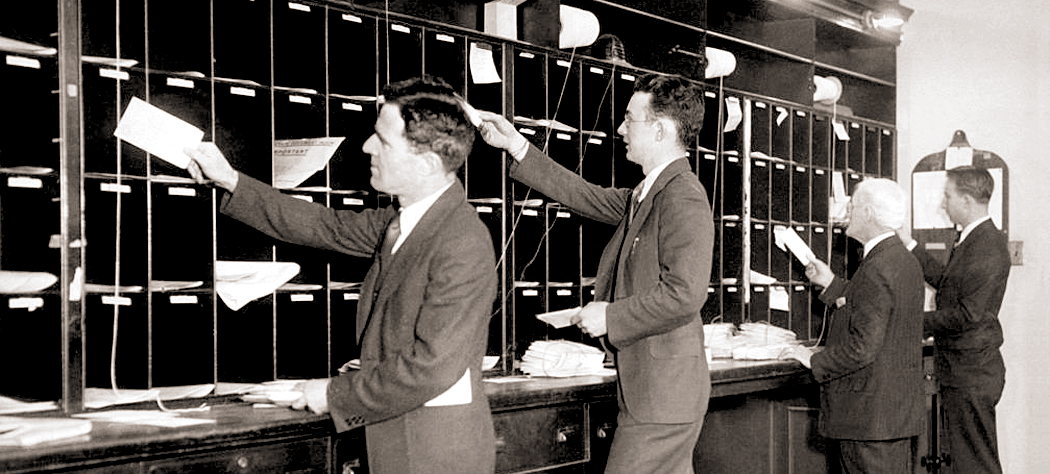
The greater part of what we do with our brains is to sort things out. To put cats over here and dogs over there. When we learn, most of what we mean by that is to understand that Claude Monet was an Impressionist and that Luis Buñuel was a Surrealist. These are mere sortings. Important for a file clerk, perhaps, but more a form of busy work than of actual thinking. 

We learn a whale is not a fish, and that a spider is not an insect. We have separate categories for them, and when we recognize the categories, we believe we have actually said something meaningful about our whale or spider, when really, all we have done is play with words. 

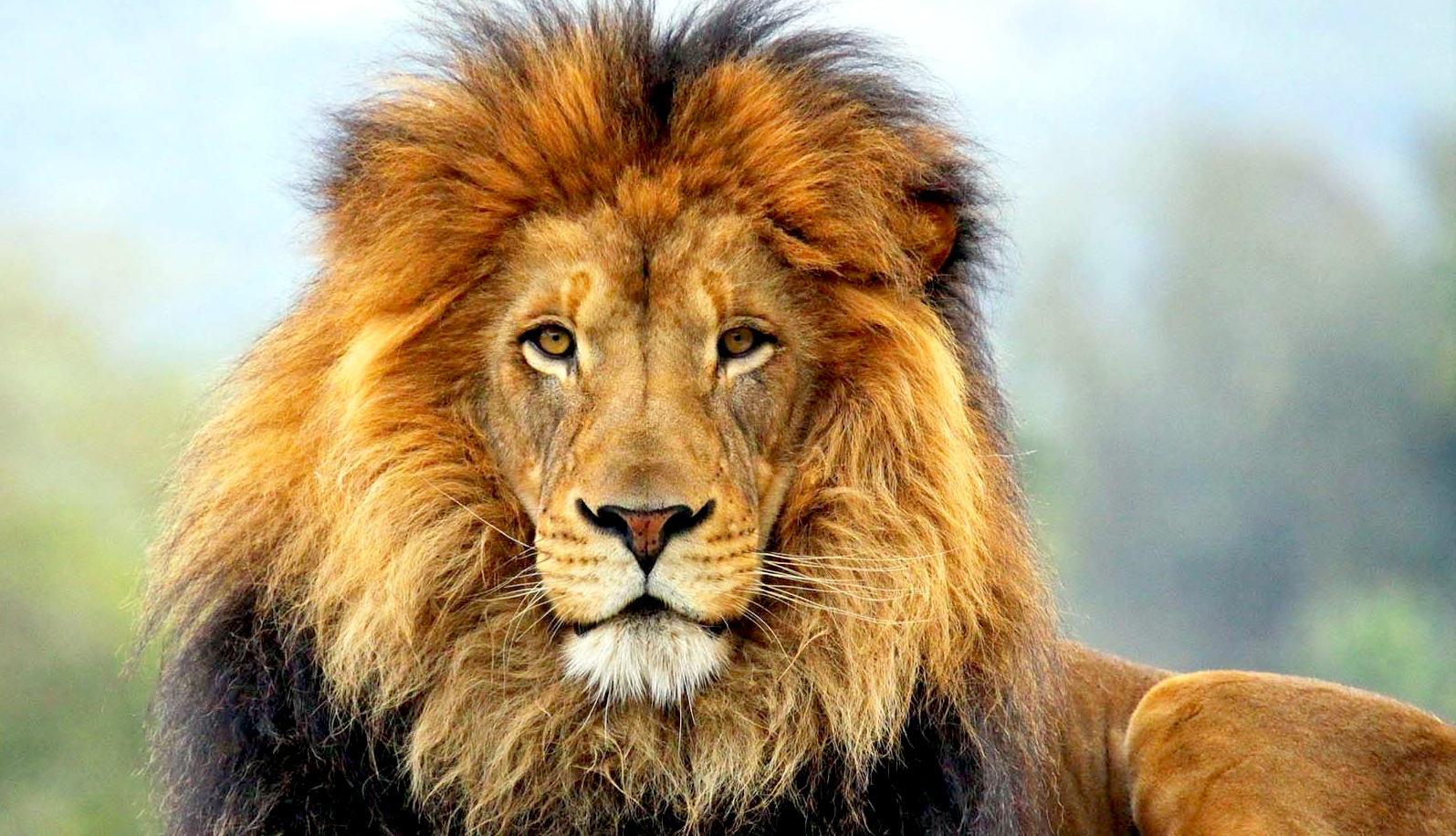
Categories, are, after all, quite fugitive, quite fungible — squishy. When zoologists first tried to classify lions, for instance, they placed them in the genus “Felis,” for they are some kind of cat. But later, it was decided they were big cats, not small ones, and so they became “Panthera.” Oh, but that wasn’t good enough, and so a new genus was established, dividing them from tigers and leopards, making them “Leo.” New category, new silo. 

For a brief time, I worked at a zoo, and had the opportunity to walk behind the cages and get up close to many of the animals and I can tell you that standing with his zookeeper two feet from a male lion to feed him,(separated from Leo by the cage bars), the lion’s head seemed to be the biggest thing I had ever seen, shaggy and furry, with a very particular smell, and a sense that this beast could swallow my head as if it were an M&M. And then it “purred.” A low, gutteral roar expressing satisfaction at the afternoon meal, that made the ground rumble under my feet. It was one of the most impressive things I have ever witnessed and it mattered not a whit whether I was seeing a Felis or a Panthera or a Leo. The name was rather beside the point. The experience had a physical existence and it didn’t need a name. 

Language is not reality. And the experience — the feel of it in the palm of your hand, or in your nostrils, or under your feet — is worth all the words in the world. Words can be a barrier keeping us from what is real. 

And yet, we spend so much of our time arguing over these categories, as if they mean anything. As if they were a reality. Is Joe Biden a Socialist? Did Elon Musk actually reach outer space? Is a tomato a fruit or a vegetable? So much thought and energy to such meaningless ends. Think of all the dark money spent in political campaigns to paint the opposition into a category-corner that makes the opponent a one-dimensional boogeyman. The world and its things are infinite. 

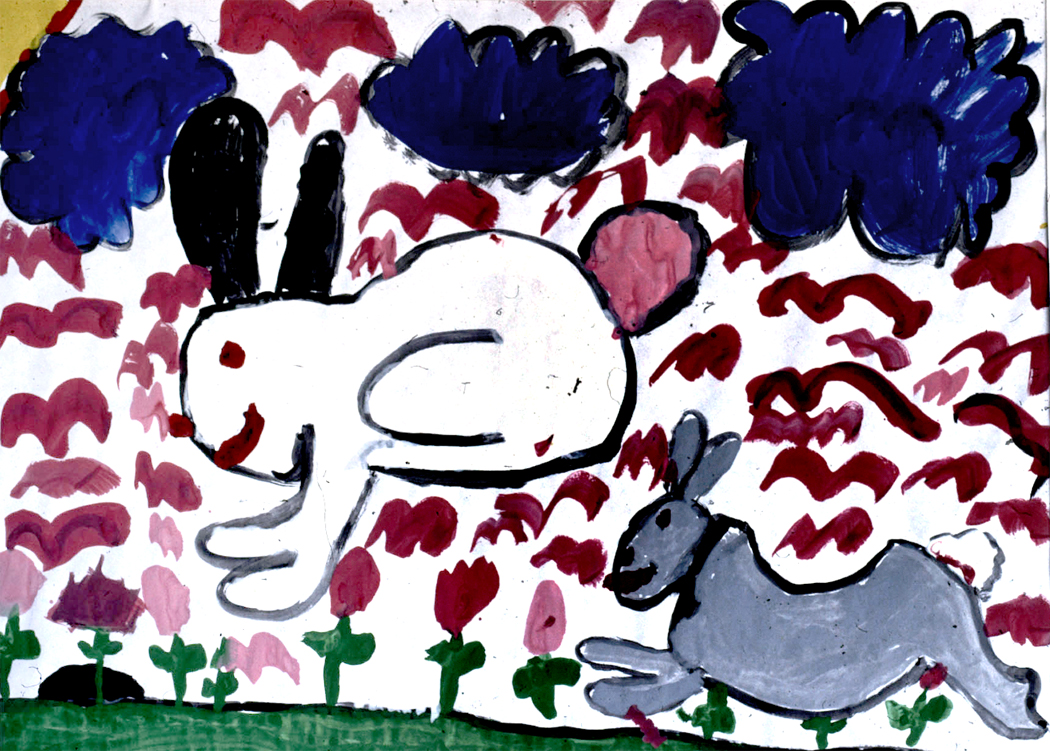
My late wife took animals to class with her so her pupils would have actual experiences — the twitching nose of a bunny, the blank stare of a hen, the brittle carapace of a hermit crab — and then gave the kids paper and paints and let them express what they had experienced. If names were mentioned, they were the names the kids gave the animals — a rabbit named Tiffany Evelyn or a crab named Eloise. What mattered was physical reality of the experience. Anything else is just language. Names. Categories. 

Historians like to take big chunks of time and give them names: Classical, Postclassical, Late Medieval, Romantic, and so on. Then they argue over it all, because these categories are misleading and constantly changing — being redefined. But, as they say, whatcha gonna do?

Take the Middle Ages. Middle of what? Homo sapiens developed something like — in a common low-end estimate — 300,000 years ago, putting the start of the Middle Ages somewhere approximately in the last 15/3000ths of human history. Not exactly the middle.

But the dates we give the Middle Ages vary widely. It came after the Roman Empire. When did the Roman Empire fall? Well, you can say that the final collapse came in 1453 with the fall of Constantinople. For some people, that is already the Renaissance, squeezing out the Middle Ages entirely. But no one really believes the Byzantine Empire was genuinely Roman. They spoke Greek, for god’s sake. They were Christian.

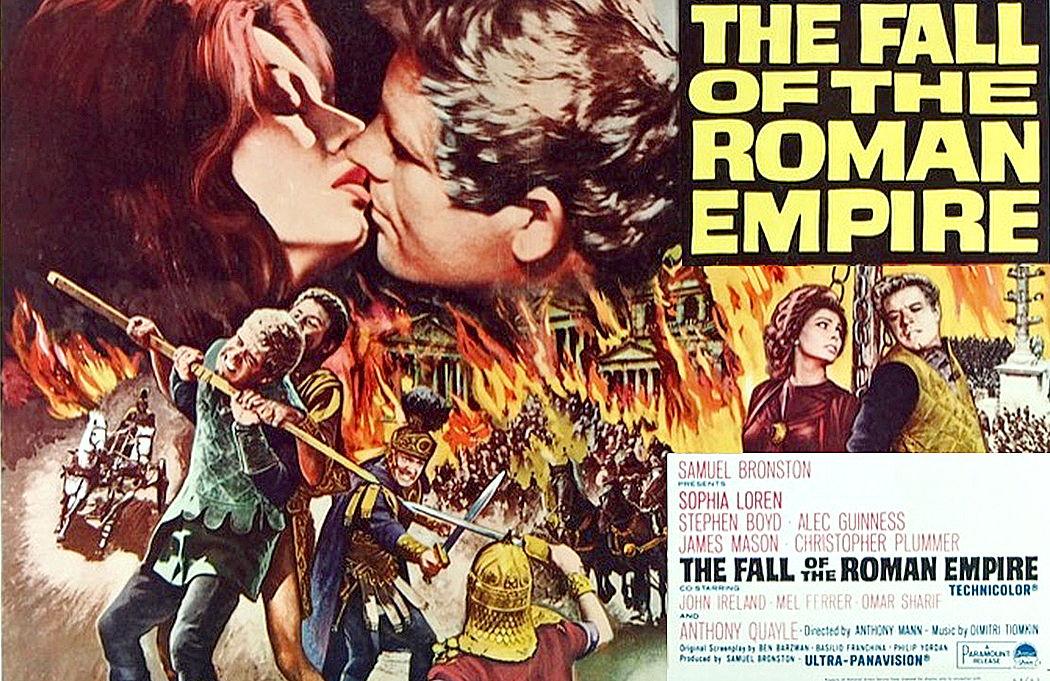
Usually, when we talk of the fall of Rome, we mean the Western Roman Empire and the sad reign of Romulus Augustulus, which came to an end in AD 476. But really, the Western Roman empire at the time consisted only of most of Italy and Dalmatia (later aka Yugoslavia) and a tiny bit of southern France.

And you could easily argue that Rome ceased to be Roman after Constantine converted to Christianity and legalized it in AD 313. After that, the slow slide from Roman imperialism into Medieval feudalism began its ambiguous transubstantiation.

It is the great paradox of scholarship: The more you read, the more your ignorance grows: The more you learn about something, the more you discover how little you know.

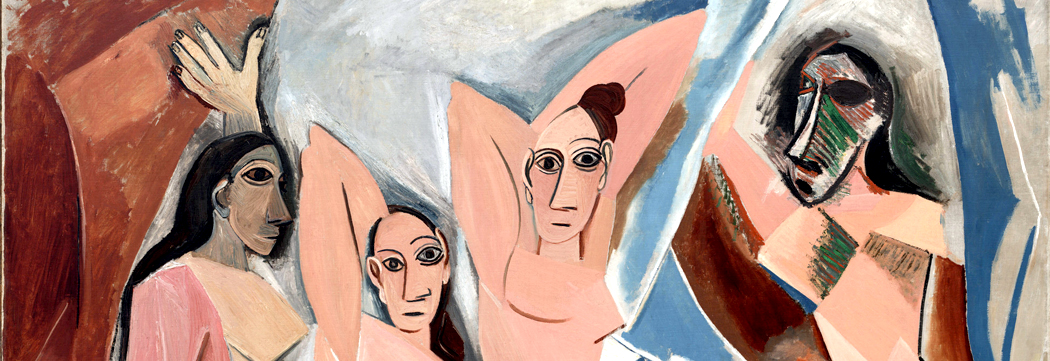
Are Picasso’s paintings Modern art? His first big Cubist painting, Les Damoiselles d’Avignon was painted in 1907. That is closer in time to the reign of Catherine the Great in Russia than it is to us. Closer to George Washington’s Farewell Address. To the Louisiana Purchase. 

So, what do we mean by “modern?” and when did modernity take over? It is a slippery question. And really it is simply an issue of definition — words, not experience. We let the words stand in for reality and then let the debates begin. Reality flows uninterrupted and continuous. Categories are discrete and they start and stop. 

The more you attempt to define the categories, the more they slip away. The history of academic scholarship is often the history of proving the categories wrong. It is historians who argue over the dates of the Renaissance. Or the fall of Rome, or the birth of Modernism. 

Categories are a convenience only. They are a name for the nameless.

I am reminded of the time, some 40 years ago, when I first drove west from North Carolina with my genius wife. We had never seen the great American West and eagerly anticipated finding it. It must be so different, we thought, so distinct. The West is a category. 

We were living in Boone, N.C., named for Daniel, who trod those mountains in the 1700s, when the Blue Ridge was the West. When George Washington surveyed the Northwest Territory in the late 1740s, he was measuring out what became Ohio.

So, when I was driving, I knew I had already pushed my own frontier past such things, and knew in my heart that the West began on the other side of the Mississippi River. But, when I crossed the river into Arkansas, it hardly seemed western. It didn’t look much different from Tennessee, in my rear view mirror. Yet, Arkansas was home to the “Hanging Judge” Isaac Parker and where Jesse James robbed trains. Surely that must be the West. But no, James looked more like a hillbilly than a cowboy. 

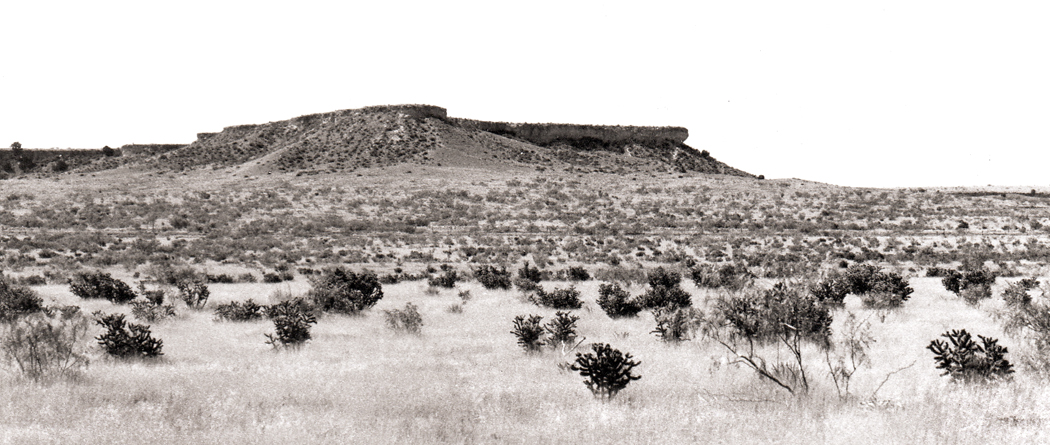
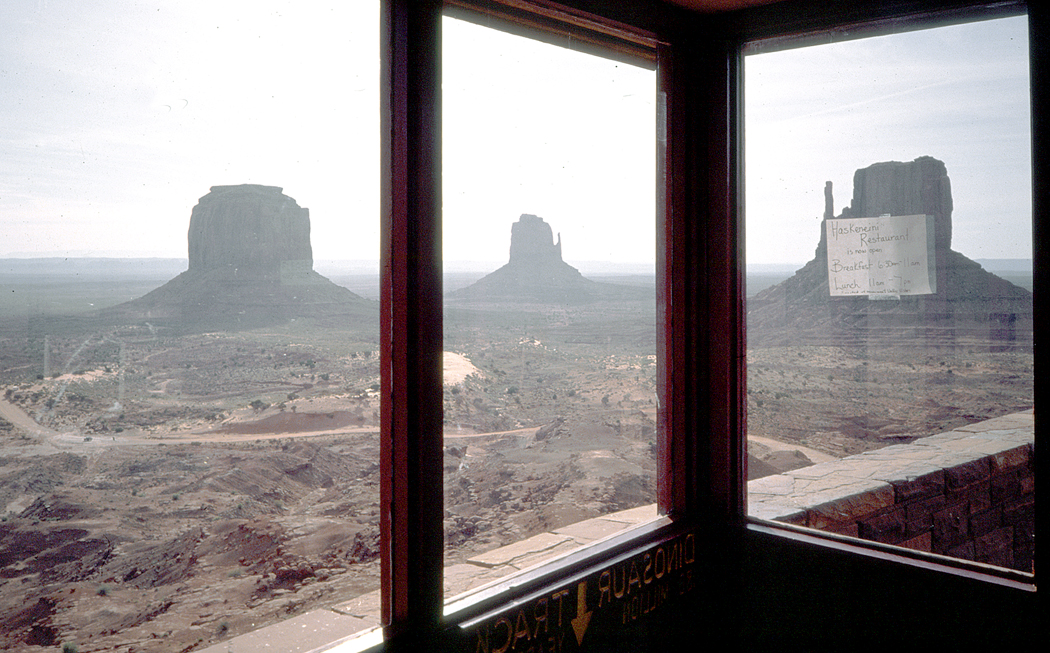
Then came Texas, which was the real West, but driving through flat, bland Amarillo on I-40 was as exciting as oatmeal. The first time we felt as if we had hit the West was at the New Mexico line, when we first saw a landscape of buttes and mesas. Surely this was the West.

Maybe, but we hadn’t yet crossed the Continental Divide. All the waters of all the rivers we crossed emptied into the Atlantic Ocean. Finally, crossing the Divide near Thoreau, N.M.,  we felt we had finally made it.

Yet, even when we made it to Arizona, we knew that for most of the pioneers who crossed this country a century and a half ago, the desert was just one more obstacle on the way to California. In some sense it still wasn’t the West.

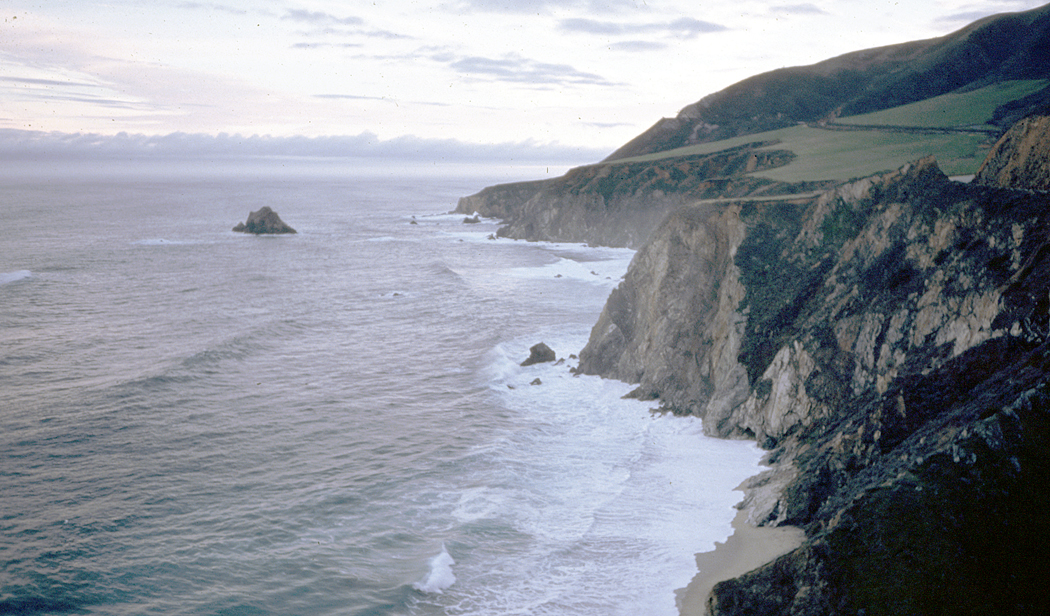
When we got as far as we could in a Chevy, and stared out at the Pacific Ocean, we knew that there was still something farther: Hawaii, Japan, China, India, Africa — and eventually back to North Carolina.

So, the West wasn’t a place you could ever really reach, but a destination beyond the horizon: Every point on the planet is the West to somewhere else.

When we look to find the beginnings of Modernity, the horizon recedes from us the same way. Perhaps it began with World War I, when we entered a non-heroic world and faced a more sober reality.

Modern Art began before that, however, perhaps with Stravinsky’s Rite of Spring in 1913, perhaps with Debussy’s Afternoon of a Faun in 1894. Some begin with the first Impressionist exhibition in 1874.

Politically, maybe it begins with Bismarck and the establishment of a new order of nations and the rise of the “balance of power.”

You can make a case that Modernism begins with the Enlightenment in the 18th century, when a rising Middle Class began to fill concert halls and Mozart became an entrepreneur instead of an employee of the aristocracy.

Or before that, in 1648, with the Treaty of Westphalia, and the first recognition of national boundaries as something more than real estate owned by the crown.

You can set your marker down with Luther, with Gutenberg, with Thomas Browne, Montaigne, Caravaggio — or Giotto.

For many, Modernism began with the Renaissance, but when did the Renaissance begin? 15th century? The Trecento? Or did it begin further north with the Gothic, which is really the first sparking of a modern way of thinking.

Perhaps, though, the Roman republic divides modern political organization from more tribal eras before. Or you could vote for the democracy and philosophy of ancient Greece. Surely the time before that and the the time after are distinctly different. We recognize the near side of each of these divides as more familiar than the distant side.

You might as well put the starting line with the discovery of agriculture in the steppes of Anatolia and the river plains of Iraq. An argument can be made for any of these points on the timeline — and arguments could be made for many I haven’t room to mention.

Perhaps the horizon should be recognized for what it is: an ever-moving phantasm. For those peasants digging in the manorial dirt in the Ninth Century, the times they were living in were modern. The first person recorded to use the term “modern” for his own age was the Roman writer Cassiodorus in the 6th Century. Each moment is the new modern.

These are all just categories, and spending our time sorting things into their file folders should not be mistaken for actual knowledge. It is words about the knowledge. 

Now, I will concede that the words help us discuss the real things, and that it is probably useful to know the difference between cats and dogs, or butterflies and moths. But categories and sorting are just a second level of thinking. After these baby steps, there is so much more that the human brain can begin working on, much more grist to be ground. And a good deal of thought that outreaches the ability of words to capture. 

The level I have been most thinking about recently is that of observing, of paying attention. Not deciding anything, or sorting anything, but just noticing. The world opens up like a day lily; so much that was invisible is made visible — things that the rush of daily life, moving things from in-box to out-box, have made too inconsequential to waste time with. There is a richness to the world that becomes a glowing glory when attention is paid. 

In the days before the transcontinental railroad, a Cheyenne father would take his 10- or 11-year-old son out into the prairie and have him lie down on his belly. “Just look,” he would say. “Don’t talk, don’t decide, don’t name, just look.” And he would leave his son there for the day, not moving a whit. And when he came back to retrieve the boy he would not ask, “What did you see.” He would say nothing. He would not need to. 

So much of value is beyond words, beyond category.

Forty years ago, when I was heartbroke, uprooted, unemployed and deep in depression, I would regularly ride the ferry across Puget Sound from Seattle to Bainbridge Island. It was a cheap ride for a pedestrian and I could go both ways for one fare. There was breakfast to be had onboard and the early morning light, often through mizzle and mist, was the perfect visualization of my inner state. 

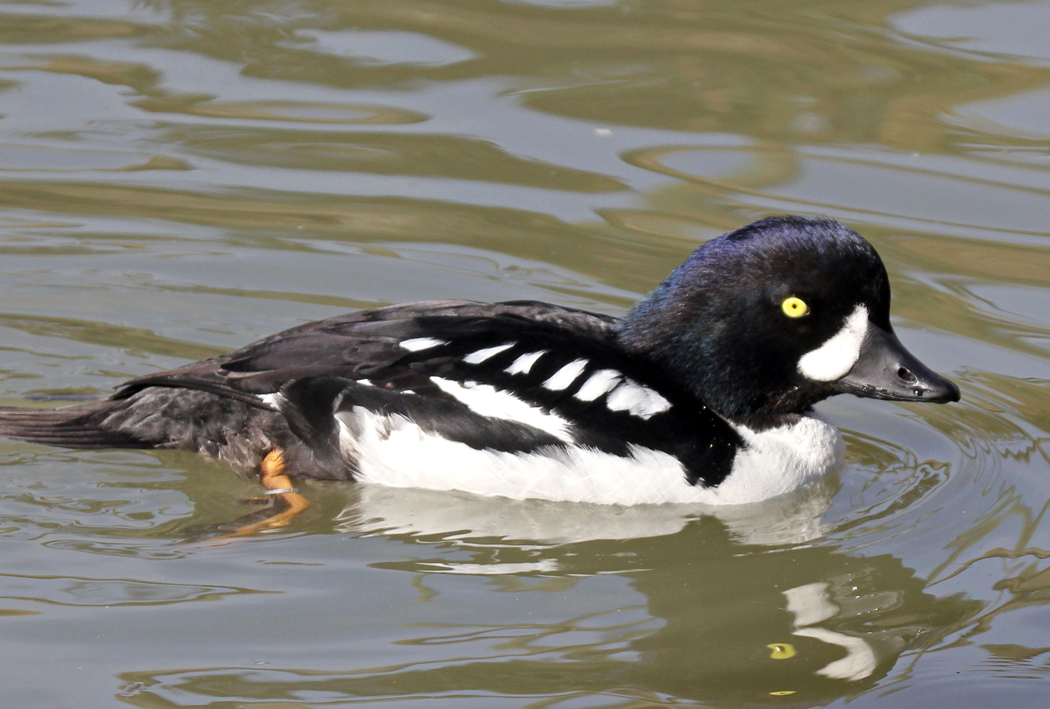
Sometimes I would get off on the island and hike through woods just north of Winslow, the town with the ferry slip. I saw goldeneyes and grebes, cormorants and wigeons, mergansers and coots. The Northwest is mostly made up of Douglas fir and western redcedar, but Bainbridge Island had a great stand of maples. Wildflowers bordered the roads. 

I was alone on the crowded ferry, with the constant churn of the motor under the deck, staring out the rain-spattered window at the expanse of water. There is something about water, and about moving across its surface that I found soothing in my loneliness. A band of sunlight  would blast the waves and quickly disappear again. 

Yonkers ferry

I have ridden many ferries over the years. The first I remember was the Yonkers ferry from Alpine, N.J., across the Hudson just north of Manhattan. I went with my uncle to visit his in-laws. I remember very little of the trip — the ferry was discontinued in 1956, so I had to have been less than 8 years old; more likely I was about 5 or 6 — but I do remember the river, the waves, the expanse from one shore to the other and the low skyline of our destination. I have absolutely no recollection of the in-laws. 

It is the flatness of the water, disturbed by the wind into a disruption of skitter that sticks in my mind each time I take the boat. It is both calm and nervous at the same time. The Hindu idea of māyā is immediate: an ideal world brought to motion by the wind on its reflection. The early lines of Genesis also comes to me: “And the earth was without form, and void; and darkness was upon the face of the deep. And the Breath of God moved upon the face of the waters. And God said, Let there be light: and there was light.” In some Native American mythologies, the Great Spirit, Wakan Tanka, is manifest as wind, which animates the prairie grasses very like sea waves. 

Perhaps in times of distress, the ferry ride puts me on that sea and I can breath the same moving air that animates the waters. It can calm or at least give me the sense of being part of something bigger than myself. All of which sounds mighty grandiose when you are considering a boat made of iron and grease that rattles across the Sound so that commuters can get to their jobs. 

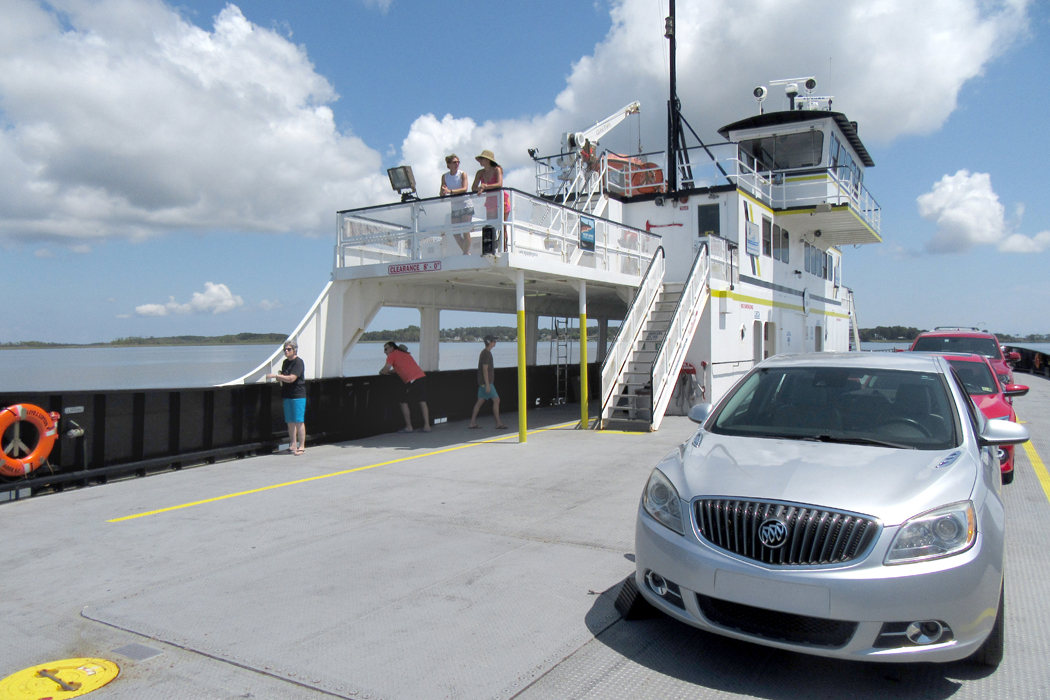
At any rate, ferries give me a kind of mythic jolt. Which is why when I was coming home from a visit to my brother at the beach, where he lives at the head of the Outer Banks, I opted to take the Knotts Island ferry across Currituck Sound. The Sound separates the barrier islands from the low-lying and swampy mainland. It is about a five mile trip across the water from slip to slip. It takes about three-quarters of an hour on the water. 

Unlike the huge Puget Sound ferries, the boat across Currituck Sound is puny: It has room for only about a dozen cars. Its main purpose seems to be to carry a schoolbus from Knotts Island to schools on terra firma. 

Knotts Island, for the sake of honesty, isn’t really an island, but a peninsula that hangs down from Virginia into North Carolina, through the Mackay Island National Wildlife Refuge, which is half water, and full of waterfowl, reeds and water lilies. The island is mostly in North Carolina, but its top bit is still in Virginia. 

In years past, when I taught in Virginia Beach, I would take my photography students down to Mackay Island. There was everything to photograph. I went there on my own many times, sometimes just to soak in the brackish air and watch the stretch of water. There is a yearly “Peach Festival” on Knotts Island, and my wife and I and several of our friends went to the orchards to pick bushels of fruit. We spent days processing the peaches into jams and chutneys. 

So, I have history on the island. And now that my wife is gone, the trip back across the island to take the ferry brings up a whole life, its aftermath, its redolence, its meaning. 

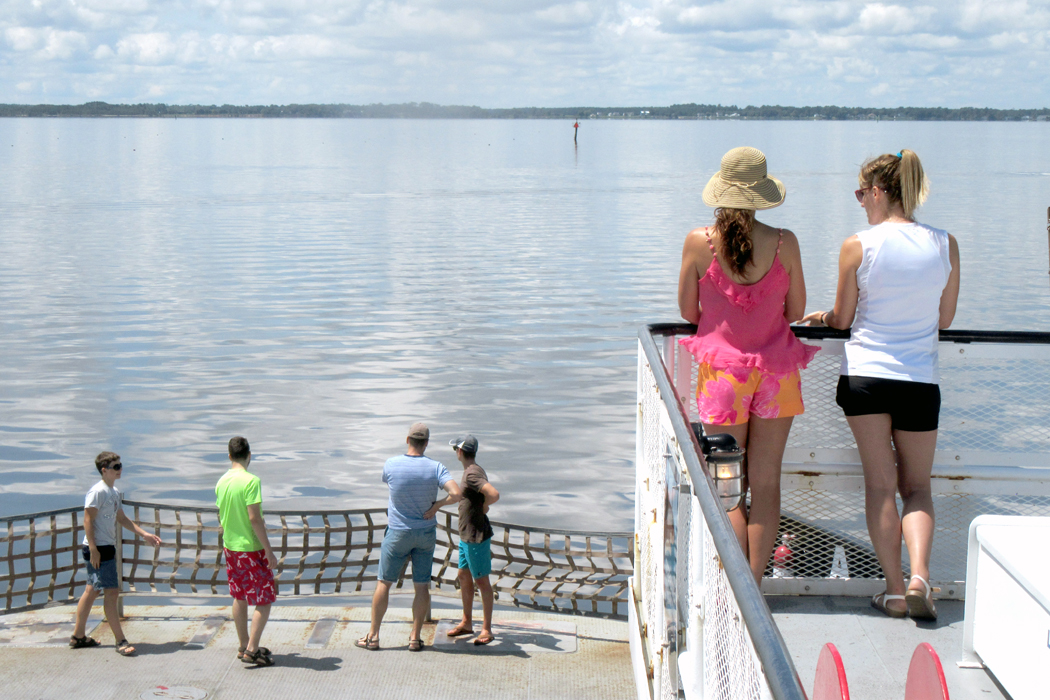
Unlike the Seattle ferry trips, this one is sunny. The waters are calm, shivered by only a small breeze, although that is enough to provide the flat waters with texture. The channel markers are home for bird nests. There is an osprey on one, and cormorants spread their wings to dry on others. The ferry chugs past them, some to the right, some to the left. 

The water is wide enough that the far shores are a horizon line, and toward the south, and the spread of water around the curve of the earth, there is no far shore to be seen. The flatness of the day erases the line between water and sky, between life and death, between now and then. You can still make it out, but barely. Waters are deep, and so is the sky. In revery, like Ishmael hypnotized by the sea, I fall into fascination with the obscurity of horizon, of border, of things that have names, but whose names are merely tags to hide the essential sameness, the unity. 

There is a startling beauty to this state, I gaze at the line, horizontal, that seems to exist, then doesn’t, then exists only because I know it’s there. Am I inventing it? Māyā. 

The sky circles the top half of heaven, the water, the bottom. It is a circuit. The sun arcs from east to west then continues west to east underneath our feet, underneath the boat. I am laughing at myself for my seriousness. But I am put in mind of circles and spend the rest of the trip finding circles everywhere on the boat. Can a circle be the primary form of the cosmos? Can it be the crown of a hat? The ridiculous and the mythic are comically the same, same as the sky and bay, water and air. 

Well, I am an idiot. I am alive, still, and what does any of this mean other than I can breathe, inhale and exhale and feel the swelling of my lungs and the beat of my heart: “Close on its wave soothes the wave behind.”

All is lost; nothing is lost. The breath of the gods moves upon the waters. They shiver.