Archive

Tag Archives: horror

Like most critics, I’ve written my share of Top Ten lists over the years. Most of them, whether about music or movies or books, tend to be made from what I consider the best, deepest, or most meaningful entries — classics. Consensus choices made by informed critics who have read, seen and heard enough of their subjects to make their lists meaningful. The best on these lists can perhaps make you a better person, but not necessarily happier. 

So, there can be another list, not of the highest and best, but of those things we simply enjoy, for whatever reason. After all, what we simply enjoy isn’t always the most profound or most brilliantly written, acted, or edited. And sometimes we have to admit there are things we just like. And we will watch them over and over again. 
Yes, I know the idea of watching a movie over and over doesn’t make sense to some people. I have discussed this with someone who wondered, “I’ve seen it and know how it ends, so why would I watch it again?” As if the point of a film were its plot. 

And there are films that function only on a story level, and perhaps once you’ve learned the plot twist, or uncovered the killer, there is no further reason to return to the movie. I have movies like that: I enjoyed them well enough the first go-through, but have no overriding desire to take that ride a second time. 
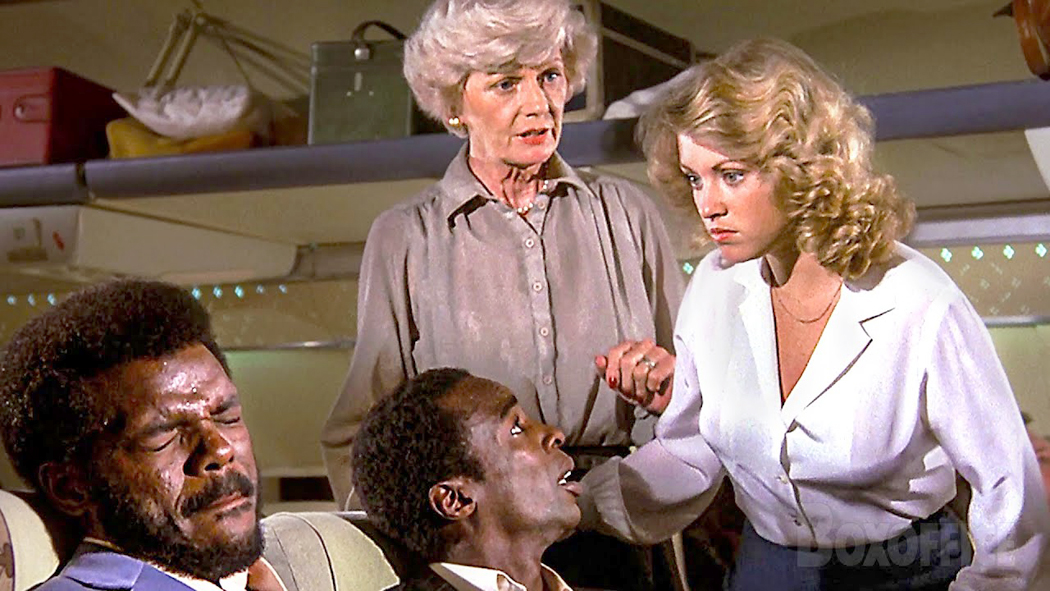
But there are movies I want to see over and over, the way you like hearing a favorite tune. You don’t say, “I’ve heard that song, so why would I listen to it again?” It’s a tune. It’s fun to hear again. And don’t call me Shirley. 

A list of such films will be personal. I don’t expect everyone to jump on the bandwagon. Such a list is almost a Rorschach test, explaining the personality of its maker. Make your own list and see it as a mirror. 

And so, here’s my list of top favorite movies that never stop satisfying. Some are movies I watch over and over and just enjoy every time; and others I don’t have to watch all the way through, but just love particular scenes and if I am channel surfing and come across them on Turner Classics, even if I catch them in the middle, I will watch through to the end, just to catch some of those scenes. Some of these are genuine classics, but others just tickle a certain place in my brain. They are fun. 
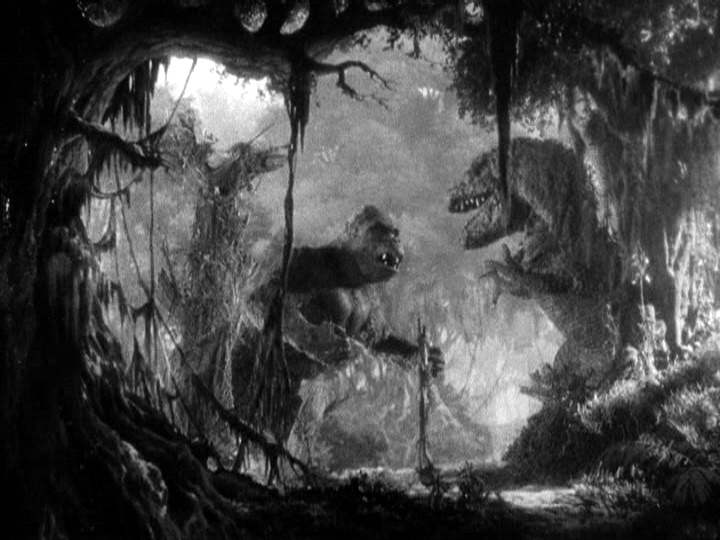
Number One on my list is a perfect example. No one would claim it has great acting or brilliant dialog. In fact, it is embarrassing on both counts. But it hits a sweet spot in the mythological nerve button in my psyche. I have seen the 1933 King Kong over a hundred times. 

Admittedly, this includes all the times I watched it as a 5-year-old from behind the couch to hide from the scary parts, when it was being shown a dozen times a week on WOR-TV’s “Million Dollar Movie” on New York television. I chalked up a boatload of views in the years before I even went to high school. 
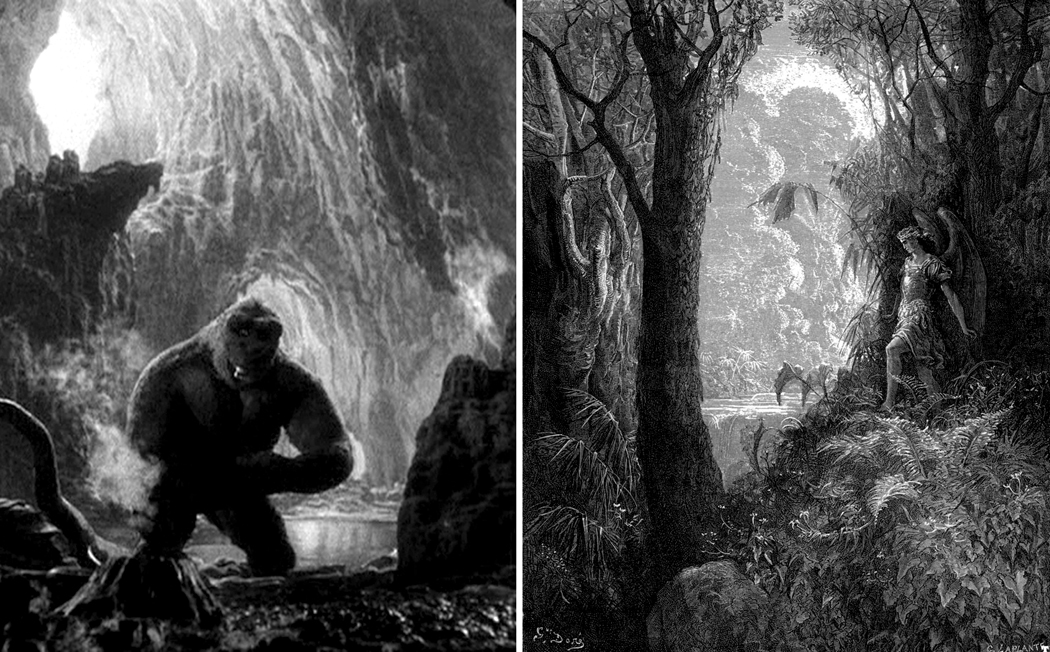
Even now, 70 years later, I will still tune in when it shows up on the TV listings. Its appeal is the same as those wonderful Gustav Doré wood engravings of dark forests and the light that shines through. 

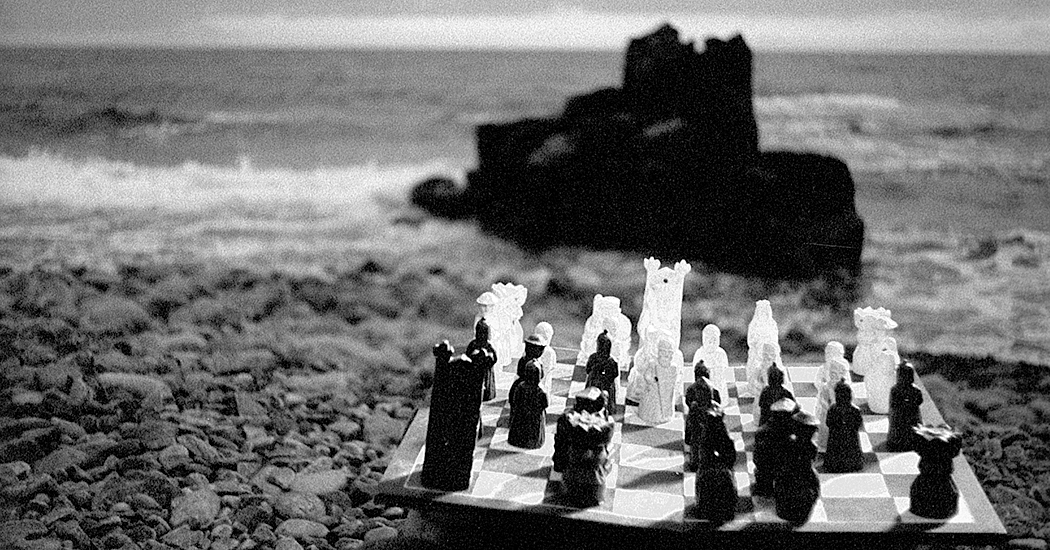
So, King Kong is first on my list. Second couldn’t be further from the spirit of the Big Monkey picture: The Seventh Seal by Ingmar Bergman. 
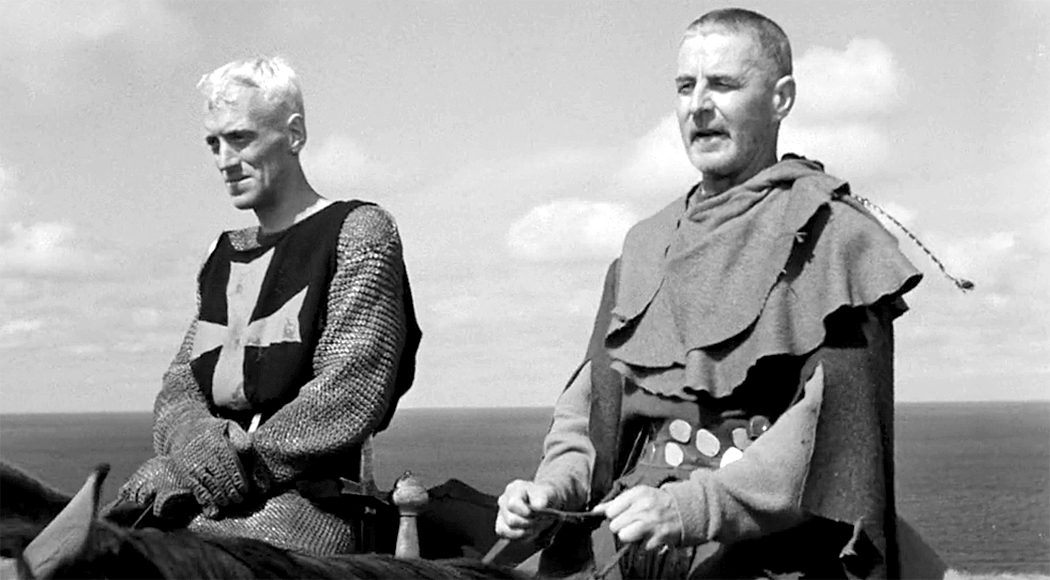
I first watched it, like Kong, as a boy when it was just a cool movie about Medieval knights. It was on TV, and since it was released in 1957, I had to be at least 9 years old before I saw it. Probably a few years after that. I next saw it as part of my college movie series, along with a raft of other art films. That’s when it hit home. 

The movie gets shown a lot, both on TV and in various film series, and so I have had the chance now to see it probably 30 times or so. It is pretty much the defining title of the “art film.” I became a foreign film junkie in college and most of my favorite films are either in French or Swedish, with Italian clocking in third. 
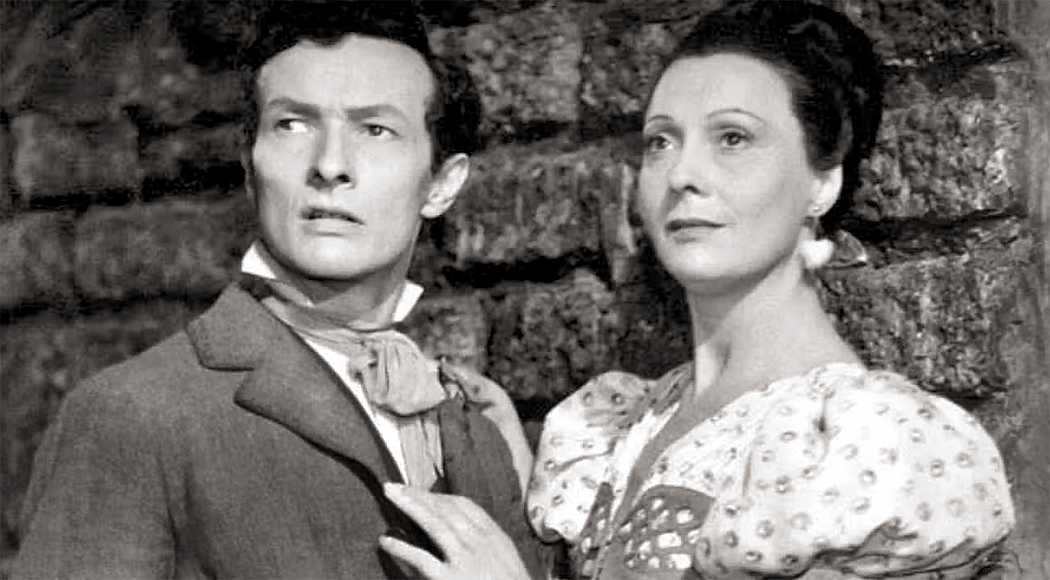
No. 3 on my list is French, and it is the film that I have both seen many times over the years and has changed drastically over multiple seeings. I first saw Children of Paradise in that college film series, and at that age, it was the yearning idealism of Baptiste Deburau that spoke most directly to me. I was Baptiste. Yes, I know that’s embarrassing now, but then, his earnestness seemed the very nugget of truth. And my heart went pitter-pat for Garance:  “Love is simple,” she said. And so it seemed to one of my tender years. We are all idiots at that age. 
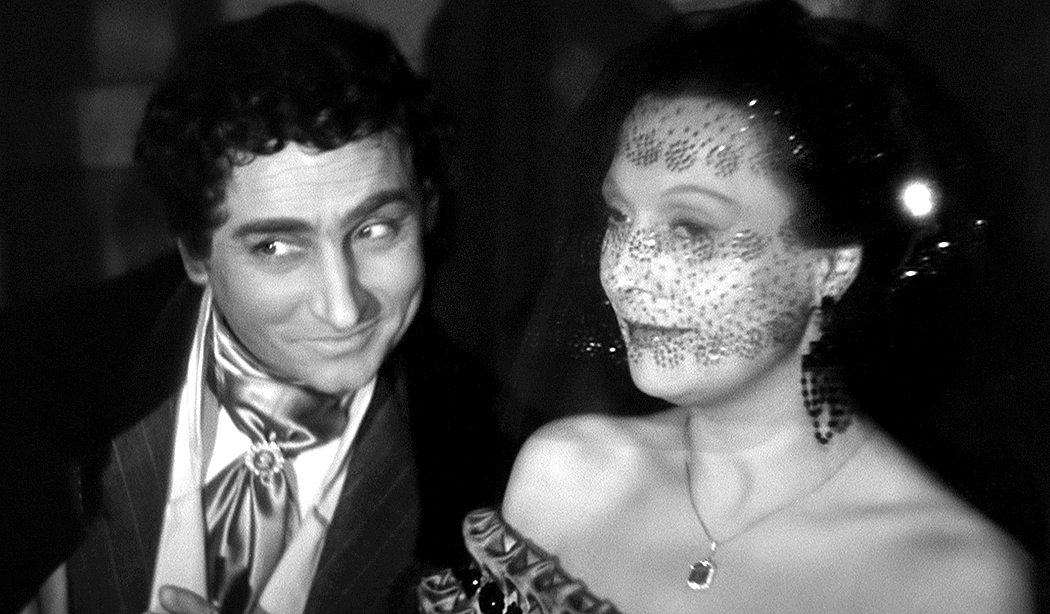
Later, I came to identify with the actor Frédérick Lemaître, accommodating and joyfully cynical. Of course, that, too, was just a costume to try on. The same, later on, with the antisocial Lacenaire. 

As I sped through the years, seeing the film differently each time, I finally came rather to see the characters as comprising a whole, and I identified with their shared humanness, each suffering and causing suffering in turn and trying to make a way through life. 
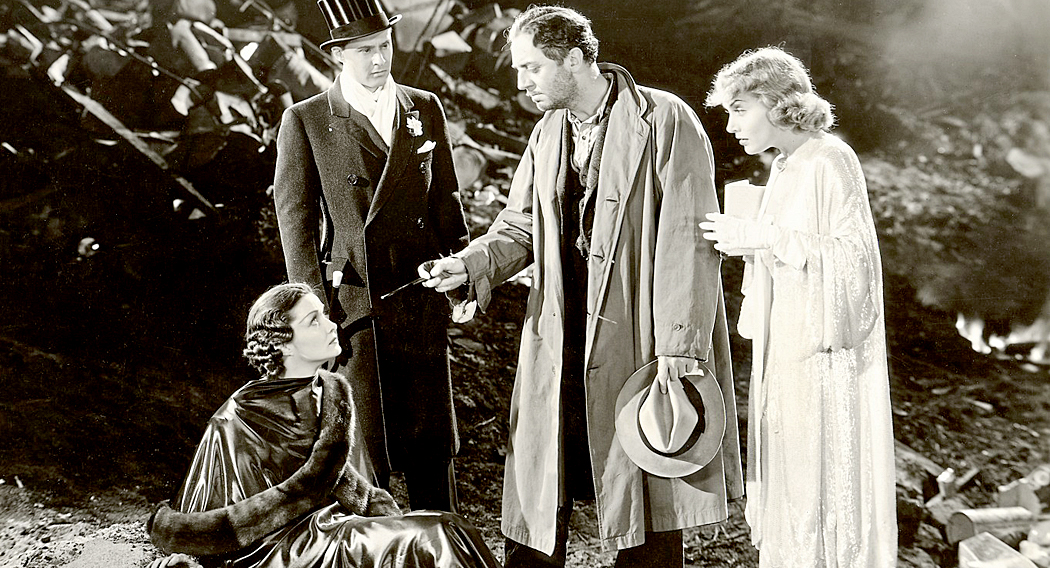
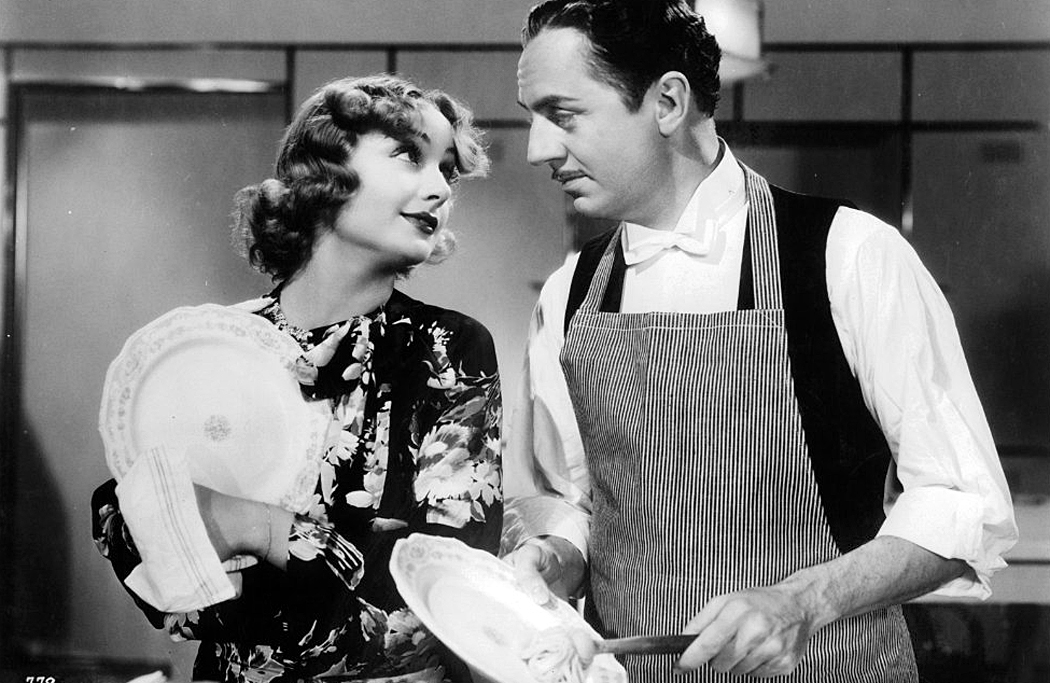
Next, a movie that never changes, but delivers the goods every time: My Man Godfrey, with William Powell and Carole Lombard. Of all the great screwball comedies from the 1930s, it is the most perfect. Perfect plot; perfect casting; perfect dialog; perfect direction. 

I do not know how many times I’ve watched Godfrey, but it never wears out its welcome. Of all the films on this list, Godfrey most approximates the comparison with the favorite tune where you perk up on hearing it and it just brightens your day. 
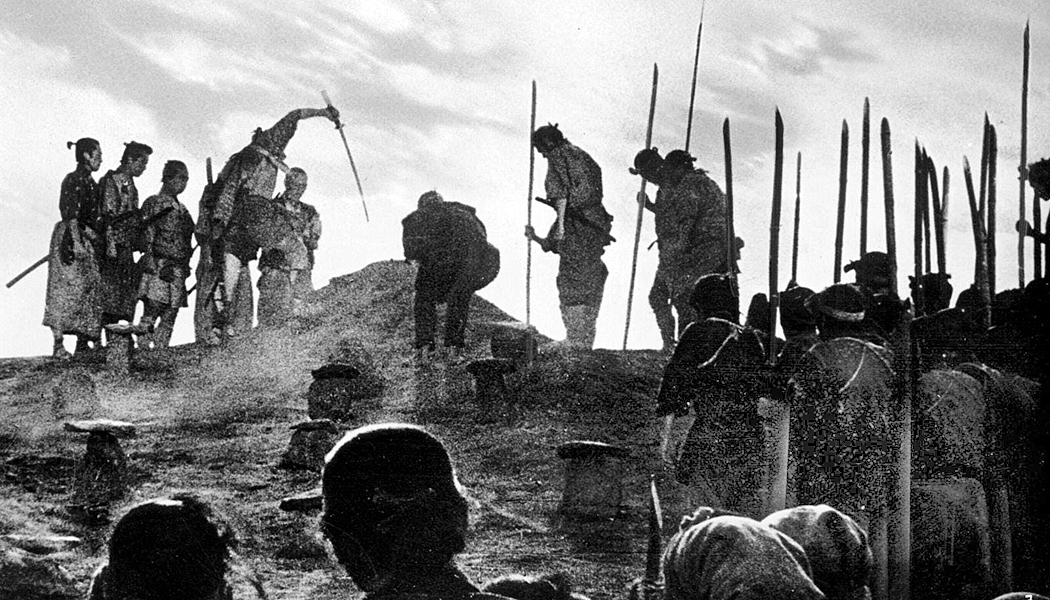
Rounding out No. 5 is Akira Kurosawa’s Seven Samurai, which I first saw in the common butchered 141-minute trim that first made the rounds of the U.S. Of course, the original 207-minute version has been restored and only a barbarian would choose the mutilated version. 

I have watched Seven Samurai too many times to count, and it was Takashi Shimura, as the samurai leader, rather than Toshiro Mifune who grabbed my attention. Shimura was Kurosawa’s mainstay actor, appearing in more of his movies than anyone else (and also in Godzilla). Mifune could sometimes be a bit buffoonish in his roles. Shimura had a much greater range.  
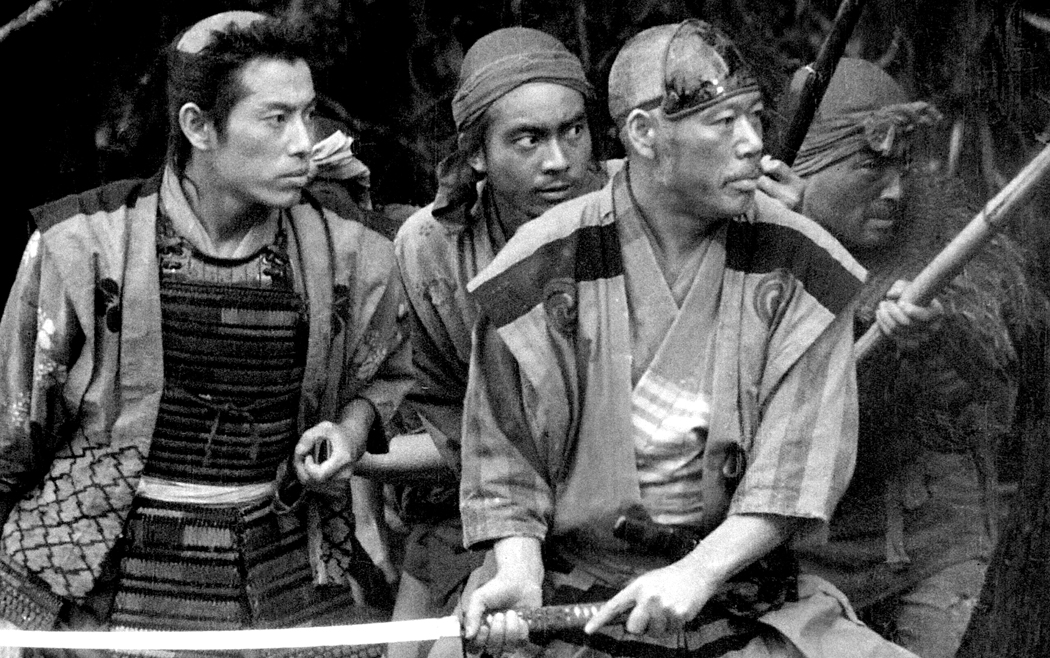
In 1978, when I was living in Seattle and unemployed, I went to a bar one night with my friend, Alice. Turns out, they were setting up a projector to show a 16mm print of Seven Samurai. We decided to watch at least the beginning of the film — Alice had never seen it, and we knew it would be more than three hours of movie — so we didn’t expect to stay. But neither of us could turn away and we watched till the end. There are no slack parts. 

Those are my top 5, but there are more. How can I have seen these movies so many times? Well, first there were VHS tapes and then DVDs. I have them all now on disc. (King Kong was initially a problem, unavailable on disc, apparently over a rights issue, but I managed a bootleg tape recorded off a TV showing. Now, I have the Warner box set, also with Son of Kong and Mighty Joe Young.) 

Then, there is Turner Classic Movies, the one great treasure of cable TV, which shows most of these movies periodically. Often when channel-surfing, I will come upon one of my faves and pick it up mid-stream and watch till the end. 

There are films on this list that I often come across this way, and don’t feel the need to watch beginning-to-end, but have such delightful scenes in them, that when I catch them, I watch for those moments. 
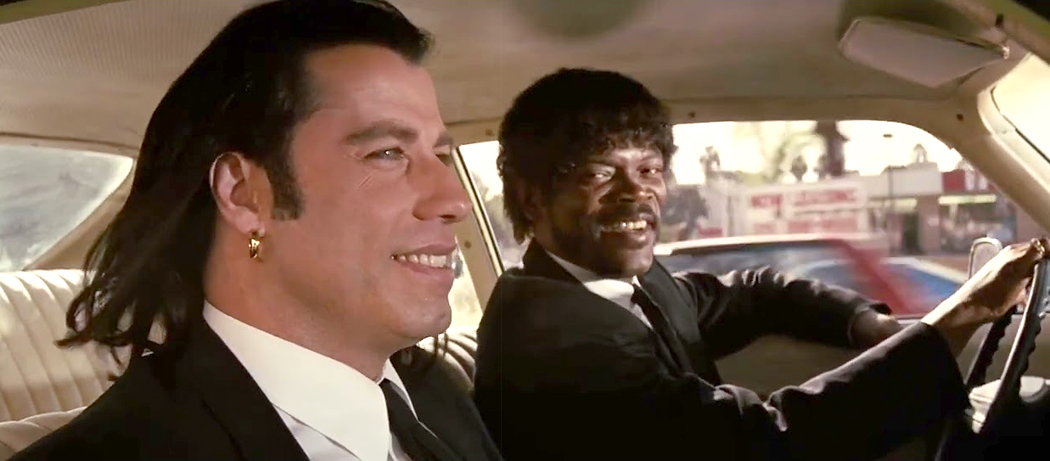
Pulp Fiction, for instance. A great film overall, but scene-by-scene even better. I can watch for certain set-pieces without feeling I need to do the whole thing. 
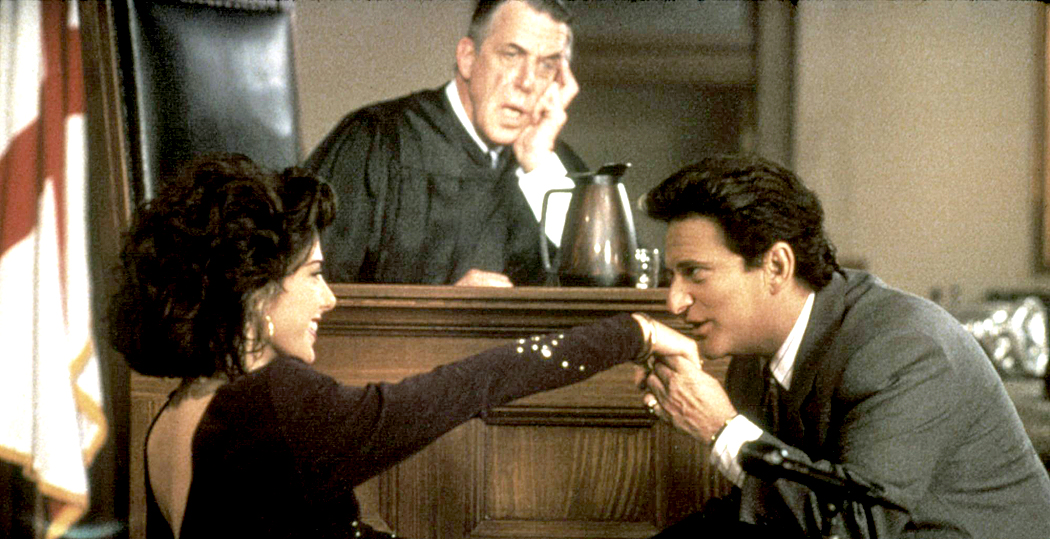
Same with My Cousin Vinny. The courtroom scenes are a great tune, but I don’t need the set-up. Just give me some Marisa Tomei attitude, some Joe Pesci and the best role that Fred Gwynne ever had. 

If we count those as Nos. 6 and 7 on this list, that takes us to:
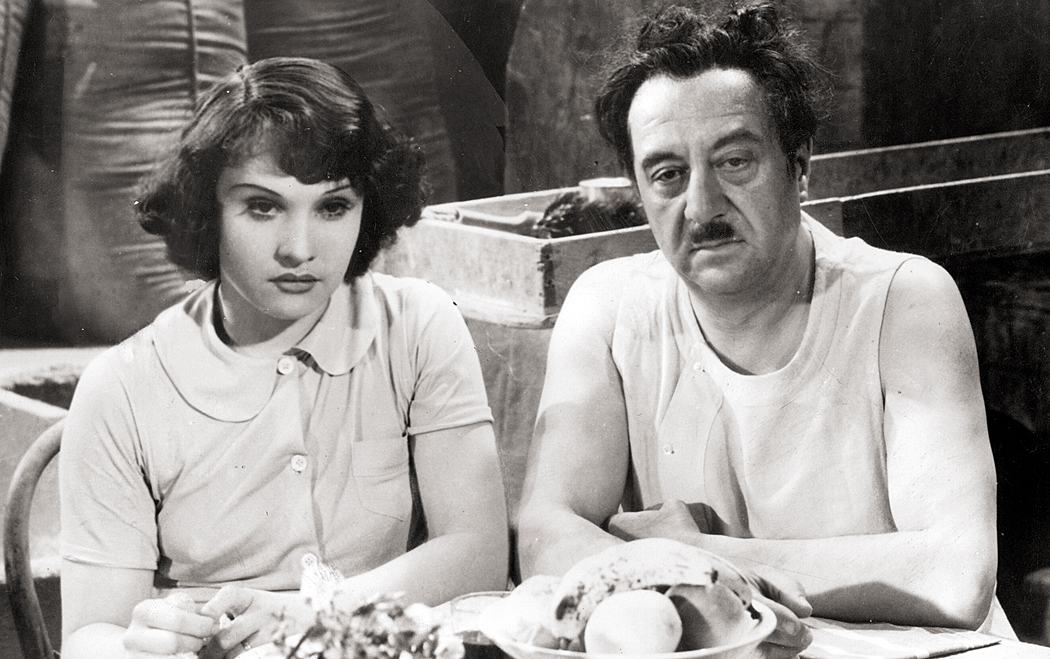
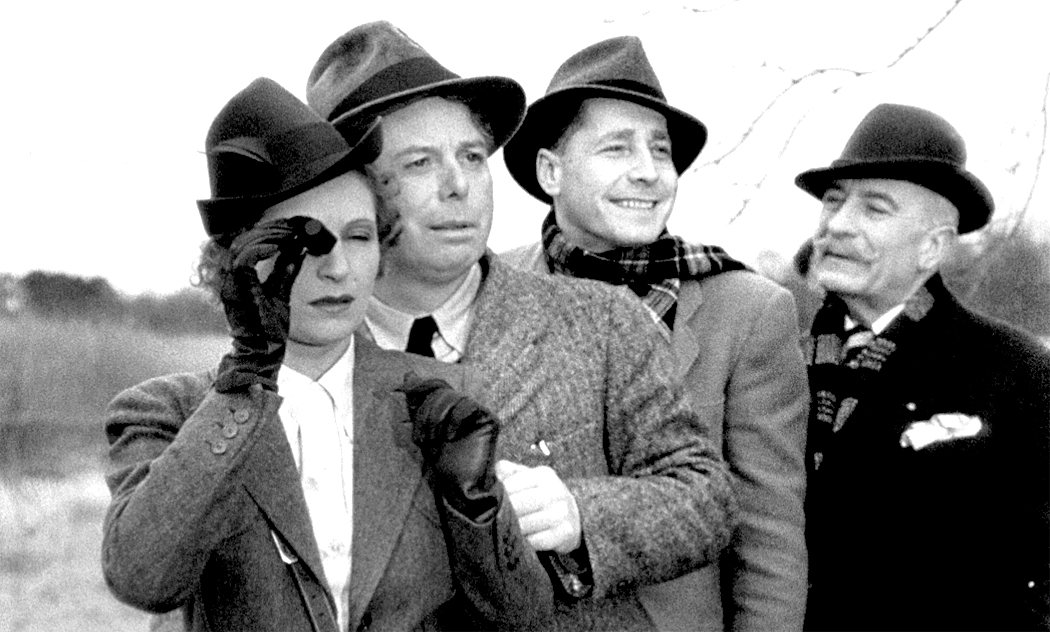
The Baker’s Wife, a film I saw years ago and then it disappeared. No DVD, no TCM. I scoured Amazon for a Region 2 disc, and eventually found a miserable, low-rez copy, the kind with subtitles whited out by the background. Eventually, years later, a restored version became available. This 1938 Marcel Pagnol comedy stars Raimu as a provincial French baker whose young wife has run off with a younger man. The baker is so dejected, he stops baking and the village tries everything to get the wife back so they can have their bread. It’s a great film. 
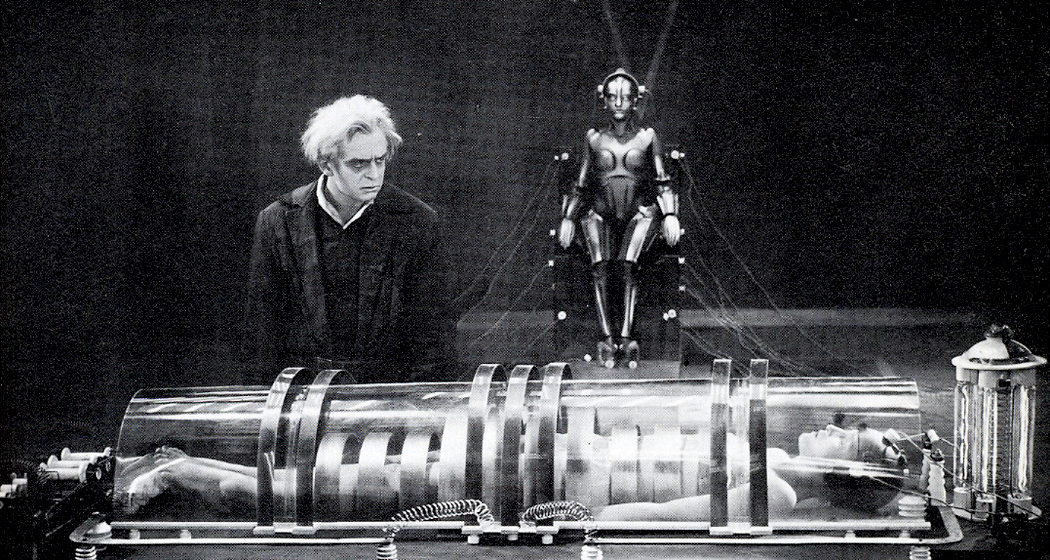
No. 9 would then be Metropolis. Several of these movies were among those I first saw as a boy, and so I have watched them repeatedly over six or seven decades. Many years ago, the local New York NET channel (pre-PBS) had a film series that included Fritz Lang’s Metropolis, albeit in a shortened 90-minute cut, but it hypnotized me. I later saw a version on TV with an electronic score that seemed utterly surreal matched with the images. 

I have sought out ever-more complete versions of the film, now clocking in at two-and-a-half hours, with a few stills edited in to account for missing footage. It is still mesmerizing. (I have written about it extensively; link here). 
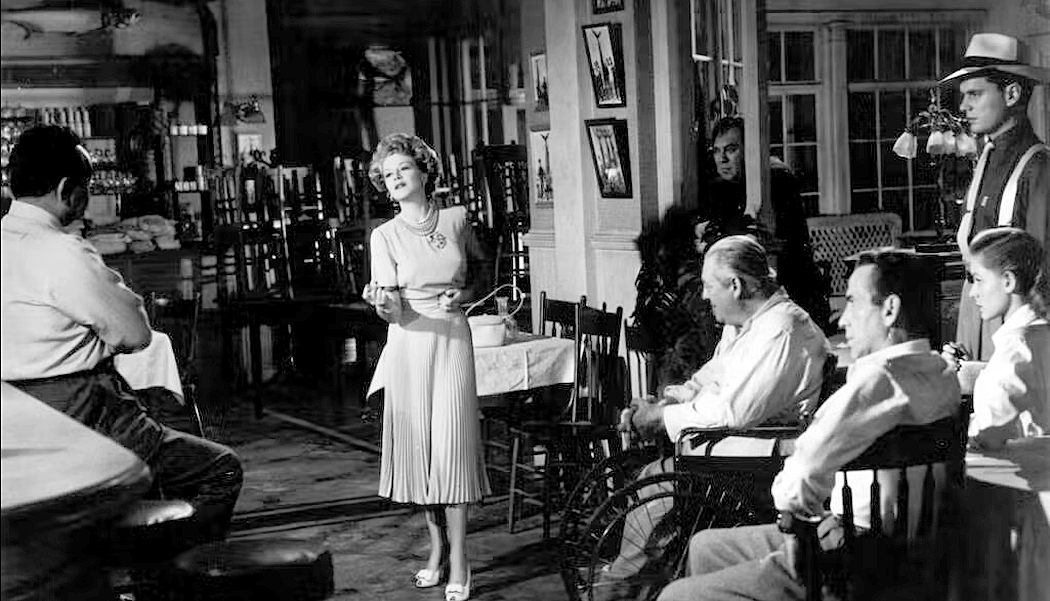
And bringing up the rear of this Top Ten list would be Key Largo, a picture made the same year I was born. It is certainly not the best Bogey-Bacall film, but one I first watched as a boy, before I know who Bogart was, or anything about his mythic persona. For some reason it clicked in my memory, and I found it seemed to show up on TV over and over, without my asking. 

Even now, I’ll watch it. It massages a familiar place in my brain. And it isn’t the stars who I watch for: Claire Trevor’s drunk moll is the best thing in the movie. She deserved the Oscar she won for a movie that normally would not even be mentioned by the Academy. 
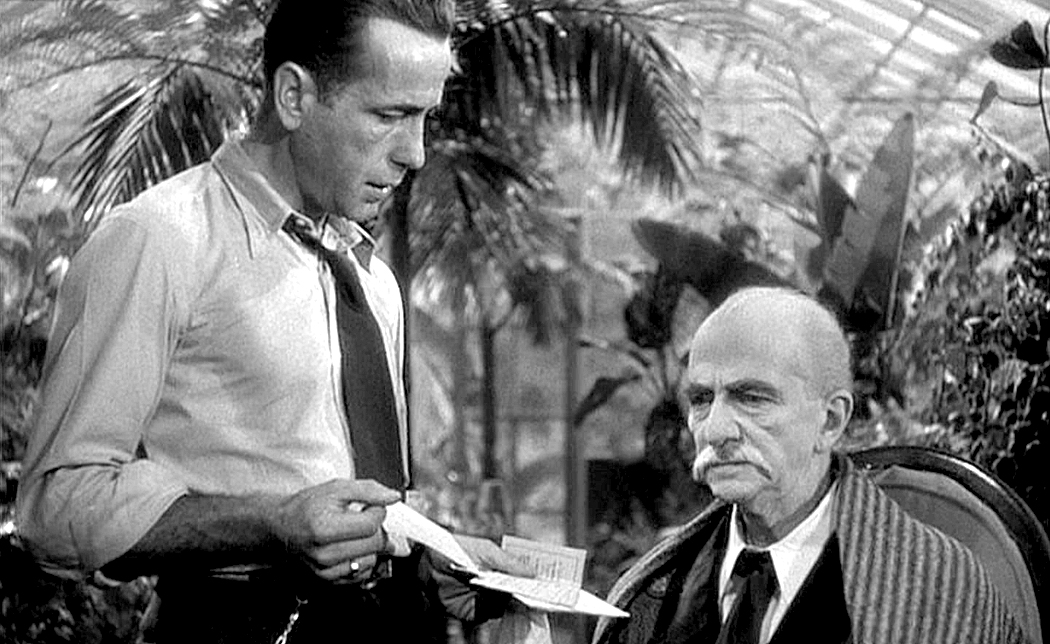
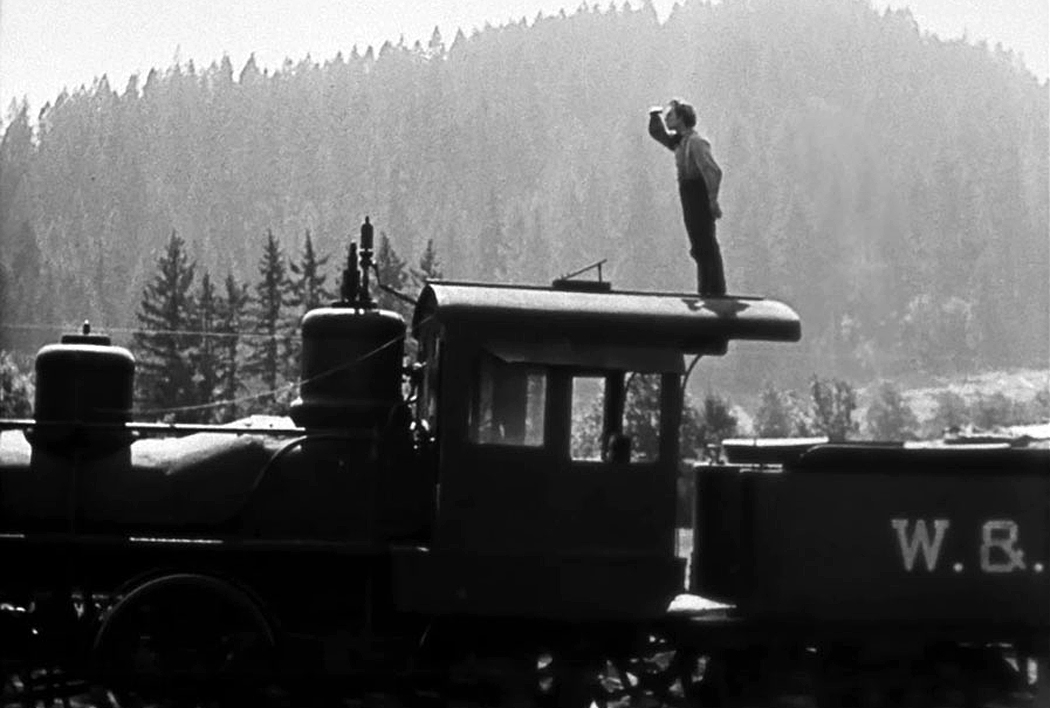
That rounds out the Top Ten, but in all honesty, I have to admit they really should not be ranked at all. Rather they are in a very large pool of films that I watch repeatedly. I can’t tell how many times I’ve watched The Big Sleep, or any of many parts of it (I have practically memorized the opening scene with General Sternwood). Or Casablanca. Or even To Have and Have Not. Or any of the William Powell films, including any of the Thin Man series. Or Roland Young’s Topper. Most any Buster Keaton film, short or feature. 
Or, to spread the love, I have watched uncounted times: Airplane!; Blazing Saddles; This Is Spinal Tap; O Brother, Where Art Thou? — that mostly for the tunes. 
Really, the list gets ridiculous. Any Almodovar, any Bergman, any Renoir. Any screwball comedy, any black-and-white Fred Astaire (he aged well, his later movies haven’t). I have a soft spot for any of the non-spaghetti Westerns of Clint Eastwood. Who’d a thunk it? Josey Wales, Hang ’Em High, High Plains Drifter, Pale Rider. Oddly, I still haven’t seen Unforgiven. I’ll get around to it, eventually, but first, TCM is showing Godfrey again. 
The established conventions of movie monsters have changed over the years, as have the monsters themselves. But if the rules have evolved, it is still rules that define monsters. Ask any 12-year-old boy; they will be able to recite you chapter and verse, the way a Supreme Court clerk can quote the Constitution. Silver bullets, crucifixes, wooden stakes, wolfsbane, mirrors, the whole concatenation of parameters that define the world inhabited by the undead, the re-dead and the soon-to-be-dead. 

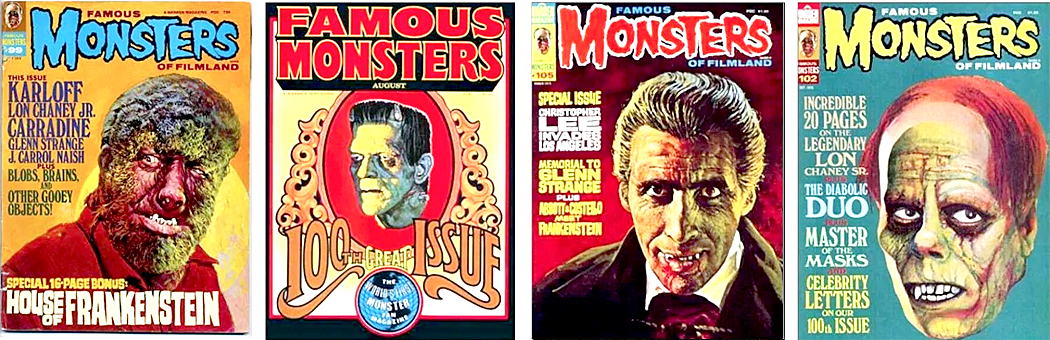
I know this because when I was 12 years old, I had a subscription to Famous Monsters of Filmland, a fan magazine about horror films put out by noted monsterologist Forrest J Ackerman. It was still early days of television, and local independent TV stations, with no network to support them, had to scramble to fill air time. They found old cartoons, old Three Stooges shorts, old Our Gang comedies, old Westerns — and horror films. I must have seen Frankenstein, Dracula and all their permutations, from “Son of …” to Abbott and Costello, maybe, a hundred times. 

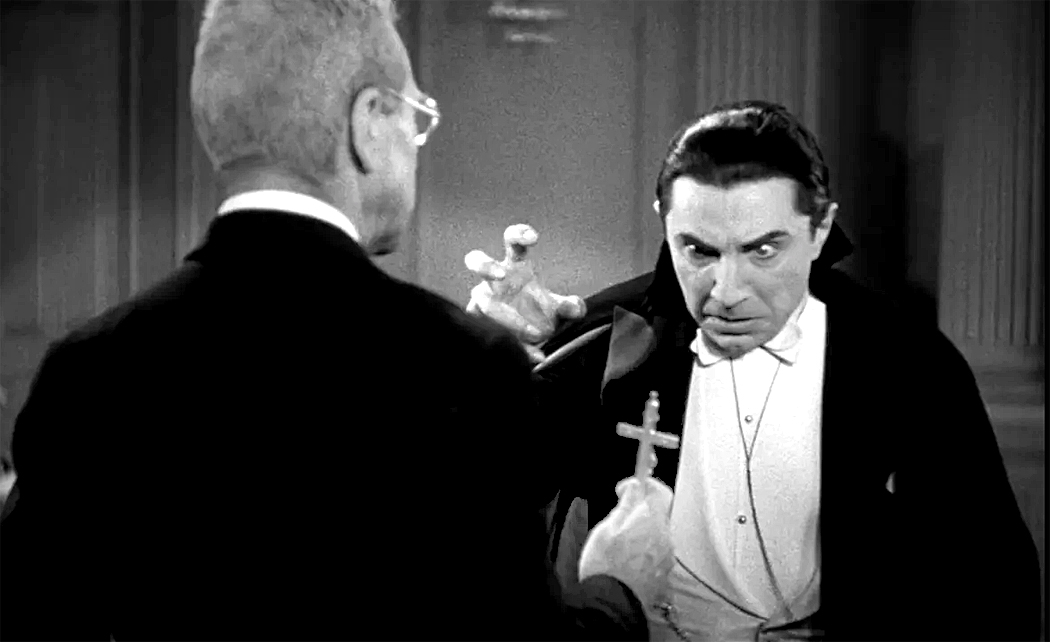
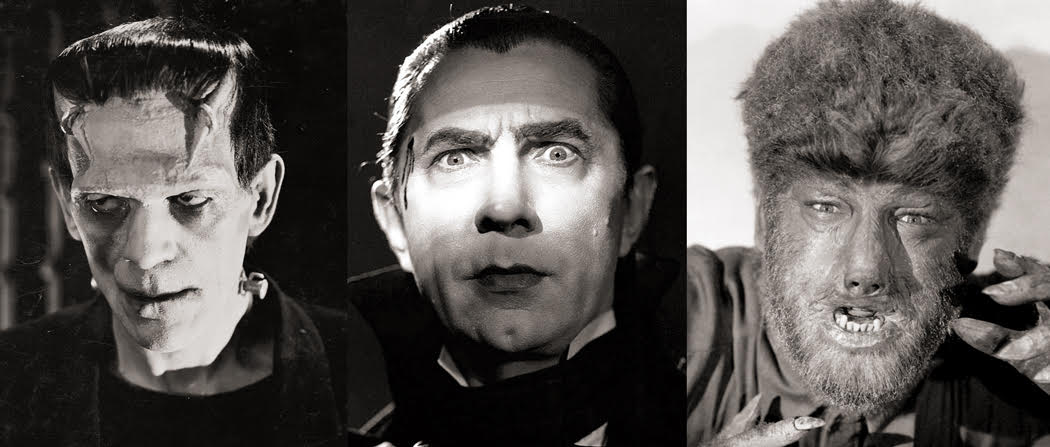
And I knew then, all the rules — the defining conventions of each genre. The Frankenstein monster couldn’t talk; fire was his kryptonite; Dracula was terrified of crosses; the Wolfman turned hairy with the full moon. If a vampire or a werewolf bit you, you turned into one; if Frankenstein’s monster bit you: nothing. You got a tetanus shot.

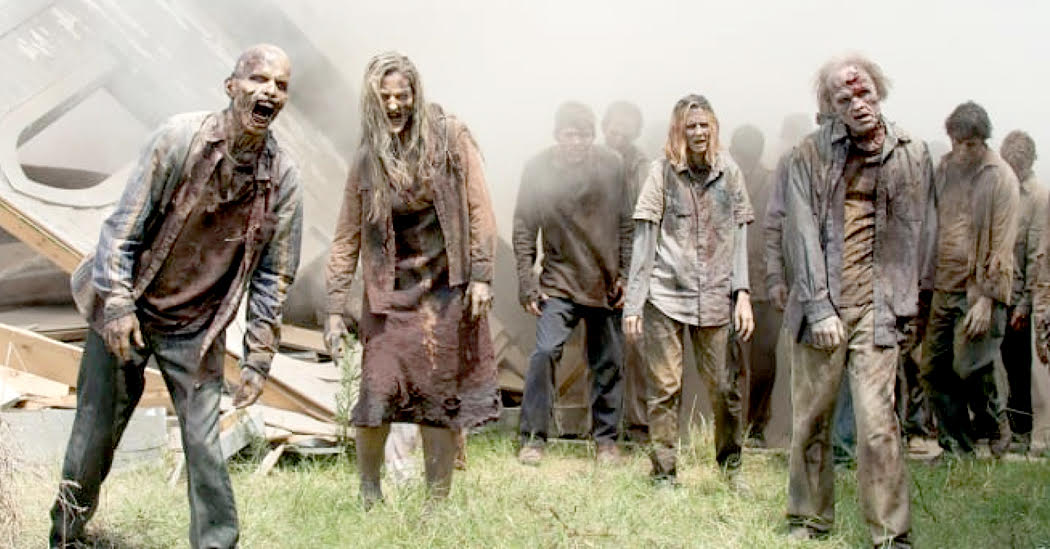
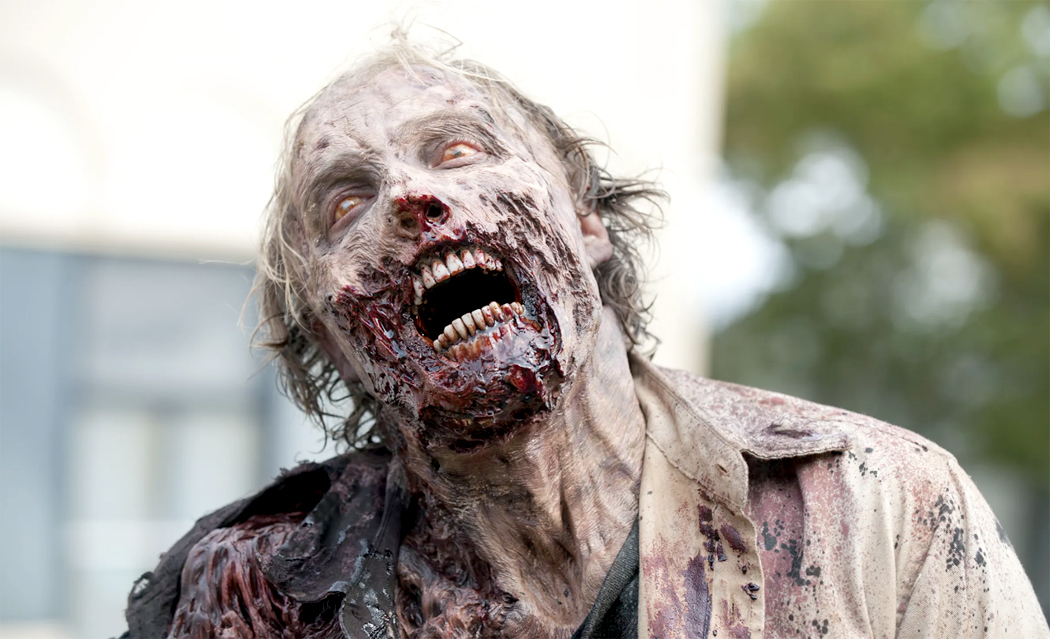
Then, there are zombies. Originally a minor player in the Hollywood monster movie, they have become, since George Romero, one of the most common forms of monster. I recently saw someone who had the perfect solution to the zombie problem. It depends on the recent brain-eating conventions of zombiehood. Why no one had thought of this before, I don’t know. It is so obvious. 

If your community is plagued by such zombies, all you need to do to survive is to dress up like a zombie yourself, put on some rags, apply the whitish, ghostly makeup, with some ketchup drooling from the corner of your mouth. Zombies don’t attack other zombies. I don’t know why, but they don’t. So, act like one, and be let alone. Of course, you will also need to avoid the living human population, who have a dismaying tendency to blow the heads off zombies with shotguns. But other than that, home free. 

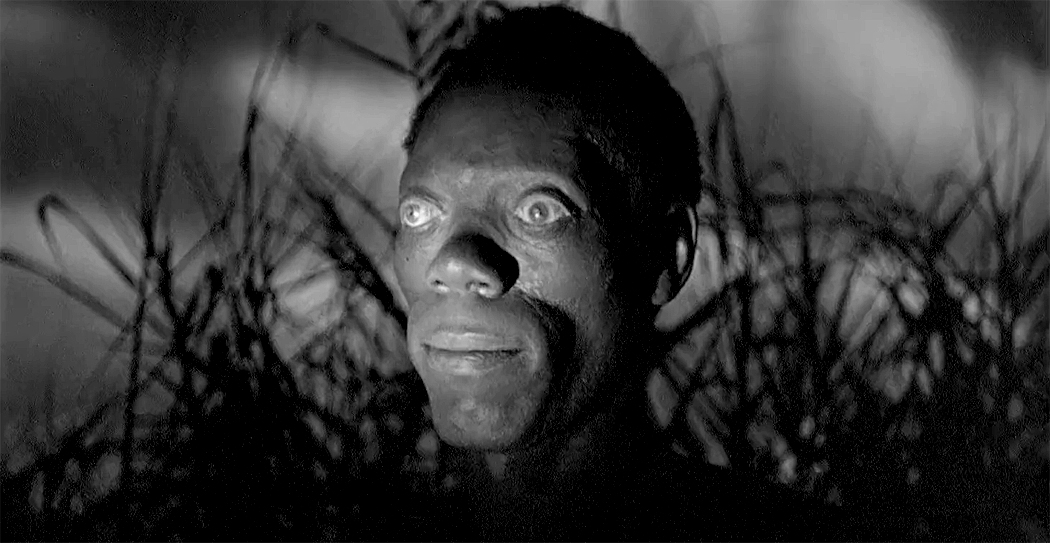
When they first made their debut in celluloid, zombies were Haitian and they were essentially sleepwalkers. They were derived from popular understandings of vodou (aka “voodoo”), where a bokor, or sorcerer, could raise the dead to act as slaves. In 1929, author William Seabrook published The Magic Island, and described a sensationalized version of vodou and zombies. 

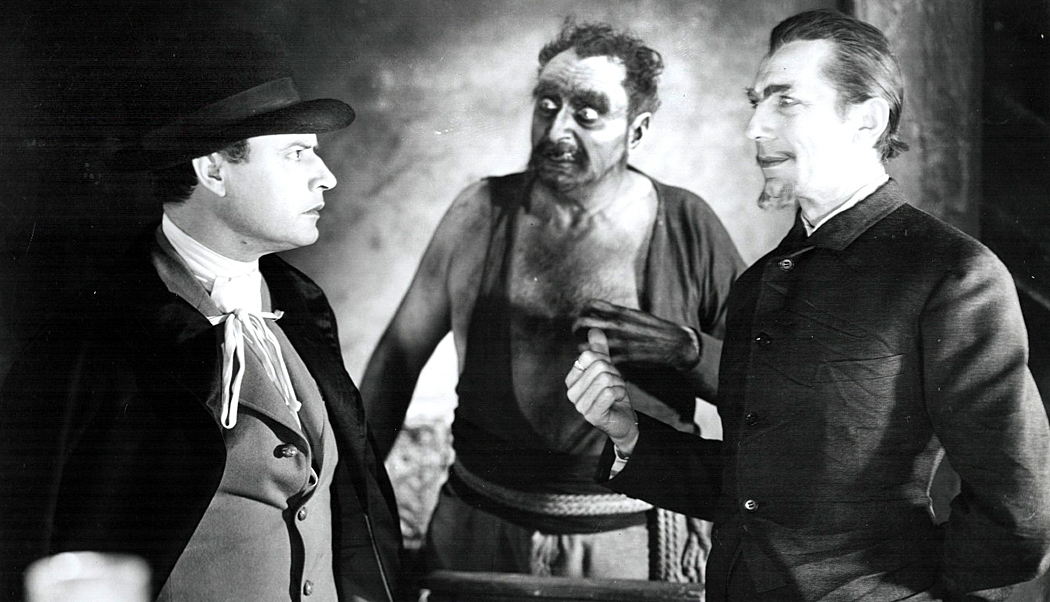
In 1932, Hollywood produced White Zombie, in which Bela Lugosi is the evil sorcerer who puts the heroine under his spell when she visits Haiti. Lugosi’s character, “Murder” Legendre, uses zombie labor to operate his sugar plantation. And commit murder. 

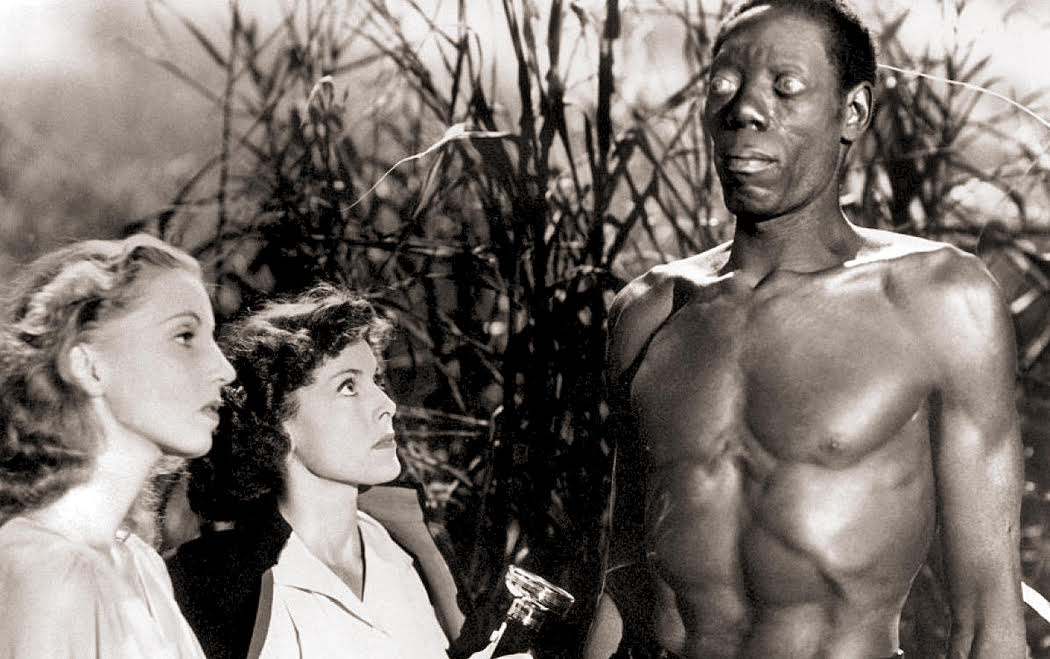
Plantations worked by enslaved Africans gave rise to zombie mythology in Haiti and the Caribbean, but many of the Hollywood versions feature non-African zombies, although one of the best, I Walked with a Zombie (1943), sets the zombie back into its proper African-Caribbean context. Still, its main victim remains a White woman. 

But zombies were a minor subshoot of the monster movie, giving pride of place to Frankenstein, Dracula and the Wolfman (and perhaps the Mummy). Only a few zombie films in the ’30s and ’40s (the heyday of the classic monster) were made, and they never really cracked the nut of cultural ubiquity. That didn’t happen until Romero reinvented them in 1968 in Night of the Living Dead and rewrote the rules for the genre. Now, they were ghoulish undead that shuffled along in rags and killed and ate the living. A bite could turn you into one of them. Tetanus shots didn’t help.

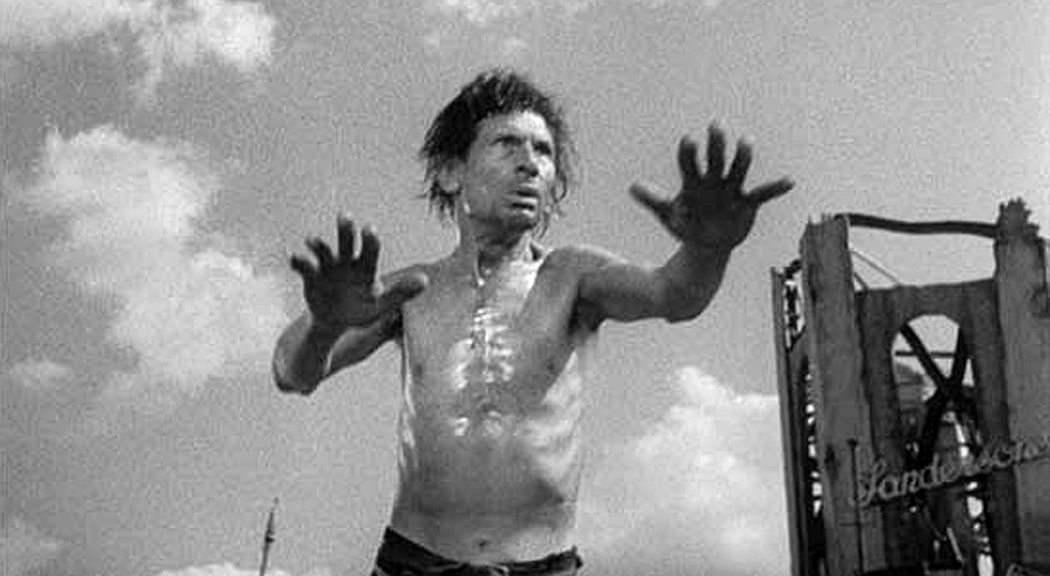
The prototype for Romero’s shambling zombies can be found in the “Wandering Sickness” in Things to Come, a 1936 movie made from the H.G. Wells novel. Zombies are more recently allowed to be fast-moving, which makes them harder to avoid. And zombies en masse are in practice unkillable, as shown by the never-ending 10-year run of The Walking Dead on the AMC network. 

With Night of… and its many sequels and rip-offs, the zombie briefly became the primary movie boogie-man. The rules have been tweaked by subsequent writers and directors, so that now the popular conception is of a reanimated corpse who eats brains. Why brains? I don’t know. Nothing wrong with liver and a nice chianti. 

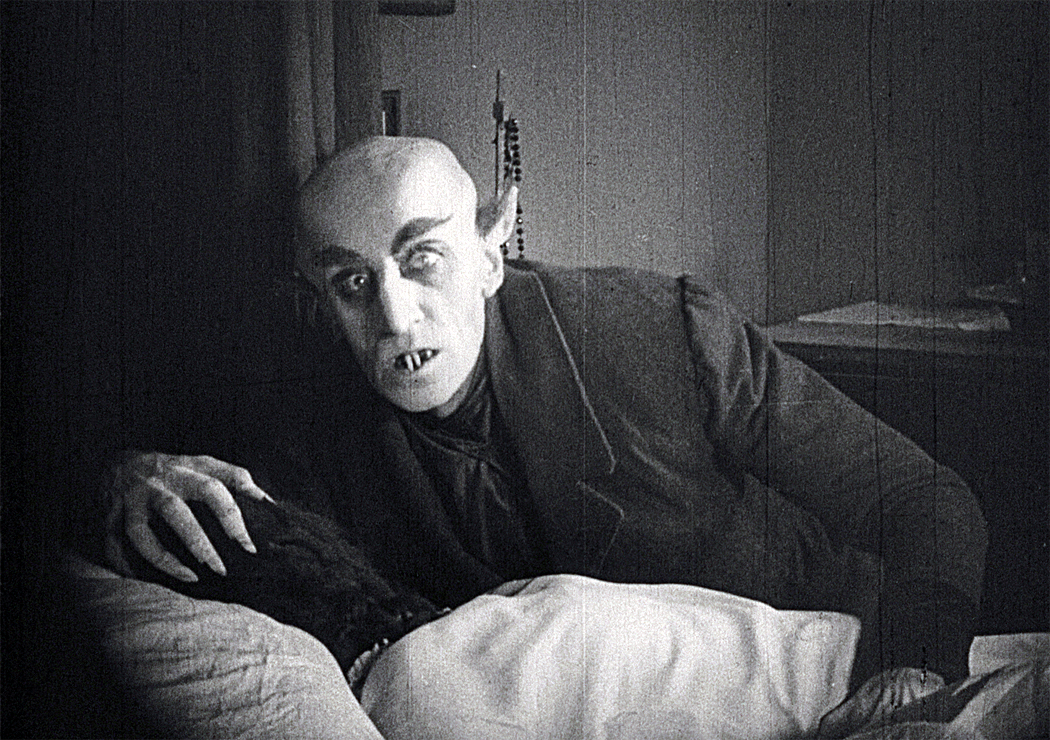
Even the running zombies gave way to the rise in teen-age exploitation of the genre. Now, zombies can be attractive young zombies in Pushing Daisies, Warm Bodies and iZombie, which is “in many ways the same transformation [of the zombies] that we have witnessed with vampires since the 1931 Dracula represented Dracula as essentially human—a significant departure from the monstrous representation in the 1922 film Nosferatu,” noted writer Scott Rogers, pointing out that nowadays both zombies and vampires can be hot teen idols. 

This changing of the rules is common, as creators need to find ways to freshen up the cliches, only to make new cliches. Eventually, each monster genre ends up in parody. Young Frankenstein, Teen Wolf, Abraham Lincoln: Vampire Hunter. And so, you have Shaun of the Dead

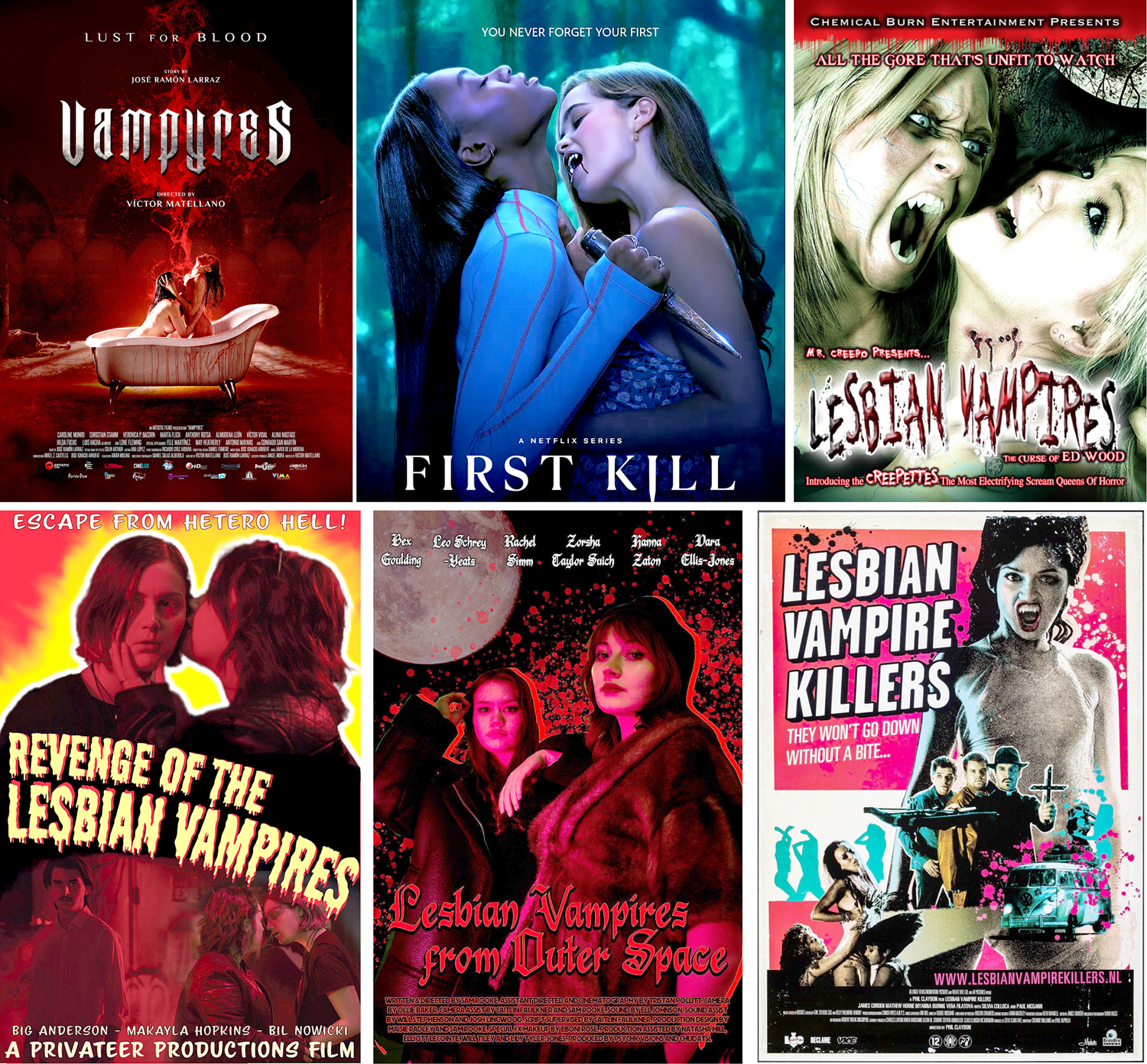
With Hammer Films in the 1960s, monsters were given a new garish color makeover, with lots of bodice ripping and jiggles to entice the young testosterone-soaked adolescent males. And the classics have never really left. Wikipedia lists 236 werewolf films made since the silent era; 119 of them just since 2000. I couldn’t fully count the number of vampire films, including the astonishing number of naked lesbian vampires that came out of Italy. 

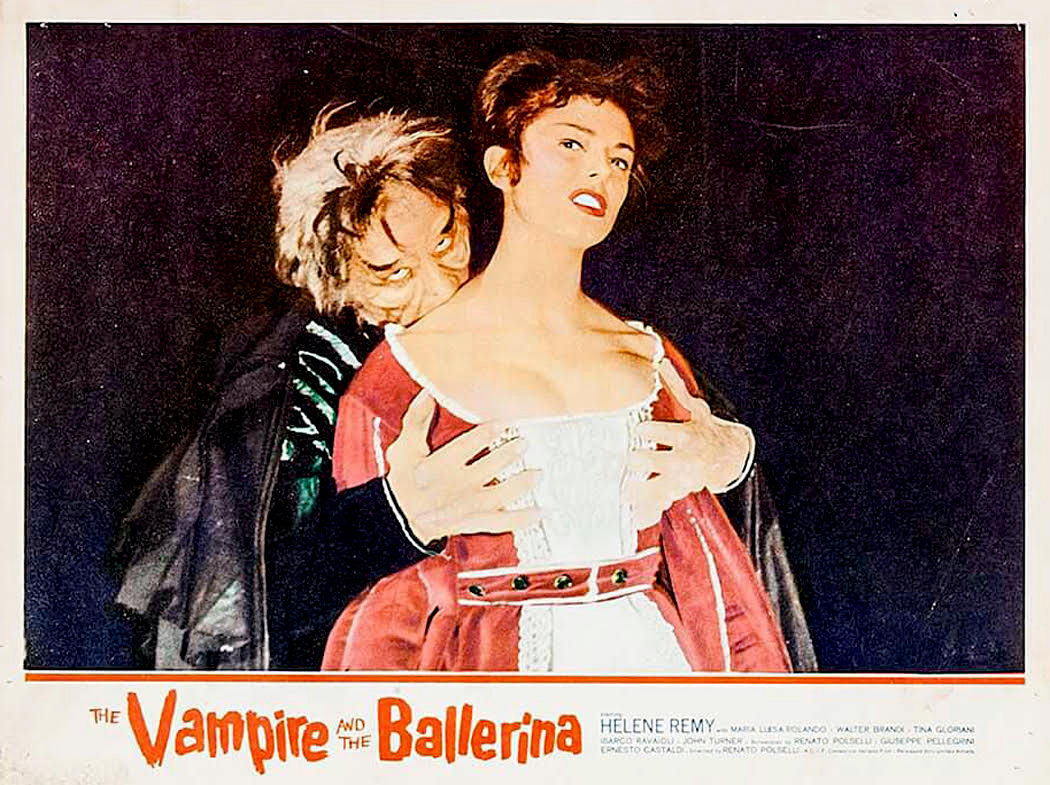
A few of my favorites (I can’t help but list some of these titles): Billy the Kid Versus Dracula (1966); Dracula’s Dog, aka Zoltan … Hound of Dracula (1977); Uncle Was a Vampire (Italian, 1959); The Vampire and the Ballerina (Italian, 1960); Samurai Vampire Bikers from Hell (1992); A Polish Vampire in Burbank (1985); Mom’s Got a Date With a Vampire (2000); and My Babysitter’s a Vampire (2010). 

Vampires have gone through four major transmogrifications. Originally, in folklore, they were ghouls, ugly monsters. But after Bram Stoker’s Dracula (1897), the vampire became a seductive man with hypnotic charms over beautiful women. Or, in a kind of reverse ploy, sex starved women in heavy makeup craving the blood of handsome men — or in the lesbian vampire films, pneumatic young women. 

(The subgenre of lesbian vampires is extensive. Wikipedia lists more than 50 such films, beginning with 1936’s Dracula’s Daughter and continuing through Vampyros Lesbos (1971); The Hunger (1983), a classy film with David Bowie and Catherine Deneuve; and Lesbian Vampire Killers (2009), a genuine turkey that starred late night TV’s James Corden. While many monster films have been adopted by the LGBTQ world as metaphors of queerness, the lesbian vampire is more transparently so.)

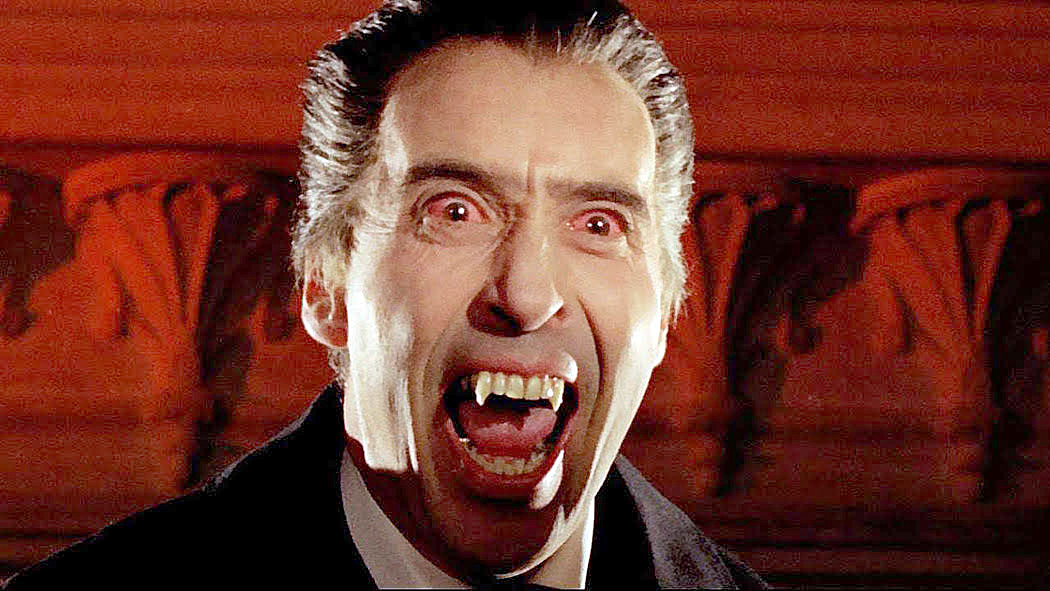
The canonic vampire persisted in the Hammer Films pictures with Christopher Lee. Sunlight could kill them; they couldn’t be seen in mirrors (or photographs); wolfsbane or garlic was a prophylactic; they slept in coffins; they could be killed with a wooden stake through the heart, or more garishly, with the wooden stake and a quick beheading. 

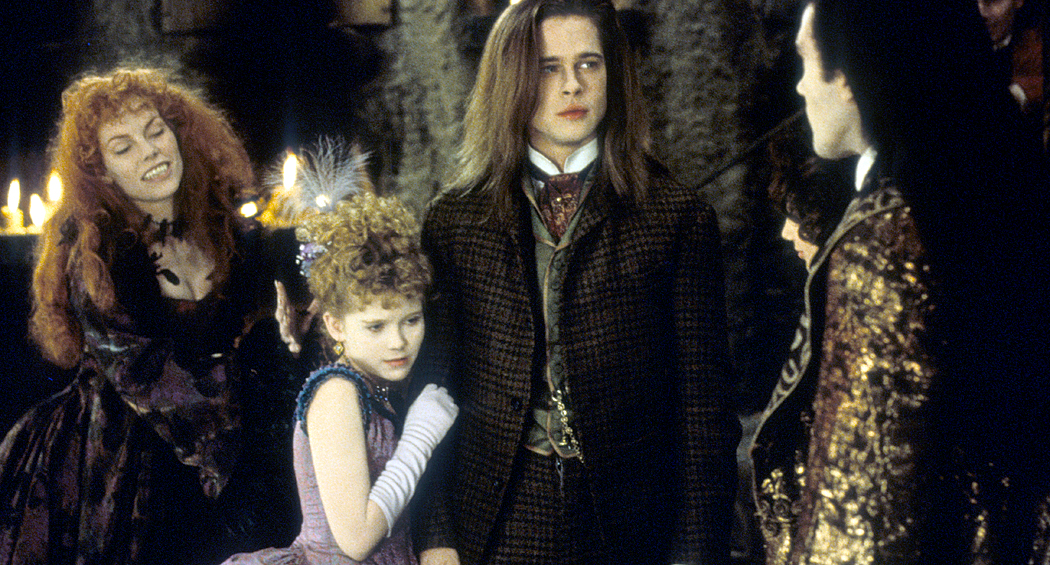
Then, of course, it all changed with Ann Rice. She took the side of the vampires — “these elegant, tragic, sensitive people,” she called them. Oh, they suffered, cursed as they are with immortality. Rice’s vampires are “loquacious philosophers who spend much of eternity debating the nature of good and evil,” according to Susan Ferraro of The New York Times. “Rice turns vampire conventions inside out.”

She also transports them from England and Germany to New Orleans, which adds its own patina of the gothic. Goodbye Transylvania, hello red blood and Rice. 

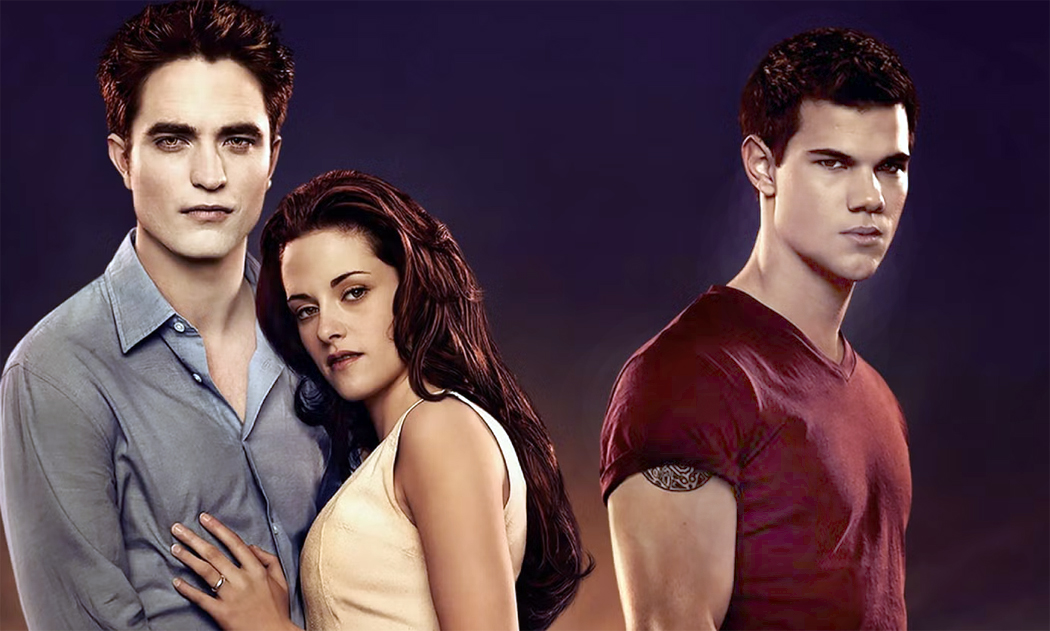
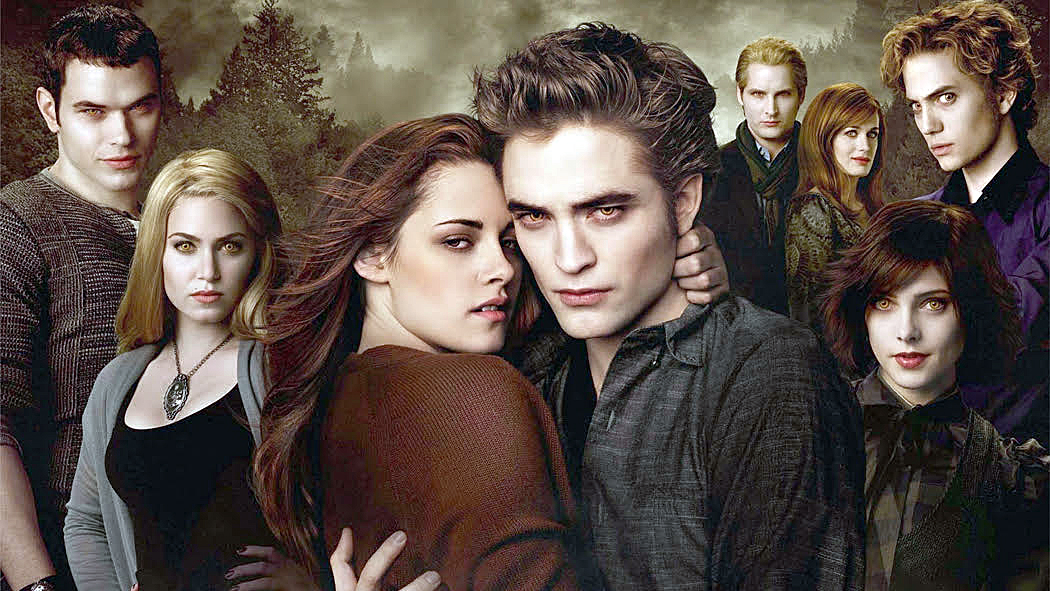
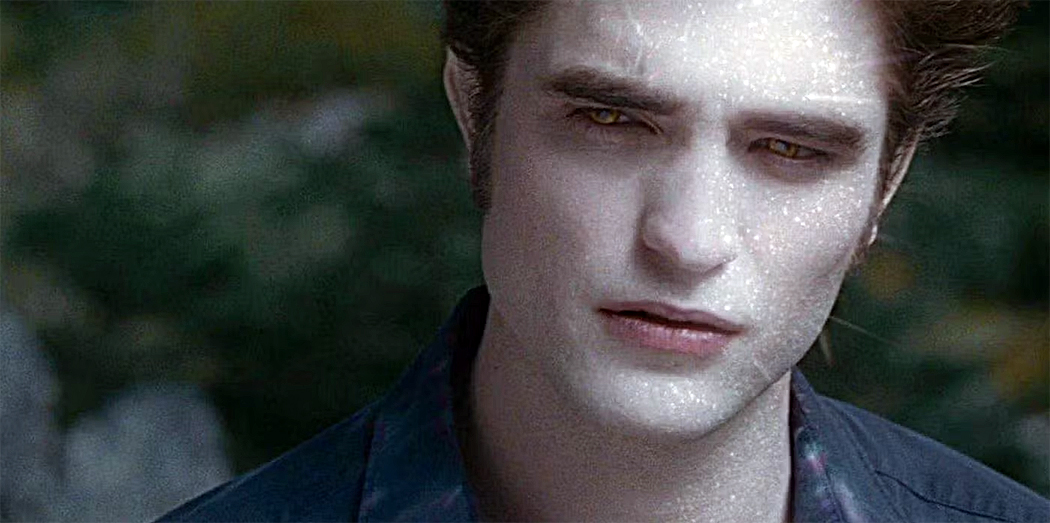
None of which prepares us for the recent incarnation of teenage moony-eyed vampires by Stephenie Meyer. They have no trouble with daylight, indeed they sparkle. But it is so hard being a vegetarian vampire. 

There are also werewolves in the Twilight books (and films), but it is hard to tell the difference between the feuding paired vampires-and-werewolves of Twilight and the Sharks and the Jets of West Side Story

(I have actually watched Twilight, when my twin 10-year-old granddaughters wanted to see it on TV and made me sit with them through it. They loved it. Me? Well, I love my granddaughters.) 

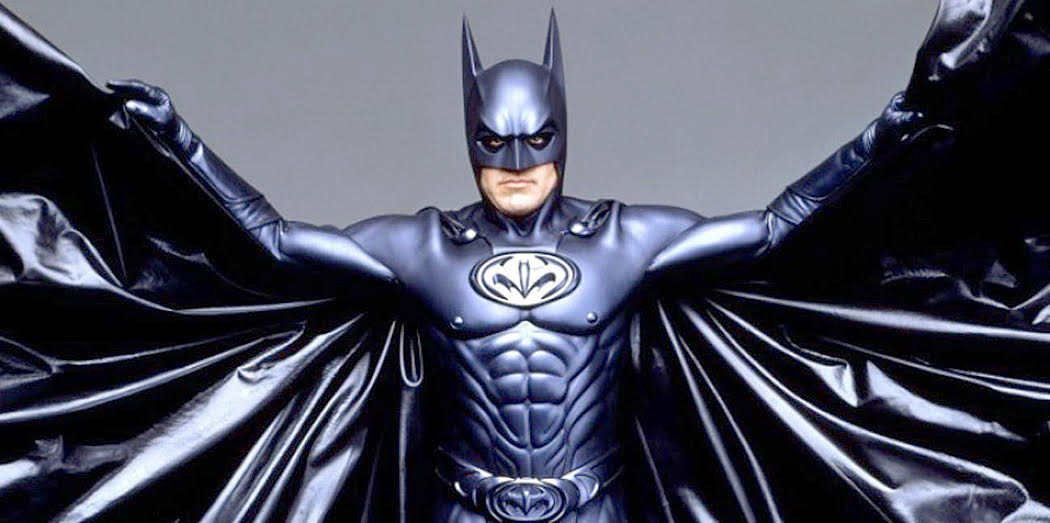
From the very beginning, horror movies have been aimed primarily at the young and prepubescent. Which is the age where the fascination with regalia and insistence in genre rule consistency become hardened like old cheese left out to dry. It is the motivating impulse of cosplay, Comic-Con and arguments over whether the Batman outfit should have nipples or not. 

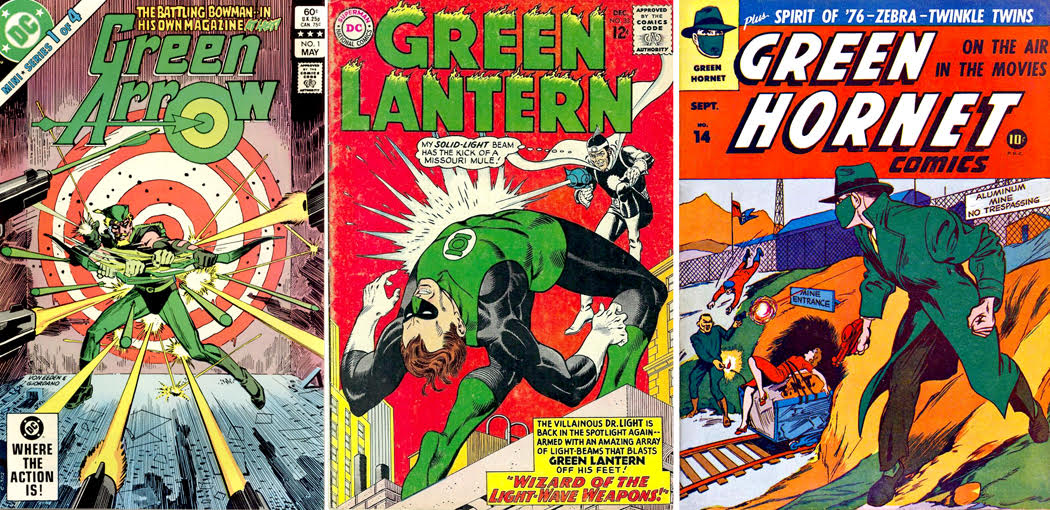
(If you want to start a fight, just complain about the Marvel Universe versus the DC Universe. Each is a self-contained cosmos with its own physics and set of back stories. And woe to him who mixes up Marvel’s Sub-Mariner with DC’s Aquaman. Or cannot tell the difference among Green Arrow, Green Lantern and Green Hornet.) 

In the CBS sitcom, The Big Bang Theory, the minutiae of competing comic book universes is often a plot point. Which makes it fun how often fans like to point out inconsistencies in the Sheldon Cooper Universe between BBT and Young Sheldon. Can’t these writers keep their stories straight? 

When young men are trying to figure out the rules of life, it must be comforting to find these worlds where coherence and consistency is part of the deal. One of the reasons that superheroes have overtaken monsters in the movie world must surely be that the DC and Marvel universes are so absolutely clear, even hide-bound, about their rules. The monsters have their laws of physics, but the rules tend to morph over time. Adolescence craves something more permanent to depend upon. 

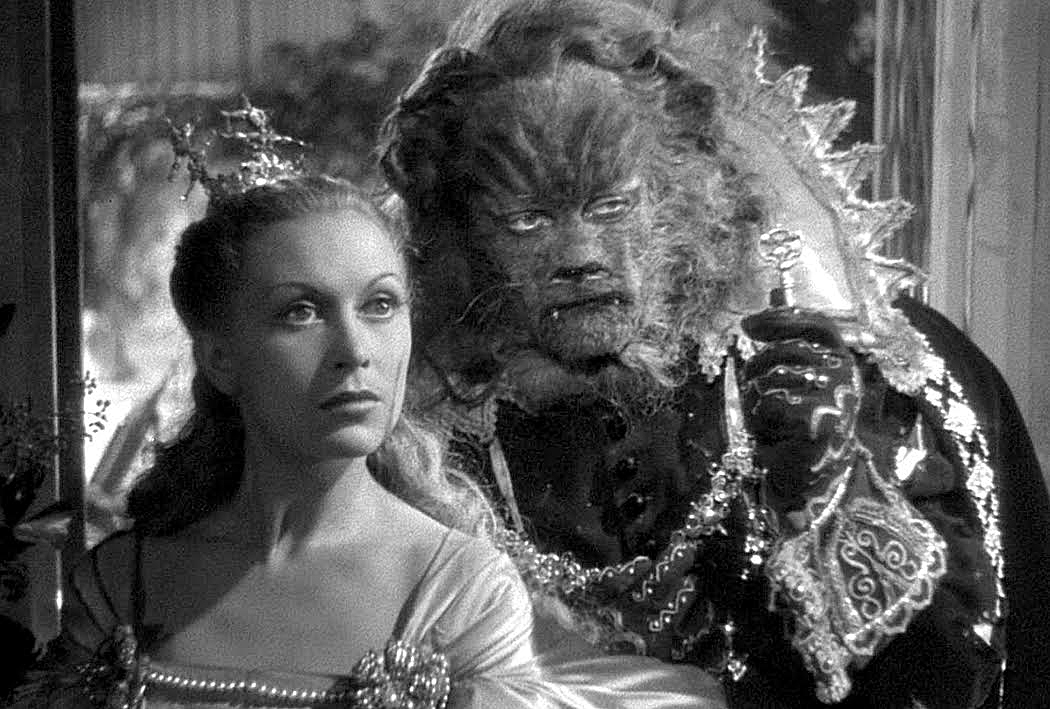
Young women have their say in all this, too. But the monsters they fantasize about tend to be more like Beauty and the Beast: Can the rough monster be tamed by love? Their guiding genius is not Bram Stoker but rather, Jean Cocteau. Their corollary is not the Marvel Universe, but the land of Romance Novels. In each one, a monster is tamed by love. Underneath is a prince of a guy. Hence, Twilight

In the case of either gender, there is comfort in the consistency of the conventions, of the rules. 

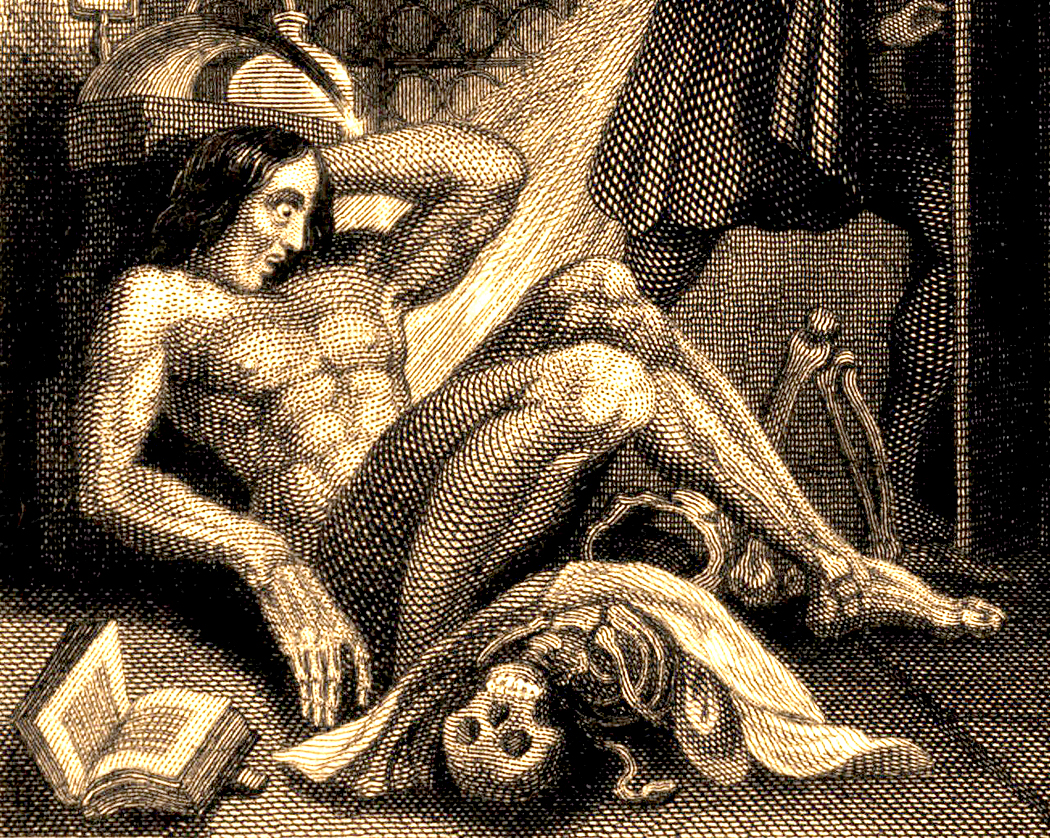
Frontispiece from Mary Shelley’s “Frankenstein” 1831 edition

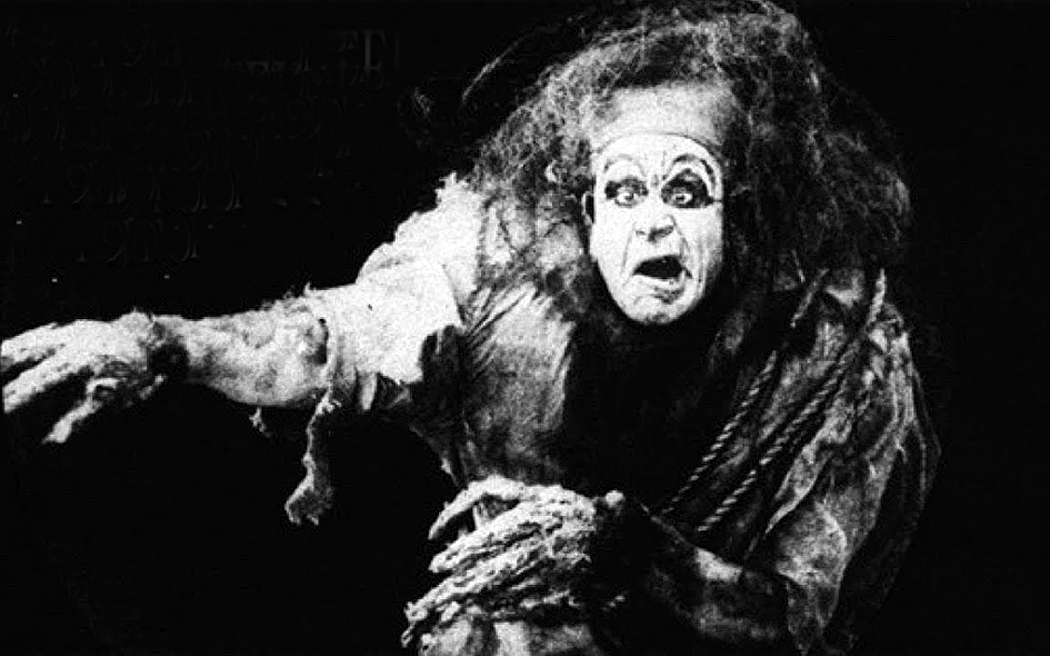
The great granddaddy of all the monsters is, of course, Frankenstein. The first film version was made in 1910 and the most recent just came out with Maggie Gyllenhaal’s The Bride. Overall, some 469 known feature films have been made, and also 236 short films, 93 TV series and 394 TV episodes feature some version or interpretation of the Frankenstein character. Some have been attempts to tell some variation of the story created by Mary Shelley in her 1818 novel, others just transport the monster into unrelated plots, or perhaps put the monster on the Moon or into World War II. 

The 1910 version, made by the Edison Studio, has the monster literally cooked up in a steaming cauldron. The movie lasts only about 16 minutes but includes many of the recurring tropes. It can be watched on YouTube. Recommended. 

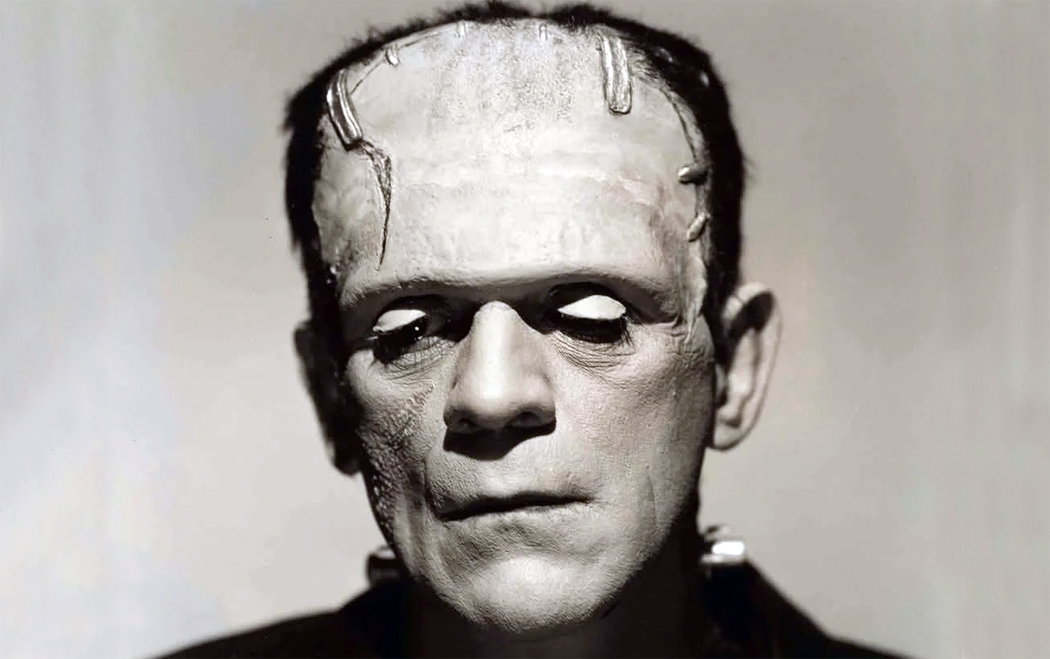
The most famous was the 1931 film, directed by James Whale and starring Boris Karloff as the monster. The makeup for the Karloff became, for decades, the defining look of the monster, with his flat head and neck bolts. The look lasted even until Fred Gwynne wore it in TV’s The Munsters from the 1960s. 

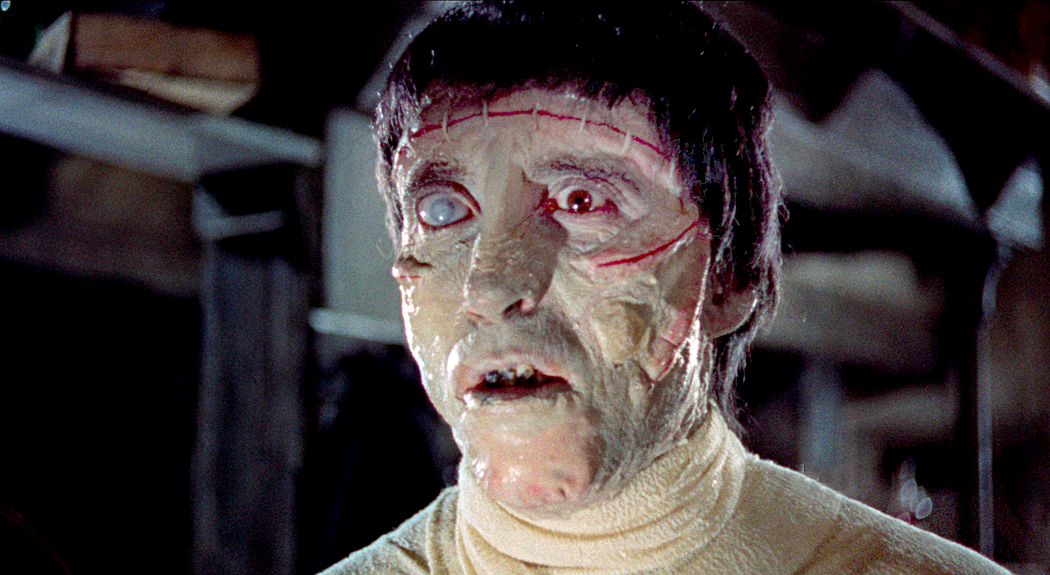
The UK’s Hammer Films gave the monster a total re-imagining beginning in 1957 with Curse of Frankenstein, dousing him googly-eyes and a what seemed to be a terminal case of eczema. The series of five sequels featured garish color photography and lots of heaving bosoms and gushing blood. 

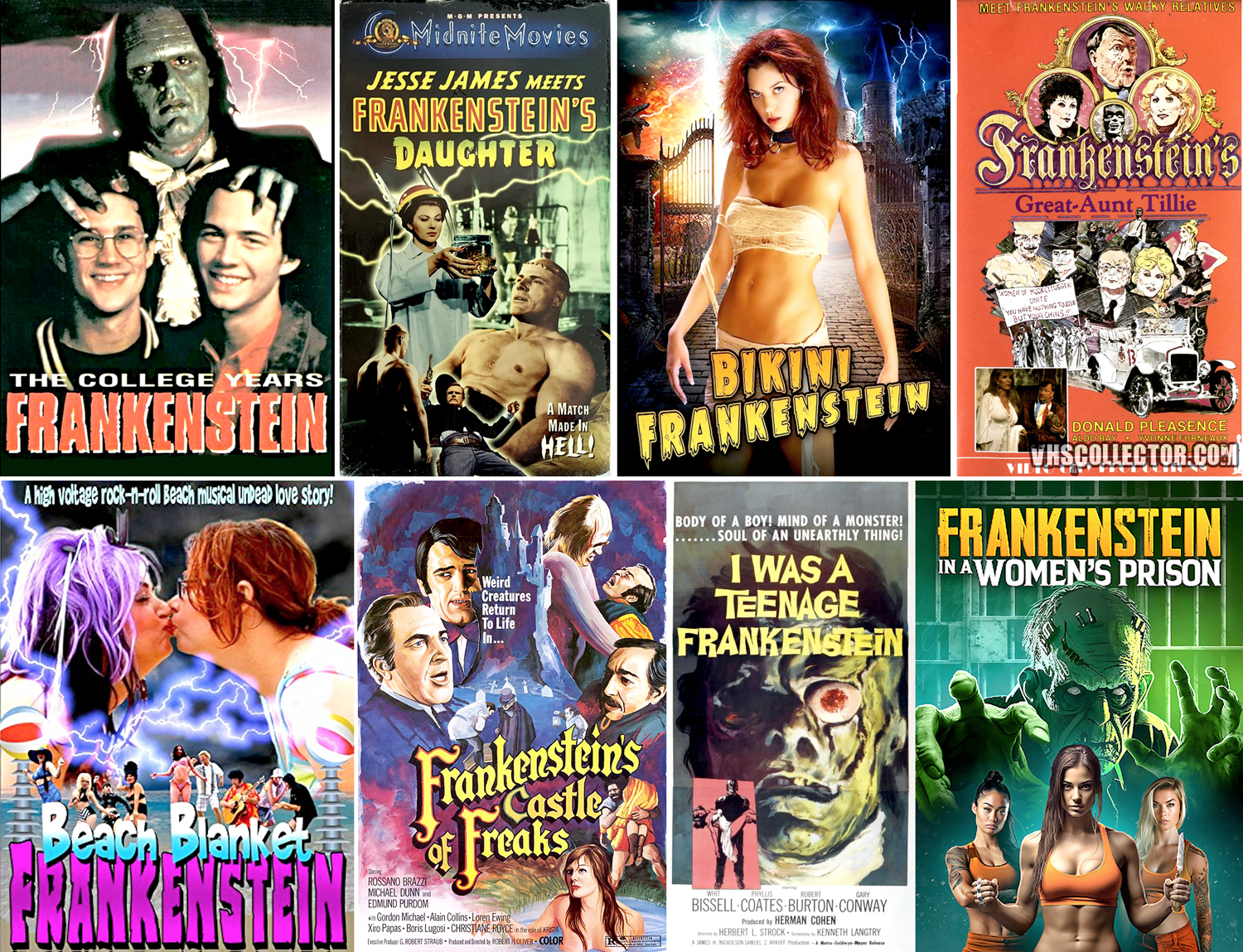
A compost heap of exploitation films brought the monster to teenagers in the ’60s and beyond with titles such as Frankenstein Meets the Space Monster (1965), Jesse James Meets Frankenstein’s Daughter (1966), Frankenstein and the Monster from Hell (1974), Frankenstein’s Mother-in-Law (1983), or Frankenstein: The College Years (1991). 

And the monster showed up in various TV episodes as a familiar cultural icon, from the Colgate Comedy Hour in 1951 through the Carol Burnett Show in 1972 and more than a hundred times since then, even through South Park last year.  

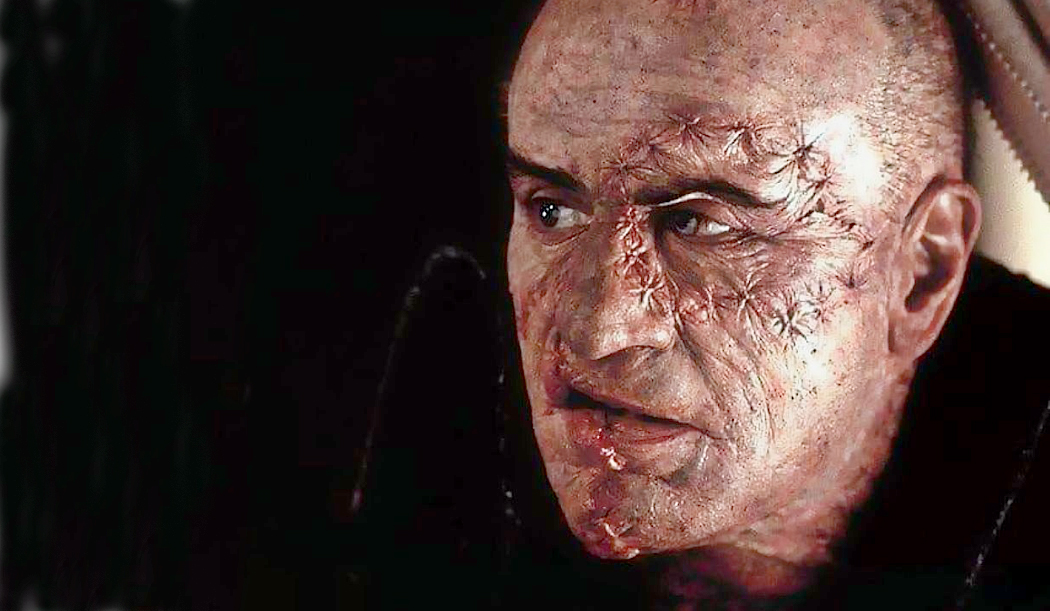
There have also been earnest attempts at making grown-up versions of the book, to varying degrees of fidelity. Kenneth Branagh tried in 1994 with Mary Shelley’s Frankenstein, to a lack of enthusiasm on Rotten Tomatoes, with Robert De Niro playing the monster. The cast was so loaded to the brim with familiar British actors you might have thought you were watching Midsomer Murders.

Van Helsing (2004) reanimated the monster and joined him up with Dracula, who unaccountably is both vampire and werewolf. It got a measly 24 percent on Rotten Tomatoes and critics complained about too much obvious CGI. Really, it was just silly. 

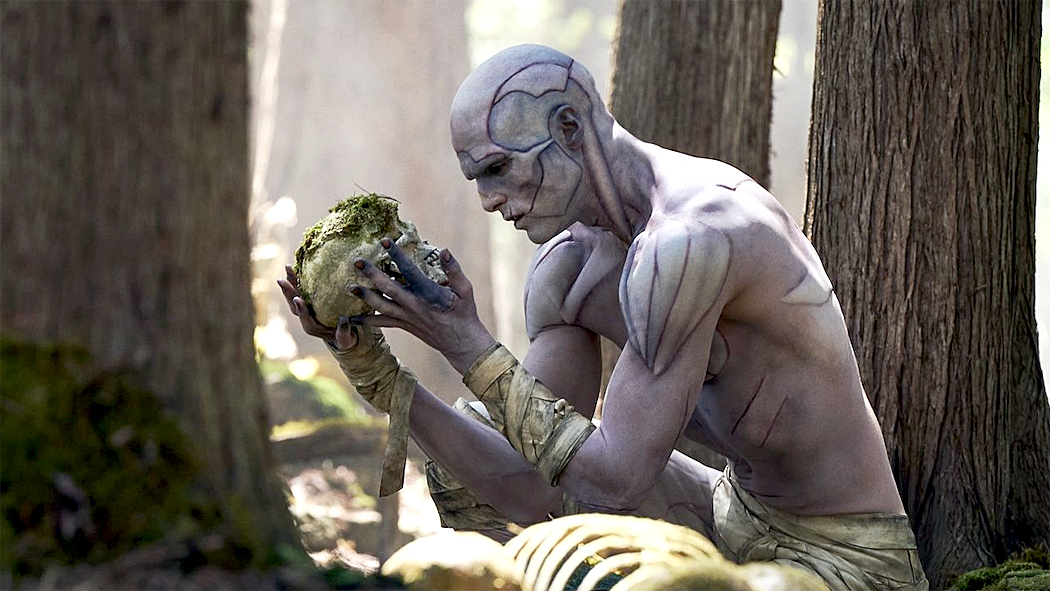
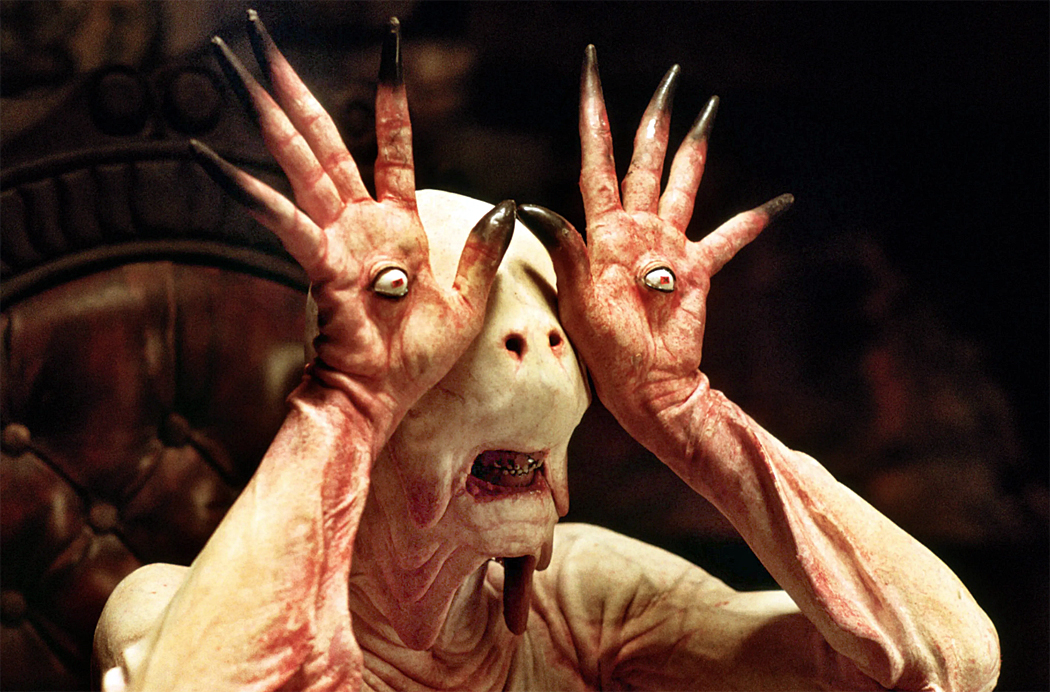
Last year’s Frankenstein by Guillermo del Toro took the story as seriously as Mary Shelley, and although changed quite a lot from the book, nevertheless was the closest in spirit to the original I have ever watched. 

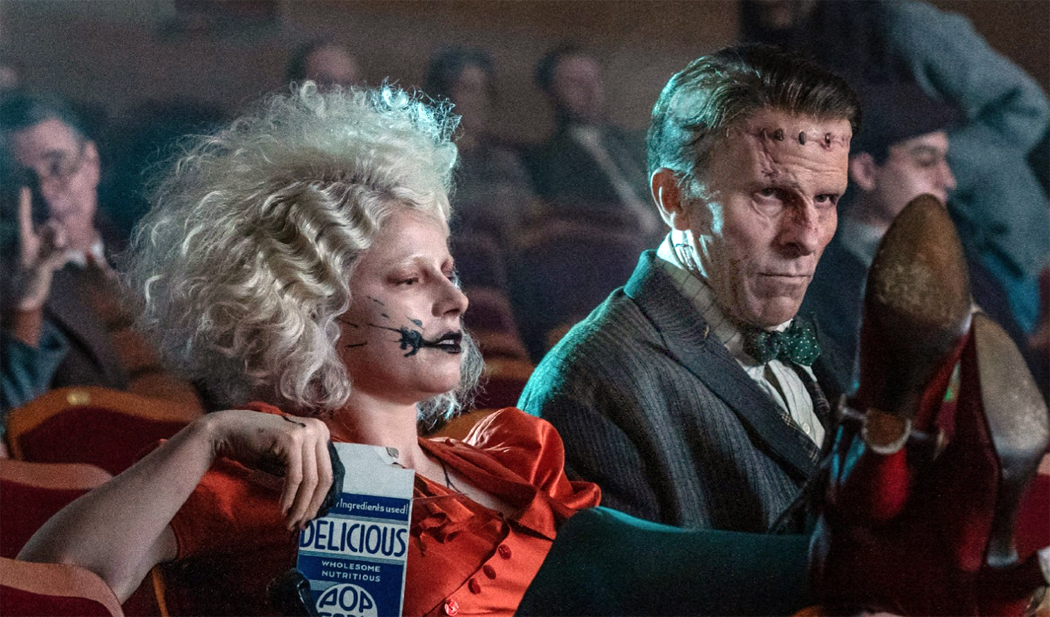
And currently The Bride tries to tell the story from a sort-of feminist point of view and as a musical (sort of). I have not seen it yet. It is getting mixed reviews, but is clearly a serious take on the story. 

These last two have gotten most of the PR, but it should be noted that 2025 also gave us The Abominations of Frankenstein by Eric Yoder, I Am Frankelda, a Mexican stop-motion animation, and Stitch Head, an animation by Steve Hudson.

And coming soon to theaters near you — or most likely streaming or direct to DVD: The Monster Hop; Frankenstein by Micah Ignacio; and Frankenstein in Romania by Radu Jude.  

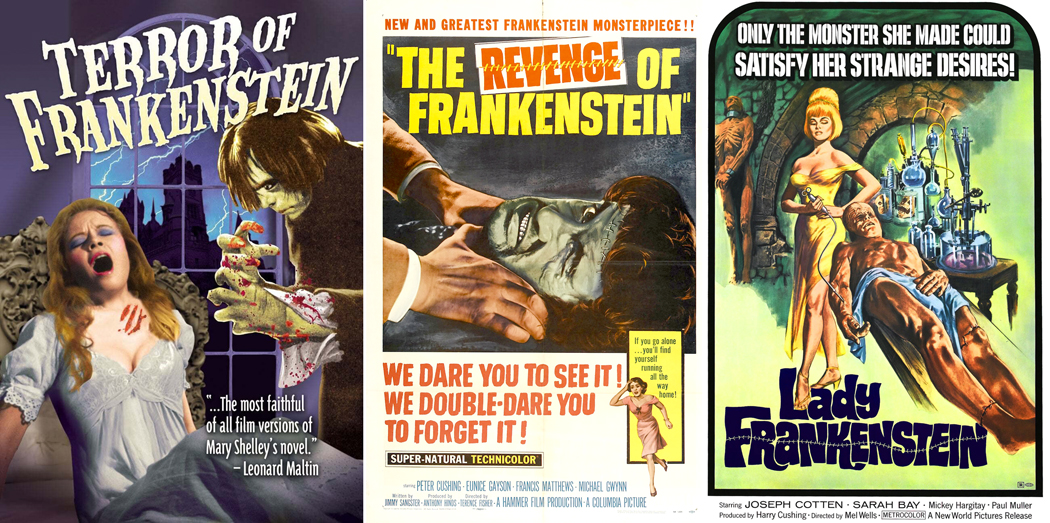
I counted a dozen feature films with the single-name title Frankenstein and scores more with the name in the title: Son of…; Terror of…; Bride of…; Curse of…; Revenge of…; etc. and those like Frankenstein meets…; Lady Frankenstein; Frankenstein: The True Story; or Frankenstein: Italian Style. It never seems to go out of fashion. There are good ones, bad ones, comic ones, drive-in ones, as surprising number of porn ones. The run from tacky to artful. But they all follow a dependable set of conventions, even if the rules evolve over time. 

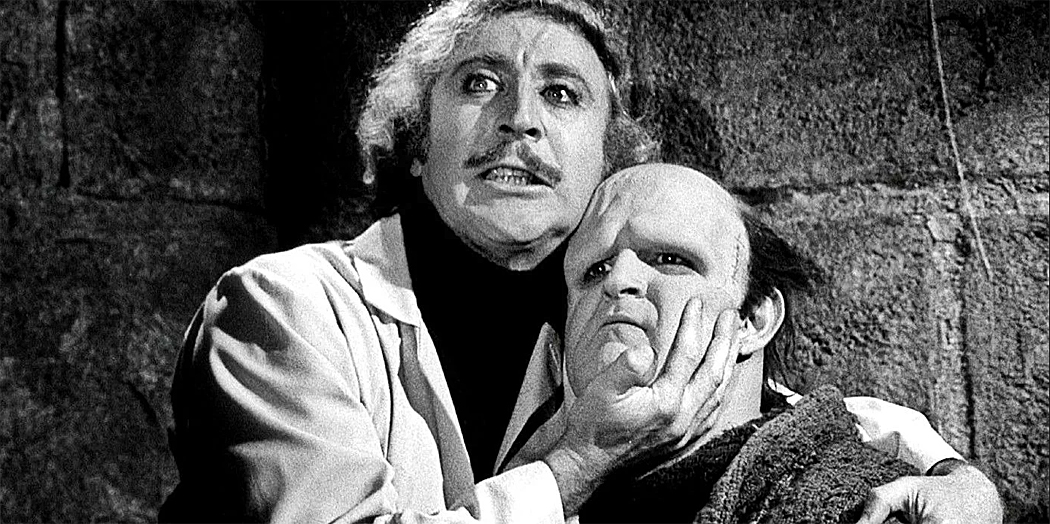
And we shouldn’t forget the best reinterpretation of Mary Shelley’s story, Young Frankenstein, the best made of all Mel Brooks’ movies, with true reverence for the craftsmanship of the old Universal films, but, you know — funny.  

There is a great literature around the psychology of attraction we have for monsters. I leave that to the experts. Is it the metaphor for the Id? The fear of death? The recognition of the threat the outside world presents? A parable of the societal outsider? The Aristotelian projection of terror and pity? Probably all these things at various times. But I am suggesting that one of the pulls of the genre is its suggestion of stability, that the monster itself will abide by the rules, and that, after the stake through the heart or the silver bullet, things will always go back to normal — until the sequel.

There is a class of movie that deserves special mention. The films aren’t necessarily the best, although they tend to be decent. They don’t usually show up on Top 10 lists or all time greats. But the fact is, that when they show up on TV, often late at night, we will watch them over and over. I don’t necessarily tune in on purpose, and don’t set the DVR to record, but if I tune in halfway through, I’ll see them out to the end. 

These are movies we know almost by heart. There is an amiability to them. Like a favorite tune we like to hum along with, I’ll recall the dialog or the set pieces. A good tune never wears out its welcome. 

I thought about this one night when I was clicking the clickerator and came upon Support Your Local Sheriff. It was bedtime and I was about to turn off the tube, but instead, I sat back down and saw the thing through. Not a notably good movie, but just so pleasant, that I watched yet again to see Walter Brennan do his Walter Brennan imitation. And there’s Bruce Dern and Jack Elam, and Gene Evans and Henry Jones and Harry Morgan and Walter Burke. All great character actors doing what they do best: carefully etched characters, albeit caricatures, but all memorable and distinct. 

This is not a claim that the movie is one of the great classics of cinema, but I can’t help but just enjoy the heck out of it whenever it’s on. Old friends I’d drop in on and visit. 

And it’s far from the only such film. There’s a whole class of them. Among notable “rewatchables” are My Cousin Vinny or Key Largo or The Blues Brothers. Such a list will be entirely personal, although there are probably movies that show up on a majority of lists, the consensus rewatchables. 

There are movies I will choose to watch again and again. They are favorites and I will seek them out. But this list isn’t about that, but about happening on one when channel surfing and finding one that is an old shoe, comfy, familiar. I have the dialog memorized, and no matter if it’s just starting or soon ending, I will keep it on and watch, under various levels of engagement, until it ends. Not so much movies I choose to watch, but that I happen upon and stay with. 

There are movies that, because of this habit, I have seen the end of many times, but seldom see the beginning. For all the times I’ve seen the beginning of Airplane! or The Fifth Element, I’ve seen their endings at least a dozen times. You catch these films mid-flight and ride until they land. 

(There is a subset of films where it is only the beginning that I watch over and over — If Turner Classic Films is showing 2001: A Space Odyssey, I will watch the prehistoric beginning but then tune out. Not that I don’t think the rest of the movie is good, but because it is only the opening that has this over-and-over quality of a favorite song that scratches a certain cinematic itch.)

When I consider what makes a movie rewatchable by this standard, there are a few things that seem to be true. 

First, plot doesn’t matter much. Movies that I will stay to watch are composed of memorable set pieces rather than a story with a goal-oriented ending. It is the set-pieces that I want to see, each scene a mini-story in itself. 

Second, they feature memorable dialog. Snappy chatter and witty responses. 

Third, they feature memorable characters, whether germane to the plot or not, and usually played by memorable character actors. 

Sometimes the attraction is none of the above, but just how bad the movie is. My brother says, “Growing up, I’d watch any movie with robots in it. Still will. I’ll visit most any ’50s movie with a monster or a rocket ship (or monster in a rocket ship). Stupid and cheesy and incompetent don’t matter.” 

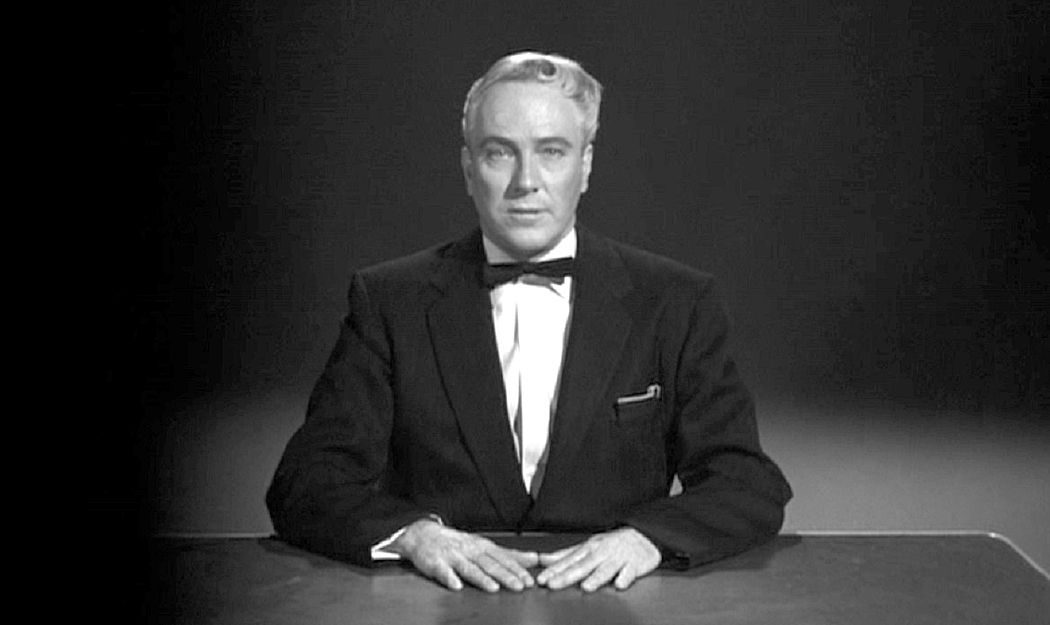
And so, Plan 9 From Outer Space is a Class-A dip-in-at-any-time film (I hesitate to even use the word “film” in this context, as the word implies a certain level of craftsmanship famously missing in this “classic.”) But it has memorably dippy dialog (“We are all interested in the future, for that is where you and I are going to spend the rest of our lives. And remember, my friend: Future events such as these will affect you in the future.”) It has memorable characters, like Vampira or Tor Johnson. And it has character actors, such as Lyle Talbot and cowboy star Tom Keene, doing their best with the unspeakable script. 
At the opposite end of the quality spectrum is Citizen Kane, which is the acme of episodic great dialog with wonderful actors. Lots of scenes to remember in discrete chunks, any of which can be pulled out and dissected line by line and feel complete in themselves. 

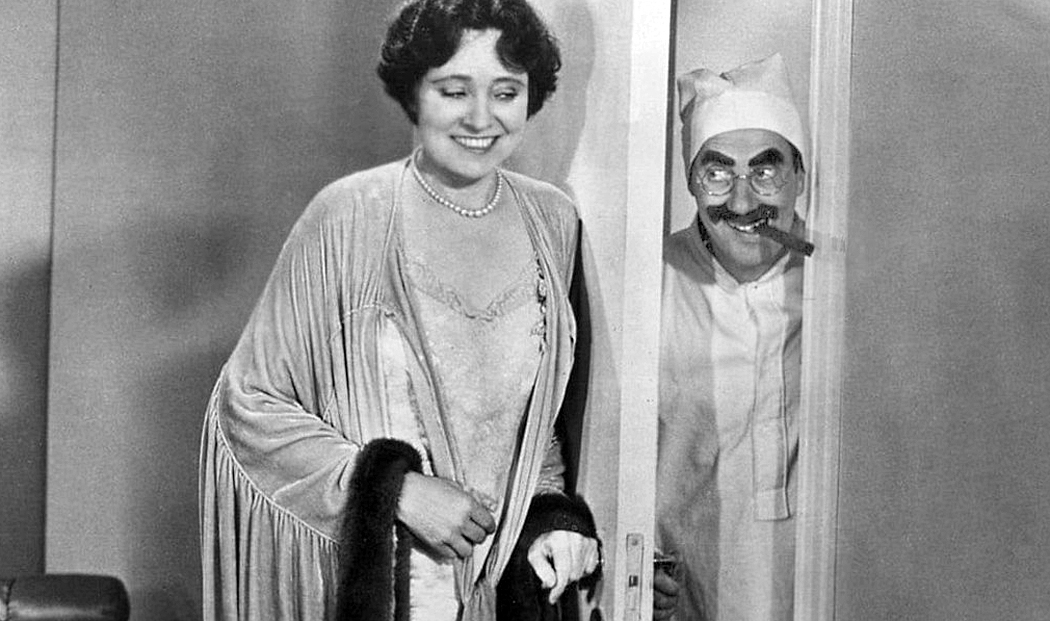
I came up with a list of about 40 films that fill the bill and I know there are at least that many again I have forgotten to include. Among them are The Bride of Frankenstein (mostly for the scenes with Ernest Thesiger), Them!, Duck Soup, Dracula, Rio Bravo, and Beetlejuice. There is no average quality level, they run from Seventh Seal to Harold and Kumar Go to the White Castle

The most important quality of most of the films on my list (although not all of them) is that episodic structure. Francis Coppola’s Godfather is often described as “operatic,” and that is dead-on: Like opera, the rewatchable film is made up of recitatives, arias and choruses. And the same way you can make a concert program of favorite arias, you can do the same with favorite movie scenes. 

I will watch any black-and-white Fred Astaire film for the dance scenes. And any film with a Busby Berkeley extravaganza in it, although, once the plot creaks back into action, I’ll tune out. Each Berkeley choreography is an esthetic whole complete in itself.

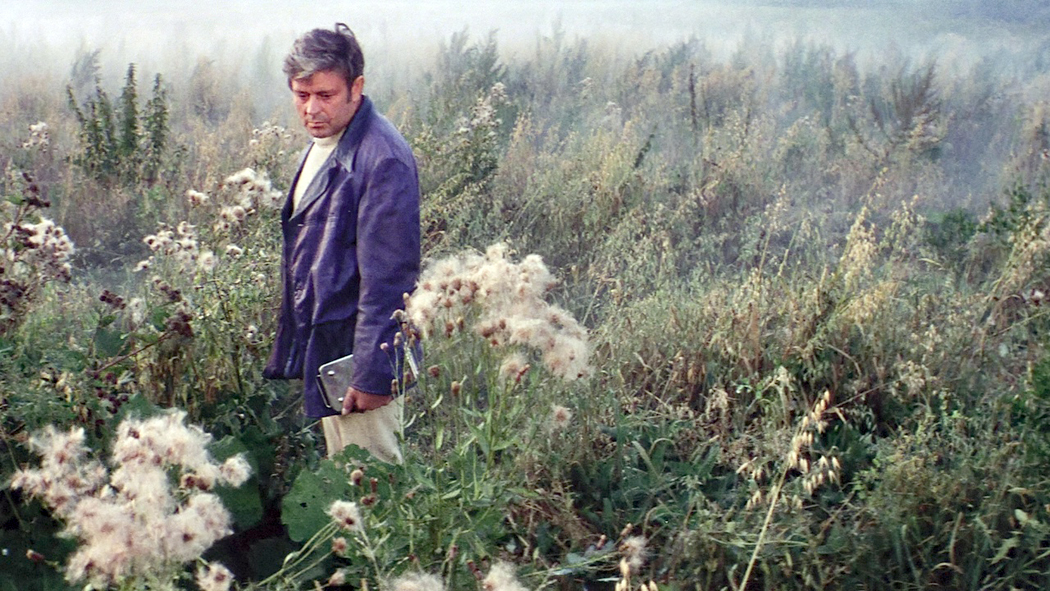
The opening 20 minutes of Tarkovsky’s Solaris is intensely beautiful and I will set my DVR for it, just for those minutes, I don’t often take on the whole, long film that trails behind. 

Bogart and Charles Waldron, upper left; with Sonia Darrin, upper right; with Dorothy Malone, lower left; with Lauren Bacall, lower right

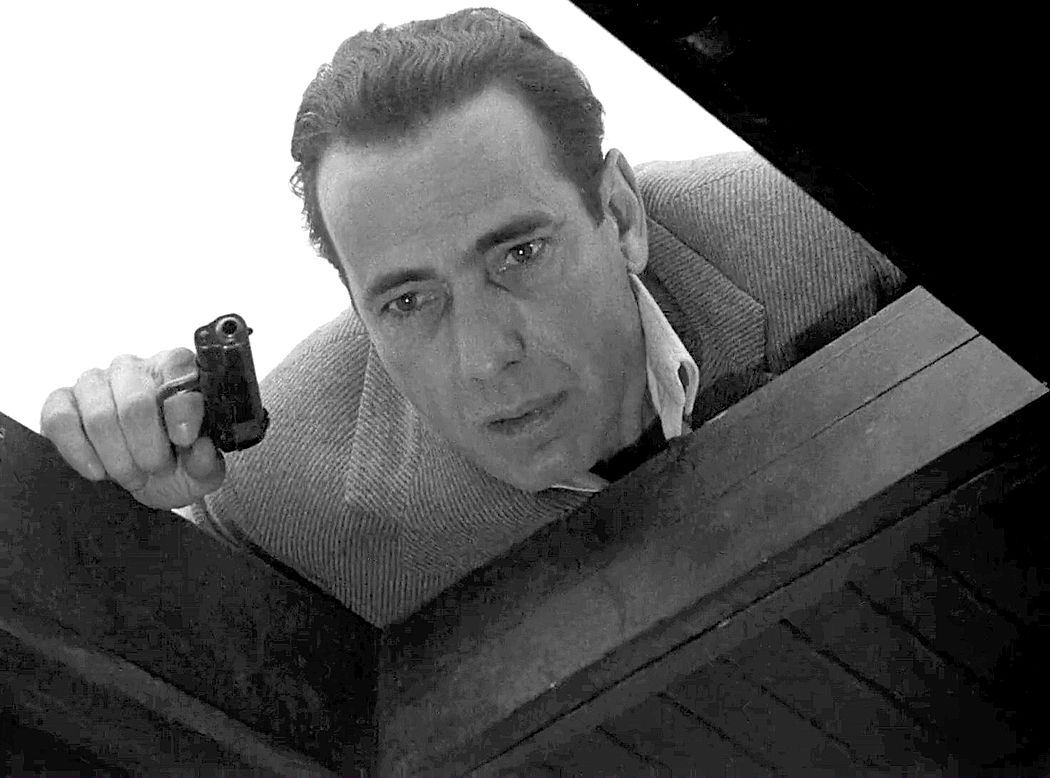
The essential set-piece rewatchable film is Howard Hawks’ The Big Sleep. You cannot watch it for the plot. As a whodunnit, it is hopeless. But each scene is a carefully crafted gem, beginning with perhaps my favorite, Bogart’s interview with the old General Sternwood. (“If I seem a bit sinister as a parent, Mr. Marlowe, it’s because my hold on life is too slight to include any Victorian hypocrisy. I need hardly add that any man who has lived as I have and who indulges, for the first time, in parenthood, at my age, deserves all he gets.”) Includes verbal fencing with Lauren Bacall and Martha Vickers (“Your not very tall, are you?” “I try to be.”) Snappy parrying with Sonia Darrin (“You do sell books. Hmm?” “What do those look like, grapefruit?”) A racy scene with Dorothy Malone skirting the boundaries of the Code, and lines with the cab driver Joy Barlow, John Ridgely (Eddie Mars), Regis Toomey, Charles D. Brown (Norris) and Louis Heydt (Joe Brody), to say nothing about some really cruel lines given to Bob Steele as Canino. 

In the end, you don’t really care who did what to whom, but you are grabbed by the gloss and flash of the individual scenes. Which makes Big Sleep the champ of rewatchable movies. 

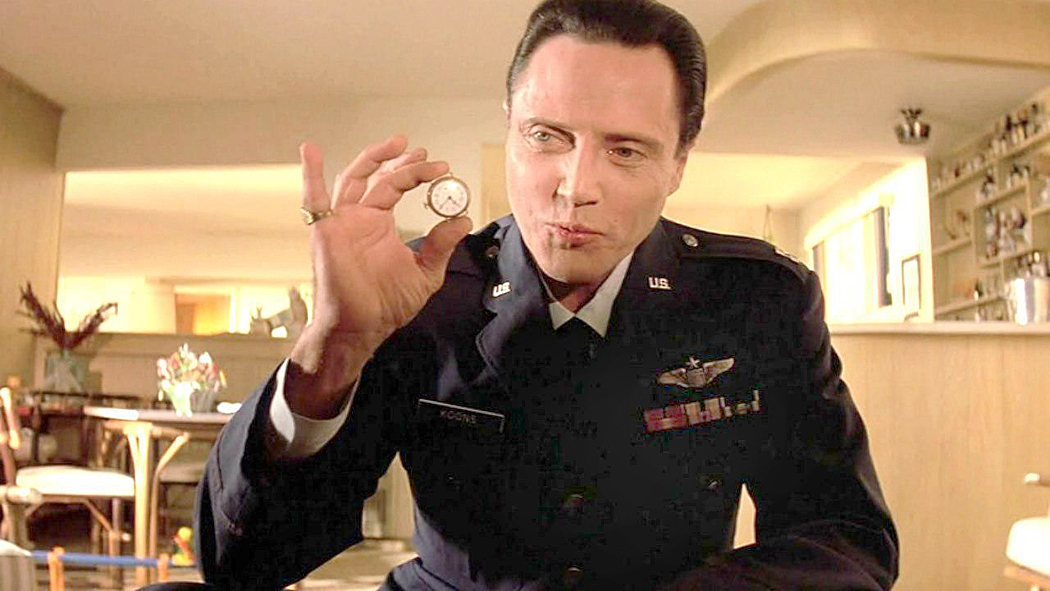
Pulp Fiction is another film built from scene-blocks, in this case all shuffled around. Is there anything more memorable — or more extraneous to the plot — than Christopher Walken explaining the provenance of a watch? It seems that the best parts of the film are all those that are completely unnecessary for the story. “You know what they call the Big Mac in France?” 

A film like North by Northwest might seem to be about a through-driven story, but really, it is also just a series of memorable scenes strung together. Each scene — the cropduster attack; the auction scene; the Mount Rushmore scene; and the final dirty joke — are all just pearls on a string.

Many of the series movies from Hollywood in the ’30s and ’40s are endlessly rewatchable, in part because what plots they have are practically interchangeable. “I’ll watch any Charlie Chan,” says my brother, and TCM devotee, Craig. ”I’ll watch Mr. Moto, but they are a rung below Charlie Chan, and the Falcon movies are a rung below that, and Boston Blackie, another rung down, but, hell, I’ll still watch them.” 

You just want to soak up the cinematic ambience of their docksides and back alleys. The fog, the boat horns, the apartment staircases, the eavesdropping at closed doors. 

“Mostly, my list taunts me, saying ‘You are a man of Low Tastes,’ and I guess it’s true,” Craig says. “And my list seems to be almost all American, and old. But these are just the movies that occur to me off the top of my old and balding head. There are a ton of movies that could be on my list, if I could remember them.”

The first movie I began watching endlessly was King Kong, which I first saw when I was in first or second grade and was shown over and over on New York’s Channel 9 (WOR-TV). In the seven decades that have followed, I must have seen it close to a hundred times — maybe more. I will still watch it whenever I catch it being played. And that despite the creaky borrowed plot (mainly from the silent Lost World) the stilted dialog, and the acting, where Bruce Cabot shows off all the acting prowess of a loblolly pine. 

It was Kong that showed to me the possibility that a movie was worth watching multiple times. There are those who don’t partake, for whom the main interest in the film is the plot and having once seen it, “I know how it ends, so why would I watch it again?” And, indeed, there are many movies for which that is the main draw: The story line pulls you along and having once satisfied your need to know “what happens next,” you have emptied the film of its meaningful content. 

But, for me, the movies I’m talking about are more like music. You can listen to Beethoven’s Fifth many times, drawing something fresh from it with each hearing. Or listen to the Beatles’ Hey Jude over and over, and each time, it tickles just the spot that needs the stimulus. Bingo. Dead on. 

Who ever heard of someone who didn’t want to hear their favorite song again because “I’ve already heard it?” (I remember that bastion if intellectual curiosity Ronald Reagan saying “You’ve seen one redwood tree, you’ve seen them all.”) 

I will never get enough of any of the Thin Man movies, even Song of. Nor will I turn down The Thing with James Arness, nor M with Peter Lorre, nor Touch of Evil, nor Time Bandits

You see this is an eclectic list of movies, and not based on quality alone, nor on subject matter or genre, but entirely on that subjective and personal sense of rewatchability. 

What is on your list? 

Click on any image to enlarge