Archive

Tag Archives: hudson river school

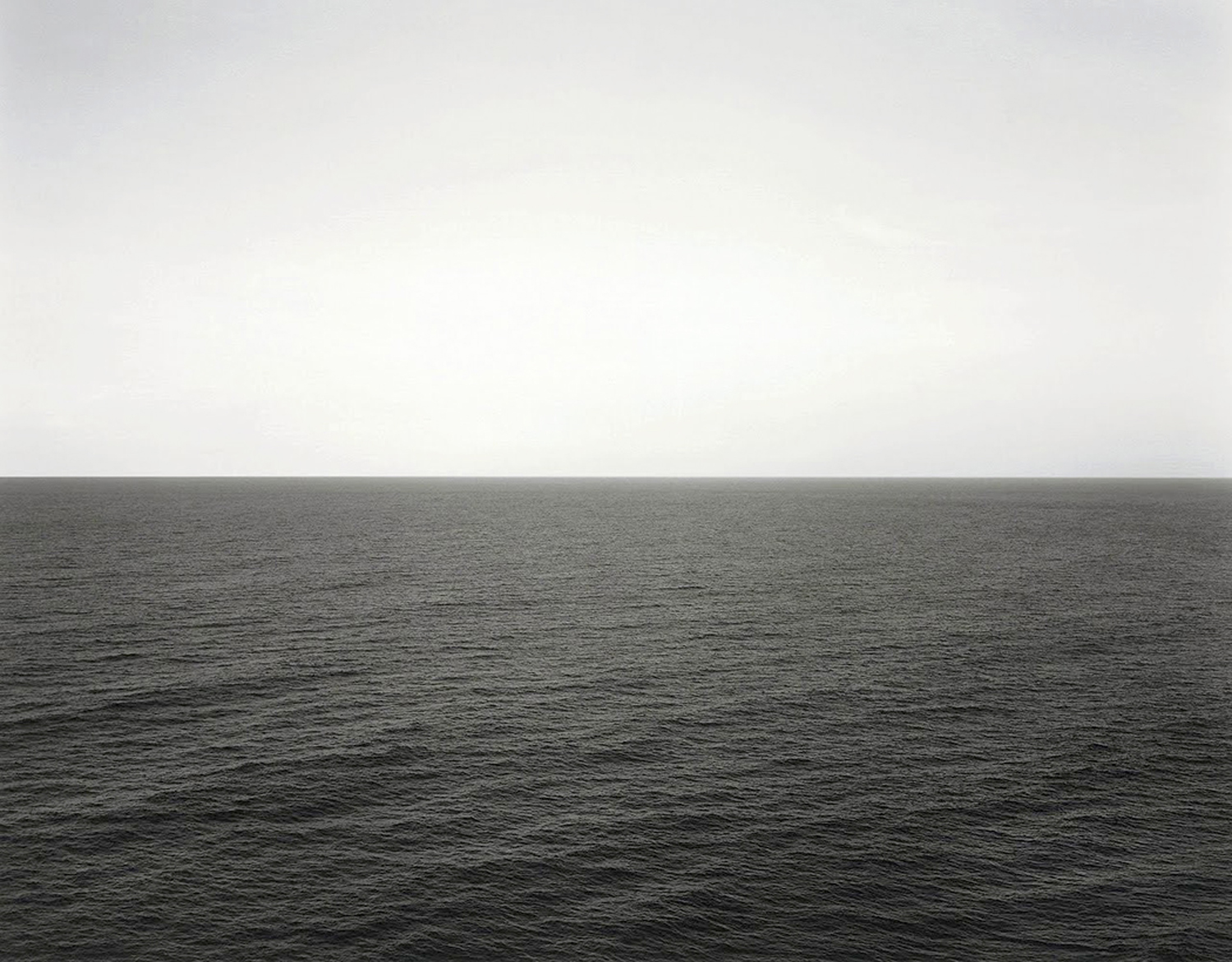
Many years ago, when I was still teaching photography in Virginia, I visited an art show that bothered me. In the gallery were a series of large black-and-white seascape photographs by Hiroshi Sugimoto. Each was about 3-feet square and each was divided exactly in half by the horizon line. 
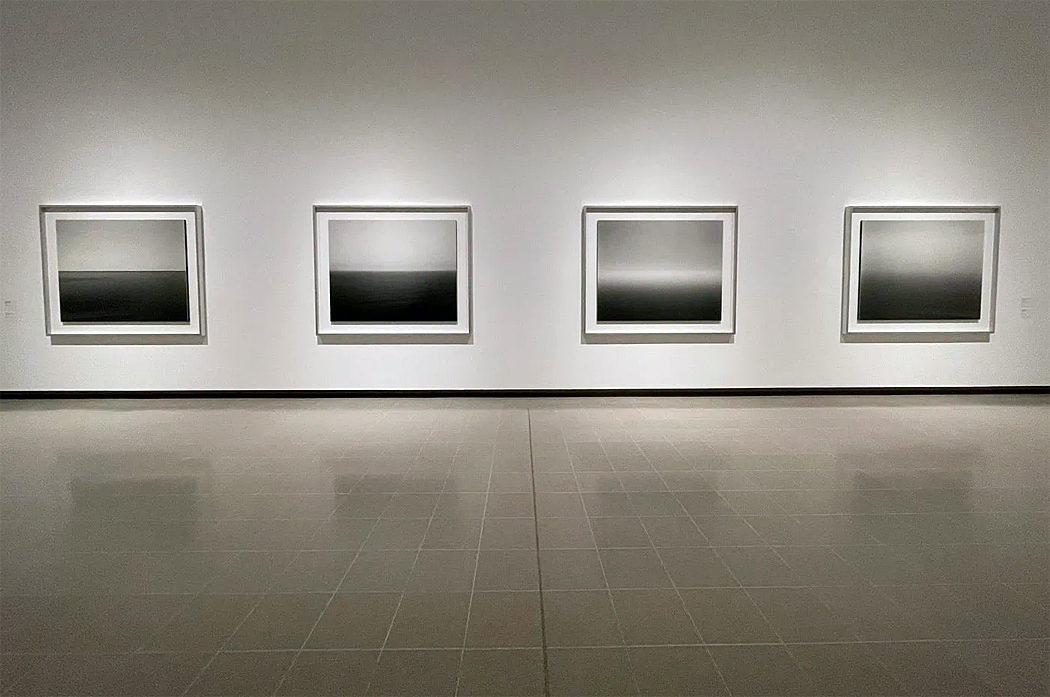
Sugimoto, who is exactly my age, is a Japanese architect and artist who created a project of making pictures of various seas, oceans and great lakes, at different times of year and different times of day and different weathers. But every one was the same size and with the top and bottom divided in half, sky and water. 
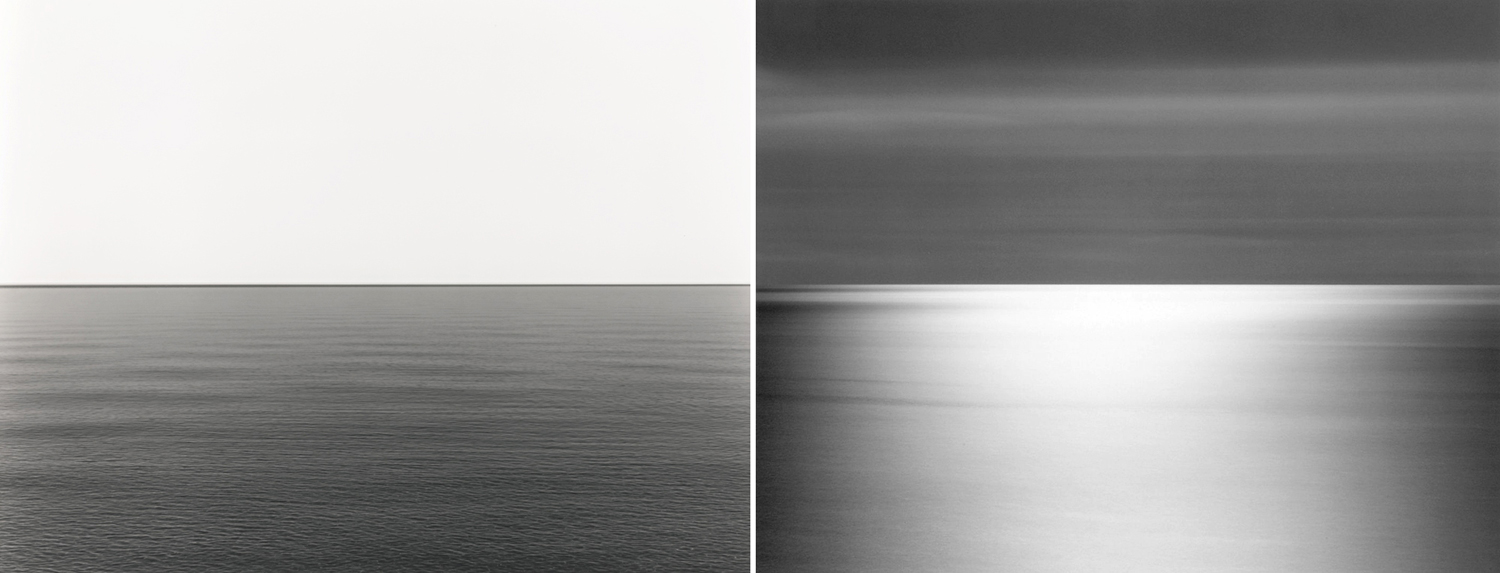
What bothered me, initially, was the featurelessness of the images. The seas were generally calm and the skies usually cloudless. 

At the time, in my class, I was trying to get ordinary students to make better pictures. Most of the students had no ambition to show in galleries, but rather had wanted to be able to make better family snapshots, or to improve as hobbyists and learn darkroom techniques. And so, I taught such normal things as making sure their images had a center of interest — a person or a dog, placed foreground against a background. If they wanted to make a landscape, to include some center of attention and not just make a dull grab-all of the scene. 

These were not “rules,” but ways to get beginners to improve. First steps, as it were.
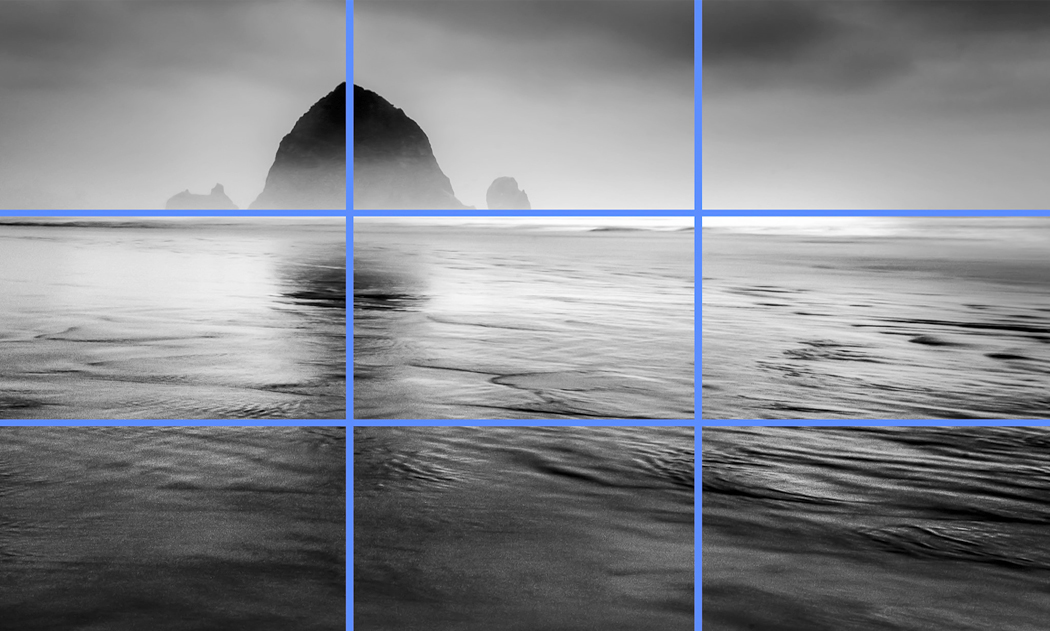
And I taught the ubiquitous “rule of thirds,” in which you help the design of a photograph by placing things a third of the way from the bottom or top, or a third of the way in from the sides of the picture. Or, also, to place your horizon line a third of the way from the bottom or two-thirds up from the bottom. And never, ever, put your horizon through the center of the image. The center is the most boring and static place in the frame. 

(Of course, no accomplished photographer pays any attention to these notions, but I was helping beginners up their games and making their pictures marginally more interesting.) 
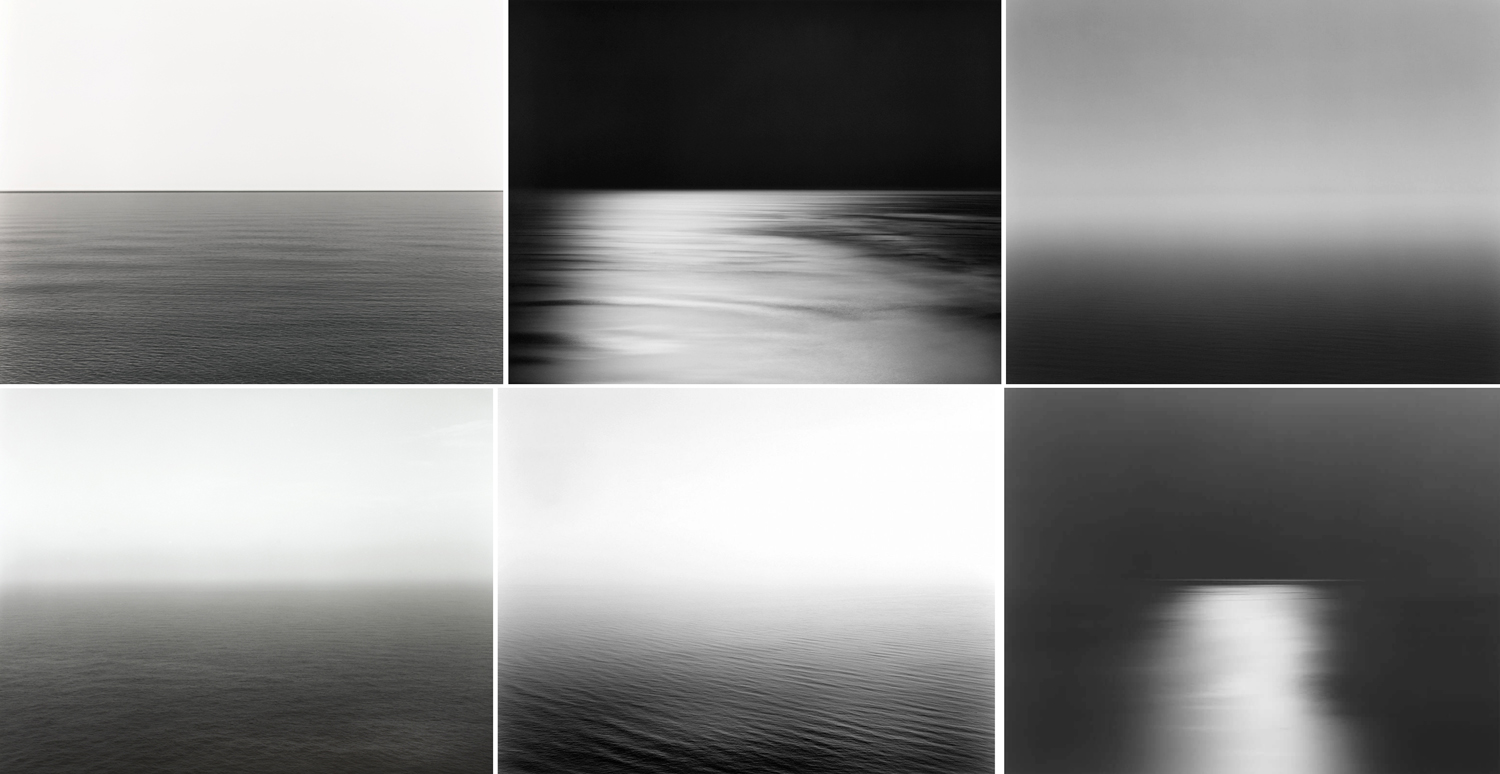
But here were Sugimoto’s seascapes, centered and otherwise featureless. It bothered me for a long time — enough so that decades later, I can remember that show, burned in my memory, when so many others that I went to in so many galleries, have faded into time and oblivion. 

I was aware that if the images stuck in my craw and couldn’t be dislodged, there must have been something to what Sugimoto was doing. I have thought long and hard on the subject. And I came to the conclusion that their very inexplicability, tied with the elemental themes of nature and the vast oceans, gave them their power. That, in fact, they were a projection of the sublime. 

The sublime is a subset of esthetics, a particular experience of the beautiful, set in distinction to what is attractive and pleasing, by showing what is immense, often frightening, and which gives the viewer a palpable sense of his own unimportance in a vast and radiant universe. 
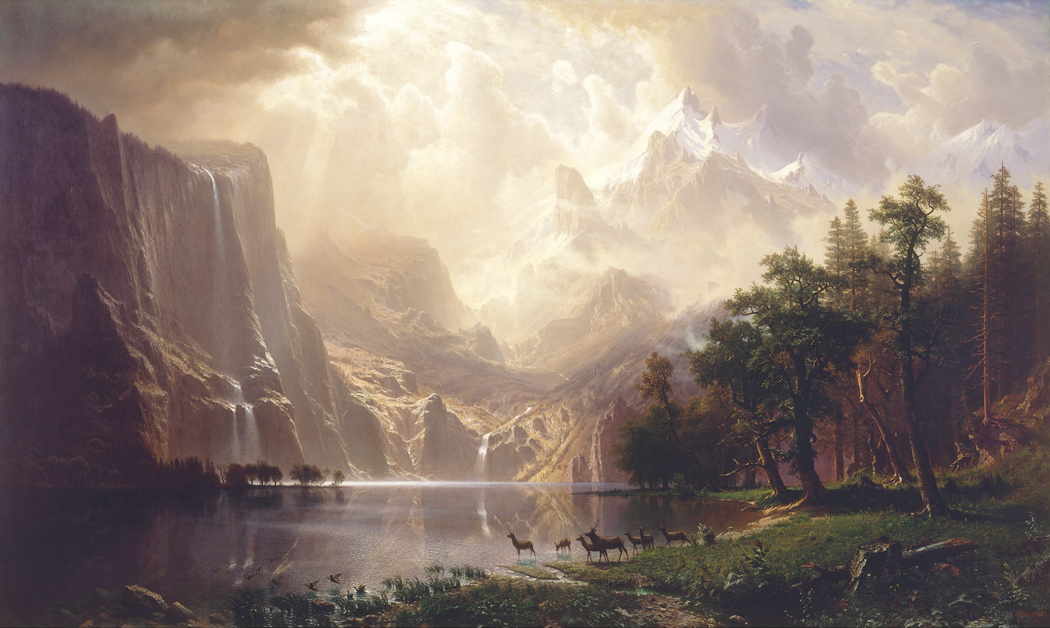
“Among the Sierra Nevadas” Albert Bierstadt 1868

It was a popular theme in 19th century art, with landscapes of the mountains of the American wilderness, or, in England, of vast biblical scenes, or or battles or storms. You have Jacob Mallord William Turner painting disasters at sea, John Martin showing the apocalypse in giant canvases, Gustave Dore engraving images of Dante’s hell and Satan’s flight through chaos.
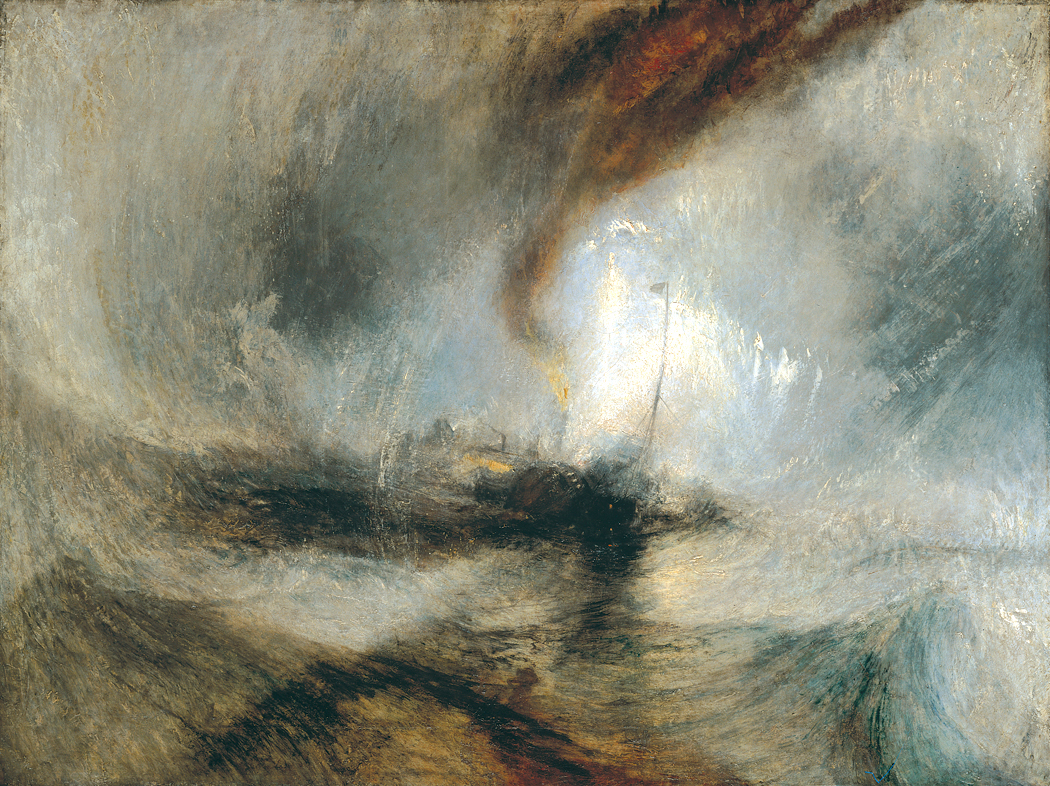
“Snow Storm at Sea” JMW Turner 1842

You have poets describing limitless scenes of the Alps or the Arctic. Mary Shelley’s Frankenstein ends in such a scene, with a ship stranded in the Arctic ice and the monster choosing white oblivion over life. The ship’s captain writes in his log: “We are still surrounded by mountains of ice, still in imminent danger of being crushed in their conflict. The cold is excessive, and many of my unfortunate comrades have already found a grave amidst this scene of desolation.”

Nature could be pretty. It could be daffodils. But it could be overpowering, desolate, dangerous. As in Percy Shelley’s Mont Blanc: “In the wild woods, among the mountains lone,/ Where waterfalls around it leap for ever,/ Where woods and winds contend, and a vast river/ Over its rocks ceaselessly bursts and raves.”
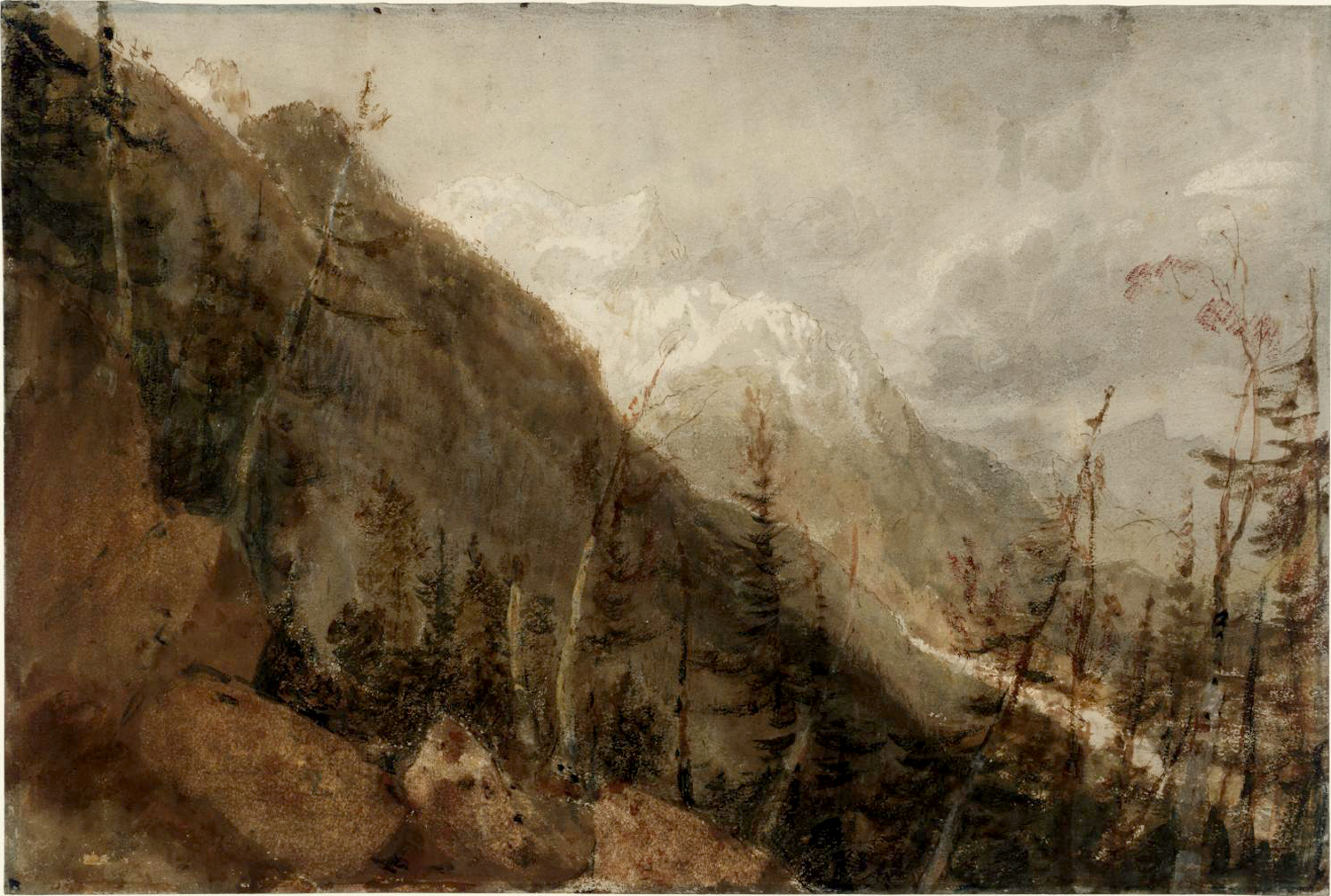
“Chamonix: Mont Blanc and the Arve Valley from the Path to the Montenvers” JMW Turner 1802

Hardly a better example could be found than Sam Coleridge’s Kublai Khan: “But oh! that deep romantic chasm which slanted/ Down the green hill athwart a cedarn cover!/ A savage place! as holy and enchanted/ As e’er beneath a waning moon was haunted/ By woman wailing for her demon-lover!”

In Byron’s Childe Harold’s Pilgrimage: “Roll on, thou deep and dark blue Ocean — roll!”

It’s all over the place in English Romantic poetry — “Tyger Tyger, burning bright,/ In the forests of the night” or later, in the works of Americans such as Walt Whitman (“Out of the cradle endlessly rocking”) or Emily Dickenson. 

British poet Samuel Taylor Coleridge describes the sublime in his 1818 lecture on “European Literature” by recalling: “My whole being expands into the infinite; earth and air, nature and art, all swell up into eternity, and the only sensible expression left is, ‘that I am nothing!’ which concludes that his ultimate realization of the sublime was of his own human insignificance.” 
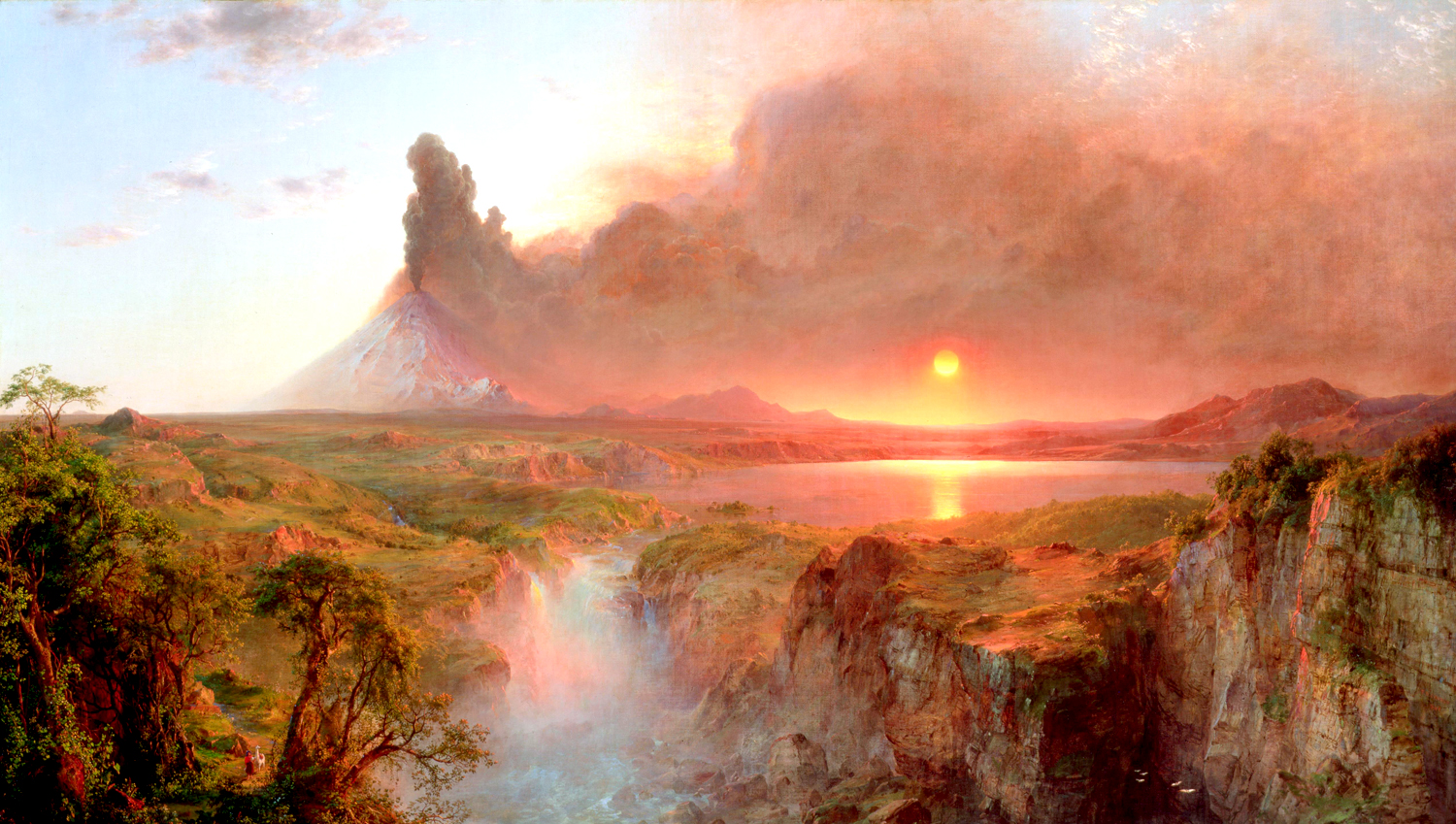
“Cotopaxi” Frederic Edwin Church 1862

Giving in to the infinite — or the emotional experience of it — can hit you whenever you are open to it. Not necessarily seeking it, but nevertheless open to it. Most often, we spend our lives closed, trying to make sense of the everyday things that take up most of our time. But there are moments when it all breaks in. These moments tend to stick in our psyches, to be brought back in memory to refresh our lives. 

In music, the sublime is found in Haydn’s depiction of Chaos at the beginning of his oratorio, The Creation. Or in the ecstatic chorus of Beethoven’s Ninth Symphony, the trumpets of apocalypse in Berlioz’s Requiem or the vastness of Mahler’s Symphony of a Thousand.
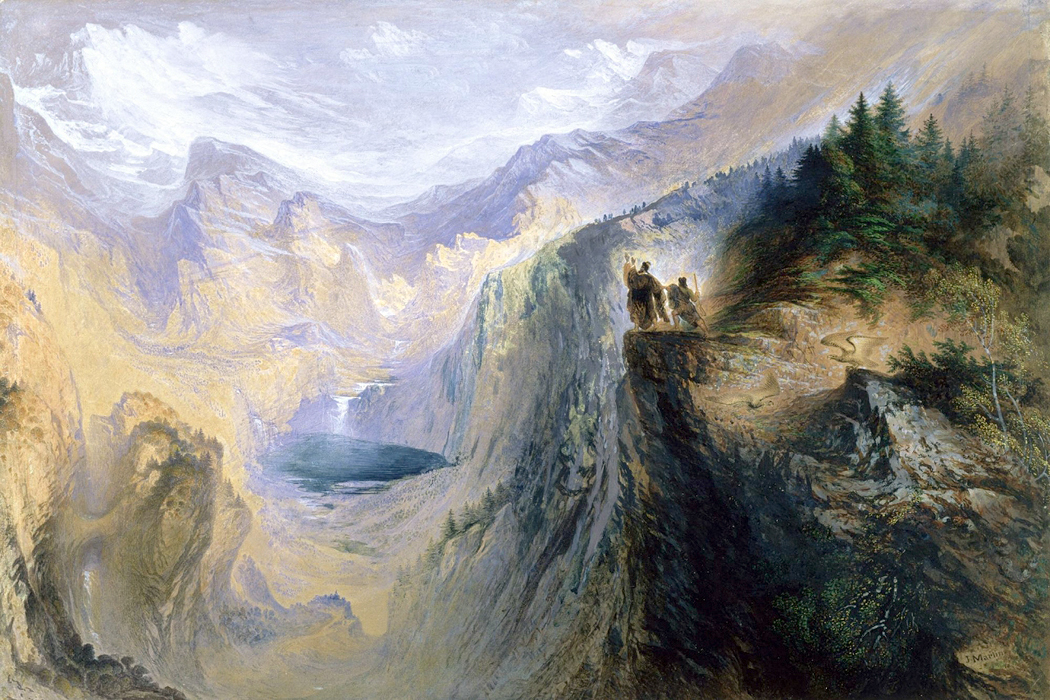
“Manfred on the Jungfrau” John Martin 1837

The problem with the Romantic vision of the sublime is that it can too easily devolve into kitsch. The sense of cosmic overload shrinks into a kind of religious sentimentality and you wind up with Charlton Heston and Cecil B. DeMille. Where you draw the line, personally, depends very much on your willingness to accept the underlying metaphor of the vastness and impenetrability of the universe. 

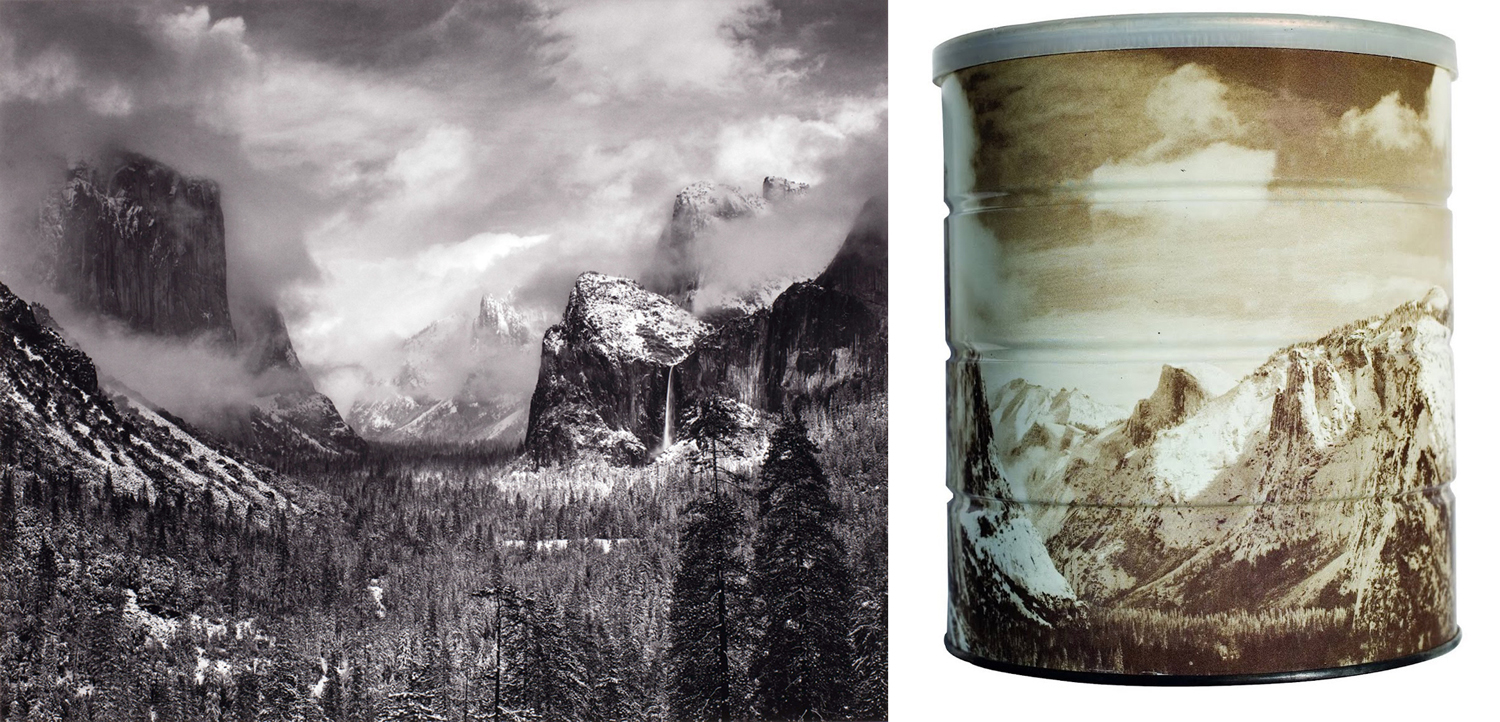
Any theme, including the sublime, can peter out in too-familiar tropes and cliches. And so, in the 20th century, artists and poets have needed to find new ways to explore the idea, without the hurling boulders and cataclysmic storms of the 19th century. The old ideas still persist, of course, in such things as the photographs of Ansel Adams. It came to a banal end in 1968 when Adams let his photos grace the cans of Hills Bros. coffee. 
But, for the most part, the sublime has quieted down for the past hundred years or so, with priority given to social and political themes, from Brecht to Basquiat. We have a suspicion of grandiosity. Two world wars made us modest. 

Nevertheless, that cosmic power is still out there, seducing and threatening us. The night sky, the city-flattening hurricane, the ever-retreating horizon, the glimpse over the edge of the Grand Canyon precipice. And, always, our awareness of the inevitable extinction of our personal consciousness. 
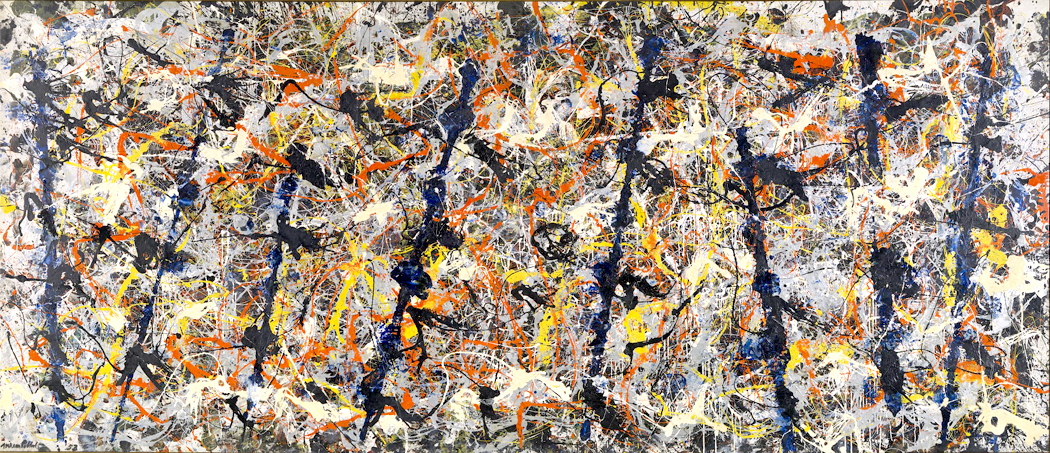
“Blue Poles” Jackson Pollock 1952

And some artists attempted to address this, but without the baggage of 19th century Romanticism. People like Barnett Newman with his huge blank colors, Jackson Pollock with his impenetrable scribbles, and Mark Rothko with his inscrutable floating squares. 

In fact, it was Rothko that first unlocked the Sugimoto seascapes for me. 

Rothko was another artist whose work initially I didn’t understand. Having only seen reproductions in books, I thought of his paintings as simply boxes of pleasing colors splashed on the canvas. 
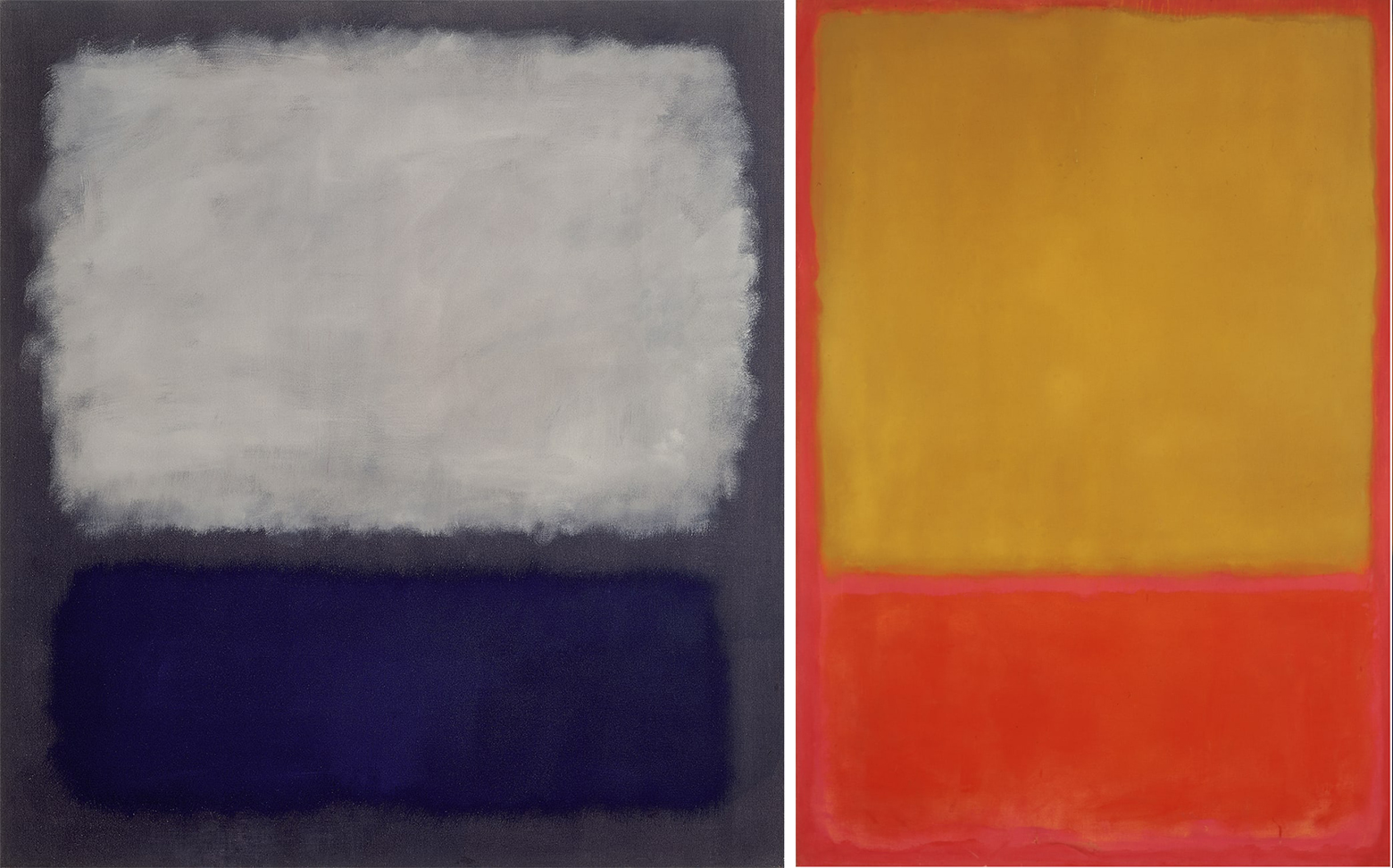
“Blue and Gray” 1962” and “Ochre and Red on Red” 1954 Mark Rothko

All that changed when I got to see the actual work, hanging on museum walls, and I realized those colors actually floated — visually — above the canvas. The colors of ink in a book illustration couldn’t do that the way actual pigment on canvas did. The difference between seeing a picture of an airplane and the actual flying at 30,000 feet. 

And so, it hit me, Rothko’s quiet illuminations were the 20th century version of the sublime. I couldn’t explain the emotions they roused in me, but they were the sense of seeing the primordial meanings of life, something no words could convey. 
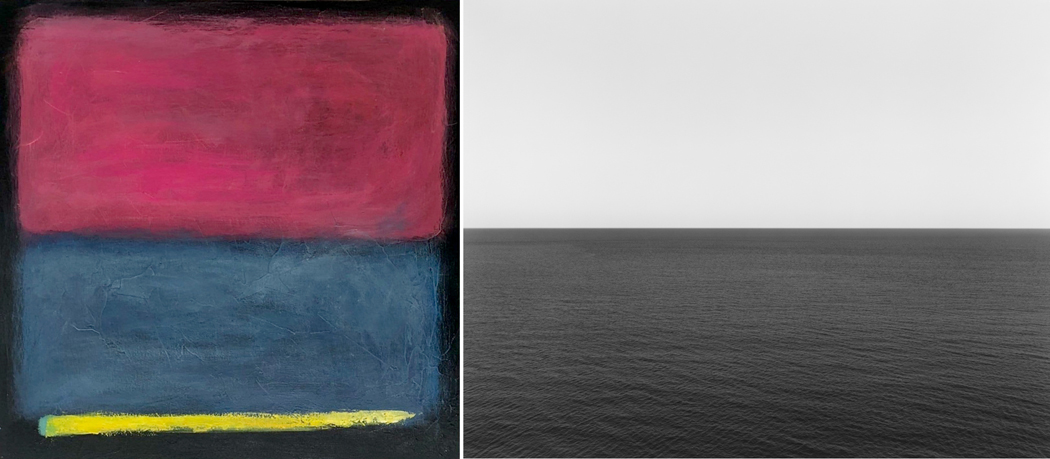
It was this same thing that nagged at me in Sugimoto’s photographs. The sky and sea were yin and yang, something primeval and immutable. 

“When you look up at outer space there’s the Moon and the Stars,” Sugimoto said. “But on the surface of the Earth, the farthest place people can see is an ocean horizon.”

Sugimoto also said that seascapes are pivotal in that they are a  scenery that we, in our modern world, still share with the ancients. Cities all look modern; even rural landscapes are crossed by interstates and power lines. But the ocean looks today the same as it did for Homer. 

(Only recently, I discovered that the Pace Gallery in London had mounted a joint exhibit of Rothko and Sugimoto in 2012, and had even published a book about it.)
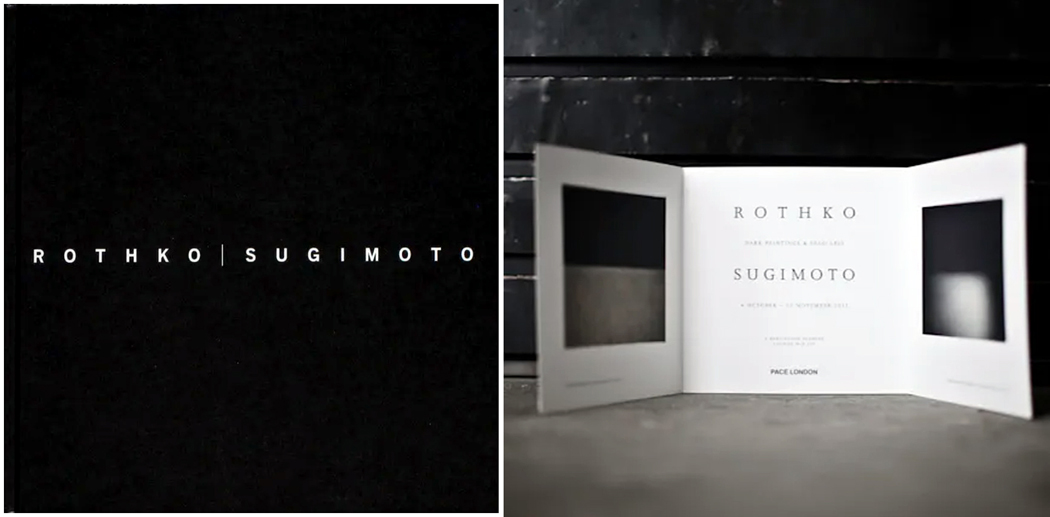
When I lived in Virginia, all those decades ago, it was on the ocean and I would almost daily have the opportunity to look out over the waves and into the horizon. I saw the seascape in sun and under the wind-blown scud of a nor’easter. It changed every day, even hourly. There were times when the sky color and sea color were so matched that the actual horizon line vanished and what I saw was a great blankness. A void. An infinity of sameness without edge. That blankness was a key to the modern sublime. 
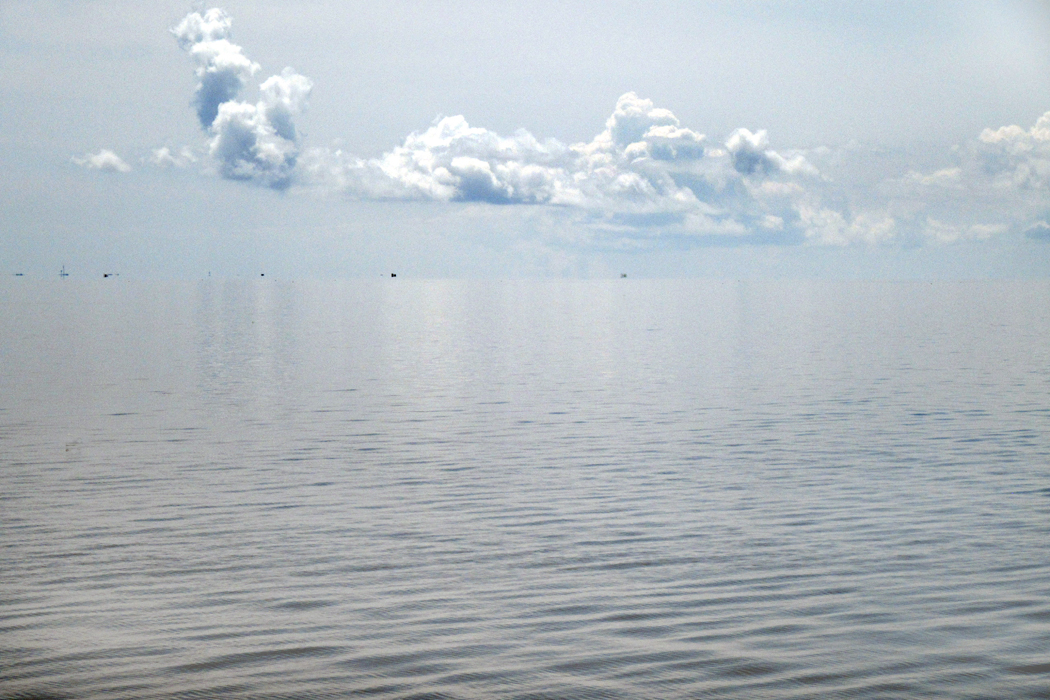
Currituck Sound, N.C.

Usually what I saw was just “the beach,” with its swimsuits and sunscreen. The everyday tends to crowd out — needs to crowd out — the eternal. After all, we have lives to live, jobs to get to, families to care for, and we cannot function if our adrenaline is always at the boil. But there were also times that I could look out at the water and air and realize that I was seeing the fundamental sense of existence. The quotidian keeps us functioning in society, but the sublime absorbs us into the universe. 

There is such a thing as an intense blankness. It is both frightening and beautiful. 
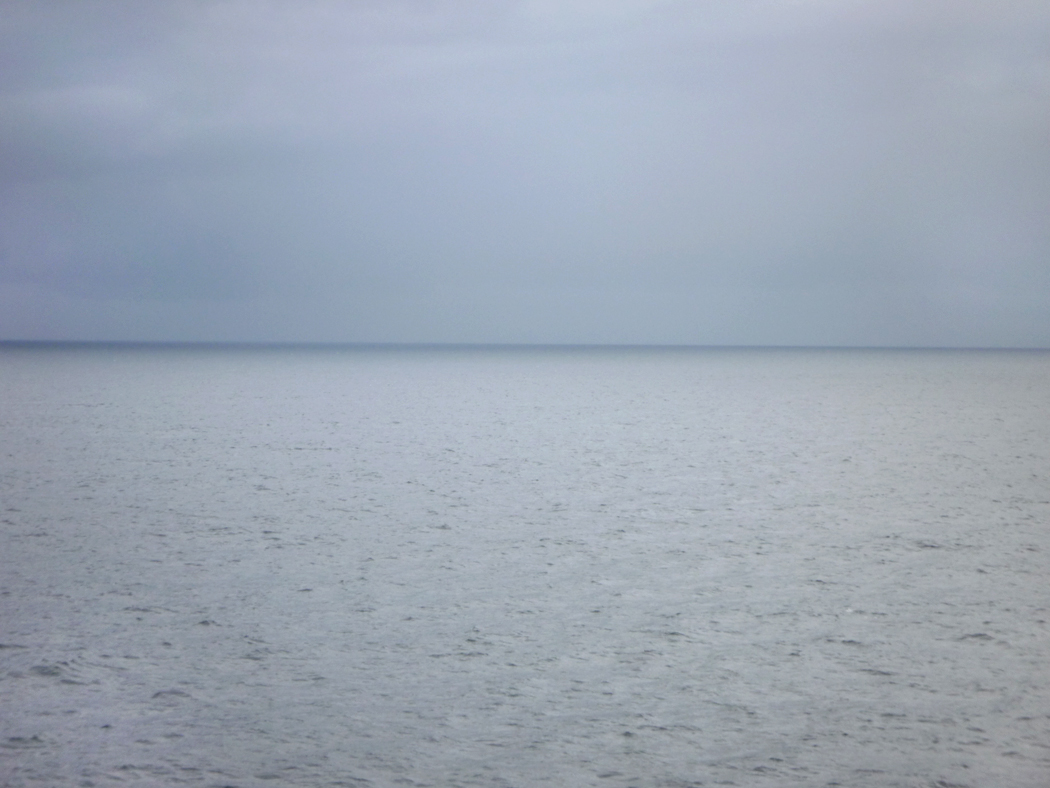
Alaska

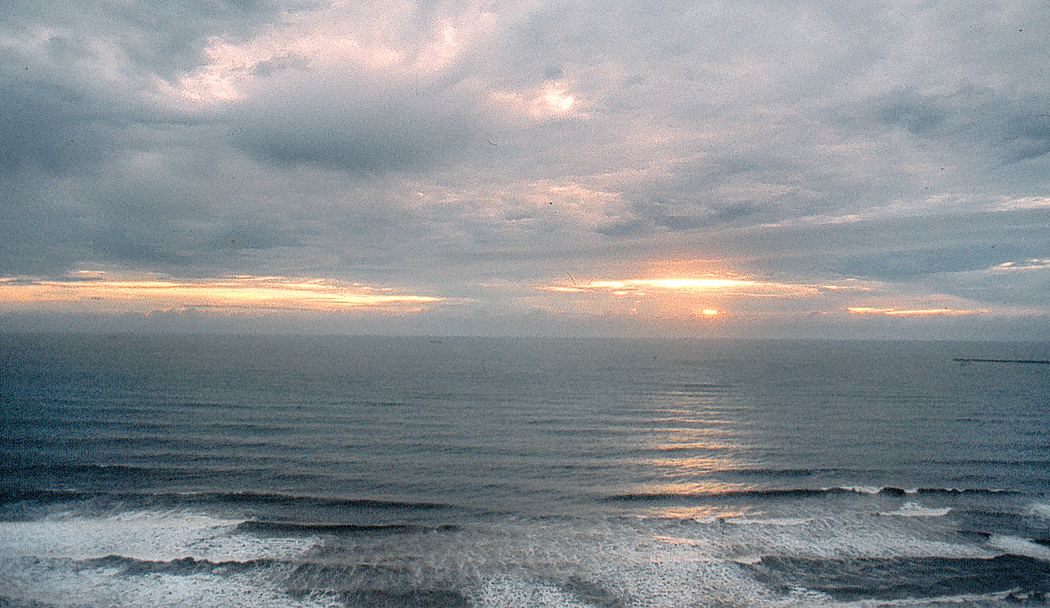
And without consciously realizing it, those Sugimoto photos had buried their way into my psyche, and without consciously imitating his work, I had begun making my own photographs of that phantom horizon. I did so all around the world, like this one of the Indian Ocean from South Africa:
Or these from Alaska:
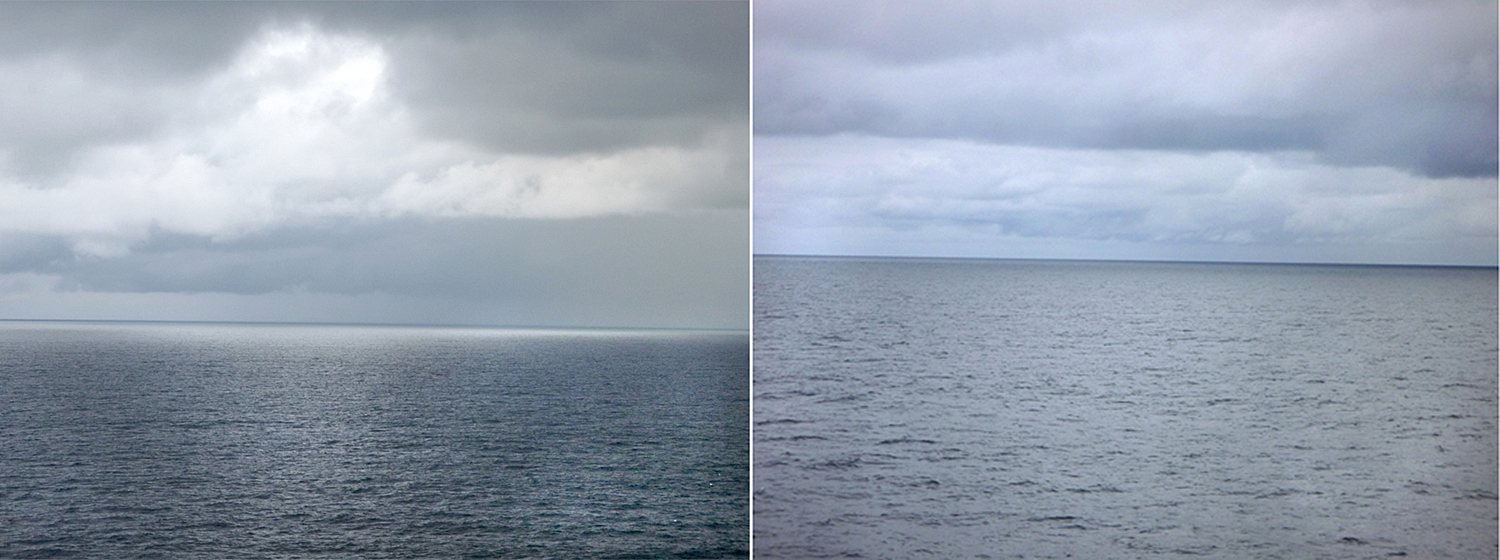
Or this coup de soleil on Puget Sound: 
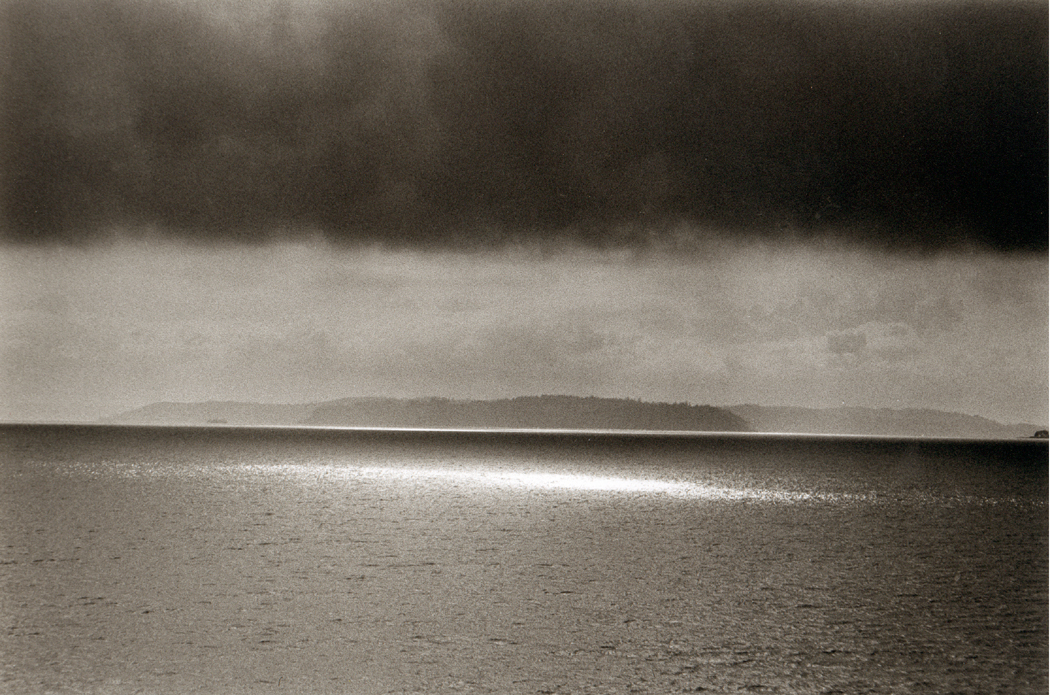
Although I was not aware, when making these images, that Sugimoto was buried in them, I was aware that they were informed by the sublime, and specifically, from a 20th- and now 21st-century version of the concept. 
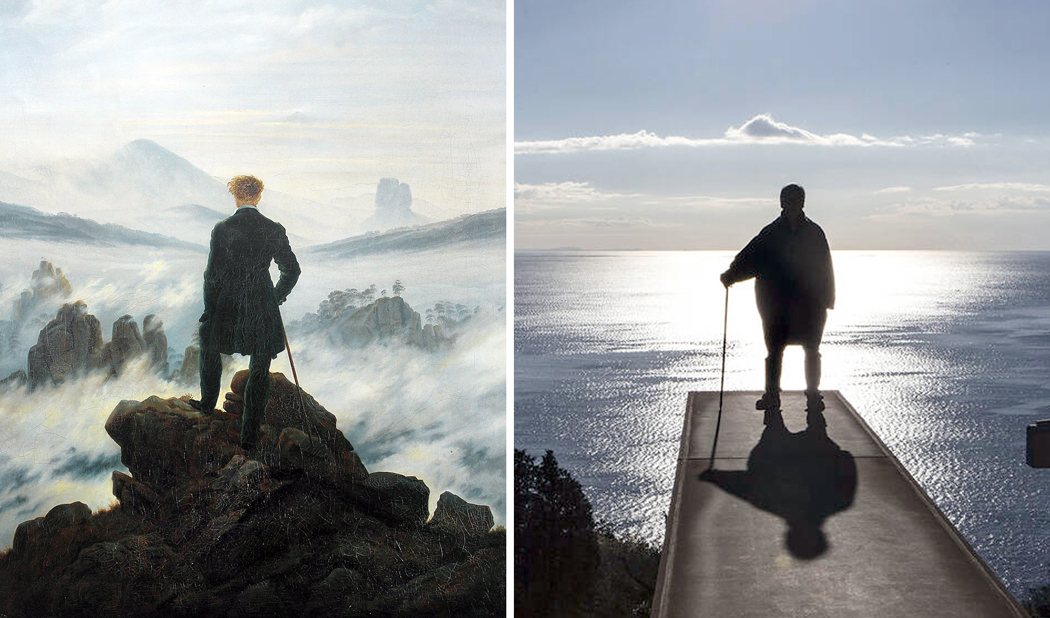
Finally, if I needed any confirmation that Sugimoto was striving for the sublime, I found it in this photo of the artist, posed to mimic the painter who was perhaps the poster-boy for 19th-century Romantic sublime, Caspar David Friedrich. 

olana

Everyone likes a home with a view. If you are rich enough, you can afford to buy such a property, and if you are an artist, you can design such a house.

Frederic Edwin Church was both of these things, and the estate he created, Olana, is now a state park near Hudson, N.Y., where it sits on the top of a hill overlooking the Hudson River and the Catskill Mountains. catskills from olana

Church worked obsessively on the house and grounds from 1860 until age and arthritis forced him to give management of the estate to his son in 1891. Always, Church’s goal was to create natural landscape views from every turn of road on the 250-acre estate and from every window in the house. And he knew something about landscape views.

Church was one of the most famous of American painters of the previous century. His work commanded the highest prices of any American art when it was new, and inexpensive prints made from them were sold by the thousands to his middle-class audience.

Niagara Falls

Niagara Falls

He found in the New World apt subject matter: the American landscape, from Niagara Falls to the volcanoes of South America. The land he painted was vast, romantic and sublime. It told of a new Eden, almost a new covenant for which America was the herald.

The Heart of the Andes

The Heart of the Andes

Frederic Edwin Church

Frederic Edwin Church

From the 1850s through the next two decades, Church’s paintings glorified America’s vision of itself and the Manifest Destiny that was the root of the vision.

Others painted the same subjects. What made Church distinct was his scale and detail: His paintings were big enough to be exhibited like movies, in their own venues with an admission charge, and they didn’t generalize or idealize their flora and fauna, but instead painted them in Peterson field-guide detail. You can name the plants in a Church painting; you can almost name the week and month by their stage of development.

Rainy Season in the Tropics

Rainy Season in the Tropics

The same kind of obsessive detail marks his house, too. Church couldn’t stand an empty wall or a broad expanse of window. Victorian houses are often chock-a-block with bric-a-brac, but Church is notable even by these standards.

The house was originally intended to be a French chateau-style building. But when Church and his wife toured the Middle East in 1869-70, they became infatuated with what they called ”Persian” architecture. It was actually a little closer to the Arabian Nights style Hollywood eventually adopted for its version of Baghdad. olana front hall

They called it Olana after an ancient treasure-fort in Persia. olana studio

Inside, Church displayed all of his many souvenirs. Most look like they’re straight from Pier One Imports. One lesson to be learned: Being an important artist doesn’t automatically confer good taste.

One room avoids the Scheherazade look. The dining room instead mimics a Medieval castle. And on its walls are the paintings Church called his ”Old Masters.” In fact, they are old, dusty souvenirs of Europe, sans provenance, sans signatures, sans anything else but an old look. If a painting was too bright for his taste, Church himself dimmed it in brown varnish.

The dining room is also one of the few places in the house without a view. Everywhere else, each window or balustrade frames what could as well be a painting. view from olana

In 1884, one visitor wrote about her trip to Olana: ”Mrs. Church met me at the Hudson and we drove up here, several miles, through thick woods, like the ascent to the Alhambra. In fact, Olana is placed somewhat like that, on the top of a cone-like height commanding the Hudson. The house is large and all open on the lower floor, with wide doors and windows a daux battants, so that everywhere you look through vistas to shining oak boughs at hand, and dim, blue hills far beyond, middle distance omitted because so far below.”

The Icebergs

The Icebergs

The house stayed in the Church family until 1966, when it was purchased and later donated to the state of New York. It had fallen into a bad state of repair, but renovation has brought the property up to code and turned it into a beautiful place to spend a day.

River

The RIVER

Probably everyone has a river in his life.

I suppose it needn’t be a river; for some it is a mountain. For others it is the ocean, that great river that circles the known world.

But it is an image of the larger picture of life: the flowing from one point to another; the sense that nature was here before us and will be here after we’re gone.

For Mark Twain, it was the Mississippi, for Henry Thoreau it was the Concord. You have yours: the Colorado through the Grand Canyon or the Columbia past the wheat fields of eastern Washington. For me, it is the Hudson.

From Battery Park north to Albany and beyond, the 315-mile-long Hudson is broad, gray and dignified, three miles wide at its broadest point, the Tappan Zee.

It was for me, as I was growing up, the single very definition of what a river should be. When I later lived in North Carolina and would cross the Deep River or the Yadkin, I had to laugh. They were little more than creeks.

Even more preposterous are the rivers of the Southwest, flowing with dust and gravel. There is the story of the old Arizonan who visited Manhattan. When he got back, his friend asked him if he had seen the Hudson River. “Yep.” “What did it look like?” “Couldn’t tell, it was covered in water.”

Adding to the river’s stateliness is its history.

The Hudson passes underneath the steep basalt cliffs of the Palisades, where George Washington beat a hasty retreat from the British troops when leaving Manhattan in 1776. It runs past the tiny town of Tappan where the spy John Andre was hanged. The river circles Bear Mountain just south of West Point, where Benedict Arnold tried to sell out the rebel nation.

All of these places are still there for the traveler to see.

And so are the earlier historic spots, leftover from the Dutch colonization of the area. There are old stone houses with Mansard roofs along the river and places with names made famous by Washington Irving in his stories, The Legend of Sleepy Hollow and Rip Van Winkle.

That Dutch presence is still felt in many place names: High Tor, the Spuyten Duyvil, Yonkers, Sparkill.

What isn’t still there are many of the landmarks I knew as a boy. The “Mothball Fleet” of hundreds of World War II liberty ships are no longer lined up north of Haverstraw in a crook in the river. The white-knuckle stretch of U.S. 9W around Storm King has been straightened and tamed. The Yonkers ferry long ago ceased running from the base of the Palisades to what was then a quiet, middle-class suburb of New York City.

But that is part of the mythology of the river: You can’t step into the same moment of history twice, either. It is all one great flowing.

At least 9W is still there, and it still the best way to see the river and its countryside. From the George Washington Bridge, it travels up the West Shore of the river until it rejoins its eastern branch, U.S. 9, at Albany.

Along the way, you pass Harriman State Park, with its scenic Seven Lakes Drive; you pass Bear Mountain, with its winter ski jumping; you pass West Point, Newburgh, Kingston. You pass tiny West Park, where the famous 19th Century nature writer John Burroughs had his rustic cabin in the woods.

Further north, you skirt the Catskills, where America’s first great assembly of painters called themselves the “Hudson River School.” Asher Durand’s painting, Kindred Spirits, shows the school’s founder, Thomas Cole, meeting with the poet William Cullen Bryant in the “Cathedral of Nature.”

The Catskills were later the home to many plush resort hotels, such as Grossingers, where Jewish comedians honed their acts in a circuit known as the “Borscht Belt.”

The river flows down from the north through the mountains, which rise on both sides. The Catskills on the west, the Taconics on the east.

It is through them that I left the Hudson Valley many years ago on the Twentieth Century Limited which rode the tracks on the east of the river past Sing Sing Prison and Peekskill on the way to Chicago, where I caught the Empire Builder to Seattle.

I felt a little removed, seeing the familiar landscape on the Western Shore from the unfamiliar perspective of the opposite river bank. But I couldn’t help respond to the gentle green curves of the mountains and the hundreds of ducks that shivered the water that November morning as the train spooked them.

In some way, the Hudson River is who I am. That’s what rivers are for.

GWB cables

The BRIDGE

The best way to enter any great city is across a great bridge, and there is neither city nor bridge greater than the George Washington Bridge and Manhattan.

And the best way to cross the bridge is neither by bus nor car, but by foot. Park by a meter on Kelby Street in Fort Lee, N.J. — you don’t really want to drive in New York City anyway — and begin walking toward the noise. You can’t miss it.

On the way, notice the broad expanse of green where the Port Authority, which operates the bridge, decided to beautify the cement by painting it the color of grass.

The GWB is a monument to pre-war design and engineering. With its lower deck, added in 1962, it handles a total of 14 lanes of traffic, all spewing fumes and rumbling geologically: The noise shakes the ground underneath your feet.

The bridge approach cuts through a rise of raw basalt, leaping out past the cliff-face of the Palisades and flying high over the Hudson River, 200 feet below.

You walk under the graffiti-sprayed rock of the approach, and pass Brobdingagian air vents that clear exhaust from the lower road level tunneling under you. And then you see the cable anchors, with the main steel cables like twin pipes, each three feet in diameter, angling up from the ground toward the top of the first of the Erector Set towers.

Looking almost as delicate as spider web from the distance, twined iron cables descend from these main tubes and support the weight of the roadway. If you touch these vertical cables, you can feel them vibrate and hum sympathetically with the noise of trucks and buses.

As you step out onto the bridge proper, the view opens up. If you are lucky and the air is clear — a rare but glorious occurrence — you can see all the way from 178th Street, where the bridge connects with the island, down to the lower harbor to the south and Rockland County in the north. Most of Manhattan spreads before you, from the Spuyten Duyvil to about 30th Street, where the river bends around the south part of the island. Boat traffic moves below you in poetic slow motion.

More often, the city disappears in a whitish haze by about 145th Street. The smog can be choking, to say nothing of the diesel fumes from the Red and Tan buses passing a few feet from you on the roadway.

There is wind, there is traffic roar and their is the smell of exhaust. It is all exhilarating.

The bridge was opened in 1931 and its criss-cross of iron girders has been painted so many times the silver-gray has built up like cake frosting over the rivets and joints. Each upper surface is further highlighted in a dusting of grimy soot.

The concrete sidewalk makes a detour around the outer edge of the tower, which rises to the height of a 60-story building. From there, you can look back and see the apartment buildings at the top of the cliff where Palisades Amusement Park and its roller coaster used to be. At the bottom of the cliff, Henry Hudson Drive meanders through Palisades Interstate Park. You can see families on outings alongside the drive below you, looking like ants at their own picnic.

The first half of the mile-long walk across the bridge is slightly uphill. At the peak, where the giant cables loop down close to the roadway, there is a sign marking the boundary between the two states. And from there, it is all downhill into the city.

But as you approach the second steel-lattice tower, you should look down over the handrail. On the rocks at the base of the tower is the little red lighthouse of the children’s book. It is still there, but looking rusty and scribbled on with spray paint.

little red lighthouse

You’ll pass a few hardy joggers and a bicycle or two, but for most of the walk, you’ll have the bridge to yourself.

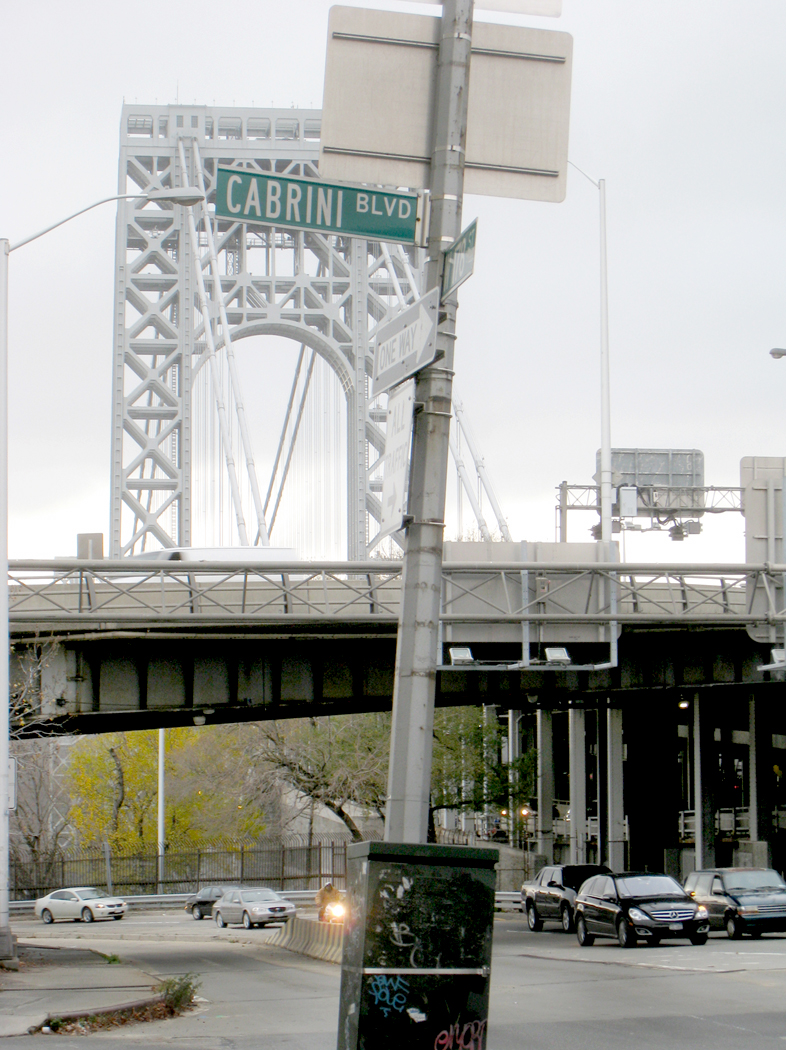
Once in Manhattan, you take a descending spiral walkway down to Cabrini Boulevard and walk up 178th Street toward the bus terminal, which was designed by Pier Luigi Nervi and opened in 1962.

cabrini blvd

From their, you catch the A-Train.

I take this walk each time I visit New York. I do this in part because it is such an invigorating hike, but it is also a pilgrimage.

My grandfather worked as an engineer during the construction of the bridge, from 1927 until his death of tuberculosis in 1930; my mother was six years old.

So although I never knew him, I feel through him a kind of inheritance, an ownership of the regal old bridge.

And like some English lord whose castle is now part of the public trust, I like sharing the experience of my bridge with others.