Archive

Tag Archives: james joyce

David Attenborough on Desert Island Discs with host Kirsty Young in 2012

One of the longest running radio shows is Desert Island Discs, which has been on the BBC since 1942. It is often said to be the second longest-running radio show after the Grand Ole Opry, which cranked up in 1925, although a few critics have discovered some obscure programs in foreign climes that may have been on longer, and there’s also the British Shipping Forecast which began in 1861, before radio was even invented, and first disseminated via telegraph before switching to radio in 1924. 

On Desert Island Discs, prominent people, whether politicians, entertainers, sports stars or academics, are asked to choose eight recordings they would take with them to the proverbial desert island, and place them in the context of their lives. Since the 1950s, they have also been asked to name a book, other than the Bible or Shakespeare, they would also take, and later still, adding on a “luxury item” they couldn’t live without. 

Nearly 4,000 episodes have been broadcast, with some predictable results. The music most often mentioned is Beethoven’s Ninth Symphony, and the luxury item most chosen is pen and paper, or “writing materials,” although Tom Hanks specifically mentioned “a Hermes 3000 manual typewriter and paper.” 

Many of the archived broadcasts can be heard from various online sources, and you can learn, for instance, that Alfred Hitchcock’s book choice was Mrs. Beeton’s Household Management, and his luxury item was “a continental railway timetable.” Some of the choices were equally eccentric. Oliver Reed wanted Winnie-the-Pooh to read and “an inflatable rubber woman.” Actress Janet Suzman wanted a “mink-lined hammock,” and Hugh Laurie asked for an encyclopedia and “a double set of throwing knives.” His long-time double-act partner Stephen Fry wanted a PG Wodehouse anthology and a “suicide pill.” 

My favorite, so far, is John Cleese, who asked for Vincent Price’s cookery book and “a life-size statue of Margaret Thatcher and a baseball bat.” 

One of the inevitable by-products of such a format is the urge to create your own list. And so, I have my own. 

I grew up in New Jersey in a family largely indifferent to music. What music there was came on TV in such variety shows as Perry Como or Dinah Shore. When I was little, there was a small portable record-player on which I played children’s songs, but I don’t count any of that. “Fire, fire, fire, raging all about. Here come the firemen to put the fire out.” 

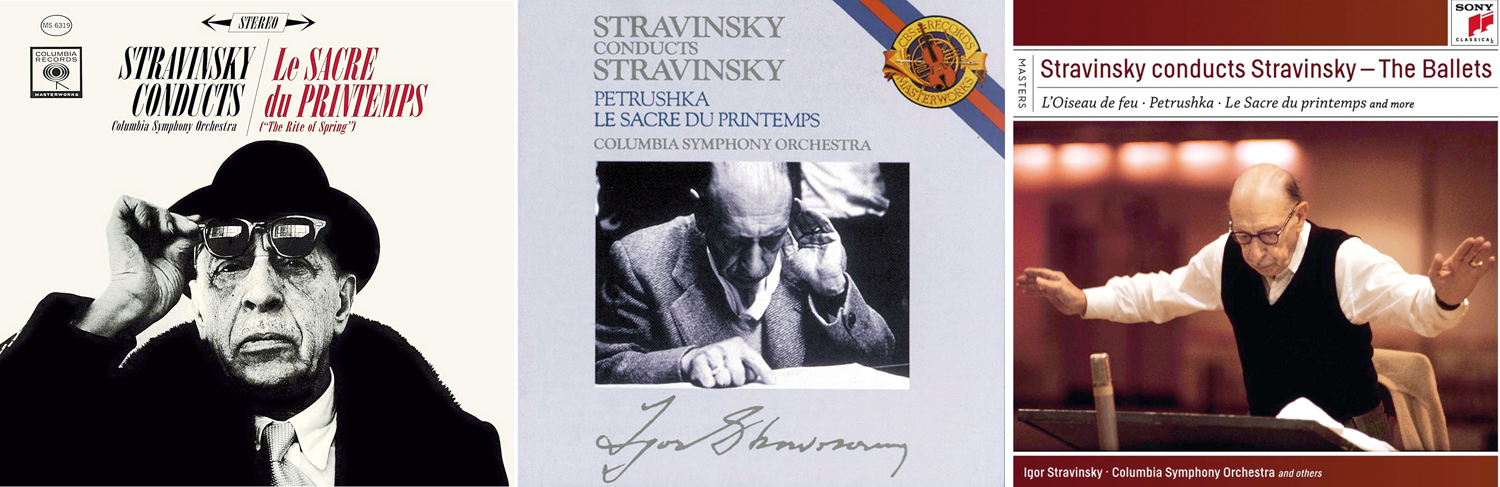
My musical education began in high school when my first serious girlfriend played music on the phonograph while we spooned on the sofa in her parents’ house. She went on to become a professional bassoonist and was studying at the time with Loren Glickman, who played the difficult opening bassoon solo on Igor Stravinsky’s recording of his Rite of Spring. I hadn’t known such music existed. It was mesmerizing. Who knew it was great make-out music? And so, that is my first choice for my desert island disc. 

There have been hundreds of other recordings of that music, and a few, perhaps, more exciting or primitive than the composer’s own, but that recording has never been out of print and comes in many versions, from LP to 8-Track to CD and now, streaming. As an introduction to classical music, I could hardly have done better — dive into the deep end. 

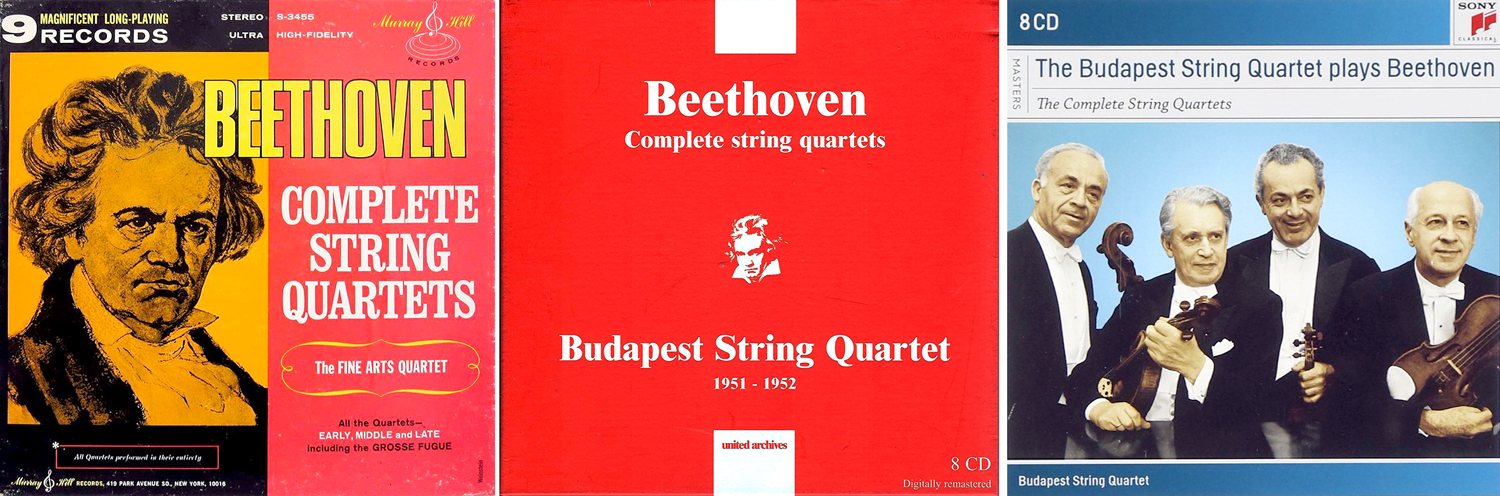
When I got to college in North Carolina, I made the acquaintance of Alexander Barker, who has remained my best friend for 60 years. He was as enthusiastic about classical music as I was and we spent hours in our dorm rooms spinning LPs and introducing each other to music that was our favorites. We were, of course, very serious about great music, as only college students can be, but we knew Beethoven’s string quartets were as serious as you could get. I bought a budget-line set of the quartets, by the Fine Arts Quartet on the off-brand Murray Hill label, and one evening, we started with Opus 18, No. 1 and played through all 16 of them, plus the Grosse Fuge, in one marathon session. (We later attempted the same thing with the piano sonatas, but gave up in exhaustion and the need for sleep by the time we hit the Hammerklavier.)

I have not been able to find a CD version of the Fine Arts Quartet set, but I found much better-played versions later on. I have owned a half-dozen or so complete sets of the Beethoven quartets, and as many of just the late quartets, but on the desert island, I would take the original mono versions by the Budapest String Quartet. They redid them later in stereo, but I like the earlier set better. I could have chosen the Guarneri, or the Tokyo or the Emerson, but I still think the Budapest have the measure of them best.

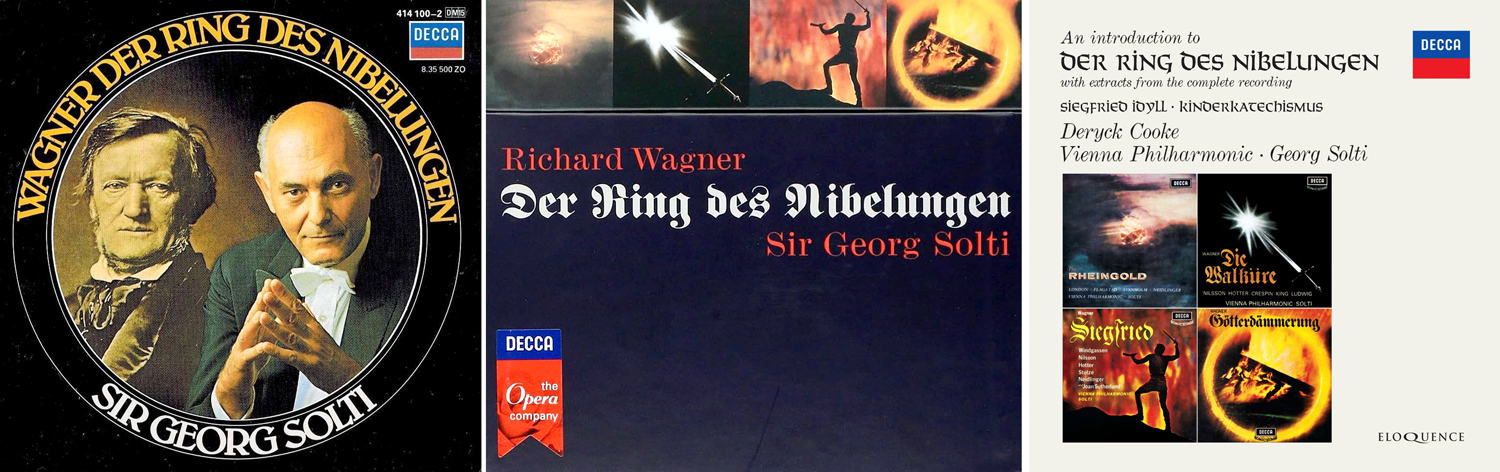
If you have the earnest seriousness of youth, you will eventually get into Wagner. After college and after a failed first marriage, I was living in North Carolina with my favorite redhead, scratching by on subsistence jobs, and I managed to save enough money to finally buy the Solti Ring. Something like 16 hours of music subsuming four operas, it opened up a world of myth and raw musical power. Now in retirement, I own five Ring cycles on CD and another two on DVD. And I’ve attended two complete live Ring cycles (not a patch on my late friend Dimitri Drobatschewsky, who went to Bayreuth 16 times beginning just after World War II.) But the Solti Ring of the Nibelungs is still my go-to set. And with it, I must also take the Deryck Cooke explication of the cycle, An Introduction to “Der Ring des Nibelungen.” Can’t have one without the other; they’re a set.

When the redhead and I split up, after seven years, I moved to Seattle and began working at the zoo, where I met a zookeeper whose hair was as blond as the sun. I fell. She had been a professional swing dancer at one time, and she played me old swing records on her Wurlitzer jukebox, which she had at her home. I had a whole new universe of music to learn about. But the one who stuck was the jazz musician closest to writing classical music, Duke Ellington. 

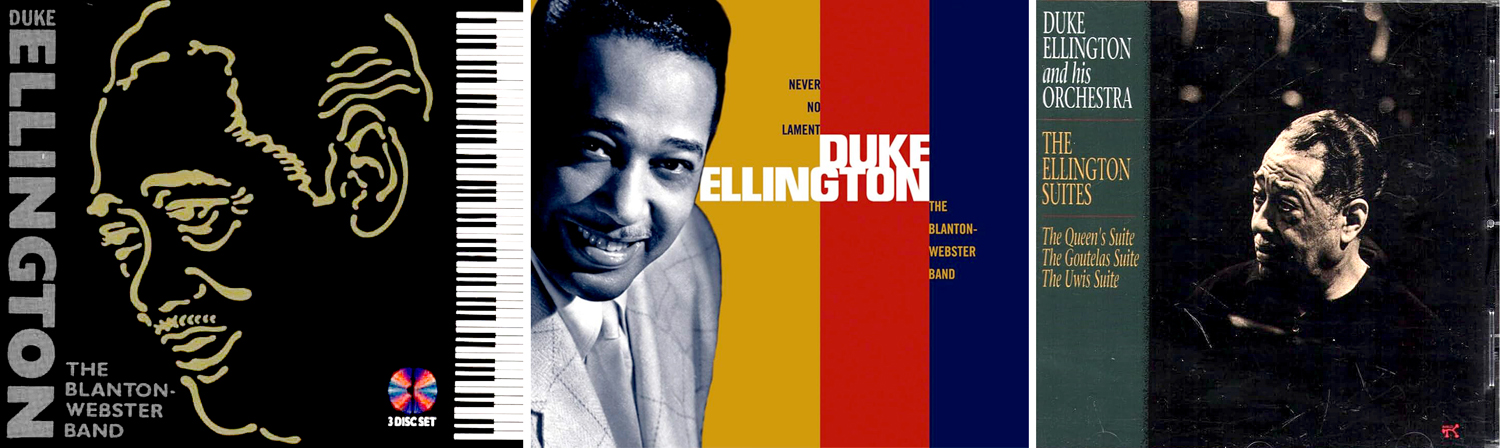
I still have about 50 CDs of Ellington’s recordings. There are counted several epochs of Ellington’s career, beginning with the “jungle music” of the 1920s and going through his rebirth at the Newport Jazz Festival in 1956. But most count the high point of his band and music to be those years in the early 1940s when Ben Webster was his tenor sax man and Jimmie Blanton was his string bass player. A collection of their recordings has been issued several times as “The Blanton-Webster Band.” It was the era of Take the A Train, Ko-Ko, Harlem Airshaft, and Perdido

But then, neither can I do without The Queen’s Suite, which he wrote with Billy Strayhorn in 1971, and is his most completely classically composed work. I love it. And so, I’m adding it to my Ellington entry. 

The zookeeper dumped me and I moved back to North Carolina. A few years later, I met Carole, who I married and lived with for 35 years, until her death in 2017. Marriage humanized me, and the most human composer is Mozart and the most humanistic of conductors was Bruno Walter. It was the the last years of the LP era, in 1980, and before digital took over, I found the last six symphonies of Mozart played by Walter and the Columbia Symphony Orchestra (a pickup ensemble, mostly of musicians from the New York Philharmonic). 

Walter’s Mozart remains the most humane and beautiful version of these works, which are now buried under historical-performance rhetoric and bounce along at a jog-trot, mechanistic pace. But one can still find the echt-Mozart, songful, emotional, and velvety rich, under Walter’s baton. Like all of my choices for the desert island, it has never been out of print. 

Carole and I moved to Arizona in 1987, where she took up teaching art to elementary pupils, and I began writing for The Arizona Republic as its art critic (later also its classical music critic). 

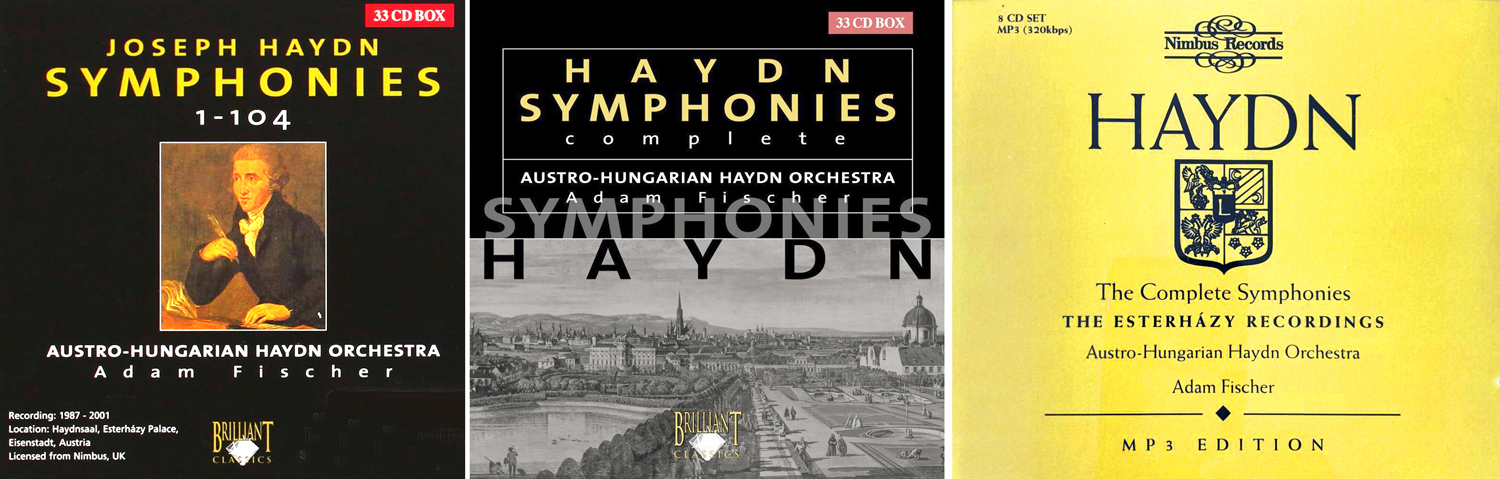
When we moved to a house at the foot of Camelback Mountain, it was a 20 to 30 minute drive (depending on traffic) to the Republic office downtown, and I found the perfect drive-time music, playing a Haydn symphony each way. I eventually went through all 104 symphonies, driving back and forth, three times, and absorbed their spirit from the Austro-Hungarian Haydn Orchestra and Adam Fischer. They have become my go-to performers for this music. I also have the earlier Antal Dorati version, which sometimes sounds like a quick read-through, and later was sent a review copy of the Dennis Russel Davies versions on Sony, which proved to be the most utterly humorless Haydn possible and I had to give them away. How can anyone misunderstand this music so thoroughly? 

When Carole died, and I sunk into grief, from which I have never fully recovered, I found myself listening with my whole being to Brahms German Requiem. I have spent the anniversary of her death every year driving up the Blue Ridge Parkway to find an old fire road into the woods, and sit quietly to Bruno Walter’s recording of the German Requiem. It is the most sympathetic, consoling music ever written. 

On Desert Island Discs, they also ask the guests to choose the one recording, above all, which they would take if everything else were not possible. And for me that is Johann Sebastian Bach’s Passion According to Saint Matthew, a three-hour musical retelling of the last days of Jesus and his death. I am not religious. (I am so not religious, I not even an atheist.) But every note of Bach’s music speaks to me on the deepest level of humanity. The opening chorus and the ending chorus are, for me, the greatest musical utterances ever penned. I’m keeping it with me.

There are many performances, and no one really does it badly, but most recordings now have been run through the historical performance wringer and the juice has been squeezed out. This is majestic and noble music, not something from a squeeze box. And the recording left behind by Otto Klemperer is the one I listen to over and over. He’s got the measure of this music. 

That leaves us a book and a luxury. People value books for, usually, one of three reasons. Either for the information they gather, or for the stories that are told, or for the prose they are written in. I fall into the last camp. I thought about Gibbon’s Decline and Fall of the Roman Empire, which is an utter joy to read, whether you care about the factual history of Rome or not. I revel in its river of words. But I read it in short segments, ultimately filling up like a rich meal and need to wait some hours before hitting the table again. And, for all the wonderful writing, there is a sameness that can creep in. 

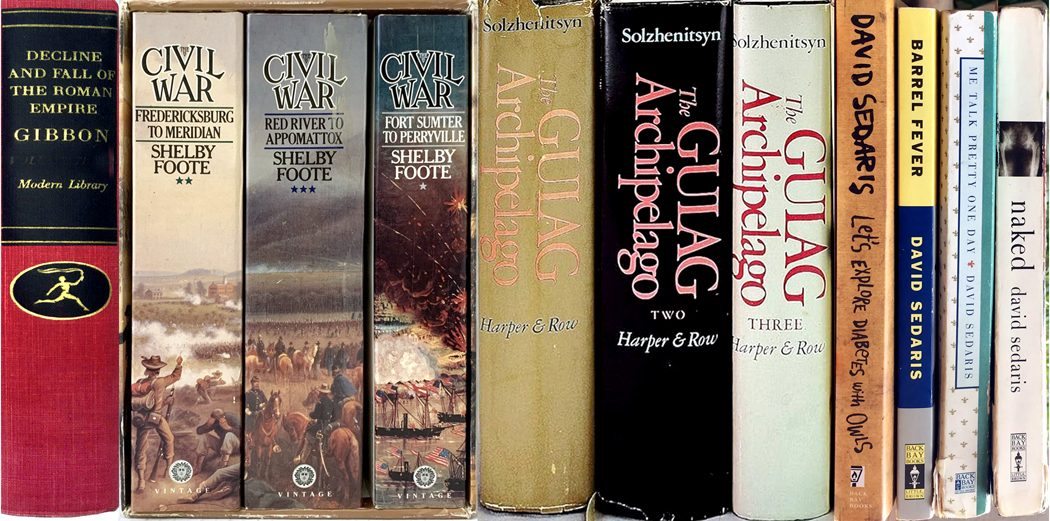
Or I might have chosen a classic that somehow I’ve missed in 77 years of life. Many on Desert Island Discs have taken Marcel Proust’s Á la Recherche du Temps Perdu. But when it comes to monster works, I already put in my time, having gotten through The Gulag Archipelago. I no longer need to prove myself. 

So, I have chosen Joyce’s Ulysses, the book I can read and re-read over and over, with such a variety of prose and method and such delicious words, that I don’t think I could ever tire of it. 

As for a luxury item, I had some difficulty coming up with something, because I am not much for luxury. But I have always owned a pear-wood handled Opinel folding knife. The current one sits in the glove compartment of the car, ready for anything called for. A man needs his tools.

Of course, the whole exercise is entirely pointless. There is no desert island, and with a house full of books, CDs, musical scores, and art, I don’t need to choose so parsimoniously. The whole idea is merely a pleasant game to play. 

But going through the process, and forcing myself to narrow the list arbitrarily, I come to see myself in a dusty mirror. And I surprise myself, looking back at me. 

We were camping at Huntington Beach in South Carolina, and I woke up before dawn and walked down to the ocean. The sky was beginning to brighten to the east and I watched for the coming sunrise. 

When the sun broke the horizon, its motion was noticeable and I watched it slowly lift from the water. But then, something happened: The sun stopped dead in its tracks and my frame of reference shifted involuntarily and instead of the sun moving up, the earth I was standing on jerked forward, as if I were coming over the top of a ferris wheel and I nearly lost my balance. It seemed the ground was moving away from under my feet, toward the immobile sun. 

At the same time, seawaves reflected the bright copper sheen and the shadowed portions of the water formed a network of glossy black, making the entire landscape before me into a shimmering enameled lattice and more, it seemed not so much to reflect the sun, but rather to be glowing from within. 

The magic lasted only a few moments and the earth stood still again and the sun began climbing once more. I felt that I had been given a chance to see how things really were — a stationary sun and a rotating earth — and the whole, with its copper and black waves, was unutterably beautiful.

Such visions are epiphanies. 

Of course, “Epiphany” means different things. In the Roman church, it is the name for the visitation of the wise men; in the Orthodox churches, it marks the baptism of Jesus and the descent of the dove; according to some early Church fathers, it marks the miracle at the wedding feast at Cana; and for Syriac Christians, it celebrates the rising light of dawn, as expressed in Luke 1:78. In all these versions, it refers to the recognition of divinity as it shines forth. 

But I take the word for its otherwise secular meanings. It is a sudden recognition of reality, or the momentary transformation of the ordinary into something strange, or the psychological state of overlaying the personal in registration with the objective world, the way you might orient a map to match the landscape in front of you. Then the two meld into a single thing. In any version, you experience a moment out of time. 

It is the word James Joyce used when referring to such experiences, usually something quite ordinary, but seen in a new, illuminating way. A theophany with no theos

In his early novel, Stephen Hero, he defined these epiphanies as “a sudden spiritual manifestation, whether in the vulgarity of speech or of gesture or in a memorable phase of the mind itself.” And he “believed that it was for the man of letters to record these epiphanies with extreme care, seeing that they themselves are the most delicate and evanescent of moments.” 

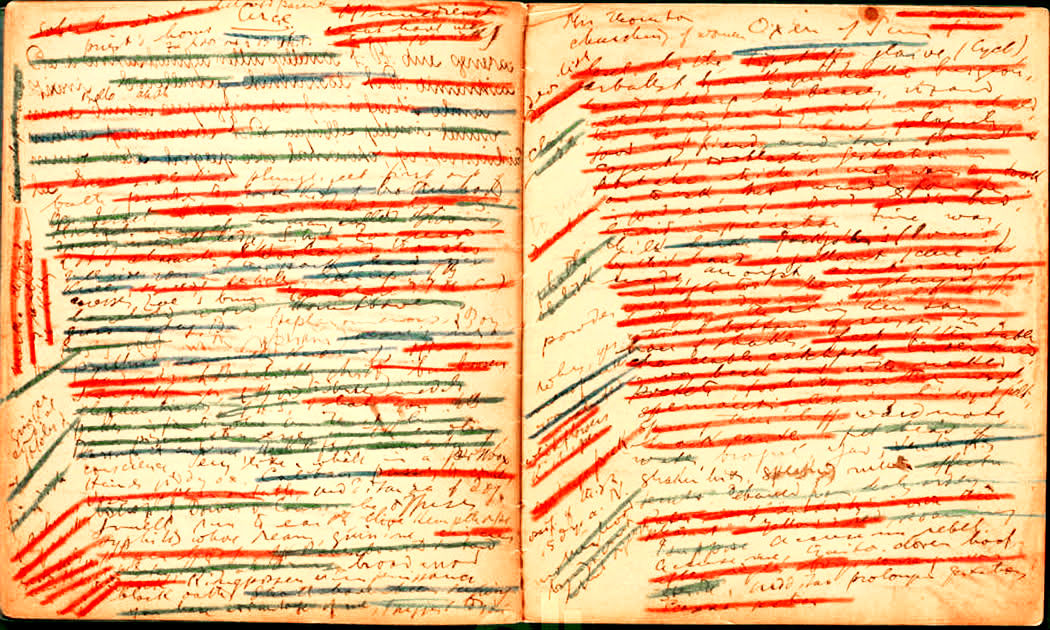
In an early manuscript, Joyce collected 22 pages of these moments he found in his own life, and used many of them later in his finished works. At one point, there were at least 71 epiphanies written down in Joyce’s own handwriting. 

Later in his career, the term grew in meaning and significance, and tends to mean moments of behavior observed or experienced that seem to metaphorically summarize some insight or contain “meaning” in some way or other. 

In ordinary usage, “meaning” is a term of translation: “This means that,” but it has another purpose: significance. An experiences doesn’t have to “mean” something that we can express in paraphrase, or take as a lesson we have learned, but can have meaning, unexplainable except in terms of itself, as when a dream feels meaningful even if you don’t know why. 

I believe we all have such moments. They tend to stick with us. I know I have had them throughout my life. The first one I can remember was at the age of four or five and driving with my family along the Palisades at night, looking across the Hudson River at the constellation of lights in the darkened Manhattan buildings. It was my first remembered experience of something I would call beauty. I couldn’t wait for the next time we visited my grandparents so I could see those lights again. 

Often we function as actors in a stage set, with the world as backdrop. Our focus is on the particular action or conversation, with the set merely happenstance; it could easily be some other set. But the epiphany is when you step back and see actor, set, words, as a single unit, all of a piece. We can live our lives barely noticing the world we walk through, except as it helps or hinders us — it is functional. But that moment comes when the boundary between us and the rest of it all evaporates and we sense ourselves as part of a whole. That instant is the epiphany and for it, time stops, even as the clock keeps moving. It is an uncanny feeling.

It feels as if you are taken out of the real world for a moment, but actually, you are dropped into it. The illusion of separateness is dispelled and you become face to face with something bigger. 

When I was about 10, my younger brother, Craig, and I thought to follow the brook that ran through our property in New Jersey, through the woods behind the house, to see where it went. It ended as it fed into the Hackensack River. We then followed the river to the Oradell Reservoir and followed the railroad tracks. We were crossing a little bridge when a train arrived and we ducked under the bridge, sitting on the concrete abutment  not more than a couple of feet from the screaming wheels of the train as it passed over. Time may have stopped, but the train didn’t. It was thrilling. It was untameably real. 

In high school, I spent one summer vacation in Europe, crossing over the Atlantic on a steamship. After days of faceless unchanging ocean horizon, one  night came when on deck I looked out and saw pinpricks of light in the darkness, maybe 8 or ten miles away. It was the Orkney Islands and I was dumbstruck at their remoteness. They were ghostly lights strung out along the horizon in a seemingly infinite blackness. They seemed unmoored to this now. 

There is often sense of the uncanny, of something we don’t quite see, but feel it is there. 

On night, I was driving up the Big Sur, between San Luis Obispo and Monterey. With the sun finally below the horizon, it was completely black, but with grades of black showing in front of me. The blackest black is rock, rising in cliffs to the right side of the road. The glossiest black was the ocean on the left below. As I whipped along the road with my up-beams gleaming back at me from the reflectors on the road stripe, I could occasionally see a flash of light in the corner of my eye. When I looked, there is nothing, but when I turned back to the road, it flashed again. But there seemed to be something riding beside my car. I called it the “God of the Nighttime Highway.” 

It turned out to be my own running lights reflecting off the guard rail at the edge of the road. But for 10 minutes or so, until I figured it out, the experience was eerie and I almost believed in a spirit world that I don’t believe in. 

I imagine it must be episodes like this that gave rise to the myths and folklores of the ancients. The experience feels so real, it must be real. 

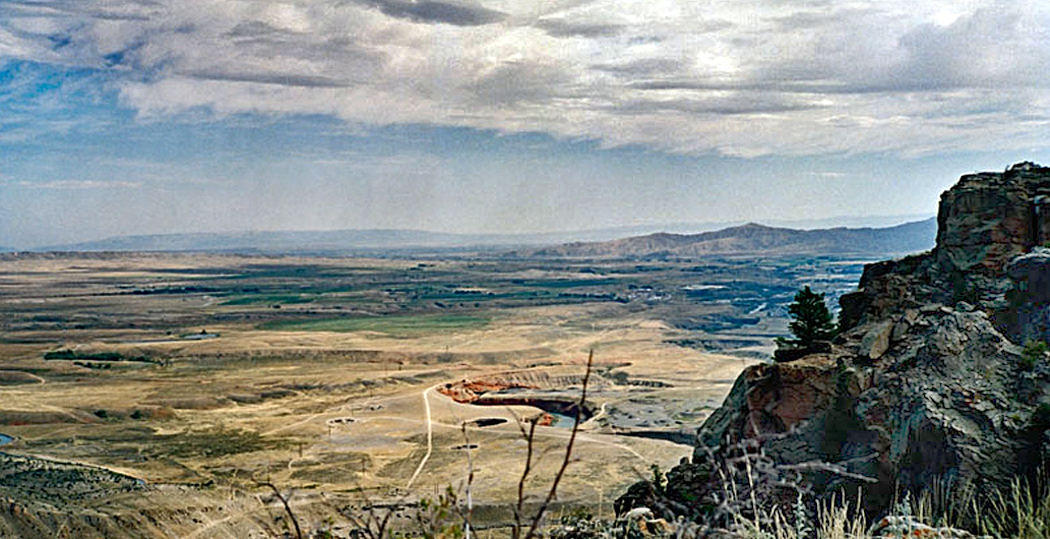
And these epiphanies are not especially rare. I’ve had many in my life. My wife and I had left Yellowstone National Park early on a gray, rainy day, driving eastward on the North Fork Highway through Wyoming’s Shoshone Canyon. At the canyon’s mouth the land broadened out and dipped down into vast plains with the Buffalo Bill Reservoir in the distance. We had just turned on the radio and the skies suddenly parted and the scene before us was drenched in sunlight just as the radio began pouring out the early morning sign-on music of “America the Beautiful,” and the Mormon Tabernacle Choir sang, “Oh beautiful for spacious skies and amber waves of grain…” And there it was, before us, just as in the song, and we had to laugh, but also we had to recognize the emotional power of what we were seeing. 

Once, camping at the Outer Banks with my friend Sandro, we walked along the beach at Hatteras Point at night, carrying a Coleman lantern. The air was so humid that it was on the edge of becoming fog. And the light we carried threw our shadows up into the sky, among the stars, and we could see we were giants. 

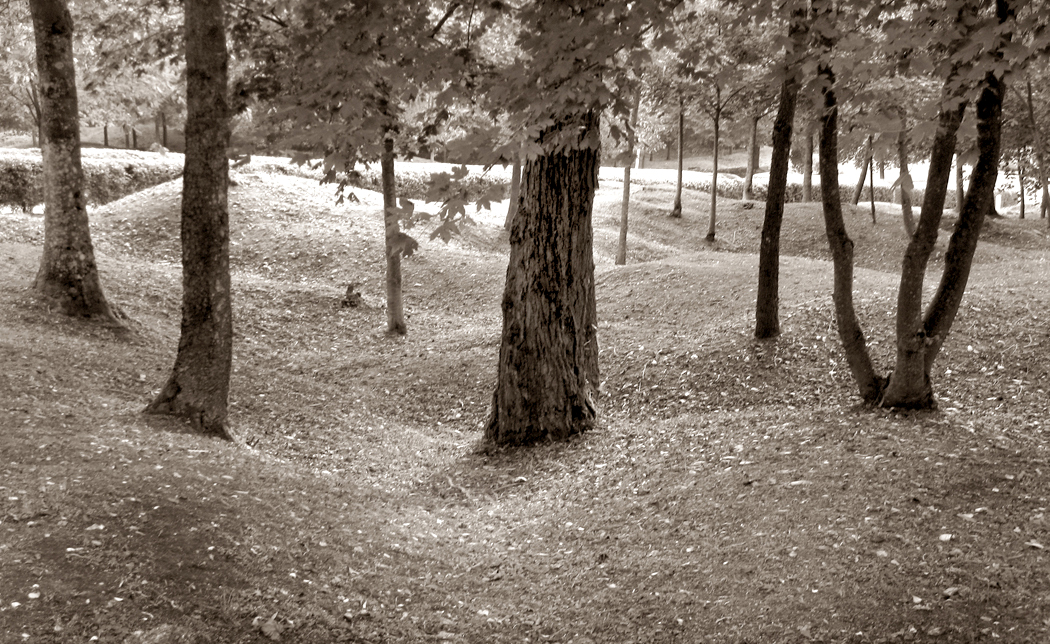
Or, visiting Verdun in France, my wife and I drove through the old World War I battlefields that had been blasted into moonscape by artillery fire, but now had grown back into woodlands. But there, between the tree trunks, the shell craters were still there, pock-marking the ground nearly a hundred years later. 

I’ve had that strange recognition many times when visiting old battle sites — as if the past is always present. I’ve had it at Antietam, at the Little Bighorn, at Shiloh, at the Normandy beaches, at Wounded Knee, at Appomattox. The epiphany that breaks through isn’t just history as you read it in books, but rather the persistence of events: that what once happened is still happening; wave ripples running out through time. 

I once spent the night alone on the North Rim of the Grand Canyon in Arizona. My campsite was a good 30 miles from any other human being and the sky was darker than any I had seen before or since and the stars were spilled like beach sand across the expanse, with the Milky Way splitting the dome in two. About 3 in the morning, I woke up, left the tent and sat on the hood of my car, staring up at the infinity. I stared for maybe 20 minutes or a half hour, and a kind of hypnosis took over and I no longer felt like I was on my back staring up, but rather as if I were at the forward point of a planet racing through infinite space toward those stars. The planet was at my back, and I could almost feel the wind on my face as this planetary vehicle was racing forward toward the lights. 

And, of course, this is exactly what was happening. The ordinary sense of terra firma under a wide sky is the illusion. The recognition of a giant ball of earth and water raging through an infinite void is the reality. Sometimes we see it that way. 

And that is the epiphany. 

If you’re reading this, and read blogs, it suggests you are a reader, and probably love books as much as I do. In fact, you may be a bookaholic, or have gone over the edge to become a bibliopath. Books are a central foundation of who I am, who I used to be and who I am still becaming. How can it be otherwise for anyone with a pennyweight of curiosity about people and about the world? 

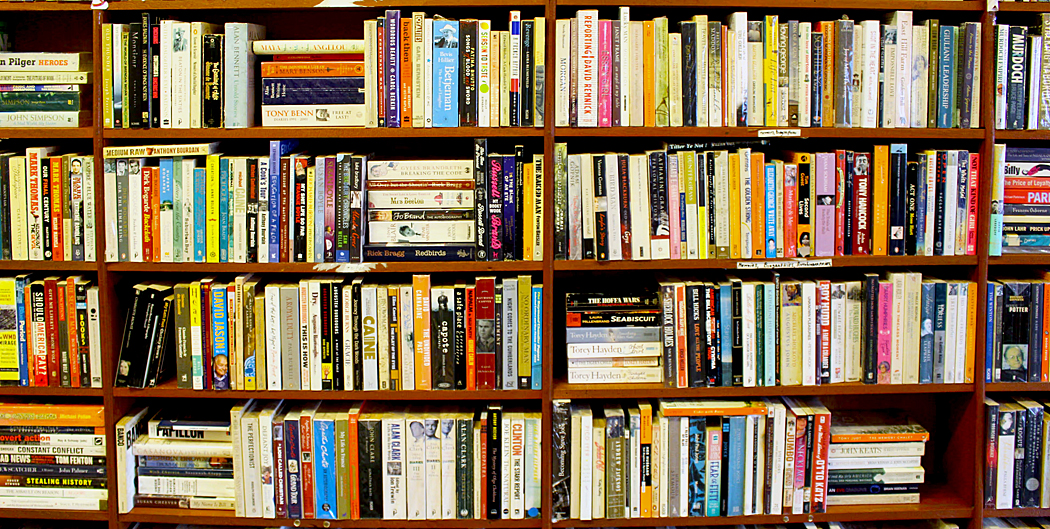
I’ve written about books in my life in many blog entries, and one of the most often-read is the piece I posted on Oct. 10, 2020, called “Shelf life,” in which I chose a single rung of a bookshelf in the house and discussed all the volumes resting on it. We are, at least in part, what we read: The books become internalized. And so, as I wrote then, I wanted: “to search for myself among my books.” I decided to take a single shelf from a single bookcase, “to see if they were in any way a mirror in which I could discover my own physiognomy.”

I didn’t want to pick a neatly organized shelf, but one where books were randomly scattered, left uncatalogued after casually unpacking after a move, or after re-reading, or just was too lazy to put back where it made sense. The bookcase next to the bed seemed the proper choice. 

And so, I thought I might do so a second time. I looked at the shelf above the one I wrote about and it also seemed to be a mirror: That was me, there, in those pages, however jumbled it seemed to be. 

What surprised me the most was how many of these books have been with me for most of my life — books I read when young that still take up space in my brain and on my shelf. And also how many were only recently bought and opened. 

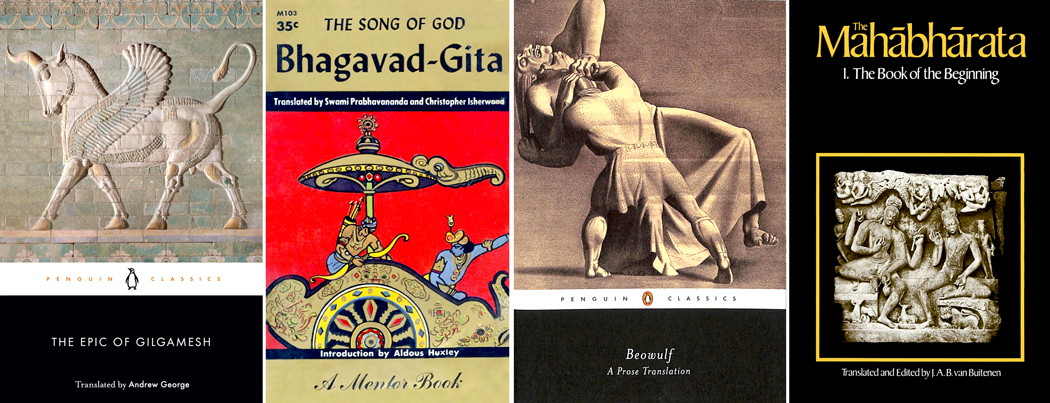
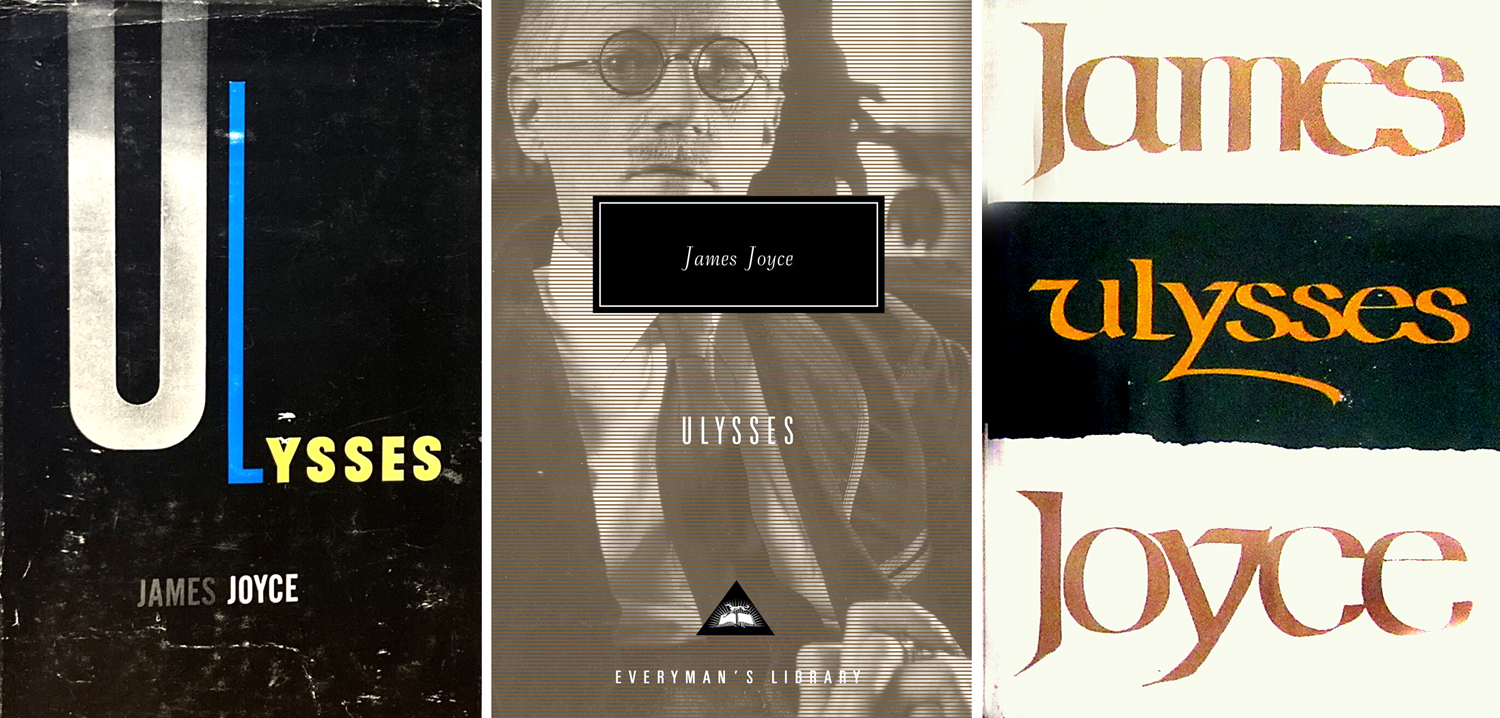
I should start with the three matched volumes at the right of the shelf: James Joyce’s Dubliners, Portrait of the Artist as a Young Man, and Ulysses. This handsome set replaced the many earlier versions I have owned in various editions. (I still have at least four other Ulysses on various shelves in the house, including a very special cheapie pirated paperback printed by Collectors Publications, a publisher most known for printing porn — which I suppose Ulysses was thought of when this version was published — ads at the back of the book offer The Incestual Triangle, Four Way Swappers, and All Male Nudes, among other things.)

I first read Portrait of the Artist when I was in eighth grade, in the dark green paperback Viking Compass Book edition. I’m not sure how much I could have comprehended reading it at the age of 13, but I knew I loved the way the words looked and sounded: “Once upon a time and a very good time it was there was a moocow coming down along the road and this moocow that was coming down along the road met a nicens little boy named baby tuckoo …” There was the mud of the rugby field, the great hellfire of the sermon, and the “forged in the smithy of my soul.” 

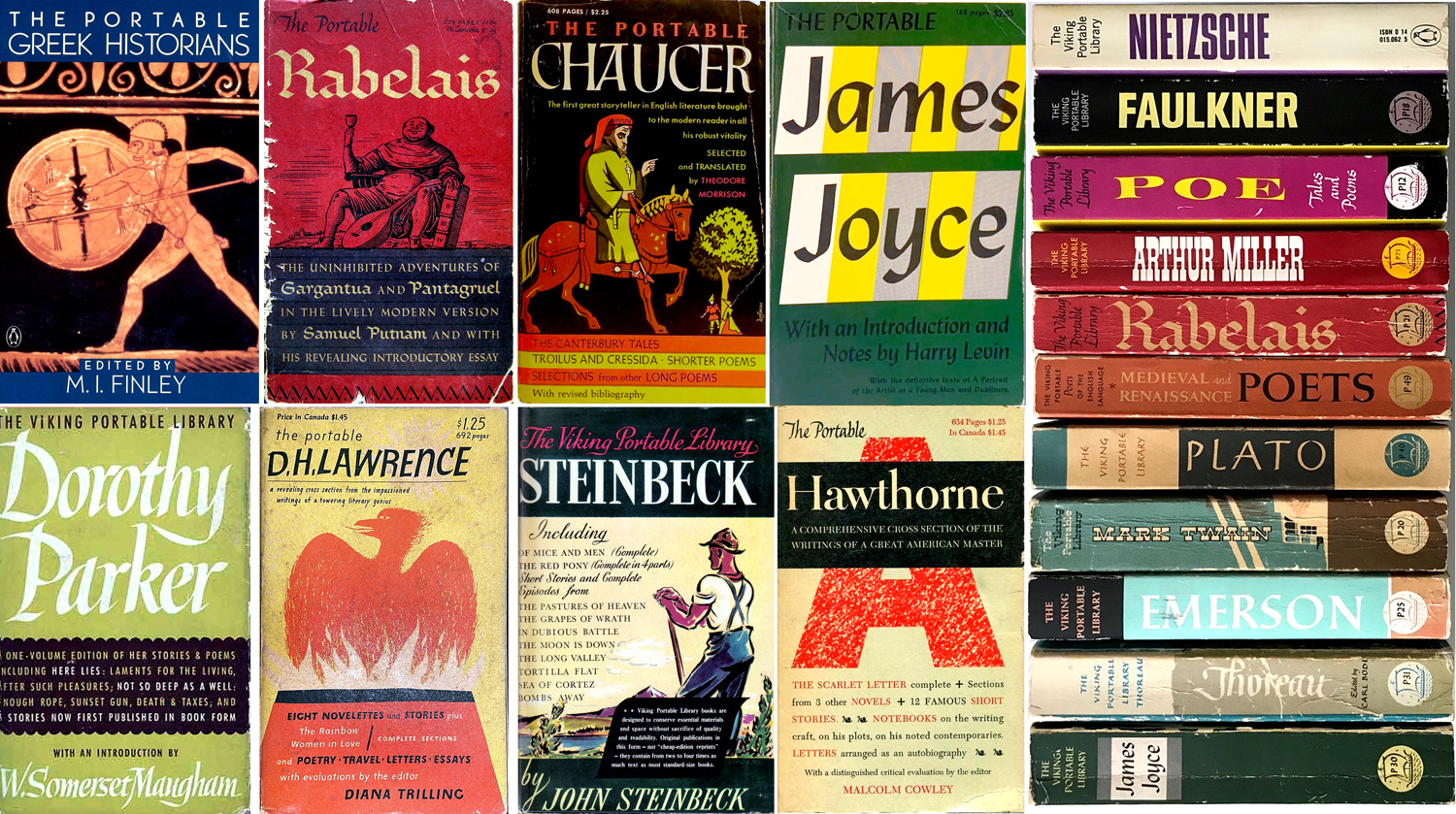
I reread the book every four or five years, and every time, it hits the spot. In the habit readers always have, I soon jumped on all the other Joyce I could find. I bought a copy of Viking’s A Portable James Joyce, and have given up or lost several versions over the years, but still have one, a hardcover one, now in a library binding — in fact, it sits on a lower shelf of this selfsame bookcase I’m writing about. I tackled the play, the poetry, Stephen Hero, the essays — even Finnegan, although, at the age of 76, I am still defeated by the whirl of the whorl of the world of Finnegan. I will leave it to the next life. 

Ulysses was a harder nut to crack after Dubliners, when I was a scrub-faced kid; Ulysses problems were verbal; Dubliners was harder to understand because of the complexity of the human emotions written about. You have to have some life pushing behind you to grasp the complexities of human experience and emotions written about in those short stories. As a teenager, I knew pimples better than I knew people. I re-read Dubliners last year and was blown away, especially by the final “The Dead.” It broke my heart.

Ulysses I did get into years later, and it is now my favorite novel of all, although, to be fair, I don’t always read it cover to cover, but rather, read again and again the bits that I most love. It astounds me: It is filled with some of the most beautiful prose I have ever encountered. No, I take that back: The most beautiful prose. 

Next to Joyce on the shelf is James Michener: Tales of the South Pacific, and Return to Paradise. I remember, in my 30s and still something of a snob, looking down my nose at Michener as a best-selling author of doorstop bricks. But one day, in a book store, I picked up a copy of Tales and thought I would read a page, maybe two, to catch the flavor of Michener’s prose. It was 30 pages later I was standing there ready to flip the next page. This was a special kind of talent: to make you need to find out “what happens next.” 

The prose was simply not the point. It was invisible; you read through the words as if looking through glass. This was story-telling, and Michener really has a value I had failed to understand. I’m not saying he didn’t eventually turn into an industrial manufactory, but in his first book, he made magic. It was also nothing like the South Pacific musical I had expected. Rather it gave me a real sense of what the war in the Pacific must have been like for those who experienced it. 

A few years ago, after re-reading it, I found a copy of its sequel, Return to Paradise. I got through a few of the stories, maybe a third of the way in, but lost interest. The magic had gone. It was OK — it wasn’t just junk — but it didn’t grab me the way the first book did. It was more like a book of short stories that a short story writer might write. Something, perhaps, that a publisher might request after a best-seller. The two sit together on the shelf nonetheless. 

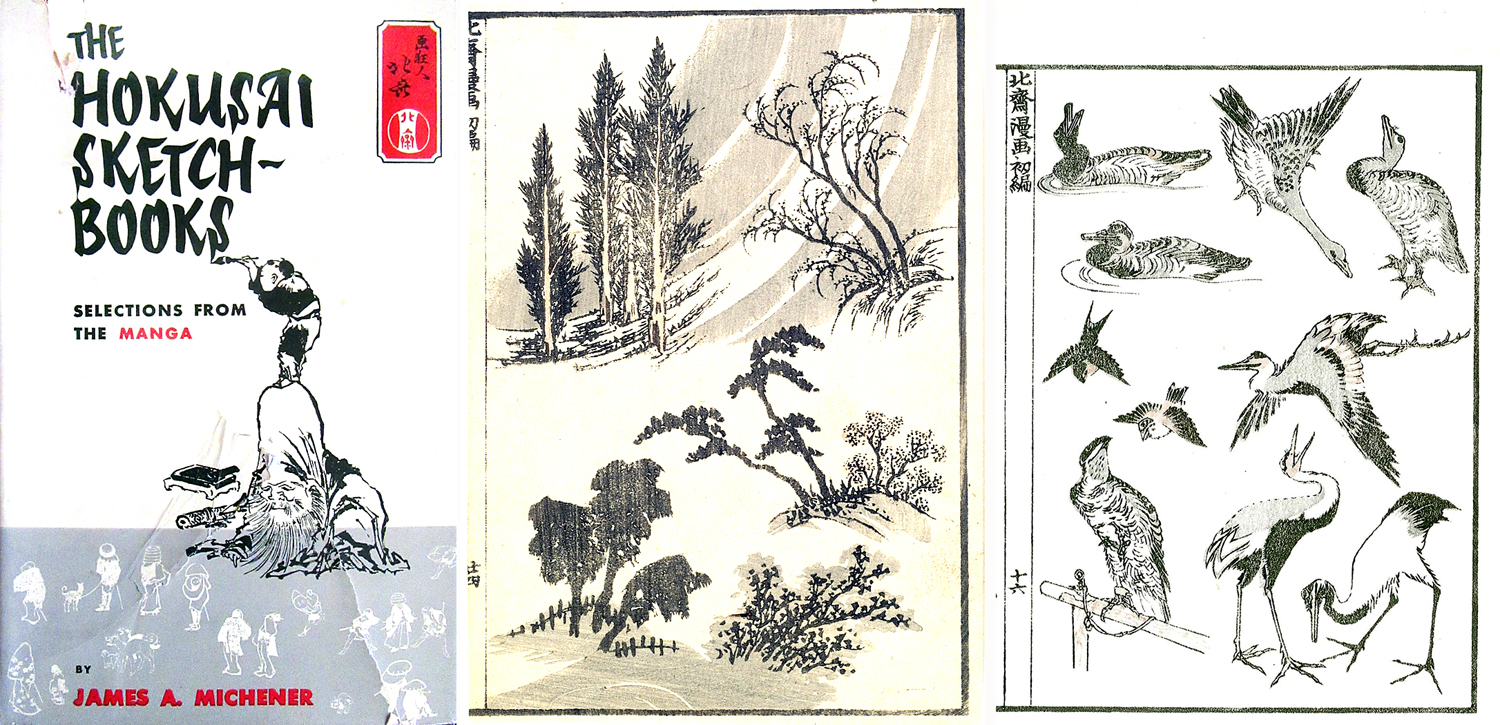
I’m going out of sequence on the shelf to mention the other Michener book sitting there. In 1958, Michener published The Hokusai Sketch-Books: Selections from the Manga. Hokusai, of course, was the famous Japanese 18th-19th century artist. In 1814, he published a multi-volume sketchbook, called manga, in which he drew everything he saw in the world around him: people, plants, animals, ghosts, architecture. It was an encyclopedic venture. Michener selected enough of these drawings to fill out a thick book. I have owned it since college. It is one of my holy-of-holies. 

From high-school days, I was fascinated with all things Asian; I read books on Zen Buddhism, listened to Noh Plays, took my girlfriend to restaurants with hibachis. There were Kurosawa movies and sumi ink paintings, which I attempted with my own shizuri and brush. 

The non-Western way of looking at the world opened my world view and I have been looking beyond the horizon ever since. 

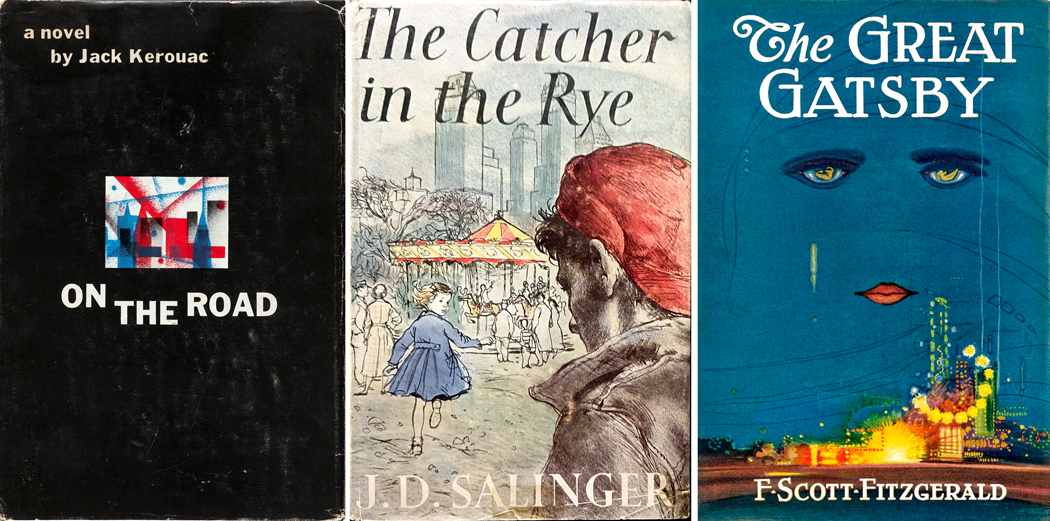
Next on the shelf some The Great Gatsby and nothing proves how little youth knows, than what I made of the book — or didn’t make of it — when I was required to read it in eighth grade. I never then figured out who this Gatsby guy was; I thought the book was about Nick Carraway; and what the heck was all that about green light? 

It’s not that I didn’t enjoy the book then, but that I had no clue about its depths. I bought an excellent edition three years ago and reread it for maybe the third or fourth time and loved every second of it. It is a deep, rich book, with prose that is delectable. 

I believe for most young readers with a ripe curiosity, we tend to want to read beyond our abilities. We believe, as teenagers, we are grown-ups and want to partake of the adult world. And so we — and I — took to reading much that we had no business attempting. I read Saul Bellow, Henry Miller, John Updike, Jack Kerouac, Thomas Pynchon, James Purdy — a whole host of writers that I thought proved I was now in the company of the heavyweights. 

And among those books was Jean Paul Sartre’s The Words, his autobiography. I knew he was an existentialist and that all the most intellectual people (this was the mid-1960s) were hot on existentialism. Not that I knew what that meant (I’m not sure anyone really does — it encompasses so many different things, but back then, it pretty much meant berets and espresso). But I read it, enjoyed it, thought I understood it, and flashed a few words around to let anyone know. I got a subscription to Les Temps Moderne, although I couldn’t read French (and also a subscription to The Evergreen Review — I was one hip 16-year-old). I re-read Les Mots last year and it’s a fine enough autobiography, but not exactly world-shaking. 

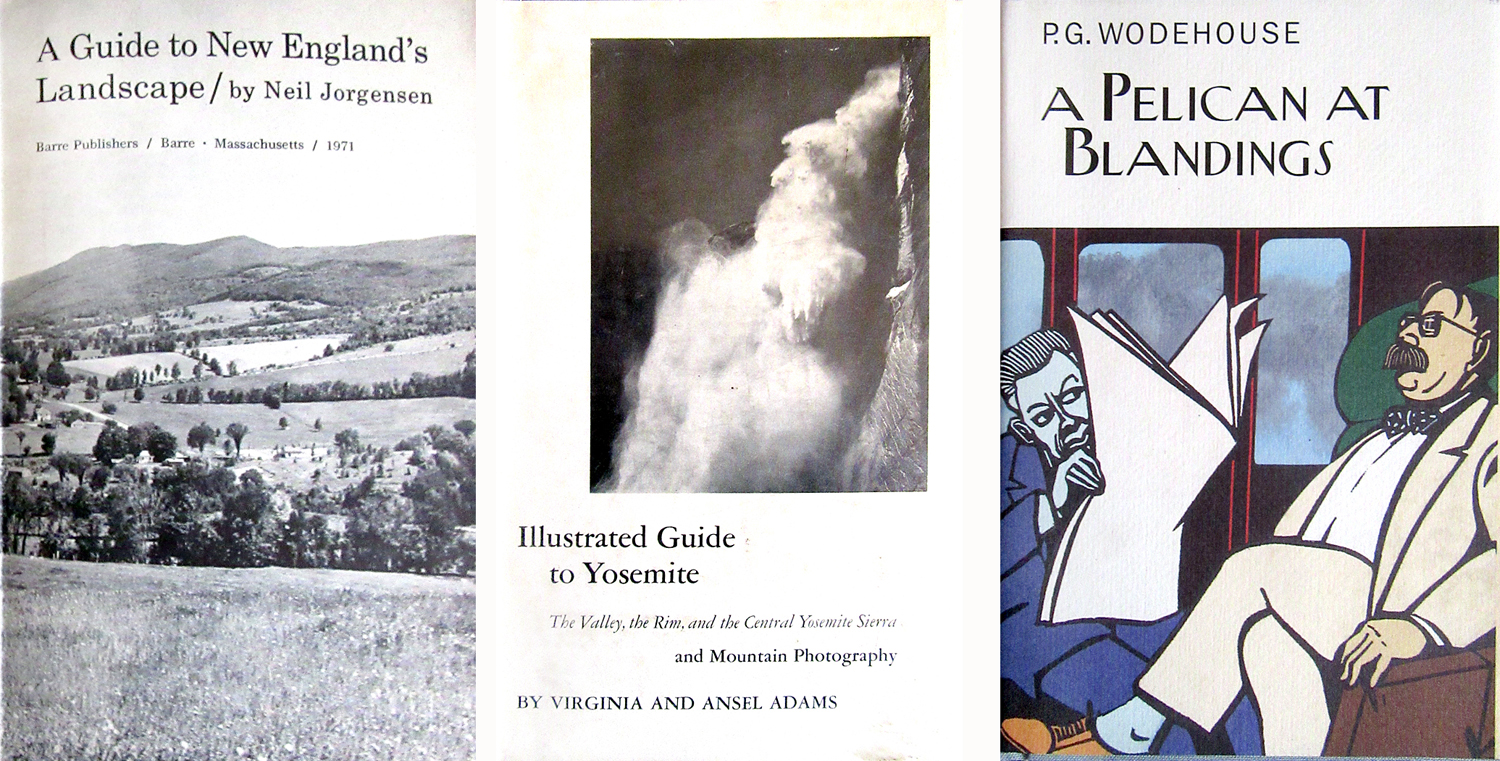
Getting back on track along the bookshelf: In the 1970s, I was living with a redhead and we wanted to travel. We hiked a good portion of the Appalachian Trail, and drove, amongst other destinations, to Maine and New England. I was fascinated by geology and I had a book by Neil Jorgensen called A Guide to New England’s Landscape. I had by then, an interest in all things under the heading of “Nature.” I had a raft of Peterson Guides, could name dozens of plants and birds by their scientific names (“Know-atia Dudiflorum,” my wife teased me), collected rock samples, and could name dozens of constellations in the night sky. 

The Jorgensen book accompanied us as we drove past monadnocks and till, varved clays and drumlins. I admit I haven’t read the book since then, but I still have it, as a memento of meaningful times.

I was by then active a photographer, and so I had another guidebook: Illustrated Guide to Yosemite, by Ansel Adams and his wife, Virginia Best Adams. I so wanted to visit Yosemite, but never had at those years the time or money for such a long trip. The book is loaded with Adams images, and so, it functioned more as a picture book than a useful guide. It was only many years later that my wife and I drove up the east slope of the Sierra Nevada along the Tioga Road and got to see the stunning Valley. The book is another that I’ve owned for 50 years and is a piece of me. 

If I could choose to write like anyone, it would be James Joyce, but if I couldn’t have that, I would want to write like P.G. Wodehouse. He is magic with words, although of a more comic variety. I have bunches of Wodehouse lying around, but three years ago, I bought a new edition of A Pelican at Blandings, mostly because these new hardback versions, by Overlook Press, were so seductively handsome. If I had the money, I would buy all the volumes in this set, but this one will have to do. 

All the Blandings books are a hoot. He may be most famous for his Jeeves stories, but I like Lord Emsworth and his pig and his sister Connie, just as much as Jeeves and Wooster. This is the kind of book I read when I just want to have fun. 

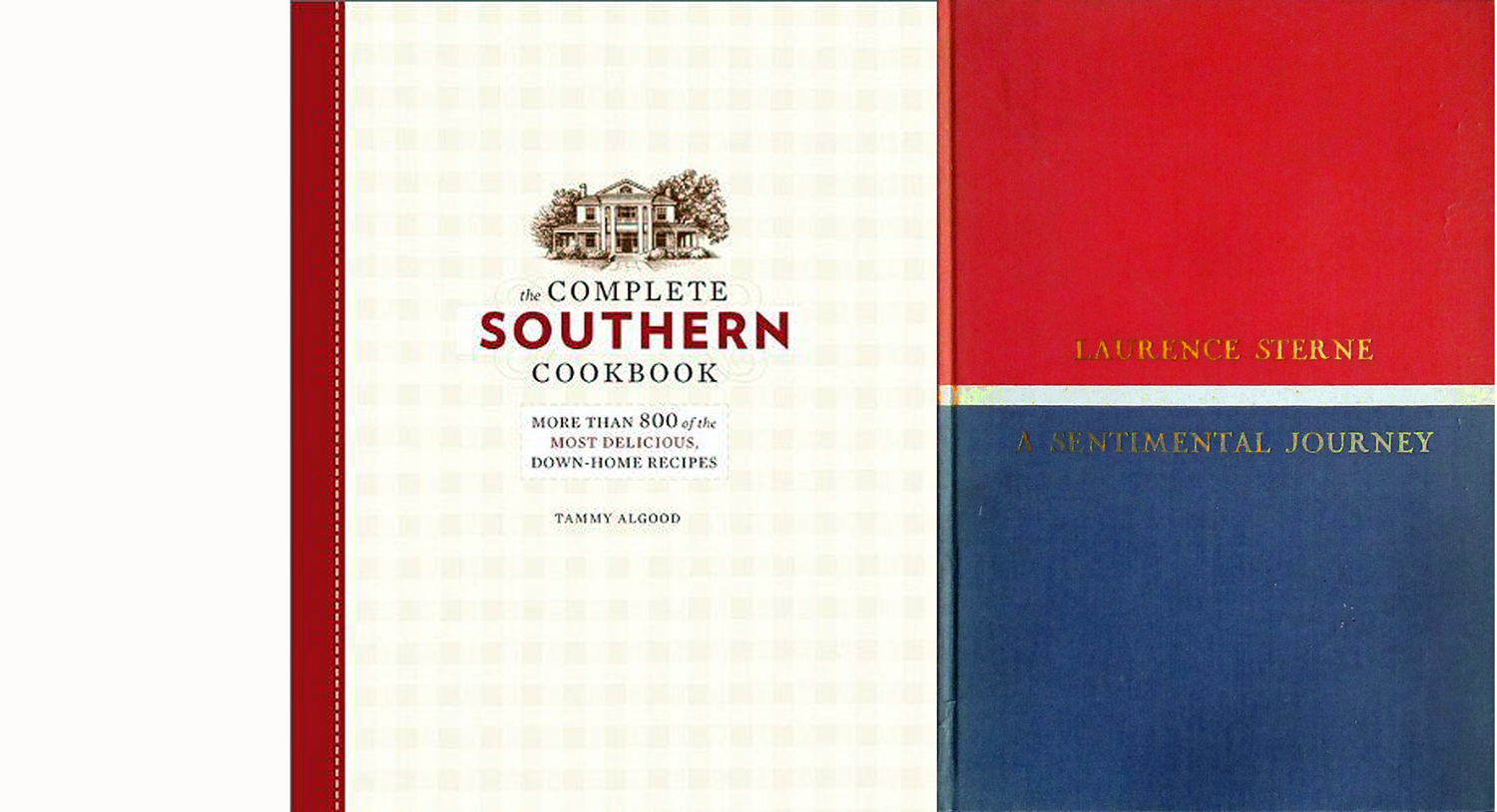
The Complete Southern Cookbook, by Tammy Algood is not one I bought. It was a gift from my daughter. I seldom use cookbooks. And when I do want one to check on some Southern specialty, I head for the old standby, Henrietta Dull’s Southern Cooking, originally published in 1928. 

I was born in New Jersey, but left there when I was 17. I’ve lived in four corners of the country, with 25 years in Arizona, and a year in Seattle, but the longest soujourn has been in the South, in North Carolina and Virginia, where my years add up to 33. I feel like an adopted Southerner. 

And while I still miss the foods I grew up with, such as a good pastrami on rye, real pizza, or a kaiser roll, I have to admit that I’ve come to love those things a Yankee will never understand, like greens, pulled pork, or fried okra. I count on Mrs. Dull for those (although, to be honest, no one uses a recipe for such things). 

The funniest book I have ever read is Laurence Sterne’s Life and Opinions of Tristram Shandy, Gentleman. It is one of the few I find myself actually laughing out loud at. So, thought I, perhaps his other book, A Sentimental Journey, must we worth looking into. It is much more straightforward, less surreal, and while it has its moments, doesn’t quite catch fire for me. The edition I have is however quite handsome to look at. 

The next two books are by Jean Renoir. Renoir is probably my favorite filmmaker. His films are so genuinely humane and wise. Nick Carraway, from Gatsby, relays that his father gave him advice to live by: “Remember that not everyone has had the advantages you have had.” That’s all well and fine, but the words that most illuminate my life are from Renoir’s Rules of the Game, when Octave, played by Renoir himself, says “The awful thing about life is this: Everybody has their reasons.” It isn’t usually malice or conspiracy that mucks things up, but rather, “Everybody has their reasons.” You learn to be less judgmental from that. 

He wrote about his work in My Life and My Films, from 1974. It is filled with anecdotes and pictures, and the quiet acceptance that is the core of his being. But even better is the biography he wrote about his father, Renoir. I was never a big fan of Pierre-Auguste Renoir. I find his paintings a little blowsy. He is the least of the major Impressionists. But, as his son writes about him, he comes off as one of the kindest, sweetest, most understanding and generous of men. I came to love old Pierre-Auguste not through his art, but through his biography. 

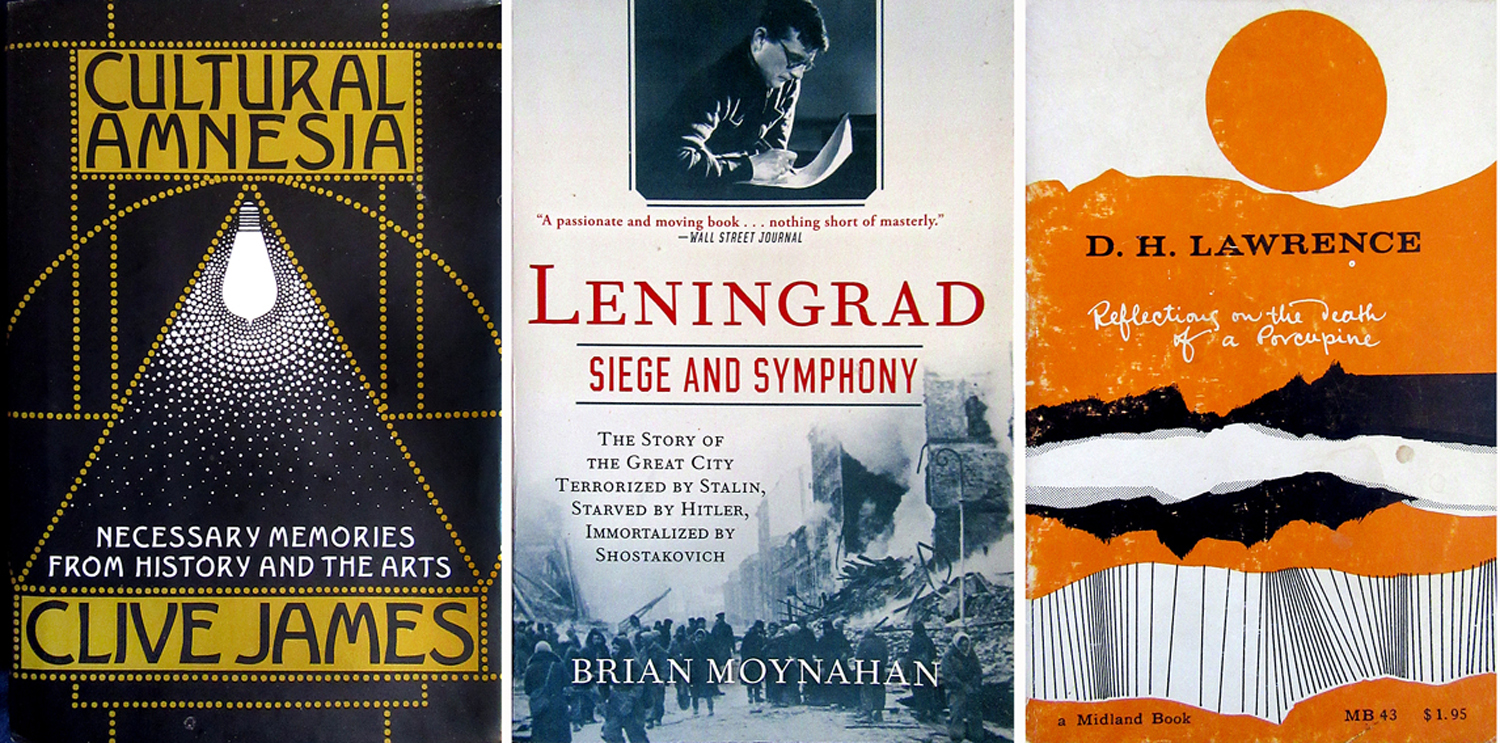
I said we readers have a tendency to find authors we like and then plow through the whole corpus willy-nilly. About five years ago, I came across Clive James, the late Australian-English writer and critic. I tore through everything, including his poetry. And when I found his book Cultural Amnesia, I couldn’t stop myself. Subtitled Necessary Memories from History and the Arts, it makes the case that too much important history has been forgotten, ignored, or misrepresented, and that if we need an understanding of the past to navigate the future, then the men and women he writes about in this book, deserve to be remembered. 

He writes about more than a hundred of them, in alphabetic order from Anna Akhmatova to Stephan Zweig. Some are hardly obscure, like Charlie Chaplin or Leo Tolstoy, but he brings to mind aspects that may have more cultural impact than you might remember, or other facets to their work. 

I love the grim joy of Dimitri Shostakovich; his music speaks volumes about misery and dictatorship. His Seventh Symphony, the “Leningrad Symphony” was partly written and later first performed in that city during the 900-day siege by the German Wehrmacht during World War II. It is a sprawling work, lasting well over an hour, and its first movement has a grinding passacaglia representing the jackboots of oppression. 

My wife gave me a copy of Leningrad: Siege and Symphony, subtitled “The Story of the Great City Terrorized by Stalin, Starved by Hitler, Immortalized by Shostakovich,” by Brian Moynahan. Its well-researched 500 pages cover everything one needs to know about the siege, the horrors, and its legacy. But, I confess, I have not read it. It sits there on the shelf, waiting. But I really feel I am told everything I need to by the music itself. 

I went through a D.H. Lawrence period, where I read everything I could get my hands on. But not the novels or short stories. For some reason, they never much appealed to me. But his essays and travel writing, and his poetry, I adored. It’s the best travel writing I know, partly because it isn’t the usual version of the kind, but his personal, very idiosyncratic way of looking at the world. 

Reflections on the Death of a Porcupine is an anthology of seven of his essays, including the title piece, which starts as thoughts on having to shoot a porcupine on his New Mexico ranch, and goes through the issue of all life dependent on devouring other life, and ends, in a disturbing turn that, for him, justifies “superior” existence having its way with “inferior.” Lawrence is capable of a good deal of piffle. 

But it is the particularity of his observation that I love, the detail. Even crazy talk can be well written. 

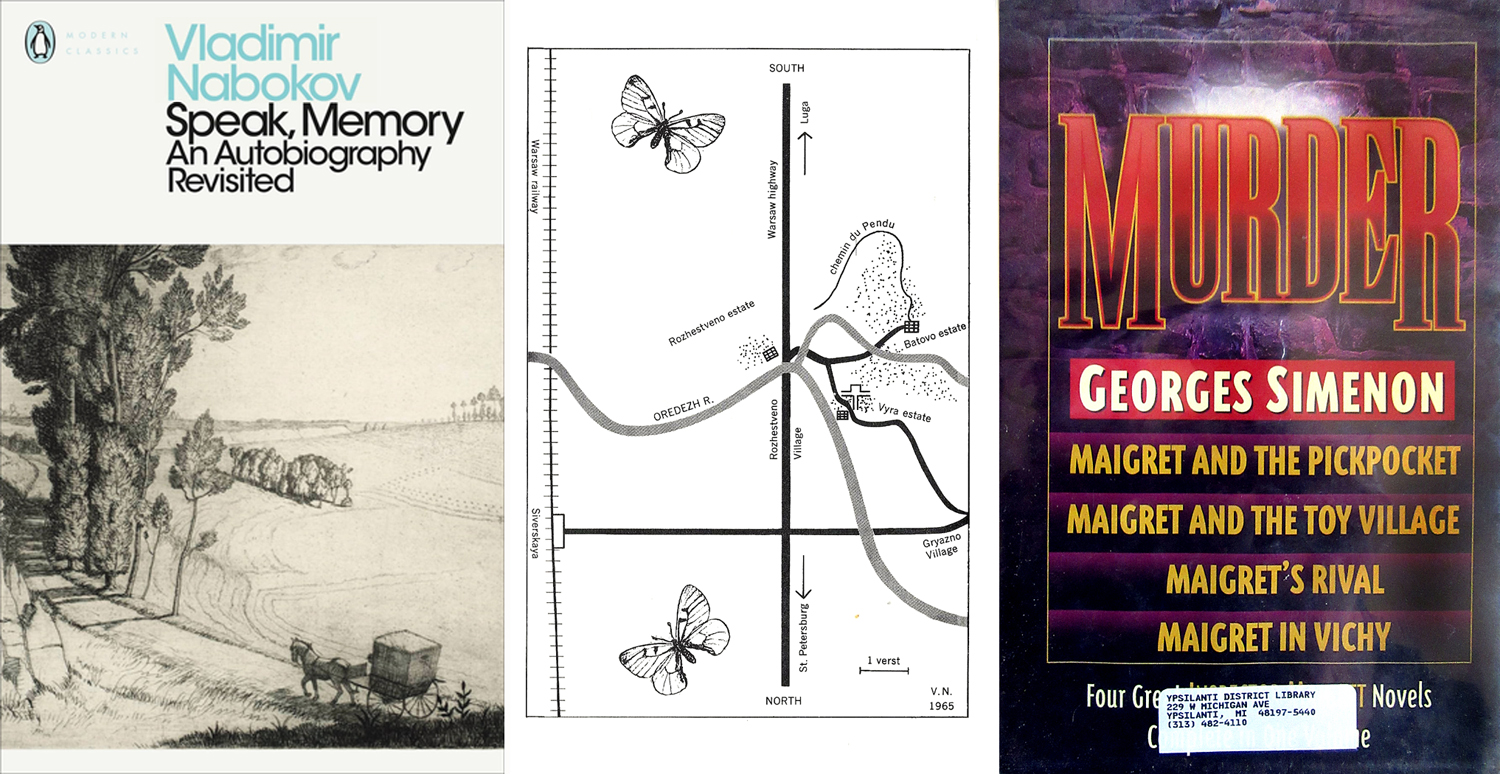
Next, the best writing, the most original use of word and sentence, since, at least Joyce, was penned by Vladimir Nabokov. Lolita is an absolute brilliance, despite is subject. And so I read Speak, Memory, his 1951 autobiography, which recounts his life in Russia, before leaving in 1940. 

It begins, “The cradle rocks above an abyss, and common sense tells us that our existence is but a brief crack of light between two eternities of darkness.” So, you know you are not just getting a sequence of entertaining anecdotes. The book is a dialog, essentially, between existence and memory, the memory of a pre-Revolution Russia, as recalled by a child, and then a young man. 

Finally, I have an omnibus edition of four Maigret novels by Georges Simenon. I have moments when I devour Simenon like chocolate-chip cookies, one after the other. But it can get expensive buying volume on volume, one at a time. This edition, once in the collection of the Ypsilanti District Library in Michigan, was bought used on Amazon, cost less than $5 and gave me four novels. I have read three. I am holding the fourth unread so far, in order to experience the delicious anticipation of reading it. 

And so, with that shelf catalogued, I look at the books and think, do I see myself in their spines, lined up? I certainly see a bit, like seeing a face through partially opened Venetian blinds. It’s me, all right, but only a bit. I look at the book case from top to bottom and see more of the rest of me. I walk down the hall and into other rooms with other bookcases and the picture fills up. The oldest books among them all speak of the boy that remains in the core, the newest of the weary old man I am now that covers it all in wrinkles. It is that “brief crack of light between two eternities of darkness.” 

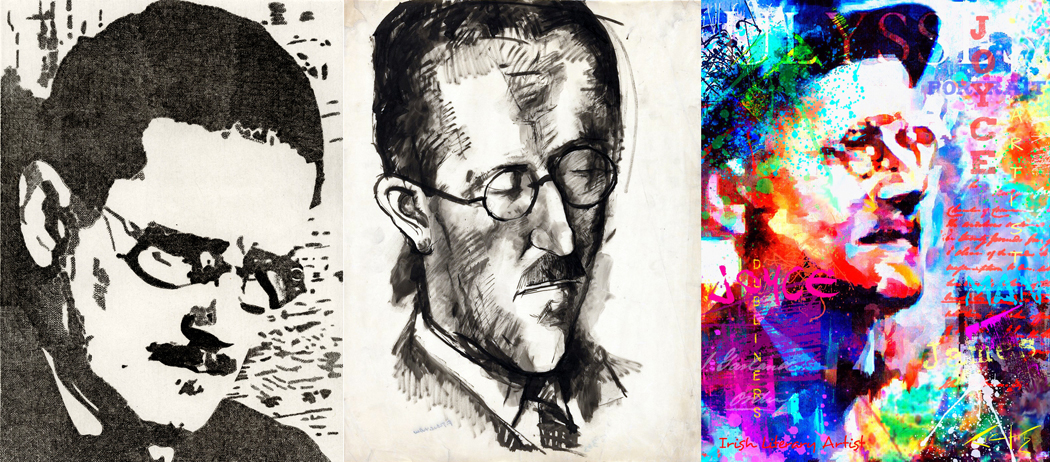
Today is Bloomsday — June 16 — anniversary of the day, in 1904, when James Joyce set the action of his novel “Ulysses.” He chose that day because it was also the day of his first “date” with his future wife, Nora Barnacle, in Dublin, a date with a happy ending. Around the world, there are people who celebrate the anniversary with live readings of Joyce’s book, and, in Dublin, with trips to the sites featured in it. This is a reprint of an essay written originally for The Spirit of the Senses, a salon group in Phoenix, Ariz., published on their website Nov. 2, 2018. It is now updated and slightly rewritten for Bloomsday. Happy Bloomsday. Have a Guinness on me. 

What’s the most beautiful sentence in the English language?

In his epic TV series, The Singing Detective, author Dennis Potter has his hero ask a similar question: “What’s the loveliest word in the English language?” An answer is offered: “Love.” But no, you’re responding to the sentiment behind the word. What is the loveliest word “in the sound it makes in the mouth? In the shape it makes in the page?”

His answer: “E-L-B-O-W.”

You may have your own candidate. Mine might be “anaflaxis,” or perhaps “curmudgeon.” Both pleasant to say, “in the sound it makes in the mouth.”

My nomination for the most beautiful sentence?

Mr. Leopold Bloom ate with relish the inner organs of beasts and fowls.”

It is the opening sentence of the second chapter of James Joyce’s Ulysses. It is followed by a tasty list of those comestibles that Mr. Leopold Bloom especially savored. “He liked thick giblet soup, nutty gizzards, a stuffed roast heart, liverslices fried with crustcrumbs, fried hencods’ roes.” And then he brings you up short with the consummation of the paragraph: “Most of all he liked grilled mutton kidneys which gave to his palate a fine tang of faintly scented urine.”

If you get past the last bit without a distinct sensory, gustatory and olfactory assault, you aren’t paying attention.

But it’s that first sentence I want to examine. It has a cadence to it: You can scan its metrics two ways. First, you can break it down into four brief bursts: His name, as if it were the first line of a song; then comes the two-beat “ate with relish;” another two-beat “the inner organs,” and the peroration in another two beats — “of beasts and fowls.”

You can, however, scan it as two lines, a pentameter followed by a tetrameter. And if you do it that way, you can feel behind the rhythm the ghost of Anglo-Saxon poetry, each line interrupted by a caesura.

Mr. Leopold Bloom // ate with relish

The inner organs // of beasts and fowls.

Either way, it is a graceful mix of iambs and dactyls. All that is fine, and worth noting. But the real treasure is paying attention to where in your mouth you articulate the various consonants and vowels: You shift the sounds around in your mouth, front to back, roof to base, like you were savoring a morsel of tasty food. These are words that as you say them out loud, you practically chew on. Try it: Mister Leopold Bloom ate with relish, etc. Your tongue flies around, your lips purse, your teeth come together and separate, your jaw moves forward and back, in a fine simulacrum of mastication.

This is one tasty sentence.

You should also note how heterogeneous the sounds are. A few consonants and vowels are repeated. There are five “L” sounds, which move your tongue up to the palate; four sibilant “S” sounds; four “O” sounds, making your lips project, as if you were smacking them; four short “I” sounds drawing the tongue back in the mouth; four rhotic “R” sounds, which scrunches your mouth up in a contortion (admittedly, a different sound if you speak them with the Irish accent that Joyce would have used); three “T” sounds, moving that tongue to hide just at the back of the teeth; three “E” sounds, stretching your cheeks out wide to pronounce; two “M” sounds, making you go, “mmm,” like you really enjoyed that mouthful; two “N” sounds, drawing the aroma up into your nasal cavities; two “B” bumps, rhyming with the single “P” to keep your lips plosive. There are two different “TH” sounds, an eth and a thorn — voiceless and voiced dental fricatives.

All the rest of the sounds occur only once. Which means, to read the sentence out loud, your tongue, lips and jaw get a workout worthy of Jane Fonda.

So much for the gnathometry of the sentence.

 I also want to point out that the sentence is not difficult to comprehend. It is, in fact, a fairly ordinary sentence, outside its poetry. And I mention that because I want to make the case for the book as a whole. Ulysses has a reputation. People who haven’t yet essayed it are apt to fear it like ebola. But, these days, now nearly a hundred years after its conception, we have grown used to many of its more idiosyncratic habits. Stream of consciousness has made its way to paperback bodice rippers and Tom Clancy munitionology. And after MTV, how simple seems the rapid cutting and multiple points of view. Joyce should not present any unclimbable obstacles these days.

Which makes it all the more important to read the book. It is some of the best prose ever put to paper. Joyce’s writing is elegant, precise, musical and redolent.

The entire final chapter of the book is one of the greatest monologues in literature, when Molly Bloom lies in bed next to her husband and recalls her love affairs, her life, her body, her mind and heart. It alone raises Ulysses to the level of classic. Everyone should read it and weep.

But to enjoy the prose, you have to break yourself of the habit of reading solely for content. Speed reading Ulysses is flying over country where the driving would reveal cities, rivers, regional foods, national parks, and people worth meeting. The prose is meant to noticed. It is unsurpassed. The plot of the book is hardly more than an excuse for the writing.

Joyce wrote the book over many years, writing and rewriting like a demon. It takes reworking on an obsessive scale to get just the right mot juste in every case. You can see that in the manuscript, worked over so thoroughly, it is barely legible.

Ulysses was written at the end of the First World War and published in 1922 by Sylvia Beach and the Paris bookstore, Shakespeare & Co. Joyce was 40 years old and an exile from his native Ireland. It chronicles a single day — June 16, 1904 — in Dublin, Ireland as lived by three primary characters, Stephen Daedalus, and Leopold and Molly Bloom. It’s a simple plot. Not much happens of consequence, but we follow the events in the minds of the characters as much as through the words of a narrator. And we aren’t often told which.

But what is of consequence is the language. You can pretty much read any page and nearly swoon at the beauty of the words, the rhythm, pitch and melody.

Of course, that’s not what caught public attention first. The book has been banned in many countries, including the U.S. It was considered obscene. It had to be printed in Paris, and at least 500 copies were seized and burned by the U.S. Postal Service as they were confiscated in shipment. Another 2000 to 3000 copies were seized and destroyed by the New York Society for the Suppression of Vice in 1929.

When Random House decided to take up the American publication, The publisher sued and in The United States v. One Book Called Ulysses, U.S. District Judge John M. Woolsey ruled that the book was not pornographic and therefore could not be obscene. Random House published the authorized American edition in 1934.

We say “authorized,” because Ulysses has been much pirated. Even printed as an underground book by publishers of pornography, wishing to capitalize on its notoriety. I have an edition by Collectors Publications of Industry, Calif., which features pages and pages of ads at the back for such other literary gems as True Love Stories of a Wayward Teenager, The Incestual Triangle, Four Way Swappers, and The Debauched Hospodar. (Along with Henry Miller’s The World of Sex and Lawrence Durrell’s Black Book and The Story of O. They seemed to make little distinction between actual literature and smut, i.e., they knew their audience).

My late wife’s father-in-law was a poet who had studied with Robert Frost, and after a trip to Europe, he smuggled in a copy of Ulysses in the 1920s concealed by binding it in a cover for a Nancy Drew mystery.

To read it now, after Fifty Shades of Grey and countless Jackie Collins tomes, one puzzles over the ruckus. You can search the pages of Ulysses looking for the “good bits” and be disappointed. Judge Woolsey in his judicious judicial opinion famously wrote, “whilst in many places the effect of Ulysses on the reader undoubtedly is somewhat emetic, nowhere does it tend to be an aphrodisiac.” (Remember the mutton kidneys).

 Woolsey’s opinion opened the door for Lady Chatterly’s Lover (or is it “Lady Loverly’s Chatter?”), Henry Miller’s Tropic of Cancer., and Allen Ginsberg’s Howl. It may be hard to define great literature, but you know it when you see it.

When I was in second or third grade, we had weekly lists of vocabulary words to learn, lists of ten or a dozen new words. And we were assigned to write sentences using these words. And me, being a smartass even back then, I worked hard each week to write a single sentence using all ten words. Even now I’m not sure if I did it to be clever or because I was lazy and didn’t want to write ten sentences.

But when I look back on it, I realize it was a dead give-away clue that I would later earn my crust by becoming a writer. I loved words, and I loved using words.

Other kidlings might groan when the teacher picked up the chalk to diagram sentences, but I loved those underlines and slants, those networks of adjectives and conjunctions. It was fun, like doing a crossword puzzle or connecting the dots.

When I was young enough, before the cutoff date for it, I didn’t learn words so much as acquire them. But even when it later took the effort, I still did my best to expand my word trove.

And as I grew into adolescence and I read constantly — everything from Lew Wallace to the backs of cereal boxes — I continued to absorb words. I would sometimes pore over a dictionary, picking out new and intriguing words. They were not merely signifiers of semantic meaning, but entities in and of themselves. Others might go “ooh” and “aww” over a puddle of newborn kittens, I did the same thing over bits of verbal amber and gleam.

It did not seem at all odd when the ailing pulp writer Philip Marlow in The Singing Detective asked his nurse, “What’s the loveliest word in the English language? In the sound it makes in the mouth? In the shape it makes in the page?” His answer was “elbow.” That would not have been mine, but I’m not sure I could have chosen. Words have a taste in the mouth, and however much one might like foie gras, one cannot do without ripe peaches or buttered asparagus. I loved all words, fair and foul. And I loved the mouth-feel of them, like a perfect custard.

British polymath Stephen Fry often tells the story (perhaps too often) of how when he was a wee bairn, he saw on the small black-and-white TV in his home the 1952 film version of The Importance of Being Earnest. He was struck by a line spoken by Algernon: “I hope, Cecily, I shall not offend you if I state quite frankly and openly that you seem to me to be in every way the visible personification of absolute perfection.”

“How unbelievably beautiful,” Fry says. “The swing, balance and rhythm. I’d known you could use language to say, ‘May I please be excused to go to the washroom,’ or ‘I want some more,’ but the idea that it could be used to dance, to delight, to enthrall — it was new to me.”

And Fry became what he called “a celebrant and worshipper at the altar of language.”

For me, it wasn’t Wilde, but James Joyce, first reading A Portrait of the Artist as a Young Man when I was in high school and being swept along in a tidal current of language. “Once upon a time and a very good time it was there was a moocow coming down along the road and this moocow that was down along the road met a nicens little boy named baby tuckoo …”

We had been taught in grade school to speed read, along with a dreadful little machine that mechanically drew a rod down along a page, drawing one to move line by line in a forced march through the text; we would then be tested on our comprehension. Day by day, the guide rod was moved more and more speedily down the page, making us read faster and faster, until we could skim and recall very well, thank you.

But that wasn’t the kind of reading that gave me physical, bodily pleasure. And when I came across books like Joyce’s, I slowed down. I could not read them without hearing the words in my head. Without feeling them on my tongue and teeth.

A sentence such as our introduction to our hero in Ulysses cannot be read merely for sense. It has to be understood for its music, almost ecstatic, like Handel’s Zadok the Priest or Beethoven’s Great Fugue: “Mr. Leopold Bloom ate with relish the inner organs of beasts and fowls.” Your tongue creates phonic choreography in your mouth as you form those words.

I remember when I was perhaps 24 or 25, reading Lawrence Durrell’s Alexandria Quartet and stumbling on so many odd and eccentric words, that I kept a notepad next to my desk to write down such words as I underlined in my copies of the books (yes, I write in my books. If you don’t write in the margins or underline passages, you haven’t really read the book). “Pegamoid,” “ululation,” “usufruct,” “exiguous,” chthonic,” “etiolation,” “boustrophedon,” “tenebrous,” “crepitating,” “cachinnation,” “comminatory,” and, apropos our current resident of the White House, “troglodyte.” (Another great word to remember in this regard is the title of a satiric philippic by Seneca the Younger — “apocalocyntosis” the “Pumpkinification,” in the original of the emperor Claudius, but our case of the Great Orange Boor.)

You probably have to be young to read Durrell, when you still hold idealistic and romantic expectations, and to put up with the prose pourpre, but my word-hoard grew. It became something of a joke when I wrote for my newspaper, where I’m sure the copy editors were laughing at me for using six-dollar words like chocolate sprinkles on a donut. I used them because I loved them, and because they were precise: When you develop a ripe vocabulary, you learn there are no synonyms in the English language: Each word carries with it a nimbus of connotation, a flavoring or a shade that makes it the right or wrong word for the context. No matter how close their dictionary definitions, words are not simply interchangeable.

Anyway, I had my little joke back on the copy editors. For a period of about six months back in the 1990s, every story I wrote had in it a word I plain made up. My game was to see if I could sneak them past the copy desk. Some were onomatopoeic, some were Latinate or Hellenic portmanteaus, some were little more than dripping streams of morphemes. And, to my utter delight, every one of them made it through the editors. A few were questioned, but when I explained them, they were permitted. Looking back, I regret this persistent joke, because it was aimed at that little-praised but admirable set of forgotten heroes, who have many times saved my butt when I wrote something stupid. Let me express my gratitude for them; everyone needs a copy editor.

Occasionally, when I have an empty moment, and I don’t have access to a crossword puzzle, I will sit and write lists of words as they come to my brain. Each word has its own cosmos of meaning, an electron-cloud of ambiguity and precision, its emotional scent, its sound and its fury. As I write them down, I savor each one, like an hors d’oeuvre. Such lists, in their way, are my billets doux to my native tongue, which has fed me both spiritually and financially over many decades.

gibbon decline and fall horizAs a now former and once long-time member of the Society of Professional Journalists, I was taught — indeed, had it drummed into me — that the best prose style was invisible, that it disappeared like window glass, letting the matter and substance of what was being written be transmitted from one mind to the other effortlessly, almost telepathically, as if it had no need of linguistic intercessor. One should never notice that there were words — black tadpoles — darting across the white expanse of page.

Yet, that was never how I felt in my deep heart’s core. I came to writing through love of reading, and that which I loved to read were words that gave me pleasure in the reading. Certainly, the stories being told carried their own power, and the ideas expressed fertilized and pruned my own ever-growing and expanding sensibility. But for utter pleasure, it was the words. I enjoyed writers who used those words and fashioned elegant sentences with a joyful abandon. I loved those sentences that could fill out a printed page with dependent clauses, semicolons and parenthetical interpolations. Hemingway made a distinction between those writers who were “taker-outers” and those who were “puter-inners.” My heart always went lost to the puter-inners, the piler-on-ers, the expanders and expatiators. I frequently crack a book not for what it has to tell me but for its way of telling it, for its personality, its sparkle.

Until recently, for instance, the New Yorker magazine had two primary and alternating film critics. One — David Denby, who recently retired from the ring — was a sober and thoughtful critic, whose judgment I valued, and whose taste was undeniably similar to my own. I could trust his opinion when I meant to put down my peso for a ticket. But the other — Anthony Lane — gave me joy in the reading. Each week, when the magazine materialized in my mailbox, I opened to the final pages to see who was writing. If Denby, my heart sank a little, not because he was a bad writer, he wasn’t — he was actually a very clear and intelligent crafter of words — but because Lane’s reviews, even when espousing views antithetical to my own, sparkled with wit and inventive phrases; the page bubbled. I looked to Denby for discernment and taste; what I got from Lane was a kind of naughty tickle to my brain, as if he were sharing some ripe piece of villainous gossip. I learned a lot from my schoolmasters, too, but I loved going to the amusement park.

Or, consider author Elmore Leonard’s famous advice to writers, where he warns them away from what Steinbeck called “hooptedoodle:”

“Rule No. 10: Try to leave out the part that readers tend to skip.

“A rule that came to mind in 1983. Think of what you skip reading a novel: thick paragraphs of prose you can see have too many words in them. What the writer is doing, he’s writing, perpetrating hooptedoodle, perhaps taking another shot at the weather, or has gone into the characters head, and the reader either knows what the guys thinking or doesn’t care. I’ll bet you don’t skip dialogue.

“My most important rule is one that sums up the 10.

“If it sounds like writing, I rewrite it.”

This is all well and good for Elmore Leonard, who wants to make the reader turn the page, as if the last one were worthless, but maybe there was gold in the next. And that is fine for a certain kind of book. It reminds me of the advice given by film director Sam Fuller, when asked what makes a good movie.

“A story,” he said, with a cigar in his teeth.

“And what makes a good story?”

“A story.”

But it isn’t the story that gives me the pleasure I seek, it is the hooptedoodle.

Here are a dozen of the books that satisfy my addiction to hooptedoodle, the books I return to over and over just for the sybaritic enjoyment of chewing over their words, gurgling their wine on my palate as I suck in a bit of air to pick up the notes of wood and chocolate, words I can inhale and breathe out like the curl of smoke from a good cigar. I recommend them to you.

Edward Gibbon, The Decline and Fall of the Roman Empire


gibbonThis monumental tome, in six volumes, follows its subject with intense scholarship. Gibbon had read all the sources, so that we don’t have to. After all, how much Procopius or Irenaeus have you actually imbibed? But it isn’t the history itself that propels the work, it is Gibbon’s propulsive prose, a piling on of detail and irony that keeps me buried in the pages. I can pick up a volume and dip into it at any point and come away with a full belly. Such wonderful, rich, cream-filled sentences:

“If a man were called to fix the period in history of the world during which the condition of the human race was most happy and prosperous, he would, without hesitation, name that which elapsed from the death of Domitian to the accession of Commodus.”gibbon decline and fall

It is Gibbon’s theme that the empire fell because it embraced Christianity. He reaches for his highest caliber irony when discussing what he calls its “superstition.” And although he lives in an age of an established church in England, when everyone was nominally pious, he uses his irony to express what he felt he could not say outright. About the claim of miracles, and of resurrection:

“But the miraculous cure of diseases of the most inveterate or even preternatural kind can no longer occasion any surprise, when we recollect that in the days of Irenaeus, about the end of the second century, the resurrection of the dead was very far from being esteemed an uncommon event: that the miracle was frequently performed on necessary occasions, by great fasting and the joint supplication of the church of the place, and that the persons thus restored to their prayers had lived afterward, amongst them many years. At such a period, when faith could boast of so many wonderful victories over death, it seems difficult to account for the scepticism of those philosophers who still rejected and derided the doctrine of the resurrection. A noble Grecian had rested on this important ground the whole controversy and promised Theophilus, bishop of Antioch, that, if he could be gratified with the sight of a single person who had been actually raised from the dead, he would immediately embrace the Christian religion. It is somewhat remarkable that the prelate of the first eastern church, however anxious for the conversion of his friend, thought proper to decline this fair and reasonable challenge.”

As the Duke of Gloucester said when the author presented him with a copy, “Another damned thick book! Always scribble, scribble, scribble! Eh, Mr. Gibbon?”

Vladimir Nabokov, Lolita

nabokovA wicked and malicious book, all verbal skyrockets and Roman candles, there is no more sustained example of literary pyrotechnics in English in the 20th century (the requirement for English disqualifies Finnegans Wake). It tells the story of the nympholept and child molester Humbert Humbert in his own words, which drip with irony from start to finish, yet with a second layer of irony underneath, provided by Nabokov. Humbert freely admits his crime, with charm and erudition, but Nabokov lets us know that however forthcoming Humbert seems to be, there is an imposture in self-revelation. All in virtuoso prose: “You can always count on a murderer for a fancy prose style,” he says.

There is misogyny and misanthropy in Humbert, which you can read in his description of a dalliance he has with another amour, Rita:nabokov lolita

“She was twice Lolita’s age and three quarters of mine: a very slight, dark-haired, pale-skinned adult, weighing a hundred and five pounds, with charmingly asymmetrical eyes, an angular, rapidly sketched profile, and a most appealing ensellure to her supple back — I think she had some Spanish or Babylonian blood.”

“She was so kind, was Rita, such a good sport, that I daresay she would have given herself to any pathetic creature or fallacy, an old broken tree or a bereaved porcupine, out of sheer chumminess and compassion.” 

“When I first met her she had but recently divorced her third husband — and a little more recently had been abandoned by her seventh cavalier servant — and others, the mutables, were too numerous and mobile to tabulate. Her brother was — and no doubt still is — a prominent, pasty-faced, suspenders-and-painted-tie-wearing politician, mayor and booster of his ball-playing, Bible-reading, grain-handling home town. For the last eight years he had been paying his great little sister several hundred dollars per month under the stringent condition that she would never enter great little Grainball City.”

A little later:

“Then one day she proposed playing Russian roulette with my sacred automatic; I said you couldn’t, it was not a revolver, and we struggled for it, until at last it went off, touching off a very thin and very comical spurt of hot water from the hole it made in the wall of the cabin room; I remember her shrieks of laughter.”

James Joyce, Ulysses

joyceJoyce has a reputation for being difficult, but when he wants to be clear, there is no better stylist in the English language. His prose is clear and direct and redolent of the things of this world. If I were to choose a single sentence (or two) that sums up everything I love most in a book, it would be:

“Mr Leopold Bloom ate with relish the inner organs of beasts and fowls. He liked thick giblet soup, nutty gizzards, a stuffed roast heart, liverslices fried with crustcrumbs, fried hencods’ roes. Most of all he liked grilled mutton kidneys which gave to his palate a fine tang of faintly scented urine.”

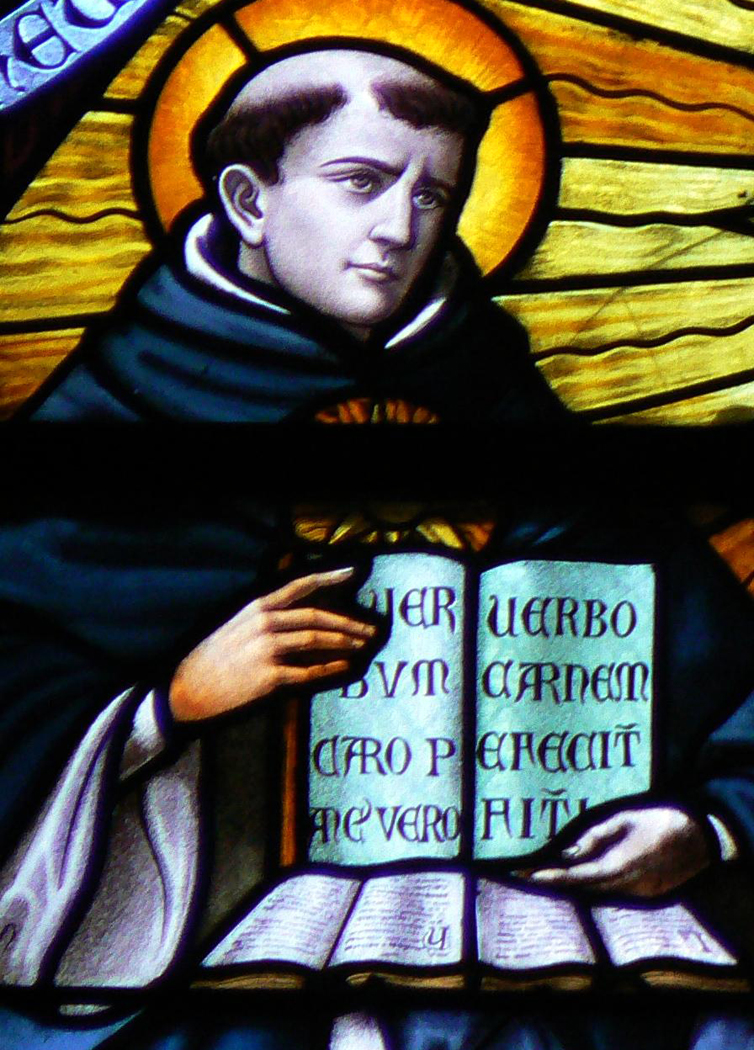
joyce ulyssesBut he can make dire fun of his other protagonist, Stephen Daedalus, and the way the scholar can drown in Aquinian scholasticism. Going down for the third time, Daedalus says:

“Ineluctable modality of the visible: At least that if no more, though through my eyes. Signatures of all things I am here to read, seaspawn and seawrack, the nearing tide, that rusty boot. Snotgreen, bluesilver, rust: coloured signs. Limits of the diaphane. But he adds: in bodies. Then he was aware of them bodies before of them coloured. How? By knocking his sconce against them, sure. Go easy. Bald he was and a millionaire, maestro di color che sanno. Limit of the diaphane in. Why in? Diaphane, adiaphane. If you can put your five fingers through it, it is a gate, if not, a door. Shut your eyes and see.”

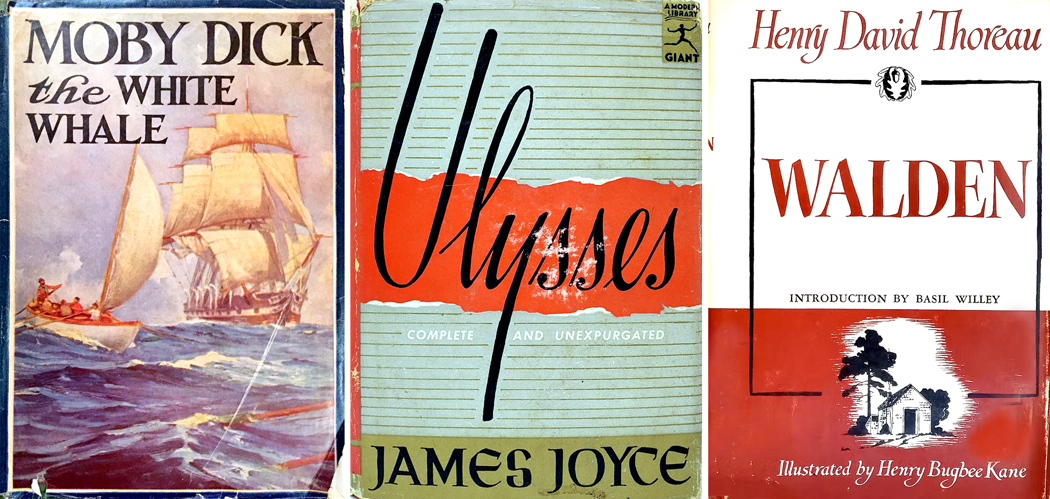
Herman Melville, Moby Dick

melvilleThere is no more perfect example of the “putter-inner” than Melville. He expands; he exfoliates; he swells with words on words. I love his best work like little else in American literature. I can reread I and my Chimney or Bartleby or The Piazza or Benito Cereno over and over again, sucking up the juices. But it is Moby Dick that is the champ. I had trouble reading it at first, not because I found it hard going — quite the opposite — but because I loved its opening chapter so much that each time I picked it up, I found myself not reading where I had left off, but starting anew each time with “Call me Ishmael.” I must have read the first chapter a hundred times before I managed to break through and get to the end.

“Whenever I find myself growing grim about the mouth; whenever it is a damp, drizzly November in my soul; whenever I find myself involuntarily pausing before coffin warehouses, and bringing up the rear of every funeral I meet; and especially whenever my hypos get such an upper hand of me, that it requires a strong moral principle to prevent me from deliberately stepping into the street, and methodically knocking people’s hats off — then, I account it high time to get to sea as soon as I can. melville moby dickThis is my substitute for pistol and ball. With a philosophical flourish Cato throws himself upon his sword; I quietly take to the ship. There is nothing surprising in this. If they but knew it, almost all men in their degree, some time or other, cherish very nearly the same feelings towards the ocean with me.”

The pith of the book can be found in Ahab’s description of his hatred of the white whale:

“All visible objects, man, are but as pasteboard masks. But in each event — in the living act, the undoubted deed—there, some unknown but still reasoning thing puts forth the mouldings of its features from behind the unreasoning mask. If man will strike, strike through the mask! How can the prisoner reach outside except by thrusting through the wall? To me, the white whale is that wall, shoved near to me. Sometimes I think there’s naught beyond. But ’tis enough. He tasks me; he heaps me; I see in him outrageous strength, with an inscrutable malice sinewing it. That inscrutable thing is chiefly what I hate; and be the white whale agent, or be the white whale principal, I will wreak that hate upon him. Talk not to me of blasphemy, man; I’d strike the sun if it insulted me.”

Laurence Sterne, The Life and Opinions of Tristram Shandy, Esq.

sterneThis must be the funniest book in the English language. Sterne manages to make fun of the human condition without ever seeming mean about it. There is a gentleness to it, even when he is close to obscene, as when he opens the book with the very moment of conception for its hero, and the discomfiting dialog between his mother and father at the moment of ejaculation:

“I wish either my father or my mother, or indeed both of them, as they were in duty both equally bound to it, had minded what they were about when they begot me; had they duly consider’d how much depended upon what they were then doing; — that not only the production of a rational Being was concerned in it, but that possibly the happy formation and temperature of his body, perhaps his genius and the very cast of his mind; — and, for aught they knew to the contrary, even the fortunes of his whole house might take their turn from the humours and dispositions which were then uppermost; — Had they duly weighed and considered all this, and proceeded accordingly, — I am verily persuaded I should have made a quite different figure in the world, from that in which the reader is likely to see me. sterne tristram shandy— Believe me, good folks, this is not so inconsiderable a thing as many of you may think it; — you have all, I dare say, heard of the animal spirits, as how they are transfused from father to son, &c. &c. — and a great deal to that purpose: — Well, you may take my word, that nine parts in ten of a man’s sense or his nonsense, his successes and miscarriages in this world depend upon their motions and activity, and the different tracks and trains you put them into, so that when they are once set a-going, whether right or wrong, ’tis not a half-penny matter, — away they go cluttering like hey-go mad; and by treading the same steps over and over again, they presently make a road of it, as plain and as smooth as a garden-walk, which, when they are once used to, the Devil himself sometimes shall not be able to drive them off it.

Pray my Dear, quoth my mother, have you not forgot to wind up the clock?Good G..! cried my father, making an exclamation, but taking care to moderate his voice at the same time, — Did ever woman, since the creation of the world, interrupt a man with such a silly question?”

 James Agee, Let Us Now Praise Famous Men

ageeWhile ostensibly, this is a book about white tenant farmers in Alabama in the 1930s, it is almost more about Agee’s guilt over the fact that he is using their misery to make a book, and his empathy for their condition, and his righteous insistence on not falling back on stereotypes and formulae, but to get it absolutely right, to be absolutely accurate, which leads him to vast circumlocutions as he tries to find just the right words.

It is a very hard book to describe, so unlike anything else in the literature, and must be taken in long draughts to get the real flavor of it. Short quotes will not do.

A long section describes him late at night in the Gudger cabin, fretting over his relationship with them. He describes the lamplight and the bare wooden walls, all in minute detail, so we don’t too easily generalize, which, he feels would be a lie. All the while, on the other side of that wall the family sleeps, husband, wife, sister-in-law and four children. agee let us now praise

“.. and there lie sleeping, on two iron beds and on pallets on the floor, a man and his wife and her sister and four children, a girl and three harmed boys. Their lamp is out, their light is done this long while, and not in a long while has any one of them made a sound. Not even straining, can I hear their breathing: rather I have a not quite sensuous knowledge of a sort of suspiration, less breathing than that indiscernible drawing-in of heaven by which plants live, and thus I know they rest and the profundity of their tiredness, as if I were in each one of these seven bodies whose sleeping I can almost touch through this wall, and which in the darkness I so clearly see, with the whole touch and weight of my body: George’s red body, already a little squat with the burden of thirty years, knotted like oakwood, in its clean white cotton summer union suit that it sleeps in; and his wife’s beside him, Annie Mae’s, slender, and sharpened through with bone, that ten years past must have had such a beauty, and now is veined at the breast, and the skin of the breast translucent, delicately shriveled, and blue, and she and her sister Emma are in plain cotton shirts; and the body of Emma, her sister, strong, thick and wide, tall, the breasts set wide and high, shallow and round, not yet those of a full woman, the legs long thick and strong; …”

It goes on. Nothing is easily said in this book; it is all tortured and parsed: allie mae for agee

“The Gudgers’ house, being young, only eight years old, smells a little dryer and cleaner, and more distinctly of its wood, than an average white tenant house, and it has also a certain odor I have never found in other such houses: aside from these sharp yet slight subtleties, it has the odor or odors which are classical in every thoroughly poor white southern country house, and by which such a house could be identified blindfold in any part of the world, among no matter what other odors. It is compacted of many odors and made into one, which is very thin and light on the air, and more subtle that it can seem in analysis, yet very sharply and constantly noticeable. These are its ingredients. The odor of pine lumber, wide thin cards of it, heated in the sun, in no way doubled or insulated, in closed and darkened air. The odor of woodsmoke, the fuel being again mainly pine, but in part also, hickory, oak and cedar. The odors of cooking. Among these, most strongly, the odors of fried salt pork and of fried and boiled pork lard, and second the odor of cooked corn. The odors of sweat in many stages of age and freshness, this sweat being a distillation of pork, lard, corn, woodsmoke, pine, and ammonia. The odors of sleep, of bedding and of breathing, for the ventilation is poor. The odors of all the dirt that in the course of time can accumulate in a quilt and mattress. Odors of staleness from clothes hung, or stored away, not washed. I should further describe the odor of corn: in sweat or on the teeth, and breath, when it is eaten as much as they eat it, it is of a particular sweet stuffy fetor, to which the nearest parallel is the odor of the yellow excrement of a baby. All these odors as I have said are so combined into one that they are all and always present in balance, not at all heavy, yet so searching that all fabrics of bedding and clothes are saturated with them and so clinging that they stand softly out of the fibers of newly laundered clothes. Some of their components are extremely ‘pleasant,’ some are ‘unpleasant’; their sum total has great nostalgic power.”

Mickey Spillane, The Big Kill

From the sublime to the ridiculous. Mickey Spillane said he didn’t have readers, he had customers. “The first page sells the book,” he said, “the last page sells the next book.”spillane the big kill

But there is a vigor in his prose, tinged with kitsch, for sure, but still vivid in the extreme. You could find examples in almost any of the books, but this is from The Big Kill:

“It was one of those nights when the sky came down and wrapped itself around the world.
The rain clawed at the windows of the bar like an angry cat and tried to sneak in every time some drunk lurched in the door. The place reeked of stale beer and soggy men with enough cheap perfume thrown in to make you sick.

Two drunks with a nickel between them were arguing over what to play on the juke box until a tomato in a dress that was too tight a year ago pushed the key that started off something noisy and hot. One of the drunks wanted to dance and she gave him a shove. So he danced with the other drunk.

She saw me sitting there with my stool tipped back against the cigarette machine and change of a fin on the bar, decided I could afford a wet evening for two and walked over with her hips waving hello.”

Lawrence Durrell, The Alexandria Quartet

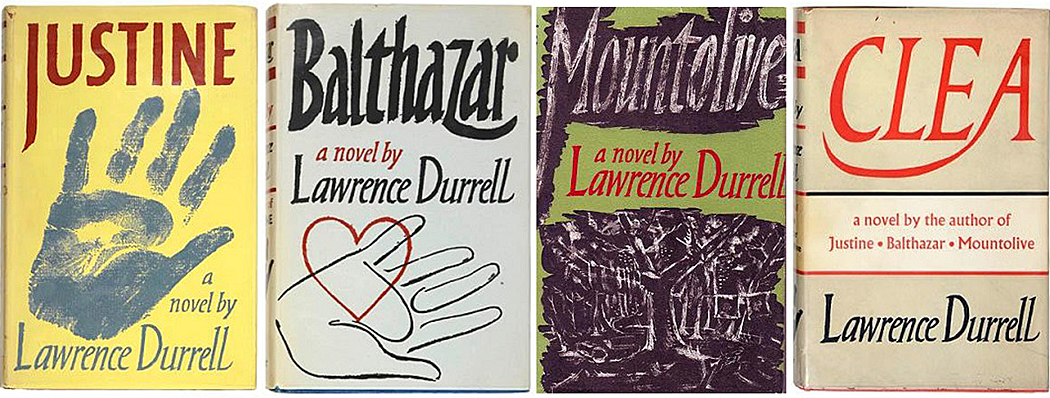
If there were ever an author who required you to have a dictionary beside your reading table, it was Durrell. He would choose “pegamoid” and “objurgation,” as a dare. In his books, language is the readers’ usufruct, somewhere in the banlieus of usage. durrell justine

The Alexandria Quartet are four novels that tell the same story, each from the point of view of a different actor. We find out that no one really understands what is happening, but it is happening in Alexandria, Egypt, and is populated by espionage, love-sickness, sex and camels. Durrell’s prose is as perfumed as it comes, and the books, as a unit, are perhaps best read when the reader is still young; older, you have less patience for the exoticism and the verbal barnacles crusting the pages. I love it.

I’ll give only a short tasting, from the last volume, Clea:

“The whole quarter lay drowsing in the umbrageous violet of approaching nightfall. A sky of palpitating velours which was cut into the stark flare of a thousand electric light bulbs. It lay over Tatwig Street, that night, like a velvet rind. Only the lighted tips of the minarets rose above it in their slender invisible stalks — appeared hanging suspended in the sky; trembling slightly with the haze as if about to expand their hoods like cobras.”

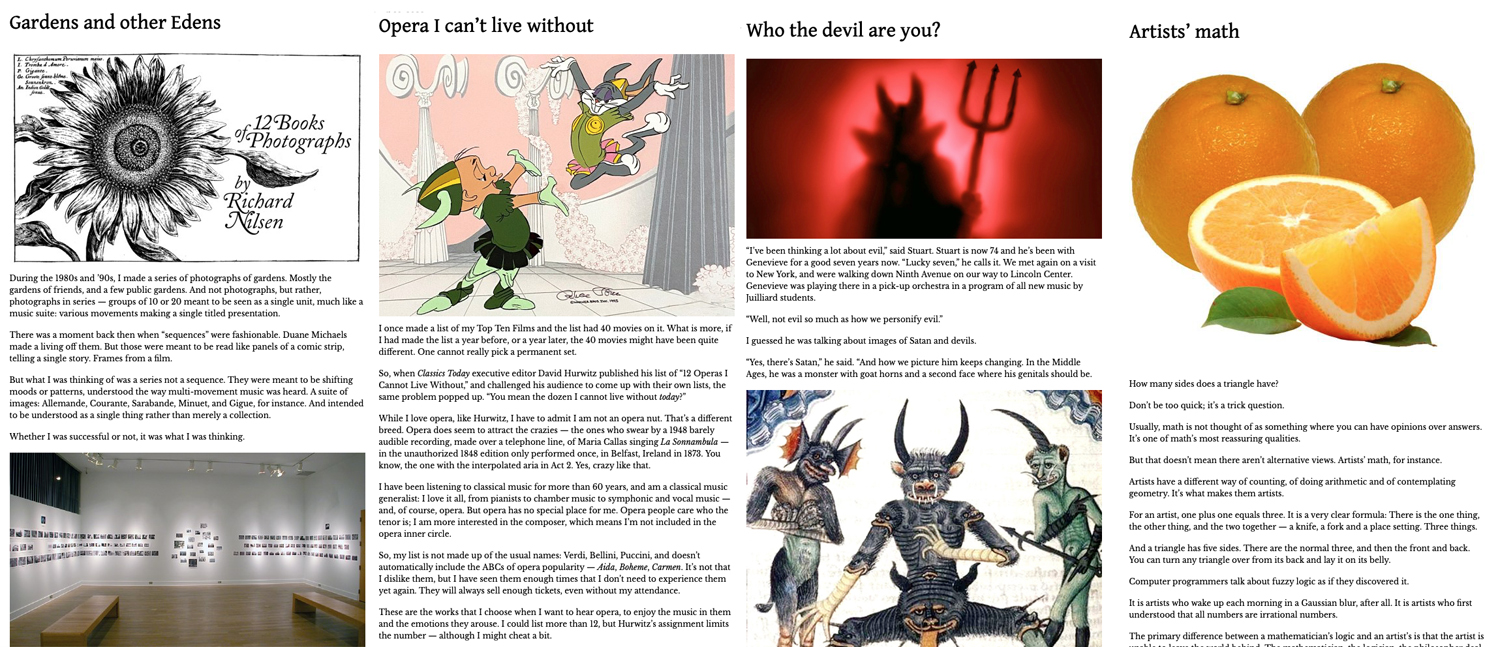
Henry David Thoreau, Walden

thoreauThoreau mixed ancient Greek writers with agronomy; no philosopher had so much to say about beans since Pythagoras. What elevates his style is a mixture of close observation with nature and the ability to fly, like Icarus, up to the heavens in vast sweeps of inspired hooha. Metaphors grow like weeds in his paragraphs, and we are all the richer for it. There is something Shakespearean about his means of expression: A rich overflowing of imagery, mixed, we might say, like a salad, and unpruned like a feral apple tree. He simply can’t stop making new metaphors:

“Time is but the stream I go a-fishing in. I drink at it; but while I drink I see the sandy bottom and detect how shallow it is. Its thin current slides away, but eternity remains. I would drink deeper; fish in the sky, whose bottom is pebbly with stars. I cannot count one. I know not the first letter of the alphabet. I have always been regretting that I was not as wise as the day I was born. The intellect is a cleaver; it discerns and rifts its way into the secret of things. I do not wish to be any more busy with my hands than is necessary. My head is hands and feet. I feel all my best faculties concentrated in it. My instinct tells me that my head is an organ for burrowing, as some creatures use their snout and fore paws, and with it I would mine and burrow my way through these hills. I think that the richest vein is somewhere hereabouts; so by the divining-rod and thin rising vapors I judge; and here I will begin to mine.”

Jack Kerouac, On the Road

“That’s not writing, that’s typing,” said Truman Capote. But there is power in it. Kerouac set out across the country in the late 1940s, with peanut butter sandwiches and a part-of-the-way bus ticket. He ended up a sorry, alcoholic travesty, ruined by the popular image of the beatnik. kerouacBut his book is better than that. Even if he sometimes forgets Elmore Leonard’s Fifth Rule of Good Writing: “Keep your exclamation points under control.”

“George Shearing, the great jazz pianist, Dean said, was exactly like Rollo Greb. Dean and I went to see Shearing at Birdland in the midst of the long, mad weekend. The place was deserted, we were the first customers, ten o’clock Shearing came out, blind, led by the hand to his keyboard. He was a distinguished-looking Englishman with a stiff white collar, slightly beefy, blond, with a delicate English-summer-night air about him that came out in the first rippling sweet number he played as the bass-player leaned to him reverently and thrummed the beat. The drummer, Denzil Best, sat motionless except for his wrists snapping the brushes. And Shearing began to rock; a smile broke over his ecstatic face; then the beat went up, and he began rocking fast, his left foot jumped up with every beat, his neck began to rock crookedly, he brought his face down to the keys, he pushed his hair back, his combed hair dissolved, he began to sweat. The music picked up. The bass-player hunched over and socket it in, faster and faster, it seemed faster and faster, that’s all. Shearing began to play is chords; they rolled out of the piano in great rich showers, you’d think the man wouldn’t have time to line them up. They rolled and rolled like the sea. Folks yelled for him to “Go!” Dean was sweating; the sweat poured down his collar. “There he is! That him! Old God! Old God Shearing! Yes! Yes! Yes!” And Shearing was conscious of the madman behind him, he could hear every one of Dean’s gasps and imprecations, he could sense it though he couldn’t see. “That’s right!” Dean said. ‘Yes!’ Shearing smiled; he rocked. Shearing rose from the piano, dripping with sweat. These were his great 1949 days before he became cool and commercial.”

H.L. Mencken, Prejudices, Series I-VI

menckenMy personal hero, Mencken was a sour old pessimist, a journalist through and through, who never let sentiment cloud his prejudice. Almost anything he wrote is worth reading, not so much for the ideas therein, which are sometimes lamentable, but for the vigor and spark of their saying. I can read his work endlessly, like eating popcorn or Fritos, and never get tired of it.

“Of all forms of the uplift, perhaps the most futile is that which addresses itself to educating the proletariat in music. The theory behind it is that a taste for music is an elevating passion, and that if the great masses of the plain people could be inoculated with it they would cease to herd into the moving-picture theaters, or to listen to Socialists, or to beat their wives and children. The defect in this theory lies in the fact that such a taste, granting it to be elevating, simply cannot be implanted. Either it is born in a man or it is not born in him. If it is, then he will get gratification for it at whatever cost — he will hear music if hell freezes over. But if it isn’t, then no amount of education will ever change him — he will remain stone deaf until the last sad scene on the gallows.”

Robert Burton, Anatomy of Melancholy

burton 2Finally, there is Robert Burton (1577-1640), the great magpie of English literature, who put everything he could stuff into his one big book. It purports to be about melancholy — depression, as we know it — but really, it has no boundaries. Burton cannot say something once, but must, like Walt Whitman in his cataloguing mania, say it three, four, five times over, in slightly varying phraseology, just to make his point, to emphasize it, to make it clear, to ram it home, to buttonhole you and make sure you have got it.

This is a particularly juicy section, in which he discusses sex and the contemptus mundi of the sallow-skinned blue-stockings that in our own day, as much as in his, make our lives less gaudy and fleshy.

“Into what subject have I rushed? What have I to do with Nuns, Maids, Virgins, Widows? I am a Bachelor myself, and lead a Monastick life in a College. I am truly a very unfit person to talk about these subjects, I confess ‘tis an indecorum and as Pallas, a Virgin, blushed, when Jupiter by chance spake of Love matters in her presence and turned away her face, I will check myself; though my subject necessarily require it, I will say no more.

burton anatomyAnd yet I must and will say something more, add a word or two on behalf of Maids and Widows, in favour of all such distressed parties, in commiseration of their present estate. And as I cannot choose but condole their mishap that labour of this infirmity, and are destitute of help in this case, so must I needs inveigh against them that are in fault, more than manifest causes, and as bitterly tax those tyrannizing pseudo-politicians’ superstitious orders, rash vows, hard-hearted parents, guardians, unnatural friends, allies, (call them how you will), those careless and stupid overseers, that, out of worldly respects, covetousness, supine negligence, their own private ends, (because, meanwhile, it is well for him), can so severely reject stubbornly neglect and impiously contemn, without all remorse and pity the tears, sighs, groans, and grievous miseries, of such poor souls committed to their charge. How odious and abominable are those superstitious and rash vows of Popish Monasteries, so to bind and enforce men and women to vow virginity, to lead a single life against the laws of nature, opposite to religion, policy and humanity, so to starve, to offer violence to, to suppress the vigour of youth! by rigourous statutes, severe laws, vain persuasions, to debar them of that to which by their innate temperature they are so furiously inclined, urgently carried, and sometimes precipitated, even irresistibly led, to the prejudice of their souls’ health, and good estate of body and mind! and all for base and private respects, to maintain their gross superstition, to enrich themselves and their territories, as they falsely suppose, by hindering some marriages, that the world be not full of beggars, and their parishes pestered with orphans! Stupid politicians!

Stupid politicians, indeed!
 

Sunset
Stuart and I were sitting on the roof, outside the dormer window, and sipping a little Drambuie. Cigars were for later.

“A beautiful evening, isn’t it?” he said.

“Yeah, the sunset is so orange.”

“You call it orange, but really, how many different colors are there in that sky — even a band of green in it.”

“Where?”

“There, see, above that reddish cloud. Perhaps it’s only a trick of simultaneous contrast, but that green has always fascinated me.”

“I see it now, rather a pale green, almost opal, but green.”

“How much better to see the whole thing, instead of just the calendar version. You know, I always wonder why pretty magazine pictures look so cliched, while the sky in front of us doesn’t. I guess there is a difference between pretty and beautiful.”

“Or, maybe beauty is in the eye of the beholder.”

“Yeah, well, I used to think that.”

I could see Stuart had something on his mind. He usually did.

“Used to?” I asked. “OK, so what is beauty? Personally, I tend to think of Scarlett Johansson.”scarlett and hedy

“Really? I kind of favor Hedy Lamarr, but then, I’m always a little behind the times. But really, first we have to agree on what kind of beauty we’re talking about. Erotic attractiveness is a completely different thing from esthetic beauty. You could even say they are opposites.”

“How’s that?”

“Because erotic beauty draws us to possess it, while esthetic beauty doesn’t — it fascinates us, but leaves us disinterested, involved but motionless.

“This is the essential difference between art and pornography. If you look at a picture and say, ‘I want that,’ or ‘I wish I were there, seeing that sunset,’ you’re reacting as if to pornography, whether it’s a picture of a naked human or a brazen sunset. Erotic beauty impels you forward into time and history, while esthetic beauty draws you upward and out of the mad stream of time.”

“So you’re saying beauty comes in two categories?”

“Oh, there are lots of other divisions to make. For instance, there’s that ‘eye of the beholder’ question.

“Well, that’s what they say.”

“But it’s an easy way out. It doesn’t really answer anything. Actually, it seems to me that beauty is either internal or external. That is, either it is in the eye of the beholder, or it exists objectively, outside the accident of perception.”

“What do you mean, ‘objective’ beauty? How can that be?”

“Look at it historically. Centuries ago, it was mostly thought that beauty was an objective quality. You had it or you didn’t. Those who say beauty is external to human perception fall into two camps: the transcendent and the inherent. The second camp says that something is beautiful because elements of the physical world are by nature so. The first camp looks beyond the physical world to something metaphysical.

“You mean God?”

“Right. It could be a god or the gods. On the other hand, it could be an unnameable, ineffable mystery at the center of the universe. If a god has made something beautiful, it is then our recognition of that divine intention that is external to our psychologies. It really is beautiful, whether we recognize or not.”

“But what if you don’t believe in any of that supernatural stuff? Where does beauty come from then?”

“Again, two ways. It might simply exist as mathematics does, in its proportions and harmonies; some things may be beautiful the way a triangle has three sides. Such qualities are inherent in the objects we recognize as beautiful. Or, as another possibility, it might be biological, or based on evolution: Certain things may have emerged as ‘beautiful’ in the development of the universe because their beauty promotes evolutionary goals. Thus, a bright, beautiful flower attracts bees — which ensure the survival of the flower species through pollination.

“That’s all fine. But what if beauty really is internal — only the eye of the beholder?”

“Then again we face two choices: If beauty is only found inside us, it is either cultural or acultural.”

“Wait. I thought it was all cultural.”

“You hear that a lot on university campuses nowadays. It’s a popular point of view currently. But it is not the only way of understanding it. A good portion of the academic community has jumped on the bandwagon of cultural identity. Art, for instance, is seen as a way of establishing ethnic pride. It certainly may do this, but it is not the only thing art can or should do. Deconstructionists, for instance, like to look under the rock and find the bugs — what we really mean when we write or talk — and they show us that race, ethnicity, class or power is often at the bottom of things. Powerful White European men, for instance, have tended historically to value powerful White European male art.

“These people have a point, but it isn’t the totality. Beauty isn’t just that powerful White European men, for instance, have tended historically to value powerful White European male art.

“Right. The famous dead White men.”

“The trend is to say that beauty is culturally determined. But I would argue that culture doesn’t define what is beautiful, but what is not beautiful.”

“What is not beautiful?”

“Yeah. For example, the ‘dominant culture’ told a lot of White Americans for a very long time that ‘nappy hair’ wasn’t beautiful. The culture excluded what it wanted to exclude. What was left was deemed beautiful. Various ethnic groups are now turning that same exclusion around on those who formerly excluded them.”

“Oh, White men walk like this, but Black men walk like this, that sort of thing. But you’re saying there’s another way to look at it?”violon d'ingres

“Yes, there may be factors at work that range across cultures. Scientists have discovered that there are some things that seem to be universally recognized as beautiful — certain color combinations, or even aspect ratios. In physical beauty — if we want to get back to Scarlett and Hedy — for example, a certain mathematical proportion between hip and waist size seems to transcend culture. Some cultures may value thin women while others like the Rubenesque, but the hip-waist ratio remains constant. Some underlying principles seem to be at work.

“Their work is still new, and their results are fragmentary, but it may be that evolution has hardwired certain esthetic receptors into the human mind.”

“Like a bee before a flower?”

“Right: Does the flower become beautiful to attract the bee? Or does the bee develop a love of beauty to discover the flower? It blurs the distinction between the perceived and the perceiver.”

“Still, I’m not getting it. What sorts of things do we see as beautiful?”

Sometimes, I forget that Stuart is really highly educated. He’s lived his life as some kind of bohemian, shifting cities, or jobs, or lady friends, never settling, and never — this is always discouraging — never writing anything down. But every once in a while, he dredges out some bit of arcana that I might once have studied, but never kept up with.aquinas in glass

“Thomas Aquinas,” he started, “the famous 13th Century Christian scholar, said the beautiful has ‘integritas, consonantia and claritas.’ James Joyce’s translation of that from the Latin gives us ‘wholeness, harmony and radiance.’ ”

“Hey — I remember reading Joyce’s comments about a butcher’s basket: To see it apart from its surroundings, as a separate thing, is to see its integritas, its wholeness. As something distinct and not a part of something else.”

“Exactly.”

“Then you look at its parts — the handle, the weave of the reeds, the roundness of the bottom — and you see how those parts interact in the design.

“That is the harmony, or consonantia. But, you know, I’ve never quite accepted his definition of claritas.”

“It’s the tricky one. Joyce claims that once you’ve seen the whole and the parts, both together may join to excite your esthetic appreciation. They become larger, brighter, more meaningful than their simple existence as a basket. They have radiance. But the Latin of Aquinas is less clear.”

“I remember looking it up. My Latin dictionary translates claritas as ‘clearness or brightness’ — words less charged than Joyce’s ‘radiance.’ It also implies a clearness of mind, a plainness and directness of argument.”

“Yes. Meanwhile, there are other qualities we expect from beauty. It should surprise us, but once past the surprise it should feel inevitable.”

“Say, maybe that’s like a good murder mystery: The end should be a surprise, but it shouldn’t be arbitrary. We want to be satisfied, after our astonishment, that this solution to the mystery is the only possible one.”

“As when a Haydn symphony veers off into a strange key, or when the Beatles back a song with a string quartet. You are taken aback at first. Then you realize the perfection of it.”

“But wait,” said. “We still haven’t said what exactly is beauty. Is it a noun? Is it an adjective? — a quality that other nouns possess?”

“Or is it a verb?” Stuart was getting to the crux of the matter, as he saw it. “I’ve worried about the question for years, and I finally decided that if you want to know what beauty is, you must look at it as an event, not a thing. It is an occurrence, a transaction.”

“Hmmm. Sounds like you’re combining the external definition of beauty with the ‘eye of the beholder’ thing?”

“Right. You have the two blades of a scissors. The scissors itself is neither the one blade nor the other, but the two working together: Beauty is your active participation in the perception of the things of the world.”

“So it’s like this: The world is capable of being seen as beautiful — that’s the objective part — and we’re capable of perceiving that beauty — that’s the subjective.

“And where the two things come together, that is beauty.”

“That would make beauty an active thing,” Stuart said, “not a passive observation. You have to pay attention.

“To become part of the event, you must be awake, aware, alive. You must see or hear or feel more intensely than you do in the ordinary world of driving your car or cooking your burger.”

“So that’s why a photo of the sunset is a cliché.”sunset cliche 2

“The photo becomes a commonly accepted image of beauty, a shorthand for doing the actual work. It becomes a ‘word’ or symbol for the beauty, rather than the event of the beauty itself.”

“That reminds me of what James Agee was writing about in And Let Us Now Praise Famous Men: ‘For in the immediate world, everything is to be discerned, for him who can discern it, and centrally and simply, without either dissection into science, or digestion into art, but with the whole of consciousness, seeking to perceive it as it stands: so that the aspect of a street in sunlight can roar in the heart of itself as a symphony, perhaps as no symphony can: and all of consciousness is shifted from the imagined, the revisive, to the effort to perceive simply the cruel radiance of what is.’ ”

“Or as Blake has it, ‘If the doors of perception were cleansed, everything would appear to man as it is …”

“Infinite.”

“Yes. In a way, beauty is the act of paying attention, deeply and committedly.

“When the commitment isn’t there, the beauty isn’t.”

“So, you’re saying the world is full of things that we habitually think of as beautiful — certain categories of nature or certain subject matter in art — but that our acceptance of them short circuits our actual involvement?”

“The ‘warm bath’ school of beauty. They keep us from participating in the beauty.”

“Someone at the newspaper once wrote about it as ‘paying attention as if you were defusing a bomb.’ ”

chardin 3“Bingo. Beauty is not for the faint of heart. When you pay attention, the music of Arnold Schoenberg becomes ineffably beautiful. It’s the point of John Cage’s 4’33″ where the ambient sounds you hear while the pianist is not playing are presented to you as beautiful. And they are, if you engage with it properly. Paying attention. What is beauty? Beauty is paying attention. It’s the simplest definition there is.

“And this finally gives us the key to the claritas of Aquinas and Joyce. When seen, truly seen van gogh cypress— or by analogy, felt, or ‘apprehended’ in that Joycean locution — your object takes on a mythic significance, as if it glows from within. It is indeed ‘bright.’ It is the crockery of Chardin and the cypresses of Van Gogh. A clarity that glows from within.”

“As you’ve said many times, ‘Every bush is the burning bush.'”

“Wholeness, harmony and radiance,” Stuart said, paraphrasing St. Paul, “and the greatest of these is radiance.”

Claritas charitas est,” I said, making a lame play on words, in Latin, no less.

“Put that on your T-shirt and see who salutes.”


Stephen Spender   The English poet Stephen Spender wrote a poem whose first line I can’t get out of my head: “I think continually of those who were truly great.”
Of course, Spender was writing about political issues, but I can’t help thinking how this line might apply to art.
Because, we use such words rather loosely in the art world. This is “great,” that is “great.” But this devalues the word. I think continually, not of the great writer, painters and musicians who have populated our world, our college curricula and our anthologies — there are many: so many, no one — not even Harold Bloom — can read, see and hear them all — but rather I am thinking of what Spender might call the “truly great.” There are so few of them.
These are those men (and I’ll qualify that soon if you give me a minute) whose works either changed the world significantly or at least changed the culture, or whose works are recognized by a preponderance of humankind to have the deepest insight into the human condition.
It is best understood if we start with science. Who was “truly great?” You could name hundreds of great thinkers, from Watson and Crick to Louis Pasteur to Edwin Hubble. Their contributions have been invaluable. But none of them so completely changed our thinking or ruled it for so long as my three nominees: Aristotle, Newton and Einstein. Each remade the world.three scientists
Who in the arts can have had such effect? These are the people whose works are the core of our culture, the central axis of our understanding of how the world looks, feels, acts, and responds.
The Big Boys.
You may have your own thoughts on the matter: That is not the issue.  We can haggle over the contents of the list. The issue is whether there are some creators whose works are so essential to culture that to be ignorant of their work, is to be ignorant. Period.
In literature, I would say the list begins with Homer and Shakespeare. They are the consensus leaders. If I would add Chaucer, Milton and Dante to the list, so be it. You can add your own. But Homer and Shakespeare are “truly great” in this sense.
What I am suggesting is that in each field, there are probably such consensus choices. In music, you have Johann Sebastian Bach, Wolfgang Amadeus Mozart and Ludwig van Beethoven. Surely others belong on the list. I would include Haydn, Wagner and Stravinsky. You can add your own, but again, if you are not familiar with Bach, Mozart and Beethoven, your education is incomplete.
Among painters, you have Raphael, Rembrandt and Picasso. No one will argue against them. There are many painters that could be included: Titian, Michelangelo, Monet, Turner — the list is expandable depending on your taste, but who has had more influence than Raphael? More depth than Rembrandt? More expanse than Picasso?
(I am purposely narrowing my list to European culture, not because I think that is is the only one that counts, but because I swim in it rather than another, and because I have not enough exposure to everything in other cultures to claim even the slim authority I have discussing Western culture. If I had my way, I’d add Hokusai to this list, but he is ruled out by the operating principles of my system.)
Who are the sculptors? Michelangelo, surely; Bernini and Rodin. Others are great, but these are the standard-bearers.
Try it for yourself. Among novelists, who are our Newton and Einstein? Tolstoy, Dostoevsky and James Joyce.
Again, you may put forth your Fielding, your Trollope or Dickens and I won’t argue. This is only my list and it is surely provisional. It is merely my meager assay. It is my claim that there are the “truly great.” And that they offer something bigger, larger and more powerful than even the best of the rest. They have altered the course of the planet. Or at least the people upon it.
One final caveat: Where are the women? I am not so churlish that I don’t recognize the many great artists who are built with X chromosomes. My argument is with history, not with women: Historically, women have been blocked from the world of art. This is not so anymore, or at least not to the extent it has been true in the past. I was an art critic for a quarter of a century, and I saw the art world shift from a boy’s club to a much more open thing. Most of the best artists I came across were women. Many of our best and most honored writers are now women. In the future, I have no doubt there will be women who shake the world the way Michelangelo did. But I have to look backwards for my list, not guess at the future.
So, does Gertrude Stein belong here? Or Virginia Woolf? This is not to gainsay their genius or the quality of their work. Everyone should read them. But I am not writing about the great: I am comparing them to Shakespeare. The lack of women on this list is a historical artifact, not a prescriptive injunction.
The world is sorely lacking for heroes these days. We don’t even trust the idea of the hero. He surely must be in it for himself; there must be some ulterior motive. It’s all about power, say the deconstructionists. It is all reduced to a steaming pile of rubble and we shout with glee over taking down the idols and smashing them.
But I am suggesting that we actually read Homer, study Rembrandt, listen to Beethoven’s late quartets with the intensity and importance we otherwise give to defusing a bomb.
We should read or listen or look as if our lives depended on it. Because they do.

 Facebook friend left a challenge for her followers: 

“In a text post, list 10 books that have stayed with you in some way. Don’t take but a few minutes, and don’t think too hard — they don’t have to be the “right” or “great” works, just the ones that have touched you. Tag ten friends, including me, so I’ll see your list.”

rosmal

When we are young, reading opens up a whole new world, infinitely grander than the banal existence we desperately want to escape. puig swing 2We measure our tiny lives up against what seem to us the great works of poetry and literature like some Little Leaguer pretending to swing the bat like Yasiel Puig.

Some of us, wanting to be writers ourselves, spend too many early efforts attempting to imitate the style of the writers we adore. That is why any of us who do eventually become writers hold ritual bonfires of our old manuscripts.

This equation changes as we mature. Where once we compared our lives with the works we read, we now — as our own lives become cluttered with failed loves, office politics, medical emergencies, death of parents or worse, death of children, divorces, betrayals, remarriages, trips, arthritic knees and the recognition that a girl who knew all Dante once should live to bear children to a dunce — turn the whole transaction around: As we age, we in turn test the books we read against the truth of our own lives. Instead of questioning whether we measure up to the glory of our favorite books, we question whether the books measure up to the lives we lead.

It is at this point we can comfortably shed any naive idea of the importance of books and instead realize their genuine value. We give up the shadow for the substance.

For me, this includes the books that most vividly capture the whatness and nowness of the experience of being alive, and those books that most precisely and melodically use language to express fresh thought.

As I read, I rub the words between my fingers like a farmer squeezing the spring mud to see if the soil is dry enough to plow and sow. I value less that prose that deals in ideas qua idea, and more deeply appreciate that which can provide me the richness of touch, smell, sight and sound, give me the living thought of human life in all its variety and with the raw tender flesh of a recent wound.ulysses book cover

I find this in James Joyce’s Ulysses. Exhibit A. There are complaints that the book is “difficult,” although I cannot see any obstructing difficulty. I find the opening chapters some of the best-written and clearest prose in the English tongue. The so-called “experimental” stuff in ensuing chapters are only difficult if you refuse to surf through them a few times and upon re-re-reading, they become nothing more than a practiced set of chord changes you have mastered on a guitar. Hard at first, but eventually natural.joyce

And the world Joyce gives us is as true as any I’ve found between any covers anywhere.

“Mr. Leopold Bloom ate with relish the inner organs of beasts and fowls.” This is not merely so descriptive that one can nearly taste the sauteed comestibles, but can do so most because of the sound of the words over the tongue, which is both the organ of language and of gustation. You practically chew the sentence as you speak it, before swallowing and digesting. Feel your cheeks, tongue and lips as you masticate those words.

“He liked the thick giblet soup, nutty gizzards, a stuffed roast heart, liver slices fried with crustcrumbs, fried hencod’s roes. Most of all he liked grilled mutton kidneys which gave to his palate a fine tang of faintly scented urine.”

The world as it is, not as you would have it.

I have also read and re-read many times his Portrait of the Artist as a Young Man, which is also full of crystal phrases and accurate observation.

Not so much for Finnegan’s Wake, which I cannot, for the life of trying, even enter, much less transcompass its periplus.

milton cameoThe only other writer I know whose words have such aural weight is John Milton, whose Paradise Lost creates worlds and psychologies that I can recognize in those craggy consonants and melodious vowels. Weigh them out in the index of your Bartletts and you find that none but Shakespeare and the King James Bible can best him for having gifted our mother language with so many memorable phrases so completely digested into the language that for most speakers, they have lost their roots. Milton is one of the inventors of our speech.

But it is the thrust of that language and its vivid imagery that keeps me coming back. I cannot help but weep uncontrollably every time I face those final pentameters:

“The world was all before them, where to choose

Their place of rest, and Providence their guide.

They, hand in hand, with wand’ring steps and slow,

Through Eden took their solitary way.”

This is not theology: It is the reality we all face on becoming adults.auden

There are several poets whose words ring true rather than merely “poetic.” Wystan Auden is the most grown-up poet of the 20th century. There are no castles in his sky.

“I and the public know what all schoolchildren learn, 

Those to whom evil is done, do evil in return.”

Check the daily paper for reinforcement of this.

And William Yeats, laid to rest, is evermore my honored guest. Not merely for the girl who knew all Dante once, but for so many deeply wise poems scripted in such unforgettable language.yeats eyes closed

“But love has pitched his mansion

In the place of excrement.”

Or, in words that are closer to the bone than most any I have read:

“Bodily decrepitude is wisdom; young, 

We loved each other and were ignorant.”

Oh, I want so much to go on. There are so many other books I want to list. When you have been reading for six decades, there are so many that you hold dear to your chest.

But I have tried your patience too long with this series of posts. Through them all I wanted, not merely to share which books have built a person out of me, but how they have done so, in hopes of helping you recognize the same in your own reading life. It is the larger issues that count, not the particular books, which will be different for each of us.ovid medieval

How could I have left off Tristram Shandy, the funniest book I have ever read, or Edward Gibbon, whose irony-drenched sentences pull long loads of dependent clauses and parenthetical complexities — such beautiful writing I cannot hope to approach — or Ovid, dear Ovid, whose Metamorphoses is one of the consoling books of my senescence, and that connects me once again to the long, continuous line of culture of which I am one minuscule link, and I see each writer through history as a flower that turns to fruit and then to seed that turns to seedling, to plant, to flower and to fruit all over again. Each flower like a mouth and each fruit like a word.