Archive

Tag Archives: john wayne

The foundational mythology of the United States belongs to the cowboy. An argument can be made for the Founding Fathers, but they are understood more as history than as myth. And by myth I don’t merely mean something that isn’t “true,” but as a mental model that we have absorbed as the definition of what makes us American. We are more John Wayne than we are John Adams. 

Like many of us, I grew up on Westerns, although because I am in my 70s, my foundational Westerns were those from the 1930s recycled in the 1950s on television. I grew up knowing who Ken Maynard was, or Buck Jones. Back then, TV stations were starving for content to broadcast, and the pile of old Westerns filled the Saturday morning hunger. Those younger than me likely didn’t have such a cinematic indoctrination. Later TV Westerns became their version. 

But, since I wrote a blog piece about TV’s Gunsmoke, (link here) I have been thinking about Westerns and their role as our national psychic subconscious, and about how the fictional version differed from the historical. And what is more, what that shift means, culturally. 

It has not always meant the same thing, and the evolution over time describes the changes in America’s perception of itself. 

I believe there were distinct eras of Westerns, that have evolved over the past two centuries. These versions of the West overlap, and all of them have been present from the beginning, or near enough. But the preponderance of each defines each era. 

The West began in upstate New York with Natty Bumppo, or Hawkeye, as he was known in The Last of the Mohicans, and gave us the prototype of the rugged individualist. He morphed into Jim Bridger, Daniel Boone, Davy Crockett and various mountain men living in the wilderness. 
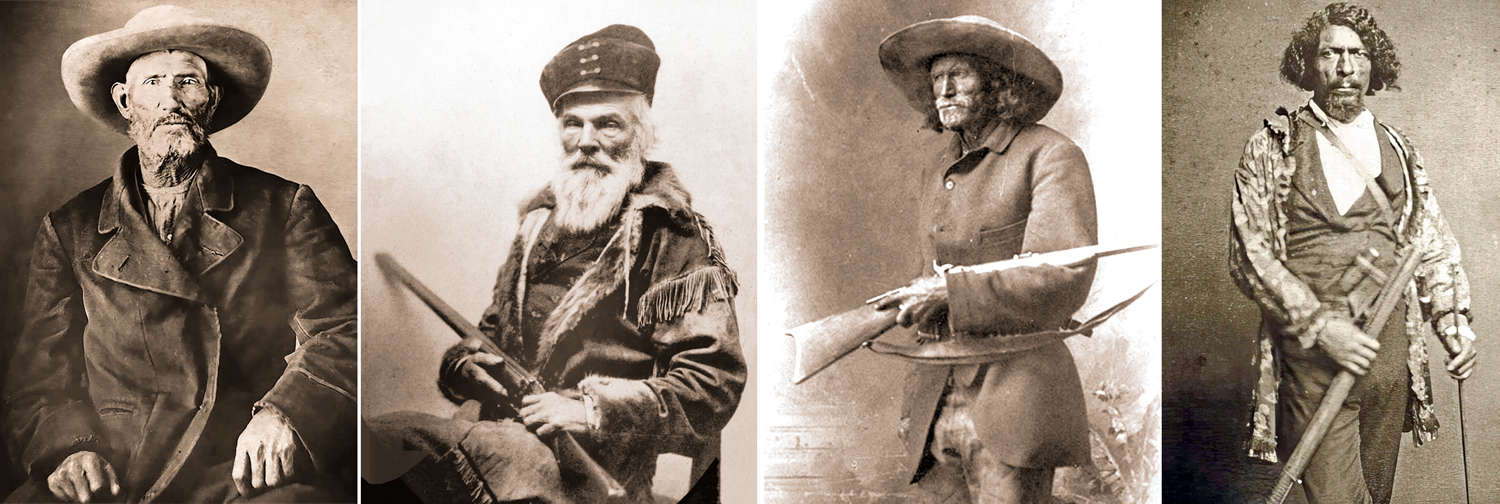
Jim Bridger; Joseph Walker; Jim Baker; Jim Beckwourth

These heroes played out the myth of how we conquered a vast wilderness with rugged individualism and tenacity. It grew into the myth of Manifest Destiny.  
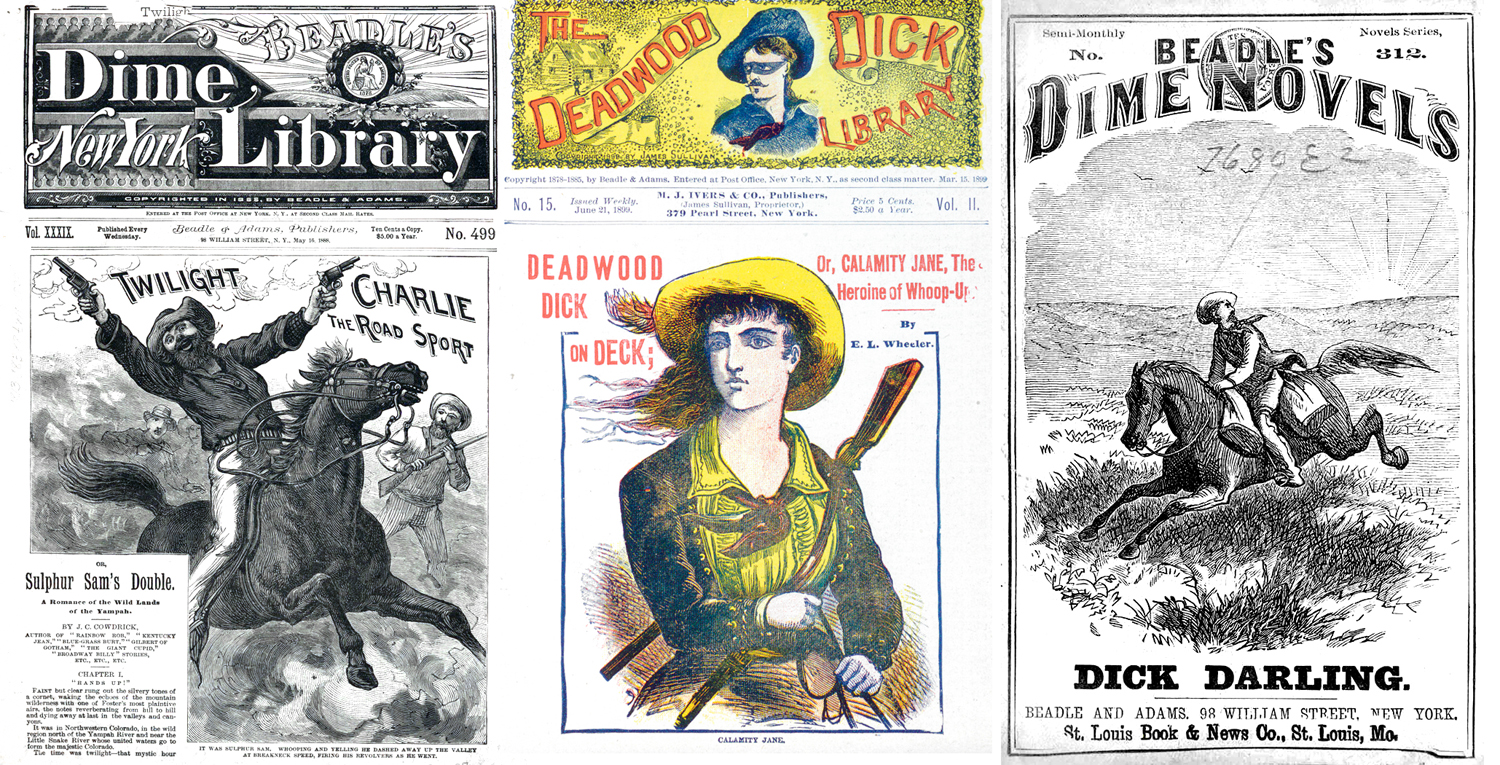
After the Civil War, when economic exploitation of the West began in earnest, with mining and cattle industries, the cowboy took over, with adventurous exploits popularized in a thousand dime novels. Certain names begin showing up with regularity, including Buffalo Bill, Wyatt Earp, Jesse James, Belle Starr. These elided into the early Western movies, including The Great Train Robbery (1903) and Across the Plains (1911), which starred Broncho Billy Anderson, the first cowboy movie star. 
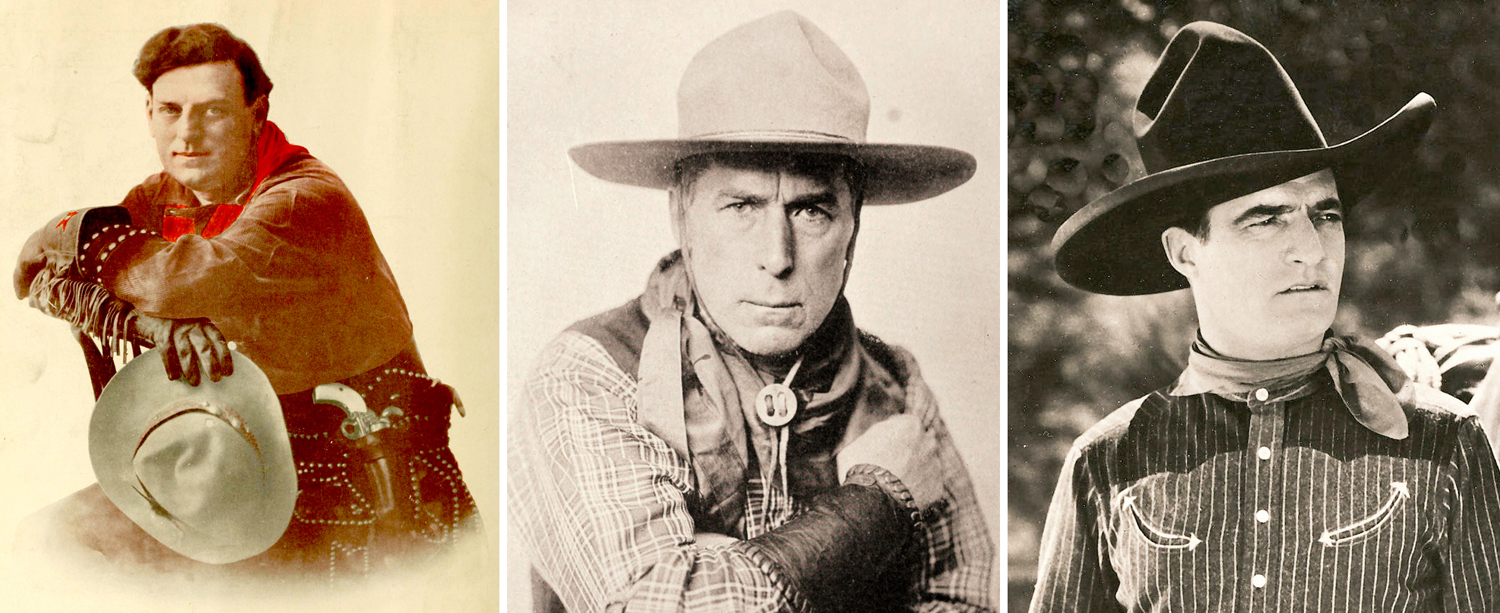
And a split in the myth. On one hand, you had William S. Hart, who attempted a level or realism in costume and plot (matched with a high level of sentimentality), and on the other hand, you had Tom Mix, the show-biz cowboy all duded out with fancy kit. 

The difference was between movies made for general audiences and those aimed at children, mainly young boys. Mix brought glamour to the Western, with fancy cowboy duds and sparkling saddlery to his horse, Tony. 

That split continued into the sound era with hour-long Saturday matinees  with Hoot Gibson, Bob Steele and dozens of others, including John Wayne, who made scores of cheap oaters and even took to trying out as one of the singing cowboys that were briefly popular. 

Through the 1940s, the cowboy movie became stereotyped with stars such as Roy Rogers, Gene Autry and William Boyd as Hopalong Cassidy. There was little attempt at realism. Sometimes they actually fought Nazis. 
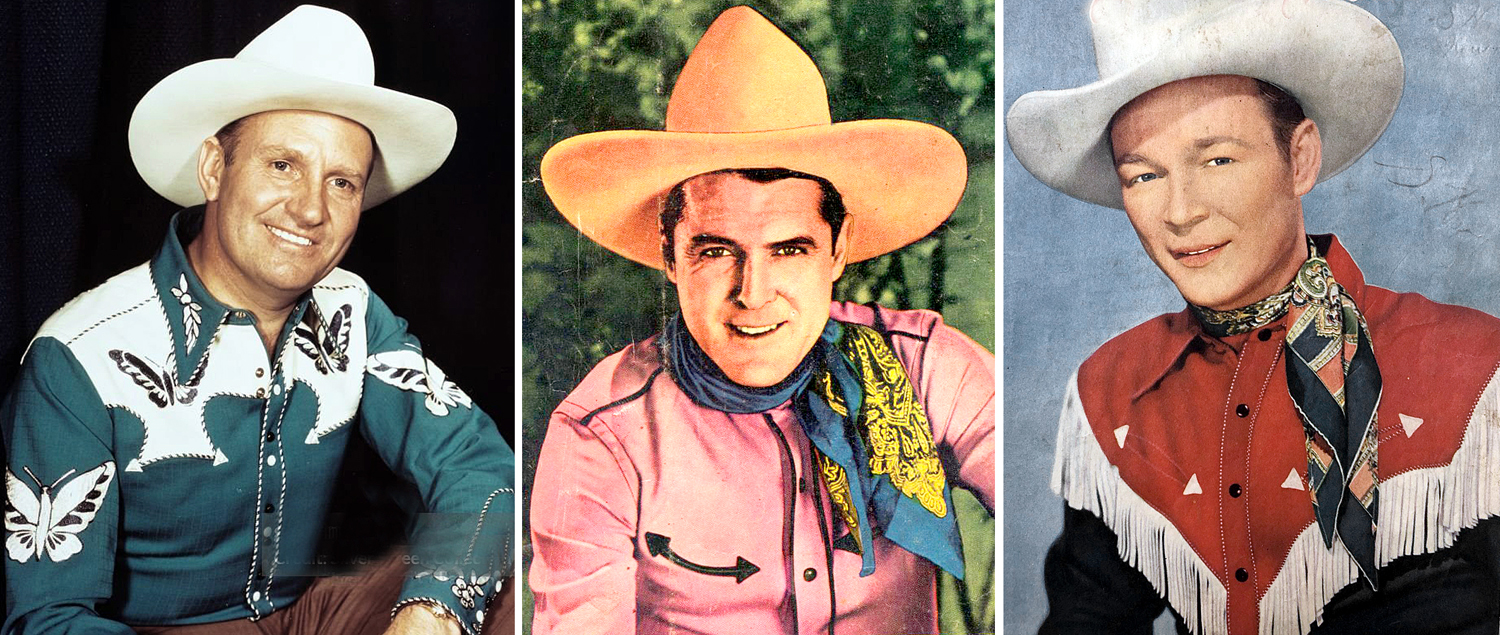
These were the cowboys wearing shirts with crescent pockets and shoulder fringe, and often sported a six-gun on each hip. 
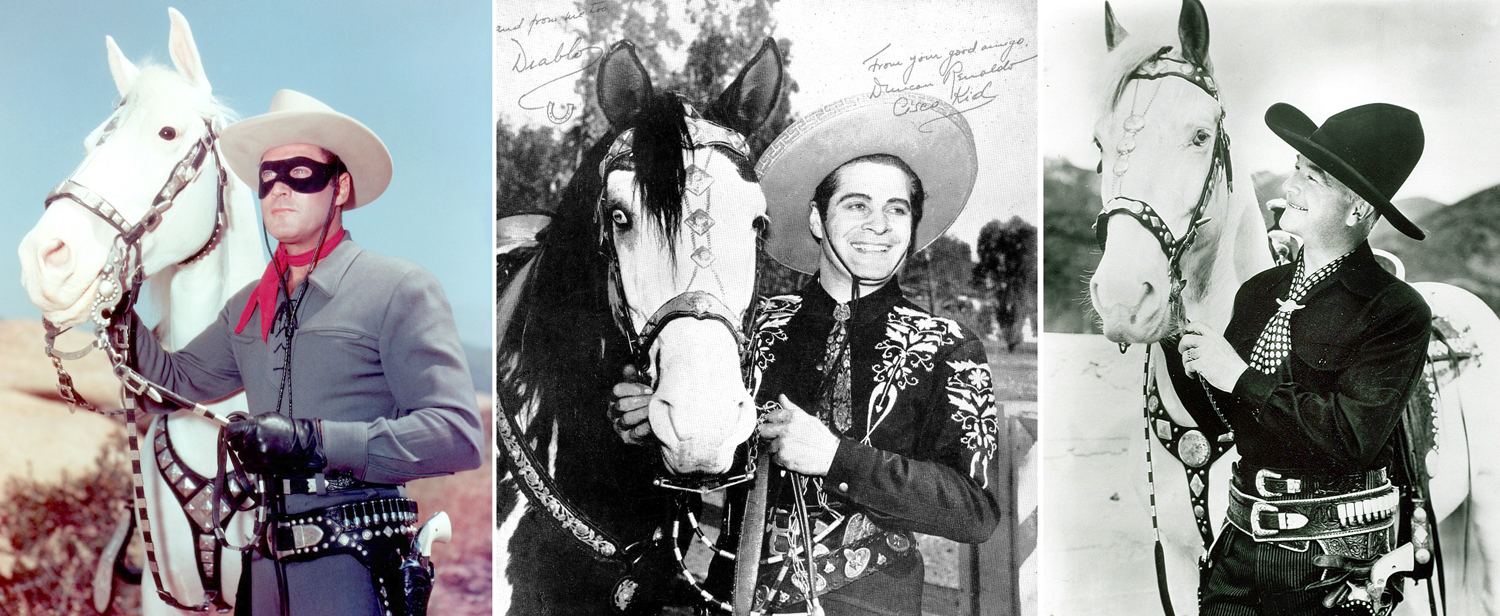
All that carried over into the television era, with a skein of popular Westerns mostly aimed at kids: The Lone Ranger; The Cisco Kid; renewed popularity of Hopalong Cassidy.

Meanwhile, there were always Westerns made for grown-ups, too. From John Ford’s Stagecoach and Howard Hawks’ Red River, through the Budd Boetticher films with Randolph Scott. There was Shane, and High Noon, and Winchester ’73

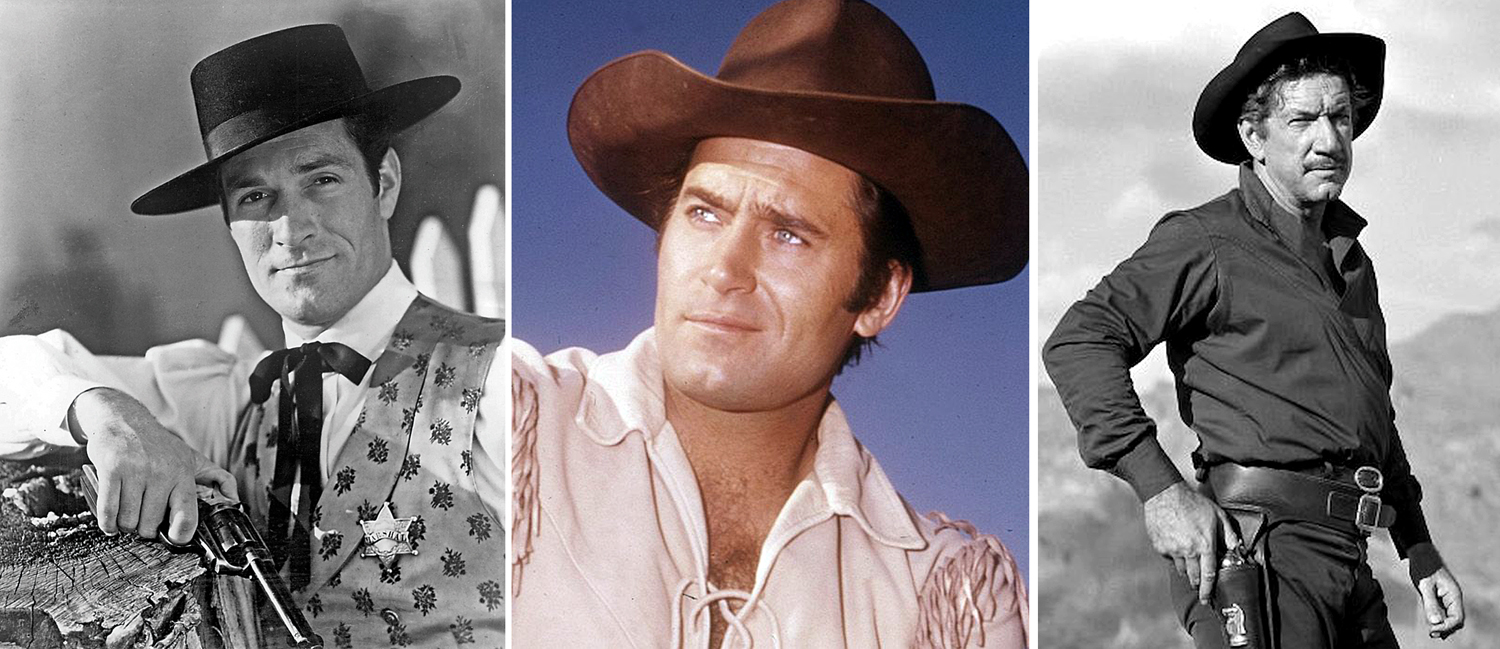
Initially, the lone hero version carried over into the TV era, also, when  The Life and Legend of Wyatt Earp, with Hugh O’Brien, kicked off a decade of evening programing with cowboy heroes, such as Cheyenne, Maverick, Have Gun — Will Travel, Bat Masterson, and The Rifleman. And, of course, Gunsmoke. You can name a dozen others. The market became glutted and then, suddenly, it seems, Westerns were shot dead. 

There came a cultural shift. Maybe it was the Vietnam War, maybe it was fatigue with the cowboy cliches, but when Westerns eventually did return to the silver screen, they took a dark turn. There had been revisionist Westerns before. Indians weren’t always the bad guys. But starting in the 1960s, with films such as Ride the High Country (1962), A Fistful of Dollars (1964) and the subsequent Spaghetti Westerns, Hang’em High (1968) and ultimately, The Wild Bunch (1969), the new Western was brutal, filled with low-lifes and lots, and lots of grime. 

“McCabe & Mrs. Miller”

The trend continued through McCabe & Mrs. Miller (1971) to Unforgiven (1992). Even the more positive films like those from Larry McMurtry novels or with Tom Selleck attempt a more naturalistic view of the times in which they were set. 

Of course, there’s a good deal of overlap in the eras. It’s a question of what predominates in what decade. There have been revisionist Westerns from the earliest years, but this view of the overall shape of the Western in American consciousness over time is, I believe, basically accurate. 

What is not accurate, though, are the Westerns themselves. Admittedly, they were never really intended as realism: They are myth and they are national epic. Our equivalent of the Iliad or the Kalevala. Even those attempting fidelity to historical fact ultimately underline the myth more than the fact. “When the legend becomes fact, print the legend.” 


Actual cowboys

As a kid, I loved the cowboy movies, but as an adult, I am bothered by them. I try to remember they are not meant to be documentaries, but crystallizations of myth, and you don’t expect myth to be realistic. You don’t ask Hercules if he has a mortgage. 

Yet, there are sore thumbs that stick out for me in almost all filmed Westerns; four of them — aspects that scream out: “No, this isn’t the way it was.” And perhaps that shouldn’t matter, but these things make it difficult for me to appreciate Westerns the way I did when I was a kid. 

I have four primary gripes. They are: economy; geography; ethnic diversity; and language. Let’s take them in order. 

Two movies, same location

Towns exist in Western mainly to stand in for civilization. It’s where the people are — the people largely left undefined. They stand in front of general stores or the saloon while the heroes and villains play out the ritual of the gunfight. The same set can be used and reused in many pictures, even as diverse as Westworld and Blazing Saddles. The Western movie town is just the stage set for the plot.

But actual towns are built for economic reasons. There was some industry that needed workers and the workers needed services, and so, towns grew. But in most Western movies, there doesn’t seem to be any functioning economy. There are references to cattle and ranches, but aside from giving rustlers something to do, they barely show up as economic factors.  

While the standard movie Western town has its saloons, its general store, its hotel and restaurant, its stable and blacksmith, there is never a thought to where its residents get the money to pay for their drinks, meals, gingham or horseshoes. A town doesn’t grow for just no reason. 

Even Dodge City, in the 1870s, when Gunsmoke is supposedly set, had a mayor and council and a police force. There would also likely have been an elected sheriff for Ford County and a judge, to say nothing of at least two lawyers, advertising on the front page of the Dodge City Times in 1878. 

Sometimes it is downright preposterous. Consider Clint Eastwood’s High Plains Drifter. Its town is built on Mono Lake in California with no economic base at all — just a hodgepodge of buildings erected near a salty lake that cannot even provide drinking water for the residents.
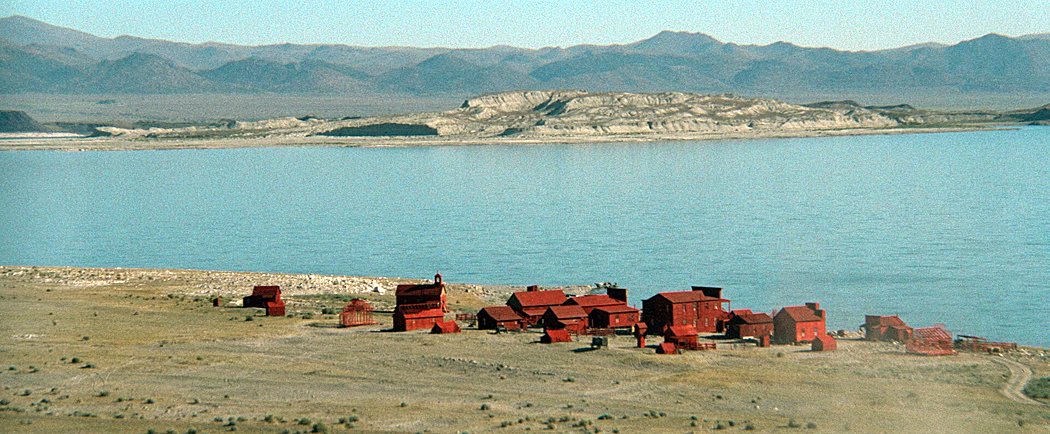
“High Plains Drifter”

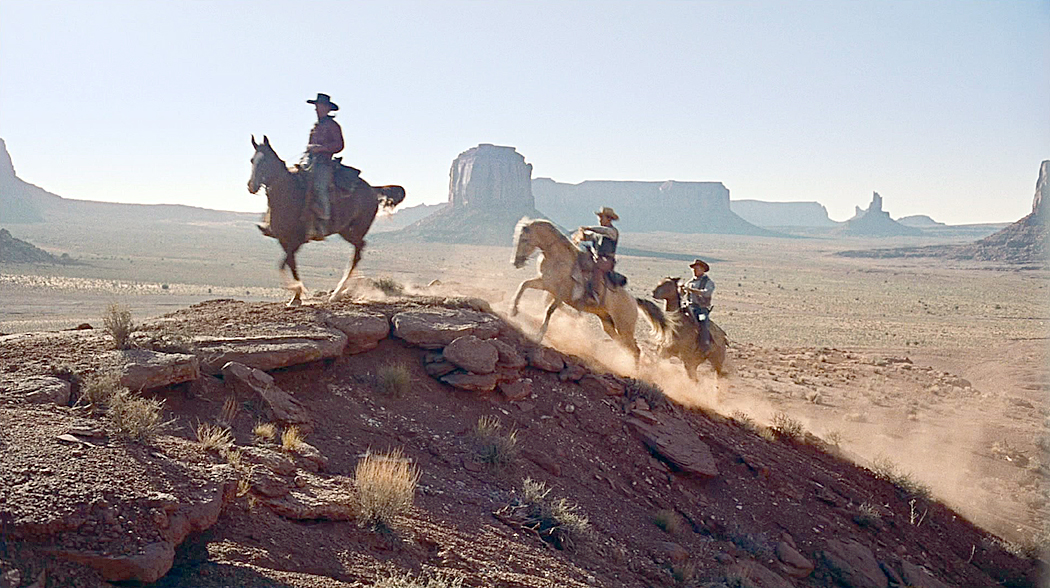
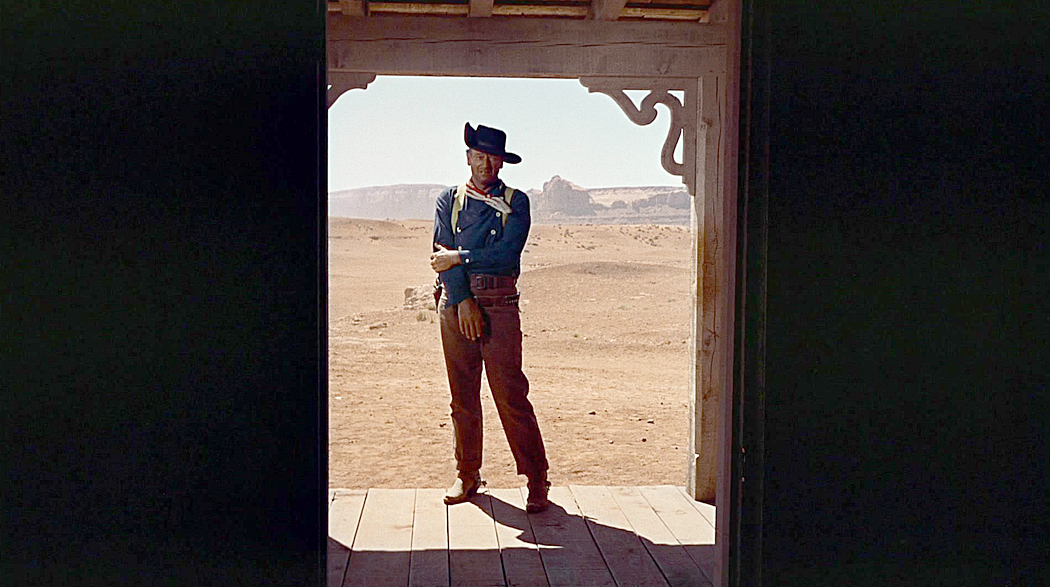
Or, one of my favorites, the supposed farm built in Monument Valley in Arizona, in The Searchers. The idea of such a farm is ludicrous — not made better because the landscape is supposed to stand in for Texas. 
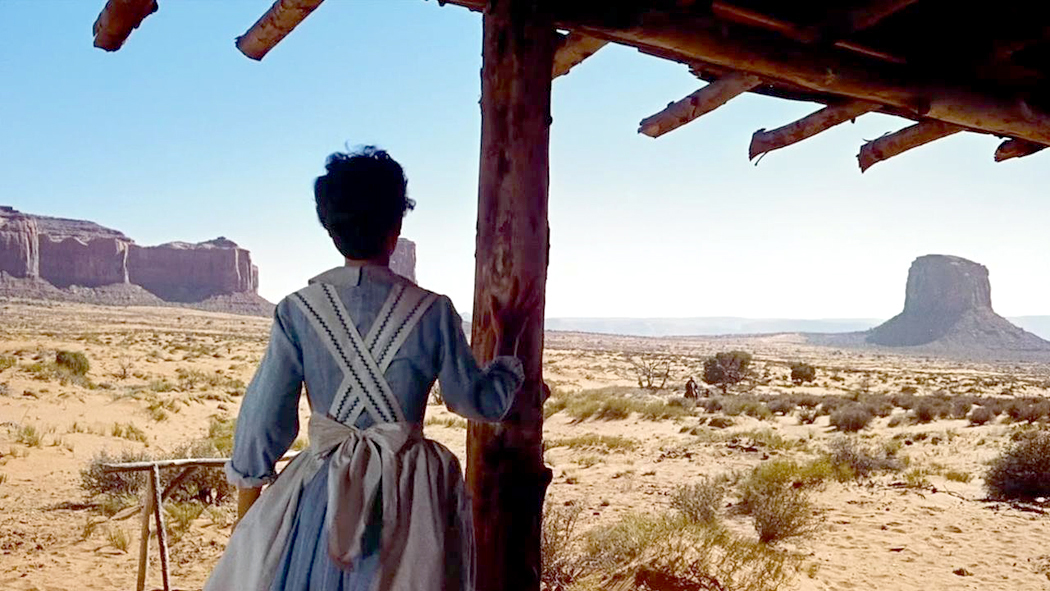
“The Searchers”

 Again, there is a reason towns were built where they were. On rivers for shipping; near mines to provide supplies and provisions; along railroads to ship cattle; near army forts to unload soldiers of their pay.  

As seen in the movies

 My second beef with Westerns is its geography. Most of the Western tales we have historically took place in the most boring landscapes imaginable, in Kansas, Nebraska, Missouri, Texas. 
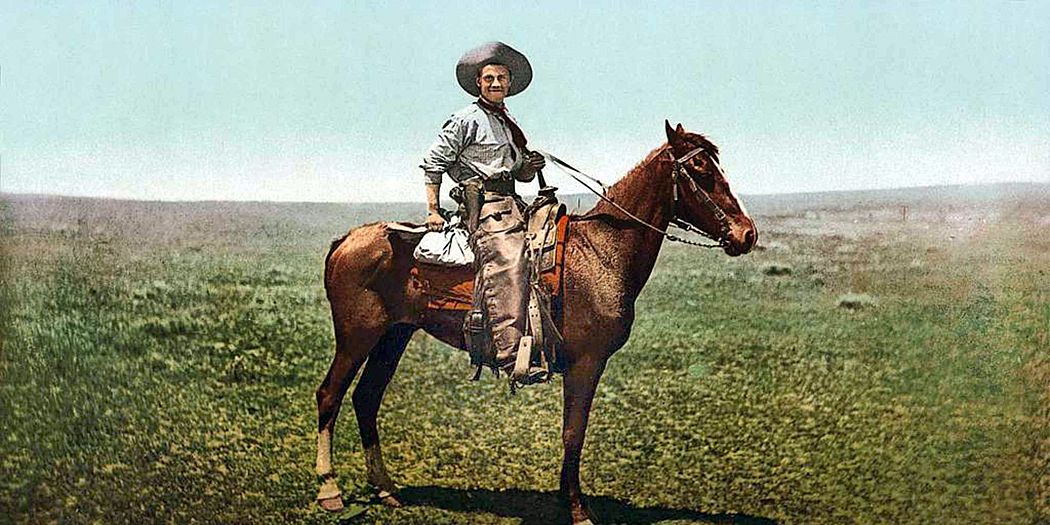
What the actual working West looked like

But such places are not very photogenic. And so, we move them lock, stock and barrel to the Rocky Mountains, the Desert Southwest or California’s Alabama Hills with the Sierra Nevada in the background. 

“Gunsmoke”

Even Gunsmoke, set in Kansas, sometimes shows a mountain range off in the distance sighted down the main street. (I’ll discuss Dodge City in more detail in Part 2 of this essay, to follow). Matt Dillon is sometimes shown accompanying a prisoner, for instance, across the Rocky Mountains or into the desert, hundreds of miles from his jurisdiction. To say nothing of the months it would take to ride there on the back of a horse. 

In the 1950 film Broken Arrow, Jimmy Stewart rush back from Lordsburg, N.M., to Tucson, Ariz., and somehow manages to pass through Sedona, Ariz., on the way — a detour of several hundred miles. Clearly Sedona was more photogenic than the Wilcox Playa or Benson. 
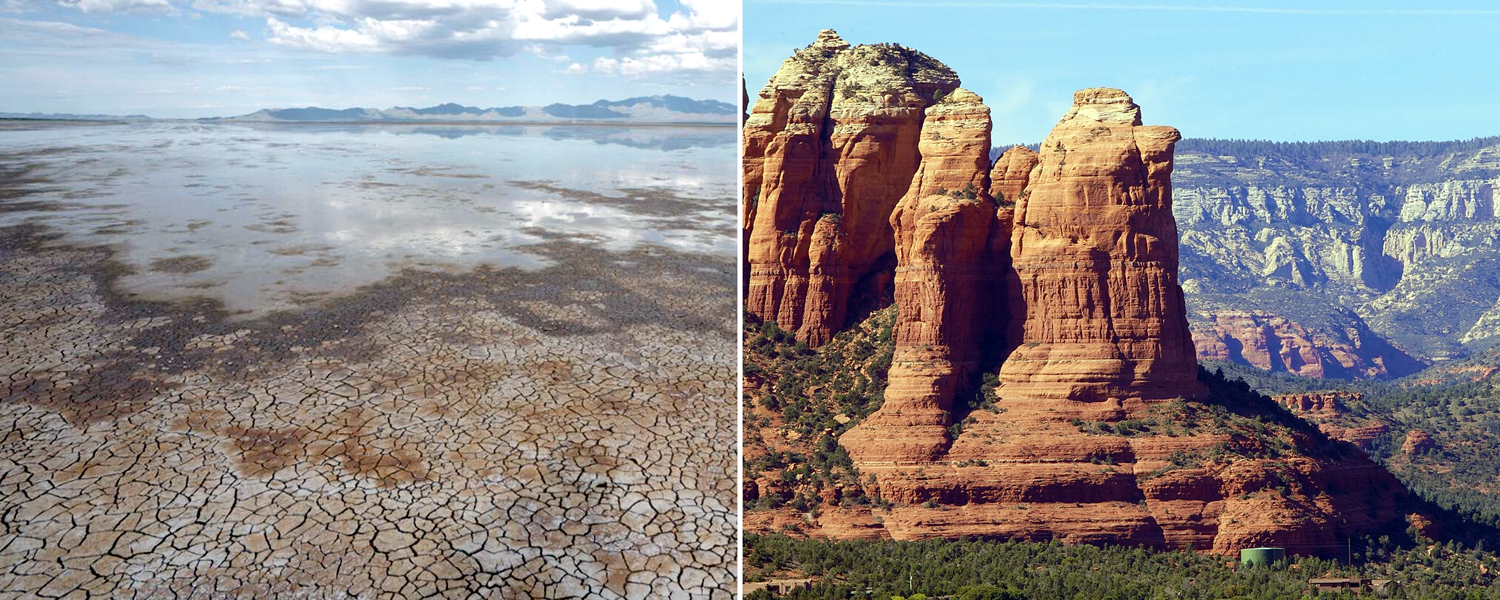
Wilcox Playa (left); Sedona, Ariz. (right)

As in so many Westerns, the West is just a mental landscape, where any buttes and saguaro cactus will do as a setting. 

As a sidenote, related to the geography: Cowboys stranded in the desert reach for their canteen and take a slug of water, or else hold it upside down so we can see it’s empty. I lived in the desert for 25 years and can tell you water is a big deal. Driving through Death Valley one July, I became so dehydrated I developed a headache and was beginning to become disoriented. I had to drink a full gallon of water to recover. A few swigs from a canteen is basically meaningless. 

The third and fourth distortions are perhaps less important, but they nevertheless stick out for me when I’m watching an old Western. There is the lack of ethnic diversity and the matter of speech.
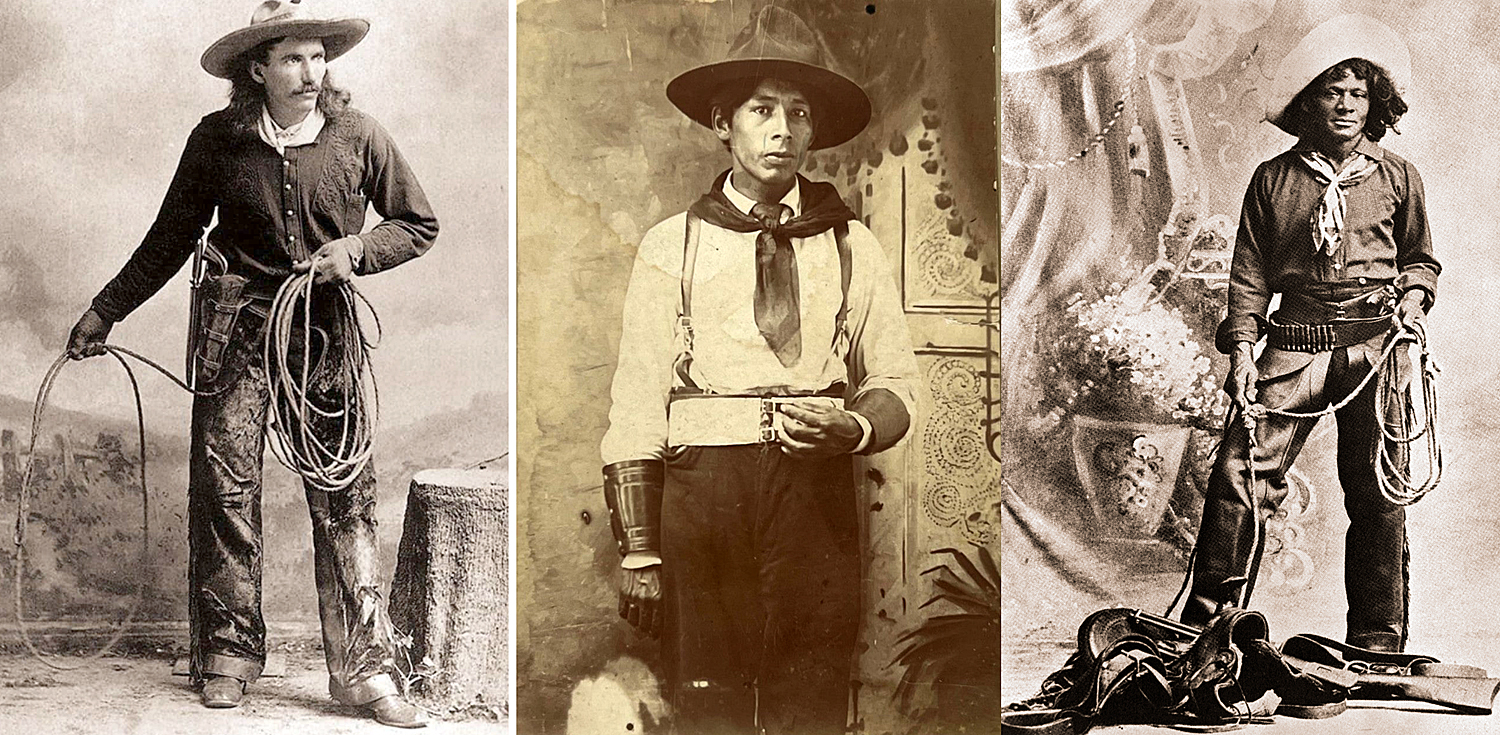
Cowboys: Vanilla, Native American; African American

It’s been documented that about a quarter of all cowboys were African-American. They don’t much show up in the movies (John Ford had his Woody Stroud and at least that was a nod to the fact). And another 20 percent were Mexican and many were Native American. In the towns, segregation was normal, even if the working cowboys out on the plains were mixed. Virtually all the laundries and restaurants in the Old West were run by Asians, mostly Chinese. Other ethnicities were notable factors in various troubles, as the Irish clashed with the English. 
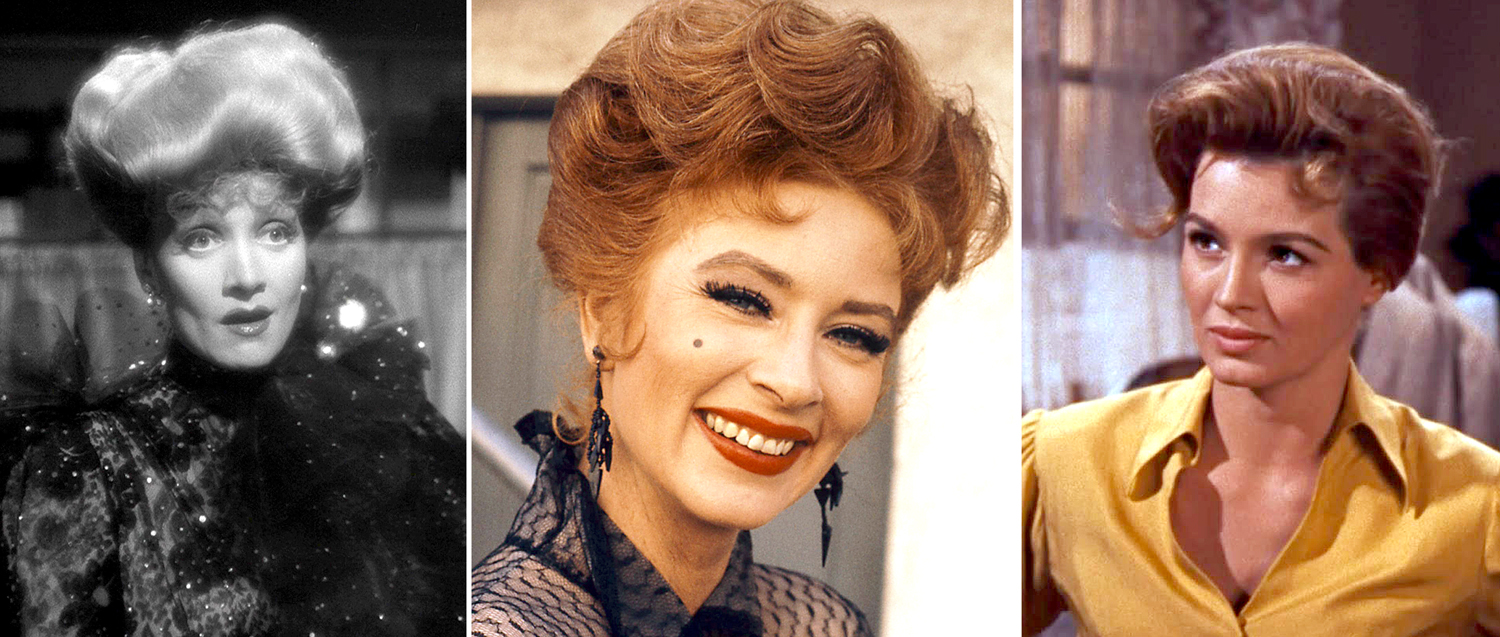
Finally, there is the language spoken in 19th century America, which was much more formal than we take for normal now. In the Western movies, the actors tend to speak in the manner current when the films were made, and that changes over time, just the way the hats went from 10 gallons to three pints, and the brassieres just kept getting pointier. 

The evidence from letters and from novels written during the period tell us that people spoke in longer sentences with fewer contractions. At home, you might relax when talking to your spouse or children, but in public, you attempted to be correct. Even the illiterate miners and farmers spoke more formally. 

This last bothers me less, because if Randolph Scott or John Wayne spoke as they would have in the Old West, the audience might laugh, or at least yawn. How often have you heard parodies of Ken Burns’ Civil War, when they read letters soldiers wrote home? What was normal speech in the 1870s sounds utterly archaic, even stilted, to our ears. 

Next: Part 2 — A look at the historical Dodge City
Recently, Turner Classic Movies ran a cheesy science-fiction film I had never seen before. I grew up on bad sci-fi movies from the 1950s and always enjoyed them, in the uncritical way a 9-year-old watches movies on television: Quality never entered the picture. At that age, oblivious there even was such a thing. It wiggled on the screen; I watched. 
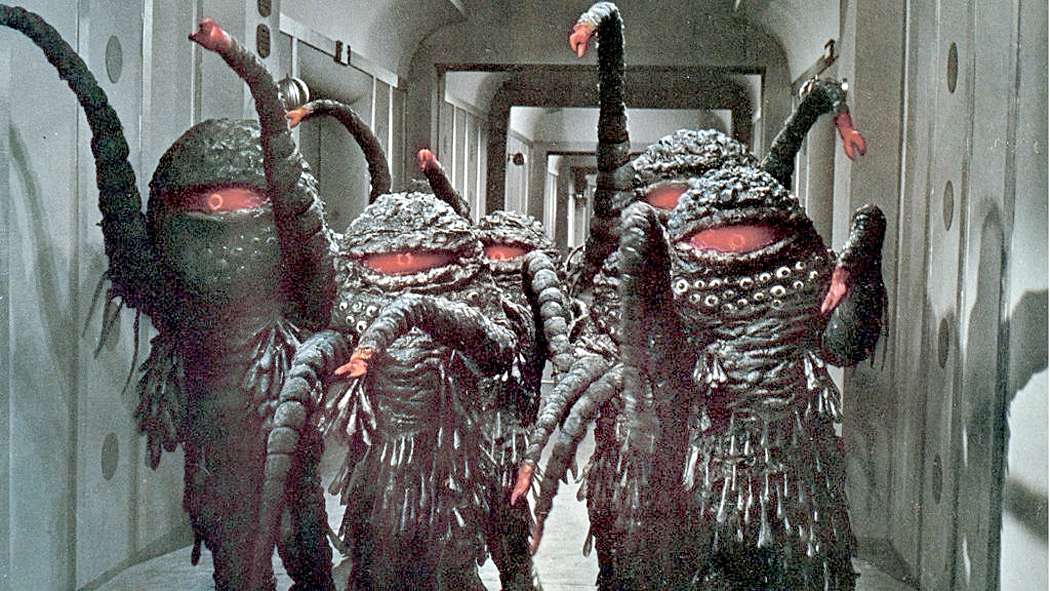
But this film was released in 1968, too late for me. When I had gone off to college, the only films I watched were snooty art films. And so I never got to see The Green Slime. Now, here it was, and it was prodigiously awful. Actor Robert Horton fights an alien invasion of tentacled, red-eyed monsters. 

Everything about The Green Slime was awful: the acting, the lighting, the set design, the special effects — and, of course, the science. Or lack of it. There was the garish color of sets and costumes and the over-use of the zoom lens, the way of made-for-TV movies of the era. I have outgrown my open-hearted love of bad science fiction. I stared in wonder at the horribleness I was seeing on the TV screen. 

And it was the acting, more than anything, that appalled me. Why were these actors so stiff, wooden, even laughable? And something I guess I had always known, but never really thought about jumped to mind: Actors are at the mercy of writers. The dialog in Green Slime was stupid, awkward and wooden.

There is some dialog so leaden, so unsayable, that even Olivier can’t bring it off. Robert Horton, while no Olivier, was perfectly fine on Wagon Train, but here he looked like he was lip-synching in a foreign tongue. 

“Wait a minute — are you telling me that this thing ‘reproduced’ itself inside the decontamination chamber? And, as we stepped up the current, it just … it just grew?”

I remember, years ago, thinking that Robert Armstrong was a stiff. I had only seen him in King Kong and thought he was a wooden plug of an actor (not as bad, perhaps as Bruce Cabot, but still bad. But years later, I’d seen him in other films where he was just fine. Even in Son of Kong, he was decent. But no one, absolutely no one can pull off a line like “Some big, hardboiled egg gets a look at a pretty face and bang, he cracks up and goes sappy!”

Even in a famous movie, clunky dialog can make an otherwise fine actor look lame. Alec Guinness and James Earl Jones may be able to pull off the unspeakable dialog of the original Star Wars, but for years, I thought Mark Hamill was a cardboard cut-out. It was only when seeing him in other projects I realized that Hamill could actually act. I had a similarly low opinion of Harrison Ford because of what he was forced to mouth in those three early franchise films. George Lucas did them no favors. 

There is certainly a range of talent in movies and some genuinely untalented actors who got their parts by flashy looks or sleeping with the producer. But I have come to the opinion that most (certainly not all) actors in Hollywood films are genuinely talented. Perhaps limited, but talented, and given a good script and a helpful director, can do fine work. 

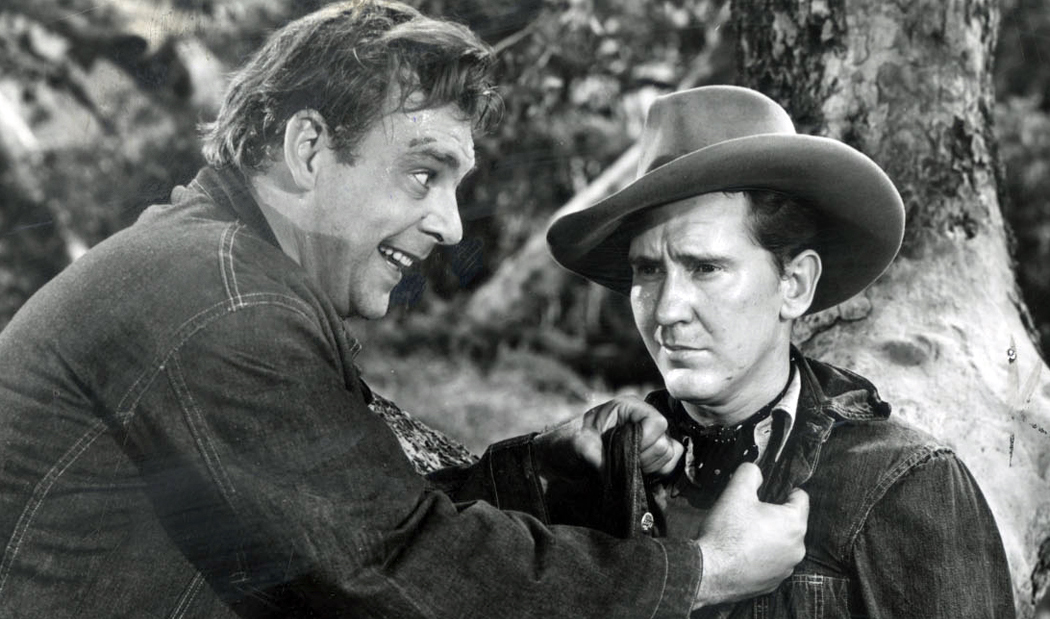
One thinks of Lon Chaney Jr., who is wooden, at best, as the Wolfman. But he is heartbreaking as Lenny in Of Mice and Men — perhaps the only chance he ever got to show off what he was actually capable of. 

“Lon Chaney was a stiff, but he had Lenny to redeem him,” said my brother Craig, when we discussed this question. Craig can be even more critical than me. 

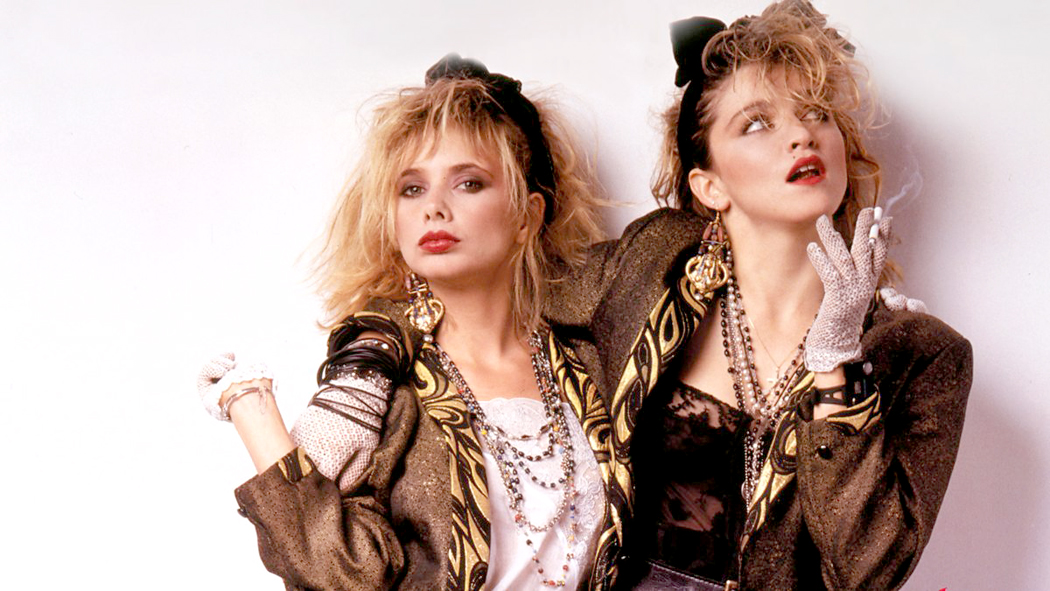
He continued, “I’ve been trying to think of the worst actors ever — someone who has never said a word like a human being. There are a lot of people who got into a movie because they were famous for something else (Kareem Abdul-Jabbar, Joe Louis, Audie Murphy) so it’s hard to judge them fairly as actors, like you can’t criticize a pet dog for barking the national anthem but not hitting the high notes. But even Johnny Weissmuller was pretty effective in the first Tarzan; Elvis had Jailhouse Rock where he actually played a character; and Madonna can point to Desperately Seeking Susan without shame. (Everything else, shameful. There just isn’t enough shame in the world anymore.)

“There are any number of old cowboy stars who couldn’t speak a believable line of dialog and that can’t be totally blamed on the writing. (Gabby Hayes rose above it.) There are bad actors who still had some life and energy about them that made them fun to watch. Colin Clive was silly, and he made me giggle, so he was entertaining. And  Robert Armstrong. But there’s just no excuse for Bruce Cabot.

“I’ve never actually seen a Steven Seagal movie,” Craig said, “but I know enough to say with conviction that he should have been drowned as a baby.”

I said Craig can be tougher than me, but here, I have to concur. 

“It’s probably not fair to pick out silent movie actors for being silly and over the top, but there is Douglas Fairbanks to prove you can be silent and great.”

Silent acting was a whole different thing, and hard to judge nowadays. As different from modern film acting as film acting is from acting live on stage. The styles don’t often translate. John Barrymore was the most acclaimed Shakespearean actor in America in the early years of the 20th century, but his style on celluloid came across as pure ham. (Yes, he was often parodying himself on purpose, but that doesn’t gainsay what I am saying about acting styles). 

Every once in a while, I see some poor slob I always thought was a horrible actor suddenly give an outstanding performance. Perhaps we have underestimated the importance of the casting director. A well-placed actor in a particular part can be surprising perfection. There is creativity in some casting offices that is itself an artform. You find the right look, voice, or body language, and a minor part becomes memorable. Some actors are wonderful in a limited range of roles. I can’t imagine Elisha Cook as a superhero, but he is perfect as a gunsel. 

And Weissmuller was the perfect Tarzan before his clumsy line reading became obvious in the Jungle Jim series. I am reminded of Dianne Wiest in Bullets Over Broadway: “No, no, don’t speak. Don’t speak. Please don’t speak. Please don’t speak.”

Keep in mind, actors are subject to so many things that aren’t in their control. In addition to good writing, they need a sympathetic director, decent lighting, thoughtful editing, even good costume design. Filmmaking is collaborative and it isn’t always the actor’s fault if he comes across like a Madame Tussaud waxwork. I’ve even seen Charlton Heston be good. 

In reality, I think of film actors much as major league ballplayers. The worst baseball player on a major league team may be batting under the Mendoza line, and even leading the league in fielding errors, but in comparison with any other ballplayers, from college level to minor leagues, he is superhumanly talented. Even Bob Uecker managed to hit a home run off Sandy Koufax. I doubt any of us could have done that. And so, we have to know who we’re comparing them to.

I saw a quote from Pia Zadora the other day (she just turned 70) and with justifiable humility, she said, “I am often compared to Meryl Streep, as in ‘Pia Zadora is no Meryl Streep.’” Still, compared to you or me, she is Bob Uecker. 

I have had to reassess my judgment of many actors. I had always thought of John Wayne as a movie star and not an actor. But I have to admit, part of my dislike of his acting was disgust over his despicable political beliefs. And I thought of him as the “cowboys and Indians” stereotype. 

But I have now looked at some of his films with a clearer eye, and realize that, yes, most of his films never asked anything more from him than to be John Wayne — essentially occupying a John Wayne puppet suit — but that when tasked by someone such as John Ford or Howard Hawks, he could actually inhabit a character. “Who knew the son-of-a-bitch could actually act!” Ford himself exclaimed. 

But there it is, in The Searchers, She Wore a Yellow Ribbon, Red River, The Quiet Man, Rio Bravo, The Shootist. Those were all true characterizations. (Does all that cancel out The Alamo or The Conqueror or The War Wagon, or balance all the undistinguished Westerns he made? We each have to judge for ourselves). 

Even in his early Monogram oaters, playing Singing Sandy, he brought a naturalness to his presence that is still exceptional in the genre (and researching Wayne, my gasts were flabbered at how good looking he was as a young man. So handsome he was almost pretty. And that hip-swinging gait that predates Marilyn Monroe. “It’s like Jell-O on springs.” It seems notable that so much feminine could become the model of such lumpen masculinity.)

And even great actors have turned in half-ass performances, or appeared in turkeys. In Jaws: The Revenge, Michael Caine has to utter things like, “Remind to tell you about the time I took 100 nuns to Nairobi!” Caine famously said, “I have never seen the film, but by all accounts it was terrible. However I have seen the house that it built, and it is terrific.”

Even Olivier had his Clash of the Titans.

Actors have to work, and they don’t always get to choose. “An actor who is not working is not an actor,” said Christopher Walken. The more talented actors sometimes get to be picky, but the mid-range actor, talented though he or she may be, sometimes just needs the paycheck. 

I sometimes think of all the jobbing actors, the character actors of the 1930s, working from picture to picture, or the familiar names on TV series from the ’50s and ’60s — the Royal Danos, the John Andersons, the Denver Pyles, dressed as a grizzled prospector for a week on one show, going home at night for dinner and watching Jack Benny on the tube, and then driving back to the set the next morning and getting back into those duds. And then, next week dressing as a banker for another show, putting together a string of jobs to make a living. And all of them complete professionals, knowing what they are doing and giving the show what it needs. A huge amount of talent without ever having their names above the title. 

Royal Dano times four

And so, I feel pity for those actors of equal talent who never broke through, or who were stuck in badly-written movies and couldn’t show off their chops. When I watch reruns of old episodic TV, I pay a good deal more attention than I ever did when I was young, to all the parts that go into making such a show. I notice the lighting, the editing, the directing, and most of all, the writing. The writing seems to separate, more than anything else, the good series from the mediocre ones. And how grateful those working actors must feel when they get a script that gives them a chance to shine. 

My brother-in-law, Mel Steele, is a painter whose work I not only admire, but truly enjoy. They give my eyes great pleasure. 

We visit Mel and his wife, Deborah, a few times each year and usually I bring along a big bag of DVDs, mostly art or foreign films. Mel and I share a common taste for such things.

Indeed, our tastes match up surprisingly well, not only in movies, but in music and art as well. We love the more difficult music, like Bartok quartets or 20th century operas, and for all that we get along admirably. 

But there is a sticking point, a point of contention that we have never been able to resolve. There is a movie he hates and I love; and one I cannot stand that he adores. And I see no way of settling the dispute. 

Mel grew up in Madison, N.C., in the 1940s and ’50s and only a block from his house was the local movie theater. He and his sister went to the movies at least once a week growing up. They saw all the usual Hollywood offerings, with Burt Lancaster, Greer Garson, Veronica Lake, Dorothy Lamour, Kirk Douglas — you get the picture. 

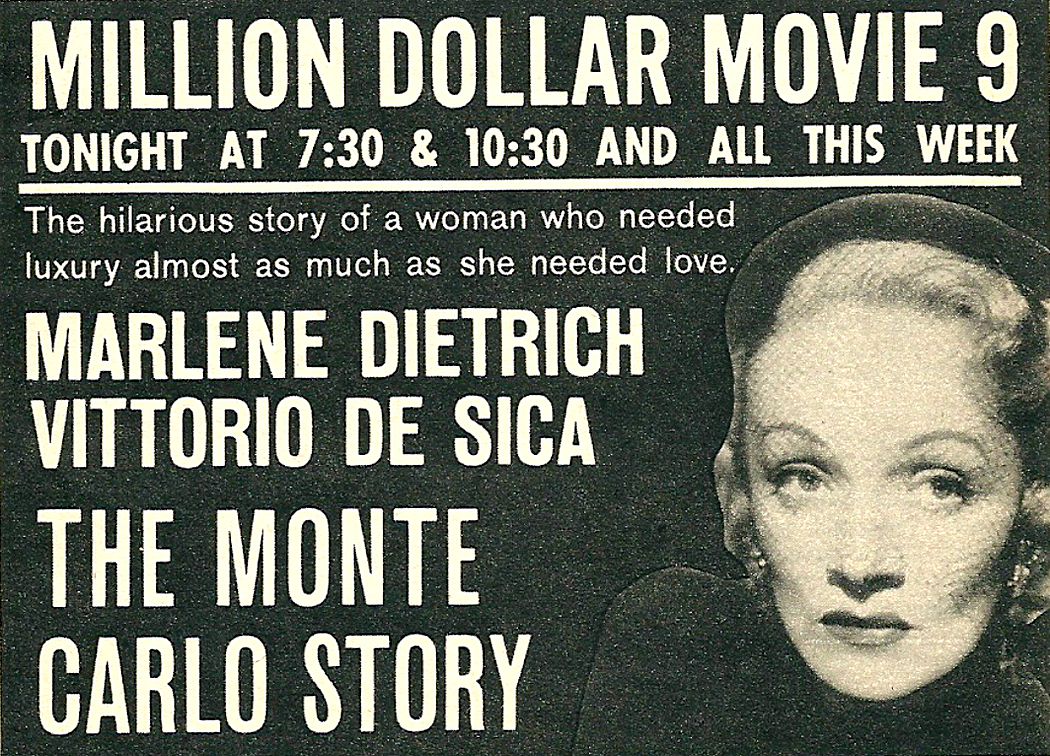
I am a few years younger than Mel and since there was no movie house where I grew up, my film education came via television — old movies packaged by studios for rebroadcast on fledgling TV channels, such as WOR-TV from New York and its Million Dollar Movie. I was fed a lot of films from the 1930s, and, of course, all those marvelous-awful sci-fi films made for a pittance with Richard Carlson or Sonny Tufts. 

I don’t know if our different childhoods made the difference, or what, but that sticking point revolves around the best Western (not the motel chain). I mentioned once that I love The Searchers from 1956, a film in which John Wayne shows that he can actually act. It is a tough film, in which Wayne is an unsympathetic character, a bigot returned from the Civil War, having fought for the Confederacy. For my money, it is the best Western ever made, highlighting the shadings of culture clash and personality. 

“Can’t stand the thing,” says Mel. “Can’t stand John Wayne.” 

Indeed, it seems as if the presence of Wayne is the primary objection Mel has to the film. And I suspect that Mel’s dislike of Wayne has more to do with Wayne’s later right-wing politics — and the number of undistinguished star vehicles he made as an ever-paunchier alpha male — than with Wayne’s actual performance in The Searchers

It is clear that Wayne didn’t always have to act, and could rely on nothing more than his screen persona in lesser films, such as North to Alaska, The Comancheros, McLintock!, Hatari, or The War Wagon. He seemed always to be playing a caricature of himself. 

And then, there are those absolutely embarrassing moments in The Alamo or The Green Berets. Wayne’s shallow jingoism does not wear well. Nor does his support of the Vietnam War or Richard Nixon. 

I used to share Mel’s disdain for John Wayne. The actor was pretty much a punchline. Really? Genghis Khan in The Conqueror? Gimme a break. 

I first became acquainted with Wayne when I was a little kid, watching ancient Westerns on TV, where he was Stony Brook in the Three Mesquiteers films, or as “Singing Sandy” in a bunch of old Republic or Monogram Westerns. Compared with some of the old cowboys, Wayne had a graceful presence on screen, if no great acting chops. 

Only as an adult, did I come across films in which Wayne played a character not merely himself. After seeing Howard Hawks’ Red River, director John Ford famously said, “Who knew the big lug could actually act?” Well, he could, even if he didn’t always feel the need to. 

Then there are such films as The Man Who Shot Liberty Valance and She Wore a Yellow Ribbon, where he convincingly played a part 20 years older than he was at the time. And most of all, perhaps, his role as John Books in The Shootist, his final film, in when he seems to want to prove once and for all he can be an actor and not just a star. 

Mel, of course, was having none of it. “Can’t stand the guy.” 

In contrast, Mel proclaimed that the greatest Western ever is Shane, a movie I cannot abide. For me, it is the epitome of Hollywood phoniness. It is pure artifice, with not a believable moment in it. 

Even its widescreen projection on release was fake: Paramount wanted something to compete with the then-new Cinemascope and Panavision — both anamorphic widescreen formats — and so they cropped the original Academy Ratio Shane at top and bottom to make a phony widescreen version. 

“But it’s so beautiful,” Mel says. “Look at that landscape.” Yeah, I feel, a rip-off of Ansel Adams, with the Teton Mountains prominent in the background. It seems so self-consciously meaningful, so arty, so pretentiously “mythic,” that I cannot take it seriously. There is not a second in it that feels real — apart from the acting of Jean Arthur, who is the only fully human character in the film. These are not people but ideas moving around in the plot, as if they each wore a sign telling us what they signify. Again, only Arthur feels like a real person. 

Allegory, for me, is always a tough sell. 

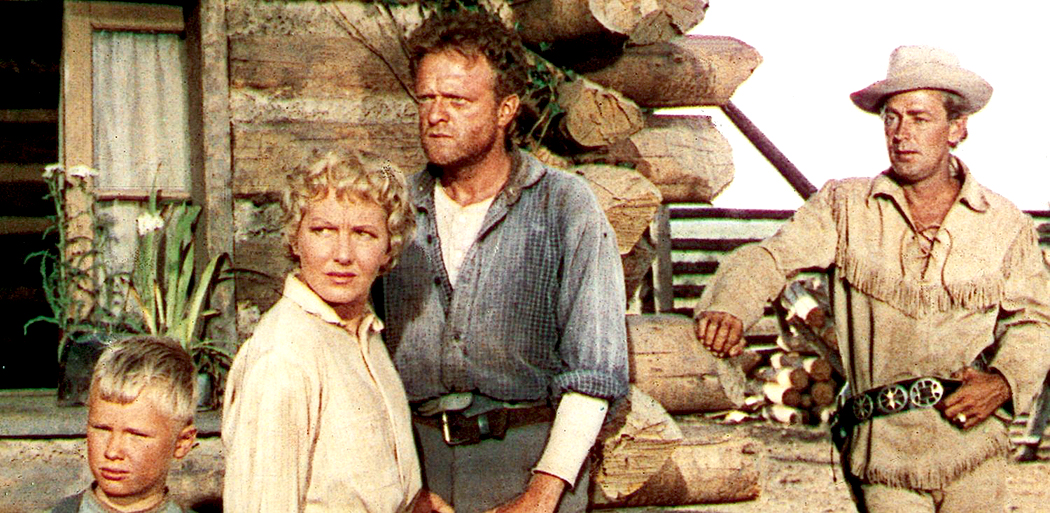
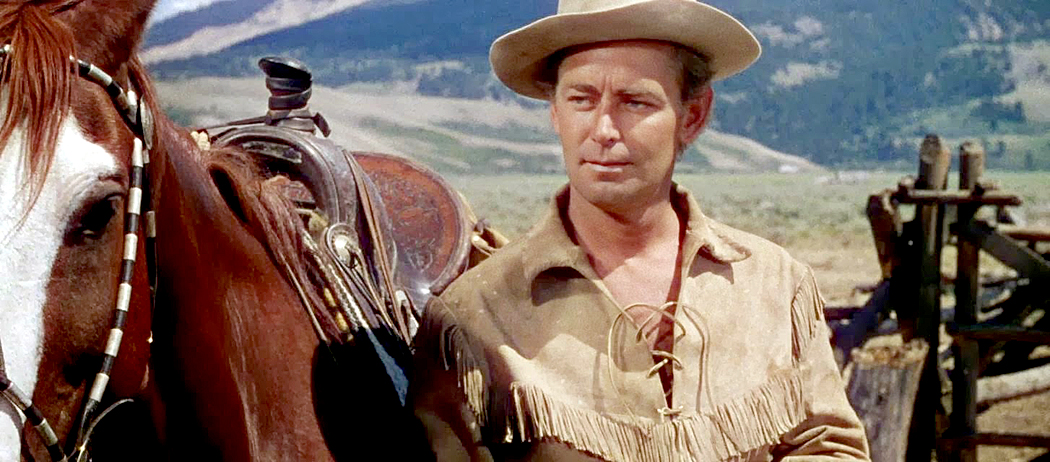
I’ve never been able to warm to Alan Ladd. He is one of those movie stars from that era of Hollywood movie in which the dying studios made turkey after turkey. 

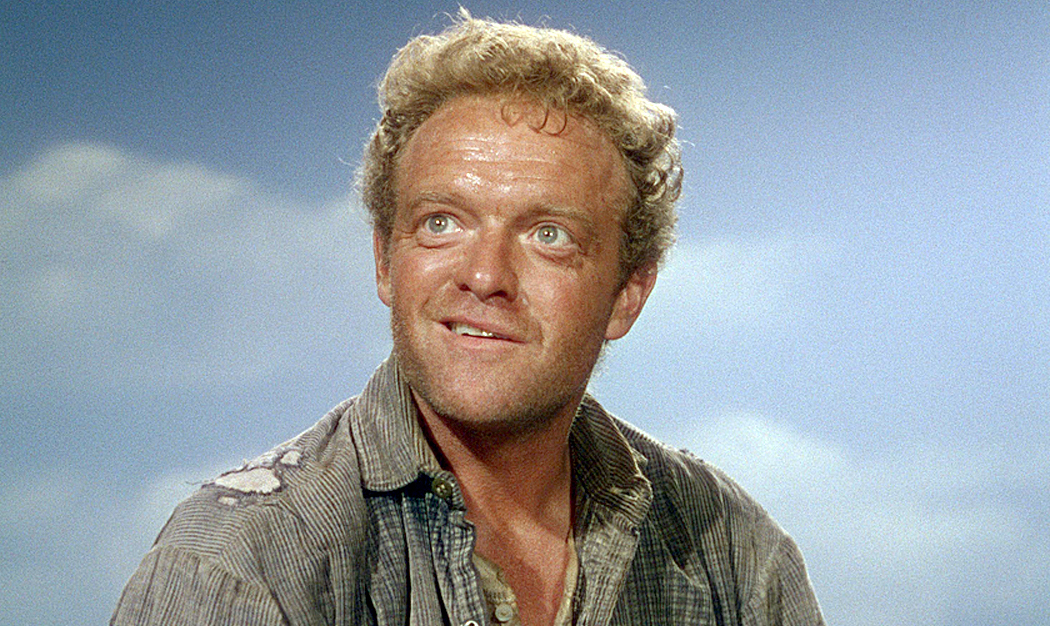
Van Heflin always feels to me like someone the studios felt they could turn into a major star, but never managed to. 

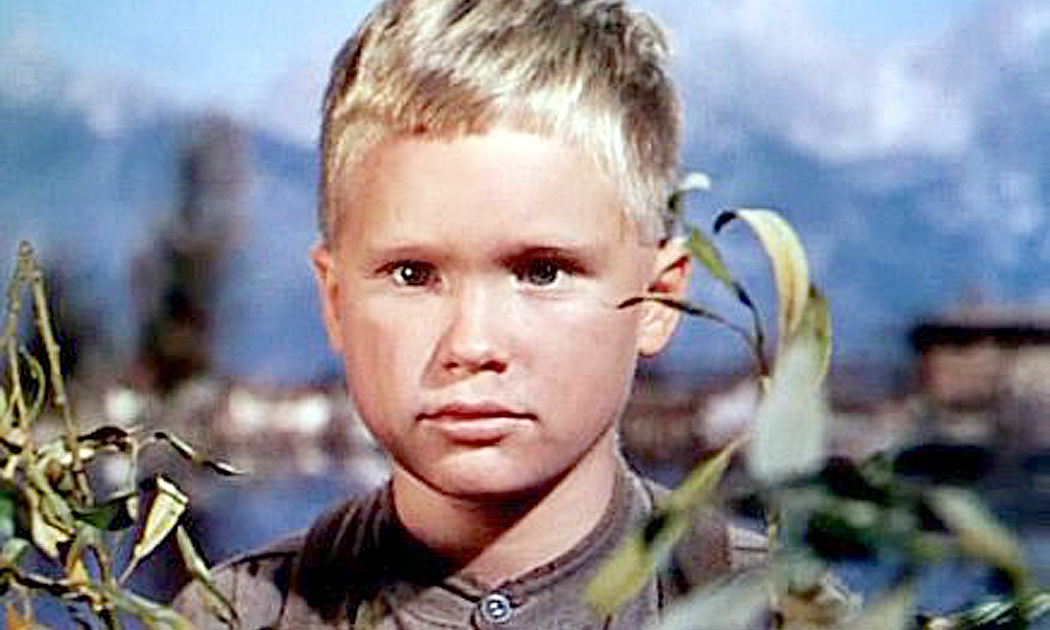
And Brandon deWilde is a blank-faced homunculus, as if that look of animal stupidity  should be taken as the face of innocence. Actually the kid gives me the creeps. 

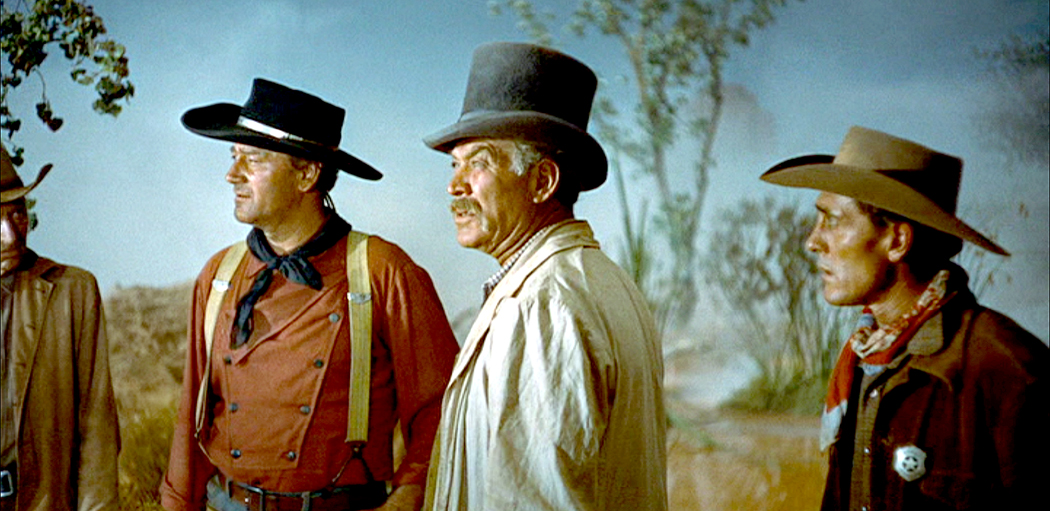
The Searchers, in contrast, is filled with all the great character actors that John Ford used over and over. They are people, not cardboard cutouts.

Perhaps I have overstated my case. There are other great Westerns that may be as good as The Searchers. Ford probably made them. Modern Westerns tend to be more period-aware and historically better informed. And perhaps Shane isn’t the worst Western. There are plenty of hack Westerns with much less ambition than George Stevens brought to his work. 

But the fact is, the comic disagreement Mel and I had was about these two films in particular. I was not able to persuade him; he was not able to persuade me. Let’s leave it at that. 

Dog and cat battle dan kincaidDrawing by Dan Kincaid


“It’s Je-Ne-Vee-Ev, not Jeneveev,” said Stuart, introducing his live-in, Genevieve, the viola player. She is 50-ish, stylish and thin, with a shock of white in her hair, like Susan Sontag. She was born in Belgium and takes the same offense as Hercule Poirot for being assumed French. She has a throaty voice in the same register as her viola, although her instrument probably didn’t spend a lifetime smoking unfiltered cigarettes.

We were having dinner, the four of us: Stuart and Genevieve and my wife and me. Stuart did the cooking; Genevieve poured the wine. And oh, how a little Beaujolais can get Stuart talking.

“It has been said that there are two kinds of people in the world: those who divide the world into two kinds of people and those who do not. But I’ve never met any of those.”

And Stuart was off to the races.

“Everybody and his brother-in-law splits the world into two categories: male and female; conservative and liberal; Gene Autry fan and Roy Rogers fan; those who get it, and those who don’t.”yeats

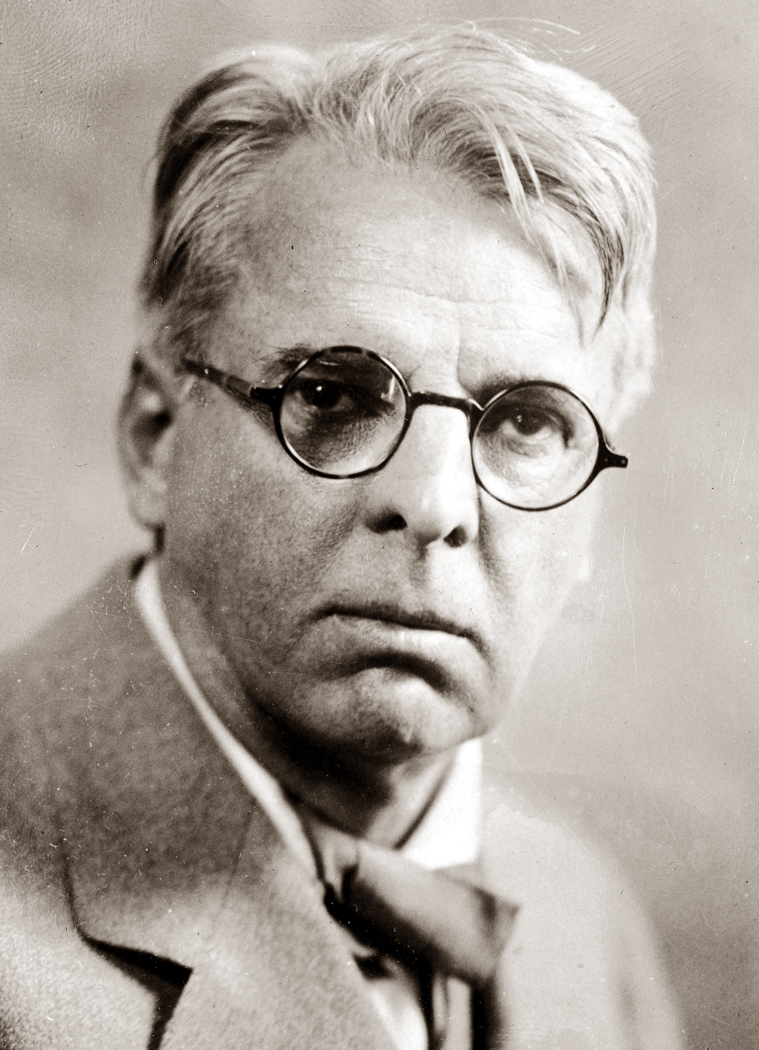
Stuart had just finished reading A Vision by William Butler Yeats. Stuart had an epiphany, he said.

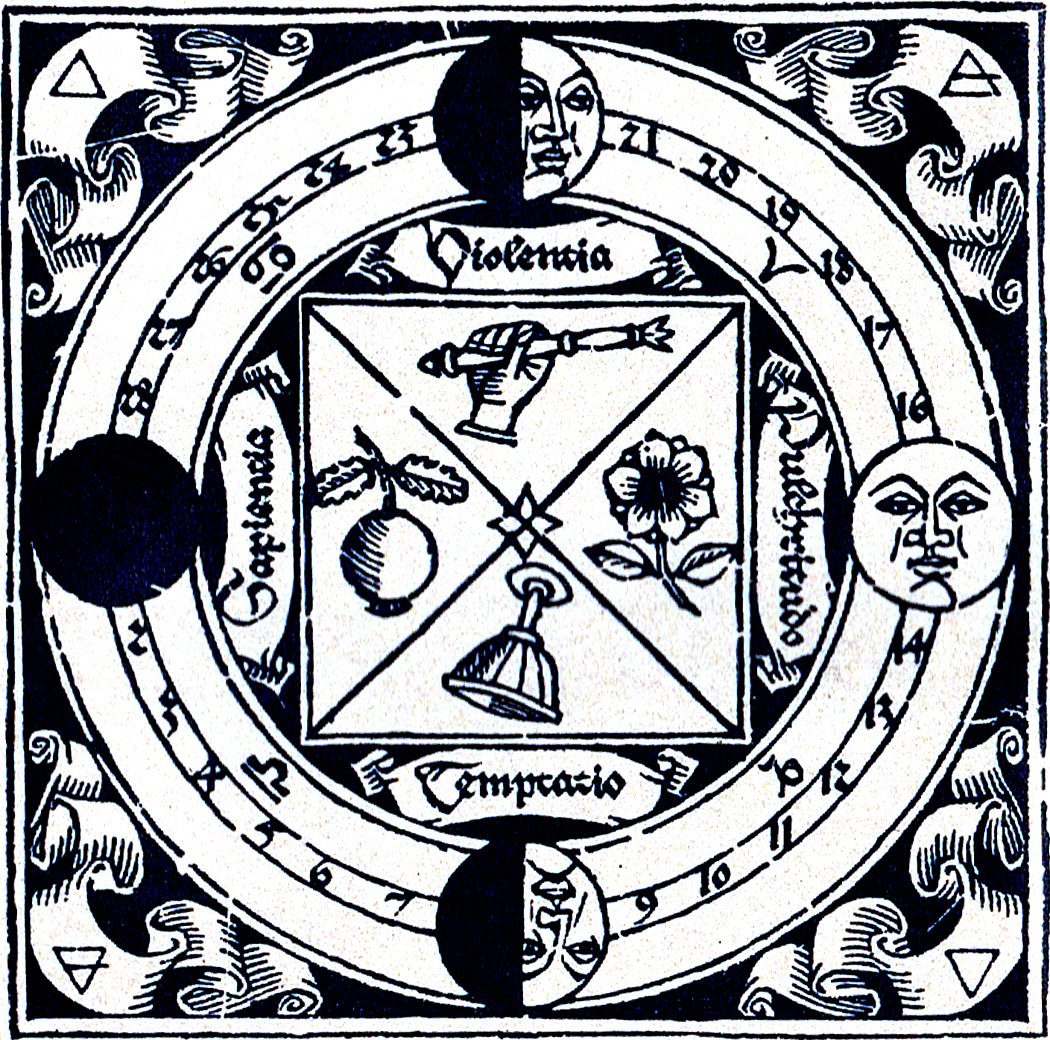
“Yeats divides human personalities up into 28 ‘phases,’ like the phases of the moon. It’s really brilliant, if a little loony. Ideally, there is no Phase 1 or Phase 15 — the first and middle phase of the moon’s monthly round of waxing and waning: The new and full moons; these are too pure and unmixed to exist in the real world. But all the phases are defined by their ‘tinctures’ of two essential personality engines, which Yeats calls the ‘primary’ and the ‘antithetical.’ Simply put, the lumpy and the poetic.

“He gets quite lawyerly in parsing the bits. And I had this vision of my own, although it is somewhat simpler to understand.vision phases

“It is that underlying every other distinction is this basic, fundamental one: between dog and cat. You can have your phases of the moon, but really, but all those personalities are either canine or feline.”

“You mean, like a dog-person or a cat-person?” my wife asked. “I’m a cat person; we gotta have cats around the house.”

“No,” said Stuart, “not a question of which animals you prefer as pets, but rather, which you are in your cor cordium, your self of selves. We are all one or the other. You can see it in the faces of everyone around you.

“But it goes beyond people. As I now see it, every animate being on the planet is one or the other.

“They are opposed personality types. They function in the world differently and see the world differently.

“For the dog, the world is essentially simple. Truth is truth, up is up and down is down. The dog has a direct relationship with the things of the world: They are what they are.

“A cat, on the other hand, sees the world metaphorically. Things may be what they seem, but are never only what they seem. They can mean one thing Monday, and something entirely different on Tuesday.

“When dogs read poetry, they like to read, ‘what oft was thought, but ne’er so well expressed.’ They can be scholars and critics, and they can be quite discerning and bastions of good taste, but their world view is essentially single-tracked. Their vision is clear, if not very imaginative. Their word is their honor and they have 30-year mortgages.woman in the dunes

“Cats love Japanese movies with subtitles and long shots of shifting sands. Dogs like Adam Sandler and Kristin Stewart.

“Cats enjoy the jostle of ideas. Dogs talk about wines.

“You may think I’m tipping the scales in favor of cats, but that is only because I am one. There is downside to either class, and dogs really are important for the continued functioning of the society that makes cats’ lives possible.

“Cats never decide on a college major and fritter away their parents’ money taking courses in Incan pottery and creative writing. Dogs stick to their curriculum and go to Career Days.

“Dogs become Eagle Scouts and join the Rotary Club. Dogs dream of a house in Syosset and a Bill Jr. to take to the zoo. Cats dream of pirates, scoundrels, military heroes and Tamerlane.

“There are many kinds of dogs in the world. Some are bureaucrats and some, the more stylish, wear whatever is touted in Esquire. Hell, the Playboy Advisor was written for them. Some are noble and become doctors or missionaries; others bring my slippers at day’s end.

“It is plain, especially to dogs, that the world functions only because of them. And truly, we couldn’t do without them.

“But cats have eyes that change as the moon changes. They live by their own rules and amend them as their mood shifts. They are filled with prevarication and treachery. Their minds shuffle like a gambler’s deck of cards and we never know what face will show, or what suit. ‘Spades and Diamonds, Courage and Power; Clubs and Hearts, Knowledge and Pleasure.’

“When it comes to poetry, cats often prefer to write their own.”

Stuart noted that my wife writes poetry. He explained that cats don’t only write bad poetry, but rather, all poetry, no matter what the quality.

“Well, there are exceptions,” he admitted. “Edgar A. Guest and Ella Wheeler Wilcox are woof-woofs. But you get the gist.”rust sings

(My wife’s poetry has been published in a book, called Rust Sings. I recommend it.)

“There can be little meaningful dialog between the dog and the cat,” Stuart continued, “because they mean different things when they use the same words.

“This frustrates the dog no end; he cannot pin the cat down, while the cat delights in the ambiguity, and will even do what he can to amplify it.

“Dogs are trustworthy. A dog will be on time; a cat will be late, cancel or forget.

“A dog joins the Rotarians; a cat never does, unless he can use his membership toward the end of world domination, or something else he thinks might be fun.

“Among women, cats can wear too much eye makeup; dogs put too much mousse in their hair, like a TV news anchor. The difference is total and complete.

“For instance, a dog can certainly be selfish, but it takes a cat to be egocentric. A telling difference.

“Dogs have faith in the basic goodness of the world, and although they make a place for evil, they nevertheless believe it is something that can be overcome. A cat may or may not believe in evil, but whatever else, he believes in the relativity of goodness and truth.

“This isn’t just people: All animals are also dogs or cats. Think of a sea otter. Cat or dog? There can be no question. Anything that can sleep floating on the ocean surface so curled up that its head rests comfortably on its own belly, is a cat. Sturgeon are dogs. So are bears, horses, elephants and cows — ungulates as a class are dogs.fox cheetah dyad

“It is interesting to see this play out in nature. Don’t be confused by taxonomy. It is not names that define dogness and catness. Foxes, for instance, are classified as canines by the doggy scientists, but they are nevertheless cats. And cheetahs — you only have to look at those stiff, tensioned legs to recognize their essential dogginess.

“The main physical difference is in their bendability. Pick up a dog by his middle and what do you feel? The beast is stiff as a two-by-four. He is uncomfortable off the ground. He whimpers. Put him back down and his tail wags.

“Pick up a cat, and it drapes over you, form-fitting and at ease. I know a man who used to wear his big orange cat as a kind of living Davy Crockett hat. The cat sagged over his skull and down his neck and never wavered. The cat just purred.

“You can tell the relative caninicity or felinicity of a person when you dance some old-fashioned thing like a waltz. If your partner’s spine is rigid, he or she is a dog. A cat-partner will swing and sway with the rhythm like an willow in a gust.

“Does anyone remember seeing archival TV film of Richard Nixon attempting the Twist? The very definition of a dog.

“That is because a dog is all of a piece; he is one thing, head to tail. A cat is a loose concatenation of impulses, a pile of multiple personalities. When a dog dances, every part of him has to move in the same direction at the same time. A cat is syncopated.

“This pervades their world views. A dog is regimented and feels most comfortable when most conventional. A cat is individual, and often takes little notice of what is expected of him.

“Cats and dogs have been eternally at war. The dogs think the cats are kooks, hippies or commie sympathizers (although most communists are as doggie as the board of directors at General Motors). They have difficulty conceiving of anything not established by precedent. Community standards actually mean something to a dog.

“And when it gets down to battle, the dogs, like the redcoats of the American revolution, fight according to the book, in lines standing and kneeling, firing volley after volley on command.

“The cats, rather than being organized soldiers, find the dogs a nuisance and, like American Minutemen, take potshots from various convenient hiding places.

“Groucho Marx, taking his potshots, is the quintessential cat. If a canine becomes too officious, a cat is always there to flick his cigar and wiggle his eyebrows. Although dogs do not understand cats, cats understand dogs all too well.

“Interestingly, although almost all politicians are dogs, the most effective religious evangelists are cats. They don’t actually believe the piffle they spout, but get a great deal of pleasure from persuading listeners to line up behind them, cheering (and sending money).

“Or rather, the cat believes what he is saying as he says it. It is just that tomorrow, he can say something else. I’m thinking of Marjoe Gortner, for instance, or Lyndon Larouche. ‘A foolish consistency,’ they rejoinder.

“A true cat will really enjoy making one argument now, then switching hats or podiums, proving himself wrong in the next breath. The pleasure is in the arguing, not the results. Strife is the natural order of things.

“This makes dogs very, very uncomfortable. For the dog, arguments are proof that the world is out of balance. Equilibrium must be restored: The two sides in a dispute must work it out, so the truth will prevail and peace — the dog’s natural order of things — will reemerge.

“The dichotomy is at the bottom of some of the most familiar cultural pairings we know. Benjamin Franklin, with his “early to bed, early to rise,” was a dog; Thomas Jefferson, with his house filled with maps and stuffed elk, inventive contraptions and lack of heat, was a cat. It takes a cat to say ‘All men are created equal,’ while owning slaves and fathering children with them.hemingway faulkner dyad

“Tolstoy was a dog; Dostoevsky was a cat. Hemingway went woof woof; Faulkner, meow.

“If you have ever wondered why some old sayings seem to contradict others — ‘Opposites attract’ vs. ‘Birds of a feather flock together’ — it’s because one is true for dogs, the other for cats.

“Even the proverbs that cats repeat, sitting around a cracker-barrel in an old Vermont store, bear this out.

–”The dog sees not the same tree the cat sees.

–”The hours of a dog are measured by the clock; but of a cat, no clock can measure.

–”If a cat would persist in his folly he would become wise; a persistent dog becomes the village idiot.

–”One law for the dog and the cat is oppression.

“Cats have a built-in sense of the ultimate void and how much fun it can be.

“The very earliest organized philosophies broke down along these lines. Plato was a cat. Even now, you can never know for sure when he actually believes some of the hogwash he comes up with. Aristotle, on the other hand was the very model of a dog. ‘Let’s make lecture notes.’

“Of course, just as with Yeats’ A Vision, there are wheels inside wheels, all spinning on their own doggie-cat axis. Yeats expands his vision to include not just personality types, but all of history. Well, my dogs and cats does the same.

“The ancient Greeks were cats, proving with logic, when it amused them, that it was impossible for anything to exist. Romans were dogs: They invented concrete and designed plumbing.

“The Renaissance was a quintessentially dog era, the Baroque that followed it was all cat. Modernism barked, Postmodernism meows. wayne-nicholson dyad

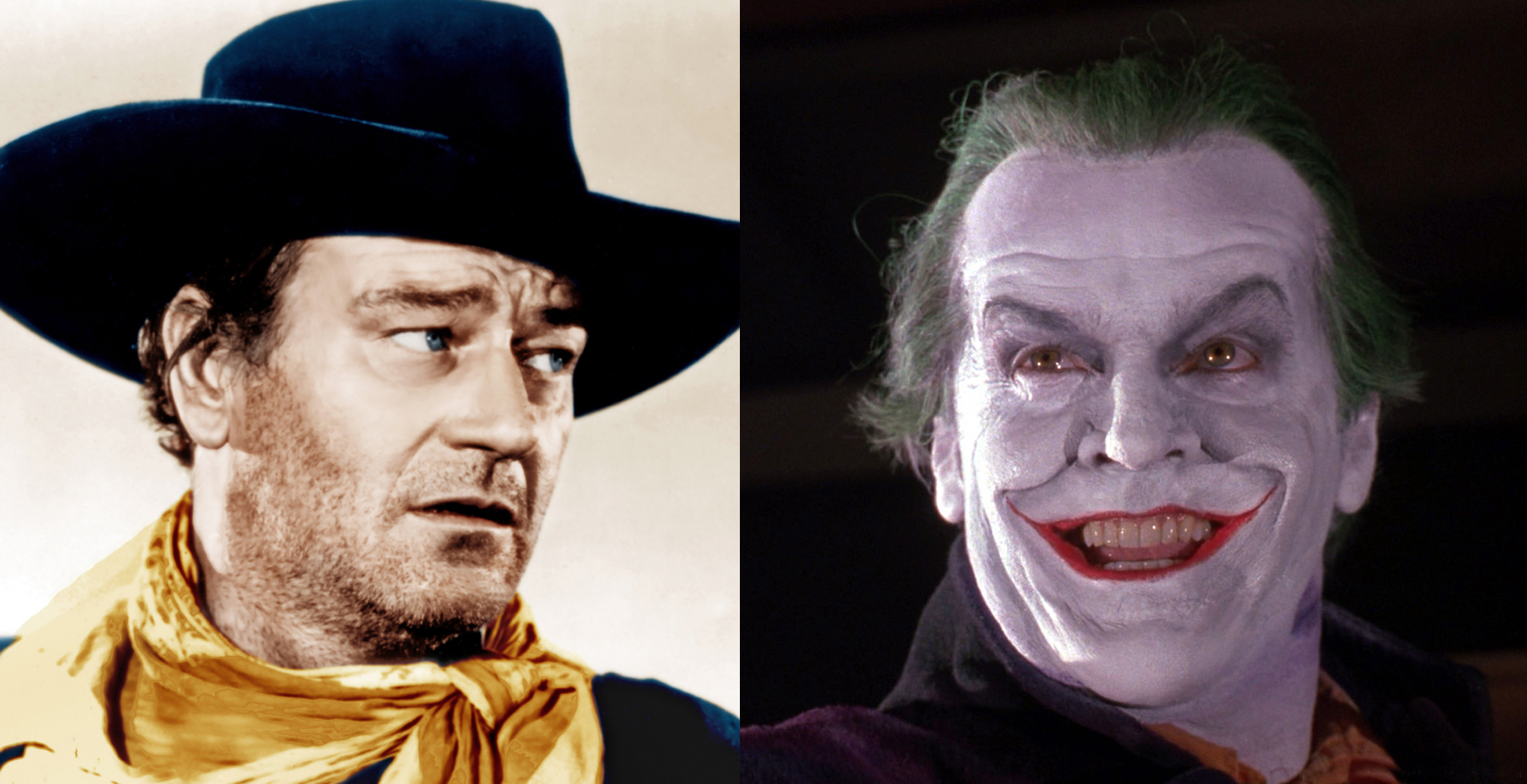
“Nothing makes my case better than concrete examples. Think John Wayne and Jack Nicholson. Both fine actors, each in his way — think of The Searchers — but I think there is little doubt who is the dog in this pair. Your reaction is instantaneous. You don’t need to explain: It just is.”

“Yes,” said Genevieve. “Like Barack Obama and Joe Biden.”

“Of course,” said Stuart, “That’s why Biden will never be president.”

“What do you mean?” asked my wife. “A cat can never be president? What about Bill Clinton?”

“You got me there,” Stuart said. “But that is a reversal of the pairing. Clinton was a cat and Al Gore was pure dog. These pairings make clear the dog-cat dyad, the paradigm.Martin Luther King

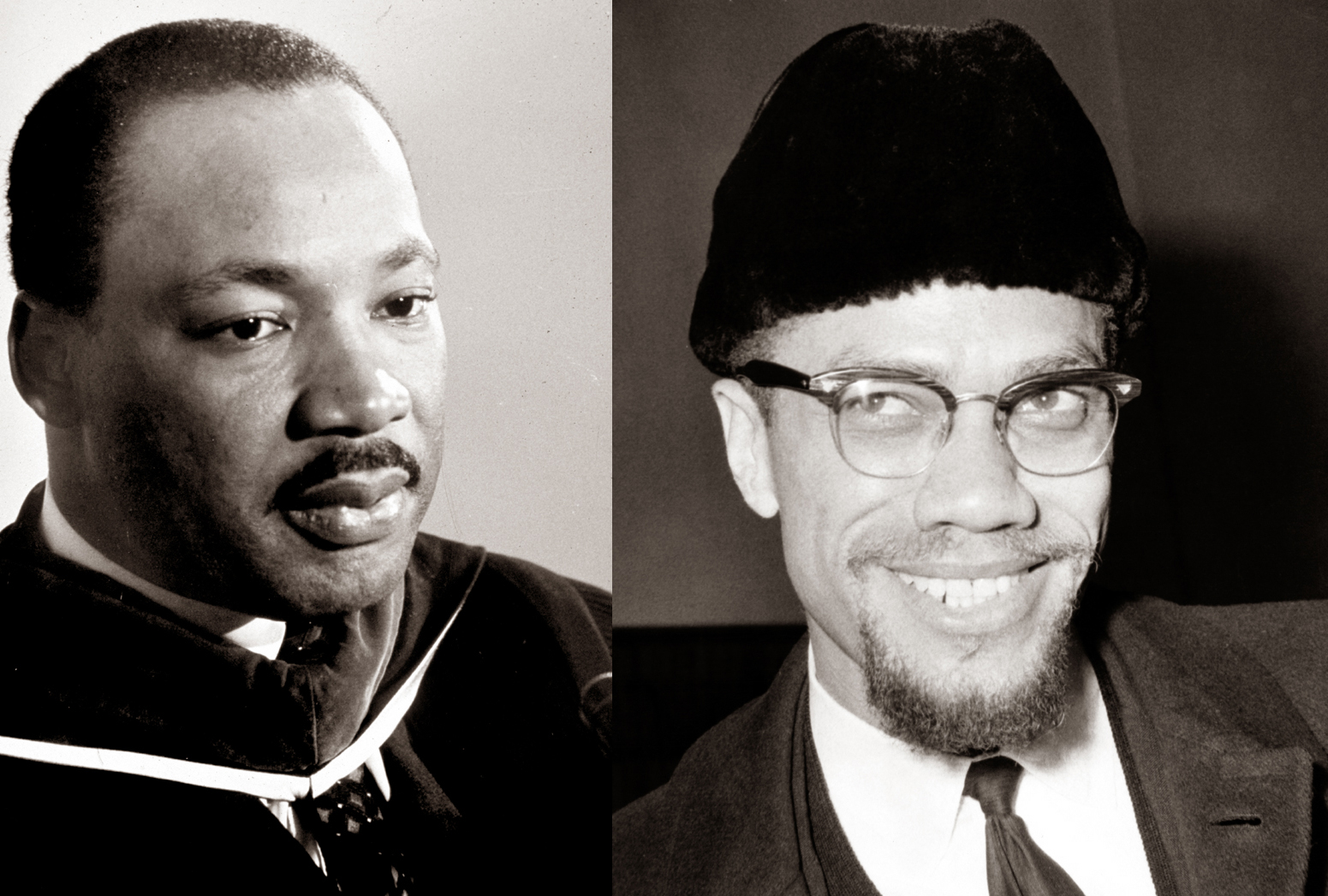
“Martin Luther King, Jr., and Malcolm X. Dog and cat,” I said.

“It can become a party game,” Stuart said. “Tom Hayden and Abbie Hoffman. Big Bird and Oscar the Grouch.”braque picasso dyad

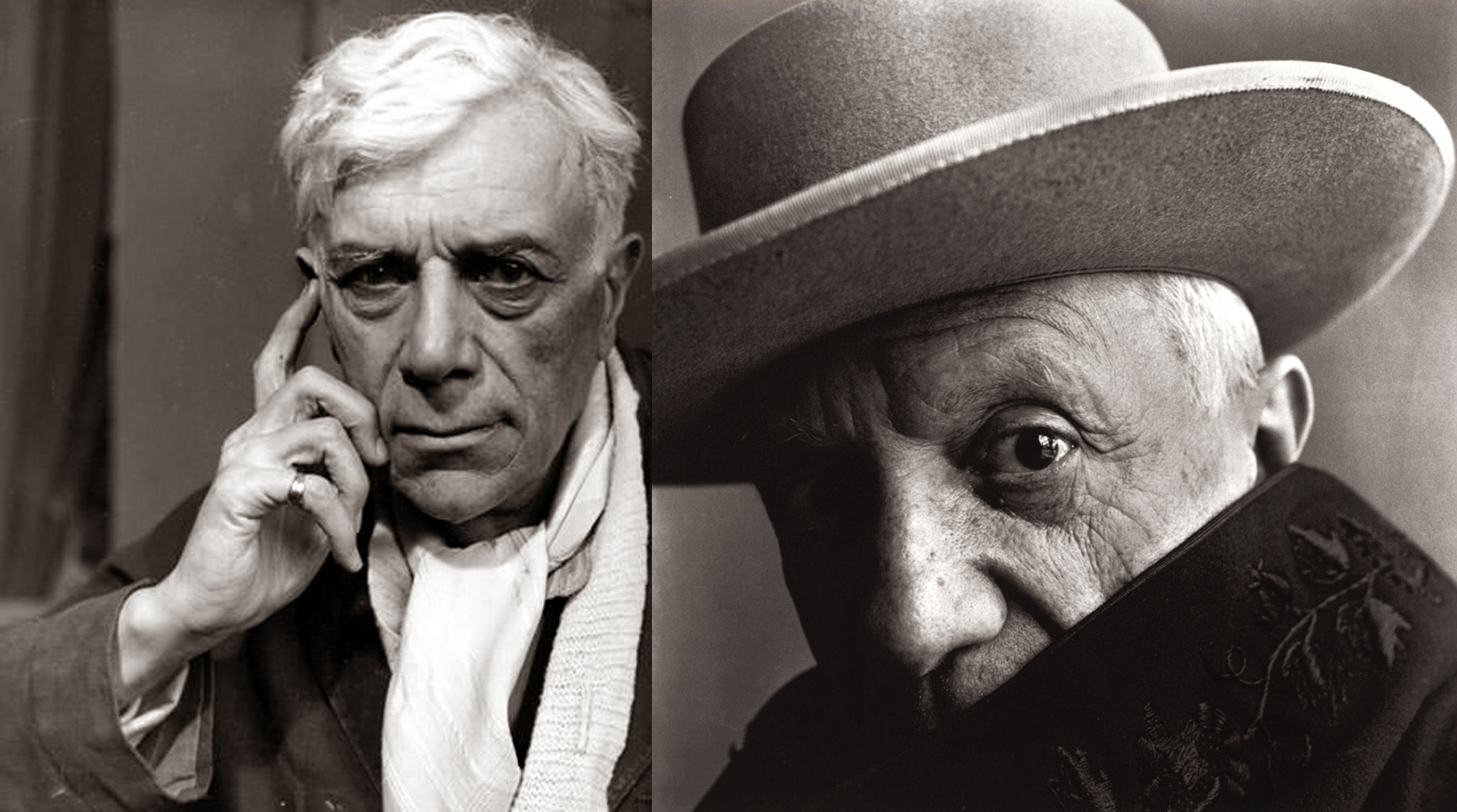
“Georges Braque and Pablo Picasso,” Genevieve said.

“Perfect.”

“Mahler and Bruckner,” she said.

“For years, the nation divided between doggie Jay Leno and cat-man David Letterman,” Stuart said.

“Well, until Letterman lost his cat license,” I said. “He’s gotten kind of doggie in his later years.”

“See, what a profitable lens this is for understanding the world?” Stuart said.

“It explains the difference between Obama and Putin,” Genevieve said.

“And between Andrew Wyeth and Andy Warhol; between George Burns and Gracie Allen…”

“And between Fidel Castro today and Castro 50 years ago,” Genevieve said.

“Between Jane Pauley and Garry Trudeau.”

“When it comes to marriage, a dog can be happy married to a dog,” Stuart said. “But a cat can be happy married to either a cat or a dog. There is fun either way. matalin carville dyadThink Mary Matalin and James Carville. But you see, there is a built-in paradox. How many marriages do you know where one party is happy and the other isn’t? The reason, I tell you, is always the same: One dog, one cat.

“Two cats mated can be happy briefly. But such marriages don’t tend to last. Think of a Hollywood marriage and you pretty much get the picture. Variety is not just an ideal for a cat, but a way of life.

“Of course, the arts are heavy with cats, just as the field of accounting is not. You don’t last long at H.&R. Block if you believe arithmetic is a matter of opinion.

“At bottom, we need both animals in the world. You need the dogs to make life possible; you need cats to make it worth living.”

Stuart brought out a flan and a well-used bottle of amontillado and asked if anyone wanted a cigar. Genevieve was the only taker, but then declined. She said she was giving up smoking again. Ninth time. One more and she got a free sandwich at Subway.

huck finn modern book cover

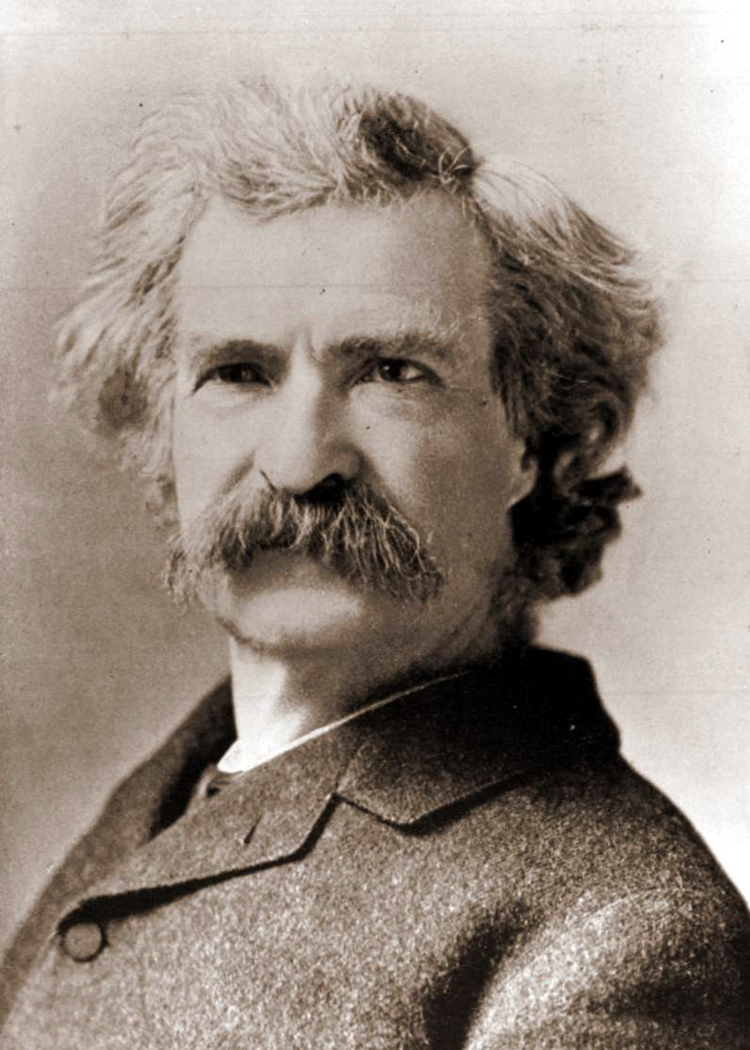
“All modern American literature comes from one book by Mark Twain called Huckleberry Finn,” Ernest Hemingway wrote. mark twain

In that book, nearly every theme that identifies our art as American is established and explored: migration, race, individualism, anti-intellectualism, optimism, religion, social climbing, moneygrubbing and the comfortable informality that marks us as a people.

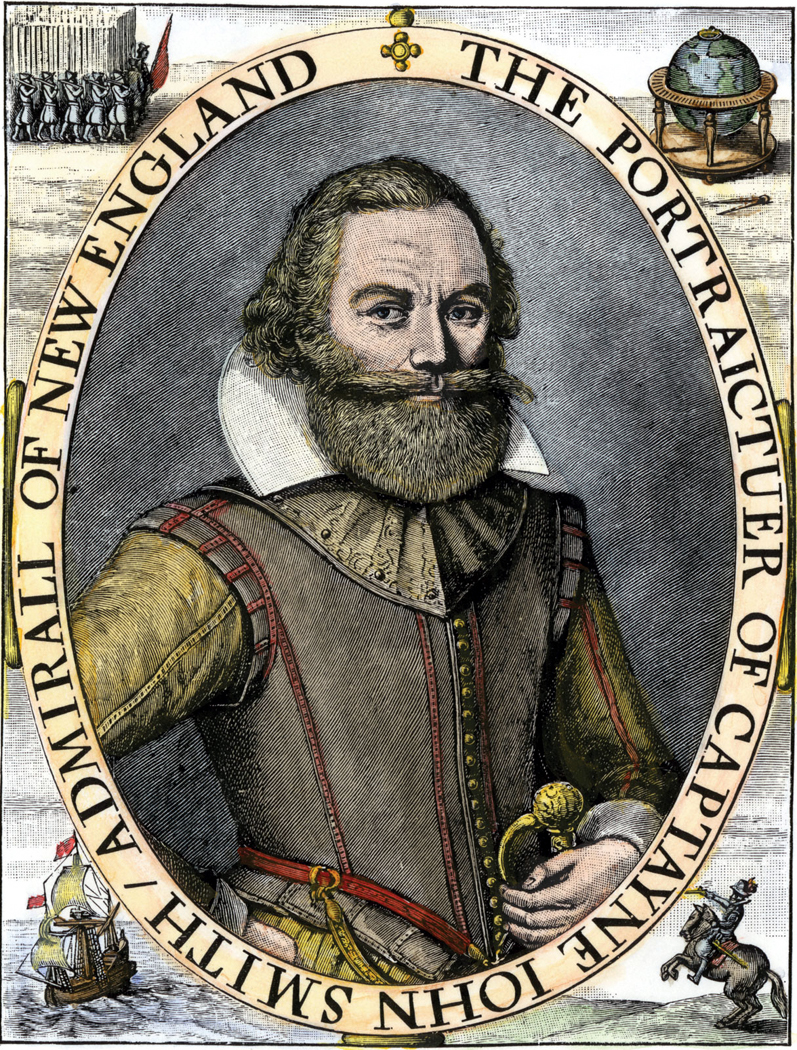
It’s as if Huck Finn were the instruction manual for how to be American. In that, Twain is just as clearly American as Debussy is French or Basho is Japanese. john smith We often look to our art for clues to national identity. But although Twain gives us Americanness in concentrated form, most of the arts made on this continent, from Capt. John Smith’s General History of Virginia (1624) and Anne Bradstreet’s poetry, all the way up to this week’s latest rap song, partake in certain common traits.

What are they? First, we need to eliminate some of the things we like to think are particularly American, such as patriotism or respect for family. Every culture feels these qualities are particularly their own, but in fact, they are universal.

Even such negatives as bigotry and racism have their American coloration, but they are evils found in every culture.

It needs to be noted, too, that what we admire in ourselves is not necessarily admired elsewhere. Americans are direct, which others often see as rude. We are informal, which others translate as slobbishness. We are optimistic, which can be taken as arrogance. We believe in individualism, which others see as selfishness. But there are six things that we can see as particularly American: migration, individualism, optimism, religiosity, informality and expansiveness. source_28

Migration

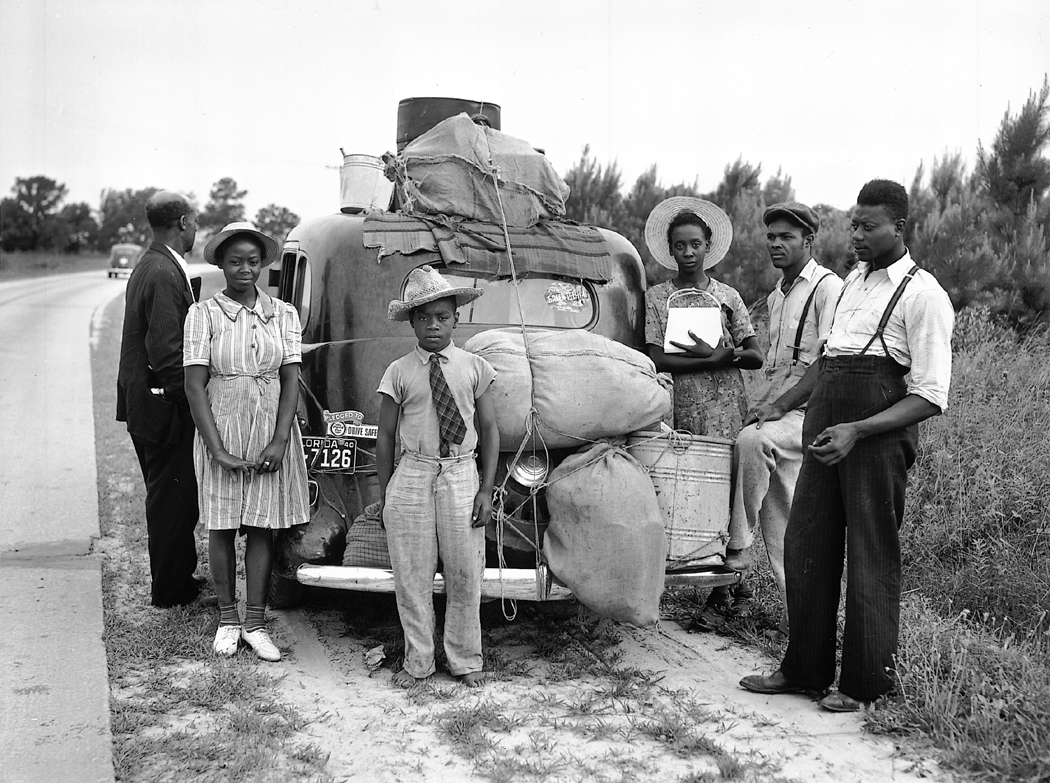
The one thing all Americans share is that we are immigrants.

Even Native Americans, although they hate to think so, came here from somewhere else, whether it is across an Arctic land bridge or up through a sipapu.

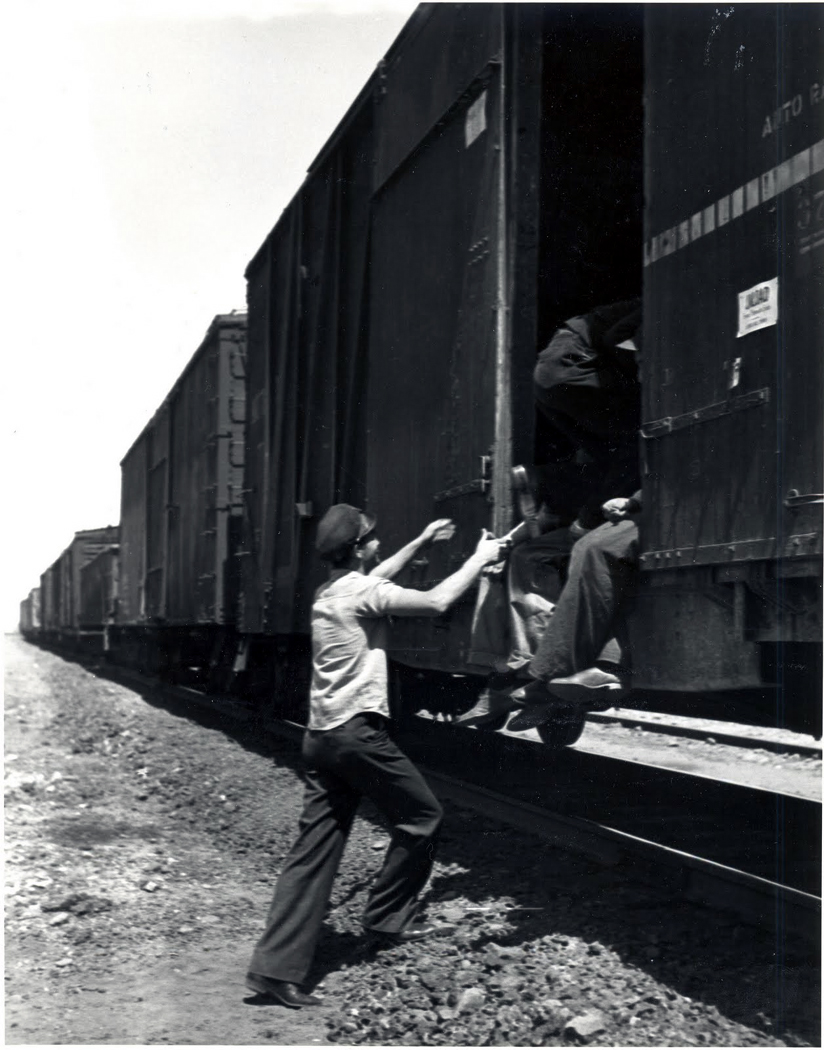
It is the parent fact that gives birth to all our other traits. jumping a freight Even after our ancestors came here from far shores, we have never ceased from peregrinating. First we moved West, populating the great wilderness.

Now, we move away from home to college or career, and find our parents retired to Florida and our siblings spread across four time zones.

To Europeans or Asians whose families have lived in the same villages for centuries, we must seem utterly rootless.

So it can hardly be surprising that the central metaphor of Huck Finn is a journey: The book is many things, from its hero’s double negatives and “ain’ts” to his climactic choice to follow his instinct instead of his schooling about runaway slave Jim, but first and foremost, it’s a “road book,” marking the peripatetic nature of American life.

Much of our art reflects this continuous travel. From the moment we arrived on the Atlantic Coast we began moving west. As art, The Godfather speaks of the immigrant experience, but so does every B Western ever filmed.

All the other traits we think of as American ultimately owe their birth to this constant moving: It gives birth to our self-reliance, our willingness to risk tomorrow on faith, and our freedom from many of the cultural straitjackets found back in the Old Country. It’s all there in the art. All either necessary for immigration or fostered by it. high noon

Individualism

Make that “rugged individualism.”

We trust our own instincts, like Huck Finn, rather then the wisdom of the group. We are Mr. Smith in Washington, Gary Cooper at high noon, Ellen Ripley blasting aliens.

The single most potent distillation of this individualism can be found in John Wayne, love him or despise him. But Wayne didn’t spring up ex nihilo; rather, he grew from the soil: He was originally Natty Bumppo, or Hawkeye, from James Fenimore Cooper’s Leatherstocking Tales: self-reliant, unschooled but wise and practical, with an unshaken faith in his own code of behavior. He’s Walt Disney’s Davey Crockett saying, “Make sure you’re right, then go ahead,” which is just a pop culture simplification of Henry Thoreau’s Civil Disobedience.

Sometimes it’s shocking to realize how of a piece our cultural heritage is. davy crockett march

The flip side of individualism is our tendency to isolationism: “Good fences make good neighbors,” as Robert Frost ironically wrote. Going it alone is usually seen as a virtue.

The downside of this self-reliance is our anti-intellectualism. We trust our own ignorance more than someone else’s knowledge. This is nothing new: It’s why Andrew Jackson was elected president. It’s Huck Finn fearing to be “sivilized” by his Aunt Sally. It’s why one of the most powerful political factions of the 19th century was called the “Know-Nothings.”

It’s a trait of national identity that we should never misunderestimate. oklahoma!

Optimism

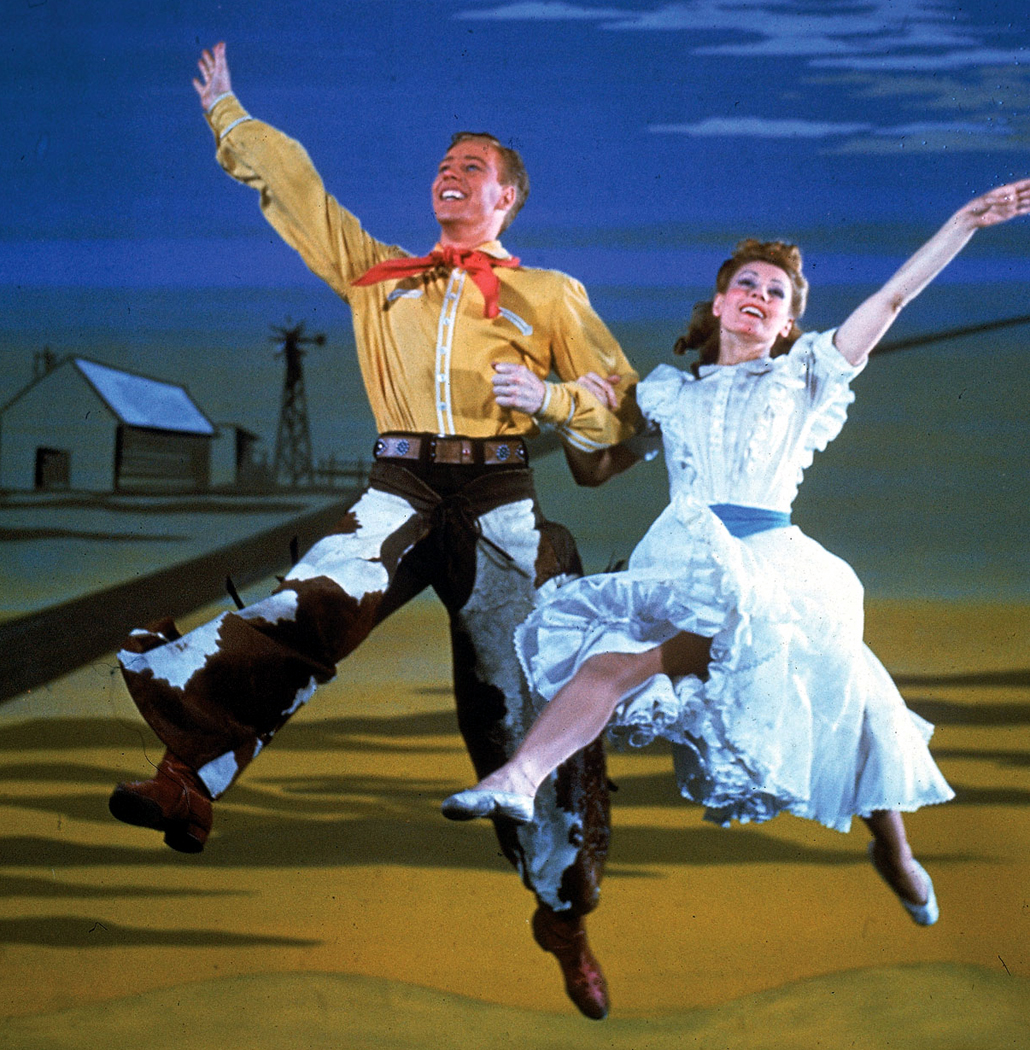
Against all reason and the evidence of history, Americans believe they can do anything. It is our “can-do” attitude, and you find it in the barking joy of Walt Whitman’s poetry and the songs of Oklahoma!Doris Day

To others in the world, this makes us look naive and foolish; fatalism is not part of our makeup.

Which is why America is home to pop psychology and Doris Day. As a corollary, for Americans, the future only holds a better world. “Tomorrow, tomorrow,” Annie sings. “Make it new,” said poet Ezra Pound, and although he was speaking of literature, he could just as well have been speaking of Thomas Edison, the Chrysler Building or Elvis Presley.

Take what you’re given and do something new with it. Never accept the past as the final word. billy sunday preaching

Religion

Many peoples are religious, but in America, religion is something else.

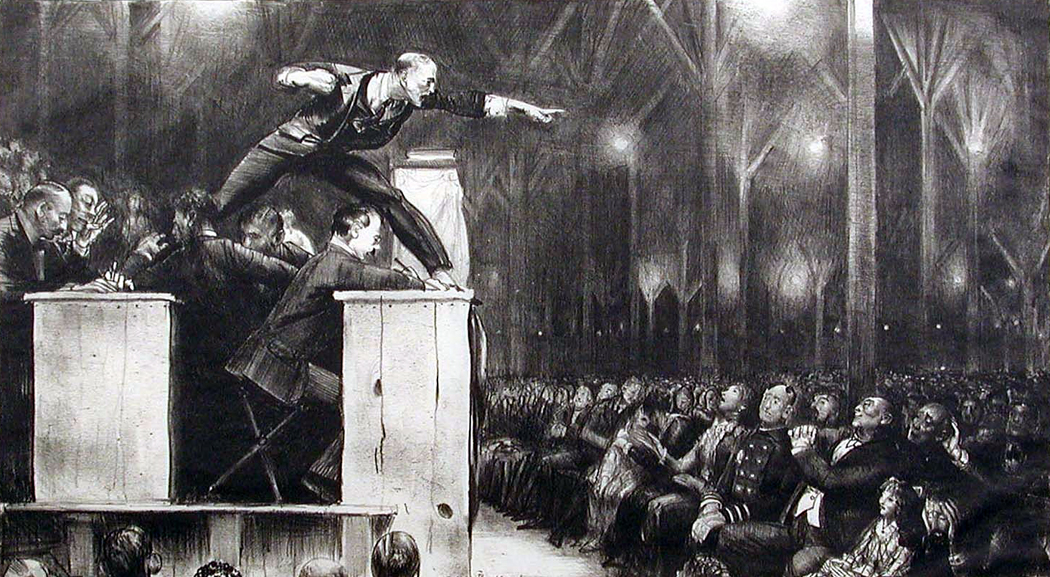
From the utopian religious communities of the 19th century to today’s fundamentalism, there is a glint of zealotry in American spirituality. Elmer Gantry would not be thinkable in France.

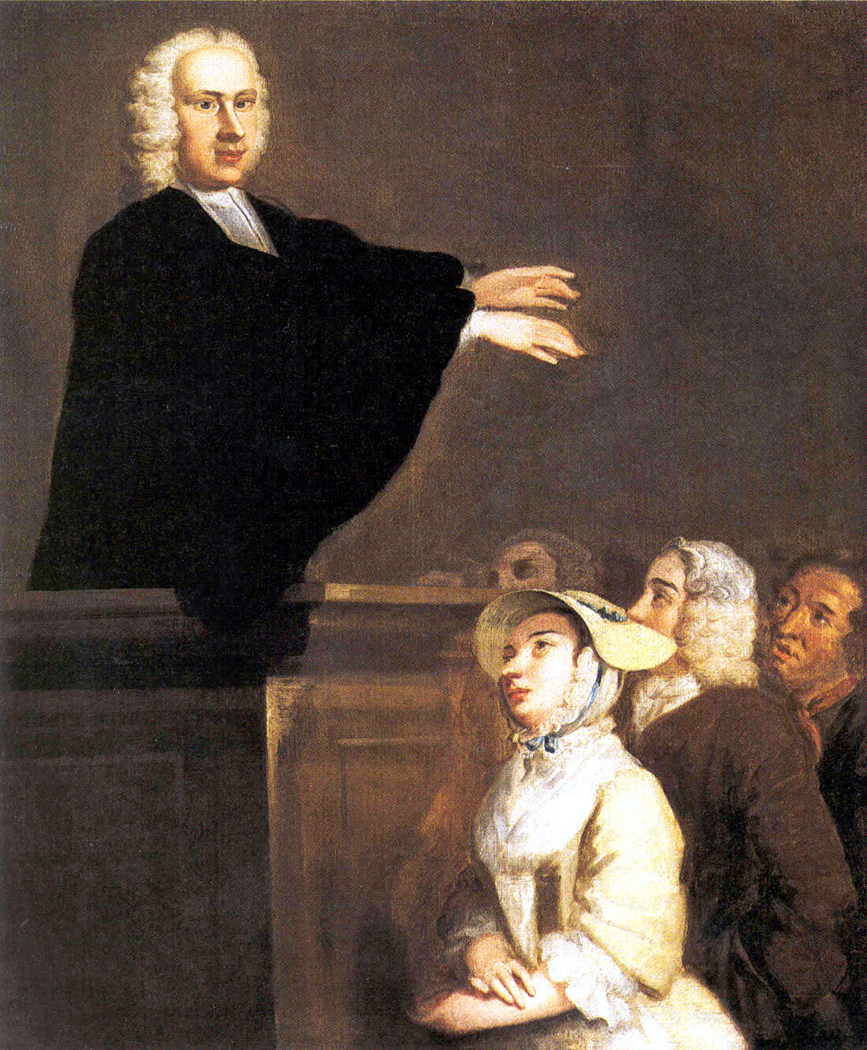
We have gone through at least four “Great Awakenings,” in which we rediscover the old-time religion and the narrow virtues of belief. rev whitefield

It was, after all, religion that founded this country, whether it is Congregationalists in New England, Quakers in Pennsylvania, Roman Catholics in Maryland. Each of them came here for religious freedom, although they were perfectly willing to oppress any religion not their own.

The separation of church and state in our Constitution is there not because we were an agnostic nation, but because everyone was so nuts on the subject and we wanted to keep from each others’ throats.

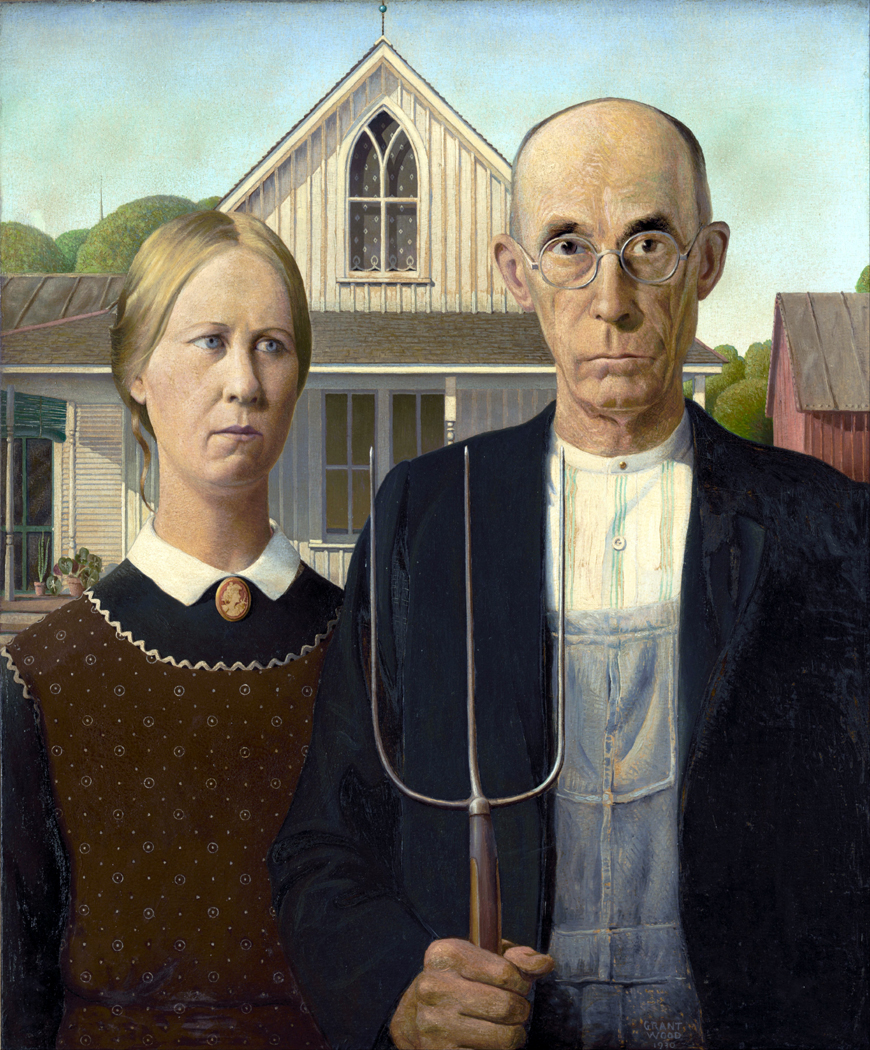
You hear the religion in the symphonic music of Charles Ives and in Negro spirituals. It echoes in Moby-Dick, and even the window behind the dour couple in Grant Wood’s American Gothic. leaves of grass frontispiece

Informality

“I lean and loaf at my ease, observing a spear of summer grass,” Whitman writes in a poem of expansive informality, turning his back on the formal expression of European art: No villanelles for Americans, no Rime Royal.

In Europe, you have Oedipus, in America, Stanley Kowalski.stanley kowalski Mark Twain wrote Huckleberry Finn in colloquial American English and even put a note about it at the beginning of the book. Take that, Henry James!

“Whatever is not of the street,” wrote novelist Henry Miller, “is false, derived, that is to say, literature.” And he wasn’t using the word as a compliment.

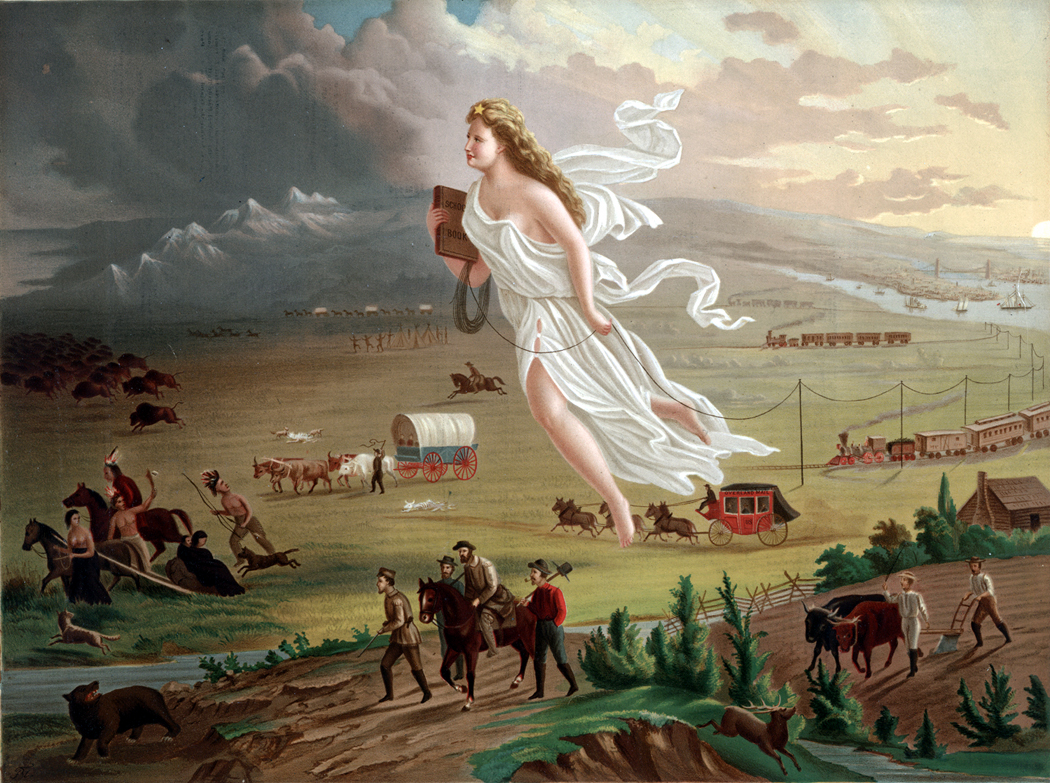
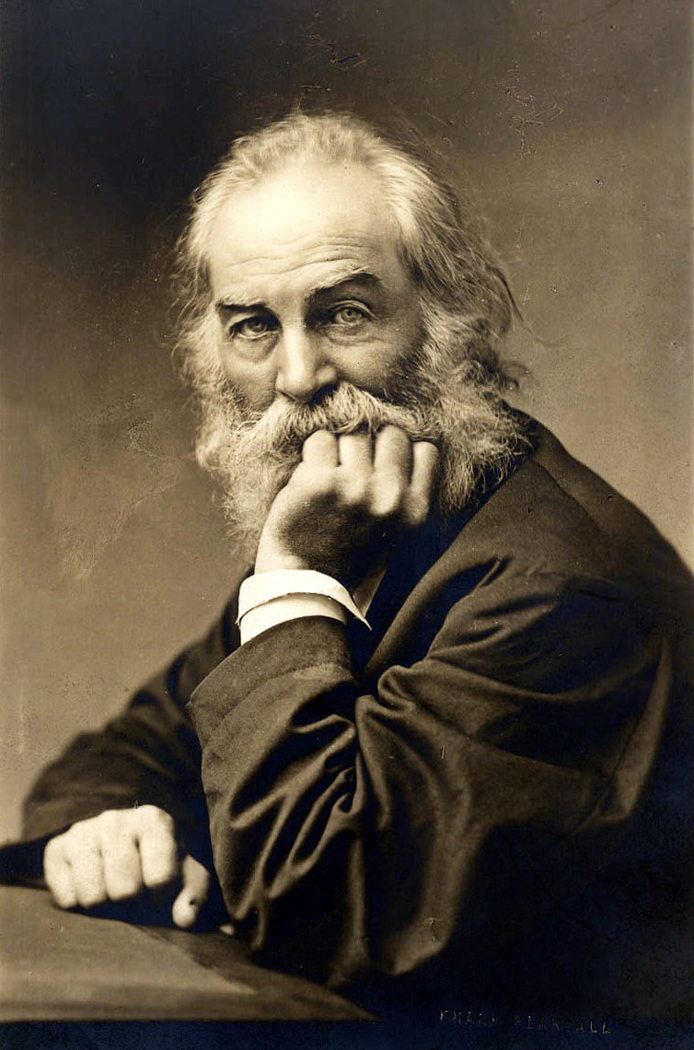
You can see it in the portrait of Whitman at the front of his book, Leaves of Grass: There he is, sleeves rolled back, collar unbuttoned, hips shifted comfortably, hat at a rakish angle. You could never imagine Tennyson like that. manifest destiny gast

Expansiveness

Everything in America is supersized, whether it’s fast food or our landscape.

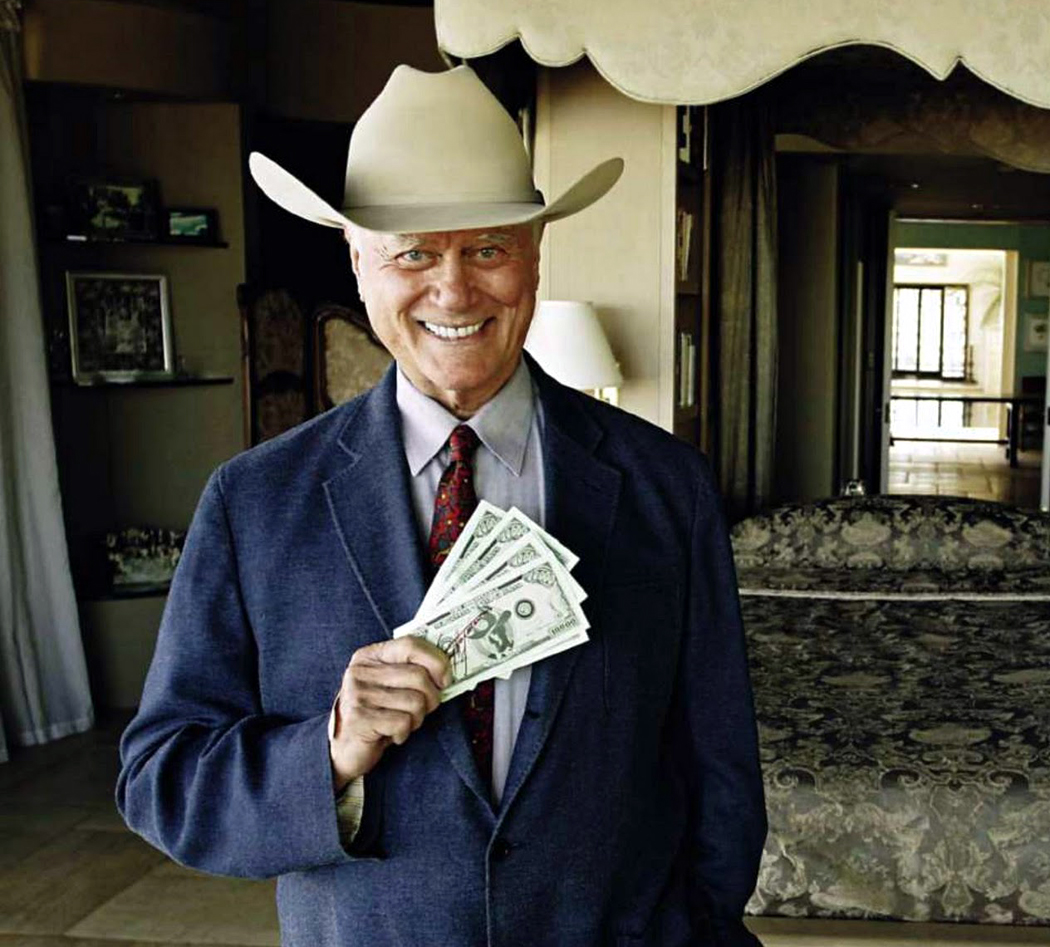
In America, bigger is better: We drive SUVs and watch blockbuster movies. It’s a Texas mentality. Star Wars isn’t big enough; we need a director’s cut, added scenes, a DVD packed with extras. A movie isn’t a success unless it makes $200 million. And the TVs on which we watch those DVDs continue to grow; soon they’ll cover our living room walls. larry hagman with cash

One Marilyn Monroe isn’t enough; Warhol must print her by the dozens, just as Babe Ruth must eat hot dogs by the score.

The tall tale is our national mythology, from Paul Bunyan to Jim Carrey’s face.

Of course, how could it be otherwise with the Rocky Mountains, the Grand Canyon and the Great Plains? Our very landscape calls out for grandiosity and grandiloquence. Over the top is America’s starting line, and the next frontier is our constant goal.

OH, AND AMERICANS LOVE LISTS:

Most-American Americans

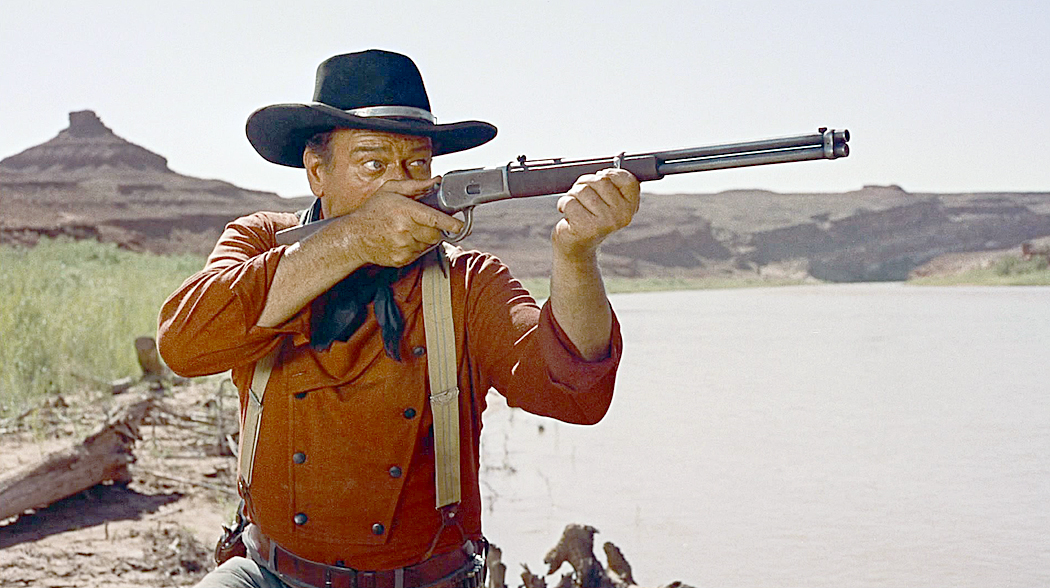
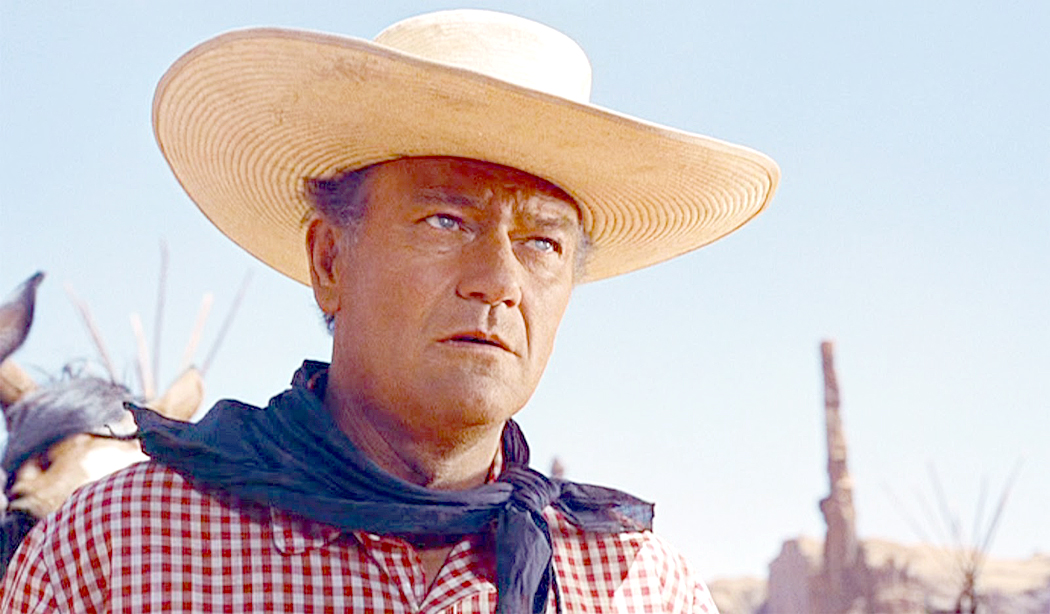
John_Wayne - overland stage raidersJohn Wayne: Love him or hate him, we can’t think of him as merely an actor. He has become an icon, the movie roles and the man bound into one, indivisible: the lone, laconic hero, man of action rather than words, graceful and bullying in turns.

4 more:

Louis Armstrong: American as soul.

Eleanor Roosevelt: American as do-gooder.

Babe Ruth: American as appetite.

Thomas Edison: American as inventor.

Most American Movies godfather

The Godfather Saga, Francis Ford Coppola, 1977: The conflated version of the first two Godfather films tells the immigrant experience writ large: family, business, love, loyalty, betrayal and the move west, told with the force and mythology of opera.

4 more:

The Man Who Shot Liberty Valance, John Ford, 1962: “When the legend becomes fact, print the legend.”

Star Wars, George Lucas, 1977: Good vs. evil supersized.

Gone With the Wind, David O. Selznick, 1939: History whitewashed.

Do the Right Thing, Spike Lee, 1989: Race will not go away.

American Contributions to global culture constitution go

The Constitution: Our “governmental instruction manual” has become a model for the world, and its first 10 amendments have become the guiding principles of many an emerging nation. It’s more than merely political, it’s at the center of our culture, and the one thing the world really does want from us.

4 more:

Jazz: From which all popular music ultimately derives.

Hollywood: America’s secret plan for world domination.

Technology: The physical evidence of the can-do spirit.

Coca-Cola: Las aguas negras del imperialismo.

Most American Novels

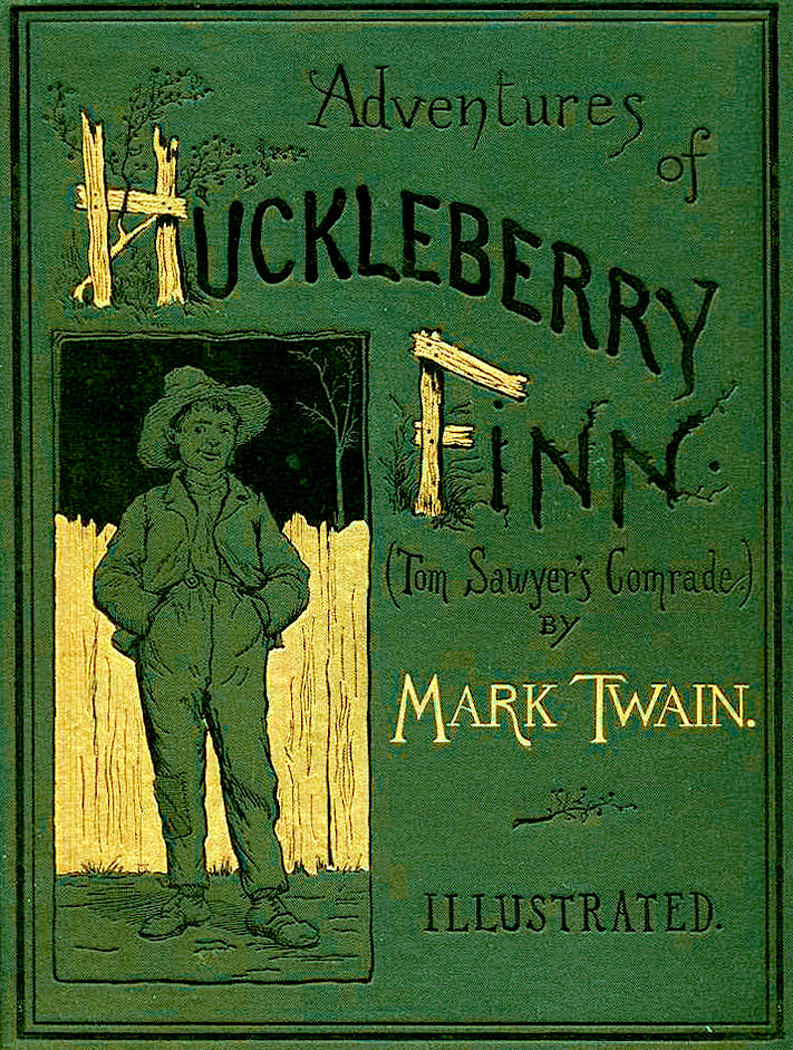
huck finn book coverHuckleberry Finn, Mark Twain: The Great American Novel, filled with everything, good and bad, about ourselves: race, individualism, anti-intellectualism, optimism, religion, social climbing, moneygrubbing and our comfortable informality.

4 more:

On the Road, Jack Kerouac: An essential national theme takes center stage.

Beloved, Toni Morrison: The evils of slavery haunt even the freed.

The Leatherstocking Tales, James Fenimore Cooper: The invention of John Wayne.

The Great Gatsby, F. Scott Fitzgerald: Money, glamour, celebrity and loss.

Most American Plays angels in america

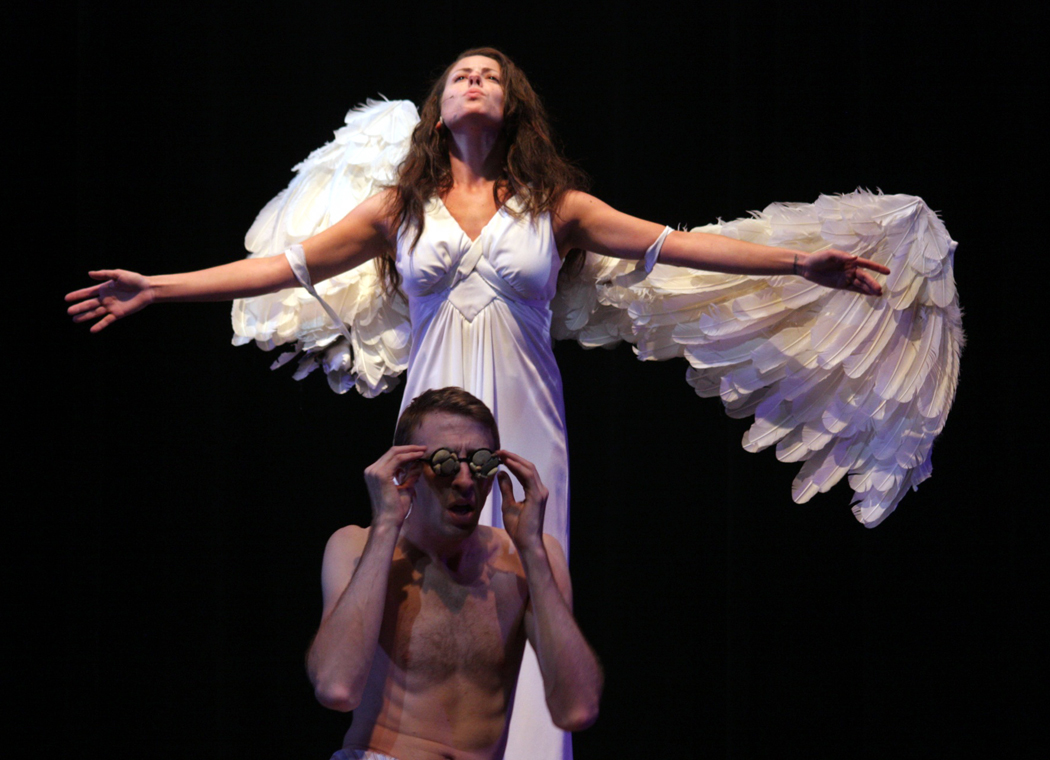
Angels in America, Tony Kushner: The hugely ambitious “Gay Fantasia on National Themes,” takes on more American themes than anything since Huck Finn: politics, sex, generations, religious revelation, Reaganism, bigotry and forgiveness; so expansive a single night can’t hold it.

4 more:

Death of a Salesman, Arthur Miller: The underside of the American dream.

Oklahoma!, Rodgers and Hammerstein: Gushy, American cornpone classic.

Streetcar Named Desire, Tennessee Williams: Torn T-shirts and sweaty thighs.

Fences, August Wilson: Black view from Pisgah.

American Classical-music compositions

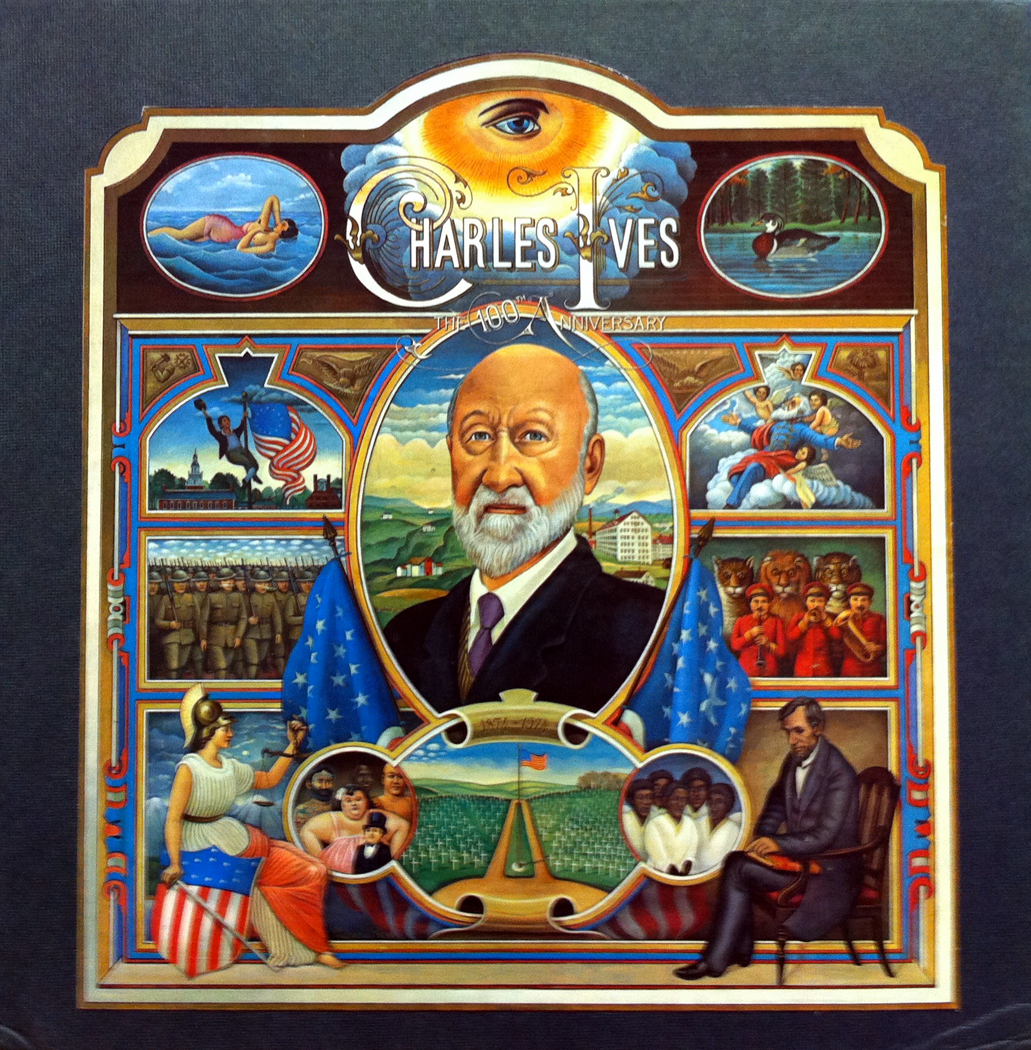
ives album coverThree Places in New England, Charles Ives: The crusty New England composer reinvents classical music to make it more American: loud, brash, nostalgic and patriotic at turns, and finds its subject in landscape and history.

4 more:

Rhapsody in Blue, George Gershwin: Jazz, Tin Pan Alley, Chopin and Carnegie Hall.

Appalachian Spring, Aaron Copland: Shaker hymn goes mainstream.

Symphony No. 3, Roy Harris: The type of the American symphony.

New World Symphony, Antonin Dvorak: Is the Most American Symphony written by a Czech?

American Architecture

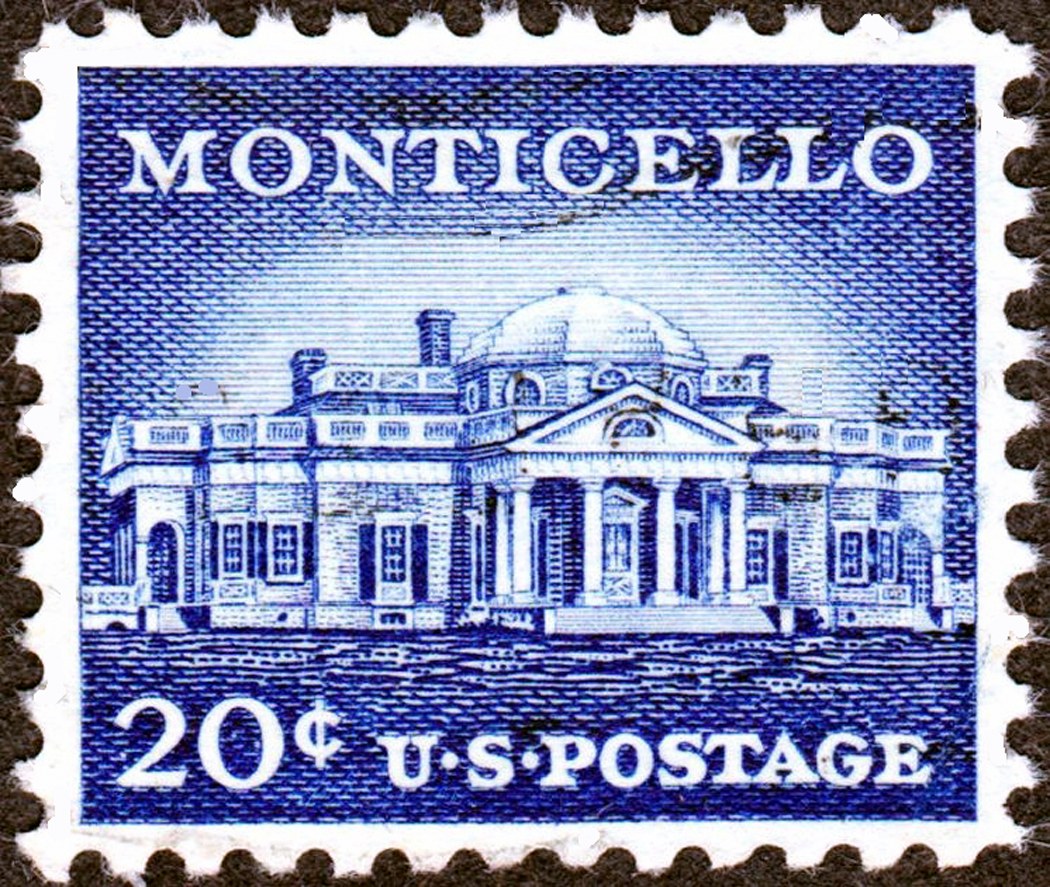
monticello stampMonticello, Thomas Jefferson: Just as equivocal as its owner and designer, this icon from the back of the common nickel is both paean to Europe’s classical past and the American’s love of invention, gimmickry and nature: Palladian windows and a moose head.

4 more:

Chrysler Building: American industrial dynamism with grace.

Sleeping Beauty Castle at Disneyland: Architecture as play-pretend.

Fenway Park: So cranky we actually love it.

Falling Water, Frank Lloyd Wright: Built over a waterfall like a diving board.

American Poems

Whitman at 50Song of Myself, Walt Whitman: The “good gray poet” could not have arisen anywhere else; he is completely American, from his deification of democracy to his catalogs of diversity to his “I sound my barbaric yawp over the roofs of the world.”

4 more:

Song of Hiawatha, Henry Wadsworth Longfellow: Closest thing we have to a national epic poem.

Poems, Emily Dickenson: Nothing more American than her quirky New England eccentricity.

Howl, Allen Ginsberg: “Visions! omens! hallucinations! miracles! ecstasies! gone down the American river!”

Mending Wall, Robert Frost: “Good fences make good neighbors.”

American Visual arts

American gothicAmerican Gothic, Grant Wood: This iconic painting is more enigmatic than the Mona Lisa: encomium of hardcore American values or satire of Midwestern provincialism? Conservative or avant-garde? He’s not telling.

4 more:

Watson and the Shark, John Singleton Copley: Art ripped from the headlines, circa 1777.

Marilyn Monroe multiple, Andy Warhol: If one is good, a dozen must be better.

Dogs Playing Poker series, Cassius Marcellus Coolidge: Now, that’s OTT!

Freedom From Want, Norman Rockwell: Turkey, potatoes and lots of corn.

American Popular music

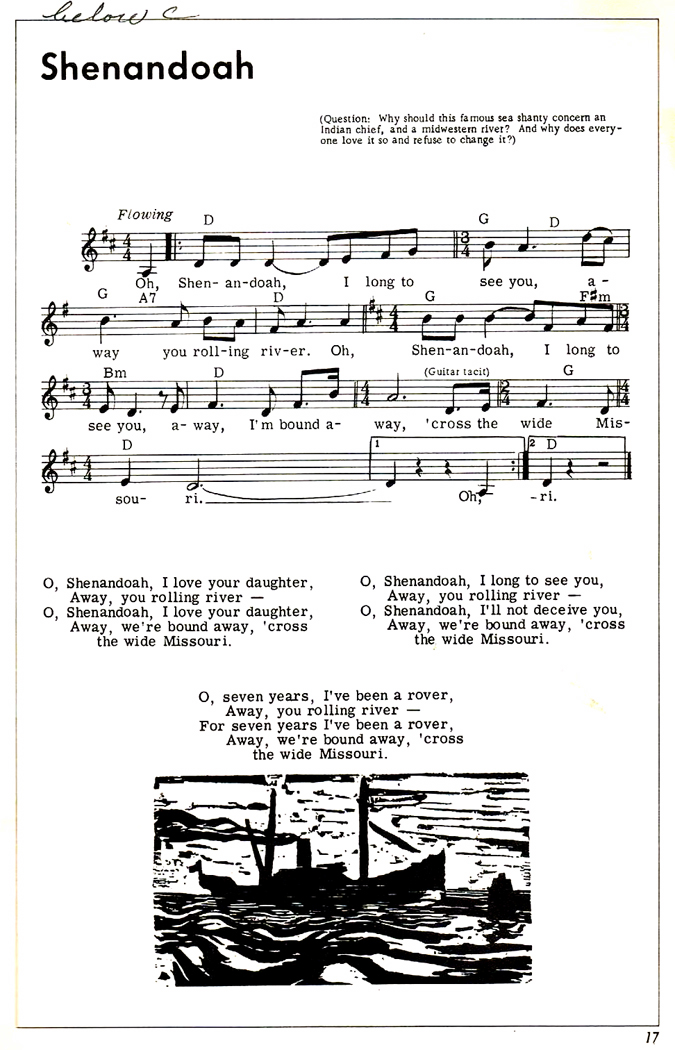
shenandoahShenandoah: A folk song of undetermined origin, this is the quintessential song about migration and loss; with its odd strophic form and 19th-century sentiment, it borrows elements from Irish shanties and African-American blues.

4 more:

One O’Clock Jump: Count Basie and swing.

Born to Run: Rebels on wheels, a la the Boss.

Hound Dog: Elvis frees America all over again.

Swing Low, Sweet Chariot: The suffering of a people, caught in the throat.