Dimitri Drobatschewsky was the most erudite man I ever knew. He spoke, wrote and read in German, French, and English. Born in Berlin and raised mostly in Luxembourg, his French and German were native, down to idiom, argot and accent. He was also conversant in Spanish, Italian and Polish (at least, he said, he knew several dirty jokes in Polish).
He was born in 1923, fled the Nazis with his family, joined the French Foreign Legion, deserted to fight with the Free French forces in Italy in World War II. Later, he became the classical music critic with The Arizona Republic, where he and I became friends.
(Once, when confronted by a musician who had gotten a bad review, he was challenged on his credentials. “What do you think is the most important qualification for a classical music critic?” the musician demanded. “Well,” Dimitri said. “He must have a long and unpronounceable name.”)
Because he was still a boy when moving to Luxembourg, he was able to learn French as a native. “I had to,” he told me. “French girls wouldn’t date you if you didn’t speak perfect French.” And that’s why, after the war, when he emigrated to the U.S., he kept his accent. “American girls loved a foreign accent.”
Dimitri felt that French was the most beautiful language, by the sounds it makes in your mouth. But for Dimitri, the best poetry was in German, and further, the greatest poet was Johann Wolfgang von Goethe. For this, I had to take his word.
Because I don’t read German, and when I approach Goethe in translation, he sounds earthbound, even banal.
I try to hear the German in my mind to catch its melody, but I am walled out by my English. All I can gain from the reading is a commonplace.
“Little rose, little rose, little red rose
Little rose of the heath.”
It sounds better when set to Schubert’s music, but still, in English, the words are a touch sappy, and the sentiment pedestrian.
“You have to read him in German,” Dimitri said. “The sound of words, the language is unbelievably beautiful.”
“Röslein, Röslein, Röslein rot,
Röslein auf der Heiden.”
So, I’m afraid Goethe is closed to me. I’ve read Faust several times in several translations, and it never seems to quite get airborne, yet everyone who knows the original feels it is one of the greatest works of literature ever, and that Goethe is the equal of Shakespeare.
I have the same problem with Quintus Horatius Flaccus, or Horace, in English. In English, his poetry is flat as yesterday’s ginger ale. “You have to read him in Latin,” says my friend Alexander, whose degree is in Classical languages. “In Latin, he is truly exceptional — lapidary perfection.”
Again, I have to take his word for it. Shakespeare may have had “small Latin and less Greek,” but my Latin is even smaller than the Bard’s. I studied it in eighth grade, and mostly what I recall is “agricola.”
I freely confess it is my loss. But there it is; I am stuck with it.
There are those who hold that all literature is untranslatable, that you have to read it in the original language, and while I concede that you can never get all of a poem in a translation, nevertheless, I feel there is a class of work that functions perfectly well shapeshifted.
I can read my Homer not only in English, but in multiple translations, from Chapman to Pope to Fitzgerald to Fagles and I am sucked in by the poetry every time. It may very well be better in Greek, but it’s the best thing I’ve ever read even in English. I reread the Iliad once a year, and try to find a new translation each time. (I read the Odyssey, too, and I especially love the translation by T.E. Lawrence — Lawrence of Arabia. Who knew?)
The same thing happens with Dostoevsky. I’m sure it’s better in Russian, but even a good translation moves swiftly and powerfully and I am rapt by the story and moved by the humanity. There is a swift current underneath the surface of language.
It can make a difference which translation you read. I am told by those who know, that the Scott Moncrieff translation of The Remembrance of Things Past is closest to the quality of Proust’s French, yet I find his English stuffy and outdated. The newer translations — by a range of translators for Viking (Swann’s Way is translated by Lydia Davis) — is easier to digest and flows with the quickness that ensures pleasure in the reading. But am I getting the pith of Proust? My French is better than my German, but it is still small beer.
Constance Garnett gave us English versions of what must be every Russian novel ever written. She was a factory. And her versions are still the most widely read. But the more recent by Richard Pevear and Larissa Volokhonsky are much easier going. The duo now seem to be challenging Garnett also for the shear number of volumes converted.
Tolstoy’s War and Peace, in the English of Louise and Aylmer Maude, is the most profound and moving piece of literature I have ever read, despite the profusion of names. How much better would it read if I could understand it in Russian (and French, let’s not forget)? Its power transcends its tongue.
This all raises the question, however, of why Homer or Tolstoy can be read in translation and Horace cannot. And the reason, I believe, is that greatness in writing comes on two essential levels: content and style. That is, how deeply it connects with our human-ness, on one hand, and on the other, how deeply it connects with its medium. This is not an either-or situation; there should always be awareness of both sides. But in practice, one side or the other tends to predominate. The more it is the universal connection with life and experience that we read, the easier the literature can travel. The more it is the words themselves, the more insular the audience.
It would be difficult to illustrate this dichotomy if we try to look at examples of foreign literature translated to English; we would need to be conversant with the original language to see how it morphs in the conversion. But consider attempting to translate several English authors into some other language.
Shakespeare tends to travel well. His plays are valued in many lands and many languages. There are famous examples of Macbeth in Swahili, of Hamlet in Russian, and dozens of operatic versions in Italian, French and German. They all pack a wallop. And Shakespeare is loved in all those languages by their native speakers.
On the other hand, how in hell can you translate John Milton into French? You can tell the story of Paradise Lost, sure, but how can you convey the special organ-tone quality of his language.
“Round he throws his baleful eyes.”
Translate it into French and it comes out as the equivalent of: “He looks around malevolently.” Not the same thing, all the poetry is gone out of it. Deflated; a flat tire.
Or: “When I consider how my light is spent.”
It is only in English that the word “spent” has the two meanings: a spent taper; or money (or life) spent. The word in the opening of his sonnet “On his Blindness” has a nimbus of ambiguity about it. The primary meaning is that he is now blind, but he spreads the halo out from the word “spent” by following it up with several other financial words: “the one Talent which is death to hide” where a talent is also a biblical monetary denomination, and brings to mind the New Testament story of the servants and the talents, and the poor servant who is “cast into the outer darkness, where there will be much weeping and gnashing of teeth.” And then there is, “present my true account,” and its hint of double entry bookkeeping. It is this expansiveness in language that is the key to Milton’s greatness. He is large; he contains multitudes. But they are bound in English, anodized, as it were, not separable. How do you work that magic in French? Or German? Or Japanese?
These things are untranslatable, and hence, Milton can never have the global currency of Shakespeare.
Or consider translating Chaucer from his own time to ours. The poetry — The sound of the words, phrases, sentences and stanzas — cannot hypnotize us as the original does. Yes, we get the sense, but we miss the art.
“And smale fowles maken melodye, that slepen all the night with open ye.”
Or imagine James Joyce in German. The melody is gone. “Stattlich rundlich Buck Mulligan…”
If I turn to a poet I love very deeply, and whose language I can parse, it survives translation very well. Pablo Neruda’s Spanish is so transparent, that the ideas embodied in it are clearly seen in any lingo. It is that Neruda’s primary concern in his poetry is not language, but experience. They are real pears and plums in his poetry, real life and death, real love, real sex, real toes and real stones. The poetry is about the things of this world, and not the way we express them.
The poetry is highly wrought, and in Spanish, there is a linguistic layer Neruda also cares about, but the power of the poems come from Neruda’s connection with his own life, his own experience, and that it is possible to share in any language.
“Quiero conocer este mundo,” “I want to know this world,” he says in his Bestiario/“Bestiary.”
“The spider is an engineer,/ a divine watchmaker./ For one fly more or less/ the foolish can detest them:/ I wish to speak with spiders./ I want them to weave me a star.”
Language is a mask. Behind it there is a world. You can concentrate on the language, or on the world. It is easy to be lulled into forgetting the difference, to think that words describe the world, and that the best language is the most accurate lens on the things of this world — este mundo — but they are not the same, but rather, parallel universes, and what works in words does not necessarily explain how the world functions. In reality, there are no nouns, no participles. There is only “is.” Can you squeeze that “is” through words? We try. And we try again.
I was an English major and I’m married to an English major and it’s hard being an English major and only getting harder. An English major feels genuine pain hearing the language abused, mal-used, corrupted and perverted.
I’m not talking here about outdated grammar rules and a fussy sort of prisspot pedantry. As a matter for fact, one of the most persistent pains a true English major suffers is such misplaced censure, especially when interrupting a casual speaker to let them know that “them” is plural and “speaker” is singular. In my book, this is merely rude. A caboose preposition is nothing to lose sleep over.
No, what I’m writing about here is are things that are genuinely ugly or purposely unclear, or overly trendy, to the point of losing all meaning. You know — politics. That and corporate language, or management speech — which I call “Manglish” — is a great corrupter of speech.
“We have assessed the unprecedented market shifts and have decided to pivot this company’s new normal to a deep-dive into a robust holistic approach to our core competency, circling back to a recalibrated synergy amid human capital in solidarity with unprecedented times.”
Committees try to make language sound profound and wind up writing piffle. I’m sure it was a committee that agreed in Iredell County, N.C., to make the county slogan, “Crossroads for the future.” I do not think that word means what you think it means.
I wrote for a daily newspaper and language was my bread and butter, but the higher you go up the corporate ladder, the worse your words become. I remember the day they posted a new “mission statement” on every other column in the office, filled with buzz-word verbiage that didn’t actually mean anything. I looked at my colleague and said, “If I wrote like that, I’d be out of a job.”
But it isn’t just Manglish. Ordinary people are becoming quite lax about words and meanings. Too often, if it sounds vaguely right, it must be so. And you get “For all intensive purposes,” “It’s a doggy-dog world,” being on “tender hooks,” or “no need to get your dandruff up.”
“I’ve seen ‘viscous attack’ too many times recently,” my wife says. “It gives me an interior pain like a gall bladder attack.”
And the online world is full of shortcuts, some of which are quite clever, but most of which are just barbarous. An essay about digital usage is a whole nother thing. Not room here to dive in.
But, there is a world of alternative usage that is not standard English, that any real English major will welcome as adding richness to the mother tongue. Regionalisms, for instance. Appalachian dialect: “I’m fixin’ to go to the store;”— actually, that is “stoe,” rhymes with “toe” — “I belong to have a duck;” “I have drank my share of Co-Cola.”
And Southern English has served to solve the historical problem of having lost the distinction between the singular “thee,” and the plural “you,” with the plural “you all,” or “y’all.” Although, more and more “y’all” is now being used also for the singular, and so is becoming replaced with “all y’all.” Keep up, folks.
Then, there’s African-American English, which has enriched the American tongue immensely, as has Yiddish: “Shtick,” “chutzpah,” “klutz,” “schmooze,” “tchotchke.”
Regionalisms and borrowings are like idioms. Sometimes they don’t really make sense, but they fall comfortably on the tongue. “Who’s there?” “It’s me.” Grammatically, it would be proper to say “It is I,” but no one not a pedant would ever say such a thing. The ear is a better arbiter than a rulebook.
George Orwell ended his list of rules for writing with the most important: “Break any of these rules sooner than say anything outright barbarous.”
English is a happily promiscuous tongue and so much of the richness of the language comes from borrowings. But there are still other problems: bad usage, misuse of homonyms, loss of distinctions. The English major’s ears sting with each onslaught.
What causes our ears to burn falls into three broad categories. Things that are just wrong; things that are changing; and things that offend taste. Each is likely to set off an alarm ping in our sensitive English major brains.
Every time I go to the grocery store I am hit with “10 items or less.” Few people even notice, but the English major notices; we don’t like it. “Comprised of” is a barbarism. “Comprises” includes all of a certain class, not some items in a list of choices. I feel slapped on the cheek every time I come across it mal-used.
And homonyms: a king’s “rein,” or a book “sited” by an article, or a school “principle” being fired. It happens all the time. It is endemic online. “Their,” “they’re,” “there” — do you know the difference? “You’re,” “your?” Most young’uns IM-ing on their iPhones don’t seem to care.
And fine distinctions of usage: I am always bothered when I see a murderer get “hung” in an old Western, when we know he was “hanged.”
Again, most Americans hardly even notice such things. They all get by just fine not caring about the distinction between “e.g.” and “i.e.” In fact, they can get all sniffy about it.
I know a former medical transcriptionist who typed up a doctor’s notes each day, and would correct his grammar and vocabulary. She corrected the man’s “We will keep you appraised of the outcome,” with “apprised,” and each time, he would “correct” that back to “appraised.” Eventually, she gave up on that one.
English majors know the difference between “imply” and “infer,” and it causes a hiccup when they are mixed up. “Disinterested” mean having no stake in the outcome; “uninterested” means you cannot be arsed. They are not interchangeable.
We EMs cringe when we hear “enormity” being used to mean “big,” when it actually means a “great evil.” And “unique” should remain unique, unqualifiable. Of course, “literally” is used figuratively literally all the time. Something is not “ironic” simply because it is coincidental.
I hear the phrase “begging the question” almost every day, and always misused. It refers to circular reasoning, not to “raising the question.” I hold my ears and yell “Nya-nya-nya” until it is over.
Some things, which used to be wrong, are slowly being folded into the language quietly, and our EM ears may still jump at hearing them. “Can” and “may” used to mean distinct things, but that difference was lost at least 100 years ago. We can give that one up. And “hopefully” used to be a pariah word, but we have to admit, it serves a grammatical function and we have to let it in, however grudgingly.
My wife is particularly sensitive to the non-word, “alot.” She absolutely hates it. I understand, although I recognize a need for it. “A lot” is a noun, and sometimes we use it as an adjective: “I like chocolate a lot.” Perhaps “alot” will eventually become an adjective. Not for Anne.
People are different and have differing talents. We seem to be born with them. Some people grasp mathematics in a way a humanities student will never be able to match. Some have artistic or musical talent. We can all learn to play the piano, but only certain people can squeeze actual music out of the notes.
And each of us can learn our native tongue, but some of us were born with a part of our brains attuned to linguistic subtlety. We soaked up vocabulary in grade school; we won spelling bees; we wrote better essays; we cringe at the coarseness of political speech. Language for the born English major is a scintillating art, with nuance and emotion, shadings and flavors. We savor it: It is not merely functional.
(I loved my vocabulary lessons in grade school, and when we were asked to write sentences using that week’s new words, I tried to use them all in a single sentence. People who show off like that often become writers.)
Just as my piano playing, even when I learned whole movements of Beethoven sonatas, was always the equivalent of speaking English as a second language, my best friend, Sandro, could sit at a piano and every key was fluent, natural, and expressive. It was a joy to hear him play; a trial for me just to hit the right notes.
I am saying that those of us who gravitate to speech, writing, and language in general, have something akin to that sort of talent. It is inherent, and it can be a curse. Bad language has the same effect on our ear as a wrong note on a piano.
We can feel the clunkiness of poorly expressed thoughts, even if they are grammatical. Graceful language is better. And so, we can rankle at awkward expressions.
I have a particular issue, which I share with most aging journalists, which is that I had AP style drummed into me — that is, the dicta of the Associated Press Stylebook, that coil-bound dictator of spelling, grammar and usage. One understands that AP style was never meant to be an ultimate arbiter of language, but rather a means of maintaining consistency of style in a newspaper, so that, for instance, on Page 1 we didn’t have a “gray” car and on Page 3 one that was “grey.”
And so, the rules I lived by meant that there was no such thing as 12 p.m. Is that noon or is that midnight? Noon was neither a.m. nor p.m. Same for midnight. They had their own descriptors. “Street” might be abbreviated in an address, but never “road.” Why? I never knew, but in my first week on the copy desk I had it beaten into me when I goofed.
“Back yard” was two words, but one word as an adjective, “backyard patio.” Always. “Air bag,” two words; “moviegoer, one word. “Last” and “past” mean different things, so, not “last week,” unless Armageddon is nigh, but “this past week.” Picky, picky.
I had to learn all the entries in the stylebook. The 55th edition of the AP Stylebook is 618 pages. And this current one differs from the one I had back in 1988; some things have changed. Back then, the hot pepper was a “chilli pepper,” and the Southwestern stew was “chili.” I lived and worked in Phoenix, Ariz., and we all understood this would get us laughed off the street, and so exceptions were made: yes, it’s a chile.
Here I am, nearly 40 years later, and retired for the past 12 years, and I still tend to follow AP style in this blog, with some few exceptions I choose out of rebellion. But I still italicize formal titles of books, music and art, while not italicizing chapter names or symphony numbers, per AP style. I still spell out “r-o-a-d.” It’s a hard habit to break.
The online world seems to care little for the niceties of English. We are even tending back to hieroglyphs, where emojis or acronyms take the place of words and phrases. LMAO, and as a card-carrying alte kaker, I often have to Google these alphabet agglutinations just to know what my granddaughters are e-mailing me. Their seam to be new 1s each wk.
“It was six degrees last night,” I said. I was on the phone with Stuart. “A huge mass of cold has dropped down from the north. Tonight, it’s predicted to hit 5 degrees.”
“Sounds nasty,” Stuart said, although I know he was being diplomatic — He and Genevieve live in Portland, Maine. I’m pretty sure he’s seen his share of six-degree days.
“But,” he went on, “I’m not sure cold actually exists.” I settled in for a Stuart session. He has these bouts of brain flurries.
“It’s something I’ve been thinking about recently,” he said. “Cold is a judgment, not a thing. I mean, there’s no such entity as cold; it’s really just the absence of heat. Heat is real — the commotion of molecules. Cold is our perception of the lack of heat.”
I don’t think he was being deliberately sophistical; it’s just that sometimes the gears in his brain spin rather fast.
“We think of things being hot or cold,” he said. “But they are a single thing, which is an amount of heat. Sunspots, for instance, are ‘cold spots’ on the sun’s surface, even though they can measure 7000 degrees Fahrenheit, and frozen nitrogen can melt when heated above 346 degrees below zero.”
He knows this is a hobby-horse of my own: the gap between language and reality. I’ve written many times about how what we call opposites are usually just points on a single scale. A thermometer measures heat and we express it with words like “hot” and “cold.” We usually take words as reality, when they are merely a separate, parallel thing, with its own rules and forms.
“There are things that we take for granted that only make sense in the language we use to describe them, but don’t really exist in any real way,” he said. “Real life isn’t so black-and-white.”
Stuart went on: “Take black and white, for instance. You’ve heard it said that white is the combination of all the colors added together, cancelling each other out. That was what Newton demonstrated with his prism. But that’s if you are talking about light. If you are painting, the combination of all the colors is black. So which is it really? Well, we aren’t talking about color so much as about hue. There are millions of colors and we give them names, like ‘teal’ or ‘pink.’ They are the combination of hue, shade and tint. Hue is a specific spot on the spectrum, a basic ingredient, like an atom. From them we build molecules — specific colors. A blue can be light or dark and still be the same hue, although the colors are sky blue or ultramarine.
“So, realistically, both black and white are the absence not of color, but of hue. In reality black and white are the same thing, just different shades of it, with all the grays in between. If you realize that black and white are simply variations of the same thing, then you realize that darkness, like cold, doesn’t exist: It is merely the absence of light.”
OK, I thought. But does that really shed much light on our day-to-day lives?
“We take these confusions of language as something real, when they are not,” he said. “When I hear terms like ‘left wing’ and ‘right wing,’ or ‘conservative’ and ‘liberal’ bandied about, as if they actually mean something, I develop a kind of psychic acid reflux. Beliefs shift with time and what was once considered conservative, is suddenly dangerously leftie. And vice versa. Is it conservative to believe in a strong central government or in a small government? Is it conservative to try to minimize change and keep things in place that have been there for ages? Or to radically transform government and shake things up? It changes over time, making the terms we use basically useless. Republicans call themselves conservative, but have complained for decades about an ‘imperial president,’ and yet have happily elected just that.”
It seems to me, this has immediate relevance to our lives today. Language matters.
“You know, scientists have decided fish don’t exist,” I said. “Turns out a salmon is more closely related to a camel than it is to a hagfish. Just because it looks like a duck and quacks like a duck doesn’t mean it’s a duck. Just because something has fins and gills and swims in the water, doesn’t mean it’s in a common group called ‘fish.’ In the 17th century, a whale was a fish, too. And in earlier times, squids and mussels were also counted as fish. Jonah, after all, was swallowed by ‘a great fish,’ which tradition has it, was a whale.”
Once, these were all fish
“I have been thinking that language is really myth,” he said. “I don’t mean it doesn’t exist — that’s not the kind of myth I mean.
“The world is itself. It was before there were humans to perceive it. We see it, however, through language. Take a car. We all know what a car is. That car is in a terrible crash and smashed up. Is it still a car? It gets taken to a junk yard and disassembled for parts. Are the parts still a car? Grind them up into bits of metal and ask the same question. Melt down the metal into a molten form. The same atoms every time, but at what point did it stop being a car? The thing was the thing; the word was just the word.”
“The ship of Theseus,” I said, “that Plutarch wrote about, that had each of its parts replaced as they rotted, leaving the identical ship but completely new. Is it the same ship?”
“Our brains are hard-wired to see the world as things and those things have names,” Stuart said. “And we take the names seriously. It’s quite silly to worry if it’s the same ship: The question is entirely linguistic. All that piffle that Plato went on about, it’s all really just about language.
“It is our Umwelt,” he continued. “Which, as I’m using it, is a model of the world built into our psyches not only by experience, but by evolution, and through which we tend to filter our perception of the world, narrowing it down to what seem to be comprehensible limits. A pattern we impose on experience. In our Umwelt, the sky is up, the ground is down. Without thinking, we assume that north is up and south is down, although in a round world in a chaotic cosmos, up and down are meaningless terms. If we hang our world map on the world with Antarctica at the top, it looks wrong. Just wrong. It shouldn’t.
“It’s why quantum physics is so hard to accept. Our Umwelt is built from human-size experience and the quantum theory makes no sense. In a world of things, we understand atoms as tiny pellets. How could they be vibrating strings? We attribute human emotions to animals, we assume other beasts see the same colors we see, we take anything larger than ourselves as big and anything smaller as little — but why should human size be the standard?
“Weeks.” Stuart was on a roll. “We take weeks for granted, but they don’t exist except as a custom. We’d be rather upset if we didn’t have weekends punctuating our worktime. The metric system the world uses and believes is derived from nature, is all nowadays built on a measured second, which is an utterly arbitrary duration — no natural fraction of experience, but one counted by an arbitrary number of cesium vibrations. We think of the earth as flat, although we know it isn’t. I mean, we know the earth is a globe, but if I separate out North Carolina in my mind, spread out, it is as flat as a map. It’s how it feels. That we orbit around the sun, when in fact sun, earth, all the planets and moons spiral around in complex motions as the whole shebang skitters through space.
“If we don’t simplify and schematize the world, we could never navigate it. That is what I mean when I claim that language is myth. It explains what cannot be explained. It actually functions as myth, explaining the world to us. And so, we can personify nameless things by naming them.”
“We think of myth as being, like Zeus and Theseus, but if Ancient Greeks thought of Zeus as a deity, he becomes a folk story when no one worships him anymore. But myths are also ways of explaining the world when science has no good answer — or rather, when the reality exceeds our tiny brain’s ability to grasp it all. Like when we were children and when we were scared of thunder, our parents might tell us not to worry, the noise was just angels bowling in the sky. It was a story that made sense to our infantile brains.
“Language is angel bowling for grown-ups. We use words to box up ideas, tidying them so our feeble brains can swallow them. We cannot begin to understand where the cosmos came from, so we use Genesis to explain it, or, nowadays, we use the Big Bang. Existence is something so far more complex and chaotic than our tiny minds can begin to understand. So, we make language, a 2-D version of a 3-D world.”
“Like death,” I said. “Death is a skeleton with a scythe in myth, or on a pale horse, or death hovers bedside over the terminally ill. But death doesn’t exist. Dying exists, but death is a myth. Death doesn’t take over our bodies, but the metabolism of our bodies ceases manufacturing life. The machine breaks down.”
“Yes,” Stuart said. “I remember someone pointing out that ‘life’ is not the opposite of ‘death,’ but that ‘birth’ is the opposite. They are verbs, not nouns.”
“I saw this with gut-tightening immediacy when Carole died,” I said. We watched her last inhalations, and then they stopped. She ceased being Carole. There were no 21 grams floating away, she just ceased manufacturing her own life. The light bulb burned out. Light didn’t go anywhere, it just stopped being generated. Almost instantly, her flesh began feeling like clay, cooling off. I’m sure it might soften the loss for those who believe in religion that her soul went somewhere else, but I just saw a factory close down, leaving an empty building.”
“Nice metaphor,” Stuart said. “All language is ultimately metaphor, and metaphor and myth are essentially the same thing. A way of talking about the unsayable.”
This was the moment I heard the faint voice of Stuart’s partner, Genevieve, somewhere in the other room say, simply, “Sophomore dorm room!” and we moved on. And I remembered that women know the real world a lot more than men.
When I was a boy, in the 1950s, in an era not far removed from the Second World War, when Army surplus stores were common and provided much of the hardware we kids used for our play — helmet liners, canteens, mess kits, ammo boxes — we divided up into “good guys” and “bad guys,” just as we divided into cowboys and Indians. The good guys were American, of course, and the villains were “Japs” and Nazis. Usually Nazis.
But as boys, we pronounced the word as if it were pure American English: “Nah-zees,” where the first syllable had the “A” sound in “nap.” Nazees. It was only years later that we realized that in German, the word was closer to “Not-sees.”
And ever since, I have been fascinated by the way foreign words and names tend to get naturalized into something familiar on the tongue. We say “Paris,” and not “Paree.” “Moscow,” not “Muskva.” Cuba as “Kew-buh,” not “Koo-ba.”
I came across a piece recently by linguist Geoff Lindsey about this tendency, and the range of possibilities, and how the British and Americans tend to vary in the attempt. And also, how the Americans have lately tended to attempt to “un-nativize” foreign words and names — to varying degrees of success. Something we might call “collateral decolonization.”
Think of the automobile called the Jaguar. The English have subsumed the name into the habits of British English and say “Jag-you-are.” (Sounds a little like Yoda-speak.) The Americans go halfway and say “Jag-war.” The word originates in a native Brazilian language, where it was pronounced “Yag-wara” (“iaguara.”) The initial “I” gets transliterated by the conquering Portuguese as a “J,” and thereafter acquires the “dz” sound.
The Brits give us “Nick-uh-RAG-yoo-ah,” also, while in the U.S., we still mostly say “Nick-uh-ROG-wa.” Over the pond, the Brits put the “past” in “pasta,” where we soften the “A” into something closer to “pahstuh.”
Which is the better solution? You pays your money and takes your choice. Sometimes one is better, sometimes the other. In America, now richly influenced by Spanish, we tend to indiscriminately use the Latino vowel sounds we know from the Spanish we pick up in restaurants, even if we’re trying to say French or German words. Many Spanish words have become common in the U.S., and so we tend to sound them out better than Londoners, who shove a “tack” in “taco,” and a “dill” in “quesadilla.”
One has to remember how Lord Byron once rhymed the Guadalquivir river in the lines: “Don Juan’s parents lived beside the river,/ A noble stream, and call’d the Guadalquivir.” And, of course “Don Juan” was “Don Joo-un,” which he rhymes with “true one.”
But it isn’t only Spanish. The U.K. also has a hard time with French — or perhaps not a hard time so much as a natural and historical antipathy to all things Gallic — and can truly butcher French words. Americans don’t have an easier time with French vowels, either, but we tend to put the accent on the final syllables of French borrowings, to sound more French, such as “garage” and “massage,” while the English say “GAR-idge” and “MASS-ahdge.” They do the same to “salon” and “cafe,” with first syllable emphasis.
It isn’t just English, of course. Other languages face similar problems, when sounds that are common in one language are absent in the other. There is no “H” in Russian, for instance, and so they transliterate “Harry Potter” into a Cyrillic “Gary Potter” (or “Гарри Поттер”). “Ze French” don’t do the “TH” sound, so they have a monster of a time with English. There is no good “J” sound in Norwegian. I remember visiting the port of Kristiansand with my distant relative Anders Vehus and looking up at the bow of a docked ship named “Southern Jester,” and trying over and over to get him to pronounce it and getting “So-tern Yestair.” I would mouth the “J” and he would repeat “Y.” Over and over. (I had long given up on the “TH.”)
And so, Puerto Ricans tend to say “New Jork.” Familiar sounds planted in unfamiliar soil. Many American towns and cities were named after foreign places, and been given new pronunciations. Sometimes it is only the local population that knows that Calais in Maine is “Ka-less” or that Newark, which in New Jersey is mostly pronounced “Nerk,” but in Delaware is “New-Ark.”
There are a whole host of examples: Lima, Ohio, is “Lie-ma;” Pierre, S.D., is “Peer;” Cairo, Ill., is “Kayro” just like the syrup; in Illinois and Kentucky, they say “Athens” like the letter “A-thins;” Milan, Tenn., is “My-lin;” Versailles, Ky., and Ill., are “Ver-Sayles;” New Madrid, Mo., is “New MAD-drid.” There are others.
I particularly marvel at Pompeii, Mich., which is said as “Pom-pay-eye,” to account for the double letter “I” at the end. And, of course what is Houston in Texas, is a street in Manhattan called “How-ston.” And although it seems to be changing, old-timers Down East know that Mt. Desert Isle is “Mount Dessert.”
Most such locales were named in previous centuries, when people didn’t get around as much and awareness of different languages was scant. And so, in a more aware world, many Americans are trying to be more sensitive to names in other cultures. On the whole, this is undoubtedly a good thing.
But there are words and names that are buried deep in language history that are no longer foreign words, but naturalized English versions of them. We are not likely to start calling the French capital “Paree.” It’s not a French word. “Paris” is established English. Same with “Germany” rather than “Deutschland.” (Or “Alemania” in Spanish or “Niemcy” in Polish, “Tedesco” in Italian, or “Tyskland” in Swedish.
In English, we have hordes of such legacy names, unused in their native lands. Exonyms (what we call them) and endonyms (what they call themselves) are a common feature around the world. In English a selection includes: China for Zhōngguó; Egypt for Masr; we say “Japan,” they say “Nihon;” South Korea is Hanguk; Norway is Norge to the Norsk; Russia is Rossiya to Ivan; Spain is España; and many others. Among cities: Vienna is Wien; Copenhagen is København; Bangkok is Krung Thep; Florence is Firenze; Cologne is Köln; And in English, Roma will always be Rome.
There have been changes, or attempts at change. Some have taken, others haven’t. We are asked to use Myanmar instead of Burma; India has recently attempted to be called Bharat; we used to habitually call Ukraine, “the Ukraine,” just as Argentina used to be “the Argentine” — and still is in most Spanish usages — “l’Argentina”; there was a time when Cambodia asked us to call it Kampuchea, which it still is to itself; What was Kiev is now Kyiv; Mumbai was once Bombay in English.
China is a special problem, being a toned language and many regional dialects. Over time, what we now call Beijing has been “Peking,” Pekin,” “Peiping,” “Pei-p’ing,” “Beiping,” and “Pequim.” All various attempts at using the Roman alphabet for sounds that just don’t exist in Romance or Germanic languages. The Chinese government declared, in 1958, that the then-new Pinyin system of should be official, and since diplomatic normalization between mainland China and the U.S., in 1979, it has become almost universally adopted. And so, now, we all write “Beijing.” However, we still order Peking duck at the restaurant.
Sometimes, this sensitivity to other languages can go overboard, and we fix things that need no fixing. Called “hyperforeignism,” this is trying to sound more French than the French. We sometimes do it jokingly, like when we shop at “Tar-zhay.” But sometimes it slips by un-ironically, as when we say “Vishy-swa” when we mean “Vichyssoise. Taking that final “S” off the end sounds more French — I guess.
It can be quite comic. Striking a “coup de grâce” should end with an “S” sound. But if we want to sound sophisticated, we say “Koo-de-grah,” which, of course, actually means, in French (coup de gras) “Blow the fat.”
I once heard a college radio announcer tell us we were about to hear a symphony by “Gus-TAV Mah-LAY.” And sometimes you hear Hector “Bairly-O.” Overcorrection.
Because many Spanish words include the letter “Ñ,” sometimes Americans will add that tilde where one doesn’t belong, as saying the chile called the Habanero as if it were “Hab-an-nyair-o.” Sometimes we also add the tilde to “empanada” or conversely, take it away from “jalapeño.” (The British pronunciation rather combines both tendencies: “hala-peen-yo.”)
The desire to be “correct” can make you seem either pretentious or, perhaps a bit dippy. I remember watching my local newscaster, back in 1990, with the electoral overthrow of the Sandanistas, give us the news from “Nee-ha-RAH-wa,” which jumped uncomfortably out of his mouth in the middle of otherwise normal English wordage, with even a tiny hesitation as he shifted his mouth from English to his version of Spanish, and back. It was clear he was showing off, but it seemed quite offputting. Remember, “Nicaragua” is an English word, with a long habitation in our tongue.
It is a cultural battle, fought over centuries, between not wanting to sound like a rube, on one hand, nor to come across as too “Frenchified” and trying to be something you’re not. The line between the two extremes is constantly shifting, and has for centuries, and where it winds up in, say, 50 years, is impossible to predict. Language is fluid.
When faced with some difficult problem of geometry or algebra, I usually just throw up my hands and say, “Don’t look at me, I was an English major.” I’ve noticed, however, that Anne will always phrase that a little differently. She say would shrug and say, “I’m an English major.”
The difference in tense speaks to how we each view ourselves and our place in the world. When it comes to things such as grammar or usage, I tend to be more flexible while Anne has more in common with a British sergeant-major. For her, there is right and there is wrong.
Of course, there are those more lax than I am and some more unbending than Anne. It is a spectrum. I have many peeves about poor usage, and especially misused words. I admit the definitions of such words as “enormity” and “disinterested” are changing and in the future they will mean whatever their speakers intend them to mean. But for now, it gives me hives when I hear a newscaster say, “There are less people having babies now.” Drives me nuts. But for Anne, this is not so much fighting a rear-guard action against change, as building a fortress against incoherence. “Things mean what they mean; illiteracy is no excuse.”
To gauge where you fall in the spectrum, consider a simple sentence: “Who did you give the book to?” There are two things “wrong” with this sentence, but how you intend to fix it, or fix it at all, may help you decide.
If you are one of those people who still believe that a sentence should not end with a preposition, then you will change it to, “To who did you give the book?” But that sounds all wrong. No one would actually say that.
And that’s because of the other problem — “who” should be “whom.” And so it becomes “To whom did you give the book?” But that can sound pedantic. So, you choose one mistake over the other and wind up with, “Whom did you give the book to?”
So, you pick your poison. Of course, in reality, you wouldn’t say any of these. What you would actually say is “Hooja give the book to?” And language is filled with hoojas.
We don’t speak word-by-word, but in phrases, and those phrases become units all their own. “Jeet jet?” Did you eat yet? “I’m gonna sell the old Ford.” “I dunno what is correct.” Sometimes these vocal elisions make it back into print. How many times have you seen “I would of gone” instead of “I would have gone?” But, of course, this isn’t so much an illiteracy but a back-transference from spoken language. You say, “I would’ve gone.” If that’s what you hear, you might very well think you’ve heard “would of” and then use it in your Tweet.
These back-transferences now often make it into print, mostly in dialog in fiction, to make the speech sound more natural. Ultimately, these have a chance to become standard English, and in the same way that “a nuncle” became “an uncle” by printing what the ear heard. At some point in the future, it will be in the Chicago Manual of Style to write, “We’re gonna study alot of stuff we dunno much about.”
That brings up “a lot,” which is one of the main bugbears for Anne. She yells at the page when she comes across “alot.” The word bothers me, too, but not as much as it rankles her. And I have to admit that at some point in the not-too-distant future, it will be common in dictionaries.
That’s how languages go. What is an ugly and ignorant solecism in one age becomes propriety in the next. Garish new money becomes respectable old money when the billionaire entrepreneur is knighted.
So, language changes, but almost never by fiat. Suggestions can be made. They may catch on, they may not.
One of the most successful came with Noah Webster’s desire to create a “more American” spelling. His 1806 Compendious Dictionary of the English Language sought to simplify spelling. Eventually, his changes caught on and we now spell “color” without a superfluous “u,” and “theater” with the “e” in its functional place.
Among British language reformers were George Bernard Shaw, H.G. Wells, Alfred Tennyson, and Charles Dickens. A Simplified Spelling Society was created in 1908 (currently, the English Spelling Society). America had its own Simplified Spelling Board, begun two years earlier, with a grant from Andrew Carnegie. President Theodore Roosevelt issued an order for all federal documents to adopt the suggested new spellings. That lasted short while. The old spellings were soon re-instated. The Louisville Courier-Journal published an article ridiculing him, which stated: “Nuthing escapes Mr. Rucevelt. No subject is tu hi fr him to takl, nor tu lo for him to notis.”
But if these things can’t be imposed from above, they can take hold from below. Consider the effect of Twitter and the Internet on language: “R U There?” Texting language now occasionally shows up in print. Expect more of it.
Language changes because there is a need, or because the newer versions seem simpler, or get adopted because technology or culture changes.
There are those who want to invent new pronouns to accommodate the rising awareness of gender fluidity. Some new words have been floated, such as “xe,” “xyr,” “em,” or “fae.” None has caught on. Given time, one of these may win out and may become normal. I don’t count on it. But the use of a so-called “singular they,” has long infiltrated common usage: “Everyone should take their hat off.” Solves an awkward problem (“his or her” is just cumbersome) and has actually been hiding in the language for centuries, no matter what edicts are handed down from hide-bound grammarians.
The last time a new gender-bound word has successfully entered the language was “Ms.” It is now used by almost everyone, and by many who don’t even know it was lobbied for in the 1970s when Ms. magazine first began publication. (And first proposed as far back as 1901). It is just a normal part of our vocabulary now, although those of us who remember when it was new can recall the angry backlash that came from the stodgier sections of our society.
Another group wants to get rid of apostrophes in contractions. Dont need them, they say. Context makes the meaning clear. “What Id like to study is the human id.” “Dont eat the yellow snow.” There are very few places where the meaning isnt clear, and even with the apostrophes, there is plenty of confusion in the language.
Linguist Geoff Lindsey points out that in spoken language, we don’t really ever hear the “t” in such words as “can’t.” That when we speak them, the difference between “can” and “can’t” isn’t in the “t” but in the vowel. If you say, “I can’t do it,” you actually say, “I can’ do it.” But you pronounce the “a” as the “a” in “bad,” while when you say “I can do it,” the vowel goes like “ken” — “I ken do it.”
So perhaps we don’t need the “t” — or perhaps we can just take out the apostrophe and say “cant.” And then write “ken” when we mean the opposite.
I’m not sure eliminating such apostrophes would make up for the number of supererogatory apostrophes added to create plurals. This is an ugliness that leaves me feeling like King Canute before the sea. It makes me hiccup every time I see it, but I am powerless to stop the rising tide. Perhaps in 40 or 50 years, even the Chicago Manual of Style will accept it as standard.
There are many normal progressions in the history of languages, expected simplifications and sometimes added complexities. Words that used to be two words became hyphenated expressions and then turned into compound words. Cellphone used to be cell phone; webpage was once web page, then, briefly web-page; hotdog was hot dog. English moves in the direction of eliding these words back down to one.
It has been pointed out that the perfect tense in English is fading. Where we once said “Have you finished yet” we often say instead, “Did you finish yet.”
Irregular verbs are being replaced by regularized versions. I remember when I was a journalist and required to use Associated Press style, we had to used “burned” instead of “burnt,” or “dived” instead of “dove.” I liked the older words with more taste in the mouth. But the direction of our language is toward regularization, at least in words less seldom used. We now sneaked instead of snuck; pleaded instead of pled; dreamed instead of dreamt. Maybe at some point “I did it,” will become “I dood it.”
Also, as we head into the soft middle years of the new century, borrowings from Spanish will become more common. They’ve always been there, from rodeo to hoosegow, but newer ones will proliferate. English has always been promiscuous and up to 80 percent of our vocabulary has been acquired from other languages (depending on your starting point — where was English first English and not related at all to what we speak now?).
And speech is the important issue. English has had a relatively quiescent period for the past several hundred years, as the language has been held steady by print. But as electronic media take over, spoken language is becoming more central, whether spoken on television or radio, or mimicked in texting and tweeting. Before print, English spelling varied widely. It looks like that Wild West of orthography could be our future.
And if so, then the hoojas will take over the tongue. And the didjas, the woodjas, the havyas and canyas.
Now that I am past-ripe and a wizened old man, what do I spend my time thinking about? Certainly not the things I thought, or cared about when I was in my 20s or even my 40s. Gone is any career ambition, or the delights of sex or ownership or the esteem of my peers.
I am not the same person I was when I was young. I can’t feel bad about who I was, or feel guilt about the stupid things I thought or did. That was then and cannot be changed. And one of the most important lessons I have grown into is the realization that I can effect very little change or improvement on the world. It will always be joyful and cruel, intelligent and mind-numbingly dumb, individual and collegial, important and inconsequential. I can attempt to reduce my contribution to the cruel, dumb and evil.
I think also the related thought that while I am an infinitesimal mote in the cosmic history, and count for absolutely nothing in the big picture, that so much of the world can fill me with afflatus and pleasure. And how much meaning such things afford me.
Beyond that, I think about the experience of being alive, in the sense of paying attention to the physical world around me. I don’t mean “mindfulness,” which is a repellent and trendy buzzword. To say, “being in the moment” is not quite it. The moment doesn’t much count, but what does is the fact of paying attention, and feeling a part of it all. Me and the universe, a single thing. My emotional connection is a silken thread in the weft of an immense fabric.
And so, I concern myself instead with whether I am a good person, whether I have atoned for the foolish, selfish or hurtful things I may have done or been in the past. Do I listen? Am I generous, especially in spontaneous fashion? Do I try to make others happy?
Then, I think of death. Not in any romanticized Sorrows of Young Werther way, but rather the recognition that extinction is within touching distance. Blankness, non-existence, evaporation. I never think that I have existence beyond the body that generates my consciousness. When I die, my spirit will not hover in some afterlife; rather, I will cease being created, moment by moment. Gone. This is not something I spend much time fearing, but rather a speculation I attempt in cool realization of fact.
Death is now always sitting on the front steps waiting for me to answer the door. And not only my own death. Not even principally my own.
I cannot avoid experiencing grief. I don’t mean sadness, but gut-hollowing grief and the universal experience of loss. There are two such experiences that humanity gets to share and the irony is that although it is common to all, to each it feels as if we are the only and first ever to feel it. Those two things are love and later, grief. It can be sympathized with, when someone you care about goes through it, but it cannot be shared. It is the most personal intimate thing I have ever been through. You may think that granite is real, but you don’t know real until you know grief.
These are all some of the things that occupy my brain throughout the day.
They are not all cosmic. Just as much a taker-up of my brain power, is language. How can it work? Why can I understand a thick Brooklyn accent and an Appalachian twang although the sounds they generate have little to do with each other? Why we think language corresponds to experience when it clearly refers primarily to itself. It is a parallel universe. Yet, we believe it describes reality. Why?
What does not much concern me is politics. I have my own beliefs, of course. And I vote. But as I wrote some 40 years ago, “Politics answers no question worth asking.” It may make life possible, but does not explain why we should live.
To be truly alive is to pay attention. Engagement. Being aware.
When I was a callow college student brilliant at giving a professor what he or she wanted, taking it all in, and giving it all back. But then, one of them shocked me awake by giving me a D grade for doing just that. He didn’t want me to give him what he wanted. Regurgitation isn’t learning. He wanted me to engage with the material, directly. Not words about the material. And he made me do actual work, no more coasting on cleverness. He prevented me from settling for glib. It was one of the most important lessons I ever got. “Engage with the subject.” I have been forever grateful for that. It has been my guiding principle.
A famous British comedian has reckoned, in a serious moment, that the most important human emotion is gratitude. He called it the “mother of all virtues.”
Others, like love or hate, may be more immediate in power, but love, for instance, is of little use without the recognition of it gained through gratitude. And as I look back over a long life, I feel gratitude for so much.
The first is an impersonal gratitude for the mere fact of the spark of consciousness between two infinite darknesses. And the awareness of that gives me not the unreflective “thanks for that,” but a deep and pervasive gratitude for just breathing, and being aware that I am breathing.
The fact that I was born in an unprecedented era — one of relative peace after two disastrous world wars, and an era of modern medicine, booming economy, wide education, increasing social justice (though far from perfect) — has not gone unnoticed. All are to be grateful for.
Other gratitude is more focused on people. Primarily I am grateful for the 35 years my late wife, Carole, was willing to share with me. She, and those years, made me who I became more than anything else — and I include the parents who raised me and the DNA that governed much of the happenstance of existence. No, she was most responsible. I cannot thank her enough and always feel unworthy of the love she offered me. She died seven years ago. I grieve for her every day.
I do, however, recognize what my parents gave me and wish I could, now that they are gone, share my gratitude with them. I cannot say they were exceptional parents, but they gave me a sense of security, a sense of fair-mindedness, of tolerance. And there was never any doubt from them that I would be college educated and set off on a successful life. I am grateful for the fact they never forced a religious orthodoxy on me. And that they made sure we traveled and saw a wider sense of life.
I once made a list of all the people I feel gratitude toward. It went on for pages. I can’t include them all here, and you wouldn’t know who they were, anyway. But they were important to me. You surely have your own cast of characters and your own gratefulness. None of us grows purely on our own.
And so, aiming into year 77, I can admit such a welling of gratitude that the thought of the non-being shortly ahead of me seems more like a fine rounding-off than a horrible cheat.
Of all the pop psychology detritus that litters our culture, none bothers me more than the fatuous idea of “closure.” People talk about it as if it were not only a real thing, but an obvious one. But “closure” is a purely literary concept, ill suited to describe the actual events of our lives.
By “literary,” I mean that it fulfills the esthetic necessity we humans feel to round out a story. A story must have a beginning, a middle, and an end (“but not necessarily in that order,” said French filmmaker Jean-Luc Godard). For each of us, our “life story” is a kind of proto-fiction we create from the remembered episodes of our lives. We are, of course, the hero of our own life story, and the supporting characters all fit into a tidy plot.
But, of course, actual life is not like that. Rather it is a bee-swarm of interconnecting and interacting prismatic moments seen from the billion points of view of a riotously populated planet. There is no story, only buzzing activity. Eight billion points of view — and that is only counting the human ones. One assumes animals and even plants have their own points of view and no narrative can begin to encompass it all. It is all simply churn.
Of course, there are anecdotes, which are meant to be stories, and end, usually, with a punchline. Like a joke, they are self-contained. But our lives are not anecdotes, and tragedies, traumas, loss, are not self-contained. There is no punchline.
So, there is a smugness in the very idea that we can write “fin” at the completion of a story arc and pretend it means something real. It is just a structure imposed from outside.
In his recent book, Knife: Meditations After an Attempted Murder, author Salman Rushdie notes the meaninglessness of the concept of “closure.” After he was attacked by a would-be assassin in 2022, he came desperately close to death, but ultimately survived. The thought that he might face his attacker in court might bring some sort of closure is dismissed. He went through medical procedures and therapy, and even the writing of the book. “These things did not give me ‘closure,’ whatever that was, if it was even possible to find such a thing.” The thought of confronting his attacker in court became less and less meaningful.
Writers, in general, are put off by such lazy ideas as “closure.” Their job is to find words for actual experience, words that will convey something of the vivid actuality of events. Emily Bernard, author of Black is the Body was also the victim of a knife attack, and her book is a 218-page attempt to come to terms with her trauma: The book opens up a life in connection with the whole world. She never uses the word “closure.”
Both Bernard and Rushdie to their utmost to describe their attacks with verbal precision and without common bromides. It is what all serious writers attempt, with greater or lesser success. It is easy to fall into patterns of thought, cultural assumption, cliches. It is much harder to express experience directly, unfiltered.
The need to organize and structure experience is deeply embedded in the human experience. And art, whether literary, musical, cinematic or visual, requires structure. It is why we have sonnets and sonata-form, why we have frames around pictures, why we have three-act plays.
The fundamental structure of art is the exposition, the development, and the denouement. Stasis; destablization; reestablishment of order. It is the rock on which literature and art is founded. When we read an autobiography, there is the same tripartite form: early life; the rise to success with its impediments and challenges; and finally, the look back at “what we have learned.”
We read history books the same way, as if U.S. history ended with the signing of the Constitution, or with Appomattox, or the Civil Rights movement, or the election of Reagan. But history is a continuum, not a self-contained narrative. Books have to have a satisfying end, but life cannot.
Most of us have suffered some trauma in our lives. It could be minor, or it could be life-changing. Most often it is the death of someone we love. It could be a medical issue, or a divorce. We are wrenched from the calm and dropped into a turmoil. It can leave us shattered.
And the story-making gene kicks in and we see this disruption as the core of a story. We were in steady state, then we are torn apart, and finally we “find closure.” Or not. Really no, never. That is only for the story. The telling, not the experience.
In truth, the trauma is really one more blow, one more scar on the skin added to the older ones, one more knot on the string. We will all have suffered before, although the sharpness may have faded; we will all suffer again.
Closure is a lie. All there really is is endurance. As Rushdie put it, “Time might not heal all wounds, but it deadened the pain.” We carry all our wounds with us, adding the new on top of the old and partly obscuring what is buried.
There are myriad pop psychology tropes. They are like gnats flying around our heads. Each is a simplifying lie, a fabricated story attempting to gather into a comprehensible and digestible knot the infinite threads of a life.
I have written many times before about the conflation of language and experience, and how we tend to believe that language is a one-to-one mirror of reality, when the truth is that language is a parallel universe. It has its own structure and rules — the three-act play — while those of non-verbal life are quite other. And we will argue — even go to war — over differences that only matter in language (what is your name for the deity?)
Most of philosophy is now really just a branch of philology — it is about words and symbols. But while thoughtful people complain about the insular direction that philosophy has taken, it has really always been thus. Plato is never about reality: It is about language. His ideal bed is merely about the definition of the word, “bed.” As if existence were truly nouns and verbs — bits taken out of context and defined narrowly. Very like the question of whether something is a particle or a wave, when in truth, it is both. Only the observation (the definition) will harness it in one form or the other. It is all churn. πάντα χωρεῖ
A story attempts to make sense of the senseless. I’m not sure life would be possible without stories, from the earliest etiology of creation myth to the modern Big Bang. All those things that surpass understanding can only be comprehended in metaphorical form, i.e., the story.
But stories also come in forms that are complex or simple, and are true or patently silly. My beef with “closure” is that it isn’t a story that reflects reality, but a lie. A complacent lie.
Like most of popular psychology, it takes an idea that may have some germ of truth and husks away all the complex “but-ifs” and solidifies it into a commonly held bromide. It is psychobabble.
That is a word, invented by writer Richard Dean Rosen in 1975, which he defines as “a set of repetitive verbal formalities that kills off the very spontaneity, candor, and understanding it pretends to promote. It’s an idiom that reduces psychological insight to a collection of standardized observations that provides a frozen lexicon to deal with an infinite variety of problems.”
And afternoon TV shows, self-help books and videos, and newspaper advice columns are loaded with it. It is so ubiquitous that the general populace assume it must be legitimate. We toss around words such as co-dependent, denial, dysfunctional, empowerment, holistic, synergy, mindfulness, as though they are actually more than buzz words and platitudes. Such words short-circuit more meaningful understanding. Or a recognition that there may be no understanding to be had.
(In 1990, Canadian psychologist B.L. Beyerstein coined the word “neurobabble” as an extension of psychobabble, in which research in neuroscience enters the popular culture poorly understood, with such buzz words as neuroplasticity, Venus and Mars gender differences, the 10-percent-of-the-brain myth, and right- and left-brain oversimplifications.)
As a writer (albeit with no great claim to importance), I know how often I struggle to find the right word, phrase or metaphor to reach a level of precision that I don’t find embarrassing, cheap, or an easy deflection. Trying to find the best expression for something distinct, complex and personal — to try to be honest — is work.
This is true in all the arts: trying to find just the right brown by mixing pigments,; or the right note in a song that is surprising enough to be interesting, but still makes sense in the harmony you are writing in; or giving a character in a play an action that rings true. We are so mired in habits of thought, of culture, that finding that exactitude is flying through flak.
Over the past dozen years, since my retirement, I have written and posted some 730 blog entries. But I have started many more than that. Some just get forgotten when something more urgent appears; some end short because nothing longer needs to be said. Some just led nowhere. Others began as lists, but ended as lists, unfilled by full sentences. And still more still wait to be written.
The odd thing, to me, is that there is always something new to write about. With 75 years of life packed into this aging piece of meat, there are endless stories, bits, adventures, ideas, experiences, disappointments and discoveries to draw upon. The well keeps refilling.
But here are a few fragments that never filled out beyond their early inspiration. Maybe I will get around to it, sometime.
What is it that women see in men? Because I am a man, I know what men see in women, but I have a hard time reversing the equation.
I am not here talking of sex or the ardor of the loins — understanding is not required for that; it is simple, direct action — but the desire of women to share company with men. What is the reward for that? Women are so much more interesting, and interested in such a variety of vital issues. Men seem interested only in sports and politics, neither of which carry much import in the lives we live. As I used to say, “Politics answers no question worth asking.”
____________
2. I was a writer for many years, making my living from putting words against words, hoping to find the best way to express something I hoped would be genuine.
Recently, my old employer, Gannett, made a new hire, and announced it in such a clot of management-buzz that I got a bad case of hiccups. Newspapers used to have editors, now, with middle management bloated beyond belief, while laying off reporters, photographers and copy editors, what they have is a “Chief Content Officer.”
The announcement came with a gnat-swarm of buzz words, which may mean something to other management types, but not anything penetrable by actual human beings:
“ ‘We are thrilled to welcome Kristin to Team Gannett to champion innovative storytelling opportunities and develop strategic content initiatives to expand our audience and drive growth,’ Reed said in a Monday news release.”
“Strategic content initiatives?” You would think that those people who run a newspaper would have some sensitivity to language. If I had written prose like that, I would have been out of a job.
3. The glory that was Greece and the grandeur that was Rome. Or maybe not so much.
We owe a great deal to ancient Greece. At least, we pay lip service to our debt of democracy, philosophy, literature, science and not least, saving European culture from being overrun by that of Persia. But there are a host of words that describe the part of ancient Greece we would rather forget: Misogyny, xenophobia, pedophilia — come to us dressed in Greek etymology, and descend to us from Greek ideas and practice. We need to address some of the less attractive legacies of that Golden Age.
Such as patriarchy, idealism, imperialism, colonialism, religious intolerance, cults, ethnocentrism, slavery. To say nothing of understanding sex as an exercise in dominance. And while we may think of Plato as the source of all philosophy, remember that he despised democracy and was an ardent believer in totalitarianism.
____________
4. Columbus Day is a month away. I expect more anti-Columbus newspaper columns, art, a few tracts and manifestoes and perhaps a new opera. Much current art that tries to be political is really just polemical. To espouse any ideology is to strip life of its complexity. Yes, Columbus was a bad man and the evils he brought with him are real. But instead of preaching to us self-righteously, there are real problems to be discussed, such questions as, “What is in the nature of humans that causes territorial expansion, that causes them to make invisible the people they subjugate, that causes them to divide the world into Them and Us? Why does the boundary of ‘us’ expand and shrink periodically? Why is a world once headed in the direction of one-world nationhood, where the ‘tribe’ is humanity — why is that world now constricting so that nationhood is more tightly defined by blood, so that Serb kills Croat, Azerbaijani kills Armenian? The ethnic separatism that is emerging worldwide is, I believe, a source of exactly the same intolerance that the European West has for so many centuries visited on the rest of the world. Will it devolve to the point that Chiricahua despises Mescalero, or Venetian rises to kill Neopolitan? At what point does a coalition of interests grow from our recognition of our shared humanity?”
Questions such as these are avoided by nearly all political diatribes, whose authors prefer to point fingers and whine like grade-school tattle-tales. If a short perusal of the history of the world teaches us anything, it teaches us that war, inhumanity, violence, intolerance are universal. It isn’t only the Hebrews with their God-ordained genocide of Moabites and Amonites; it isn’t only the Pol Pot regime in Cambodia; it isn’t only Hitler killing Jews and homosexuals; it isn’t only Japan subjugating Manchuria; it isn’t only Custer at Sand Creek; it isn’t only the Hopi at Awatovi.
No one gets off the hook. Native Americans are no more righteous in this than anyone else, from Inca to Aztec to Lakota. If artists and writers chose to look a little closer, they could use Columbus as a metaphor for something richer, profounder, truer. They could have seen that Columbus was not sui generis, but rather representative of the species.
As it is, they came off sounding self-righteous. And no one self-righteous ever has much self-knowledge.
____________
5. Stasis is the enemy. Or rather, because stasis is utterly impossible, the idea of stasis is the enemy. It is the fatal stumbling block of every religion, political philosophy and marriage that has ever existed. Over and over, hundreds, thousands, millions of people die because someone promised them that if we only do things my way, everything will be forever hunky peachy.
It is the lie behind the “original intent” argument espoused by some Supreme Court justices, and behind the infantile promises of politicians — most on the right, these days — that their policies will “finally” fix things and make them good forever. (In the past, it was the left and Marxism that promised a final end of historical change. It is not the sides one takes, but the phantom of permanence).
The problem is that stasis is always temporary, which makes it not stasis. I.e., stasis is a pipe dream.
____________
6. In America, “no” has become a dirty word. Americans like the positive attitude, the gung-ho approach to things. We feel actual moral disapproval of the word “no.”
It can make your life easier and simpler. It can shake a load of guilt off your back. Although people talk of simplifying their lives, you can never simplify by doing something, you can simplify only by not doing something. Just say no. It is the yang to “yes’s” yin, and the universe cannot function without both.
“Yes” is kind of namby-pamby. “Yes” doesn’t want to hurt anyone’s feelings. “Yes” is go-along to get along.
“No” is emphatic, direct, take-no-prisoners. “No” means no. Every change and improvement in life, every revolution begins with a “no.”
In some way, every important historical development starts with somebody or some group saying no. Dissatisfaction, after all, is the great inspirer of humanity. If we were all duck happy all the time, nothing would ever get done.
7. I am 75 and am near death (Oh, I’m generally fine, but old and weak) and I think about non-being quite a lot, but not with fear, but a kind of objective interest in the whole idea of no longer hearing birds or feeling the breeze on my skin. Death seems to me a natural “rounding off” of a life and not something that I need to hold in my mouth like a tough crust of bread.
I saw Carole take her last breath. I felt her turn instantly cool to my touch, like I was touching unfired clay. She ceased being. It was uncanny. My grief was incalculable — and it still is, although worn down — but it felt as inevitable or as natural as the coming of winter. I know the same awaits me — “To die — to sleep no more.” No dreams. Nothing.
I didn’t sense a spirit or soul leaving her body, just her body ceasing to produce her being, like a light bulb blown out. We don’t ask a burnt-out lightbulb “where did the light go?” It ceases being generated.
____________
8. One of my problems with Rilke is that I have no use for categorizing angels and animals. Angels don’t exist — not even as metaphors for me — and I accept that I, as a human being, am an animal. I am not so fast to accept that no animals know they are going to die. We have no evidence for that assumption. Perhaps they do; perhaps they don’t. I suspect that some, such as porpoises or whales, may very well have some concept of death. I remember when we human beings were so sure that what separated us from the beasts was tool-making. Ah, but then we discovered how many other animals forge tools.
9. It has seemed to me that part of the German soul is to speak in general and categorical terms, in ideas, rather than in things. It leads to mistaking words for reality. Logic has its own logic, but it is not the logic of the world. (Whole rafts of philosophy, including my hated Plato, only seem to work in words. You can prove with logic that Achilles can never catch the tortoise, but that ain’t how it works in reality.)
But I fear that they are much more about language than about experience. And that is my problem in a nutshell. I made my living with language, and I love words to distraction, but the older I get the more I am convinced that language is merely a parallel universe, with an order and meaning of its own, roughly mirroring the world, but never actually connecting, never touching the pulse of reality. I know, it’s all we have, but I still counsel wariness.
10. “These fragments I have shored against my ruins.” Why write at all? It is a question I have wrestled with all my life. Do I have anything worth saying to be value to anyone else? Dr. Johnson said that “nobody but a blockhead ever wrote except for money.” Well, I’m a blockhead: I no longer get paid to string words together. But it doesn’t seem to come as a choice. Some may choose to write; I write with the same volition as I breathe.
Early in my life, words were thin and sparse; it seemed as if there were a lack of hydrostatic pressure from within: I needed to fill myself first. But after living a certain time, the inside pressure grew and it had to come out. It became a fountain I could not stop if I had wanted to. And the well was constantly recharged.
Now I am old, and travel becomes difficult, habits become settled, reading more and more becomes re-reading. In retirement I can no longer afford to attend concerts, plays and dance the way I used to. The incoming has slowed, and I suppose the outflow has dwindled in response, but the backpressure is still there. Hoping to cease not till death.
“What do humans sound like?” That was a question that my late wife, Carole, used to ask. She meant something quite specific by it. Carole was the smartest person I ever knew, but her intelligence was not contained within the usual structures of thought. Not so much that she thought “outside the box,” as that there was no box to begin with.
She used to ask if it were possible to “fall into blue.” When she was a little girl, she used to bend over to see the world behind her, upside down, as she looked at it through her legs. “I wanted to see what it really looked like, and not just what I had grown to know it looked like,” she said. She wondered, as a girl, if the night’s darkness could leak into her bedroom from under the window sill. She was awake to all the input the world offered.
When she asked about the sound of the human voice, she meant, what it sounds like aside from its meaning. We know what a dog sounds like, for instance, or a bird or a cat. But what is the pitch, rhythm, tempo and tune of a person speaking? We know a bird’s song in part because we don’t know what the song means, only its music — but not even music is the right comparison, since music comes with a syntax and structure of its own. We know the raw sound of the birdcall, but we cannot normally know the same for human speech because our brains process the language instantly into content. We bypass the awareness of the sound for the sense.
I got some inkling of the sound this morning while sitting in my back yard. Normally, I hear birds and maybe the chatter of squirrels. But there is a house just beyond the trees that border my yard where the family runs a little day-care operation. And I can hear the children talking and yelling, but not well enough to hear what they are saying. I hear only the pitch and rhythm, the overlap, the space left between utterances, the rise in volume with excitement. I hear the adult voices, too, and their pitch and rhythm, all without knowing what they are saying. I am hearing the sound that humans make.
Yes, I know it is being filtered through the English language. I’m sure if I heard little Mexican children playing, their rhythm would be a variant, or French kids behind the walls of their school in Paris (which I once heard and listened to). French has a less percussive sound. Spanish has a rapid-fire rattle to it. And Chinese comes with a melody that imparts its own meaning. But the basic sound was there.
And so, I hear, in my back yard, the combined sounds of distant dogs barking, the “kweet… kweet” of a towhee, the “shshsh” of the breeze rustling the tree leaves, and the vocalizations of those dozen or so children. And it is all of a piece. It is an experience of the world before knowing.
One of the problems is that the human mind is a pattern-recognition machine. It seeks and spots them, even without our willing to do so. Understanding speech is an example. The sounds become words involuntarily and the words get in the way of hearing the sounds as sounds. Of course, the words are the point of speech and the desire to hear the sounds without the words is a peculiarity of mind that Carole had. For most of us, the actual sounds are irrelevant, as long as our brains recognize them as phonemes, morphemes, words, phrases, sentences and thoughts.
Yet, the patterns we recognize — not just in speech, but throughout our lives and culture — are, in some sense, second hand, a gloss on the primary experience. They are a colored glass through which we see the world. The patterns, like so many mullions in a large window, force us to see, hear, taste, smell, the world in the patterns that our brains force on it.
A frame separates the subject of a picture and points it out to us, but it also cuts away everything not in the picture — the wider context.
You might laugh, because functioning in the world requires us to make sense of it and our brains do that. But that pattern-making and pattern-finding aspect of our consciousness can also prevent us from experiencing existence directly. Really, only artists, visionaries and crazy people get to lift that veil. Artists want to; visionaries get to; and the insane have no choice.
Some of those patterns are the cultural baggage we carry. We have the expectation of a certain pattern for governments, for marriages, for friendships, for gender, for tribal affinities. These patterns may merely be inherited habits, but they are buried deeply in us. An attempt to escape them is one of the things that artists do. Entrenched interests often become agitated by the art and fight back. Eventually, the art becomes classic and everyone more or less agrees that the artists had it right in the first place. But by then, the art has become the pattern and is itself entrenched.
Trying to escape not only the patterns, but the incessant pattern-finding and pattern-making of the brain is difficult. Sometimes that brain outweighs the rest of our bodies. Getting rid of the “middle man” and experiencing things directly can be a revelation.
It is, I believe, what Walt Whitman was getting at in his Song of Myself: “The atmosphere is not a perfume, it has no taste of the distillation, it is odorless,/ It is for my mouth forever, I am in love with it,/ I will go to the bank by the wood and become undisguised and naked,/ I am mad for it to be in contact with me.”
To smell the new-mown grass without knowing it is new-mown grass; to feel the radiant heat on your skin and not know it is caused by the summer sun; to taste the sweetness of spring water without knowing what you are drinking; to hear the sound of children playing without hearing mere words; to feel the earth under your toes and the air against your skin and never parse their meanings.
“You shall no longer take things at second or third hand, nor/ look through the eyes of the dead, nor feed on the spectres in books,/ You shall not look through my eyes either, nor take things from me,/ You shall listen to all sides and filter them from your self.”
I’m not recommending that we all turn into gibbering idiots; our minds’ ability to forge sense of it all makes life possible. We couldn’t give that up even if we wanted to. What I am trying to do is supplement its meaning-making drive with the ability to let that go for the sake of pure experience, non-judging, non-deciding experience. It would be a kind of return to roots, before all the layering of culture and idea, where we might discover some of those ideas have no foundation.
Meaning is important, and we all want meaning in our lives. But perhaps we are missing something more primary, more direct.
A wise person once said, “What we seek is not the meaning of life, but the experience of life.” The experience has precedence. We can hardly make meaning without it.
For 25 years, working at the newspaper, I had a holy scripture. It was my bible. And it was just as strict and just as puzzling as Leviticus or Deuteronomy. It told me how to spell certain words, how to punctuate, how to think. It told me, for instance, that “baby sitter” is two words, but that “baby-sitting” requires a hyphen. It told me that third-graders were not students, but instead, they were “pupils.” And that in street addresses, it was required to abbreviate “Street” as “St.” but ordered me never to shorten “Road” to “Rd.” Never.
It was the Associated Press Stylebook, and the version that first guided my work was the 1988 edition. In it were many notable proscriptions and admonitions. I was not to spell “gray” as “grey.” Unless it was in “greyhound.” That the past tense of “dive” should be “dived” and not “dove.” That donuts didn’t exist; they were “doughnuts.”
There could be no 12 a.m. or 12 p.m. They were “midnight” and “noon,” although which was which was entirely the problem with the “a.m.-p.m.” formulations. (Is 12 a.m. noon or midnight?) Noon is technically neither morning nor afternoon, but the non-existent mini-instant between the two.
“Last Tuesday” should be the “past Tuesday,” unless, of course, time ended and it really was the last one.
These and many other formulations became second-nature to anyone working in journalism. Some of these may have changed since 1988 — usage changes and the AP takes that into account, even if ever so slowly: They are always playing catch-up. (“Ketchup,” by the way should never be “catchup” or “catsup.”)
Even a decade after retiring, I still have lodged in the noggin all these rules and prescriptions and when writing this blog, I tend naturally to notice whether I’ve put my period inside or outside the close-parenthesis, depending on whether the parenthetical remarks are inside a longer sentence, or in a separate sentence of its own. Anyone who has written for a newspaper will likely have the same grammatical Jiminy Cricket whispering in his ear to get it right.
Yet, I grew up spelling “grey” with an “e.” And some of the rules in the stylebook seemed so arbitrary. With my Norwegian background and its Germanic language, I always favored butting words into each other rather than separating them as two words, or with a hyphen. What could be wrong with “babysitter?” It seemed natural.
But I was disabused by my copy desk chief, who explained to me — the way a patient adult has to explain to a toddler having a tantrum — that the point of AP style was never to enforce a “correct” English style, but merely to make sure that we didn’t see on the same page one column with a “grey” and another with a “gray.” “It’s so we don’t look like idiots,” he said. It was not to choose the “right” style, but to choose a consistent one. And AP style was what newspapers everywhere agreed would be the version to provide that.
Still, there were times that the Stylebook asked us to do patently dumb things that would, indeed, make us look like idiots. In Arizona, where I was working, Mexican food was really good — and really Mexican (not just Taco Bell) — remember this was 1988 before Mexican supplanted Italian or Chinese as the foreign cuisine of choice — and we knew the differences among the many types of chile peppers — jalapeño, chipotle, anchos, etc. — but the Associated Press was telling us we should spell the word as “chili.” We would have looked like fools to our readers, who knew better. So, our management slyly gave us permission to overrule the stylebook and spell the word as it should be. “Chile.” The AP Stylebook eventually caught up with us, and now allows “chile” to describe the capsicum peppers.
Most recently, AP relented on “pupil” and “student,” so first-graders are permitted to be students. It is a slow process.
Much of the stylebook does concern itself with correct grammar and proper spelling, just to make sure we writers didn’t accidentally write “discrete” when we meant “discreet,” or forget how many double letters you have in “accommodate.” But most of the important issues concern just how our newspaper would deal with the fuzziness of certain locutions. Is a minister “Rev. So-and-So” or “the Rev. So-and-So?” Can we use “CIA” in a story without having to first explain it as the Central Intelligence Agency?
I thought that non-journalist readers might enjoy a little peek into the old stylebook for a few of my favorite choice entries, starting with the letter “A.” These are all directly from the 1988 edition of the AP Stylebook.
A
A.D. Acceptable in all references for anno Domini: in the year of the Lord. Because the full phrase would read in the year of the Lord 96, the abbreviation A.D. goes before the figure for the year: A.D. 96. Do not write: The fourth century A.D.The fourth century is sufficient. If A.D. is not specified with a year, the year is presumed to be A.D.
Fromaddresses Spell out and capitalize First through Ninth when used as street names; use figures with two letters for 10th and above 7 Fifth Ave., 100 21st St., 600 K St. N.W. Do not abbreviate if the number is omitted: East 42nd Street, K Street Northwest.
all right (adv.) Never alright. Hyphenate only if used colloquially as a compound modifier: He is an all-right guy.
ampersand (&) Use the ampersand when it is part of a company’s formal name: Baltimore & Ohio Railroad, Newport News Shipbuilding & Dry Dock Co. The ampersand should not otherwise be used in place of and.
ax Not axe. The verb forms: ax, axed, axing.
B
baloney Foolish or exaggerated talk. The sausage or luncheon meat is bologna.
barbecue Not barbeque or Bar-B-Q.
brussels sprouts
C
collide, collision Two objects must be in motion before they can collide. An automobile cannot collide with a utility pole, for example.
CompriseComprise means to contain, to include all or embrace. It is best used only in the active voice, followed by a direct object: The United States comprises 50 states. The jury comprises five men and seven women. Never use comprised of.
controversial An overused word; avoid it.
crawfish Not crayfish. An exception to the Webster’s New World based on the dominant spelling in Louisiana, where it is a popular delicacy.
cupful, cupfuls Not cupsful.
D
decades Use Arabic figures to indicate decades of history. Use an apostrophe to indicate numerals that are left out; show plural by adding the letter s: the 1890s, the ’90s, the Gay ’90s, the 1920s, the mid-1930s.
demolish, destroy Both mean to do away with something completely. Something cannot be partially demolished or destroyed. It is redundant to say totally demolished or totally destroyed.
different Takes the preposition from, not than.
doughnut Not donut.
E
engine, motor An engine develops its own power, usually through internal combustion or the pressure of air, steam or water passing over vanes attached to a wheel: an airplane engine, an automobile engine, a jet engine, a missile engine, a steam engine, a turbine engine. A motor receives power from an outside source: an electric motor, a hydraulic motor.
en route Always two words.
ensure, insure Use ensure to mean guarantee: Steps were taken to ensure accuracy. Use insure for references to insurance: The policy insures his life.
even-steven Not even-stephen.
F
Fannie Mae See Federal National Mortgage Association.
Fannie May A trademark for a brand of candy.
farther, furtherFarther refers to physical distance: He walked farther into the woods. Further refers to an extension of time or degree: She will look further into the mystery.
fulsome It means disgustingly excessive. Do not use to mean lavish, profuse.
[“F” is also home to a host of confused pairs and the stylebook makes sure we understand the usage difference between “fewer” and “less;” “figuratively” and “literally;” and “flaunt” and “flout;” and “flounder” and “founder;” and “forgo” and “forego.” It is a minefield of potential oopses.]
G
gamut, gantlet, gauntlet A gamut is a scale or notes of any complete range or extent. A gantlet is a flogging ordeal, literally or figuratively. A gauntlet is a glove. To throw down the gauntlet means to issue a challenge. To take up the gauntlet means to accept a challenge.
ghetto, ghettos Do not use indiscriminately as a synonym for the sections of cities inhabited by minorities or the poor. Ghetto has a connotation that government decree has forced people to live in a certain area. In most cases, section, district, slum, area or quarter is the more accurate word. Sometimes a place name alone has connotations that make it best: Harlem, Watts.
girl Applicable until 18th birthday is reached. Use woman or young woman afterward.
glamour One of the few our endings still used in American writing. But the adjective is glamorous.
go-go [This was the 1988 edition, after all.]
grisly, grizzlyGrisly is horrifying, repugnant. Grizzly means grayish or is a short for for grizzly bear.
gypsy, gypsies Capitalize references to the wandering Caucasoid people found throughout the world. Lowercase when used generically to mean one who is constantly on the move: I plan to become a gypsy. She hailed a gypsy cab.
H
half-mast, half-staff On ships and at naval stations ashore, flags are flown at half-mast. Elsewhere ashore, flags are flown at half-staff.
hang, hanged, hung One hangs a picture, a criminal or oneself. For the past tense or the passive, use hanged when referring to executions or suicides, hung for other actions.
hangar, hanger A hangar is a building. A hanger is used for clothes.
hurricane Capitalize hurricane when it is part of the name that weather forecasters assign to a storm: Hurricane Hazel. But use it and its — not she, her or hers — in pronoun references. And do not use the presence of a woman’s name as an excuse to attribute sexist images of women’s behavior to a storm, for example such sentences as: The fickle Hazel teased the Louisiana coast.
I
imply, infer Writers or speakers imply in the words they use. A listener or reader infers something from the words.
injuries They are suffered or sustained, not received.
innocent Use innocent, rather than not guilty, in describing a defendant’s plea or a jury’s verdict, to guard against the word not being dropped inadvertently.
J
jargon The special vocabulary and idioms of a particular class or occupational group. In general, avoid jargon. When it is appropriate in a special context, include an explanation of any words likely to be unfamiliar to most readers. See dialect.
junior, senior Abbreviate as Jr. and Sr. only with full names of persons or animals. Do not precede by a comma: Joseph P. Kennedy Jr. The notation II or 2nd may be used if it is the individual’s preference. Note, however, that II and 2nd are not necessarily the equivalent of junior — they often are used by a grandson or nephew. If necessary to distinguish between father and son in second reference, use the elder Smith or the younger Smith.
K
ketchup Not catchup or catsup.
K mart No hyphen, lowercase m. Headquarters is in Troy, Mich.
L
lady Do not use as a synonym for woman. Lady may be used when it is a courtesy title or when a specific reference to fine manners is appropriate without patronizing overtones.
late Do not use it to describe someone’s actions while alive. Wrong: Only the late senator opposed this bill. (He was not dead at that time.)
lectern, podium, pulpit, rostrum A speaker stands behind a lectern, on a podium or rostrum, or in the pulpit.
M
malarkey Not malarky.
May Day, maydayMay Day is May 1, often observed as a festive or political holiday. Mayday is the international distress signal, from the French m’aidez, meaning “help me.”
milquetoast Not milk toast when referring to a shrinking, apologetic person. Derived from Caspar Milquetoast, a character in a comic strip by H.T. Webster.
minus sign Use a hyphen not a dash, but use the word minus if there is any danger of confusion. Use a word, not a minus sign to indicate temperatures below zero: minus 10 or 5 below zero.
mishap A minor misfortune. People are not killed in mishaps.
N
Negro Use black or Negro, as appropriate in the context, for both men and women. Do not use Negress.
No. Use as the abbreviation for number in conjunction with a figure to indicate position or rank. No. 1 man, No. 3 choice. Do not use in street addresses, with this exception: No. 10 Downing St., the residence of Britain’s prime minister. Do not use in the names of schools: Public School 19.
non-controversial All issues are controversial. A non-controversial issue is impossible. A controversial issue is redundant.
O
Fromobscenities, profanities, vulgarities Do not use them in stories unless they are part of direct quotations and there is a compelling reason for them. … In reporting profanity that normally would use the words damn or god, lowercase god and use the following forms: damn, damn it, goddamn it. No not, however, change the offending words to euphemisms. Do not, for example change damn it to darn it. … If a full quote that contains profanity, obscenity or vulgarity cannot be dropped but there is no compelling reason for the offensive language, replace letters of an offensive word with a hyphen. The word damn, for example, would become d – – – or – – – –.
OK, OK’s, OK’ing, OKs Do not use okay.
opossum The only North American marsupial. No apostrophe is needed to indicate missing letters in a phrase such as playing possum.
P
palate, palette, palletPalate is the roof of the mouth. A palette is an artist’s paint board. A pallet is a bed.
pantsuit Not pants suit.
poetic license It is valid for poetry, not news or feature stories.
pom-pom, pomponPom-pom is sometimes used to describe a rapid-firing automatic weapon. Define the word if it must be used. A pompon is a large ball of crepe paper or fluffed cloth, often waved by cheerleaders or used atop a hat. It is also a flower that appears on some varieties of chrysanthemums.
FromPrison, jail Do not use the two words interchangeably. … Prison is a generic term that may be applied to the maximum security institutions often known as penitentiaries and to the medium security facilities often called correctional institutions or reformatories. All such facilities confine people serving sentences for felonies. A jail is a facility normally used to confine people serving sentences for misdemeanors, people awaiting trial or sentencing on either felony or misdemeanor charges, and people confined for civil matters such as failure to pay alimony and other types of contempt of court.
punctuation Think of it as a courtesy to your readers, designed to help them understand a story. Inevitably, a mandate of this scope involves gray areas. For this reason, the punctuation entries in this book refer to guidelines rather than rules. Guidelines should not be treated casually, however.
R
raised, reared Only humans may be reared. Any living thing, including humans may be raised.
ranges The form: $12 million to $14 million. Not: $12 to $14 million.
ravage, ravishTo ravage is to wreak great destruction or devastation: Union troops ravaged Atlanta. To ravish is to abduct, rape or carry away with emotion: Soldiers ravished the women. Although both words connote an element of violence, they are not interchangeable. Buildings and towns cannot be ravished.
reluctant, reticentReluctant means unwilling to act: He is reluctant to enter the primary. Reticent means unwilling to speak: The candidate’s husband is reticent.
restaurateur No n. Not restauranteur.
S
Saint John The spelling for the city in New Brunswick. To distinguish it from St. John’s, Newfoundland.
San‘a It’s NOT an apostrophe in the Yemen capital’s name. It’s a reverse apostrophe, or a single opening quotation mark.
Satan But lowercase devil and satanic.
sex changes Follow these guidelines in using proper names or personal pronouns when referring to an individual who has had a sex-change operation: If the reference is to an action before the operation, use the proper name and gender of the individual at that time. If the reference is to an action after the operation, use the new proper name and gender. For example: Dr. Richard Raskind was a first-rate amateur tennis player. He won several tournaments. Ten years later, when Dr. Renee Richards applied to play in tournaments, many women players objected on the ground that she was the former Richard Raskind, who had undergone a sex-change operation. Miss Richards said she was entitled to compete as a woman.
Solid South Those Southern states traditionally regarded as supporters of the Democratic Party.
SOS The distress signal. S.O.S (no final period) is a trademark for a brand of soap pad.
St. John’s The city in the Canadian province of Newfoundland. Not to be confused with Saint John, New Brunswick.
straight-laced, strait-laced Use straight-laced for someone strict or severe in behavior or moral views. Reserve strait-laced for the notion of confinement, as in a corset.
straitjacket Not straight-jacket.
T
teen, teen-ager (n.) teen-age (adj.) Do not use teen-aged.
that, which, who, whom (pronouns) Use who and whom in referring to people and to animals with a name. John Jones is the man who helped me. See the who, whom entry. Use that and which in referring to inanimate objects and to animals without a name.
Truman, Harry S. With a period after the initial. Truman once said there was no need for the period because the S did not stand for a name. Asked in the early 1960s about his preference, he replied, “It makes no difference to me.” AP style has called for the period since that time.
tsar Use czar.
U
UFO, UFOs Acceptable in all references for unidentified flying object(s).
Uncle Tom A term of contempt applied to a black person, taken from the main character in Harriet Beecher Stowe’s novel “Uncle Tom’s Cabin.” It describes the practice of kowtowing to whites to curry favor. Do not apply it to an individual. It carries potentially libelous connotations of having sold one’s convictions for money, prestige or political influence.
unique It means one of a kind. Do not describe something as rather unique or most unique.
United Rubber, Cork, Linoleum and Plastic Workers of America The shortened forms of United Rubber Workers and United Rubber Workers union are acceptable in all references. Capitalize Rubber Workers in references to the union or its members. Use rubber workers, lowercase, in generic references to workers in the rubber industry. Headquarters is in Akron, Ohio.
United States Spell out when used as a noun. Use U.S. (no space) only as an adjective.
V
versus Abbreviate as vs. in all uses.
Vietnam Not Viet Nam.
volatile Something which evaporates rapidly. It may or may not be explosive.
W
war horse, warhorse Two words for a horse used in battle. One word for a veteran of many battles: He is a political warhorse.
whereabouts Takes a singular verb: His whereabouts is a mystery.
whiskey, whiskeys Use the spelling whisky only in conjunction with Scotch.
X Y Z
X-ray (n., v. and adj.) Use for both the photographic process and the radiation particles themselves.
yam Botanically, yams and sweet potatoes are not related, although several varieties of moist-fleshed sweet potatoes are popularly called yams in some parts of the United States.
youth Applicable to boys and girls from age 13 until 18th birthday. Use man or woman for individuals 18 and older.
ZIP codes Use all-caps ZIP for Zone Improvement Program, but always lowercase the word code. Run the five digits together without a comma, and do not pt a comma between the state name and the ZIP code: New York, N.Y. 10020.
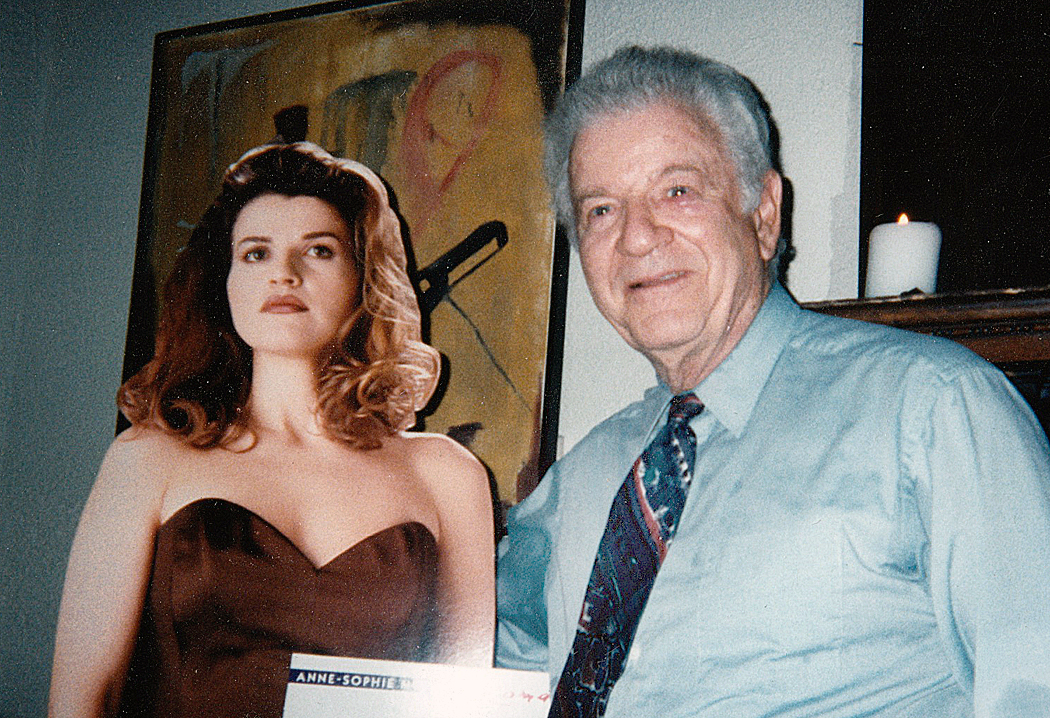
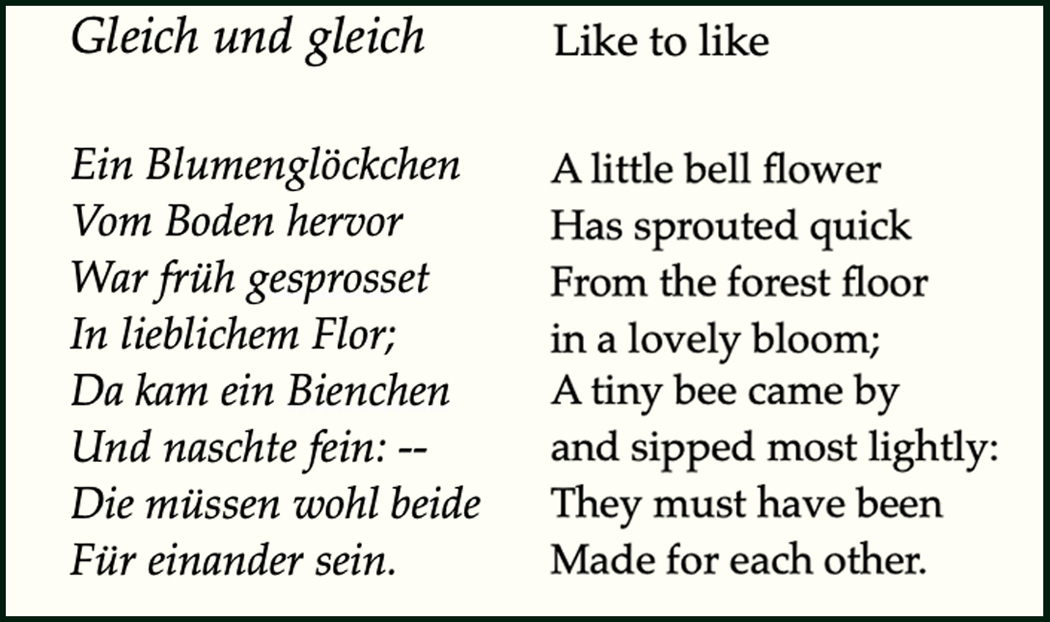
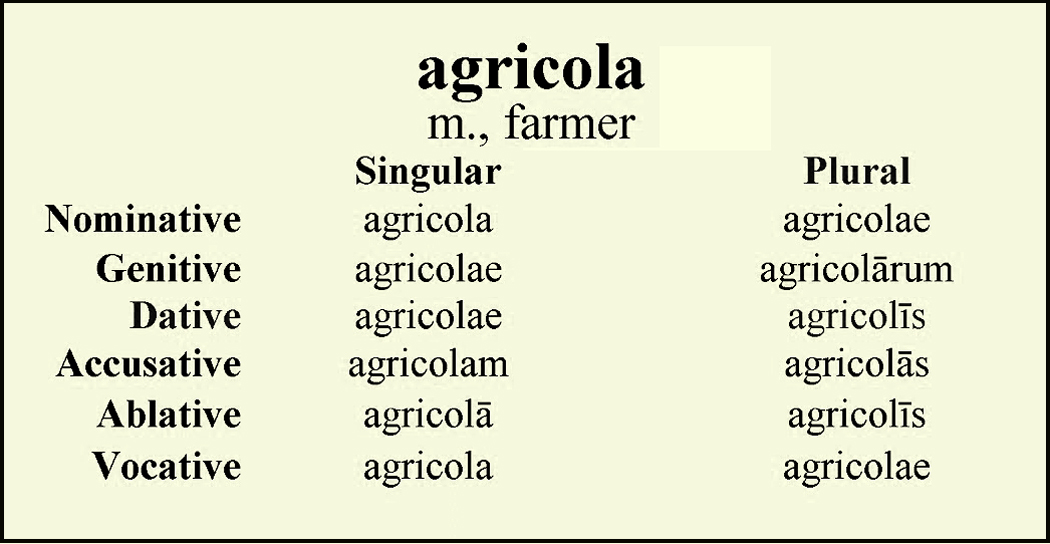
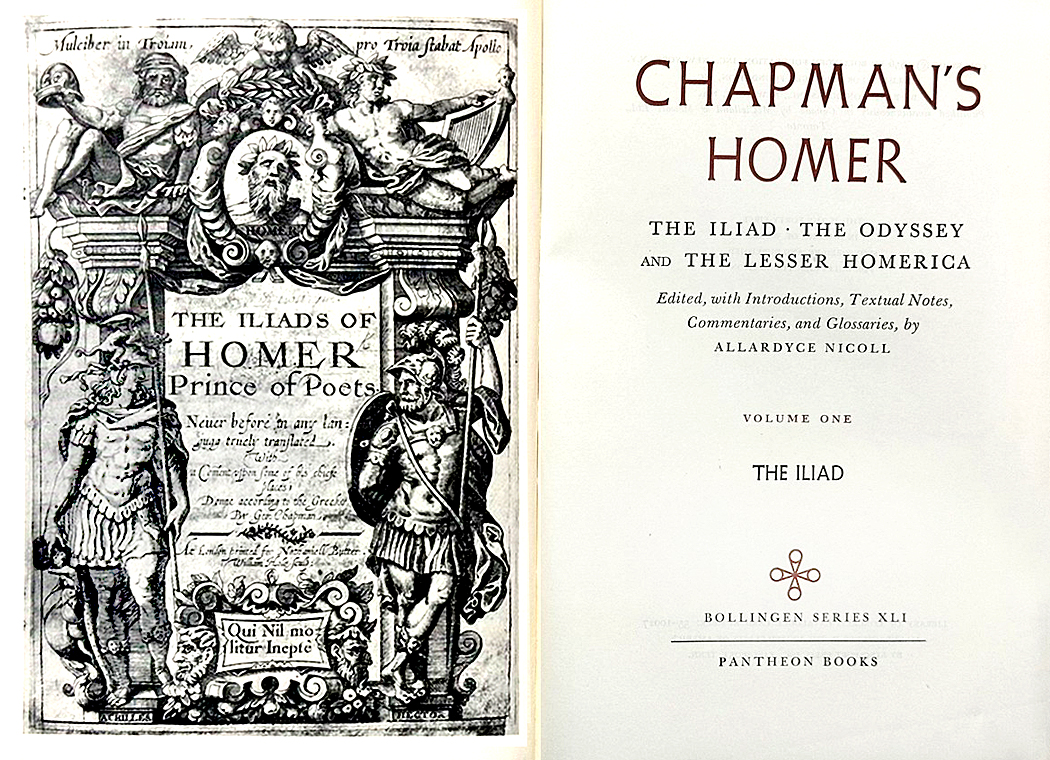
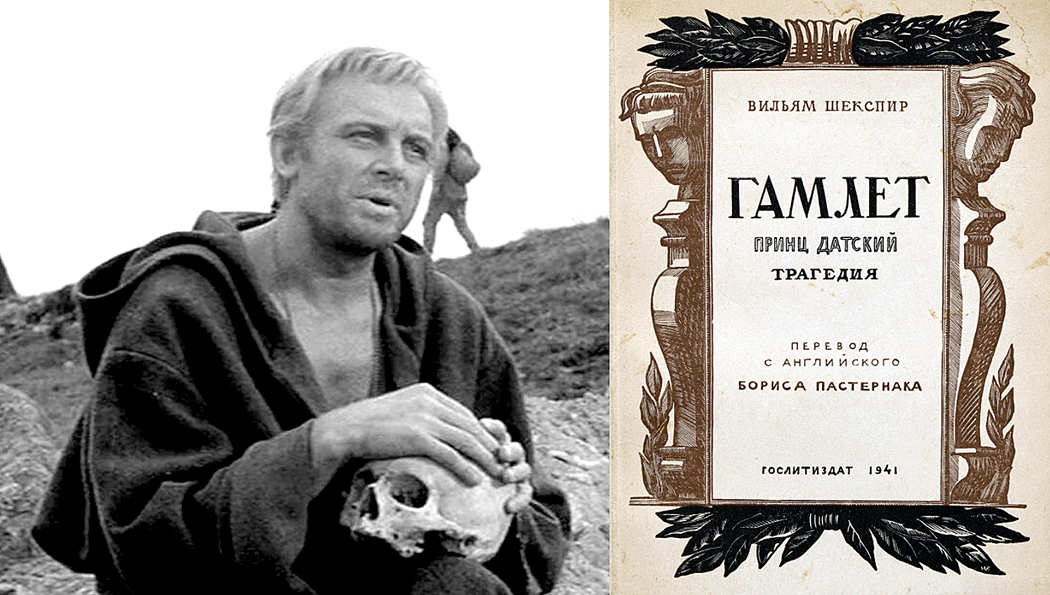
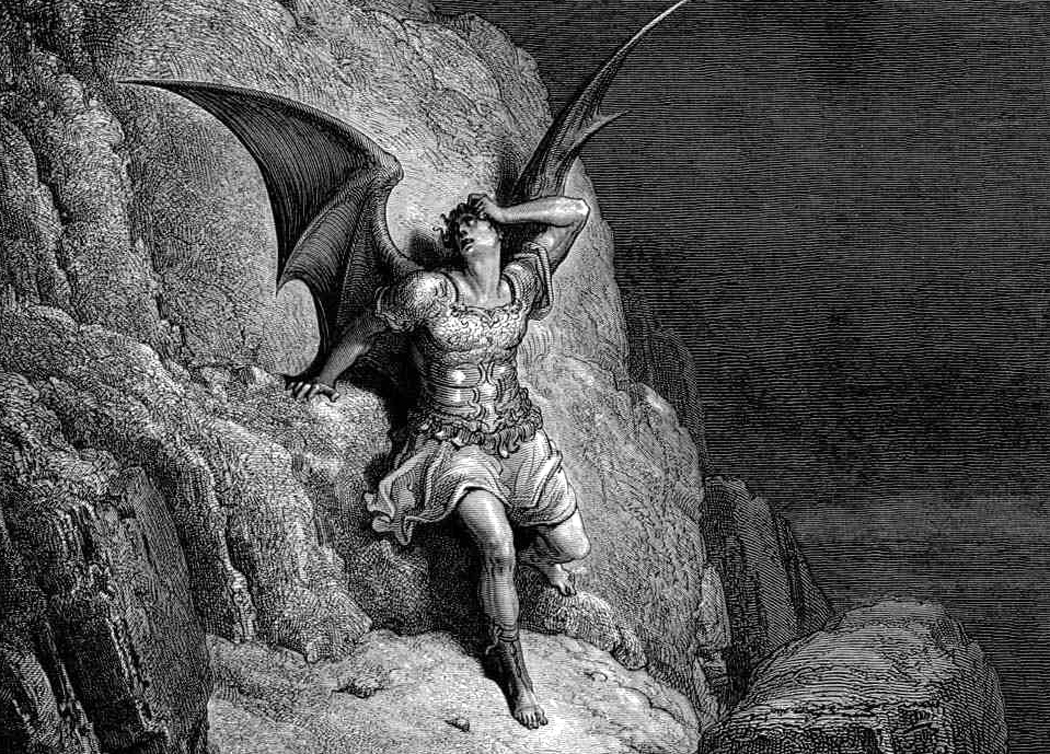
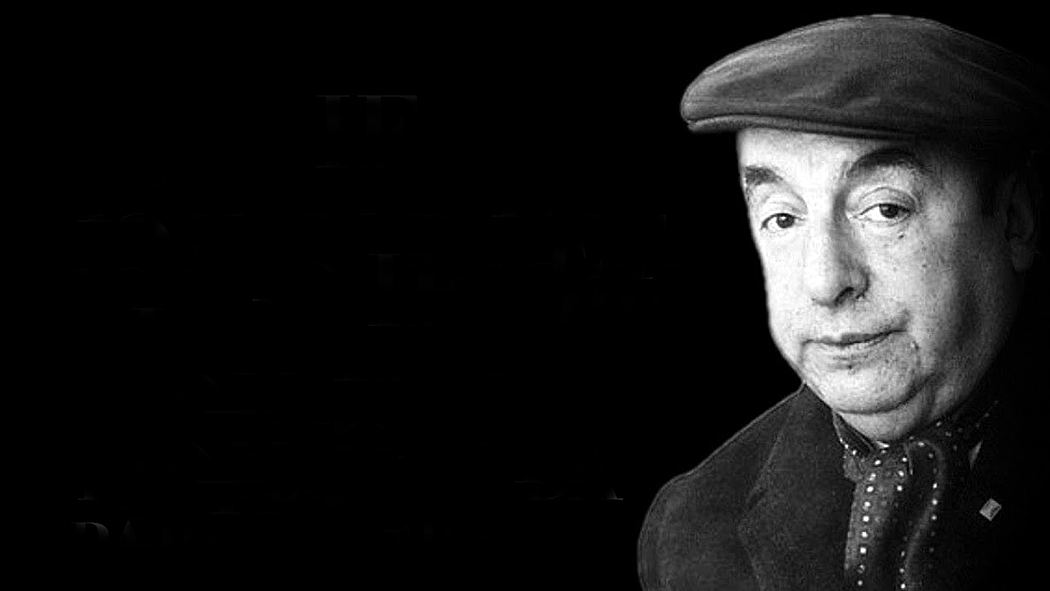



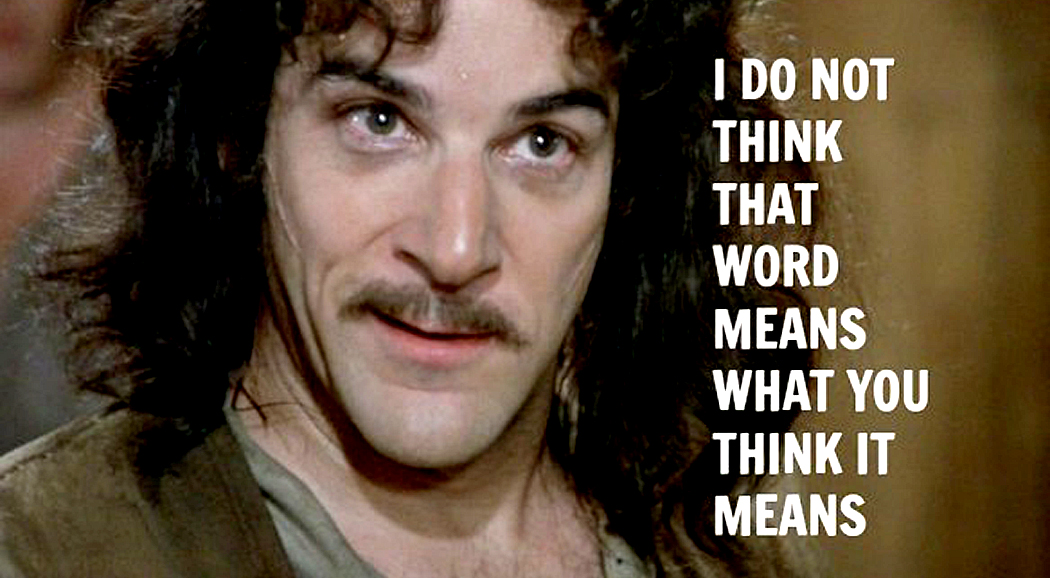

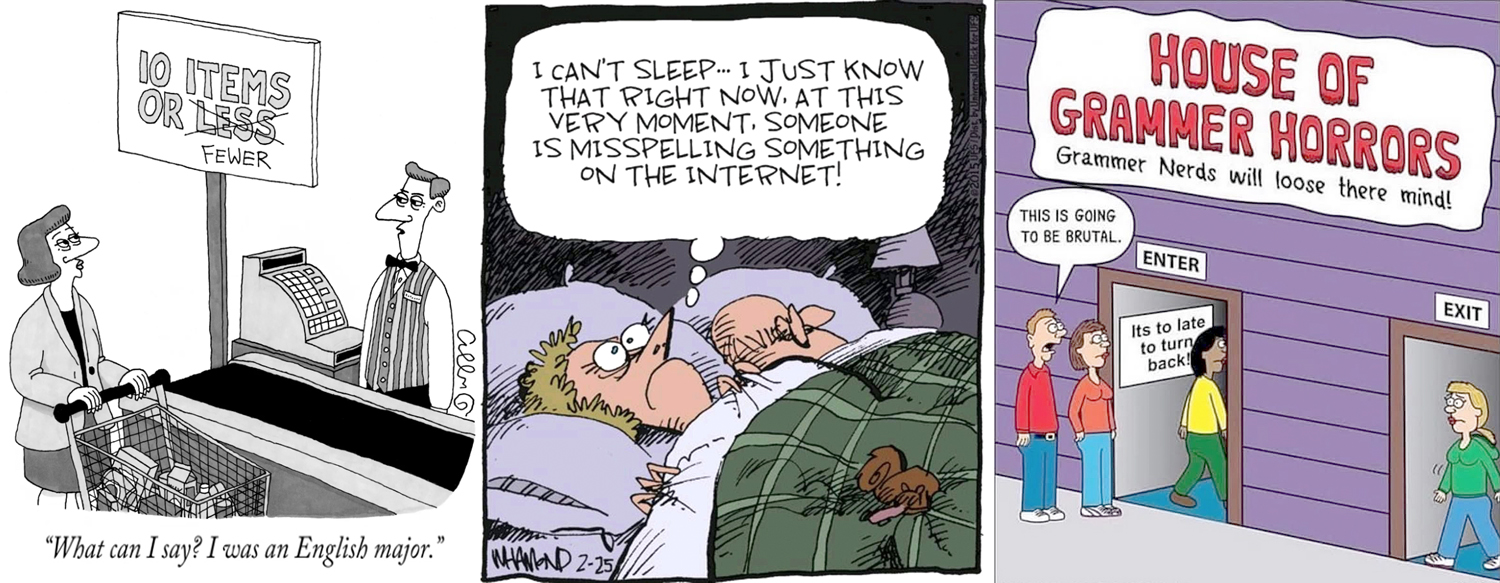

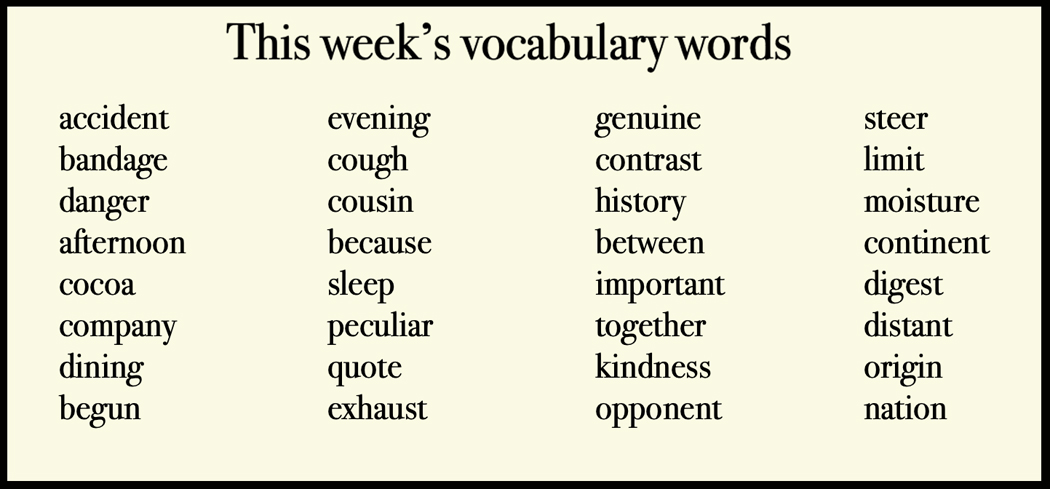
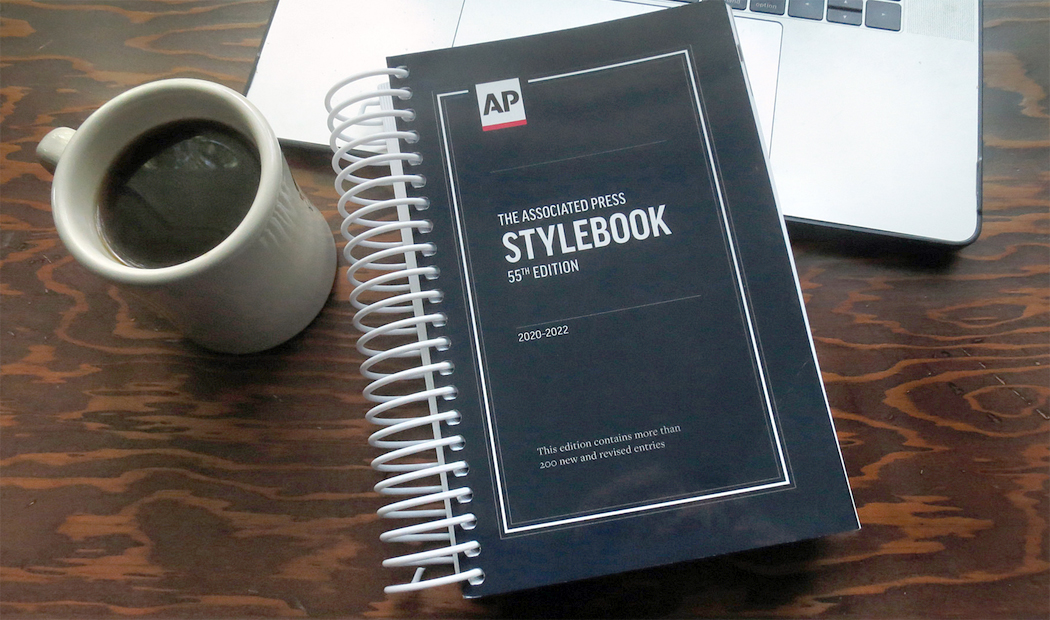
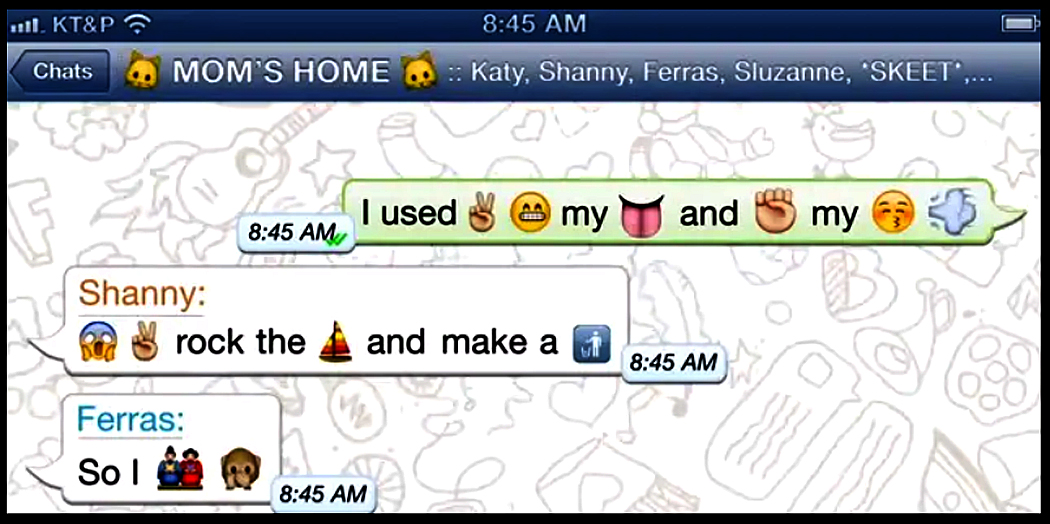
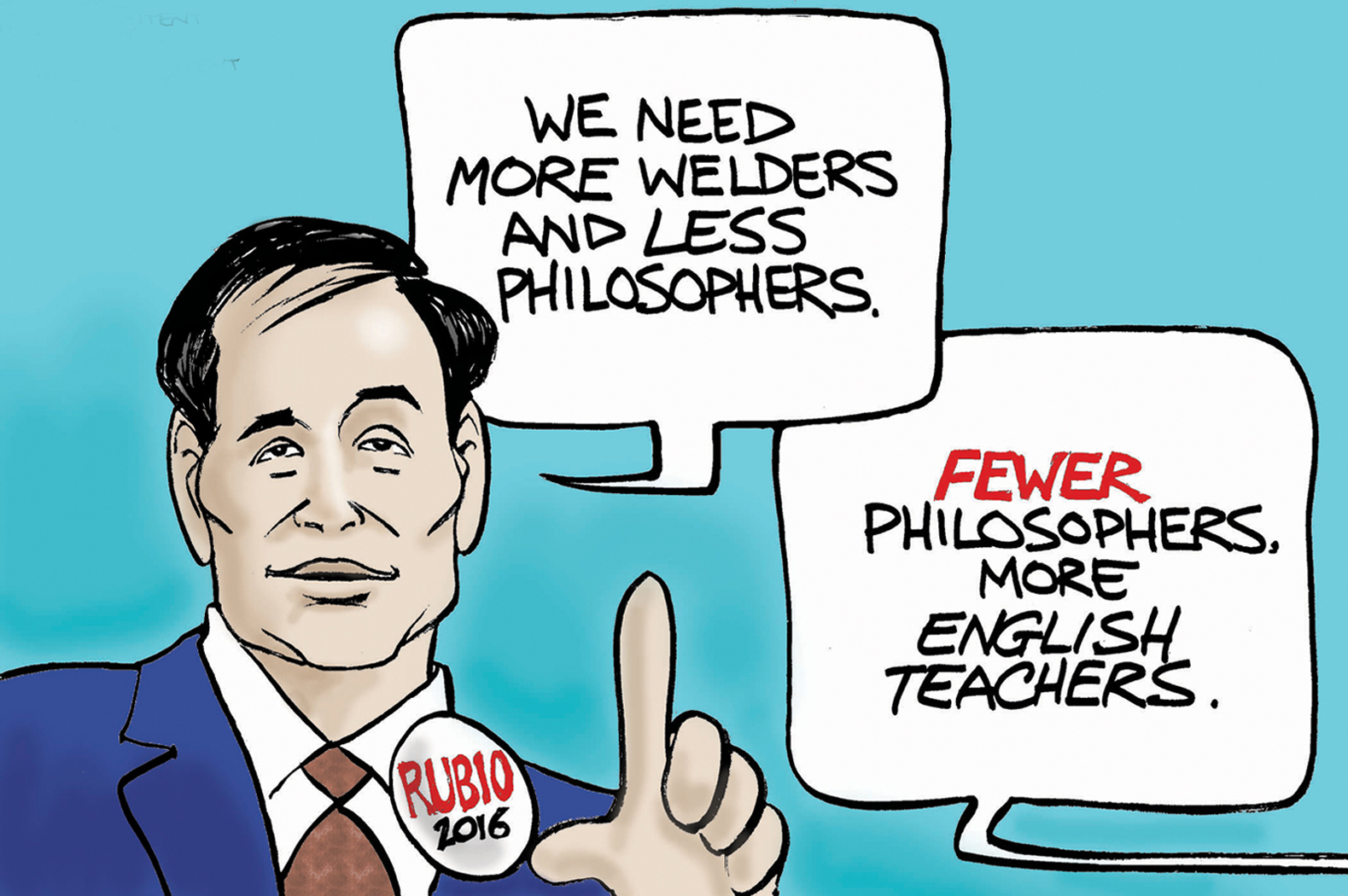

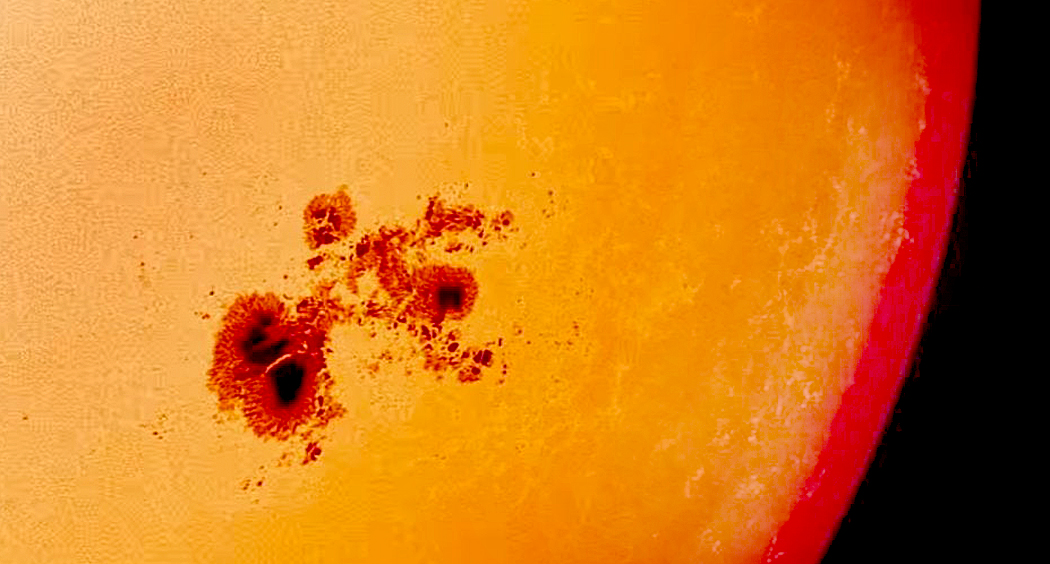

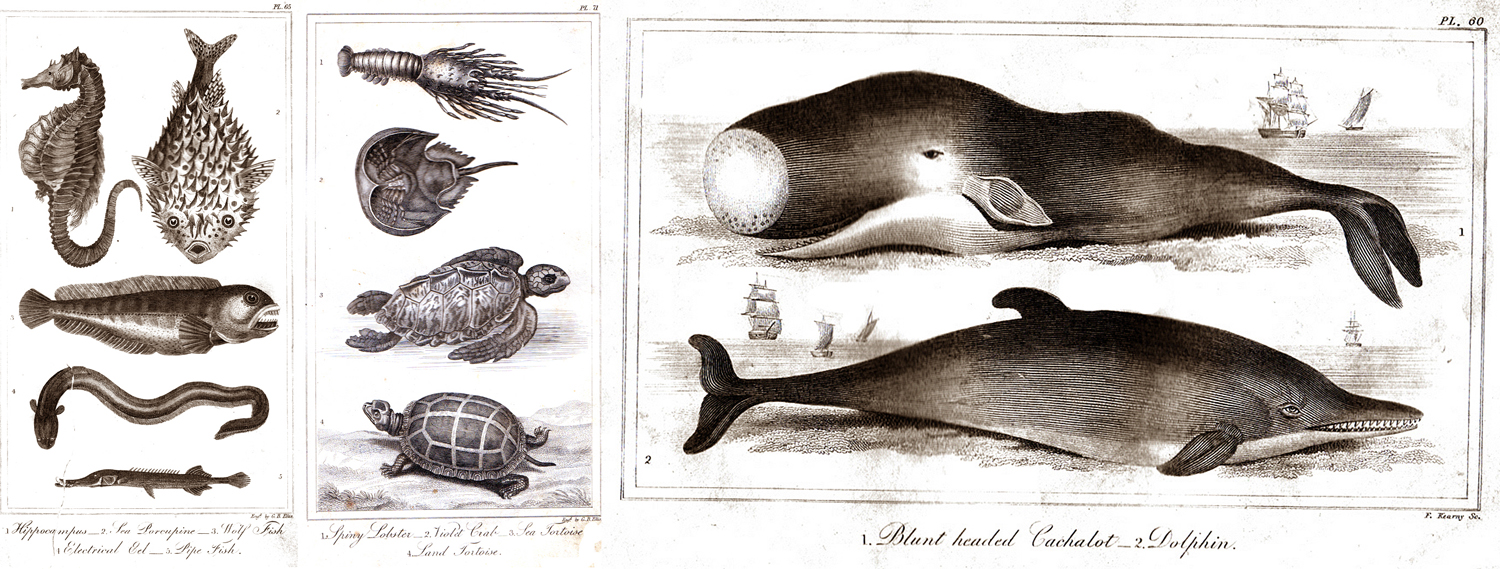
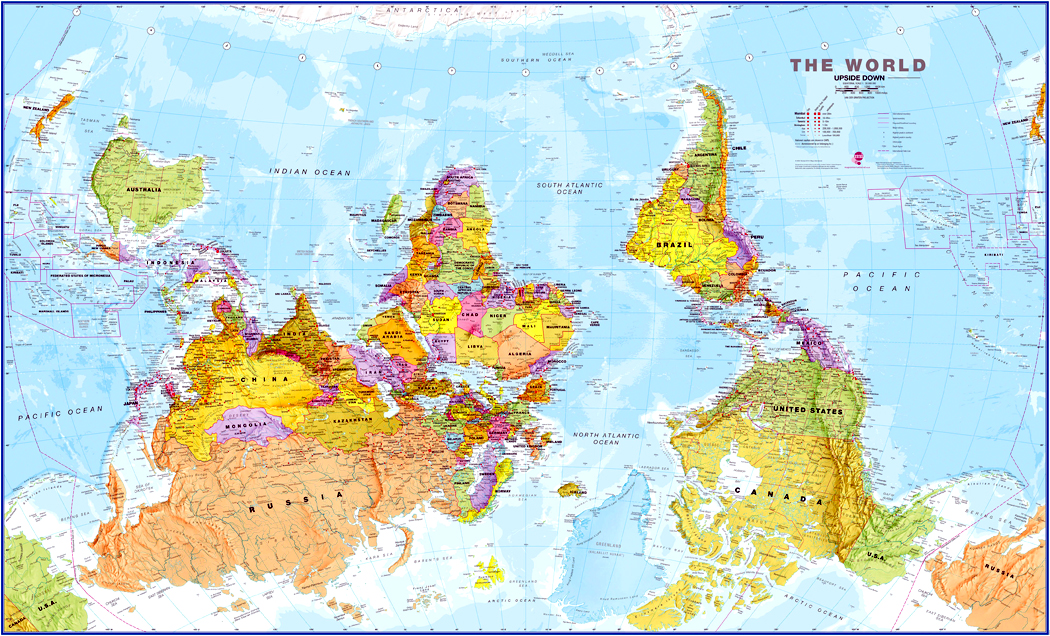

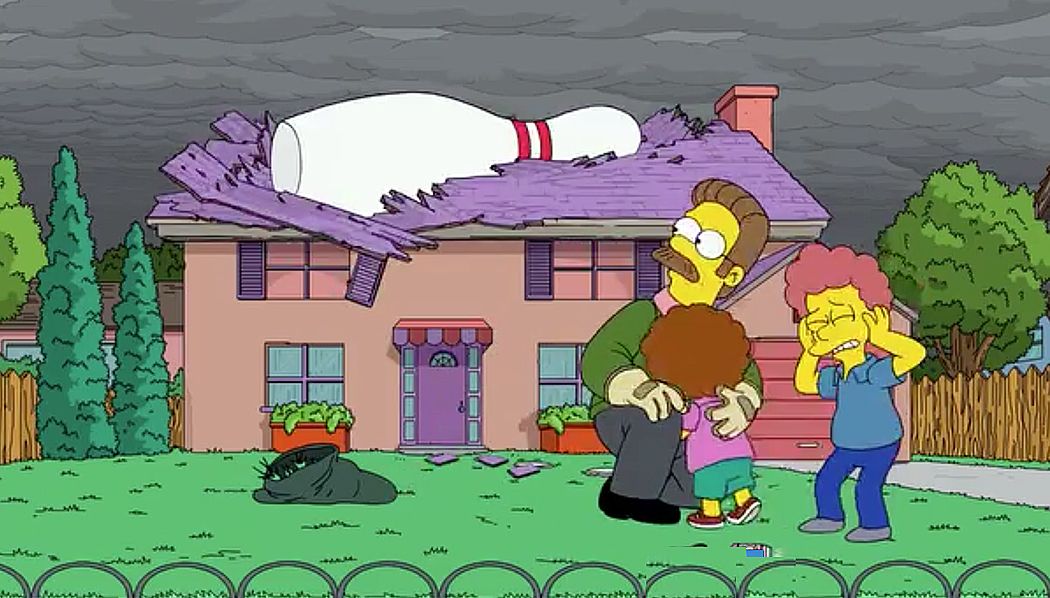
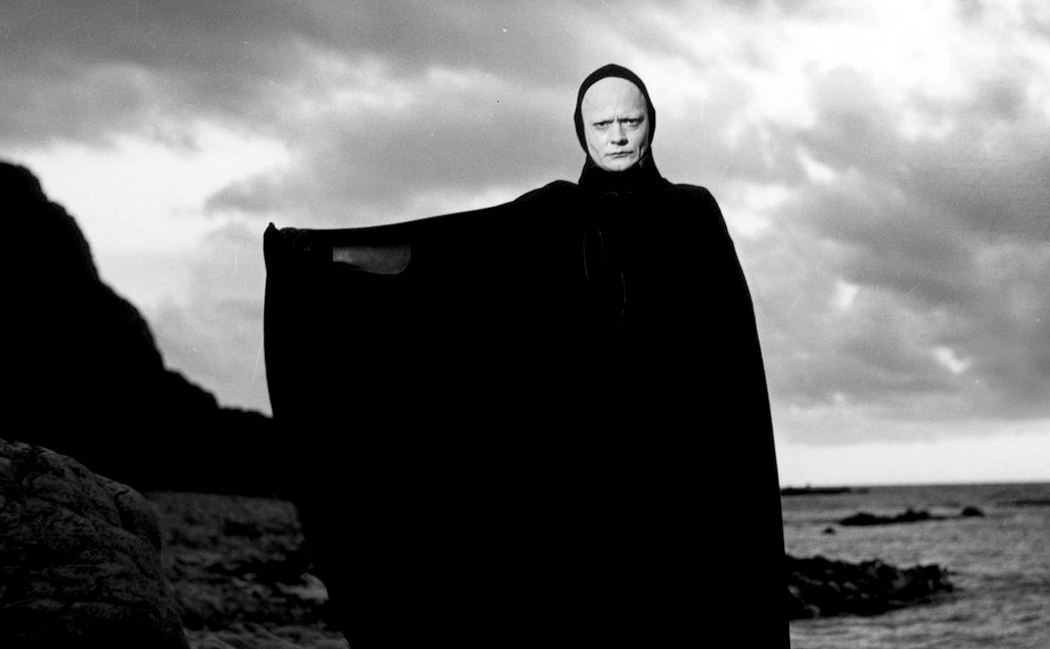

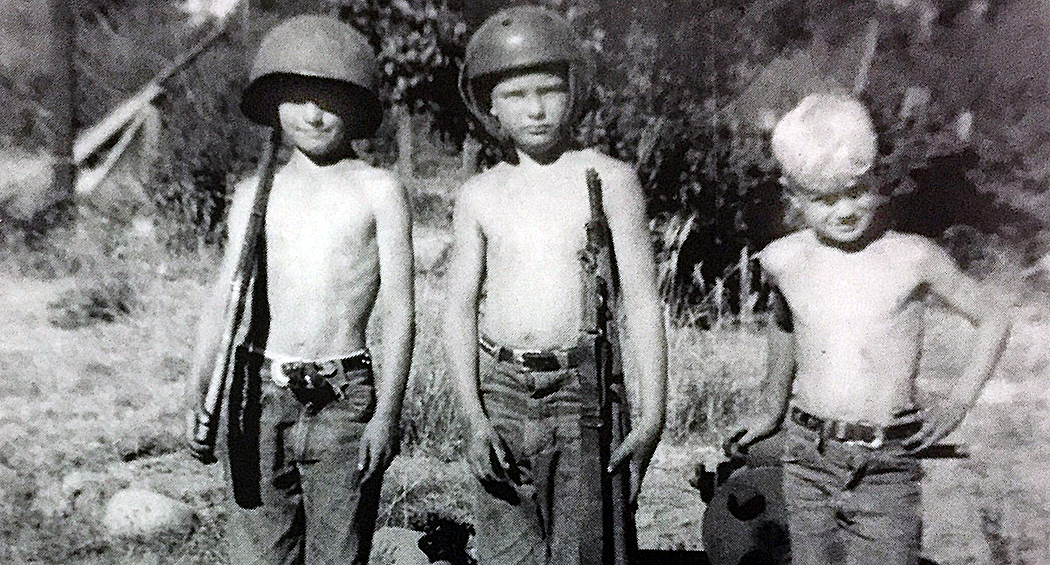



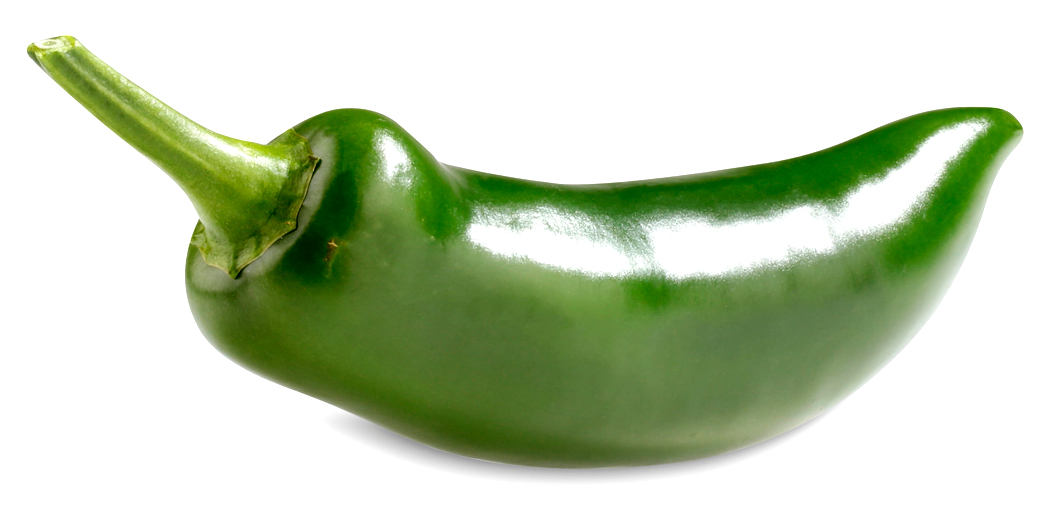
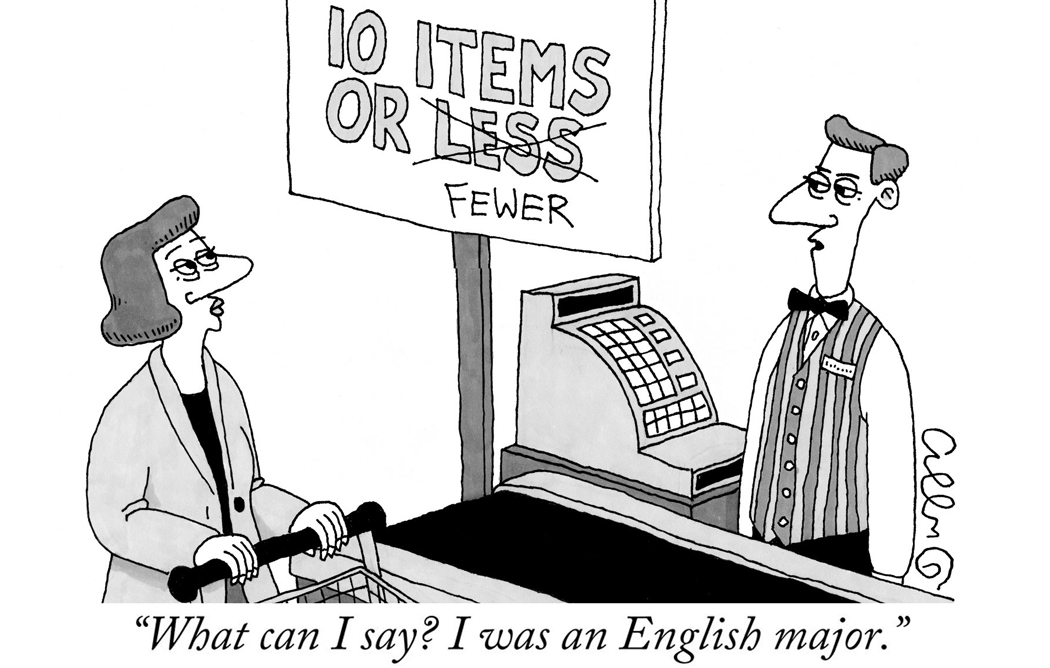
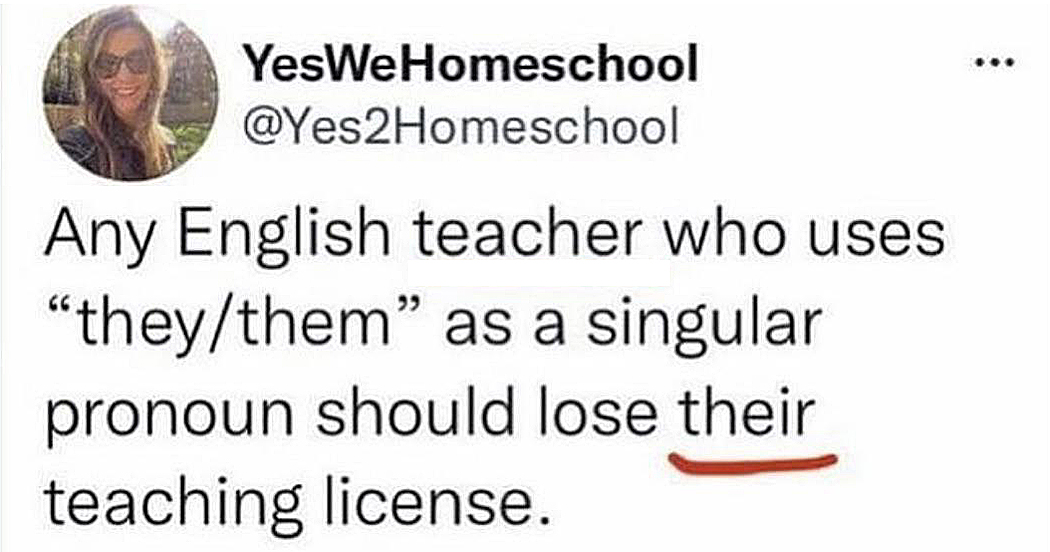



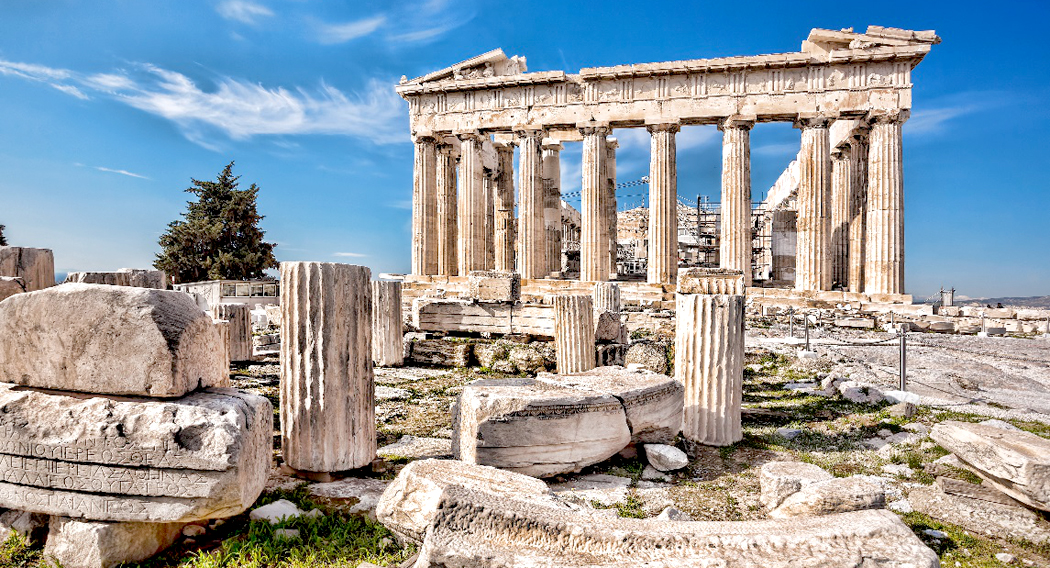




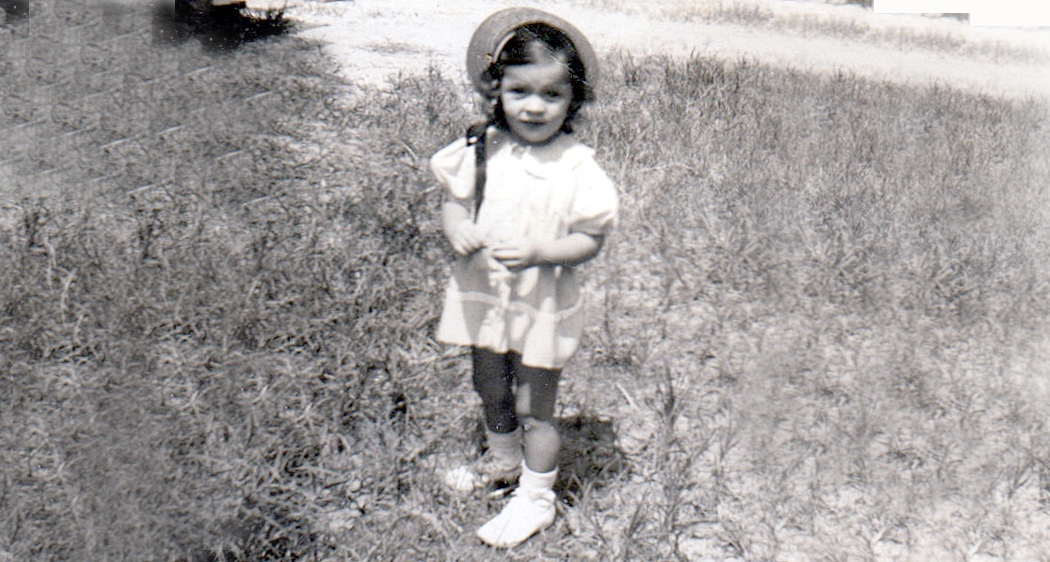



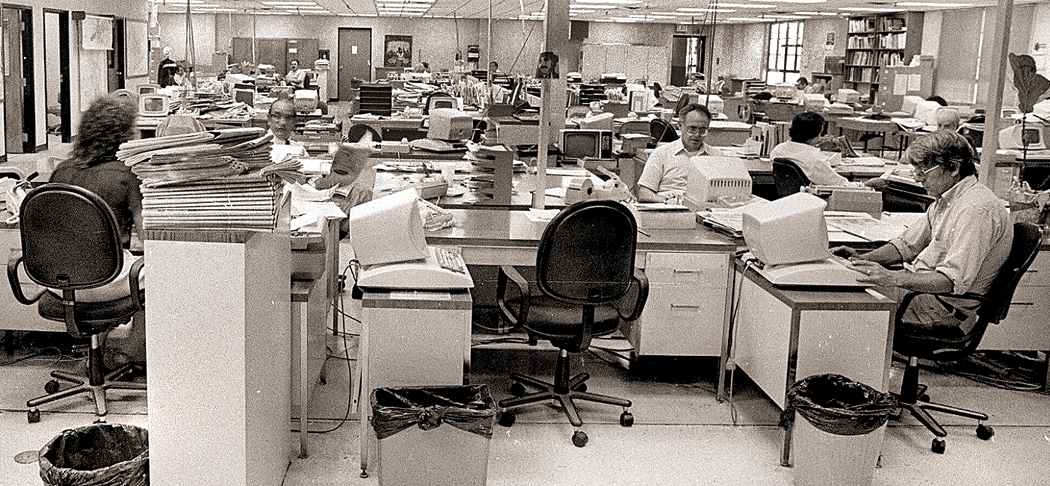
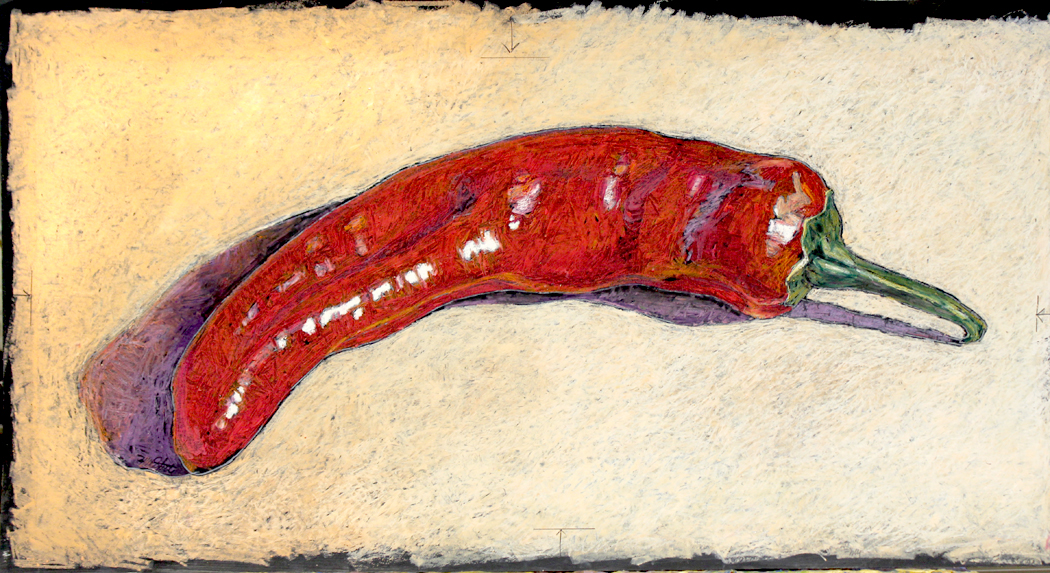
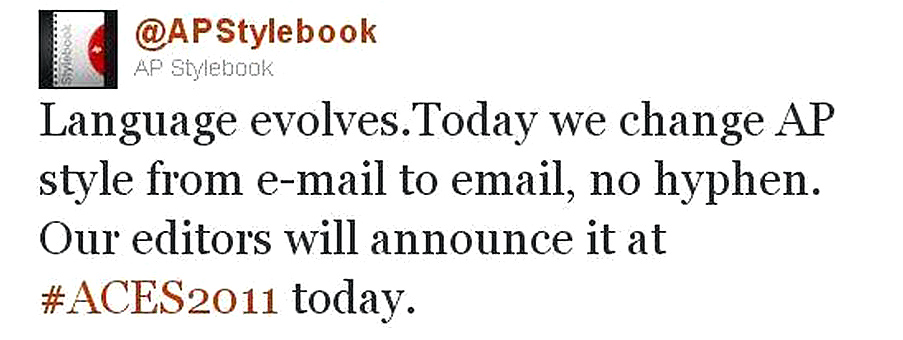
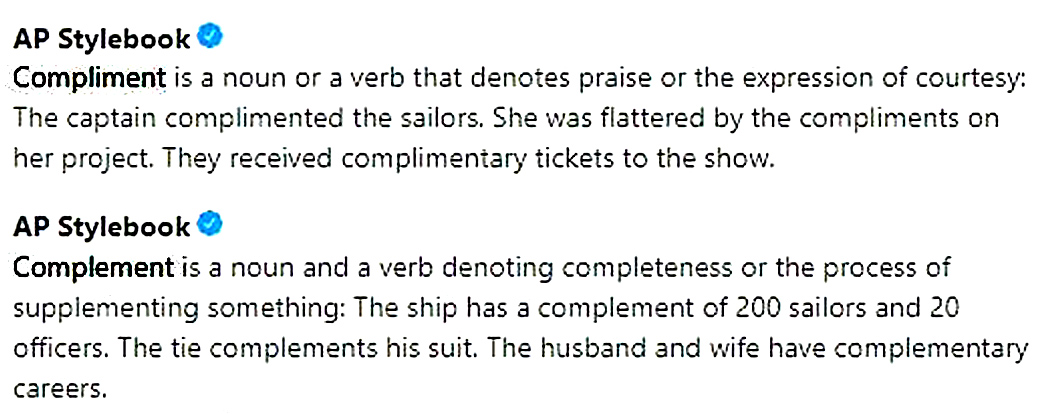
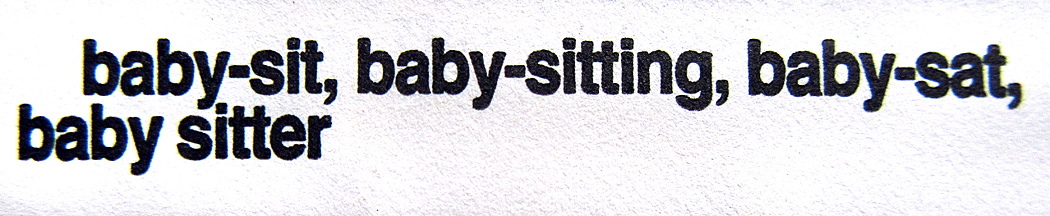
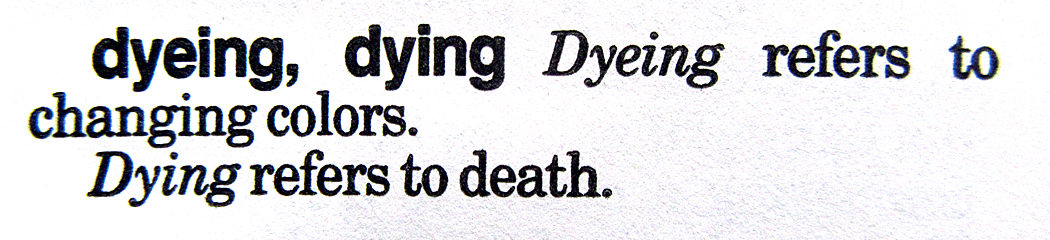
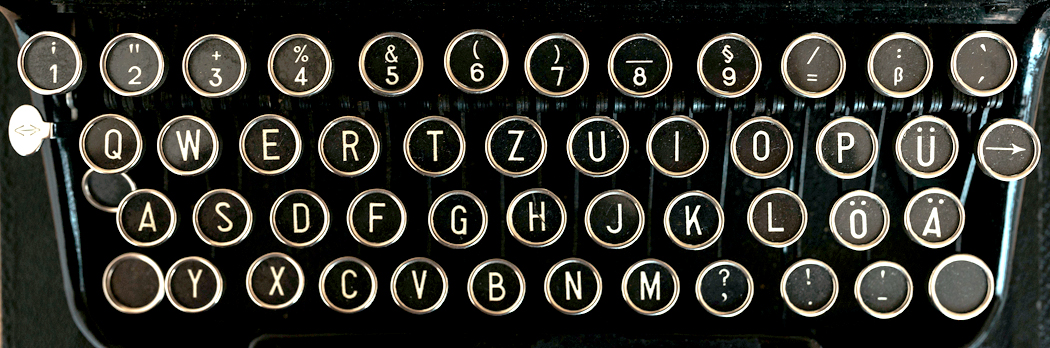
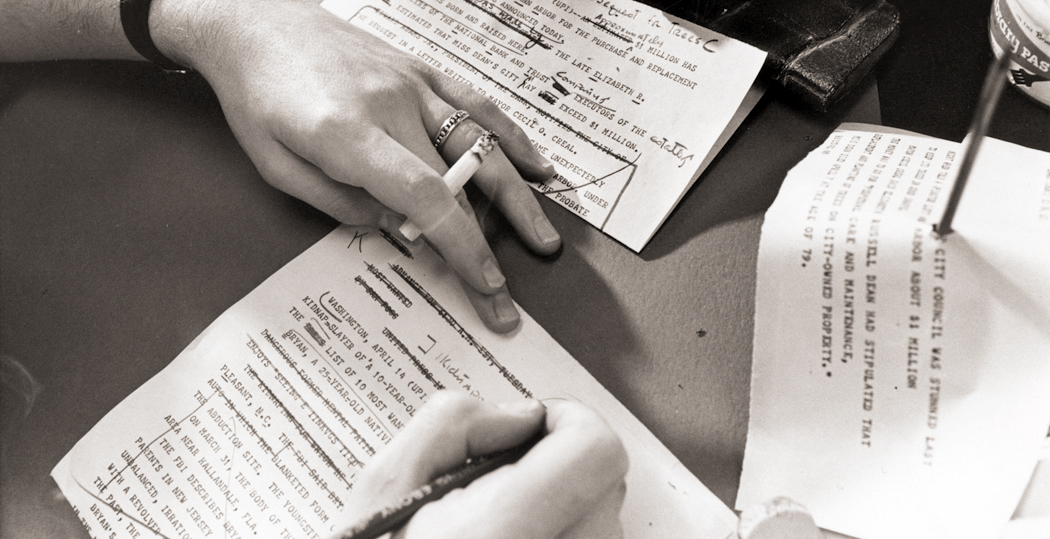

 Richard Nilsen