Archive

Tag Archives: lapis lazuli

In the TV show, Big Bang Theory, physicist Sheldon Cooper claims that geology “isn’t a real science.” He’s quite a snob about it. But if you unfold any standard geological map — one that outlines the underlying bedrock of any state or county — you will see something so mindbogglingly complex and incomprehensible, that it couldn’t be anything but science. 
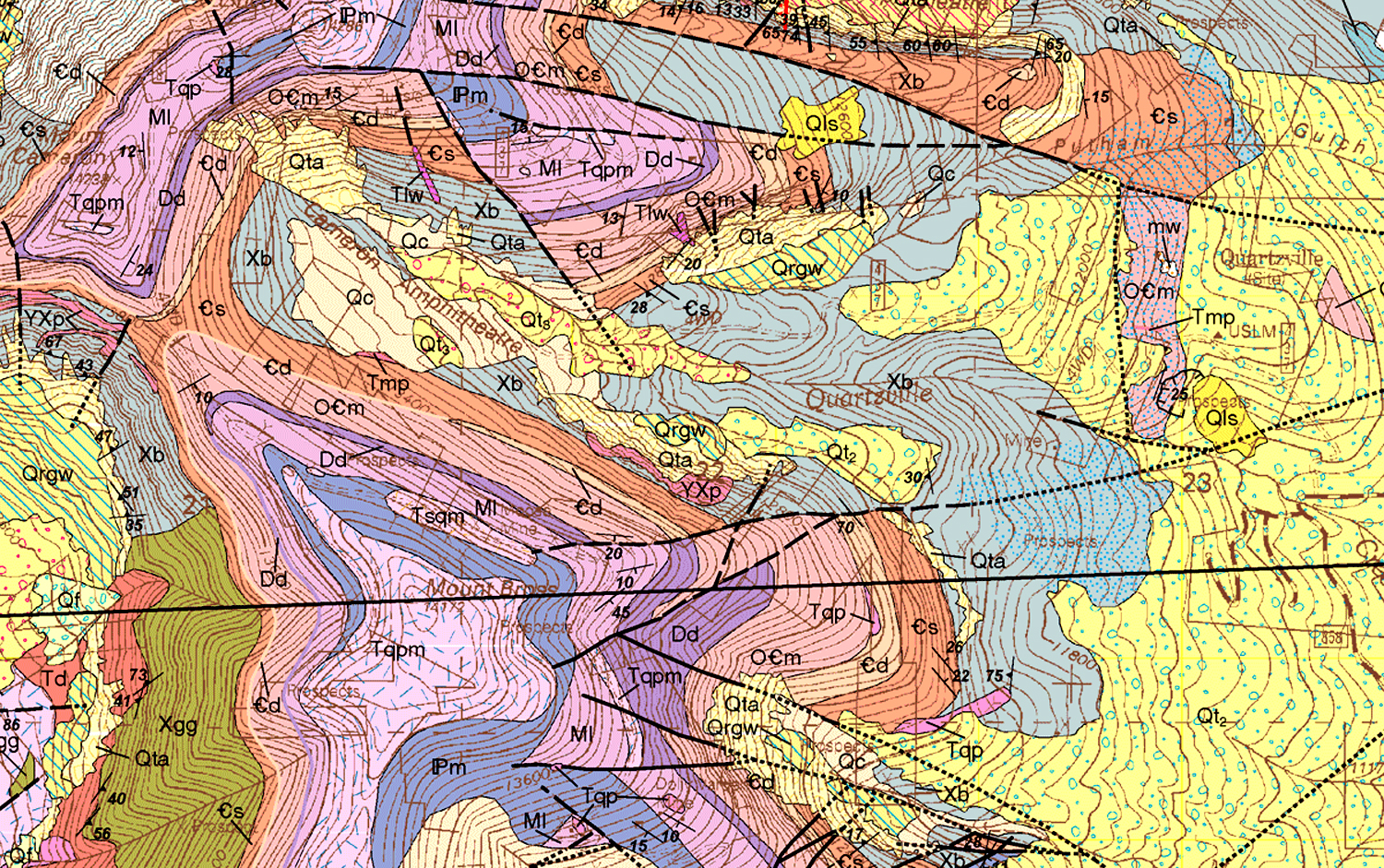
A geologist is someone who can tell the difference between diorite and andesite, and can measure the schistosity of mica, and explain how seashell fossils came to be found on the top of Mt. Everest. Geologists find petroleum and metals under the earth, and tell us the Earth is 4.6 billion years old. And a good deal of what is written in the field is — much as with  quantum physics — well beyond the ken and vocabulary of mere mortals. 

They write things such as: “Mass transport deposits (MTDs) occur as intercalations within turbiditic sequences above the ophiolites. They represent syncontractional submarine slides that occurred on frontal accretionary prism slopes during the Late Cretaceous–Paleocene closure of the LPOB.” That, by the way is “Ligurian-Piedmont Ocean Basin,” in case you were confused. 
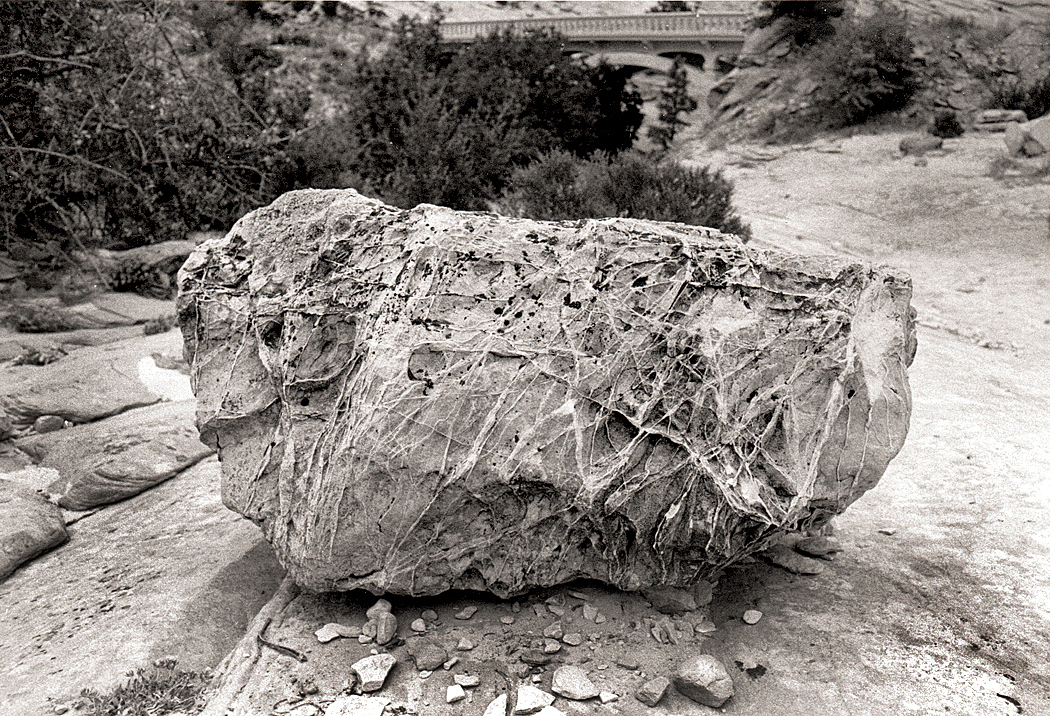
Southern Utah

So, yes, they are scientists. And it’s fun to learn as much as you can, and collect interesting rocks and minerals. But geology is also for poets, artists and cooks. And it is the humanistic aspects of geology that have fascinated me since first studying geology in college. 
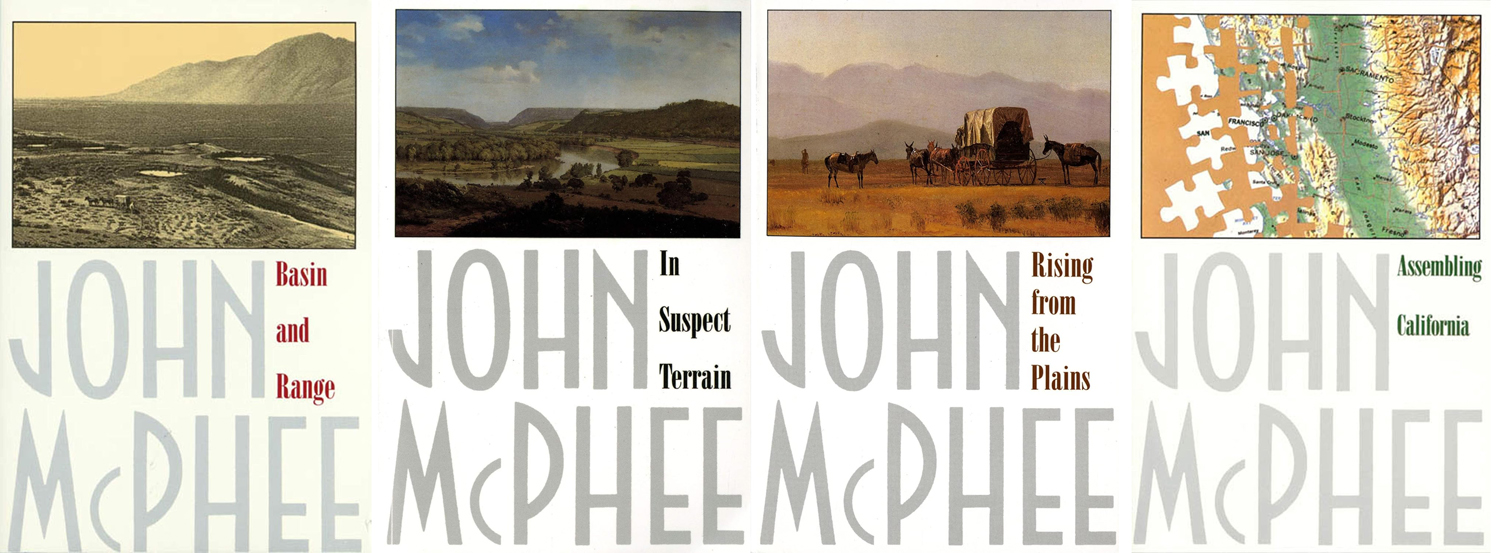
I read a good deal about geology, including the four books written by John McPhee in the 1980s — although they are about geologists as much as about the rocks they study. They are at the comprehensible boundary between general and specialist knowledge. And you’ll never drive through an interstate highway roadcut the same way again. 
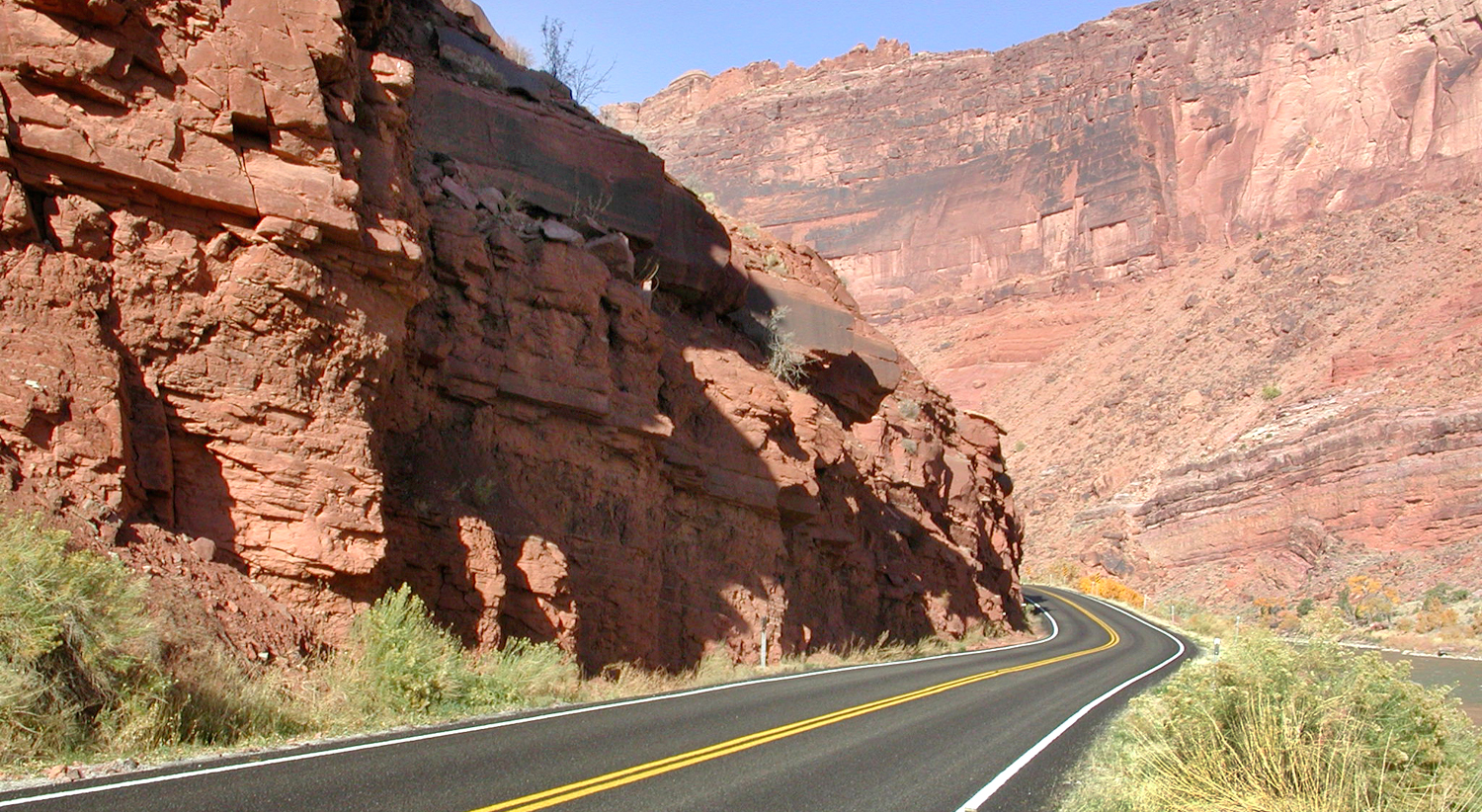
Along the Colorado River, Utah

Geology is just everywhere and affects all of our lives not only daily, but even hourly. Think of your car. Every bit of it, save only the rubber in its tires and the fabric or leather of its upholstery, came originally out of the ground. Whether it is the steel of its engine, the platinum in its catalytic converter, the glass in its windshield or the plastic of its dashboard — all dug out of the ground before being polished up and installed on your Hyundai. 

And even your tires, these days, are only partially rubber. The rest of it was dug up, too. 
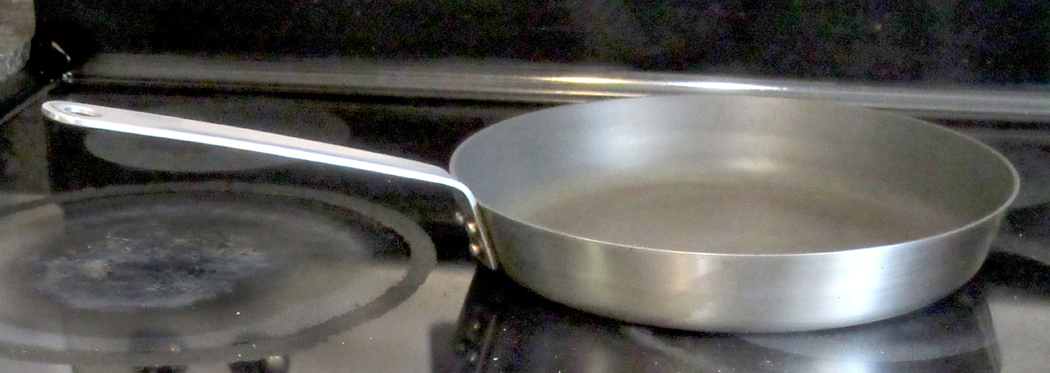
The skillet in your kitchen is just a rock that has been processed. The knives, too, and the potato peeler. All just carefully refined stones. In many ways, we still live in the Stone Age; we’re just more sophisticated about it than those guys banging rocks together in the Paleolithic caves. 
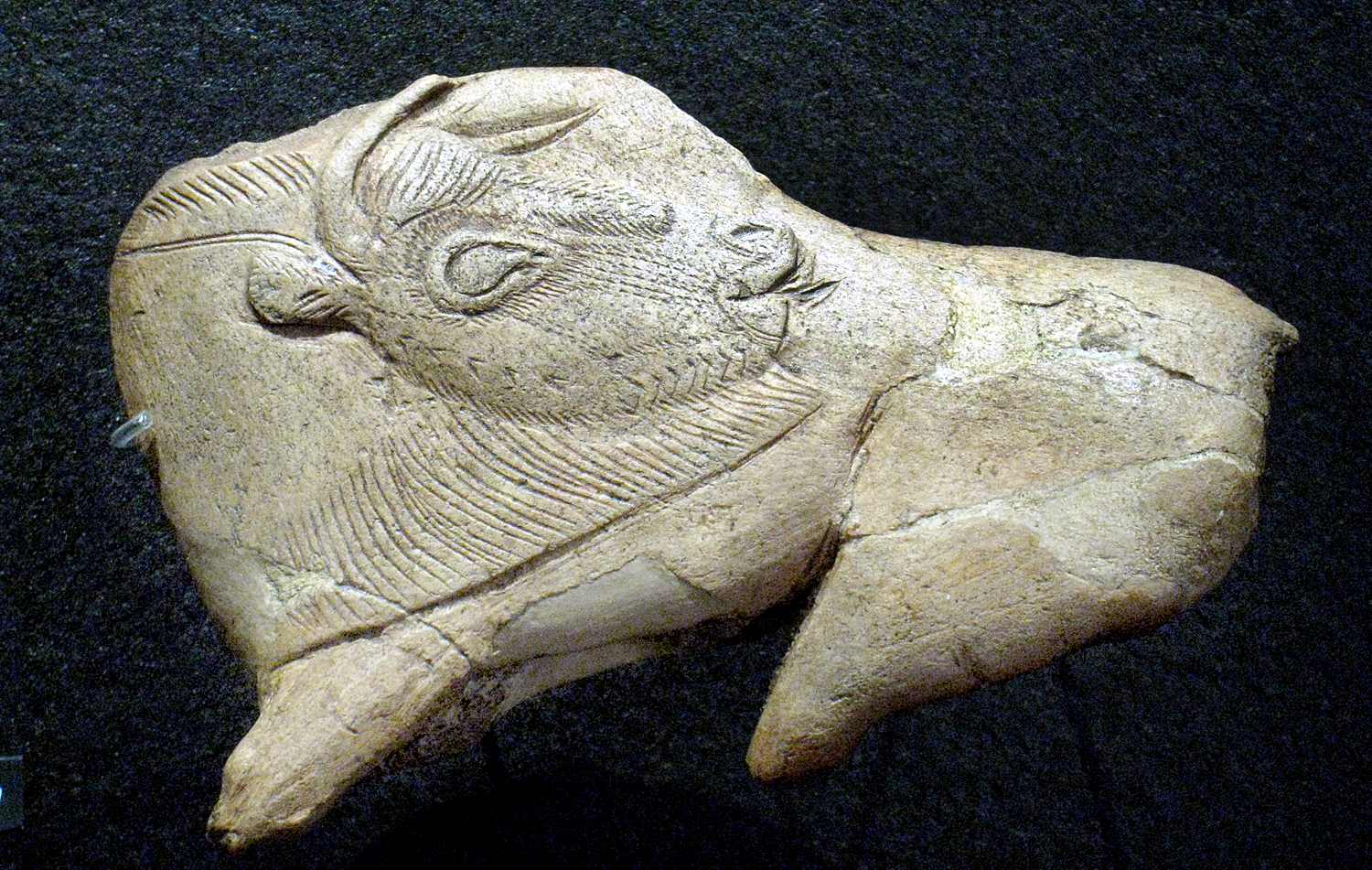
Paleolithic bison carving

Our human prehistory has been divided into the Paleolithic, Mesolithic and Neolithic. I suggest we now live in the Metalithic Age. (Everything now seems to be “meta.”) We do amazing things with the ore we dredge out of the ground and the petroleum we pump, but the foundation of our civilization is still geology. 
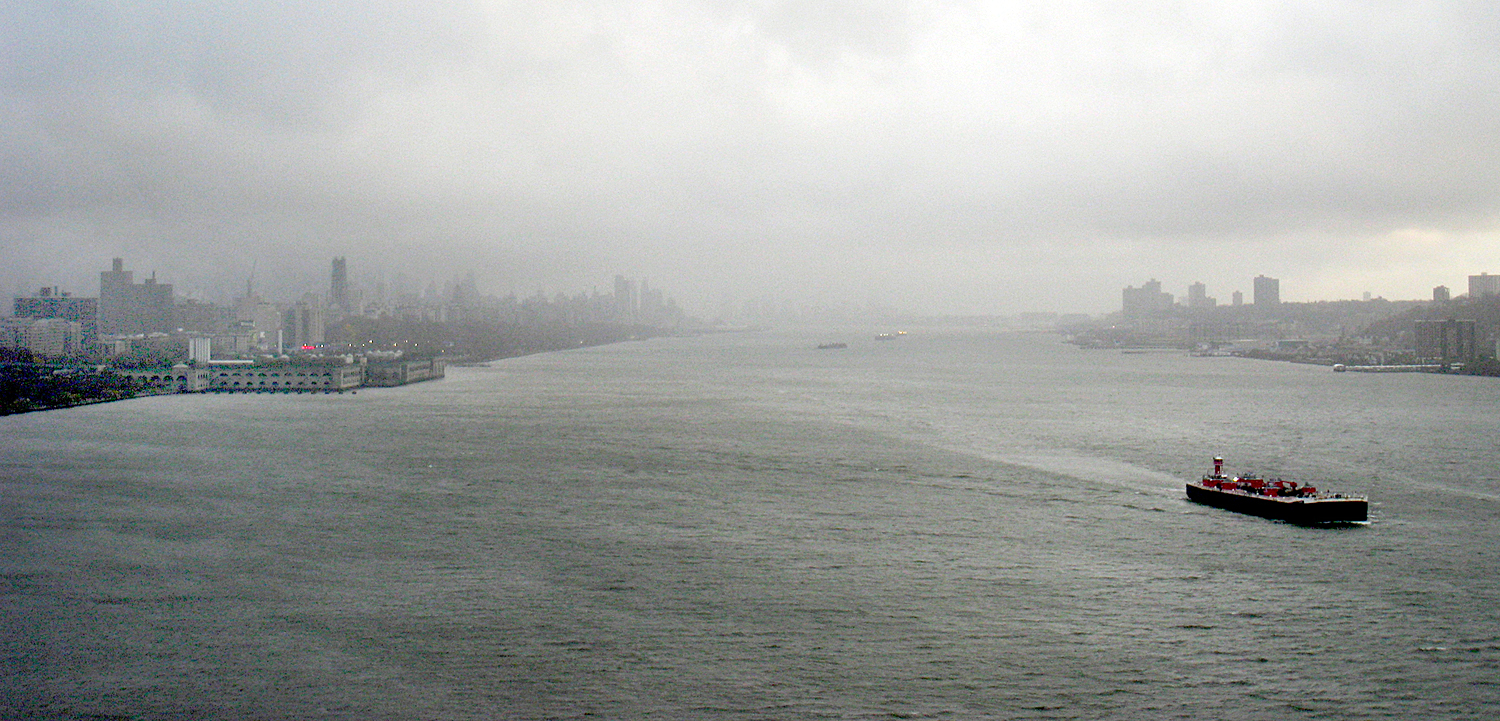
New York on the Hudson River

Cities are the index of civilization and most of the world’s great cities are built on harbors or rivers. The Indus, the Euphrates, the Nile, the Huang Ho. That’s geology. The cities are built with steel and concrete. Geology. Their streets are paved with either concrete or tar and gravel. More geology. 

Our food grows in dirt, or grazes on the grasses that sprout from the soil — a soil derived from the bedrock underneath. What are vitamins and minerals but the residue of those same rocks? 
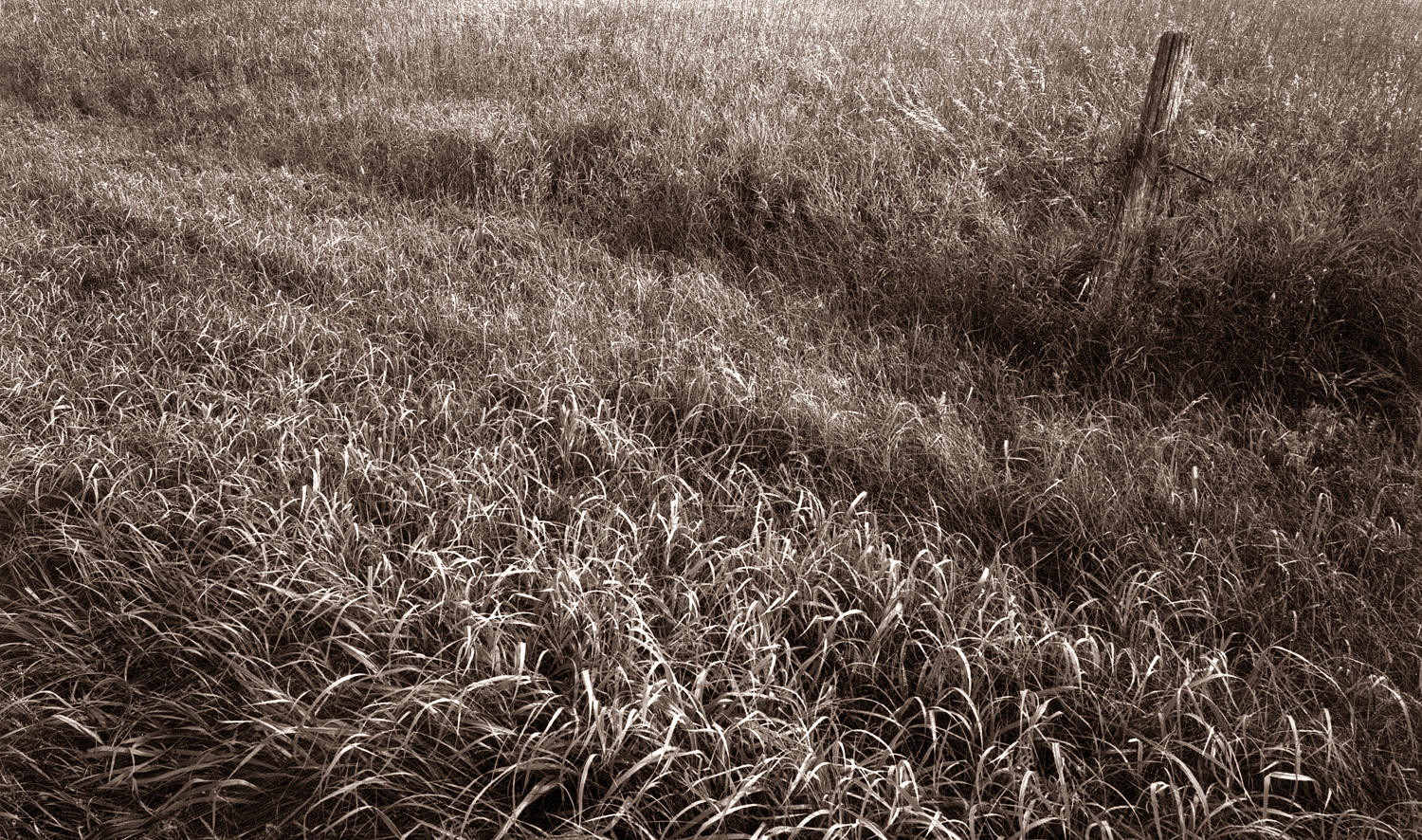
Blue Hill, Maine 

Geology drives history, too. For instance, because Norway and Greece are so rocky and ungenerous for agriculture, their peoples took to the sea and the Greeks colonized everywhere from Spain to the Black Sea, and the Vikings from Constantinople and Sicily to England and Iceland. Geology kept the Old World and the New from interacting significantly until 1492. It blocked the westward expansion of the British colonies in North America for a century. It is the reason that Afghanistan is the “graveyard of empires.” Plate tectonics — “continental drift” — and the formation of Eurasia as a single east-west landmass has been hypothesized as the cause for European and Asian historical dominance. 
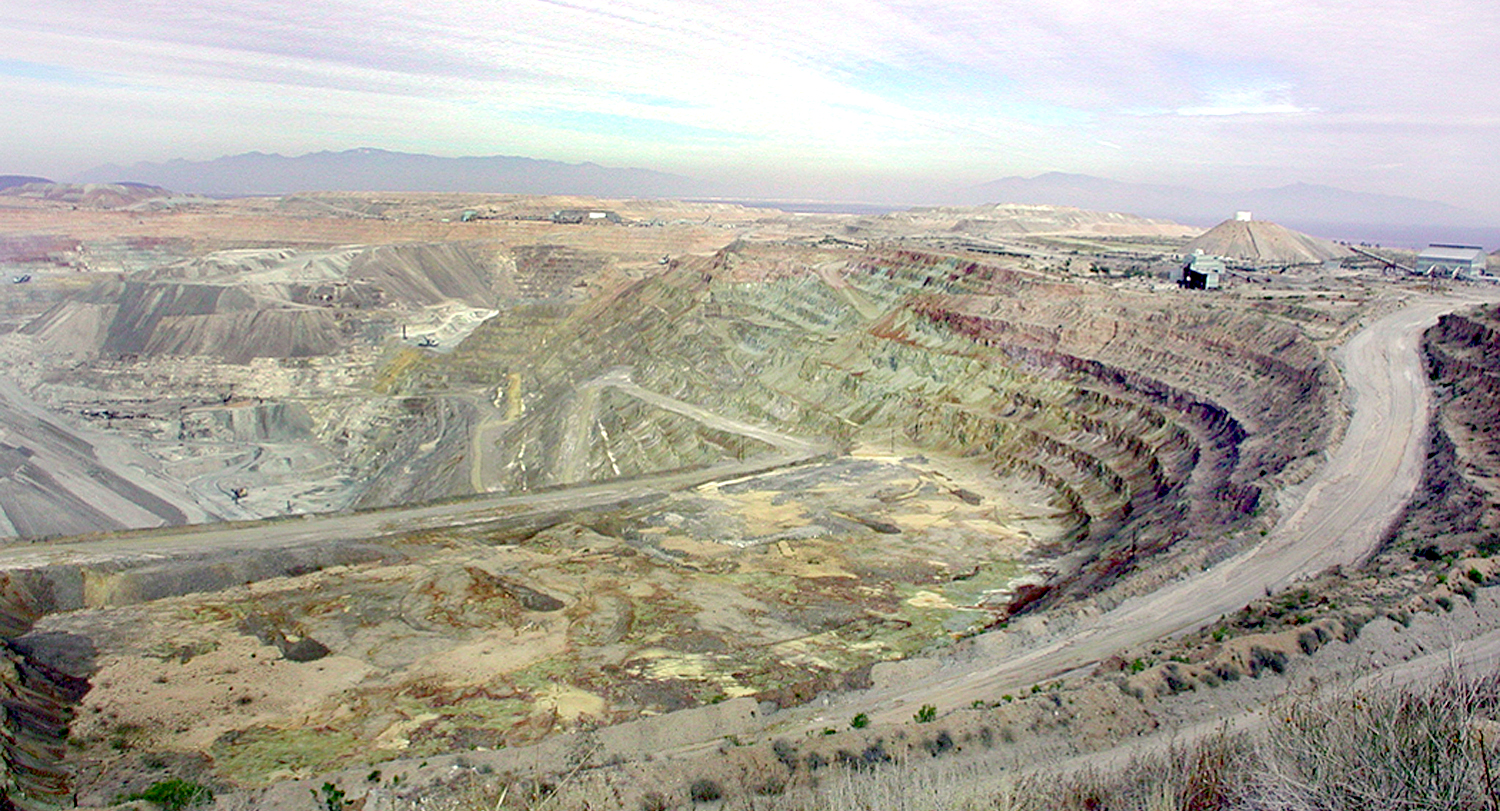
Asarco pit mine, Arizona

And geology, in the form of coal mining and petroleum extraction, is the cause of catastrophic climate change and global warming. 

Geologist Donald Beaumont wrote, “Geology will, unfortunately, remain an under-recognized, ‘phantom,’ science in that its role in explaining the foundations for human society may never be fully appreciated.”

I’m not making the case that geology explains everything, nor that it is the only thing that made us what we are, but I am saying that it helps explain it, and that you can see the same forces acting out elsewhere in the world. 
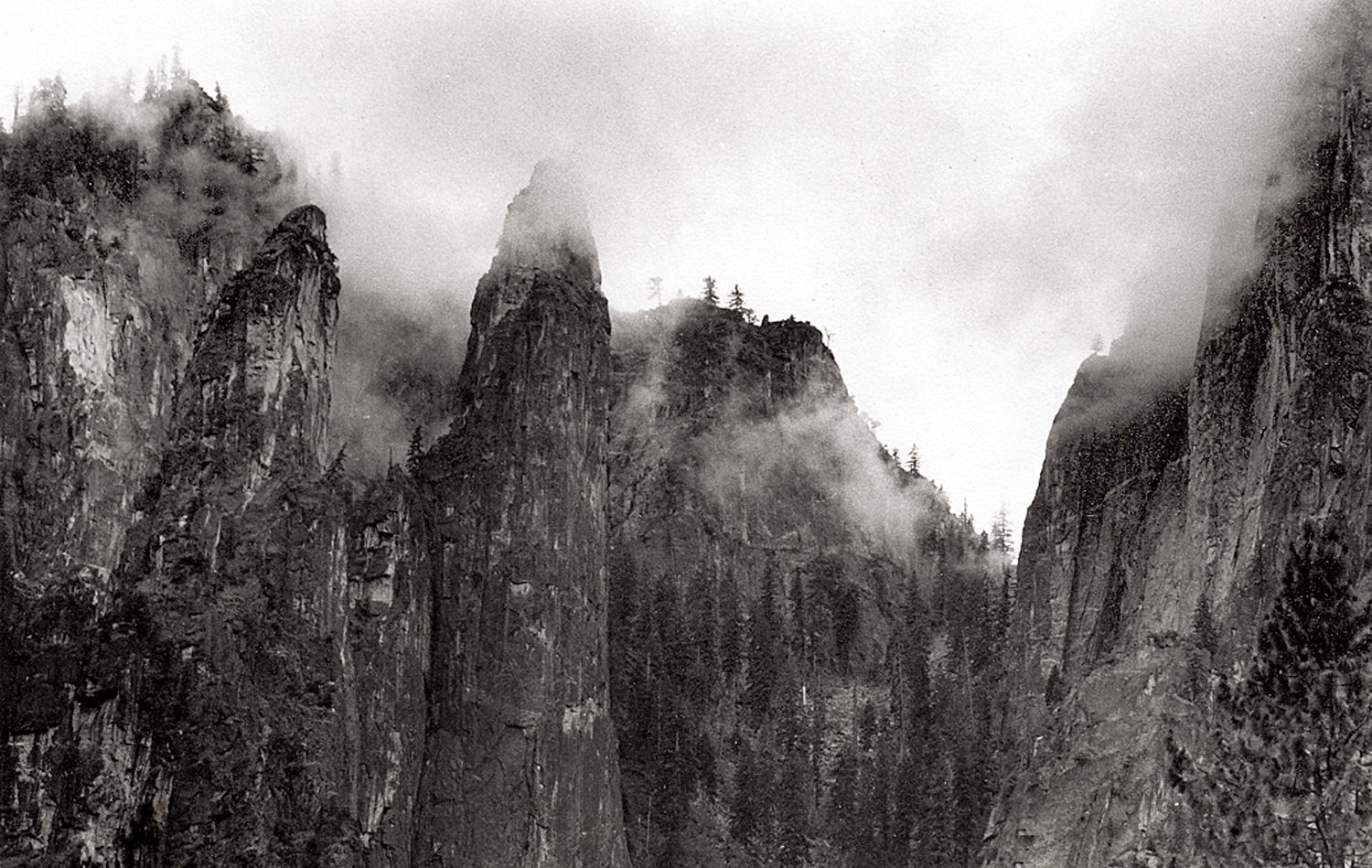
Olympic Mountains, Washington

It isn’t only physical, it is psychological also. Geology creates emotions. And so artists and poets have used geology to elicit in their audiences certain emotional states — rocky metaphors. 
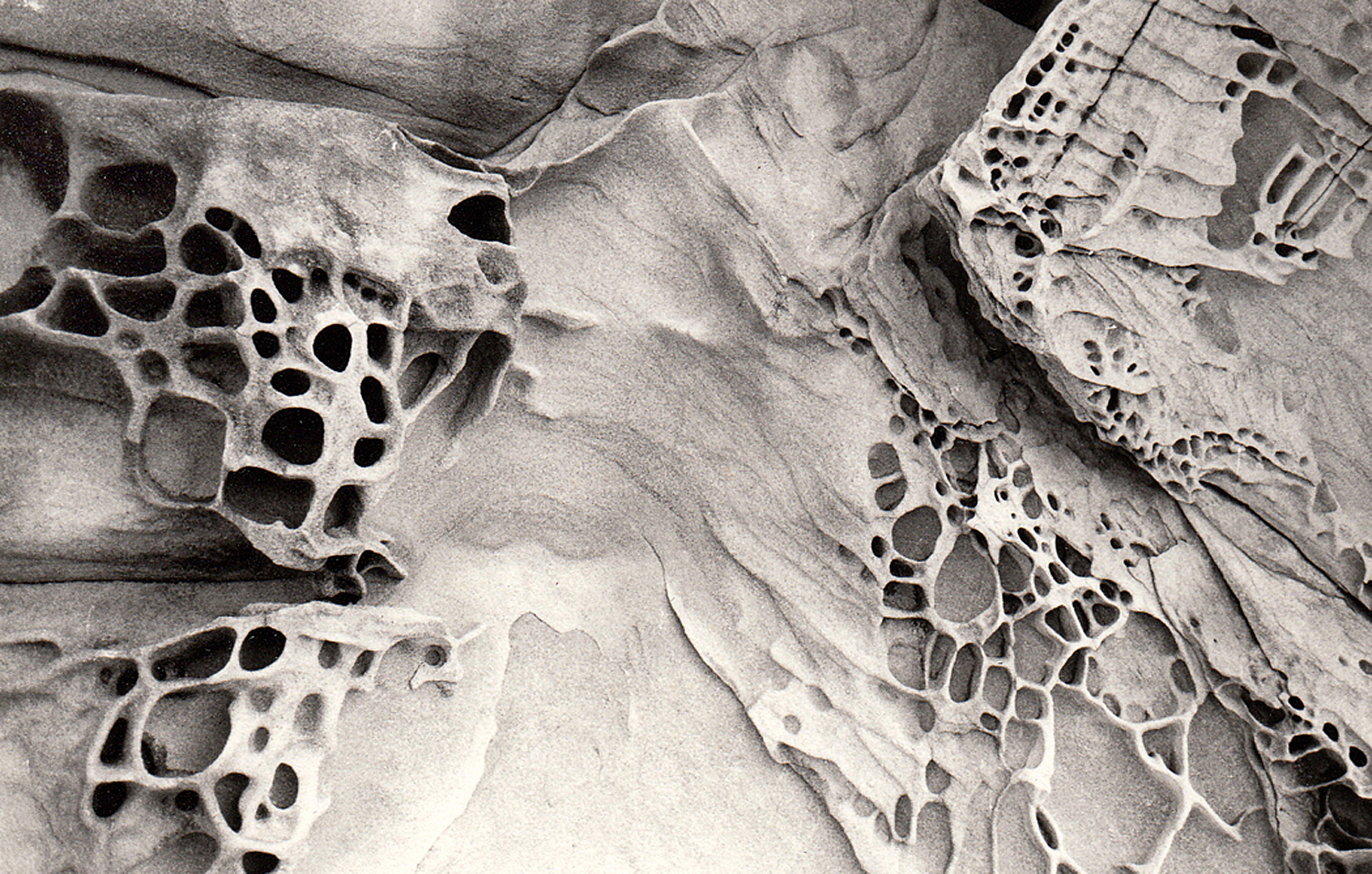
Pleasant Cove, Chuckanut, Wash. 

It is to seek this power that great landscape artists — whether painters or photographers — make their pictures. It is not to make a postcard of a pretty piece of scenery, but to find in the land a metaphor for thought, emotion or state of mind — or even a political philosophy.
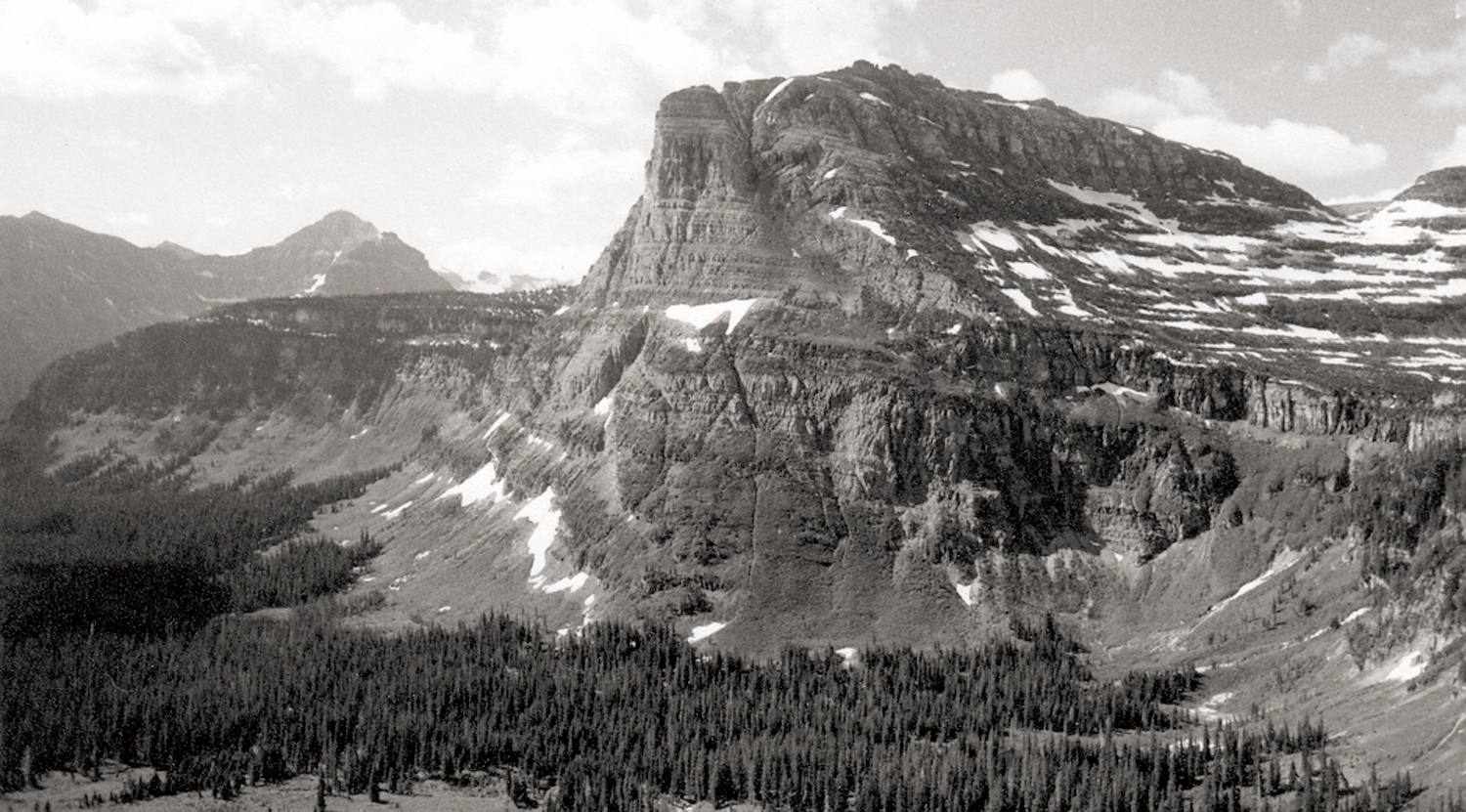
Canadian Rockies, Alberta

That mythic force is why we feel the rise in our throats when we sing of “amber waves of grain,” and “purple mountains majesty above the fruited plain.” Rocks and terrain serve as metaphors for internal states. 
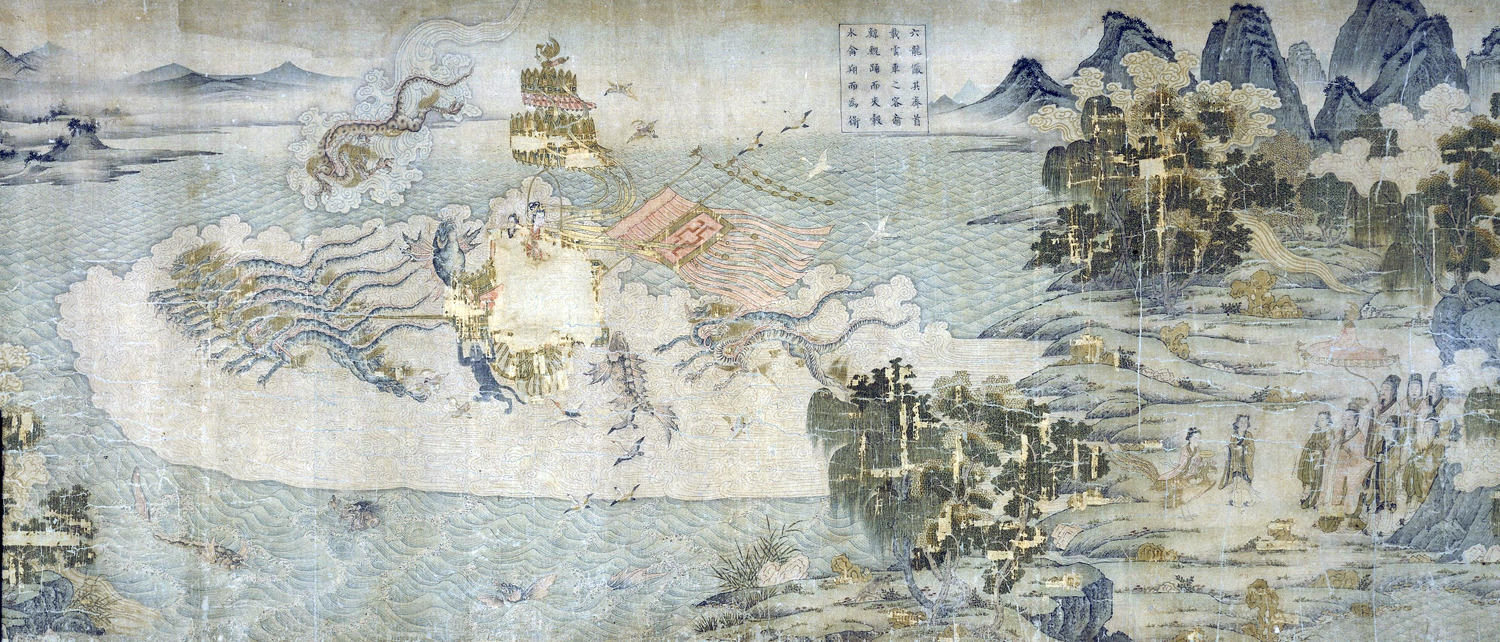
“The Nymphs of the Luo River,” by Gu Kaizhi

European artists have used that metaphor since the Middle Ages, Asian artists since the Jin Dynasty. 
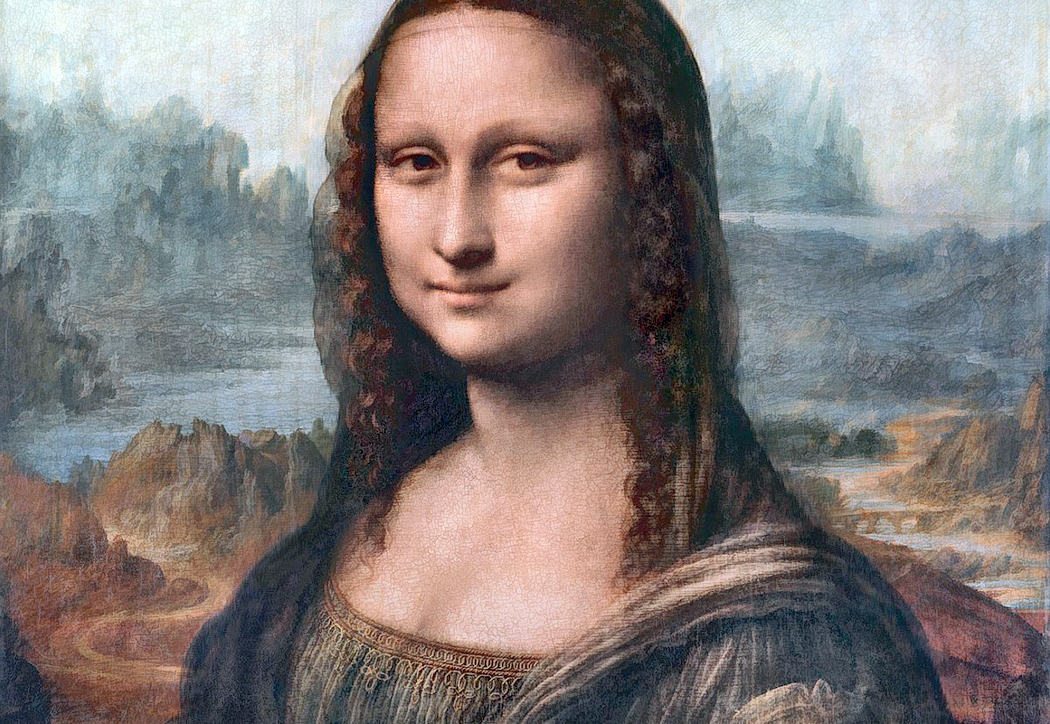
“La Gioconda” detail 

Consider the Mona Lisa. Yes, it is a portrait, but behind the smiling lady is a rocky landscape. It is not like anything actually found in Italy, but rather it is a metaphorical landscape — a mountainous desert. Renaissance artists often used such stony views as a reminder that life on earth is a kind of spiritual desert (and the afterlife is where true fulfillment is to be found). As Geoffrey Chaucer wrote: “Here nis noon hoom, here is but wildernesse.”
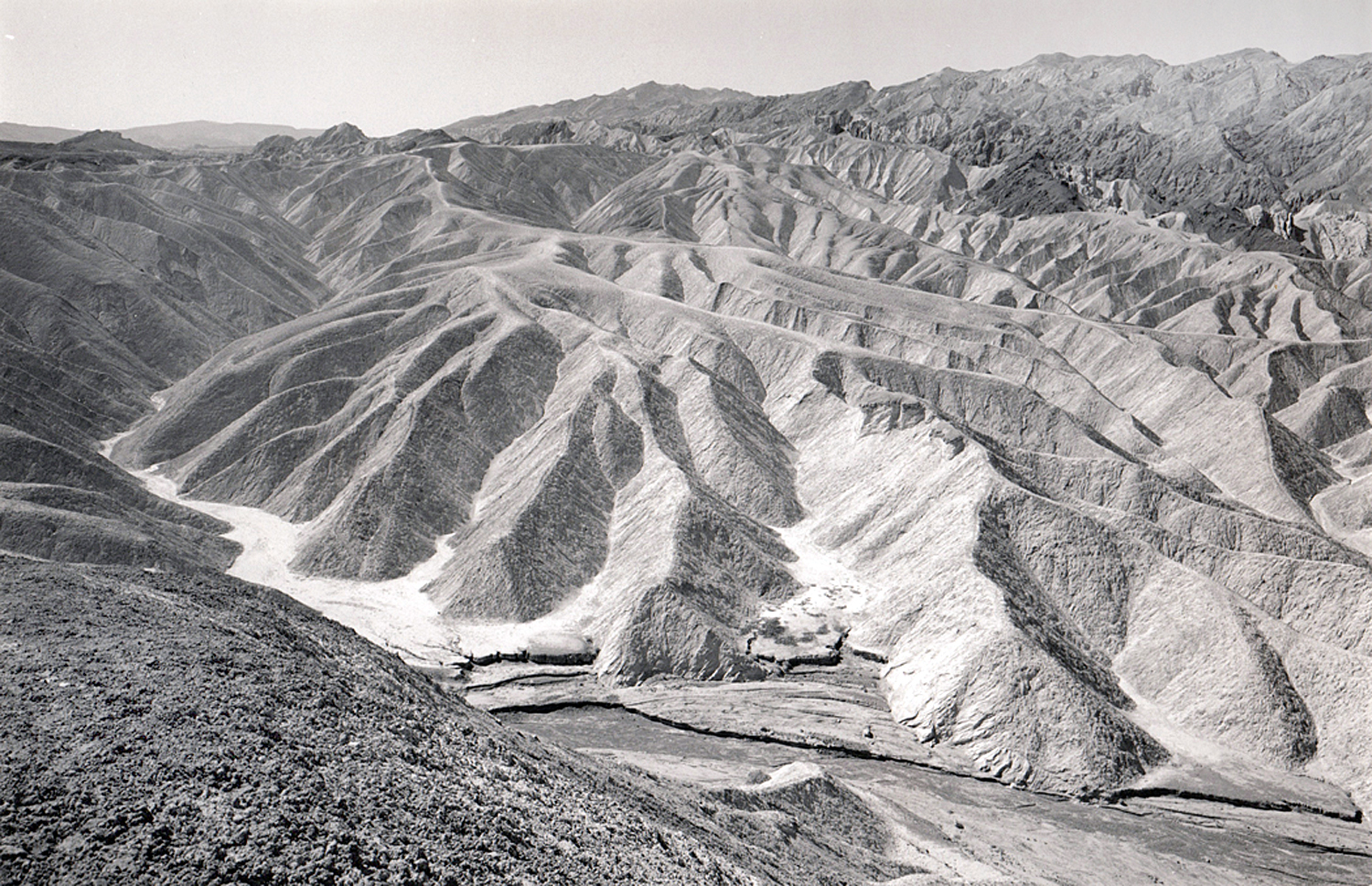
Zabriskie Point, Death Valley, Calif. 

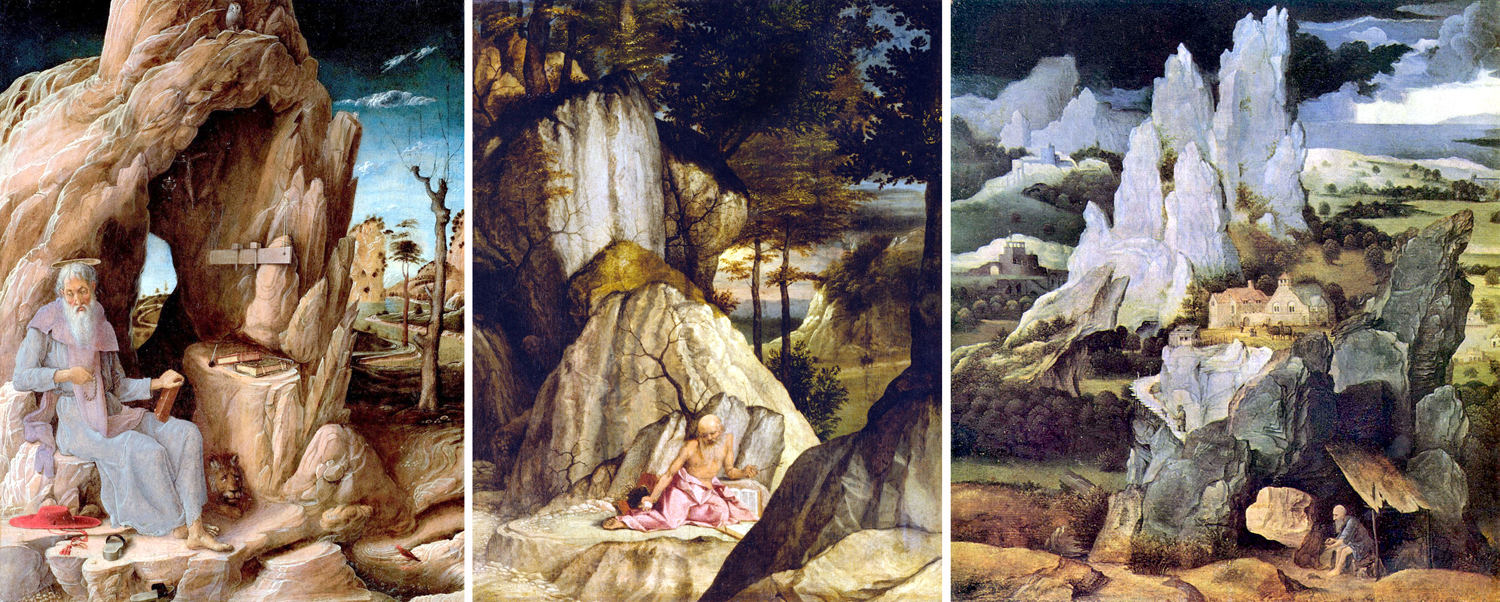
St. Jerome lived in a cave, and painters used the story to show the geology of spiritual isolation. Here are only three of many Renaissance paintings of the saint, by Andrea Mantegna, Lorenzo Lotto, and Joachim Patenier, all from the early 1500s. 
Romantic painters in the 19th century used the vast Alps as a reminder that the cosmos is infinitely larger and more impersonal than we like to believe. Geology becomes an image of The Sublime. 
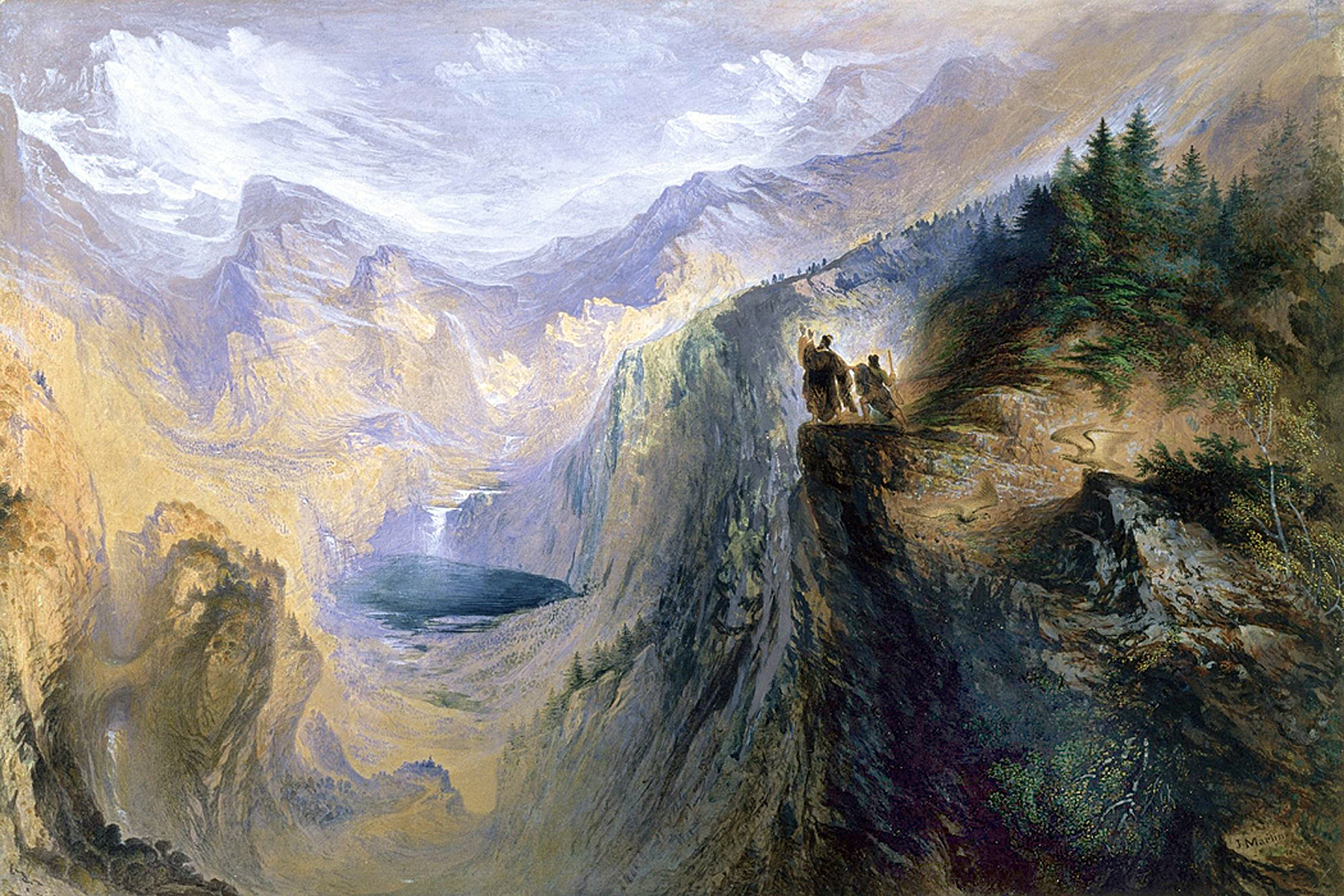
“Manfred on the Jungfrau” by John Martin

Chinese landscape painting features some amazing mountains. I used to believe these scenes were pure fantasy, but no, these mountains actually exist. On porcelain, by Huang Huanwu, a traditional painting — and a photograph, to prove they’re real. 
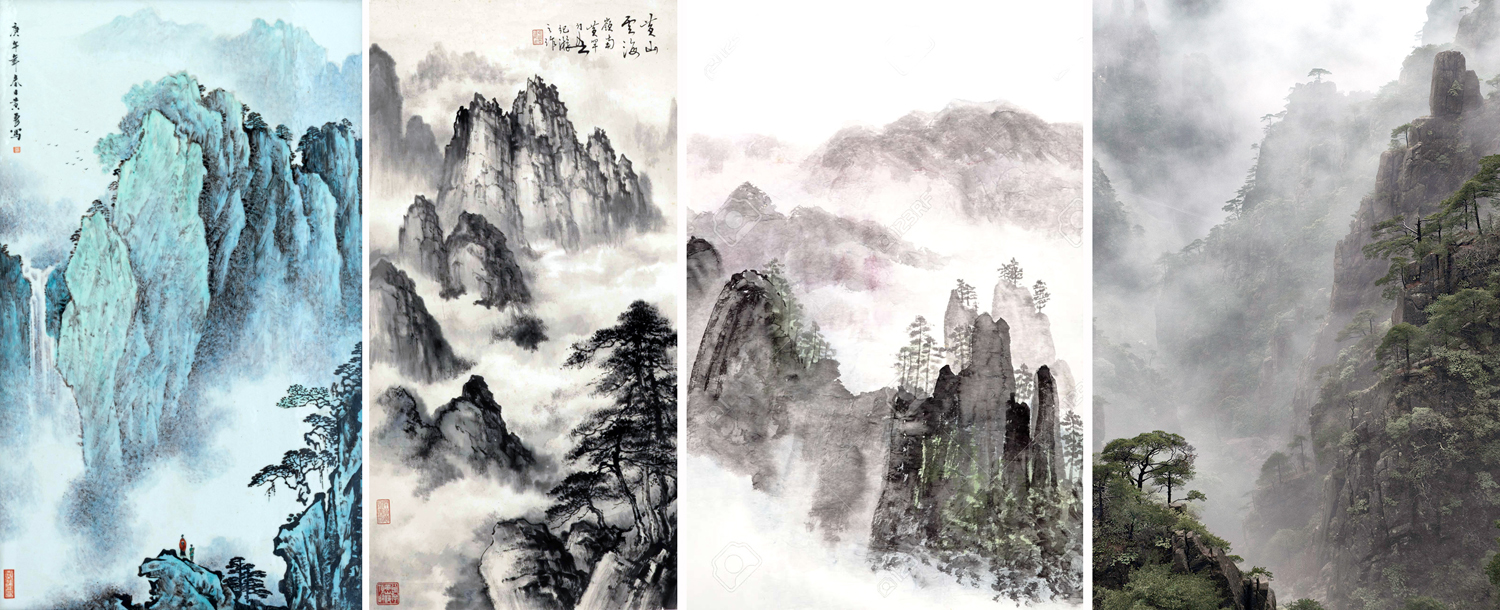
Three paintings and a photo

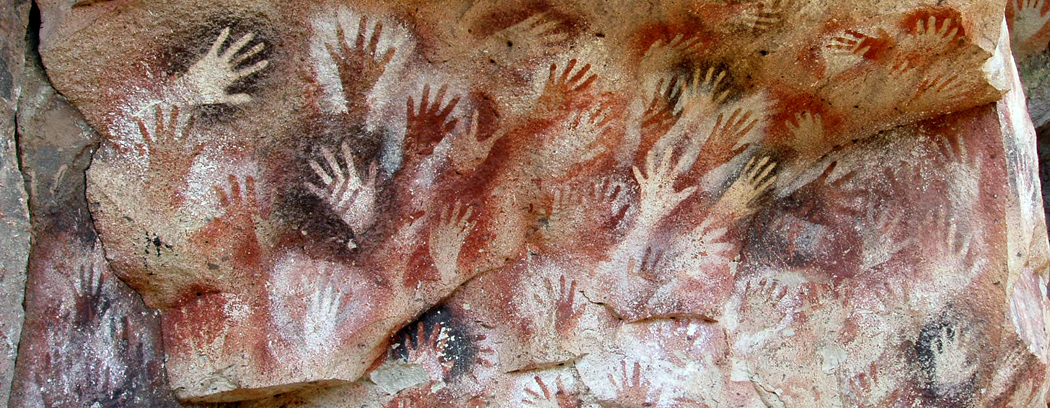
Prehistoric peoples used the rocks for their art, too. 
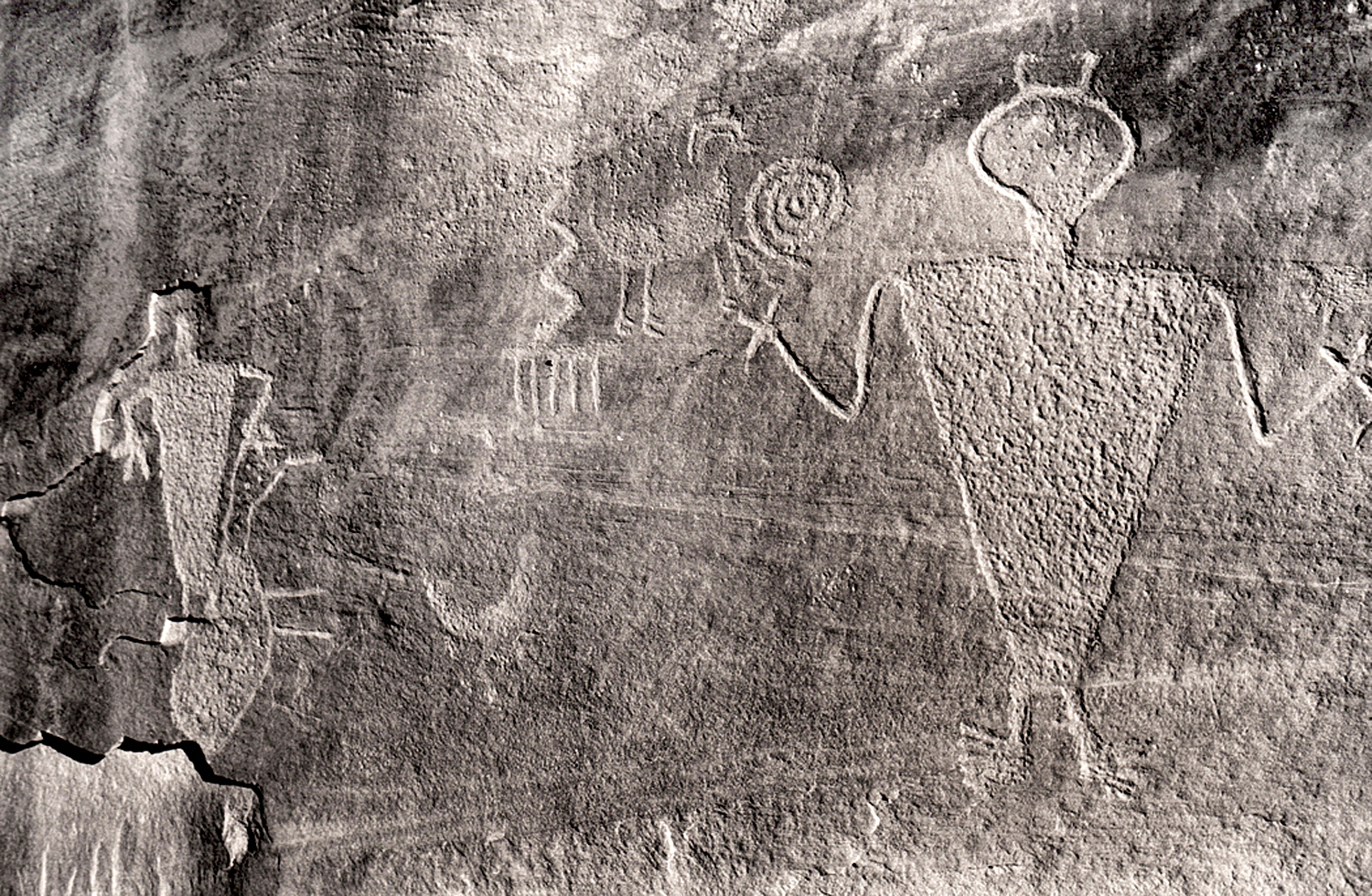
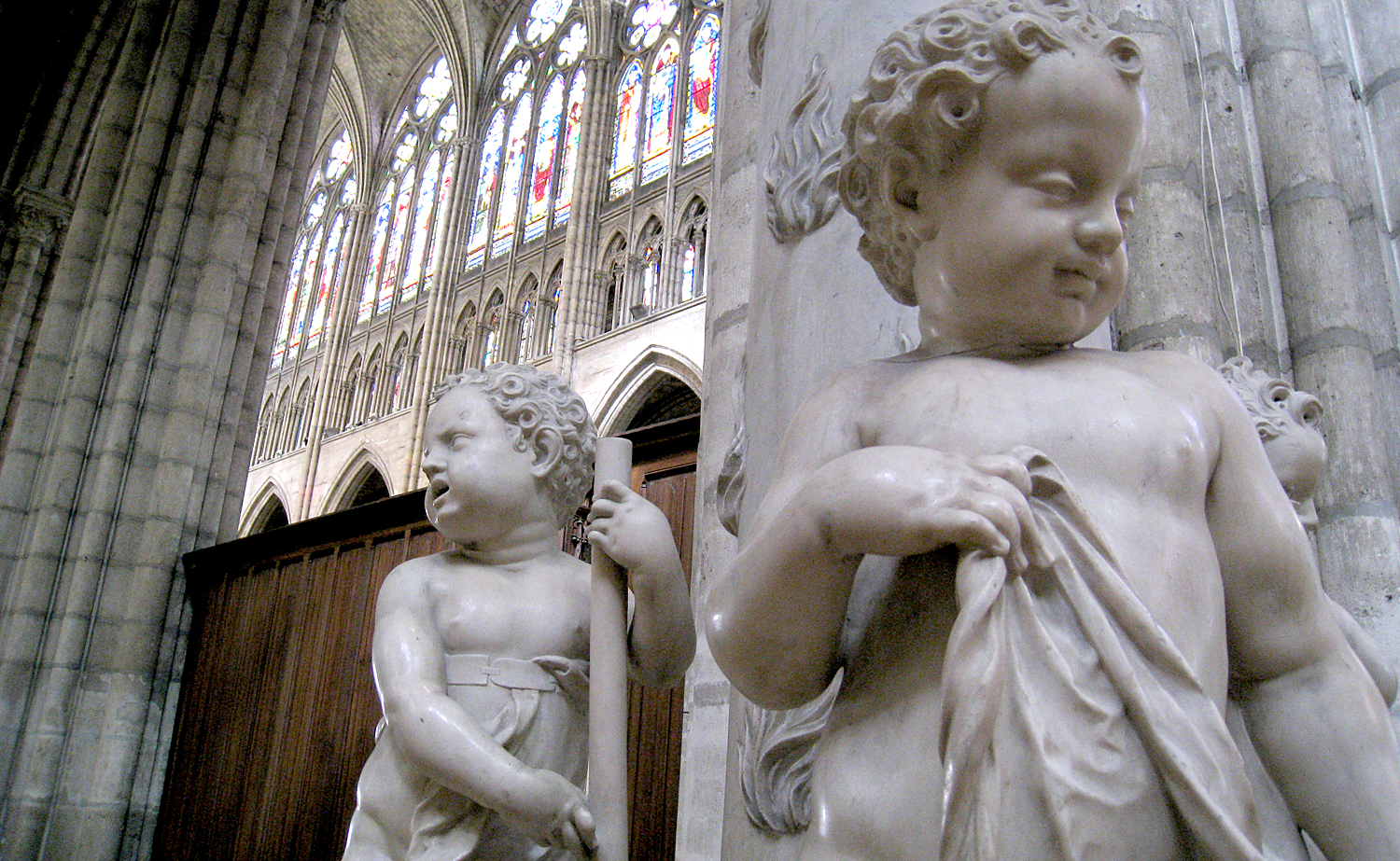
We use stone for permanence. Consider all the marble statuary and granite architecture. 
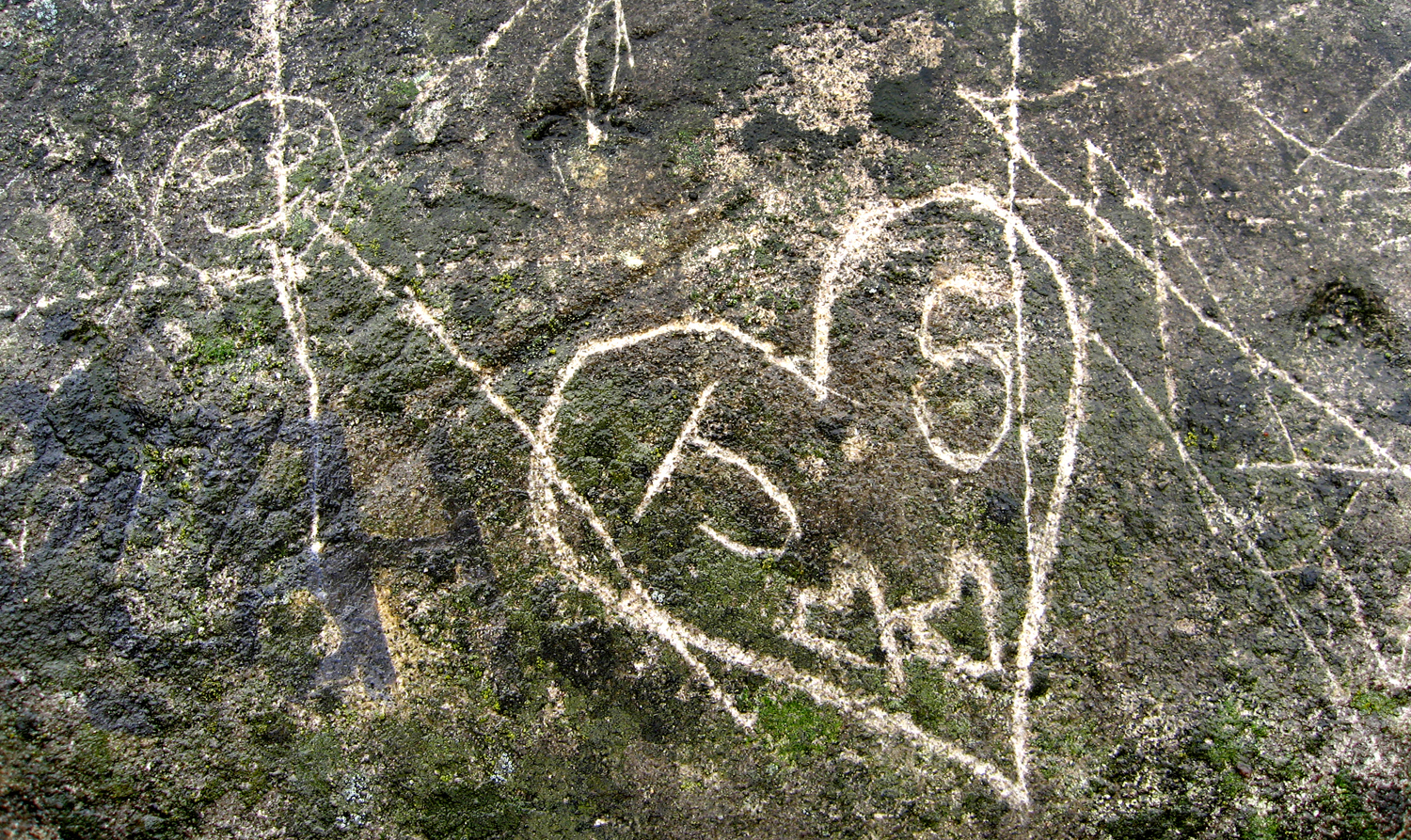
And the way we scrawl our names on rock faces. “K and A Forever.”
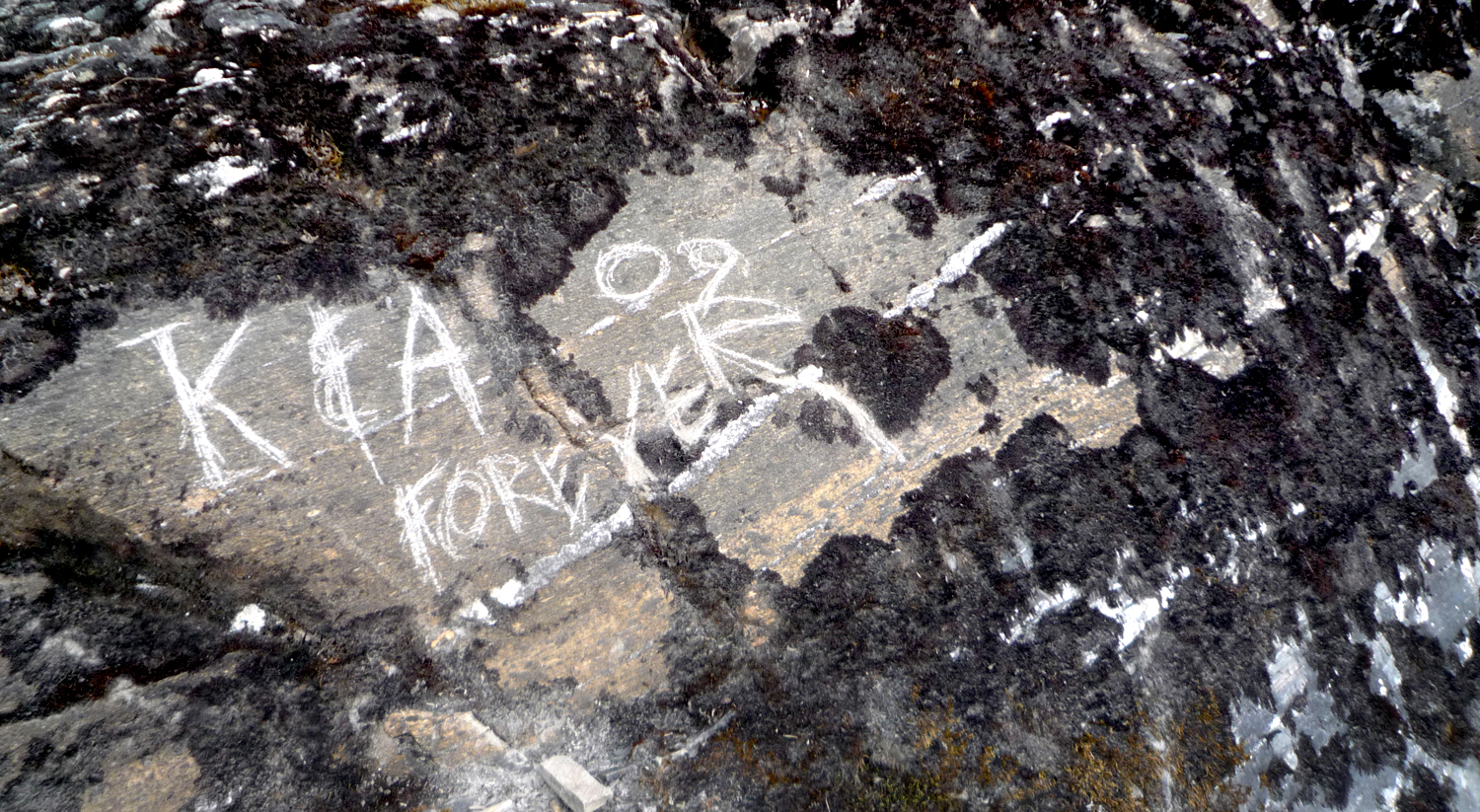
The stone is certainly more permanent than the relationship. 
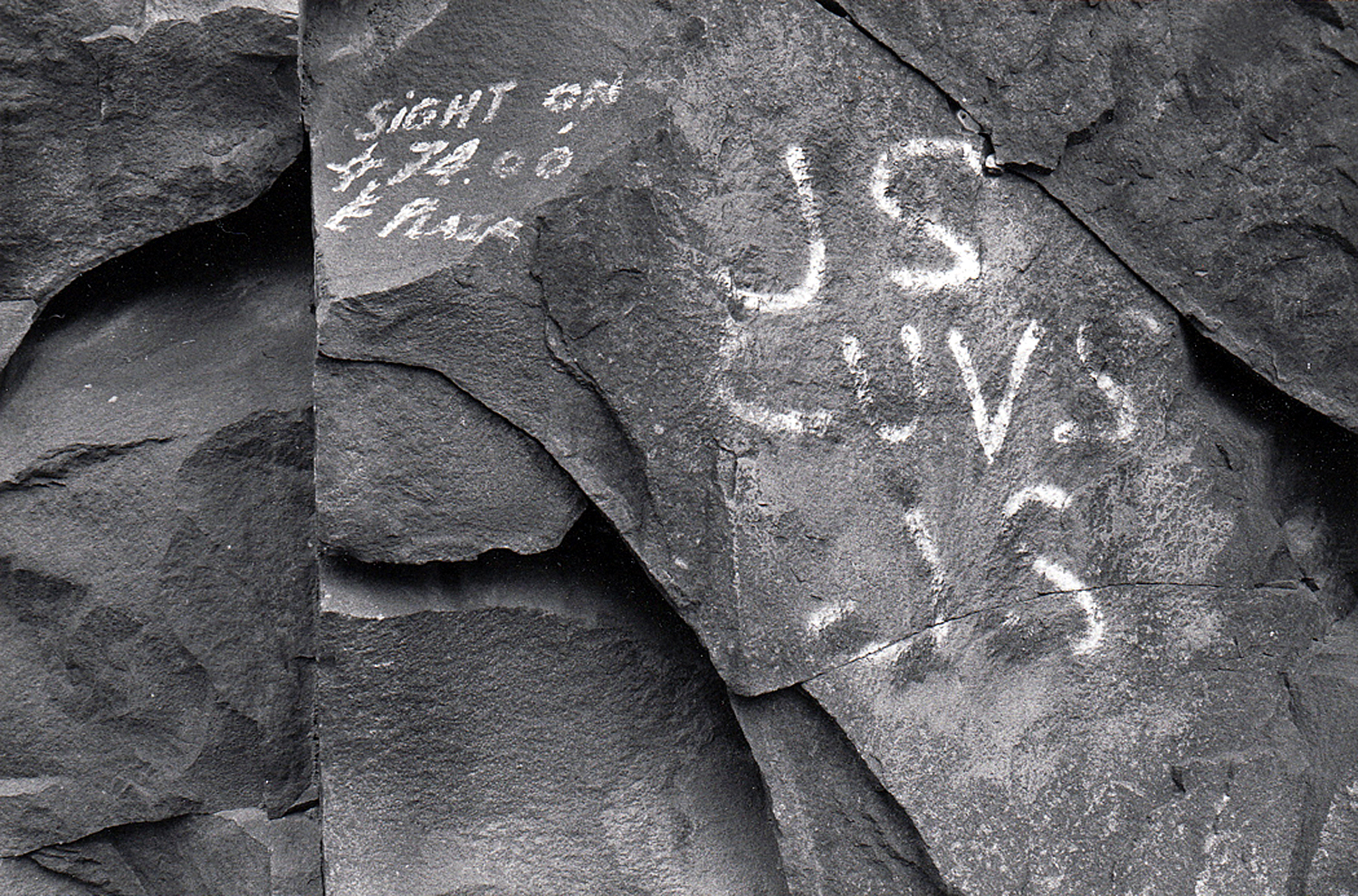
Hudson River Palisades, N.J. 

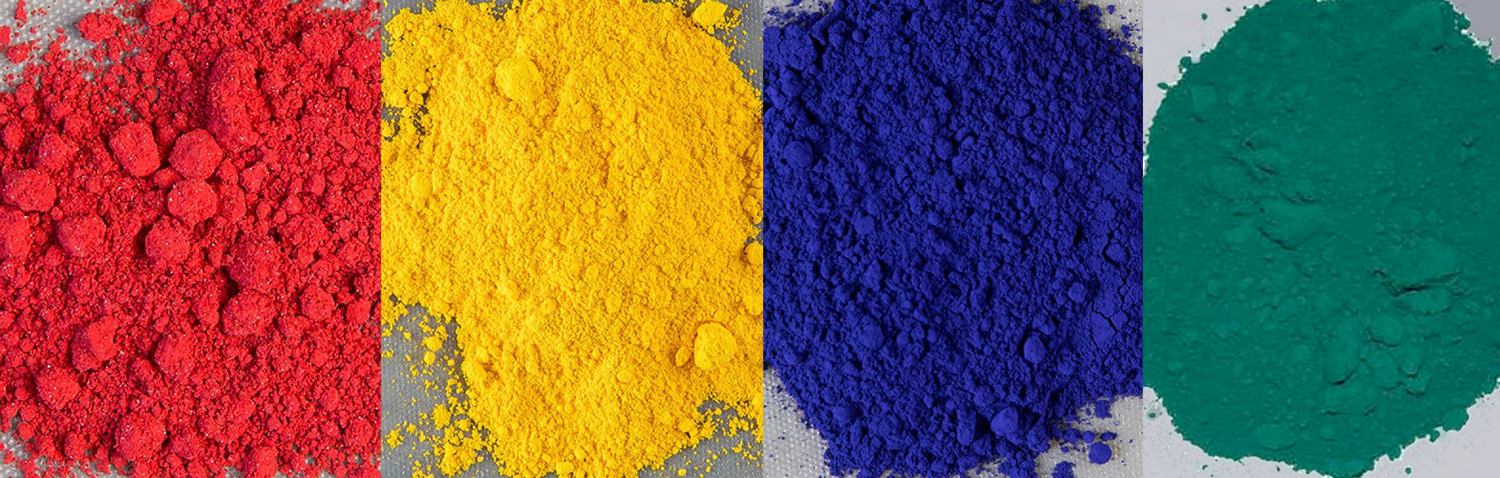
Even the pigments that artists use comes from the ground. In the past, it was actually rocks that were ground up and processed. Now, there are pigments also made from petroleum. 
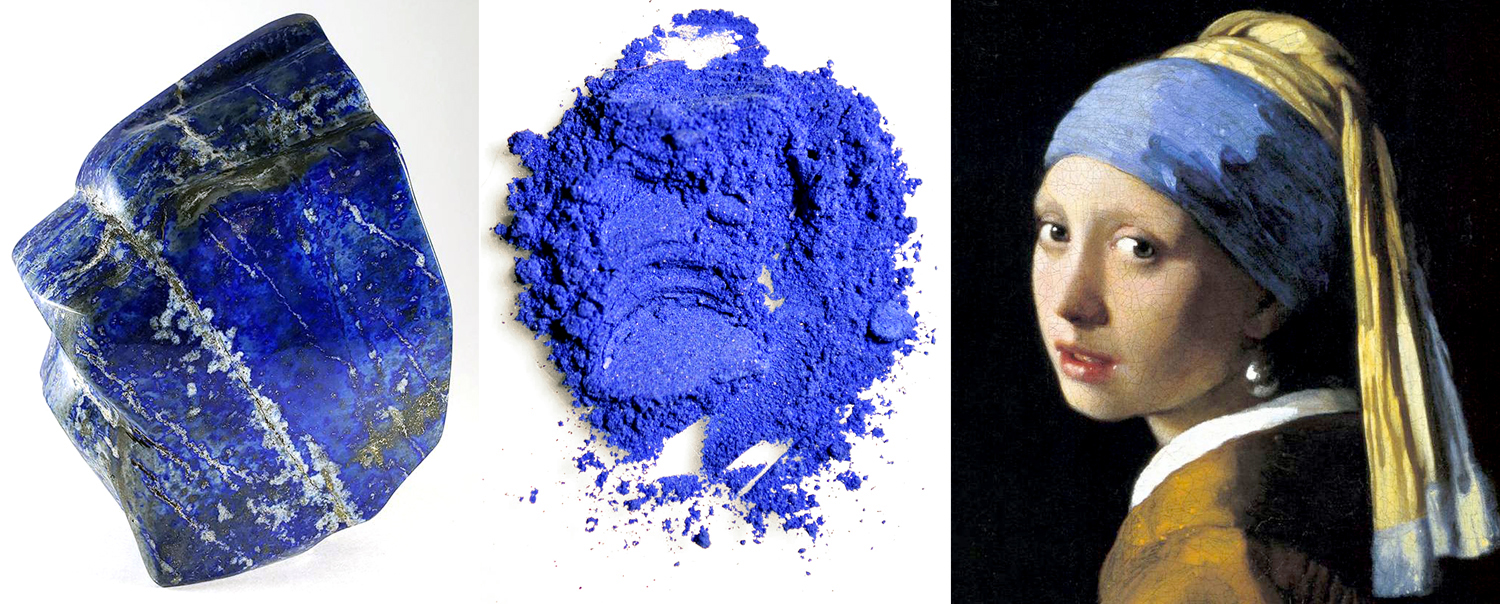
Lapis Lazuli

Different rocks, with their colors and textures, evoke different emotions. Think of a brilliant diamond or ruby; think of a cinder. Different emotions. 
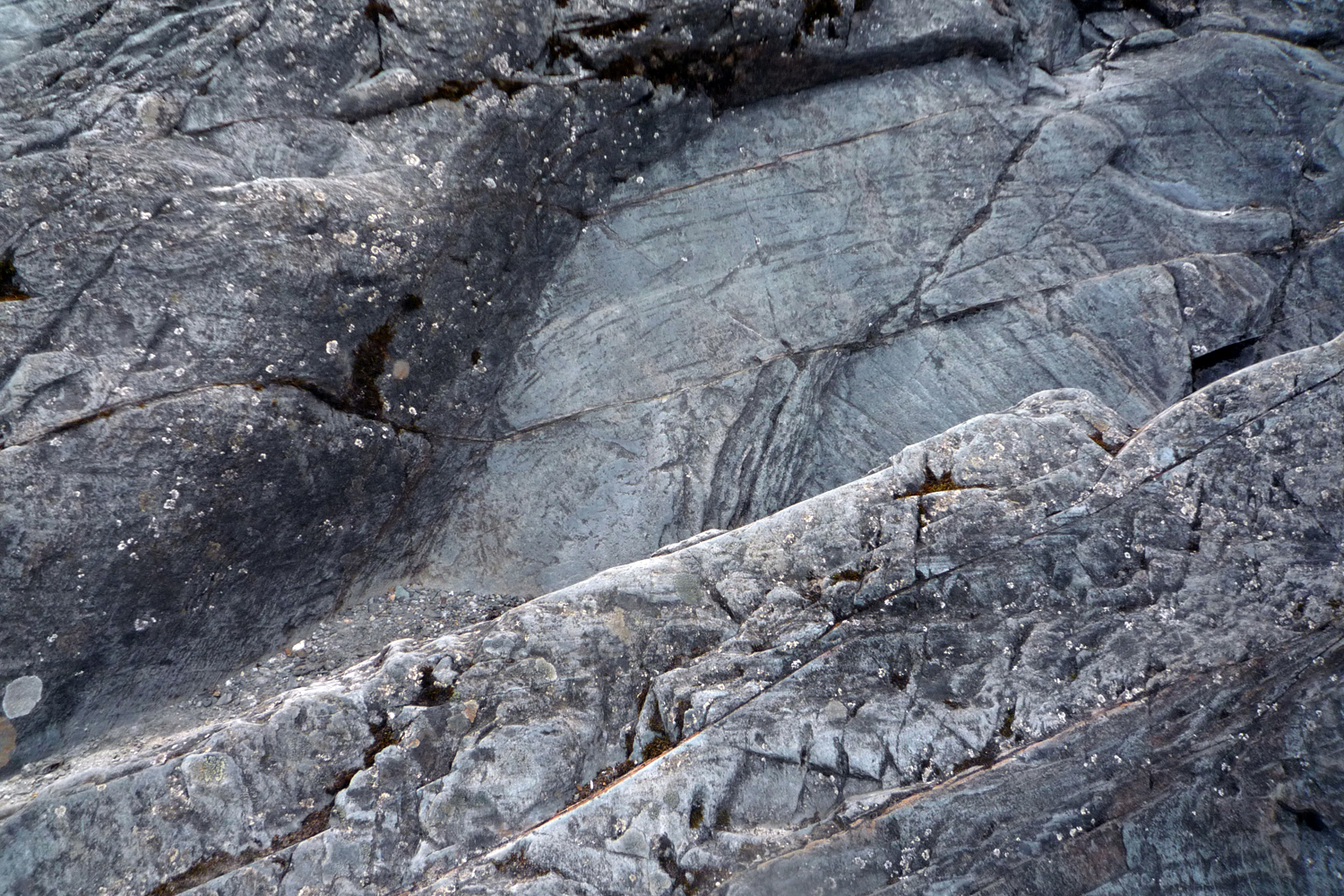
Mendenhall Glacier, Alaska

We use geology in our language, although often the words mutually exclusive import. 

“You must have been stoned when you thought that up.” “No, I was stone cold sober.” “Well, the theory is either a bit rocky or it is rock-solid.” He answered with a stony silence.
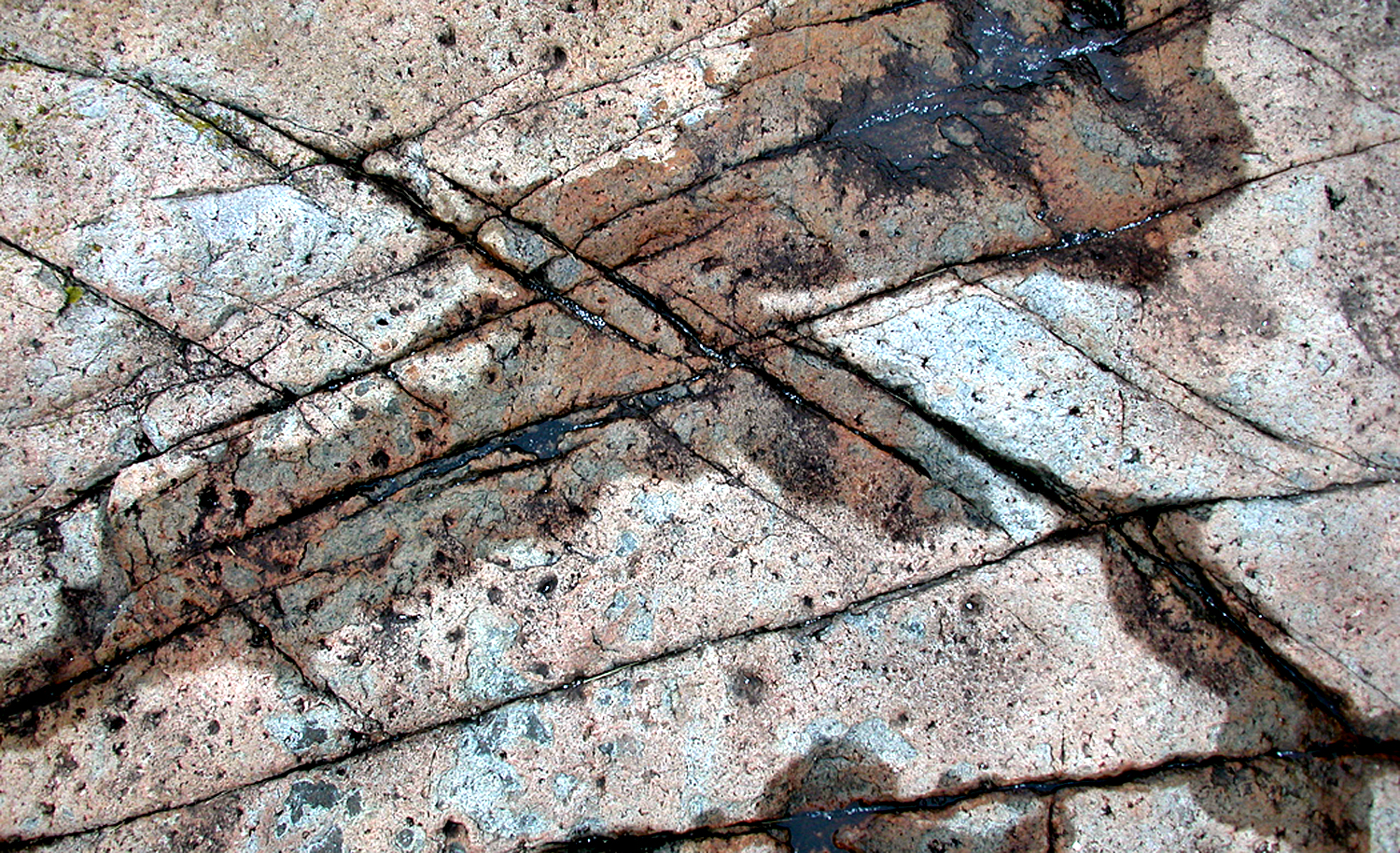
Schoodic Point, Maine

The colors, textures and the grain all impart meaning. 
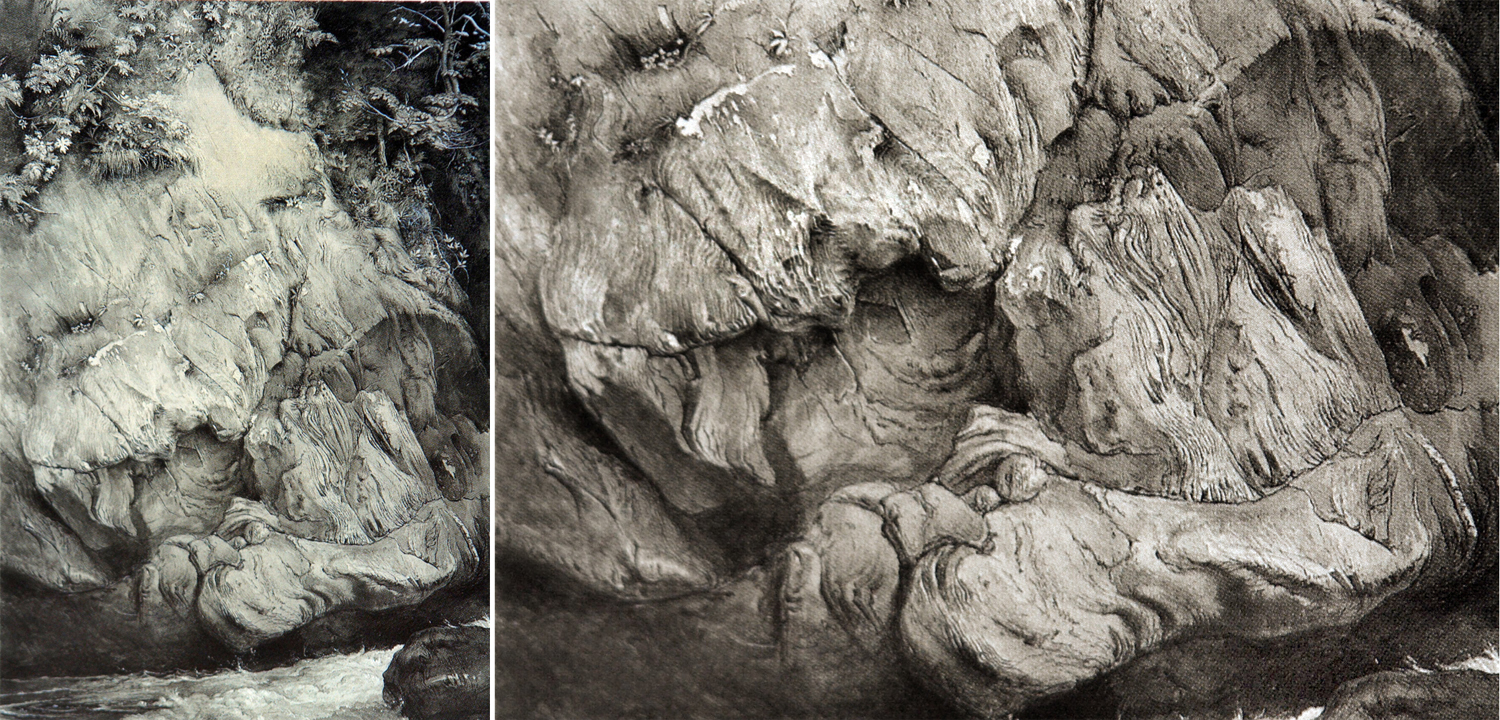
By John Ruskin

I began seriously considering the art elements of geology after seeing a splendid drawing of gneiss by English artist and critic John Ruskin. He made it over several days while visiting Scotland in 1853. The drawing had everything I respond to: texture, detail, close observation and an attention to the world as it is, that is as close to love as is possible to hold for the inanimate world. Ruskin was an astonishing draftsman. 
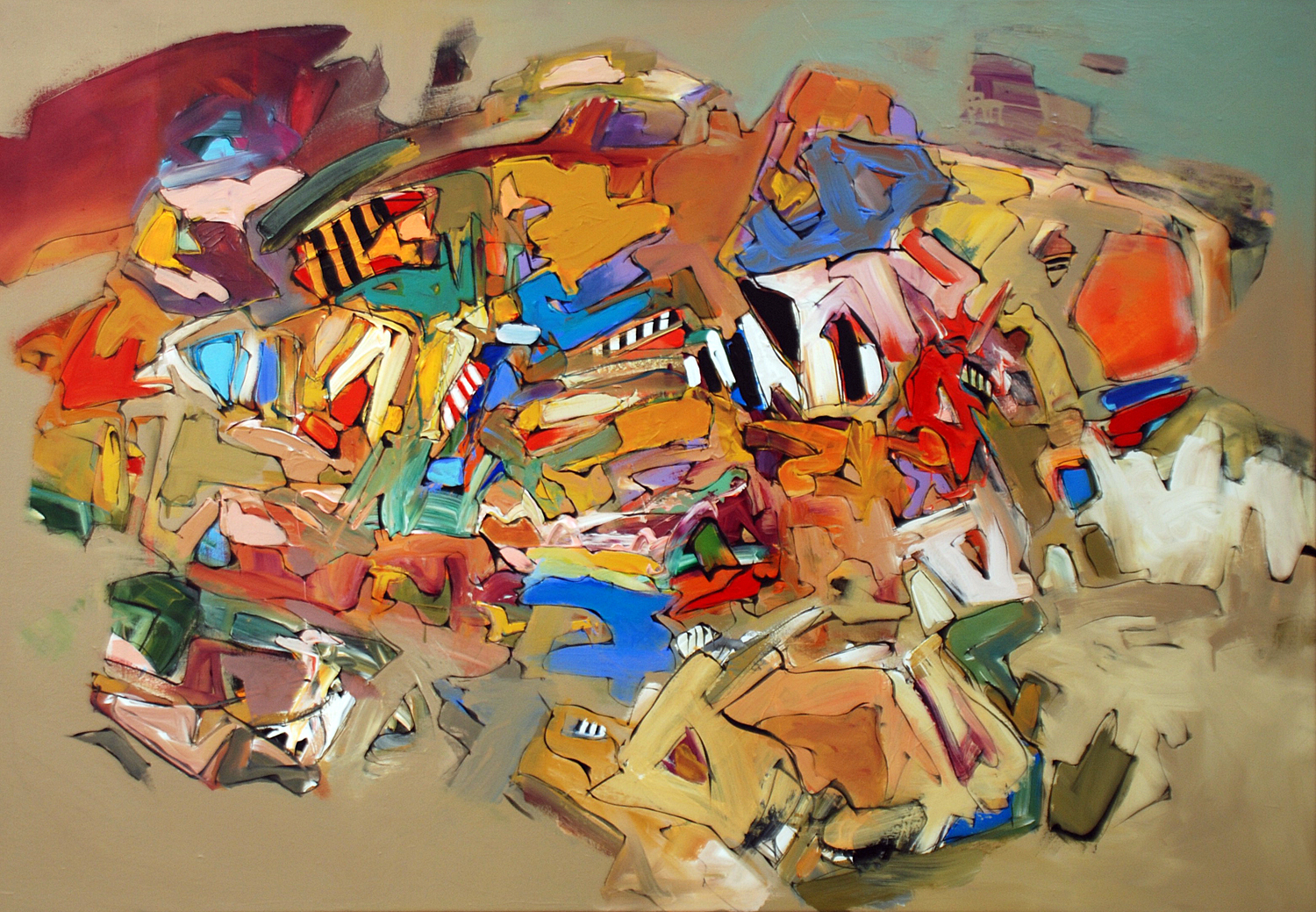
By Mel Steele

It has been one of the lessons of the 20th century and Modernism that meaning in art can transcend anecdote and be more than a story told in a still scene and can impart meaning purely through shape, color, texture, line and scale. Emotions can be evoked by all of them. We have had well more than a hundred years of abstract art. 

Even realistic painting depends on the medium it is made from. It isn’t just the face or the scene, but the color and texture of that face and scene. 
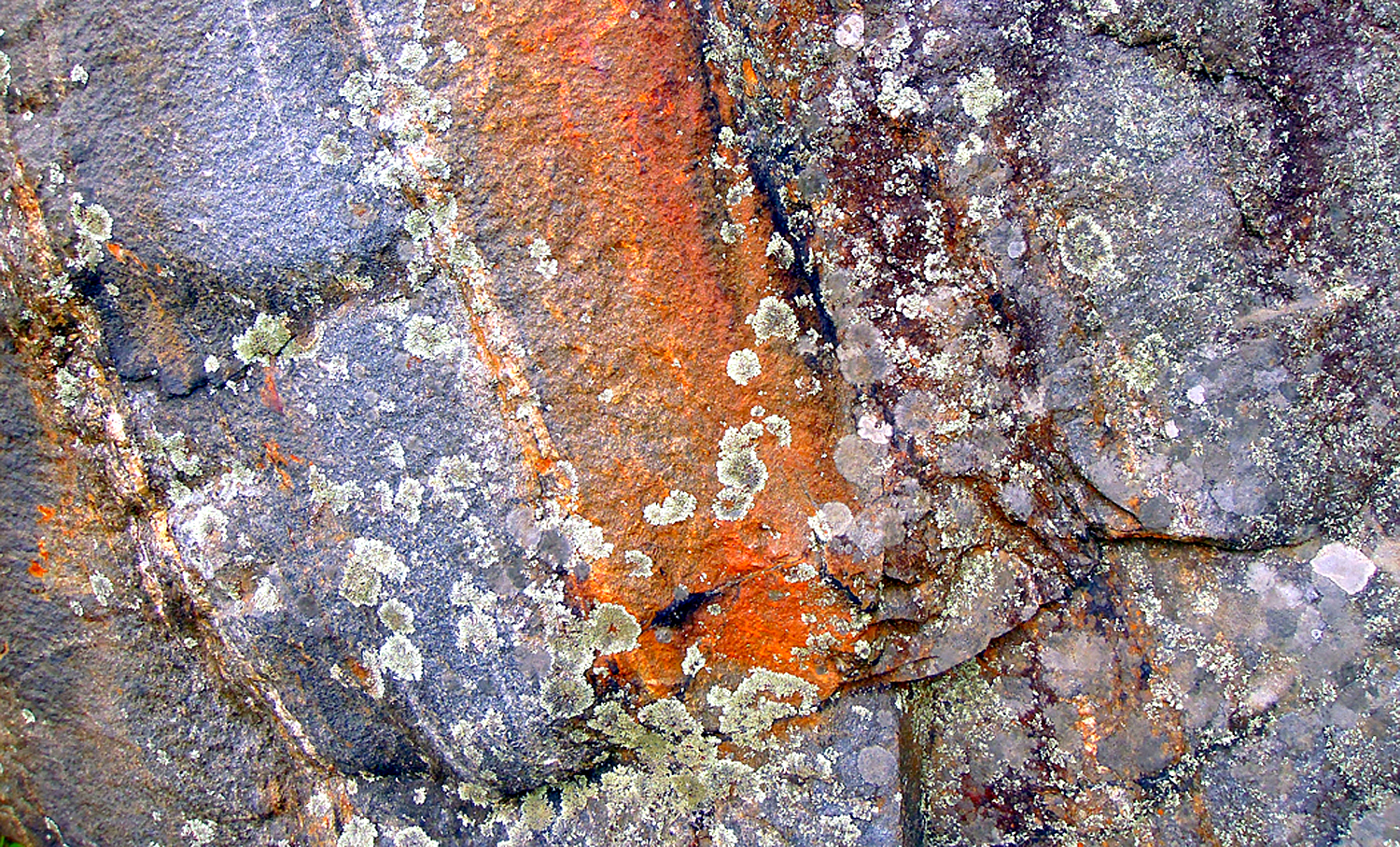
Craggy Gardens, N.C. 

And a camera pointed at the shapes of geology can create meaning in the same manner as the abstract painting we lionize. 

I have since found many rocks, with their esthetic pleasures. There is bright color
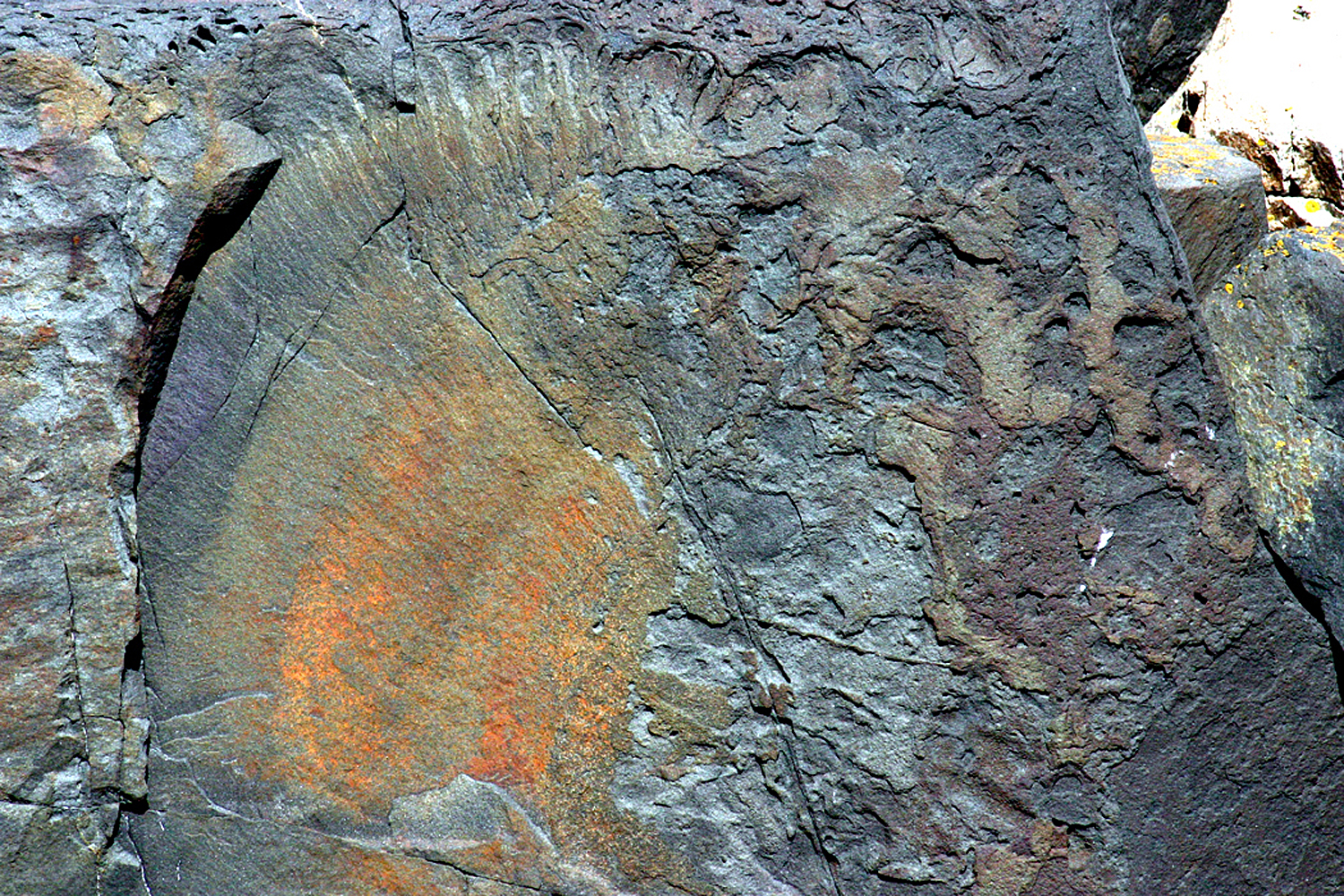
Blue Ridge Parkway, N.C. 

There is gnarly texture
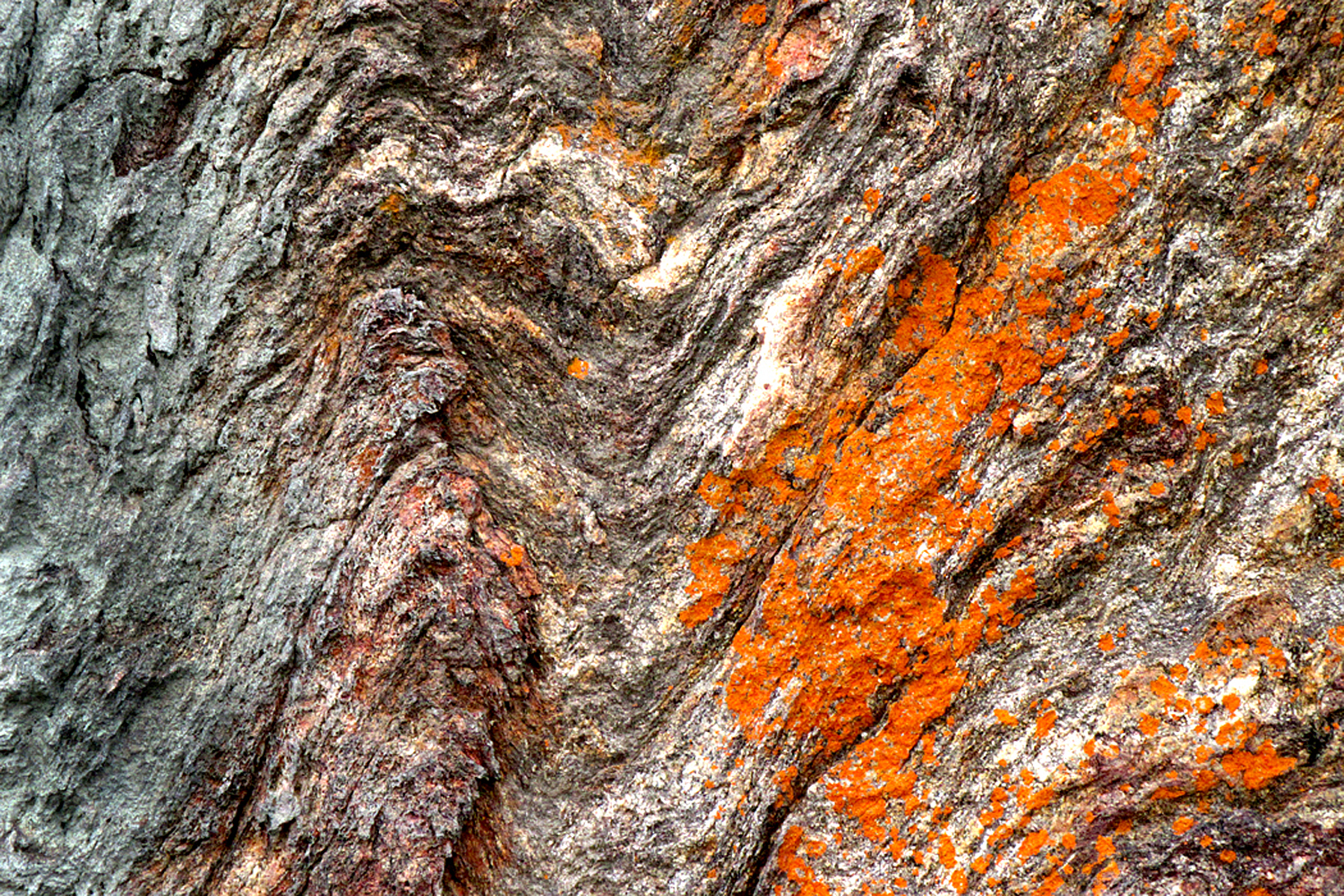
Blue Ridge Parkway, N.C. 

There are planes of surface
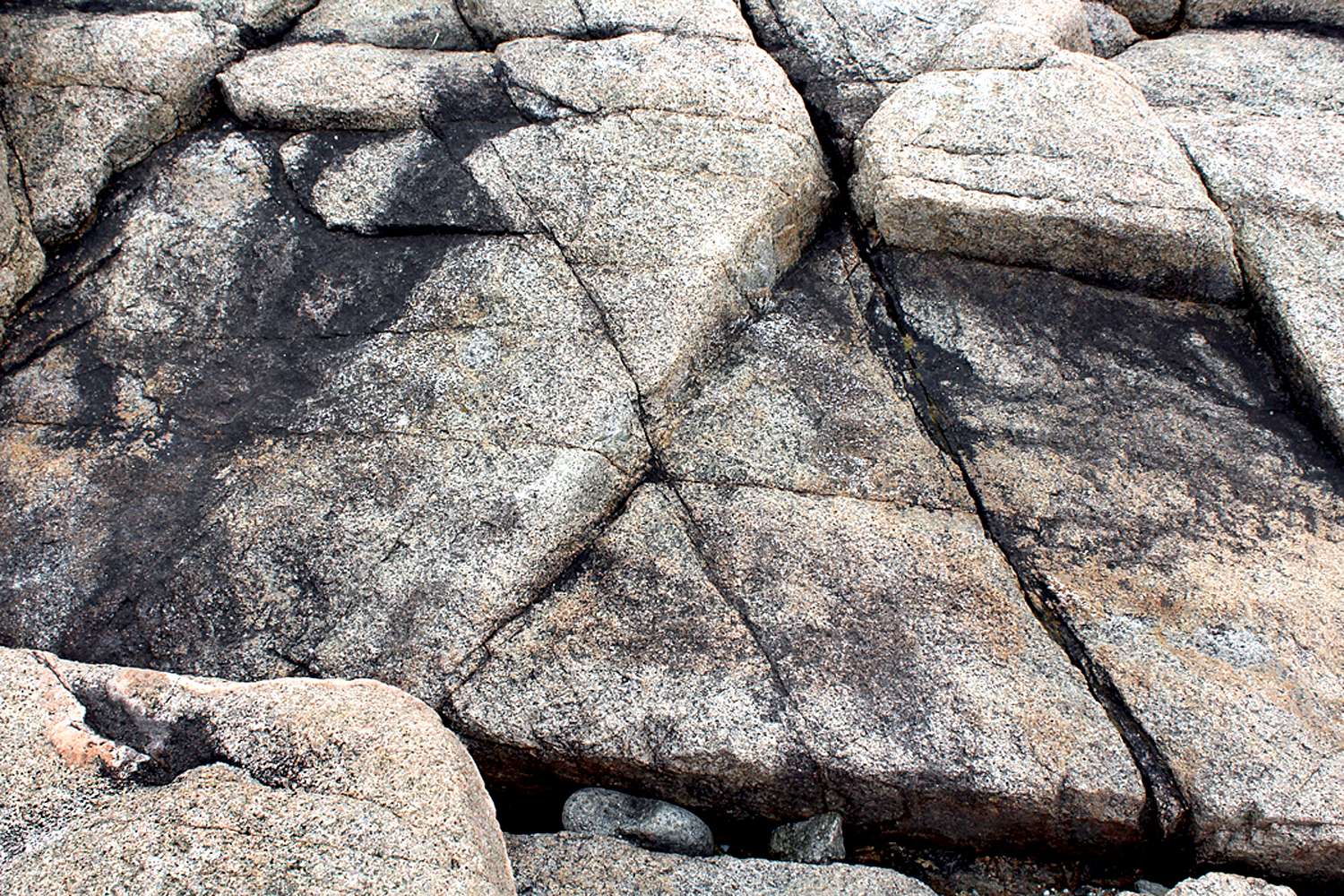
Schoodic Point, Maine

Repetition of shapes
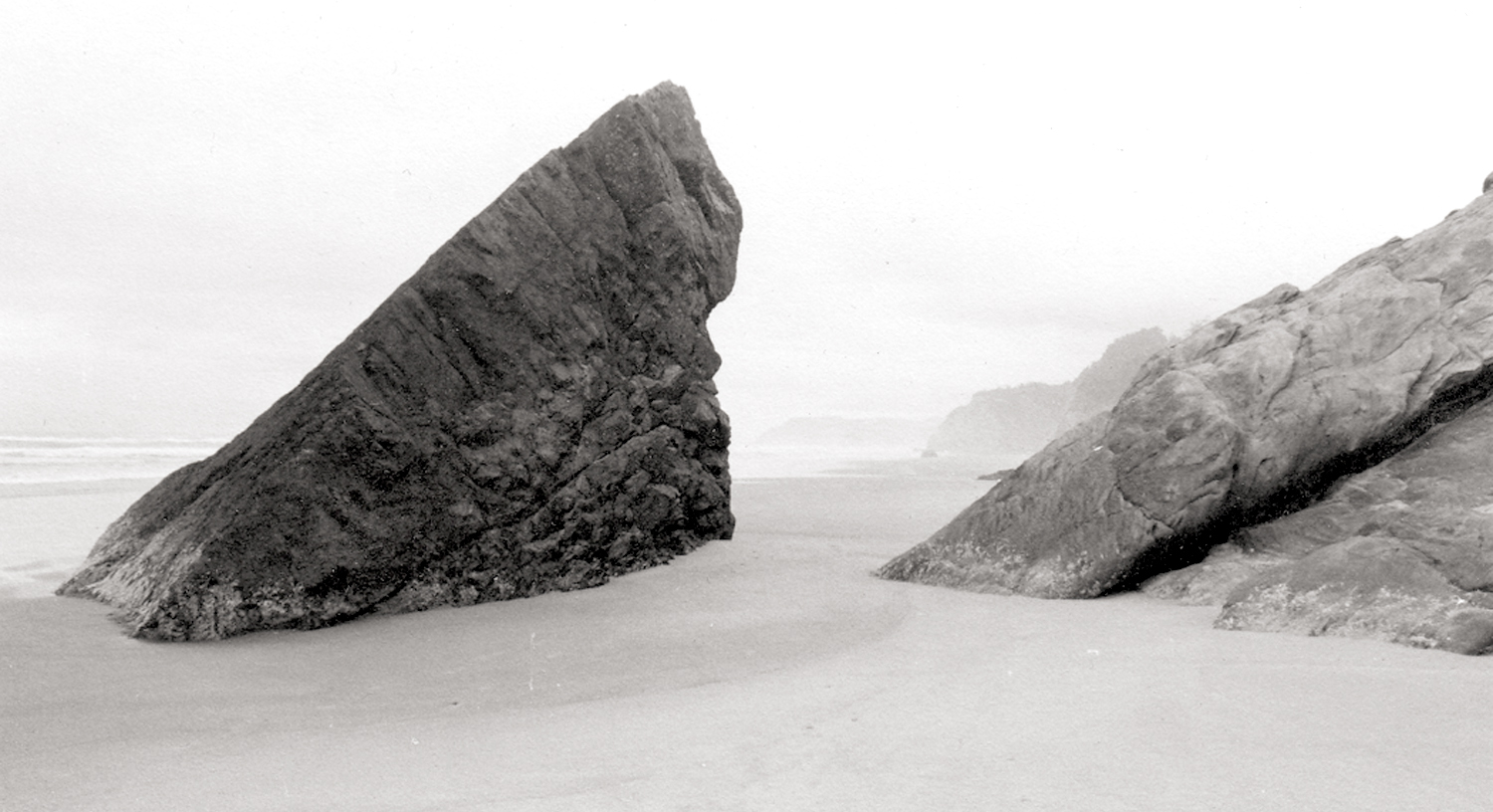
Hug Point, Arch Cape, Ore. 

Complexity of image
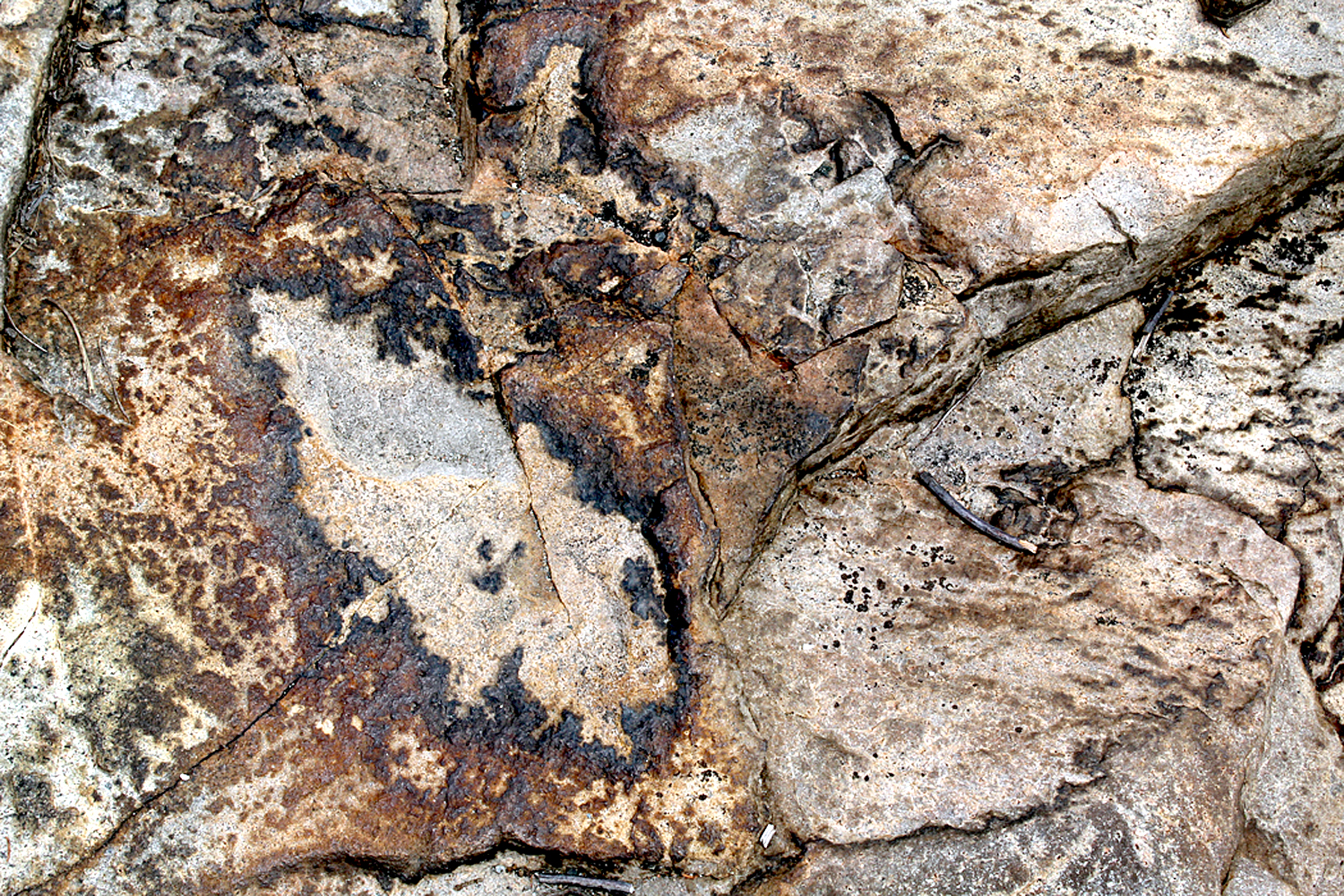
Schoodic Point, Maine

And a starry night
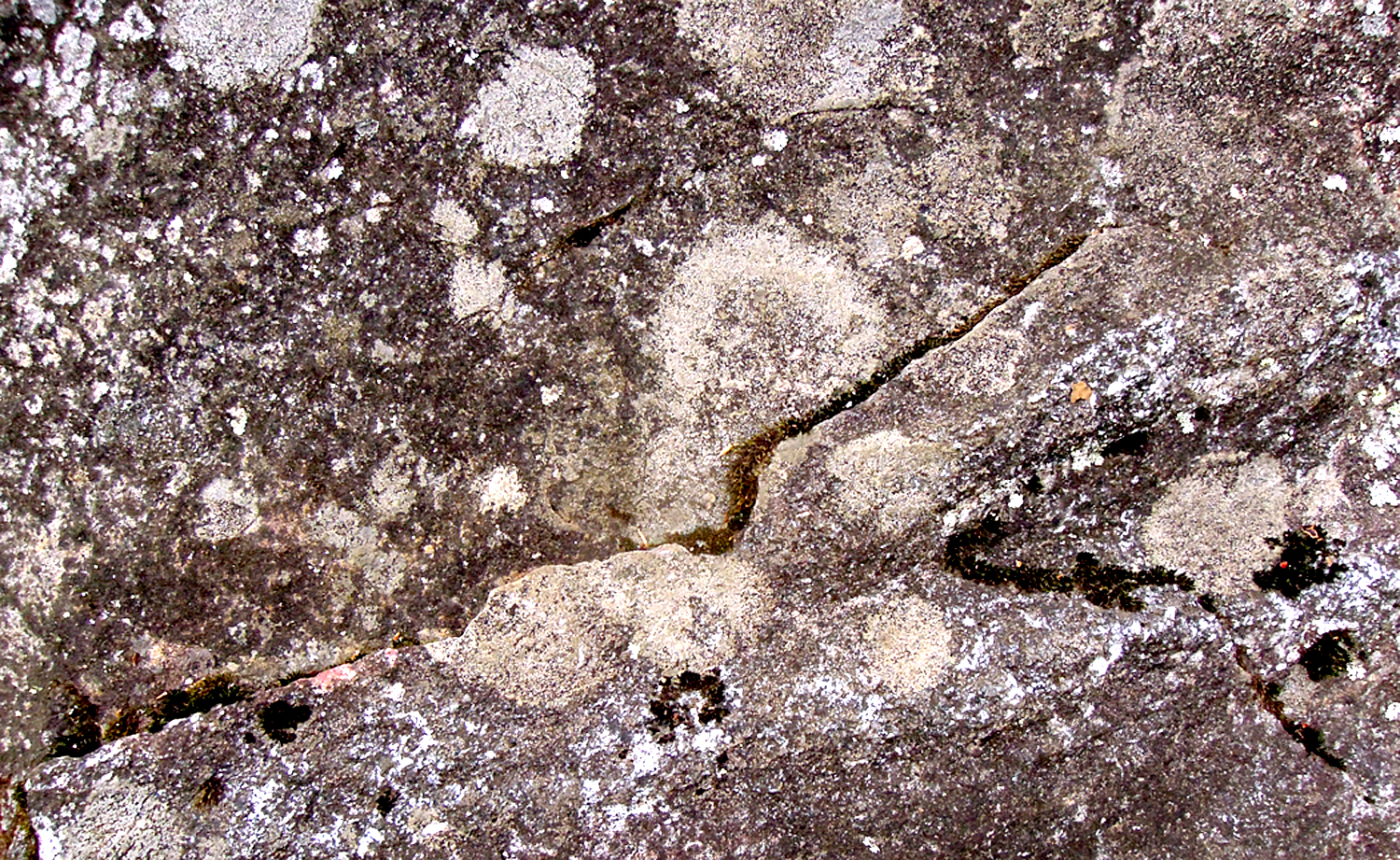
Pisgah National Forest, NC

Or flying over the continent and looking down at erosion
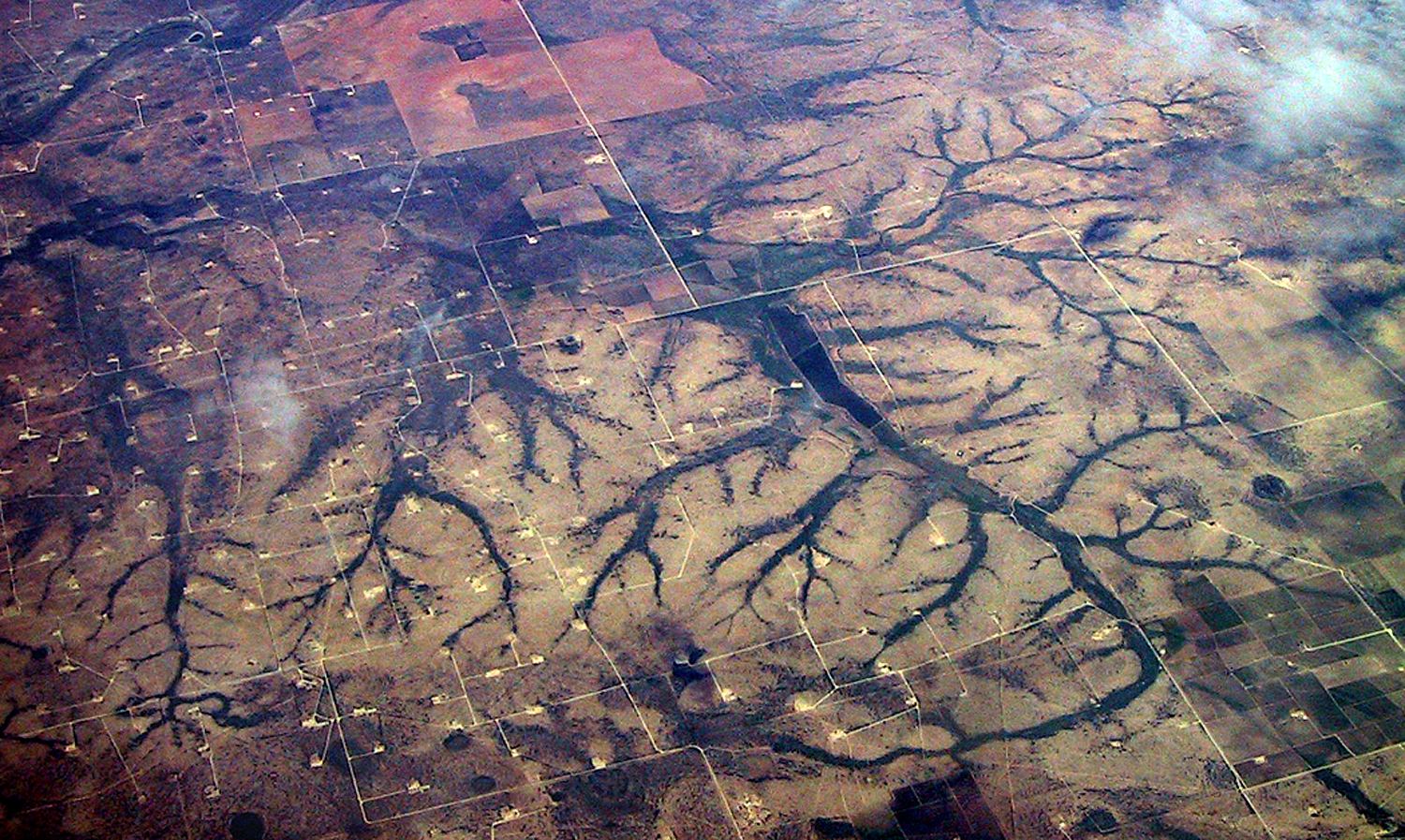
Over Colorado

One of the primary functions of art is to make us pay attention. It is an interaction with the world and a response to it. 
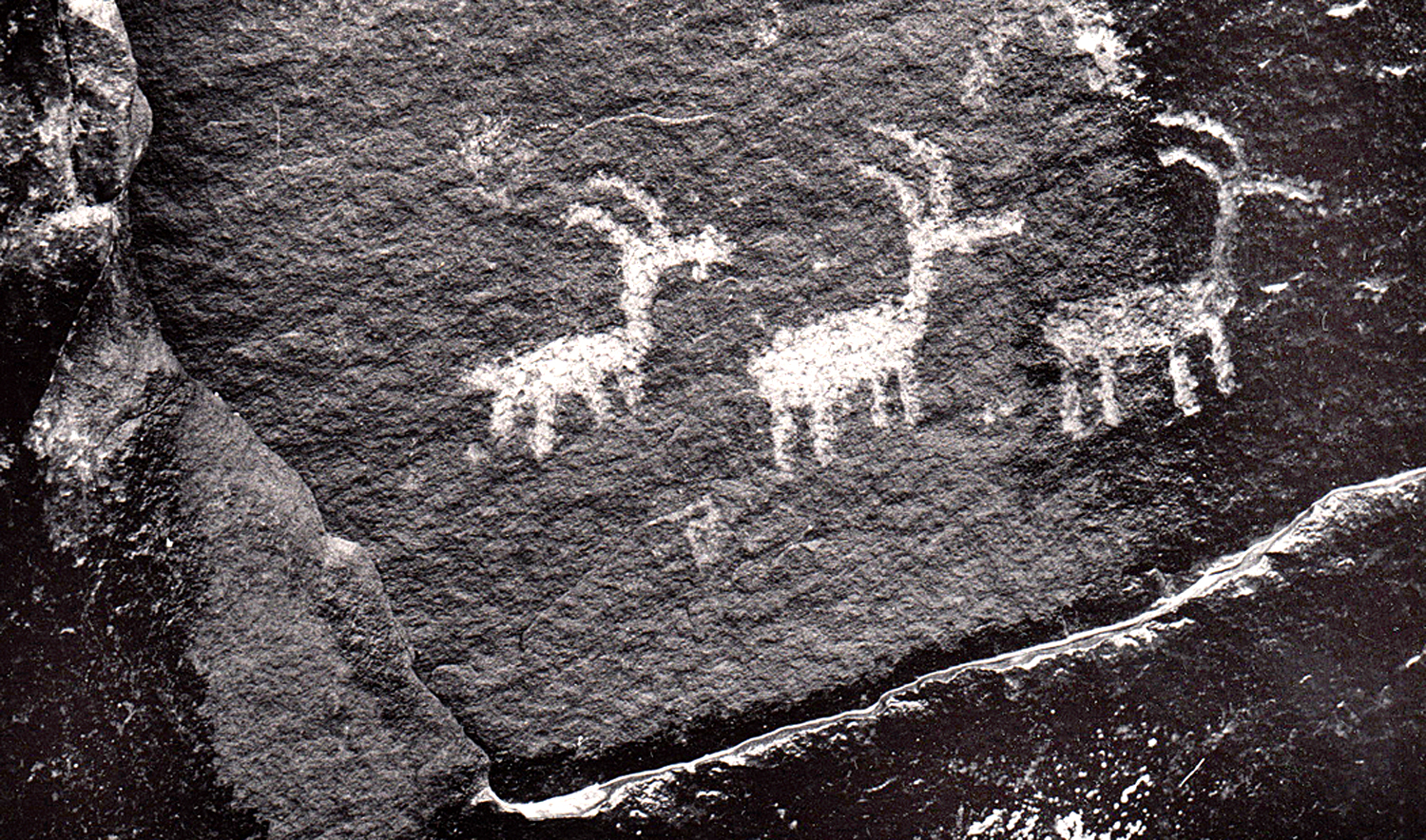
Rio Puerco Ruins, N.M. 

The most important lesson I was ever taught was by a college professor who would not accept glib work. Like many bright students, I was adept at giving a teacher what he or she wanted — basically repeating back what was said in class. But when I did that in my English Romantic Poetry class, he gave me a D for a paper that was otherwise correct in every aspect except one. “Don’t give me back what I’ve said,” he told me. “Engage with the material.” Real engagement cannot be faked. 

What was real were the words written, not the words written about the words. Dive directly into the poetry. Don’t waste time learning “about” the poetry. 

Try to take the material under study seriously and be real about it. If what you find contradicts what the teacher said, all the better. You’ve learned something. 
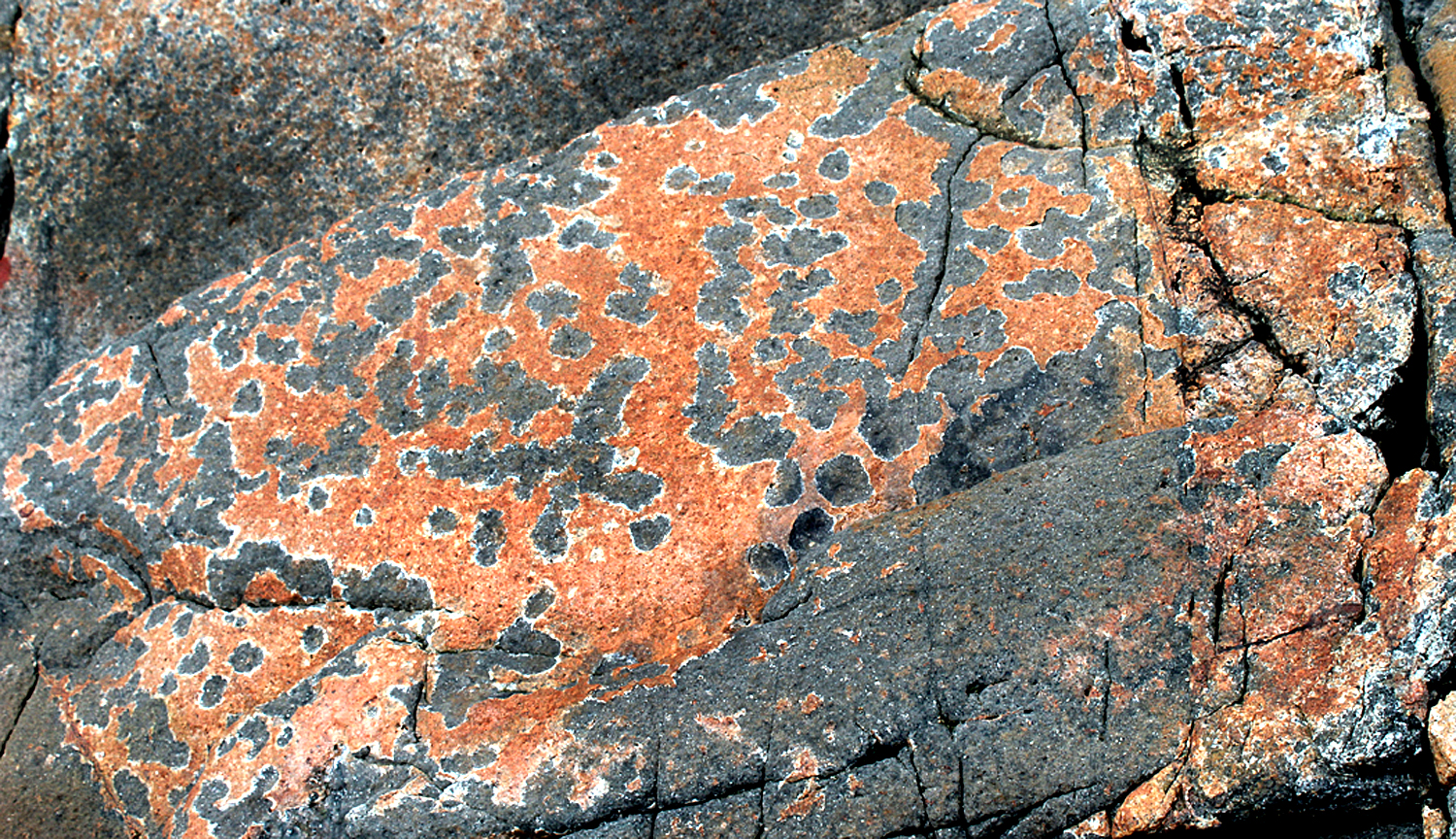
Engage with the material — something you should do with friends, family, society, even the air and the rocks. Engage. Don’t gloss. 
Click on any image to enlarge
What do cows in India, Mexican bugs and Egyptian mummies have in common?

If you said, “Rembrandt,” give yourself a cigar.

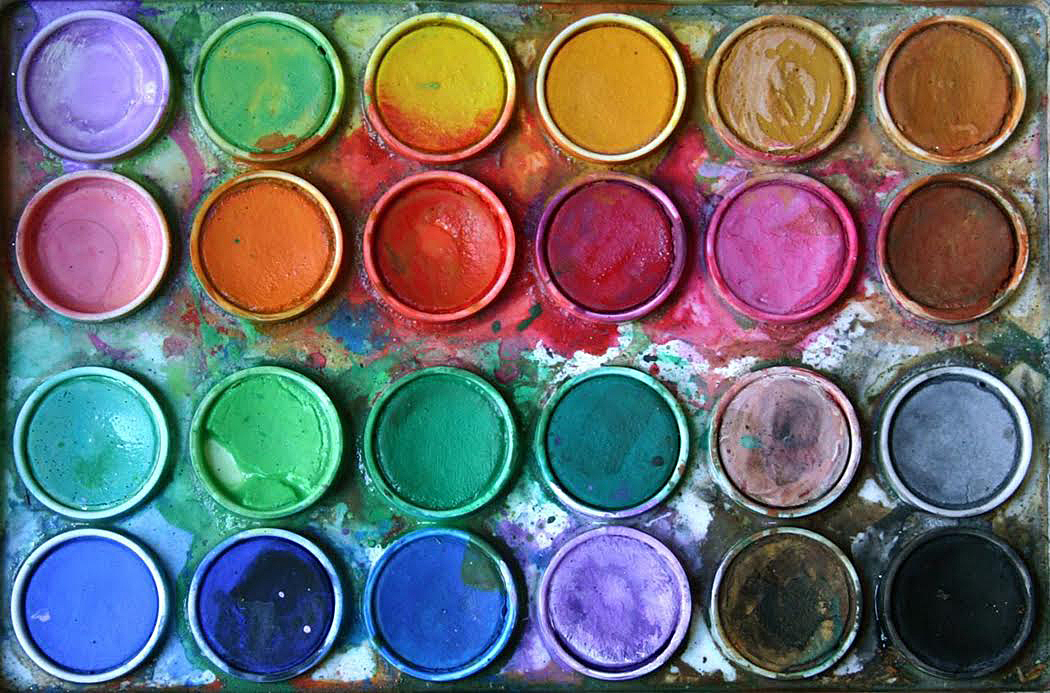
Most of us, when think of color, think in the abstract. Color is the spectrum or the rainbow. Or the deciding factor in which car we buy. We think we know what “blue” means, or “yellow,” but that doesn’t say what particular blue or what of many possible yellows. Just an abstract approximation. Exact hues require incarnation. 

And so, for an artist, color is pigment, and pigment is ornery, peculiar and sometimes toxic, sometimes distressing, even morally questionable.

Poet William Carlos Williams wrote in his book-length Paterson, “No ideas but in things.” It was the total anti-Platonic declaration of faith in the here-and-now, the lumpy, gritty, quotidian things we can feel with our fingers or stub our toe with. I paraphrase his dictum with “No color but in things.” This is not abstract, but palpable.

A painter cannot simply decide on green or yellow, but on what pigment that paint is made from. Each acts in its own way, mixes with others differently, dilutes differently, requires a different thinner, binder or medium, displays varying levels of permanence, transparency and glossiness. The painter cannot think in abstract hues, but in the actuality of the physical world. Hands in the mud, so to speak.

The earliest pigments were dug from the earth or sifted from the cook-fire: Ochers and soot. The caves of France and Spain were painted with these pigments. 

They had to be worked into submission by the artist, grinding, mixing, adding medium and binder. His — or her (we cannot know for sure) — hands got dirty in the process. There was a smell to it, fresh loamy smell or the acrid residue of the hearth. There was a feel, gritty or pulverized, oily, or smudgy like moist clay.

So, until the mid-19th century, all paints were made from the things of this world. Soils and rocks, plants and snails. Each pigment had its idiosyncrasies and those had to be reckoned with when mixing them or placing them side-by-side. None was pure, save, perhaps, the blackness of soot.

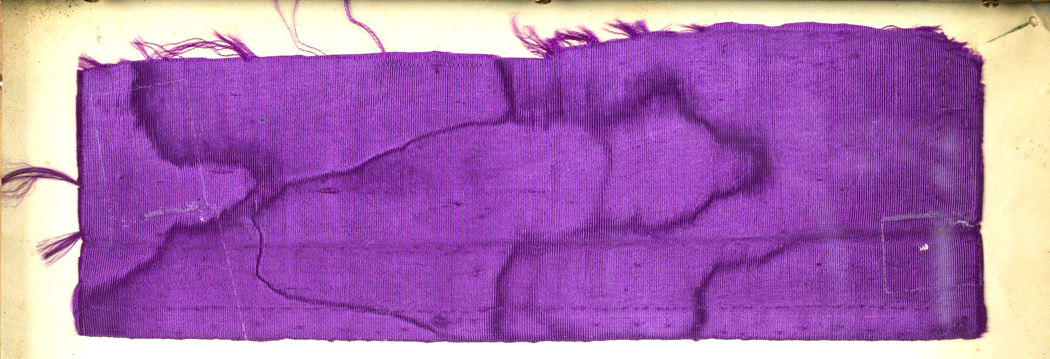
Then, in 1856, an 18-year-old chemist named William Henry Perkin, trying to find a cure for malaria, found instead a new, synthetic purple dye — the first aniline dye. He called it “mauve,” or “mauveine.”

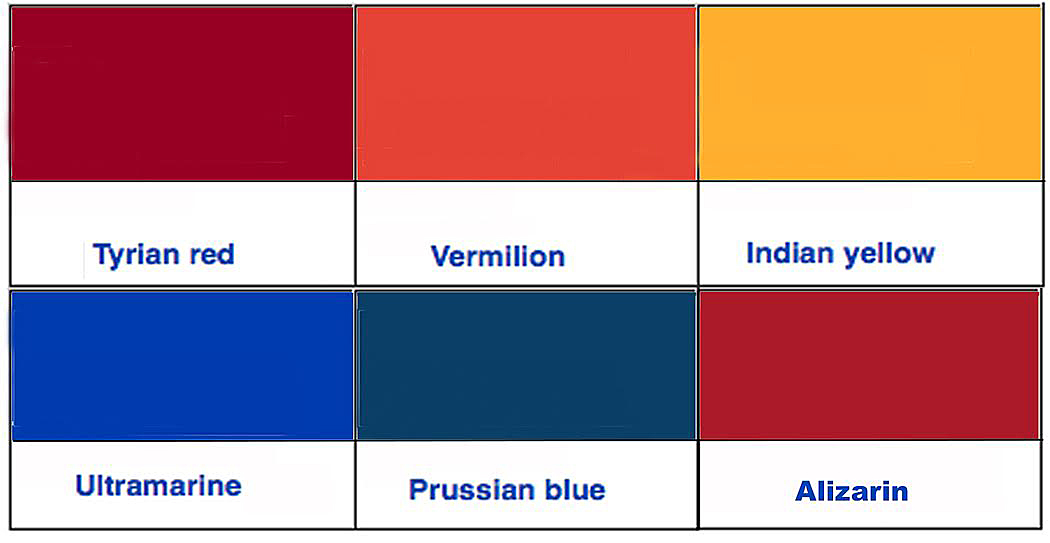
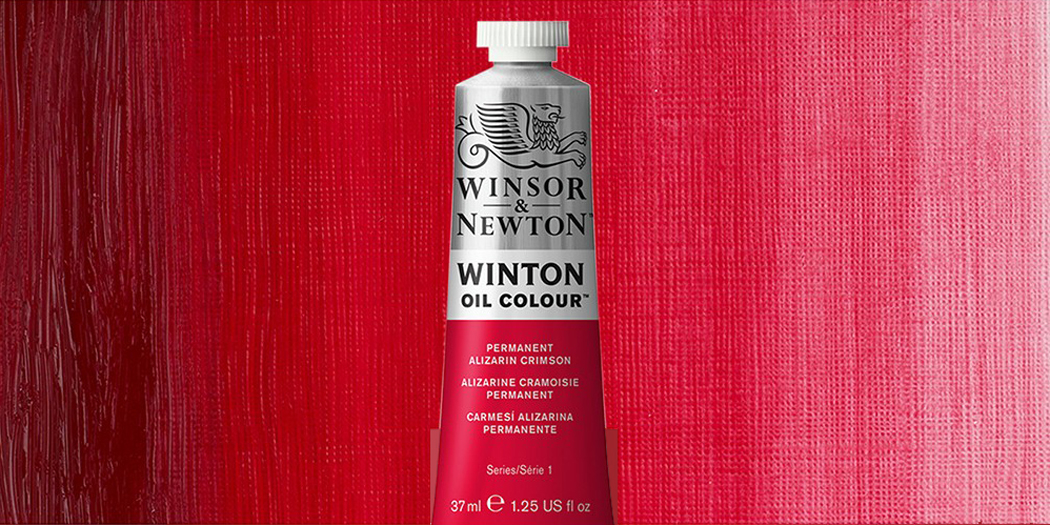
A decade later, the German chemists Carl Graebe and Carl Liebermann, working for BASF, synthesized alizarin crimson, making an artificial pigment that matched the natural alizarin dye that had been extracted from the madder plant. It was the first color created from an element of coal tar — a byproduct of turning coal into coke.

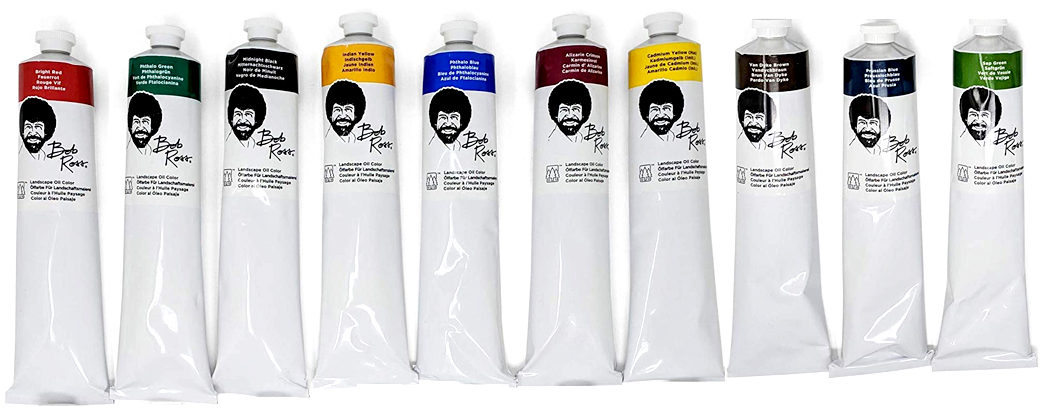
Apres moi, le deluge” — Since then, there has been a flood of synthetic colors, all devised in the laboratories of giant corporations. There are the aniline dyes, the azo dyes, the phthalocyanine dyes, diazonium dyes, anthraquinone dyes — a whole chemistry lab of new industrial color. Many of these new dyes and pigments were brighter and purer of hue and more permanent.

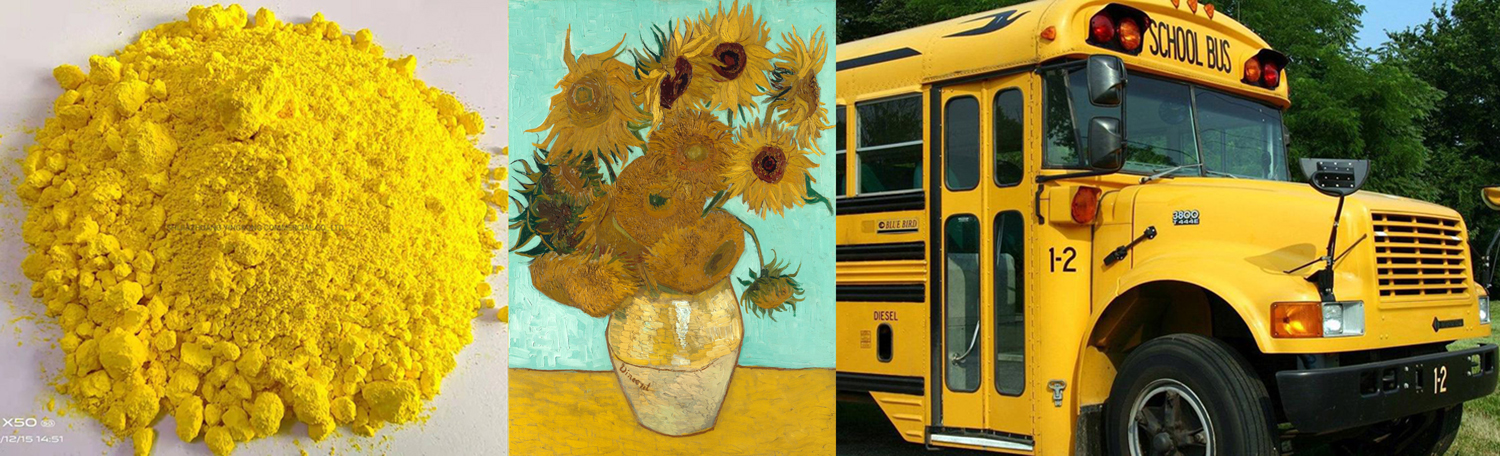
 (Not all: the new chrome yellow that Vincent Van Gogh used developed a tendency to turn brown on contact with air. Properly protected, chrome yellow is familiar as the paintjob on most schoolbusses).

Nowadays, even oil and acrylic paints with traditional names, such as burnt umber and ultramarine are likely to be produced industrially using chemical derivatives. But that shouldn’t blind us to the fact that Rembrandt or Michelangelo had to arrive at their paints through laborious and time-consuming processes.

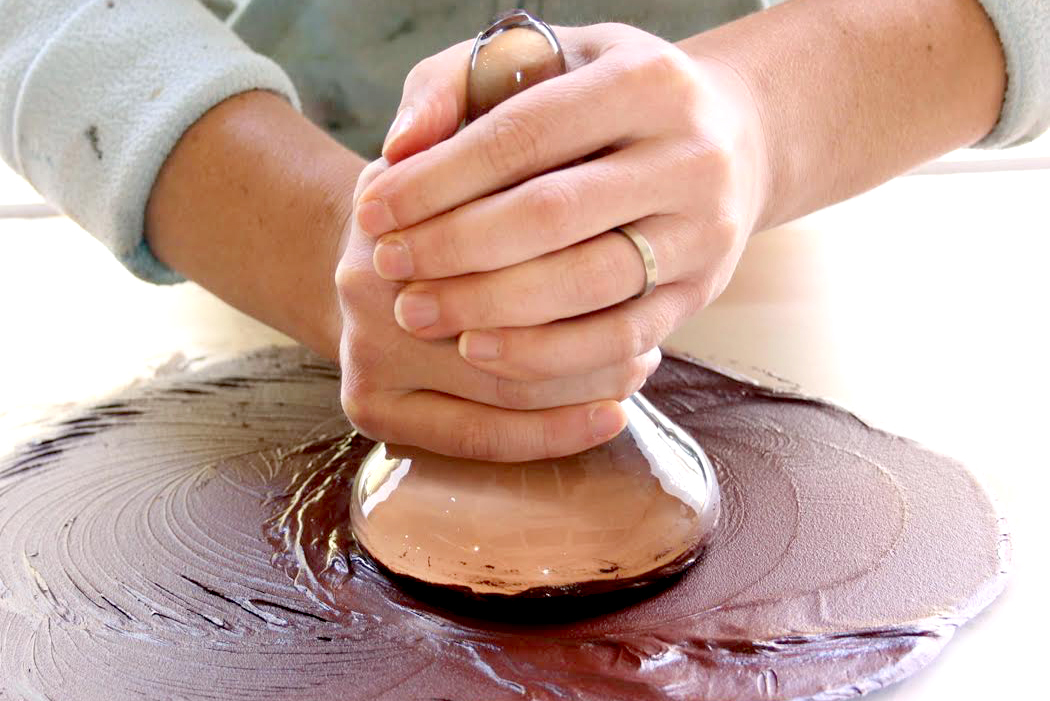
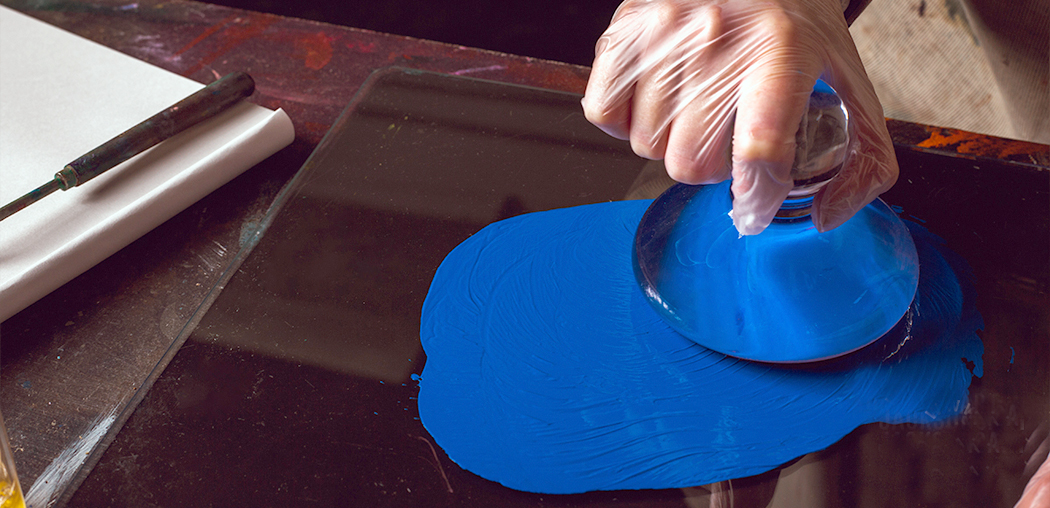
Most pigments came to the artist’s atelier in the form of a rock or a sediment. It had to be ground down to a powder, a process normally done by an apprentice — basically an intern: “Bring me a latte, a bearclaw and the powdered cinnabar.” Being ground to a grit wasn’t enough; the poor apprentice sometimes had to spend days with the pigment between grinding stone and levigator or muller, working it into pulverized paste that could be mixed with a binder and medium and finally used by the artist on canvas.

It wasn’t until the advent of the industrial revolution and the invention of a pigment-grinding machine in 1718, that the tedious work of pigment making became doable in large quantities. And it wasn’t until the mid-19th century that prepared paints, sold in zinc tubes, made it possible for artists to buy portable paints they could carry out into the countryside to paint in the open.
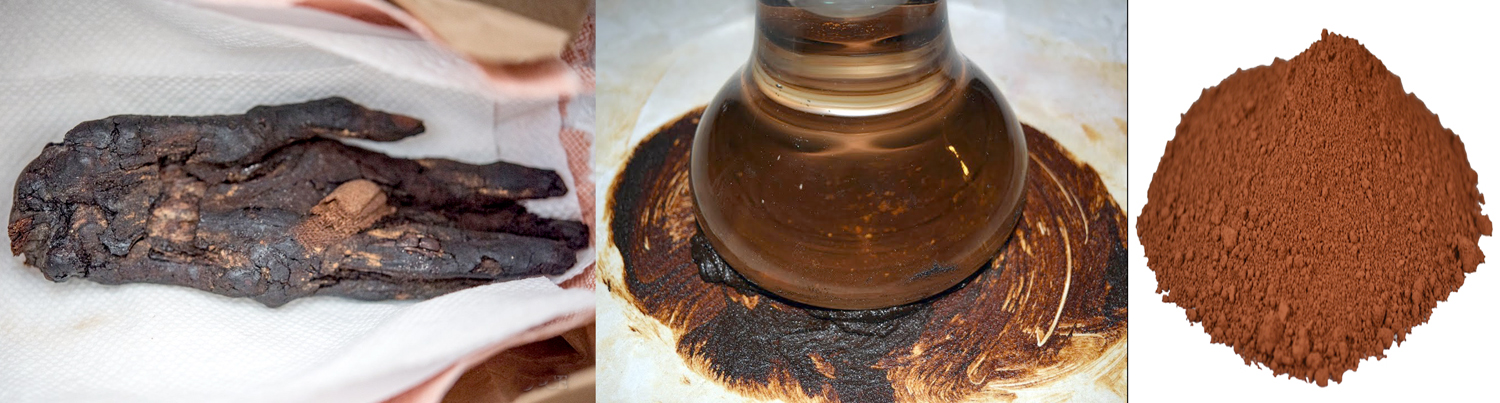
But we should not forget the sometimes ancient origins of the paints used for the canvasses of the Renaissance, the Baroque — the Old Masters. This is where the Indian cows, the Mexican bugs and the Egyptian mummies come in.

First, let’s look at a few of the standard paint-sources from this pre-industrial age. Many of them have wonderful and memorable names, now largely gone out of use.

We’ll take the reds first. None was perfect, several were lethal. 

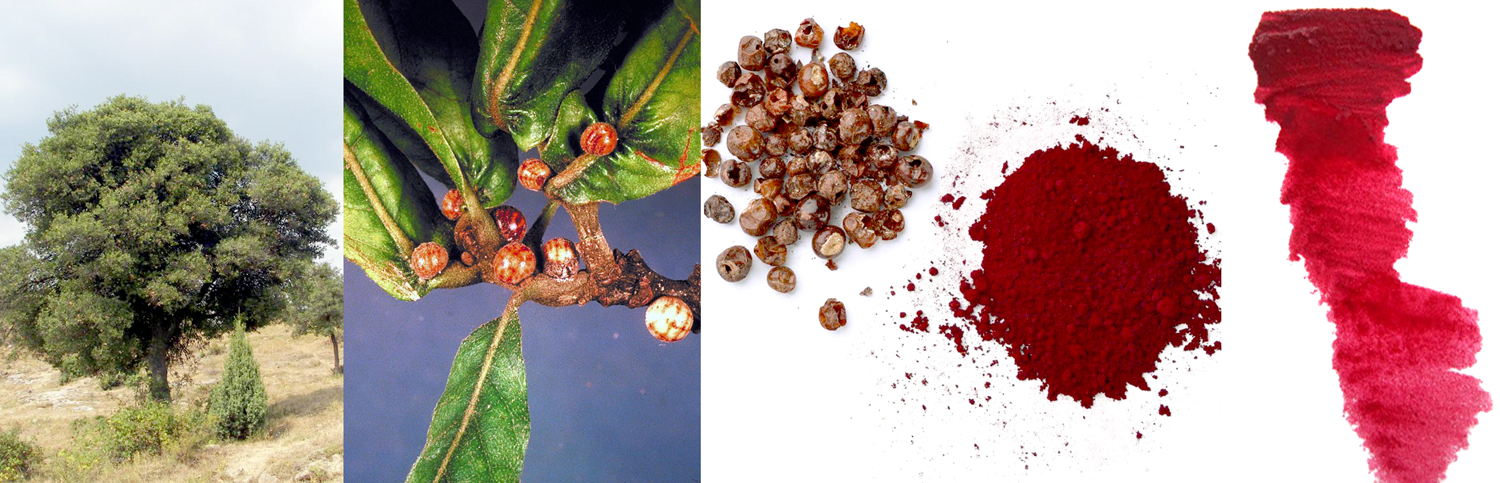
Carmine — This is the Mexican bug I mentioned above. The cochineal scale insect grows on certain cactuses in Central and South America. It is a bright violet- to deep-red color. The Aztecs called it “nocheztli,” which means “tuna blood,” and dyed the tunics of Aztec and Inca royalty.

Crimson — Before the Conquista, a European scale insect, growing on the kermes oak, provided a red dye. These insects were picked from the twigs with fingernails and processed into a scarlet dye. It was the color used to dye the curtains of the Temple in Jerusalem. Also widely used by ancient Egyptians and Romans. It was less efficiently grown and produced than the cochineal of Mexico, and so was replaced. Michelangelo used it in his paint.

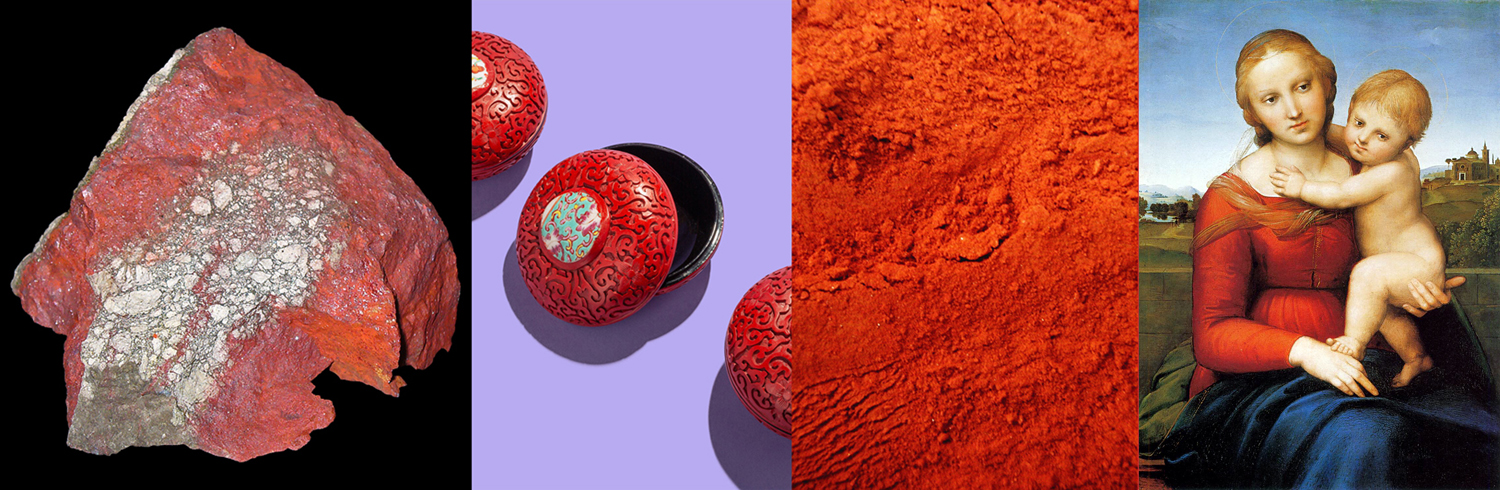
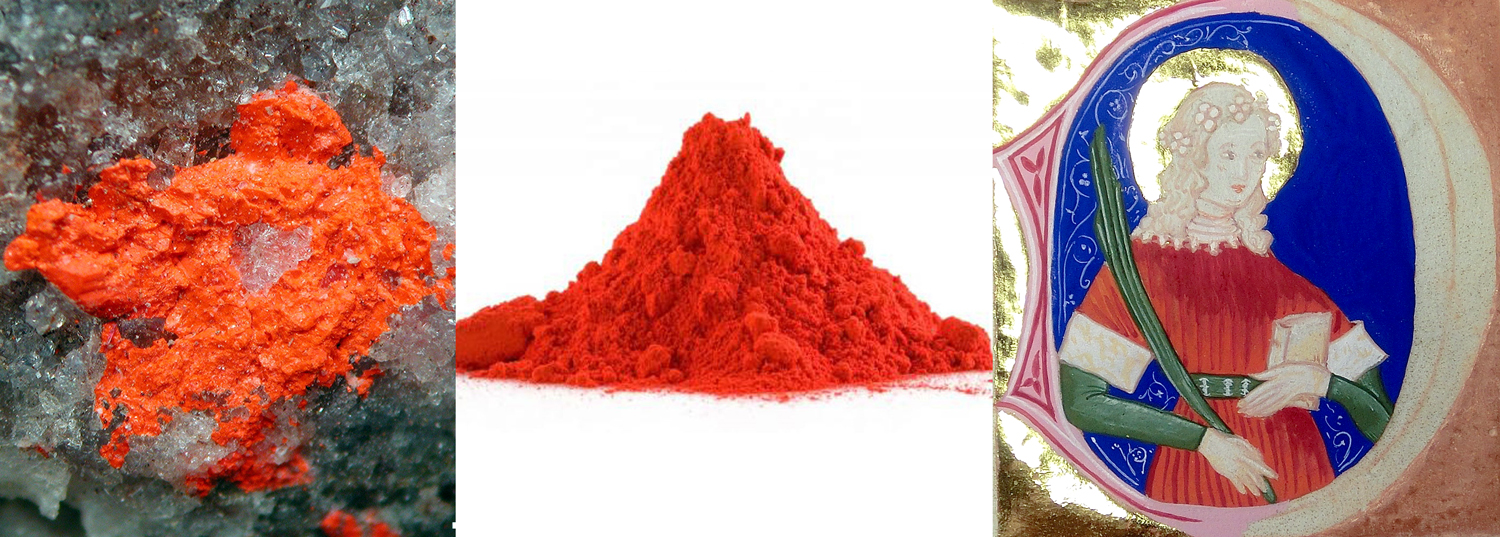
Vermilion — A scarlet red form of mercury sulfide and highly poisonous, it was mined in Europe, Asia and the New World as cinnabar and was used also for cosmetics and medicine — hardly a wise use. In its mineral form, it was used to color Chinese lacquer. A finer, and redder version was first synthesized in China in the fourth century BCE, and depending how well powdered it has been ground, produces hues from orangey-red to a reddish purple that  one writer compared to “fresh duck liver.” It is still also produced by grinding cinnabar. 

The terms “cinnabar” “vermilion” and “Chinese red” are often loosely interchangeable. The finer the grinding, the brighter the red. Painter Cennino Cennini in his 15th century Craftsman’s Handbook wrote: “If you were to grind it every day for 20 years it would simply become better and more perfect.” It was the most common red in painting until it was replaced in the 20th century by cadmium red.

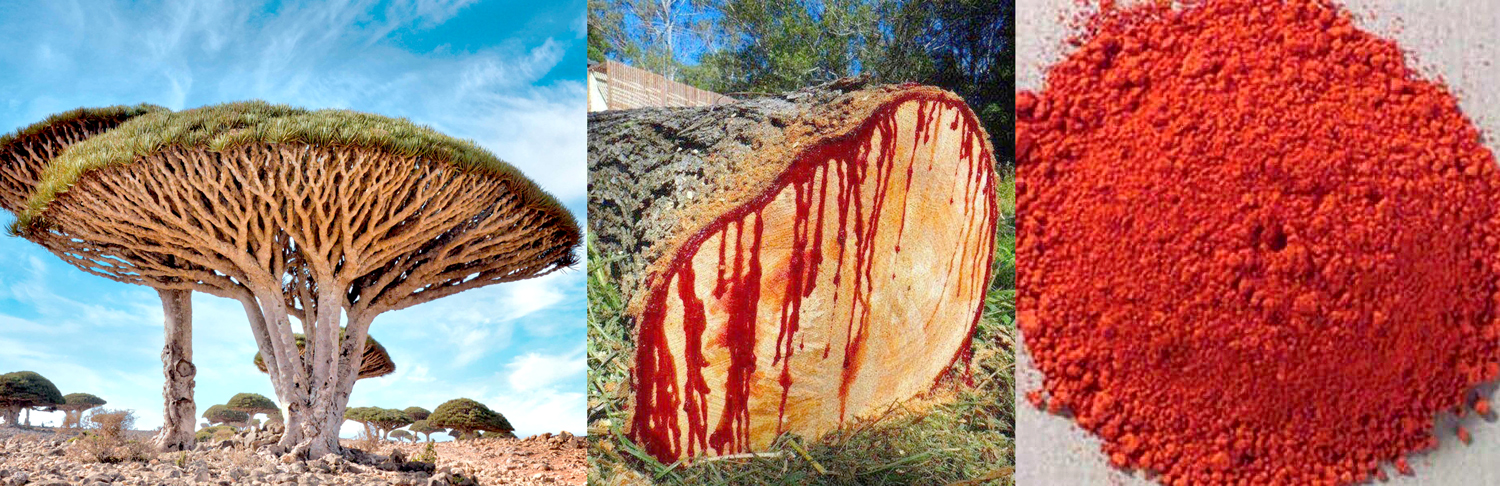
Dragon’s blood — Mentioned in a First-Century Roman travel guide (a periplus), it is a maroon-red pigment made from the sap of various plants, most notably the Dracaena cinnabari. Medieval sources wrote that it was made from the blood of actual dragons. It is also what gives classic violins their reddish varnish. In several folk-religions and in neo-paganism, it is a source of magical power, presumably because of its supposed connection to dragons. 

Minium — Also known as red lead, this orange-red pigment was commonly used in Medieval illuminated manuscripts. It was made by roasting oxidized lead in the air to form lead tetroxide. It is named for the Minius River between Spain and Portugal, and because this red lead was used for the small letterings and illustrations in hand-made books, it is the source of our word, “miniature.” 

Near colors of yellow, orange and purple had their sources, too. 

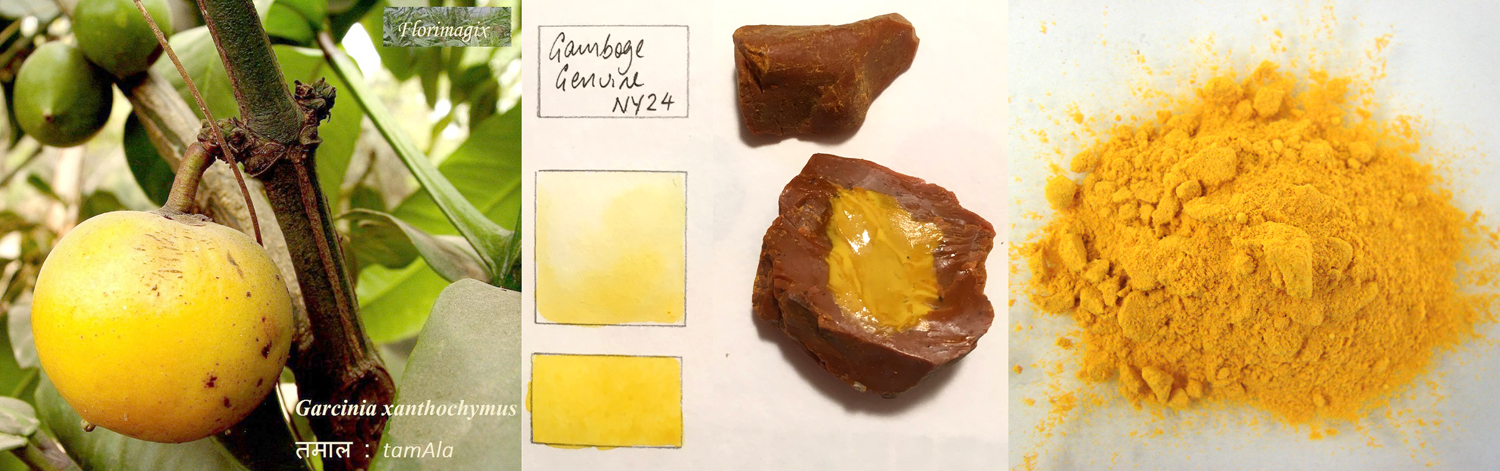
Gamboge — A yellow pigment formed from the resin of the evergreen Cambodian gamboge tree (genus Garcinia). Coincidentally, the name comes from the Latin name for Cambodia. It is the traditional color used to dye Buddhist monks’ robes. The pigment first reached Europe in the early 17th century. When mixed with Prussian blue, it creates Hooker’s green. A strong laxative if ingested; in large doses can cause death. 

Orpiment — A bright yellow pigment gathered from volcanoes and hot springs and is a highly poisonous compound of arsenic and was once used as an insecticide and to tip poison arrows. It was traded as far back as the Roman empire. Its name is a corruption of the latin auripigmentum or “gold pigment.”

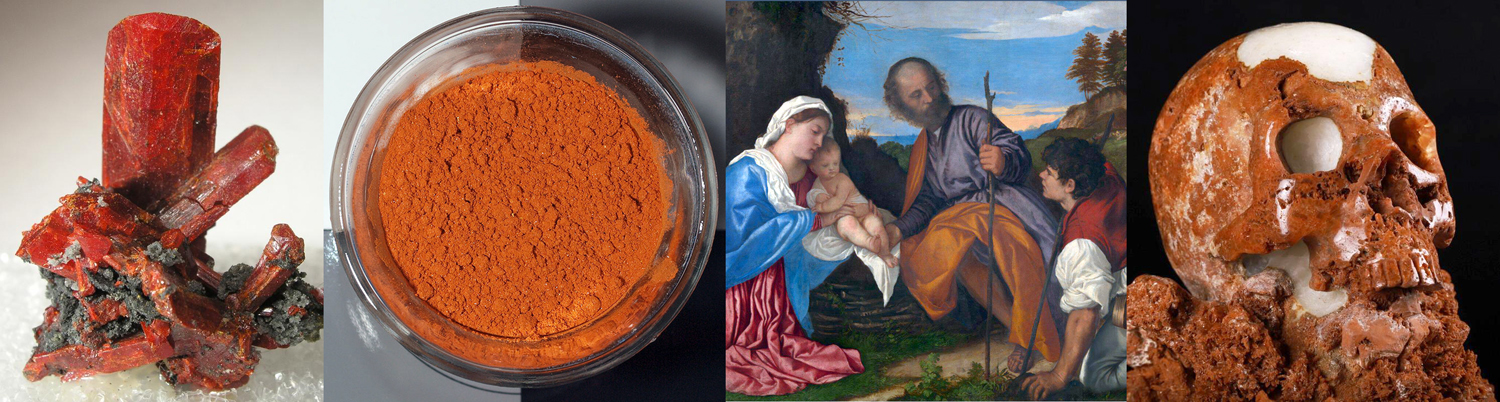
Realgar — Realgar was, along with orpiment, a significant item of trade in the ancient Roman Empire and was used as a red paint pigment. It is an arsenic sulfide mineral and sometimes called “ruby of arsenic.” Early occurrences of realgar as a red paint pigment are known for works of art from China, India, Central Asia and Egypt. It was used in European fine-art painting during the Renaissance, a use which died out by the 18th century. It was also once used as medicine and to kill weeds, insects and rodents. Be grateful for modern medicine. 

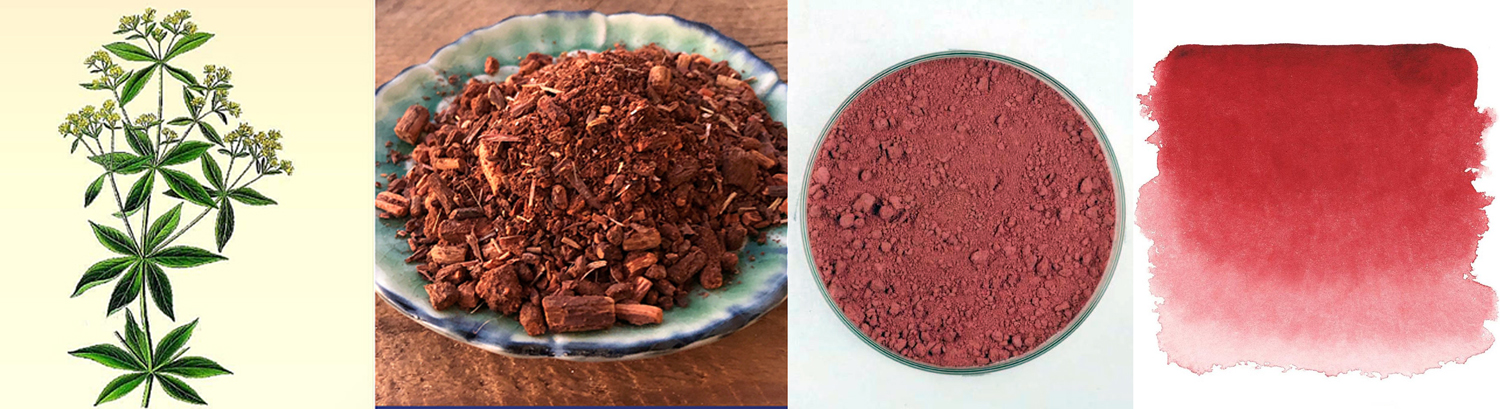
Madder — Another dye that goes as far back as ancient Egypt, it is a violet to red color extracted from the Rubia tinctorum and related species, plants that grows on many continents, and in southern France is called garance — for those of you who love the great French film Les Enfants du Paradis. It is turned into a pigment from a dye by the process known as “laking,” and so often encountered as madder lake.

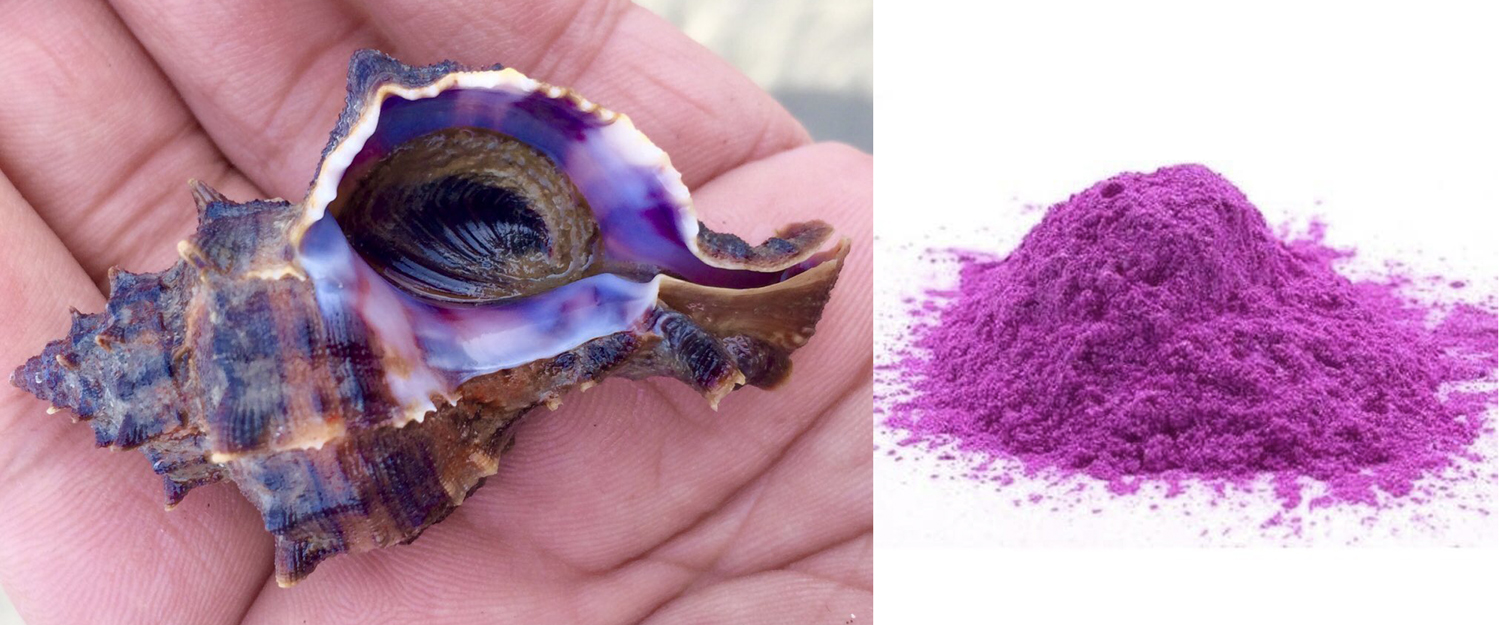
Tyrian purple — This is the purple of the Roman emperors, and is extracted from a mucous secretion from the hypobranchial gland of a predatory sea snail found in the eastern Mediterranean. It was worth its weight in silver and it might take 12,000 snails to produce enough dye for a single garment.

Blues and greens were often so close as to be made from variants of the same thing. 

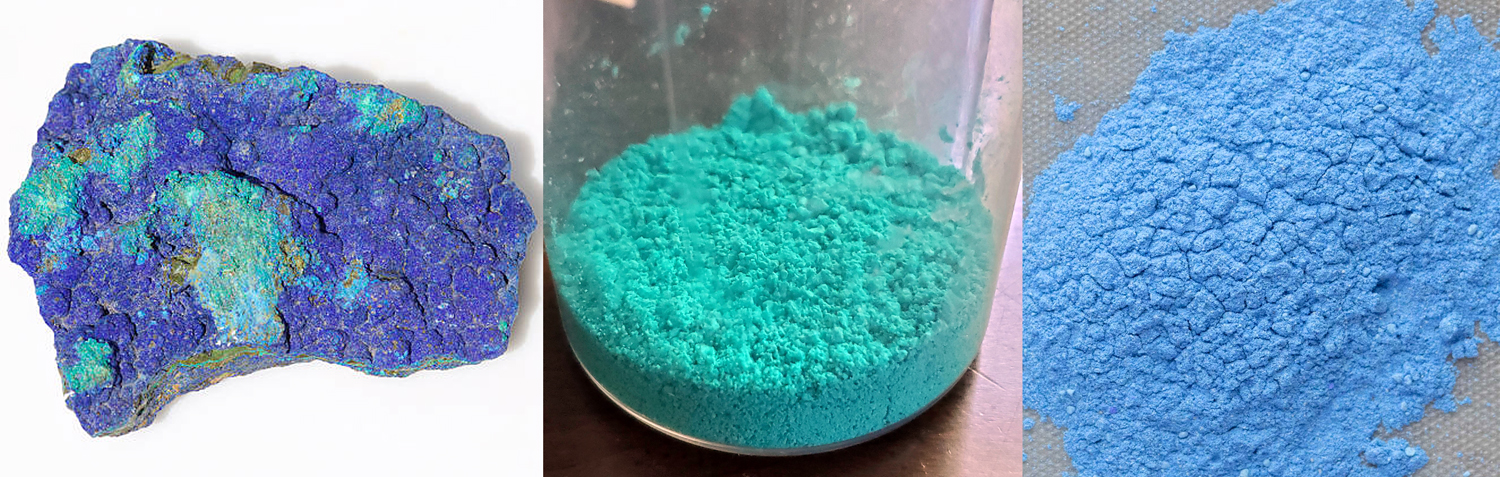
Bice — Is a dark green-blue or blue-green pigment made from copper carbonates, primarily the mineral azurite, sometimes malachite. Lightened, it was often used for skies.

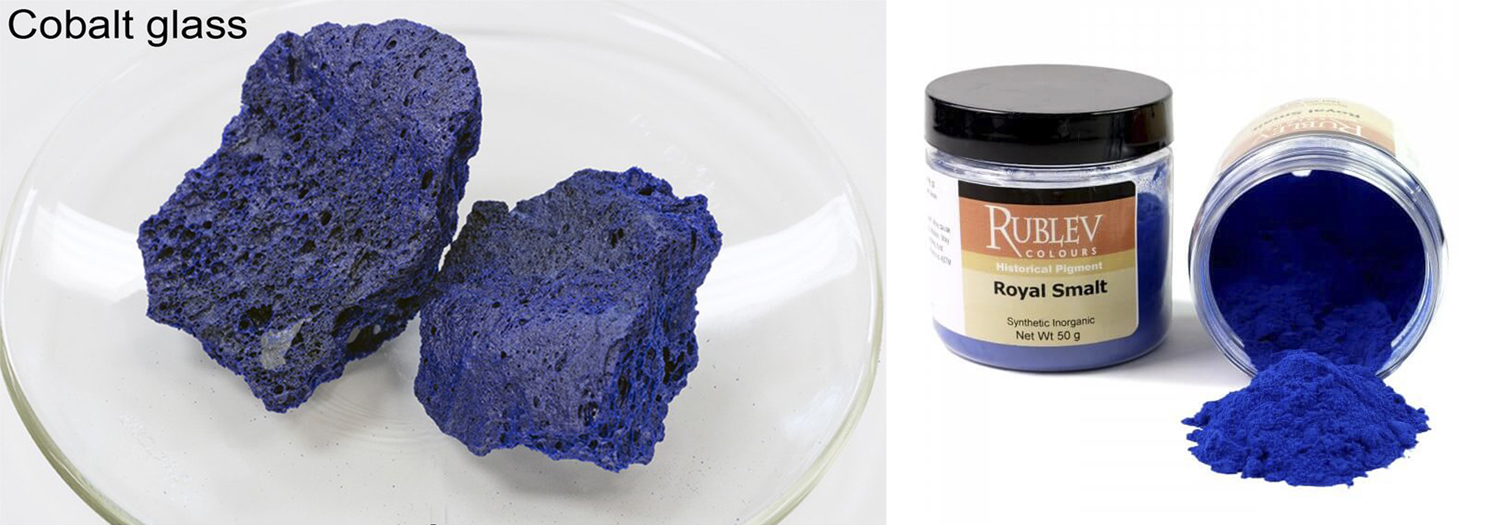
Smalt — First used in ancient Egypt, it is a cobalt oxide use to color glass a deep blue. The glass is then ground into a powder used as a pigment.

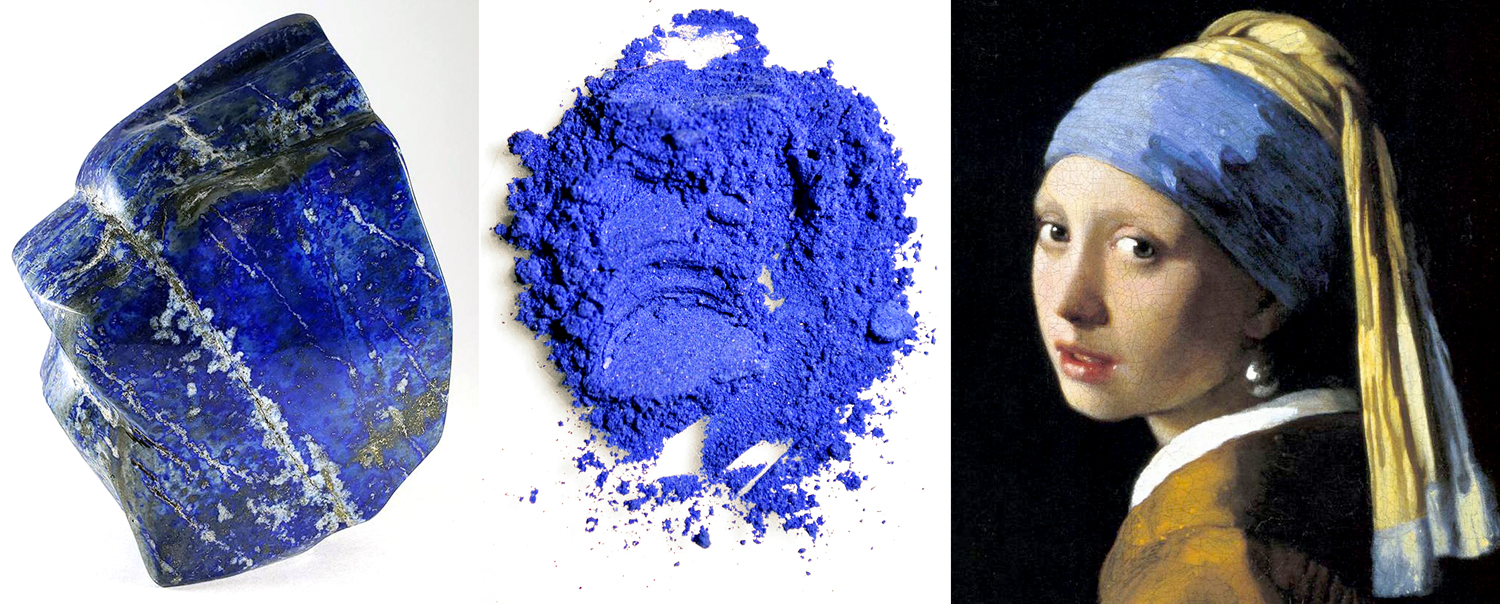
Ultramarine — The ultimate blue, made from the mineral lapis lazuli, found almost exclusively in Afghanistan, which, for Europeans, was “beyond the (Mediterranean) sea” or “ultra-marine.” The process of making the pigment from the mineral was complex and the final color was so highly prized, and so expensive, that its use had to be expressed in the contract commissioning a painting by Renaissance artists, less they use some less costly, and less glorious blue. 

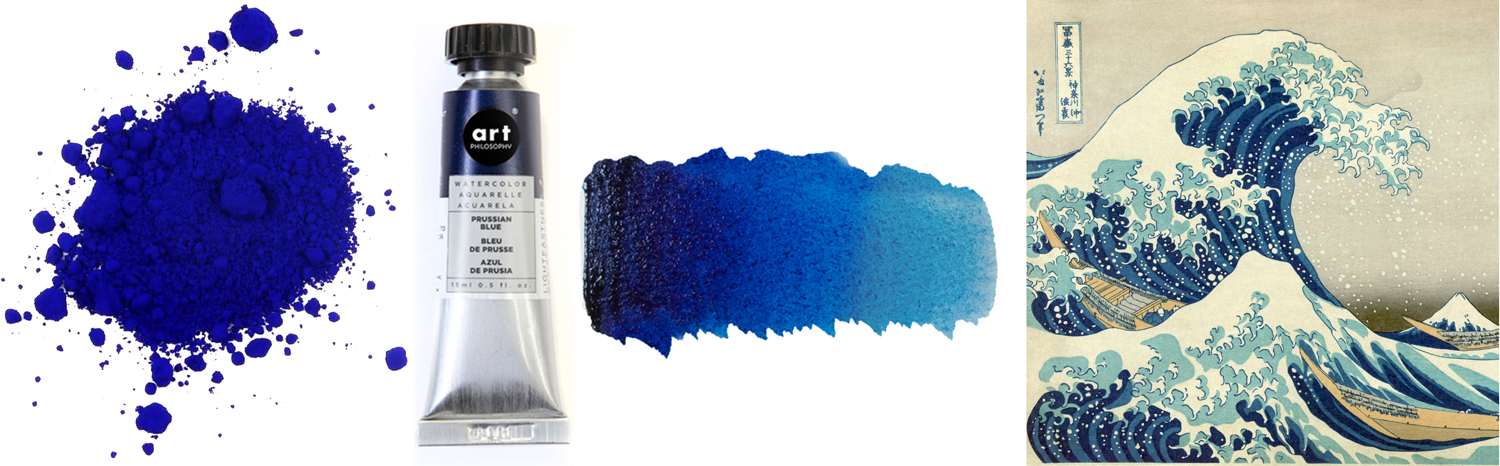
Prussian blue — The first modern synthetic pigment, Prussian blue is iron hexacyanoferrate and a very dark, intense blue. It is also sometimes called Berlin blue or Paris blue. It is the blue of traditional blueprints and became popular among painters soon after it was formulated in 1708 — by accident when a chemist attempted to make a red dye and got blue instead. It largely replaced the more expensive ultramarine. After it was imported to Japan, it became the standard blue of woodblock prints. 

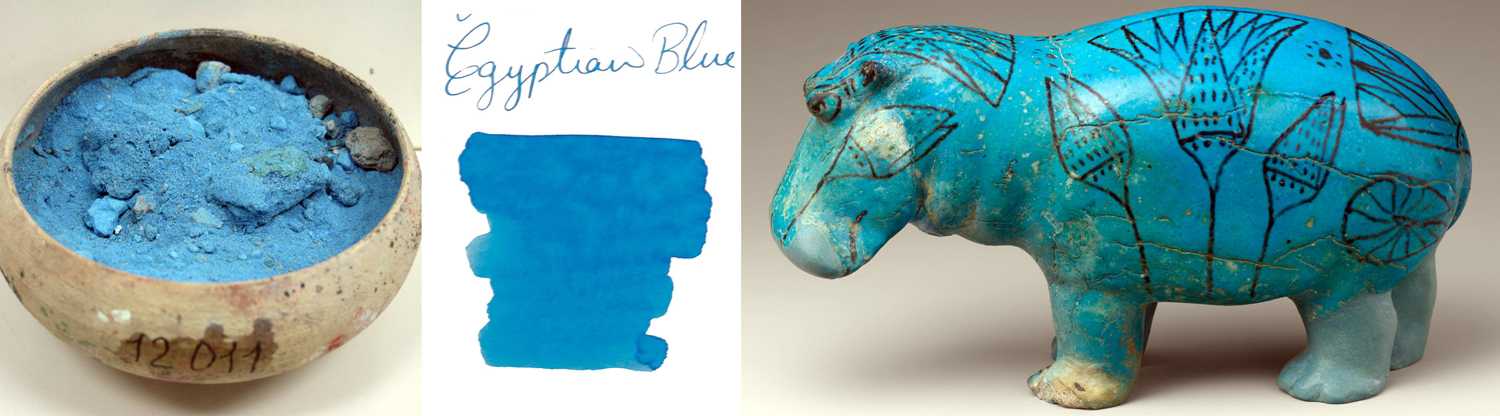
Egyptian blue — Long before Prussian blue, the ancient Egyptians manufactured a light blue pigment from calcium copper silicate, by mixing silica, lime, copper and an alkali. First synthesized during the Fourth Dynasty (ca. 2500 BCE), its use continued through the Roman period. The Egyptians called it “artificial lapis lazuli,” and used it to decorate beads, pots, scarabs and tomb walls. 

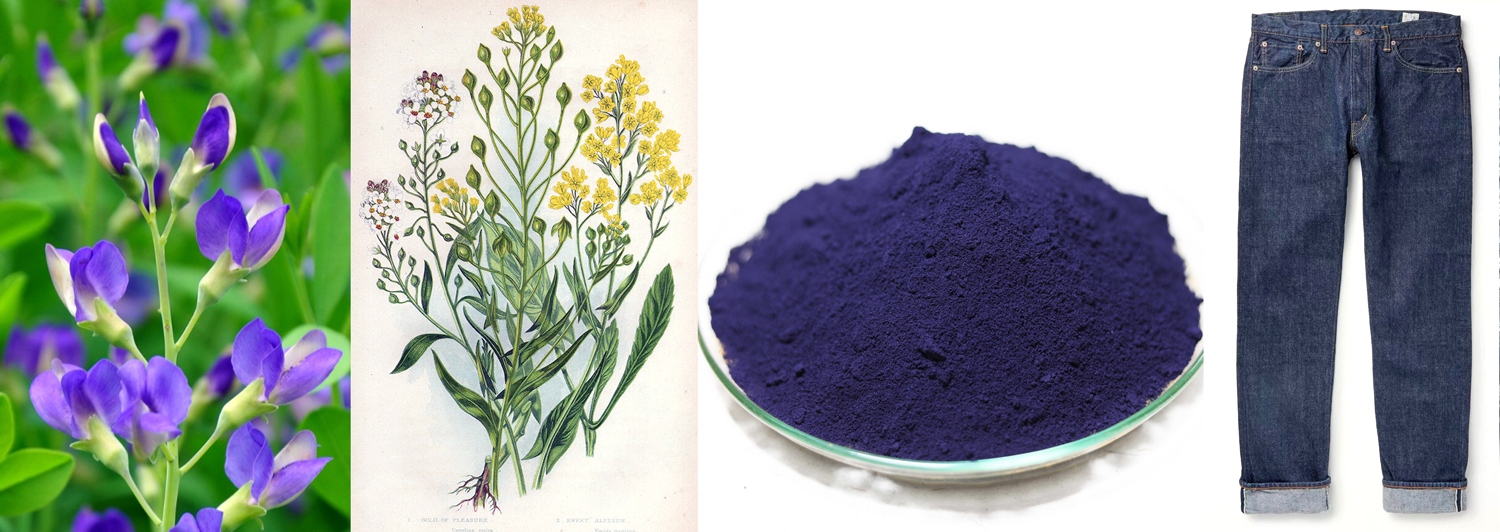
Indigo blue — The familiar color of blue jeans comes from indigo, made from the indigo plant Indigofera tinctoria. At least, it once did. Now the dye is synthetic. It is a deep, dark blue, almost black. Before the Asian indigo plant was imported to Europe, the dye was made from the woad plant Isatis tintoria. Before the American Revolution, Asian indigo, grown in South Carolina, was the colony’s second-most important cash crop (after rice), and counting for a third of the value of exports from the American colonies. Initially, European woad processors fought against the importation of Asian indigo dyes, as later, after adopting the Asian product, they fought tooth and nail against the synthetic. Progress. 

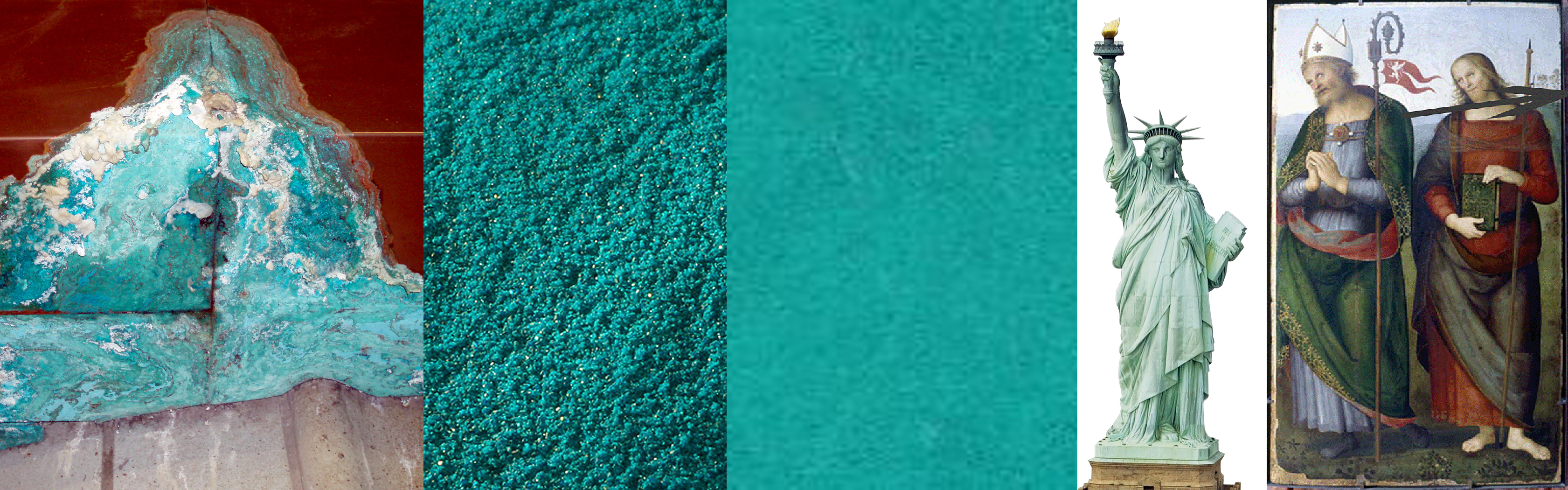
Verdigris — A green pigment formed by copper carbonate, chloride or acetate. It is the patina on the Statue of Liberty, but in oil paint, it has the odd property of being initially a light blue-green and turning, after about a month into a bright grass green.

Viridian — A darkish blue-green pigment, a hydrated chromium oxide, popularized by Venetian painter Paolo Veronese.

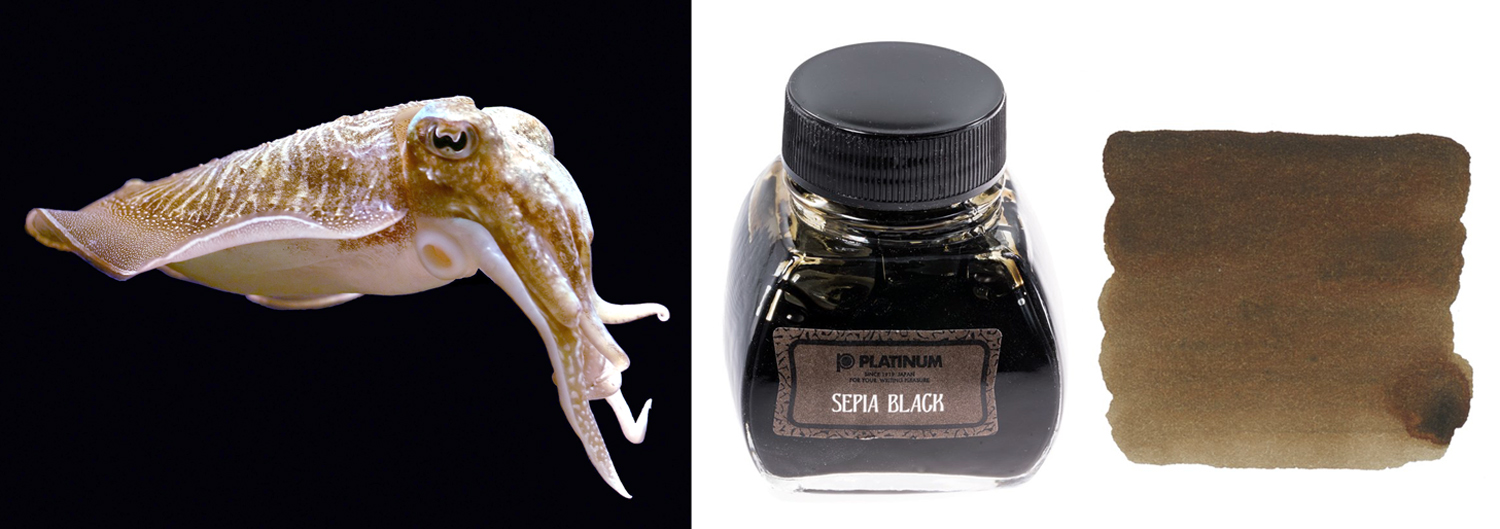
Sepia — a dark brown to black dye and pigment extracted from various species of squid. Most popular as an ink, it has also been used for oil paint.

You will have undoubtedly noticed how many of these pigments were poisonous. It has certainly been suggested that Van Gogh’s madness may have been caused by his habit of tipping his brushes on his tongue.

So many of these pigments relied on the unholy trinity of toxins: mercury, arsenic, and lead. Their toxicity was understood from ancient times. The cinnabar used for vermilion was mined in China by convicts, whose life expectancy was — well, who cared? They were convicts. 

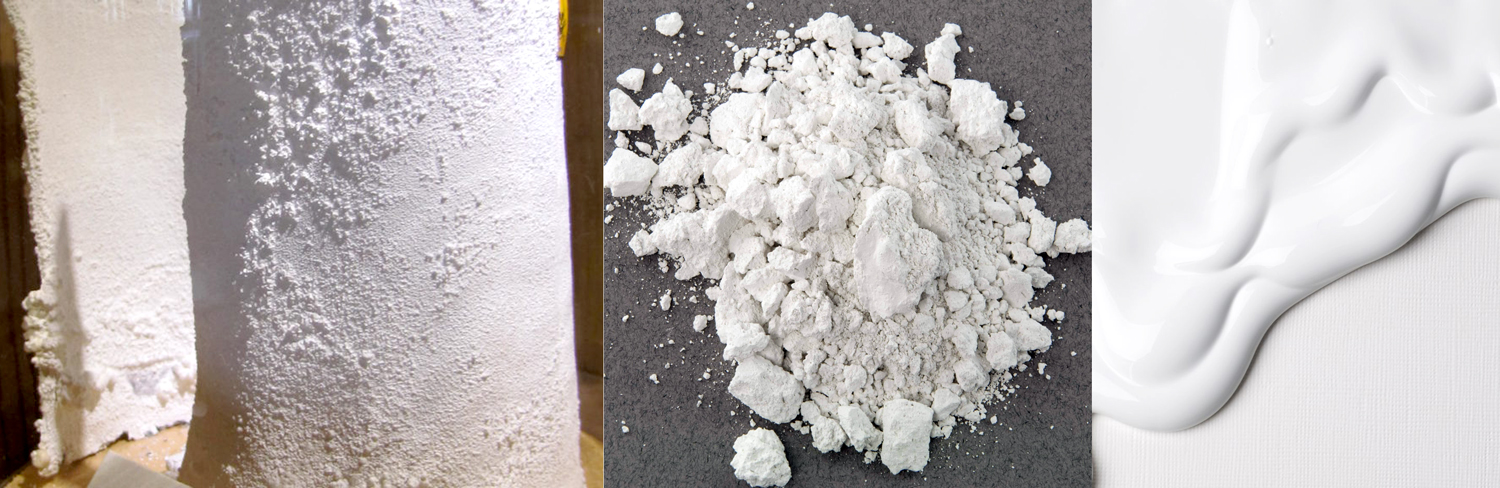
The most common toxic color through history was white, which was most often lead carbonate, or flake white, aka white lead. It was easy to manufacture by soaking sheets of lead in vinegar for weeks at a time and scraping the resulting white powder off the surface of the metal. Flake white was a wonderful, opaque and brilliant white pigment. Unfortunately, it could kill, blind or make mad those who used it. Even today, older houses have sometimes to be de-leaded of their original paint in order to be sold legally. Children are especially vulnerable.

A substitute for white lead was looked for. Zinc white — an oxide of zinc — was tried, but was not as opaque or as white. Nowadays, titanium white is used, safer and nearly as good a pigment.

But, as I said at the top of this article, some of the old pigments were not only dangerous, but morally questionable.

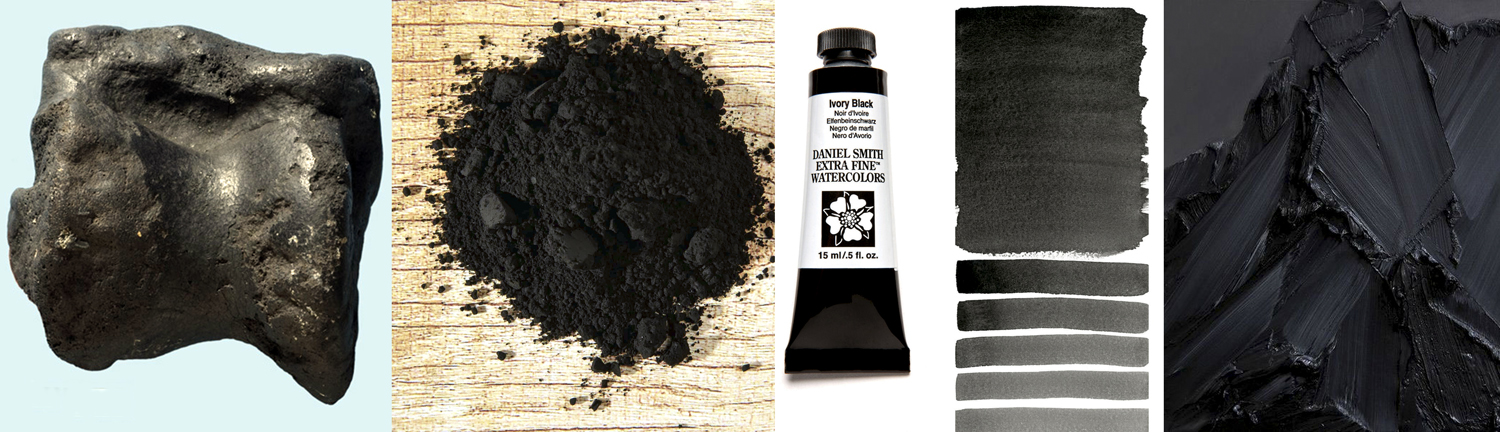
Ivory black — made from elephant ivory, and essentially ivory charcoal, it is (or was) an intense black pigment. Nowadays, it is most often made from bones, as bone black, aka Mars black.

Indian yellow — A pigment brought to Europe from the east, it was described as being made by feeding cows solely on mango leaves, which made their urine an intense yellow, which was then evaporated into a sludge, dried and sold. The cattle were severely malnourished by this diet, and the practice outlawed. There are those who doubt this explanation of the pigment, but no one doubts the strong stench of the bolus. It is no longer made.

Mummy brown — A bituminous brown, made from ground-up Egyptian mummies, both human and feline. Popular from the 16th century, it was good for “glazes, shadows, flesh tones and shading.” In the 19th century, the supply of Egyptian mummies was so great that in England, they were used as fuel for steam locomotives. But when the actual origin of the pigment became widely known, a moral repugnance swept England and the Pre-Raphaelite painter, Edward Burne-Jones was horrified to find out what he was using, “and when he heard what his brown was made of, he gave all his tubes of this color a decent burial” in his garden.

Makes you look at all those rich, warm browns in Rembrandt with a slightly different eye.

——————————————

This blog entry is significantly rewritten and expanded from an earlier essay published on the Spirit of the Senses website in March, 2018.

Click on any image to enlarge