Archive

Tag Archives: literature

I have infinite respect for school teachers. My late wife was one. I was one myself, for six years earlier in my career. Teachers work harder and for less pay that pretty much anyone else I can think of. And more than anyone else, the best teachers I had made me what I became in life. 

But. 

There was something about the teachers I had in public schools — grade school and high school — that mystifies me to this day. It was “required reading.” Nothing against the idea of having students read, but the problem was the books they had us read. 

They were “great books,” unquestionably, and among the best of literature in the English language. But what, I ask, what can a 13 year old possibly make out of The Scarlet Letter? It is written in a rather formal  early 19th century style, about a culture long faded in America, and involving minute shades of thought and feeling, with, like an iceberg, more beneath the surface than above. I was required to read it in eighth grade and was bored silly by it, mostly because I could not possibly understand it. 

I remember one of the test questions on the book. “What is the significance of Hester naming her daughter ‘Pearl?’” Uh — I dunno. I was 13 years old and I had a hard time telling the difference between Arthur Dimmesdale and Roger Chillingworth. Perhaps I wasn’t paying close enough attention. Most likely the book was way over my head. Way over the head of any 13 year old. Which is my point. Why was it assigned? 

My teachers wanted to expose me to the best in literature, I’m sure. And Scarlet Letter is certainly a great novel. I’ve read it as an adult and was amazed at how different it was from the same book I read in eighth grade. Deep and true, and subtle. All of which was lost on a boy with not enough life experience to be able to absorb what I was reading. 

For most kids at that age, a novel was its plot. If I could keep the story clear in my head, that was what I took from the book. So, there were a few assigned books that I read and enjoyed. Oddly, one of them was Ben-Hur: A Tale of the Christ, by Lew Wallace. It was assigned in seventh grade, and it was, at the time, the longest book I had ever read. 

It was no doubt assigned because of the 1959 movie, but I had not yet seen the film, and so I never had to compare the book with Charlton Heston. It was fresh to my eyes. 

But it was a story told without excessive subtlety. If I followed the plot, I got out of the book pretty much all that was put into it by its author. I was 12 and at the time, fascinated by history. Lots of that in Ben-Hur.

It should be pointed out that I had nothing against reading books. I read them all the time. I was an avid reader, but pretty much every book I picked up was non-fiction. (I once complained about novels, “Why would I want to read anything that wasn’t true?” Little did I understand.) I read tons of books about World War II. I was obsessed with the war my father had fought in. 

And so, Ben-Hur was right up my alley. A story clearly told and with little hidden between the lines.  

Another great choice for a young person was To Kill a Mockingbird. As a pubescent teen, I was deeply moved by the injustice and the countering righteousness of Atticus Finch. I read it at a time of the Civil Rights Movement in the U.S., and it seemed instantly relevant to my life. The fact that it was told through the eyes of 8-year-old Scout, and the moral issues seemed so clear only made it easier to digest at my tender age. 

The novel is still taught in many schools, and is perhaps the perfect book for required reading, although at the age I was asked to read it, I had no clue as to the the fact that its author also addresses issues of class, courage, compassion, and gender roles in the Deep South.

All the subtleties and complexities in the book were irrelevant to my reading it at the perfect age to encounter it. But then, as Flannery O’Connor said, “It’s interesting that all the folks that are buying it don’t know they’re reading a child’s book. Somebody ought to say what it is.”

In contrast, we also were assigned The Great Gatsby. On the surface, it is not difficult to understand. The language, unlike that in Scarlet Letter, was reasonably modern. But the book relies almost entirely on what is between the lines, which is exactly the part that a 14-year-old cannot perceive. When I first read it, in eighth grade, I thought it was a story about Nick Carroway. After all, he narrates it. This Gatsby guy seemed entirely peripheral and I couldn’t understand why the book had his name on it. And what the heck were those giant eyeglasses about? And that green light? No clue. 

Oh, I followed the plot well enough, I thought. But boy, I had not the first inkling of what the book was actually about. 

And how could I have. One has to have a decent fill of life’s vicissitudes, disappointments, misunderstandings, loves, longings, sex, ulterior motives — to say nothing of complex, multiple motives — before one can take in all that is going on in Fitzgerald’s book. 

Or any book written for grown-ups. We were assigned The Grapes of Wrath, and I enjoyed most of it, but on the test, we were asked why Chapter Three talks about a turtle crossing a highway. A chapter that fits what Steinbeck calls “hooptedoodle.” In Sweet Thursday, a character says, “Sometimes I want a book to break loose with a bunch of hooptedoodle. … Spin up some pretty words maybe or sing a little song with language. That’s nice. But I wish it was set aside so I don’t have to read it. I don’t want hooptedoodle to get mixed up with the story.”

And so, Chapter Three seems to have nothing to do with the story. Or does it? At an age before hair began growing in unfamiliar places, I had no clue. 

Worse, the end of the book just seemed like a vaguely smutty joke to make a teen laugh like Beavis and Butthead. Now, as an adult, it makes me weep. 

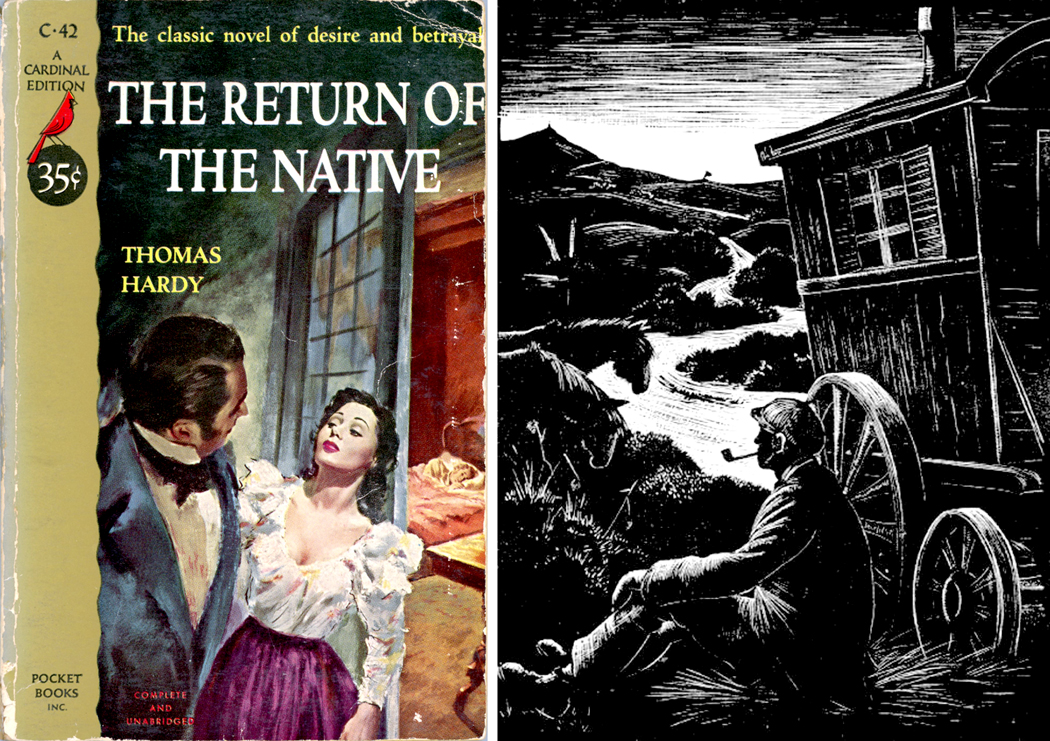
There were other books assigned that my yet-vacant mind could not get around: Emma, The Return of the Native, Oliver Twist. Why were such books put into the hands of a boy who had not yet outgrown Cocoa Puffs? 

I could barely make it through Emma, and couldn’t for the life of me understand why such a self-involved cupcake should be worthy of my attention (I said to my utterly self-involved teen self). At that age, irony is an unfathomable concept. No one my age at the time should be forced to read Jane Austen. Way above my pay grade at the time. 

And worse, Thomas Hardy. I had no notion of what a reddleman might be, nor furze, nor a heath. Reading the prose was like chewing dry straw. Why, why, O why was this book handed to a pre-teen American boy, who never cut a wisp of furze in his life? 

Last year, I found a used copy of the paperback book I was given back then, so many decades ago, and I began reading it to see if it was as bad as I remembered it, and surprise: I found some of the most resonant, deeply felt writing I’ve ever read. As twilight settles, on the first page of the book: “Looking upwards, a furze-cutter would have been inclined to continue work; looking down, he would have decided to finish his faggot and go home.” That image rings so instantly true. I’ve been there. When I was a kid, not so much. 

There were other books assigned that memory has happily wiped from my mind. 

But worst of all, and for this I hold Miss Irene Scheider completely guilty, was my lifelong inability to read Charles Dickens. She was otherwise a fine teacher of my eighth grade class, but she decided she would assign each student his own book, chosen by her as the perfect match for his taste and personality. And for me, she chose Oliver Twist

I cannot tell you how much I hated, hated, hated that book. I found it turgid, boring, endlessly prolix, and completely unrelatable. I trudged through it dutifully, But I found it the absolute opposite  of anything my taste and personality would have fancied. “Please sir, I want less.” 

No blame should be ascribed to Dickens for this failure. I believe the enthusiasm so many intelligent readers feel for his books. But my experience with Oliver Twist in the eighth grade has ruined Dickens for me for the rest of my life. I cannot even pick up another of his books. My muscles twitch and my eye develops a tick. “Oh keep the Dog far hence, that’s friend to men, Or with his nails he’ll dig it up again!”

I understand the impulse of grade school teachers to introduce great lit-rich-your to young minds. But forcing a teenager to read works they are not equipped to comprehend can only deter them from ever wanting to read books they haven’t been assigned. 

I was lucky. I loved reading too much to be thrown off by boring books. I had my own direction. Before high school, most of what I read was non-fiction. I always had a book or two going. Some I read so avidly, I finished them in a day. You could not have stopped me from reading. But I only came to fiction and an appreciation for what it had to afford, after my brain had become fully formed, in my twenties. Then, I attacked all those classics I had dreaded when I was younger. Ulysses, yay! “Madame’s Ovaries,” whoopee! “Lady Loverly’s Chatter,” sign me up! 

I am pretty sure that if you want to instill a love of reading into young minds, you have to let them read what they choose for themselves. Don’t worry if it’s not great literature. Don’t worry even if it’s trash. Or even if it’s comic books. If they enjoy it, they will keep reading. And if they keep reading, they will grow out of the junk and seek the real deal. 

There are books that speak directly to eager minds. The Catcher in the Rye is only possible to read when you are young. Believe me, I tried to re-read it a few years ago and nearly upchucked. It’s not for adults. And there is a huge market for YAF (an acronym that makes me hiccup: Young Adult Fiction) that is surprisingly well written and tackles subject meaningful to their audience. Encourage that. Don’t, my god, hand them Brothers Karamazov

So, let them soak up Harry Potter if they want. It’s OK. Better than never being able to read Charles Dickens again. 

When you have ideas where your ears should be, you can be such a self-righteous moron. My Tchaikovsky problem is a case in point. I wasted years not listening to his music. What I thought closed my ears to what I might hear. 

When I was a boy, longer ago than even your parents can remember, the music of Tchaikovsky was easy to love — all those sweeping tunes and swelling fiddles. His music was, in that antediluvian age, pretty well ubiquitous. Concert halls played his symphonies, pianists conquered the Soviet Union playing his piano concerto, and supermarkets offered LP specials for 49 cents with grocery purchases. And that is where I was first exposed to the Nutcracker Suite, played by an anonymous orchestra and conductor (Grieg’s Peer Gynt Suite was on the “B” side). 

My parents bought successive volumes from the supermarket and I became exposed to “The World’s Greatest Music,” including Beethoven’s Fifth Symphony, the Brahms Second, the Sorcerer’s Apprentice and all of those now-familiar war horses a friend of mine used to call “The Loud Classics.” 

A few years on, as puberty hit, it was music like Tchaikovsky’s that spoke to me, with its pile-driven emotional excess and immediacy. My insides swelled with powerful feelings. That sort of “heart-on-sleeve” thrum speaks to those newly activated hormones. 

But then, unfortunately, I became smarter, learned more, read what critics had written. I discovered that such music was trivial, shallow, showy and unserious and learned how wrong I had been. My taste turned to Beethoven’s late quartets and Bach’s unaccompanied violin works. That was serious music. 

This is something that happens to many of us when we are becoming adults and presume to take on more grown-up tastes, pretending to understand more than we actually can. Ideas about the music supersedes what we actually hear. 

And so, for the next 40 years or so, I disdained listening to much Tchaikovsky. Occasionally I would spin the Pathetique on the record player. It, after all, had a second movement in 5/4 time. Like Dave Brubeck. 

Looking back, I realize that the musical culture was traveling much the same route as I was taking. Music that had been pilloried for being too “modern” and “dissonant” became more mainstream. One could hear Bartok or Stravinsky in the concert halls, played alongside Beethoven and Sibelius. And musicians and conductors, grown up in the same era as I did, shared much of my taste. Tchaikovsky slowly became out of fashion. Astringent drowned out lush.

It was still played, of course, but less frequently, and by orchestras and conductors more simpatico with Modernist esthetics than the tired old Romanticism. Stravinsky had stated, in no uncertain terms “Music is, by its very nature, essentially powerless to express anything at all.” And Toscanini has said Beethoven’s Eroica was not about heroism, but about “E-flat.” (Neither man actually believed their own words, and their music and music-making prove that, but their words proved highly influential). 

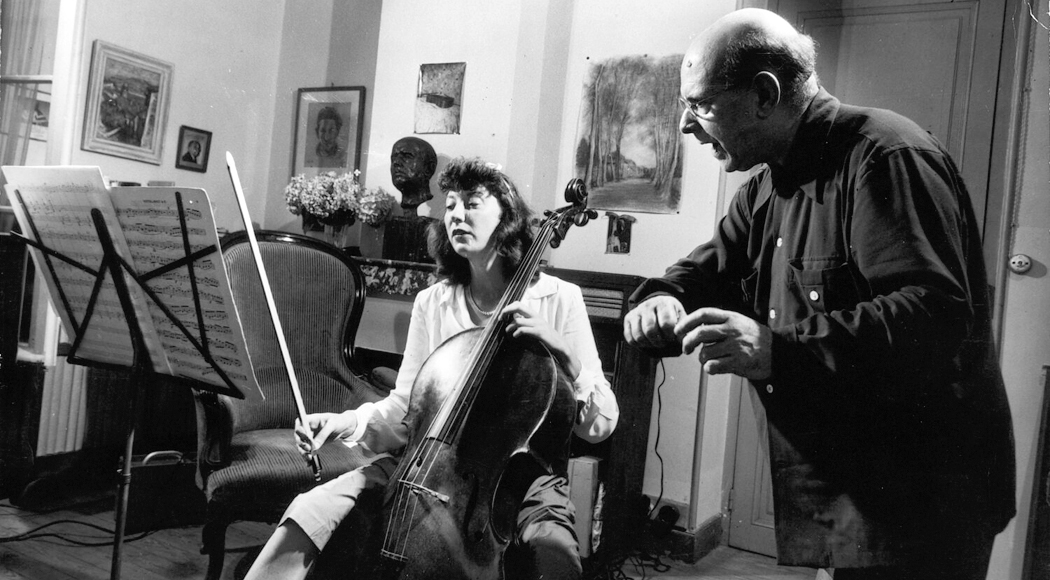
Toscanini also said, “Tradition is only the last bad performance.” But tradition is the very heart of any classical music — music handed down from one generation of masters to a younger generation. Whether it is Indian classical music, Japanese Noh flute playing, or Pablo Casals teaching Bernard Greenhouse (of the Beaux Arts Trio) and Greenhouse teaching Paul Katz, onetime cellist of the Cleveland Quartet) it is tradition that defines it. 

Orchestras and conductors who had learned their art before the 20th century and continued the traditions up through, perhaps 1970 or so, had the music in their old bones, understood how it was meant to go, and how the musical arguments played out in the notes. But the older musicians died out and the younger generation taking charge had a more “objective” view of the music. A tradition was dying. 

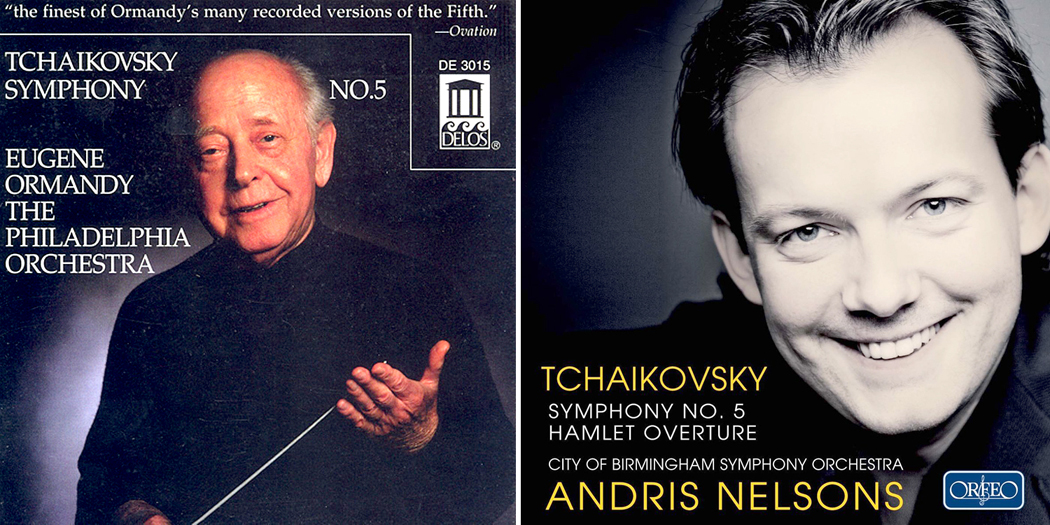
You can hear this by comparing any Tchaikovsky symphony recorded by Eugene Ormandy (1899-1985) or Yevgeny Mravinsky (1903-1988) with the same performed by Andris Nelsons (b. 1978) or Vladimir Jurowski (b. 1972). The younger players play the notes clearly and cleanly, even with excellent musicianship, but notes and music are different things. The younger generation grew up with Stravinsky or Prokofiev and had no problem with their complex scores. It was a shift in sensibilities. Younger musicians can breeze through Le Sacre du Printemps perfectly, while many old recordings show esteemed conductors fumbling through, missing accents and here and there. It’s a new tradition. (And I’m not even talking about “historically informed performance practice.”) 

But in the 19th century music, the older conductors knew much the younger generation had no grasp of. They knew how the music “went.” What it was saying. 

The true divide between the old and new were the World Wars and millions of dead. And especially after the genocide of the Second World War, it was no longer possible to believe in such old ideas as nobility or heroism. And music about such things no longer rang true. Listen to the version of Franz Liszt’s Les Preludes performed by Kurt Masur and the Leipzig Gewandhaus Orchestra, from 1978 and you hear all the notes, and certainly there is excitement. But listen then to the 1929 performance by the Amsterdam Concertgebouw and Willem Mengelberg, and you hear music that believes what it is saying. There is an earnestness to it, a fervor, that feels second-hand in the Masur recording. The difference between a hero and an actor playing a hero.

 And so, I and the generations that grew up with me and after me no longer had the stomach to hear such “universal” emotions as Tchaikovsky tried to evoke in his music. Nothing universal could be trusted anymore, and the grand statements of fate and tradition were dumped.

I remember when teaching, a student pushed back on something I had said. “It’s all relative,” she said. “Nothing is true. It is your truth or my truth, but nothing is universally true.” It was a common belief for her generation. And given the “truths” espoused by various institutions that were shown to be mere self-serving hypocrisy after Watergate, after “I did not have sex with that woman,” and most of all, after Auschwitz, it was hard to fault her. 

But I replied: “There is one truth that is universal. You will die. I will die. All living things will die.” That, I said, is the starting point for all art. After that, we look for anything else that we may make art from. Second truth follows from the first: The people you love will die, and many of those will die before you and you will suffer loss. How do you react to that loss? Yes, some Victorian pieties seem like sentimental claptrap to us now, but the impulse behind them is very real, and we can react to that reality. 

And so, when I hear Tchaikovsky’s Pathetique, I feel deeply in my psyche the sense of death and loss inherent in the harmonies and melodies, and I am moved. Deeply moved. If the stylistic idiosyncrasies of his age are not ours, the underlying emotions are. 

It is incumbent upon us, as listeners (and readers, and theater audiences) not to be deaf to the content of art. Yes, some music is meant only as divertissement, as Mozart serenades or Schubert ländler, but the more ambitious pieces — symphonies, operas, even ballets — are responses to the larger questions. Not only death or loss, but the subsequent propositions built from those original two: What is happiness, what is narrative, what is rhythm and physical movement and how does it all reflect the experience of being alive? 

If you listen to Tchaikovsky’s music with ears instead of ideas, you hear not only emotions both bright and dark, but extraordinary melody and harmony, often rather advanced for its time, and unparalleled brilliance of orchestration. 

Even so minor a piece as his Nutcracker ballet is built from absolute crystal gems of sound combinations. Pure genius. 

The disdain so many now feel for the music of Tchaikovsky, or, for that matter, Rachmaninoff, or others of their era, is, as far as I am concerned, unearned, and merely an expression of ignorance. One should never cut oneself off from such delight, pleasure, and the emotions evoked. One should never close off one’s ears to music, or let ideas about the music take charge. 

Of all the pop psychology detritus that litters our culture, none bothers me more than the fatuous idea of “closure.” People talk about it as if it were not only a real thing, but an obvious one. But “closure” is a purely literary concept, ill suited to describe the actual events of our lives. 

By “literary,” I mean that it fulfills the esthetic necessity we humans feel to round out a story. A story must have a beginning, a middle, and an end (“but not necessarily in that order,” said French filmmaker Jean-Luc Godard). For each of us, our “life story” is a kind of proto-fiction we create from the remembered episodes of our lives. We are, of course, the hero of our own life story, and the supporting characters all fit into a tidy plot. 

But, of course, actual life is not like that. Rather it is a bee-swarm of interconnecting and interacting prismatic moments seen from the billion points of view of a riotously populated planet. There is no story, only buzzing activity. Eight billion points of view — and that is only counting the human ones. One assumes animals and even plants have their own points of view and no narrative can begin to encompass it all. It is all simply churn. 

Of course, there are anecdotes, which are meant to be stories, and end, usually, with a punchline. Like a joke, they are self-contained. But our lives are not anecdotes, and tragedies, traumas, loss, are not self-contained. There is no punchline.

So, there is a smugness in the very idea that we can write “fin” at the completion of a story arc and pretend it means something real. It is just a structure imposed from outside. 

In his recent book, Knife: Meditations After an Attempted Murder, author Salman Rushdie notes the meaninglessness of the concept of “closure.” After he was attacked by a would-be assassin in 2022, he came desperately close to death, but ultimately survived. The thought that he might face his attacker in court might bring some sort of closure is dismissed. He went through medical procedures and therapy, and even the writing of the book. “These things did not give me ‘closure,’ whatever that was, if it was even possible to find such a thing.” The thought of confronting his attacker in court became less and less meaningful. 

Writers, in general, are put off by such lazy ideas as “closure.” Their job is to find words for actual experience, words that will convey something of the vivid actuality of events. Emily Bernard, author of Black is the Body was also the victim of a knife attack, and her book is a 218-page attempt to come to terms with her trauma: The book opens up a life in connection with the whole world. She never uses the word “closure.” 

Both Bernard and Rushdie to their utmost to describe their attacks with verbal precision and without common bromides. It is what all serious writers attempt, with greater or lesser success. It is easy to fall into patterns of thought, cultural assumption, cliches. It is much harder to express experience directly, unfiltered. 

The need to organize and structure experience is deeply embedded in the human experience. And art, whether literary, musical, cinematic or visual, requires structure. It is why we have sonnets and sonata-form, why we have frames around pictures, why we have three-act plays. 

The fundamental structure of art is the exposition, the development, and the denouement. Stasis; destablization; reestablishment of order. It is the rock on which literature and art is founded. When we read an autobiography, there is the same tripartite form: early life; the rise to success with its impediments and challenges; and finally, the look back at “what we have learned.” 

We read history books the same way, as if U.S. history ended with the signing of the Constitution, or with Appomattox, or the Civil Rights movement, or the election of Reagan. But history is a continuum, not a self-contained narrative. Books have to have a satisfying end, but life cannot. 

Most of us have suffered some trauma in our lives. It could be minor, or it could be life-changing. Most often it is the death of someone we love. It could be a medical issue, or a divorce. We are wrenched from the calm and dropped into a turmoil. It can leave us shattered. 

And the story-making gene kicks in and we see this disruption as the core of a story. We were in steady state, then we are torn apart, and finally we “find closure.” Or not. Really no, never. That is only for the story. The telling, not the experience. 

In truth, the trauma is really one more blow, one more scar on the skin added to the older ones, one more knot on the string. We will all have suffered before, although the sharpness may have faded; we will all suffer again. 

Closure is a lie. All there really is is endurance. As Rushdie put it, “Time might not heal all wounds, but it deadened the pain.” We carry all our wounds with us, adding the new on top of the old and partly obscuring what is buried. 

There are myriad pop psychology tropes. They are like gnats flying around our heads. Each is a simplifying lie, a fabricated story attempting to gather into a comprehensible and digestible knot the infinite threads of a life. 

I have written many times before about the conflation of language and experience, and how we tend to believe that language is a one-to-one mirror of reality, when the truth is that language is a parallel universe. It has its own structure and rules — the three-act play — while those of non-verbal life are quite other. And we will argue — even go to war — over differences that only matter in language (what is your name for the deity?)

Most of philosophy is now really just a branch of philology — it is about words and symbols. But while thoughtful people complain about the insular direction that philosophy has taken, it has really always been thus. Plato is never about reality: It is about language. His ideal bed is merely about the definition of the word, “bed.” As if existence were truly nouns and verbs — bits taken out of context and defined narrowly. Very like the question of whether something is a particle or a wave, when in truth, it is both. Only the observation (the definition) will harness it in one form or the other. It is all churn. πάντα χωρεῖ

A story attempts to make sense of the senseless. I’m not sure life would be possible without stories, from the earliest etiology of creation myth to the modern Big Bang. All those things that surpass understanding can only be comprehended in metaphorical form, i.e., the story. 

But stories also come in forms that are complex or simple, and are true or patently silly. My beef with “closure” is that it isn’t a story that reflects reality, but a lie. A complacent lie. 

Like most of popular psychology, it takes an idea that may have some germ of truth and husks away all the complex “but-ifs” and solidifies it into a commonly held bromide. It is psychobabble. 

That is a word, invented by writer Richard Dean Rosen in 1975, which he defines as “a set of repetitive verbal formalities that kills off the very spontaneity, candor, and understanding it pretends to promote. It’s an idiom that reduces psychological insight to a collection of standardized observations that provides a frozen lexicon to deal with an infinite variety of problems.”

And afternoon TV shows, self-help books and videos, and newspaper advice columns are loaded with it. It is so ubiquitous that the general populace assume it must be legitimate. We toss around words such as co-dependent, denial, dysfunctional, empowerment, holistic, synergy, mindfulness, as though they are actually more than buzz words and platitudes. Such words short-circuit more meaningful understanding. Or a recognition that there may be no understanding to be had. 

(In 1990, Canadian psychologist B.L. Beyerstein coined the word “neurobabble” as an extension of psychobabble, in which research in neuroscience enters the popular culture poorly understood, with such buzz words as neuroplasticity, Venus and Mars gender differences, the 10-percent-of-the-brain myth, and right- and left-brain oversimplifications.)

 As a writer (albeit with no great claim to importance), I know how often I struggle to find the right word, phrase or metaphor to reach a level of precision that I don’t find embarrassing, cheap, or an easy deflection. Trying to find the best expression for something distinct, complex and personal — to try to be honest — is work. 

This is true in all the arts: trying to find just the right brown by mixing pigments,; or the right note in a song that is surprising enough to be interesting, but still makes sense in the harmony you are writing in; or giving a character in a play an action that rings true. We are so mired in habits of thought, of culture, that finding that exactitude is flying through flak.

If you’re reading this, and read blogs, it suggests you are a reader, and probably love books as much as I do. In fact, you may be a bookaholic, or have gone over the edge to become a bibliopath. Books are a central foundation of who I am, who I used to be and who I am still becaming. How can it be otherwise for anyone with a pennyweight of curiosity about people and about the world? 

I’ve written about books in my life in many blog entries, and one of the most often-read is the piece I posted on Oct. 10, 2020, called “Shelf life,” in which I chose a single rung of a bookshelf in the house and discussed all the volumes resting on it. We are, at least in part, what we read: The books become internalized. And so, as I wrote then, I wanted: “to search for myself among my books.” I decided to take a single shelf from a single bookcase, “to see if they were in any way a mirror in which I could discover my own physiognomy.”

I didn’t want to pick a neatly organized shelf, but one where books were randomly scattered, left uncatalogued after casually unpacking after a move, or after re-reading, or just was too lazy to put back where it made sense. The bookcase next to the bed seemed the proper choice. 

And so, I thought I might do so a second time. I looked at the shelf above the one I wrote about and it also seemed to be a mirror: That was me, there, in those pages, however jumbled it seemed to be. 

What surprised me the most was how many of these books have been with me for most of my life — books I read when young that still take up space in my brain and on my shelf. And also how many were only recently bought and opened. 

I should start with the three matched volumes at the right of the shelf: James Joyce’s Dubliners, Portrait of the Artist as a Young Man, and Ulysses. This handsome set replaced the many earlier versions I have owned in various editions. (I still have at least four other Ulysses on various shelves in the house, including a very special cheapie pirated paperback printed by Collectors Publications, a publisher most known for printing porn — which I suppose Ulysses was thought of when this version was published — ads at the back of the book offer The Incestual Triangle, Four Way Swappers, and All Male Nudes, among other things.)

I first read Portrait of the Artist when I was in eighth grade, in the dark green paperback Viking Compass Book edition. I’m not sure how much I could have comprehended reading it at the age of 13, but I knew I loved the way the words looked and sounded: “Once upon a time and a very good time it was there was a moocow coming down along the road and this moocow that was coming down along the road met a nicens little boy named baby tuckoo …” There was the mud of the rugby field, the great hellfire of the sermon, and the “forged in the smithy of my soul.” 

I reread the book every four or five years, and every time, it hits the spot. In the habit readers always have, I soon jumped on all the other Joyce I could find. I bought a copy of Viking’s A Portable James Joyce, and have given up or lost several versions over the years, but still have one, a hardcover one, now in a library binding — in fact, it sits on a lower shelf of this selfsame bookcase I’m writing about. I tackled the play, the poetry, Stephen Hero, the essays — even Finnegan, although, at the age of 76, I am still defeated by the whirl of the whorl of the world of Finnegan. I will leave it to the next life. 

Ulysses was a harder nut to crack after Dubliners, when I was a scrub-faced kid; Ulysses problems were verbal; Dubliners was harder to understand because of the complexity of the human emotions written about. You have to have some life pushing behind you to grasp the complexities of human experience and emotions written about in those short stories. As a teenager, I knew pimples better than I knew people. I re-read Dubliners last year and was blown away, especially by the final “The Dead.” It broke my heart.

Ulysses I did get into years later, and it is now my favorite novel of all, although, to be fair, I don’t always read it cover to cover, but rather, read again and again the bits that I most love. It astounds me: It is filled with some of the most beautiful prose I have ever encountered. No, I take that back: The most beautiful prose. 

Next to Joyce on the shelf is James Michener: Tales of the South Pacific, and Return to Paradise. I remember, in my 30s and still something of a snob, looking down my nose at Michener as a best-selling author of doorstop bricks. But one day, in a book store, I picked up a copy of Tales and thought I would read a page, maybe two, to catch the flavor of Michener’s prose. It was 30 pages later I was standing there ready to flip the next page. This was a special kind of talent: to make you need to find out “what happens next.” 

The prose was simply not the point. It was invisible; you read through the words as if looking through glass. This was story-telling, and Michener really has a value I had failed to understand. I’m not saying he didn’t eventually turn into an industrial manufactory, but in his first book, he made magic. It was also nothing like the South Pacific musical I had expected. Rather it gave me a real sense of what the war in the Pacific must have been like for those who experienced it. 

A few years ago, after re-reading it, I found a copy of its sequel, Return to Paradise. I got through a few of the stories, maybe a third of the way in, but lost interest. The magic had gone. It was OK — it wasn’t just junk — but it didn’t grab me the way the first book did. It was more like a book of short stories that a short story writer might write. Something, perhaps, that a publisher might request after a best-seller. The two sit together on the shelf nonetheless. 

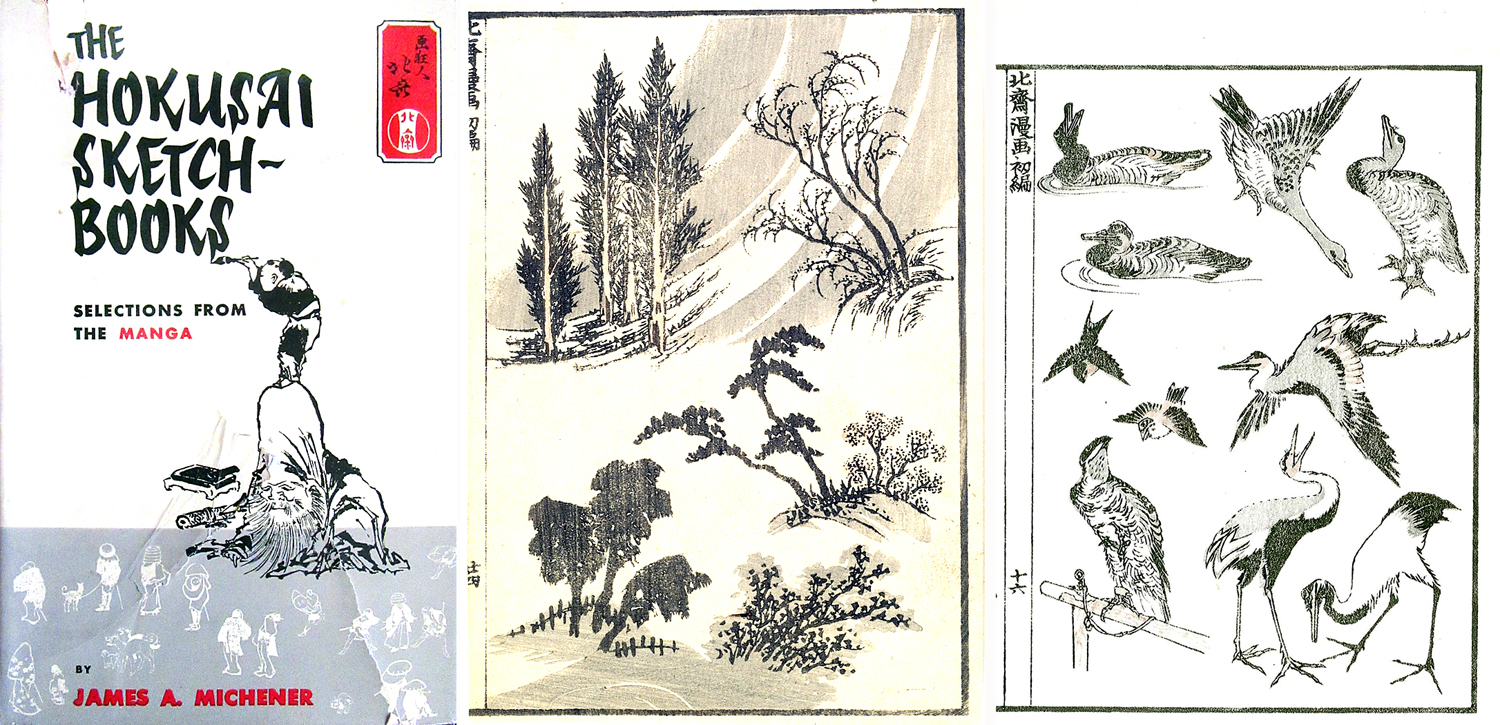
I’m going out of sequence on the shelf to mention the other Michener book sitting there. In 1958, Michener published The Hokusai Sketch-Books: Selections from the Manga. Hokusai, of course, was the famous Japanese 18th-19th century artist. In 1814, he published a multi-volume sketchbook, called manga, in which he drew everything he saw in the world around him: people, plants, animals, ghosts, architecture. It was an encyclopedic venture. Michener selected enough of these drawings to fill out a thick book. I have owned it since college. It is one of my holy-of-holies. 

From high-school days, I was fascinated with all things Asian; I read books on Zen Buddhism, listened to Noh Plays, took my girlfriend to restaurants with hibachis. There were Kurosawa movies and sumi ink paintings, which I attempted with my own shizuri and brush. 

The non-Western way of looking at the world opened my world view and I have been looking beyond the horizon ever since. 

Next on the shelf some The Great Gatsby and nothing proves how little youth knows, than what I made of the book — or didn’t make of it — when I was required to read it in eighth grade. I never then figured out who this Gatsby guy was; I thought the book was about Nick Carraway; and what the heck was all that about green light? 

It’s not that I didn’t enjoy the book then, but that I had no clue about its depths. I bought an excellent edition three years ago and reread it for maybe the third or fourth time and loved every second of it. It is a deep, rich book, with prose that is delectable. 

I believe for most young readers with a ripe curiosity, we tend to want to read beyond our abilities. We believe, as teenagers, we are grown-ups and want to partake of the adult world. And so we — and I — took to reading much that we had no business attempting. I read Saul Bellow, Henry Miller, John Updike, Jack Kerouac, Thomas Pynchon, James Purdy — a whole host of writers that I thought proved I was now in the company of the heavyweights. 

And among those books was Jean Paul Sartre’s The Words, his autobiography. I knew he was an existentialist and that all the most intellectual people (this was the mid-1960s) were hot on existentialism. Not that I knew what that meant (I’m not sure anyone really does — it encompasses so many different things, but back then, it pretty much meant berets and espresso). But I read it, enjoyed it, thought I understood it, and flashed a few words around to let anyone know. I got a subscription to Les Temps Moderne, although I couldn’t read French (and also a subscription to The Evergreen Review — I was one hip 16-year-old). I re-read Les Mots last year and it’s a fine enough autobiography, but not exactly world-shaking. 

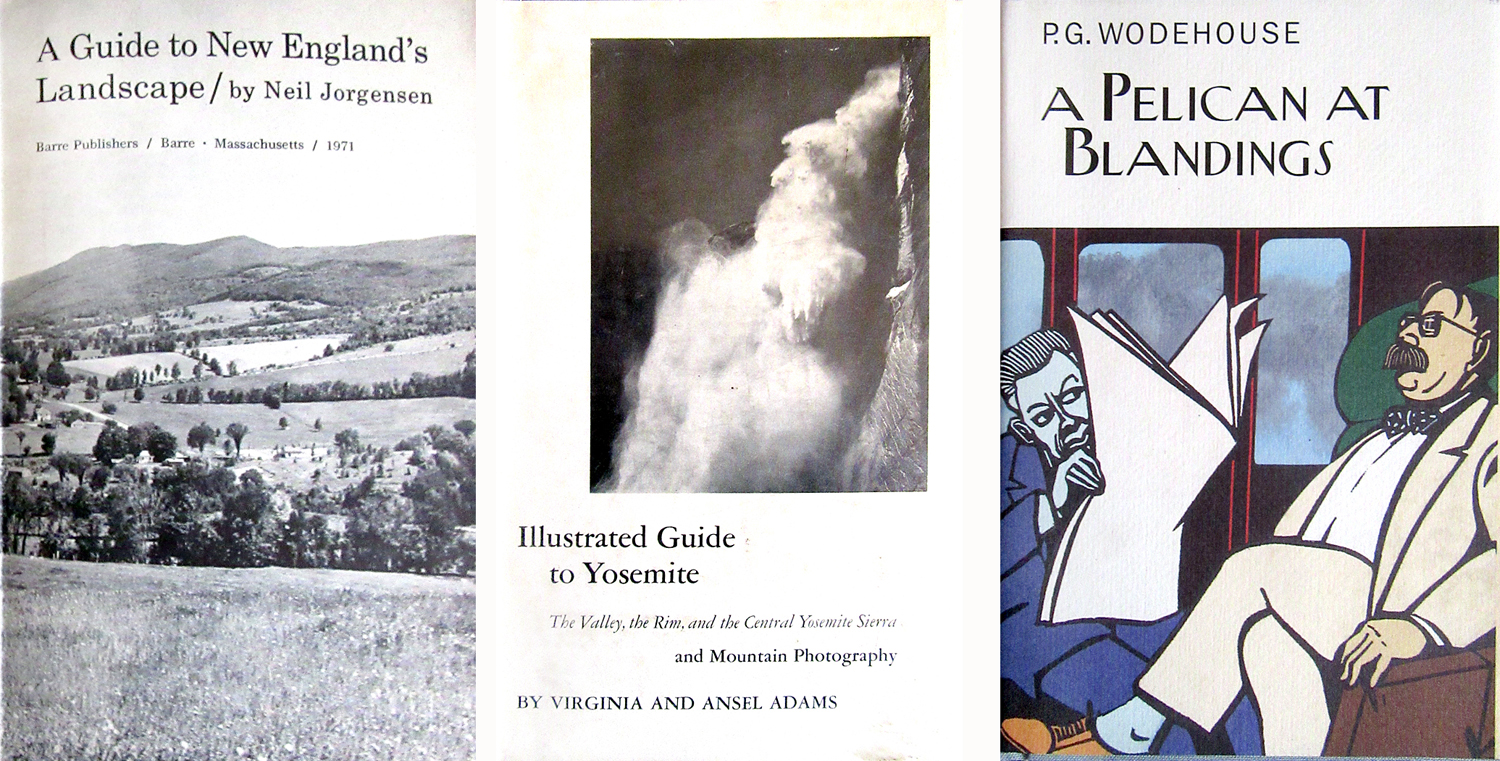
Getting back on track along the bookshelf: In the 1970s, I was living with a redhead and we wanted to travel. We hiked a good portion of the Appalachian Trail, and drove, amongst other destinations, to Maine and New England. I was fascinated by geology and I had a book by Neil Jorgensen called A Guide to New England’s Landscape. I had by then, an interest in all things under the heading of “Nature.” I had a raft of Peterson Guides, could name dozens of plants and birds by their scientific names (“Know-atia Dudiflorum,” my wife teased me), collected rock samples, and could name dozens of constellations in the night sky. 

The Jorgensen book accompanied us as we drove past monadnocks and till, varved clays and drumlins. I admit I haven’t read the book since then, but I still have it, as a memento of meaningful times.

I was by then active a photographer, and so I had another guidebook: Illustrated Guide to Yosemite, by Ansel Adams and his wife, Virginia Best Adams. I so wanted to visit Yosemite, but never had at those years the time or money for such a long trip. The book is loaded with Adams images, and so, it functioned more as a picture book than a useful guide. It was only many years later that my wife and I drove up the east slope of the Sierra Nevada along the Tioga Road and got to see the stunning Valley. The book is another that I’ve owned for 50 years and is a piece of me. 

If I could choose to write like anyone, it would be James Joyce, but if I couldn’t have that, I would want to write like P.G. Wodehouse. He is magic with words, although of a more comic variety. I have bunches of Wodehouse lying around, but three years ago, I bought a new edition of A Pelican at Blandings, mostly because these new hardback versions, by Overlook Press, were so seductively handsome. If I had the money, I would buy all the volumes in this set, but this one will have to do. 

All the Blandings books are a hoot. He may be most famous for his Jeeves stories, but I like Lord Emsworth and his pig and his sister Connie, just as much as Jeeves and Wooster. This is the kind of book I read when I just want to have fun. 

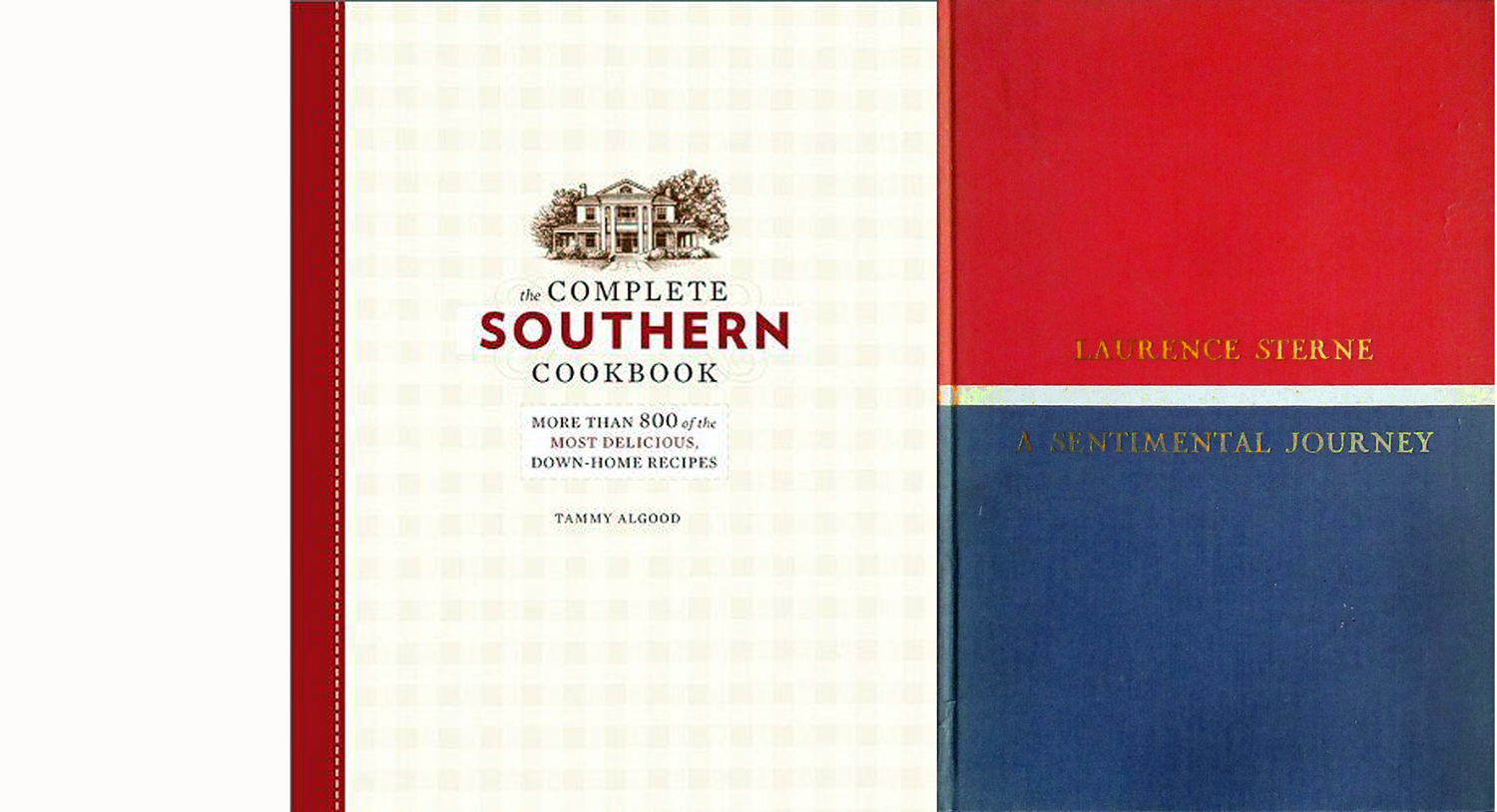
The Complete Southern Cookbook, by Tammy Algood is not one I bought. It was a gift from my daughter. I seldom use cookbooks. And when I do want one to check on some Southern specialty, I head for the old standby, Henrietta Dull’s Southern Cooking, originally published in 1928. 

I was born in New Jersey, but left there when I was 17. I’ve lived in four corners of the country, with 25 years in Arizona, and a year in Seattle, but the longest soujourn has been in the South, in North Carolina and Virginia, where my years add up to 33. I feel like an adopted Southerner. 

And while I still miss the foods I grew up with, such as a good pastrami on rye, real pizza, or a kaiser roll, I have to admit that I’ve come to love those things a Yankee will never understand, like greens, pulled pork, or fried okra. I count on Mrs. Dull for those (although, to be honest, no one uses a recipe for such things). 

The funniest book I have ever read is Laurence Sterne’s Life and Opinions of Tristram Shandy, Gentleman. It is one of the few I find myself actually laughing out loud at. So, thought I, perhaps his other book, A Sentimental Journey, must we worth looking into. It is much more straightforward, less surreal, and while it has its moments, doesn’t quite catch fire for me. The edition I have is however quite handsome to look at. 

The next two books are by Jean Renoir. Renoir is probably my favorite filmmaker. His films are so genuinely humane and wise. Nick Carraway, from Gatsby, relays that his father gave him advice to live by: “Remember that not everyone has had the advantages you have had.” That’s all well and fine, but the words that most illuminate my life are from Renoir’s Rules of the Game, when Octave, played by Renoir himself, says “The awful thing about life is this: Everybody has their reasons.” It isn’t usually malice or conspiracy that mucks things up, but rather, “Everybody has their reasons.” You learn to be less judgmental from that. 

He wrote about his work in My Life and My Films, from 1974. It is filled with anecdotes and pictures, and the quiet acceptance that is the core of his being. But even better is the biography he wrote about his father, Renoir. I was never a big fan of Pierre-Auguste Renoir. I find his paintings a little blowsy. He is the least of the major Impressionists. But, as his son writes about him, he comes off as one of the kindest, sweetest, most understanding and generous of men. I came to love old Pierre-Auguste not through his art, but through his biography. 

I said we readers have a tendency to find authors we like and then plow through the whole corpus willy-nilly. About five years ago, I came across Clive James, the late Australian-English writer and critic. I tore through everything, including his poetry. And when I found his book Cultural Amnesia, I couldn’t stop myself. Subtitled Necessary Memories from History and the Arts, it makes the case that too much important history has been forgotten, ignored, or misrepresented, and that if we need an understanding of the past to navigate the future, then the men and women he writes about in this book, deserve to be remembered. 

He writes about more than a hundred of them, in alphabetic order from Anna Akhmatova to Stephan Zweig. Some are hardly obscure, like Charlie Chaplin or Leo Tolstoy, but he brings to mind aspects that may have more cultural impact than you might remember, or other facets to their work. 

I love the grim joy of Dimitri Shostakovich; his music speaks volumes about misery and dictatorship. His Seventh Symphony, the “Leningrad Symphony” was partly written and later first performed in that city during the 900-day siege by the German Wehrmacht during World War II. It is a sprawling work, lasting well over an hour, and its first movement has a grinding passacaglia representing the jackboots of oppression. 

My wife gave me a copy of Leningrad: Siege and Symphony, subtitled “The Story of the Great City Terrorized by Stalin, Starved by Hitler, Immortalized by Shostakovich,” by Brian Moynahan. Its well-researched 500 pages cover everything one needs to know about the siege, the horrors, and its legacy. But, I confess, I have not read it. It sits there on the shelf, waiting. But I really feel I am told everything I need to by the music itself. 

I went through a D.H. Lawrence period, where I read everything I could get my hands on. But not the novels or short stories. For some reason, they never much appealed to me. But his essays and travel writing, and his poetry, I adored. It’s the best travel writing I know, partly because it isn’t the usual version of the kind, but his personal, very idiosyncratic way of looking at the world. 

Reflections on the Death of a Porcupine is an anthology of seven of his essays, including the title piece, which starts as thoughts on having to shoot a porcupine on his New Mexico ranch, and goes through the issue of all life dependent on devouring other life, and ends, in a disturbing turn that, for him, justifies “superior” existence having its way with “inferior.” Lawrence is capable of a good deal of piffle. 

But it is the particularity of his observation that I love, the detail. Even crazy talk can be well written. 

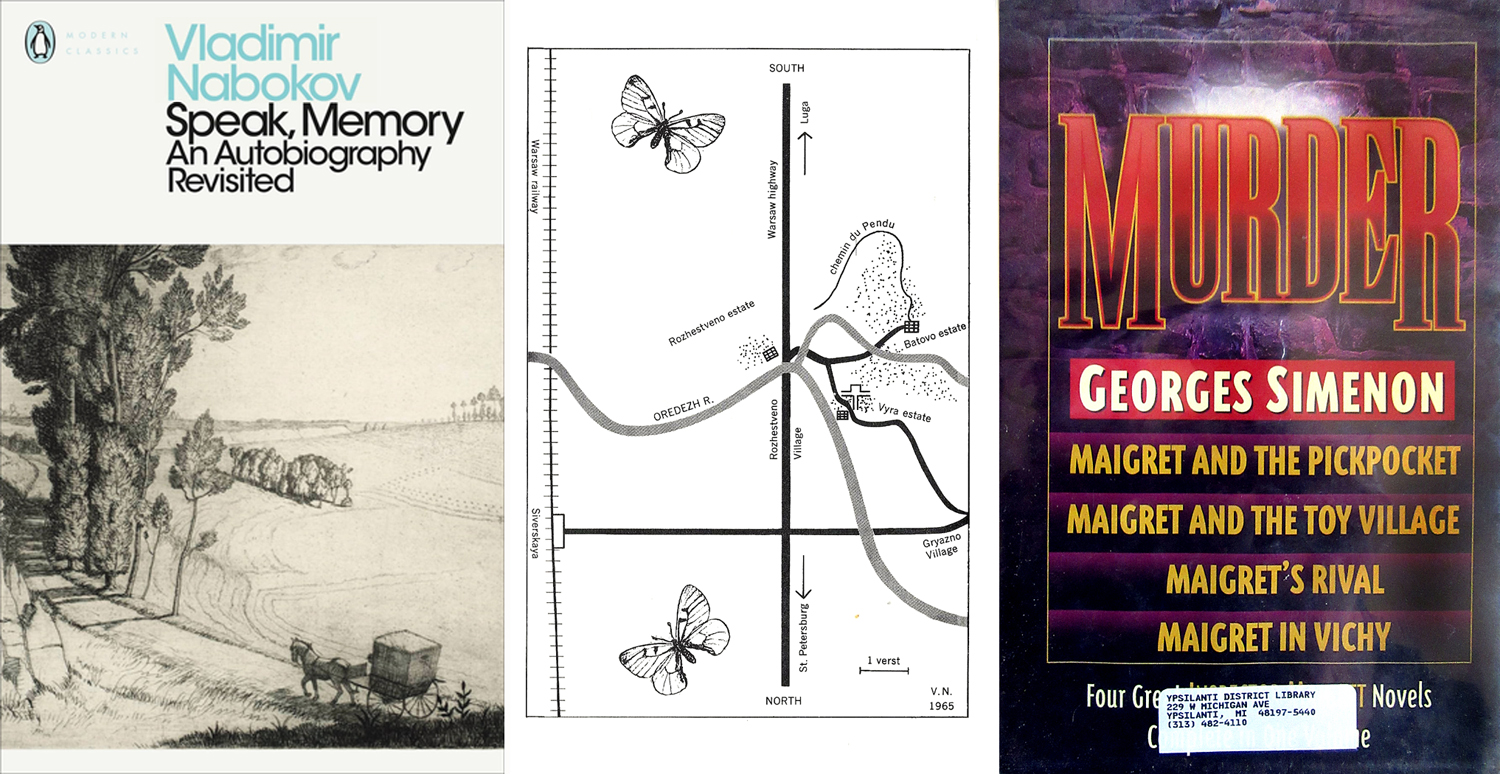
Next, the best writing, the most original use of word and sentence, since, at least Joyce, was penned by Vladimir Nabokov. Lolita is an absolute brilliance, despite is subject. And so I read Speak, Memory, his 1951 autobiography, which recounts his life in Russia, before leaving in 1940. 

It begins, “The cradle rocks above an abyss, and common sense tells us that our existence is but a brief crack of light between two eternities of darkness.” So, you know you are not just getting a sequence of entertaining anecdotes. The book is a dialog, essentially, between existence and memory, the memory of a pre-Revolution Russia, as recalled by a child, and then a young man. 

Finally, I have an omnibus edition of four Maigret novels by Georges Simenon. I have moments when I devour Simenon like chocolate-chip cookies, one after the other. But it can get expensive buying volume on volume, one at a time. This edition, once in the collection of the Ypsilanti District Library in Michigan, was bought used on Amazon, cost less than $5 and gave me four novels. I have read three. I am holding the fourth unread so far, in order to experience the delicious anticipation of reading it. 

And so, with that shelf catalogued, I look at the books and think, do I see myself in their spines, lined up? I certainly see a bit, like seeing a face through partially opened Venetian blinds. It’s me, all right, but only a bit. I look at the book case from top to bottom and see more of the rest of me. I walk down the hall and into other rooms with other bookcases and the picture fills up. The oldest books among them all speak of the boy that remains in the core, the newest of the weary old man I am now that covers it all in wrinkles. It is that “brief crack of light between two eternities of darkness.” 

“You’ve gone all mellow,” Annie said, teasing me. 

In the past, I have had some rather unforgiving opinions about the poetry I was force-fed as a youngster — you know, the Victorian stuff about the light brigade, or Barbara Frietchie. And now, I was reading it again. On purpose. 

At college, I foolishly took a Victorian Lit course and hated every second-hand tick of the classroom clock. Turgid, sentimental, maudlin, and unbearably prolix. (I had been primed to hate the stuff since the time I was  forced to read Oliver Twist in eighth grade and hated every word of that — I still can’t read Dickens. I know: My loss. But you shouldn’t be forced to read stuff before you are ready for it.) 

In that Vic Lit course, I found Browning asphyxiating, Tennyson hollow, Christina Rossetti cloying. I could see no difference in the verse of these hallowed poets from the mewlings of Ella Wheeler Wilcox or Edgar Guest. It was all a smear of treacle and oh-so-earnest goo. 

“I am the master of my fate, I am the captain of my soul.” Who came up with this stuff? 

Now, Anne is reminding me, I am waxing enthusiastic about the selfsame verse to her, quoting lines and rhymes with affection. I have gone mellow. But what has changed? 

I grew up in a time of ascending Modernism, an era of “less is more,” of irony sidelining sentiment and of skepticism in place of belief. When I was just on the cusp of turning adolescent, Modern art was still widely dismissed as something “my kid could do.” And in the eternal wheel of generations, I was signing on to the new version and leaving the old to such fuddy-duddies as my parents and teachers. 

(At least, I saw it that way. In reality, my parents were as much a product of Modernism as I was — my father was born the same year that the Bauhaus was founded and that Marcel Duchamp painted a mustache on the Mona Lisa. But the Modernism that affected his life was one of wars, electrification, washing machines and radio. Artistic matters mattered not at all to the solid, middle-class parental units.)

  And, like all such newly-awakened youths, I saw through the lies and hypocrisies of the elder generations while surpassingly blind to my own. My generation was going to fix all the botches those fools had made of the past. 

I read all the most current novels, ate up contemporary poetry (and all that written after Prufrock), regularly made my pilgrimage to the Museum of Modern Art in New York, and preached to all near and far the supremacy of the new.

In short, the modern was true; the old was a lie. A pretty lie, perhaps, but a lie nonetheless. As H.L. Mencken put it, “it’s essential character lies in its bold flouting of what every reflective adult knows to be the truth.” 

And all that verse: Mencken really had it in for poetry. He said, roundly including everything written from Chaucer to e.e. cummings, “Poetry represents imagination’s bold effort to escape from the cold and clammy facts that hedge us in — too soothe the wrinkled and fevered brow with beautiful balderdash.” 

That certainly summed up my take on Tennyson: “balderdash.” 

H.L. was not one to hedge his opinions. He went on to call poetry, “a series of ideas, false in themselves, that offer a means of emotional and imaginative escape from the harsh realities of everyday. In brief, poetry is a comforting piece of fiction set to more or less lascivious music.”

But it is that “lascivious music” that caught me short. No doubt Mencken rather misses the point, but it is the music of the old poetry, the poetry I so despised, that has brought me back to it. Let me explain — and apologize. 

It started when I recently came across a set of McGuffey’s Eclectic Readers, compiled beginning in the 1830s by William Holmes McGuffey. The books were the most common grade-school texts for nearly a century, and are still the preferred books for many current home-schoolers. 

They are popular now because of the unrelenting Victorian religiosity of them for Christian home-schoolers. Every lesson seems to have some biblical homily to teach, training youngsters to be pious, faithful, honest, loyal, earnest, frugal and industrious. McGuffey, himself, was a preacher, in addition to being an educator and college president. 

But what is often lost in the haze of piety, is just how progressive McGuffey was for his time. Most education was then mere rote memorization enforced with the rod; McGuffey thought that instead of just giving kids lists of words to master, it would work better if the words were embedded in stories, and that new words in one story would crop up again for reinforcement in later stories. He taught an early version of phonics, to parse out the sounds of written words, and followed each story-lesson with a short set of questions to test comprehension. 

Really, aside from the heavy Jesus-ness of it all, it was really very forward-looking. 

I valued the reprints I own for their classic typography, for the quaint illustrations that go with the stories, and for the insight the whole gives me into that formidable century. 

And in amongst the stories of boot-blacks making good, mothers dying, little orphans learning the virtues of truthfulness and the importance of being generous to the poor, McGuffey included many old poems. Some are just versifications of Bible passages, but others are the old standards that I once made fun of. 

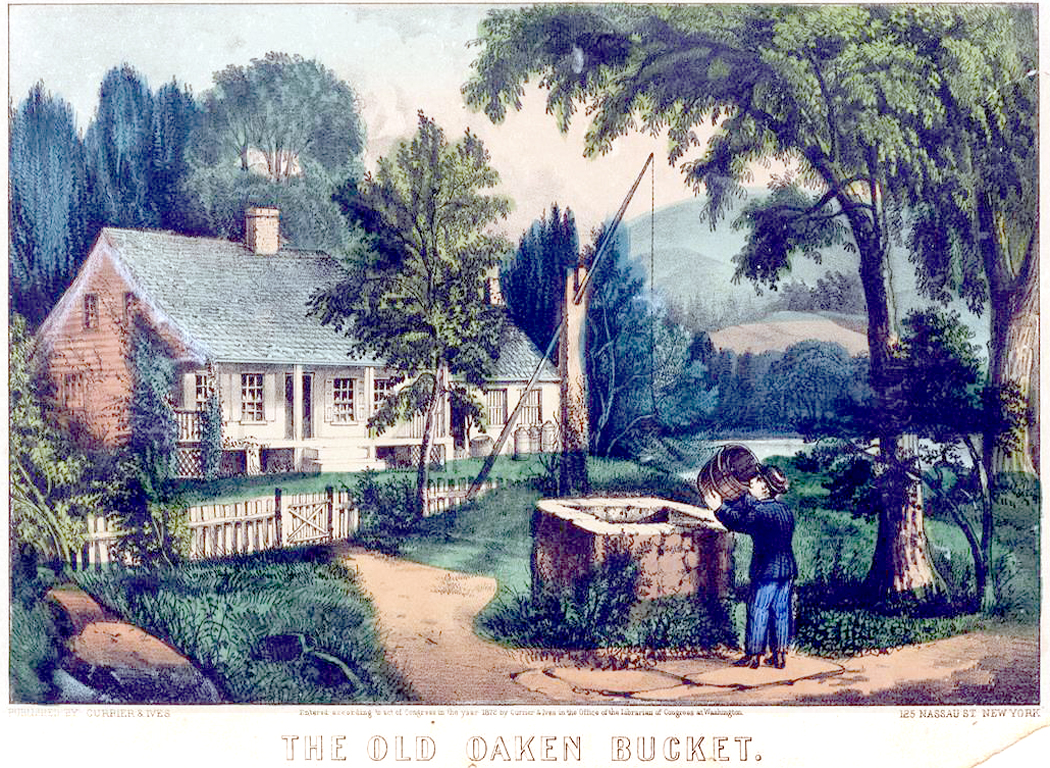
For instance, in McGuffey’s Eclectic Third Reader, I came across an old chestnut I had not encountered since I was a boy: The Moss Covered Bucket, by Samuel Woodworth. It’s one of those that most people have some vague recollection of, but perhaps not where the lines come from or what they mean. 

“The old oaken bucket, the iron-bound bucket, the moss-covered bucket, which hung in the well.” 

But as I began reading it, I found two very surprising virtues. The first was how much sense-memory there was in the poem — the noticing of small physical things that connect us with the world and that readers can almost feel, taste, or smell as they read the lines. 

It is a poem about remembering the things of youth, and there is a scent of sentimentality to it, but the memories evoked feel genuine. Sometimes, reading a pile of “O thou art…” poetry you wonder if a poet has ever actually seen a nightingale, let alone a “knight with burning brand,” but have merely read about such things in other poems. But here, I believe Woodworth really knew “the orchard, the meadow, the deep tangled wild wood…  the wide spreading pond, and the mill which stood by it; the bridge and the rock where the cataract fell; the cot of my father, the dairy house nigh it, and even the rude bucket which hung in the well.”  

Noticing — as I have often repeated — is essential to art. To life. 

But the second thing I found in the poem was the “lascivious melody.” Woodworth’s prosody was finished and refined, the meter and rhyme made the lines sing. Maybe not quite the level of Milton, but a danged good ditty. 

He describes coming in from working in the field and dropping the bucket down into the well “to the white pebbled bottom it fell,” and then how “dripping with coolness,” it rose from the well. “How sweet from the green mossy brim to receive it, and posed on the curb it inclined to my  lips! Not a full blushing goblet could tempt me to leave it, though filled with the nectar that Jupiter sips.” 

It moves with a forward-thrusting momentum hied on by the meter. 

I’m not trying to make too great a case for the old oaken bucket. It is not earth-shaking poetry. But it does afford a moment of pleasure as you read it, the way you get pleasure from a memorable tune. 

There were other poems in the Reader that now sang to me in ways I had formerly ignored. Byron’s “The Assyrian came down like the wolf on the fold, and his cohorts were gleaming with purple and gold…” 

In the Eclectic Fifth Reader, compiled some years later by McGuffey’s brother, Alexander Hamilton McGuffey, you find the familiar, “Under the spreading chestnut tree the village smithy stands; the smith, a mighty man is he, with large and sinewy hands; and the muscles of his brawny arms are strong as iron bands.”  

There is through all of the Readers a level of maudlin sentimentality that cannot be overlooked, but if you can wade through that, there are some true gems to enjoy, if primarily for their lascivious music. 

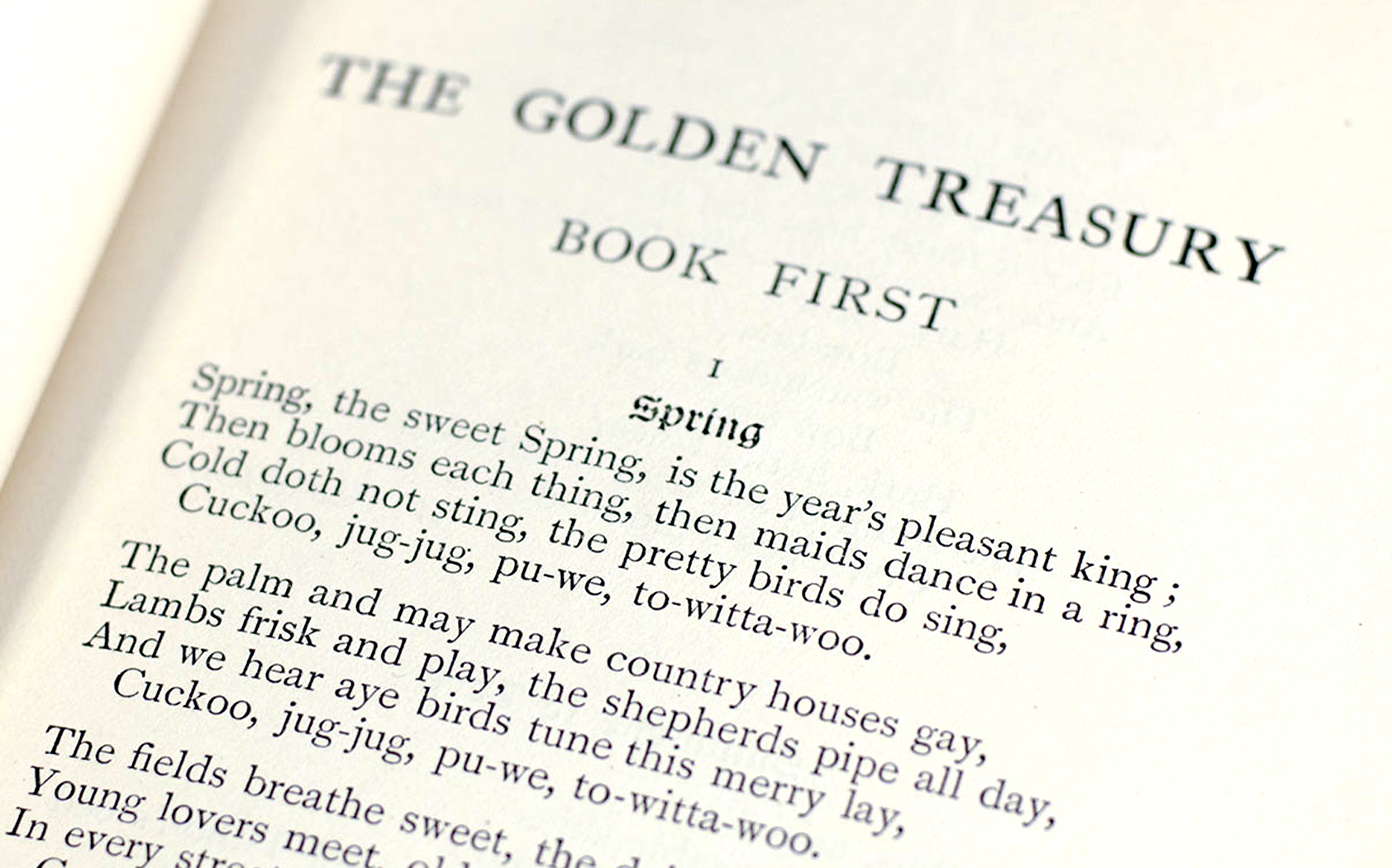
This discovery led me to another old book, one I have owned since I was a boy, but had hardly looked at in 60 years: Francis Turner Palgrave’s Golden Treasury of English Verse. First published in 1861, the book was an anthology of “the best English songs and lyrics,” and included Palgrave’s selection of verse written by poets of the past — his past; Palgrave made the decision not to include any poetry written by living poets, so, no Tennyson, no Browning. 

The book was originally divided into four “books,” one each per century from the Elizabethan era to the 19th century. There is a good deal of Shakespeare and an equal measure of Wordsworth, but all the usual names are included, and some that have largely been forgotten. Thomas Grey, William Cowper, Thomas Wyatt, Josuah Sylvester (no, that’s not misspelled). 

Having put aside my McGuffeys, I took up my Palgrave and read it from cover to cover. I found myself enjoying page after page, for the music of it more than for the sense. A good deal of the early verse is highly conventional in sentiment. Everyone had a version of “carpe diem,” many birds are extolled — I haven’t counted the skylarks, but there be many — many women described with coral lips and alabaster skin. It all gets a bit thick.

But listen to the music instead. “Whenas in silks my Julia goes Then, then (methinks) how sweetly flows That liquifaction of her clothes.

“Next, when I cast mine eyes and see That brave vibration each way free; O how that glittering taketh me!”

There is a perfection in the meter, rhythm and rhyme to Herrick’s little stanzas. Felix Mendelssohn wrote “Songs Without Words,” but Herrick has turned that around and written a song without the sheet music. 

Throughout my Palgrave, I came across piece after piece like that, with a flow of words as natural in metrical expression as a stream rushing over its rocky bed. 

“The curfew tolls the knell of parting day, The lowing herd winds slowly o’er the lea, The plowman homeward plods his weary way, And leaves the world to darkness and to me.” 

“A chieftain to the Highlands bound Cries, ‘Boatman, do not tarry! And I’ll give thee a silver pound To row us o’er the ferry!’ ‘Now who be ye, would cross Lochgyle, This dark and stormy water?’ O I’m the chief of Ulva’s isle, And this, Lord Ullin’s daughter.” 

The marriage of word and rhythm, with the fulfilled expectation of rhyme make these verses trot along like a tune sung well in time. 

It is the pleasure of tennis being played with a net. 

One listens to music for the pleasure it brings. Yes, there are mighty symphonies and Wagnerian music dramas meant to express deep emotional and philosophical things, but most, like a Mozart serenade or a Cole Porter tune, are meant to delight, devoid of any extra-musical sense. And that is what I am finding in this old verse I once so roundly denounced. 

If you don’t need to have profound thoughts as you read the words, then you can find the melody for its own sake and revel in the ear and craftsmanship of the poet. 

Yes, I’ve gone mellow in my senescence, and there is a touch of sentimental remembrance for the poetry I was fed when a boy. I guess I share that with those horrible Victorians. That is my apology.

Click on any image to enlarge

In addition to this blog, which I have been writing since 2012, I have written a monthly essay since 2015 for the Spirit of the Senses salon group in Phoenix, Ariz. The readership for each site seems to have little overlap, and so, I thought if I might repost some of the Spirit essays on my own blog, it might achieve a wider readership. This one, originally from May 1, 2021, is now updated and slightly rewritten. 

My house is filled with books, and so many that I will never live long enough to read them all. It is a personal version of a universal problem: So much has been written over the past 4500 years that no one can ingest more than a wee fraction of the total. That’s four and a half millennia of culture. So, what counts, these days, as being cultured, or well-read? 

No work of literature or art exists in a vacuum. Even the newest book has a past. Culture is an accumulation: Each new work builds on the past, and requires a shared understanding of that past with its audience. Just as you have to learn vocabulary in order to read, so you need some handle on the past to fully understand what is written now. But, there is too much for any one person to absorb, and no way for any author to assume his readers will recognize and vibrate to what is there, subliminally, in the works. That past is there even in best-sellers by Diana Gabaldon or Dean Koontz. 

There used to be an agreed upon canon of literature that any well-educated person was assumed to be familiar with. But, as the world shrank through communication advances and progress in transportation, the canon looked increasingly provincial. It was almost wholly white, male, and European. What of Asia and Africa? Why were there not more women included? Perhaps, too, that white European bias was the root evil of colonialism. 

I can’t answer all these questions, but it is important to raise them as we begin to lose the common cultural inheritance that the canon used to provide. Acres of writers over the past centuries have quoted or riffed upon the words of Shakespeare and the King James Bible. It was assumed that anyone with a decent education (even a decent high-school education) would understand the references. When Abraham Lincoln wrote “Fourscore and seven years ago…” his listeners would have tacitly resonated to the biblical “three score and ten” years allotted to a human life. He could have just said, “Eighty-seven years ago,” but he didn’t. The force of the Bible gave his words a tidal power that made his rhetoric memorable. 

Ernest Hemingway used the past, and expected his readers to know. Papa’s novels drip with the power of allusion. The Sun Also Rises comes from Ecclesiastes 1:5. For Whom The Bell Tolls rings from John Donne. A Farewell to Arms has Vergil’s Aeneid buried in it. 

T.S. Eliot’s Wasteland is a midden of such buried cultural memes. Some are explicated in the notes at the end of the poem (should poetry require footnotes?), but most are just there to be felt or be vaguely familiar. The poet expected his readers to share his erudition and quietly appreciate the roots that sprouted the verse. He explicated his position in the essay Tradition and the Individual Talent. In his Wasteland notes, he tells us that line 23 (“And the dead tree gives no shelter, the cricket no relief”) is a gloss on Ecclesiastes 12:5 (“the almond tree shall flourish, and the grasshopper shall be a burden”), which seems a bit of a stretch, but he doesn’t feel it necessary to point out that the opening line of the poem (“April is the cruelest month”) is an ironic reversal of Chaucer’s “Whan that Aprille with its shoures soute…”). He thought that too obvious to mention. What in today’s world can be considered too obvious to mention? 

Eliot’s poetry, itself, is now the cause of allusion (“I should have been a pair of ragged claws scuttling across the floors of silent seas…” Ask Woody Allen). 

There are at least two problems with such allusions. The first is epitomized by Ezra Pound, who so completely built his Cantos on fragments from obscure writers and historical figures that no one without the same erudition as himself could have any clear idea what he was talking about. If the main point of your reference is the reference, the main point is also pointless. And Pound’s reading was so idiosyncratic and esoteric that no reasonable human should be expected to share it. 

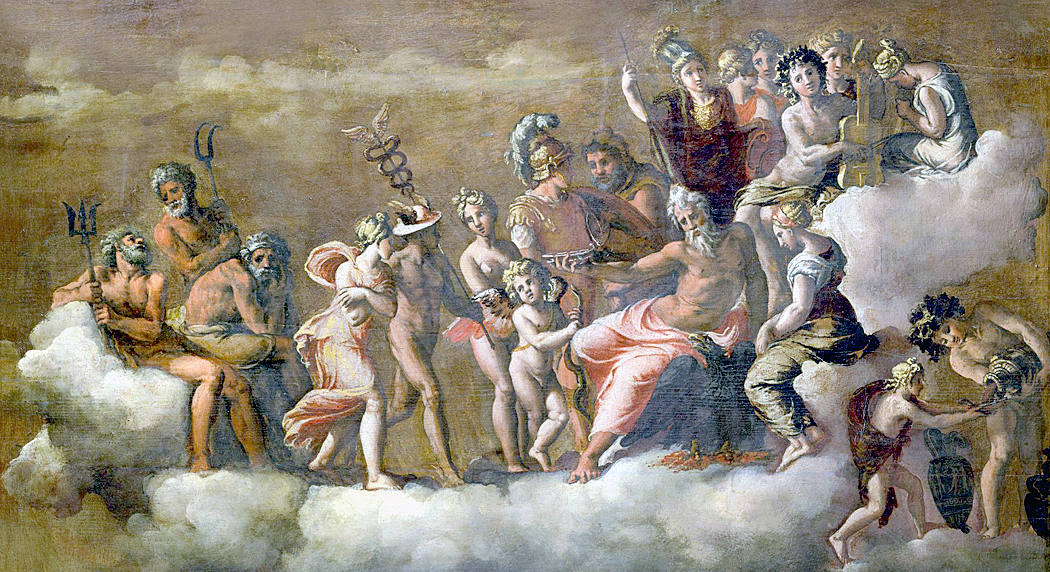
The second problem is best displayed in the work of John Milton. There is no doubt of Milton’s greatness as a poet: He is the second-most quoted author after Shakespeare. Bartlett’s is stuffed with him. But Milton was so casually familiar with the Bible and Classical writers that you often now need a gloss to know what he means when he writes of his muse that intends to ”soar Above th’ Aonian mount” which his educated readers would have known was Mount Helicon, where the Greek muses lived by the Hippocrene spring, a spring created by the hoof-stamp of Pegasus, the winged horse that symbolized poetic inspiration because he could fly to the top of Mount Olympus, home of the gods. Any self-respecting gentleman of the time, with any degree of education, could read Ovid in Latin and would be familiar with all the gods, godlets and nymphs and fauns mentioned in The Metamorphoses, a foundational work of Western literature and thus slide past them knowingly while reading Paradise Lost. Few of our contemporaries read Ovid and hence the need for footnotes. The Norton Critical Edition of the poem, often used in college courses, is as much gloss as verse. 

Now you can go through 12 years of public school and four years of university and never getting any closer to Ovid than a NASCAR fan to the ballet. 

When novelist William Styron wrote about his battle with depression, he named the book Darkness Visible, referencing Milton. Milton also shows up in Philip Pullman’s science-fiction classic, His Dark Materials. There was a Playstation video game named Pandemonium. For someone so seldom read, Milton gets around. 

We should expect that cultural reference comes and goes, it blossoms and then fades with time. Once, Milton was one everyone’s tongue, now he is for doctoral candidates. Once the Bible was lingua franca, now, it seems, those who know the book at all only know the parts they like and ignore the rest.  (“Who’s the greatest contortionist in the Bible?” “Balaam, because the Bible says he tied his ass to a tree and walked away.”) The best-known of Shakespeare is still recognizable, but I venture few would remember to context to “Put out the light, then, put out the light” or “All that glisters is not gold.” “To be or not to be” is too familiar, but even those who can quote the first six words of the soliloquy probably don’t know that the rest of it contemplates suicide, or where it comes in the Hamlet story — or why. 

It has always been the habit of the educated — the initiates in the cultural legacy — to lament the loss of that inheritance, and condemn the ignorance of the younger generations. I have been guilty of that myself, because I have spent so much time imbibing my cultural past and fear the loss of meaning that evaporates with the loss of memory of past culture. I, who know Gilgamesh and Beowulf, who reads the Iliad annually, who have ingested my Ovid and Livy, my Melville and Faulkner, weep for those bereft of such treasures. But I need to recognize the evanescence of such knowledge. One set of cultural touchstones is inevitably replaced by a new set, piece by piece, like the original wood of the Argo. 

I doubt we can do without a cultural gravity pulling us toward a center, but it needn’t be the one that worked in the past. Just watch a Quentin Tarantino film and see how the cinematic past enriches the Pulp Fiction present, how he uses the styles of Hong Kong in Kill Bill, or the tropes of Western movies in The Hateful Eight. Inglourious Basterds is built, not on a knowledge of history so much as on the digested habits of World War II movies — and in much the same way as Paradise Lost is rooted in Ovid and the Bible. Just as Milton expected his readers to be familiar with Ovid, so Tarantino expects his audience to be familiar with Johnnie To and William Wyler. 

I have recognized that my own cultural memory is mine and must let the younger generation have theirs. But I nevertheless worry about this difference: that mine subsumes four millennia of accumulation building on itself, while what I see in the coming cultural horizon barely extends back a hundred years. When I see an online list of “greatest films of all times,” I am appalled that almost no films listed are more than 30 years old. Have none of these movie fans seen Metropolis, Battle of Algiers, or Rules of the Game? Surely their lives would be richer if they had something to draw on psychically and emotionally other than American Pie or Fast and Furious

My twin granddaughters do stunningly well at school — now at university — but neither knows any Bible stories. This is not picking on them: No one who is secular in their generation does. How much of their cultural patrimony is blank? Nor does their generation soak up Sophocles, Dante, Hawthorne or Yeats. They have their touchstones, but I cannot but worry that their inner lives are undernourished for it, l’eau sans gaz

But I am also humbled by my own ignorance. Is my inner life starving because I cannot read Latin? French? Russian? Chinese? I think of all the books I haven’t read. The list seems nearly infinite. My own bookshelves shame me. I own the books that populate them, but I haven’t gotten around to reading everything waiting there, inviting me in. There isn’t time. 

 Translation is a funky thing. You might think a literal transcription would be best, but language doesn’t work that way. 

If we translate Holly Golightly into French, and have her window shopping, the French reader will assume she is looking for a glazier — i.e., shopping for windows. If the original had been in French and we translated it to English as “licking the glass,” we’d assume Holly was more than slightly daft.

You can try to be literal and lose all the flavor, or you can try to find equivalent idiomatic expressions, or you can recast the whole thing, as if you were writing an original from a similar inspiration — your own words for a similar thought. 

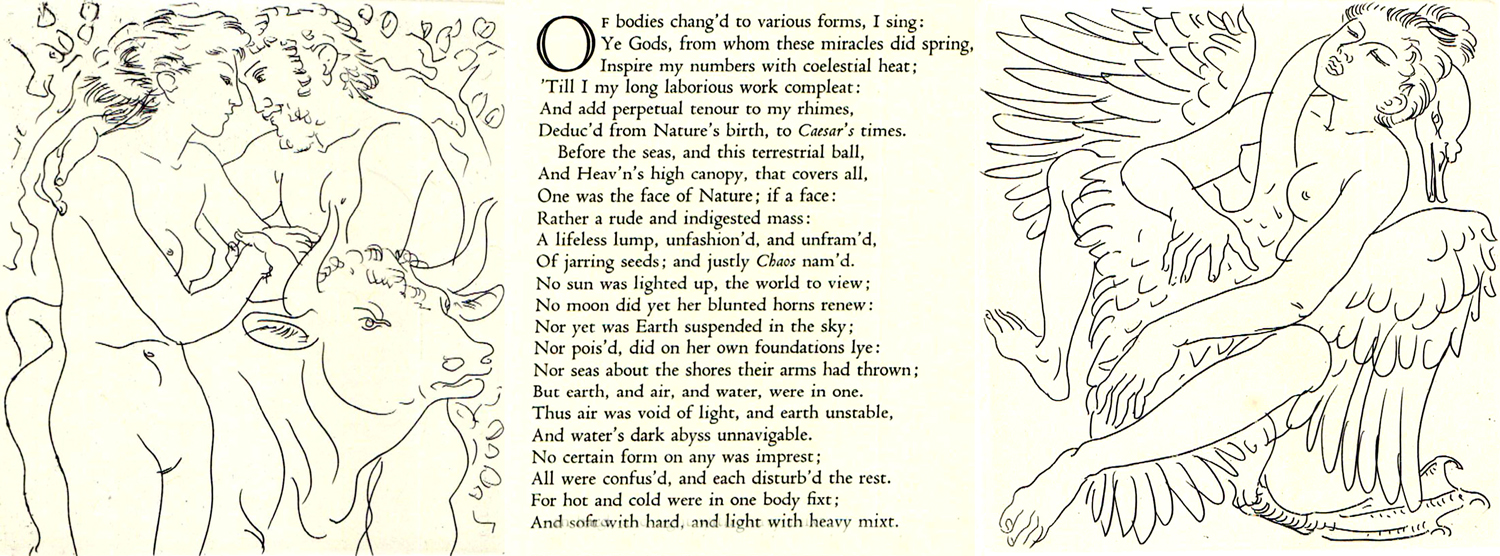
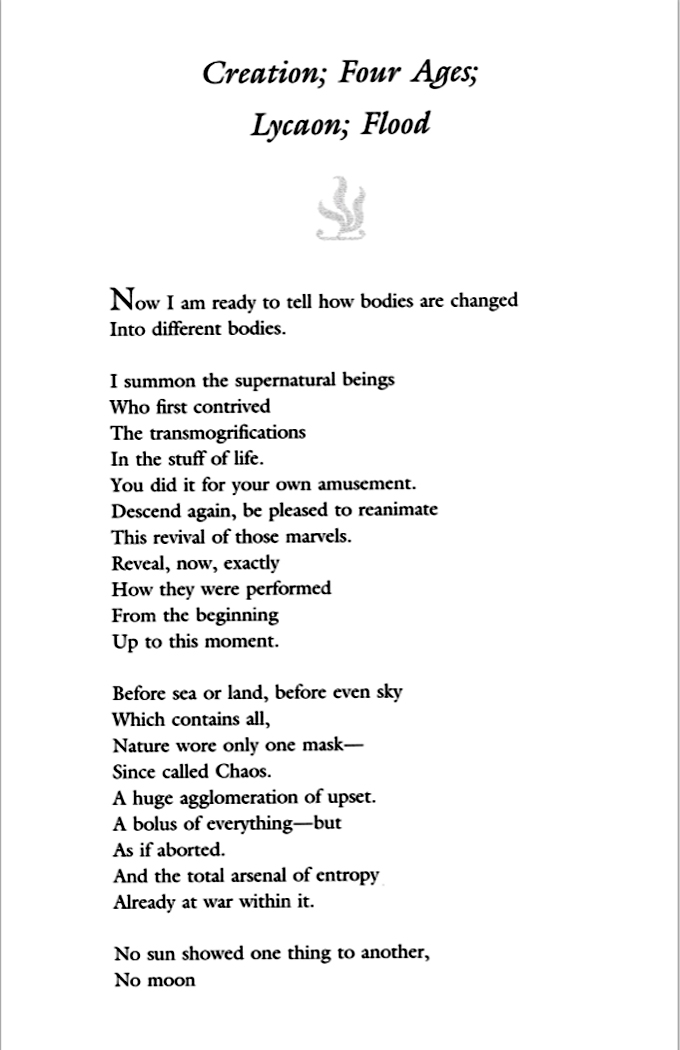
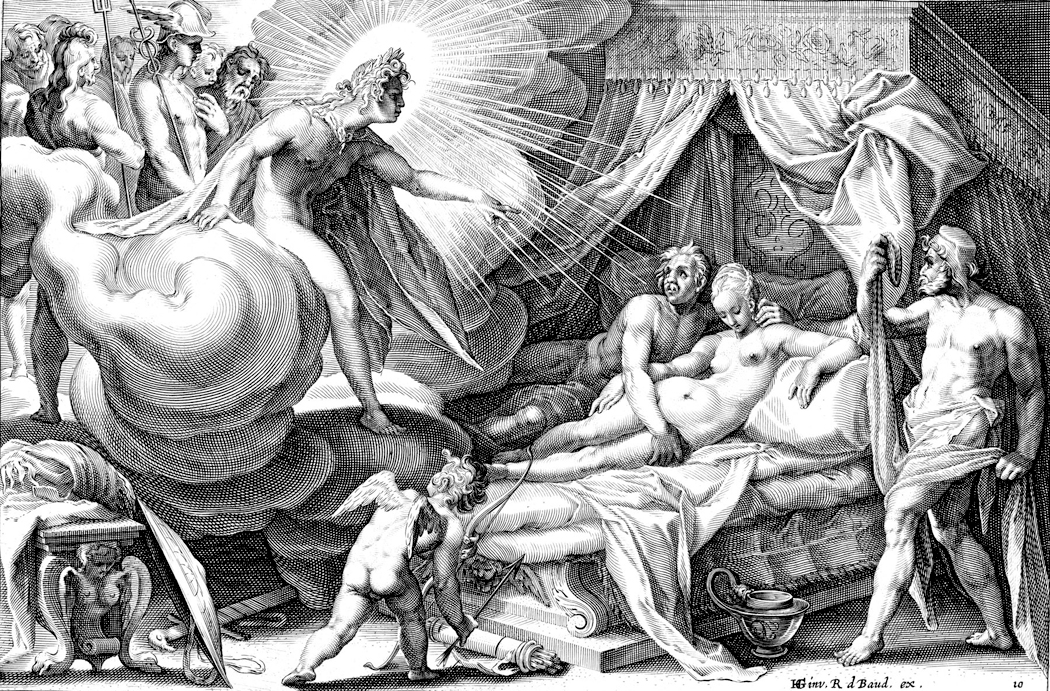
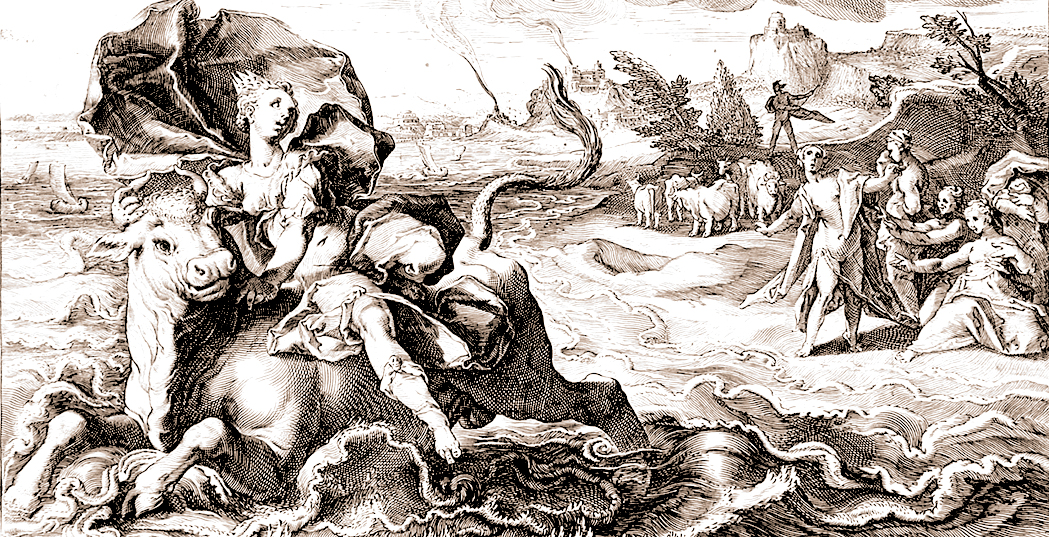
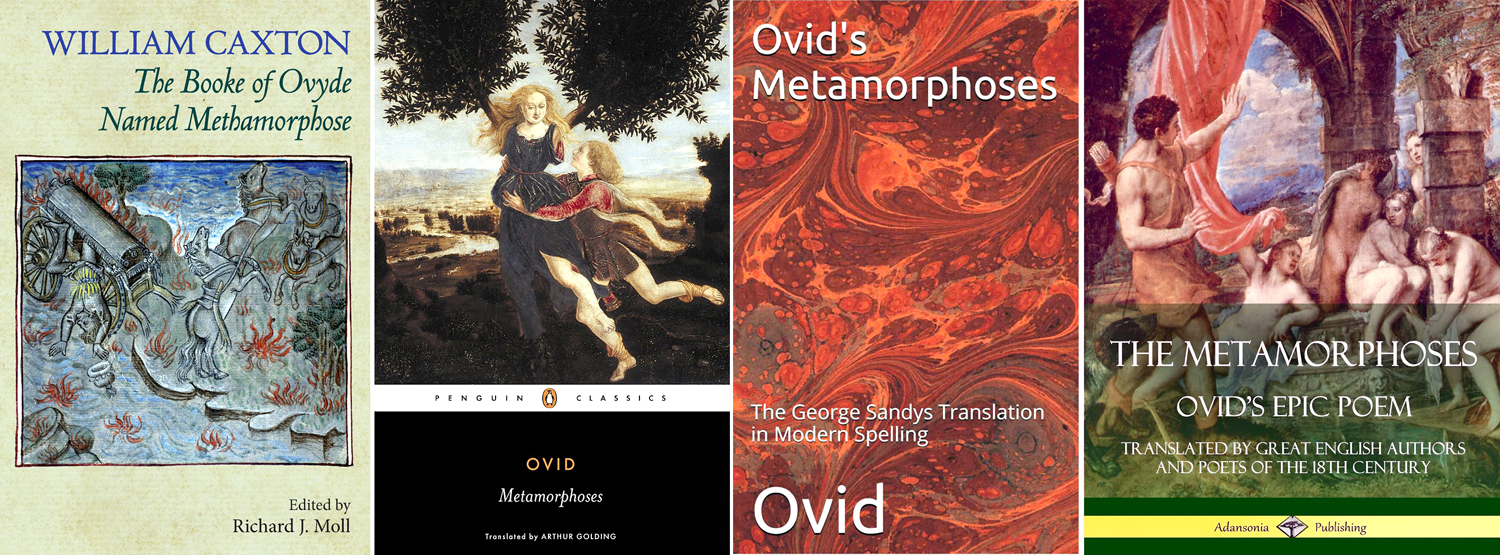
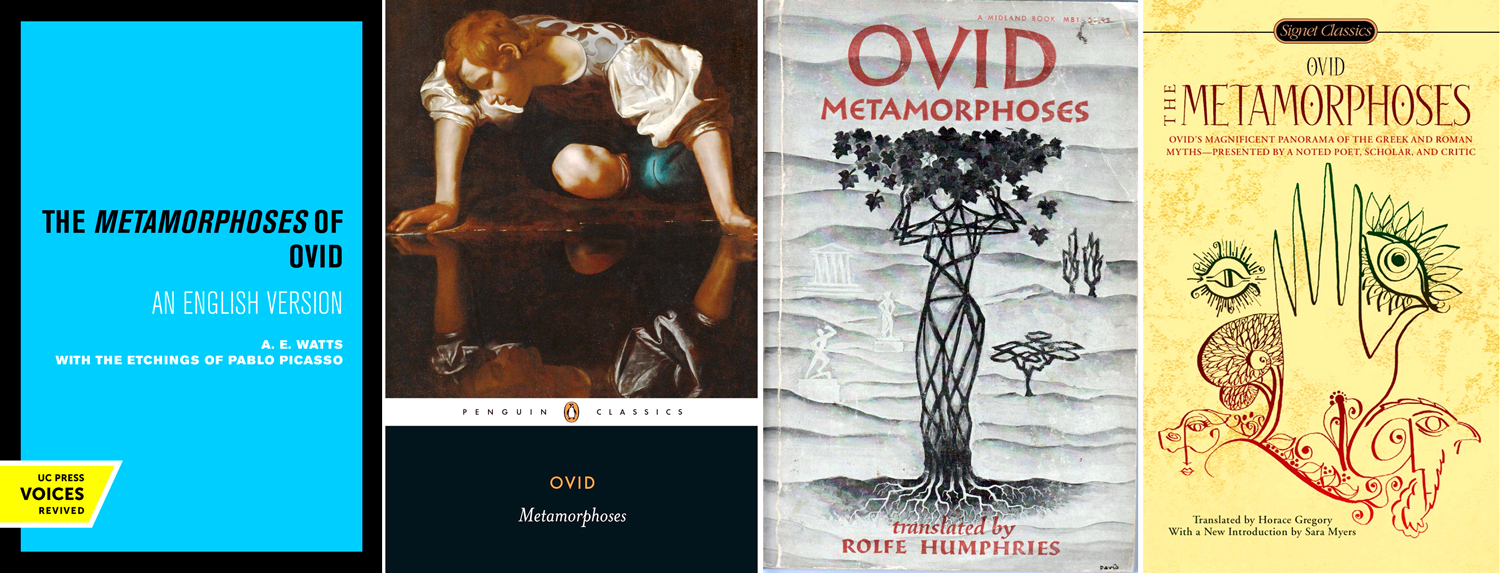
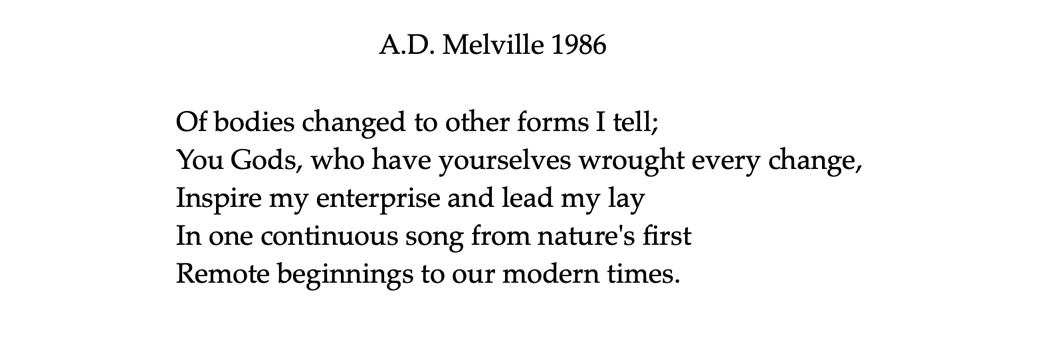
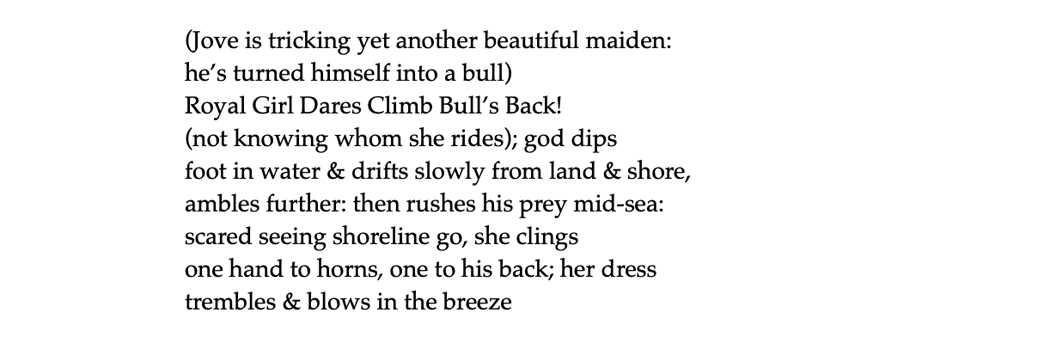
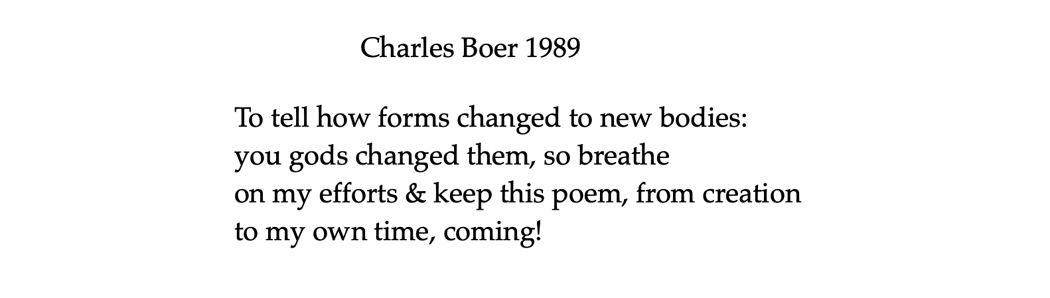
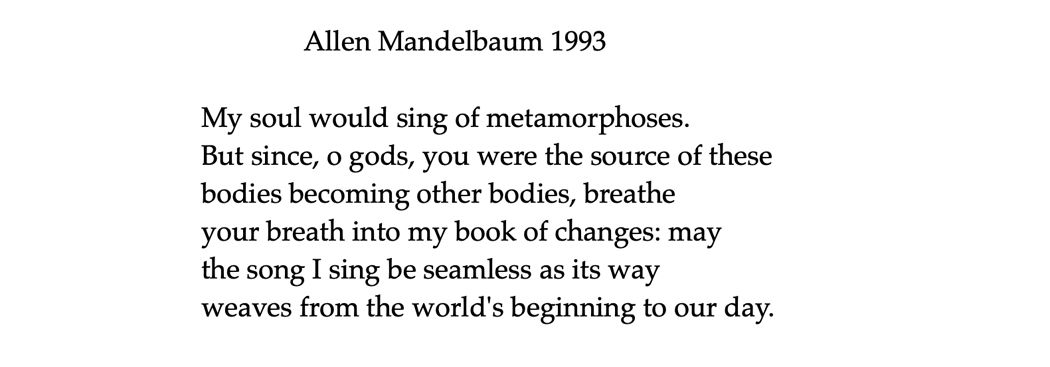
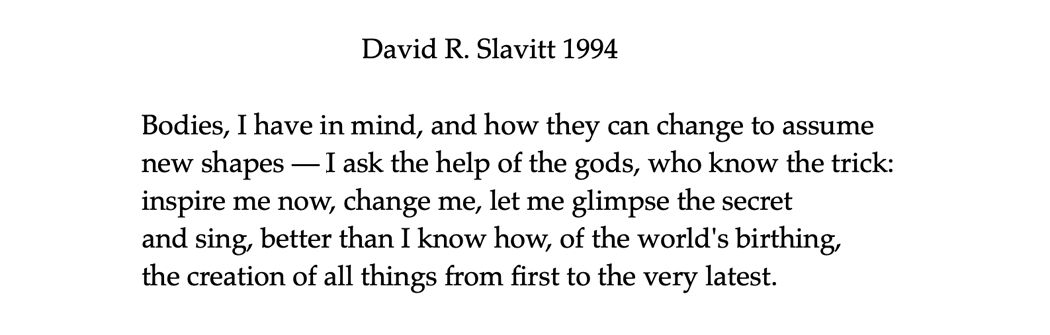
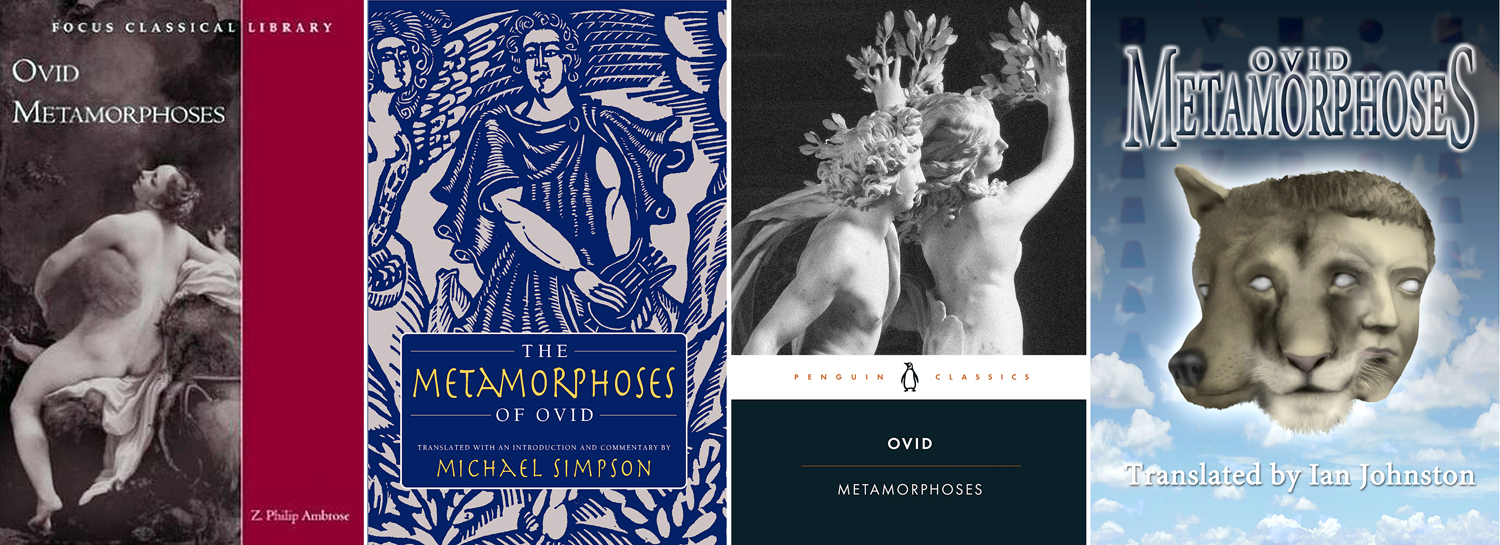
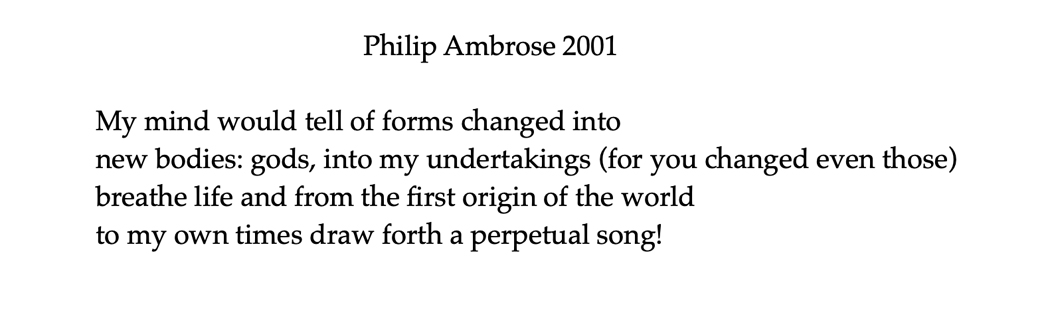
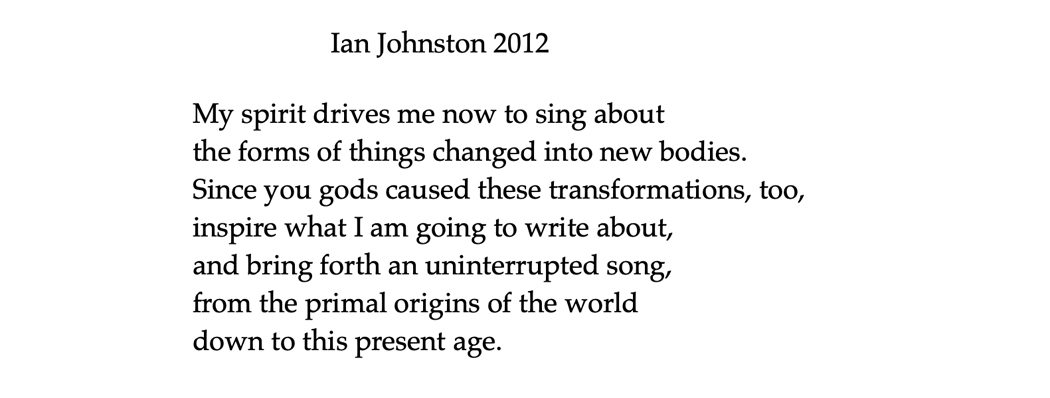
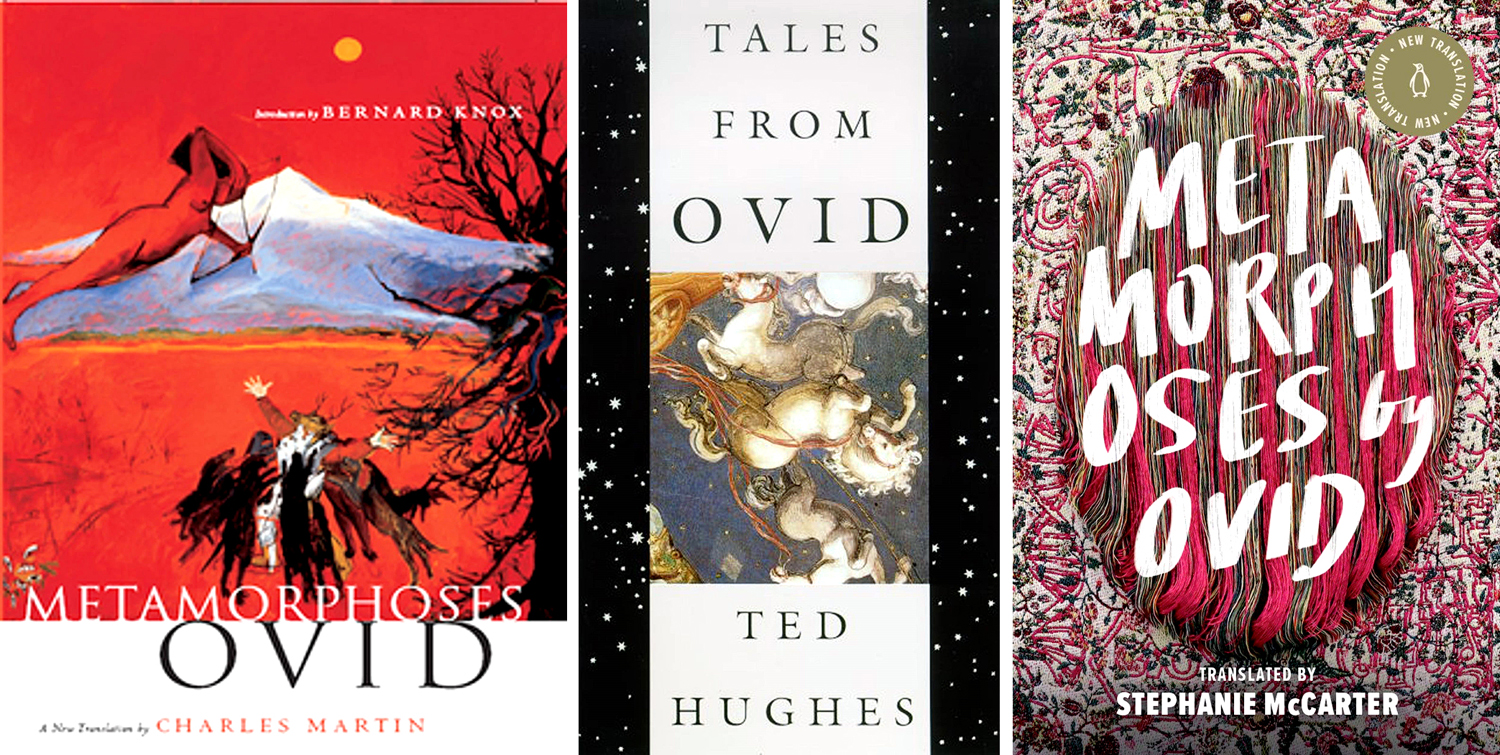
I recently posted a blog entry about various versions in English of Ovid’s epic poem Metamorphoses. (link here). 

“It’s amazing that all the translations are so different,” responded a friend. And they are. I have been fascinated with the issue of translation for years, now, and have compared many versions of several works and am also “amazed” at how different they can be. 

Most recently, the Ovid comparisons has been obsessing me. And so, I went back to the original to see what I could ferret out about these variations. One discovers that although Ovid’s language moves quickly and simply, there is some ambiguity built in to those words. A translator has to disambiguate the text, and in the process make a single meaning for what in Latin can be multiple. 

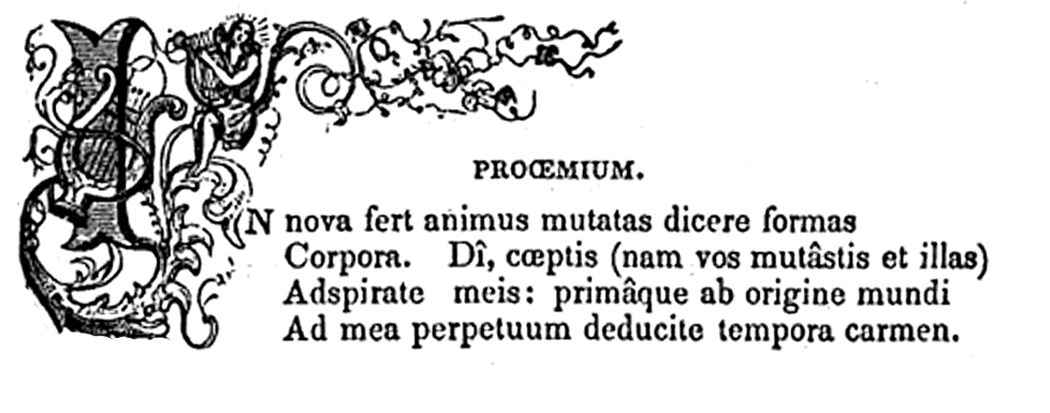
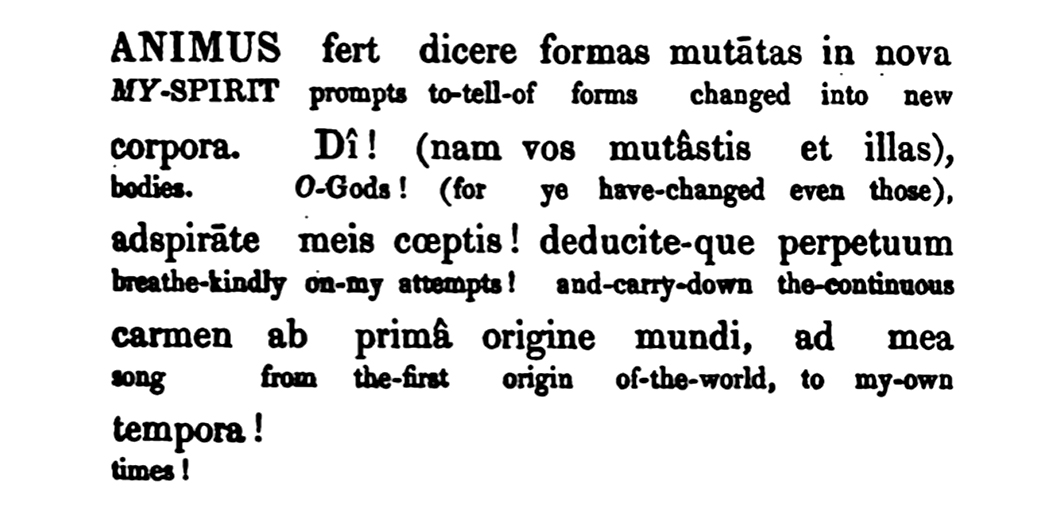
The first four lines of the Metamorphoses, in Latin, read: 

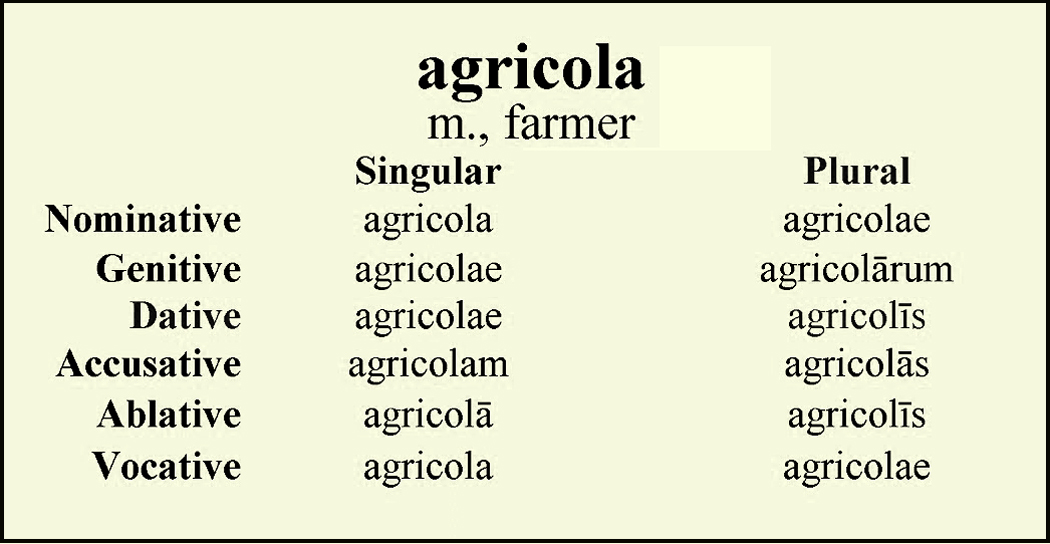
The Latin is alien to English speakers first because word order is not a central concern of Latin grammar. Ovid arranges his sentences according to his metrical choice — Latin hexameter. And that is built around syllable length, not stress. And so if you were to just put down a word-by-word transference from Latin to English, you get, essentially, nonsense.

In 1828, a British publisher printed an interlinear translation, intended to help students in learning Latin. To simplify the project, Ovid’s word order has been shifted to mimic English word order. Thus published, the sense, more or less, becomes clear.

That is: “My-Spirit prompts to tell of forms changed into new bodies. O-Gods (for ye have-changed even those). Breathe-kindly on-my attempts and-carry-down the-continuous song from the-first origin of-the-world to my-own times.” 

(The hyphenated phrases are Latin single words that must be broken into multiple words to be rendered in English). 

All this is good, and one could easily smooth all this out into very plain English: “My spirit prompts me to tell of forms changed into new bodies. O Gods (for you have changed even those), breathe kindly on my attempts to carry down this song continuously from the origin of the world to my own times.” 

And there you have it: Ovid translated cleanly and understandable.

Except.


Except that this version, as plain as it might be, avoids some of the complexities of the Latin, which doesn’t so easily give up its meaning in a one-to-one way with our King’s English. And it doesn’t explain the wide variants rendered by translators from 1567 to our own times. 

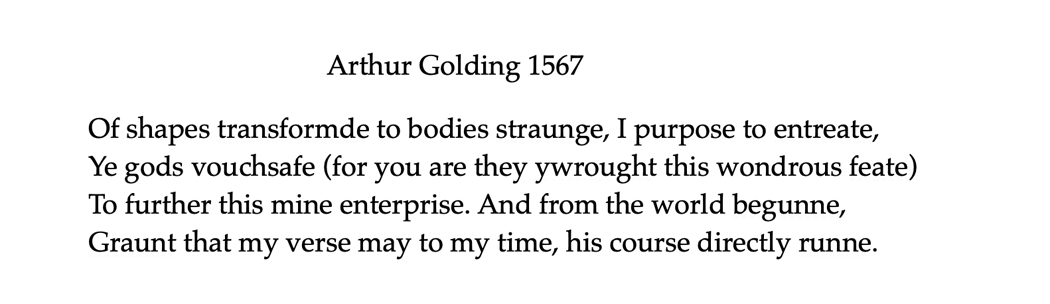
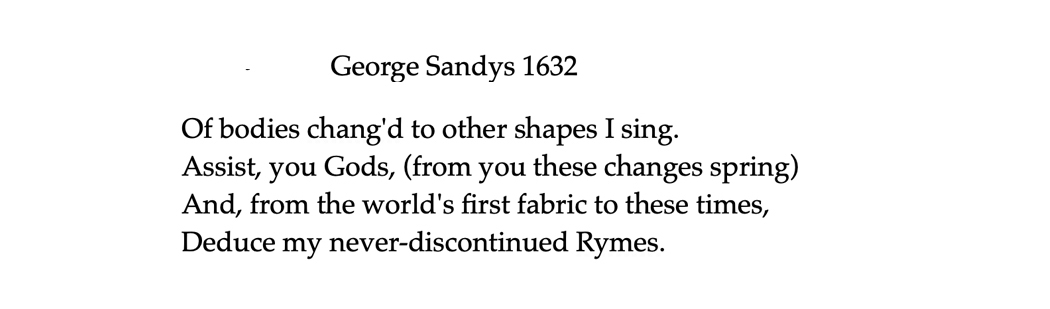
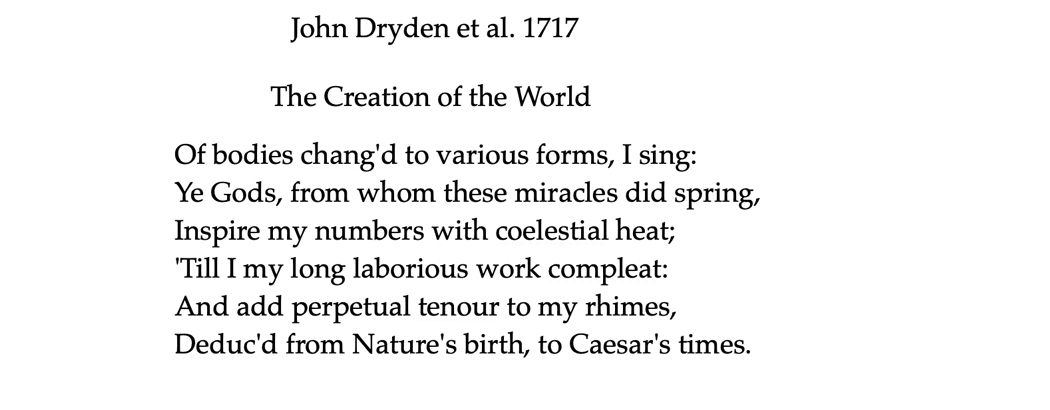
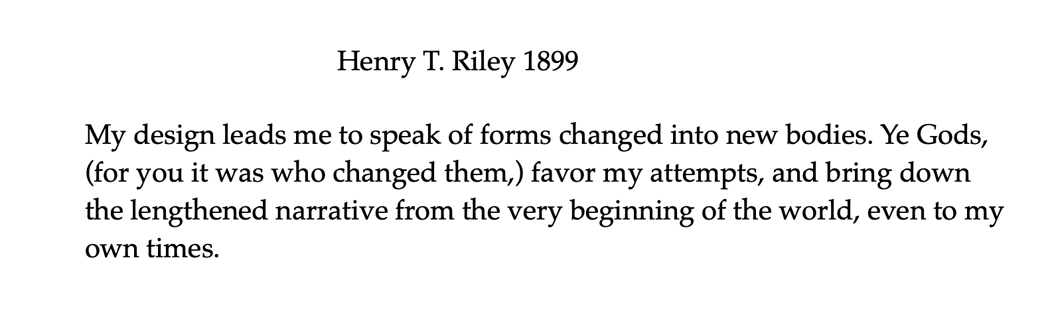
Over the years, translators couldn’t make up their minds whether bodies were changed into new forms or forms into new bodies. Ovid writes forma into nova corpora. But in English that seems backwards. 

It’s been explained as hypallage (a rhetorical trope in which elements are switched from the place expected, as in “the angry crowns of kings” instead of the “crowns of angry kings.” It was a trope often used in Latin writings.) Ovid talks of “forms” changed into new “bodies,” where, in English, we might expect “bodies changed into new forms.” The difference is that in Latin, “forma” describes the “true” shape of something, in other words, the way it was created, such as your body or mine. Ovid is saying that the true shape of his mythological figures are being altered to new, perhaps temporary, bodies — in other words, the new bodies are not the “real” bodies.

In English, we would tend to word it the other way around, so that our “real” bodies are given new “forms.” And so, some translators write it that way, while others maintain the forms-to-bodies version.

This may seem like a trivial thing, but if you grew up with Platonic ideals and they were ripped apart into “false” new shapes, you’d understand what Ovid is getting at here. Of course, he does not make a big thing about it: He expected his listeners (or readers) to understand that the way we might understand “three strikes and you’re out.” It is just buried in the culture. Theirs, though; not ours. 

Most English translations really start with anima

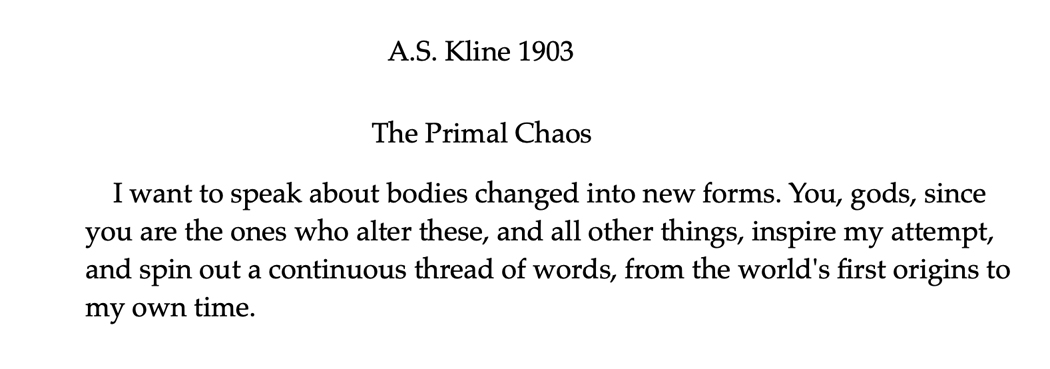
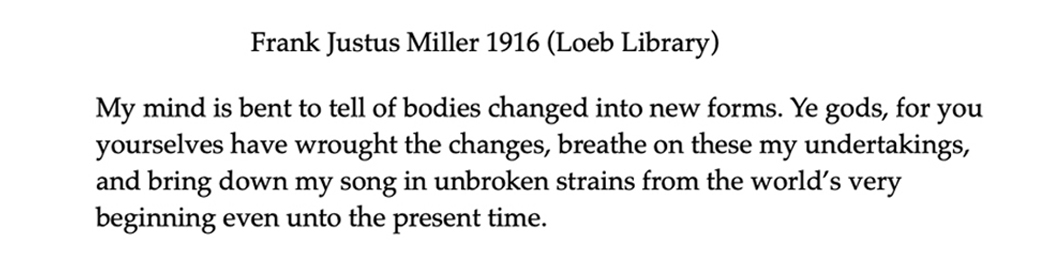
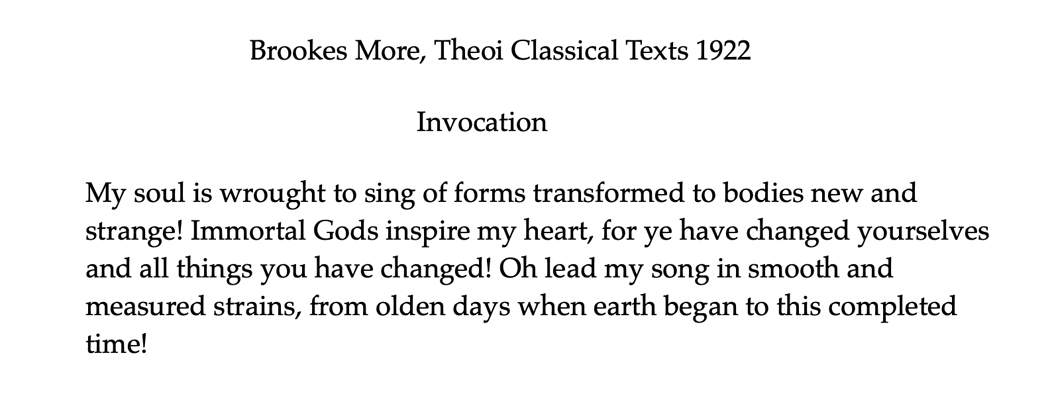
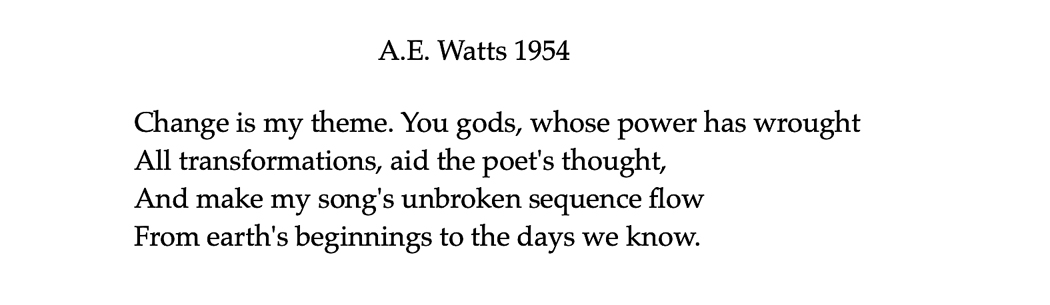
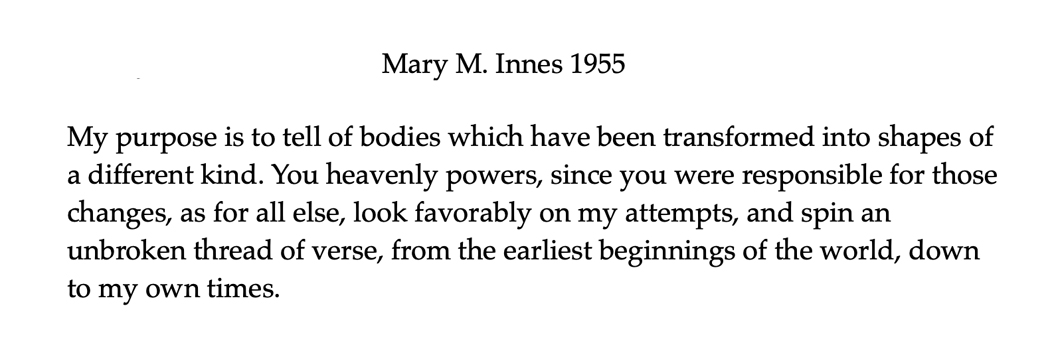
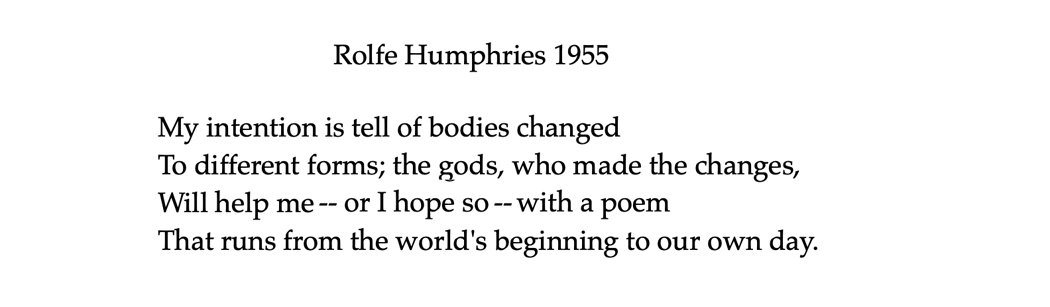
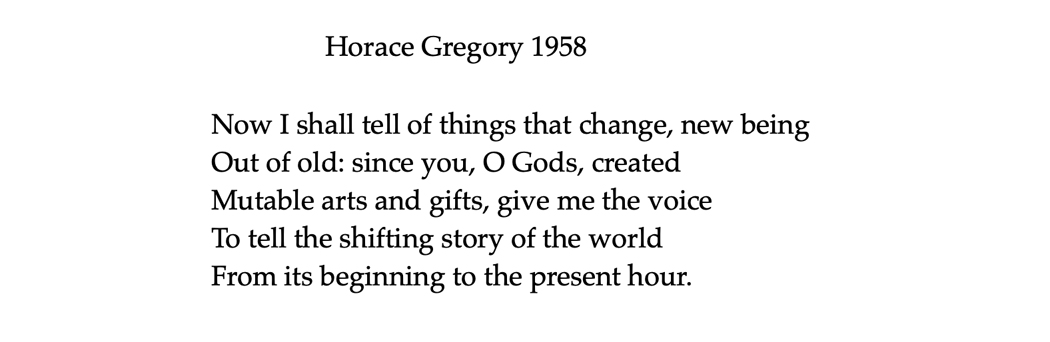
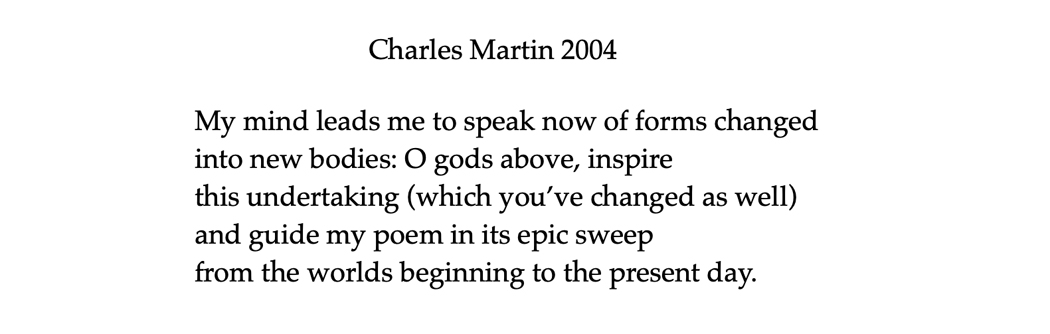
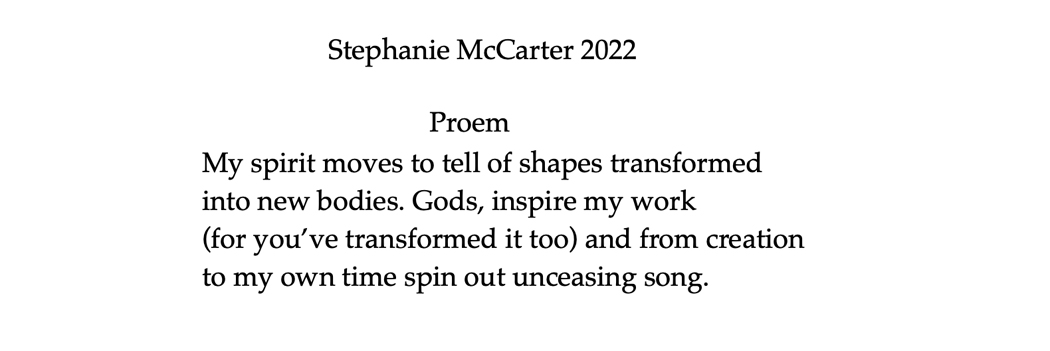
“My spirit prompts” can be understood as “My design leads me” (1899 Riley); “I want to speak about” (1903 Kline); “My mind is bent to tell of” (1916 Miller); “My soul is wrought to sing of” (1922 More); “My purpose is to tell of” (1955 Innes); “My intention is to tell of” (1955 Humphries); “My soul would sing of” (1993, Mandelbaum); “My spirit drives me now to sing about” (2012 Johnston); “My mind leads me to speak now of” (2012 Martin); and most recently, “My spirit moves to tell of” (2022 McCarter). 

But of course, the poem really begins with the word “Nova”… “New.” And a few attempt to mimic the Latin word order, approximately. One could attempt something in English, contorting it like a gymnast: 

Certainly, that is awkward sounding, and I am not recommending it as a preferred translation. We should want something that moves as cleanly in English as Ovid moves in Latin. Mimicking Latin won’t do that. 

But there are other issues, too. You’ll notice I used “weave the thread” of song. Ovid has “deducite” — to lead away, draw out, turn aside, divert, bring out, remove, drive off, draw down. It is used, says one set of notes, to mean to extend like a chain, or, as I have it, “weave the thread,” but more like “add links to links to make up a whole chain” of mythological stories. 

You can see the problem here: Which idiomatic Latin usage of “deducite” should you use here — again, without turning the passage into something utterly unreadable. 

That chain, and its metaphorical maritime implication is echoed in “adspirate,” which implies a fair wind in the sails, as if the gods were blowing their breath to move ships. These things are not clear in English and are only implied in Latin, but they are there. 

The multiple possible meanings of many of these words can bring variation to a potential translation. “Carmen,” for instance, can be a song or a poem — or a prophecy, an incantation, a tune. “Tempora” can be time, or a season, or a duration. “Fert” can be to pick something up, to carry it, to take something up. A translator has to decide what is best meant and how in English to make that clear.


There is a giant ambiguity in these lines that gets very differently translated. When Ovid calls on the gods, he says “nam vos mutastis et illas,” which means, literally, “for you (plural) change (or move, or remove, or move away from) and that (or there, or yonder).” What do you make of that? 

In previous centuries, it was taken to mean, basically, “for you gods caused those changes.” And that seems to make sense of it. But beginning in 2001 with Michael Simpson’s translation, many have assumed it is the poem that the gods have changed. “Gods, inspire this poem I’ve begun (for you changed it too)” (2001 Simpson); “O gods (it is you who have even transformed my art)” (2004 Raeburn); “inspire this undertaking (which you’ve changed as well)” (2004 Martin); “inspire my work (for you’ve transformed it too)” (2022 McCarter). 

These two interpretations can not both be correct. Ovid is obscure here, and leaves a good deal to the discretion of the translator.   

Or to the edition. A translator has to pick among variant texts in Latin, collated by different editors. And the Latin is not completely identical in all of them. Remember, Ovid survives not in manuscripts from Roman times, but from copies made by monks in scriptoria through the Middle Ages and into the Renaissance, and when copies are made, mistakes are made. Which is the true version: That is the job of an editor putting together a modern published edition. 

Joseph Reed, in his annotations to the new edition of Rolfe Humphries’ translation write of this confusion: “Most manuscripts have ‘for you, gods, changed those [forms] as well’ (nam vos mutastis et illas), which Humphries seems to be translating here, omitting the troublesome ‘as well,’ which has no clear reference. Since the 1970s, most editors prefer to read the slightly different text, ‘illa,’ found in a few manuscripts, which yields the very different sense: ‘for you changed that [undertaking of mine] as well,’ referring to the new direction Ovid’s own poetry now takes from his earlier themes and metrical forms (love elegy) to those of epic-length mythological narrative.”

The difference between “that” and “those” (illa et illas). No matter how you parse it, the original is obscure. 

Finally, you must decide what you want in your Ovid. If you are a scholar you want whatever is closest to the poet’s original language, even if it is obscure. And I sympathize with the impulse. But if you are simply a reader who is looking for Ovid’s storytelling, then you will be just fine with letting the translator turn the ambiguity into something that makes sense (culturally and linguistically) in English. Sometimes the actual words don’t relate the actual meaning. 

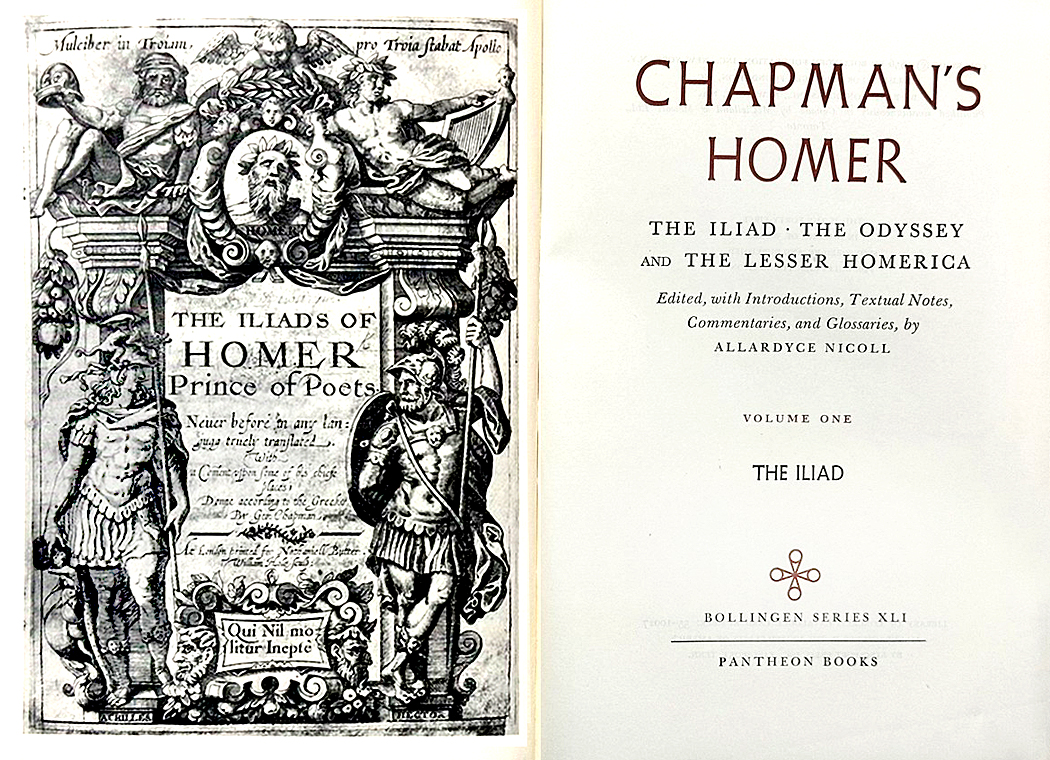
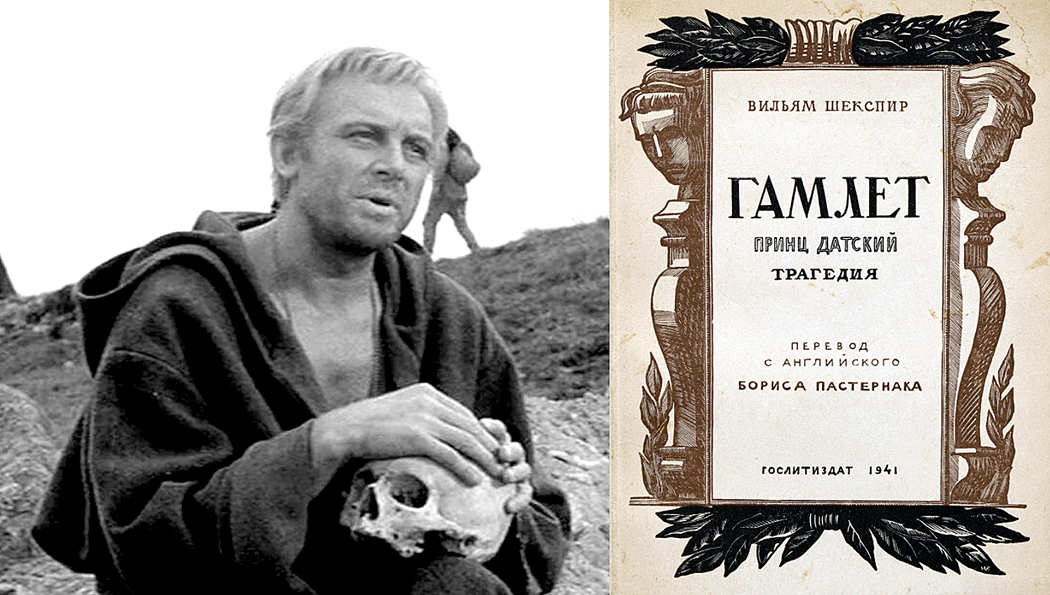
Ovid is lucky, in that he really does survive translation well. He can be reworked without losing his essential Ovid-ness. And it is true that some writers survive the tidal pull of translation better than others. That pull can distort some works beyond help, while others keep their gussets unruffled. Hence, a good translation of the Iliad or Shakespeare can work just fine in a new language, because the story is paramount. Shakespeare tends to travel well. His plays are valued in many lands and many languages. There are famous examples of Macbeth in Swahili, of Hamlet in Russian, and dozens of operatic versions in Italian, French and German. They all pack a wallop. And Shakespeare is loved in all those languages by their native speakers.

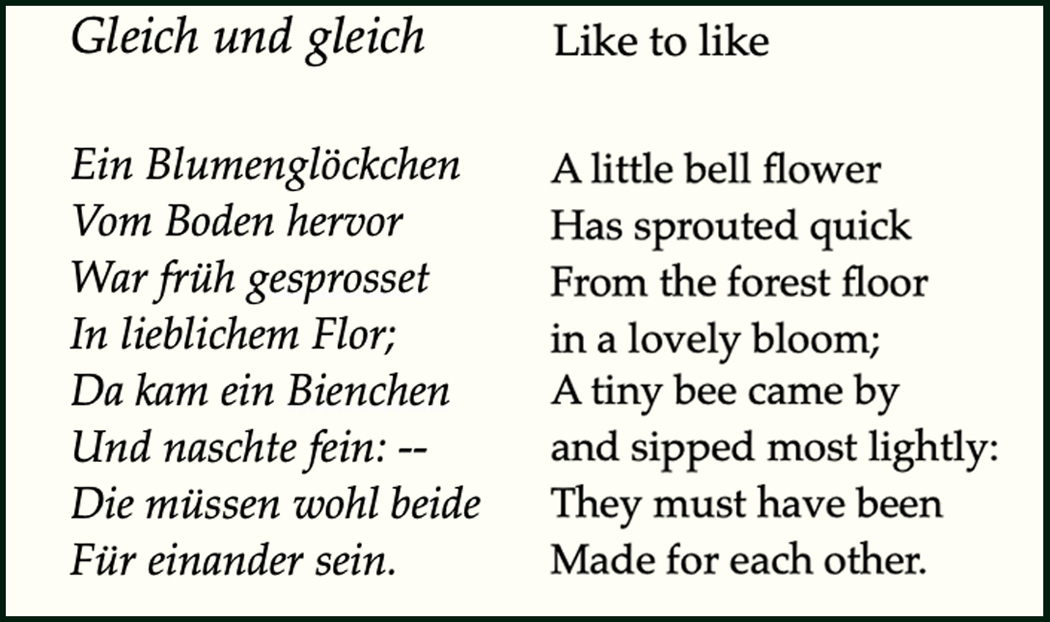
But that other class of writing, where the effect depends on how it is being said can defy the best translator. I have never found a good translation of Goethe, for instance. In English, his poetry often sounds commonplace. But I am assured by a native German speaker that Goethe’s poetry is the best from his country by being written in the most elegant of German language. Horace in Latin is similar; in English you wonder what the fuss is all about; in Latin, it is the height of sophistication and elegance.

Going in the other direction, how in hell can you translate John Milton into French? You can tell the story of Paradise Lost, sure, but how can you convey the special organ-tone quality of his language.
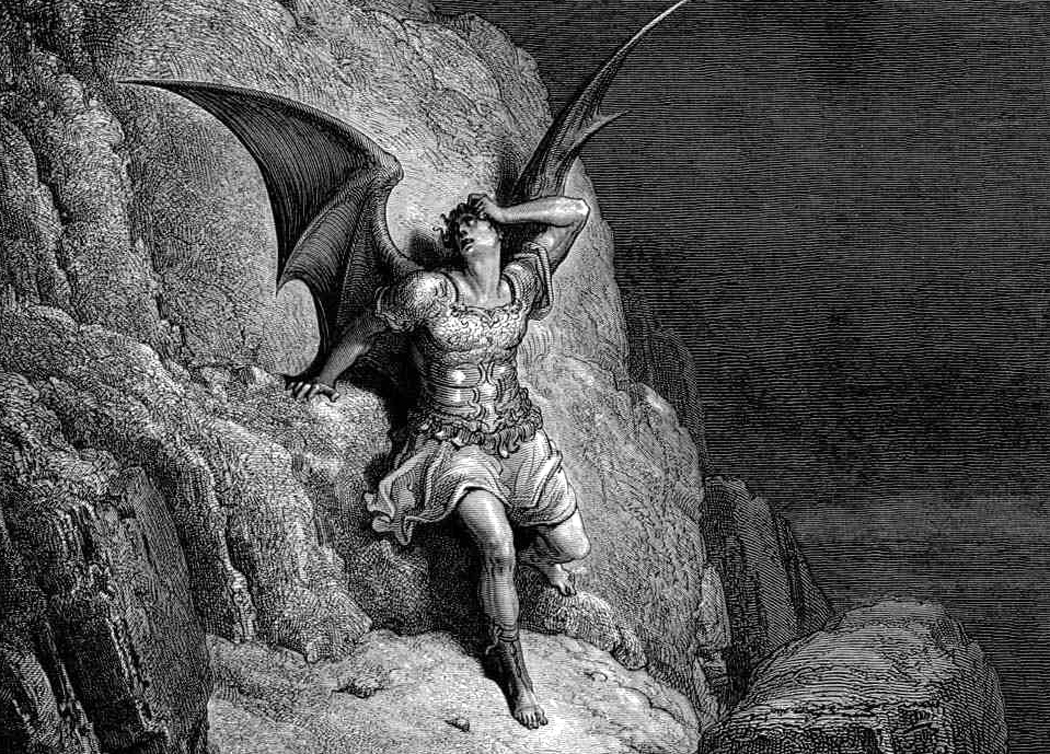
“Round he throws his baleful eyes.”

Translate it into French and it comes out as the equivalent of: “He looks around him malevolently.” Not the same thing, all the poetry is gone out of it. These things are untranslatable, and hence, Milton can never have the global currency of Shakespeare. 

There is behind language, a world. You can concentrate on the language, or on the world. It is easy to be lulled into forgetting the difference, to think that words describe the world, and that the best language is the most accurate lens on the things of this world but they are not the same, but rather, parallel universes, and what works in words does not necessarily explain how the world functions. In the reality of our experience, there are no nouns, no participles. There is only “is.” Can you get at that “is” through words. We try. And we try again.
And so, Ovid is lucky, he takes translation with grace, even glee. For although his Latin is singled out as impeccable, it is the stories that matter, and we can get them in English (or French or German or Chinese). 

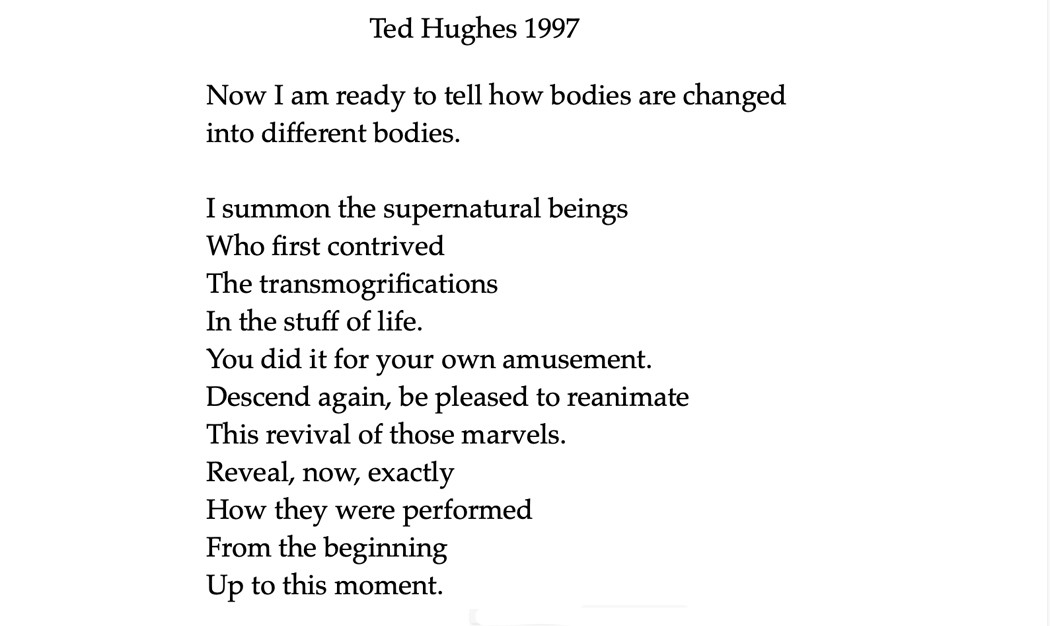
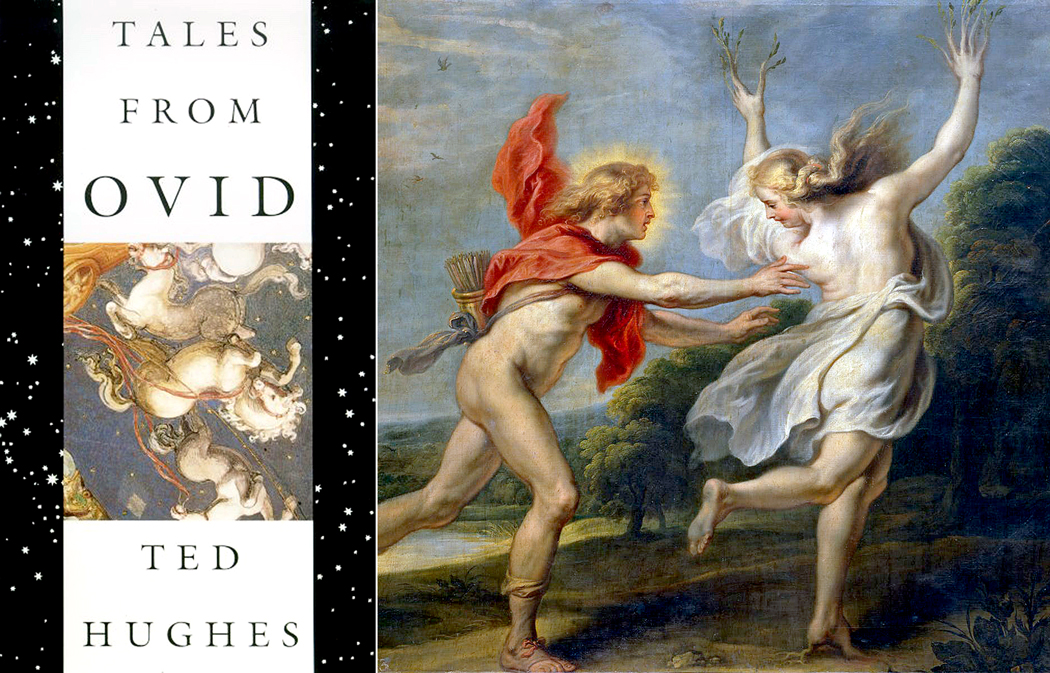
Which is why my favorite version is Ted Hughes’ Tales from Ovid, which is only a partial translation (it includes just 23 of the hundreds of stories Ovid retells) and is really more a metamorphosis of Ovid into English: rewritten as if Hughes himself were telling the stories, rather than translating the words of Ovid. It is a re-creation rather than a translation. 

It is a version I recommend to everyone as a complete joy. 

Click on any image to enlarge

Ovid is just plain fun to read. There are classic Latin texts that feel like doing homework, but Ovid — especially his Metamorphoses — just scoots by and can only be described in modern terms as a “page turner.” 

Publius Ovidius Naso (43 BC to AD 17) was probably the most prolific poet of ancient Rome, writing many books, often quite salacious. He wrote about how to seduce a woman, how women should attract men, how to break up with a woman — you get the picture. But his most famous book was “Changes,” or Metamorphoses in its original, which told dozens of mythological stories, mostly old Greek tales. It was a best-seller when it was written, copied out by hand many times over, and remained a best-seller through the Middle Ages and into modern times. Many writers — including Shakespeare — cribbed from Ovid and a good deal of what most people have absorbed of Greek mythology really comes through Ovid as the middle man. If you know about Daphne and Apollo or Pyramus and Thisbe, it is likely the Ovidian version you have seen. 

Ovid wrote in a sleek, fast Latin that told his stories economically. He has been used to teach students Latin for centuries, and has been translated into most of the world’s languages.

I’m one of Ovid’s devoted readers, and have gone through the book many times, in different translations, beginning in the 1960s with the old, standard Rolfe Humphries version (which I can’t say I found easy going). 

Since then, I have re-read the Metamorphoses many times, each time in a new translation. The newest is by Stephanie McCarter. She is not the first woman to take on the work, but she has made it a point to unforgive the gods their brutality. Where other translators give us gods “ravishing” their mortal victims, McCarter forthrightly calls it rape. In the “Me-Too” era, there is no glossing over the violence and brutality, the sexism and misogyny inherent in the myths. 

I applaud this shift of reference, but despite that, I found her verse tough plowing. These things are a matter of taste. Previously I had sailed through the 2004 translation by Charles Martin and found the lines so fast under my eyes, I hardly noticed I was reading a translation. Turning the pages with McCarter, I never forget that under her words there is a Latin pluperfect subjunctive. That it is a reasonably accurate version I don’t question. It is. But I want something else for my pleasure. Ovid’s original was always praised for its fleetness, and so I would wish my English equivalent also to fly by, so that I am immersed in the story rather than in the mechanics of the language relaying it. 

But reading this new version also made me want to look at how others have assayed the project. 

I took on a week-long effort to concentrate on the first four lines of the book and compare how each translator has looked at them, and found rather notable differences, considering how plain the meaning actually is. 

For this, Ovid must take a share of the responsibility. There is some ambiguity in his words, which make the poetry richer, but the translations more problematic. 

Then, there is the question of whether the translation should be prose or verse, and if verse, should it rhyme? Ovid wrote in hexameters, but English is geared to pentameter. Should you try to count six or count five? Six often sounds a bit awkward in English, while pentameter comes as naturally as breathing. Is six closer to Ovid’s original, or is the swiftness of English pentameter more faithful. Each translator has his or her own solution, and any can work. 

The first English translation was by William Caxton, who probably also gave us the first printed version (as opposed to hand-written by scribes), although the only versions extant seem to be the handwritten ones). It was in the Middle English that Chaucer would have read. He titled it The Booke of Ovyde Named Methamorphose

But the first translation that counts and is still readily available was made in 1567 by Arthur Golding. It was Golding that Shakespeare read and cribbed from. He opens his version with the four-line prologue:

It is written in “fourteeners,” the meter and rhyme scheme of the theme song to Gilligan’s Island: “Just sit right back and hear a tale, a tale of a fateful trip/ That started from this tropic port, aboard this tiny ship.” It was a popular meter in the 16th and 17th centuries. Nowadays, it can feel a touch jogtrot. (Now try to read Golding’s lines without singing them to the tune). 

The second translation came in 1632, by George Sandys, who decided that English pentameter was more natural to the native speaker and recast the whole in a five-beat line, which shortened each and made for swifter reading, but also left out a bit of the original meaning.

The most famous early translation came out in 1717, done by a team of writers rather than a single translator. These included John Dryden, Alexander Pope, Joseph Addison, John Gay, and William Congreve, among others. In was rendered in heroic couplets and was surprisingly fluent. Dryden took on the whole first book and began the introduction:

That became the standard Ovid for many years, and is still read and still quite readable. 

But then came the Victorians, who saw, among other things, Ovid’s usefulness in teaching Latin to its young men. And so you get a spate of them, usually in prose, meant almost as cribs for translation. 

The one I have read several times is the Henry T. Riley, in a two volume pocket series published in 1899. Like many of the versions of its era, its notes try very hard to reconcile Ovid’s paganism with Victorian Christianity, and so, where Ovid talks of “gods,” the Victorian translators often write “God.” This isn’t much of a problem, if you are aware of it as you read. Riley’s proem runs:

Anthony S. Kline, who seems to have translated pretty much everything at one point or another, came out with his Ovid in 1903. It is still widely available. It is in prose and meant to be almost pedestrian, i.e., not high-falutin’ and poeticalized. 

In 1916, the Loeb Library translation came out, with Ovid’s Latin on the left-hand page and Frank Justus Miller’s prose on the right-hand, opposite the original. It doesn’t quite work as an interlinear, but it will help anyone attempting the work in Latin. 

In 1922, writer Brookes More gave us a prose version for Theoi Classical Texts. Like many others, it as much interprets Ovid’s words as translates them. The word “strange” does not appear in the Latin. 

A new spate of translations hit in the 1950s, after the war, when so many new students were headed to university under the G.I. Bill. 

In 1954, A.E. Watts put it in pentameter and squeezed it all down to a fast-running nugget. His purpose seems to be to get the gist as directly as possible. 

A year later, Mary M. Innes uses prose and is pretty much as close to the original as it can get, across languages and cultures. It has been a mainstay of Penguin Classics and is still widely available and read. 

The same year, the widely read Rolfe Humphries version came out in what must have been at the time a very contemporary sounding verse. It is the one I read in high school and didn’t like. Reading it now, I wonder what was I thinking. It is still in print, in a shiny, new annotated version published by Indiana University Press. It moves quite fast. 

Finally, in 1958, Horace Gregory published his verse version, which attempts, also, to feel contemporary, but to my ears feels a tad straight-laced. 

The text sat dormant for a couple of decades, but in the 1980s, Ovid became a growth industry again. 
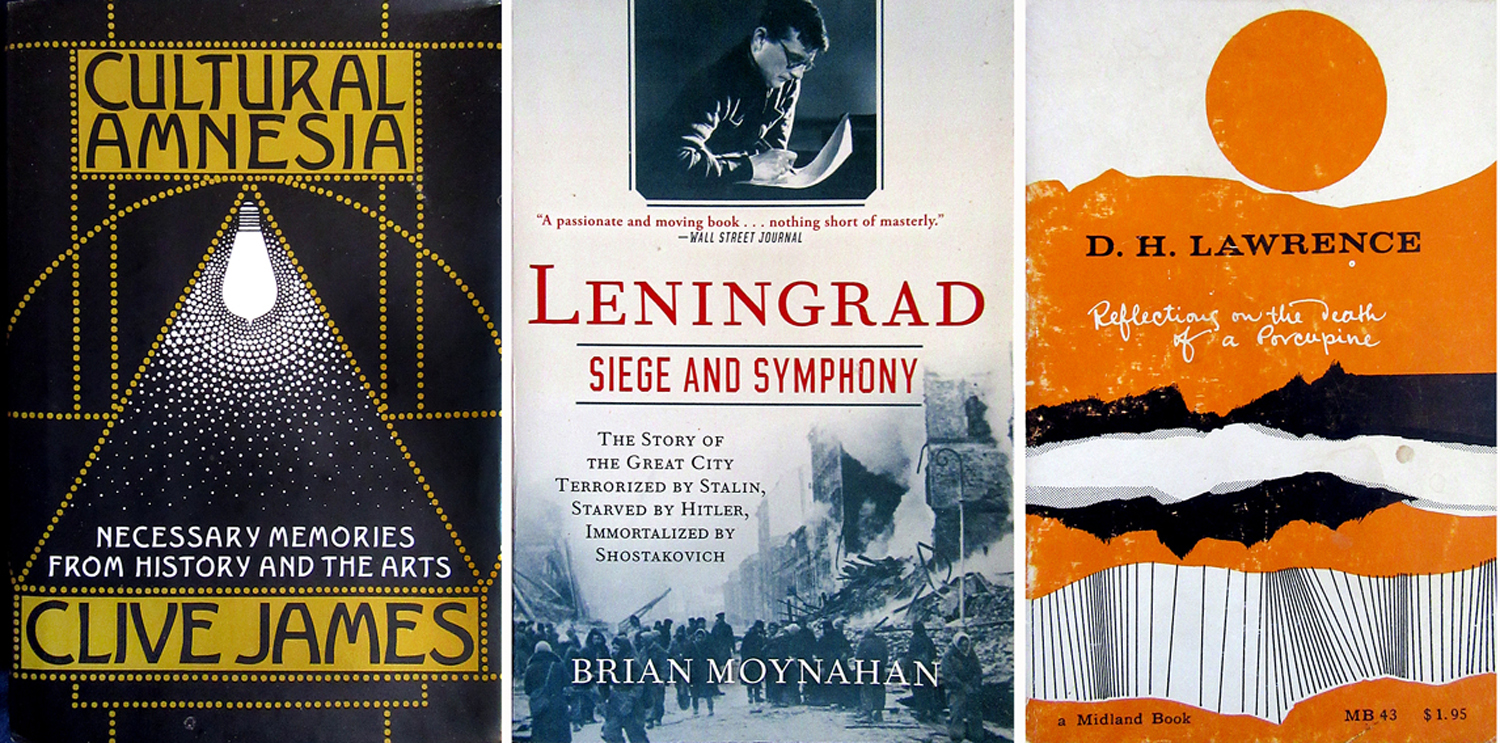
Oxford World Classics commissioned A.D. Melville for a new translation of the Metamorphoses, published in 1986. It is self-consciously poetic, with words such as “ere,” “countenance,” and “naught” to stumble over where more conversational words would be clearer. 

Charles Boer took another approach in 1989, with what one reviewer said is “like it’s spouted from the lips of some prehistoric shaman, barking out a tale to his animal skin-garbed flock.” In short, punchy lines, not always strictly grammatical, he seems to want to express each point as curtly as a newspaper headline. Articles evaporate and nouns shoot each other. It’s sui generis. To give the flavor of it, I have to quote more than just the proem. 

The proem is short and pithy, but the whole book is an acquired taste

Allen Mandelbaum was a translating machine, and has given us versions of almost everything we might want to read, from Homer to Vergil to Dante. His Ovid, from 1993, in an Everyman Classic, which means it is gorgeously bound and printed in a handsome Bembo typeface. This is a book that looks really good on a bookshelf, but I’m afraid I find the translation rather worksmanlike. He takes six lines to say what Ovid said in four. 

David Slavitt competed in 1994, with an entry in a very loose hexameter and what he says is “translated freely into verse.” He wanders a bit, and seems to add things into the text that sound more like commentaries on the text. In his introduction he writes: “As a translator, I take all kinds of liberties, but I am strict in my observation of length and scale, which I take to be significant artistic decisions that any new poem ought to respect and re-create.” In other words, he’d rather match Ovid’s prosody than his content. Some people swear by him.

The new century, 2000 years after Ovid actually wrote the thing, has exploded with new versions of his magnum opus. 

Philip Ambrose attempts to keep a line-by-line parallel with Ovid’s Latin, with sometimes an awkward phrasing, as when Phoebus, sounding like Yoda, tells Phaethon “But warn against this action I can”

Also in 2001, Michael Simpson brought out his prose version, attempting, he says in his introduction, “the rapid and direct American idiom while avoiding colloquialism on the one hand and academic translationese on the other. His version includes as many pages of notes, as of poem. 

I’m jumping ahead to 2004, skipping over Charles Martin for the moment, and to David Raeburn’s version for Penguin Classics, available in a handsome clothbound edition. It looks great on a bookshelf, but Raeburn’s somewhat wordy take means that most of the lines are longer than the page is wide, leading to insufferable line-breaks. Ugly. Reading it is like taking three steps forward and one back, over and over again. (This is a problem of book design rather than translation). 
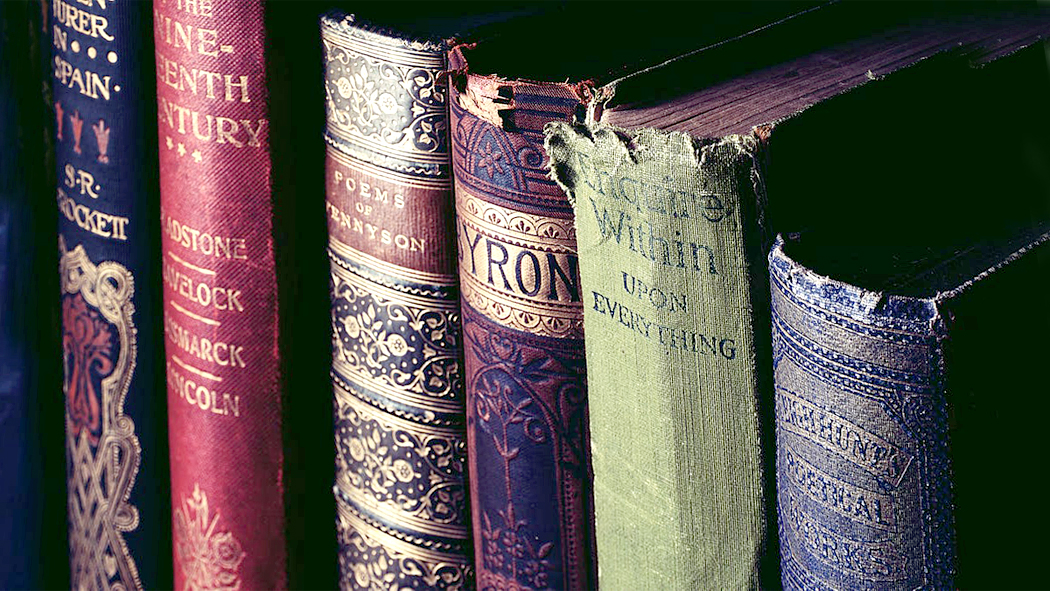
In 2012, Ian Johnston put the text into swift pentameter, and what is more, posted the entire book for free on his website. There is also, of course, a handsome physical book to buy. The tales are laid out with marginal headings to keep track of the often confusingly interlaced stories. 

That leaves three translation to consider: My two favorites and the newest one. 

Charles Martin’s 2004 version for W.W. Norton is about as graceful as you can get, with a very free pentameter that moves as swiftly as Ovid is meant to move. I find no speedbumps in its wordage or lineage. It is the version I read over and over. 

But that doesn’t mean it is my true favorite, which is, I think, the best translation of anything that I have ever encountered. The problem is that Ted Hughes only worked on sections of the Metamorphoses, and so his version is incomplete, and second that his truly free approach means that he occasionally slightly rewrites Ovid to make things clearer or more proportioned to English (Ovid’s Latin doesn’t work word-for-word in English). It’s as if it were a completely original poem by Hughes rather than a translation of the Latin. I absolutely love Ted Hughes Tales from Ovid and cannot recommend it highly enough.

Which brings me back to the new McCarter translation, the latest in the long freight-train line of Penguin Books versions. If you read just the proem, she gets the gist of it absolutely perfectly, both metrically (as pentameter) and by giving us Ovid’s meaning as clearly as possible. 

But the rest of the book is less graceful, and about three pages in, I found myself working to read it. Martin’s version is greased and slides frictionless. McCarter is more like bumper-to-bumper traffic on the interstate, with a kind of start-and stop hiccups, and it sometimes suffers from what Simpson dubbed “translationese.” 

Translations seem to fall into one of three camps. One attempts to be as faithful as possible to the original, to simplify it and make it plain; the second seeks to poeticize it and make it sound as much like poetry as possible, and by that, we mean Victorian poetry; a third stream values contemporaneity, to make Ovid sound as if he were writing today, with the risk that in another 10 years it might sound as dated as Beatniks or bell bottoms. 

Any of these approaches can work, as long as the words spring along quickly and effortlessly, and Ovid’s stories keep you turning pages. Tastes vary and any one of these translation may strike you. I’ve laid out the range of them, and they can all be found somewhere in some published form. 

The best version for you is, of course, the one that keeps you reading to the end. 

Next time: A closer look at Ovid’s Latin

Translation is a funky thing. You can try to be literal and lose all the flavor, or you can try to find equivalent idiomatic expressions, or you can recast the whole thing, as if you were writing an original from a similar inspiration — your own words for a similar thought. 

And unless you are brought up bilingual so that you are completely comfortable in both languages, you will always be working from a disadvantage. You can work from crib notes, or take a literal translation and recast it. Many writers these days do something of the sort. Ezra Pound did not read Chinese, but that didn’t stop him from translating Chinese poetry. Scholars may quibble with the results (or laugh outright), but the versions Pound printed are good poetry, whether or not they are good translations. 

Would I rather read a poet’s regeneration or a scholar’s word-for-word? The answer is both. When it comes to poetry in languages I do not read, I’d rather have multiple versions to absorb and take in all the angles to arrive at something triangulated. 

There are languages I have some familiarity with and so, I can usually read Pablo Neruda straight from the trough. And in French or German, I have some dealings with the originals, although I do not speak the languages with anything like fluency. I can read a French newspaper, but cannot always make out the spoken version. (Luckily, when in France, I have learned you don’t really need the fineries of grammar. You can speak French pretty usefully even with no verbs at all. You go to the patisserie and when it is your turn, you just say, “Deux croissants, s’il vous plait,” and you get what you want. No one before you on line has used a verb, either.)

And so, I have come to translate some poetry for myself, from German, from French or Spanish (even an occasional Latin poem), and mostly in self-defense. 

I say “self-defense” because most of the translations I’ve been subjected to sound like musty old Victorian twaddle. The translators seem to love archaic word forms and odd word orders — as if written by Yoda they were. 

Such things offend my ear. 

It’s not that I want them to be prose, but the secret of poetry is in the metaphor and the clever turn of phrase, not in the conventional language of old poetry forms. Take the first two lines of Nietzsche’s Zarathustra’s Rundgesang. In German:

O Mensch! Gib acht! Was spricht die tiefe Mitternacht?

Which could be translated, word for word, as:

“O men! Give attention! What says the deep midnight?”

Traditional translations usually go something like:

“O Man! Take heed! What saith deep midnight’s voice indeed?”

or:

“O Man! Attend! What does deep midnight’s voice contend?”

There is the problem with the original. “O Man!” is poetic cliche. It has to go. I suppose you could turn it into idiomatic English as “Hey, y’all, listen up,” but that would be a crime in a different direction. 

If I were to translate this bit, I would just leave off the unnecessary parts and rewrite it as: “It calls to us in the dark. It is deep midnight and the hour speaks:” This sets up a light/dark dichotomy that pays off later in the piece. 

Too many translations, especially of classic Greek or Latin literature are written in this fusty, worn out poeticized and conventional twaddle. It’s amazing anyone waded through the Iliad in the 19th century. Homer’s actual style was immediate and direct. 

Imagine if Robert Frost had written: “Two paths in twain divided were; traverse we may but one.” Who would now bother with it? It is Circe turning men into pigs. 

In other words, I have no issue with completely recasting the originals to make modern, idiomatic sense in a language that I hope remains poetic but without the equipage of outworn convention. 

A stunning example of this approach is Ted Hughes’ Tales from Ovid, beautiful translations of several bits from The Metamorphoses. In Hughes’ style the stories move quickly and smartly and you turn the pages as in a best-seller. One only wishes Hughes had completed the whole thing, instead of mere sniglets. 

In this way, I have translated (or rewritten, if you hesitate) a good bit of German lieder. So much of it is hyperventilated Romantic sludge, which speaks to the early 19th Century of a generation that was weaned on Young Werther, and undoubtedly expressed the genuine feelings of those who lived through it, but now seem unrealistic and kitschy. 

Yet, there are real things being said and expressed in the poetry of Müller, Hölderlein or Eichendorff. It comes through like a buzz saw in the music of Schubert or Schumann, where the music has an authenticity that the verse sometimes lacks. 

I have tackled whole swaths of lieder verse, including a translation of all of the Winterreise. I found I could be a bit more faithful near the beginning of the cycle, but the deeper in, the more I had to rethink the verse. 

Take the first song, Gute Nacht. The text takes care of itself. A simple translation of the first stanza would be:

But, 24 songs later, the text of Der Leiermann, about a hurdy-gurdy man, is too bland without the devastating music Schubert provides (one of the most desolate and despairing bits of music ever penned), and so I’ve written my variation on it, to stand without the music:

Just this week, I started another project, translating four of the texts that Gustav Mahler set. I have arranged them into a set that belongs together, in four “movements,” rather like a symphony, meant to be taken as a single whole. 

I am offering them here as my apology for the type of translation I most appreciate — at least when others my better do it. 

The main benefit of doing such work (since I have no plans or hope ever to publish my translations — they are simply for the pleasure and knowledge I get from them — is that they force me to pay attention to the poetry and to the words. 

We can read through poetry much as we may distractedly hum a favorite tune. But good poetry offers much more, and forcing yourself to go through it word by word, can help you uncover much more. Translating forces concentration. 

And so, I read the German for its sound, parse individual words for their various meanings (for no word in any language has but one simple meaning), read various translations to compare how others have understood the words, reassemble them in my own English and then revise, over and over, until I get something that sounds good to me and — more importantly — makes sense. 

I have to admit that I generally like my own translations better than the ones packaged with the CD as the libretti or lyrics. But that is likely because they match my own particular esthetic — they are tailor made for my ear. Your ear may resonate to a different frequency. 

And so, the first “movement” of my Mahler word-symphony comes from the second of Mahler’s Songs of a Wayfarer, words originally written by the composer himself. The main melody of the song became the first theme of his Symphony No. 1. 

The second movement is Mahler’s own crib of Zarathustra’s Rundgesang, or “Zarathustra’s Midnight Song,” as the composer has it. All four of the texts I have translated focus on the twin but opposite facts that life is suffering but also it is joy. 

Third, there is heartbreaking and rueful song by Friedrich Rückert, Ich bin der Welt abhanden gekommen, set by Mahler first for voice and piano, but later orchestrated and part of his Sieben Lieder aus letzter Zeit (“Seven songs of Latter Days”). It is surely one of his greatest songs, and can hardly be heard or sung without feeling it was written directly with you in mind. 

Finally, there is Der Abschied (“The Farewell”), the final movement of Mahler’s Das Lied von der Erde (“Songs of the Earth”). In it, Mahler has pieced together two Chinese poems of dubious provenance (themselves translated or rewritten, or perhaps invented in French and German) purportedly by Tang Dynasty poets Meng Haoran and Wang Wei, with three lines added at the end, written by Mahler himself. Der Abschied is Mahler’s summa, and at 30 minutes, is as long as the previous five movements combined. And it ends with the quiet reiteration, over and over, in dying voice, “Ewig… ewig…” (“forever… forever…”) finally so in performance you can never quite tell when it ends, the final “Ewig” as quiet as the silence that follows. 

In the end, I recommend to everyone that they attempt to translate a poem from a different language. Take a Baudelaire, for instance, or a Neruda (avoid Rilke like the plague, unless you wish to end in an asylum), and parse it through, word by word. Read it out loud in the original language to hear the music of it (yes, your French may not be as liquid as the original) and read various translations to see how differently the words are construed. Then arrange a version of your own.

In the end, you will have internalized the poetry and it will never again be a stranger to you. 

“Manfred on the Jungfrau” John Martin, 1837

From the last half of the Eighteenth Century through the last quarter of the Nineteenth, an idea permeated popular and intellectual culture and showed itself in literature, art and music, although no one could quite agree on its definition. Like wit in the seventeenth and early eighteenth centuries, which also defied simple definition, the sublime was something no one couldn’t quite pin down, but like Justice Potter Stewart said, you knew it when you saw it. 

The Sublime features representations of vast spaces, horrifying disasters and universal chaos. Anything dark, scary, awe inspiring or supernatural. 

“Alpine Avalanche,” Philip James de Loutherbourg, 1803

Of course, the idea isn’t limited to the Eighteenth and Nineteenth centuries. It has been around as long as there has been art and literature. There is The Sublime in the epic of Gilgamesh and it is all over the Bible. 

There had always been a subspecies of The Sublime in art. It is in Shakespeare, in Titian, in Rubens. It runs throughout John Milton’s Paradise Lost, especially in those parts describing Satan and his acts. 

But The Sublime steps into the spotlight with the advent of Romanticism. It is in the poetry of Byron, the novels of Victor Hugo, the paintings of Caspar David Friedrich. It is behind the fad for Gothic novels and the nature poetry of Wordsworth and Coleridge. 

The first clear enunciation of The Sublime in literature was set down in the First Century by an anonymous author, usually called Longinus. His treatise, usually called On the Sublime, is primarily a guidebook to rhetoric, with all the usual tropes, but he also discusses how great writing — as opposed to the merely good — overwhelms us, and it is great subjects that lend themselves to great writing. 

In the climactic 35th chapter, he writes: “What was it they saw, those godlike writers who in their work aim at what is greatest and overlook precision in every detail? … (W)e are by nature led to marvel, not, indeed, at little streams, clear and useful though they be, but at the Nile, the Danube, or the Rhine, and still more at the Ocean.  … nor do we consider out little hearthfire more worthy of admiration than the craters of Etna whose eruptions throw up rocks and boulders or at times pour forth rivers of lava from that single fire within the earth.

“Vesuvius Erupting,” Pierre-Jacques Volaire, 1877

“We might say of all such matters that man can easily understand what is useful or necessary, but he admires what passes his understanding.”

What happened between the century of Voltaire and that of Shelley is the cultural shift from Neo-classicism to Romanticism. It is a shift from a concern for society and relations of humans to humans to a different frame of reference — to the relation of the individual to the cosmos. 

Relations between people are between roughly equal, similar size entities; relations with the cosmos pit the infinitesimal human being against the infinite. There is no satisfactory reaction but awe, terror, and admiration: That is The Sublime. 


“The Deluge” William Westall, 1848

Coleridge describes a Sublime experience in his 1818 lecture on “European Literature” by recalling: “My whole being expands into the infinite; earth and air, nature and art, all swell up into eternity, and the only sensible expression left is, ‘that I am nothing!’ which concludes that his ultimate realization of The Sublime was of his own human insignificance.” 

In 1757, a young Edmund Burke wrote an influential treatise, A Philosophical Enquiry into the Origin of our Ideas of the Sublime and Beautiful. He wrote: “Whatever is fitted in any sort to excite the ideas of pain, and danger, that is to say, whatever is in any sort terrible, or is conversant about terrible objects, or operates in a manner analogous to terror, is a source of the sublime; that is, it is productive of the strongest emotion which the mind is capable of feeling.”

He sorted The Sublime into seven constituents: darkness; obscurity; deprivation; vastness; magnificence; loudness; and suddenness. When used in art or literature, The Sublime reminds us of things we find frightening in the world, but by being framed in art, lets us contemplate it in safety, and thus we find pleasure in it. 

“Chamounix, Mont Blanc and the Arve Valley” JMW Turner 1803

The next generation sought out The Sublime in reality as well as in literature. When Mary and Percy Shelley visited the valley of the Arve River in the Alps, they noted in their History of a Six Weeks Tour through a Part of France, Switzerland, Germany, and Holland: “Mont Blanc was before us, but it was covered with cloud; its base, furrowed with dreadful gaps, was seen above. Pinnacles of snow intolerably bright, part of the chain connected with Mont Blanc, shone through the clouds at intervals on high. I never knew — I never imagined what mountains were before. The immensity of these aerial summits excited, when they suddenly burst upon the sight, a sentiment of ecstatic wonder, not unallied to madness.”

Shelley transformed this into his poem, Mont Blanc: Lines Written in the Vale of Chamouni:

In her 1794 gothic novel The Mysteries of Udolpho, Ann Radcliffe has her heroine face the Alps: 

“They quitted their carriages and began to ascend the Alps. And here such scenes of Sublimity opened upon them as no colors of language must dare to paint … Emily seemed to have arisen in another world, and to have left every trifling thought, every trifling sentiment, in that below: those only of grandeur and sublimity now dilated her mind and elevated the affections of her heart.”

“Hannibal Crossing the Alps in Snowstorm” JMW Turner 1812

And Byron is nothing without The Sublime. He takes his doomed hero to the Jungfrau in Manfred and used it in Childe Harold’s Pilgrimage over and over, as in the lines, “Roll on thou deep and dark blue Ocean — roll!”

In Canto 3 of Childe Harold, he takes his hero to the Alps: 

Coleridge’s Rime of the Ancyent Marinere (1798) is all about The Sublime and its terror — and ultimately, its beauty. 

Its hero, aboard a death ship is surrounded by a sea of monsters: “The very deep did rot: O Christ!/ That ever this should be!/ Yea slimy things did crawl with legs/ Upon a slimy sea.” But our mariner has a transformation of heart:

 Certain artists and painters became transfixed by The Sublime. First comes Joseph Wright of Derby (he is always referred to this way, apparently to distinguish him from other Joseph Wrights, including an American artist of the same time, who designed the Liberty Hat penny). 

In many of the English Wright’s paintings, a bright light glows in the darkness. He painted multiple canvasses of the eruption of Mt. Vesuvius in the 1770s. 

“Vesuvius in Eruption, With a View of the Bay of Naples,” Joseph Wright of Derby, 1776

Although he didn’t have to travel that far. Many of his landscapes feature brooding moonlight scenes, or images of fire in the darkness, such as

“Cottage on Fire,” Joseph Wright of Derby 1786

This fascination with The Sublime is primarily a northern European thing. You find it in British art, in German art and Scandinavian art, but less so in Italian or Spanish (Goya excepted). 

Germany produced Caspar David Friedrich, who specialized in images of the contemplation of vast nature.

The arctic inspired a good deal of Sublime art, as in Friederich’s Sea of Ice, with its barely noticeable shipwreck.

“Das Eismeer” Caspar David Friedrich, 1823

The ice of the arctic is where Mary Shelley had her Frankenstein creature float away on an ice raft to his death.

“We are still surrounded by mountains of ice, still in imminent danger of being crushed in their conflict. The cold is excessive, and many of my unfortunate comrades have already found a grave amidst this scene of desolation.”

And the final words of the novel:

“He sprang from the cabin-window as he said this, upon the ice raft which lay close to the vessel. He was soon borne away by the waves and lost in darkness and distance.”

Later in the century, American painter Frederick Edwin Church painted a dozen or so studies of icebergs. 

“Floating Iceberg,” Frederick Edwin Church 1859

Church also painted volcanoes, such as Cotopaxi in Ecuador.

“Cotopaxi,” Frederick Edwin Church 1862

Church’s most famous painting, now at the National Gallery in Washington DC, is his Niagara, a nearly 8-foot across panorama of the falls. It was shown in New York in 1857, where visitors could pay 25 cents to view the painting in a darkened art gallery (for best effect). The painting went on a cross-Atlantic tour, shown the same way. 

“Niagara,” Frederick Edwin Church 1857

Its effect was stunning for the time. Even a century later, writer David Harrington could say “Niagara is the American’s mythical Deluge which washes away the memory of an Old World so that man may live at home in a New World. The painting is an icon of psychic natural purgation and rebirth. Poetically a New World emerges as the waters of a flood subside. The rainbow, sign of the ‘God of Nature’s’ covenant with man, transfixes the beholder. … Niagara is a revelation of the cosmos to each and every man.”

The biblical reference is apposite. Much of the imagery of The Sublime in the 19th Century comes from the Bible. Painters loved to depict certain scenes from the Old Testament: the Deluge; the Destruction of Sodom and Gomorrah; Balshazzar’s Feast; Samson destroying the temple of the Philistines; the Plagues of Egypt — anything that would have delighted Cecil B. Demille.

In such paintings, you can see the difference between earlier ages and the rise of The Sublime. In Renaissance and Baroque paintings, the action centers on the people involved. Landscape is mere backdrop. But in the century and a half I’m writing about, the people shrink to insignificance and the landscape takes over, full of rocky climes, lightning bolts, hurtling boulders, spewing volcanoes and roiling stormclouds. You can almost make a stop-action movie, like watching a flower unfold in a nature film, showing the people getting smaller and smaller and the landscape becoming ever more menacing. 


“Gordale Scar, Yorkshire,” James Ward 1812

It is clear that as you go later into the 19th Century, The Sublime verges all too often at the edge of kitsch. The sense of cosmic overload funnels into a kind of religious sentimentality. Where you draw the line, personally, depends very much on your willingness to accept the underlying metaphor of the vastness and impenetrability of the universe. 

There are two British artists who straddle that line. John Martin and Joseph Mallord William Turner. Martin was very popular in the early years of the century, but is largely forgotten now. Turner was popular then and even more so today. Still, I have to admit a soft spot in my head for John Martin and his extravagance. 

“Pandemonium,” John Martin 1841

I first learned of him and his large painting (now in the St. Louis Art Museum) called Sadak in Search of the Waters of Oblivion. First painted in 1812, it exists in several forms, both in paint and as print. In it, the Persian prince, Sadak, must fulfill a quest for the legendary Waters of Oblivion, in order to save his kidnapped wife. It is based on one of the Tales of the Genii, by English author James Ridley and was a huge success when first exhibited. 

Martin turned to printmaking to make his work available to a wider audience and published, in 1824, an enormously popular series of illustrations to John Milton’s Paradise Lost. (These were, in part, the inspiration for the later Gustave Dore to make his own series for the epic poem). 

“The Bridge Over Chaos” from “Paradise Lost,” John Martin 1826

Biblical subjects became Martin’s bread and butter. The more grandiose the image, the more popular became his prints. They include The Fall of Babylon

The Destruction of Sodom and Gomorrah:

The Seventh Plague of Egypt:

And Joshua Commanding the Sun to Stand Still Upon Gideon:

And my favorite — The Great Day of His Wrath:

He ventured out of his biblical Fach for the historical:

“The Destruction of Pompeii,” John Martin 1822

And even the prehistorical — on of my favorite for its goofiness. It was the frontispiece illustration for Gideon Mantell’s book, The Wonders of Geology:

“The Country of the Iguanodon,” John Martin 1837

Martin’s appeal was to vastness and number. His Balshazzar’s Feast prompted Charles Lamb to deem it “vulgar and bombastic.” 

“Balshazzar’s Feast,” John Martin 1821

In contrast, JMW Turner also painted one of the plagues of Egypt, and it has its share of grandiosity, but Turner’s shtick was mist and fog, indistinct outlines — and uncertain scholarship (It is titled the Fifth Plague, but actually illustrates the biblical Seventh Plague). 

 “The Fifth Plague of Egypt,” JMW Turner 1800

In 1840, Turner exhibited a painting called Slavers Throwing Overboard the Dead and Dying — Typhoon Coming On. It depicts an event from 1781 when the captain of the slave ship Zong threw overboard 132 of his captives when drinking water was running low. Since insurance would not cover the cost of slaves dying of natural causes, he drowned them instead, so he could collect. Turner seems to have added the typhoon for effect.  

“Slave Ship,” JMW Turner 1840

The storm, the swirling air and sea, the lurid color and the loose brushwork all contribute to the sense of disaster. While the painting had an abolitionist intent, it is its forward-looking esthetics that appealed to critic John Ruskin. Turner is often seen as a precursor to the Impressionists. But while they tended to paint everyday scenes, Turner favored turmoil and disaster. 

“Disaster at Sea,” JMW Turner 1835

The circular swirl was a trademark of the later Turner. In 1842, he had himself lashed to the mast of a ship in a snowstorm in order to paint Snow Storm – Steam-Boat off a Harbour’s Mouth Making Signals in Shallow Water, and going by the Lead. The Author was in this Storm on the Night the “Ariel” left Harwich. Yes, that was its full title when first exhibited. 

“Snow Storm: Steam-Boat off a Harbour’s Mouth,” JMW Turner 1842

He also did a snow storm in the Alps. 

“Valley of Aosta: Snowstorm, Avalanche and Thunderstorm,” JMW Turner 1836

In the United States, The Sublime was a natural. The American West lent itself to large paintings of vast landscape, often in mist or early sunrise. An entire school of artists, usually called the Hudson River School, latched onto The Sublime, beginning with Thomas Cole.

“The Expulsion from Eden,” Thomas Cole 1828

Cole’s most famous protege was Frederic Edwin Church, whose paintings of South America brought the exotic landscape to the U.S.

“Rainy Season in the Tropics,” Frederic Edwin Church 1866

And Martin Johnson Heade verged on the surreal in many of his paintings.

“Approaching Storm — Beach Near Newport,” Martin Johnson Heade 1859

But it was the West that threw open the gates of heaven, with any number of painters, first among them, German-born Albert Bierstadt. 

“Among the Sierra Nevada, California,” Albert Bierstadt 1858

Latterly among them was Thomas Moran, whose huge and colorful canvases persuaded Congress to create our first national parks. 

“Shoshone Falls,” Thomas Moran 1900

These painters are the clear progenitors of the landscape photographs of Ansel Adams. 

“Clearing Storm, Yosemite,” Ansel Adams 1944

But The Sublime had pretty well worked itself out by the end of the 19th Century. It was harder to believe in the awesome beauty of Providence after the First World War, to say nothing of the horrors that followed. Post-Traumatic Stress wasn’t quite the same thing. Still, The Sublime hung on in the paintings of Jackson Pollock, and especially Mark Rothko, whose mysterious canvases of hovering colors evoke the same sort of awe among those willing to be seduced by them. 

“Black on Maroon,” Mark Rothko 1958

I’ve covered literature and painting, but The Sublime appears in music, also. The first sound depiction of it occurred when Franz Joseph Haydn depicted biblical Chaos as the prelude to his oratorio The Creation, which premiered in 1803. 

Hector Berlioz assayed The Sublime in several of his works, but none more grippingly than in the Tuba Mirum section of the Dies Irae of his Requiem Mass of 1837, which requires, in addition to a huge orchestra and chorus, four extra brass bands, set into the four corners of the concert hall, and 20 tympani, which roll doom out in the Dies Irae. 

Another Dies Irae with the power to blow you away is Giuseppe Verdi’s, from his Requiem Mass, which whacks the bass drum in alternation of staccato blasts from the strings and brass. 

Perhaps the cake is taken by Gustav Mahler’s Symphony of a Thousand — his Symphony No. 8, which in an ideal performance has an orchestra of about 200 and a chorus of 800. It is gargantuan, and the opening Veni Creator Spiritus is as close to manic insanity as music can probably sustain. 

There are moments in Wagner, in Liszt, Bruckner and many in Mahler’s other symphonies. 

Then, there’s The Ninth. I don’t need to mention whose. The Sublime makes itself present in each of the four movements, but rises to a climax in the choral finale, where voices and instruments poise at the limits of their abilities and hold those notes as they sing, “Seid umschlungen, Millionen!” — “Be embraced, you millions” and then “Ahnest du den Schopfer… — hold it, and then belt out — “Welt?” There follows a coda of ecstasy bringing home the central message of the symphony: “Freude, schöner Götterfunken” — “Joy, beautiful spark of divinity.” 

But perhaps the greatest moment of The Sublime, as terror and grandeur, comes with the recapitulation section of the first movement. The theme that began the symphony in uncertainty and mist — we don’t even know originally what key it is in — comes back forte underlined by two solid minutes of rolling tympani thunder. Some conductors downplay this moment, letting the tympani merely enforce the bass line, but done right, the drums are an earthquake of apocalyptic rumble. 

Perhaps I have been fascinated by The Sublime in art and poetry so much because I have experienced in life — probably a dozen times or so, maybe a score if I catalogued them — a moment when you don’t merely feel the joy of beauty found in nature, but experience a cosmic tingle, a sense of life magnified, intensified, made mythic. A body-sense of the vastness of existence and my minuscule place in it. 

It tends to come, as it does in art, in mountains or deserts or at sea. I recall the sense while crossing the Atlantic on a ship and walking the deck after midnight and seeing in the vast emptiness of the ocean a twinkle of a light on a ship many miles off, heading in the opposite direction. The sea swells were rocking the boat and I could make out the shifting facets of waves in the dark, where some starlight was caught in the reflection of the water.  

Or the Grand Canyon at five in the morning just before the sun broke the horizon. 
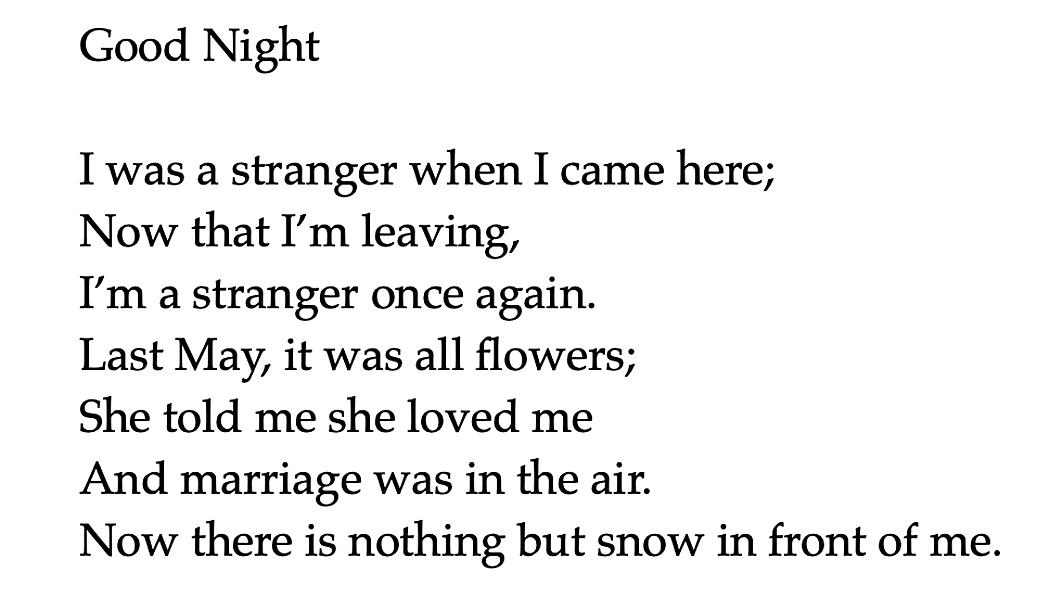
Once, driving east in North Carolina on my way to Cape Hatteras, it was near sunset and in front of me in the windshield was a sooty-dark thunderhead and rain on the road perhaps a mile in front of me, obscuring the road and any horizon. It was a canyon of charcoal cloud climbing up to the stratosphere, with spikes of lightning, while in the rear window, the sun was brilliant and red in a clear sky. It was the definition of The Sublime. 
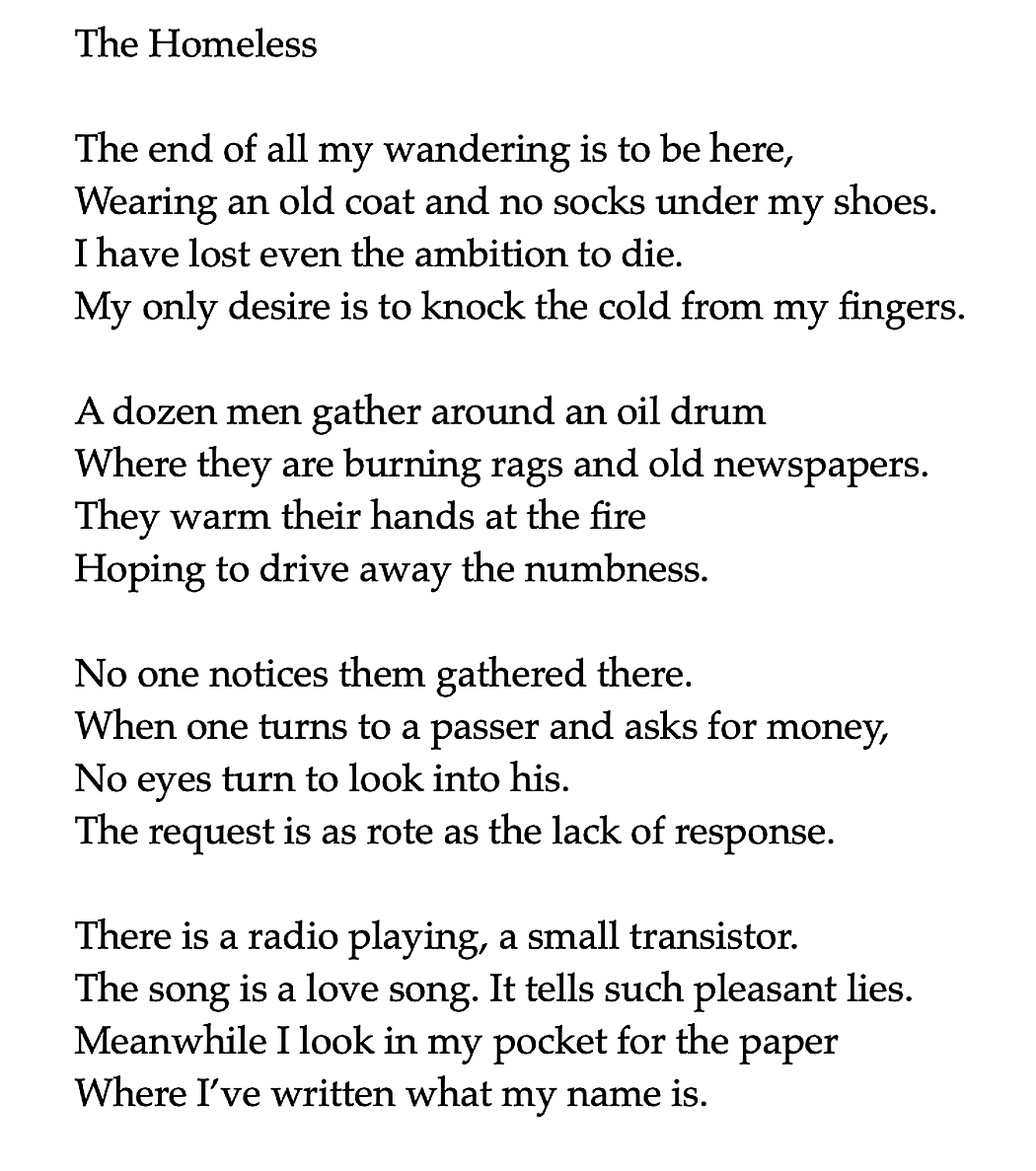
Click any image to enlarge