Archive

Tag Archives: logic

“What do humans sound like?” That was a question that my late wife, Carole, used to ask. She meant something quite specific by it. Carole was the smartest person I ever knew, but her intelligence was not contained within the usual structures of thought. Not so much that she thought “outside the box,” as that there was no box to begin with. 

She used to ask if it were possible to “fall into blue.” When she was a little girl, she used to bend over to see the world behind her, upside down, as she looked at it through her legs. “I wanted to see what it really looked like, and not just what I had grown to know it looked like,” she said. She wondered, as a girl, if the night’s darkness could leak into her bedroom from under the window sill. She was awake to all the input the world offered. 
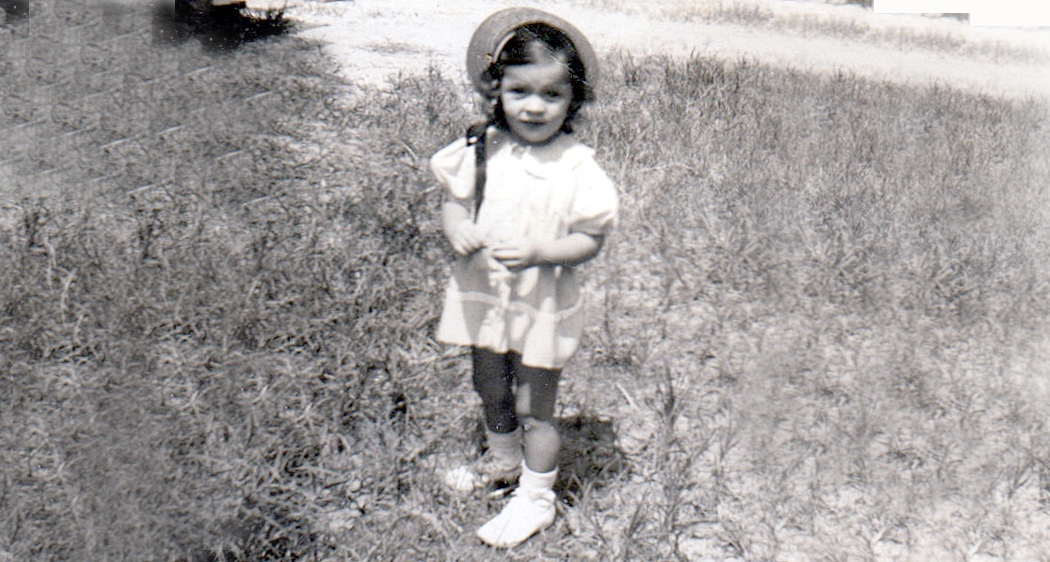
When she asked about the sound of the human voice, she meant, what it sounds like aside from its meaning. We know what a dog sounds like, for instance, or a bird or a cat. But what is the pitch, rhythm, tempo and tune of a person speaking? We know a bird’s song in part because we don’t know what the song means, only its music — but not even music is the right comparison, since music comes with a syntax and structure of its own. We know the raw sound of the birdcall, but we cannot normally know the same for human speech because our brains process the language instantly into content. We bypass the awareness of the sound for the sense. 

I got some inkling of the sound this morning while sitting in my back yard. Normally, I hear birds and maybe the chatter of squirrels. But there is a house just beyond the trees that border my yard where the family runs a little day-care operation. And I can hear the children talking and yelling, but not well enough to hear what they are saying. I hear only the pitch and rhythm, the overlap, the space left between utterances, the rise in volume with excitement. I hear the adult voices, too, and their pitch and rhythm, all without knowing what they are saying. I am hearing the sound that humans make.

Yes, I know it is being filtered through the English language. I’m sure if I heard little Mexican children playing, their rhythm would be a variant, or French kids behind the walls of their school in Paris (which I once heard and listened to). French has a less percussive sound. Spanish has a rapid-fire rattle to it. And Chinese comes with a melody that imparts its own meaning. But the basic sound was there. 

And so, I hear, in my back yard, the combined sounds of distant dogs barking, the “kweet… kweet” of a towhee, the “shshsh” of the breeze rustling the tree leaves, and the vocalizations of those dozen or so children. And it is all of a piece. It is an experience of the world before knowing. 

One of the problems is that the human mind is a pattern-recognition machine. It seeks and spots them, even without our willing to do so. Understanding speech is an example. The sounds become words involuntarily and the words get in the way of hearing the sounds as sounds. Of course, the words are the point of speech and the desire to hear the sounds without the words is a peculiarity of mind that Carole had. For most of us, the actual sounds are irrelevant, as long as our brains recognize them as phonemes, morphemes, words, phrases, sentences and thoughts. 

Yet, the patterns we recognize — not just in speech, but throughout our lives and culture — are, in some sense, second hand, a gloss on the primary experience. They are a colored glass through which we see the world. The patterns, like so many mullions in a large window, force us to see, hear, taste, smell, the world in the patterns that our brains force on it. 

A frame separates the subject of a picture and points it out to us, but it also cuts away everything not in the picture — the wider context. 

You might laugh, because functioning in the world requires us to make sense of it and our brains do that. But that pattern-making and pattern-finding aspect of our consciousness can also prevent us from experiencing existence directly. Really, only artists, visionaries and crazy people get to lift that veil. Artists want to; visionaries get to; and the insane have no choice. 

Some of those patterns are the cultural baggage we carry. We have the expectation of a certain pattern for governments, for marriages, for friendships, for gender, for tribal affinities. These patterns may merely be inherited habits, but they are buried deeply in us. An attempt to escape them is one of the things that artists do. Entrenched interests often become agitated by the art and fight back. Eventually, the art becomes classic and everyone more or less agrees that the artists had it right in the first place. But by then, the art has become the pattern and is itself entrenched. 

Trying to escape not only the patterns, but the incessant pattern-finding and pattern-making of the brain is difficult. Sometimes that brain outweighs the rest of our bodies. Getting rid of the “middle man” and experiencing things directly can be a revelation. 

It is, I believe, what Walt Whitman was getting at in his Song of Myself: “The atmosphere is not a perfume, it has no taste of the distillation, it is odorless,/ It is for my mouth forever, I am in love with it,/ I will go to the bank by the wood and become undisguised and naked,/ I am mad for it to be in contact with me.” 

 To smell the new-mown grass without knowing it is new-mown grass; to feel the radiant heat on your skin and not know it is caused by the summer sun; to taste the sweetness of spring water without knowing what you are drinking; to hear the sound of children playing without hearing mere words; to feel the earth under your toes and the air against your skin and never parse their meanings. 

“You shall no longer take things at second or third hand, nor/ look through the eyes of the dead, nor feed on the spectres in books,/ You shall not look through my eyes either, nor take things from me,/ You shall listen to all sides and filter them from your self.”
I’m not recommending that we all turn into gibbering idiots; our minds’ ability to forge sense of it all makes life possible. We couldn’t give that up even if we wanted to. What I am trying to do is supplement its meaning-making drive with the ability to let that go for the sake of pure experience, non-judging, non-deciding experience. It would be a kind of return to roots, before all the layering of culture and idea, where we might discover some of those ideas have no foundation. 

Meaning is important, and we all want meaning in our lives. But perhaps we are missing something more primary, more direct. 

A wise person once said, “What we seek is not the meaning of life, but the experience of life.” The experience has precedence. We can hardly make meaning without it. 

In 1956, psychologist Benjamin Bloom published his Taxonomy of Educational Objectives, a hierarchical ranking of thought processes, often recast as “Bloom’s Taxonomy.” It has been often revised and recast, but most often, at the bottom were simple tasks such as memorizing, at the top came creativity. 

My late wife, who was at least as smart as Bloom, had her own version of this taxonomy, and for her, the lowest level was “naming.” She taught school for more than 30 years and saw brain-burn at the individual level. Being able to say, “Horsie” or “Duckie” is naming. This is simple rote. Learn the name and repeat it when appropriate. 

Naming also shades into the second level — the level most people get stuck in — that of sorting. Finding categories and shunting the names into silos to contain them. As if that explained anything. 

The greater part of what we do with our brains is to sort things out. To put cats over here and dogs over there. When we learn, most of what we mean by that is to understand that Claude Monet was an Impressionist and that Luis Buñuel was a Surrealist. These are mere sortings. Important for a file clerk, perhaps, but more a form of busy work than of actual thinking. 

We learn a whale is not a fish, and that a spider is not an insect. We have separate categories for them, and when we recognize the categories, we believe we have actually said something meaningful about our whale or spider, when really, all we have done is play with words. 

Categories, are, after all, quite fugitive, quite fungible — squishy. When zoologists first tried to classify lions, for instance, they placed them in the genus “Felis,” for they are some kind of cat. But later, it was decided they were big cats, not small ones, and so they became “Panthera.” Oh, but that wasn’t good enough, and so a new genus was established, dividing them from tigers and leopards, making them “Leo.” New category, new silo. 

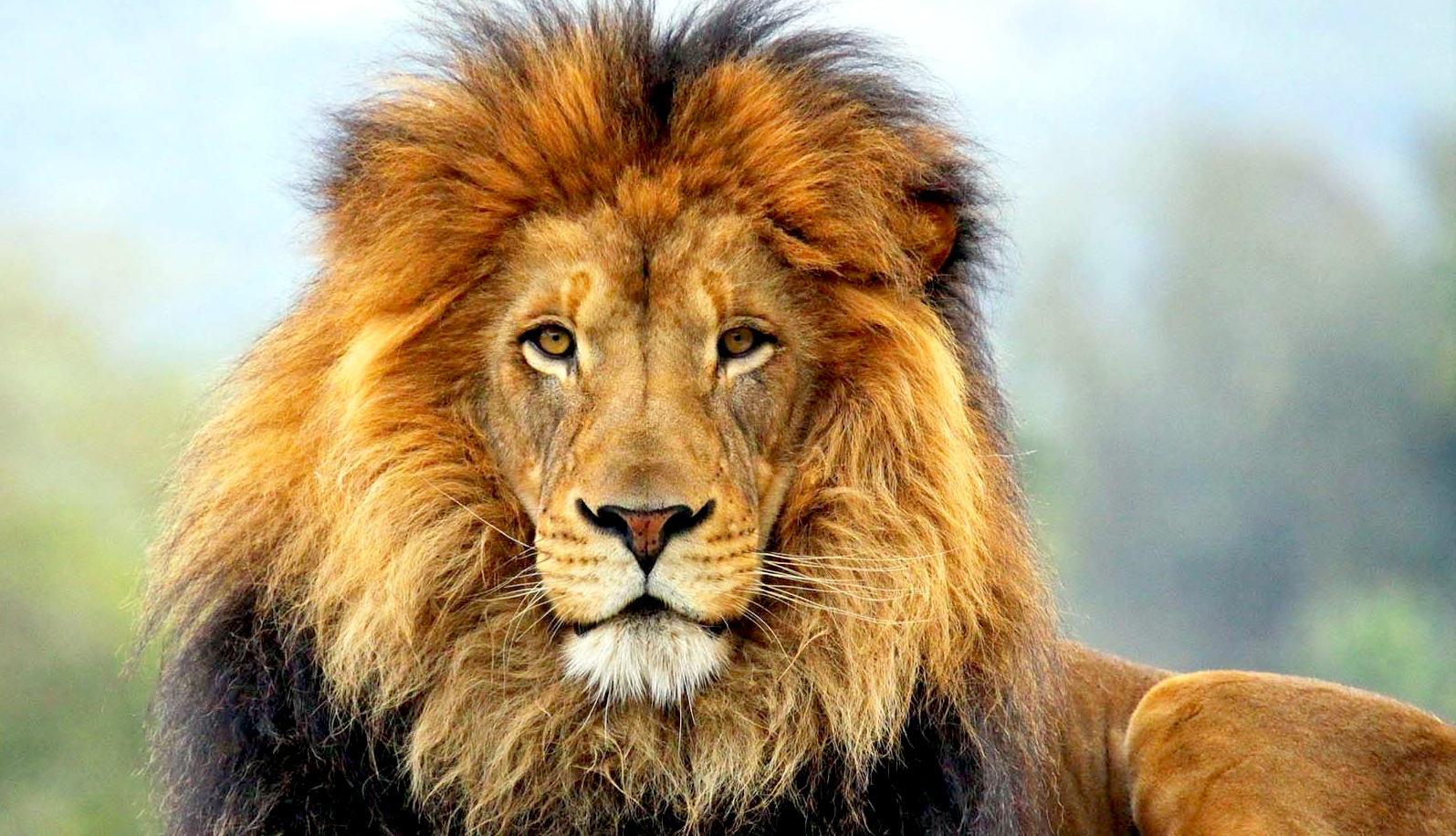
For a brief time, I worked at a zoo, and had the opportunity to walk behind the cages and get up close to many of the animals and I can tell you that standing with his zookeeper two feet from a male lion to feed him,(separated from Leo by the cage bars), the lion’s head seemed to be the biggest thing I had ever seen, shaggy and furry, with a very particular smell, and a sense that this beast could swallow my head as if it were an M&M. And then it “purred.” A low, gutteral roar expressing satisfaction at the afternoon meal, that made the ground rumble under my feet. It was one of the most impressive things I have ever witnessed and it mattered not a whit whether I was seeing a Felis or a Panthera or a Leo. The name was rather beside the point. The experience had a physical existence and it didn’t need a name. 

Language is not reality. And the experience — the feel of it in the palm of your hand, or in your nostrils, or under your feet — is worth all the words in the world. Words can be a barrier keeping us from what is real. 

And yet, we spend so much of our time arguing over these categories, as if they mean anything. As if they were a reality. Is Joe Biden a Socialist? Did Elon Musk actually reach outer space? Is a tomato a fruit or a vegetable? So much thought and energy to such meaningless ends. Think of all the dark money spent in political campaigns to paint the opposition into a category-corner that makes the opponent a one-dimensional boogeyman. The world and its things are infinite. 

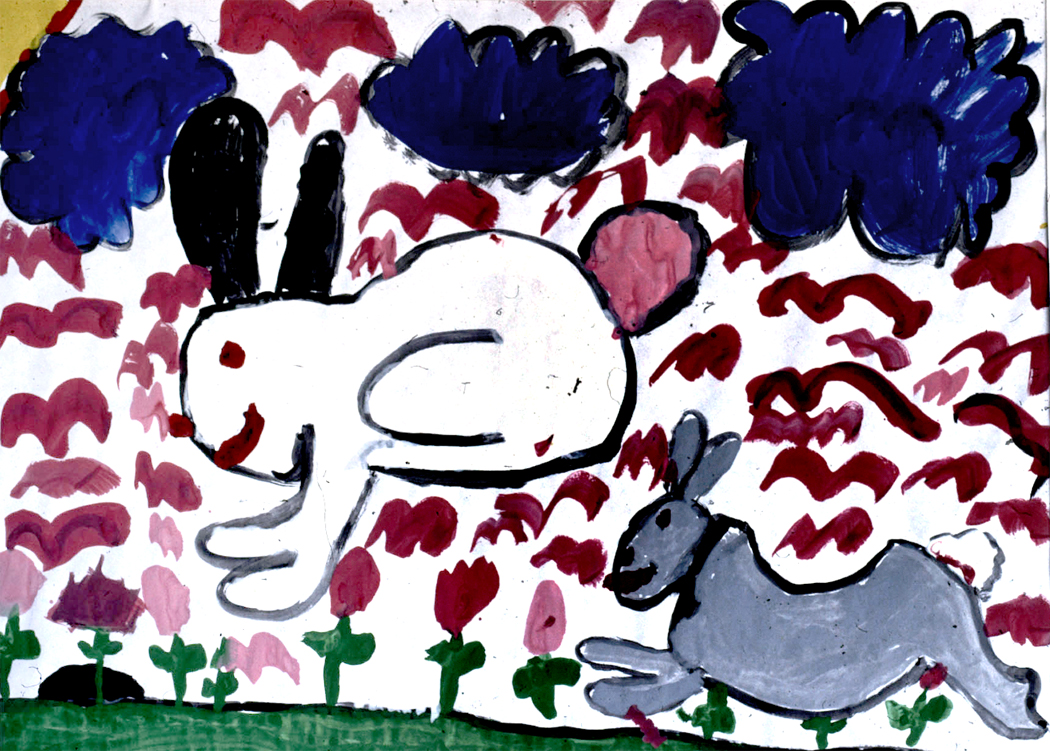
My late wife took animals to class with her so her pupils would have actual experiences — the twitching nose of a bunny, the blank stare of a hen, the brittle carapace of a hermit crab — and then gave the kids paper and paints and let them express what they had experienced. If names were mentioned, they were the names the kids gave the animals — a rabbit named Tiffany Evelyn or a crab named Eloise. What mattered was physical reality of the experience. Anything else is just language. Names. Categories. 

Historians like to take big chunks of time and give them names: Classical, Postclassical, Late Medieval, Romantic, and so on. Then they argue over it all, because these categories are misleading and constantly changing — being redefined. But, as they say, whatcha gonna do?

Take the Middle Ages. Middle of what? Homo sapiens developed something like — in a common low-end estimate — 300,000 years ago, putting the start of the Middle Ages somewhere approximately in the last 15/3000ths of human history. Not exactly the middle.

But the dates we give the Middle Ages vary widely. It came after the Roman Empire. When did the Roman Empire fall? Well, you can say that the final collapse came in 1453 with the fall of Constantinople. For some people, that is already the Renaissance, squeezing out the Middle Ages entirely. But no one really believes the Byzantine Empire was genuinely Roman. They spoke Greek, for god’s sake. They were Christian.

Usually, when we talk of the fall of Rome, we mean the Western Roman Empire and the sad reign of Romulus Augustulus, which came to an end in AD 476. But really, the Western Roman empire at the time consisted only of most of Italy and Dalmatia (later aka Yugoslavia) and a tiny bit of southern France.

And you could easily argue that Rome ceased to be Roman after Constantine converted to Christianity and legalized it in AD 313. After that, the slow slide from Roman imperialism into Medieval feudalism began its ambiguous transubstantiation.

It is the great paradox of scholarship: The more you read, the more your ignorance grows: The more you learn about something, the more you discover how little you know.

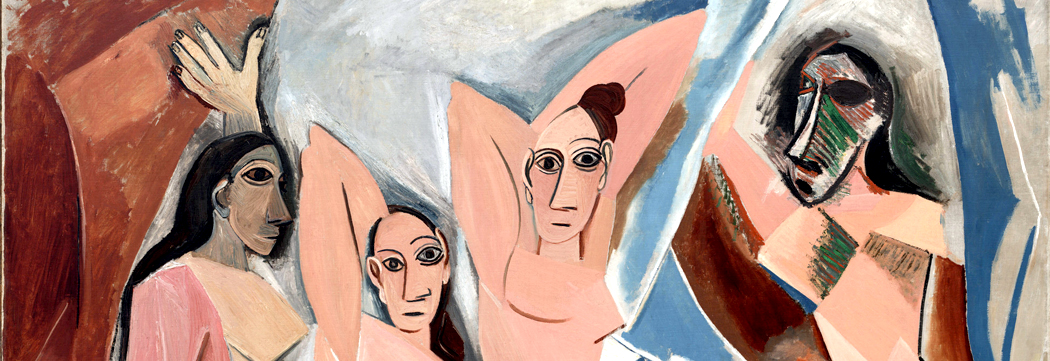
Are Picasso’s paintings Modern art? His first big Cubist painting, Les Damoiselles d’Avignon was painted in 1907. That is closer in time to the reign of Catherine the Great in Russia than it is to us. Closer to George Washington’s Farewell Address. To the Louisiana Purchase. 

So, what do we mean by “modern?” and when did modernity take over? It is a slippery question. And really it is simply an issue of definition — words, not experience. We let the words stand in for reality and then let the debates begin. Reality flows uninterrupted and continuous. Categories are discrete and they start and stop. 

The more you attempt to define the categories, the more they slip away. The history of academic scholarship is often the history of proving the categories wrong. It is historians who argue over the dates of the Renaissance. Or the fall of Rome, or the birth of Modernism. 

Categories are a convenience only. They are a name for the nameless.

I am reminded of the time, some 40 years ago, when I first drove west from North Carolina with my genius wife. We had never seen the great American West and eagerly anticipated finding it. It must be so different, we thought, so distinct. The West is a category. 

We were living in Boone, N.C., named for Daniel, who trod those mountains in the 1700s, when the Blue Ridge was the West. When George Washington surveyed the Northwest Territory in the late 1740s, he was measuring out what became Ohio.

So, when I was driving, I knew I had already pushed my own frontier past such things, and knew in my heart that the West began on the other side of the Mississippi River. But, when I crossed the river into Arkansas, it hardly seemed western. It didn’t look much different from Tennessee, in my rear view mirror. Yet, Arkansas was home to the “Hanging Judge” Isaac Parker and where Jesse James robbed trains. Surely that must be the West. But no, James looked more like a hillbilly than a cowboy. 

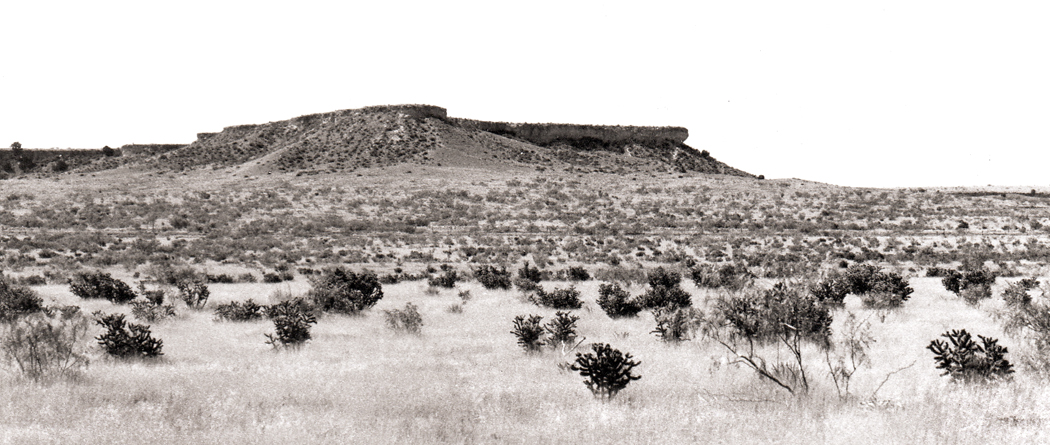
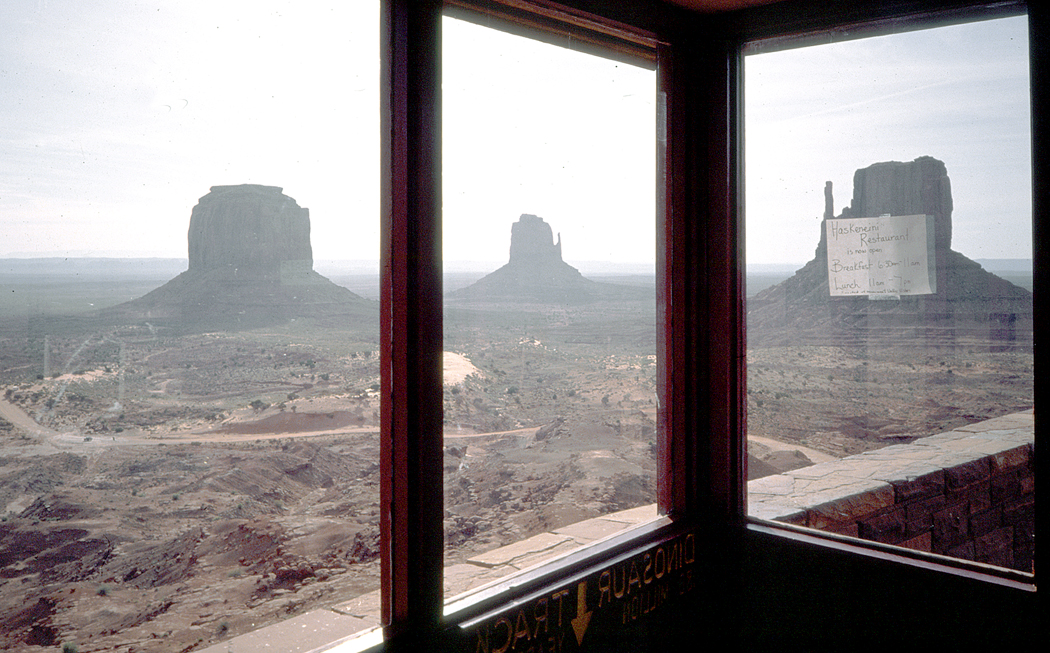
Then came Texas, which was the real West, but driving through flat, bland Amarillo on I-40 was as exciting as oatmeal. The first time we felt as if we had hit the West was at the New Mexico line, when we first saw a landscape of buttes and mesas. Surely this was the West.

Maybe, but we hadn’t yet crossed the Continental Divide. All the waters of all the rivers we crossed emptied into the Atlantic Ocean. Finally, crossing the Divide near Thoreau, N.M.,  we felt we had finally made it.

Yet, even when we made it to Arizona, we knew that for most of the pioneers who crossed this country a century and a half ago, the desert was just one more obstacle on the way to California. In some sense it still wasn’t the West.

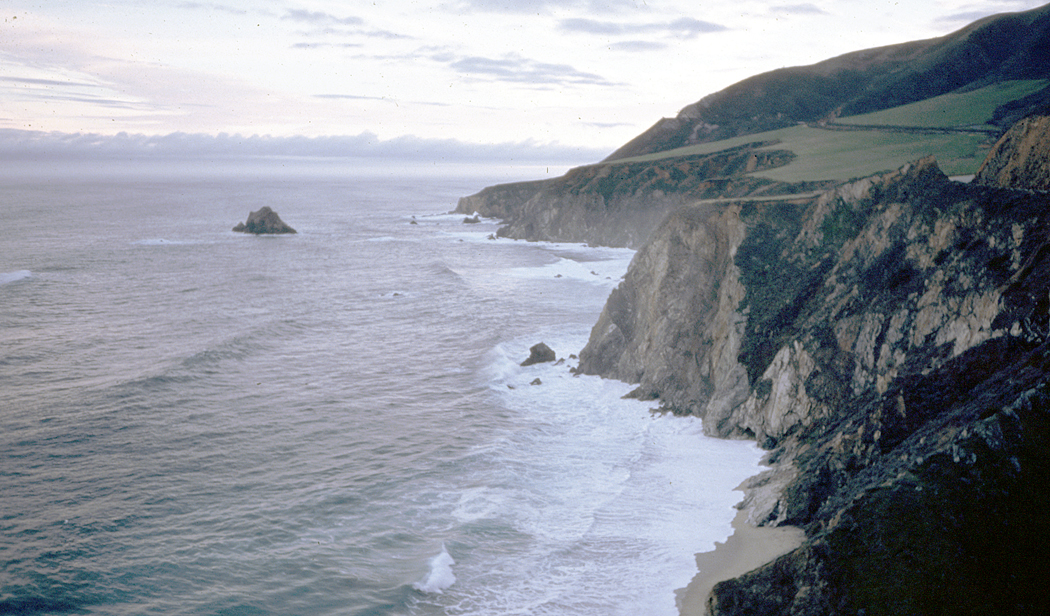
When we got as far as we could in a Chevy, and stared out at the Pacific Ocean, we knew that there was still something farther: Hawaii, Japan, China, India, Africa — and eventually back to North Carolina.

So, the West wasn’t a place you could ever really reach, but a destination beyond the horizon: Every point on the planet is the West to somewhere else.

When we look to find the beginnings of Modernity, the horizon recedes from us the same way. Perhaps it began with World War I, when we entered a non-heroic world and faced a more sober reality.

Modern Art began before that, however, perhaps with Stravinsky’s Rite of Spring in 1913, perhaps with Debussy’s Afternoon of a Faun in 1894. Some begin with the first Impressionist exhibition in 1874.

Politically, maybe it begins with Bismarck and the establishment of a new order of nations and the rise of the “balance of power.”

You can make a case that Modernism begins with the Enlightenment in the 18th century, when a rising Middle Class began to fill concert halls and Mozart became an entrepreneur instead of an employee of the aristocracy.

Or before that, in 1648, with the Treaty of Westphalia, and the first recognition of national boundaries as something more than real estate owned by the crown.

You can set your marker down with Luther, with Gutenberg, with Thomas Browne, Montaigne, Caravaggio — or Giotto.

For many, Modernism began with the Renaissance, but when did the Renaissance begin? 15th century? The Trecento? Or did it begin further north with the Gothic, which is really the first sparking of a modern way of thinking.

Perhaps, though, the Roman republic divides modern political organization from more tribal eras before. Or you could vote for the democracy and philosophy of ancient Greece. Surely the time before that and the the time after are distinctly different. We recognize the near side of each of these divides as more familiar than the distant side.

You might as well put the starting line with the discovery of agriculture in the steppes of Anatolia and the river plains of Iraq. An argument can be made for any of these points on the timeline — and arguments could be made for many I haven’t room to mention.

Perhaps the horizon should be recognized for what it is: an ever-moving phantasm. For those peasants digging in the manorial dirt in the Ninth Century, the times they were living in were modern. The first person recorded to use the term “modern” for his own age was the Roman writer Cassiodorus in the 6th Century. Each moment is the new modern.

These are all just categories, and spending our time sorting things into their file folders should not be mistaken for actual knowledge. It is words about the knowledge. 

Now, I will concede that the words help us discuss the real things, and that it is probably useful to know the difference between cats and dogs, or butterflies and moths. But categories and sorting are just a second level of thinking. After these baby steps, there is so much more that the human brain can begin working on, much more grist to be ground. And a good deal of thought that outreaches the ability of words to capture. 

The level I have been most thinking about recently is that of observing, of paying attention. Not deciding anything, or sorting anything, but just noticing. The world opens up like a day lily; so much that was invisible is made visible — things that the rush of daily life, moving things from in-box to out-box, have made too inconsequential to waste time with. There is a richness to the world that becomes a glowing glory when attention is paid. 

In the days before the transcontinental railroad, a Cheyenne father would take his 10- or 11-year-old son out into the prairie and have him lie down on his belly. “Just look,” he would say. “Don’t talk, don’t decide, don’t name, just look.” And he would leave his son there for the day, not moving a whit. And when he came back to retrieve the boy he would not ask, “What did you see.” He would say nothing. He would not need to. 

So much of value is beyond words, beyond category.