Archive

Tag Archives: lone ranger

The foundational mythology of the United States belongs to the cowboy. An argument can be made for the Founding Fathers, but they are understood more as history than as myth. And by myth I don’t merely mean something that isn’t “true,” but as a mental model that we have absorbed as the definition of what makes us American. We are more John Wayne than we are John Adams. 

Like many of us, I grew up on Westerns, although because I am in my 70s, my foundational Westerns were those from the 1930s recycled in the 1950s on television. I grew up knowing who Ken Maynard was, or Buck Jones. Back then, TV stations were starving for content to broadcast, and the pile of old Westerns filled the Saturday morning hunger. Those younger than me likely didn’t have such a cinematic indoctrination. Later TV Westerns became their version. 

But, since I wrote a blog piece about TV’s Gunsmoke, (link here) I have been thinking about Westerns and their role as our national psychic subconscious, and about how the fictional version differed from the historical. And what is more, what that shift means, culturally. 

It has not always meant the same thing, and the evolution over time describes the changes in America’s perception of itself. 

I believe there were distinct eras of Westerns, that have evolved over the past two centuries. These versions of the West overlap, and all of them have been present from the beginning, or near enough. But the preponderance of each defines each era. 

The West began in upstate New York with Natty Bumppo, or Hawkeye, as he was known in The Last of the Mohicans, and gave us the prototype of the rugged individualist. He morphed into Jim Bridger, Daniel Boone, Davy Crockett and various mountain men living in the wilderness. 
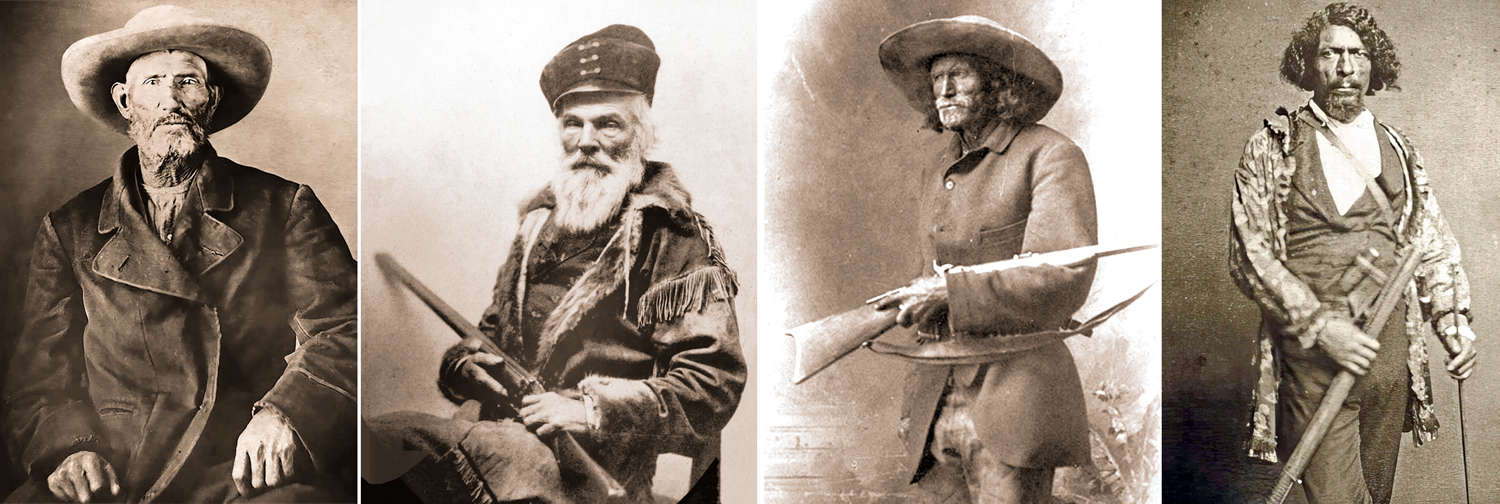
Jim Bridger; Joseph Walker; Jim Baker; Jim Beckwourth

These heroes played out the myth of how we conquered a vast wilderness with rugged individualism and tenacity. It grew into the myth of Manifest Destiny.  
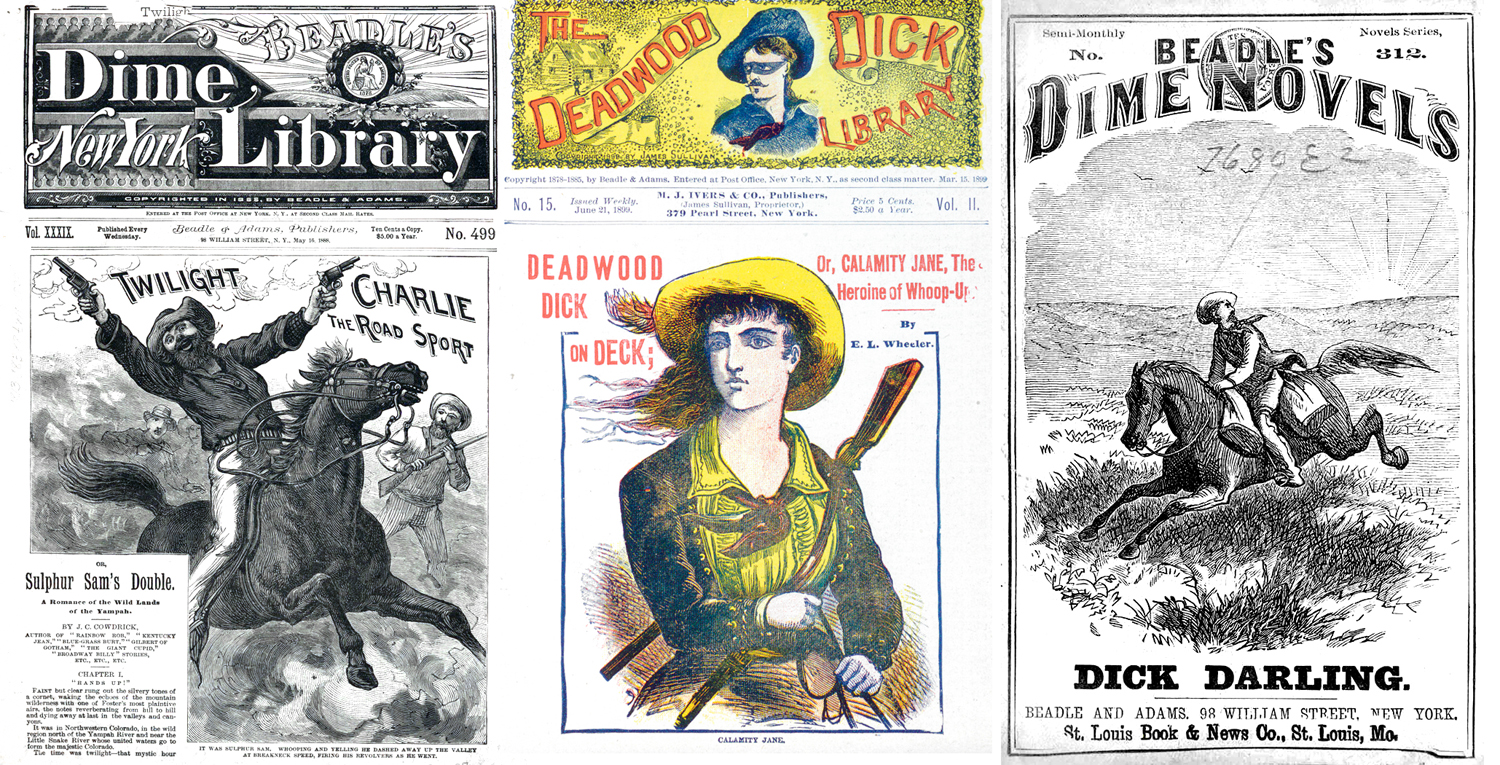
After the Civil War, when economic exploitation of the West began in earnest, with mining and cattle industries, the cowboy took over, with adventurous exploits popularized in a thousand dime novels. Certain names begin showing up with regularity, including Buffalo Bill, Wyatt Earp, Jesse James, Belle Starr. These elided into the early Western movies, including The Great Train Robbery (1903) and Across the Plains (1911), which starred Broncho Billy Anderson, the first cowboy movie star. 
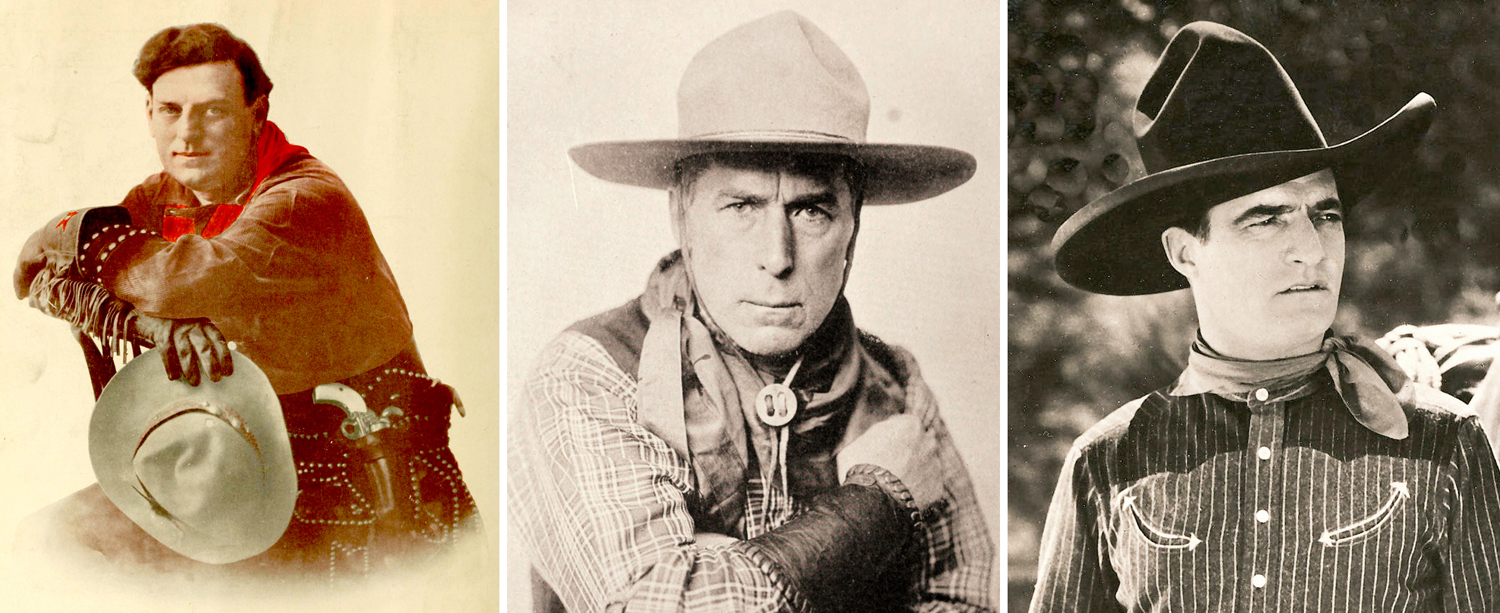
And a split in the myth. On one hand, you had William S. Hart, who attempted a level or realism in costume and plot (matched with a high level of sentimentality), and on the other hand, you had Tom Mix, the show-biz cowboy all duded out with fancy kit. 

The difference was between movies made for general audiences and those aimed at children, mainly young boys. Mix brought glamour to the Western, with fancy cowboy duds and sparkling saddlery to his horse, Tony. 

That split continued into the sound era with hour-long Saturday matinees  with Hoot Gibson, Bob Steele and dozens of others, including John Wayne, who made scores of cheap oaters and even took to trying out as one of the singing cowboys that were briefly popular. 

Through the 1940s, the cowboy movie became stereotyped with stars such as Roy Rogers, Gene Autry and William Boyd as Hopalong Cassidy. There was little attempt at realism. Sometimes they actually fought Nazis. 
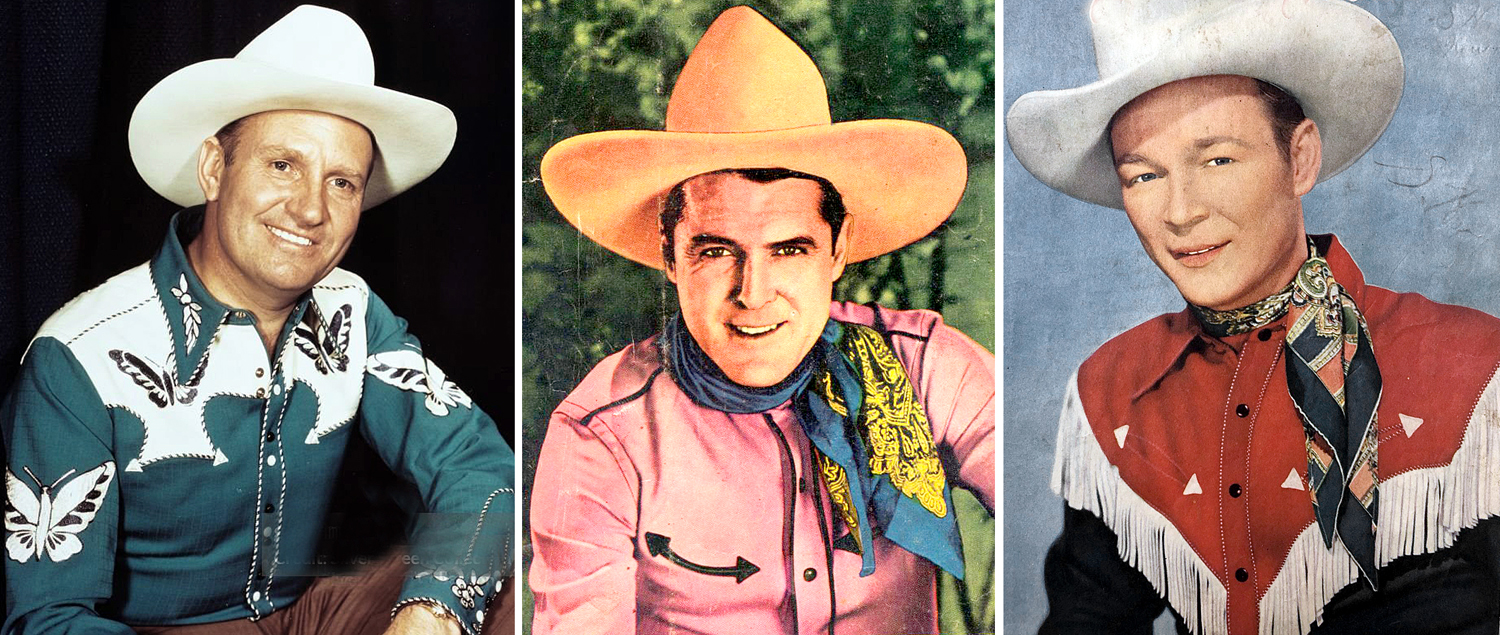
These were the cowboys wearing shirts with crescent pockets and shoulder fringe, and often sported a six-gun on each hip. 
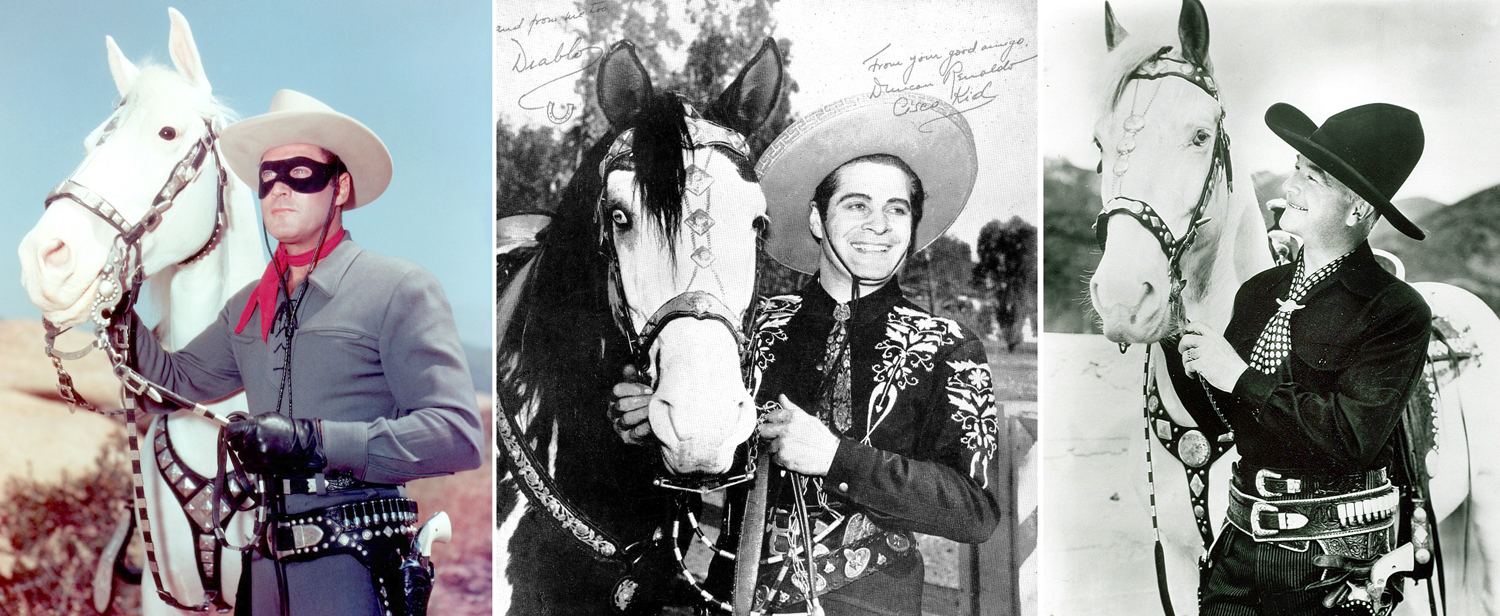
All that carried over into the television era, with a skein of popular Westerns mostly aimed at kids: The Lone Ranger; The Cisco Kid; renewed popularity of Hopalong Cassidy.

Meanwhile, there were always Westerns made for grown-ups, too. From John Ford’s Stagecoach and Howard Hawks’ Red River, through the Budd Boetticher films with Randolph Scott. There was Shane, and High Noon, and Winchester ’73

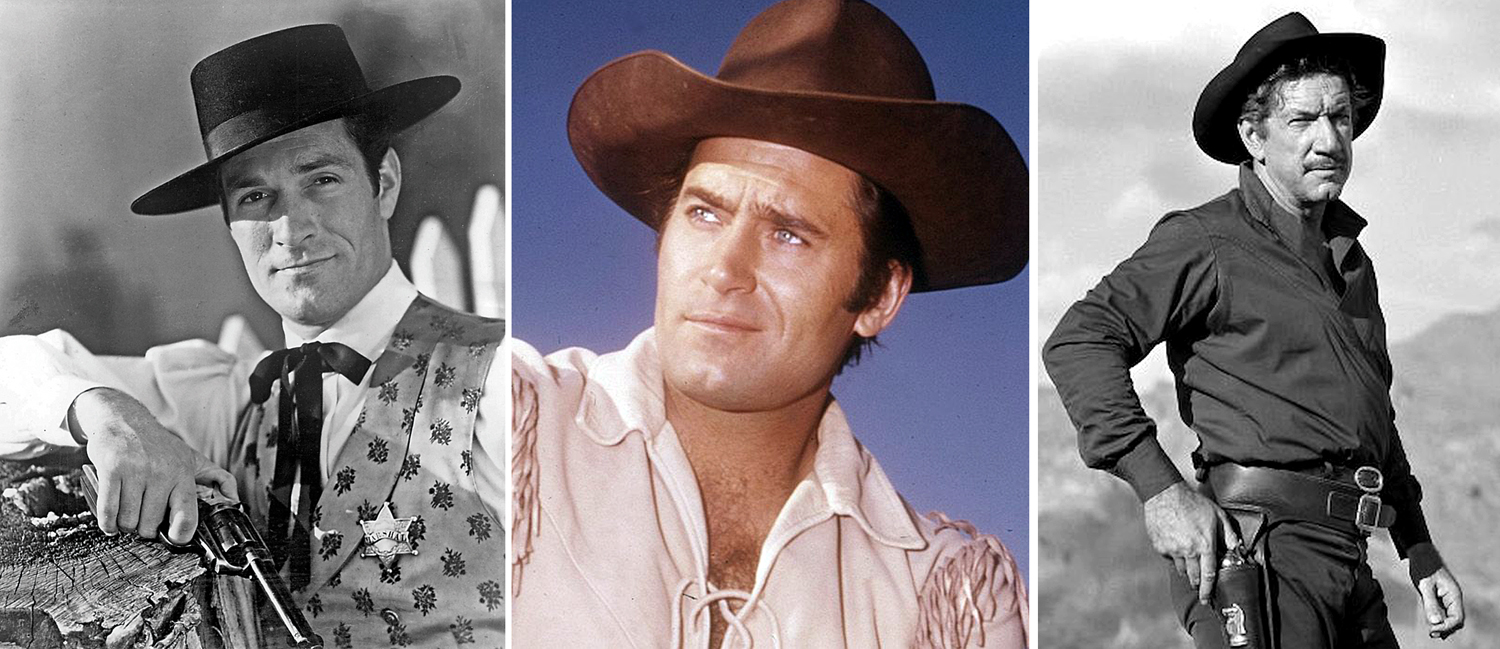
Initially, the lone hero version carried over into the TV era, also, when  The Life and Legend of Wyatt Earp, with Hugh O’Brien, kicked off a decade of evening programing with cowboy heroes, such as Cheyenne, Maverick, Have Gun — Will Travel, Bat Masterson, and The Rifleman. And, of course, Gunsmoke. You can name a dozen others. The market became glutted and then, suddenly, it seems, Westerns were shot dead. 

There came a cultural shift. Maybe it was the Vietnam War, maybe it was fatigue with the cowboy cliches, but when Westerns eventually did return to the silver screen, they took a dark turn. There had been revisionist Westerns before. Indians weren’t always the bad guys. But starting in the 1960s, with films such as Ride the High Country (1962), A Fistful of Dollars (1964) and the subsequent Spaghetti Westerns, Hang’em High (1968) and ultimately, The Wild Bunch (1969), the new Western was brutal, filled with low-lifes and lots, and lots of grime. 

“McCabe & Mrs. Miller”

The trend continued through McCabe & Mrs. Miller (1971) to Unforgiven (1992). Even the more positive films like those from Larry McMurtry novels or with Tom Selleck attempt a more naturalistic view of the times in which they were set. 

Of course, there’s a good deal of overlap in the eras. It’s a question of what predominates in what decade. There have been revisionist Westerns from the earliest years, but this view of the overall shape of the Western in American consciousness over time is, I believe, basically accurate. 

What is not accurate, though, are the Westerns themselves. Admittedly, they were never really intended as realism: They are myth and they are national epic. Our equivalent of the Iliad or the Kalevala. Even those attempting fidelity to historical fact ultimately underline the myth more than the fact. “When the legend becomes fact, print the legend.” 


Actual cowboys

As a kid, I loved the cowboy movies, but as an adult, I am bothered by them. I try to remember they are not meant to be documentaries, but crystallizations of myth, and you don’t expect myth to be realistic. You don’t ask Hercules if he has a mortgage. 

Yet, there are sore thumbs that stick out for me in almost all filmed Westerns; four of them — aspects that scream out: “No, this isn’t the way it was.” And perhaps that shouldn’t matter, but these things make it difficult for me to appreciate Westerns the way I did when I was a kid. 

I have four primary gripes. They are: economy; geography; ethnic diversity; and language. Let’s take them in order. 

Two movies, same location

Towns exist in Western mainly to stand in for civilization. It’s where the people are — the people largely left undefined. They stand in front of general stores or the saloon while the heroes and villains play out the ritual of the gunfight. The same set can be used and reused in many pictures, even as diverse as Westworld and Blazing Saddles. The Western movie town is just the stage set for the plot.

But actual towns are built for economic reasons. There was some industry that needed workers and the workers needed services, and so, towns grew. But in most Western movies, there doesn’t seem to be any functioning economy. There are references to cattle and ranches, but aside from giving rustlers something to do, they barely show up as economic factors.  

While the standard movie Western town has its saloons, its general store, its hotel and restaurant, its stable and blacksmith, there is never a thought to where its residents get the money to pay for their drinks, meals, gingham or horseshoes. A town doesn’t grow for just no reason. 

Even Dodge City, in the 1870s, when Gunsmoke is supposedly set, had a mayor and council and a police force. There would also likely have been an elected sheriff for Ford County and a judge, to say nothing of at least two lawyers, advertising on the front page of the Dodge City Times in 1878. 

Sometimes it is downright preposterous. Consider Clint Eastwood’s High Plains Drifter. Its town is built on Mono Lake in California with no economic base at all — just a hodgepodge of buildings erected near a salty lake that cannot even provide drinking water for the residents.
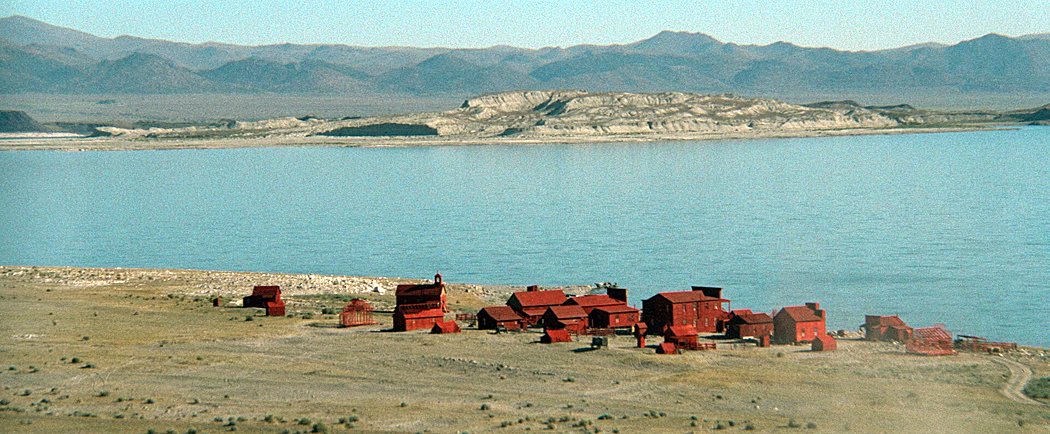
“High Plains Drifter”

Or, one of my favorites, the supposed farm built in Monument Valley in Arizona, in The Searchers. The idea of such a farm is ludicrous — not made better because the landscape is supposed to stand in for Texas. 
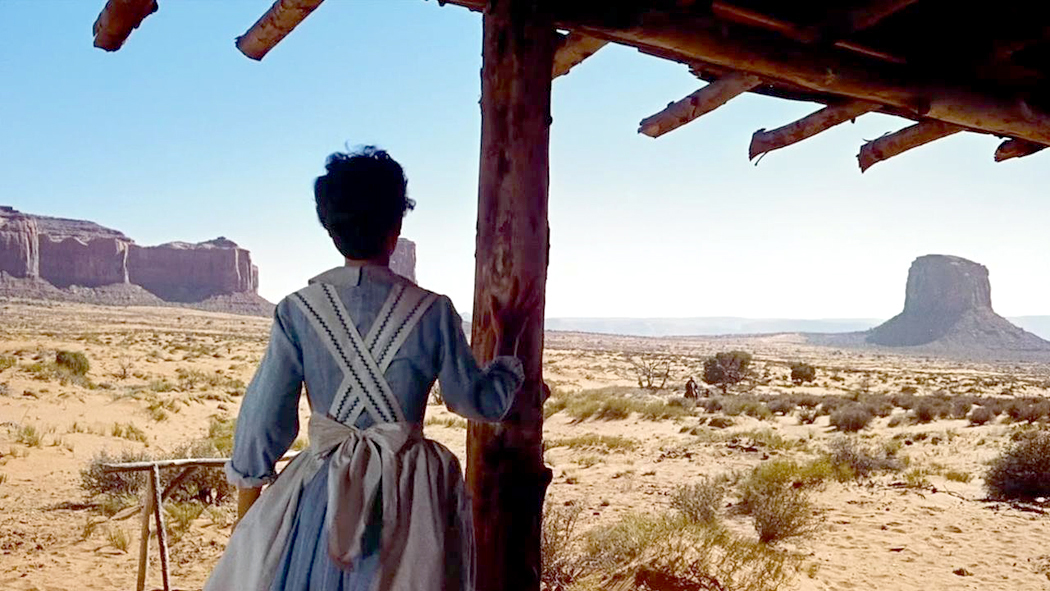
“The Searchers”

 Again, there is a reason towns were built where they were. On rivers for shipping; near mines to provide supplies and provisions; along railroads to ship cattle; near army forts to unload soldiers of their pay.  

As seen in the movies

 My second beef with Westerns is its geography. Most of the Western tales we have historically took place in the most boring landscapes imaginable, in Kansas, Nebraska, Missouri, Texas. 
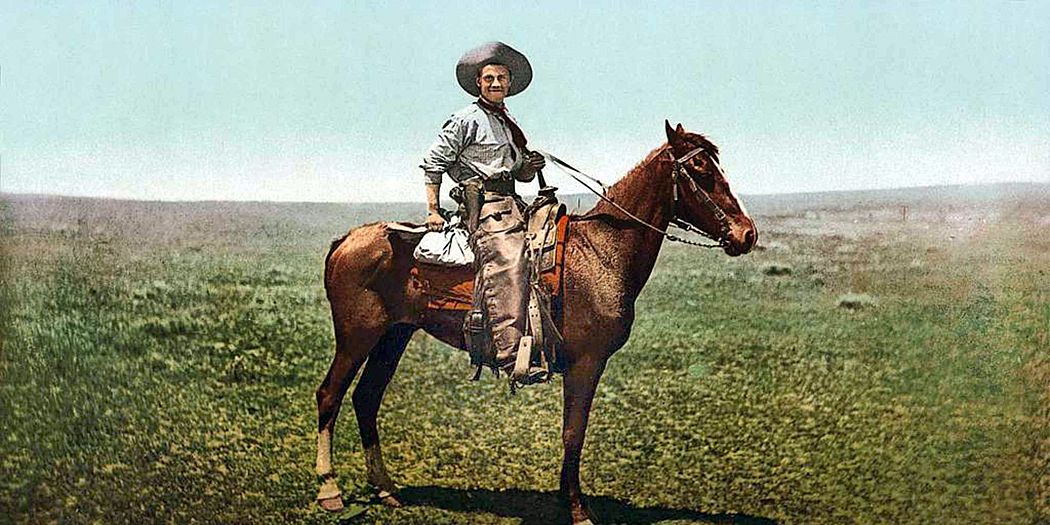
What the actual working West looked like

But such places are not very photogenic. And so, we move them lock, stock and barrel to the Rocky Mountains, the Desert Southwest or California’s Alabama Hills with the Sierra Nevada in the background. 

“Gunsmoke”

Even Gunsmoke, set in Kansas, sometimes shows a mountain range off in the distance sighted down the main street. (I’ll discuss Dodge City in more detail in Part 2 of this essay, to follow). Matt Dillon is sometimes shown accompanying a prisoner, for instance, across the Rocky Mountains or into the desert, hundreds of miles from his jurisdiction. To say nothing of the months it would take to ride there on the back of a horse. 

In the 1950 film Broken Arrow, Jimmy Stewart rush back from Lordsburg, N.M., to Tucson, Ariz., and somehow manages to pass through Sedona, Ariz., on the way — a detour of several hundred miles. Clearly Sedona was more photogenic than the Wilcox Playa or Benson. 
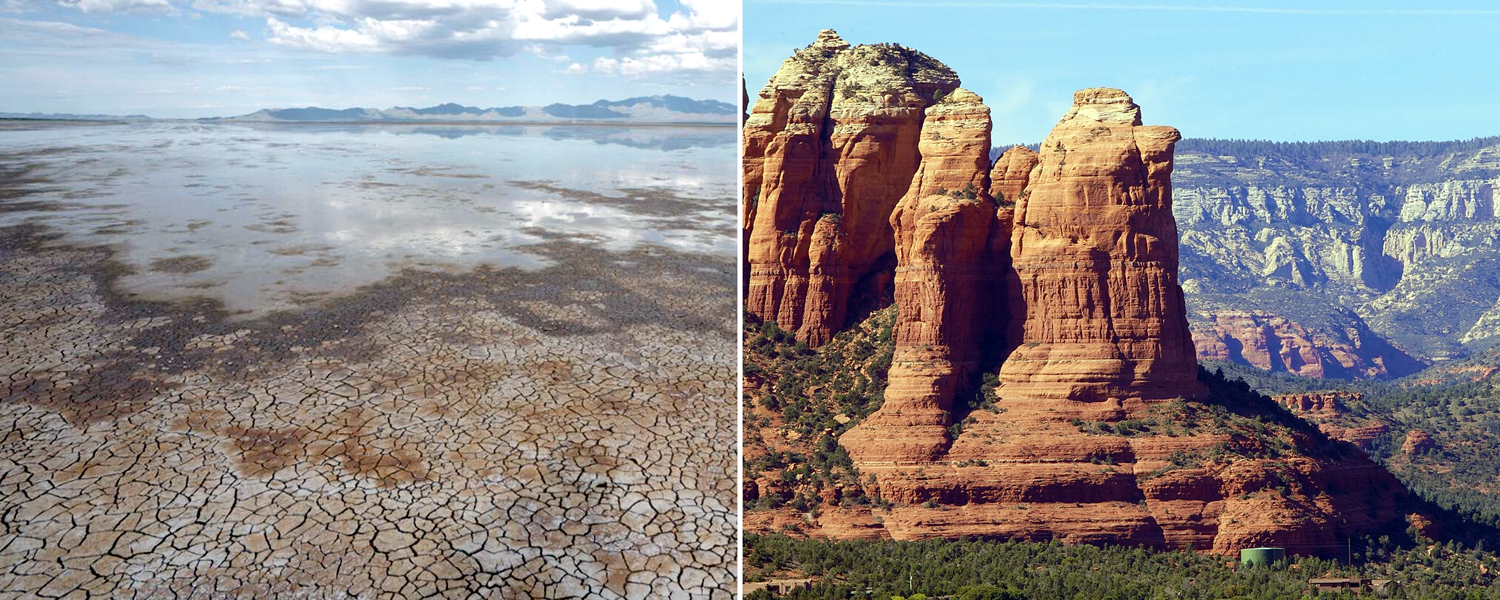
Wilcox Playa (left); Sedona, Ariz. (right)

As in so many Westerns, the West is just a mental landscape, where any buttes and saguaro cactus will do as a setting. 

As a sidenote, related to the geography: Cowboys stranded in the desert reach for their canteen and take a slug of water, or else hold it upside down so we can see it’s empty. I lived in the desert for 25 years and can tell you water is a big deal. Driving through Death Valley one July, I became so dehydrated I developed a headache and was beginning to become disoriented. I had to drink a full gallon of water to recover. A few swigs from a canteen is basically meaningless. 

The third and fourth distortions are perhaps less important, but they nevertheless stick out for me when I’m watching an old Western. There is the lack of ethnic diversity and the matter of speech.
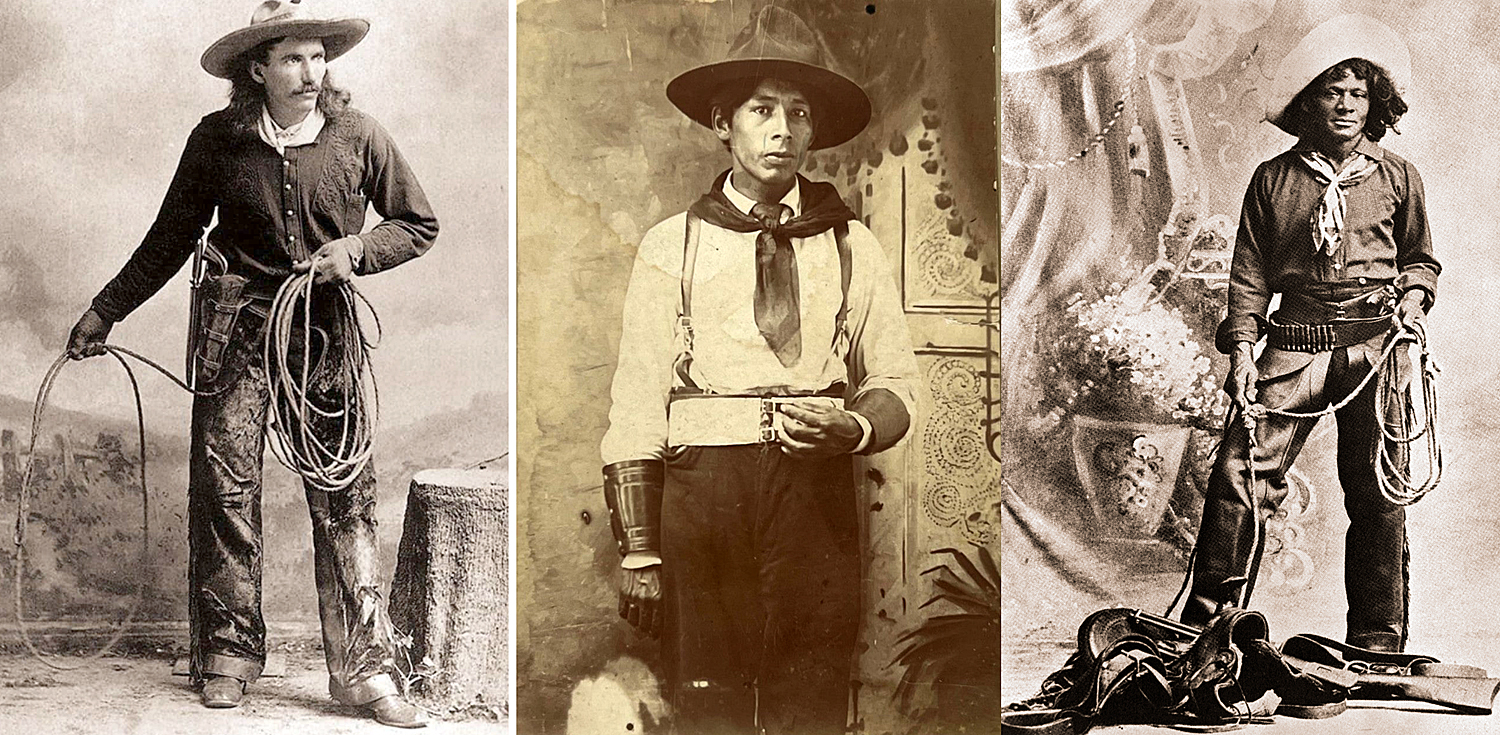
Cowboys: Vanilla, Native American; African American

It’s been documented that about a quarter of all cowboys were African-American. They don’t much show up in the movies (John Ford had his Woody Stroud and at least that was a nod to the fact). And another 20 percent were Mexican and many were Native American. In the towns, segregation was normal, even if the working cowboys out on the plains were mixed. Virtually all the laundries and restaurants in the Old West were run by Asians, mostly Chinese. Other ethnicities were notable factors in various troubles, as the Irish clashed with the English. 
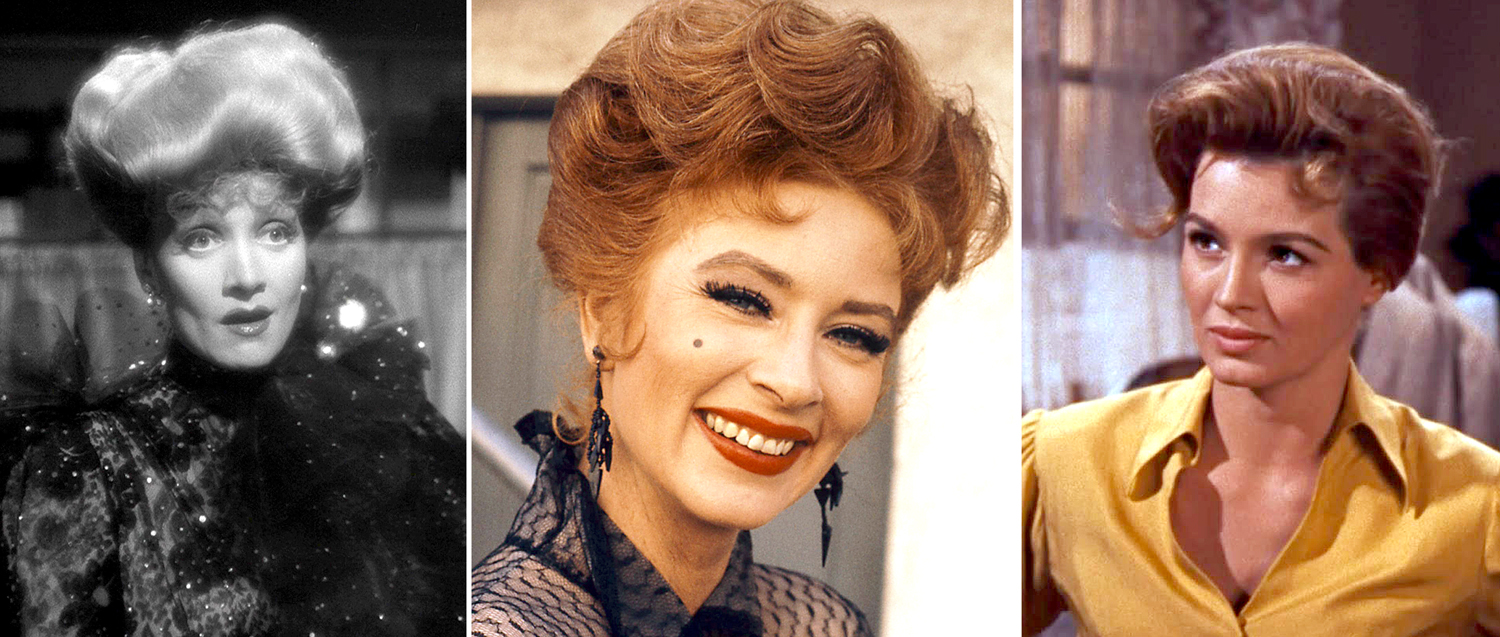
Finally, there is the language spoken in 19th century America, which was much more formal than we take for normal now. In the Western movies, the actors tend to speak in the manner current when the films were made, and that changes over time, just the way the hats went from 10 gallons to three pints, and the brassieres just kept getting pointier. 

The evidence from letters and from novels written during the period tell us that people spoke in longer sentences with fewer contractions. At home, you might relax when talking to your spouse or children, but in public, you attempted to be correct. Even the illiterate miners and farmers spoke more formally. 

This last bothers me less, because if Randolph Scott or John Wayne spoke as they would have in the Old West, the audience might laugh, or at least yawn. How often have you heard parodies of Ken Burns’ Civil War, when they read letters soldiers wrote home? What was normal speech in the 1870s sounds utterly archaic, even stilted, to our ears. 

Next: Part 2 — A look at the historical Dodge City
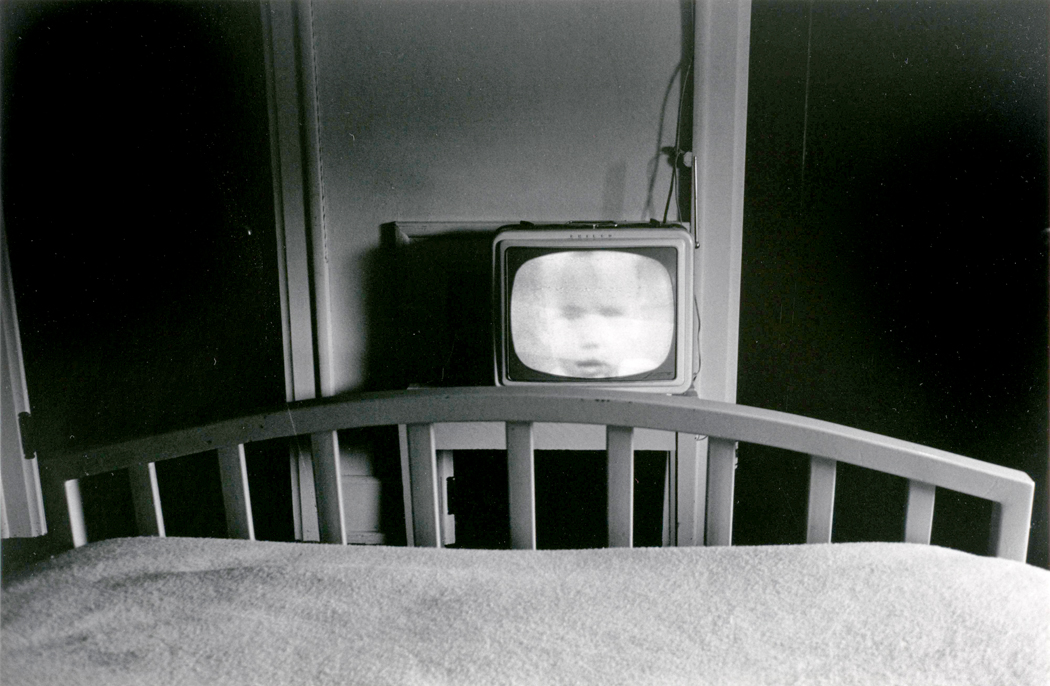
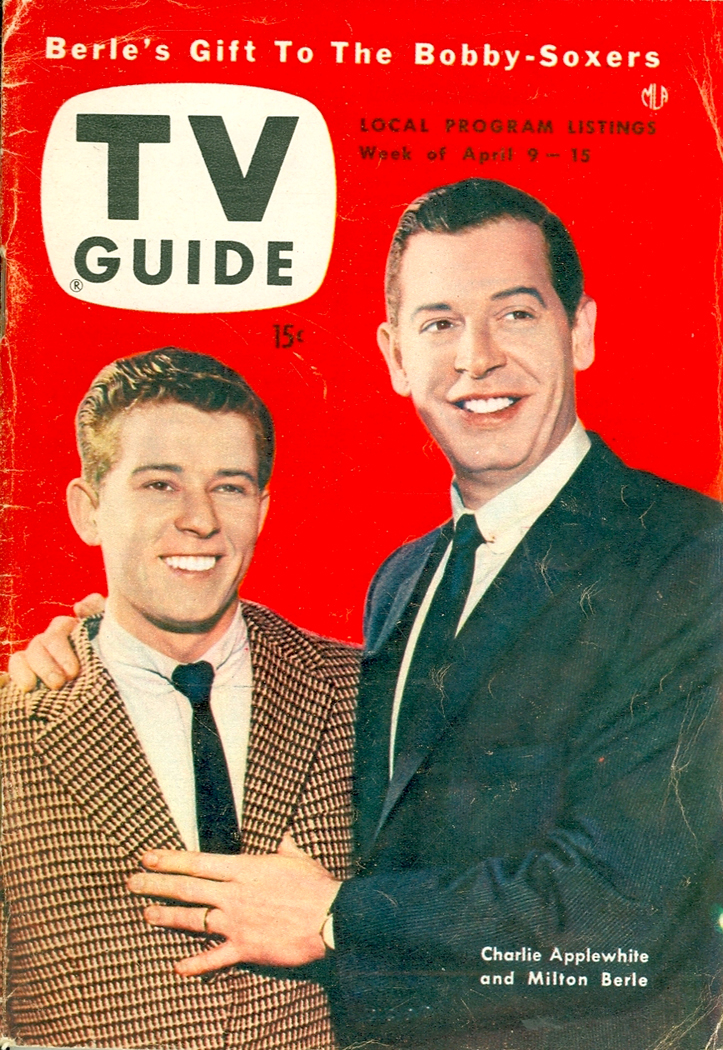
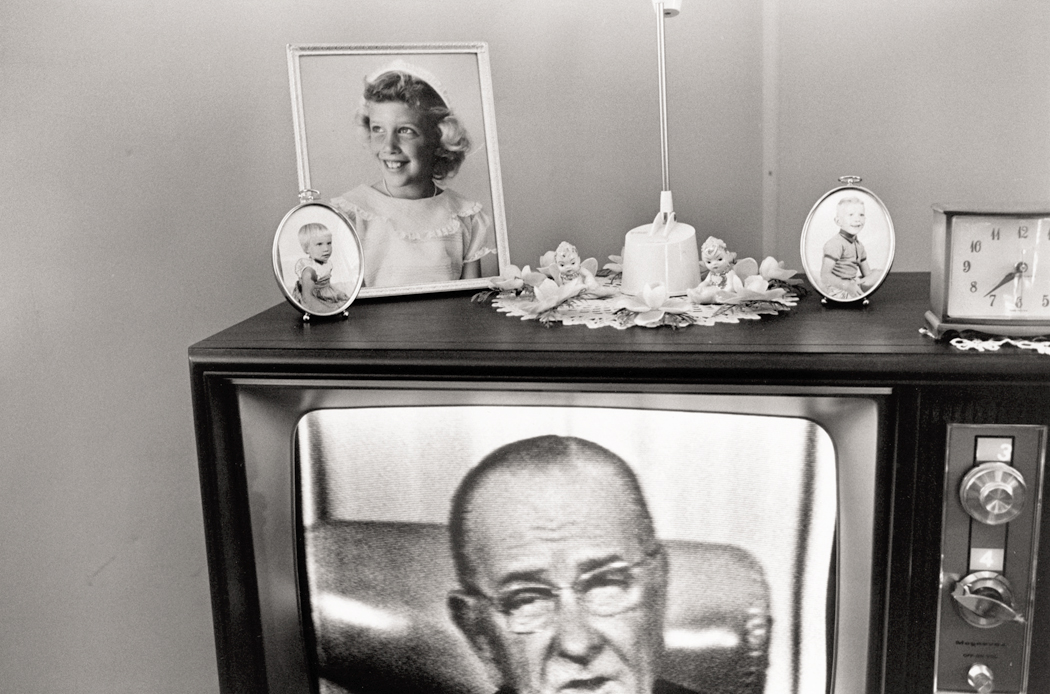
I was born in 1948 and shared my infancy with television. Me and Uncle Miltie saw the light of day in the same instant of time, just a few clicks after the end of the war that killed 60 million people. Uncle Miltie was fun. 

My father still fit into his Eisenhower jacket and automobiles were just being remarketed, having been turned back from the Sherman Tank pumpkins they had been for the duration. I, of course, knew nothing of this: I was eating pureed prunes and slapping my sippy cup on the tray of my high chair and gurgling with ignorant happiness. 

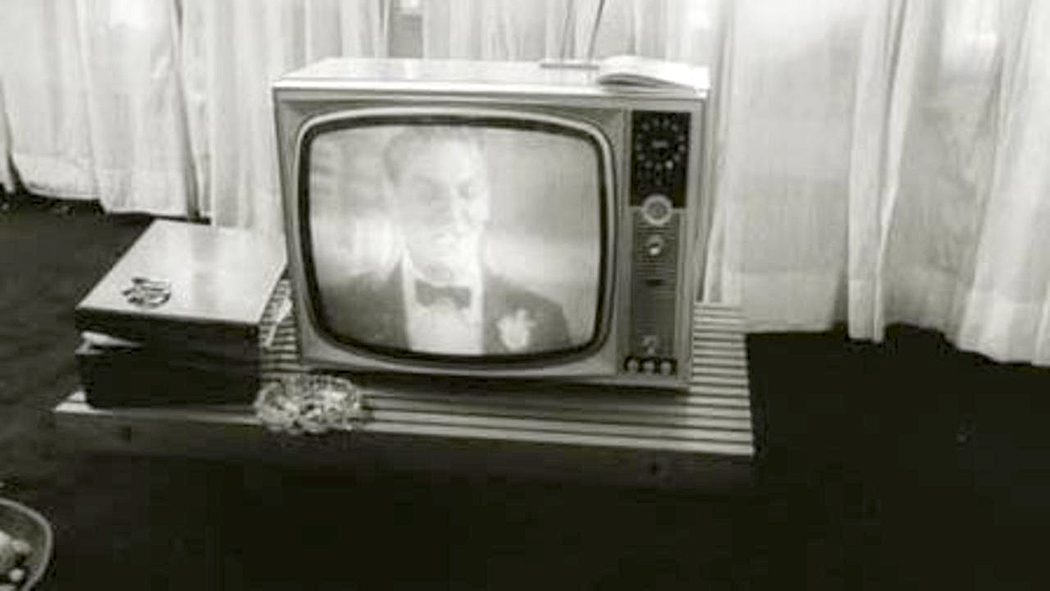
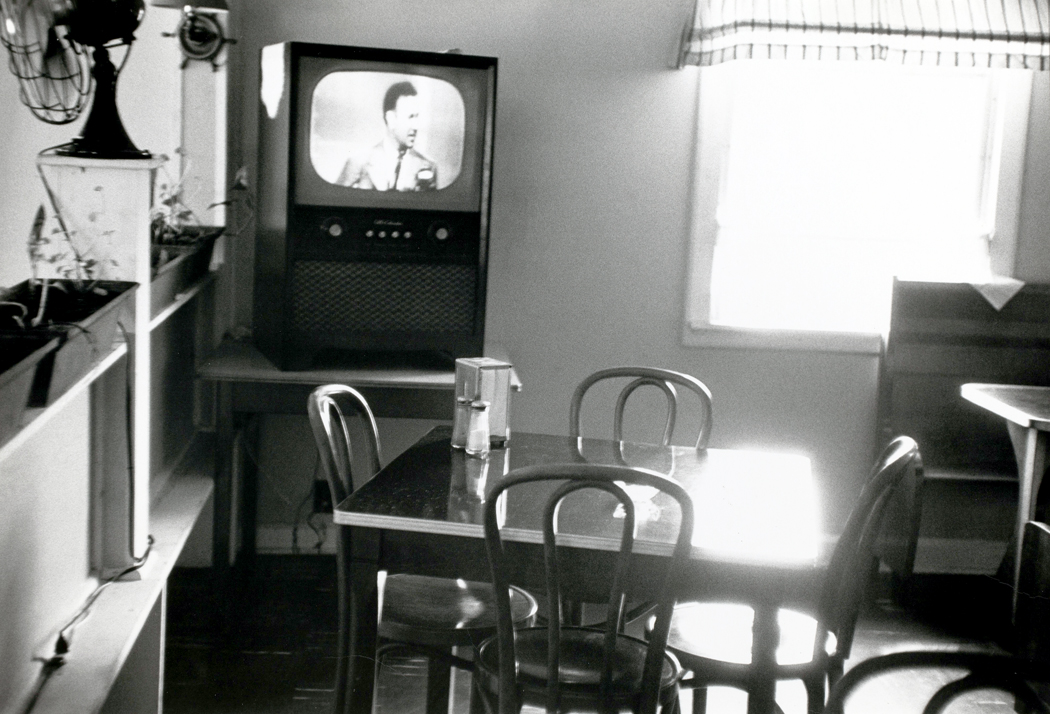
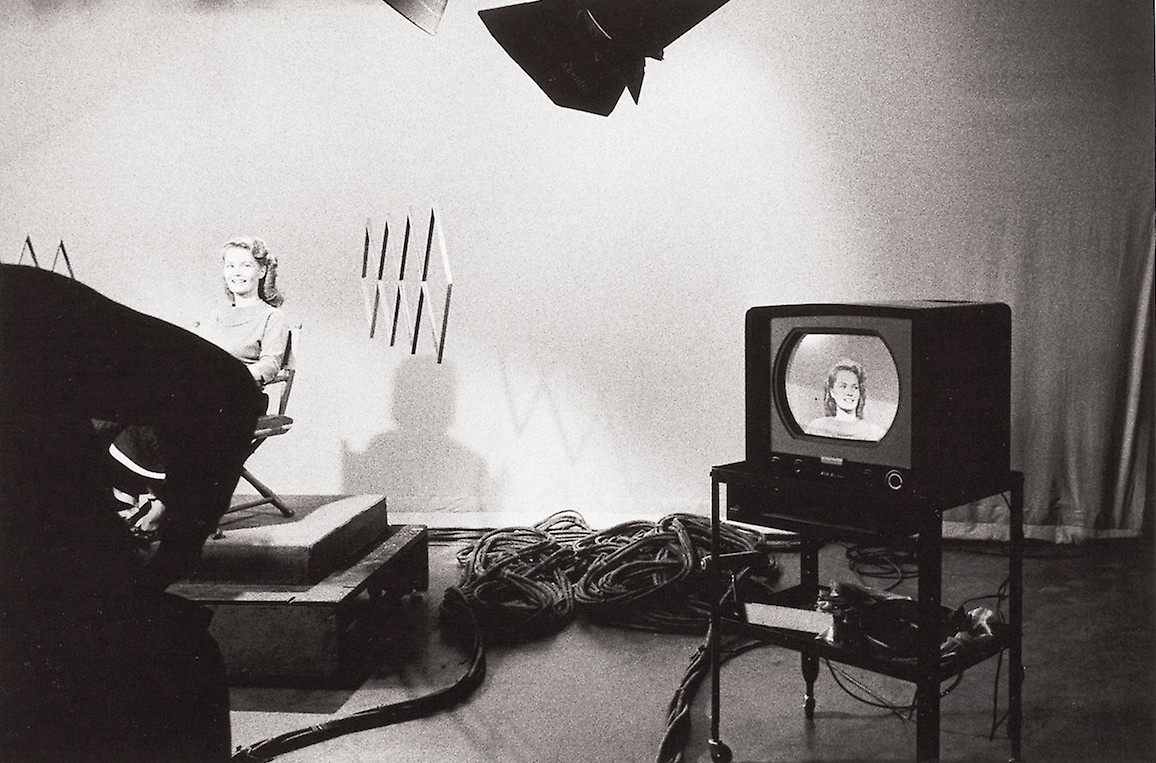
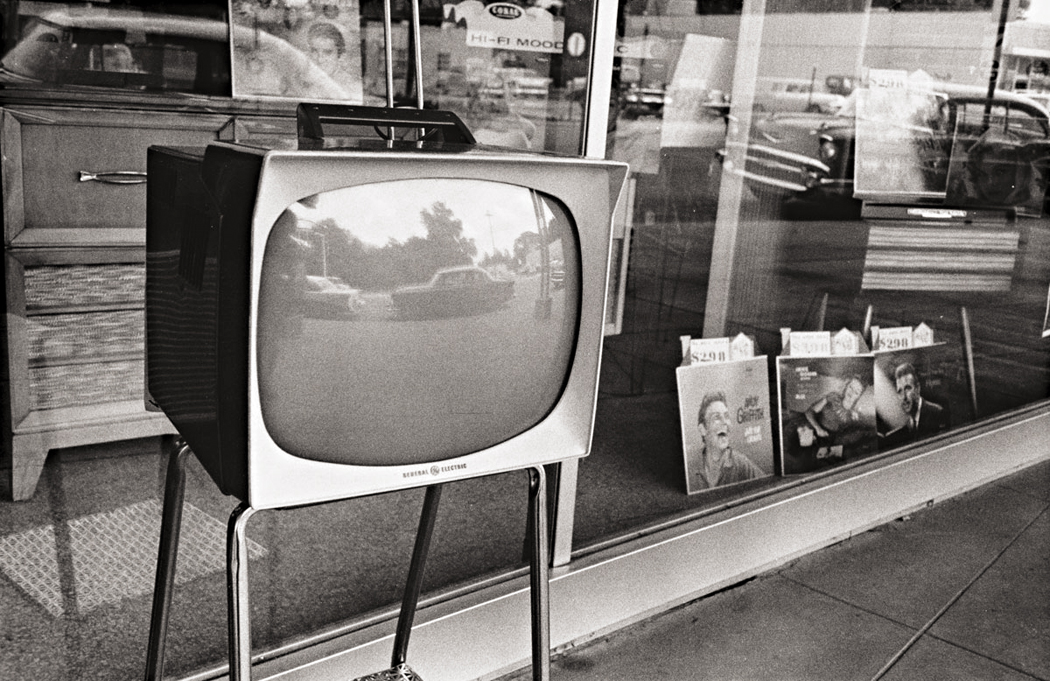
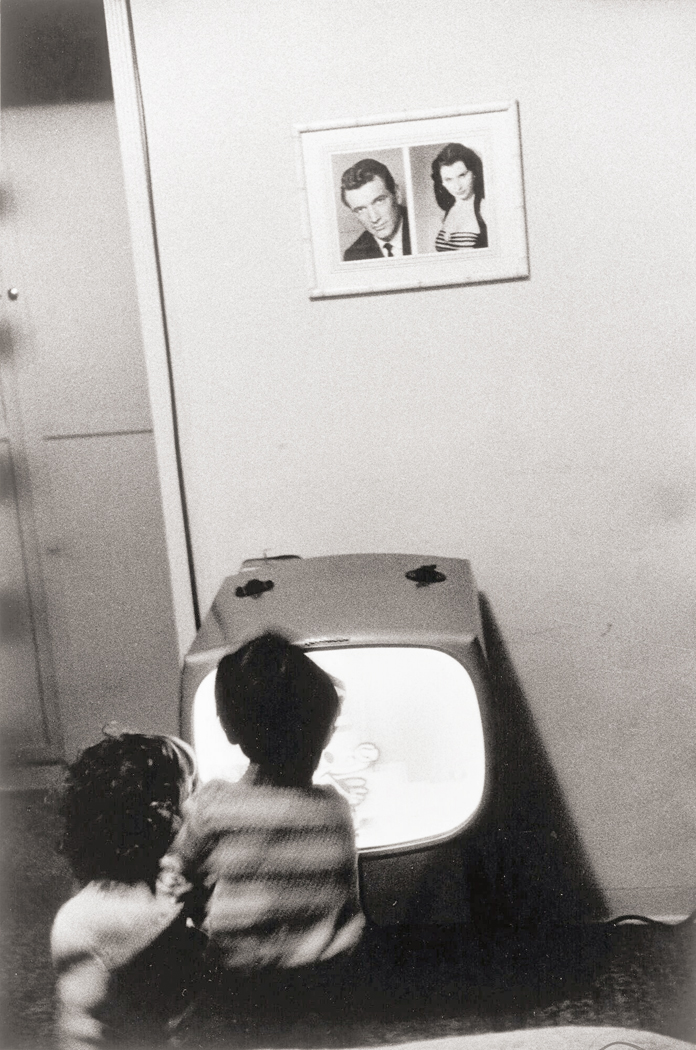
I can’t remember a time when we didn’t have a television in the house. Some of my earliest memories were of watching that ovoid 12-inch screen in our house in Teaneck, N.J. and being told that I entered the world in the same hospital where Ozzie and Harriet’s son, Rickey, was born. 

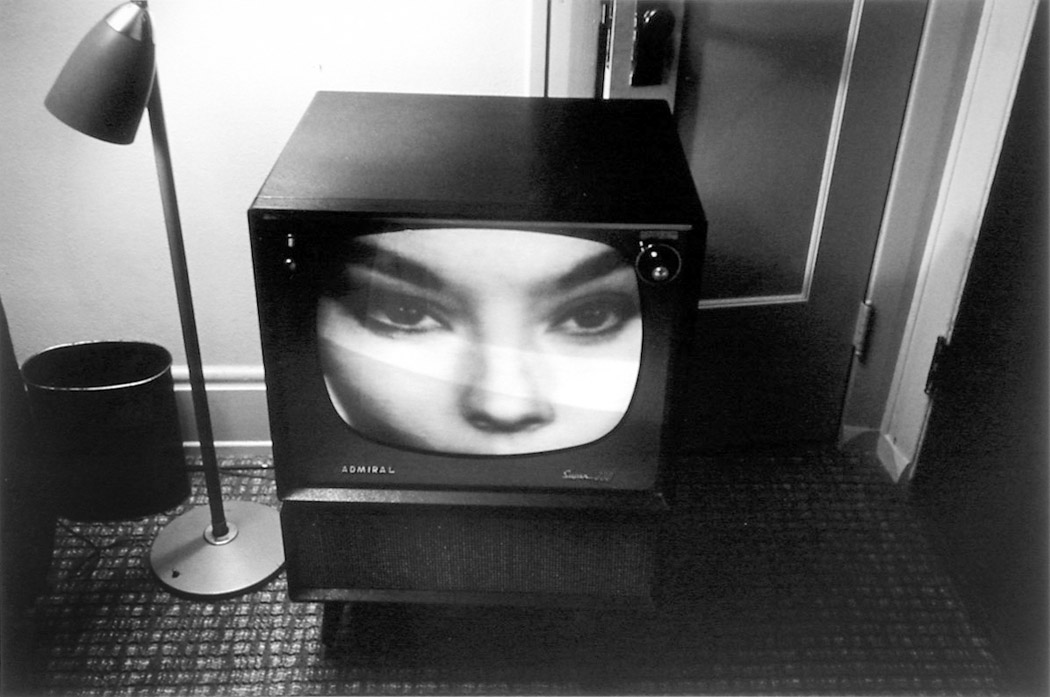
Those early broadcast years were sparse. There was a test pattern on the screen until about six in the morning, and by midnight the National Anthem played over a picture of a waving flag, followed by a high-pitched sine-wave note and that familiar test pattern. 

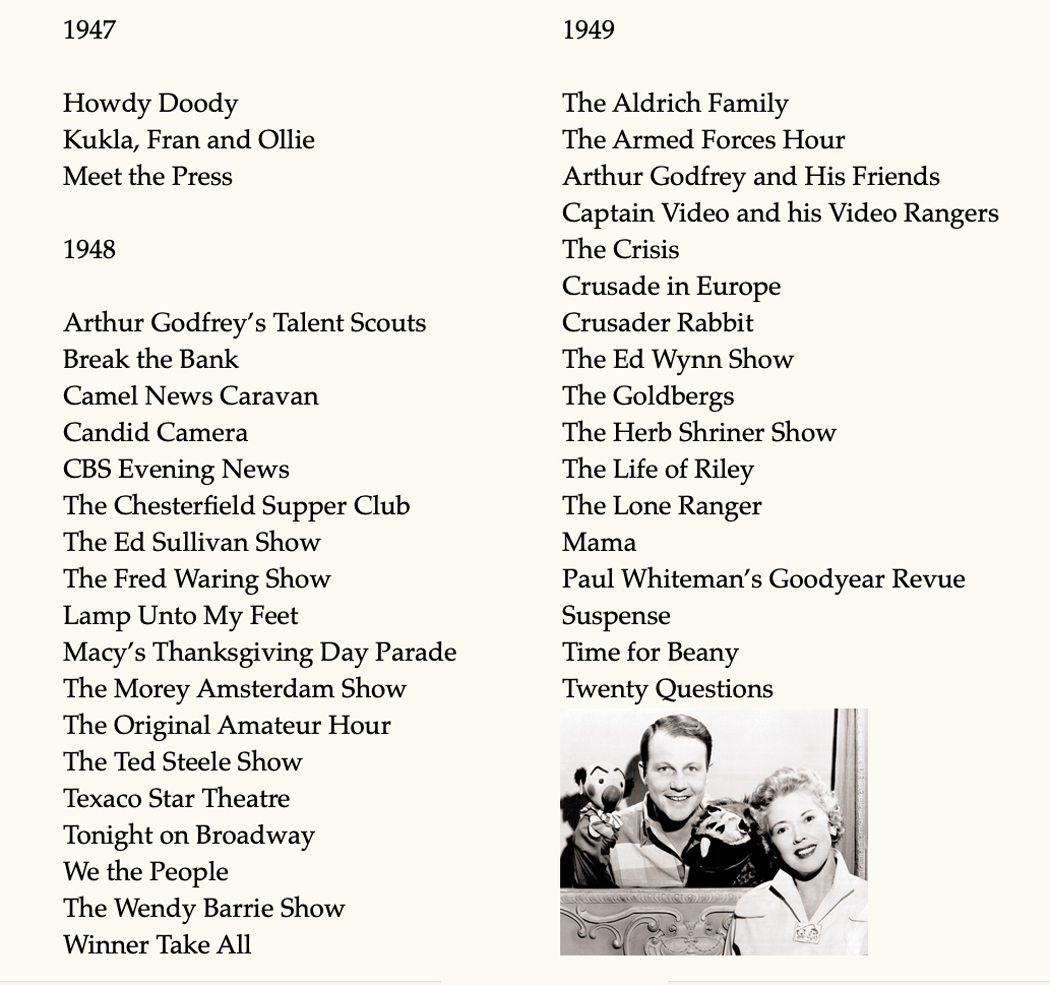
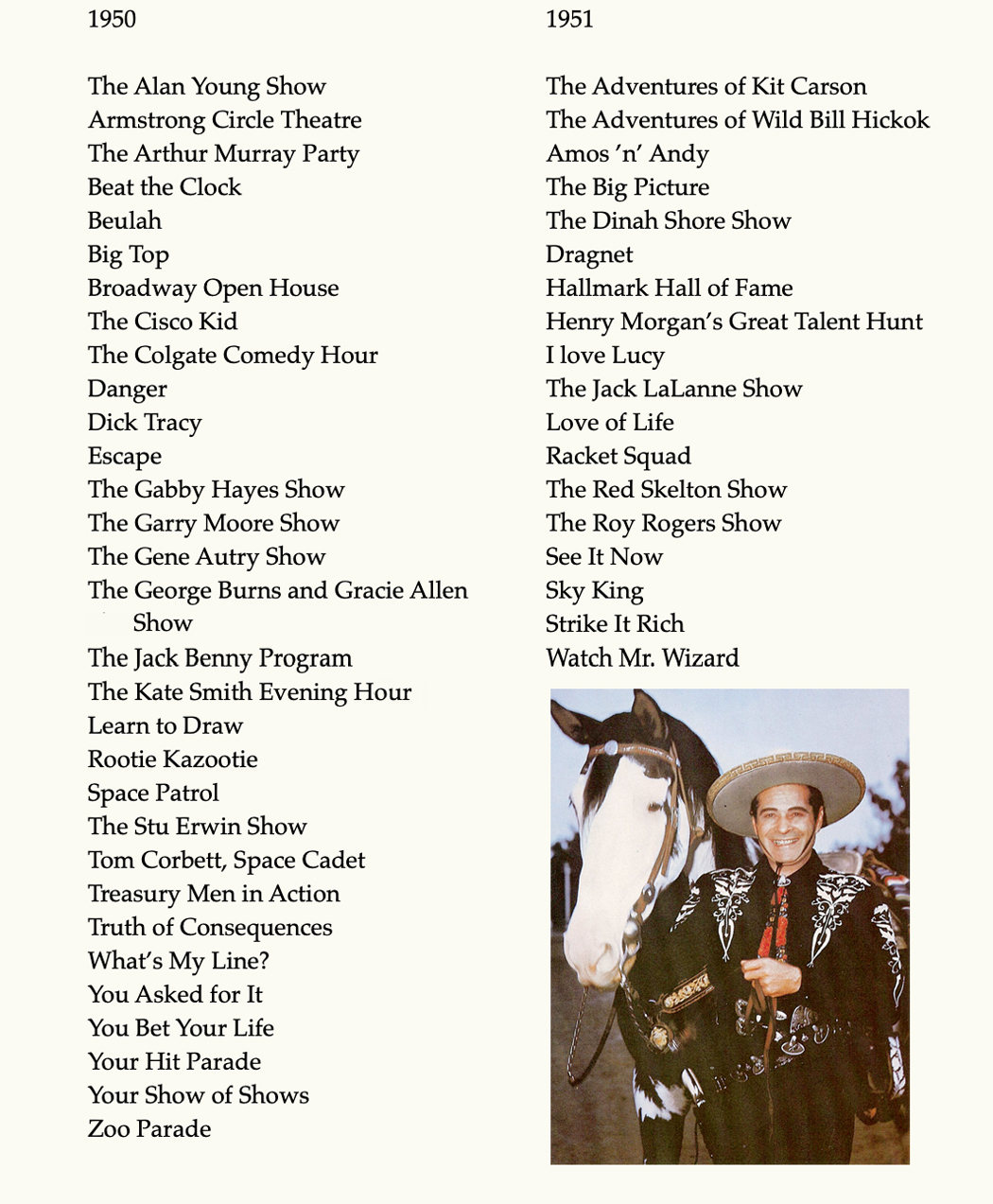
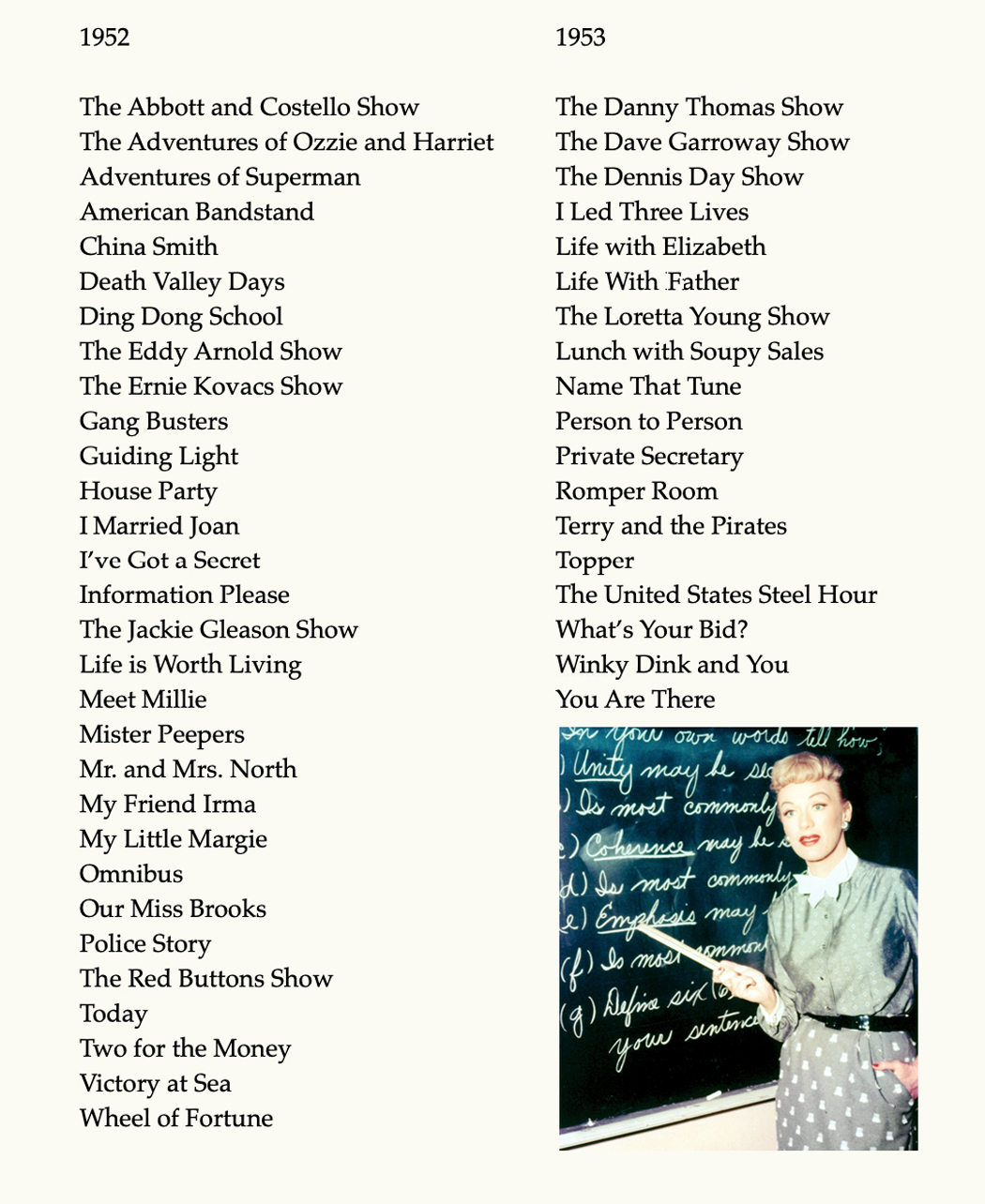
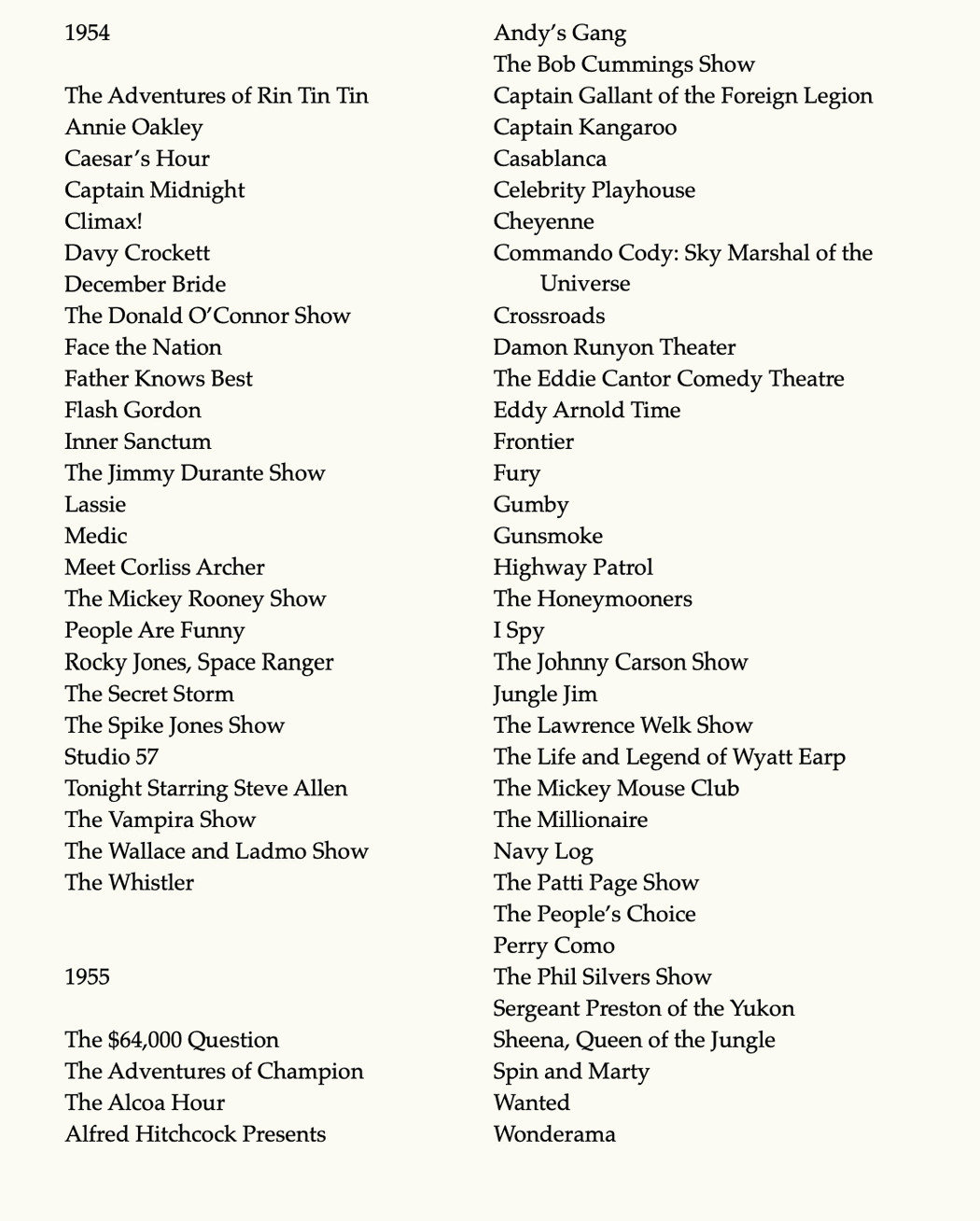
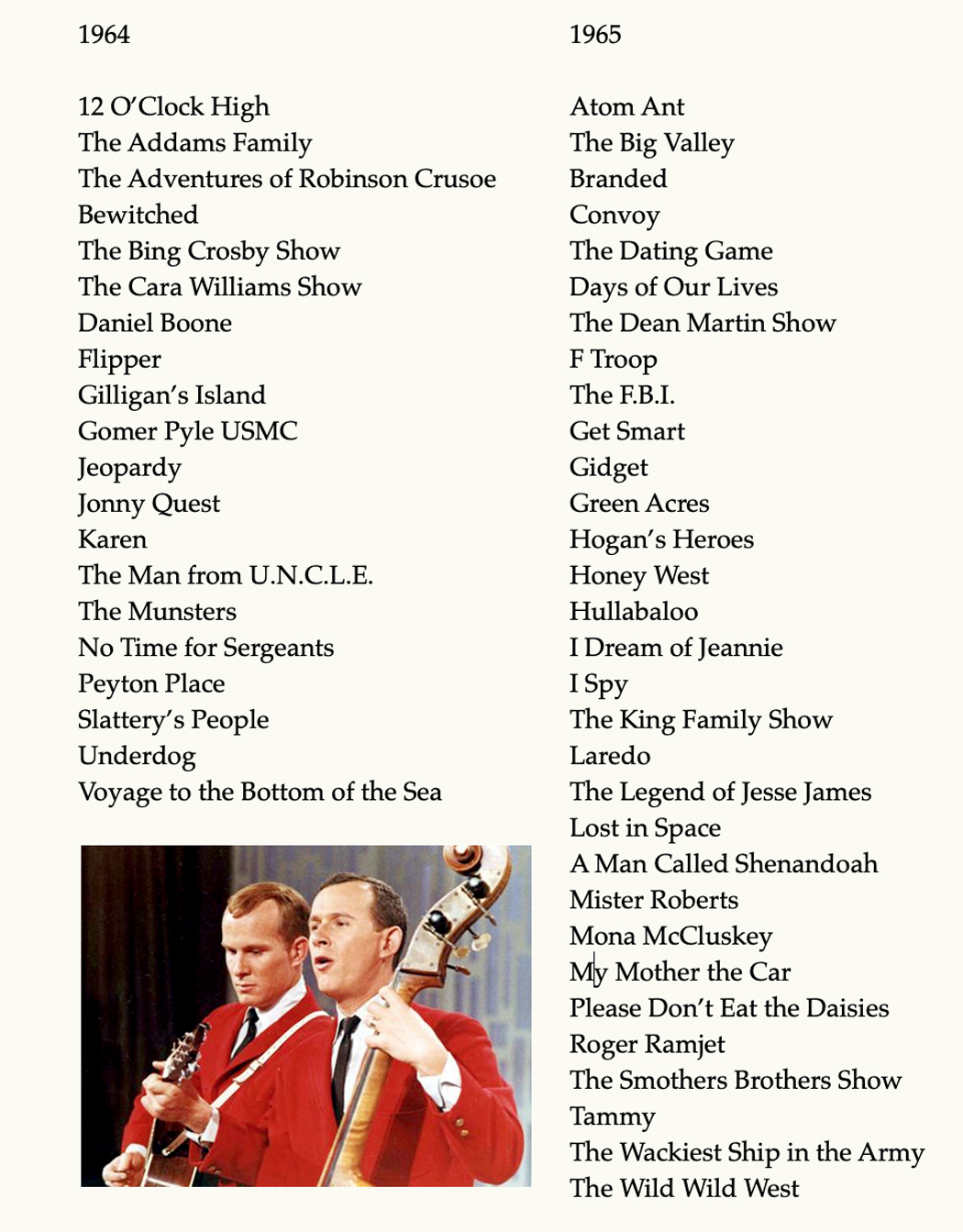
In between, broadcasters scrambled for what today we call “content.” They found old movies, silent slapstick comedies, talk shows and, ever the staple, variety shows. What original material they had wasn’t really original, but was translated from radio. Many of the old familiars were now filmed (or performed live) and given new life. The Life of Riley, The Goldbergs, The Aldrich Family, My Friend Irma, Jack Benny, and George Burns and Gracie Allen. William Boyd repackaged his old Hopalong Cassidy westerns from the Thirties and such cowboy shows as The Cisco Kid and The Lone Ranger filled Saturdays for the wee bairns. 

Before I was sent off to kindergarten, I watched daytime TV with my mother as she ironed or cooked. Art Linkletter, Arthur Godfrey, Herb Shriner, and Dave Garroway, always Dave Garroway, with his meaty palm held toward the screen as he signed off the Today Show each morning: “Peace.” 

For the evening, a host of second-string movie actors stepped up as top bananas in sitcoms: Eve Arden, Stu Erwin, Joan Davis, Gale Storm, Ann Sothern, Robert Cummings, Leon Ames, Wendy Barrie, Harriet Hilliard and Ozzie Nelson, and the greatest leap up from B-films: Lucille Ball. 

And the kiddie shows. Howdy Doody was the royalty, but the rest of the aristocracy included Kukla, Fran and Ollie, Romper Room, Ding-Dong School, Captain Video, Beany and Cecil the Seasick Sea Serpent, Crusader Rabbit and Mr. Wizard. 

Three genres ate up a great part of the clock: game shows (Beat the Clock, Truth of Consequences, What’s My Line, Name That Tune),  Westerns (Roy Rogers, Gene Autry, Sky King, The Adventures of Wild Bill Hickock, Hopalong Cassidy), and space operas (Tom Corbett, Space Cadet, Captain Video, Space Patrol, Rocky Jones, Space Ranger, Captain Midnight). At least, on our TV. 

And to fill up the empty programming hours, there were endless old Western movies. The cream were from the 1930s, with Hoot Gibson, Buck Jones, Tim McCoy, Hoppy, Bob Steele, Bob Livingston, John Wayne (in his B-movie phase). The quality plateaued in the ’40s with Johnny Mack Brown, Rogers, Autry, Wild Bill Elliott, and Buster Crabbe, and then dropped significantly after that with some truly awful films with Lash LaRue, Whip Wilson and Tim Holt. The ’50s were bad for movies in general, but disastrous for Westerns — the best of them were now made for TV directly.

I haven’t forgotten the variety shows. Way too much singing for my childish tastes. My parents loved Perry Como, Dinah Shore, Patti Page, Kate Smith and Tennessee Ernie Ford. Me, not so much. But the parental units had the power over us powerless kids and so we watched. 

Toast of the Town, later called The Ed Sullivan Show, dominated our Sunday evenings. Nothing like plate spinners for the imaginations of 5-year-olds. Jugglers, ventriloquists, comics, animal acts, and Broadway tunes. The dying gasp of vaudeville.

But, I’m just naming names here, and gorging on nostalgia. What I really meant to do was point out the changing tenor of early television. I see three major periods from 1948, when I was born, to 1970, when I graduated college and pretty much ceased watching the tube on any regular basis. I’m afraid I lost touch with pop culture at that time. 

The first period was the one I call “Spaghetti on the Wall.” Audiences were familiar with radio, and television was radio with pictures. To fill the time-void, broadcasters tried pretty much everything trying to figure out just what this new beast was. Talk was cheap, so many of the programs, like Arthur Godfrey, Garry Moore or Art Linkletter’s House Party went on for hours filling the airwaves with chatter. Radio had half-hour sitcoms and hour-long dramas, and so TV did the same. Music was big on radio, more the same on the tube. 

There was an innocence in these first 10 years. A certain “Let’s put on a show” attitude. There were hits, such as Sullivan and I Love Lucy, but a lot of dead ends, too. Some old performers just didn’t have the TV magic and Ed Wynn, Jimmy Durante, Fred Waring, Ted Steele, Paul Whiteman, and Red Buttons simply didn’t translate well. (Loretta Young, who started out in silent films, attempted to remain 20 years old well into her 60s).

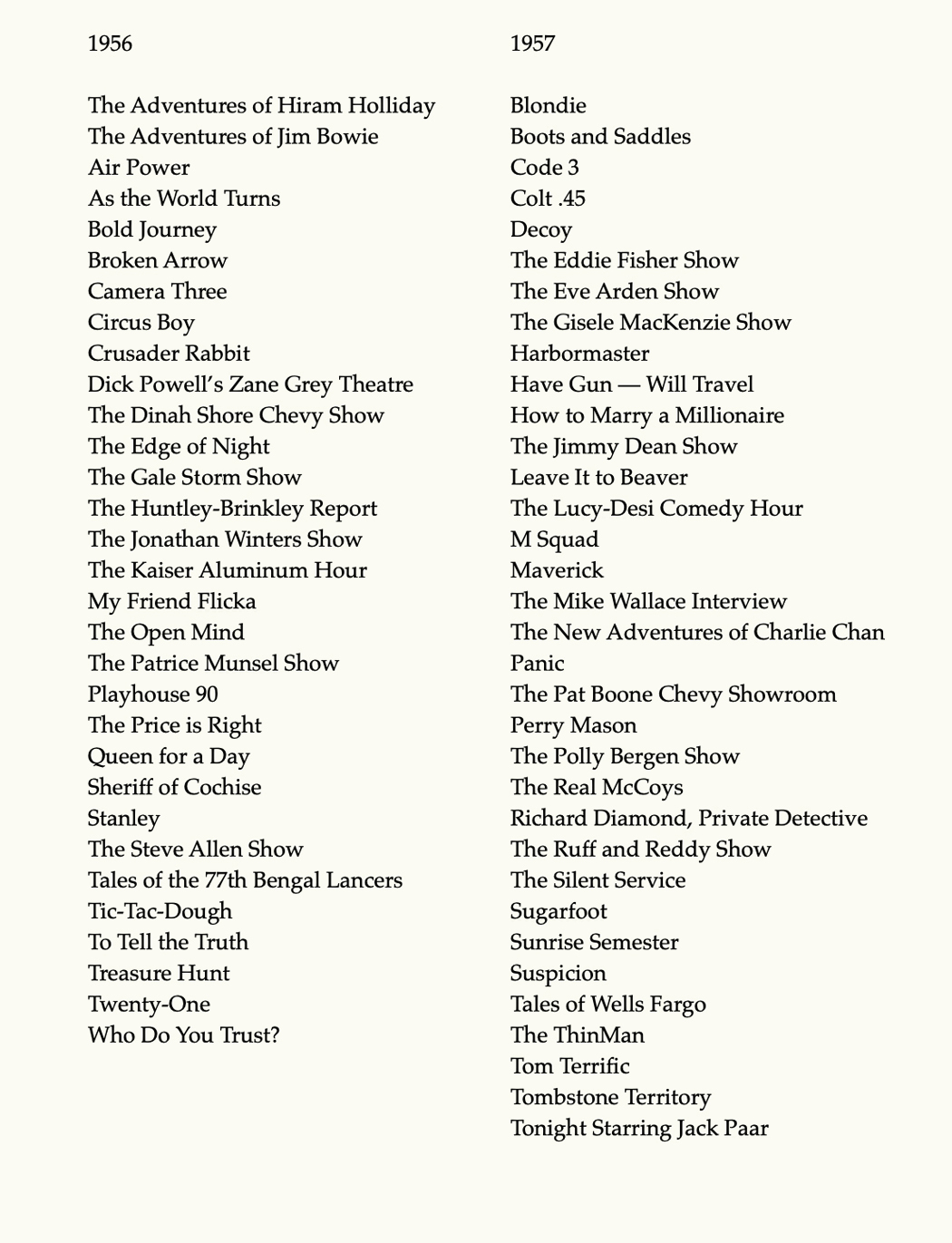
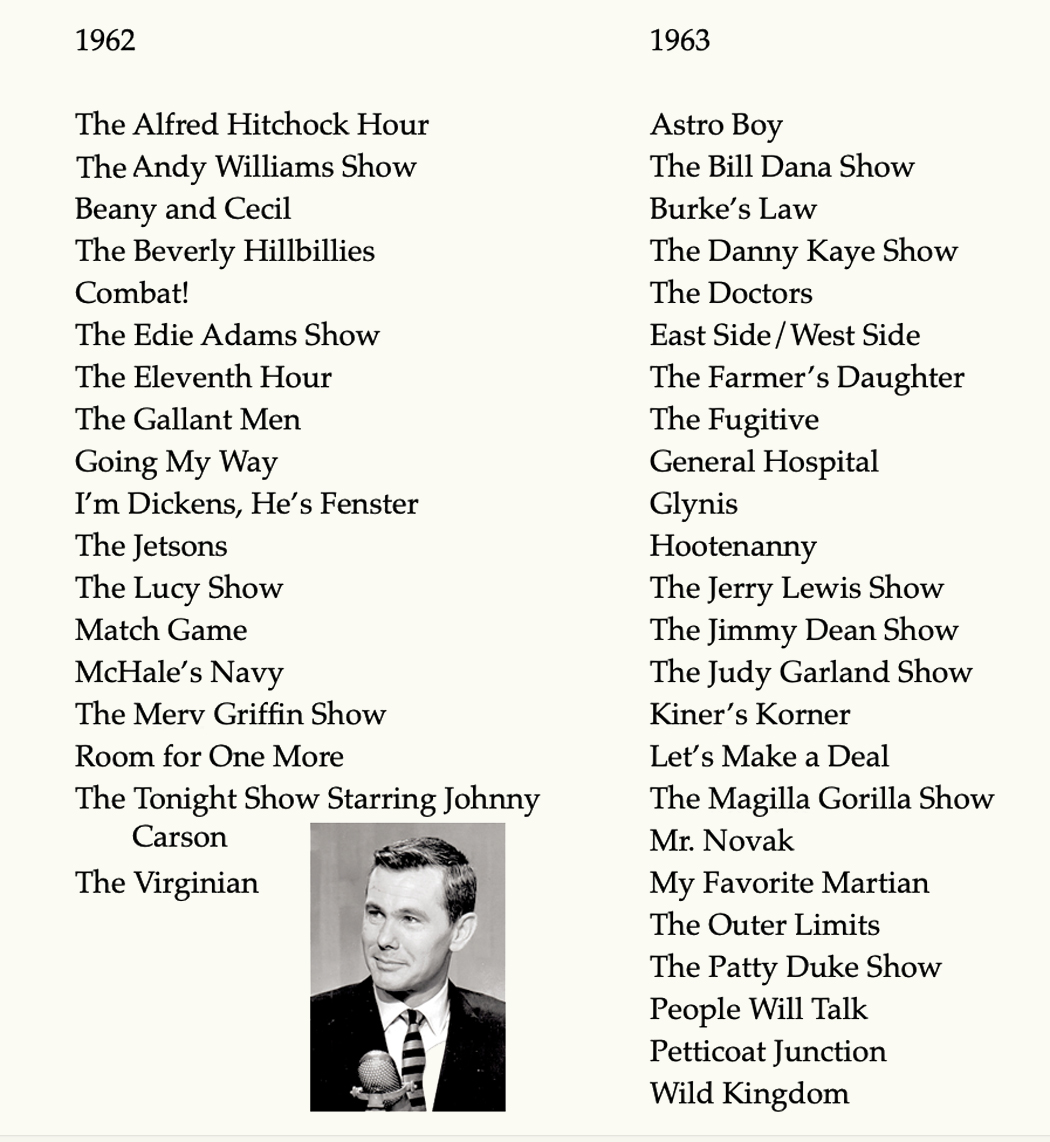
In the second period, beginning in 1957 or 1958, TV develops a confidence of its own, a kind of throaty adolescence. Radio was no longer something most audiences remembered, except as the source for rock and roll music, and some studios, such as Desilu and Warner Brothers began making TV-appropriate series. It was also the first time TV began remaking, not radio shows, but previous TV shows. There were a new Dinah Shore Show, a new Tonight Show with Jack Paar, new vehicles for Ann Sothern, George Burns, Ernie Kovacs, Gale Storm, Bob Denver, Jim Nabors and even Beany and Cecil. 

It was also the era of the explosion of cheap animation. Joseph Hanna and William Barbera pumped out assembly-line cartoons, beginning with The Ruff and Reddy Show in 1957, followed by Huckleberry Hound (with Yogi the Bear), Deputy Dawg, and The Flintstones. Similar animation came from Jay Ward et al. in the various Rocky and Bullwinkle shows. 

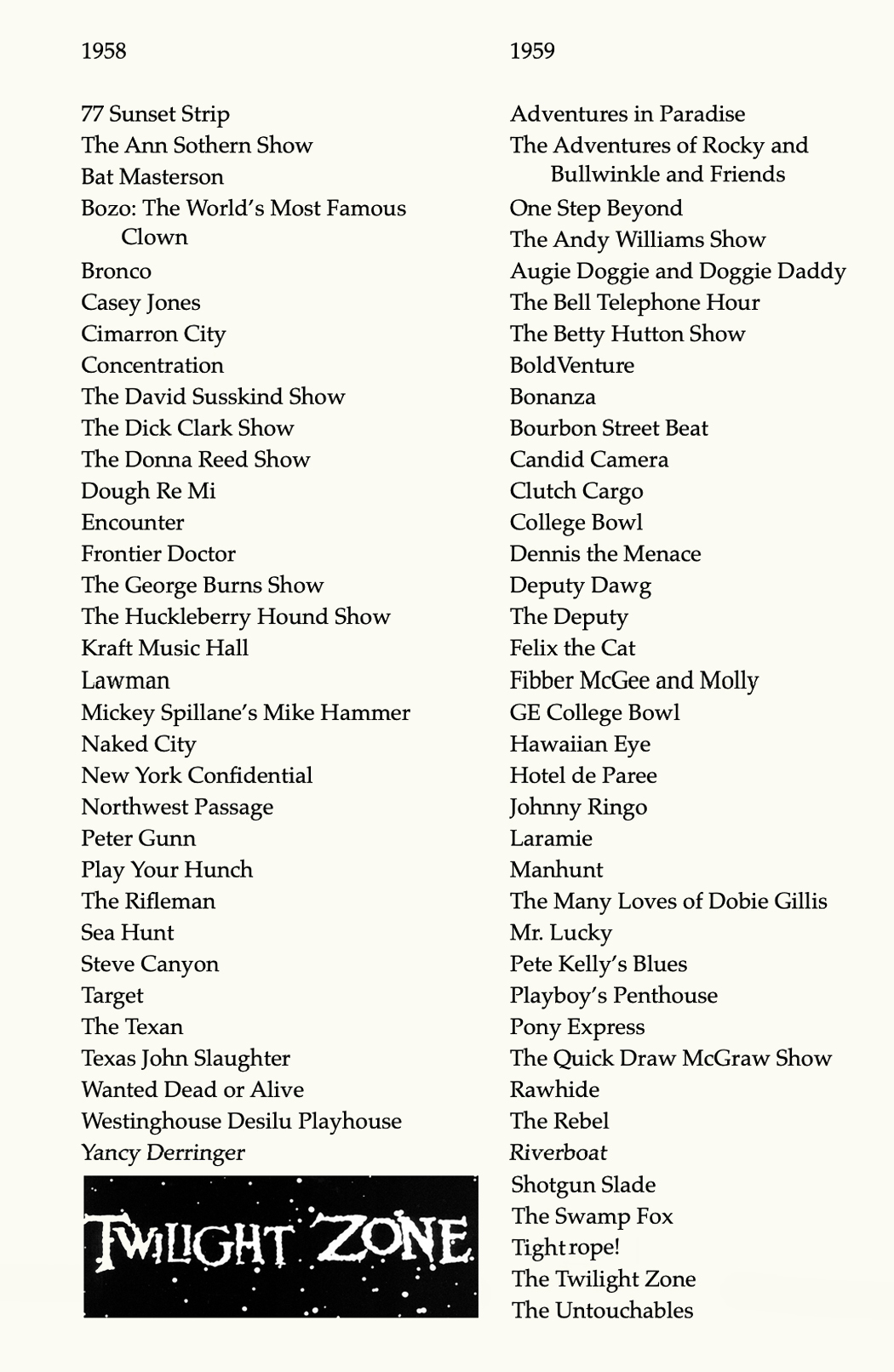
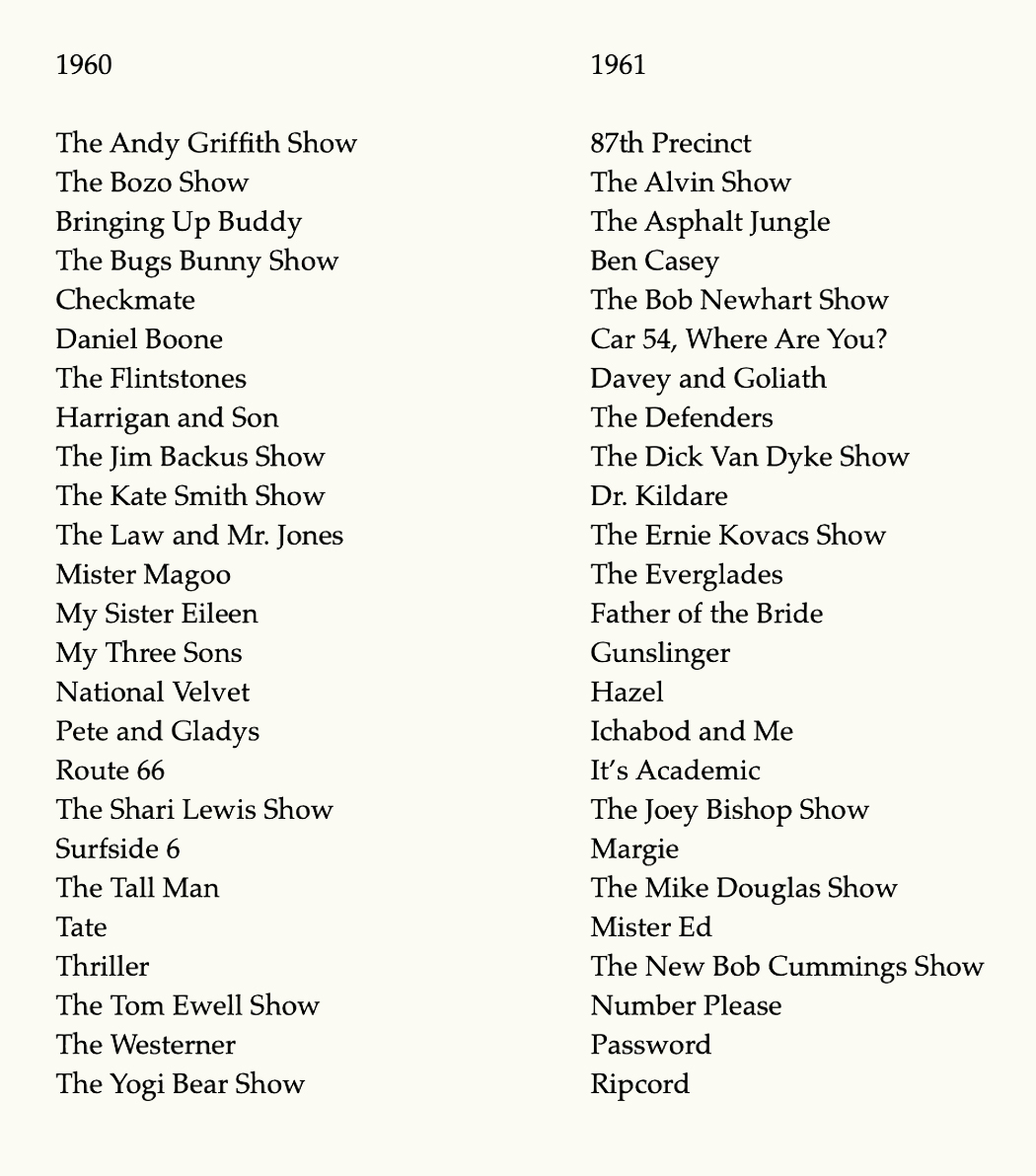
But the real prize came with popular filmed series, many from Warner Brothers, including Cheyenne, Sugarfoot, Maverick, 77 Sunset Strip, Hawaiian Eye, and Surfside 6.  There were other stalwarts, such as Have Gun-Will Travel, Perry Mason, Naked City, Sea Hunt, One Step Beyond, Bonanza, Rawhide, The Untouchables, Route 66, and East Side/West Side. 

And The Twilight Zone (and its poor relation, The Outer Limits). 

This is the era that brought us a normalized suburban vision of the U.S. and its country cousin. Dick Van Dyke and The Beverly Hillbillies. Leave It to Beaver and The Real McCoys. The Donna Reed Show and The Many Loves of Dobie Gillis vs. The Andy Griffith Show and Petticoat Junction. These were the Eisenhower Years reflected in My Three Sons and The Bob Newhart Show. 

This was TV in its stride, its first full flowering as the universal entertainment medium for the vast majority of Americans. 

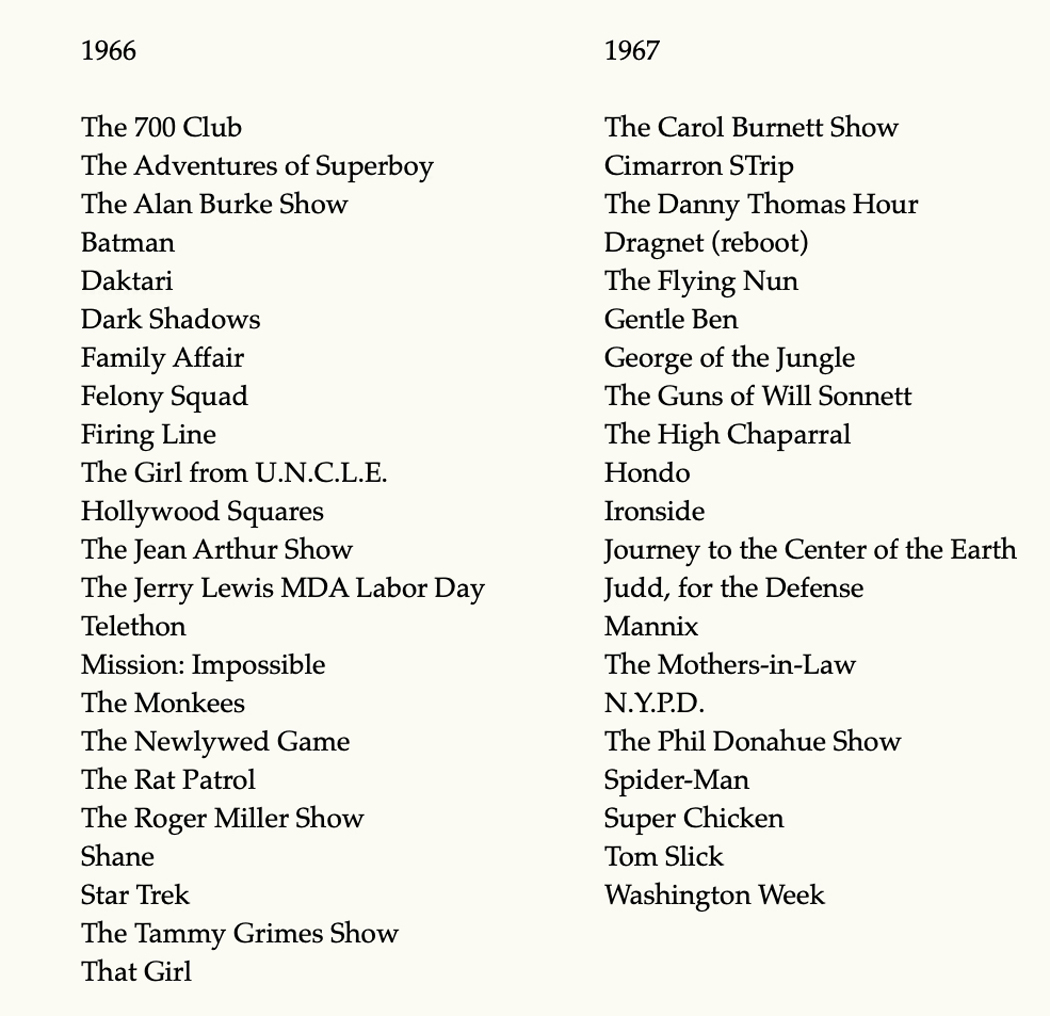
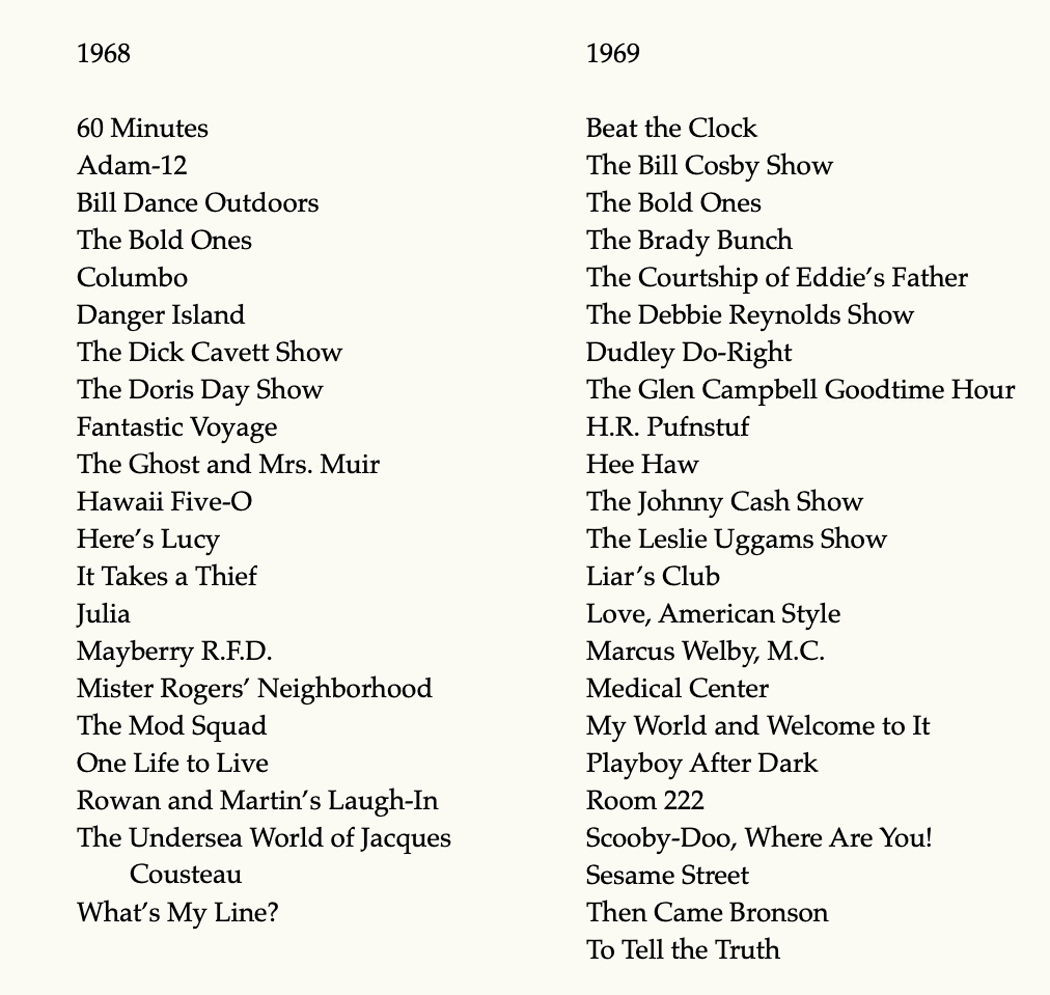
After, comes a period of decadence, of imitation and slipshod production. Instead of The Man from U.N.C.L.E., we get The Girl from U.N.C.L.E. There’s Voyage to the Bottom of the Sea, Fantastic Voyage, and Voyage to the Center of the Earth. 

It was also the time of America’s cultural paroxysm and it shows on the screen. Black actors and entertainers showed up beyond Beulah and Amos ’n’ Andy: Julia, The Leslie Uggams Show, I Spy, Nichelle Nichols on Star Trek, The Bill Cosby Show and Flip Wilson. The counter culture ruled The Mod Squad and Laugh-In. It was clear the world was changing …

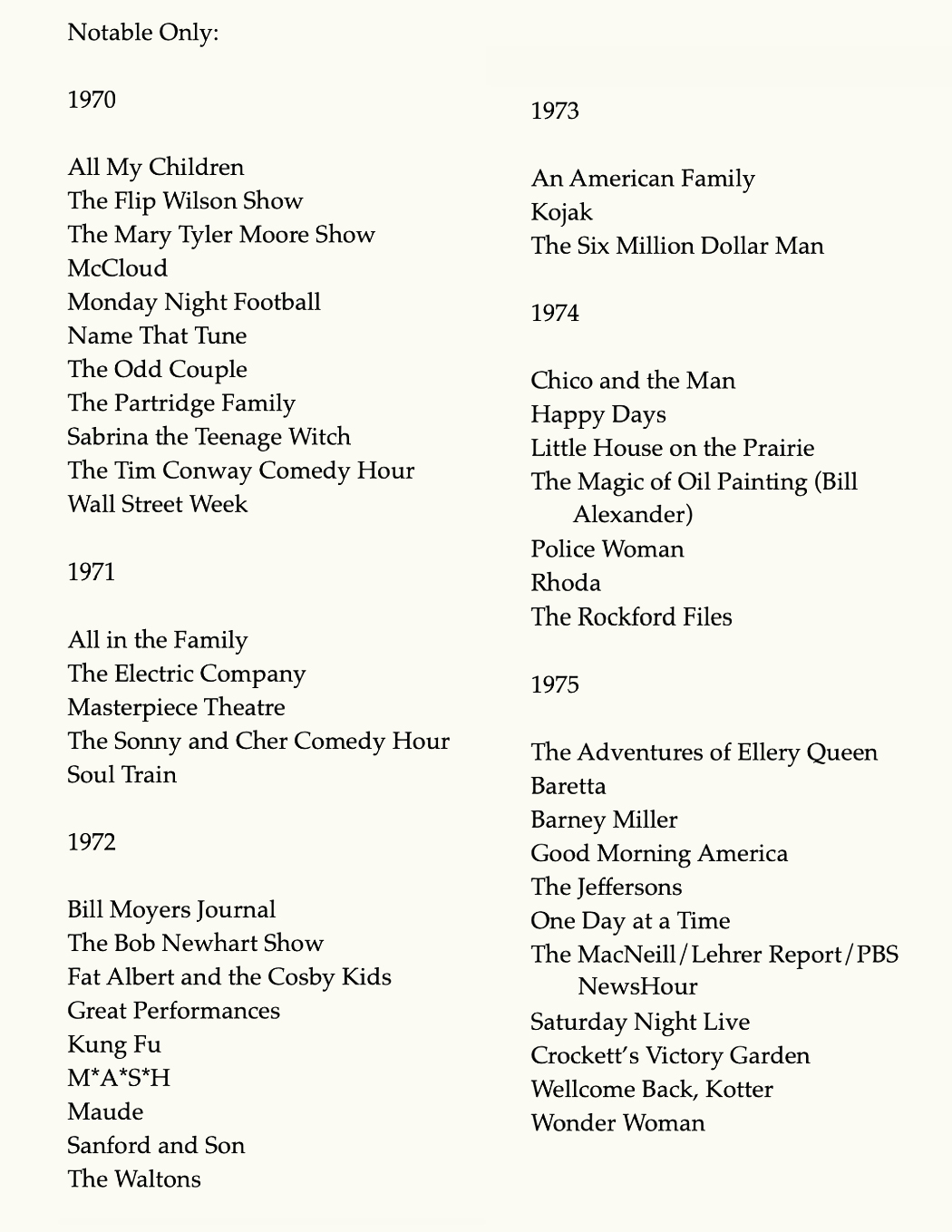
…and TV’s response was to go for the cheese. The second half of this third era of television history is really dominated by the shows remembered fondly by Generation X and those who saw these things in later syndication. This is The Brady Bunch and The Partridge Family. Adam-12, Love, American Style, The Flying Nun, Ironside, My Mother, the Car, Kung Fu, The Six Million Dollar Man, Wonder Woman. There was a full reliance on gimmicks. And what didn’t depend on a gimmick still felt like a bad parody — even a deconstruction — of what bad TV is all about. Some young people, grown up in a world of media rather than one of sky, sea and soil, enjoy such programs in cable reruns precisely because of how bad they are. 

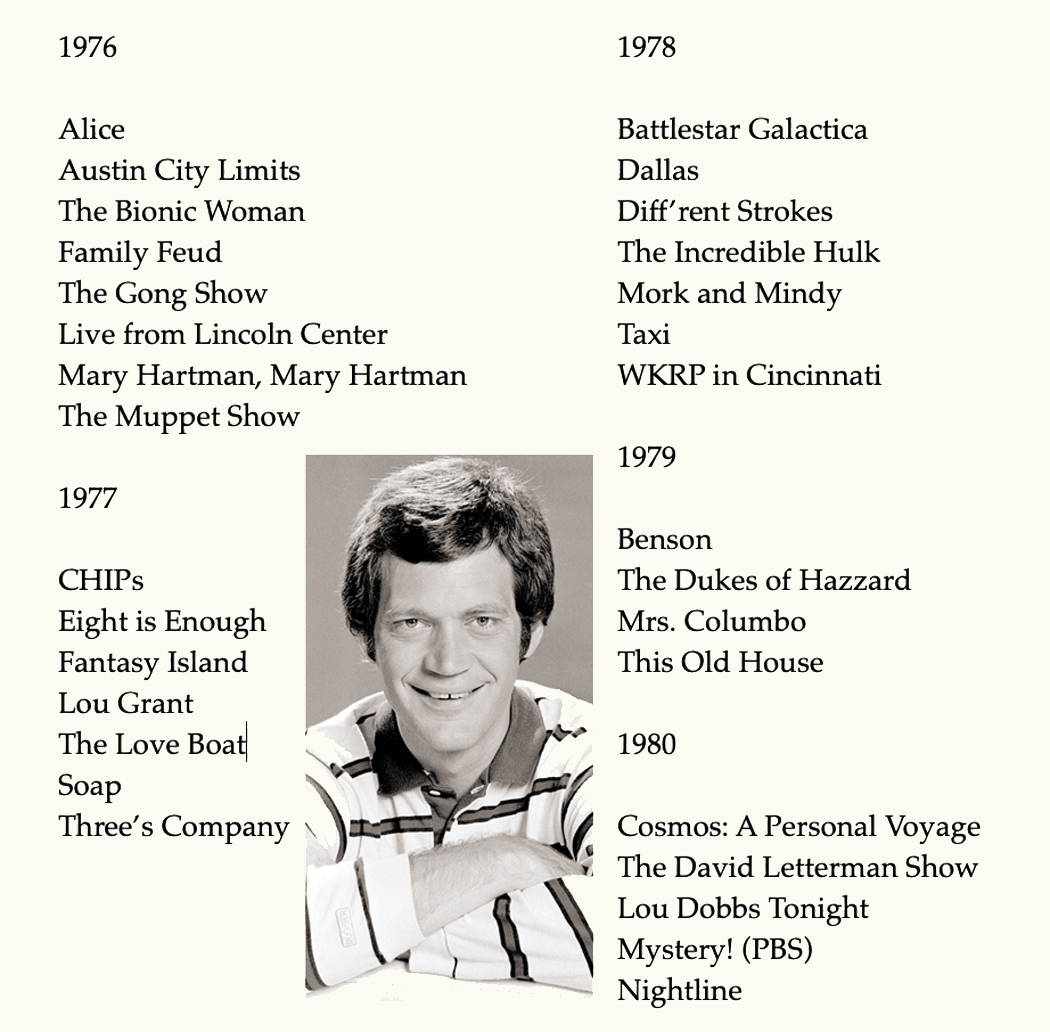
Television itself has become so much more self-aware as television. Postmodernism hit the medium with a wallop. You can’t have a David Letterman without the irony of his take on the very medium that brings him bread. 

This has all been a very broad overview. Certainly, there have been good shows in each era. Even in the ruins of decadence we have Mary Tyler Moore, All in the Family, M*A*S*H, The Rockford Files, Barney Miller, Soap, and Taxi. There are always creative people in the field: No era is complete dross. 

 I have very fond recollections of the TV I watched as a child and no doubt rank such shows higher in my estimation than they deserve and no doubt each generation feels something of the same for the fare they ingested in their formative years. We should all be forgiven the folly of our youths.

I rather lost track of the toob after going to college and since graduating. I have caught bits and pieces and I’m afraid I am rather disgusted with the current 24-hour news channels. This has been called a new “Golden Age” of TV, and no doubt it is: The quality levels of much is quite high, at least on cable and on streaming services. The networks seemed largely mired in repetition of the same cafeteria food. I find myself turning primarily to Turner Classic Movies, PBS, and British television. Or perhaps, cracking open a book. 

But then, I am a crotchety old geezer.

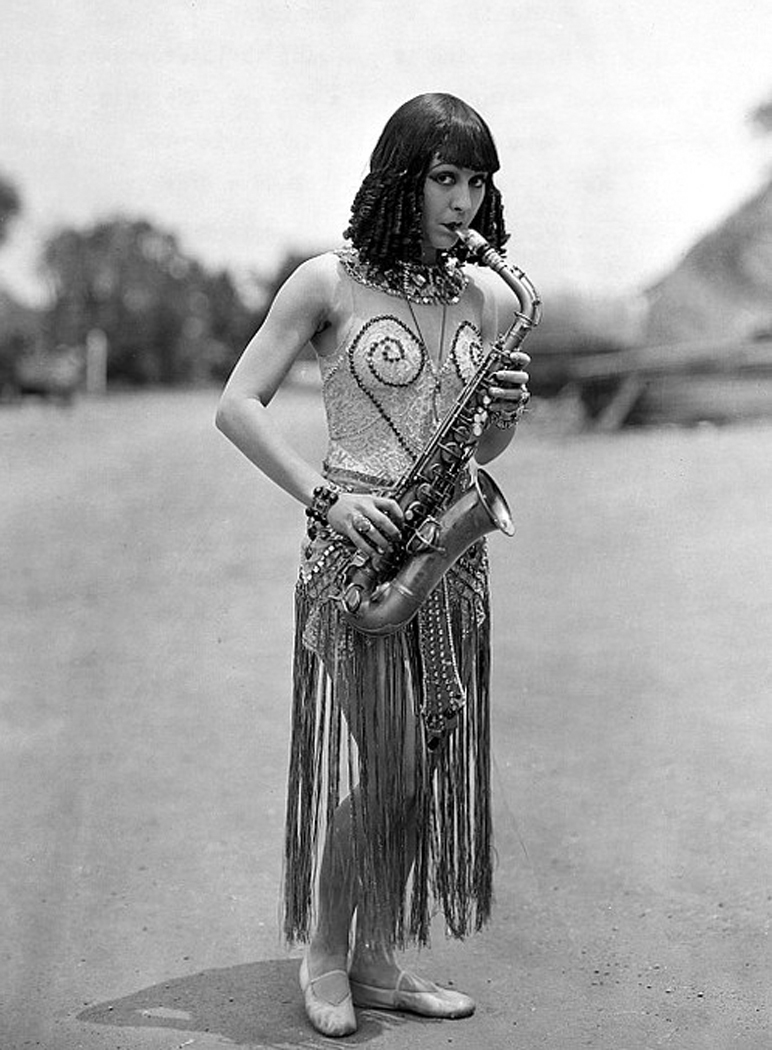
sexophone

Life is full of interesting little questions, questions of no consequence that lead to bigger things. Like, why is the finale of Gioachino Rossini’s William Tell Overture used as the theme for The Lone Ranger?

Admit it, when you hear that tune — ditty bump, ditty bump, ditty bump-bump-bump — you hear the hearty hi-yo Silver. Even kids, who know the masked man only from cable TV reruns, know about him and his faithful Indian companion, Tonto.

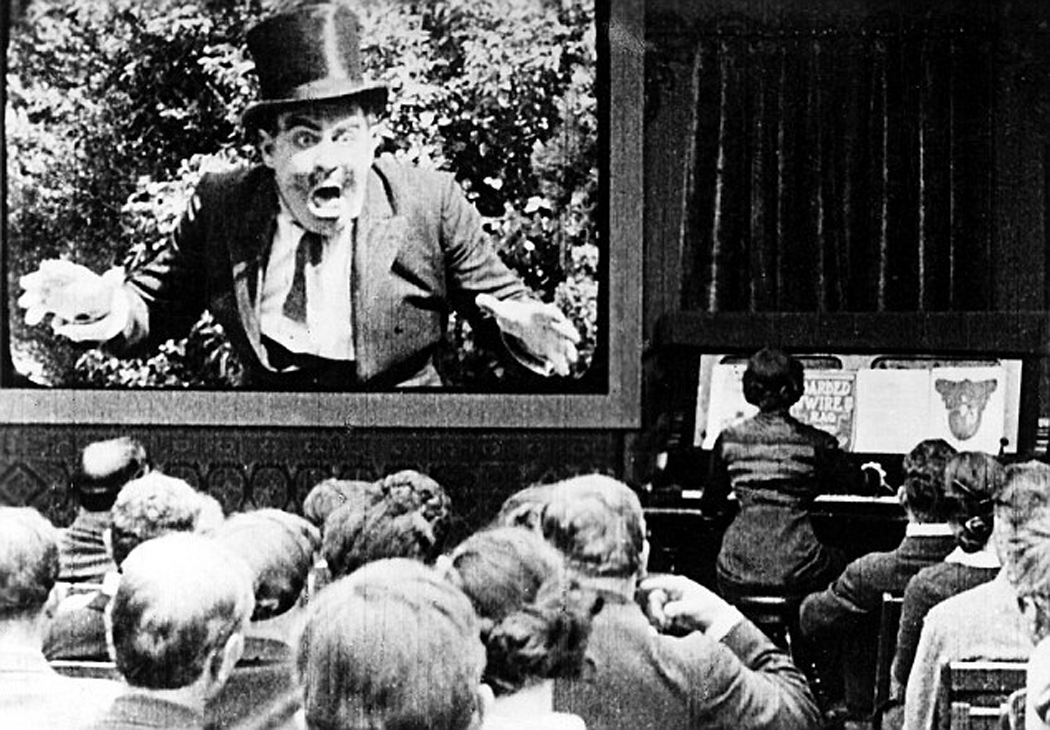
But what does all that have to do with a Bel Canto grand opera about the freedom of the Swiss from the oppression of the Austrian Empire? To understand, you must go back to the era of silent movies. Although they are always called silent, in fact, they never were. From the very first public showing of the new motion picture, in Paris in 1895, the images have been accompanied with music.

You can as easily imagine a ballet without music as a Chaplin short or a D.W. Griffith epic. And in fact, movie studios gave more consideration to the music than is generally known nowadays. From the time of Griffith’s Birth of a Nation, many studios provided full scores for their “A” pictures. Nation opened in New York to the strains of a 70-piece symphony orchestra playing the music written by Griffith himself, in collaboration with composer Joseph Carl Briel. It freely borrowed bits of Tchaikovsky and Verdi, mixing them with strains of Dixie and the Star Spangled Bannermovie piano

The first full score for a silent film was Camille Saint-Saens’ 1908 score for the French film, The Assassination of the Duke of Guise. The composer recast the music later for concert performance as his Concerto for Strings, Piano and Harmonium, op. 128.

Such scores were not uncommon. Arthur Honegger wrote the score for Abel Gance’s groundbreaking Napoleon in 1927; Darius Milhaud did the same for Marcel l’Herbier’s L’Inhumaine. And Dimitri Shostakovich made a good living writing films scores, when he wasn’t picking up a few extra dollars playing piano for the low-end movie houses.

The full scores survive that Charlie Chaplin wrote for his late silent features, City Lights and Modern Times, made after the sound invasion, and now permanently attached to their otherwise silent action.

The problem was that not every film was Birth of a Nation, and not every movie house could afford an orchestra. A full score might be fine for New York City, but when the movie went to Dubuque, a cheaper alternative was needed. So, most Roxies and Paramounts across the nation relied on pianists and organists. For an “A” picture, they might rely on piano reductions of the full score, provided by the studios, printed on cheap paper and distributed with the films along with such other promotional material as posters and blocks for newspaper ads. But for a “B” picture, the pianist either improvised on the spot, or relied on one of several “cheat” books. sinister misterioso

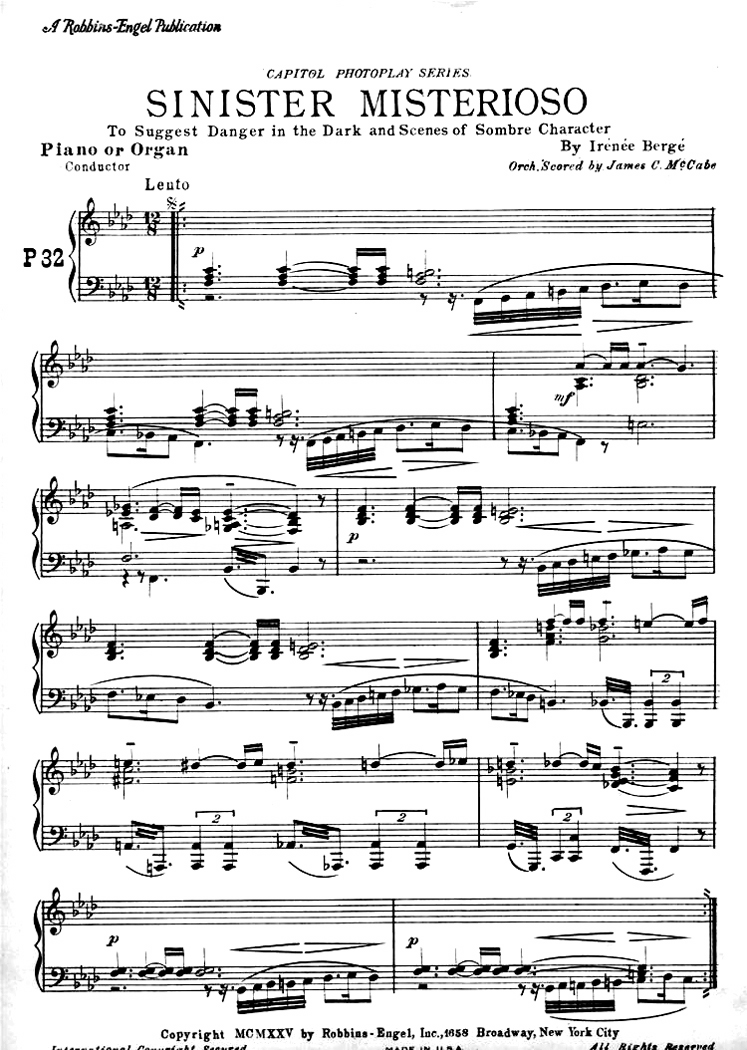
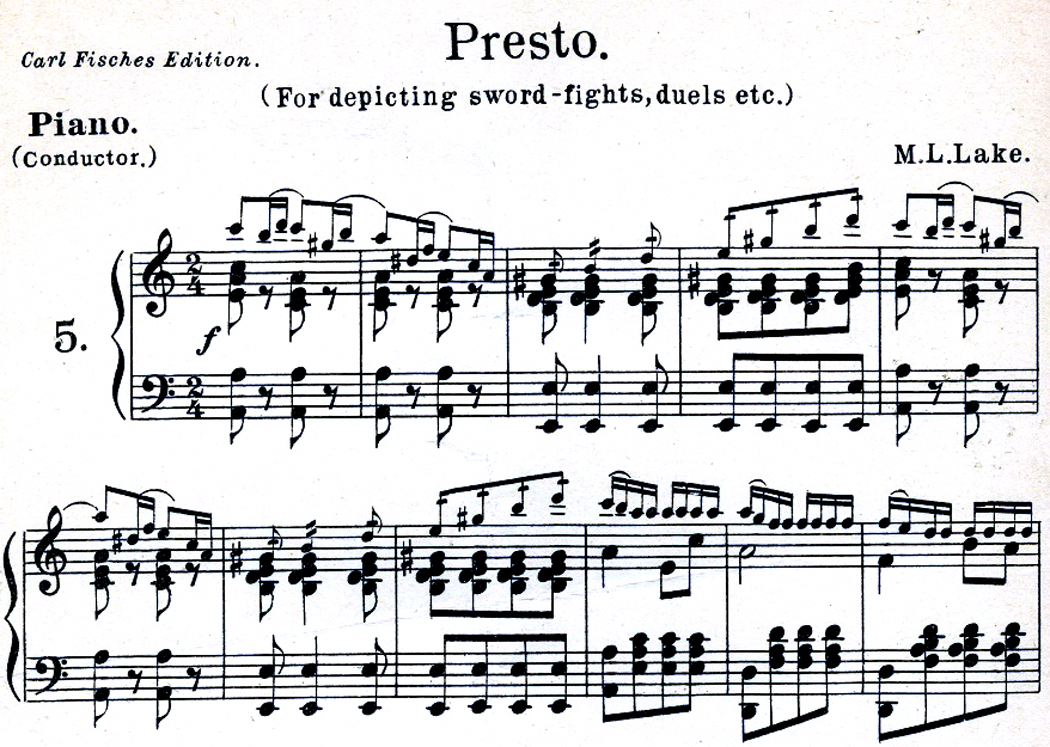
In 1919, Giuseppe Becce published his Kinobibliotek, which was a volume of musical chunks each matched to an emotion or action likely to be encountered in a film. One might be titled, Pursuit, and another, Tender Agitato. Universal Studio came up with its own, assembled by Max Winkler, who borrowed freely from classical music, excising snippets of Beethoven or Bizet to be played by the house pianist at the appropriate moment in the film. Winkler actually made up lists of tunes for each film Universal released, matched to the cues in the plot. “J.S. Bach’s immortal chorales became Adagio Lamentoso for sad scenes,” Winkler wrote. Beethoven provided a “Sinister Misterioso” and Tchaikovsky a “Strange Moderato.” Mendelssohn’s familiar Wedding March was used for weddings. presto for sword fights

The classical music had two advantages. First, it was readily identifiable. Everyone knew the Wedding March, for instance, so it could be used to make a point. And it was cheap; it was public domain and no copyright fees applied.

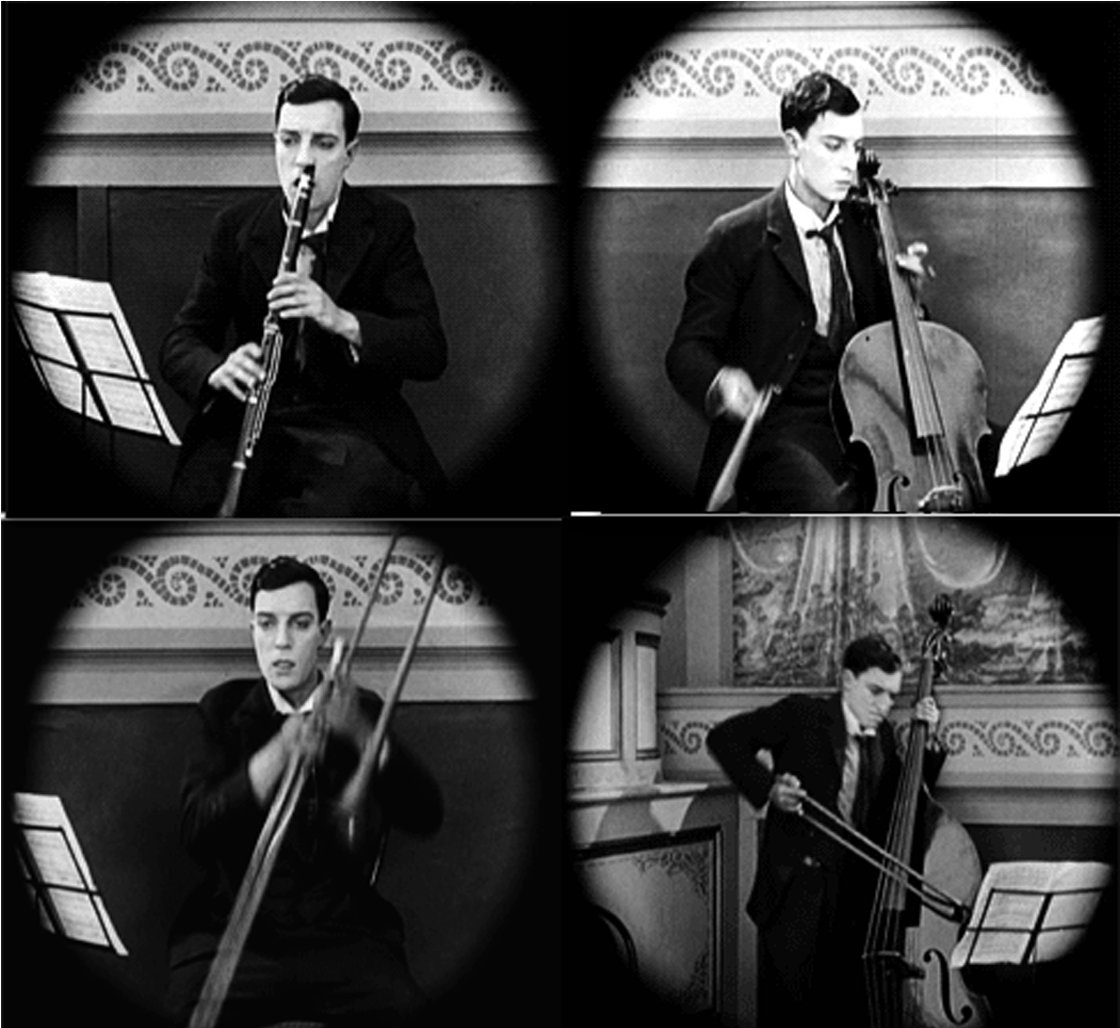
When sound films took over, some of these silent habits persisted. In Hollywood’s Golden Age, film scores still sounded like classical music. The great film composers — Korngold, Waxman, Herrman — were classical composers. And even to this day, when a director wants to add class or underline a scene dramatically, he will likely choose classical extracts. So, Samuel Barber’s Adagio for Strings adds emotional heft to Oliver Stone’s Platoon, and Richard Strauss’s Thus Spake Zarathustra adds portentousness to Stanley Kubrick’s 2001: A Space Odysseykeaton band

It also persisted in the sound era in “B” movie scoring, those undercard films on the double feature. You can hear many a familiar melody in the low-budget films. Every Hopalong Cassidy film, for instance, came to a climax with a chase scene underlined with Gluck’s Dance of the Furies. You could count on it. It was an odd marriage of high art with popular culture.

And, or course, it provided us with “those thrilling days of yesteryear” and the Rossini trumpet fanfares that summoned us all first to the radio, then to the TV screen.