Archive

Tag Archives: Mark Rothko

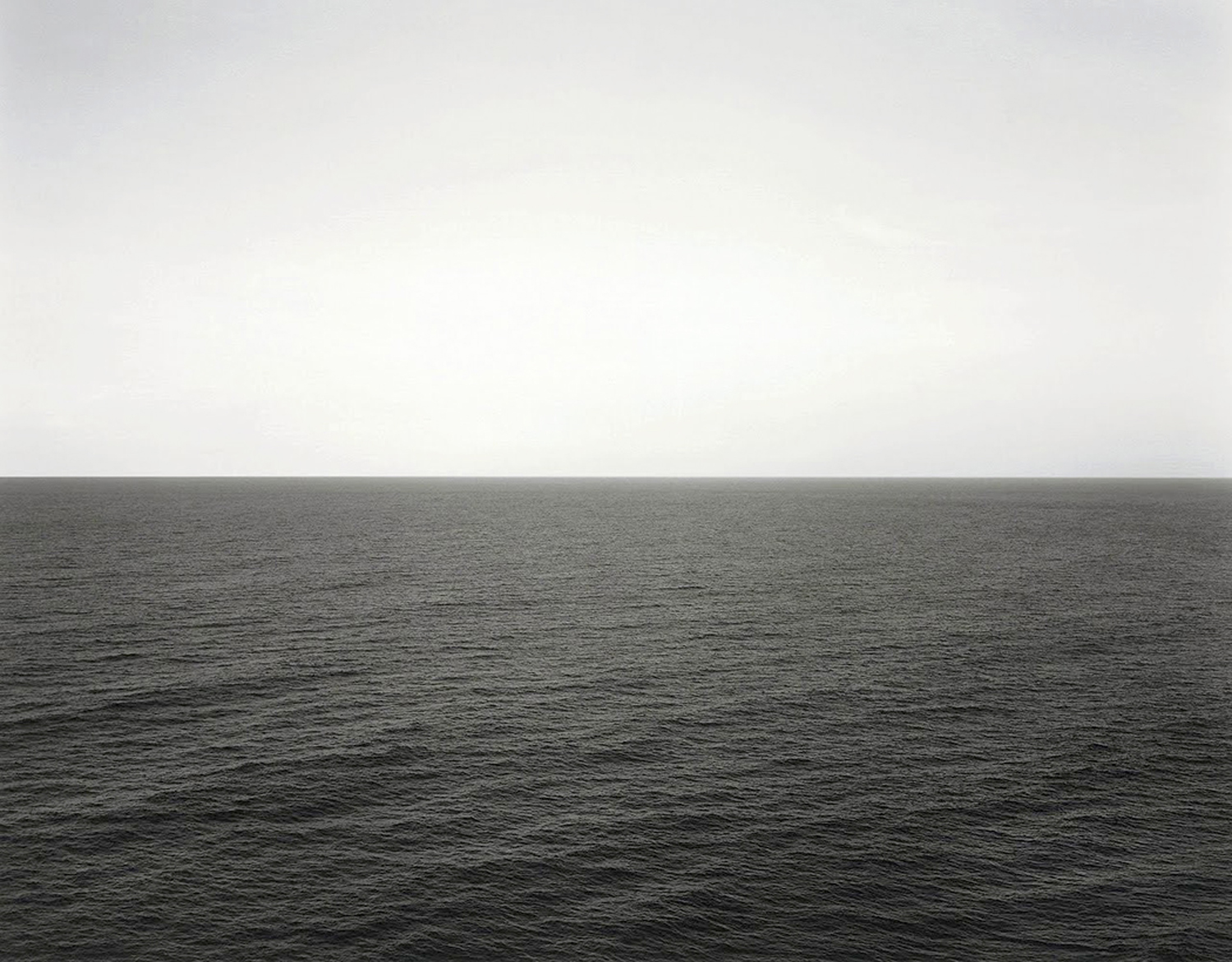
Many years ago, when I was still teaching photography in Virginia, I visited an art show that bothered me. In the gallery were a series of large black-and-white seascape photographs by Hiroshi Sugimoto. Each was about 3-feet square and each was divided exactly in half by the horizon line. 
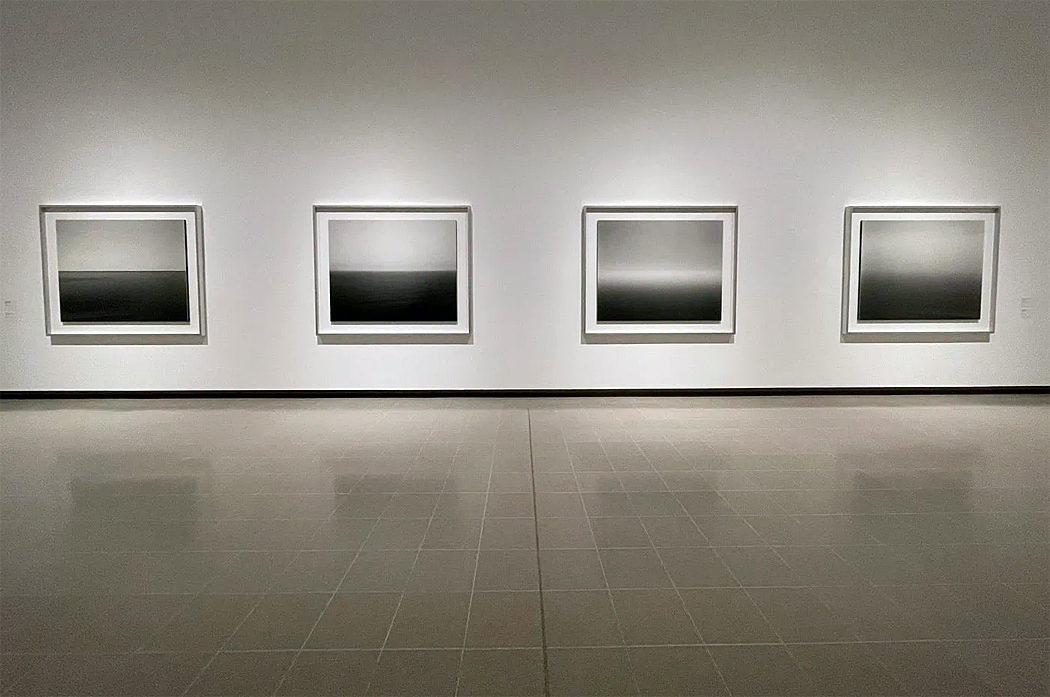
Sugimoto, who is exactly my age, is a Japanese architect and artist who created a project of making pictures of various seas, oceans and great lakes, at different times of year and different times of day and different weathers. But every one was the same size and with the top and bottom divided in half, sky and water. 
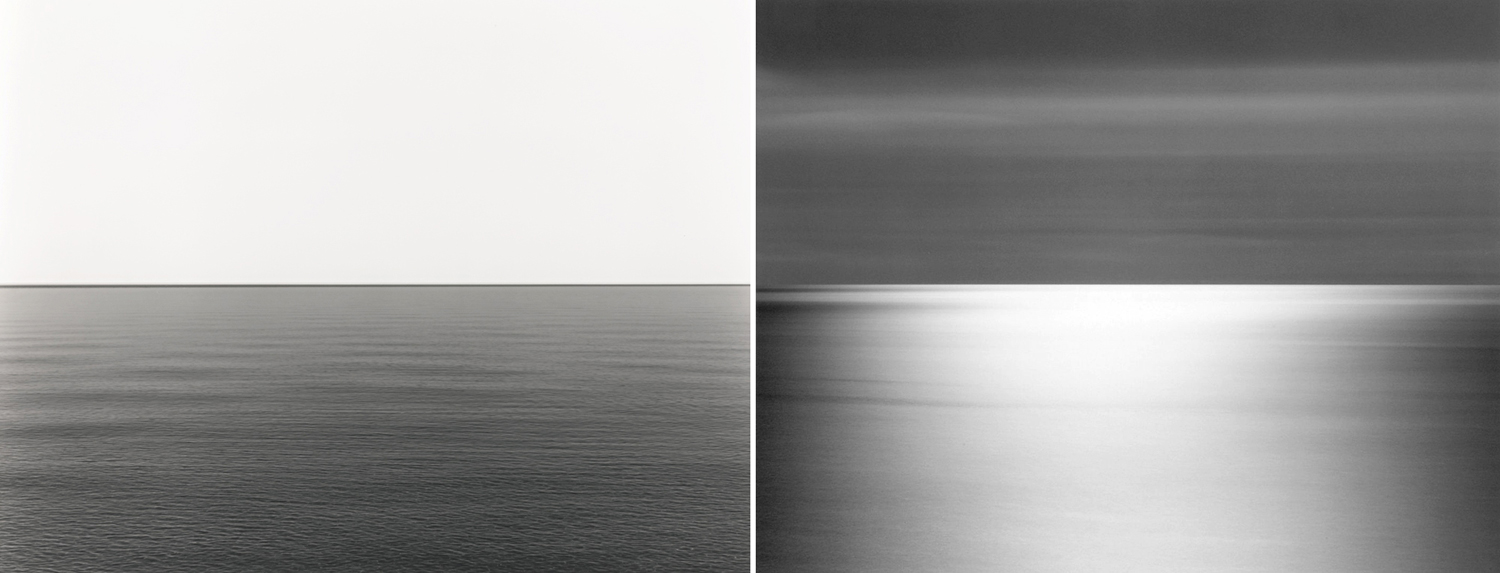
What bothered me, initially, was the featurelessness of the images. The seas were generally calm and the skies usually cloudless. 

At the time, in my class, I was trying to get ordinary students to make better pictures. Most of the students had no ambition to show in galleries, but rather had wanted to be able to make better family snapshots, or to improve as hobbyists and learn darkroom techniques. And so, I taught such normal things as making sure their images had a center of interest — a person or a dog, placed foreground against a background. If they wanted to make a landscape, to include some center of attention and not just make a dull grab-all of the scene. 

These were not “rules,” but ways to get beginners to improve. First steps, as it were.
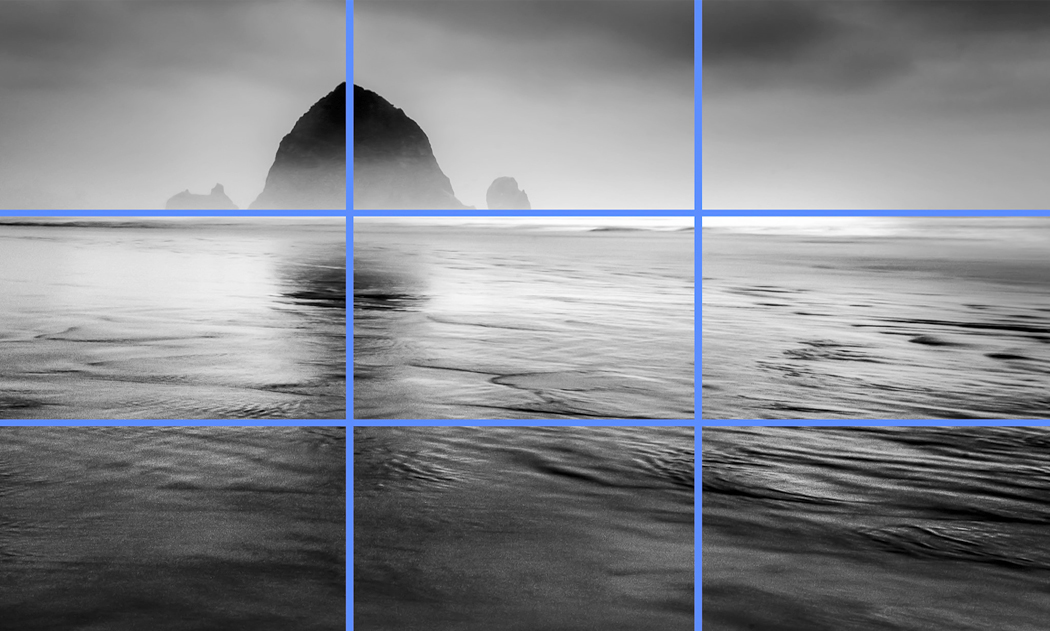
And I taught the ubiquitous “rule of thirds,” in which you help the design of a photograph by placing things a third of the way from the bottom or top, or a third of the way in from the sides of the picture. Or, also, to place your horizon line a third of the way from the bottom or two-thirds up from the bottom. And never, ever, put your horizon through the center of the image. The center is the most boring and static place in the frame. 

(Of course, no accomplished photographer pays any attention to these notions, but I was helping beginners up their games and making their pictures marginally more interesting.) 
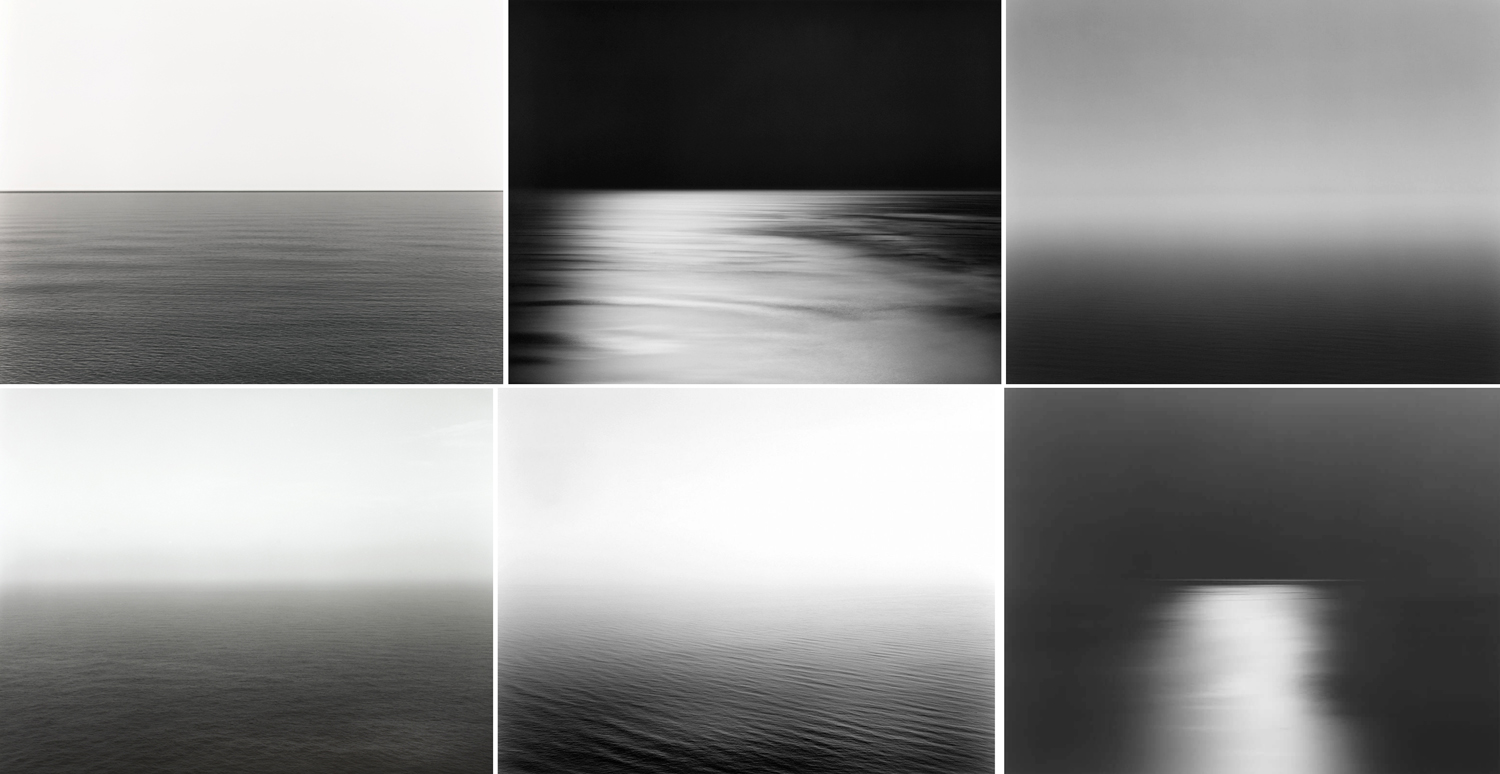
But here were Sugimoto’s seascapes, centered and otherwise featureless. It bothered me for a long time — enough so that decades later, I can remember that show, burned in my memory, when so many others that I went to in so many galleries, have faded into time and oblivion. 

I was aware that if the images stuck in my craw and couldn’t be dislodged, there must have been something to what Sugimoto was doing. I have thought long and hard on the subject. And I came to the conclusion that their very inexplicability, tied with the elemental themes of nature and the vast oceans, gave them their power. That, in fact, they were a projection of the sublime. 

The sublime is a subset of esthetics, a particular experience of the beautiful, set in distinction to what is attractive and pleasing, by showing what is immense, often frightening, and which gives the viewer a palpable sense of his own unimportance in a vast and radiant universe. 
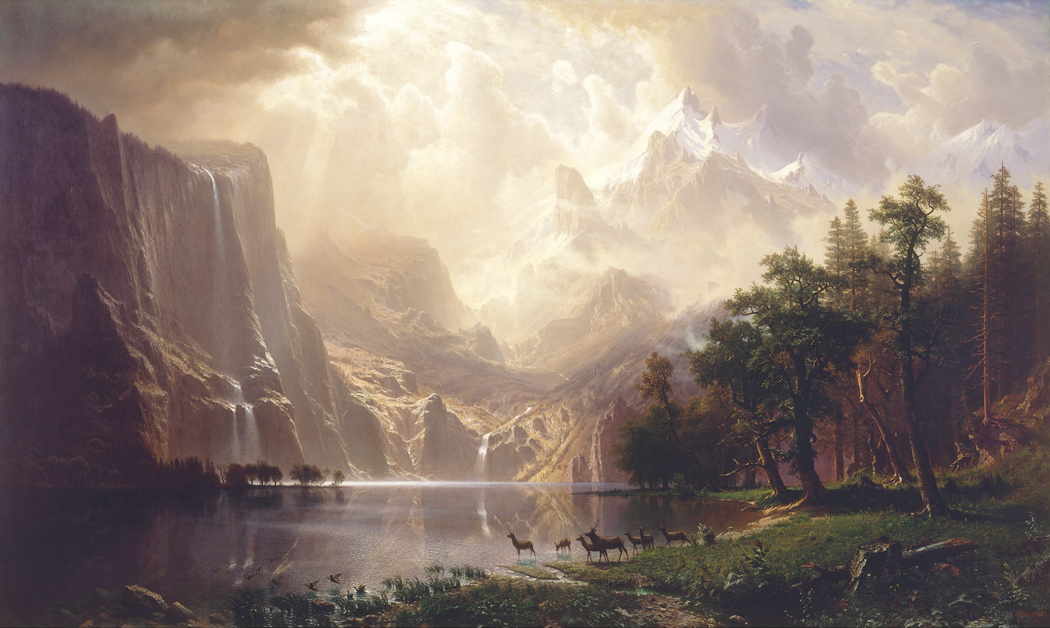
“Among the Sierra Nevadas” Albert Bierstadt 1868

It was a popular theme in 19th century art, with landscapes of the mountains of the American wilderness, or, in England, of vast biblical scenes, or or battles or storms. You have Jacob Mallord William Turner painting disasters at sea, John Martin showing the apocalypse in giant canvases, Gustave Dore engraving images of Dante’s hell and Satan’s flight through chaos.
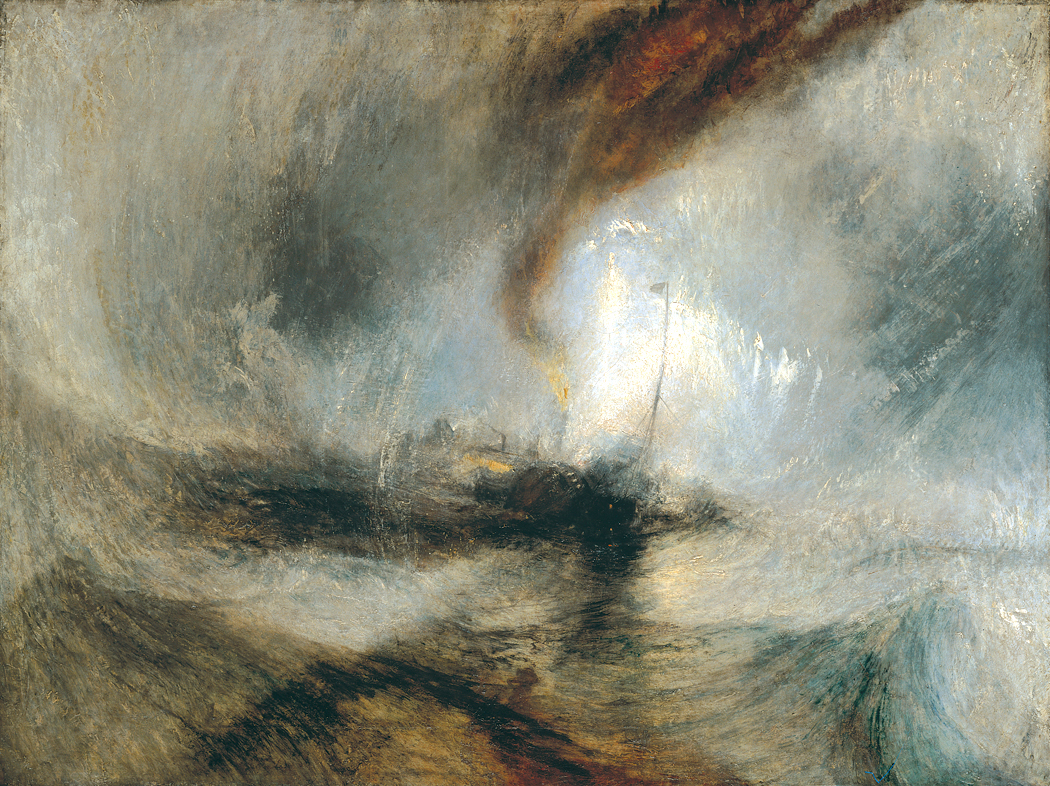
“Snow Storm at Sea” JMW Turner 1842

You have poets describing limitless scenes of the Alps or the Arctic. Mary Shelley’s Frankenstein ends in such a scene, with a ship stranded in the Arctic ice and the monster choosing white oblivion over life. The ship’s captain writes in his log: “We are still surrounded by mountains of ice, still in imminent danger of being crushed in their conflict. The cold is excessive, and many of my unfortunate comrades have already found a grave amidst this scene of desolation.”

Nature could be pretty. It could be daffodils. But it could be overpowering, desolate, dangerous. As in Percy Shelley’s Mont Blanc: “In the wild woods, among the mountains lone,/ Where waterfalls around it leap for ever,/ Where woods and winds contend, and a vast river/ Over its rocks ceaselessly bursts and raves.”
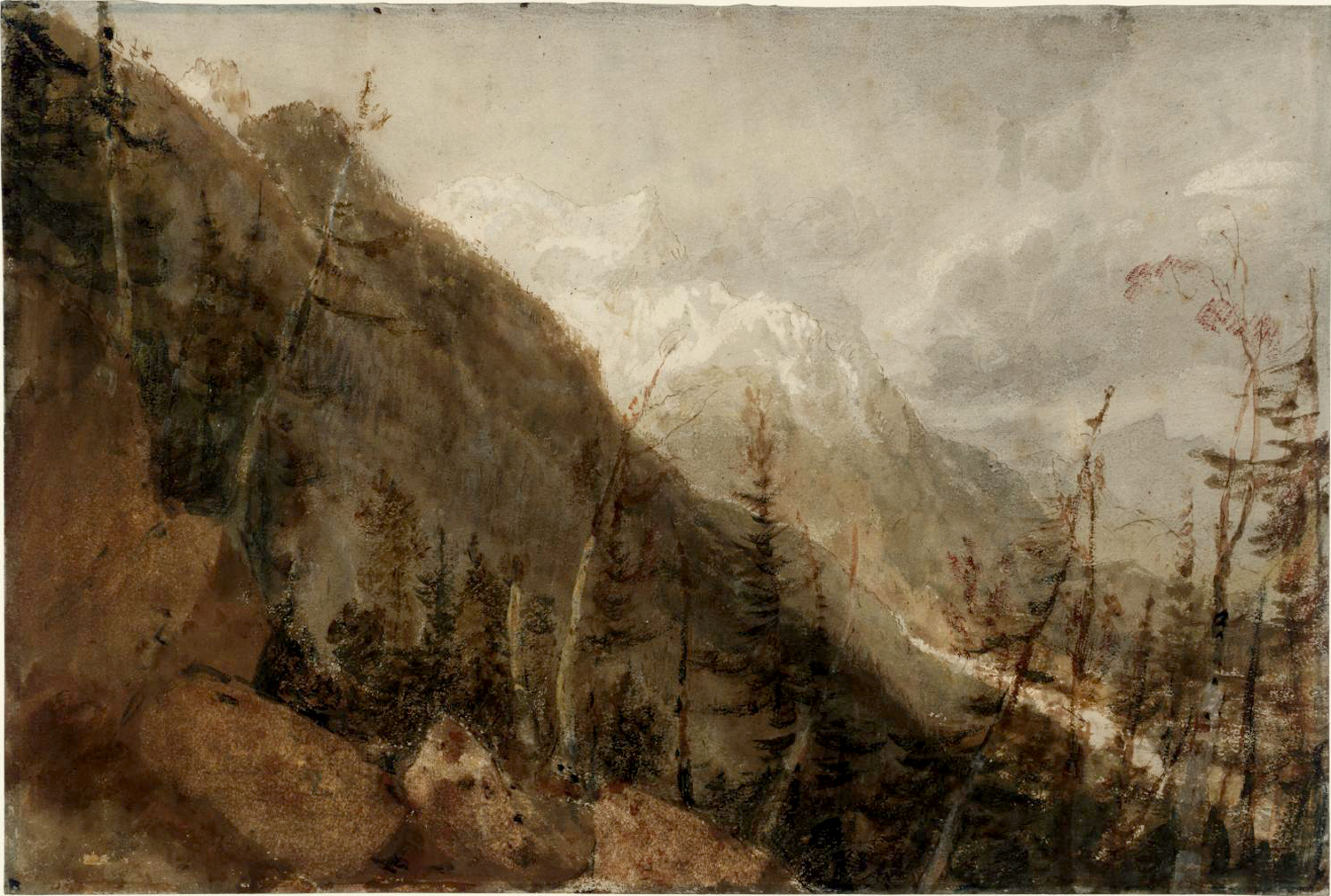
“Chamonix: Mont Blanc and the Arve Valley from the Path to the Montenvers” JMW Turner 1802

Hardly a better example could be found than Sam Coleridge’s Kublai Khan: “But oh! that deep romantic chasm which slanted/ Down the green hill athwart a cedarn cover!/ A savage place! as holy and enchanted/ As e’er beneath a waning moon was haunted/ By woman wailing for her demon-lover!”

In Byron’s Childe Harold’s Pilgrimage: “Roll on, thou deep and dark blue Ocean — roll!”

It’s all over the place in English Romantic poetry — “Tyger Tyger, burning bright,/ In the forests of the night” or later, in the works of Americans such as Walt Whitman (“Out of the cradle endlessly rocking”) or Emily Dickenson. 

British poet Samuel Taylor Coleridge describes the sublime in his 1818 lecture on “European Literature” by recalling: “My whole being expands into the infinite; earth and air, nature and art, all swell up into eternity, and the only sensible expression left is, ‘that I am nothing!’ which concludes that his ultimate realization of the sublime was of his own human insignificance.” 
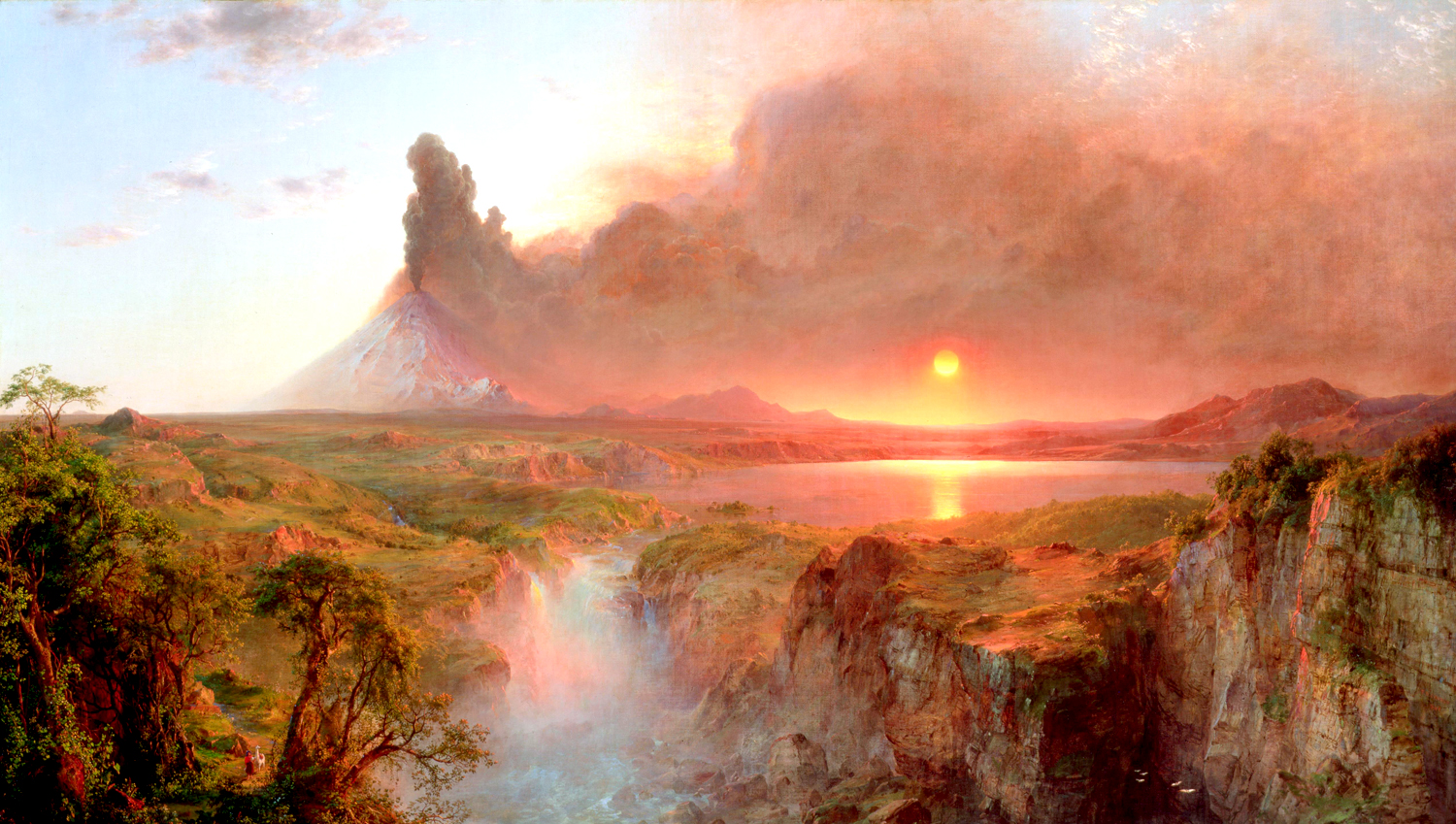
“Cotopaxi” Frederic Edwin Church 1862

Giving in to the infinite — or the emotional experience of it — can hit you whenever you are open to it. Not necessarily seeking it, but nevertheless open to it. Most often, we spend our lives closed, trying to make sense of the everyday things that take up most of our time. But there are moments when it all breaks in. These moments tend to stick in our psyches, to be brought back in memory to refresh our lives. 

In music, the sublime is found in Haydn’s depiction of Chaos at the beginning of his oratorio, The Creation. Or in the ecstatic chorus of Beethoven’s Ninth Symphony, the trumpets of apocalypse in Berlioz’s Requiem or the vastness of Mahler’s Symphony of a Thousand.
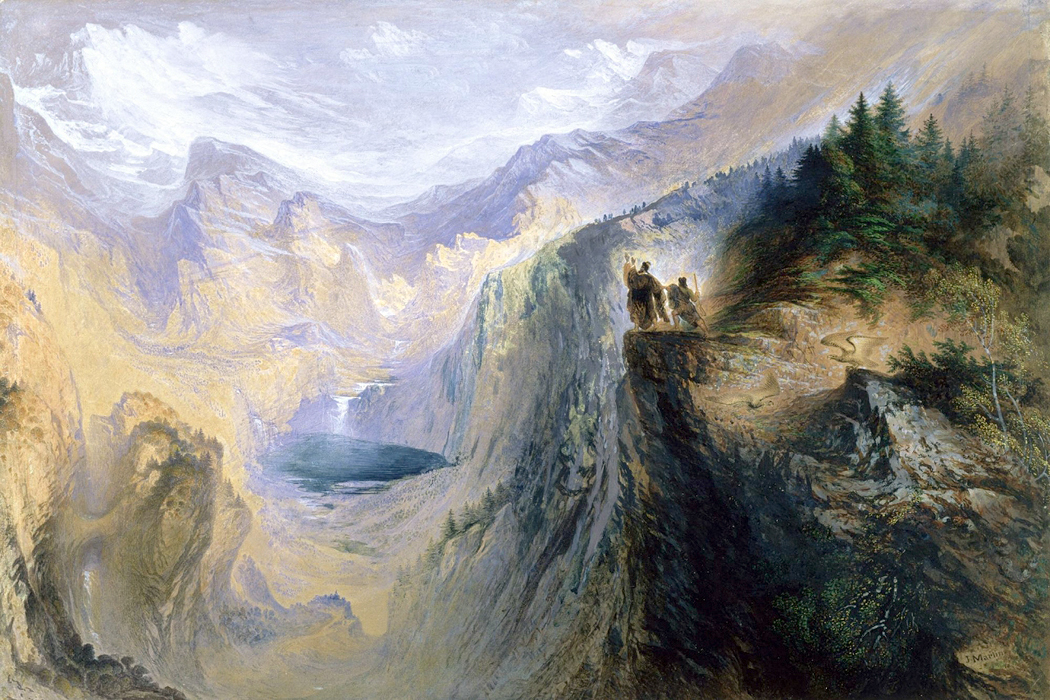
“Manfred on the Jungfrau” John Martin 1837

The problem with the Romantic vision of the sublime is that it can too easily devolve into kitsch. The sense of cosmic overload shrinks into a kind of religious sentimentality and you wind up with Charlton Heston and Cecil B. DeMille. Where you draw the line, personally, depends very much on your willingness to accept the underlying metaphor of the vastness and impenetrability of the universe. 

Any theme, including the sublime, can peter out in too-familiar tropes and cliches. And so, in the 20th century, artists and poets have needed to find new ways to explore the idea, without the hurling boulders and cataclysmic storms of the 19th century. The old ideas still persist, of course, in such things as the photographs of Ansel Adams. It came to a banal end in 1968 when Adams let his photos grace the cans of Hills Bros. coffee. 
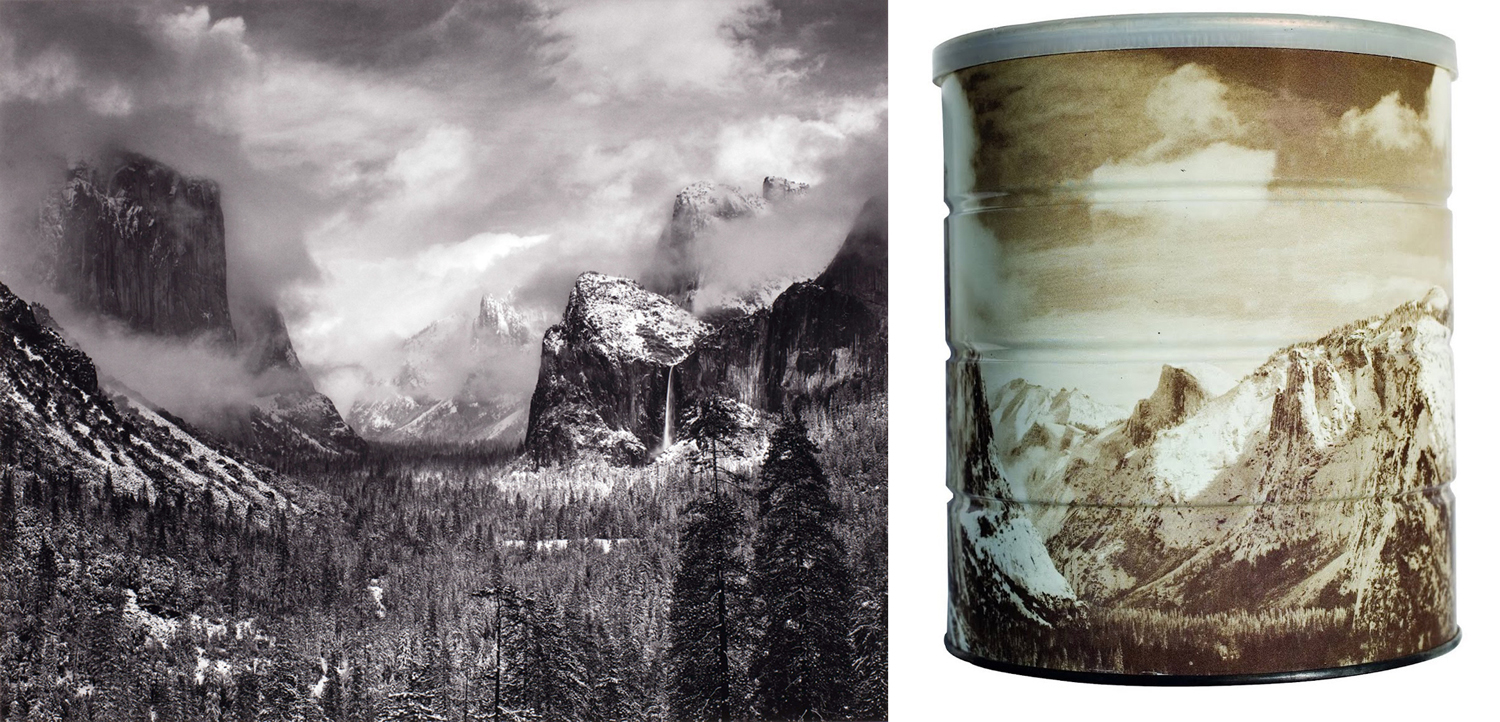
But, for the most part, the sublime has quieted down for the past hundred years or so, with priority given to social and political themes, from Brecht to Basquiat. We have a suspicion of grandiosity. Two world wars made us modest. 

Nevertheless, that cosmic power is still out there, seducing and threatening us. The night sky, the city-flattening hurricane, the ever-retreating horizon, the glimpse over the edge of the Grand Canyon precipice. And, always, our awareness of the inevitable extinction of our personal consciousness. 
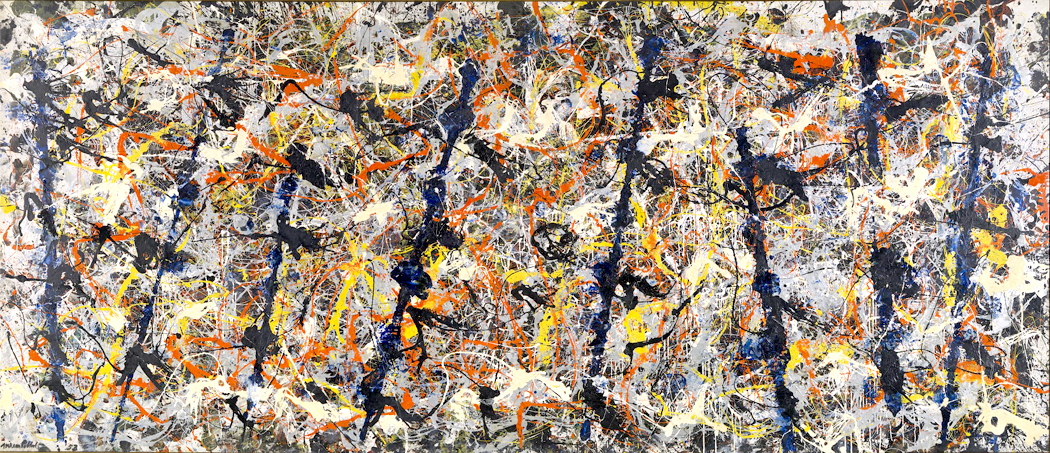
“Blue Poles” Jackson Pollock 1952

And some artists attempted to address this, but without the baggage of 19th century Romanticism. People like Barnett Newman with his huge blank colors, Jackson Pollock with his impenetrable scribbles, and Mark Rothko with his inscrutable floating squares. 

In fact, it was Rothko that first unlocked the Sugimoto seascapes for me. 

Rothko was another artist whose work initially I didn’t understand. Having only seen reproductions in books, I thought of his paintings as simply boxes of pleasing colors splashed on the canvas. 
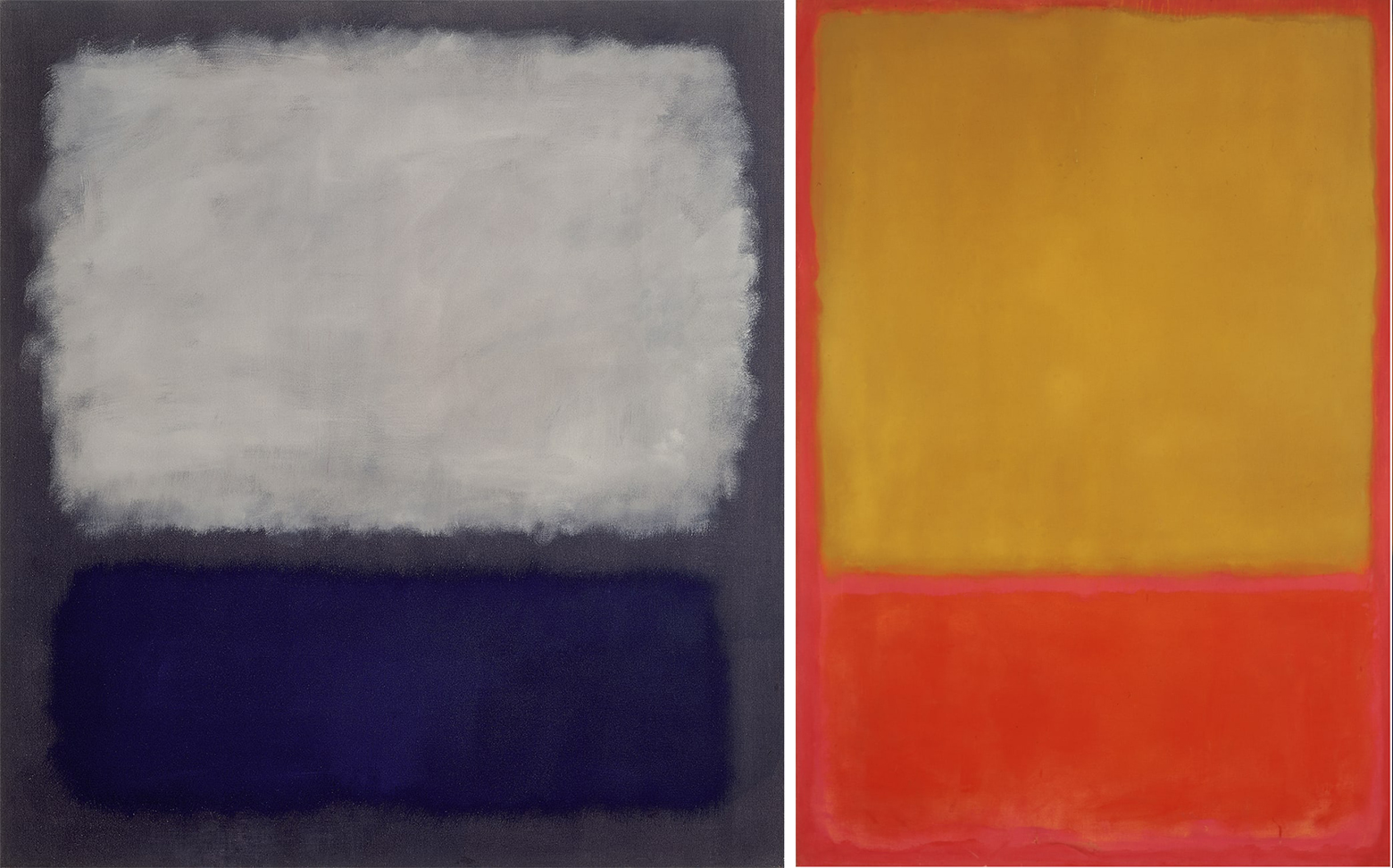
“Blue and Gray” 1962” and “Ochre and Red on Red” 1954 Mark Rothko

All that changed when I got to see the actual work, hanging on museum walls, and I realized those colors actually floated — visually — above the canvas. The colors of ink in a book illustration couldn’t do that the way actual pigment on canvas did. The difference between seeing a picture of an airplane and the actual flying at 30,000 feet. 

And so, it hit me, Rothko’s quiet illuminations were the 20th century version of the sublime. I couldn’t explain the emotions they roused in me, but they were the sense of seeing the primordial meanings of life, something no words could convey. 
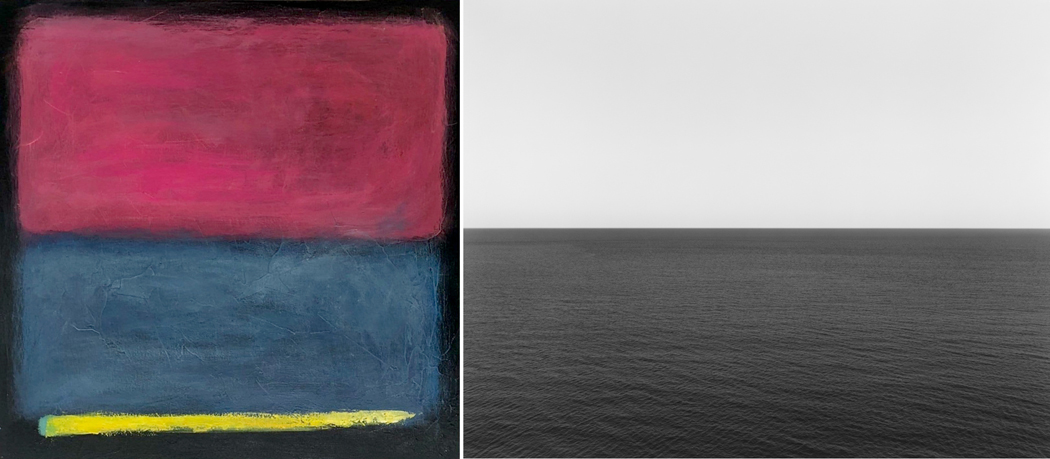
It was this same thing that nagged at me in Sugimoto’s photographs. The sky and sea were yin and yang, something primeval and immutable. 

“When you look up at outer space there’s the Moon and the Stars,” Sugimoto said. “But on the surface of the Earth, the farthest place people can see is an ocean horizon.”

Sugimoto also said that seascapes are pivotal in that they are a  scenery that we, in our modern world, still share with the ancients. Cities all look modern; even rural landscapes are crossed by interstates and power lines. But the ocean looks today the same as it did for Homer. 

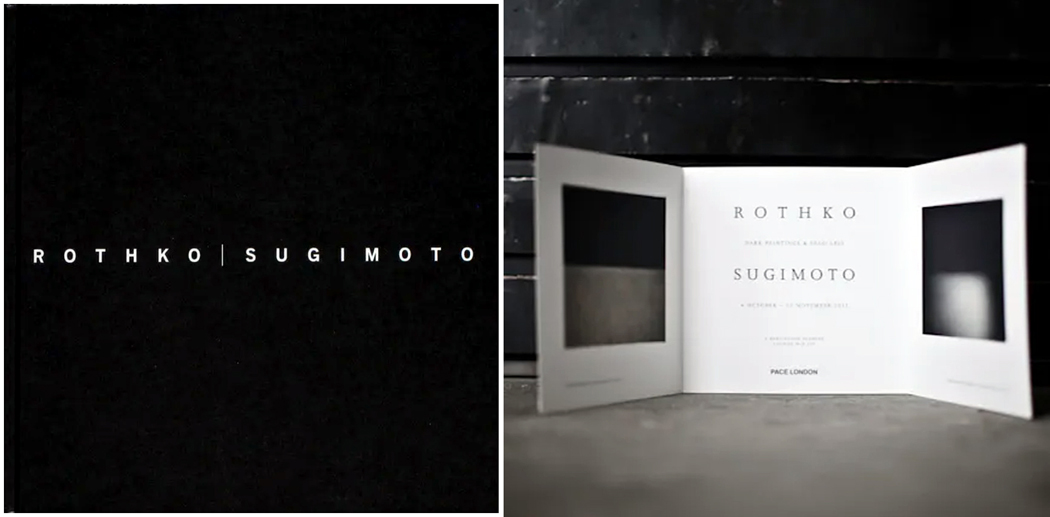
(Only recently, I discovered that the Pace Gallery in London had mounted a joint exhibit of Rothko and Sugimoto in 2012, and had even published a book about it.)
When I lived in Virginia, all those decades ago, it was on the ocean and I would almost daily have the opportunity to look out over the waves and into the horizon. I saw the seascape in sun and under the wind-blown scud of a nor’easter. It changed every day, even hourly. There were times when the sky color and sea color were so matched that the actual horizon line vanished and what I saw was a great blankness. A void. An infinity of sameness without edge. That blankness was a key to the modern sublime. 
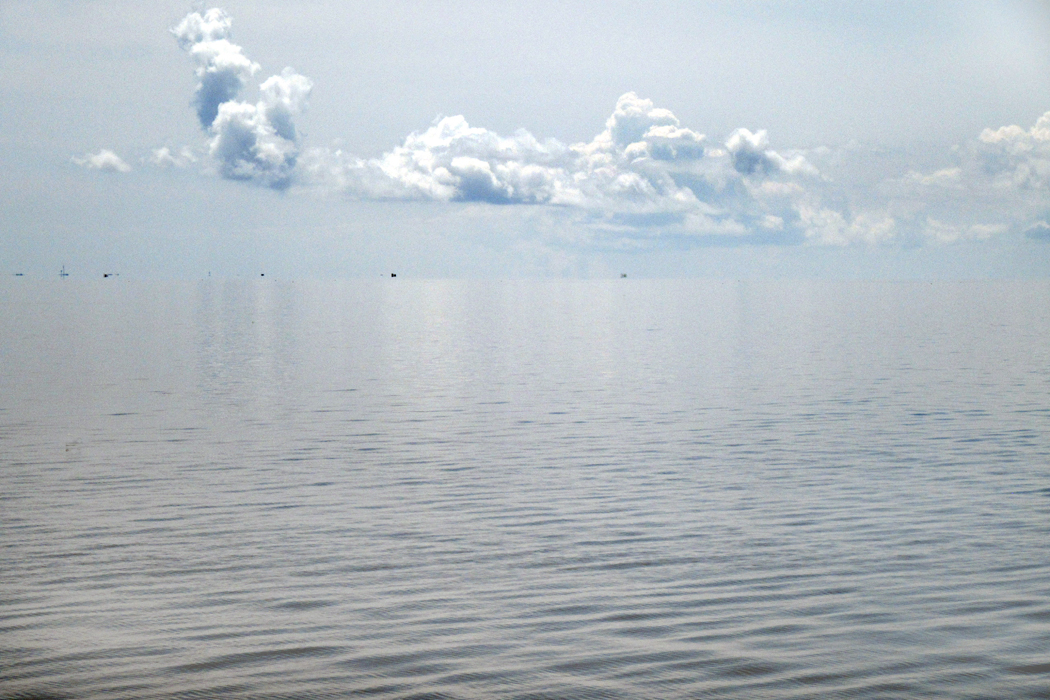
Currituck Sound, N.C.

Usually what I saw was just “the beach,” with its swimsuits and sunscreen. The everyday tends to crowd out — needs to crowd out — the eternal. After all, we have lives to live, jobs to get to, families to care for, and we cannot function if our adrenaline is always at the boil. But there were also times that I could look out at the water and air and realize that I was seeing the fundamental sense of existence. The quotidian keeps us functioning in society, but the sublime absorbs us into the universe. 

There is such a thing as an intense blankness. It is both frightening and beautiful. 
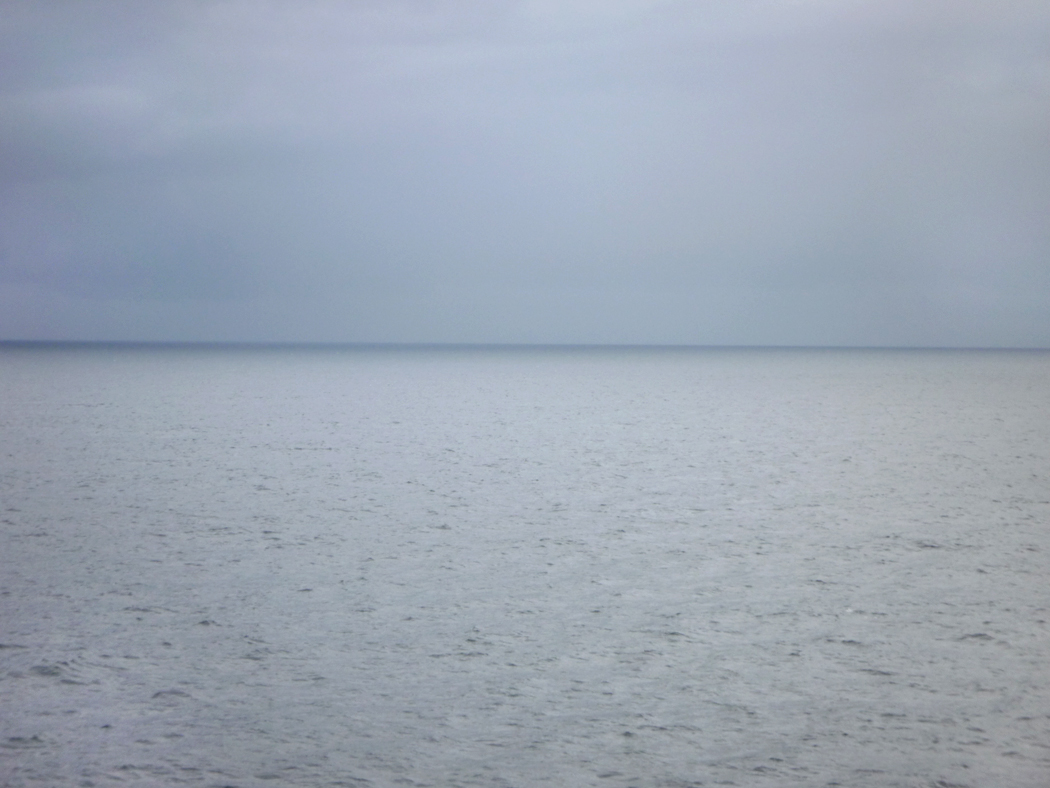
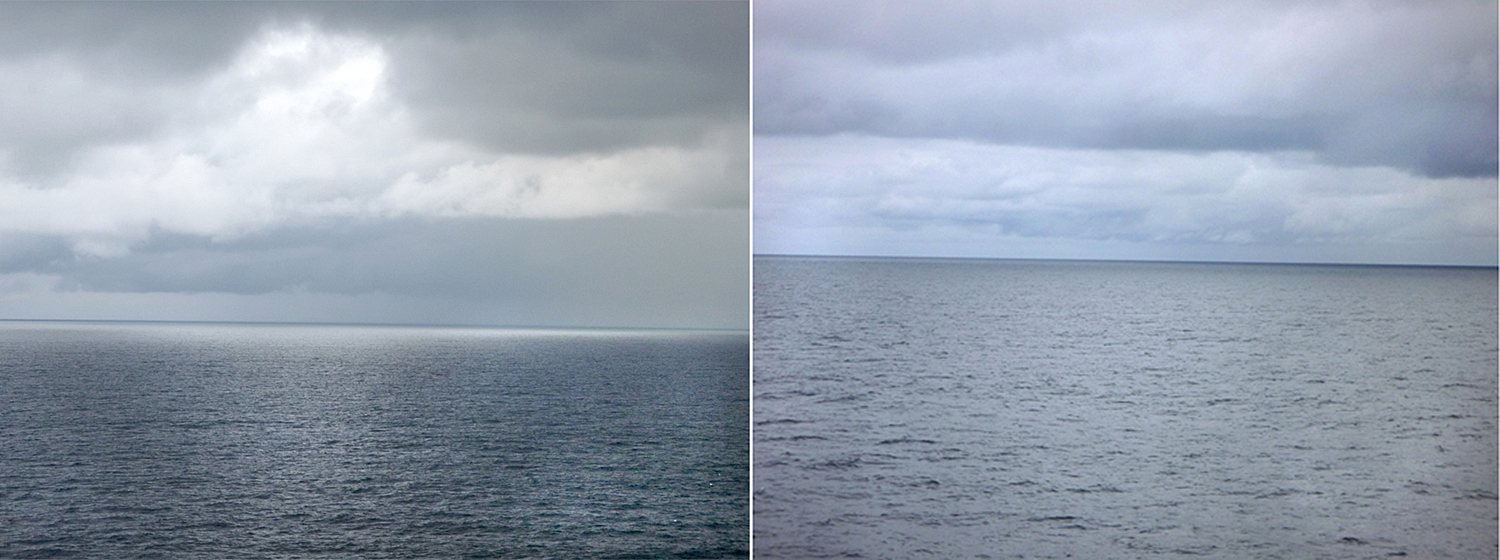
Alaska

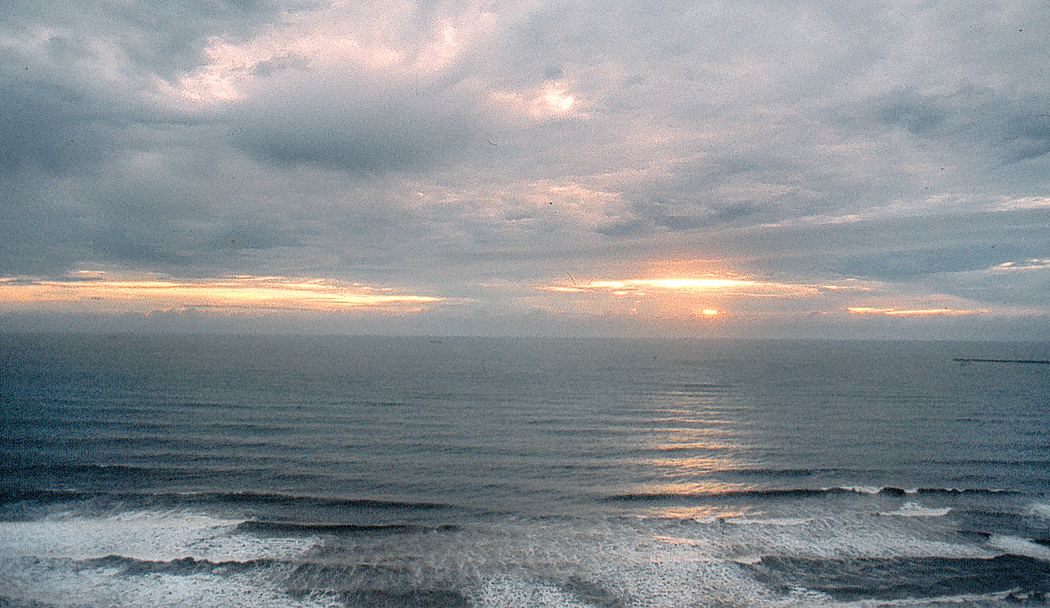
And without consciously realizing it, those Sugimoto photos had buried their way into my psyche, and without consciously imitating his work, I had begun making my own photographs of that phantom horizon. I did so all around the world, like this one of the Indian Ocean from South Africa:
Or these from Alaska:
Or this coup de soleil on Puget Sound: 
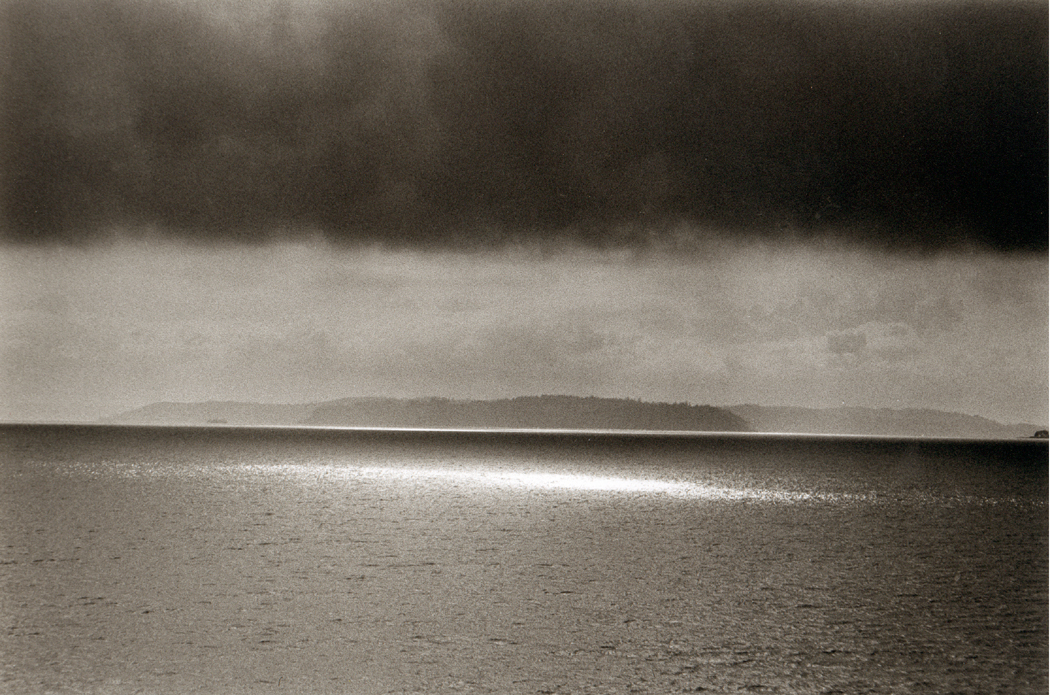
Although I was not aware, when making these images, that Sugimoto was buried in them, I was aware that they were informed by the sublime, and specifically, from a 20th- and now 21st-century version of the concept. 
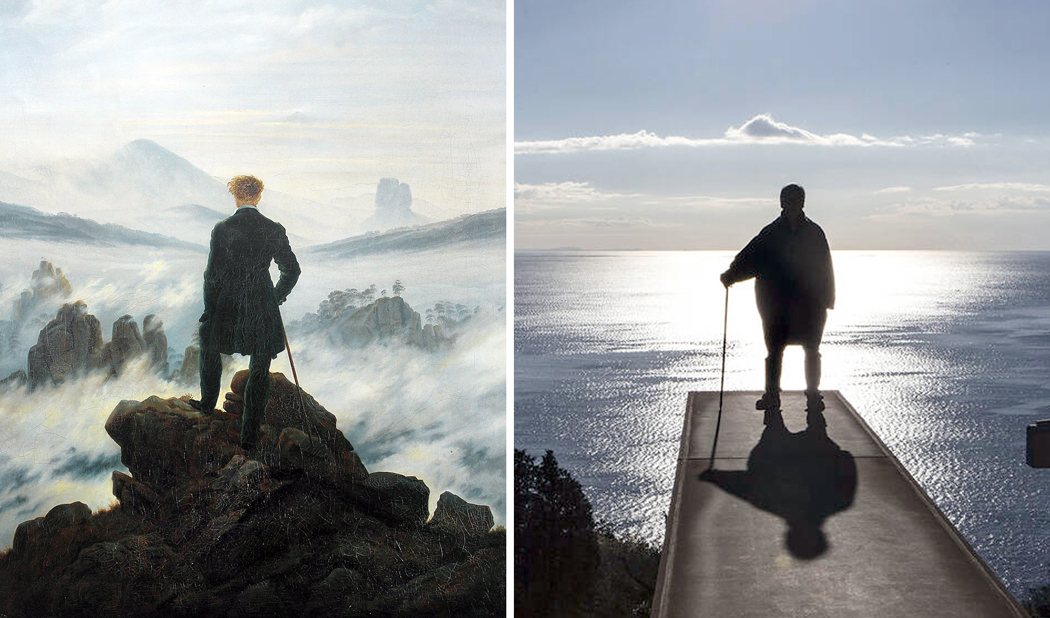
Finally, if I needed any confirmation that Sugimoto was striving for the sublime, I found it in this photo of the artist, posed to mimic the painter who was perhaps the poster-boy for 19th-century Romantic sublime, Caspar David Friedrich. 

Why do I do this?

The year I was born, the New York School of painters was coalescing. When I was an adolescent, they were ascendant. They were my boys: Jackson, Willem, Franz, Barney and Mark. 

(And they were boys. It was years before Helen and Lee were fully recognized.) 

During those years, the boys were flying high, but they still needed to be argued for. The mass of people continued to make fun of them. “My three-year-old could do that.” 

But to me, their power and meaning was manifest. During my teenage years, I spent many hours at the Museum of Modern Art, soaking in those great works. I spent way more of my time at MoMA than I did at the MET. 

They were called “Abstract Expressionists,” but at the time, for most people, abstract meant distorted. Picasso was the most famous artist in the world — the most famous abstract painter, and his subjects were still recognizable as bulls and guitars.

But for the New York School, it would be hard to name a subject. When Jackson Pollock was quizzed about what was his audience looking at, he said, “A painting.” 

There came to be a distinction made between abstract art and what was called “Non-Objective.” My boys were the latter. They weren’t imitating the world, but creating a new one. 

Yet, while I can honestly say I spent 10 hours at MoMA for every one I spent at the Metropolitan, the museum that became my spiritual home was the American Museum of Natural History. I didn’t just enjoy it; I loved it. I still do. 

At AMNH, I met the wonders of the natural world, from the giant blue whale hanging from the ceiling to the “Soil Profiles of New York State.” There were dinosaur bones and the colossal Olmec head. Rooms filled with rock collections and the great, illuminated theater of dioramas with their dramatis personae of stuffed bears and lions. 

I had the luck of growing up in rural New Jersey. While it was only a short bus ride to the George Washington Bridge and civilization, it was also a land of woods and streams — one ran through our property. Red fox and white-tailed deer would occasionally pass through our lawn. Tract housing and mini-malls had not yet taken over. 

So, I had these two very polar influences pulling me: On one hand, there was the manifesto of the art world that painting should be painting, and not an image of the world; on the other, I was in love with nature and the world of seasons, leaves, birds and geology. 

This tension still thrives in me. In 1998, I got to see the huge Pollock retrospective at MoMA and the painter’s 1952 masterpiece, Blue Poles, which was on loan from its home in Australia. The 16-foot-wide painting was intensely beautiful; I stood in awe — and that is not too strong a word, despite its current depreciation among the cell-phone generation, for whom even a cheese doodle can be “awesome.” 

Yet, on the same trip, I also went back to the Natural History Museum. Entering its dark and marble halls was an act of love — and that is not too strong a word. 

Since then, the art world has walked through several new rooms: Pop, Conceptual, Postmodern. And each of them seems to step further back from the physical sensation of the the natural world. 

Pop wants us to recognize cultural artifacts as worthy subjects for consideration — and they certainly are. 

Conceptual art removes us from even that, into a world of pure idea, and those ideas are often so removed from our everyday experience as to be unintelligible for the mass of people. And often kind of silly. Often the art would be better expressed in words. Write an essay. 

Postmodernism seems to tell us that there is nothing but rehash of old imagery, and what is more, even those are really about power relationships and keeping the little guy down, especially if he is a she or is melanin-enhanced. 

Certainly, there is among these isms, much art of value and meaning. And I often agree with the political ideas expressed. But I have always missed in them a sense of love for the things of this world — the smells, textures, colors, shapes of the things we use and inhabit. 

I have never given up on that. 

In some ways, this dichotomy is the difference between reason and empiricism. Conceptual and Postmodern art think their way through the world. What I value is experiencing my way through it. Seeing, hearing, touching, smelling, tasting. 

But I still have this memory lodged in my psyche of Pollock and Kline and Rothko and de Kooning. 

So, I have at times attempted a synthesis. I love nature. Rocks and trees and birds and bees. The ocean and lakes; the canyons and grasslands; the swamps and forests.

Ah, but even as I read that, I know those are words. It isn’t rocks and trees, really. It is the hardness and grain of a particular granite, the different bark of birch and yew. It is the spot upon which I stand at any given moment and what I feel as breeze on my skin, what sun glare I shade my eyes from. 

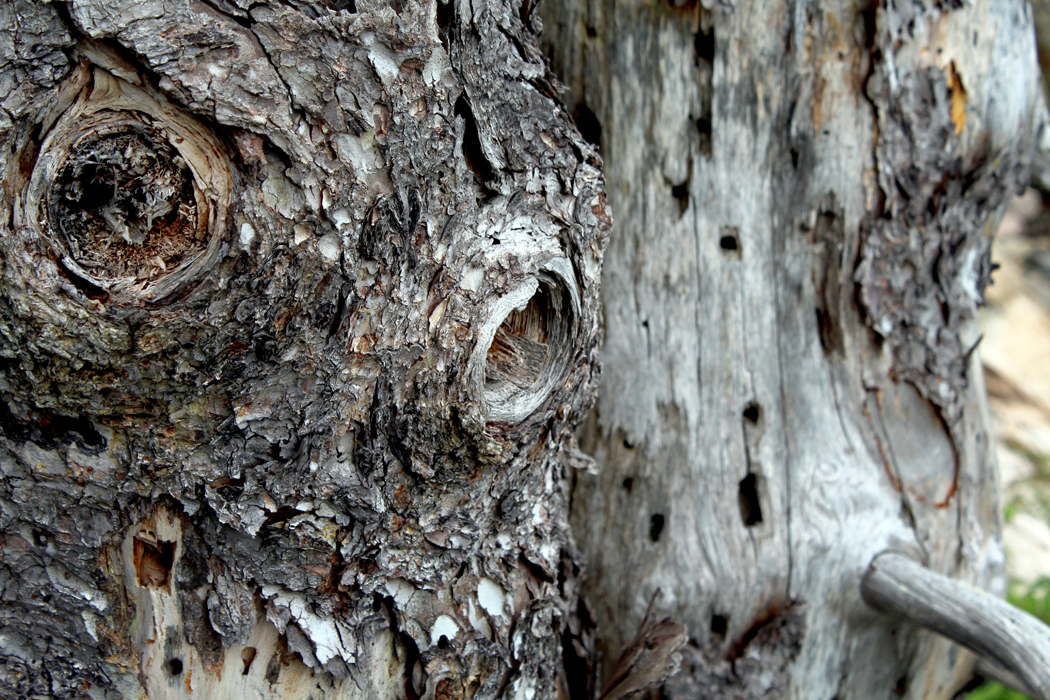
And in that granite or in that tree bark, there are shapes, textures, colors. I touch them. I see them.

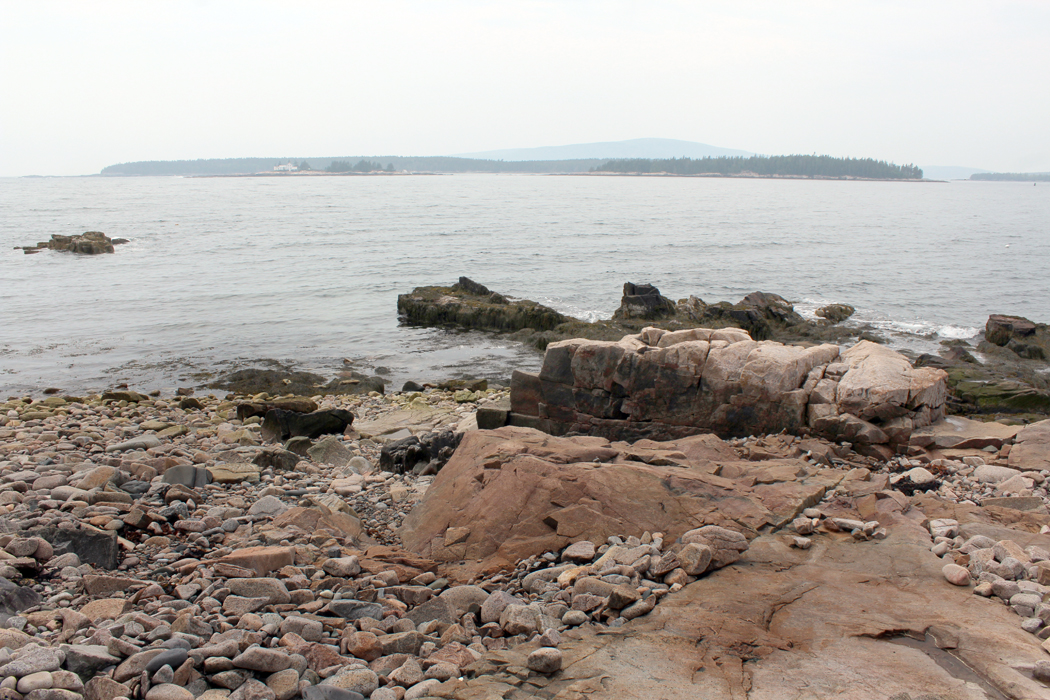
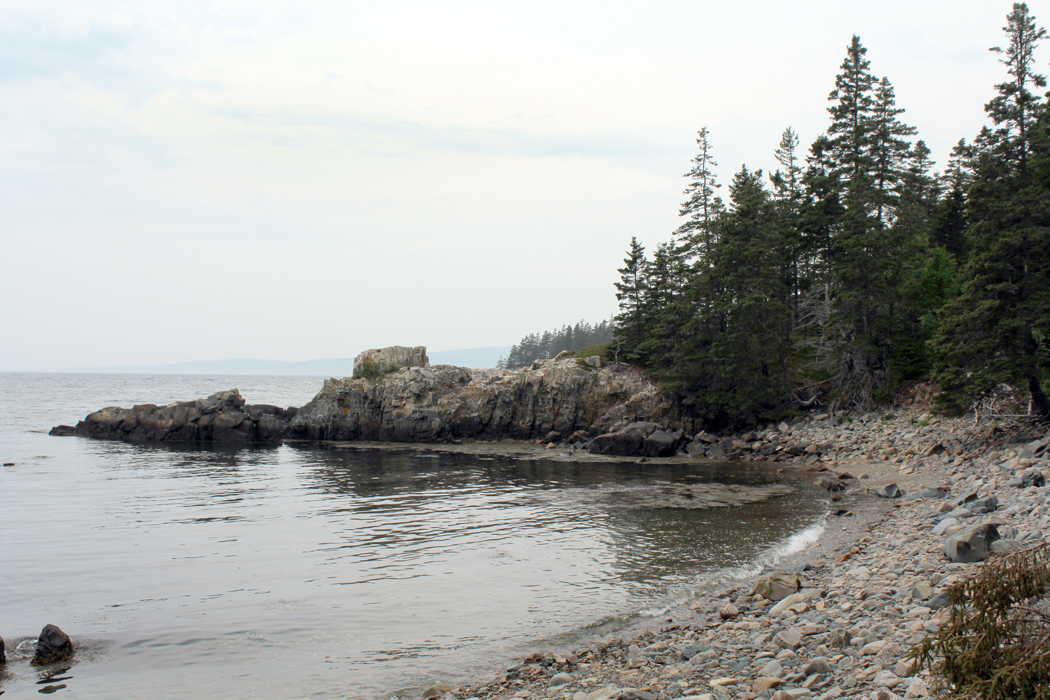
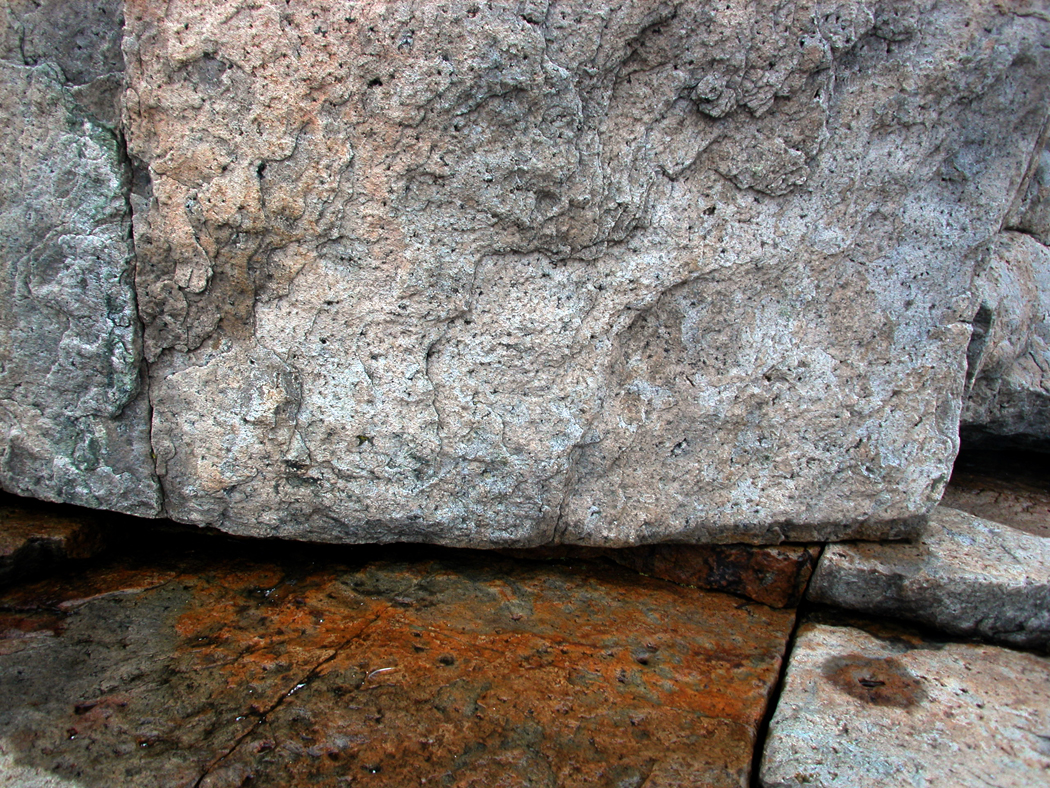
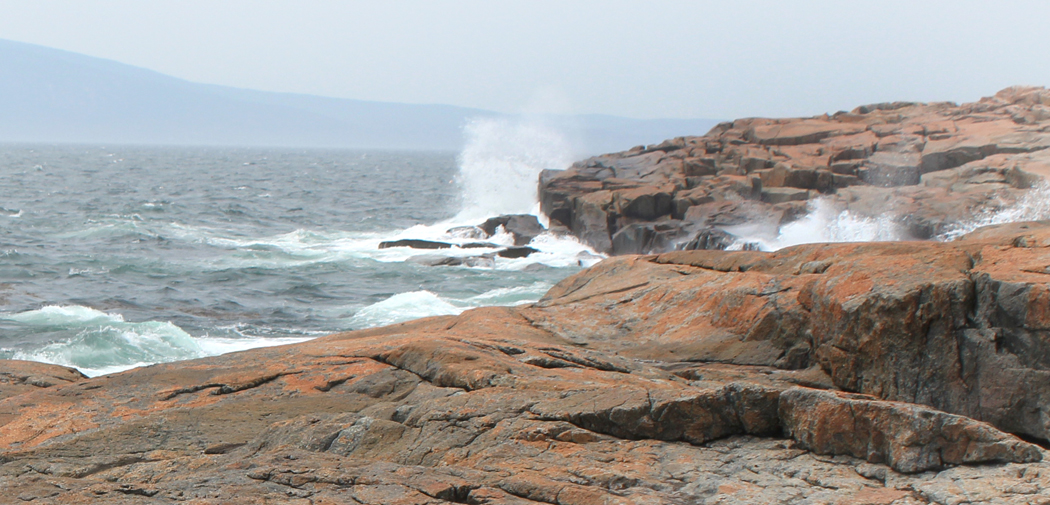
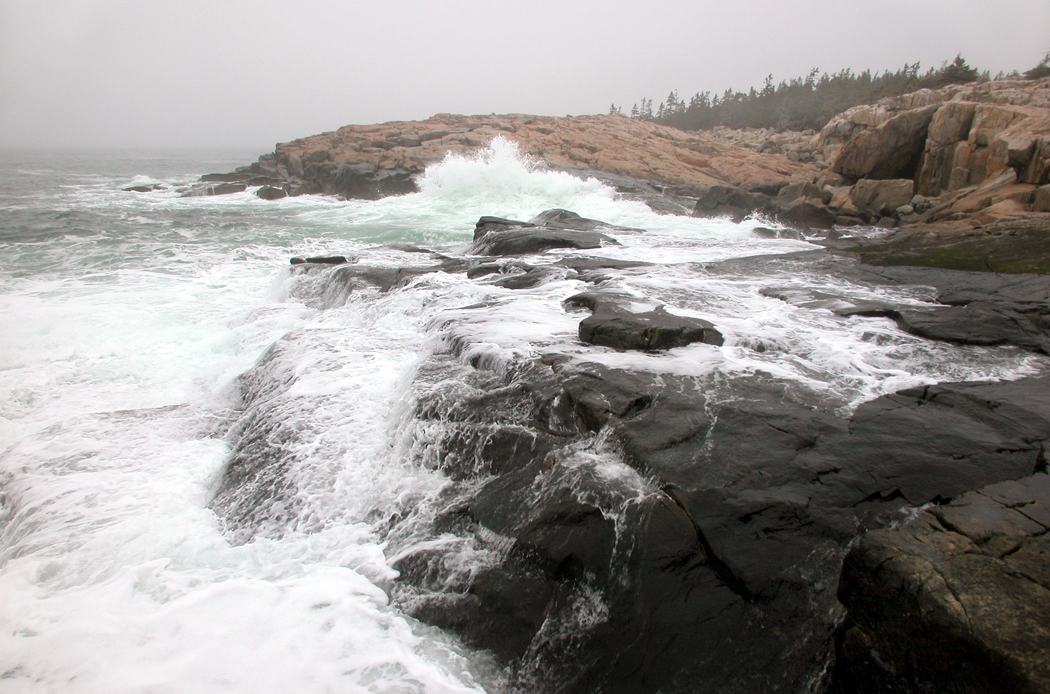
There is a place I have visited many times in Maine. It is Schoodic Point, which is a part of Acadia National Park. The main park on Mt. Desert Island, is crowded and developed, but some 40 miles northeast, by road, there is the Schoodic Peninsula, jutting out into the ocean. At its tip, it is bare, hard rock and spume and surf. The wind is usually raw and comparatively few visitors come there, especially in the fall and winter. 

(The double-O in the middle of Schoodic is pronounced like the double-O in “good.”)

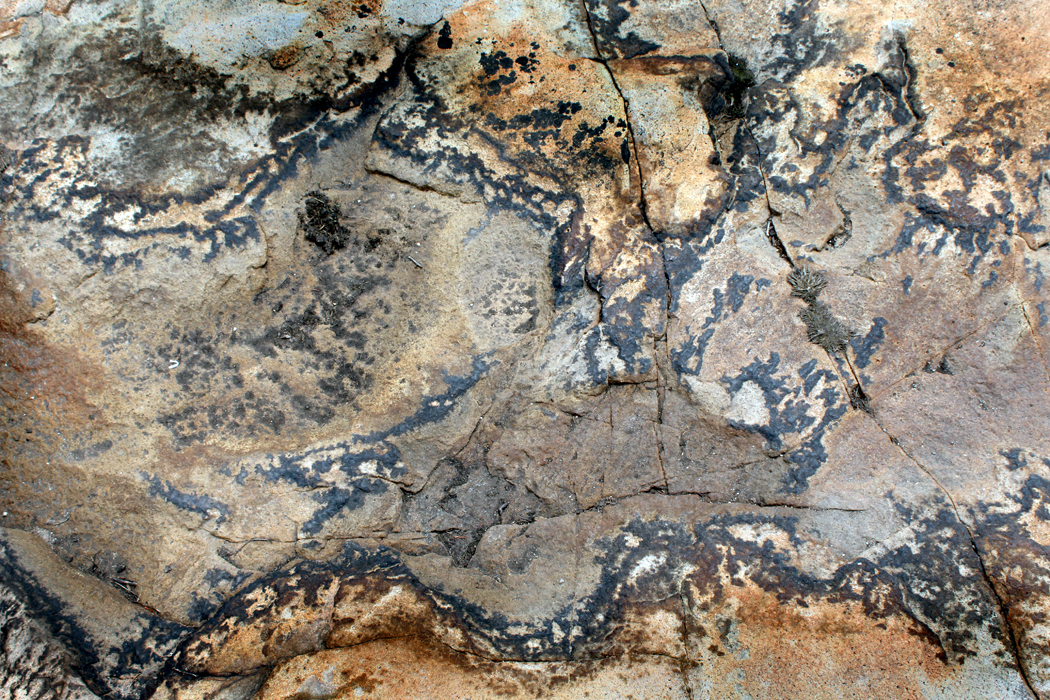
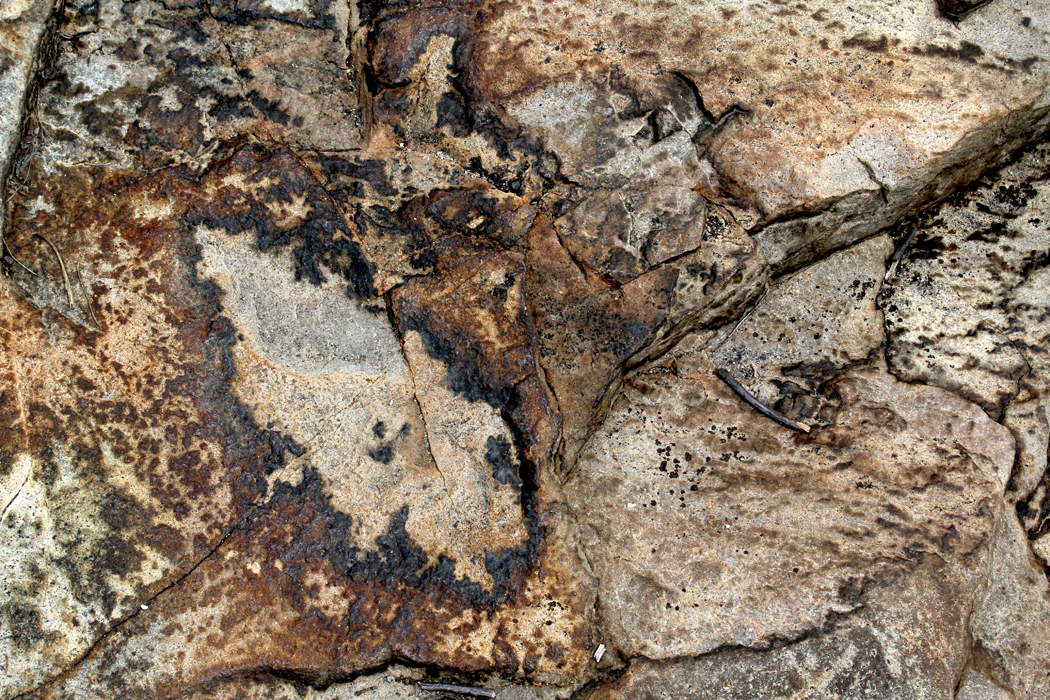
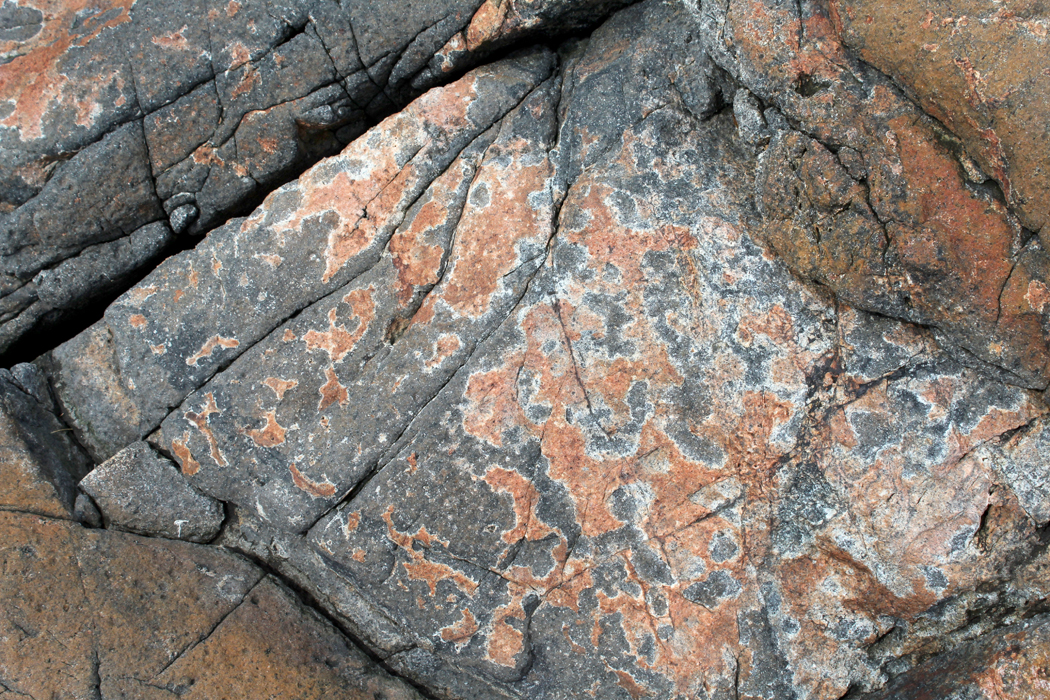
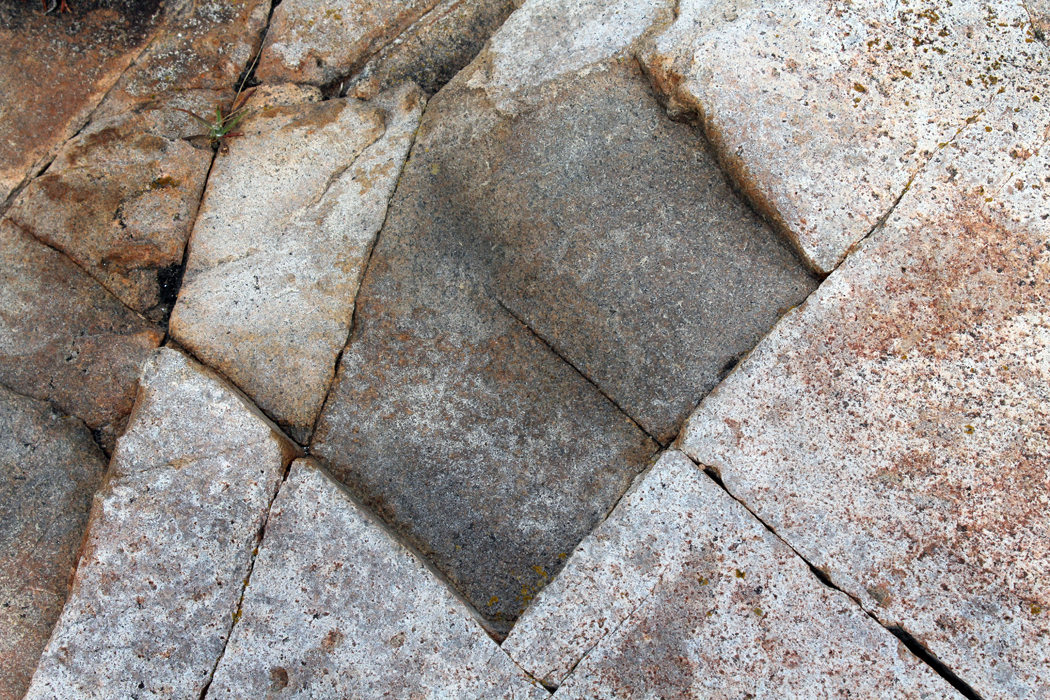
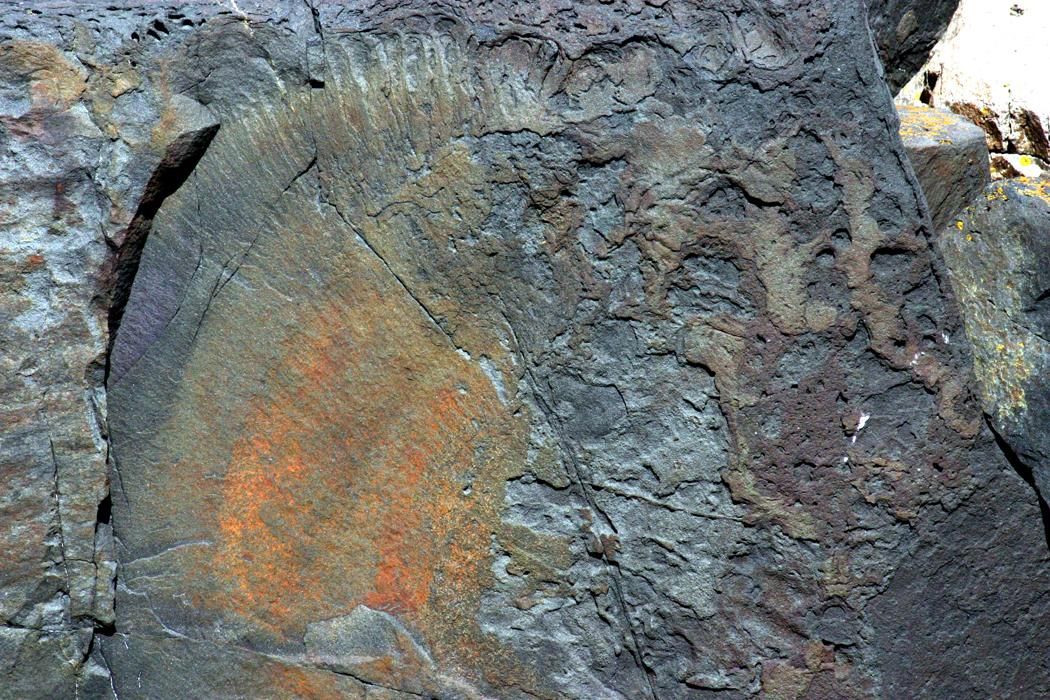
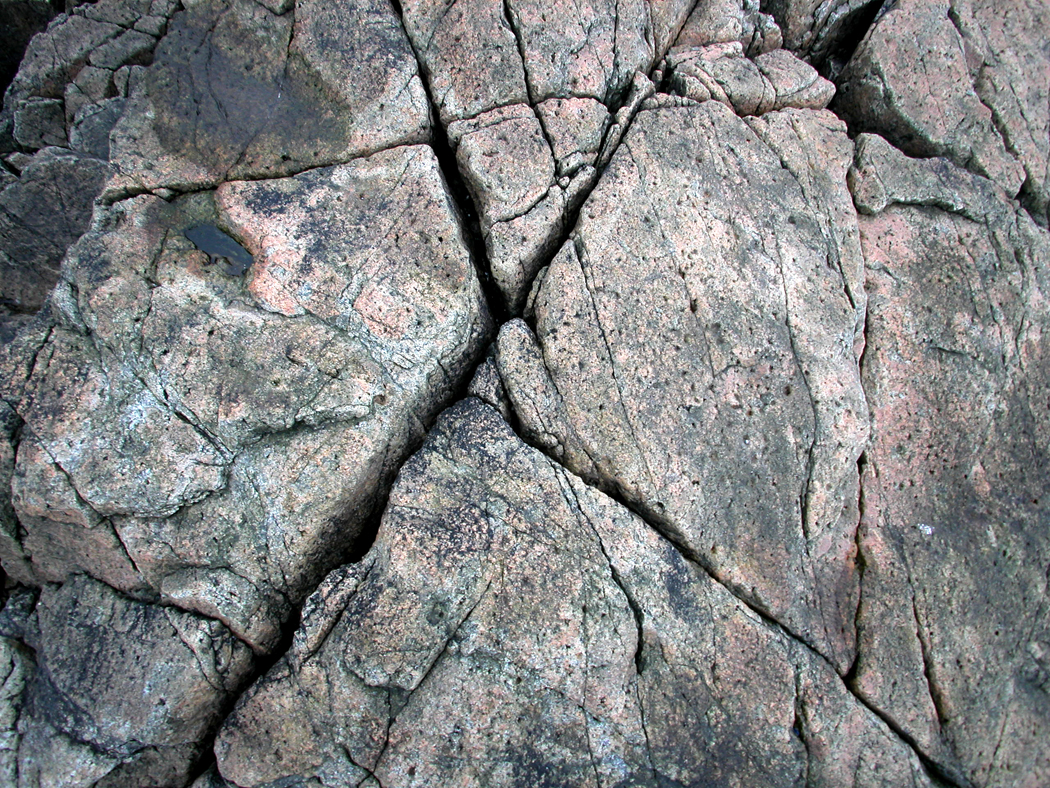
There, I can use my camera to record the abstract expressionist details that combine the emphasis on form and texture with an engagement with the natural world. It is a chance to reconcile those conflicting parts of my being. 

There is in some religions and mystical philosophies a contemptus mundi that I cannot share. The world is beautiful — not pretty, but beautiful; even its ugliness is beautiful. 

In 1928, the German photographer Albert Renger-Patzsch published a book in which his images of the world, both natural and industrial, found pattern and form in details excerpted from context. It was named, Die Welt ist schoen. 

That has become a watchword for me: When you engage with it as deeply as you can — and we are each different in this respect — when you so engage with it, you discover that Moses was not exceptional; every bush is the burning bush.

That is what makes those cypresses of Van Gogh so penetrating, the haywain of Constable, the waterlilies of Monet, the peppers of Edward Weston, the simple crockery of Chardin, the rabbit of Durer. Die Welt ist schoen. 

So, I cannot worry if my humble images are important art or not, or whether it is art at all. Muche wele stant in litel besinesse. 

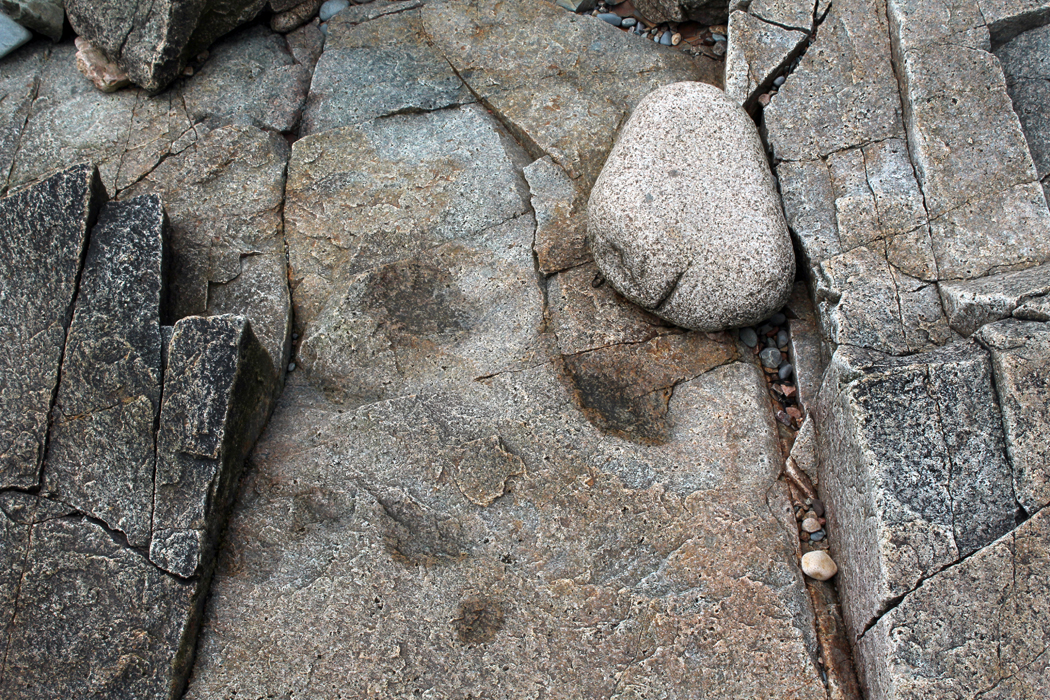
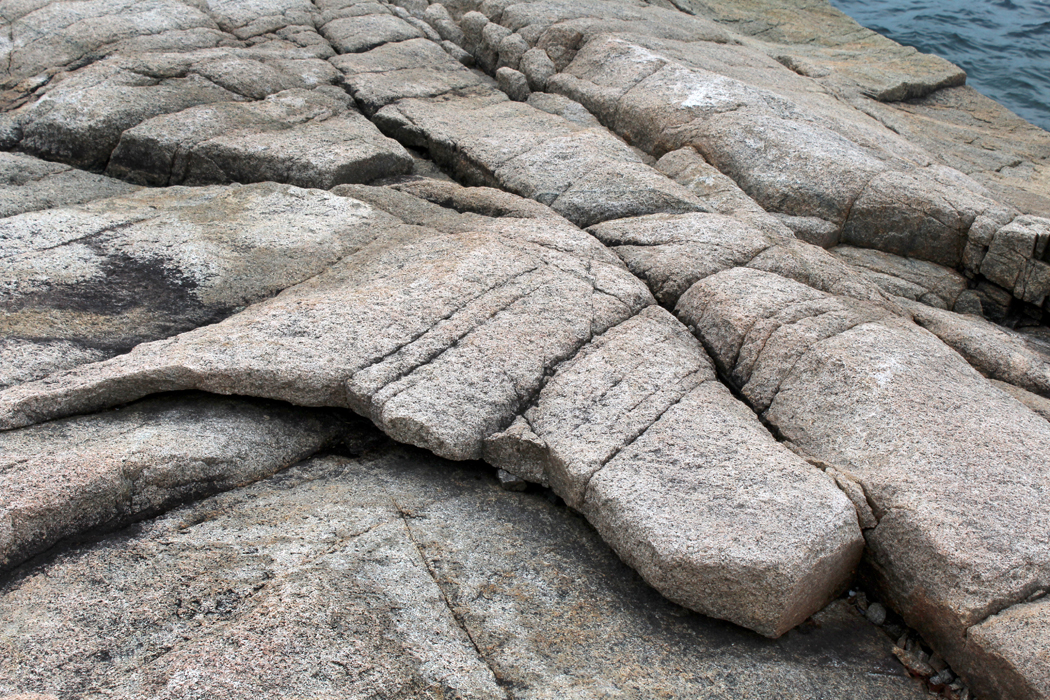
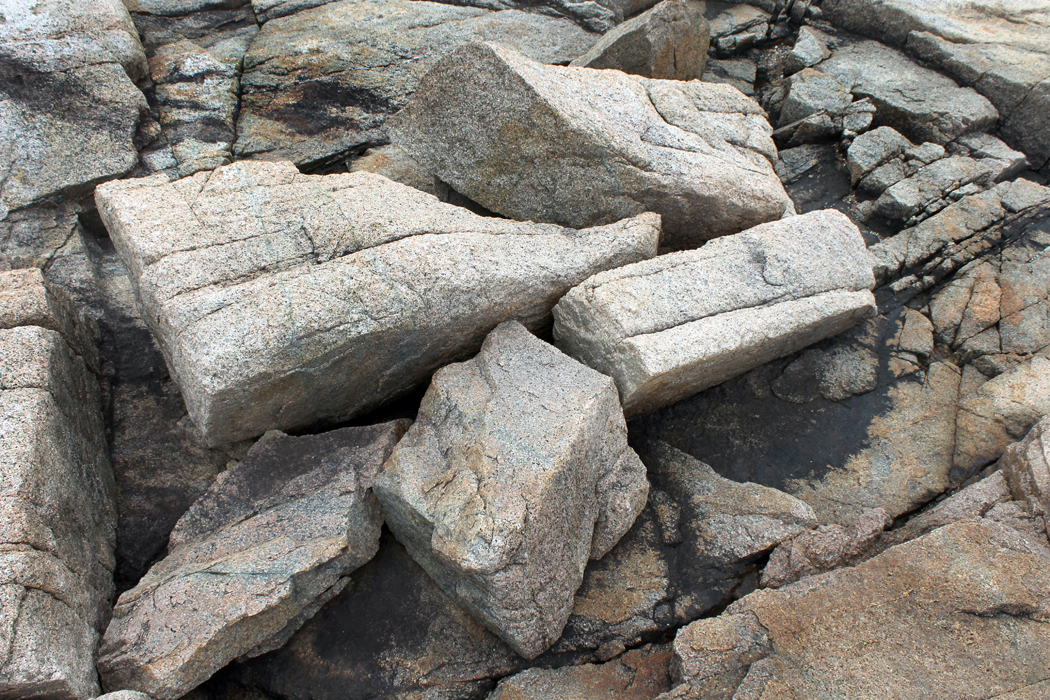
This is my tiny translation of Schoodic into image, the finding of the same elements Pollock sublimated into his canvasses, but here extracted from the hard edge of stone.

Click on any image to enlarge


pit and pendulum poster
INTRODUCTION

Art keeps changing. What is popular in one century is laughed at in the next. Victorians hated the undisciplined libidos of the Romantics; the 20th Century has found the Victorians cloying, sentimental and insincere.

But what causes these changes in taste? It is too often believed that styles change merely out of boredom, as if we got tired of one look and were attracted to the glittering novelty of the next.

And while there is certainly something to the idea of the bright, shiny and new, there is also something deeper and more meaningful.

For art history is not just a history of shifting styles, but of changing sensibilities. The transformation of one age into the next — of the Renaissance into the Baroque, of Neo-Classicism into Romanticism, of Modernism into Postmodernism — is a transformation of ideas.

cones and bullets

Making a point (or two)


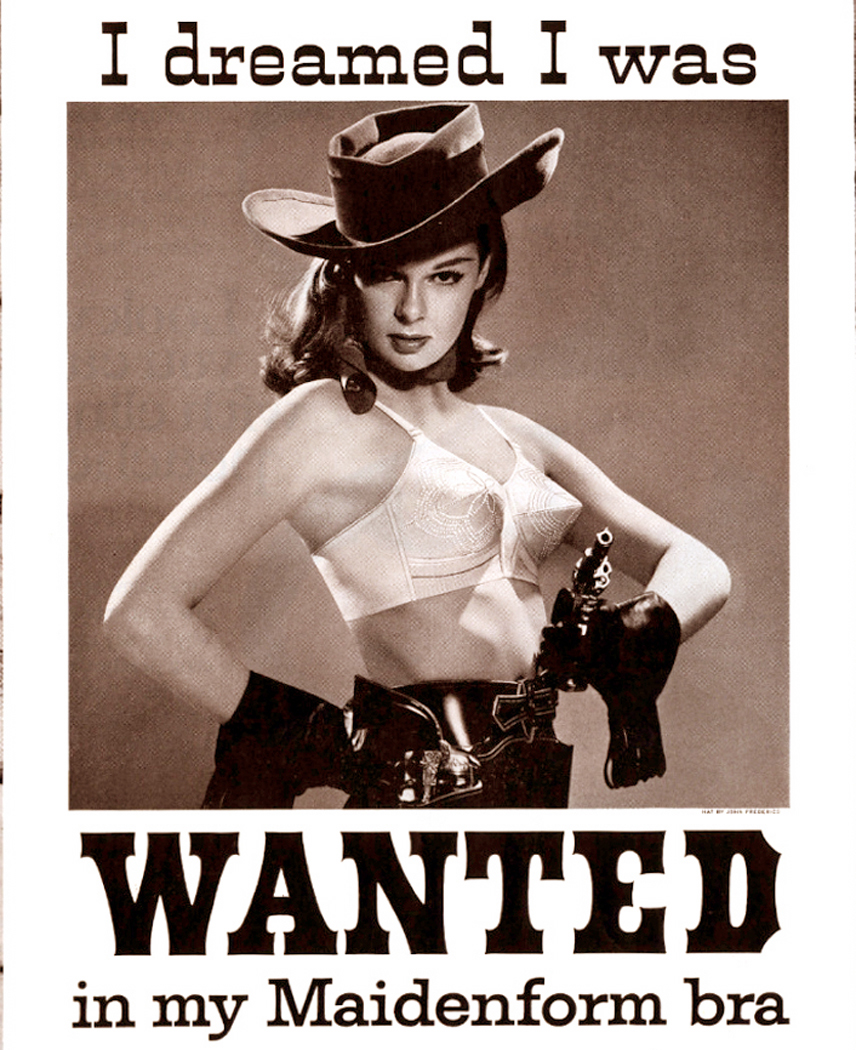
I say it isn’t merely fashion, but fashion isn’t either. Perhaps you get some idea of what I mean if we look at the Maidenform bra, for instance.
dreamed i was wanted

Here it is, as hard as cardboard and pointy as a dart. It molded the female form to a rigid contour. I remember when it used to be called the “nose cone” look.

But if you consider the time that gave  birth to the nose cone, you recognize it was the Eisenhower ’50s. It wasn’t merely the bra that was rigid. Men wore starched shirts then, too. Suits and ties were required attire at the office.

Wives wore highly structured dresses, with darts and sizing, and a mask-like make up, with red lipstick and black mascara. Their hair was held stiff, too.

And what was the political climate? It was also stiff. People were expected to conform. Those who didn’t were suspect. Investigated by the House Un-American Activities Committee. There was a conventional idea of what the ideal was. You can see it in the TV shows of the time.

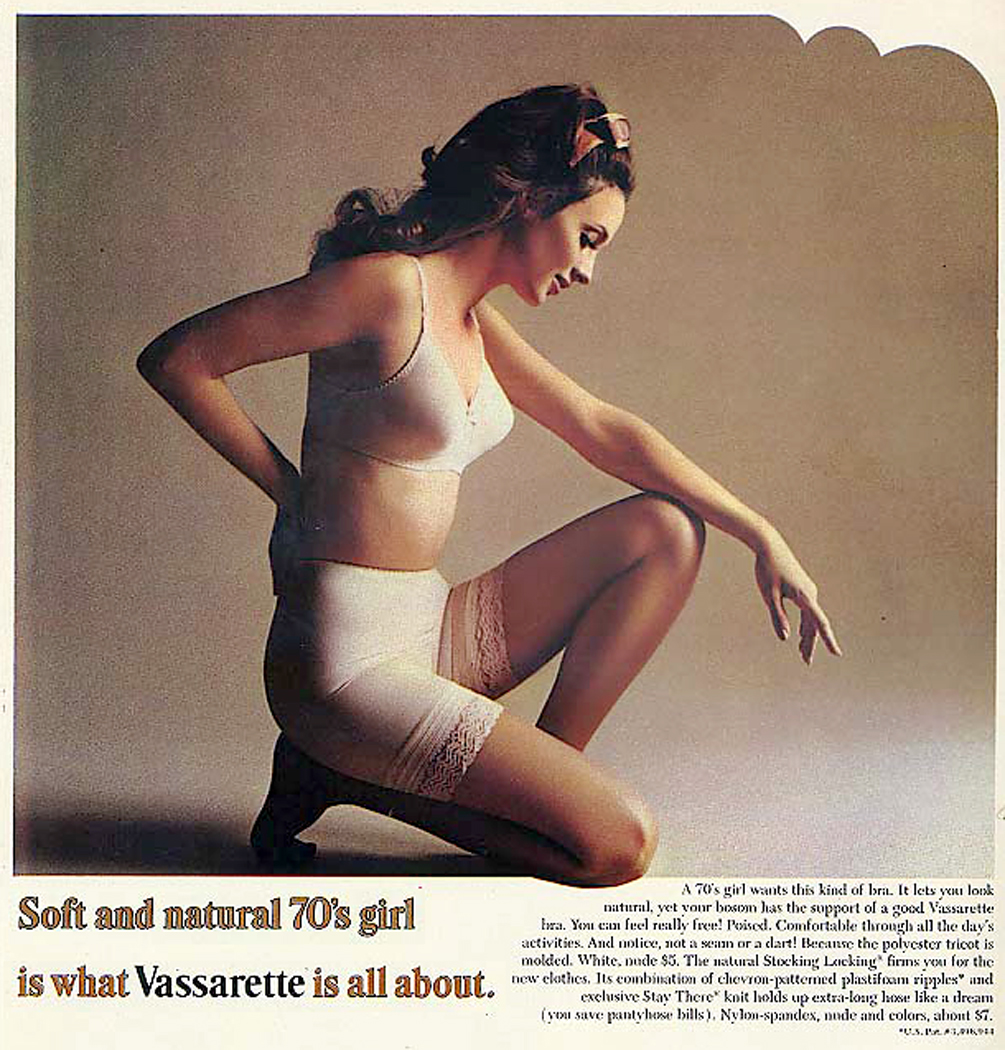
Leave It to Beaver? The Donna Reed Show? Dragnet.soft and natural

Interestingly, the ’50 lasted through the ’60s. But at the end of that decade, something happened. The rigid bra went out. So did the structured clothes. So did the stiff ideas.

These things are all connected.

The ’60s, by the way, lasted into the middle of the ’70s, when the ’80s began. Our idea of decades in this century is a little cockeyed. Still, we call the ’60s the ’60s and everyone knows what we mean, even though what we mean is the years between 1968 and 1974. That was the ’60s. All over in a flash. I remember — the flashing, that is.

It was a retreat from what seemed like inauthentic artifice into what seemed at the time to be authentic naturalness. “Natural” became the adjective of the decade. I remember one shampoo that advertised “100 percent all natural natural ingredients,” which, of course, promised only that whatever natural ingredients made it into the bottle, were actually natural.nipple bra

Black America began wearing a hairstyle they called the “Natural.”

And we had the “braless” look. Even bras offered the braless look.

If the ’60s seemed like a reaction to the stuffy ’50s, it was. But it was a wide shift in sensibility. The art changed; the music changed; the politics changed; the philosophy changed.

Artifice vs. artlessness

Before there was stiff underwear, in the 1920s, when things were looser mentally, emotionally and morally, underwear was looser, too.1920s lingerie 2

And we can see the reassertion of the artificial, parodied by Madonna in the 80s.

Like the change that occurred at the time of the Reformation, more emphasis was placed on individual freedom of thought and less on the authority of power. Martin Luther wanted everyone to be able to read the Bible, and not have the book only interpreted by a priestly class. Abbie Hoffman (admittedly a lesser intellect, although I don’t think that insults Hoffman) wanted to make up his own mind about the Vietnam War instead of taking Lyndon Johnson’s interpretation of it.Abbie Hoffman 1

I can recall hearing over and over from our elders at the time that “Johnson has facts we don’t know; we have to trust him.” Well, it turned out he was as clueless as anyone. We of my generation thought we’d never make that mistake again.

Over the centuries, each definable age is a reaction to the one that went before. The Renaissance reacted to the Middle Ages. The Romantic Age to the Neo Classical age before it. Victorianism to the Romanticism and Modernism in the 20th Century to the Victorianism which it hated.

But what underlies these changes is a curious series of pendulums.

“Meta-pendulums”

yinyang colorYou know how you keep hearing that the pendulum only swings so far before reversing direction — so that the Sexual Revolution is replaced by the New Chastity — or so we’re told. The swing to the political left is slowed and eventually we swing back to the right. Hello Mitch McConnell.

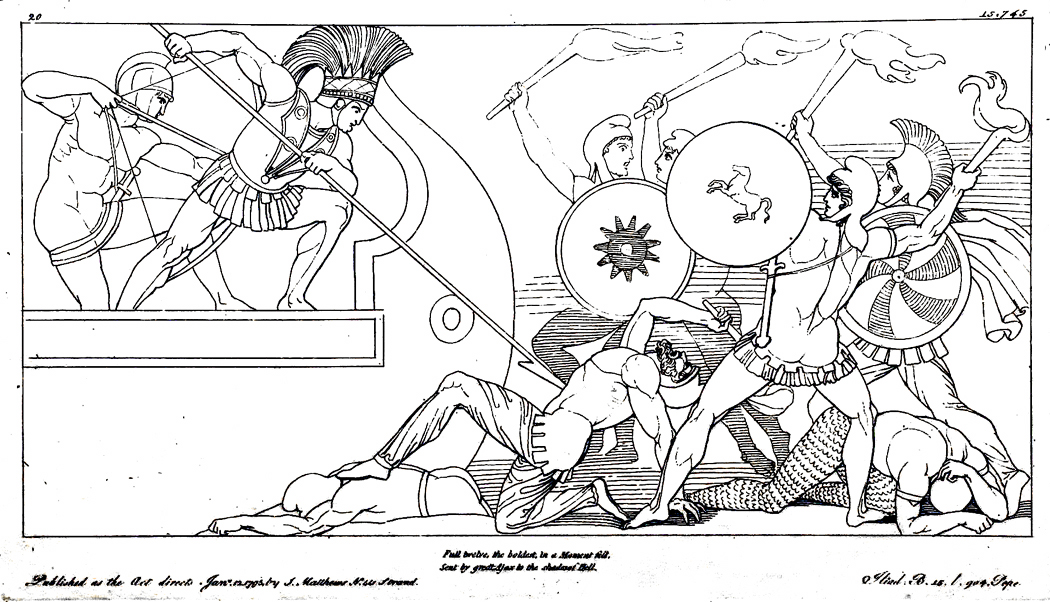
These swings are, in fact, the very stuff of cultural change and we can see them through the art that embodies them.flaxman 1

When we see the change from Winckelmann’s exulted Classicism to Delacroix’s exotic Moorish women, we are seeing a change in ideas.Women of Algiers

What is curious is that these same pendulum swings keep recurring.

There are a bunch of them, and their “swing cycle” is irregular, so that the same ideas don’t occur at the same time: Some ideas have a longer cycle, some a quick turnaround. They never all line up quite the same way twice, which is why the various “romantic” periods in art — the Gothic, the Baroque, the Romantic — are not at all identical.

What I want to do is to take a look at a few of these swinging pendulums to get a feel for the changes they bring. And perhaps narrow them down to a few “metapendulums.” Those larger ideas that hold the smaller ones like melon balls in a hollowed out melon half.

An endless list

I made a list of some of these oppositions. My notebook went on for three pages. I stopped at 63 pairs of recurring ideas when I realized I could really go on for days adding to the list.

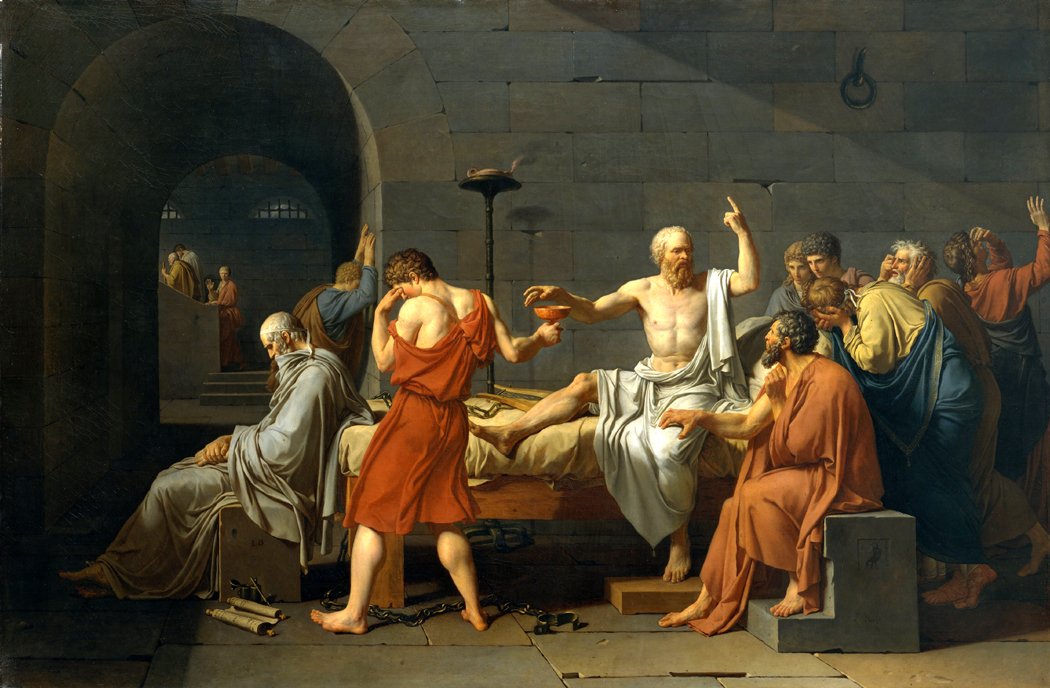
Here’s one example: How the middle of the 19th Century in France valued the historical (and religious and mythological) painting, like this David version of the death of Socrates. It was noble, formal, elevating. It taught the moral lessons that thoughtful people believed should be taught.death of socrates

But there was a reaction to it. That reaction gave us Impressionism, which gave up the past for the everyday present, like this barmaid in Manet’s painting.manet

I said these shifts recur. In the 1950s, for instance, the serious minded Abstract Expressionists, like Mark Rothko, expected their paintings to be morally and spiritually elevating.

What followed? The everyday present, like Warhol’s soup cans.rothko-warhol pair

The whole history of art keeps running back and forth through these issues, over and over, but never quite the same way — because other pendulums are also swinging back and forth at the same time, and their combined periods never quite in synch, so that the change from David to Manet is also a shift from a hard-edged style to a soft, fuzzy edged style, and between Rothko and Warhol comes the swing from abstract to realistic.

Among those 63 pairs of ideas — oppositions you might call them — are familiar ones. Here are a few of them:

Interest in the universal — Interest in the particular

Intellect primary — Emotion primary

Clarity — Complexity

Unity — Diversity

Religious — Secular

Edification — Entertainment

Reinforce ethos — Challenge ethos

Style — Content

Artificial — Natural

Social — Cosmic

Codification — Exploration

Stasis — Energy

Embrace past — Ignore Past

Internationalism — Nationalism

Emblematic (allegorical) — Mythic (symbolic)

Incarnation — Transcendence

Scientific realism — Emotional realism (“Truthiness”)

Nature as a desert — Nature as a cathedral

Vocation — Inspiration

Single creator — Atelier

Talent — Genius

Epic — Miniature

Dramatic — Lyric

Old form — New form

Irony — Sincerity

Discrete disciplines — Mix and match art forms

Depiction of emotion — Expression of emotion

There are many more. I’m sure you can come up with a bunch. But I don’t want to merely make a list.Dionysos pediment Parthenon
The general and the particular

 Because, as I was listing, I noticed that these ideas began to fall into larger patterns. They tend to group together, though some of the items in my list overlap, one category turning up as an item in another category.

But I want to look at the larger movements.sc000358.jpg

The first category is the rivalry between the universal and the particular. In some ages, we have wanted our art idealized. If we are going to paint a madonna, she should look like a woman, or better yet like all women, that is like Woman with a capital W. Especially if we harbor religious feelings about it, we don’t want our Madonna to look like Eleanor Roosevelt.

The 18th Century was one that believed in the importance of universalizing their art.

Samuel Johnson wrote in 1750 that “Poetry cannot dwell upon the minuter distinctions, by which one species differs from another, without departing from that simplicity of grandeur which fills the imagination.”

Or, in another place, “All the power of description is destroyed by a scrupulous enumeration; and the force of metaphors is lost, when the mind by the mention of particulars is turned more upon the original than the secondary sense, more upon that which the illustration is drawn than that to which it is applied.”

Nothing in real life is perfect, wrote painter Joshua Reynolds in his famous Discourses. The artist must never attempt to imitate real life too closely, he says, but rather, “he learns to design naturally by drawing his figures unlike to any one object. This idea of the perfect state of nature, which the artist calls the ideal beauty, is the great leading principle by which works of genius are conducted.”caravaggio madonna

Only 30 years later, English artist and poet William Blake wrote in the margins of his copy of Reynold’s Discourses

“To generalize is to be an idiot.”

He goes on to say: “To particularize is the alone distinction of merit. General knowledges are those knowledges that idiots possess.

“What is general nature? Is there such a thing? What is general knowledge? Is there such a thing? Strictly speaking, all knowledge is particular.

“Distinct general form cannot exist. Distinctness is particular, not general.”

Reynolds, if he painted a Madonna, would make sure she didn’t look like any live human being, but like the idea we have of the perfect form.

Blake, painting a Madonna, would certainly have made her look, if not like Eleanor Roosevelt, at least like some living, breathing woman he could see with his actual eyes.

And this is despite the fact that Reynolds is mainly a portraitist, making pictures of individuals — which he idealized in his paintings. And despite the fact that Blake makes mythological pictures of gods and spirits — which he meant to look like distinct personalities.

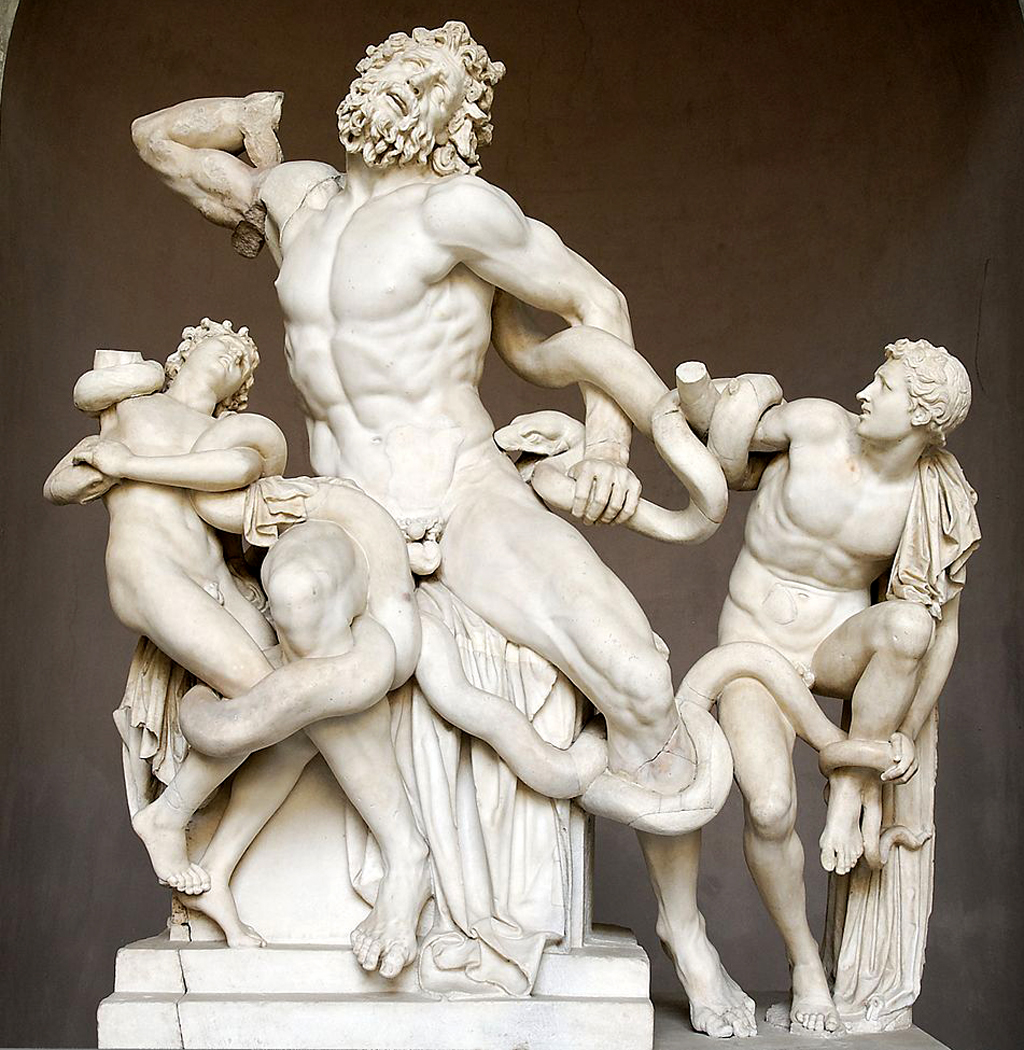
This issue between general and specific, universal and particular, recurs like all these ideas.laocoon

Hellenic and Hellenistic

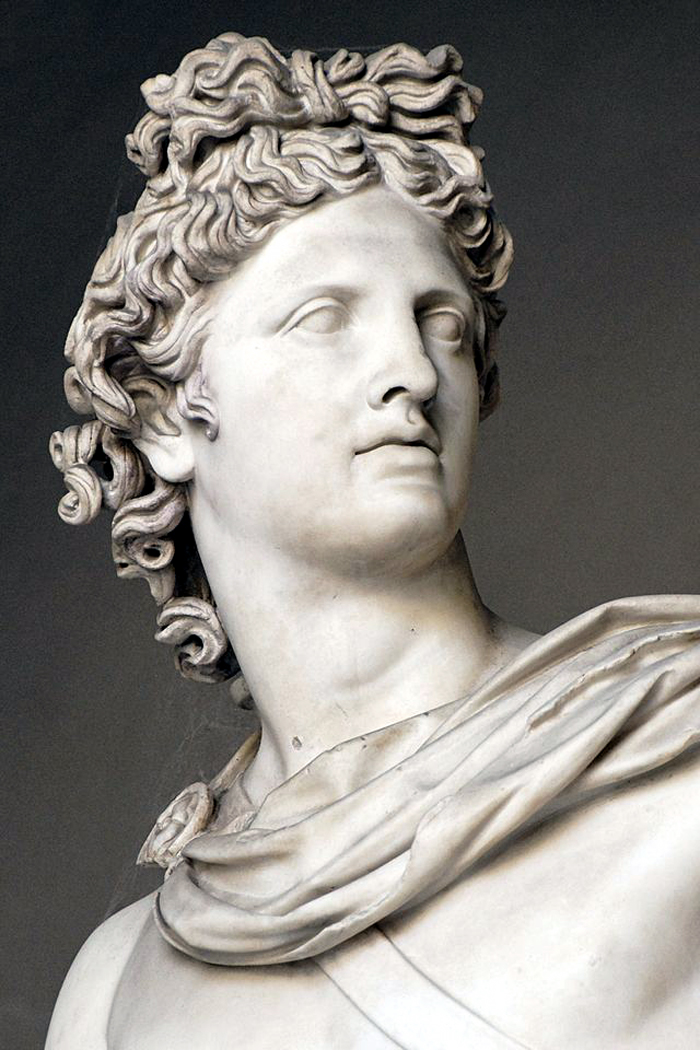
It is the first major shift in Western art one sees, not counting the prehistoric art (which also follow most of these patterns). But beginning with the art of ancient Greece, we can see it reaching its height in the 4th Century, with such sculptures as the Elgin marbles and the frieze carvings of various temples.Belvedere Apollo

The Classical Greeks believed in idealized beauty, in the general and universal, as you can see in these lithe, stripped down figures.

But after the Macedonian invasion, under the reign of Alexander the Great, in the period we call Hellenistic, the main shift is in the naturalness of the art. The statues take on a movement and individuality unheard of in earlier Athens.

You can see the distinct face of the wrestler with his broken nose or the boy pulling a thorn from his foot. (You can also see the shift, mentioned above, from the morally elevating tone of the Classical period, to the everyday activities depicted in the Hellenistic).laocoon head

But just look at the faces, the Classical impassiveness and idealization,

and the Hellenistic warts and all portrait.

You can see the pendulum go back and forth, with early Roman art tending to imitate the Classic Greek, and Imperial Roman art again embracing the particular. Once you have seen a Roman portrait bust, there is not doubt you could pick its model out of a police lineup of a crowd at a bus station. They are so distinct.Roman portraits

In the Middle ages, first in the declining Roman period and the Romanesque, individuality is downplayed and figures, especially in the growing Christian church, tend to be generalized. But in the great Gothic period that flowered in the 11th and 12th centuries, the figures again become individualized. So much so, that the hundreds of figures carved into the side of, say, Chartres Cathedral, are as distinctive as movie stars’ faces.

During the Renaissance, figures are once more idealized. In the Baroque, they are individualized. In the Rococco, generalized, in the Romantic era, individualized. In the Academic painting that followed, they were again generalized. Impressionism put back their individual character. Modern art simplified the figures and generalized them — all of Modigliani’s figures seem interchangeable, for instance, or Brancusi’s idealized women. But particularity and distinct figures reappear with Pop and the following Postmodernism.

Back and forth the pendulum goes.

I have dwelt on this one pair of opposites rather a long time, just to get the feel of what I mean.

But, I also want to point out the subset of ideas that follow the fight between the universal and particular.

NEXT: Part 2 — More pendulums