Archive

Tag Archives: meditation

I remember, as a child, going to the zoo and being impatient if I couldn’t see the animal immediately. The lion was off in the shade at the back? Move to the next animal. Children often have short attention spans, and I was no different. 

As I’ve aged, I’ve been surprised to discover how much more I can concentrate, how much more patient I’ve become. I can look long and hard until I see the lion, and wait to see what it will do next. Perhaps lick its paw; perhaps roll over and snooze. Oddly, with less time left on this earth, the amount of time I’m willing to wait has become inversely proportional. 

I am now an old man, with a powerful sense of how few years I will be able to enjoy this existence. People I knew and loved have left before me, giving me an imminent sense of what to expect.  

Maybe I am just growing soft in the head, or is it simply old age and the recognition that annihilation isn’t that far off, or some other cause, but I am almost daily having moments of utter beauty that remind me what I love about being. Moments that James Joyce might have called “epiphanies.” 
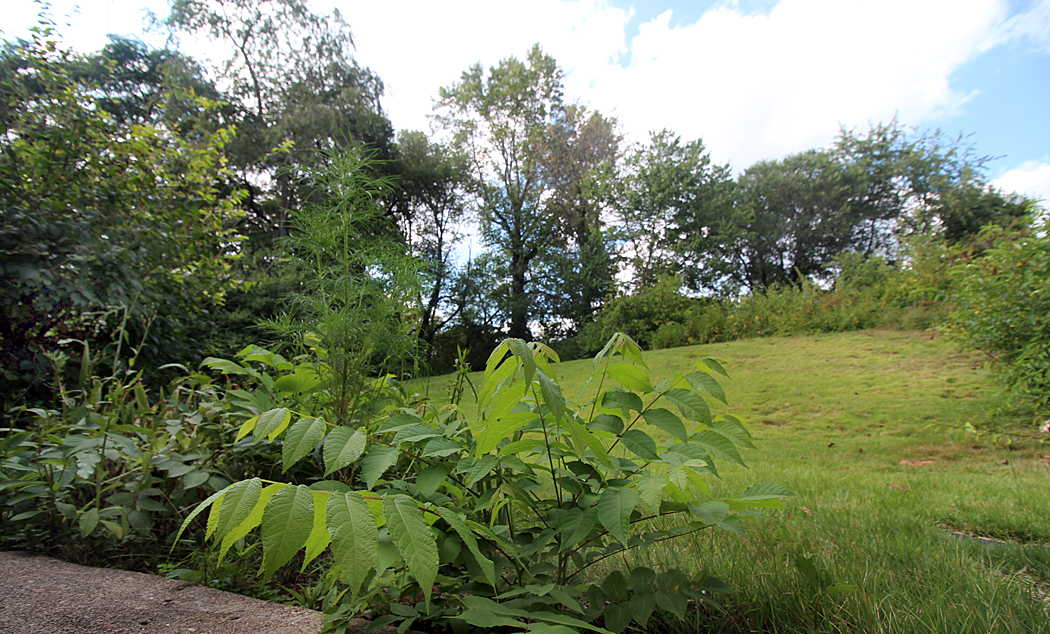
I have been going out and sitting on the back patio pretty much every day, usually for a half-hour at a time, sometimes longer, and saying to myself — or is it to the universe — “Show me something.” And every day, if I wait long enough and be patient enough, something will happen. 

Yesterday, a hummingbird flew not more than a couple of feet from my face to hover in front of a basil flower and then buzz back past me as he left. Another time, it was two cottontail rabbits hopping across the back yard, first one and as I watched it, a second one caught up. 
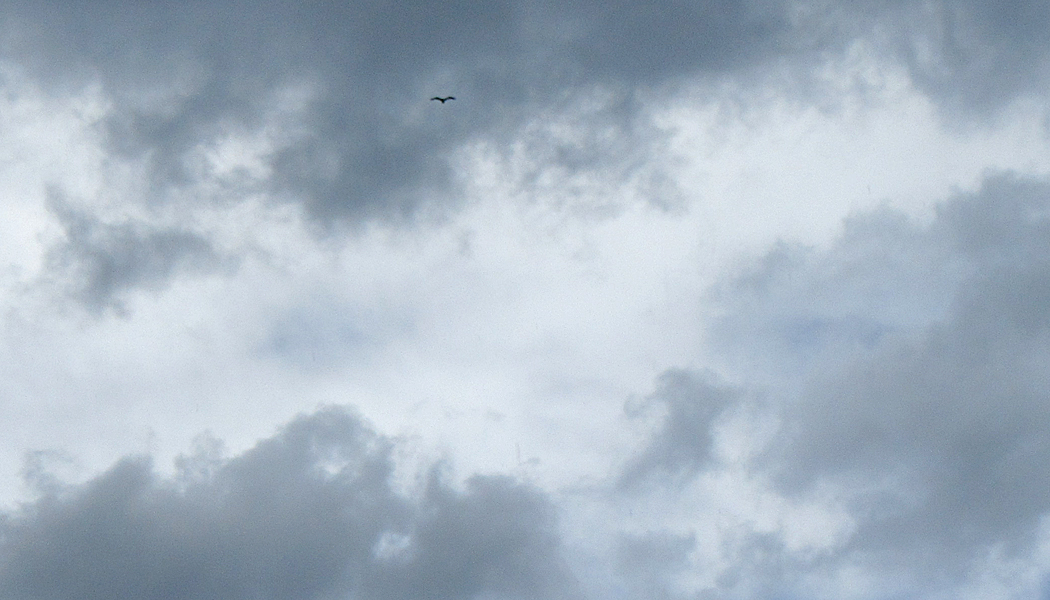
Once, I watched 15 vultures soar and climb in the air currents, one eventually so far up it was no bigger than a period at the end of a sentence in a book held at arm’s length. Yet again, a mockingbird sat on the roof of the shed beside the patio and sang his medley over and over, like I wasn’t there. Squirrels run around with acorn in their tiny front arms. A towhee landed on the steps of the shed. A rise of cumulus clouds was so white against the sky blue it nearly blinded. 

It never seems to fail. Each day, it is something new to delight me, and to remind me of the tremendous animation of the cosmos, and how minor fluctuations pile on top of one another to make it all new. 

A bright red cardinal flew directly at me, just a few feet above the grass, and turned away at the last minute to fly to my right and up over the roof behind me. 

A groundhog poked out from the brush and glanced at me and then, apparently deciding I was no threat, waddled across the full stretch of the back lawn to disappear in the brush at the other side. Not a lot happens over the course of an hour sitting there, but every time I go out, there is something for me, as if the cosmos knew I was paying attention and wished to reward my efforts. 

Recently, I heard a crow caw, looked up and watched as he flew in a great “S” curve, coming from behind me on my right, flying past me to the left no more than 20 feet away, then looped back to the right, circled away and looping back to the left and eventually behind the stand of trees, uttering caws the whole way. The curve was so graceful, I felt it in my esthetic sense. “As the crow flies?” Not a straight line. 
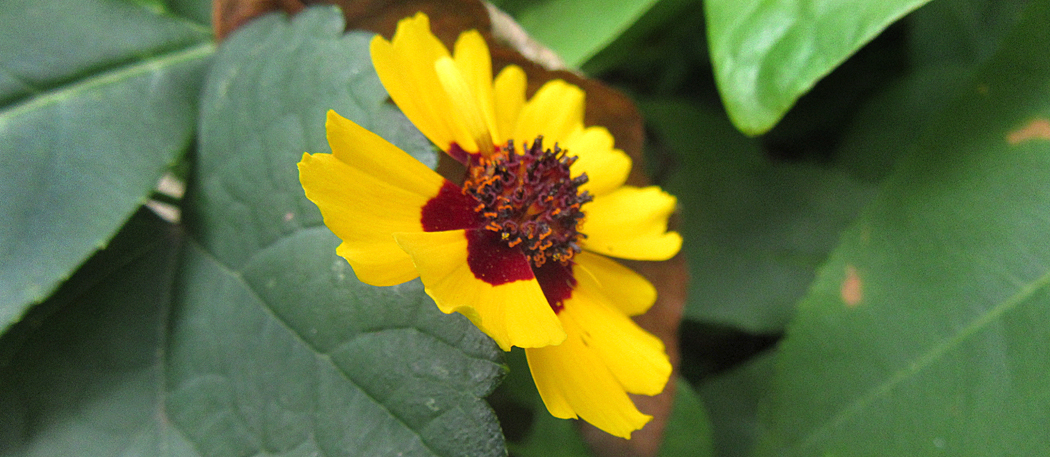
And so, every day, I sit and wait for the moment that the butterfly will land on the flowers at the edge of the patio, or the wasp will pause on the bluish florets of the mint. Or I will notice a small yellow flower that wasn’t there the day before. 

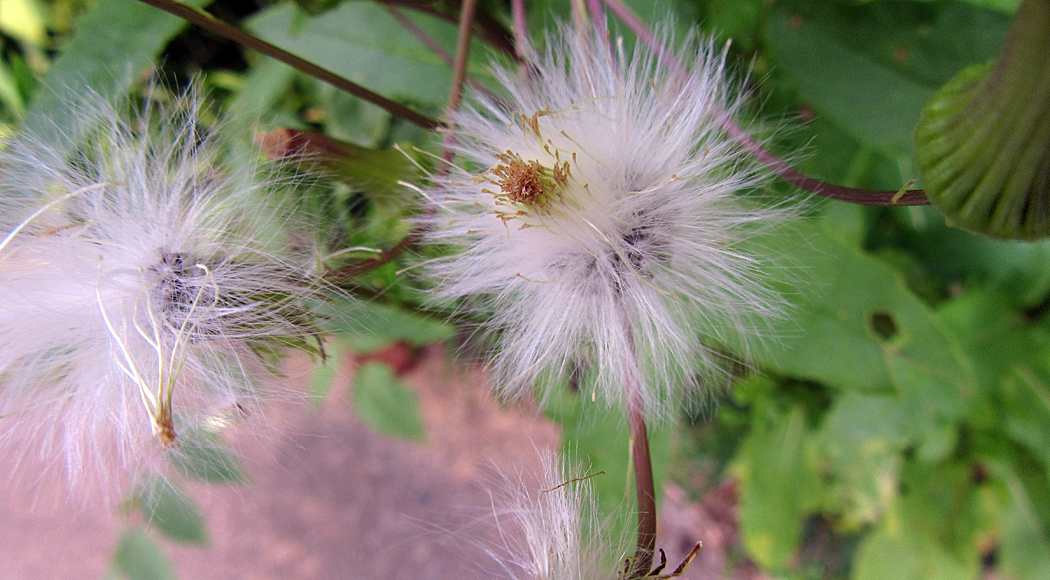
It is fall, and one of those flower seeds with its wisp of fibers landed on my shirt. I held it up in the light to see its tiny hard black seed and it reminded me of Carl Sagan’s “spaceship of the imagination.” 
Today, it looks like rain. Dark clouds are everywhere, with the occasional white brightness poking through. And I sat in my silent seat when the wind came up, as it often does just before a rain, and all of a sudden, from the tall oak tree at the top of the hill in the back yard, a hundred leaves let go to flutter down, but, since the wind was blowing toward me, the leaves did not drop straight down, but all floated toward me, up in the air, like a hundred butterflies, or snow in the wind, or bubbles bobbing around in the currents. And so, from a hundred feet up at the top of the tree at the top of the hill, the tumbling leaves filled the sky from edge to edge of my vision, dancing in the air, each showing shadow and light as it twisted, making a glitter in the sky. It was so ungodly beautiful, I began weeping. 

This is the beauty I don’t want to leave. It fills me up. I know I will have to leave, and sooner rather than at some indistinct time in a future that once was only imaginary, but now is palpable in muscle and bone. 
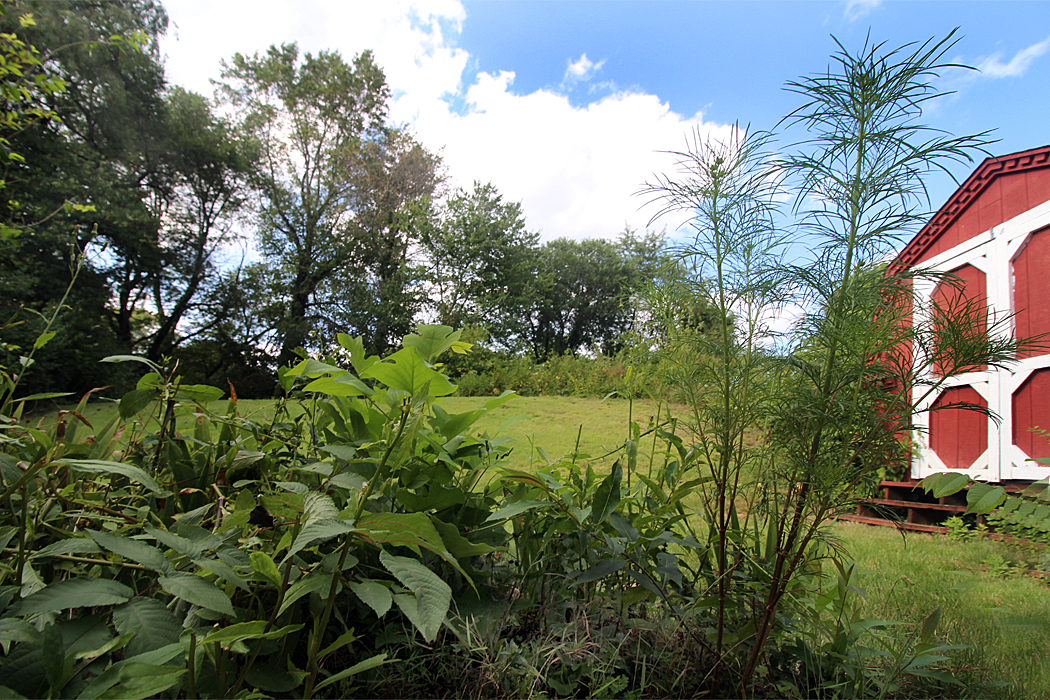
So, perhaps I am going soft in the head. Should I be so moved by such pedestrian events? I am more aware now than when I was young and had other goals in mind, of the complex connectedness of all of the sensate  world, and how that makes an organism too immense to take it all in or understand it. Little things we may understand and describe, but the wholeness of it all can only be apprehended as beauty.

And so I feel gratitude for the world and what it is willing to show me. I do not want ever to leave it, though I know I must. 

And when the final curtain drops on the final scene, I can say “NO” to the end, and “YES” with the same conviction. 

Sometimes, while driving through a neighborhood, I will see an old person, a retiree, sitting in a chair on the front porch, or in the driveway, just watching the traffic go by. It’s become a meme, much like the “Get off my lawn,” thing that shows up in single-panel cartoons. 

I have to admit, I am of that age, although I don’t find traffic that interesting. 

But after several years of being partially house-bound by the Covid virus, and at times suffering from cabin fever — to say nothing of the fatigue that comes with hours staring into an iPad screen checking out the news or watching cat videos — I have discovered the pleasures of sitting quietly in my back yard. It gets me out of the house and it reacquaints me with what I jokingly call “reality.” That is, the sense that there is a world without electromagnetic signals commandeering my attention, a world that has been there always, before my greatest-grandparent was born, and will be there when all the power grids in the world are rusting back into the soil. 

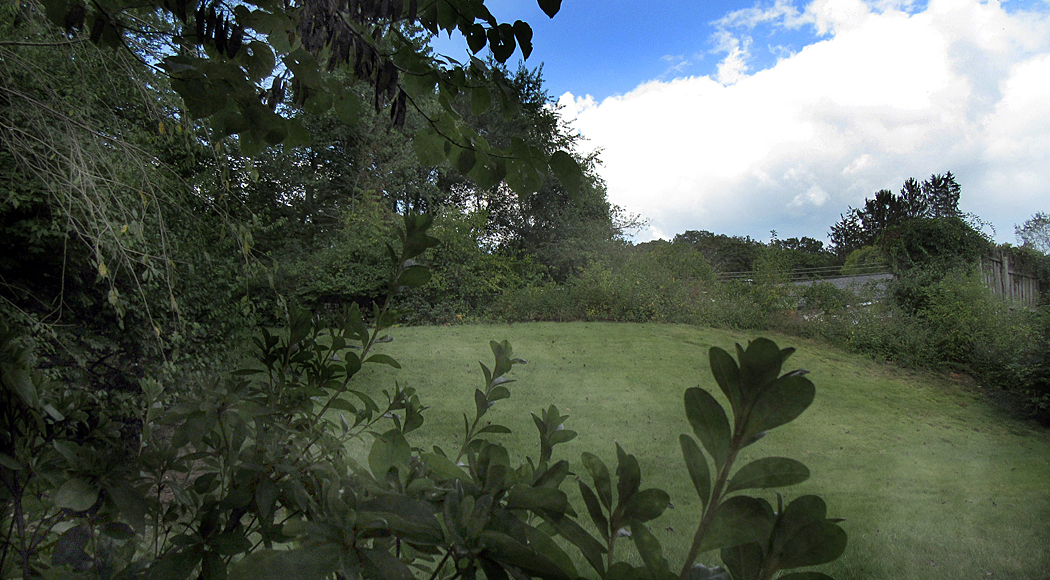
I can sit there for half-an-hour at a time, maybe 40 minutes, without thinking about anything and just watching this tiny bit of the world as it moves in the breeze, as the cardinals and mockingbirds swoop across it into the low tree branches, as a white butterfly flits over the irises and a rabbit lopes across the bit of lawn. 

Occasionally, there is a groundhog who will waddle into the yard, get about halfway across before noticing me sitting there; stare at me for two or three seconds before turning back and returning to where he came from. 

This morning a bumble-bee dive-bombed me briefly. I don’t think he was attacking me; more likely he didn’t even recognize I was there. 

After a morning of staring at a computer screen, or watching an iPad, it is important to move to somewhere so my eyes can refocus at a distance, perhaps to infinity. I watch the clouds and notice which direction they travel. I listen to the birds nattering, or hear the neighbor on the next block mowing the lawn. An airplane may cut across the blankness leaving a contrail, and dropping a rumbling jet sound that always seems to be coming from some distance behind where you see the plane. 

It may seem to some, in the rush of civilization, that nothing is happening, that sitting quietly and watching is the very definition of boring. But for me, it is not. Something is always happening. It may be subtle, but it is happening. The leaves wiggle, the sky shifts from sunlight to shadow as the clouds pass, a mockingbird lights on the top of the shed and repeats his mantra over and over; he seems to notice that I’m there, but perhaps I am no different to him from the patio furniture. 

But I have noticed, over the weeks I have been doing this, at least three psychological states I have found myself in. 

First, if I am distracted by other thoughts, or if I am not really paying attention, my relationship with the yard is that I am looking at nature, almost as if I was still staring at my computer screen. I may notice things, may enjoy what I see, but it is quite separate from me and is, as I look, clearly something in front of me. 

There is nothing wrong with this, but it isn’t why I go out each day and sit there. I consider it a failure when I can’t get to the second state. 

That second state is when I feel not that I am looking at nature, but rather I am in nature. That is, it is all around me, and what is more it exists behind as well as in front. It extends into the air and to the clouds; I become aware of the soil under me, the weeds to the right and the undergrowth beneath the tree branches. 

To be in Nature is to be taken away from the self and redeposited into the wider world. I can easily lose myself in this state and that is when the watching becomes something more. I can feel the space around me expanding to the rest of the earth and sky and my bit in it, however tiny, is plugged in. I feel alive in a live world. 

These two states of mind depend primarily on my mood. If I am tired or distracted, I cannot reach the higher state; it just doesn’t come. But when I can silence my brain for a bit, it is like the coupling of a locomotive to a train. There is a click and it all becomes connected. 

It is the same state you enter when you are absorbed in a book and the room you are in disappears because you are so focused. 

But I said there is a third state, and that comes only with something like grace. It is when I neither look at nature nor feel in nature, but rather am nature. 

The barriers between me and the rest of the world, even the universe, vanish and I realize that I am part of it all. No. I don’t realize it. It just is. The very idea of realizing, or thinking, ceases to have meaning. If I look at the rabbit, I know he looks at me, too. No, again. It isn’t a question of knowing. We look at each other. A recognition. The metabolism that takes place in the cells of my meat is the same as that in the green iris leaf. The motion of the clouds across the blue is the motion of my blood through my arteries and veins. “For every atom belonging to me as good belongs to you.”

I disappear, except that I don’t. In fact, I am more present. It becomes one thing, and it is not that I am a part of the one thing, but that it is just one thing. 

That is, of course, a truism. Even Miss America might say the same thing through a Pepsodent smile. But just saying, or knowing it is not what I’m talking about. It is not knowledge I mean; it is the experience. I sit there in the back yard and it just is.

This cannot happen every time I sit in the back yard. And it isn’t necessary to have a back yard. It is just, as I say, a kind of state of grace, psychologically. 

What is required is receptivity, an openness without expectation. Paying attention. 

As I get closer and closer to the point when every atom belonging to me will belong again to the soil, I remember the lines in Thomas, that “it will not come by expectation, but it is all around us and we do not see it.” 

But once in a while, the veil is lifted and we can see. It is not what we see but that we see.

I can hardly pass a public aquarium without going in. I love them. But when I watch those finny torpedoes bolting about in the water, it raises in me two very different reactions. 

First, those creatures are delicious. Paired with garlic and butter, you have shrimp, lobster, mussels, scallops, trout. Is it any wonder when I visit the aquarium, I get hungry? 

I see them swimming around or crawling on the bottom, and I am like a hungry Mack Swain in The Gold Rush looking at Charlie Chaplin and seeing a great chicken, ready to pan fry. Those salmon, flashing silver in the watery sunlight — I see them pink on a plate, with some roasted potatoes and asparagus. And perhaps a nice chilled Gerwürtztraminer.  

When I lived in Seattle, I had a membership in the aquarium on Pier 59, and often when leaving, I would wander down to Pier 54 to Ivar’s Acres of Clams to satisfy the anticipation I had built up watching the wee beasties behind glass. Alder-smoked salmon was the perfect completion for a visit to see the silver-sided fish, catching the light like the shiny metallic jets built just north of town by Boeing. 

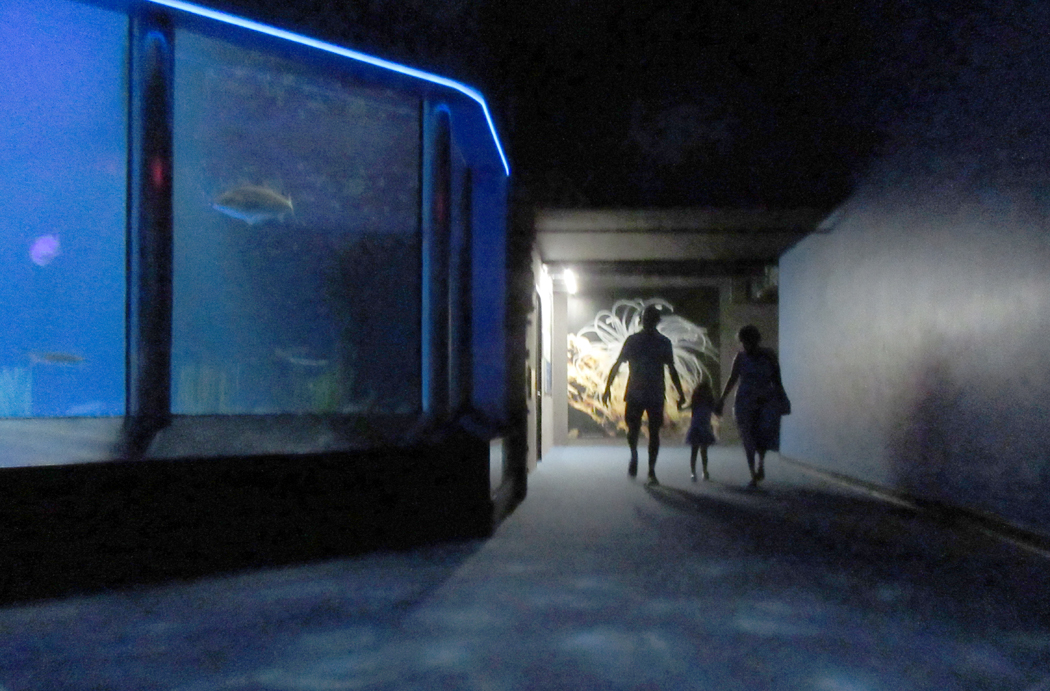
But the second reason to visit aquariums is for the meditation. Watching the beasties gliding through the aqueous brine lets the mind float as well. I sit against the wall before the large, main tank, and watch, hypnotized with the same fascination one has before a campfire — fish for chispas.

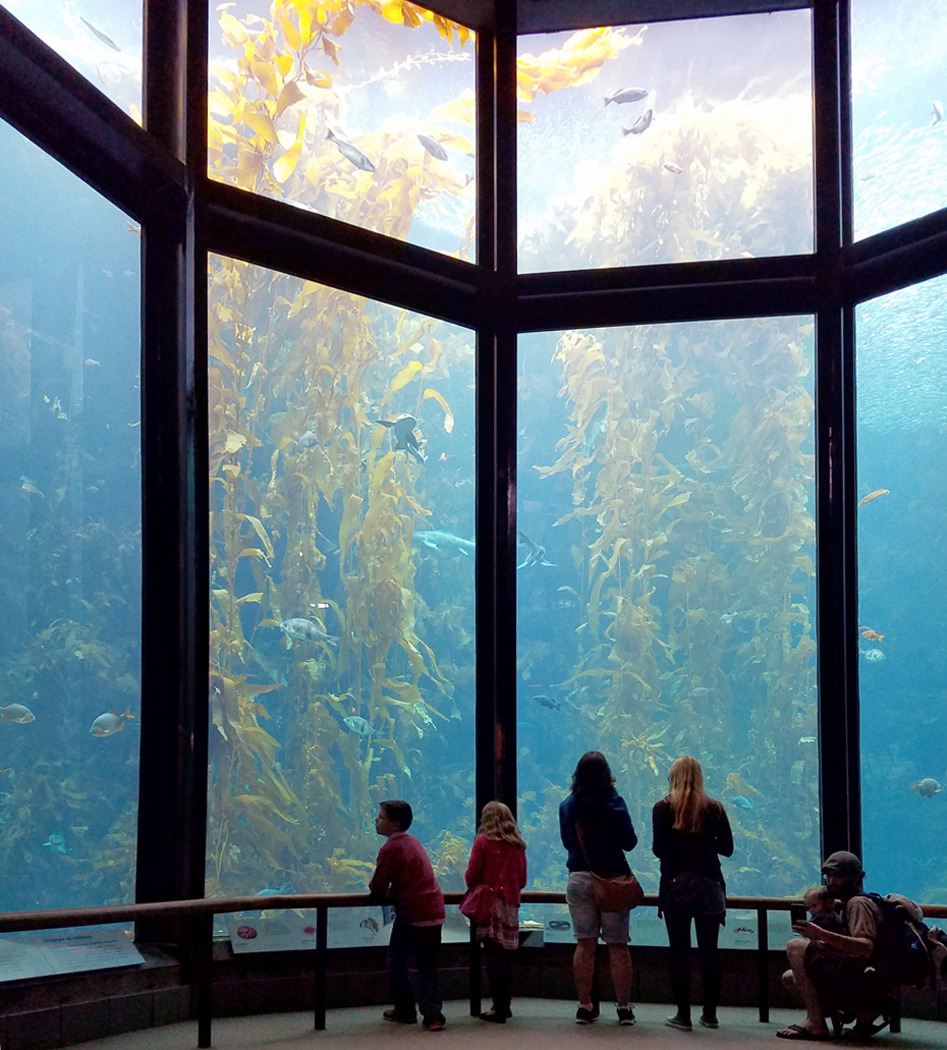
Monterey kelp forest

I am considering modern aquariums here. It used to be that — much as zoos used to be cages with iron bars — aquaria were ranks of small fishtanks along a wall and you would move from one to the next to see which individual species was featured there. But now, like zoos having built “natural habitats,” modern city aquariums are immersive experiences: huge tanks with either a plate glass window the size of an Imax screen, or a transparent underwater tunnel that lets you watch the underside of sharks as they waggle over your head.

The grandaddy of them all is the Monterey Bay Aquarium in California, with its giant kelp forest. The Seattle Aquarium is my second favorite. There are notable aquaria in Baltimore, Boston, San Francisco, New Orleans, Tampa, and Charleston, S.C. There are even aquariums in the desert or up in the mountains: The Shark Reef at Mandalay Bay in Las Vegas, Nev.; the Denver Downtown Aquarium in Colo.; and Ripley’s Aquarium of the Smokies in Gatlinburg, Tenn. The biggest of all, with 10 million gallons, is 1000 feet above sea level in Atlanta. 

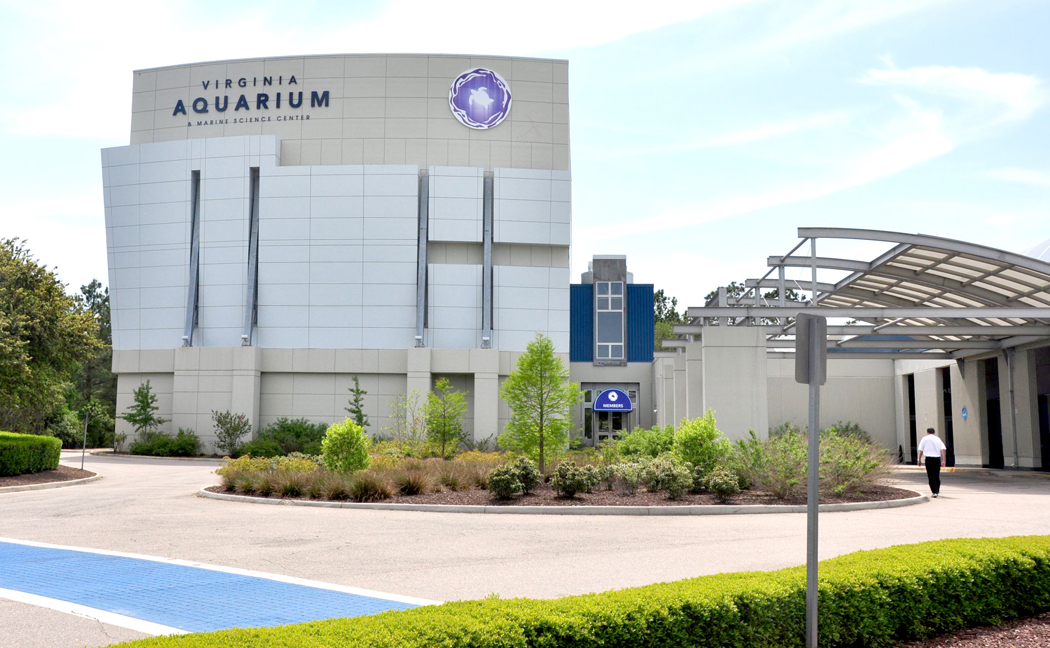
A week ago, I spent a day at the Virginia Aquarium and Marine Science Center in Virginia Beach, Va. It has grown fourfold since I lived in the Tidewater region 30 years ago. It is a vast complex, mixing mega-tanks of fish with smaller educational exhibits and hands-on stuff for kids. And there were lots of kids. Yelling, screaming, running, falling, crying, laughing. I could find a seat along the back wall in one room or another and watch the fish. The children seemed to cluster at the shark tank, leaving the other, smaller exhibit to me and a few adults. I could sit for hours and watch the piscean floorshow. 

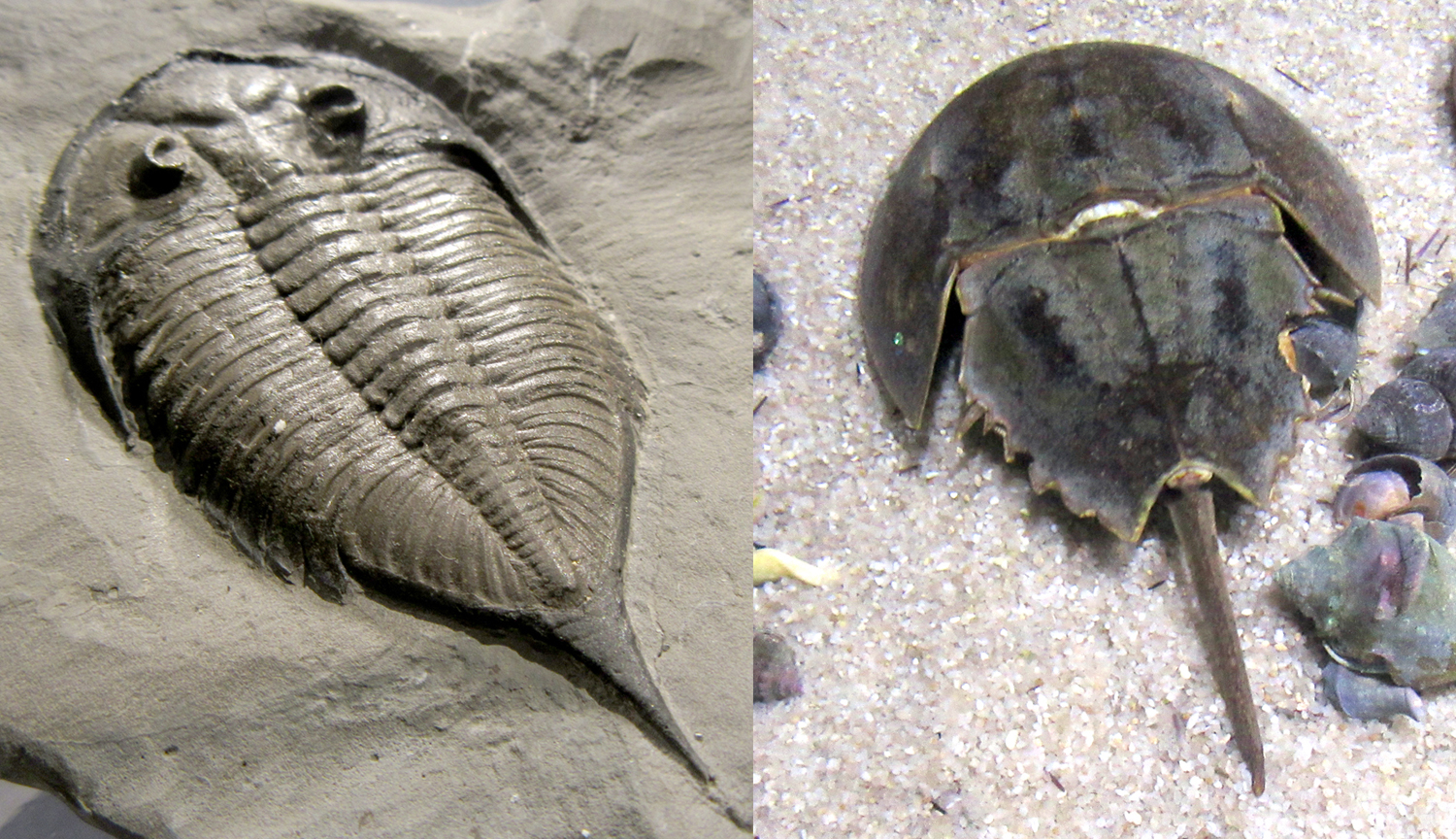
There are smaller tanks, like the one with the horseshoe crabs. Another has ancient deepsea fossils, and you see how, across time, life changes, and stays the same. The trilobite and the horseshoe crab are clearly cousins. 

The most oneiric tank is the one with jellyfish. Those slow, meandering medusas, pulling tight, then relaxing to propel themselves aimlessly through the fluid universe are a kind of mantra, inducing that state of mushin no shin (mind without mind) that Zen philosophers aim for. It is a state where you clear your thoughts of all idea, and only feel the slow rhythm of the jelly — the rhythm of the cosmos before words were invented to sidetrack us. 

It is a state without ideology, without past or future, without expectation, without regrets. It is a state closest to the Biblical name of the deity: “I am that I am.” And for the minutes you stand in front of that backlit tank, with your mind detached from your body and floating along with the jellies, you are one with Creation. Then, of course, a gaggle of children shunts you aside and giggles as they watch the caps and tentacles before moving on to the next tank, or to the sharks — and the connection with the All is snapped. You may try to reconnect, but the mood is broken.

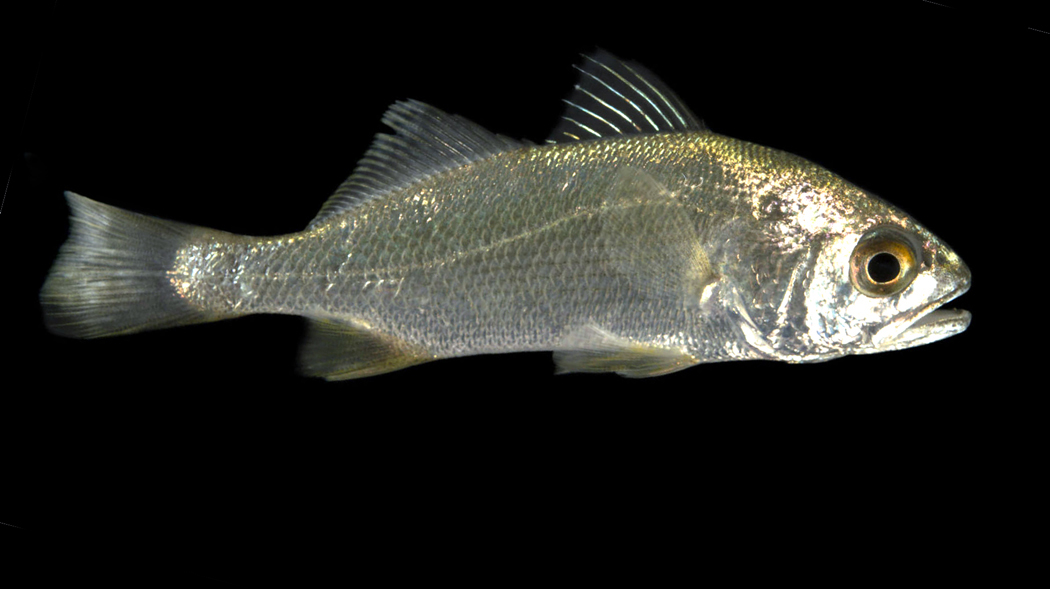
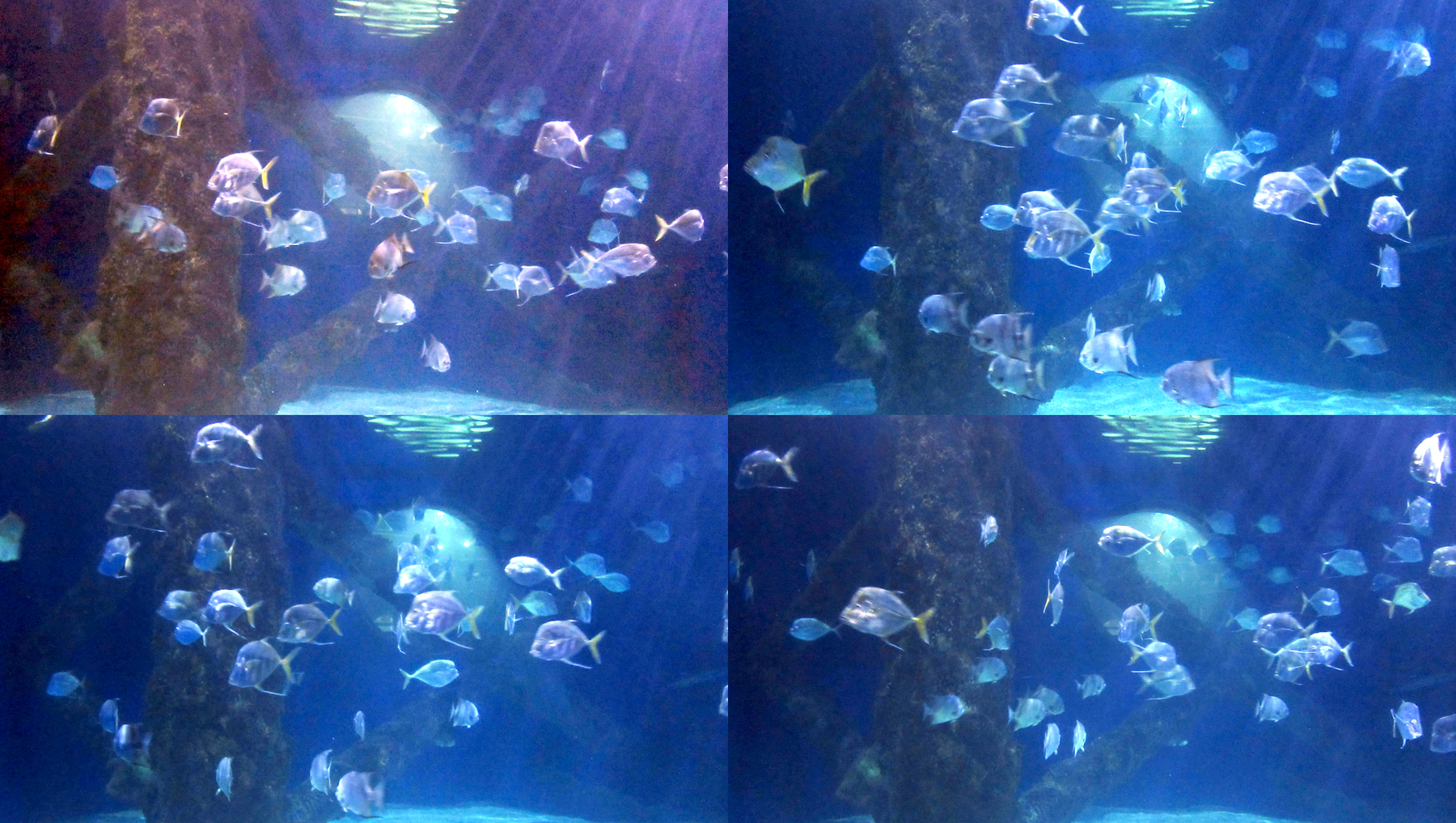
So, you move on to the next exhibit. For me, that is the large tank with the bony fish, which dart this way and that in seeming random patterns. But you watch over a span of time, and you begin noticing choreography. The fish form groups, the groups connect, disjoin, and then connect in new ways. 

It is very like the group movements of a Balanchine ballet, where several groups of three shift into groups of four before redefining themselves as a line, then opening into two circles and then into pairs twirling away in groups of three again. The counterpoint of movement is what makes Balanchine so distinctive, and so profoundly moving. 

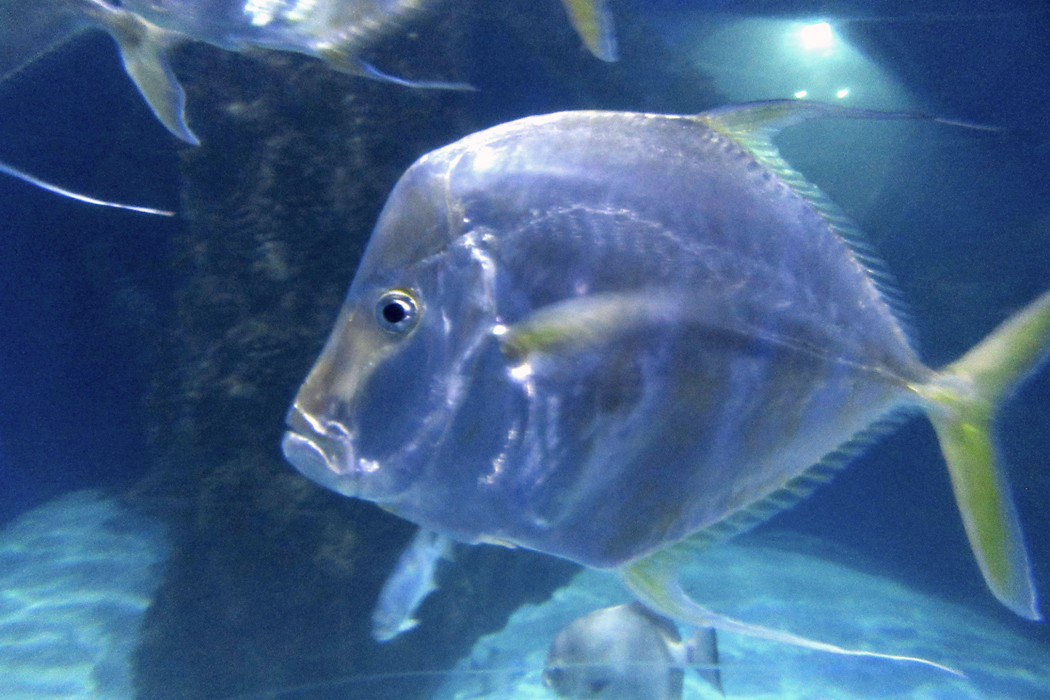
And these hatchetfish do the same in the water, three this way, four that, a shoal becomes broken into individuals. They dart from this side of the stage to that with such grace, that tears come to my eyes. 

I’m afraid the normal aquarium-goer, like the visitors to art museum, spend little time with each exhibit. Mostly they pour in, point at the sharks or the mantas, perhaps look at the labels beside the glass to name which kind of shark they see, then move on to the next tank. To reach the Zen state I am after requires patience: sitting still for quarter- or half-hours at least, trying to empty your head of thoughts, just becoming one of the fish in the watery universe, until the water no longer exists and it is all universe. 

Others attend church to feel this, or take up yoga classes, or go driving aimlessly on rainy nights. Without occasionally refreshing your life by entering this state, I don’t know how anyone could bear the weight of the world.