Archive

Tag Archives: metropolis

I was once taken aback, talking with my young twin granddaughters about what movies they liked, that they refused, flat out, to consider any movie made in black and white. Not even a question. Jamais. Never. 

For them, black-and-white meant antique, superannuated, something with no relevance to their lives. They wouldn’t even see a current movie if it was in black and white. Life was color; monochrome was irrelevant. 

There are other disqualifications that some people maintain. “Read any good movies lately?” They won’t see a film with subtitles, which, of course, cuts out an entire half (at least) of all movie history and some of the greatest films ever. 

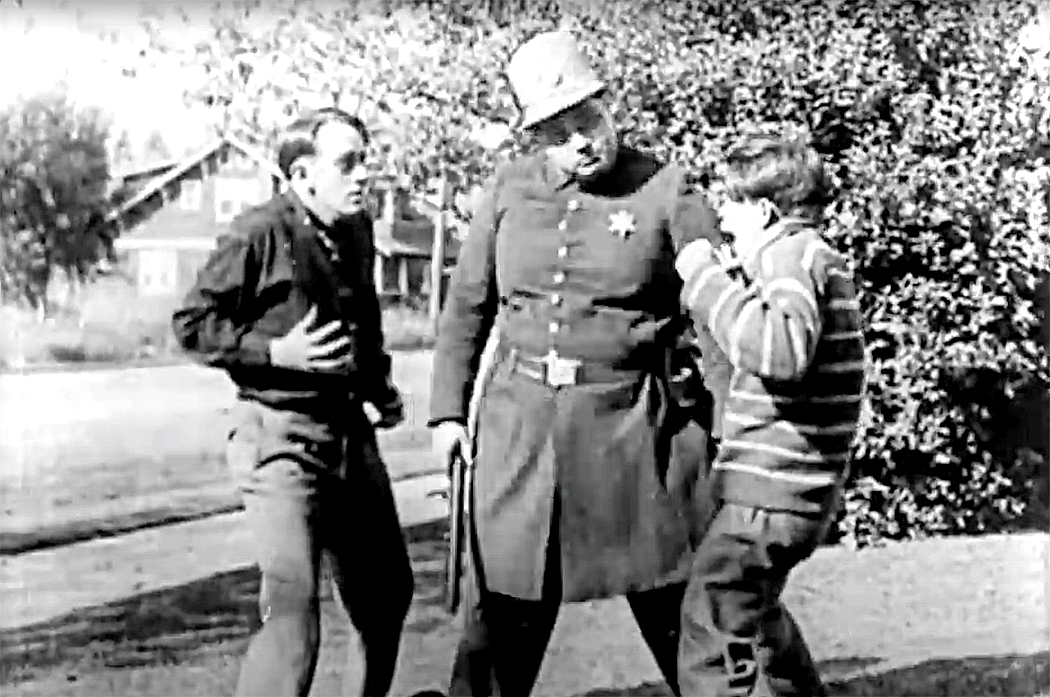
But by far, the biggest disqualification for the majority of filmgoers is what are called silent movies — movies made from the invention of the medium through roughly 1930, when sound synchronization became the standard. 

Without sound, dialog becomes disruptive title cards held motionless for long moments, long enough that the slowest readers in the audience can parse their way through; audio clues, such as traffic noises or train whistles are mute; and worse — actors have to act like semaphore signals to convey their thoughts and feelings. Silent movie acting seems grotesquely over-the-top, more like pantomime than anything we now consider proper acting. 

There are other problems, too. In the earlier days of movie-making, frame speed was not standardized, and to complicate matters, most cameras were hand-cranked, which means that the idiosyncratic crank-timing of the cameraman could vary quite a lot. This meant that for decades, long after sound had taken over, and movies began showing up on TV, the old films were projected at the wrong speed, too fast, making everything herky-jerky. 

And, because the studios that made those old films never thought of them as anything but disposable entertainment, there was no incentive to archive them or care for the old prints. Add to that, they were made with flammable nitrate film stock, which deteriorated over time, and that there were several devastating studio fires that consumed whole catalogs, what is left is often only a fossilized remnant of what the old films actually were. As a result, an estimated 70 percent of all the movies made before 1930 are lost. Ceased to be. Gone to meet their maker. Joined the bleedin’ choir invisible. 

And what survived was seen most often in poorly made copies of copies, bleached out, scratchy, grainy and out of focus. As if silent film technology was roughly akin to the Stone-Age chipping of flint arrowheads. 

But that is not what they were when they were made, as we have seen when film restoration has brought us clean prints of some of the more important movies from the era. The photography was as good as anything done currently. The motions of the actors, when projected at the proper speed seem less silly. 

You can look at the development of cinema from its earliest beginnings in the 19th century as a constant advance, not only of technology, but of the esthetics of film. At first, a stationary camera just records a few things in front of it. Later, the camera learns how to move. Film learns to tell stories and directors figure out how to edit bits of film together to make those stories move faster and express more. Wholesale changes in blocking, acting, lighting, editing, camera angles and motion all add to the growing sophistication of the art. There are the traditional mileposts in this development: the close-up; the intercutting; the over-the-shoulder back and forth; the use of double-exposure; and of matting. 

By the time sound came in, intermittently beginning in 1927 or so (the dates are hard to pin down, depending on how complete the process was and which competing technology was used), silent film had become a fully developed art form, capable of expressing a huge range of thought and emotion. In fact, the advent of sound caused more problems than it solved, and the constraints of microphones and movie-set noise, took away some of the expressive possibilities of the silents. 

Cameras tended to stay still (they often had to be ensconced in stationary booths or sound-cancelling “blimps” so that the microphones wouldn’t pick up the noise of the machinery) and actors needed to stay still near the microphones. Films became more stagey and set-bound. Early sound films often looked more like recorded stage plays. 

Worse, because sound made dialog possible, much was explained rather than shown and talkies became rather talky. The best continued the old dictum, “show, don’t tell,” but it became economically advantageous to let the tongues do the talking rather than the images. 

Alfred Hitchcock, who had been making artistically sophisticated silent films, initially thought that “the silent pictures were the purest form of cinema,” and the first talkies were little beside “photographs of people talking.” 

All this has been well covered by myriad books and videos about the history of Hollywood. But there is one aspect of silent films that has too often been neglected, and that is that they were never silent films. 

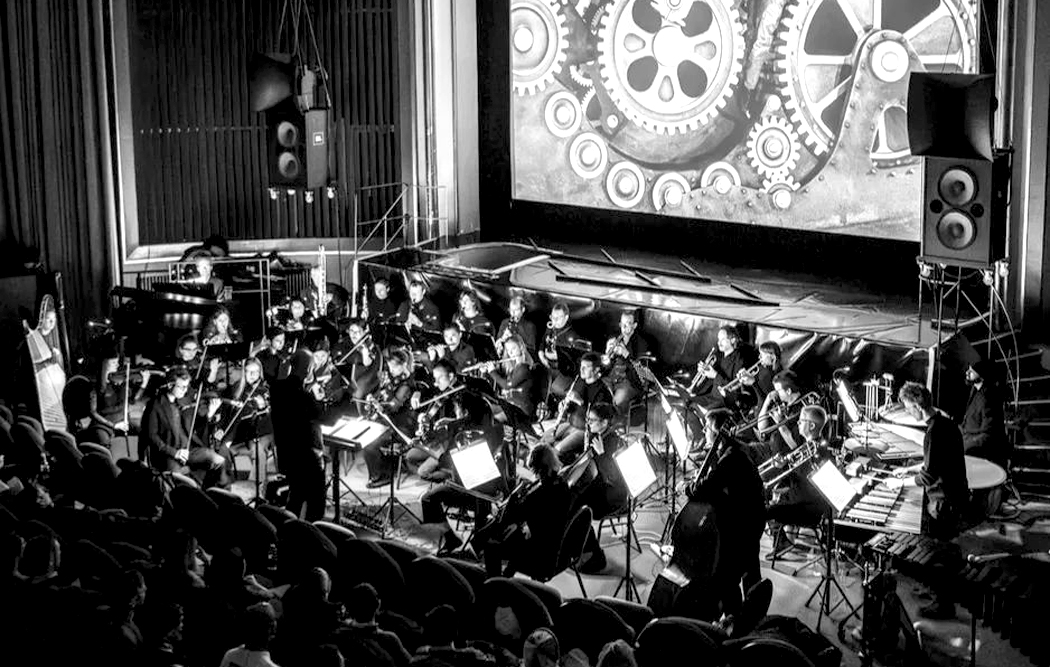
During their era, movies were always accompanied by either a live orchestra playing in the pit, a pianist, or an organist. Major features usually had a bespoke musical score that was distributed along with the film, so that orchestras in the large theaters could play along with the movie. In smaller venues, a piano or organ reduction would be provided. For lesser films, music publishers provided regular cues — short bits of piano score describing certain types of action or emotion — for the in-house pianist to improvise from. 

The process was very like the incidental music written — often by major composers — for stage plays. Mendelssohn’s music for Midsummer Night’s Dream, or Grieg’s for Peer Gynt, for instance. Several major composers, such as Camille Saint-Saens, also wrote scores for movies. 

Or more apt, like the music that accompanied ballet. Tchaikovsky or Leo Delibes or Prokofiev would write music to order, according to the needs of a dance scenario. “I need three minutes of mazurka for Act 2,” the composer might be told, and would produce it on order. We think of composers being divinely inspired by their muses and pumping out symphonies, but really, they often made a living as subcontractors, part of the team that produced popular entertainment. Even Beethoven wrote incidental music and ballets. 

So, the tradition of writing music for films was much like that for ballet. It would be silly to imagine Swan Lake with no music, only dancers. But nobody would ever call ballet, “silent theater.” 

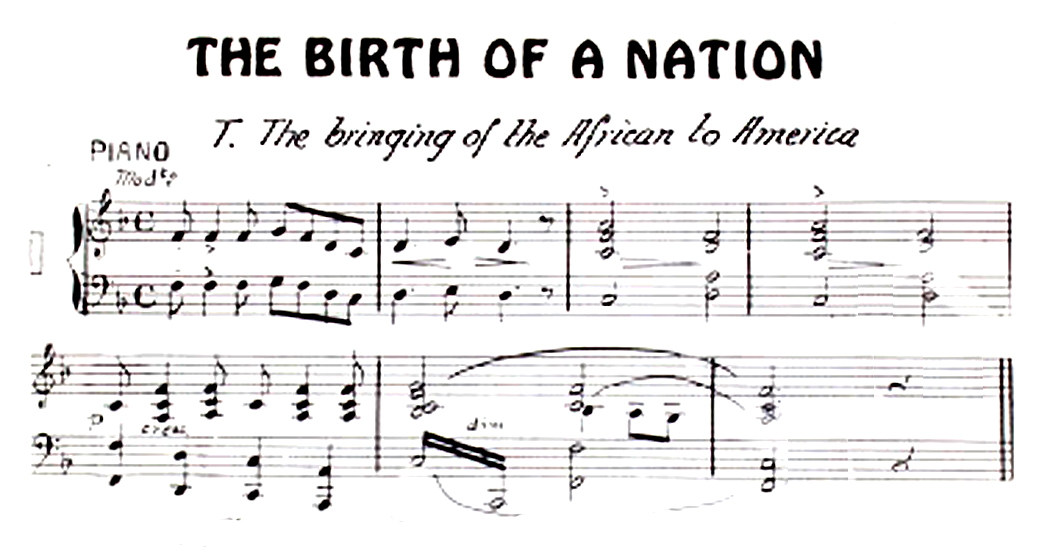
But the first time I ever saw The Birth of a Nation was at my college film series where it was run with no sound. I complained to the projectionist that he forgot to turn on the audio and he looked at me like I was an ignoramus. “It’s a silent film; there is no sound.” Yes, there is, and it was written for the movie by composer Joseph Carl Breil who created a three-hour-long musical score made up of adaptations of existing works by classical composers, new arrangements of well-known melodies, and original composed music. (The British Film Institute’s Blu-Ray restoration of the film includes Breil’s music). (Although, if you never get a chance to see Birth of a Nation and its promotion of racism and the Ku Klux Klan, you may be intellectually poorer, but your soul will be so much cleaner.)

It helps to keep the ballet model in mind when considering silent film. Movies developed together with the music that accompanied them, and we would appreciate them more if we saw them that way. 

Of course, the basic level of appreciation is the story being told, and most movie-goers even in those early years, were there for the plot. Good over evil; love conquers all; the hero saves the maiden. 

But we, watching now, should notice not just that surface level, but also how the movie was made: How the director uses a moving camera to advance the story; how the lighting underlines the mood of a scene; how the editing manages to keep us up-to-speed on parallel plot points, back and forth; how the close-up lets us into the mind of the actor. 

And so, watching a silent film should be more like watching the dance. It is a different art form from sound film, and one that needs to be understood in its own way. The story drives the action in Swan Lake too, but we watch for the dancing and choreography.

I have a list of 10 silent films that demonstrate what the silent film can do. Recent film restorations have improved image quality, when a print can be struck from the original studio negative, and with restored musical scores, either from original sources, or new scores written in period style. 

We’ll go from the easiest to understand and love to more adventurous films. In my experience, one of the best places to start is Buster Keaton’s Civil War film, The General

The General

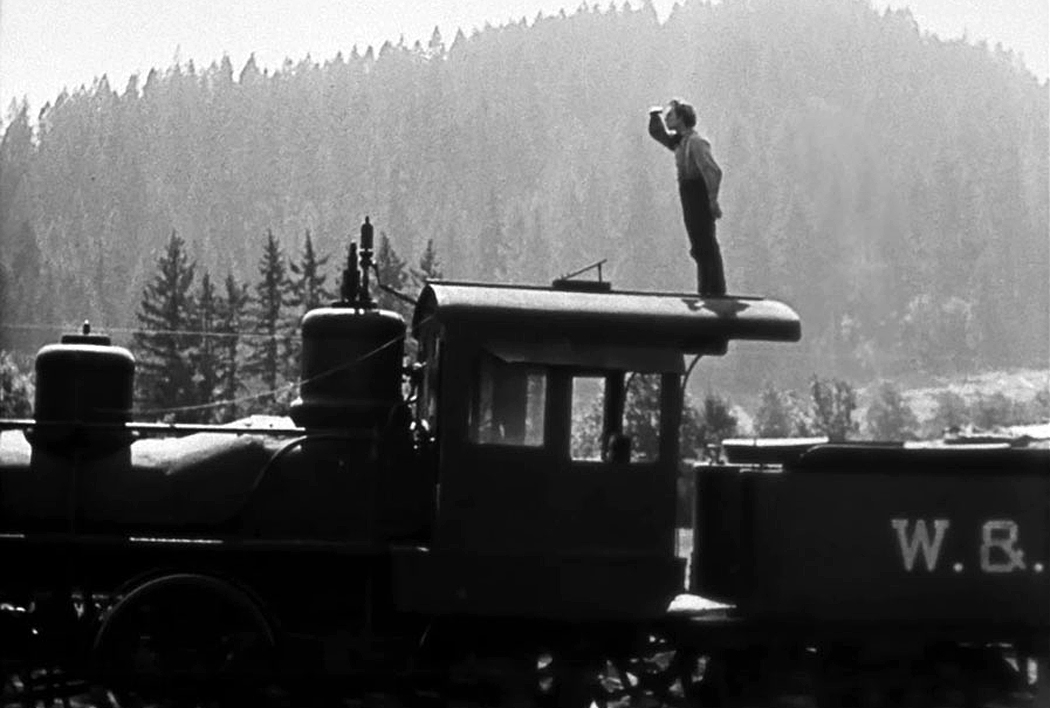
Keaton’s 1926 story is easy to follow, as Southern railroad engineer Johnny Gray spends most of the movie chasing a locomotive stolen by Yankee forces and then being chased by them. There are plenty of gags — Keaton was a genius with those — but also a comprehensible plot, easy to follow, and believable. Keaton’s direction is always clear, and with many exceptionally beautiful or intricate shots. The most expensive special effect shot of its time was later copied for The Bridge on the River Kwai, as Keaton has a train crashing off a burning bridge, followed by a dam breaking and a flood washing soldiers downriver. It’s a great film and for a wide audience. One of the great films of all times, silent or sound. 

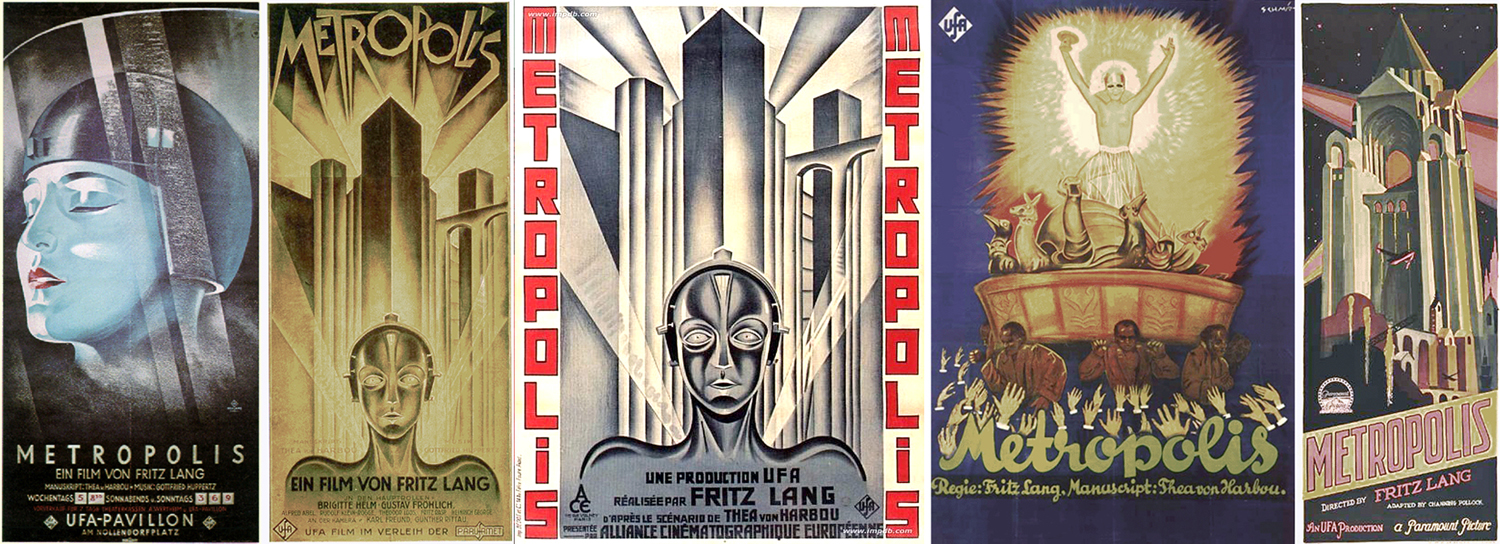
Metropolis

Fritz Lang’s 1926 sci-fi masterpiece has benefitted more than most from restoration. Seen previously in shortened versions, a new version has most of the missing footage returned so that story begins to make sense (even at its best, the plot never really made much sense). But it has some of the most stunning visuals ever put in front of a camera. It is a glorious film to watch, even if the acting sometimes seems maybe a smidge over the top. Despite that, it is also one of the greatest films of all time, and one of the most influential. 

The Lodger: A Story of the London Fog

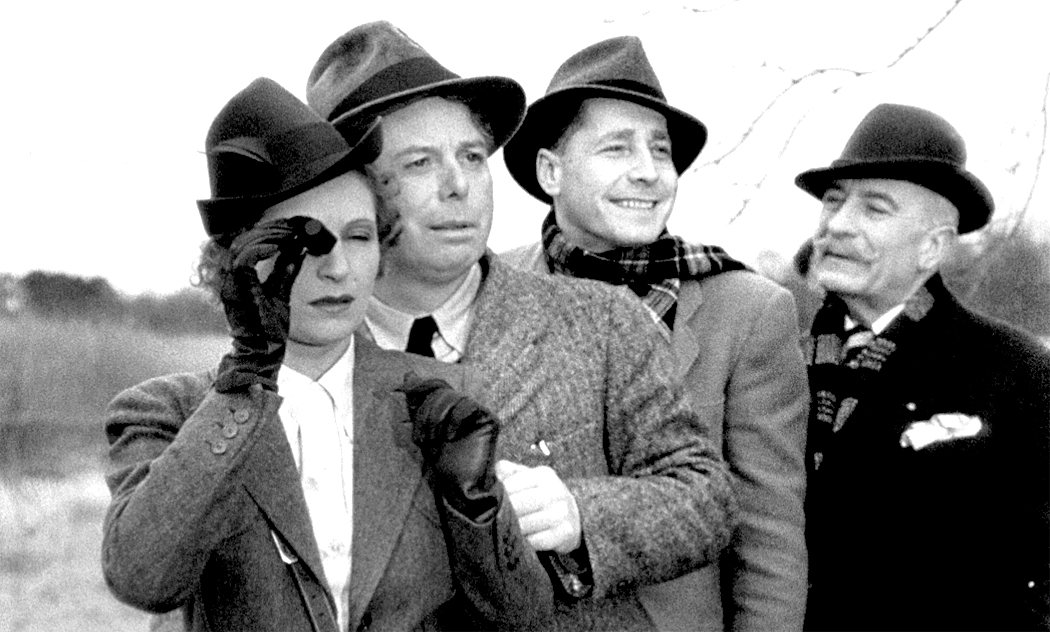
This 1927 Alfred Hitchcock thriller is a masterpiece of visual storytelling. Called the “first true Hitchcock film,” it plays with the fear raised by a Jack-the-Ripper style murderer in London and a mysterious lodger in a boarding house who may or may not be the killer. The film is chock full of Hitchcockian ticks, including a “wrong-man” plot, the obsession with blondes, and the plot-twist ending. 

These three films offer little problem to the modern viewer and can be seen with little forgiveness needed for their lack of spoken dialog.

——————————

The next three are milestones in technical experimentation and the invention of cinematic conventions that are in common use today

Battleship Potemkin

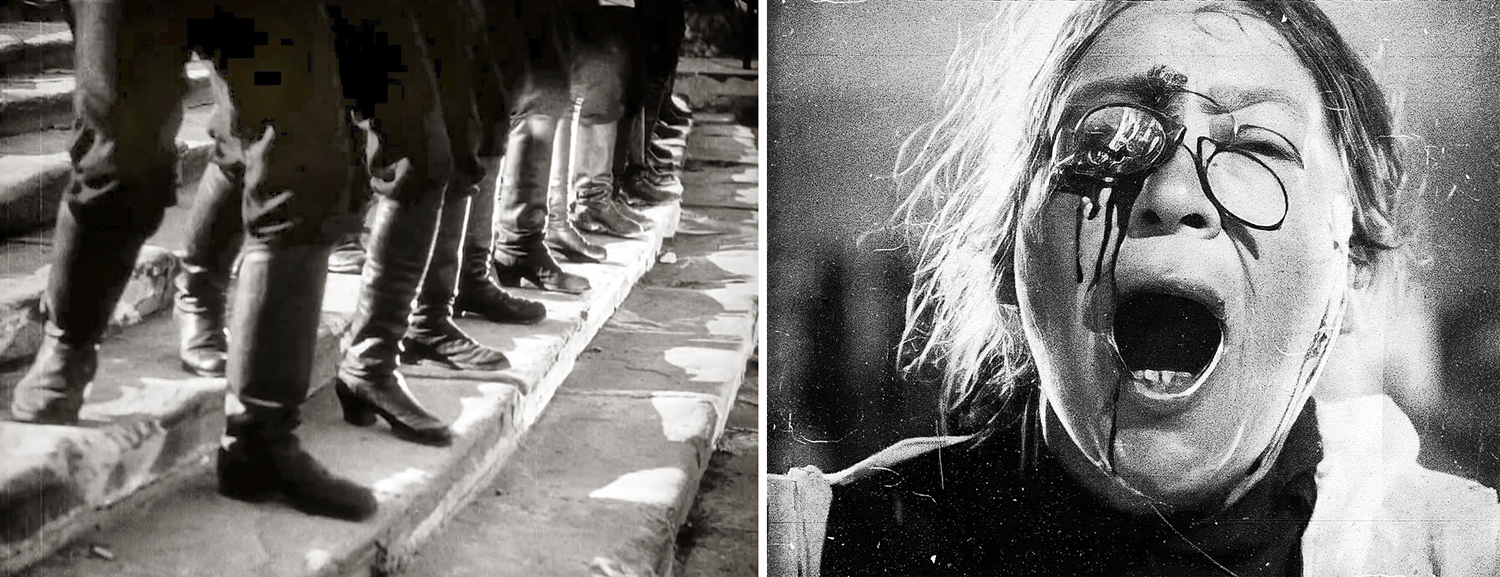
In 1925, Soviet filmmaker Sergei Eisenstein told a story of the aborted 1905 rebellion through a version of the mutiny aboard the Russian battleship Potemkin. The film uses editing as fast as an MTV video to further the story, and inventing the montage. The section called “The Odessa Steps” still carries as much punch as anything ever made. 
Napoleon

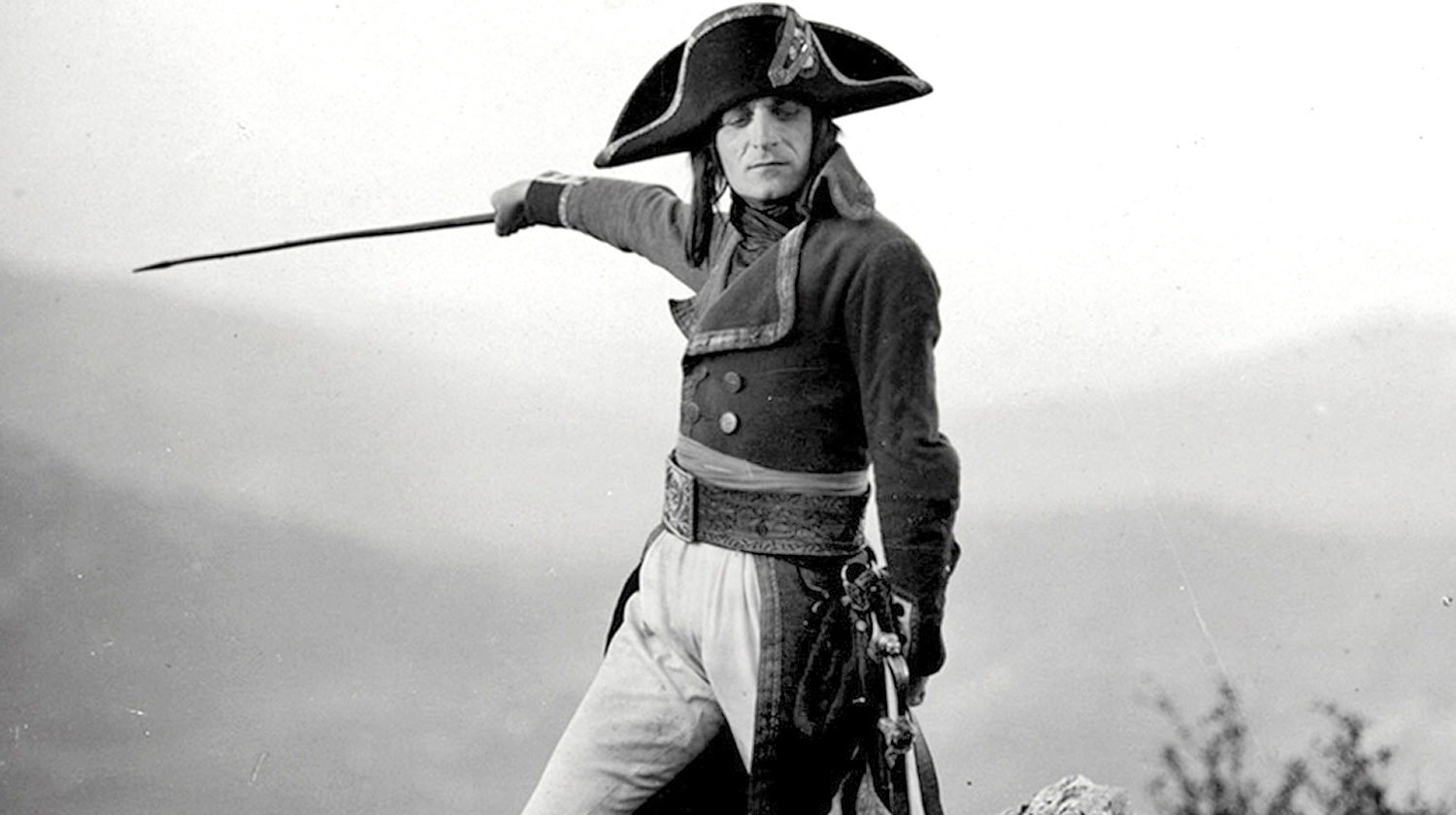
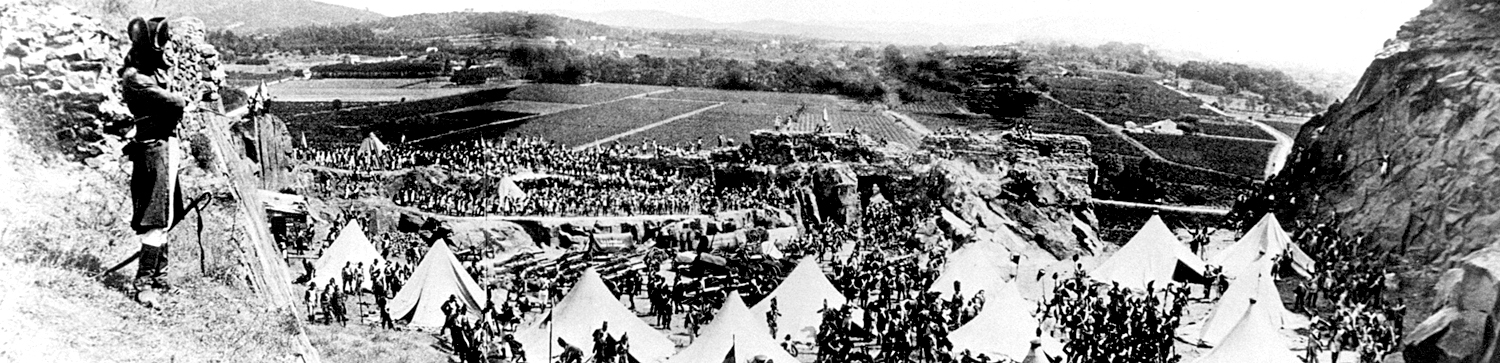
French filmmaker Abel Gance intended to make six films covering the life of Napoleon, but only finished the first. But it is five and a half  hours long and uses many experimental techniques, putting his camera on a swing, or on the back of a galloping horse. 

And in its climax, using three cameras and three movie screens to make a precursor version of Cinerama — huge widescreen images. It is an astonishing film for 1927. 

The Passion of Joan of Arc

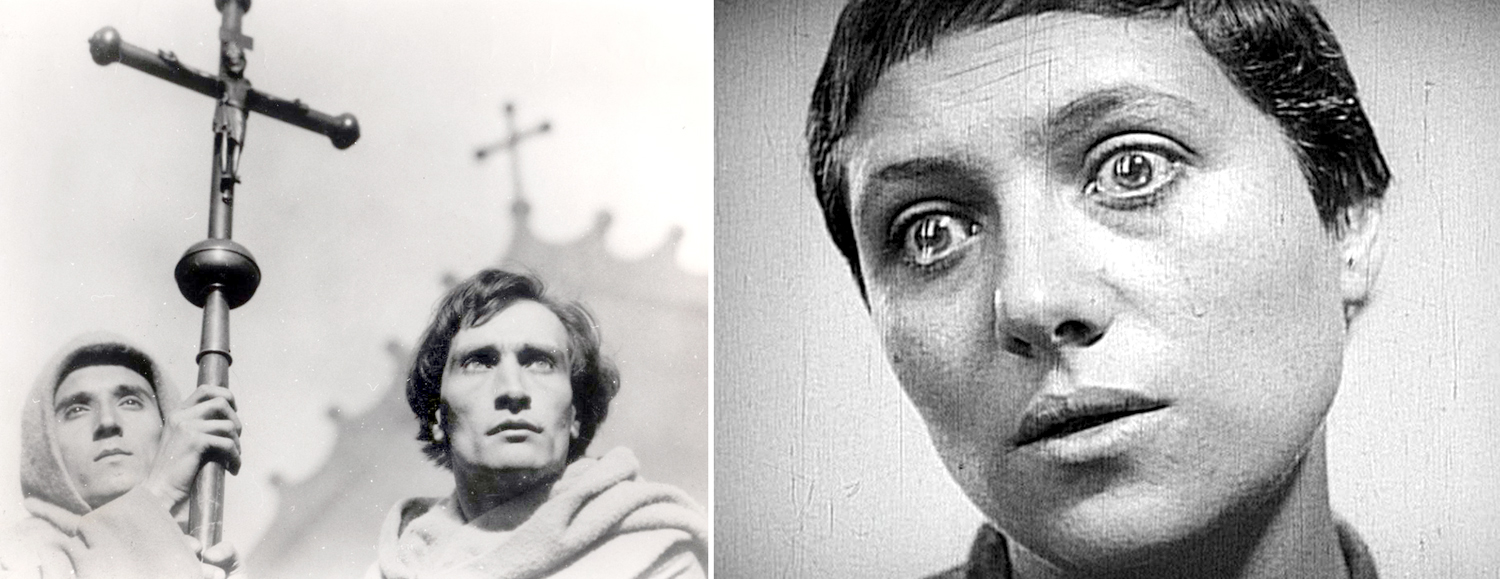
It sometimes seems as if Danish director Carl Theodor Dreyer’s 1928 The Passion of Joan of Arc is entirely made up of close-ups of lead actress Maria Falconetti’s anguished face. But if proof was ever needed of the power of human expression, this movie is Exhibit A. It is emotionally overwhelming. 

——————————

The next three films are documentaries, made before documentary film became hamstrung by an inflexible puritan ethic (fooey on you, Frederick Wiseman). Some use recreations and re-enactments, but give us real information nonetheless. 

Häxan

Häxan, from 1925, is a Swedish film that investigates the phenomenon of witchcraft through the ages. It was banned or censored in many places for its anticlericism, nudity, and depictions of depravity, but ultimately comes down on the side of modern understandings of schizophrenia, hallucination and bigotry to explain the witch stories. It is mostly filmed recreations by actors, but tells a real story. 

Grass: A Nation’s Battle for Life

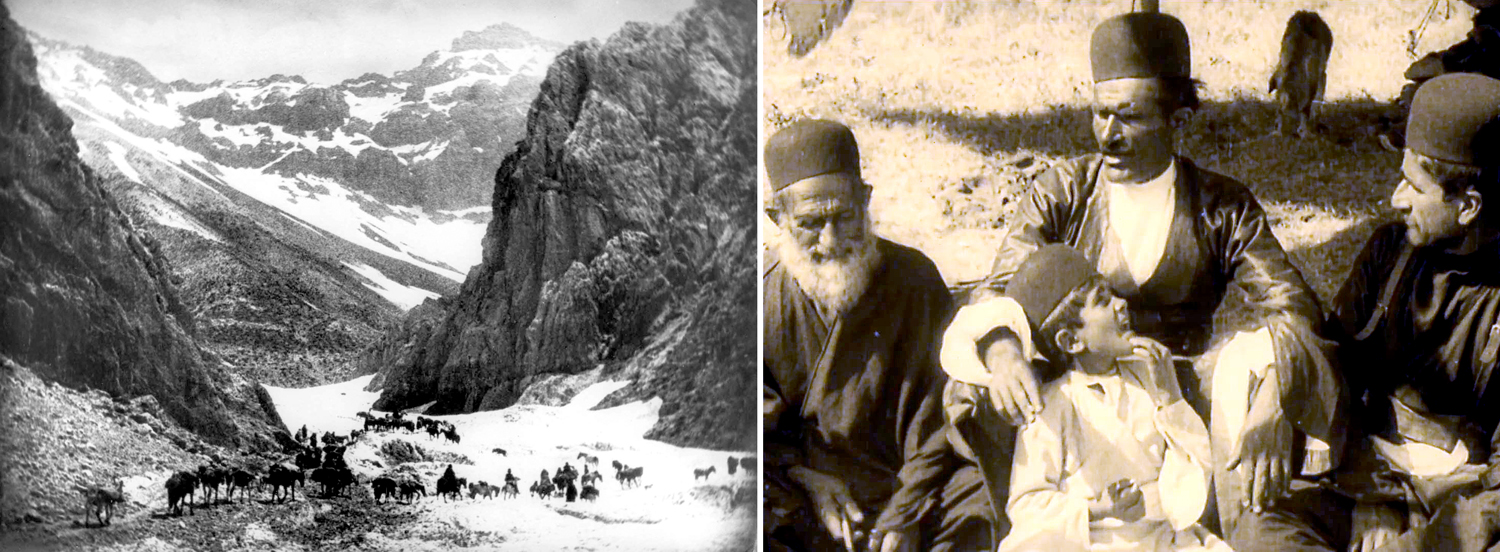
From 1925, the story of Grass’s creation is as breathtaking as the story it tells of the annual migration of 50,000 of Iran’s Bakhtiari people across the vast Zagros mountain range with their cattle. Stunning landscapes and death-defying river crossings, all captured on film by Merian C. Cooper, Ernest B. Schoedsack, and Marguerite Harrison (Cooper and Schoedsack later made King Kong). The filmmakers took the migration along with the tribespeople, and suffered all they did along with them. This is one of my favorite films of all time. 

Nanook of the North

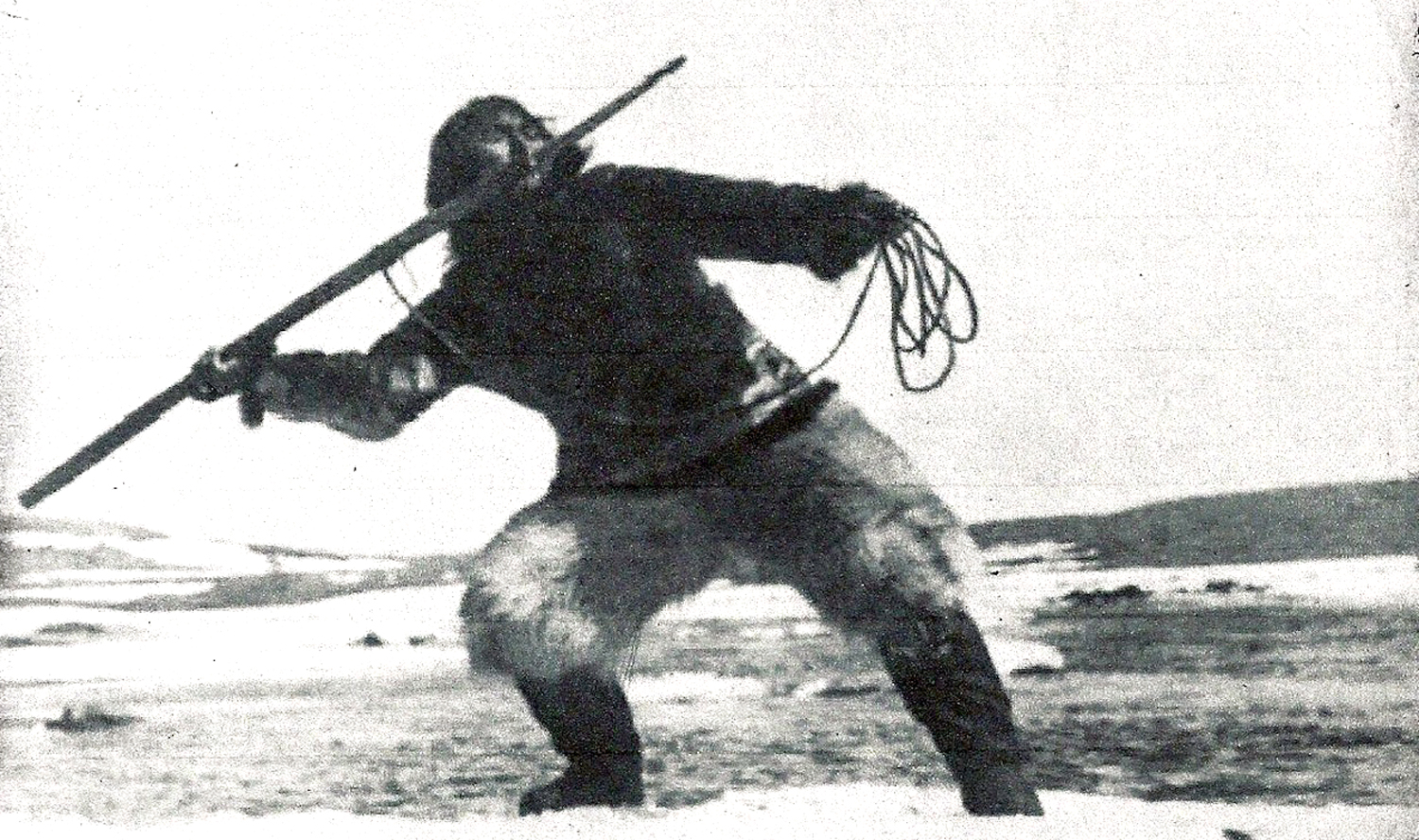
Three years earlier, Robert Flaherty made what many consider the first film documentary, when he took his camera to northern Canada to film the lives of Inuk native, Nanook (“The Great Bear”) and his family. 

It shows us how they lived and how they survived. Purists now complain that some of the shots were staged and that Nanook was an “actor” (although he was a genuine Inuk native. But the ideas of documentary right-mindedness didn’t exist in 1922, and there is a genuineness in Flaherty’s film that many more virtuous documentaries cannot equal. 

——————————

Number 10 on my list is actually a group of films. One thing that silent film did immeasurably well is horror. German filmmakers in the 1920s were immersed in an Expressionistic milieu that gave us films such as Nosferatu, The Cabinet of Dr. Caligari, and The Golem and How He Came into the World. But Germany wasn’t the only place that worked out the magic of film images of the supernatural and spooky. Hollywood had its share, also. 

Nosferatu

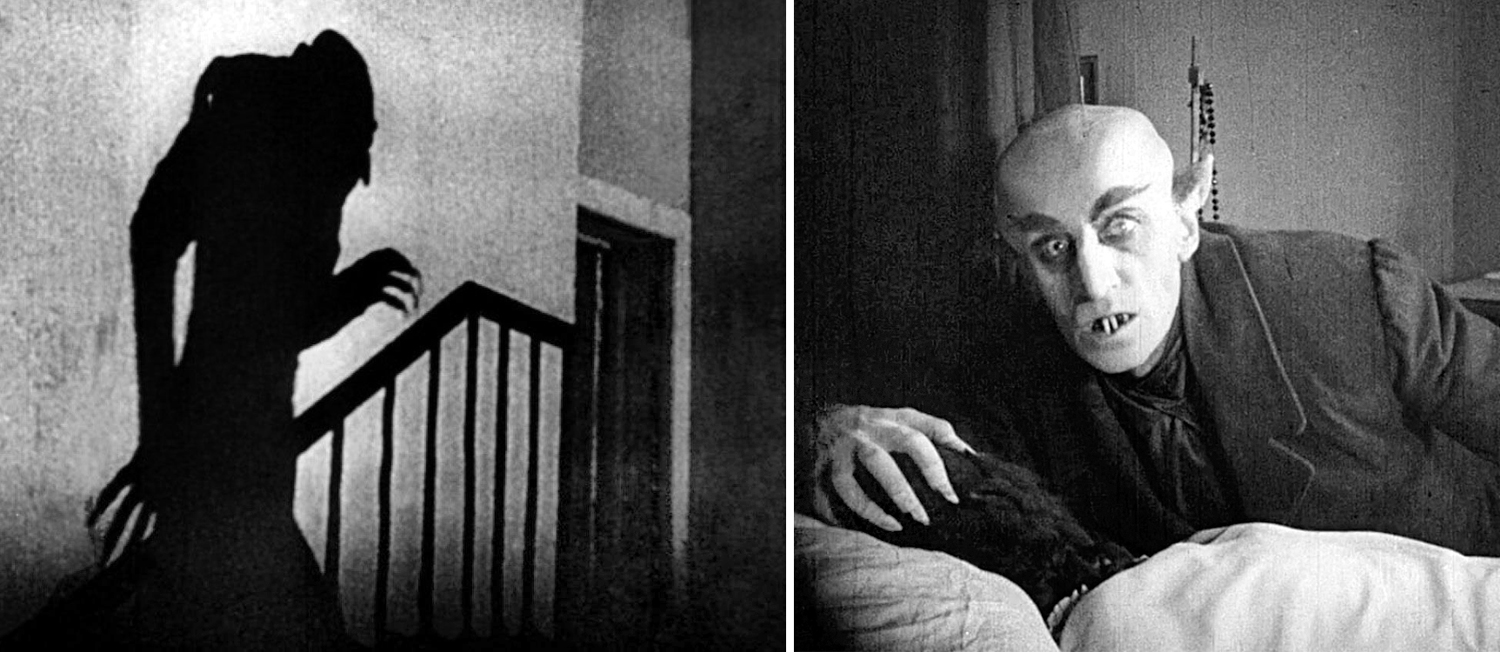
F.W. Murnau’s plagiarized version of Bram Stoker’s Dracula nearly was lost to history. Stoker’s estate sued over the film, which Murnau had not secured the rights to, and the court decided all copies of Nosferatu should be destroyed. Luckily, a copy survived and is now seen as one of the true masterpieces of silent film. All shadows and sharp angles, gothic castles and claw-like hands, it is a much spookier version of the story than 1931’s sound version with Bela Lugosi. 

The Cabinet of Dr. Caligari

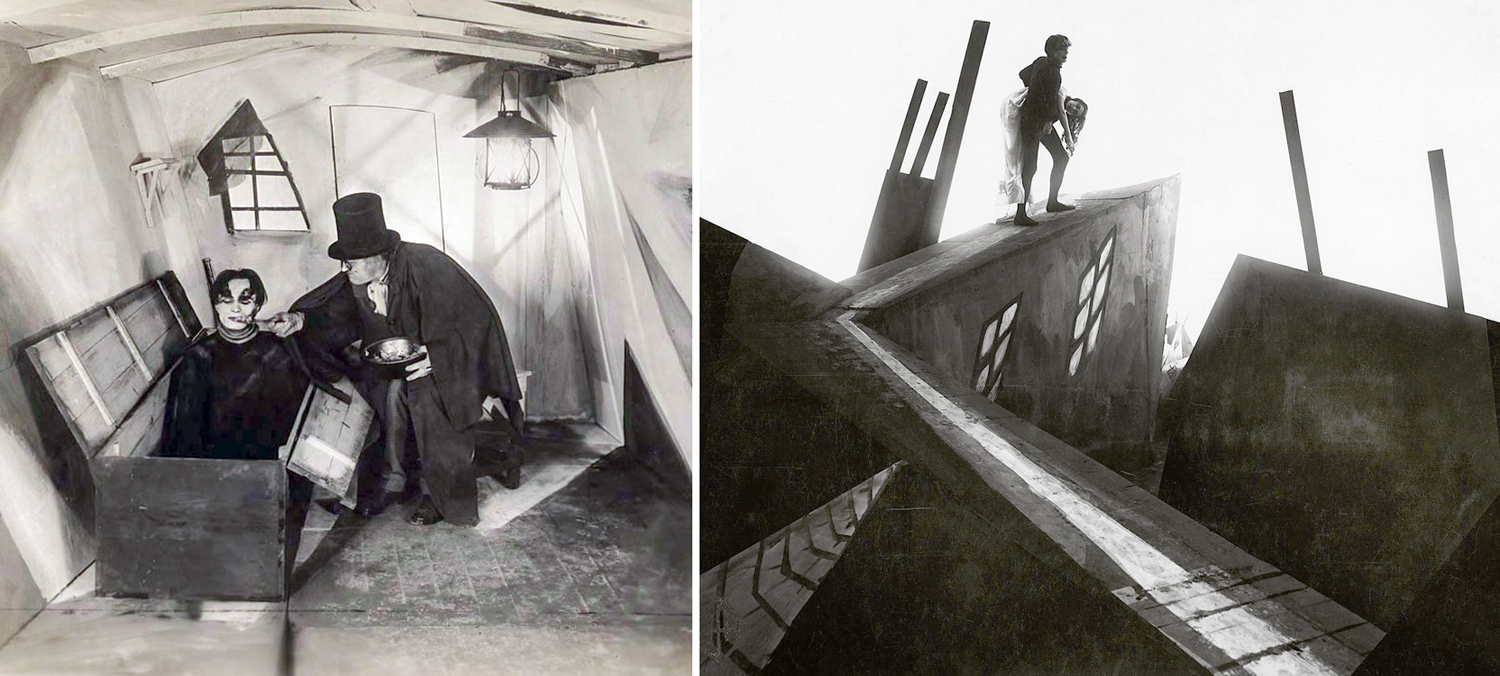
With its Expressionist cityscapes, with nary a right angle to be seen, and with Conrad Veidt’s pasty-faced somnambulist, the film is an absolute feast of visual inventiveness. If you ever needed a picture of what insanity might look like from the inside, this film is it. 

The Phantom of the Opera

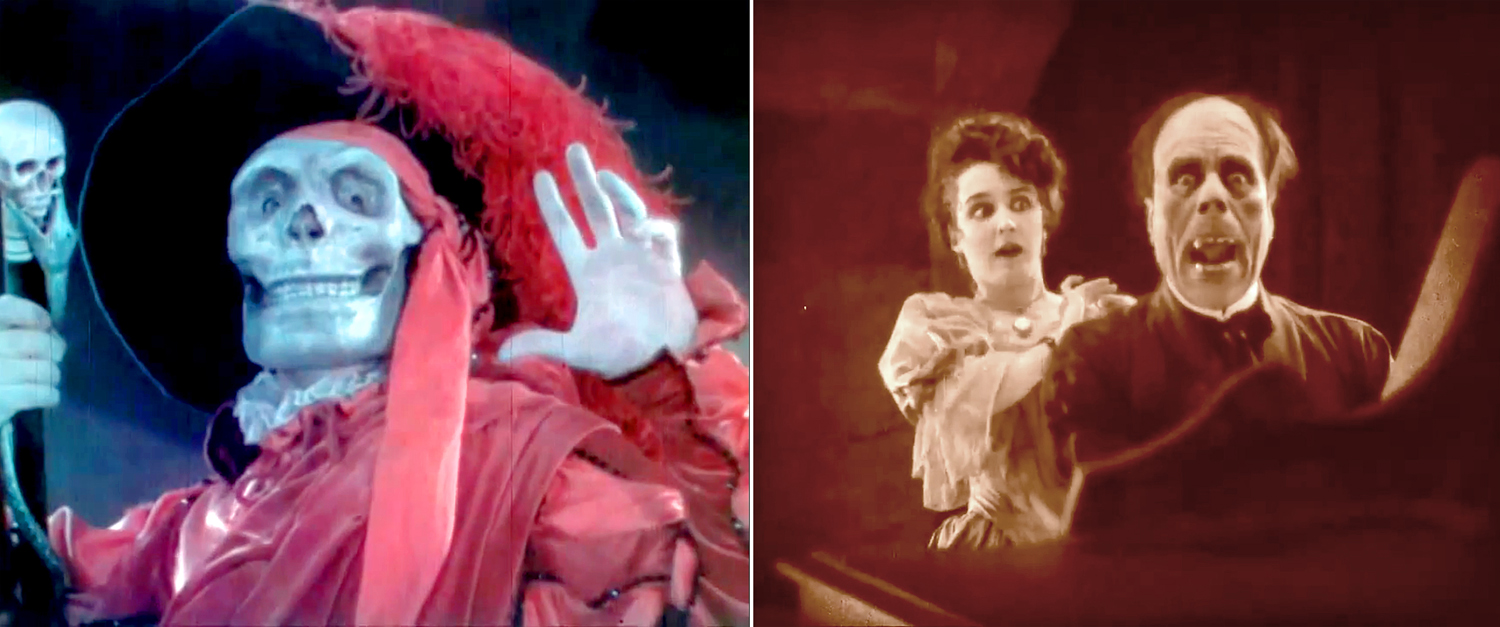
All of the films I have discussed here are among the best made in the silent era. Phantom of the Opera, if seen merely as the result of film direction and writing, is rather ordinary. But its visuals are unforgettable. Lon Chaney’s skull-like make-up for the phantom, the Gothic underworld of the Paris Opera, and perhaps most of all, the Two-Strip Technicolor episode where the phantom descends the grand staircase of the opera house wearing the costume of the Mask of Red Death. 

Visually stunning, if less than brilliantly told, the Phantom of the Opera is buried in the consciousness of its audiences. I doubt that the several remakes of the film or the eponymous musical would have ever existed if the original film hadn’t been so compelling. 

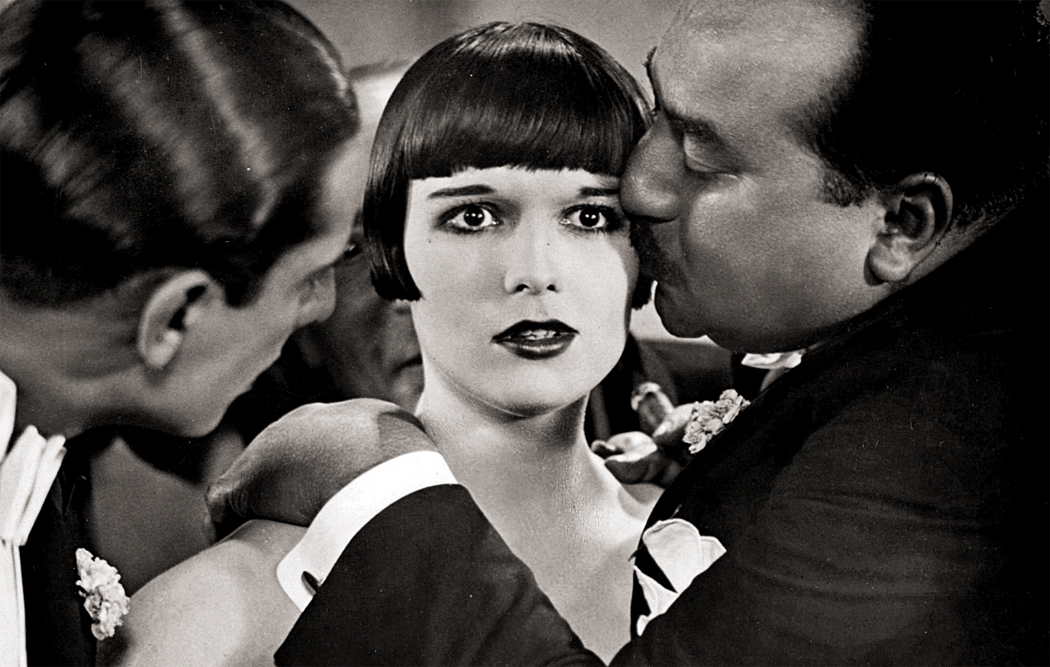
This hasn’t been my list of the Top 10 (or 12) silent films. Such a list would have to include Sunrise: A Song of Two Humans; Greed; City LightsThe Big Parade; Pandora’s Box; The Last Laugh; Flesh and the Devil; Cabiria — and a host of other contenders. Nor are these just my favorite films. I have others among the silents, including The Lost World or Hell’s Hinges

Nor have I listed any of the many silent short comedies — especially missing: the films of Chaplin, Arbuckle, Lloyd, Keaton, the Keystone Cops or Laurel and Hardy. They are familiar enough and require no special pleading from me. 

But I have hoped to make the case for an entire era of cinema, and that it is its own artform, and not merely film manqué, waiting quietly to be perfected by Al Jolson. 
Click on any image to enlarge

“There’s no such thing as bad art.” This was a dictum of the late classical music critic Dimitri Drobatschewsky. He explained: “If it’s bad, it’s not art.” But I have to take exception. There are examples of works that are deeply flawed, yet they stick in our psyches in just the same way as a masterpiece. 
To take an extreme: Ed Wood’s Plan 9 From Outer Space is often nominated as the “worst movie ever made,” yet, there are piles of other bad movies that have fallen into justified oblivion. Something about Plan 9 wheedles into our brains and lodges there, despite dialog such as, “We are all interested in the future, for that is where you and I are going to spend the rest of our lives. And remember my friend, future events such as these will affect you in the future.”

The movie is a peculiar kind of classic and draws viewers every time it is screened. 

And speaking of tin-eared dialog, the 1933 King Kong is full of stuff such as, “It never fails. Some big hard-boiled egg goes goofy over a pretty face, and bingo! He cracks up and gets sappy.” And the acting is often wooden (Bruce Cabot especially; and even Robert Armstrong can’t make this dialog work) and the story line is racist in a way common to its era, but Kong is as much part of our cultural landscape as George Washington’s cherry tree or the Gettysburg Address. 

There is something about these films that buries into our unconscious and lives there like a dream. There is a logic to real life, a cause and effect, but there is an alternate logic to dreams, and that is where Plan 9 or King Kong comes to life. Ordinary rules don’t apply.

There are many better-made movies that are completely forgettable. Shakespeare in Love won an Oscar, but can you remember anything about it? I can’t. But Kong is buried there, in the neurons, permanently, mythically. 

Which brings us to one of the greatest movies ever made, or at least one of the most memorable. in a 2012 Sight & Sound poll of critics, Metropolis was voted as the 35th greatest film of all time, tied with Hitchcocks Psycho and just ahead of Truffaut’s 400 Blows. It also ranked 12th in the film magazine Empire’s “The 100 Best Films Of World Cinema” in 2010 and second in a list of the “100 greatest films of the Silent Era.”

It didn’t achieve such eminence through its plot or acting. The plot is silly and preposterous and the acting is often so over the top as to be laughable. 

All built on a silly and sentimental bromide. 

The film’s director, Fritz Lang, agreed about the moral, telling Peter Bogdanovich in an interview, “You cannot make a social-conscious picture in which you say that the intermediary between the hand and the brain is the heart. I mean, that’s a fairy tale — definitely.” 

It looks like science fiction, but there’s no science in it. It could be a dystopian future, but it’s not set in any particular time. It is mostly a fever-dream of capitalism, except there are no economics in it.       

Yet, the film has a power that many arguably better films simply can’t muster. Scene after scene in Metropolis bores deep into the subconscious. 

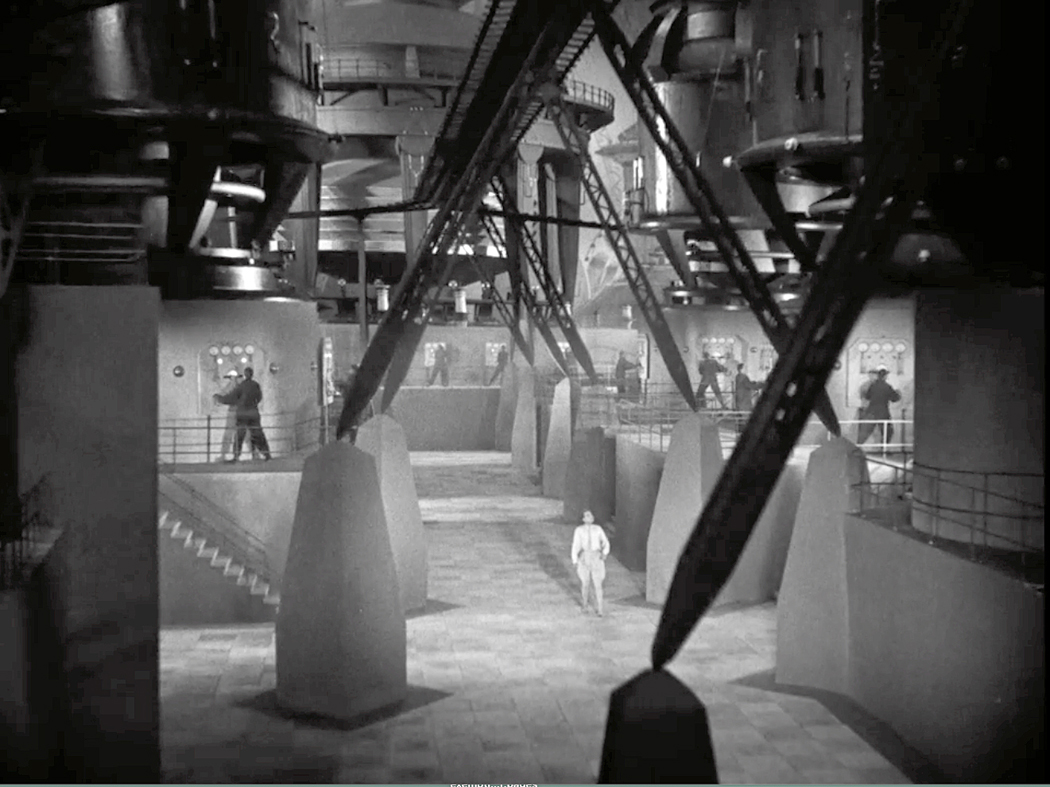
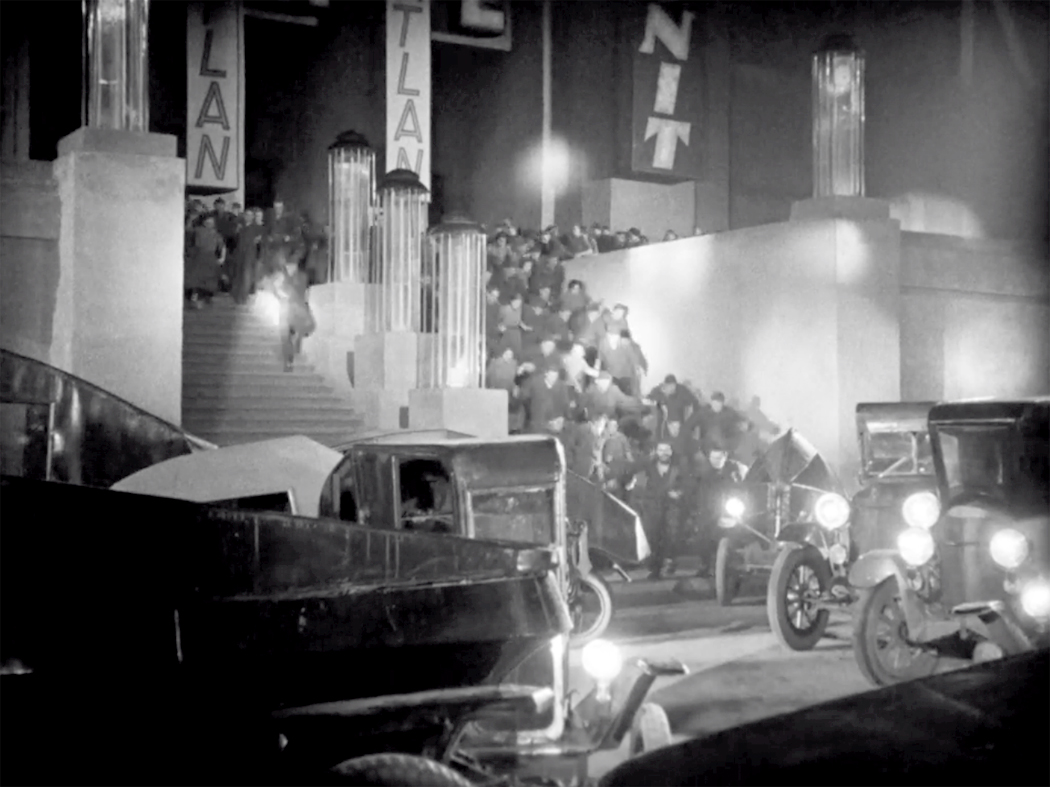
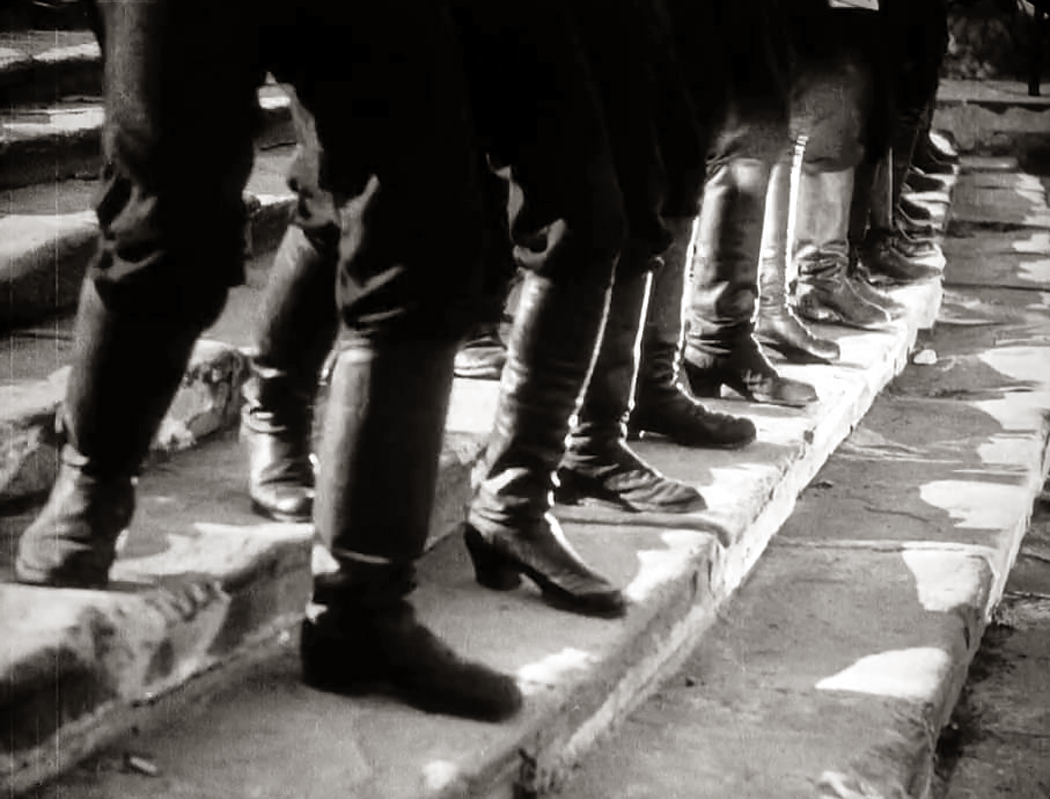
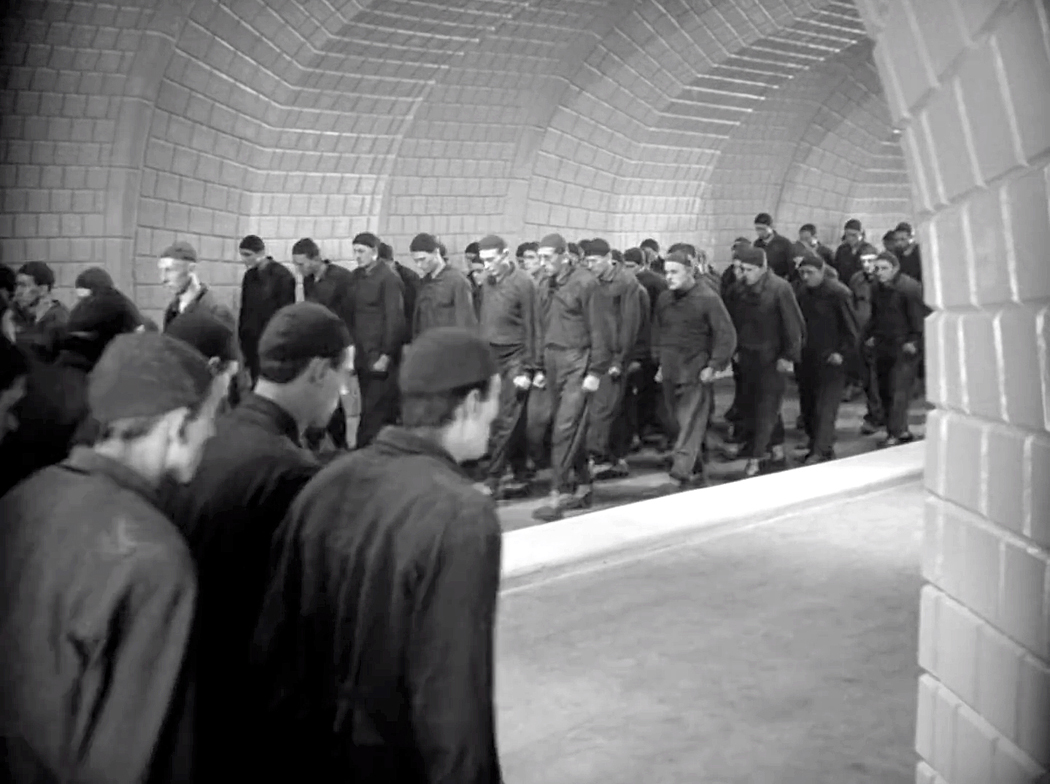
Right from the opening scene, when the factory shift changes and one phalanx of exhausted workers exit the giant elevators, shuffling at half-speed, while the fresh phalanx marches, in step in the opposite direction at full speed. It is a striking bit of choreography, worthy of Pina Bausch, and a clue to how the rest of the movie will unfold. 

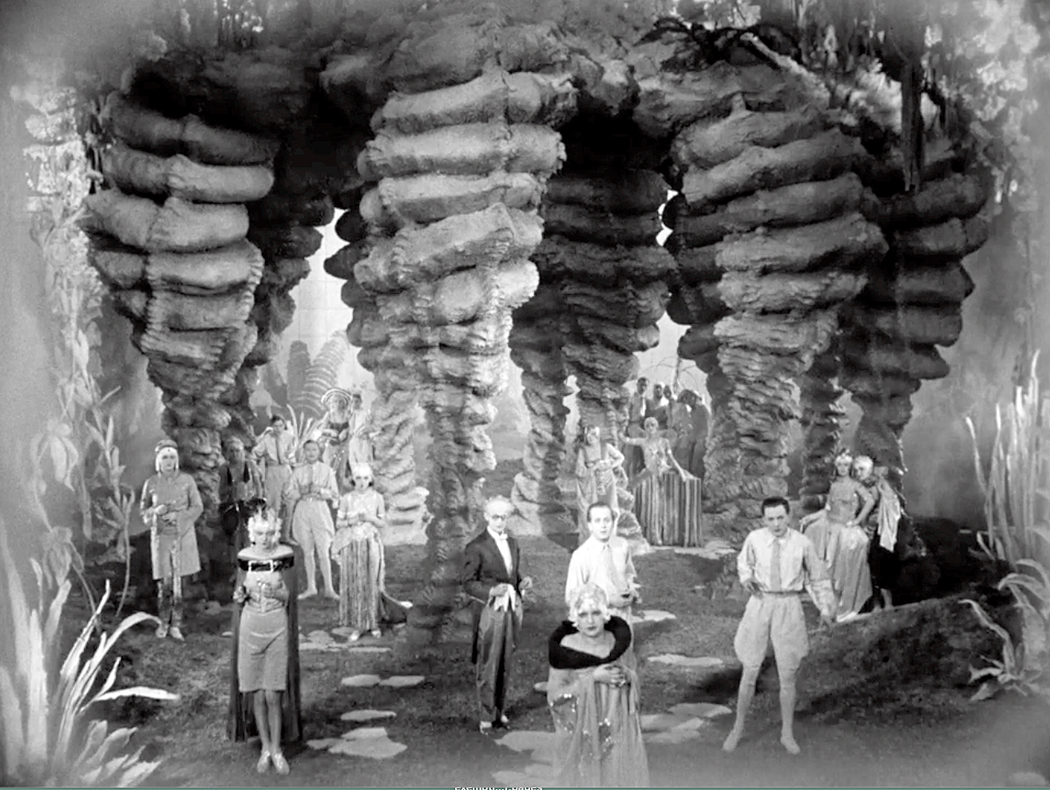
In the next segment, we find our hero, Freder, cavorting with a bevy of nymphs in the “Eternal Gardens,” in a set that is actually unnerving.

Scene after scene is unreal but unforgettable. 

While the plot is tangled and confused, the set-up is simple. The city is divided into an upper part, where the rich live in luxury, and an underground inhabited by the workers and the machines that keep the city running. A Romeo and Juliet story intervenes and so does a mad scientist, who makes a robot in the image of our Juliet. Chaos ensues. 

Don’t look for it to make any sense. It doesn’t. 

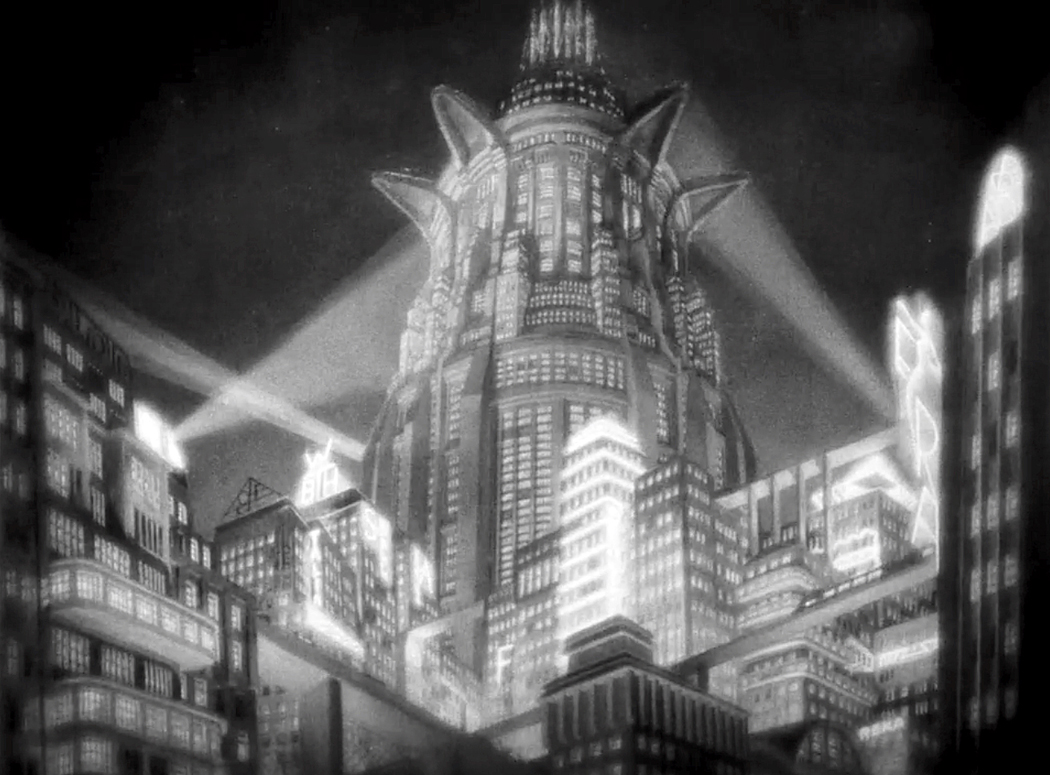
The film was conceived by director Lang when visiting New York City in 1924. “I looked into the streets — the glaring lights and the tall buildings — and there I conceived Metropolis,” he told an interviewer.  He said that “the buildings seemed to be a vertical sail, scintillating and very light, a luxurious backdrop, suspended in the dark sky to dazzle, distract and hypnotize.”

At the time, Lang was married to novelist Thea von Harbou (who already had published more than 40 books) and they worked out a story, which she turned into a novel. Later, Lang and Harbou translated the book into a script. 

Thea von Harbou and first edition hardcover (l.) and paperback (r.)

(I’ve just read the original novel and it is terrible, grossly overwritten and both silly and sentimental. And it used enough exclamation points to fill an oil tanker. Here is a sample: “Ah! The intoxication of the lights. Ecstasy of Brightness! — Ah! Thousand-limbed city, built up of blocks of light. Towers of Brilliance! Steep mountains of splendour! From the velvety sky above you showers golden rain, inexhaustibly, as into the open lap of the Danae. Ah — Metropolis! Metropolis!”)

Lang and Harbou working on script

Lang began filming Metropolis in 1926 at the Ufa studios in Berlin. It took 17 months to film, with 310 shooting days and 60 shooting nights and went over budget by 310 percent, costing 5.3 Reichsmarks (something like $23 million in today’s money) and nearly sent the studio into bankruptcy.

Brigitte Helm, who played the lead, and the robot Maria, said “the night shots lasted three weeks, and even if they did lead to the greatest dramatic moments — even if we did follow Fritz Lang’s directions as though in a trance, enthusiastic and enraptured at the same time — I can’t forget the incredible strain that they put us under. The work wasn’t easy, and the authenticity in the portrayal ended up testing our nerves now and then. For instance, it wasn’t fun at all when Grot drags me by the hair, to have me burned at the stake. Once I even fainted: during the transformation scene, Maria, as the android, is clamped in a kind of wooden armament, and because the shot took so long, I didn’t get enough air.”

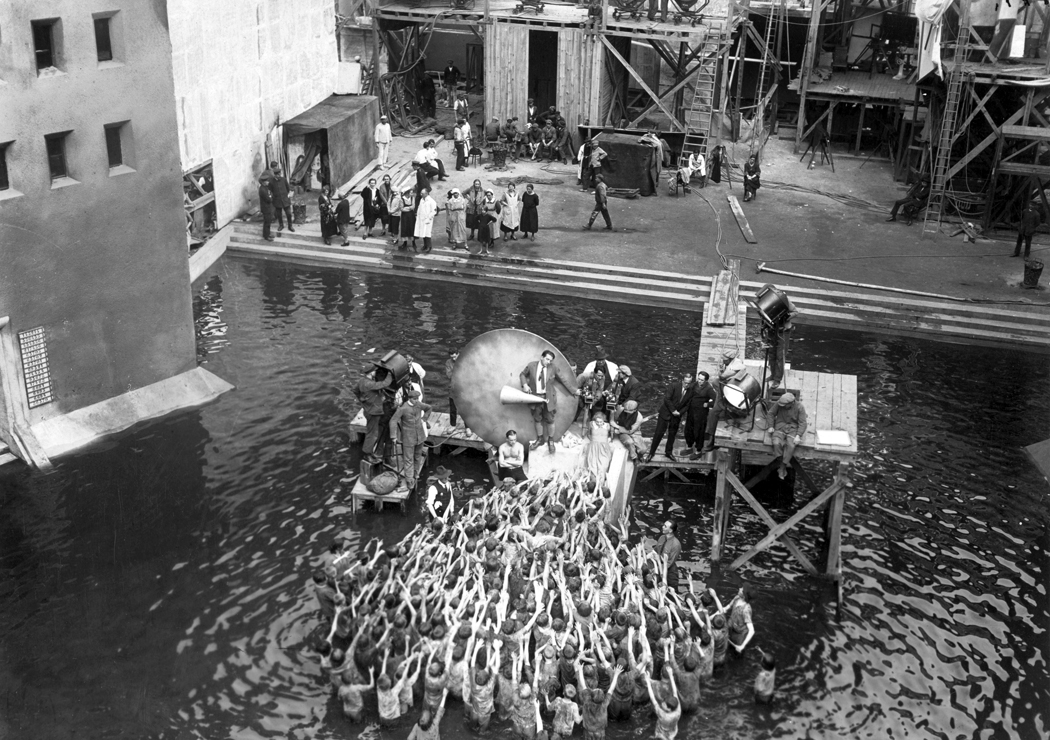
Lang brought in 500 children from the poorest districts of Berlin to play the Workers’ children and had them in ice-cold water for two weeks, as the Workers’ City was flooded.

The film was a financial failure on its initial release, but has become one of the great classics of all time. Its afterlife, though, was inauspicious. The movie was first released at a length of two and a half hours. The studio then cut it down to about two hours, and in the U.S., it was hacked down further, and in 1936, Nazi objections to its supposed Communist subtext, it was reduced to 90 minutes. Since its rediscovery in the 1960s, there have been many restoration attempts, but even today, with 95 percent of the film rediscovered and re-edited, it is still short of the director’s cut. 

And speaking of Nazis, Lang and Harbou divorced as her Nazi leanings became clear (she became a party member in 1933 and worked for the studio under Nazi rule during the war), and as for Lang, it was his bad luck that Joseph Goebbels and Adolf Hitler both liked the film and offered Lang the job as boss of all Nazi film production. Lang took the hint and fled Germany (by his own account, the very next day). 

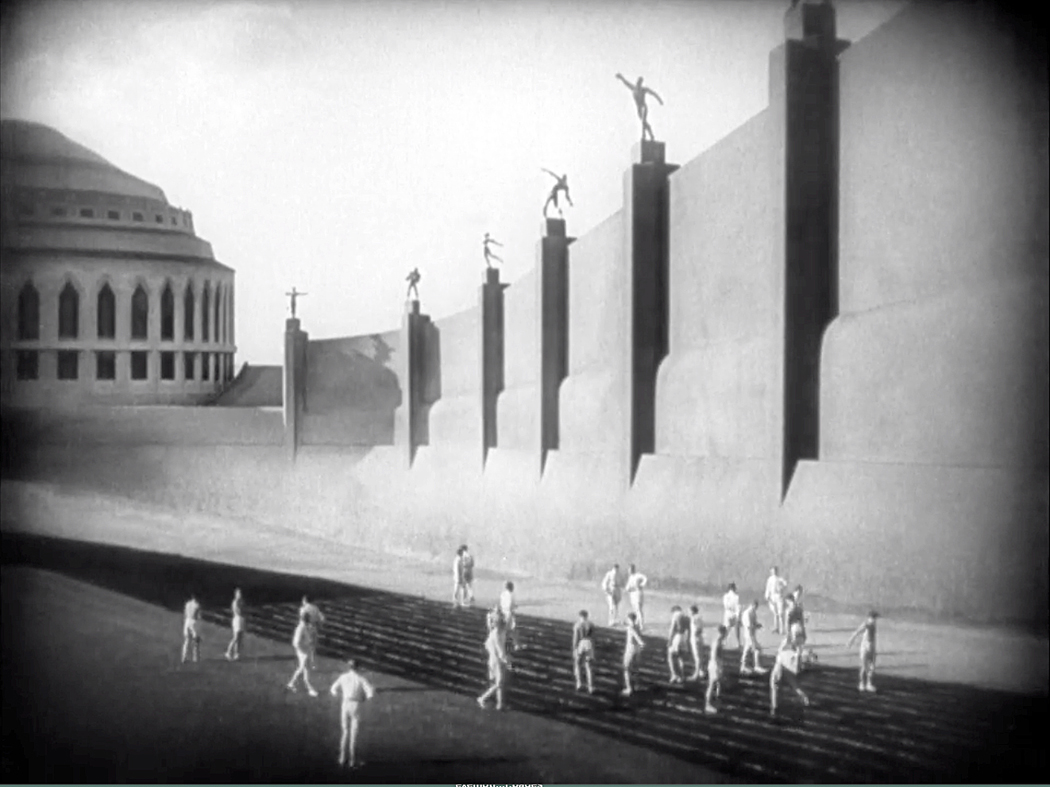
(An early scene in the movie shows a race in the Club of Sons in which the stadium architecture is astonishingly prescient of Albert Speer’s fascist architecture.)

So, why is this movie, with all its faults, such a memorable film? Unlike most, it doesn’t count on story to carry us through, and certainly not the acting. Rather, it burrows into our unconscious like a dream, with image after image that cannot be forgotten. One after the other, they pile on, right from that opening bit with the workers’ choreography.

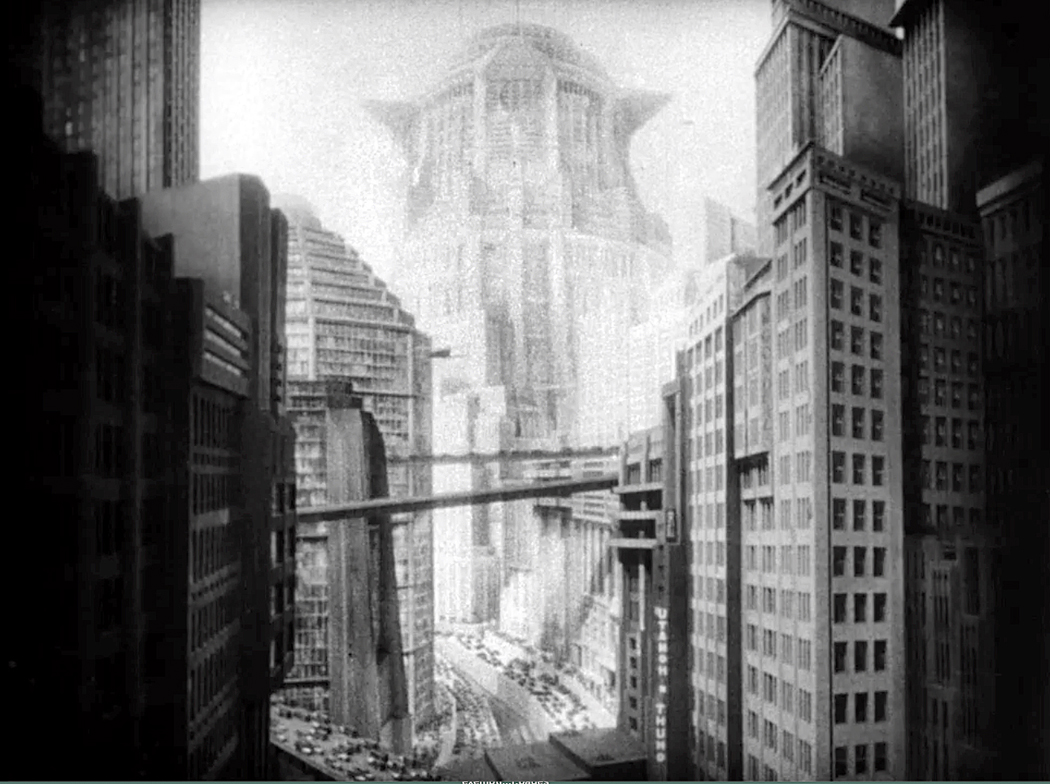
The city is the kind of future the past used to project, with its biplanes circling the buildings and the elevated roadways around skyscrapers so tall, we cannot see their tops. In the center is the giant tower called the “New Babylon

Then, there is the Workers’ City, hidden below ground, with its Soviet-style faceless apartment buildings. The social structure of Lang’s Metropolis is a parody of the rich-poor division manifesting itself in the between-wars Weimar Republic — and echoed today. Between the upper and lower levels is the Machine Level, where the workers put in their toilsome hours. 

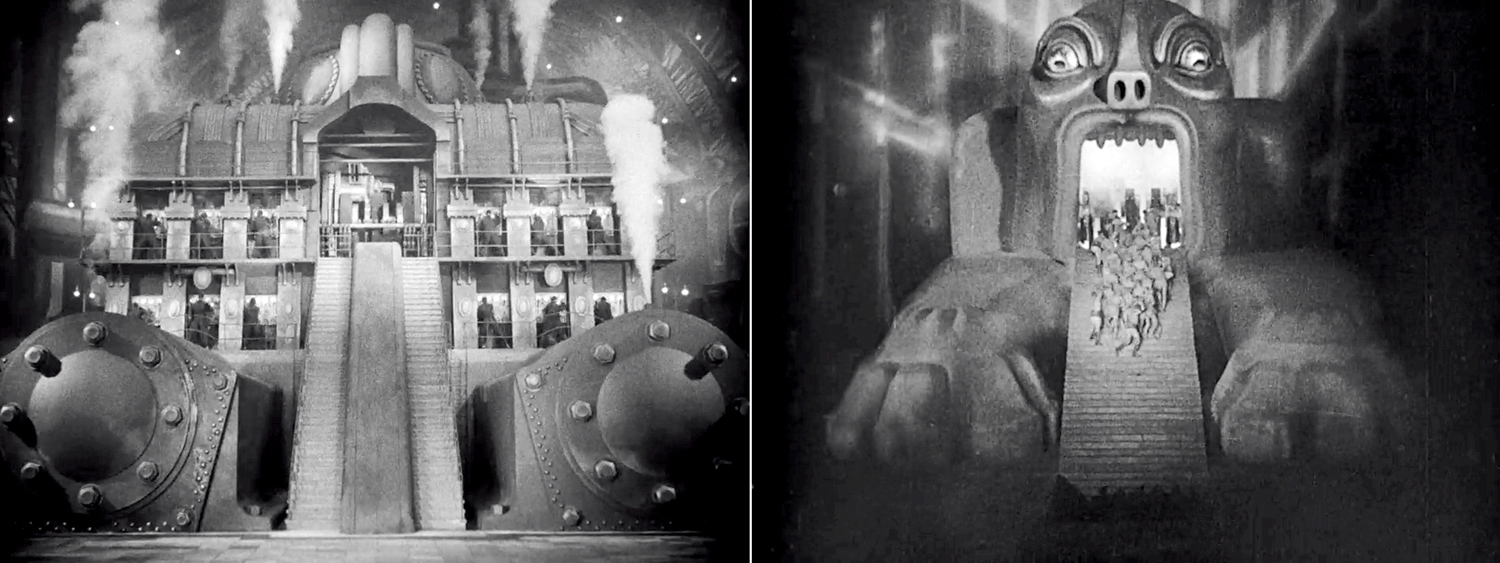
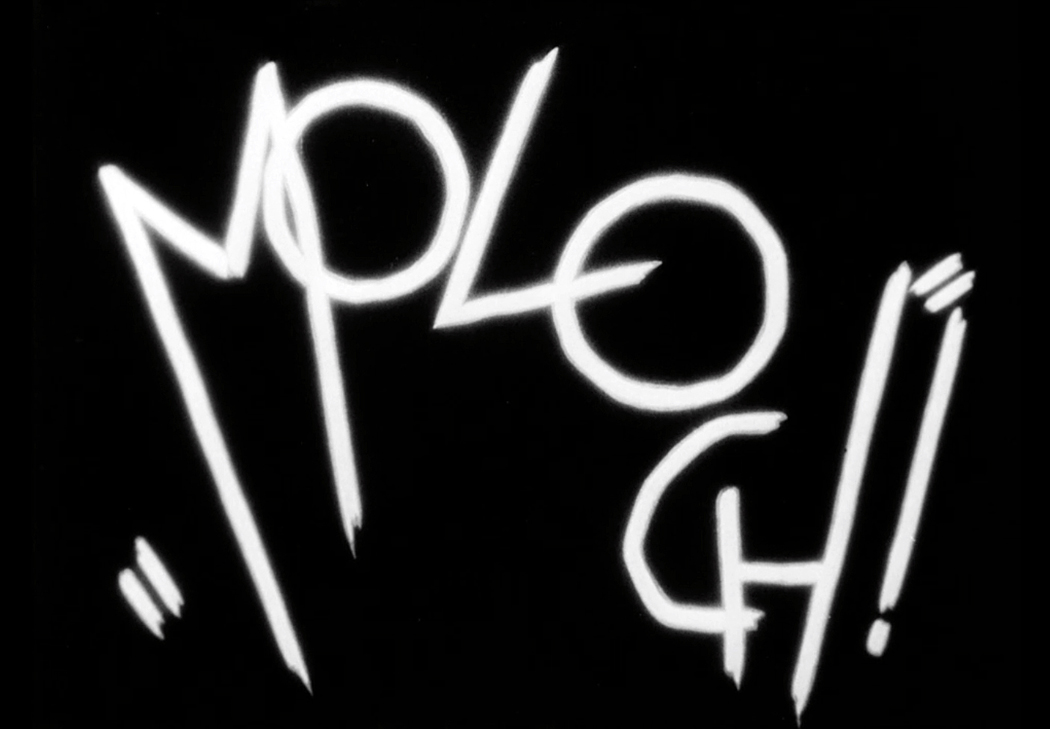
Our hero, Freder, wanders into this level, where he sees the great machine overheat and explode, scalding and killing scores of workers. He is horrified and hallucinates the machine turning into “Moloch,” devouring its human sacrifices.

He comes across Worker 11811, working a mysterious machine, who collapses from overwork and Freder takes his place. The scene recalls the famous Leonardo drawing of the “Vitruvian Man.” 

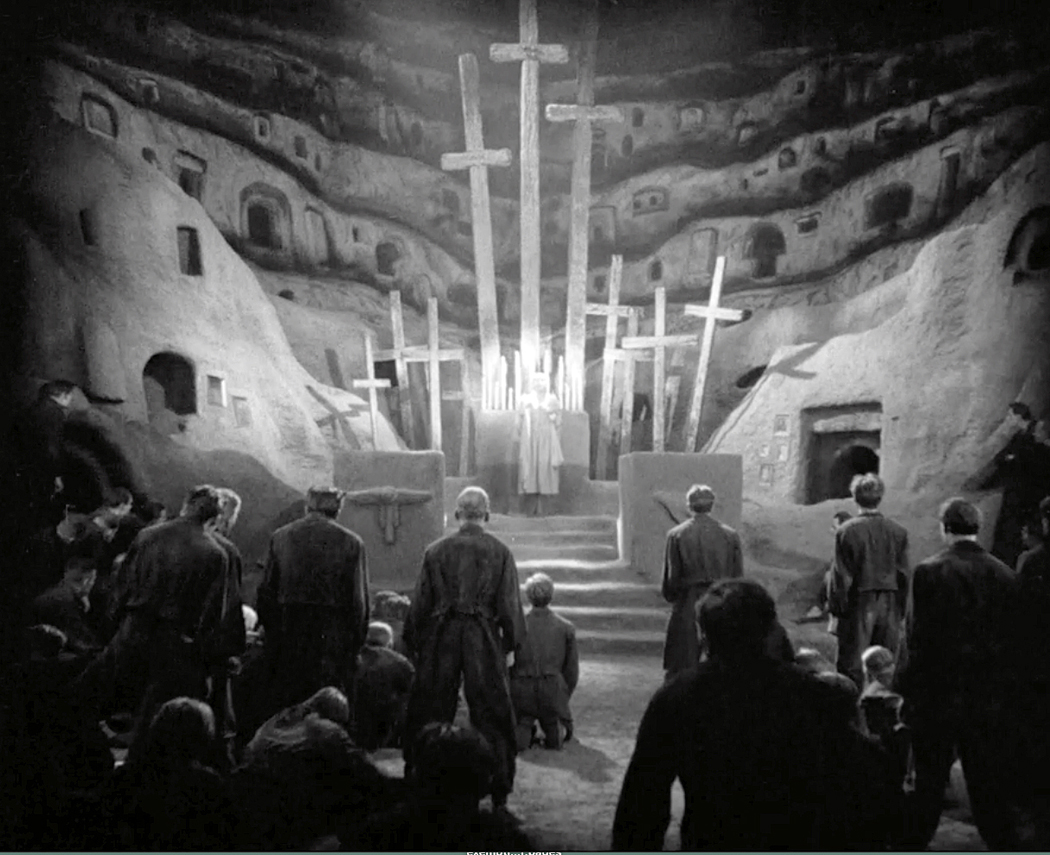
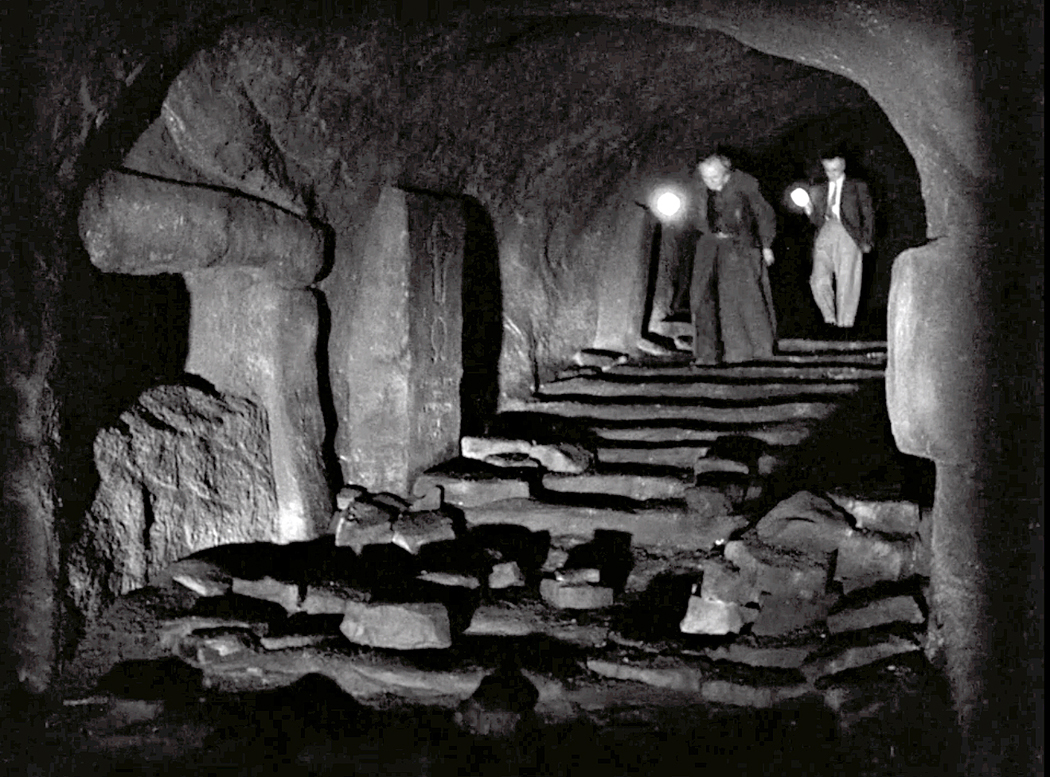
The whole underworld is a purgatory, and below the Workers’ City there are the catacombs, where the virtuous Maria lectures the workers about justice — and the importance of waiting for a “mediator.” 

This is not a movie about people, but about archetypes. There is father, son, city, death, all presented almost naked, with little attempt to disguise them as anything real. 

The world is divided, in Nordic and Wagnerian style into an underworld, a middle world and an upper world. The catacombs are deep caves, and the home of religion and myth.

The Workers’ City and their machines are in the middle.

And the privileged world of the elite rides above it all, and depends on all that resides — like a subconscious — below, normally unseen and unthought of. 

The architecture is a strange mix of the Moderne (Art Deco and German Expressionist); the dull efficiency of a Socialist utilitarian greyness; and relics of the Gothic; and prehistoric caverns. 

The main characters are the father, Joh Fredersen, who is master of the city; his son, Freder; the mad scientist Rotwang; and, most central of all, the woman, Maria. 

Fredersen (looking suitably Napoleonic); Freder; Rotwang; Maria

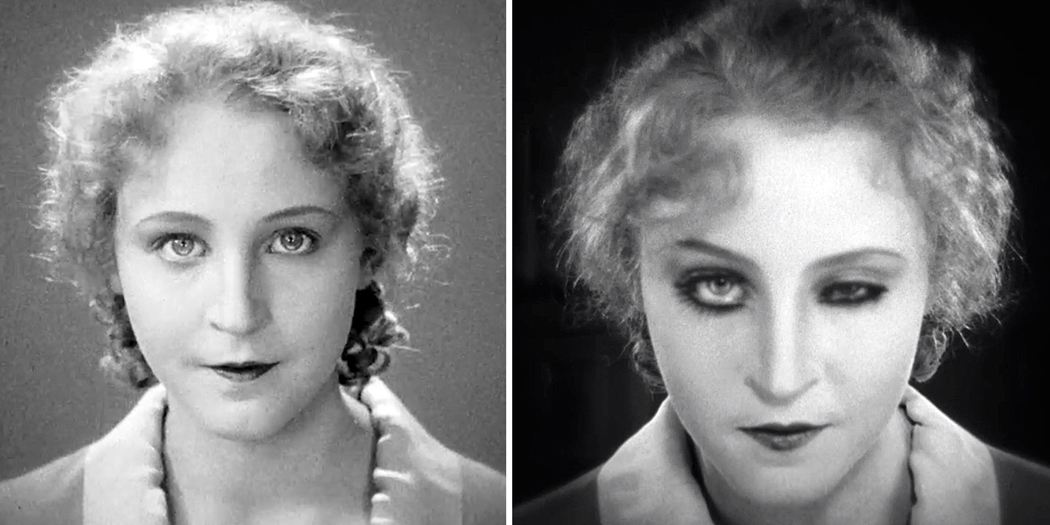
Maria, played by Brigitte Helm, is the central and most interesting character. She is really two characters, and the embodiment of two archetypes: virgin and whore. Rotwang creates a robot in the form of Maria and programs her to undo everything the good Maria has done. Helm differentiates the two personae in a way that they cannot be confused.

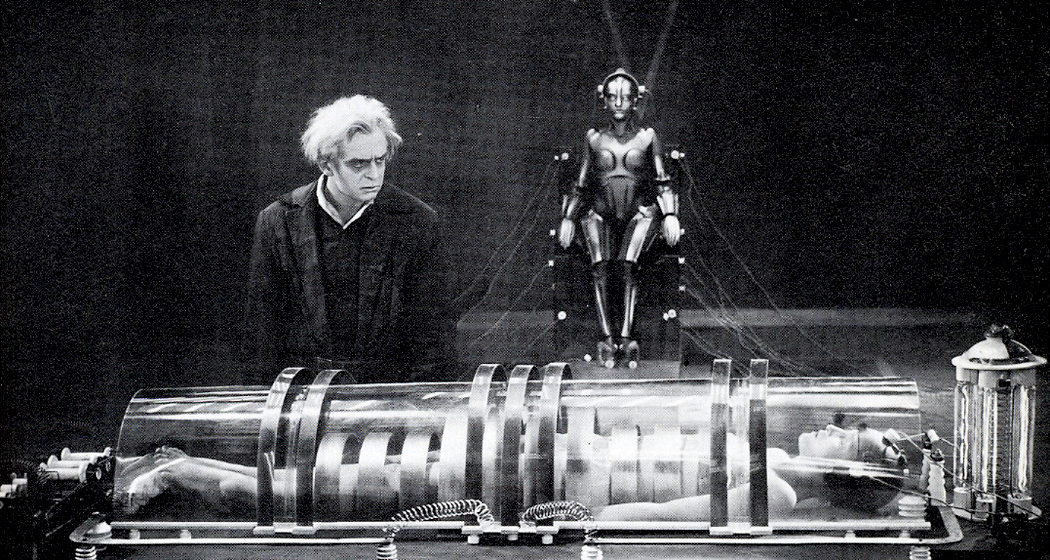
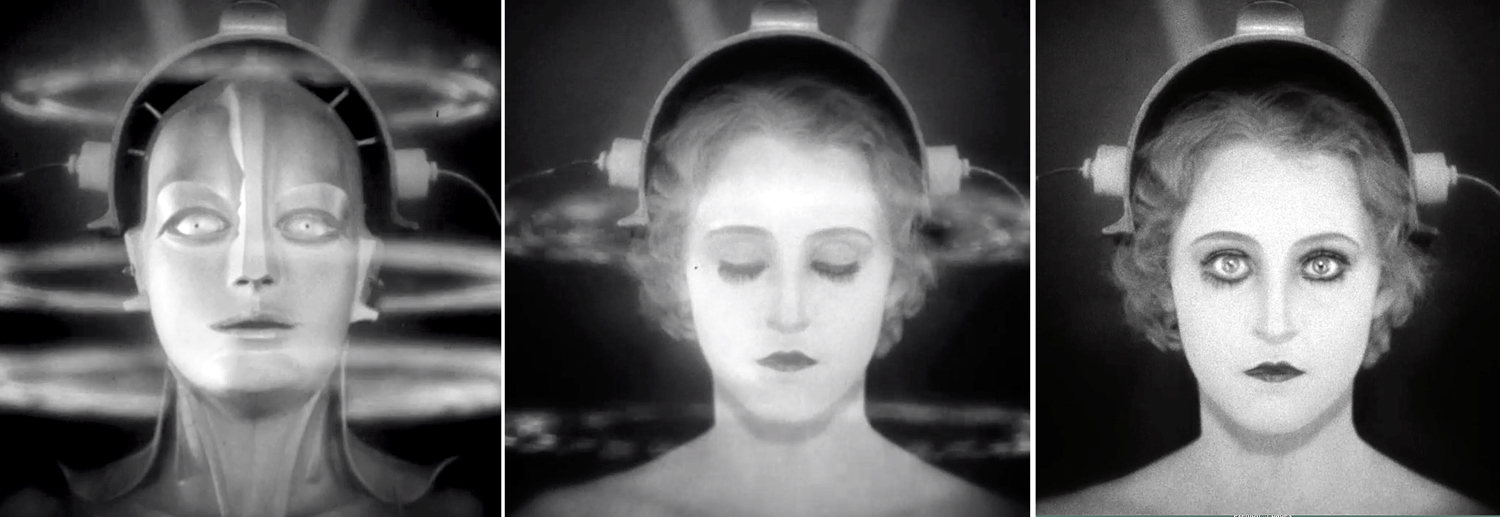
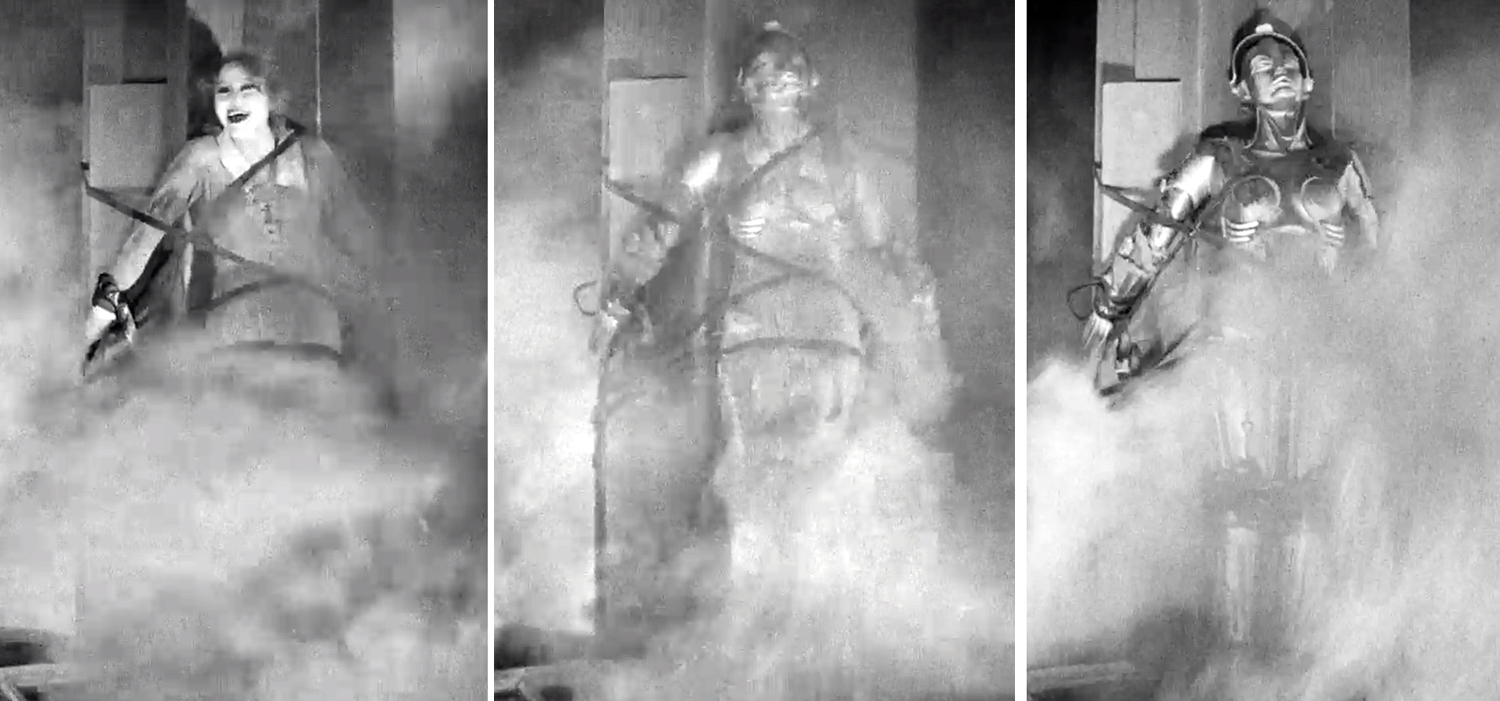
The two Marias separate in the very Frankentsteinian laboratory of Rotwang, in one of the most hypnotic sections of the movie, with rings of light rising and falling around the body of the robot, 

until it takes on the visage of the good Maria.

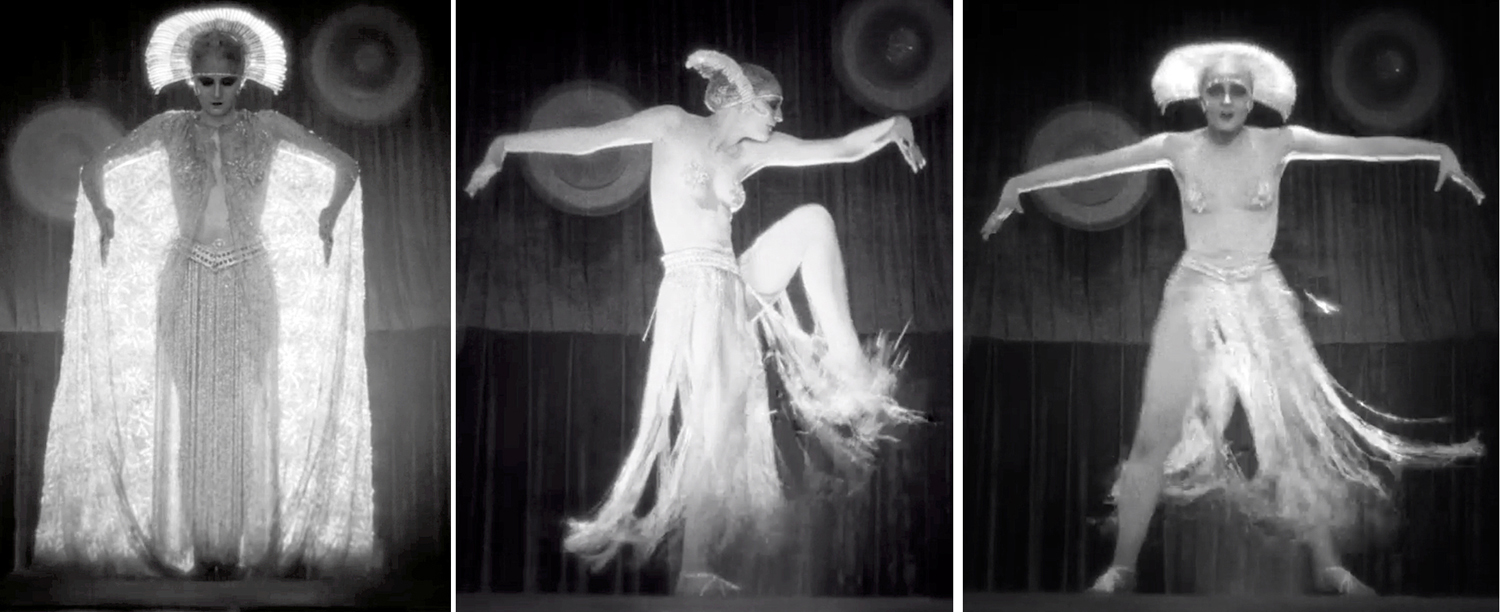
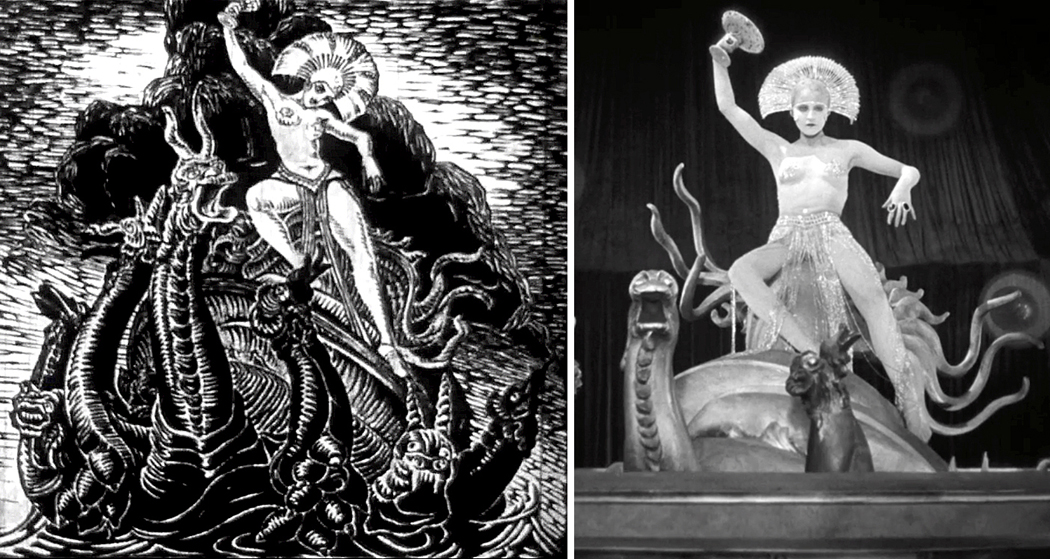
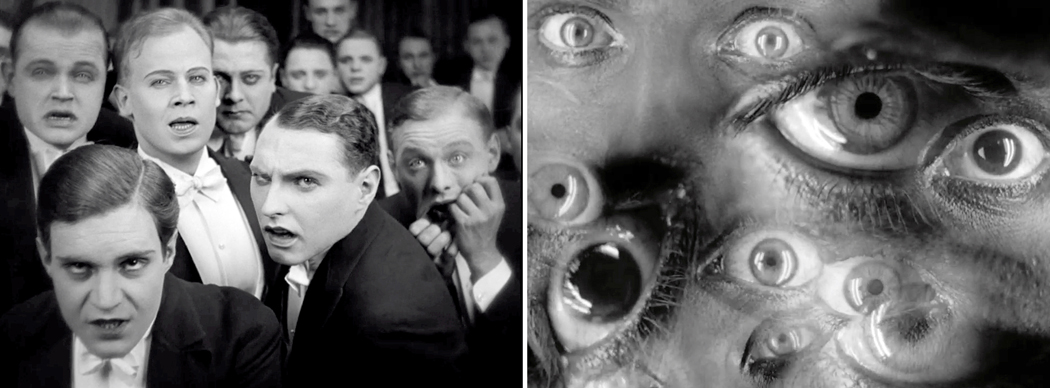
This Bad Maria, or False Maria, is sent to the workers to foment rebellion (why is never really made clear — it doesn’t make any sense, economically, to destroy the whole city), and she turns up in a nightmare hallucination of Freder as the Whore of Babylon, dancing at the Yoshiwara cabaret, doing a provocative dance.

And morphing into a Medieval vision of Die Grosse Babylon — the Great Babylon, from a verse in the biblical Apocalypse.

Which drives the men at the cabaret crazy with desire.

When the film was released in the U.S., Variety magazine’s reviewer commented: “Some sex stuff here and there, and a cooch dancer! Yes, sir, a coocher, in the revigorated mechanical figure, and a pretty good coocher, too, but not so thick around the hips as German coochers generally are. But then you must remember that this young lady was made to order.”

This False Maria persuades the workers to destroy the machines, which automatically floods the Workers’ City (don’t ask why), threatening all the children, and the workers, horrified, burn the False Maria at the stake, where, of course, she turns back into the robot.

Not to worry, Freder and the Good Maria save the children.  

The film is shot through with biblical references, not for theological reasons — there is no actual religion in the movie — but as cultural markers, symbols that will resonate with an audience familiar with the Bible. 

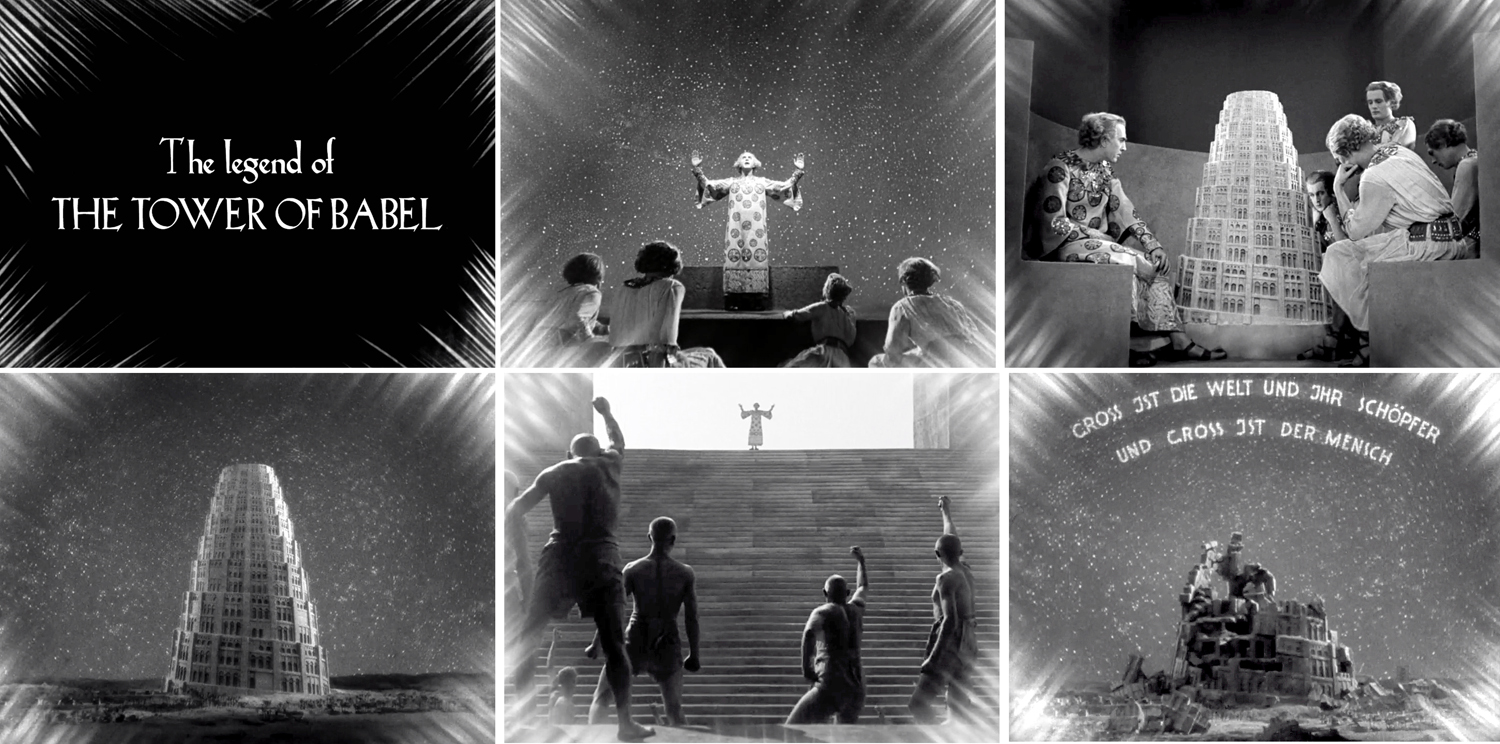
In the catacombs, the Good Maria teaches a lesson about the Tower of Babel, and how the conceivers of the tower failed to teach the workers who made the tower why they should do so, and a rebellion ensues and the tower is destroyed. 

In Freder’s fever-hallucinations, the figures of the Seven Deadly Sins, from the cathedral, step down from their pedestals and the figure of Death comes to life.

And Death approaches Freder with his scythe.

There’s Freder’s vision of the exploding machine as the biblical Moloch

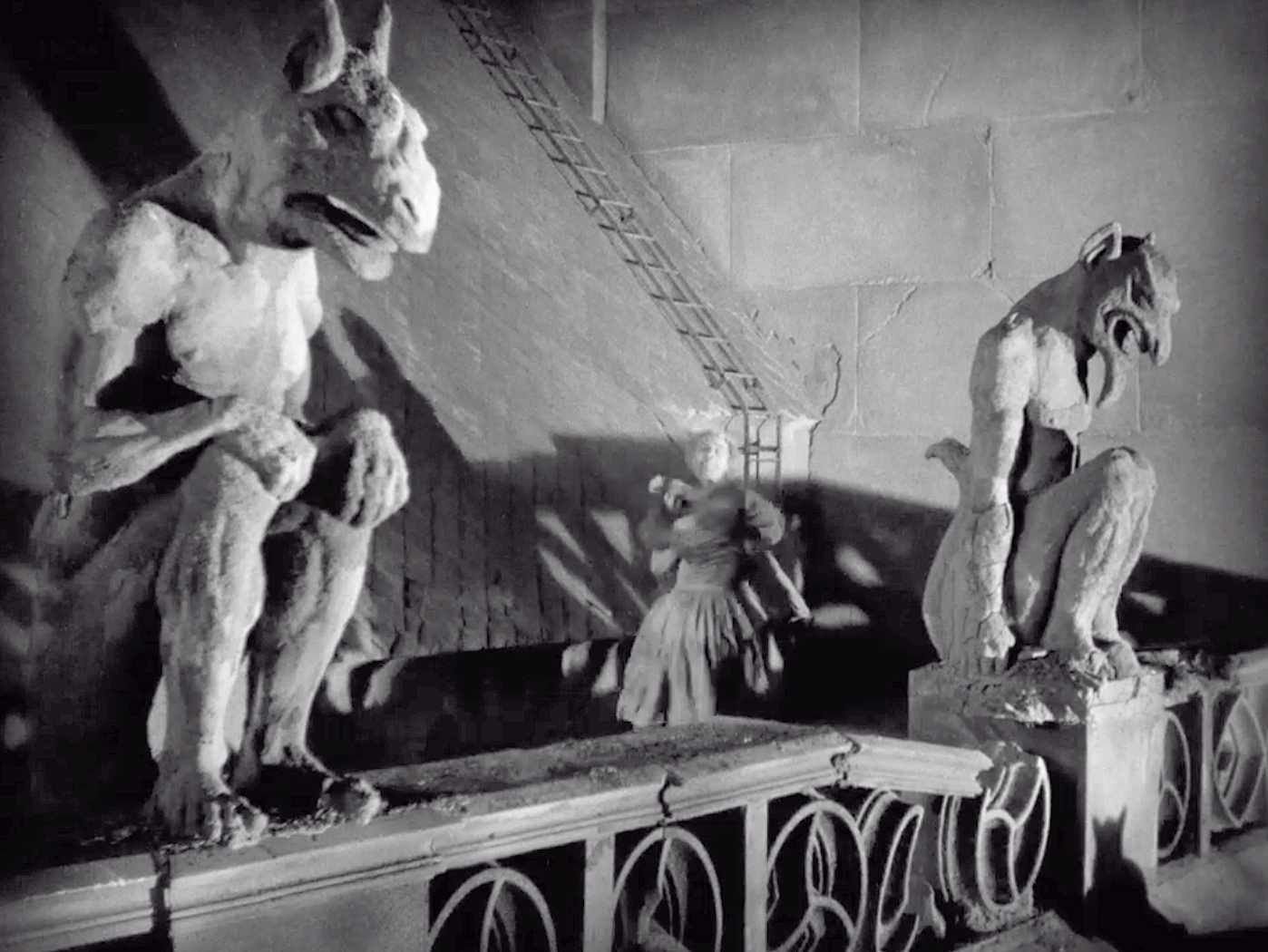
And the movie comes to its climax when Rotwang abducts the Good Maria and chases her to the top of the cathedral, among the gargoyles.

And drags her to the very rooftop, where he fights it out with Freder.

While his father (remember him?) falls to his knees in fear among the crowds in the parvis.

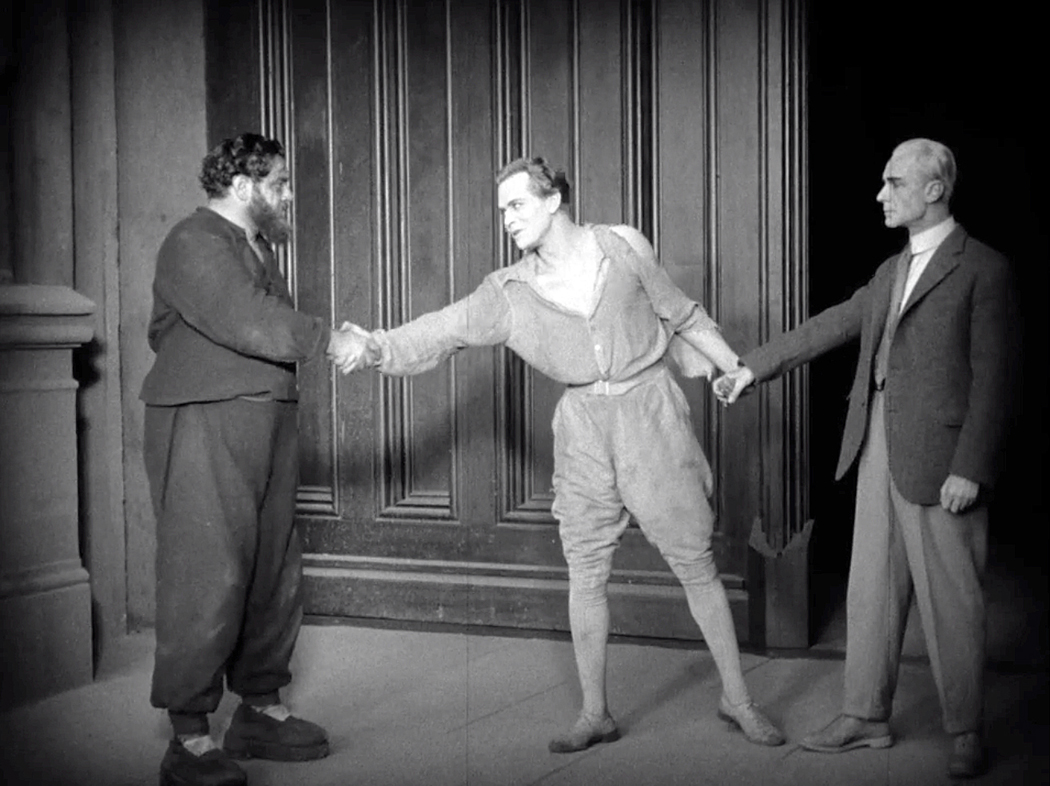
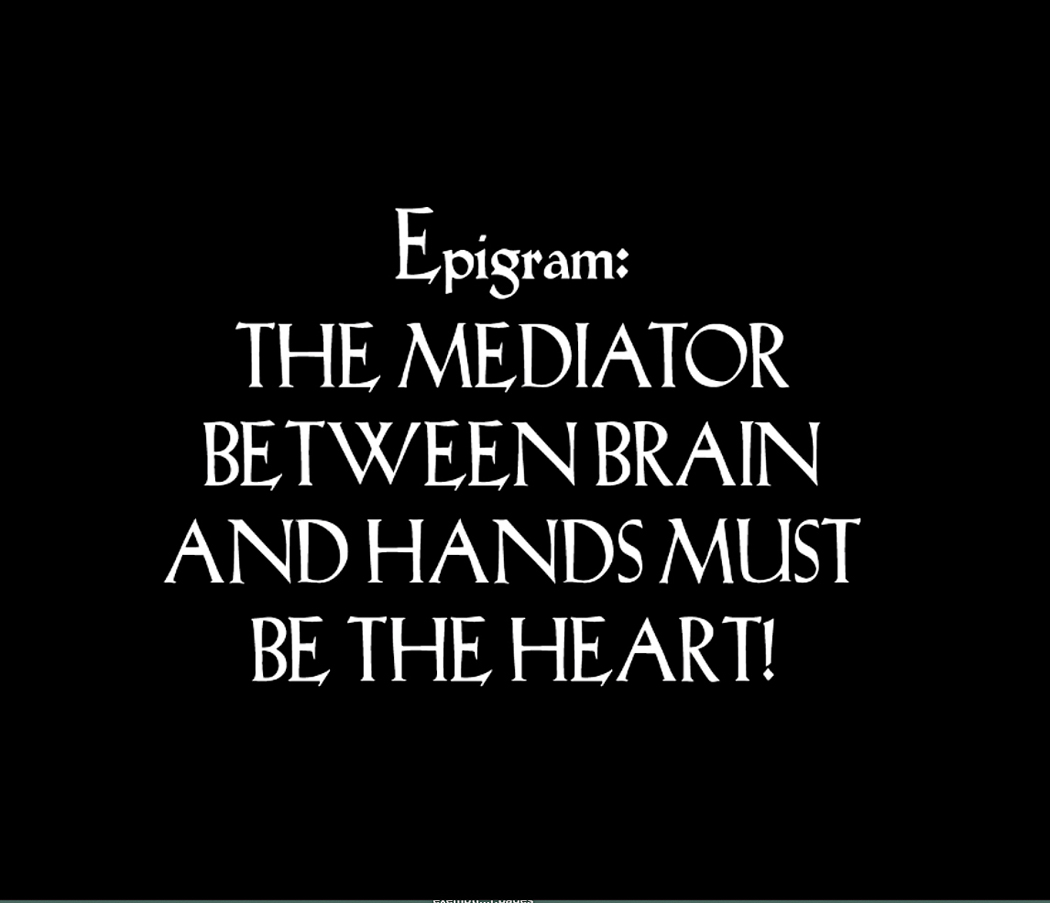
But Rotwang falls to his death and Freder saves the Good Maria, leading to the point where Maria gets the heart (Freder) to mediate (shake hands) between the hands (the worker) and the head (Joh Fredersen) and therefore satisfying the prediction of the opening epigram of the movie. 

It’s rather a sappy ending for so visionary a movie. But then, the plot has never been the point. 

Which is something novelist H.G. Wells didn’t seem to understand when he reviewed the film on its release in 1927. In his piece for The New York Times, he wrote, “I have recently seen the silliest film. I do not believe it would be possible to make one sillier.”

His beef was that the film didn’t realistically portray the future. 

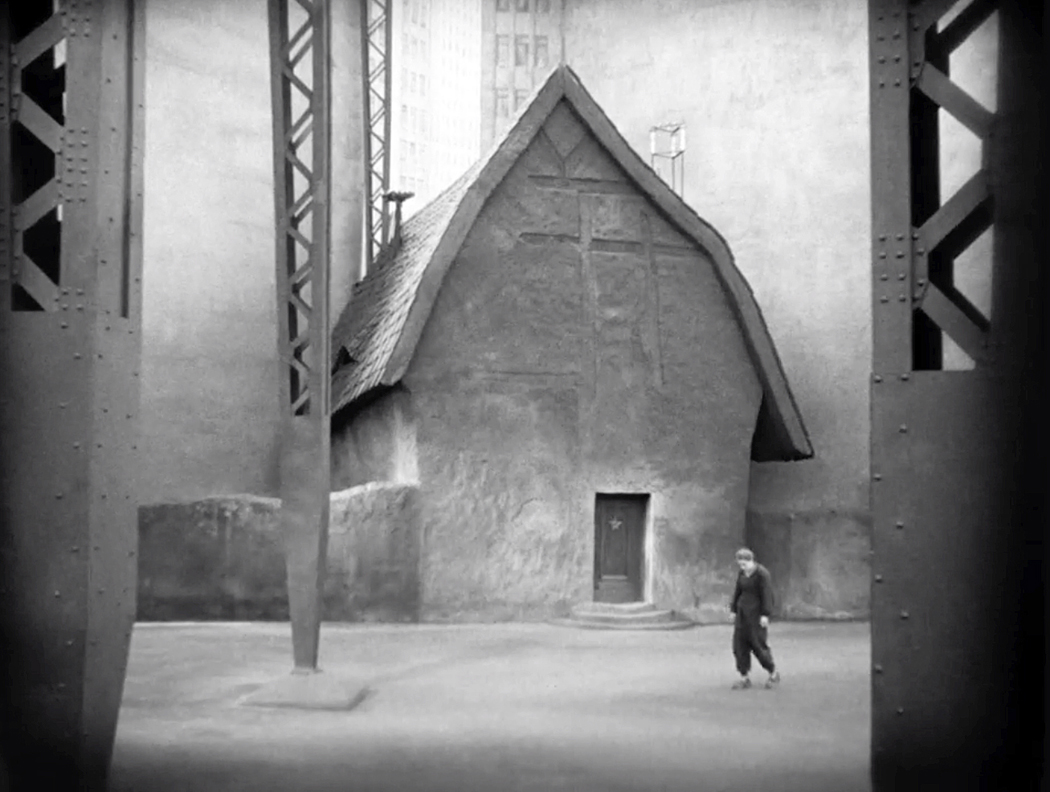
How can it, when Rotwang’s Medieval house in the middle of the city is, like the Tardis, bigger on the inside than on the outside?  

Its economics didn’t make sense, Wells wrote. “The machines make wealth. How, is not stated. … One is asked to believe that these machines are engaged quite furiously in the mass production of nothing that is ever used, and that [Fredersen] grows richer and richer in the process. This is the essential nonsense of it all.”

Where are the suburbs? Wells asks. Why, in the future, do all the cars look like the Model T? Where in the catacombs under the city are all the gas mains, sewer conduits and electrical infrastructure? His literal-mindedness is comic.

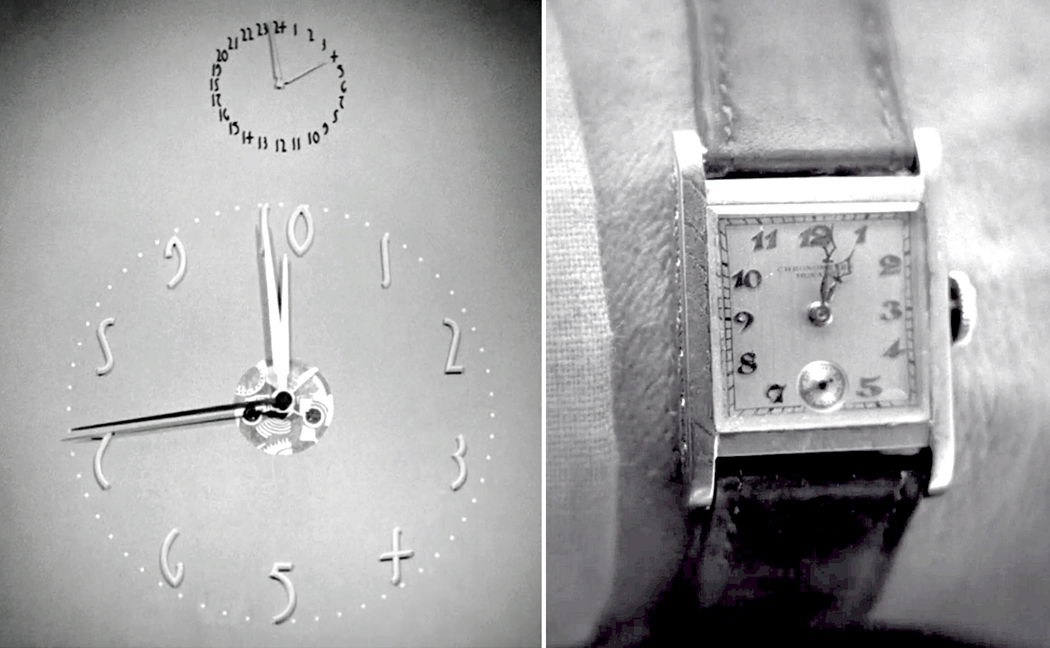
How can you be literal when the clocks in the film cannot even agree on how to measure time — Salvador Dali must have been their clocksmith.

Wells goes on and on, completely missing the point. Obviously, Metropolis was never intended to be realistic. It is not even meant to be the future. It exists in no time, according to both Lang and Harbou. It is a fever dream, an oneiric fantasy, and the glories of the film are all to be found in its visuals, not in its story. 

You can watch the film on YouTube in decent resolution, and it is available on DVD and Blu-Ray. It is one of the great films of all times, and one of the most memorable. 

Lang went on to make such great films as Woman in the Moon, also with Helm; M, with Peter Lorre; The Testament of Dr. Mabuse, with Rudolf Klein-Rogge (Rotwang from Metropolis); then, in Hollywood: Fury, with Spencer Tracy; Rancho Notorious, with Marlene Dietrich; and Clash by Night with Barbara Stanwyck. And many other great films. But none burrows into the brain in quite the same way as Metropolis.  

Click on any image to enlarge

Buster Keaton "The General"

Buster Keaton “The General”

When it comes to movies, everyone has a Top Ten list, or a top 100, or top 500. Tastes differ, of course, and no two persons’ lists should be the same. But when you gaze through so many of these lists online, it is appalling to see just how many of these not only include so many mediocre films, but how many of them fail to include anything older than a decade or so, or anything from anywhere but Hollywood.

Here’s one such online list:

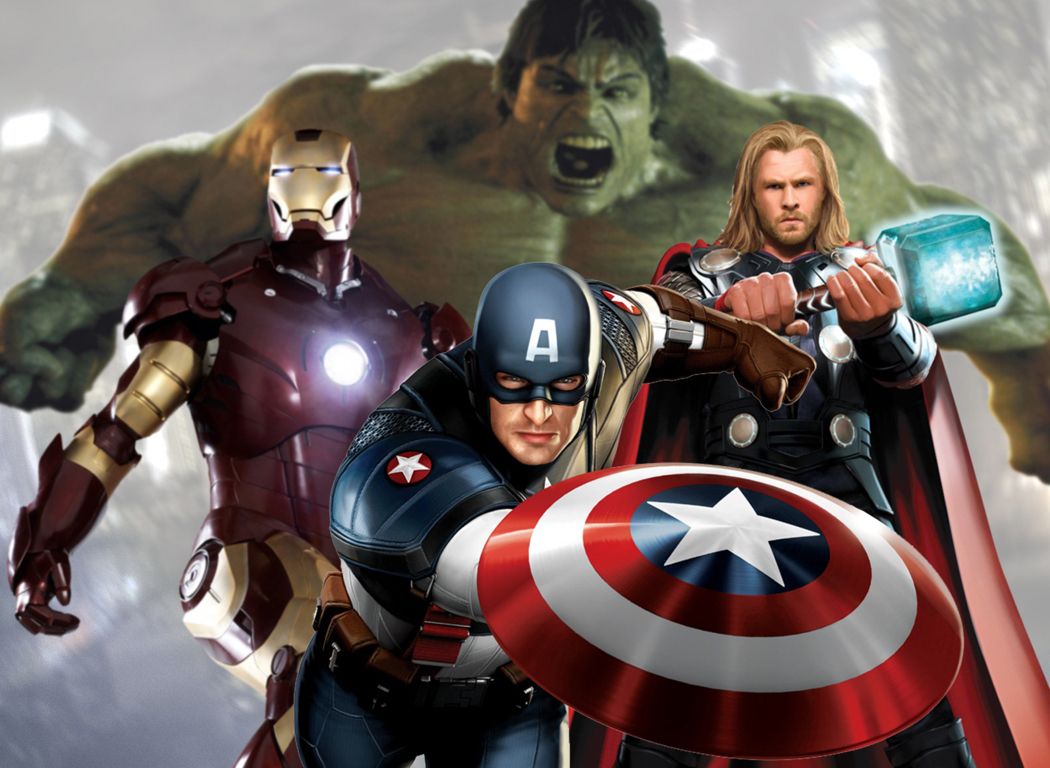
Avengers

Avengers

1. Star Wars Episode VI Return of the Jedi
2. Teenage Mutant Ninja Turtles: the Movie
3. Avengers (2012), just so no one thinks of that god-awful film with Sean Connery, Ralph Fiennes, and Uma Thurman
4. Courageous
5. Rudy
6. Dumb and Dumber
7. Independence Day
8. We Were Soldiers
9. Tomorrow Never Dies (Brosnan is my 3rd favorite Bond but this is my favorite Bond film)
10. Indiana Jones Raiders of the Lost Ark

If someone thinks Avengers is one of the greatest films ever created, someone doesn’t get out much.

Another, responding on the same website complains:

“These lists have a hole in them without Blade Runner on them. Also, R Scott’s original Alien.

“And no Peter Jackson LOTR (Lord of the Rings) flicks? That’s surprising. I felt they were a bit too long and I prefer the Tolkien books but Jackson’s The Two Towers is epic and on my list ( despite my ambivalence to hobbits lol.)

“And what about Donner’s first Superman?”

It’s easy to think Superman is a great movie if you have never been out of the house, but Sonny, there is a great big world out there, and in it, Superman isn’t even a blip.

This isn’t just about “movies I like,” in which it’s fine to enjoy anything. There are bad or indifferent films I love to watch, too. No, it’s about movies that, if you care about film, you should have seen. At least, should have seen if you want to express an opinion that has some authority to it, and not just the mewlings of an esthetic infant.

Just as there are books you should have read, if you want to consider yourself literate, and music you should be familiar with, and art that should be part of your inner life, there are movies you should have seen.

No one can have seen them all, of course. It is a lifetime’s work to expand one’s horizons and learning never ends.

It isn’t that the movies on these online lists are not good movies, even great movies. They mostly were all worth seeing. It is that the scope of the lists was so narrow, and most of the films mentioned were made in the past 10 or 15 years. One wonders what a modern moviegoer thinks constitutes a great film. It would seem: lots of action, clever dialog, color film, and a whipped cream topping of CGI. Car chases, things blowing up and wizards or werewolves.

Kill Bill

Kill Bill

If you think having seen Kill Bill parts 1 and 2 on a double bill has taught you anything about the potential of film, you are greatly mistaken. And this is not a slight on Tarantino, who is a wonderful filmmaker: It is a slight on your supposed erudition.

The films you should have seen are not necessarily the best films, either (although most are). They are the films that created the course of film development, and changed that course. They are the films that opened up the possibilities.

Some have done so through discovering new potential in the medium itself, like D.W. Griffith or Jean Cocteau. But others have discovered ways of giving the popular medium the depth of the greatest literature. If you think Batman Begins has depth, you are still wading in the shallow end of the swimming pool.

The Great Train Robbery

The Great Train Robbery

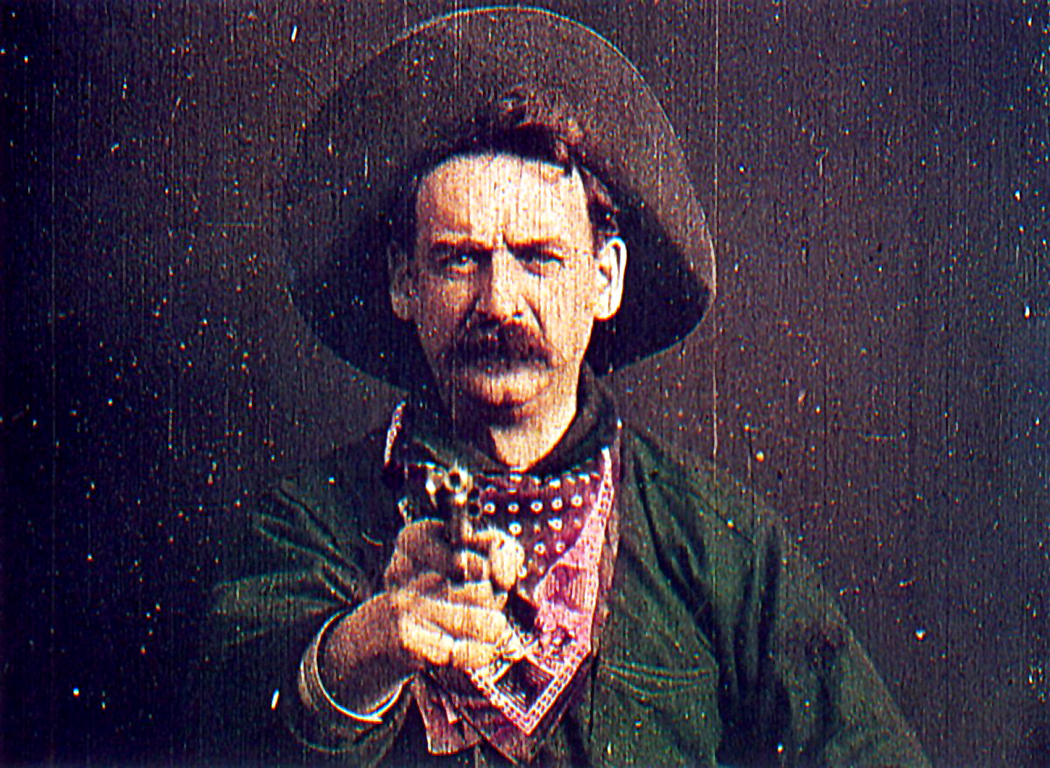
I am not talking simply about Postmodern referencing: that Martin Scorsese references The Great Train Robbery when Joe Pesci points his gun straight into the camera and fires. Such cleverness permeates current cinema, where you can hardly make a film without some witty reference to a famous film of the past. That’s nothing more than an in-joke.

Rather, I’m talking about the larger film culture that has grown and continues to grow as a living tradition — cinema as a single body of work, seen as a single, long-growing vine with thousands of leaves, stems, flowers and fruit, grown from the seeds planted by the Lumiere brothers, raised through silence, sound and Cinemascope and Technicolor.

I’m talking about movies as a humanistic art: One that can tell us about the experience of being alive. The lists I came across mostly concern film as a theme-park ride — fun, but of little consequence. As if a list of great novels were proposed starting with John Grisham, passing through Jackie Collins and ending with Dan Brown. Again, no slight on any of them: Their books can be fun to read, but they ain’t Proust.

So, Mr. Big-Shot Critic, what would your list be? What movies should anyone have seen before they can consider themselves cinematically literate?

Well, there isn’t anything so simple as a list. Rather, there is a constellation of films you should have sampled from. In other words, you can’t really say you know anything if you haven’t seen a film by Robert Bresson. Can I list Mouchette, or Diary of a Country Priest, or Au Hasard Balthasar as the one film you need to have seen? Not really, but you should have seen at least one Bresson film, and if you do, you will almost certainly then want to go on and see more of them, maybe all of them.

Au Hasard Balthasar

Au Hasard Balthasar

You will find a deeply moral core to all of them, and told in an odd, quiet, straightforward manner, usually with no professional actors, to keep the films from seeming too “theatrical.”

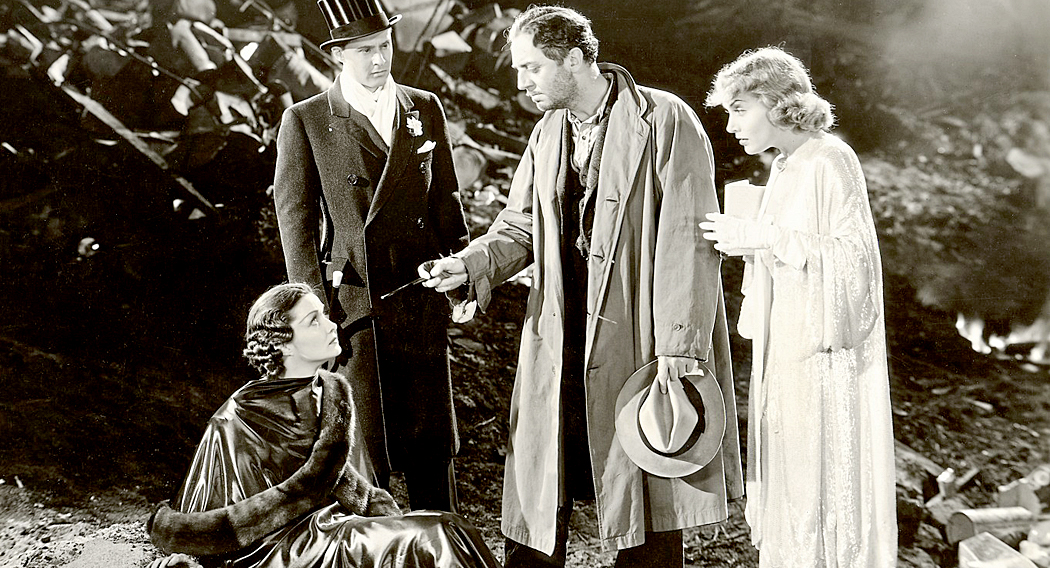
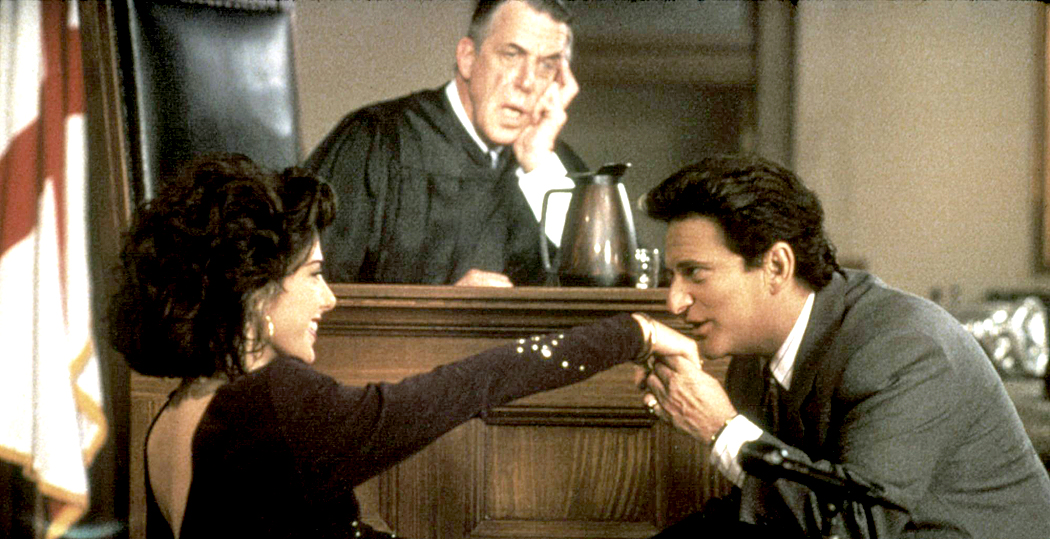
Or, you need to see a few screwball comedies from the 1930s. Is there one to put on a list? My Man Godfrey? It Happened One Night? Bringing Up Baby? If You Could Only Cook? Again, no, but if you watch a couple of them, you’ll want to see more of them, and you’ll never again think of American Pie as a witty movie.

My Man Godfrey

My Man Godfrey

You need to see great silent films, too. Not just old Charlie Chaplin shorts, but the movies that created the great lexicon of cinematic grammar and vocabulary. Murnau’s Sunrise or Stroheim’s Greed. Again, your interest will likely be piqued and you may become a convert to silent movies.

How can you be cinematically literate unless you’ve seen films by Godard, Tarkovsky, Bergman, Fellini, Ozu, Bunuel or Satyajit Ray? You can’t. Or German Expressionist films? Or American underground films? Or Busby Berkeley musicals? Ernst Lubitsch? Or The Big Trail — the first American widescreen film? Or Abel Gance’s Napoleon? Max Ophuls’ liquid camera?

Andrei Rublev

Andrei Rublev

Becoming literate doesn’t happen casually: You have to seek out and study. You have to pay attention. Some of these films, such as Tarkovsky’s Andrei Rublev, make serious demands on viewers; they don’t make it easy — it’s like doing homework. But you will feel exhilarated by the time you have ingested them.

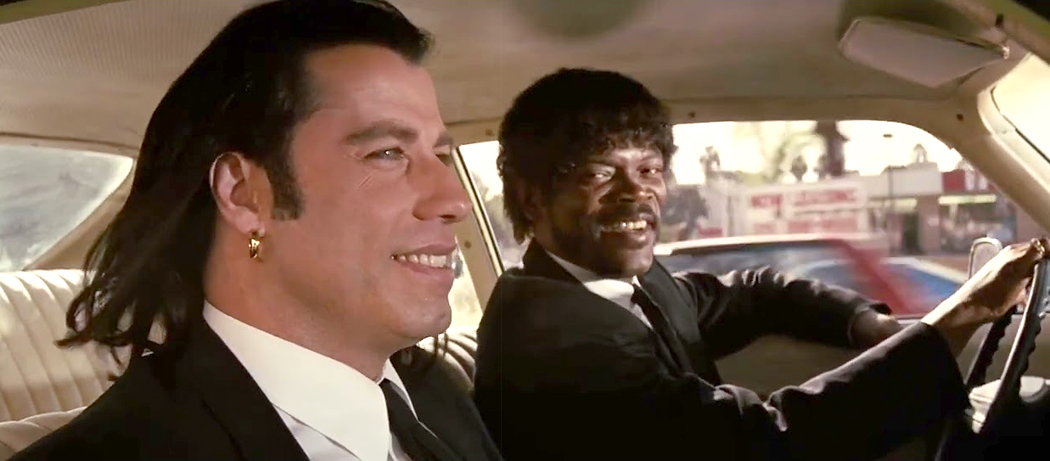
So, I’m giving you homework: Here’s my list of a dozen films you need to have seen. Are they all of them? No. You need to see hundreds of them before you can have a meaningful opinion, but these are a good start. None is recent, and only two are American, because most of you have already seen Dr. Strangelove, Pulp Fiction and The Godfather, to say nothing of Apocalypse Now, which would be on my list of Top Ten (which, of course, has at least 40 films on it).

Let’s take a few chronologically:

Battleship Potemkin

Battleship Potemkin

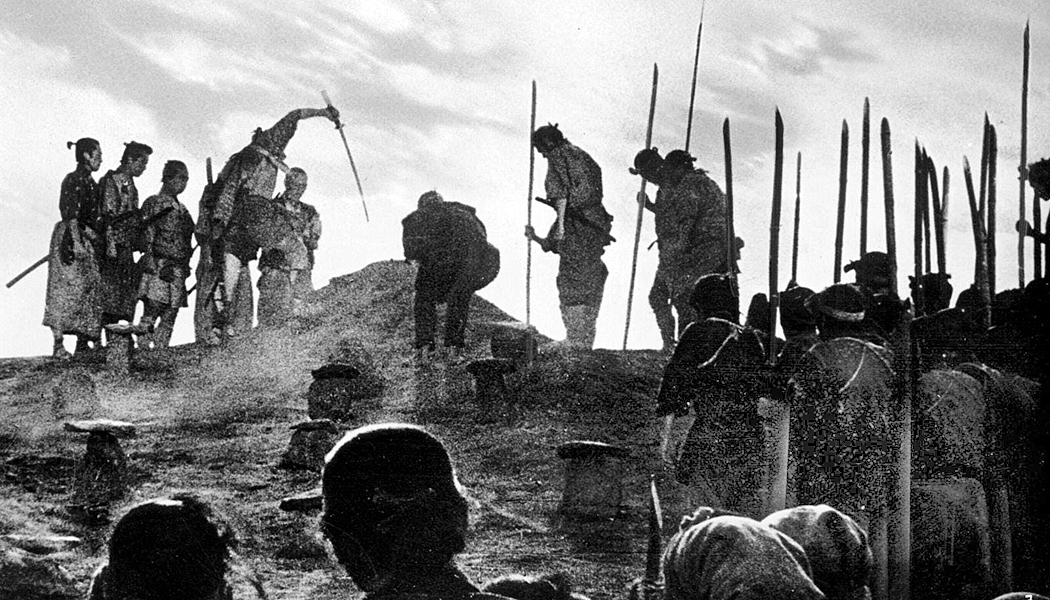
There is hardly a more influential film in history than Serge Eisenstein’s Battleship Potemkin (1925), in which the Russian director inventoried the power and magic of film editing to create meaning. It remains a powerful film, even when you recognize it for Soviet propaganda.

Metropolis

Metropolis

If Sunrise is too much to take at first, you could try Buster Keaton’s The General (1926) to see how silent film can tell a compelling story. It has several “special effects” in it, too. And as for special effects, you can only be amazed at the oneiric surrealism of Fritz Lang’s Metropolis (1927) — now available in something like its original version.

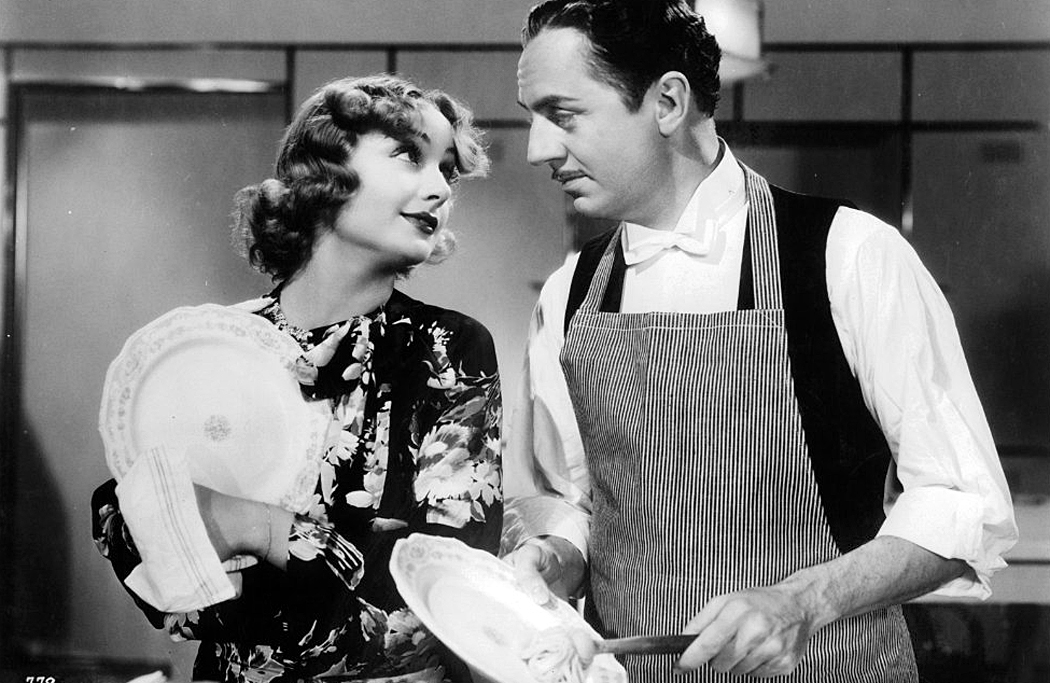
The studio system in Hollywood produced some of the most perfect craftsmanship during the 1930s. They had pros, who really knew how to light, edit, write dialog, and record sound. They produced many genre films, such as Westerns, gangster films, melodramas and musicals, but one thing they did that has never been matched is comedy, the so-called “screwball comedies.” If you have not seen My Man Godfrey (1936), then you don’t really know how sophisticated comedy can be. Or sexy: Try Ernst Lubitsch’s Trouble in Paradise (1932) and see how frank they could be about sex before the Production Code was enforced.

Rules of the Game

Rules of the Game

But this is still American film. The Thirties also gave us Jean Renoir’s Rules of the Game (1939), which many critics have called the best movie ever made. It is certainly the most human, humane and forgiving while at the same time satirical and biting about human foible and hypocrisy. Yes, it’s in French, with subtitles.

The Fifties and early Sixties gave us the Golden Age of foreign films, the age of the “art film,” and exposed Americans for the first time in any meaningful degree with movies from around the world.

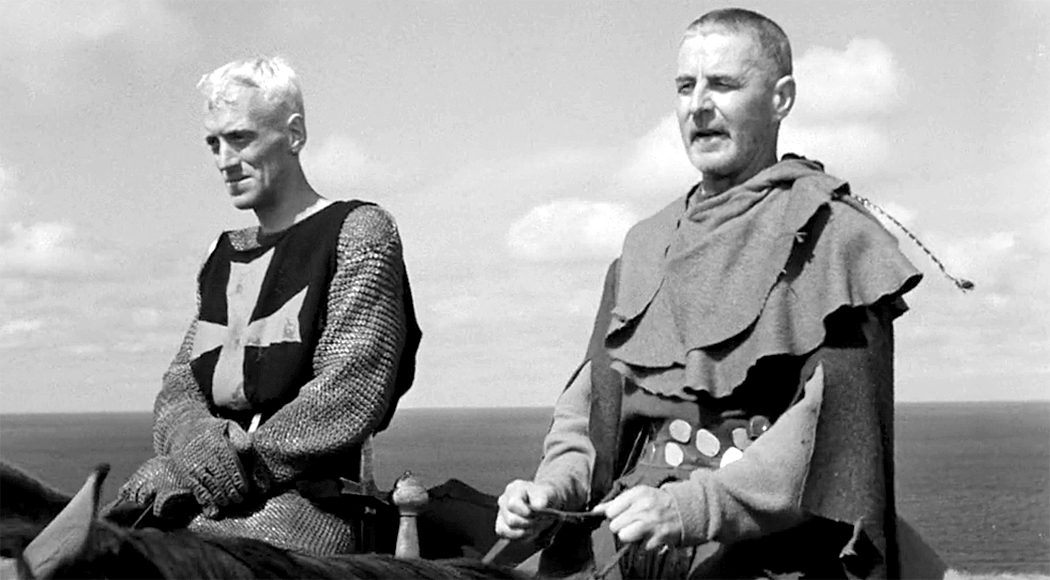
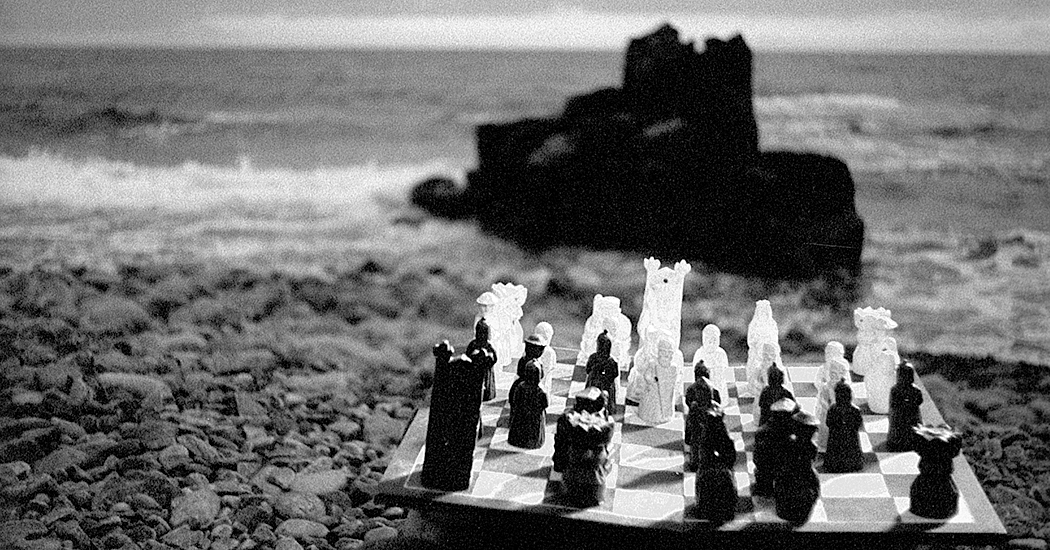
Sweden gave us Ingmar Bergman, whose Seventh Seal (1957) is still the prototype of the Foreign Film, with its Medieval knight returning from the Crusades and playing chess with Death.

Seventh Seal

Seventh Seal

Italian Michelangelo Antonioni compressed angst, dissociation and anomie into a single intensely beautiful film in L’Avventura (1960), about a woman who disappears on a Mediterranean island and the vague search to find her. It is the apotheosis of existentialism in cinema.

Jules and Jim

Jules and Jim

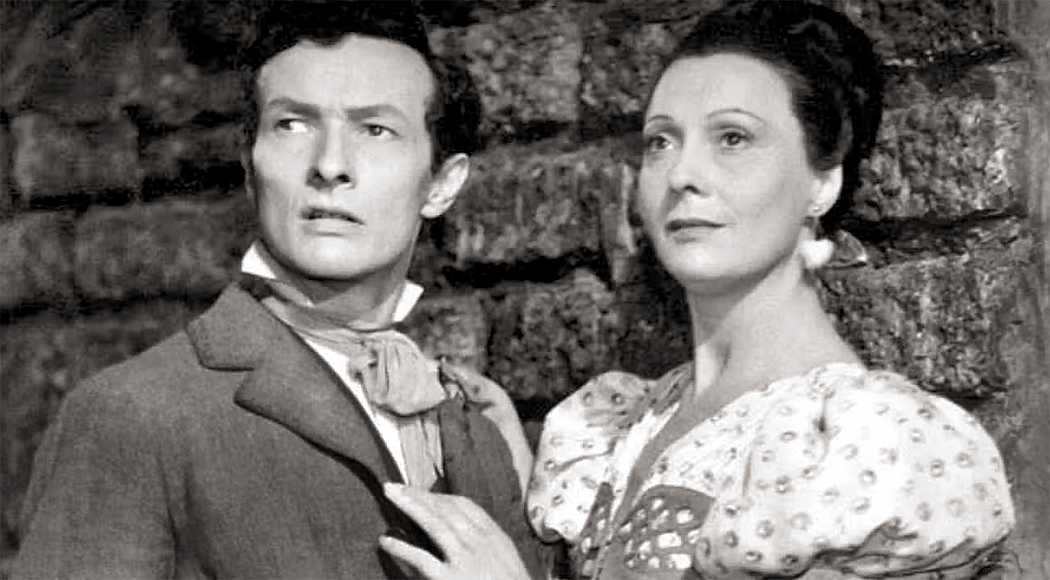
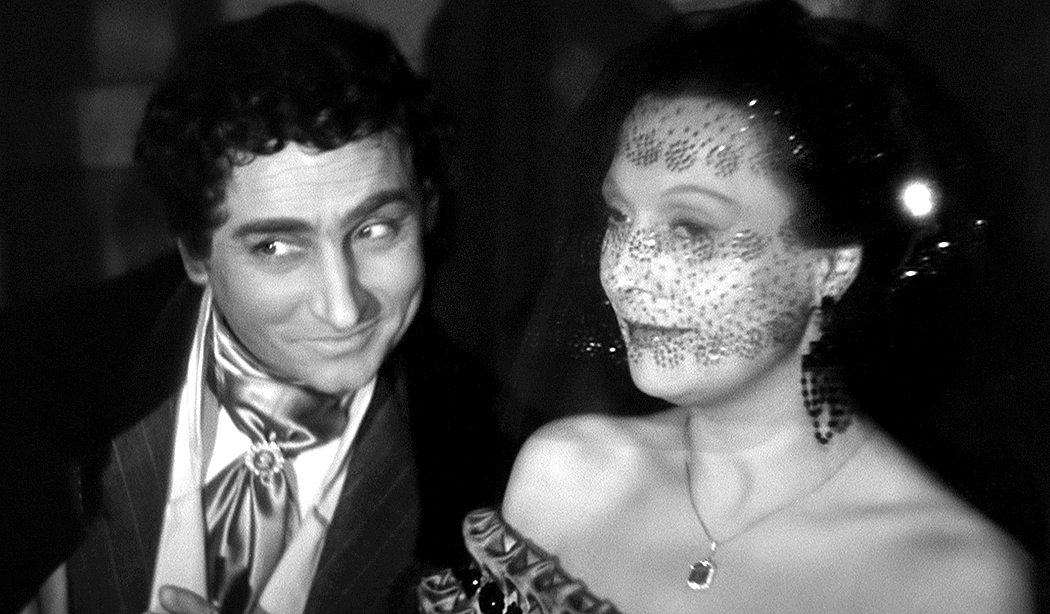
The French gave us the New Wave, which rethought old American films with a fresh spontaneity. A whole busload of directors came to the fore in the Sixties. The warmest and most engaging is probably Francois Truffaut’s Jules and Jim (1962) about the Parisian demimonde just before and after World War I. It is the kind of movie that makes you not merely enjoy it, but fall headfirst in love with film.

Two gritty films present two poles of movie realism. Gillo Pontecorvo’s 1966 Battle of Algiers is so realistic that you swear you are watching newsreel footage from the front. It shows an anti-colonialist uprising that doesn’t demonize either side, but shows the miseries and sins of both. In contrast, Andrei Tarkovsky’s Andrei Rublev is so stylized you might as well be looking at a motion-picture version of a Russian religious ikon. And many of its fans feel as though they have had something like a cinematic religious experience after the “meditation” of seeing the slow-moving film.

The missing element of too many Hollywood films is any sense that they mirror real life, that they consider the moral and ethical questions of existence in favor of pumping adrenaline and presenting a black-and-white, good-and-evil, superhero and archenemy vision of existence. Great films, however, look at the complexities in ways that can be profoundly moving. Fantasy is fine for adolescents, but grown-ups demand something more.

Vagabond

Vagabond

Agnes Varda’s Vagabond (1984) follows a damaged, lost young woman as she wanders aimlessly toward a solitary death. We cannot just watch her decline as observers, but feel we share it, so deeply does Varda make us care about this woman.

A Short Film about Killing

A Short Film about Killing

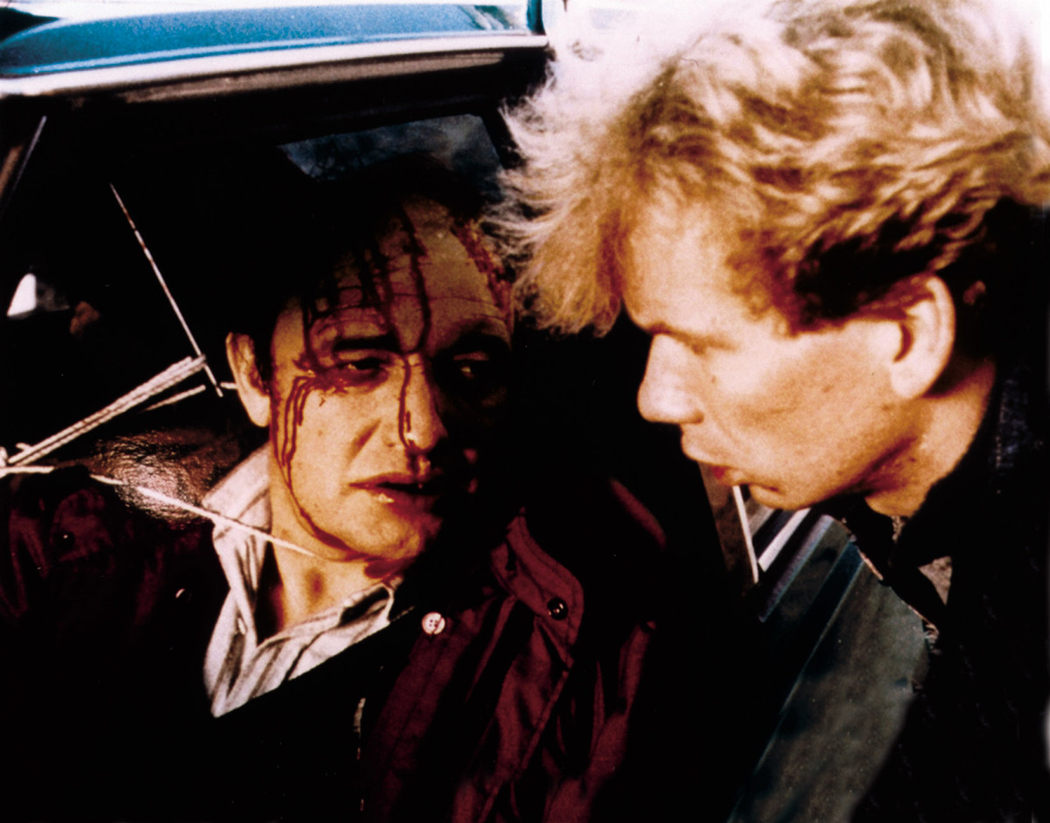
And Polish director, Krzysztof Kieślowski, takes an unsparing look at a murder and its punishment in A Short Film about Killing (1988), an acrid look at Communist-era Poland and a young man’s pointless beating death of an unpleasant cab driver, and and equally cold-eyed look at the brutal and legal hanging of the young man after he is caught and convicted. Kieslowski expanded this film from an hour-long segment he made for Polish television for a 10-episode series called The Decalogue, in which each episode illustrates one of the Ten Commandments, although never in a simple or obvious way.

See these films, or their many brothers and sisters, and then talk to me about Avengers.