Archive

Tag Archives: monument valley

My brother-in-law, Mel Steele, is a painter whose work I not only admire, but truly enjoy. They give my eyes great pleasure. 
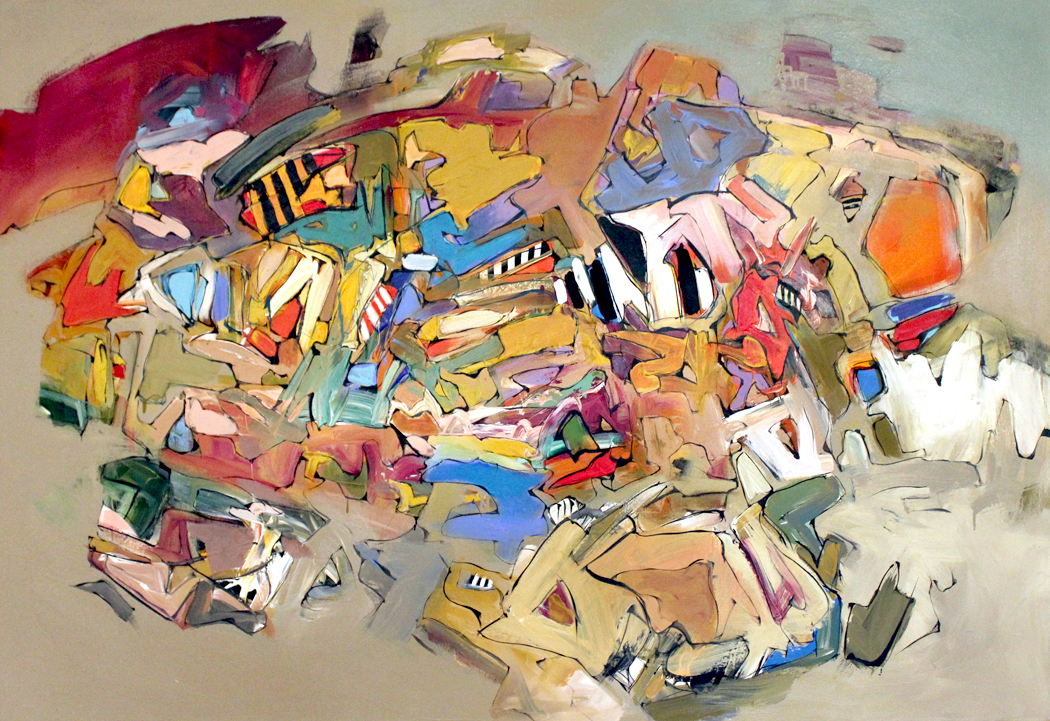
We visit Mel and his wife, Deborah, a few times each year and usually I bring along a big bag of DVDs, mostly art or foreign films. Mel and I share a common taste for such things.

Indeed, our tastes match up surprisingly well, not only in movies, but in music and art as well. We love the more difficult music, like Bartok quartets or 20th century operas, and for all that we get along admirably. 

But there is a sticking point, a point of contention that we have never been able to resolve. There is a movie he hates and I love; and one I cannot stand that he adores. And I see no way of settling the dispute. 

Mel grew up in Madison, N.C., in the 1940s and ’50s and only a block from his house was the local movie theater. He and his sister went to the movies at least once a week growing up. They saw all the usual Hollywood offerings, with Burt Lancaster, Greer Garson, Veronica Lake, Dorothy Lamour, Kirk Douglas — you get the picture. 
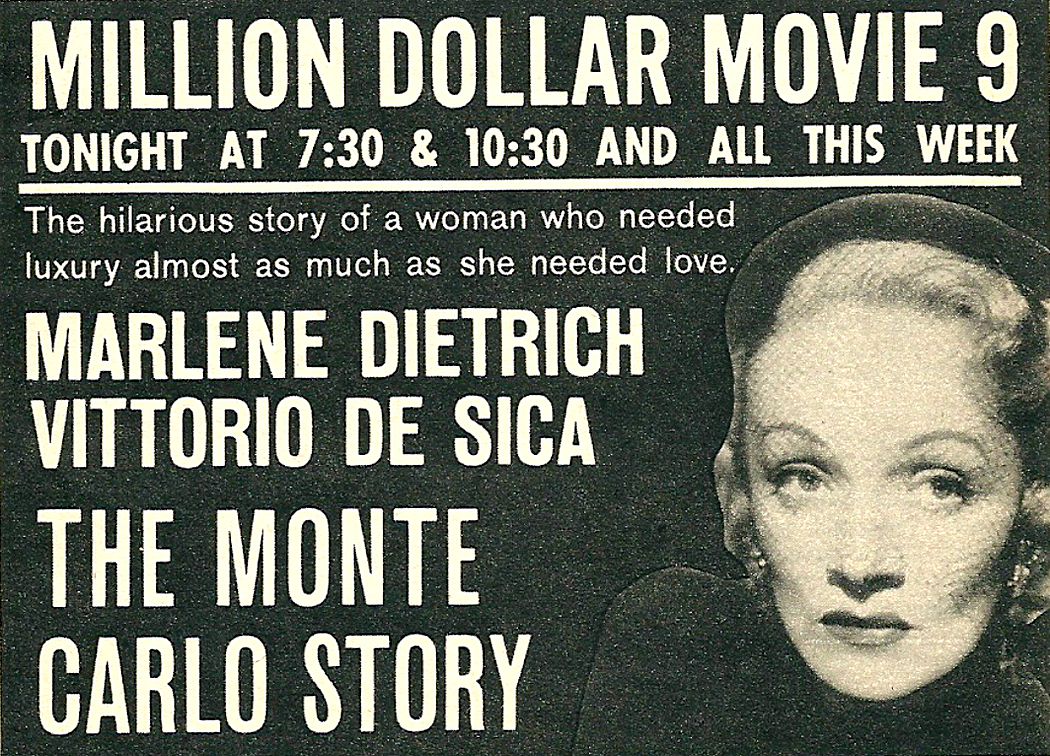
I am a few years younger than Mel and since there was no movie house where I grew up, my film education came via television — old movies packaged by studios for rebroadcast on fledgling TV channels, such as WOR-TV from New York and its Million Dollar Movie. I was fed a lot of films from the 1930s, and, of course, all those marvelous-awful sci-fi films made for a pittance with Richard Carlson or Sonny Tufts. 
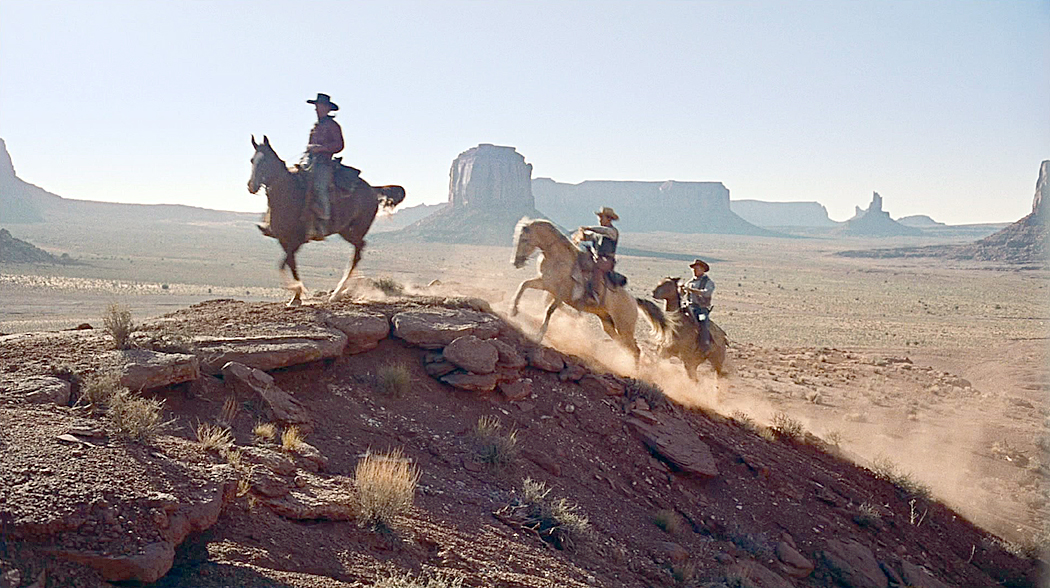
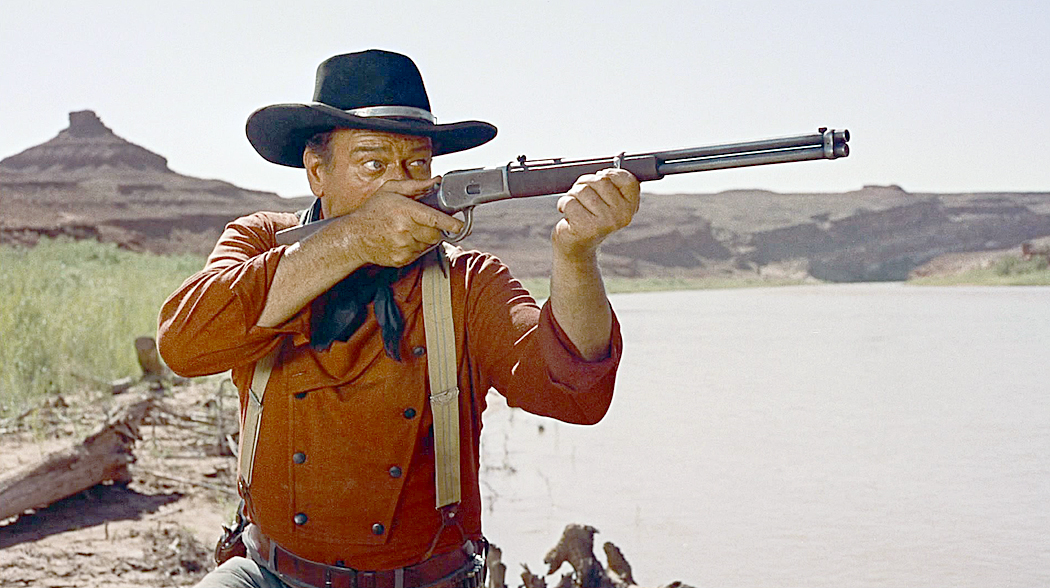
I don’t know if our different childhoods made the difference, or what, but that sticking point revolves around the best Western (not the motel chain). I mentioned once that I love The Searchers from 1956, a film in which John Wayne shows that he can actually act. It is a tough film, in which Wayne is an unsympathetic character, a bigot returned from the Civil War, having fought for the Confederacy. For my money, it is the best Western ever made, highlighting the shadings of culture clash and personality. 

“Can’t stand the thing,” says Mel. “Can’t stand John Wayne.” 
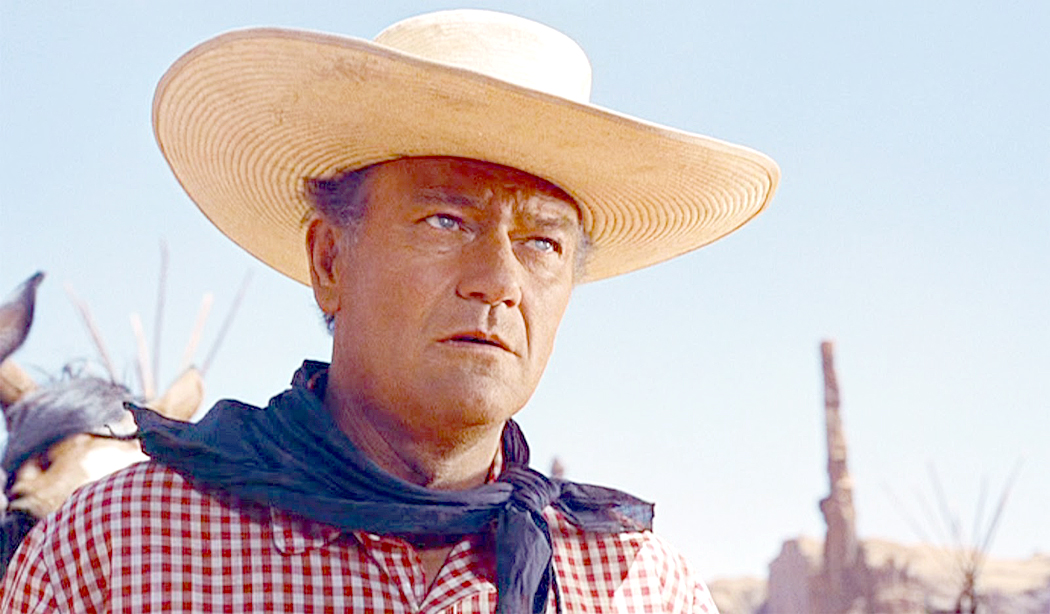
Indeed, it seems as if the presence of Wayne is the primary objection Mel has to the film. And I suspect that Mel’s dislike of Wayne has more to do with Wayne’s later right-wing politics — and the number of undistinguished star vehicles he made as an ever-paunchier alpha male — than with Wayne’s actual performance in The Searchers

It is clear that Wayne didn’t always have to act, and could rely on nothing more than his screen persona in lesser films, such as North to Alaska, The Comancheros, McLintock!, Hatari, or The War Wagon. He seemed always to be playing a caricature of himself. 

And then, there are those absolutely embarrassing moments in The Alamo or The Green Berets. Wayne’s shallow jingoism does not wear well. Nor does his support of the Vietnam War or Richard Nixon. 

I used to share Mel’s disdain for John Wayne. The actor was pretty much a punchline. Really? Genghis Khan in The Conqueror? Gimme a break. 

I first became acquainted with Wayne when I was a little kid, watching ancient Westerns on TV, where he was Stony Brook in the Three Mesquiteers films, or as “Singing Sandy” in a bunch of old Republic or Monogram Westerns. Compared with some of the old cowboys, Wayne had a graceful presence on screen, if no great acting chops. 

Only as an adult, did I come across films in which Wayne played a character not merely himself. After seeing Howard Hawks’ Red River, director John Ford famously said, “Who knew the big lug could actually act?” Well, he could, even if he didn’t always feel the need to. 
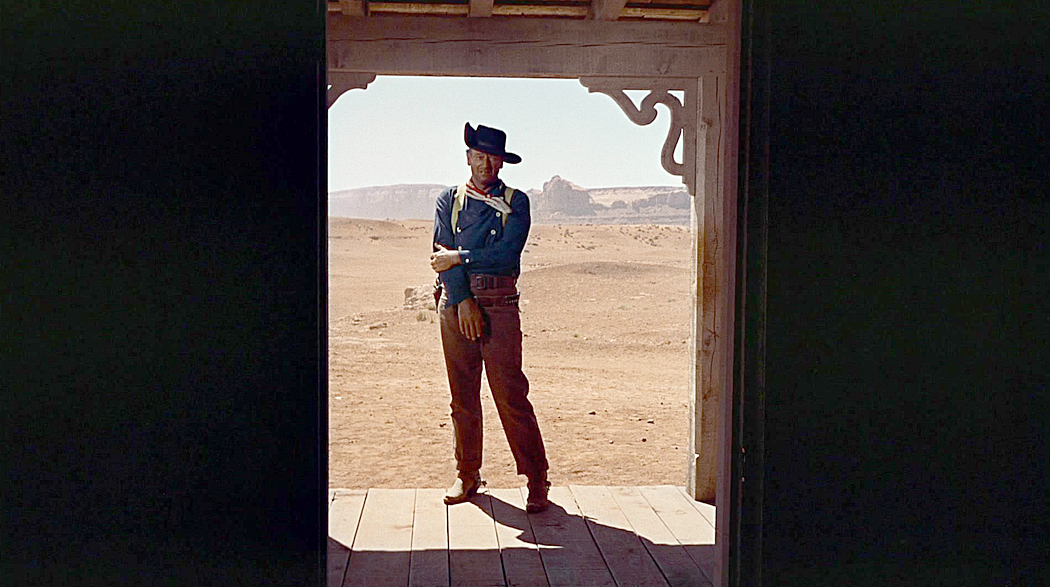
Then there are such films as The Man Who Shot Liberty Valance and She Wore a Yellow Ribbon, where he convincingly played a part 20 years older than he was at the time. And most of all, perhaps, his role as John Books in The Shootist, his final film, in when he seems to want to prove once and for all he can be an actor and not just a star. 

Mel, of course, was having none of it. “Can’t stand the guy.” 
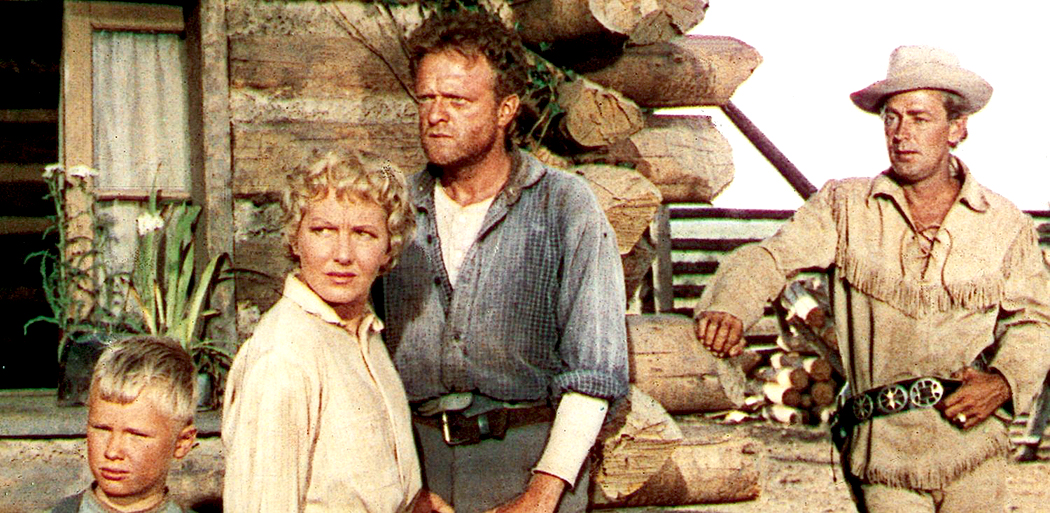
In contrast, Mel proclaimed that the greatest Western ever is Shane, a movie I cannot abide. For me, it is the epitome of Hollywood phoniness. It is pure artifice, with not a believable moment in it. 

Even its widescreen projection on release was fake: Paramount wanted something to compete with the then-new Cinemascope and Panavision — both anamorphic widescreen formats — and so they cropped the original Academy Ratio Shane at top and bottom to make a phony widescreen version. 

“But it’s so beautiful,” Mel says. “Look at that landscape.” Yeah, I feel, a rip-off of Ansel Adams, with the Teton Mountains prominent in the background. It seems so self-consciously meaningful, so arty, so pretentiously “mythic,” that I cannot take it seriously. There is not a second in it that feels real — apart from the acting of Jean Arthur, who is the only fully human character in the film. These are not people but ideas moving around in the plot, as if they each wore a sign telling us what they signify. Again, only Arthur feels like a real person. 

Allegory, for me, is always a tough sell. 
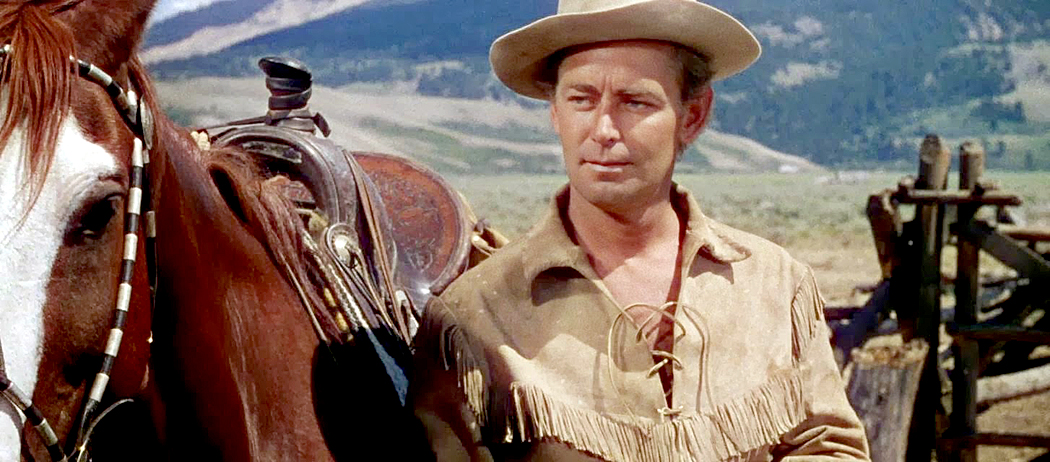
I’ve never been able to warm to Alan Ladd. He is one of those movie stars from that era of Hollywood movie in which the dying studios made turkey after turkey. 
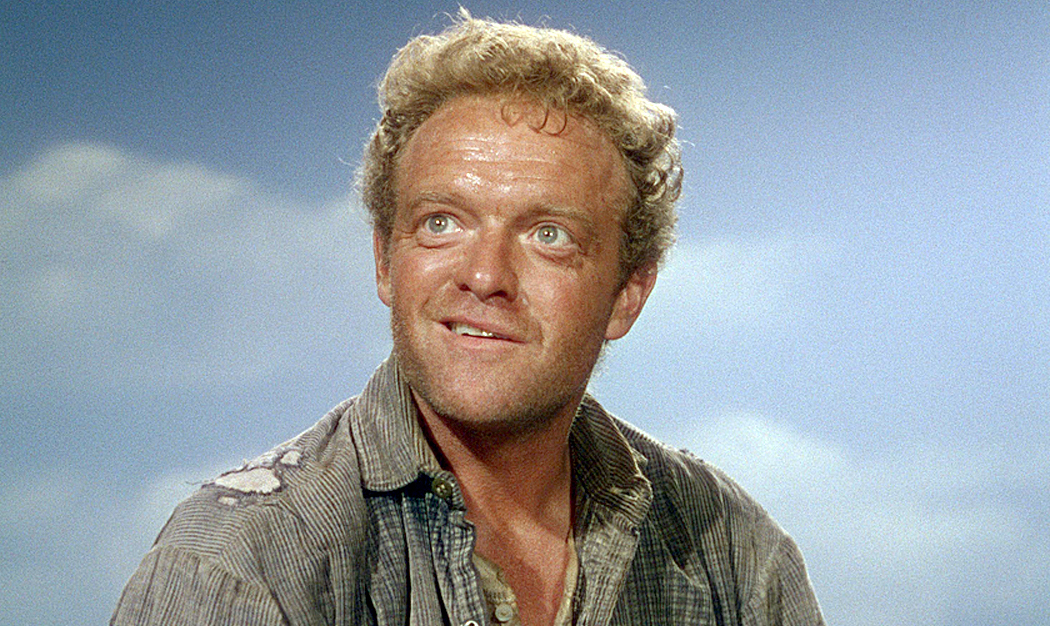
Van Heflin always feels to me like someone the studios felt they could turn into a major star, but never managed to. 
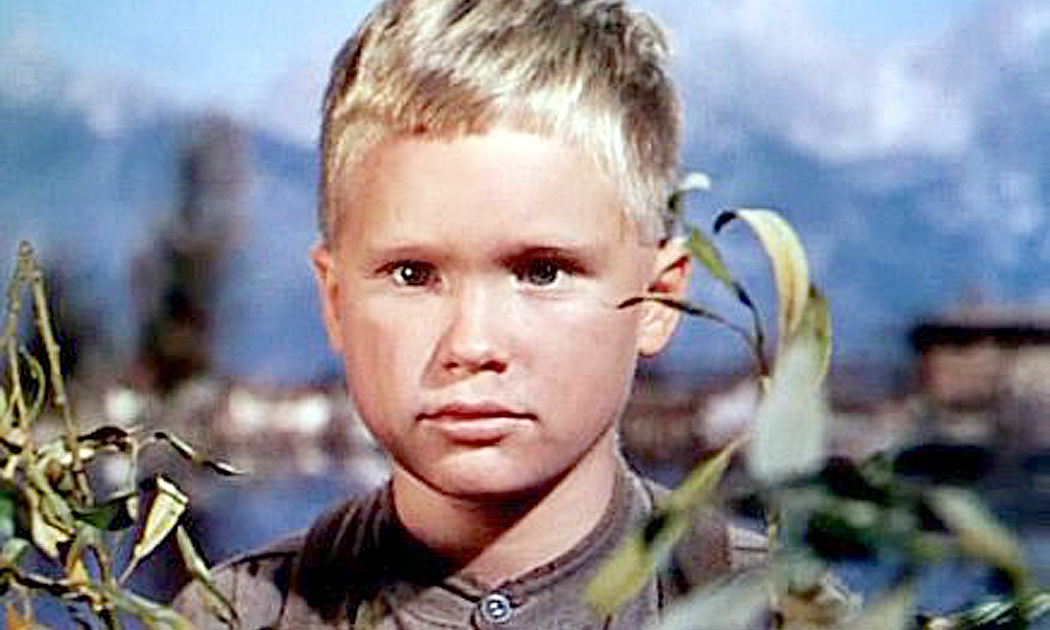
And Brandon deWilde is a blank-faced homunculus, as if that look of animal stupidity  should be taken as the face of innocence. Actually the kid gives me the creeps. 
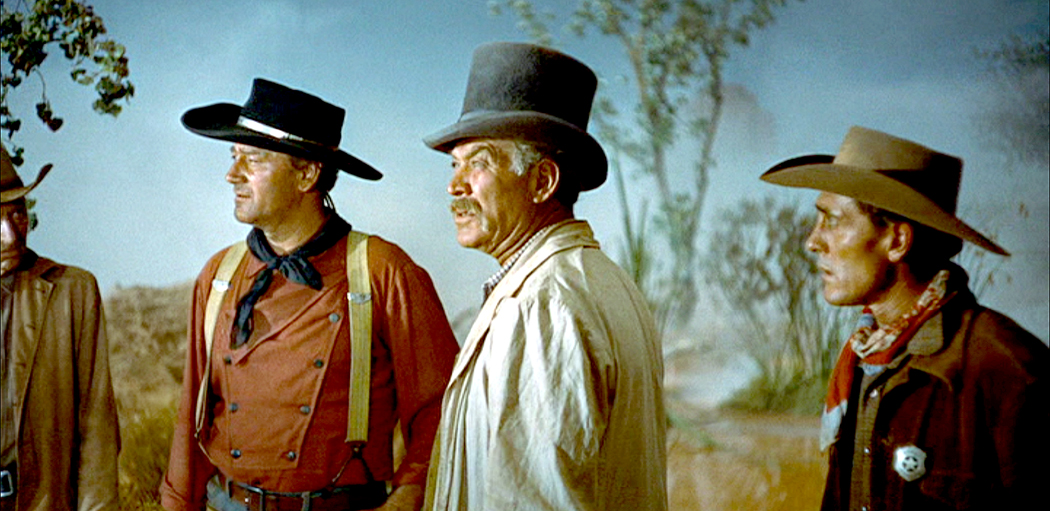
The Searchers, in contrast, is filled with all the great character actors that John Ford used over and over. They are people, not cardboard cutouts.

Perhaps I have overstated my case. There are other great Westerns that may be as good as The Searchers. Ford probably made them. Modern Westerns tend to be more period-aware and historically better informed. And perhaps Shane isn’t the worst Western. There are plenty of hack Westerns with much less ambition than George Stevens brought to his work. 

But the fact is, the comic disagreement Mel and I had was about these two films in particular. I was not able to persuade him; he was not able to persuade me. Let’s leave it at that. 
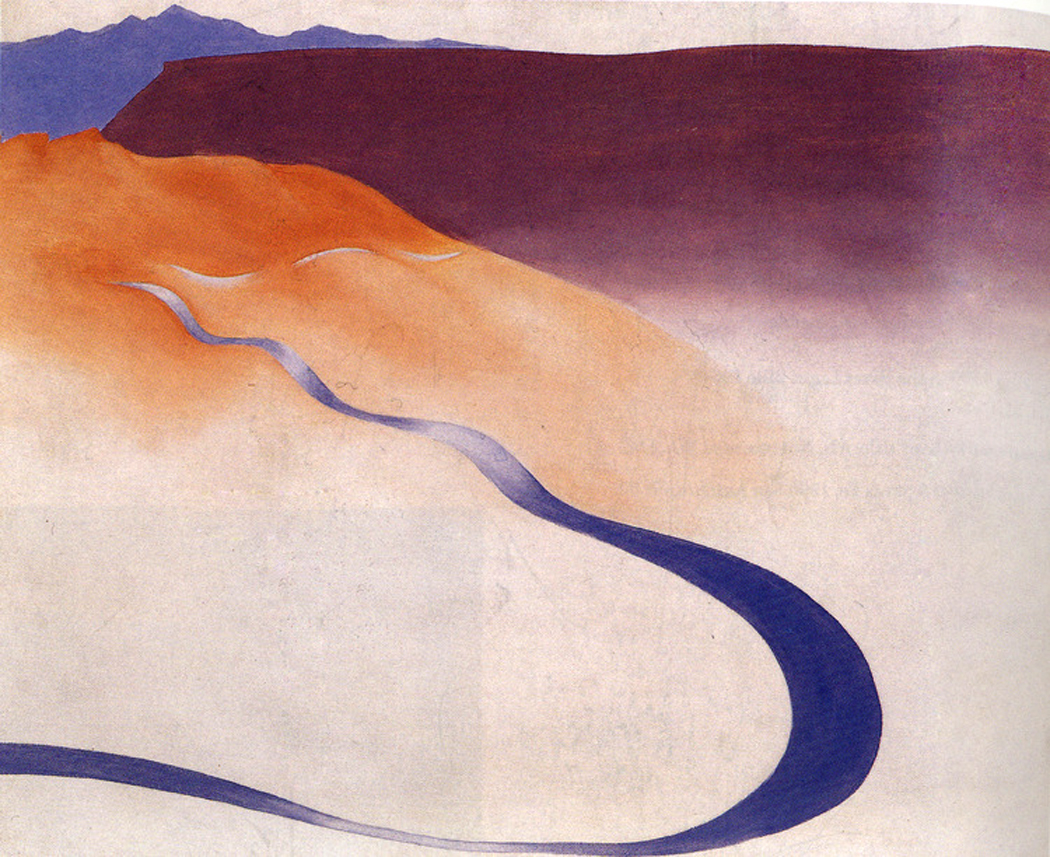
o'keeffe road to the ranch 2Our eyes are the great nexus between the inner and outer worlds, where the outer existence pours into our consciousness as if funneled through our irises, and where, conversely, our inner selves are projected, like a light-beam, out onto the world. Neither is sufficient of itself, but together, they create our sensibilities.

vision x 1

It is a great “X” where the two lines cross on our retinas and expand outward into the landscape on one side, and inward onto our cortex on the other. Which open angle of the “X” subsumes the larger extent has been the subject of philosophizing for thousands of years.

(This is not meant as a scientific description of the physiology of sight, but a metaphor for vision.)

Andrew Marvell summarized this process, albeit in his witty turn on a once-familiar Elizabethan trope, in his poem, The Garden, where he creates an image out of this “X:” “The mind, that ocean where each kind/ Does straight its own resemblance find” and then goes on to say how that interchange is always colored by the mind that perceives: “Yet it creates, transcending these,/ Far other worlds, and other seas; Annihilating all that’s made/ To a green thought in a green shade.”

Which is all a long, roundabout way of saying that landscape — the world around us: geology, geography, our neighborhoods, even the interior of our homes — is never neutral, but always has meaning. It is this meaning that makes the land we inhabit so important to our intellectual understanding of the world.

We can easily misunderstand “meaning.” It does not stand for the equals sign in an equation: this means that; but rather we should understand “meaning” as “significance,” as when we wake up from a dream thinking “that dream meant something.” We may not know what the dream meant, but we are left with the distinct conviction that it had significance. This significance — this meaning — is the electrical power that charges myth and makes it glow from the inside.

The land, as we perceive ourselves living in it, is a projection of ourselves, as much as we are a product of it. robt lee 1

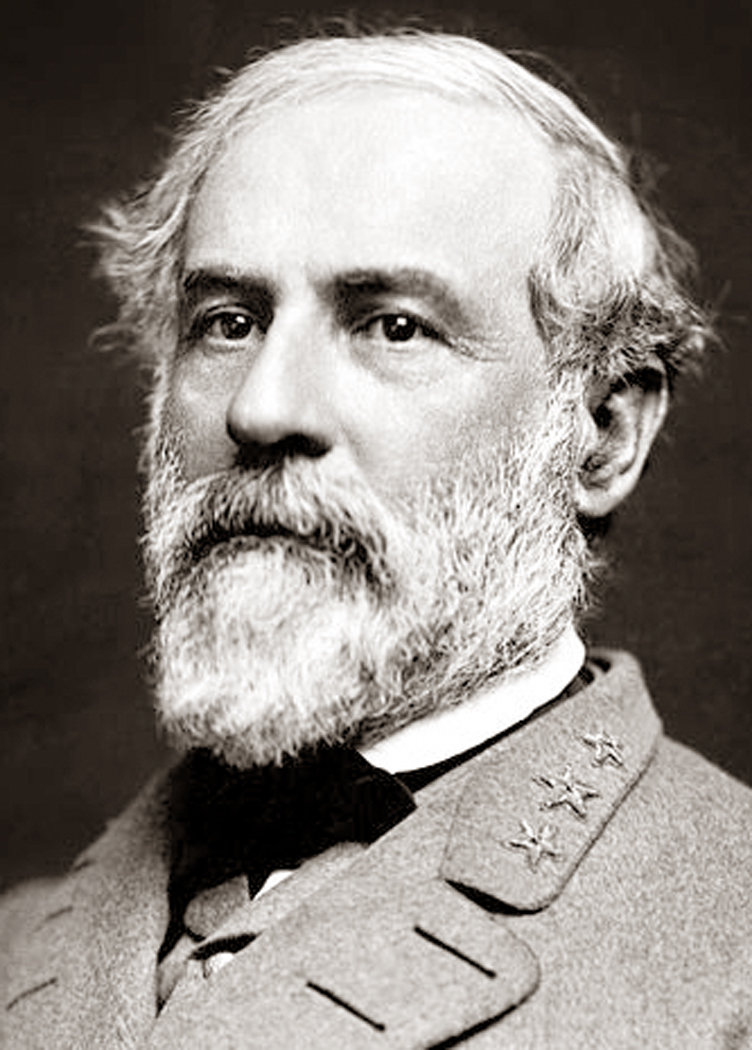
It was the land he grew up in that Robert E. Lee felt compelled to defend in the Civil War. The causes and results of that war are manifold, and the self-interest of slave owners should not be underplayed, but when Lee discussed his motives, it was his patriotism, not for the Union, but for the single commonwealth of Virginia that drove his actions: and it was the landscape he grew up in that fueled that sectional patriotism. (Again, this is not to justify Lee or the Confederacy, but to understand how much the landscape he grew up in defined his vision of what the world was and should be). Yoknapatawpha.County map

The landscape informs almost every important piece of literature, from the Mediterranean upon which Odysseus sailed to the woods of Yoknapatawpha County that Faulkner populated, back to the snowy steppes of Russia in War and Peace and forward again to the Pennsylvanian suburbs of John Updike.

It is not merely that the action in a novel or epic has to take place somewhere, but that the land itself becomes a character and influences the lives and thought of all who inhabit it.

The land we inhabit in life has the same kind of metaphorical power that it does in literature. In some ways, we each live in the novel (or epic) of our own lives, and the characters in our personal novels all have meaning to us, including the land we tread.

That mythic force is why we feel the rise in our throats when we sing of “amber waves of grain,” and “purple mountains majesty above the fruited plain.”

Our ur-landscape also provides a model of the wider world, which can influence our thought, emotions and political views, even when that landscape gives us distorted information. If we live in a city, we tend to think of the world as thick with people who have to get along to survive; if we grew up in Wyoming, we are more likely to see the world as mostly empty, and our interactions with others as less important, and often intrusive, and our survival dependent on ourselves alone. Conversely, those interactions in the rural West tend to be understood more personally, while in the bustle of New York, you must create some private space among the throng, and therefore can seem more impersonal to a neutral observer.

In the city, horizons are blocked and the space in which we understand ourselves to be acting is constricted; in the American West, horizons are planetary, and we believe ourselves to be actors in a vast scheme. The mythologies that develop in such places are vastly different.

Manhattan and Wyoming are just two extremes, but each landscape provides its own influence, has its own meaning.

It isn’t a question of right or wrong, but of partial visions, each partly distorted, partly clear. The Georgia farmer and the Maine lobsterman or the Cuban immigrant in Miami don’t merely see their home towns and counties as different, but project those differences out into the rest of the country (there is a reason our so-called “red states” and “blue states” are organized geographically) and onto the rest of the world, including the Middle East, Putin’s Russia and expanding China. It is an unavoidable provincialism. Travel is the cure.

Not merely that travel introduces us to other peoples, but shows us other soil, and other relationships to that soil. Landscape has great power.

It is to seek this power that great landscape artists — whether painters or photographers — make their pictures. It is not to make a postcard of a pretty piece of scenery, but to find in the land a metaphor for thought, emotion or state of mind — or even a political philosophy.

I am reminded of a passage in Hector Berlioz’s memoirs, where he says, “It is like the visitor who go up into the colossal statue of San Carlo Borromeo in Como (Italy), and who are amazed to discover the room where they have just sat is the inside the saint’s head.”clearing storm winter

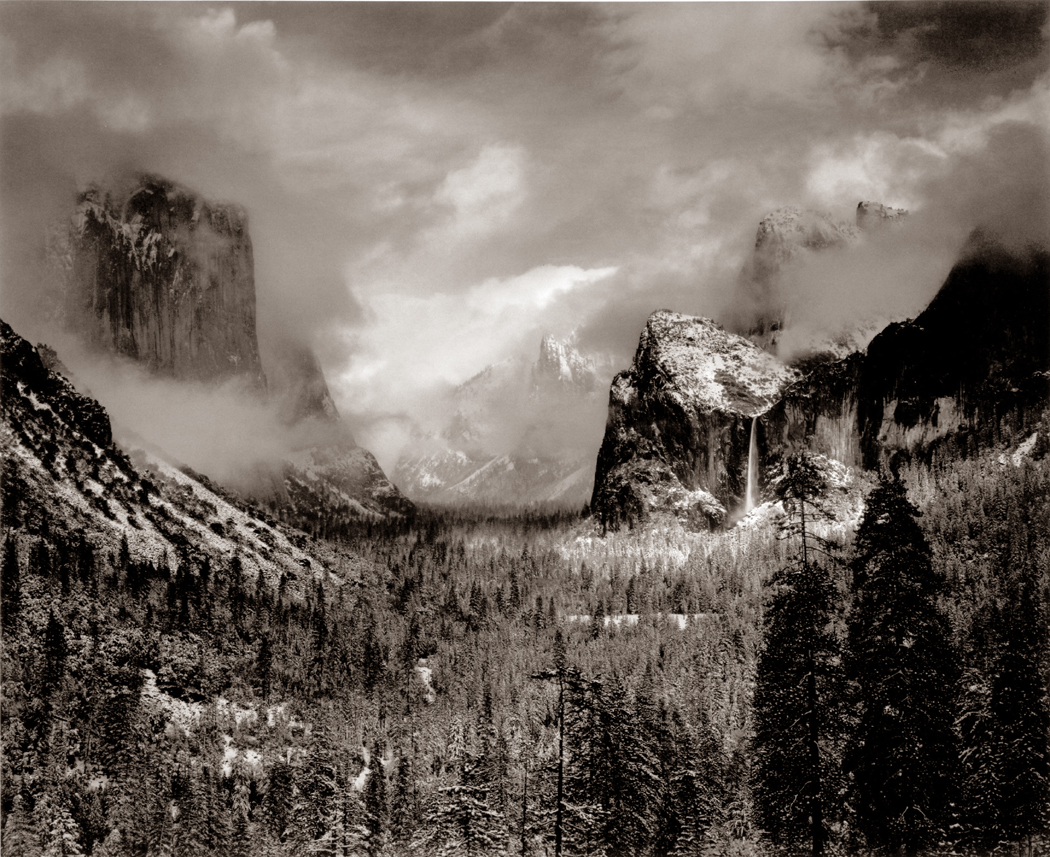
And one is surprised, looking at Ansel Adams’ Clearing Storm Winter, Yosemite, that the view is as much inside one’s head as it is of the outer world. That is, that the scene feels in some way a perfect metaphor for the imagined landscape inside the skull, including a floor, a valley with borders, a tall ceiling or sky, and lots of weather. “That’s my brain,” I say looking at the photograph.yosemites postcard 1

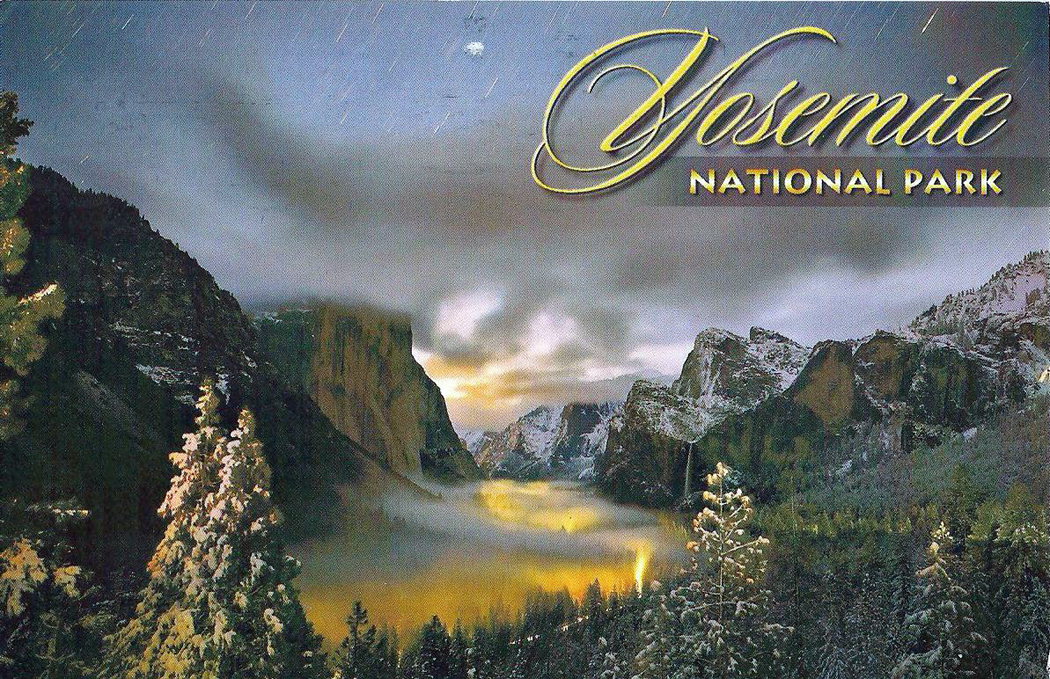
But, of course, the land isn’t always that dramatic, always that Romantic. Indeed, Adams’ photographs can easily drop into the picturesque, like some supremely crafted post-card image. And it isn’t only the great mountains of the West that have meaning in landscape art.

The other great Adams in photography, Robert Adams, can photograph a street in Los Angeles or the flat plains of Nebraska and find a way — to quote him from his book, Why People Photograph — “to affirm life without lying about it.”Hopper

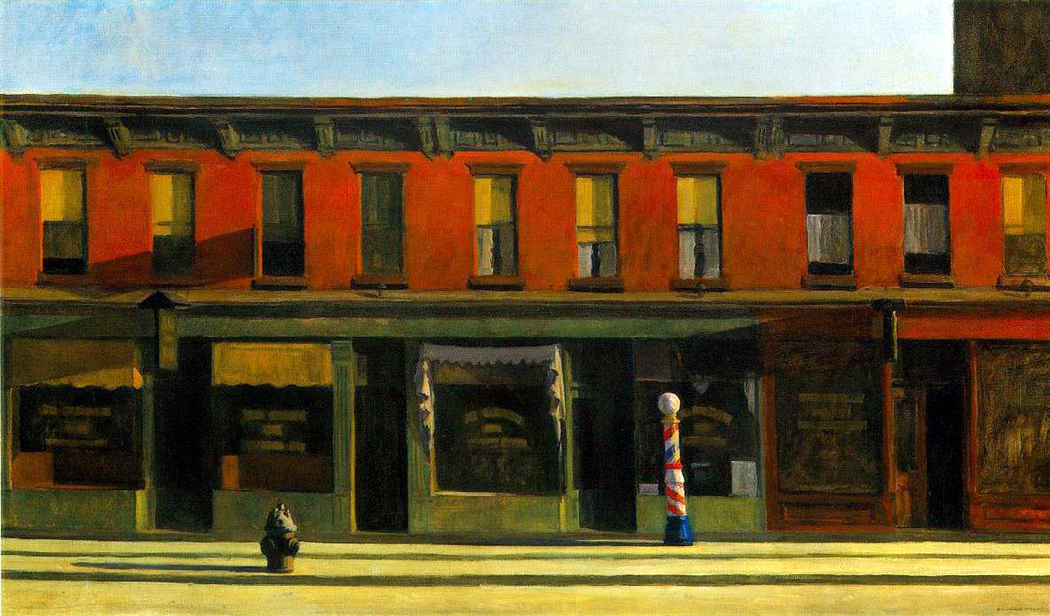
Telling the truth, however, isn’t the same as reporting the fact. The truth of how land creates meaning is obvious in the paintings, say, of Edward Hopper, where the raking light of early morning gives New York City a glowing loneliness that says something more truthful than merely transcendence in the light or the alienation of the empty street. There is both. The disjunction gives the painting its power.

I remember the first time my wife and I drove out West. We both grew up in the East, with its forests and slope-shouldered hills, with its rivers and streams, its highways and billboards. But as we drove, the landscape slowly became less and less familiar as the trees thinned out and the hills flattened into the billiard table of the Texas panhandle. Then, suddenly, the bottom dropped out of the world, right at the New Mexico border and we descended from the tableland into a land of buttes and mesas in the Canadian River basin. The ground was dun and gravelly and we realized for the first time that the landscape of the Warner Brothers Roadrunner cartoons was a real landscape, and that all those tall buttes didn’t so much rise up above the land, as that the land dropped away from the peneplain into vast miles of valley, with the buttes as remnants of the former geology. It wasn’t merely a change in scenery, but a completely different world.
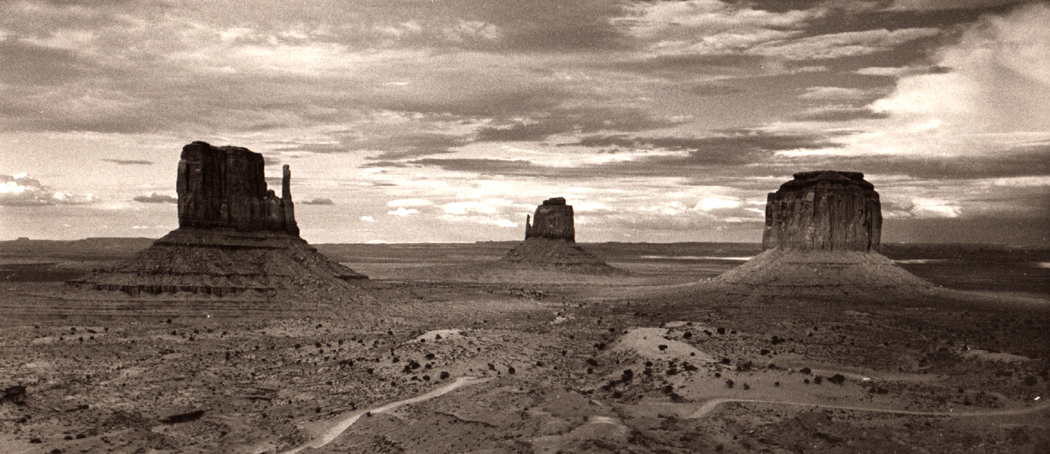
Monument Valley mittensAs we traveled around the country, we kept finding new worlds, and each new world was a new birth for us, a new awareness of the variety of meanings and significances of the planet.

NEXT: West Virginia