Archive

Tag Archives: mozart

David Attenborough on Desert Island Discs with host Kirsty Young in 2012

One of the longest running radio shows is Desert Island Discs, which has been on the BBC since 1942. It is often said to be the second longest-running radio show after the Grand Ole Opry, which cranked up in 1925, although a few critics have discovered some obscure programs in foreign climes that may have been on longer, and there’s also the British Shipping Forecast which began in 1861, before radio was even invented, and first disseminated via telegraph before switching to radio in 1924. 

On Desert Island Discs, prominent people, whether politicians, entertainers, sports stars or academics, are asked to choose eight recordings they would take with them to the proverbial desert island, and place them in the context of their lives. Since the 1950s, they have also been asked to name a book, other than the Bible or Shakespeare, they would also take, and later still, adding on a “luxury item” they couldn’t live without. 

Nearly 4,000 episodes have been broadcast, with some predictable results. The music most often mentioned is Beethoven’s Ninth Symphony, and the luxury item most chosen is pen and paper, or “writing materials,” although Tom Hanks specifically mentioned “a Hermes 3000 manual typewriter and paper.” 

Many of the archived broadcasts can be heard from various online sources, and you can learn, for instance, that Alfred Hitchcock’s book choice was Mrs. Beeton’s Household Management, and his luxury item was “a continental railway timetable.” Some of the choices were equally eccentric. Oliver Reed wanted Winnie-the-Pooh to read and “an inflatable rubber woman.” Actress Janet Suzman wanted a “mink-lined hammock,” and Hugh Laurie asked for an encyclopedia and “a double set of throwing knives.” His long-time double-act partner Stephen Fry wanted a PG Wodehouse anthology and a “suicide pill.” 

My favorite, so far, is John Cleese, who asked for Vincent Price’s cookery book and “a life-size statue of Margaret Thatcher and a baseball bat.” 

One of the inevitable by-products of such a format is the urge to create your own list. And so, I have my own. 

I grew up in New Jersey in a family largely indifferent to music. What music there was came on TV in such variety shows as Perry Como or Dinah Shore. When I was little, there was a small portable record-player on which I played children’s songs, but I don’t count any of that. “Fire, fire, fire, raging all about. Here come the firemen to put the fire out.” 
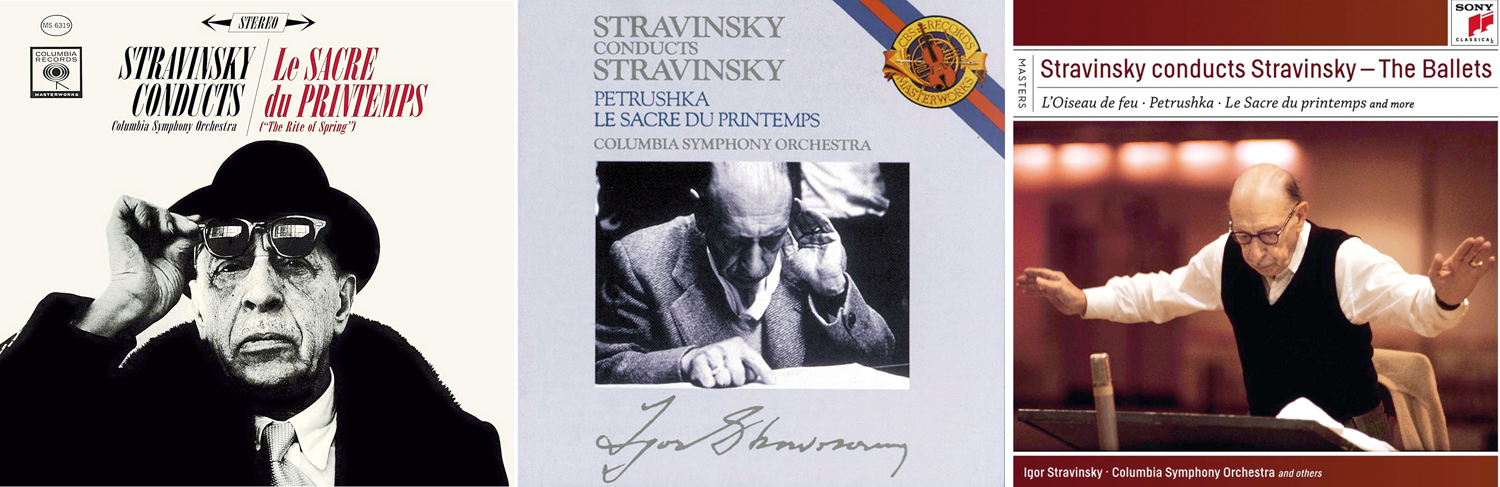
My musical education began in high school when my first serious girlfriend played music on the phonograph while we spooned on the sofa in her parents’ house. She went on to become a professional bassoonist and was studying at the time with Loren Glickman, who played the difficult opening bassoon solo on Igor Stravinsky’s recording of his Rite of Spring. I hadn’t known such music existed. It was mesmerizing. Who knew it was great make-out music? And so, that is my first choice for my desert island disc. 

There have been hundreds of other recordings of that music, and a few, perhaps, more exciting or primitive than the composer’s own, but that recording has never been out of print and comes in many versions, from LP to 8-Track to CD and now, streaming. As an introduction to classical music, I could hardly have done better — dive into the deep end. 
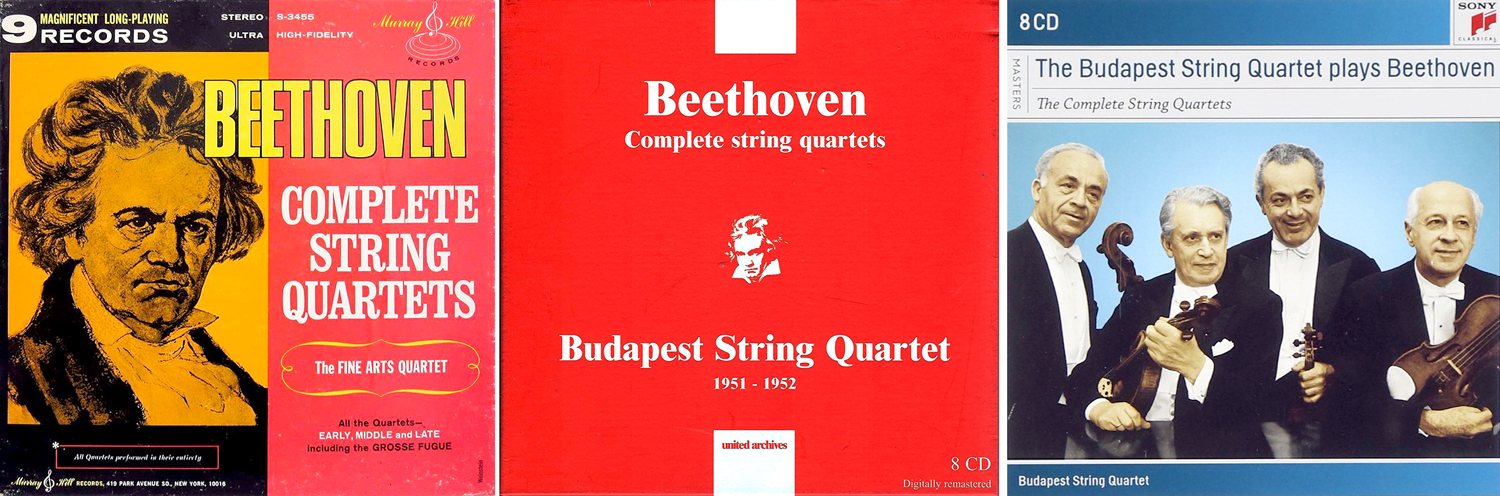
When I got to college in North Carolina, I made the acquaintance of Alexander Barker, who has remained my best friend for 60 years. He was as enthusiastic about classical music as I was and we spent hours in our dorm rooms spinning LPs and introducing each other to music that was our favorites. We were, of course, very serious about great music, as only college students can be, but we knew Beethoven’s string quartets were as serious as you could get. I bought a budget-line set of the quartets, by the Fine Arts Quartet on the off-brand Murray Hill label, and one evening, we started with Opus 18, No. 1 and played through all 16 of them, plus the Grosse Fuge, in one marathon session. (We later attempted the same thing with the piano sonatas, but gave up in exhaustion and the need for sleep by the time we hit the Hammerklavier.)

I have not been able to find a CD version of the Fine Arts Quartet set, but I found much better-played versions later on. I have owned a half-dozen or so complete sets of the Beethoven quartets, and as many of just the late quartets, but on the desert island, I would take the original mono versions by the Budapest String Quartet. They redid them later in stereo, but I like the earlier set better. I could have chosen the Guarneri, or the Tokyo or the Emerson, but I still think the Budapest have the measure of them best.
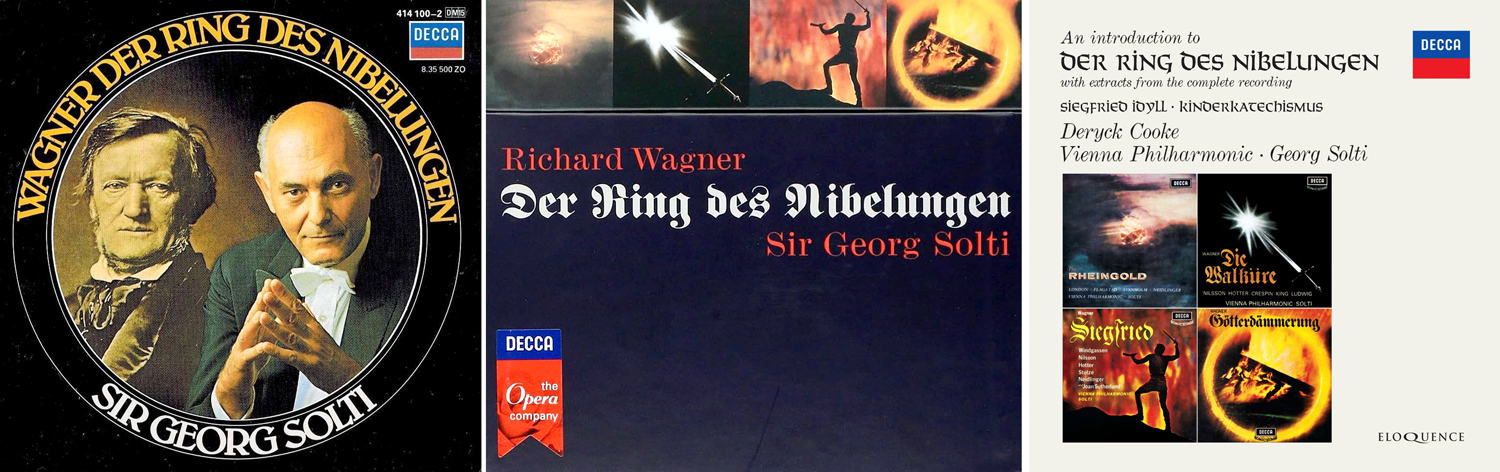
If you have the earnest seriousness of youth, you will eventually get into Wagner. After college and after a failed first marriage, I was living in North Carolina with my favorite redhead, scratching by on subsistence jobs, and I managed to save enough money to finally buy the Solti Ring. Something like 16 hours of music subsuming four operas, it opened up a world of myth and raw musical power. Now in retirement, I own five Ring cycles on CD and another two on DVD. And I’ve attended two complete live Ring cycles (not a patch on my late friend Dimitri Drobatschewsky, who went to Bayreuth 16 times beginning just after World War II.) But the Solti Ring of the Nibelungs is still my go-to set. And with it, I must also take the Deryck Cooke explication of the cycle, An Introduction to “Der Ring des Nibelungen.” Can’t have one without the other; they’re a set.
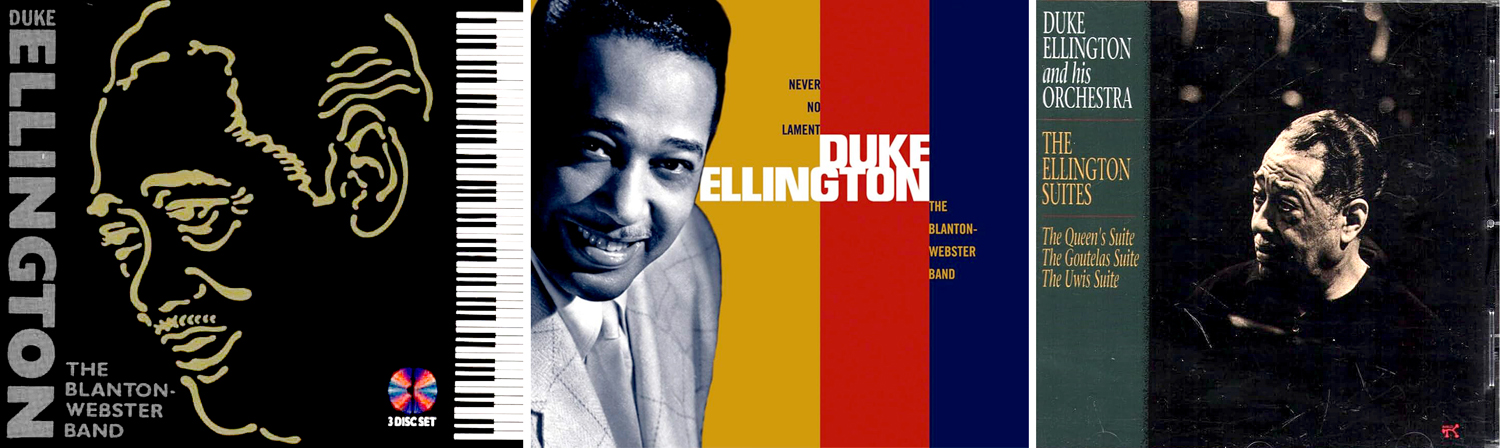
When the redhead and I split up, after seven years, I moved to Seattle and began working at the zoo, where I met a zookeeper whose hair was as blond as the sun. I fell. She had been a professional swing dancer at one time, and she played me old swing records on her Wurlitzer jukebox, which she had at her home. I had a whole new universe of music to learn about. But the one who stuck was the jazz musician closest to writing classical music, Duke Ellington. 

I still have about 50 CDs of Ellington’s recordings. There are counted several epochs of Ellington’s career, beginning with the “jungle music” of the 1920s and going through his rebirth at the Newport Jazz Festival in 1956. But most count the high point of his band and music to be those years in the early 1940s when Ben Webster was his tenor sax man and Jimmie Blanton was his string bass player. A collection of their recordings has been issued several times as “The Blanton-Webster Band.” It was the era of Take the A Train, Ko-Ko, Harlem Airshaft, and Perdido

But then, neither can I do without The Queen’s Suite, which he wrote with Billy Strayhorn in 1971, and is his most completely classically composed work. I love it. And so, I’m adding it to my Ellington entry. 

The zookeeper dumped me and I moved back to North Carolina. A few years later, I met Carole, who I married and lived with for 35 years, until her death in 2017. Marriage humanized me, and the most human composer is Mozart and the most humanistic of conductors was Bruno Walter. It was the the last years of the LP era, in 1980, and before digital took over, I found the last six symphonies of Mozart played by Walter and the Columbia Symphony Orchestra (a pickup ensemble, mostly of musicians from the New York Philharmonic). 

Walter’s Mozart remains the most humane and beautiful version of these works, which are now buried under historical-performance rhetoric and bounce along at a jog-trot, mechanistic pace. But one can still find the echt-Mozart, songful, emotional, and velvety rich, under Walter’s baton. Like all of my choices for the desert island, it has never been out of print. 
Carole and I moved to Arizona in 1987, where she took up teaching art to elementary pupils, and I began writing for The Arizona Republic as its art critic (later also its classical music critic). 

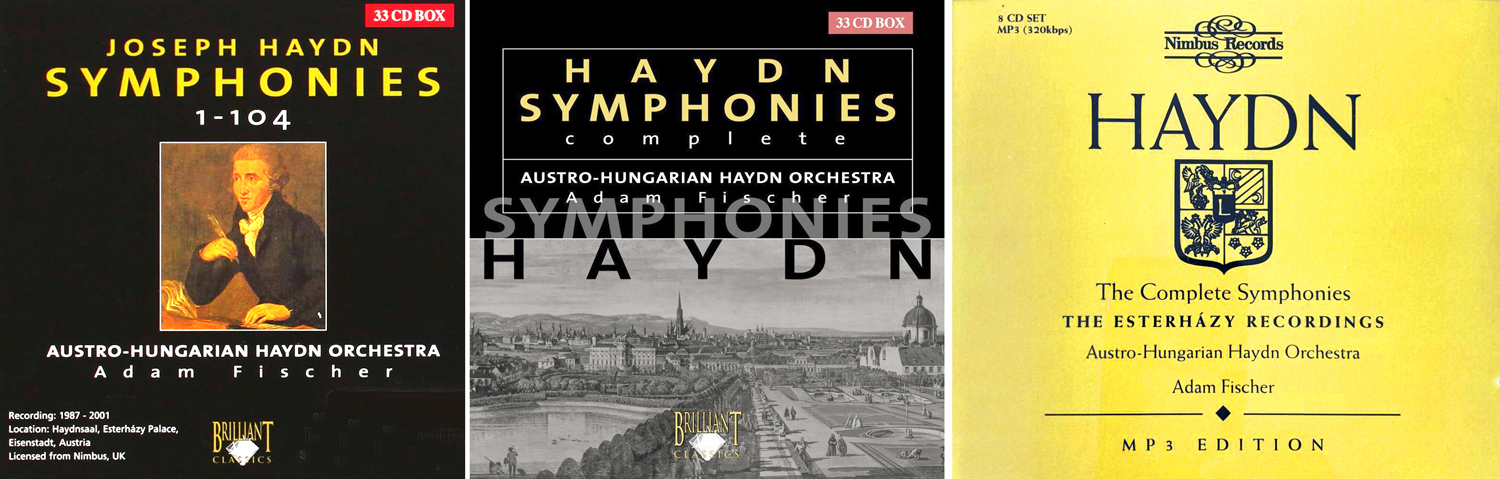
When we moved to a house at the foot of Camelback Mountain, it was a 20 to 30 minute drive (depending on traffic) to the Republic office downtown, and I found the perfect drive-time music, playing a Haydn symphony each way. I eventually went through all 104 symphonies, driving back and forth, three times, and absorbed their spirit from the Austro-Hungarian Haydn Orchestra and Adam Fischer. They have become my go-to performers for this music. I also have the earlier Antal Dorati version, which sometimes sounds like a quick read-through, and later was sent a review copy of the Dennis Russel Davies versions on Sony, which proved to be the most utterly humorless Haydn possible and I had to give them away. How can anyone misunderstand this music so thoroughly? 

When Carole died, and I sunk into grief, from which I have never fully recovered, I found myself listening with my whole being to Brahms German Requiem. I have spent the anniversary of her death every year driving up the Blue Ridge Parkway to find an old fire road into the woods, and sit quietly to Bruno Walter’s recording of the German Requiem. It is the most sympathetic, consoling music ever written. 

On Desert Island Discs, they also ask the guests to choose the one recording, above all, which they would take if everything else were not possible. And for me that is Johann Sebastian Bach’s Passion According to Saint Matthew, a three-hour musical retelling of the last days of Jesus and his death. I am not religious. (I am so not religious, I not even an atheist.) But every note of Bach’s music speaks to me on the deepest level of humanity. The opening chorus and the ending chorus are, for me, the greatest musical utterances ever penned. I’m keeping it with me.

There are many performances, and no one really does it badly, but most recordings now have been run through the historical performance wringer and the juice has been squeezed out. This is majestic and noble music, not something from a squeeze box. And the recording left behind by Otto Klemperer is the one I listen to over and over. He’s got the measure of this music. 
That leaves us a book and a luxury. People value books for, usually, one of three reasons. Either for the information they gather, or for the stories that are told, or for the prose they are written in. I fall into the last camp. I thought about Gibbon’s Decline and Fall of the Roman Empire, which is an utter joy to read, whether you care about the factual history of Rome or not. I revel in its river of words. But I read it in short segments, ultimately filling up like a rich meal and need to wait some hours before hitting the table again. And, for all the wonderful writing, there is a sameness that can creep in. 

Or I might have chosen a classic that somehow I’ve missed in 77 years of life. Many on Desert Island Discs have taken Marcel Proust’s Á la Recherche du Temps Perdu. But when it comes to monster works, I already put in my time, having gotten through The Gulag Archipelago. I no longer need to prove myself. 

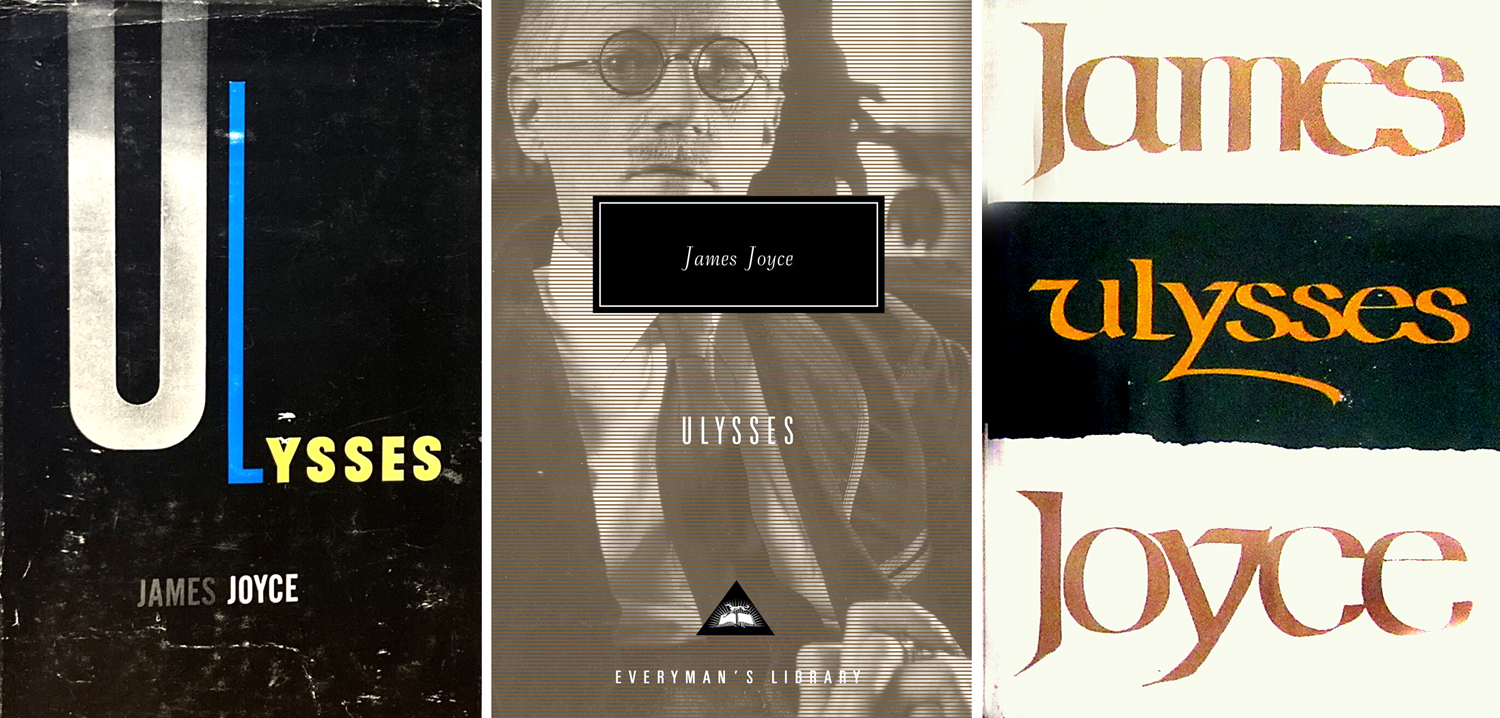
So, I have chosen Joyce’s Ulysses, the book I can read and re-read over and over, with such a variety of prose and method and such delicious words, that I don’t think I could ever tire of it. 

As for a luxury item, I had some difficulty coming up with something, because I am not much for luxury. But I have always owned a pear-wood handled Opinel folding knife. The current one sits in the glove compartment of the car, ready for anything called for. A man needs his tools.

Of course, the whole exercise is entirely pointless. There is no desert island, and with a house full of books, CDs, musical scores, and art, I don’t need to choose so parsimoniously. The whole idea is merely a pleasant game to play. 

But going through the process, and forcing myself to narrow the list arbitrarily, I come to see myself in a dusty mirror. And I surprise myself, looking back at me. 
I once made a list of my Top Ten Films and the list had 40 movies on it. What is more, if I had made the list a year before, or a year later, the 40 movies might have been quite different. One cannot really pick a permanent set. 

So, when Classics Today executive editor David Hurwitz published his list of “12 Operas I Cannot Live Without,” and challenged his audience to come up with their own lists, the same problem popped up. “You mean the dozen I cannot live without today?”

While I love opera, like Hurwitz, I have to admit I am not an opera nut. That’s a different breed. Opera does seem to attract the crazies — the ones who swear by a 1948 barely audible recording, made over a telephone line, of Maria Callas singing La Sonnambula — in the unauthorized 1848 edition only performed once, in Belfast, Ireland in 1873. You know, the one with the interpolated aria in Act 2. Yes, crazy like that. 

I have been listening to classical music for more than 60 years, and am a classical music generalist: I love it all, from pianists to chamber music to symphonic and vocal music — and, of course, opera. But opera has no special place for me. Opera people care who the tenor is; I am more interested in the composer, which means I’m not included in the opera inner circle. 

So, my list is not made up of the usual names: Verdi, Bellini, Puccini, and doesn’t automatically include the ABCs of opera popularity — Aida, Boheme, Carmen. It’s not that I dislike them, but I have seen them enough times that I don’t need to experience them yet again. They will always sell enough tickets, even without my attendance. 

These are the works that I choose when I want to hear opera, to enjoy the music in them and the emotions they arouse. I could list more than 12, but Hurwitz’s assignment limits the number — although I might cheat a bit.

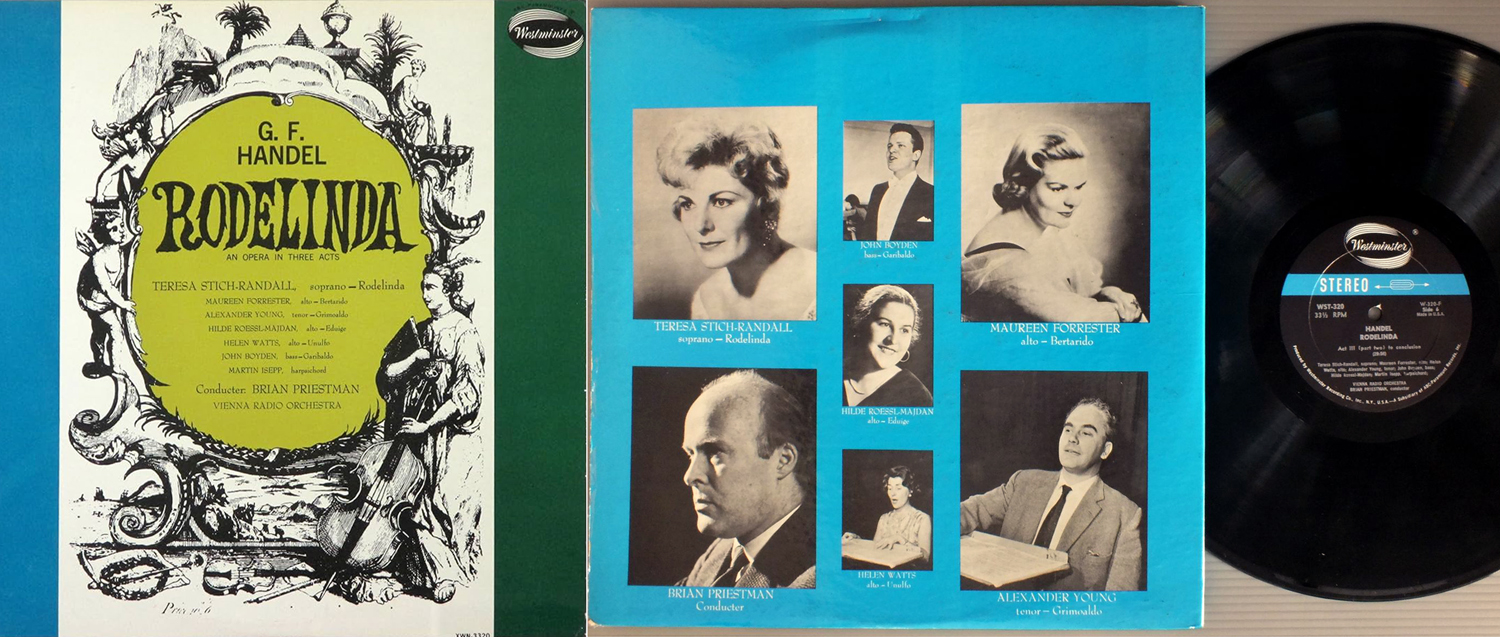
1. Handel: Rodelinda

The first opera I ever attended was in 1966 when the Handel Society of New York staged Rodelinda at Carnegie Hall with Teresa Stich-Randall and Maureen Forrester with a pick-up pit orchestra conducted by Brian Priestman. I couldn’t stop humming the tunes. 

Years later, I found a three-disk LP album of the opera in a smooshed-up box in a thrift store. I don’t remember who performed it, probably some Eastern Europe company on a back-water label no one’s ever heard of. I played it over and over. The familiar melodies were comforting.

The same year I saw Rodelinda, the same group also performed Xerxes and I saw that, too. Since, I have seen Giulio Cesare live and a truly brilliant staging of Semele by the Arizona Opera Company, but it is Rodelinda that sticks.

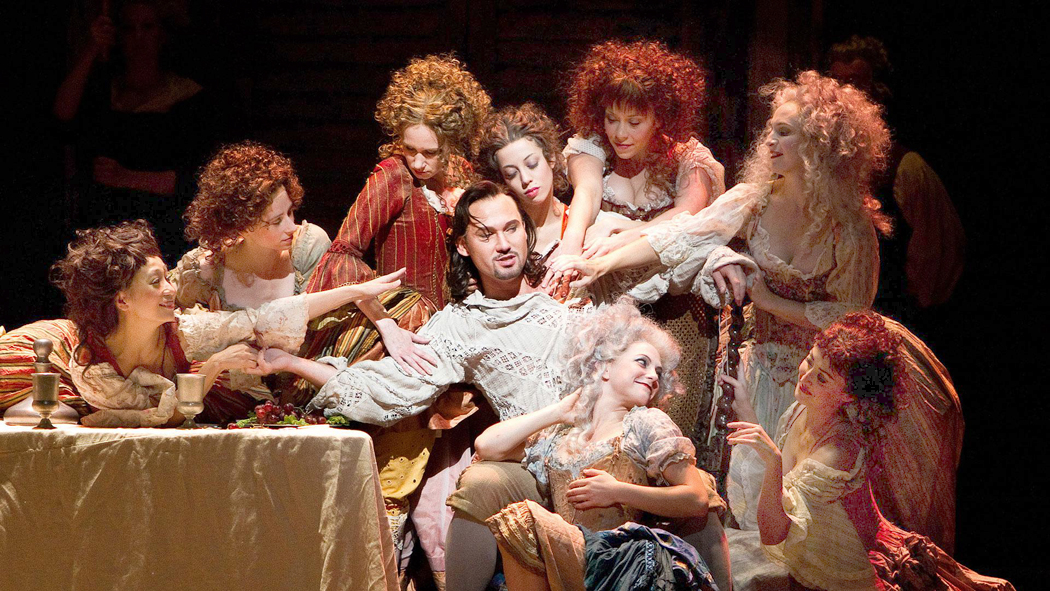
2. Mozart: Don Giovanni

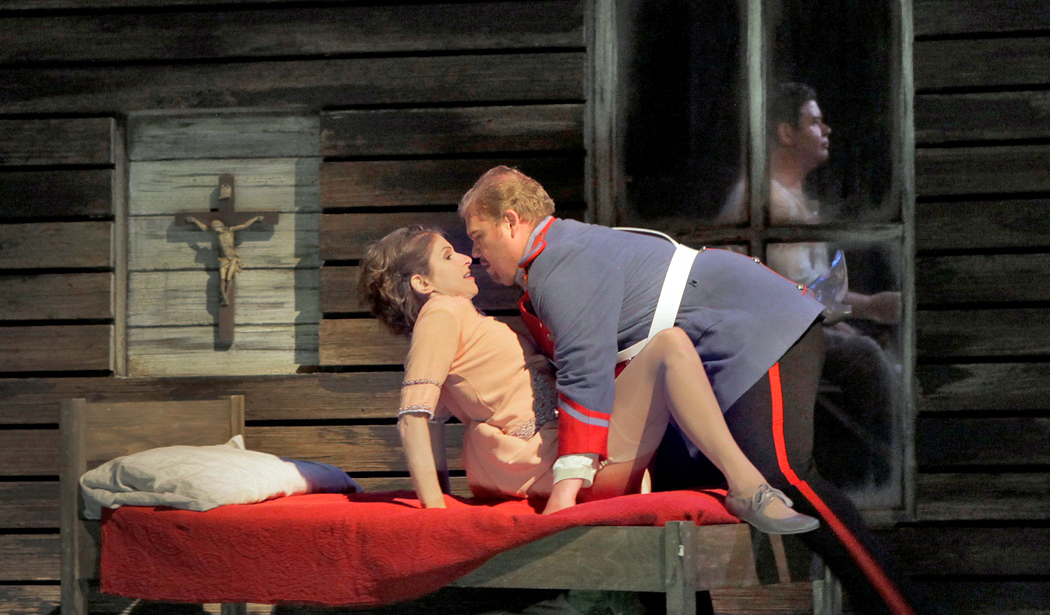
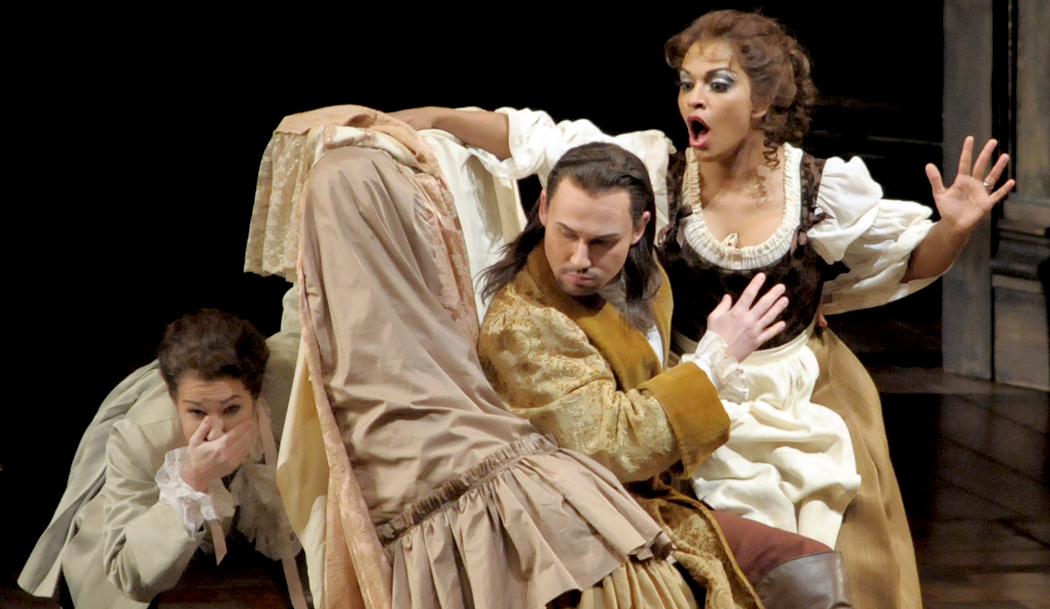
The opera I have seen most, and that I love as music as well as theater, is Don Giovanni. I’ve seen it more often than any other live opera (except the infinite Bohemes and Carmens I saw through duty as my newspaper’s opera critic). 

Most operas, even the really good ones, can not be defended on the basis of their plots, which are, at best, nonsensical and goofy. But Don Giovanni has a story with action, believable characterizations, and psychological subtlety. To say nothing of some really great tunes. 

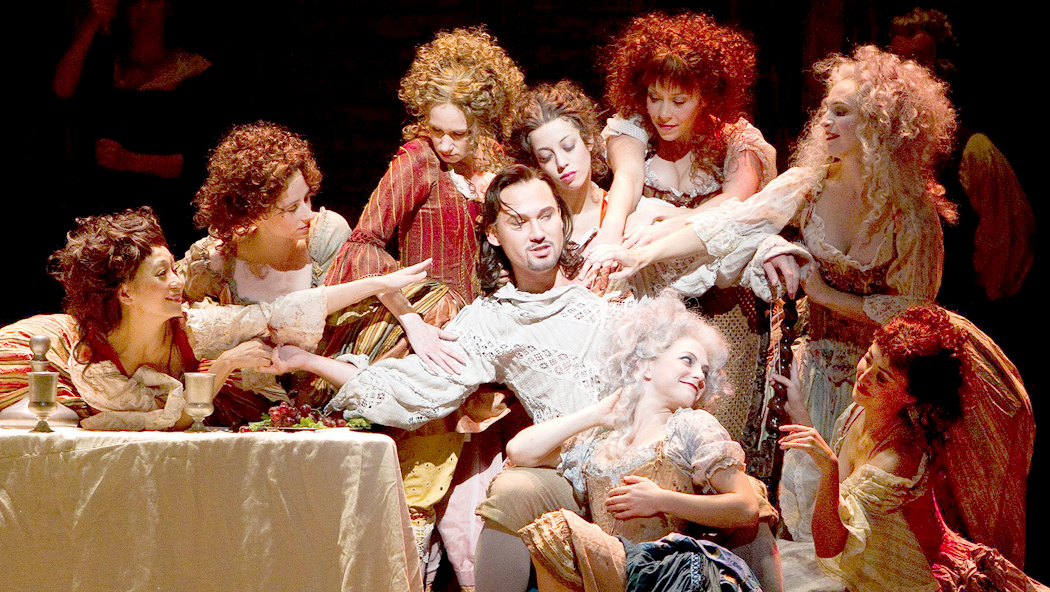
And it is a truly revolutionary work, written at a revolutionary moment in history. I love when the partygoers at the end of the first act just kind of stop everything and belt out the words, “Viva la Libertad!” And also that, at the end, the Don has the courage to refuse to repent. He may be the villain of the piece, but he is also the hero. 

I’ve owned a half-dozen versions of the piece on LP and now CD, but my go-to performance is the oddly cinematic, opened-up film staging with Cesare Siepi as the Don, and conducted by Wilhelm Furtwängler, available on DVD. 

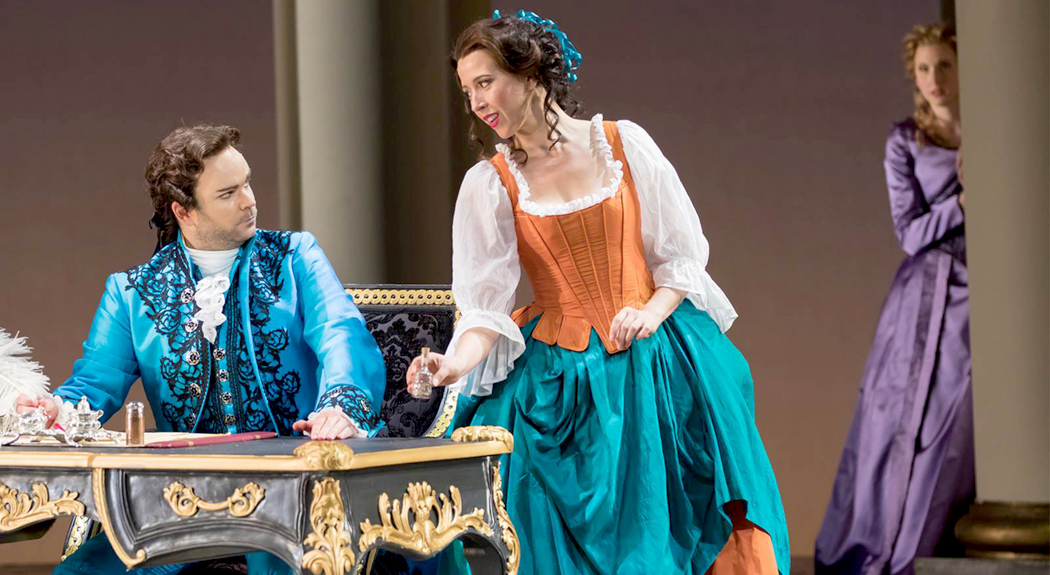
3. Mozart: Nozze di Figaro

On his list, Hurwitz permits only one opera per composer, but I can’t do that, because the three operas I love most, and can listen to over and over, are all by Mozart. Years ago, I wrote about what I was calling the “perfect” operas — that is, those with no longueurs, boring parts, added and unnecessary show-off arias to highlight the tenor or soprano. These are operas with plots that are defensible, if not great, pacing that doesn’t drag, and some level of human reality in them. 

By any of those standards La Nozze di Figaro tops the list. These are all real people doing real people things, hurting like real people, loving like real people, and most importantly, forgiving like real people. And, all the the perfectly psychologically apt music of Mozart. If I were to choose the best opera ever written, this would be it.

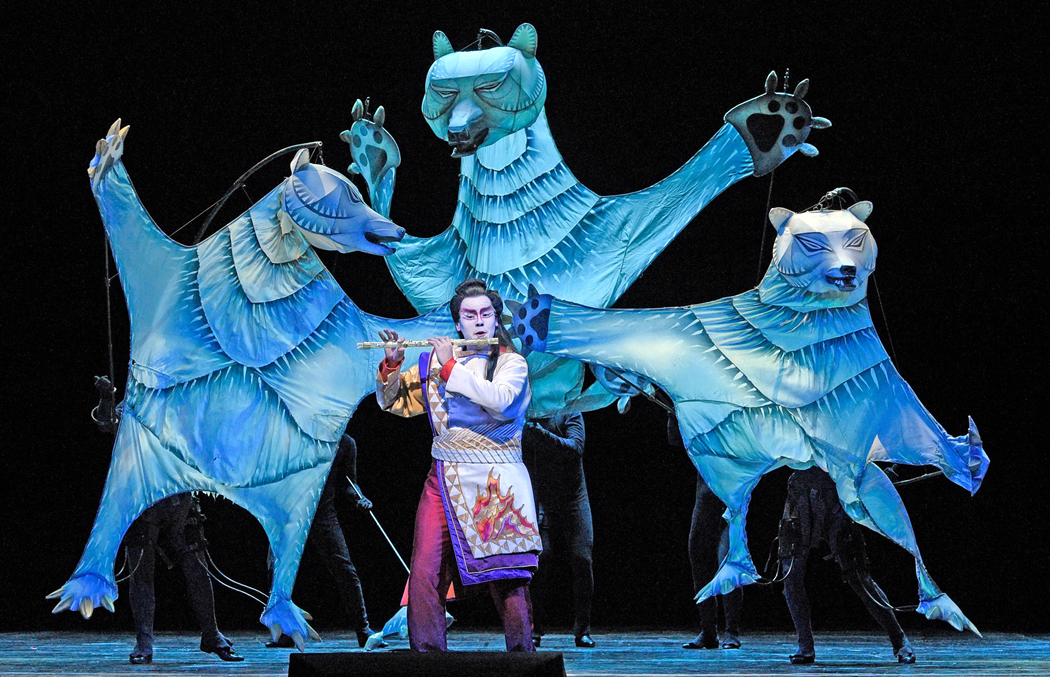
4. Mozart: Zauberflöte

Talk of silly plots: Just about the worst story in opera is found in one of the most popular works. Everything about the story in The Magic Flute is preposterous. But the music is so infectious, you give up and don’t care.

Especially if you get to see the staging by Julie Taymor with its giant bunraku puppets. It is stage magic along with great music. It is a slightly abridged version and sung in English, but it is so good, and so much fun, you really have to watch it. 

Or there’s Ingmar Bergman’s film version, sung in Swedish, which captures all the fairy-tale flavor of the thing. But really, there are dozens of recorded versions, both on CD for listening and DVD or Blu-Ray for watching. 

5. Berlioz: Le Damnation de Faust

I hadn’t ever thought of it as an opera, but I saw the Metropolitan Opera staging of it in 2009 and was persuaded: It works really well in that Postmodern presentation. Actually thrilling. 

As with so much of Berlioz, its reach much exceeds its grasp. Since the composer couldn’t include everything from even Part 1 of Goethe’s Faust, he chose to pick episodes to put to music, making a rather choppy story. Still, the music can be overwhelming when performed with the right belief and energy.  

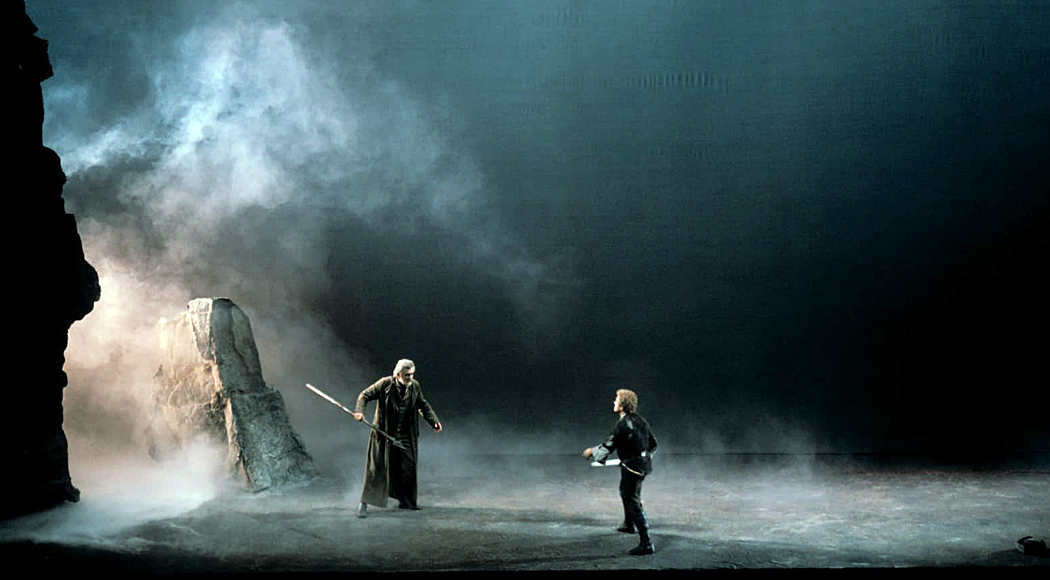
6. Wagner: Der Ring des Nibelungen

I’ve attended two live Ring cycles, which were quite magnificent (although I am humbled by the fact my dear friend, the late Dimitri Drobatschewsky went to Bayreuth 16 times). But I have to admit this four-opera trilogy (yes, that’s an oxymoron) is best heard on recordings. Not so much because with the great voices of the past, the singing is better (although that is true), but because the action in these “music dramas” is so mythic, and so German Romantic, that no scenery or stage machinery can adequately portray the Rhine maidens singing underwater, the valkyries riding their horses in the air, the gods crossing a rainbow bridge, or the Rhine river overflowing its banks to quench the fire that has set alight the entire world and ended the reign of the gods. Watching it onstage can seem a little tawdry. 

But listening to the recording with your eyes closed and imagining the rocky crags, the dark forests, the ring of fire on the mountain top, is so much more convincing as theater of the mind. I say with eyes closed, but you really also need to read the libretto as you listen. Or not libretto — that sounds too much like opera — Wagner doesn’t have a libretto; he has a text. 

I have five Ring cycles on CD (Barenboim, Böhm, Furtwängler, Janowski and Solti) and another two on DVD (Boulez and Levine). Is that a little nuts? I suppose. The one I listen too over and over is Solti, which was specifically designed to be played on speakers, with various sound effects added to it by producer John Culshaw. 

And yes, I’m counting all 15 hours of the Ring as a single entry. 

7. Offenbach: Les Contes d’Hoffmann

If the Ring is too serious, The Tales of Hoffmann counters with frivolity. I love this mini-trilogy (in four parts), especially when all three heroines are sung by the same soprano. 

It has some of the chunky episodic feeling of the Berlioz, (compare the Chanson de Kleinzach tavern song here with Mephistopheles’ Song of the Flea in Damnation. Both completely extrinsic to the story, but a chance for the composers to interpolate a great bit of ditty. 

The opera is a bit of a mess, as Offenbach never settled on a final version. But any version is a delight.

8. Strauss: Salome

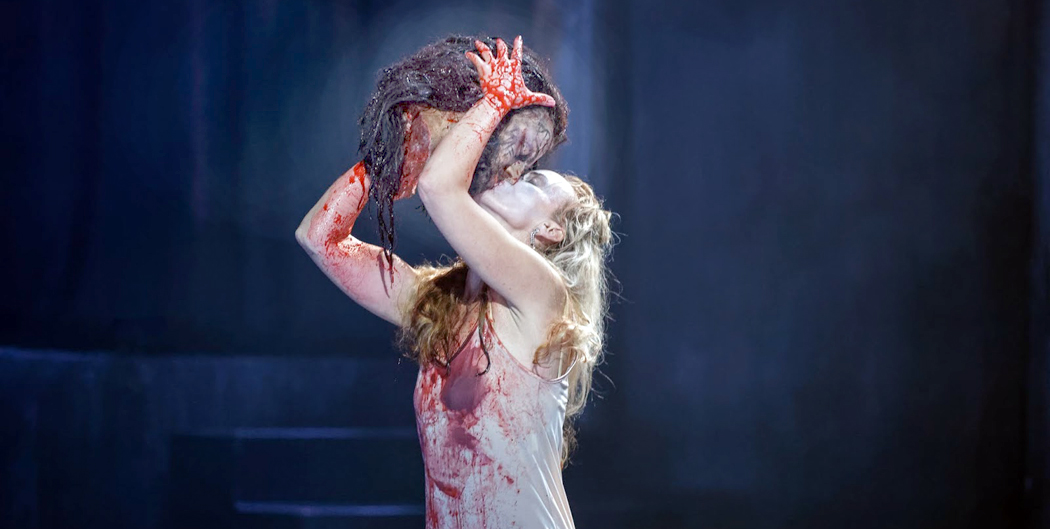
I’ve seen several versions of Richard Strauss’ first opera, and it always seems to work on stage. It’s a short one, in a single act and tells of King Herod, his wife and daughter — Salome — and the prisoner John the Baptist, who Salome has a “thing” for. The prophet rejects her advances and she dances a striptease and has her daddy behead the prophet, whereupon she kisses the severed head. Grand Guignol, for sure, but great music and a surefire staging. 

If the Ring fares best on recording, this opera needs to be seen live (or at least on DVD). It is as much theater as music. 

9. Bartok: Bluebeard’s Castle

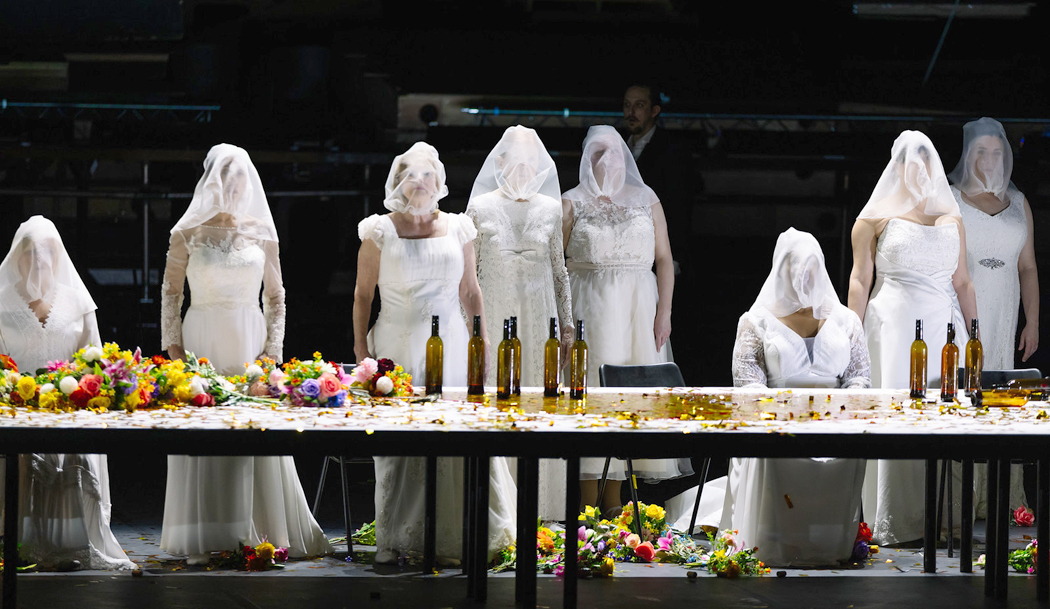
Another short, one-act work of psycho-sexual complexity, Bela Bartok’s early work, which seems to take place entirely in the nation of Allegory, tells the story of Duke Bluebeard and his new wife, who can’t seem to let alone the secrets of her husband’s previous marriages. She forces the secrets out and winds up prisoned with all of them. All very Freudian.

Those secrets are hidden behind doors, and as she opens each door, she finds a world of shimmering music and deadly horrors. There are only two singers/actors in this story, one who wants to uncover the past, and the other who begs her to let them lie. But it is the impressionistic score that makes this work so irresistible.

10. Berg: Wozzeck

There is a second “perfect” opera, after The Marriage of Figaro, one with no unnecessary bits, and everything leading to a single inescapable and shattering climax. It is written in a sort of atonal, 12-tone style (purely Berg’s own version) and is both musically inevitable, and emotionally devastating. Too many people avoid this work, fearing the music will be too dissonant, but every note serves a purpose, and even those fearing to enter the opera house will likely leave knowing they have experienced a work of utter genius. 

I claim Wozzeck as my favorite opera of all. There are many versions on disc. This is another one, like Salome, where it is so well designed for performance that almost any version will do, and it’s amazing how many versions there are on Amazon. A serial opera that is actually popular!

11. Adams: Nixon in China

Initially, I thought this piece by John Adams was a gimmick, but I saw it performed in concert by the Phoenix Symphony under Michael Christie and it blew me away. As no other contemporary work for the opera stage, this has joined the repertoire. (Did anyone else notice how the showstopping aria, “I am the wife of Mao Tse Tung” is a gloss on the“Tuba Mirum” section of Mozart’s Requiem?)  

No other figure in recent American history figures as so deeply mythic as Richard Nixon — a version of Nixon he seems to have bought into himself (check out the opening line of his autobiography: “I was born in the house my father built.” Can’t get much more Jungian.)

12. Golijov: Ainadamar

Christie also brought Dawn Upshaw to Phoenix to perform Osvaldo Golijov’s Postmodern take on the death of Spanish poet Garcia Lorca. With its mix of musical styles and bouncy, infectious score, it tells of the Spanish actress Margarita Xirgu, who recounts the life and execution of her friend Lorca. 

Like all great tragedies, it is both depressing at emotionally exhilarating at the same time. To say nothing of it now being an uncomfortably historical warning about fascist governments. 

There seems to be only a single recording of the opera, but with Upshaw in the lead role. The opera led me to seek out other music by Golijov, and I have loved all of it. 

Postlude

You may wonder, where is Verdi? Rossini? Puccini? Are they not worthy? Of course they are, and I love them, too. And how can I have omitted Rosenkavalier, which I love to pieces? There is so much more that could have been included, from Monteverdi’s Orfeo to Weill’s Dreigroschenoper

But this is a list of operas I can’t live without, the ones closest to my heart. The one’s that will make me actually buy tickets. Your list will be different, but if my selection prompts you to try something new, so much the better. 

And, finally, seeing opera (with one exception, noted above) is always better than just hearing it. Live is best of all, but DVDs will do in a pinch, and many movie theaters present showings of operas live on their screens, most famously the Metropolitan Opera. Check with your local theaters to see where such performances might be scheduled.  

Intro: What We Get Wrong

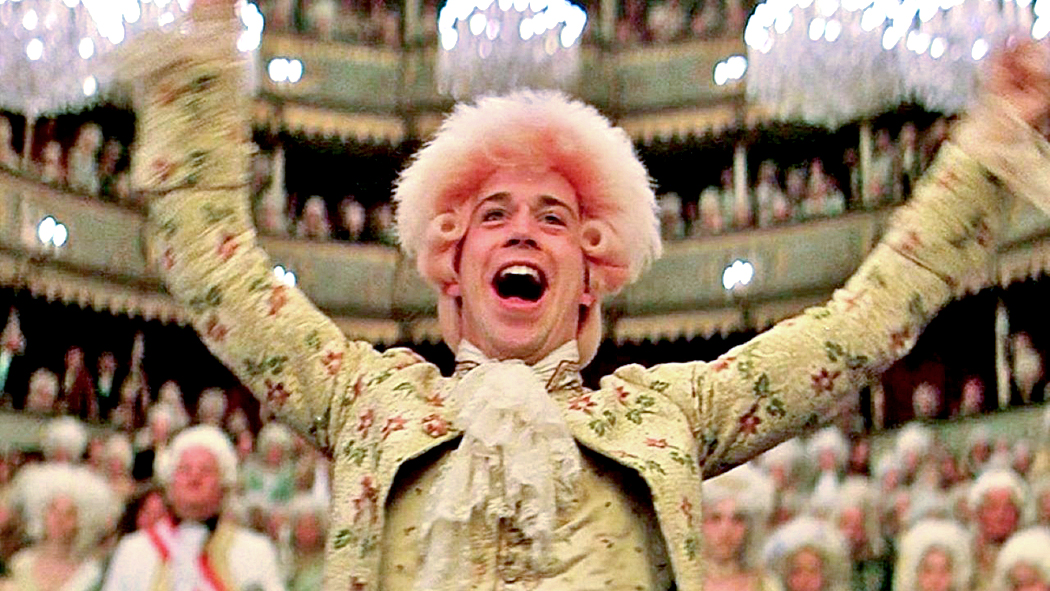
The 1984 movie, Amadeus, won eight Oscars and has been seen by millions of people. It was an excellent film, but it lied through its teeth. Mozart was not an arrested-development adolescent potty mouth. And Antonio Salieri never tried to kill him. 

Poor Mozart, he has had his life twisted over the centuries to illustrate cultural trends, and those trends have changed over those years. 

The 19th century first saw him as old fashioned, then he became a proto-Romantic, with his life deeply mythologized. The 20th century first saw him as a kind of porcelain doll, and after WWII, saw him as a polite precursor to Beethoven. In the 21st century, he has been the victim of countless historical-performance strictures that leave his music in a kind of inexpressive jog-trot strait-jacket. 

The man sometimes considered the greatest composer of all time has been so mauled over by his biographers, fans and later writers and filmmakers that the legend has taken over from the fact.

So, the plot of Amadeus is only one of a myriad of distortions, legends, myths and factifications. The truth, as usual, is more interesting.

What are some of the worst Mozart myths?

— Mozart began writing masterpieces before he turned 10.

* Yes, he wrote music beginning before he turned six. But some of that music was arrangements of other composers’ work, some may have been outlined by his father for the boy to complete, and none of them are masterpieces, or noteworthy, other than for them to have been jotted down by one so young. The early works are generic. They get played, when they are played at all, simply because they have Mozart’s name attached. 

— Mozart was buried in a pauper’s grave.

* Although it’s often said he died so poor he was buried in a pauper’s grave, the fact is Viennese law required anyone other than an aristocrat to be buried in a common grave, after a funeral service at the church. It was a reaction to recent outbreaks of plague in the country. And Mozart wasn’t poor. He lived quite well, although, working in what we would now call a “gig economy,” he had his income ups and down. 

But, over his last year, he earned 10,000 florins when an average laborer averaged 25 florins a year. It put him in the top 5 percent of the population of Vienna, according to H.C. Robbins Landon, author of 1791: Mozart’s Last Year. The man was no pauper, and his music was hugely popular, not only in Vienna, but across Europe. And when he died, he had a hit on his hands: The Magic Flute. He left his widow reasonably comfortable. 

— Mozart wrote his music spontaneously, without effort.

* Mozart’s facility with music was remarkable, but there are plenty of sketches and studies for his music. The pieces without such preliminary work most likely had them at one time, but they don’t survive. His widow, Constanze, burned most of the sketches, not thinking that fragments had any value. Mozart even writes to his father about doing such preliminary work. 

In 1787, he told the conductor of his opera, Don Giovanni, “It is a mistake to think that the practice of my art has become easy to me. I assure you, dear friend, no one has given so much care to the study of composition as I.”

— His middle name was Amadeus.

* He was baptized as Joannes Chrysostomus Wolfgangus Theophilus Mozart but his parents called him Wolfgang Gottlieb (Gottlieb being German for Theophilus). He usually signed his name Wolfgang Amadé. It was only after his death that people began regularly calling him Wolfgang Amadeus, which is a Latinized form of Gottlieb.

— His music is simple, direct, easy to listen to, easy to perform.

* And at the time of his death in 1791, at a mere 35 years old, his music was considered difficult to play and demanded careful listening. Mozart asked a lot. When the progressive Emperor Joseph II famously told Mozart his music had “too many notes, my dear Mozart. Too many notes.” he wasn’t being an ignoramus; he was reflecting the general taste of his times. To understand this, we need to place him in context. 

Some Context: The Classical Era

Something else we get wrong: It is usually said that Mozart and his contemporary Joseph Haydn wrote in the classical style, as if such a thing existed, and all they did was follow the rules. That’s got it completely backasswards. They didn’t write in the classical style; they invented the classical style. They were making it up as they went along.

Music history is taught as consisting of succeeding eras. The Renaissance gave way to the Baroque, which led to the Classical era and on to the Romantic, to Modernism and currently, Postmodernism. As if they were clearly defined and separate. And it is true that after about 1740 or so the heavily contrapuntal Baroque lost its hold on the ears of its listeners. They wanted something simpler, clearer, more charming and that wouldn’t be so serious. All those fugues and counterpoint of what was called “the learned style” gave way to homophony — that is, tuneful melodies and supporting harmonies. Something you could hum along with: Simpler and more direct. 

This is sometimes called the Style Galant; it followed the Baroque the way Rococo followed in the visual arts. Composers such as J.C. Bach, Johann Joachim Quantz, Johann Stamitz, or Domenico Alberti published torrents of light, catchy three-movement sinfonias and bright concertos, to say nothing of keyboard music to be played after dinner by the daughters of aspiring middle-class burghers. I’m grossly simplifying this, but the outlines are true. 

This is the kind of music both Mozart and his older contemporary Haydn produced in their younger days. Mozart wrote more than 20 symphonies in this popular style before the age of 17 and if they still get played it is because, again, they have Mozart’s name on them, and also, because they are full of great tunes. Mozart always wrote great tunes. 

Haydn had his own orchestra, paid for by his boss, Prince Nikolaus Esterhaza, a ridiculously wealthy Hungarian nobleman, who loved music. Hidden away at the prince’s countryside palace in Esterhazy for some 30 years, Haydn developed on his own, inventing new ways to delight and surprise an educated audience who learned and grew along with the composer. The palace was far from Vienna. Haydn said, “I was cut off from the world. There was no one to confuse or torment me, and I was forced to become original.” 

He basically invented the modern form of the symphony and the string quartet. 

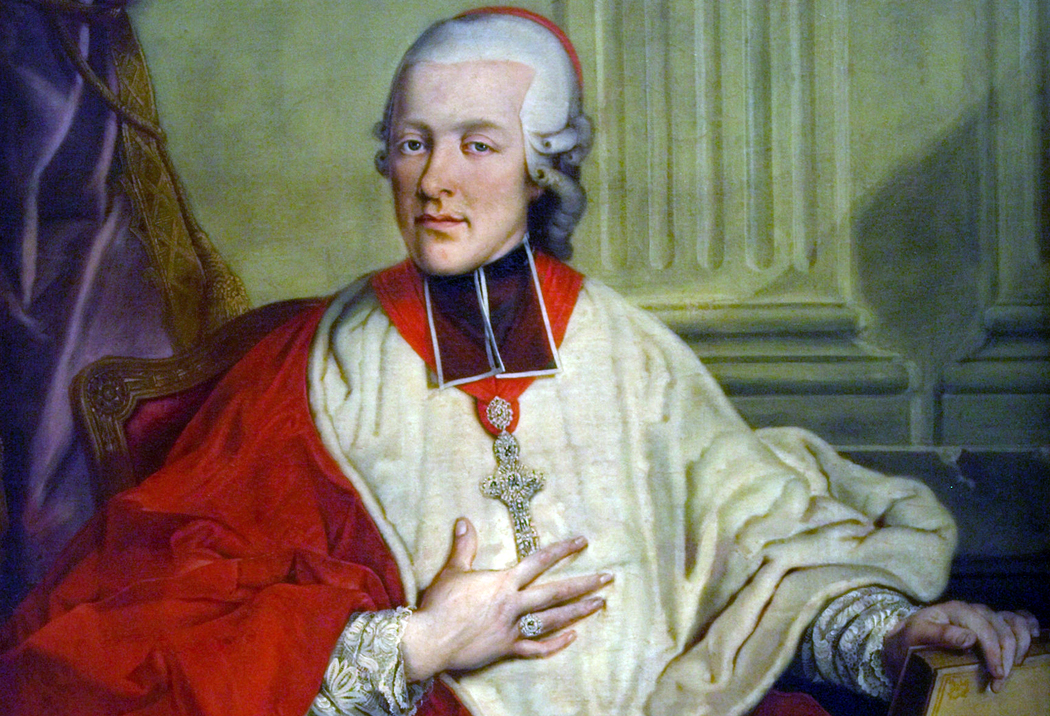
Prince-Archbishop Colloredo

Mozart, however, was truly cosmopolitan and after freeing himself from the employment of Salzburg’s prince-archbishop Colloredo, earned his crust as a freelancer in what was becoming a “gig” economy, living from commission to commission, and from concert to concert and opera to opera. 

He learned a lot from Haydn, and joined him in making his music increasingly more complex than the usual run of gallantries. They added back counterpoint to their works, increased chromatic and harmonic subtleties. Mozart’s music, for instance, is always more complex than it sounds.

Mozart asked his musicians to do more than did other composers: to play higher, lower, more quickly; to play notes unfamiliar to their instruments or voices; to attempt unusual phrasings and colorations.

At the end of Act I in Don Giovanni, three bands play onstage at the same time, performing different music in three different rhythms, but entwining their harmonies so they mesh perfectly in a tour de force of compositional cleverness.

His music sounds simple and perfect and symmetrical, but you look at the phrase structure and it’s highly irregular. Normally, you expect 4- and 8-bar phrases, but you take a look at one of Mozart’s late scores and you see phrases of 4, 5, 3, 7, 8, 6 — but you would never guess it was so irregular just from hearing it. It always sounds smooth.

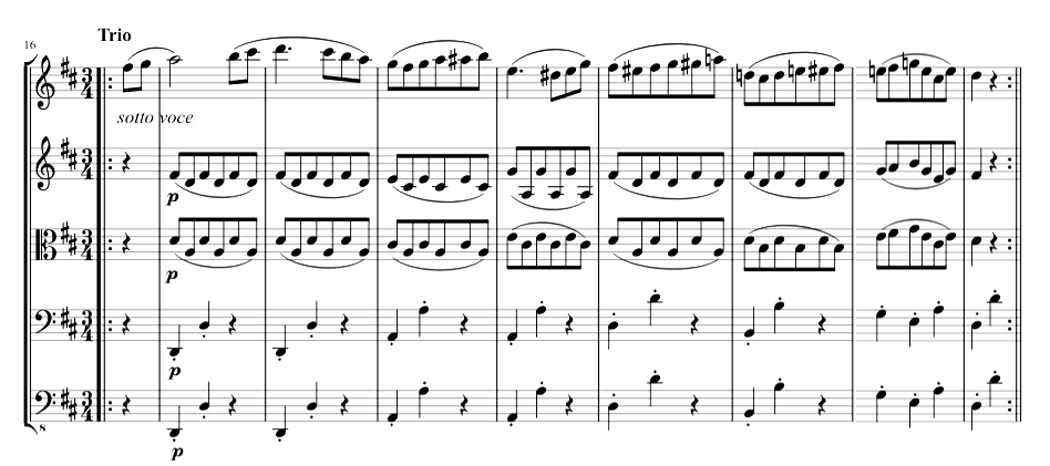
And although the surface of the music is always velvety and seductive, it’s frequently chromatic, introducing notes that shouldn’t belong. Even so graceful and simple a tune as the trio from the minuet in the popular Eine kleine nachtmusik manages to use 11 of the 12 notes in the chromatic scale. It verges on Schoenberg, though it sounds as simple as a nursery rhyme.

While Haydn’s metier was primarily instrumental music, Mozart shone in vocal music, and especially opera, where he brought psychological complexity to what is sung. 

Mozart as Shakespeare

Mozart was the Shakespeare of music. No composer ever displayed a wider sympathy for the human condition or a greater breadth of musical style. At the bottom of his music is a profound humanism, which is all the more obvious in his best operas — The Marriage of Figaro, Così fan tutte, The Magic Flute and Don Giovanni.

Of all the great composers, Mozart also is the easiest to love. Bach may be more sublime, Haydn wittier, Beethoven more in-your-face and Schubert one of the few who could write melody to equal Mozart, but Mozart remains the most accessible. He speaks directly to us, because he is the most humane.

That quality underlies all his major operas: His plots are filled with three-dimensional people, not the stock characters of most other operas. No hero is flawless, no villain unredeemable.

The miracle is that it isn’t just the libretti that convey this complexity, but the music itself. It gives us the subtle psychological undertow.

Mozart understood all of his characters well. None of them is tossed off as inconsequential. He imbues each character with definitive musical qualities.

So that Don Giovanni’s ebullient life force is expressed in his headlong “Champagne Aria,” with barely a moment to inhale. Or the Queen of Night’s rage in Magic Flute, when she launches into Baroque arabesques and arpeggios in her showpiece “The vengeance of hell boils in my heart.”

Even in Figaro: Has adolescent horniness ever been better expressed than the “amorous butterfly” take the hero sings about the love-struck Cherubino?

All these characterizations are built on the composer’s willingness to accept without judgment everything that is human. Perhaps that’s why nobody ever wrote forgiveness better than Mozart.

Each of his major operas has a scene of forgiveness in it, and it’s usually the turning point of the action, when a character recognizes the frailty of human nature. Such forgiveness is not bestowed from a feeling of superiority but from shared compassion.

It’s not that we believe the Count in Figaro will now be faithful to the wife who forgave him, but that we know she will always forgive him, because this is what it means to accept the human condition.

But the particular mood Mozart raises in such moments also is carried into his purely instrumental music: The slow movement of his Piano Concerto No. 18 is the echo of such a moment in Figaro. It sighs, and we sigh with it.

Such genius, whether Shakespeare or Mozart, can’t be explained. You just accept that it is.

Don Giovanni

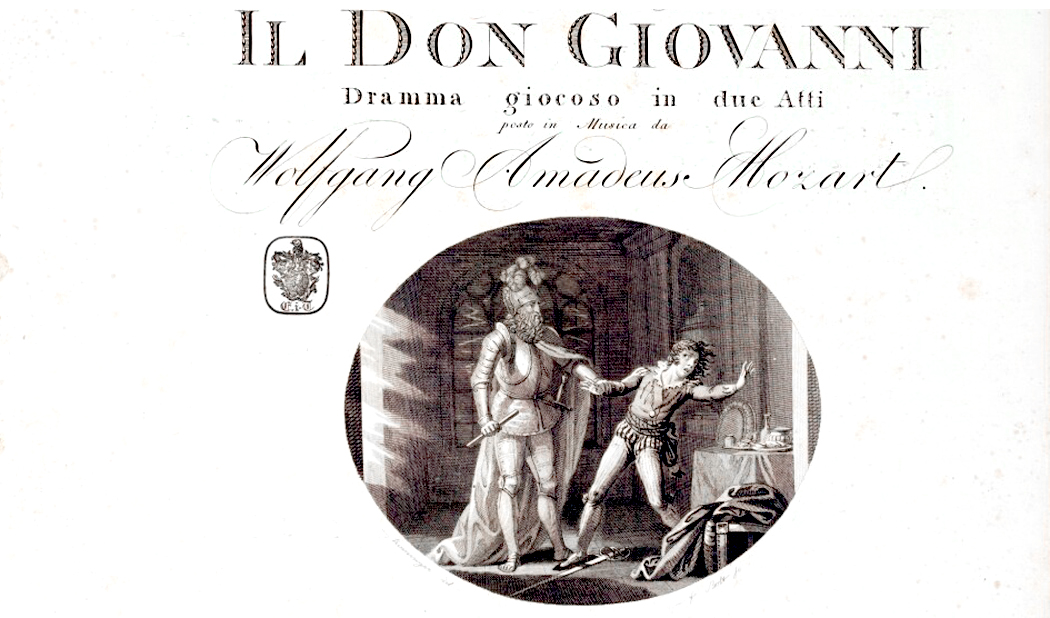
Mozart’s Don Giovanni has been called the perfect opera. It ingeniously balances comedy and drama, music and theater, the aristocracy and the peasantry, the past and the future.

It was first performed in 1787 in Prague, where the composer was a musical superstar, and told the story of the seducer Don Juan (Don Giovanni in Italian).

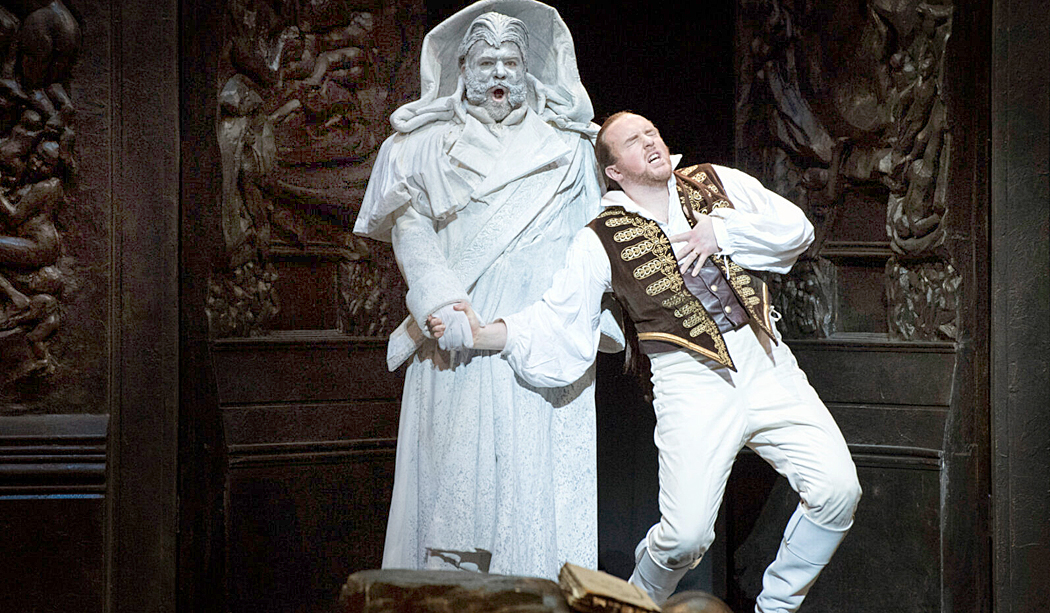
The story is simple in outline: After he kills the outraged father of one of his amorous conquests, Don Giovanni is tracked down by his victims. When he hides in a cemetery, the statue of the dead father miraculously asks him to dinner and, later, when the don shows up, the statue drags him to his judgment in hell.

But Mozart and his librettist, Lorenzo da Ponte, took what was a traditional story of sin and punishment and made it into a paean to the life force. Technically, Don Giovanni is still the villain, but Mozart and da Ponte made him such an engaging and vital presence that in the end, when he refuses to repent, despite the demons that surround him and the brimstone that burns, he actually rises to the heroic. Is he hero or villain? Or both.

This is where the Classic past meets the Romantic future: The cautionary moral tale of the past turns into the Byronic hero of the upcoming 19th century, and Mozart is in the avant-garde.

Digression I: Rake with a Quill Pen

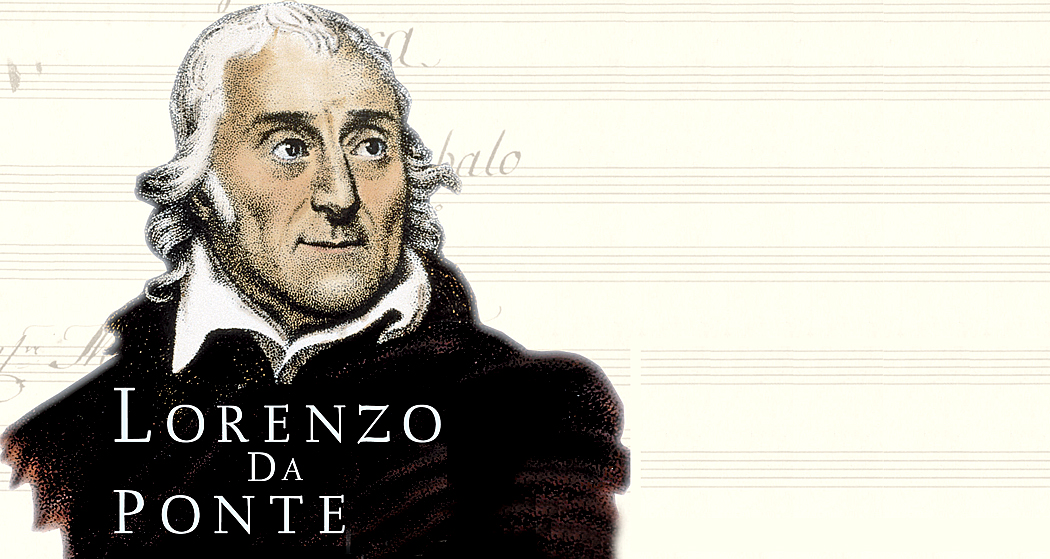
Opera is a collaborative art. Mozart’s music is great, but so was the libretto written by Lorenzo da Ponte. Da Ponte was born a Jew in Venice in 1749, was ordained a priest and opened a brothel with his mistress, where he entertained the clients by playing violin in his priest’s vestments. He was the perfect choice to write the libretto for Mozart’s dramma giocosa, Il dissoluto punito o sia Il Don Giovanni (“The Rake Punished, or Don Giovanni”).

Da Ponte was a friend of the infamous seducer Casanova and was forced to flee Venice after a trial for sedition, settling in Vienna, where he wangled a position from Joseph II, the Holy Roman Emperor. When he was asked how many plays he had written, he answered, “None, sire,” to which the emperor replied, “Good, then we’ll have a virgin muse.”

He wrote libretti for dozens of lesser operas by lesser composers, such as Antonio Salieri, before landing a job writing — or rather rewriting — Beaumarchais’ popular play The Marriage of Figaro as a libretto for Mozart. He also wrote Don Giovanni and Così fan tutte before being shown out of the city by the police.

Da Ponte’s post-Mozart life is hardly less interesting. After marrying (quite a trick for a priest), he moved to the United States, where he failed as a grocer, became friends with Clement Moore (reputed author of ’Twas the Night Before Christmas), who helped him gain a faculty post at Columbia College (now Columbia University), where he was the first faculty member to have been born a Jew.

In 1828, he became an American citizen, died 10 years later, had a grand funeral at St. Patrick’s Cathedral and is buried in Green-Wood Cemetery in Brooklyn.

The Pop Star

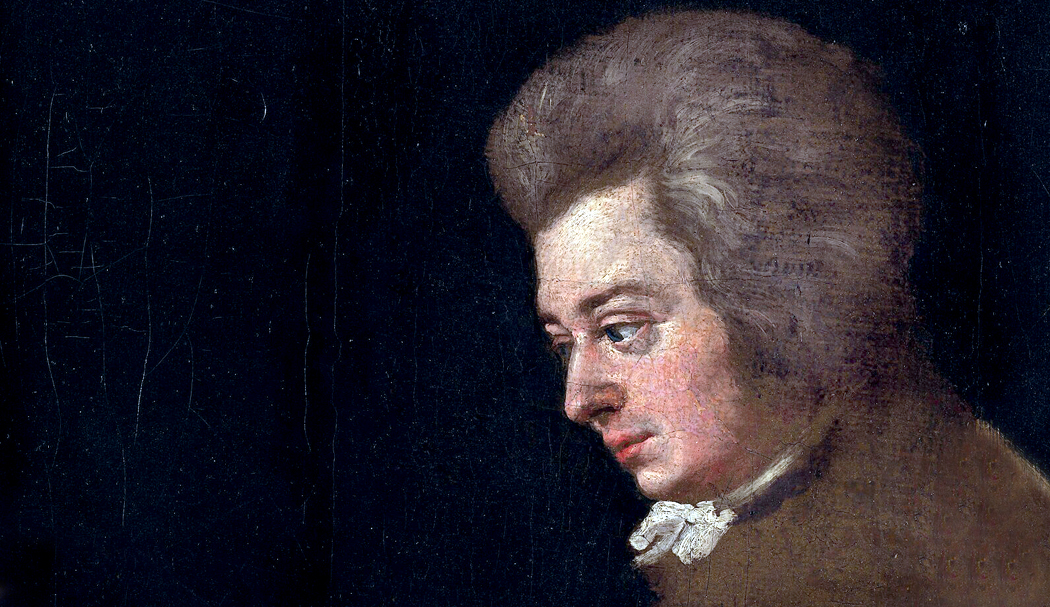
Mozart’s time was the late 18th century. He was born in Salzburg, Austria, in 1756 and was one of the great child prodigies of all time, picking up the violin when he was four and composing by the time he was five. His first opera was written when he was 12.

He was trooped across Europe by his father, playing for the amazed aristocracy and gathering gifts of money and jewels.

He outgrew his boyhood cuteness but grew to be one of the most prodigious composers of all time: He wrote 22 operas, 50 or so symphonies, 27 piano concertos, 23 string quartets, 17 settings of the Roman Catholic Mass. His complete works take up 170 CDs in one current set.

And he became enormously popular.

Mozart was the pop artist of the time. People wanted to play and hear that music so much, they transcribed the music for all kinds of ensembles. Every town had a wind band and they played arrangements. Every little village in Belgium or Bavaria could play arias from the latest Mozart opera, the way halftime marching bands now play show tunes.

Mozart makes fun of this phenomenon in the finale of Don Giovanni, when the don has a dinner in his castle, with a band playing the latest hits from operas, including “amorous butterfly” from Figaro.

He dismisses it: “I’ve heard this piece too much, he says. We laugh because it shows Mozart could take a joke. And that only makes him more human.

Digression II: Mozart and Haydn

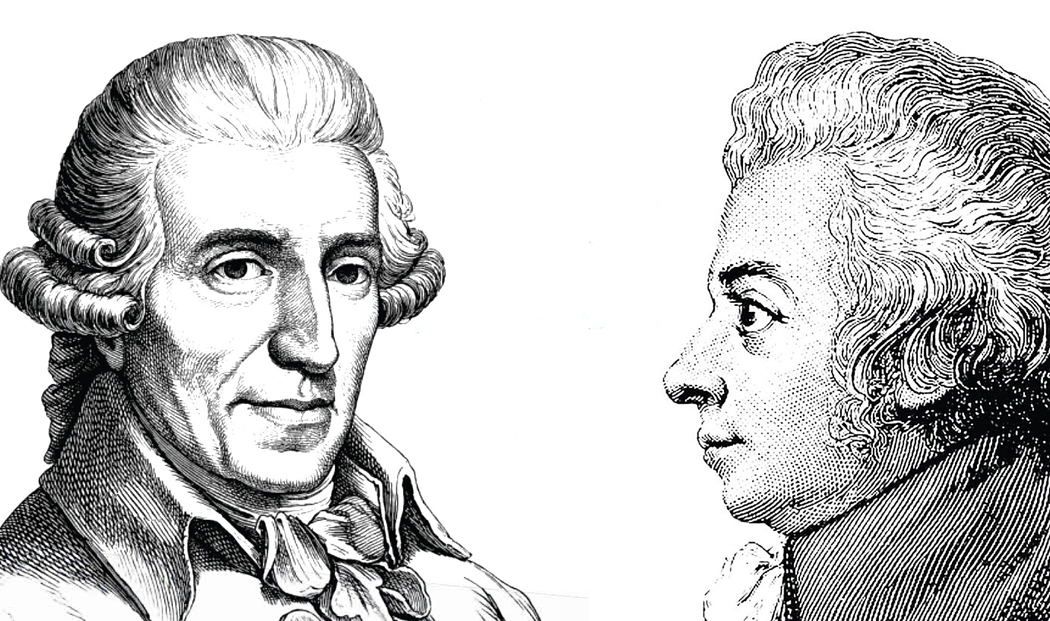
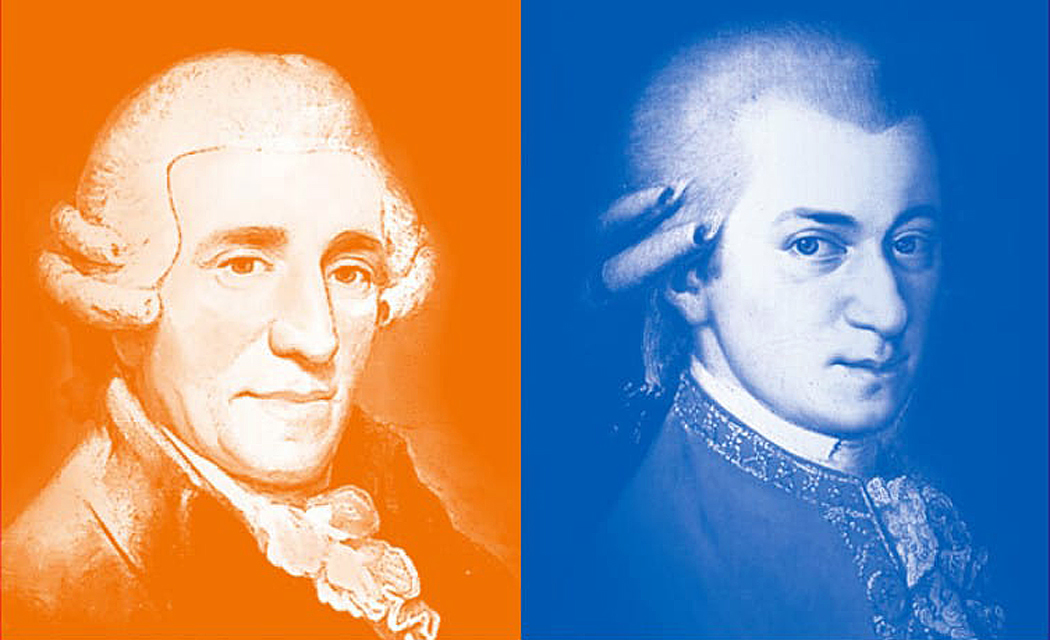
The era from about 1770 to 1810 is called “Classical.” It’s the age of music defined by two names: Joseph Haydn and Wolfgang Mozart.

They were the twin colossuses of the time: one witty and bright, the other deeper and more melodious.

But the two men were very different. Haydn brighter and more brittle sounding, with an emphasis on what the 18th century valued as wit, making in-jokes in his symphonies and working simple themes into complex textural patterns that his audience recognized with pleasure — they got the joke.

Mozart’s music is darker, more chromatic, with a more blended sound, and he focused his attention on grace and style.

If Haydn is the brain of 18th-century music, Mozart is the heart.

They valued each other above anyone else and recognized each other’s genius. Mozart learned more from Haydn than from any other source. Haydn said Mozart was the greatest composer alive.

To many, Haydn and Mozart sound alike. They are very different but shared a musical language. So, how do you tell them apart?

One wise old professor explained his simple test: “If you can remember the tune after it is over, it was Mozart.”

Reason and order

The 18th Century is called “The Age of Reason,” although sometimes I think it may be said ironically, since, after all, it was also the age of Rousseau, the French Revolution and the Reign of Terror. But the overall tenor of the era was one of rationality and balance, of a just God in his heaven keeping proportionality in everything human and cosmic. 

In German-speaking lands, it was the Aufklärung, the “clearing up,” and prompted enlightened rulers, such as Joseph II in Vienna, to downplay religious fervor, mindful of the chaos of the Thirty-Years War, and promote scientific enquiry and philosophy. Coffeehouses rose filled with debate and Freemasonry became fashionable. Mozart became a Freemason, and his final opera, The Magic Flute, was a Masonic allegory, of sorts. 

There were certainly many points of view, but the general sense was one of moderation in all things. Don’t go overboard. Keep an even keel. Music followed suit: nothing too extreme, but nothing too simple-minded, either. It was a perfect walk between opposites.

And the major musical innovation of the era was the rise of the Sonata-Allegro form. It was the primary organizing principle for Haydn and Mozart and held sway in various permutations for the next century and a half. It is usually taught in a technical way: first theme in the home key, second theme in the dominant, followed by a development section and rounded off with a recapitulation of the two primary themes, but now both in the home key. But that is not why the form became so dominant. That is like describing an angel as having wings and white robes, without ever noting it is a messenger from God. 

The point of the sonata form was to establish an order, in terms of recognizable melodies, to then disrupt the order by breaking up the tunes into bits, rearranging them, and playing those pieces in a hodge-podge of shifting key-centers, leaving the listener with no firm ground to stand upon, and then reasserting clear order once again, so the universe is set right. Order – disorder – order reaffirmed. 

Once you understand the metaphor of the sonata form, you will never again be hoodwinked by the academic palaver. The music is about the primacy of providential order. 

This is a metaphor that has provided the foundation of much of art. Shakespeare’s histories and tragedies are all about disturbed natural order that has to be set right. Opera plots are almost all about illegitimate threats to the way things are supposed to be. It is the mega “A-B-A” of countless poems and novels. 

The form made such satisfying intellectual and emotional sense that it ruled western instrumental music almost until now. Those composers who didn’t write sonata form wrote in protest to it. Take a side. It was that influential.

L’Envoi

It is nearly impossible to write words about music. One tends to write impressionistically and metaphorically about what one hears, but such language become like trying to describe color to a blind person. 

The result is that when most people talk about their favorite popular music, they talk about the lyrics. The music is barely mentioned. In fact, most popular music contains scant little actual music at all: just a few familiar chord changes under a meandering set of melodic intervals. You may mention the beat, but that, too, tends to drone on monotonously through the song. 

You could, if you wanted to, talk about the music, but it would take specialist vocabulary that would convey almost nothing to the lay reader: “The composer used the Neapolitan relationship to modulate from B-minor to A-flat major while dividing the treble from the bass line in hemiola.” There, does that mean anything to you? Two against three? 

One reads scores rather than text to understand what is going on, but even that does not really tell you what you are hearing, only how it was done. 

And so, when writing about Mozart, almost everyone falls immediately into biography. We can tell you fascinating things about his family, his sister, he relationship with his patrons or the order in which his symphonies were composed. 

But the ear can hear how, in sonata form, we hit the comfort of the home key as the recapitulation calms down the churn of the development. It is something instantly felt through the ear — if you are paying attention. But how to write about that in the Jupiter Symphony or the K. 545 piano sonata comes a cropper. Just listen. It’s obvious. 

One can say that Mozart blends his wind instruments while Haydn tends to keep his winds distinct. It is true, but you have to hear it to understand. Mozart’s recapitulations are usually a return to order, while Beethoven uses his recaps (in his mature work) to take the music to a new place, a “new normal” that means we have moved through the development from Point A to Point B. Mozart’s melodies tend to be step-wise, as a human voice might sing, while Haydn often jumps around because fingers on a keyboard can do so. 

These are swooping generalities, and there are plenty of exceptions, but they are attempts to write about the music rather than the historiography. 

The only recommendation is to listen to more music, lots of it, and absorb what you can, so you can distinguish the difference between a sonata form and a rondo, between an English horn and a bassoon in its upper register. Hear it and pile it into your trove of experience. It is the sounds that are made that is the music. Words get in the way. 

And pay attention. Music isn’t a warm bath you slide comfortably into, but a conversation the composer is having with you.

No, classical music doesn’t all sound the same. In fact, sometimes it’s hard to find any relationship at all between the far corners of the field. What do Gregorian Chant and Karlheinz Stockhausen have in common? 

When someone complains that “it all sounds the same,” you can be pretty sure that the reason is simply lack of exposure. A sample group too small to generalize from. So, I thought, as a followup to my previous blog entry about classical music, I should try to stretch the boundaries of the subject, to stretch out the definition tightly from end to end to see how far it spreads. 

If you listen to the items on this catalog, you will find music so different as to be hard to assign a common category. 

In the previous blog entry, I attempted to move from one suggestion to the next in the most contrasting way, from, say, Renaissance polyphony to Stravinsky’s Rite of Spring — a clear jerk from one mode of hearing to the other. 

This time, I hope to provide some framework to see how what we call classical music, or art music, developed over time. You may object that about half of the music comes from the 20th- and 21st-centuries, but that is only being fair: You should remember that the Rite of Spring — which is the traditional mark for the beginning of Modernism in music — is actually closer in time to the death of Haydn than it is to us today. Twentieth Century music is no longer new — it is classical. 

(I’ve chosen a single piece from each of the large clumps of music history, varying both style and genre, including keyboard, chamber, vocal, choral and symphonic. From each period, I have supplemented the examples with two contrasting pieces for further listening.) Beginning with: 

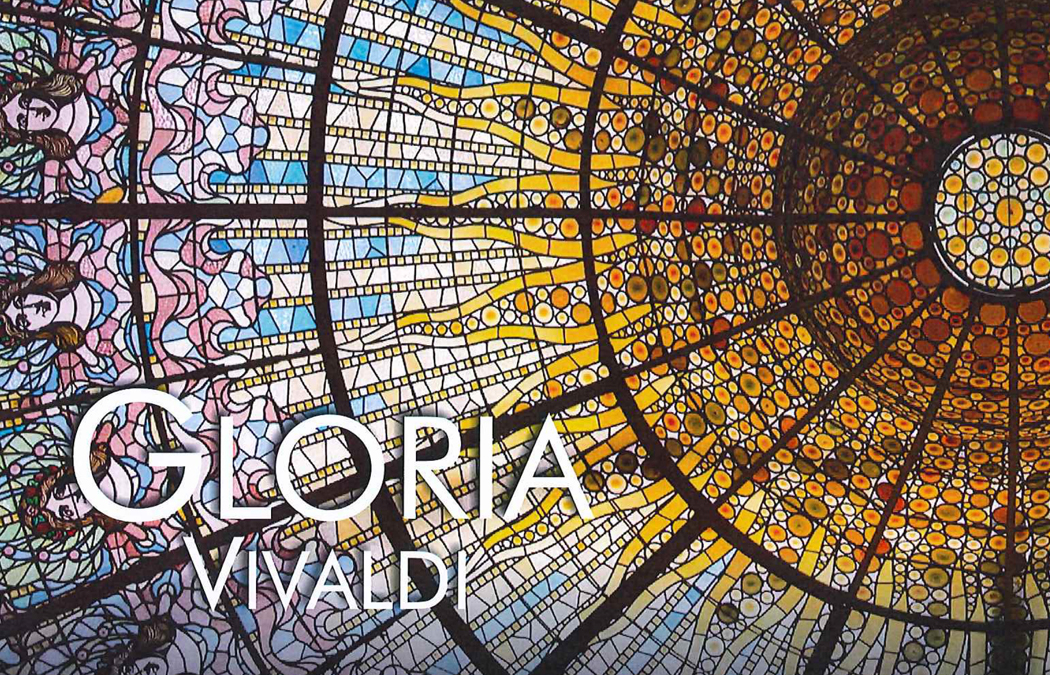
Vivaldi: Gloria in D Major, RV 589

Antonio Vivaldi (1678-1741) wrote at least three settings for the Gloria, but this one is the version everyone remembers, with its chugging motoric drive and its brassy fanfares. It is built from 12 short movements split between choral numbers, solos and a duet for soprano and contralto. 

Its catchy opening “one-TWO-three-four, one-TWO-three-four” with its octave leaps, returns later to unify the work. The Baroque era ran from roughly 1600 to 1750, although styles evolve slowly and overlap. It’s not like everyone stops writing one way and begins writing the new way. This piece, from 1715 lasts about 30 minutes and exemplifies the energetic forward motion of the Baroque. 

Alternates:

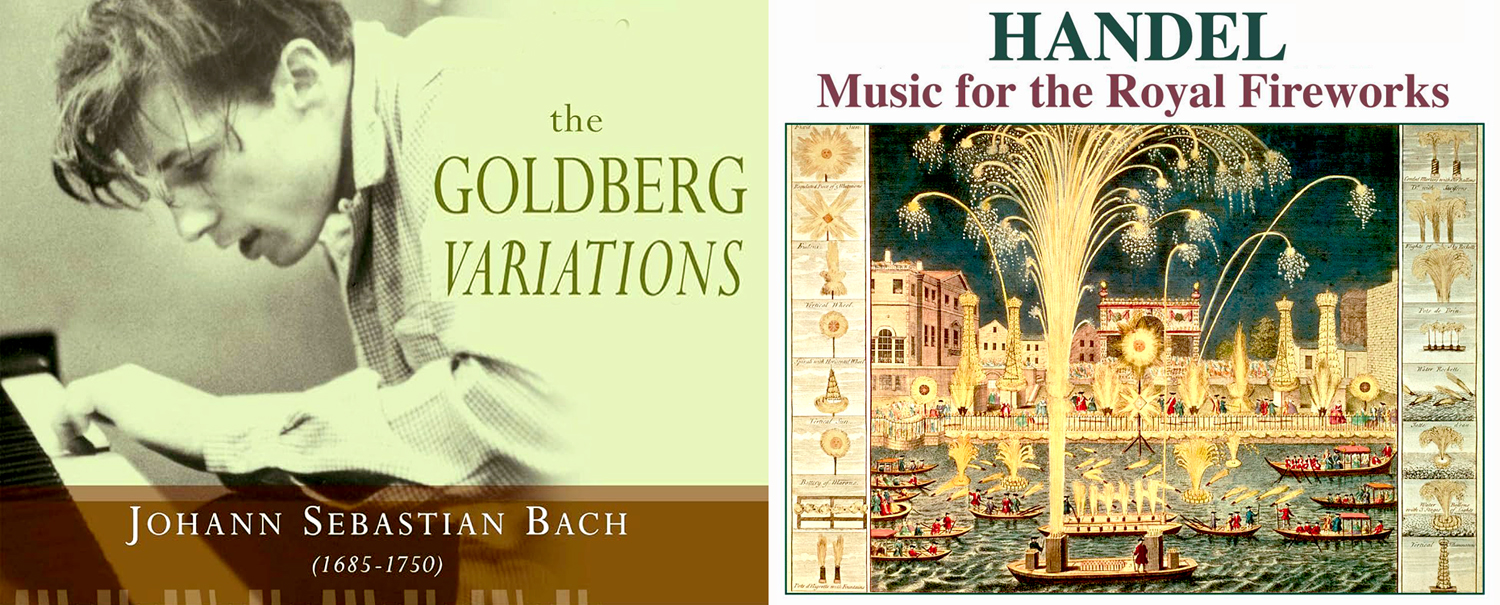
J.S. Bach (1685-1750), The Goldberg Variations (1714), a set of 30 variations on a repeating bass line, for keyboard; and George Friedrich Handel (1685-1759), Musick for the Royal Fireworks (1749), a suite for a large band of wind instruments, for outdoor performance during a famous fireworks display meant to celebrate the end of the War of Austrian Succession. The crowd loved the music, but the fireworks caused a building to burn down, blinded a soldier and injured several others. Later performances often added strings to the wind band, with no further reported injuries. 

Haydn: Quartet in D major, op. 64, no. 5 “The Lark”

It is often said that Joseph Haydn and Mozart wrote music in the classical style (roughly 1750-1828), but in fact, they created the classical style. If Haydn didn’t singlehandedly invent the symphony, he made it what we think of today; and he did the same for the string quartet — music for two violins, viola and cello. 

This is music generally less cluttered or fussy than the earlier Baroque, and seeks a kind of modest tastefulness, along with, in Haydn’s case, a witty sense of humor, as in the imitation bird calls at the start of this quartet, which was written in 1790 and has the usual four movements: an opening allegro, a dance movement, a slow movement and a jaunty finale. 

Alternates:

W.A. Mozart (1756-1791) Serenade No. 10 for 13 Winds in B-Flat, known as the Gran Partita (1781), which, in Peter Shaffer’s play, Amadeus, he has Antonio Salieri react by saying, “It seemed to me that I was hearing the voice of God.” Or Franz Schubert’s (1797-1828) Symphony No. 5 in B-Flat (1816), which is a really tuneful symphony built on Haydn’s model. 

Liszt: Piano Concerto No. 1 in E-Flat 

Franz Liszt (1811-1886) is the perfect Romantic composer, the greatest piano virtuoso of his time, and a matinee idol that all the ladies were in love with — something of which he took great advantage. His music, as in this 1855 concerto, is filled with all the wild emotion that the classical era avoided: over the top, loud, brash, and with a solo part for the triangle — it scandalized its first audiences. The jangle of the triangle was considered bad taste — but bad taste is the goal of much Romanticism. Audiences loved being scandalized. 

Alternates:

Robert Schumann (1810-1856) wrote a cycle of songs, telling a sad love story, called the Dichterliebe, or “A Poet’s Love,” in 1840, and includes a song claiming over and over, “I’m not angry,” to some of the angriest music ever. Clever. Or Bedrich Smetana’s (1824-1884) Moldau, an orchestral portrait of the Czech river (now usually called the Vlatva or Voltava), which is a perfect example of the Romantic Nationalism that swept over Europe. Great tunes. 

Debussy: Images for Piano, Book II

In the late 19th century and the 20th century before the First World War, music went through several changes. One of them is a rejection of Romantic excess, and the French composer Claude Debussy (1862-1918) came up with his own style — usually called Impressionism — of ambiguous tonality, exotic scales, and an approach to the piano that was soft and non-percussive. 

He wrote a great deal of piano music, including the famous Clair de Lune, but I’m offering the three pieces in his Images, second series (1907): Cloches à travers les feuilles (“Bells through the leaves”); Et la lune descend sur le temple qui fut (“And the moon descends on the temple that was”); and Poissons d’or (“Golden fish”).

Alternates:

Some composers went in the opposite direction, with larger orchestras, more chromatic harmonies of profound longing, in what is often called Late Romanticism, or Post-Romanticism. Gustav Mahler (1860-1911) often added voices to his orchestral music, or wrote orchestral song cycles, such as his Songs of a Wayfarer (1885). Richard Strauss (1864-1949) used huge orchestras and explodes out of the gate with Don Juan (1889), a musical version of a Don Juan more idealistic than lecherous. It is an avalanche of sound, with a huge six-horn signature that, in live performance, you feel through you fundament as much as hear with your ear. 

Janáček: Sinfonietta 

Now we are ripe in the 20th Century, and Leos Janáček’s Sinfonietta (1926), a five-movement piece for huge orchestra, including 25 brass instruments. The first movement has 10 trumpets alone, playing a hair-raising fanfare. 

All five movements are built from catchy tune-bits, extended and repeated. And although the music is clearly modernist, I’ve never come across anyone who didn’t instantly love the Sinfonietta

Alternates:

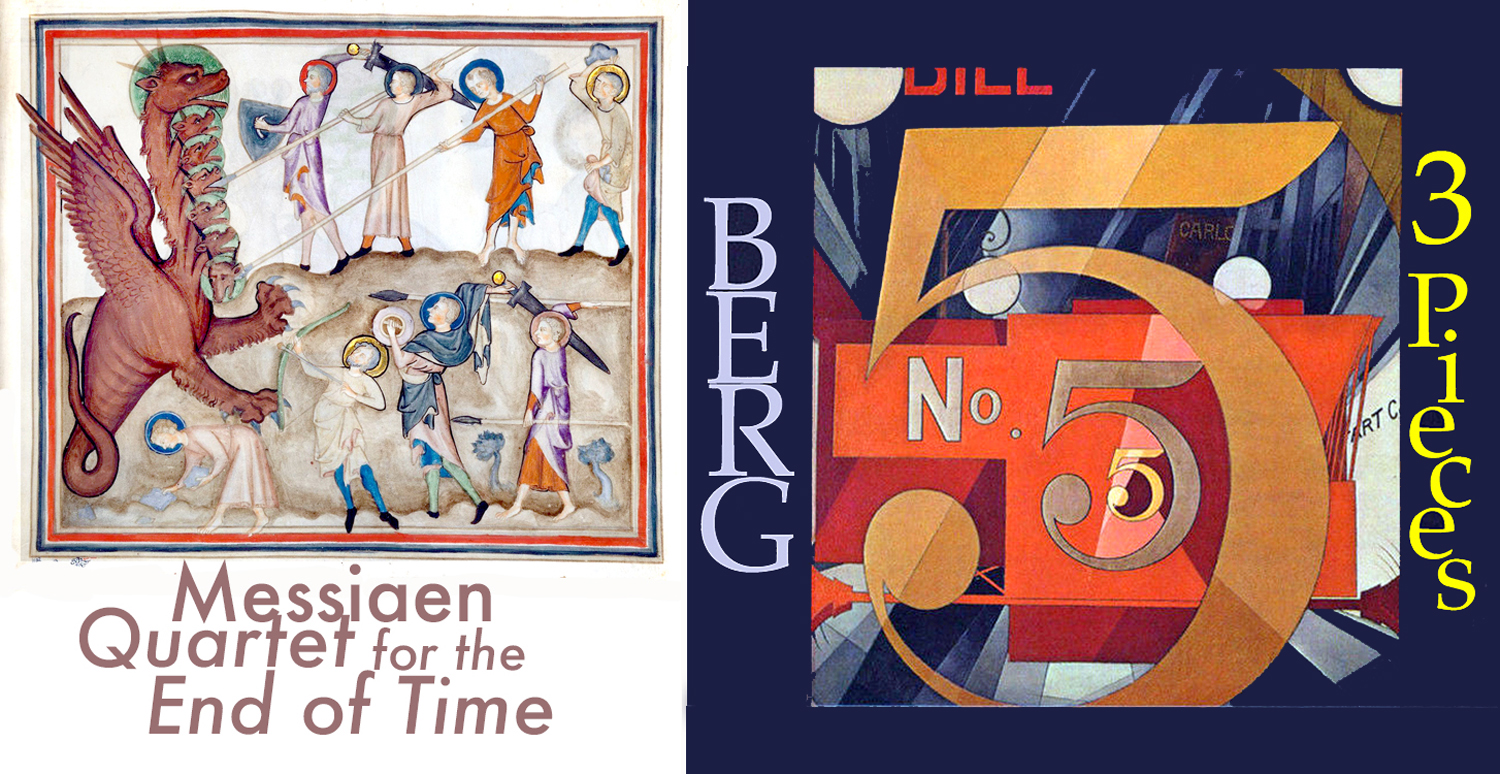
French composer Olivier Messiaen (1908-1992) was imprisoned by Nazis during World War II, and in prison camp, wrote his Quartet for the End of Time, for piano, clarinet, violin and cello (the instruments available in the camp). It is a hugely idiosyncratic piece, written to Messiaen’s own music theories, but can be overwhelmingly emotional in a good performance. And for the double-dip experience of atonal music, try Alban Berg’s (1885-1935) Three Pieces for Orchestra (1914), for something like what people used to call “modern music.” 

Penderecki: Threnody to the Victims of Hiroshima

Classical music, or art music, is still being written, and responds to life in the current world. We live in a post-Hiroshima age, and Polish composer Krzysztof Penderecki (1933-2020) summarized the feeling in his 1961 string-orchestra piece, Threnody to the Victims of Hiroshima, although you may have some difficulty recognizing it as string music made by violins, violas, cellos and double basses. It shrieks of the horror. 

It masses its 52 string players in tone clusters and dissonances, various vibratos and odd bowings, for 8 and a half minutes, that is not meant to be beautiful, but to evoke intense emotions. It is, nevertheless, beautiful. (Remembering Tom Robbins notion: “The ugly may be beautiful; the pretty, never.”)

Alternates:

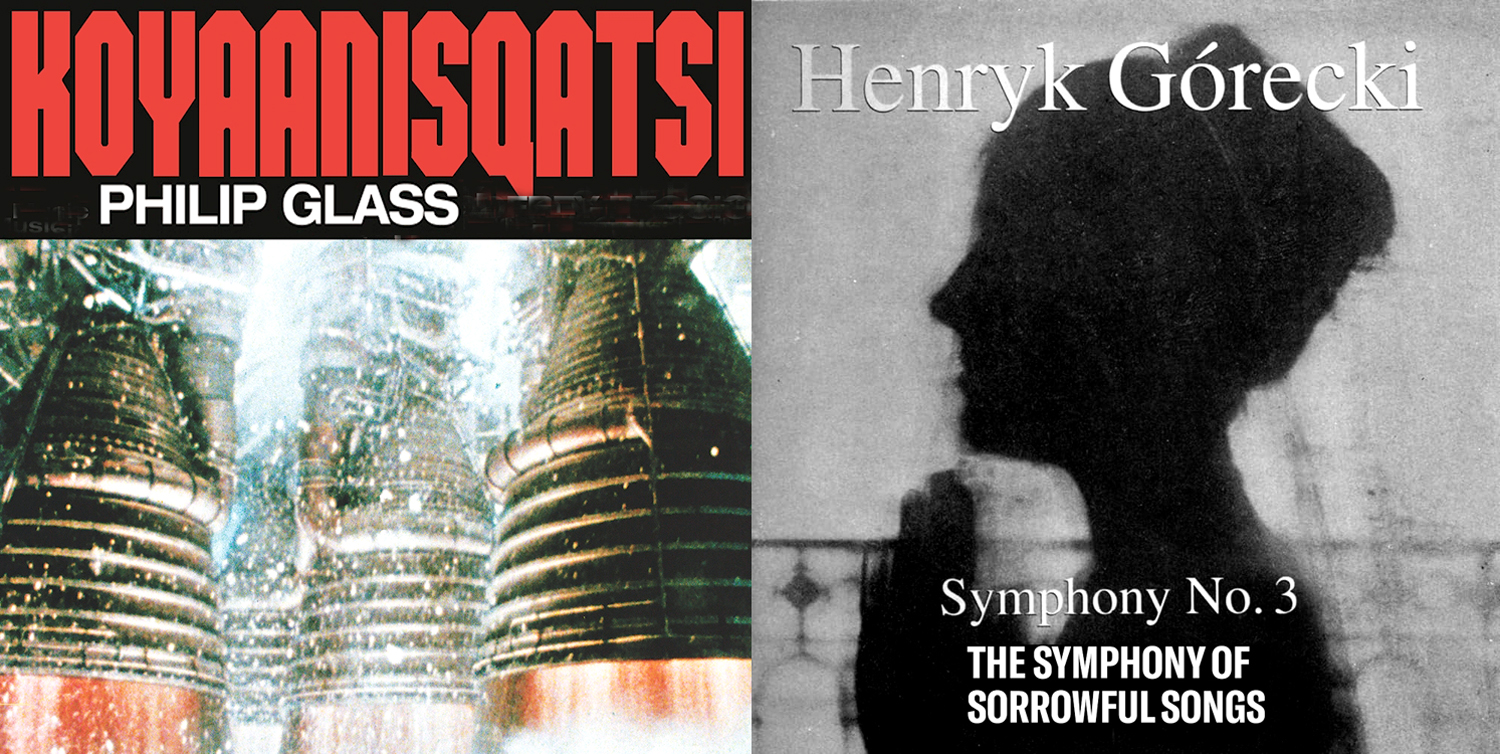
Minimalist composer Philip Glass (b. 1937) also reacts to the modern world in his film score for the Godfrey Reggio film, Koyaanisqatsi (1982). The modern world is a crazy world, as the film and music underline, but with quite a variety of minimalist techniques. The horrors of war fill Henryk Gorecki’s (1933-2010) Third Symphony (The Symphony of Sorrowful Songs) (1976), in which a soprano sings Catholic laments and words by victims of the Nazis, all to music so slow and so inexorable as to be almost a force of nature. Its 1991 recording by the London Sinfonietta sold more than a million copies. Gorecki, surprised at the popularity of such a sorrowful piece of music said, “perhaps people find something they need in this piece of music…. something they were missing. Something, somewhere had been lost to them.”

Epilogue

Of course, this diversity is among the European tradition of art or concert music. Most cultures have their own classical musics, such as the sitar or sarod music of India, the Chinese opera music, and Japanese flute music. Each is a tradition handed down from master to student and carried forth, with development and variation. That is what makes it classical. 

If I were to think of a purely American classical music, it would be jazz. It, likewise, has a wide range of styles and sounds, from Louis Armstrong through Duke Ellington and down through Ornette Coleman. 

But it is what we call classical music in the West that I am best familiar with and love. And writing this has given me the chance to listen once more to each of the pieces I’ve written about, and more joy me. 

Where I sit at my desk, typing this piece, I am surrounded by shelves filled with CDs. There are thousands of them. Eleven complete Mahler cycles (and I just ordered another). I don’t know how many boxes of Beethoven symphonies I have. I have literally lost count. Some are filed with Beethoven, some under the name of the conductor, some in my historical bin. Too much. Too much.

Henry David Thoreau famously advised “Simplify. Simplify.” And so, I’ve been cogitating, Marie Kondo style, how to reduce this agglomeration into a fine sauce, into the absolute essentials. 

And so, I decided I would pick a single composition and recording from each of the major composers and stack them up in a neat, tiny pile, figuring they would do me for the remaining years of my declining life. 

I realized, too, that I had to limit my list. There are simply too many composers out there. Do I really need Hans Pfitzner? Can I do without Louis Spohr, Max Reger, David Diamond? Surely, there is a short list of the pillars of Western art music. If not, I would make one. 

If you don’t find Palestrina on this list, or Josquin de Prez, it is not because I don’t value their work. I don’t even include Antonio Vivaldi, although I love his music and probably should include at least the Four Seasons. But I have chosen to start with Bach. He really is the fountainhead of the 250-year project we now call “classical music.” At least, those composers who followed him considered him so. 

Each of these winnowed-down composers can enter only a single work on my list, and I have chosen for each of these, a single performance to put in my “keepers” pile. 

Here are my suggestions, in roughly chronological order.

Johann Sebastian Bach — Since I want as much of him as possible on my pile, I will add the St. Matthew Passion, one of the greatest works of art ever assembled. It goes on for as much as three hours, depending on whether you’re listening to Otto Klemperer or Riccardo Chailly, who can squeeze the whole thing onto two discs. 

For my pile, I’m going with Klemperer, who brings a majesty and awe that few can match. In fact, if I had to have only a single recording on my pile, it would be Klemperer’s Matthew Passion. 

(If you find the passion too dour and downbeat, you can substitute the Mass in B-minor. I won’t complain. Klemp is good in that, too.)

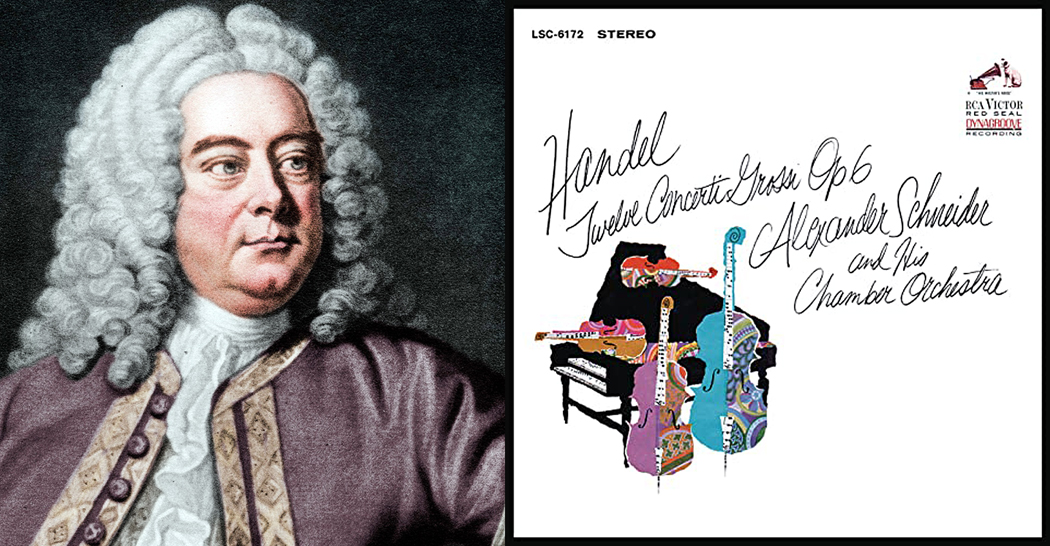
George Frederic Handel — If I can have three discs of Bach, I can do the same with Handel. I love the 12 concertos of Op. 6. They come in two forms: currently, the historically informed performance practice, bouncy, quick, staccato versions that dominate the market; and the old-fashioned warm Mitteleuropean version. No one does that anymore. 

I grew up hearing violinist Alexander Schneider in New York, and his brand of committed music making. And I have a set of his Op. 6 recordings, with a pick-up ensemble, that it horribly out of date, but glorious. Into the pile. 

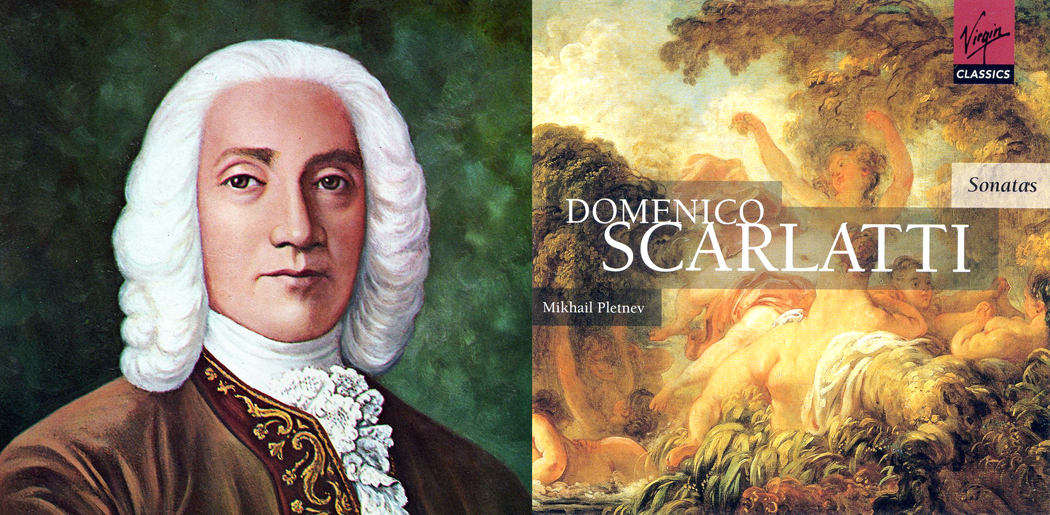
Domenico Scarlatti — On the shelves are all 555 sonatas, played on harpsichord by Scott Ross. But I hate the clangy, monotonous sound of the harpsichord and prefer my Scarlatti translated to piano. Most pianists now attempt to imitate the harpsichord by using no pedal and dry staccato. I want someone not afraid of using what the piano offers. My favorite used to be Vladimir Horowitz. He is still great. But I have since discovered an even richer performer in Mikhail Pletnev. This is magnificent piano playing. 

Joseph Haydn — Papa is hard to narrow down for me. He is one of my absolute dearest composers. But how do you choose a symphony over a quartet? Or a single symphony or quartet over all the others. Haydn’s work is so consistently excellent, it makes it hard to pick one as more essential than another. But there is The Creation. It is unlike anything else, and has the greatest sonic description of chaos ever devised. In his lifetime, The Creation was recognized as his crowning achievement. 

I have something like half a dozen recordings of it, including two by Leonard Bernstein, who had a magic sympathy with Haydn always. I will choose his second recording, with Deutsche Grammophon although I think the earlier with the New York Philharmonic is just as good. 

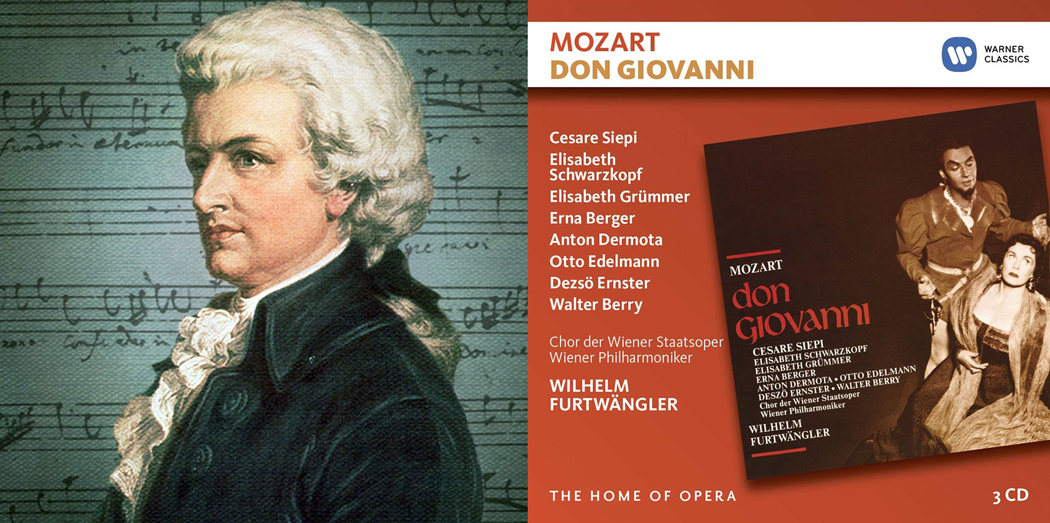
Wolfgang Amadeus Mozart — The problem with Wolfie is similar to that with Haydn: consistency. But Mozart is best in opera. I would have chosen The Marriage of Figaro — his most nearly perfect work and the world’s most perfect opera — but instead I pick Don Giovanni, which, although it sags a bit in the second act, has more emotional power and heft. 

There are many great performances, and lots by the newer, faster, punchier conductors who follow historically informed performance practice (pardon me while I spit at their feet). And my choice is the recording with Cesare Siepi as the Don, with the Vienna Philharmonic conducted by Wilhelm Furtwangler. What a supporting cast! 

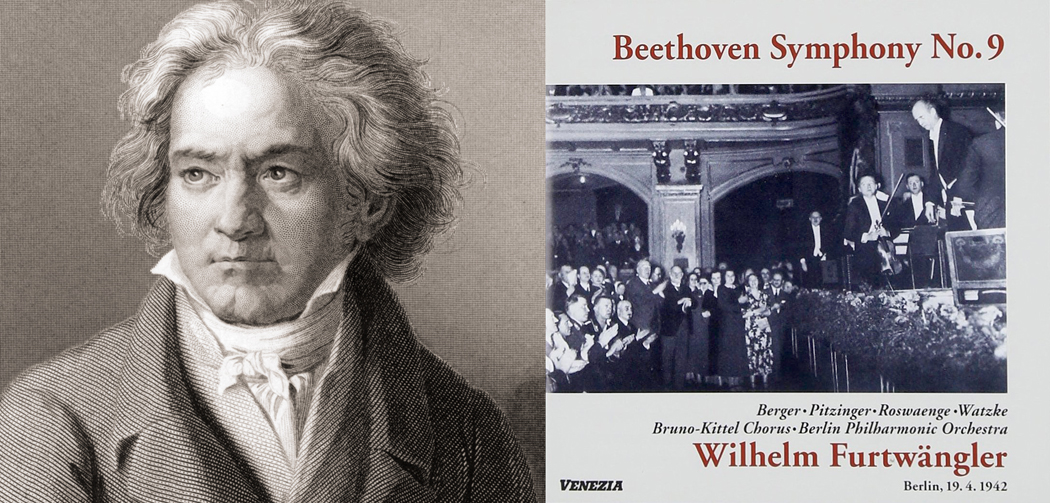
Ludwig von Beethoven — I hate to be caught out as predictable, but after considering one of the late quartets, or the Hammerklavier sonata, I realized that there is only one possible choice. I am sorry for it, but I have to pick the Ninth. If I had been really snobbish, I would have suggested the Missa Solemnis, but I don’t know anyone who really enjoys that music. Respects it, yes. Reveres it, even. But enjoys? No. But the Ninth. It was the sign over the door to the Nineteenth Century. Enter who dare. It cast a shade over the next hundred years. You wrote in emulation or reaction against. 

I’ve got to fess up to liking the first and third movements more than the second and fourth. The scherzo seems a little thin melodically speaking, and I always have to get through the first half of the finale before hitting the solid core of gold, which starts with the fugue after the Hogan’s Heroes’ march. The Adagio, though, is as sublime as music gets, and when it is done right, the first movement is a vision from Dante: If the conductor lets the tympani roar properly, the recapitulation can rouse the fight-or-flight in you. Too many conductors smooth that bit out, letting the kettle drums murmur underneath the themes. In 1942, Furtwangler unleashed his tympani in a recording that is both the greatest performance and one of the sloppiest and poorly recorded in history. You have to put up with a lot in that historical document (including knowing that Hitler was in the audience), but it is the version I put on my pile.

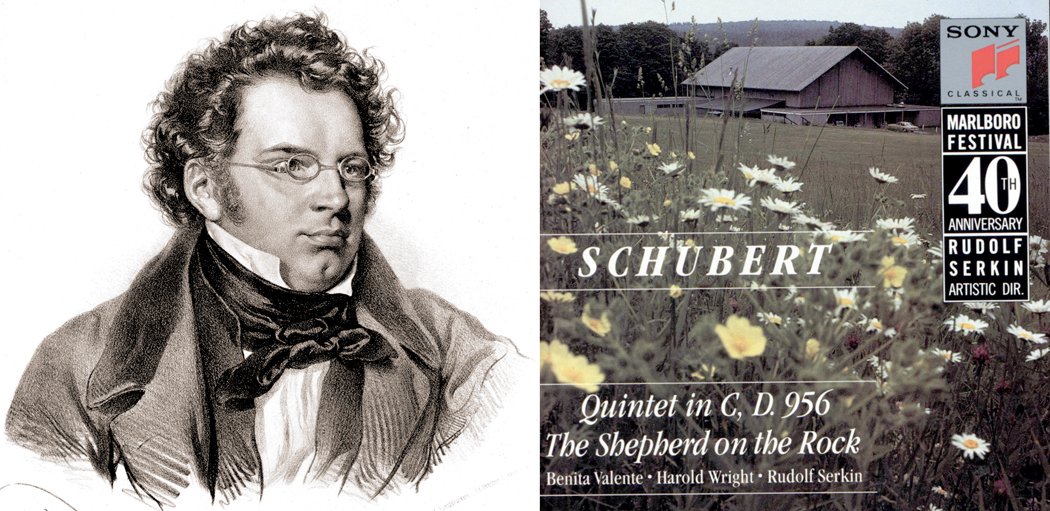
Franz Schubert — The riches are there: the Unfinished Symphony, the Trout Quintet, the B-flat Sonata, the Death and the Maiden quartet. Heck, the F-minor Fantasie for Two Pianos, the two piano trios, to say nothing of the songs, especially Winterreisse. But the most moving of all, deeply emotional and profound is the String Quintet in C, sometimes considered the greatest piece of chamber music ever — even topping Beethoven’s late quartets. That’s saying something. 

Lots of great performances, but my favorite and the one on my pile is by musicians from the Marlboro Festival. Some find it a bit over the top; I find the top cannot be gone over in this music. The disc also gives us The Shepherd on the Rock, sung by Benita Valente and so we have one of the songs, also. 

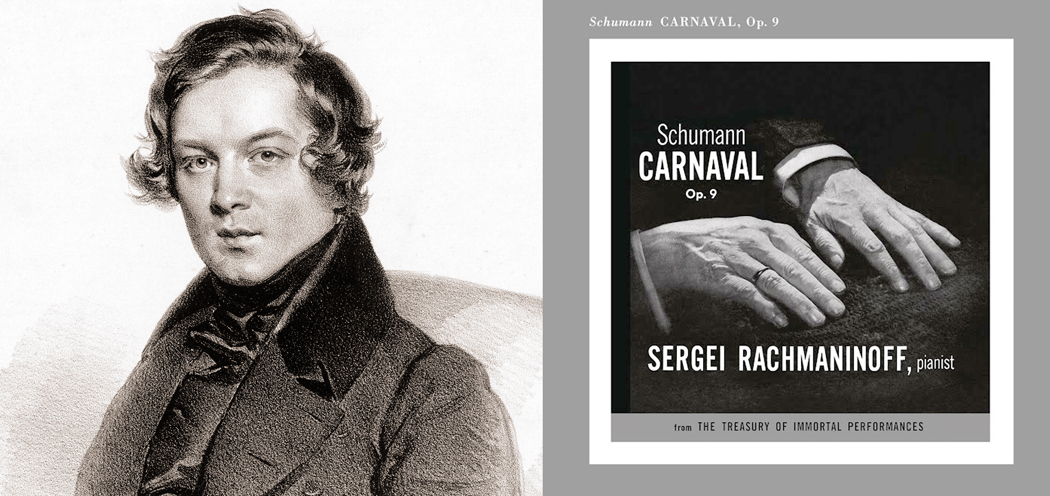
Robert Schumann — Bobbie doesn’t get a lot of props these days, and he can get repetitious. And as he aged, he became outright boring. But in his hot youth, he wrote a lot of the world’s most memorable tunes. For me, what goes on the pile is Carnaval, a series of sort-of variations, a necklace of character pieces for piano. 

There are two essential recordings of it: Artur Rubinstein and Sergei Rachmaninoff. When push comes to shove, I’m taking Rach with me. 

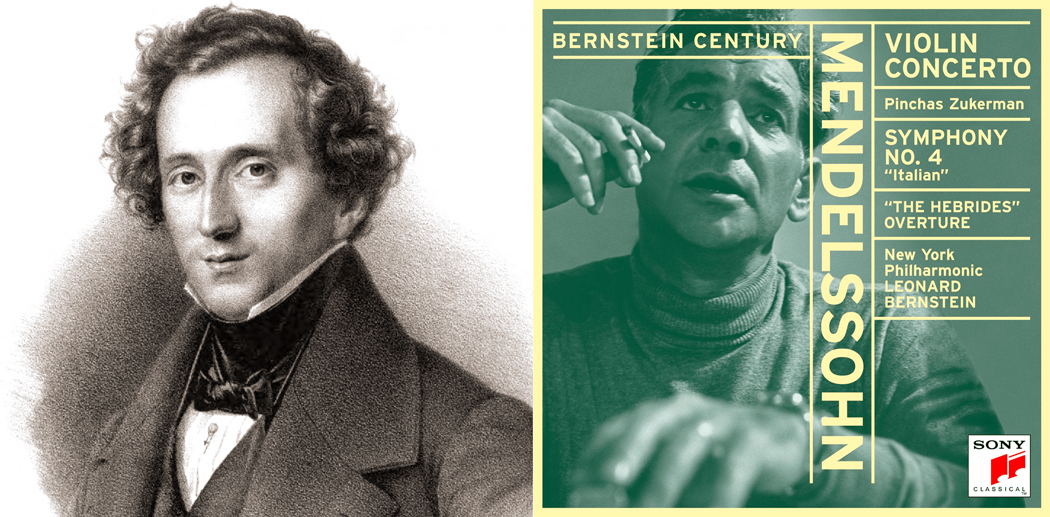
Felix Mendelssohn — My absolute favorite Mendelssohn is his Hebrides Overture, but it is too short for my pile, and so I pass by his symphonies and, god help us, his tedious oratorios, and pick the most elegant and refined of all the great violin concertos. 

I am in luck, though, because Pinchas Zukerman plays the bejeezus out of the concerto with Leonard Bernstein and the New York Phil and pairs it with the Hebrides and as a bonus, a rousing performance of the “Italian” Symphony. That’s hard to beat.

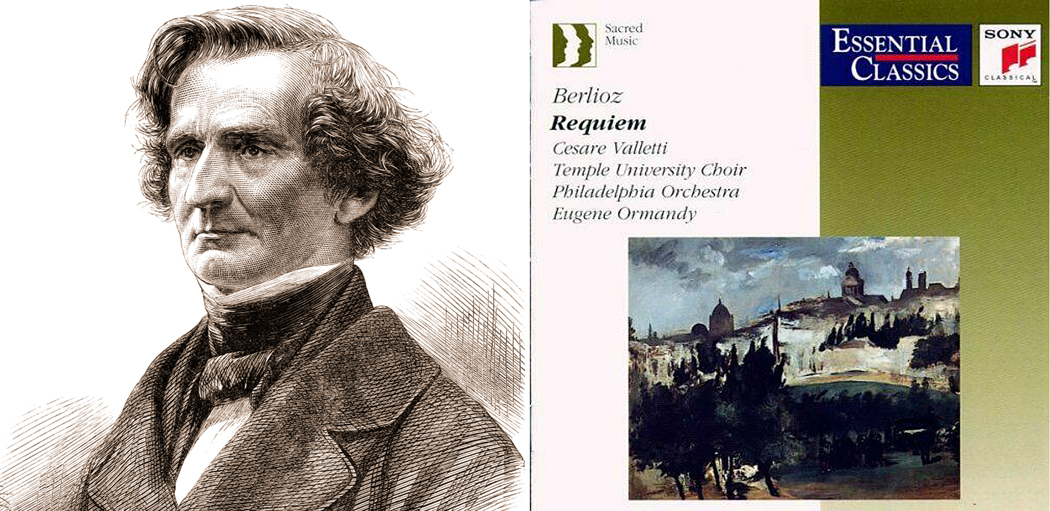
Hector Berlioz — This will probably be a controversial choice. How can you not choose the Symphonie Fantastique? It is his signature piece, and under the baton of Charles Munch, it can’t be beat. But my heart belongs to the Requiem. I love it without regard for its faults. It is ingenious, tuneful, and loud. (My college roommate’s brother used to love what he called “the loud classics,” by which he meant things like the 1812 Overture and Beethoven’s Fifth, but you can’t get much louder than the Dies Irae in the Berlioz “Wreck.” 

And there is one recording above all: Eugene Ormandy and the Philadelphia Orchestra. Too many other conductors (I’m looking at you, Colin Davis) attempt to make sense of this irrational music, to tame it and have it make sense. But Ormandy lets it all hang out, and his tenor, Cesare Valletti, is just cheesy enough. 

Frederic Chopin — This is a toughie. Chopin wrote mainly short pieces, and so picking just one would be giving him short shrift. I don’t particularly like his piano concertos, and his sonatas are fine, but what he really calls for is a program of mazurkas, scherzos, ballades, waltzes and the bunch. 

There are two contenders, almost opposite poles apart, interpretively, but they are the best at getting the spirit of Chopin. Most modern pianists are too dry and all seem to hate the pedal. The older Chopin tradition is closer to what the composer wanted. One could choose the 10-CD box of Artur Rubinstein Plays Chopin, which is a delight. But it is made of his later, stereo recordings, and his older mono ones were more idiosyncratic. Still, it is a great box. But on my pile goes Vladimir Horowitz: The Chopin Collection, with seven CDs. Volodya has all the snap and jump that sit in the music waiting to spring out. It’s a close call. The Rubinstein is more complete, but Horowitz is the only pianist who has ever taken the measure properly of the Polonaise-Fantasie, and so, I’m going with Horowitz. 

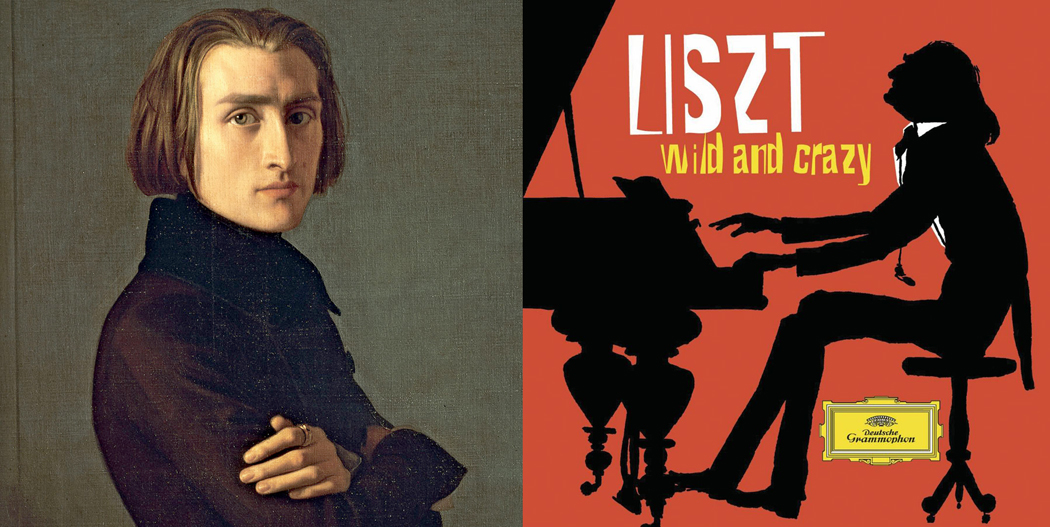
Franz Liszt — Like Chopin, Liszt is best in the shorter to medium size pieces. I’d want a compilation.

The best Liszt pianist going is Valentina Lesitsa, who understands that Liszt without the theatrics is not really Liszt. Those pianists who try to extract the “music” from the glitz only destroy the essence. The problem is that Lisitsa has not released a really good single Liszt disc; the best is spread out on several. No one does the second Hungarian Rhapsody with as much schmaltz as she does. She is great. But, I have to choose, and so, I’m going with a great 2-disc compilation on DG called Liszt: Wild and Crazy, with the works spread out among more than a dozen great pianists. 

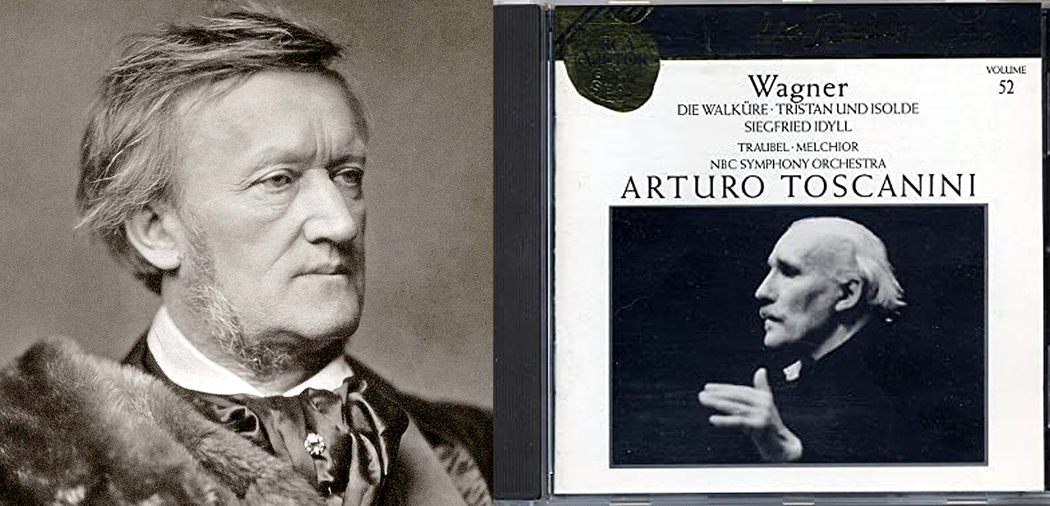
Richard Wagner — Oy, Wagner. This is a kind of classical music Everest, not just because the music is great, but because it takes a mountain-climber’s stamina. To a true Wagnerite, the music is transcendental, mythic, epic. To the not-so-convinced, it can seem bombastic, never-ending, and pretentious. I’m with the first group. I’ve attended two full Ring Cycles live, and own six cycles on disc. So sue me. 

But I’m not going to take all that with me, and so, Kondo-style, I will divest and choose a single disc. Each of Wagner’s operas contain longueurs, segments of what can seem like filler, as the story is rehashed once again. But the first act of Walküre is a perfectly enclosed whole, musically. Arturo Toscanini recorded Act 1, scene 3 with Helen Traubel and Lauritz Melchior that is, for me, the perfect Wagner recording. The disc also includes the Siegfried Idyll and the Prelude and Liebestod from Tristan und Isolde

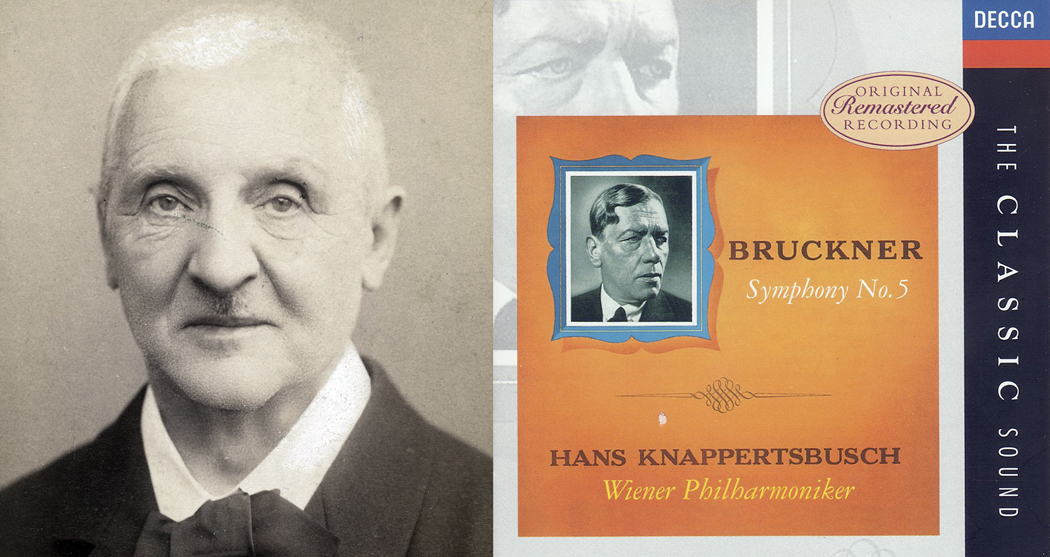
Anton Bruckner — Sometimes, it is hard to tell one Bruckner symphony from another. He had one tone, one message, one purpose in all his music. Symphonies Four and Seven are the easiest to love; Eight is the longest and most sublime; the unfinished Nine is profound. But if I choose just one, it will be Symphony No. 5 in B-flat. It has that fugal finale, and a first-movement ear-worm that you will carry with you for life.

And my recording of choice is with Hans Knappertsbusch and the Vienna Philharmonic. No one gets Bruckner quite like the quirky Kna. The disc also gives us Wagner’s Dawn and Rhine Journey, and so we get to cheat a little on our Wagner. 

Johannes Brahms — OK, this is painful. Old beard-face is very close to my heart. I’m going to want to add to my pile the DG box of “Complete Works,” but that would be cheating. Brahms is the greatest composer of chamber music since Beethoven and Schubert, and no one has equalled him since. His symphonies and concertos are top tier. But the music that moves me the most, that I could not live without, for it provides me with the deepest consolation is his German Requiem. “Denn alles Fleisch es ist wie Gras.” It is the most human, compassionate, loving music I have ever heard. I weep just remembering it. 

The greatest performance ever recorded, by general acclamation, is that of Otto Klemperer, with the Philharmonia and Elisabeth Schwarzkopf, Christa Ludwig, Dietrich Fischer-Dieskau, and Ralph Downes. I’m putting on top of my pile, so I can reach for it first. 

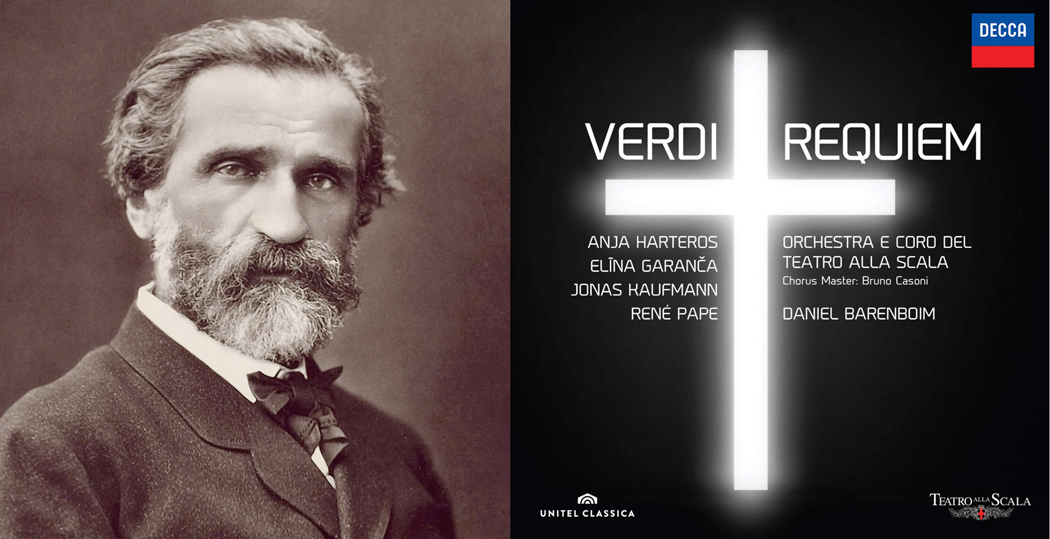
Giuseppe Verdi — I’m afraid am giving opera the short stick in this selection. I shouldn’t. And Joe Green is going to take a beating here. Because, although I would love to add Otello or La Traviata to my pile, I’m going to choose instead his Requiem. It is operatic, after all. 

Into the pile goes my Barenboim version, with the La Scala orchestra and chorus and Anja Hareros, Elīna Garanča, Jonas Kaufmann and Rene Pape. It is stunning. 

Antonin Dvorák — After Haydn, no composer has been more mentally and emotionally sound and hale than Dvorak. And that has translated, as with Haydn, into a remarkable consistency of quality across genres. You pretty much can’t go wrong with him. I’m going to go against the grain, here, though, and not choose the cello concerto or the New World Symphony, but an old Columbia box of the two piano quartets, the piano quintet and the lovely bagatelles for two violins and harmonium with the Juilliard Quartet and pianist Rudolf Firkusny. This recording is a delight.

Piotr Ilich Tchaikovsky — When I was younger, there was a prejudice against Tchaikovsky. My generation preferred irony and detachment. Tchike was all heart-on-sleeve. And besides, he wasn’t German, which meant he didn’t build his symphonies out of tiny germs of thematic material, like Brahms. We were too sophisticated for Tchaikovsky. We were, of course, stupid. Tchaikovsky was a great composer, a brilliant orchestrator, and put more of himself into his best music than almost anyone. For my pile, I’m going to pick his Sixth Symphony, the “Pathetique.” Everything about it is brilliant, emotionally deep and how can you not love the five-beat “waltz?” 

The performance I choose is Bernstein’s from 1987, with the New York Philharmonic, on DG. It is nearly an hour long (most performances run 40-45 minutes), and with anyone else, that slowness would dissipate all the forward motion of the music, but Lenny manages, even at the crawl, to keep the drive going, and the emotion he wrings from the performance is sui generis. Not to everyone’s taste, but it makes the music an experience, not just a pleasant listen. 

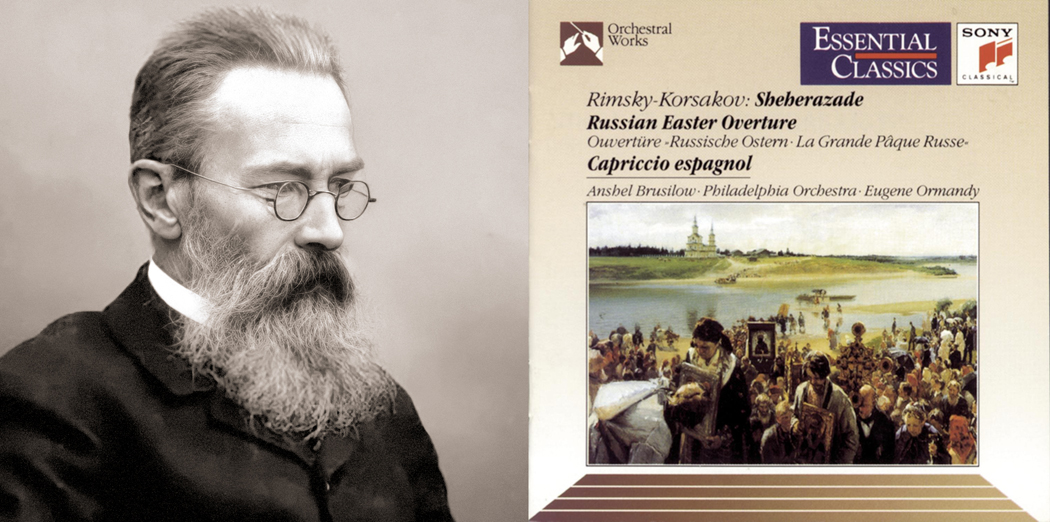
Nicolai Rimsky-Korsakov — I can’t live without Scheherazade. It is Rimsky-Korsakov’s greatest bit of tune-making and orchestrating. It is lush and washes over your ears like gentle surf. 

There are some great performances, including Beecham and Stokowski (I have both), but the one I’m gonna keep is Ormandy and the Philadelphia Orchestra, not only because it is a delicious recording, but it also includes the most joyous Capriccio Espagnol and the Russian Easter Overture, making it a Rimsky trifecta. 

_______________________

This takes us up to the end of the 19th Century. In the next piece, I’ll clean out my 20th and 21st century clutter.

If you were to name the greatest composers in the Western musical tradition, three or four names would come up uncontested.

Yes, you might have your favorites beyond these, and good arguments can be made, but by consensus, you would have to name Johann Sebastian Bach, Wolfgang Amadeus Mozart, Ludwig van Beethoven and …

Bach, because he is the source. He towers above everyone in his emotional power and technical brilliance. Different composers can fill the needs of various moods, but you can listen to Bach in any mood. He is universal.

Mozart, because no one ever had such fluency of expression or more immediate melody. Music seemed to grow from him like peaches from a tree.

Beethoven, because no one ever strove higher or struggled more painfully to find the exact note, the exact emotion, the exact nexus of human and transcendent.

And …

You might nominate Richard Wagner, or Franz Schubert. Johannes Brahms or Claude-Achille Debussy. Stravinsky or Schoenberg. All good choices, in their way, but the name that comes up more than any other as worthy of the company of Bach, Mozart and Beethoven is Franz Joseph Haydn, yet he is so often overlooked. His name does not spring up with the alacrity of the Big Three, but is almost always mentioned: And yes, there is Haydn.

Why is he given such short shrift? He is one of the Big Four. He practically invented the symphony and the string quartet; at least gave them the form we have encountered them ever since. And the wealth of his invention is mind boggling. He wrote 104 symphonies (depending on how you count), with almost as many minuets and yet, not one of those minuets  could be mistaken for any other. How can you create that many third movements and yet make each one emotionally, melodically and rhythmically distinct? And memorable.

His music has never left the repertoire, but is so often played as a warm-up piece to start a quartet recital, or tucked into a symphony program before the Big Piece after the intermission. We pay him lip service, but seldom really listen. Mostly, he is a pleasant bit of music before we have to wake up for the Mahler or Sibelius that will follow.

I believe the reason is that for many of the more popular composers, you don’t actually have to listen: You can let the music wash over you in emotional colors and flavors. You just float downstream with the tunes. (I don’t mean that if you do actively listen, you won’t find a logical argument, but that for most concertgoers, the musical argument is beside the point; Tchaikovsky swells your heart whether you recognize a sonata form or a polonaise).

But Haydn is music meant to be listened to actively, because what he does in his work is to give you a pattern of notes, and then take you on a journey of wit, through the permutations afforded by that pattern of notes. Your ability to follow all the clever things he does is the key to your understanding — and your pleasure. Yes, there are some good tunes, but they are the grist for his art, not the point of it.

Certainly, all good composers do this, but none to quite the degree you find with Haydn, or to quite the point. Through most of his career, he wasn’t writing for the common public, but for a sophisticated audience, who could follow his clever construction and deconstruction of the sonata form, or the variation form. In other words, they listened actively. I.e., they got the joke.

Nikolaus I

His boss through most of his time at the Esterhazy estate was Prince Nikolaus, an avid music lover and himself a performer on the baryton — a now obsolete instrument, a sort of combination cello and guitar. Haydn wrote 126 trios for his employer to play on that instrument.

Because the prince was musically knowledgable, his court followed suit, and it meant that Haydn could inject his music with many a musical in-joke his audience would enjoy. I use the word, “joke,” but that doesn’t mean they are meant to be overtly funny. No, the “joke” was some catch or punchline the audience was meant to pick up on, like an odd key change, or the turning upside-down of a them. Some of them are funny, but the point is the wit — the cleverness.

Wit is a word that meant something different, larger and more important in the 18th century than it does now. We tend to use the word as synonymous with “comedy.” We expect to laugh at wit. A witty saying, a witty remark.

But in the century of Haydn (and before, to some extent), wit was an entire class of thinking. It meant, as Sam Johnson expressed it, “a kind of discordia concors; a combination of dissimilar images, or discovery of occult resemblances in things apparently unlike.” Or in his other formulation: “The most heterogeneous ideas are yoked by violence together.”

An easy example: his Symphony No. 60 in C, called “Il Distratto,” or the absent minded, or distracted. The first movement is a pile of jokes, from the very first notes: a pompous introductory fanfare that goes absolutely nowhere, followed by a spritely tune. In Haydn’s style, a first theme is usually followed by a second theme in a contrasting key and mood. But here, the second theme also goes nowhere; it consists of just one note and its ornaments, over and over, losing speed and energy until, as if the orchestra has forgotten where it is and what it is doing, suddenly wakes up and charges ahead with renewed energy. (Link here).

The conductor Kenneth Woods describes it as funny and modern. “Possibly the funniest and most modern symphony ever written”, going on to say that “Haydn uses most of the 20th-century ‘isms’ in this piece—surrealism, absurdism, modernism, poly-stylism, and hops effortlessly between tightly integrated symphonic argument and rapid-fire cinematic jump-cutting. This is Haydn at his absolute boldest—he undermines every expectation, and re-examines every possible assumption about music.”

And at the very end, the orchestra stops, mid-phrase, and retunes the violins, before getting back to business. Yes, that is musical slapstick, but no one did it any better before PDQ Bach.

Or the finale of his Symphony No. 61, a sprightly prestissimo punctuated throughout by comic oboes playing the same two notes over and over again. Never changing; over and over. Da-dah. (Link here). Da-dah. (Click on the timing listed in the dooblydoo for the last movement).

Or the opening of final movement his quartet, Op. 76, no. 5, which places the kind of cadential chords used to punctuate the end of a movement instead at the very beginning. (Link here). And, of course, the movement ends with the same final chords.

Fugue theme, Symphony No. 70

My favorite is the finale of Symphony No. 70, which begins with a joke: Five repeated notes, quietly played, repeated several times, lulling you into a reverie, then, the same five notes blasted at full volume, waking you up. It does this again, and you figure, this is going to be one of Haydn’s great jests, then, just when you think you have it figured out, a great, furious and very serious fugue breaks out, occupying the center of the movement. Finally, back to the five-note joke, ending with a forte crash of those notes. Light-hearted, or deadly serious — you can’t tell. (Link here). That is yoking heterogeneous ideas together by violence.

But it all depends on an audience with some knowledgable expectation of what is likely to happen, so when it doesn’t, it comes as a delightful surprise. If you don’t have this background, it just becomes pleasant tunes.

The string quartets came with a knowledgable audience built in. They were not meant so much to be heard by an audience, as played by amateur musicians at home, and so the pleasure in them is as much in the playing as in the hearing. And the wit is there for the musicians to enjoy.

When Prince Nikolaus died, Haydn was freed to travel and make his reputation outside the estate. His music became more public, and instead of his symphonies being made up of cleverness piled on cleverness for the delectation of connoisseurs, he made them bigger, louder and gave each one at least one great joke for the middle-class audiences to remember, like the most memorable scene from a movie they could talk about over coffee after it was over. So, there is the tympani bang in the “Surprise” symphony, the Turkish military band in Symphony No. 100, the tick-tock in his “Clock” symphony and the righteous, bumptious fart joke made by the contrabassoon in the slow movement of his Symphony No. 93.

This is not to imply that Haydn was all punchlines and gags. There is great depth of emotion in many of his works. Take for one, the Seven Last Words of Christ, a liturgical piece, originally for orchestra and later turned into a piece for string quartet (the version most often heard today). It is eight great adagios, one after the other, meant to evoke an introduction and the last seven utterances of Jesus on the cross (Link here). It is Haydn’s genius to be able to write them so distinctly that you never have the feeling of one long slow piece, but rather seven great, separate meditations.

Or, the Piano Variations in F-minor, written over the death of his closest female friend, Maria Anna von Genzinger, one of his most sober compositions.

Sometimes Haydn’s wit is funny. Sometimes, it is profound. It is always surprising. It is meant to surprise.

And Haydn’s wit can be found in some of his most serious works. The opening of his oratorio, The Creation, depicts primordial chaos in a disjunctive series of phrases and fragments in disparate tonalities (Link here). And when, after that, the choir sings, very quietly, “And God said, let there be light, and there was …” all heavens break out in trumpets and kettle drums  in a great C-major chord” “LIGHT!!!!” (Link here). It is a simple, even naive effect, but in live performance can make the hair on the back of your neck stand up. Wit can also render the sublime.

Of all the great composers, Haydn seems the most sane and even-tempered. Bach could bluster to city officials and get into fights. Mozart could squander his money. Beethoven had his heaven-storming bouts of choler. But Haydn found decent happiness on this earth and expressed in his music a satisfying sense of order and sanguinity, if occasionally a touch of mischief. His is the happiest music I know that is not also simple-minded.

I spend this much time on Haydn, because I love him. As I get older, I find that Haydn’s music has a staying power that sustains me. I can confidently turn to any piece and find deep and abiding pleasure.

Tallulah Rose

Tallulah Rose

I have an interesting “contest” going on with my granddaughter, Tallulah Rose. She is 16 and immersed in music, taking guitar, piano and banjo lessons; she has some genuine talent. When I chauffeur her around on those occasions when I am called on, and am playing some Bach or Beethoven on the car CD, she is apt to say something like, “Classical music is so boring; it all sounds the same.” And, of course, when I hear her listening to pop music on her iPad, my reaction is the mirror: Pop music is so boring; it all sounds the same. So, I scratch my head and wonder.

How can something sound so monotonous to me and not bore her to tears? How can something so varied and glorious as classical music possible sound to her as if it is all the same gluey mush? It is more than a question of taste; we are clearly hearing different things.

Most people are likely to think of this as merely a matter of taste — “I like indie rock, but she likes country,” —  and it is, to some degree — but while someone who likes Taylor Swift may say they don’t like Justin Bieber, they recognize it as merely a different genre of pop, and they wedge into their corner of sound comfort. Is there anything more insular than heavy metal?

But classical music doesn’t seem to function to Tallulah Rose as just one more Billboard magazine chart category, like soul or country-Western or hip hop. Those are all options out there for popular consumption and one chooses the category one feels most simpatico with.

But classical seems to be a different species altogether. It isn’t, for its serious listeners, just one more entertainment option. Its goals are elsewhere.

Modest Mouse

Modest Mouse

Tallulah Rose and I thought we might explore this question. She suggested an exchange. She would choose 10 pieces of pop music for me to listen to and I would choose 10 pieces of classical music for her. Tallulah Rose isn’t one of your ordinary junk-music fans: She has high standards for her music and would consider the bands she has chosen for me to be “art,” or at very least music that no one of any musical sophistication would be embarrassed to be heard listening to. She has excellent taste in her music. She picked for me music by Wilco, Vampire Weekend, Arcade Fire, Modest Mouse and Death Cab for Cutie, among others. I was to listen to her music and write about it, and she was to do the same for my choices.

What T-Rose chose for me:

1. Jesus, Etc. by Wilco
2. Australia by The Shins
3. Hannah Hunt by Vampire Weekend
4. Ragged Wood by Fleet Foxes
5. Wake Up by Arcade Fire
6. Young Folks by Peter Bjorn & John
7. Little Black Submarines by The Black Keys
8. This Charming Man by The Smiths
9. Missed the Boat by Modest Mouse
10. Dance Yrself Clean by LCD Sound System
Bonus track: Title and Registration by Death Cab for Cutie

In choosing music for her, I felt it only fair that I not bury her under the Bruckner Fifth or the Mahler Third, but try to find pieces of reasonable length, and I chose several movements instead of whole concertos or symphonies. Her music for me tends to run between 3 and 5 minutes. Here is my list for her (She snuck in an extra for me, so I added one extra Mahler track for her):

1. Gabrieli — Canzon Septimi Toni No. 2 for brass choirs
2. Bach — Prelude and Fugue in c-minor from WTC Book 1
3. Mozart — First movement of the Piano Concerto No. 20 in d-minor
4. Beethoven — Third movement from the “Tempest” sonata, Op. 31, no. 2
5. Chopin — Mazurka Op. 30, no. 4
6. Brahms — Finale of the Fourth Symphony
7. Mahler — Two songs: Wer hat das Liedlein erdacht? from Das Knaben Wunderhorn and Ging heut Morgen ubers Feld from Songs of a Wayfarer
8. Rachmaninoff — Finale from Piano Concerto No. 3
9. Villa Lobos — First movement from Bachianas Brasileiras No. 5
10. Copland — Fanfare for the Common Man

I have listened four times through to all of T-Rose’s music and I can say that none of them is musically unsophisticated, but neither can I say, outside the LCD Sound System’s Dance yrslf Clean, which actually does something with the music,  that they engage my deepest sympathies. Again, I am convinced that my music and hers simply are not attempting the same thing.

For a start, her music’s appeal depends greatly on the lyrics. Even when I read rock criticism in, say Rolling Stone, the criticism is less about the music qua music, and more about the quality of the words. The sentiment expressed is expressed verbally, not musically. (More on lyrics later).

Second, the parts of music that seem most treasured by the rock and pop listener is a consistent beat, often aggressively propulsive. Following that, it is a melody — although in contemporary pop music, melody sounds more like chant than tune — prosody is so slipshod that the same melodic note can sustain a single syllable or three or four, if that is what the words demand.

Johannes Brahms

Johannes Brahms

For my classically oriented ear, the unrelenting rhythm is monotonous; I keep hoping it will lead to something, but it doesn’t. For my ear, harmony is paramount. I am always aware of it, shifting from major to minor, or to a Phrygian mode or the endless unresolved but constantly yearning dissonances of atonal or serial music. I am always aware — more than the melody at the top of the orchestral heap — of the bass line. I remember Brahms saying when he got a new piece of music to look at, he’d cover up the top staves and look at the bass line. That way, he said, he could tell if the music was good or not. When I listen to popular music, the bass line is generally undistinguished, often repetitive, and rather more in the way of a continuo — a second reinforcement of the beat slammed out by the drums and cymbals.

When I say her music and mine are not doing the same thing, I mean, in part, that the music part of her music is meant to be a place to drop her head into for a few minutes, to grok on a pulse, while the verbal part is there to express, often elliptically, the concerns of a young mind. At worst, in the kind of pop music T-Rose wouldn’t be caught dead listening to, those concerns are numbingly conventional, but even the more sophisticated lyrics speak to the exaggerated optimism or cynicism of adolescence, the need to be appreciated as wise and knowing, even when those of us who have been through it already, now recognize those attitudes as pose.

angry young men

Slight digression: The question of pose is most obvious in the many band photos used for PR or for CD covers. The musicians look so serious and world-wise: You can’t put anything over on them. But you can run through hundreds of photos and they all seem to be the same people: surly faces, collars drawn up, hands in their pockets standing in a warehouse district street to prove their working-class origins. One can’t help recognize the same memes from the Angry Young Men of England in the 1950s and ’60s. It’s as if every band has seen photos of John Osborne and wants to be Richard Burton from Look Back in Anger or Tom Courtney from Loneliness of the Long Distance Runner. The straight-jacket of the meme is limiting.

Vampire Weekend: More hands in pockets

Vampire Weekend: More hands in pockets

Back to the main issue: The music of rock and pop seems meant to create a pervasive mood throughout the length of a song — and except for a few experiments, all this music falls into the 3 to 5 minute song form.

Classical music, on the other hand, revels in contrast: The tempos keep changing, vigorous first themes alternate with quiet second themes. An established key center is disrupted by a series of wrenching modulations only to be reaffirmed. Instead of a single simple emotion, there is a constant development of emotions. When I find T-Rose’s music boring, what I mean is it doesn’t grow — but then, it’s not meant to. And one of the things she finds boring in my music is that it never settles down into something she can depend on, to give her that one single, clear emotion she wants from her tune.

Another thing: For her music, as I said, the words are paramount. The music behind the words seems to function more like the music in a film: to underline the sentiment, but not to express it directly. Something interesting to hear while the “real” action is happening in the words. For my music — at least for the big 19th century pieces that make up the bulk of the repertoire — the music attempts to make an argument from start to finish, like the slow shift from c-minor to C major in Beethoven’s Fifth, or the chapters of Mahler’s Third, “What the fields tell me,” “What the birds tell me,” “What love tells me.” It works like an opera, telling a story — musically — from start to finish. To hear its meaning, you have to be aurally sensitive to changes in harmony, in orchestration, in dynamics, in the ways the themes change and grow. The way you hear the E-flat arpeggiated tune at the beginning of the Eroica changes from a closed-off, harmony-denying drop to its D-flat in the third bar to that bright, victorious arpeggio in the recap and coda, where the same tune ends on the upper B-flat dominant that seems to rise above all the violence and disaster of the previously heard music. Classical music is about development; pop music seems to be about stasis.

Arcade Fire: yet again -- hands in pockets

Arcade Fire: yet again — hands in pockets

I write as if I think classical music is superior to pop music — and I would be lying if I didn’t fess up to that prejudice — but that is not what I’m writing about here. Rather than argue that one music is superior, I’m saying their goals are so different, so at odds, that it is almost silly to compare them at all. One might as well compare apples to double-entry bookkeeping.

But I wanted to note something interesting about the words in the music T-Rose gave me.

The conventions of prosody have shifted dramatically. In the “old days” — as recently as the Beatles — words were written as poetry and scanned with regular meter, and carefully crafted to fit the tunes. In this, Paul McCartney and John Lennon were no different from Oscar Hammerstein II. Think of such lyrics as, “I once had a girl, or should I say, she once had me.” Every accented word drops on every accented note, with the weaker beats hitting off-beats in the tune. A comfortable fit. The same with “Some enchanted evening,” or “I’m gonna wash that man right outa my hair.”

“Blackbird singing in the dead of night…” or “You should see Polythene Pam, she’s so good lookin’ she looks like a man.”

Even the Rolling Stones followed the conventions: “I see the girls walk by dressed in their summer clothes; I have to turn my head until the darkness goes.”

This is what Robert Frost would call playing tennis with a net.

Playing with the net can bring delightful surprise and pleasure. Think of, “In olden days a glimpse of stocking was looked on as something shocking, now heaven knows, anything goes.”

Words and music: Hand in glove.

But listen to the songs T-Rose gave me, and something different is happening: First, the words don’t scan; they are more like snippets of prose. Some words have a strong beat, others fit in the space between, no matter how many or how few syllables. They just cram into whatever space is left for them.

Death Cab for Cutie

Death Cab for Cutie

The song is designed around a short, repeated pattern of notes that are memorable, or are meant to be memorable. The words fill in the interstices and the music is a mortar between the word-bricks. (This method would seem to derive from the blues, with its statement and licks, but they no longer follow the 12-bar harmonic pattern of the blues).

“You’ll be damned to pining through the windowpanes,/ You know you’d trade your life for any ordinary Joe’s,/ Well do it now or grow old,/ Your nightmares only need a year or two to unfold.”

There’s no regular rhythm to the words. But over and over in these songs, I do hear a pattern, and it is a surprising “revenant” from the past: It is the pattern of Medieval English verse — the four-beat line split in half with a caesura, or pause. Like The Seafarer or Piers Ploughman, the lines come with heavy stresses counted, but unstressed syllables come willy-nilly, and always that pause in the middle.

“I looked on my left side (pause) as the lady me taught
and was aware of a woman (pause) worthily clothed.”

Think of the line by Pope: To err is human; to forgive, divine.”

Then try these lines from Ragged Wood, by Fleet Foxes:

“Come down from the mountain (pause) you have been gone too long
The spring is upon us (pause) follow my ornate song.”

If Norwegian Wood had been written by Wilco, no doubt its words would be something like: “I got a girl (pause) She had me.”

(I doubt this is in any way a conscious or even unconscious DNA reappearing in pop music from the distant past, but rather that there is something meaningful in such a line that means it can reappear like convergent evolution that makes a marsupial Dingo look like a canine. Anyway, I’m sure I’m over-analyzing that habit.)

The pattern occurs in song after song that T-Rose gave me. With this one variation. In some songs, the two-beat (pause) two-beat is followed by a closing three-beat line. The Black Keys’ Little Black Submarine:

“I should’ve seen it glow (pause) But everybody knows
That a broken heart is blind” (three beats).

(In conventional prosody, “I should’ve seen it glow” would scan at three beats — “I SHOULD have SEEN it GLOW” — but with the music under it, it has only two beats: “I SHOULD’ve seen it GLOW.”)

It’s a whole different prosody; a whole nother esthetic.

I have listened yet again to the songs on T-Rose’s list, and I can hear many interesting bits in them. I even came to think very highly of the music in Dance yrself Clean — it actually goes somewhere. But overall, I’m stuck where I began: Popular and rock music — even indie music — is too simple musically, too repetitive, too harnessed in its beat, and written with lyrics created under an esthetic that I am simply too old to be simpatico with. I can respect it, but I cannot enjoy it.

I think the same for Tallulah Rose: I believe, on her part, she has already given up on Bach and Copland. I have not heard anything from her about it.

Stephen Spender   The English poet Stephen Spender wrote a poem whose first line I can’t get out of my head: “I think continually of those who were truly great.”
Of course, Spender was writing about political issues, but I can’t help thinking how this line might apply to art.
Because, we use such words rather loosely in the art world. This is “great,” that is “great.” But this devalues the word. I think continually, not of the great writer, painters and musicians who have populated our world, our college curricula and our anthologies — there are many: so many, no one — not even Harold Bloom — can read, see and hear them all — but rather I am thinking of what Spender might call the “truly great.” There are so few of them.
These are those men (and I’ll qualify that soon if you give me a minute) whose works either changed the world significantly or at least changed the culture, or whose works are recognized by a preponderance of humankind to have the deepest insight into the human condition.
It is best understood if we start with science. Who was “truly great?” You could name hundreds of great thinkers, from Watson and Crick to Louis Pasteur to Edwin Hubble. Their contributions have been invaluable. But none of them so completely changed our thinking or ruled it for so long as my three nominees: Aristotle, Newton and Einstein. Each remade the world.three scientists
Who in the arts can have had such effect? These are the people whose works are the core of our culture, the central axis of our understanding of how the world looks, feels, acts, and responds.
The Big Boys.
You may have your own thoughts on the matter: That is not the issue.  We can haggle over the contents of the list. The issue is whether there are some creators whose works are so essential to culture that to be ignorant of their work, is to be ignorant. Period.
In literature, I would say the list begins with Homer and Shakespeare. They are the consensus leaders. If I would add Chaucer, Milton and Dante to the list, so be it. You can add your own. But Homer and Shakespeare are “truly great” in this sense.
What I am suggesting is that in each field, there are probably such consensus choices. In music, you have Johann Sebastian Bach, Wolfgang Amadeus Mozart and Ludwig van Beethoven. Surely others belong on the list. I would include Haydn, Wagner and Stravinsky. You can add your own, but again, if you are not familiar with Bach, Mozart and Beethoven, your education is incomplete.
Among painters, you have Raphael, Rembrandt and Picasso. No one will argue against them. There are many painters that could be included: Titian, Michelangelo, Monet, Turner — the list is expandable depending on your taste, but who has had more influence than Raphael? More depth than Rembrandt? More expanse than Picasso?
(I am purposely narrowing my list to European culture, not because I think that is is the only one that counts, but because I swim in it rather than another, and because I have not enough exposure to everything in other cultures to claim even the slim authority I have discussing Western culture. If I had my way, I’d add Hokusai to this list, but he is ruled out by the operating principles of my system.)
Who are the sculptors? Michelangelo, surely; Bernini and Rodin. Others are great, but these are the standard-bearers.
Try it for yourself. Among novelists, who are our Newton and Einstein? Tolstoy, Dostoevsky and James Joyce.
Again, you may put forth your Fielding, your Trollope or Dickens and I won’t argue. This is only my list and it is surely provisional. It is merely my meager assay. It is my claim that there are the “truly great.” And that they offer something bigger, larger and more powerful than even the best of the rest. They have altered the course of the planet. Or at least the people upon it.
One final caveat: Where are the women? I am not so churlish that I don’t recognize the many great artists who are built with X chromosomes. My argument is with history, not with women: Historically, women have been blocked from the world of art. This is not so anymore, or at least not to the extent it has been true in the past. I was an art critic for a quarter of a century, and I saw the art world shift from a boy’s club to a much more open thing. Most of the best artists I came across were women. Many of our best and most honored writers are now women. In the future, I have no doubt there will be women who shake the world the way Michelangelo did. But I have to look backwards for my list, not guess at the future.
So, does Gertrude Stein belong here? Or Virginia Woolf? This is not to gainsay their genius or the quality of their work. Everyone should read them. But I am not writing about the great: I am comparing them to Shakespeare. The lack of women on this list is a historical artifact, not a prescriptive injunction.
The world is sorely lacking for heroes these days. We don’t even trust the idea of the hero. He surely must be in it for himself; there must be some ulterior motive. It’s all about power, say the deconstructionists. It is all reduced to a steaming pile of rubble and we shout with glee over taking down the idols and smashing them.
But I am suggesting that we actually read Homer, study Rembrandt, listen to Beethoven’s late quartets with the intensity and importance we otherwise give to defusing a bomb.
We should read or listen or look as if our lives depended on it. Because they do.

marriage of figaro 1

I hate that we sentimentalize art.

We call it “immortal,” we call it a “masterpiece.” We call it “timeless.” But art is not timeless. All art comes with a shelf life. It’s just that some has a longer use-by date.

A few things, like Homer or Bach, seem to last for centuries, even millennia. But other art defuses after only a few decades. How many people still read Pearl Buck? Despite the Nobel Prize? Does that mean that Buck wasn’t really any good? What about John Dos Passos?

Some art speaks so directly to a certain time and place that we later forget how vital it is. It has moved from the “in” box to the “out” box.

Some creations last centuries, some just years. Some art lasts only a few weeks. Pop tunes are the mayflies of art.

That is no reason to discount them. Not everything has to be Shakespeare — and even the Bard, at some point, will cease to have currency, although it may be when the human race has either evolved into something else, or has obliterated itself.

The fact is, art is a response to the world around us, and sometimes the things we respond to are short-lived or even frivolous. The art gets made, the books get written, the songs get sung.

Too often in the past, audiences for classical music and opera have had the notion that only the old music is any good, that contemporary music is not worth wasting your time on, at least until its composer has been dead for 50 years. But that misses the very essence of what art is. That attitude turns something vital into a warm bath. Art is not a warm bath.

Whether it is dance, opera, music, poetry, fiction, painting, theater or filmmaking, art is the way we grapple with the experience of being alive, of turning the inchoate and complex into something comprehensible: an image or a metaphor.

All art is modern art. At least at the time it is made, it is always brand new. Leonardo was modern when he painted; Mozart was au courant when the curtain rose on “Figaro.”

Today, we think of “Figaro” as a masterpiece, but when it was written, it had a cultural and political import we know only from reading the program notes. Does that mean Mozart’s satiric take on aristocracy was irrelevant? When it was new, “The Marriage of Figaro” electrified its audiences for its bravado. The Figaro we have now is tamed. It’s been praised into submission, so we don’t have to think about it anymore: It has become a warm bath.

There is nothing worse you can do to art than to praise it: Praise is the lion tamer’s whip and chair. Whether it is music, poetry, theater, painting or architecture, the art needs to be refreshed. It needs new blood or it becomes irrelevant. If we let Beethoven sit there inert, he loses his charge. He becomes a warm bath. I want my Beethoven to be revolutionary. It is new music that keeps him so.

If our ears aren’t refreshed, we suffer ear fatigue — like retinal fatigue from something stared at too long — and we no longer hear. If we go to Symphony Hall merely to massage our ears with the familiar fuzzy teddy bear of Rachmaninoff, we have misunderstood even what Rachmaninoff intended.

Jorge Luis Borges understood this: The past didn’t create us, he pointed out; we created the past. It is through the lens of new art that we see the old art, through the ears accustomed to Philip Glass that we now hear Mozart. (It is the fallacy behind the supposed logic of the “historic performance practice” movement. Playing Haydn with instruments of his time cannot give us the music as Haydn heard it because we no longer have 18th-century ears.)

We need to keep our ears alive: Dead ears murder Mozart. Wake up! is the perennial message of all art. Become engaged. Notice what is around you. Some art does this through reacting to transitive stimuli — the current political situation, for instance, or the latest fashion. Some art looks underneath the surface.

But your engagement with the now in art doesn’t keep only Mozart and Beethoven alive, it keeps you alive.

janissary 1

East is east and west is west. But the twain have met many times before the current unpleasantness.

The West and Islam go way back.

On the serious side, there were the Crusades, the Moorish conquest of Spain and Charlemagne. On the more trivial side, there was the Dutch craze for Asian tulips in the 17th century.

And one of the more interesting collisions between the West and Islam occurred in Europe in the 18th century with a craze for all things Turkish. It gave us coffee, croissants, Angora sweaters and Mozart’s Rondo “alla Turca.”

It also finally gave us Rossini’s Italian Girl in Algiers (L’Italiana in Algeri), and its sequel, The Turk in Italy (Il Turco in Italia).

Europe had been under the gun from the Ottoman Empire for centuries, but when the Treaty of Karlowitz was signed in 1699, it ushered in not only an era of peace but a fad in fashion. For the next century and a half, all things Turkish, Moorish and Islamic became the source of the culturally exotic in European minds.

Eugene Delacroix "Women of Algiers" 1834

Eugene Delacroix “Women of Algiers” 1834

It’s really quite stunning to see it all: Turkish cigarettes, Turkish baths, Turkish carpets, harem pants, slippers with upturned toes. There were harem girls painted by Ingres and Delacroix. The turkey named for the color of its wattles, which matched a popular fabric dye of the time, called “Turkey red.”

And one of the most pervasive effects was the popularity of “Turkish music.” Haydn, Mozart and Beethoven all wrote versions of Turkish music.

When the Ottoman Turks sent janissary bands — their military bands — to Vienna as a kind of cultural-exchange program, the European ears were perked by the exotic sounds of their drums, cymbals and chimes. It was a clattery music with an insistent rhythmic drive.

You hear the European orchestra expanded with new percussion instruments at just this time, when Haydn wrote his Military Symphony and Mozart his Turkish concerto for violin.

The characteristic rhythm of Turkish music was the march beat of “Left… left … left, right, left,” and you can hear it in Mozart’s Turkish rondo as well as in the concerto.

rondo boom

And Beethoven even included a segment of Turkish music in his sublime Ninth Symphony, the “Ode to Joy,” when the whole thing comes to a momentary halt, interrupted by the burps of a contrabassoon, followed by the Turkish marching music that sounds remarkably like the theme song to Hogan’s Heroes.

In fact, German military music made such pervasive use of the Turkish rhythm that it soon lost all sense of being exotic and became the drumbeat of Germanic militarism: If you watch the Leni Riefenstahl film, Triumph of the Will, about the Nazi Party rallies in Nuremberg before the war, you are nearly oppressed with that “boom … boom … boom-boom-boom” rhythm. Nürnberg, Reichsparteitag, Marsch der Wehrmacht

That is a baleful end to what began as pure fluff. Operas about Turkish pashas and European women were a regular occurrence.

Mozart wrote his Abduction From the Serail, filled with Turkish effects, and Rossini, decades later, imitated that sound — and pretty well stole the plot — from the Mozart, for his Italian Girl in Algiers. In it, a crafty Italian woman outwits a foolish Turkish bey and saves herself and her fiance from a fate worse than Wagner.

It’s a wonderful opera, full of Rossini’s best tunes and imbroglios.