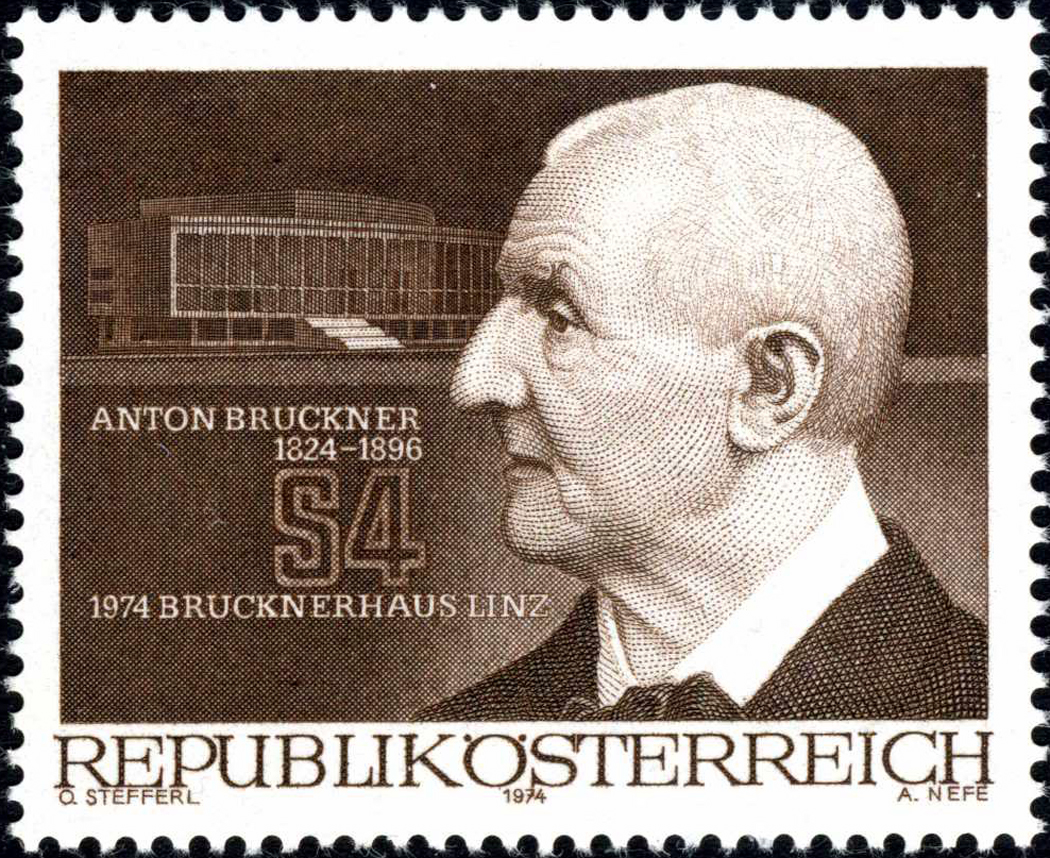
Are you old enough for Bruckner?
Poet Ezra Pound said there is no reason you should like the same book (or music or art) at 40 that you liked at 16. At 16, I liked Ezra Pound; now I’m 65.
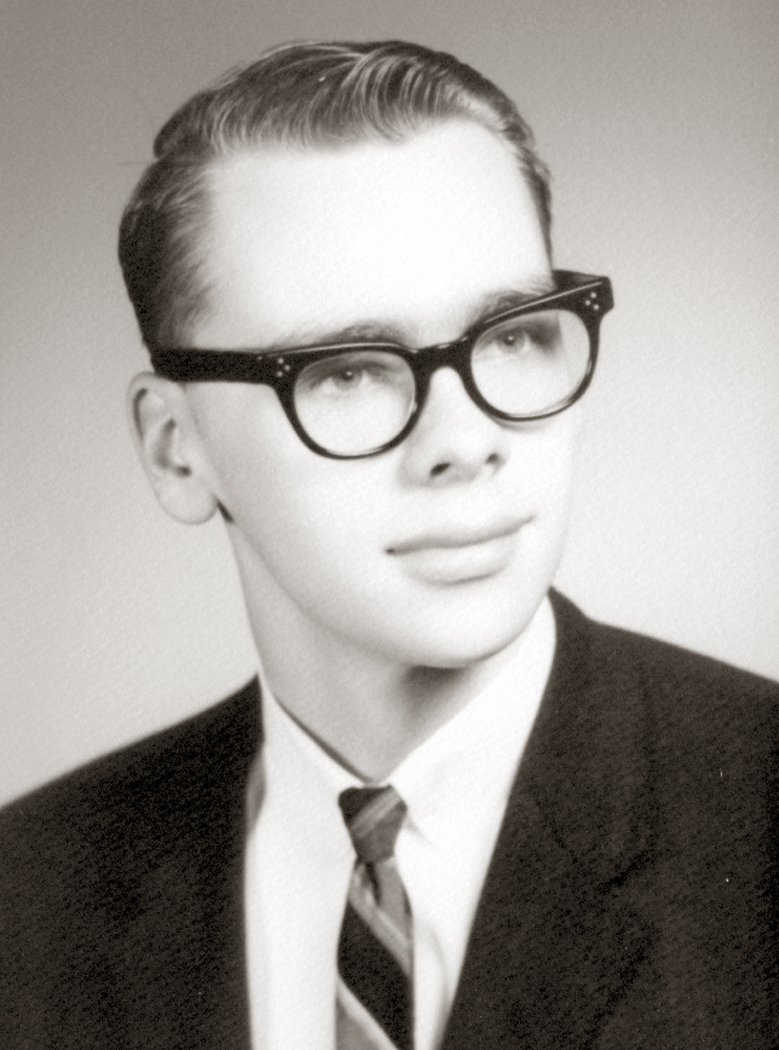
The author graduates high school in 1966
Our tastes change as we age, or they should. My introduction to classical music was Tchaikovsky. His symphonies and concertos pumped new-generated hormones through my arteries like adrenalin — when I was in high school.
It wasn’t long before I left him behind for Stravinsky, then Beethoven.
By the time that I was middle-aged, I had gone through Bach, Mozart, Berlioz, Debussy, Mahler, and most recently had added Bruckner and Haydn to the list. I get things from each of them I was deaf to earlier. Now that I am retired, I have finally come to appreciate Verdi. But, boy, it was hard to get past all the oom-pah-pah-pah, oom-pah-pah-pah.
The path won’t be the same for everyone, but there are some general patterns that seem to hold.
In painting, we all loved van Gogh at about the same time we loved Tchaikovsky. There is a bigger-than-life striving in van Gogh that appeals to the adolescent, striving himself for some sense of the heroic.

The author 1975
That same aspiration drove us to read Catcher in the Rye.
With a few more years under an increasingly large belt, we drop Tchaikovsky as hopelessly sentimental, Salinger as naive and simply move past van Gogh as we become aware of the Impressionists, who tickle our eyes all over again. Hormones calm, reality sets.
When we are in college or as grad students, we tend to gravitate to those things that are trendy, new, and exclusive, that set us off from the proles: We read Umberto Eco or — in my generation, Alberto Moravia and Robbe-Grillet. We jumped on Marina Abramowic and Bruce Nauman and listened to Lutoslawski, Schnittke and Harry Partch. Yes to Pina Bausch, meh to Swan Lake.

The author 1977
Yes, we were showing off. In many cases we admired more than enjoyed.
We then gave up the need to be au courant or exclusive as we came to distinguish between the gee-whiz and the substantial.
As adults, we craved the substantial. Adult tastes are acquired tastes: Poussin, Schoenberg, Milton, rutabagas, pickled herring.
Old age now brings something else: simplicity and inclusiveness. I am no longer quick to drop the critical meat-cleaver and sever away something I consider unworthy. They are all worthy. Tchaikovsky as much as Webern, Salinger as well as Joyce. We are enriched by each of them.
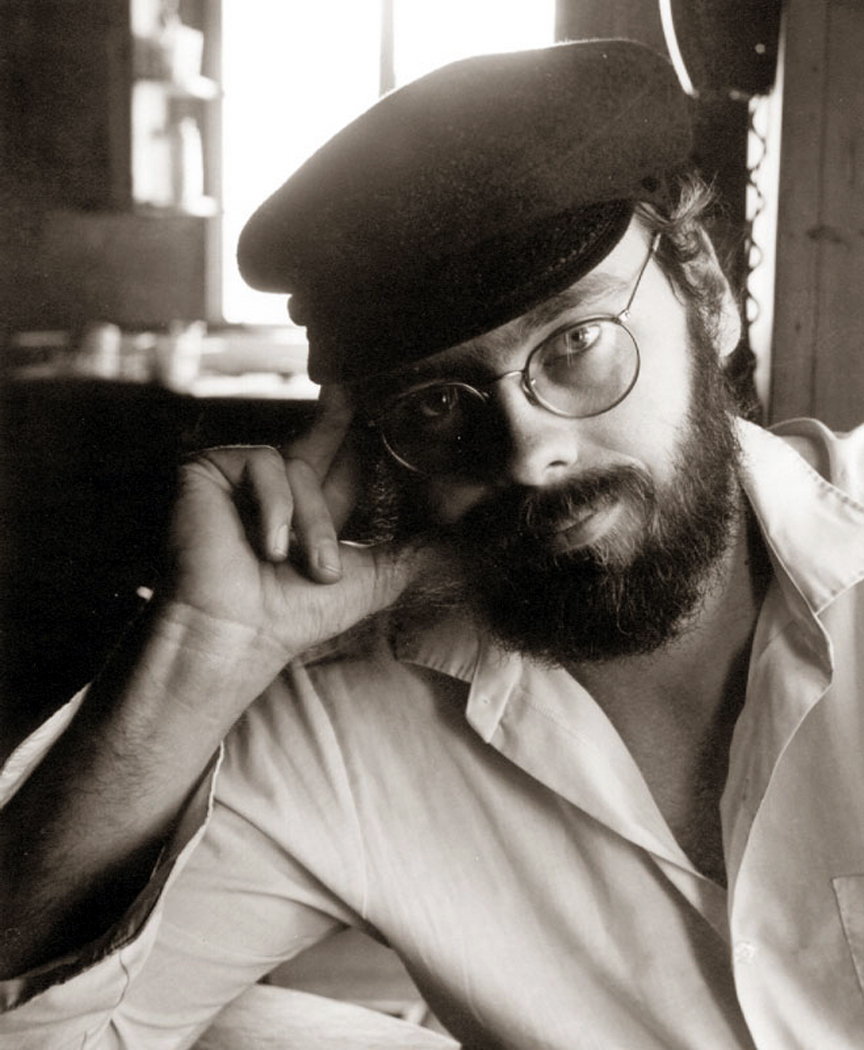
The author in his “Van Gogh” pose 1980
(No, I haven’t gone senile — I’m not ready to accept Andrew Lloyd Webber or Thomas Kinkade, although I see some value in Norman Rockwell that would have shocked me to hear anyone admit when I was 20. No, Rockwell is no Raphael, but there is room for an entire spectrum of abilities and accomplishments. What I ask isn’t so much undying masterpieces, as sincerity of attempt, and a willingness to put in the work.)
So, growth isn’t just a case of moving on from one thing to another, but adding more and more to our trove. By the time you are my age, you will have a heady backlog of esthetic experiences to draw on.
What is most interesting to me is that, if we continue to grow, we can return to art we left behind and find something new in it. From age 17 to about 40, I couldn’t bear Tchaikovsky — it seemed like treacle. But then I began noticing his bizarre harmonic sense and what I might call ”orchestration from Mars.” You only have to read the scores to see how peculiar is his voice leading. When I could get past the heart on the sleeve, I discovered an intelligence there that was hiding, or rather, that I was unwilling to discover, having made up my mind and moved on.

The author at Canyon de Chelly, 1989
An now that I am bald, bearded and grey, I find that there is something even in the emotional immediacy that once embarrassed me.
As we grow, we not only grow into new experiences, we grow out of our old prejudices.
This all came back to me this week as I watched Lust for Life on cable. The 1956 biopic starred Kirk Douglas as van Gogh and Anthony Quinn as Gauguin. The film is an odd combination of excellence and awfulness, mixing insight with bromides, sanitizing the painter’s life while emphasizing the insanity.
More than anything, this is the van Gogh who appeals to adolescents, the van Gogh of idealism, identity crisis and suicide.
Alienated, misunderstood.
But there is one more aspect of him that is included: his commitment and perseverance. These quieter virtues, more than his insanity, give van Gogh his stature as an artist.

the author lecturing 2005
There was a time, in my 20s, that I dismissed van Gogh. The peculiar paint-busy canvasses, I was convinced, were just the evidence of a deranged mind. If you were schizophrenic, you could be a great artist, too.
But more careful study in recent years, especially of the many notebooks filled with drawings, told me something else again. Van Gogh paints the way he does because of his unwavering honesty to his eyes. He kept looking till he got it right.
And ”right” for him was to notice everything that his eyes saw, not merely what he had been trained to see.
If you stare long enough and with enough concentration, you can see something of the granular reality van Gogh saw. We no more pay attention to it in daily life than we pay attention to the grain in a movie’s film stock. It is not the information, but the medium of the information. We filter out so much. Van Gogh didn’t.

the author at Giverny 2008
The other wonderful thing about van Gogh is that he had so little talent.
We tend to think of great artists being as fluent as Mozart or Raphael. Yet talent is a poor indicator of quality in art. For every Raphael, there are scores of Geromes and Bouguereaus: accomplished and pretty, but ultimately empty.
Van Gogh shared a lack of talent with several other great artists: Cezanne, for instance; or Jackson Pollock. One searches the drawings and oil sketches of Cezanne for even the slightest encouragement of talent. His drawing is hopelessly awkward.
Pollock searched for years for an adequate means of expressing what was inside him. To do it, he had to give up everything he had learned. If he had no talent for drawing, he would not draw. He found a talent for splashing instead.
Van Gogh’s notebooks are full of erasures. He looked, drew, erased, looked again, drew again, erased again. Many drawings are never finished, but those that are, are right in a way the more facile Ingres never is.
Van Gogh was stubborn. I admire that in him more than I admire the talent of William Merritt Chase.
But give me another 10 years and we’ll see.


 Richard Nilsen